
A satin slip looks like the simplest dress in the shop, and it is the one I spend the most time fitting. It’s cut on the bias, diagonally across the weave, so the fabric stretches and pours over the body instead of standing away from it. That gives the movement brides love, and it also means every line beneath it shows. Slips now come with detachable sleeves, overskirts, capes and trains, so one plain dress can carry a courthouse ceremony or a ballroom. Below are twenty slip looks, each styled head to toe, with the fit or fabric point I’d check for that version. Before you start, think about neckline, fabric weight, where the seams fall and what you’ll wear underneath; those four things decide whether a slip looks expensive.
Silk Charmeuse, Crepe-Back or Polyester Satin?
Not all satin behaves the same in a slip. Ask the shop which one you’re trying on, because it changes how the dress wears over a long day.
- Silk charmeuse: light, fluid and breathable, with a soft glow. It creases easily and water-marks, and it costs the most.
- Crepe-back satin: shiny on one side, matte crepe on the other, and heavier. It hangs straighter, shows less underneath and forgives more.
- Polyester satin: holds color well and is usually cheaper. It can look shinier in flash and traps more heat, so it’s harder to wear in summer.
For a bride who worries about every line showing, I lean toward a heavier crepe-back. For a hot outdoor wedding, silk is cooler on the skin, as long as you accept some creasing.
What Goes Under a Bias-Cut Dress
Shop for underwear before your first fitting, not after. Pick a shade that matches your skin, not white; white shows through ivory satin. Look for bonded or laser-cut edges with no elastic band, and wear them to every fitting so the seamstress adjusts for them. Adhesive or built-in cups work for low backs. Do a phone-flash test in the fitting room: flash photography shows lines that mirrors don’t.
1. Cowl Neck Satin Slip Wedding Dress
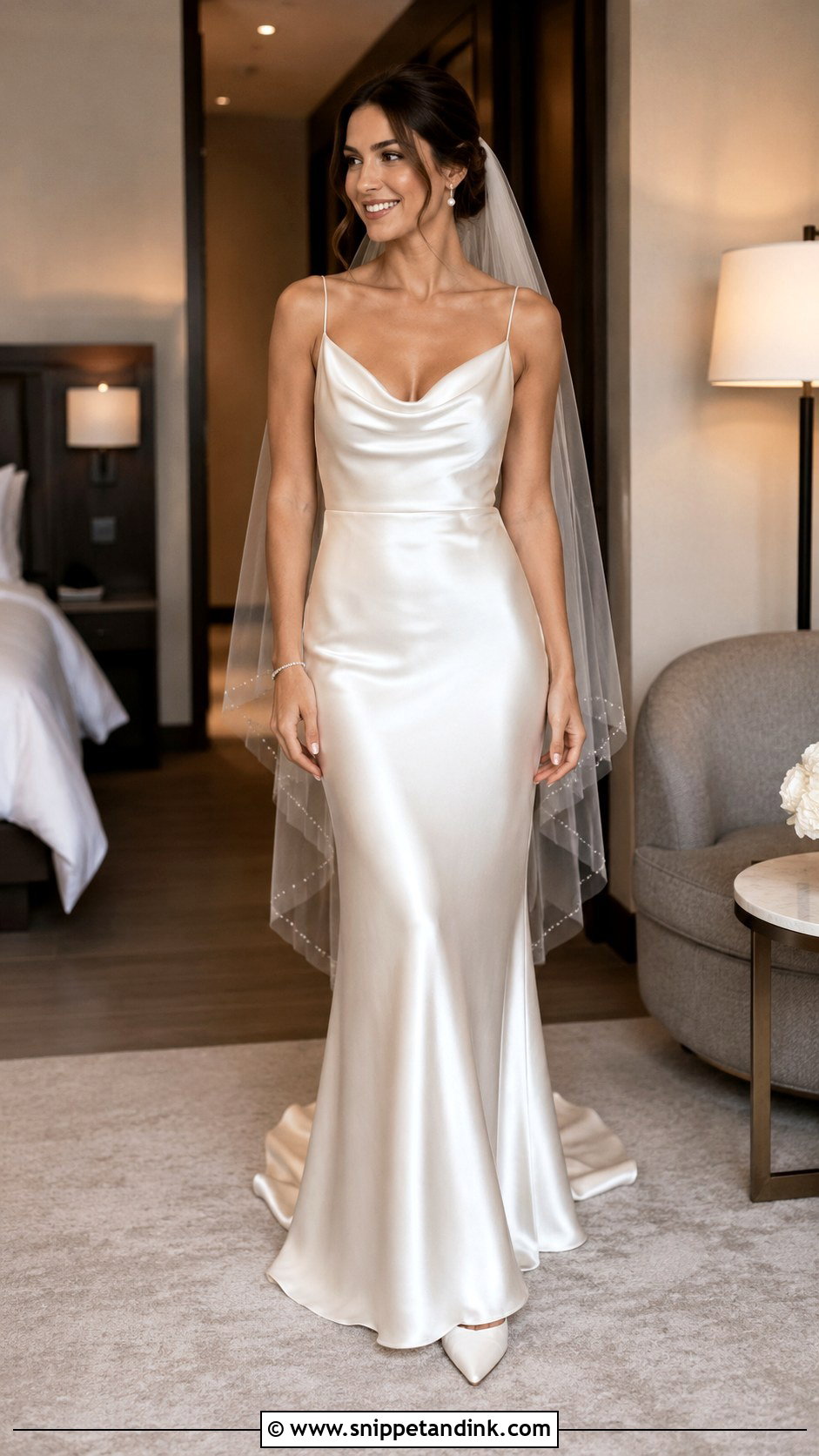
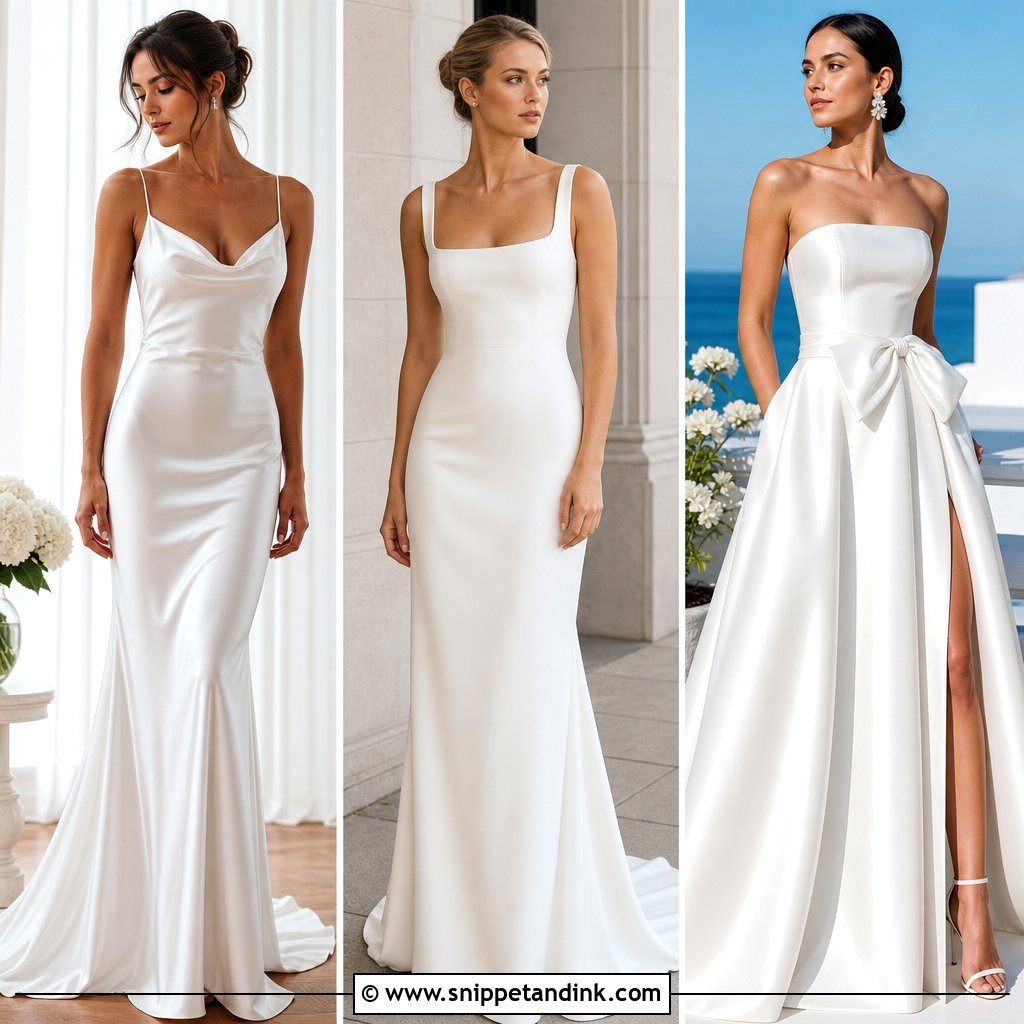
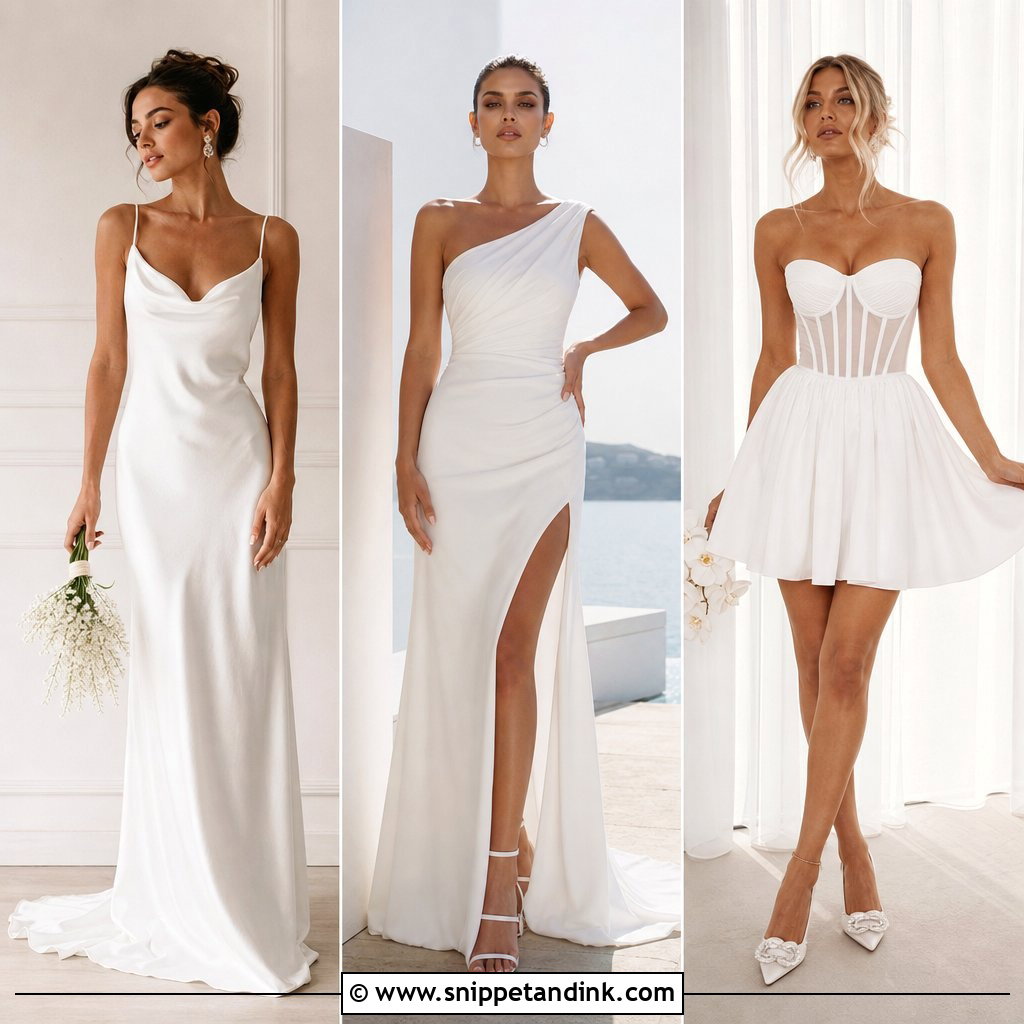
A cowl neckline drapes in soft folds below the collarbone, which gives movement near the face without any beading. On an ivory bias-cut gown with slim straps, I check the cowl when the bride leans forward to sign the register; deep cowls can open more than she expects. Pearl drops and a fine bracelet, pointed satin pumps, a small pearl clutch and a fingertip veil under a smooth low bun complete it. Indoor ceremonies, rooftops and modern hotels suit it best. If the satin is very shiny, matte accessories calm it down. Book a skilled seamstress, because pulling or extra length shows immediately in fluid fabric.
2. Square Neck Satin Slip Wedding Dress
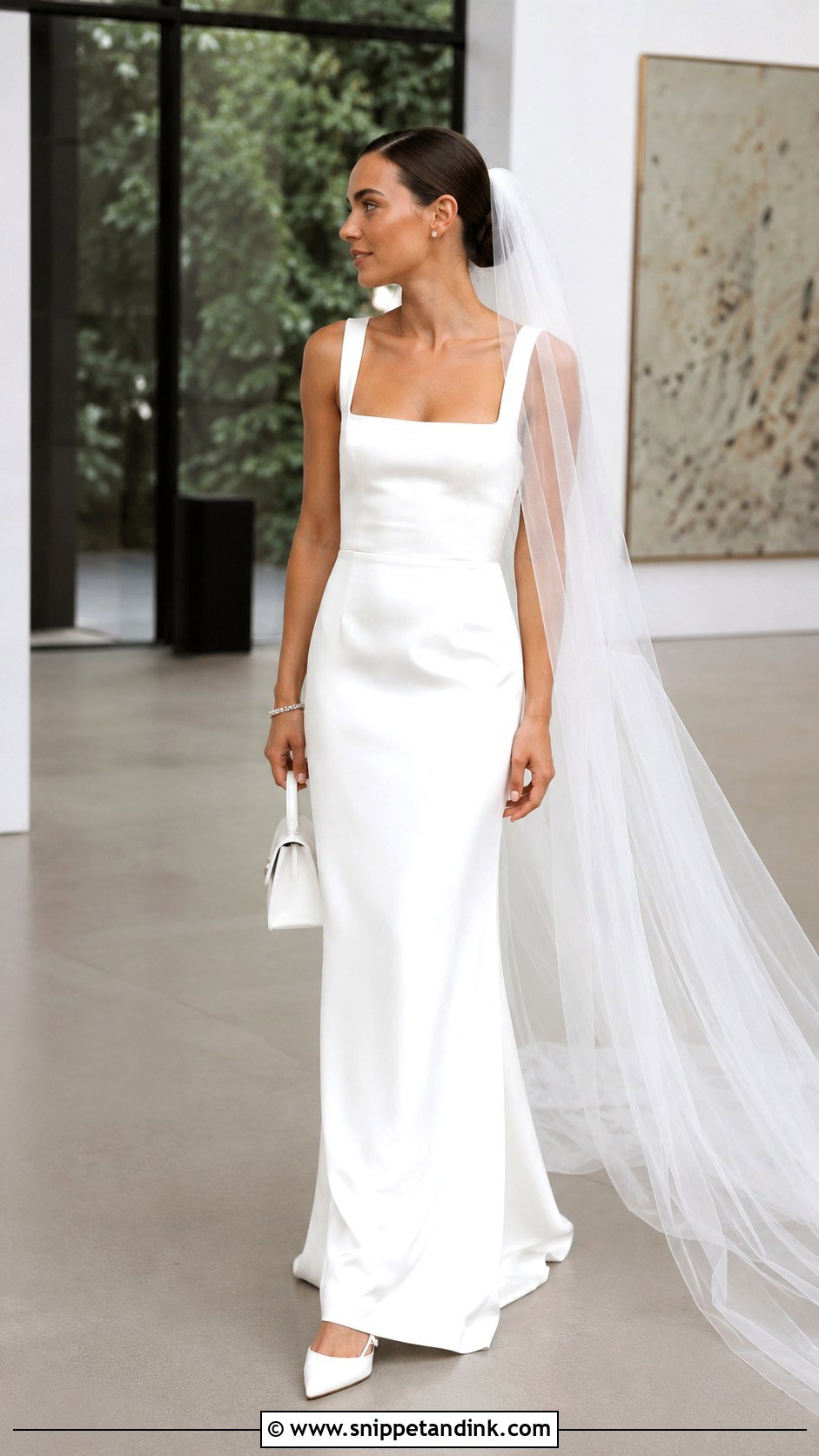
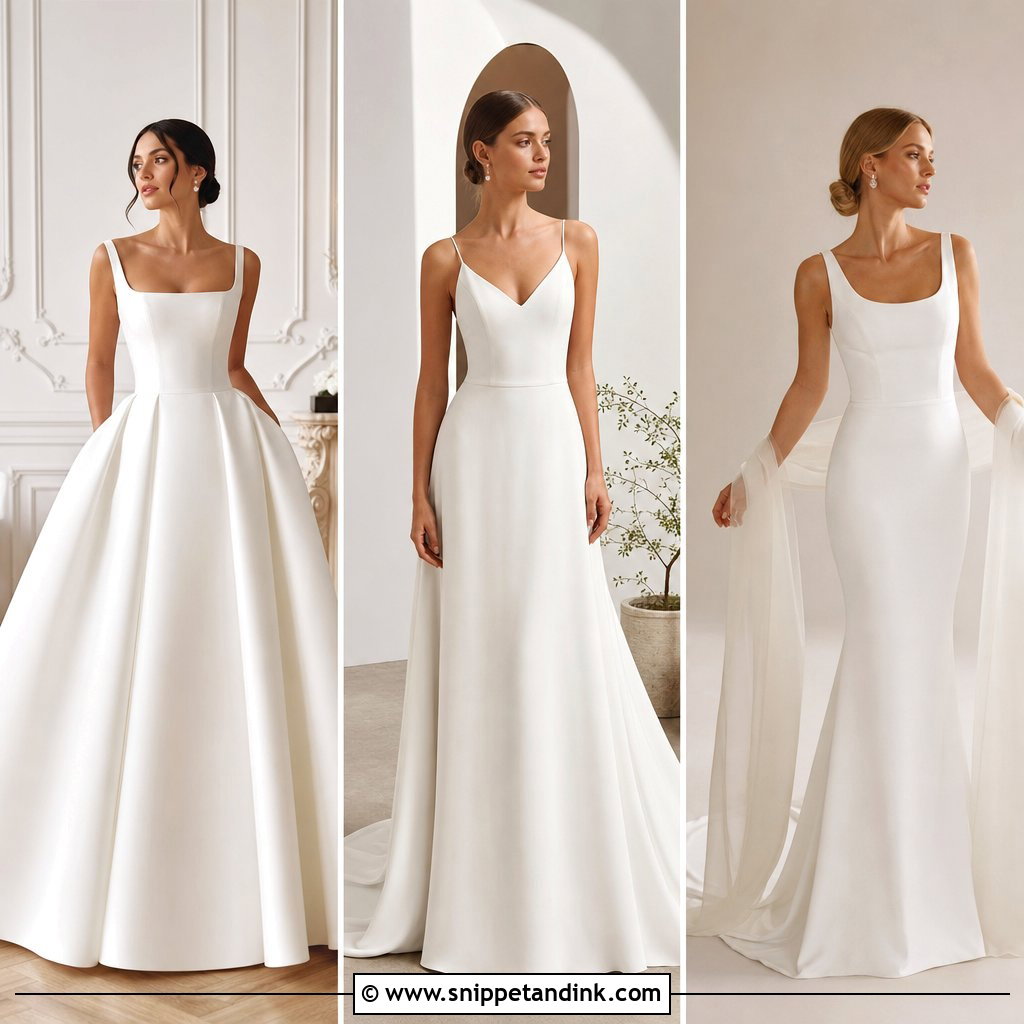
Wider straps and a square neck turn the slip into something structured. The straight edge frames the collarbone and covers more than a camisole cut, which brides with a fuller bust usually find easier to wear. Ask for a lined bodice with light internal shaping; it holds the square crisp instead of letting it bow. Bright ivory with small diamond studs, a tennis bracelet and a plain cathedral veil keeps it modern, with pointed slingbacks and a structured mini bag. A polished bun or neat blowout shows the neckline. City venues, galleries and minimal ballrooms suit it.
3. Backless Satin Slip Wedding Dress
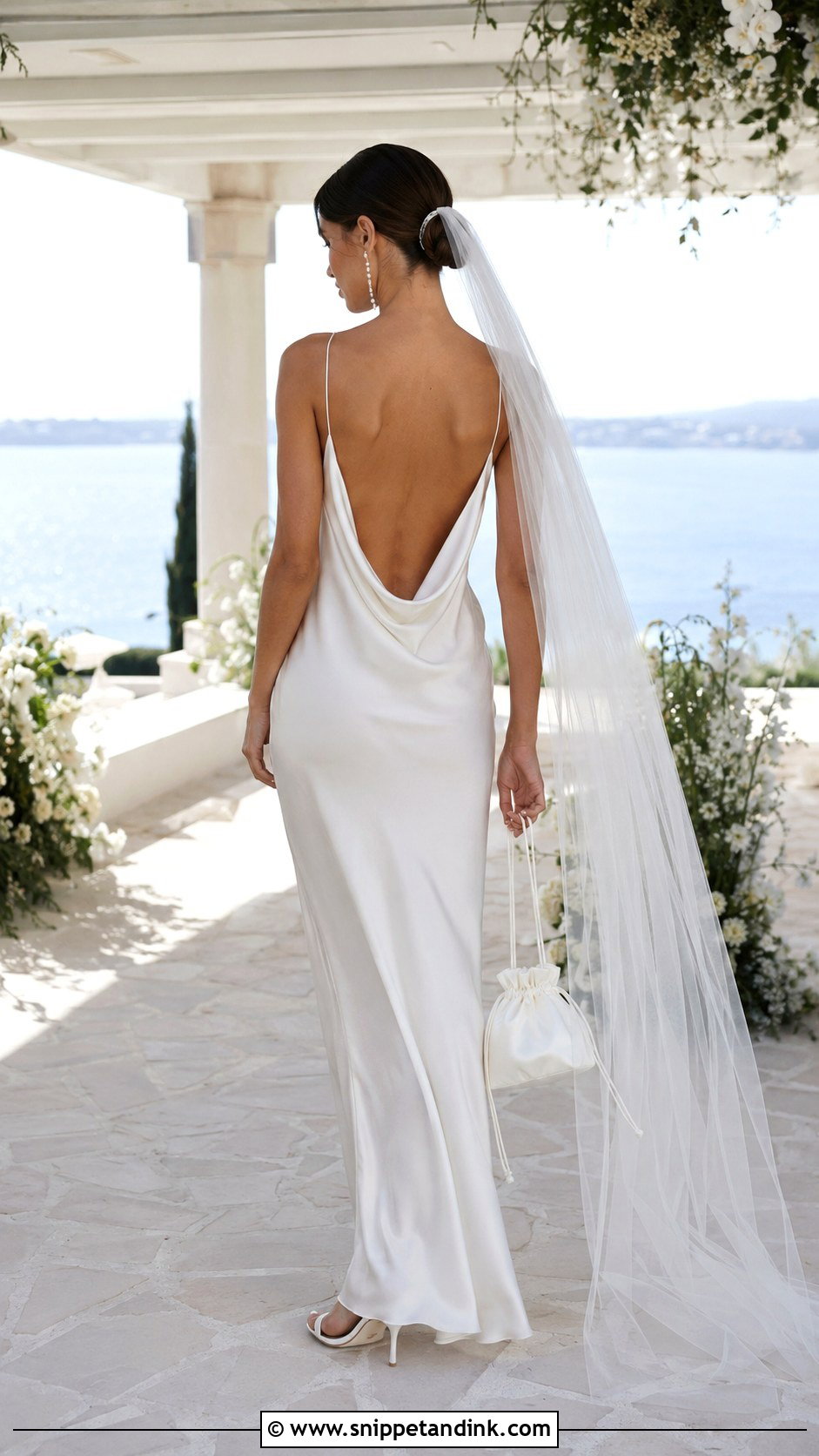
Most of the drama in a backless satin slip wedding dress happens behind you, which is exactly where guests look during the vows. The fit point is the side seam: if it isn’t snug, the open back gapes the moment you raise an arm. Narrow straps, a softly draped back, pearl threader earrings and a low chignon show it off, with a long sheer veil you can take off after the ceremony. Strappy ivory sandals and a satin drawstring bag keep it light. One delicate back necklace is plenty. Bring your adhesive bra or tape to a fitting and test it while sitting and dancing, not only standing.
4. Lace Trim Satin Slip Wedding Dress
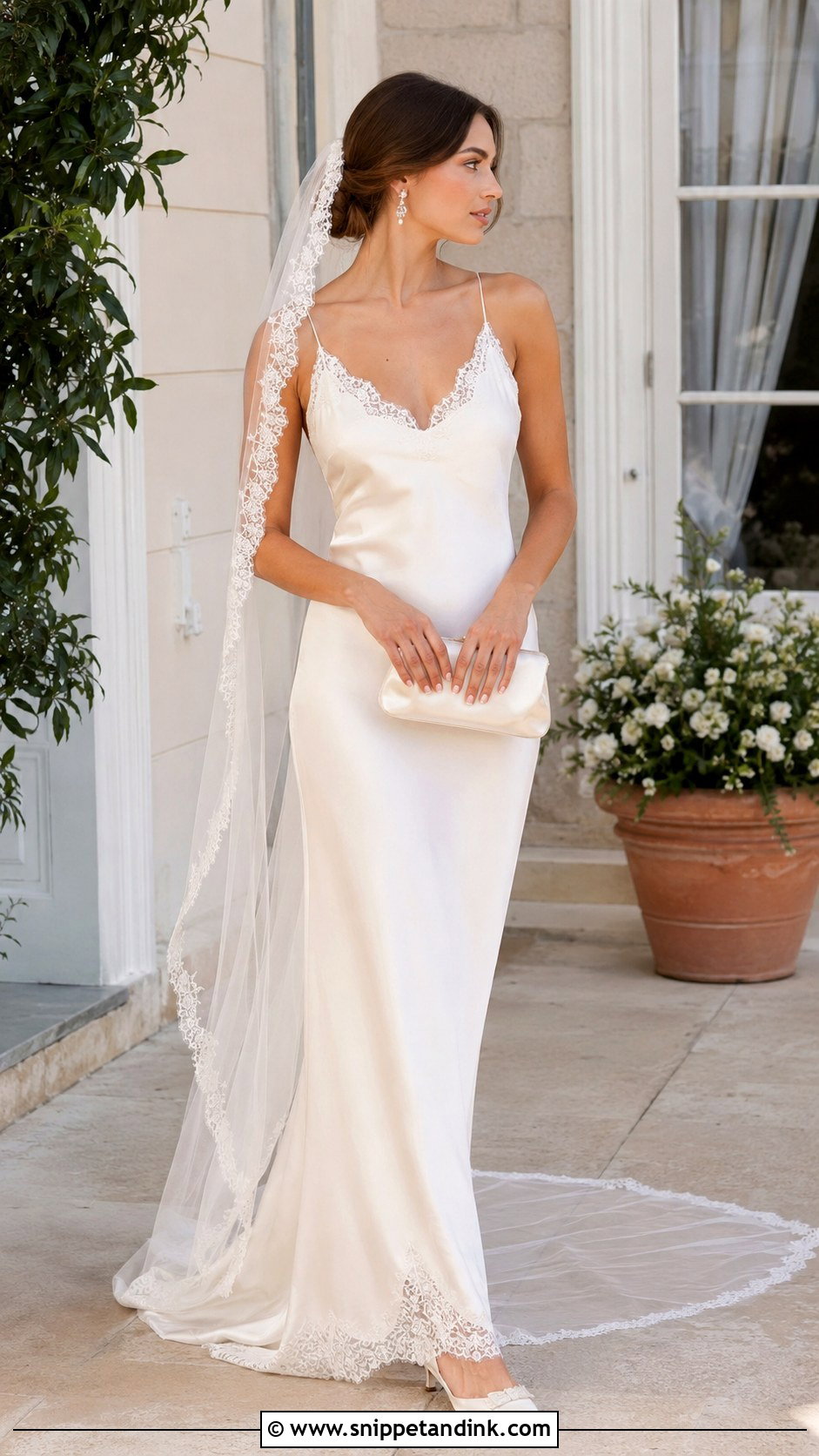
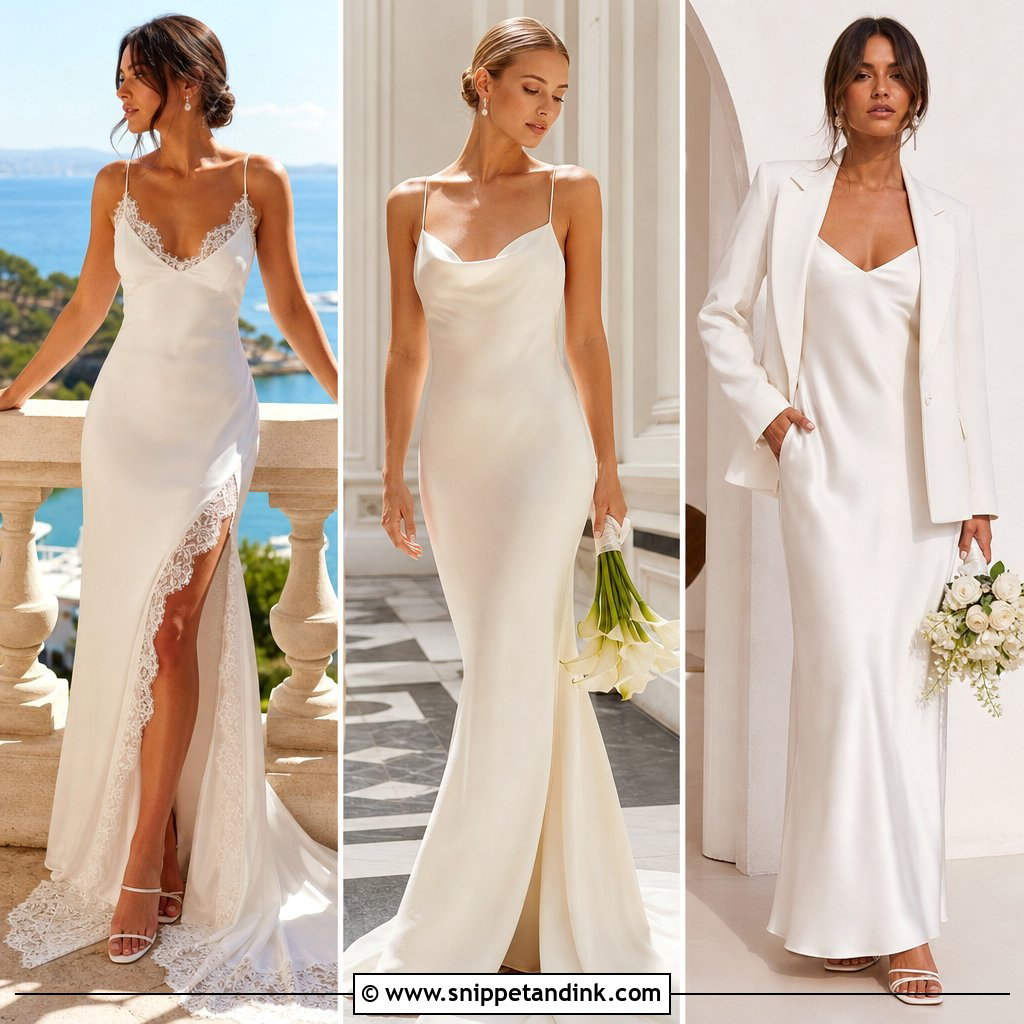
Fine lace at the neckline, straps or hem softens a slip and gives it a slightly vintage feel. Keep the lace narrow; large appliqués weigh down bias-cut satin and pull the drape out of line. Pearl-and-crystal earrings, ivory kitten heels and a lace-edged fingertip veil suit it, with a compact bouquet and a soft low bun. On a cool day, a light lace bolero that echoes the trim adds warmth without hiding the shape. Intimate estates, gardens and historic houses are its natural home. A satin clutch with a small pearl clasp is all the extra detail it needs.
5. Champagne Satin Slip Wedding Dress
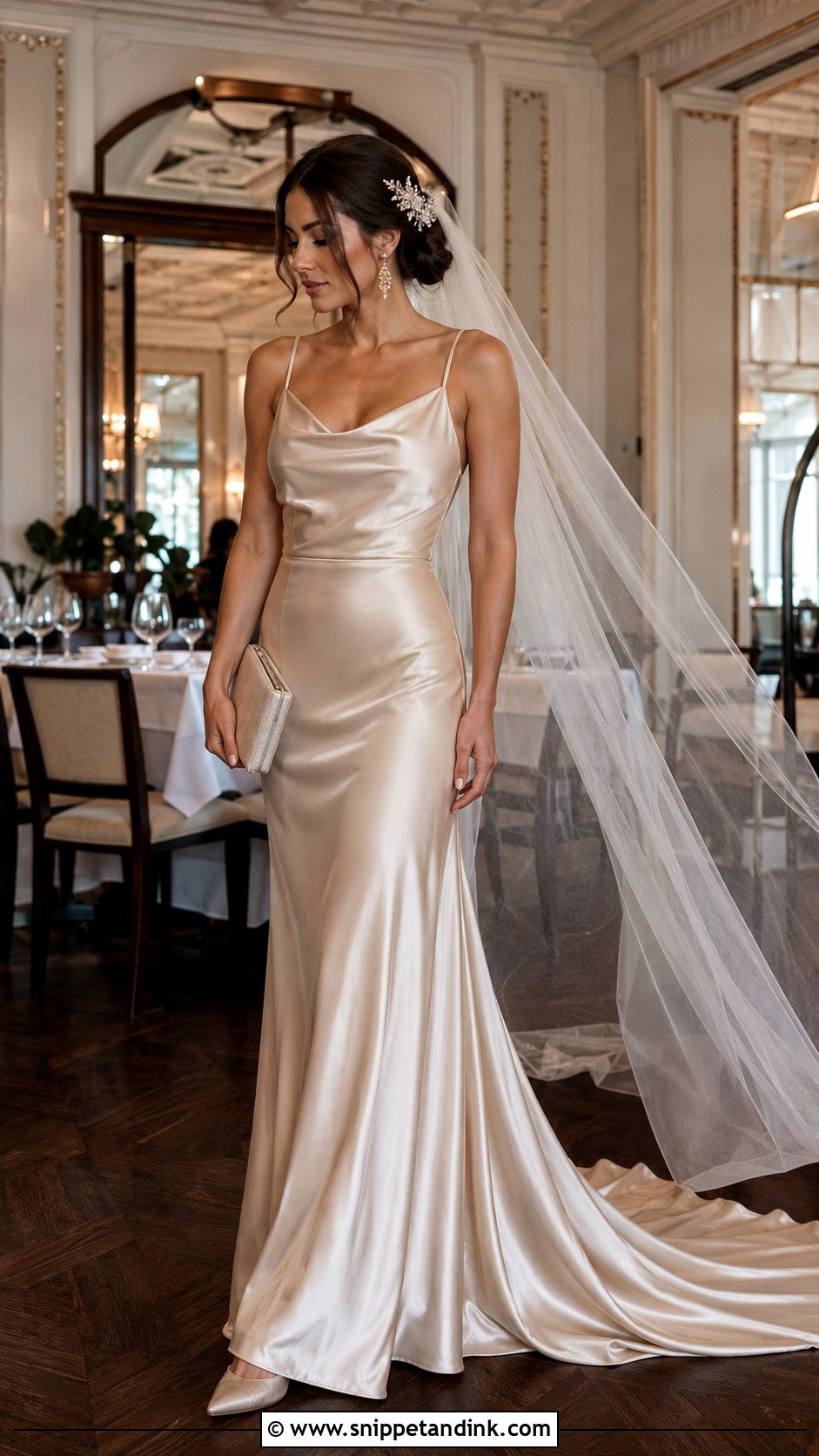
Champagne satin is warmer than white and still reads clearly as bridal. A floor-length slip with a softly fitted bodice, narrow straps and a gentle train is the starting point. Champagne varies a lot between makers, from pale gold to almost beige, so I look at each one by a window and under warm bulbs; a shade that glows indoors can look drab in daylight. Gold drops, champagne heels and a crystal comb suit it, with a neutral clutch and a sheer ivory veil for contrast. Evening ceremonies, restaurant venues and autumn weddings fit it. Soft bronze makeup and a neat updo complete the look.
6. Ivory Satin Slip Wedding Dress With Veil
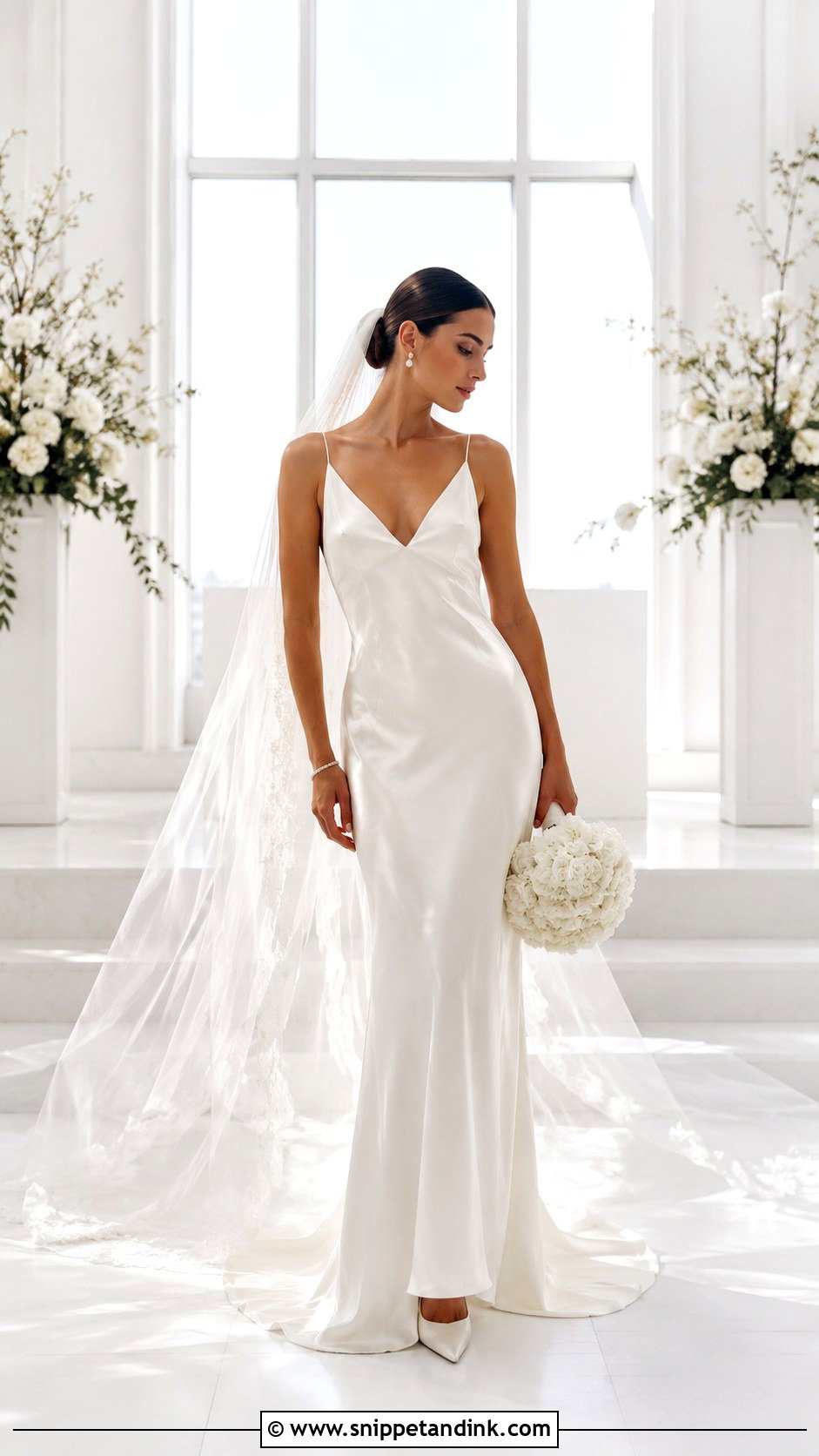
An ivory slip with a long, light veil is the pairing I’d recommend to a bride who wants the most classic version of minimal. Choose a bias-cut gown with a clean V-neck, fine straps and as few seams as possible. A cathedral veil with a raw cut edge floats behind without adding a hard line. Pearl studs, a thin bracelet and pointed ivory pumps keep it quiet, and a low center-parted bun anchors the comb. Hold the veil against the gown before you buy it; bright white tulle next to creamy satin makes the dress look yellow in photos.
7. Satin Slip Wedding Dress With Cape
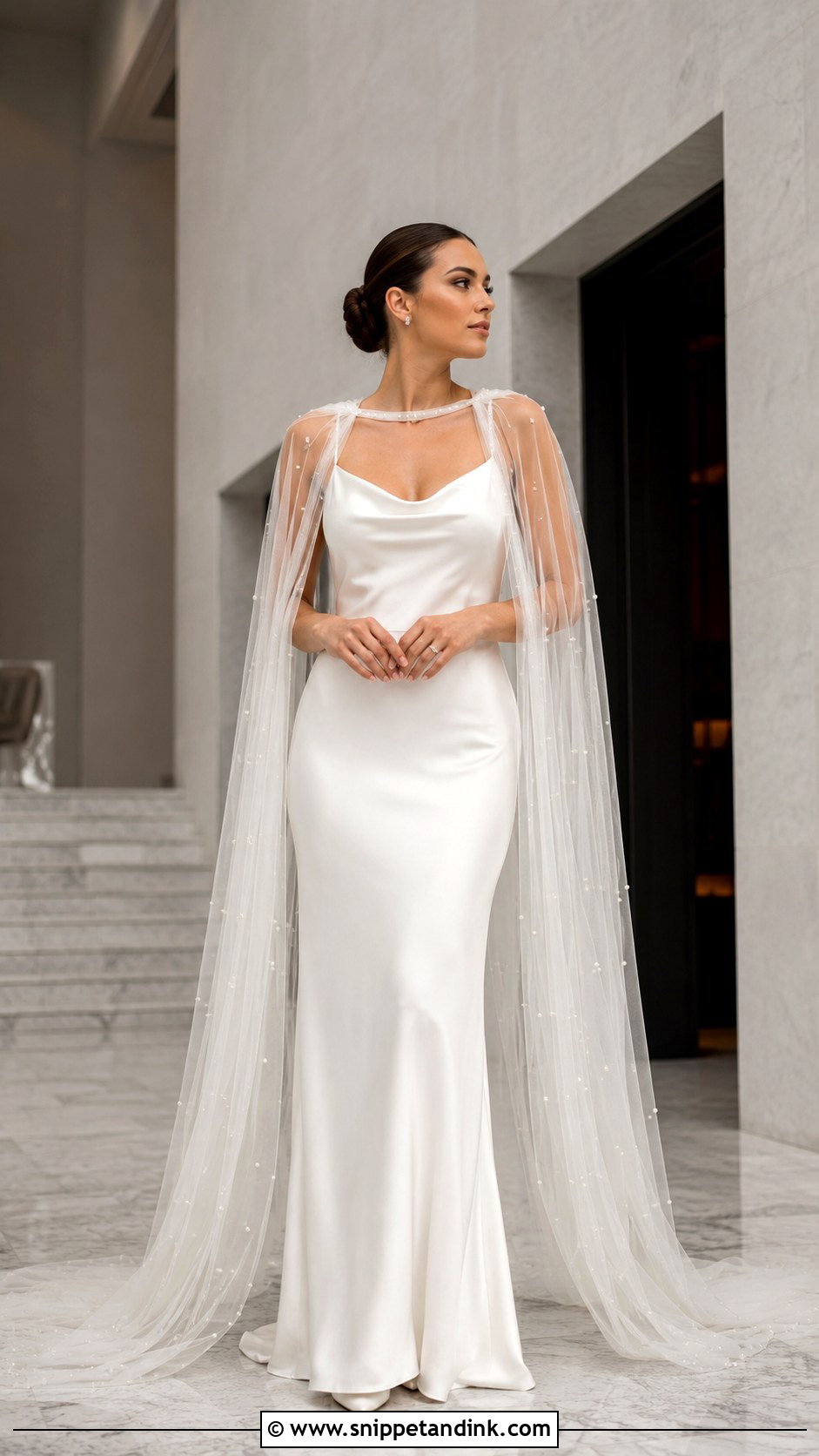
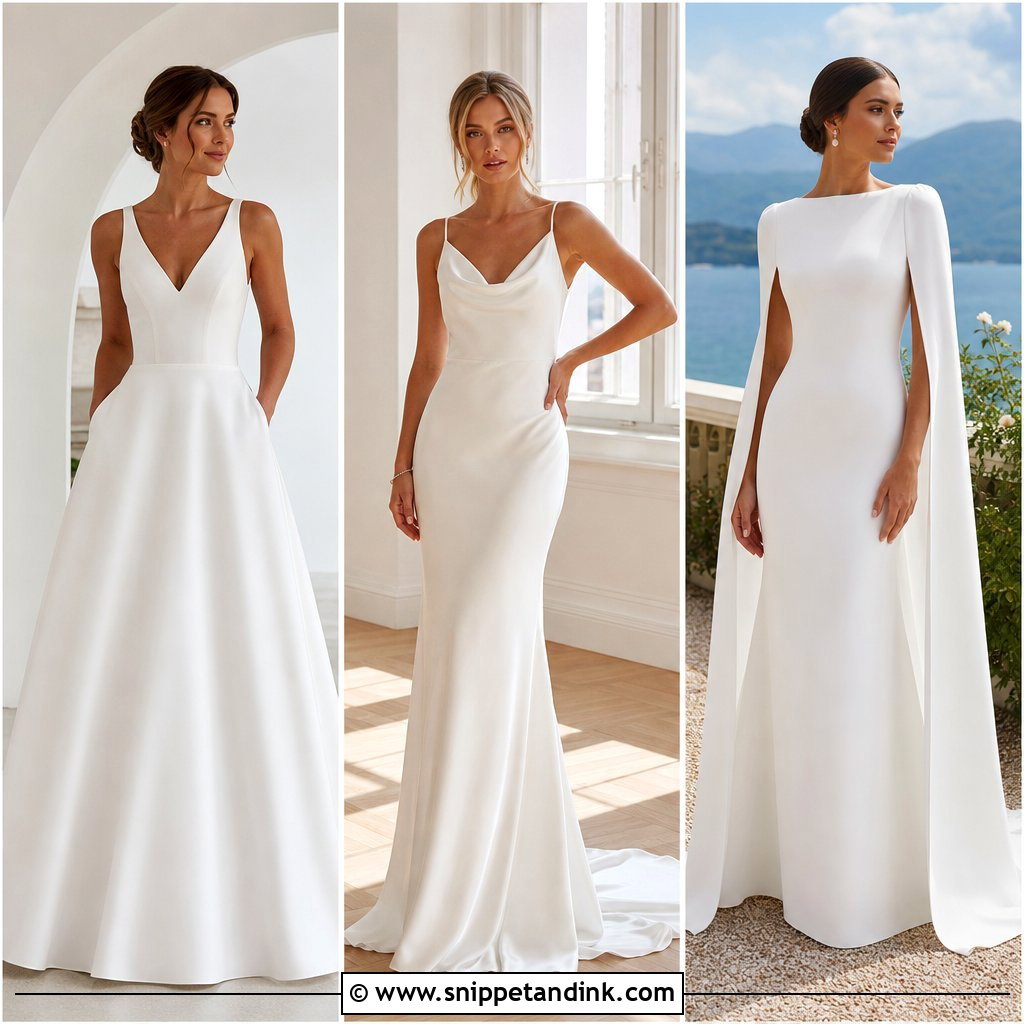
A sheer cape changes a plain slip into something ceremonial in seconds. Start with a column slip with a scoop or V-neck and attach a floor-length tulle cape at the shoulders. Fine pearls or light embroidery on the cape are fine, as long as the gown still shows through. Crystal studs, closed-toe pumps and a smooth bun complete it; skip the necklace so the cape fastening has room. The cape comes off after the ceremony for an easier reception. I’d ask for the attachment points to be hidden snaps sewn into the straps, because hooks pull bias satin out of shape.
8. Satin Slip Wedding Dress With Lace Sleeves
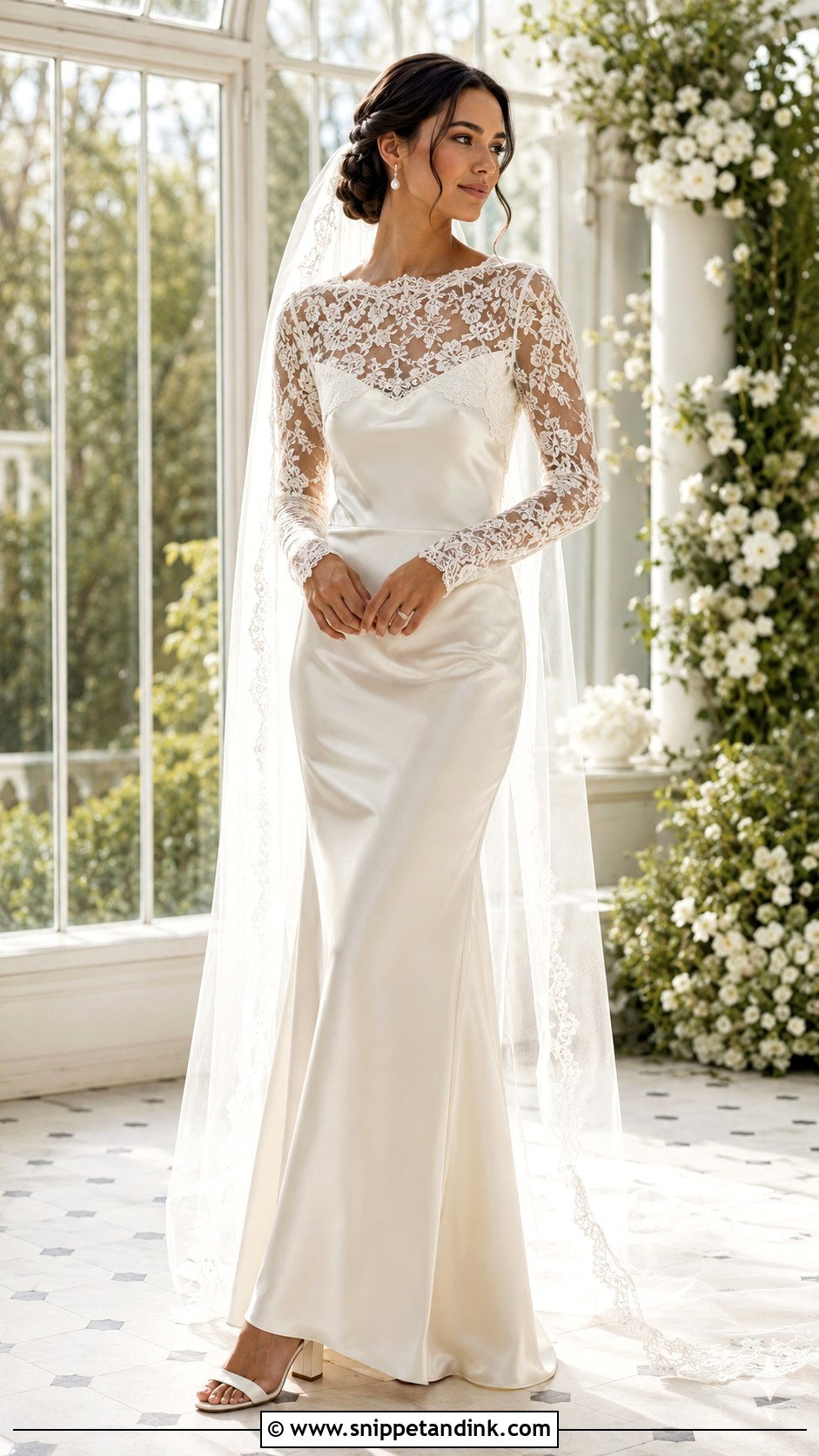
Lace sleeves give coverage and keep the slip simple underneath. A detachable lace topper with long sleeves, fine cuffs and a hem that ends neatly at the waist goes over a fitted ivory gown with a clean neckline. Pearl earrings, satin block heels and a lace-trimmed veil suit it, with a low braided bun. Spring, autumn and cold air-conditioned rooms are where I’d suggest it. The topper must be the same ivory as the satin; lace dyed separately is often a shade off. Take it off later and you have a sleeveless dress to dance in.
9. Satin Slip Wedding Dress With Overskirt
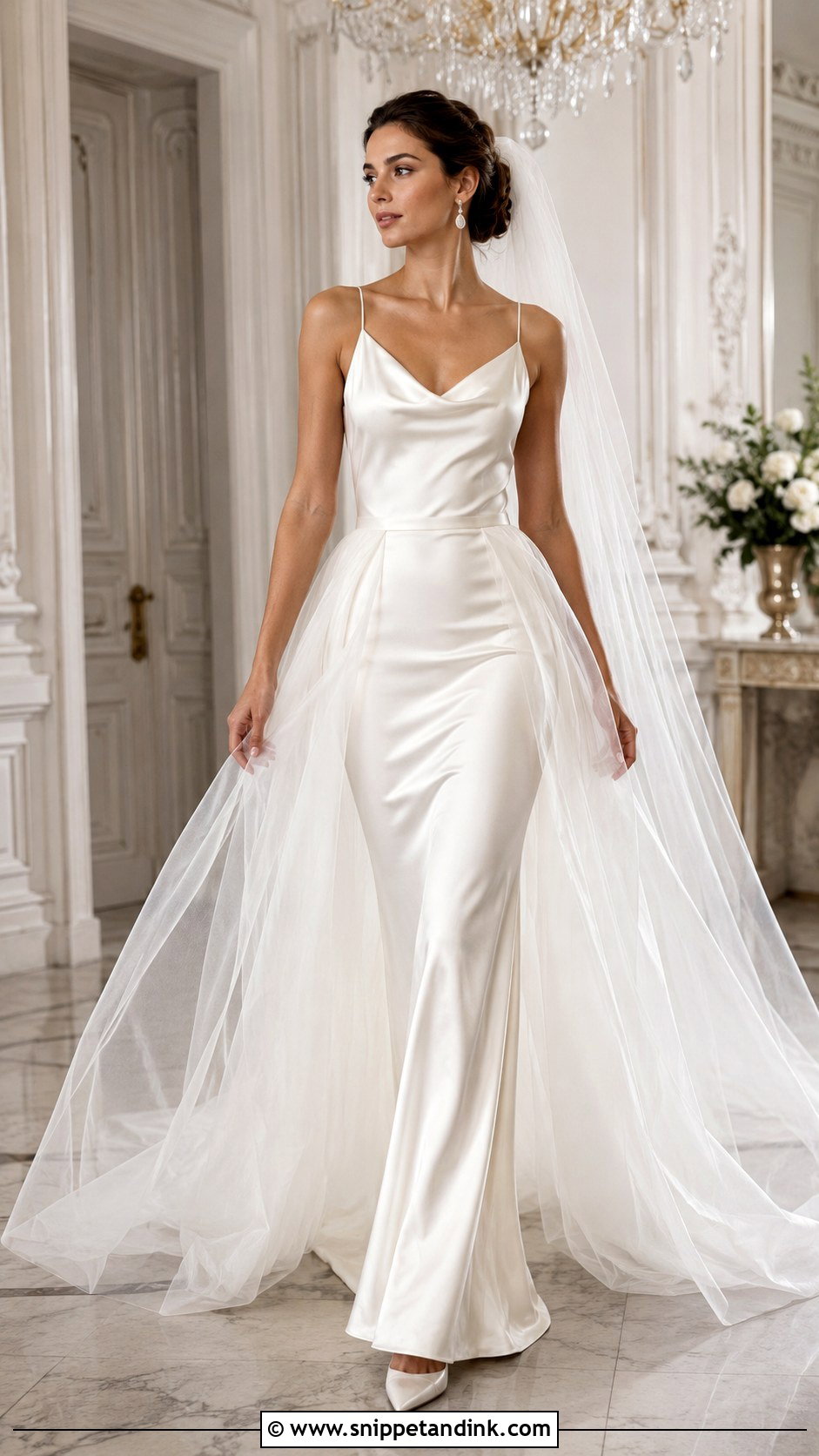
An overskirt gives a slip the volume of a ball gown for the ceremony. Start with a fitted slip with supportive straps, then add a removable organza or satin overskirt at the natural waist. The fastening is everything: it must lie flat all the way around, because satin underneath shows any ridge. Drop earrings, pointed pumps, a chapel veil and a neat updo complete the ceremony look. Ballrooms, grand hotels and estates suit it. Match undertones carefully; cool white organza over creamy ivory satin is obvious under bright lights.
10. Satin Slip Wedding Dress With Pearl Straps
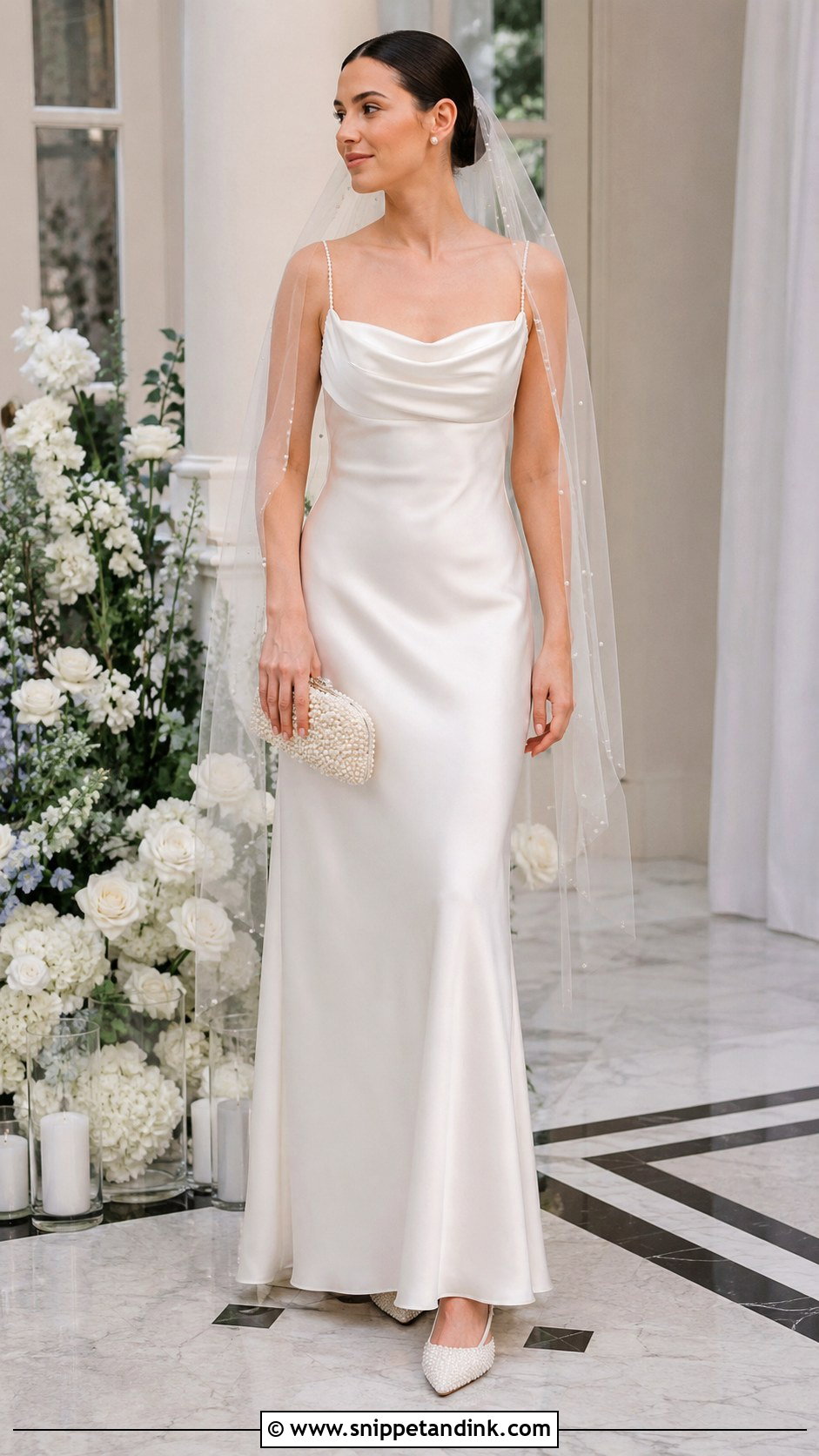
Pearl straps work like jewelry, so I skip the necklace entirely and keep earrings to small studs. An ivory satin gown with a softly draped neckline needs straps that are strung on strong thread and anchored firmly into the bodice. Beaded straps can rub, so wear them for a full hour at a fitting. Pointed slingbacks, a structured pearl clutch and a fingertip veil keep the detail at the shoulders, with a low bun or swept-back waves. It suits refined indoor weddings, dinner receptions and city ceremonies.
11. Satin Slip Wedding Dress With Low Back Bow
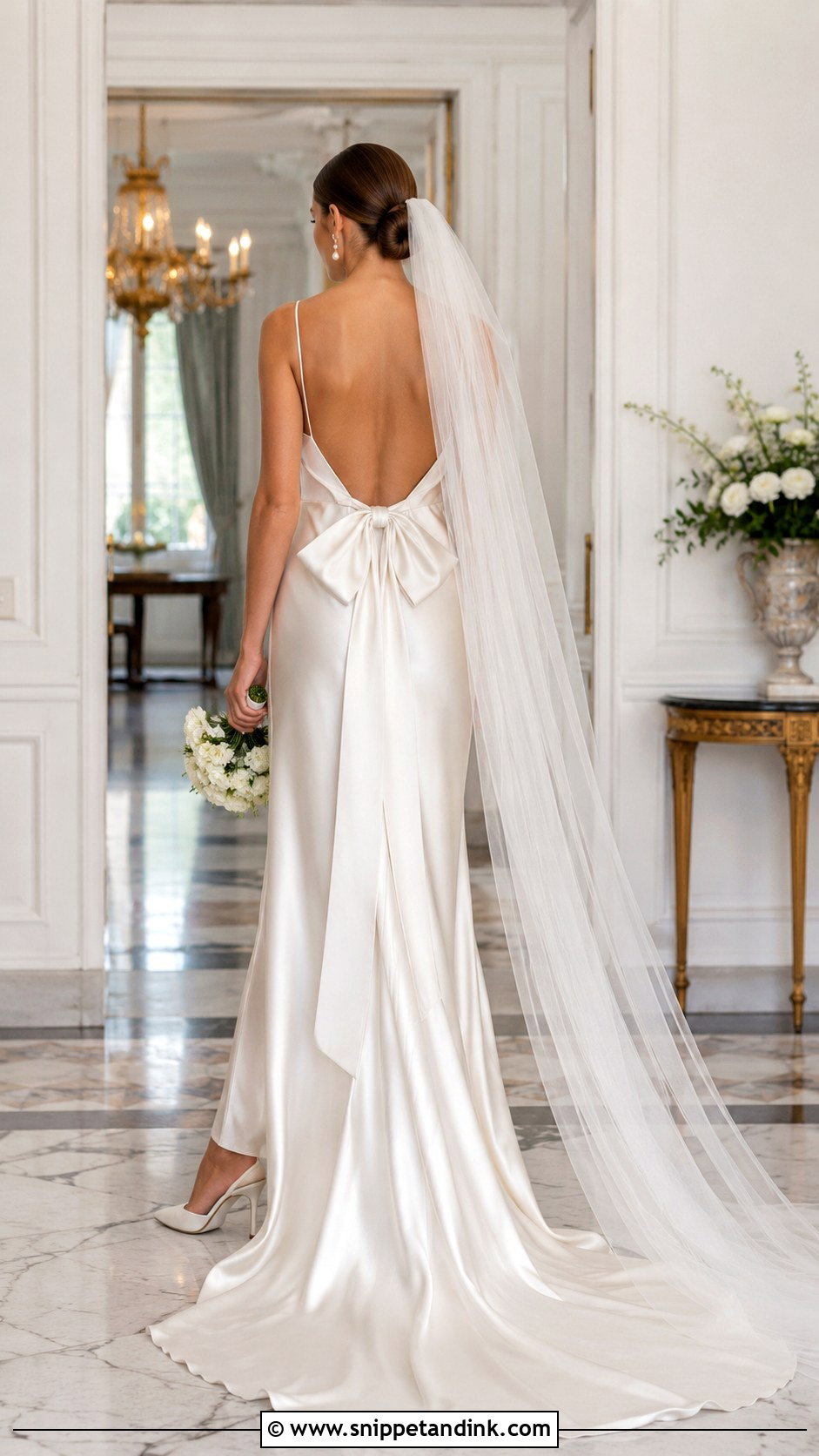
A soft bow at the base of a low back is a single detail that carries the whole dress. Keep the front clean with a scoop neck or gentle cowl. The bow should be soft and move, not stiff and oversized; heavy bows drag the back of bias satin downward and pull it off the shoulder blades. Ask for it to be detachable. Pearl drops, ivory slingbacks and a long plain veil complete it, with a polished low bun so the back isn’t crowded. Romantic ballrooms, restaurants and modern estates suit it, and without the bow it becomes a sleek reception dress.
12. Satin Slip Wedding Dress With Side Slit
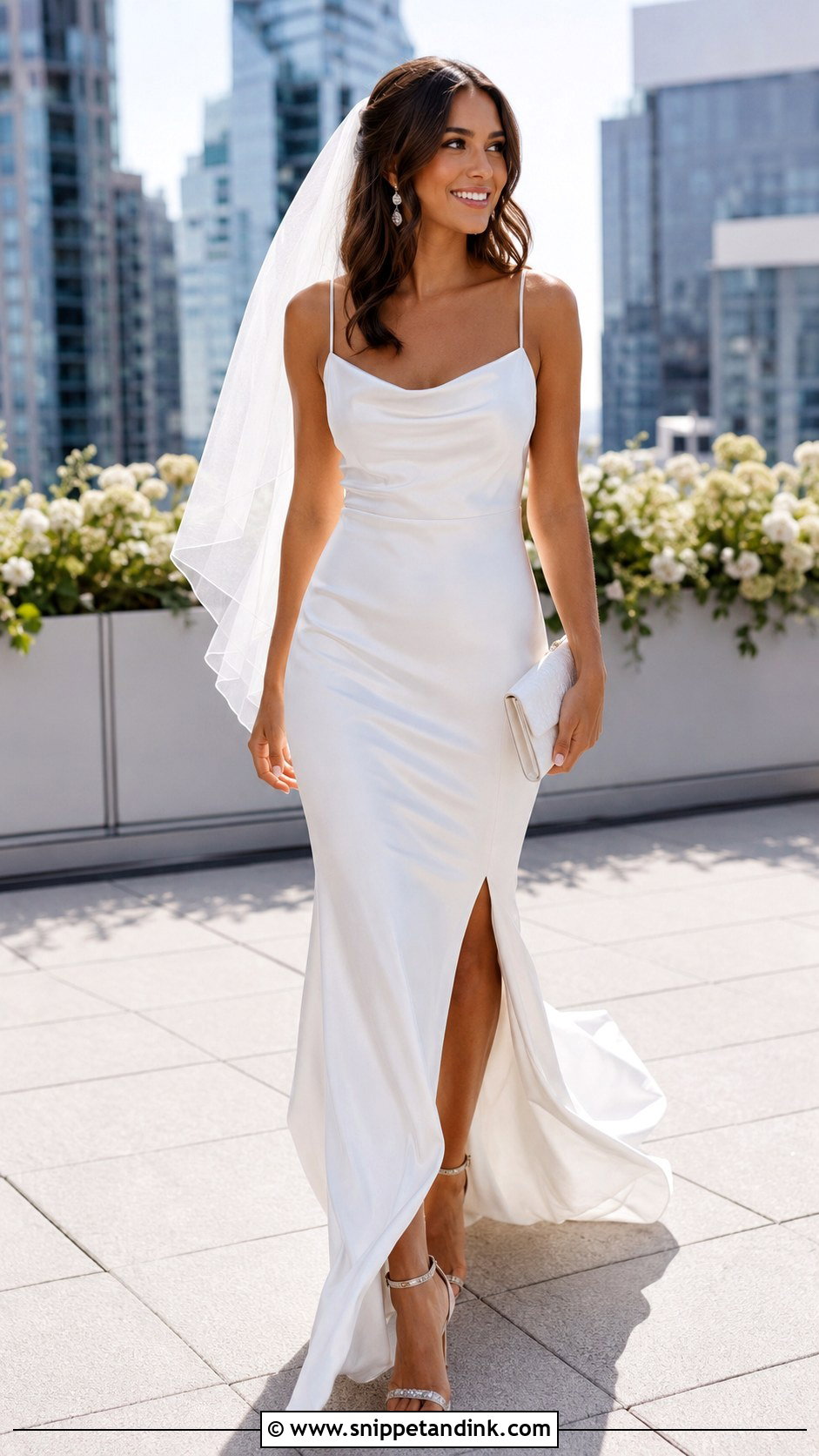
A side slit makes walking easier in a slim slip and adds a modern edge. Choose a securely lined bodice, slim straps and a slit that opens only when you step. Crystal ankle-strap sandals, small drops and a compact satin clutch suit it, with a sheer shoulder-length veil. Loose polished waves or a sleek ponytail keep it contemporary for rooftops, coastal venues and evening parties. I’d choose a slightly heavier satin here; light satin flips open at the slit with every breeze. Sit down in it during alterations and check how high it rides.
13. Halter Satin Slip Wedding Dress
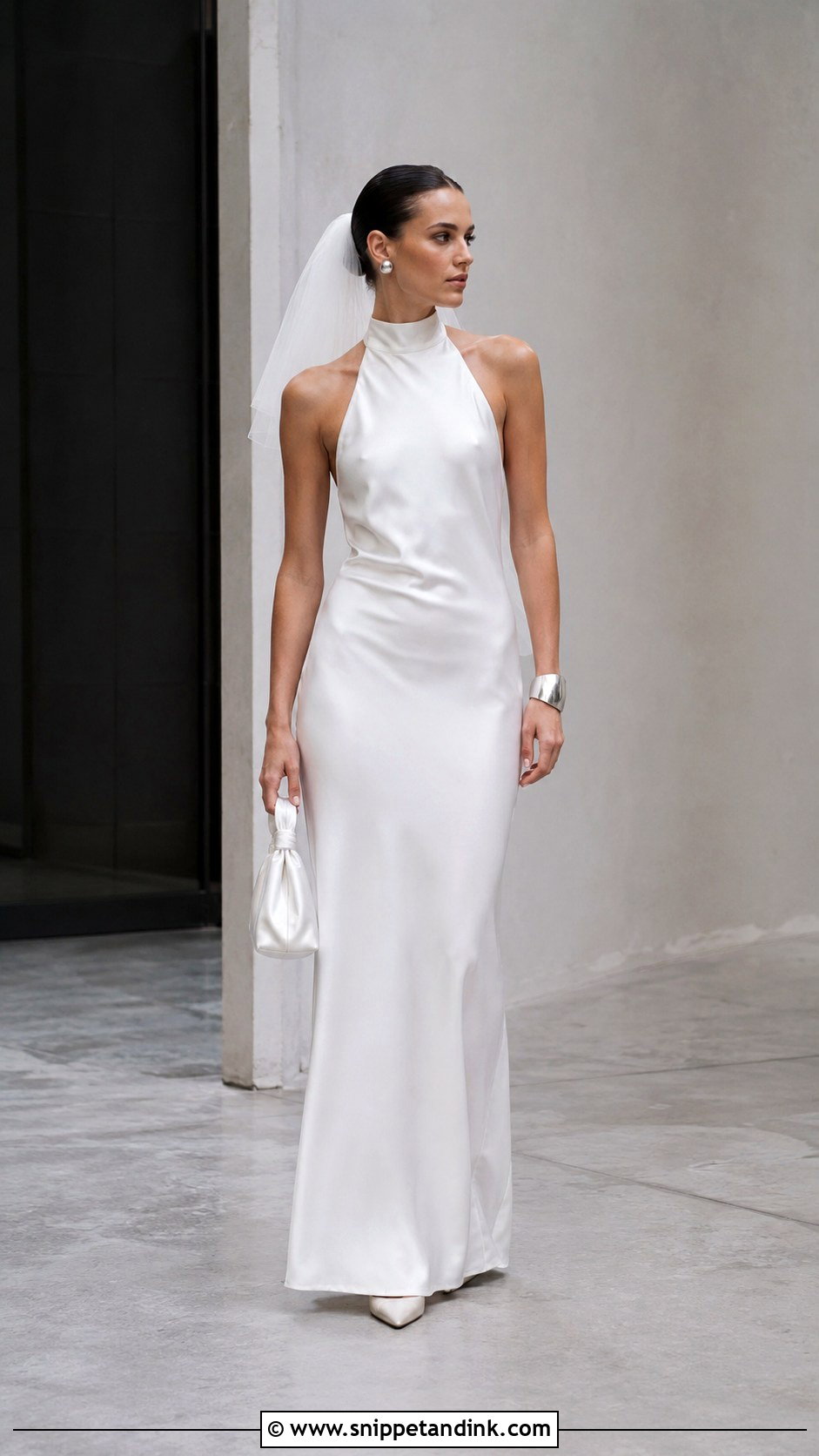
A narrow halter with open shoulders is a fresh change from spaghetti straps. On a satin column with a softly fitted waist, it looks architectural. Sculptural studs, a smooth cuff and pointed ivory pumps suit it, with a short tulle veil or small hair bow and a structured satin bag. City halls, modern venues and contemporary receptions fit it. Halters hang weight from the back of the neck, so stand in it at a fitting for a while. A bodice with internal support takes that load off the neck and keeps the front smooth.
14. One Shoulder Satin Slip Wedding Dress
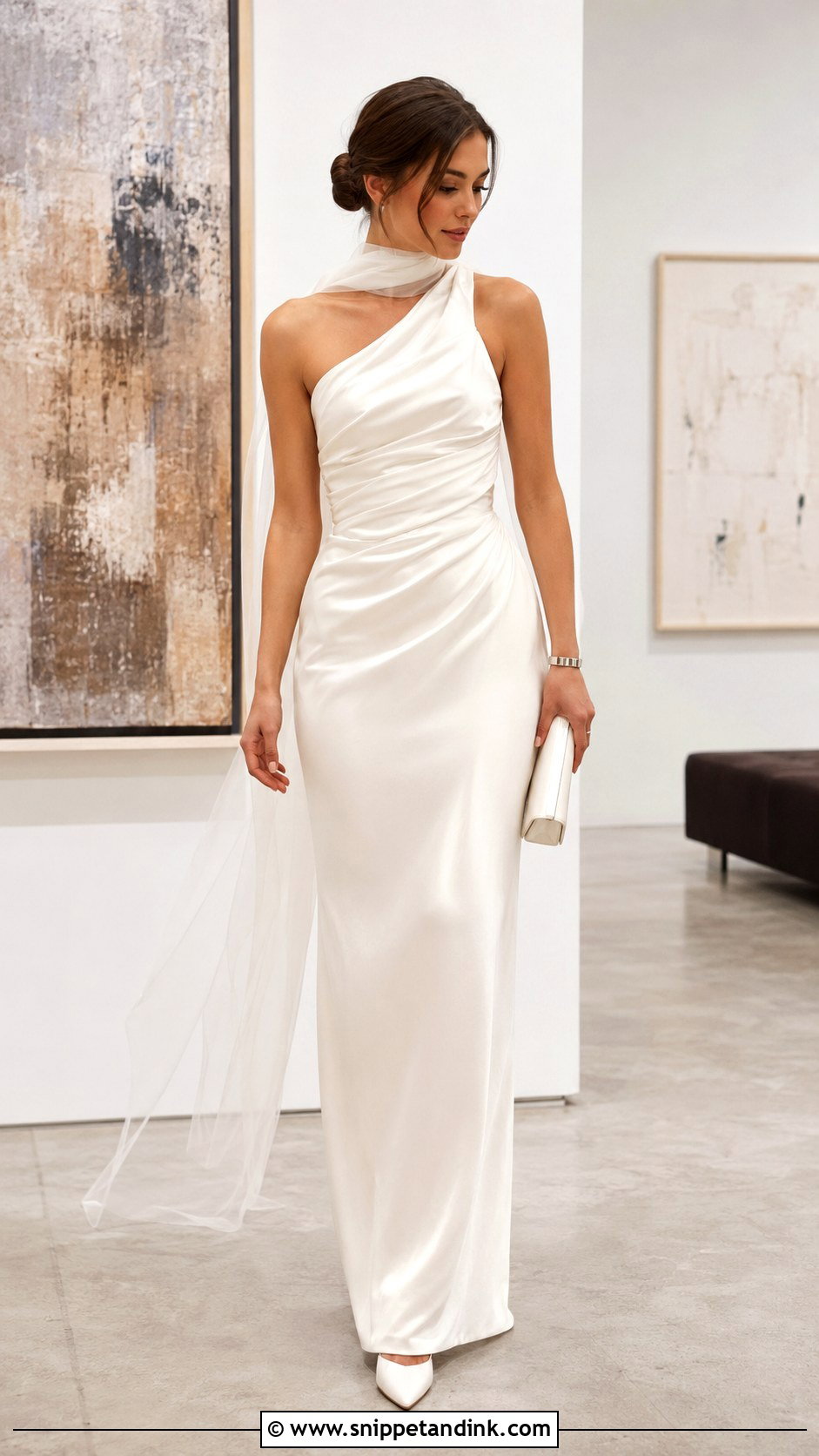
One shoulder in a slip gives asymmetry without breaking the sleek line. Gentle draping across the bodice and a straight skirt from the hips keep it simple. Wear one statement earring on the bare side or small matching studs. Pointed pumps, a slim metallic bracelet and a satin clutch are plenty, with a low side-parted bun. Instead of a traditional veil, try a sheer scarf veil pinned beneath the hair. Galleries, rooftops and hotels suit it. Hug someone at the fitting to check the shoulder seam doesn’t pull.

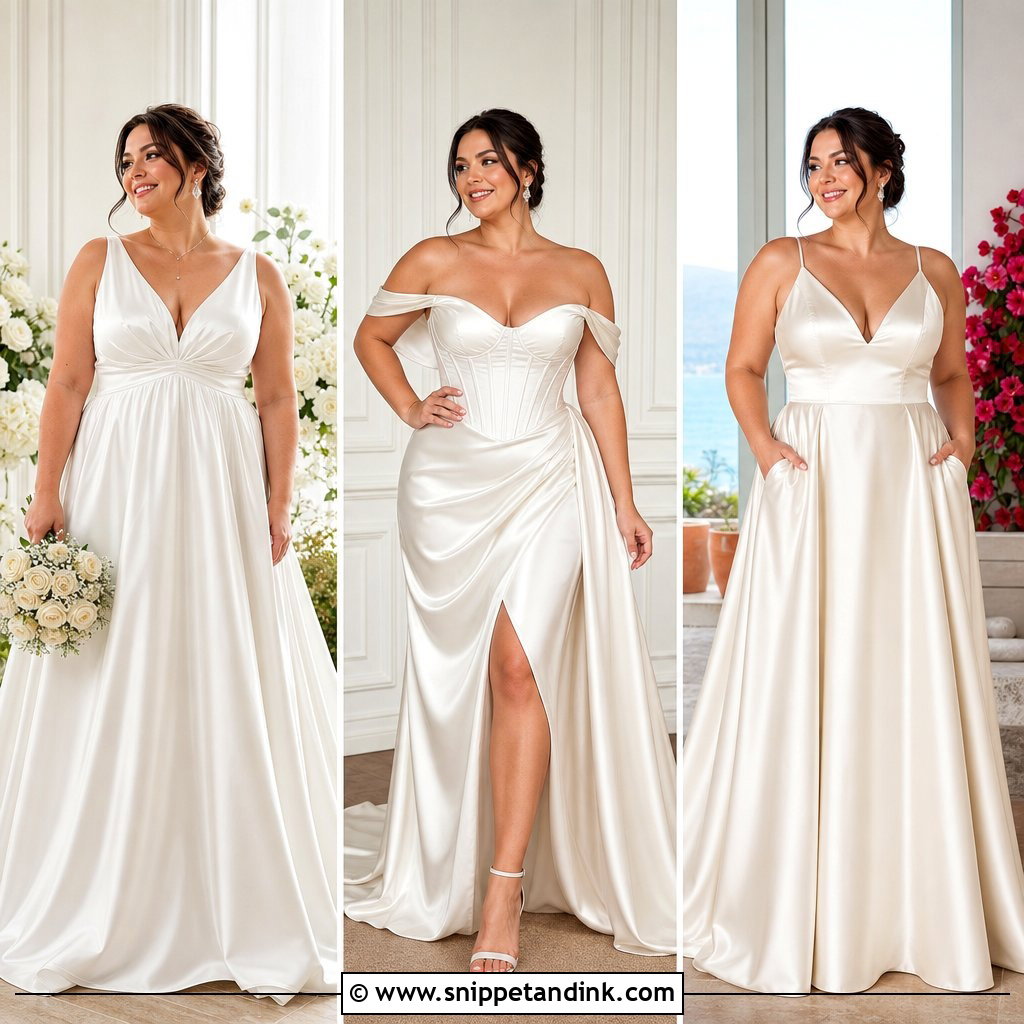
15. Long Sleeve Satin Slip Wedding Dress
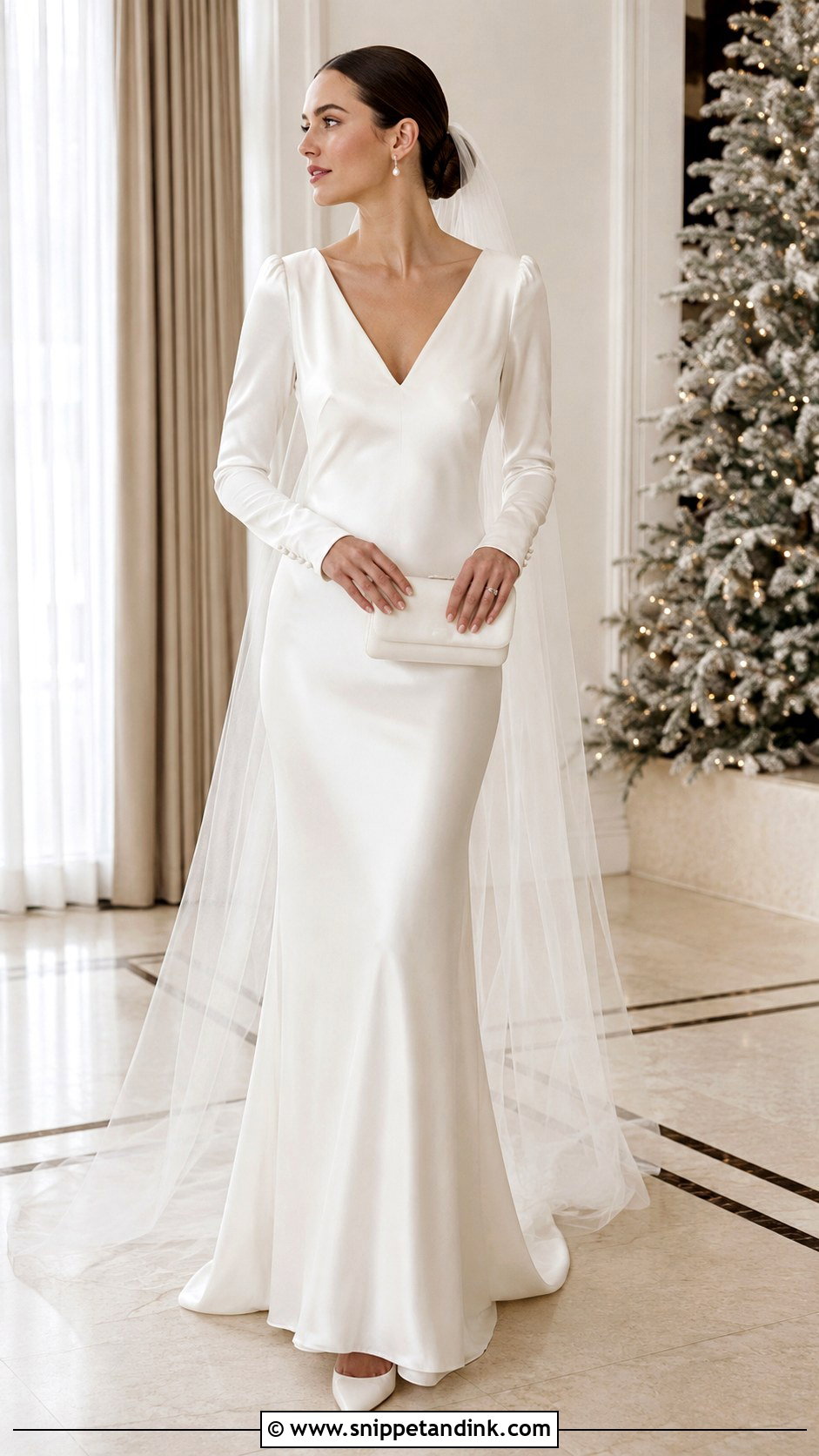
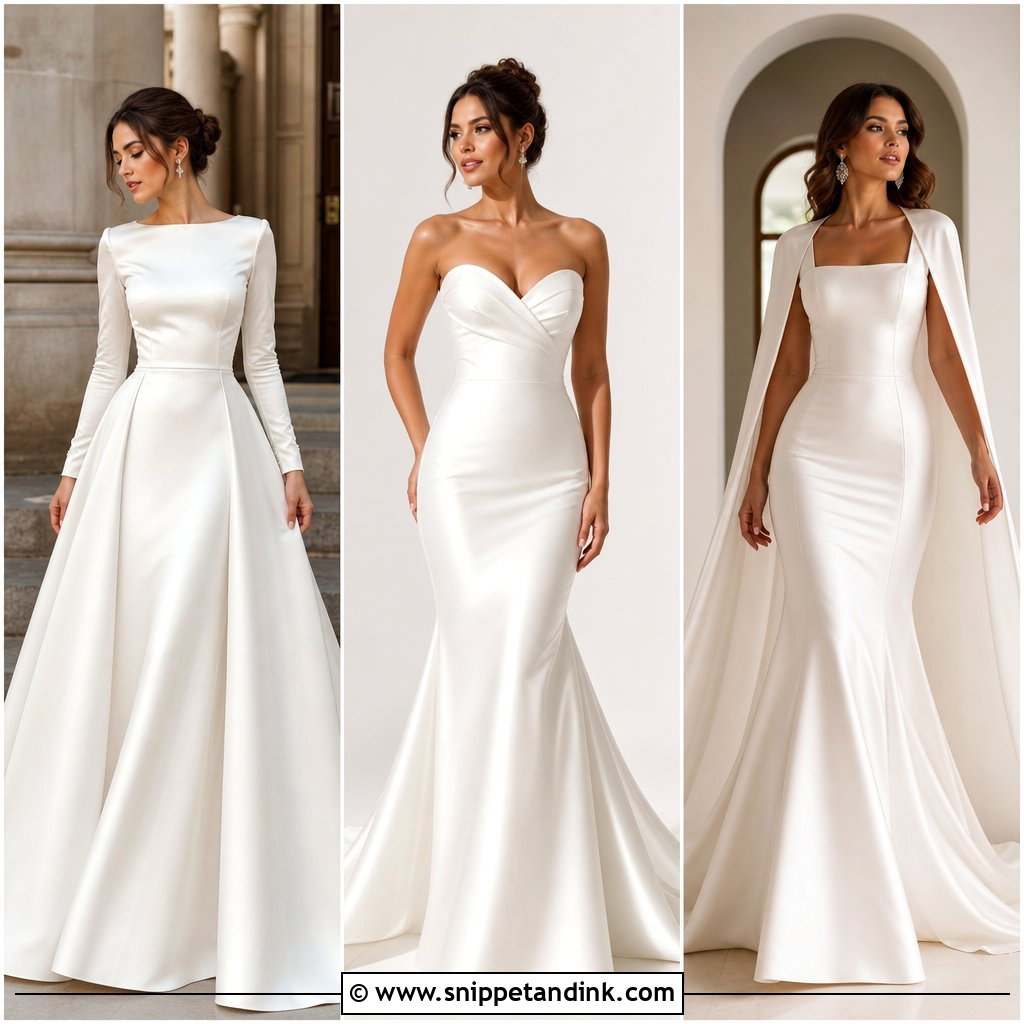
Long satin sleeves suit winter, late autumn and evening ceremonies. A bias-cut gown with slim sleeves, a modest V and covered buttons at the cuffs looks quietly formal. The problem with fitted satin sleeves is reaching; satin doesn’t stretch much on the straight grain. Ask whether a small gusset can be added under the arm. Pearl earrings, closed-toe pumps, a long sheer veil, a structured ivory clutch and a neat low bun complete it. For outdoor arrivals, add a tailored white coat long enough to cover the dress, not stopping halfway down it.
16. Satin Slip Wedding Dress With Bridal Blazer
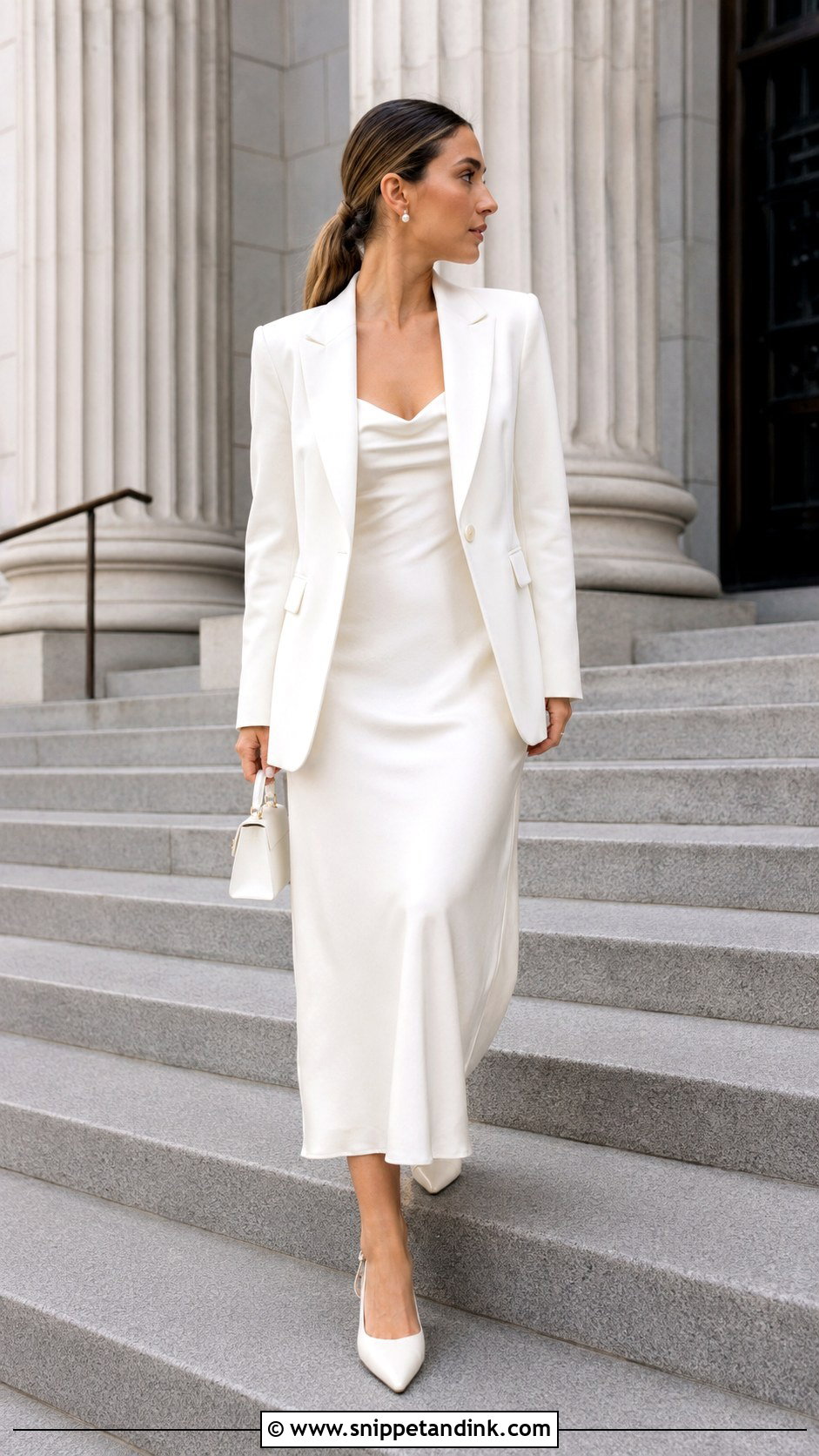
A tailored bridal blazer over a slip gives a sharp, fashion-led look. Choose a simple ivory midi or full-length slip with a straight neckline and narrow straps, then an oversized or fitted white blazer depending on how structured you want to look. Pointed slingbacks, pearl studs, a top-handle bag and a smooth ponytail or low bun keep it clean. It’s my favorite for courthouse and city weddings. Wear the blazer for the ceremony and photos, then take it off for dinner. Bring the dress to the jacket fitting so the lengths and whites match.
17. Midi Satin Slip Wedding Dress
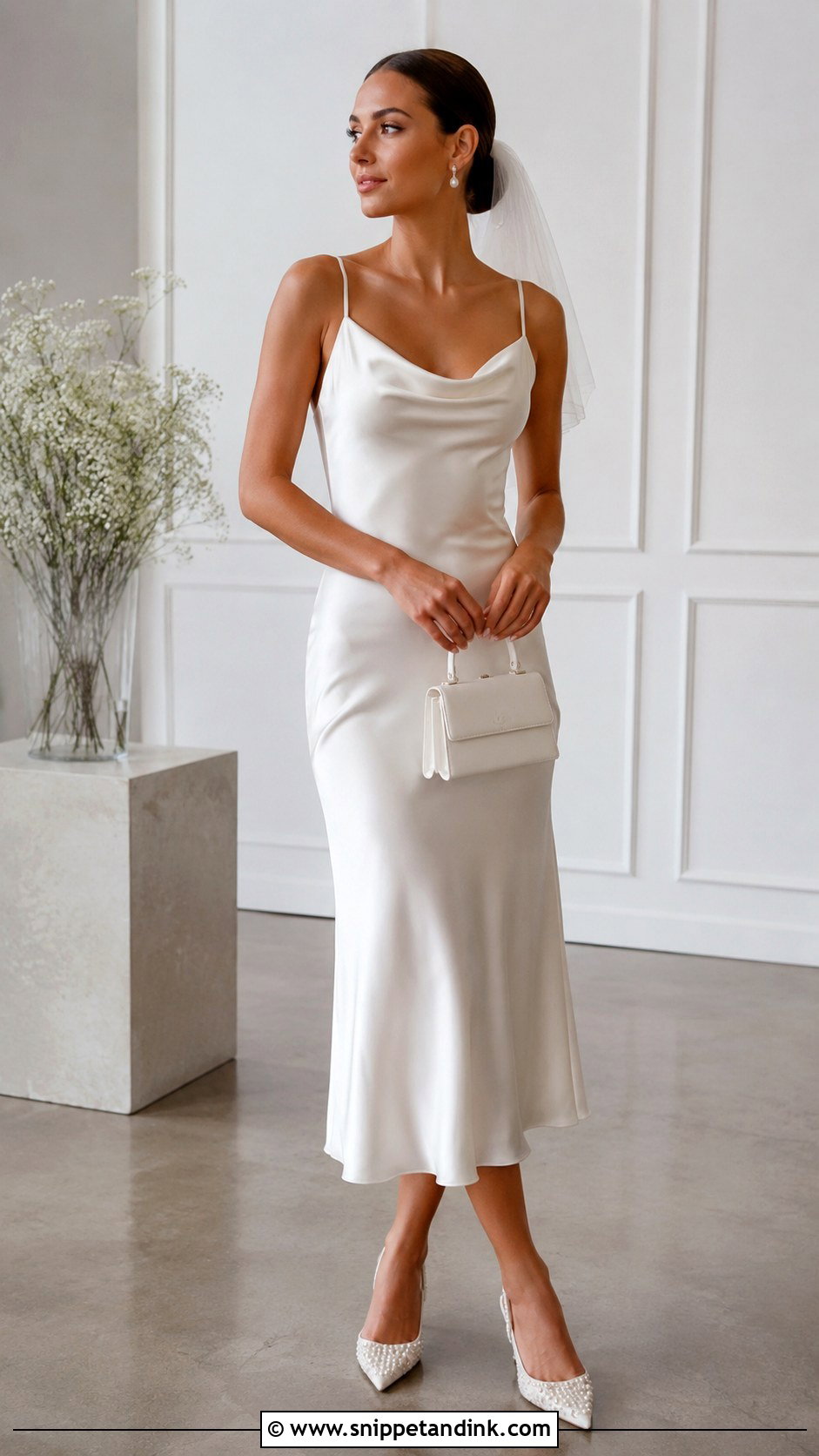
A midi slip feels relaxed, and it’s easy to wear for a small wedding. The hem falls between calf and ankle, so your shoes become part of the look; pearl-embellished slingbacks are a good choice. Delicate drops, a short birdcage or shoulder-length veil, a structured mini bag and a sleek bun or soft waves complete it. Courthouse ceremonies, brunch receptions and garden gatherings suit it. Bias-cut hems drop unevenly as they hang, so a good seamstress lets the dress hang before levelling the hem. A narrow satin belt adds definition, but the waist looks cleaner unbroken.
18. Satin Slip Wedding Dress With Floral Appliqué
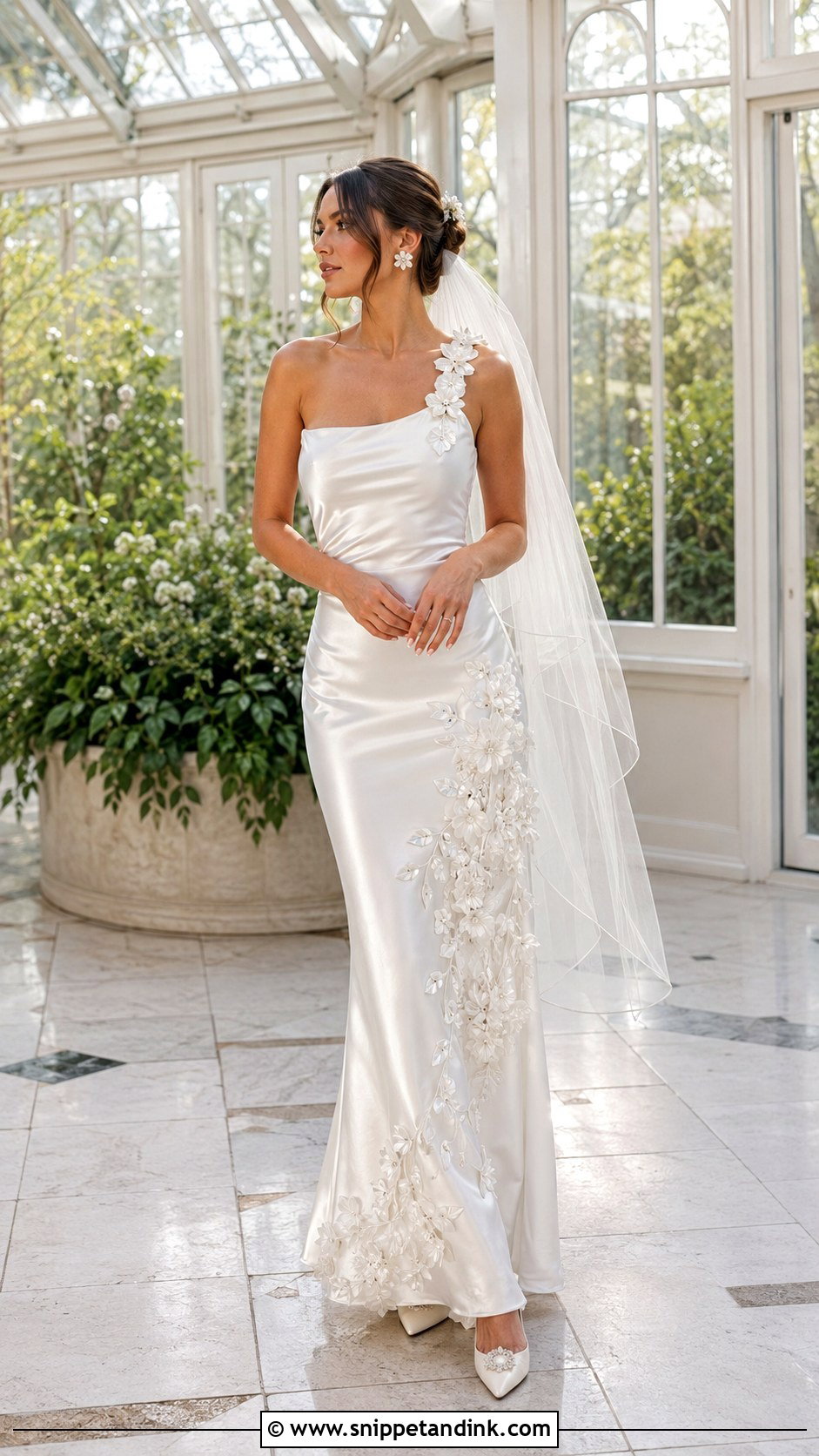
Three-dimensional flowers placed along one strap, the neckline or the lower skirt add depth while keeping the slip light. Don’t cover the whole dress; the smooth satin needs room to show. I check the backs of appliqués before anyone says yes, because stiff netting scratches the inner arm through a long day. Flower studs, pointed satin heels and a plain tulle veil suit it, with one small floral pin in a textured bun. Gardens, conservatories and spring weddings fit it. Keep the bag, jewelry and veil simple.
19. Satin Slip Wedding Dress With Detachable Train
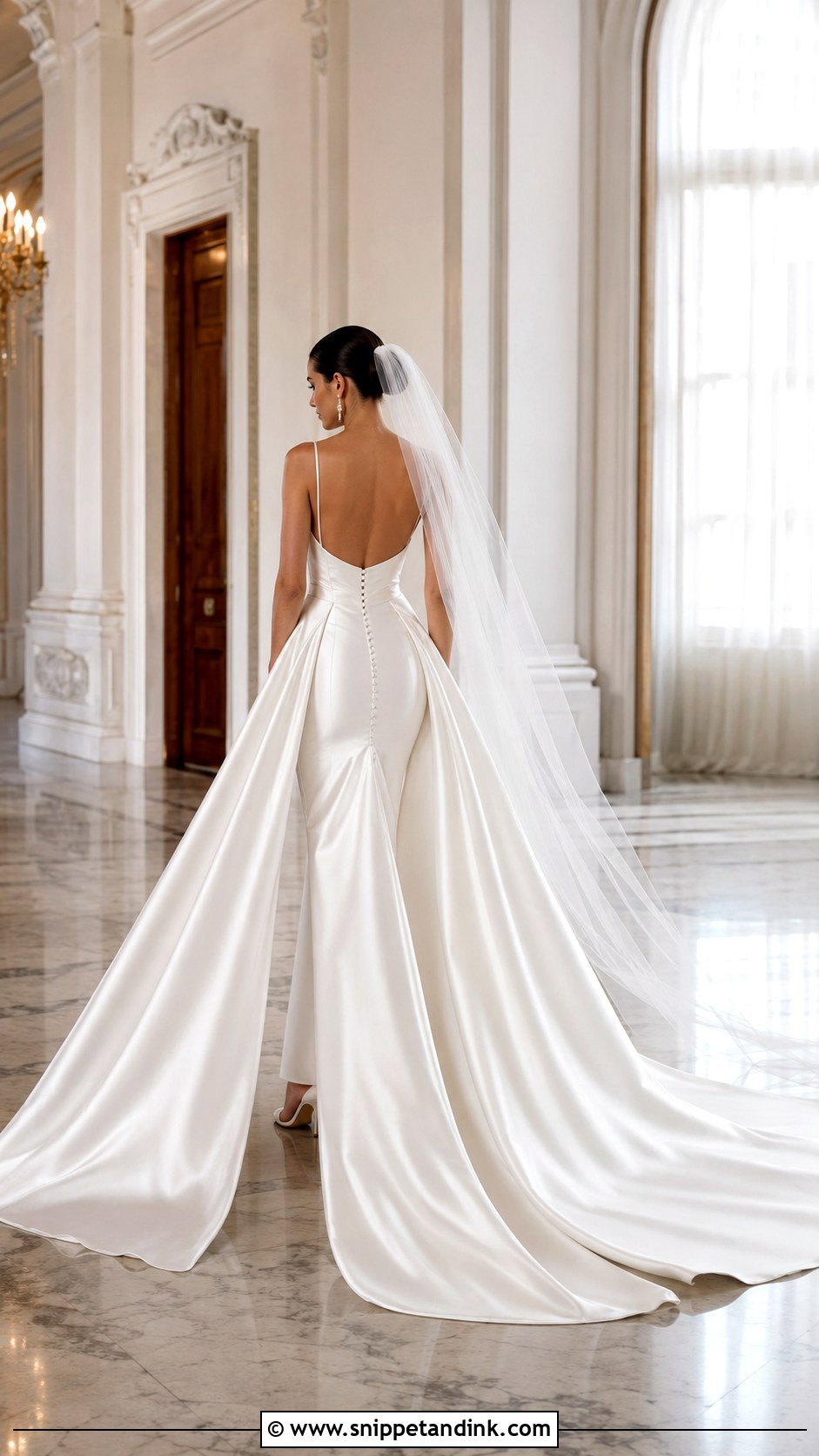
A detachable train adds ceremony drama and comes off for the party. Pick a streamlined slip with a clean V-neck, a defined waist and a floor-length hem, with a satin train fixed at the back or sides. The attachment must sit flat into the waistline. Crystal earrings, pointed pumps, a cathedral veil and a sleek updo complete the ceremony look. Take off both the train and the veil after photos for a simpler reception. Grand venues suit it best. Practice removing the train with whoever will do it on the day; clips can be fiddly with nervous hands.
20. Satin Slip Wedding Dress With Statement Veil
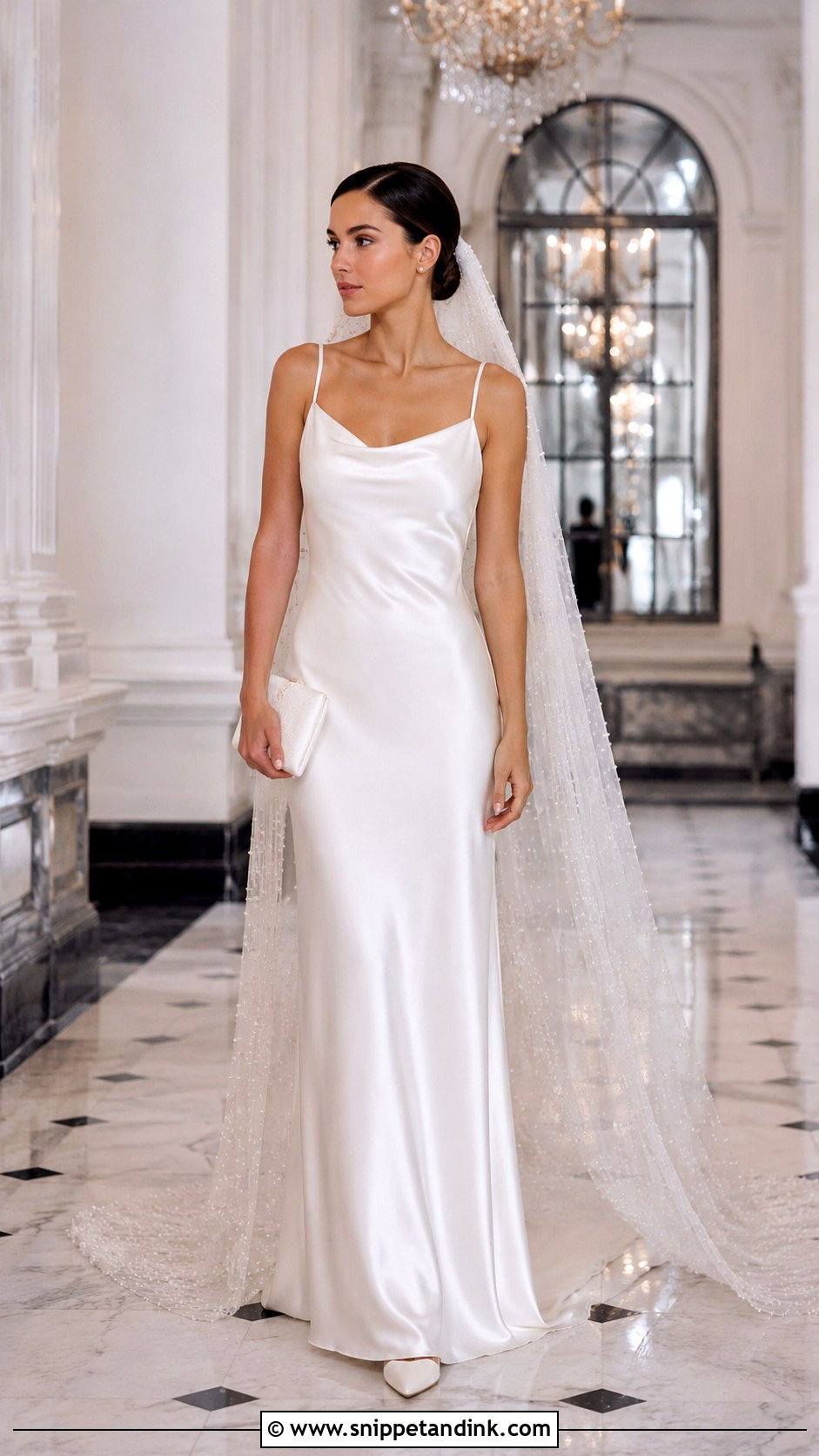
A statement veil can carry the whole personality of a plain slip. Start with an ivory gown with slim straps, a soft neckline and a fluid skirt, then add a veil with scattered pearls, fine embroidery or a wide lace edge. Keep everything else small: studs, satin pumps, a plain clutch. A secure low bun holds the weight of a decorated veil better than a high one. It works in most venues, from gardens to ballrooms. Compare veil and gown in daylight before buying; heavy embroidery on a veil can cast shadows on the satin in photos.
Satin Creases by Noon Unless You Plan the Morning
Satin creases where it’s compressed: across the lap after sitting, at the hips after a car ride. You can’t stop it entirely, but you can reduce it.
- Have the dress steamed at the venue, not at home, and hang it full length with nothing pressing on the skirt.
- Dress as late as possible. Do hair and makeup in a button-front shirt.
- In the car, sit on the very edge of the seat and lift the skirt behind you so you don’t sit on it.
- Put on deodorant well before the dress and let it dry; it leaves marks on satin that are hard to remove.
- Keep water away during the day. A drop on silk satin can leave a ring, so let a friend hold your glass when photos start.
Give someone a small handheld steamer and ask them to keep it in the bridal suite. A quick pass before the first dance takes out most of the seated creases.
A Slip Shows Everything, So Fit It Twice
The slip looks that work best keep the accessories in support of the clean, fluid shape. Cowl necks, open backs, lace toppers, trains, capes and statement veils can each make a plain slip personal. Satin weight, lining, support and alterations matter more here than on almost any other gown, because each seam changes how the fabric falls. Choose shoes you can stand in, jewelry with a reason, and a veil or layer that suits your venue. Then walk, sit and dance in the whole outfit before the day. A well-fitted slip looks relaxed and modern while still feeling like a wedding dress.
You'll Like These Ideas:







Leave a Reply