
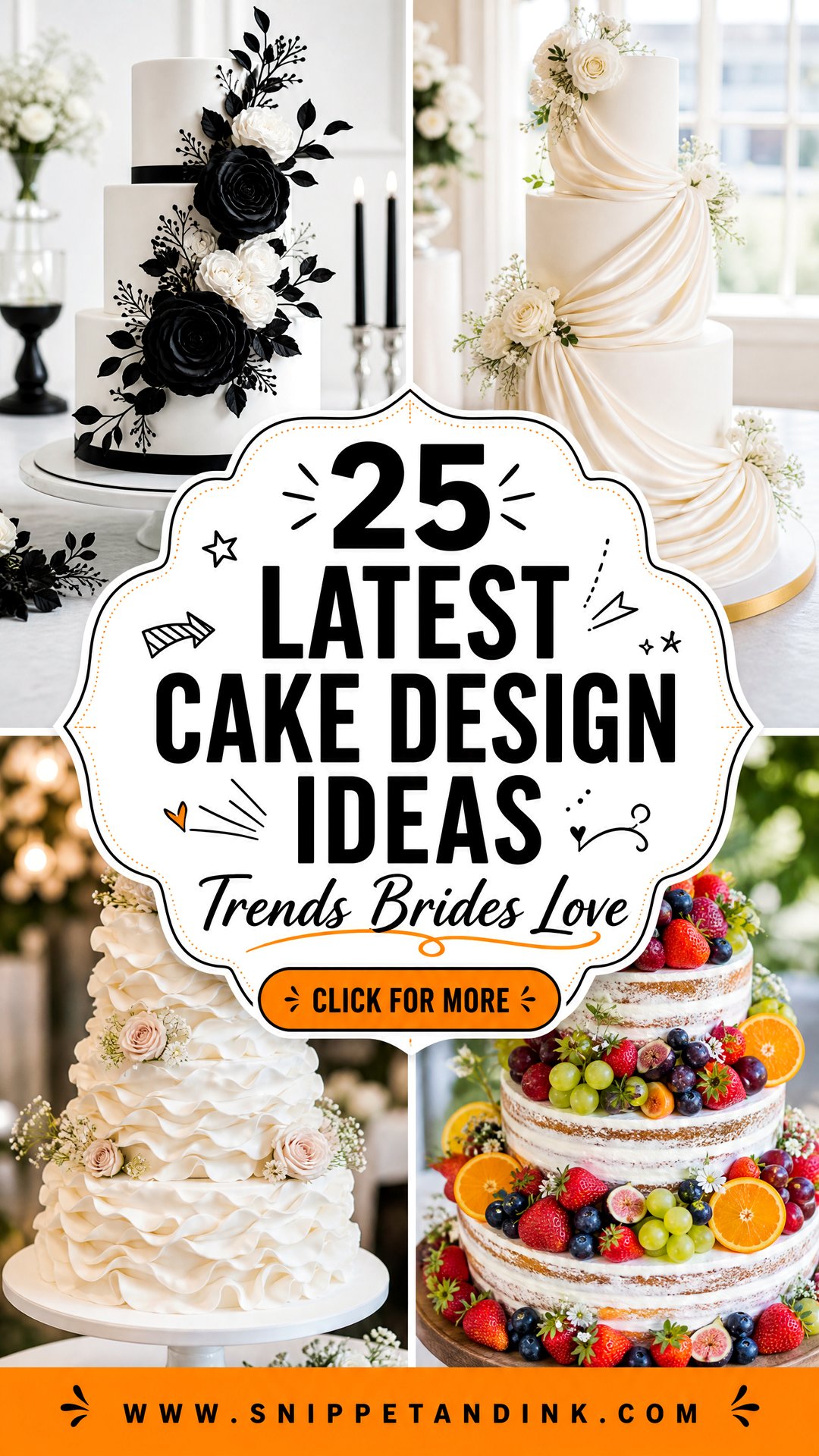
The cakes couples ask me for now are tied to the whole wedding rather than parked on a side table. Some want heavy vintage piping and sugar pearls. Others want one sculptural shape, a long low cake guests can walk along, or a plain tier covered in fruit from a local farm. The common thread is intention: the cake should look like it belongs to that room and that couple, and it still has to taste good when it’s sliced at ten at night. Below are the designs I’m being asked for most, with what each one needs from the baker and what it asks of your venue.
Working Out Tiers From the Guest List
Before we talk about piping or flowers, I ask for your guest count, because it sets the size of the cake and that limits which designs make sense. Bakers use a wedding serving of roughly 1 by 2 inches by about 4 inches tall, which is smaller than a party slice. A three-tier round in 6, 8 and 10 inch sizes usually lands somewhere around 70 to 80 of those, depending on how the venue cuts it.
- Fewer than 50 guests: two tiers or a set of mini cakes is plenty.
- Around 80 to 120: three tiers, possibly with a kitchen sheet cake as backup.
- Large guest lists: a smaller display cake plus sheet cakes saves money, or a dummy tier (polystyrene frosted to match) adds height without servings.
Popular bakers book up months ahead, often six months or more for peak season, so I’d reserve the date first and settle the design details nearer the wedding. Bring your venue’s rules too. Some insist on a cutting fee or ban open flames near the cake table, which affects candles on a long table design.
1. Vintage Lambeth Wedding Cake
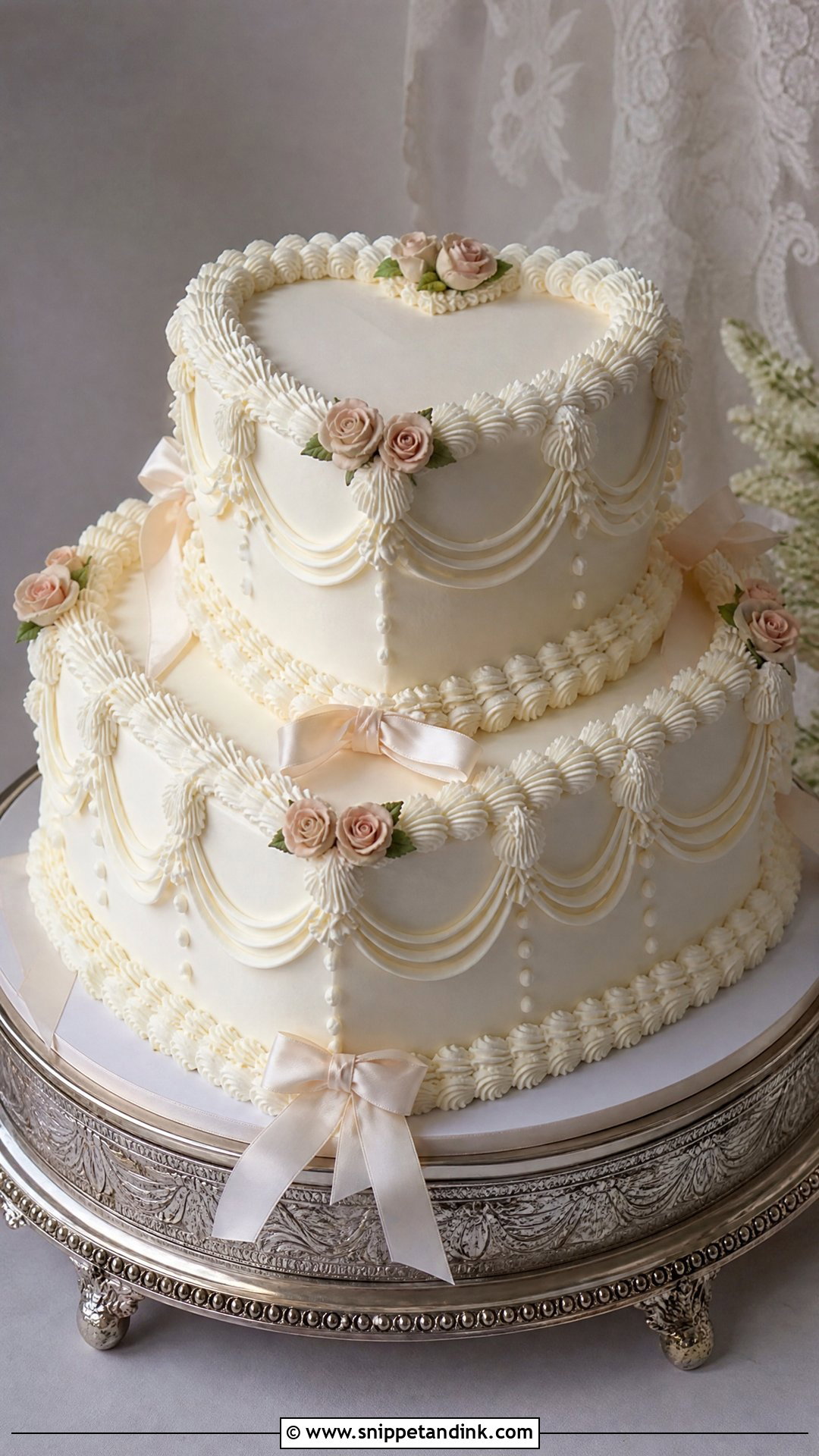
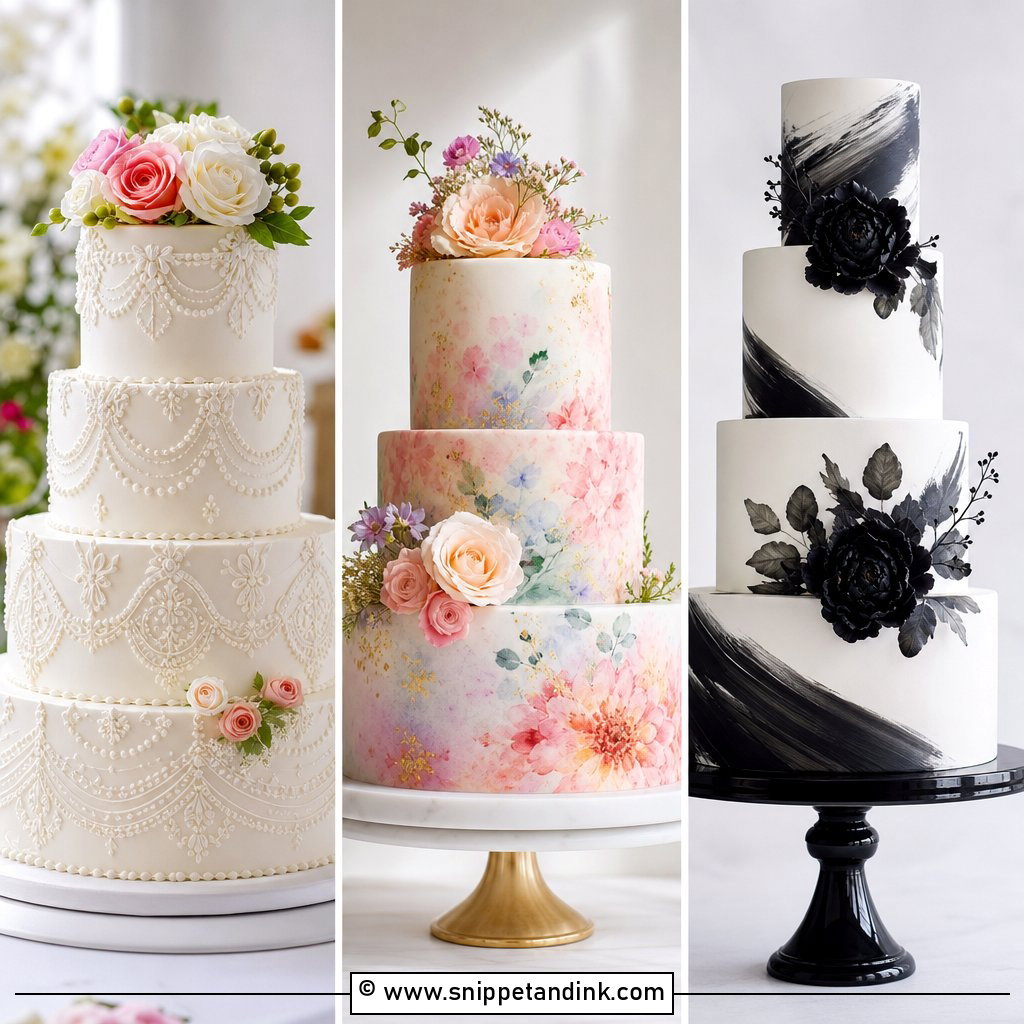
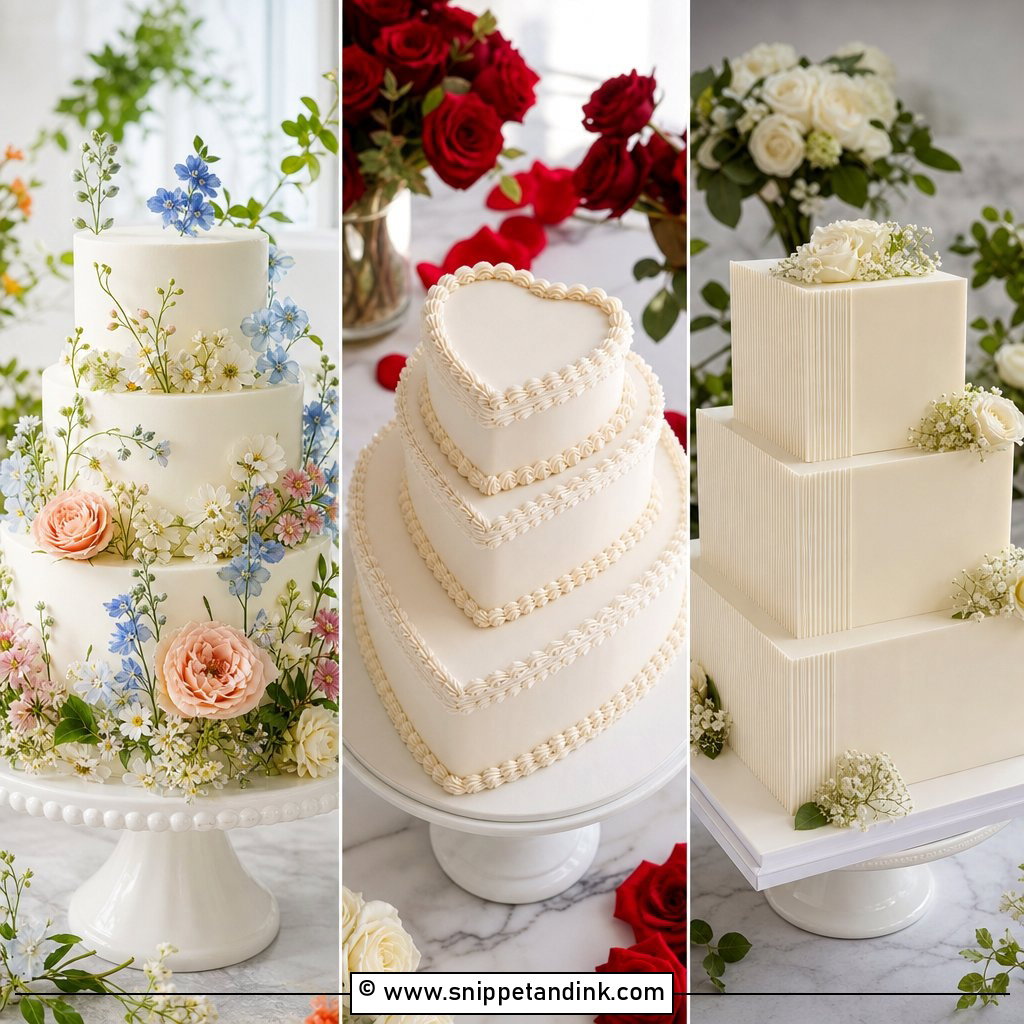
Lambeth is the over-piped style with stacked shells, swags and scrolls built up in layers, and it’s slow work. A three-tier Lambeth can take a full day of piping alone, so expect it to sit at the top of a baker’s price list. I pipe it in a stiff buttercream that holds a sharp ridge; softer frostings slump within the hour in a warm room. White, ivory, blush and pale blue all suit it. Keep the tier shape plain and let the piping carry the design. A heart-shaped Lambeth is fun for a smaller wedding, and I’d add pearls or a few fresh roses only after the piping is finished, never instead of it.
2. Minimalist White Wedding Cake
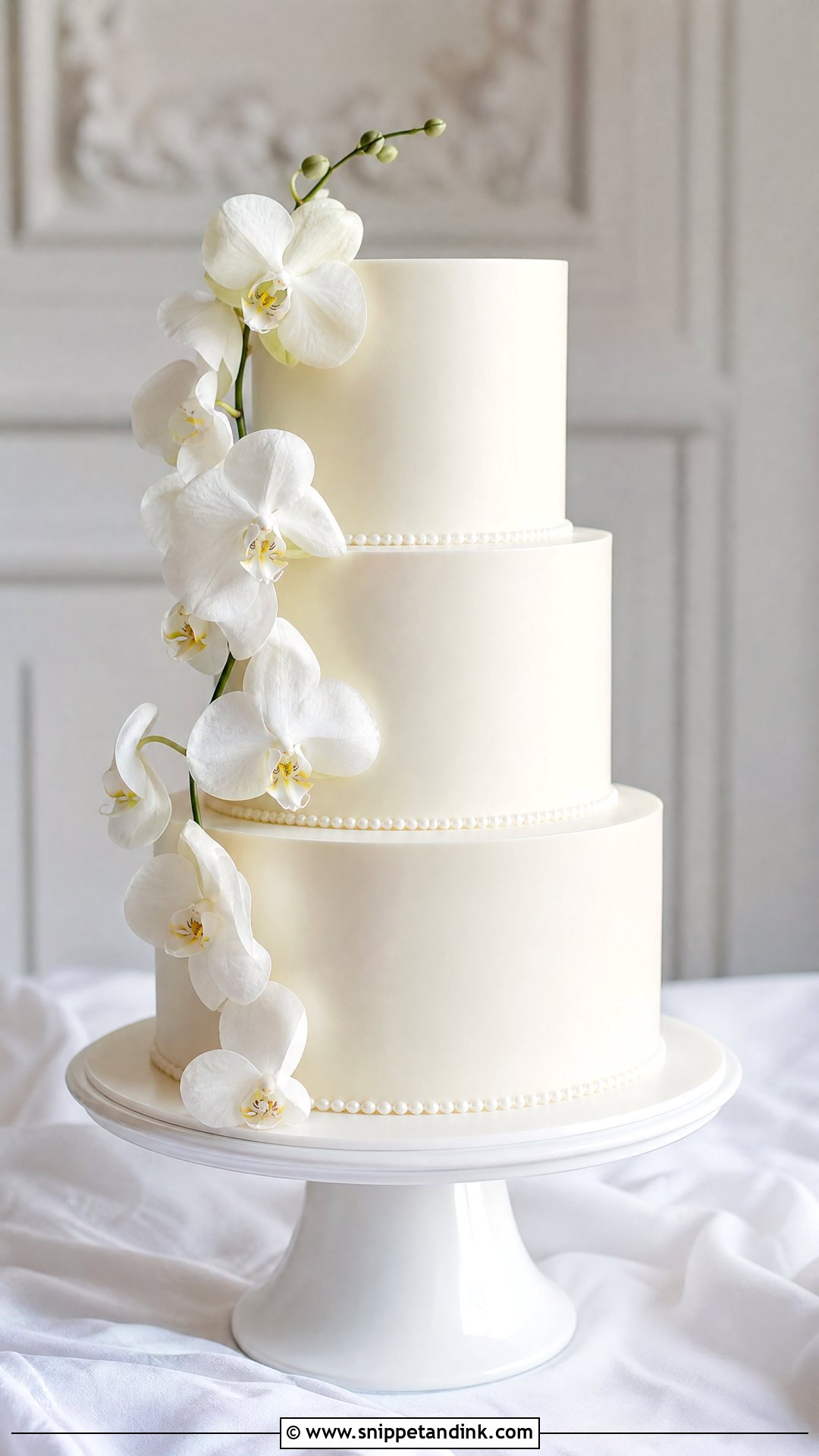
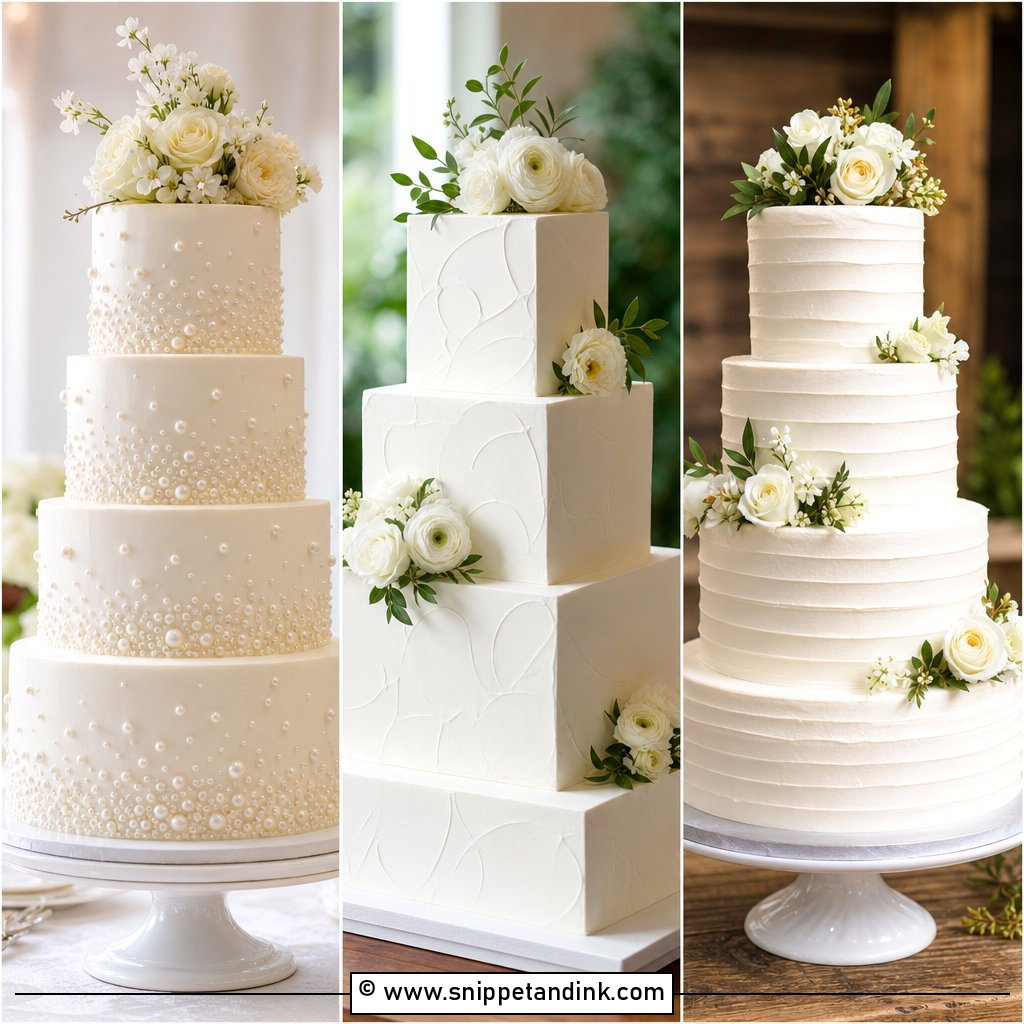
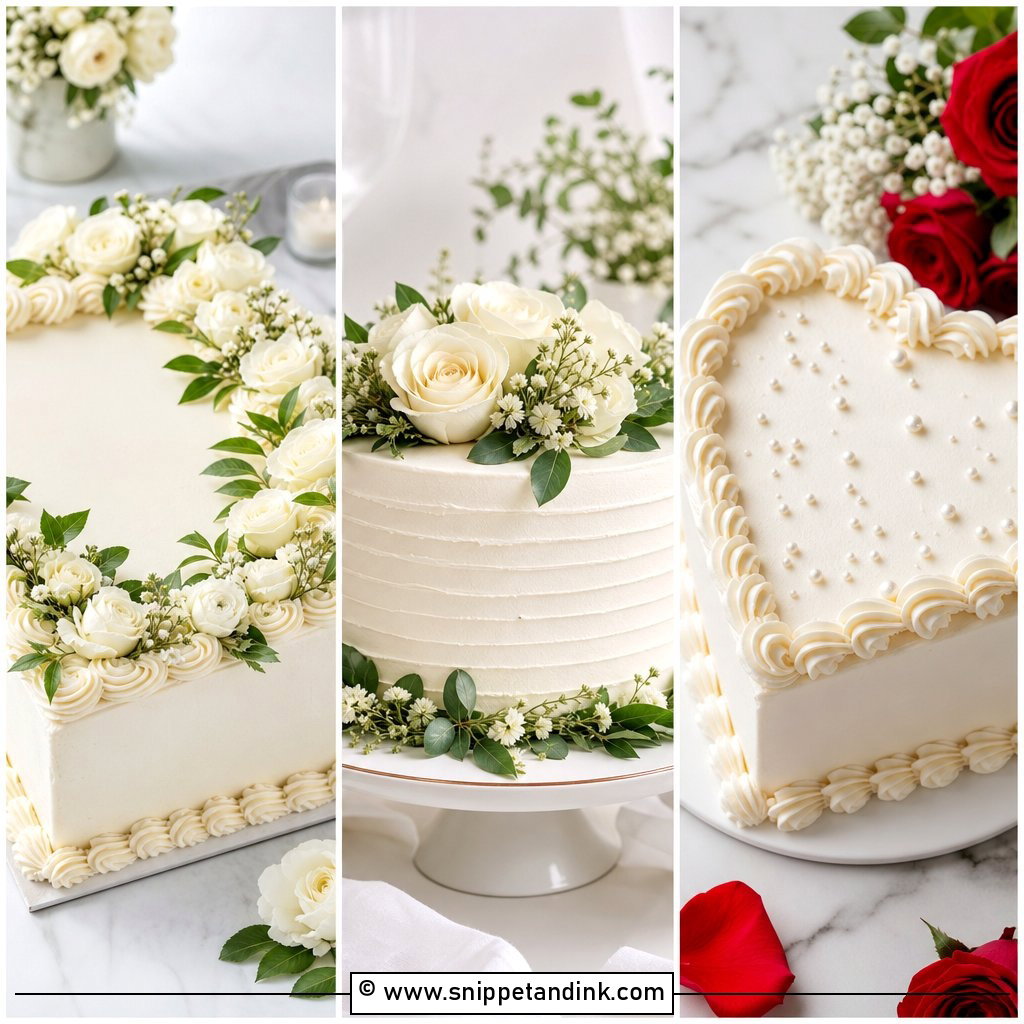
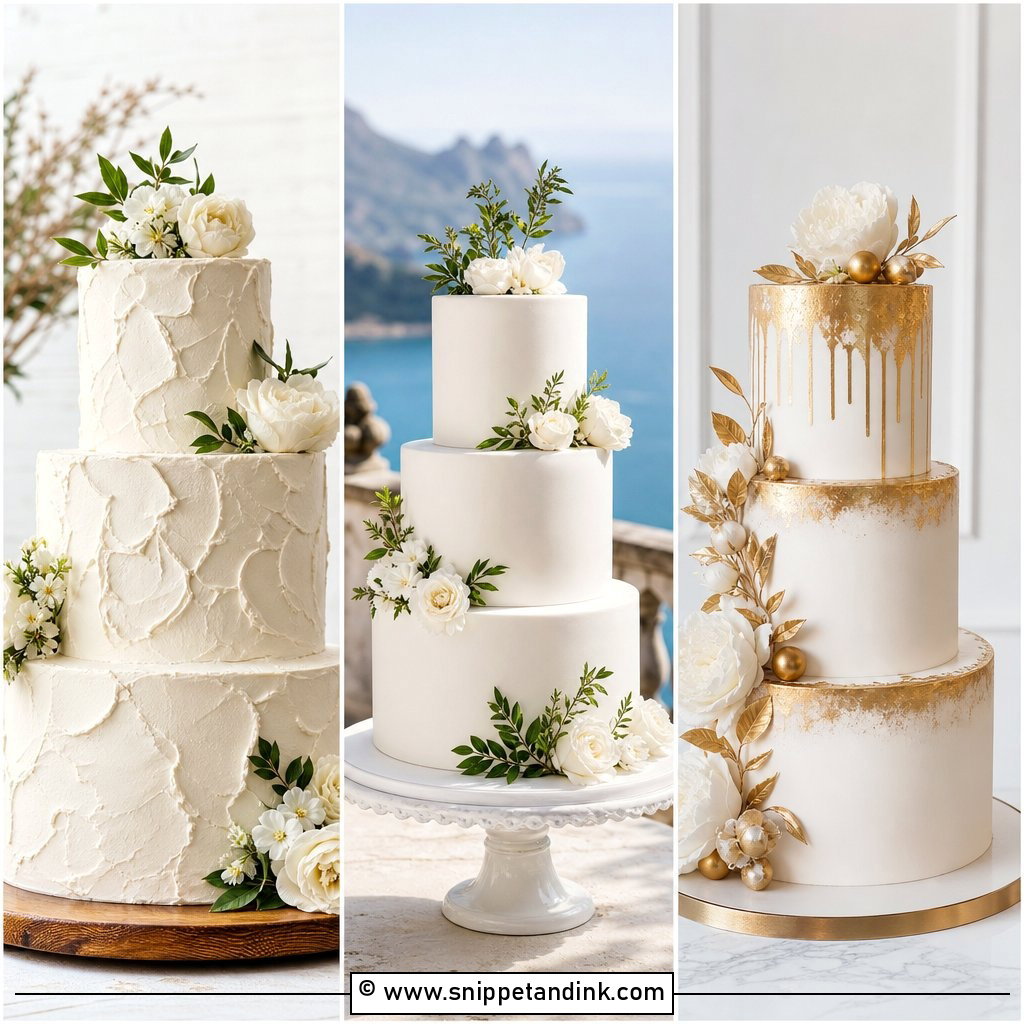
Plain white is the hardest cake to fake. With nothing on it, every bulge, air bubble and soft corner shows, so sharp edges need either a firm ganache under fondant or a well-chilled Swiss meringue buttercream smoothed with a hot scraper. One accent is enough: a single flower stem, a pearl border or a silk ribbon. It fits almost any venue and stays out of the way of the florals and the dress in photos. Flavour does more of the talking on a cake this quiet, so I’d steer you toward something distinctive, such as vanilla bean with almond or a sharp lemon curd filling.
3. Pearl Wedding Cake
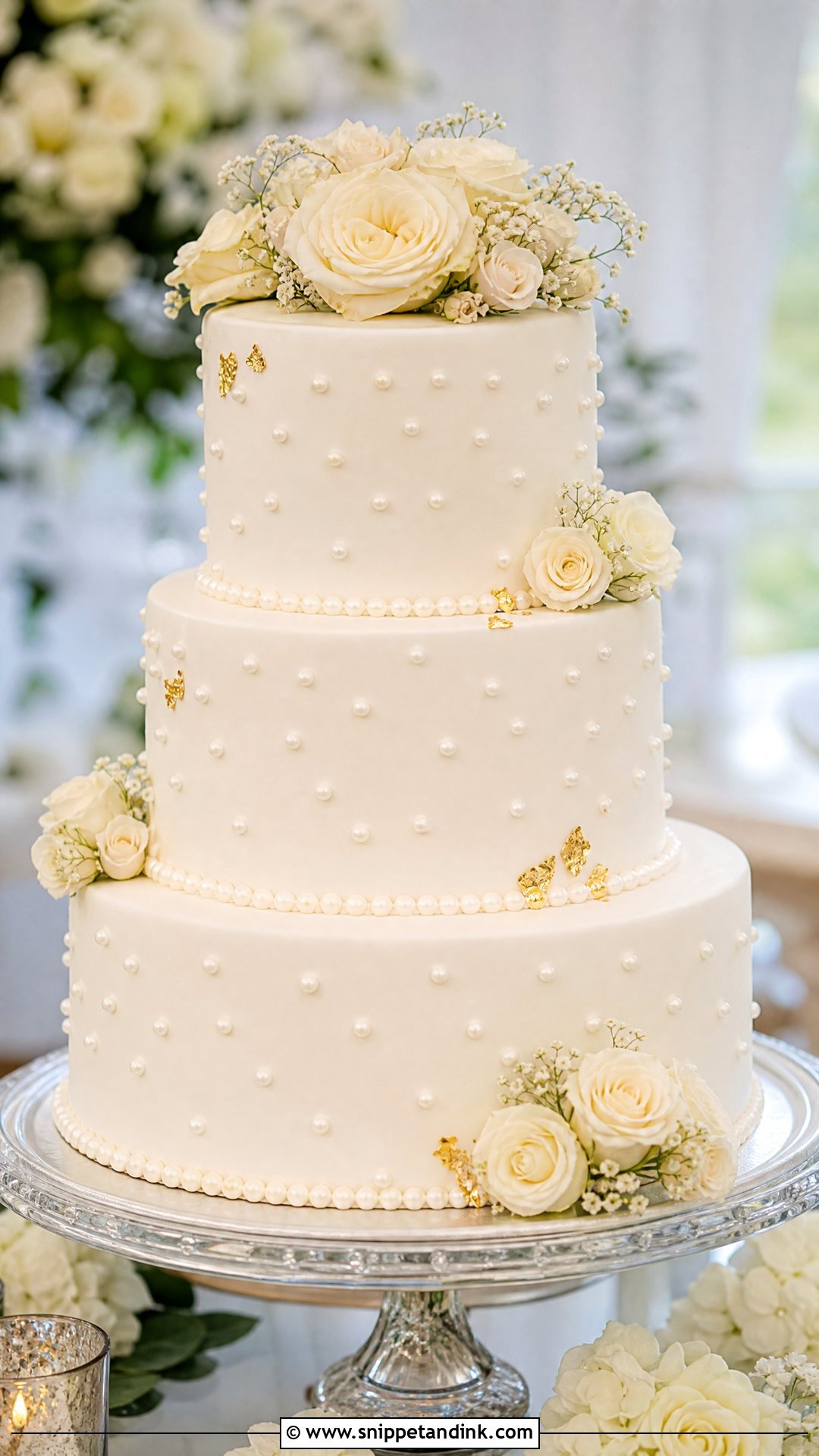
Pearls make a cake look bridal faster than almost anything else. I mould them from fondant or sugar paste and brush them with pearl lustre, and I’m careful with hard silver dragées, which look the part but can crack a tooth. Use them lightly around the base of each tier, or scatter them over smooth fondant for texture. Ivory pearls on white frosting read softer; mixing pearls with gold leaf or satin ribbon pushes it toward glamour. Keep any flowers simple so the pearls stay the focus. Coconut and white chocolate flavours suit the look, and the style sits well at coastal and vintage receptions.
4. Floral Wedding Cake
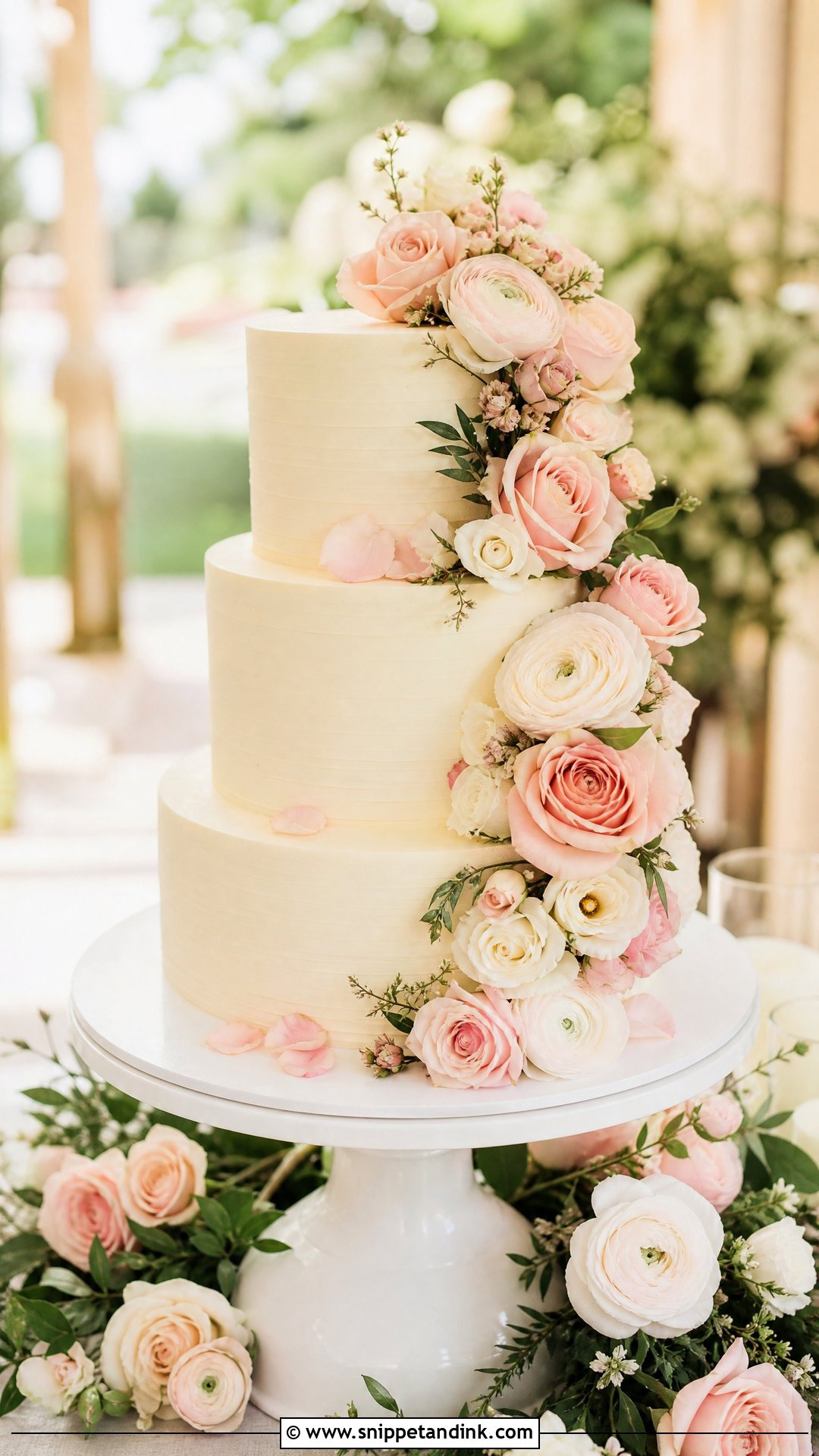
A floral cake can tie the bouquet, arch and tables together, but crowding is the usual mistake. I’d rather place blooms in one clean cascade than scatter them on every tier. The safety part matters more than most couples realise: many popular wedding flowers, including hydrangea, lily of the valley and foxglove, are toxic, and florist stems are often sprayed. I wrap every stem in floral tape and seat it in a food-safe pick so nothing touches the sponge, and I agree with the florist in writing which flowers are going on. Lemon, pistachio and strawberry layers all sit well under fresh flowers.
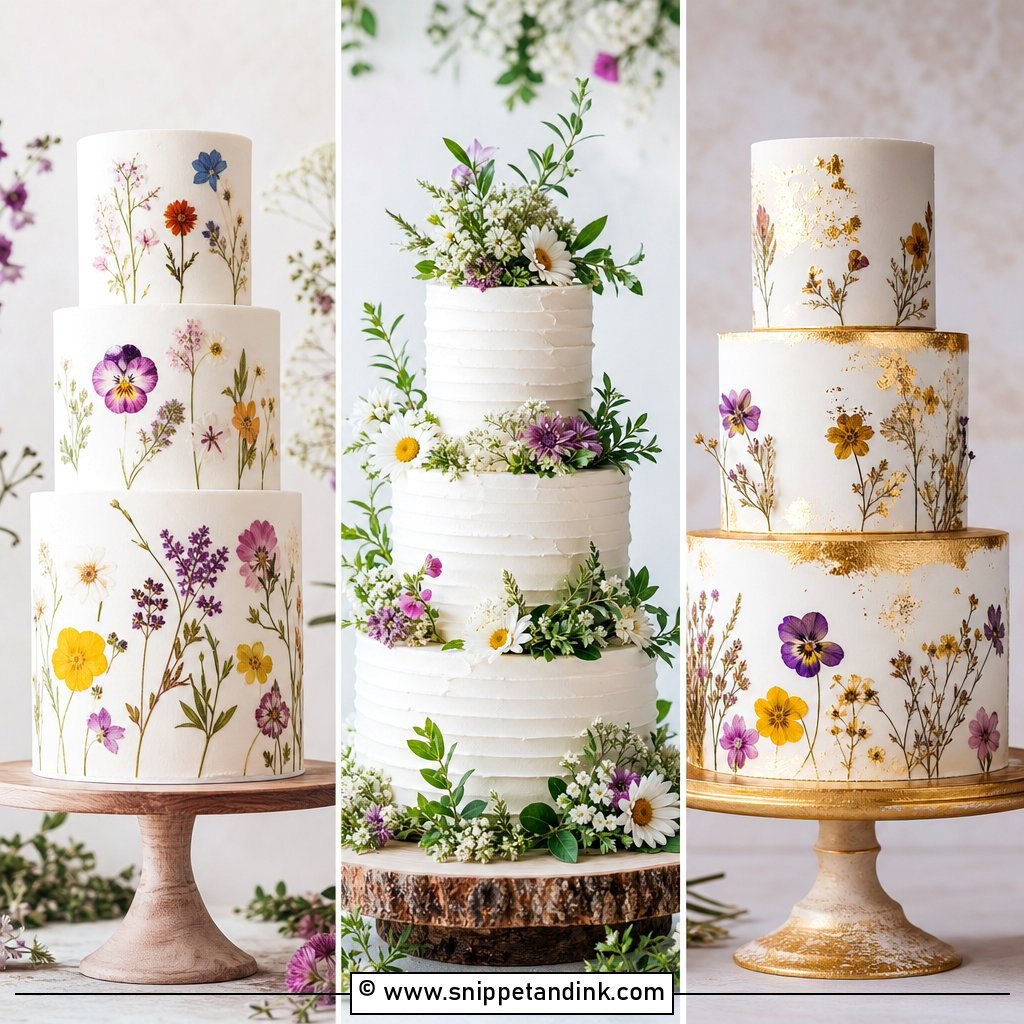
5. Pressed Flower Wedding Cake
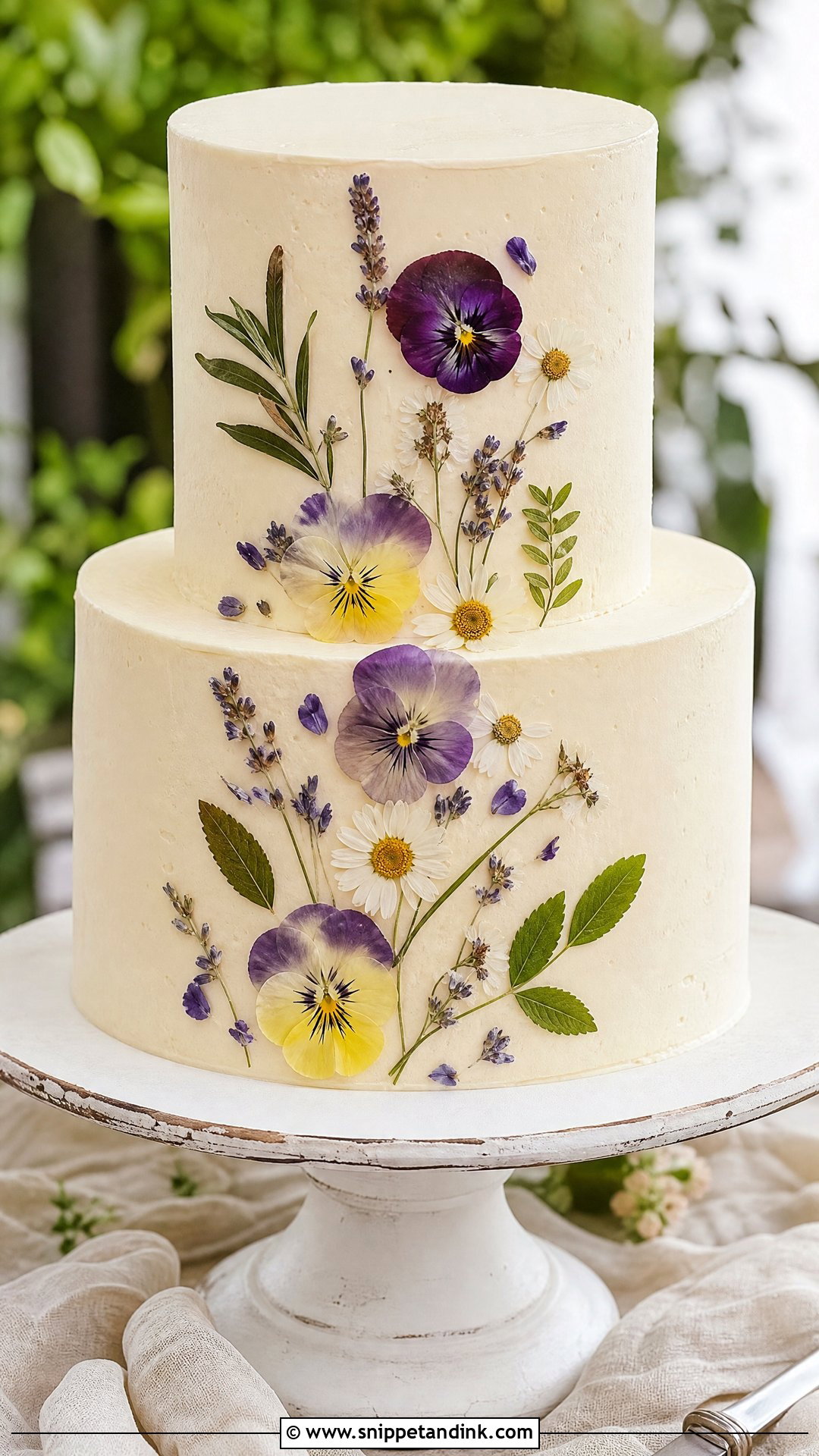
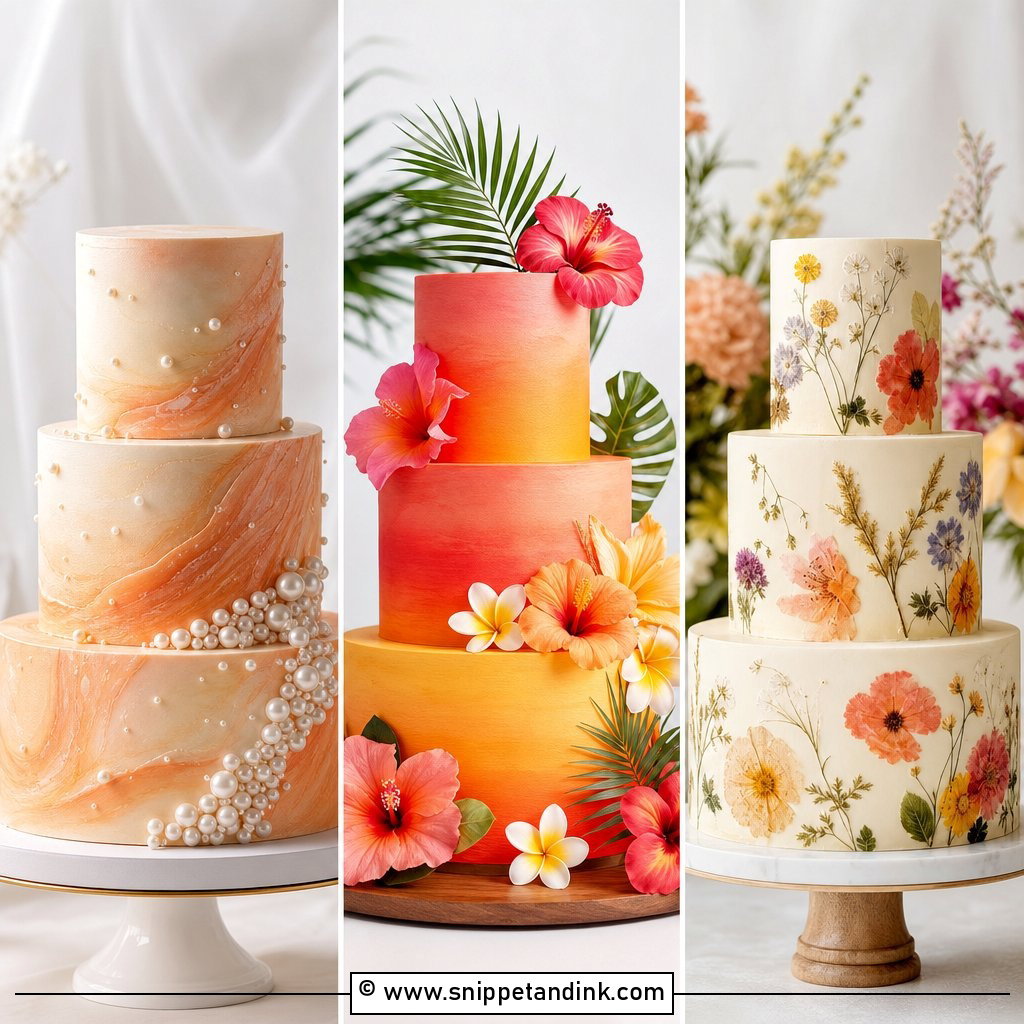
Pressed flowers give a garden feel without the height of a fresh arrangement. Edible pressed flowers such as violas, pansies and cornflower petals lie flat against smooth buttercream or fondant and create a pattern that feels hand-collected. I press them on just before the cake leaves the studio, because in a damp fridge the petals can darken and bleed. A white or pale cream surface lets the colours show. Lemon elderflower or honey vanilla suits the mood well, and the style is at its best at spring weddings and cottage receptions.
6. Sculptural Wedding Cake
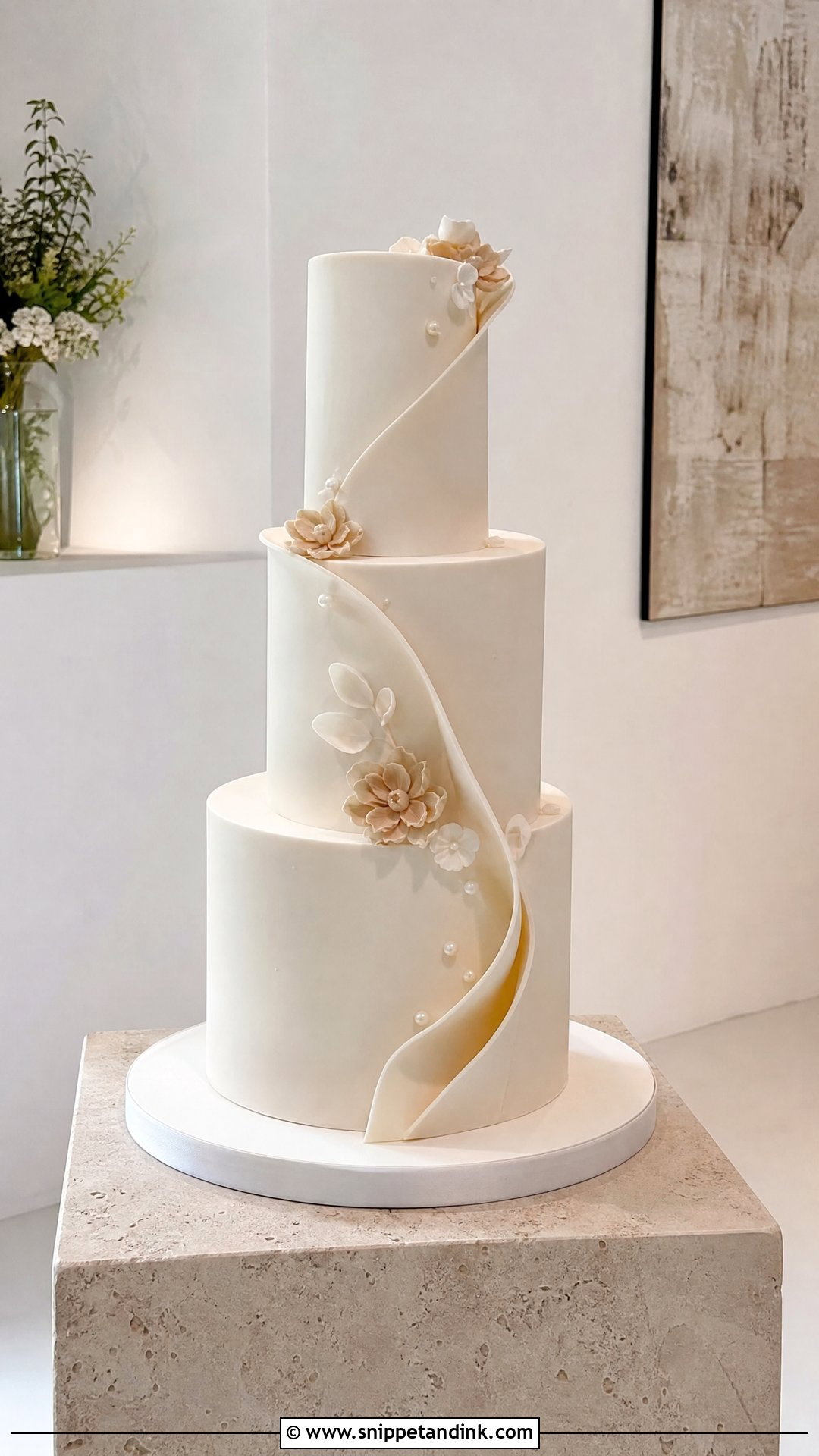
Sculptural cakes treat the tiers as a shape: curves, offset tiers, waves or smooth architectural forms. They need an engineer’s thinking as much as a decorator’s, with internal supports, cake boards between every section and fillings firm enough not to shift when the cake leans. I keep the palette tight, usually ivory, beige, soft grey or muted blush, so the form is what people notice. This is not a design to hand to a home baker or a shop that doesn’t regularly build structure. It suits modern venues, galleries and hotel ballrooms.
7. Textured Buttercream Wedding Cake
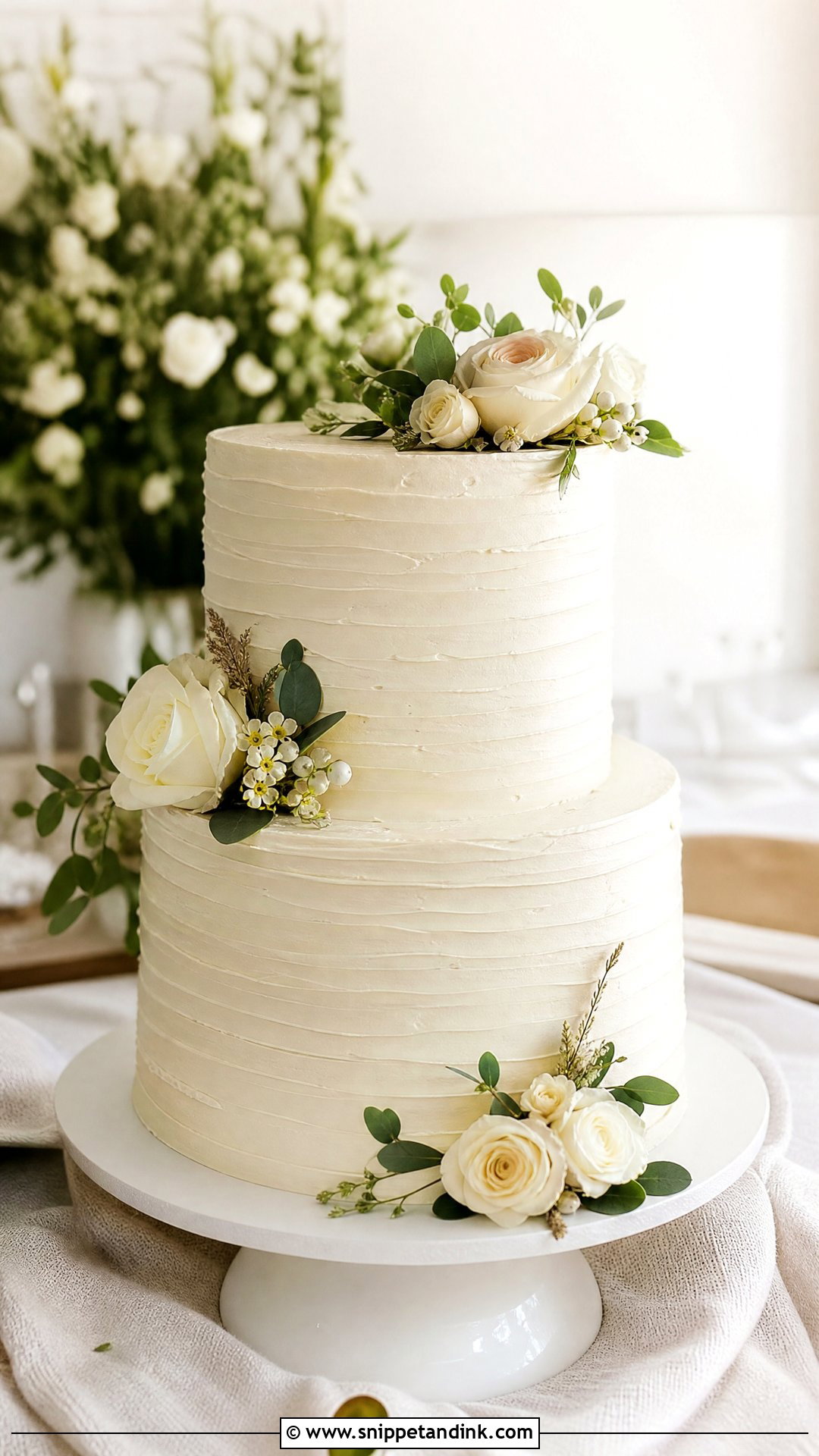
Textured buttercream is where a palette knife or a comb does the decorating: ridges, horizontal lines, knife strokes or gentle waves. It looks handmade and relaxed while still finished, and it hides small flaws better than a sharp smooth cake. The trade-off is heat. Deep ridges lose their edge quickly in a warm marquee, so for summer I use a firmer meringue buttercream and ask for the cake to stay in the coolest spot until it’s cut. Fresh flowers, fruit, pearls or a simple topper all sit well on it, and keeping the colour soft lets the texture show in photos.
8. Long Table Wedding Cake
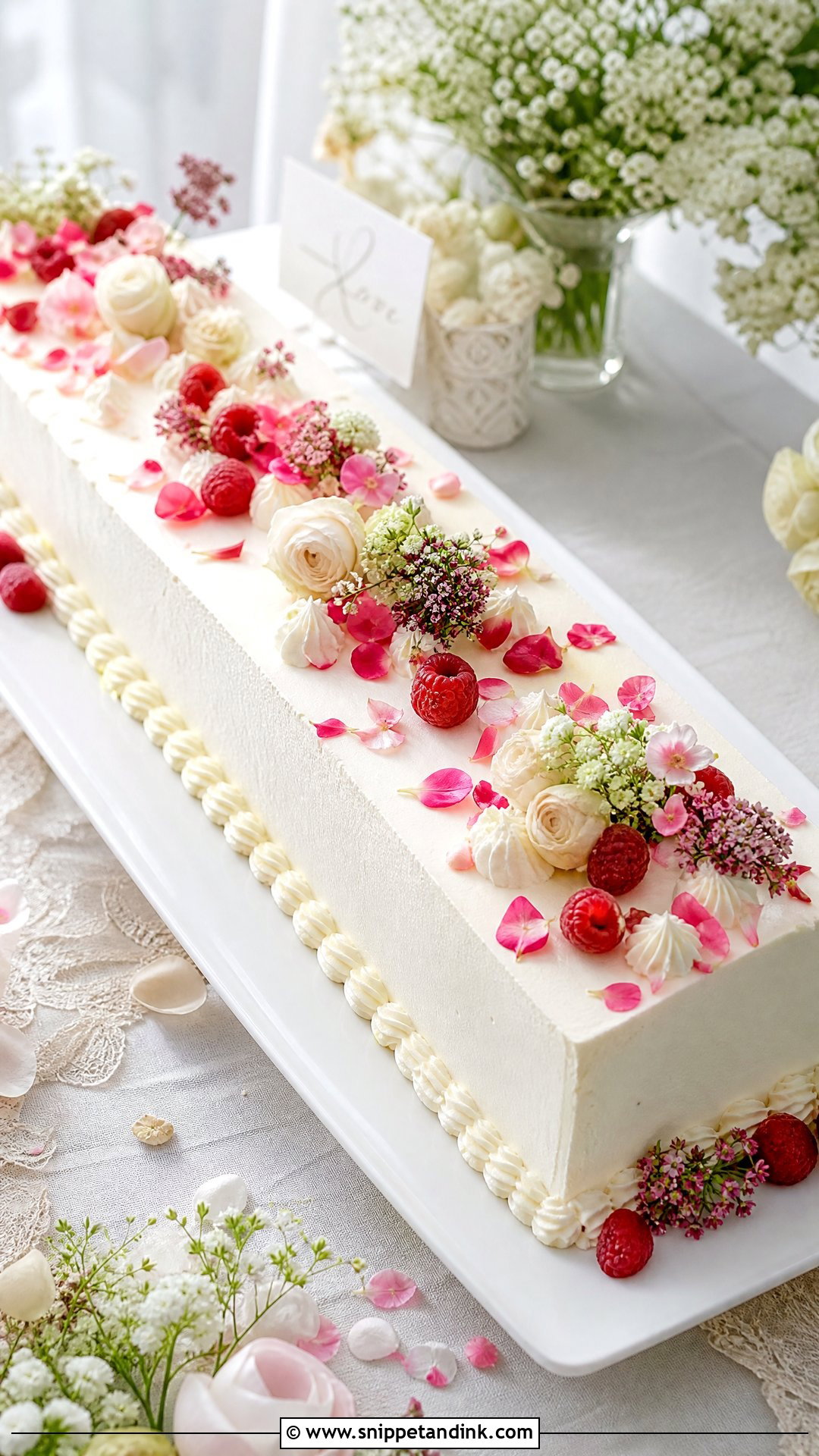
A long table cake stretches the dessert sideways instead of up, either as one long cake or several cakes styled end to end with flowers, fruit and candles. Guests gather around it in a way they never do with a tall tiered cake. Logistics shape the design: long cakes are built on boards in sections, which must fit through the venue doors and into the delivery van, and someone has to cut a low cake cleanly in front of guests. I keep the frosting smooth or lightly piped, then add berries or petals on site. It’s at its best at outdoor dinners and tented receptions.
9. Wedding Sheet Cake
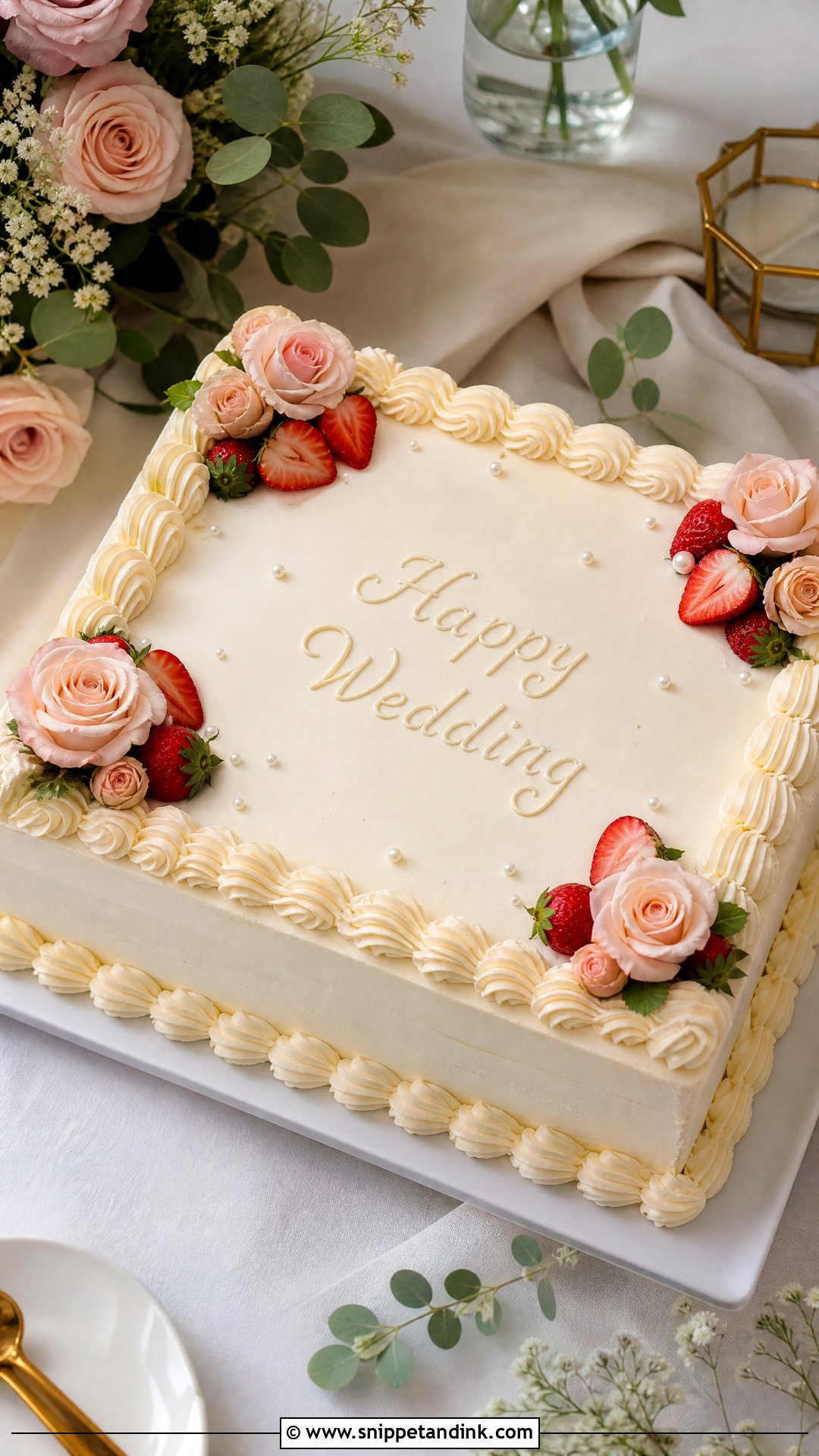
Sheet cakes have come out of the kitchen. A well-decorated one with vintage piping, berries, a pearl border or a piped message can sit proudly on a styled dessert table. It’s the most practical way to feed a large guest list: no tier dowels, quick to slice and usually cheaper per serving than stacked tiers. Many couples pair a small display cake for the cutting with sheet cakes for serving. Choose a flavour guests reliably love, like vanilla raspberry or chocolate fudge, because a sheet cake is where crowd-pleasing beats adventurous.
10. Mini Wedding Cake
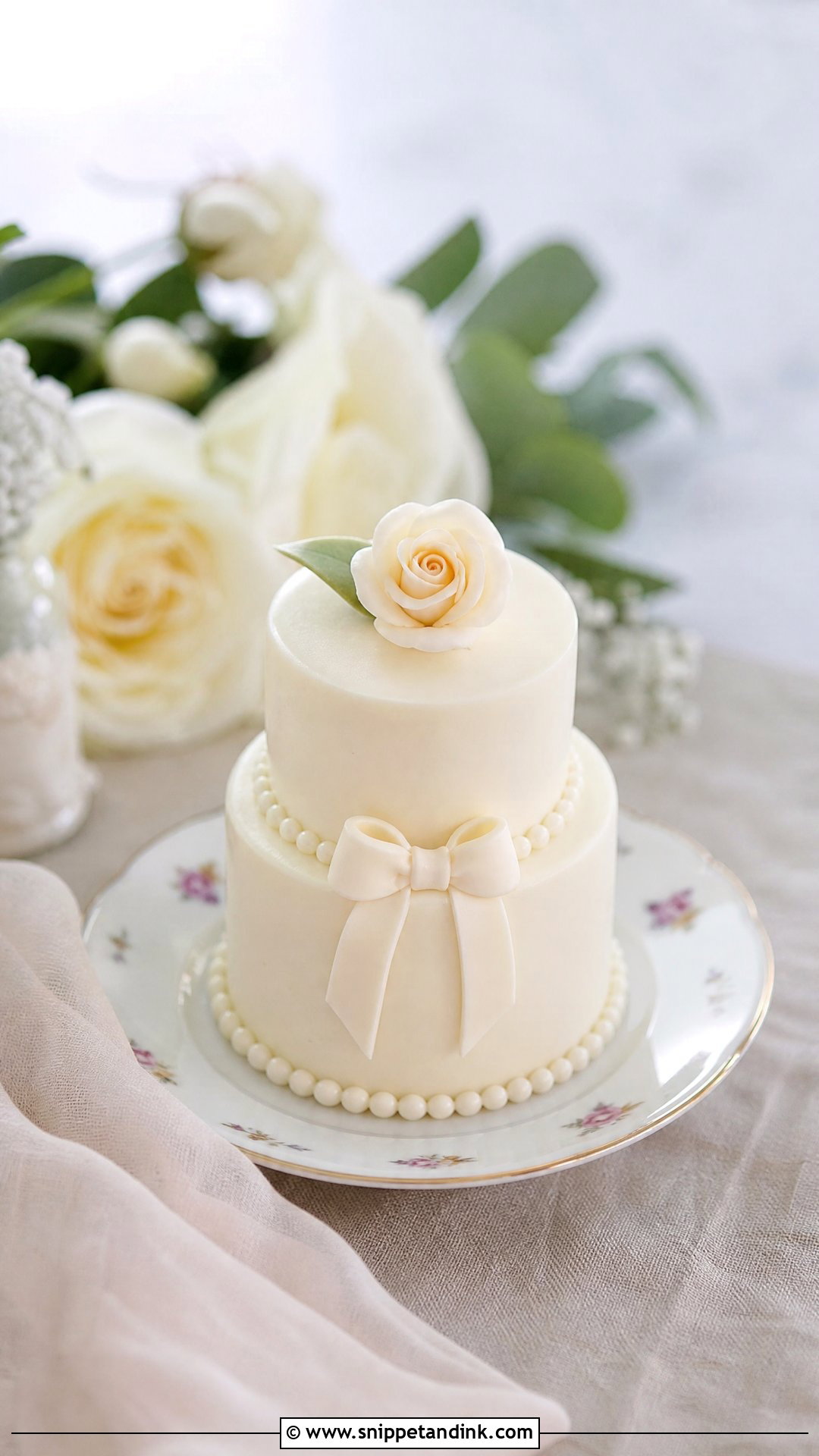
Mini cakes, whether one per guest or a cluster of small cakes in different flavours, feel personal, but couples are often surprised that they cost more per serving, not less. Each one is filled, frosted and decorated individually, so the labour adds up fast. They’re easiest to justify at intimate weddings where every guest gets their own. I decorate them with something small, such as a single sugar flower, a pearl or a satin bow, and keep the look consistent so the table reads as a set. They also let you offer several flavours without committing a whole tier to each.
11. Two Tier Wedding Cake
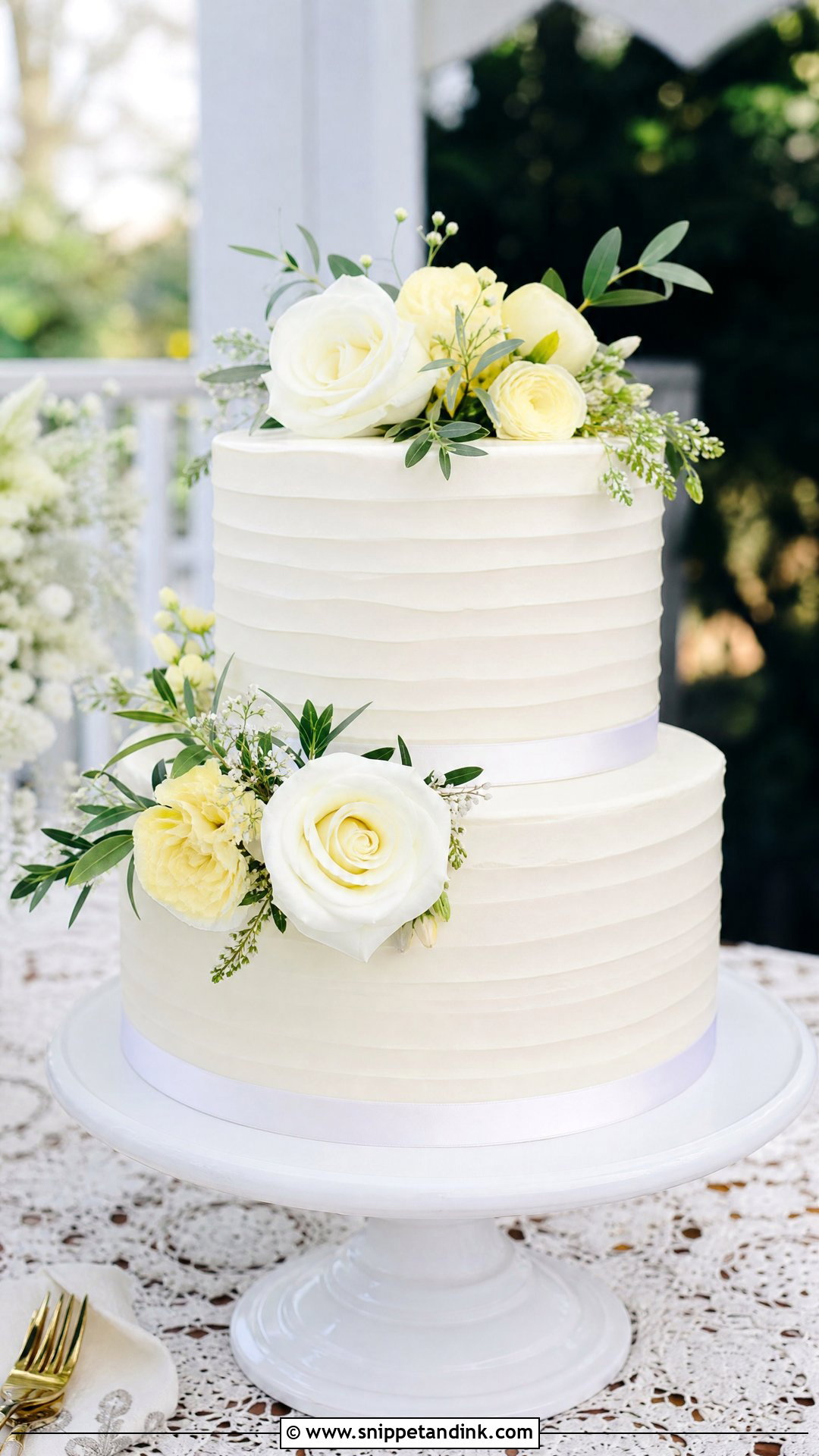
Two tiers suit small weddings and elopements, and they give a classic outline without much height. A 6 and 8 inch pair typically serves somewhere around 35 to 40 wedding-sized slices, though bakers cut differently. It can go romantic with flowers, modern with smooth frosting or vintage with piped borders. Put it on a pedestal stand; two tiers flat on a big table look smaller than they are. Couples often choose one flavour per tier, such as lemon on top and vanilla almond below, which I’m happy to do as long as both fillings set to a similar firmness.
12. Three Tier Wedding Cake
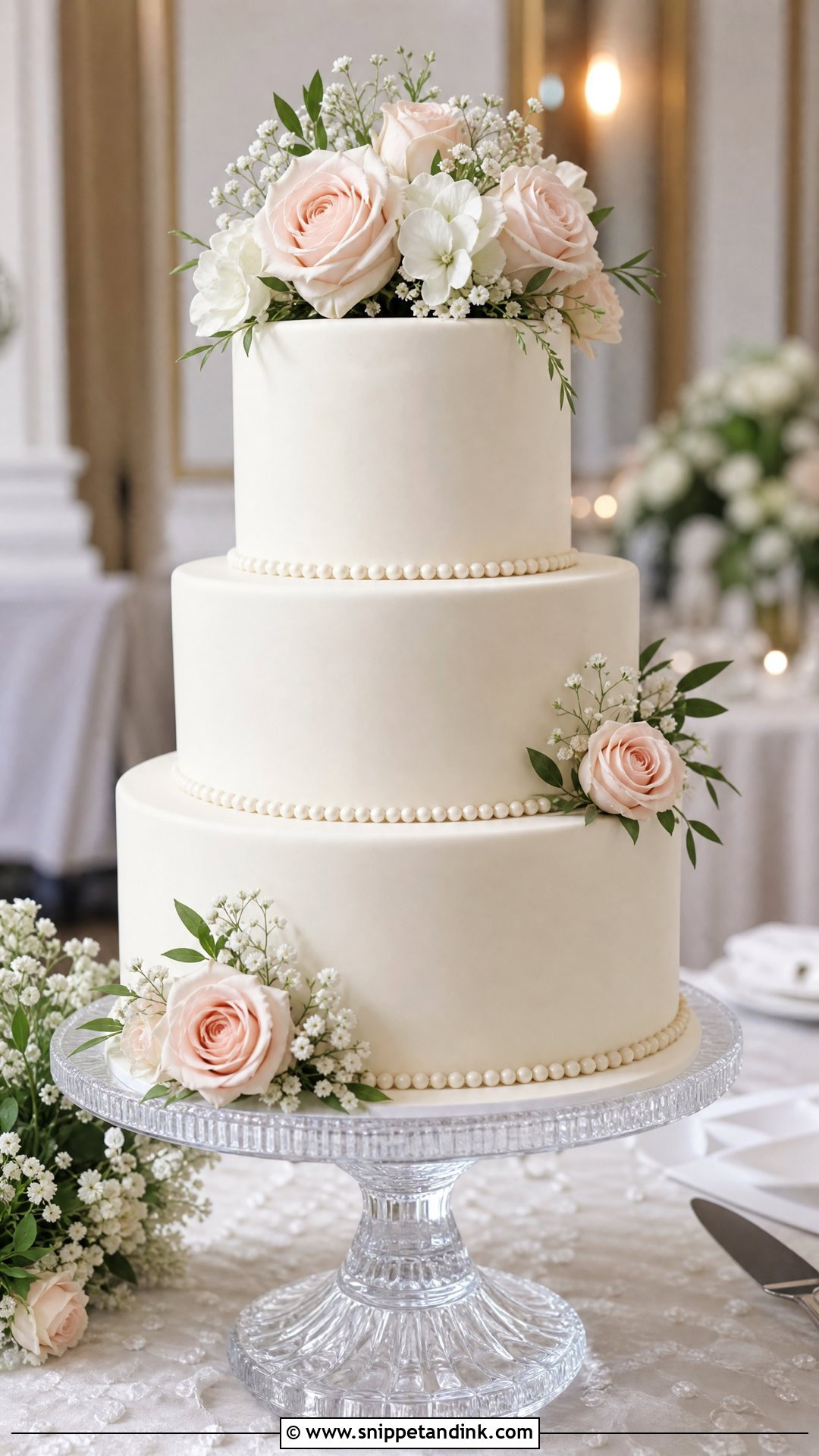
Three tiers stand out in photos without feeling theatrical, which is why it’s the size I build most. It also gives you room for different flavours, which guests appreciate. All white reads classic; flowers, pearls, ruffles or fruit change the mood easily. Every tier above the bottom one rests on dowels and its own board, and that’s what stops the top tier slowly sinking into the middle during a long reception. Place it on a sturdy stand with a few flowers around the base, and keep it away from windows and heaters.
13. Square Wedding Cake
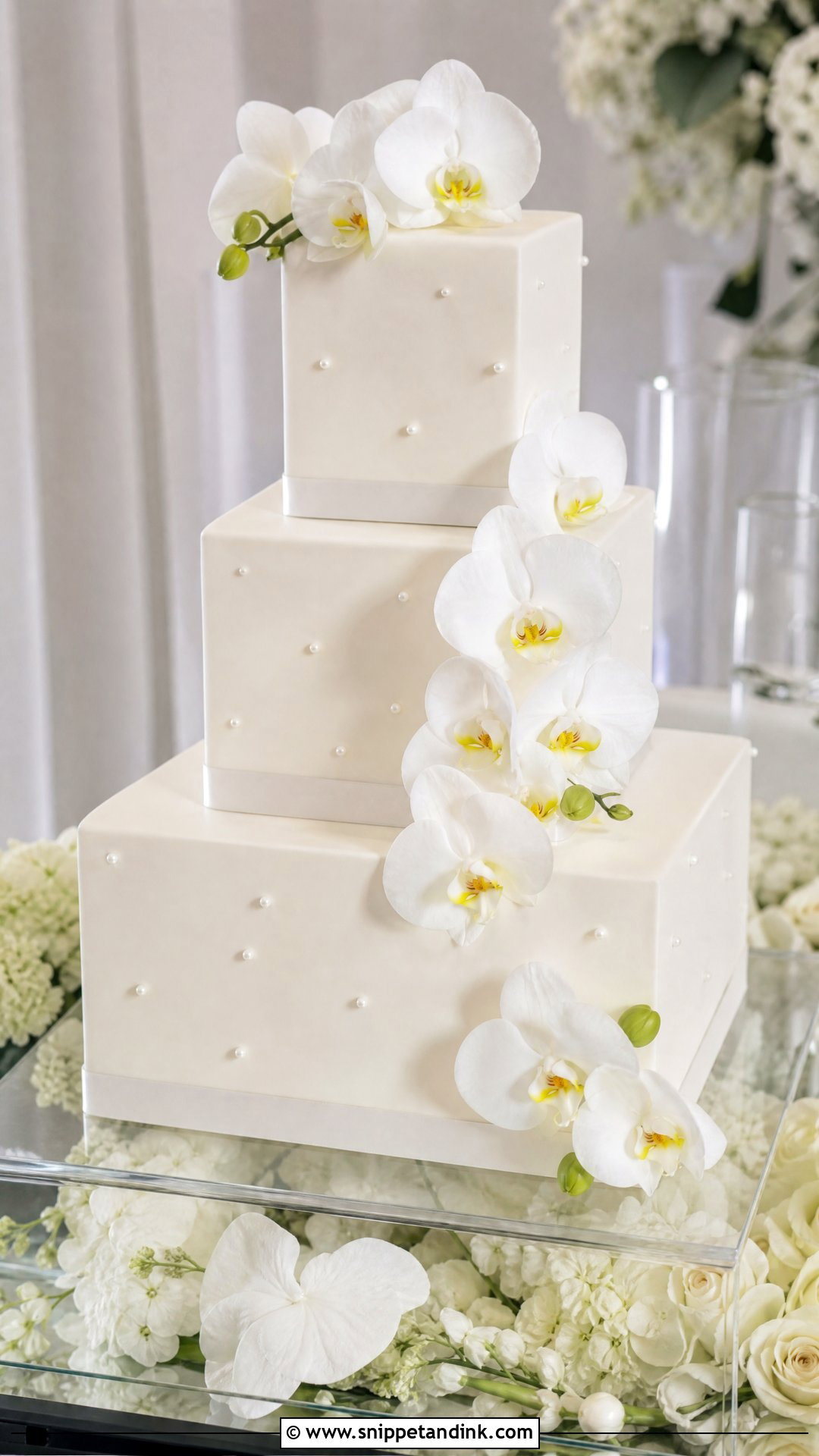
Square tiers look crisp and a little unexpected, especially in city venues. The corners are the hard part: getting four sharp, straight edges per tier takes more time than a round, and a corner is the first place buttercream bulges in heat, so I often finish square cakes in fondant over ganache. A square tier also gives more servings than a round of the same width. Decorate sparingly with orchids, sugar flowers or thin ribbon so the shape stays the point. Almond and raspberry white chocolate suit its clean lines.
14. Black And White Wedding Cake
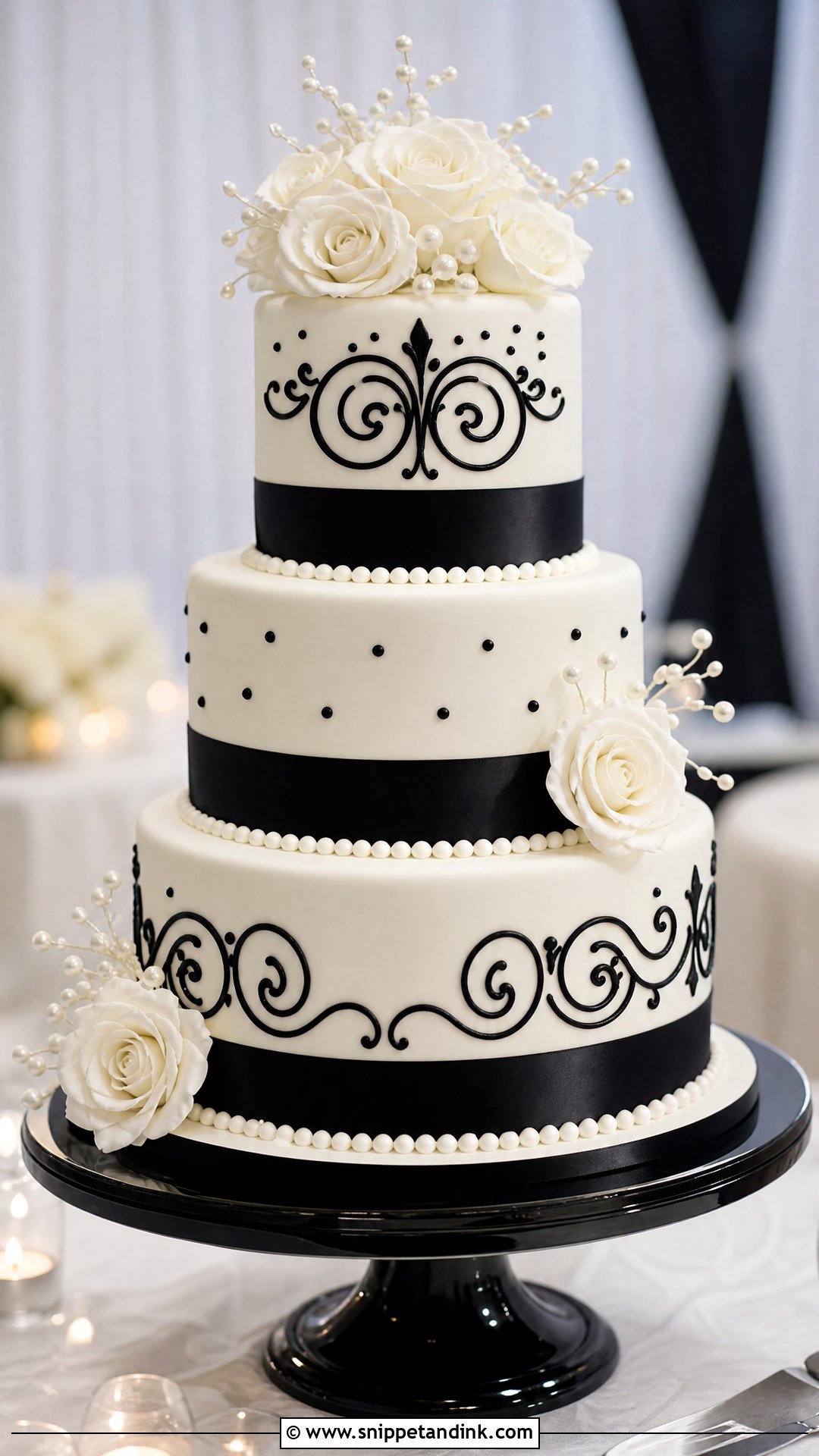
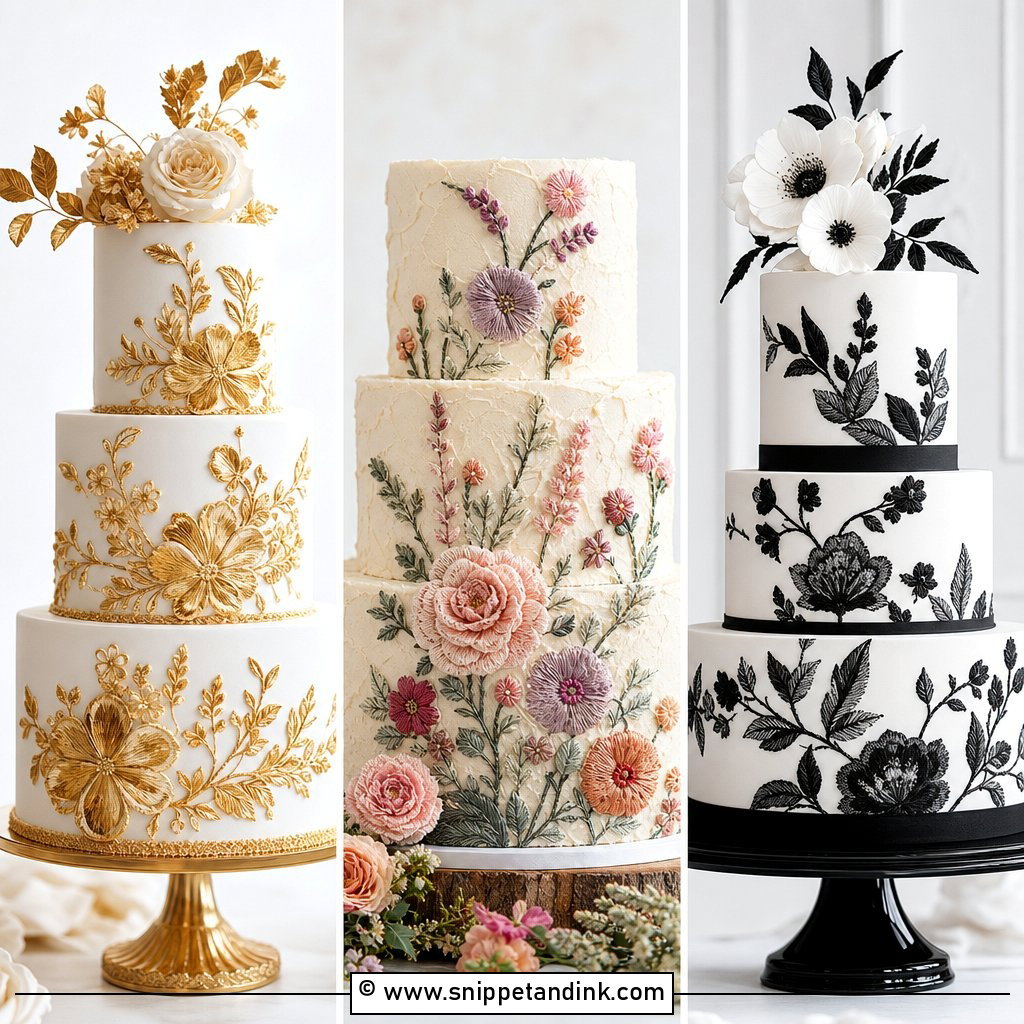
Black and white looks dramatic and formal, and it works when the contrast is deliberate rather than everywhere. White tiers with black ribbon, black floral piping or one dark base tier usually look better than a cake split evenly. Worth knowing: heavily tinted black frosting stains teeth and lips, which shows up in reception photos, so I keep black to accents or use black cocoa sponge inside instead. Soft flowers or pearls keep it bridal. A black cocoa cake with vanilla buttercream gives a striking cut, and it’s a strong match for evening and ballroom weddings.

15. Gold Wedding Cake
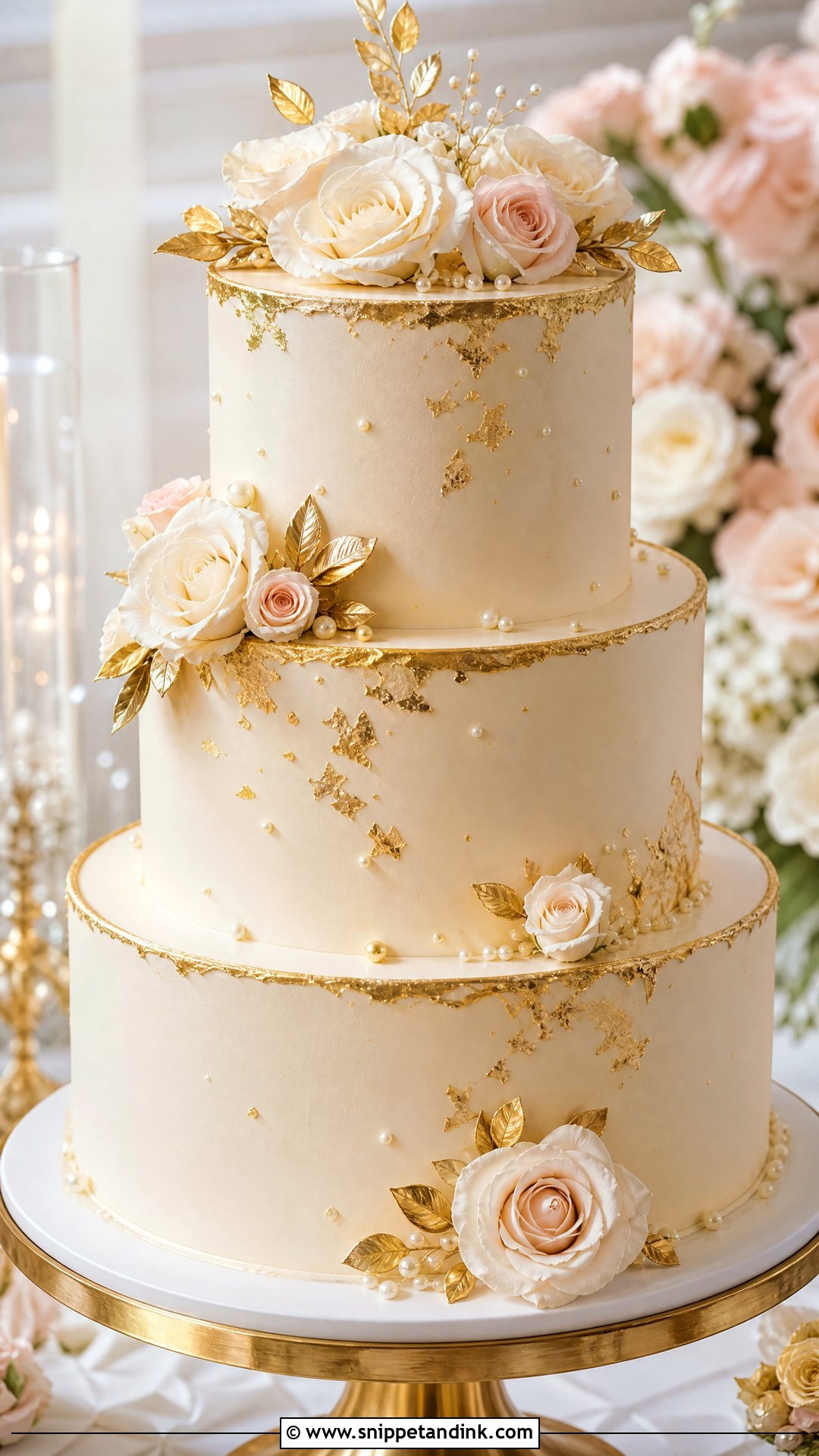
Gold can be a few flecks of edible leaf, painted edges, metallic brush strokes or a full statement tier, and less usually looks richer. Check that what’s going on the cake is actually edible: genuine gold leaf and edible lustre are fine, while craft dusts labelled only non-toxic are meant for decorations you remove. Gold sits naturally with ivory, champagne, blush and sage, and with orchids or smooth fondant. Caramel and honey flavours match the warm mood, and it suits formal and evening receptions well.
16. Bow Wedding Cake
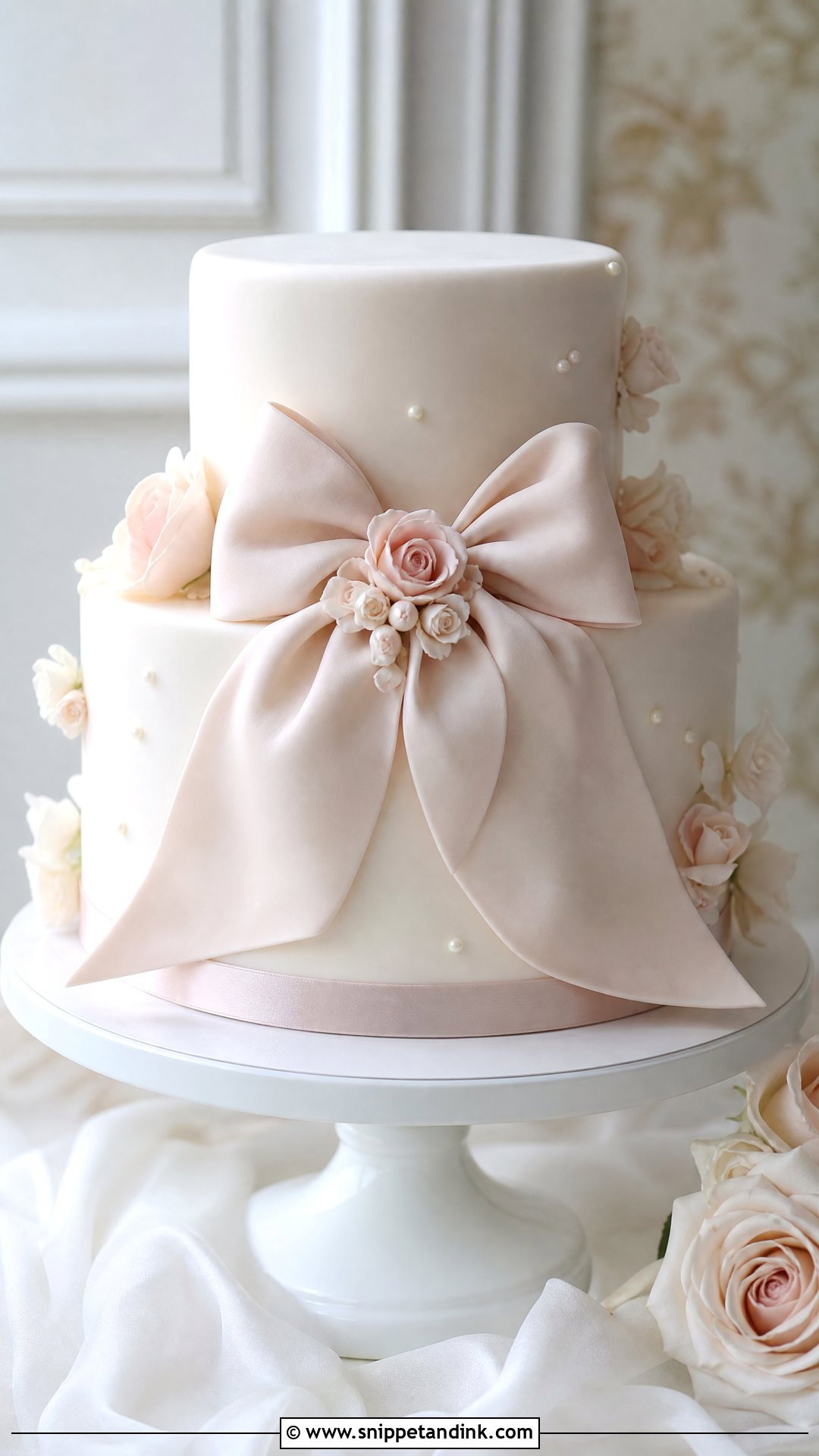
Bows can be fondant, sugar paste, silk ribbon or piped buttercream, and the material changes how they behave. A large sugar bow needs several days to dry so it holds its loops; in humid weather it can droop, so for summer weddings I sometimes switch to real silk ribbon tied on site. A big bow reads as fashion, tiny bows read sweet. Keep the rest of the cake plain, with smooth frosting and maybe a pearl border, so the bow doesn’t get lost. Vanilla and strawberry are the flavours I’m asked for most with this look.
17. Draped Wedding Cake
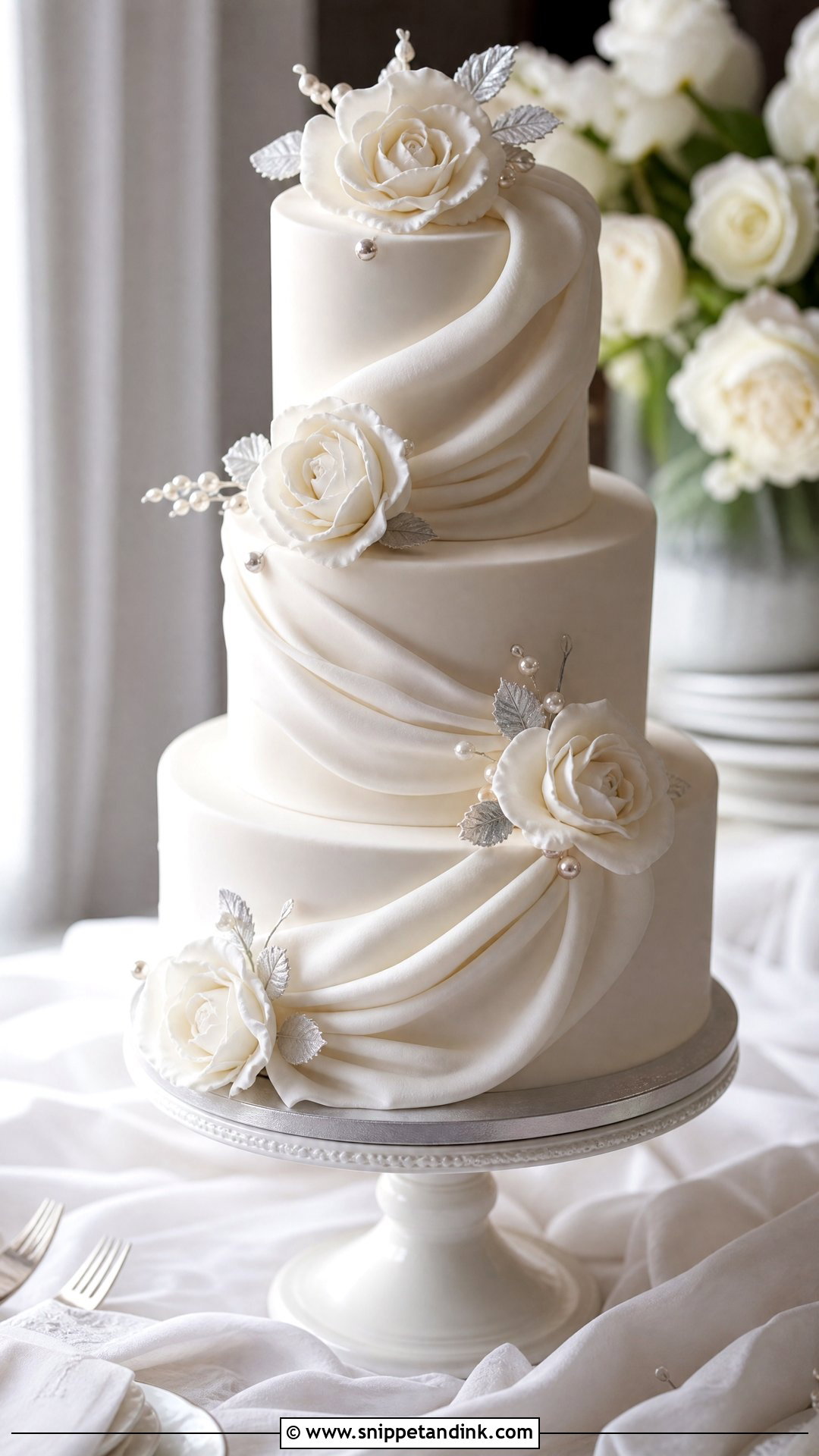
Draped cakes copy soft fabric falling around the tiers, made from fondant folds, buttercream or thin sugar sheets. It’s a natural echo of a flowing dress or veil. I make the drapes on the day of decorating, because fondant folds left too long dry stiff and crack when the cake is moved. All white keeps it clean; pearls or a few flowers add detail. Coconut and lemon cream flavours keep it light, and draping looks especially good under candlelight, where the folds catch shadow.
18. Ruffle Wedding Cake
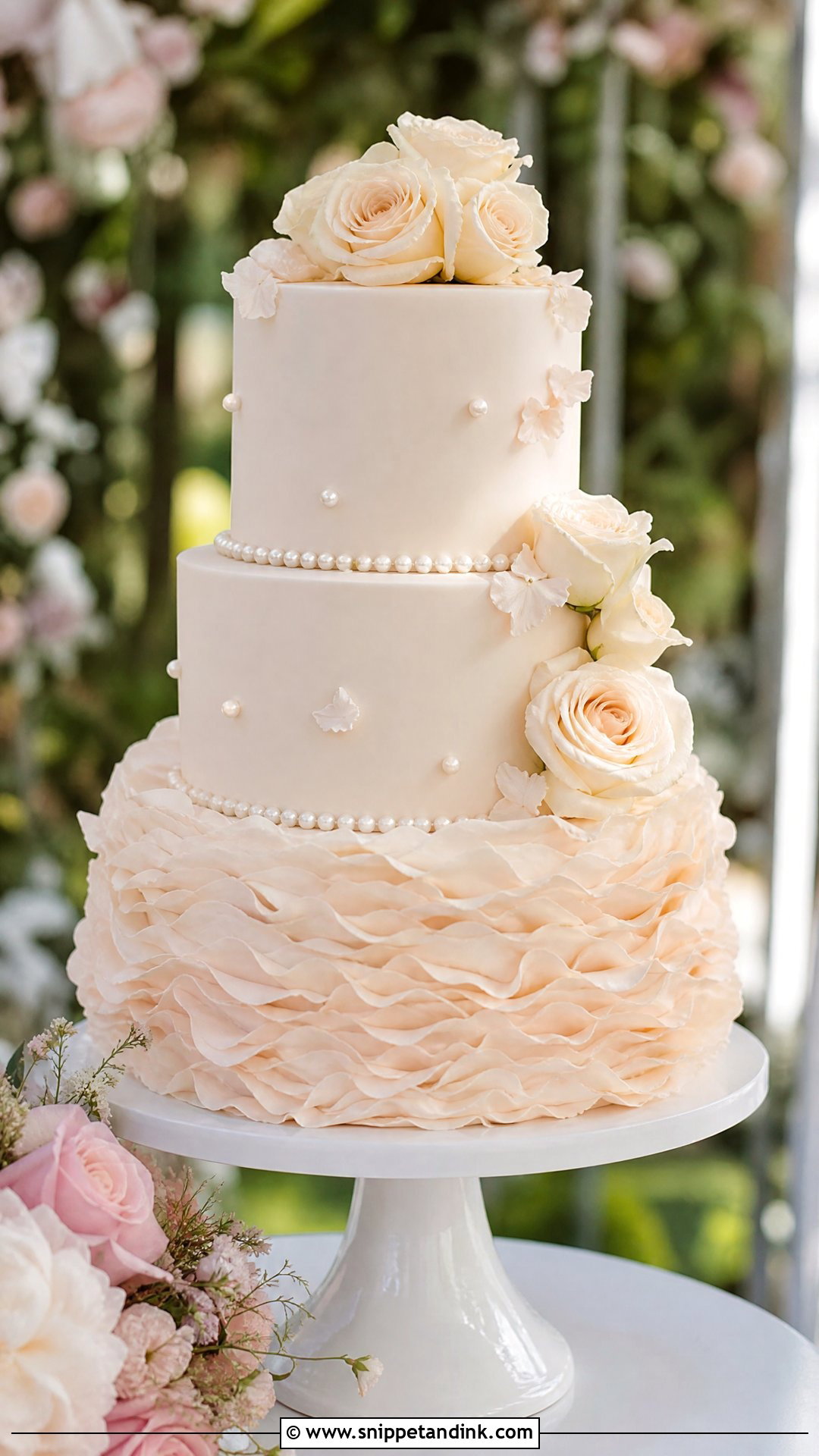
Ruffles add volume and movement, either loose like fabric or neat and layered like petals. In buttercream they’re quick and soft but wilt in heat; in fondant or wafer paper they’re more stable and hold their shape for hours. I usually suggest one ruffled tier between smooth ones, which balances the cake and keeps it from looking like a costume. White and ivory are classic, though blush or pale peach can be pretty. Light flavours like vanilla, coconut or strawberry cream suit the airy look.
19. Watercolor Wedding Cake
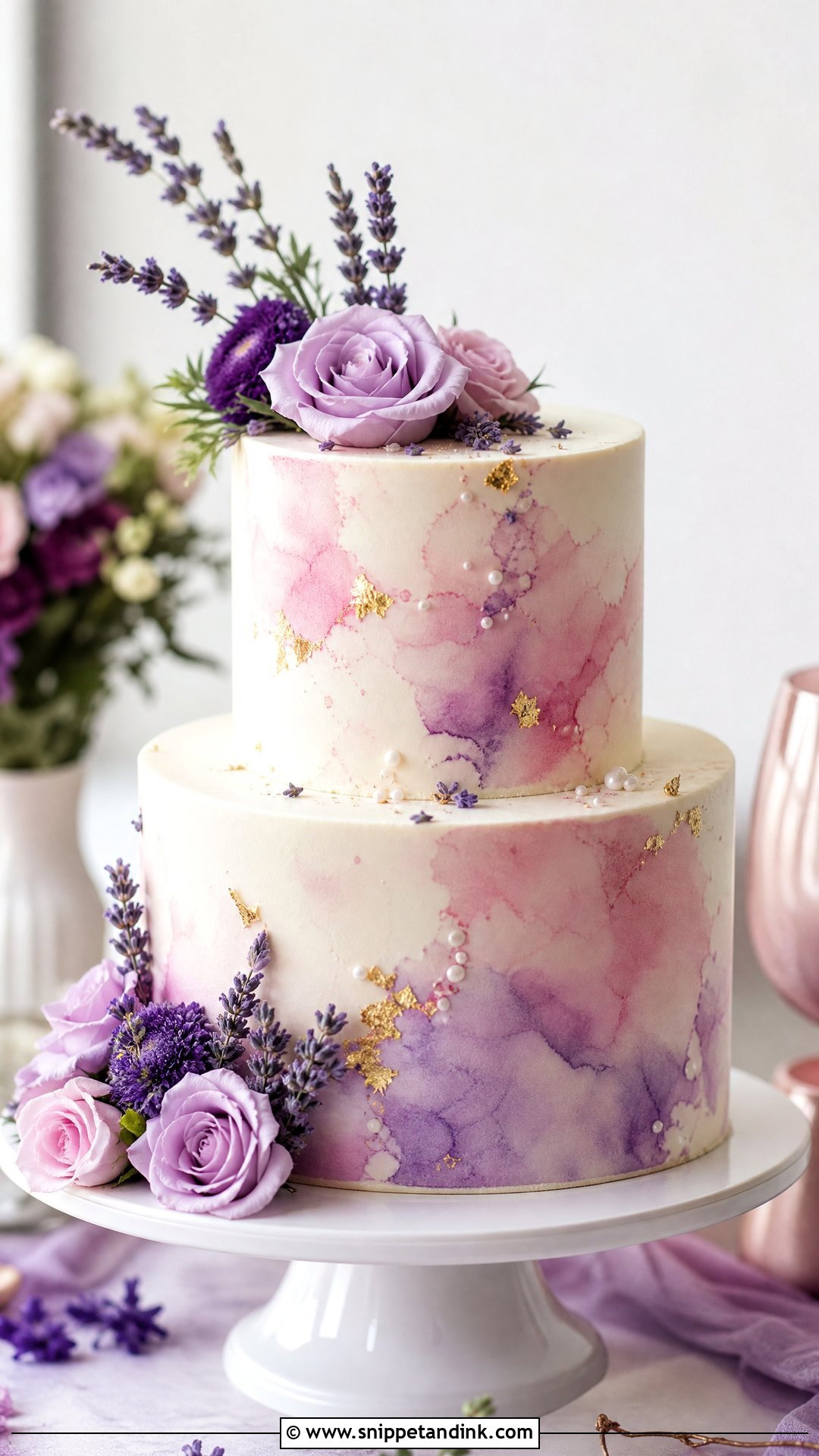
A watercolor wedding cake brings colour in without shouting. I paint the washes with gel colours thinned in a little clear alcohol, which evaporates and leaves the pigment behind, onto chilled buttercream or fondant. Blush, pale blue, lavender, peach and sage work best when they’re pulled from the flowers or the stationery. Soft, blended strokes look refined; hard brush lines look childish. A few fresh blooms or a touch of gold finish it, and citrus or berry fillings suit the colour.
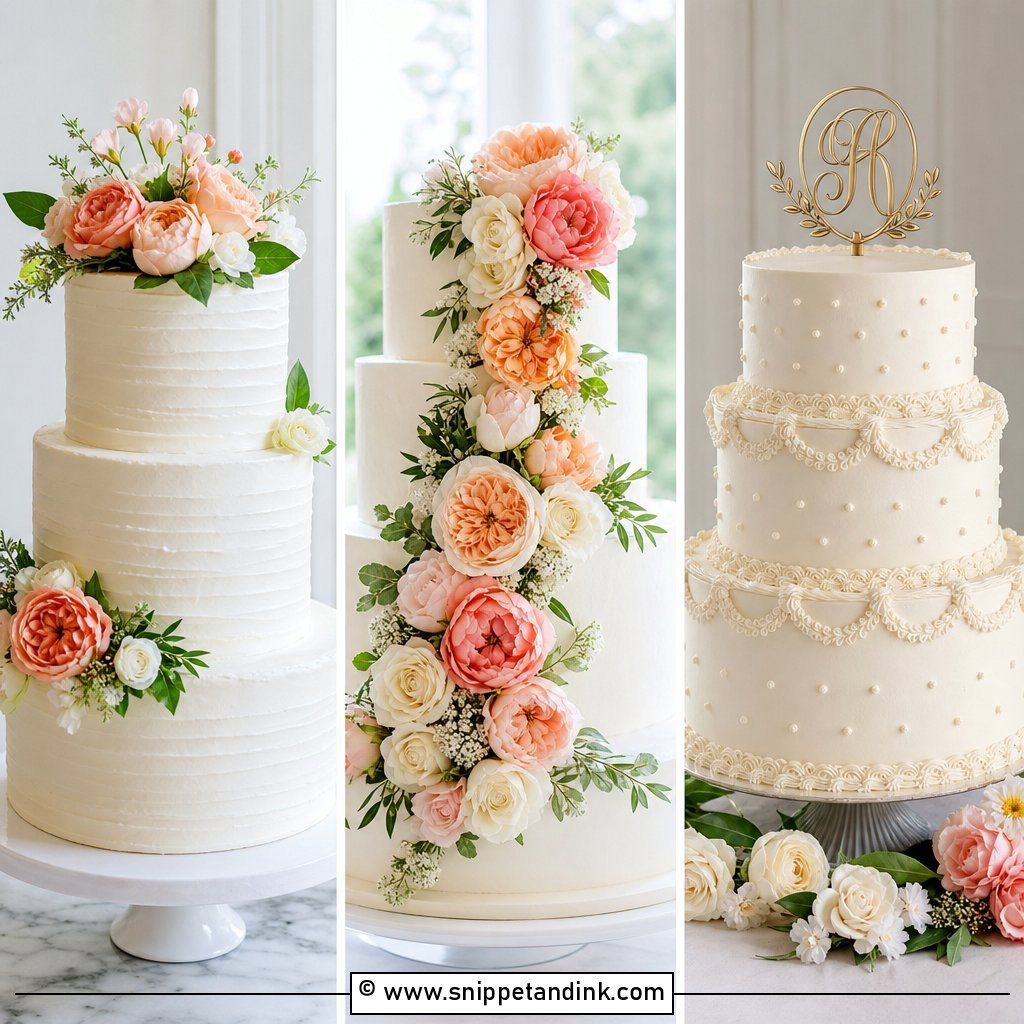
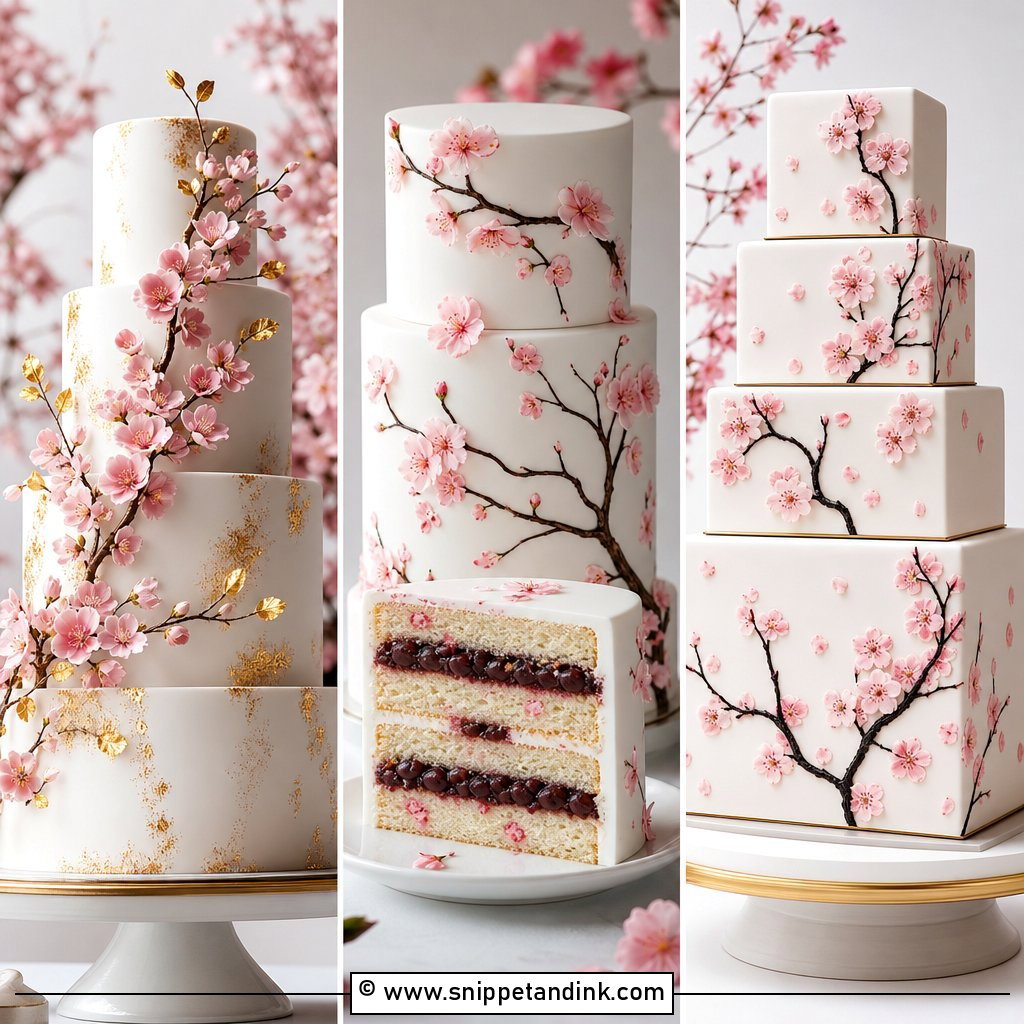

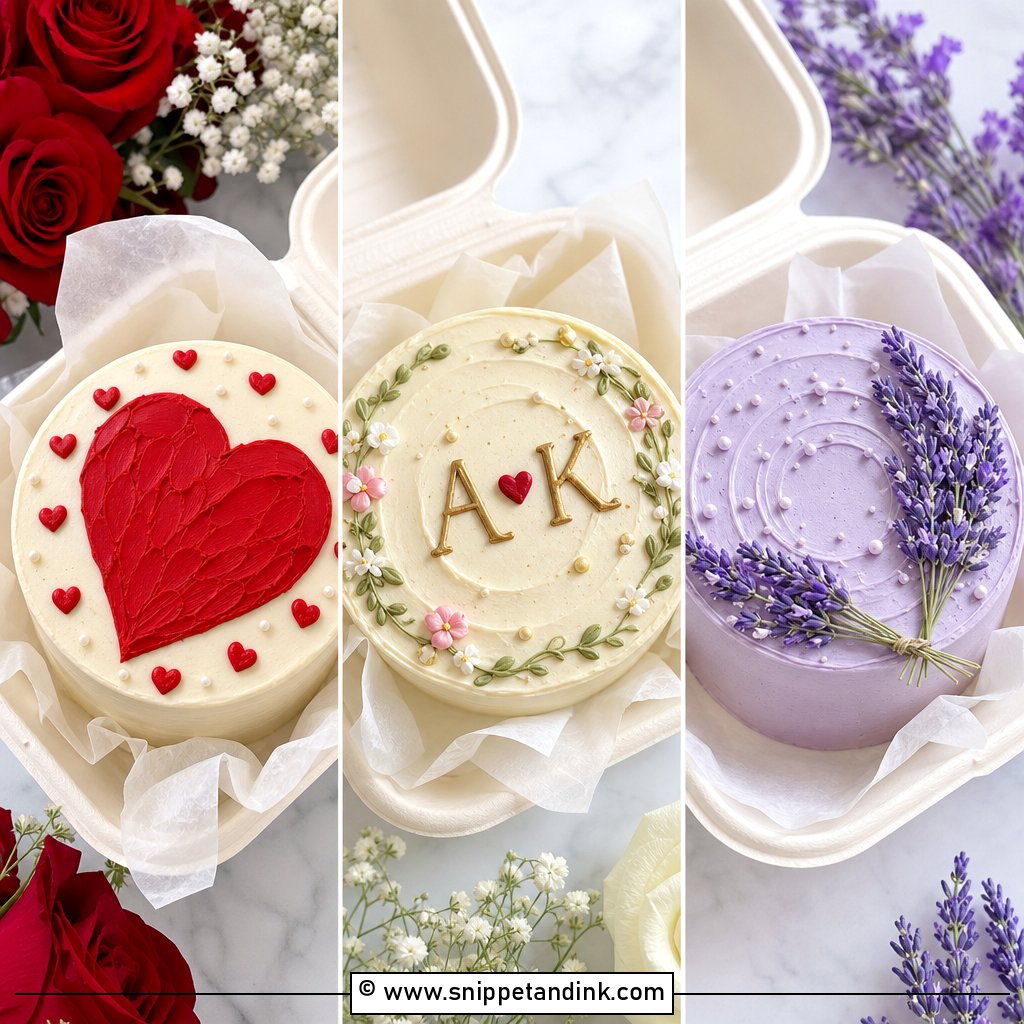

20. Ombre Wedding Cake
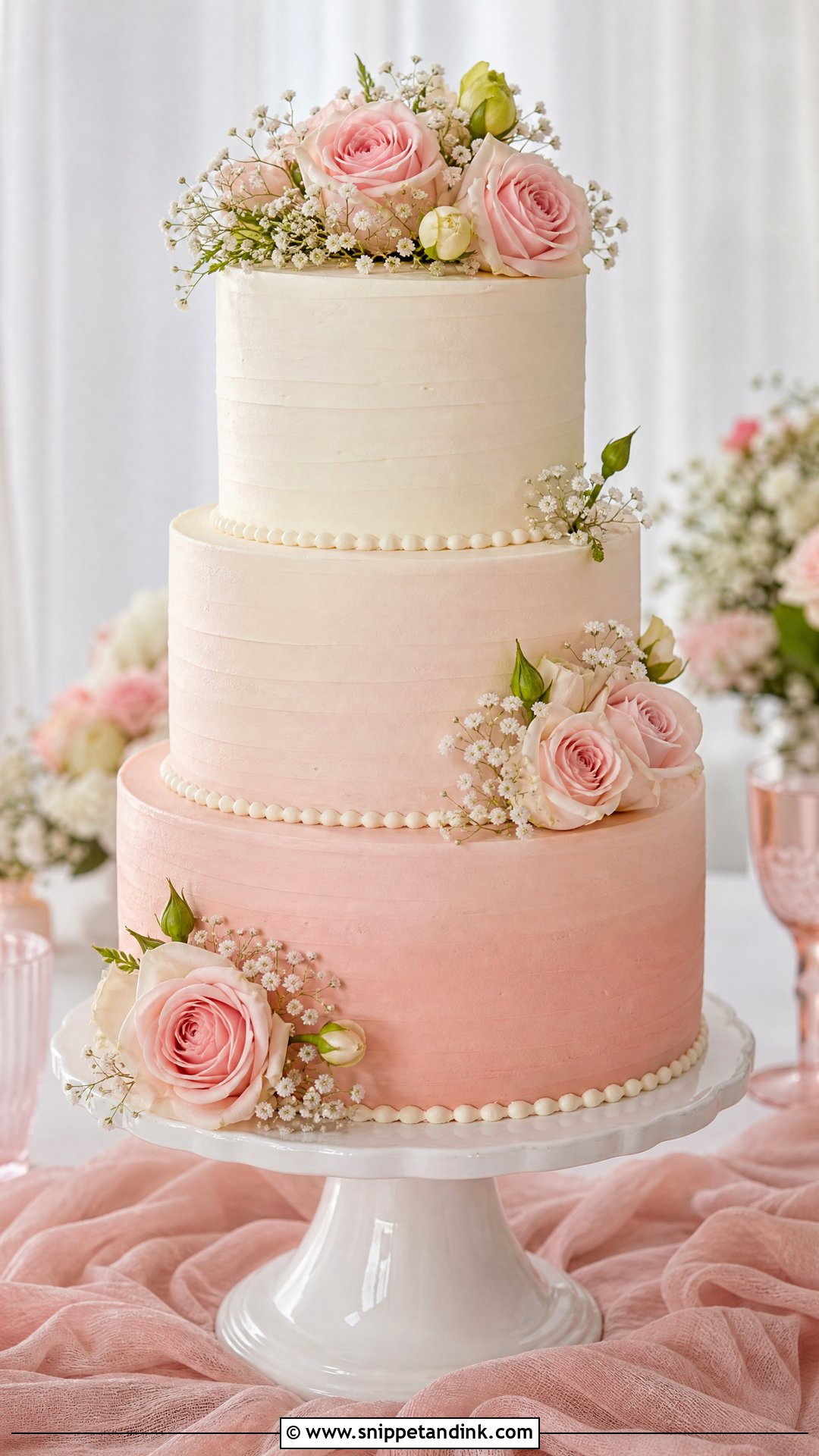
Ombre fades colour gradually from tier to tier or within a tier: white to blush, ivory to champagne, pale blue to white or sage to cream. It works in smooth buttercream, ruffles or fondant. One thing to plan for: some food colourings, pinks and purples in particular, fade in strong sunlight, so an ombre cake shouldn’t wait for hours on an outdoor table. Flowers in matching tones tie it together. Strawberry or berry cream fillings can carry the colour story inside the slice too.
21. Fruit Wedding Cake
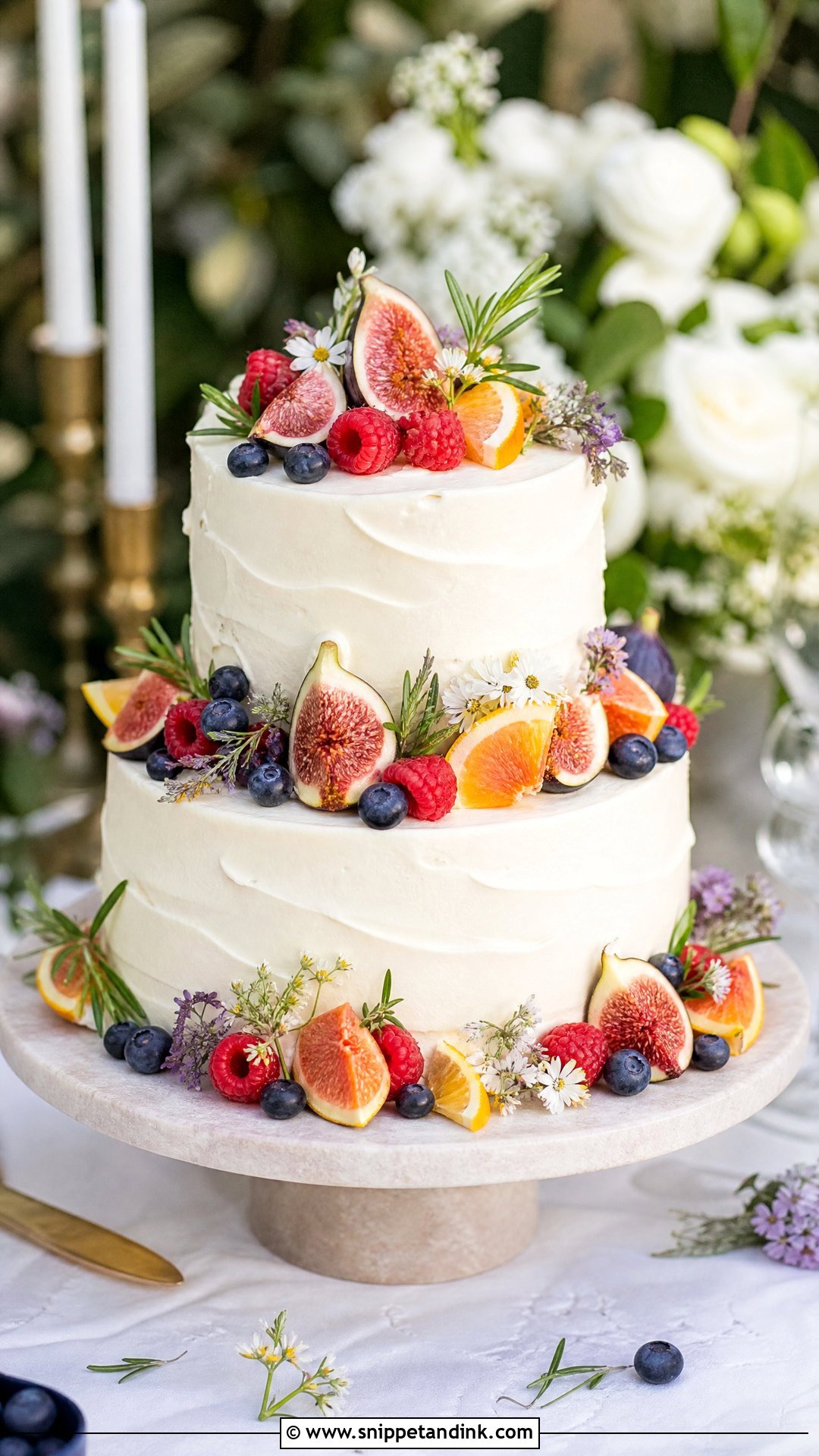
Fruit cakes, in the decorated rather than the traditional sense, use berries, figs, citrus, grapes, cherries or stone fruit as the decoration. Cut fruit weeps juice into frosting, so I add it as close to serving as I can, glaze it lightly to keep the shine, and leave soft fruit like sliced peaches until on site. Arrange it in deliberate clusters rather than scattered. A few herbs or edible flowers add interest. Lemon, olive oil, pistachio and berry cakes all suit fruit on top, and it’s a favourite for summer and farm-style menus.
22. Garden Wedding Cake
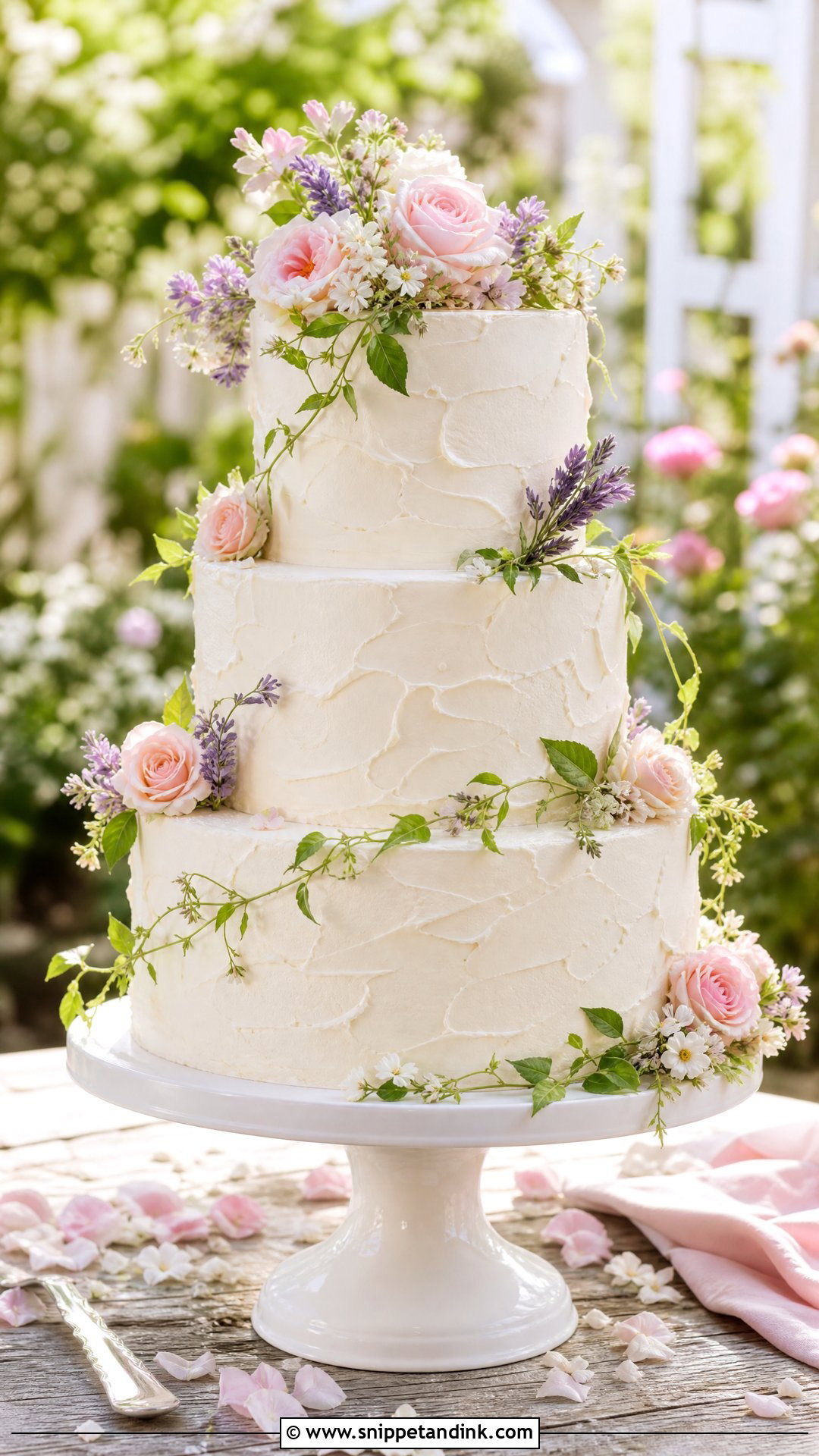
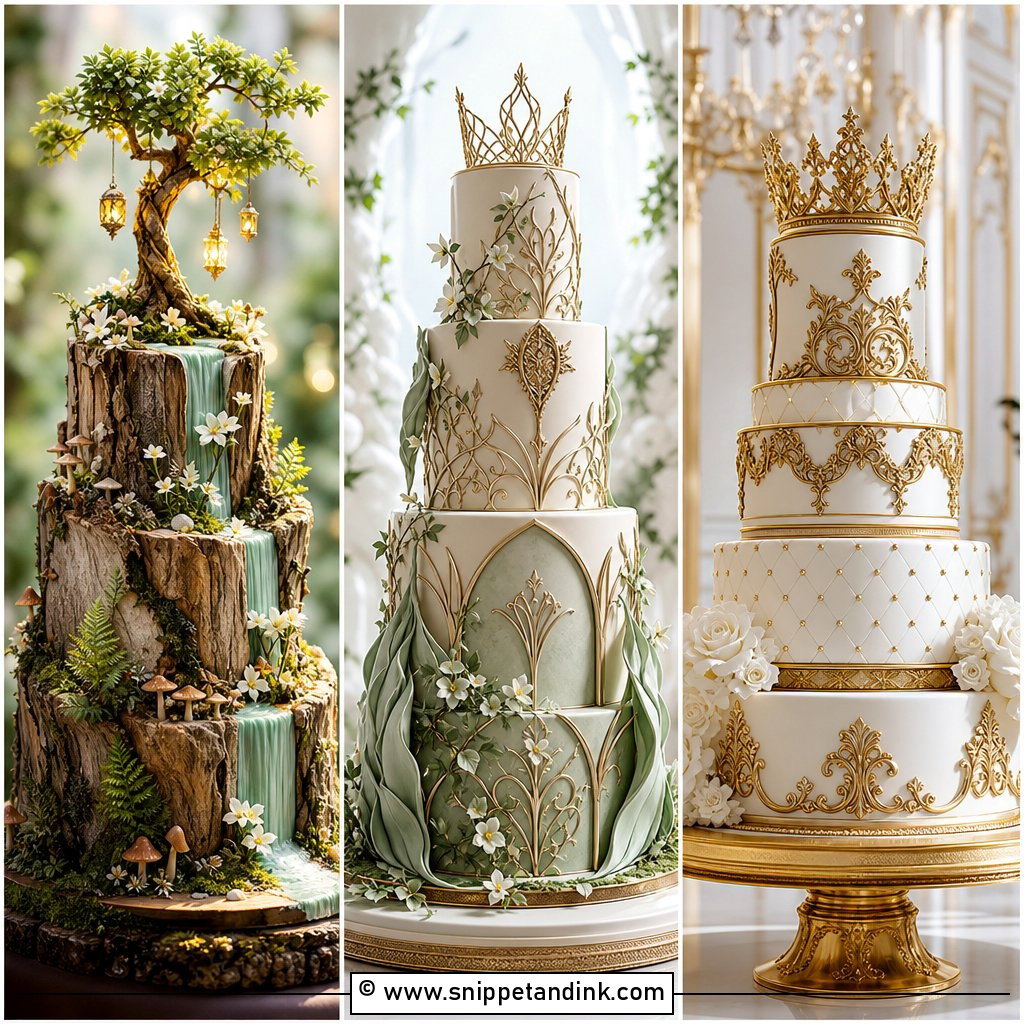
A garden cake should look as if it was picked from the same beds as the flowers around it. Vines, herbs, pressed flowers and textured buttercream all fit, in ivory, butter yellow, lavender or sage. Outdoors brings its own problems: insects find sugar fast, and direct sun softens buttercream in minutes, so I ask for the cake table in shade and under a light cover until the cutting. A pedestal stand ringed with greenery is enough styling. Lemon raspberry, vanilla elderflower and honey lavender all taste right for spring and summer.
23. Rustic Wedding Cake
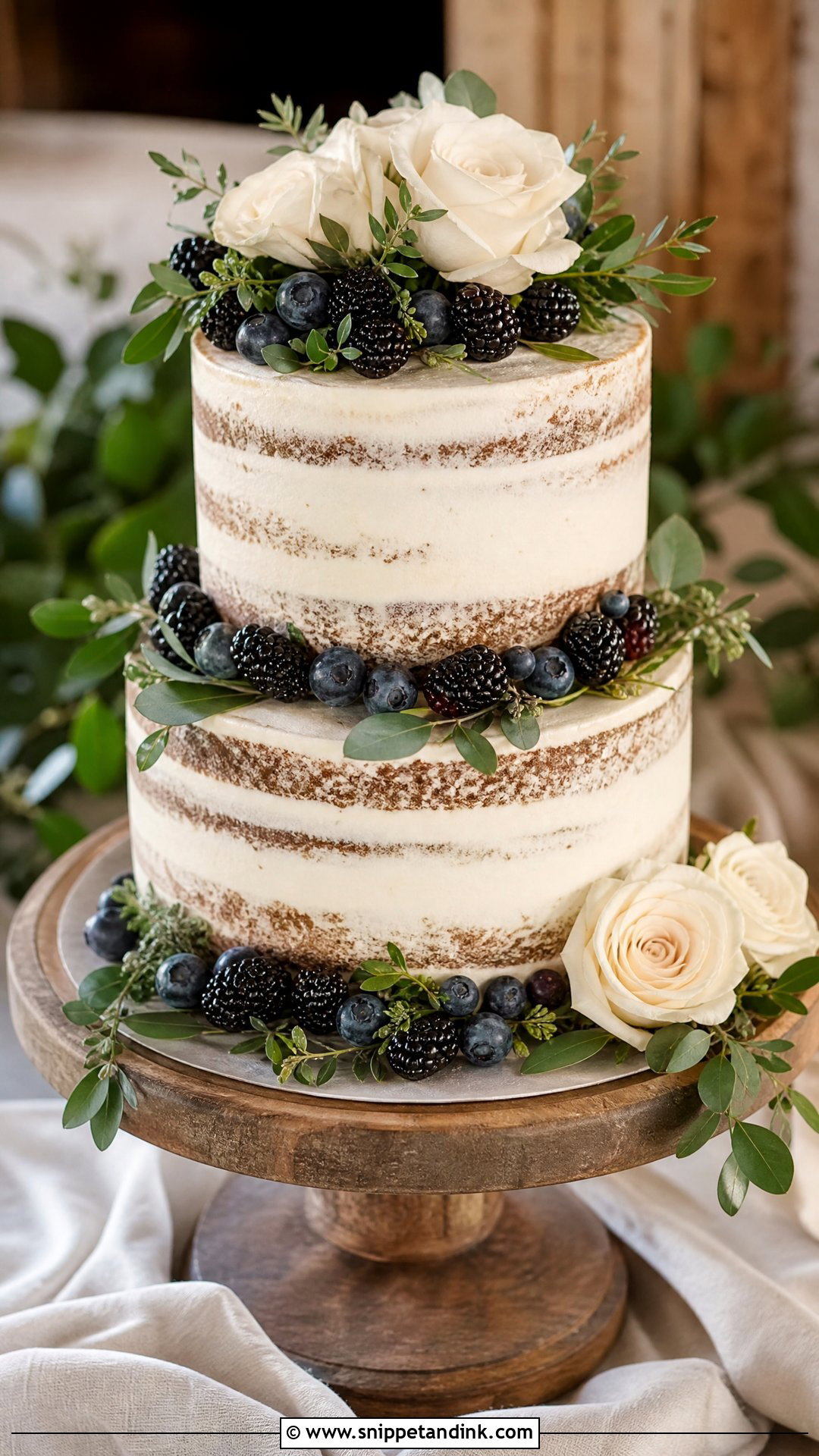
Rustic cakes rely on buttercream texture or semi-naked frosting, with flowers, greenery and berries and a wooden stand. The handmade look is the point, but it still needs to read as a wedding cake rather than a weekend bake, so I keep the edges level and the decoration balanced. Semi-naked sponges dry out faster because there’s less frosting sealing them, so I bake them closer to the day and brush the layers with syrup. Carrot, spice, apple and chocolate flavours suit barn weddings, mountain venues and backyard receptions.
24. Beach Wedding Cake
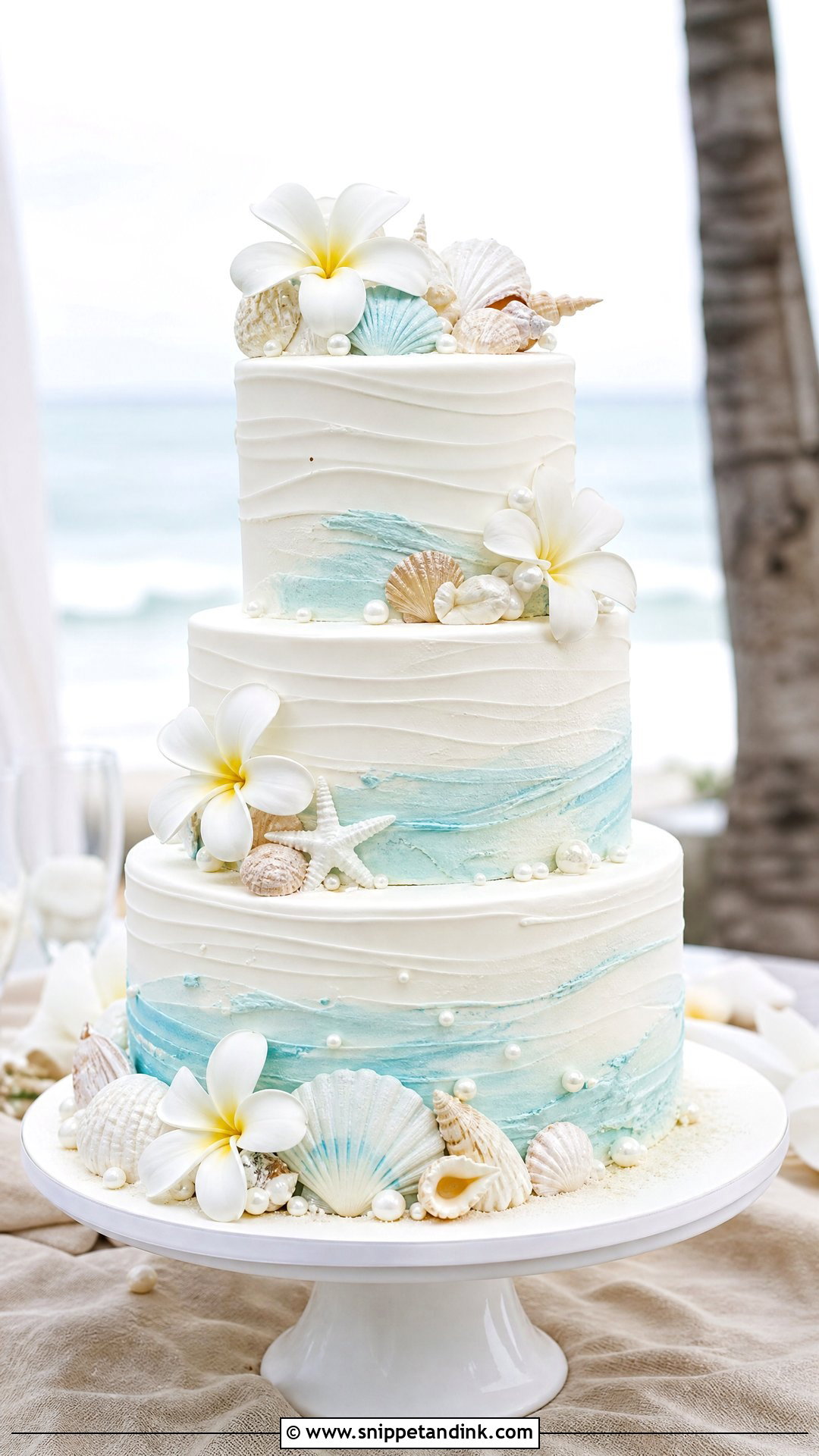
A beach wedding cake should feel light rather than themed, with soft white, sandy beige, pale blue, sea glass green and pearl details. Sugar shells, buttercream waves or a faint watercolour wash are enough. The beach itself is a hard place for a cake: salt air, sun and wind all work against buttercream, so I’d choose fondant over ganache or a firm meringue buttercream and keep the cake indoors or under cover until it’s served. Coconut, key lime and passion fruit fillings fit the setting.


25. Cake Table Wedding Cake
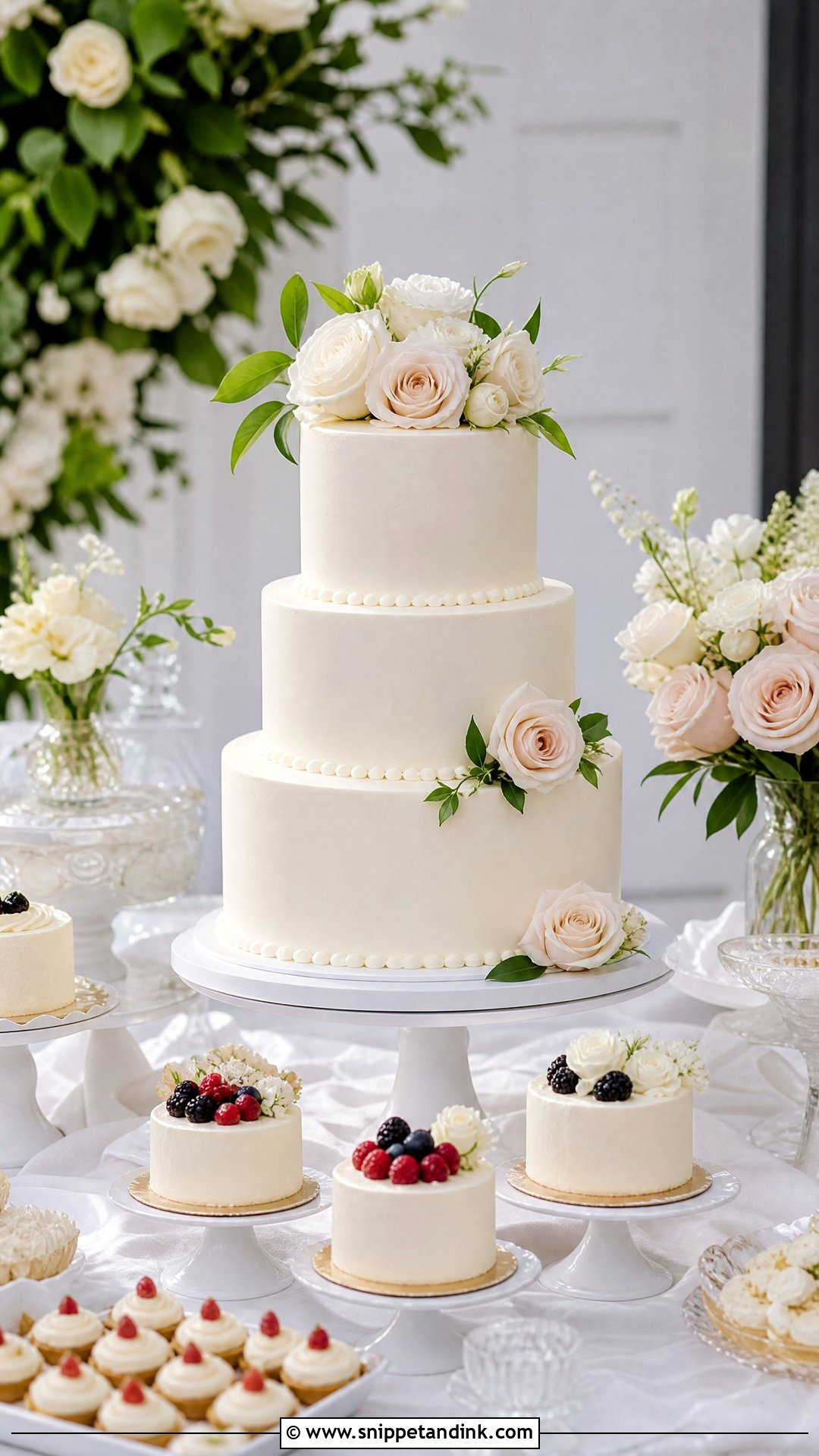
Some couples care more about the whole dessert table than the cake alone. The main cake becomes the centre of a display with flowers, linens, candles, smaller cakes, cookies or fruit. Start with a cake that matches the wedding, then build height with stands and texture with linens around it. Leave space between items so the table looks intentional rather than crowded. A modest tiered cake looks far more impressive when it’s raised, lit softly and surrounded by matching flowers, and you need fewer cake servings if other desserts share the load.
Heat, Hills and the Drive to the Venue
Most cake disasters happen between the studio and the cake table, not in the kitchen. I deliver tiers chilled and stacked on site when the design allows it, because a fully stacked cake on a bumpy country road is a risk. Air conditioning stays on in the van, and the cake rides on a flat, non-slip surface rather than a seat.
Once it’s there, temperature is everything. Buttercream starts to soften in a warm room and can slide in direct sun, while fondant taken from a cold fridge into humid air beads with moisture and turns tacky. Ask your venue where the cake will stand and for how long before it’s cut. A shaded spot away from heaters, stage lights and kitchen doors, with the cutting scheduled early in the reception, protects almost any design.
If something goes wrong on the day
A cracked fondant corner can usually be hidden by turning that side to the wall or tucking a flower over it. A tier that has shifted needs the baker, not a guest with a knife, so keep your baker’s number with the venue coordinator. Small dents in buttercream disappear under a petal or two.
A Cake That Looks Right and Still Slices Well
Trends give you a starting point, but the cake that works is the one that suits your venue, your flowers, your guest count and what you actually like to eat. A Lambeth cake might be right for one couple and a sculptural or long table cake for the next. Bring your saved photos to the tasting, then talk honestly with your baker about structure, servings, weather and delivery. A cake should be sturdy enough to arrive whole and good enough that people go back for a second slice.
You'll Like These Ideas:






Leave a Reply