
A Rajputi bride is dressed first in a ghagra, kurti, kanchli and odhni, and then in metal: the borla at the parting, the aad at the throat, the nath, the bajuband and the haath phool. The outfit is the frame, but the jewelry carries the meaning, and the borla in particular marks a married woman in Rajput tradition. None of that means every bride has to look the same. Deep reds, jewel tones, pastels, heritage textiles and a little modern detailing all have their place. When I help a bride put a set together, I want to see the outfit, veil, hair, makeup and footwear at the same time, because a necklace that looks right on a velvet tray can vanish against heavy zardozi. Below are complete looks for different ceremonies, seasons, venues and tastes.

The Ornaments From Forehead to Ankle, One at a Time
Each piece in a Rajputi set has its own place on the body and its own way of going wrong. Knowing what each one does makes fittings faster and the trial far less stressful.
- Borla: the round ornament at the parting. It hangs from a dori or chain tied into the hair, and it tilts forward if the bun underneath is too soft to anchor it.
- Aad: a broad, flat necklace worn high at the base of the throat. Measure your neck before buying, because a gap of even a finger’s width lets it flip forward when you bend.
- Rani haar: the long necklace below the aad. It should clear the aad without resting on the kurti’s embroidered neckline, where the two will rub.
- Nath: the nose ring, often large, with a chain hooked into the hair to take its weight.
- Bajuband: the armlet on the upper arm, usually tied with a cord so it can be loosened as the day goes on.
- Haath phool: the hand ornament linking rings to a bracelet. Make a fist while wearing it; if the chains pull tight, they’re too short.
- Bangles and payal: lakh, gold or glass on the wrists and anklets on the feet, always the last pieces to go on.
At the trial I put everything on in that order, then ask the bride to sit, bow and raise her hands as she will during the pheras. Whatever pinches or slips then will pinch or slip on the day, and it’s far easier to adjust a cord or add a hook a week ahead.
1. Traditional Red Rajputi Bridal Look
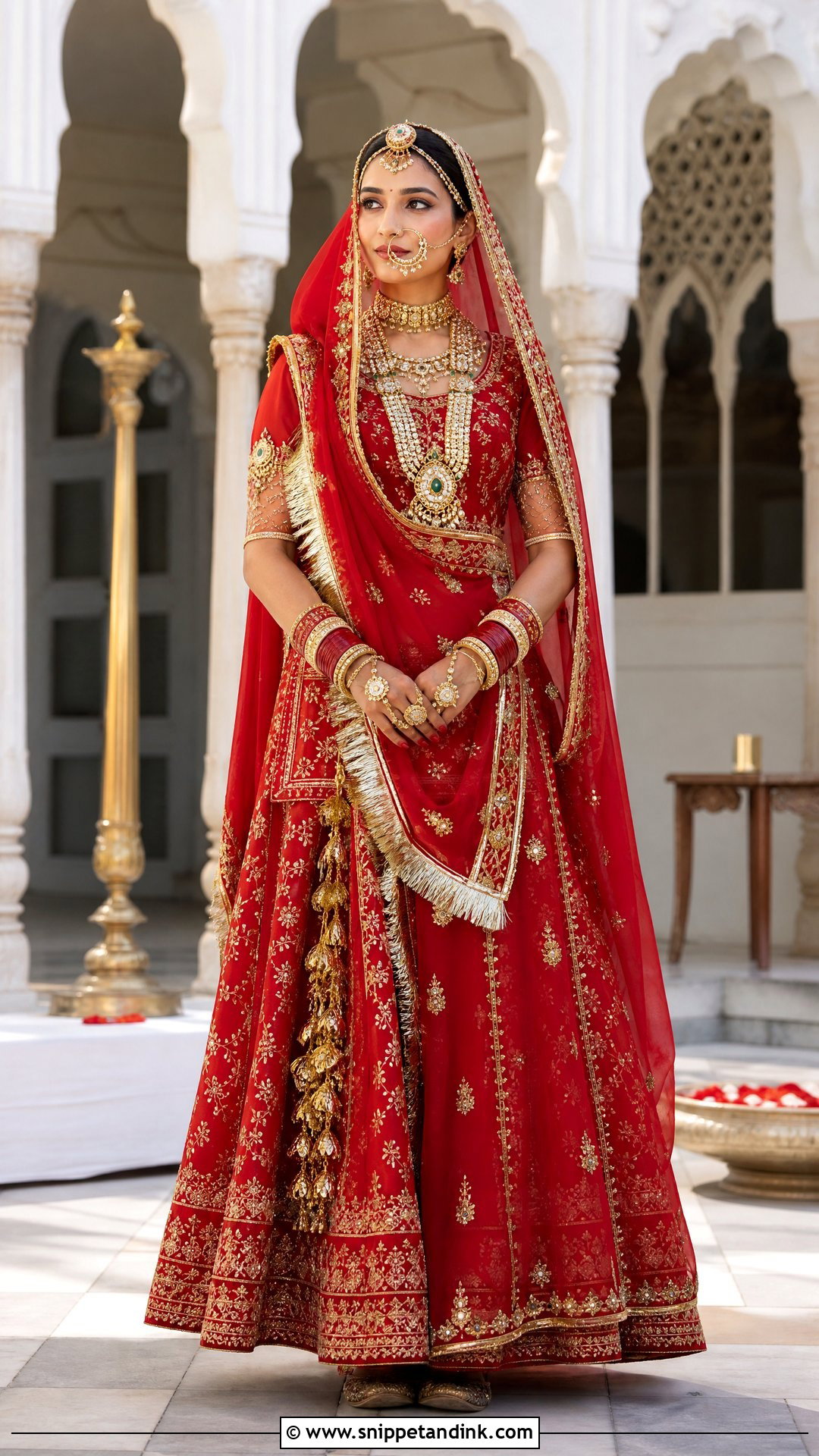
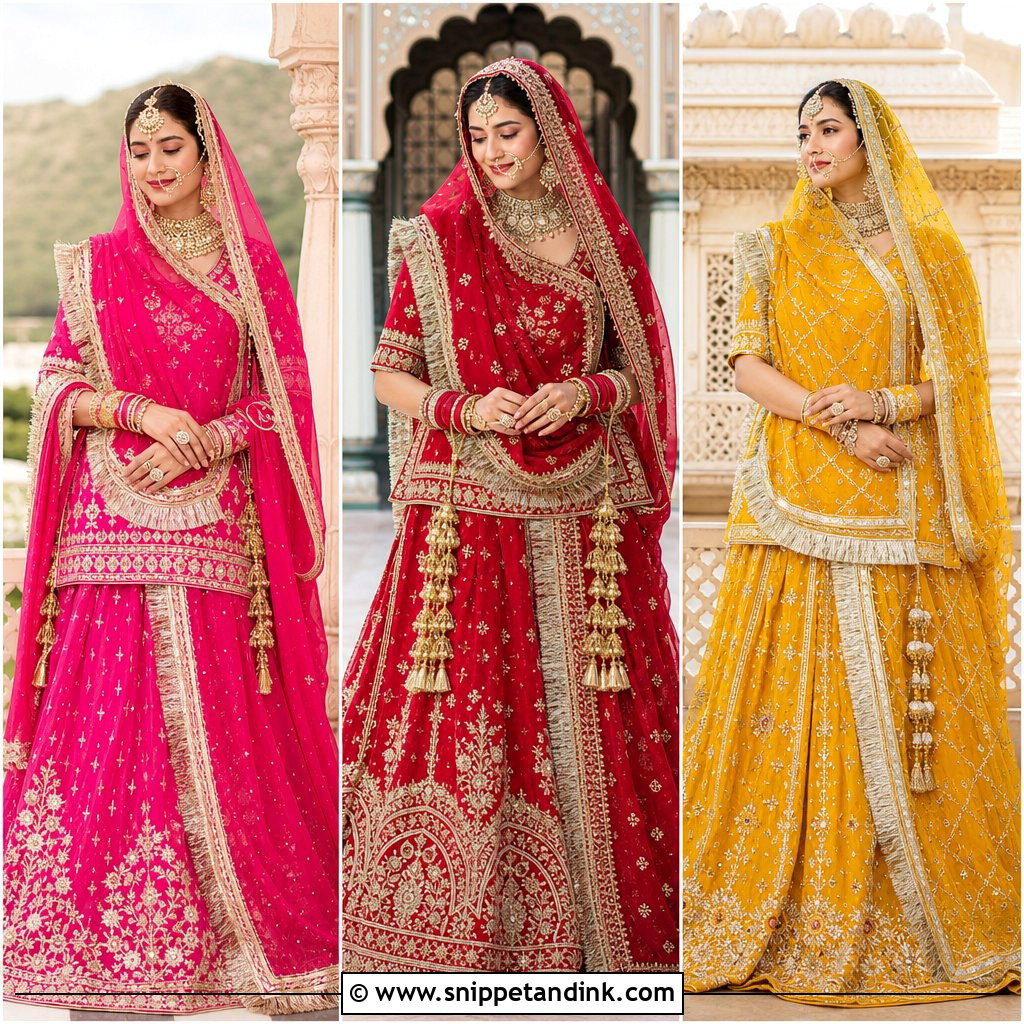
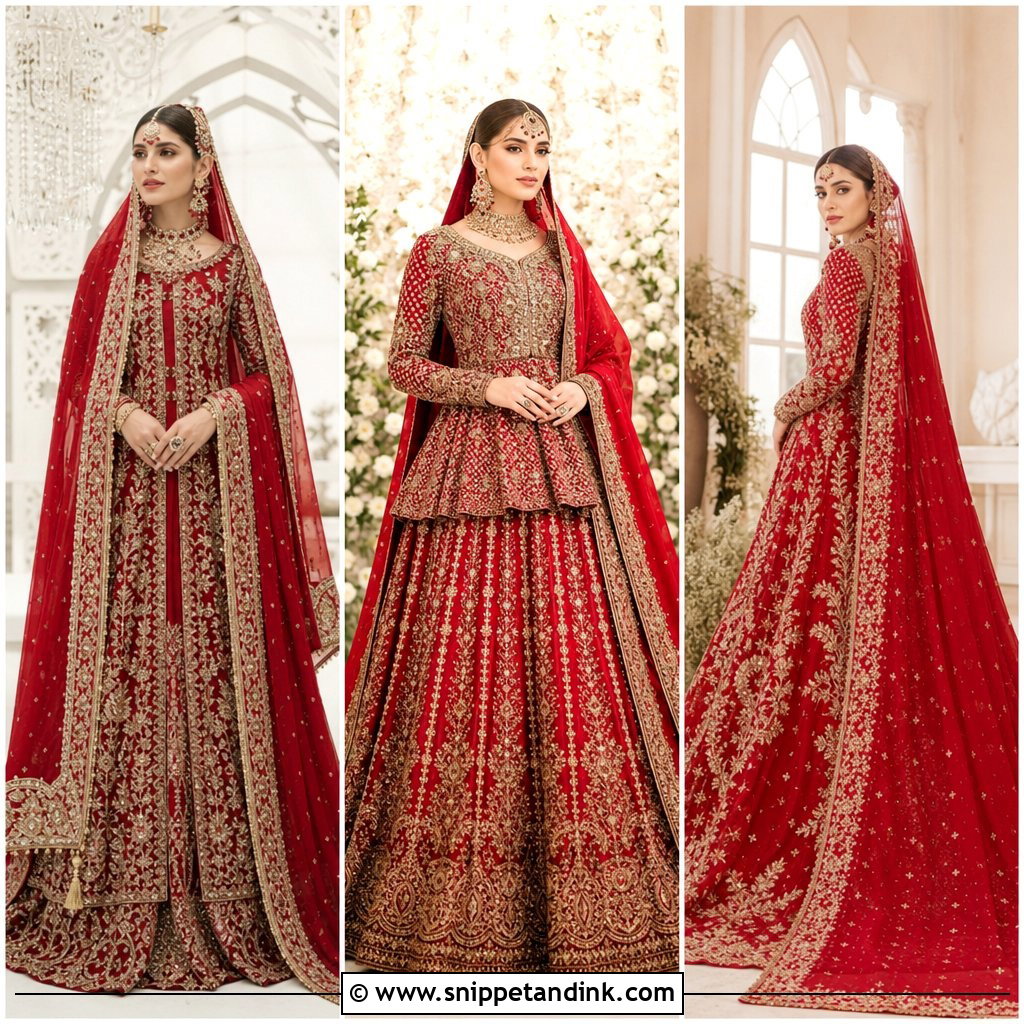
Red is the canvas the traditional set was designed for. A deep red poshak with a flared, gota-worked ghagra, fitted kanchli, structured kurti and an odhni over the head gives you the look of a traditional Rajputi bride. On top goes the full set: aad, layered rani haar, round borla, statement nath, bajuband, haath phool and stacked bridal bangles. With this much gold, I check the layering at the neck before anything else. The aad sits high and flat and the rani haar falls below it, and if the two touch they clink and twist every time you bow. Gold juttis, softly defined eyes, warm blush and a classic red lip, with a sleek center-parted bun under the veil. It suits pheras, palace ceremonies and formal traditional weddings.
2. Maroon Velvet Rajputi Bridal Look
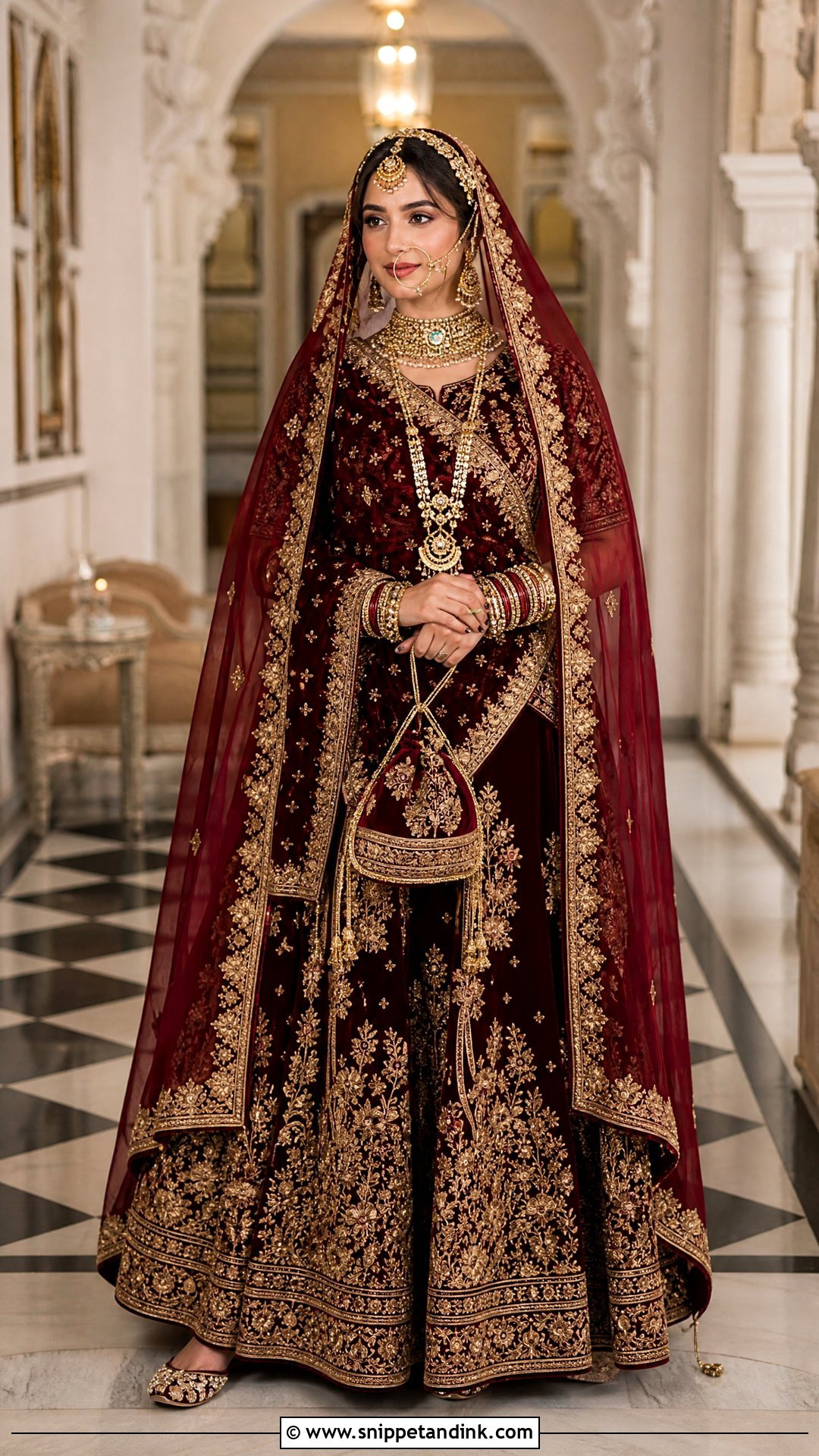
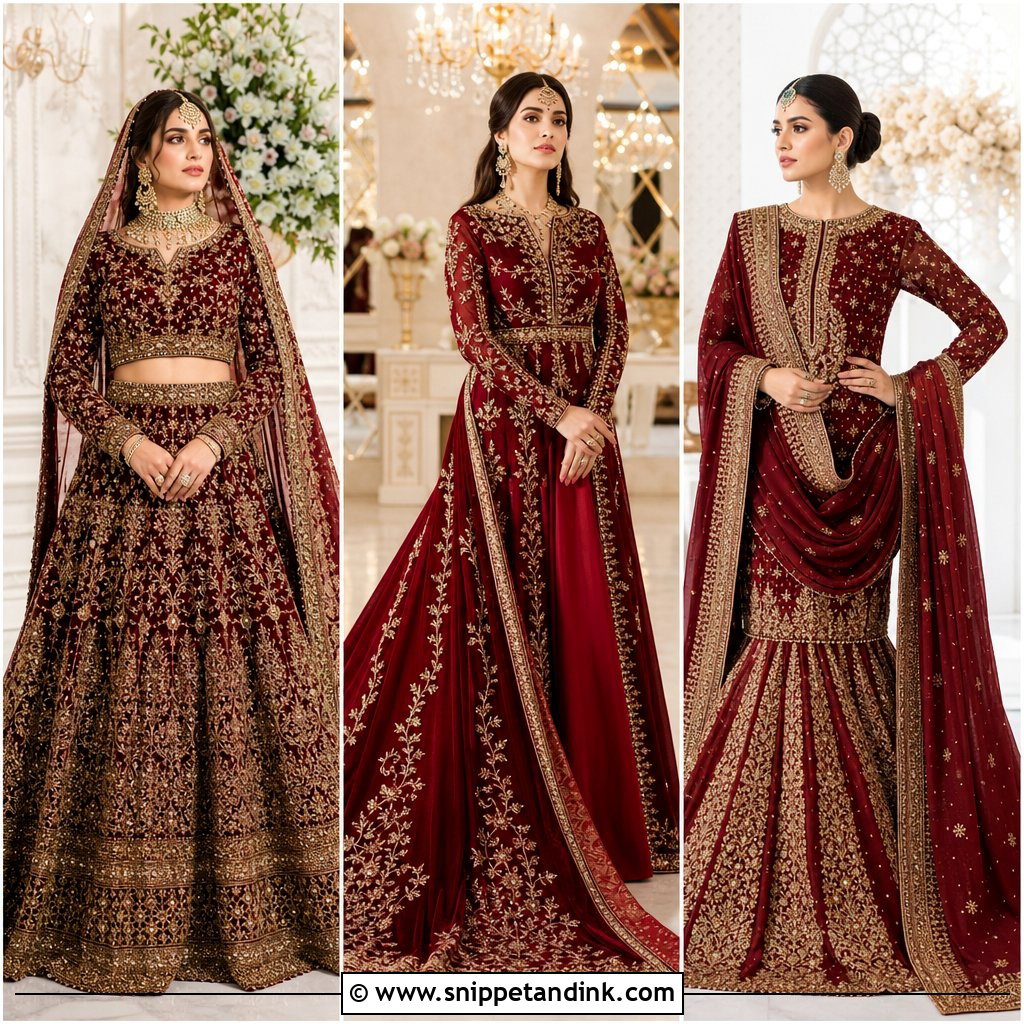
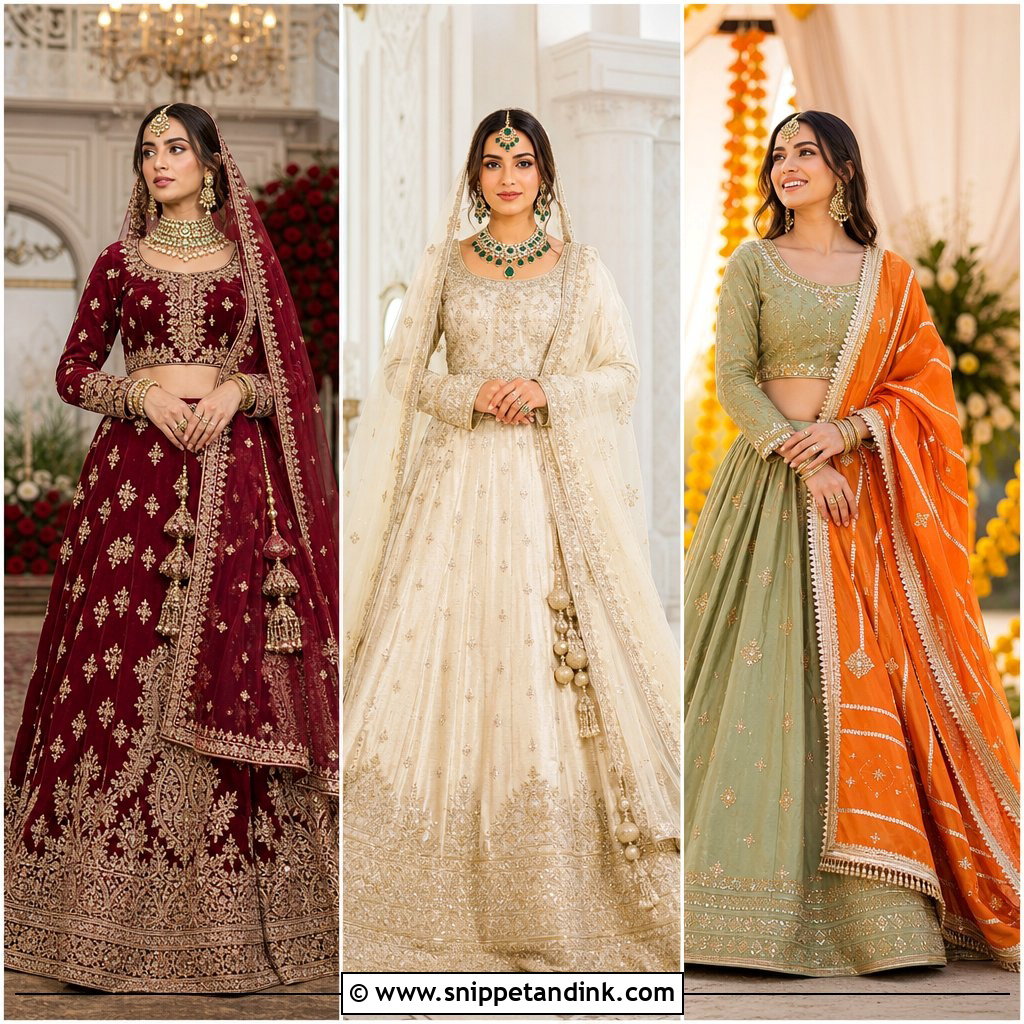
Maroon velvet absorbs light, which makes antique gold look richer against it than polished yellow gold would. Choose a velvet ghagra and kurti with restrained antique-gold zardozi, and balance the weight with a light net or organza odhni carrying a broad embroidered border. I’d keep the jewelry antique throughout: borla, aad, long necklace, jhumkas, nath and ornate bangles. Jhumkas and a wide border love to tangle, so at the trial I tuck the odhni edge behind the earring and watch whether it stays there when the bride turns. Embroidered velvet juttis, a small potli, matte skin, kohl and a berry-red lip, with a low bun and a few subtle flowers. A natural choice for cooler weather.
3. Rani Pink Rajputi Bridal Look
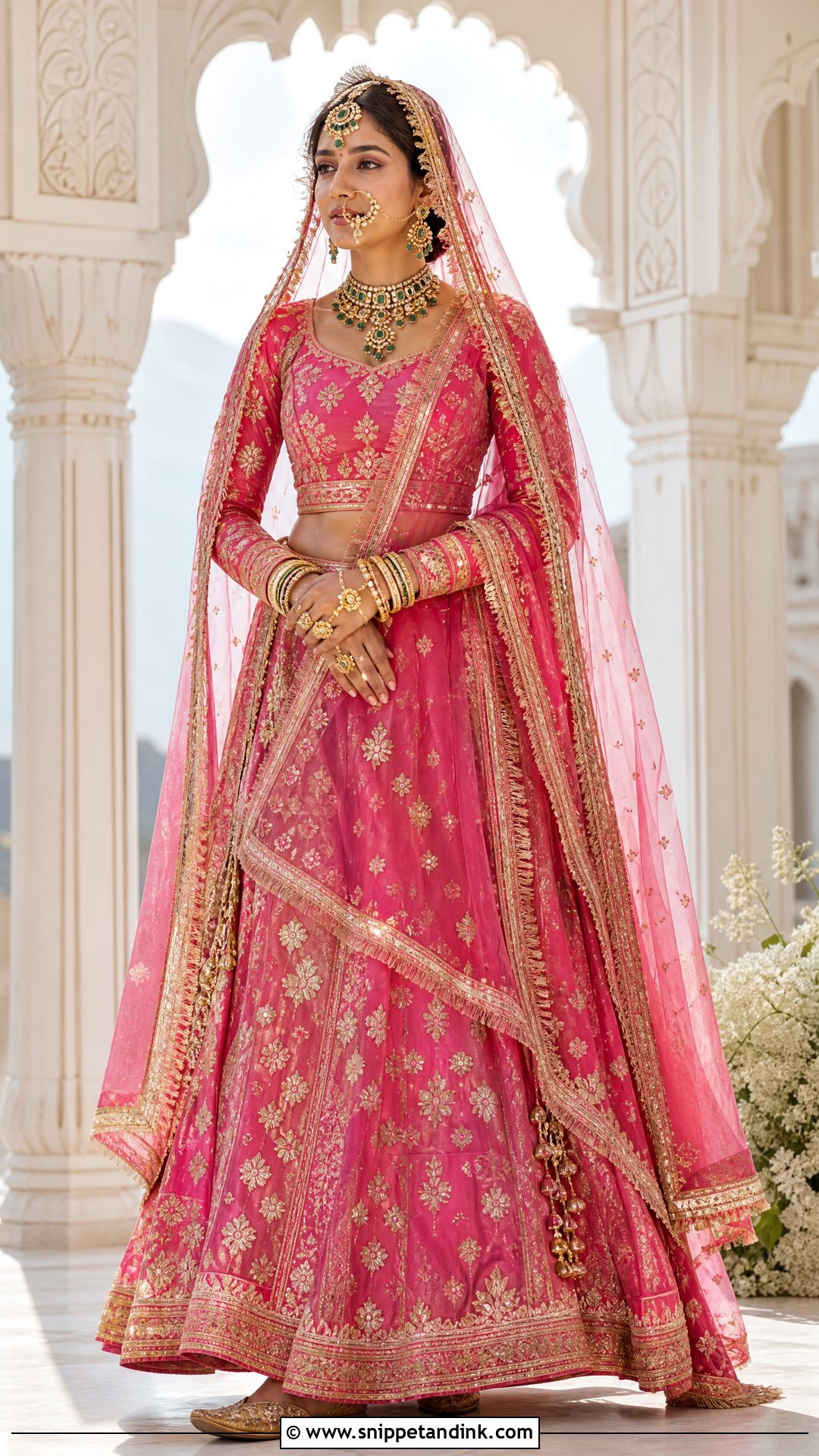
Want bridal color without conventional red? A rani pink Rajputi poshak has the same festive impact with a brighter, more playful finish. Look for a pink ghagra, kurti and kanchli with delicate gota patti or dabka, and an odhni edged in small pearls or sequins. Kundan with green accents is my first suggestion here; green sits opposite pink on the color wheel, so even small stones read clearly from a distance. The borla, aad, nath, haath phool and bangles hold on to the traditional identity. Embellished gold juttis, fresh pink makeup, softly smoked eyes and a rose lip. A center-parted bun with clean veil placement makes it right for daytime pheras or a spring palace wedding.
4. Emerald Green Rajputi Bridal Look
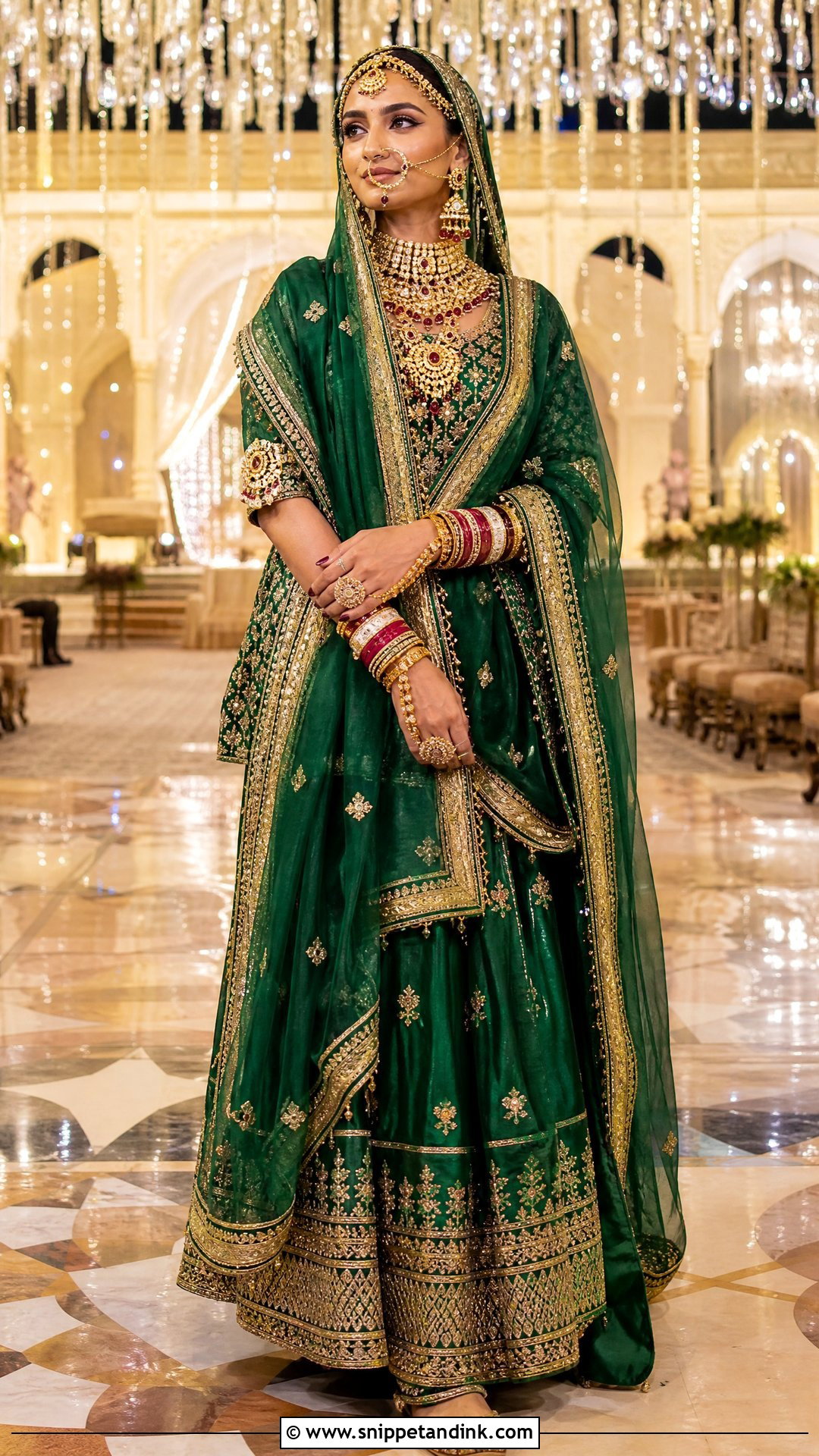
Emerald is one of the few fabric colors where I’d add warm stones rather than matching green ones. Build the outfit around a green silk or velvet poshak, coordinated across ghagra, kurti, kanchli and a sheer odhni, with detailed borders instead of embellishment everywhere so the color itself stays visible. Polki or kundan jewelry with pearls and ruby-colored stones warms the green. A borla, broad aad, layered necklace, nath, armlets, bangles and anklets complete it, and gold embroidered juttis tie the hem back in. Soft bronze lids, a warm nude-red lip and a structured low bun. Evening pheras, receptions and heritage venues suit it.
5. Red And Green Bandhani Rajputi Bridal Look
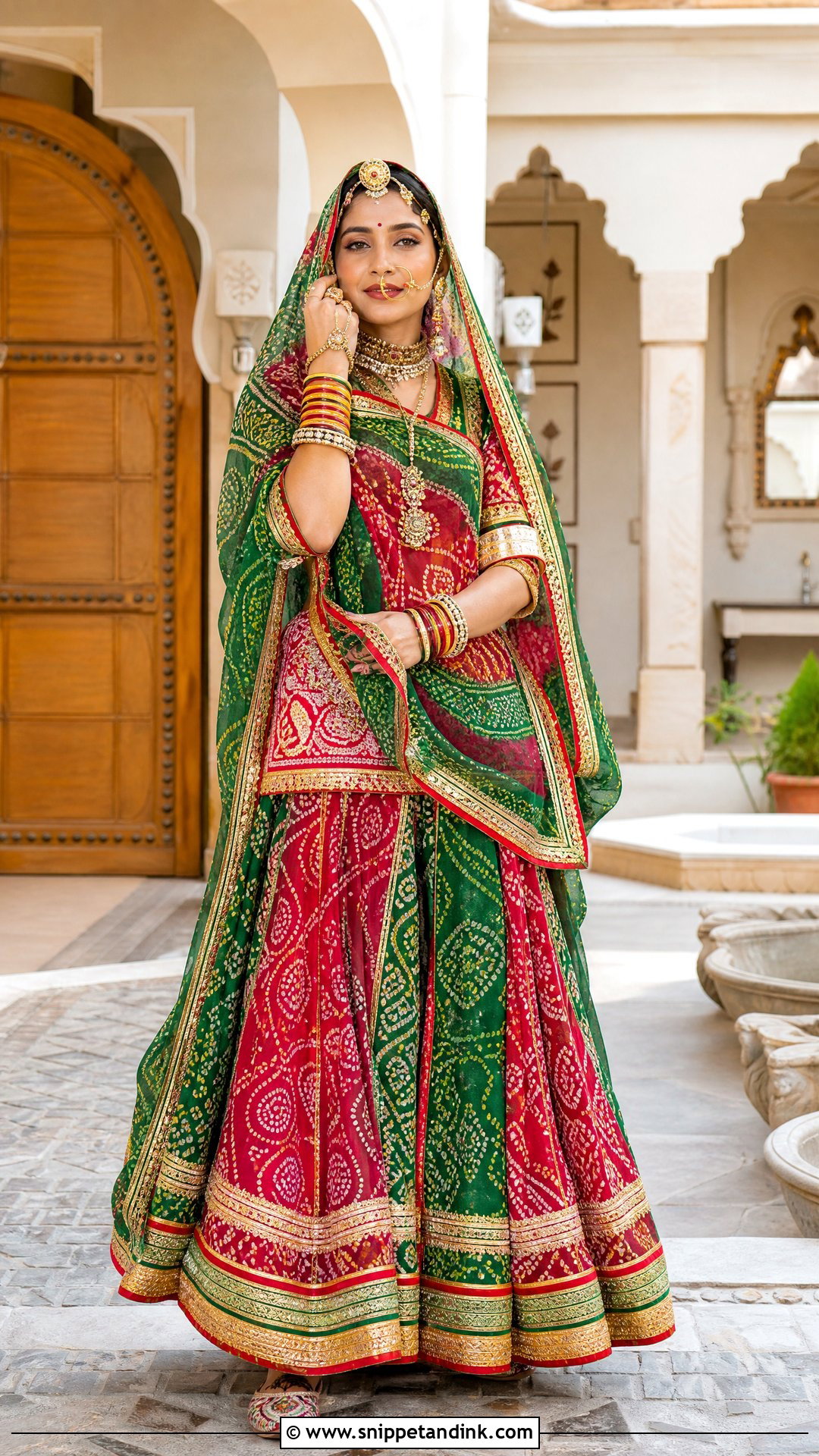
Lakh bangles belong with bandhani; both are Rajasthani crafts and they share the same bright palette. Wear a red bandhani ghagra and kurti with green borders and a green or two-color odhni over the head, keeping embroidery to the hem, sleeves and veil so the textile stays the feature. A gold aad, borla, rani haar, earrings, nath and bajuband sit alongside colorful lakh bangles. One thing about lac: it softens with heat and can crack if knocked, so never leave the bangles in a hot car, and ease them on with a little lotion instead of forcing them over the knuckles. Red or green juttis with a low sole, defined kohl, peach blush and a rich red lip, with neatly tied hair under the veil.
6. Ivory And Gold Rajputi Bridal Look
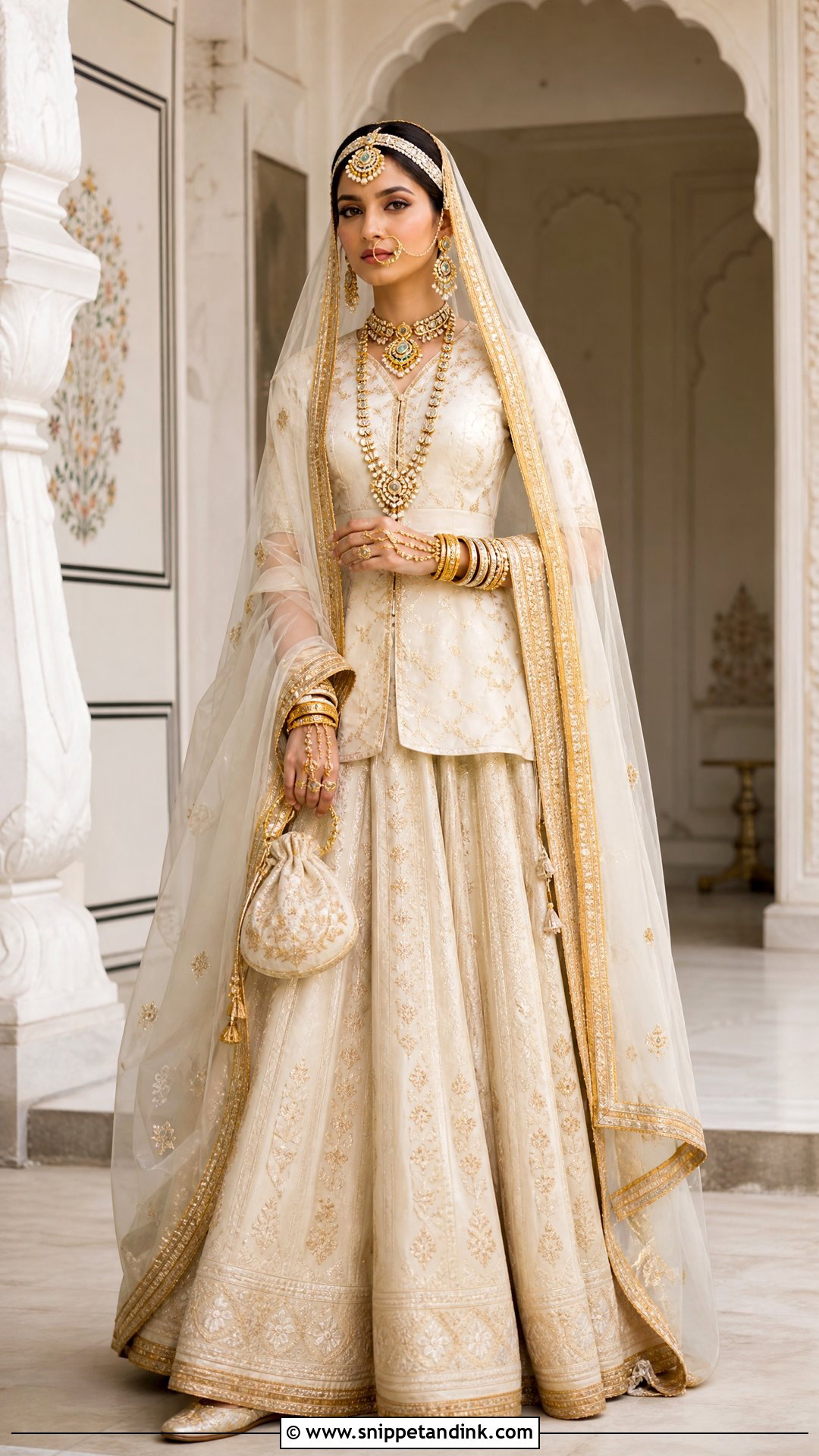
Ivory is where uncut kundan really shows its color. Start with an ivory silk ghagra, matching kanchli and short kurti with fine gold gota or zardozi, and drape a sheer ivory odhni with a substantial border so the silhouette stays clearly bridal. Traditional gold or uncut kundan layered through a borla, aad, long necklace, nath, bangles and haath phool gives a pale outfit the definition it needs. If you want color, I’d bring it in with emerald or ruby stones in the jewelry rather than a second fabric shade; stones are small, so they never take over. Gold juttis, an embroidered potli, luminous skin, bronze eyes, soft contour and a muted rose lip, finished with a smooth low bun.
7. Pastel Pink Rajputi Bridal Look
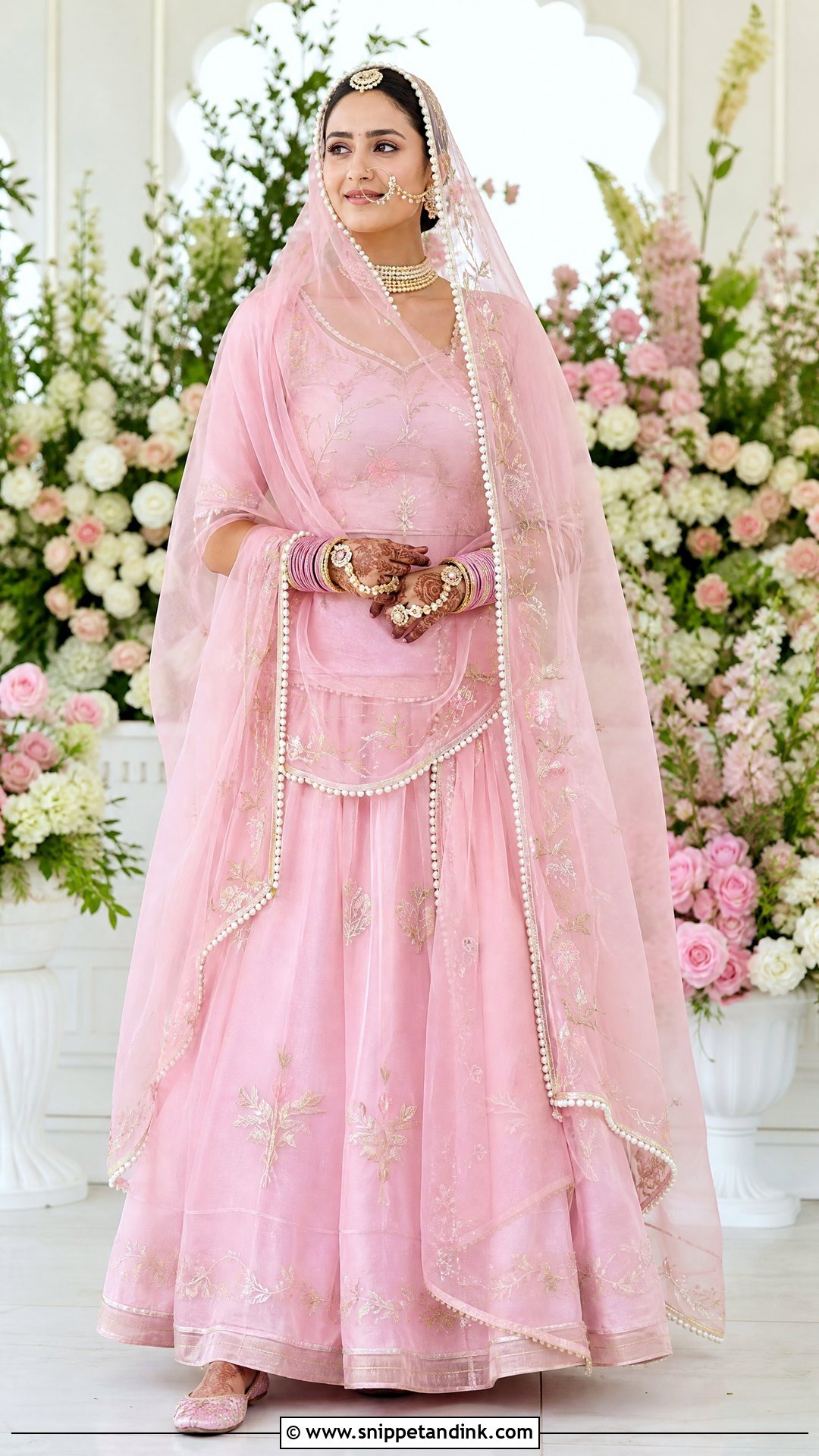
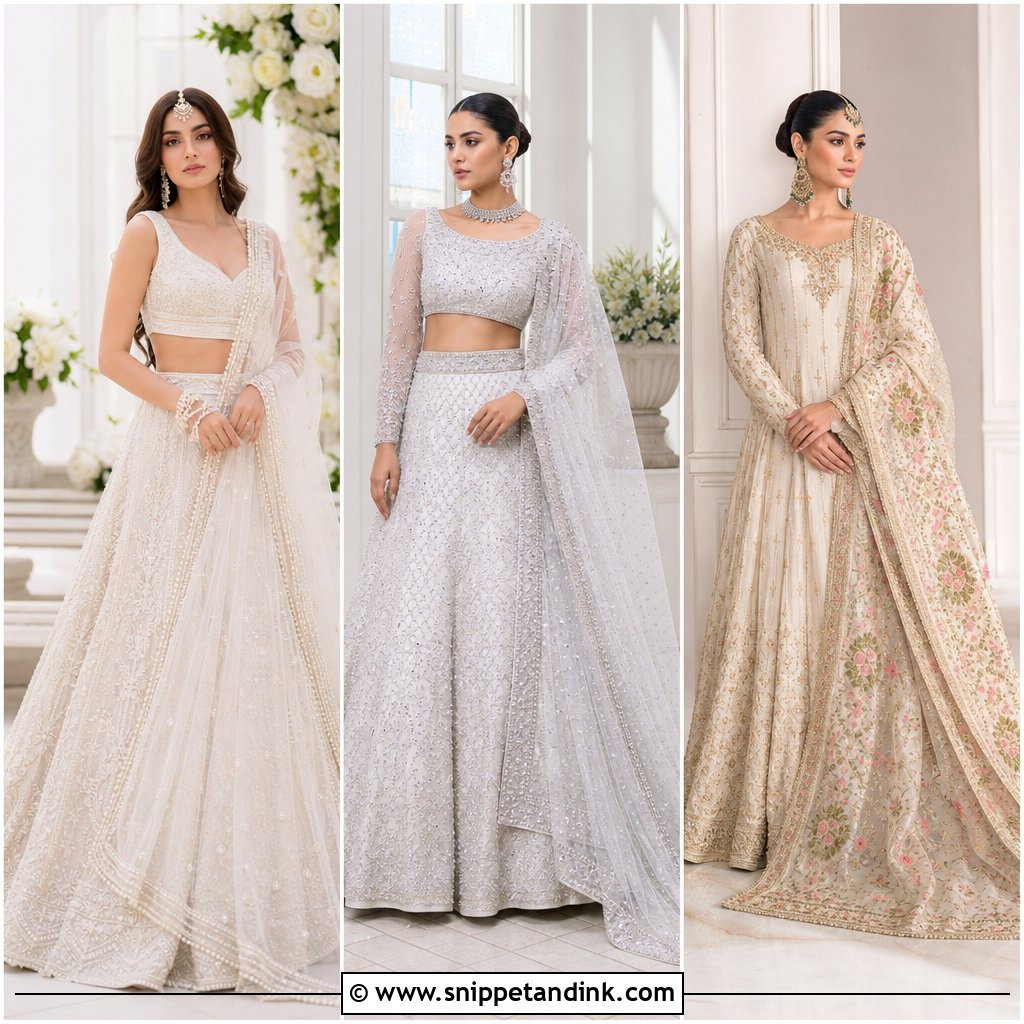
Pastel pink is a daylight color. Think of a lightweight organza or georgette poshak with a gently flared ghagra, fitted kanchli, coordinated kurti and transparent odhni, decorated with fine pearl edging, silver-gold gota and small florals. On a pale, light base I scale the jewelry down to pearl kundan: a delicate borla, a medium aad, a modest nath, haath phool and pastel bangles. A full-size bridal set on organza drags the fabric and makes the neckline pucker. Embroidered blush juttis, rosy cheeks, champagne lids and a soft pink lip, with a low bun and small white flowers pinned beneath the veil. Garden ceremonies and summer pheras suit it.
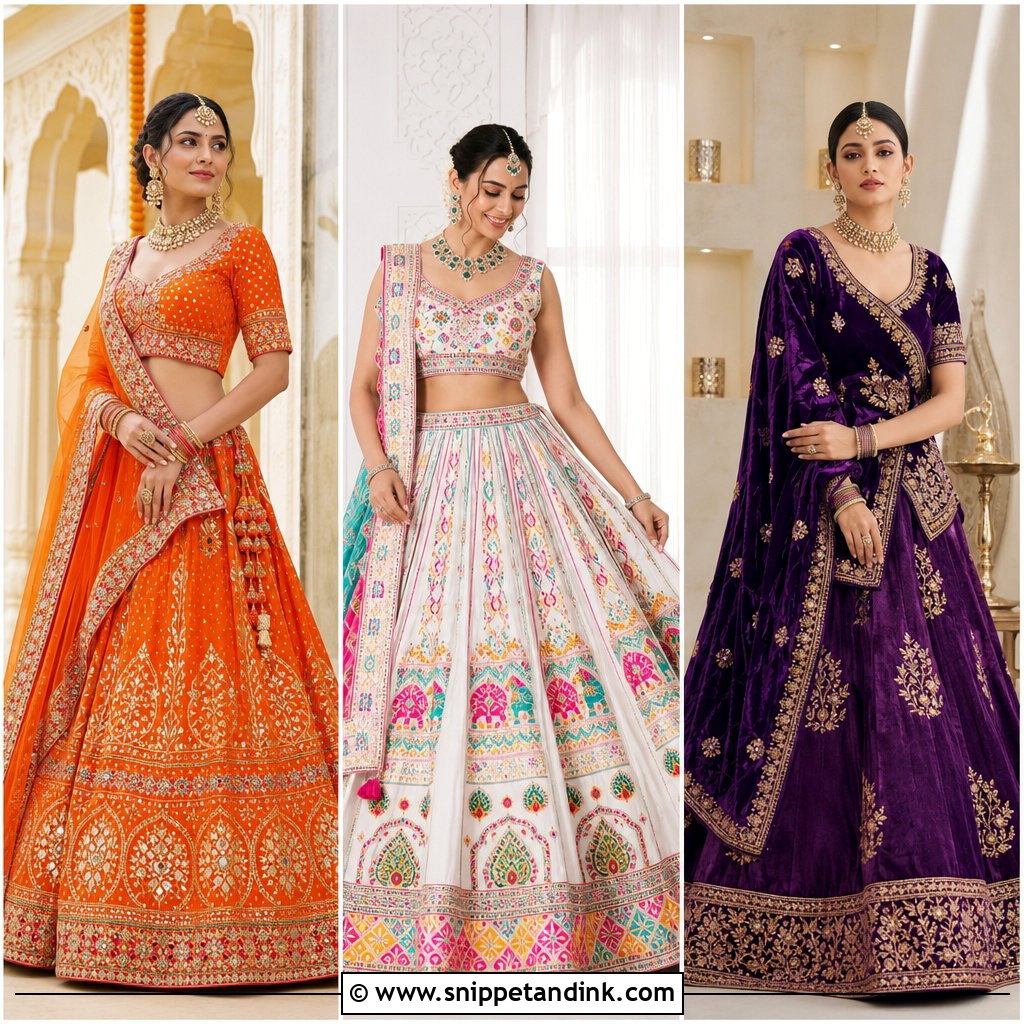
8. Orange And Red Rajputi Bridal Look
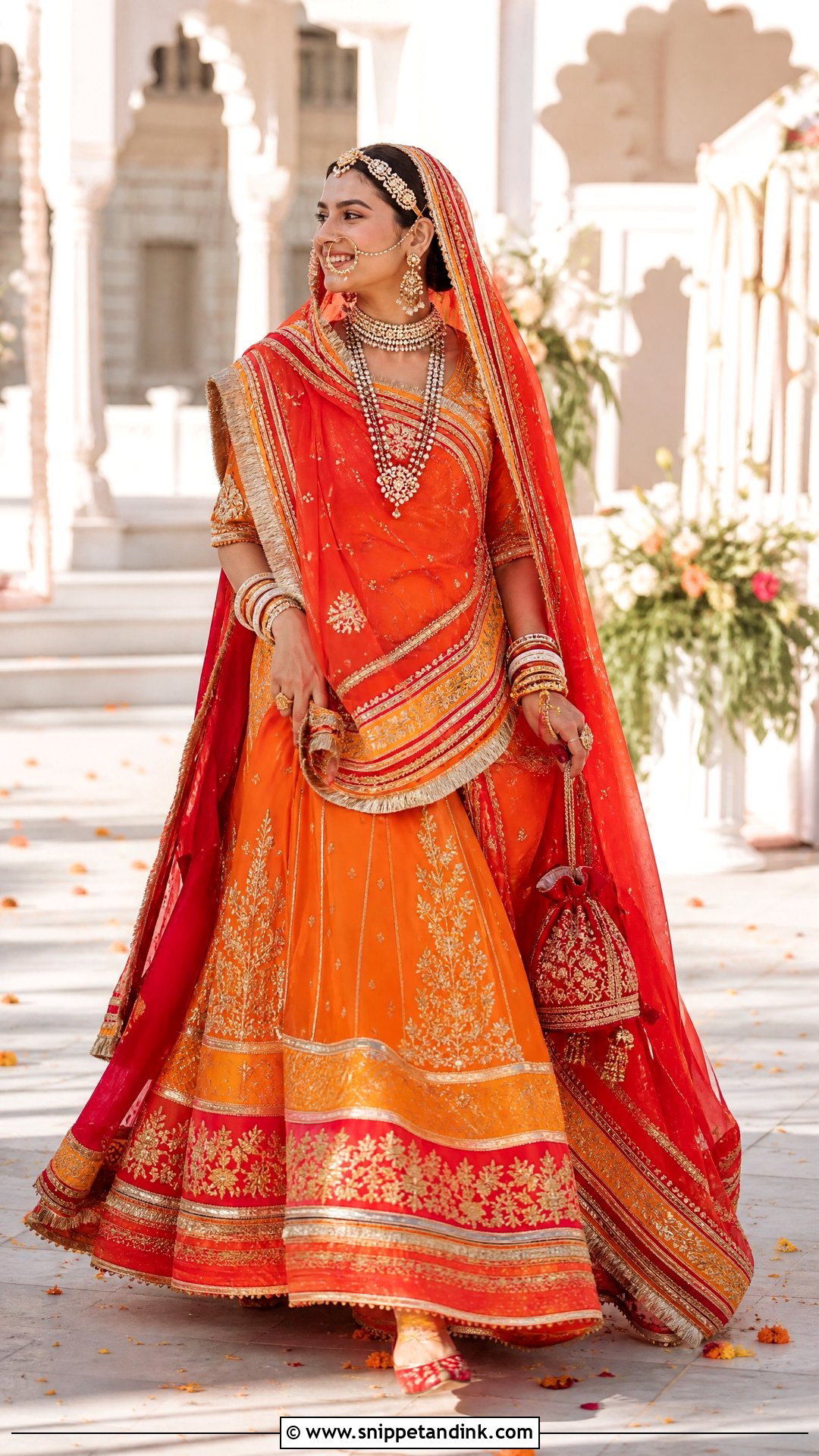
Orange and red sit side by side on the color wheel, so they blend rather than clash, and gota patti, sequins and small motifs stitch them together further. Pair an orange ghagra and kurti with red borders, or reverse it with a red base and an orange odhni. Yellow gold is the natural metal for this palette: borla, aad, long haar, nath, earrings, bangles and bajuband. Rose gold or silver-toned pieces look cold against it, and I’d skip them. Red embroidered juttis, a coordinating potli, warm peach makeup and a terracotta-red lip. A tidy braided bun under the odhni finishes the look for daytime rituals, outdoor pheras or a destination wedding in Rajasthan.
9. Royal Blue Rajputi Bridal Look
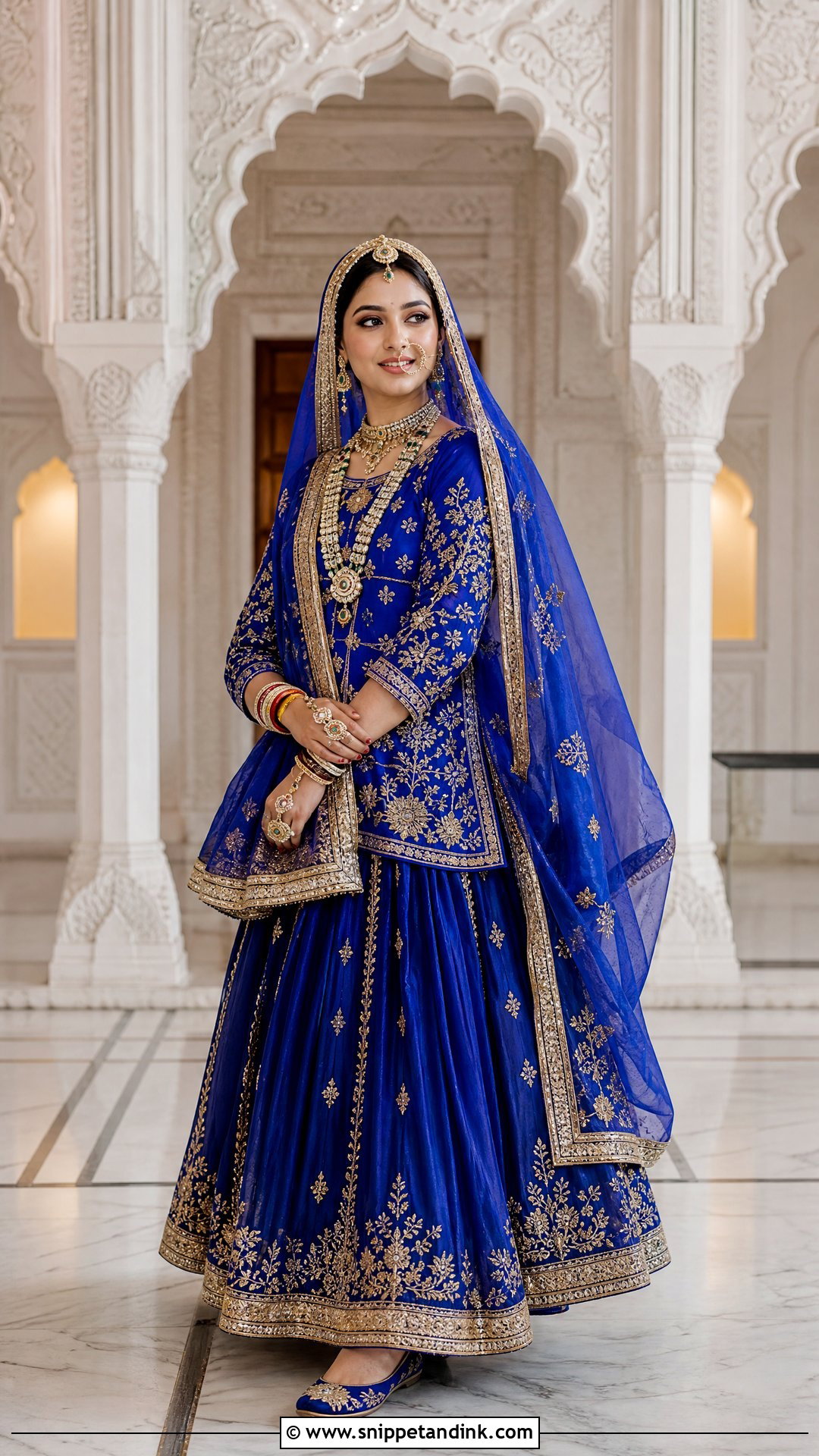
Royal blue gives strong contrast to the reds and maroons that fill most bridal wardrobes. Choose a silk or velvet blue poshak with antique-gold borders and carefully placed motifs, plus a sheer matching odhni so the jewelry stays visible. Kundan with white stones looks crisp against blue, picking up light much as diamonds would without fighting the gold. A rounded borla, broad aad, rani haar, nath, bangles and haath phool, with blue velvet juttis in gold embroidery. Skip blue eyeshadow; softly smoked brown eyes, warm blush and a deep rose lip keep the face warm. A polished low bun. Evening ceremonies, palace interiors and formal portraits suit it.
10. Purple Rajputi Bridal Look
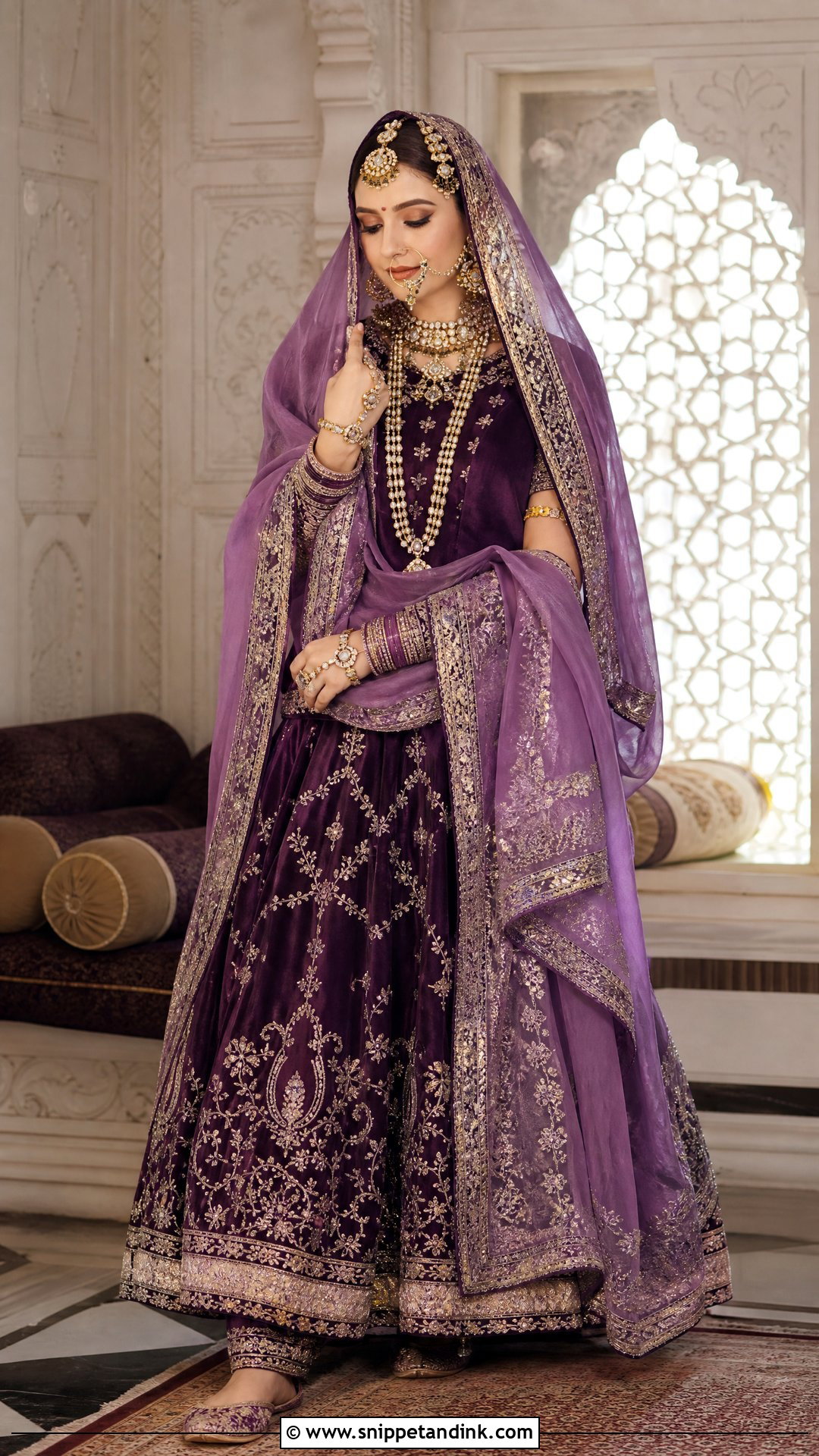
Purple is unexpected for a Rajputi bride, yet it still feels ceremonial. Plum, aubergine or deep grape works for the ghagra and kurti, softened with a lighter purple odhni. Antique-gold embroidery warms it, and small pink or green accents give controlled contrast. Kundan suits it, with a traditional borla, aad, layered haar, nath, bajuband, haath phool and coordinated bangles. If any stones are amethyst-colored, compare them with the fabric in daylight first. Purple stones and purple silk rarely match, and a near-miss looks worse than an honest contrast. Embroidered purple juttis, brown-gold lids, flushed cheeks and a plum-rose lip, with a compact bun so the veil sits securely.
11. Yellow Haldi Rajputi Bridal Look
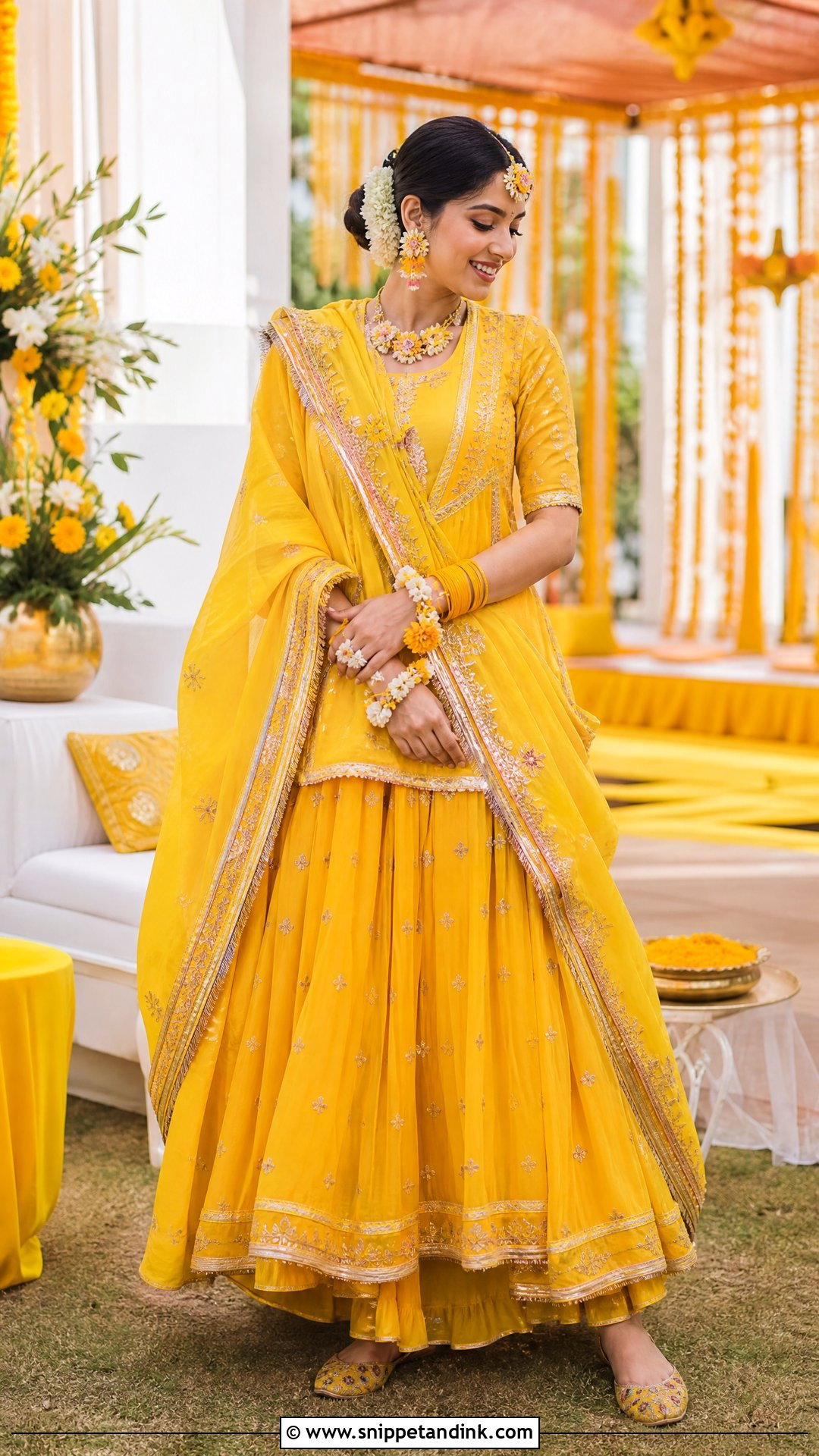
Haldi is messy, so this is not the day for your best kundan. Turmeric paste works its way into filigree and behind settings, and it’s hard to clean out without wetting the piece. Choose a lightweight yellow poshak in georgette, chiffon or breathable cotton-silk, with a lightly flared ghagra, comfortable kurti, fitted kanchli and a simple odhni, finished with gota borders or small florals rather than dense embroidery. Floral jewelry is both the traditional and the practical answer, or a few inexpensive gold-tone pieces, with yellow bangles and embellished juttis. A secure braid or low bun with fresh white flowers, minimal base, waterproof kajal, peach blush and a tinted lip.
12. Green Mehendi Rajputi Bridal Look
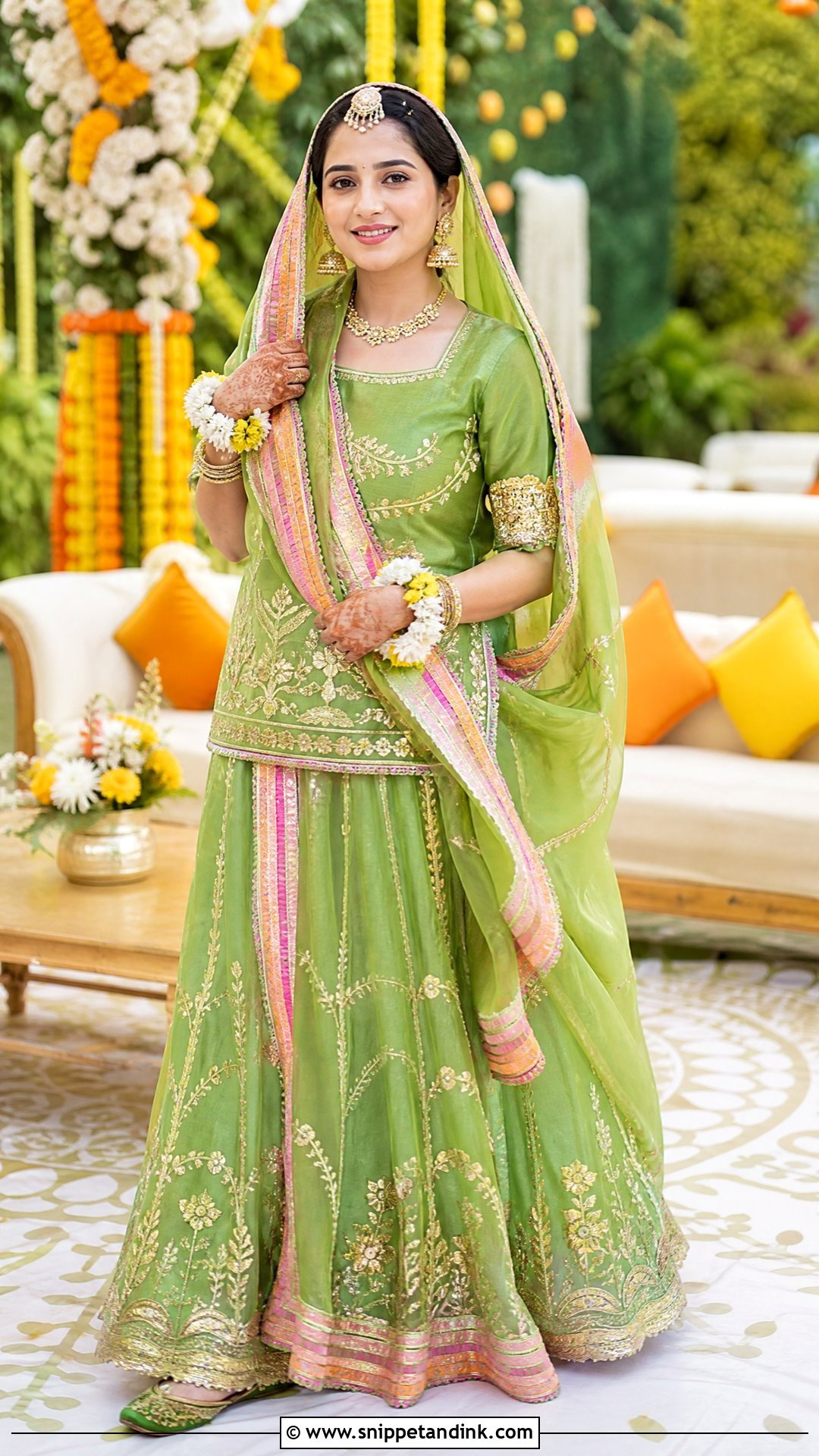
For the mehendi, my jewelry plan starts with the hands: nothing on them. Wear a lightweight green ghagra, short kurti, kanchli and an easy odhni with small gota motifs, with a pink, yellow or orange border for contrast. Choose a compact borla, medium earrings, a light necklace, an upper-arm bajuband and floral wrist pieces that slip off before the artist begins. Rings and haath phool go back on only once the paste has come off. Comfortable juttis help, since you’ll be seated for hours. A side braid or braided bun with flowers, green-gold eyeshadow, bright blush and a pink lip.
13. Leheriya Rajputi Bridal Look
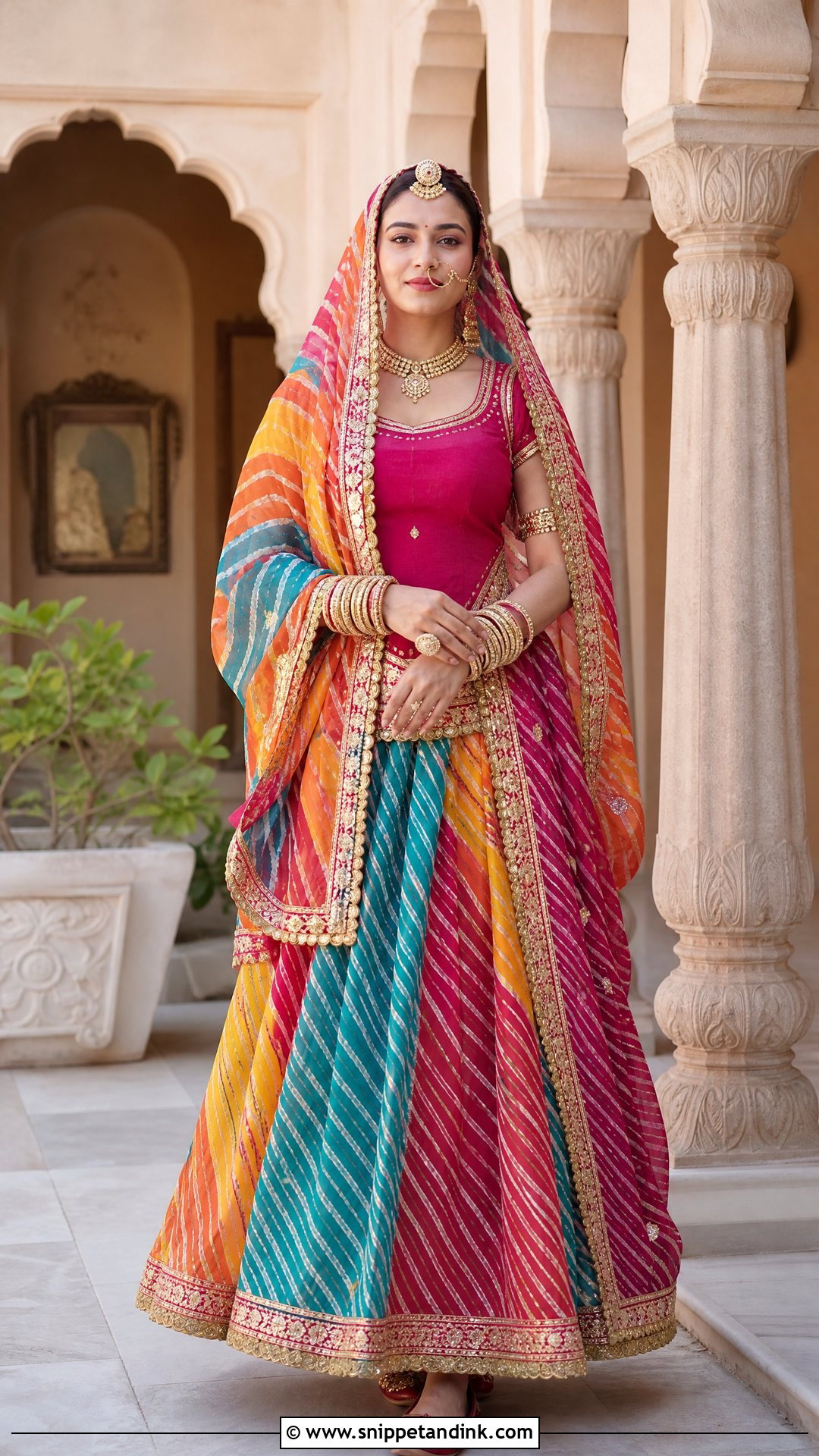
Leheriya’s diagonal stripes are busy, so I keep the metal simple to give them room. Choose a red, pink, orange or multicolor leheriya ghagra with a solid kanchli and kurti. A matching leheriya odhni works as long as its border is substantial enough to look ceremonial. Stay with mostly plain gold and avoid colored stones that compete with the stripes: borla, aad, earrings, nath, bajuband, bangles and anklets. Solid juttis that repeat one shade from the textile, natural glowing makeup and neat hair. Daytime rituals and summer celebrations are where it shines.
14. Double Odhni Rajputi Bridal Look
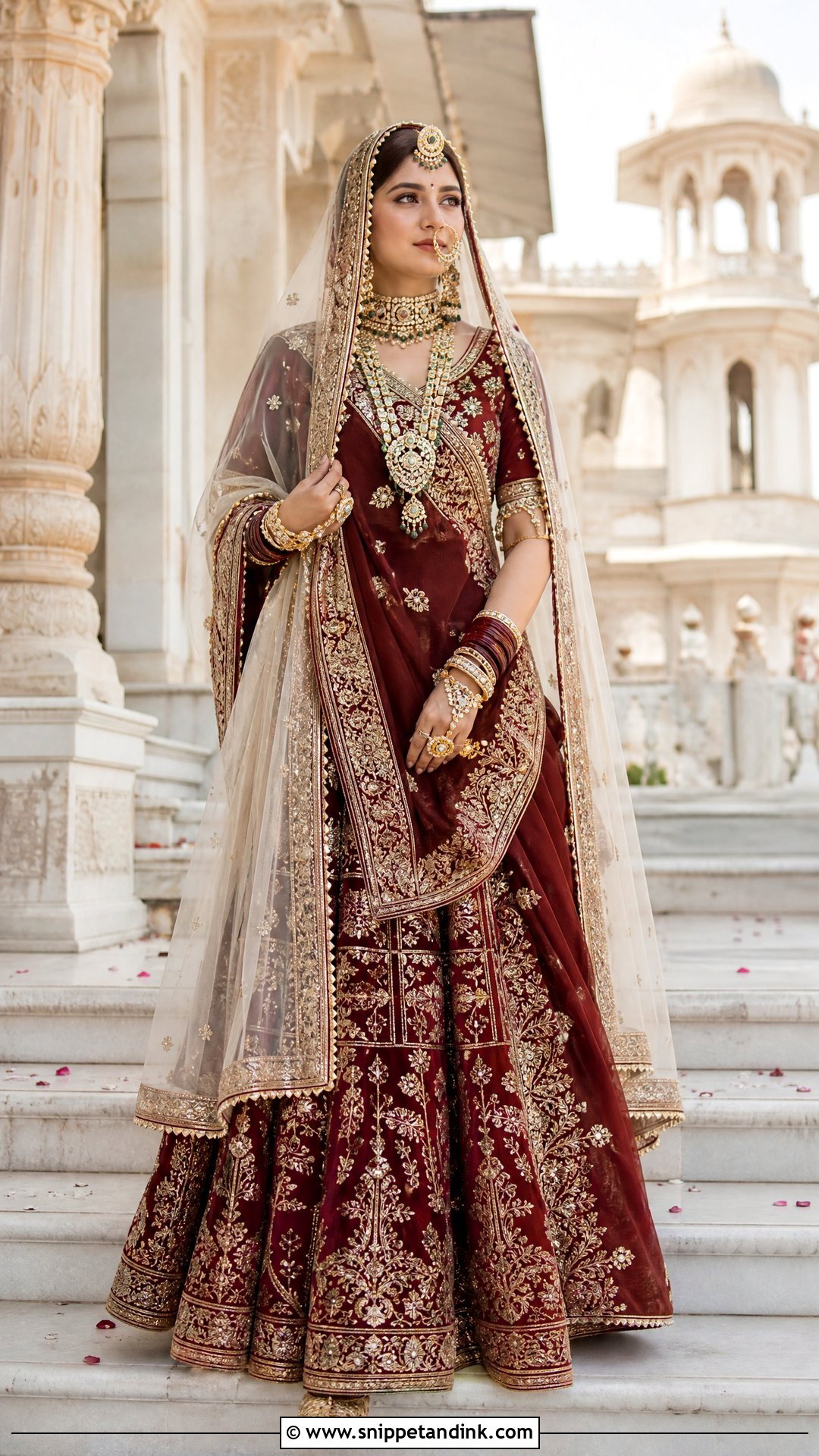
Two odhnis mean two layers of fabric that the jewelry has to work around. Start with a red or maroon embroidered poshak, put a lighter sheer odhni over the head and drape a heavier one across the shoulder; an ivory head veil with a red shoulder drape brightens the face while the outfit stays rich. The shoulder drape crosses exactly where the bajuband sits, so I usually move the armlet to the other arm, or set it a little lower, so the fabric stops catching on its tassels. Borla, aad, layered necklace, nath, bangles and haath phool complete it. Gold juttis, a secure low bun, soft eyes and a balanced red lip. Good for formal pheras and grand portraits.

15. Zardozi Rajputi Bridal Look
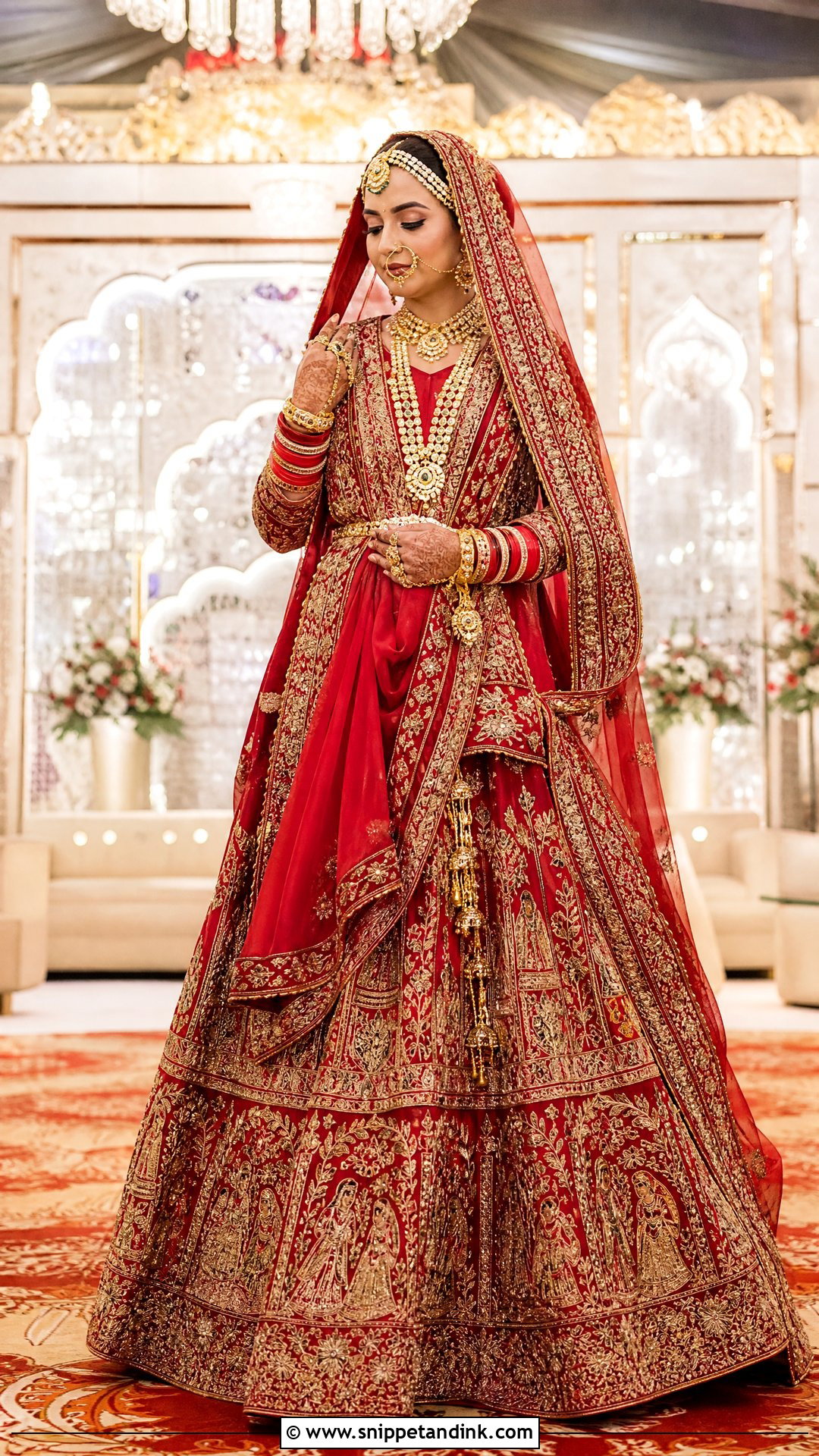
Zardozi and heavy gold jewelry are both metal, and on one body they can blur into a single mass. Pick a red, maroon, green or navy base and concentrate the heaviest work at the ghagra hem, kurti neckline, sleeves and odhni border. Then I look for jewelry with more open shapes or visible stones, so it reads separately from the embroidery: a broad aad, long haar, borla, earrings, nath, bajuband, bangles and haath phool in antique gold. Simple gold juttis, since the clothing already carries plenty. Matte skin, warm brown eyes, a red or berry lip, a sleek bun and a precisely pinned veil. Evening ceremonies and ornate palace interiors suit it.
16. Kundan Rajputi Bridal Look
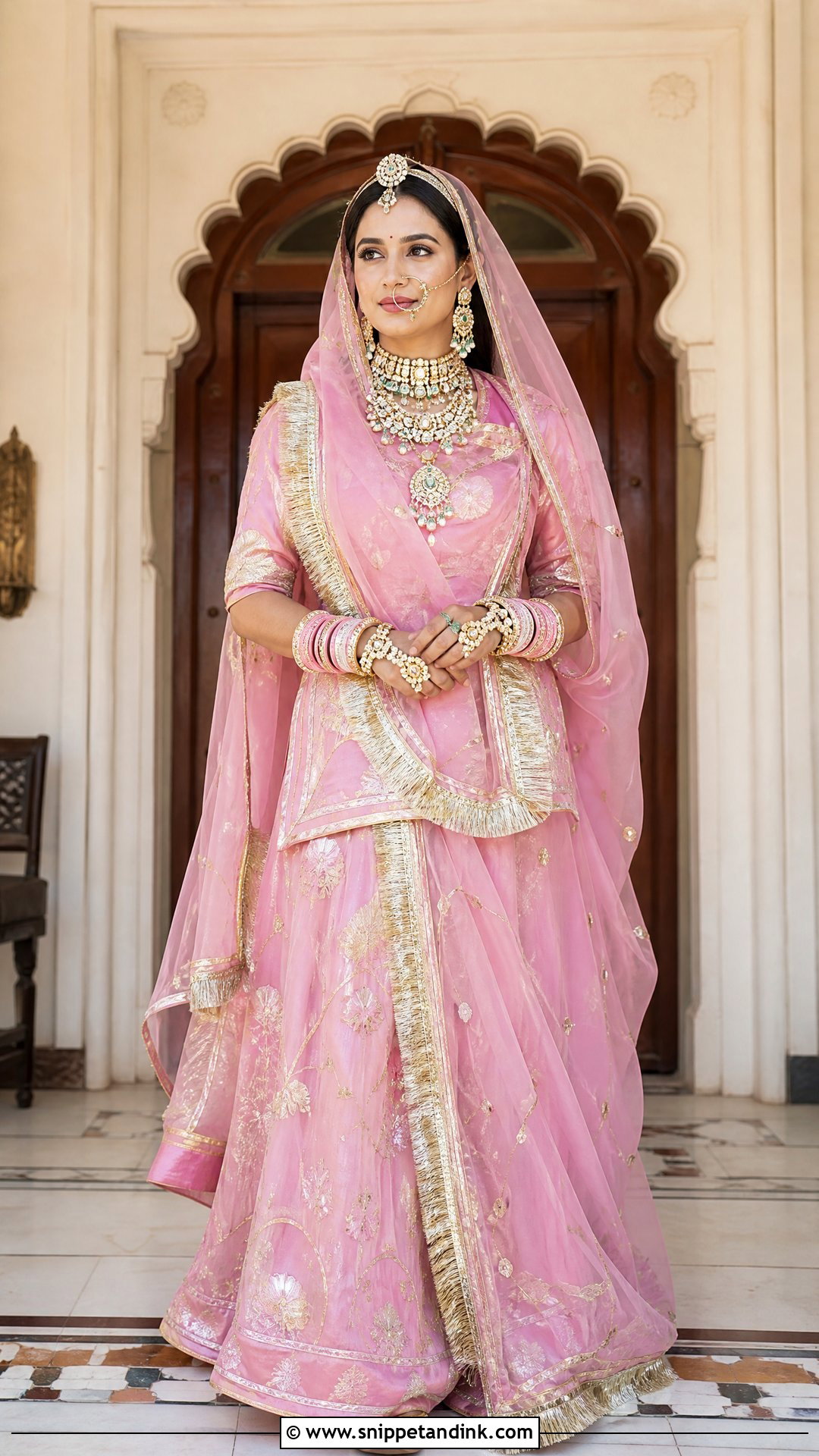
Here the clothing and jewelry are designed together, so the kundan in the set is echoed by small kundan accents on the poshak. Choose red, pink, ivory or green with those accents alongside gota or threadwork, then repeat the finish in the borla, aad choker, layered necklace, earrings, nath, haath phool and bangles. Rajputi jewelry is traditionally layered from the forehead down to the hands and ankles, so scale matters more than quantity. My working rule is one large piece per zone: a big aad means a medium borla and a lighter nath. A sheer odhni shows the jewelry clearly. Gold embroidered juttis, neutral eyes, fresh blush and a red-rose lip, with a center-parted bun as the base for the headpiece and veil.
17. Pearl Rajputi Bridal Look
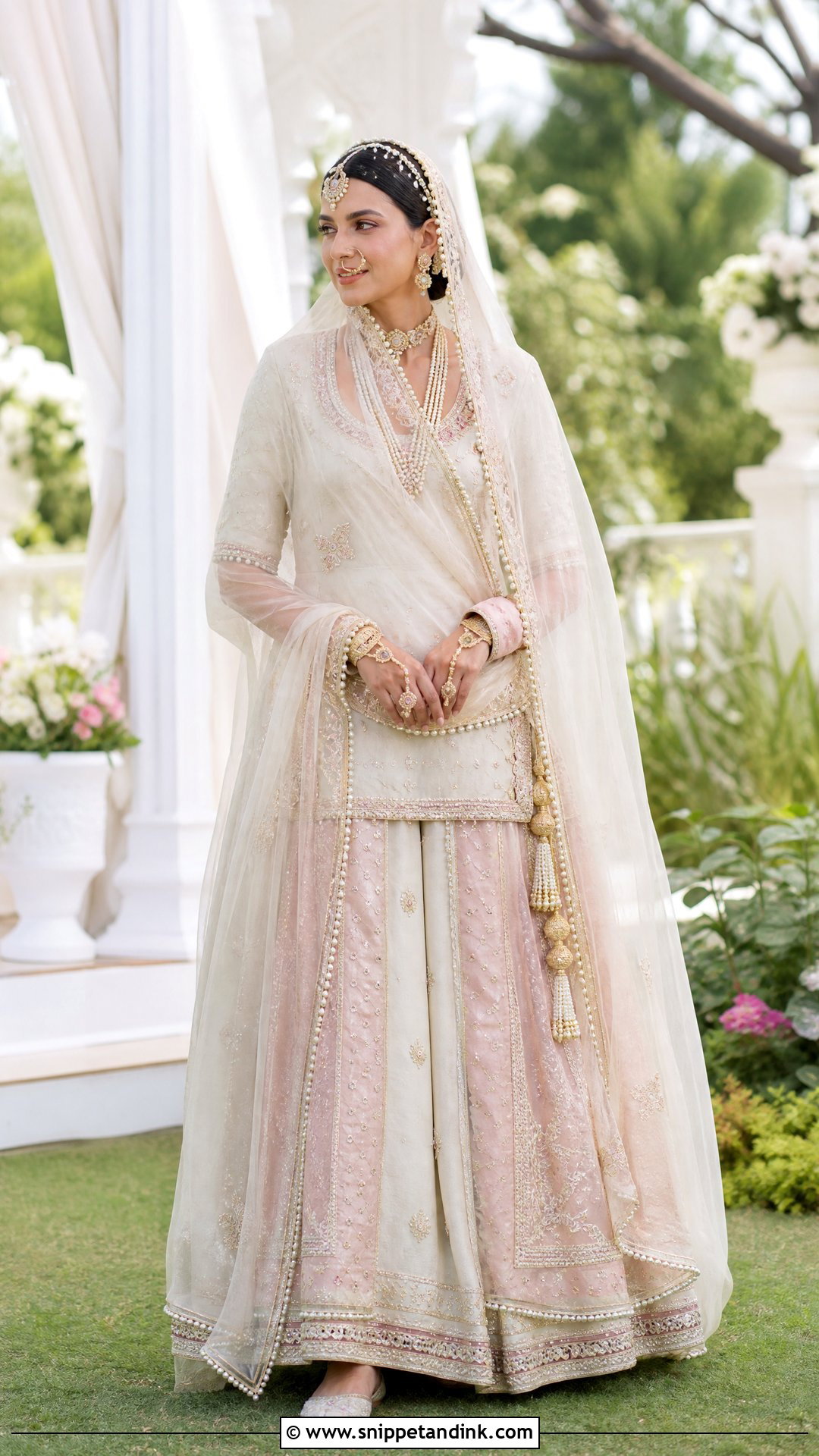
Pearls make a Rajputi set look lighter, and they genuinely are lighter on the neck than solid gold of the same size. Begin with a pastel pink, ivory, powder blue or muted peach ensemble with pearl edging and delicate gold work, and a sheer odhni so the border stays refined. Then a pearl-bordered borla, pearl kundan aad, long necklace, earrings, a smaller nath, haath phool and bangles. Pearls are soft and porous, so they go on last, after perfume, hairspray and setting spray, and they get a wipe with a soft dry cloth before they’re put away. Ivory or metallic juttis, luminous skin, champagne lids and a satin pink lip, with pearl pins or small white flowers in a smooth bun.
18. Minimal Rajputi Bridal Look
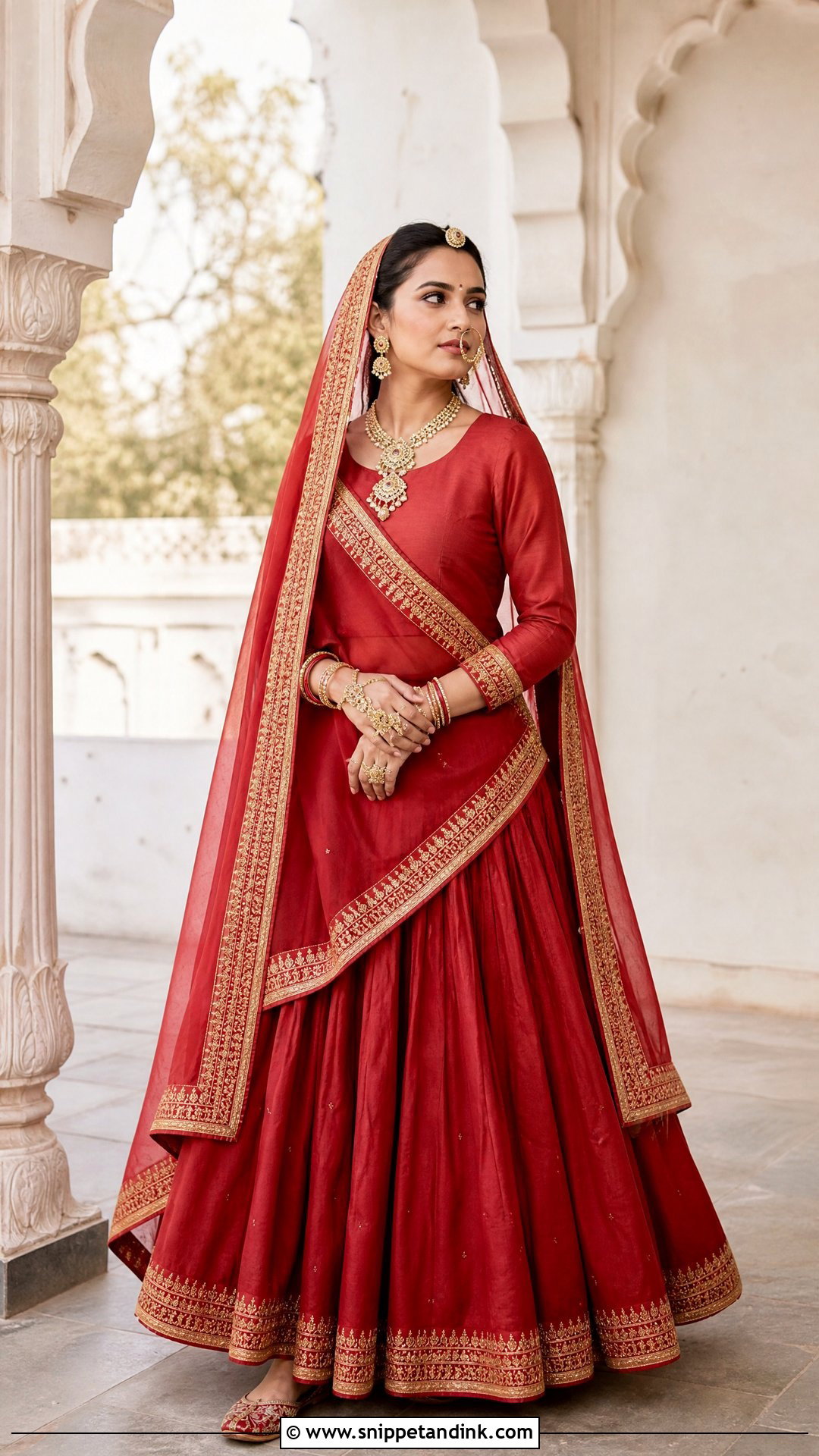
Plenty of brides don’t want heavy fabric and a dozen oversized ornaments, and a minimal look still counts as traditional when the structure is right. A solid silk or georgette poshak with a medium-flare ghagra, fitted kanchli, simple kurti and bordered odhni. Pick one statement aad and let everything else step back: a smaller borla, moderate earrings, a lightweight nath, a few bangles and a simple haath phool. Comfortable embroidered juttis rather than heels hidden under the skirt. A clean low bun, natural base, brown kajal, soft blush and muted red lip. I’d hold it to two colors and one metal tone; mixing yellow and rose gold is the fastest way to make a minimal set look accidental.
19. Palace Wedding Rajputi Bridal Look
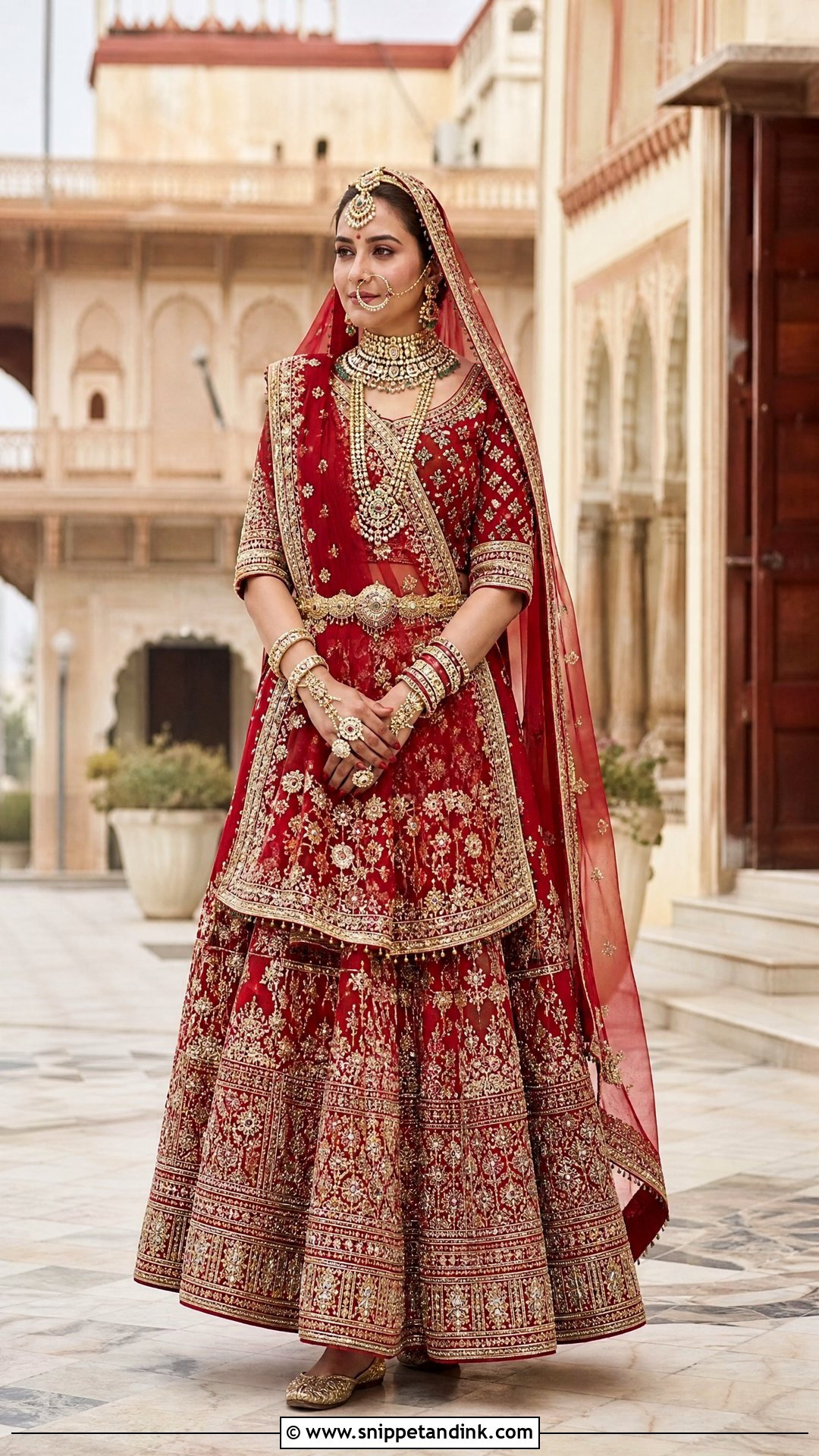
A heritage palace setting can hold a richer outfit that would overpower a smaller venue. Deep red, maroon, emerald or royal blue, with a broad ghagra border, a detailed kurti, fitted kanchli and a long embroidered odhni, plus a second shoulder drape if the rooms are very large. This is where the full traditional set makes sense: borla, aad, rani haar, earrings, nath, bajuband, haath phool, kamarband, bangles and payal. Walk across stone in the payal before the day; anklets ring on marble, and some brides love the sound while others find it tiring by evening. Embroidered juttis, defined eyes, a rich lip and a sleek bun. Coordinate with the venue’s colors rather than copying them, so the bride stays the focal point.


20. Modern Fusion Rajputi Bridal Look
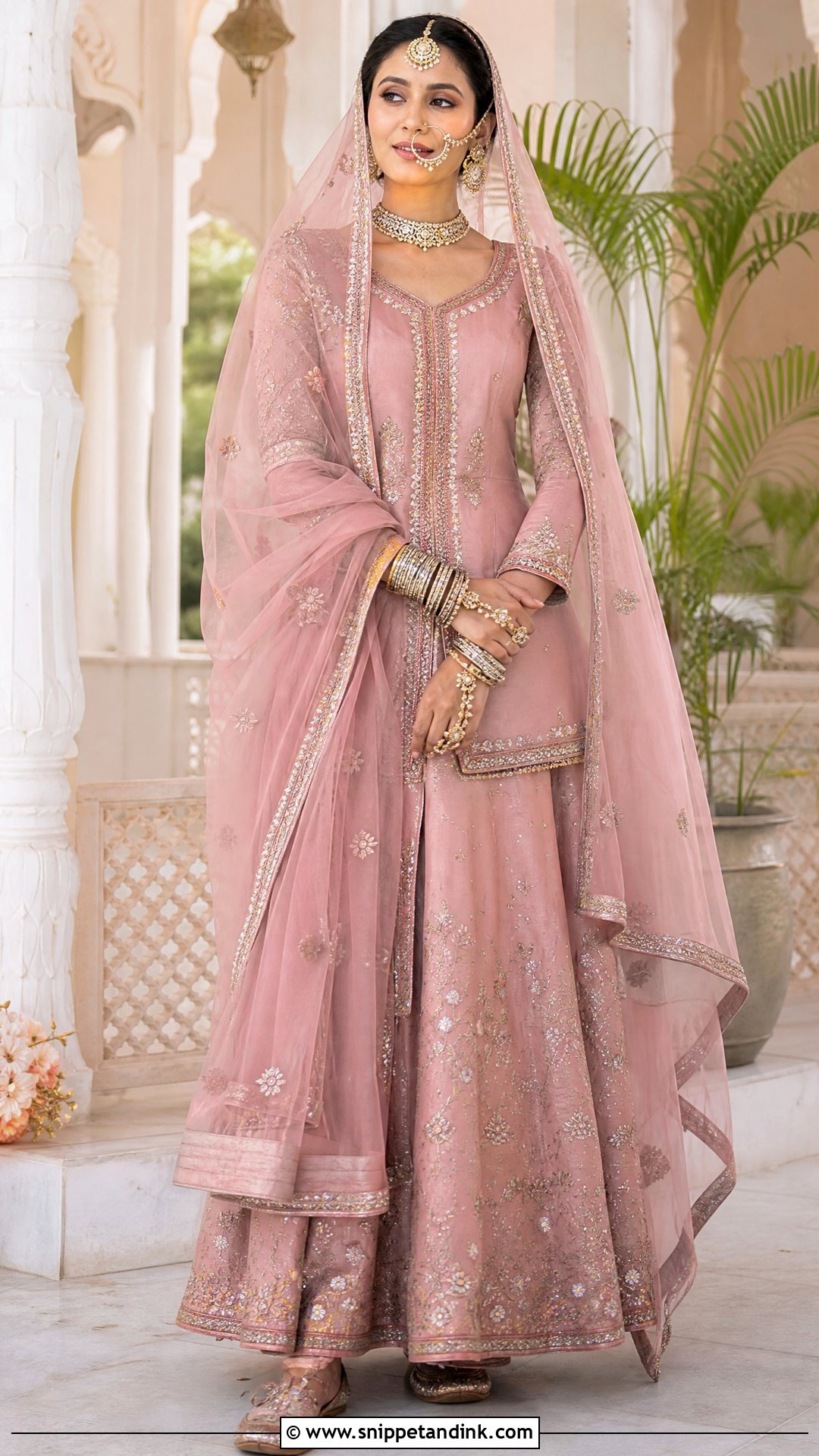
A fusion outfit works when the Rajputi foundation stays in place. Keep the ghagra, kanchli, kurti and odhni, and update them through cleaner tailoring, a lighter skirt, tonal embroidery or a color such as dusty rose, champagne, teal or muted lavender. A streamlined odhni drape is fine, with full head coverage kept for the rituals. With the jewelry, modern means sculpted shapes and fewer layers, not abandoning the traditional forms: a statement borla, sculpted aad, medium nath, earrings, stacked bangles and a sleek haath phool. Metallic juttis bridge old and new far better than visible Western shoes. Luminous makeup and a polished bun complete it.
Is the Nath Pierced, Clip-On or Pressed?
Most brides ask about the nath last, when it should be one of the first decisions. A large bridal nath is a lot of weight for one small piercing, and the right answer depends on your nose as it is today.
- Healed piercing: wear the nath with its chain hooked into the hair or behind the ear so the chain carries the weight instead of the piercing. Wear it for an hour at home before the wedding.
- New piercing: give it time. A nostril piercing done only weeks before is usually still tender, and a heavy ring can irritate it badly, so pierce several months ahead or choose a non-pierced style.
- No piercing: clip-on and press-fit naths exist, and a well-made one stays put, but it needs a firm chain anchor and a test with the full odhni in place.
Putting kundan and lakh away afterwards
Kundan stones are set over thin foil, and moisture that creeps behind them dulls the shine permanently. I wipe each piece with a soft dry cloth, never water, and store them separately in cloth pouches, inside their original boxes if you still have them. Keep lakh bangles flat and away from heat, and wrap pearls on their own so harder stones can’t scratch them.
Plan the Jewelry and the Poshak at the Same Table
Every look above balances meaning, comfort and the bride’s own taste. Red and maroon carry the deepest tradition; emerald, royal blue, ivory, purple and the pastels offer distinctive alternatives; bandhani, leheriya, gota patti, zardozi, kundan and pearls personalize things further. Whatever you choose, plan the ghagra, kurti, kanchli, odhni, jewelry, shoes, hair and makeup together. Think about the ceremony, the weather, the venue, how much you’ll move and the weight of every piece before deciding. With that settled, the outfit will feel regal, sit comfortably and do justice to the tradition it comes from.
You'll Like These Ideas:










Leave a Reply