
An Indian bridal outfit has to do two jobs at once. It carries a region’s craft and a family’s expectations, and it also has to get you through hours of rituals, greetings and dancing. The twenty looks below cover red and velvet lehengas, regional silk sarees from Kanjeevaram to Paithani, half sarees, shararas, cape and jacket lehengas and saree gowns, each styled head to toe. Before you fall for the embroidery, know your venue, the weather and how long each ceremony runs. In my fittings, fabric weight and blouse support cause more trouble on the day than any colour choice, and good tailoring fixes most of it on every body type.
Planning Separate Looks for Haldi, Pheras and the Reception
Most Indian weddings run over several events, and one outfit rarely suits them all. I plan a bridal wardrobe by asking what each event physically asks of the bride, then fit the silhouette to it.
- Haldi: something washable, in cotton or a printed fabric you won’t mind staining yellow.
- Mehndi and sangeet: shararas, light lehengas or Anarkalis you can sit cross-legged and dance in, with sleeves short enough to keep fresh henna clear.
- Main ceremony: the heaviest, most traditional piece, since you’ll mostly sit and stand in place.
- Reception: lighter drapes, capes, jackets or saree gowns, because you’ll be standing and greeting for hours.
Budget time for the changes. A full bridal re-drape with jewelry and a hair adjustment rarely takes less than forty minutes, so tell your planner before they schedule back-to-back events.
Travel between venues is where outfits get damaged. I hang each one in its own breathable garment bag with the dupatta folded separately in tissue, and the jewelry for that event goes in a labelled pouch pinned inside the same bag. That way nobody is hunting for a matha patti in the car, and heavy skirts aren’t crushed under suitcases.
1. Red Indian Bridal Lehenga
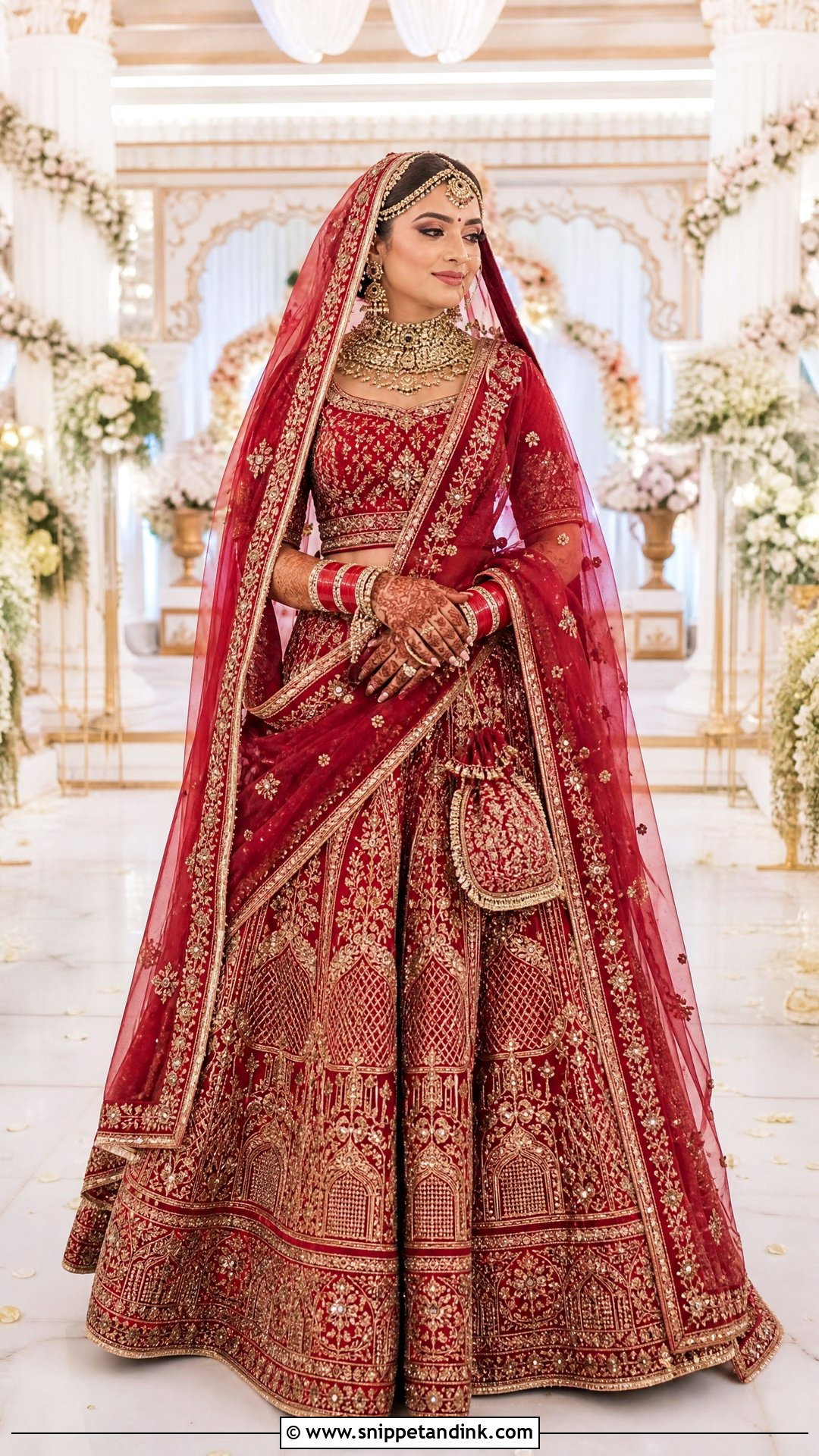
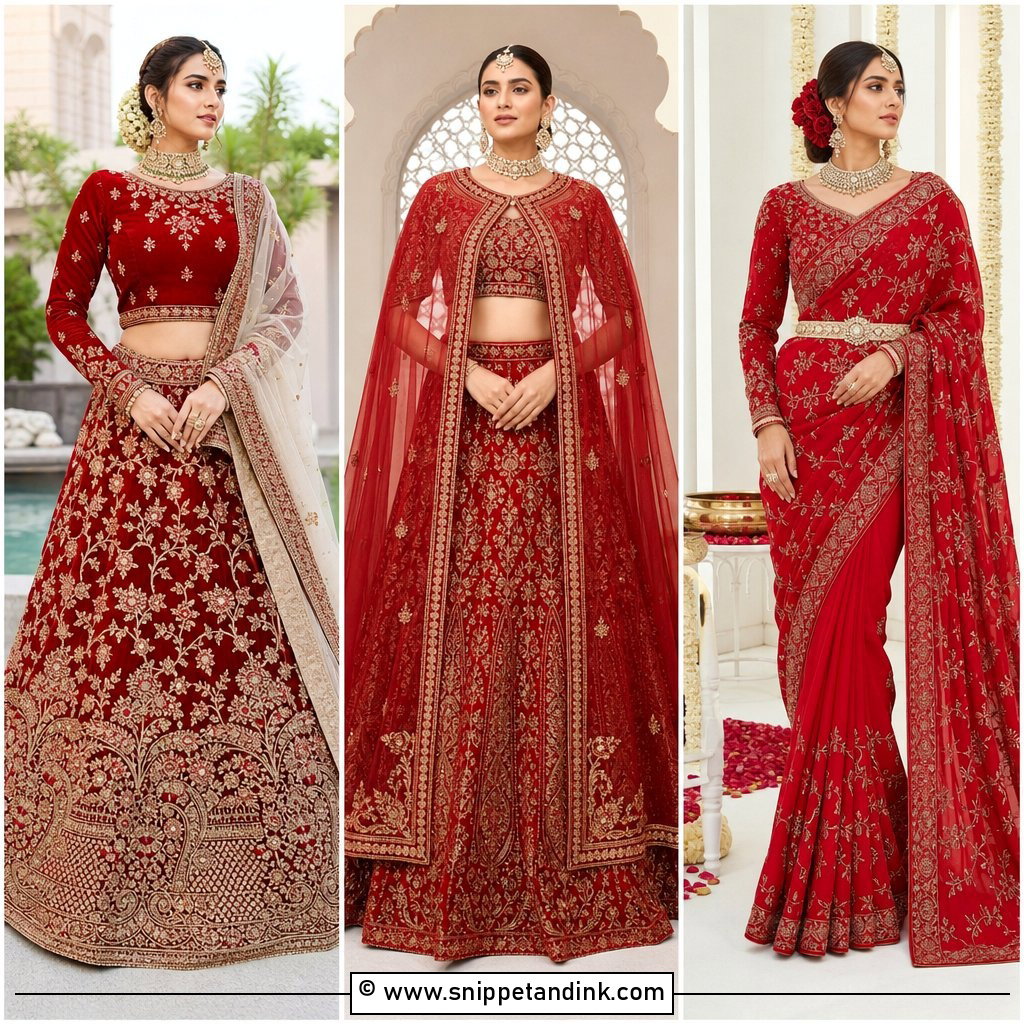
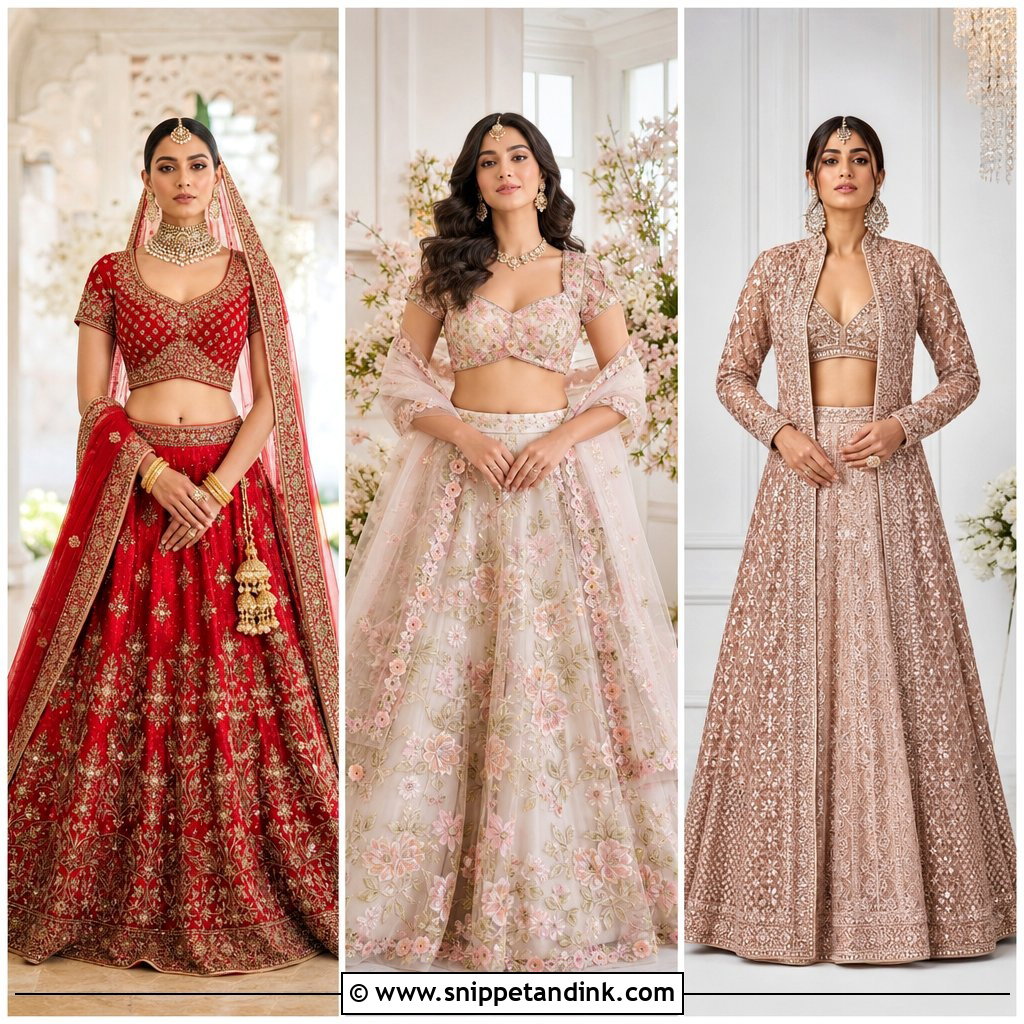
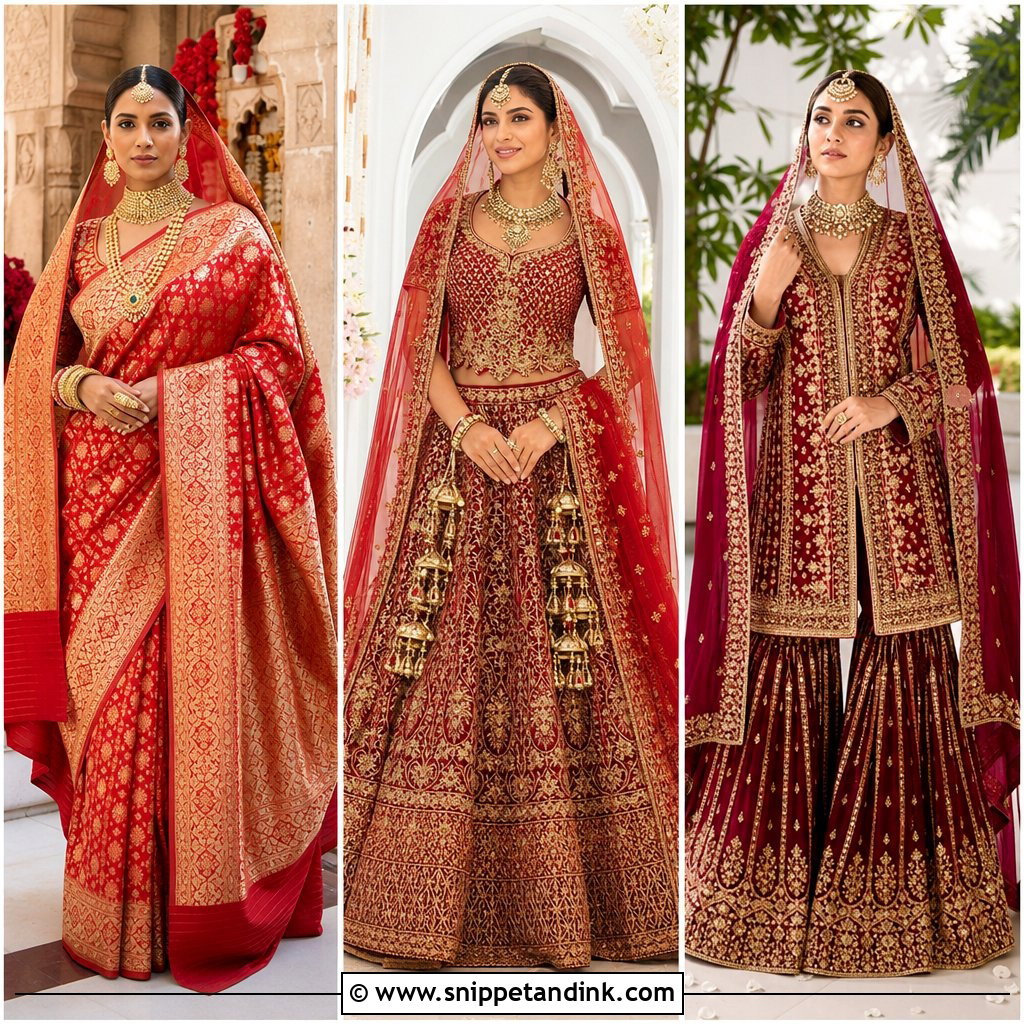
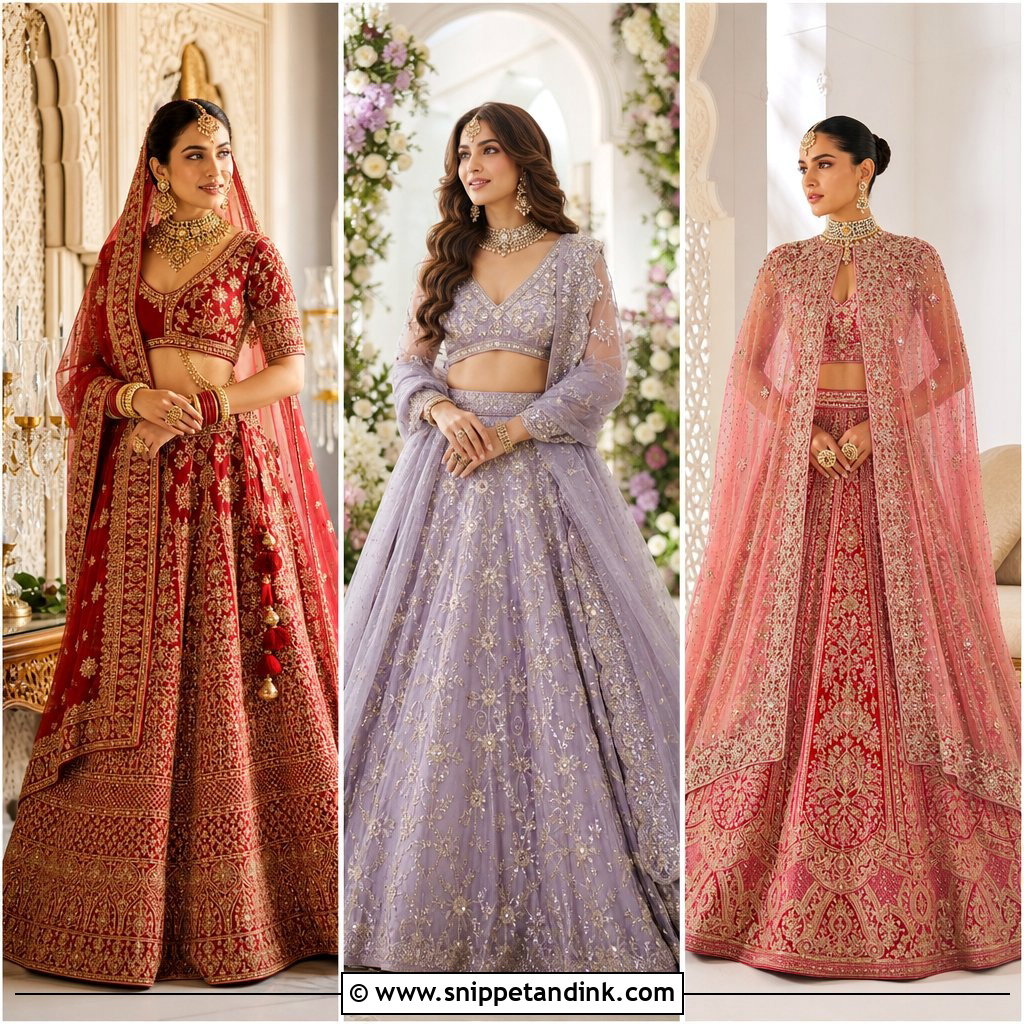
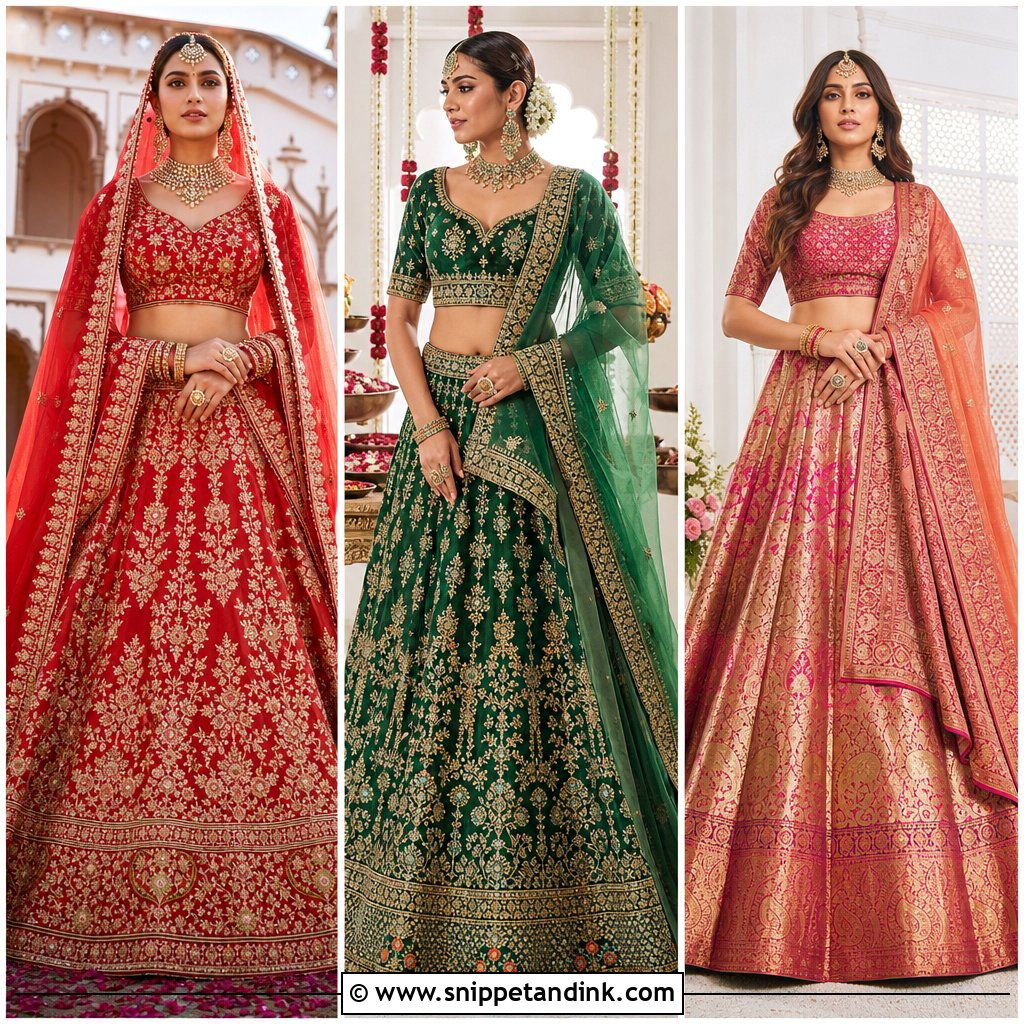
For the main ceremony, a traditional red bridal lehenga still says “bride” faster than anything else. Silk or velvet with zardozi, dabka or antique gold thread is the usual base. Choose the red against your skin in daylight: crimson and ruby lean cool, vermilion leans warm, and deep maroon sits between. A blouse with a comfortable neck lets you wear two dupattas, one over the head and one across the shoulder, without tugging. Kundan, a matha patti, stacked bangles and padded gold juttis complete it; the padding matters more than the gold.
2. Maroon Velvet Indian Bridal Lehenga
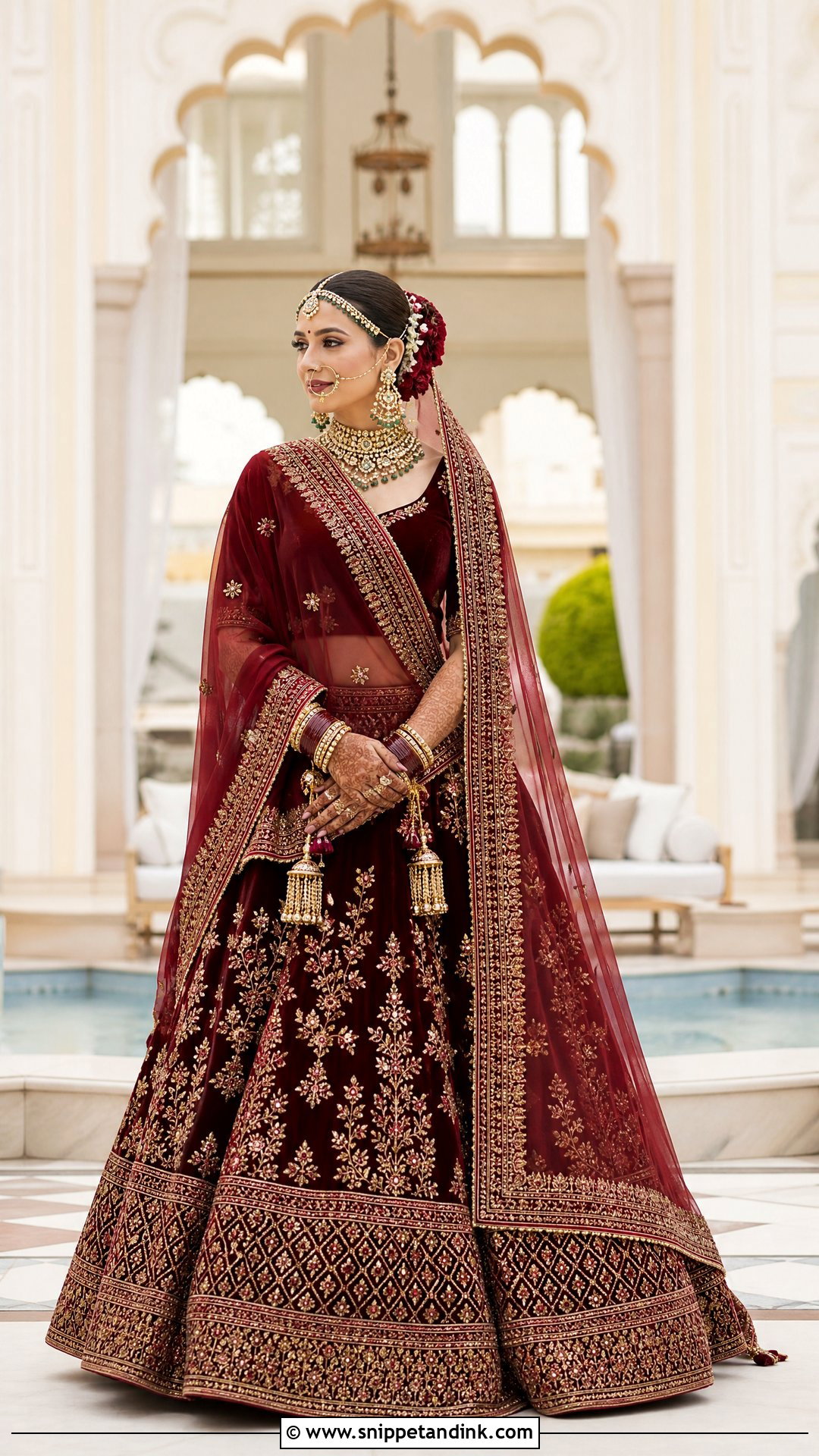
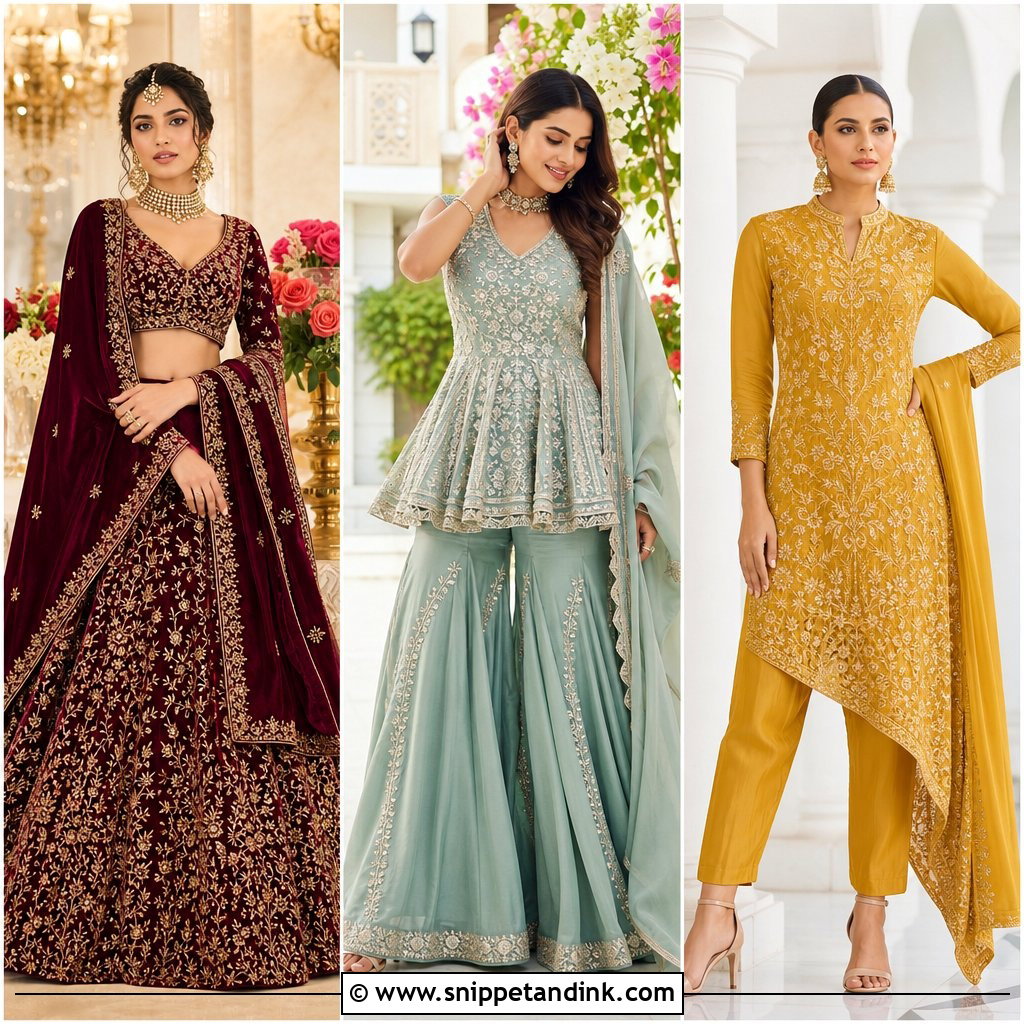
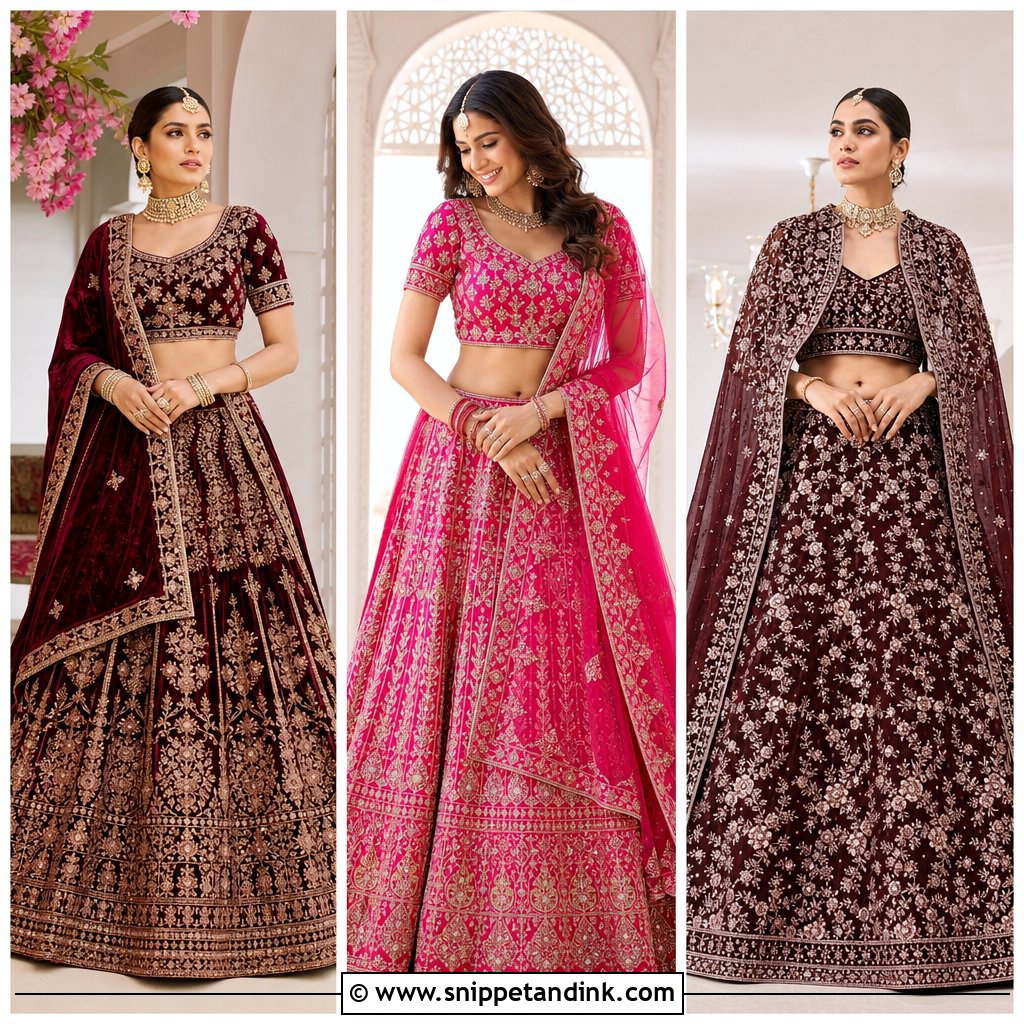
Velvet is a cool-weather fabric, and a maroon velvet bridal lehenga shows off gold embroidery better than almost any other ground because the pile absorbs light around each thread. I ask for motifs spread evenly over the skirt rather than packed at the waist, where they add bulk exactly where you bend. A silk blouse instead of velvet keeps the top half cooler. Pair a sheer maroon dupatta on the head with an antique gold one on the shoulder. Polki, a statement nath and velvet juttis finish it, with a flower-dressed bun.
3. Pink Indian Bridal Lehenga
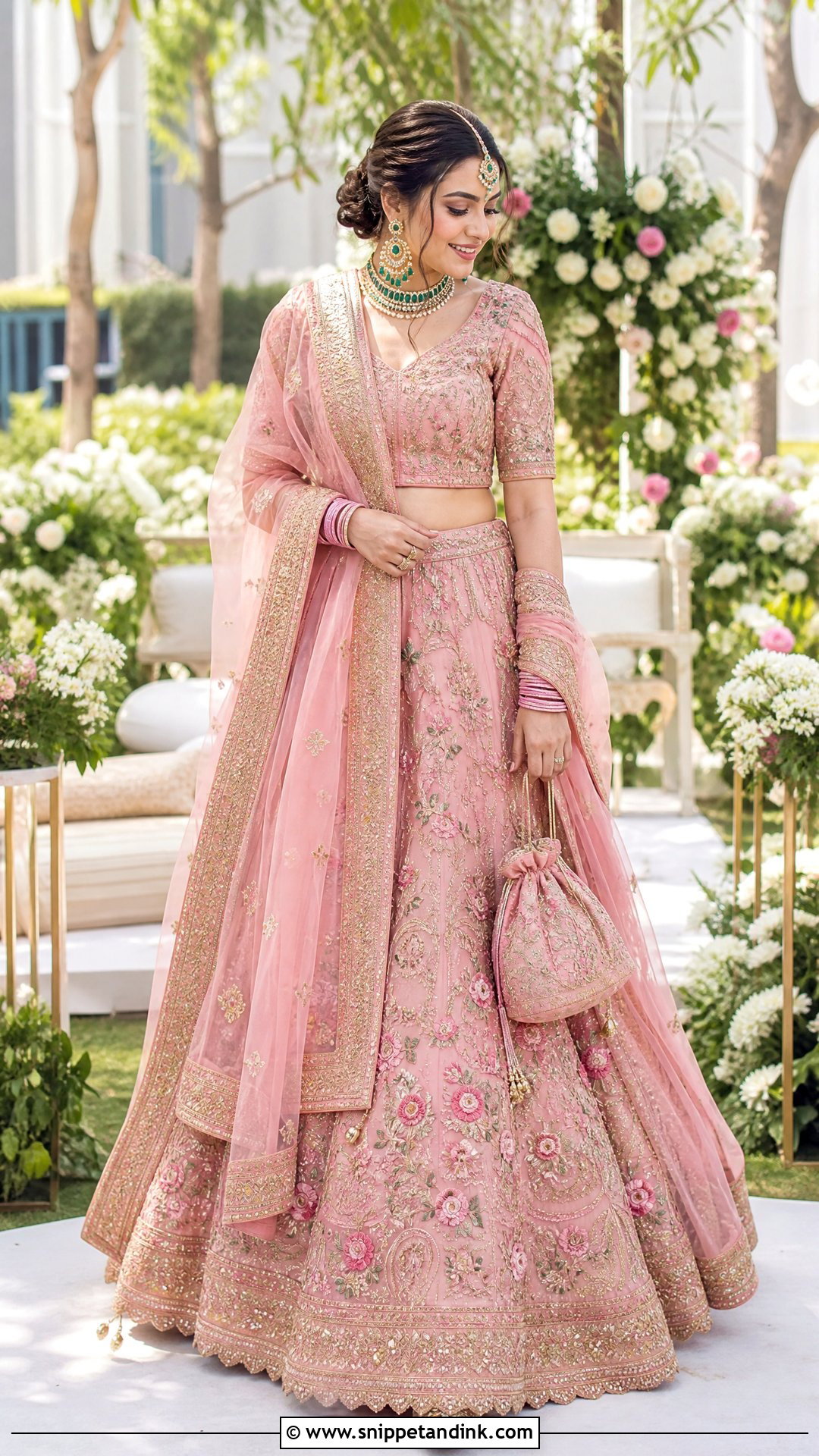
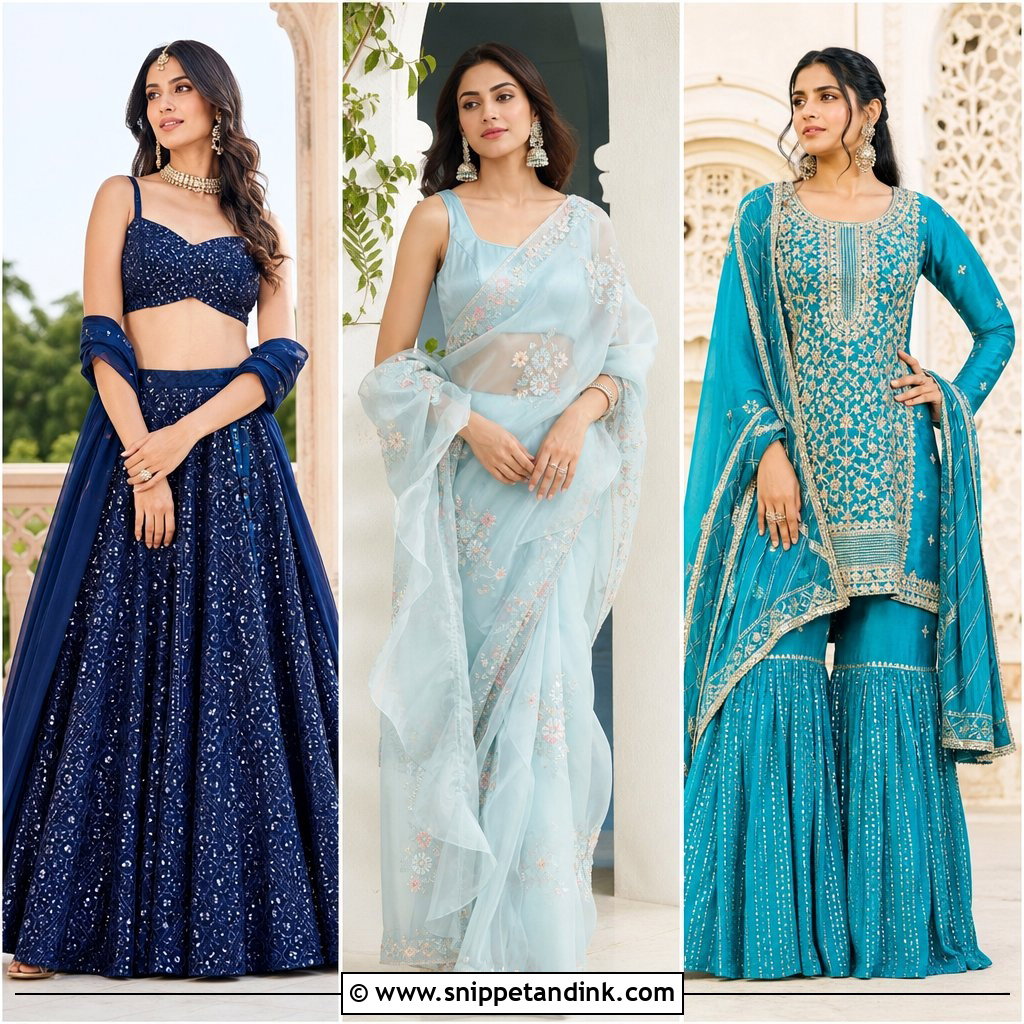
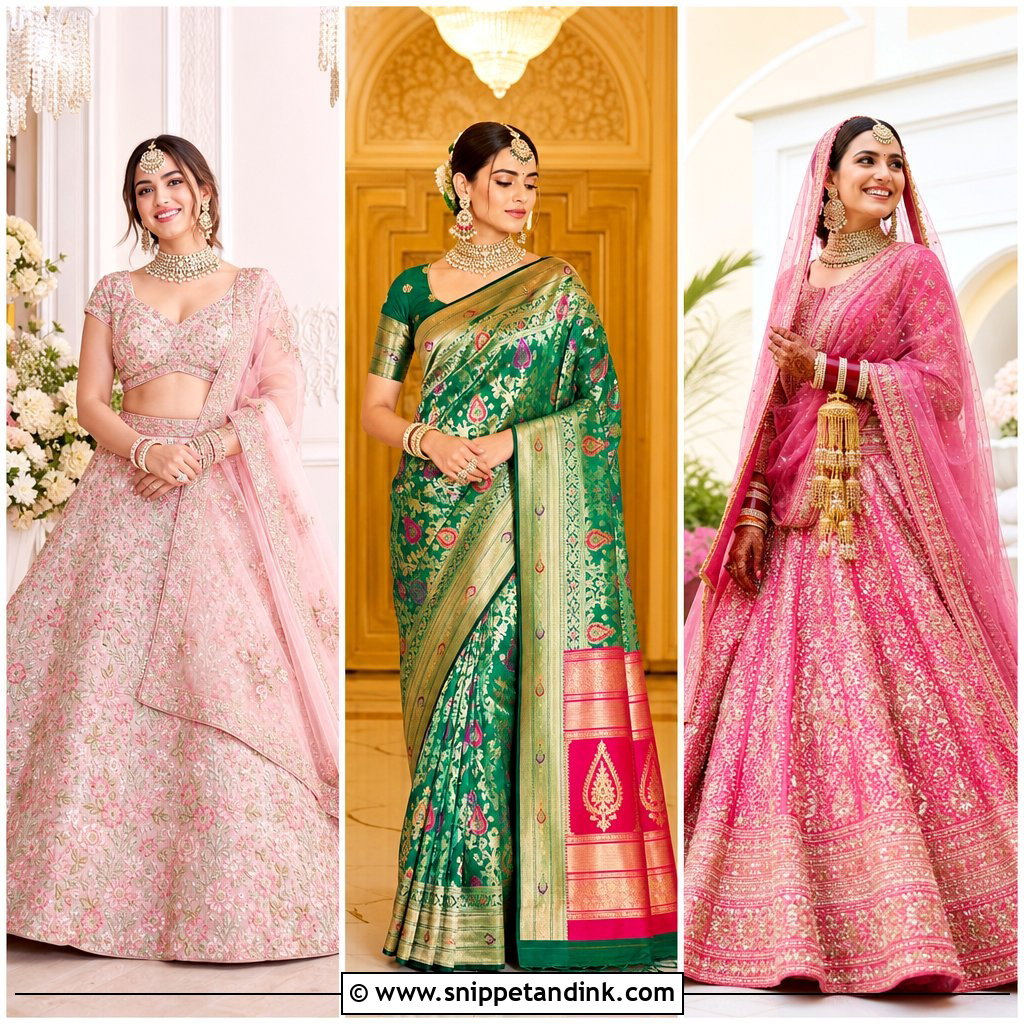
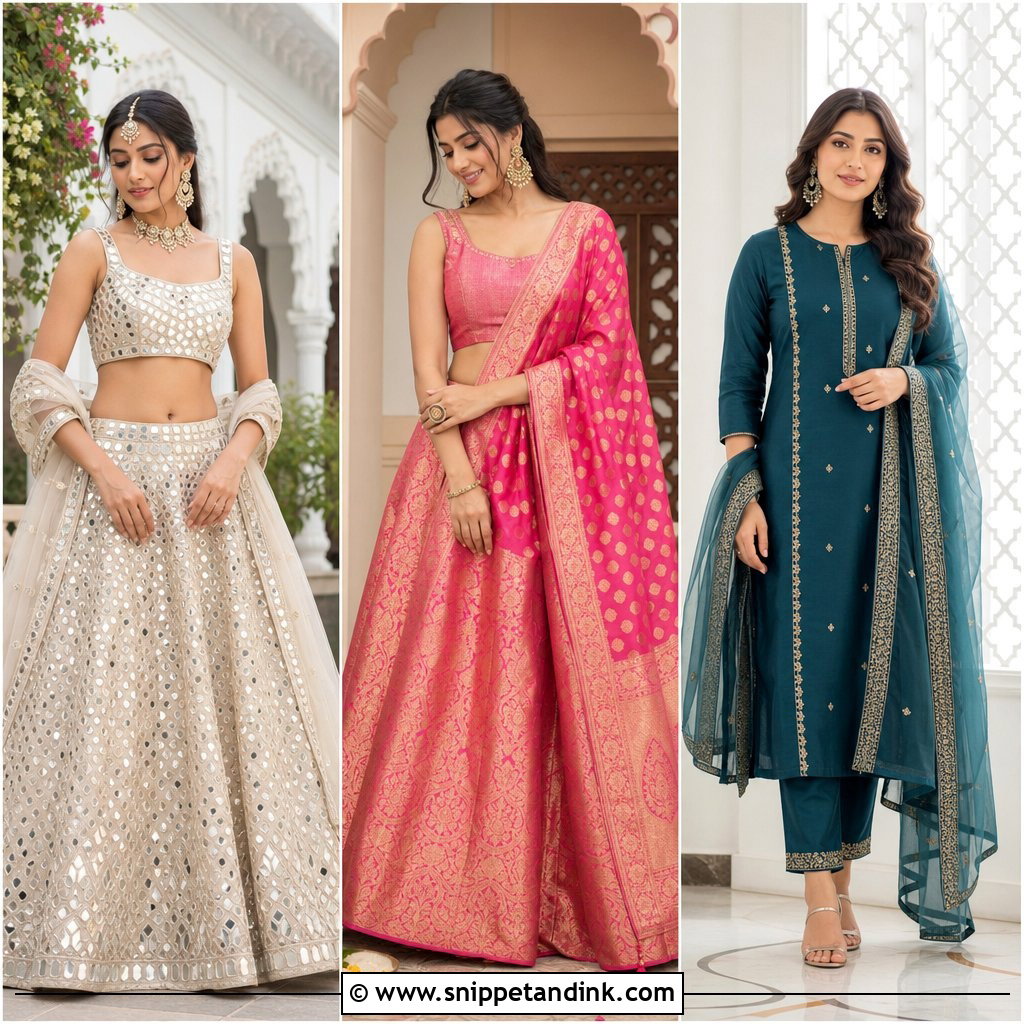
Pink covers a wide range. Rani pink is loud and festive; blush and dusty pink are quiet and suit daylight. Floral resham embroidery and silver or gold thread work in all of them. Elbow sleeves on the blouse give heavy jewelry a clean background, and two dupattas, one on the head and one diagonal, frame the bodice. Emeralds against pink make the strongest contrast; pearls keep it soft. In a garden at midday, fresh roses around a low bun wilt within a couple of hours, so ask your florist for hardier blooms or sprayed ones.
4. Ivory Indian Bridal Lehenga
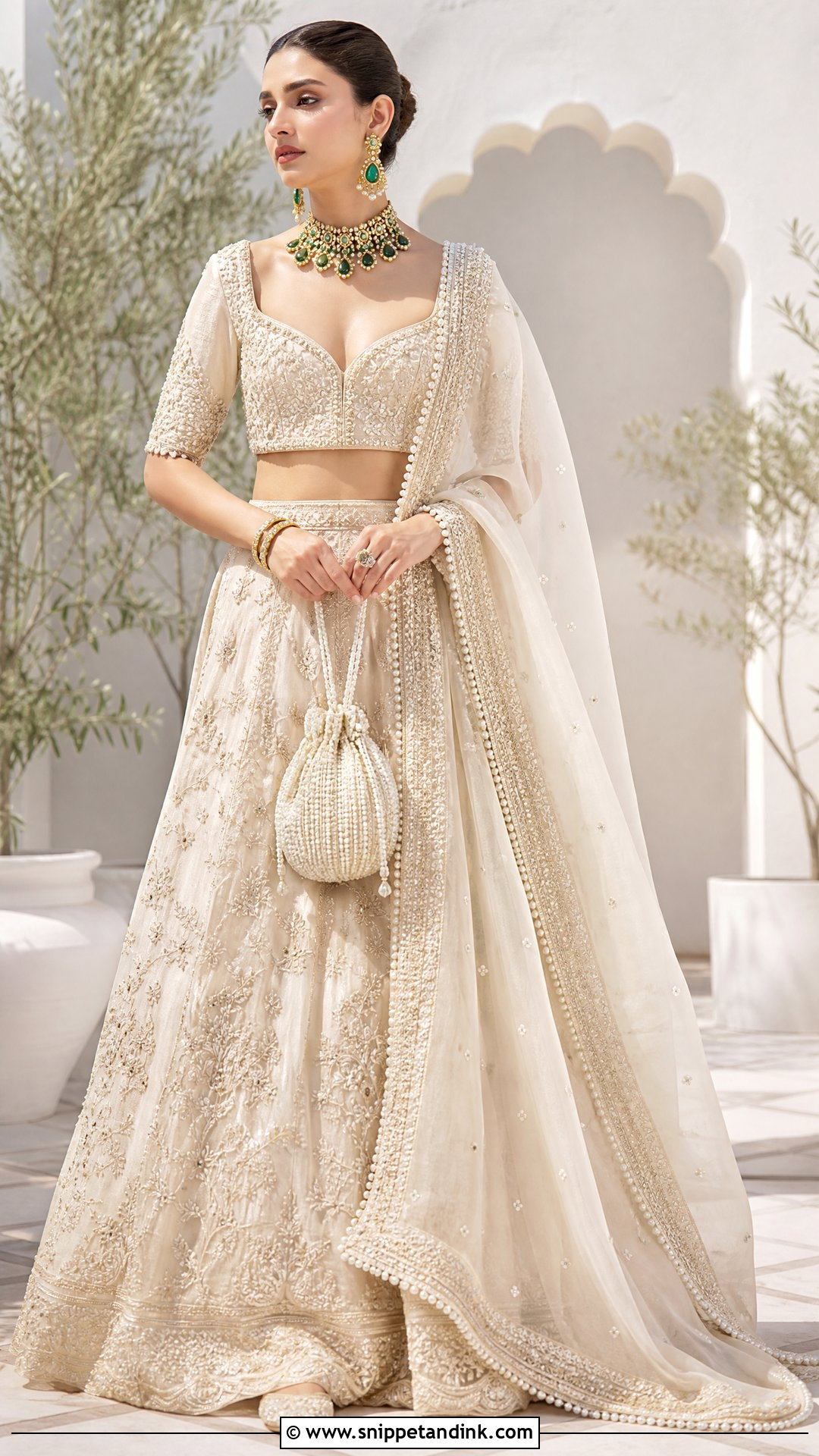
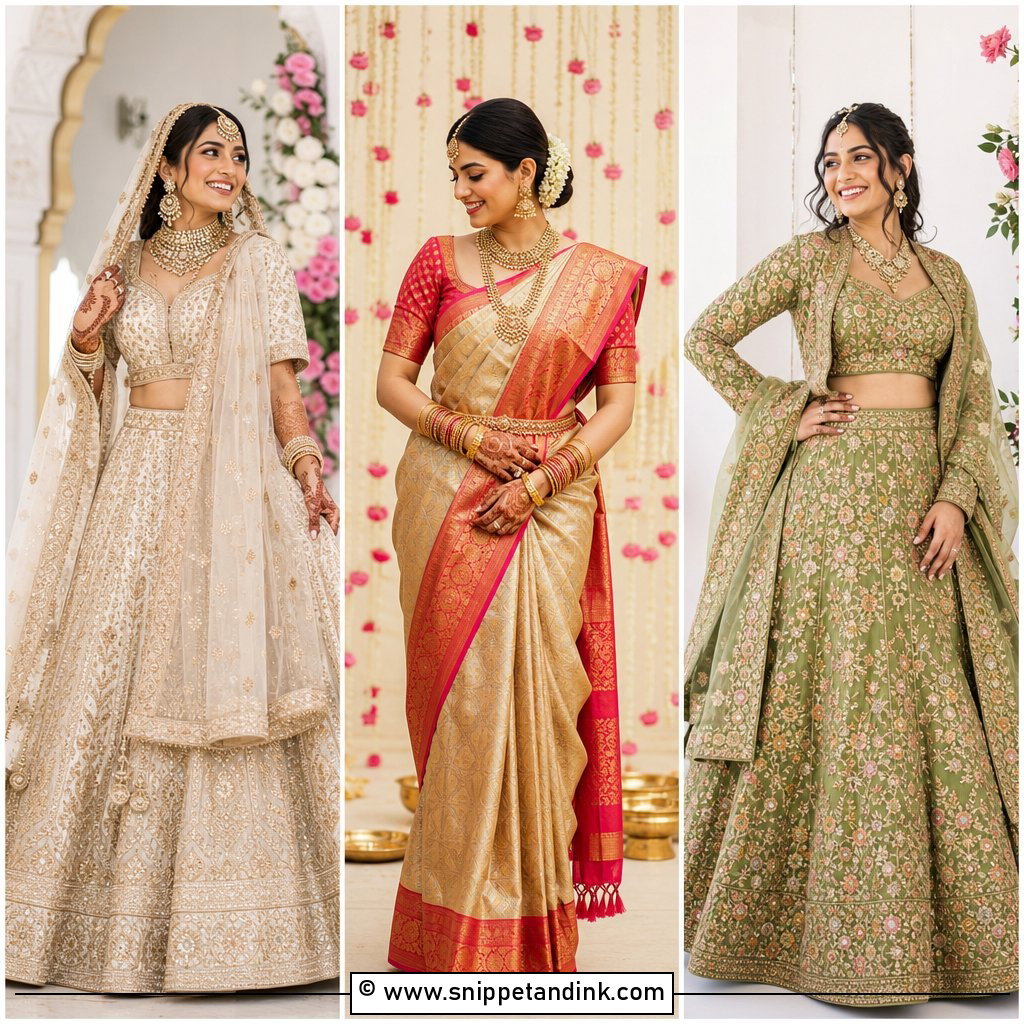
Ivory raw silk, tissue, organza or net with pearls, mirror work and tonal embroidery looks modern and still clearly bridal. Pale outfits need definition, so the blouse should be properly structured with a square or sweetheart neck. Colour comes from the jewelry: emerald, ruby or multicoloured kundan keeps the palette from going flat. Not every family wants ivory for the ceremony itself, so ask early. If the answer is no, I’d move it to the engagement or reception, finished with ivory juttis and a pearl potli.
5. Gold Indian Bridal Lehenga
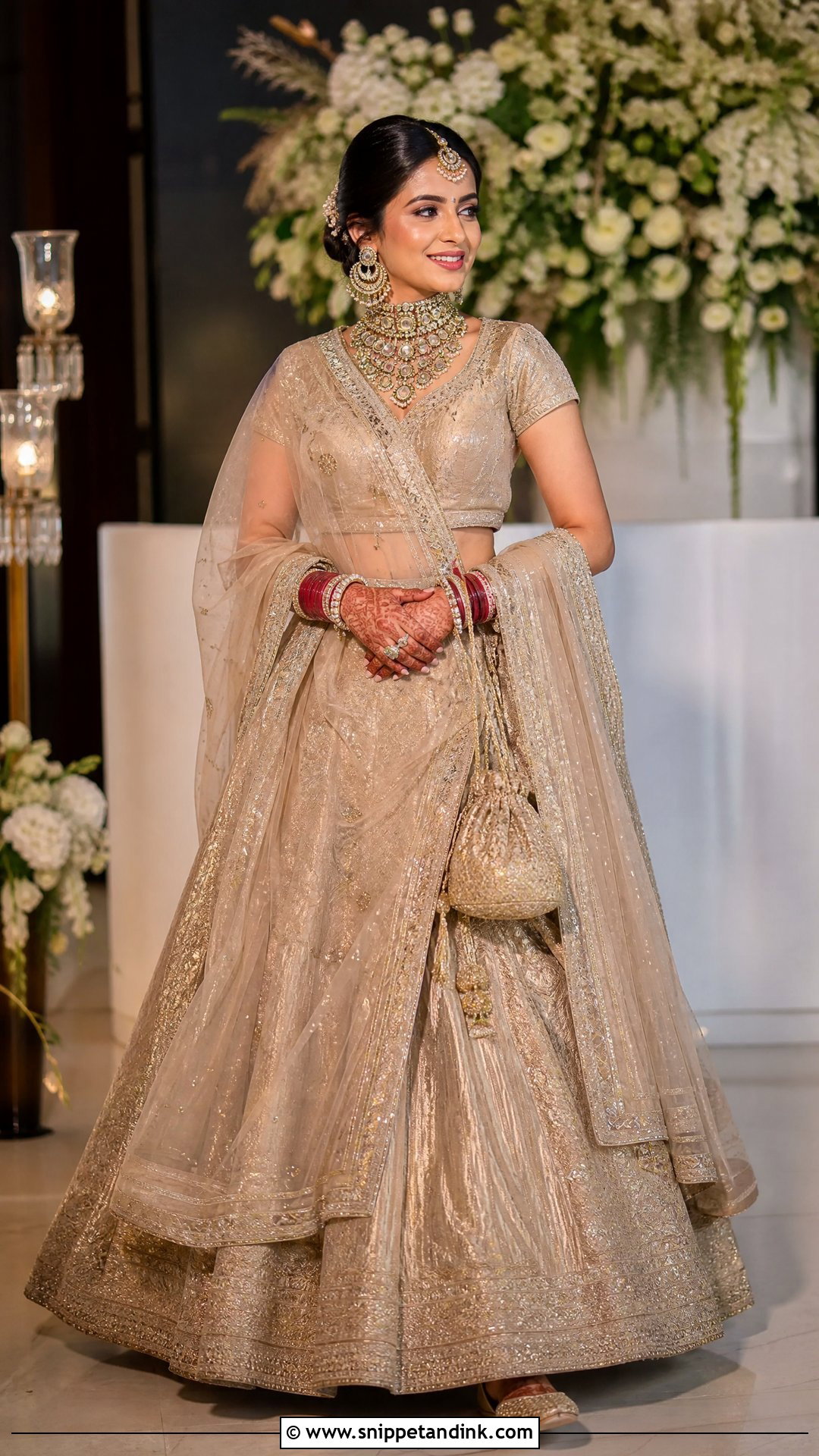
Pick one metal and stick to it. Antique gold, champagne and bronze in the same outfit look like mismatched pieces in photographs. Brocade or tissue silk gives shine without embroidery on every panel, which also keeps the weight down. A matching blouse and a sheer bordered dupatta form the base; deep red, emerald or maroon come in through the bangles or a second dupatta. Temple or kundan jewelry suits it. Keep the makeup defined but not metallic, or your face competes with the fabric.
6. Pastel Indian Bridal Lehenga
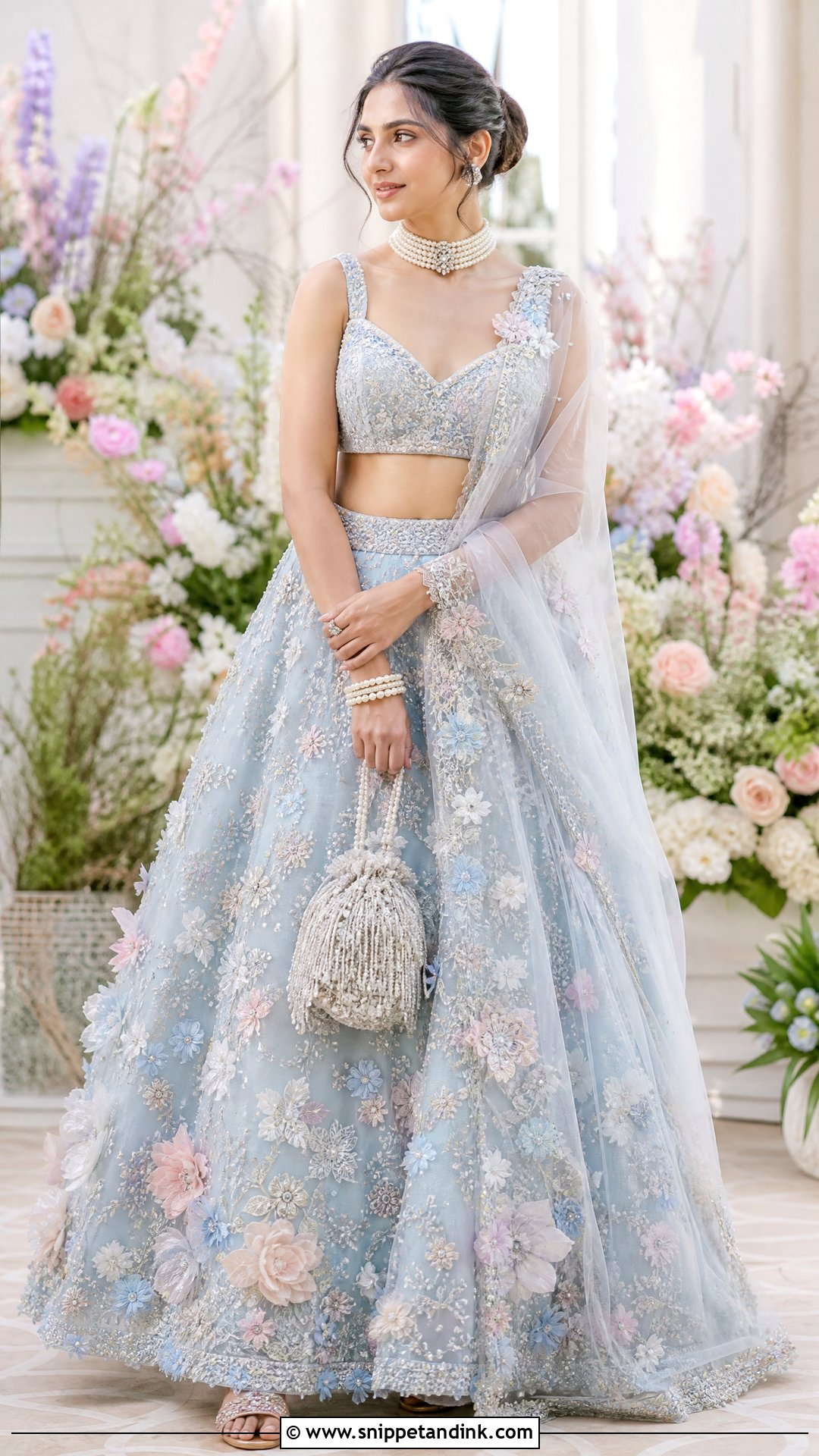
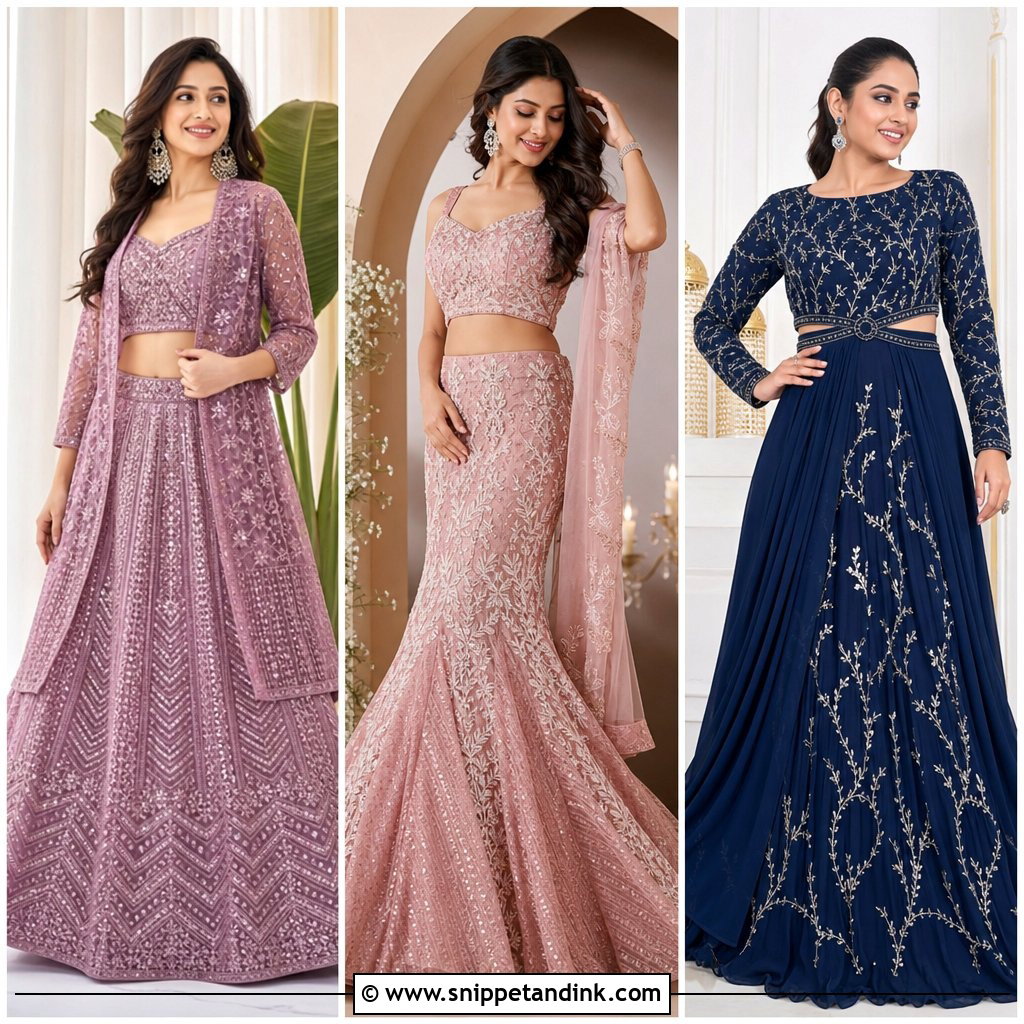
Powder blue, mint, lilac, peach and pale pink suit spring and summer weddings outdoors, but a pastel needs texture to look ceremonial instead of like a party outfit. Three-dimensional flowers, pearls or careful sequin placement give it that. The blouse should be structured enough to carry a dupatta pin. One sheer dupatta looks relaxed; two coordinated ones add formality. Diamond, pearl or pale kundan jewelry stays in the same tonal family. Pastels show sweat and makeup transfer faster than darker shades, so I always tuck blotting papers into the bride’s potli.
7. Kanjeevaram Silk Indian Bridal Saree
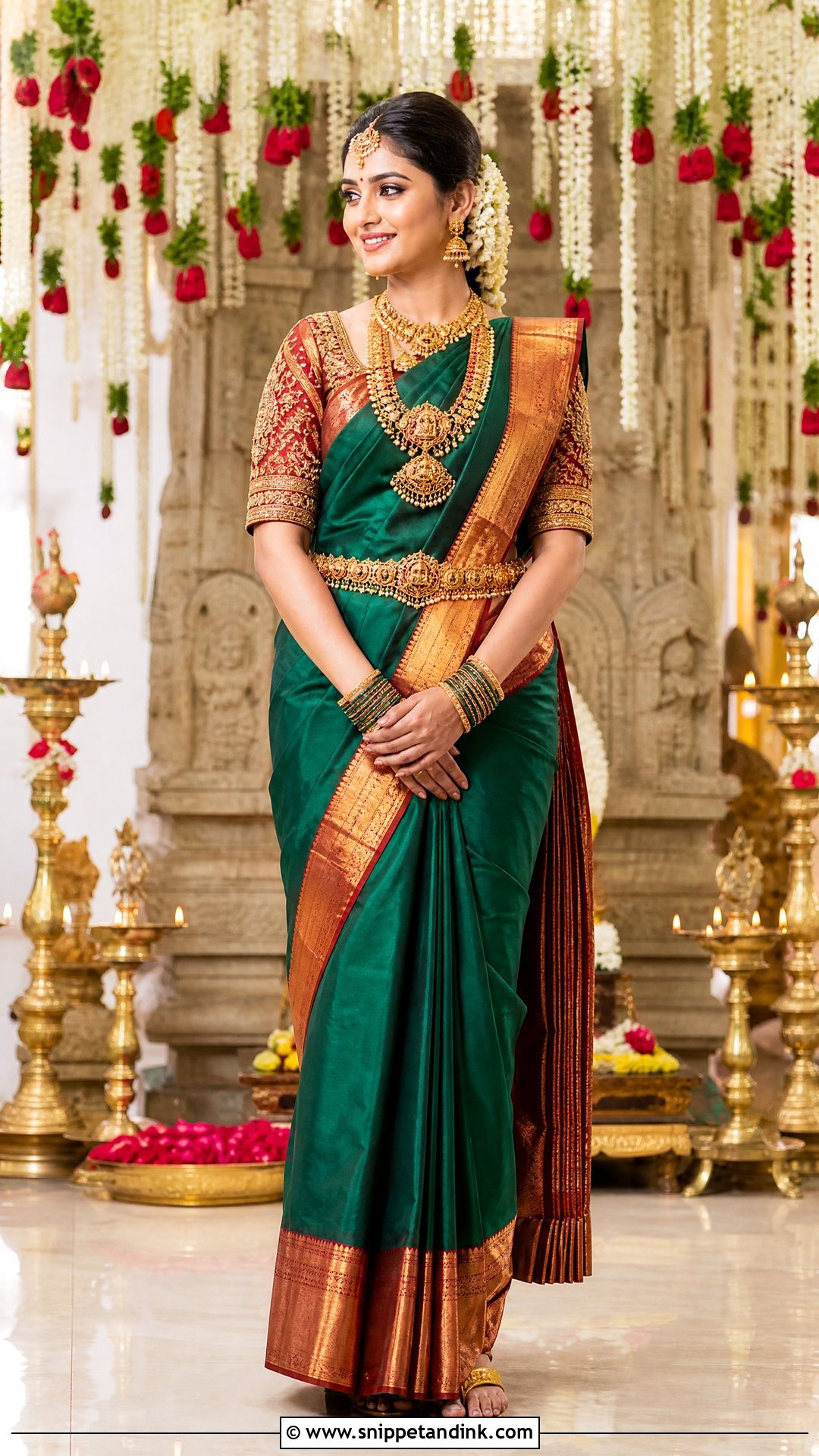
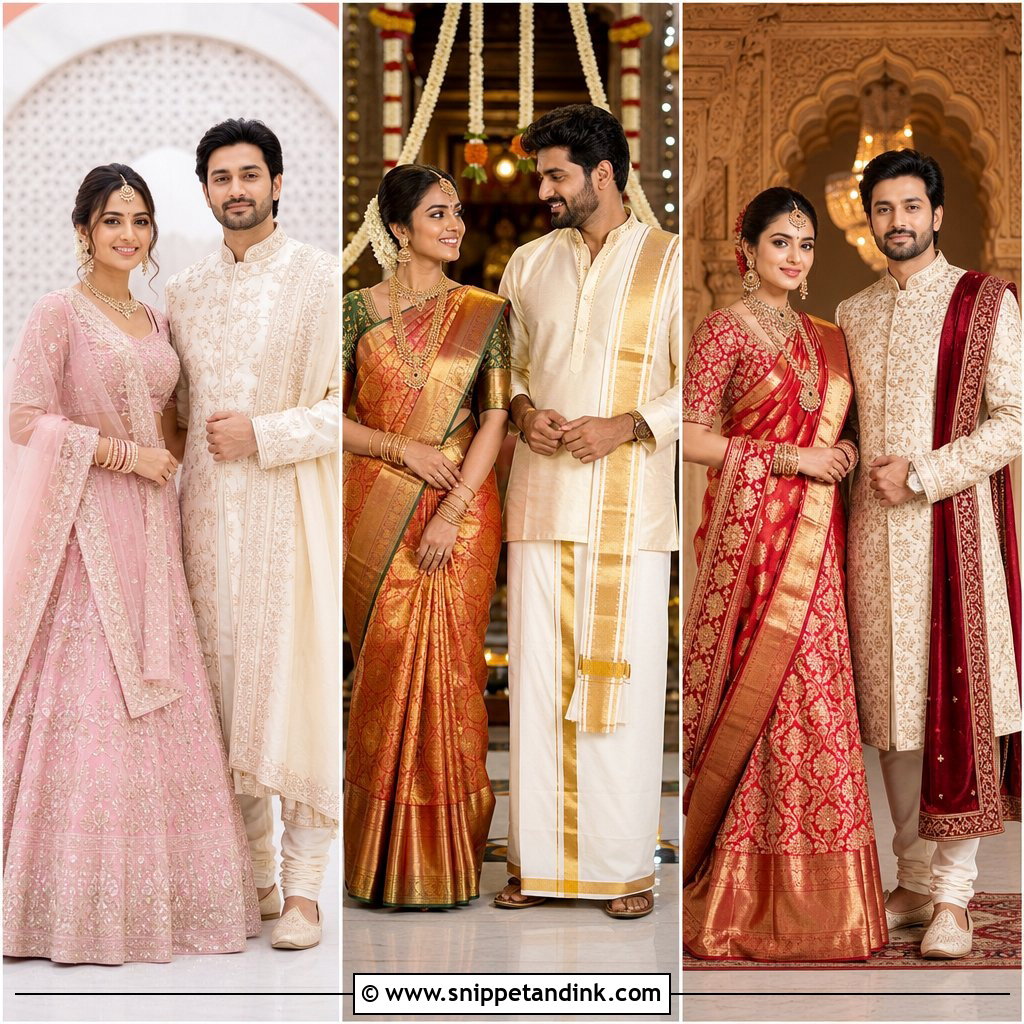
A Kanjeevaram saree is heavy silk with a contrasting zari border, and red, green, mustard and jewel-toned combinations are the classic wedding palettes. The weight is real, so the blouse should fit closely with elbow sleeves and a secure neckline. Professional draping is worth paying for here. Heavy silk pleats spring open if they’re not pinned firmly, and you’ll be sitting and rising many times. Layered temple necklaces, jhumkas, an ottiyanam waist belt and a jasmine-wrapped braid complete the traditional South Indian bridal picture.
8. Red Banarasi Indian Bridal Saree
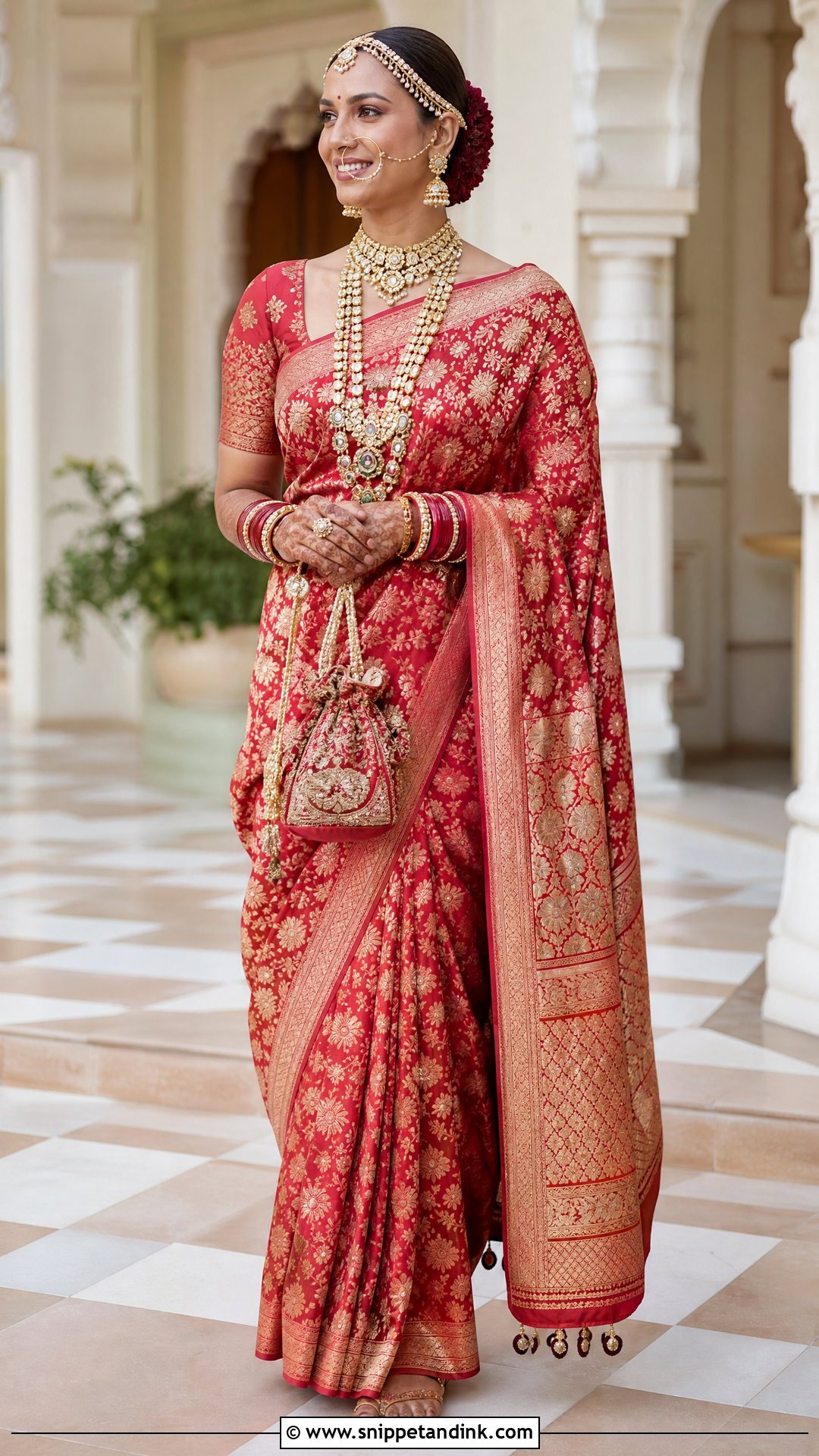
The texture of a red Banarasi makes it a strong pick for a bride who prefers a drape over a lehenga. Scale the border to your height: a very wide border can make a petite bride look shorter, while a tall bride carries it easily. A red blouse keeps the line unbroken; gold or green adds contrast. Kundan, a matha patti, a nath and red bangles suit it, with an optional gold waist belt. Pure Banarasi is one of the few wedding outfits that genuinely becomes an heirloom, so it’s worth storing it properly afterwards.
9. Bengali Indian Bridal Saree
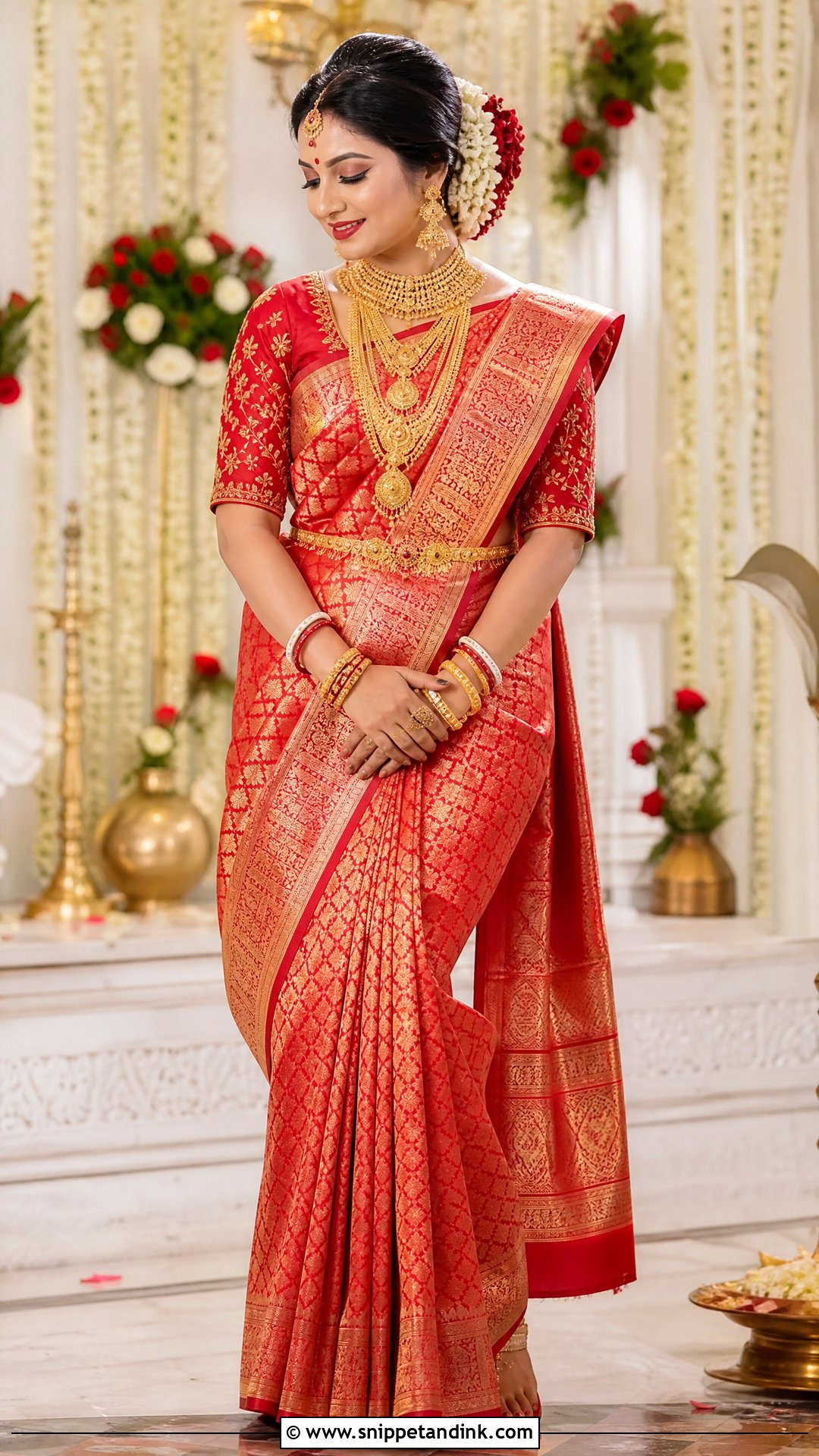
A Bengali bride usually wears a red Banarasi, sometimes in red and white, with a red blouse worked in gold at the sleeves and neck. Gold necklaces in graduated lengths, statement earrings and bangles are layered on. A red bindi and traditional forehead decoration are added according to the bride’s wishes and her family’s customs, along with the decorative headpiece. Regional bridal dress is not a costume. If it isn’t your own tradition, or you’re unsure of the details, work with a draper or a family member who knows the ceremony.
10. Maharashtrian Paithani Indian Bridal Saree
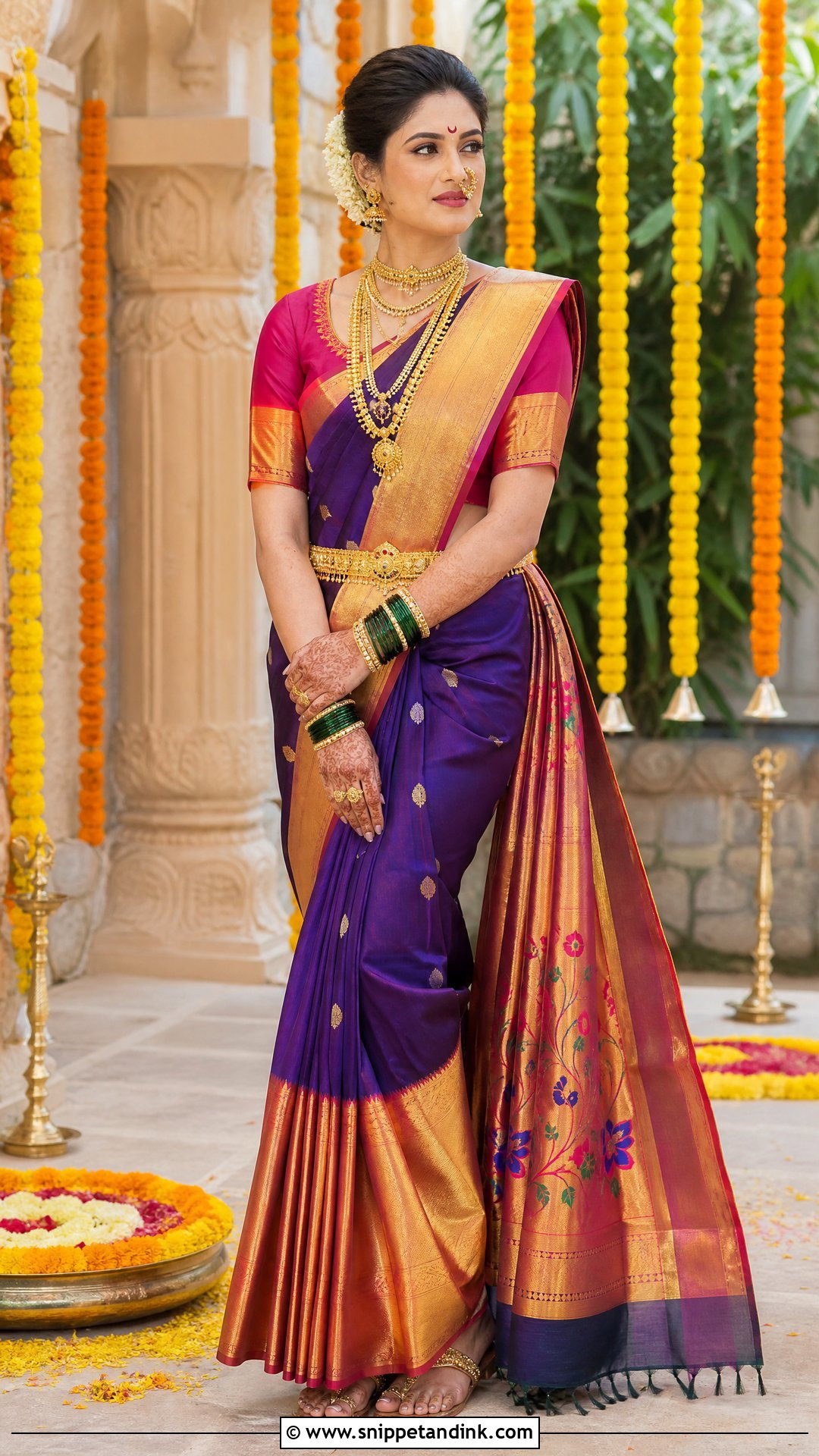
A Paithani gives a Maharashtrian bridal outfit its colour: lustrous silk, zari borders and a pallu covered in motifs such as peacocks and lotuses. Green, purple, magenta and yellow are joyful; red is the classic option. Many brides choose the traditional nauvari drape, which tucks between the legs and is easier to walk in than it looks once it’s secured properly. Layered gold, green glass bangles, a nath, a crescent bindi and a waist belt finish it. Adopt accessories with family guidance instead of adding every regional detail at once.
11. Gujarati Panetar Indian Bridal Saree
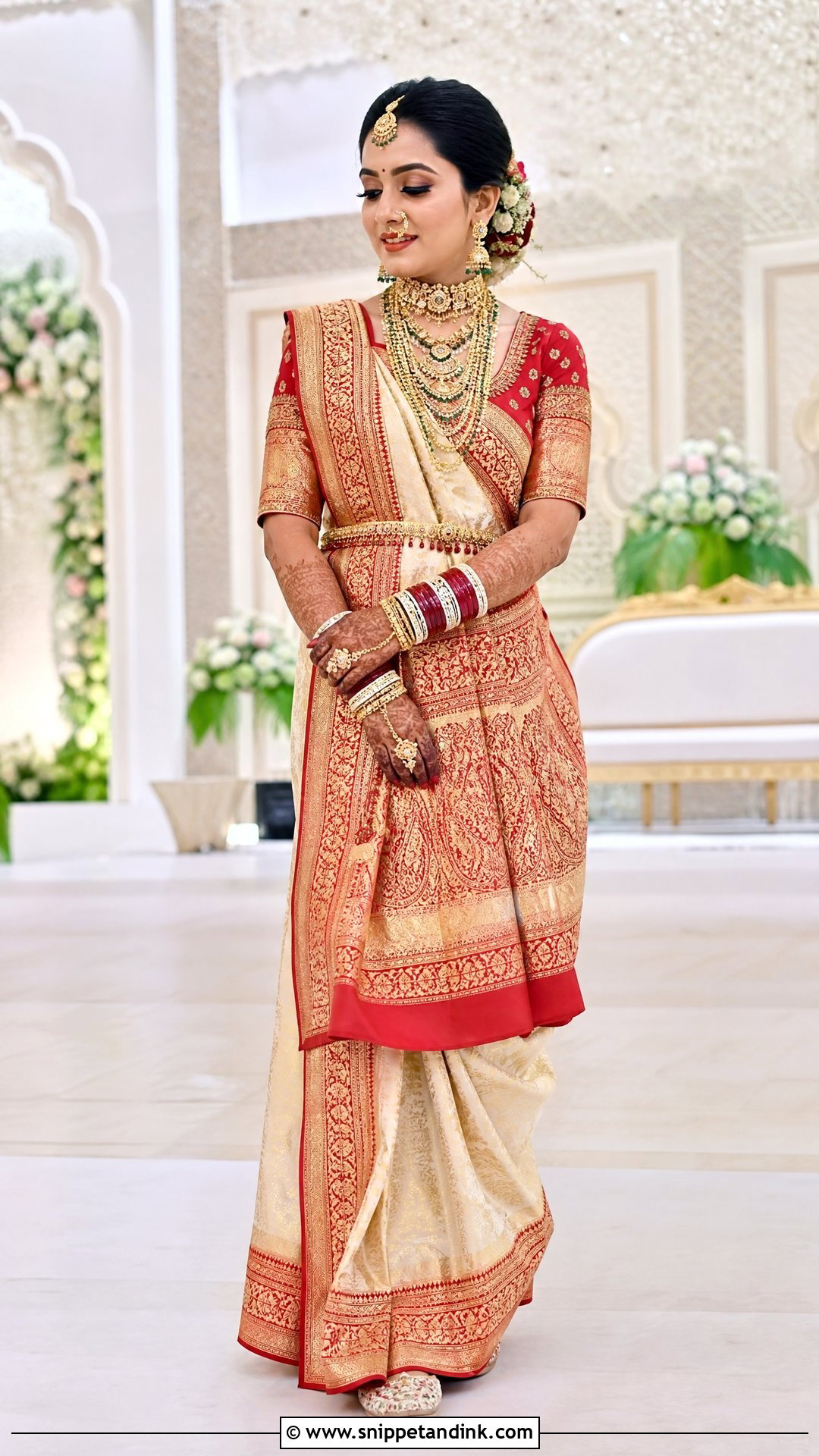
The Panetar is a Gujarati bridal saree with a white or ivory body and a red border, traditionally gifted by the bride’s maternal uncle. A blouse that repeats the red border ties the pieces together. The seedha pallu drape brings the decorated pallu over the right shoulder to the front so it stays visible. Layered gold or kundan, red and white bangles, a nose ring and a waist belt suit it. In many families the bride changes into a red Gharchola, given by the groom’s side, later in the ceremony, so check which stage each saree belongs to.
12. Kerala Kasavu Indian Bridal Saree
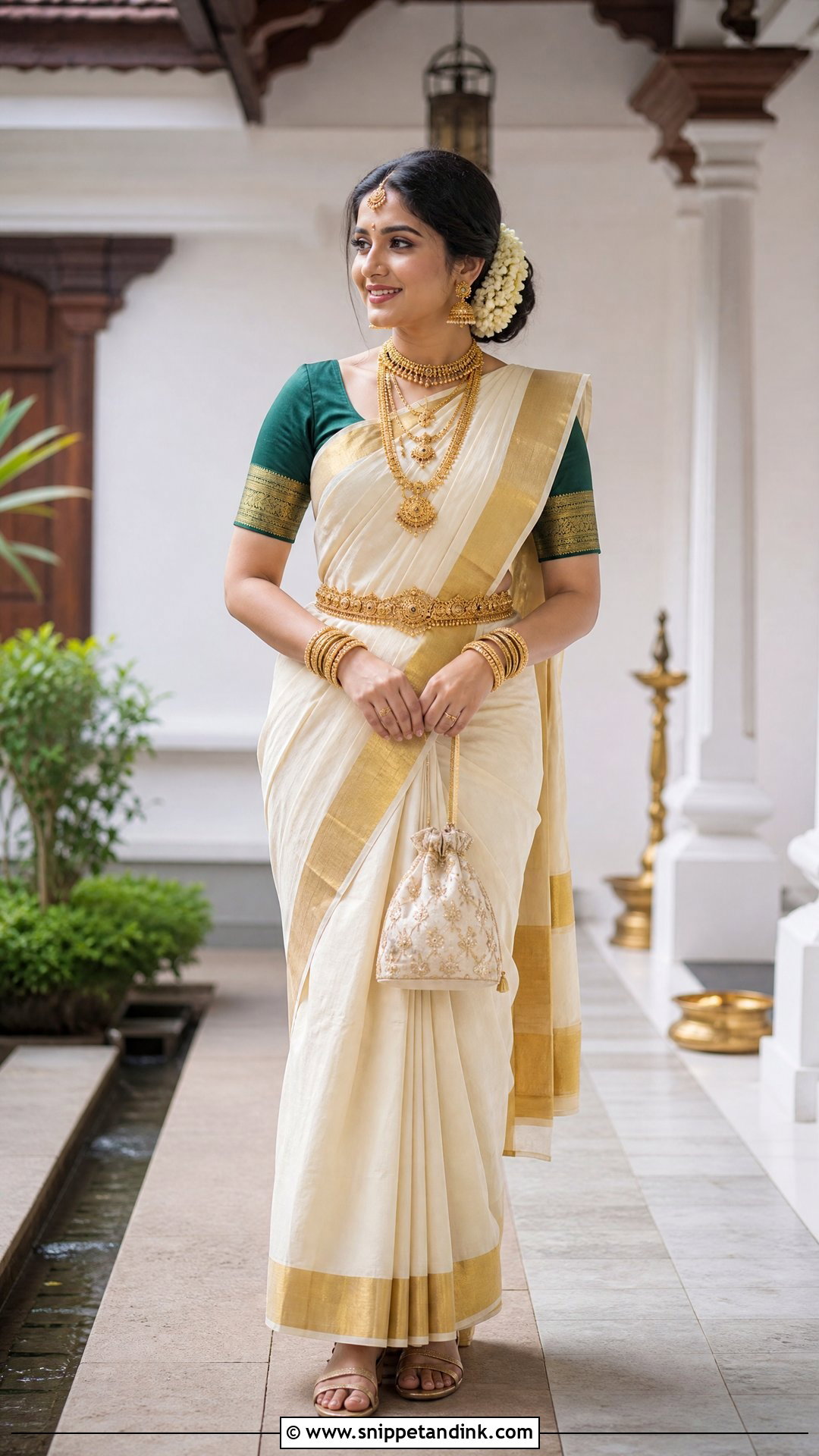
The Kasavu is cream with a gold border, and its restraint is the point. With so little colour, tailoring shows everything, so I’d spend money on blouse fit and a draper before anything else. Choose the border width to suit your frame and pair it with an ivory, gold, green or red silk blouse with elbow sleeves. Layered gold necklaces, jhumkas, bangles and a waist belt add the ceremonial weight. A long jasmine braid or a low bun is traditional; jasmine browns at the edges after a few hours, so pin it close to the start of the ceremony.
13. Half Saree Indian Bridal Outfit
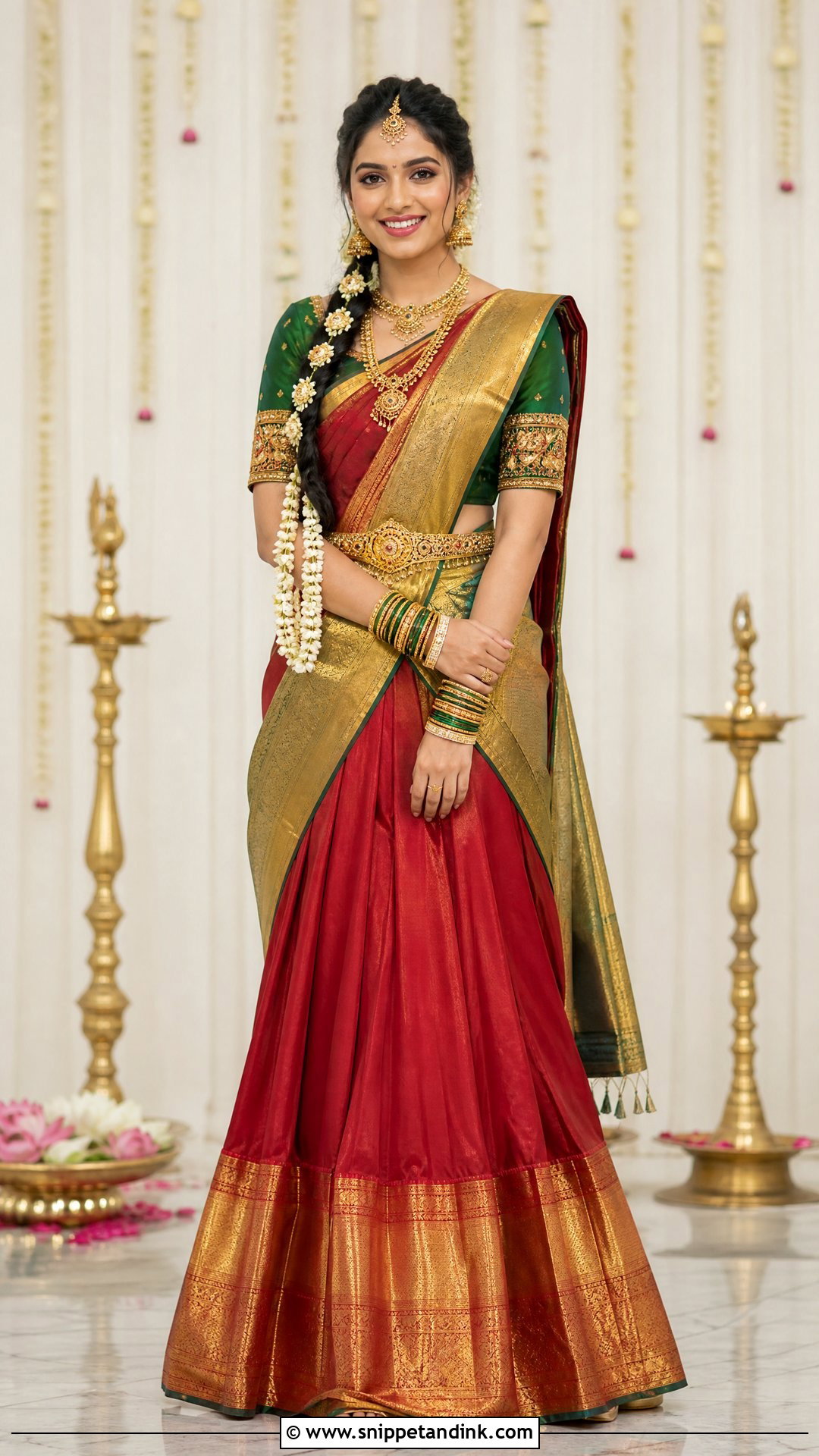
A half saree combines a full skirt, a fitted blouse and a long dupatta draped like a pallu, which gives a defined waist and a secure drape without managing six yards all day. Jewel-tone pairings like red and green, purple and gold, or pink and orange are traditional. The borders should link all three pieces. Temple jewelry, a waist belt and statement earrings suit it, along with a flower-covered braid or a polished bun. If you’ve never worn one, practise the dupatta drape once before the wedding morning; it takes longer than it looks.
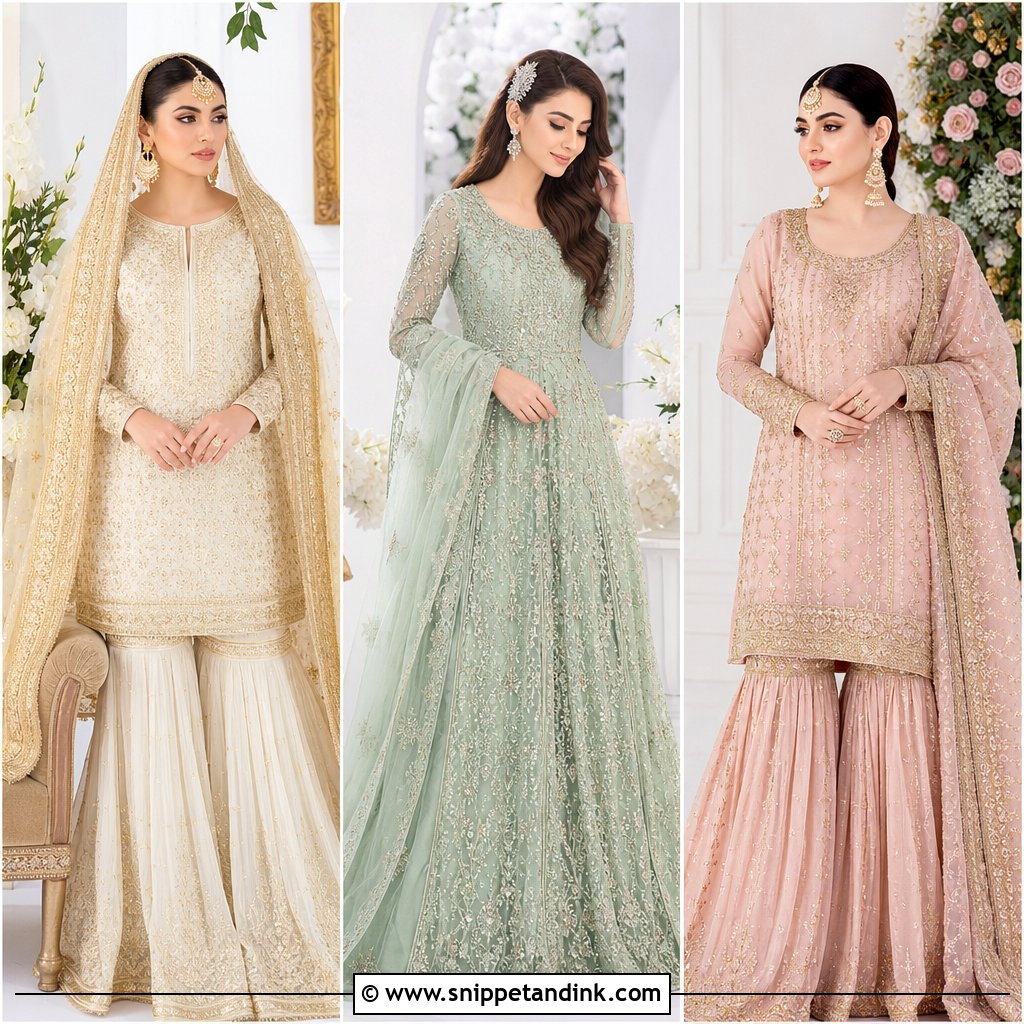
14. Indian Bridal Sharara Suit
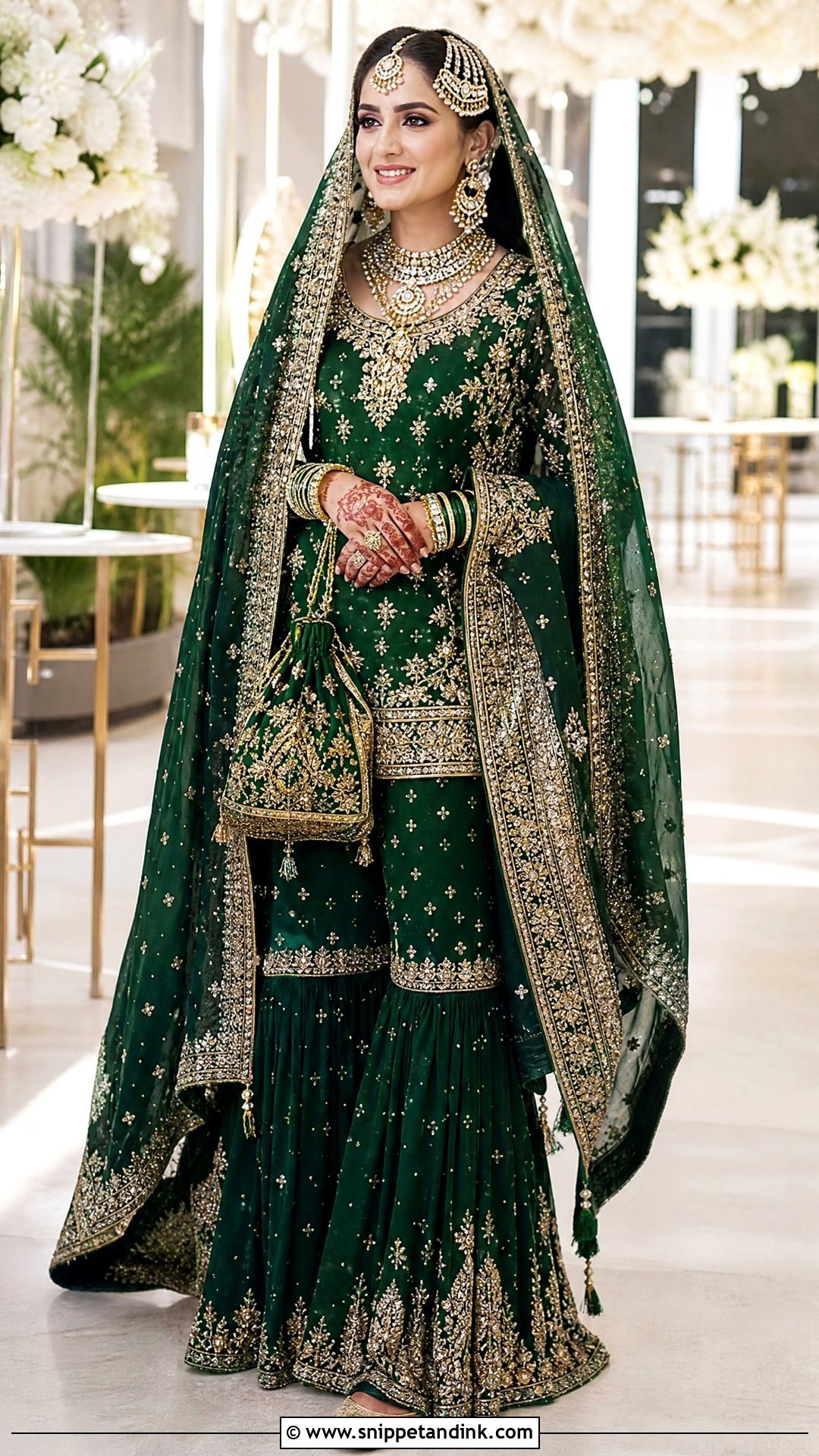
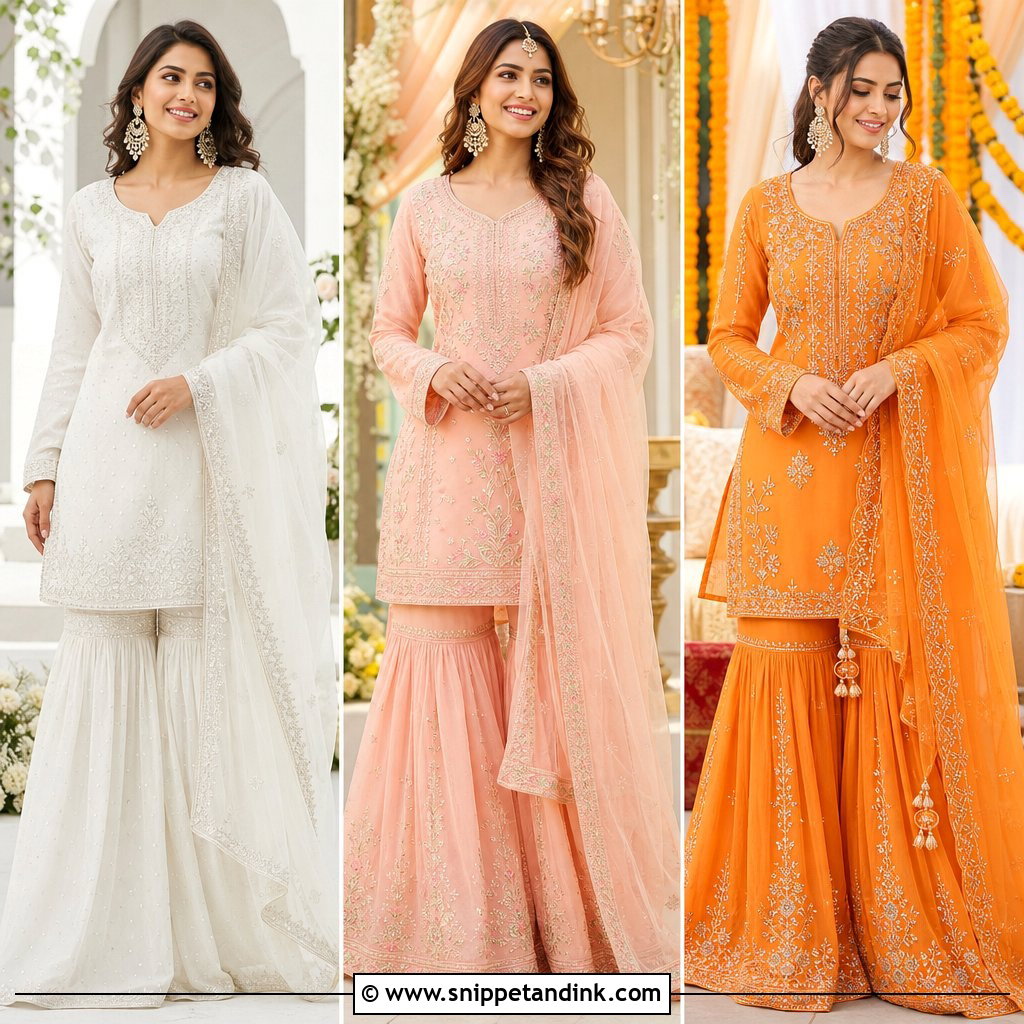
Shararas give you volume without the weight hanging from one waistband, since the flare is split between two legs. Pair wide sharara pants with a short embroidered kurti that marks the waist. Silk, brocade, georgette or velvet all work by season. Have the hem set with the shoes you’ll actually wear. A sharara that’s even slightly long catches on stairs. A dupatta over the head, a passa or matha patti and layered kundan make it ceremonial; it is the most practical bridal shape I know for a sangeet or a nikah where you’ll want to dance.
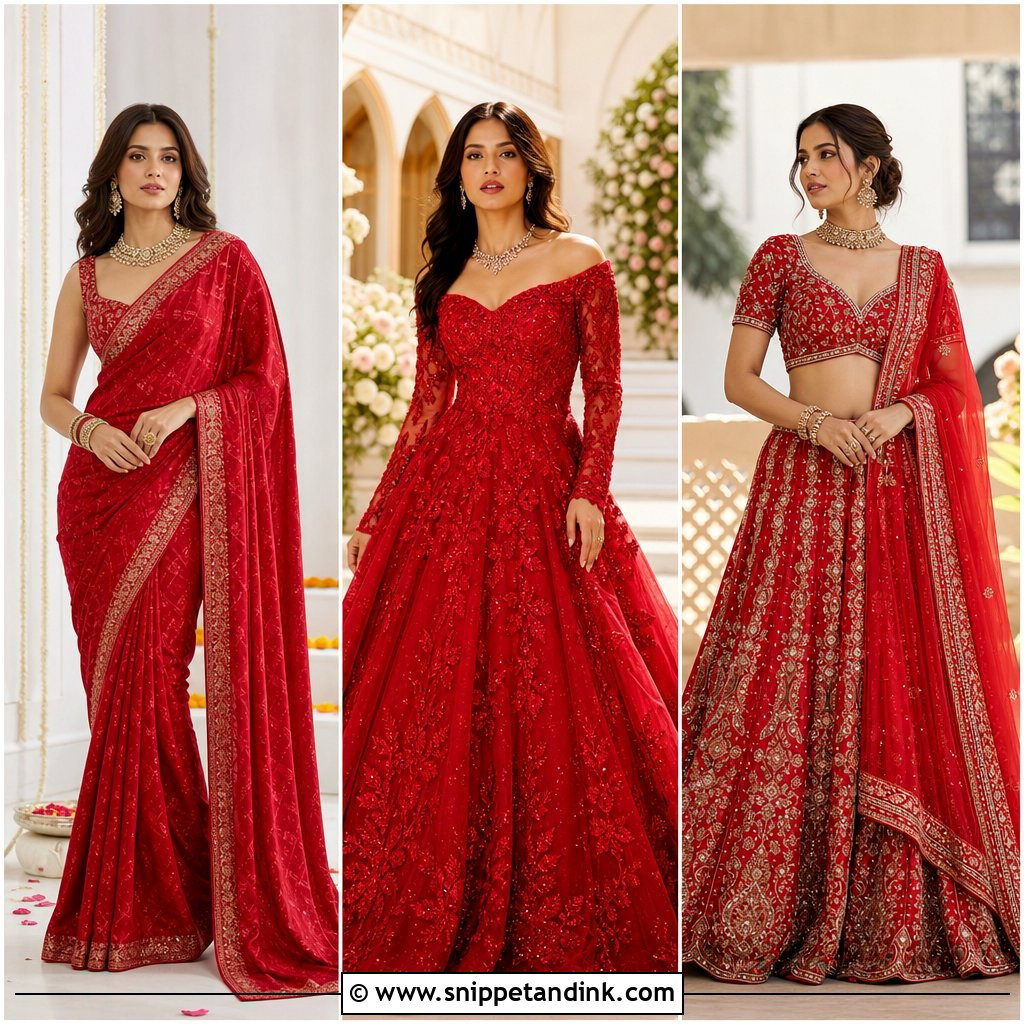
15. Indian Bridal Anarkali Dress
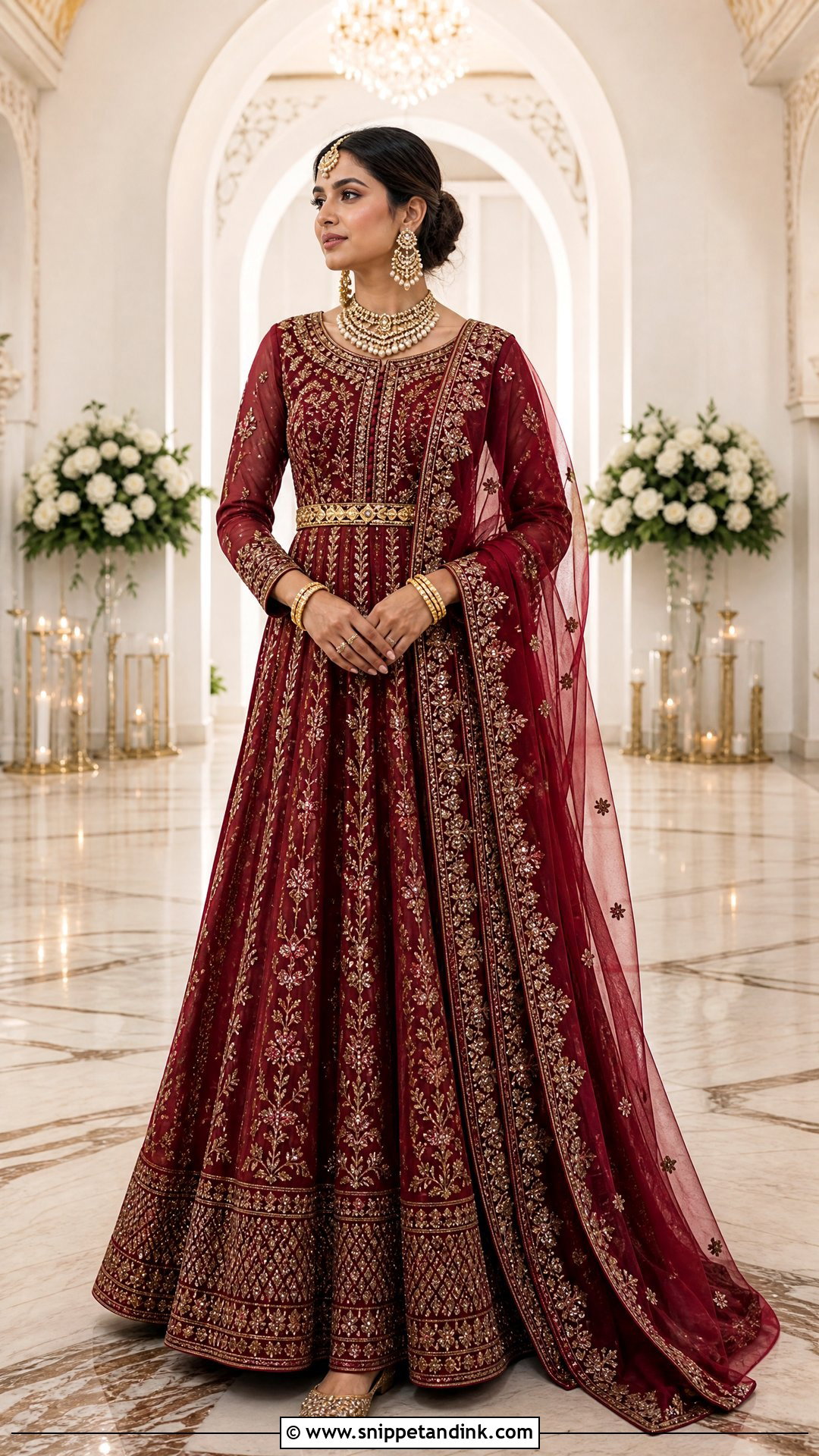
An Anarkali gives more coverage and fewer pieces than a lehenga. Everything hangs from the bodice, so the fit through bust, underbust and shoulders decides whether it sits right or drags forward. Ask for a firm lining and a flare that starts at the natural waist. Silk, velvet or embroidered net suits formal ceremonies; georgette is lighter for dancing. Add a long dupatta over the head or across both shoulders, chandbalis, layered necklaces and pointed juttis. A delicate waist belt adds definition if the flare swamps you.
16. Indian Bridal Lehenga With Cape
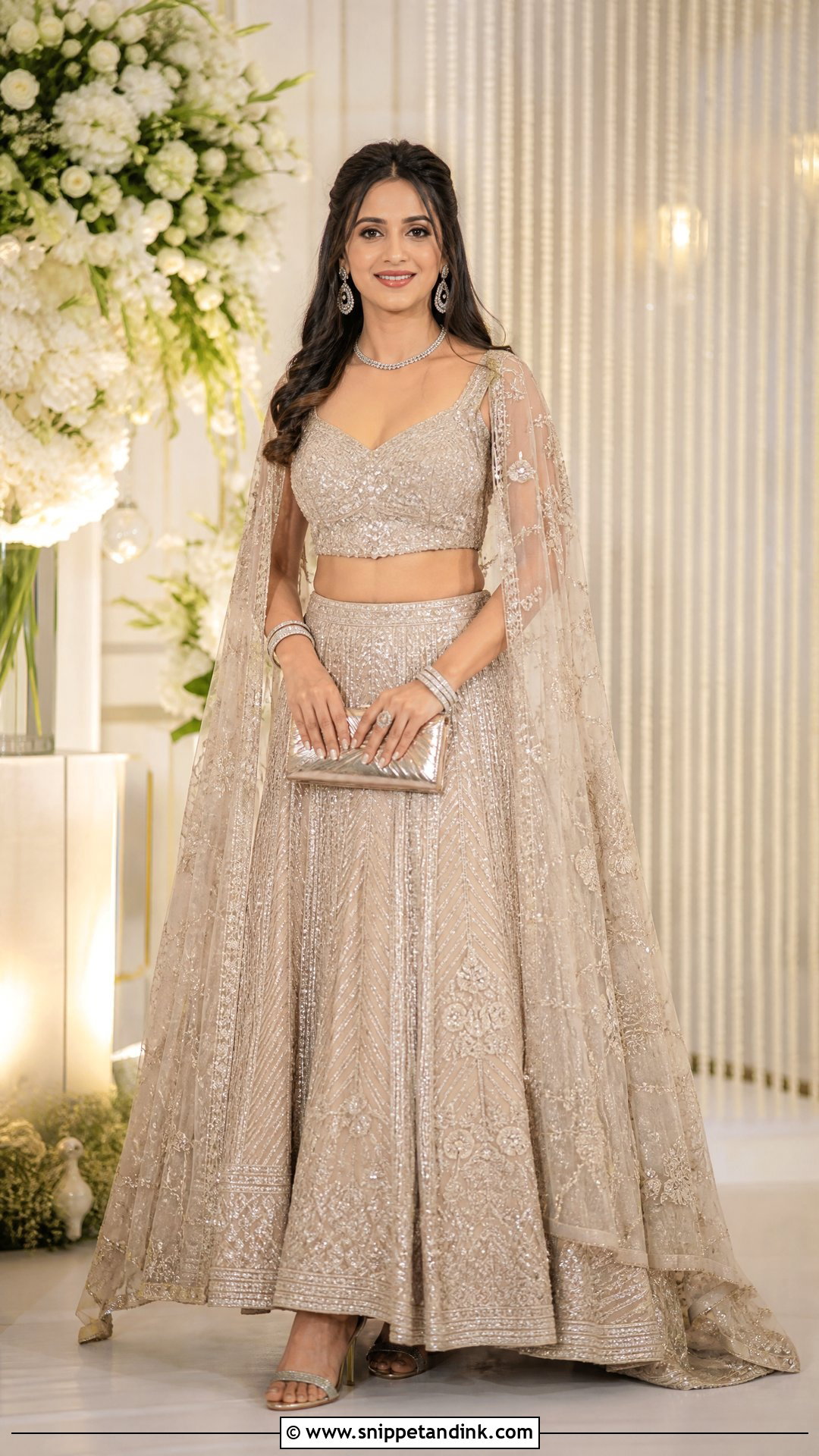
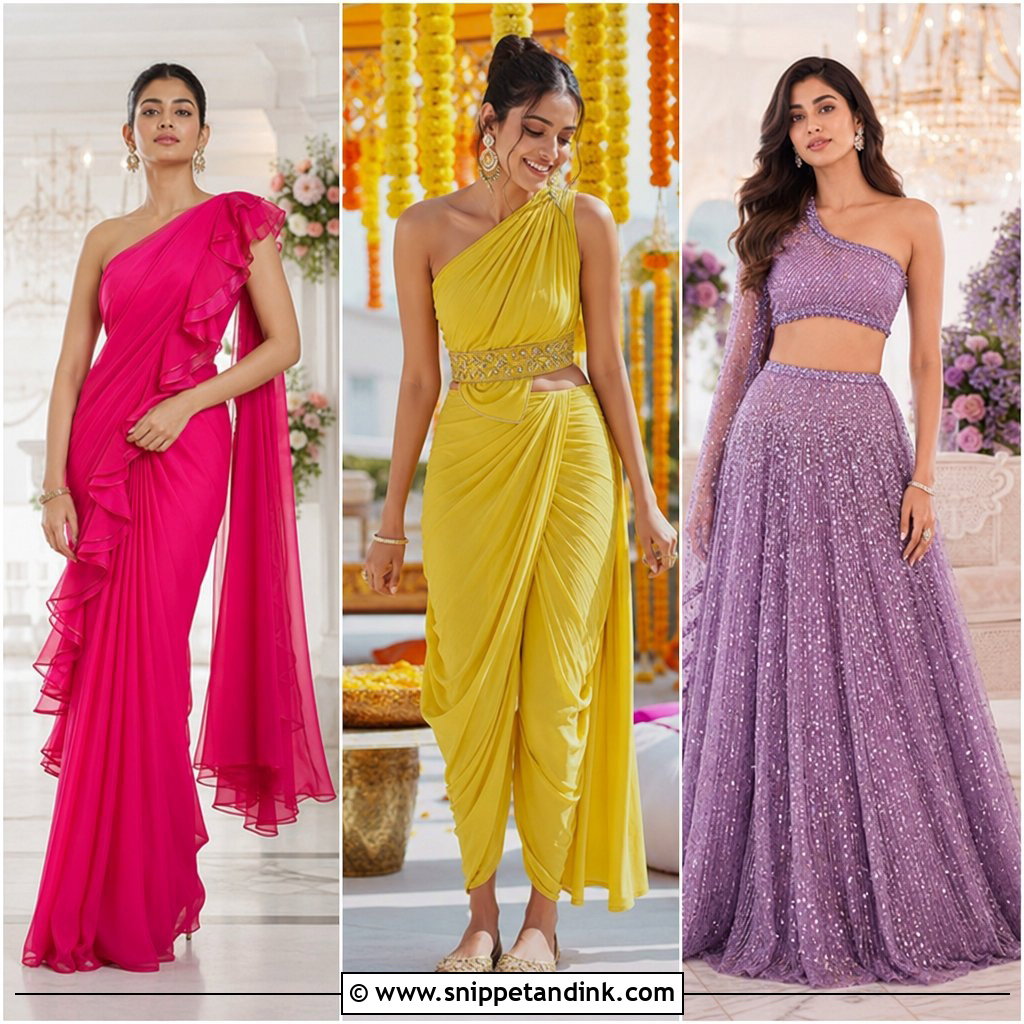
A cape takes the place of the dupatta, which means no constant re-pinning, and that alone makes it popular for receptions and sangeets. Start with a high-waisted lehenga and fitted blouse, then add a sheer embroidered cape from the shoulders in champagne, blush, silver, emerald or midnight blue. If the cape is heavily worked, skip the necklace and let the earrings carry it. Check the length while walking in your heels: a cape that touches the floor will be stepped on by you or a relative within the hour.
17. Indian Bridal Lehenga With Jacket
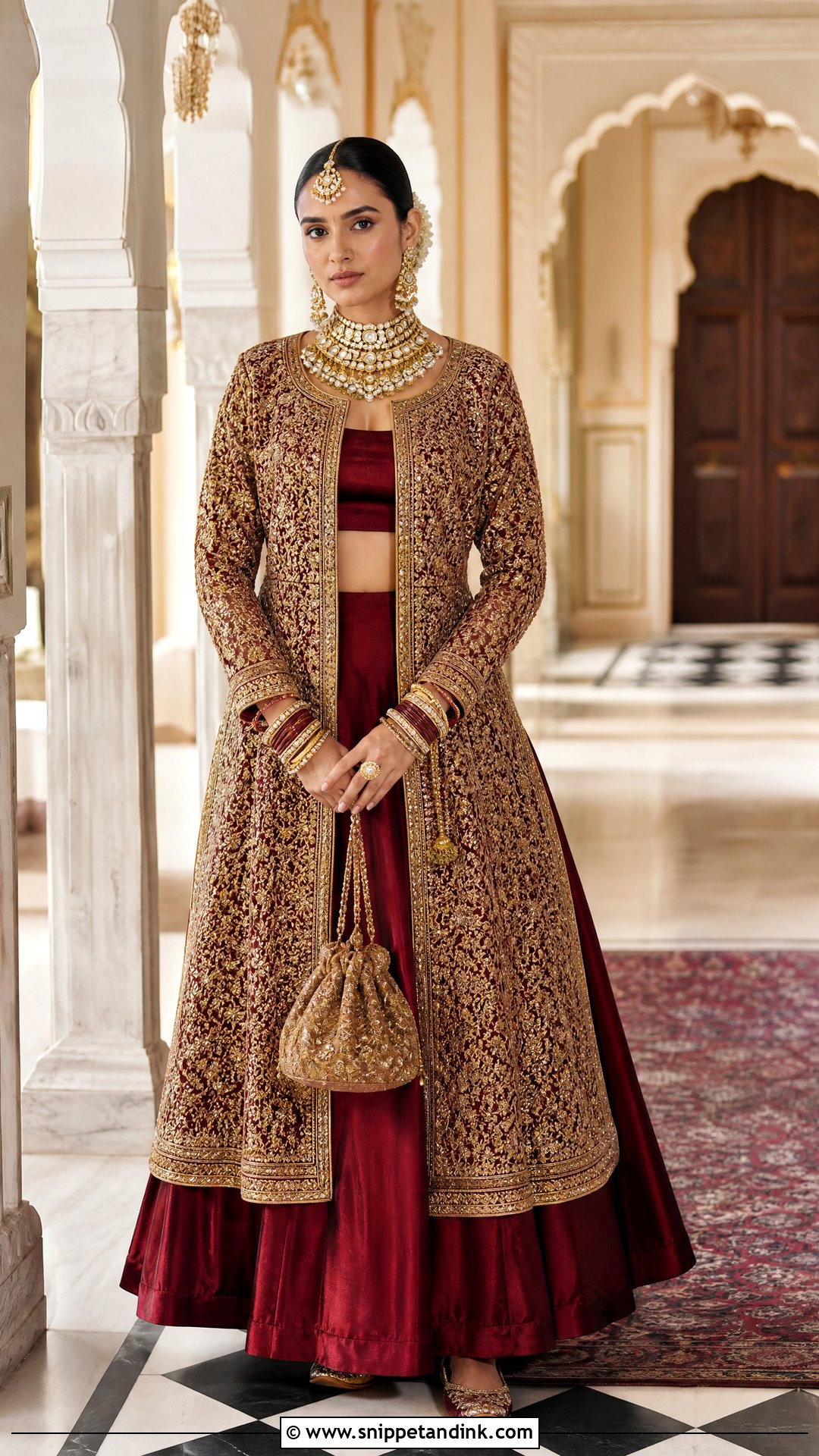
A long jacket over a lehenga gives coverage and drama in one piece, ideal for a winter reception. Keep the skirt simple in silk or brocade and let the floor-length jacket hold the embroidery. Open-front styles show the waist; closed ones look closer to an Anarkali. The blouse underneath can be plain. The detail that separates a good jacket from a bulky one is the shoulder, so ask your tailor to shape it closely. Polki earrings, a choker and a small potli are enough beside the long line.
18. Indian Bridal Saree Gown
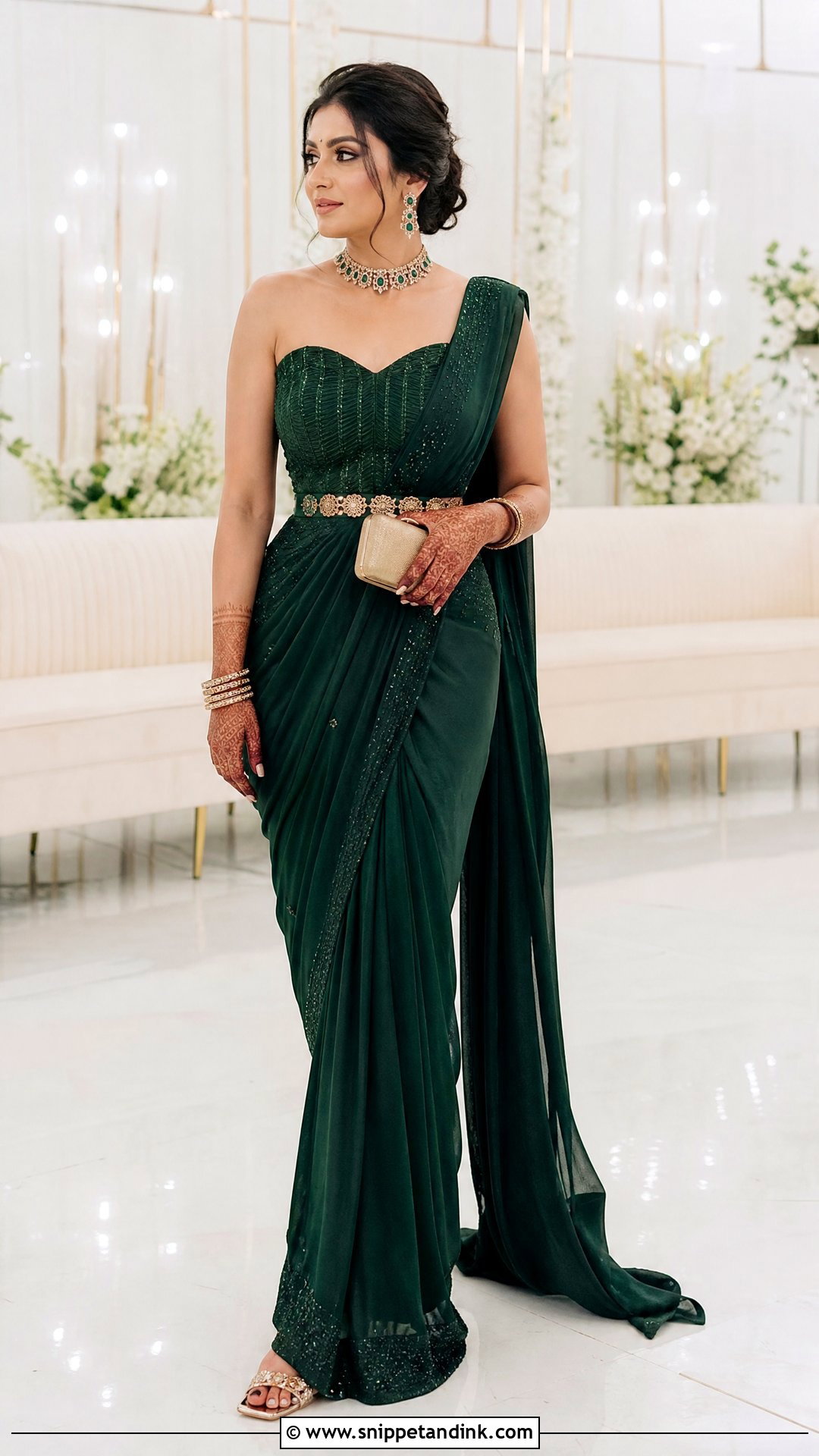
A saree gown gives the look of a draped saree with none of the risk of it unravelling, which is why brides who’ve never worn a saree like it. Look for a structured bodice, a defined waist and stitched pleats that mimic a pallu. Satin and crepe look sleek; embellished georgette looks dressier. Here’s the catch. Unlike a real saree, it can’t be adjusted on the day, so bust, waist, hip and hem fittings need to be exact, and a final fitting close to the date is essential if your weight tends to shift.
19. Floral Indian Bridal Lehenga
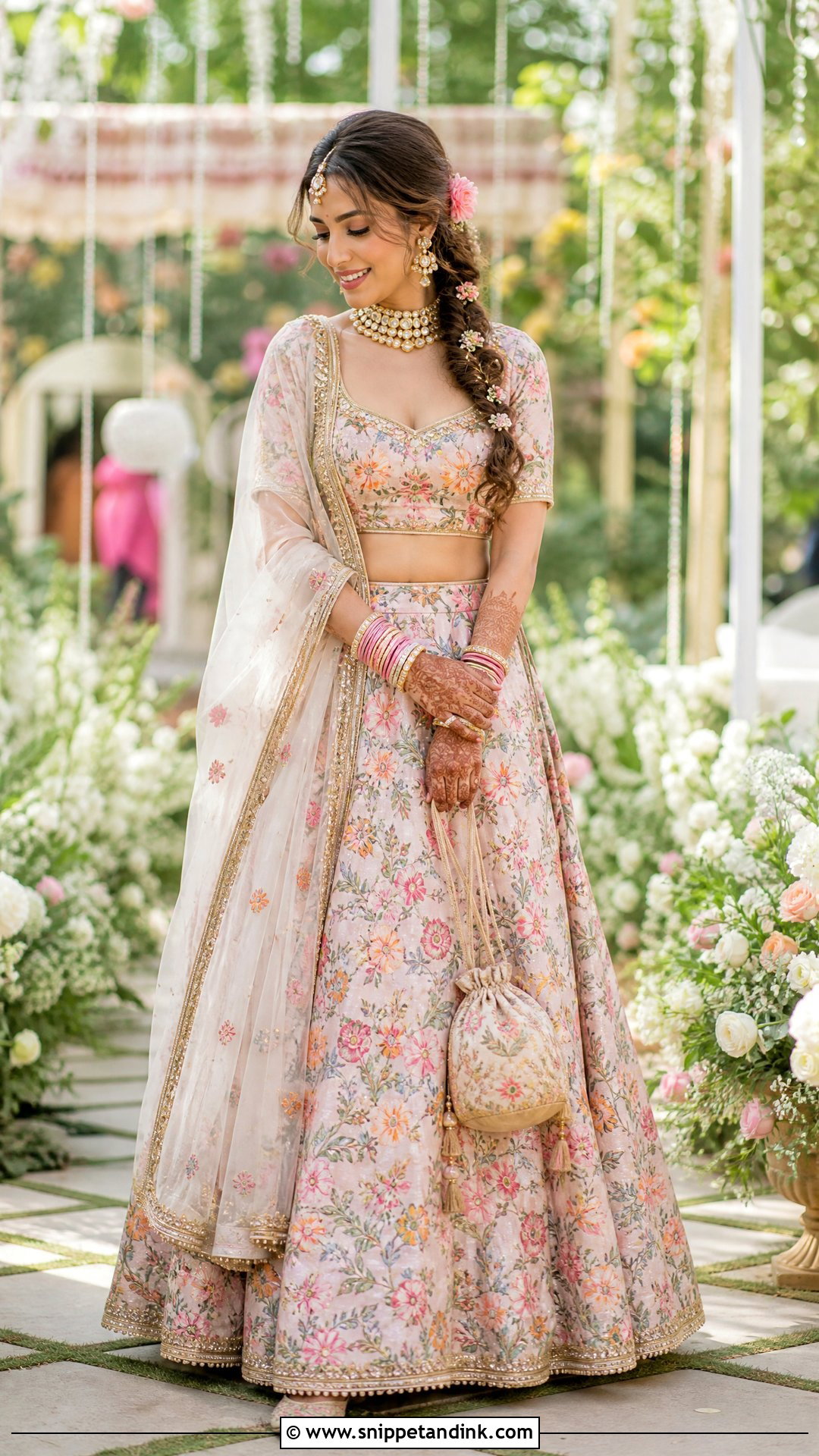
Florals belong to the mehndi, the haldi or a relaxed daytime wedding. Printed silk keeps it light; embroidered flowers make it more formal. Use one solid colour from the print for the blouse, and choose a dupatta with a narrow border so the pattern stays the focus. The first thing I edit is the total amount of flowers. A busy print, floral jewelry and a heavily flowered braid all at once look crowded, so pick one place to repeat the motif. For a haldi, choose an outfit you don’t mind staining; turmeric marks on pale silk rarely come out completely.
20. Green Indian Bridal Lehenga
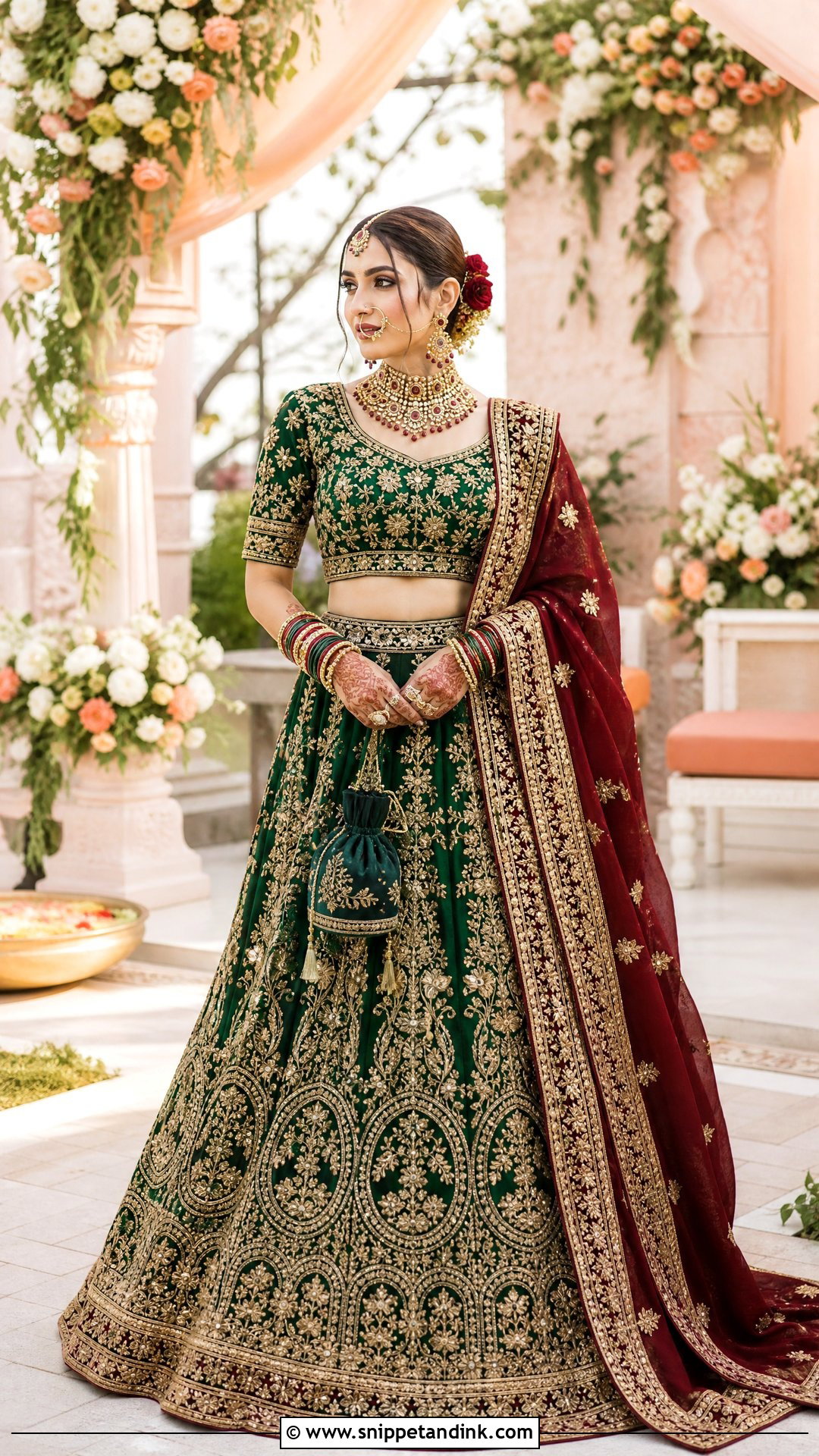
Emerald or bottle green carries the same formality as red with more surprise. Silk, velvet or brocade with antique gold embroidery suits an evening ceremony or reception, and a maroon or red dupatta brings back the traditional warmth. Kundan, polki or temple jewelry with rubies and a sleek bun with fresh flowers finish it. Green is the hardest colour to judge from a phone screen. I check every green swatch in daylight and under warm indoor bulbs, because it can turn almost black under some venue lighting.
How to Tell Pure Silk and Real Zari From a Good Copy
Kanjeevaram, Banarasi and Paithani are often copied in power-loom and synthetic versions. A copy can still look rich, but you should know what you’re paying for.
- Ask whether the saree carries a silk authenticity label or certificate. Reputable weavers and stores will show it without hesitation.
- Look at the back. Handloom weaves show small irregularities and floats on the reverse; machine copies are perfectly uniform.
- Pure silk feels cool and slightly crisp and warms in your hand. Polyester stays slippery and cold.
- Gently scratch a loose end of zari with a fingernail. Tested zari, which is silver-plated copper, shows a reddish core; metallic plastic thread shows white or clear.
Who to bring to the store
If the saree is meant as an heirloom, take along a relative who has bought one before. They notice weight and drape faster than any label, and they’ll know which motifs your family expects.
Fabric Weight Tells You More Than the Photograph Does
Start with the ceremony, the season and how comfortable you need to be, and the list above narrows quickly. A red lehenga or silk saree honours tradition; a pastel set, cape lehenga or saree gown reads more contemporary. Regional dress deserves respect and someone who knows its details. Before you pay, lift the outfit and feel its weight, check the blouse support, the hem and the backing of the embroidery. Then book fittings with your shoes and jewelry so you can move, sit and enjoy the day.
You'll Like These Ideas:


Leave a Reply