
An Indian bridal outfit has to do more than look rich. It carries family tradition and regional custom, and it has to stay put through a ceremony that can run for hours, often seated on the floor. That’s why I start every consultation by asking about the rituals before we look at a single color. Below are twenty looks, from classic lehengas and regional sarees to suits and modern drapes. Brides now choose anything from traditional red with dense handwork to ivory, pastels and lighter fabrics, and each choice changes what blouse support, skirt volume, draping and footwear you’ll need. I’ve noted those practical details under every look.
Weighing a Heavy Lehenga Against a Long Ceremony
Heavily embroidered bridal lehengas can weigh several kilograms, and most of that sits on your waist and hips for the whole ceremony. Brides often fall for a lehenga on a mannequin and only feel the weight when they sit down cross-legged at the mandap. I ask the boutique to let you wear the actual piece, not a sample, for a good stretch of the fitting before deciding.
Where the weight hides
- Dense hem embroidery and heavy borders, which also make the skirt swing hard against your ankles.
- Can-can layers and stiff net underskirts. A well-made silk or a canvas-lined skirt often needs far fewer.
- The dupatta. An embroidered dupatta pinned to the hair pulls on the scalp for hours; a lighter net one over the head with the heavy one across the shoulder is kinder.
- Jewelry, especially a large maang tikka and heavy earrings. Ask for ear chains or supports so the lobes aren’t carrying everything.
Custom bridal wear commonly takes a few months to make, and the blouse usually needs more than one fitting, so leave time for at least two.
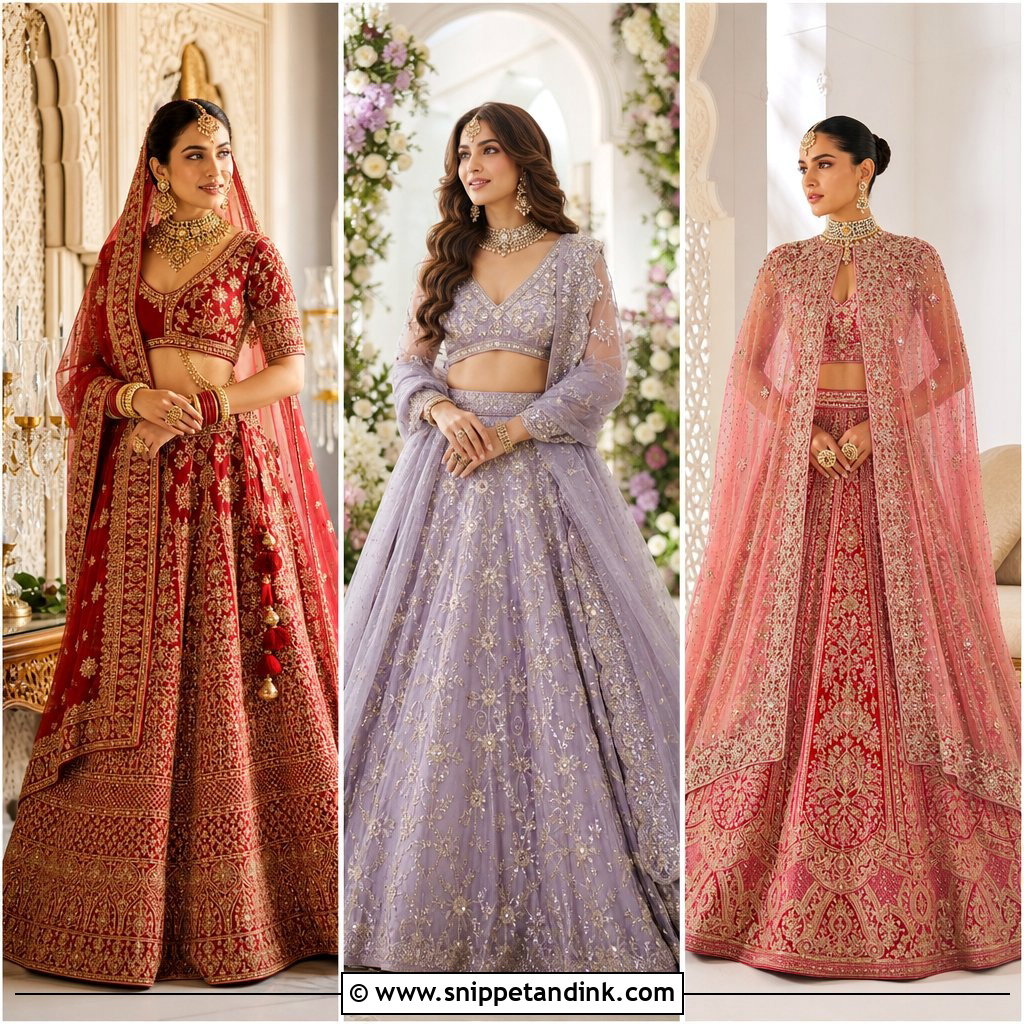
1. Red Bridal Lehenga
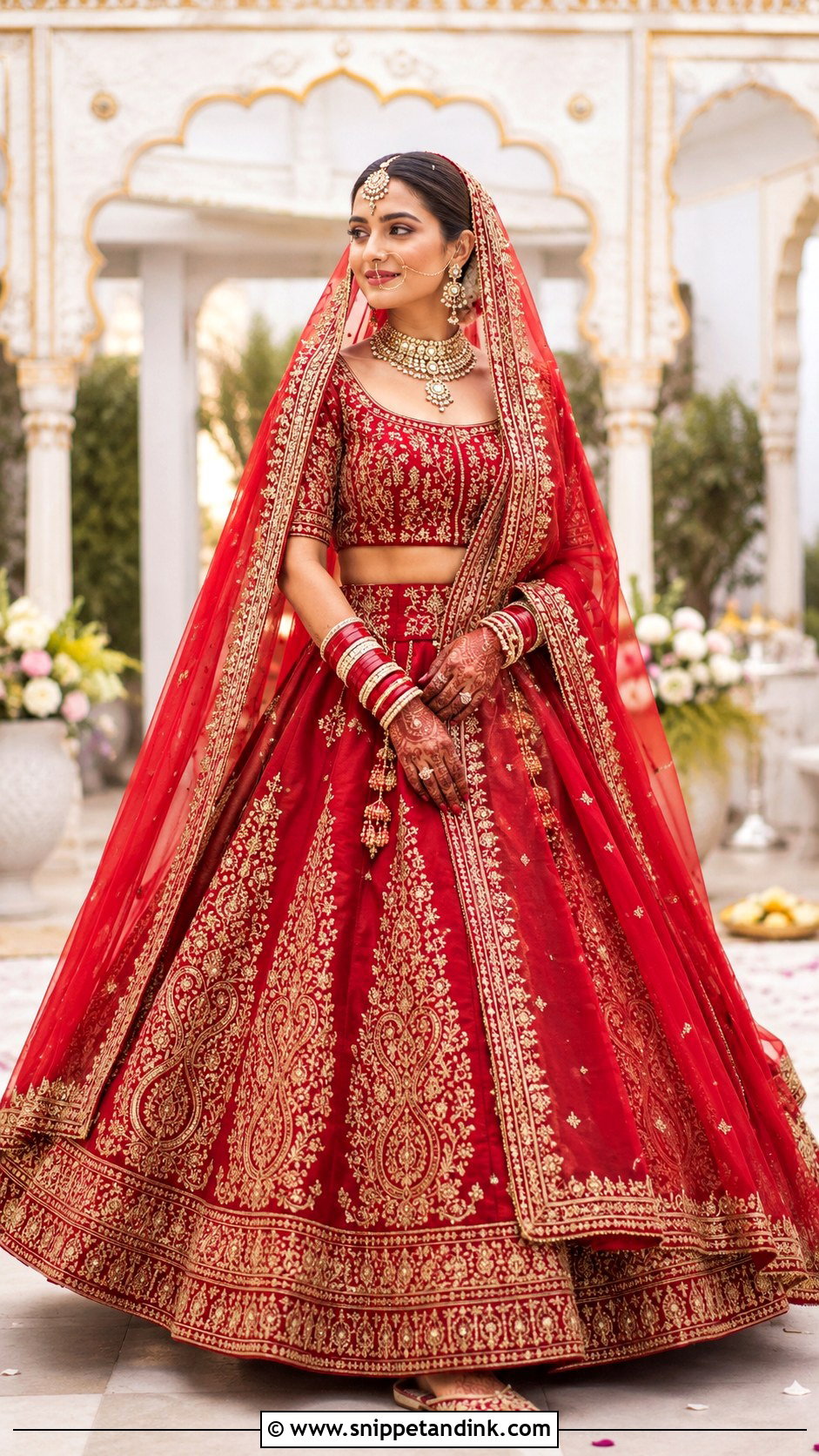
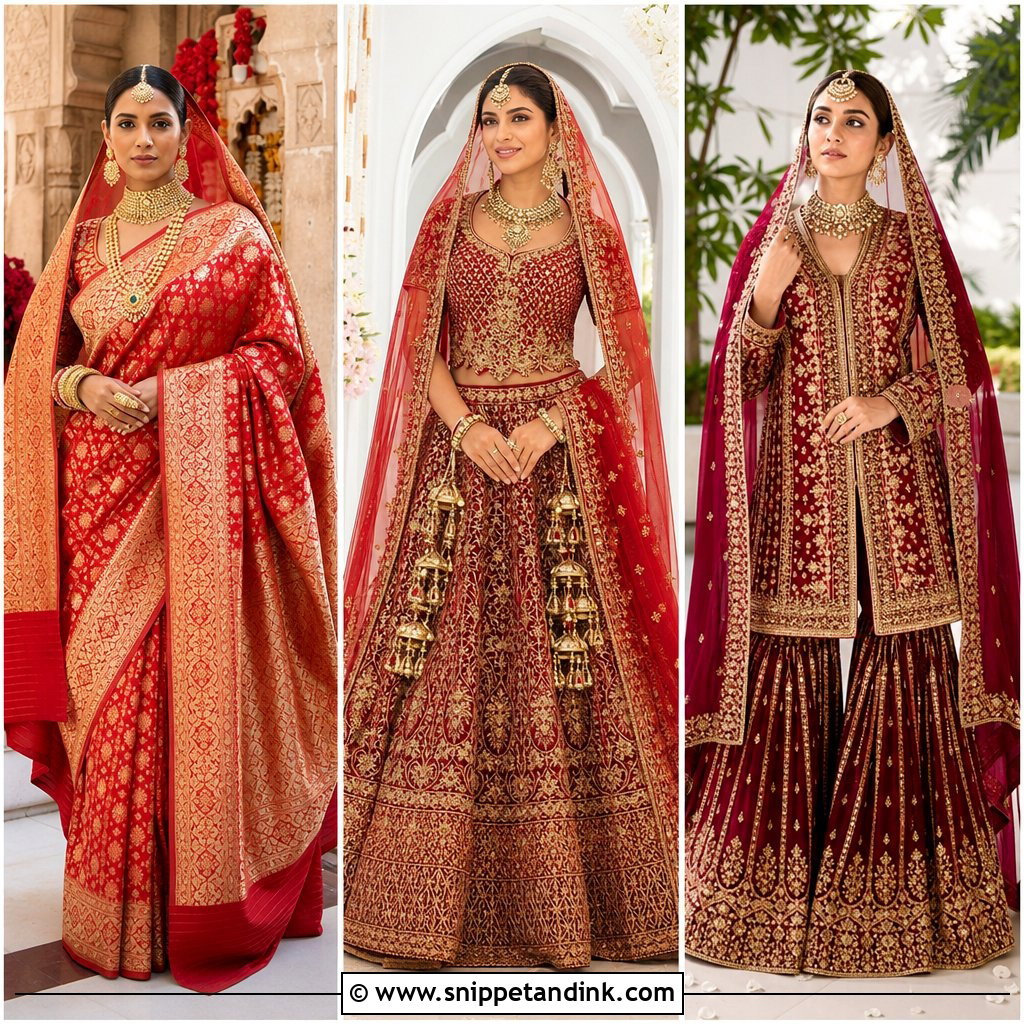
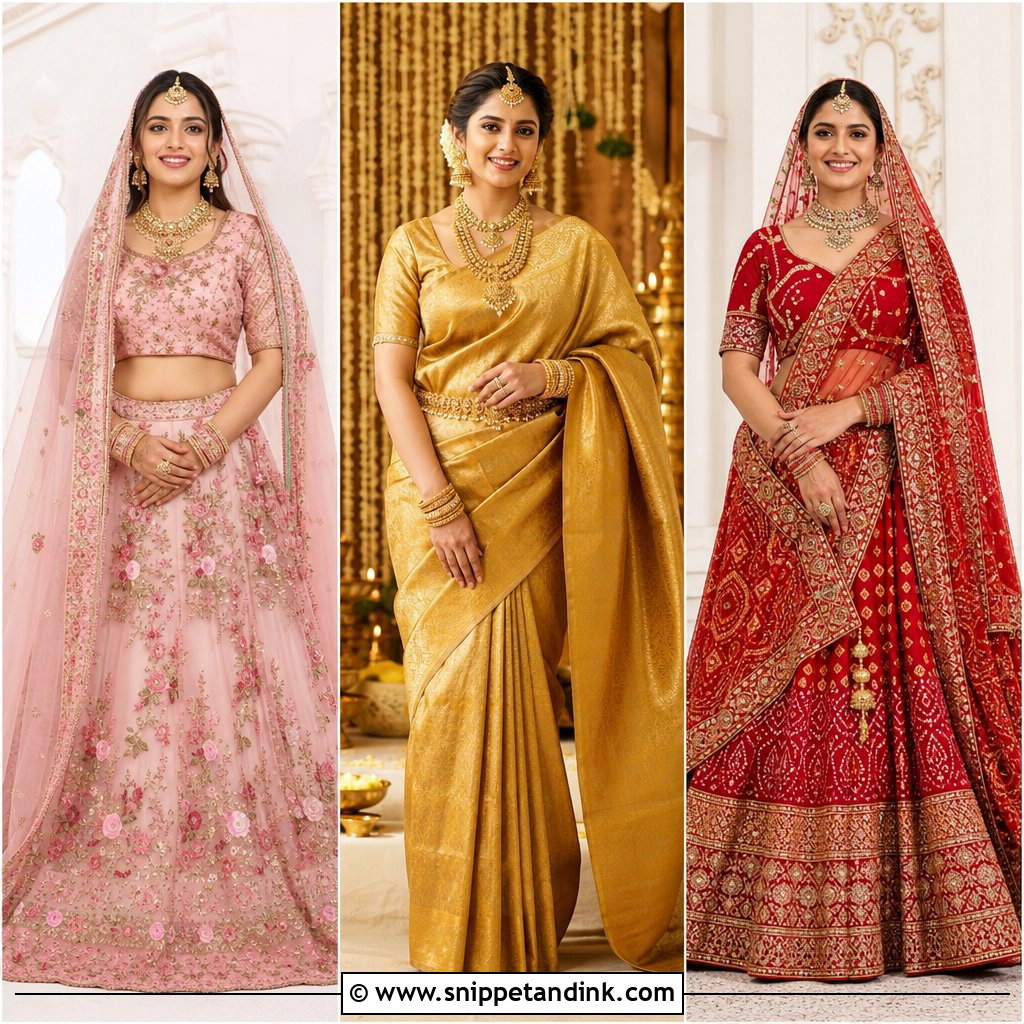
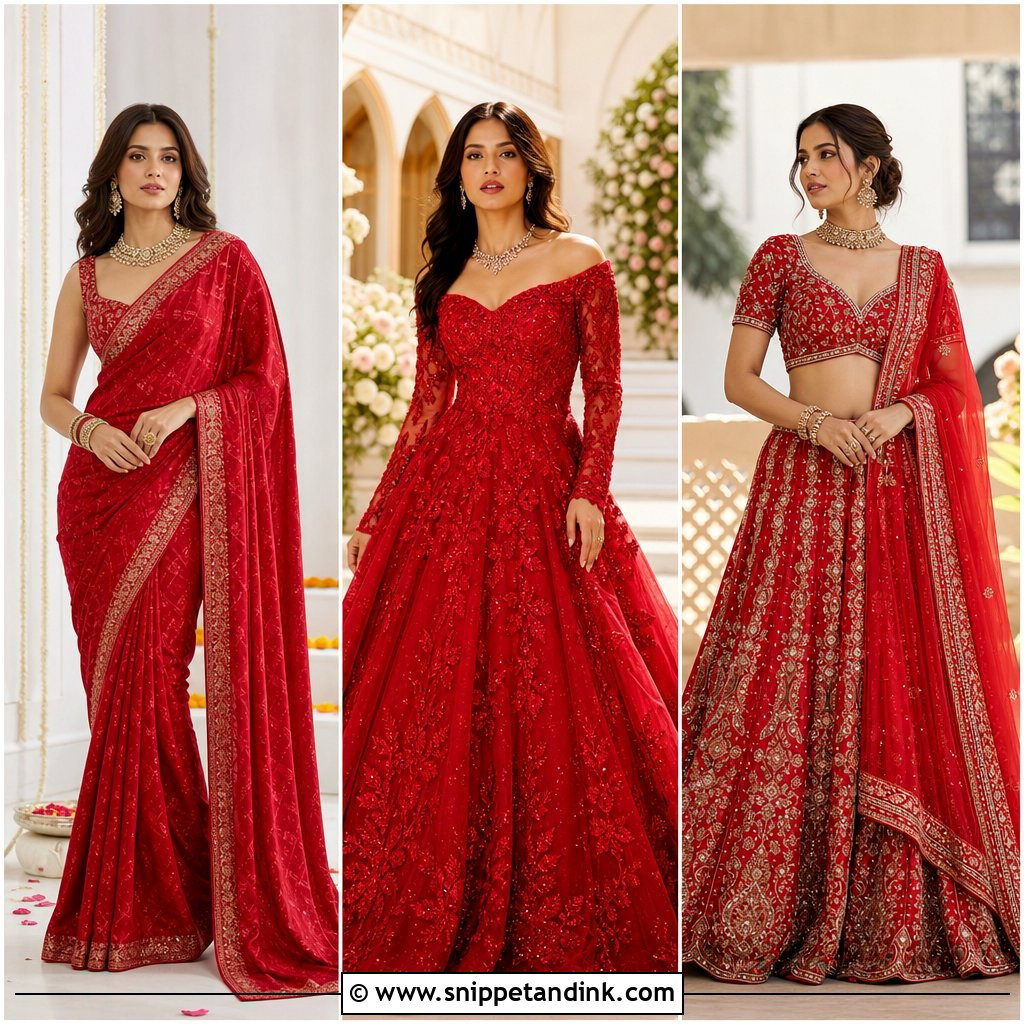
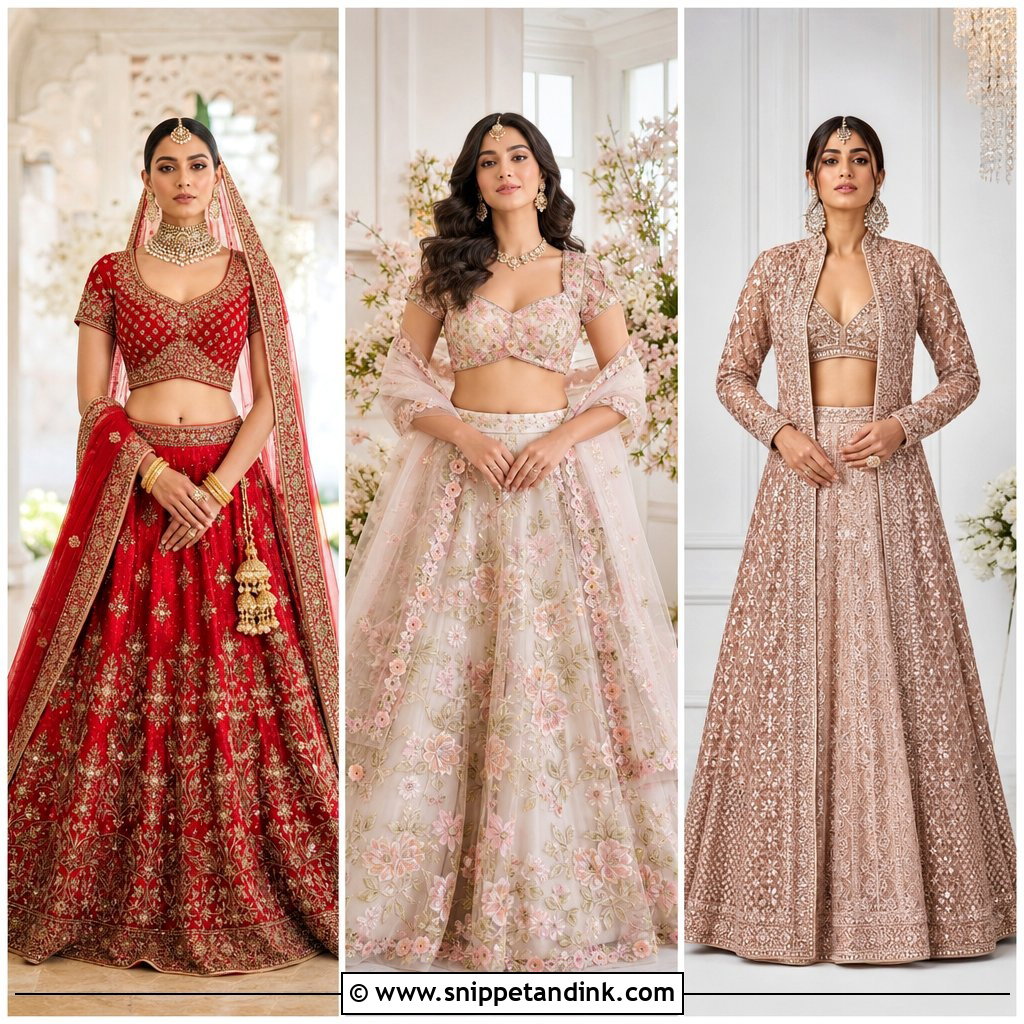
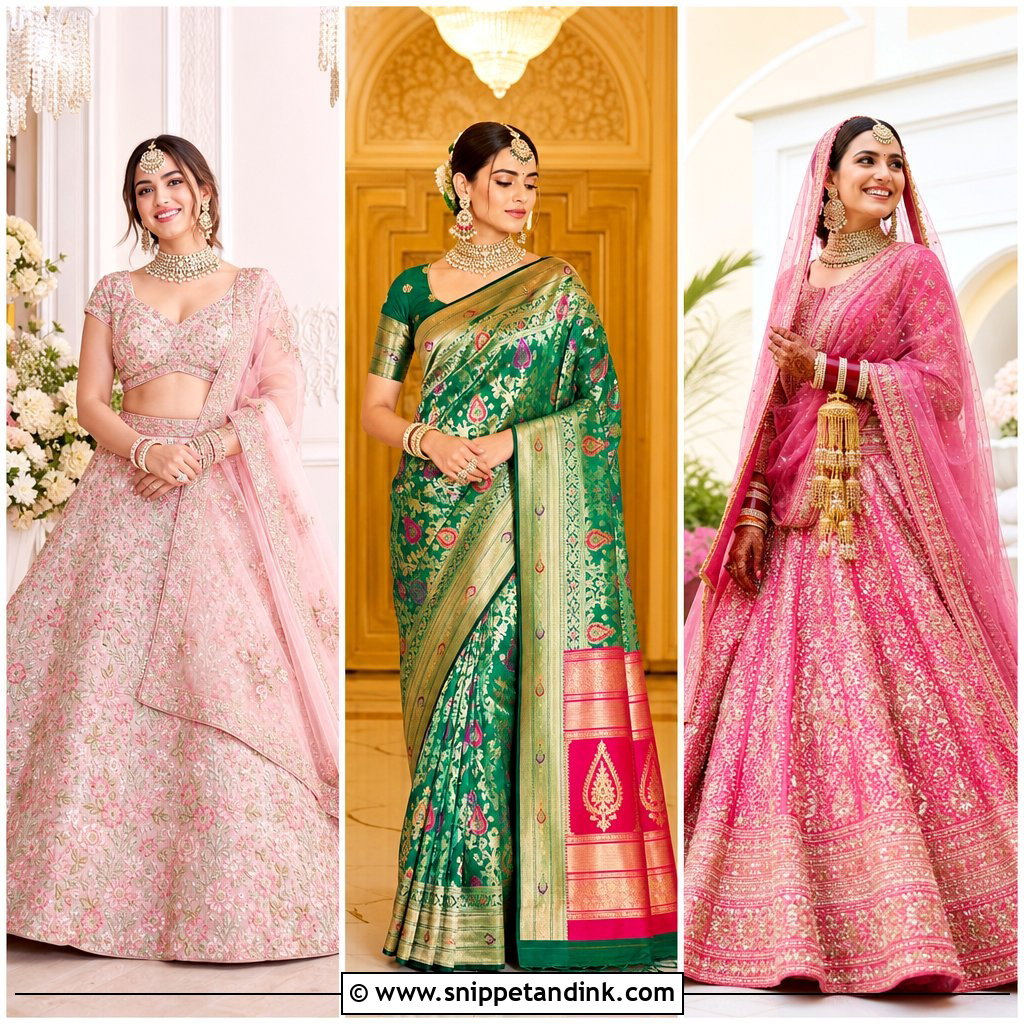
A red bridal lehenga is still the outfit many families picture first, and in silk or raw silk with zardozi, dabka or antique gold thread it carries real ceremony. Dense embroidery is also heavy, so if you’ll sit through a long ritual, I’d ask for spaced motifs that thin out toward the waist. The blouse has to be built to support you, with proper cups and a firm band, or the skirt’s weight drags everything down. I like a double dupatta: a lighter one over the head, a heavier one across the shoulder. Kundan necklace, maang tikka, bangles and embroidered juttis complete it, in crimson or vermilion against antique gold.
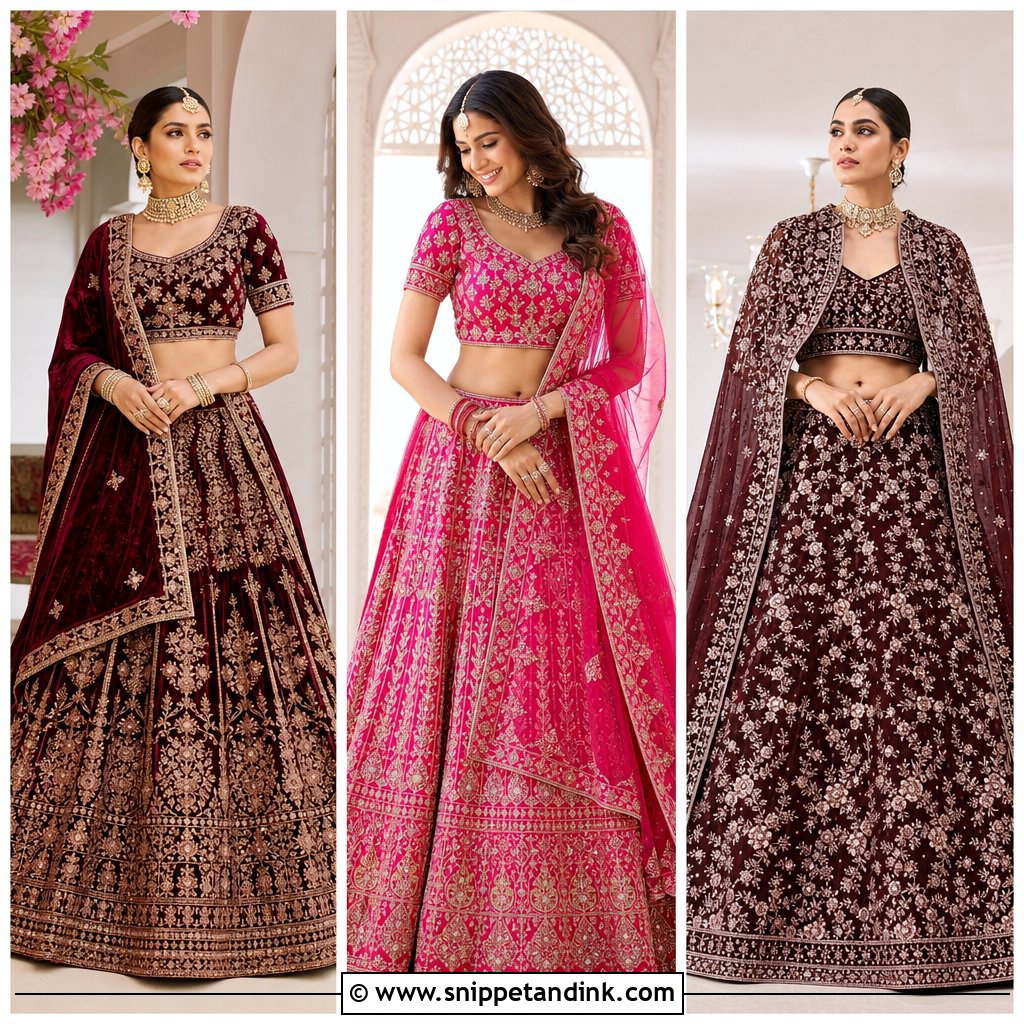
2. Maroon Velvet Bridal Lehenga
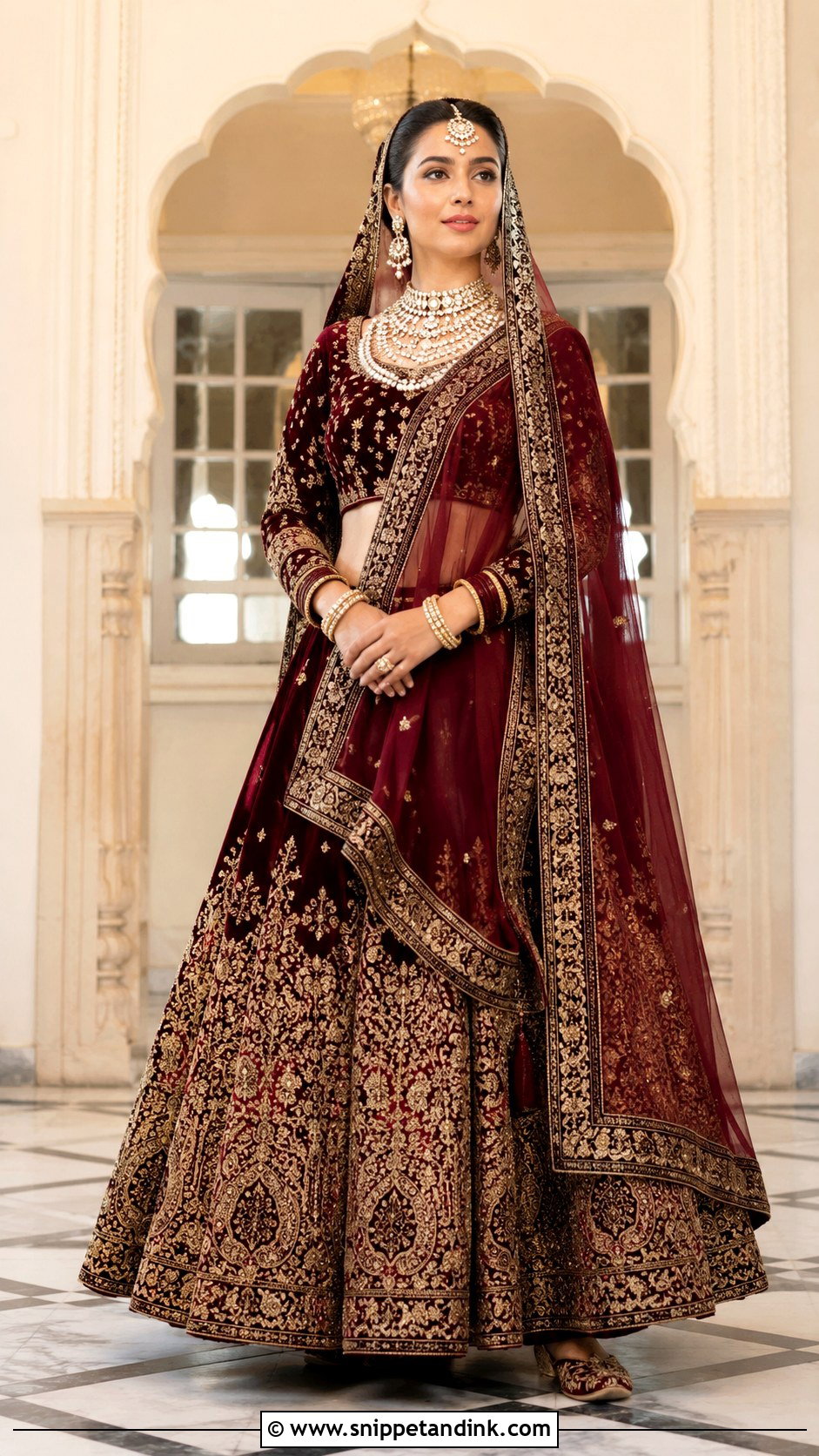
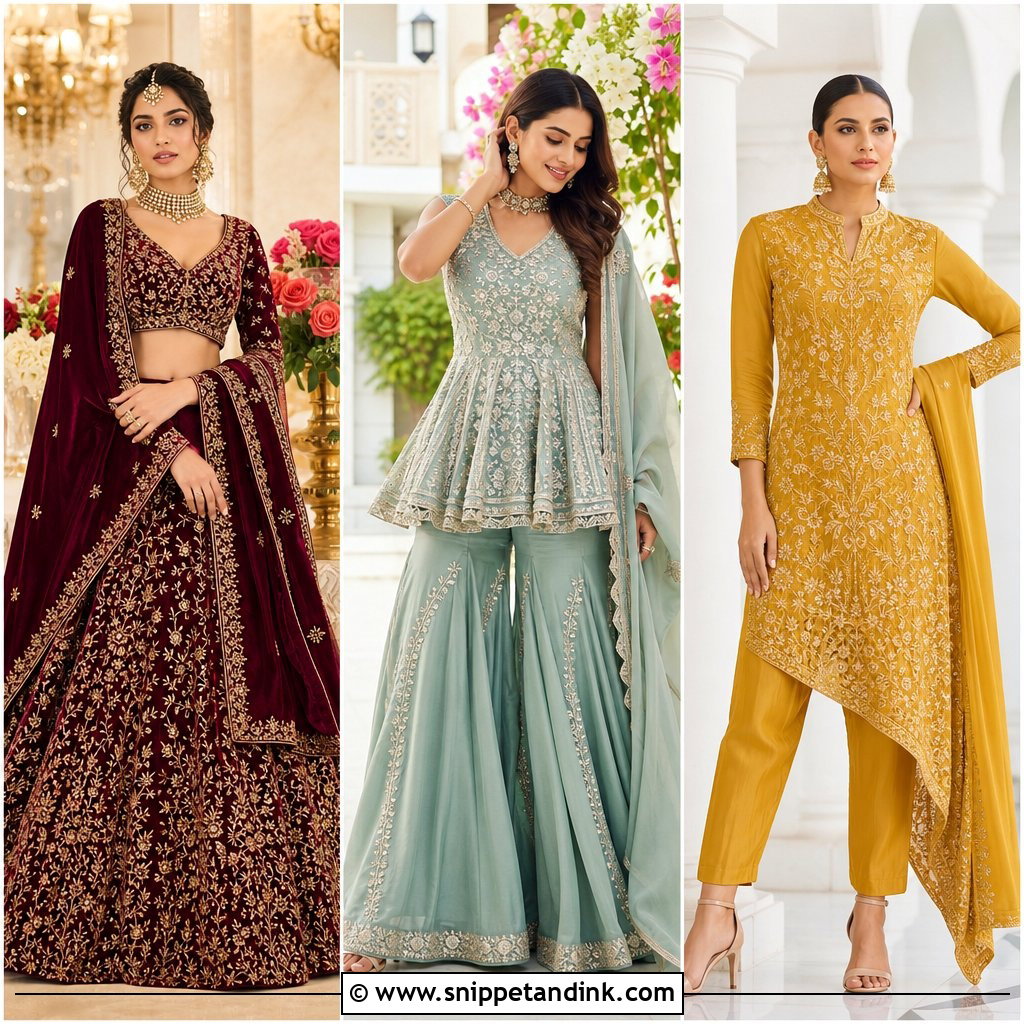
Velvet suits a winter wedding: it has depth, holds its shape and reads regal in maroon. I’d look for antique gold embroidery concentrated at the hem and blouse rather than covering everything, which keeps the weight manageable. A sheer maroon or muted gold dupatta stops the outfit going visually dense. Layer a choker with a longer necklace at the open neckline, then add earrings, a small nath, stacked bangles and velvet juttis. Velvet traps heat under lights and in a crowded hall, so ask for a cotton blouse lining and fewer can-can layers than you think you need.
3. Ivory Gold Bridal Lehenga
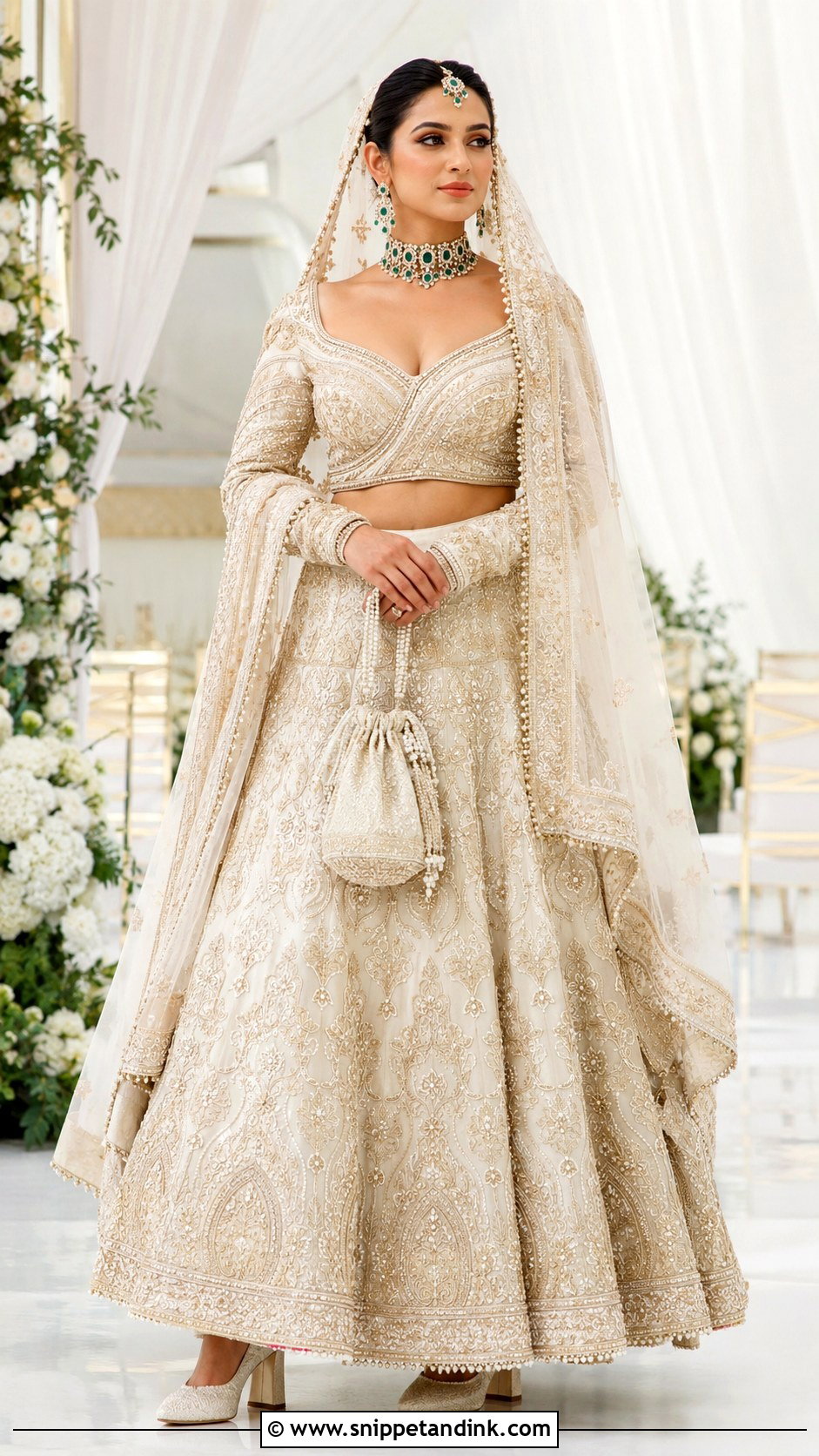
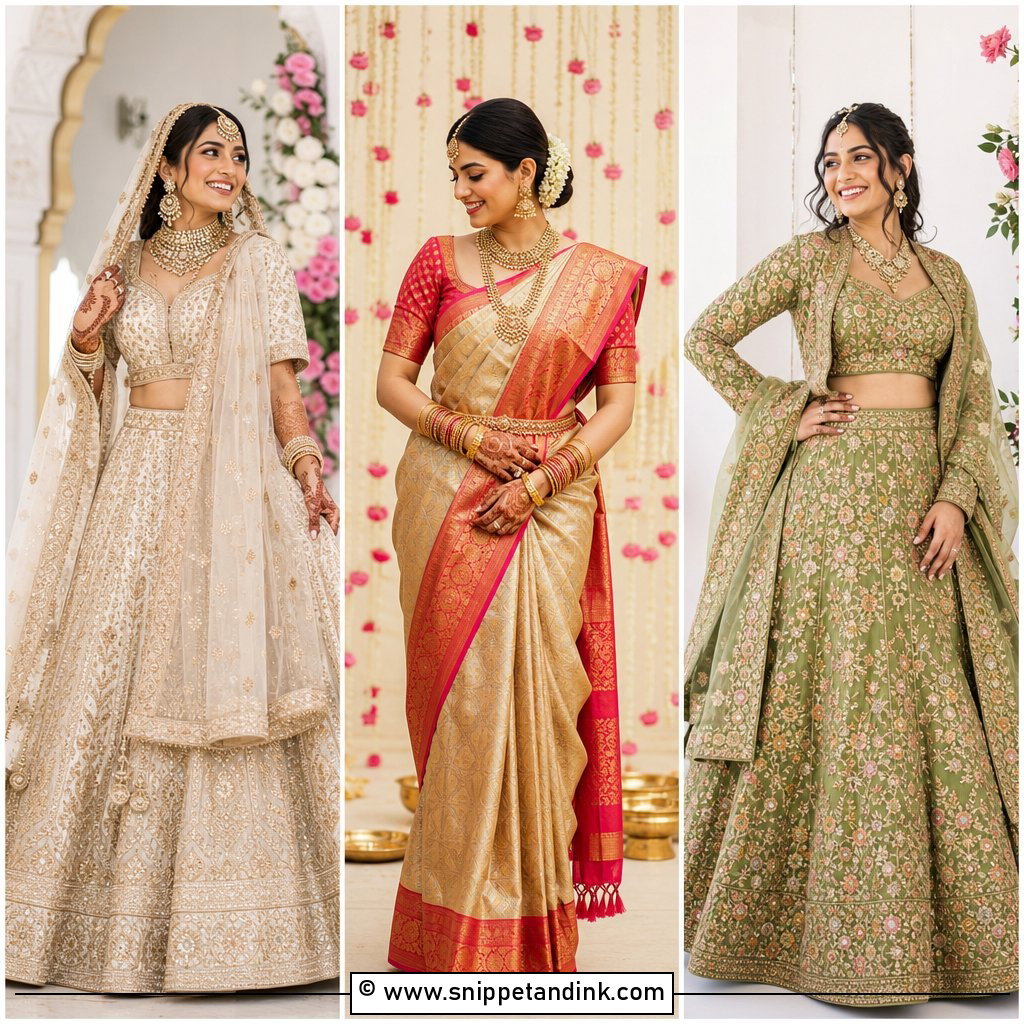
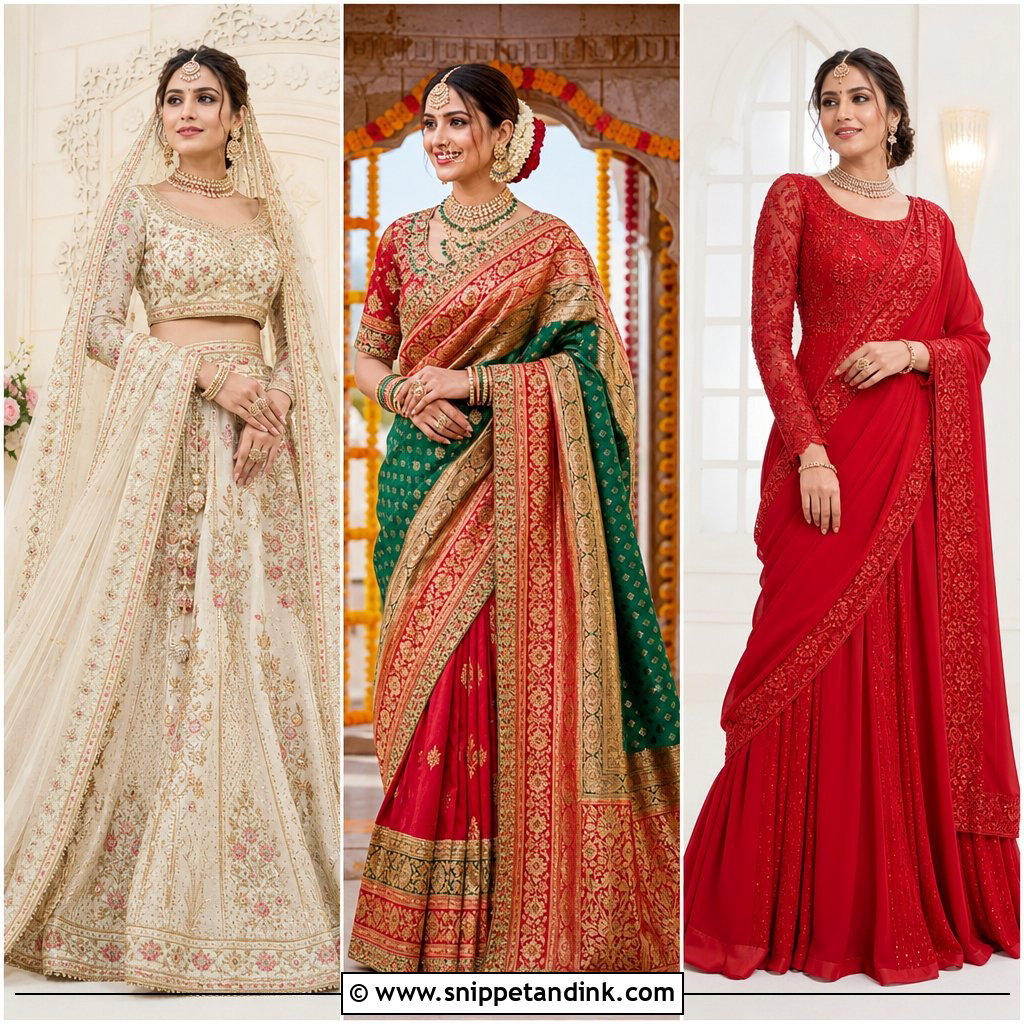
Ivory and gold give a quieter alternative to red, with tonal embroidery, pearls, zari or champagne sequins carrying the detail. A structured blouse with a square, sweetheart or modest scoop neckline keeps the pale palette from looking flat. Ivory changes color under warm bulbs and fluorescent tubes, so I look at the fabric by a window and under lighting like the venue’s before ordering. Wear an embroidered dupatta on one shoulder and a light veil over the head. Emerald jewelry gives contrast; pearls or polki keep it soft. Defined eyes, a warm lip and fresh flowers in the hair stop a pale outfit washing you out.
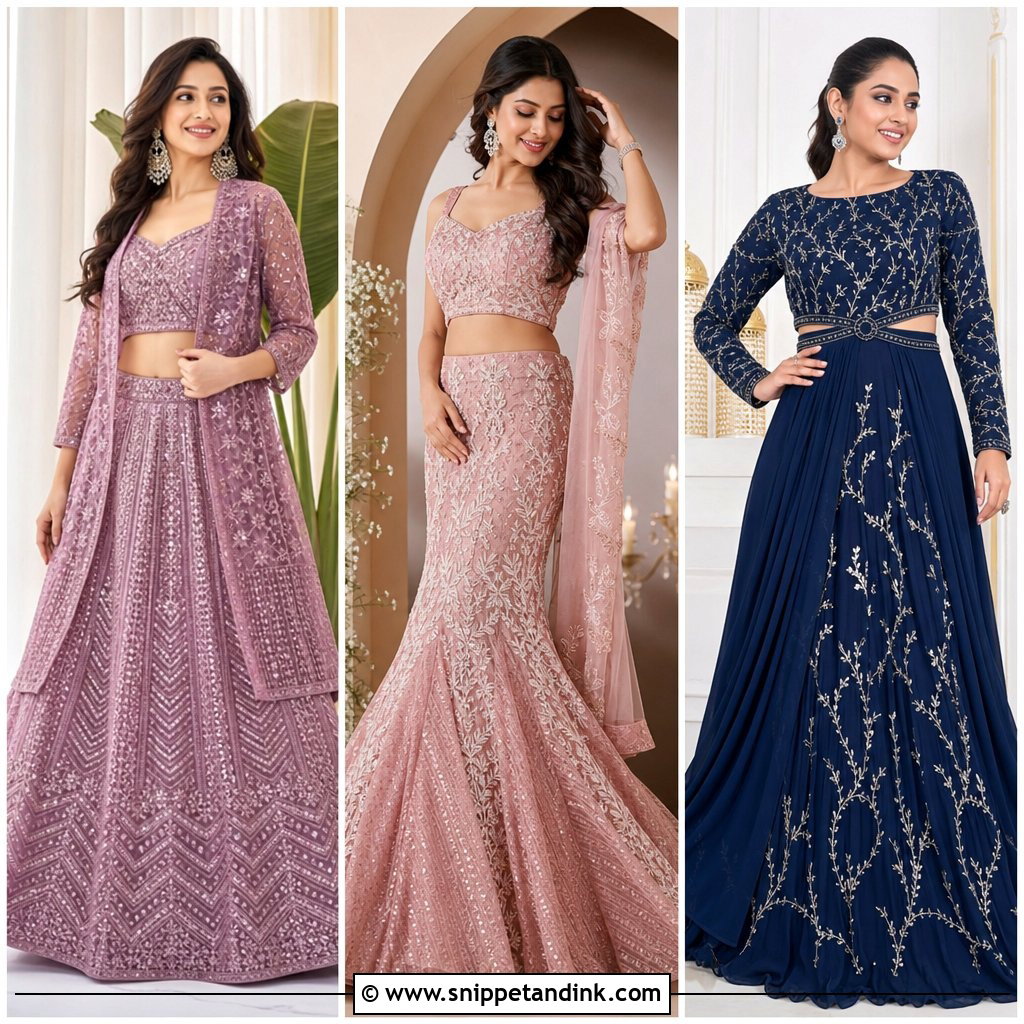
4. Blush Pink Floral Bridal Lehenga
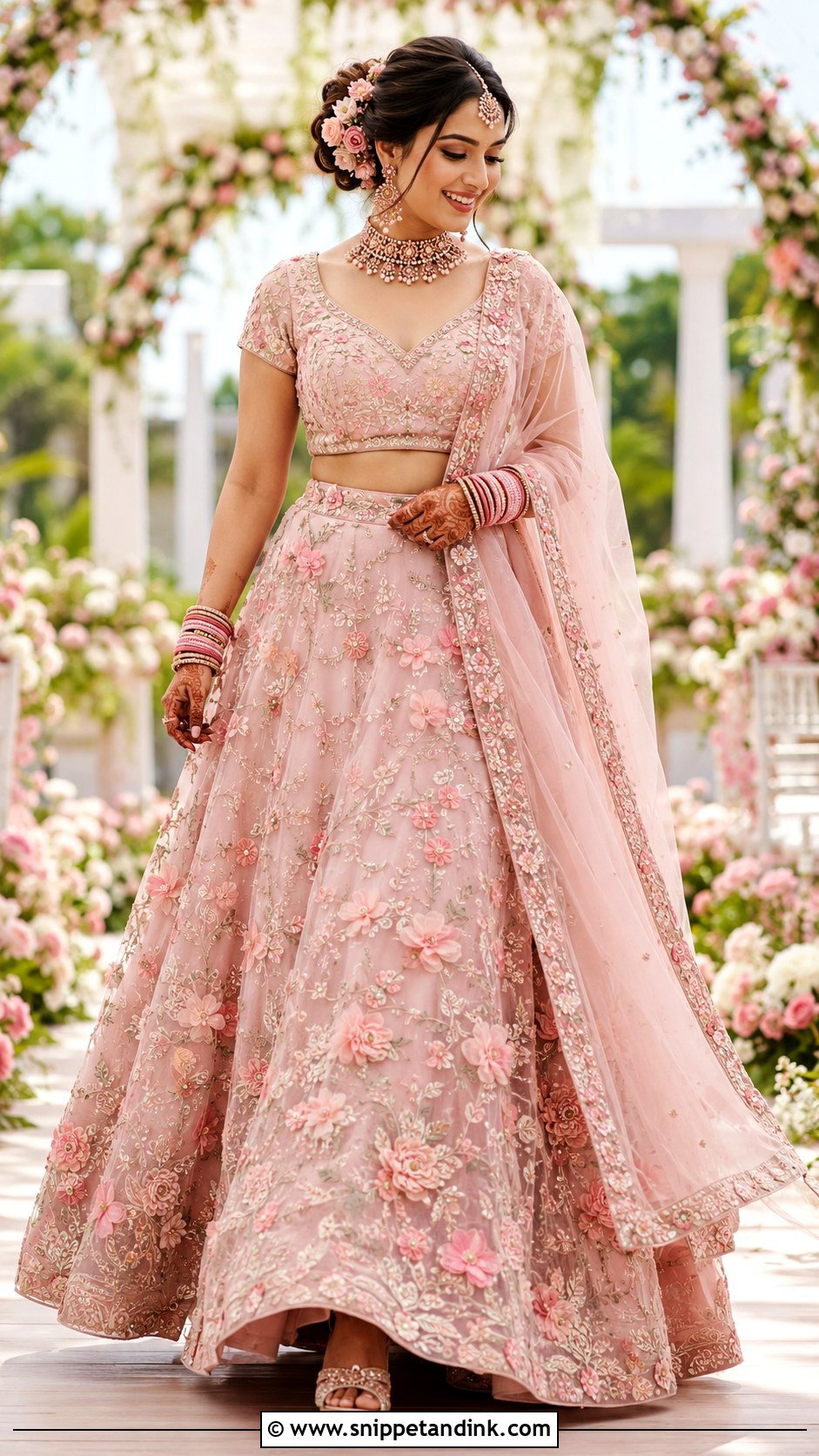
Blush pink with floral embroidery keeps ceremony presence while feeling softer than red. Dimensional flowers, delicate threadwork, pearls or scattered sequins on silk, organza or tulle all work. Pair it with a well-fitted blouse and a pink dupatta with a clear embroidered border, since a plain edge disappears in photos. Rose gold keeps the palette gentle, while emerald or ruby adds contrast. Organza and tulle are light, so this is my pick for outdoor and warm-weather weddings; keep the underskirt light too. A floral bun, chandelier earrings and embellished heels finish it, with deeper pink embroidery at the hem if you want more definition.
5. Pastel Blue Bridal Lehenga
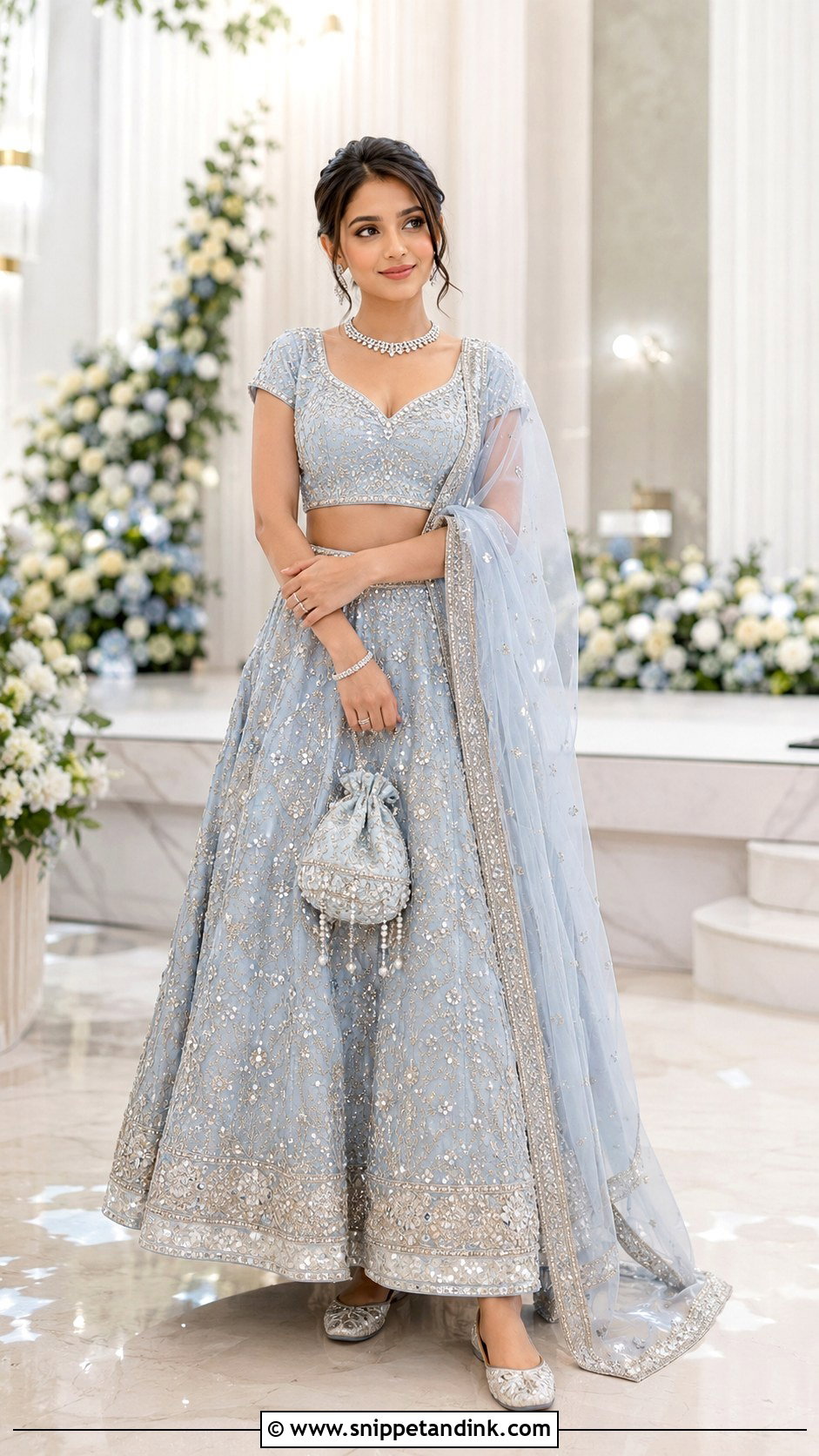
Pale blue can look casual unless it has enough detail, which is the one thing I’d watch with this color. Powder blue, icy blue or pale aqua with silver embroidery, pearls, mirror work or soft multicolored thread suits a daytime wedding. A matching blouse gives a clean monochrome look; silver-gray adds gentle depth. Drape a sheer dupatta across the body and add a light veil if the ceremony needs head covering. Diamond-style jewelry, pearls or pale kundan keep the cool palette, with silver juttis and a beaded potli. Include a defined border near the hem, and warm the face with rosy makeup and white flowers in a neat bun.
6. Emerald Green Bridal Lehenga
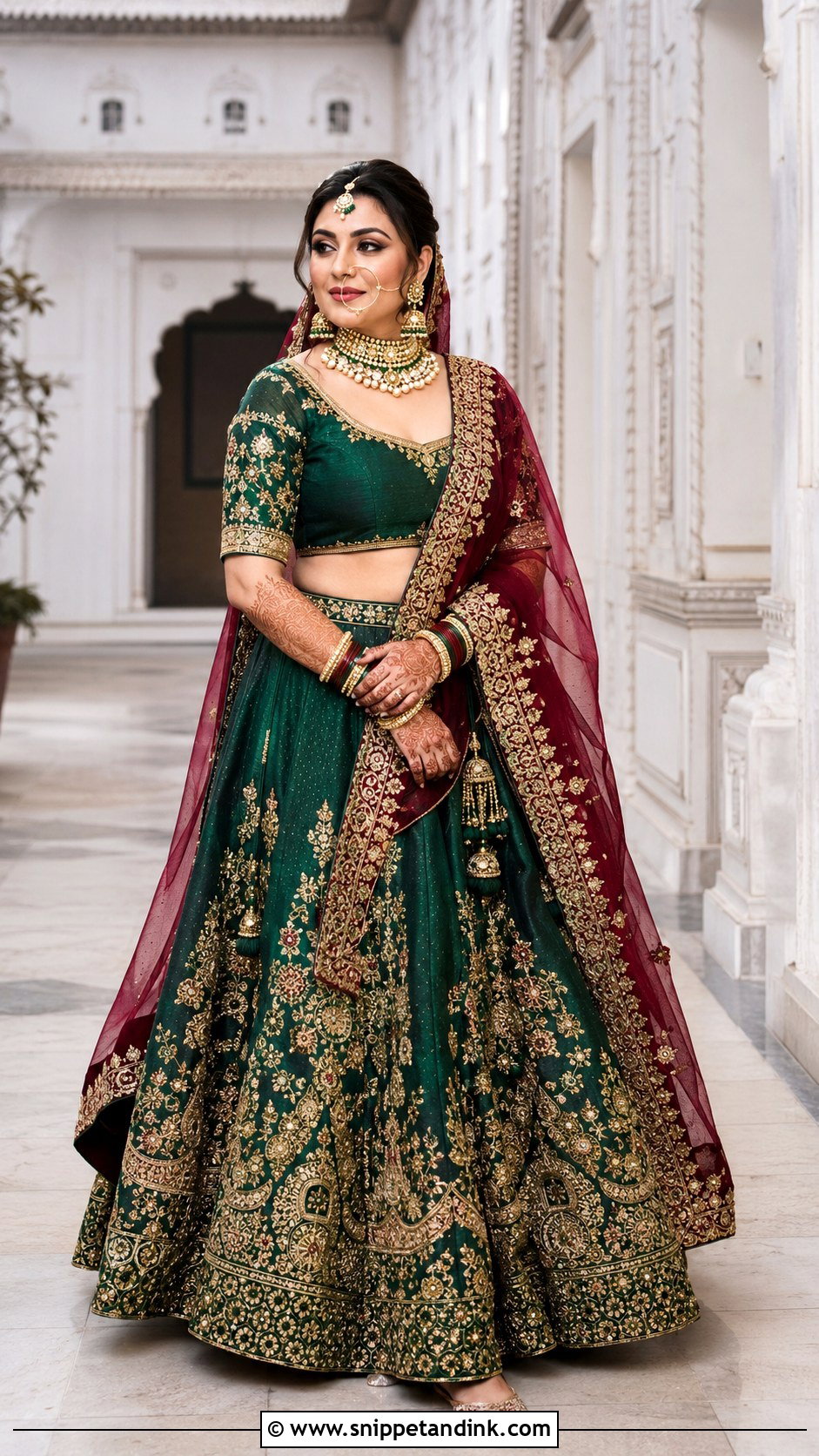
Emerald gives you color beyond red while still feeling traditional. Silk or velvet with gold zari or antique metallic motifs looks royal in a matching blouse, or pair it with a maroon dupatta for the classic jewel-tone combination. Gold kundan, a statement maang tikka, stacked bangles and embroidered juttis complete it, and a red or berry lip deepens the green. I’d avoid a very stiff, heavily worked hem; a moderate flare with embroidery spread evenly lets you walk the circle around the fire without kicking the skirt. Heritage properties and evening ceremonies suit it.
7. Banarasi Silk Bridal Lehenga
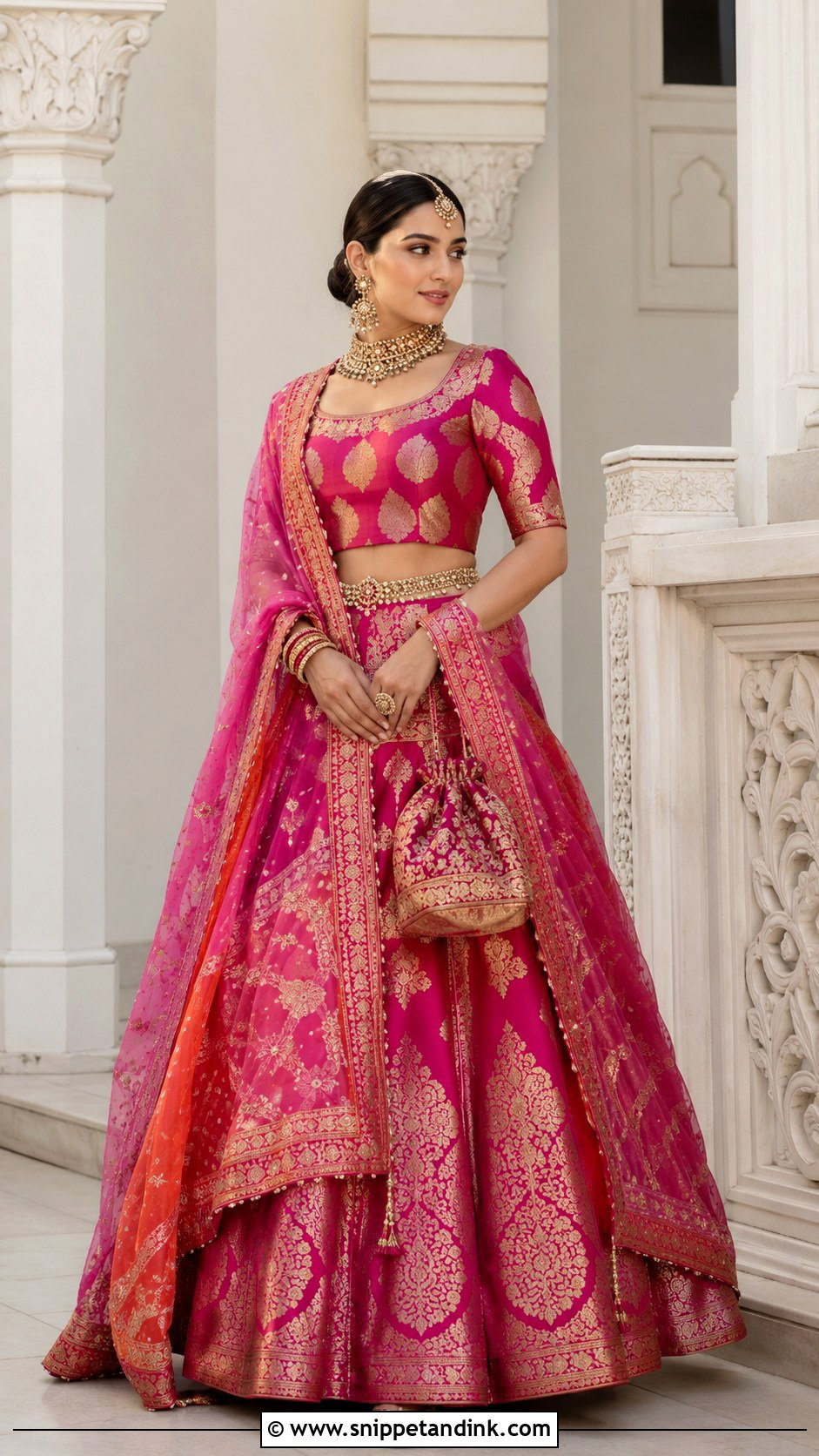
Banarasi silk brings woven zari motifs into a lehenga, so the pattern is part of the cloth rather than stitched on top. Red, magenta, purple or jewel green with gold zari looks ceremonial; a plain or lightly embroidered silk blouse lets the weave lead. A contrasting organza dupatta adds softness without hiding the surface. Temple jewelry, kundan or antique gold suit it, and a waist belt helps secure the dupatta. Because Banarasi silk has natural body, it usually needs fewer underskirt layers, which makes it lighter than it looks. It’s also one of the easier lehengas to wear again at family events.
8. Kanjivaram Bridal Saree
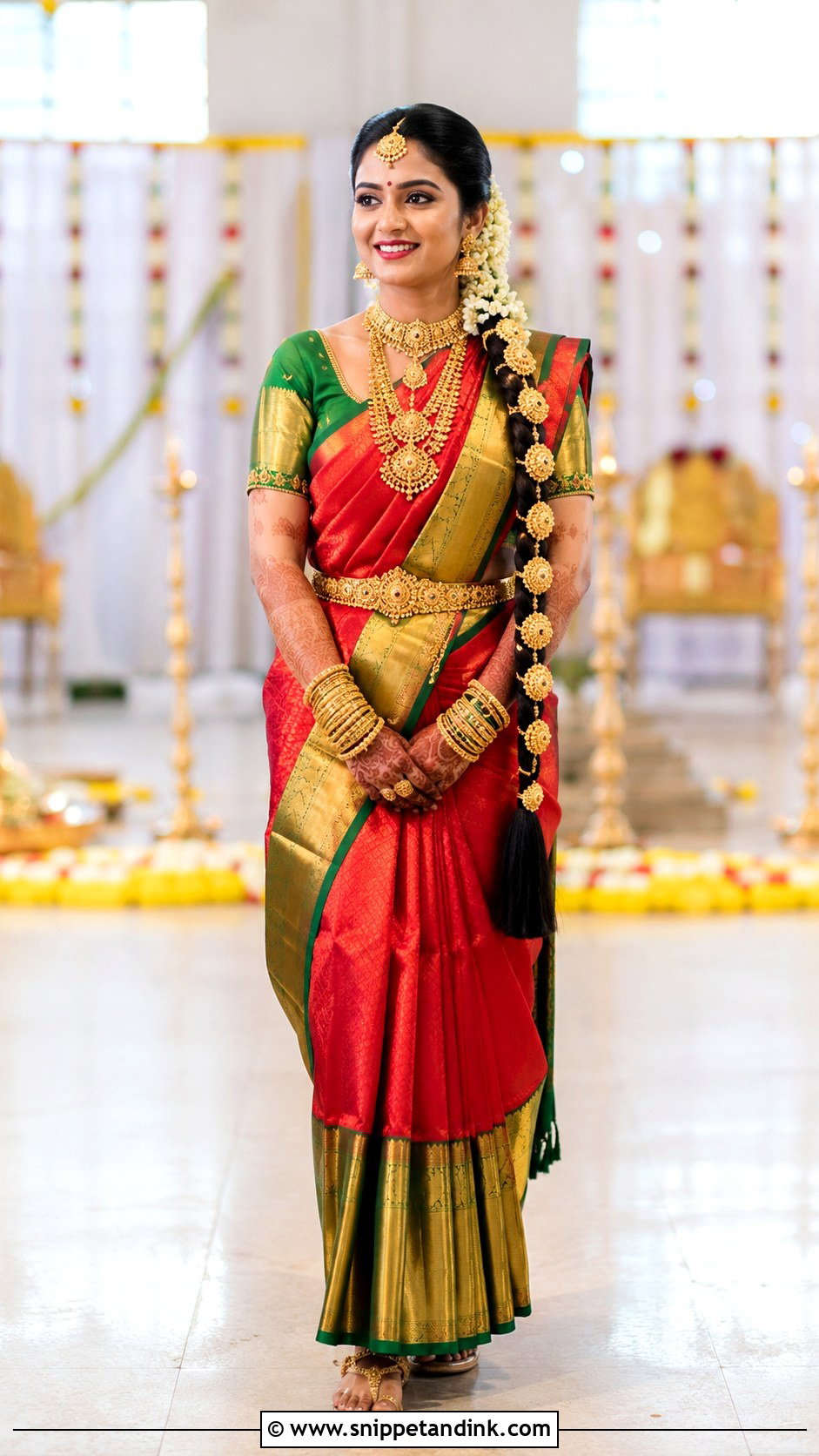
Kanjivaram silk is heavy and dense, which is exactly why its pleats sit so crisply. Traditional red, mustard, green, orange or magenta with a broad zari border carries a South Indian ceremony on its own. A fitted silk blouse must support the drape and still let you lift your arms. I always book a draping trial with the person who’ll dress the bride on the day, because neat pleats in thick silk take practice. Layered temple necklaces, jhumkas, a waist belt, bangles and anklets complete it, with a long braid decorated with flowers. Low block heels or padded flats keep you steady under the weight.
9. Red Banarasi Bridal Saree
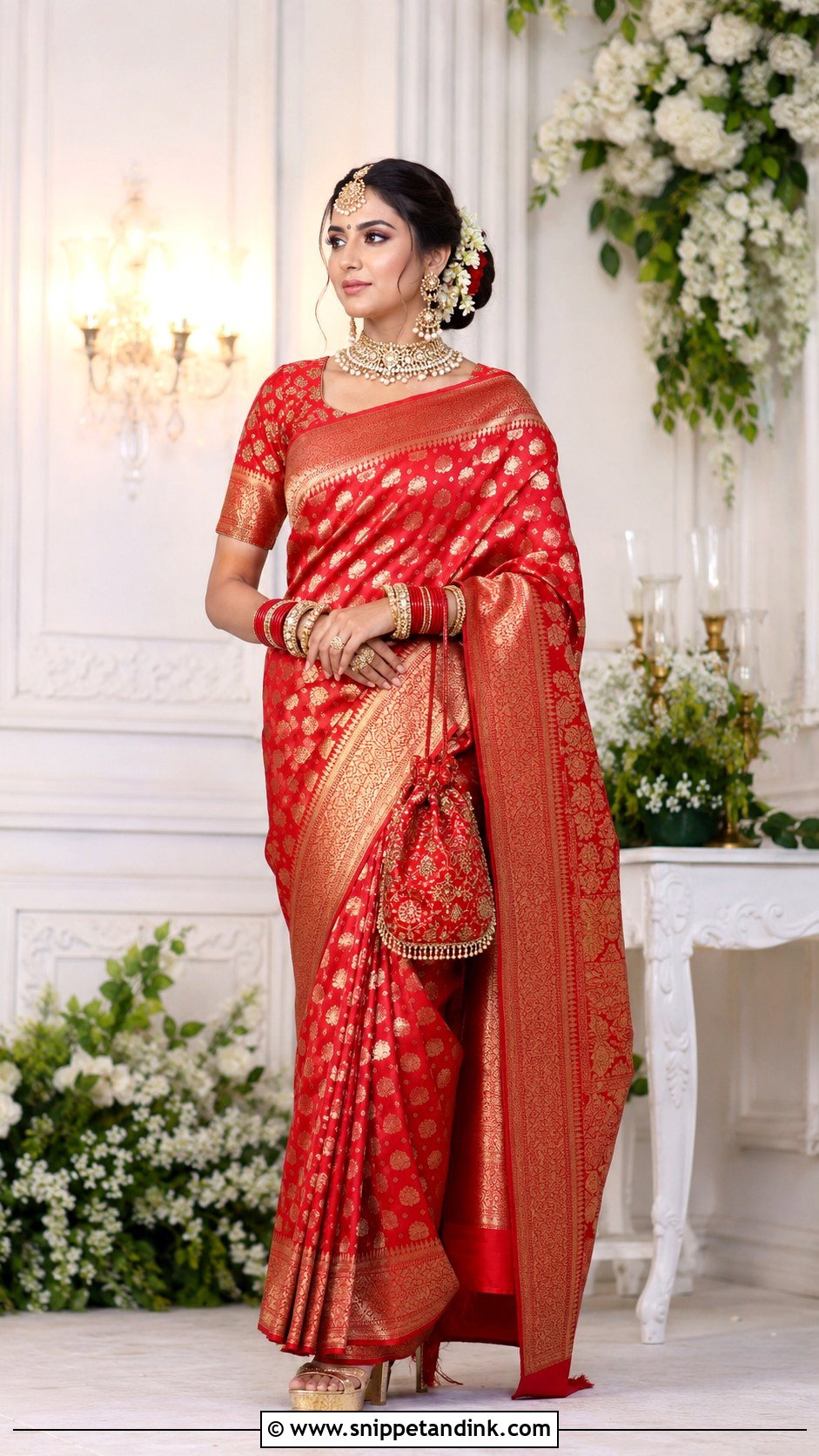
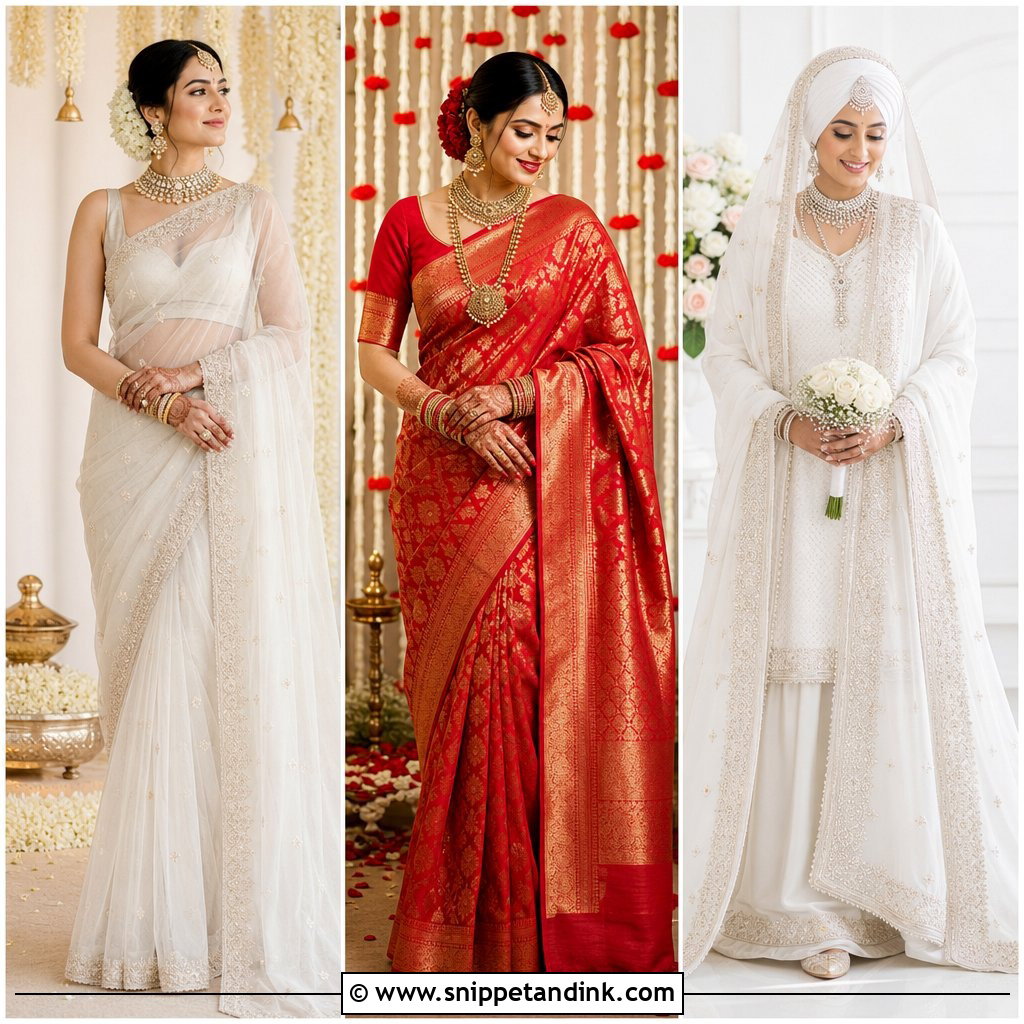
Red Banarasi woven with gold zari is one of the oldest bridal sarees still worn, and choosing the right red matters more than people expect. Bright vermilion and deep crimson suit different complexions, so hold both against your face. A brocade blouse gives a rich, matching look; plain silk lets an ornate saree lead. Keep the pleats crisp and pin the pallu securely so it doesn’t slip through the ceremony. Kundan jewelry, a maang tikka, bangles, a small potli and gold juttis complete it, with a sleek bun and flowers. A custom blouse border or the wedding date embroidered inside adds a private touch.
10. Paithani Bridal Saree
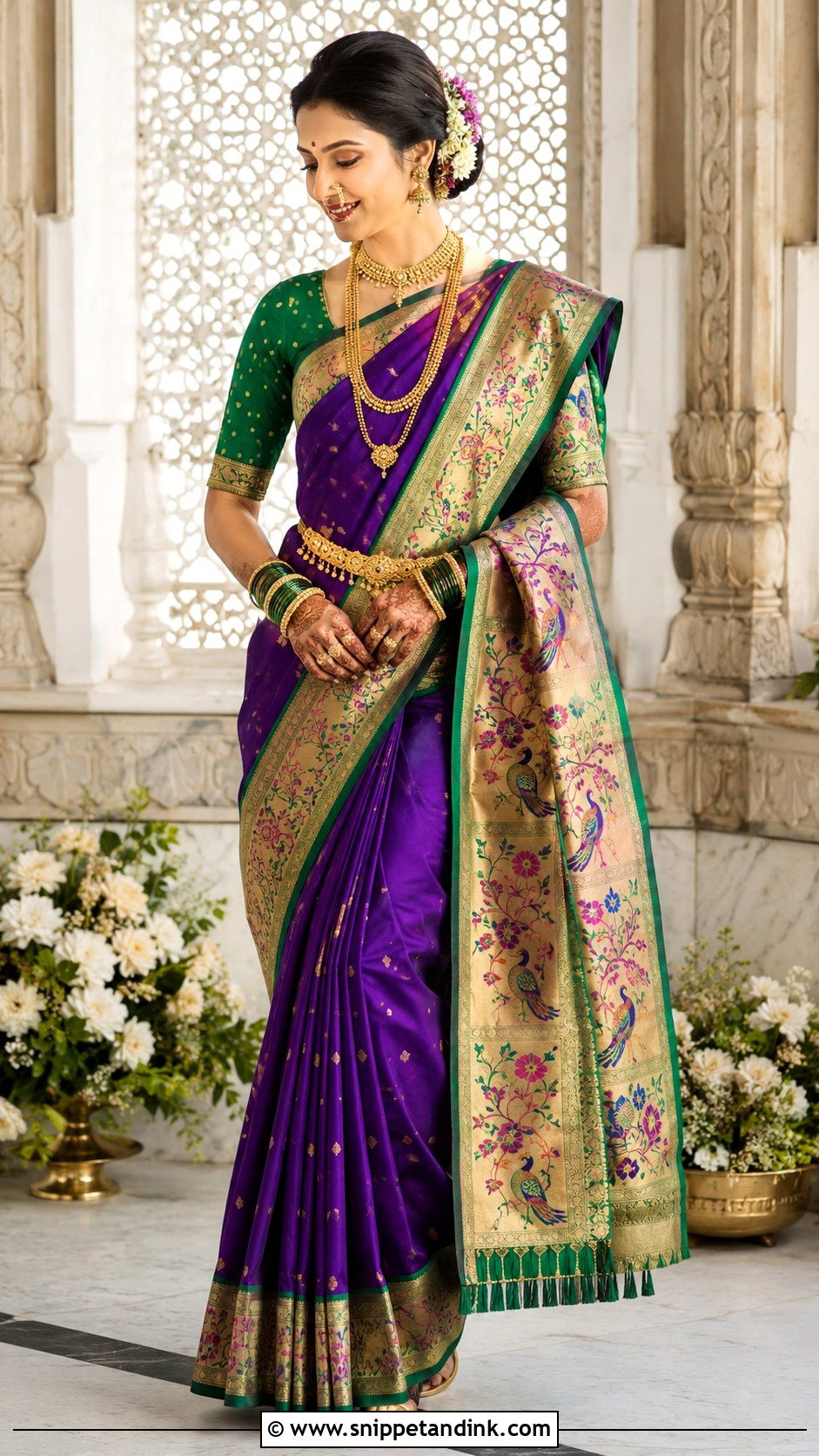
Paithani is known for its woven peacock and lotus motifs and a pallu that is the showpiece of the saree. Purple, green, yellow, blue and magenta are traditional and joyful. I’d pair it with a contrasting short-sleeved blouse that repeats one color from the border. When draping, the pallu has to be laid so its weaving is visible rather than bunched at the shoulder; that is the first thing I correct in a trial. Add a traditional nath, layered gold necklaces, green glass bangles, a waist belt and comfortable sandals, with a neat floral bun. One statement necklace instead of several gives a lighter finish.
11. Bengali Bridal Saree
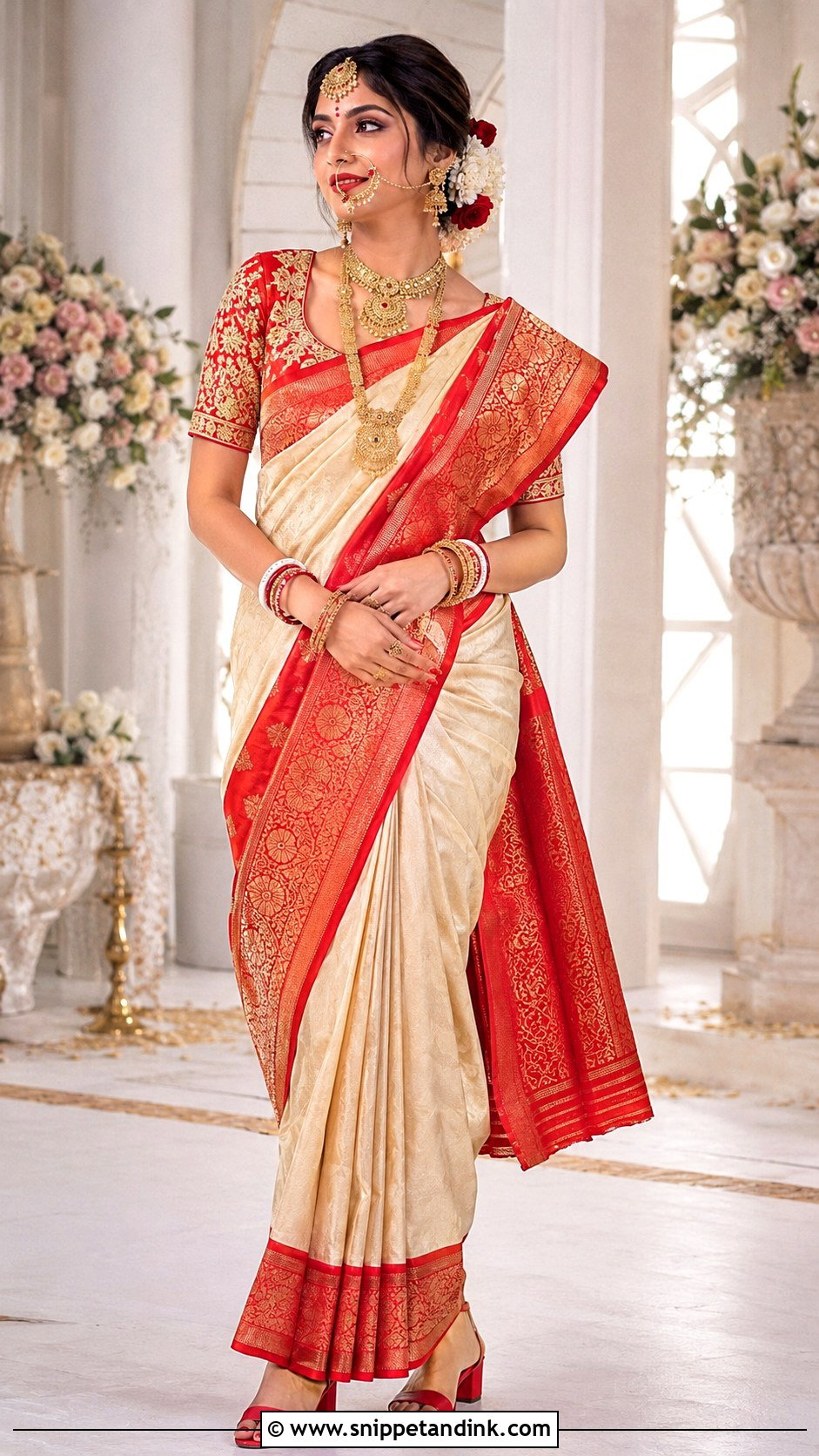
A white or cream saree with a bold red border is instantly recognizable as Bengali bridal dress. Silk or Banarasi with enough body to hold the drape works best, with a red blouse in gold embroidery or woven detail. Red and white bangles, gold jewelry, a statement nath and the traditional forehead decoration complete it, with a smooth bun and flowers. The strong contrast means the shoes can be simple red or gold block heels. Sit and walk in the drape before the day, since a pale saree shows every slipped pleat. You can personalize sleeve shape and border width while staying true to family custom.
12. Gujarati Panetar Bridal Saree
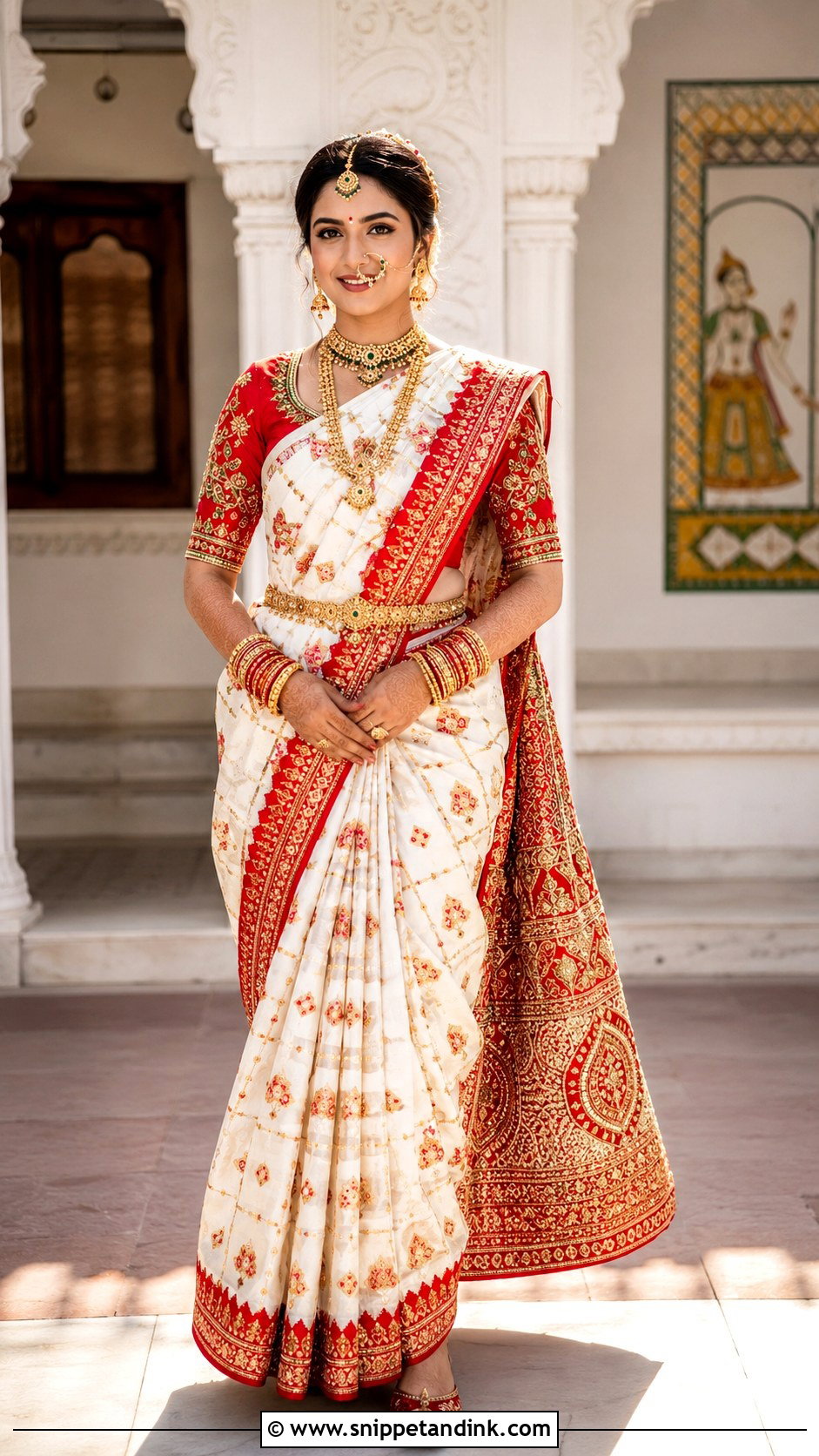
A Gujarati Panetar bridal saree pairs a white body with a red border, keeping the outfit bright while carrying traditional bridal color. A red blouse with zari, mirror work or fine embroidery suits it. Many families drape the pallu in the Gujarati front style to show off its work, and some add a Gharchola drape or dupatta later in the ceremony, so I always ask what the family expects before planning anything. Gold jewelry, a nath, maang tikka, bangles, a waist belt and red embroidered footwear complete it. Keep the hair secure enough to hold head jewelry comfortably for hours.
13. Maharashtrian Nauvari Bridal Saree
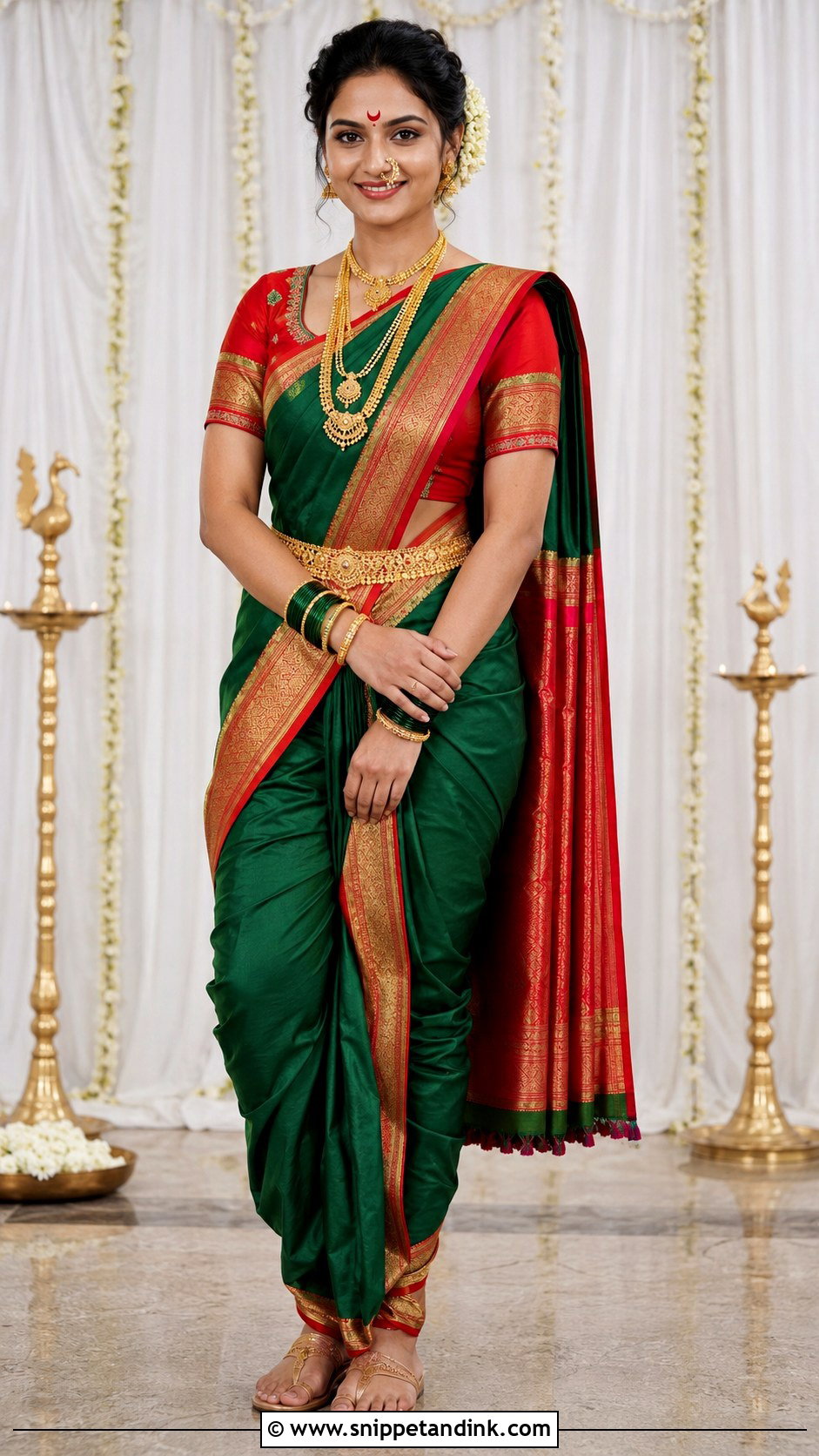
A Maharashtrian Nauvari bridal saree is draped through the legs, which gives it a trouser-like shape and far more freedom to move than a regular saree. Silk in green, yellow, red, purple or a family color suits it, with a fitted blouse that leaves the shoulders free. Gold jewelry, a crescent bindi, green bangles, a nath and a waist belt complete the look, with a floral bun and comfortable sandals. Nauvari draping takes skill, so book a full practice with the exact blouse, jewelry and shoes. In that trial I have the bride walk, sit and climb a few steps, because that’s where a loose tuck shows.
14. Kerala Kasavu Bridal Saree
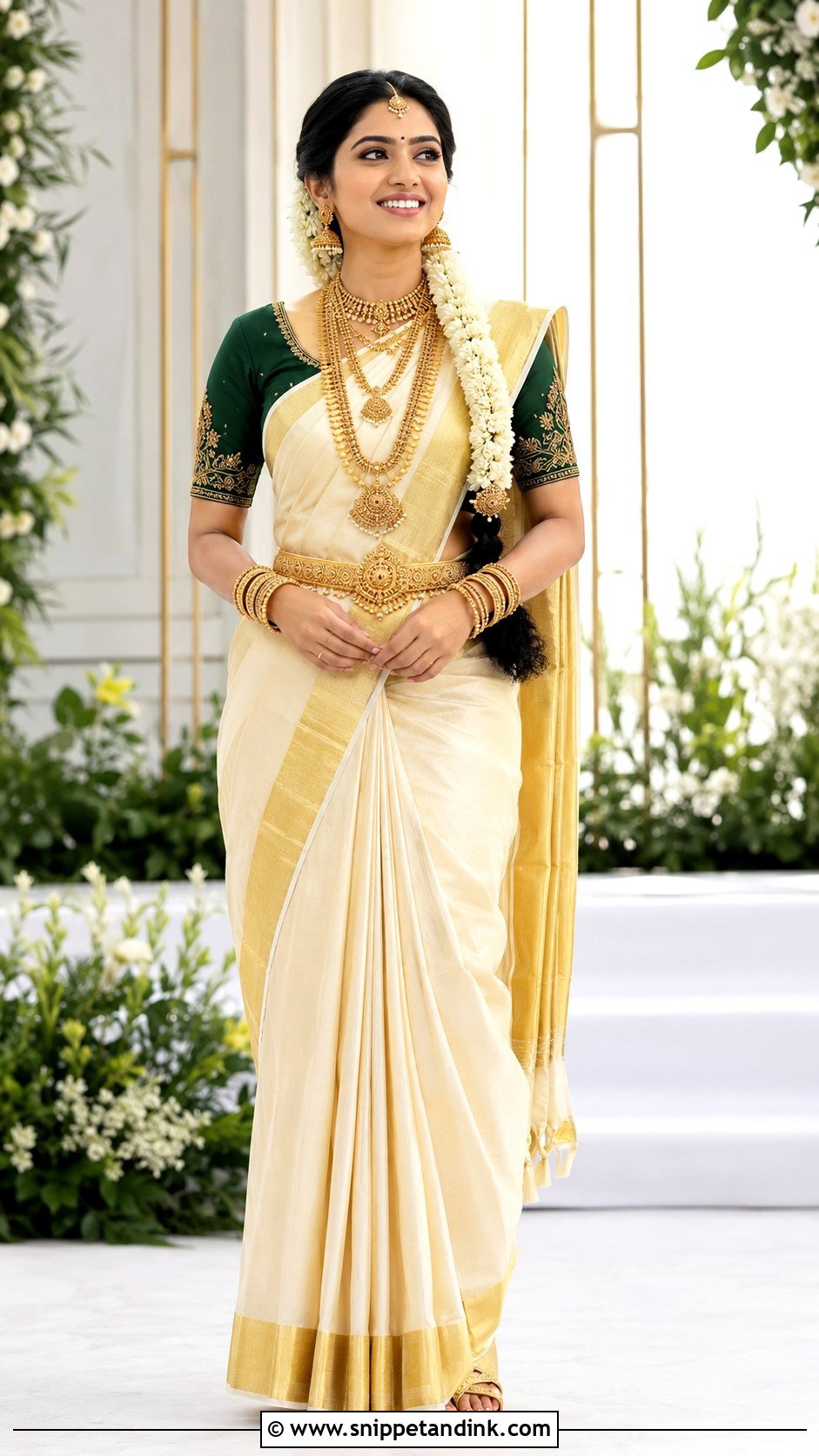
Kasavu is cream handloom with a gold border, and with so little color, precision is everything. Choose a border width that suits your height; a wide border can shorten a petite bride. A cream blouse gives a monochrome look, while green, maroon, red or gold adds contrast. Traditional gold necklaces, jhumkas, bangles and a waist belt bring ceremony, with a long braid or low bun and fresh white flowers. Gold sandals stay discreet under the hem. Handloom cotton creases easily, so steam it just before dressing and pin the pallu neatly. Nothing hides a sloppy pleat on a plain cream saree.
15. Assamese Mekhela Sador Bridal Outfit
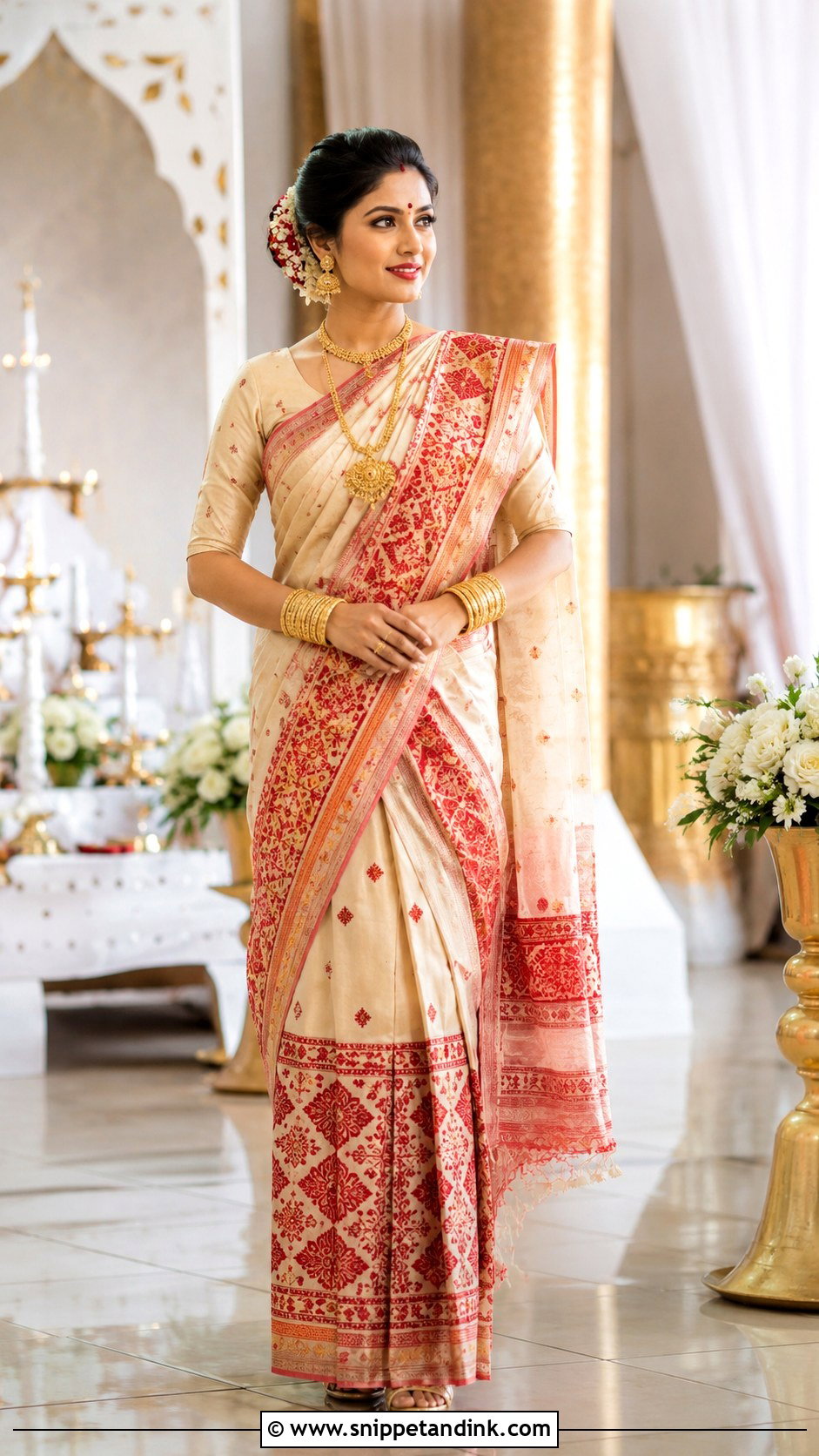
An Assamese Mekhela Sador bridal outfit is a two-piece drape that shows off woven silk, and the weave is the point. Cream, gold, red or a family shade works. Pair the mekhela with a tailored blouse and arrange the sador so its border stays visible. Traditional gold jewelry, statement earrings, bangles and a neat bun complete it, with closed-toe flats hidden beneath the hem. The draping method changes how you move, so practice with the full outfit. I’d keep necklaces to a scale that doesn’t cover the woven motifs; a large piece hides the very craft that makes this dress special.
16. Punjabi Bridal Patiala Suit
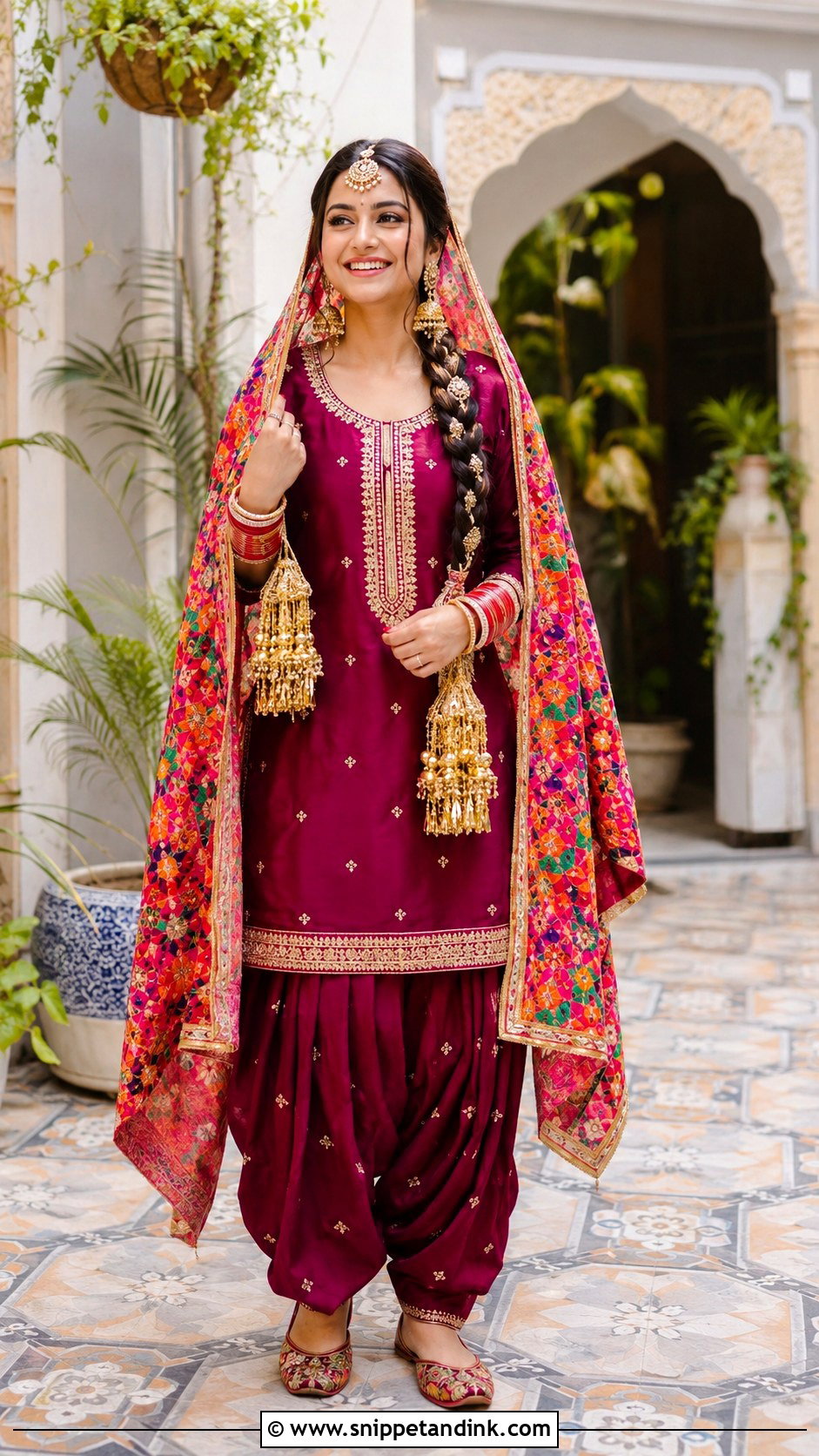
A richly embroidered Patiala suit is easy to move and dance in, so it suits pre-wedding functions, traditional celebrations and small weddings. A red, magenta, mustard or green kameez over a deeply pleated Patiala salwar looks lively; a phulkari or embellished dupatta can go over the head when needed. Tikka, jhumkas, layered bangles, kaleere and Punjabi juttis complete it. The shorter kameez needs careful tailoring so the salwar’s pleats show. I’d keep sleeves loose enough to throw your arms up during the bhangra, and finish with a long braid with decorative accessories.
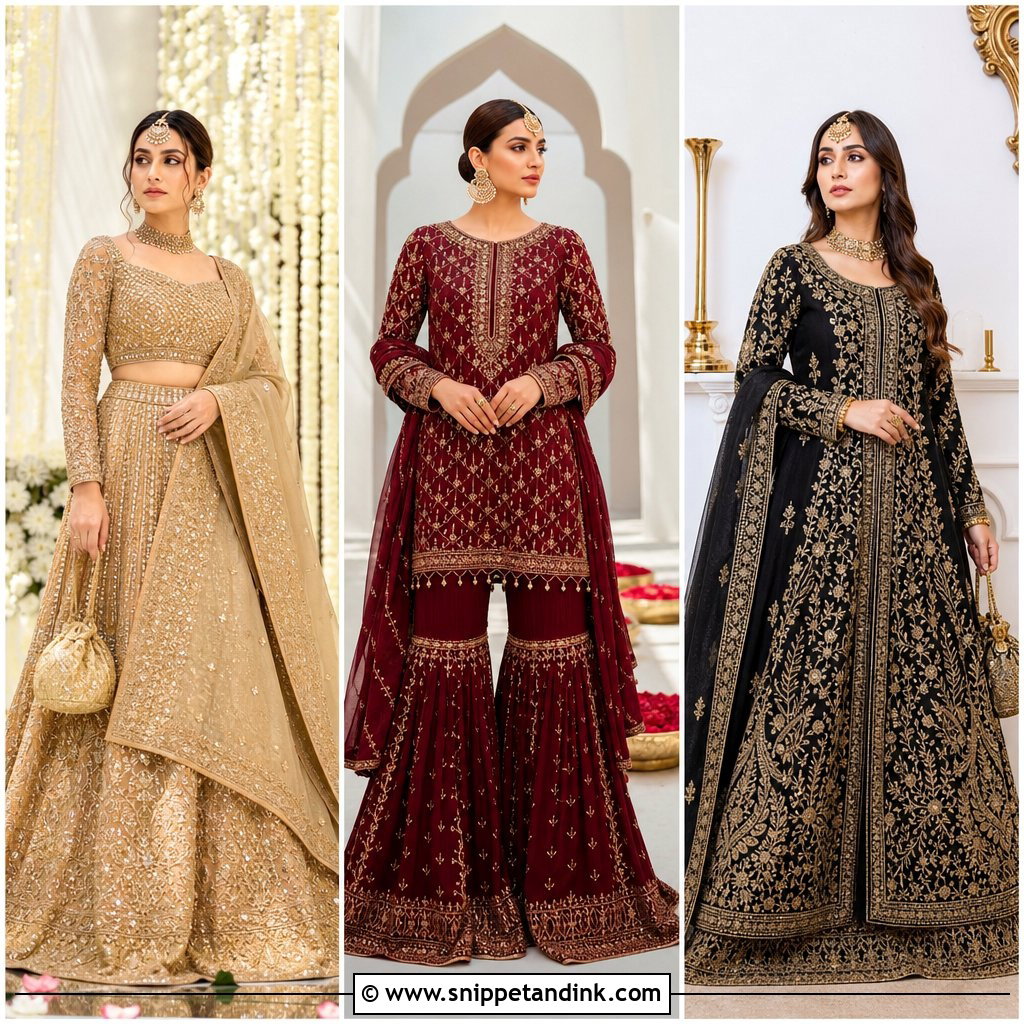
17. Bridal Anarkali With Dupatta
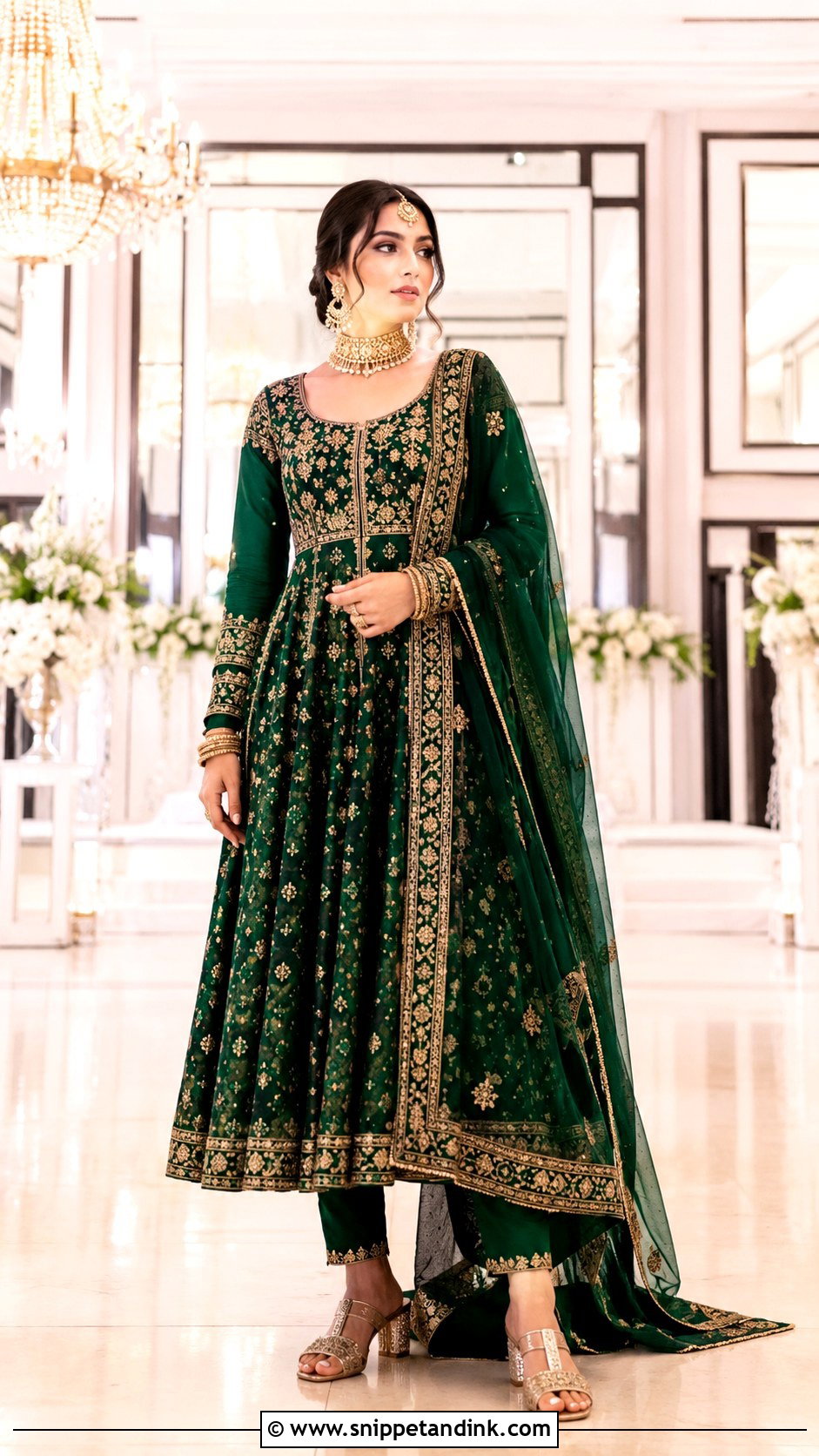
A floor-length Anarkali gives an elongated line without the separate weight of a lehenga skirt, since the flare hangs from the bodice. A structured bodice in red, ivory, blush, emerald or deep blue with zari, resham, sequins or handwork at the neckline, cuffs and hem works well. Slim pants and a coordinated dupatta over the shoulder or head complete it, with a choker, earrings, bangles and embellished block heels. On petite brides I raise the waistline and limit the flare; taller brides can carry more panels and a wider border. Ask the tailor for hem clearance so you’re not stepping on the front at the reception.
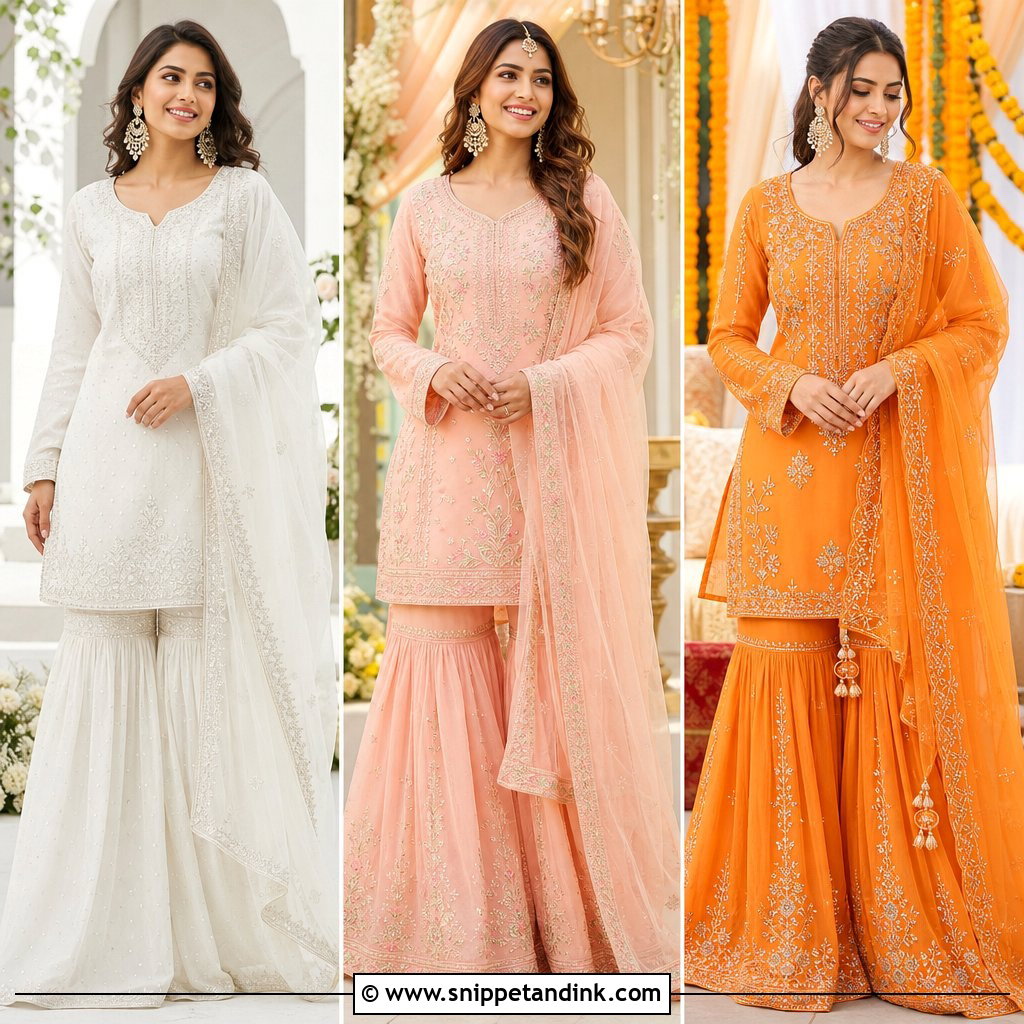
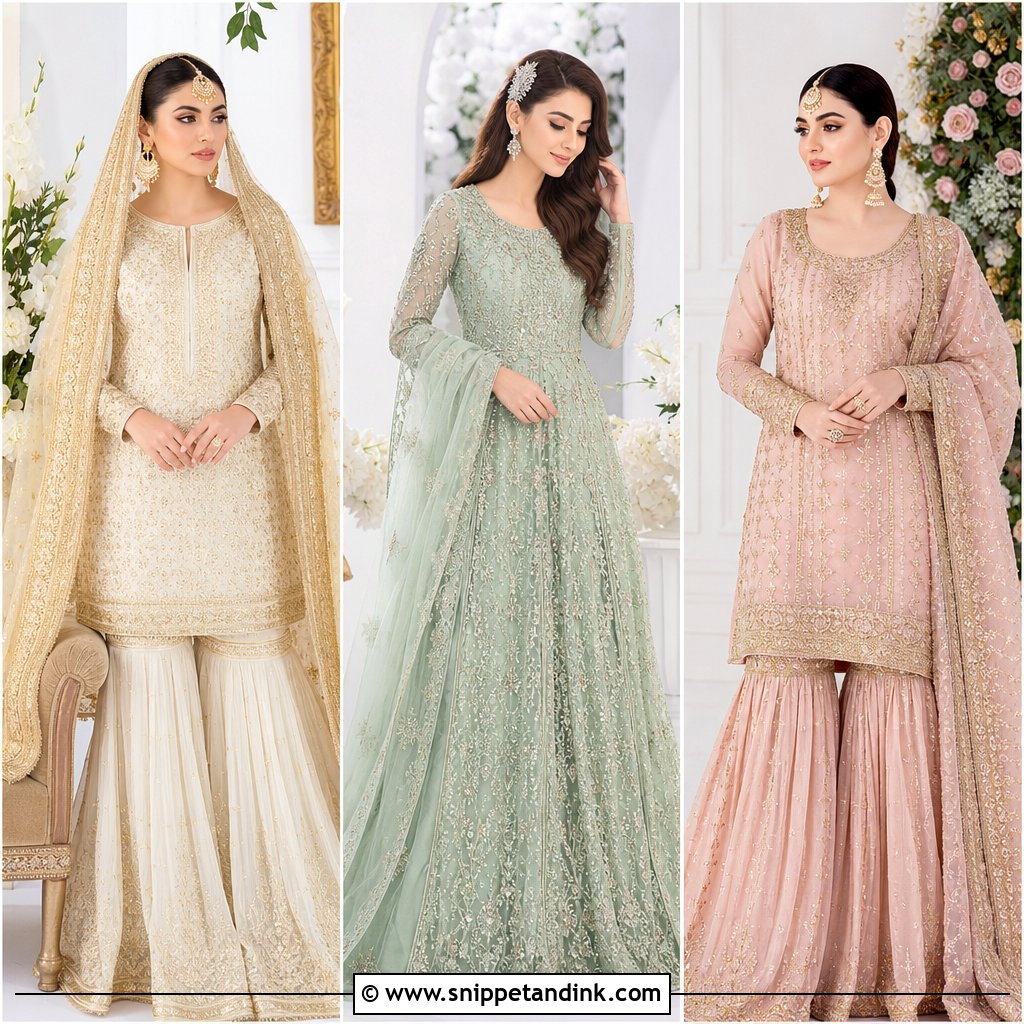
18. Bridal Sharara Set
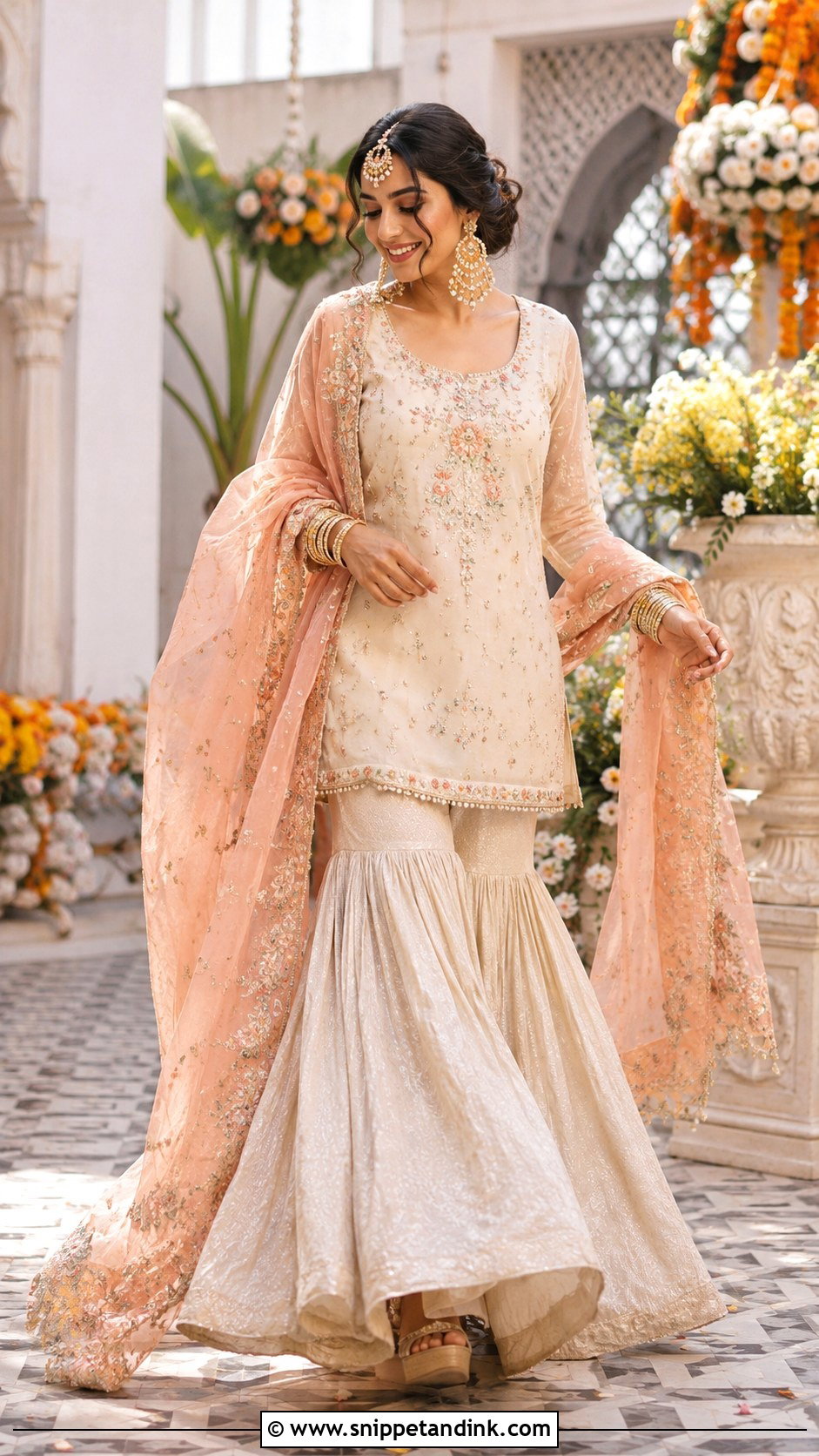
A bridal sharara set gives movement and drama with more freedom than a full skirt. Wide, flared sharara pants, a fitted short kurti and an embroidered dupatta make the outfit; jewel tones feel formal, while ivory, peach, mint and blush suit daytime functions. The kurti must be structured to balance the volume below it. A dupatta draped from one shoulder to the opposite wrist flows without getting in the way. Maang tikka, chandelier earrings, stacked bangles and platform juttis or stable block heels finish it. Make sure the sharara clears the floor on stairs and garden paths.
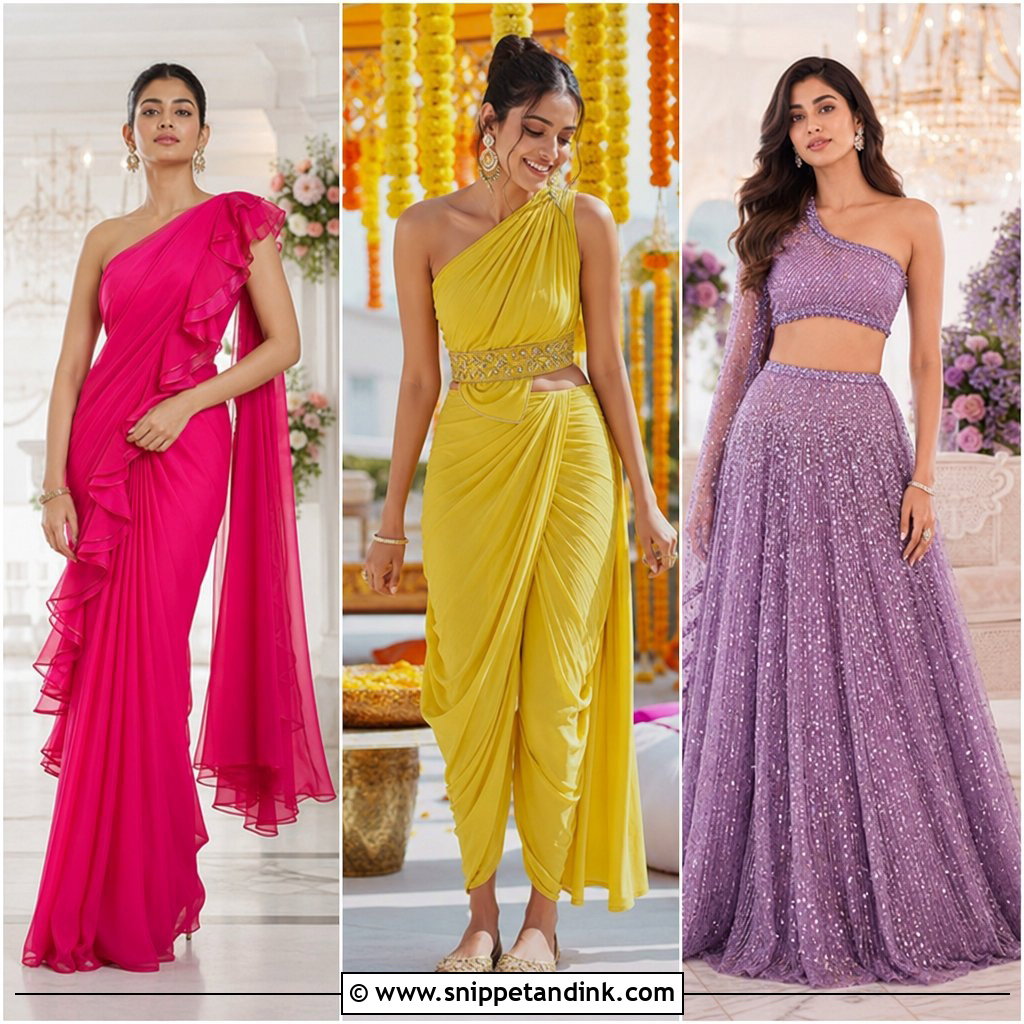
19. Bridal Lehenga Saree
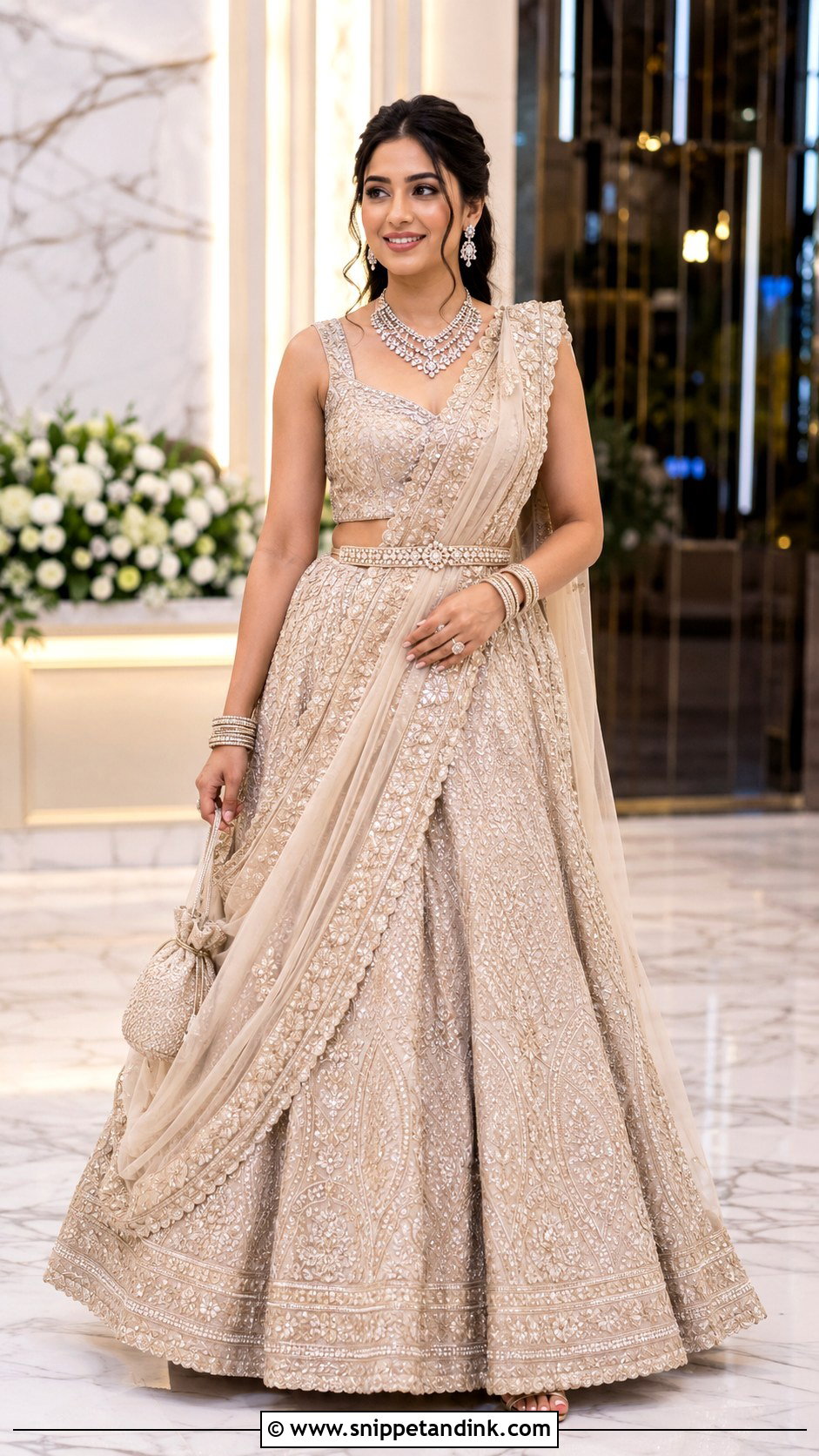
A lehenga saree gives the drama of a saree pallu over the easier base of a stitched skirt. Pre-stitched versions save a lot of time on the wedding morning. Red and gold read traditional; champagne, rose, emerald and navy feel contemporary. A slim waist belt holds the drape and defines the waist. Add a choker, a longer necklace, earrings, bangles and comfortable heels. Keep the pallu light, since a heavily embroidered one pulls on the blouse shoulder all evening. Have the final fitting in the shoes you’ll actually wear, because the skirt length depends on them. Receptions and formal portraits suit it.
20. Ombre Bridal Lehenga With Cape
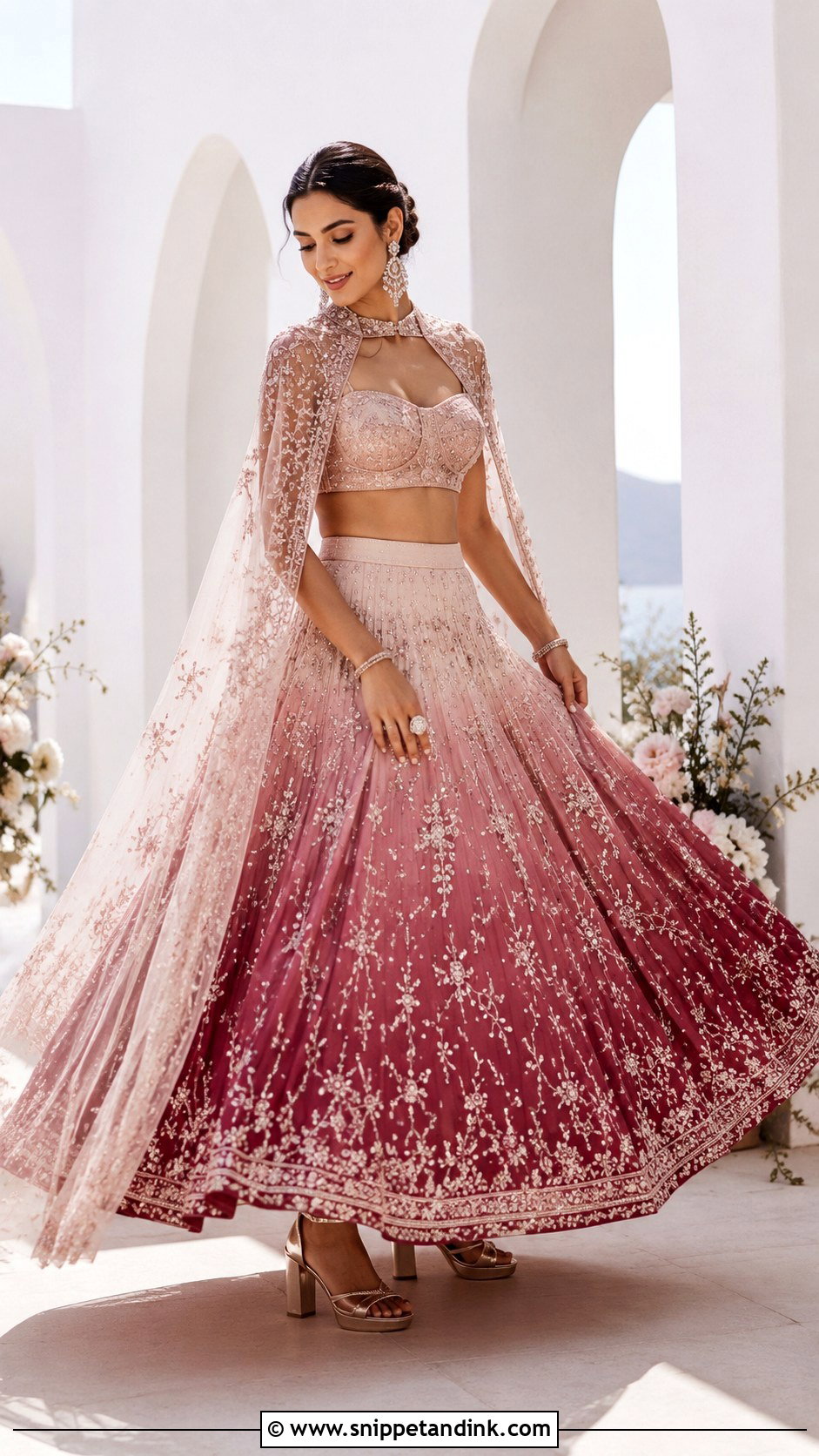
An ombre lehenga with a cape keeps the grandeur of Indian occasion wear in a modern form. The fade can run blush to berry, peach to coral or blue to lavender. A structured blouse and a sheer embroidered cape falling from the shoulders replace one dupatta, which means far less pinning. Statement earrings, a slim bracelet stack, a ring and metallic block heels complete it, with a minimal necklace if the cape’s neckline is decorated. Petite brides suit a waist-length cape; taller brides can carry a longer one. I’d keep this look for receptions and sangeet performances, where a cape moves well in dance.
Folding Zari and Silk So They Last a Generation
Many of these pieces are worn once as a bride and then kept for a daughter or niece. Silk and real zari last for decades if they’re stored with a little care. Neglected, they crease permanently, discolor and tarnish.
- Air the outfit for a day after the wedding before putting it away, so perspiration and perfume can dry out.
- Have it cleaned by a dry cleaner who handles zari and bridal embroidery, and point out any stains so they treat them first.
- Wrap each piece in soft white cotton or muslin. Plastic traps moisture and can yellow fabric over time.
- Refold sarees and dupattas along different lines every few months. Silk left folded in the same place for years can split along the crease.
- Keep mothballs and strong repellents from touching the cloth directly, and never spray perfume onto metallic thread, since both can dull or tarnish it.
A heavy lehenga skirt stores better folded flat in a box than hung, because hanging puts strain on the waistband and stretches the embroidery out of shape.
Ritual First, Then Fabric, Then Jewelry
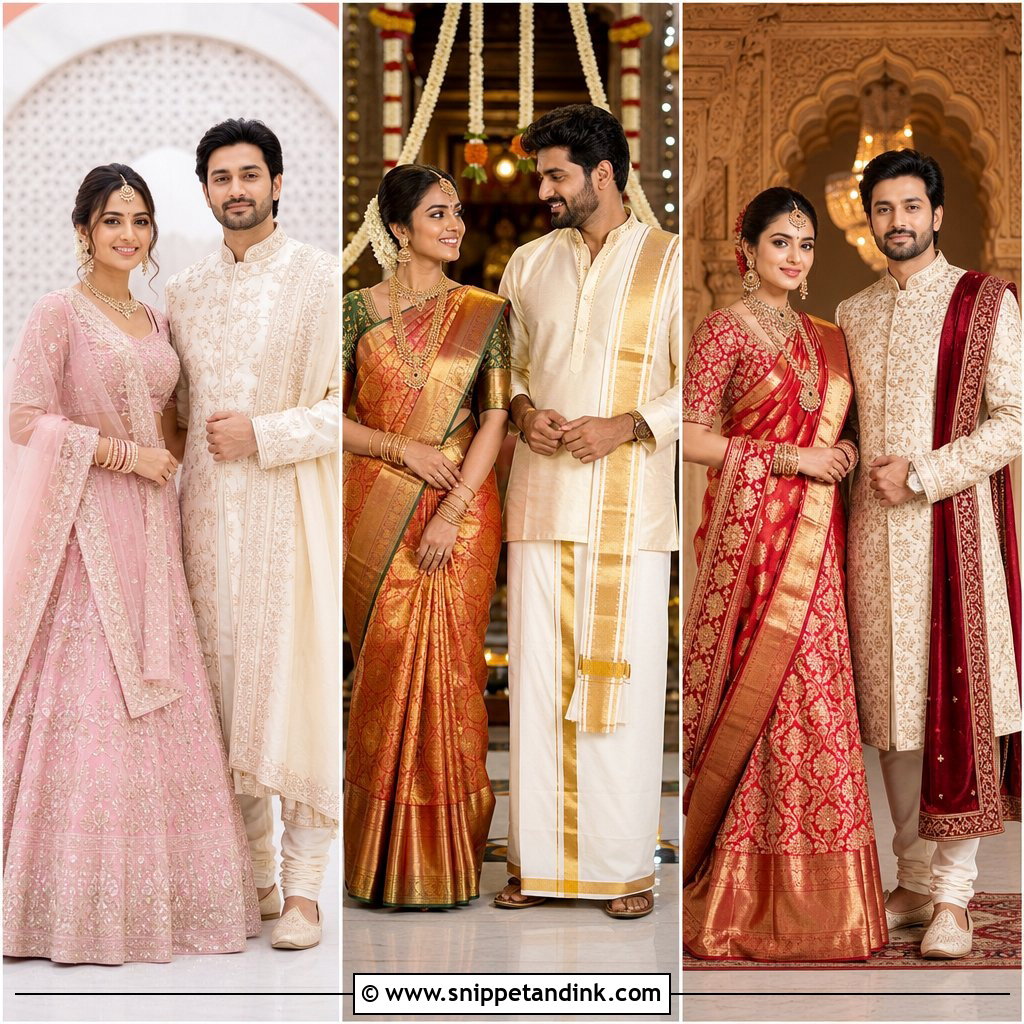
Lehengas, regional sarees, suits and modern drapes all have a place in an Indian wedding, and the one you wear should look right and stay secure from the first ritual to the last photo. Start with the ceremony itself: its length, the season, the venue and the customs your family holds to. Then think about fabric weight, blouse support, footwear, jewelry and how easily you can move. Book a full fitting with your actual undergarments, shoes and jewelry, and practice sitting, walking and handling the dupatta or pallu. Trends are fun to borrow from, but comfort and meaningful tradition are what you’ll remember feeling.
You'll Like These Ideas:


Leave a Reply