
Bridal shopping tends to swing between excitement and overwhelm, usually within the same hour. What helps is comparing whole outfits rather than dresses in isolation, because a gown changes once you add the veil, shoes, hair and flowers. Below are 25 complete looks, from ball gowns and satin A-lines to floral lace, sleek crepe, short reception dresses and a jumpsuit with an overskirt, each with the styling I’d pair it with and the detail I’d check in the fitting room. Keep your venue, the season and how long you’ll be standing in mind as you read.
Getting the Most From Ninety Minutes in a Bridal Salon
Most bridal appointments run somewhere between an hour and ninety minutes, and they go faster than you’d think. A little planning means you leave knowing far more than when you walked in.
- Book a weekday slot if you can. Weekends are busier, and stylists have less time to pull extra gowns for you.
- Bring one to three people whose taste you trust. A large group tends to talk you out of what you actually like.
- Wear smooth nude underwear, and bring a strapless bra if you own one.
- Try at least one silhouette you’re sure you won’t like. Pictures and real bodies often disagree.
- Ask before taking photos, since salon policies vary.
Samples come in only a few sizes and are clipped to fit, so judge the shape, fabric and neckline rather than the exact fit. That part comes later, with a seamstress.
1. Ball Gown Wedding Dress
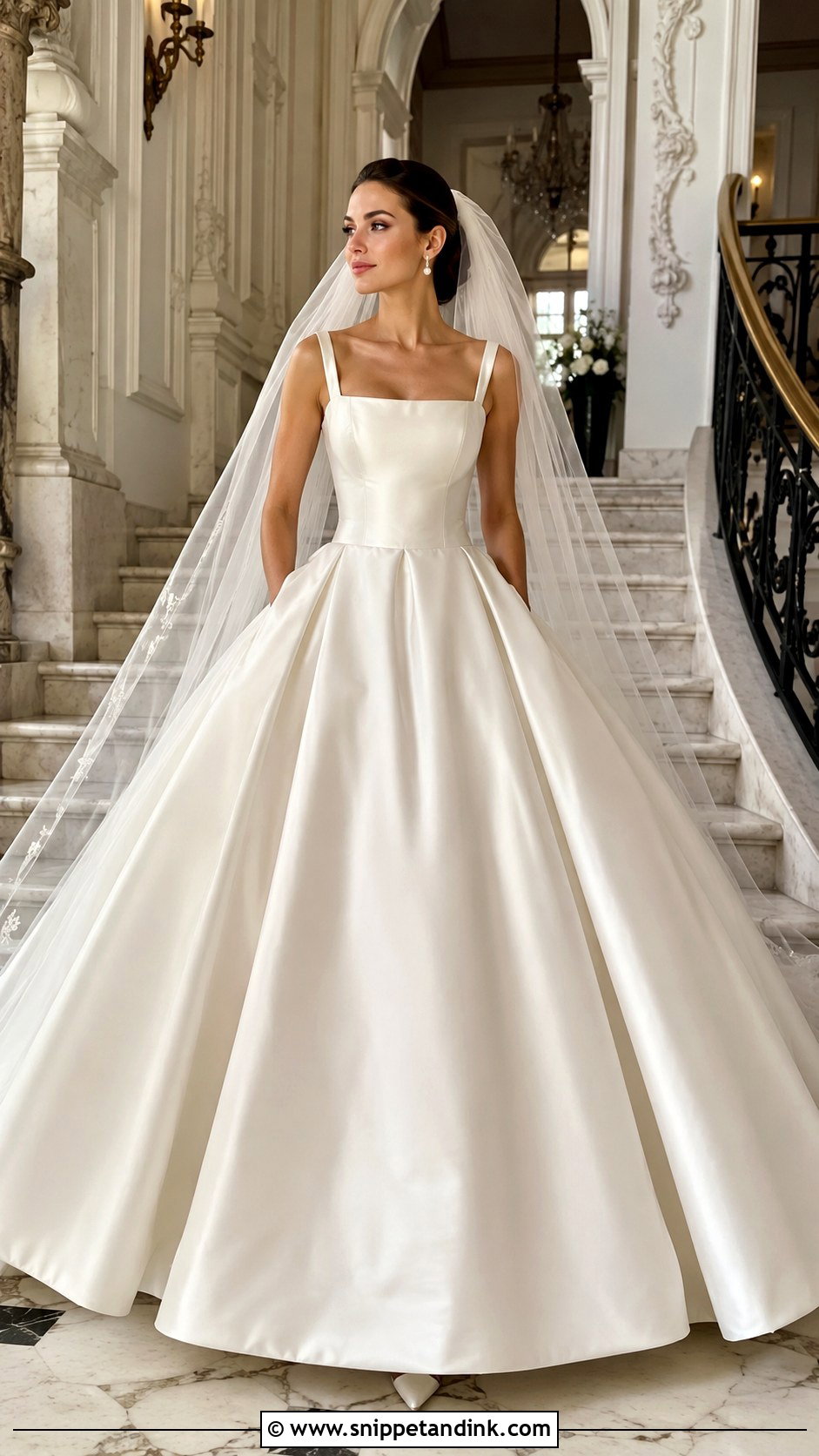
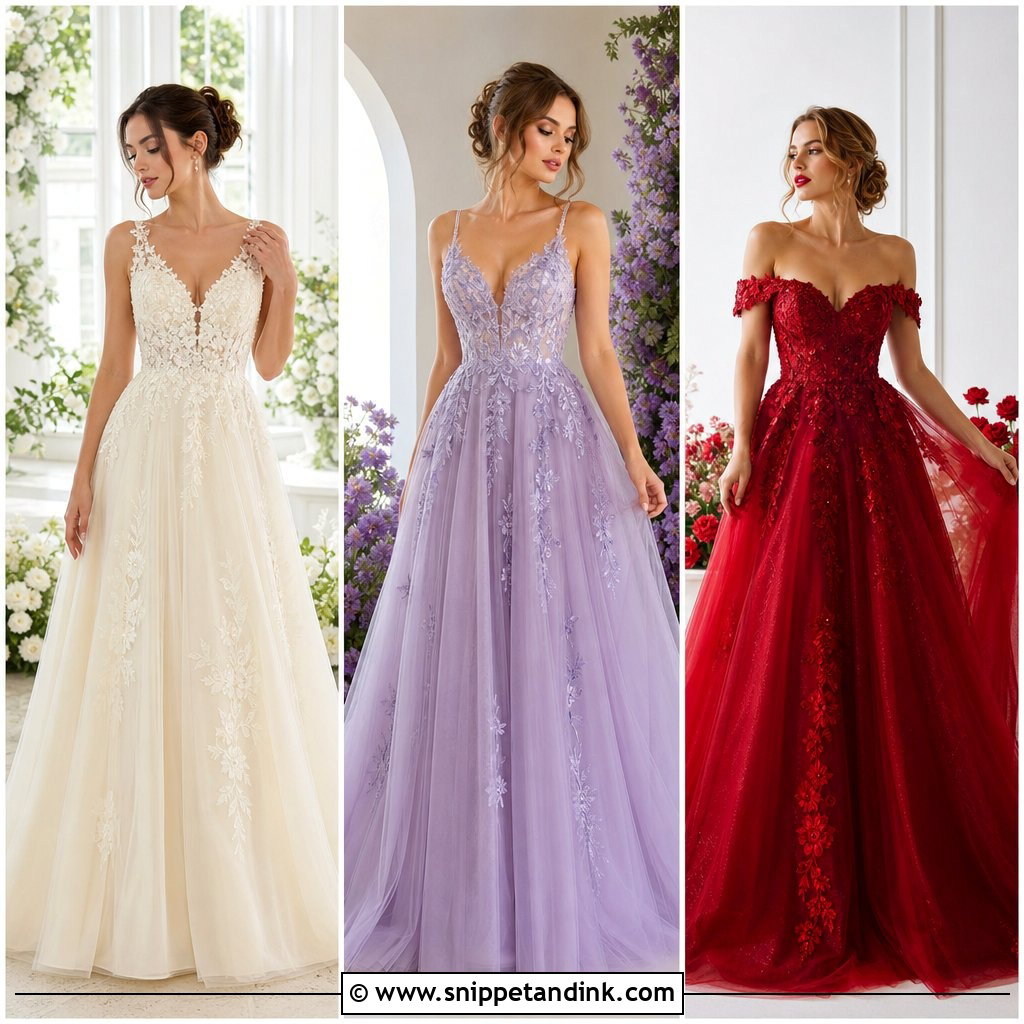
Grand staircase, ballroom, long cathedral aisle: this is where a ball gown makes sense, because the room is big enough to hold the skirt. The fitted bodice defines the waist and the skirt does the rest. Satin and mikado hold a crisp shape, while organza and layered tulle look softer. A sweetheart, scoop or off-the-shoulder neckline keeps the top half light. Style it with a cathedral veil, pearl drops and pointed heels under the hem, plus roses, orchids or white garden flowers in a bouquet scaled to the skirt. Small bouquets disappear against that much fabric.
2. A Line Wedding Dress
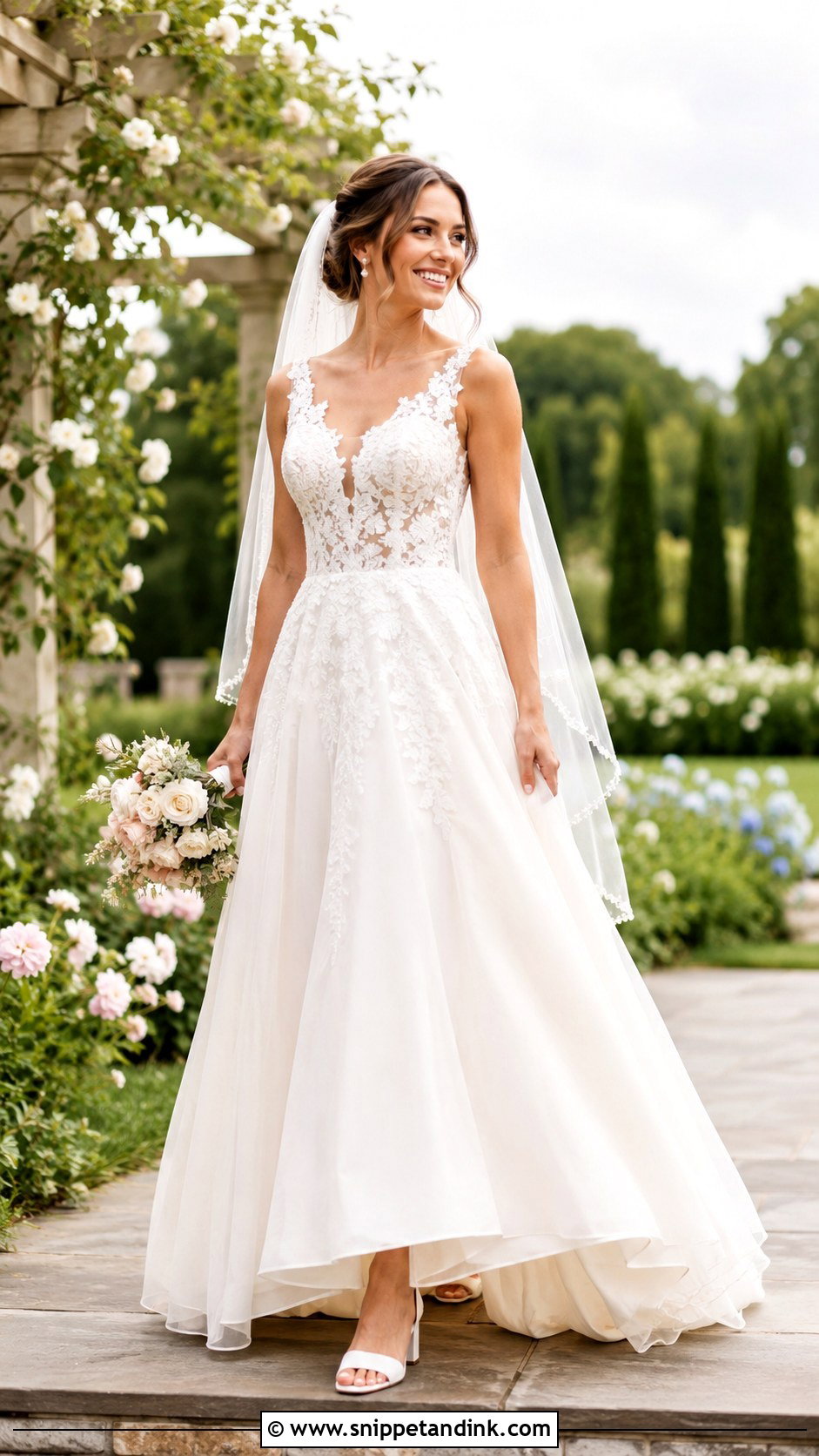
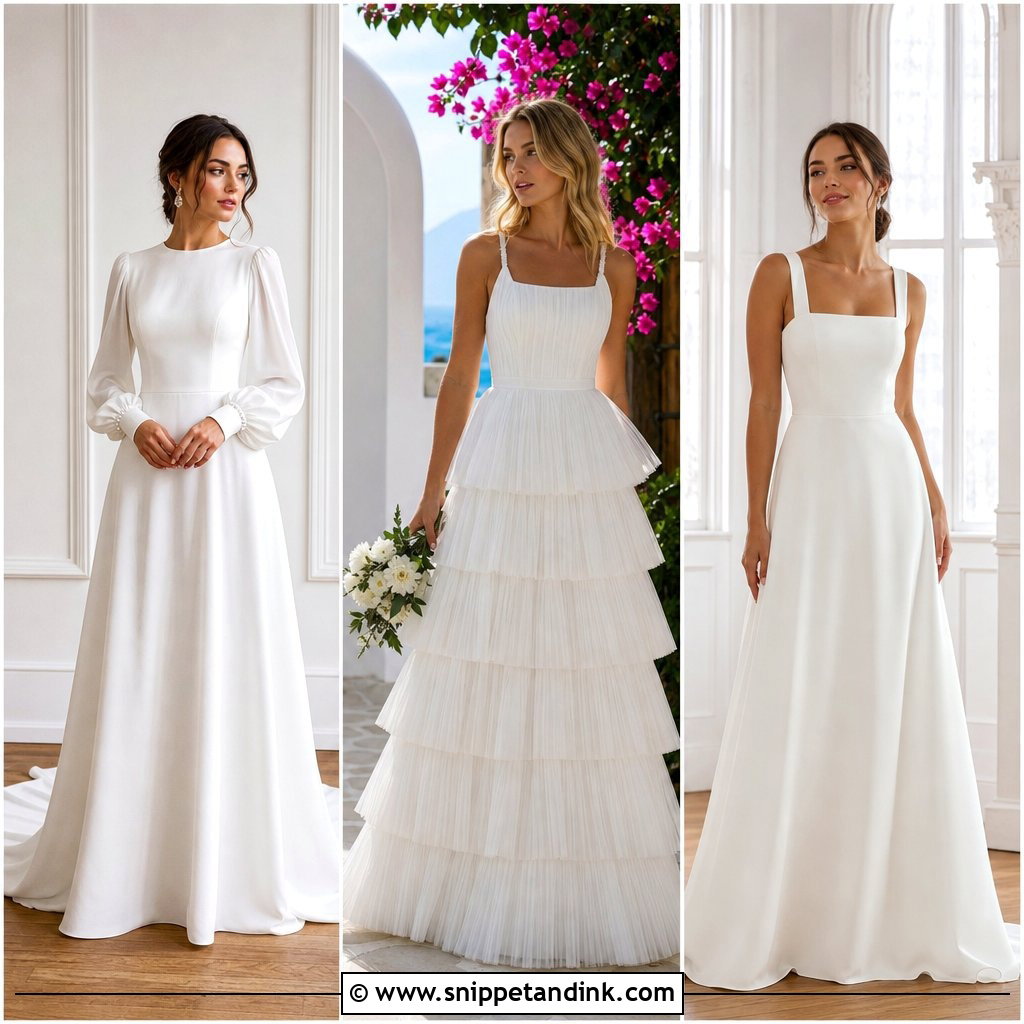
Ask ten stylists for the most forgiving silhouette and most will say A-line. It fits through the bodice and flows from the waist, so it gives structure without the weight of a full ball gown, and it fits a garden as easily as a hotel ballroom. Lace appliqué, clean satin, soft chiffon or light beading set the mood. Block heels or pumps, a fingertip veil and simple jewelry suit it, with a soft updo or loose waves. If you’re torn between this and a ball gown, try both with the same veil on; the difference in scale is obvious once you do.
3. Mermaid Wedding Dress
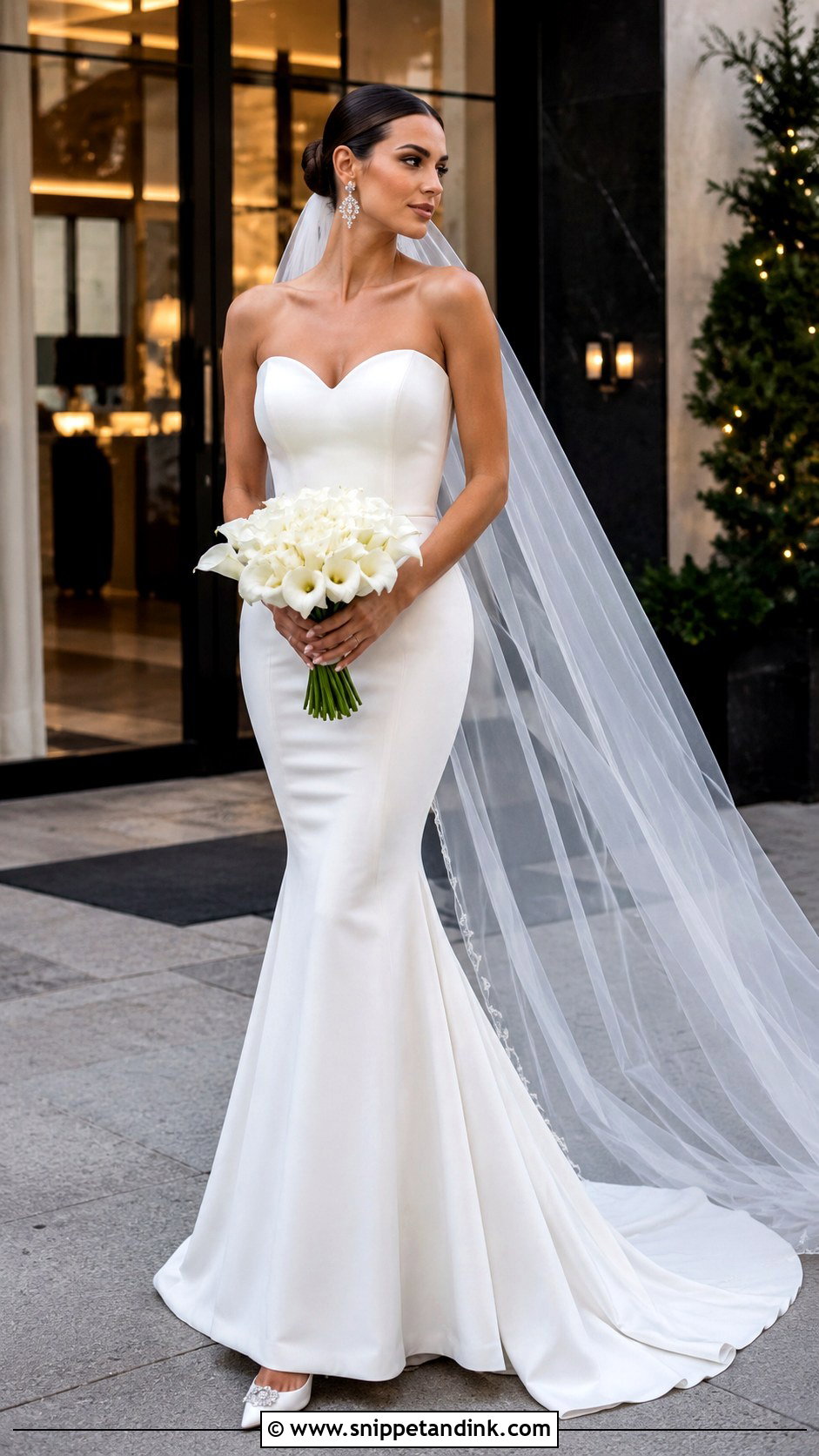
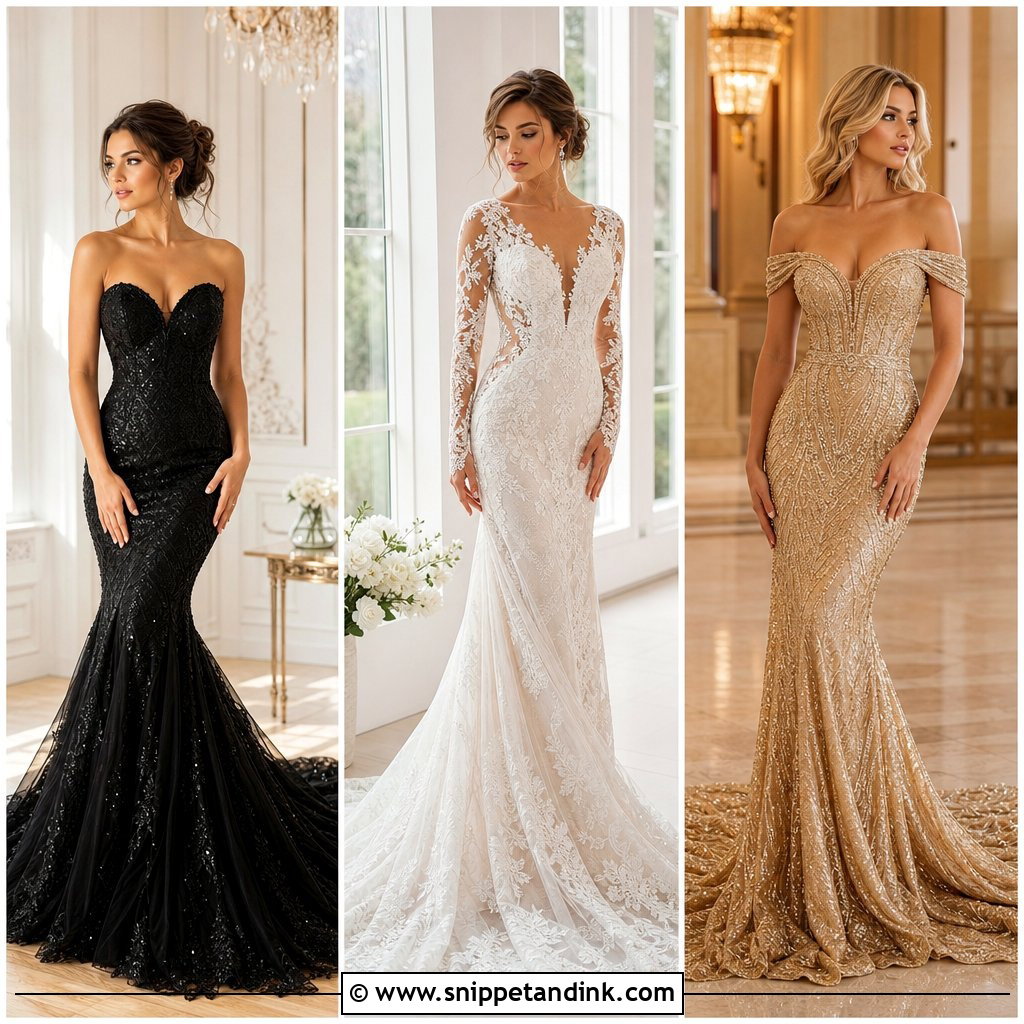
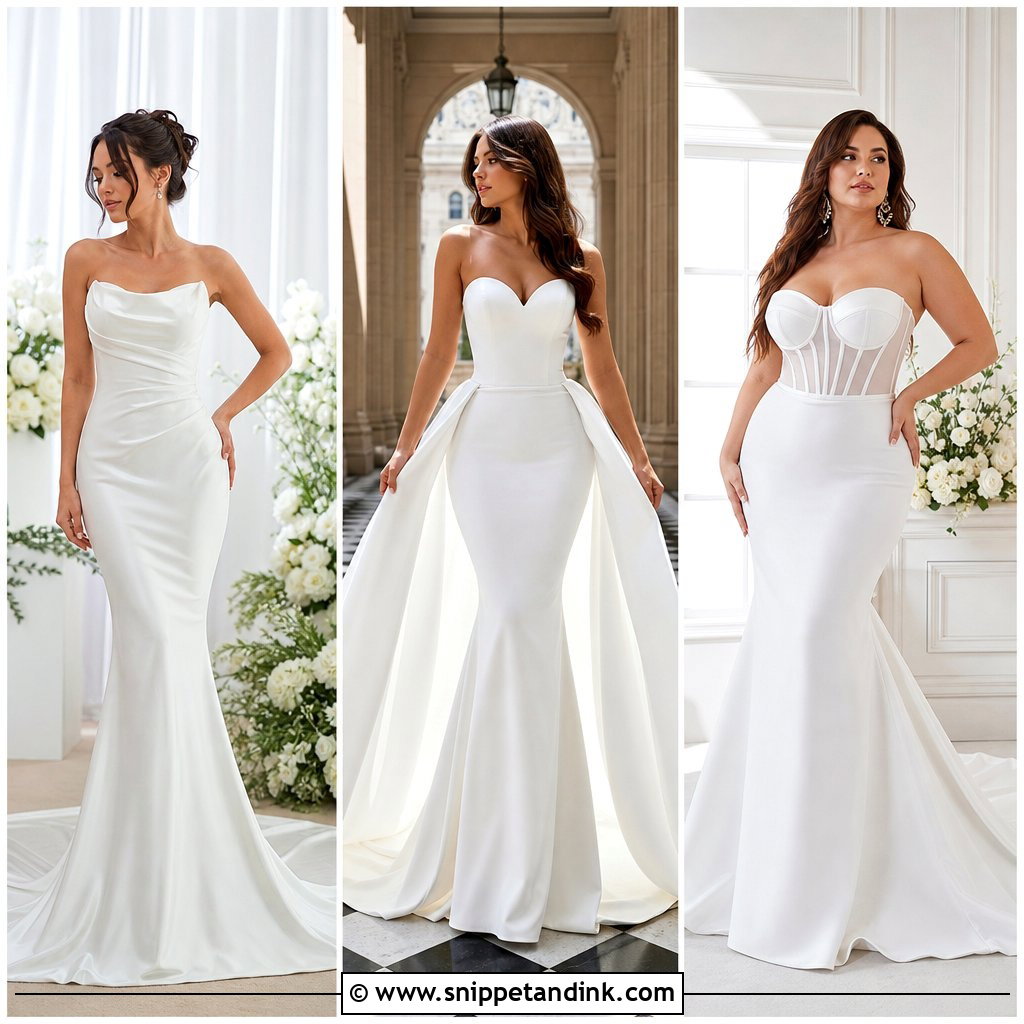
A mermaid fits through the bodice, waist, hips and thighs, then flares at the knee, giving a sculpted, red-carpet line for formal indoor and evening weddings. Stretch crepe, lace, satin and beaded fabric each change its mood. Wear a long veil for the ceremony, then swap to statement earrings once it comes off. I’m strict about shapewear here, and about alteration work, since the flare has to sit right at your knee for you to walk properly. Sleek heels, a structured bouquet and soft glam makeup finish it.
4. Lace Wedding Dress
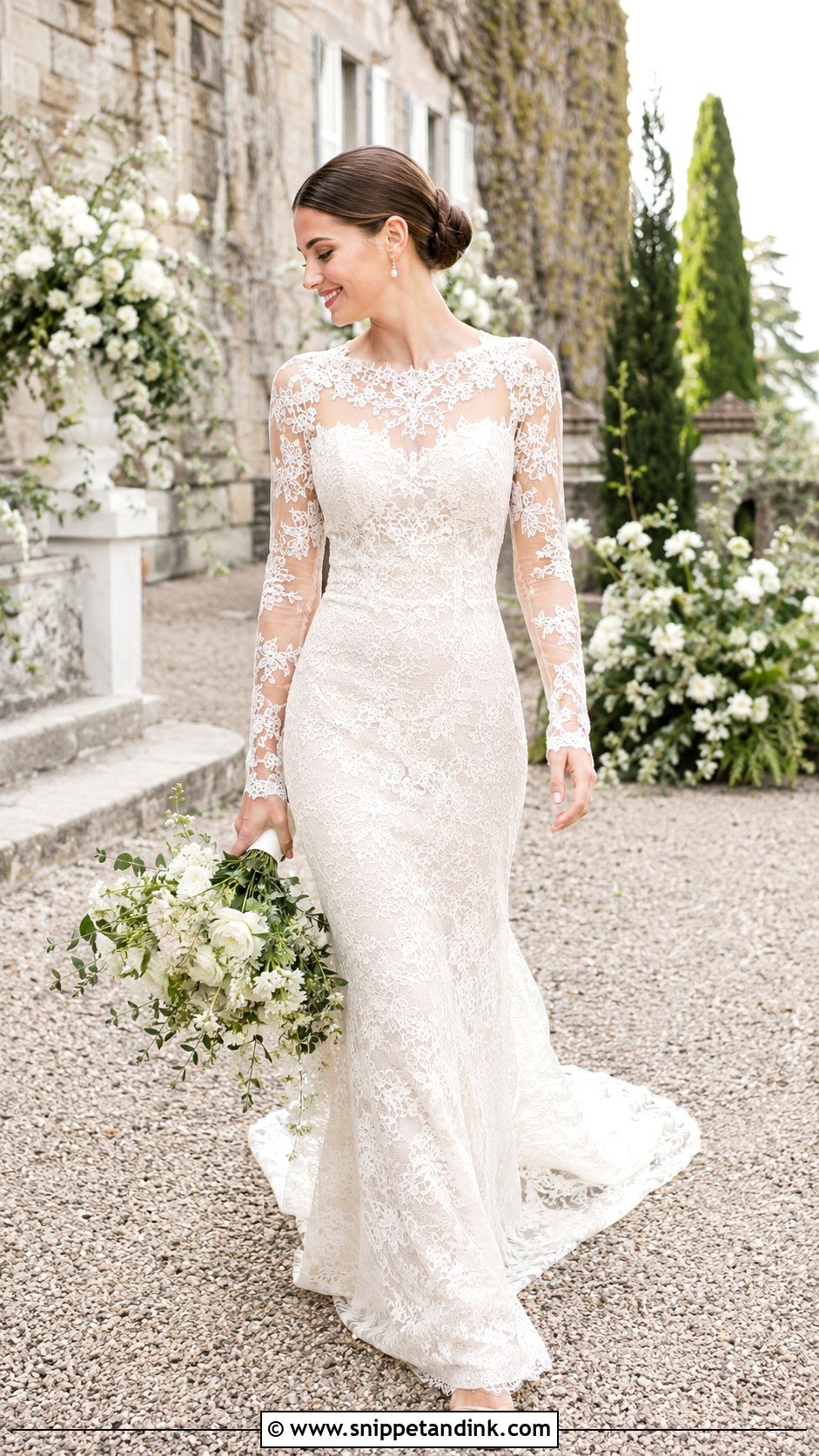
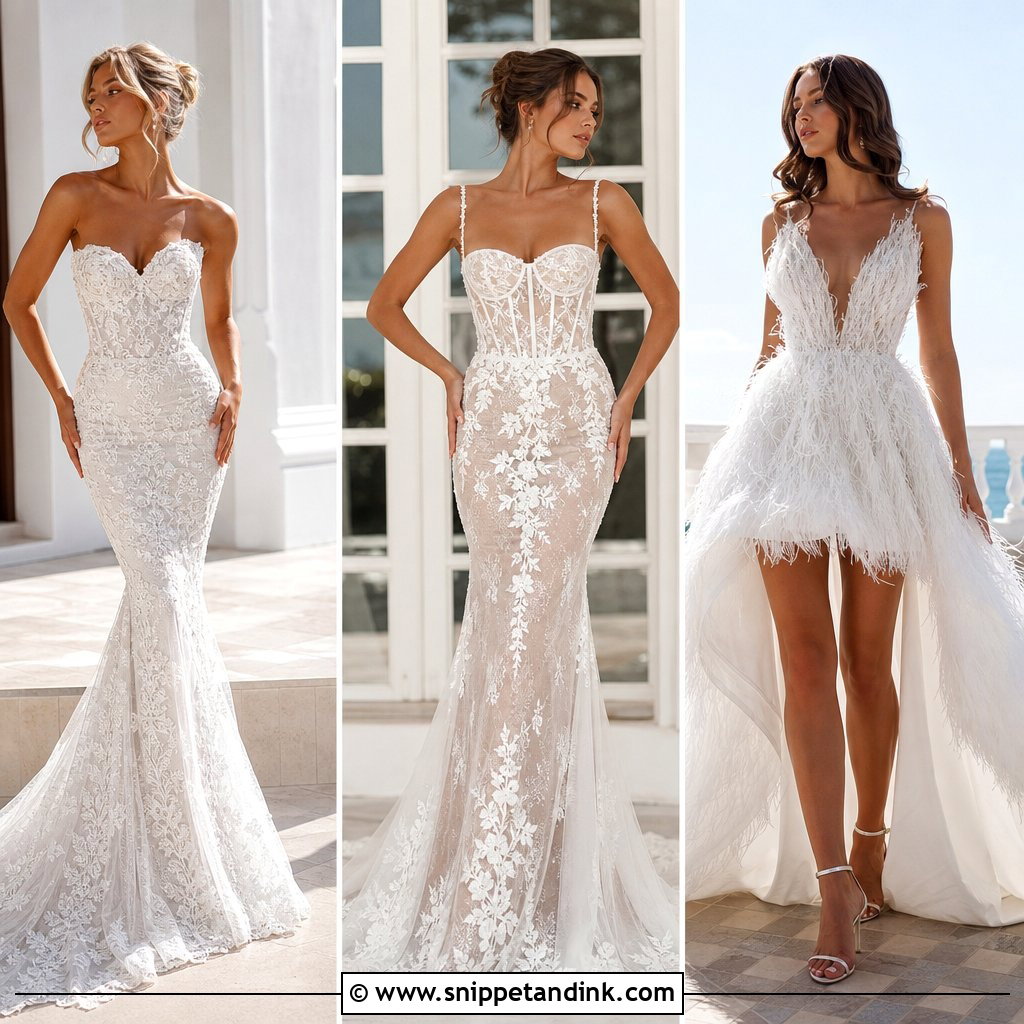
Lace ranges from fine and floral to bold and graphic, and the type sets the tone more than the silhouette does. Allover lace with sheer sleeves or a tulle skirt is soft; lace appliqué over crepe or satin looks cleaner. It suits gardens, estates, coastal ceremonies and traditional venues. The veil shade matters with lace. I always hold it against the bodice in daylight, because a veil a tone brighter makes the lace look dingy. Pearl earrings, a low bun, nude or ivory heels and a simple bouquet with greenery keep the texture visible.
5. Satin Wedding Dress
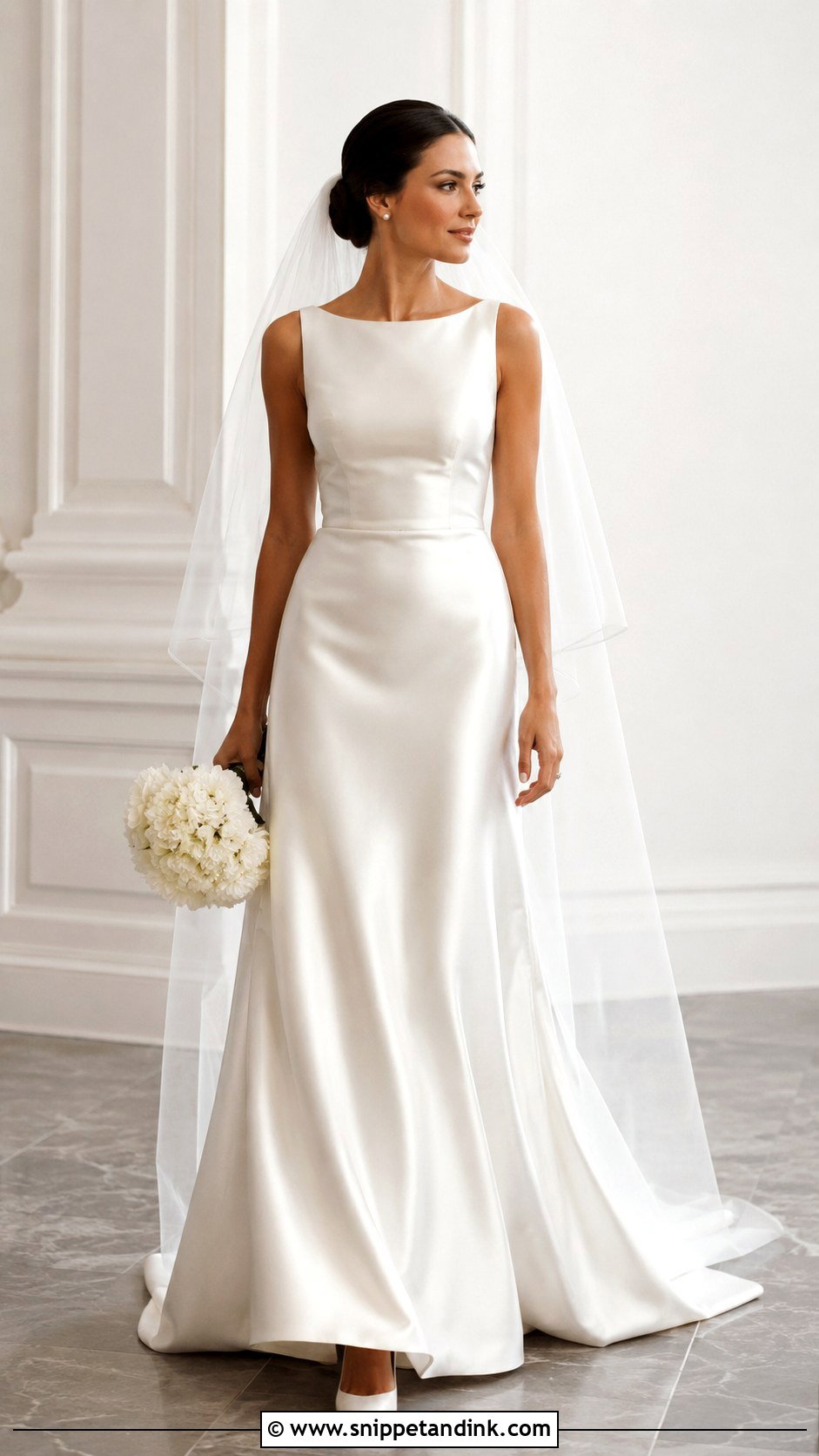
Satin’s natural sheen means it needs very little embellishment. A satin A-line, sheath and ball gown each look quite different, so choose by venue and comfort. Pointed pumps, a sleek veil, pearl studs or a thin tennis bracelet are plenty. Satin shows every pull line and pucker, so it’s not the fabric to skimp on alterations for. Hair can be a bun, polished waves or a smooth half-up style. I ask for the gown to be steamed on the morning rather than days ahead, since satin creases again in transit.
6. Off Shoulder Wedding Dress
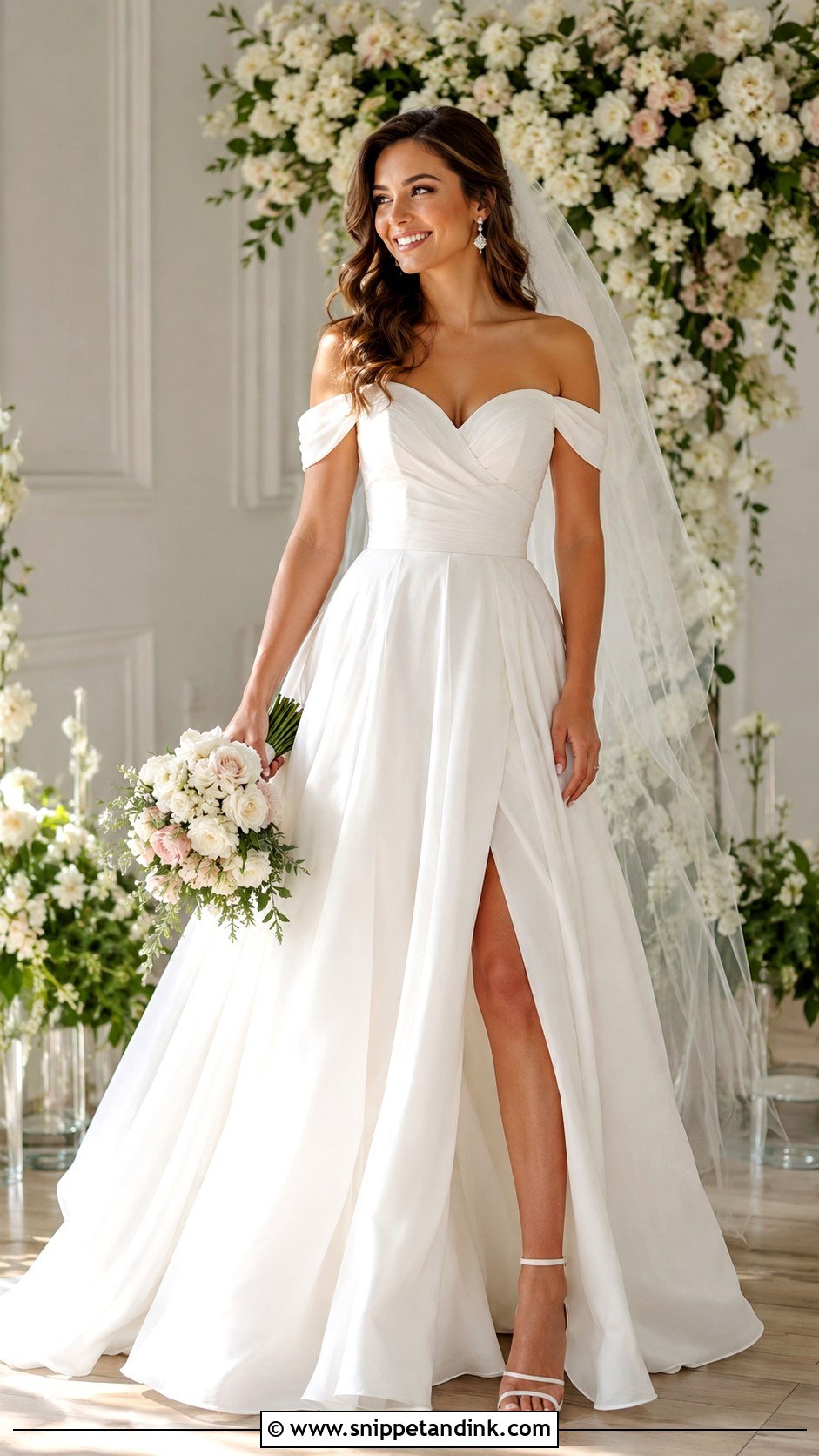
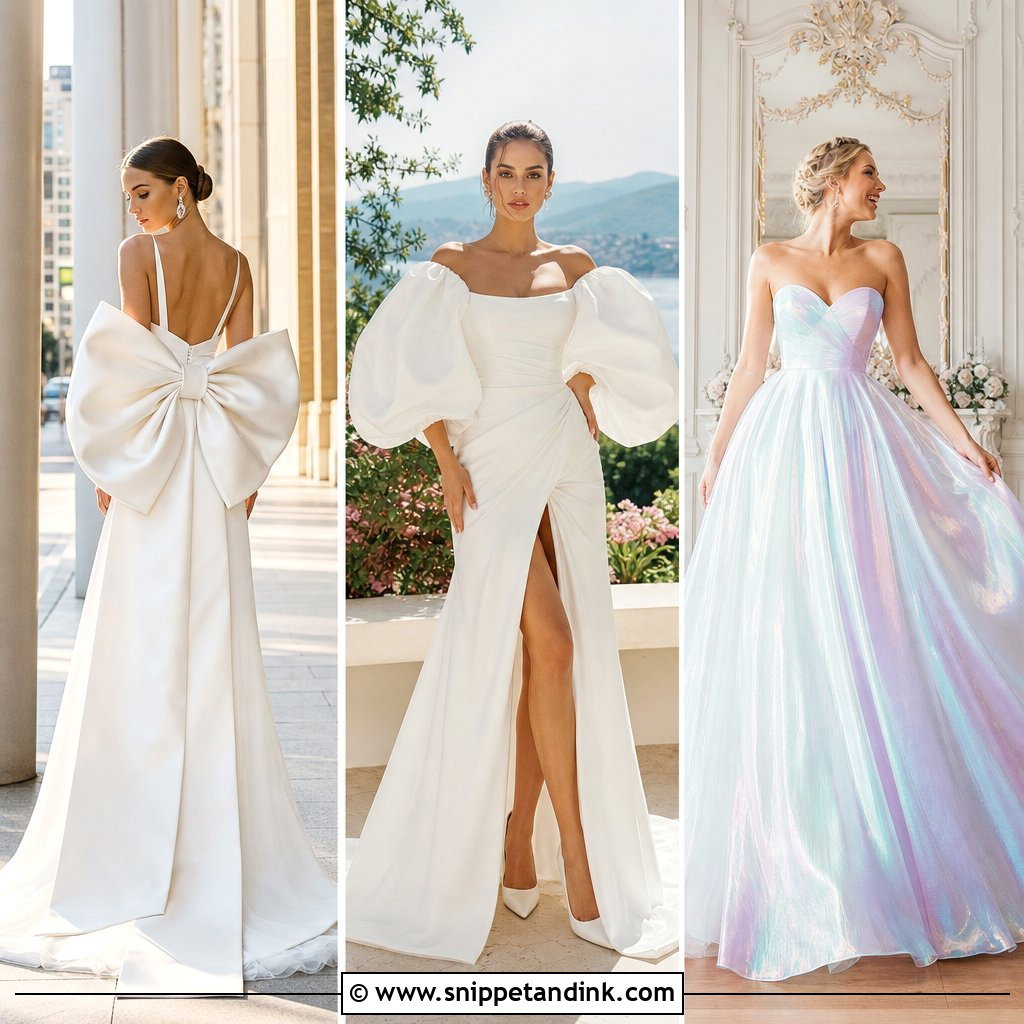
The off-shoulder band shows the collarbone and shoulders, and works on ball gowns, A-lines, mermaids and fitted crepe alike, in spring, summer or at a formal evening. For support, look for a structured bodice with internal boning so the band isn’t holding the dress up. Leave the neck bare, choose drop earrings, and set the veil low at the back of the hair so the comb doesn’t sit above the shoulder line. Soft curls, a loose chignon or a smooth bun all suit it. Hold the bouquet below the neckline, because a bouquet held high hides it entirely in photos.
7. Long Sleeve Wedding Dress
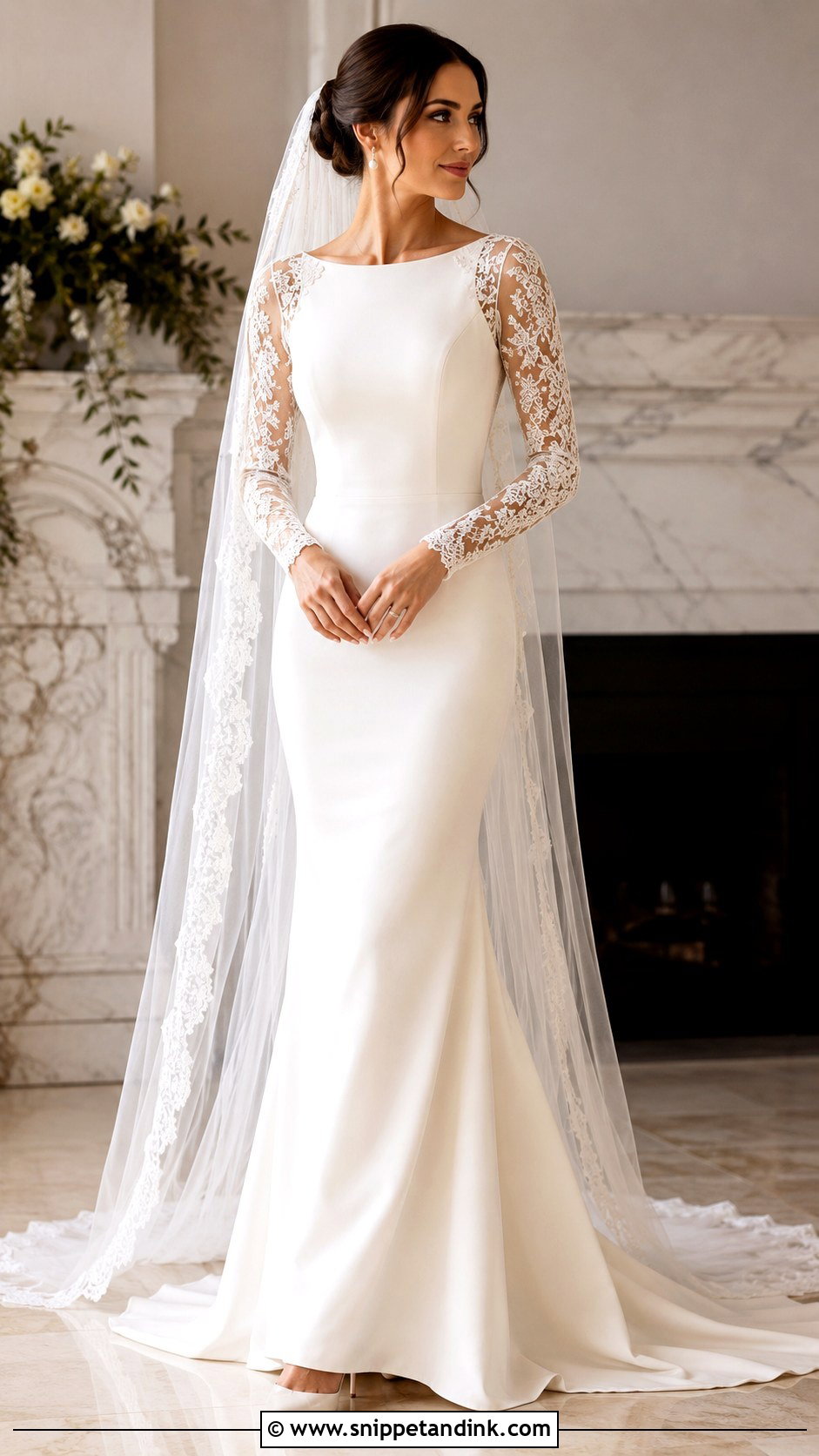
Sleeves come in more versions than people expect: sheer lace, fitted crepe, puffed organza, clean satin. Each pushes the gown toward romantic, modest or modern. Fall and winter are the obvious seasons, though illusion sleeves work in spring. Keep accessories light because the sleeves already add detail; pearl studs, a sleek veil and classic pumps are enough. With intricate lace sleeves, a smooth hairstyle keeps the neckline visible. I check the seam under the arm while the bride raises her arms, as that’s where fitted sleeves strain first.
8. Strapless Wedding Dress
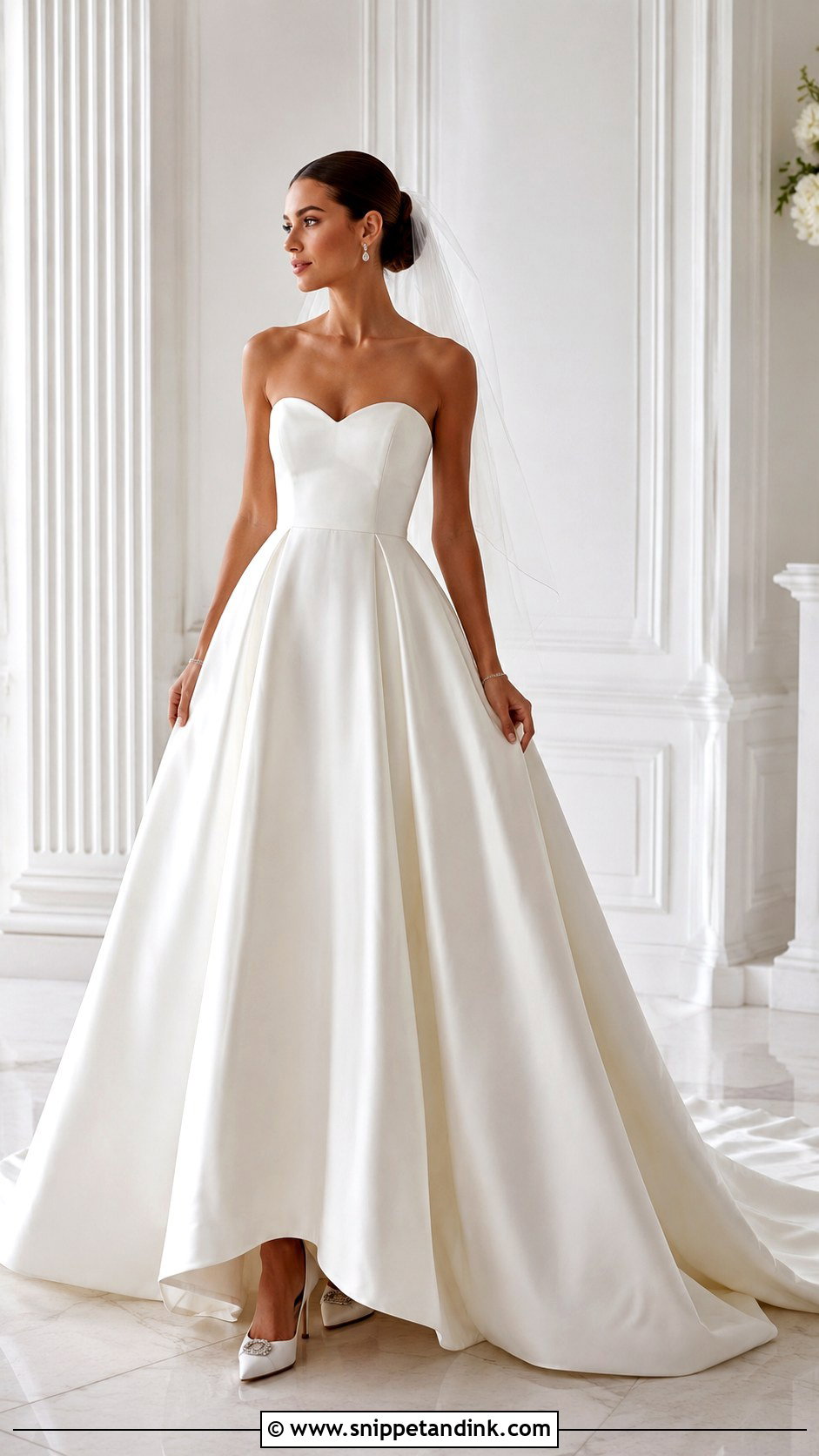
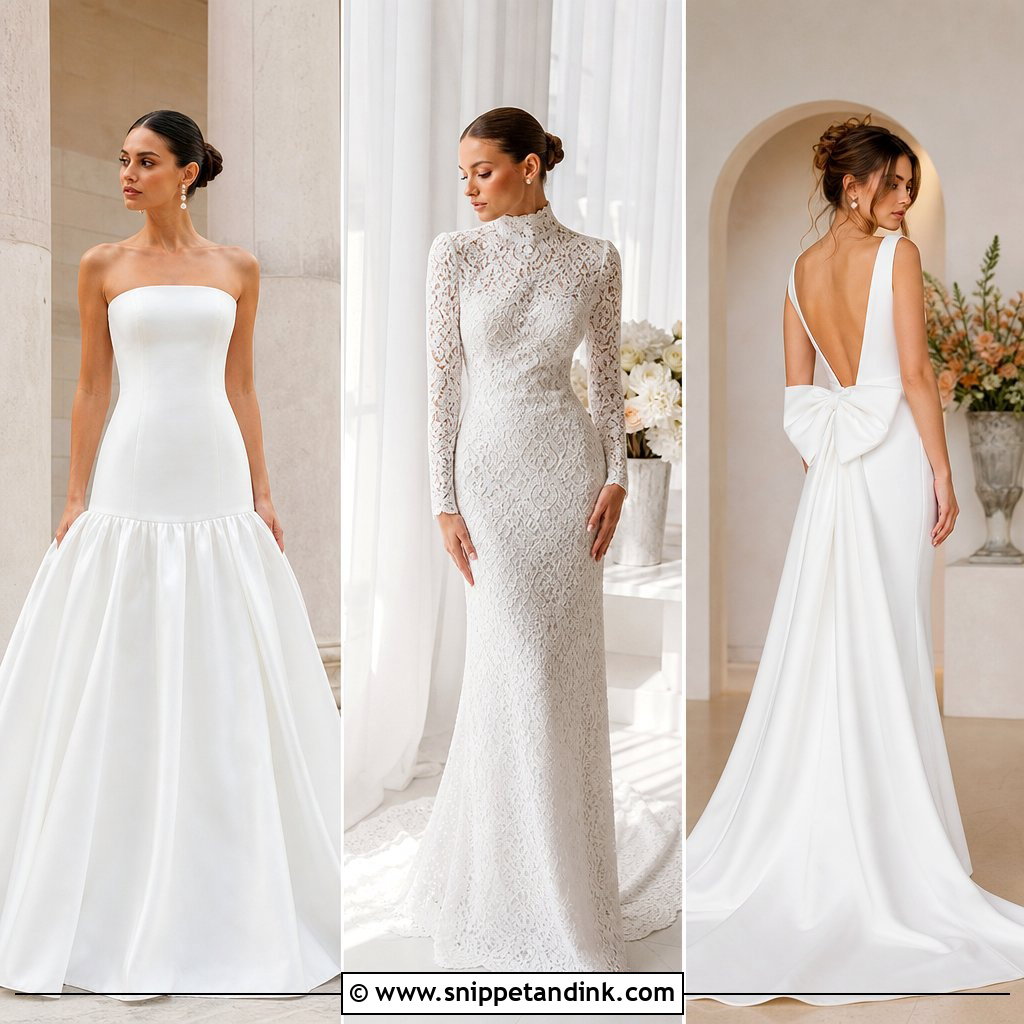
Strapless works on everything from a sleek column to a full princess skirt, and the bodice decides whether it works on you. It should feel secure enough to walk, sit and dance without tugging. Straight, sweetheart and softly curved necklines all look good. A statement necklace suits only a plain dress; otherwise wear earrings and a bracelet. A veil, smooth bun and lifted makeup keep the neckline open, with pointed pumps or ankle-strap heels. Carry the bouquet low enough that it doesn’t cover the bodice detail.
9. Square Neck Wedding Dress
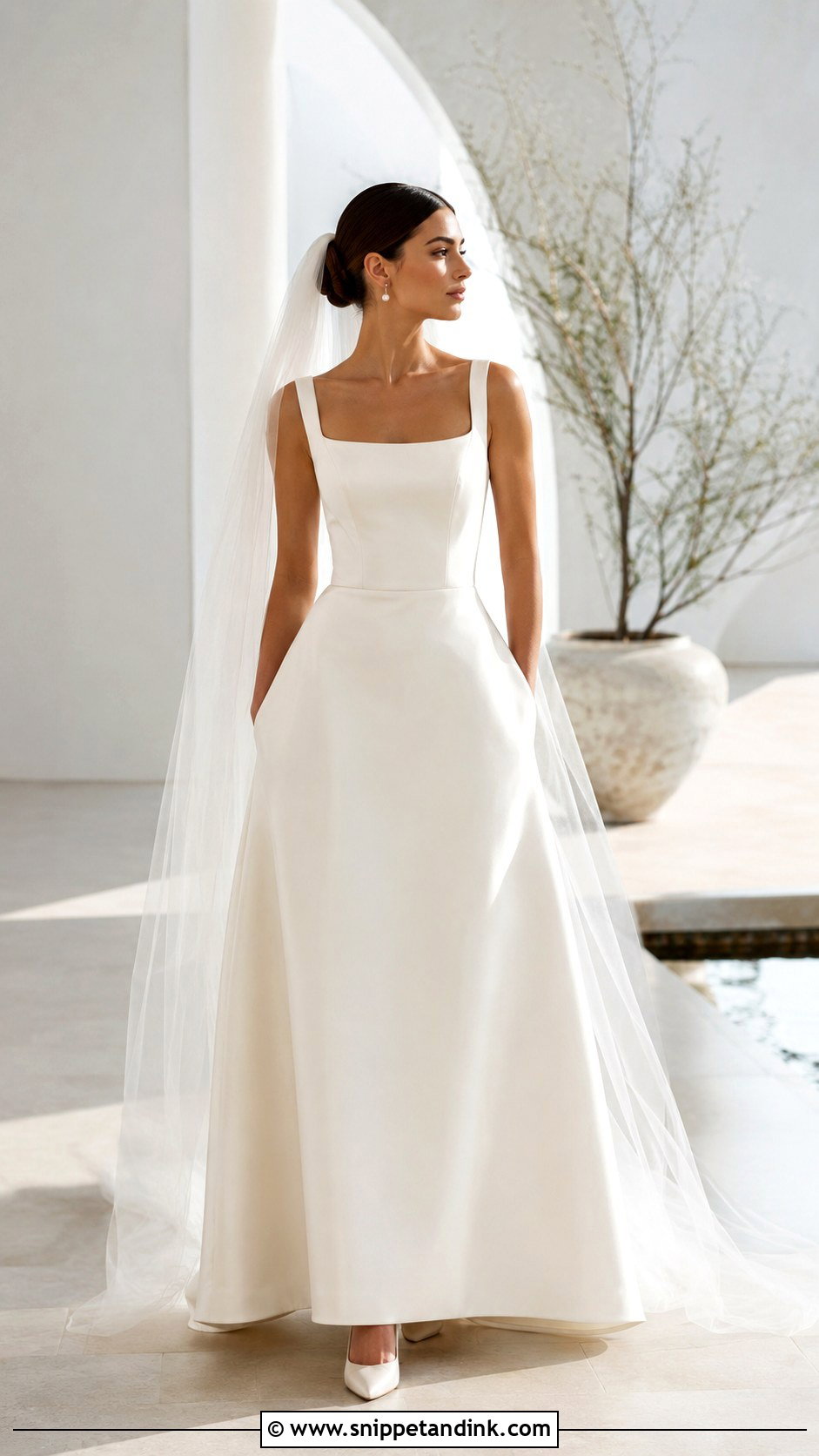
A square neck frames the collarbone and gives structure without showing too much, which makes it a natural pick if you like simple shapes with a fashion edge. Satin, crepe, mikado, lace and organza all suit it. On an A-line it feels classic; on a fitted gown, contemporary. Small pearl earrings, a smooth bun and a long veil keep it refined, while a bulky necklace would spoil the crisp line. Ivory heels, a soft bouquet and understated makeup finish it.
10. V Neck Wedding Dress
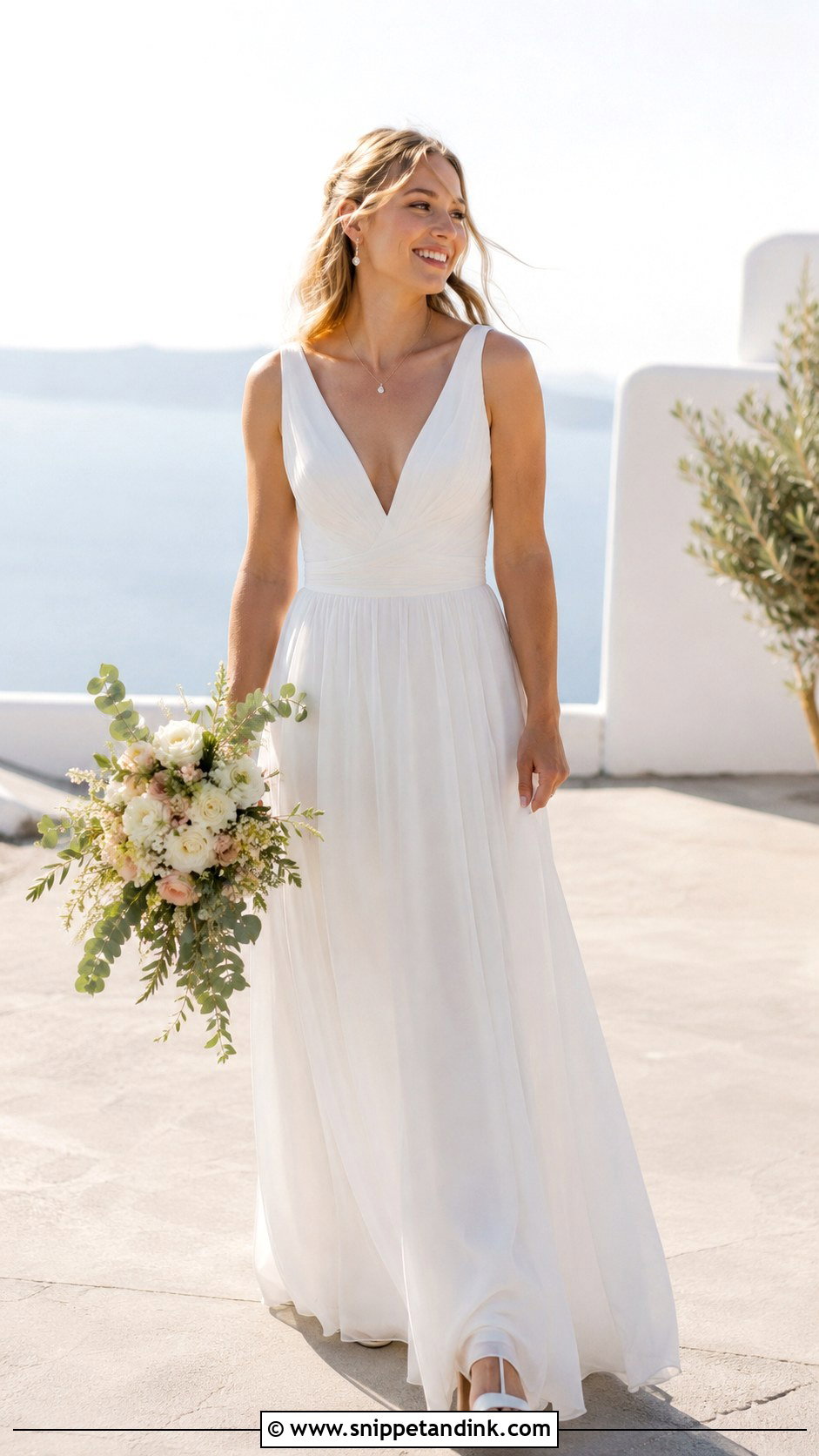
Depth is a personal call with a V. Shallow feels modest, deep feels dramatic, and both lengthen the upper body. It pairs with chiffon, lace A-lines, fitted crepe and light beach gowns. If you’re going deeper, illusion mesh, wider straps or a structured bodice keep it in place when you lean or hug. Drop earrings, a small pendant if the neckline allows, comfortable heels and a fingertip veil or floral pins suit it, and a slightly loose bouquet softens the line.
11. High Neck Wedding Dress
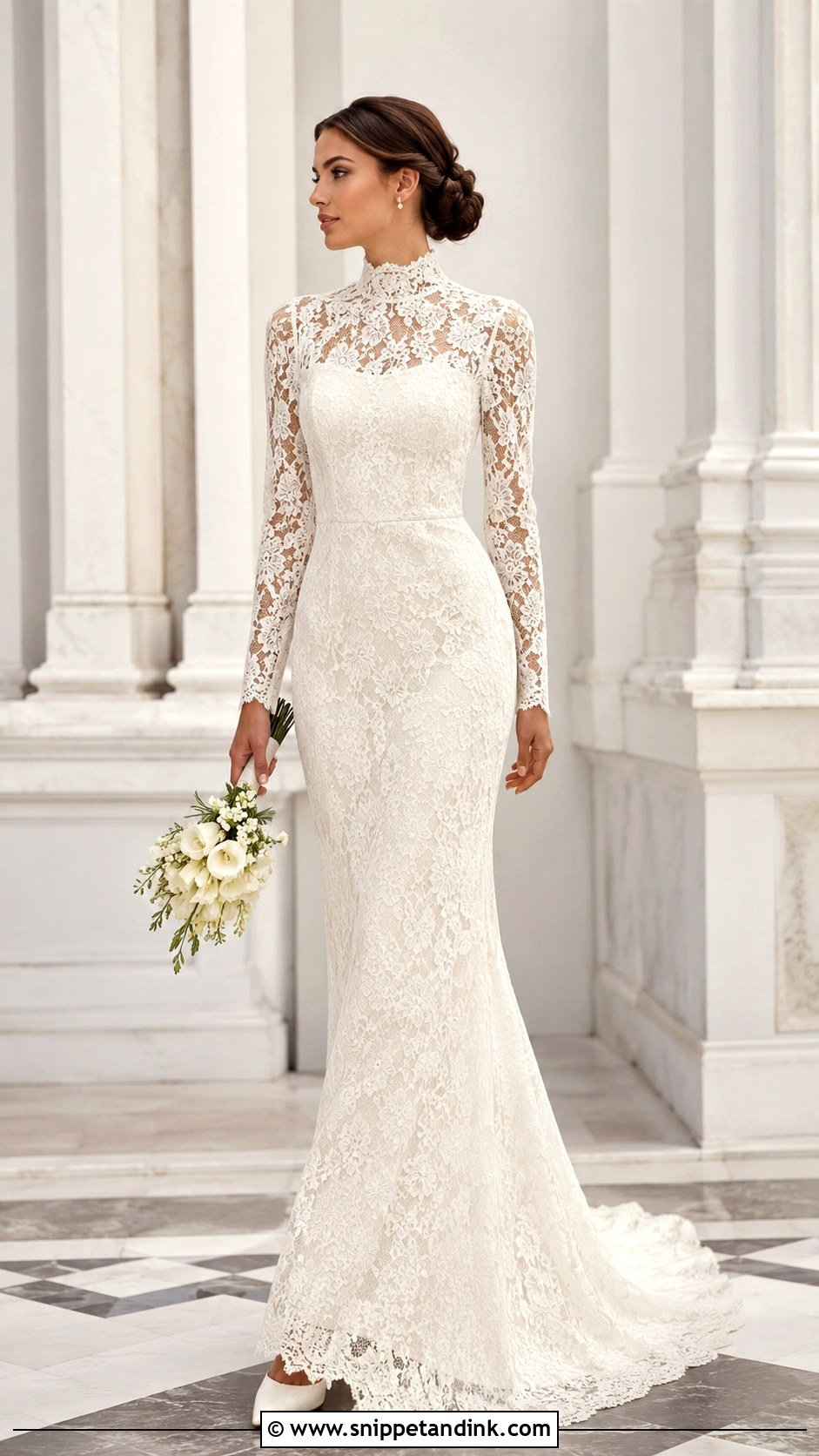
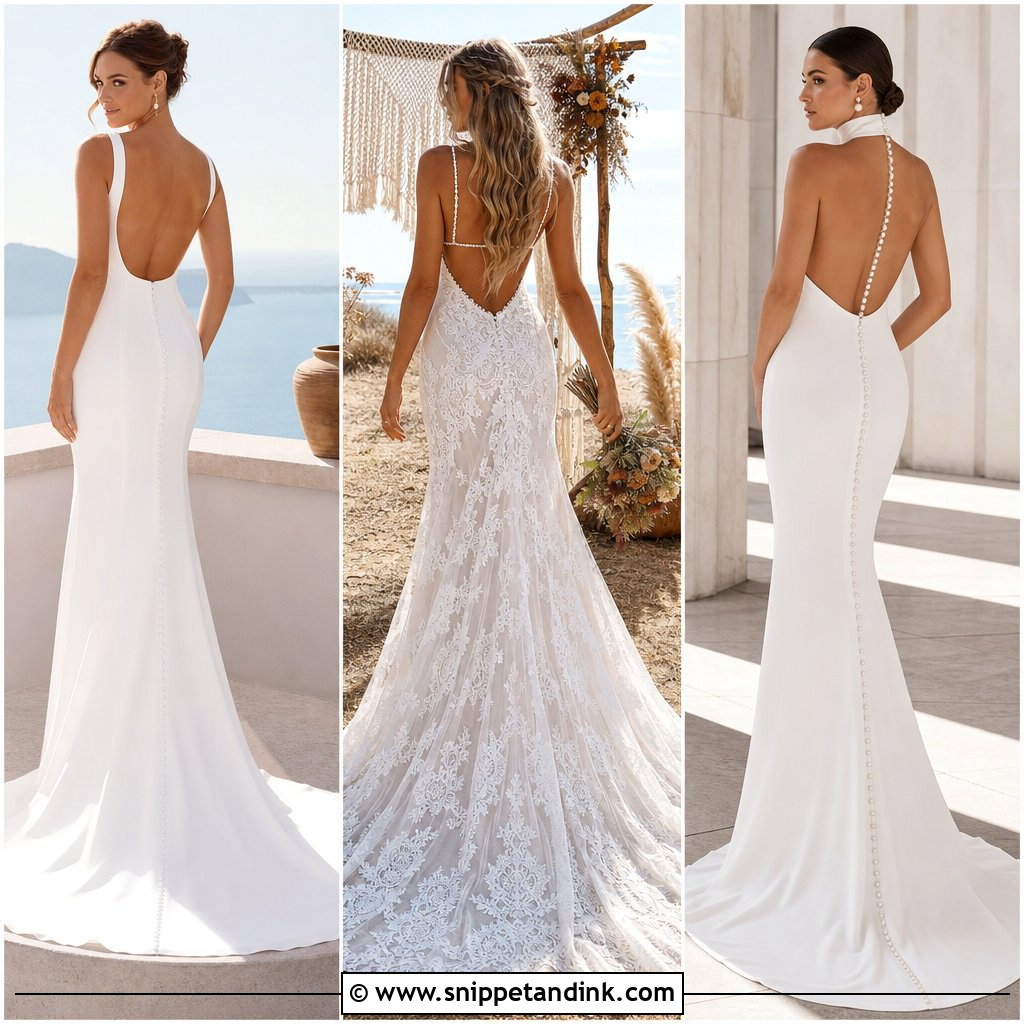
A high neck looks regal in lace, sleek in crepe and modern in satin, and it’s the answer for coverage that still feels stylish. Pair it with an open back, fitted sleeves or a clean column so the gown doesn’t feel heavy. Skip the necklace and let earrings, a bracelet or a hair accessory carry the jewelry. A low bun or tucked style keeps the neck clear and lets the collar sit flat. Pointed heels and a slim bouquet finish it.
12. Simple Crepe Wedding Dress
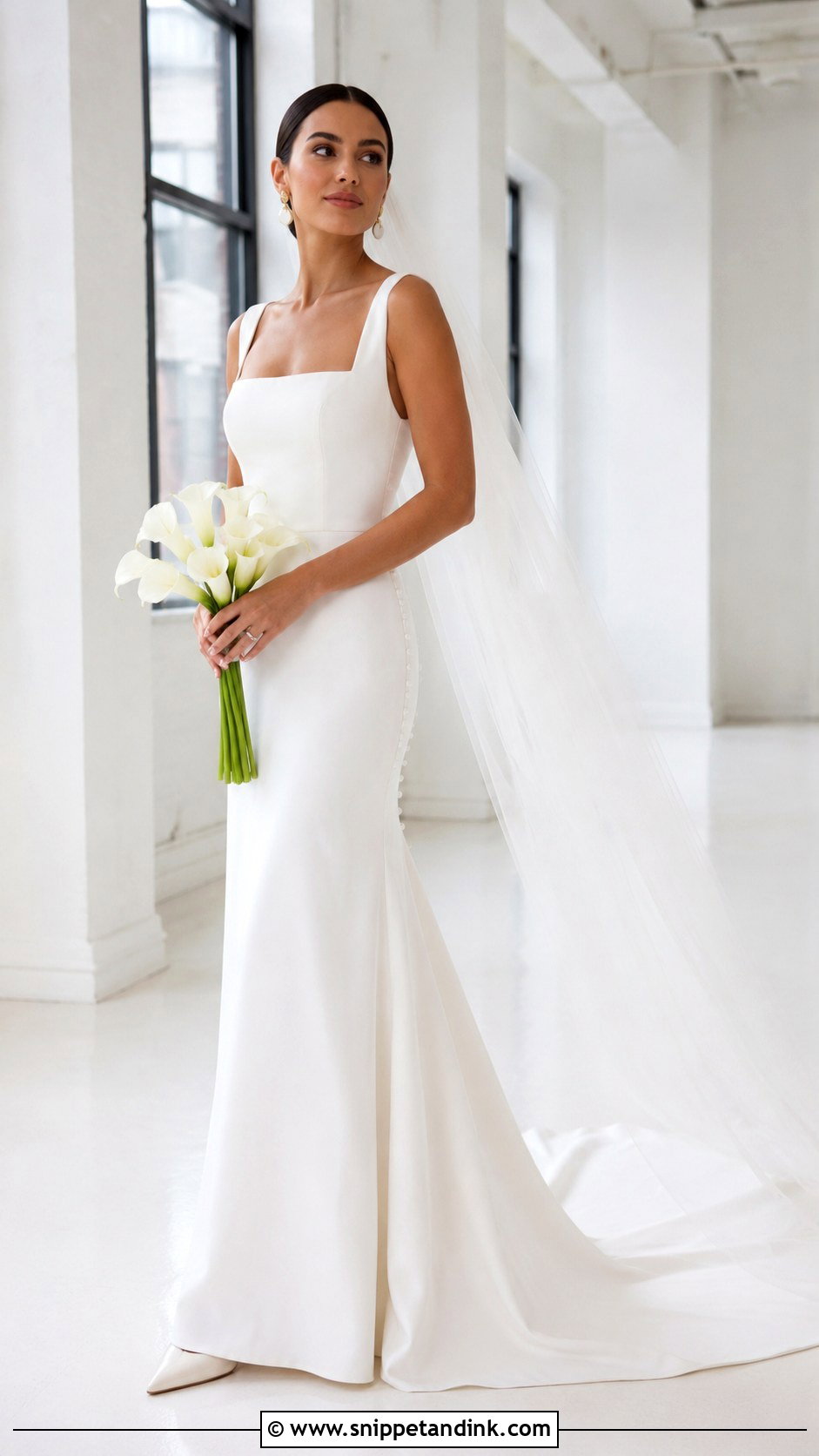
Crepe skims the body and has enough weight to look structured without stiffness, so a plain crepe gown lives or dies by its cut. It suits city weddings, modern venues, courthouses and small celebrations. Look for one considered detail: a square neckline, covered buttons, a low back or a small train. Sleek pumps, sculptural earrings and a smooth veil complete it. With nothing to hide behind, tailoring is the star, and a precise fit is what makes a simple dress look expensive.
13. Beaded Wedding Gown
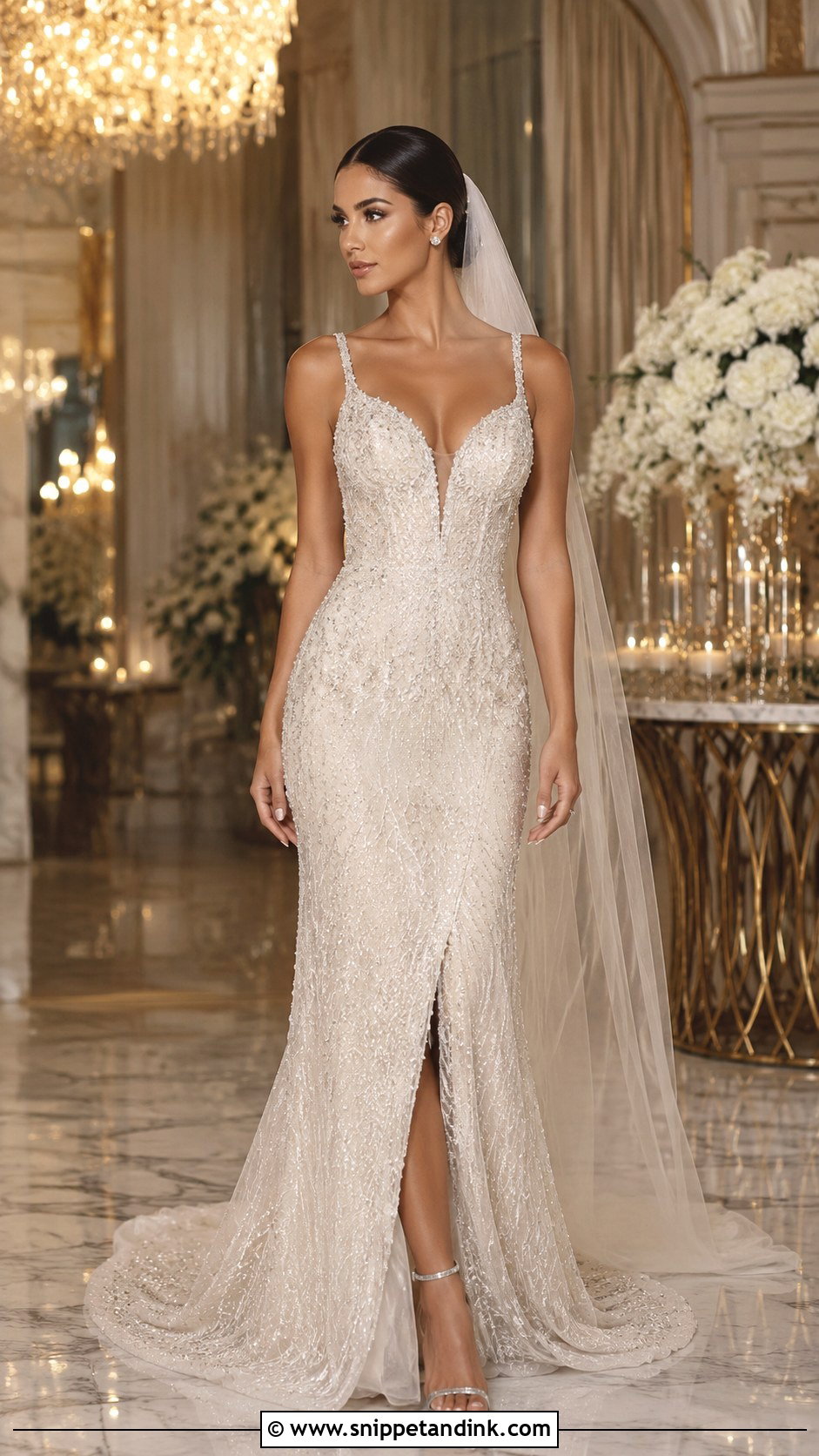
Beading can be scattered lightly or cover the whole gown, and either way it comes alive under evening and ballroom lighting. Keep accessories refined: crystal studs, metallic heels, and a simple veil or none at all. A sleek hairstyle lets the beading show without clutter. I make every bride sit down in it at the shop. Heavily beaded skirts are weighty, and beads on the back of a skirt press into you through a long dinner.
14. Floral Wedding Dress
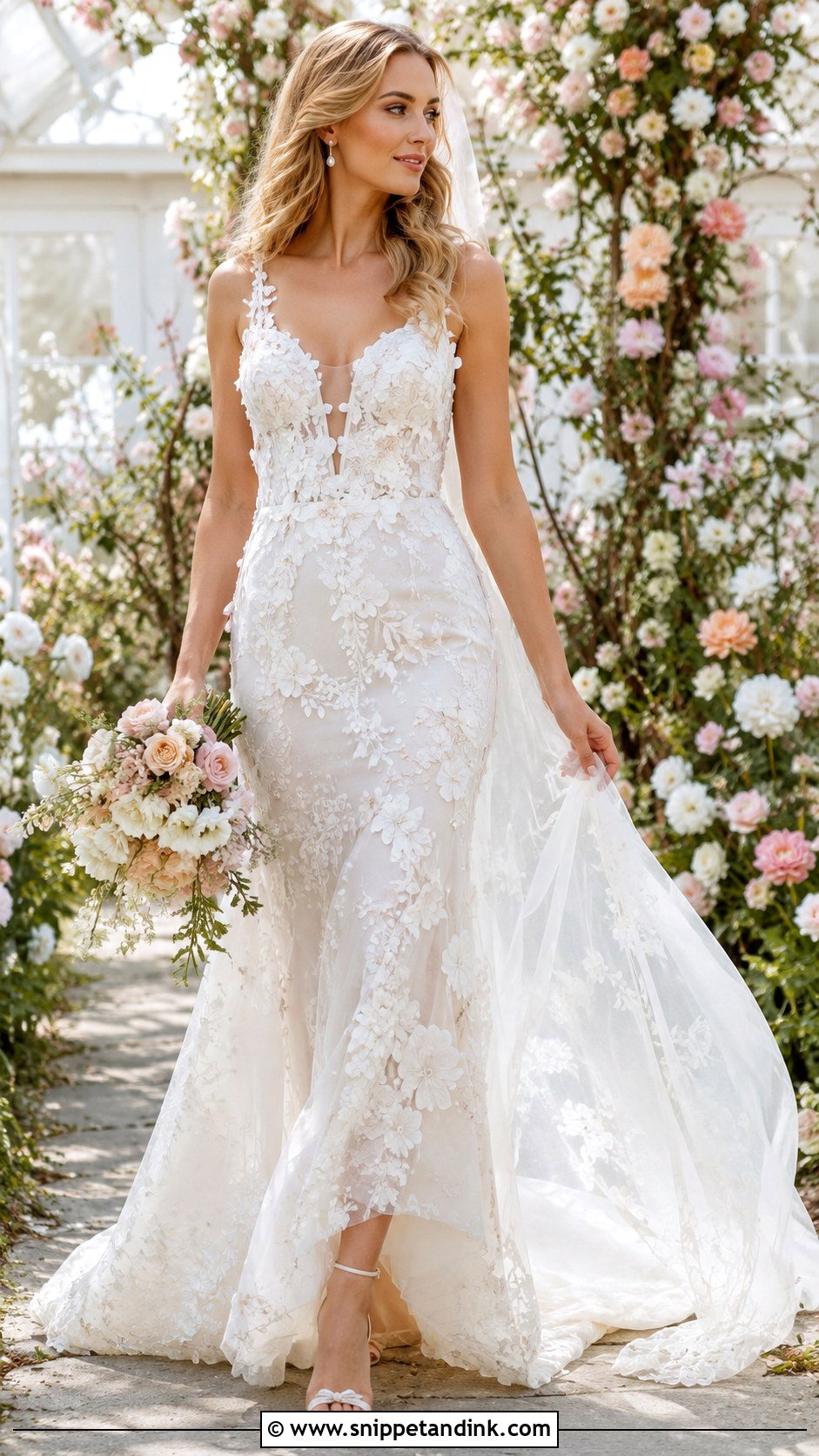
Floral appliqué, embroidery, 3D flowers and soft prints give more detail than plain lace, and they belong in gardens, spring ceremonies and outdoor venues. Keep the rest of the outfit quiet: delicate heels, pearl earrings and a veil with little trim. If the flowers are colored, pull one or two of their tones into the bouquet so the two relate. Soft waves, glowing makeup and a natural arrangement finish it. Raised 3D flowers can catch on a veil, so try the two together before you commit.
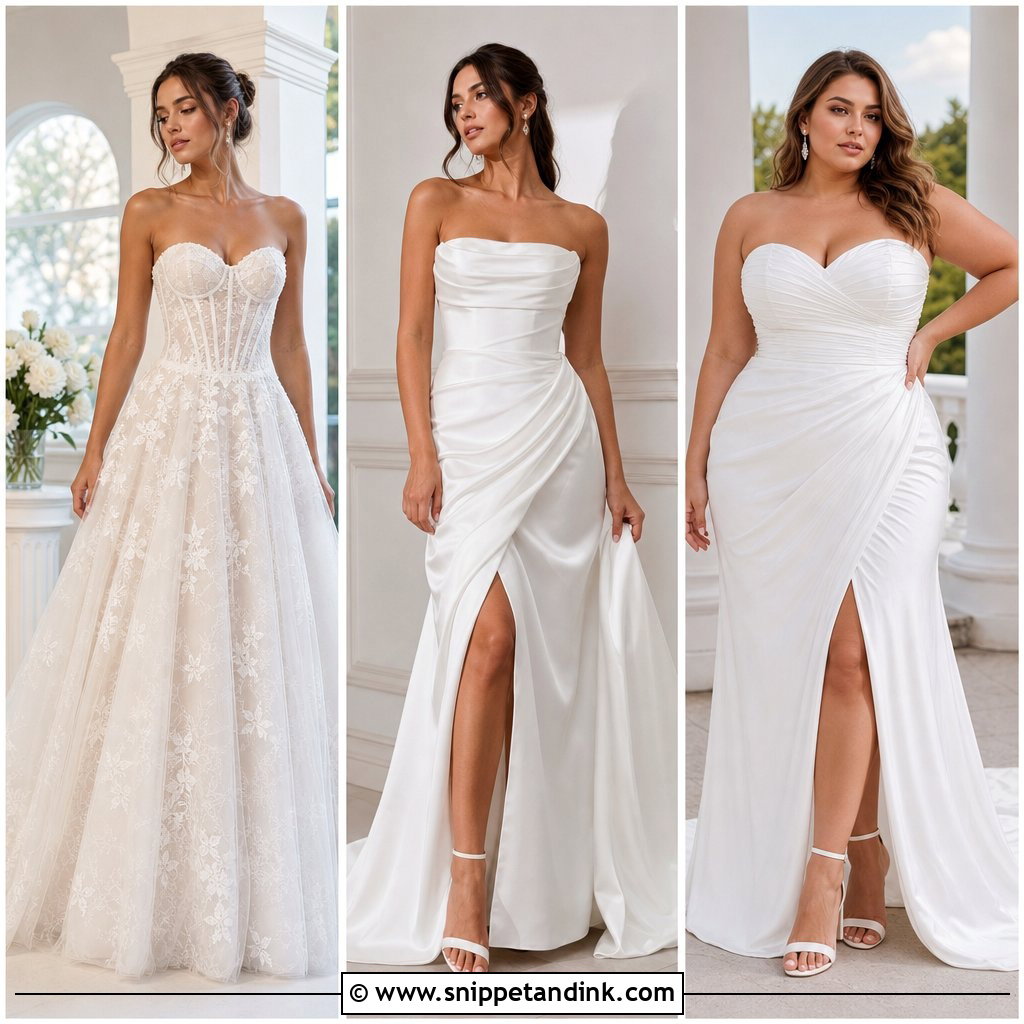
15. Tulle Wedding Dress
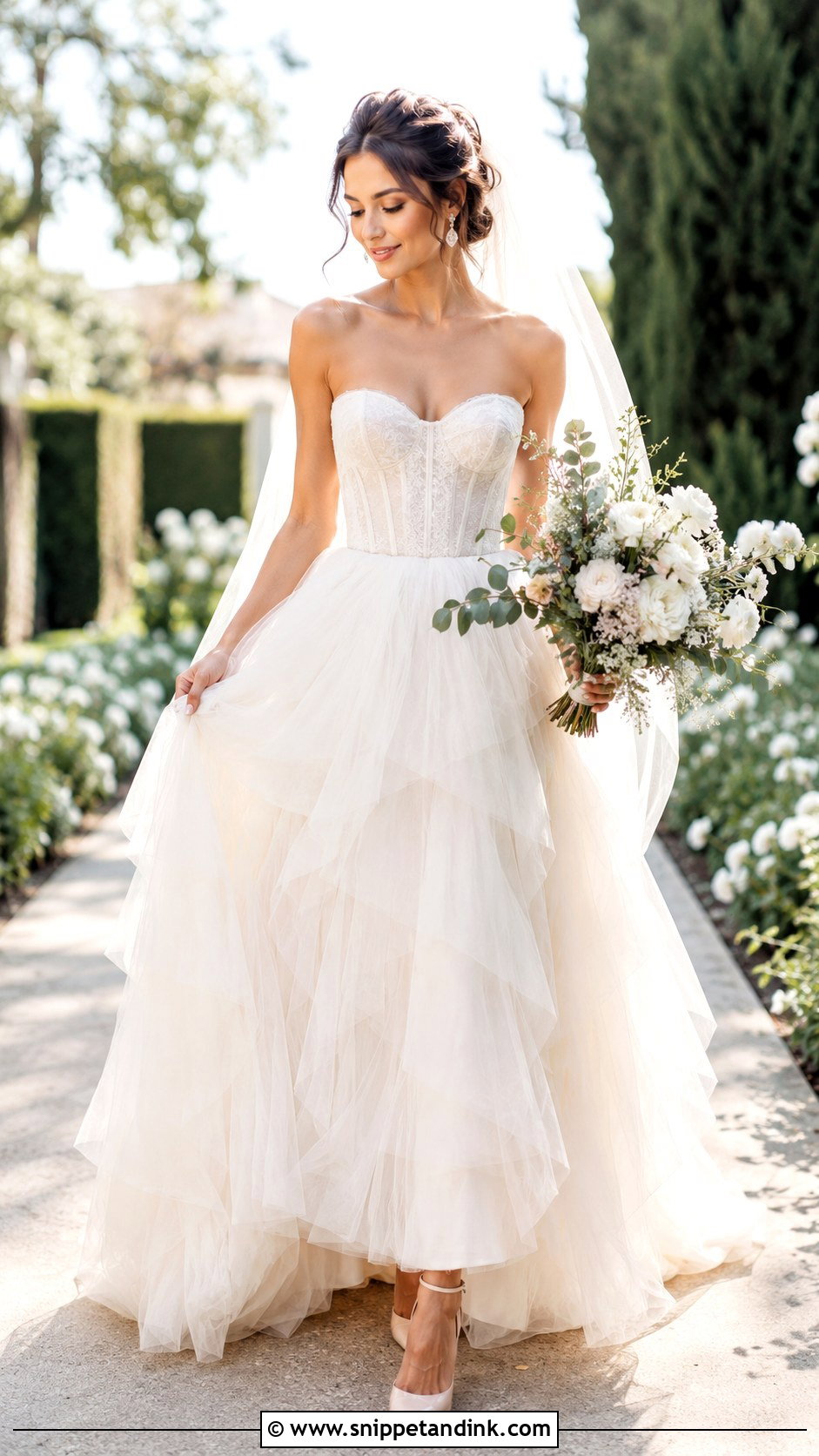
Tulle gives volume and movement without much weight. Layer it into a princess-style ball gown or float a single layer over an A-line. Plain tulle gives a clean fairy-tale look, while embellished tulle with lace, pearls or small flowers is more detailed. Tulle snags easily, so avoid earrings, bracelets and rings with prongs or rough edges that can catch it. A loose updo or half-up style, a soft veil, delicate heels and an airy bouquet match the movement.
16. Chiffon Wedding Dress
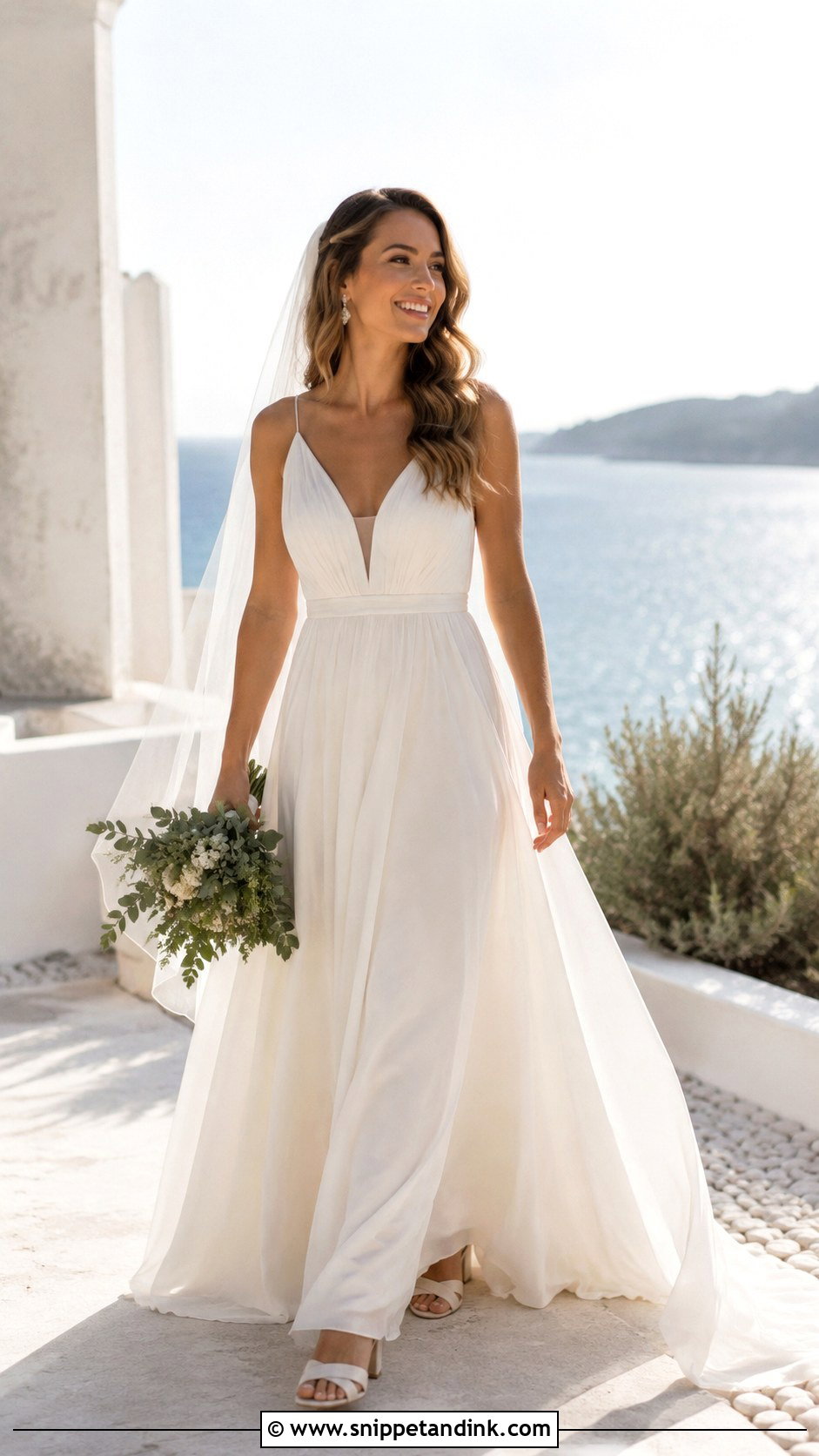
Chiffon is the fabric I reach for in heat. It’s light, it moves and it breathes, which suits beach, destination and warm outdoor weddings. A chiffon A-line, empire waist or V-neck feels romantic without being formal. Shoes depend on the ground: block heels, sandals or wedges. Delicate earrings, a light veil and a natural bouquet with greenery suit it, along with loose waves or a low textured bun. For a destination wedding, pack it hanging in a garment bag rather than folded in a suitcase, and steam out any creases on arrival.
17. Tea Length Wedding Dress
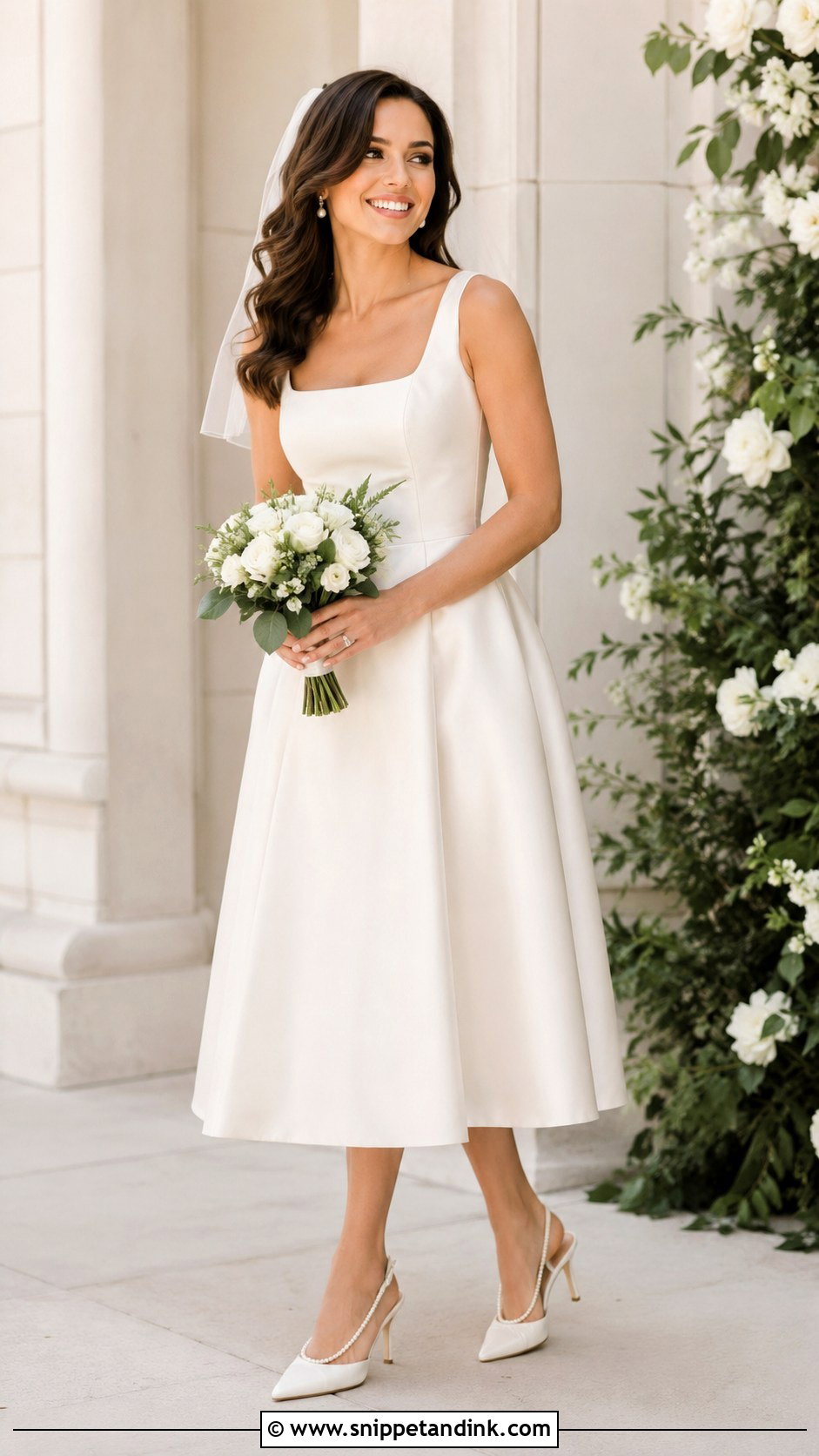
Tea length sits between knee and ankle, shows off the shoes and makes moving easy, so it suits courthouses, gardens, brunch receptions and vintage-leaning celebrations. Satin gives structure, lace romance, tulle a playful lift. The shoes are part of the outfit now: pearl heels, slingbacks or embellished pumps. Short gloves work only if the rest of the outfit is equally retro. A birdcage veil, soft curls and a small bouquet complete it without tipping into costume.
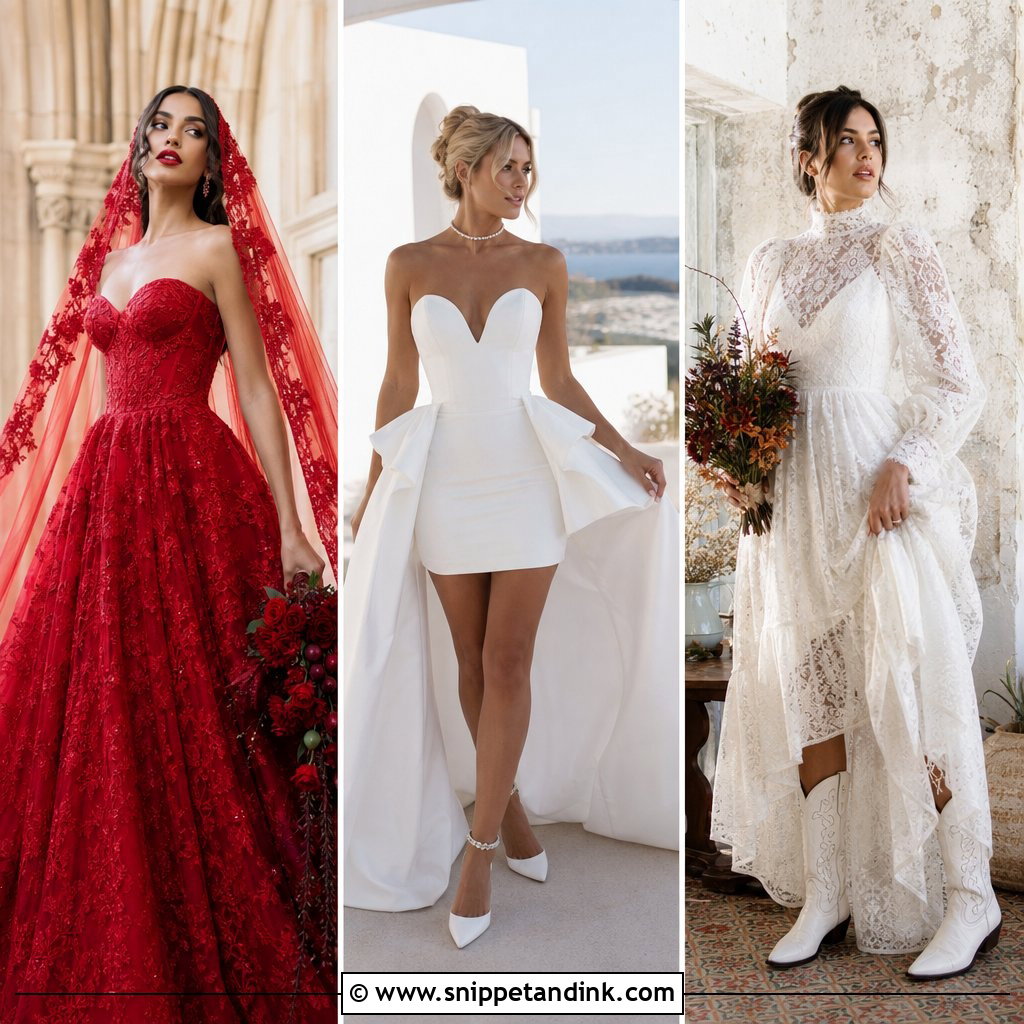
18. Short Wedding Dress
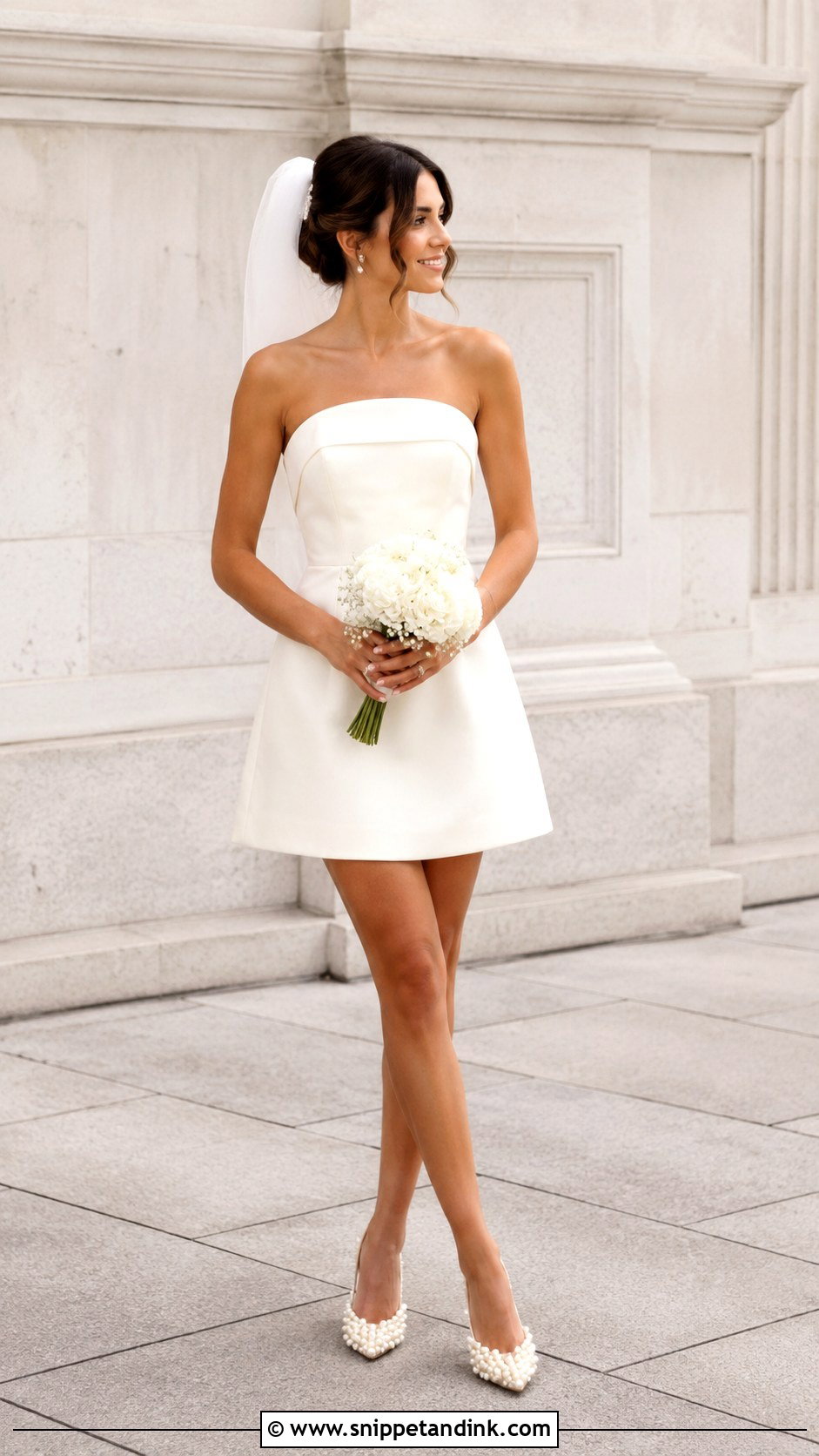
Short dresses suit civil ceremonies, reception changes, elopements and after-parties, and they’re the easiest thing to dance in. Bridal fabric is what keeps a short dress from reading as a party dress: satin, lace, crepe, organza or feather trim. Statement heels, pearl earrings and a mini veil or headband finish it. If it’s very plain, add texture through gloves, a structured bag or sparkly shoes. Fitted, A-line or shift, check the hem while seated, since it will rise.
19. Wedding Dress With Bow
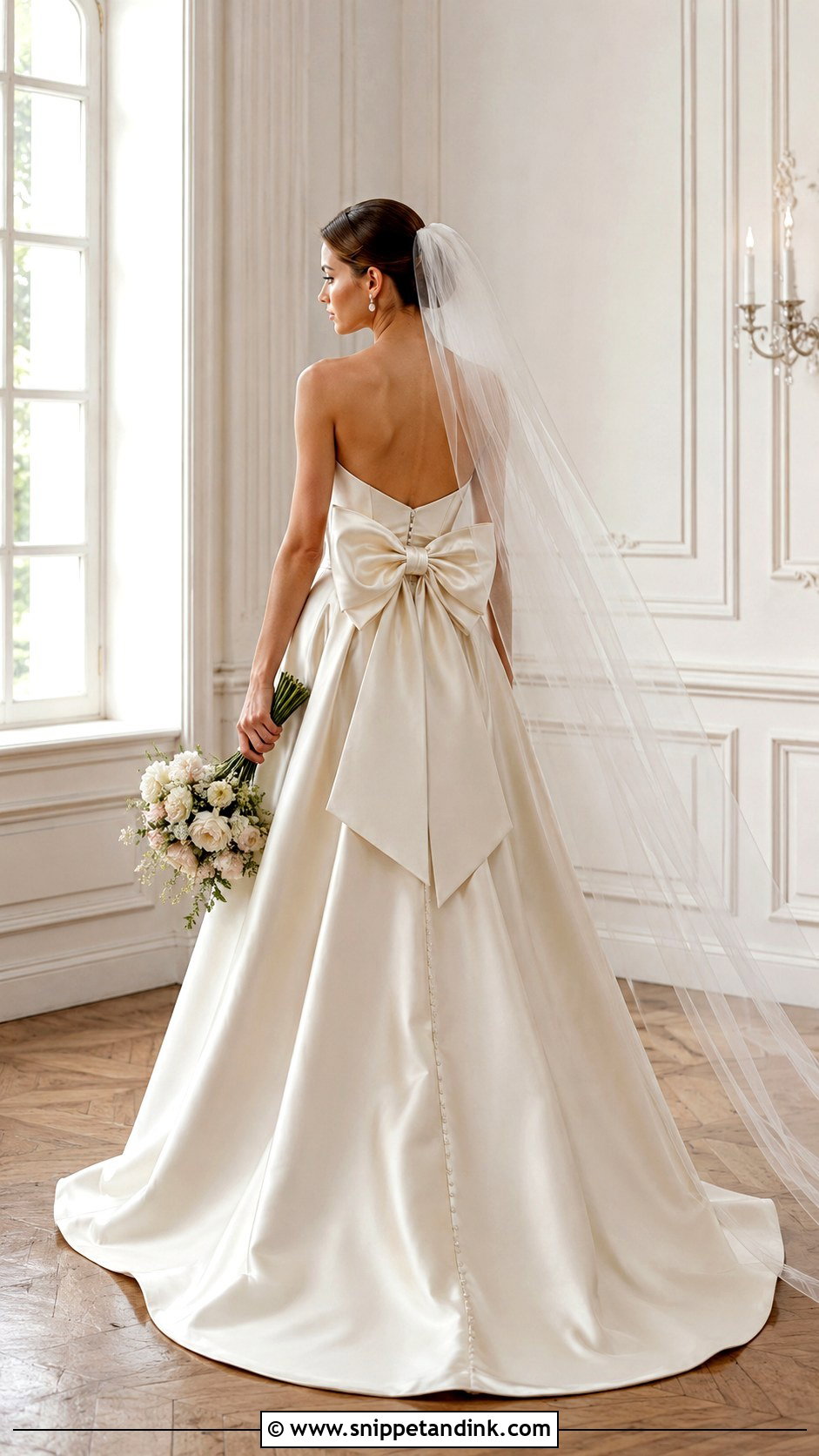
A bow can sit at the back waist, the shoulder, the neckline or the train. A large back bow suits stiff satin or mikado, which holds the loops; on soft fabric a big bow droops by the reception. Smaller bows on straps or sleeves feel delicate. Keep everything else simple: pearl earrings, clean heels and a smooth veil that doesn’t hide the bow. Think about the chairs, too. A big back bow gets crushed every time you sit, so I’d ask whether it can be made detachable.
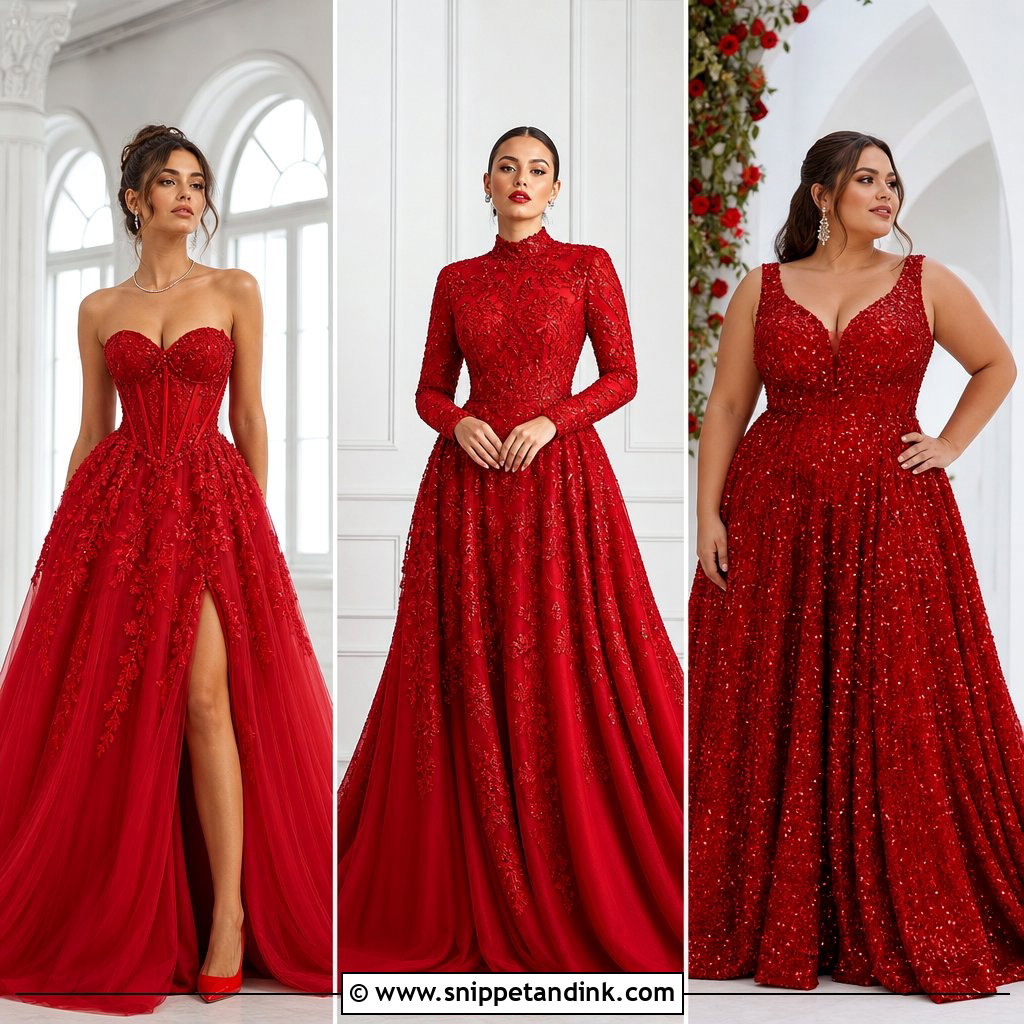
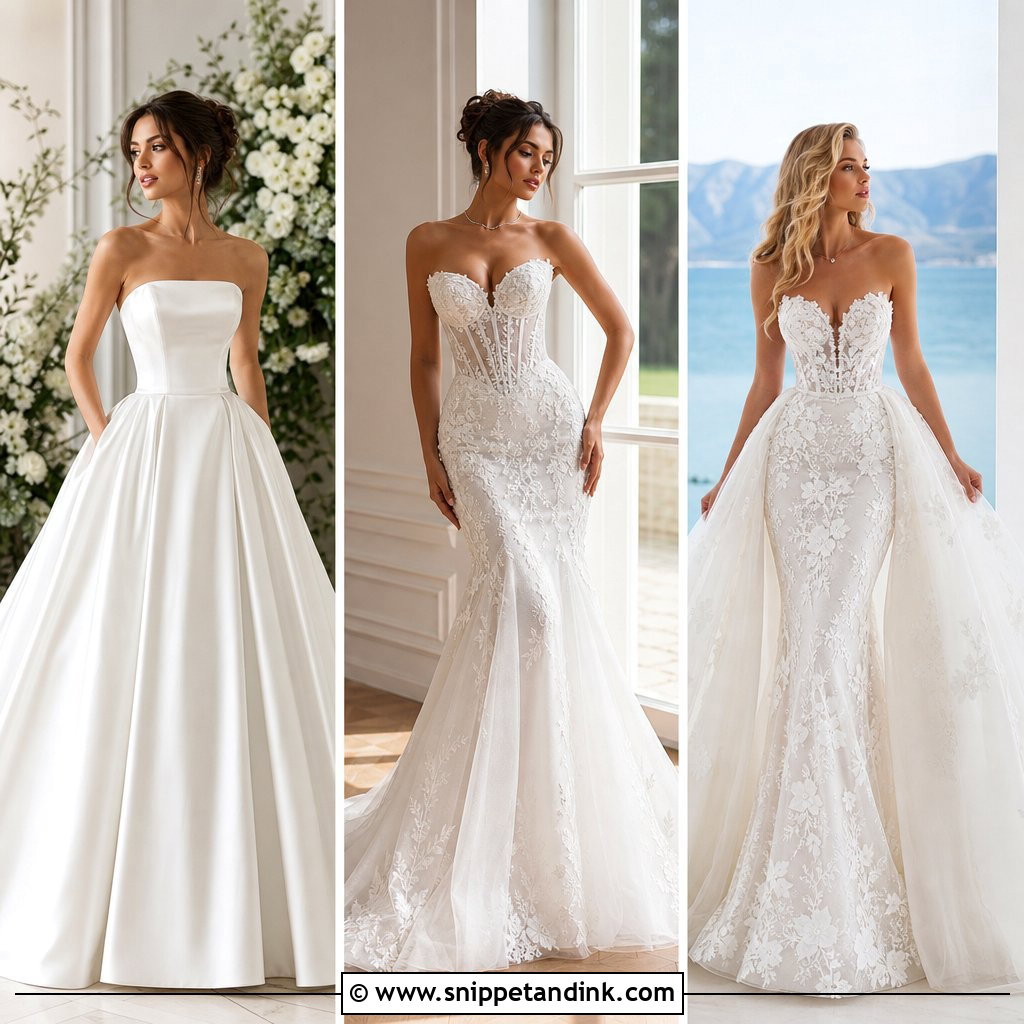
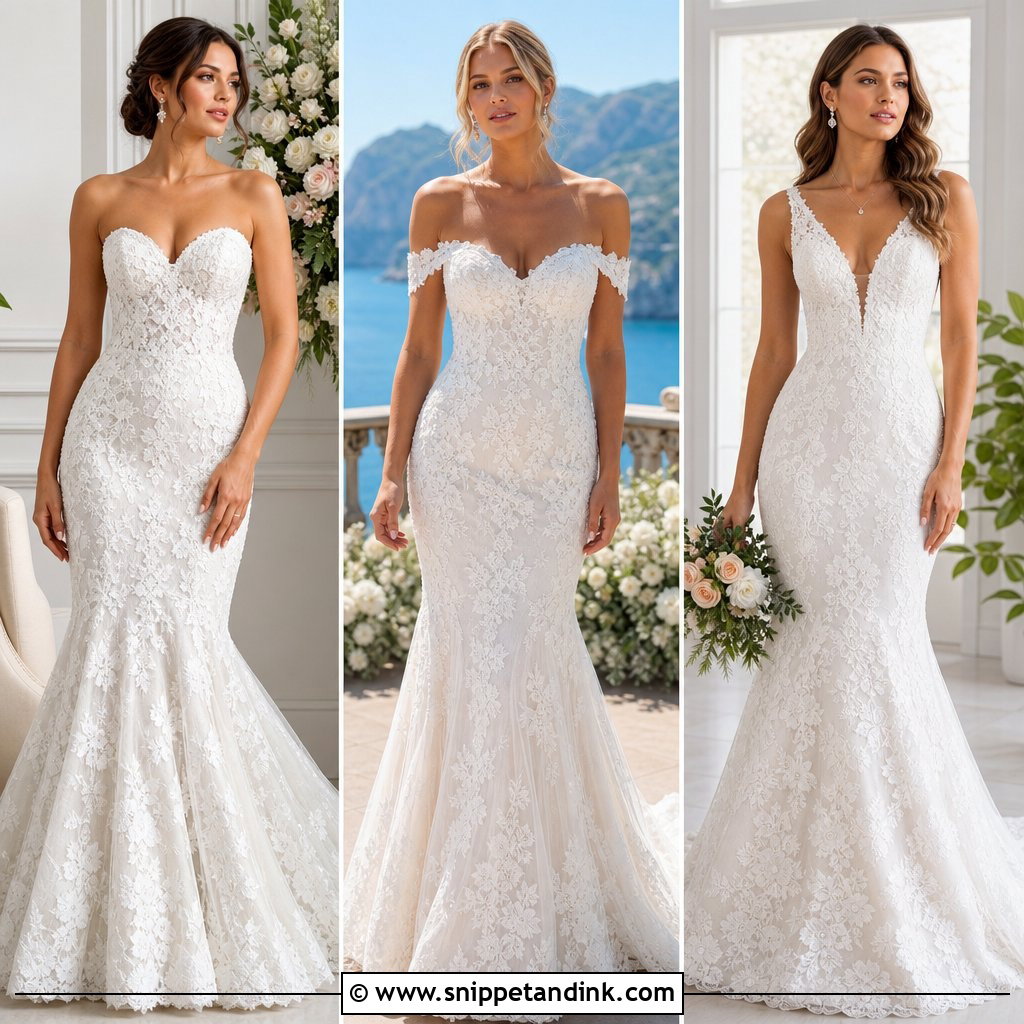
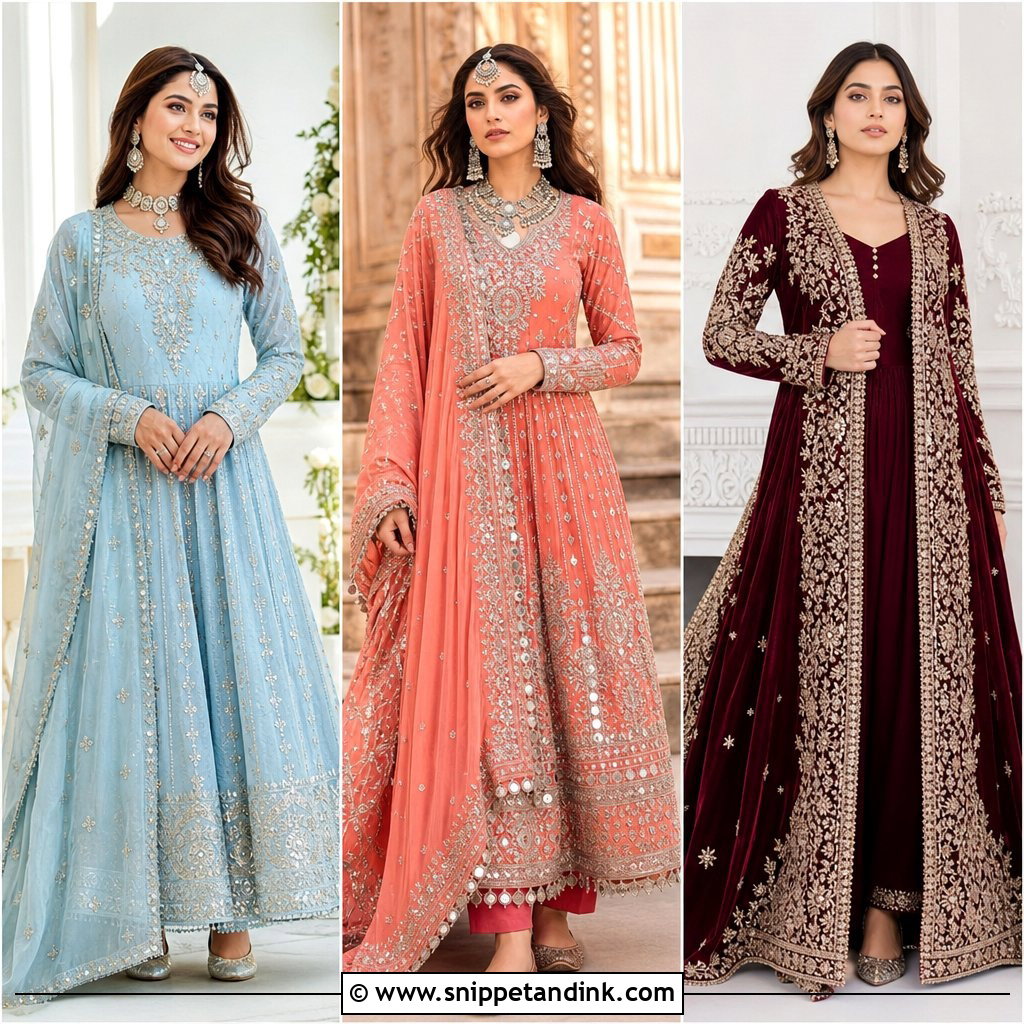
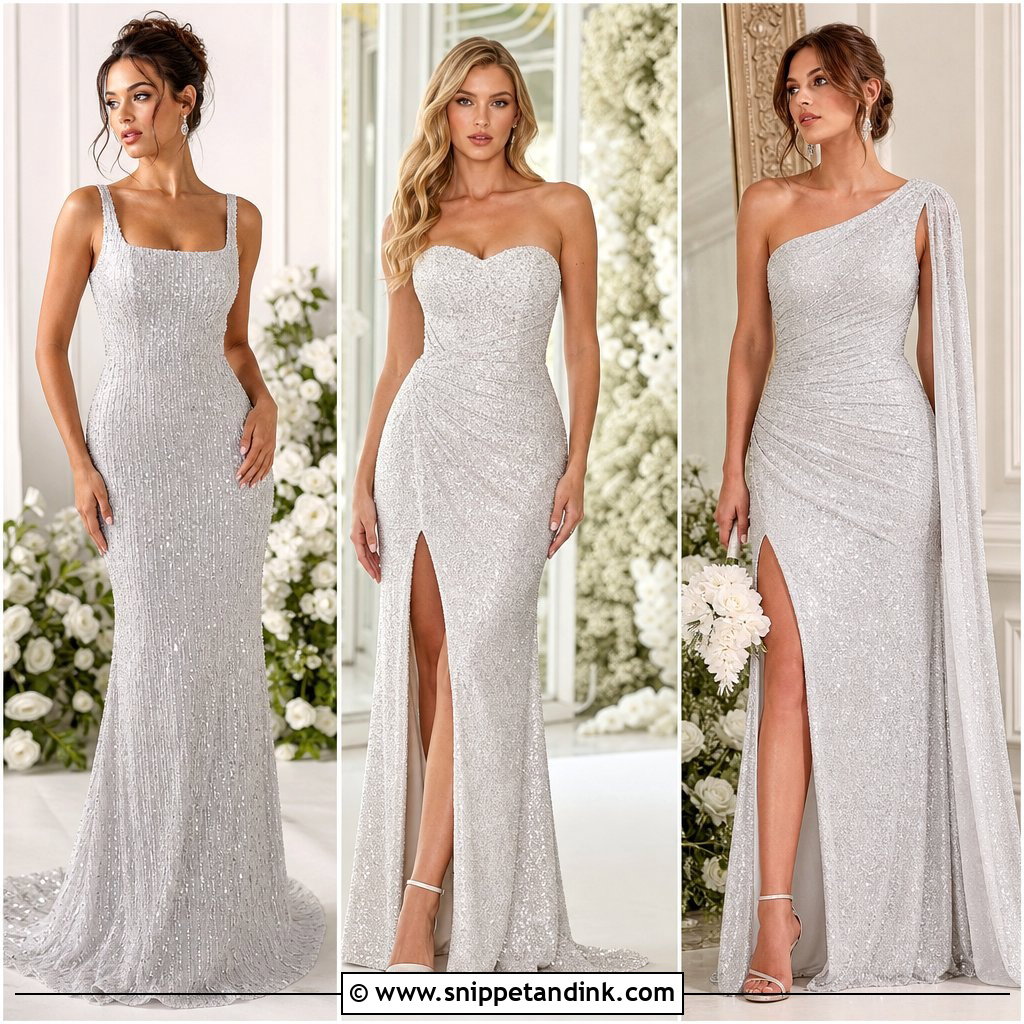
20. Corset Wedding Dress
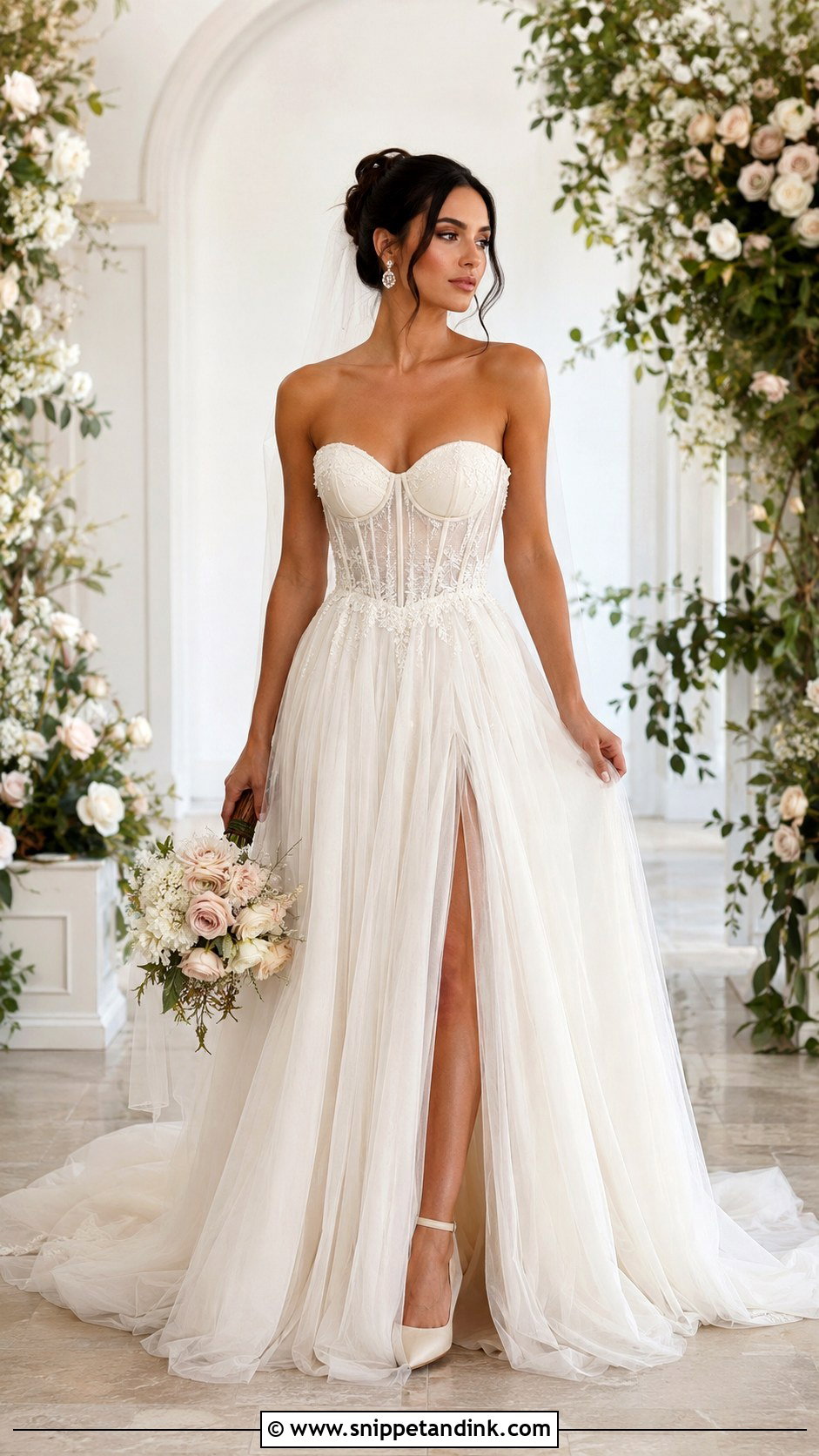
Corset gowns pair structure with a defined waist, and with soft skirts, lace overlays or clean satin they look more elegant than dramatic. Visible boning reads fashion-forward; hidden structure looks classic. The bodice is the detail, so avoid heavy necklaces and wear soft earrings, a simple veil and heels that match the dress tone. A loose updo or soft waves balance the structure. The fit test is the same every time: breathe deeply, sit and reach forward. If it pinches, have it adjusted before the day.
21. Drop Waist Wedding Dress
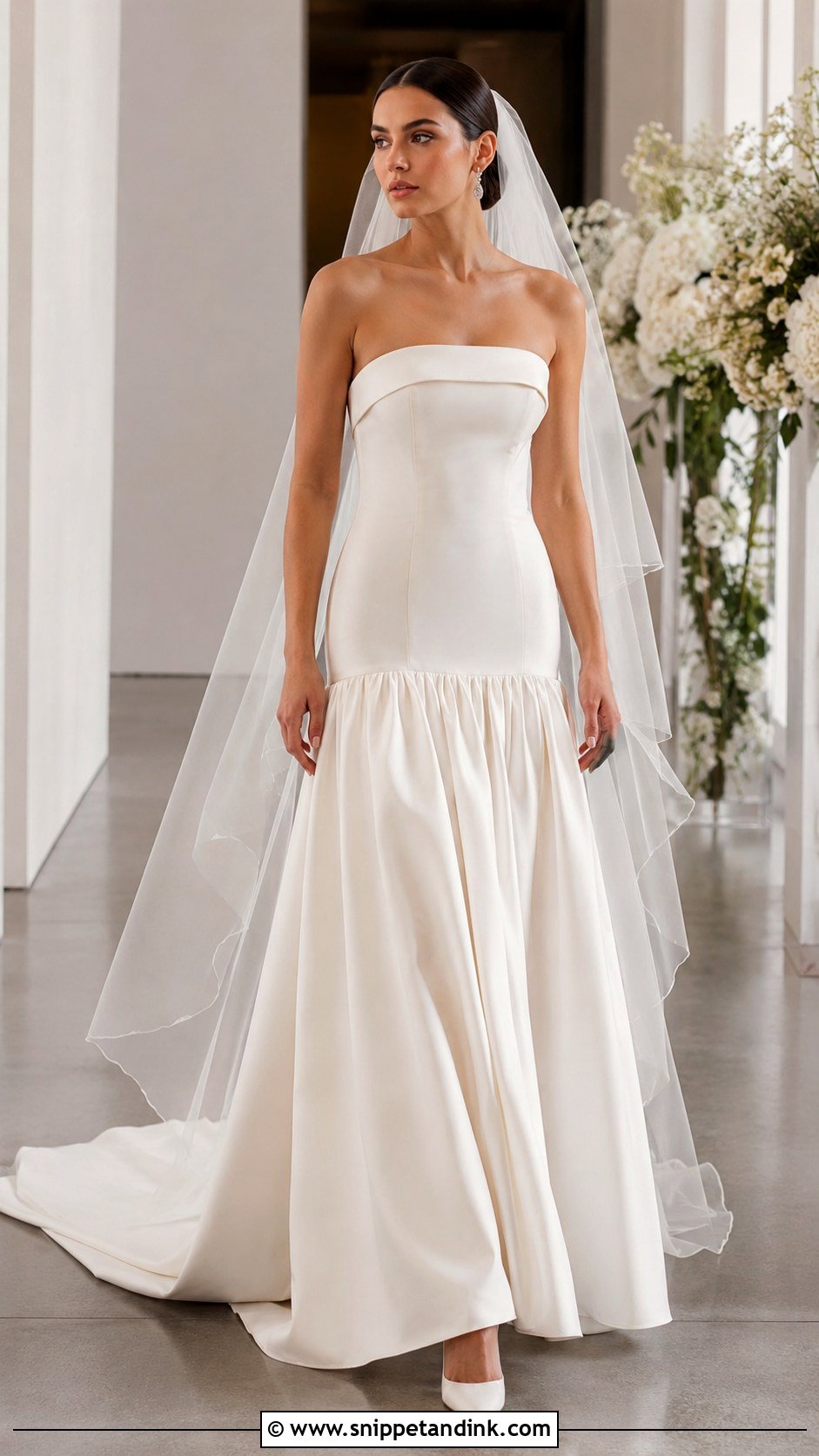
A drop waist runs the bodice past your natural waist before the skirt begins, giving a long, sleek shape with a hint of vintage. Satin, mikado, lace and tulle all suit it. As a ball gown it’s dramatic; as an A-line it’s softer and easier to wear. It’s a demanding silhouette to fit, because the seam has to land at the same point on your hips all the way round, so book enough fittings. Pointed heels, refined earrings, a veil matching the gown’s formality and a clean bouquet finish it.
22. Sheath Wedding Dress
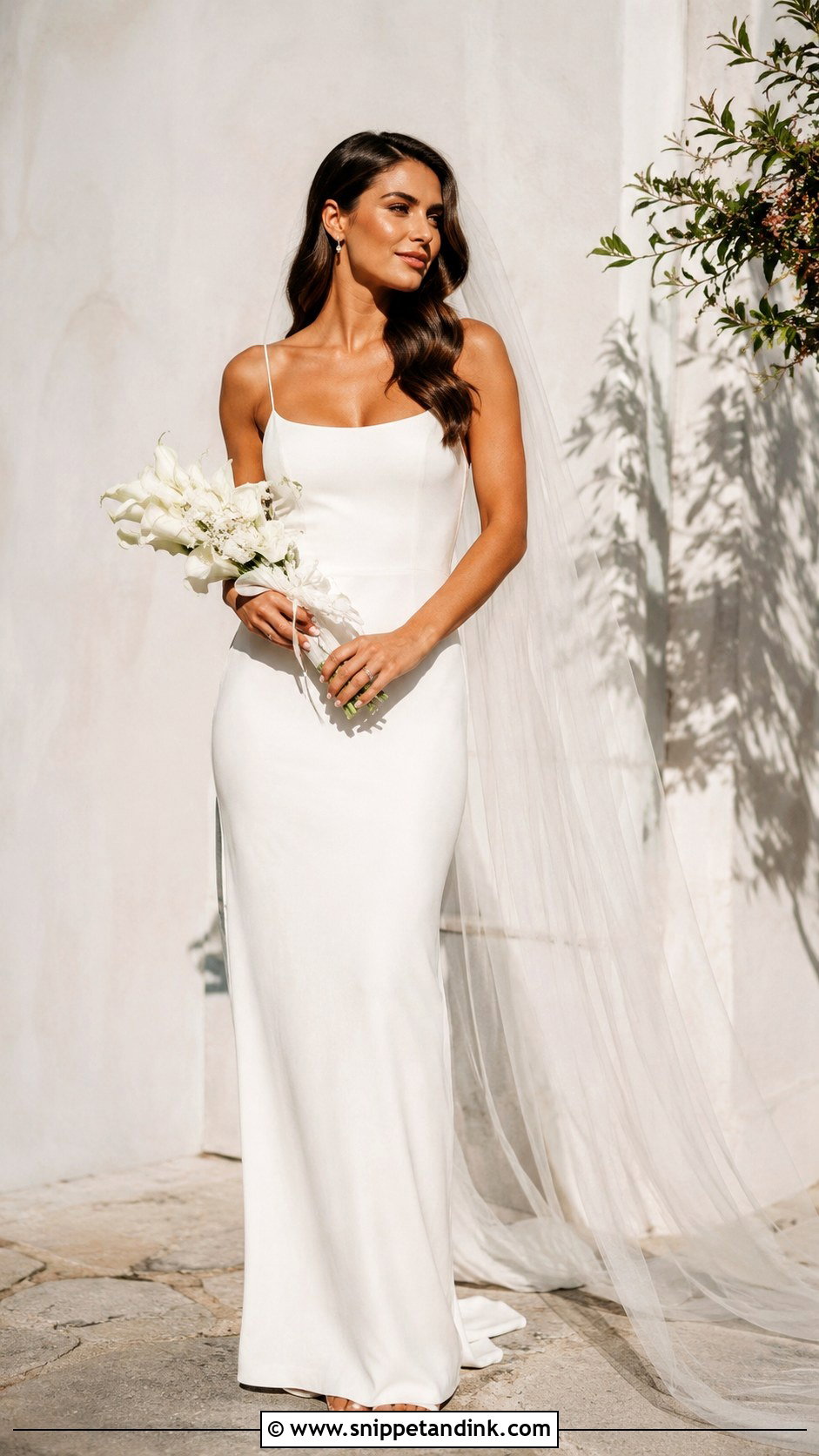
A sheath follows your natural line without any flare. It’s easy to wear at beaches, courthouses, small venues and city celebrations, in crepe, satin, lace or silk. Because it’s slim, choose fabric with enough body or a good lining so it doesn’t cling, and check it from behind in a mirror. Sleek heels, a long veil and minimal jewelry suit it; a low bun, polished waves or a clean ponytail all work. A narrow bouquet keeps everything streamlined.
23. Two Piece Wedding Dress
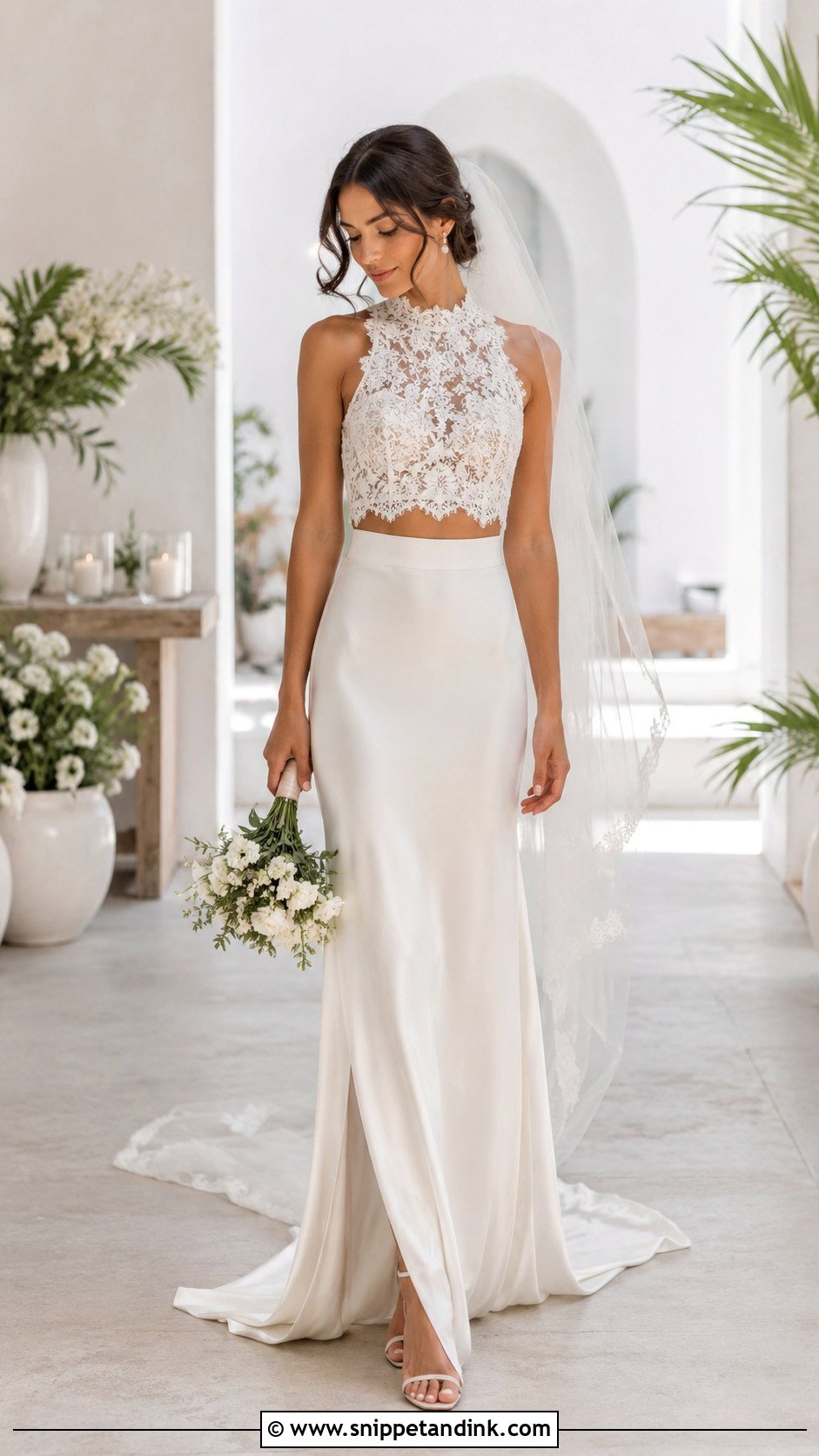
Separates let you mix fabrics and rewear part of the outfit later: a crop top with a full skirt, a lace top with satin, or a structured bodice over a flowing skirt. They suit destination weddings and modern venues. The tricky part is color. Ivory, white and cream from different fabrics rarely match exactly, so I check the two pieces together in daylight before buying. Clean heels, refined earrings and a veil or hair bow finish it. Lift your arms in front of the mirror as well, to see how much skin shows at the waist.
24. Wedding Jumpsuit With Overskirt
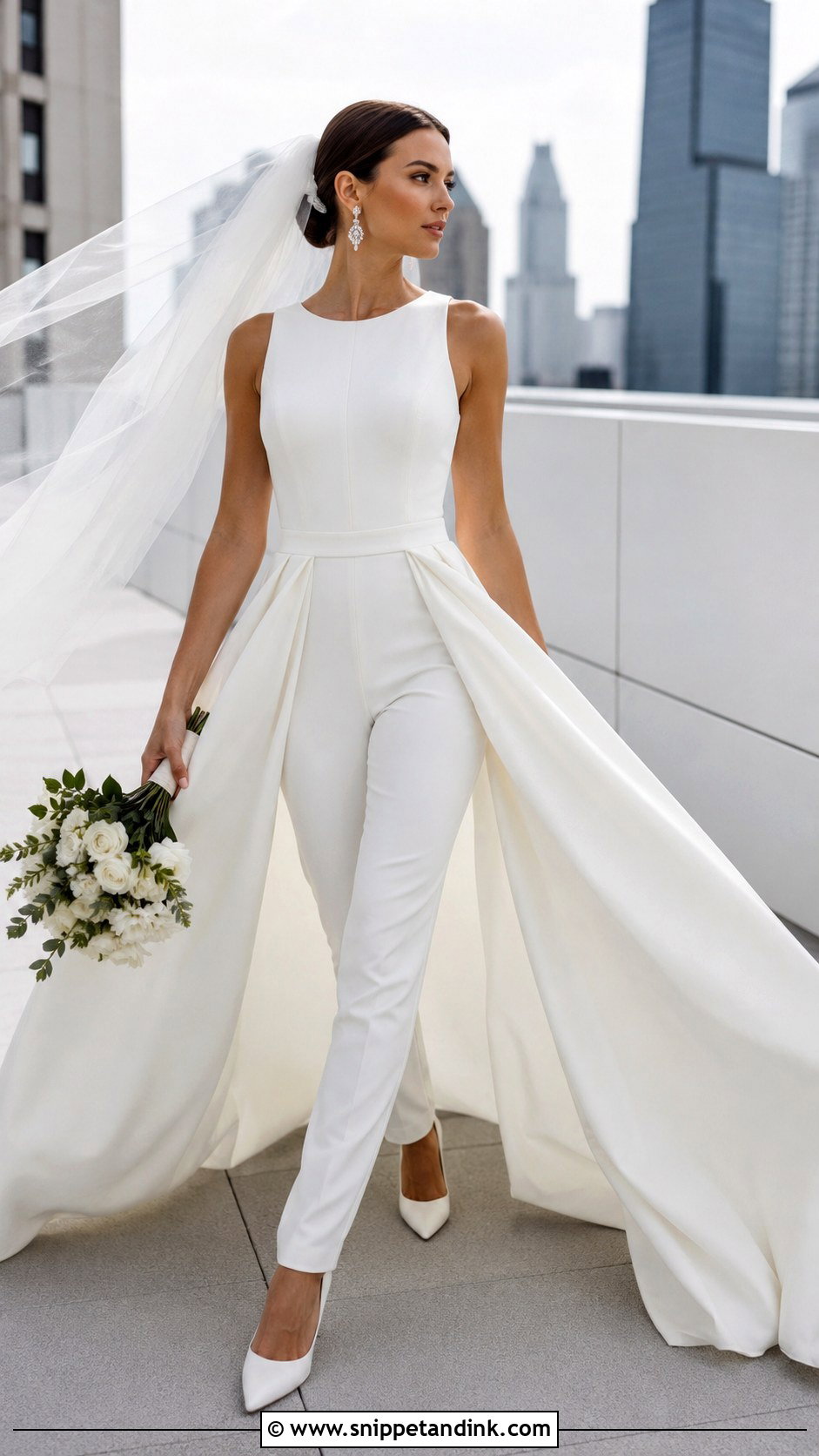
A wedding jumpsuit with overskirt gives you a gown-like entrance and trousers for the party. The jumpsuit is the sleek base; the detachable overskirt adds volume for the ceremony and comes off after photos or the first dance. Crepe, satin or a tailored fabric keep it polished, with pointed heels, statement earrings and a smooth veil or cape. One practical thing: restroom trips in a jumpsuit mean undressing almost entirely, so choose a zip you can reach yourself or plan for a helper. It suits courthouses, city venues and rooftops.

25. Reception Wedding Dress
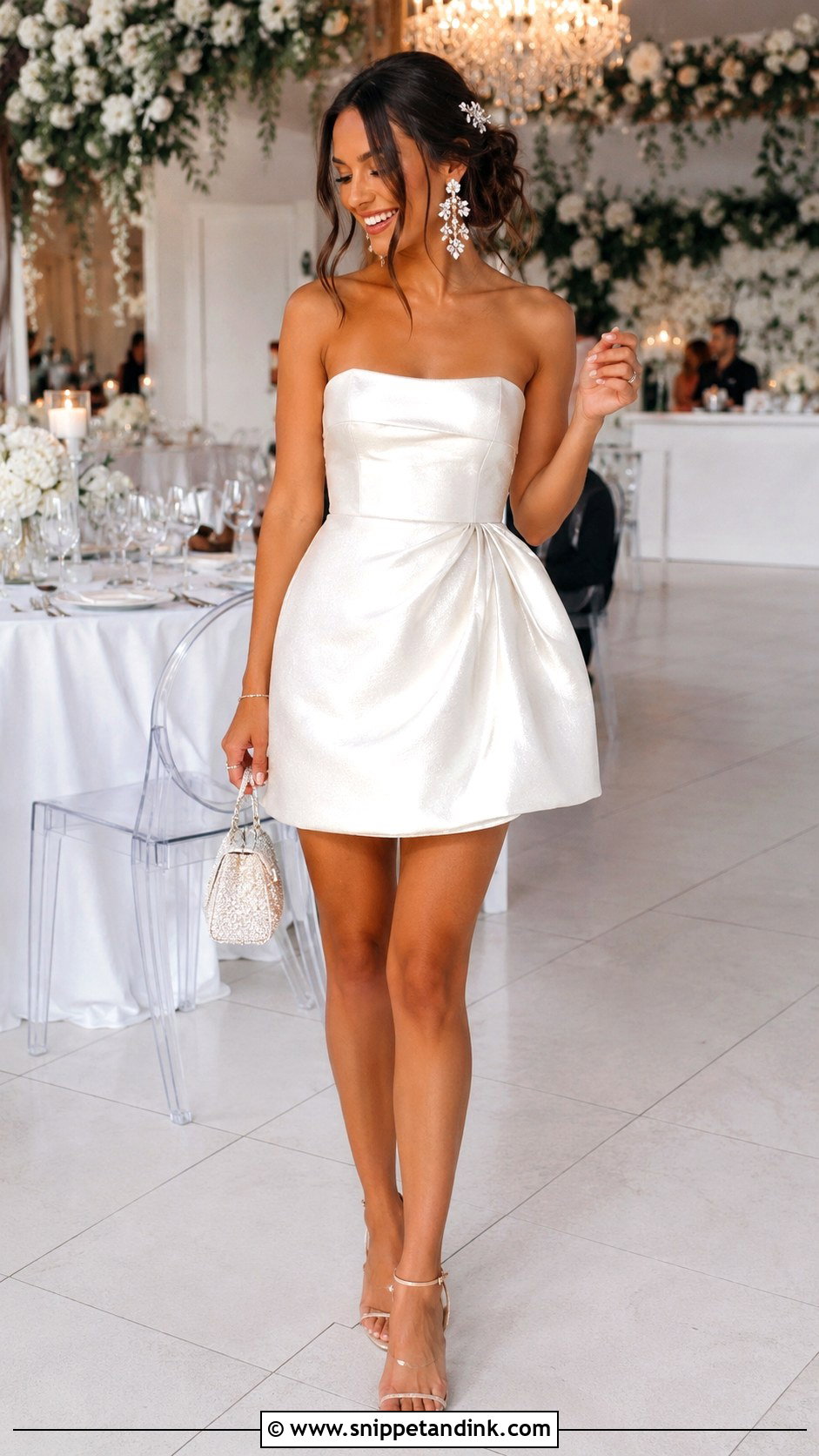
A reception wedding dress is for dancing. Short, midi, fitted, sparkly, feather-trimmed or plain satin, it should be lighter than the ceremony gown and still clearly bridal. If the first dress was traditional, this is where texture, shine or a playful hem can show more of you. Comfortable heels, party earrings and a smaller hair accessory suit it. Keep a small bag nearby with lipstick, blotting papers and your phone, and the evening is yours.
Matching the Veil to the Gown, Shade First
A veil is often bought separately from the dress, and it’s where mismatches show up most. Bridal fabrics come in many shades of white, ivory and champagne, and tulle comes in its own range. Hold veil samples against the gown itself, not a swatch book, and look in daylight.
Length against the train
A veil should either end clearly before the hem or run past the train on purpose. Stopping a few inches short of the train’s end looks like a mistake. A cathedral veil over a chapel train makes a long, layered line, while a fingertip veil over a busy lace back leaves the detail on show.
Edging and detail
Match the veil’s edge to the gown’s level of detail. A plain cut edge suits satin and crepe. A lace or beaded edge echoes a lace gown but can compete with heavy beading. If the back of the gown is its main feature, choose sheer, plain tulle so the detail shows through, and place the comb lower on the head so the tulle falls away from it.
Put It On, Walk, Sit, Then Decide
A complete bridal look is easier to judge than a dress on a hanger. The gown should suit your venue, season, comfort and taste, and the way you want to feel walking down the aisle. Some brides are happiest in satin or lace; others in sleek crepe, a short reception dress or a modern jumpsuit with an overskirt. Use these looks as a starting point, then work on fit, fabric, movement and styling until the outfit feels like you.
You'll Like These Ideas:




Leave a Reply