
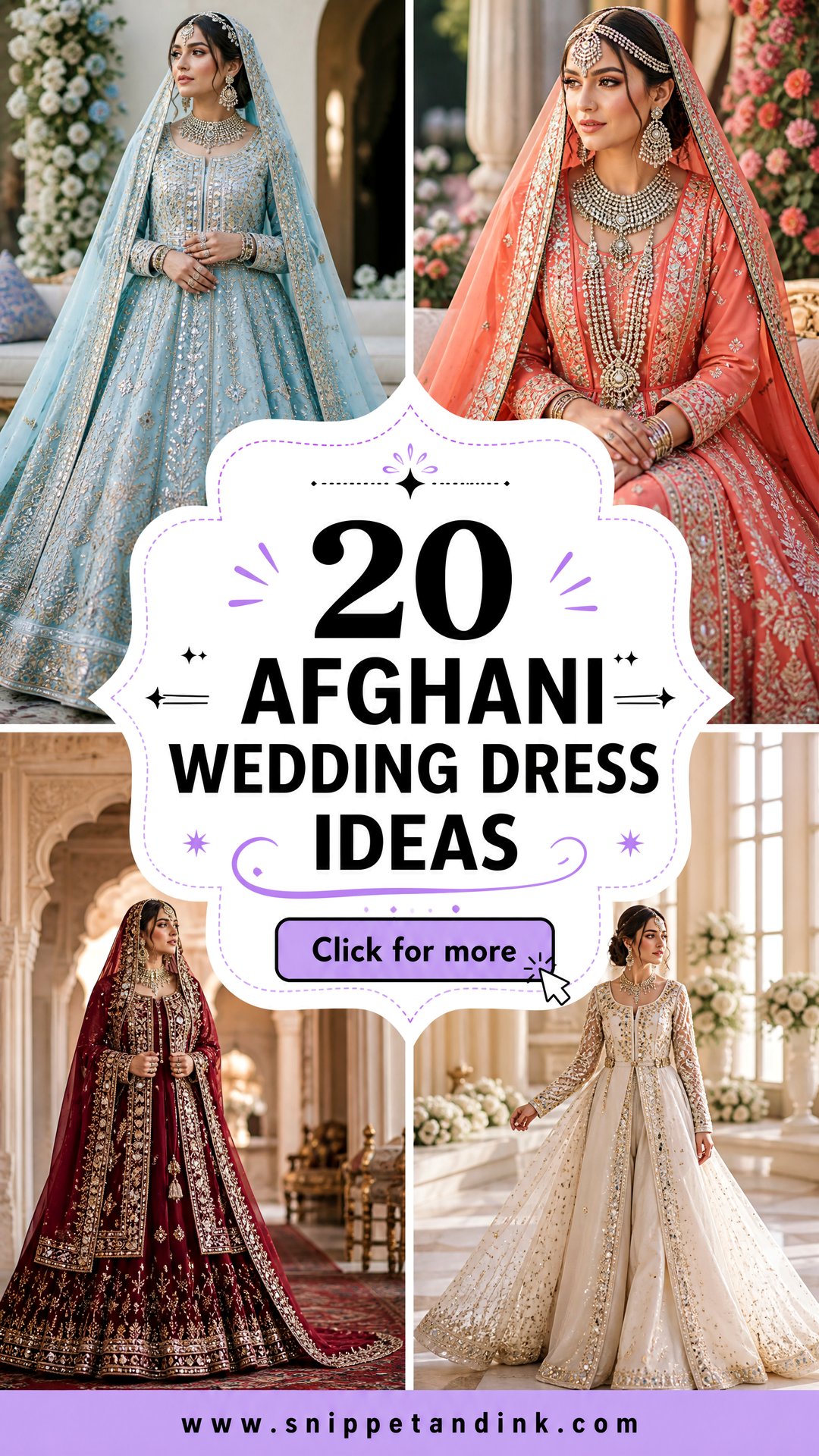
Afghan bridal fashion is known for its embroidery, beadwork, metallic detail and saturated textiles, and newer designers keep folding those into modern gown shapes. That gives a bride a lot of room. Below are 20 complete looks for the nikah, the henna night, the reception and the family gatherings around them, from crimson classics to ivory gowns, plus a few separates like gharara and lehenga sets. Before falling for a color, I ask brides to think about four practical things: how much sleeve coverage the family expects, how heavy the fabric will be after hours of wear, how much jewelry the neckline can take and whether she can walk comfortably in the hem.
Gharara, Lehenga, Firaq Partug or a Gown?
This list mixes one-piece dresses with separates, and they behave very differently over a long day. I help brides decide by what they’ll actually be doing, not just by what they like in pictures.
If she will dance most of the night
A gharara or firaq partug is easiest. Trousers underneath mean she can spin without worrying about a skirt lifting, and the weight sits closer to the body. The catch with a gharara is the knee joint: it has to be set at her actual knee or every step pulls.
If she wants adjustability
A lehenga is three pieces, so a tailor can alter the blouse without touching the skirt, and a different dupatta can change the look for a second event. Its weakness is the waistband, which carries the whole skirt and can dig in by evening.
If the portraits matter most
A one-piece gown or a dress with a cape or train gives the cleanest line in photos. I’d pair it with a lighter second outfit for dancing, or choose the detachable train idea so the volume comes off when the formal part ends.
1. Red Afghani Wedding Dress With Gold Embroidery
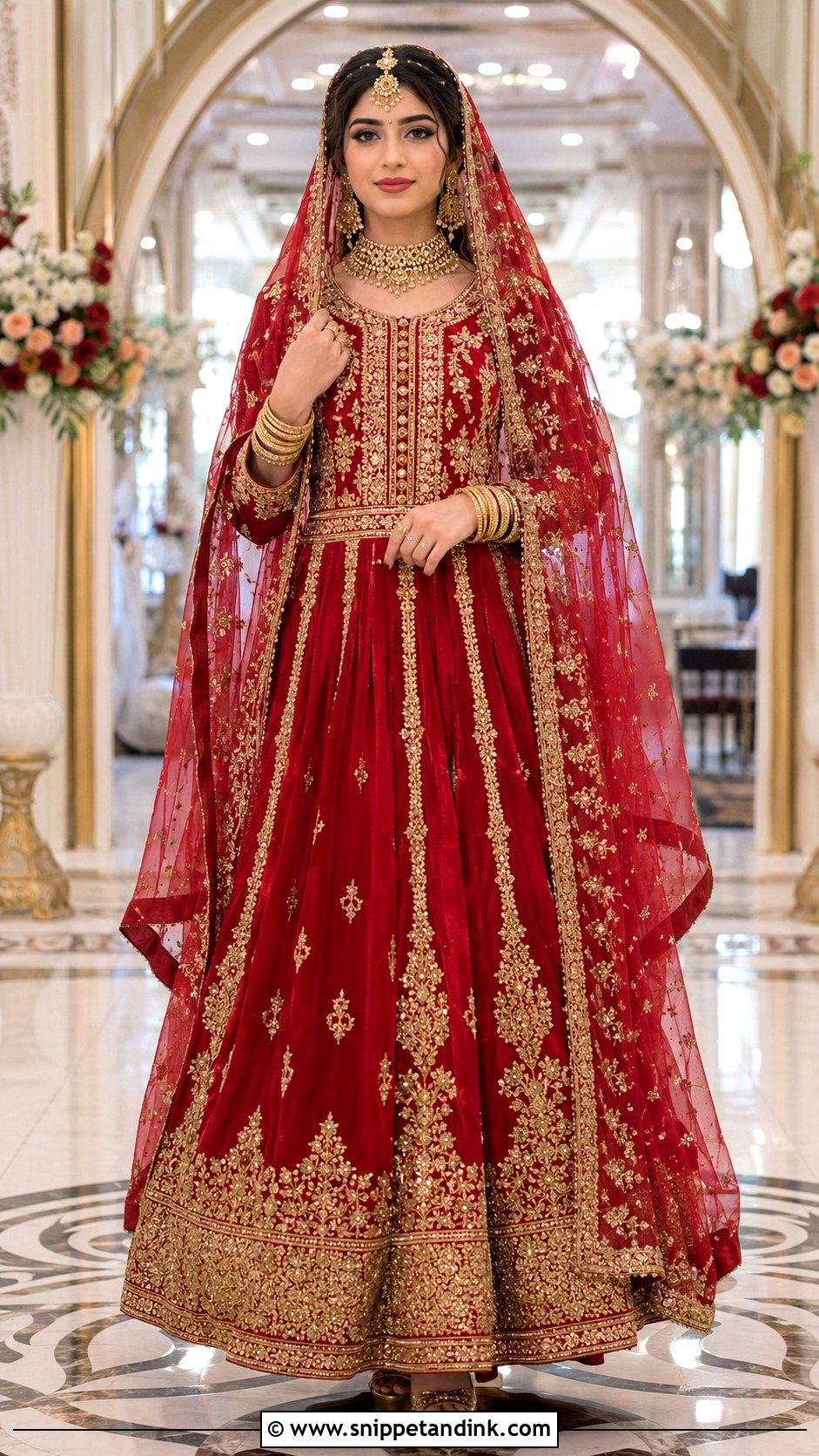
A deep red dress with gold embroidery is the formal anchor of many Afghan weddings, usually saved for the main reception. Ask for a fitted embroidered bodice, long sleeves and a generous flare, with gold work framing the neckline, cuffs, waist and hem rather than covering everything equally. That spacing is what makes it look expensive instead of busy. A red dupatta edged in gold, a gold choker, drop earrings, forehead jewelry and stacked bangles complete it. Under a long skirt, I’d choose pointed gold flats or a low block heel; she’ll be standing for greetings far longer than she expects.
2. Green Afghani Wedding Dress For Henna Night
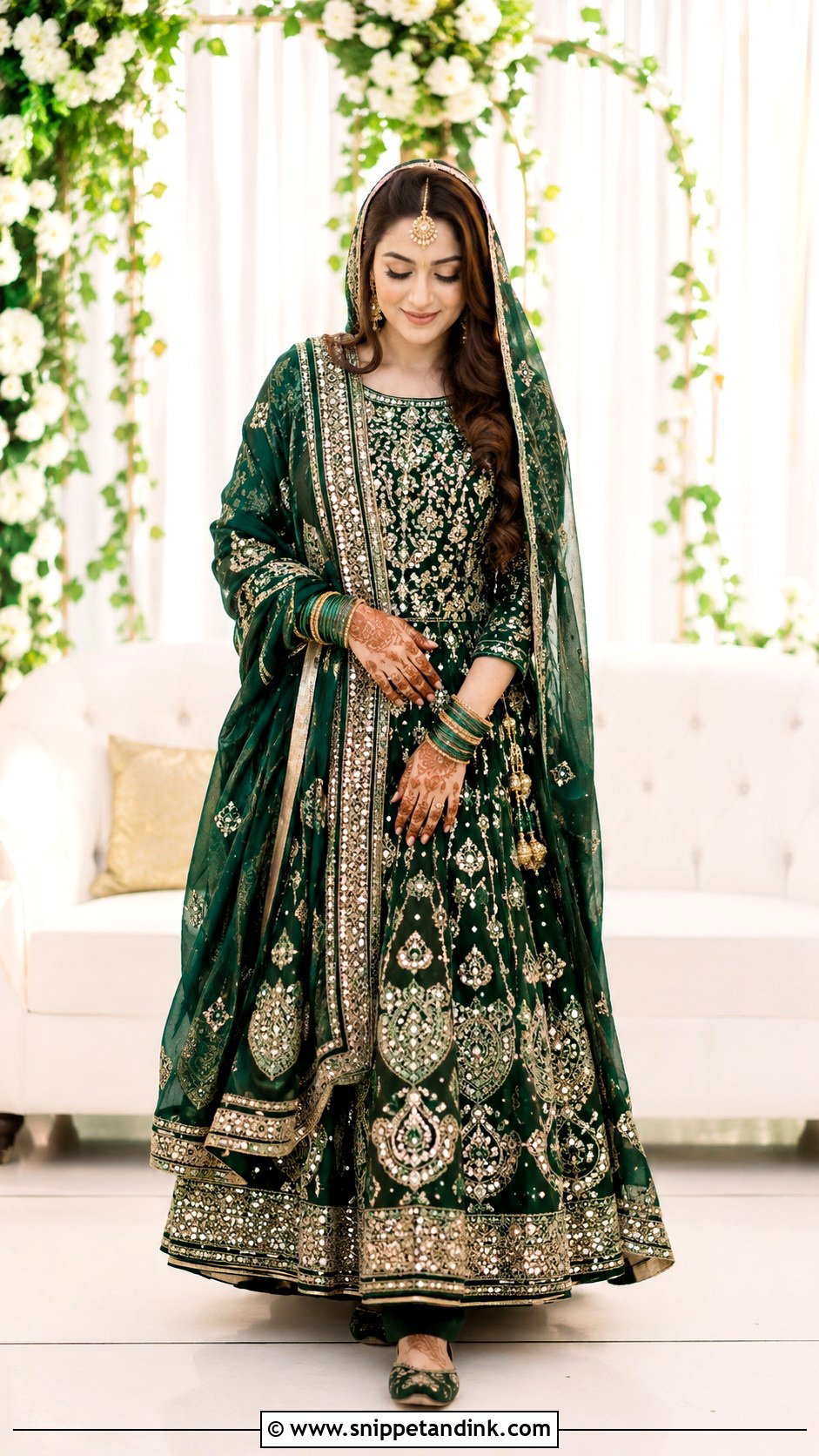
Emerald with gold and colorful handwork is a classic henna-night choice, but green isn’t universal and some families have their own preferences for this evening, so I always ask before ordering. A shaped bodice, flowing skirt and embroidered sleeves suit the dancing. Small mirrors or contrasting thread add movement without crowding the dress. A light green dupatta that can sit over the hair or one shoulder, gold earrings, bangles and a fine forehead piece finish it. Embroidered flats are the practical choice, and soft waves or a low bun give the dupatta something to grip.
3. White Afghani Wedding Dress With Green Details
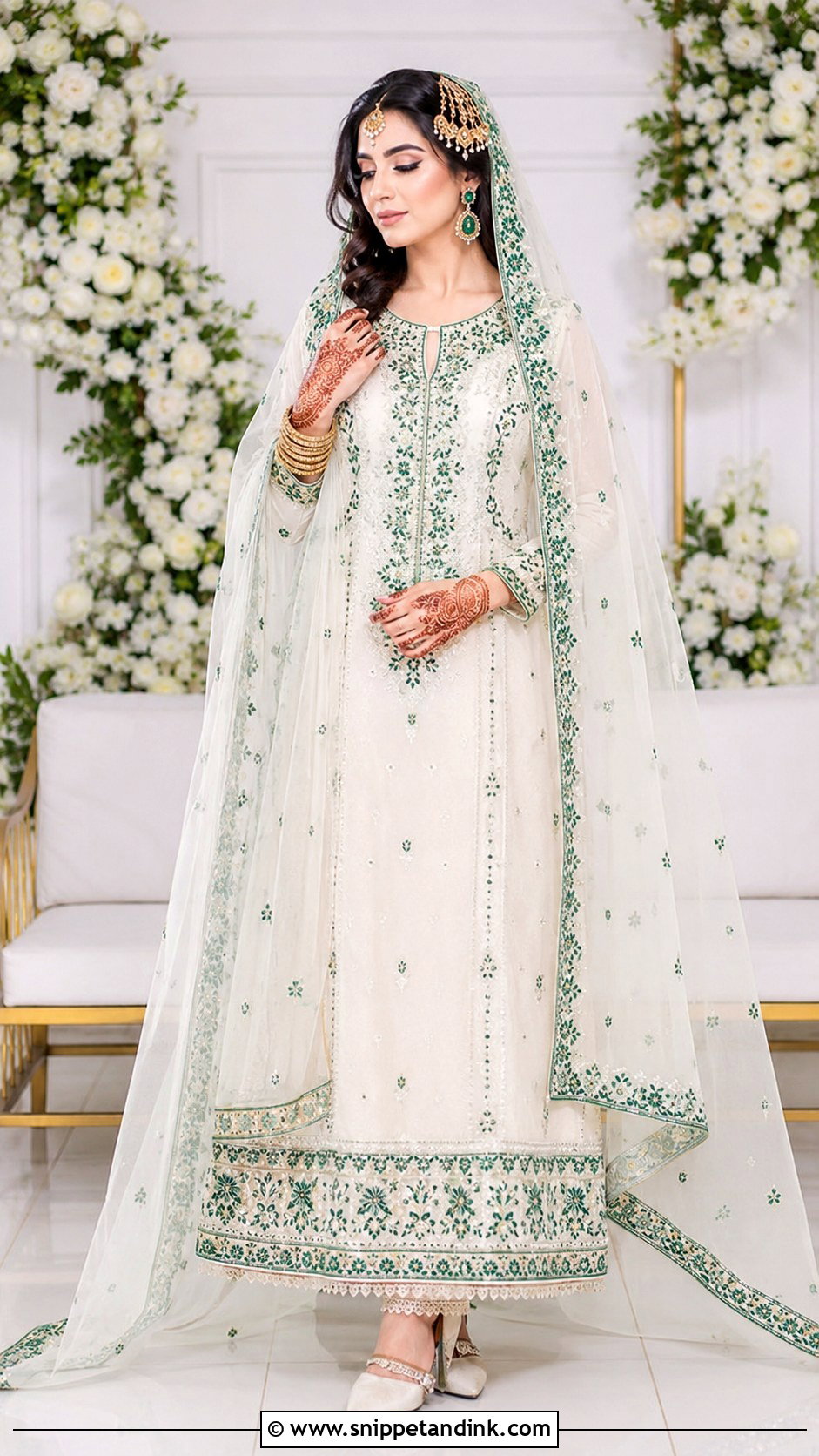
Ivory with green embroidery is a good bridge when a bride wants a white silhouette but the family still wants color at a nikah or contemporary Afghan wedding ceremony. A modest neckline, fitted long sleeves and a softly structured skirt, with green work at the cuffs, bodice and hem. A sheer ivory veil with a narrow green and gold border brings the color up to her face, and emerald earrings make the link obvious. I’d test the green thread against the ivory in daylight first. A yellow-green next to warm ivory can look tired, while a true emerald stays crisp.
4. Burgundy Afghani Wedding Dress With Zardozi Work
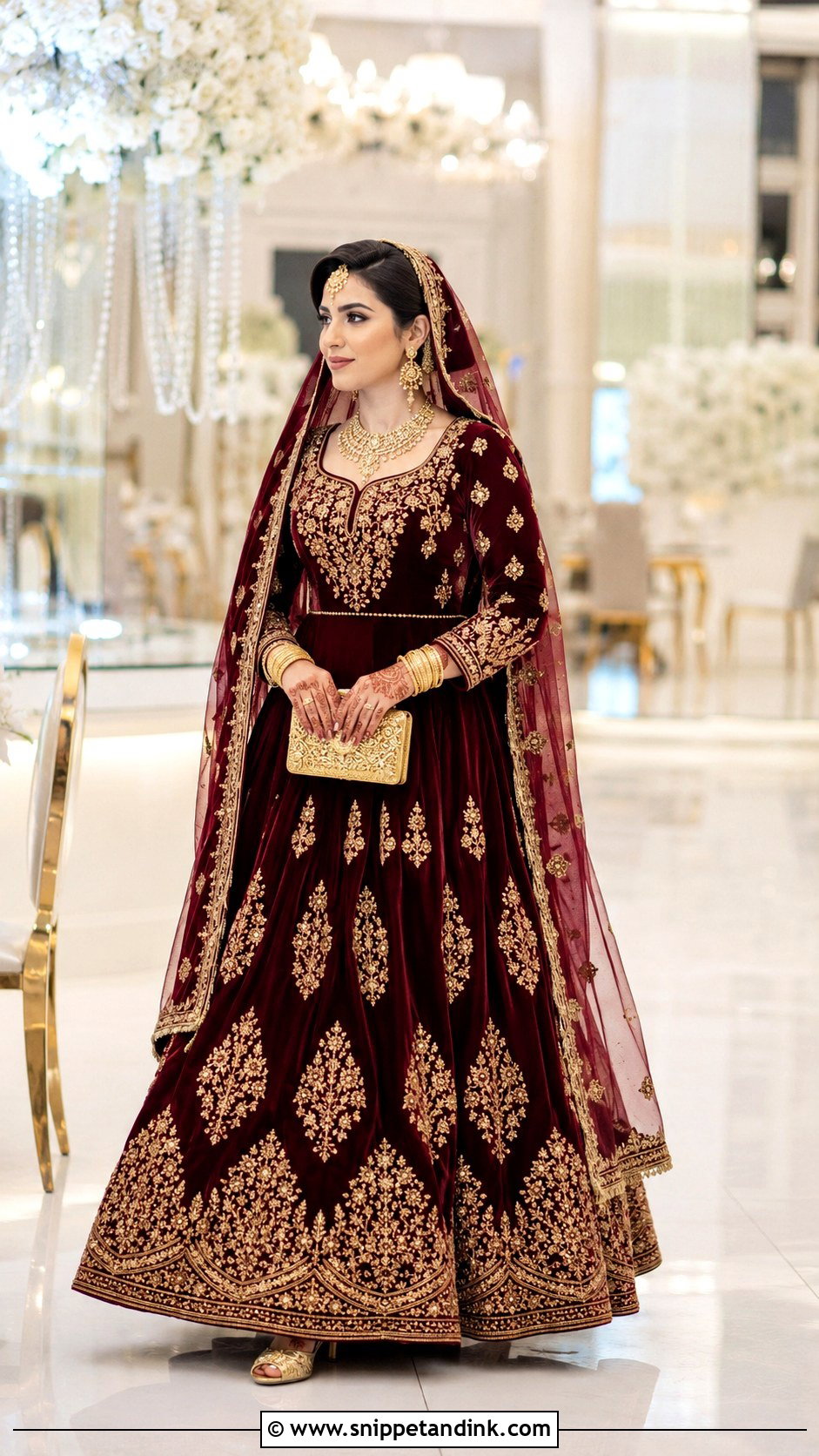
Burgundy velvet with gold zardozi-style work is heavy, and heavy dresses need structure. I ask for a skirt cut to fall smoothly rather than gathered thickly, because bulk at the waist on velvet adds width fast. Keep the metallic work at the neckline, waist, cuffs and skirt border. A burgundy veil with fine gold edging, antique-gold earrings, bangles and a structured clutch suit it. Low gold heels help, and a center-parted bun gives the veil a firm base. Warm brown eye makeup and a muted berry lip sit with the color instead of fighting it.
5. Royal Blue Afghani Wedding Dress With Silver Beading
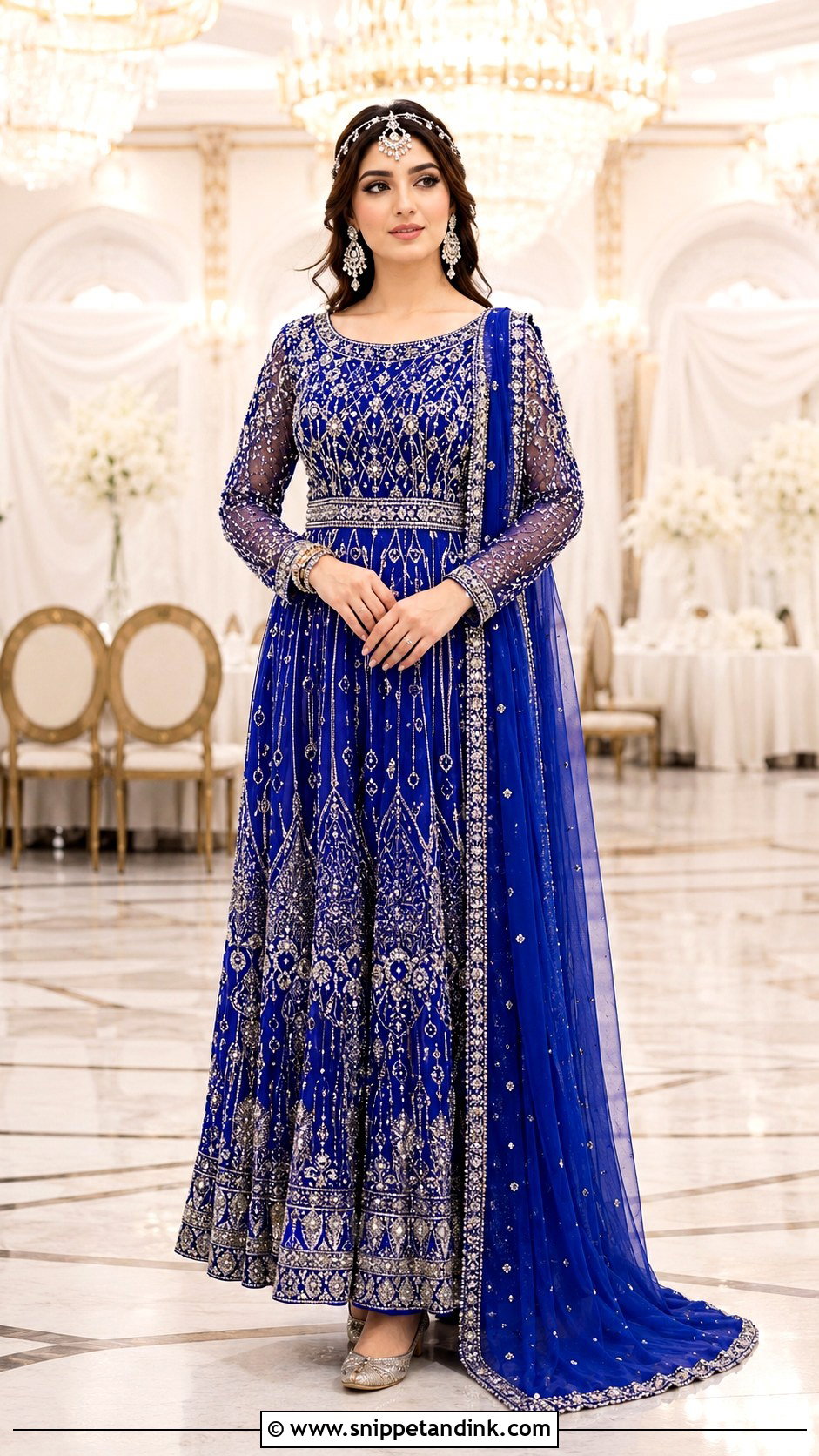
Royal blue and silver beading look sharp in a ballroom or a brightly lit hall, less so in dim candlelight, where blue drops toward black. A fitted waist, long sheer-lined sleeves and a flowing skirt carry silver embroidery that traces the bodice and runs lightly down the skirt to add length. The lining under sheer sleeves matters more than people think. Beads sewn onto unlined sheer fabric scratch and pull the weave, so I always ask for a soft lining. A blue dupatta with a narrow beaded edge, crystal earrings, a silver headpiece and a smooth low bun are all it needs.
6. Pink Kuchi Afghani Wedding Dress
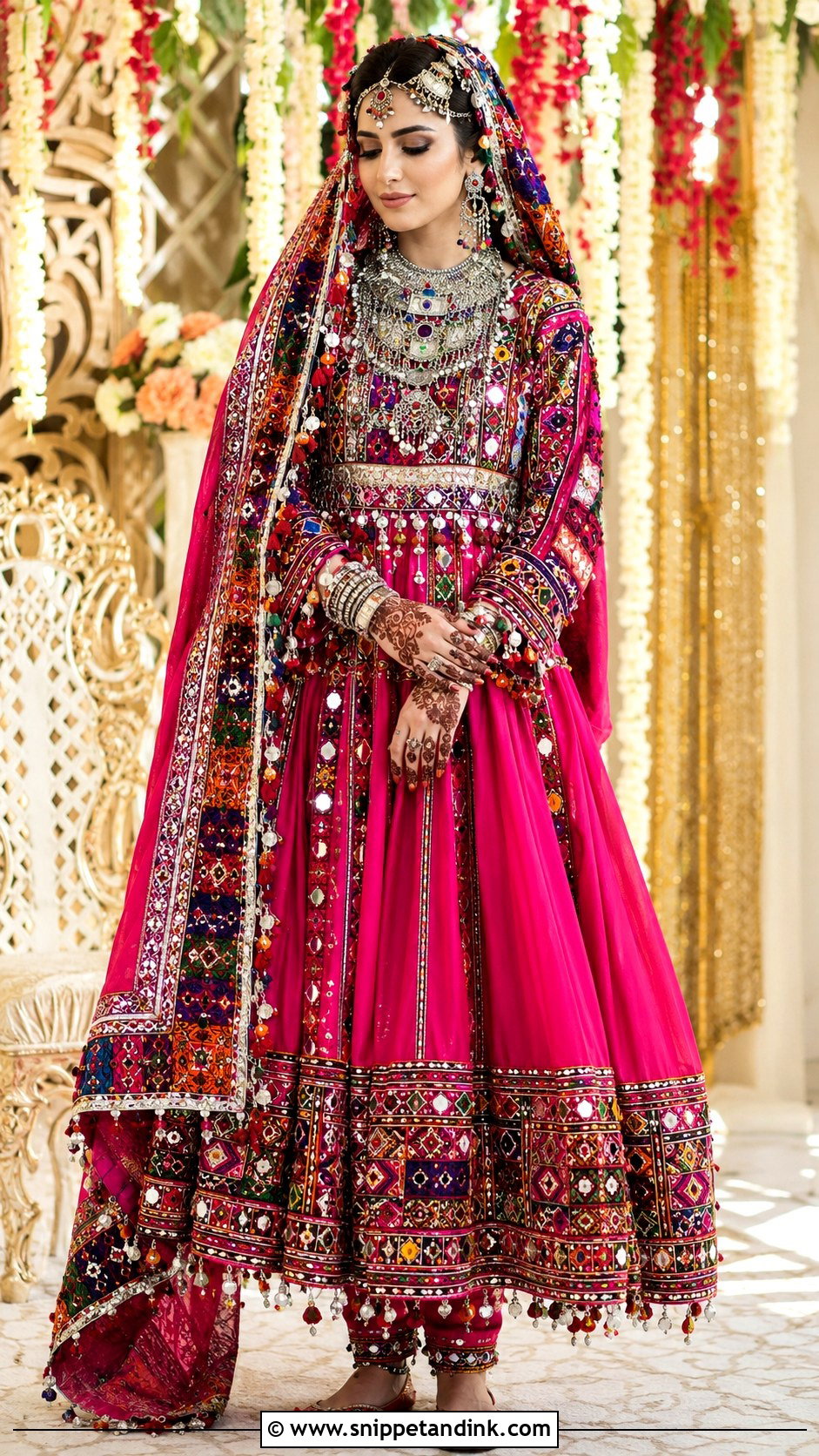
Kuchi dress has its own cultural identity, so a pink Kuchi-inspired outfit should be made with real craftsmanship and the guidance of someone who knows it, not assembled as a theme. Magenta or raspberry suits it, with a decorated bodice, embroidered panels and a wide skirt. Mirrors, beads, coins and multicolored thread go in selectively so each one can be seen. Some constructions need loose trousers underneath; check with the maker. Traditional-style silver jewelry, layered necklaces and bangles carry the look, and embroidered flats keep her dancing. I’d have her move in the coins before the day, since they swing and clink more than expected.
7. Teal Afghani Wedding Dress With Gold Jewelry
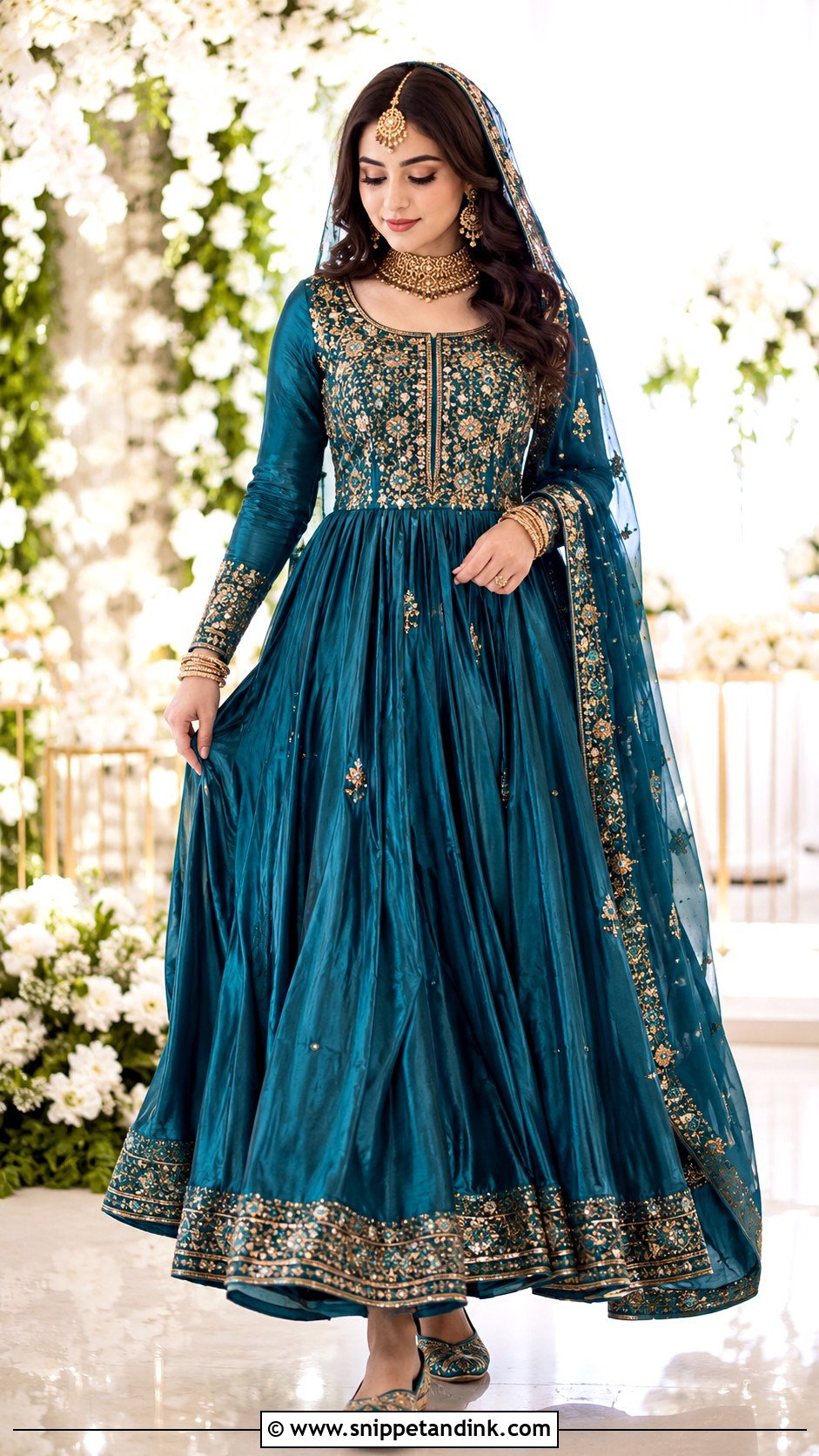
Teal sits easily with gold, which makes it one of the simplest colors to accessorize from a family jewelry box. A silk or satin dress with a structured embroidered bodice, fitted sleeves and a softly pleated skirt is the base. Keep the heavier gold work at the neckline and cuffs and scatter smaller motifs below. Drape a matching teal dupatta over the hair with one embroidered edge running down the arm. Satin shows every crease, so I’d have it steamed on site rather than packed in a bag the night before. Bronze eyes and a peachy lip suit the color.
8. Purple Velvet Afghani Wedding Dress
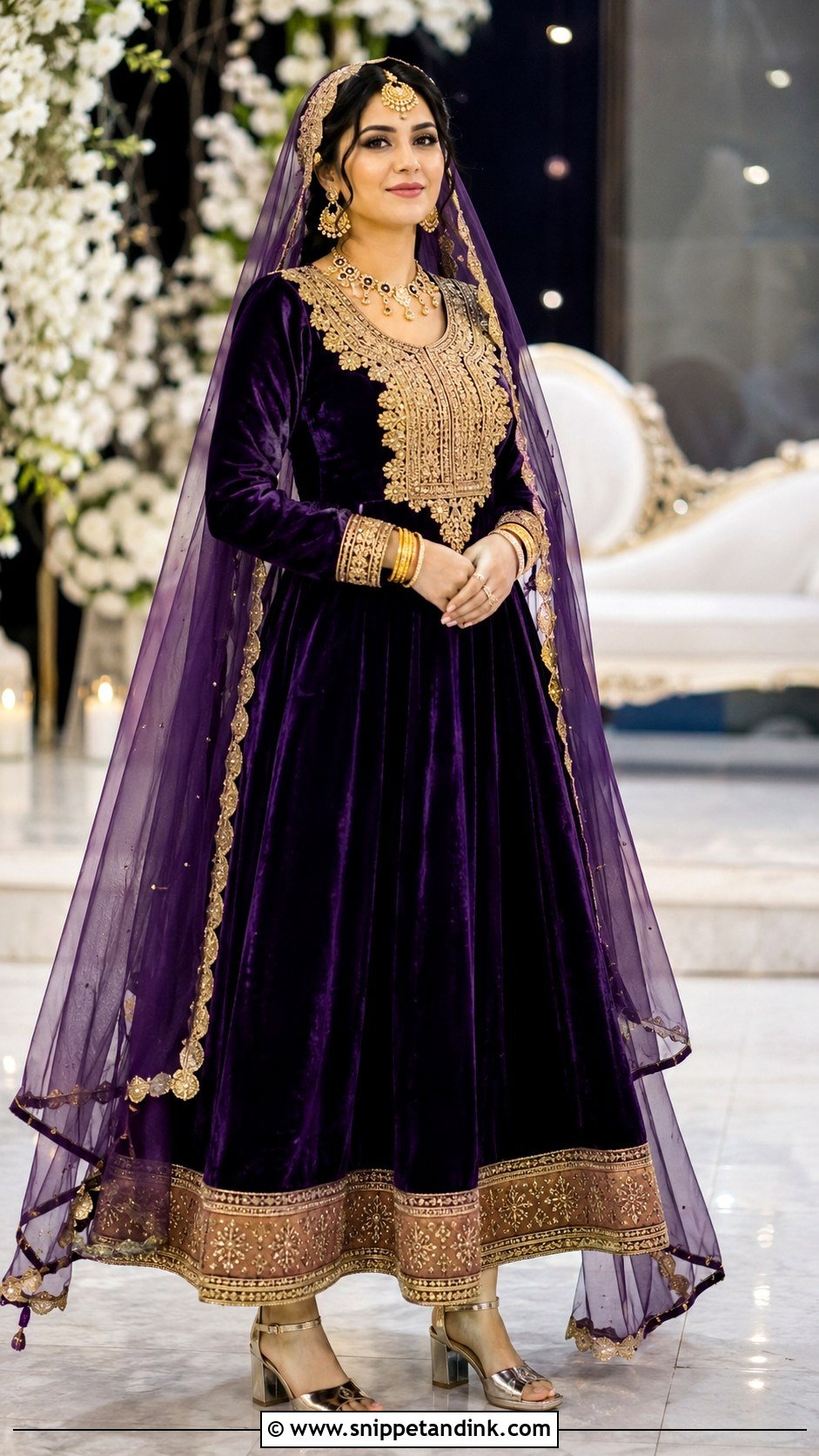
Velvet only makes sense in cool weather. In a warm hall it gets uncomfortable within the first hour. For a winter wedding, though, plum or deep violet velvet with fine gold or silver embroidery at the neckline, bodice and cuffs looks rich without needing much else. Don’t cover the velvet entirely; the pile is part of the effect. A lighter chiffon veil in the same color family keeps the head from feeling weighed down. A low braided bun supports the veil, and soft smoky eyes give enough definition for evening photos.
9. Gold Afghani Wedding Dress With Red Accessories
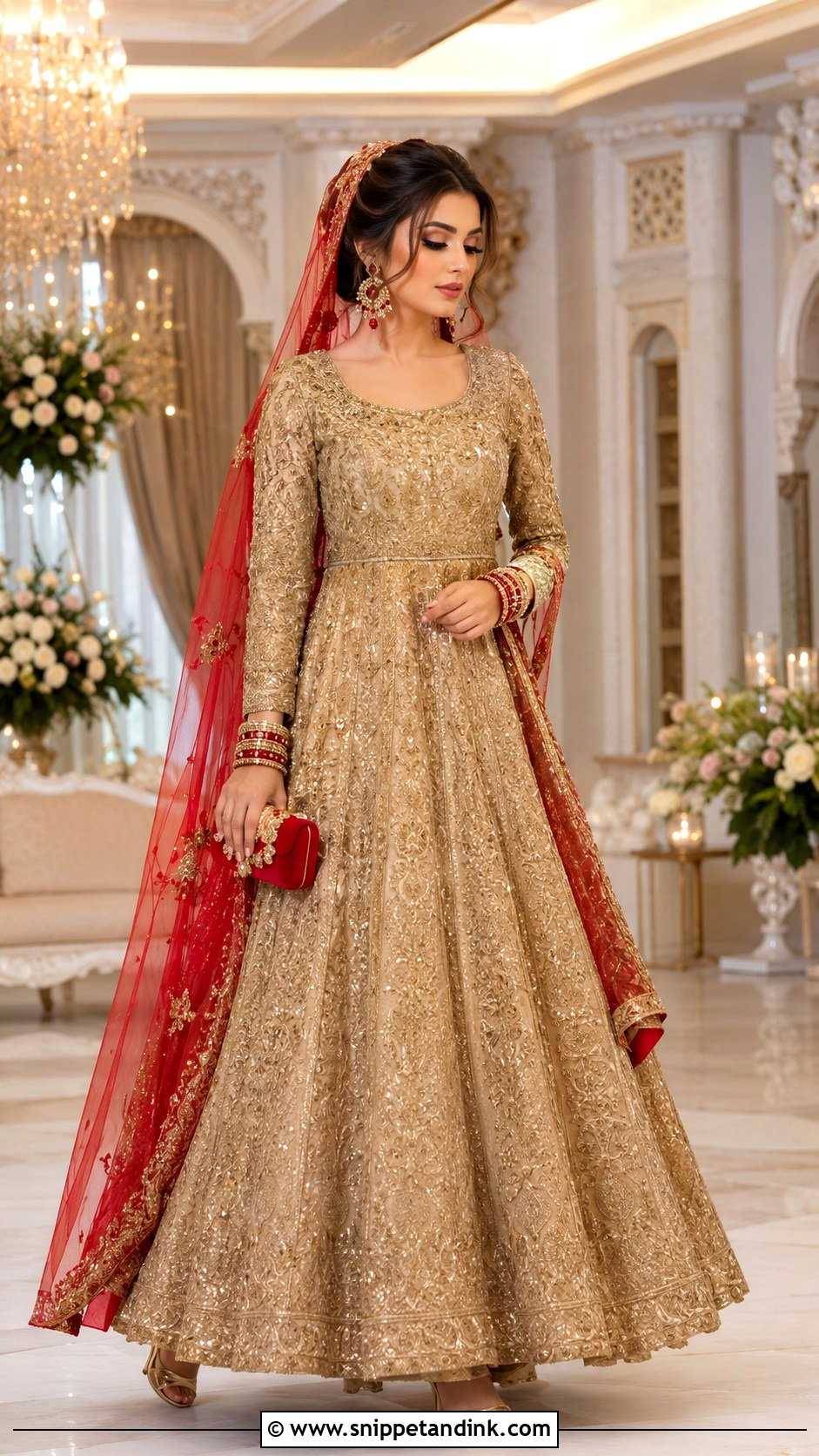
A gold gown needs contrast, and red accessories give it a focus. Start with a champagne-gold dress with long sleeves and an embroidered A-line skirt, mixing matte and metallic textures so it photographs with depth instead of as one shiny surface. Add a sheer red veil with a thin gold border, ruby-colored earrings, red-and-gold bangles and a small red clutch. I keep the red to those few places. Spread it any further and the gold stops reading as the main color. Bright neutral lighting suits it best.
10. Ivory Afghani Wedding Dress With Pearl Embroidery
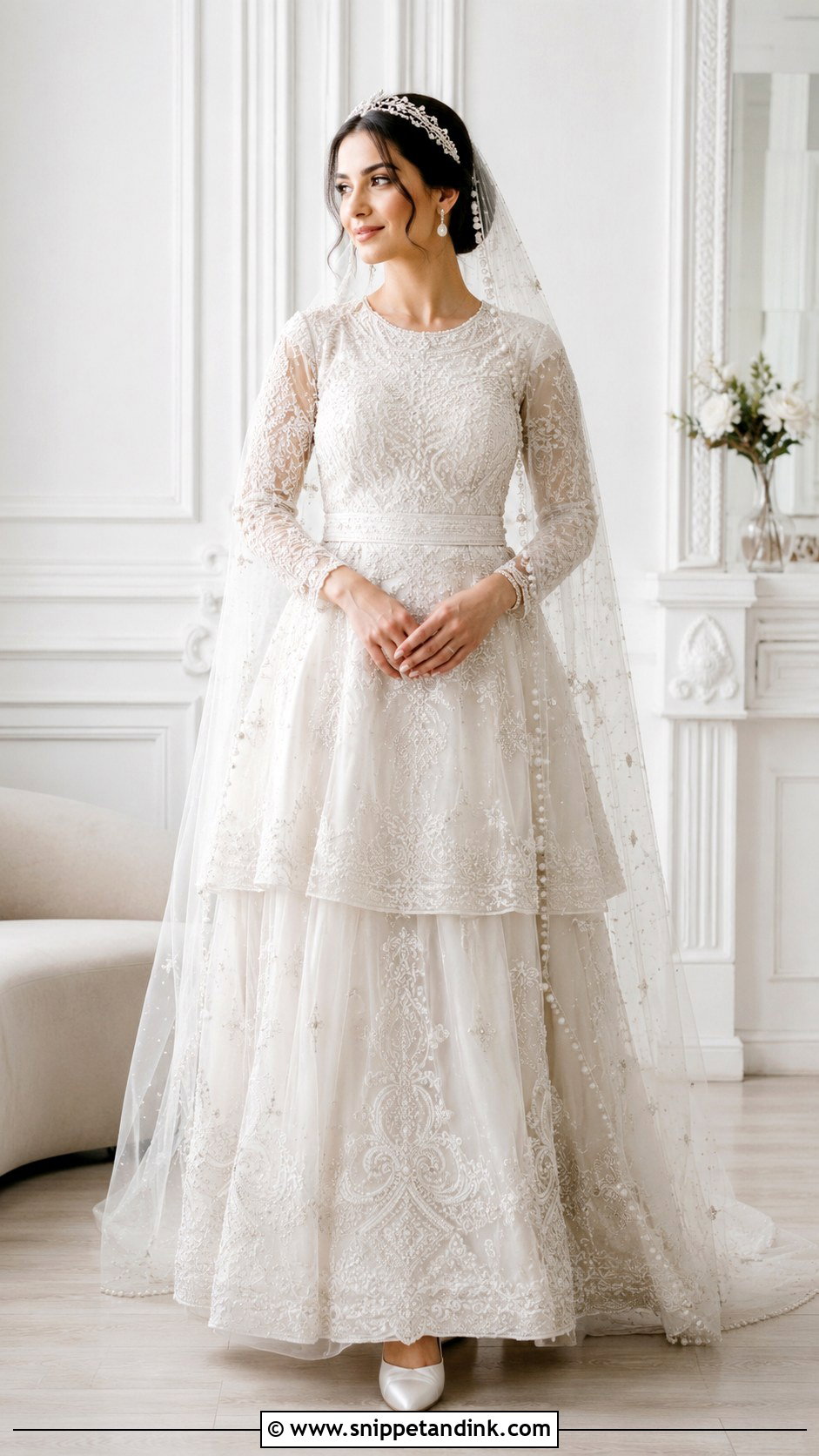
Pearl embroidery on ivory is quiet, and that’s its strength at a nikah or a minimalist reception. A modest fitted bodice, covered shoulders, full-length sleeves and a layered skirt, with pearls framing the neckline and cuffs before thinning out across the skirt. Densely sewn pearls add surprising weight to a veil edge, so I keep the beaded border narrow. Pearl drops, a fine bracelet and a delicate silver or white-gold headpiece suit the palette. Satin pumps look neat, but embellished flats are kinder for a long ceremony. Soft taupe eyes and a dusty rose lip sit well with ivory.
11. Red Afghani Wedding Gharara Outfit
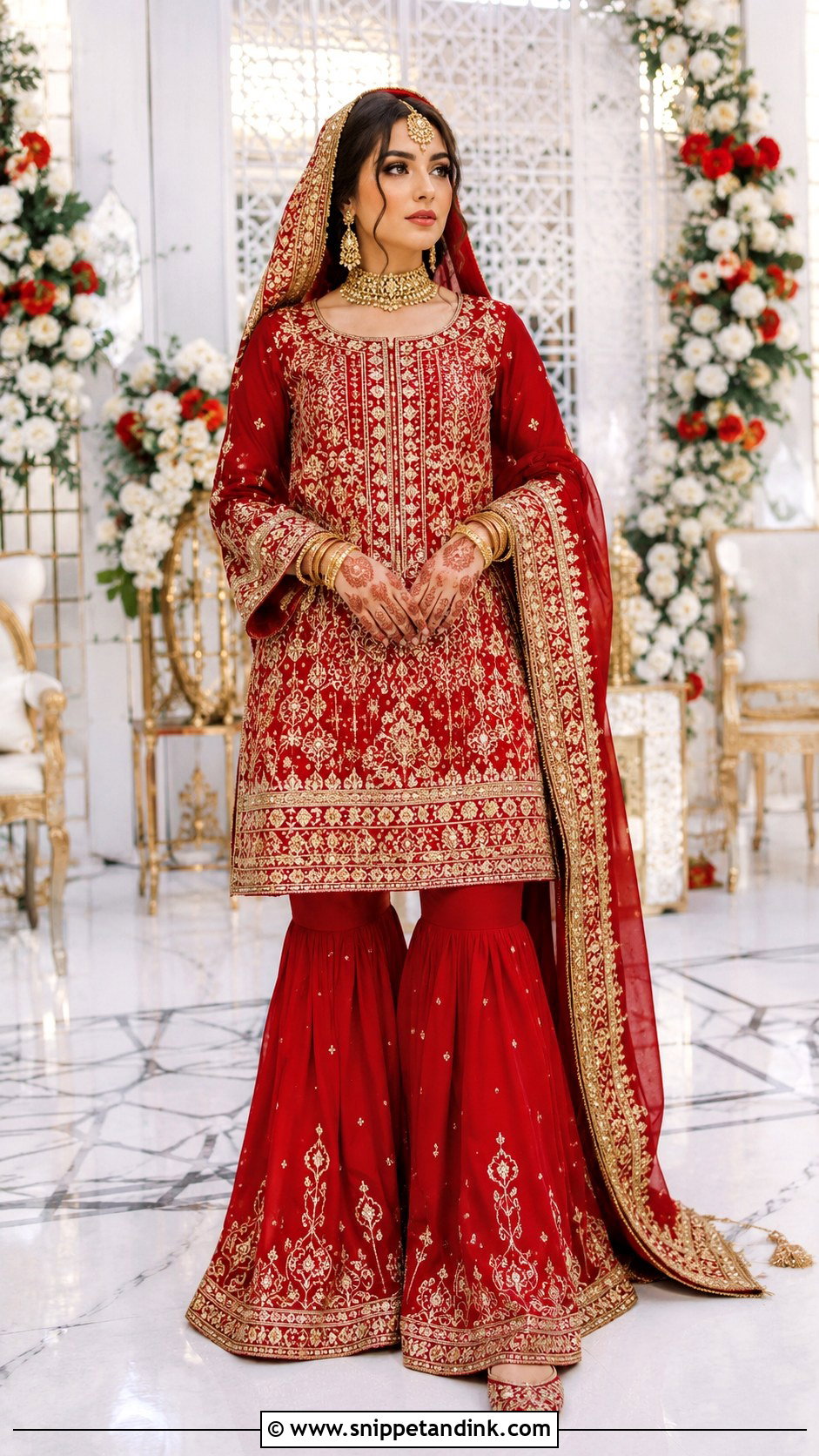
A gharara is a long embroidered tunic over dramatically flared trousers, gathered at the knee, and it moves differently from a skirt. Matching red satin, silk or brocade with gold trim at the knees and hems shows off the shape. The flare is wide, so narrow heels catch in it; pointed embroidered flats work far better. At the fitting I check the knee joint while she walks up and down a few steps, because a joint set too high pulls when she climbs onto a stage. A red dupatta with a gold border over the head and one shoulder, a choker, forehead jewelry and a sleek bun complete it.
12. Green Afghani Wedding Lehenga Outfit
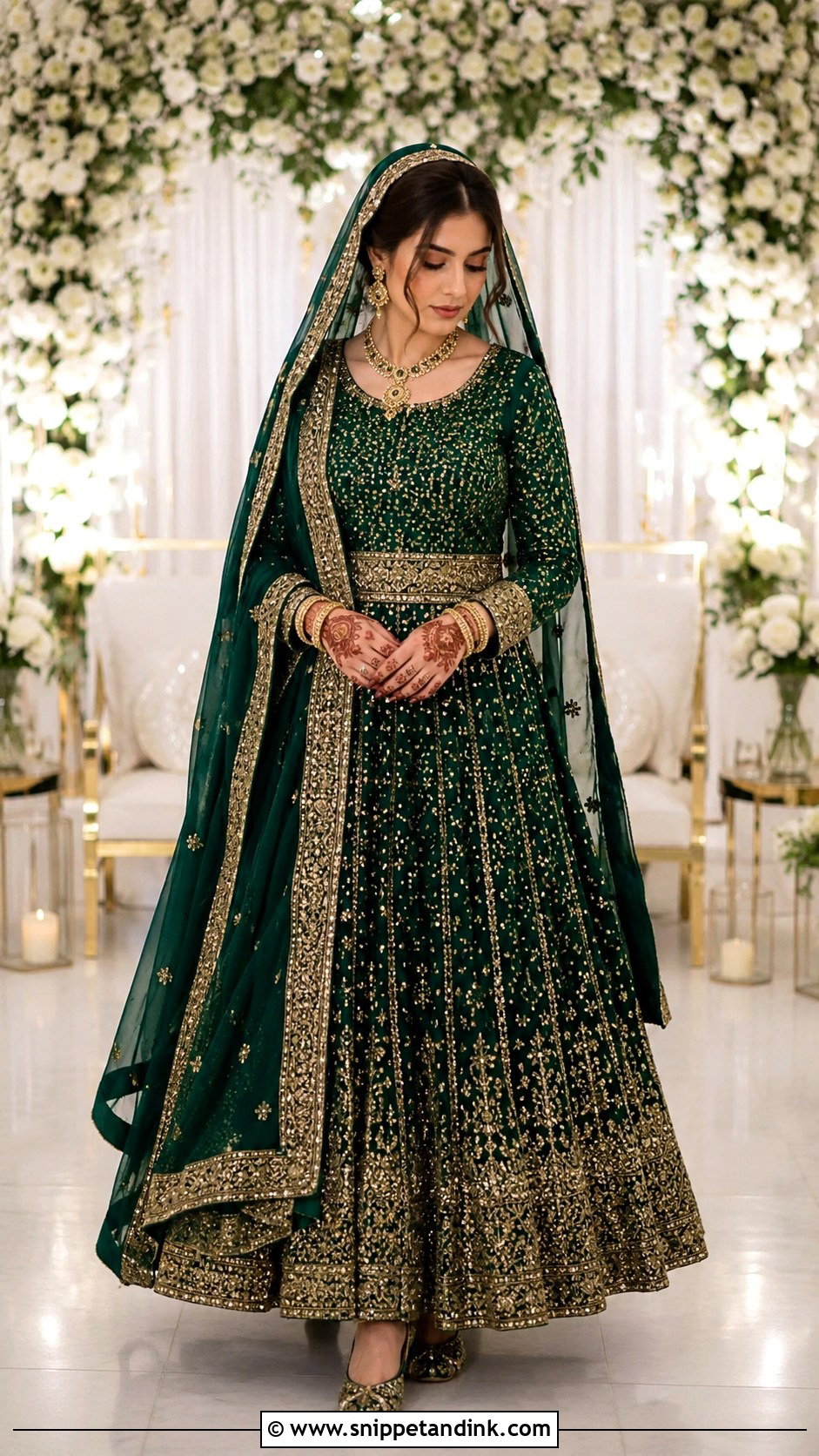
A green lehenga comes in pieces, a high-waisted embroidered skirt, a blouse and a dupatta, and that makes it easier to adjust than a one-piece dress. For modest coverage, choose a long-sleeved blouse and either have it meet the skirt or add a matching waist panel. Gold thread, beads and small multicolored motifs add depth across the skirt. The dupatta drapes over the hair and across the bodice. The skirt’s waistband carries all the weight of the embroidery, so I make sure it sits on the natural waist, where it can’t slide. Embroidered green flats and a low bun with a few gold pins finish it.
13. Multicolor Afghani Wedding Dress With Mirror Work
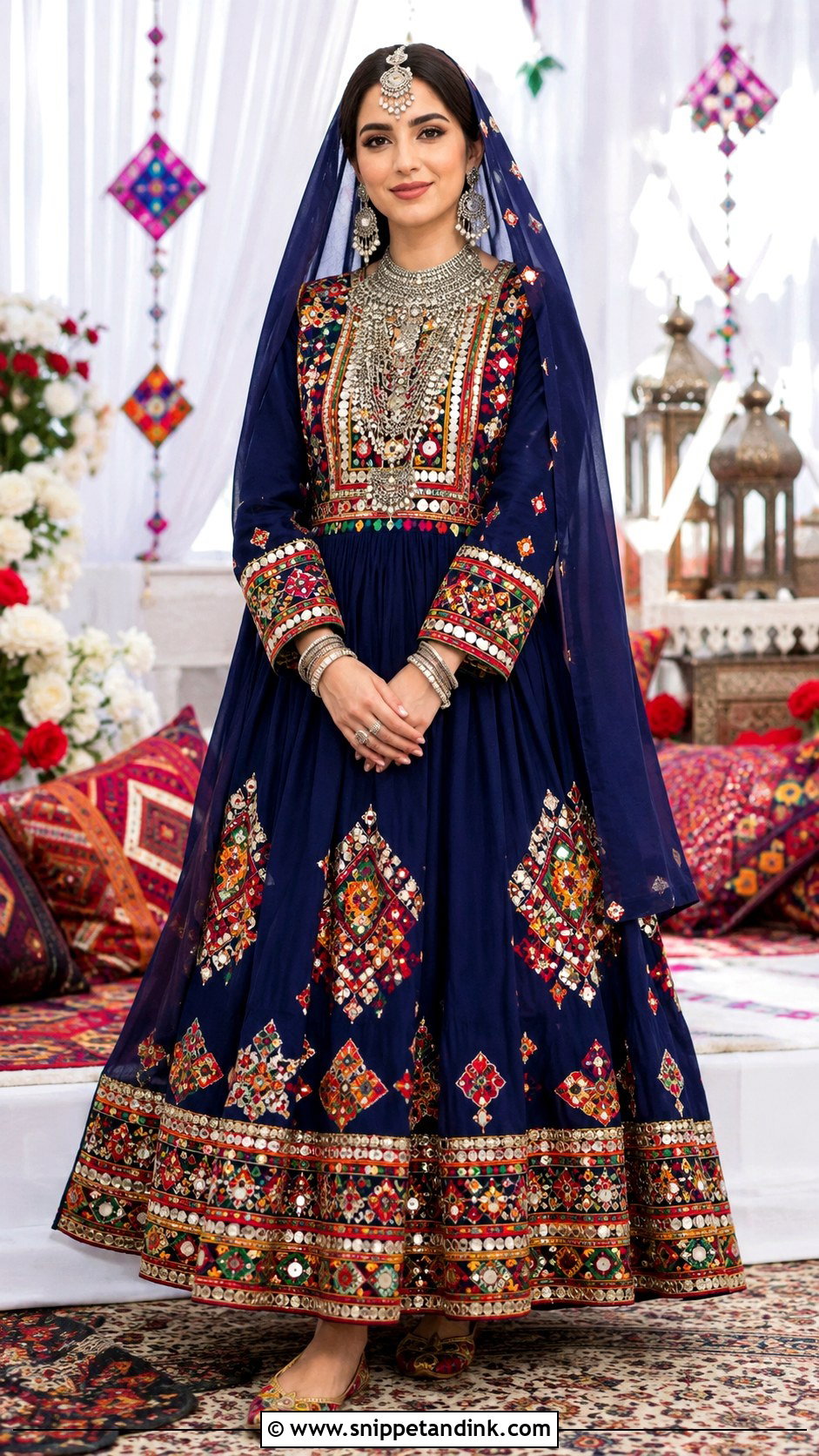
Multicolored embroidery needs a dark ground to stay readable. Dark red, deep green or navy all work, with a fitted bodice, full sleeves and controlled panels of mirror work across a wide skirt. The coordination trick is to pick two or three colors from the embroidery and repeat only those in the scarf, jewelry and shoes. A solid, lightweight veil stops the head-to-toe look from getting crowded. Silver earrings, layered necklaces and embroidered flats keep her comfortable for dancing.
14. Pastel Blue Afghani Wedding Dress
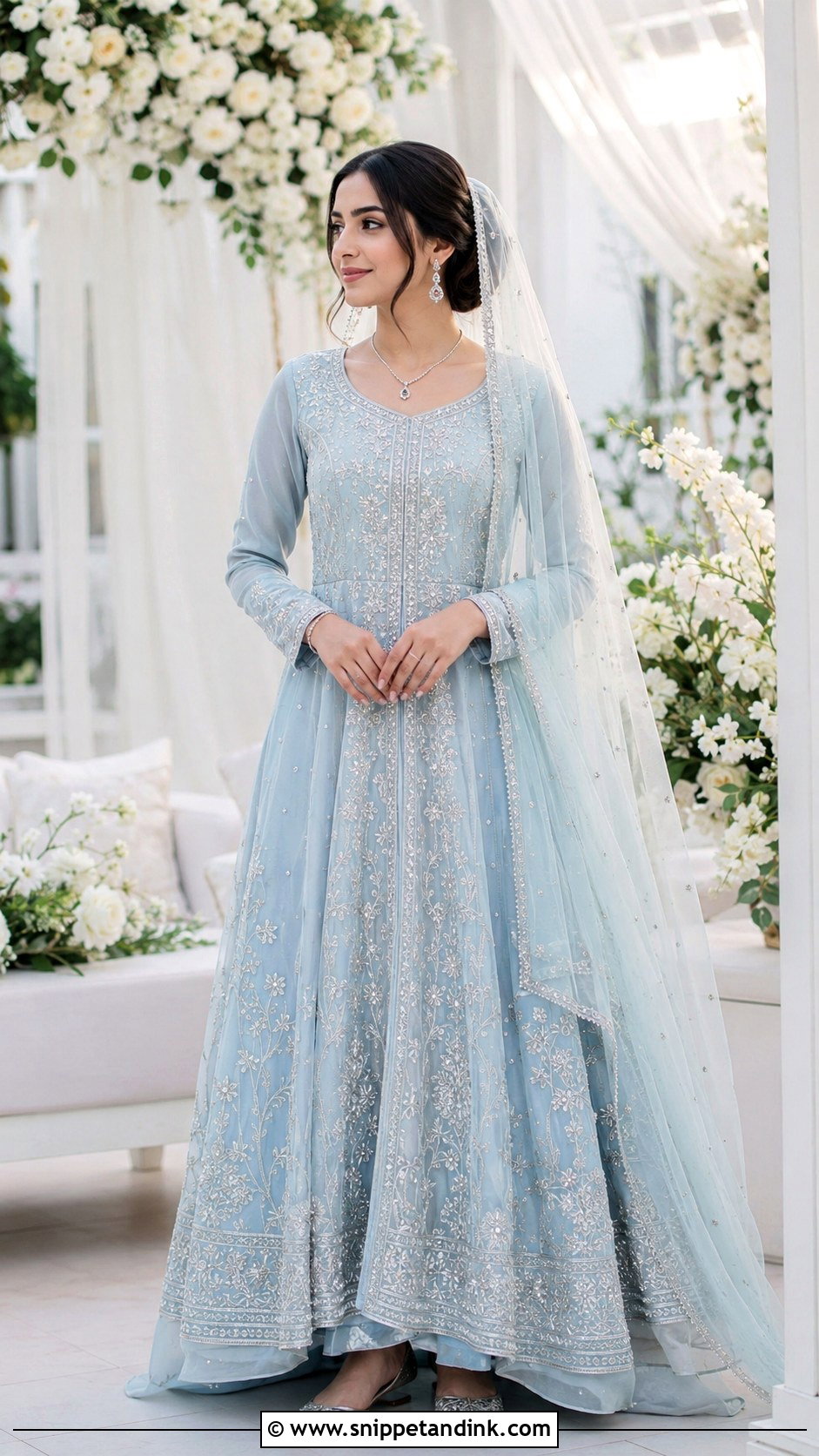
Powder blue is a daytime color, at its best in natural light at a morning nikah or a spring wedding. Long sleeves, a softly shaped waist and an A-line skirt with silver thread, pearls or pale blue beads at the neckline and cuffs keep the dress light. A sheer matching veil with a fine embroidered edge goes over a low twisted bun, with a few loose face-framing pieces. I’d keep the accessories quiet: crystal earrings, a fine silver necklace, a slim bracelet and silver flats. Cool brown eyes and a pink-nude lip finish it.


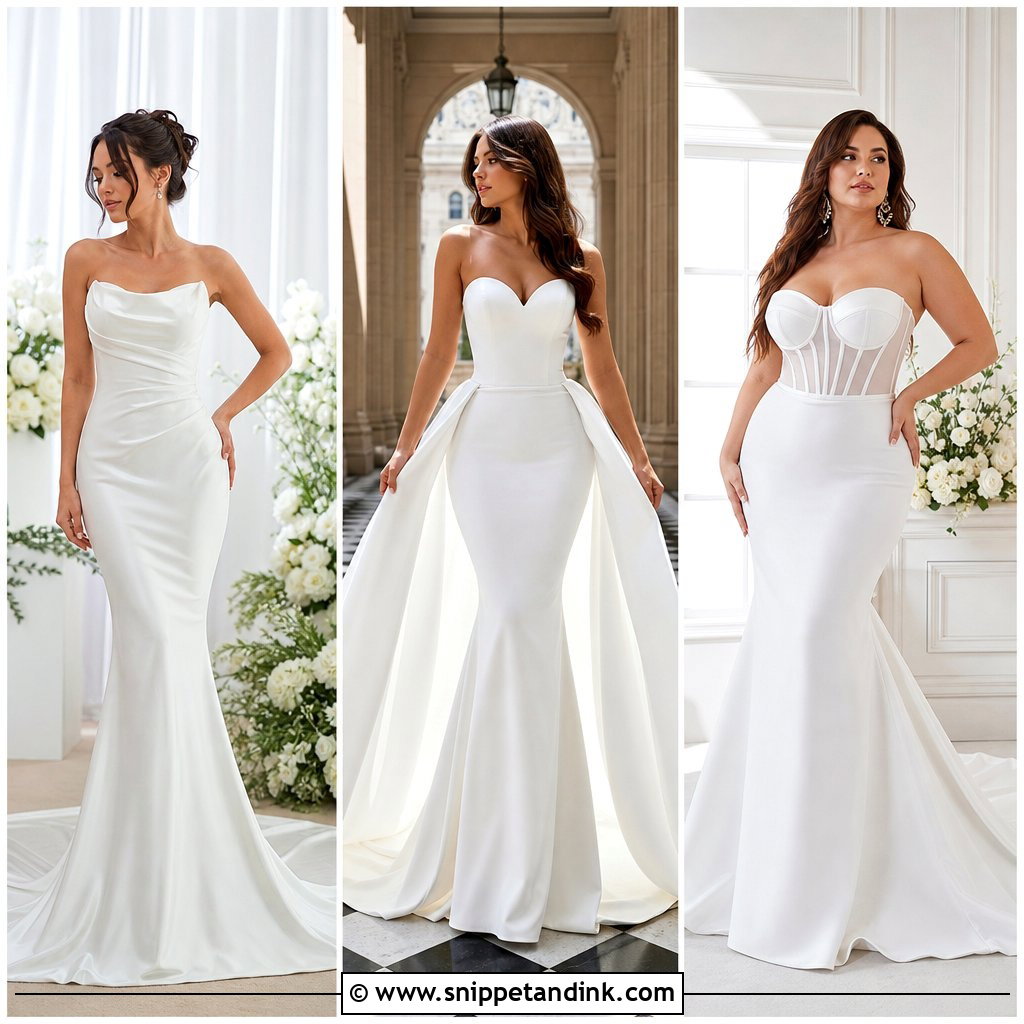
15. Coral Afghani Wedding Dress With Silver Jewelry
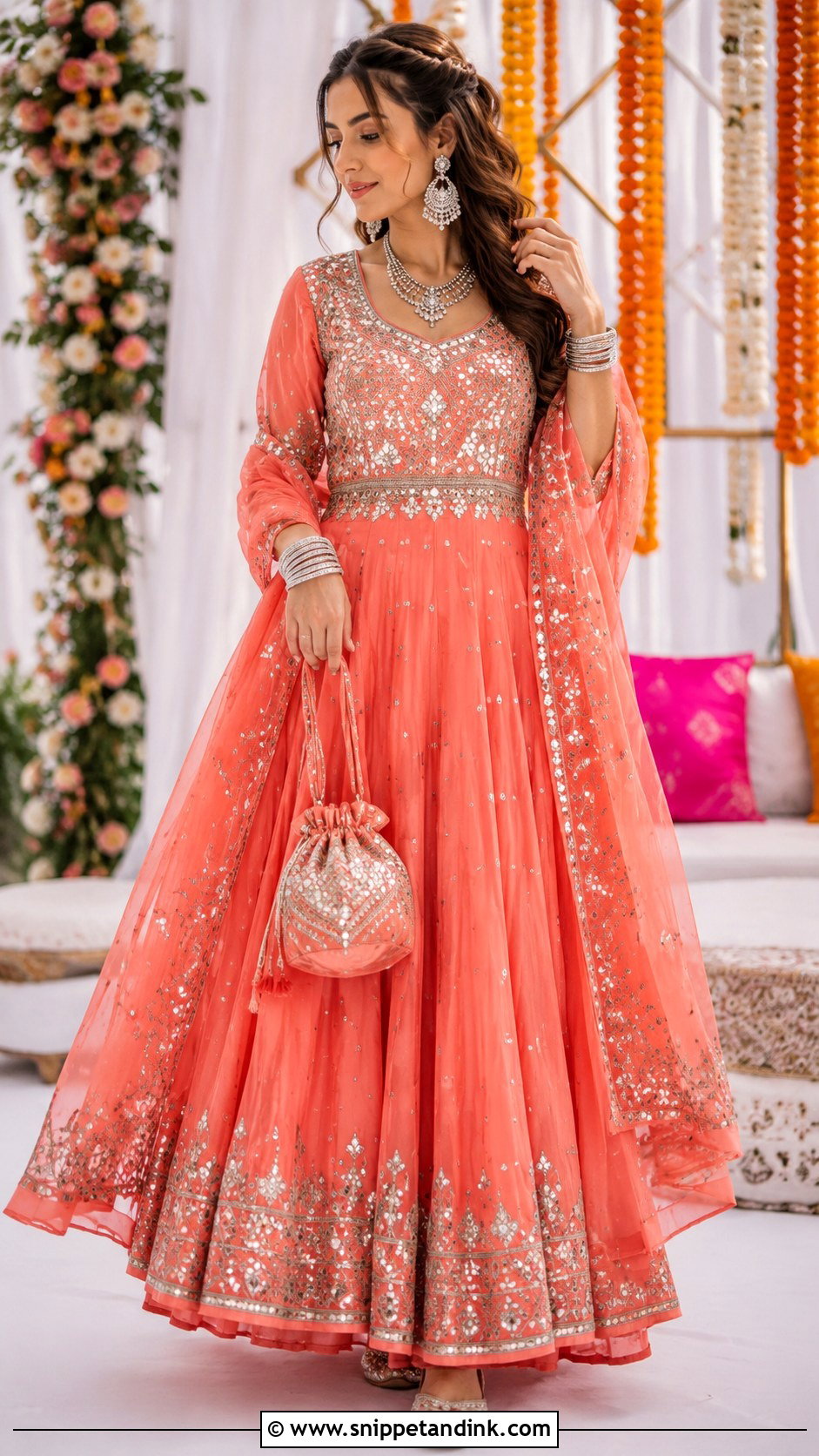
Coral surprises people. It’s cheerful without turning neon, and against warm skin it glows in daylight. A coral, watermelon or deep peach dress with a fitted embroidered top and fluid skirt takes silver thread, tiny mirrors and clear beads well. Sleeve length should follow the ceremony and the family’s preference; full-length or three-quarter both work. A chiffon dupatta with a silver border, silver drops, a layered necklace and neutral metallic flats keep the color story to two. Brown eyeliner, glowing skin and a rose-coral lip suit a henna celebration or a daytime event.
16. Navy Afghani Wedding Dress With Embroidered Cape
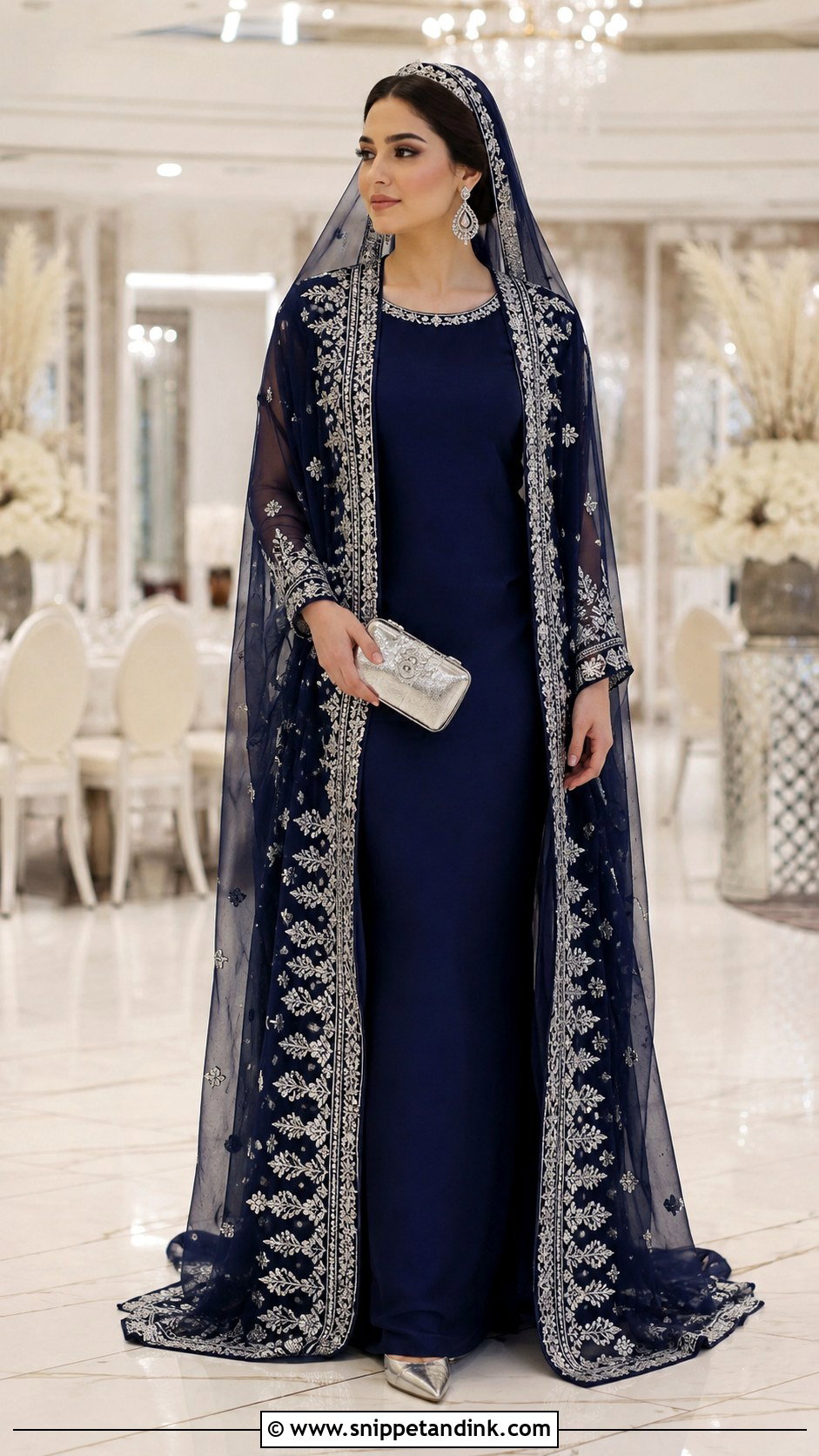
A cape lets the dress underneath stay simple. A floor-length navy gown with a defined waist and smooth skirt does the base work, and a matching cape with metallic embroidery along the neckline, edges and back adds the drama. The weak point is the veil. A veil plus a cape can bunch at the shoulders, so I decide at the fitting whether the veil sits under the cape, over it or not at all. Silver earrings, a slim headpiece, a structured clutch and a sleek bun suit the clean lines, with softly smoked eyes and a mauve lip for evening.
17. Rose Gold Afghani Wedding Dress
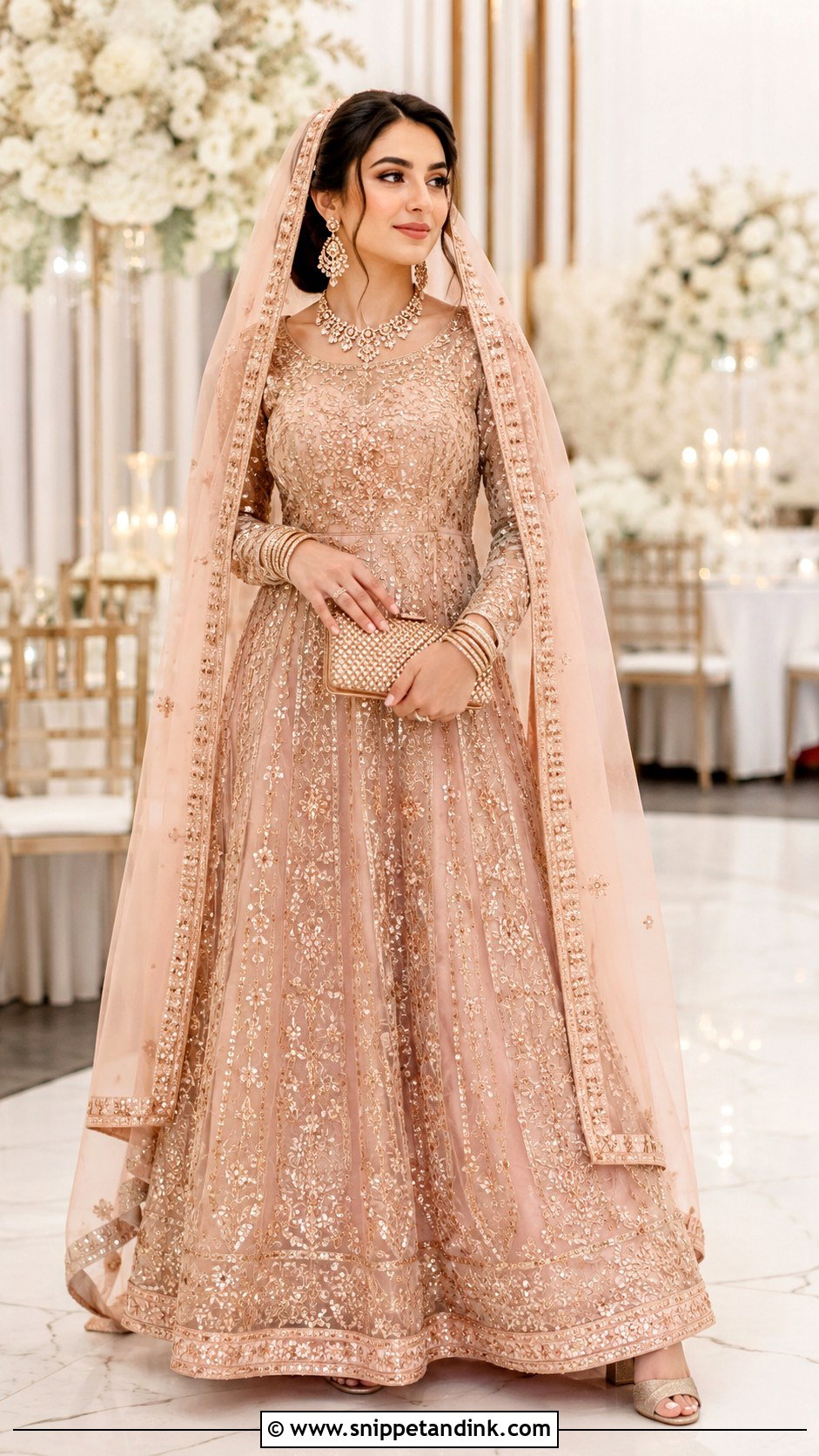
Rose gold reads softer than yellow gold, and the metallic thread on a blush base is subtle, so it needs bright lighting to show. Rose-gold threadwork, sequins and beads around the bodice, sleeves and skirt border, with a gently flared shape that leaves room for sitting and walking. Sequins look different under flash than in person, so I always take a test photo with a phone flash at the fitting. A blush veil with a metallic edge over a low bun, rose-gold earrings and matching bangles, and nude block heels keep everything in one tone. Champagne eyeshadow and a muted pink lip suit it.
18. Maroon Afghani Wedding Dress With Long Jacket
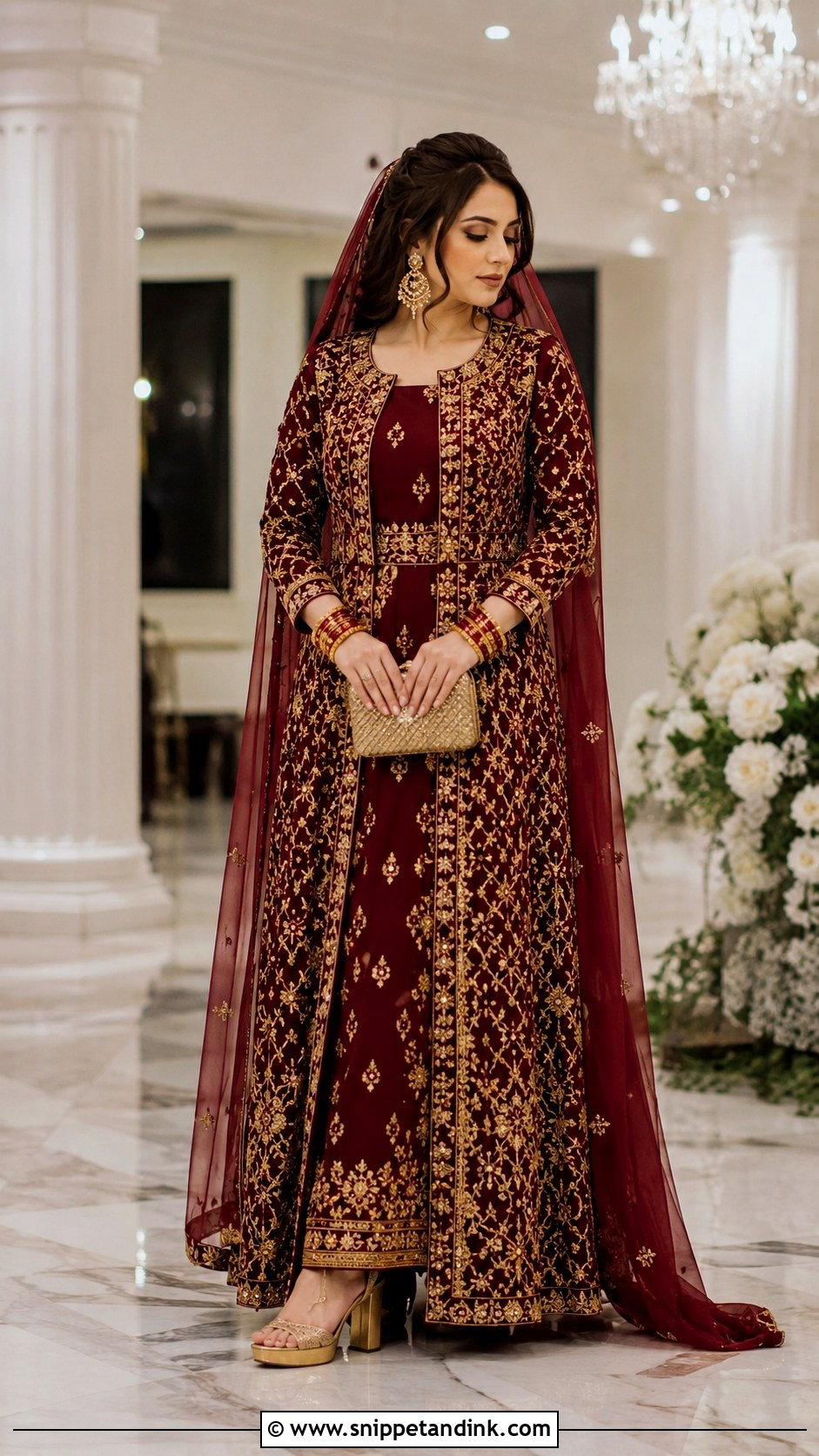
A long embroidered jacket over a maroon underdress builds a layered, vertical line. The underdress can be sleeveless or long-sleeved, depending on how the jacket is constructed. The open-front jacket reaches the ankles, with gold work at the neckline, cuffs, front edges and hem, which visually lengthens the bride. Weight is the issue. An ankle-length embroidered jacket hangs from the shoulders, so I have it fitted snugly across the back to stop it sliding off when she sits. A maroon veil, antique-gold earrings, stacked bangles and a smooth low bun complete it.
19. Turquoise Afghani Wedding Firaq Partug Outfit
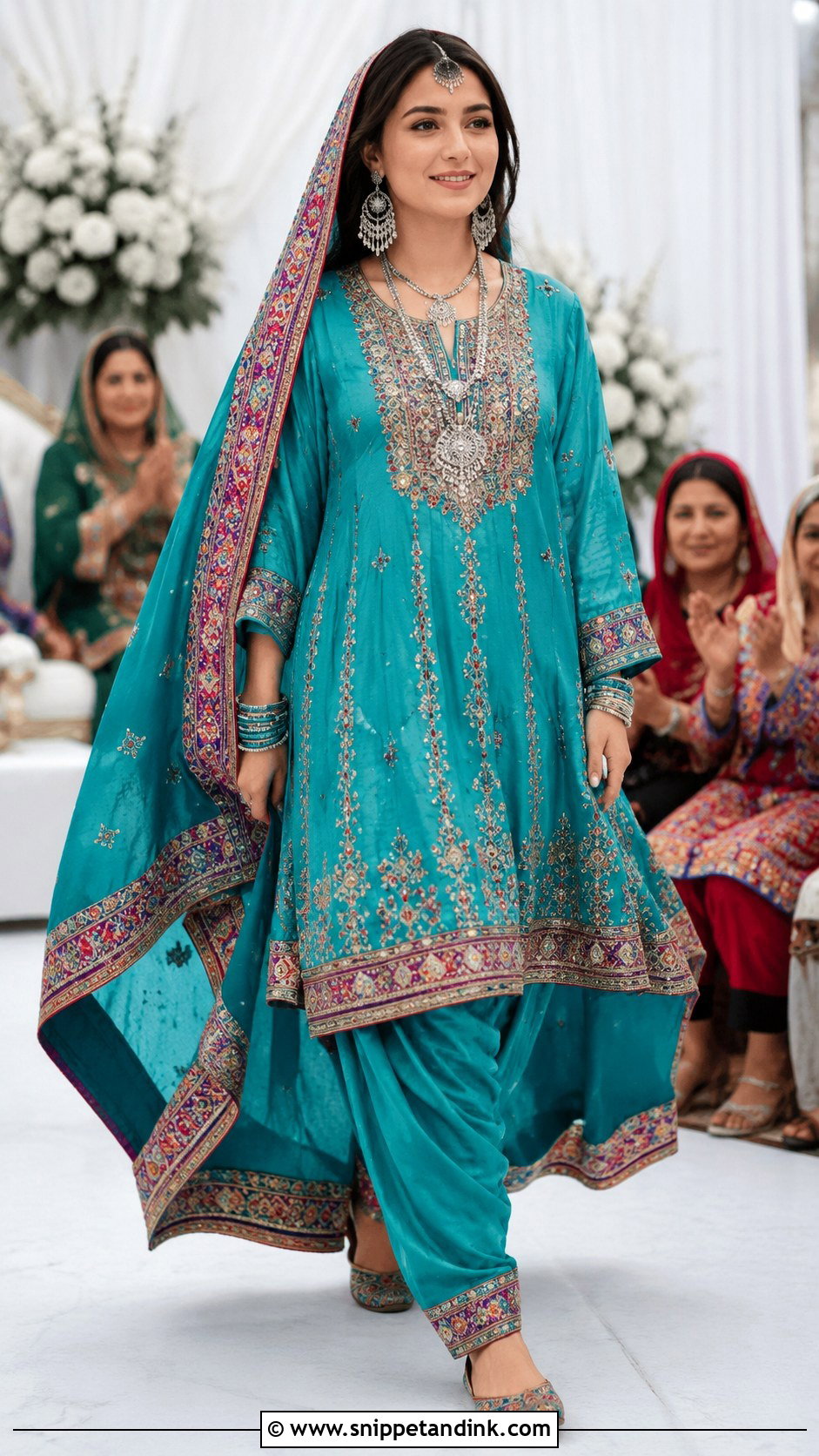
Firaq partug pairs a long, full-skirted dress with loose trousers, and a turquoise firaq partug-inspired outfit shows that shape well. The trousers stay hidden or peek out when she walks. Choose an embroidered bodice, fitted cuffs and color at the neckline, with a matching scarf edged in multicolored embroidery. The full silhouette moves freely, but I hem it carefully because a turquoise skirt that drags turns grey at the edge within an hour. Silver earrings, layered necklaces and embroidered flats suit it. Its regional elements should be chosen with family guidance and made by skilled hands.
20. Modern Afghani Wedding Dress With Detachable Train
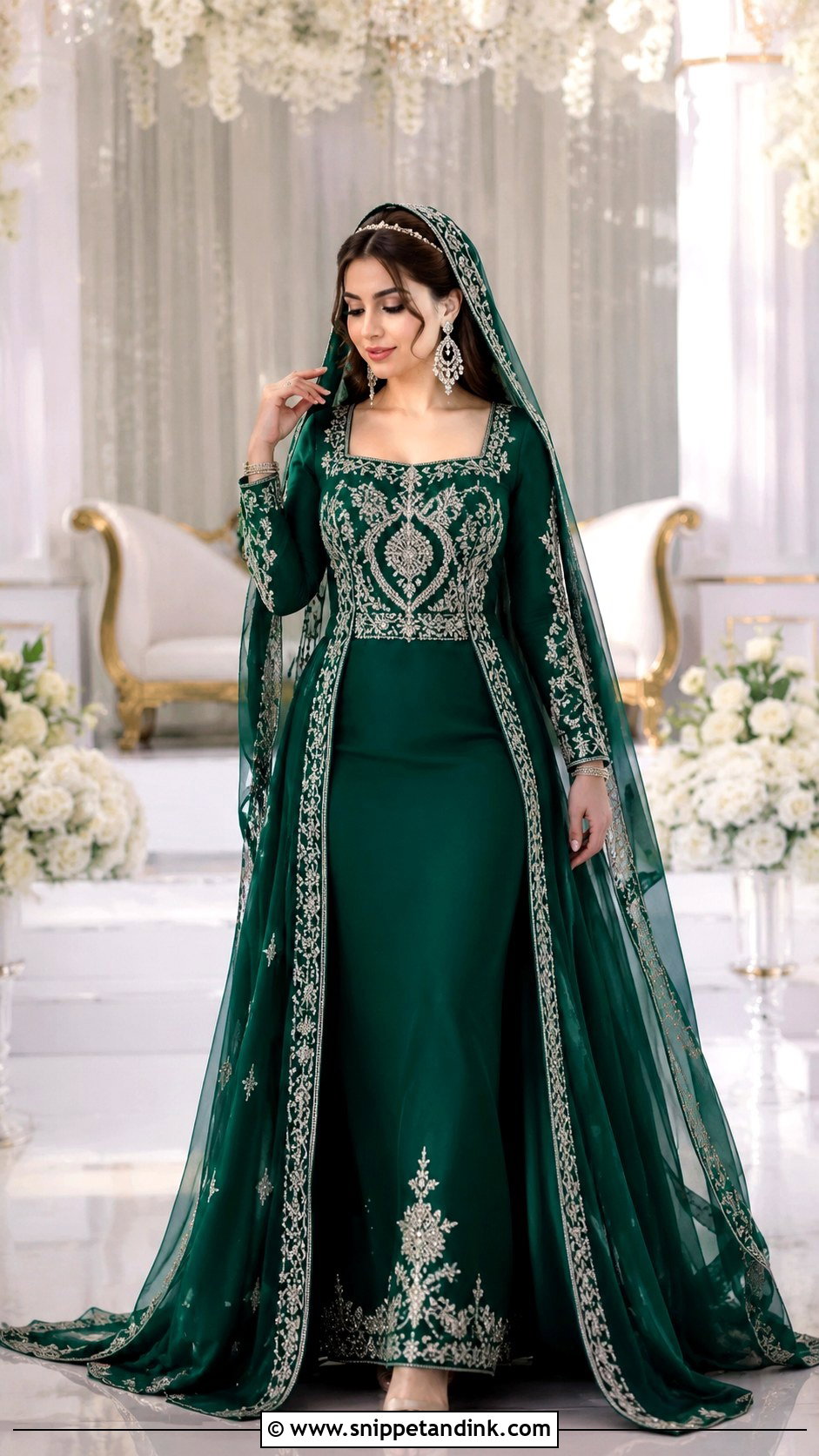
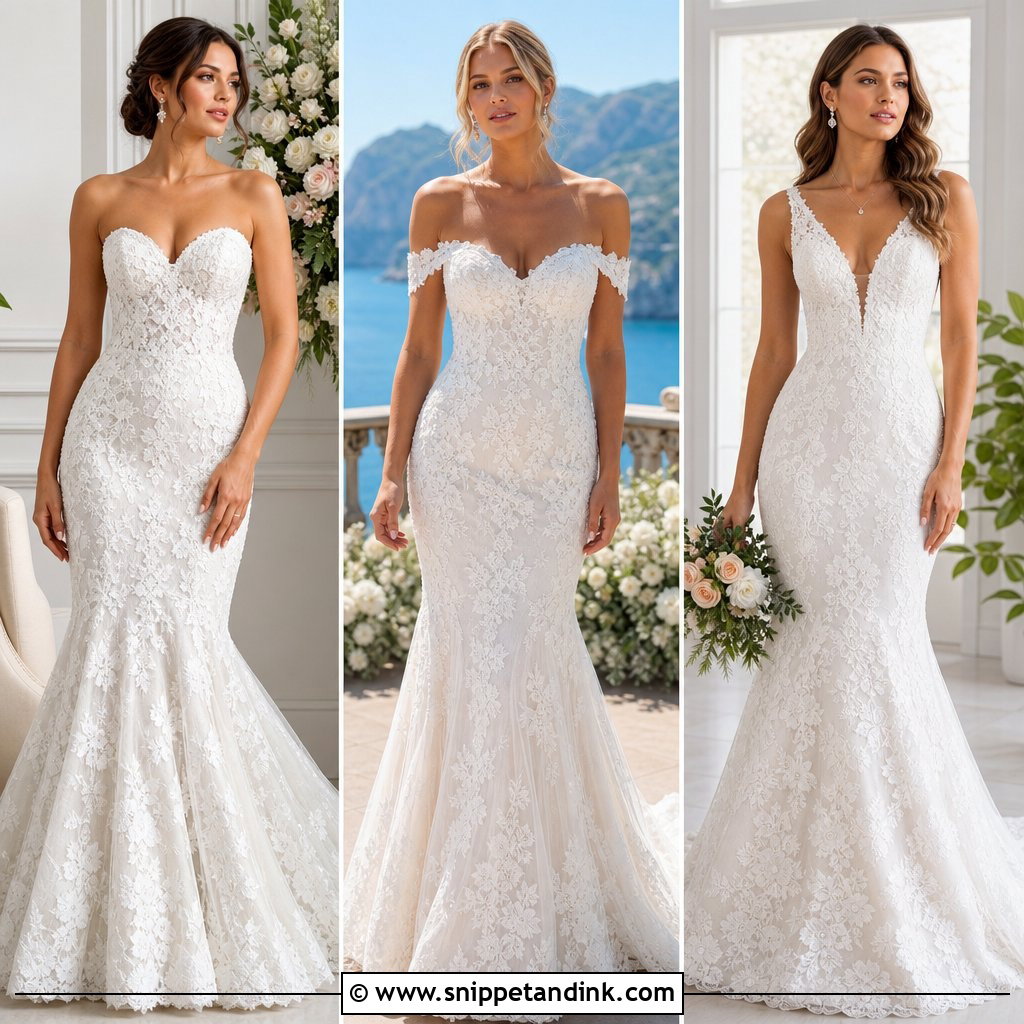
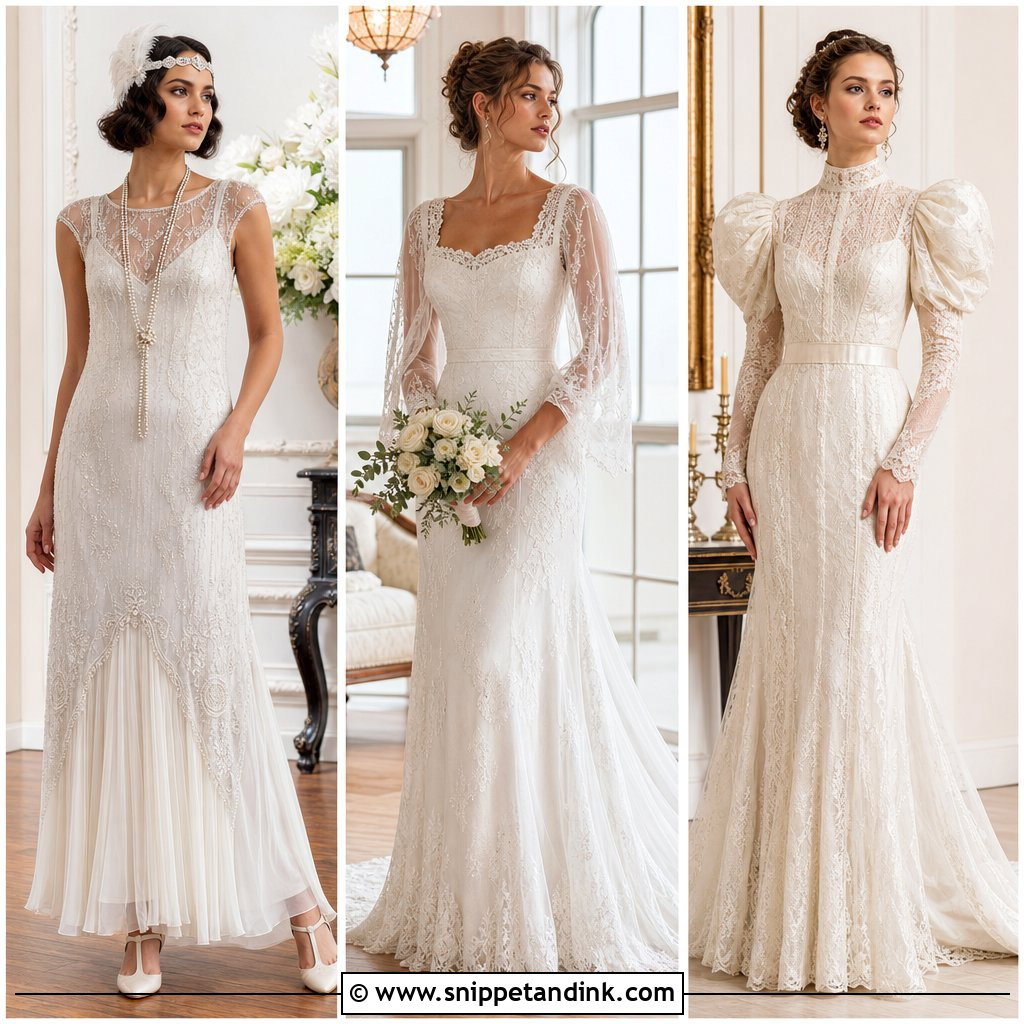
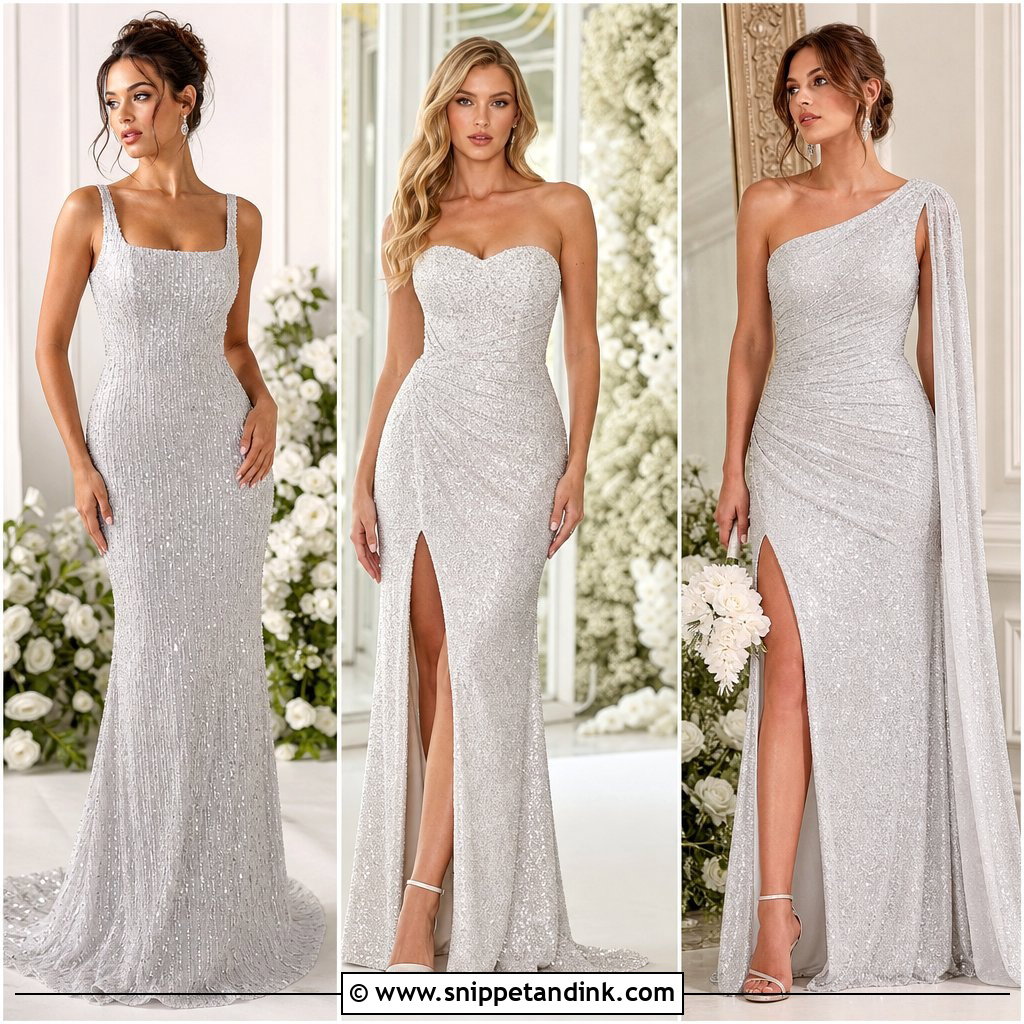
A detachable train is the most practical idea on this list. A fitted ivory, red or emerald gown with long sleeves and an embroidered bodice gets a full overskirt or train attached at the waist for the ceremony and formal portraits, then it comes off for dancing. Ask how it attaches. Hooks are faster to remove than buttons, and the person helping her change should practice once before the day. A veil border that repeats the gown’s embroidery ties both versions together. Keep the necklace minimal under a heavy bodice.
Getting Dressed in the Right Order on the Morning
Most Afghan bridal outfits go on over the head, and that’s where makeup gets smudged and hair gets flattened. The order I use on the morning:
- Trousers and any inner slip first, before hair and makeup are finished.
- Hair done, makeup done, then the dress. I hold a thin scarf or a clean pillowcase over her face while the dress goes over her head, so foundation doesn’t transfer onto the neckline.
- Fasten the dress, then sit her down once to check the bodice doesn’t ride up.
- Earrings and necklace next, while the neck and ears are still clear.
- Headpiece, then the dupatta or veil, pinned last through the bun with grips crossed in an X. Forehead jewelry goes on after the dupatta, so it can sit over or under it as planned.
- Bangles last, especially if she has fresh henna.
Allow more time than the hair and makeup schedule suggests. A three-piece outfit with a pinned dupatta and full jewelry takes a good half hour to dress properly, and rushing it is how a veil ends up crooked in every portrait.
Construction Counts as Much as Color
Whatever the color, construction decides whether she enjoys the day in it. From red embroidered gowns and green henna dresses to pastel nikah outfits and detachable trains, I check the same things before the wedding: sleeve fit, skirt length, veil weight and where the embroidery sits. Shoes have to last through walking, greetings, photos and dancing. Bold jewelry suits a simple dress; elaborate embroidery asks for restraint. And for regionally specific details, bring in relatives, cultural experts or Afghan artisans so the outfit carries its meaning honestly.
You'll Like These Ideas:



Leave a Reply