
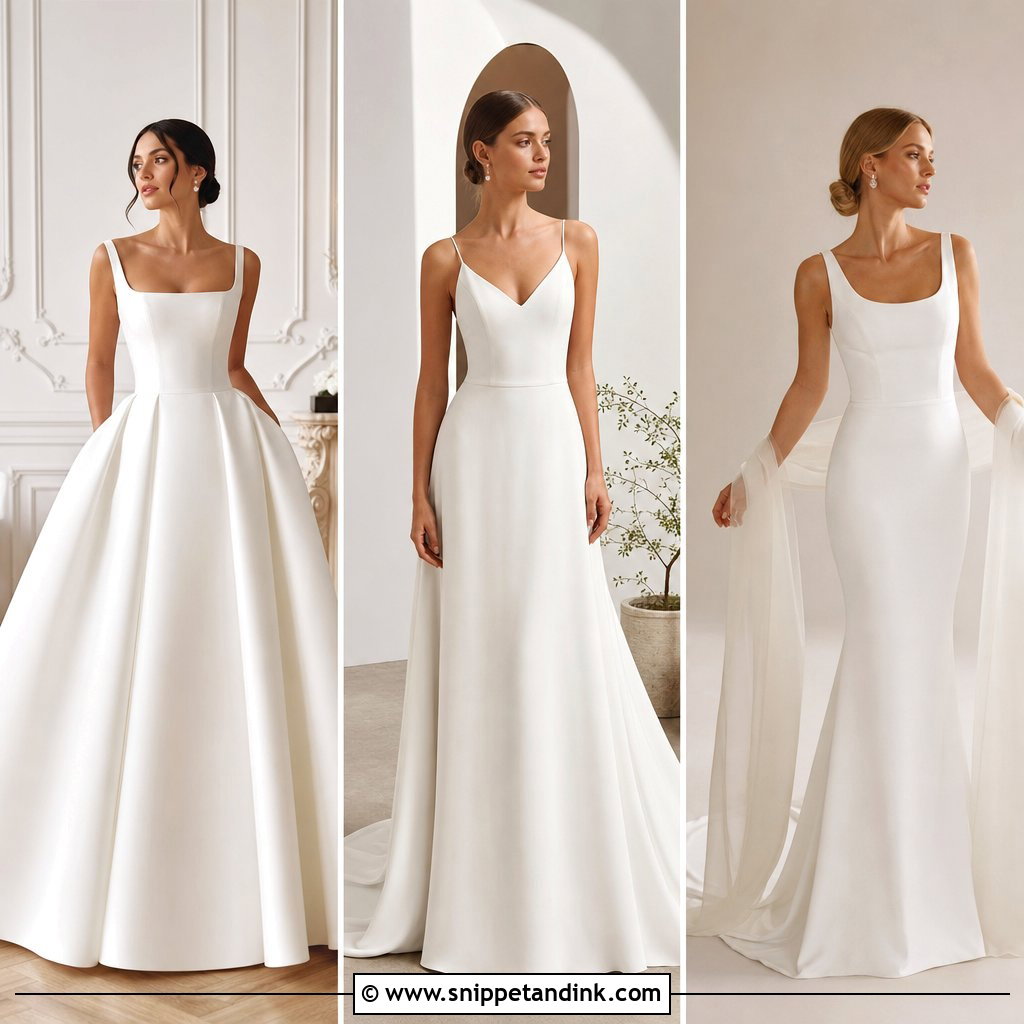
A plain gown is the hardest dress in the shop to get right. With no lace or beading to hold the eye, everything rests on the cut, the fabric and the fit, and a simple bridal look only feels special when those three are working. I’d rather see a bride in a well-tailored crepe sheath than in an expensive beaded gown that pulls at the side seams. Below are twenty simple shapes, from a clean A-line to a column, a slip and a ball gown, with the fitting checks I make on each. Have your venue, season and comfort level in mind before you shop, then finish with the right undergarments, shoes you can stand in and jewellery that means something to you.
What Goes Underneath a Plain Gown
Decoration hides a lot. A plain satin or crepe dress hides almost nothing, which means the things you wear under it decide how it looks. This is the part of a minimalist fitting I take most seriously, and it should be settled before the first alteration, not after.
- Buy your bra or bodysuit before the first fitting. Every measurement is taken over it, and swapping it later can change the fit at the bust and waist.
- On satin, choose bonded or laser-cut edges with no lace trim. Even a thin seam shows through reflective fabric under flash.
- Match the underwear to your skin tone rather than to the dress. Bright white shows through ivory crepe more than a nude shade does.
- If a dress has built-in cups or boning, try it first with nothing structured underneath. Doubling up often adds bulk without adding support.
Shapewear is a personal call. Light smoothing can help a bias-cut slip lie flat, but anything that digs in will show as a ridge at the thigh or waist once you sit, so I always have brides sit for a few minutes before deciding.
1. Simple A-Line Wedding Dress
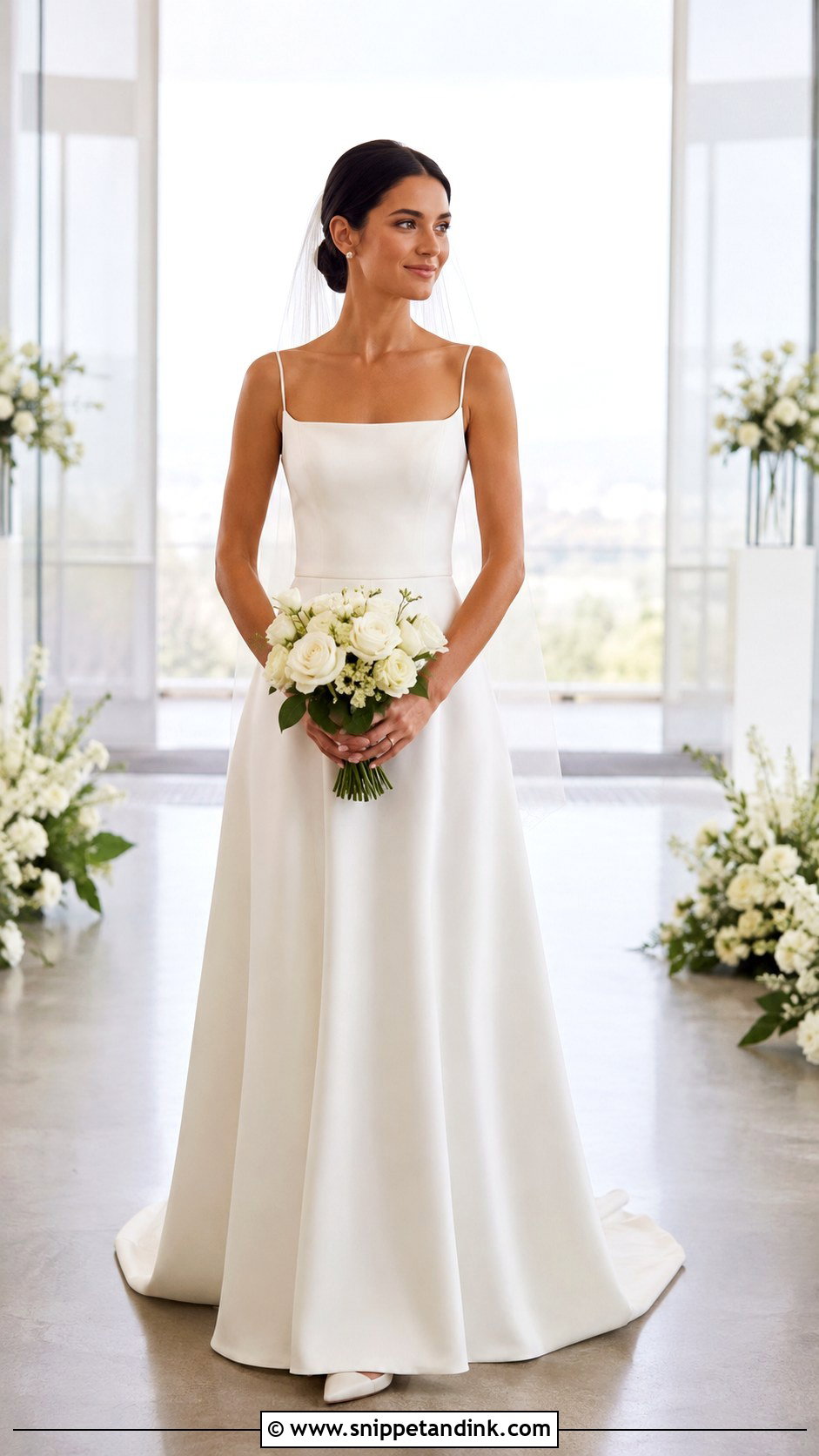
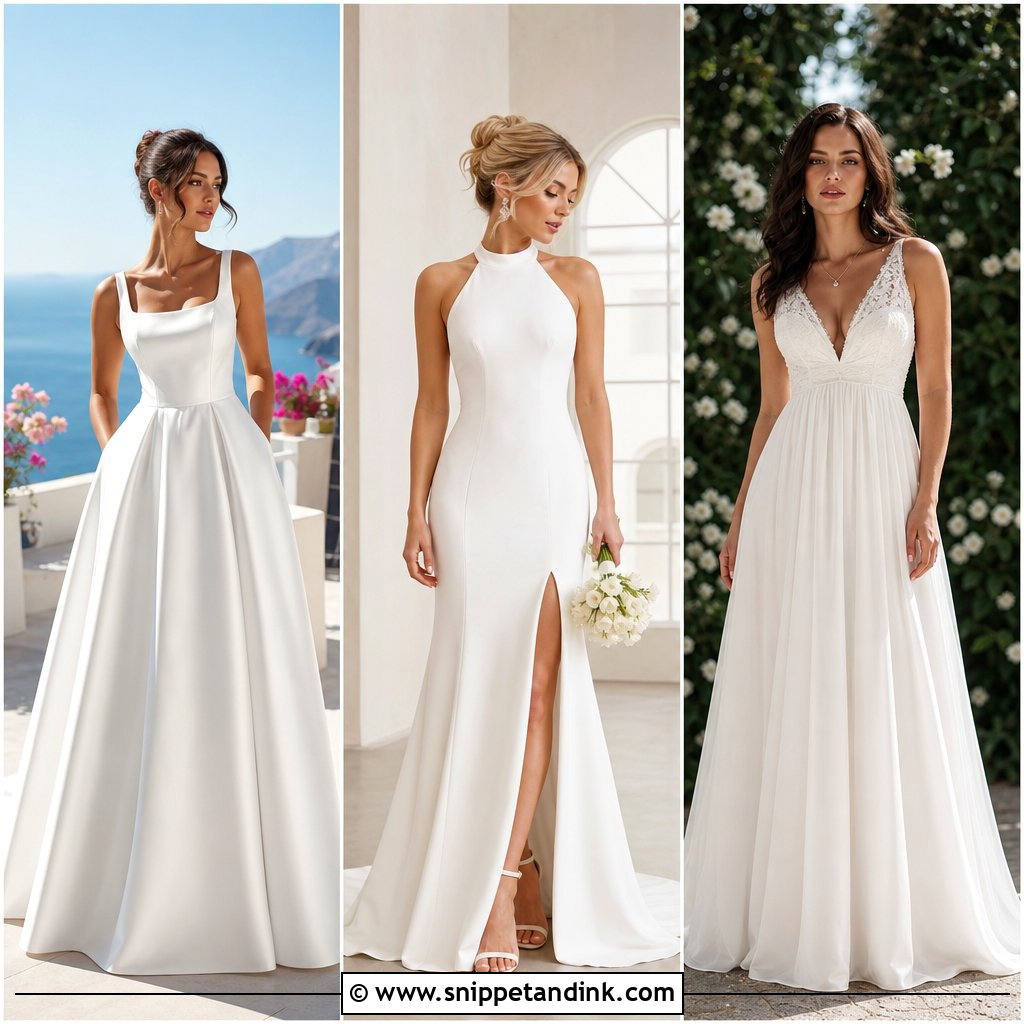
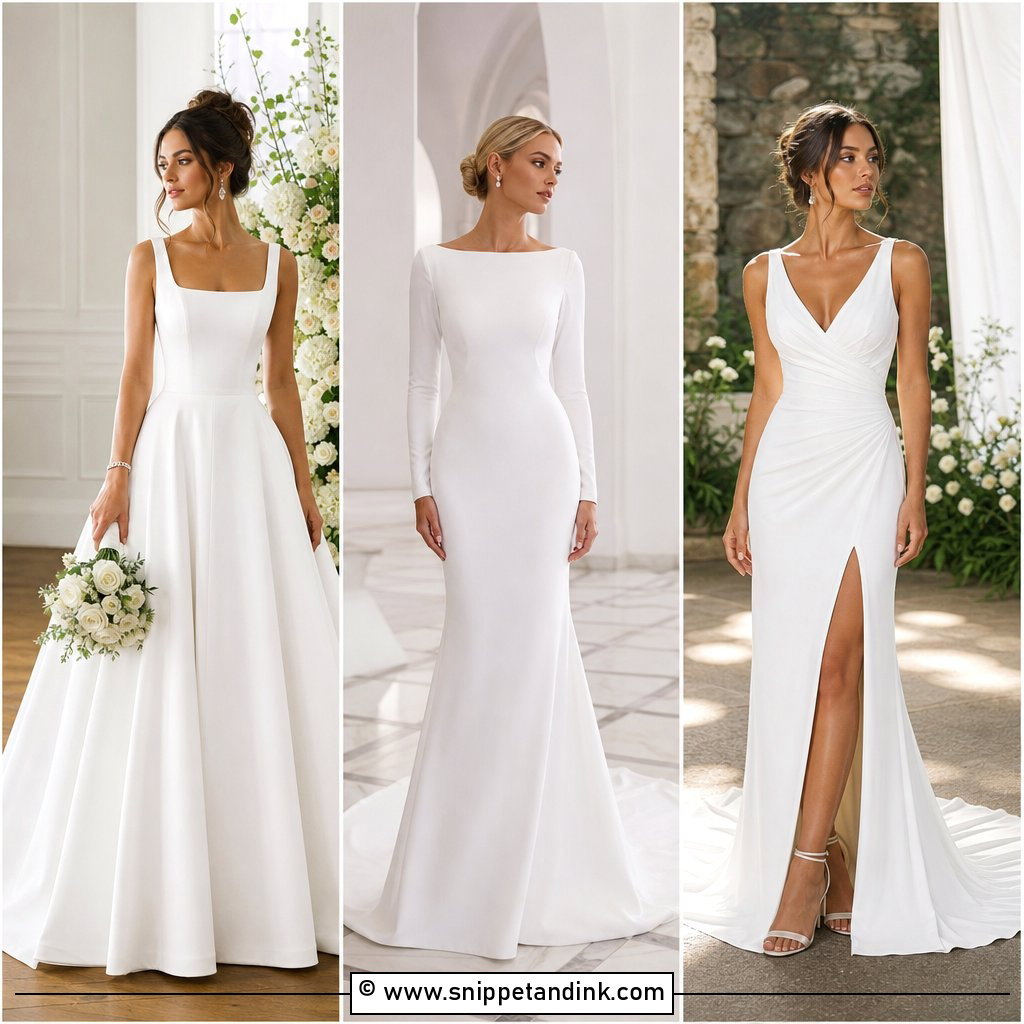
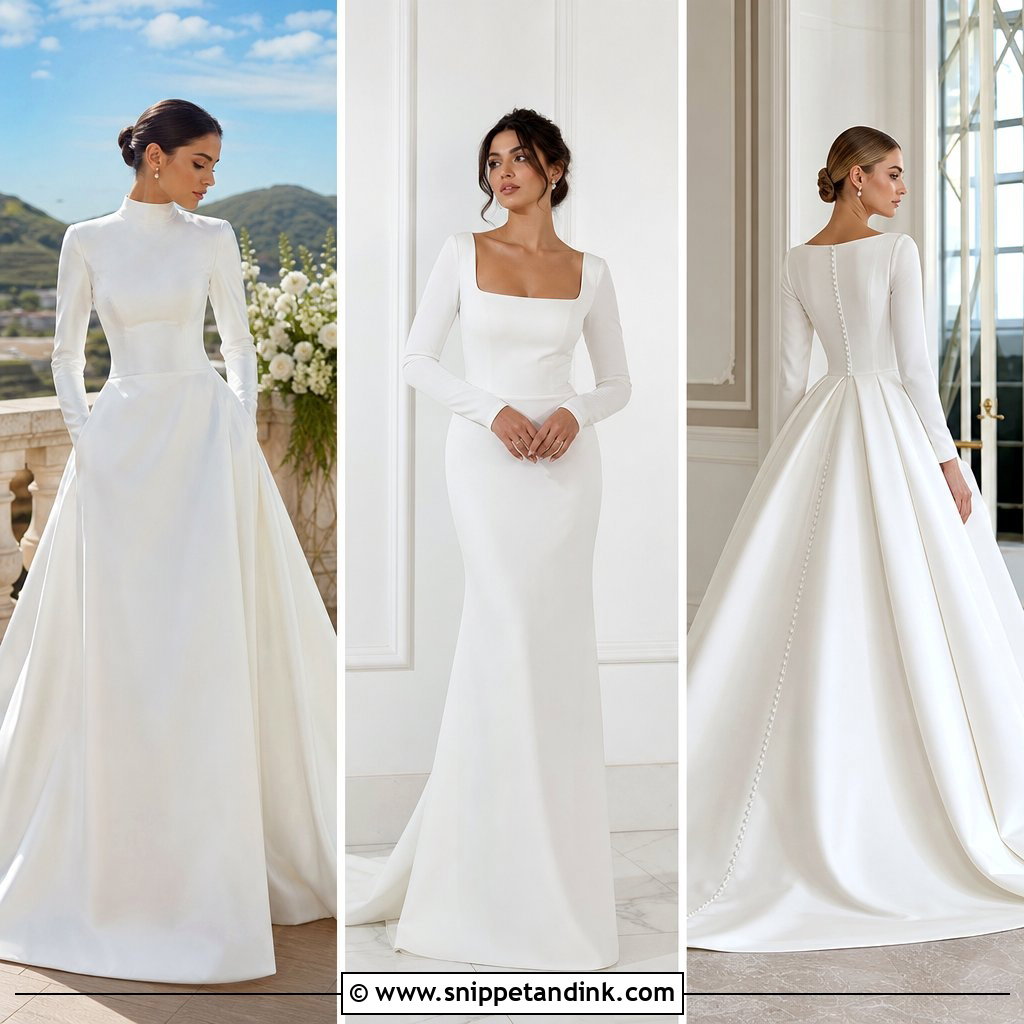
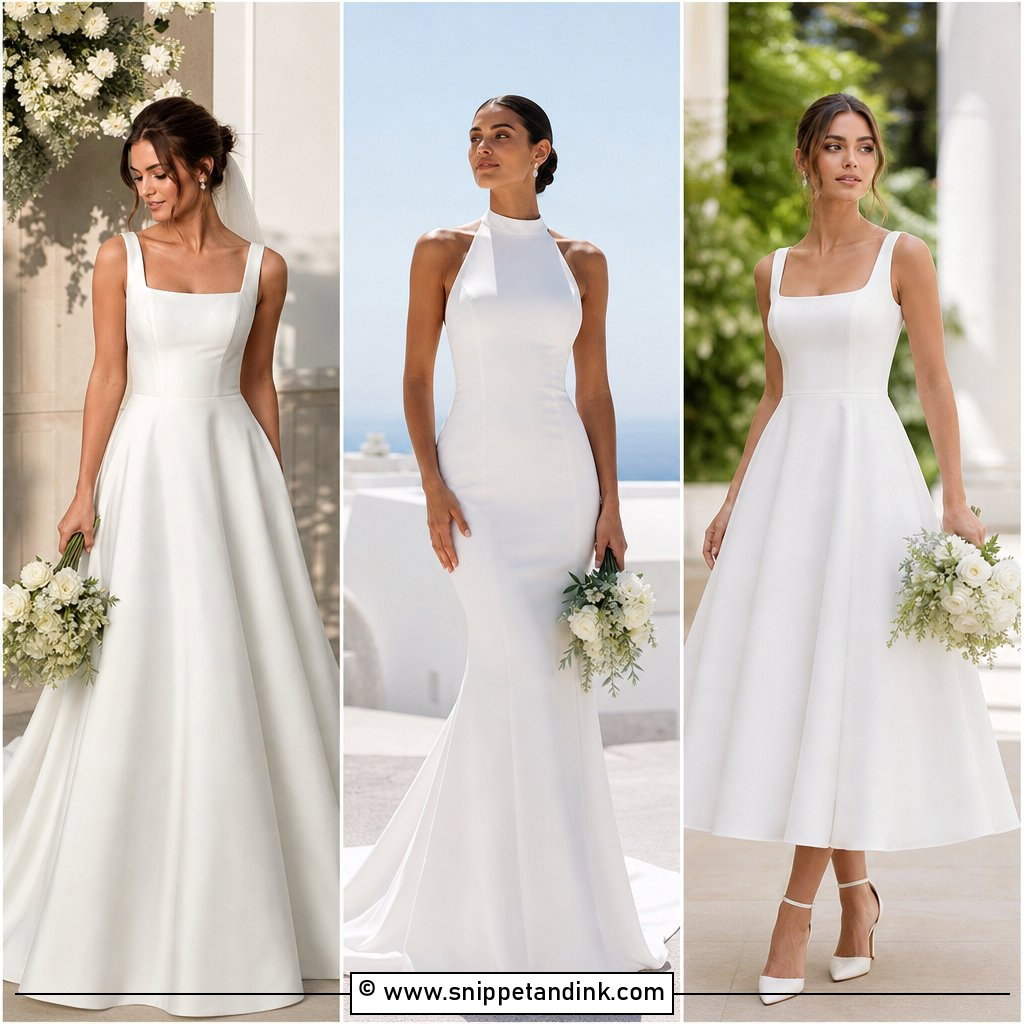
The A-line suits more bodies than any other shape I pull, because the skirt widens gradually from a fitted bodice and skims the hip instead of gripping it. Matte crepe reads modern; satin adds a soft sheen. Get the hem marked while you stand in your actual wedding shoes, not the salon’s sample pair. If the skirt folds on the floor, you’ll kick it with every step; if it hovers, the gown looks borrowed. Pointed pumps, pearl studs, a fingertip veil, a small bouquet and a low bun are all it needs.
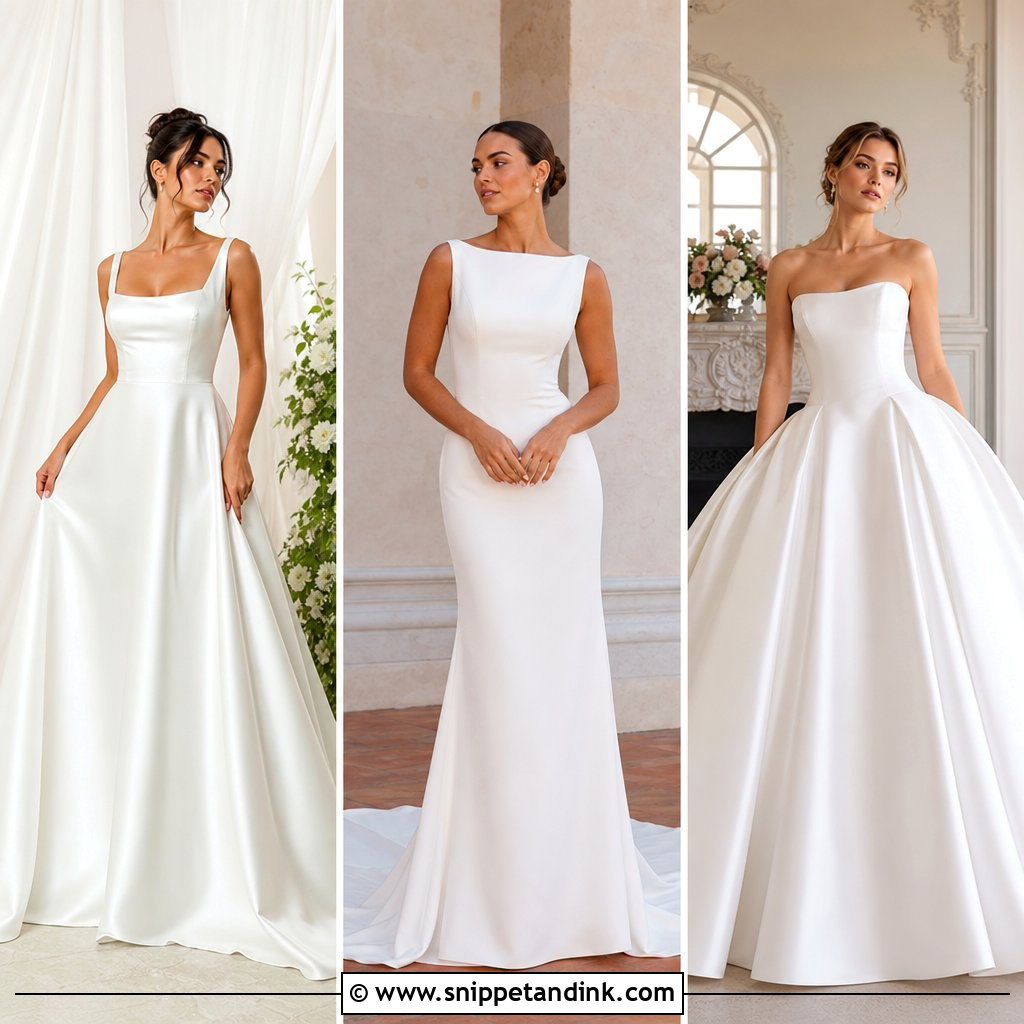
2. Satin Slip Wedding Dress
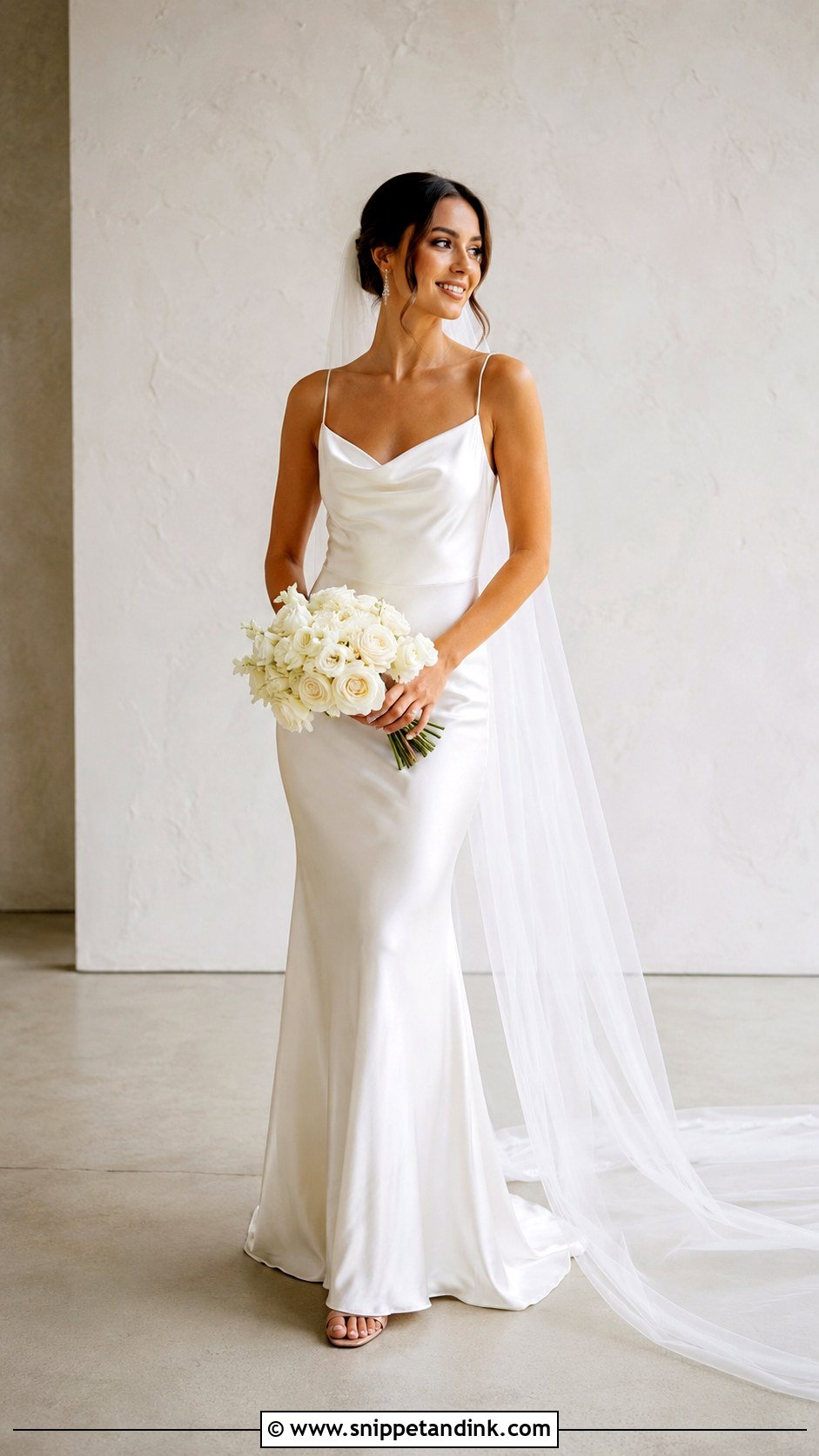
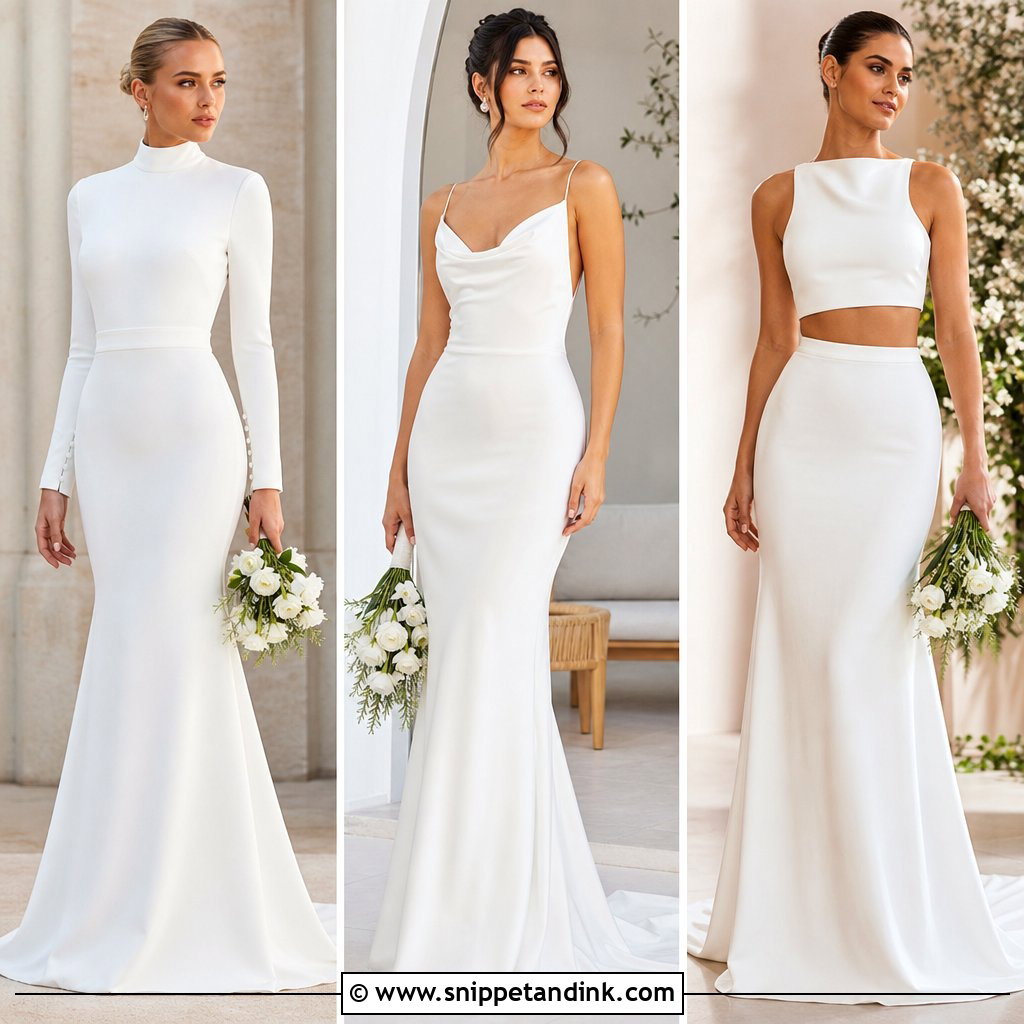
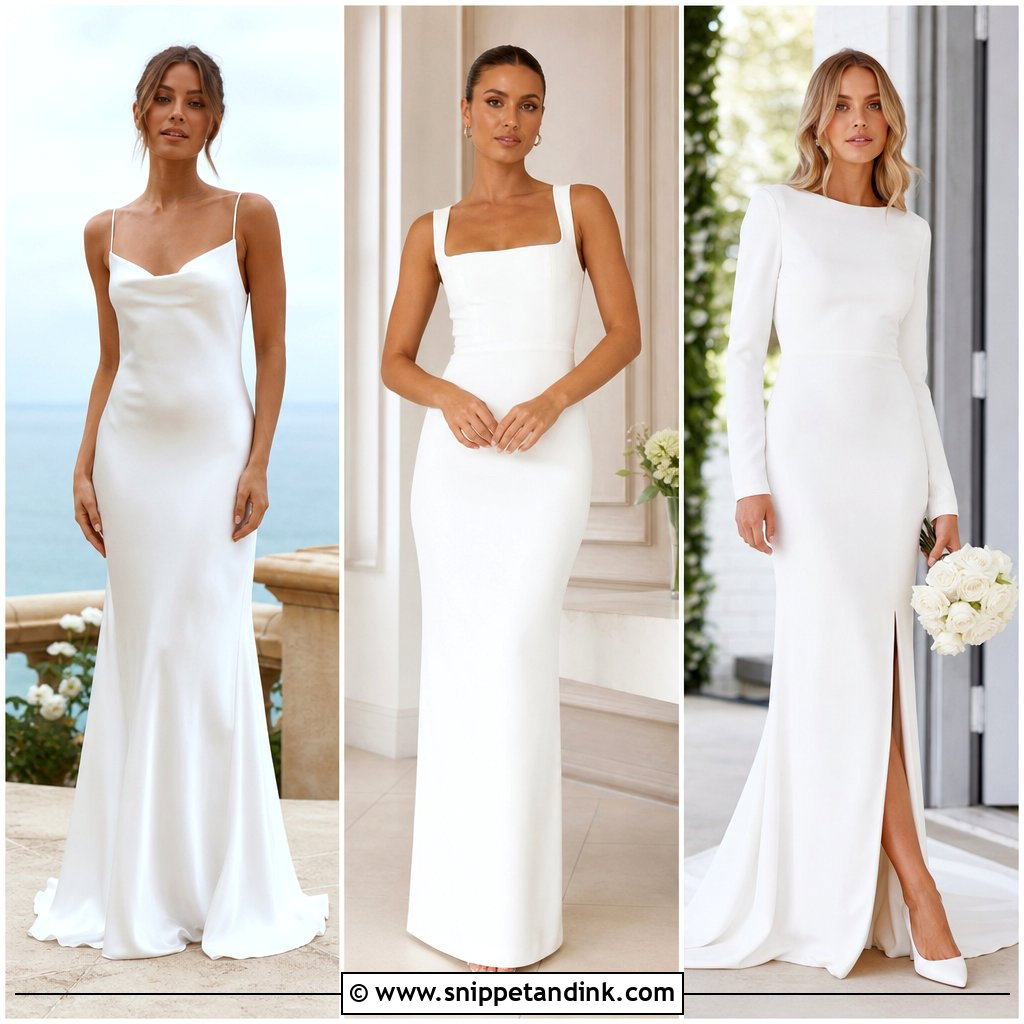
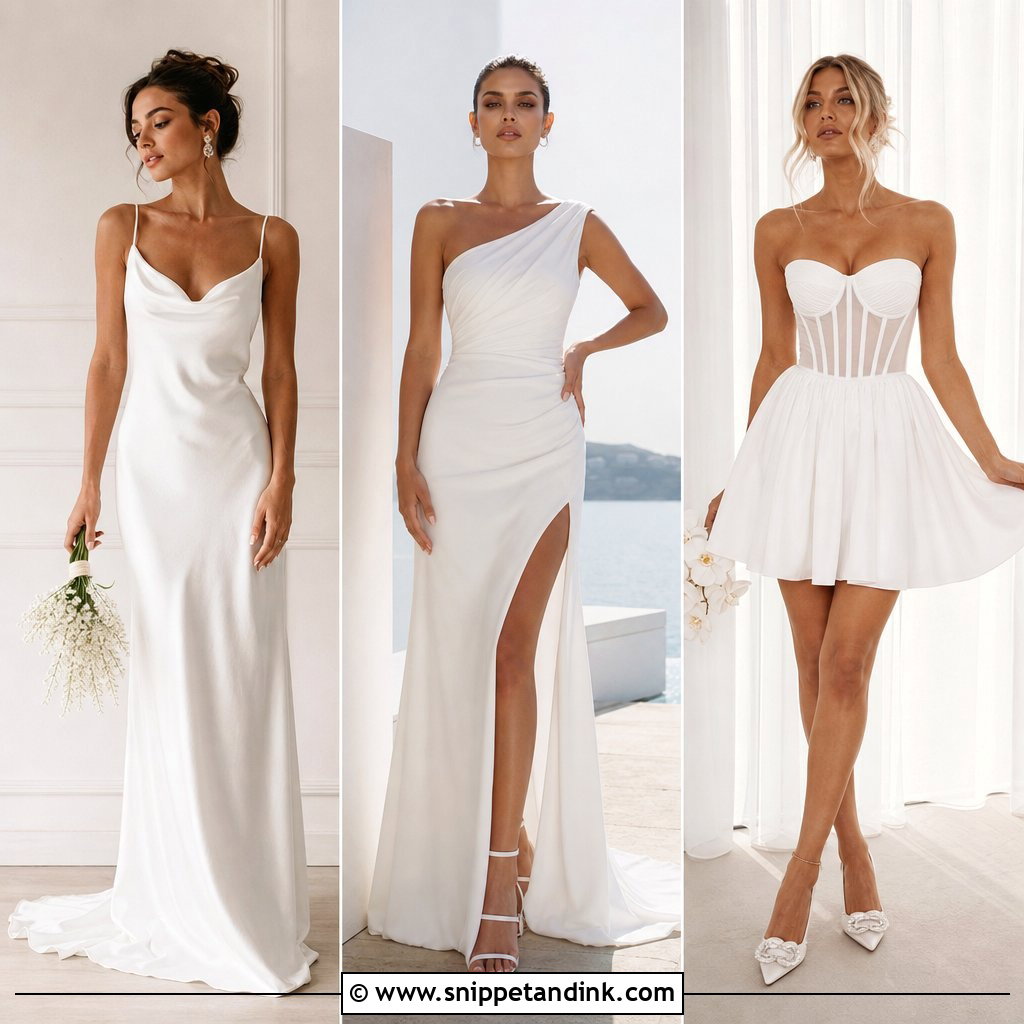
Bias-cut satin is cut diagonally across the grain, and that is why a slip dress moves like liquid and why it hides so little. Look for slim straps, a draped neckline and a skirt that follows the body without gripping it. Silk or a good heavy satin is worth the stretch in budget here, since thin satin shows every ripple. Satin also shows every line underneath, so I insist on fitting it with the exact smooth underwear you’ll wear on the day. Drop earrings, barely-there sandals and a light cathedral veil suit it, with a neat chignon or a softly waved bob. Plan the steaming: every crease shows on plain, reflective fabric.
3. Strapless Satin Wedding Dress
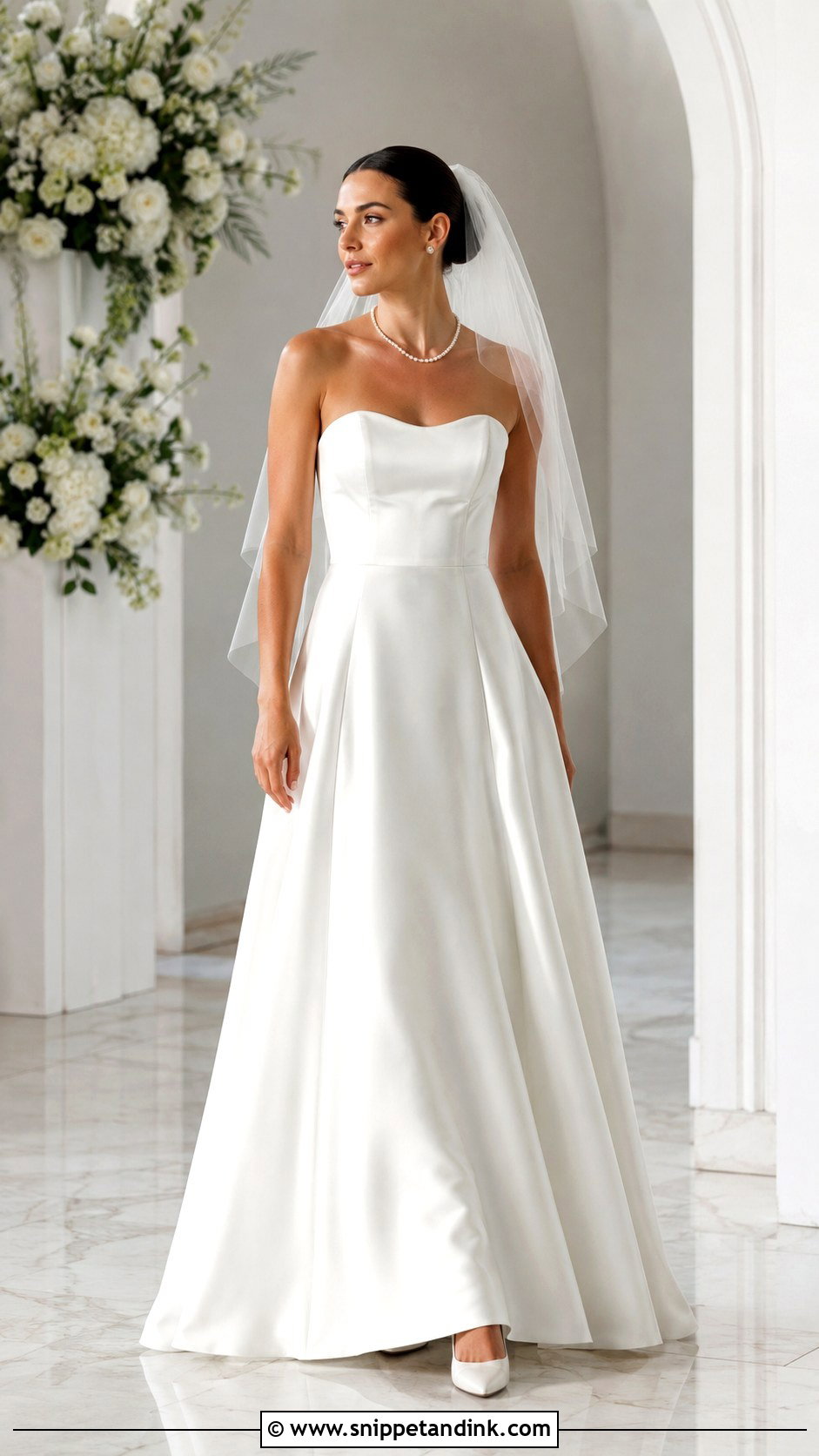
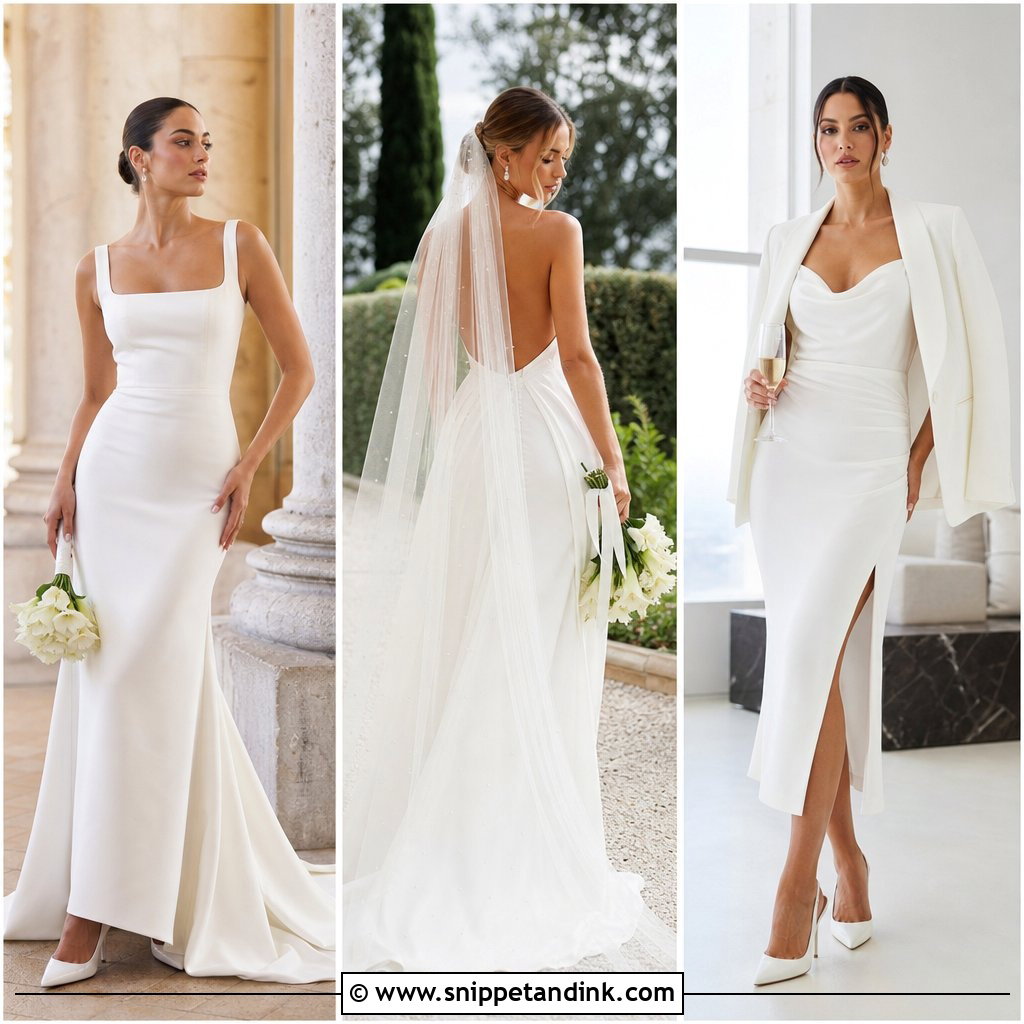
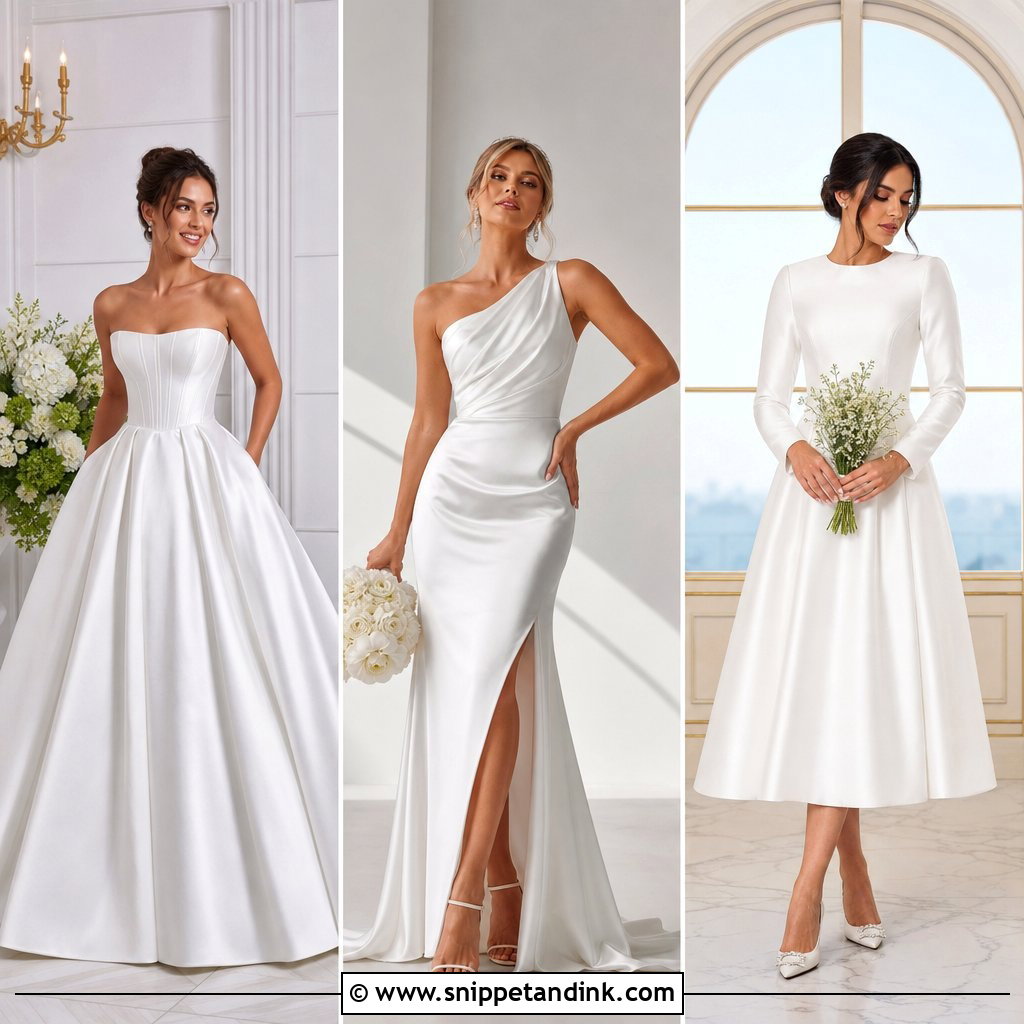
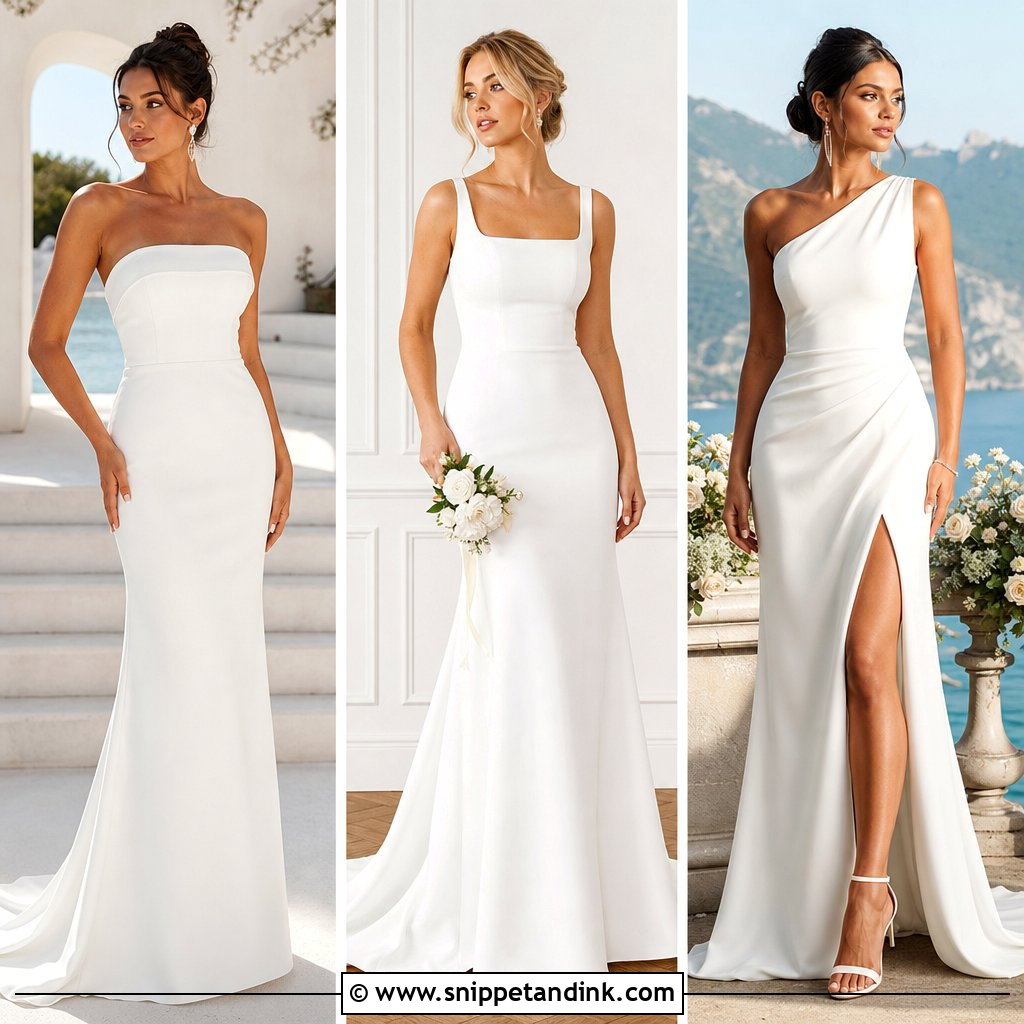
Strapless satin is about as classic as bridal gets, and it stands or falls on what’s inside. The good ones have a structured bodice with an inner corset and a softly flared skirt to balance the open neckline. I’ll ask you to sit, raise both arms and walk quickly across the fitting room, then watch whether you reach for the top edge. If you do, the bodice needs taking in or a waist stay added. A straight, sweetheart or curved neckline is a matter of preference. One necklace or small pearl drops, closed-toe pumps and a medium veil keep it traditional, and a satin wrap or fitted jacket covers cooler weather.
4. Square Neck Wedding Dress
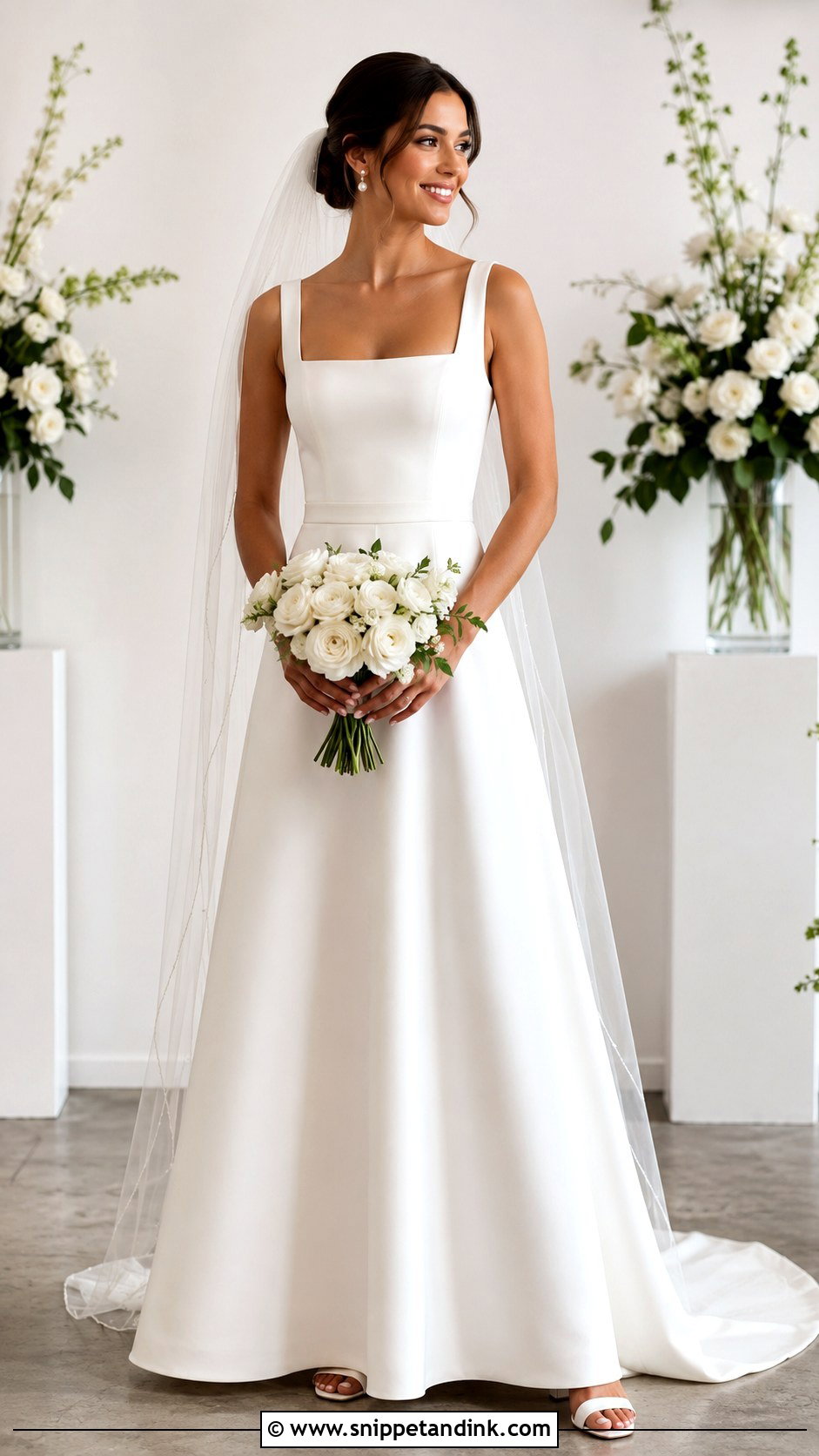
Square necklines look composed, but they’re unforgiving if the straps sit in the wrong place. Wide straps, a fitted bodice and an A-line or column skirt carry the shape. Smooth crepe gives a softer line, while structured mikado holds the corners crisp. The check I make is simple: lean forward as if signing the register. If the top edge gapes away from the chest, the straps need moving inward or the neckline needs a hidden stay. Pearl earrings, a sleek bun, block-heel sandals and a sheer veil set below the bun suit it, and a fine pendant is optional.
5. V-Neck Wedding Dress
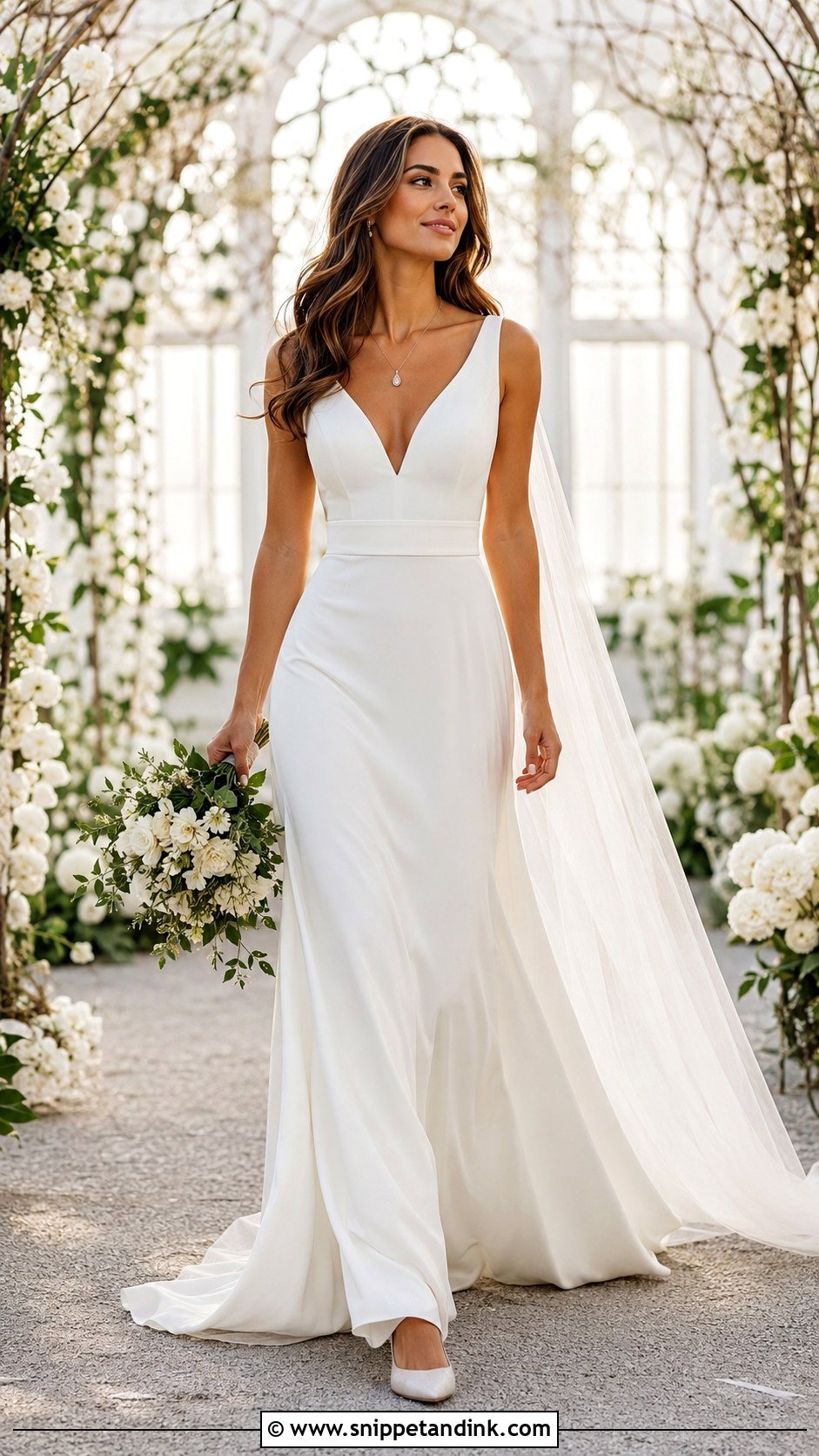
A V-neck lengthens the neck and torso without any decoration at all. Choose the depth you’ll feel settled in during a religious ceremony as well as at the party, and balance it with wider straps or short sleeves. A fluid crepe skirt moves freely; satin dresses the same shape up. Deep Vs can open further when you bend or hug, and a seamstress can add illusion mesh or bring the shoulder seams in to stop it. Hug someone and bend over a table before you approve the fit. A delicate pendant, low heel pumps, a soft tulle veil and loose waves or a low twist finish it.
6. Long Sleeve Crepe Wedding Dress
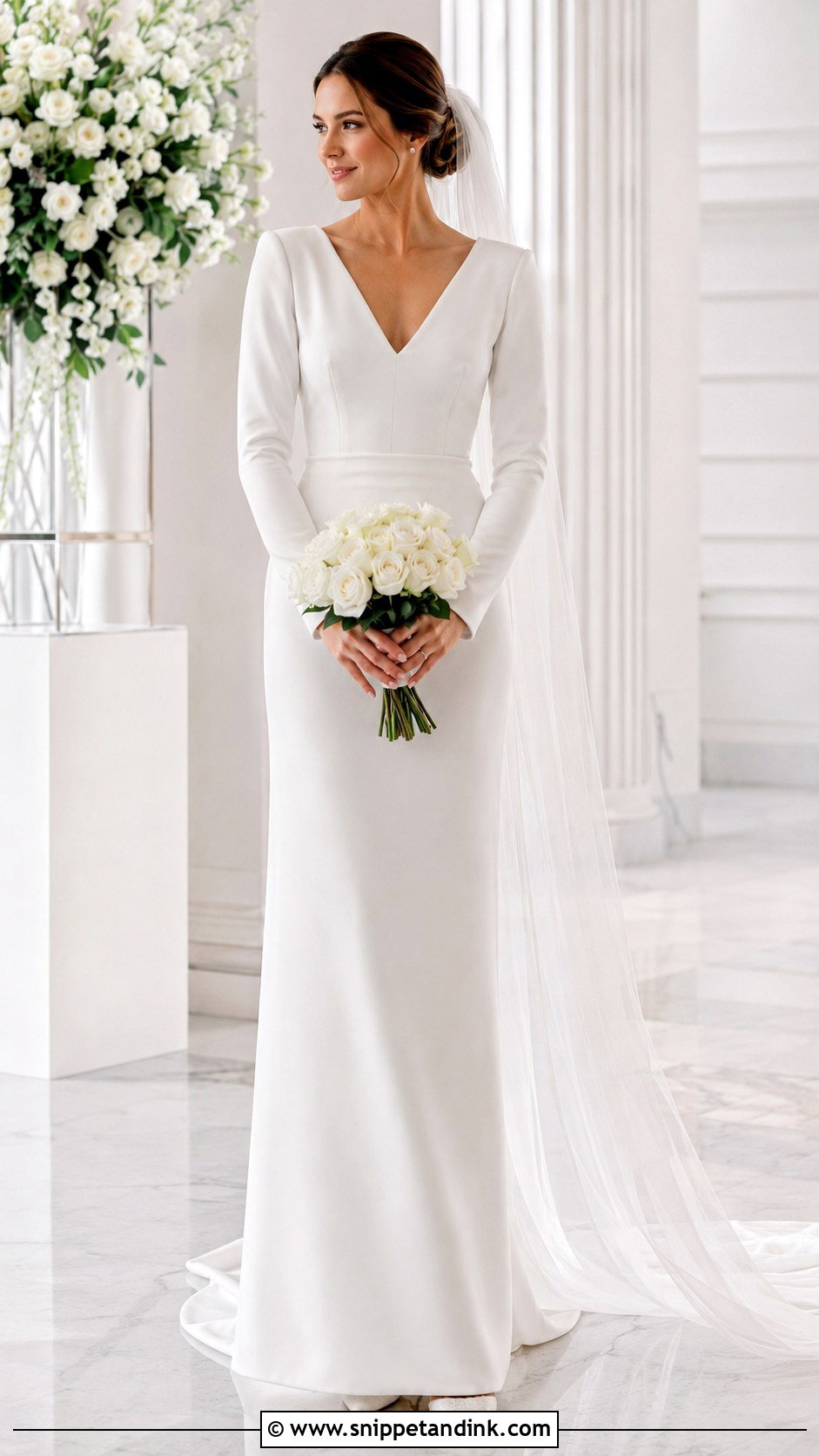
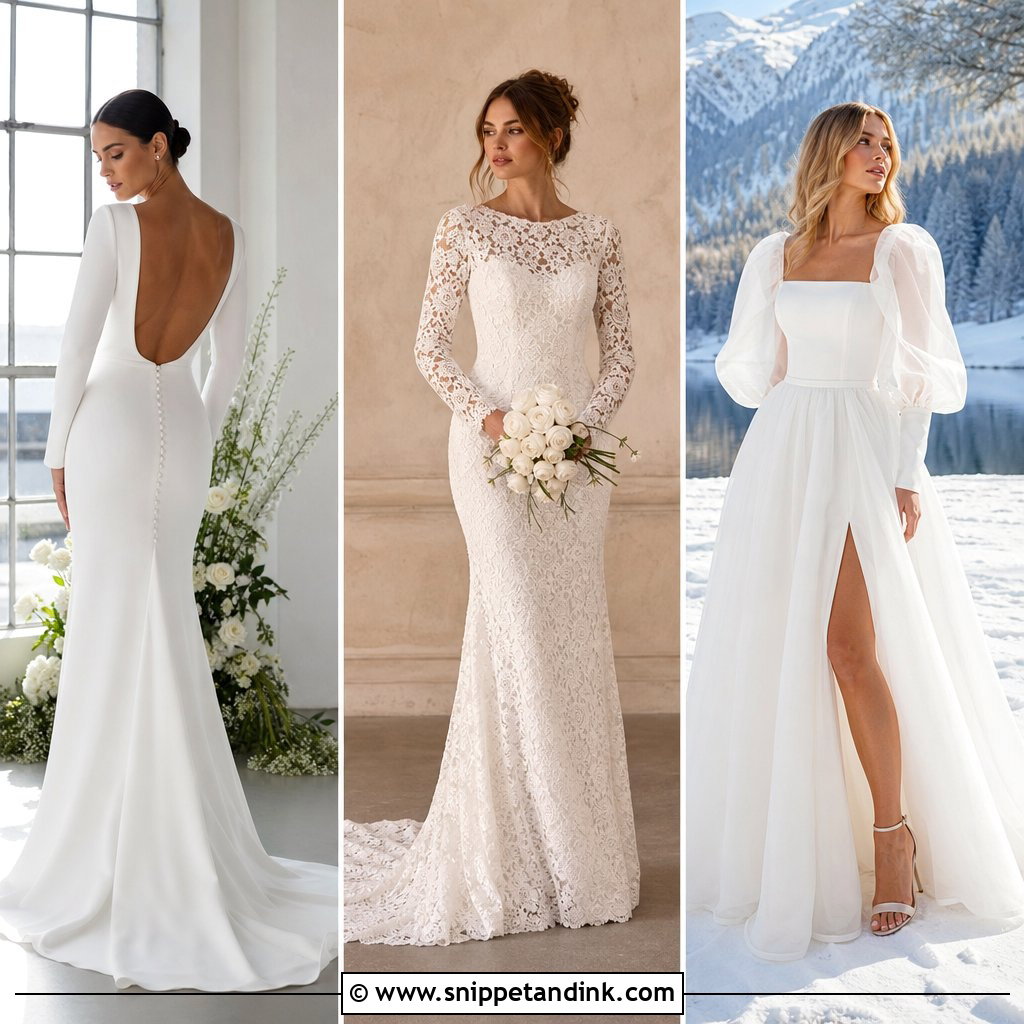
Cold months and formal rooms are where long sleeve crepe earns its place. Fitted sleeves, a clean waist seam and a column or soft A-line skirt keep it simple, under a bateau, square or shallow V neckline. Sleeves are where I see the most fitting regret. Too tight and you can’t lift a glass; too loose and the crepe bunches at the elbow and creases there by the speeches. Hug, raise your hands and sit at the fitting. Pearl studs, closed-toe heels, a low bun and a chapel veil suit it, and ask for a small bustle so the train survives the evening.
7. Short Sleeve Wedding Dress
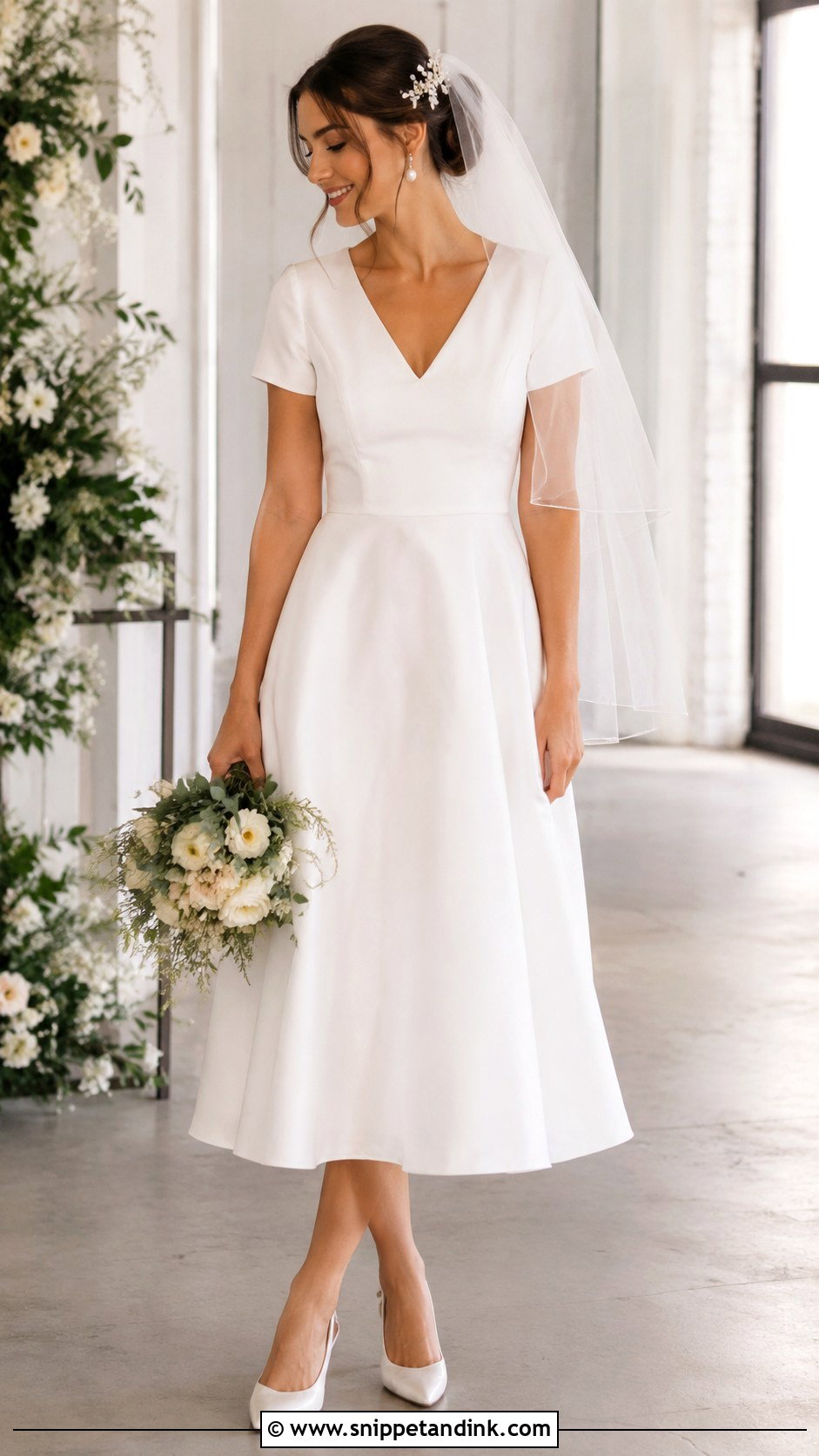
Short sleeves are easy to wear in warm weather and at daytime ceremonies. The flattering length ends just above the widest part of the upper arm, so the sleeve skims rather than cuts across it. Avoid tight elastic sleeve bands; after six hours they leave a red line and feel like a tourniquet. A modest V or rounded neck with an A-line skirt and narrow waist seam keeps it light. Slingbacks, a small floral comb and simple pearls suit it, with a shoulder or fingertip veil. Reach forward and overhead in the fitting room and watch whether the neckline moves with you.
8. Cap Sleeve Lace Wedding Dress
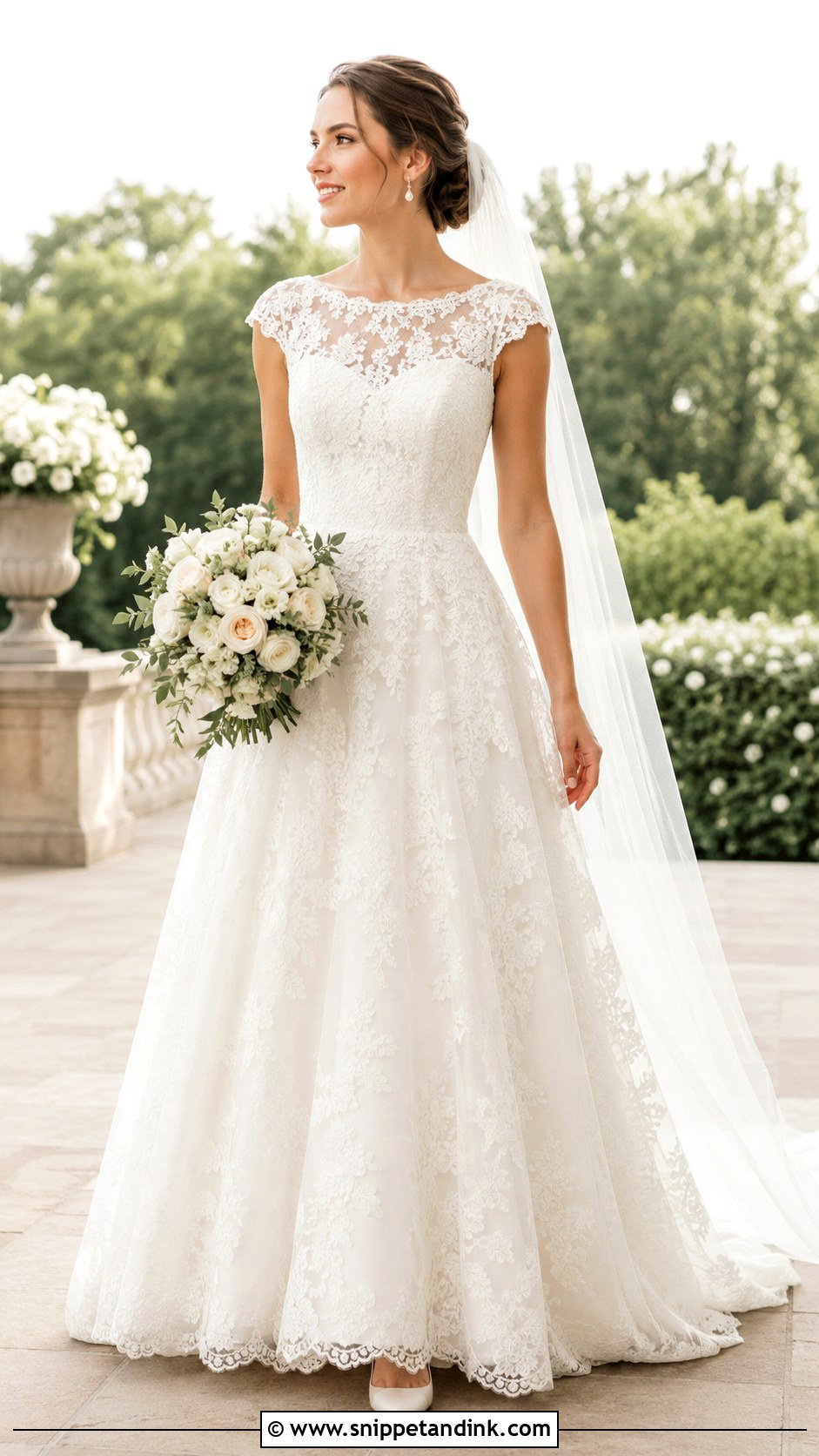
Cap sleeves in lace add texture while the dress itself stays plain. Pick lace with a clear, regular pattern rather than heavy beading or stacked appliqué. Run your fingers along the sleeve edge. Some lace trims are scratchy against the arm, and after a full day that becomes a rash; a seamstress can bind the edge with soft tulle or line it. A lightly fitted bodice and flowing A-line skirt keep it comfortable. Ivory pumps, small crystal or pearl earrings, a plain tulle veil, a soft updo and a compact bouquet let the fabric lead.
9. Simple Lace Wedding Dress
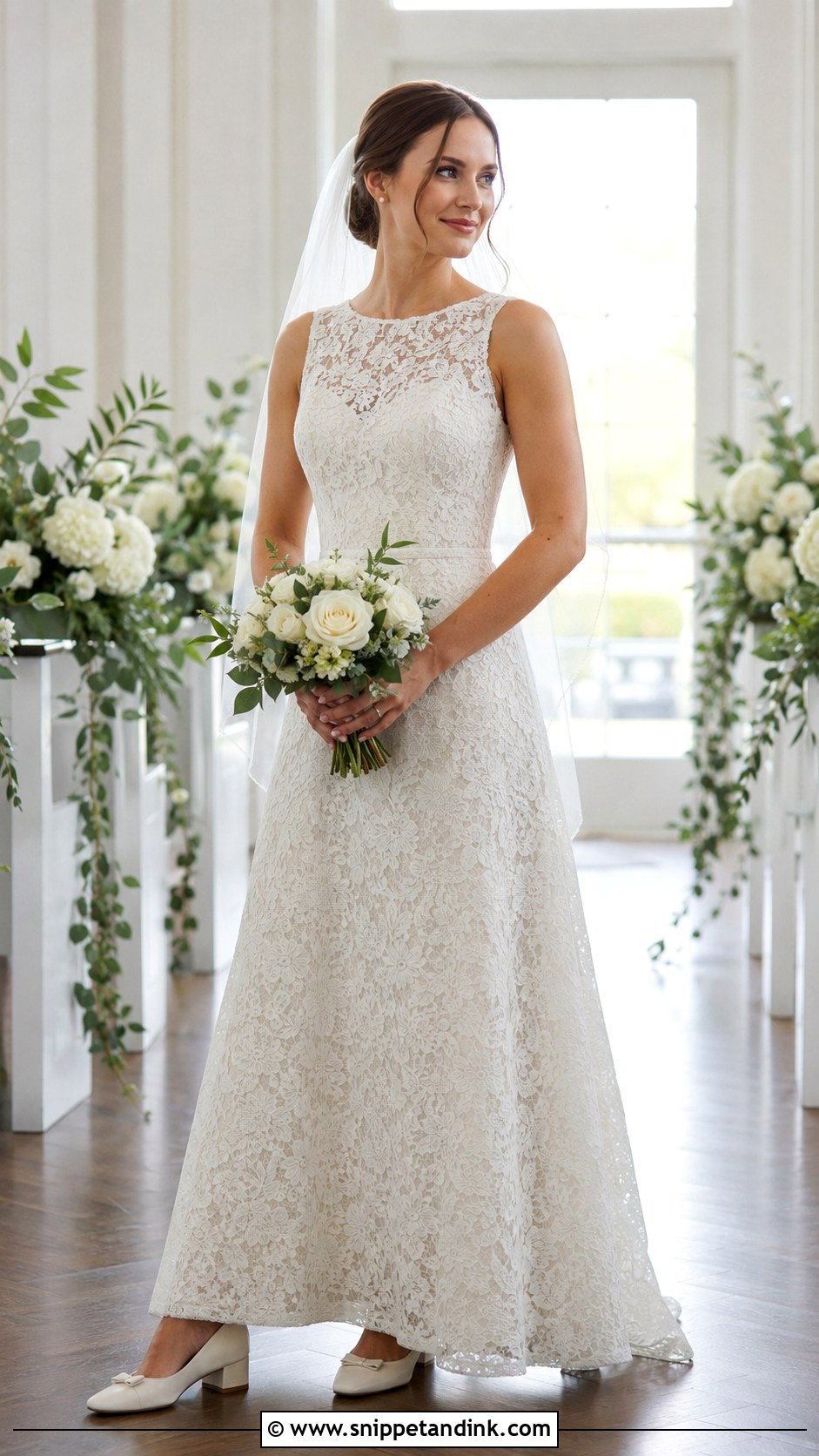
One lace pattern across the whole gown keeps a lace dress calm rather than fussy. A lined bodice, natural waist and soft flare give coverage while letting the texture show. The lining colour changes everything. Ivory, nude, blush and bright white linings can make the same lace look like four different dresses against your skin, so I bring two or three to compare. Look at the lace by a window too, because it photographs differently under flash than in afternoon sun. Low block heels, pearl studs, a narrow-edged veil and loose waves or a relaxed bun suit it.
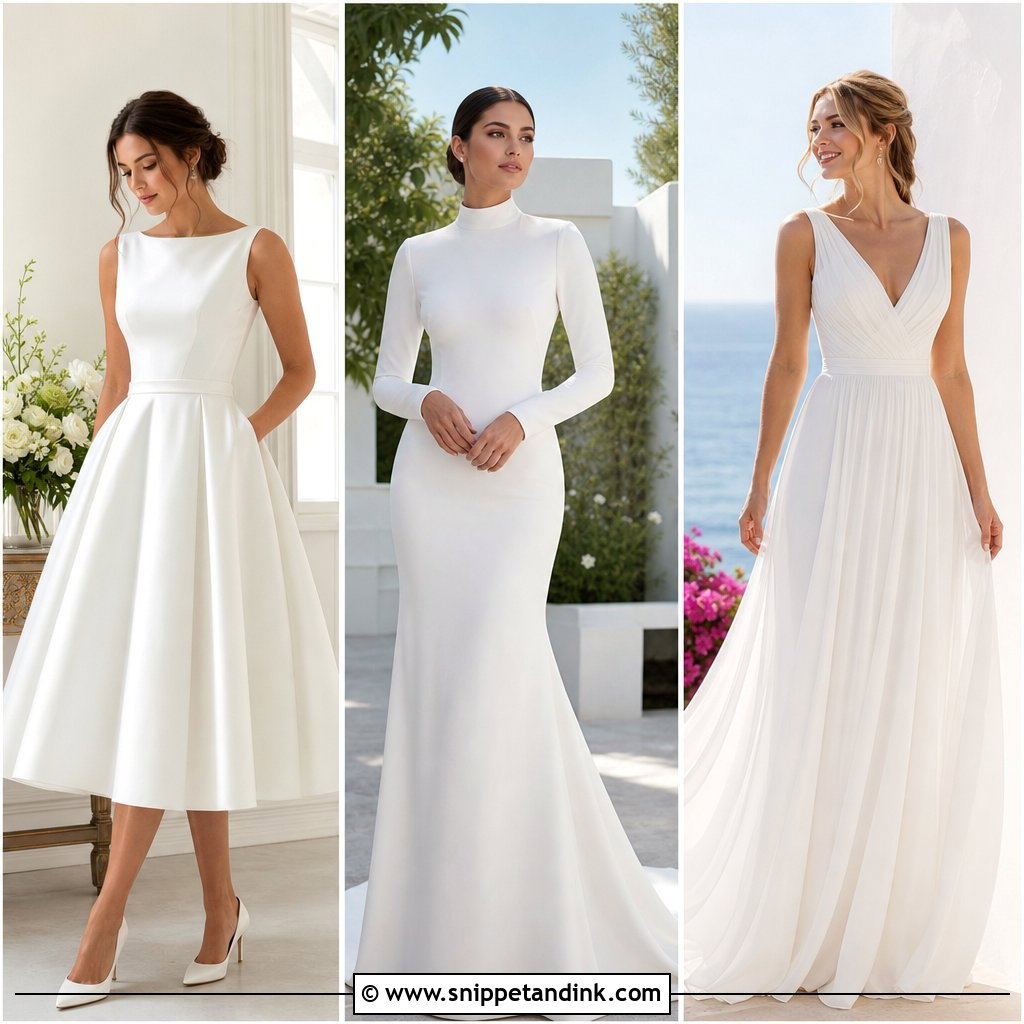
10. High Neck Wedding Dress
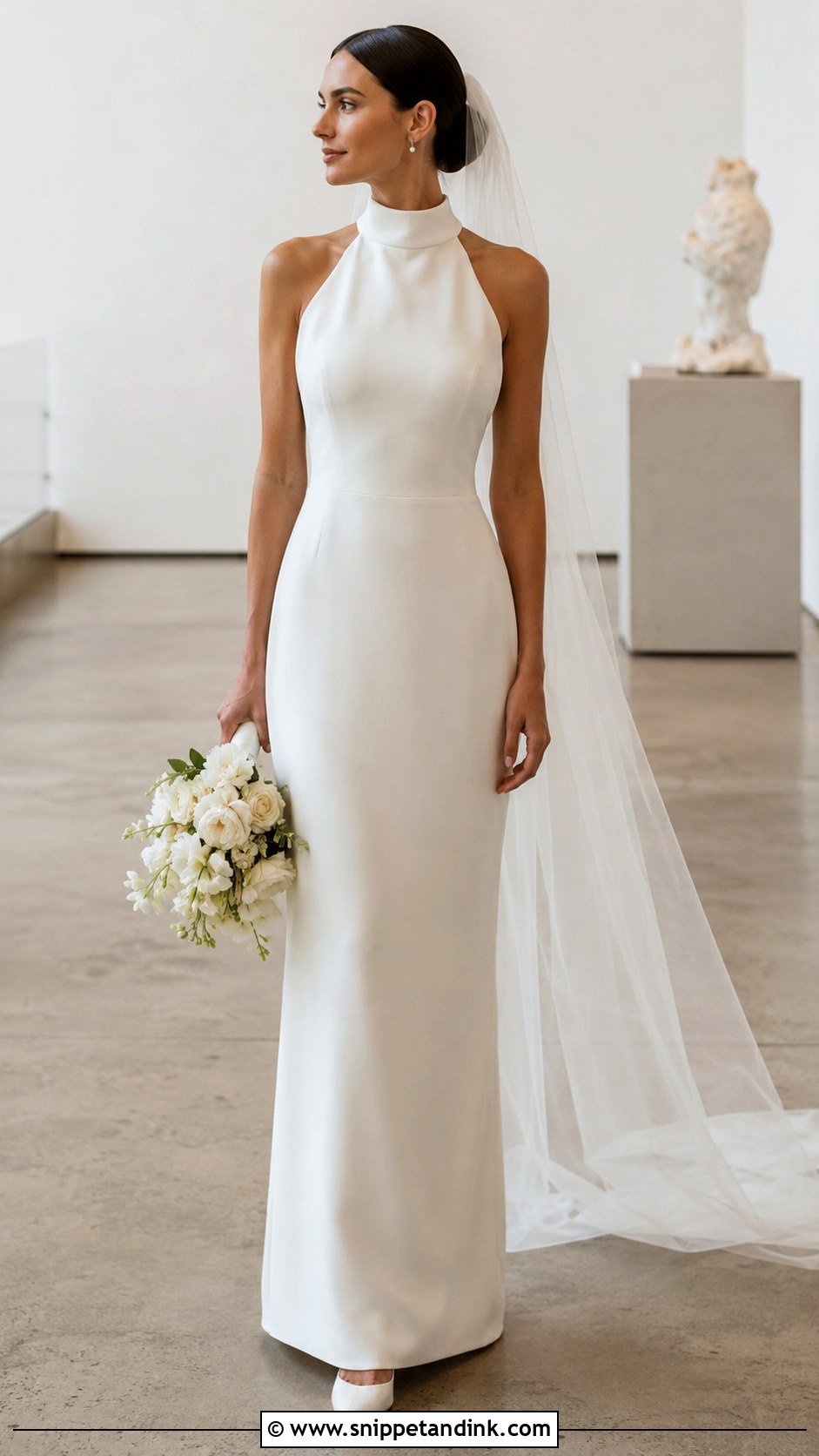
A high neck carries the whole dress on its own, so keep everything below it plain: a sleeveless bodice, smooth fabric, a column or narrow A-line skirt. A low back gives contrast if it still supports you. Skip the necklace. Small earrings, a sleek low bun and pointed heels are enough, with the veil set beneath the bun so nothing crowds the collar. Turn your head fully left and right in the fitting room. A stiff collar that rubs the jaw is miserable by evening, and structured fabric needs pressing on the morning so the collar doesn’t roll.
11. Off-Shoulder Wedding Dress
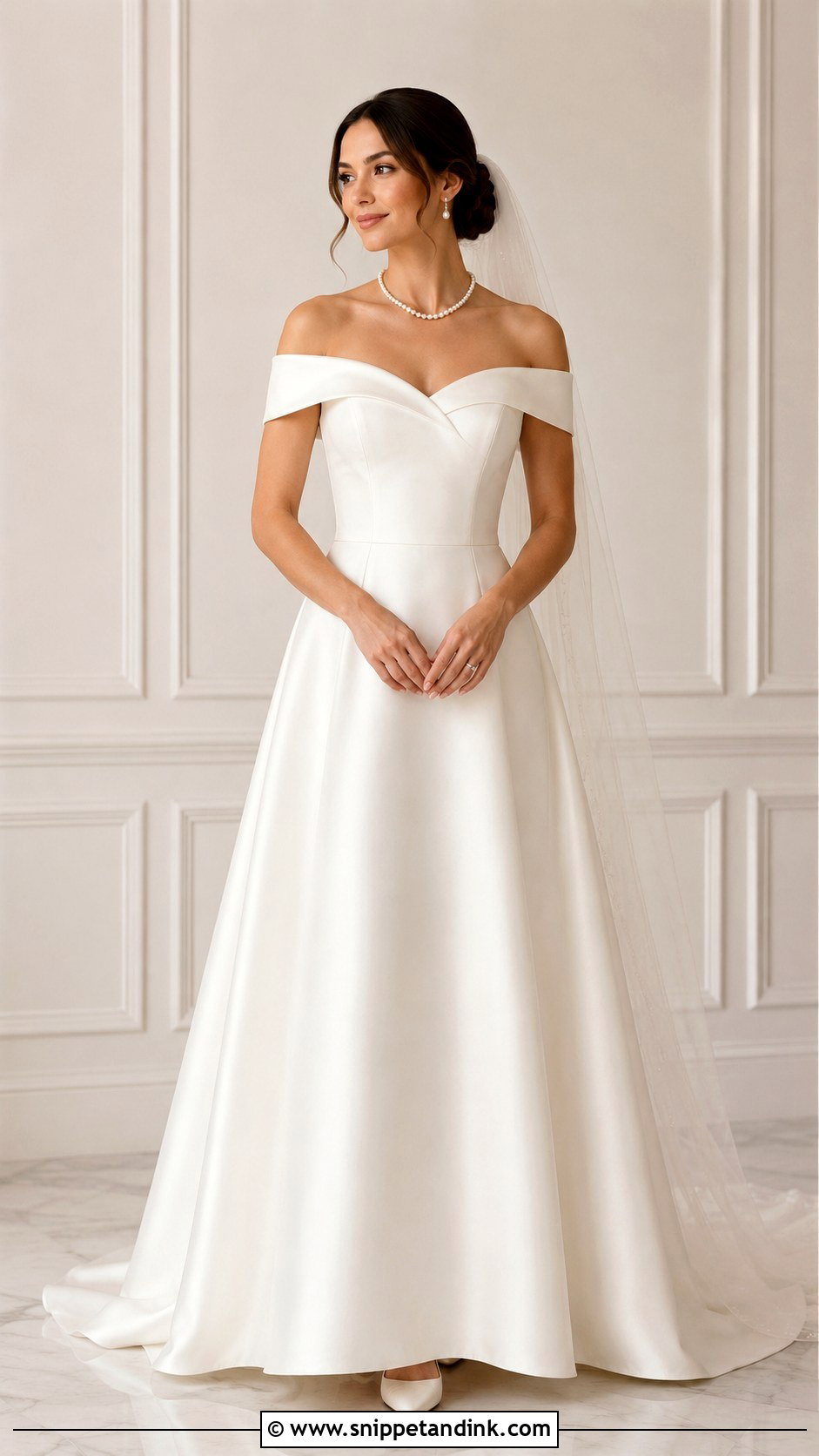
Off-shoulder necklines show the collarbone and feel quietly romantic. A supportive bodice with a clean folded edge and an A-line or fitted skirt suit it best. Loose off-shoulder sleeves are the problem: they slide, and they pin your arms to your sides. I test how far a bride can lift her arms before the neckline pulls, and if dancing matters, I suggest detachable straps that come off after dinner. Structured satin is formal; crepe feels lighter. A short necklace, pearl drops, closed-toe pumps and a veil behind a low chignon complete it.
12. Sheath Wedding Dress
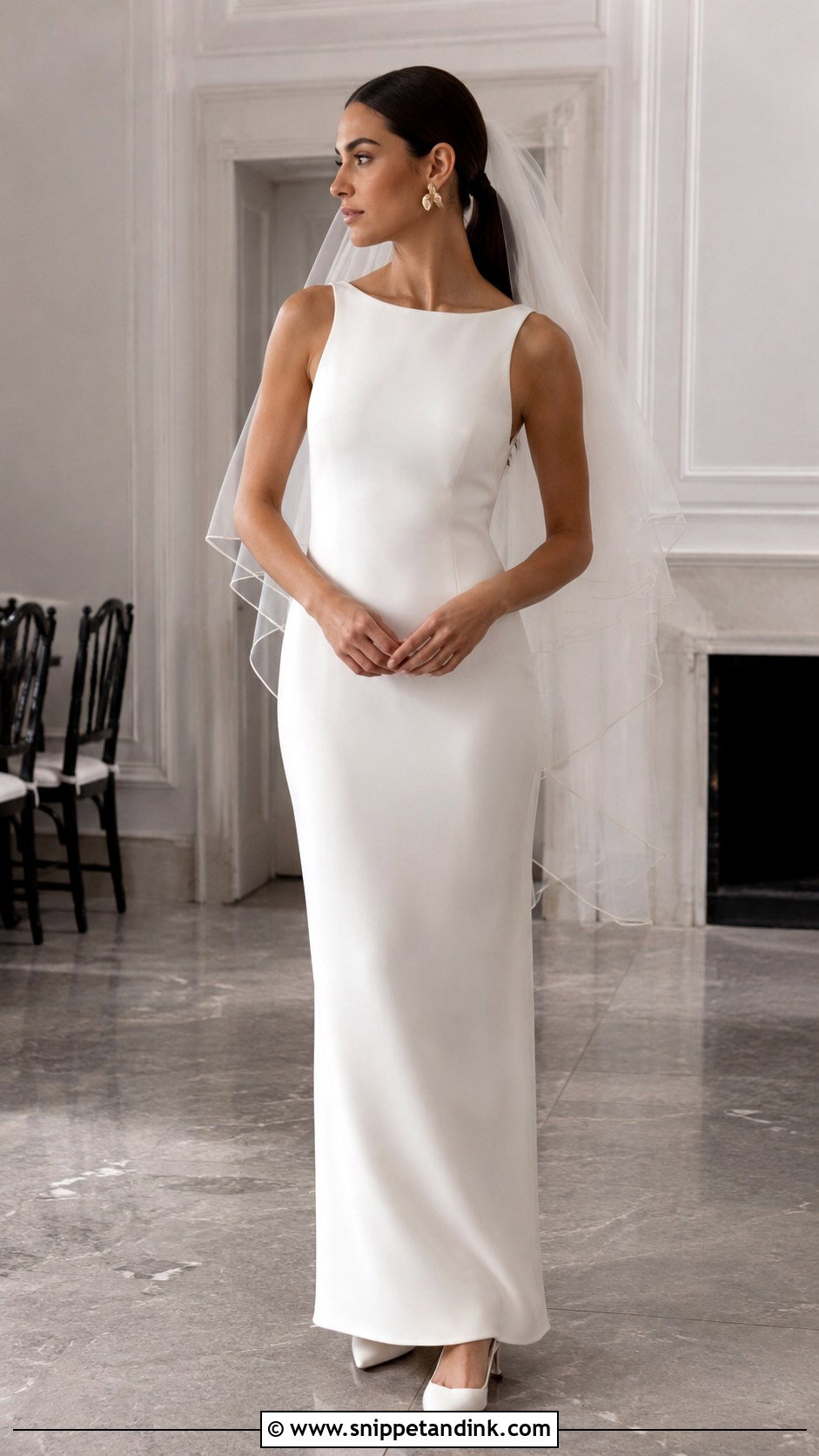
A sheath wedding dress runs in a narrow line from shoulder to hem, with no volume to manage in a small venue or a city ceremony. Crepe, soft satin or lined lace all work. The trade-off is stride length. Take normal steps and sit down in it at the fitting; if the fabric pulls across the knees, you need more ease or a back slit or kick pleat. Pointed slingbacks, sculptural earrings and a fingertip veil keep it uncluttered, with a smooth ponytail, bun or tucked waves.
13. Column Wedding Dress
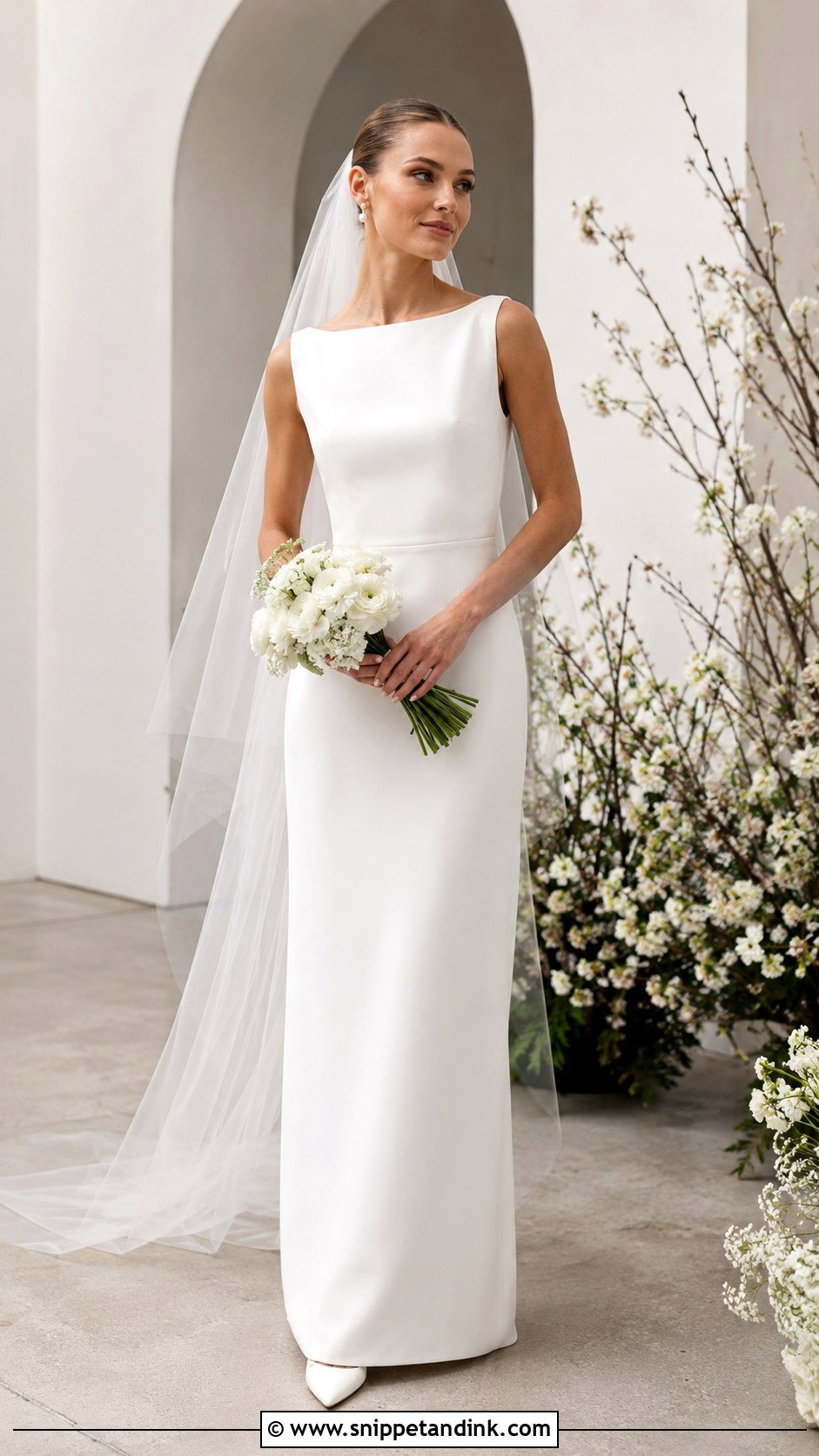
Columns rely on one uninterrupted vertical line, which is why alterations at the waist, hips and hem matter more here than in any fuller dress. A straight skirt, a lightly shaped waist and a supportive bodice in matte crepe or weighty satin give the architectural look; a bateau or square neck strengthens it, narrow straps soften it. Watch the lining as you walk. If it twists or clings to your legs, the dress loses its line, and a slightly heavier lining usually fixes it. Pointed pumps, a structured mini bag for later, polished metal or pearl earrings and a long veil for the ceremony finish it.
14. Tea Length Wedding Dress
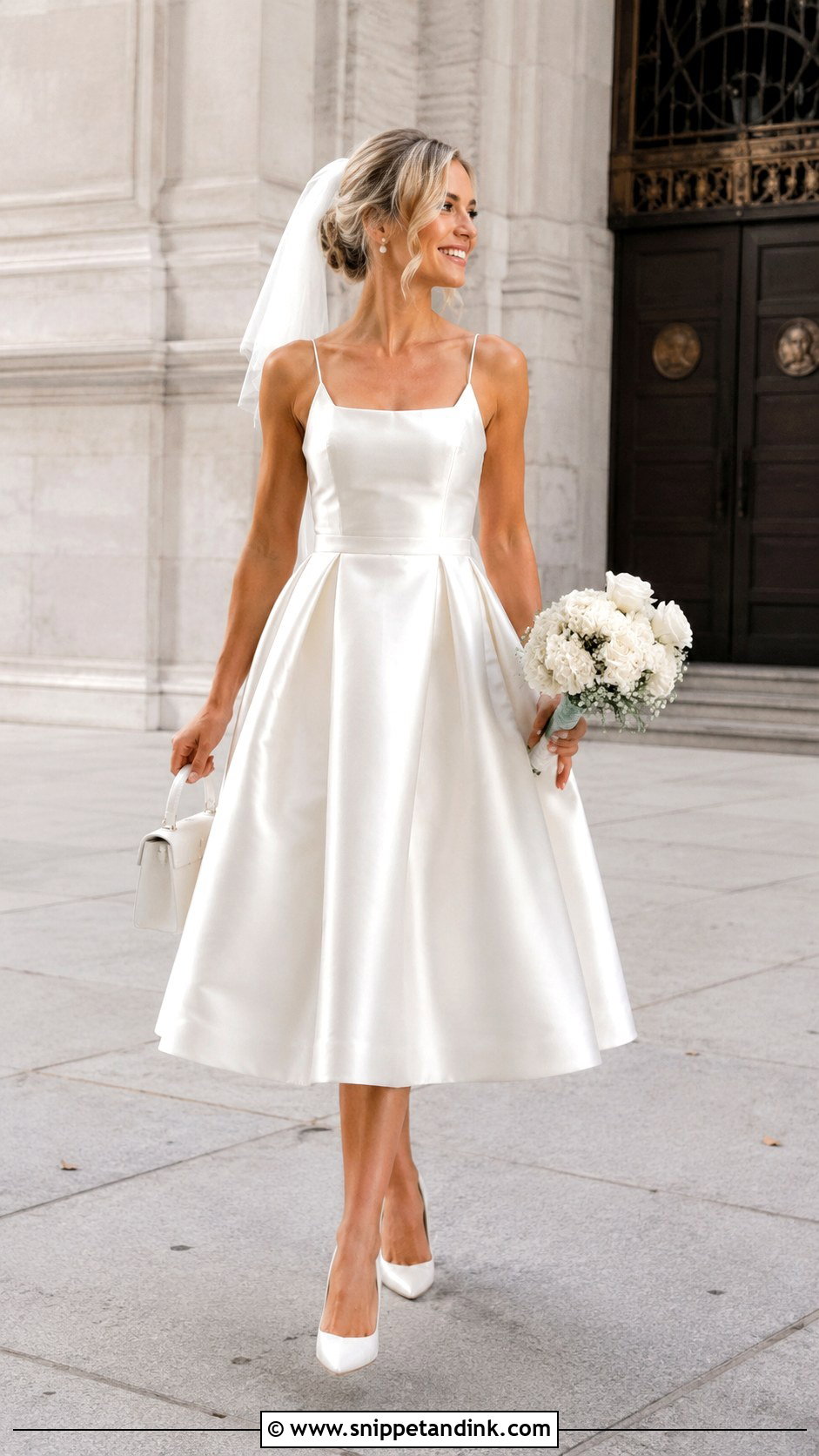
Tea length shows off the shoe and lets you move freely, so it suits courthouse ceremonies, daytime venues and relaxed receptions. A fitted bodice with a skirt ending between knee and ankle needs some structure, so clean satin or mikado works better than soft crepe. Test several hem lengths in the shoes you’ll wear. An inch either way changes where the eye lands on the leg, and the most flattering spot is usually just below the widest point of the calf. Pointed pumps, slingbacks or neat block heels, pearl earrings, a short veil and a small top-handle bag suit it. Keep any petticoat minimal.
15. Simple Wedding Dress With Pockets
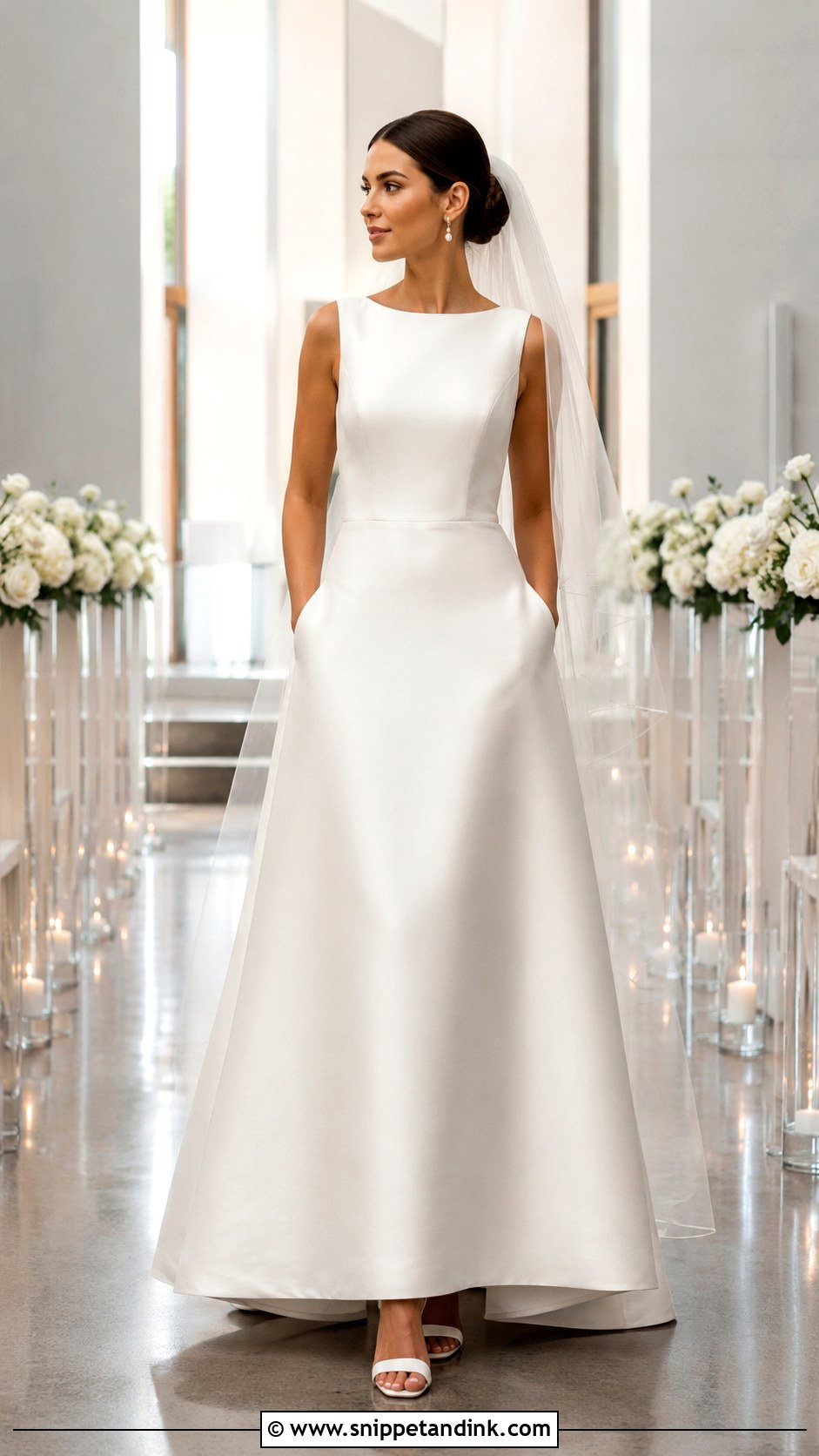
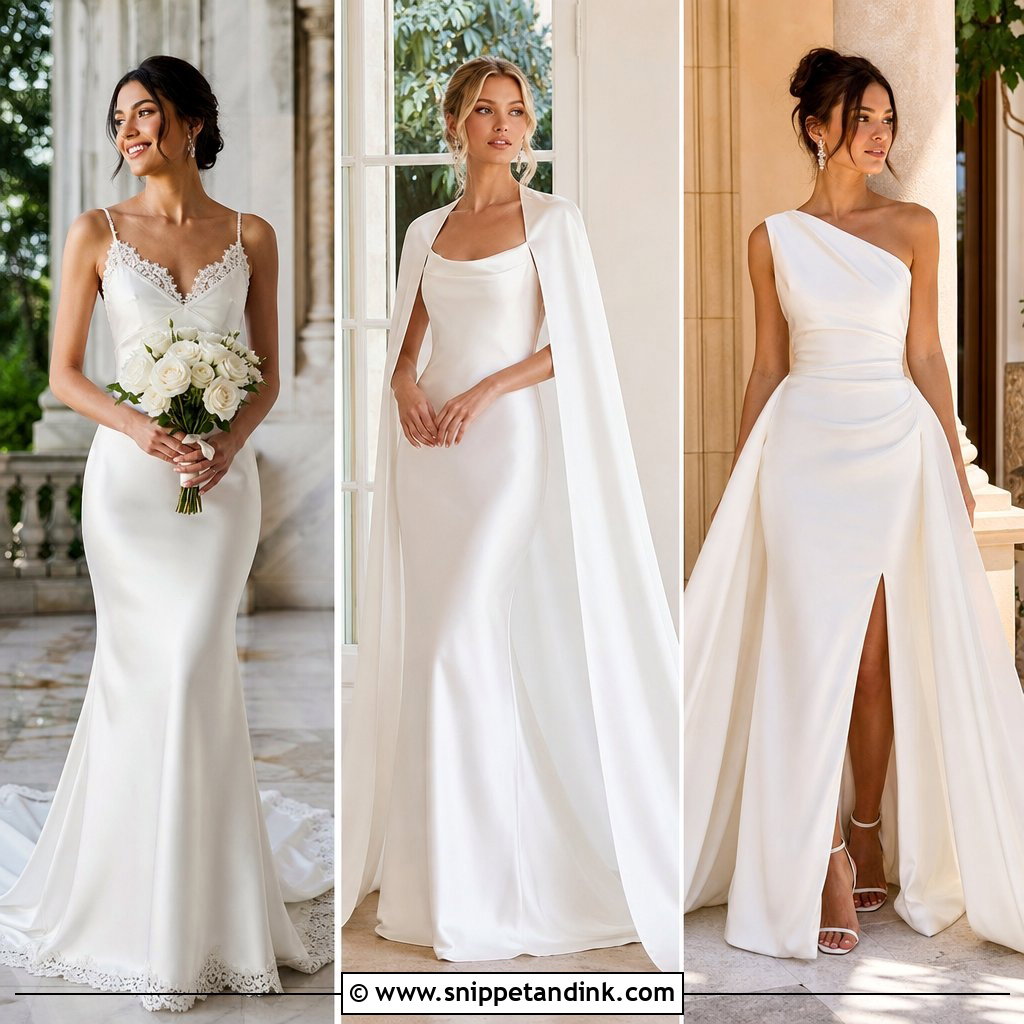
Pockets are the detail brides thank me for most. Choose a structured A-line with side-seam pockets that lie flat against the hip; satin, mikado and heavier crepe hold them cleanly, while thin fabrics sag. Use them for your hands and the odd tissue, not your phone or lipstick case. Weight drags the skirt and the outline shows in every photo. Check that the openings stay closed when you walk and sit. Block-heel sandals, pearl drops, a light fingertip veil and a sleek bun or half-up style keep the outfit simple.
16. Empire Waist Wedding Dress
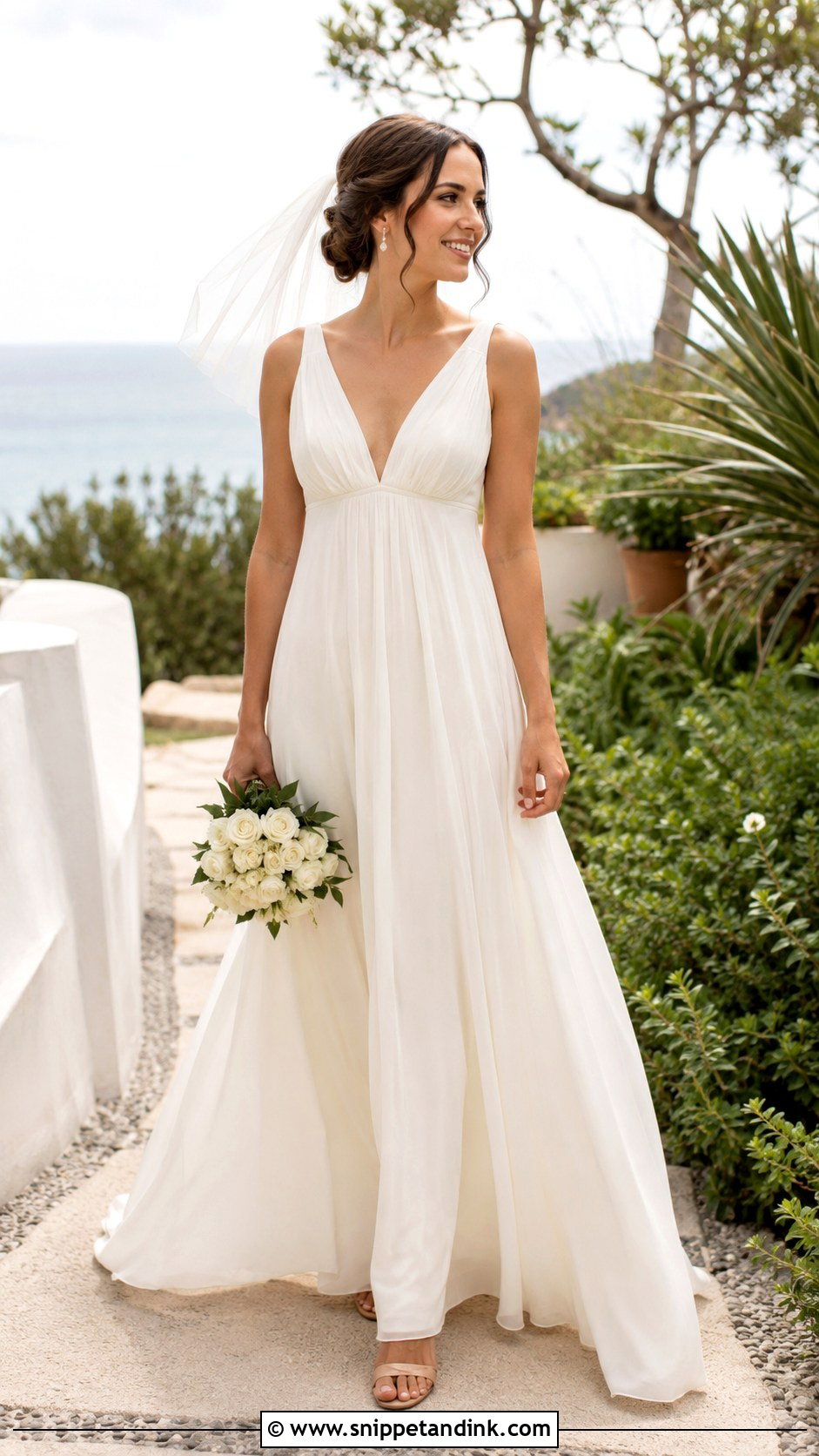
An empire waist places the seam just under the bust, so the skirt falls softly from there with nothing pressing on the natural waist. Beach and garden ceremonies suit it, and so do brides who simply hate feeling held in. Chiffon floats; soft crepe looks cleaner. Where that seam lands is the whole fitting. Too high and it cuts across the bust, too low and it looks like a misplaced waistline, so I pin it while the bride stands in her actual bra. Low sandals, delicate earrings, a light veil or comb and a small bouquet suit it. Keep gathered layers to a minimum.
17. Simple Ball Gown Wedding Dress
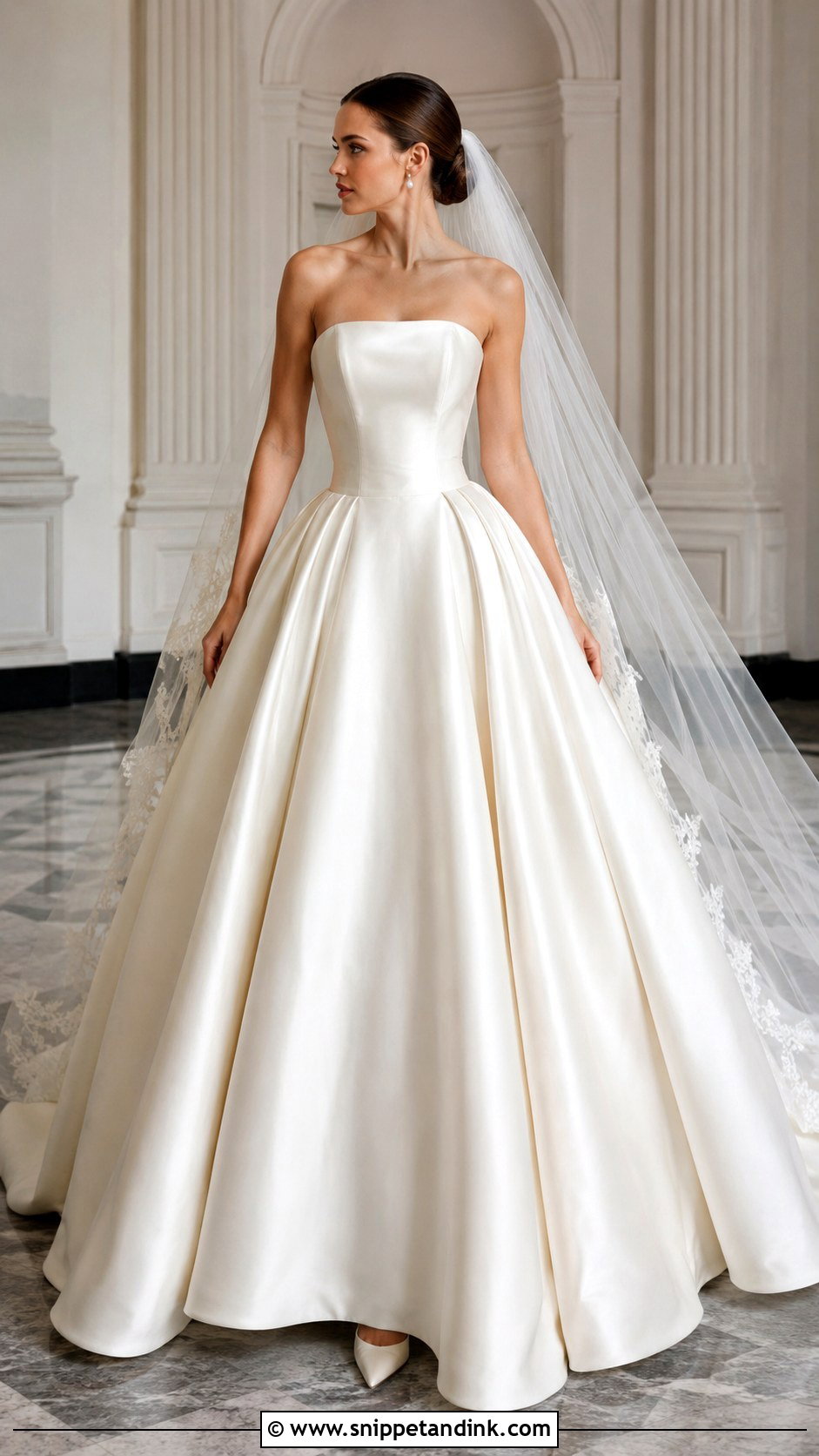
A plain ball gown lets the shape be the decoration: a fitted bodice, a defined waist and a full skirt in satin, mikado or taffeta. Before committing, measure the realities. How wide is the aisle, will the skirt fit in the car, and can you sit at the top table without the skirt taking over the next chair? Ask the salon to demonstrate the bustle and practise it with your helper. The inner structure should carry the skirt’s weight from the waist, so the bodice isn’t dragged down. Classic pumps, pearl earrings, a cathedral or chapel veil and a neat bun complete it.
18. Minimalist Mermaid Wedding Dress
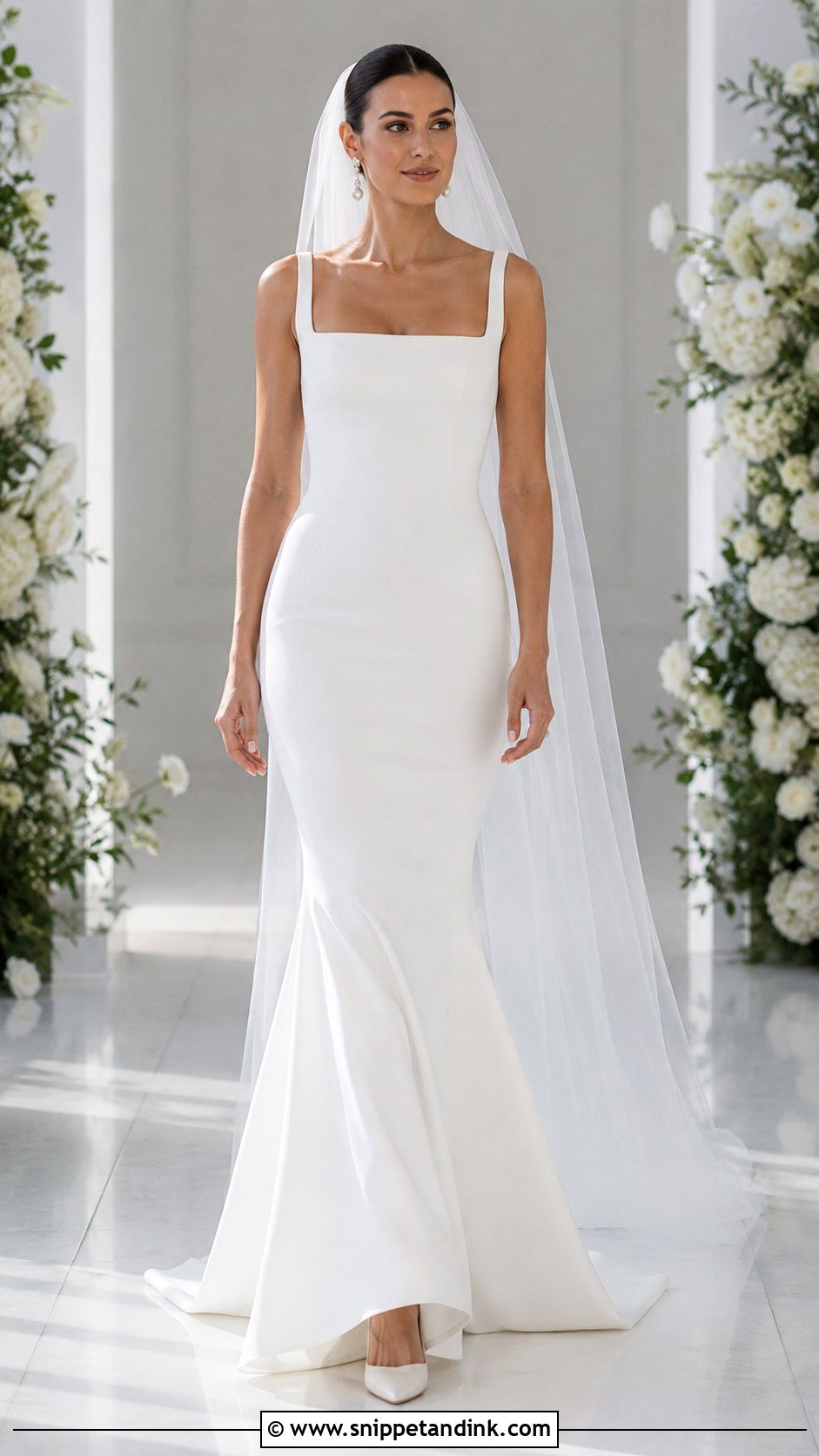
Without decoration, a mermaid relies entirely on where the flare starts. Smooth stretch crepe with a supportive bodice, a fitted line through the hip and a flare from around the knee looks clean under a square, strapless or soft sweetheart neckline. Set the flare too high and you can’t climb a step. Walk, sit, take a stair and dance before approving alterations. The dress can hug the thigh as long as the knees move freely. Drop earrings, pointed heels, a plain long veil that follows the train and an updo that shows the back suit it. Ask about a secure bustle, because a mermaid train is awkward to manage once the dancing starts.
19. Simple Wedding Dress With Bow
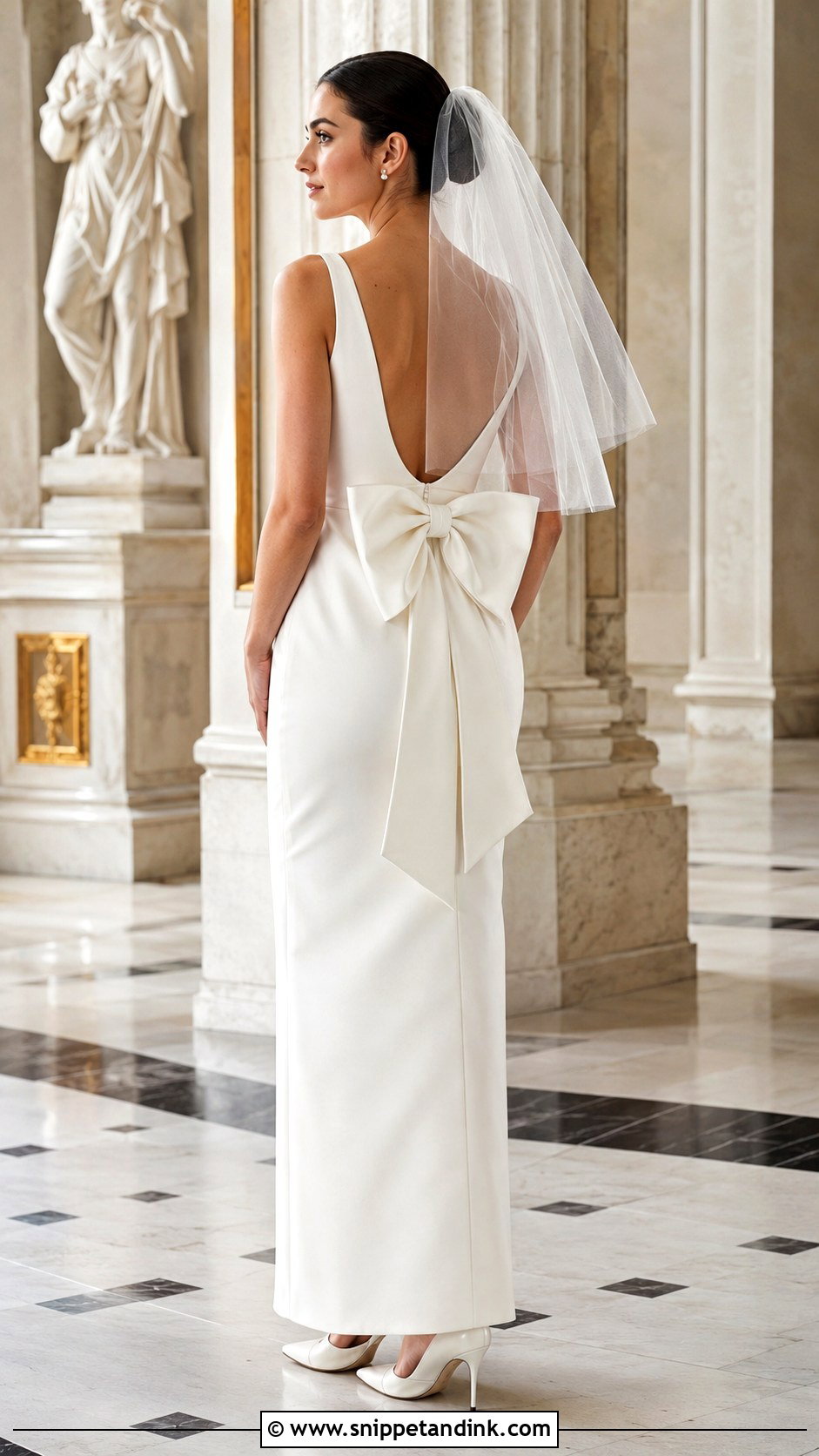
One bow, well placed, gives a plain dress a focal point without clutter. A structured bow at the back waist, shoulder or neckline on an A-line, sheath or column works; two bows start to look like gift wrap. Sit down in it and stand back up. Unstiffened bows crumple against a chair back within the first hour, so ask whether it has interfacing inside. A detachable bow gives you options for the reception. Smooth pumps, stud earrings and a veil that ends above or below the bow suit it, and a polished bun shows off a back detail.
20. Simple Wedding Dress With Detachable Sleeves
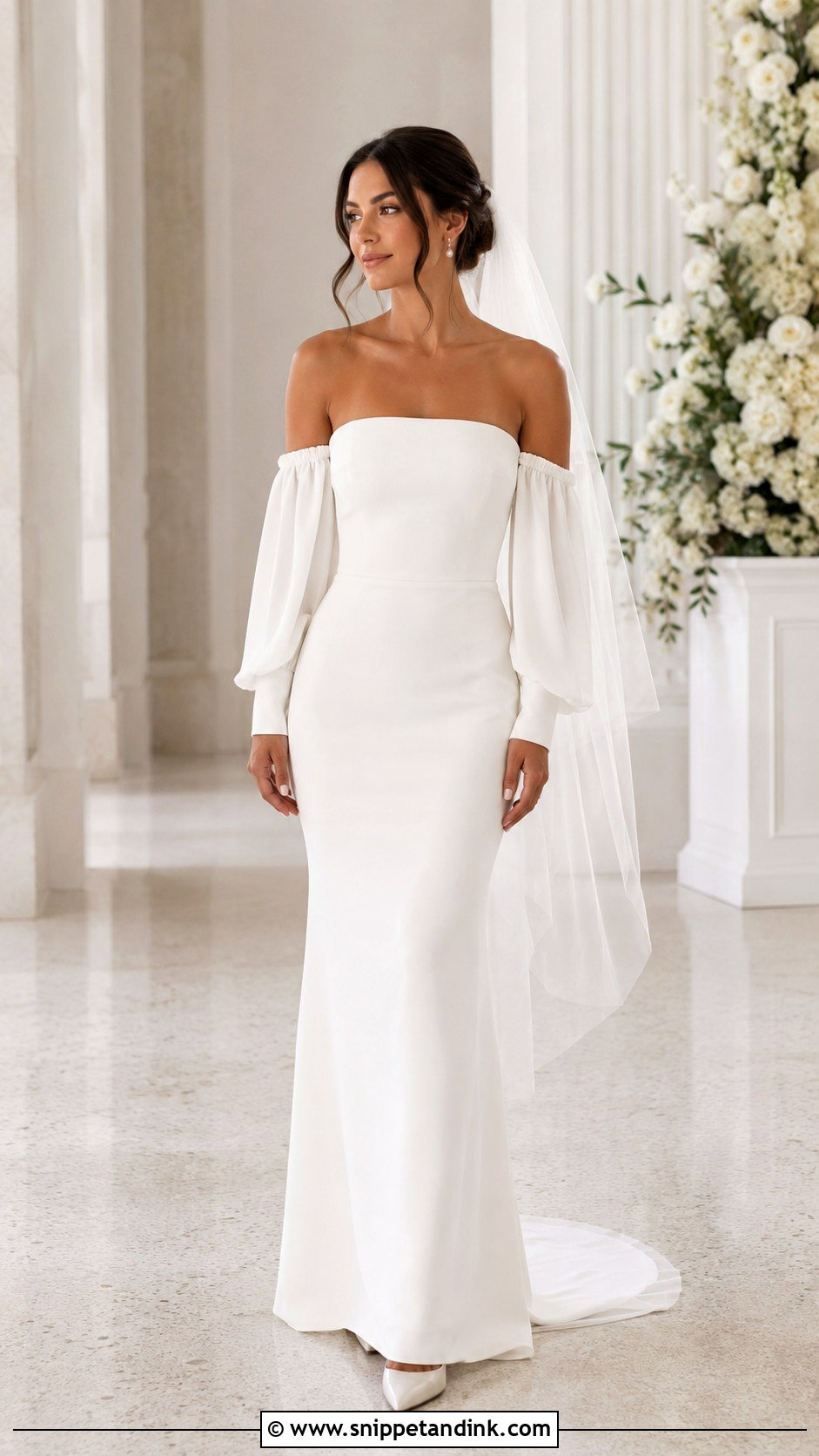
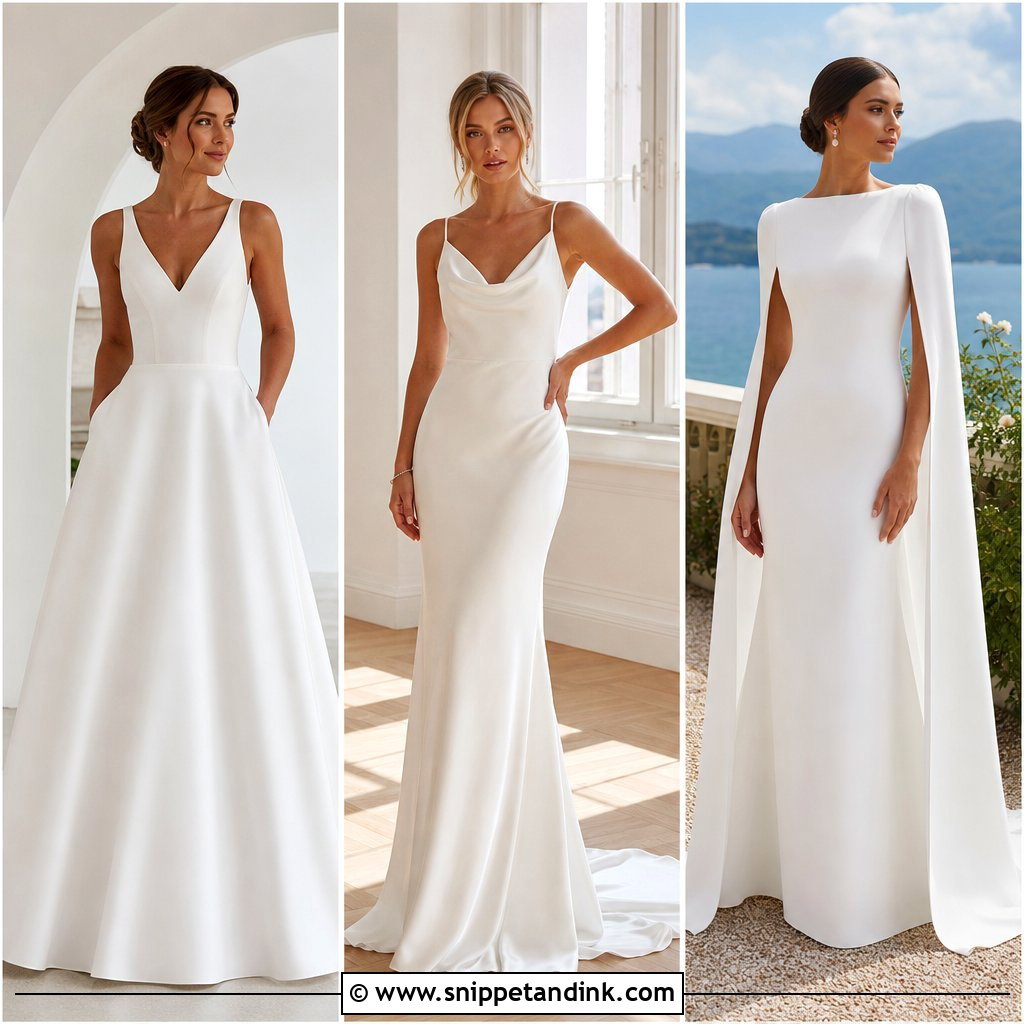
Detachable sleeves give you two looks from one dress. Start with a clean strapless or sleeveless satin or crepe gown, add fitted, puffed or off-shoulder sleeves for the ceremony, and take them off for the party. Ask the seamstress to hide the snaps or elastic so the bodice looks finished without them, and practise removing them yourself. I tell brides to pack a labelled bag for the sleeves in advance, because loose sleeves left on a chair tend to vanish by midnight. Pearl earrings, comfortable heels and a plain veil work with both versions.
Can a Simple Dress Still Feel Personal?
It can, and the best ways don’t add visual noise. When a bride worries her plain gown feels anonymous, I look for details that belong to her rather than extra embellishment from the shop.
Inside details are my favourite. A seamstress can stitch a date or initials into the hem or lining, or sew in a scrap of fabric from a parent’s wedding outfit. Nobody sees it in photos, but you know it’s there.
Buttons are another quiet change. Swapping plain covered buttons for vintage pearl or fabric ones down the back is a small alteration that changes how the dress looks walking away up the aisle.
The veil carries more personality than people expect. A plain gown with a veil edged in a family lace, or a long veil worn only for the ceremony, gives you two moods without touching the dress itself. And a change of shoes, a jacket or a bold earring for the evening lets the same gown read differently after dark.
What I steer people away from is adding embellishment to a minimalist dress after purchase. Glued crystals and appliqué on a clean satin gown rarely sit as well as the original design, and they can’t easily come off again.
Plain Fabric, Precise Fit
A simple dress feels intentional when it fits well and moves with you. Silhouette, fabric, tailoring and accessories do all the work in the twenty shapes above, which is exactly why the fitting matters so much. Start with the shapes that suit your venue and let you move, then compare necklines, fabrics, sleeves and skirt volume in person. Bring your shoes and the underwear you’ll actually wear to every appointment. From the slip to the ball gown, a dress that supports you and lets you walk naturally will look more polished than any amount of decoration.
You'll Like These Ideas:


Leave a Reply