
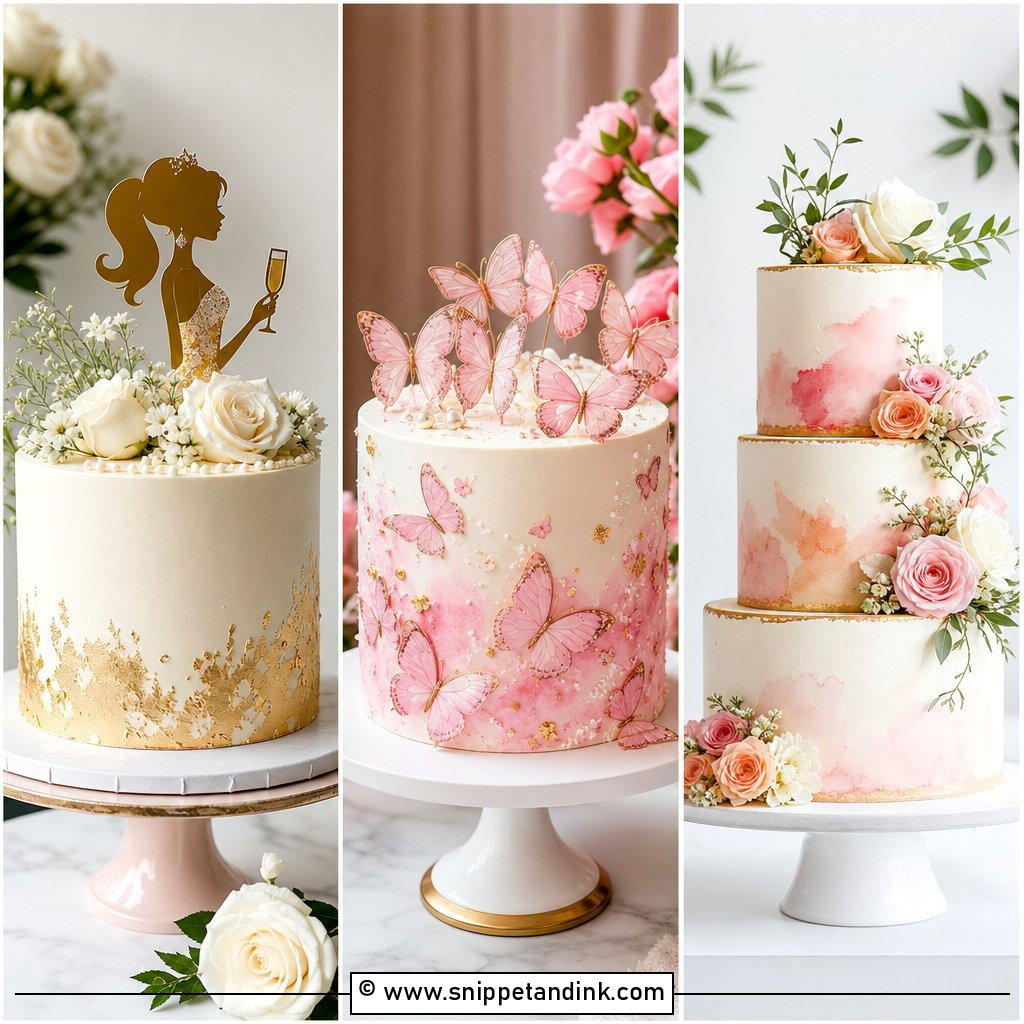
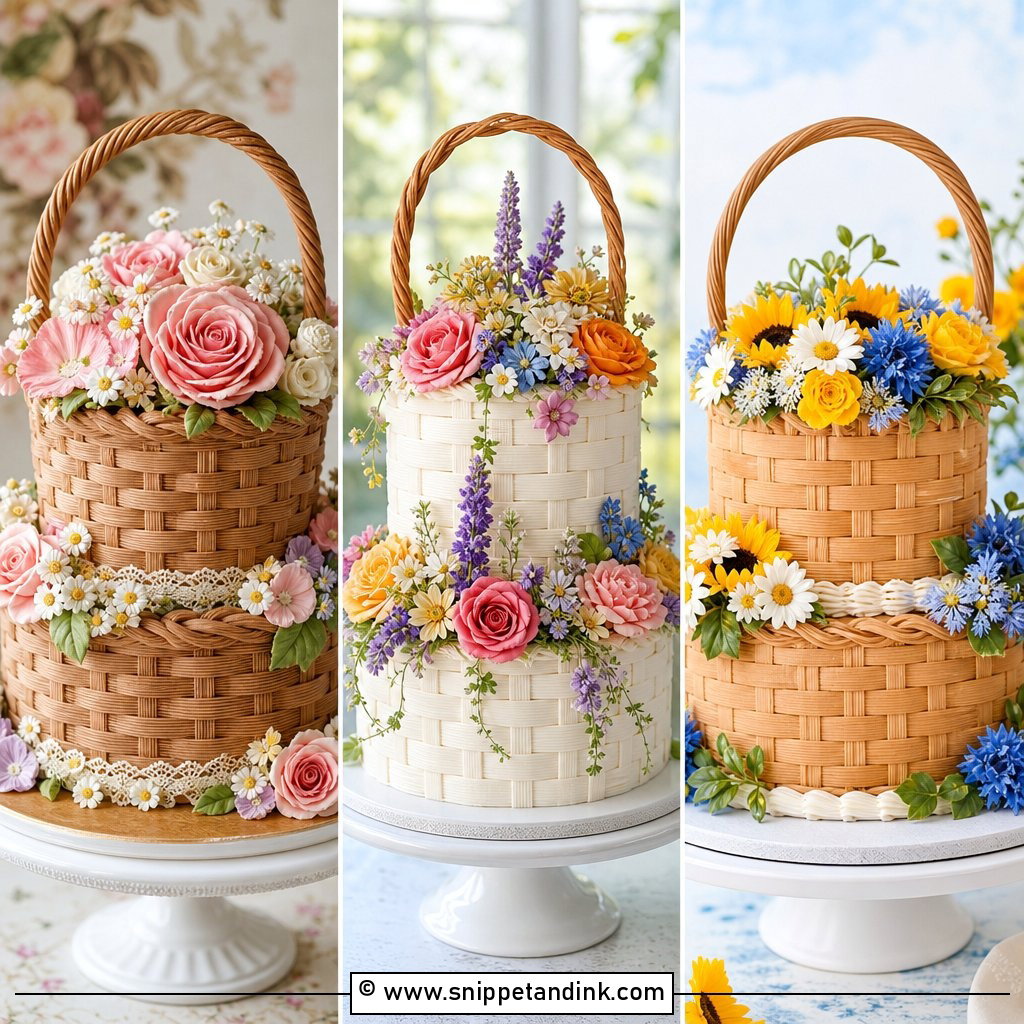
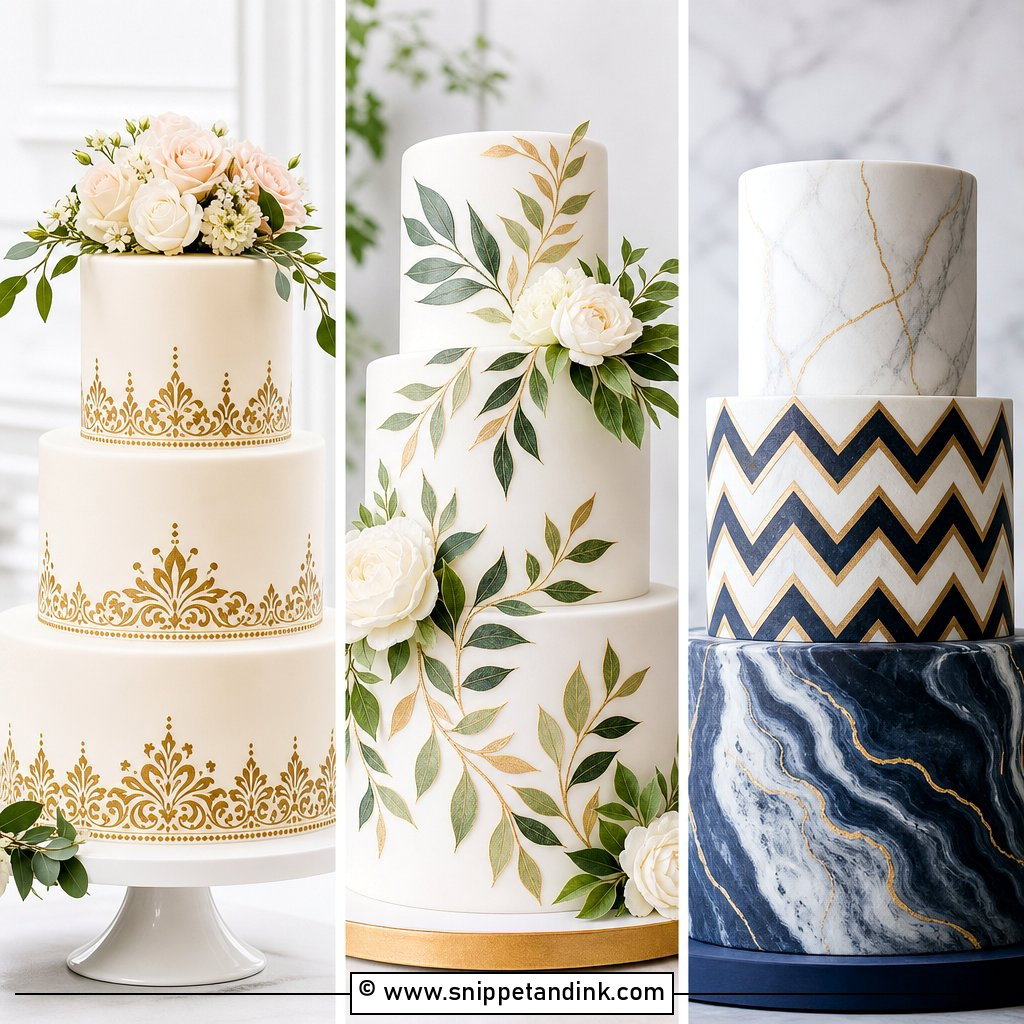
One tier is honestly my favourite cake to make, because there is nowhere for a weak detail to hide. A smaller cutting cake suits an intimate guest list, sits comfortably on the dessert table and leaves budget for cupcakes, cookies or a kitchen sheet cake behind the scenes. What makes it read as a wedding cake rather than a birthday cake is a single committed idea: textured buttercream, a cluster of sugar flowers, a pearl border or a sculpted shape. Below are twenty of those ideas, with what I actually think about when I build each one.
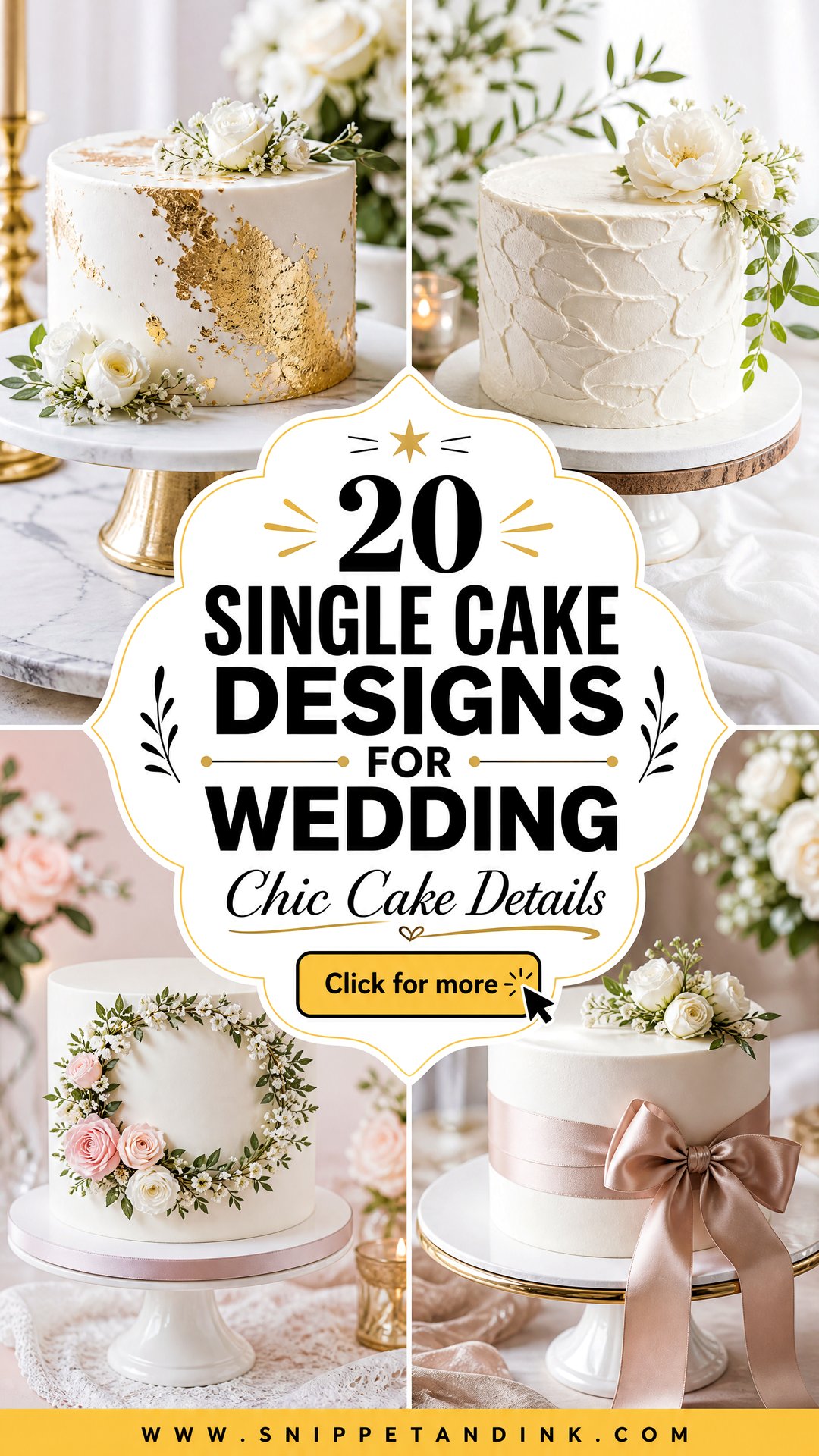
How Many People a Single Tier Really Feeds
Before you choose a finish, work out whether one tier can carry your guest count, because that decides the size, and the size changes how every decoration below looks. I portion wedding cake as finger slices, roughly an inch by two inches on a tall tier, which is smaller than a party slice.
- A 6 inch round feeds roughly 10 to 12 guests and suits an elopement or a cake that’s mostly for the photos.
- An 8 inch round lands around 20 to 24 slices, which covers most small dinners.
- A 10 inch round reaches about 35 to 40, and a 12 inch closer to 50, though at that width a single tier starts to look squat unless it is extra tall.
- Square and rectangular cakes give a few more slices than a round of the same width because there are no curved edges to waste.
These are guides, and every baker cuts a little differently, so ask yours for their own chart. If your list is bigger than the cake, I’d keep the display tier small and order an undecorated sheet cake in the same flavour for the kitchen to cut. Guests can’t tell, and it costs far less than a wider decorated tier.
Height matters too. A double-height tier of about six inches looks more deliberate on its own than a standard four inch one, and it gives a cascade or wreath more room to sit.
1. Single Tier Wedding Cake With Fresh Flowers
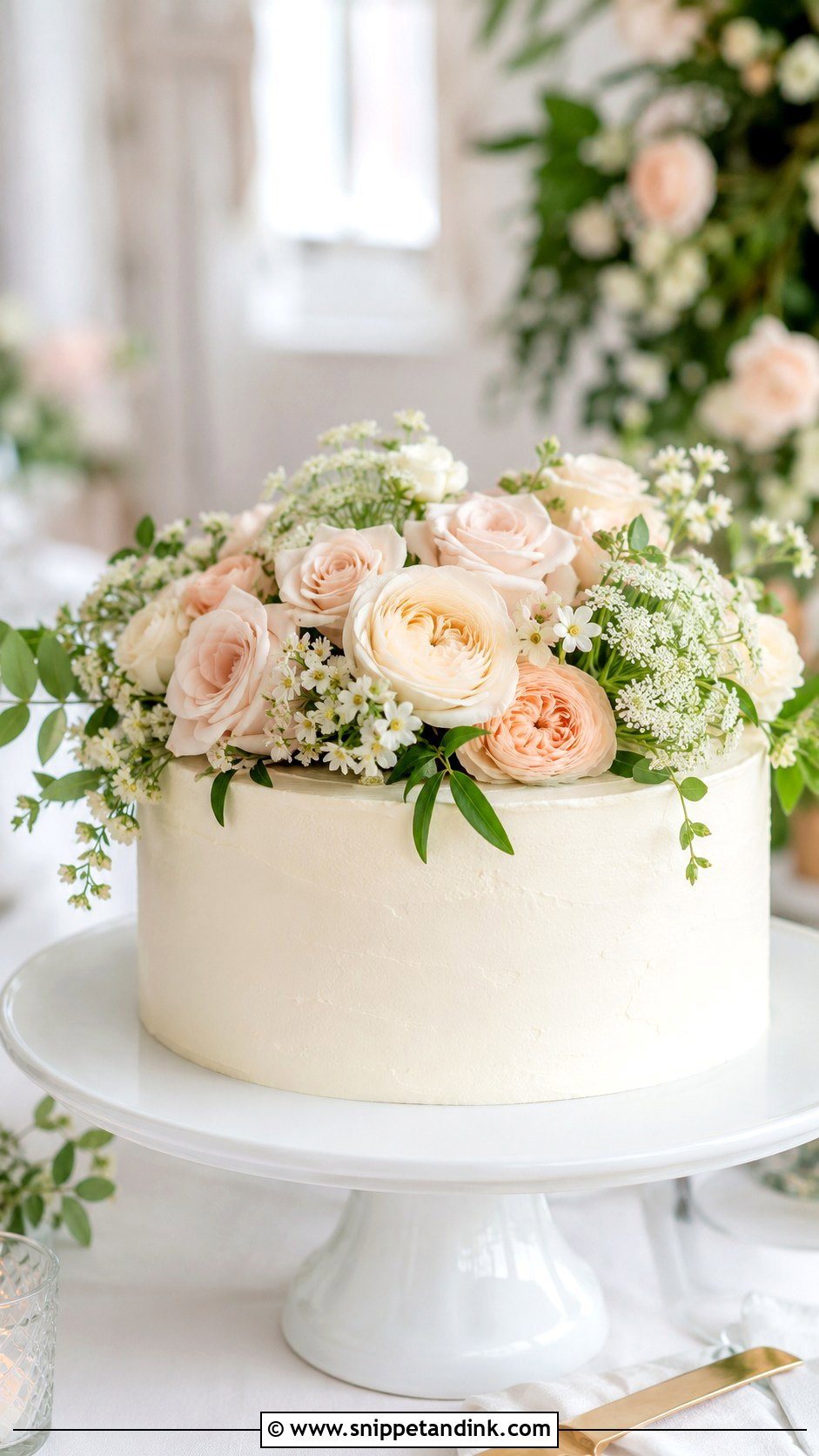
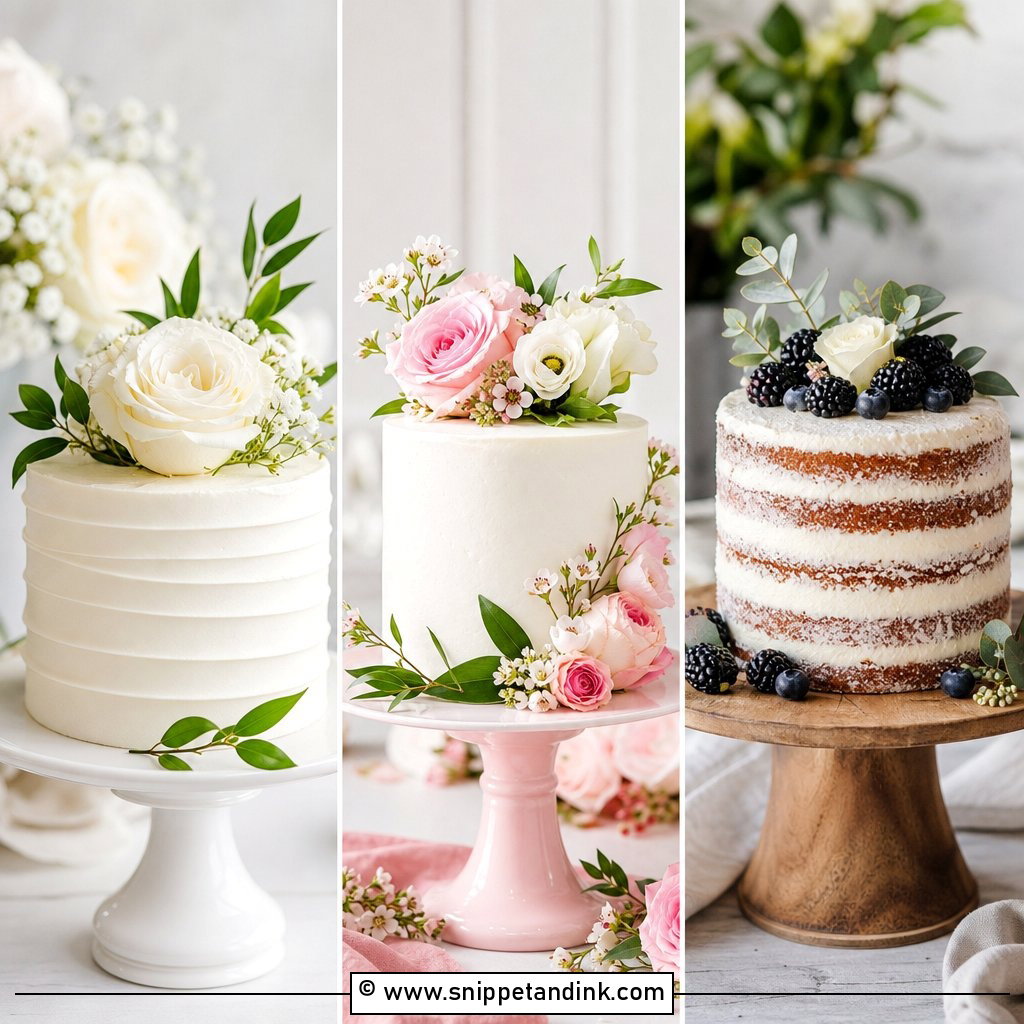
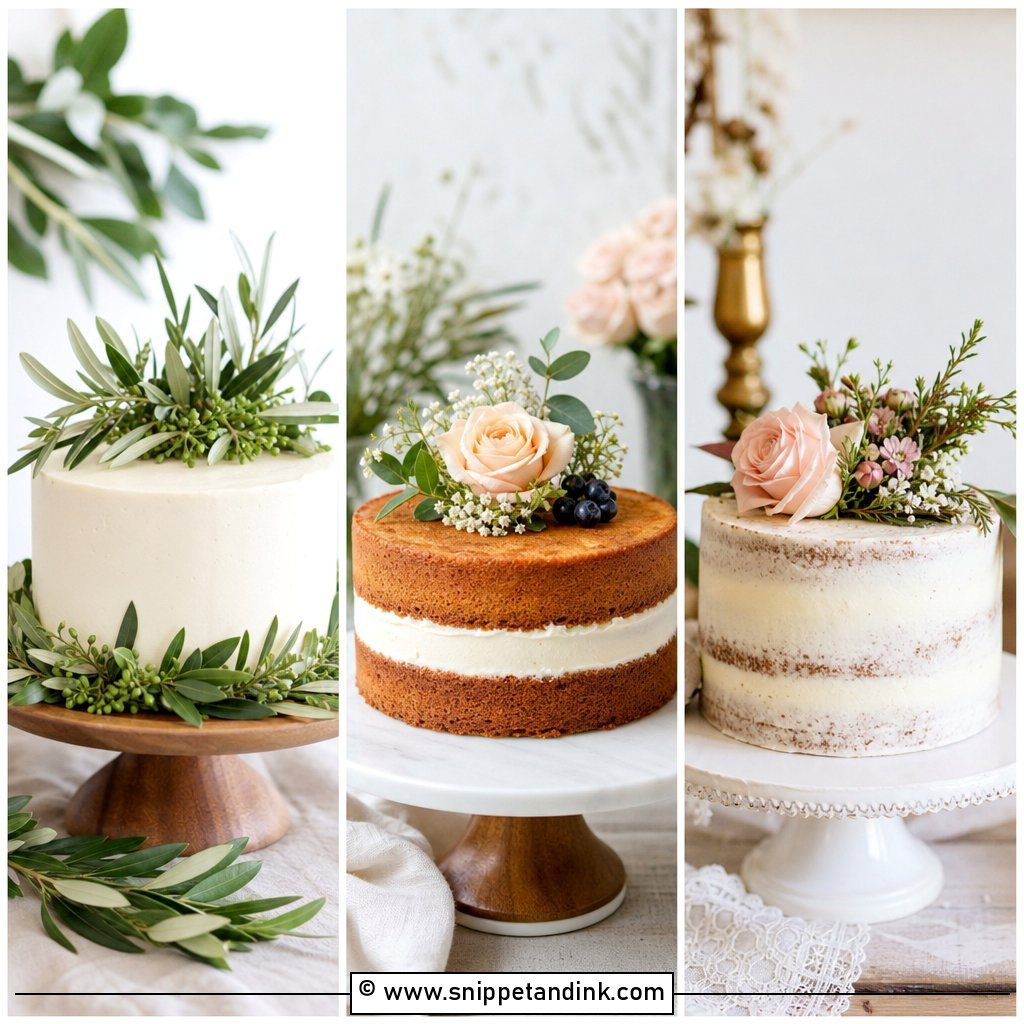
Fresh flowers are the fastest way to dress a single tier, and also the one I’m fussiest about. I never push a raw stem straight into the sponge. Each one gets wrapped in floral tape or set into a food-safe pick, and I avoid anything toxic or heavily sprayed, which rules out a lot of supermarket roses. Ranunculus, garden roses and chamomile behave well; peonies look lush but drop petals once a warm room gets to them. Ask your florist for a few spare stems from the bouquet run so the cake matches, and keep the arrangement off-centre or in a small crescent so the smooth ivory finish still shows.
2. Single Tier Wedding Cake With Buttercream Flowers
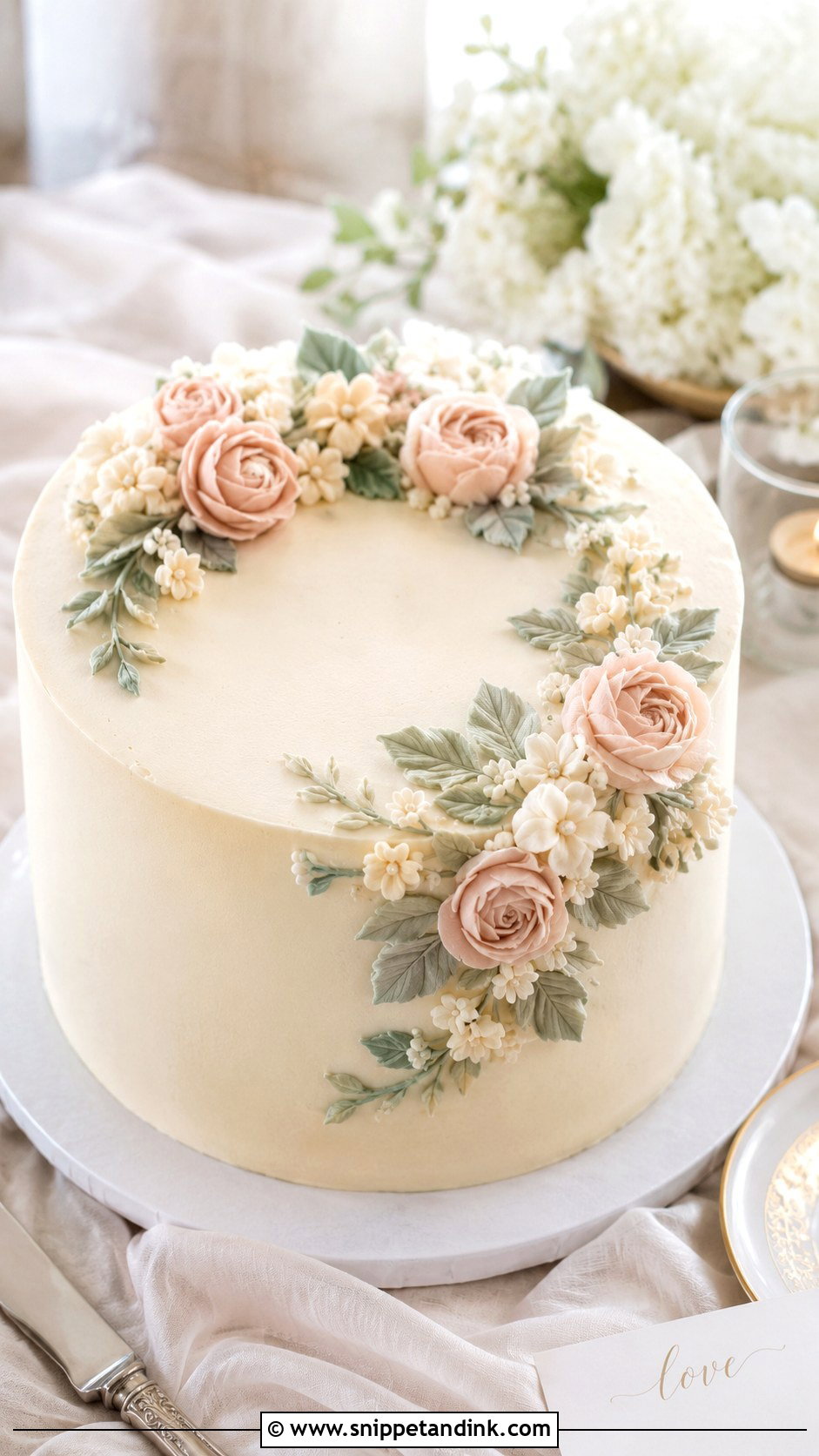
Piped buttercream flowers give you the floral look with no stem worries at all. I pipe roses, blossoms and tiny buds straight onto a crusted coat, and the colour can be matched to a swatch far more precisely than a real bloom. The catch is temperature: piped petals soften and lose their edges in a hot marquee long before a smooth finish does. Ivory, sage and pale peach hold their shade best. Keep them to one side or the top edge for a clean version, or let them trail down the front when you want it fuller.
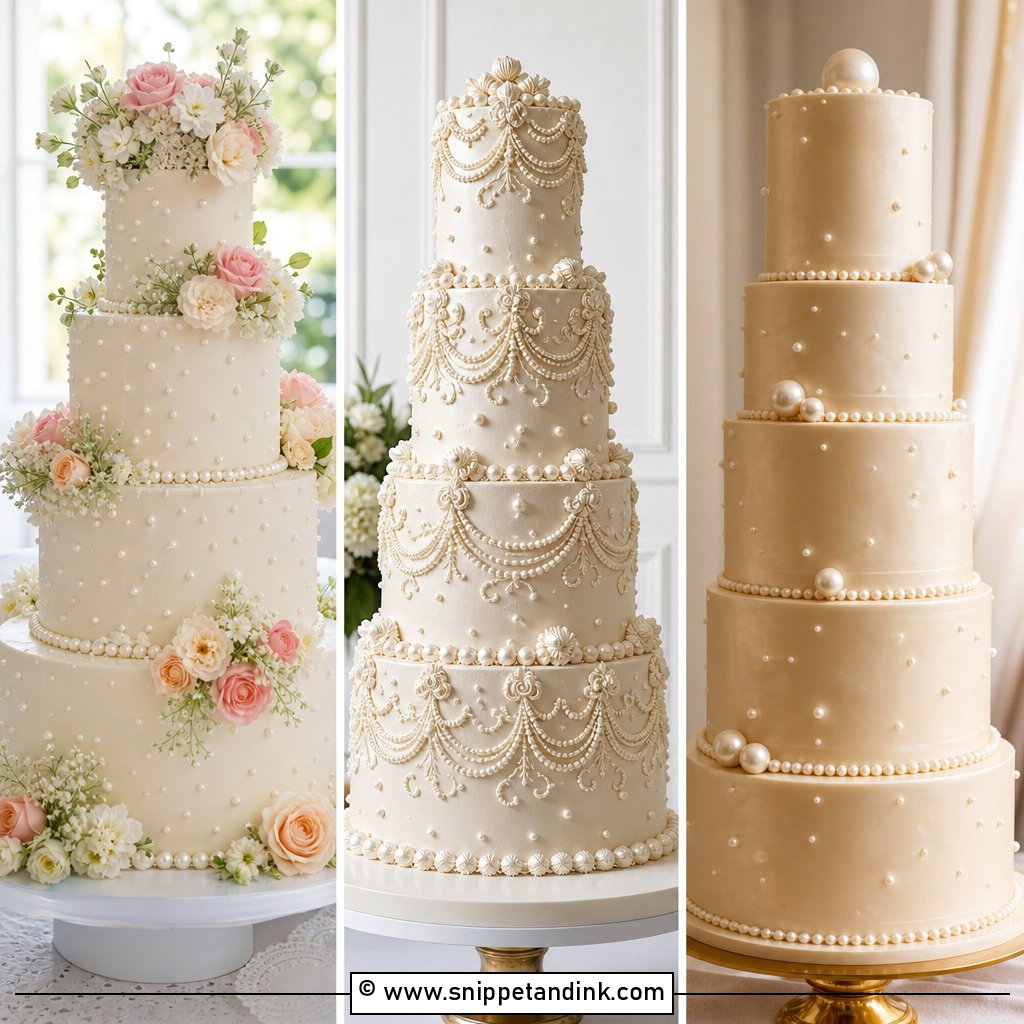
3. Single Tier Wedding Cake With Vintage Piping
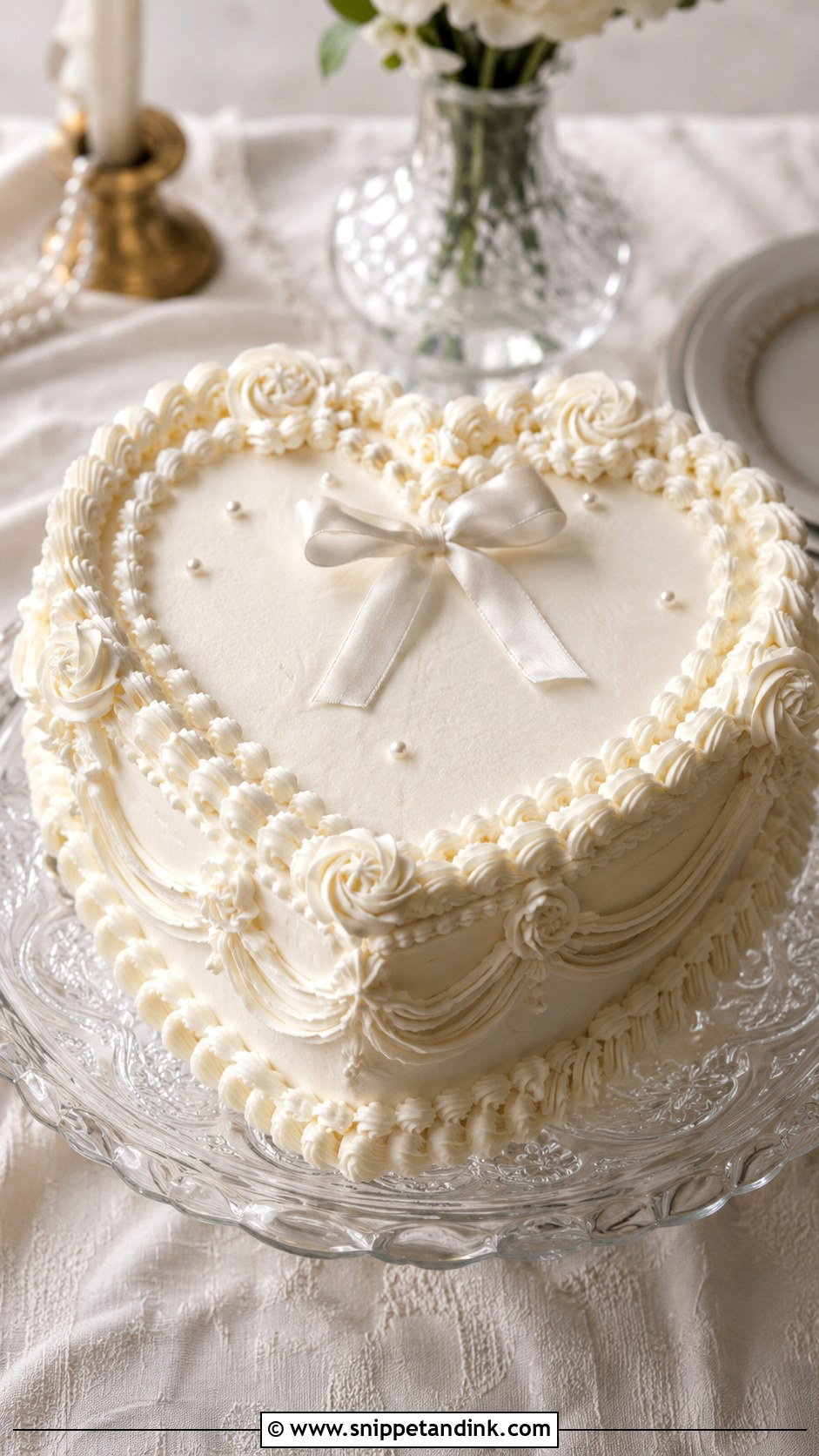
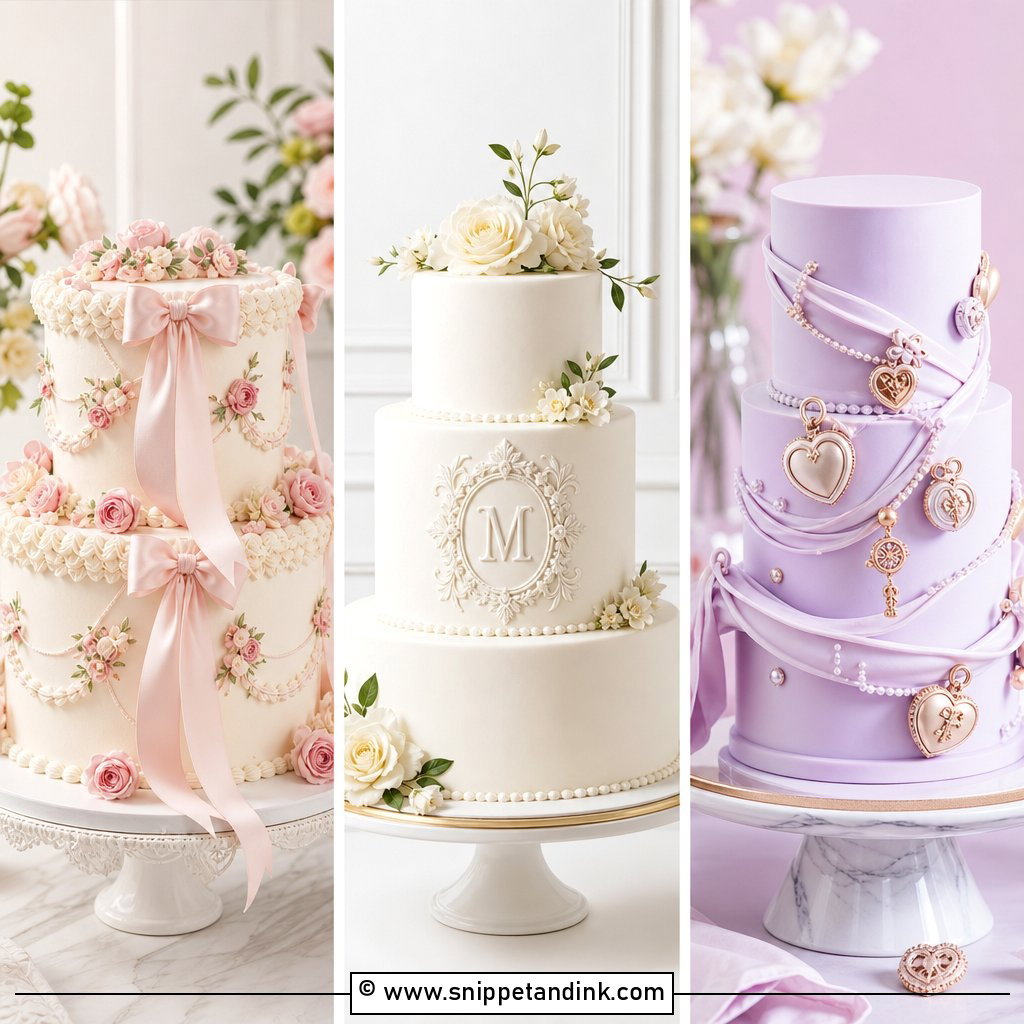
This is the style I get asked about most this year. Shell borders, scalloped swags, dots and rosettes are all done with a stiffer buttercream than I’d use for coating, otherwise the swags slump by the evening. White on white gives you texture without fuss, and a pale blue or butter yellow accent turns it properly retro. I keep the topper tiny, a bow or a monogram, because the piping is already doing the talking.
4. Single Tier Wedding Cake With Pearl Details
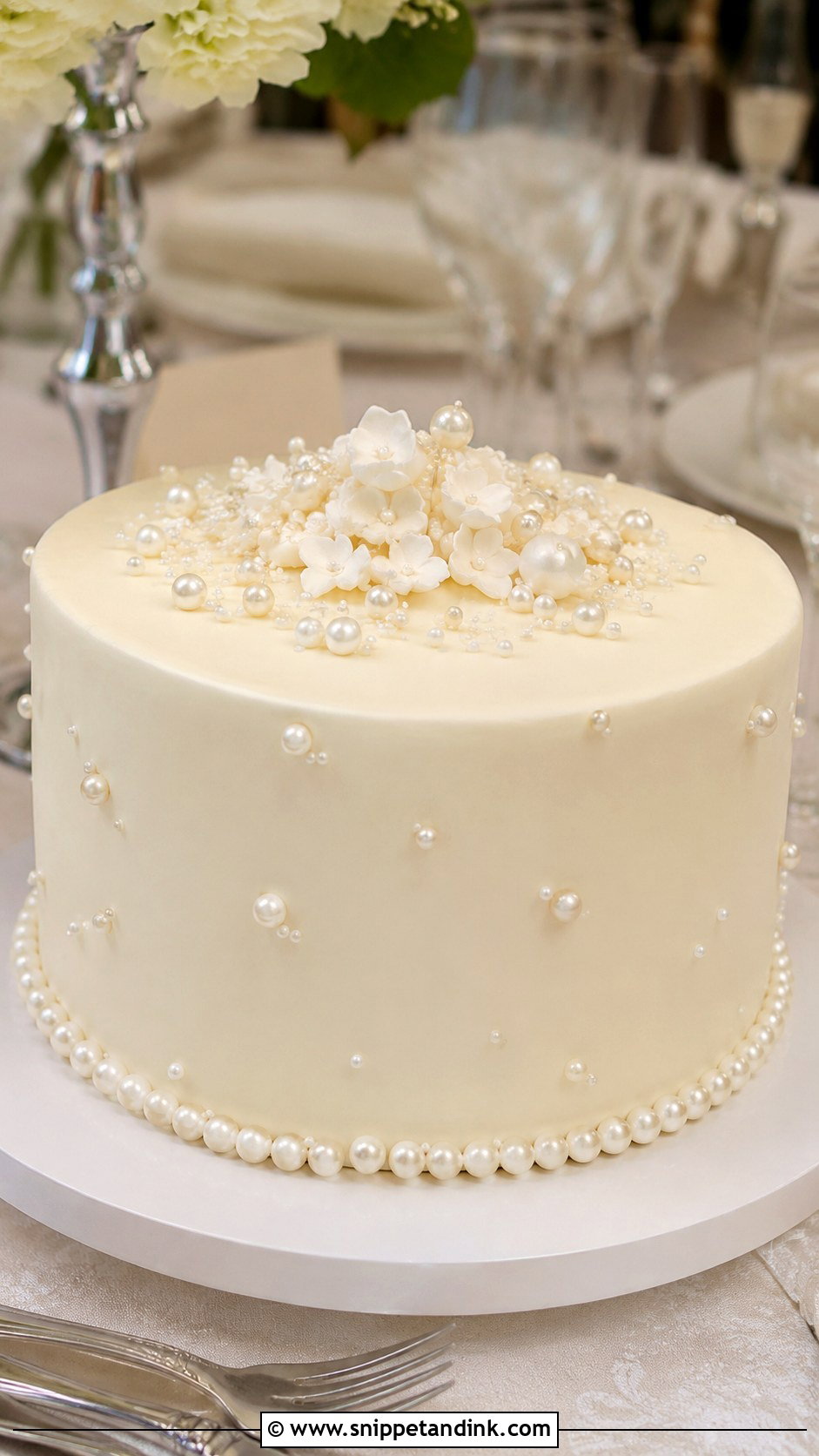
Pearls are easy to overdo. My rule is a single row at the base or a loose scatter on one side, never both, since a fully pearled cake starts to look like a craft project. Edible sugar pearls in white or champagne are what I use; the shinier metallic dragees are decorative in some places and not approved as food in others, so I leave them out. Fondant gives the crispest backdrop for a pearl border, while buttercream softens the whole thing. Formal dinners and courthouse receptions suit this one particularly well.
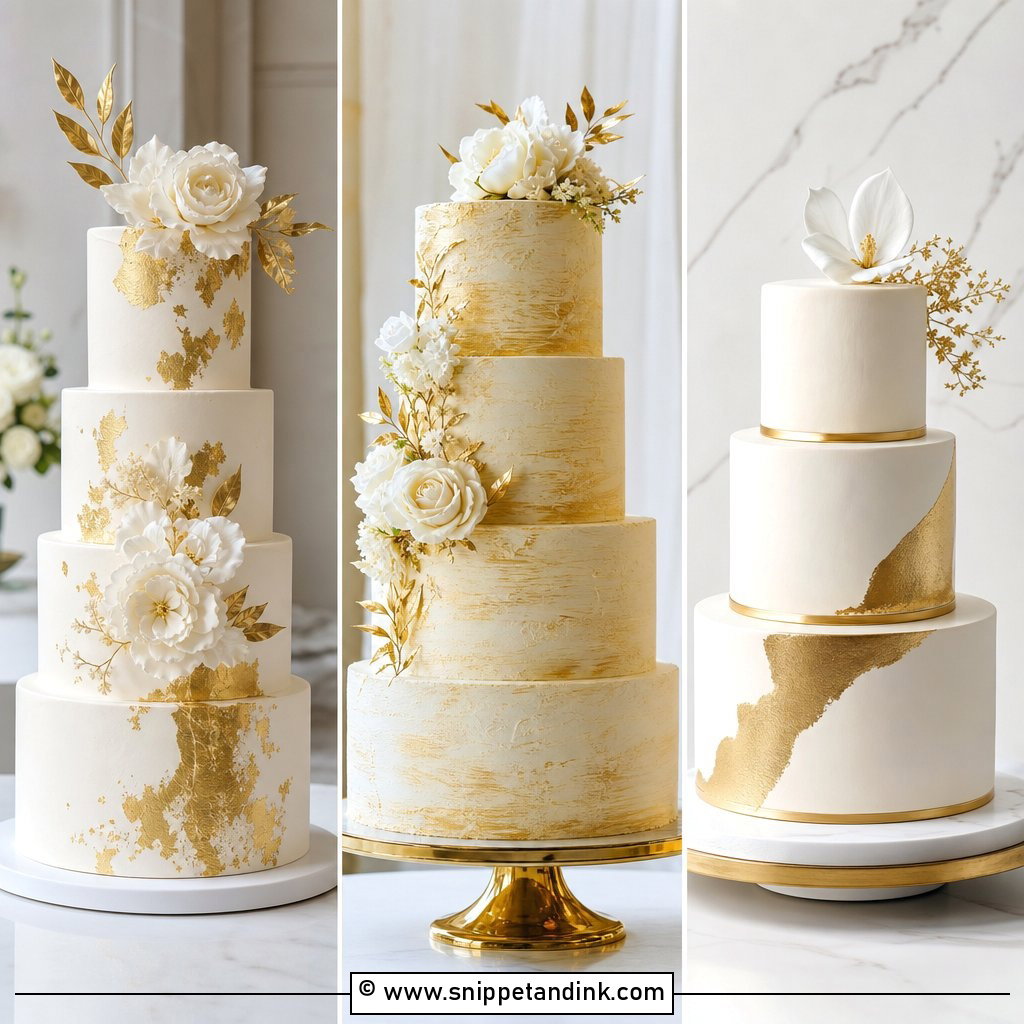
5. Single Tier Wedding Cake With Gold Leaf
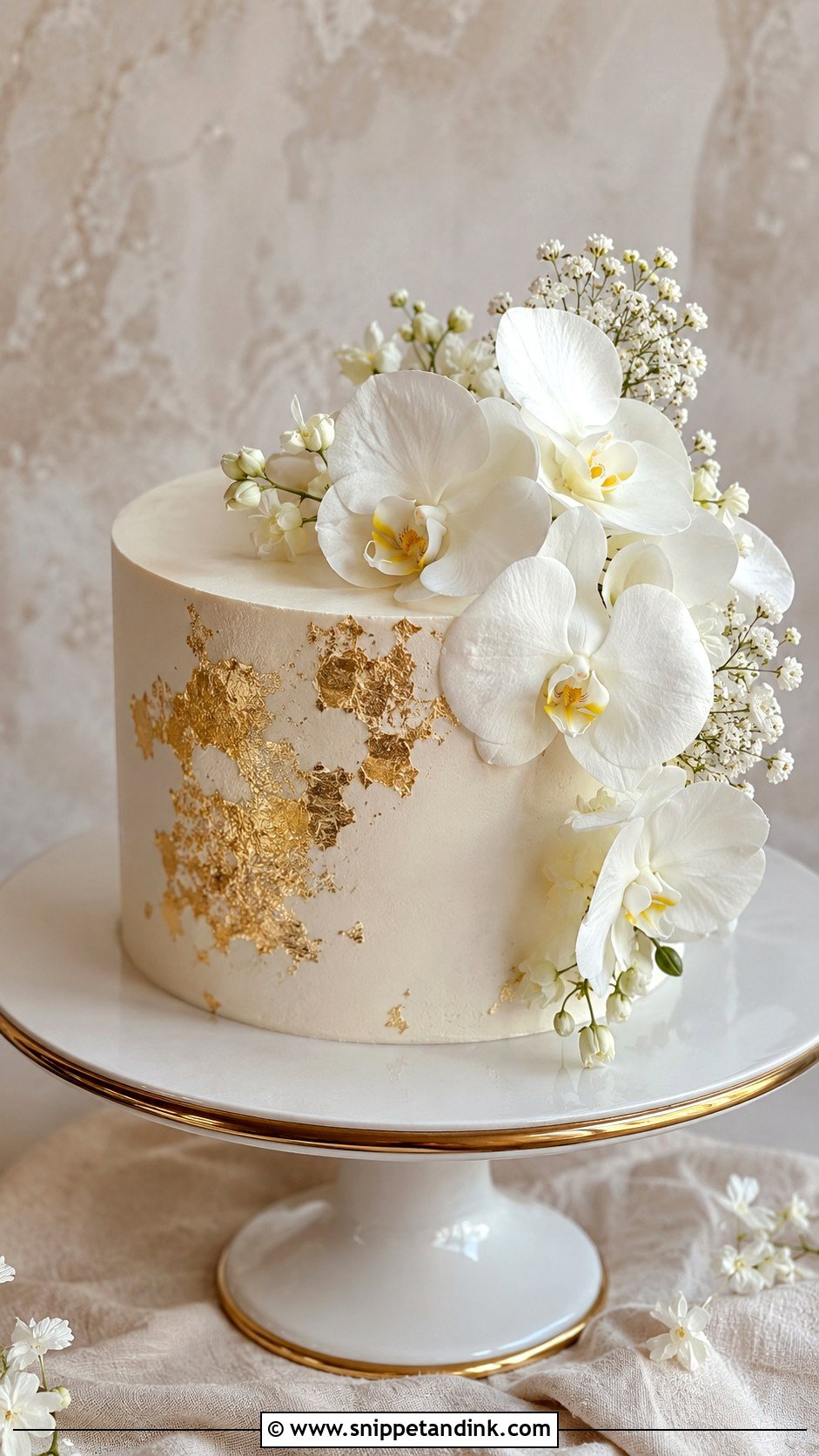
Gold leaf goes on with a dry brush, and it clings best to a slightly tacky surface, which is why it looks so good catching the ridges of rough buttercream. I apply it in patches rather than wrapping the whole tier. Full coverage reads heavy, and it cracks wherever the cake gets touched during setup. Use proper edible leaf rather than craft foil. Pair it with ivory, blush or champagne frosting and a plain stand, white ceramic or clear glass, so the shine is the only metallic thing in the frame.
6. Single Tier Wedding Cake With Smooth Buttercream
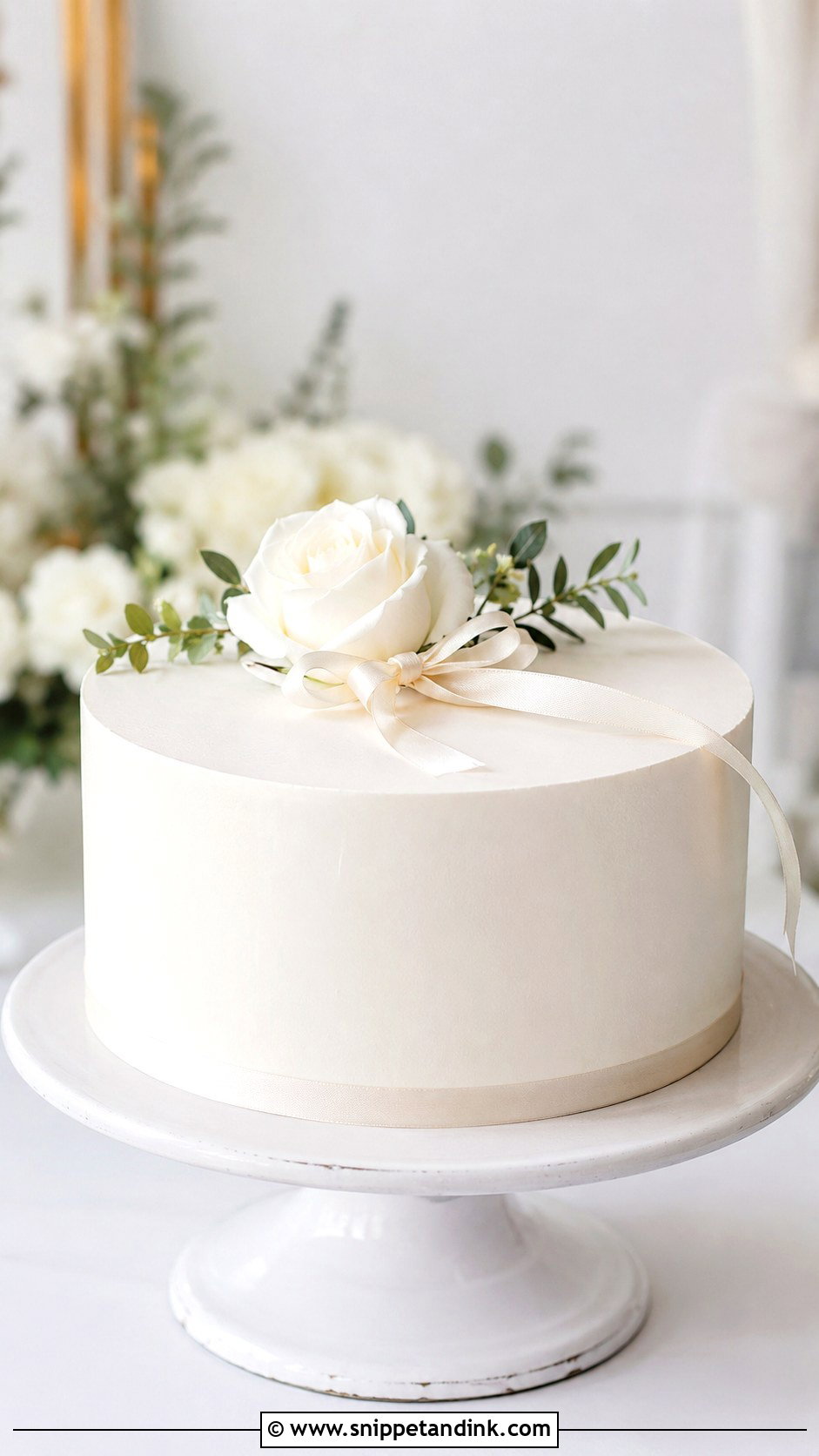
Smooth buttercream looks simple and is the hardest finish on this list. Sharp top edges and dead-straight sides come from a chilled crumb coat, a bench scraper and patience, so a baker’s smooth cakes tell you a lot about their skill. Ask to see photos of plain ones before you book. Once the finish is right, one bloom, a thin greenery wreath or a ribbon at the base is plenty. Vanilla, almond and lemon all sit happily under it.
7. Single Tier Wedding Cake With Textured Buttercream
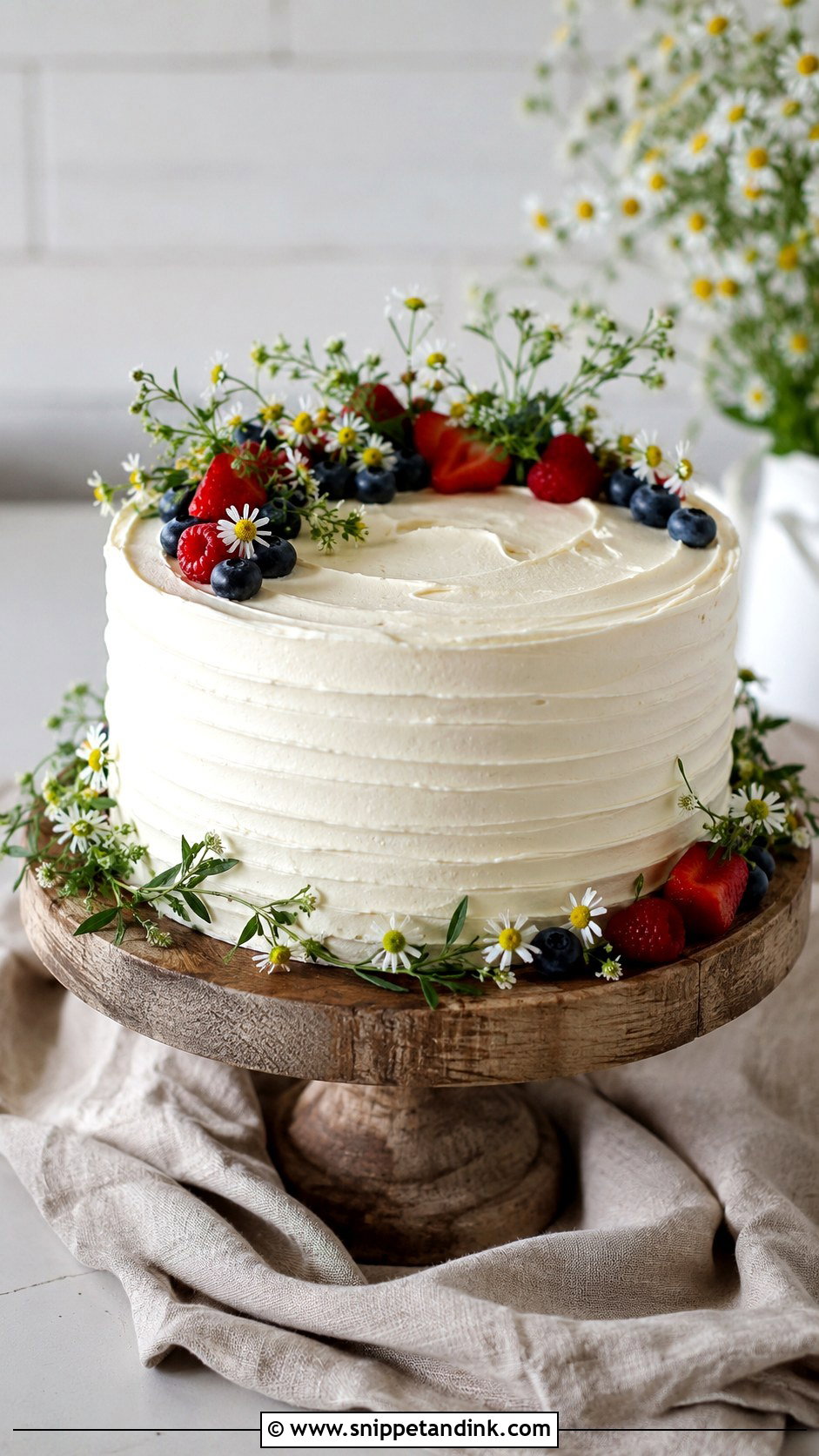
Textured buttercream is the forgiving cousin of the smooth finish. Horizontal ridges from a comb, palette-knife strokes or loose swirls hide the small bumps that a long drive or a warm room can cause, so I often suggest it for barns, beaches and garden receptions. A few berries, herbs or small flowers finish it. Flavour-wise, coconut and lemon feel right with the relaxed look, and it never pretends to be more formal than the day.
8. Single Tier Wedding Cake With Pressed Flowers
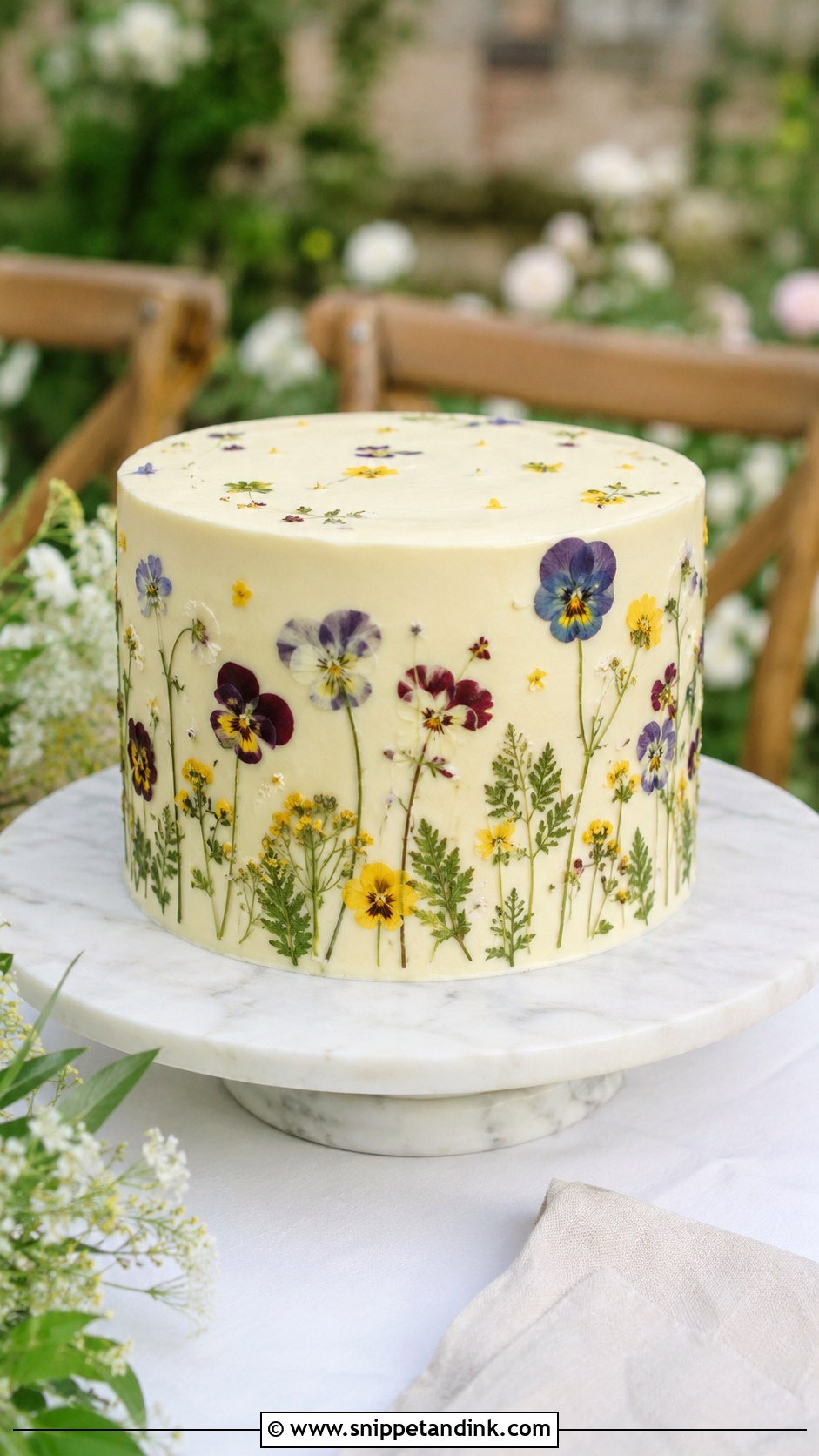
Pressed flowers need planning further ahead than people expect. Edible blooms such as violas, pansies and cornflowers are flattened and dried for a week or two before they’re ready, so I need your colours early. They go on a pale base, pressed gently into buttercream or brushed onto fondant with a little piping gel, in a meadow scatter, a vertical line or a top wreath. Only use flowers grown for eating; a pretty pressed flower from a craft shop has no place on food. Spring and early summer weddings are when the choice of blooms is widest.
9. Single Tier Wedding Cake With Sugar Flowers
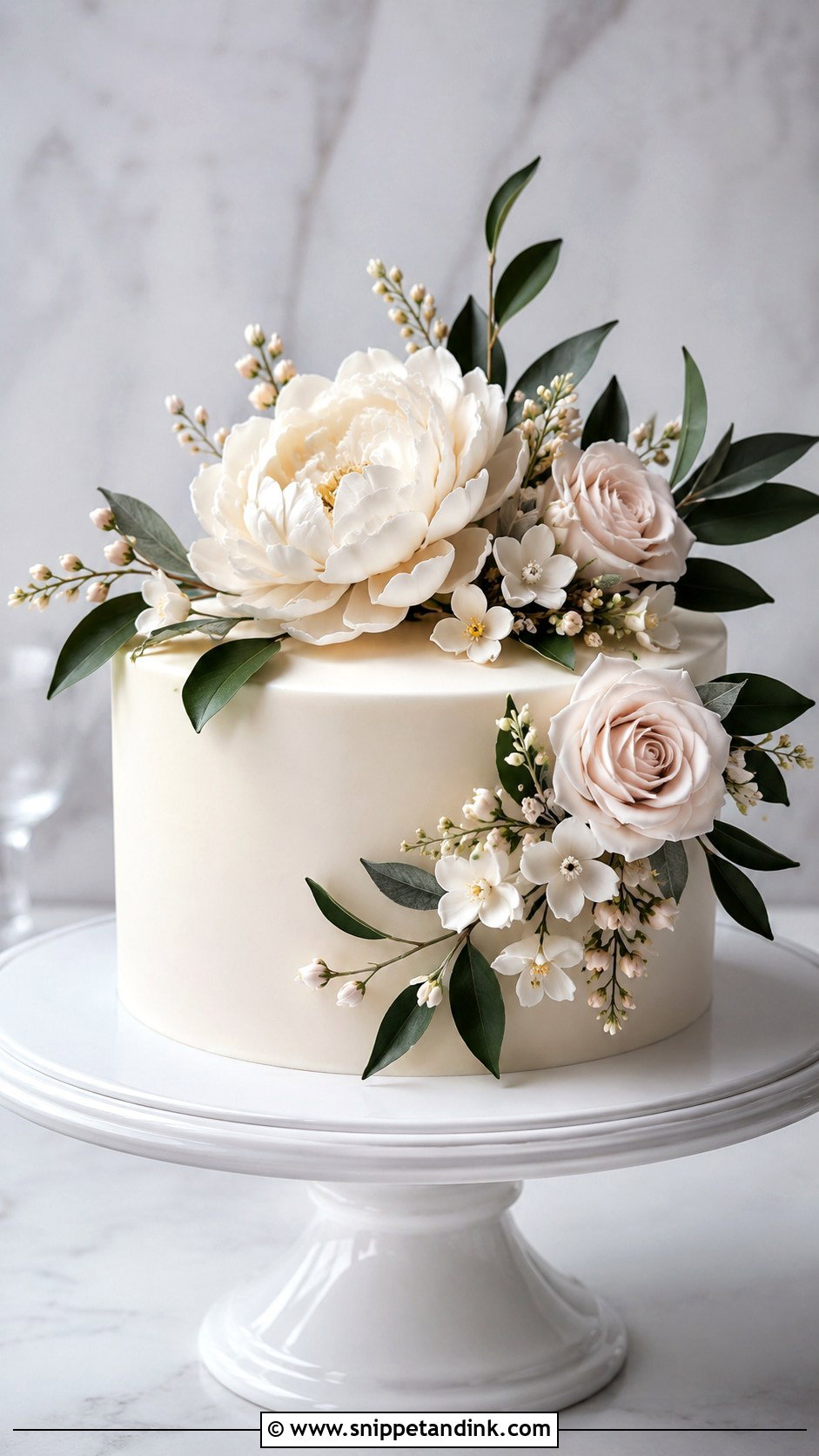
Sugar flowers earn their price when your favourite bloom is out of season or would wilt in the room. Each petal is rolled, wired and dried, so a single large rose can take hours, and a spray of peonies is a real chunk of the budget. The benefit is that they don’t droop and can be kept afterwards. I tint them to a bouquet swatch, keep the base smooth so they stay the focus, and remove the wires before anyone serves a slice, since they are decoration only.
10. Single Tier Wedding Cake With Floral Wreath
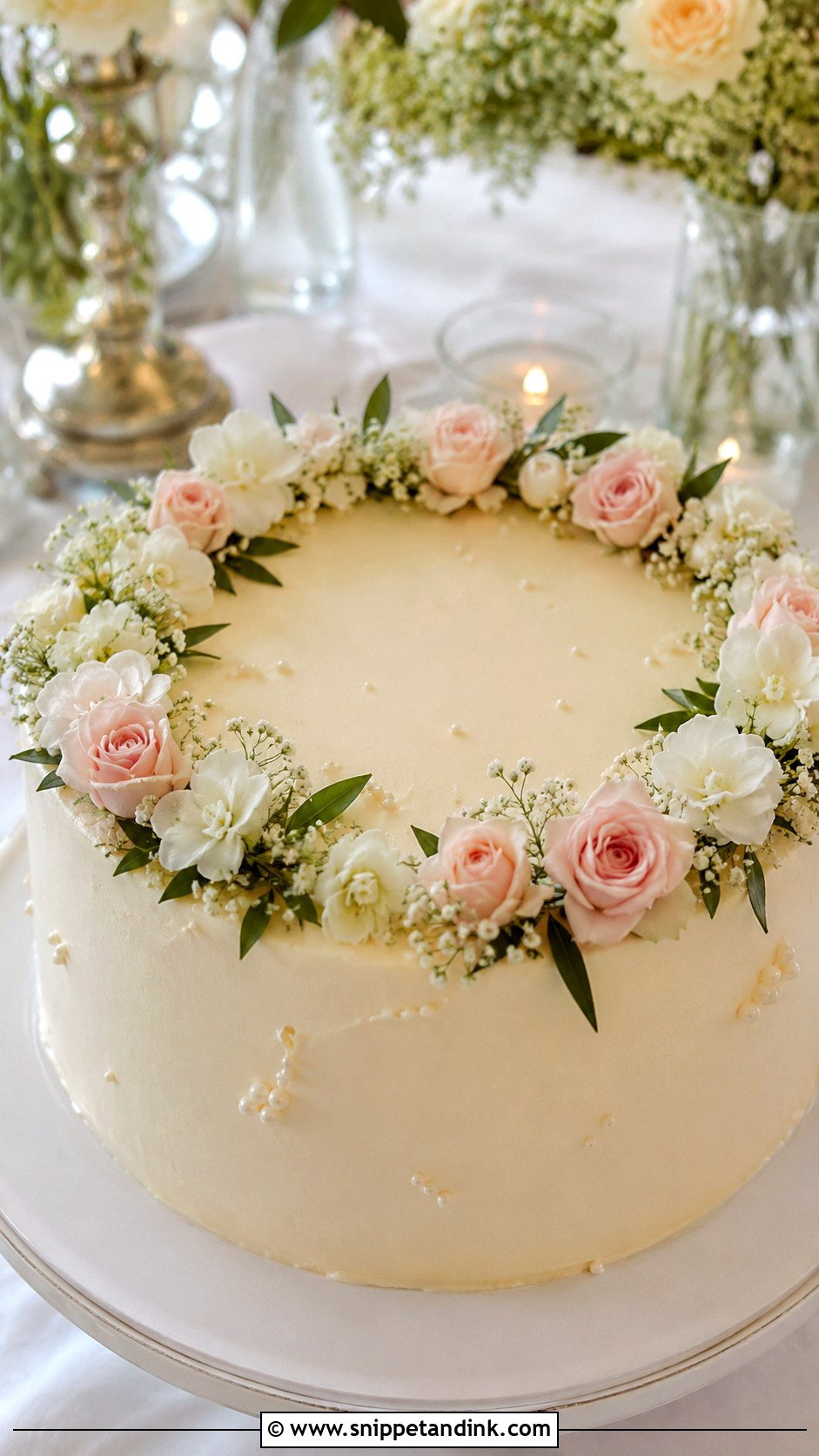
A wreath appeals to couples who like symmetry more than a loose cascade. I can ring the top edge, circle the base or build a halo around a topper. Fresh blooms, sugar work, buttercream flowers or pressed petals all work, and the choice usually comes down to budget and how warm the venue is. Little greenery pieces between the flowers stop it looking like a row of beads. On a white base, a top-edge wreath is the version I find reads best from across a room.
11. Single Tier Wedding Cake With Floral Cascade
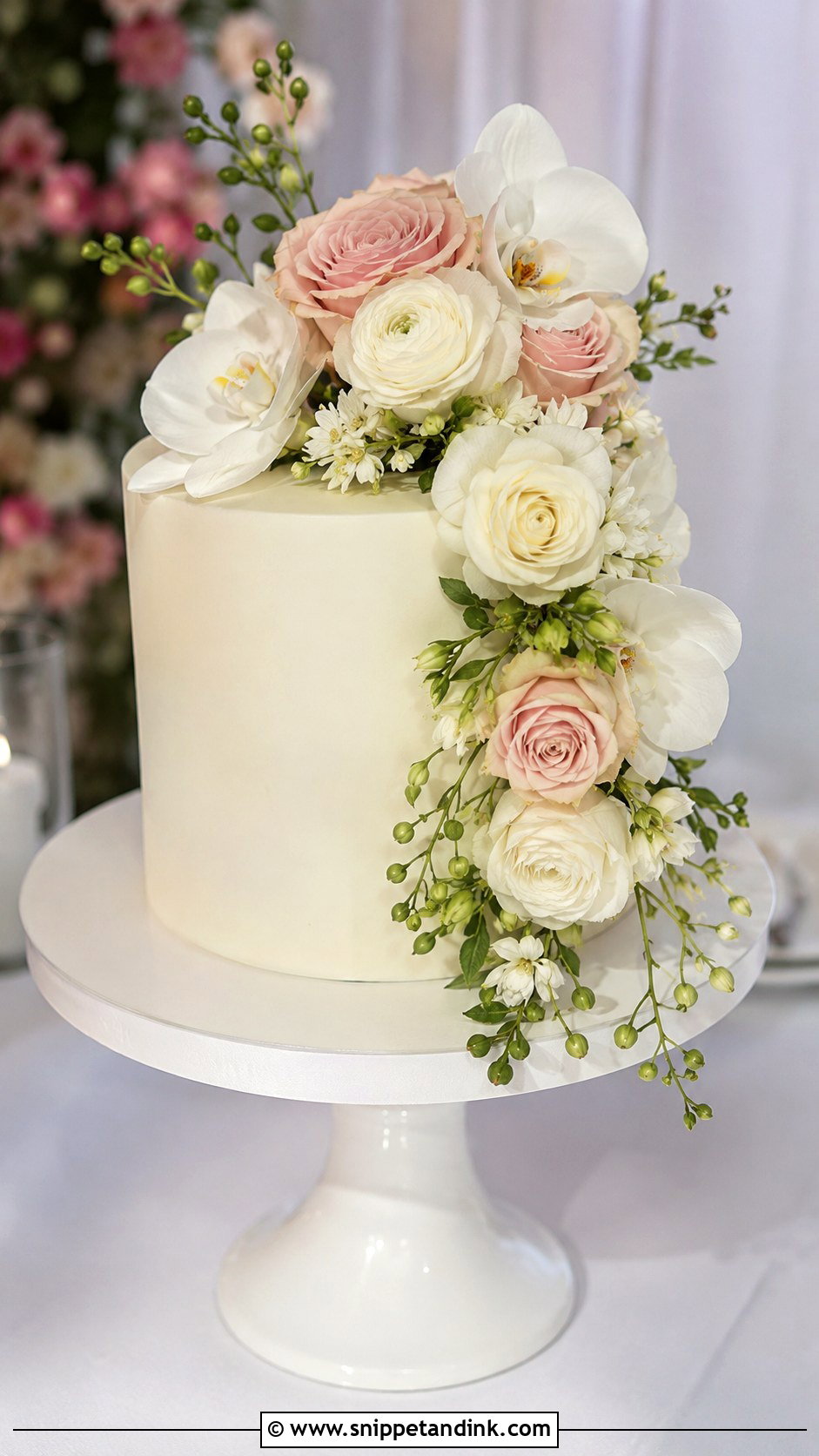
A cascade is how I add height without adding a tier. The flowers start at the top edge and fall down one side, so the cake has a clear front, which matters when you plan where it stands. Sugar blossoms are lighter than fresh stems and won’t drag the arrangement down over a long evening. Set it on a raised stand; on a flat board the bottom of the cascade disappears into the table linen.
12. Single Tier Wedding Cake With Ruffle Buttercream
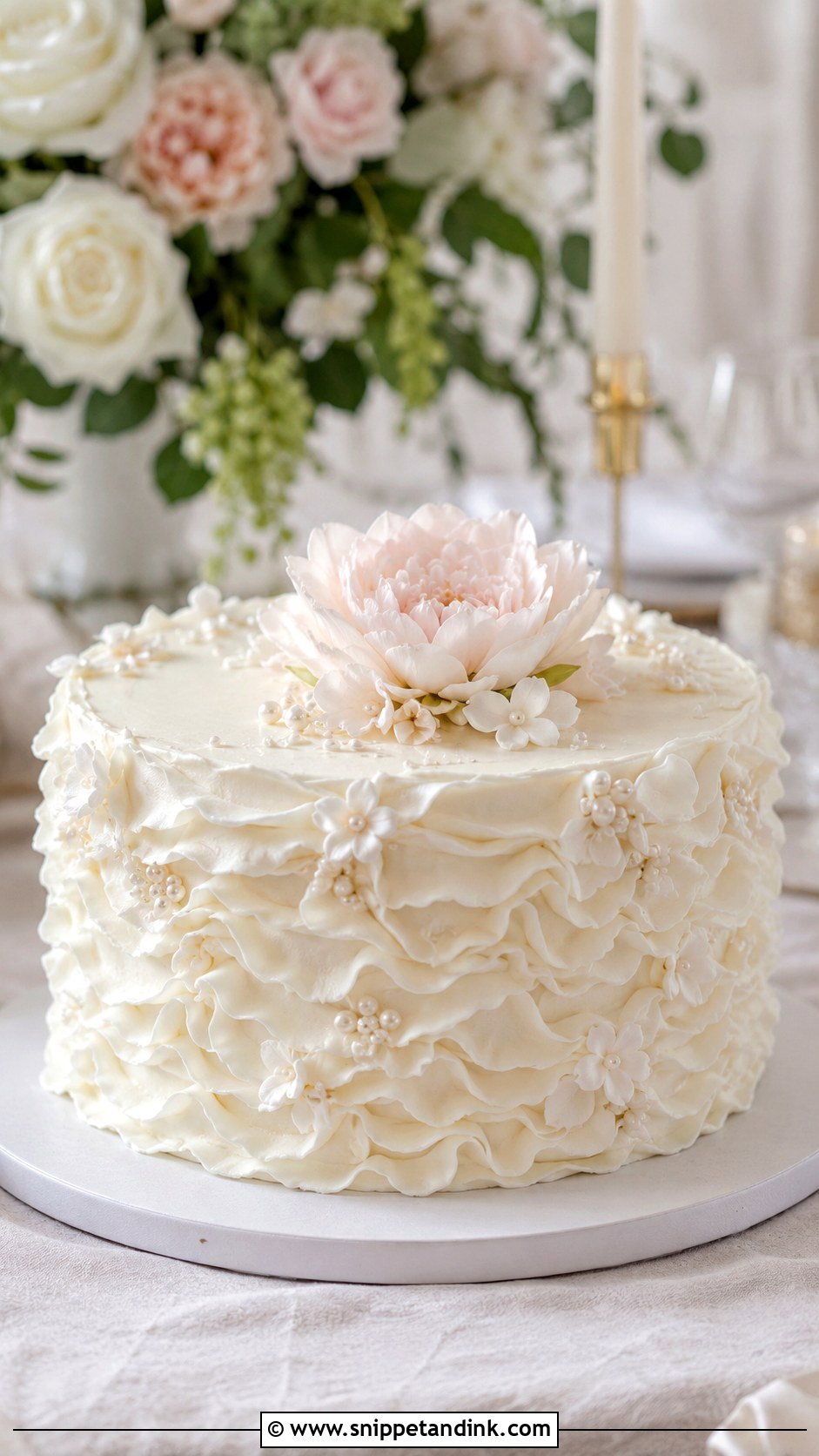
Ruffles are piped with a petal tip in overlapping rows, and the cake needs a firm, chilled coat underneath or the weight of them pulls the sides out of shape. I love the fabric-like movement, but I’ll be honest that ruffles hate heat more than any other finish here. If your reception is outdoors in July, I’d swap to a smooth or textured coat. Indoors, ivory or dusty blue ruffles need almost nothing else, perhaps a few flowers or a short pearl border.
13. Single Tier Wedding Cake With Ribbon
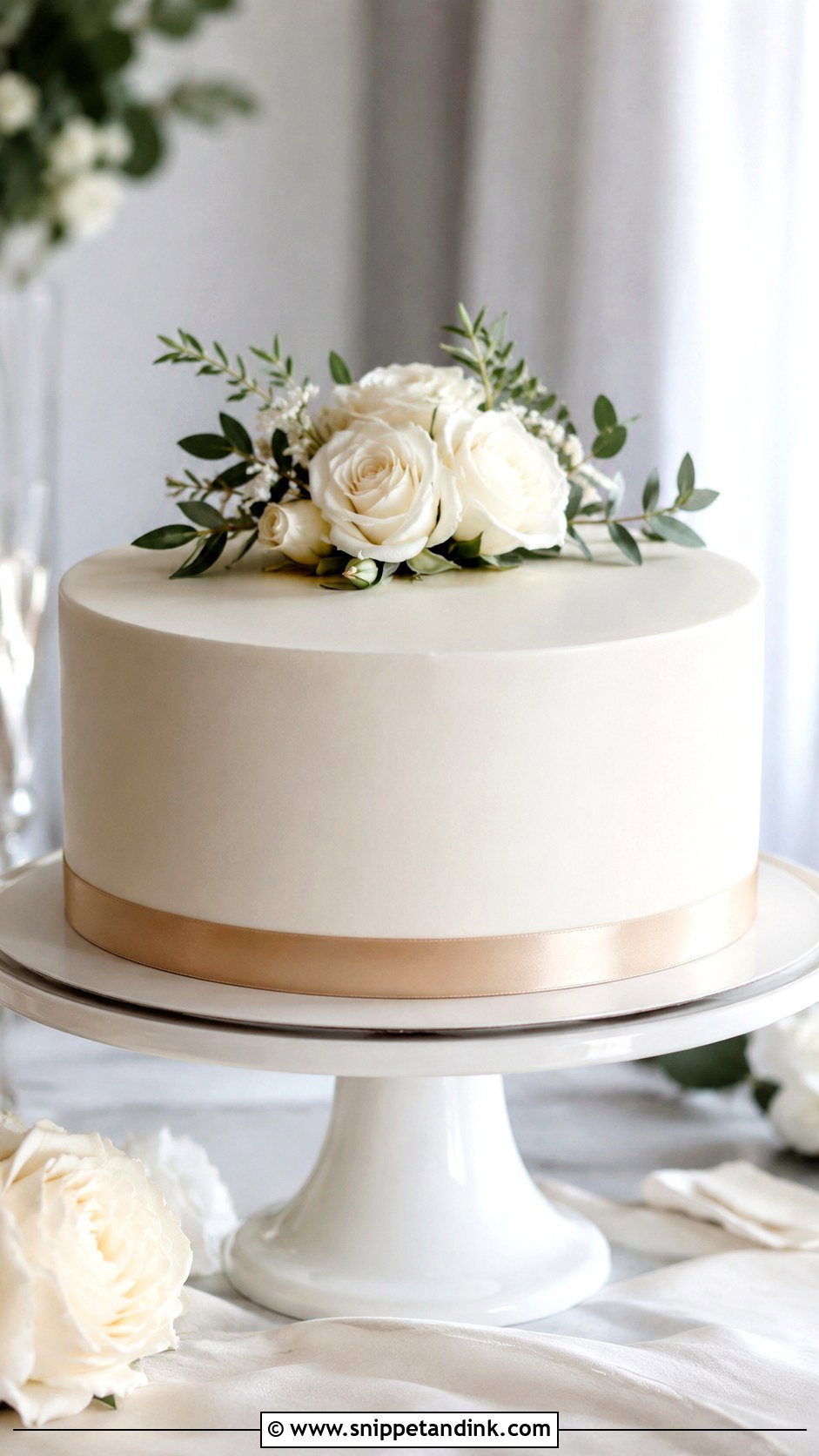
Ribbon is the quickest way to tie the cake to your linens or bridesmaid dresses. The practical detail most people don’t know: real ribbon wicks butter out of frosting and goes blotchy, so I back satin or velvet with a strip of acetate or a thin band of fondant before it goes on. Champagne ribbon on ivory is classic, sage suits a garden setting, and black looks sharp at an evening reception. Smooth sides are a must, since ribbon on texture never sits flat.
14. Single Tier Wedding Cake With Hand Painted Flowers
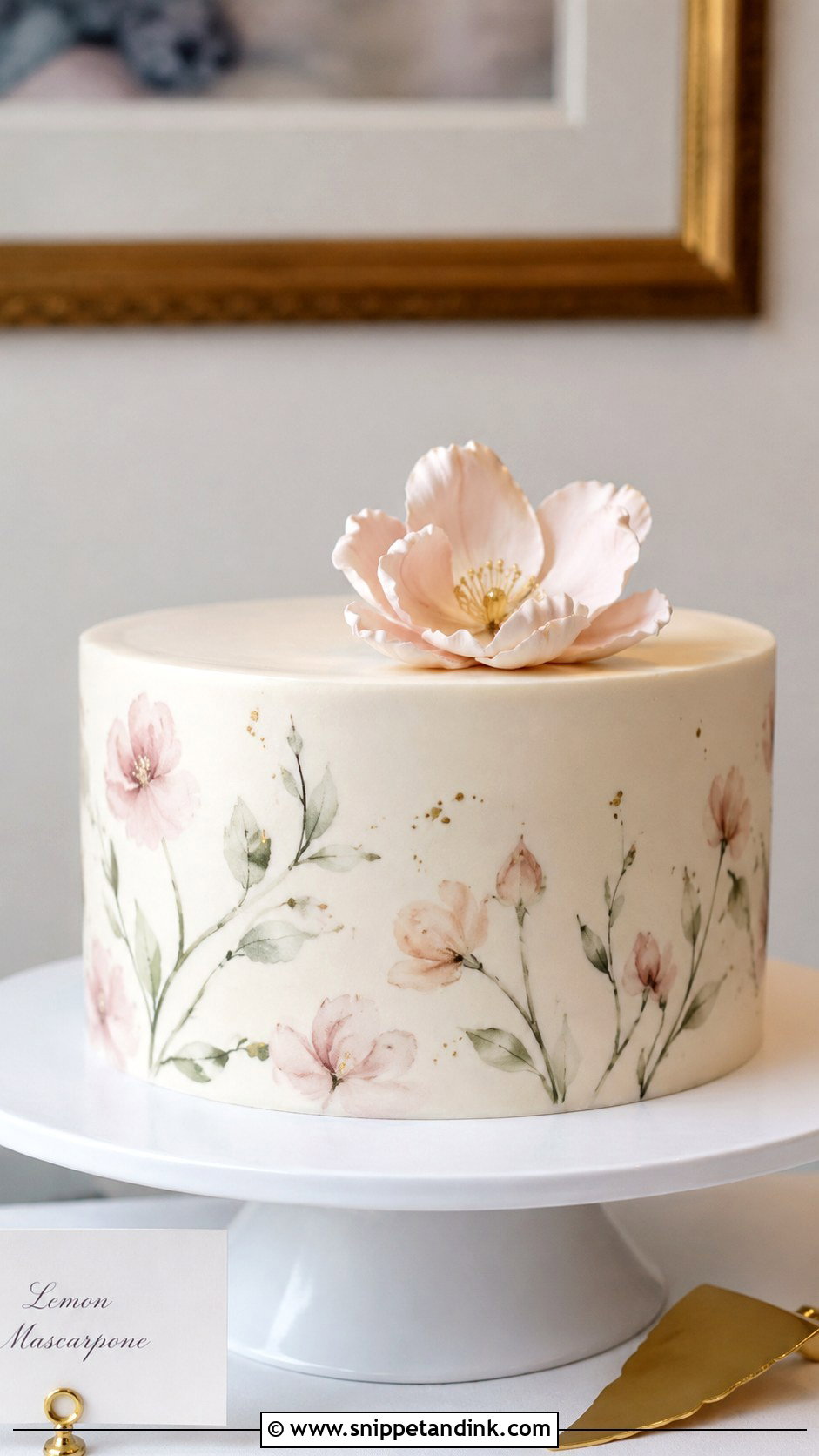
Hand painted flowers are done with food colouring thinned with clear alcohol or lustre dust, brushed on like watercolour. Fondant is the easiest canvas because it doesn’t move; some decorators paint on chilled buttercream, but the cake has to stay cold the whole time or the brush drags. Ask to see painted work in the decorator’s portfolio specifically, since it is a different skill from piping. Copying the flowers from your invitation is a detail guests do notice.
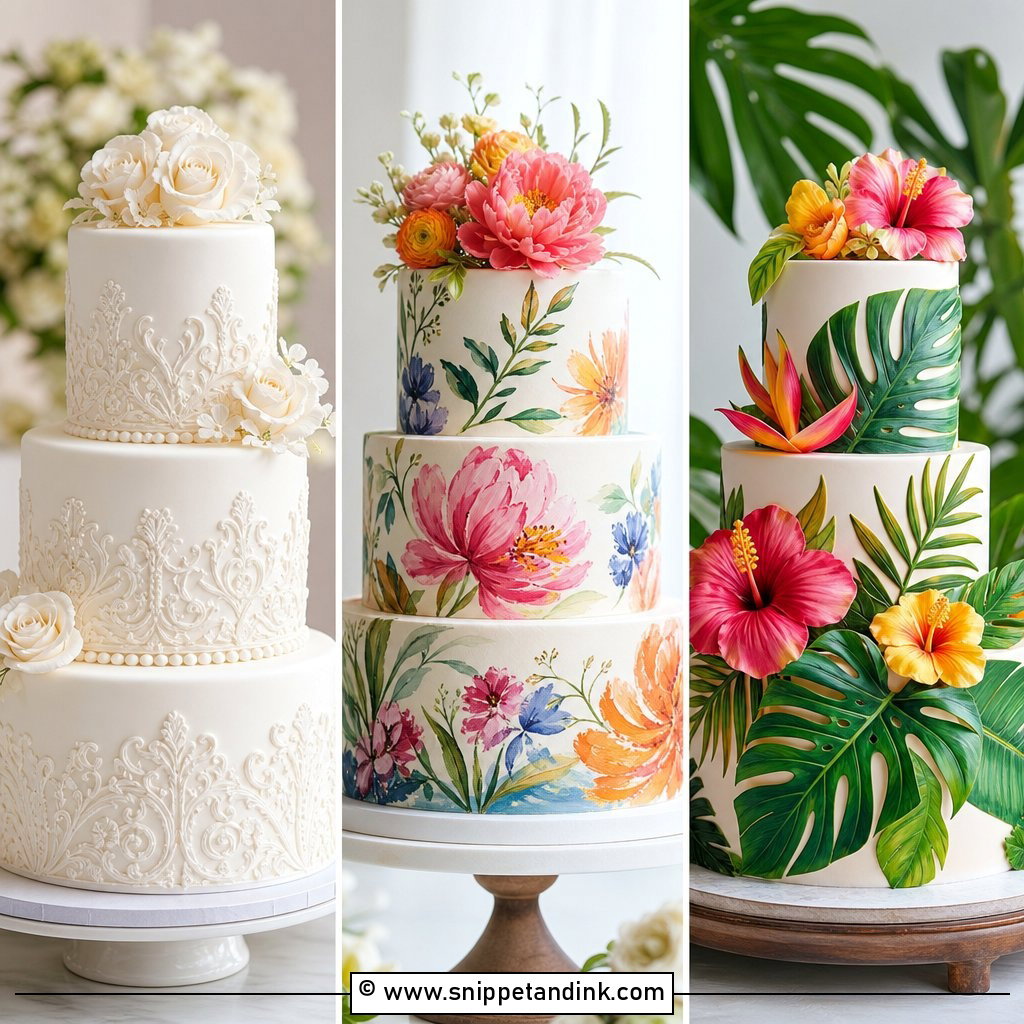
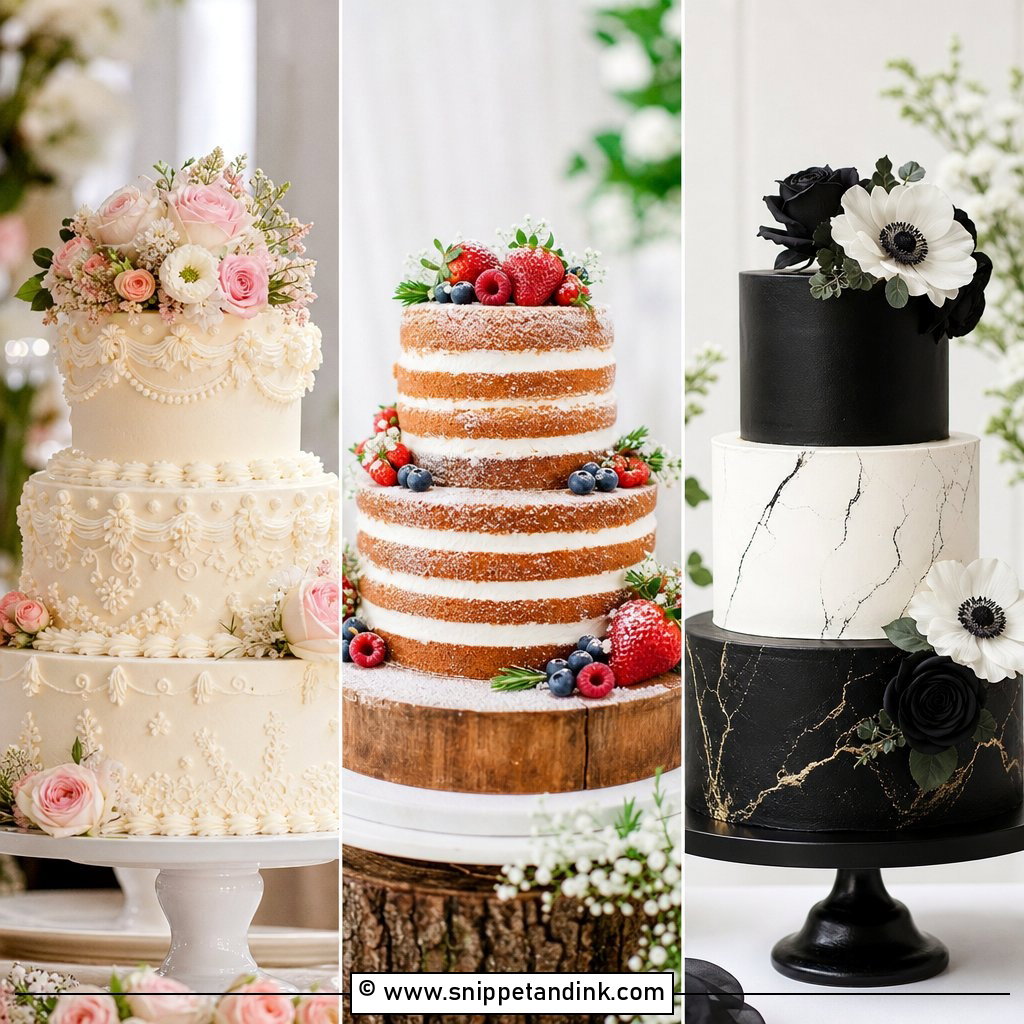
15. Single Tier Wedding Cake With Fruit
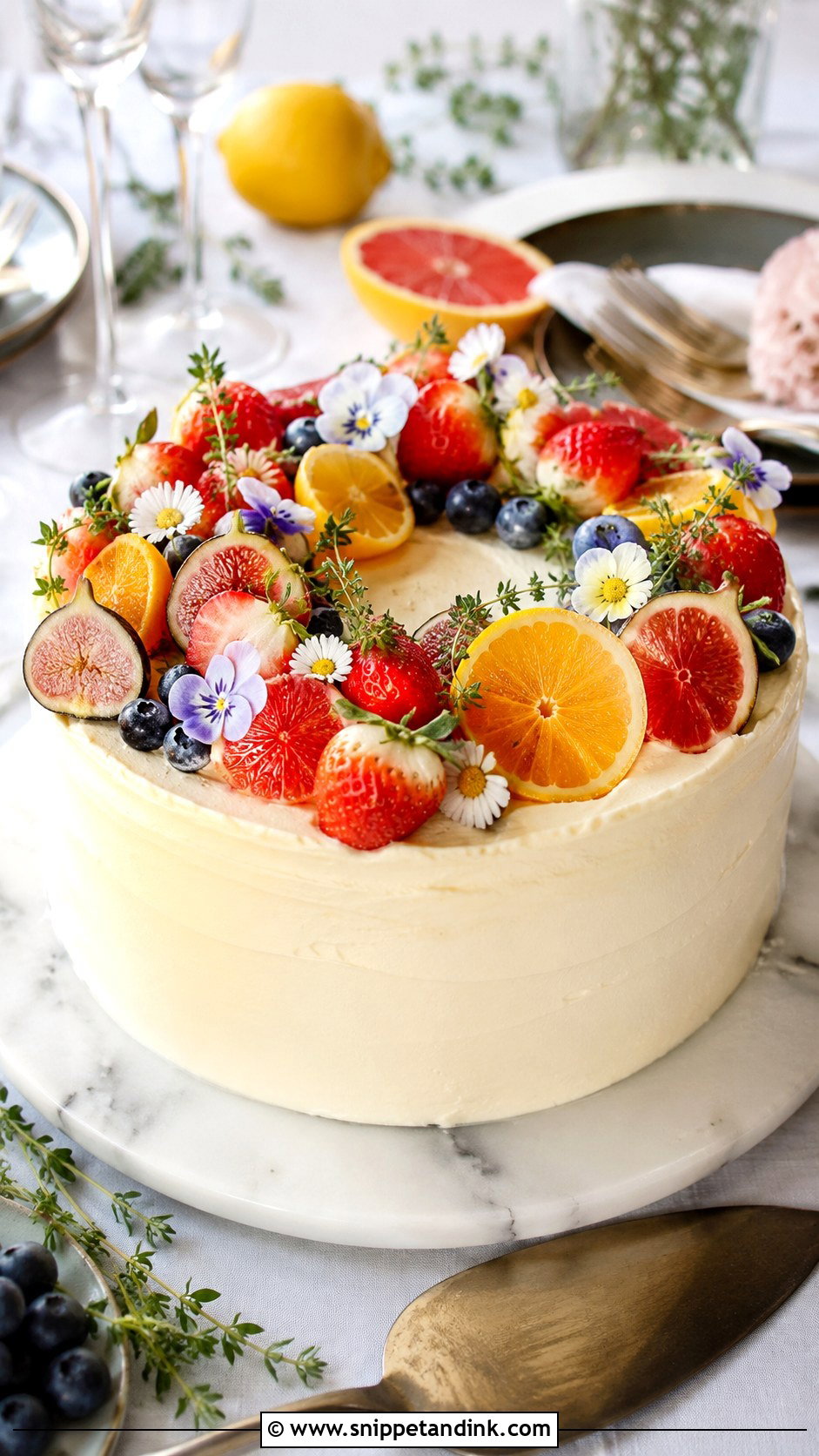
Fruit looks casual on a cake and is the decoration I add last, often on site, because cut fruit weeps juice into frosting within a few hours. Whole berries, figs, cherries and grapes travel better than sliced citrus or pears. I pair fruit with sturdier frostings such as mascarpone or cream cheese buttercream; plain whipped cream won’t survive a warm afternoon. A lemon cake with berries tastes as bright as it looks, and almond with figs suits an autumn table. Keep the pile low and neat.
16. Single Tier Wedding Cake With Greenery
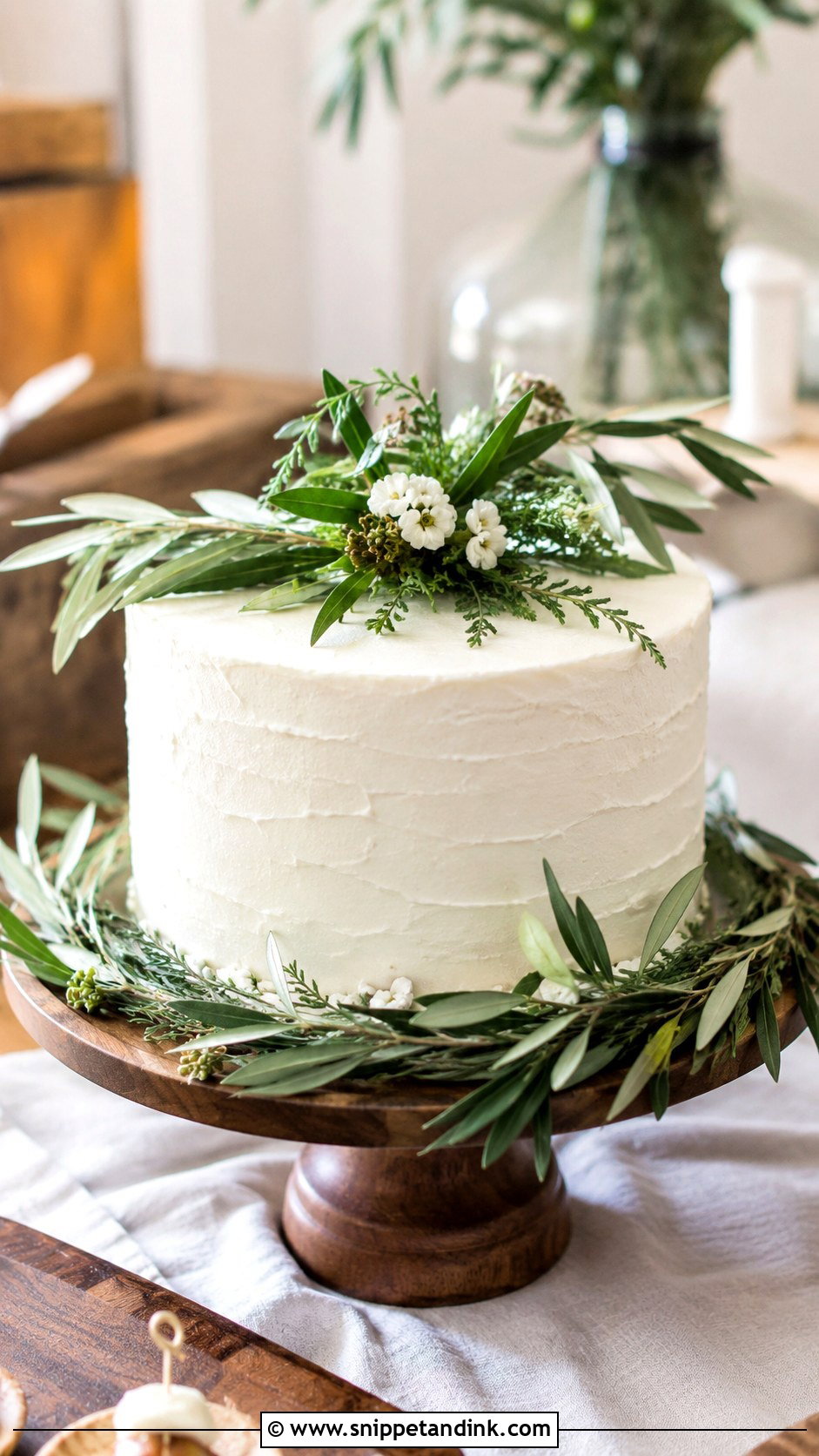
Greenery gives you the natural look with fewer flowers to source. Rosemary, thyme and olive are herbs and leaves I’m comfortable having near food. Eucalyptus is a different story: it’s popular but not food-safe, so it only goes on with a barrier underneath or on the board around the cake. A loose wreath or a side sprig on white buttercream is enough, and wood stands or stoneware plates suit it well.
17. Single Tier Wedding Cake With Bow
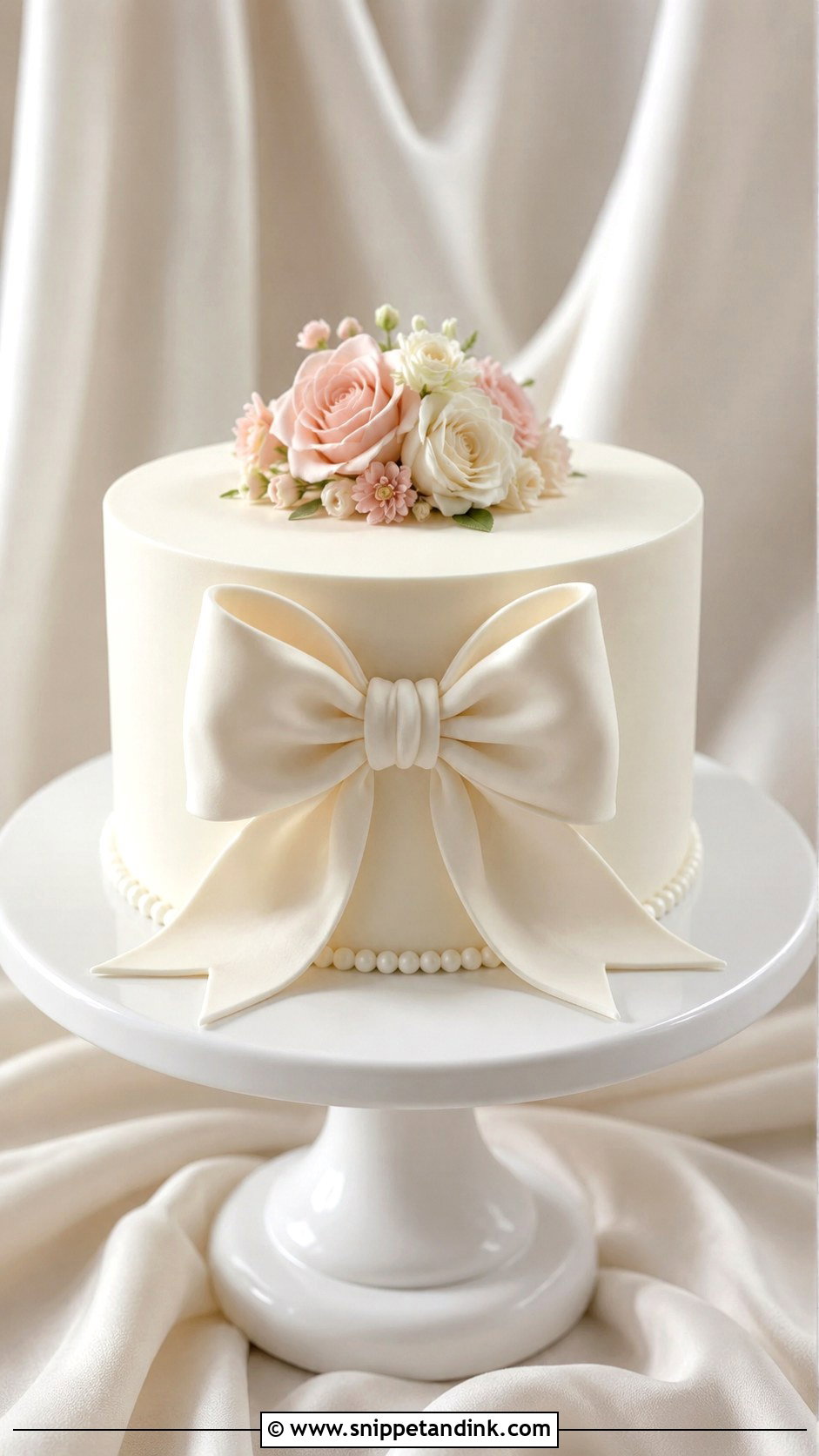
A bow makes the cake feel like it came from a fashion house, and I make mine from fondant or gum paste so the loops dry stiff and hold their shape. Fabric bows can work too, as long as they’re backed so they don’t soak up butter. Ivory on white is quiet; black or blush gives contrast. I place it at the front base or slightly off-centre on top and keep everything else plain, because a bow surrounded by other decoration loses its point.
18. Single Tier Wedding Cake With Square Shape
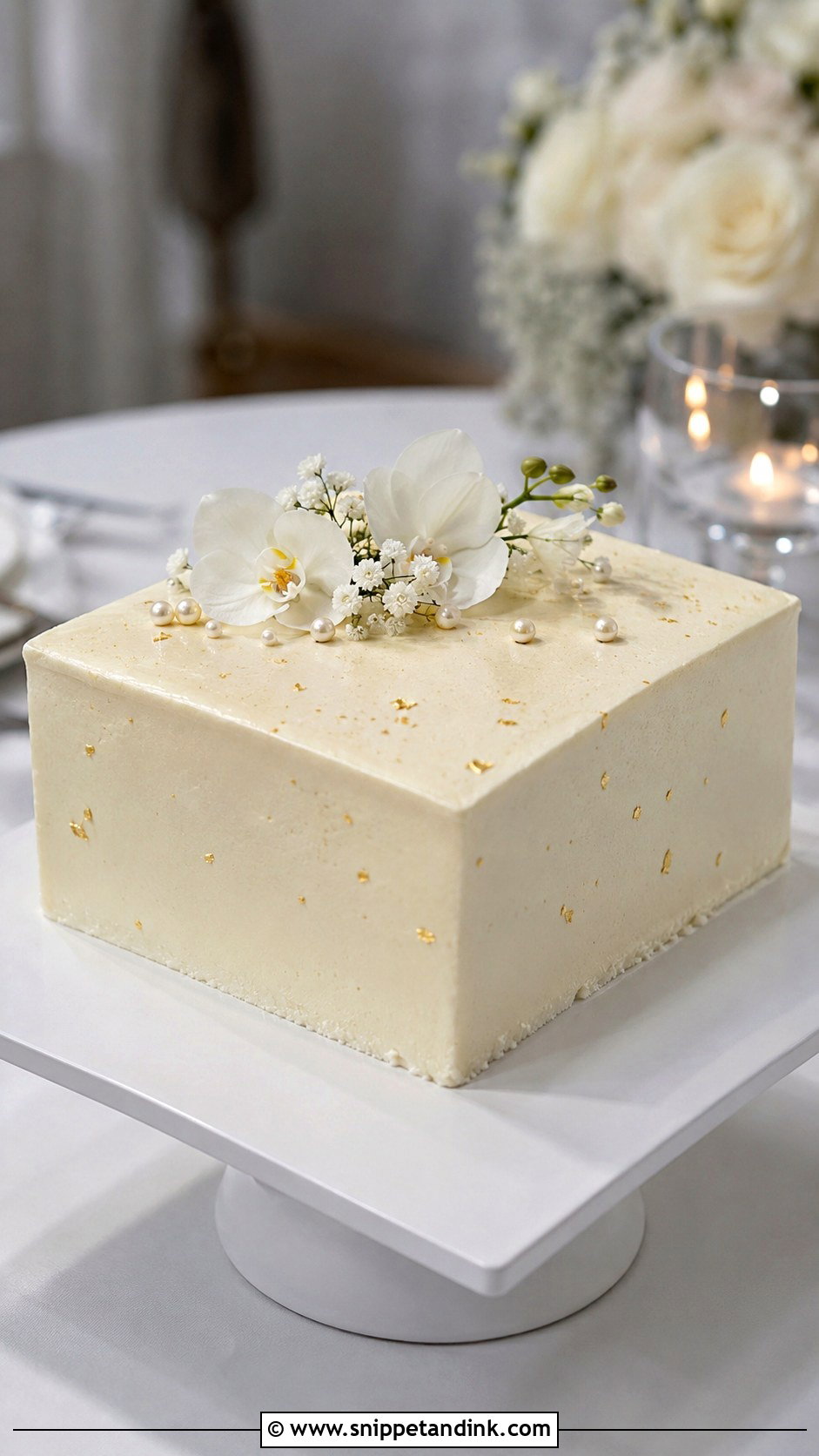
Square cakes are harder to finish than round ones, which is worth knowing before you fall for the sharp corners. Each corner has to be scraped clean and kept crisp, and that is where a less experienced baker’s work shows. The flat sides are wonderful for stencilling, monograms and painted edges. Keep the top balanced, use a square stand, and expect it to look its best in a city venue or a pared-back modern room.
19. Single Tier Wedding Cake With Heart Shape
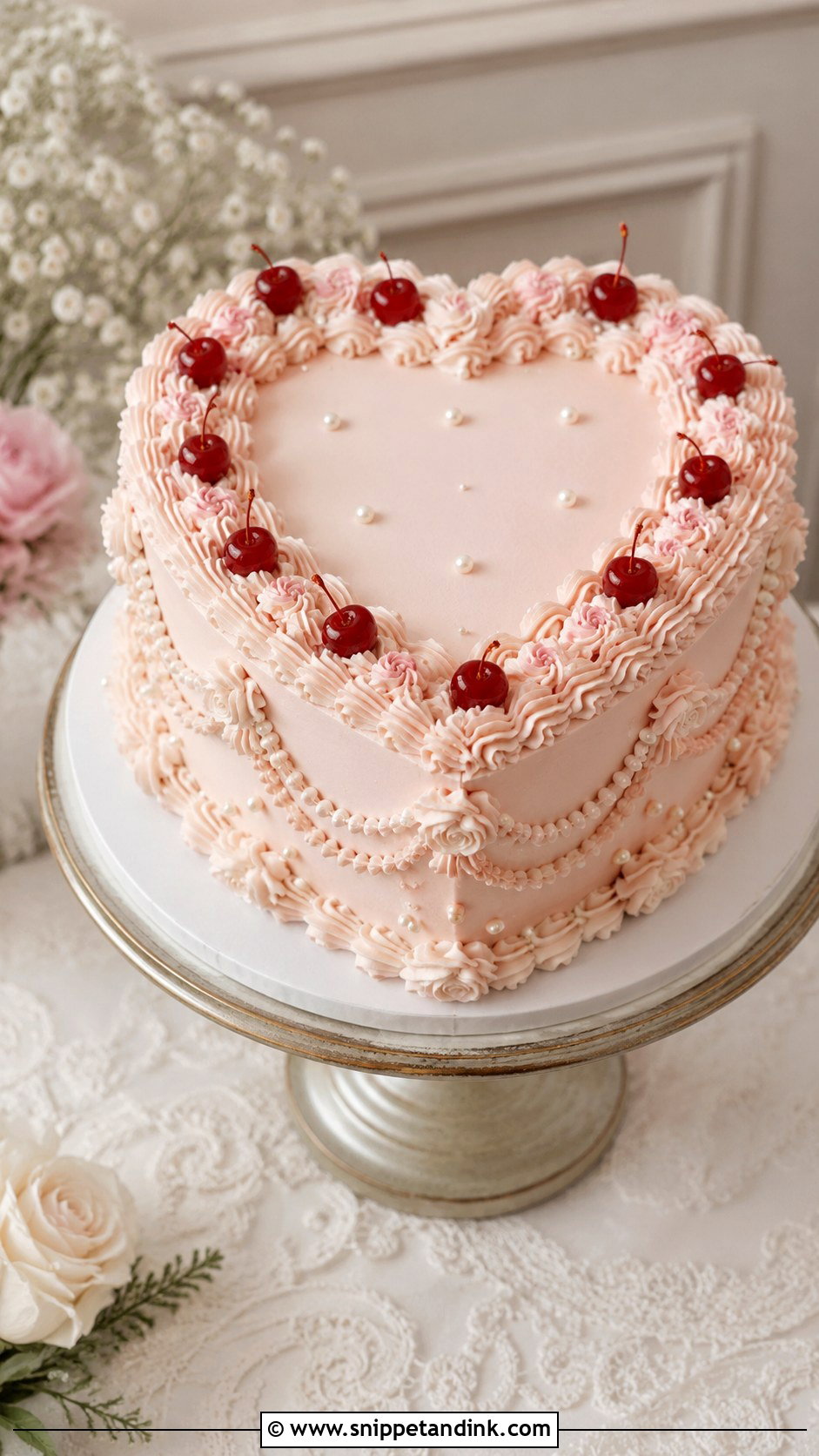
A heart-shaped wedding cake already makes its point by outline alone, so my job is to support the shape, not bury it. Piped swags around the edge, a few cherries or a small written message on top are enough. Hearts cut from a round and a square, or baked in a heart tin, both work; the tin gives cleaner lobes. White, ivory and pale pink keep it feeling like a wedding cake. It suits elopements and small dinners where the cake is also the centrepiece.

20. Single Tier Wedding Cake With Rectangular Shape
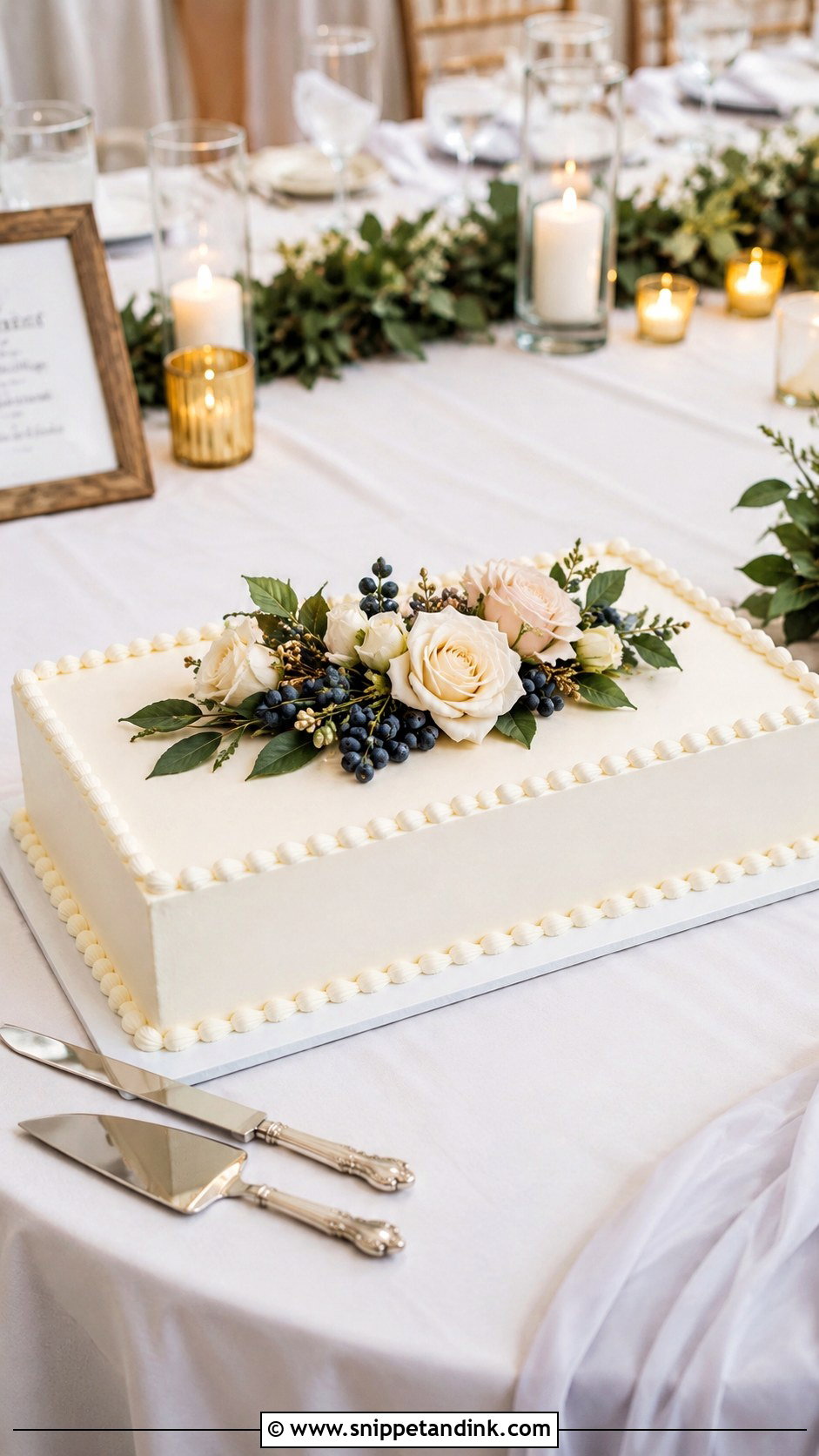
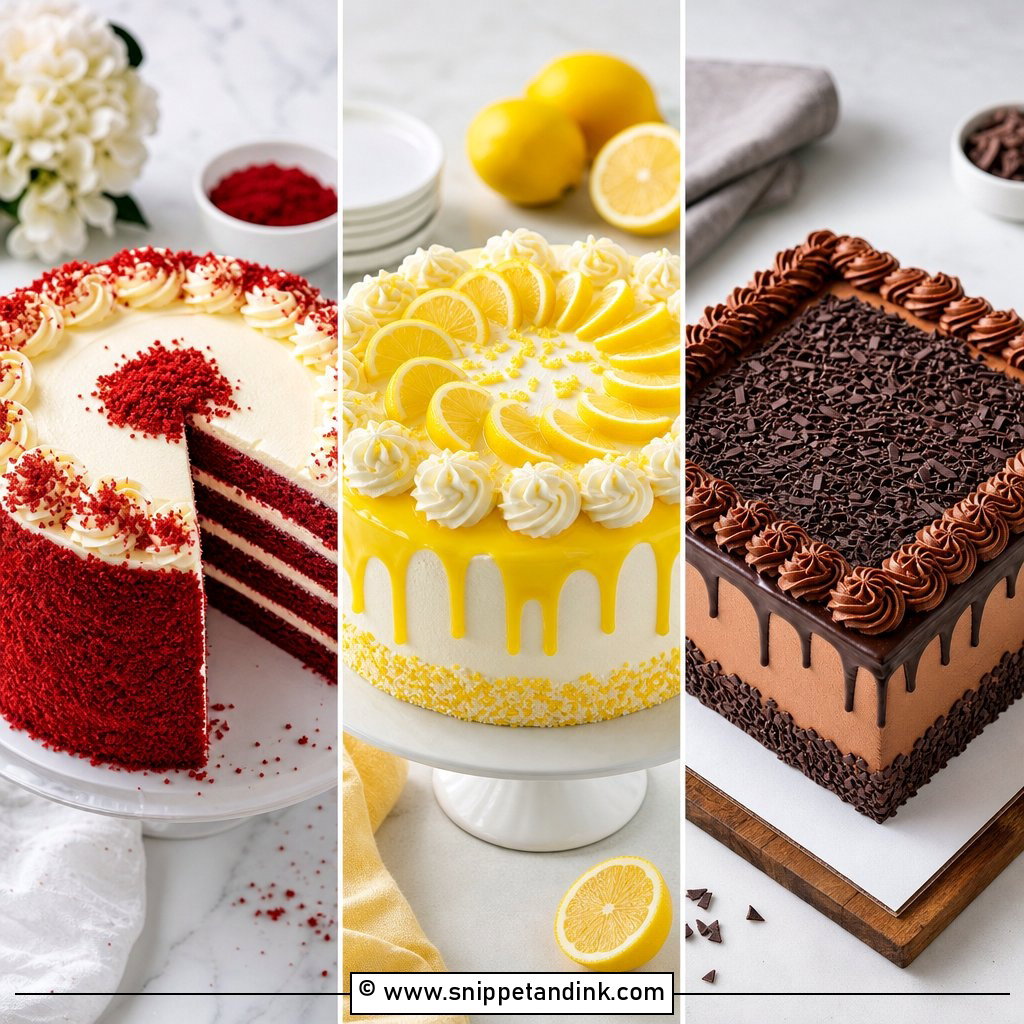
Rectangles are the practical choice on this list because they slice into neat, even pieces, which helps when one cake is feeding the whole room. The long top gives space for a runner of flowers or fruit, or a line of piped borders. They sit naturally on a long table with candles either side. Flavour is wide open; I’d match it to the season, lemon in summer and chocolate or spiced cake in winter.
The Hours Between My Kitchen and Your First Cut
A small cake has less mass to buffer heat and knocks, so the hours between delivery and cutting matter more than people assume. These are the things I sort out with every couple before the date.
Where it stands
Keep it out of direct sun and away from heaters, candles under the stand and the dance floor. Buttercream starts to soften at warm room temperature, and a sunny window can undo a smooth finish within an hour. If the venue is hot, ask for it to stay in a cool room until just before guests arrive.
Fridge, travel and condensation
I deliver most buttercream cakes chilled so they are firm for the drive, then let them come up to temperature on site. Fondant is the tricky one: moved from a cold fridge into a warm, humid room, it sweats and beads with water, so it should be brought out gradually. If you are collecting the cake yourself, the footwell on a flat, air-conditioned floor is safer than any seat, and a non-slip mat under the box stops it sliding.
On the day
- Tell your planner who removes wires, picks and ribbon backing before serving, and make sure it happens before the knife goes in.
- Cut within a few hours of setup if fresh fruit or flowers are on top.
- Ask for the top few inches to be boxed if you want a piece to keep; a small cake can vanish in minutes otherwise.
Letting One Tier Carry the Whole Table
A single tier asks for one clear direction and a baker who finishes it well. Flowers lean romantic, smooth buttercream reads classic, pearls go formal and vintage piping brings personality, while a heart, square or rectangle makes the shape itself the feature. Work out how many slices you need, think about the room it will stand in, and then pick the detail you love most. Everything else on the cake should support that one idea.
You'll Like These Ideas:




Leave a Reply