
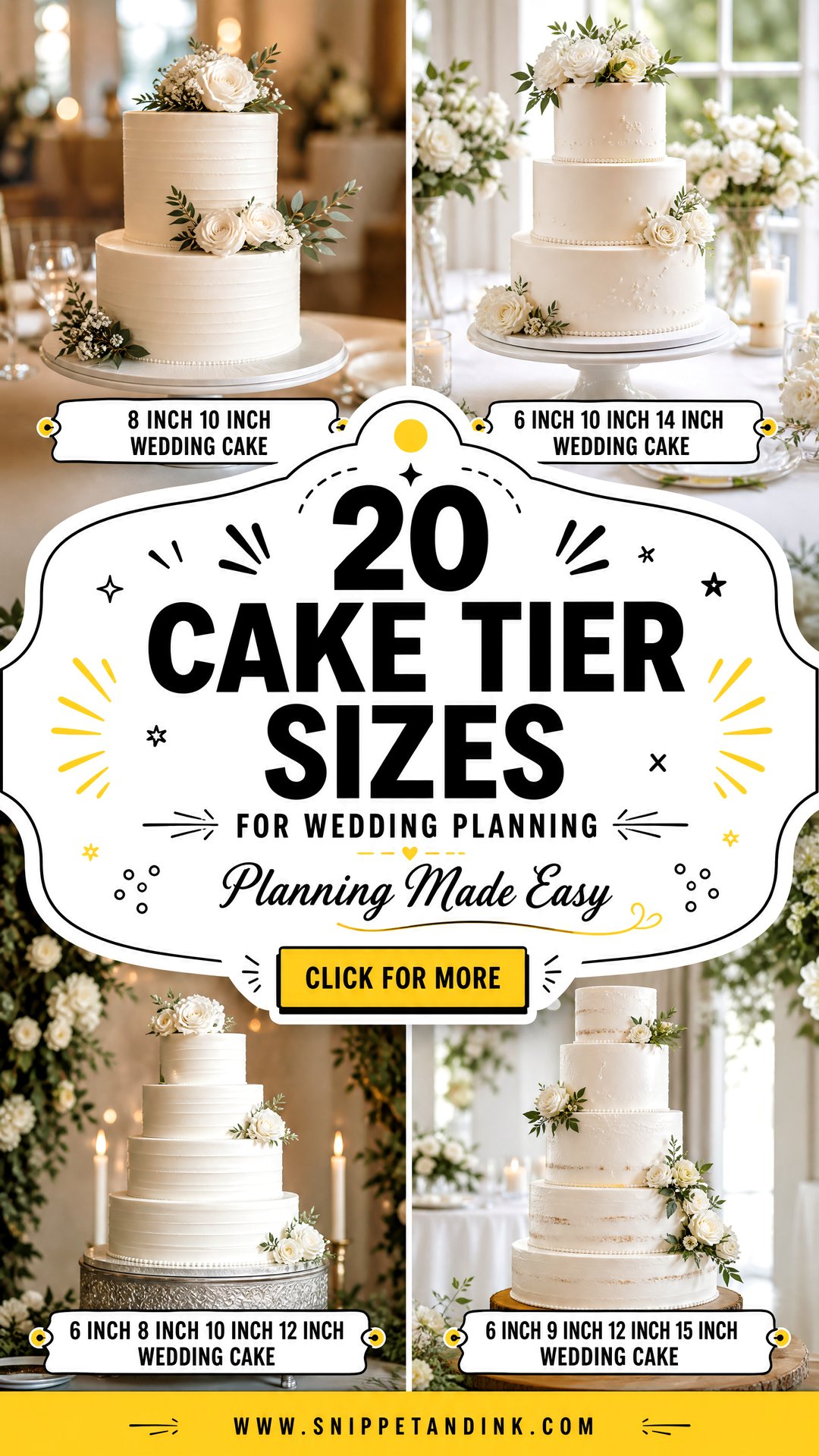
A tier plan decides far more than how many people get cake. It sets the height of the reception table, how much the finished cake weighs, how I support and deliver it, and a large share of the price. When a couple brings me a photo, the first thing I do is work backwards from the guest list, because a two-tier cake and a five-tier tower solve very different problems. The serving numbers below assume wedding-size portions on tiers about four inches tall, so treat them as starting points and check them against your own baker’s chart. Use the sizes that follow as a practical planning guide for matching a cake to a real room and a real head count.
Wedding Slices Versus Party Slices on a Baker’s Chart
Every serving number in this post depends on one small rectangle. A wedding portion is usually cut about one inch wide by two inches deep, the full height of a four-inch tier. A party or dessert slice is closer to a wedge, roughly twice that size. Cut the same cake both ways and the count can nearly halve, which is why I always ask couples who will be cutting the cake before I quote a guest number.
As a rough guide, a 6 inch round gives around a dozen wedding portions, a 10 inch somewhere near forty, and a 14 inch close to eighty. Square tiers of the same width give more, because the corners are cake rather than air. Extended tiers, baked five or six inches tall, look sleeker and add servings only if the caterer cuts them into shorter pieces.
- Ask your baker which chart they quote from and what slice size it assumes.
- Find out whether the venue or caterer cuts the cake, and how big they usually cut.
- Subtract the top tier from the total if you plan to keep it.
- Count only the guests likely to eat cake; late-night crowds and children’s tables vary a lot.
1. 6 Inch 8 Inch Wedding Cake
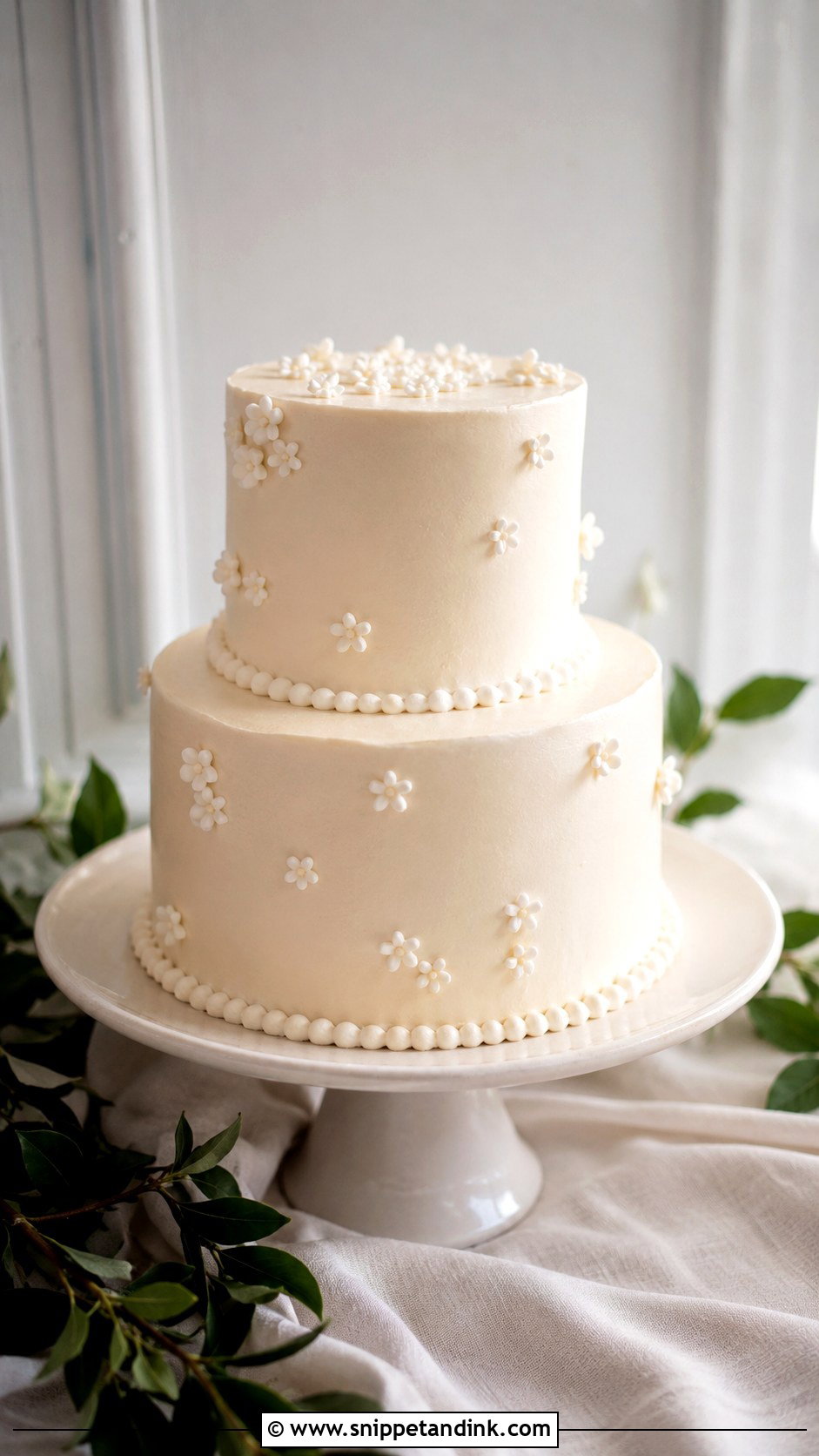
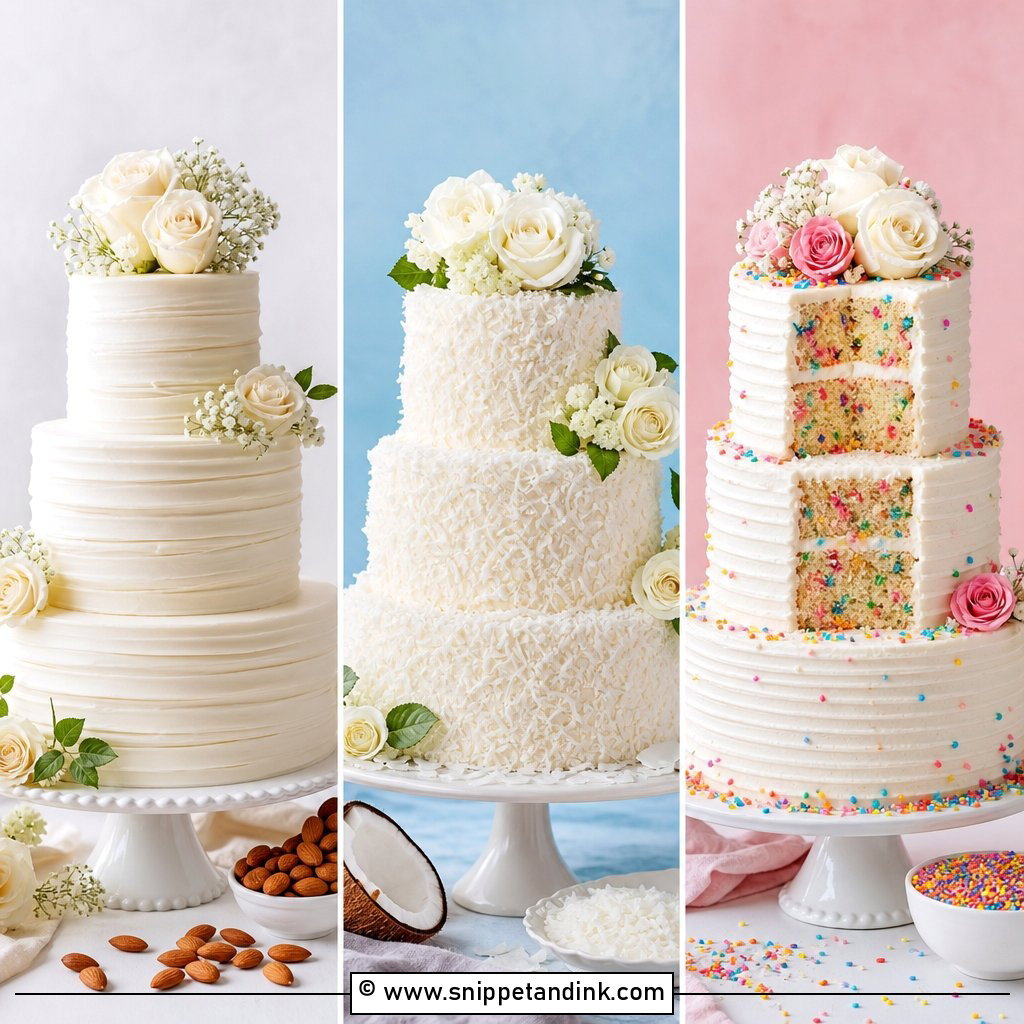
This is the pairing I suggest most for elopement dinners, courthouse receptions and backyard parties. It gives roughly 30 to 40 wedding portions, depending on tier height and how strictly it’s cut. The two-inch step reads clean from the front. One caution: a 6 inch top tier is small enough that heavy sugar flowers crowd it, so I keep the decoration to piping, pressed flowers or a ribbon at the base. Served next to a few other desserts, it rarely leaves a mountain of leftovers.
2. 6 Inch 10 Inch Wedding Cake
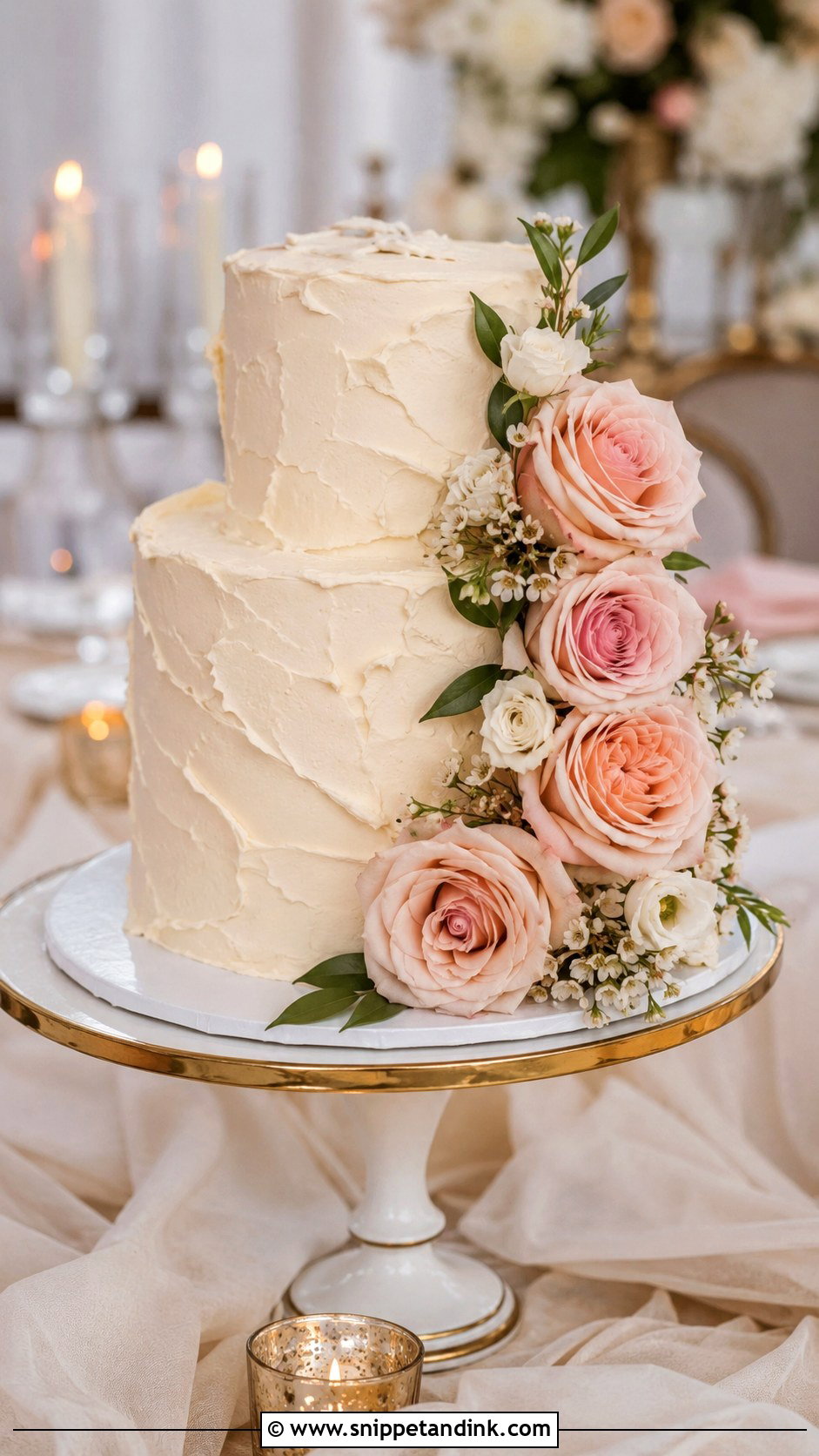
Jumping from 6 to 10 inches leaves a four-inch ledge around the top tier, and that ledge is the whole point. It gives cascading flowers somewhere to rest and makes two tiers look bolder in photos than a tighter pairing. Expect about 45 to 55 wedding portions. Because a small tier sits on a wide surface, I set the supports in a tight ring just inside the top tier’s footprint so the weight lands on them and not on soft cake. Textured buttercream and a soft fondant finish both suit it.
3. 8 Inch 10 Inch Wedding Cake
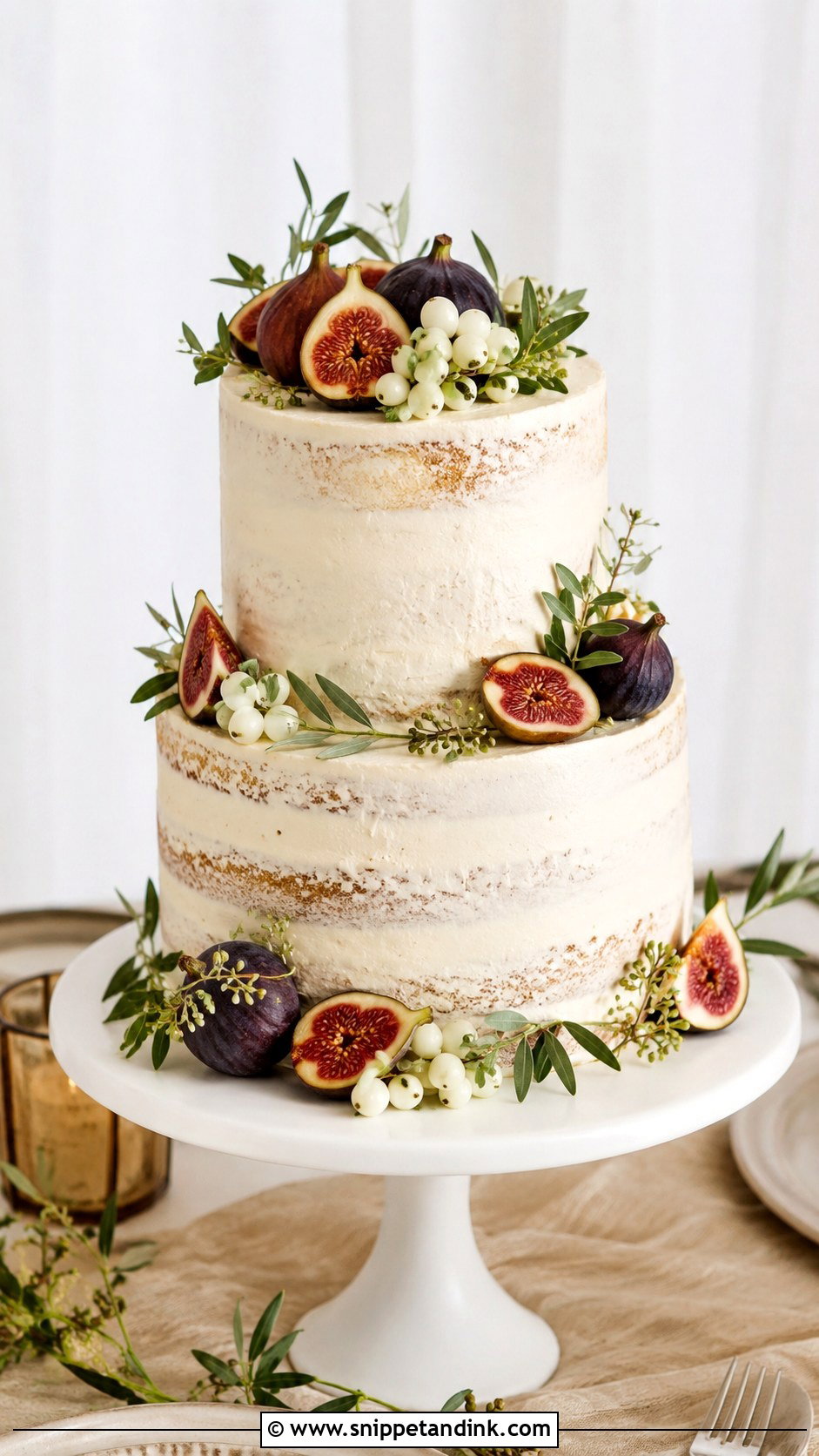
With only two inches between tiers, this is a compact but fuller two-tier option that adds servings without adding height. Plan on about 55 to 70 guests if it’s cut into slim wedding portions. The narrow step gives a squat, modern block shape, which I like for semi-naked finishes and fresh fruit. Semi-naked tiers dry at the edges faster than fully coated ones, though, so I’d only choose that finish if the cake is assembled close to serving time. It suits a small cake table and travels easily.
4. 8 Inch 12 Inch Wedding Cake
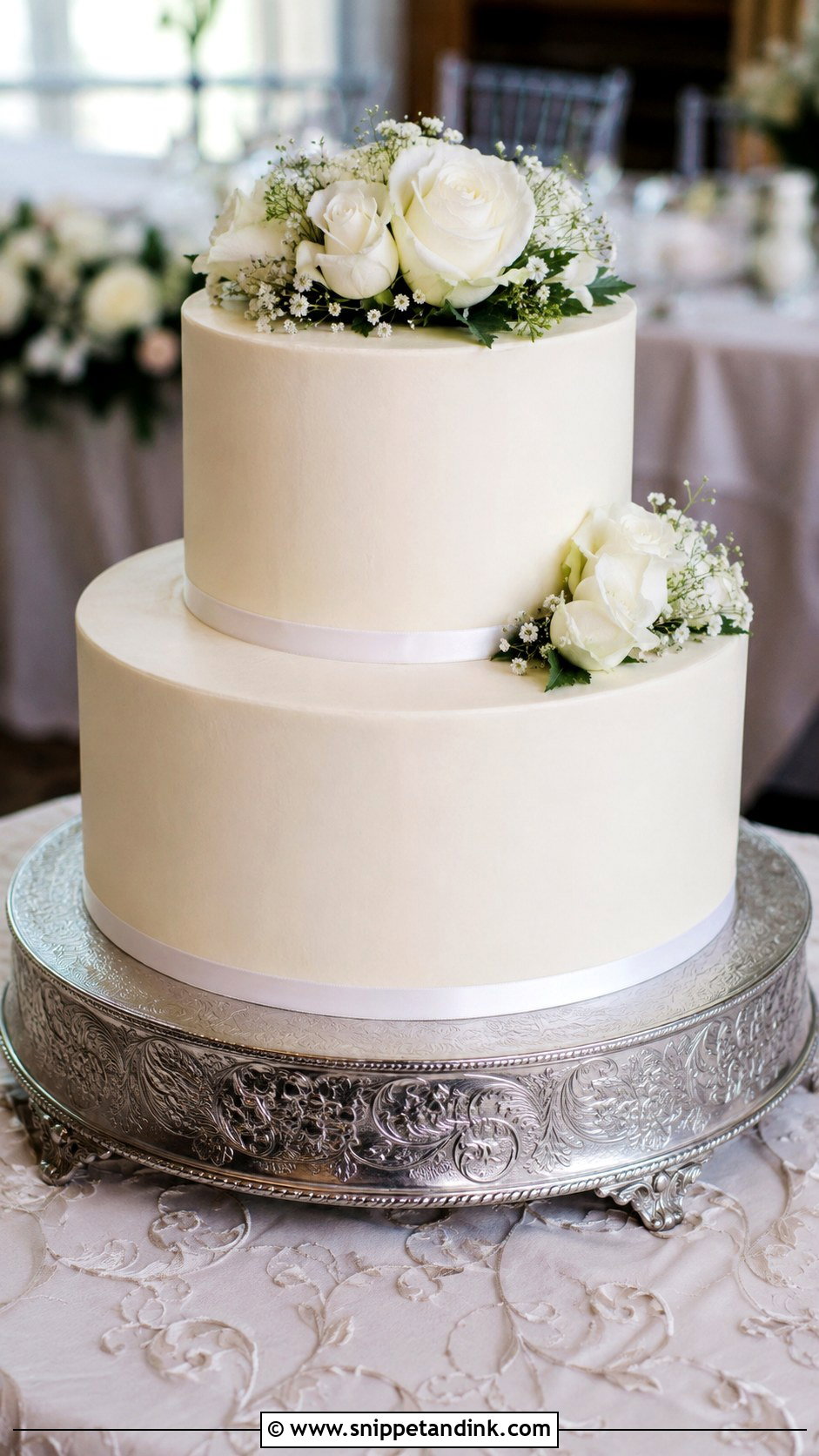
Two tiers can still feed a mid-size wedding if the base is wide enough. An 8 over a 12 gives around 75 to 90 portions, depending on serving size, and the 12 inch base does most of that work. I reach for this pairing when a couple wants a simple look but the guest list has outgrown the smaller combinations. That broad bottom tier has a lot of exposed shoulder, so a completely plain finish can look a little empty; big floral clusters or a wide ribbon fill it out. A small dessert table beside it balances the display.
5. 6 Inch 8 Inch 10 Inch Wedding Cake
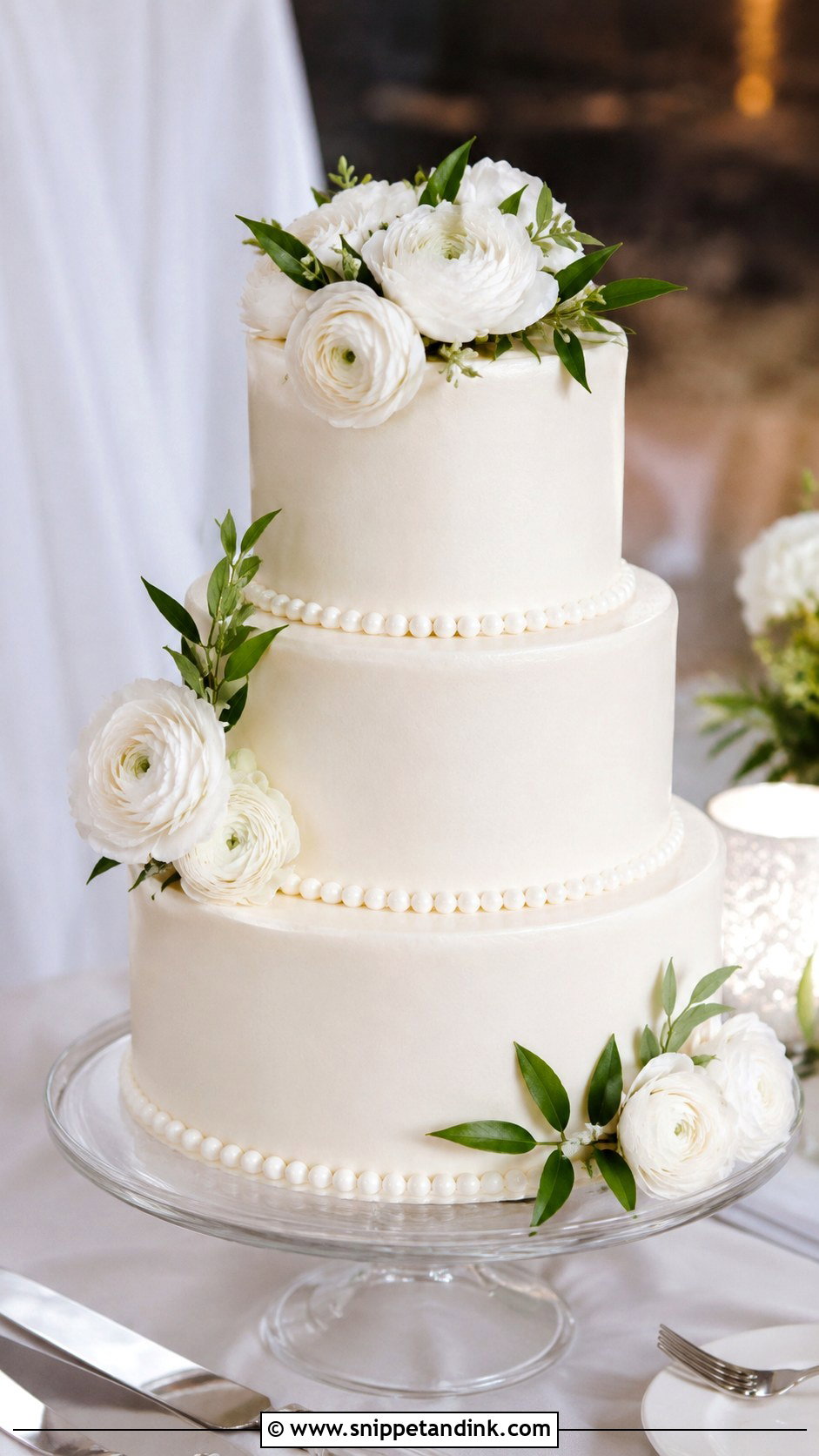
Ask a baker to sketch a three-tier cake and this is probably what you’ll get. It serves roughly 70 to 80 wedding portions and suits most small to medium receptions. The even two-inch step is forgiving to decorate, so piping, pearls and fondant texture all sit comfortably on it. If you plan to keep the 6 inch top tier, take its dozen or so portions out of the count first. Forgetting that is the most common counting slip I correct at consultations.
6. 6 Inch 9 Inch 12 Inch Wedding Cake
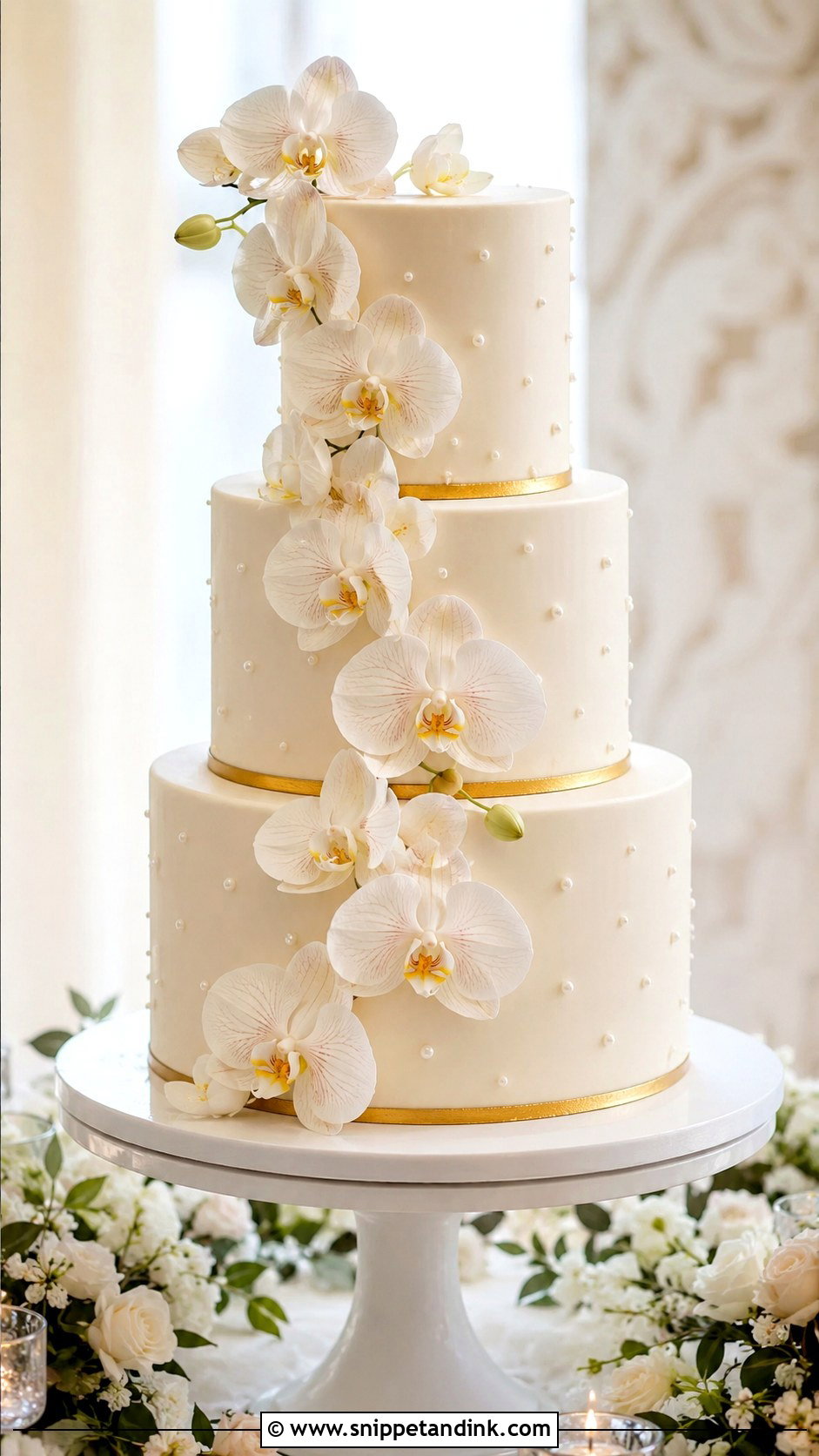
Three-inch steps add height without adding a tier, which is why this plan feels formal for 90 to 110 guests. The ledges are wide enough for flowers to wind around the cake instead of sitting in one clump at the front. I often recommend it when the cake is the only dessert, because the 12 inch base gives a comfortable buffer. Saving the top tier? Have your baker recalculate, since the 6 inch tier takes a noticeable share out of a count this size.
7. 8 Inch 10 Inch 12 Inch Wedding Cake
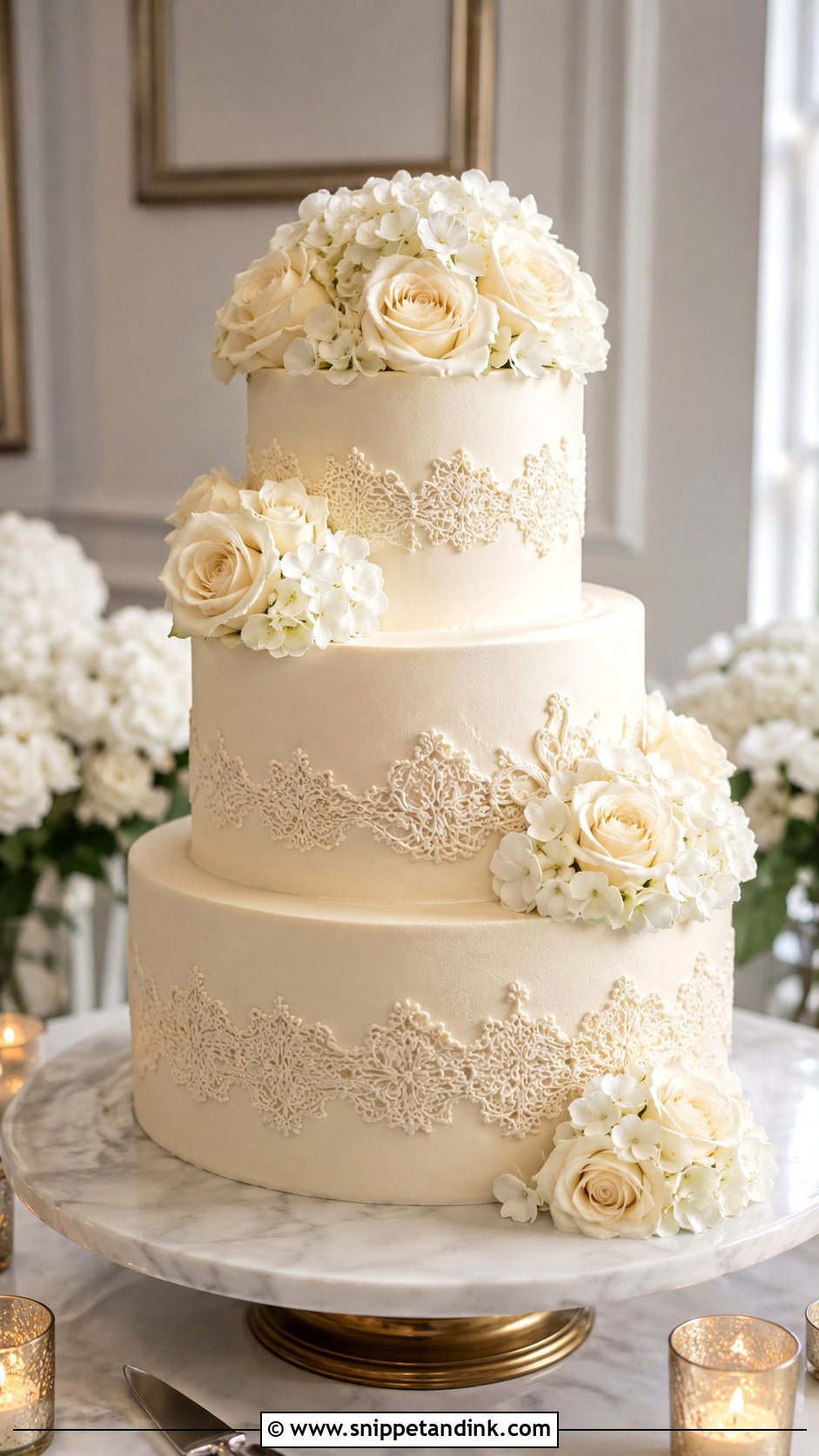
Starting the stack at 8 inches makes the whole cake read wide and sturdy. Depending on tier height and slicing, it serves around 90 to 120. I’d pick it for a couple who wants enough cake for every guest without going to four tiers. Check the stand before you commit: the 12 inch base sits on a board an inch or two larger, and some decorative stands are made for 10 inch cakes. Ivory buttercream with delicate piping or a few fresh roses suits the shape.
8. 6 Inch 10 Inch 14 Inch Wedding Cake
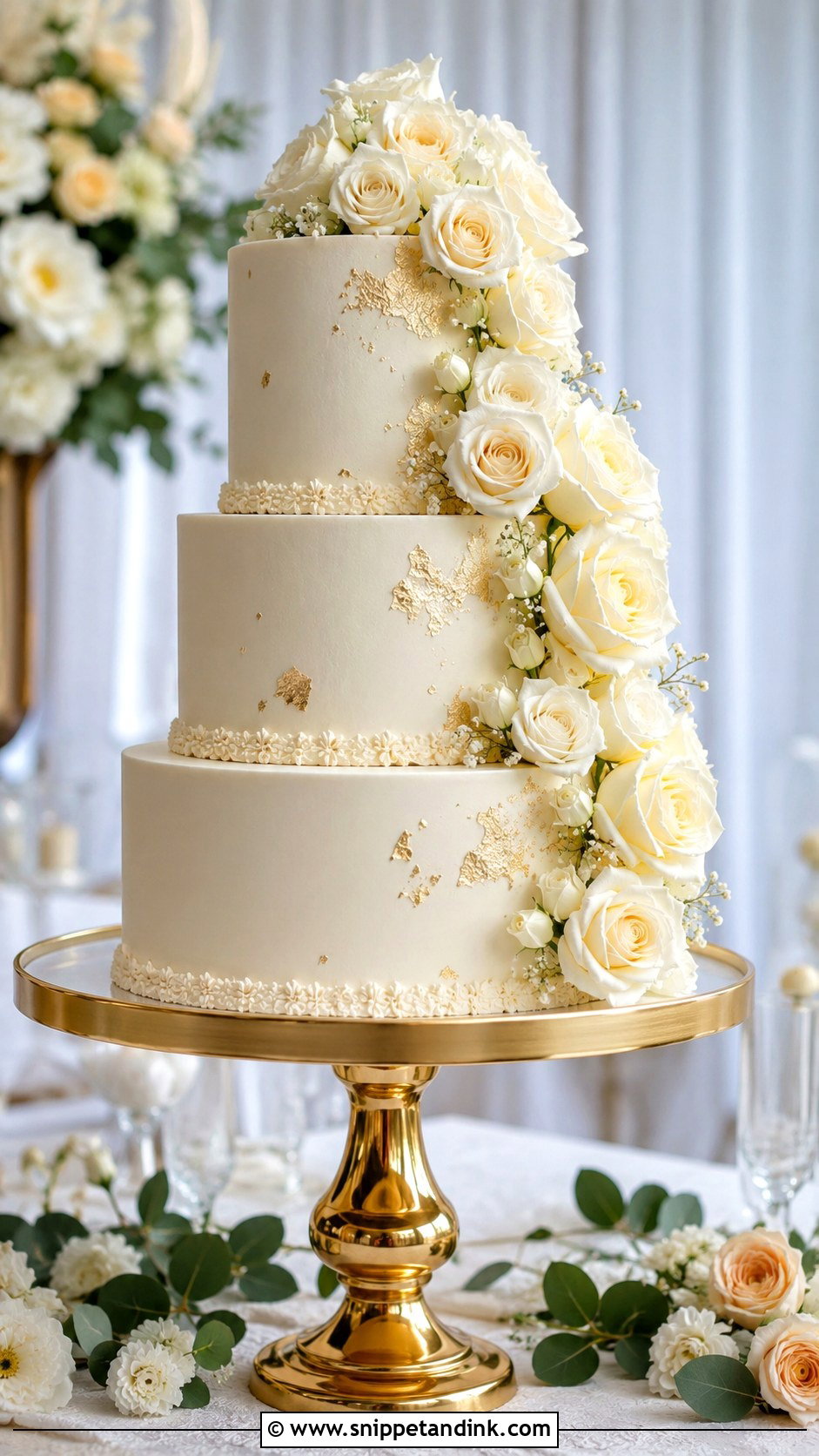
Four inches between each tier gives this cake its terraced look. It serves around 100 to 130, so a medium wedding gets a grand-looking cake without an oversized order. The 14 inch base is a big canvas for lace, fondant appliqué or hand-painting, and that’s where I put the most detailed work. On a low stand the proportions can look squat. Raise it on a tall stand in a room with high ceilings and it makes sense.
9. 8 Inch 12 Inch 16 Inch Wedding Cake
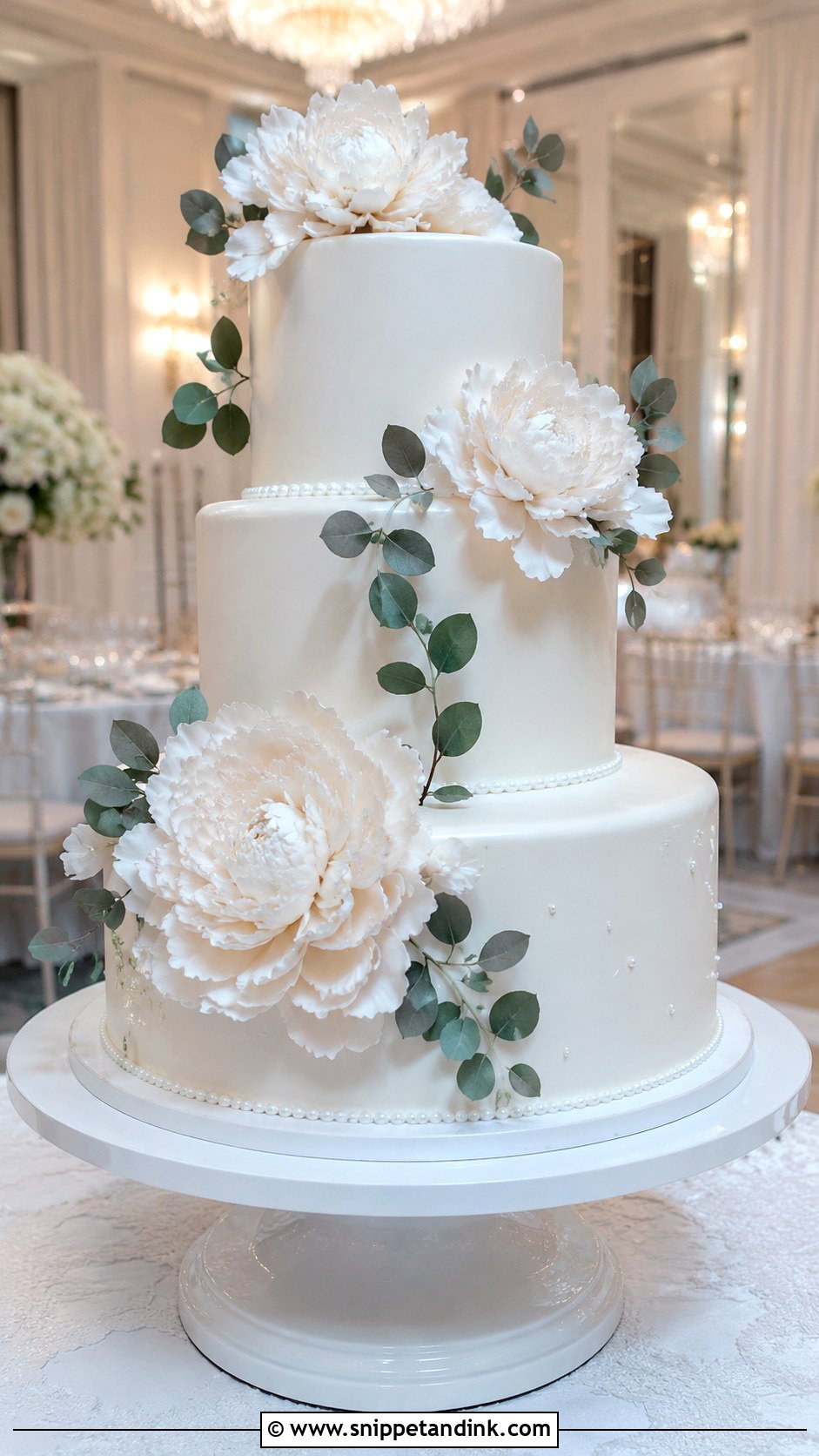
This is a large three-tier option for 130 to 160 guests that gets real presence without a fourth tier. The 16 inch base is heavy, so each tier above it sits on its own board with a full set of supports, and I run a central dowel down through the stack. In a hotel ballroom or banquet hall it holds its own from across the room. Oversized sugar flowers or greenery garlands match the scale; tiny piped details get lost on a base this wide.
10. 6 Inch 8 Inch 10 Inch 12 Inch Wedding Cake
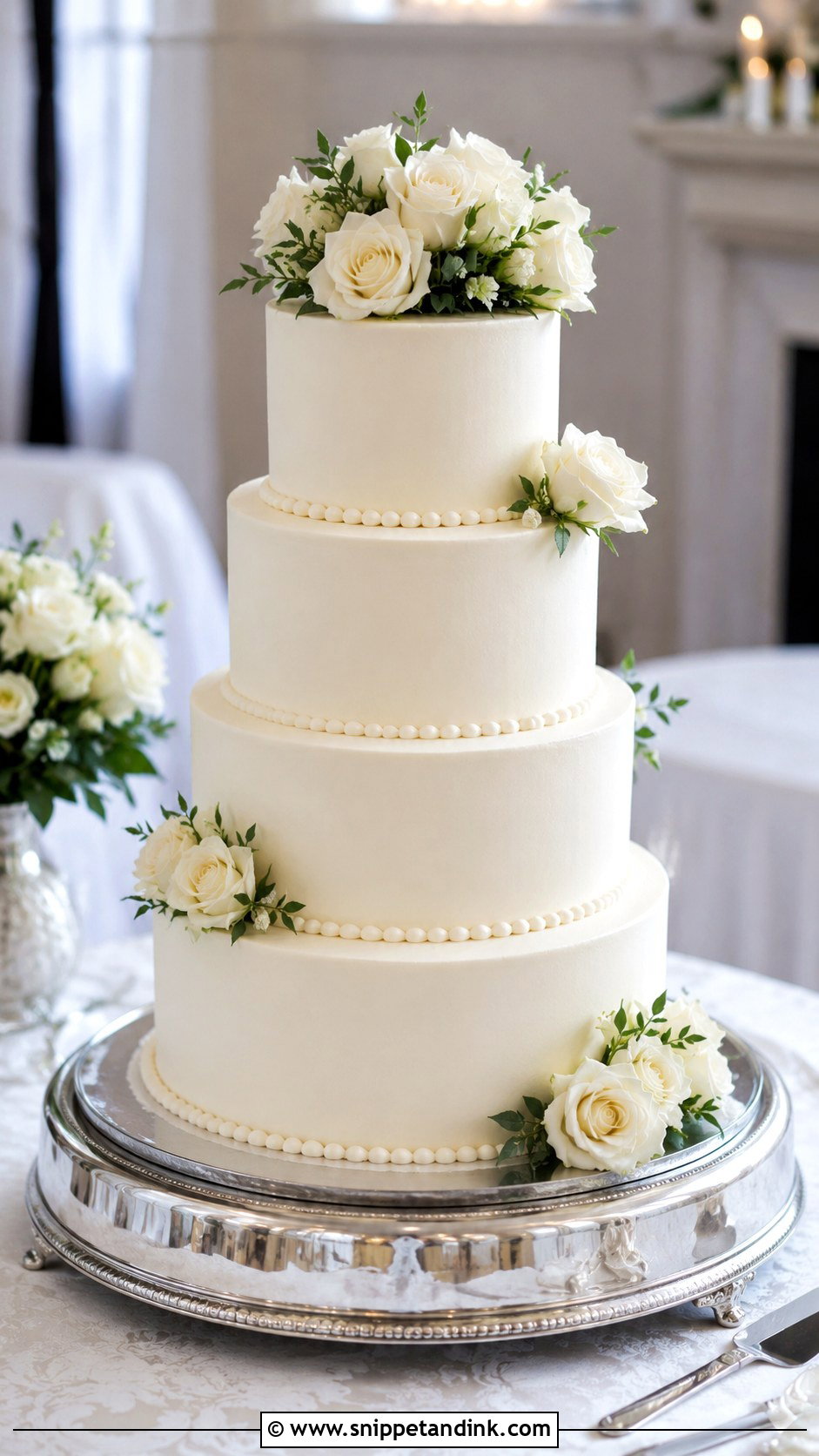
Four tiers stepping up by two inches each is the easiest four-tier shape to get right. It serves about 120 to 140, and because every tier is in proportion, a plain buttercream finish with fresh flowers looks as finished as ruffles or pearls would. I suggest it to medium receptions that want height for photographs but don’t need a huge amount of cake. Height adds work at setup, so expect your baker to stack the upper tiers at the venue rather than in the kitchen.
11. 6 Inch 9 Inch 12 Inch 15 Inch Wedding Cake
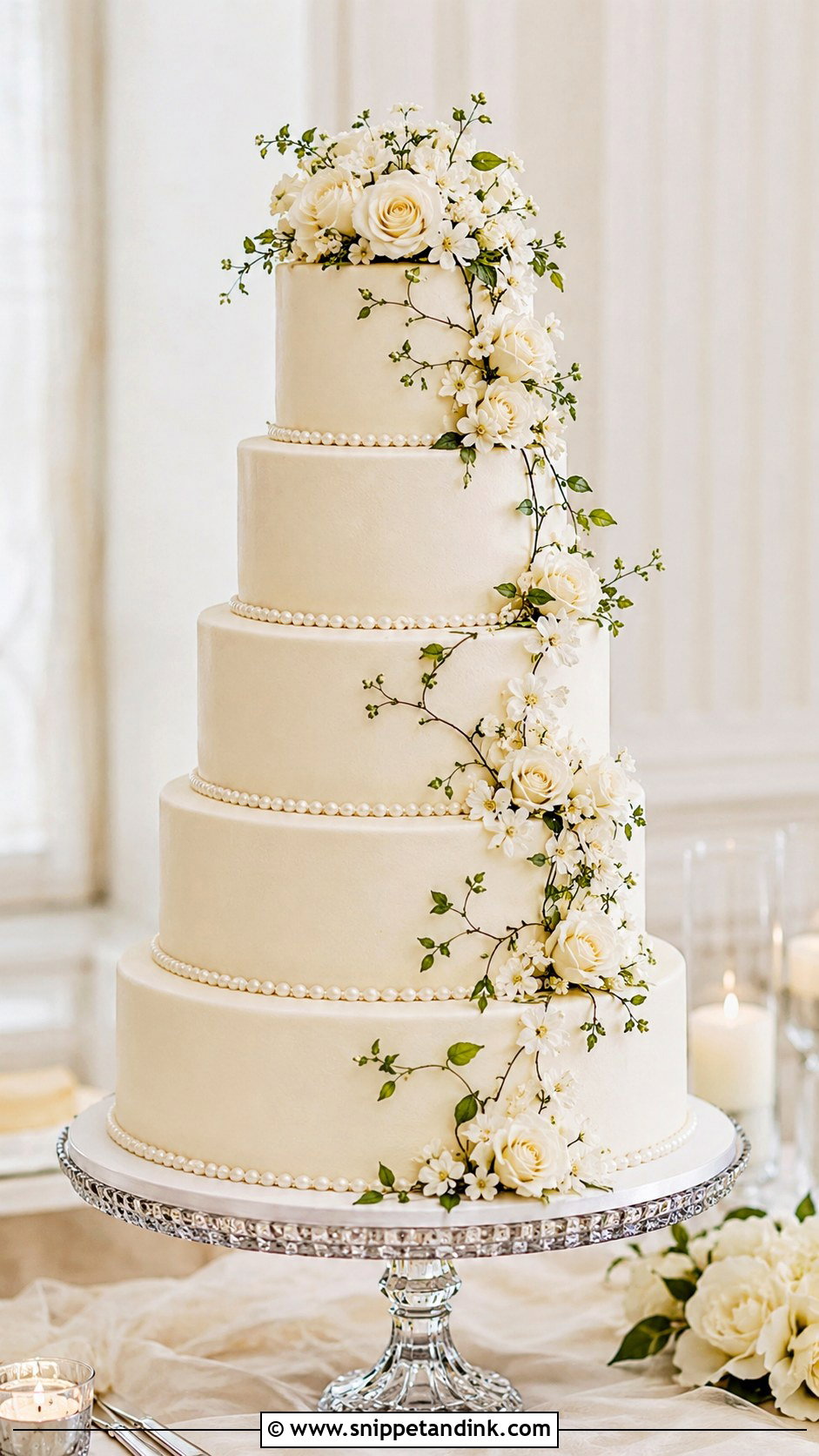
Three-inch spacing across four tiers gives each level enough face to stand on its own, which makes this plan good for designs with different textures. I might put smooth fondant on one tier, quilting on the next and buttercream ridges below that. It serves about 140 to 170, depending on slice size. The wider ledges also let a full floral arrangement sit without crowding. For a formal wedding with a long guest list, it’s one of my most dependable layouts.
12. 8 Inch 10 Inch 12 Inch 14 Inch Wedding Cake
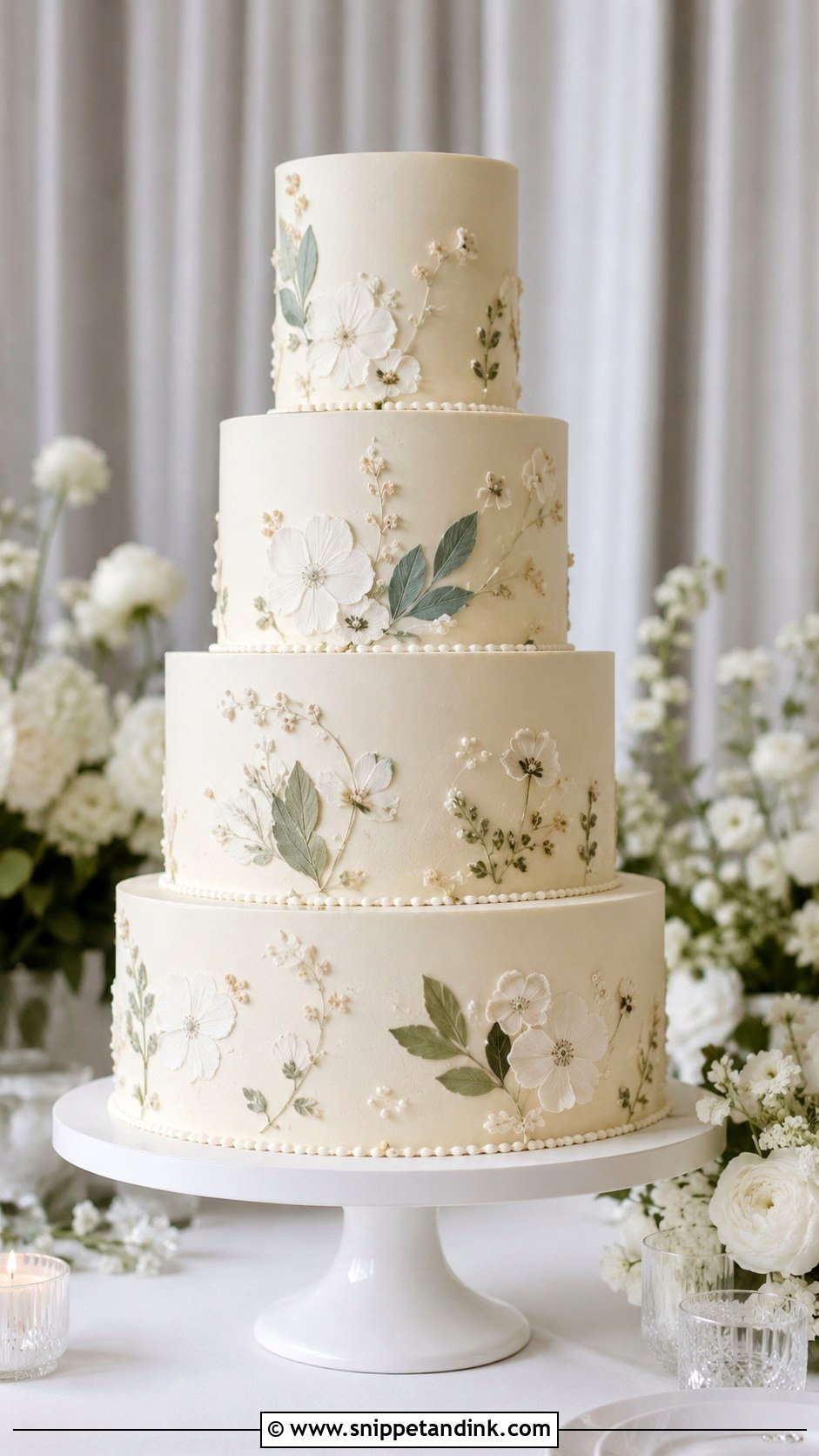
With an 8 inch top, the cake loses the narrow peak most tiered cakes have and reads as one solid block. It serves around 150 to 180, depending on cutting style. That stacked-box look suits clean fondant or a single buttercream colour, and pressed flowers lie flat on the wide faces. The trade-off is weight, visually. In a small room it can feel heavy, so I’d only choose it when the cake table has some breathing space around it.
13. 6 Inch 10 Inch 12 Inch 14 Inch Wedding Cake
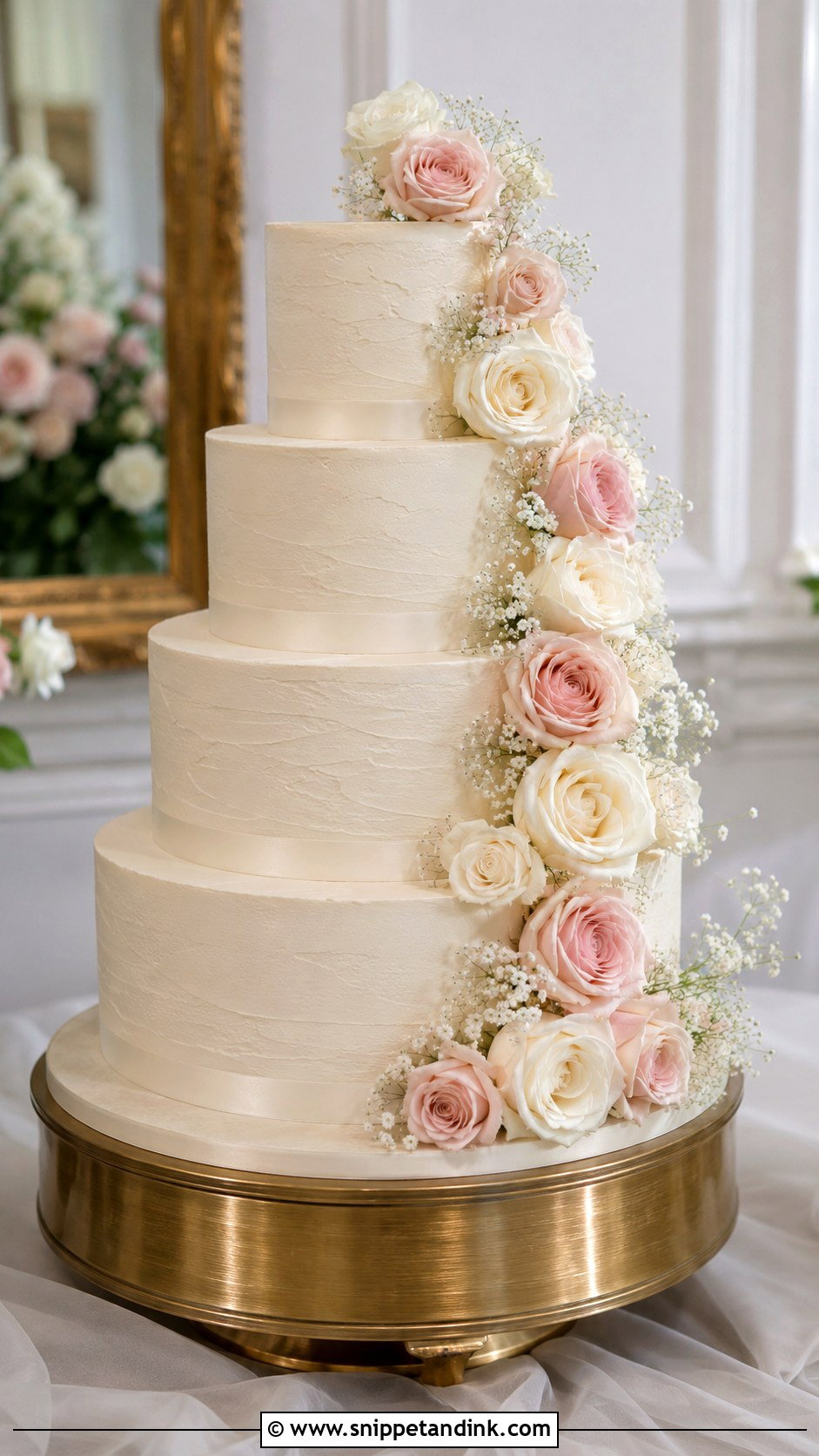
Here a 6 inch tier sits on noticeably wider tiers below, so the silhouette tapers sharply at the top. It serves about 145 to 175, depending on the bakery’s portion chart. The jump from 6 to 10 inches is exactly where a cascade looks natural, starting at the crown and falling down one side. Keeping the top tier barely dents the count here, which is why I point couples who want an anniversary tier toward this plan.
14. 8 Inch 12 Inch 14 Inch 16 Inch Wedding Cake
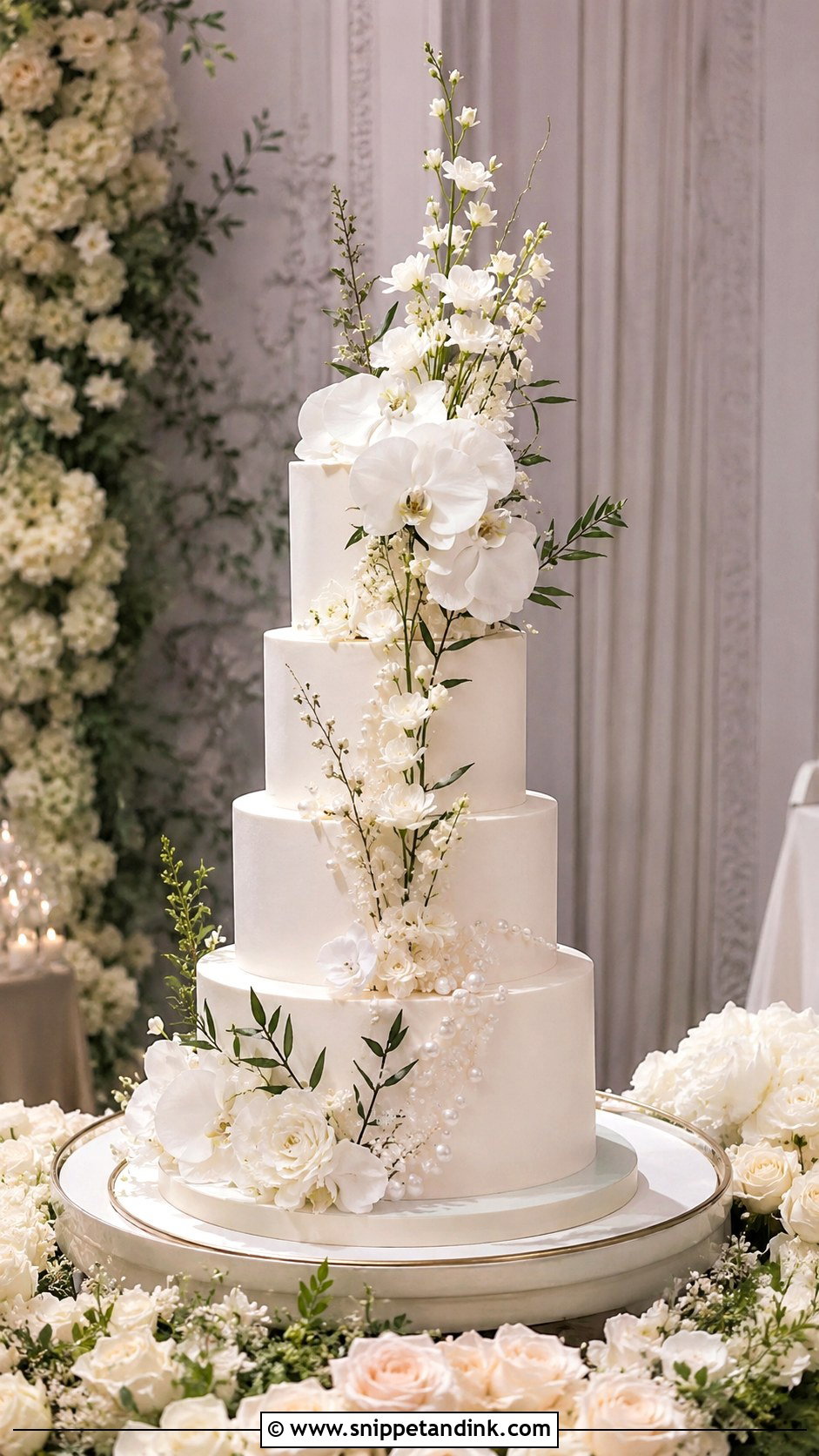
This is serious structure: around 180 to 220 portions, and a lot of weight bearing down on the bottom tier. The broad lower tiers carry the presence, while the 8 inch top stops the silhouette from looking flat. I wouldn’t hand this size to a baker who hasn’t doweled and delivered large tiers before. Formal fondant, tall floral sprays and metallic accents all suit it. Ask whether the stand is rated for the weight, because a cake this size is heavier than many decorative stands are built to carry.
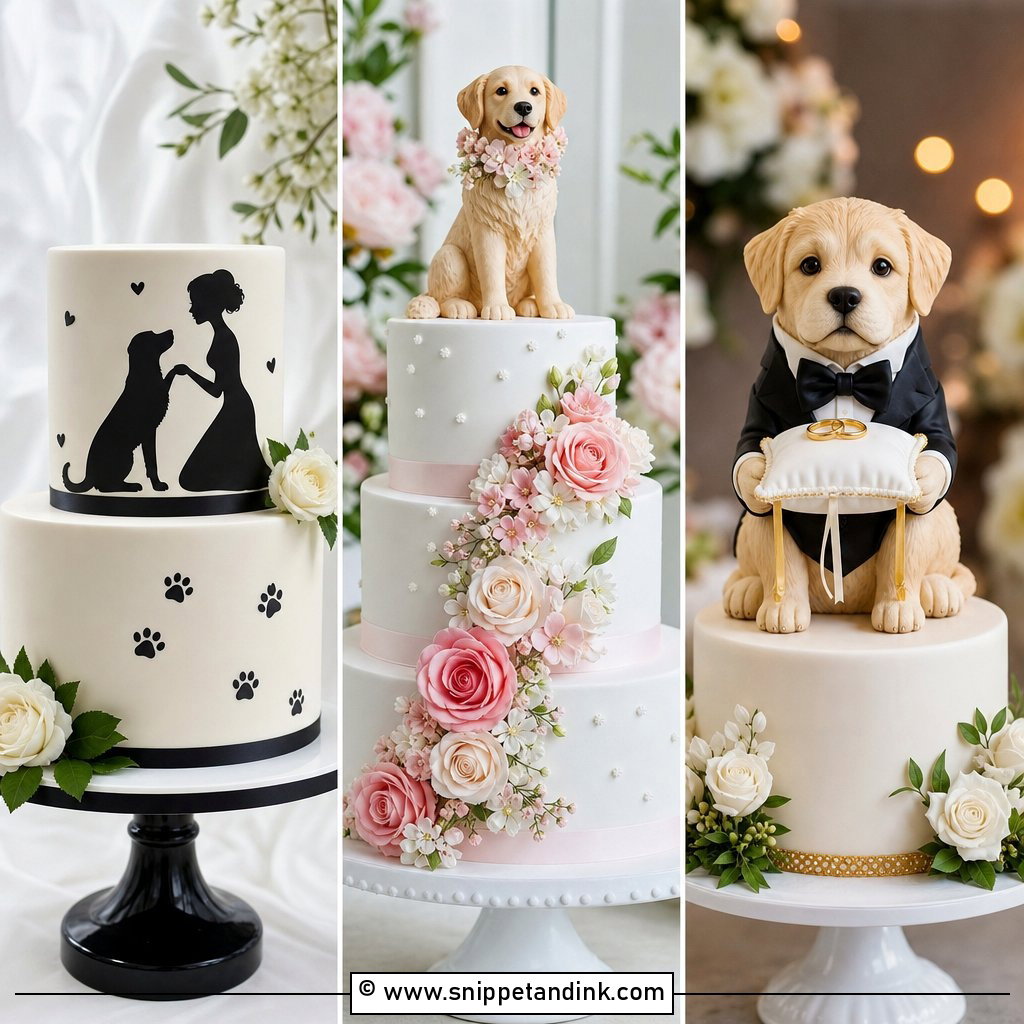

15. 6 Inch 8 Inch 10 Inch 12 Inch 14 Inch Wedding Cake
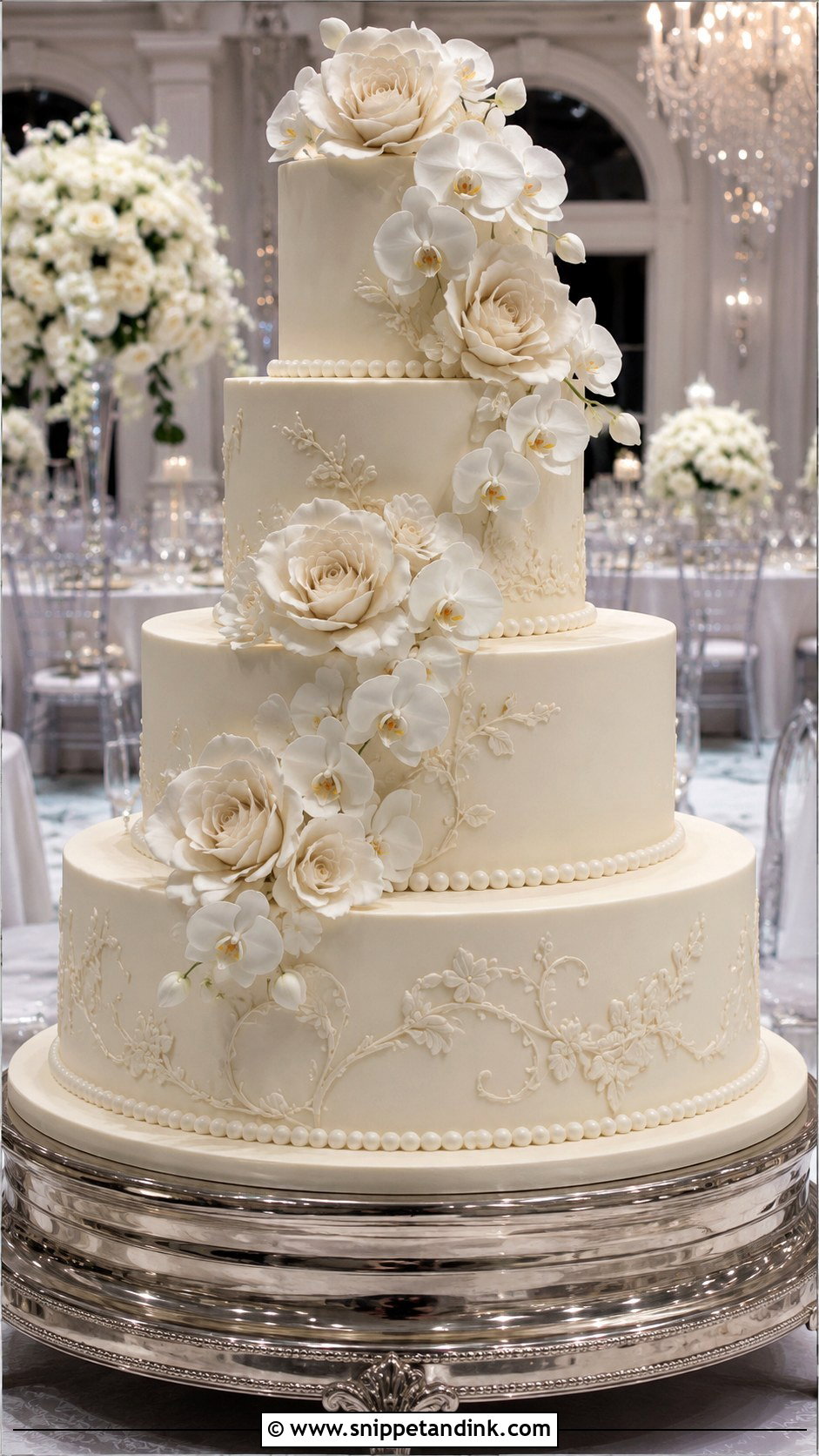
Five tiers stepping up by two inches is the traditional tower most people picture. It serves about 190 to 220, depending on serving style and tier height. Even steps spread the weight evenly, which helps a cake stay steady at this height. I like to vary the decoration slightly from tier to tier, piping on one and pearls on another, so the eye keeps moving upward. Give it its own table with good light; tucked beside a buffet, a cake this tall loses its effect.
16. 6 Inch 9 Inch 12 Inch 15 Inch 18 Inch Wedding Cake
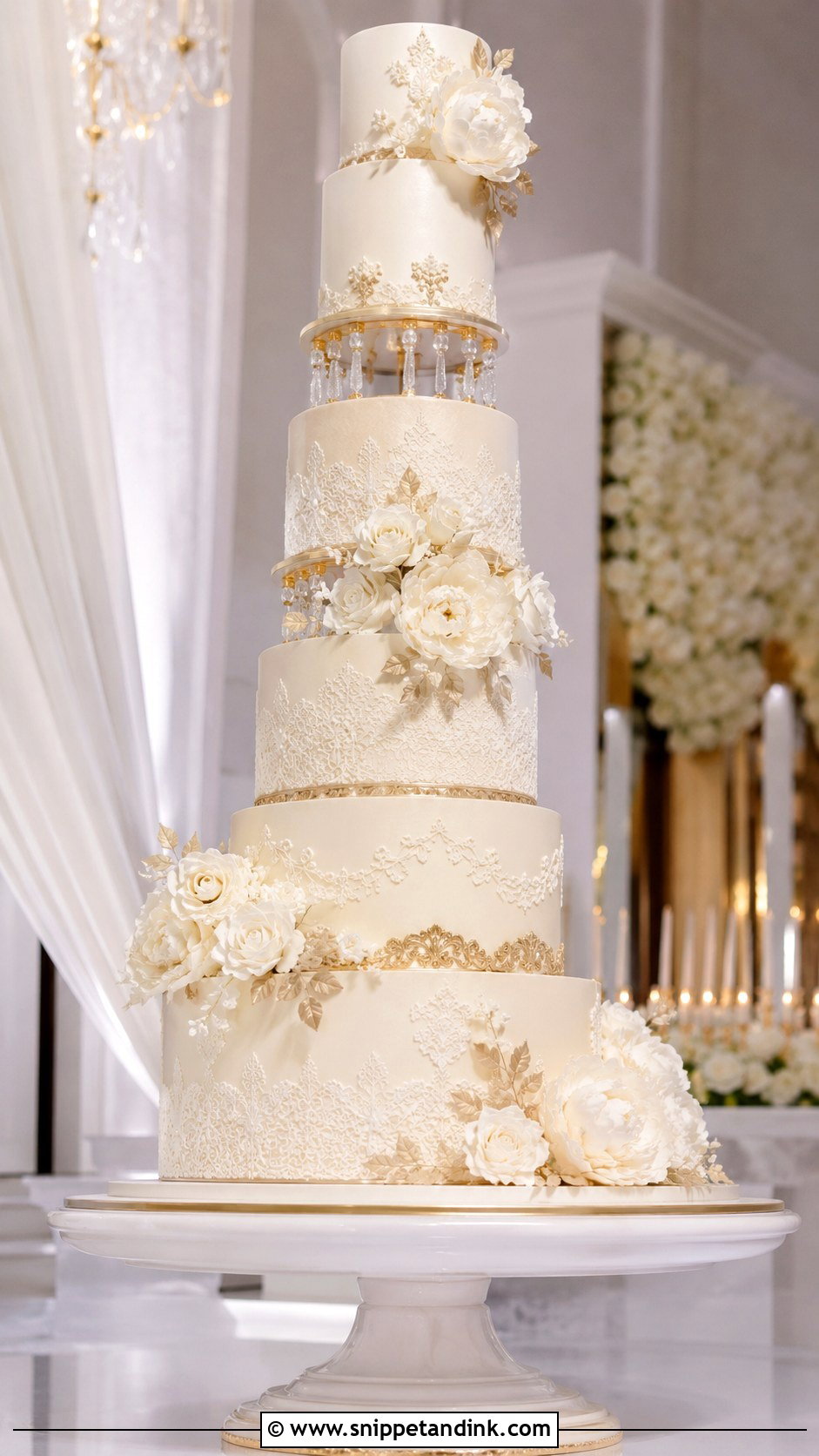
Built for a very large reception, this plan serves around 230 to 280, and the three-inch spacing makes it tall and architectural. Each tier has room for detailed work, which matters at formal venues and cultural weddings where the cake is a central dessert. The 18 inch base is wide and heavy, so I plan the support system before I plan a single decoration. Smooth fondant, sugar flowers, lace and fine piping all scale well to this size.
17. 8 Inch 10 Inch 12 Inch 14 Inch 16 Inch Wedding Cake
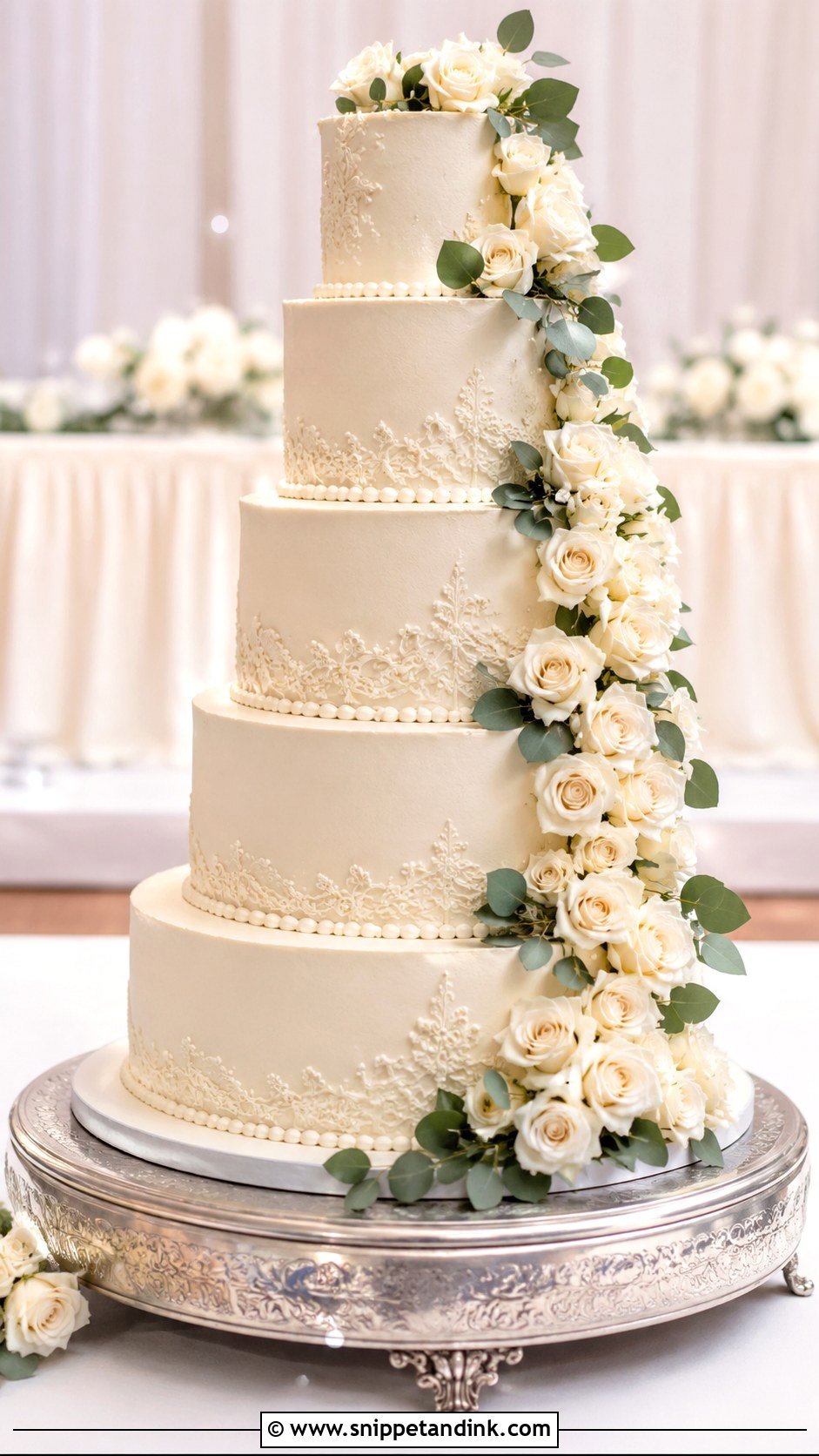
Five tiers starting at 8 inches give the cake a broad top and a generous shape all the way down. Plan on around 240 to 280, depending on the serving chart used. In a big reception room a 6 inch top can look like an afterthought in wide shots, and this layout avoids that problem. Smooth white fondant with piped lace suits it, and so does a modern buttercream finish. A base this wide usually needs a larger table than the venue’s standard cake round.
18. 6 Inch 8 Inch 10 Inch 12 Inch 14 Inch 16 Inch Wedding Cake
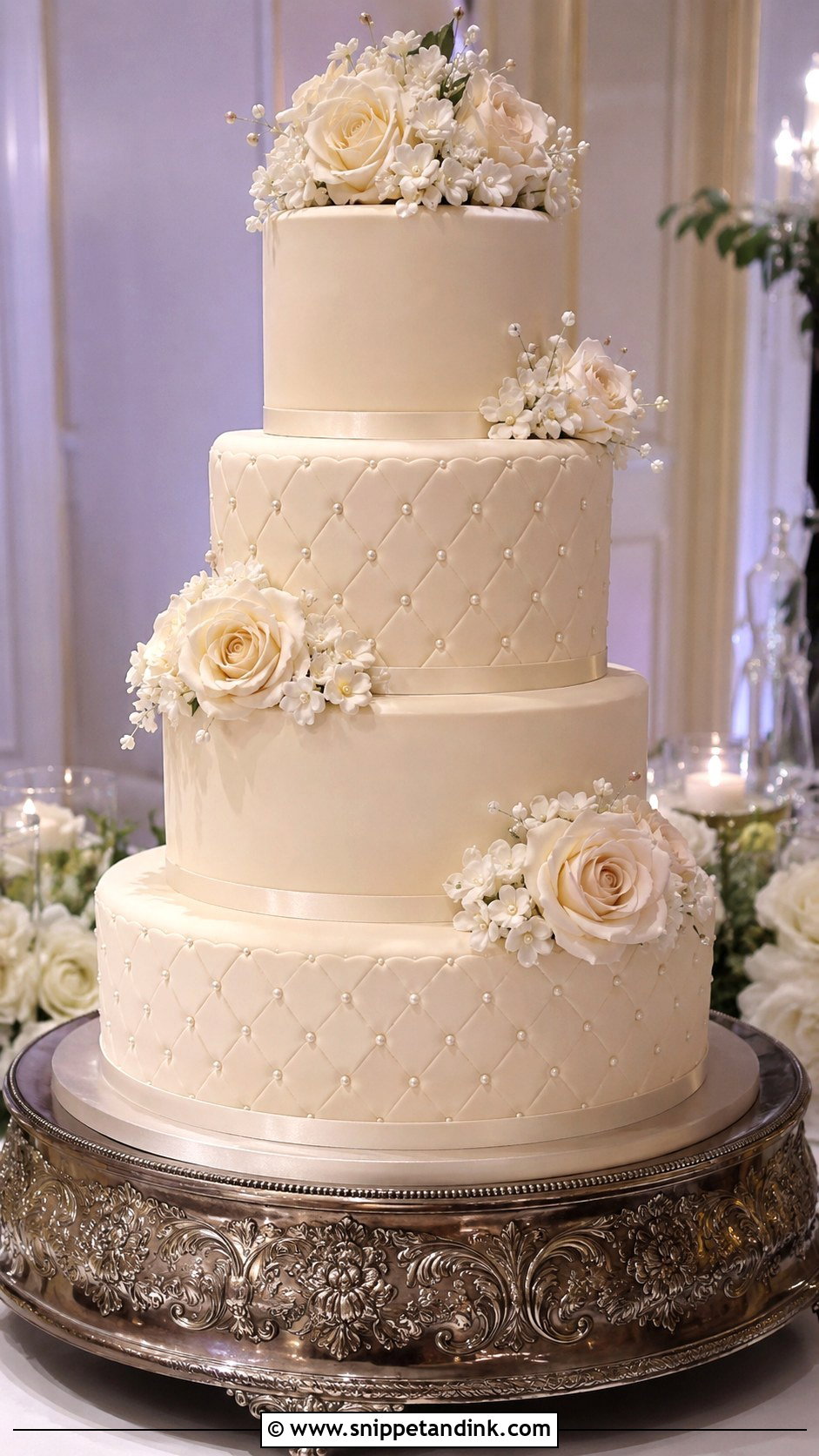
Six tiers is a tower, and it feeds roughly 290 to 330 guests. The even steps keep it balanced, which is why it photographs so well from the back of a room. The finish can lean classic or minimal; the shape does most of the talking. My firm rule with a cake this tall is that it gets assembled on its final table and is never moved once stacked. Budget setup time at the venue for whoever is doing it.
19. 6 Inch 10 Inch 14 Inch 18 Inch Wedding Cake
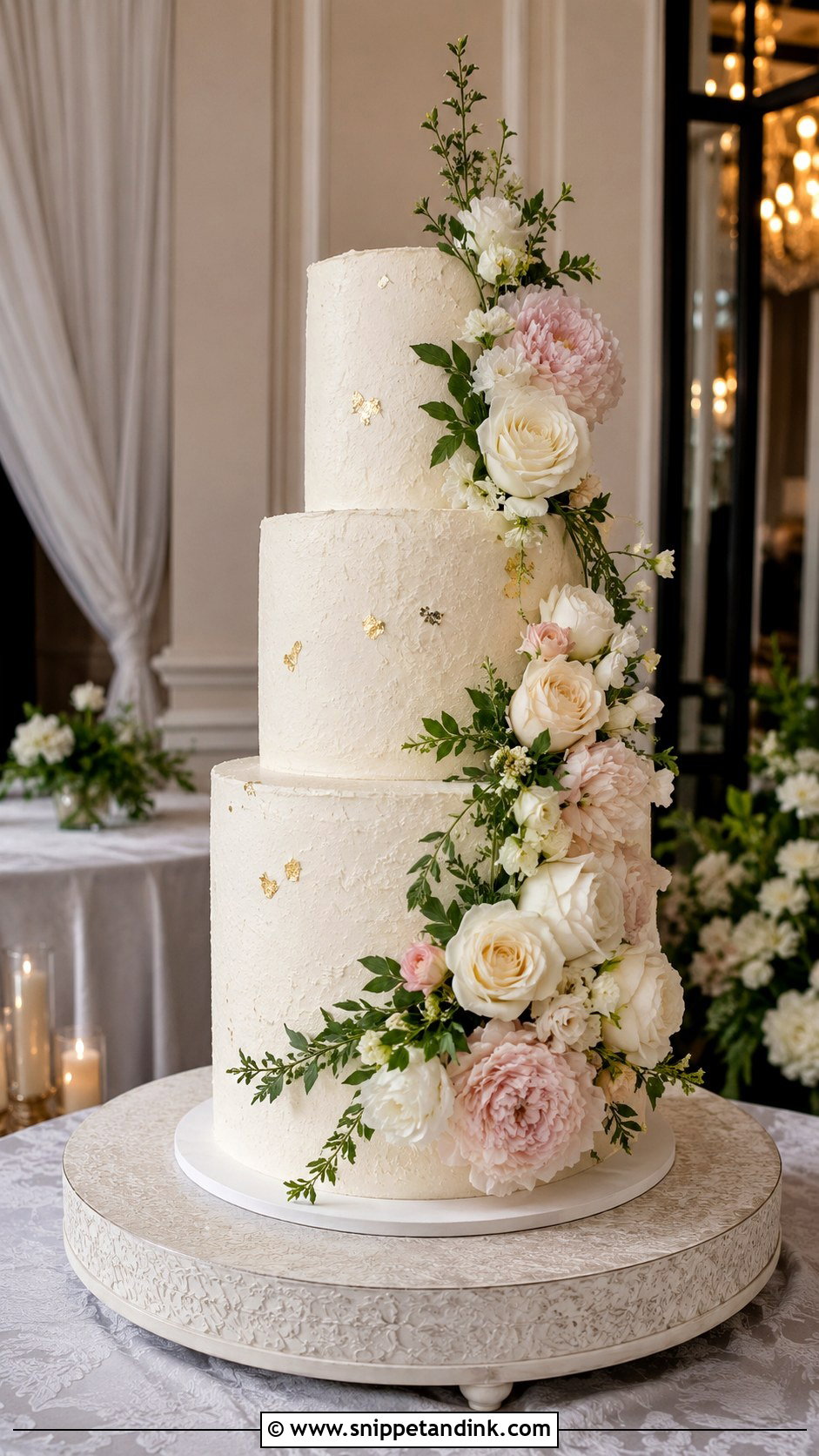
Leaving four inches between each tier opens deep ledges, and those ledges are what make this layout so good for flowers. It serves about 220 to 270, depending on slices and tier height. A cascading arrangement can rest on each shelf naturally instead of being pinned to the sides. Because it’s wide rather than tall, it reads as artistic without towering over the room, and the 18 inch base keeps it planted. I’d skip it only if your cake table is narrow, since the base and its board take up a lot of surface.

20. 8 Inch 12 Inch 16 Inch 20 Inch Wedding Cake
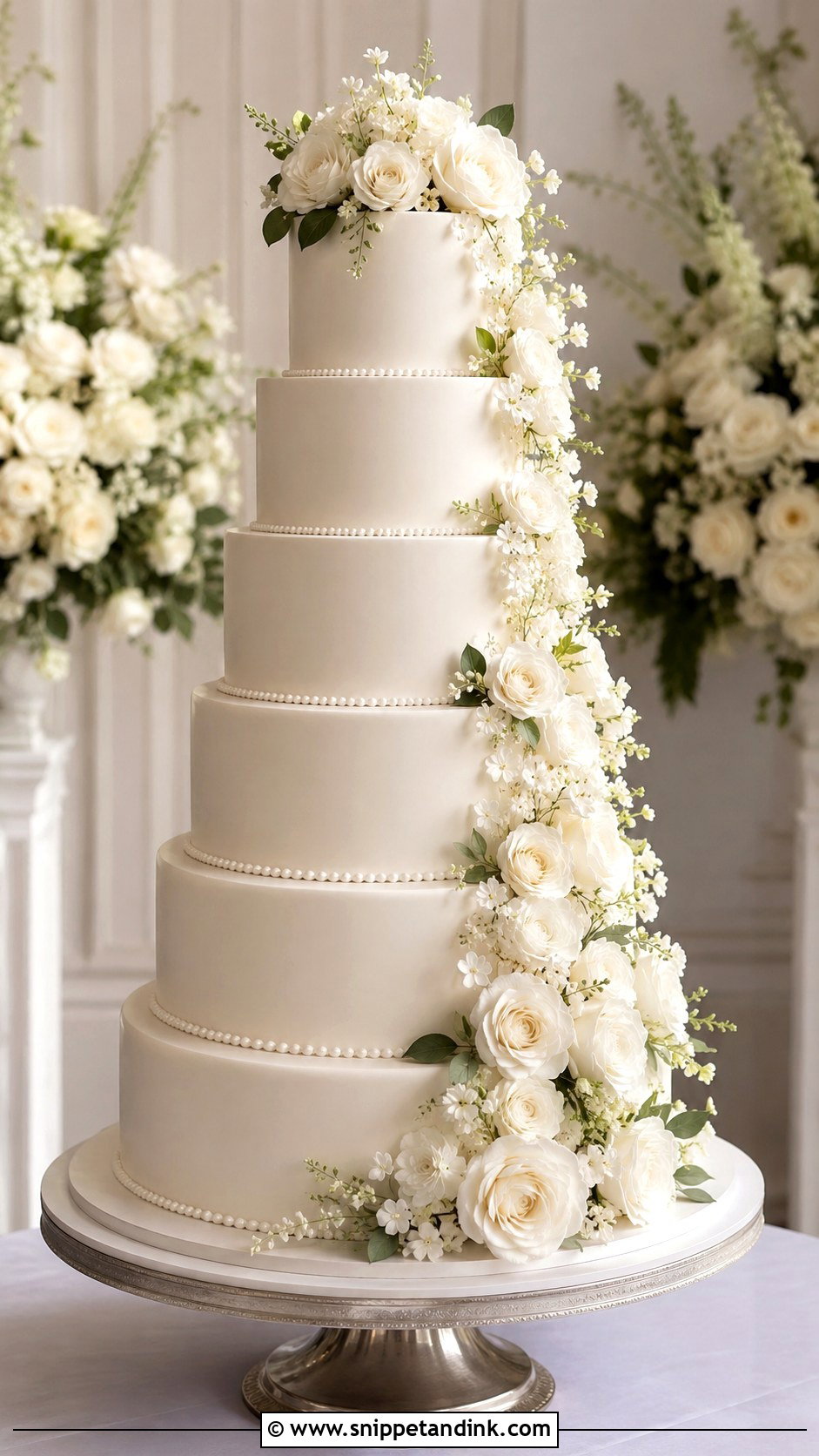
A 20 inch bottom tier puts this cake in a different category. It serves around 280 to 350, and it needs a strong stand, careful delivery and an experienced setup team. A tier that wide won’t fit in many standard ovens or every delivery van, so confirm your baker can actually bake and carry it before you fall for the photo. It belongs in large ballrooms where the cake is a focal point. Keep the decoration deliberate so the scale doesn’t feel crowded: smooth fondant, a few oversized sugar flowers and soft ivory tones.
Dowels, Doorways and the Drive to the Venue
A cake with four or more tiers is an engineering job before it’s a decorating one. Each tier above the base sits on its own thin board, held up by dowels or wide plastic supports cut level to the tier’s height. Without them the top tiers would slowly sink into the soft cake below. On tall cakes I add a central dowel through every board so the stack can’t slide if the table gets knocked.
Stacked in the kitchen or at the venue
Two and three tiers can usually travel stacked if the van has a flat floor and someone drives gently. Beyond that, I move tiers in separate boxes and stack them on the final table. That means asking the venue three things early: how wide the narrowest door is on the route to the cake table, whether there’s a lift or stairs, and how long the kitchen will give me for setup.
Heat, cold and the finish you picked
Buttercream softens in a warm marquee or a sunny window, and a tall cake shows it first at the base, where the weight is greatest. Fondant handles warmth better but sweats when a chilled cake meets a humid room, leaving beads of water on the surface for a while. For summer weddings I ask for the cake table to sit away from windows, heaters and the dance floor lights, and for the room to be cool when the cake goes in.
Getting Height or Extra Servings Without Baking More Tiers
The size you love and the size you need don’t always match. Two quiet tricks solve most of those gaps, and I suggest them often.
A dummy tier is a foam form decorated exactly like the real cake. It adds height for photographs without adding servings you’ll throw away, and it often costs less than a baked tier, though the decorating time is the same. I’d keep dummies to the bottom or middle of the stack and say so on the order, so the caterer knows which tier not to cut.
Going the other way, a kitchen cake is a plain sheet cake in the same flavour, kept out of sight and sliced alongside the display cake. It lets a modest three-tier cake feed a much larger room. Guests can’t tell which portion came from where.
If you’re keeping the top tier for your first anniversary, ask for it boxed separately, then wrap it tightly in several layers of plastic and foil before it goes in the freezer. Fruit and dense chocolate cakes survive a year far better than delicate sponges with fresh cream fillings, so I’d consider that when you pick the top tier’s flavour.
Start With the Head Count and Let the Shape Follow
No single tier plan fits every reception, because guest count, dessert plan, venue and budget all pull in different directions. Start with the number of people who will actually eat cake, then ask your baker how they calculate servings, since wedding, dessert and coffee portions produce very different totals. Decide early about keeping the top tier, adding a kitchen cake or serving other desserts. Once those numbers are settled, I find the right shape usually picks itself.
You'll Like These Ideas:







Leave a Reply