
Vintage bridal looks go wrong when they try to recreate a whole decade at once. The versions I like best take one idea from the past, a tea-length hem, a bias cut, a row of covered buttons, and let everything else stay quiet. Below are simple dresses drawing on the 1920s through the 1990s: soft lace, clean satin, modest sleeves, pearl touches. They suit courthouses, gardens, small venues, backyards and old ballrooms. A plain veil, a low heel and one pearl earring will usually finish the outfit better than a trunk of period accessories.
Buying a Genuinely Old Dress: What I Inspect First
Vintage-inspired dresses are new gowns cut with older shapes. A true vintage dress has been worn, stored and sometimes repaired, and it needs a different kind of look before you buy. I go through the same checks every time, ideally in daylight near a window.
- Ignore the size label. Older sizing runs much smaller than modern labels, so measure bust, waist and hips and compare with the actual garment.
- Look under the arms and around the neckline for yellow or brown marks. Old perspiration and spilled drinks oxidize over time and some never fully lift.
- Gently pull the fabric at the seams. Old silk can split in fine lines when stretched, and that kind of damage cannot be repaired.
- Check the zip or buttons and the hem for previous repairs and missing pieces.
- Smell it. Mustiness usually cleans out, but a strong damp smell can mean mildew in the lining.
Ask the seller about returns, and if you’re in love with something fragile, get a specialist cleaner or seamstress to look at it before committing to alterations.
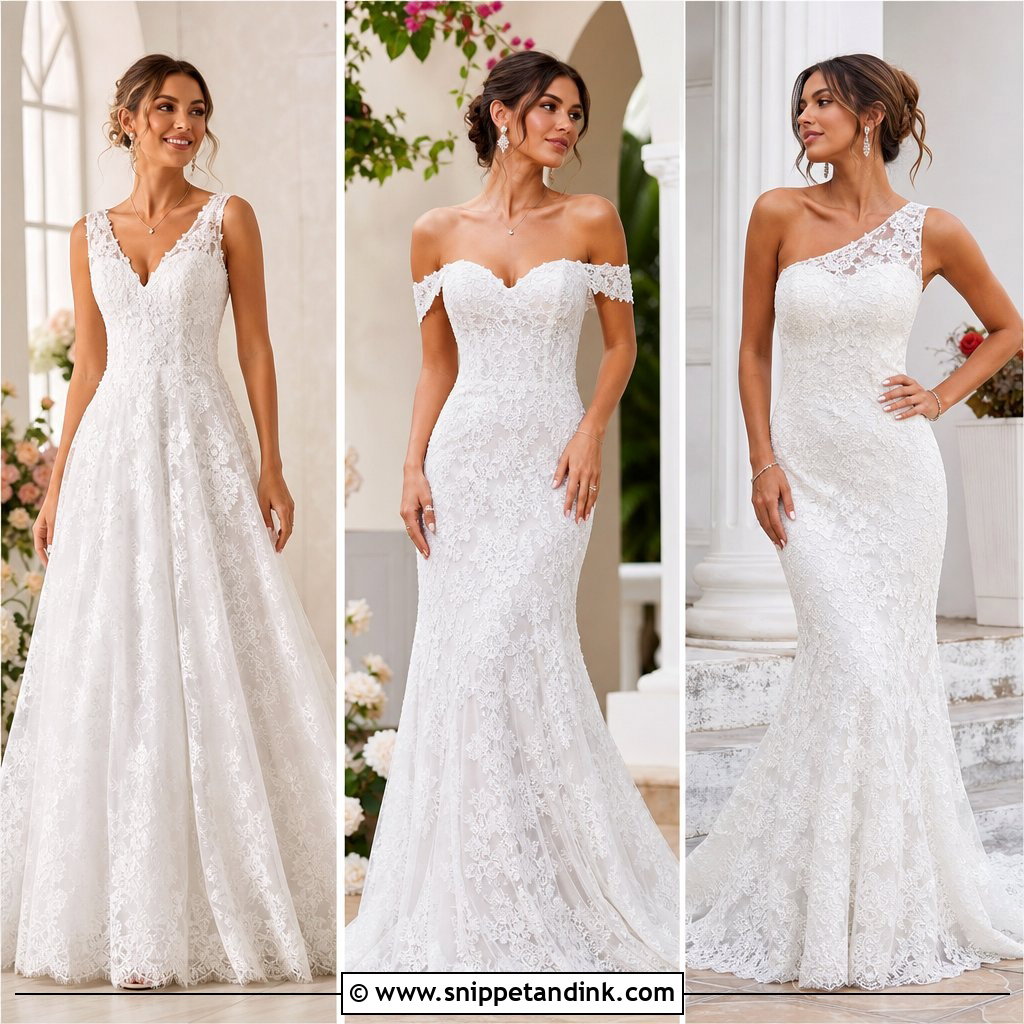
1. Simple Lace Wedding Dress
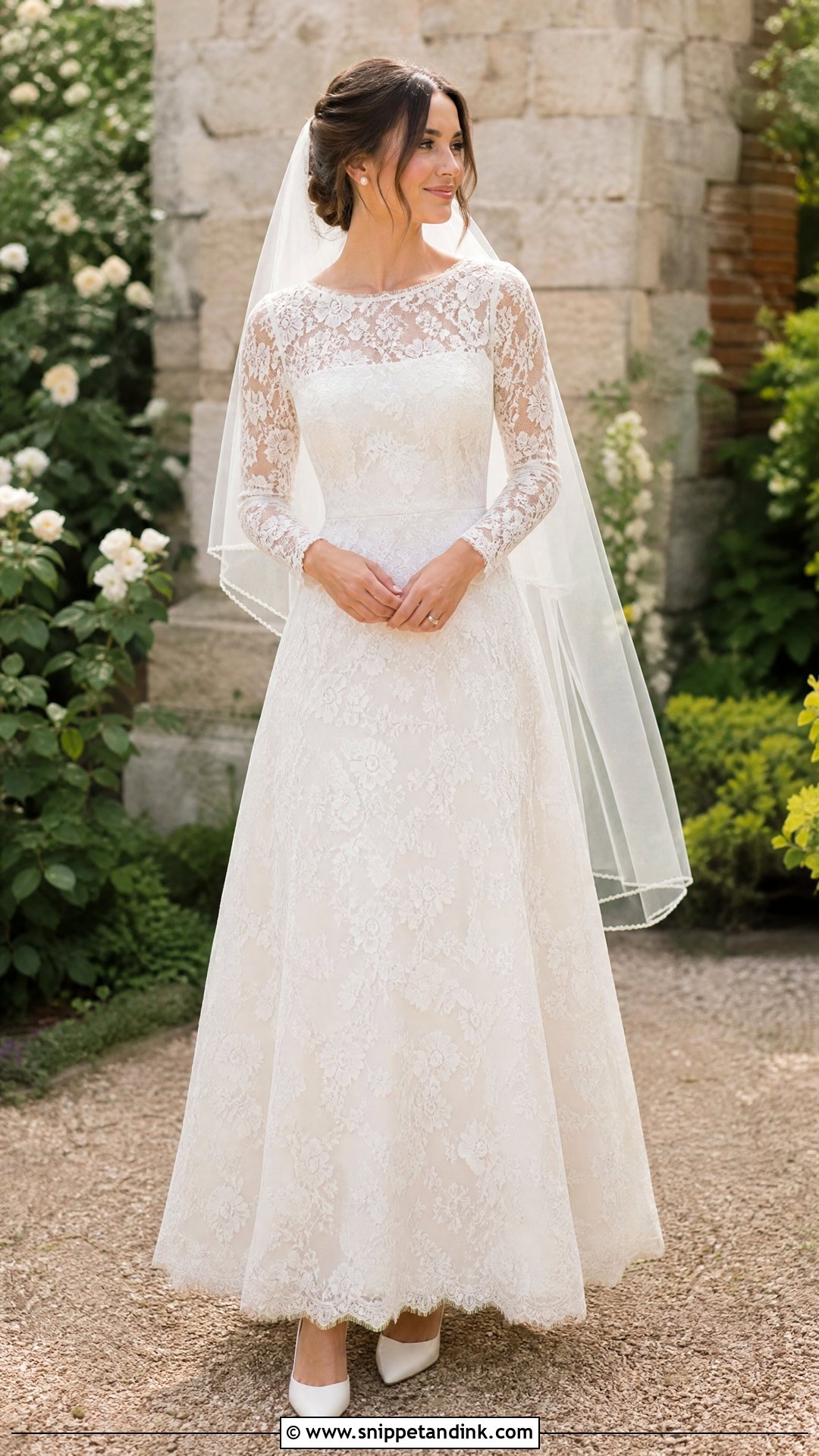
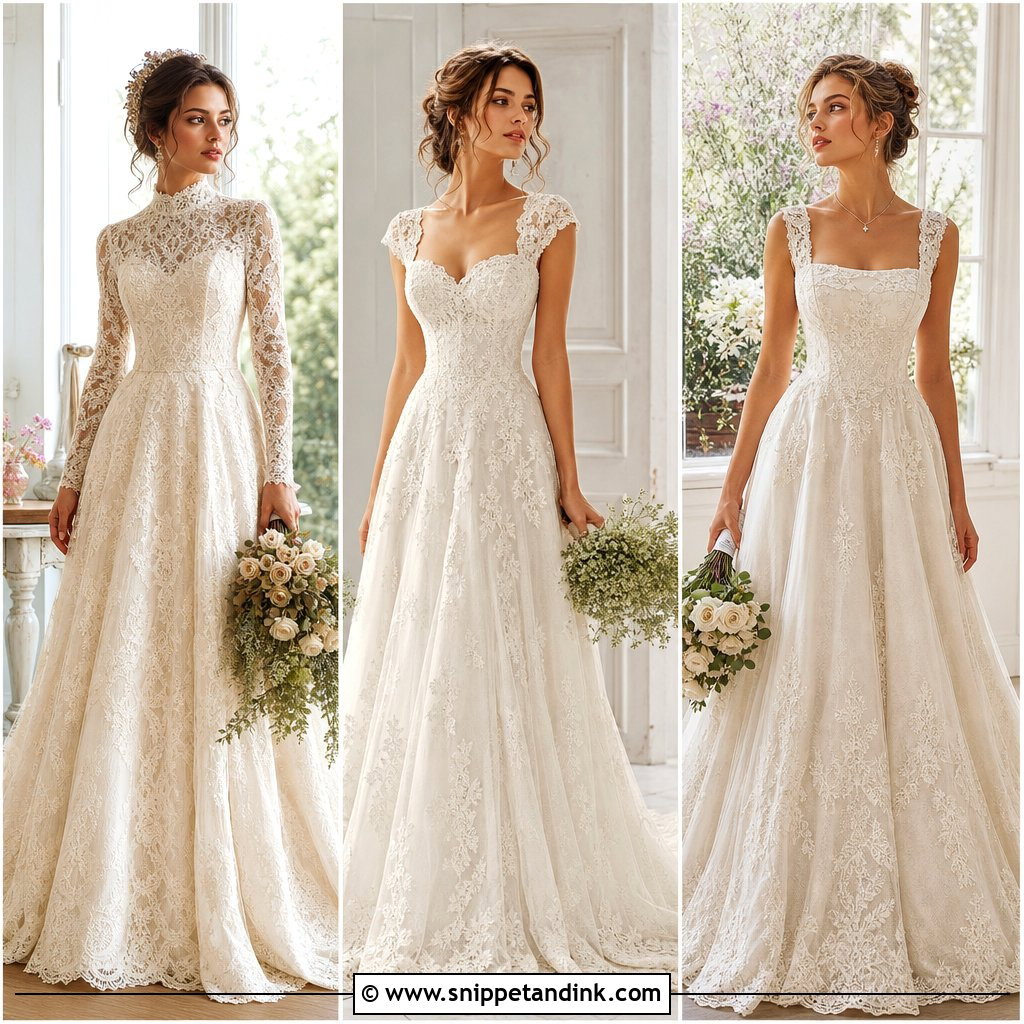
Lace is the easiest route into a vintage look, and also the easiest to overdo. I’d choose one floral lace over a clean lining, in a relaxed A-line or sheath, and stop there. Long lace sleeves feel old-world; short sleeves or a bateau neckline are lighter for spring. Check the lining color against your skin at the arms, because a stark white lining under ivory lace makes the sleeves look grey. Pearl studs, a fingertip veil, ivory pumps and a small bouquet are enough for a garden or a historic house.
2. Satin Slip Wedding Dress
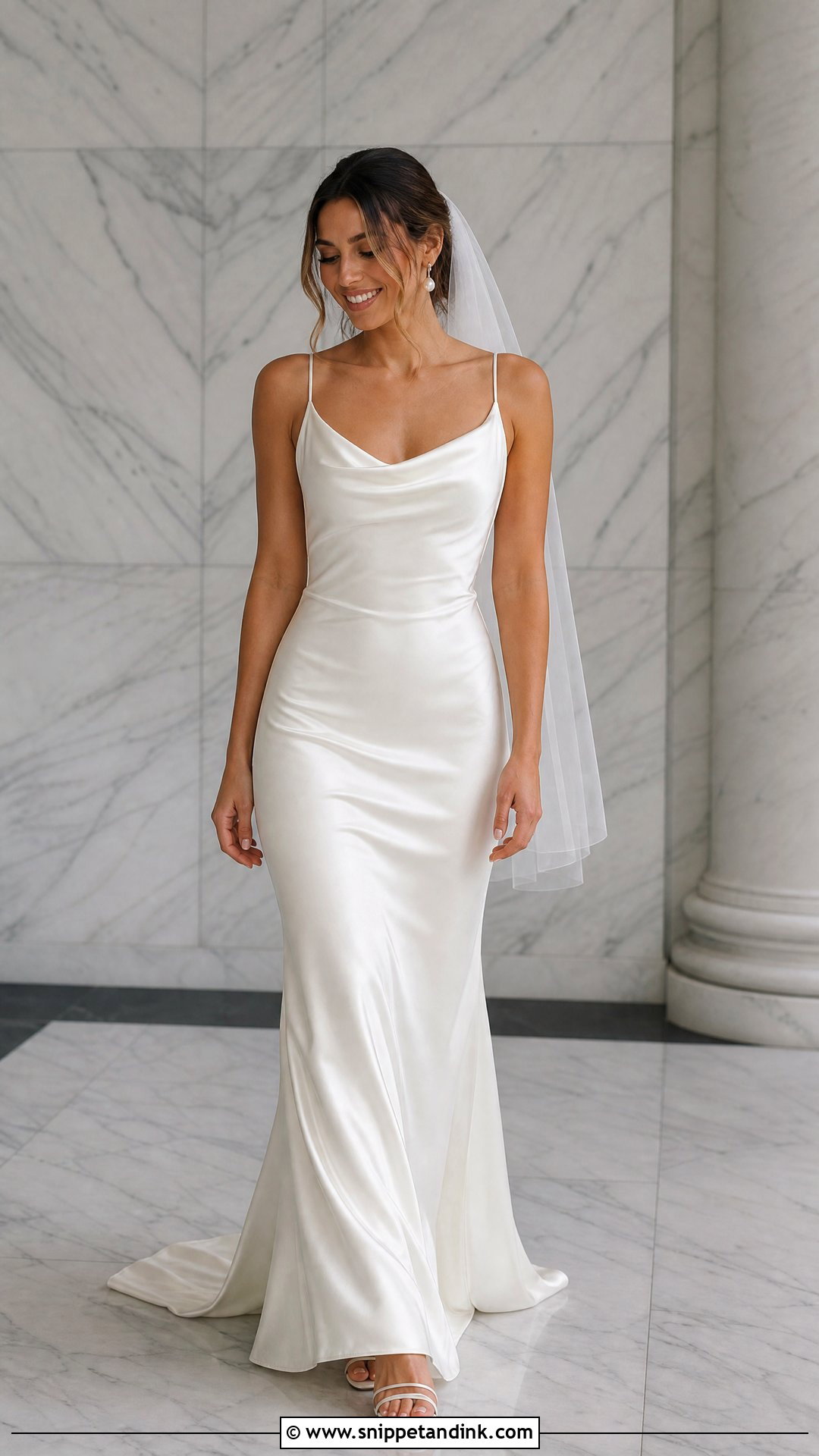
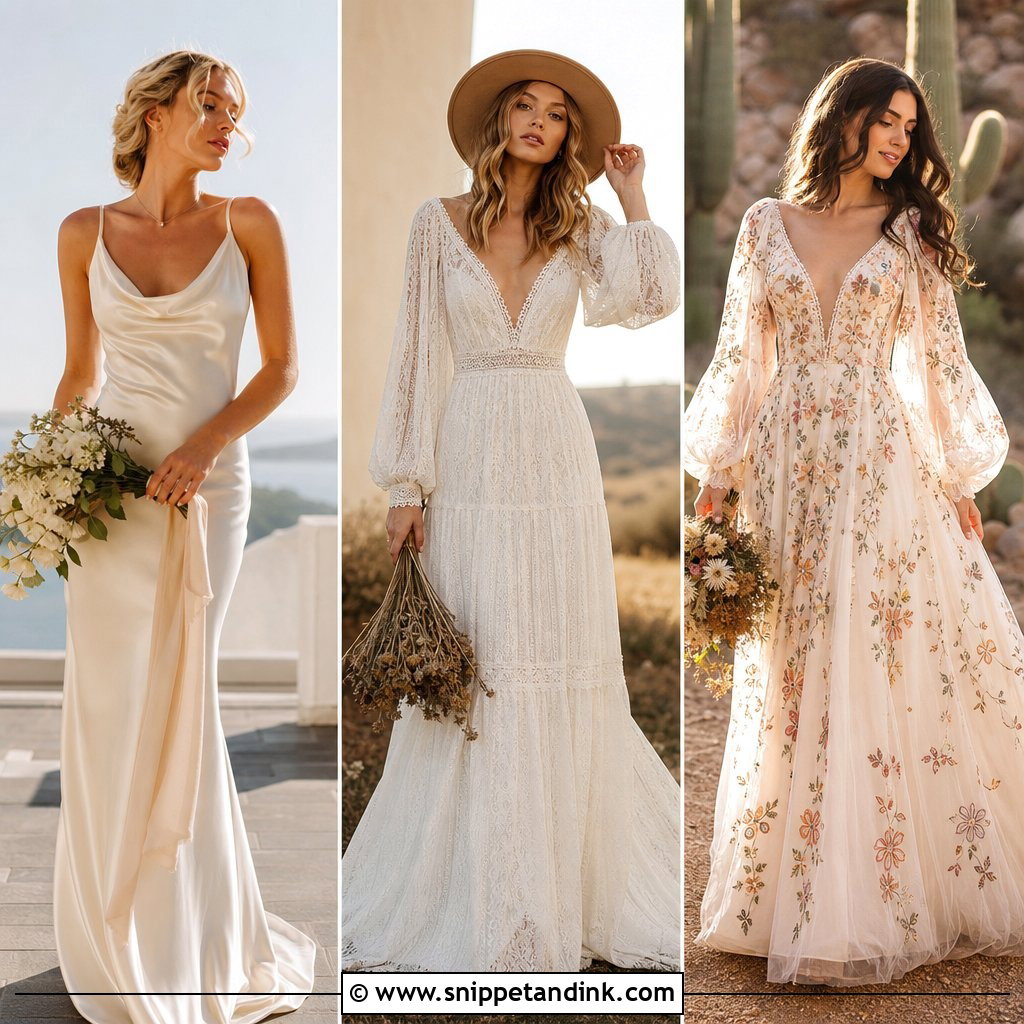
The satin slip is 1990s minimalism with a vintage edge, and it’s honest about fit in a way few dresses are. A bias cut skims the body; if it clings anywhere, size up and take it in rather than squeezing into the smaller one. Cowl necklines and thin straps soften it, a low back adds interest. Strappy ivory sandals, pearl drops and a sheer veil are all it needs. I’d steer you away from it if you want firm support, because there’s little structure inside. City venues and warm evenings suit it best.
3. Tea Length Wedding Dress
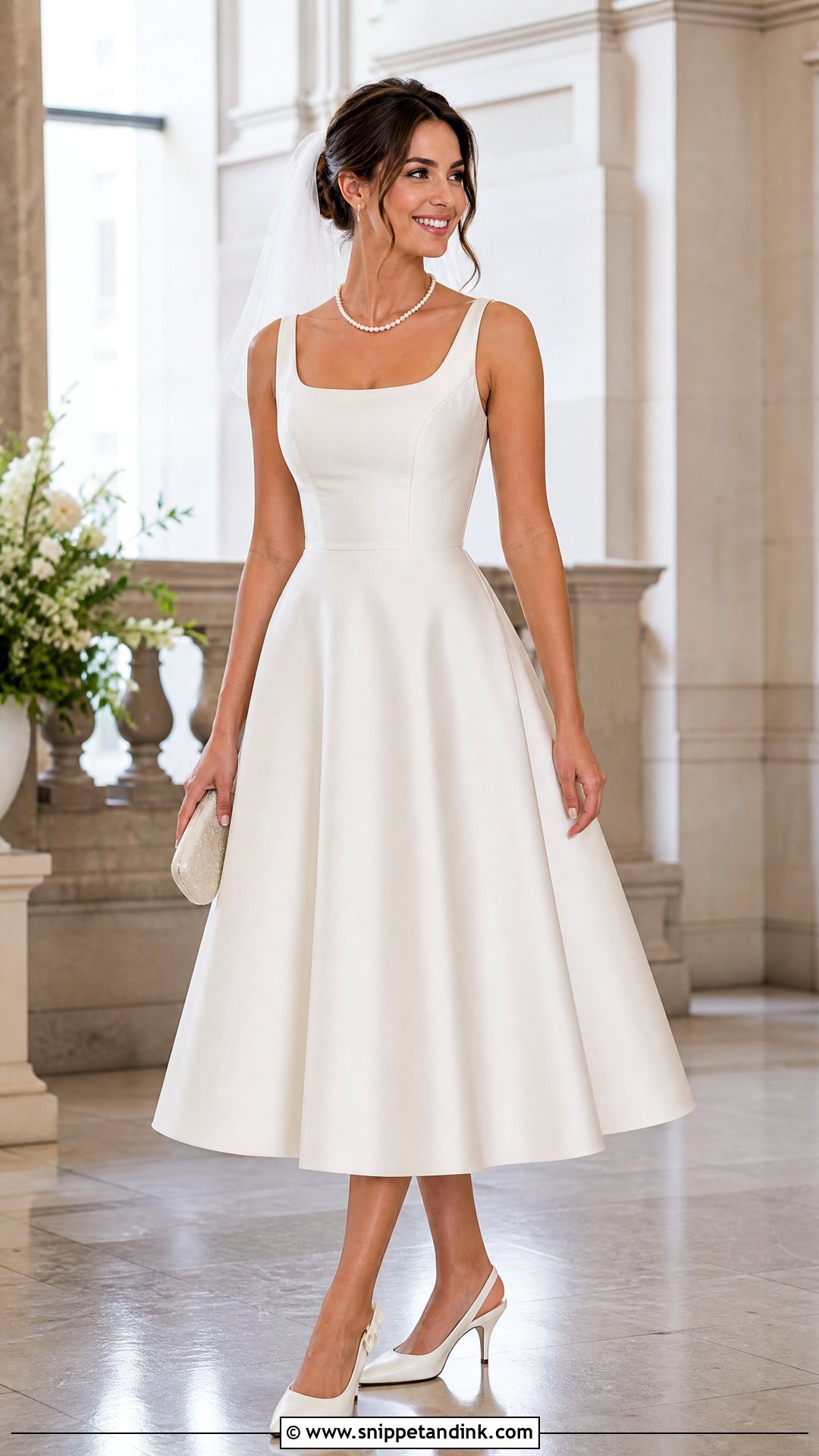
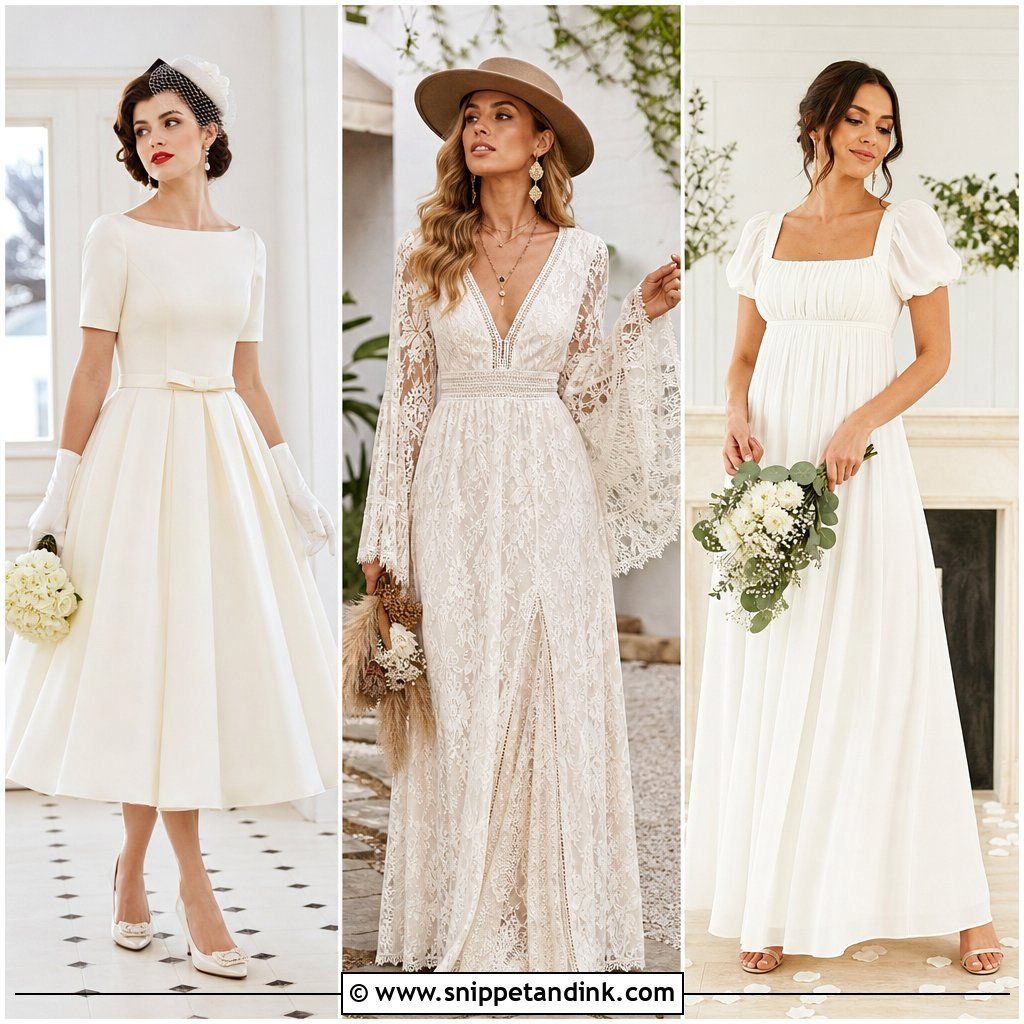
Tea length is the clearest 1950s signal in bridal, with the hem landing between knee and ankle. I put the most fitting effort into exactly where it lands, since the narrowest part of the calf is far more flattering than the widest. A fitted bodice over a soft A-line skirt moves well. Satin and organza feel more formal; tulle and lace feel lighter. Pointed pumps, slingbacks or low block heels suit it, with a short veil, a strand of pearls or a structured bag. Courthouses and garden parties are its natural home.
4. Long Sleeve Vintage Wedding Dress
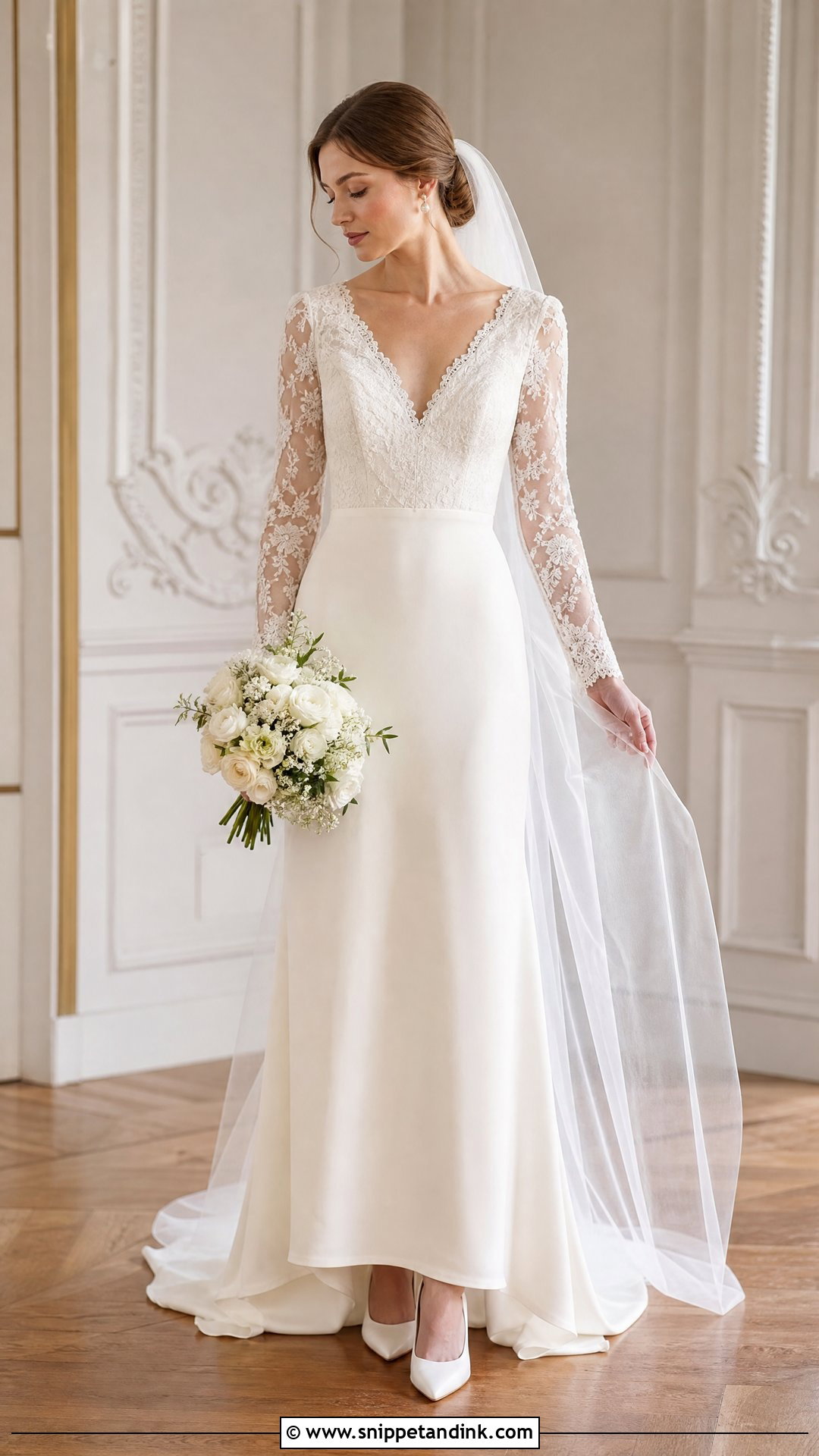
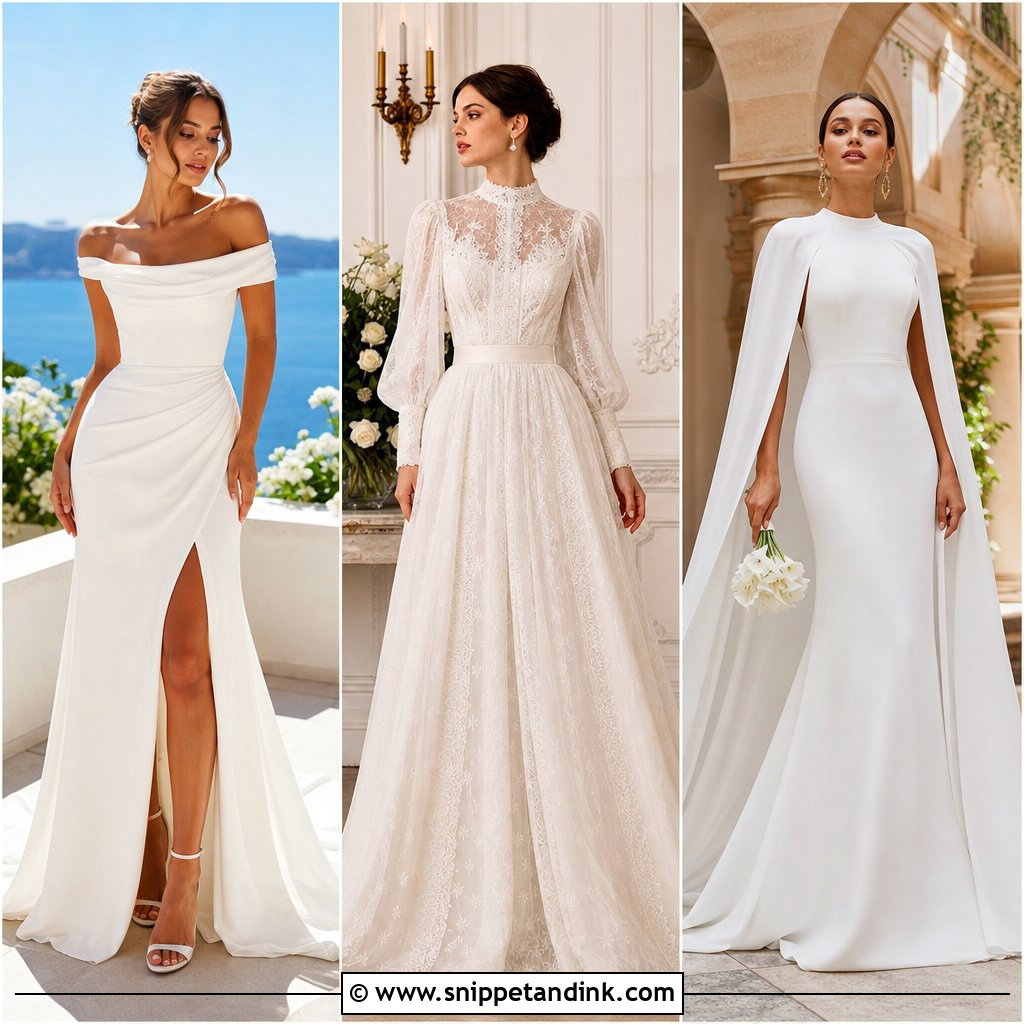
Sleeves add weight visually, so I balance them with a plain skirt. Sheer lace sleeves are the classic version; crepe, satin or chiffon look cleaner. A high neckline pushes the look toward Edwardian, a V or square neck opens it up. Fitted lace sleeves need room for your arms to bend: ask to raise a glass and hug someone at the fitting, because tight lace tears at the elbow. Hair in a low bun or soft waves, pearl earrings or a fine comb. Cooler months and formal rooms suit it.
5. High Neck Wedding Dress
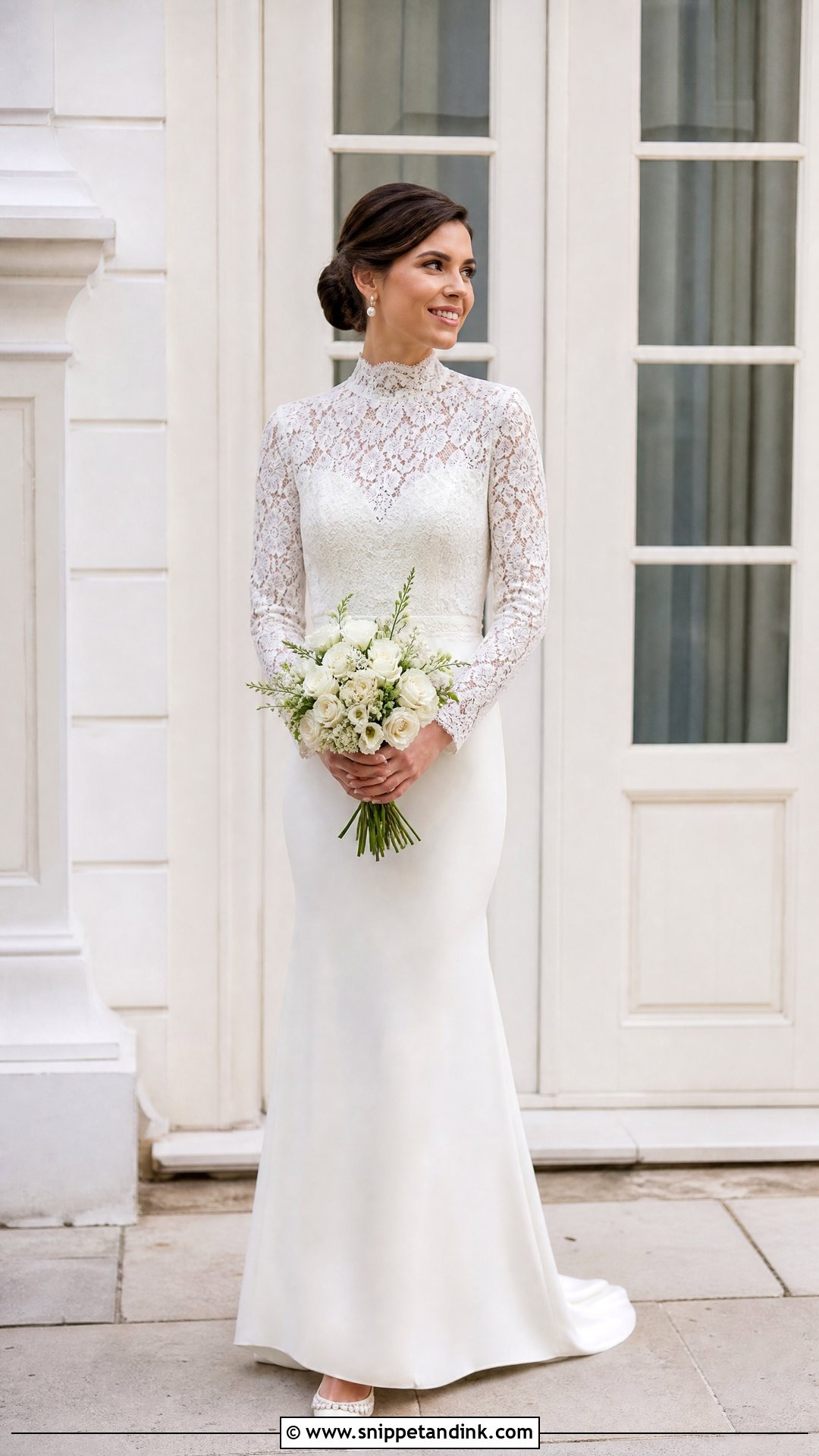
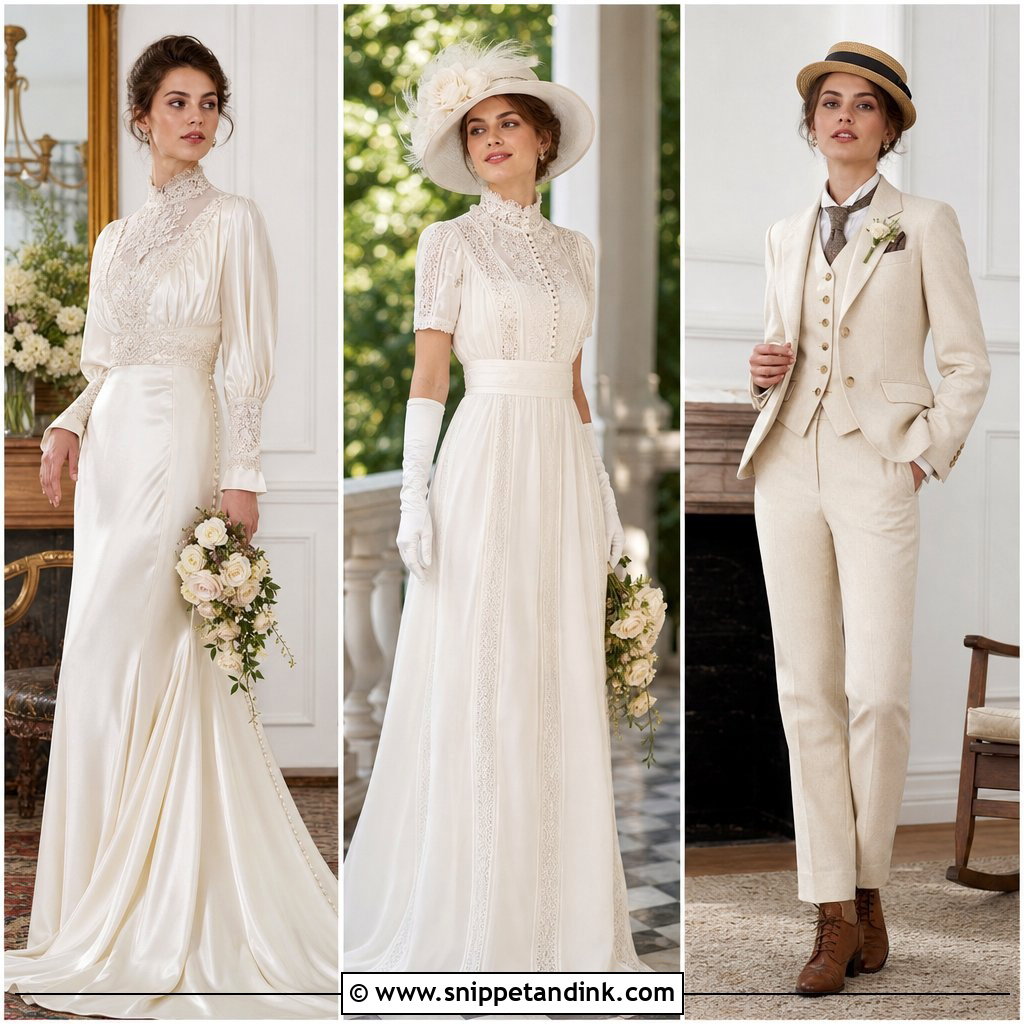
A high neck wedding dress can read Victorian in lace, 1960s in clean crepe, or 1970s with soft sleeves and fluid fabric. The neckline should frame your face without pressing on your throat. I always ask brides to turn their heads fully and look down, since a stiff collar can dig in during the vows. Illusion lace, mock necks and soft collars all work. No necklace; earrings, a veil or a single hair piece carry the jewelry. A slim skirt reads modern, an A-line more romantic.
6. Square Neck Wedding Dress
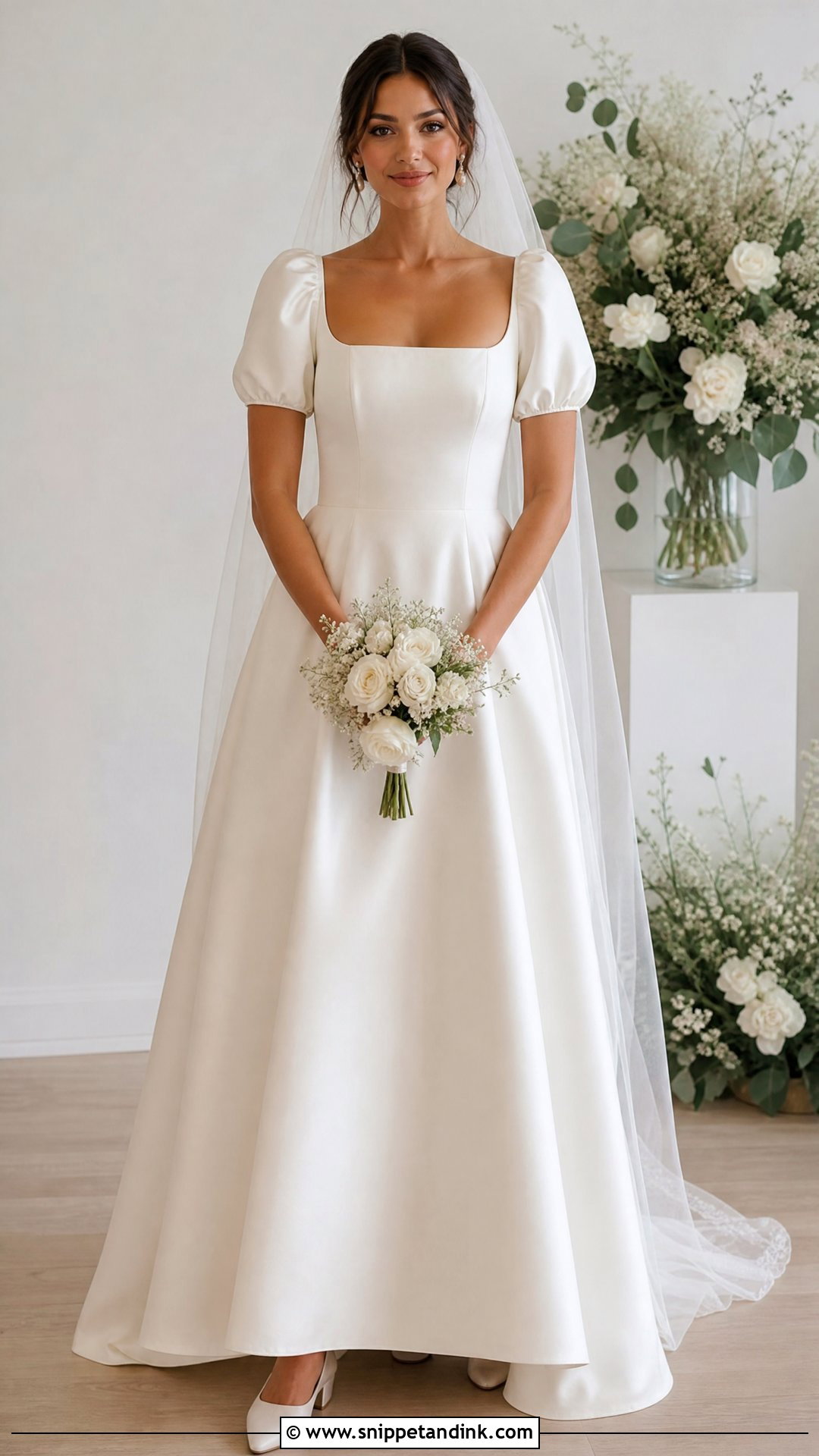
Square necklines frame the collarbone and quietly hint at history without a costume feel. They’re less expected than a sweetheart and suit columns and A-lines alike. In matte satin, crepe or lace with minimal seams, the look stays restrained. Short puff sleeves give it a romantic 1800s-inspired feel; thin straps push it toward the 1990s. I pin square necks closer to the neck at fittings so the straps don’t slide. A low veil, pearl earrings and classic pumps finish it.
7. Vintage A Line Wedding Dress
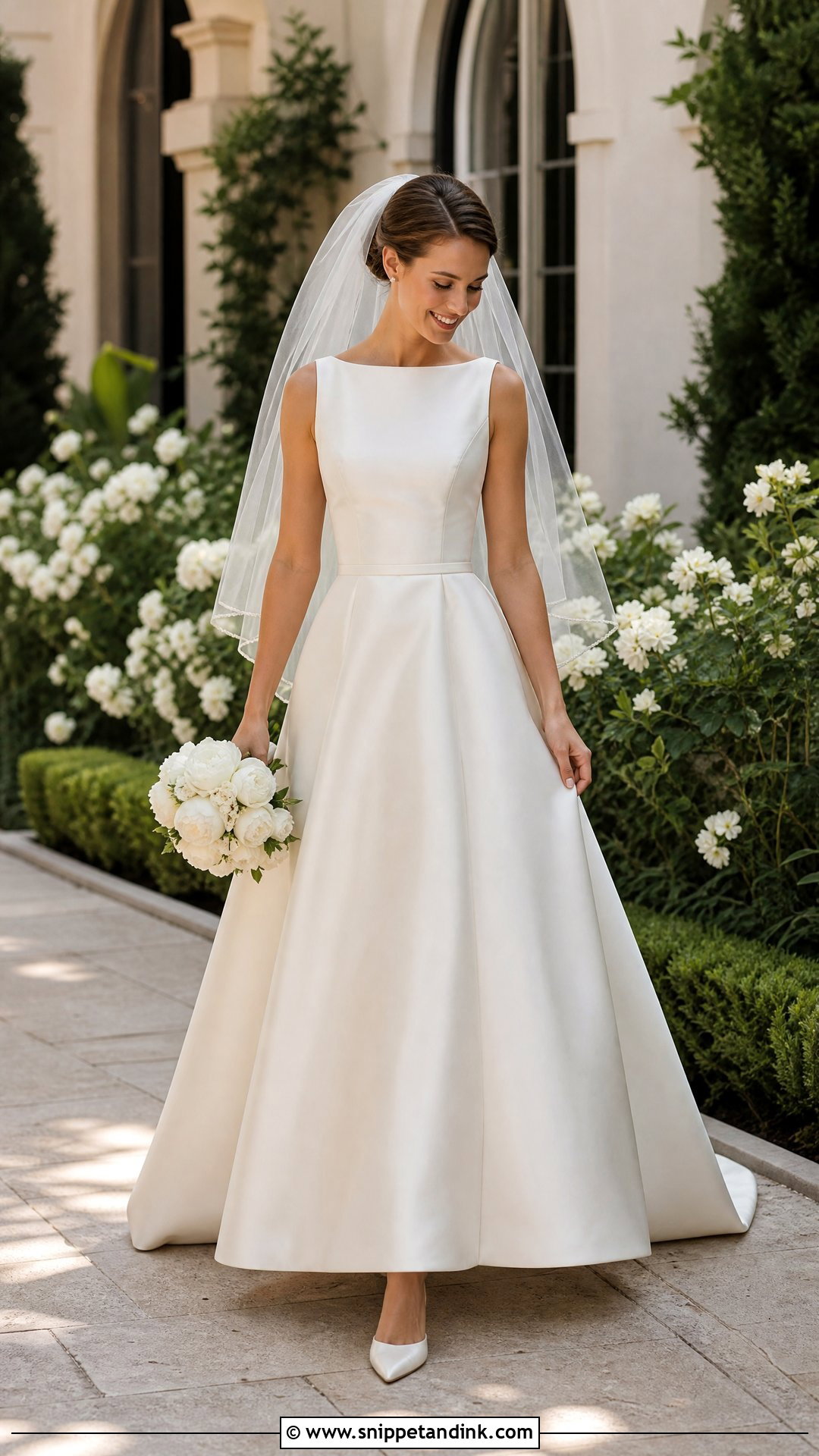
The vintage A-line is the dress I suggest when a bride isn’t sure what she wants yet. It defines the waist and floats away, which flatters a wide range of shapes. The trick to keeping it simple is one detail only: lace sleeves, covered buttons or a narrow waistband, never all three. Satin points to the 1950s; lace leans romantic. Low heels, a soft veil and a small bouquet complete it. It moves well for dancing and sits comfortably through a long dinner.
8. Vintage Column Wedding Dress
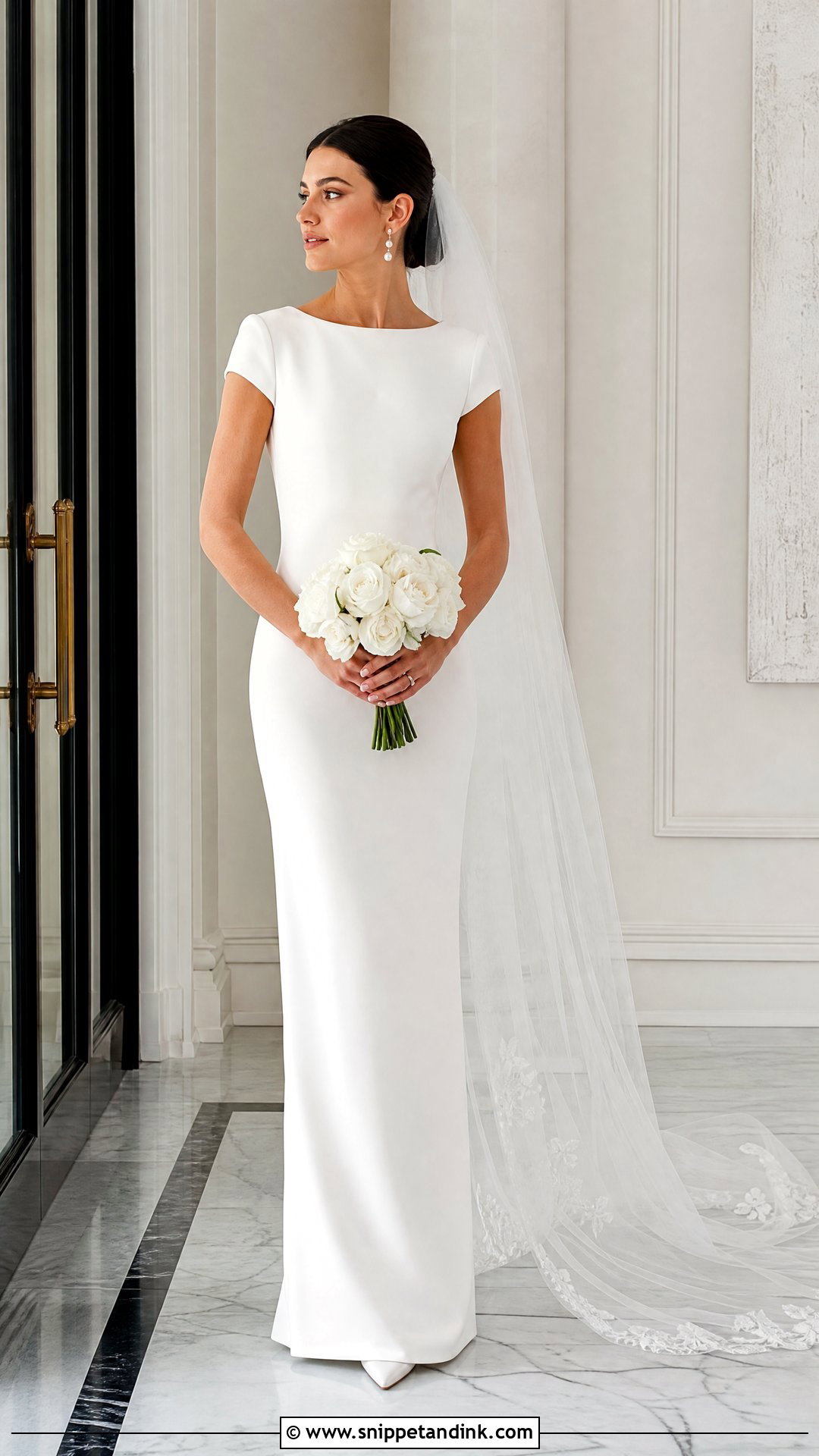
A column falls straight from shoulder to hem, and on a vintage dress that line usually comes with a bateau neck, cap sleeves or covered buttons down the back. Crepe, silk, satin or smoothly lined lace all work. Tailoring decides everything here. The dress should skim, not grip, and you need to be able to take a full stride. Pointed heels with a cathedral veil or pearl drops keep it refined. Galleries and city ceremonies suit the clean shape.
9. Vintage Empire Waist Wedding Dress
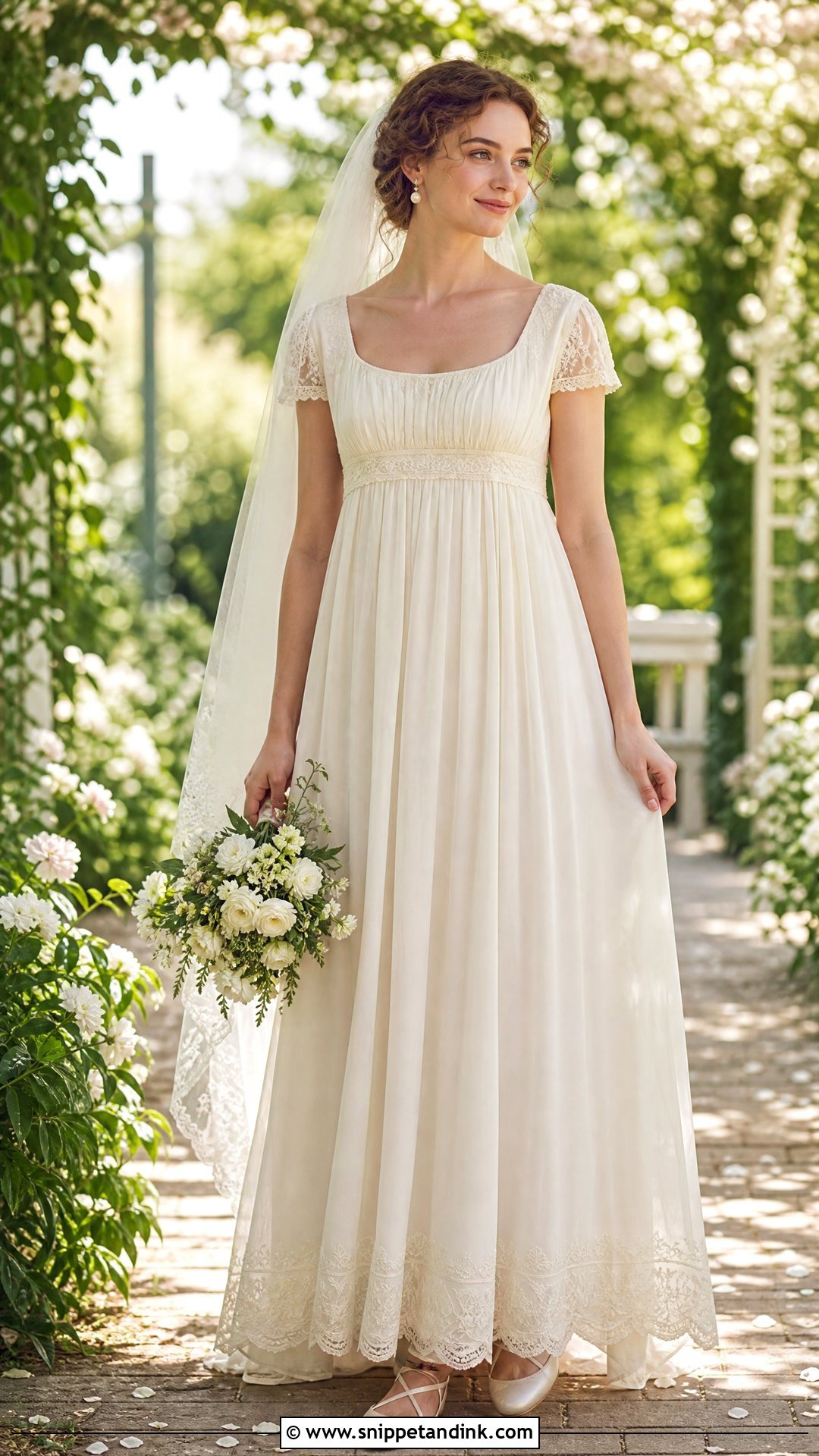
Empire waists sit just under the bust and fall loose from there, an outline borrowed from the early nineteenth century. Comfort is the draw: nothing presses at the natural waist. Chiffon, silk, lace and light crepe all drape well. I’d keep layers to a minimum, since a lot of fabric under a high waist can look like a nightgown. A delicate veil, soft curls and ballet flats or low heels finish it. It suits outdoor ceremonies, destination weddings and anyone who dislikes structure.
10. Vintage Basque Waist Wedding Dress
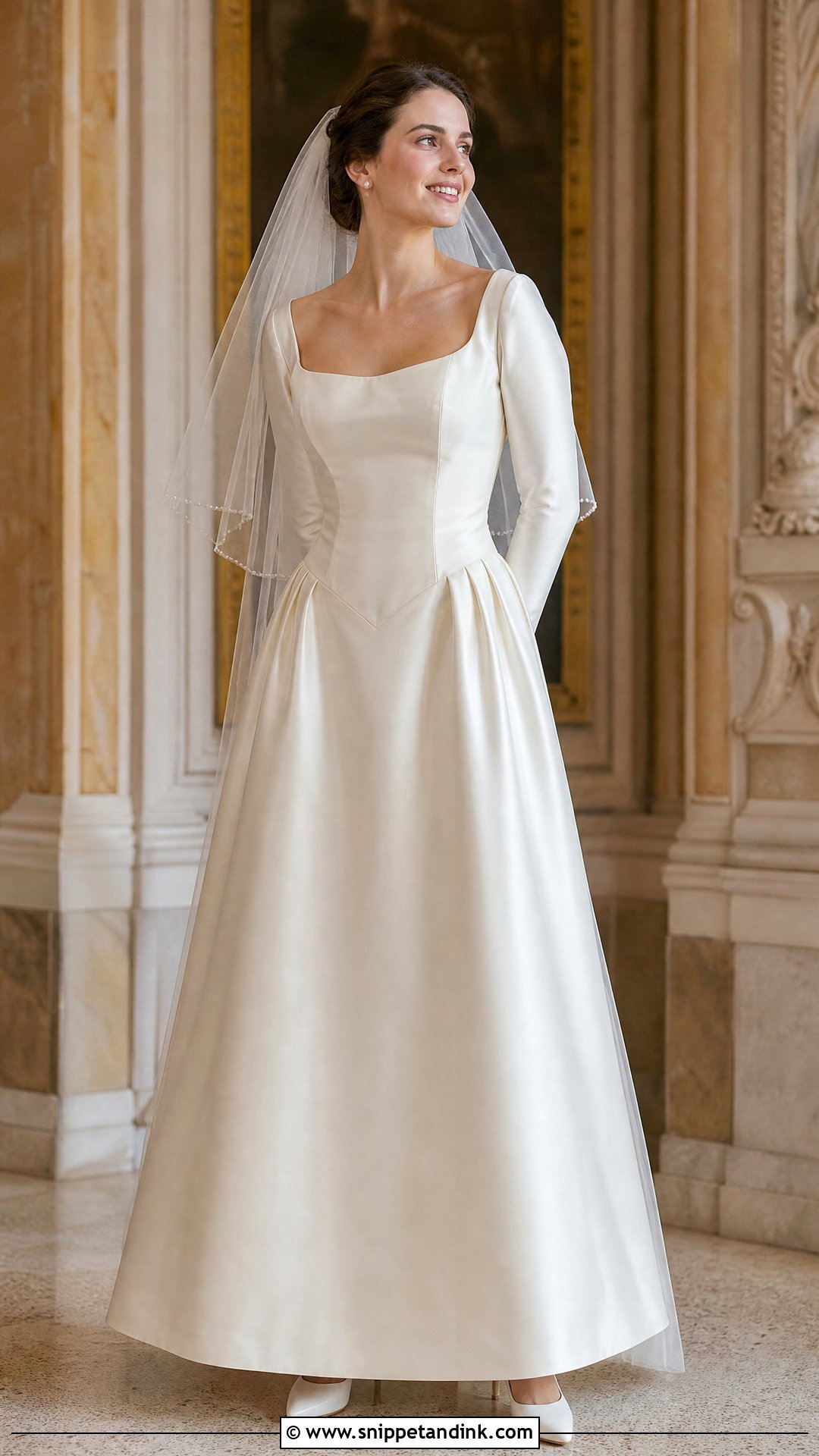
A basque waist dips to a point at the front of the bodice. It gives shape and a slightly old-world line without any trim. Satin, taffeta or crepe hold the point crisply, while lace softens it. If you’re short-waisted, I’d ask for the point to be raised a little so it doesn’t cut your legs short. Keep the neckline and accessories quiet: a simple veil, pearl studs and classic pumps. It gives a defined waist and a little drama without any trim at all.
11. Drop Waist Wedding Dress
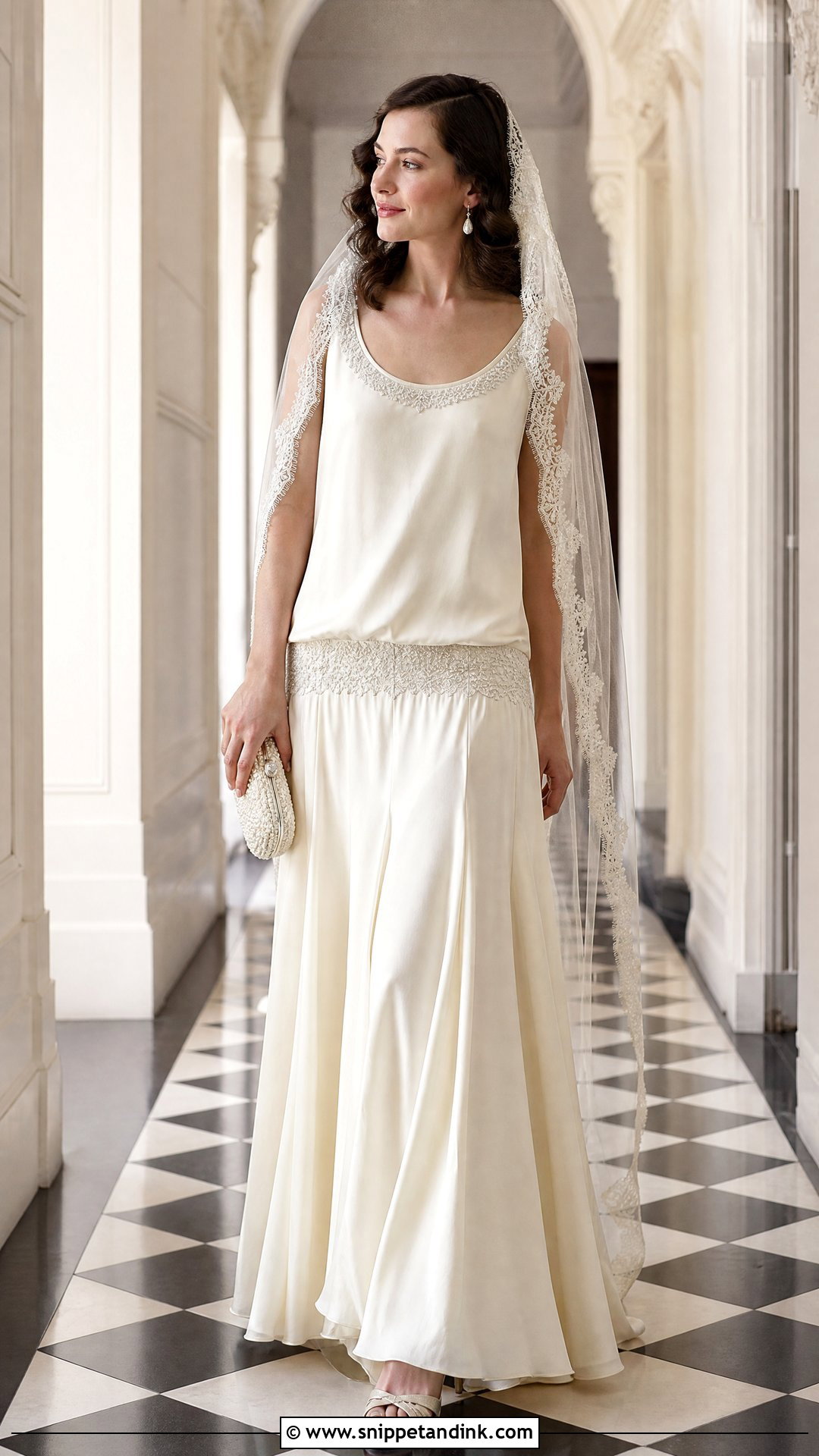
Drop waists come straight from the 1920s and 1930s, sitting low on the hip for a long torso and a relaxed shape. Fluid satin, silk or crepe keep it from going stiff. The challenge is that a low seam can make sitting awkward; I test it seated before deciding where it lands. A lace veil, beaded comb or small pearl clutch adds a period touch. Low heels or delicate sandals keep the proportions right. Pick this when a classic A-line feels too familiar.
12. Vintage Bias Cut Wedding Dress
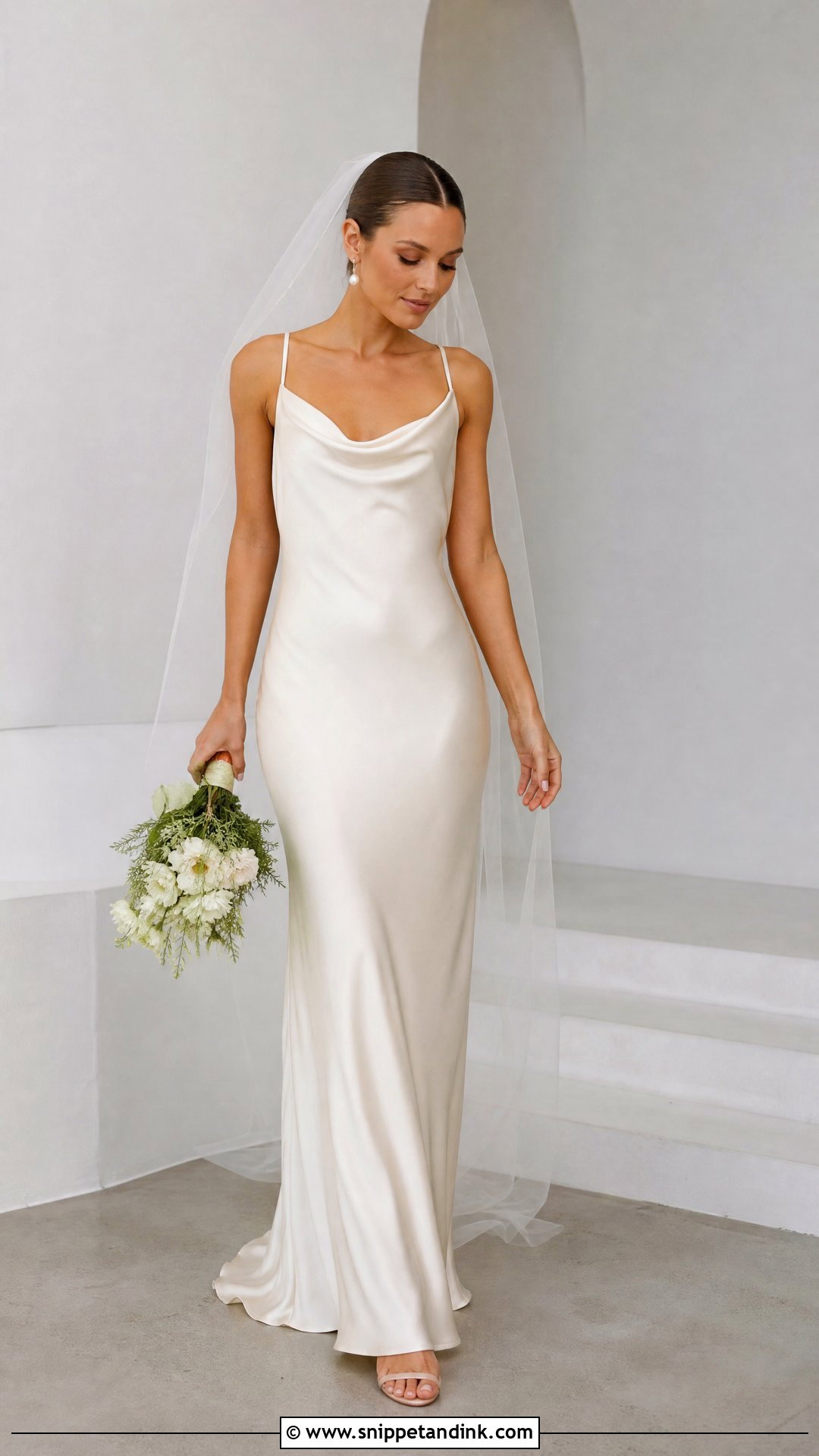
A vintage bias cut wedding dress moves because the fabric is cut diagonally across the grain, so it stretches and drapes around the body. That’s the 1930s look. It also shows every bump, seam and underwear line, so I sort out smooth, line-free underwear before the first fitting. Satin, silk and crepe glide where heavier fabrics would bulk. A cowl neck, thin straps or flutter sleeves add charm. Keep accessories sleek: a long veil, pearl earrings and simple sandals.
13. Vintage Puff Sleeve Wedding Dress
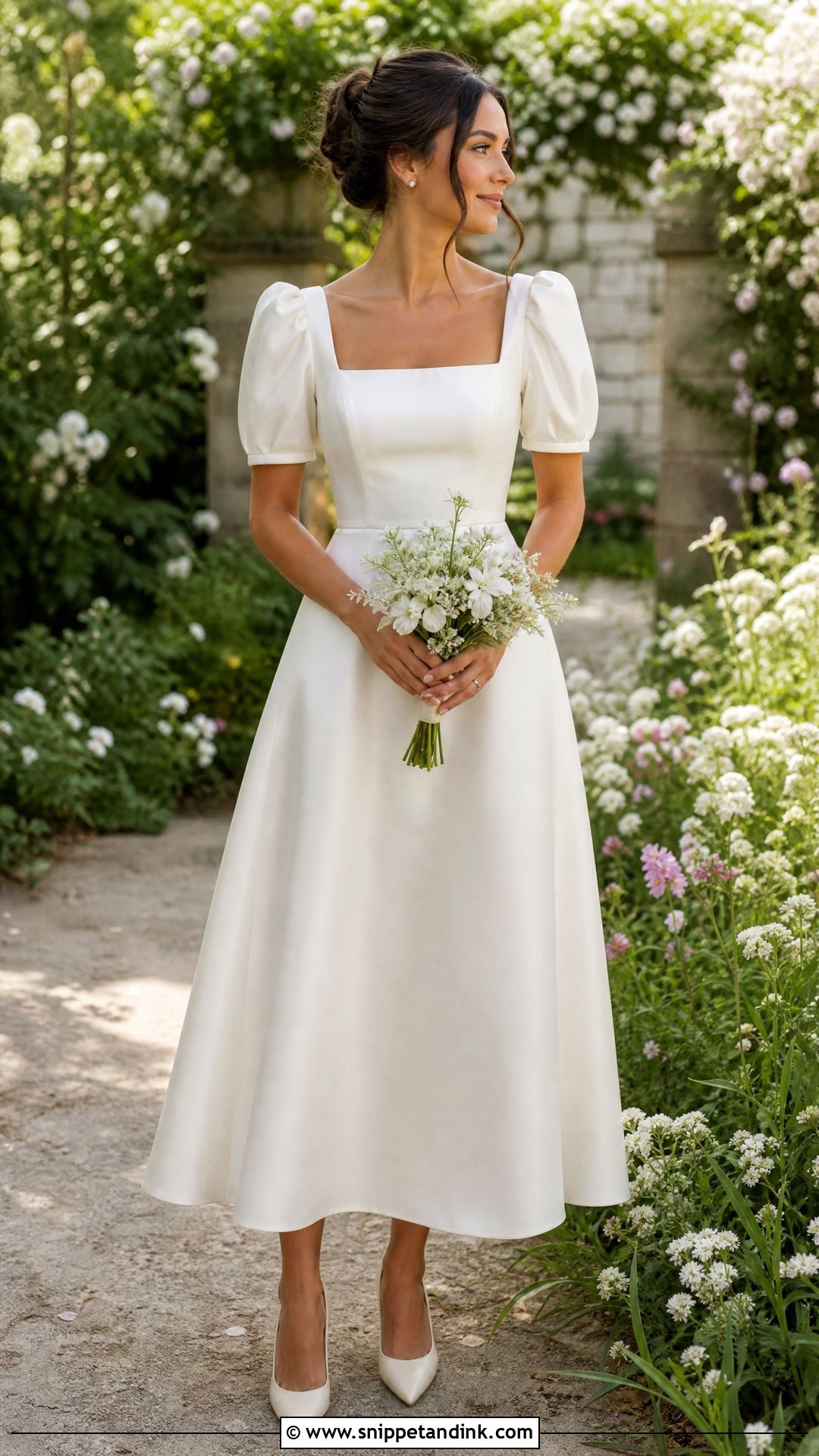
Puff sleeves bring personality, and the size of the puff decides whether it reads sweet or theatrical. I prefer a small, rounded puff that doesn’t rise above the shoulder line. Pair it with a clean bodice and a simple skirt. Cotton lace and organza hold the shape; tulle and satin give softer results. A square neckline frames it well. Pearl studs, soft makeup and classic heels finish it. Good for daytime gardens.
14. Vintage Cap Sleeve Wedding Dress
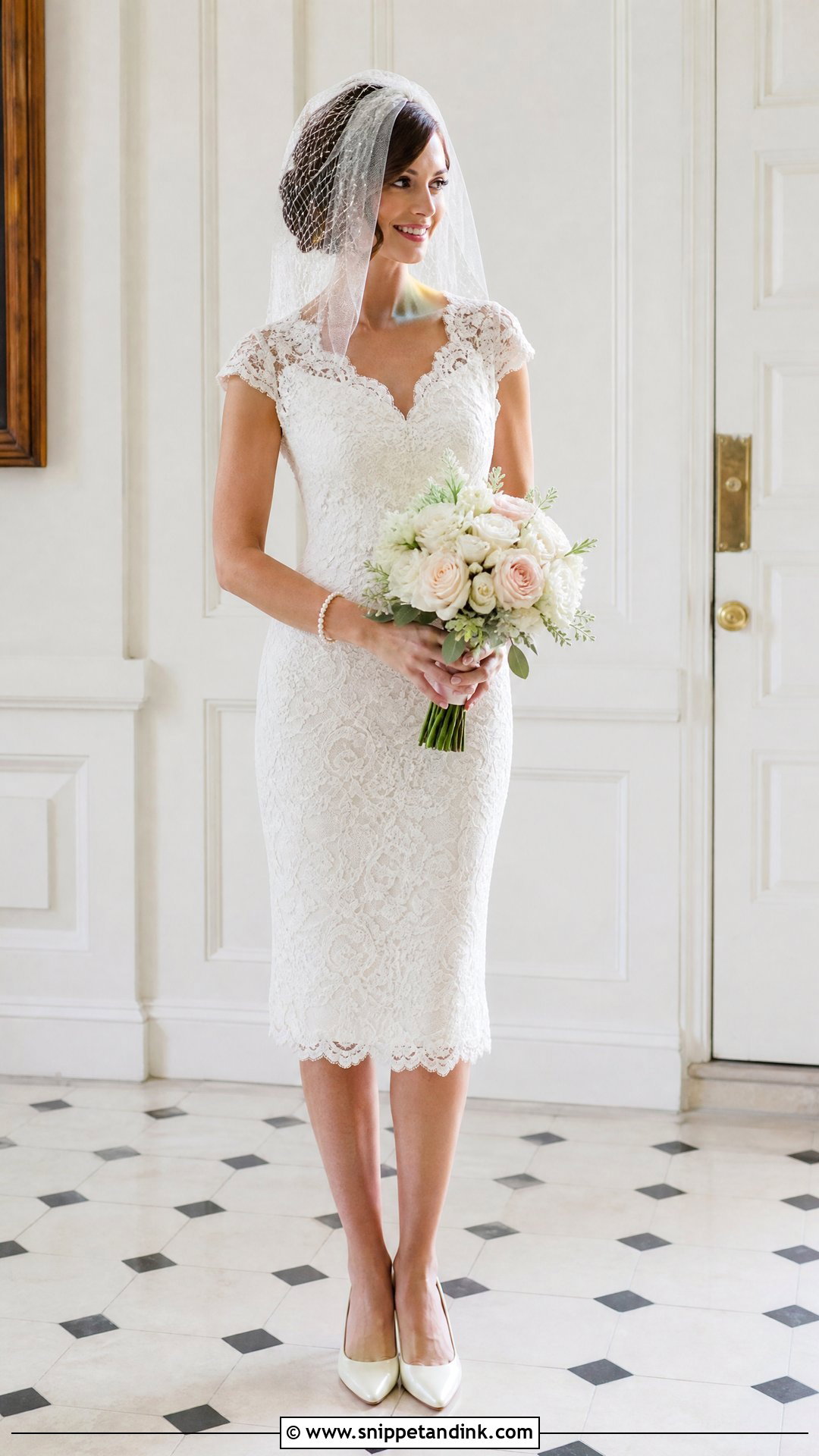
Cap sleeves give a little coverage at the top of the arm and keep everything else light. Lace caps are romantic; satin or crepe caps look cleaner. They work on sheath, A-line and tea-length dresses. One honest note: a cap sleeve sits at the widest point of the upper arm, so if that’s an area you’re conscious of, a slightly longer sleeve might feel better. Add a simple veil, a pearl bracelet and low pumps. A natural waist or soft waistband gives extra shape.

15. Vintage Off Shoulder Wedding Dress
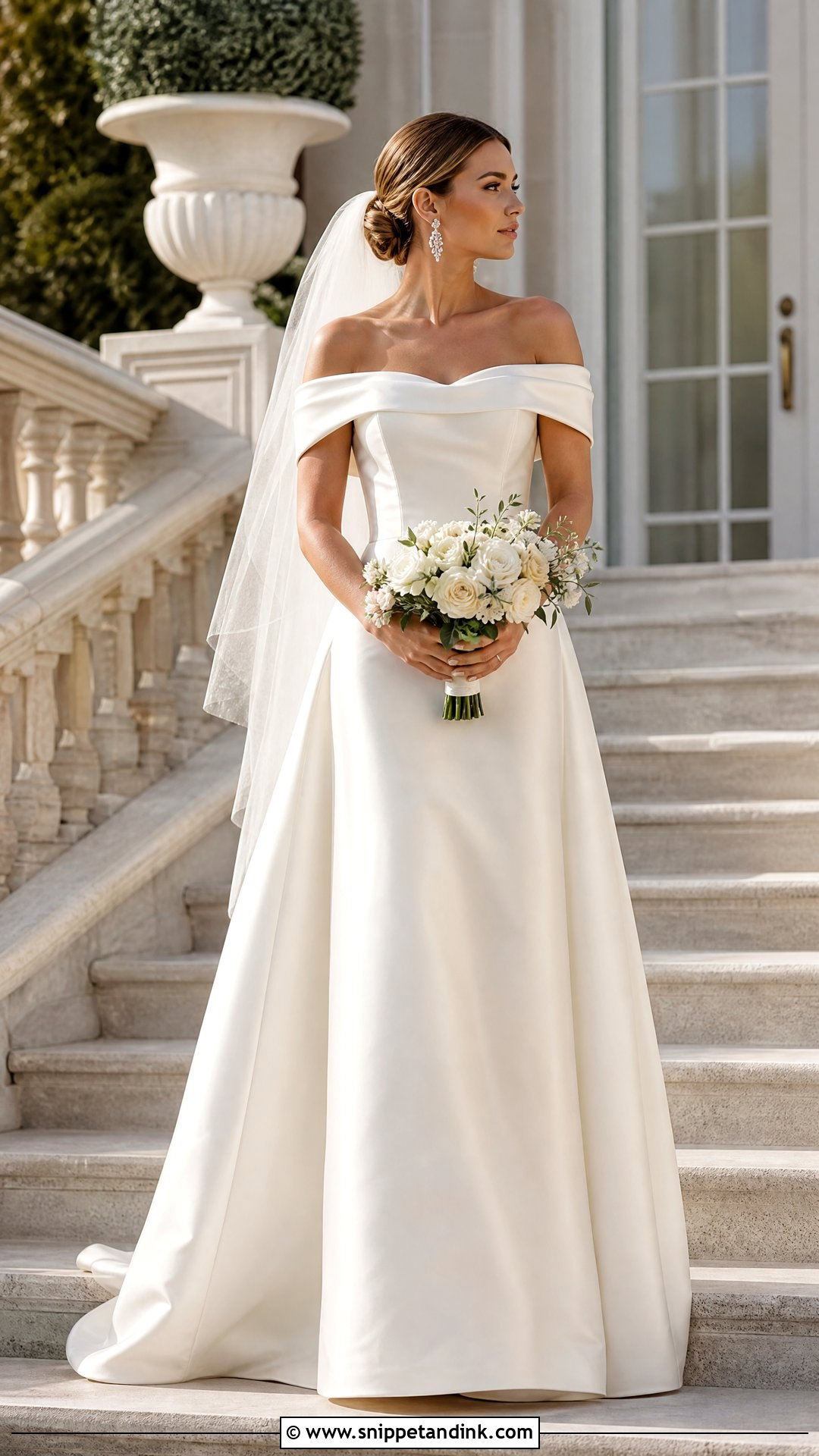
An off-shoulder neckline shows the collarbones without being revealing. A fitted bodice with a plain skirt reads 1950s; lace and soft sleeves feel more relaxed. The bands creep down if the bodice isn’t firm, so I ask for gripper tape inside before anything else. Skip the necklace. Drop earrings, a low bun and a simple veil are plenty. Estate weddings and summer celebrations suit it.
16. Vintage Bateau Neck Wedding Dress
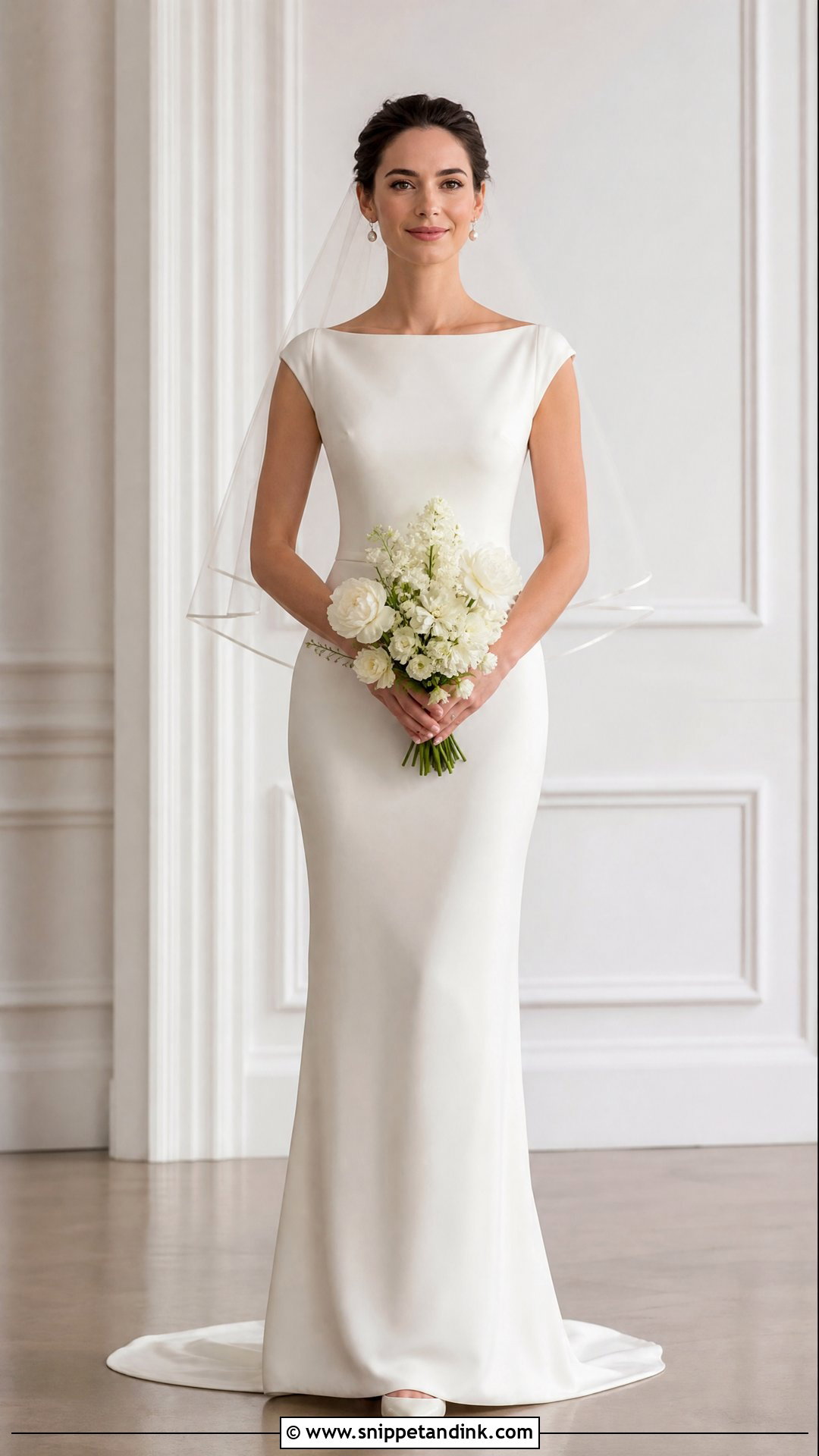
A bateau neckline runs almost straight across, from shoulder to shoulder, close to the collarbone. It’s very mid-century. In satin, crepe, lace or mikado it looks structured without hardness. I check the shoulder width carefully, since a bateau that sits too wide slips and one that’s too narrow pulls. Slim skirts look sophisticated; an A-line is more romantic. No necklace; earrings instead. A low chignon, fingertip veil and satin pumps finish it.
17. Vintage Lace Sleeve Wedding Dress
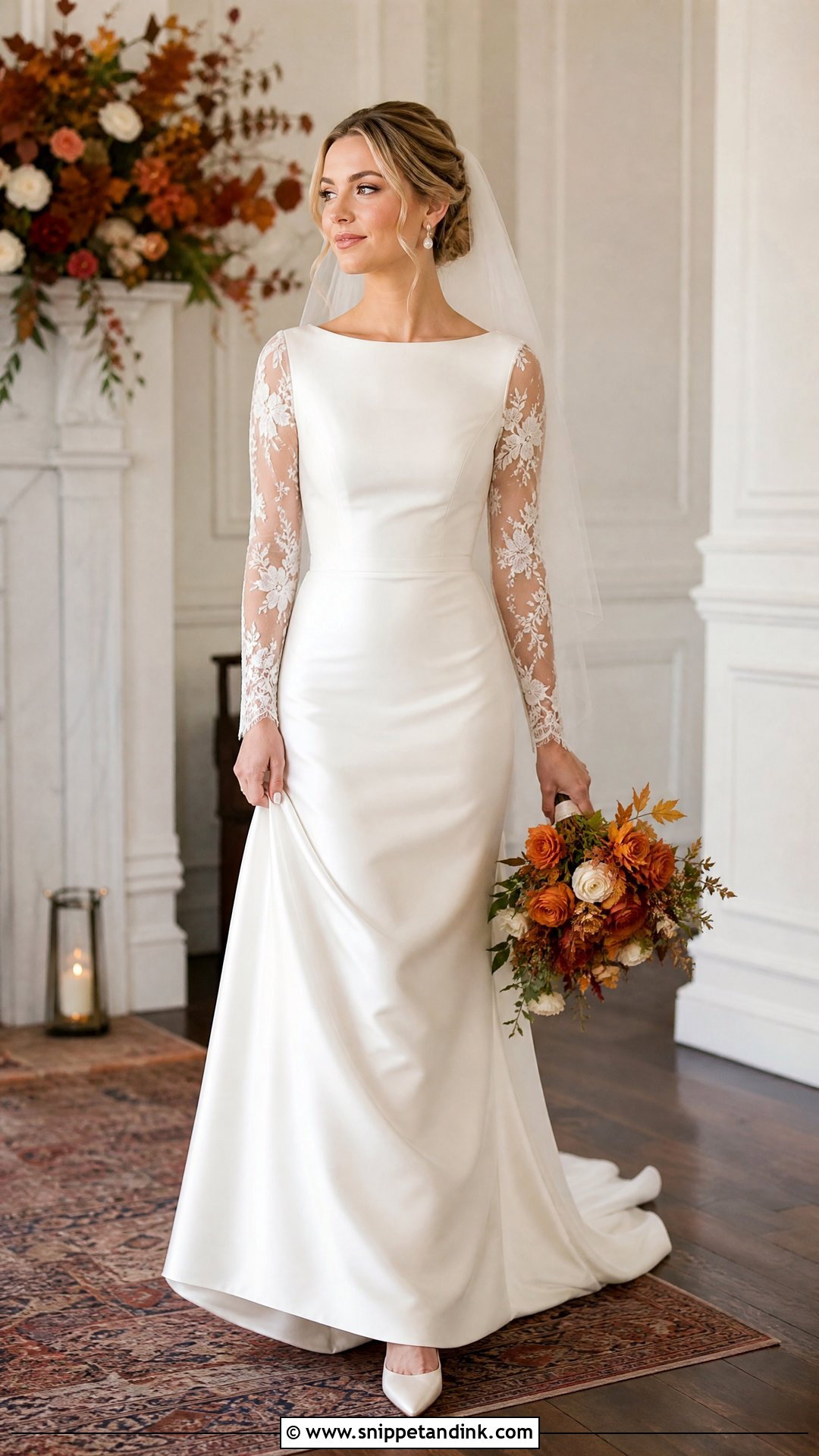
Lace on the sleeves and plain fabric everywhere else is one of my favorite ways to keep vintage restrained. The sleeves can be sheer, fitted, flared or lightly puffed. A plain satin or crepe skirt lets them stand out. Match the lace shade to the skirt in daylight; lace dyed separately often comes out a touch warmer or cooler. A veil with minimal trim, pearl earrings and closed-toe heels complete it. Fall weddings and historic venues are a natural fit.
18. Simple Vintage Tulle Wedding Dress
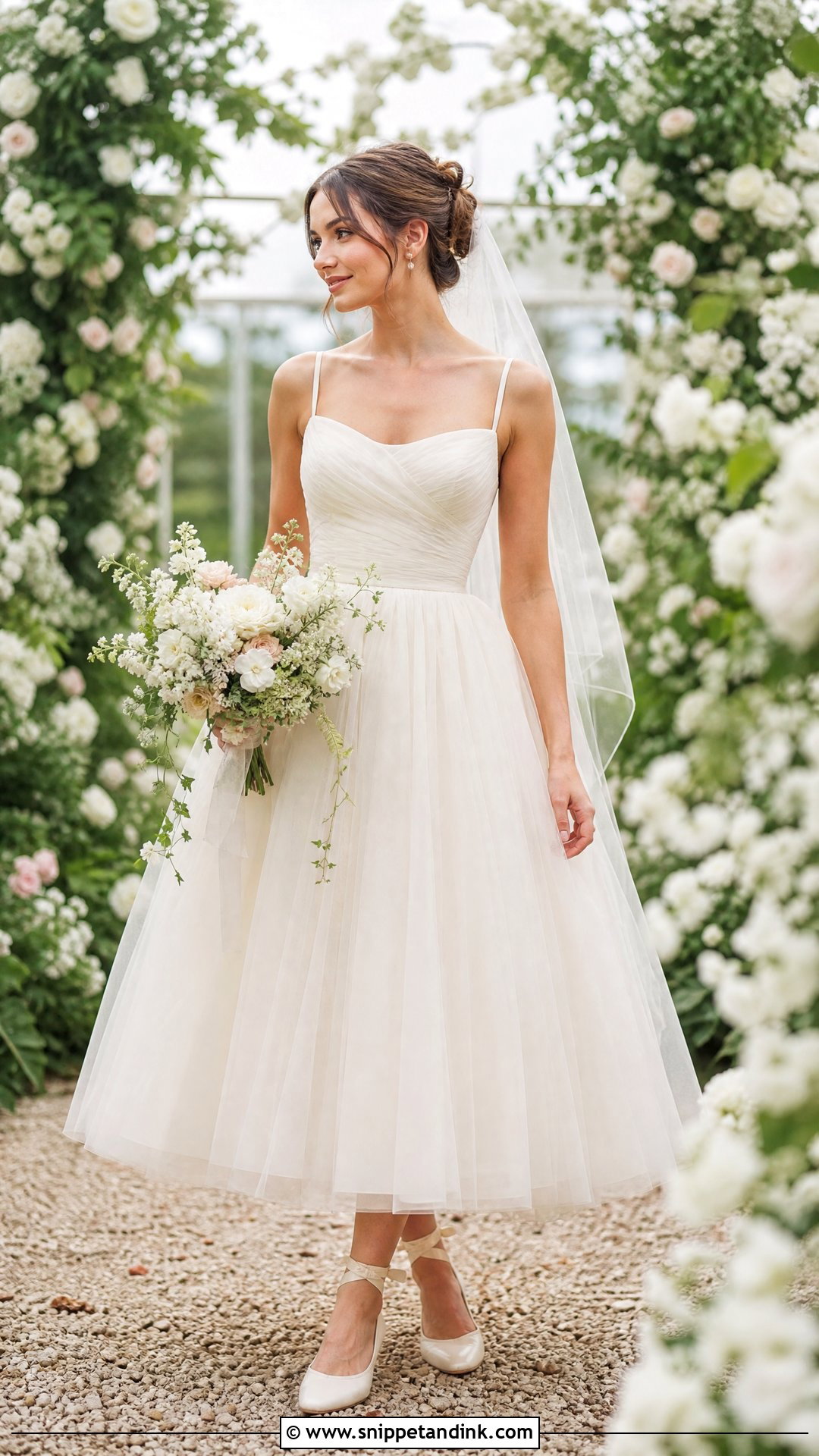
Tulle can float or it can balloon, and the difference is the number of layers. For a vintage look I want fine, soft tulle in fewer layers than a modern ball gown. A fitted bodice over a tulle skirt gives a gentle 1950s shape; a sheer overlay can soften a slim gown. Keep the bodice plain or lightly laced. Tulle snags on rough paving and branches, so the hem should just clear the ground for a garden. Ballet-style shoes, pearl studs and a sheer veil suit it.
19. Vintage Crepe Wedding Dress
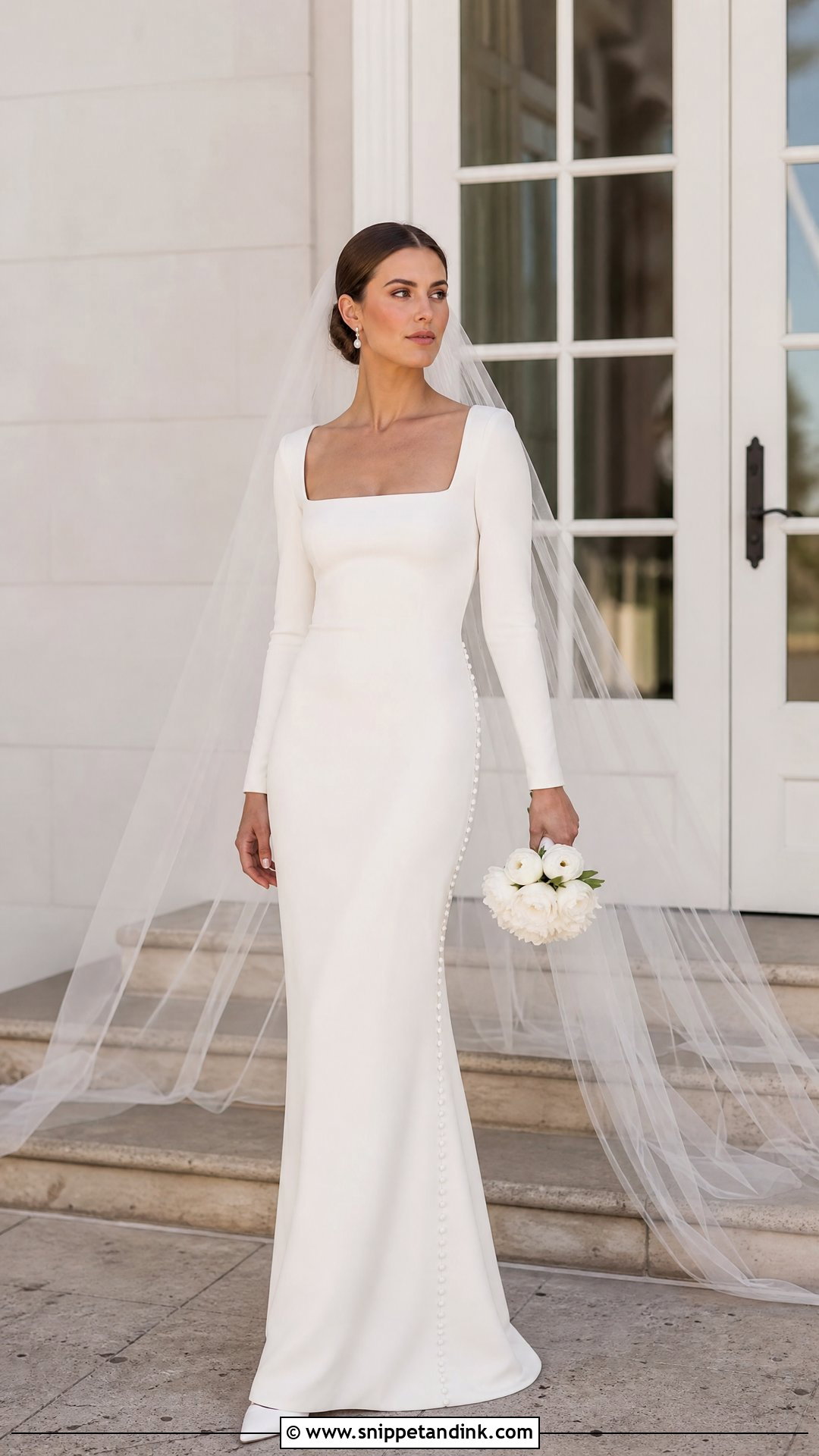
Crepe has a matte surface and a soft weight that makes clean lines look expensive. It suits column, sheath, A-line and long-sleeve shapes. For a vintage mood, add covered buttons, a bateau neckline, a square neck or a small train. Because crepe hides nothing about fit, I spend more time on tailoring here than on accessories. Pearl earrings, a classic veil and pointed heels finish it for a modern bride with an old-soul taste.


20. Vintage Satin Ball Gown Wedding Dress
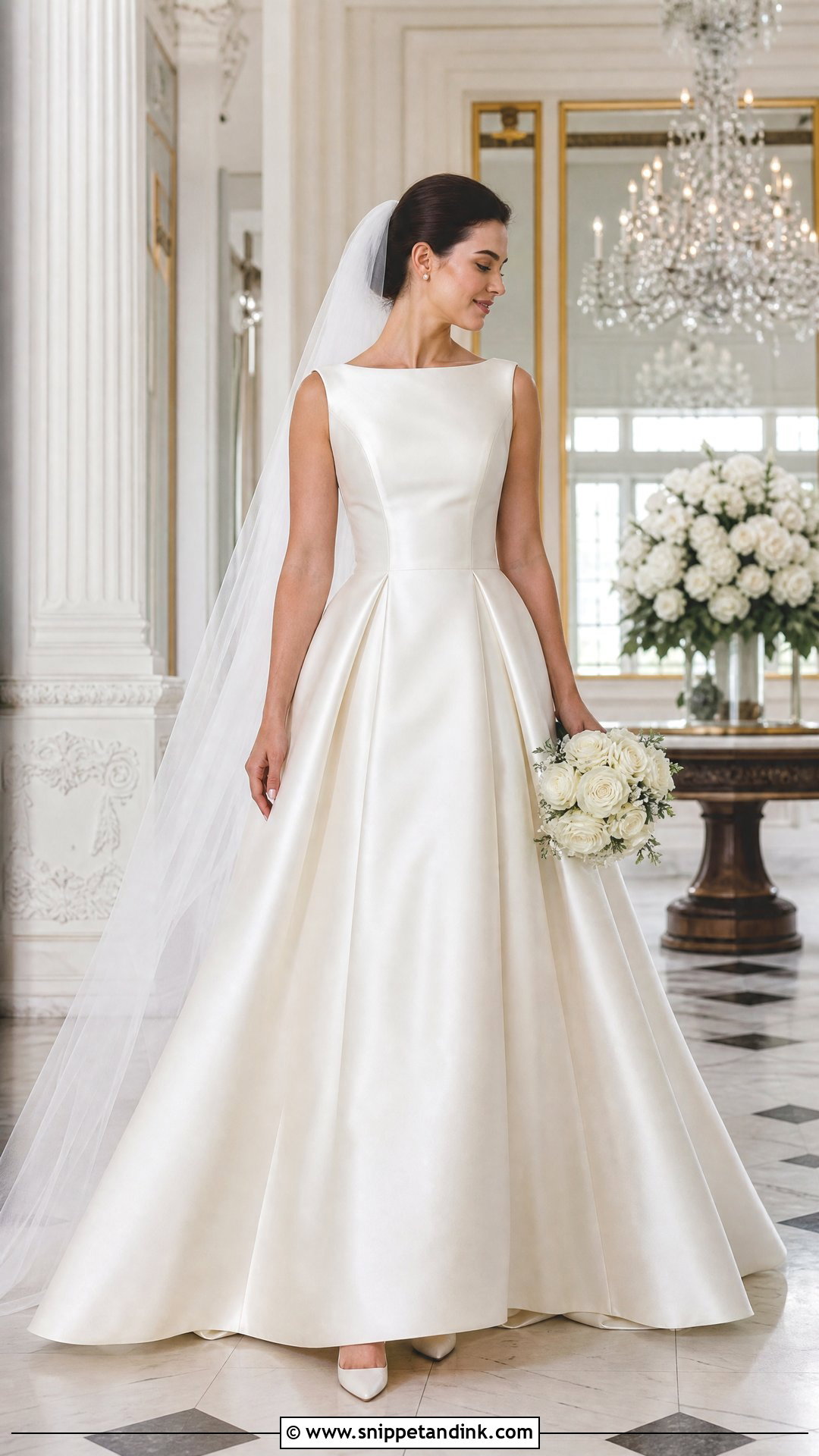
A satin ball gown can still be simple if you let the fabric carry it: smooth bodice, natural waist, full skirt, no beading. A bateau neck, short sleeve or strapless bodice all look classic. Heavy satin skirts need a sturdy bustle; I’d ask how many attachment points it has. Pearl studs, a long veil and satin pumps are plenty. Ballrooms and estates where a grand outline makes sense are ideal.
21. Vintage Short Wedding Dress
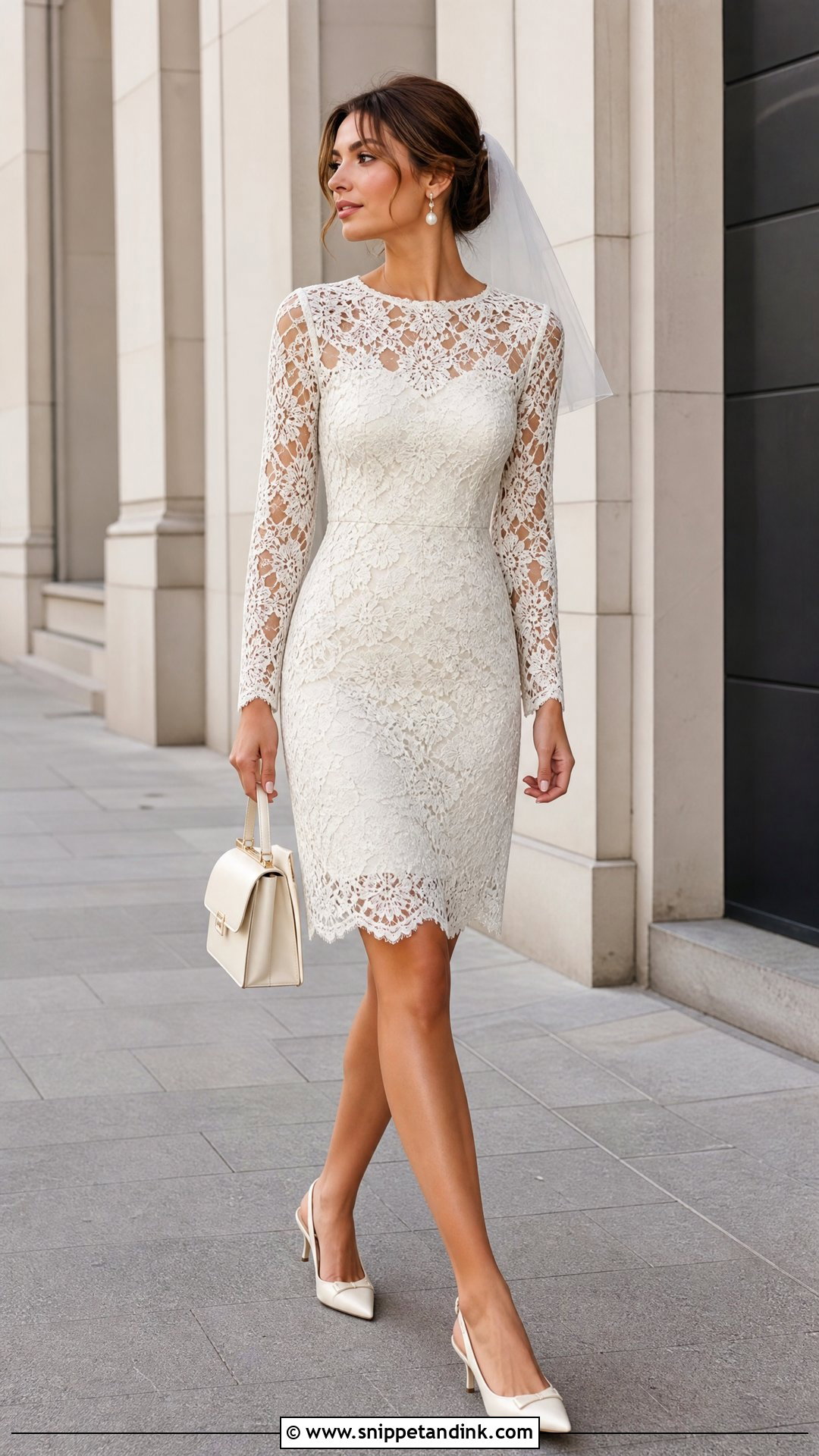
Short vintage dresses look bridal when the fabric does the formal work: lace, satin, crepe or structured taffeta. A mini or knee-length dress with long sleeves, a high neck, a bow or a soft A-line gives the vintage nod. I’d hem it with you seated, because short skirts rise noticeably. Slingback heels, pearl earrings and a short veil or headband finish it. It suits courthouses, elopements and reception changes.
22. Vintage Courthouse Wedding Dress
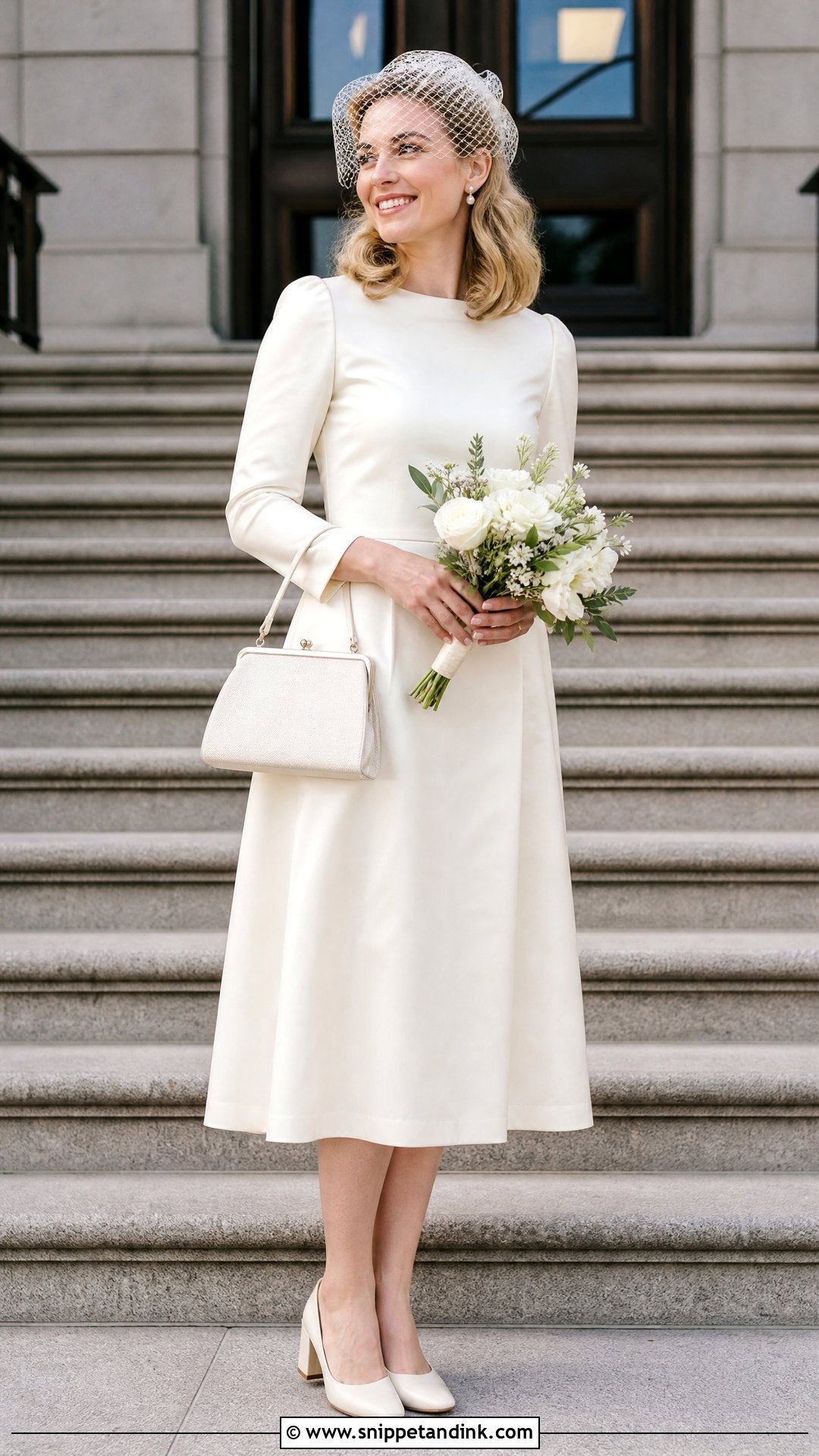
Courthouse outfits should be easy to get in and out of a car, comfortable on steps and polished at close range, because guests stand near you. A clean satin midi, a lace sheath, a crepe column or a tailored mini all work. Fit and fabric carry it. A structured bag, low heels, pearl studs and a small bouquet are enough, with a short or birdcage veil for a period touch. Steps and city sidewalks make easy backdrops.
23. Vintage Garden Wedding Dress
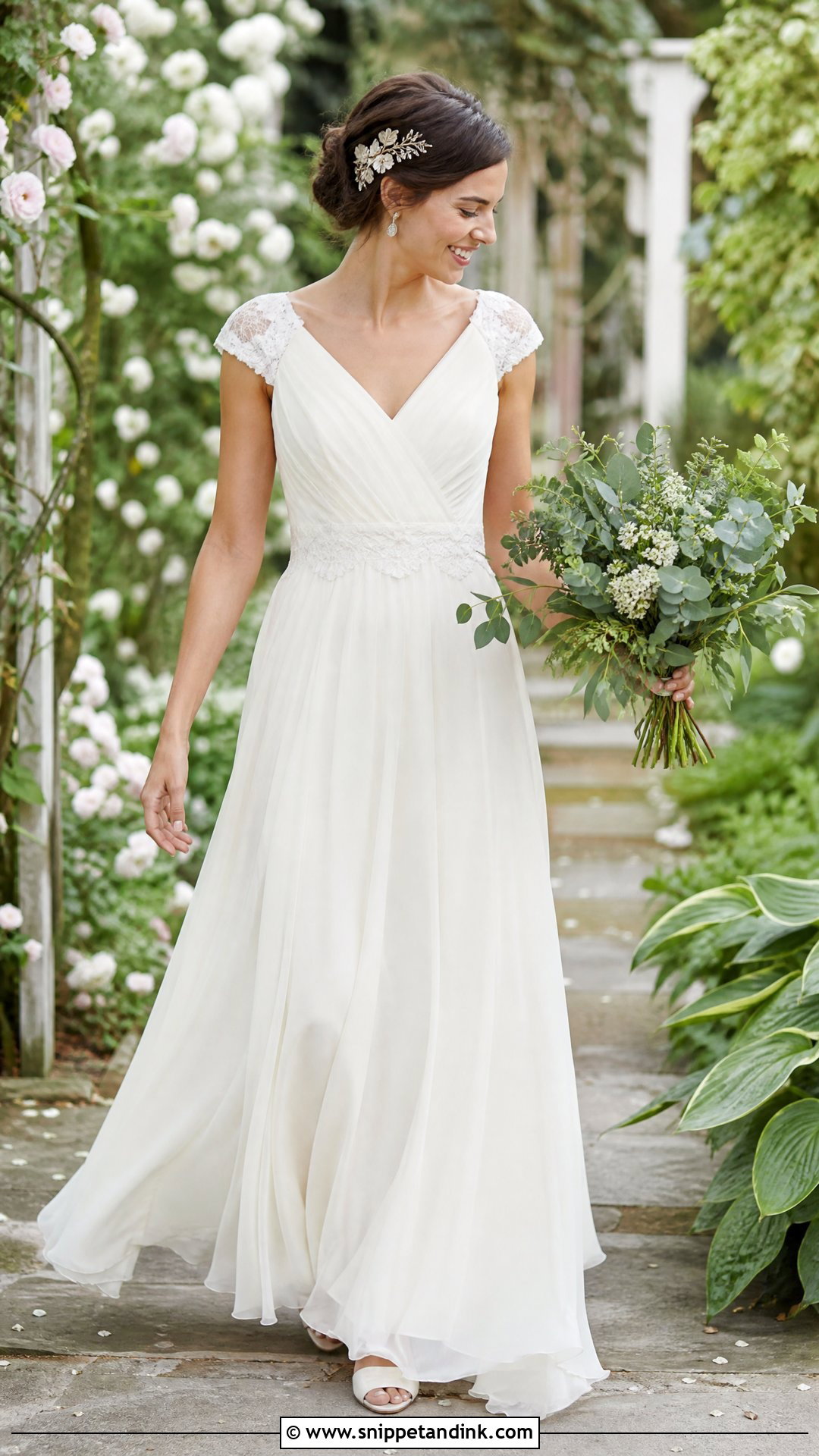
Outdoors, I plan around the ground first. Lace, chiffon, tulle and lightweight satin catch the breeze, but chiffon and tulle catch on twigs too. A tea-length dress, cap sleeves, an empire waist or a soft A-line work well. Pick block heels, low pumps or flats that won’t sink into grass. Pearl earrings, a floral comb and a bouquet with soft greenery finish it.
24. Vintage Pearl Wedding Dress
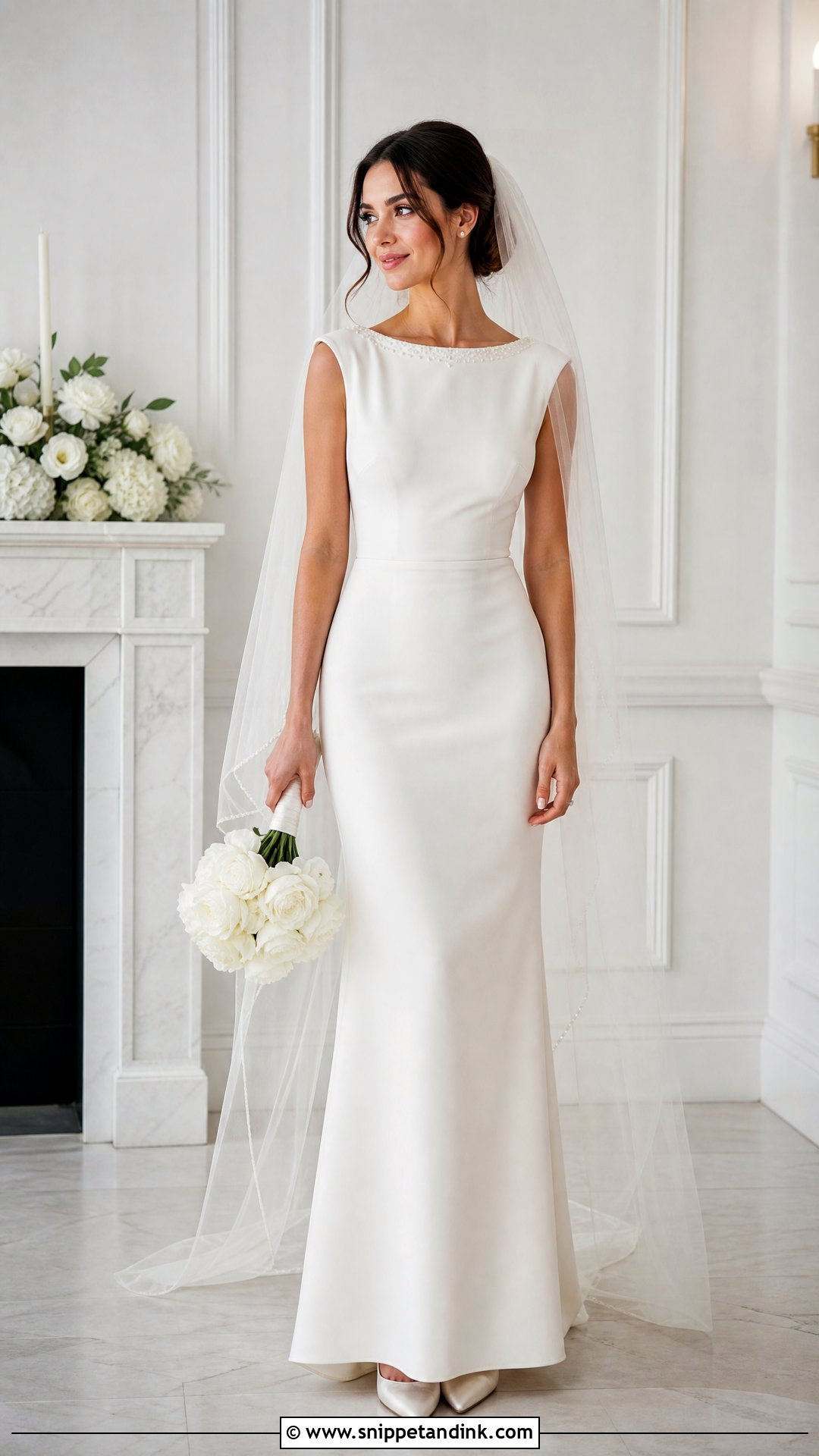
Pearls add a soft glow rather than sparkle, which is why they suit vintage so well. Keep them small and placed: a few at the neckline, on the cuffs, along the waist, or a row of pearl buttons down the back. Ask whether the pearls are sewn individually or glued; glued ones pop off with wear. A clean satin, crepe or tulle base gives them room. Pearl studs or small drops and satin heels are plenty; don’t stack pearl jewelry on top.



25. Vintage Veil Wedding Dress
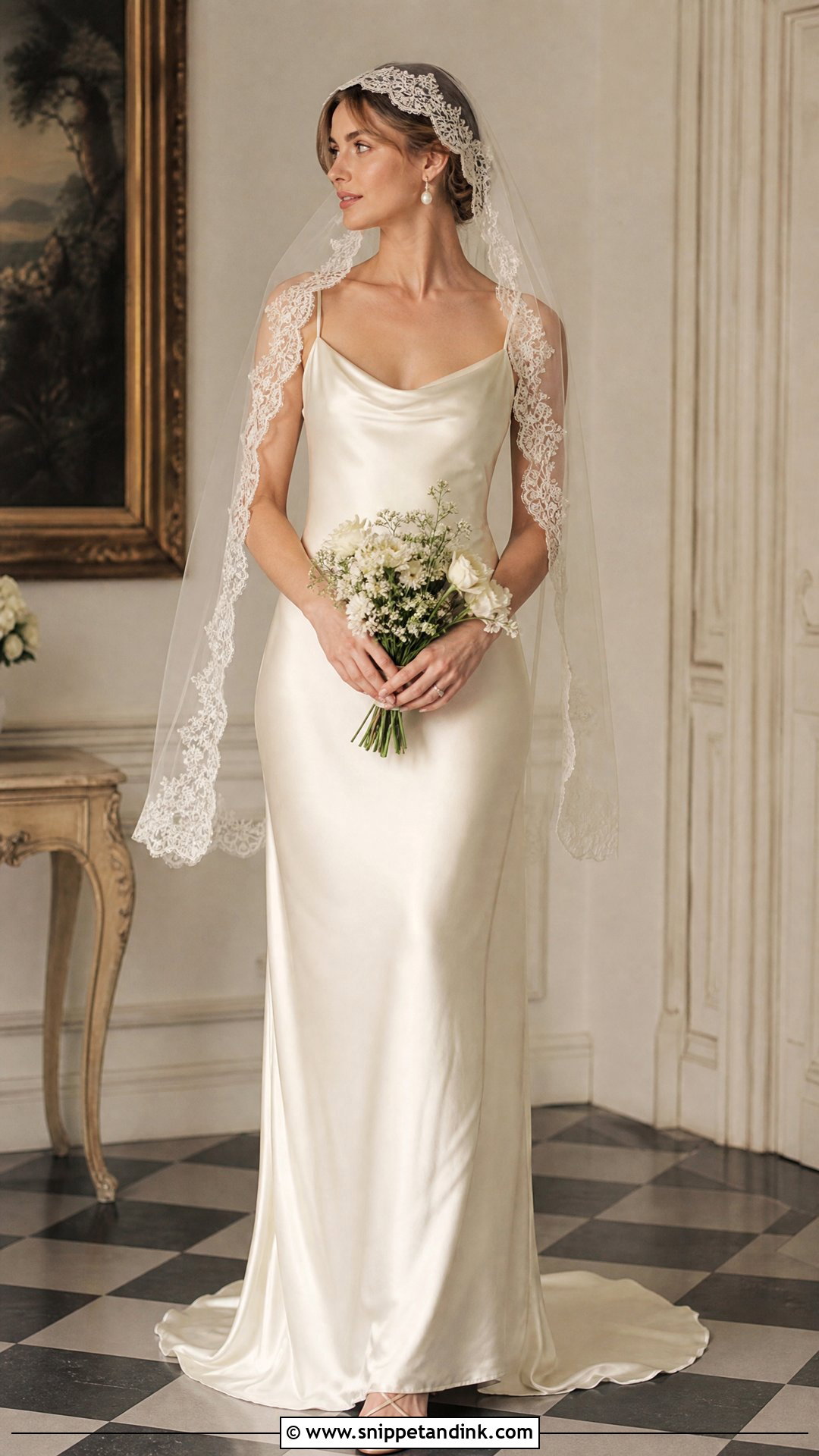
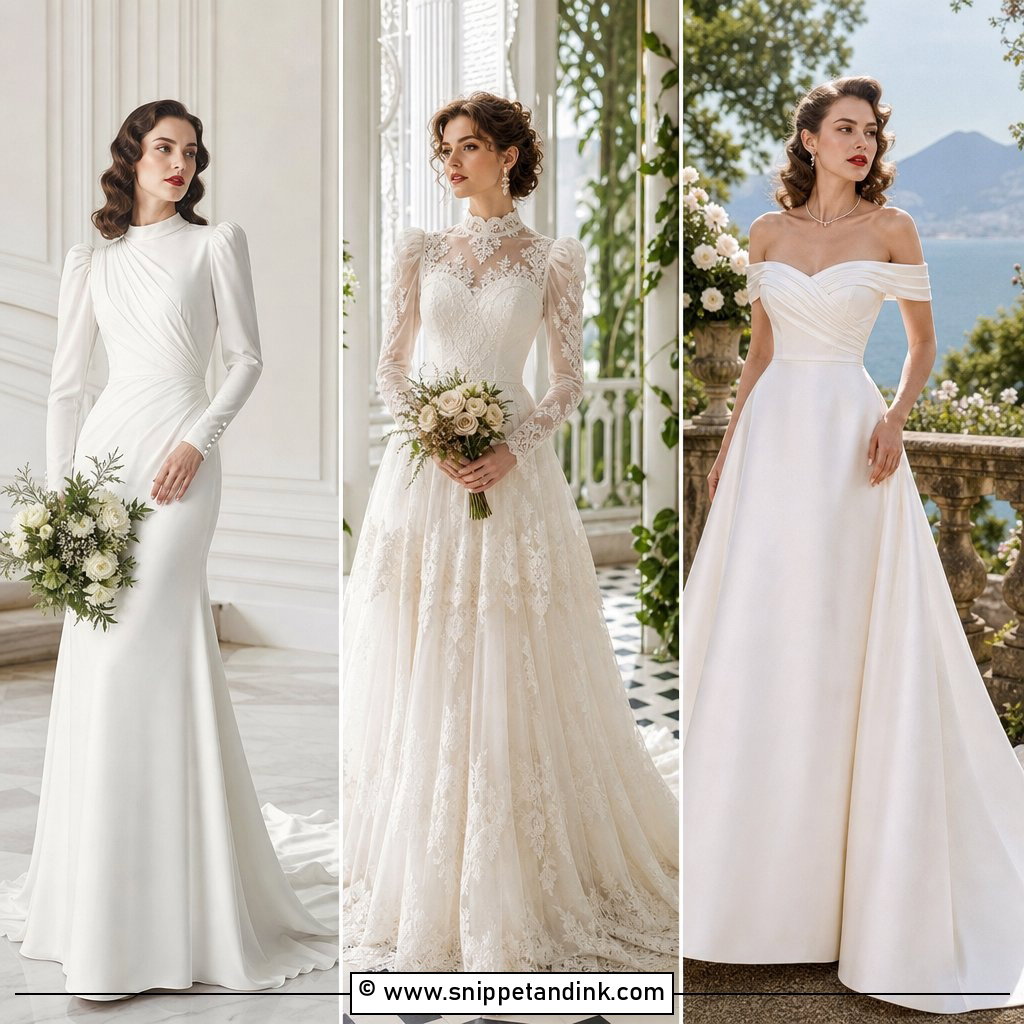
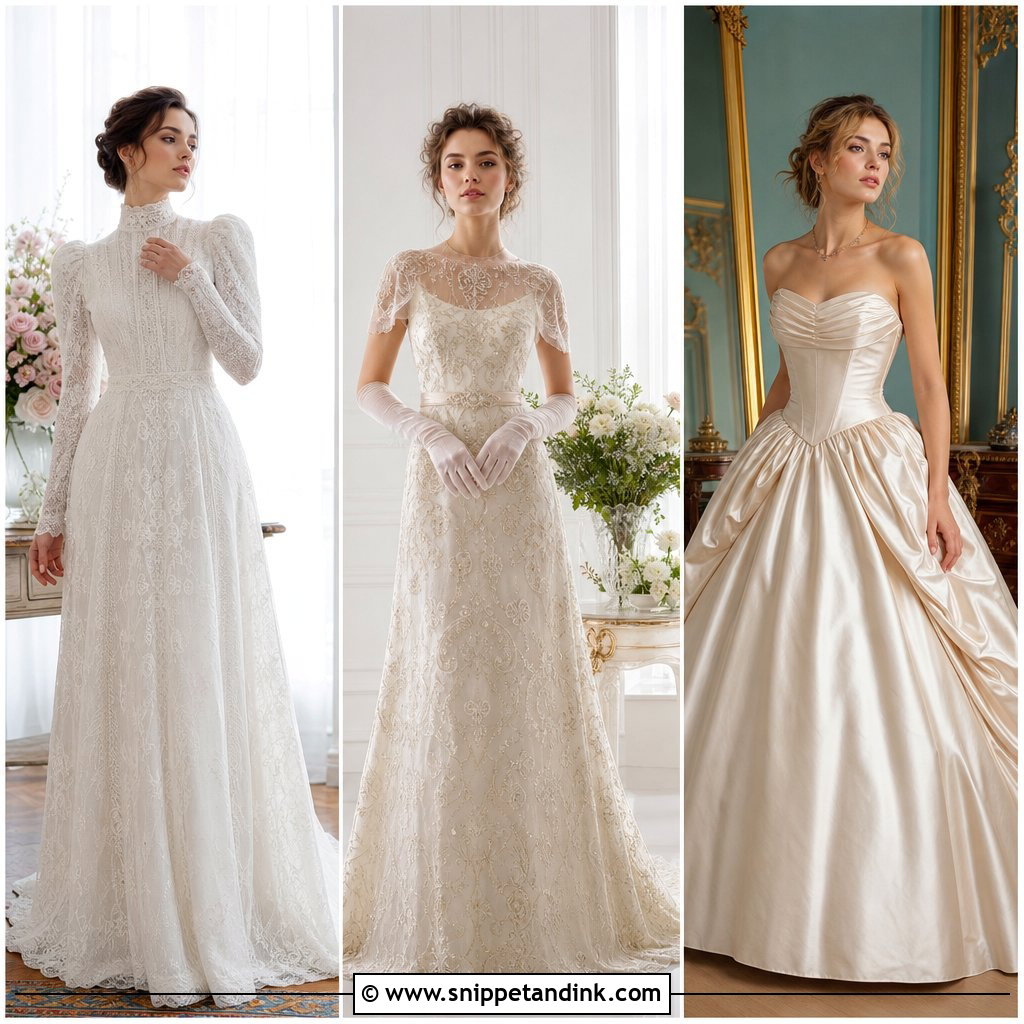
Let the veil be the vintage piece and keep the dress plain: a satin slip, a crepe column, a lace sheath or a simple A-line. A lace-edged veil, a birdcage, a Juliet cap veil or a fingertip length can each point to a different era. An heirloom veil is perfect here, though older tulle can be fragile, so have it inspected before you pin it in. Soft waves, a low bun, pearl earrings and classic heels complete it.
Hair, Veil and Shoes That Match the Decade
A dress from one decade with hair and shoes from another can look confused rather than vintage. You don’t need to copy a period exactly, but I like the main pieces to agree with each other. These pairings are where I usually start.
- 1920s drop waist: finger waves or a low, sleek bob-style roll, a Juliet cap or beaded headband, T-bar or Mary Jane shoes.
- 1930s bias cut: soft side-parted waves, a long plain veil, strappy sandals.
- 1950s tea length: a smooth chignon or rolled curls, a short or birdcage veil, pointed pumps.
- 1960s column or shift: a lifted crown, a short bouffant veil or bow, kitten heels.
- 1970s sleeves and flowing skirts: loose middle-parted hair, a flower crown or long soft veil, low sandals.
- 1990s slip: sleek low bun, a sheer single-layer veil, barely-there sandals.
Altering an Older Dress Gently
Older gowns can often be let out a little, since many were built with wider seam allowances than today’s dresses, but the fabric under those seams has been hidden from light and may be a slightly different shade. I ask the seamstress to open a small section and check before promising anything.
Shortening is usually safer than lengthening. Avoid changing a bias-cut hem unless the seamstress has experience with bias work, because it hangs and stretches differently. Plan more time than you would for a new dress, at least three months, so there’s room to source matching lace or buttons if a repair is needed.
One Era, One Detail, Then Stop
Vintage bridal style doesn’t have to be complicated. A simple dress in the right fabric and shape, with a couple of chosen details, nods to the past while still feeling current. Lace sleeves, satin slips, tea-length hems, pearls, square necklines and soft veils are all easy ways in. Think about comfort, tailoring and the mood of your venue first, then let one or two details carry the era. Formal, casual, outdoor or courthouse, that restraint is what keeps the look personal.
You'll Like These Ideas:









Leave a Reply