
An embroidered gown gives you handwork you can actually see up close, which is rare in bridal. The looks below run from traditional huipil-inspired gowns to bright florals, modern cuts and quiet white-on-white stitching. Mexican textile traditions differ from one community and region to the next, so motifs, garment shapes and techniques vary widely; there is no single look. When I style one of these dresses I start with the venue and the weather, then I turn the gown inside out to check the lining and how the embroidery is backed. Buy from Mexican designers, Indigenous artisans or makers who tell you exactly where the work comes from. Each look is styled head to toe, with what I’d watch for.
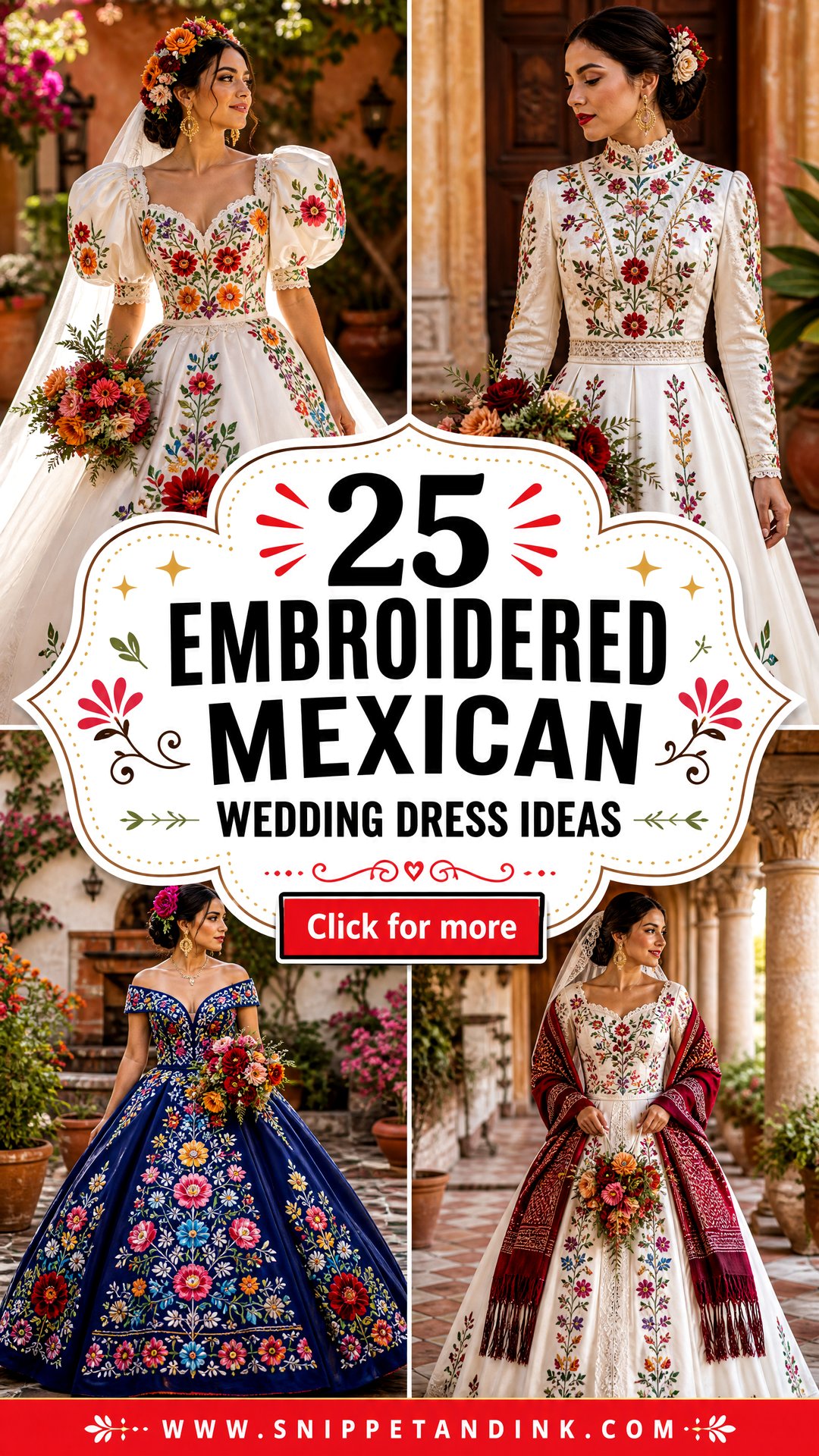
Reading the Stitches on an Embroidered Gown
The first thing I do with any embroidered dress is turn the bodice inside out. Hand embroidery shows its maker on the reverse: small knots, threads that travel between motifs, slight differences in stitch length from one flower to the next. Machine embroidery is perfectly even, and the back is usually covered with a stiff, papery stabilizer. Neither is wrong, but they are priced and described very differently, and you deserve to know which one you are paying for.
- Run a fingertip over the motifs. Satin stitch should lie flat and tight, with no loops ready to catch on a ring or bracelet.
- Look at the edges of each flower. Wobbly outlines are normal in handwork; gaps where the base fabric shows through are a finishing problem.
- Ask whether the piece was woven, embroidered or both, and in which community. A maker who knows the answer will tell you gladly.
- Check the weight on a hanger. A heavily stitched yoke on thin cotton will drag the neckline forward once you wear it all day.
I’d be cautious about any listing that calls a mass-produced dress “authentic” or “artisan” without naming anyone. If the seller can’t say who stitched it, assume a factory did, and pay accordingly.
1. Traditional Huipil Mexican Wedding Dress
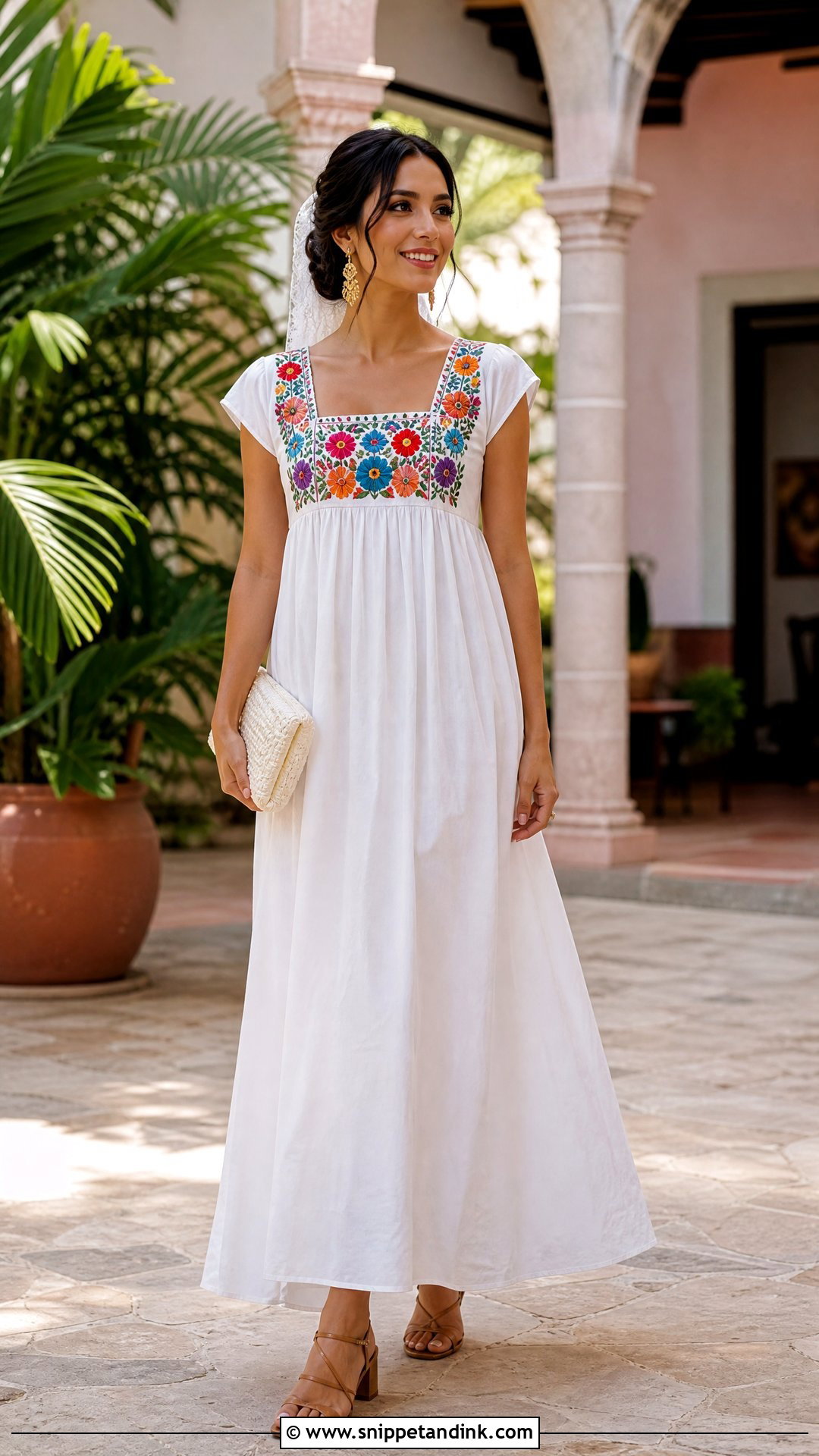
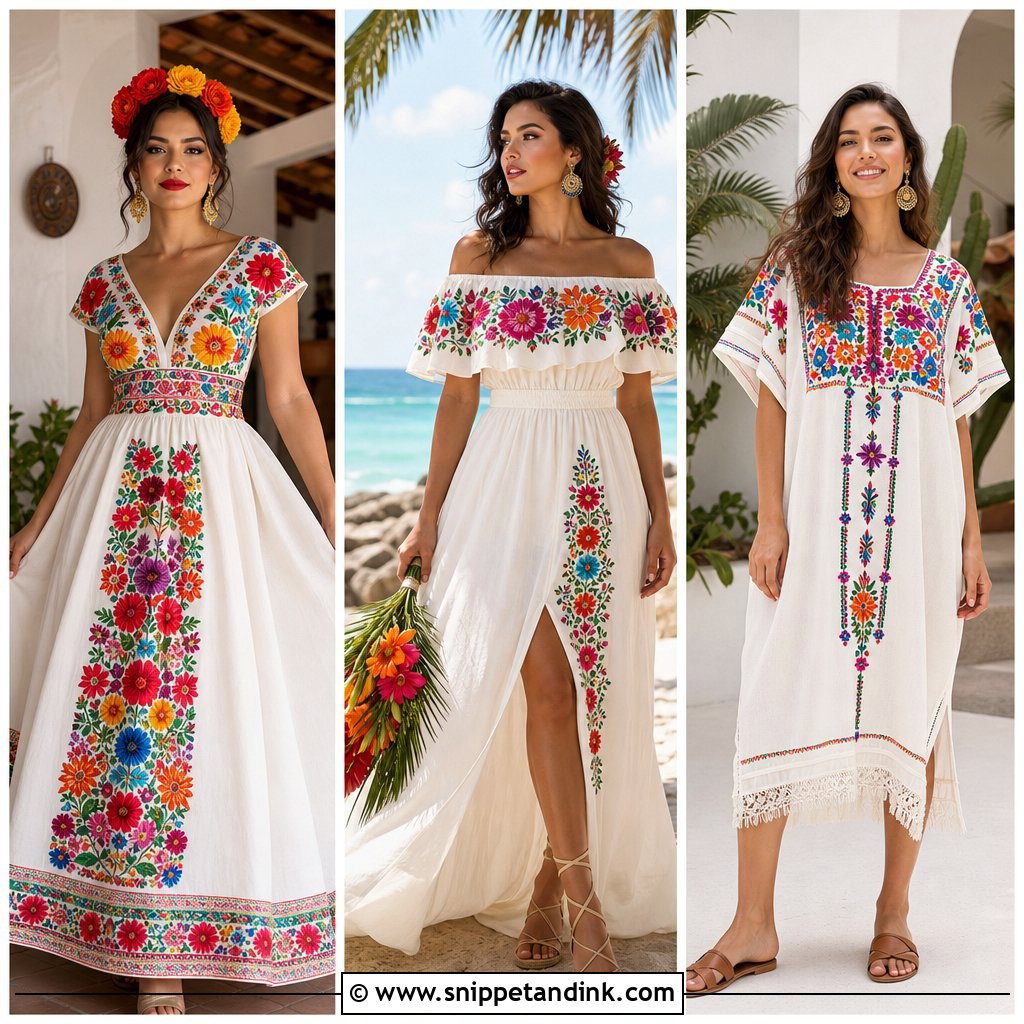
Comfort and heritage in one garment. A full-length white cotton or linen huipil-style gown with a relaxed shape, square neckline and colorful embroidery across the chest. Leather block-heel sandals, small gold earrings and a woven clutch, with a low bun or braid so the yoke stays visible. Many huipils are woven and decorated with techniques tied to specific communities, so ask the maker where the piece comes from and what its designs mean before you buy. Because the shape is loose, I usually add a soft belt or a few hidden darts at the back for photos; a true huipil cut can look boxy from the side.
2. White Floral Mexican Wedding Dress
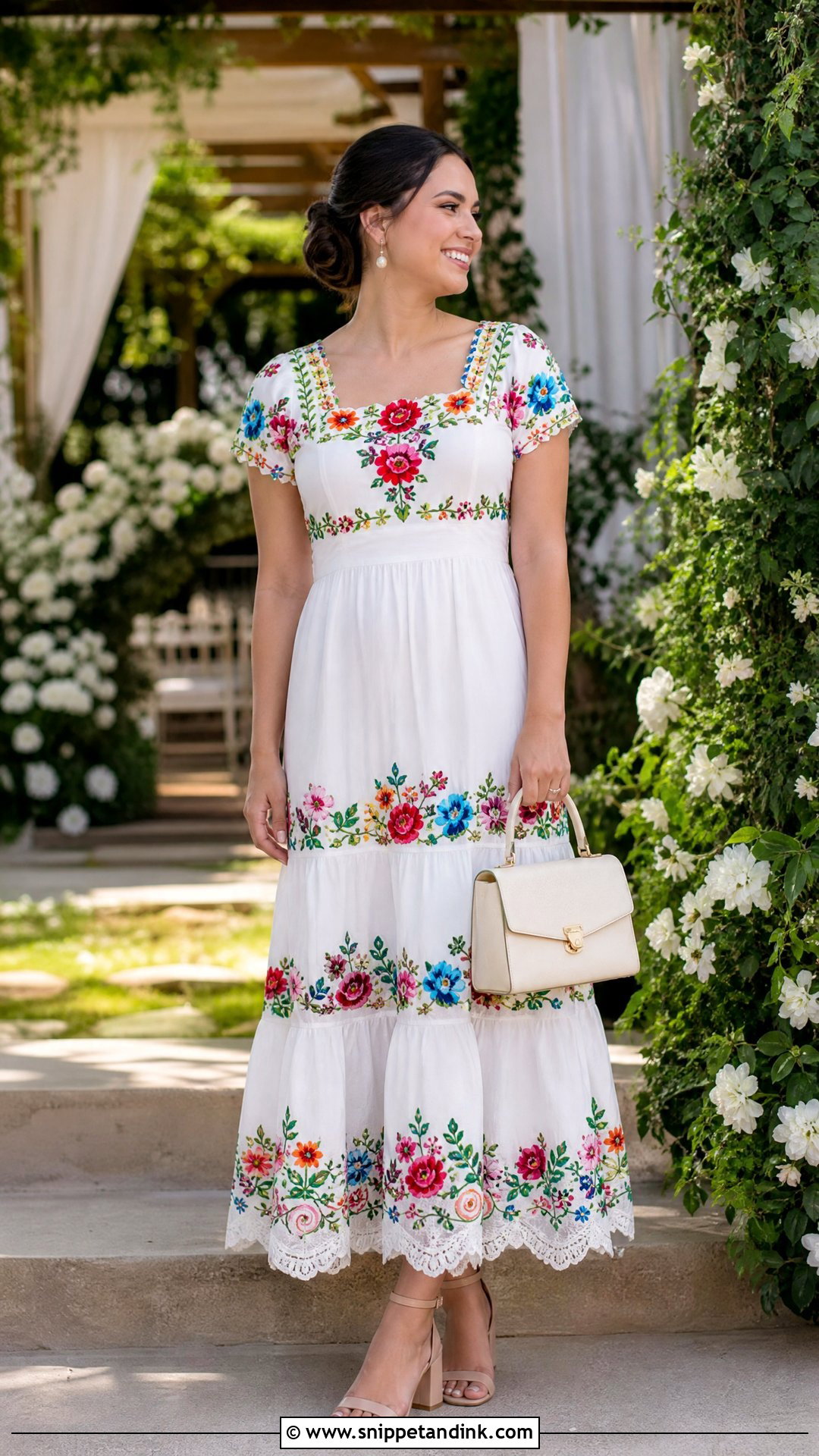
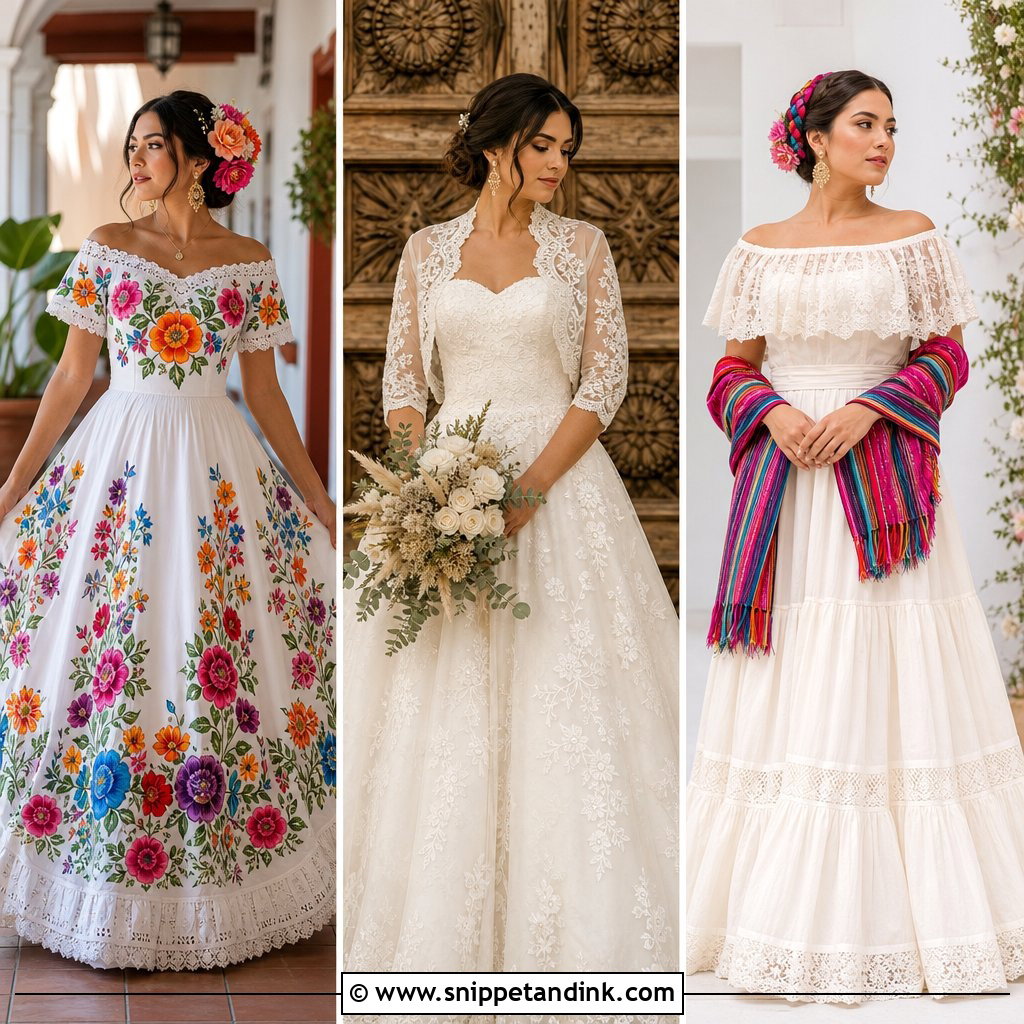
A clean white ground keeps a floral dress reading bridal even with a lot of color on it. Look for a flowing A-line with red, pink, orange, blue and green flowers around the neckline, sleeves and hem. Nude block heels lengthen the leg without competing with the threads. Pearl studs and an ivory bag are enough; if the neckline is densely stitched, skip the necklace altogether and wear one bracelet. A loose chignon with a few face-framing pieces suits it. Against greenery and stone the colored flowers pop, but under the yellow light of a tented reception the reds can turn orange, so look at the dress under warm bulbs before you commit.
3. Off The Shoulder Mexican Wedding Dress
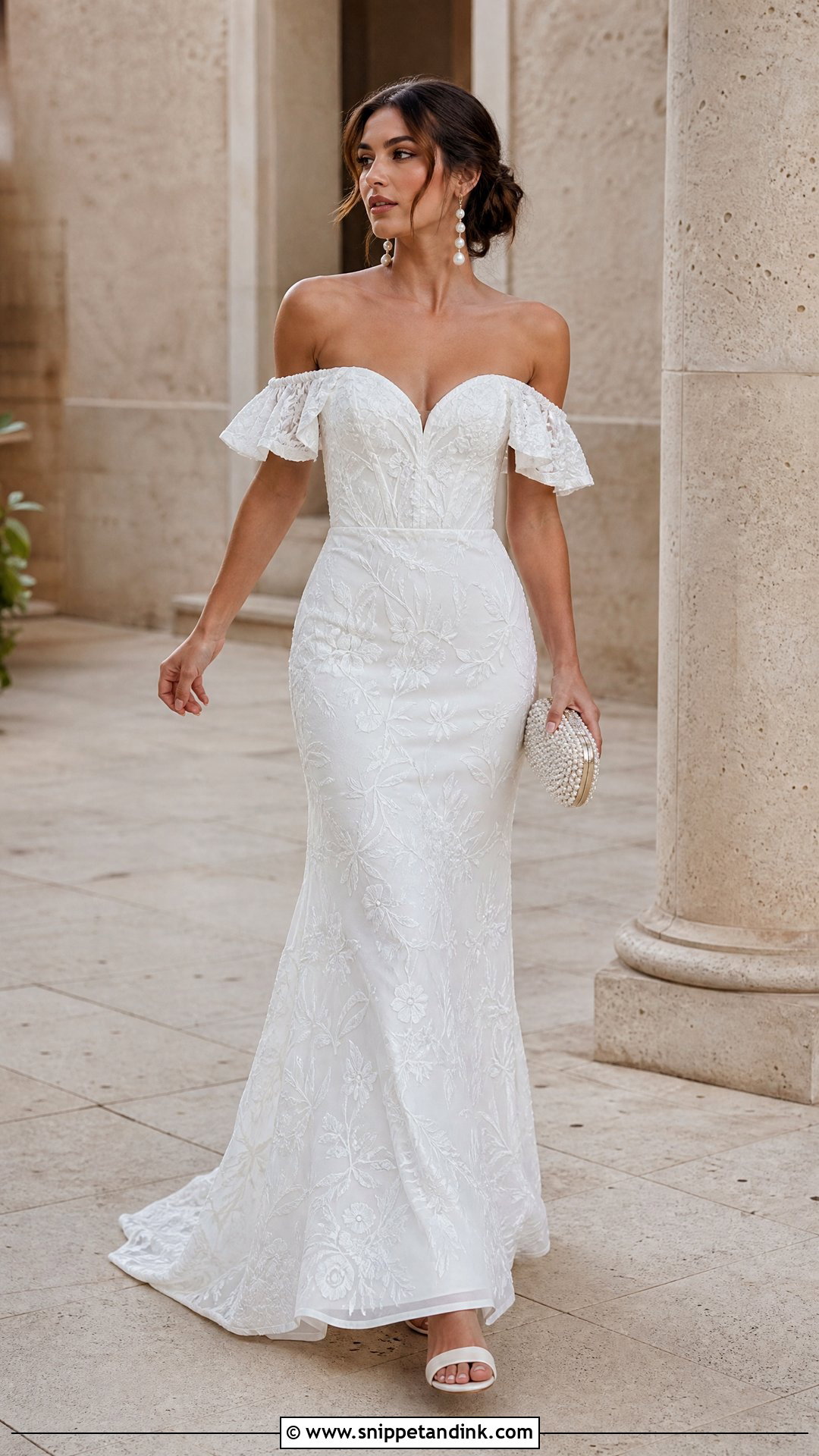
An off-the-shoulder Mexican wedding dress leaves a wide band of fabric for embroidery right where the eye lands. The fit I look for: a fitted bodice with floral stitching, a gently flared skirt and short ruffled sleeves that sit just below the shoulder. Pearl drops, white block-heel sandals and a small beaded clutch. A floral comb above a low bun can pick up one thread color without matching everything. Raise both arms at every fitting. Off-shoulder bands pin your arms down, and if the bodice relies on the band to stay up, ask for hidden straps or light boning so you can hug people freely.
4. Long Sleeve Mexican Wedding Dress
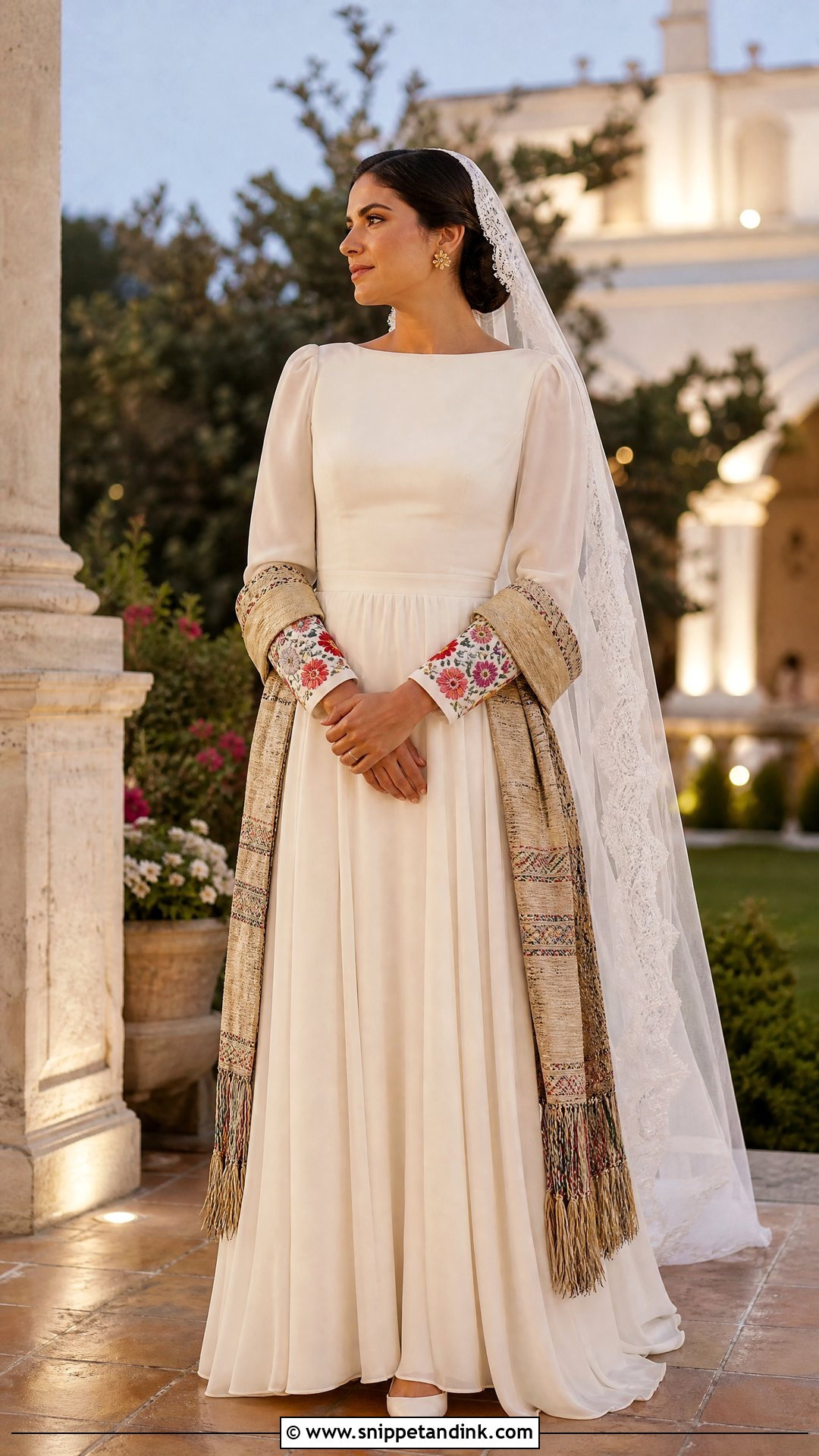
Sleeves give embroidery a second place to live. Choose a white or ivory gown with sheer cotton or light linen sleeves stitched at the cuffs and shoulders, a defined waist and a fluid skirt. Closed-toe ivory heels, a lace-edged veil and plain gold studs finish it. For a cool-season wedding a coordinating rebozo adds warmth and depth. Wear your hair up so the shoulder work shows. One practical note from fittings: embroidered cuffs don’t stretch, so make sure your hand slides through easily, or ask for a button or loop at the wrist.
5. Colorful Embroidered Mexican Wedding Dress
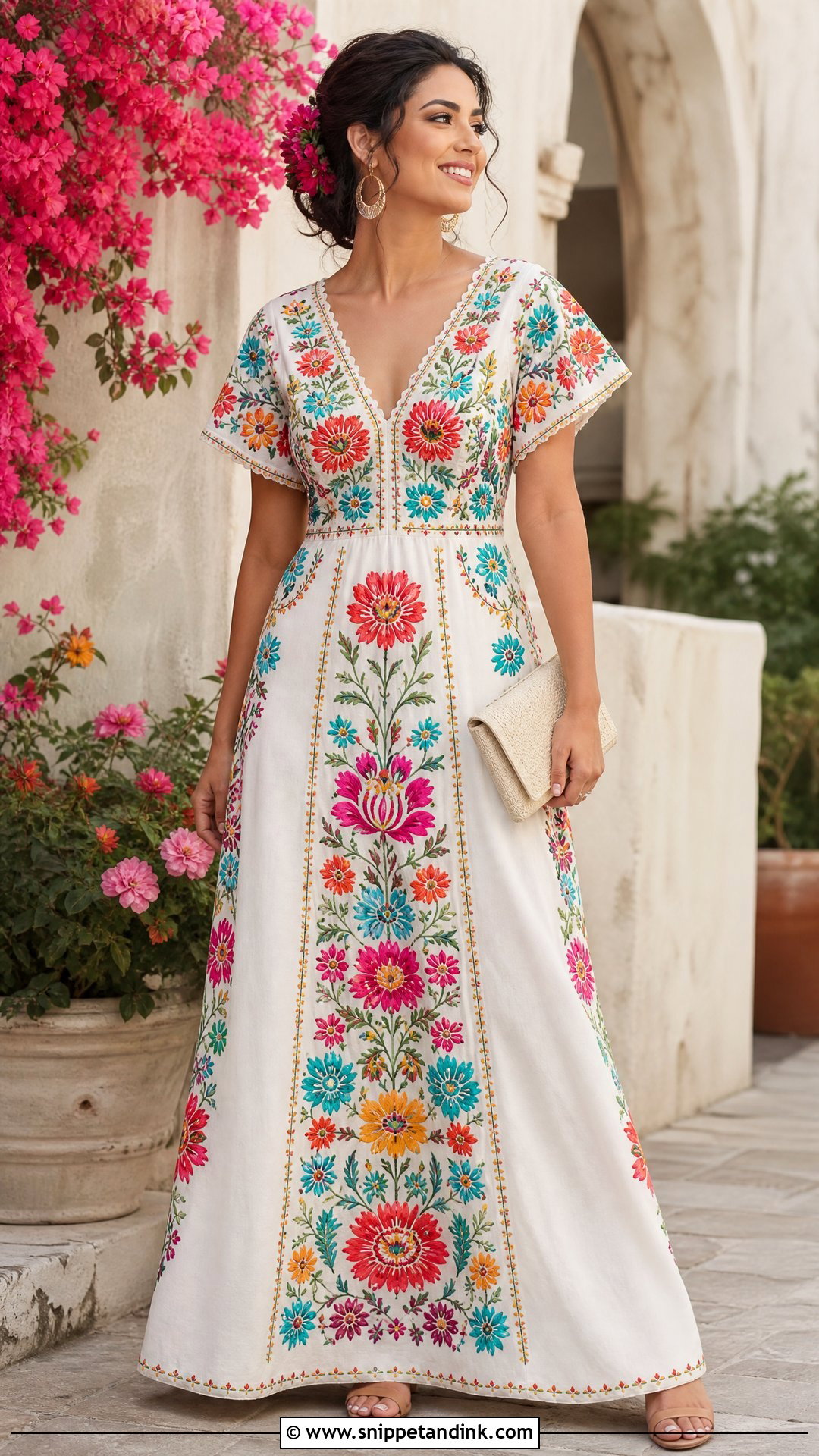
Plenty of color, so everything around it has to stay calm. A floor-length white gown with turquoise, coral, yellow, magenta and green florals spread evenly over the skirt and bodice. Neutral leather sandals, small gold hoops and a plain ivory clutch keep it from tipping into busy. A sleek bun or a softly waved ponytail modernizes it. If you want more color, let the bouquet repeat one or two embroidery shades, not all five. Before buying, I walk around the dress on the hanger and look at the seams; on a cheap piece the motifs get chopped where panels meet, and that shows in every full-length photo.
6. White On White Mexican Wedding Dress
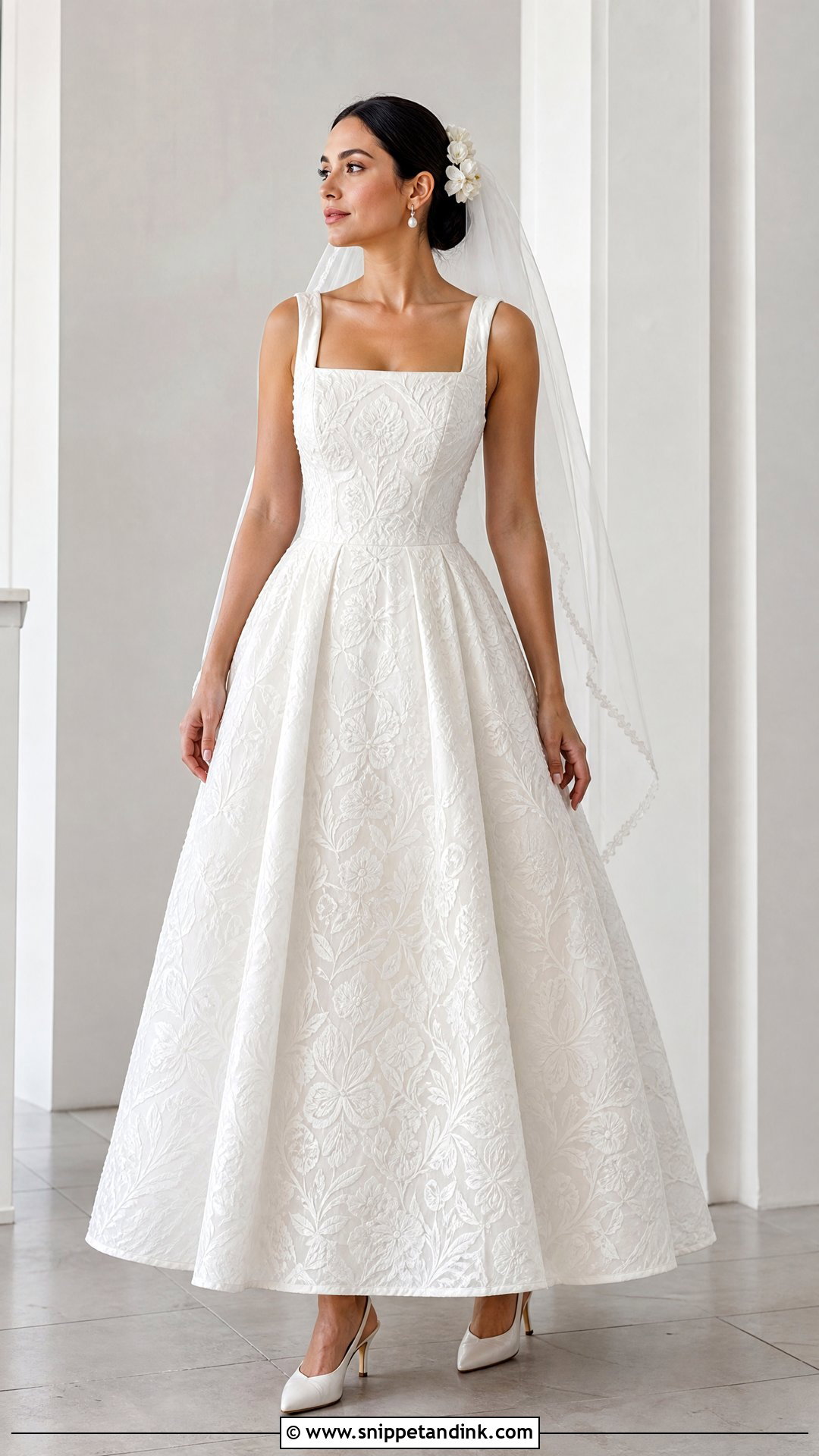
Tonal stitching is the quiet option here. An ivory cotton, silk or linen gown with white floral embroidery adds texture rather than color, cut with a square neckline, a soft waist and a full skirt. Pearl earrings, ivory slingbacks and a chapel veil with a clean edge; a white floral comb keeps the palette monochrome. The catch is the camera. Flat white-on-white embroidery disappears in bright sun, so I look for raised satin stitch or cording that throws a shadow, and I ask the photographer for a few close detail shots in side light.
7. Embroidered Mexican Ball Gown Wedding Dress
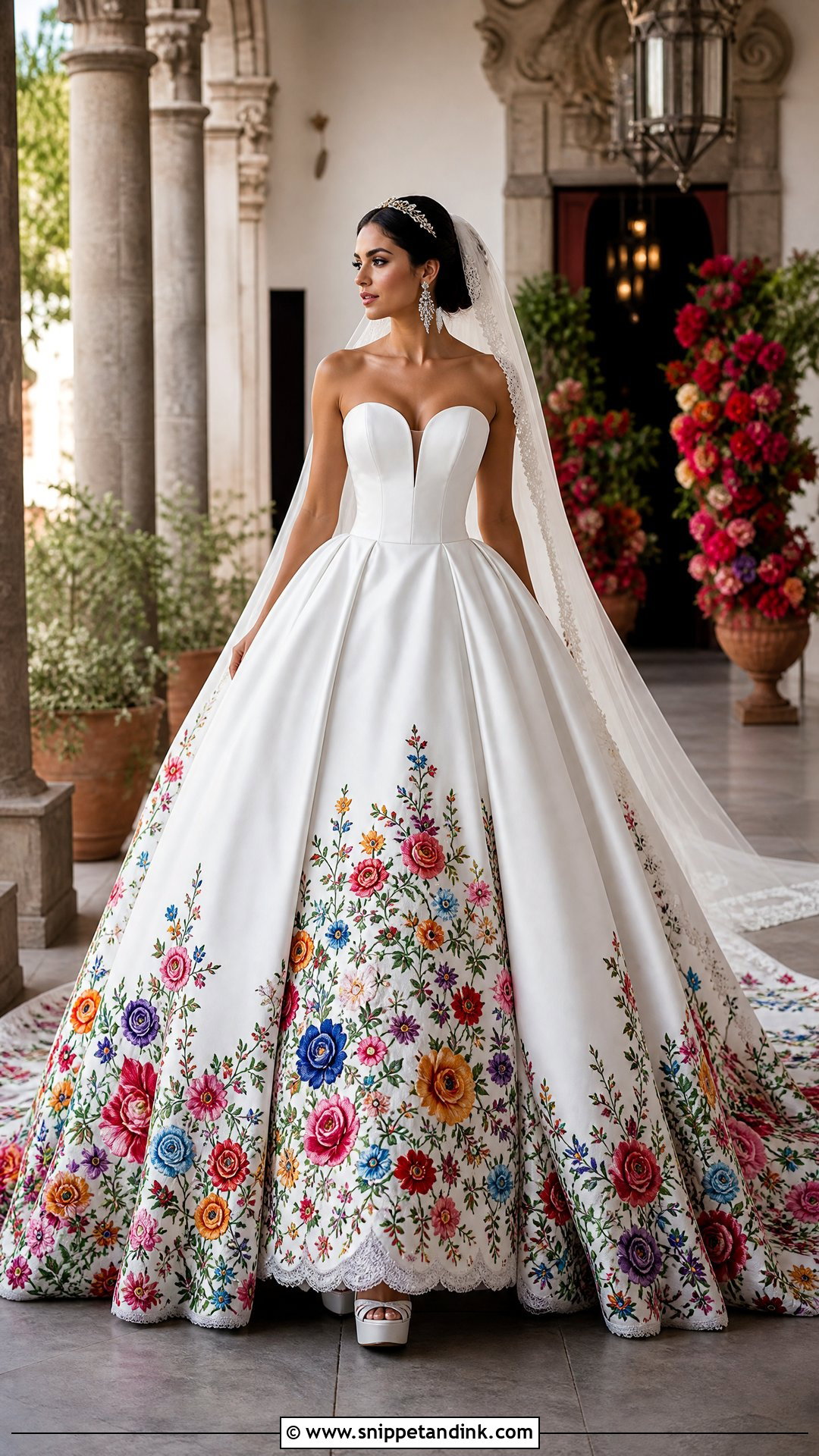
Ball gown volume needs real engineering underneath it. Here the floral embroidery gets denser toward the hem and train, which keeps the upper body clear and puts the weight low. Satin platform heels, crystal drops, a smooth cathedral veil and a sleek bun or polished waves. Ballrooms, historic estates and big courtyards give it room. Heavily embroidered skirts weigh more than plain ones, so I check two things at the first fitting: that the bodice has enough internal structure to carry that skirt without dragging down at the waist, and that the bustle points are strong enough to hold the train through dancing.
8. Embroidered Mexican Mermaid Wedding Dress
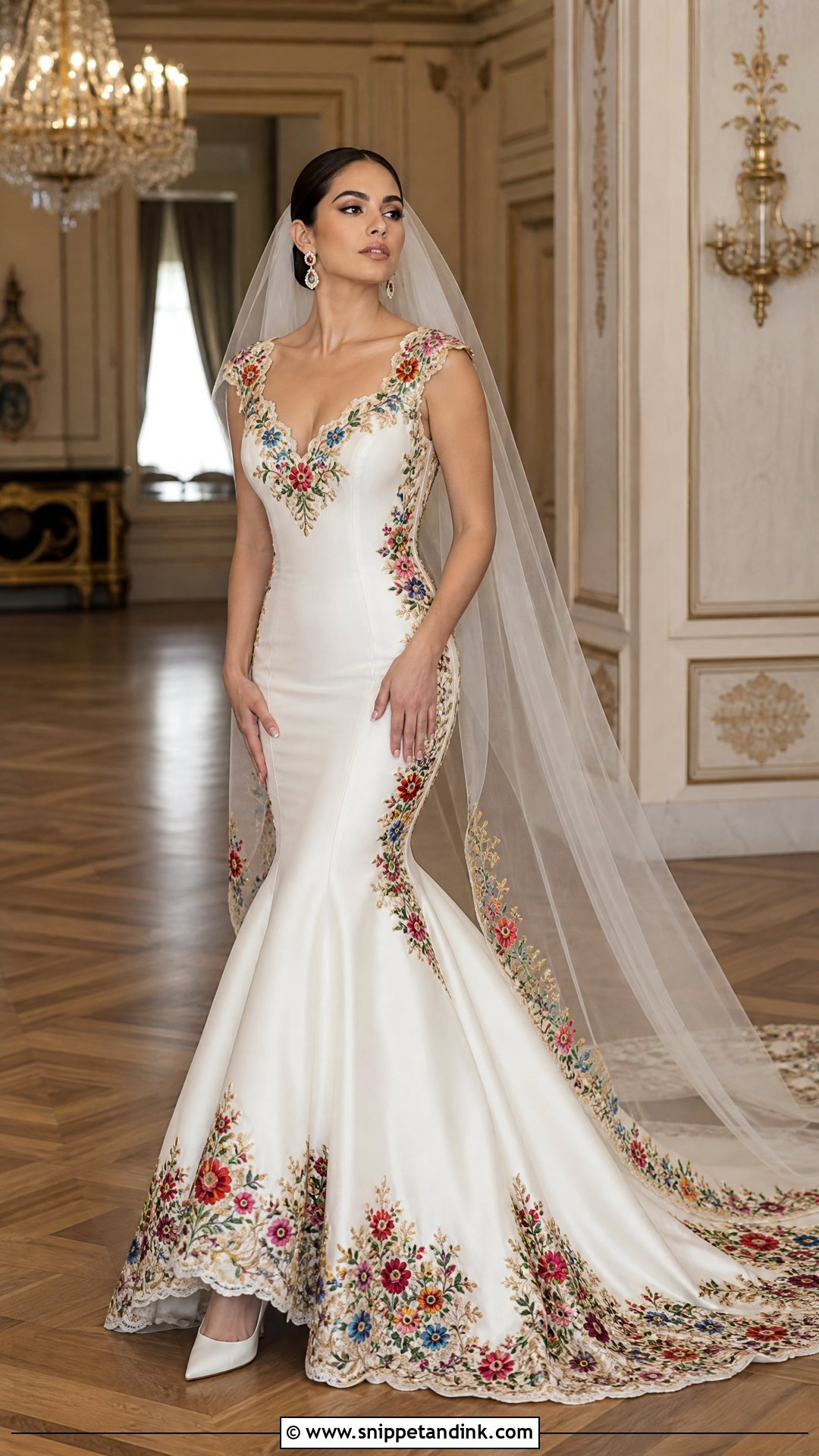
Fitted through the hips, flaring at the knee, with florals that can follow the side seams into the train. It lengthens the body more than any other cut on this list. Pointed ivory heels, a simple fingertip veil, small gemstone earrings and a side-parted low bun. Dense embroidery makes fabric stiffer, and on a mermaid that means less room to walk. At fittings I make brides sit, climb a step and dance a few bars. A detachable overskirt for the ceremony solves a lot: drama on the aisle, then off it comes and you can move at the reception.
9. Embroidered Mexican A Line Wedding Dress
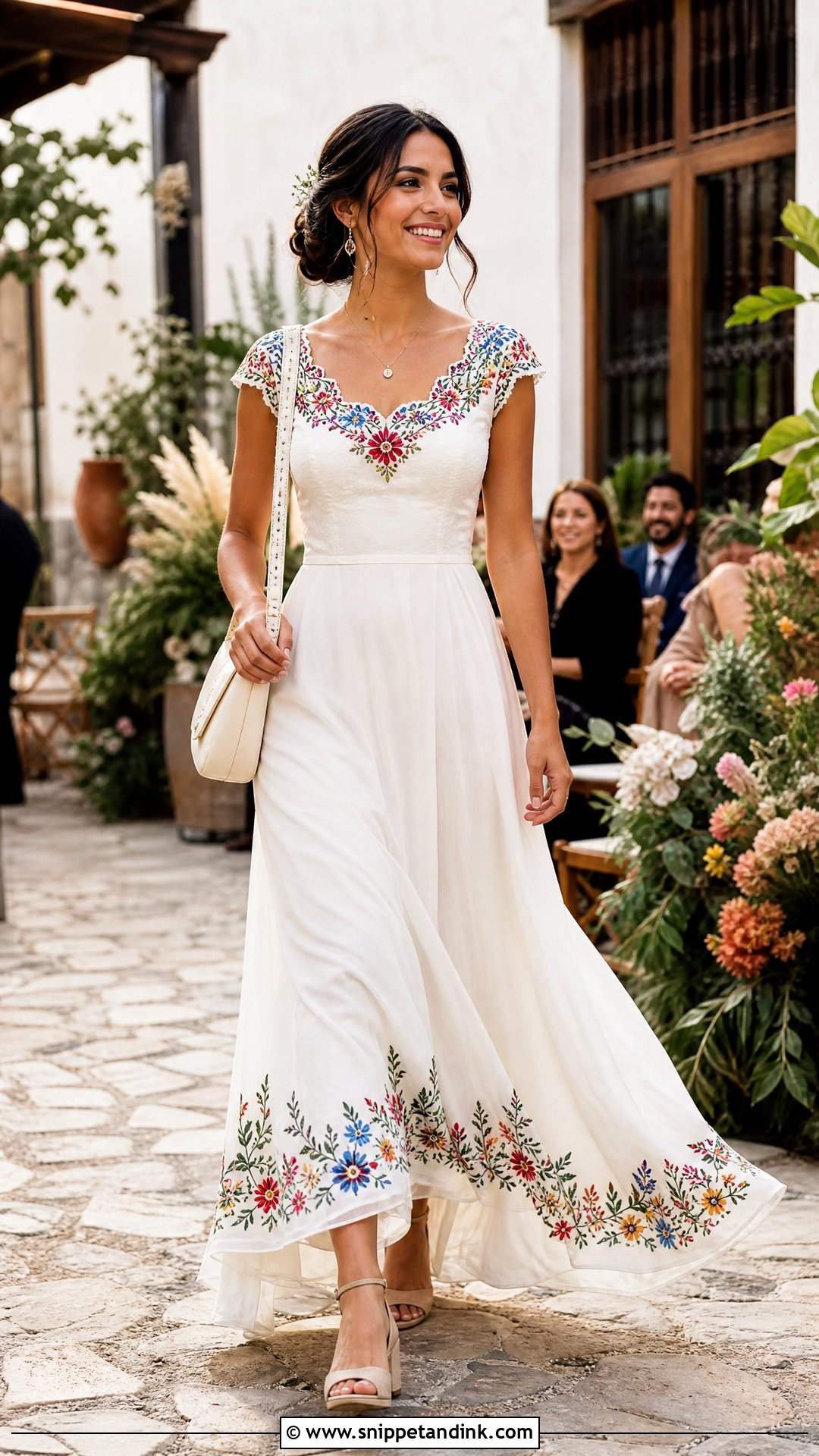
The safest silhouette for most bodies, and it gives the embroidery somewhere obvious to sit: neckline and lower border. A fitted bodice opens gradually into the skirt, which keeps the waist defined. Comfortable block heels, a fine pendant and a half-up style. Lined linen and cotton blends give shape without much weight. For an outdoor wedding, have the hem set to clear the ground, because a bordered hem picks up dirt and grass stains fast and those threads are hard to clean. It works for relaxed gardens and formal hacienda courtyards alike.
10. Embroidered Mexican Boho Wedding Dress
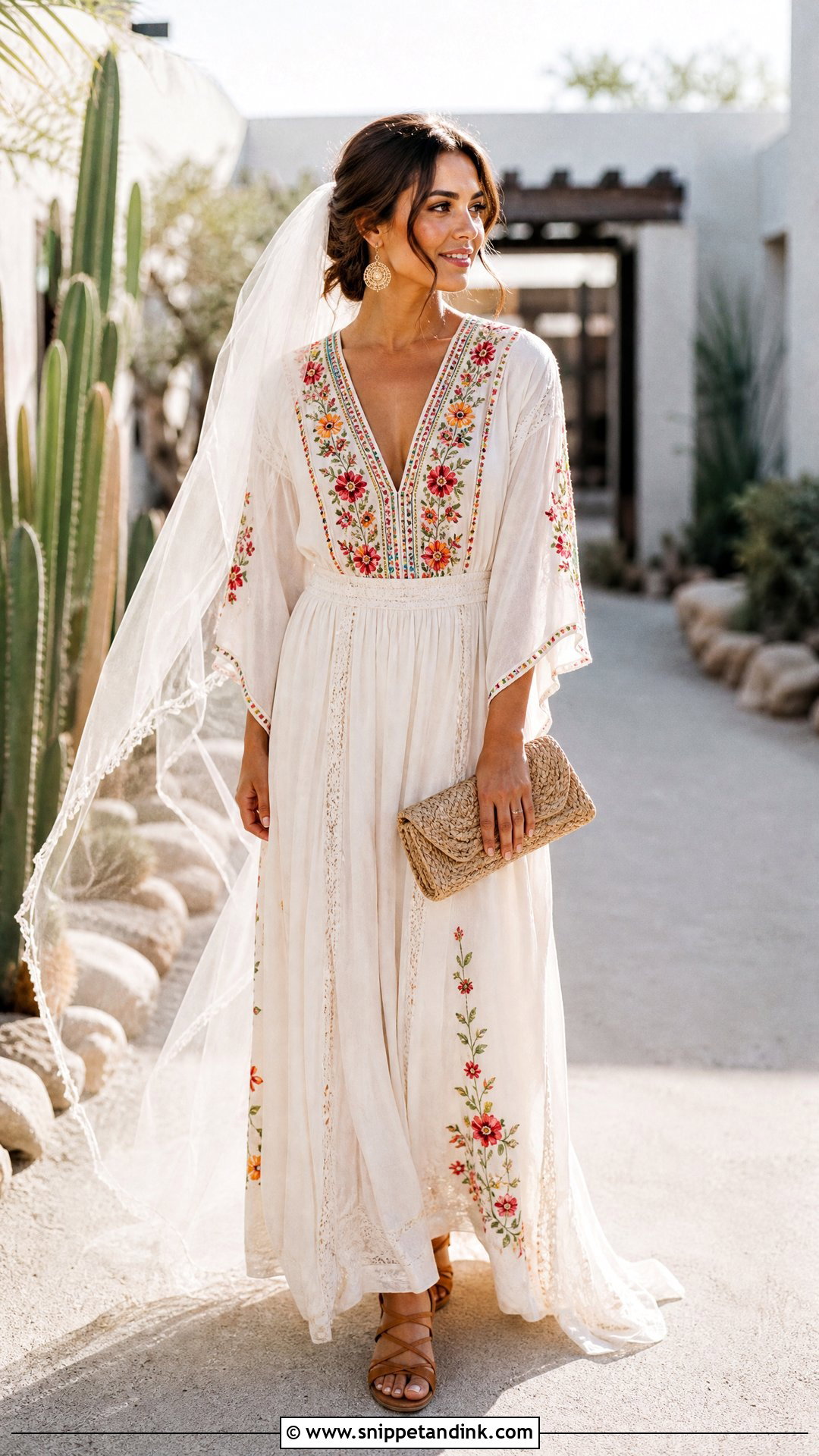
Relaxed, but still put together. A flowing white gown with loose sleeves, a gathered waist and colorful stitching across the bodice. Tan leather sandals, hammered gold earrings, a woven clutch and a long light veil. Loose waves or a textured braid with a few small flowers tucked in. My one rule: don’t pile on folk-style jewelry, belts and a fringed shawl as well. The embroidery is already doing that work. Natural fibers keep you cool through a hot ceremony in the desert or on a beach.
11. Embroidered Mexican Lace Wedding Dress
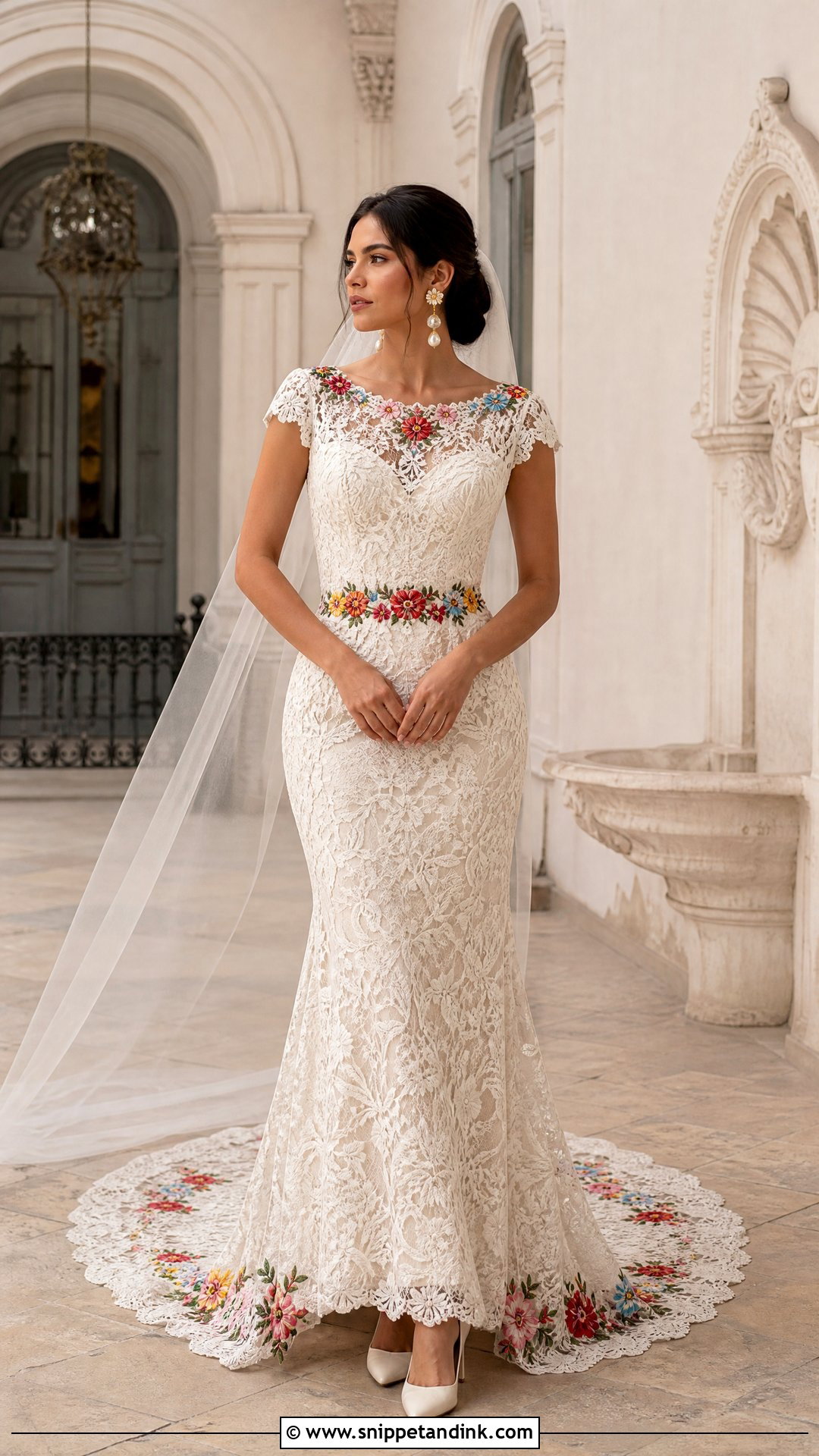
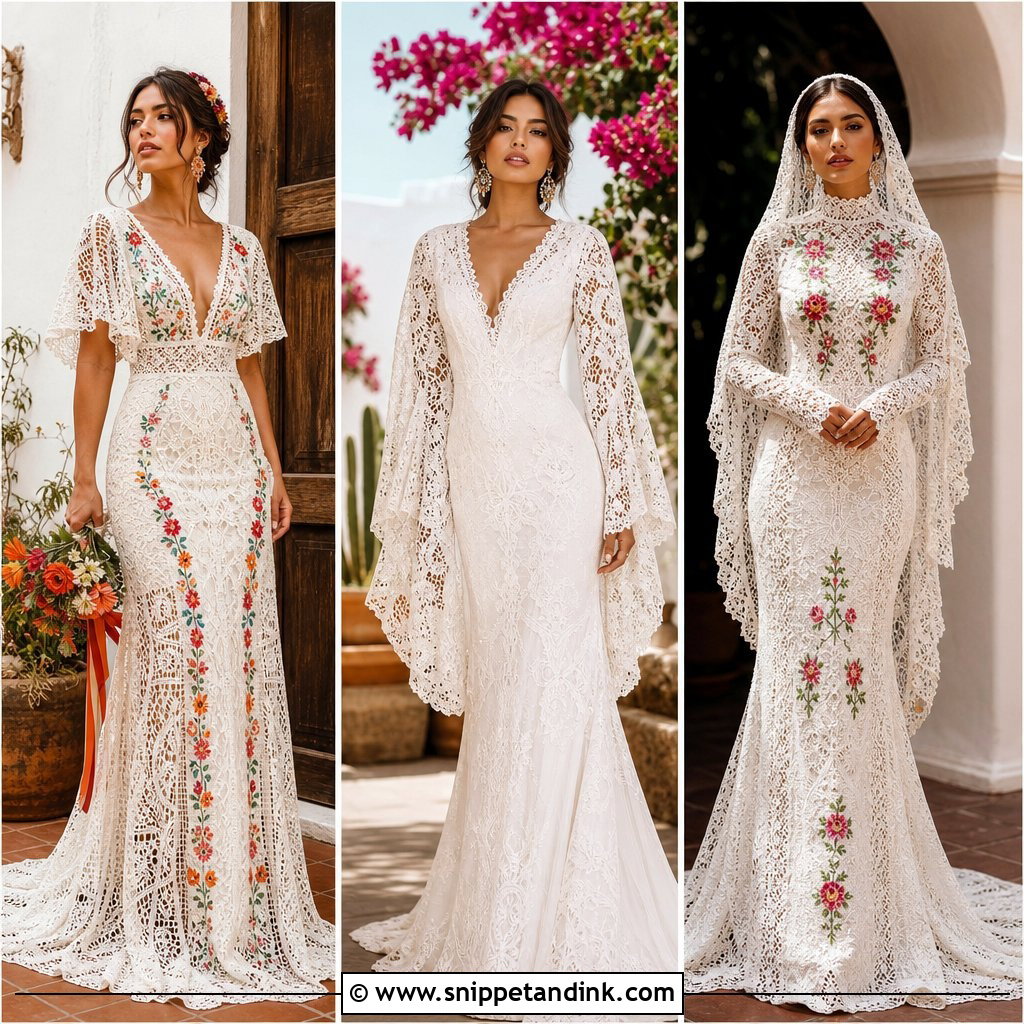
Lace and embroidery both want attention, so give each its own space. An ivory lace gown with colored flowers stitched only at the neckline, waist and train, over a smooth fitted lining that keeps the shape clean. Ivory pumps, pearl and gold earrings, a plain tulle veil and a smooth low bun. When you compare gowns, look where the embroidery crosses a lace seam; good work is neat and secure there, poor work puckers. Keep the bouquet white and green. It suits a formal indoor wedding or a historic property.
12. Embroidered Mexican Tea Length Wedding Dress
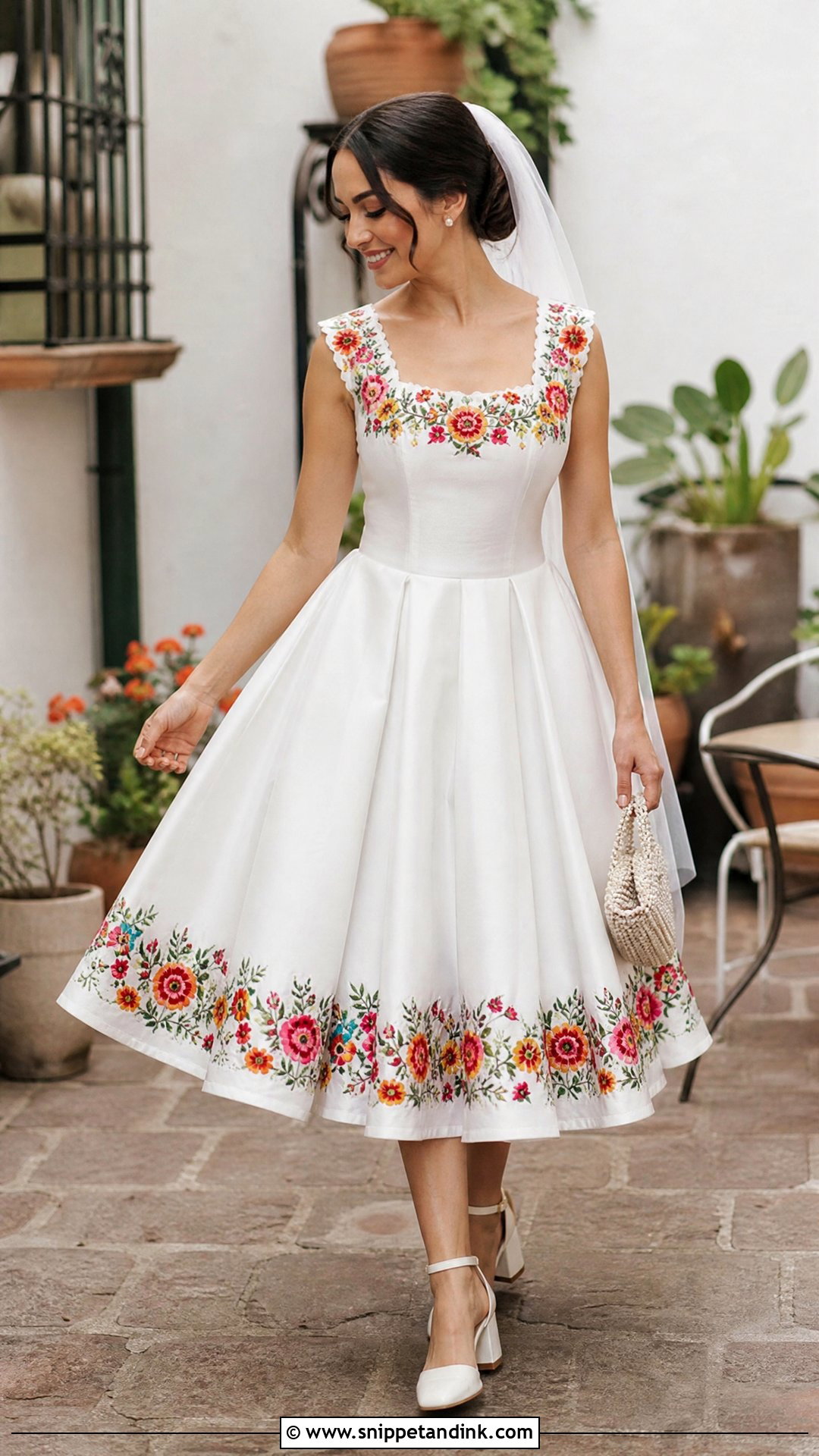
Shoes are on show, so they become part of the outfit. A tea-length skirt falls between knee and ankle, with floral embroidery around the neckline and hem border. Choose a distinct pair of block heels, embroidered pumps or polished leather sandals, then pearl studs, a short veil and a small structured bag. A curled bob or a neat updo suits the shorter line. Civil ceremonies and daytime courtyards are its natural home. No train to bustle, no second dress needed, and you can dance all night in it.
13. Embroidered Mexican Puff Sleeve Wedding Dress
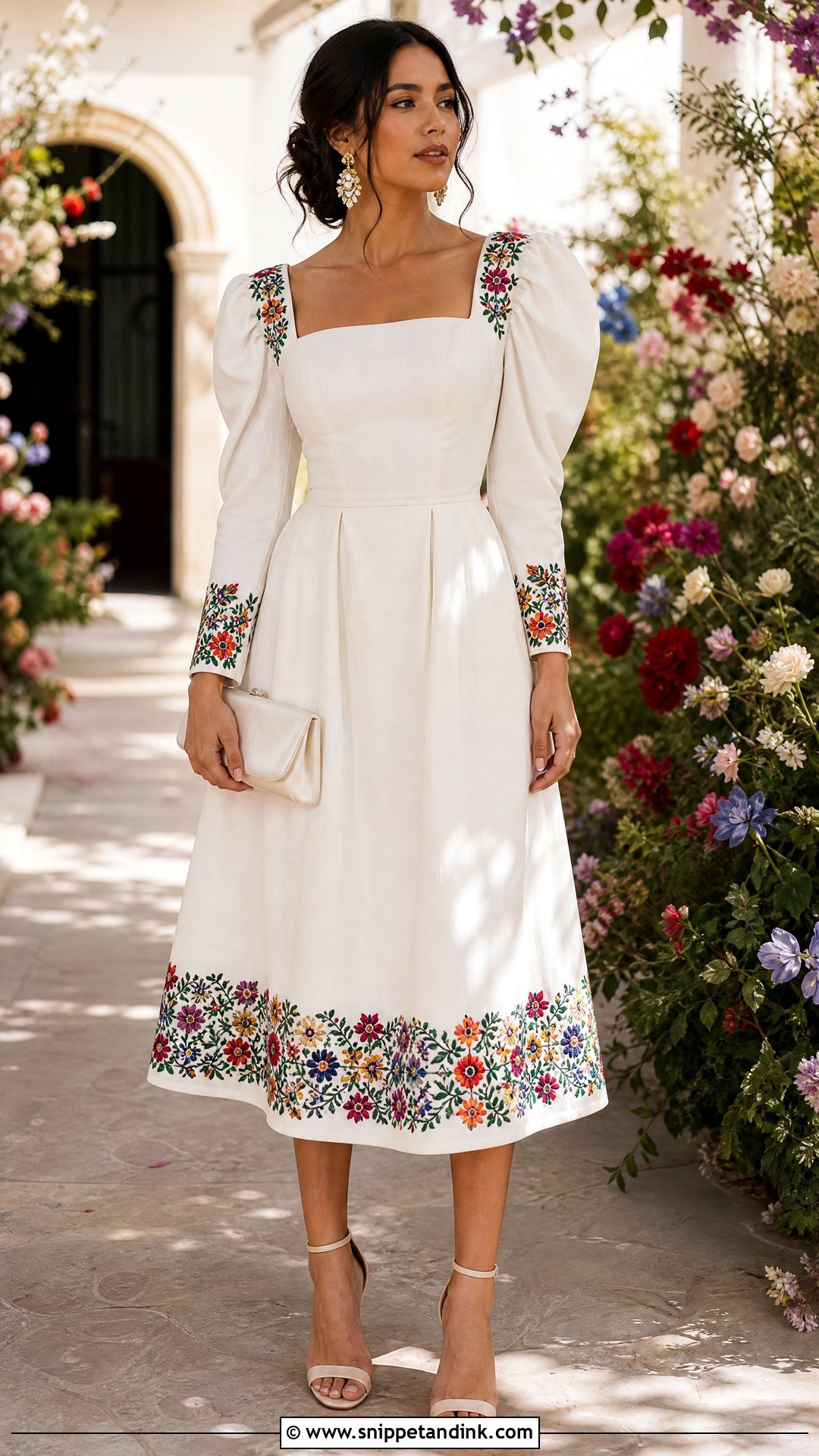
Puff sleeves add volume up top, so the rest of the gown has to stay lean. A square-neck dress with lightly structured sleeves, stitching near the shoulders, cuffs and hem, a fitted waist and a narrow skirt. Delicate drops, ivory ankle-strap heels and a small satin clutch; hair in a low bun or long braid. Removable sleeves give you two looks from one dress. I test the elastic at the sleeve hem by having the bride hold her arms up for a full minute, since a tight band leaves red marks that show in close-ups. Outdoors, raking natural light brings out the texture of the threads.
14. Embroidered Mexican Strapless Wedding Dress
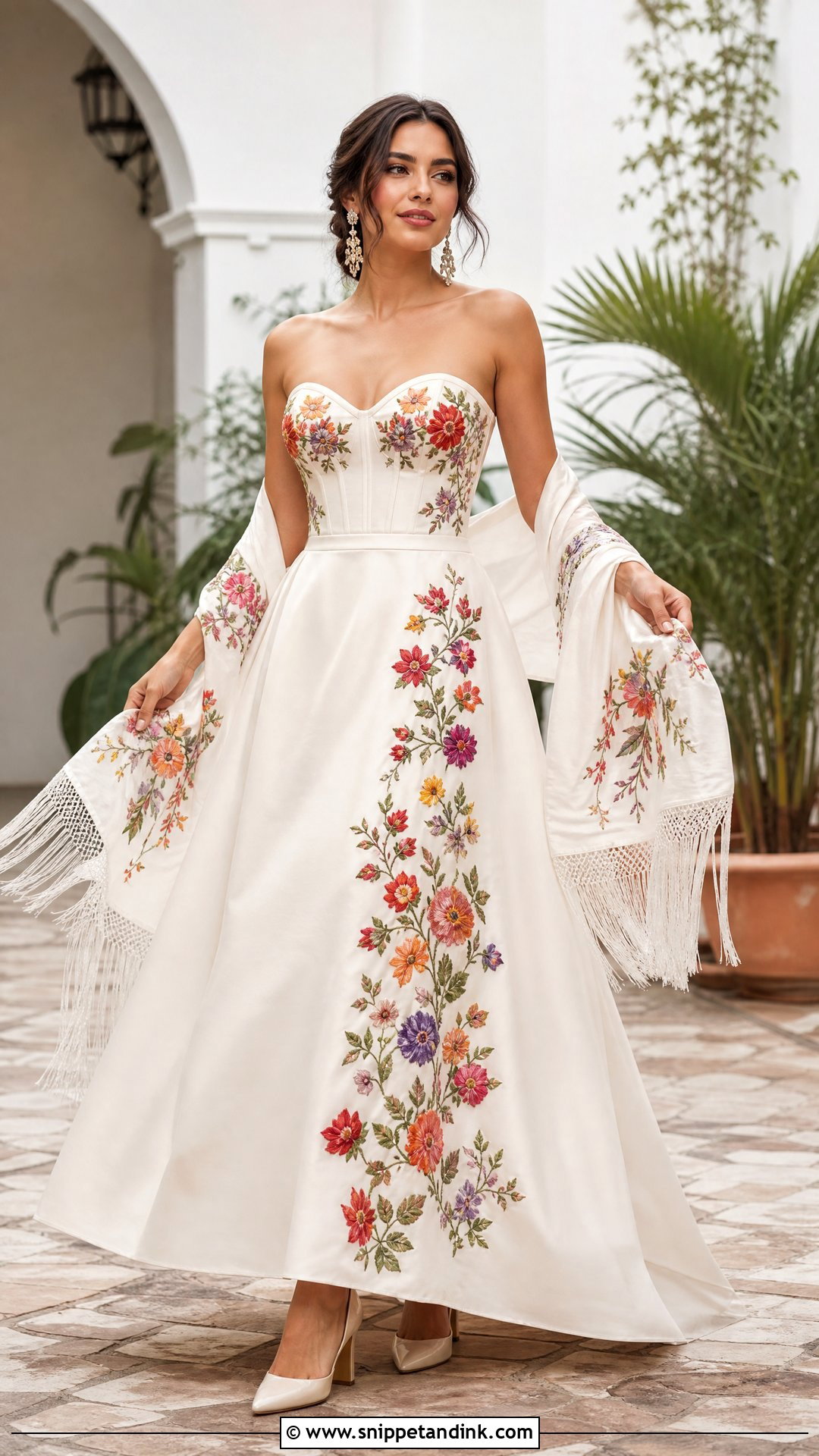
Bold florals on a strapless bodice look modern, but only if the bodice is built properly. A corset-style top with motifs across the neckline running down one side of the skirt, and an A-line or soft flare below. Bring an embroidered shawl for the ceremony, plus ivory heels and small chandelier earrings. A polished ponytail or swept-back bun frames the shoulders. Book your last fitting close to the date, because a small change in weight shows first at a strapless neckline. If you are tugging it up at that fitting, it needs more work.


15. Embroidered Mexican High Neck Wedding Dress
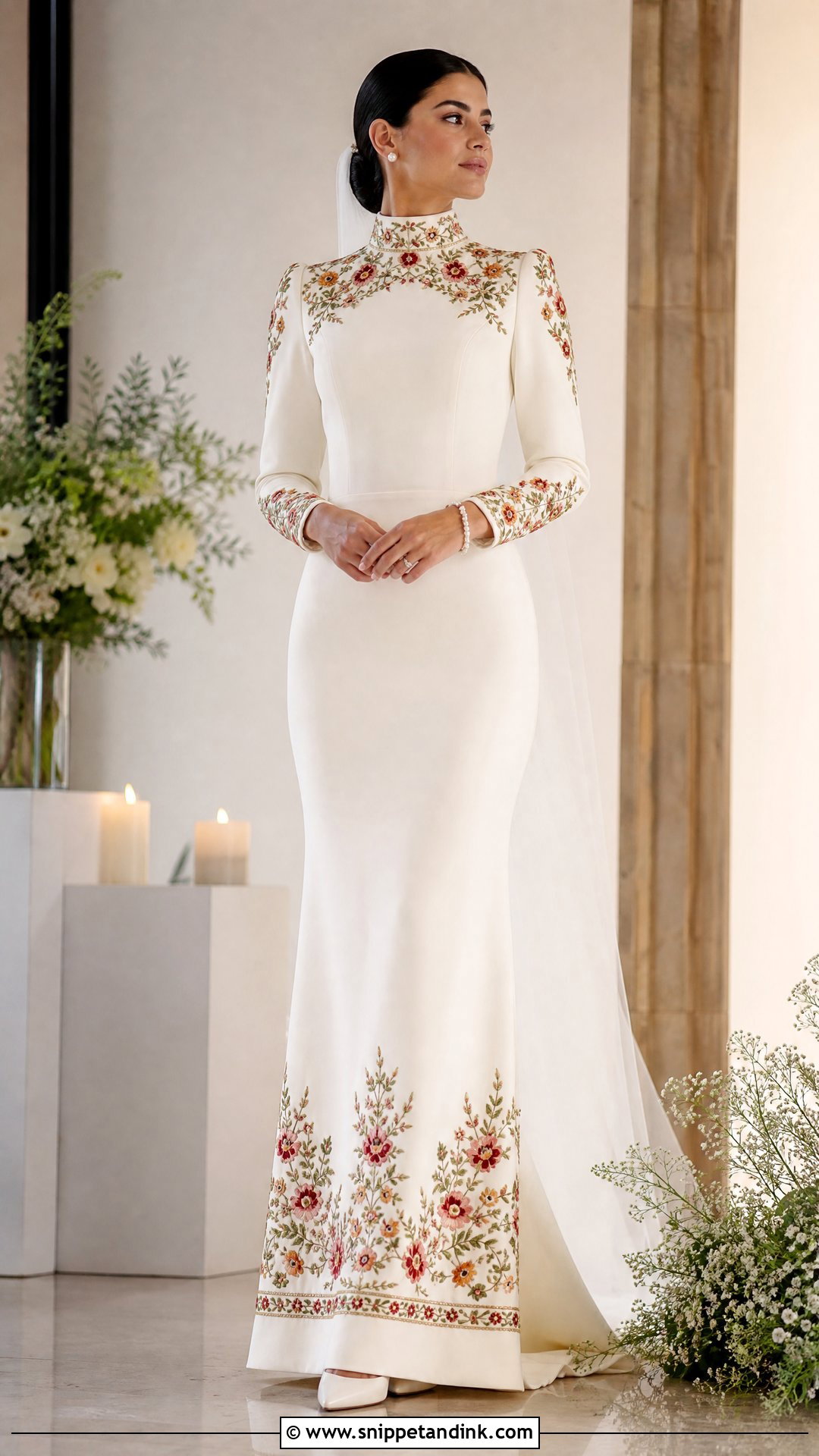
Coverage with a long, clean line. A column or A-line gown with embroidery at the collar, shoulders, cuffs and lower skirt, and a plainer center bodice so the front doesn’t feel crowded. Pearl studs, a slim bracelet and pointed closed-toe shoes; no necklace, the collar does that job. A smooth bun or braided updo keeps the upper work visible. In warm weather I’d steer you toward cotton lace or breathable mesh at the neck rather than a solid lined collar, which traps heat. Formal ceremonies, cooler seasons and modest dressing all suit it.
16. Embroidered Mexican Square Neck Wedding Dress
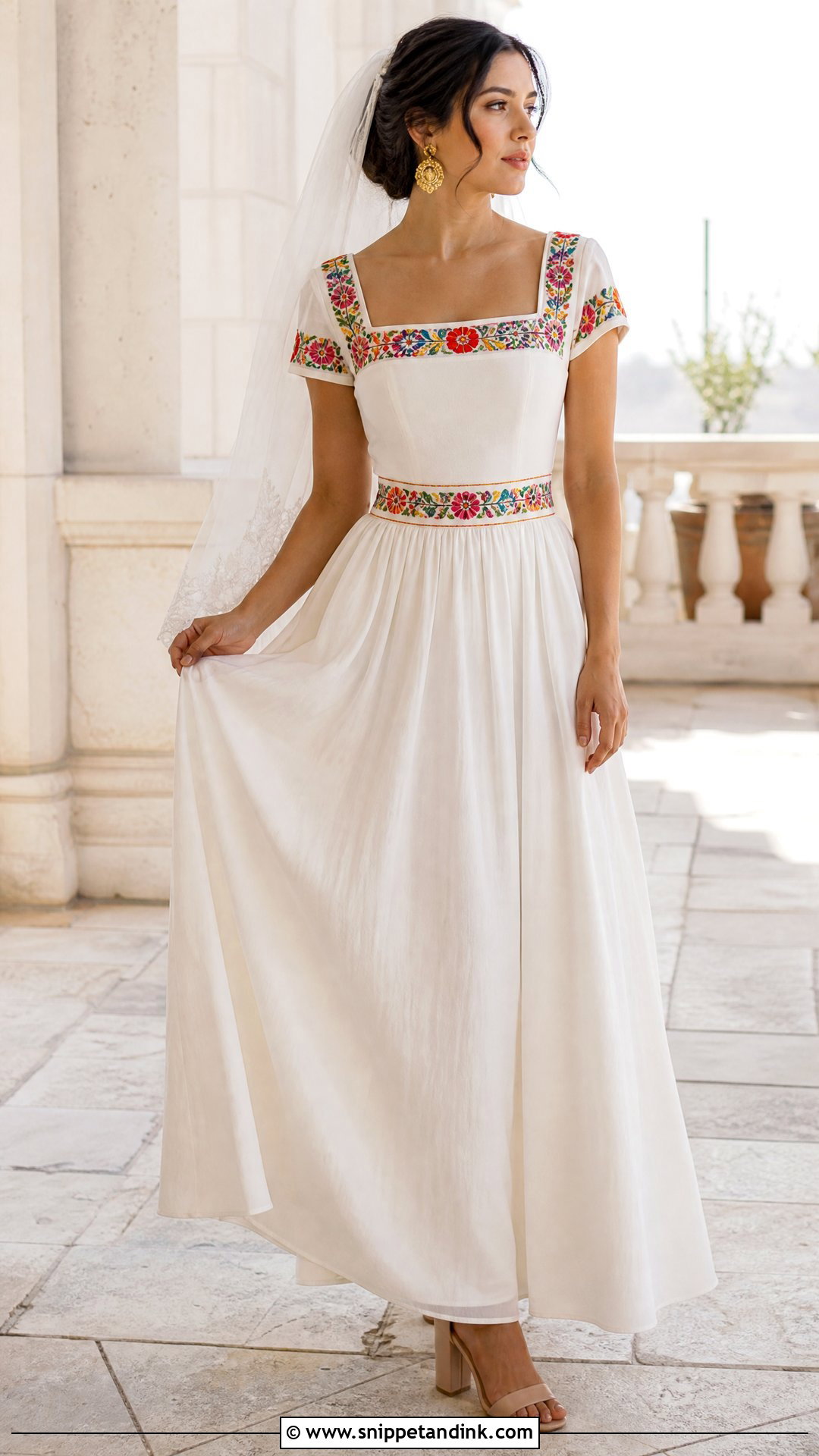
A square neckline brings structure to a flowing dress. Ivory gown, fitted upper bodice, short sleeves, and floral stitching outlining the neckline before running toward the waist; a full but light skirt balances the geometric top. Gold drops, cream block heels, a fingertip veil and a center-parted low bun for symmetry. With a fuller bust, ask for wider straps and an interior support panel. On a petite frame, small-scale embroidery reads better than big blooms. A square neck gapes when you lean forward, so I have the tailor tack it close without making it tight.
17. Red Embroidered Mexican Wedding Dress
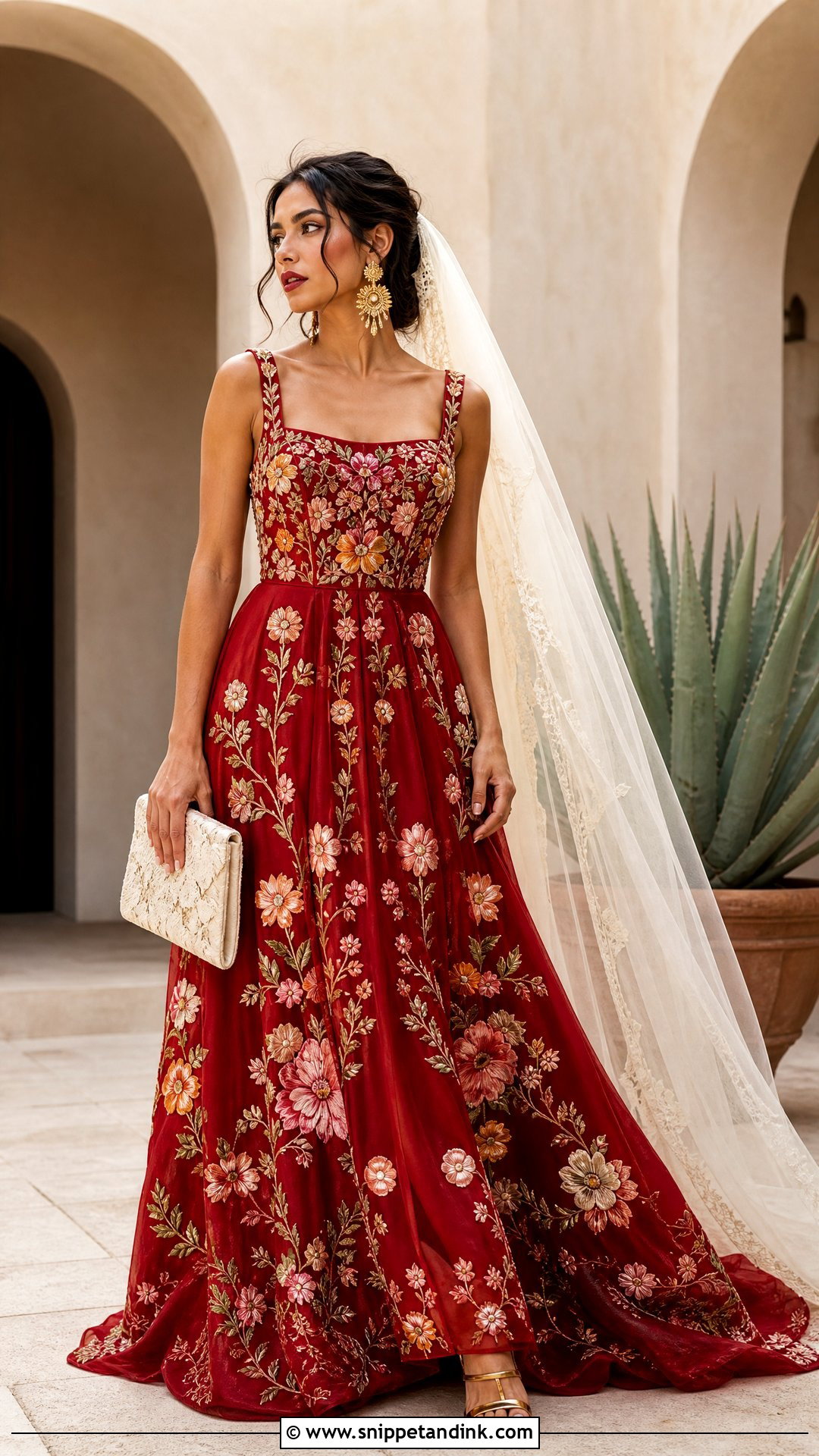
A red embroidered Mexican wedding dress is a confident break from white. Deep red, scarlet or crimson, with contrasting florals in pink, orange, green and ivory, cut with a fitted bodice and a flowing skirt rather than huge volume. Metallic gold sandals, sculptural earrings and a small cream clutch. Keep hair sleek and makeup defined but soft so the color leads. An ivory veil for the ceremony, off for the reception, gives you a traditional moment. Always get fabric and thread samples; red shifts a lot between daylight and indoor light, and a busy venue backdrop fights with it.
18. Blue Embroidered Mexican Wedding Dress
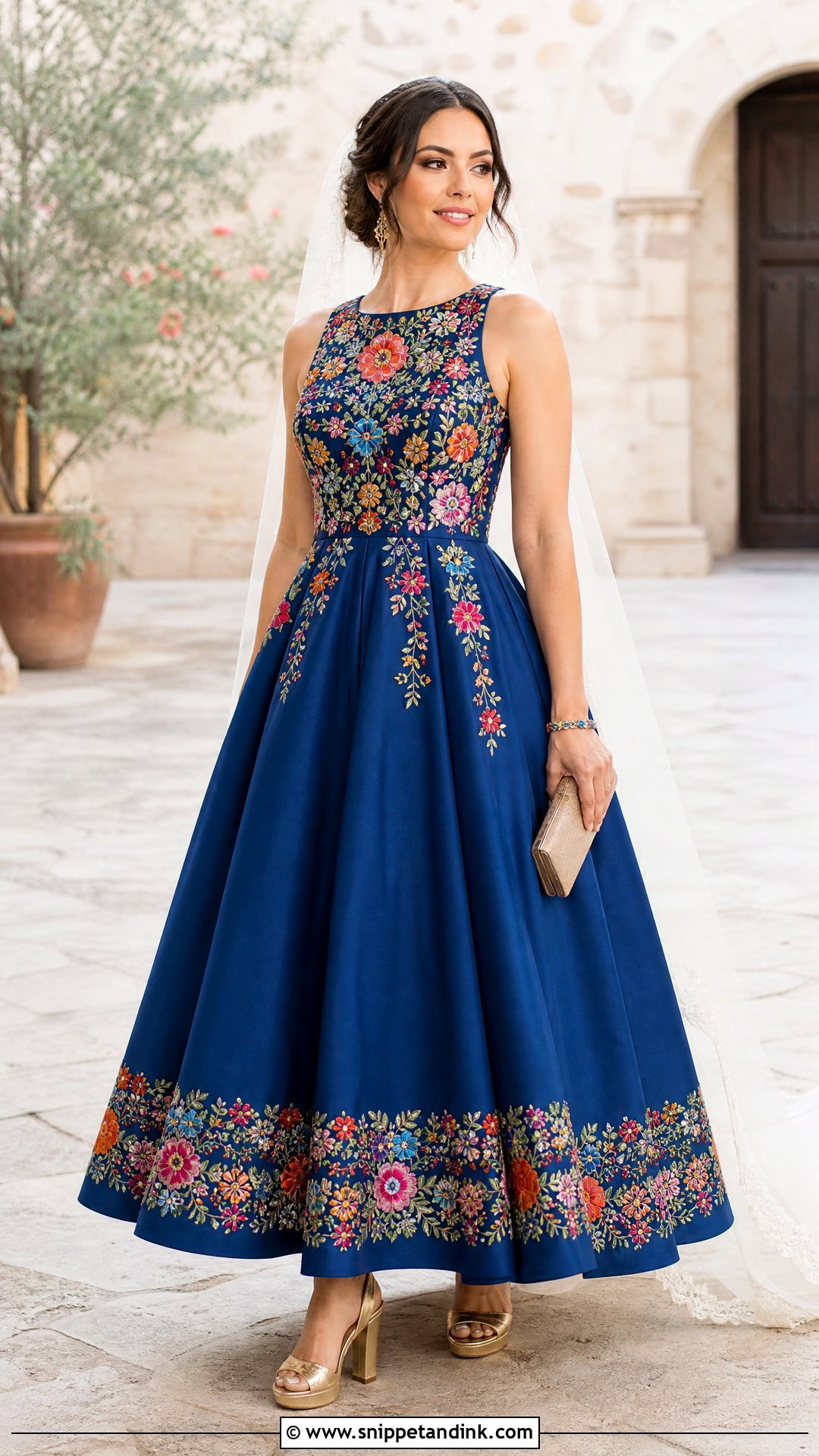
Deep blue makes bright embroidery glow. A royal, cobalt or navy gown with motifs across the bodice and near the hem, in a sleeveless A-line that keeps the strong color looking current. Gold block heels, a bracelet and a neutral clutch, with a low braided bun. A sheer ivory veil adds a bridal note for the ceremony. For flowers I pick a single embroidery color to repeat, never the whole palette; copying everything looks costume-like. Pale stone, sand and whitewashed walls set it off best.
19. Black Embroidered Mexican Wedding Dress
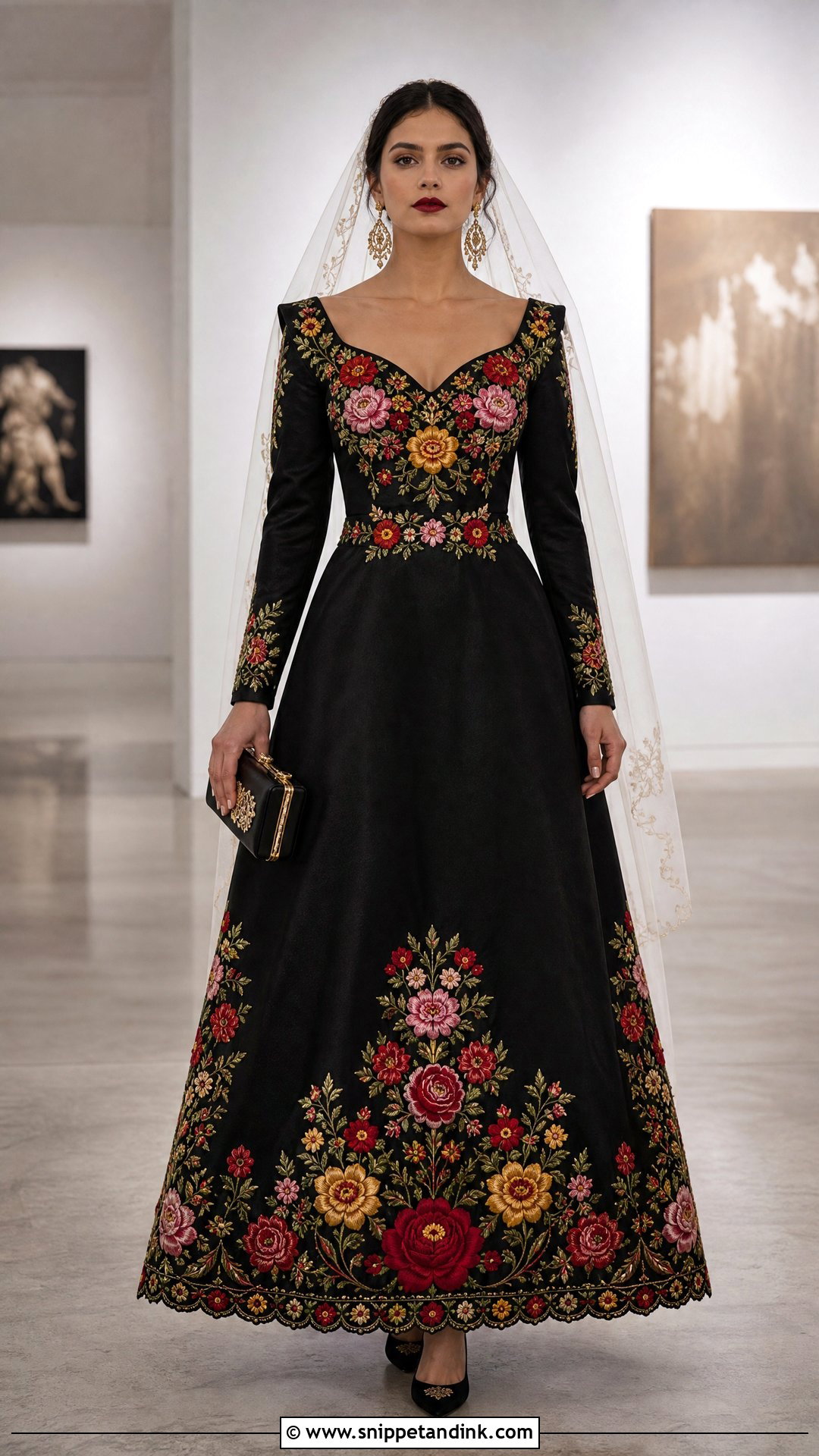
Bright threads look their most vivid on a black ground. A fitted A-line or column gown with flowers stitched across the neckline, waist and hem. Black pointed heels, gold earrings and a structured black clutch keep the palette tight. A sheer black veil reads dramatic, an ivory one softer; that choice changes the whole mood. Keep hair smooth and jewelry small. Talk it through with your partner and family first, since black still surprises some guests. It is happiest at an evening wedding, a modern gallery or an indoor reception.

20. Blush Embroidered Mexican Wedding Dress
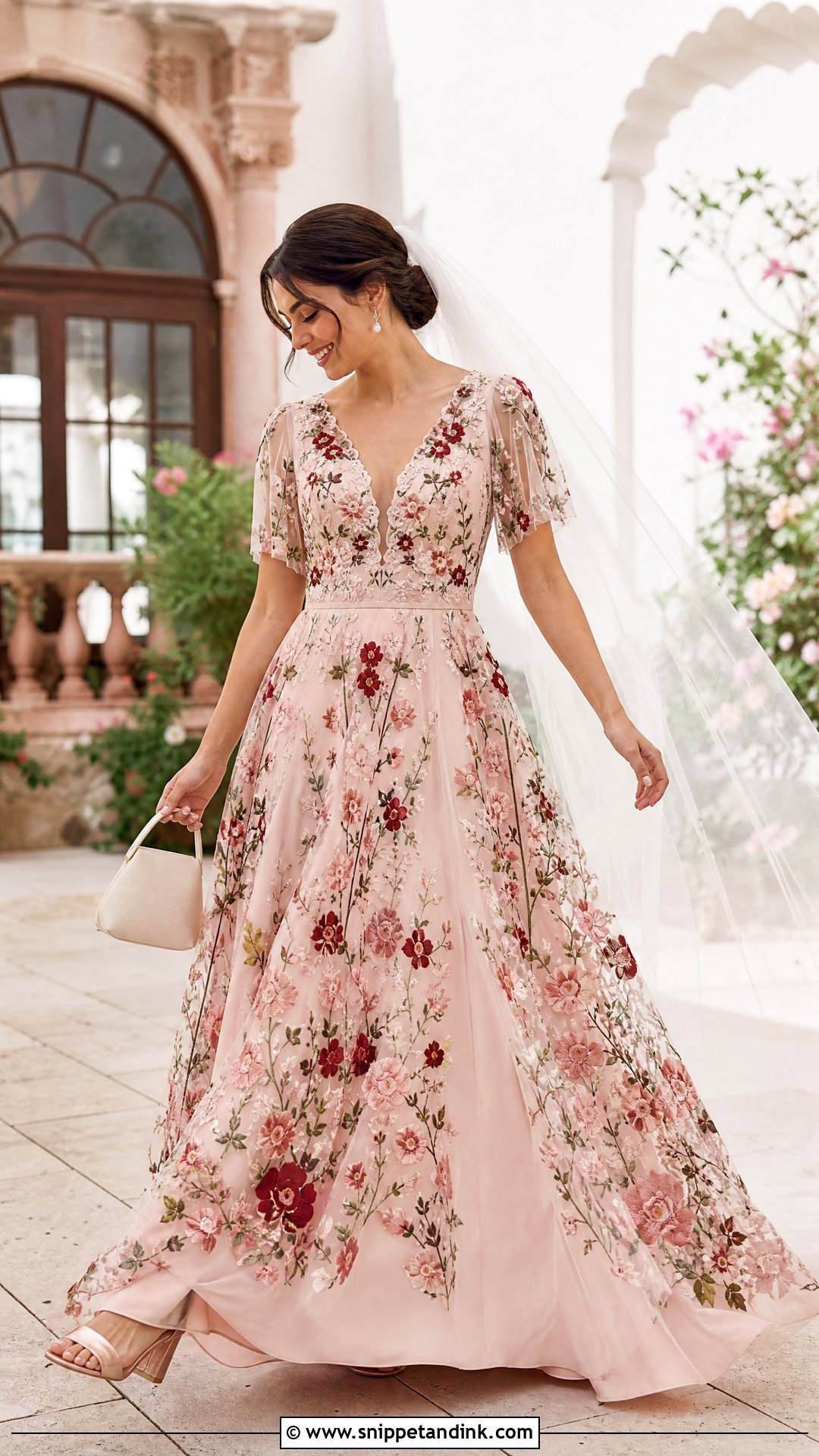
Pink undertones vary enormously between fabrics, and between skin tones. That’s the first thing I check with blush. A pale pink A-line with florals in burgundy, coral, ivory and green; a sheer embroidered overlay adds depth while keeping the base light. Rose-gold block heels, pearl earrings and a small ivory bag, with a loose low bun and a subtle floral comb. Add a plain ivory veil that doesn’t hide the stitching if you want a classic finish. Hold the fabric against your face in daylight; some blushes wash out fair skin and others turn muddy on deeper tones. Spring gardens and terraces suit it.
21. Plus Size Embroidered Mexican Wedding Dress
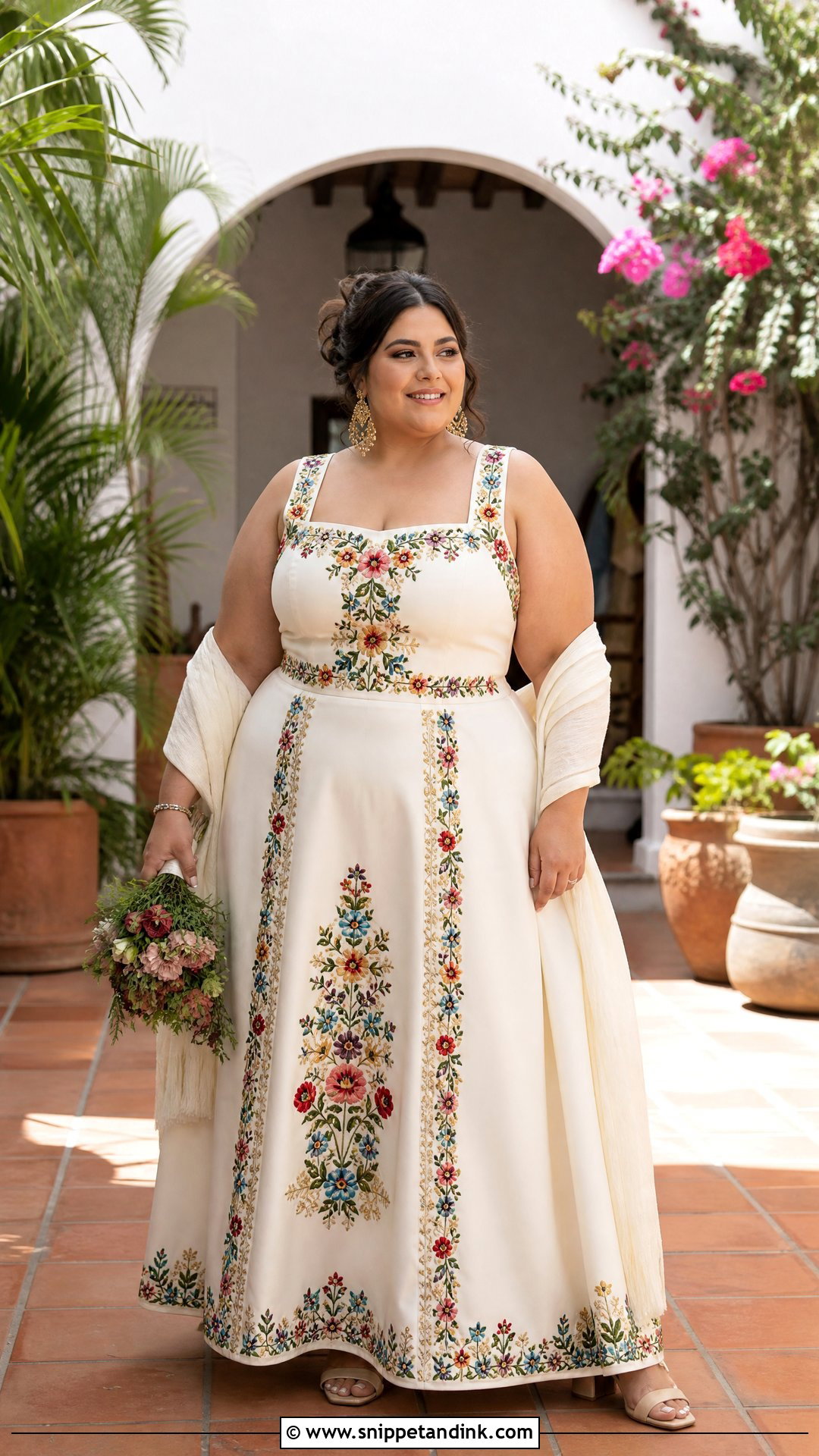
Fit comes first, then placement. An A-line with a square or V-neck bodice, wide straps and a gently defined waist gives support, and embroidery framing the neckline and running vertically down the skirt draws the eye through the whole length. Stable block heels, statement earrings and a light shawl you can drop after the ceremony. A properly fitted lining stops dense threadwork from pulling and puckering. With handmade pieces, don’t trust standard sizing. Send real measurements and talk to the maker about how much ease you want, so you can sit, hug and dance without adjusting anything.
22. Minimal Embroidered Mexican Wedding Dress
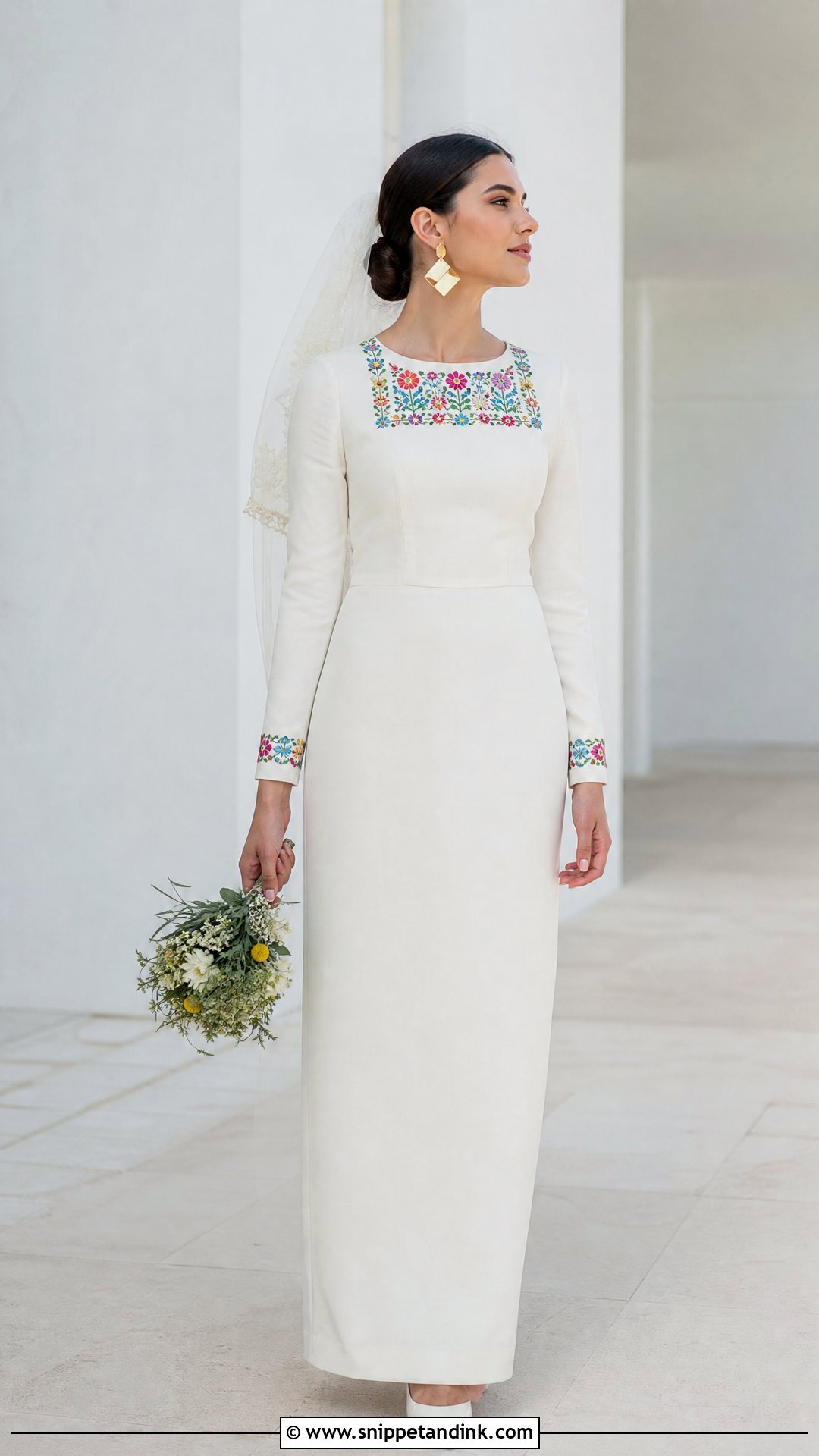
Less embroidery, placed precisely. A clean ivory slip, column or A-line with one stitched panel at the neckline, cuffs, waist or lower skirt, in two or three thread colors at most. Simple ivory heels, geometric gold earrings, a shoulder-length veil and a sleek bun. This is the dress I suggest when a family member or local artisan wants to embroider something for the bride. Cut a paper template of the motif and pin it on the dress at a fitting before anyone stitches; moving it two inches changes everything.
23. Embroidered Mexican Wedding Dress With Train
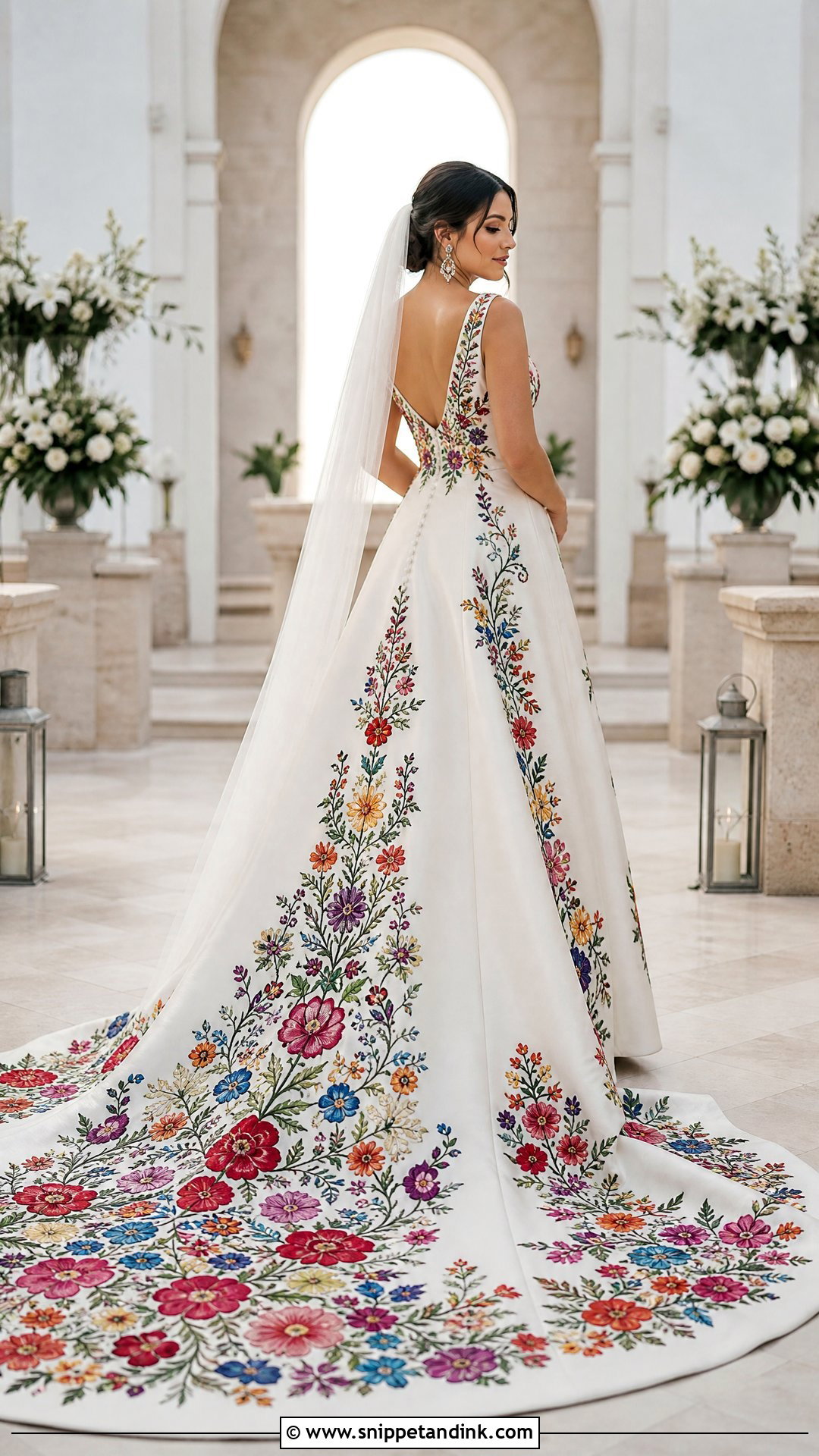
A train turns the embroidery into a moment on the aisle. Fitted or A-line, with threadwork flowing from the bodice to a chapel train, concentrated around the outer edges so the shape reads clearly in photos without loading the center. Platform heels, fine drops, a plain veil that ends before or beyond the train, and an updo so the back is visible. Embroidered trains are heavier than they look. Ask for a strong bustle and practice fastening it with whoever will do it on the day. Smooth aisles only; gravel snags loose threads.
24. Embroidered Mexican Wedding Dress With Rebozo
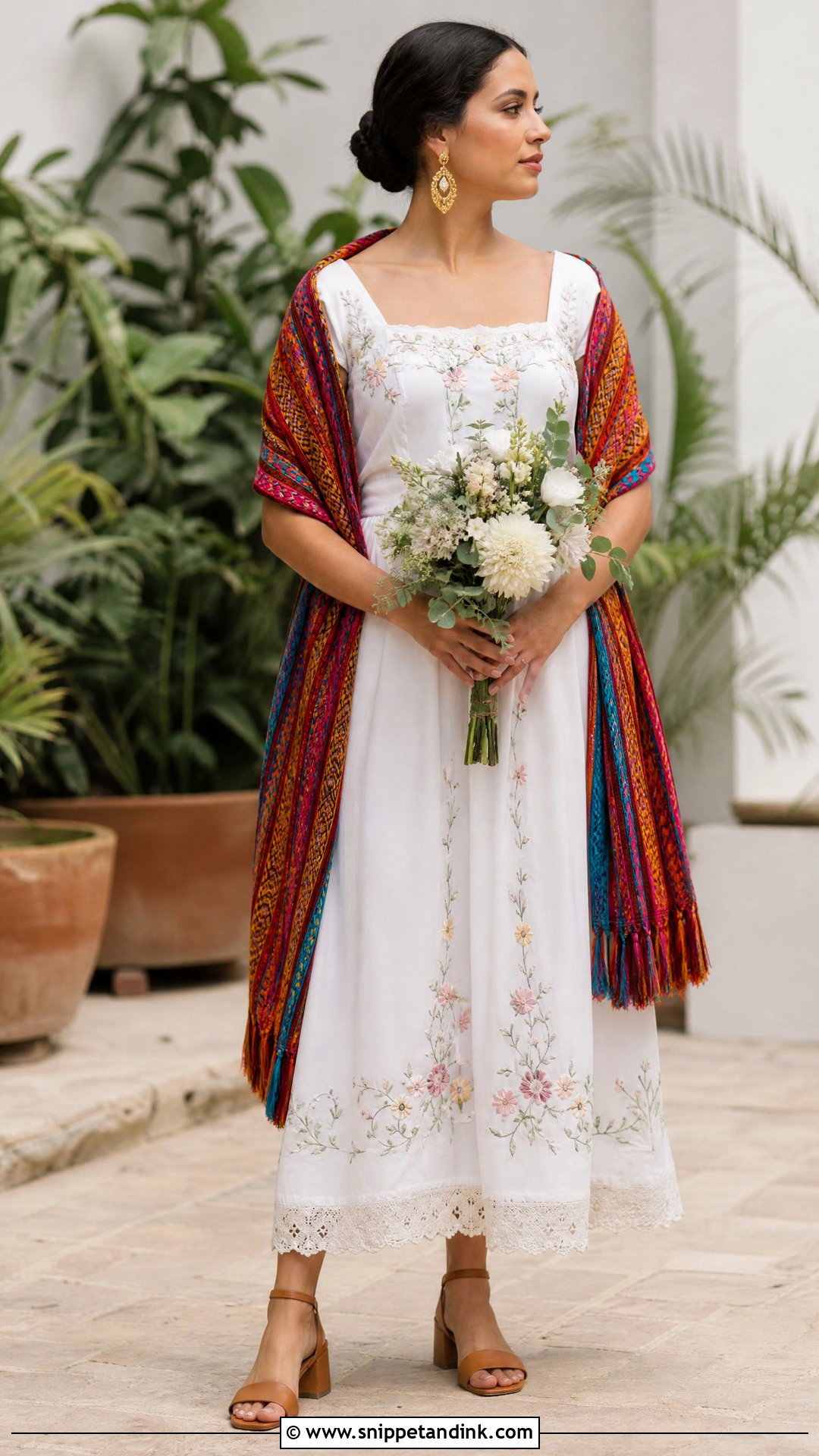
Adding a rebozo to an embroidered Mexican wedding dress gives you two textiles and real coverage. Start with a simple white gown stitched at the neckline and skirt. Drape a woven rebozo over the shoulders, chosen to complement the dress rather than match it. Leather block heels, gold earrings and a low braided bun. Take it off for the reception or throw it over one shoulder for portraits. With an artisan-made rebozo, learn where it was woven and follow the maker’s care advice; many are hand-dyed and should not be washed with the gown.
25. Custom Embroidered Mexican Wedding Dress
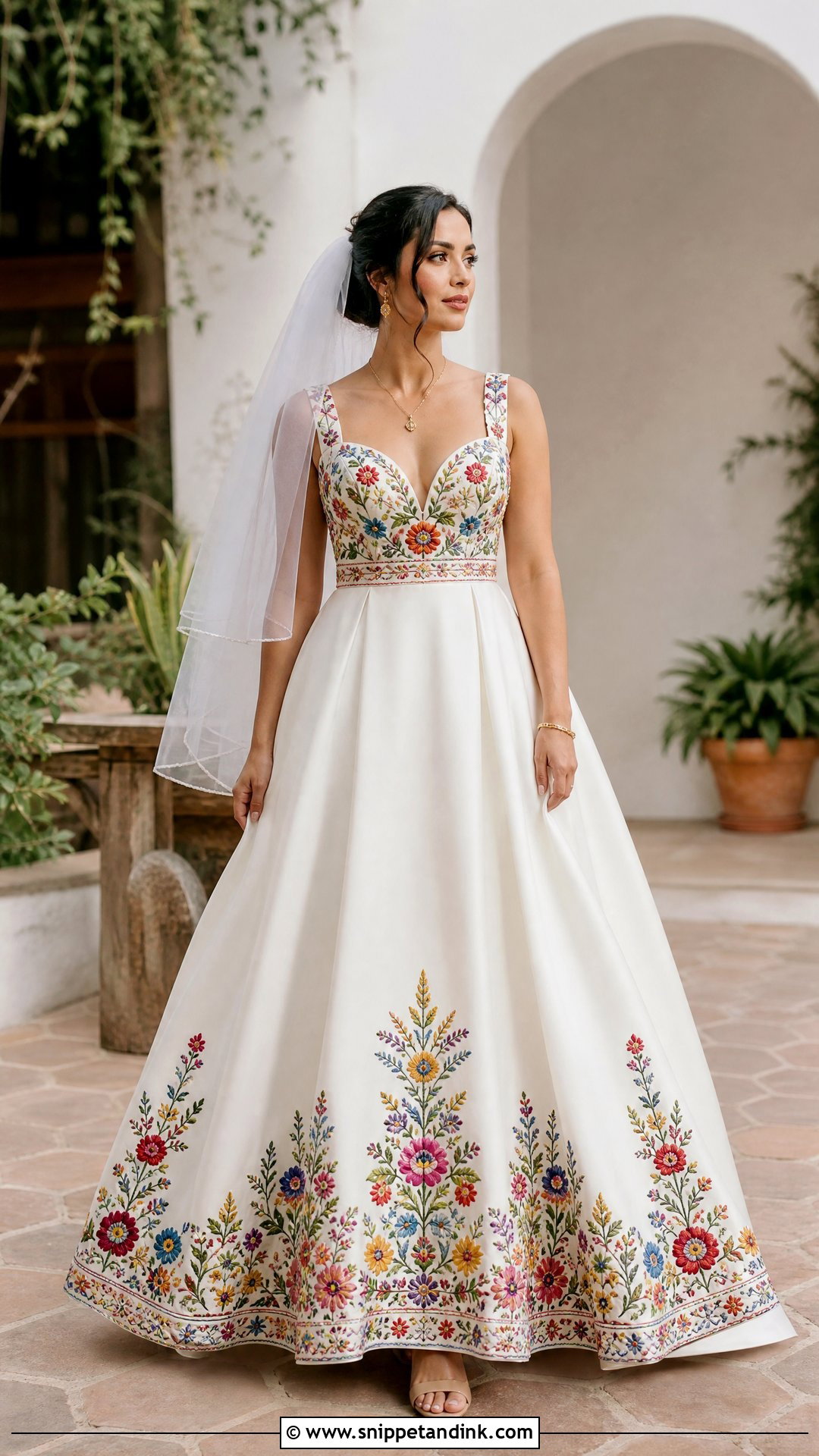
Custom work lets you choose silhouette, fabric, colors and exactly where the motifs go. Start with a comfortable shape that suits the venue: A-line, column, ball gown or a relaxed huipil cut. Work with a Mexican designer or artisan directly where you can, and ask in writing about materials, production time, fitting schedule and who owns the design. I always wait to choose accessories until the thread palette is final; neutral heels, restrained jewelry and a plain veil usually win. Hand embroidery is slow, and shipping across borders adds weeks, so build in a generous buffer for alterations. The finished dress becomes a keepsake and supports the maker behind it.
Altering a Gown Without Cutting Through the Flowers
Embroidery changes how a seamstress works. Taking in a plain bodice is routine; taking in one where flowers run across the side seam means unpicking the motif, adjusting the seam and stitching the flower back by hand. Bring the dress to someone who has handled embroidered pieces before, and ask them to show you on the dress where they plan to cut.
- A bordered hem shouldn’t be shortened at the bottom. I have the skirt lifted at the waist instead, so the border stays whole.
- Allow extra fitting time. Restitching a motif by hand can add days to an ordinary alteration.
- Keep any spare thread the maker sends. Matching a faded or hand-dyed color later is close to impossible.
Test the Red Threads Before Anything Gets Wet
Brightly dyed cotton threads, especially reds and deep pinks, can bleed when they get damp. Before the wedding, press a slightly wet white cloth against an inside seam motif for a minute. If color transfers, keep the dress away from water entirely and have it professionally cleaned by someone who works with embroidery.
To remove creases, I steam from the reverse with a towel underneath so the raised stitches keep their shape. Never iron straight over embroidery; it flattens the work and can scorch synthetic threads. After the wedding, store the dress folded with acid-free tissue between the layers in a breathable cotton bag, not plastic, and refold it every so often so the creases don’t set across a motif.
An Embroidered Dress That Honors Its Maker
Comfort first, then personality. Across these gowns, from loose huipil shapes to ball gowns, saturated colors and tonal stitching, the same checks hold: fit, fabric weight, lining, where the motifs sit and how freely you can move. Pick shoes and accessories that support the embroidery rather than compete with it. And treat these textiles with respect: learn where a garment comes from, credit the person who made it and buy artisan work when you can. Styled with care and sourced honestly, an embroidered dress carries as much meaning as it does color.
You'll Like These Ideas:




Leave a Reply