
What makes Victorian wedding cakes so appealing is that you can see the hours in them. Height, texture and ornament come first: ivory tiers, lace-like piping, pearl borders, sugar flowers and scalloped edges in soft garden colors. Done well, they look graceful rather than stiff. The versions I’m proudest of balance heavy ornament with a clean finish, so the cake reads as classic instead of crowded. Royal icing gives the crispest, most traditional detail, while buttercream softens everything. Ballrooms, garden ceremonies and historic houses all suit the style, and the ideas below show how far it can stretch.
Where the Ornament Goes Depends on Where the Cake Stands
Before I sketch any piping, I ask where the cake will sit. A cake against a wall or in front of a window is seen from one side, so I can put the richest work on the front and keep the back simple. A cake in the middle of the room is walked around all night and needs detail all the way round, which adds hours and cost.
Light matters just as much. Victorian piping is read through shadow: every swag and shell shows because light rakes across it. Soft light from one side, such as a window or a nearby lamp, brings it out. Flat overhead lighting or a spotlight straight on top makes even deep Lambeth work look flat in photos.
Flavors that hold up under heavy decoration
Ornate cakes need firm cakes. Fruitcake, almond cake, chocolate mud cake and dense butter sponges carry weight and stay level under fondant and piping. Light chiffon sponges, mousse fillings and fresh cream don’t, so if your favorite flavor is delicate, I’d put it in a lower-detail tier or serve it as a separate kitchen cake.
1. Victorian Lambeth Wedding Cake
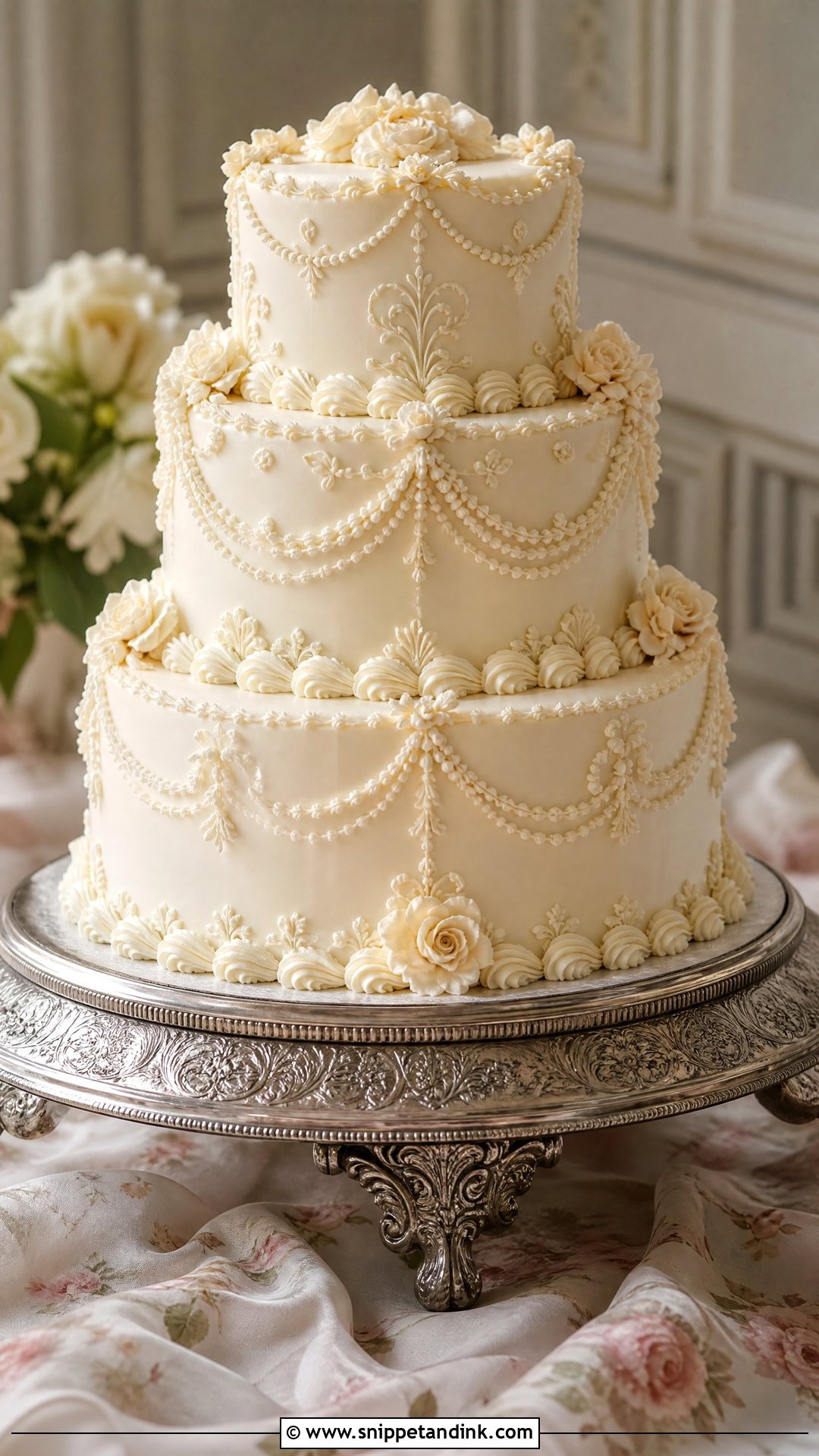
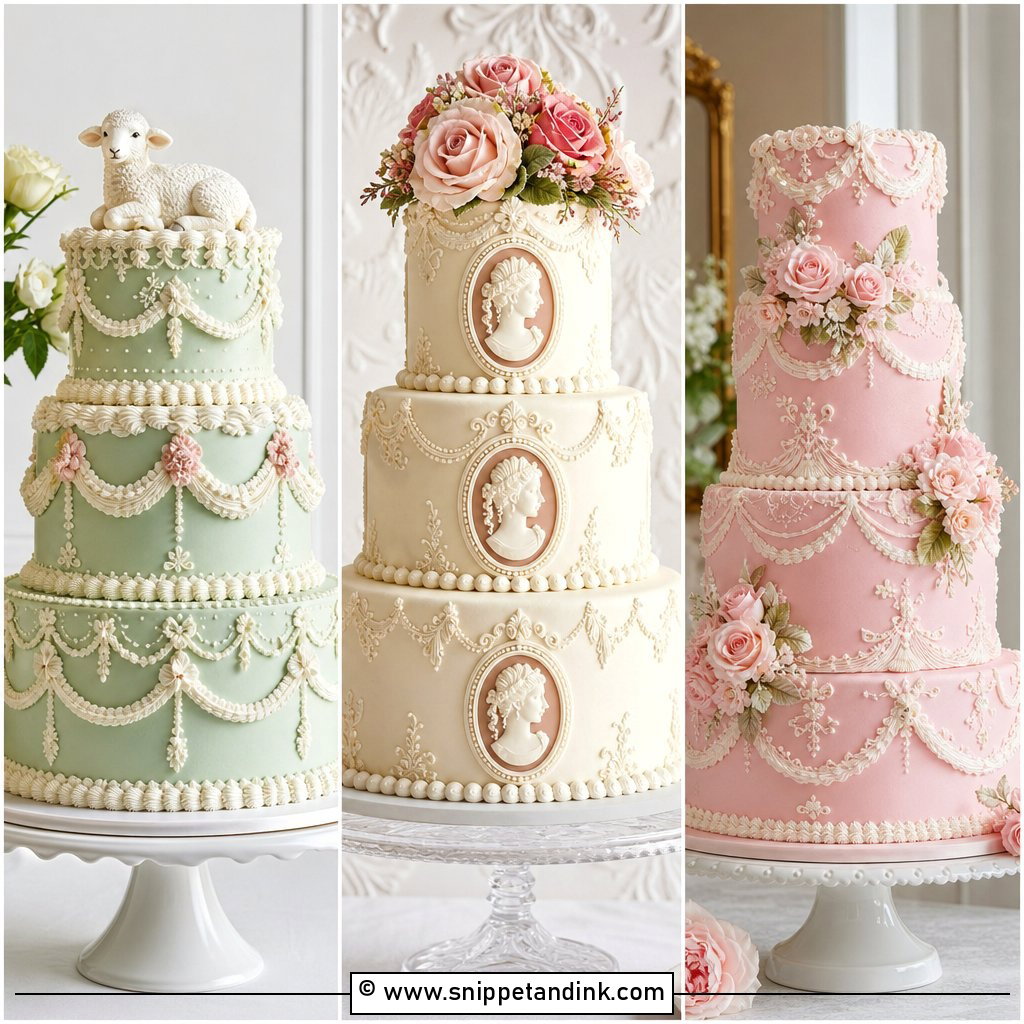
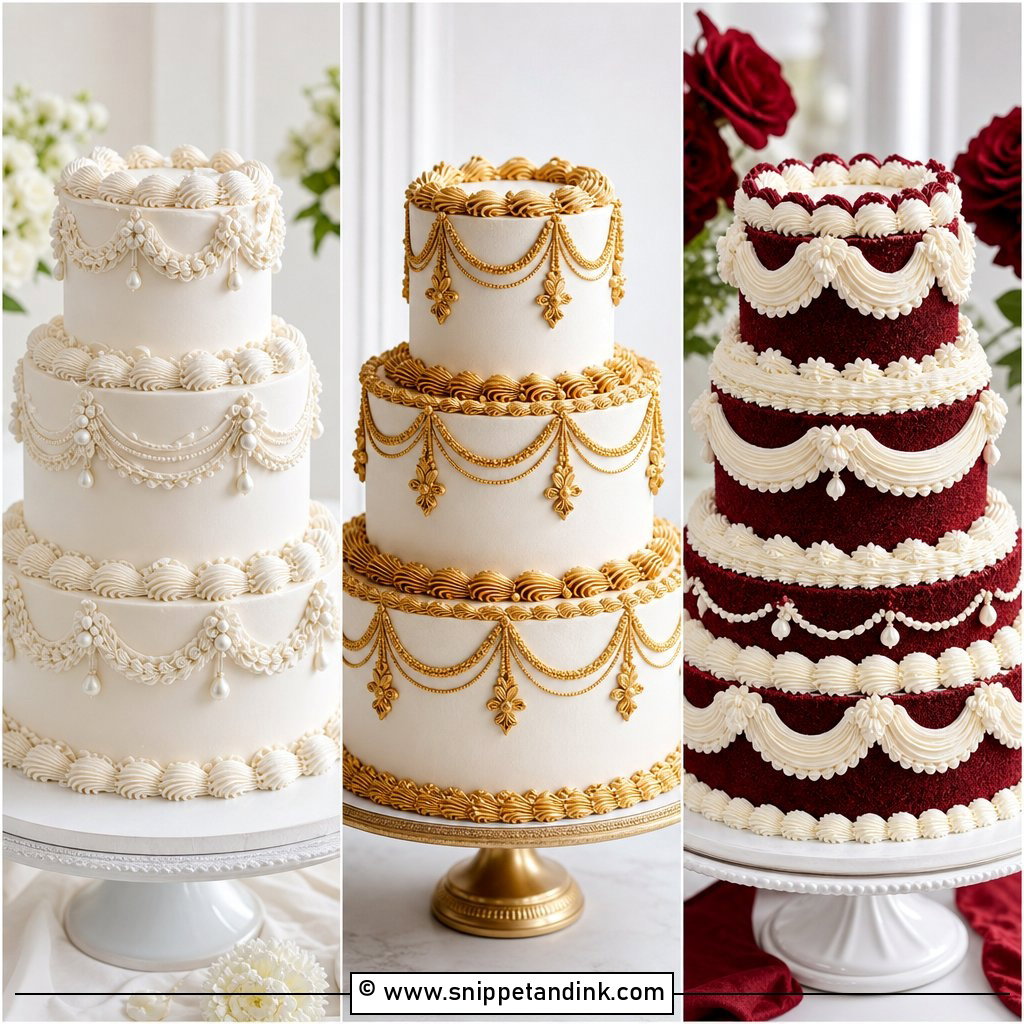
Lambeth cakes are where the piping does all the talking: swags, shell borders, scrolls and pearls built up in layers until each tier has real depth. I keep them in ivory, cream, blush or pale champagne, because the style depends on shadows falling between the piped layers, and darker colors swallow those shadows. Balance matters more than quantity, so I map the borders tier by tier before I start piping. A few roses, fresh or sugar, or tiny pearls finish it. Formal, yes, but warm rather than cold.
2. Victorian Lace Wedding Cake
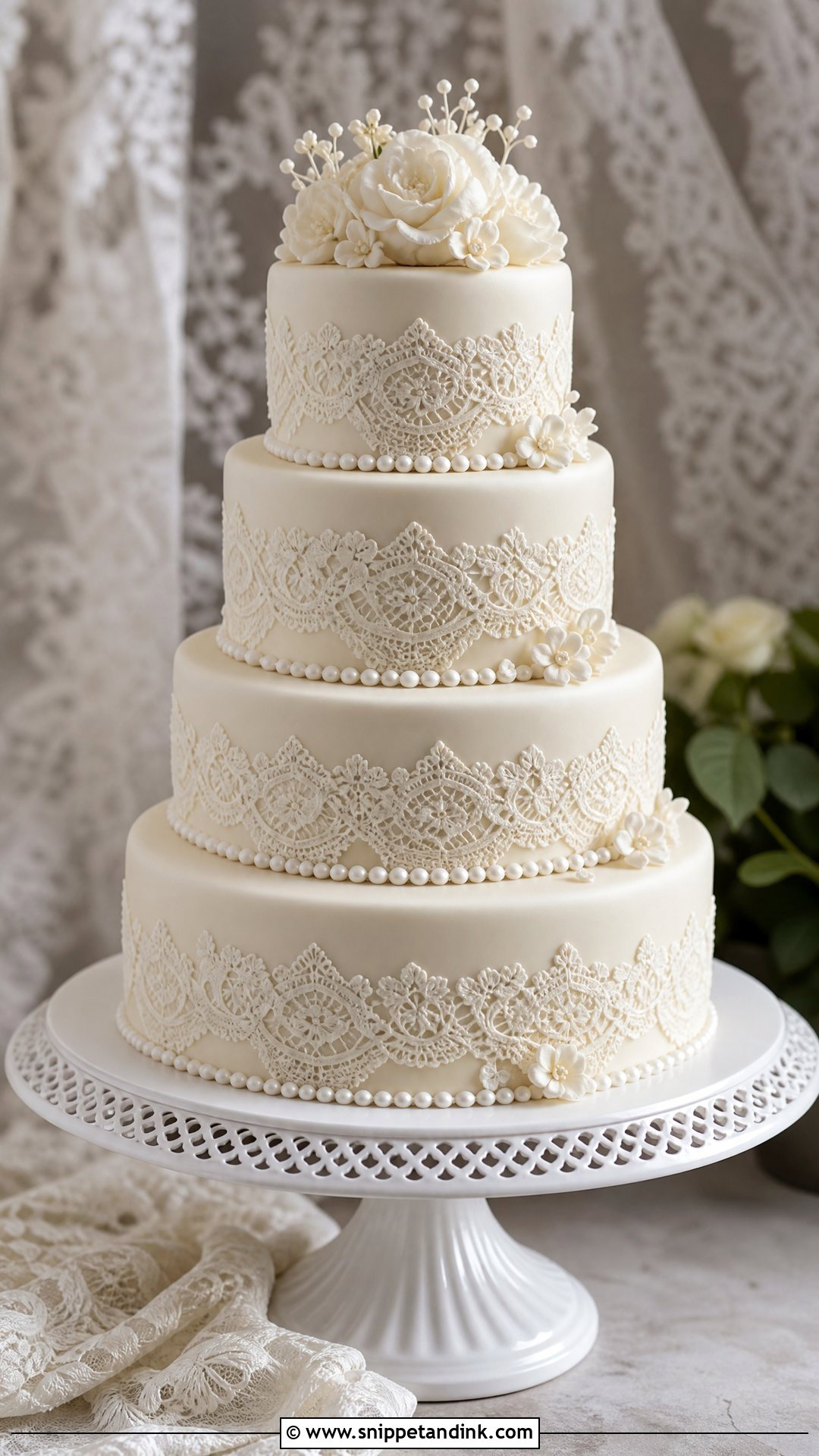
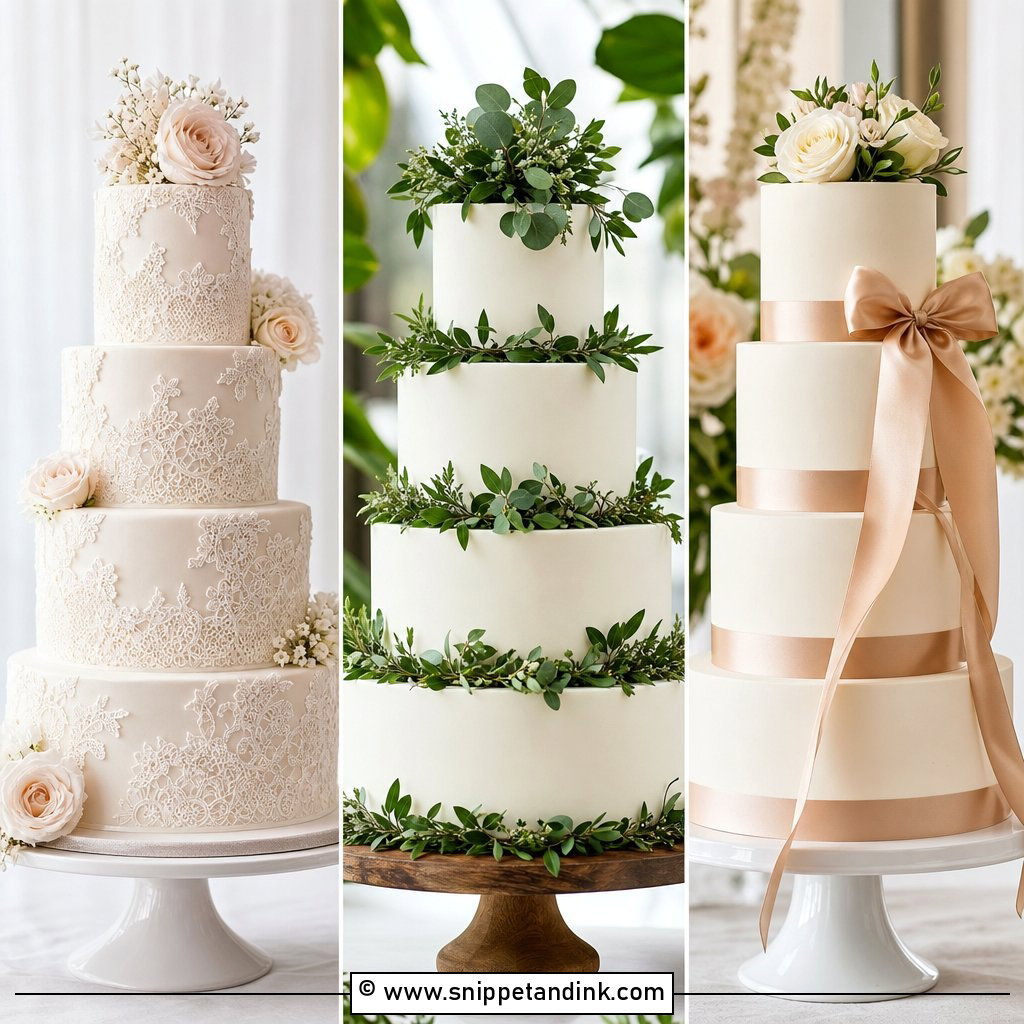
Lace cakes are the ones couples bring me reference for: a gown, a veil, a grandmother’s tablecloth. I start with smooth ivory fondant or buttercream, then pipe lace panels around each tier, sometimes floral embroidery, sometimes fine netting or a scalloped trim like appliqué. Ivory on ivory or cream with pale blush keeps it soft. Smooth fondant takes fine lace best, because any bump in the surface breaks a thin piped line. A few sugar flowers at the base or side add romance without hiding the lacework. Historic chapels and formal gardens suit it.
3. Victorian Pearl Wedding Cake
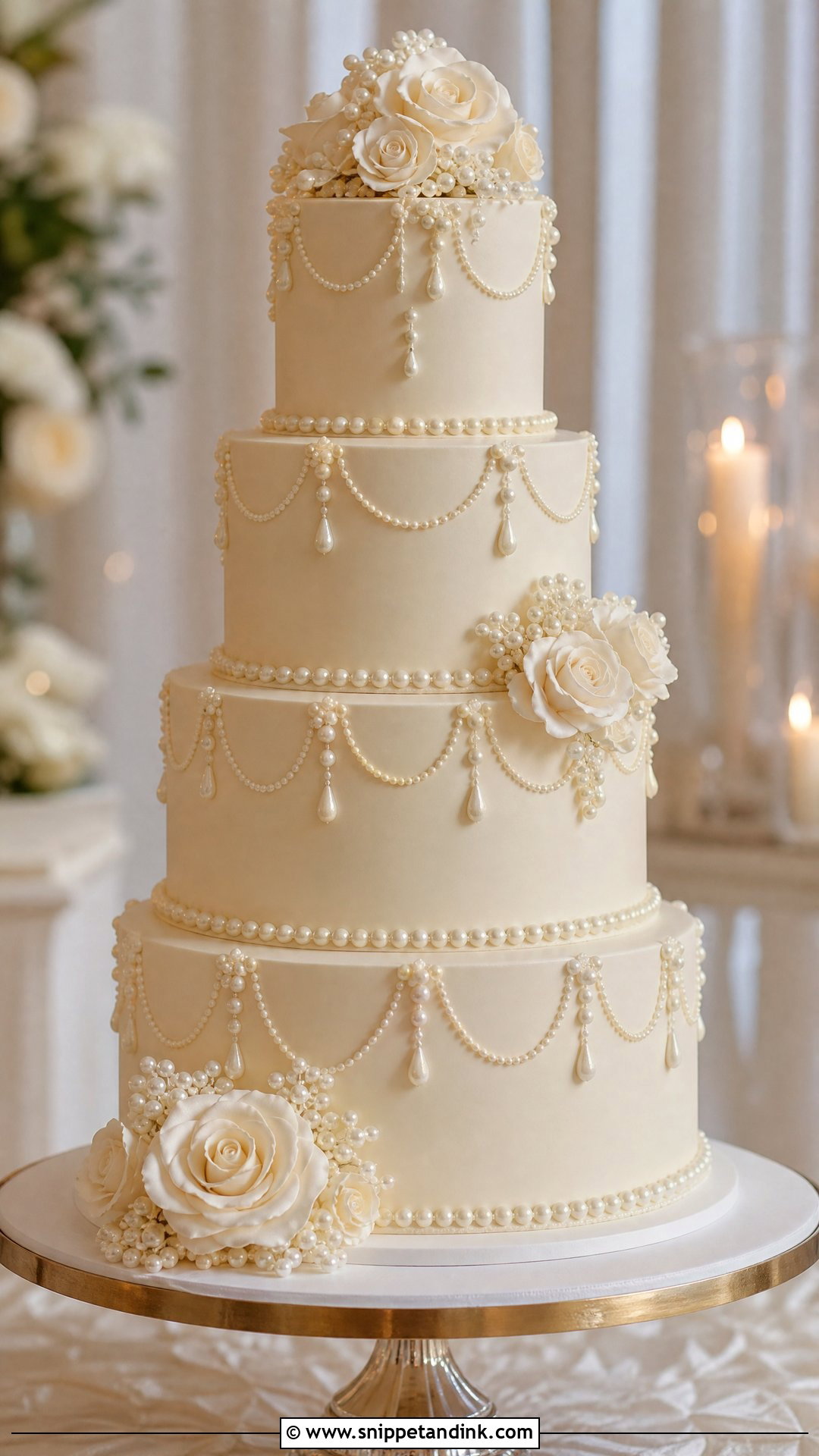
With pearls, spacing is everything. A pearl border round every tier, pearl drops hanging below scalloped piping and small clusters near the sugar flowers can look expensive, but crowd them and the cake starts to look like costume jewelry. Ivory frosting with edible pearls is the classic pairing; champagne or pale pink work too. Hard sugar pearls are tough on teeth, so on a cake people will eat I use softer pearls or piped dots where they’ll end up on a plate. Satin ribbon, an antique gold stand and candlelight bring out the sheen.
4. Victorian Rose Wedding Cake
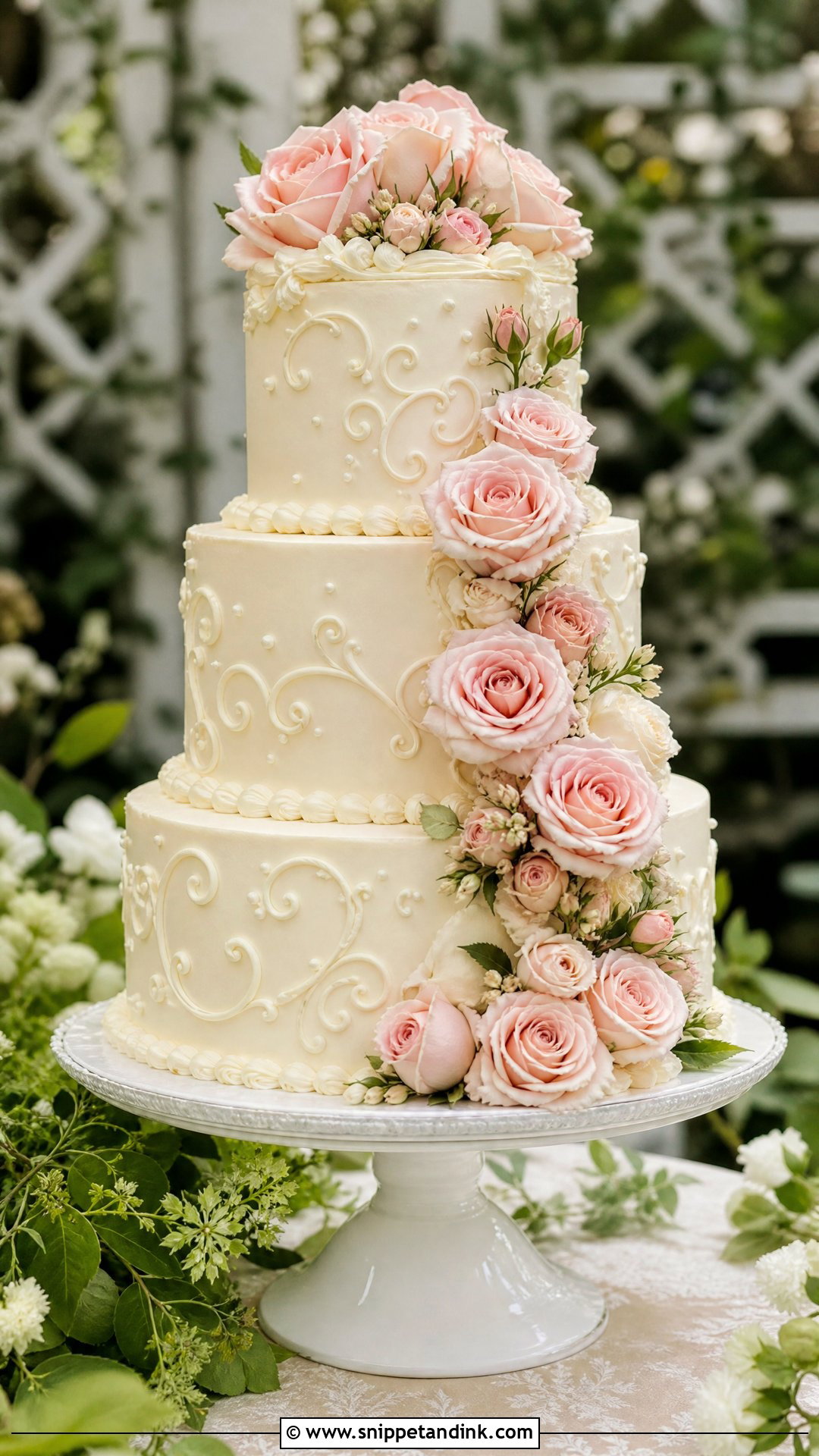
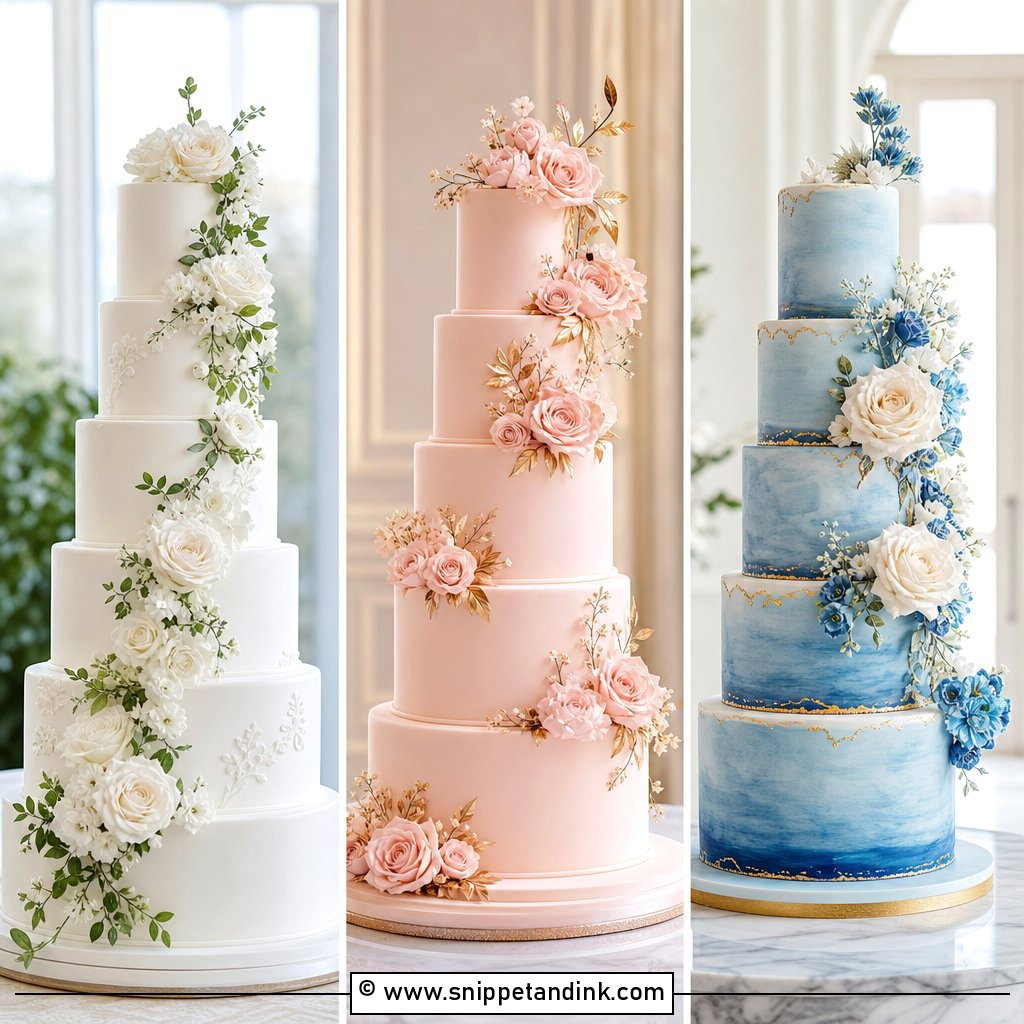
Roses suit both halves of this style, the ornate piping and the garden arrangement. Sugar roses give a polished finish and can be kept long after the wedding; fresh garden roses look softer but must be food-safe or fully wrapped and kept away from the icing. Blush, dusty pink, mauve or cream against ivory tiers feels classic without looking dated. Add piped scrolls, shell borders or lace panels for the period detail. For a stronger vintage mood, I cascade the roses in clusters from the top tier down one side.
5. Victorian Royal Icing Wedding Cake
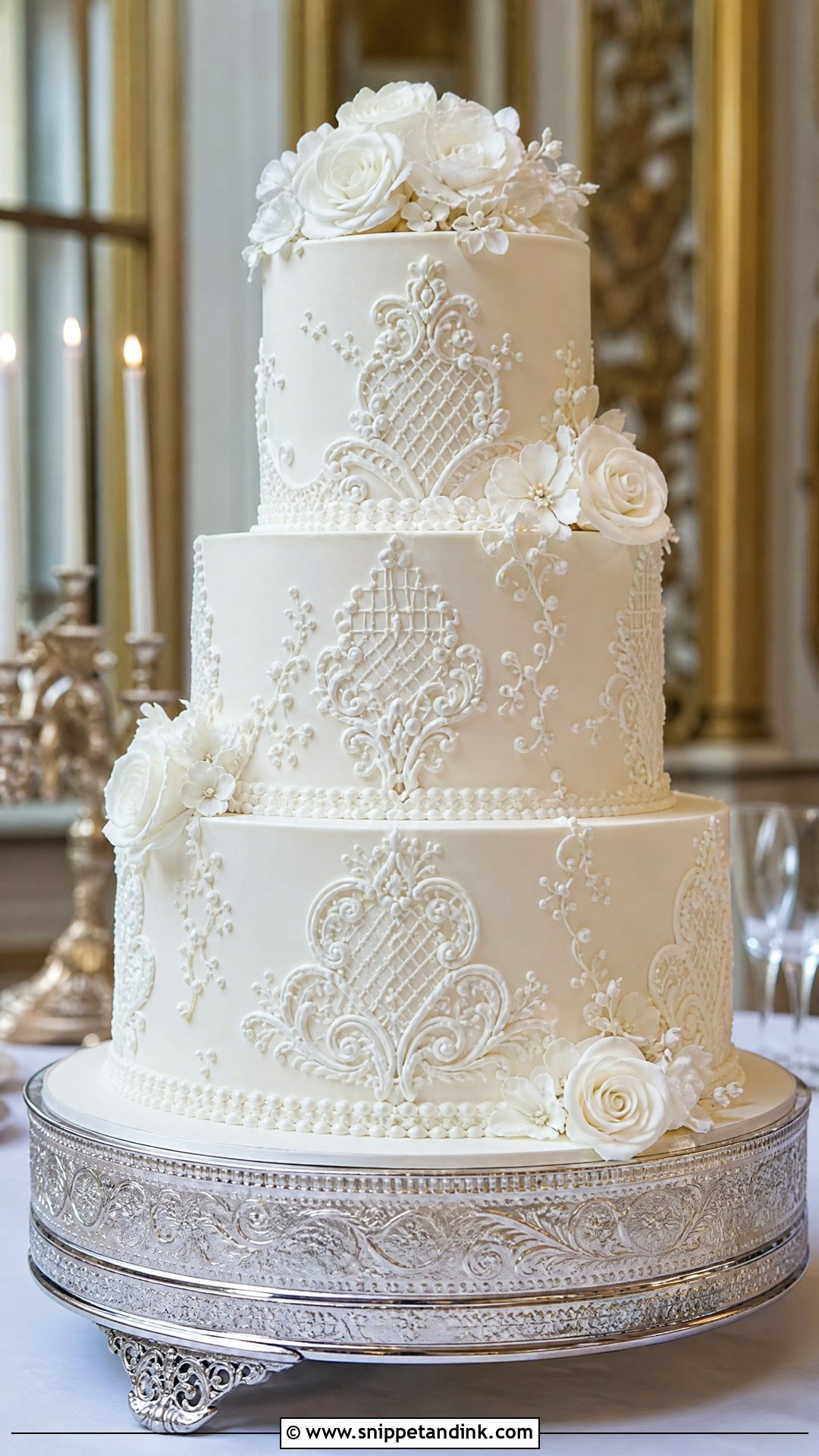
Royal icing gives the crispest Victorian detail: fine lines, lacework, scrolls, dots and raised borders that hold sharp edges. It needs a firm base, which is why it traditionally went over fruitcake, almond cake or a dense sponge; a soft, moist cake can shift underneath and crack the icing. All white looks most formal, while ivory and soft gold warm it. The finest work is fragile, so I ask for the cake to be displayed somewhere protected, away from heat, steam from the kitchen and guests leaning over it.
6. Victorian Buttercream Wedding Cake
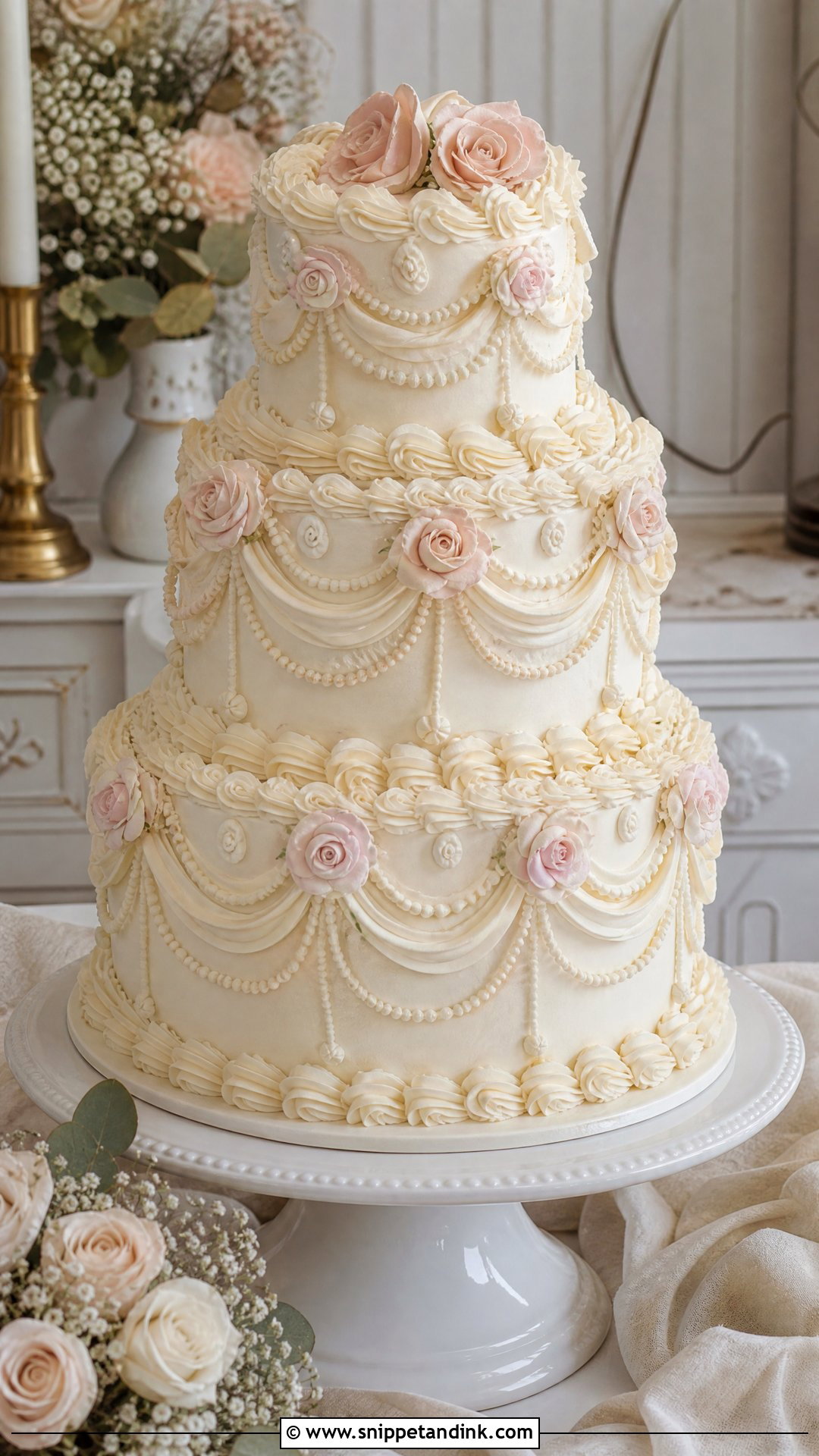
Buttercream gives a softer, creamier take on the ornate look, and it tastes familiar to most guests. Swags, rosettes, shells, drop strings and scalloped borders all pipe well in it, though the detail is rounder than royal icing. I crust the buttercream slightly in the fridge before piping over it, which keeps the borders crisp. Ivory is the classic color, with pale blush, cream or soft blue for something more romantic. Edible pearls, small sugar roses or a satin ribbon at each base finish it. The main limit is heat: buttercream piping relaxes in a warm room.
7. Victorian Tiered Wedding Cake
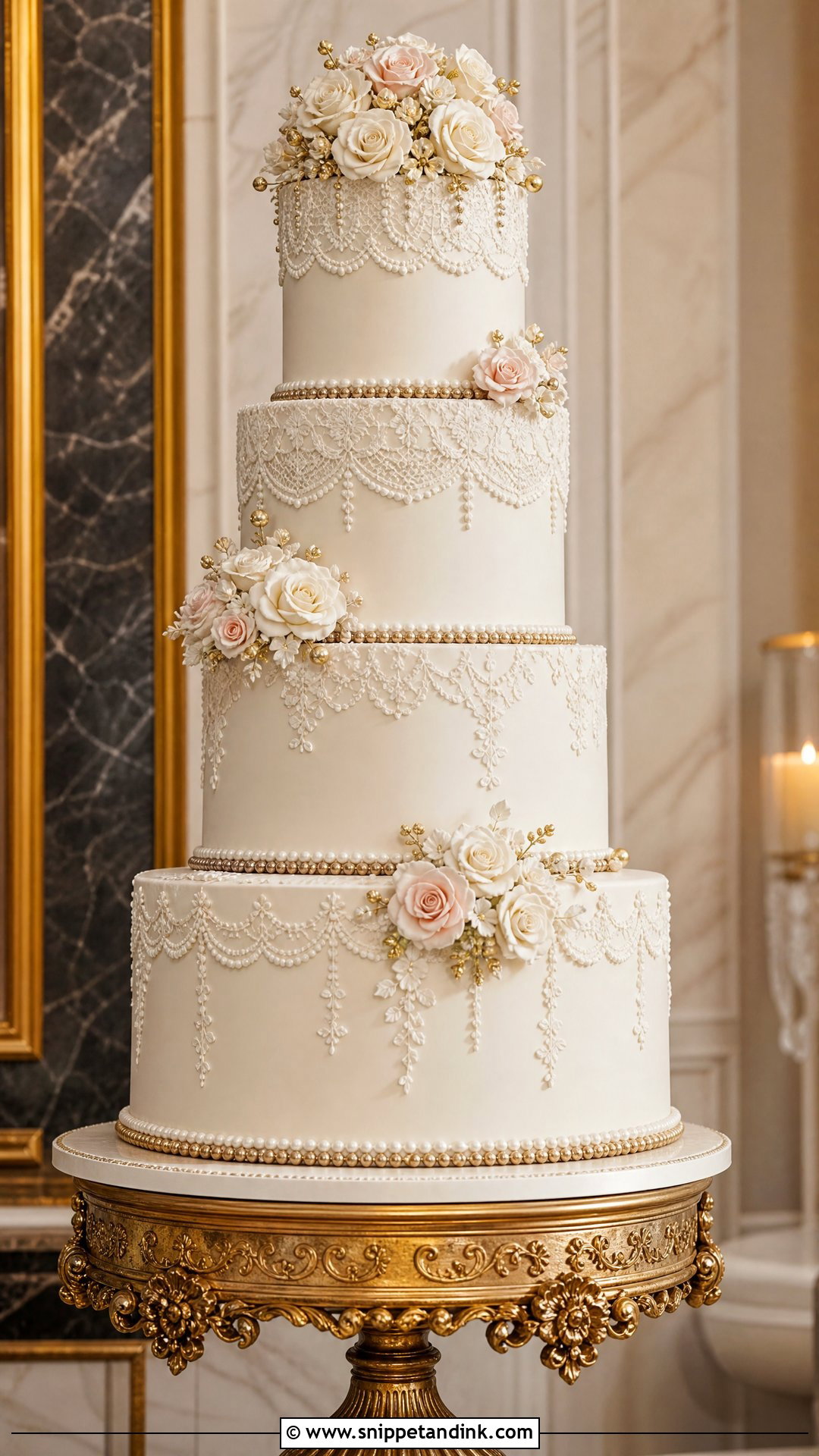
A tall Victorian tiered wedding cake, three to five tiers, makes a centerpiece the room can see from the door. I like giving each tier a slightly different pattern: lace on one, pearl borders on the next, floral garlands above. Variety keeps the eye moving, while a single color palette holds it together. Ivory is the safe base, with touches of gold, blush or sage to soften it. Very tall cakes need a central dowel running through all the tiers, especially if they’ll be moved after stacking. On a vintage pedestal in a high-ceilinged room, it becomes part of the decor.
8. Victorian Floral Wedding Cake
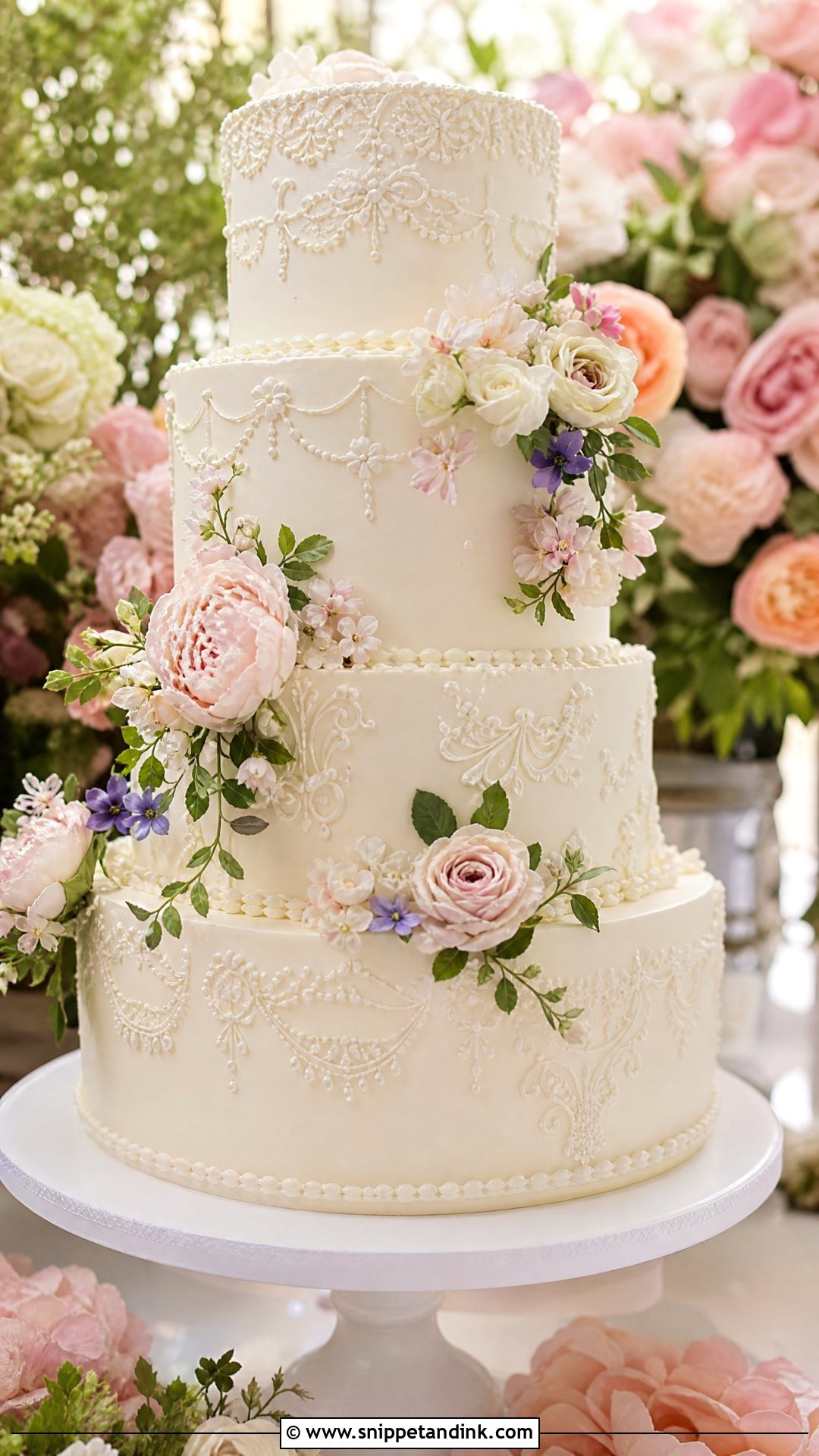
Florals can come in many forms here: sugar flowers, fresh blooms, pressed edible flowers or piped flowers. Roses, peonies, violets and hydrangeas all suit the style, and lily of the valley looks right too, though as a toxic plant it must only be sugar, never fresh. Smooth or lightly textured frosting lets the flowers stand out. Pastels on ivory read gentle; mauve or burgundy blooms look more dramatic. I arrange them in natural clusters of uneven sizes rather than scattering them evenly, which gives the cake movement.
9. Victorian Gold Wedding Cake
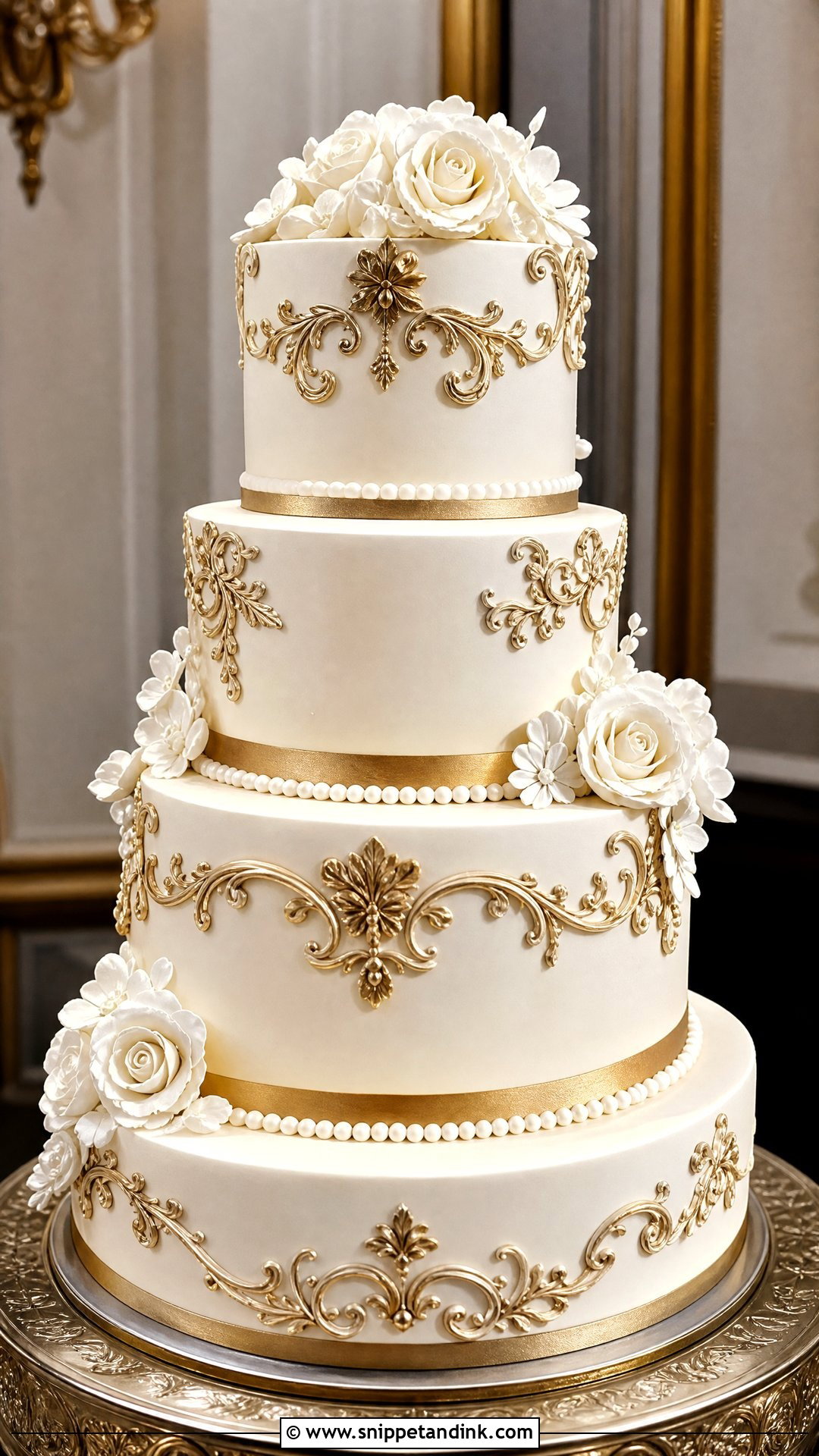
Gold brings warmth and a sense of ceremony, as long as it’s an accent. Thin gold trim round each tier, painted antique scrolls, gilded sugar flowers or small gold beads mixed into ivory piping all work. For a period look I knock the shine back, either brushing the lustre on lightly or mixing it a touch darker, so it looks aged rather than new. Cream, champagne, blush and white all pair well with it. Evening receptions, candlelit ballrooms and rooms with old mirrors or chandeliers suit it.
10. Victorian Blush Wedding Cake
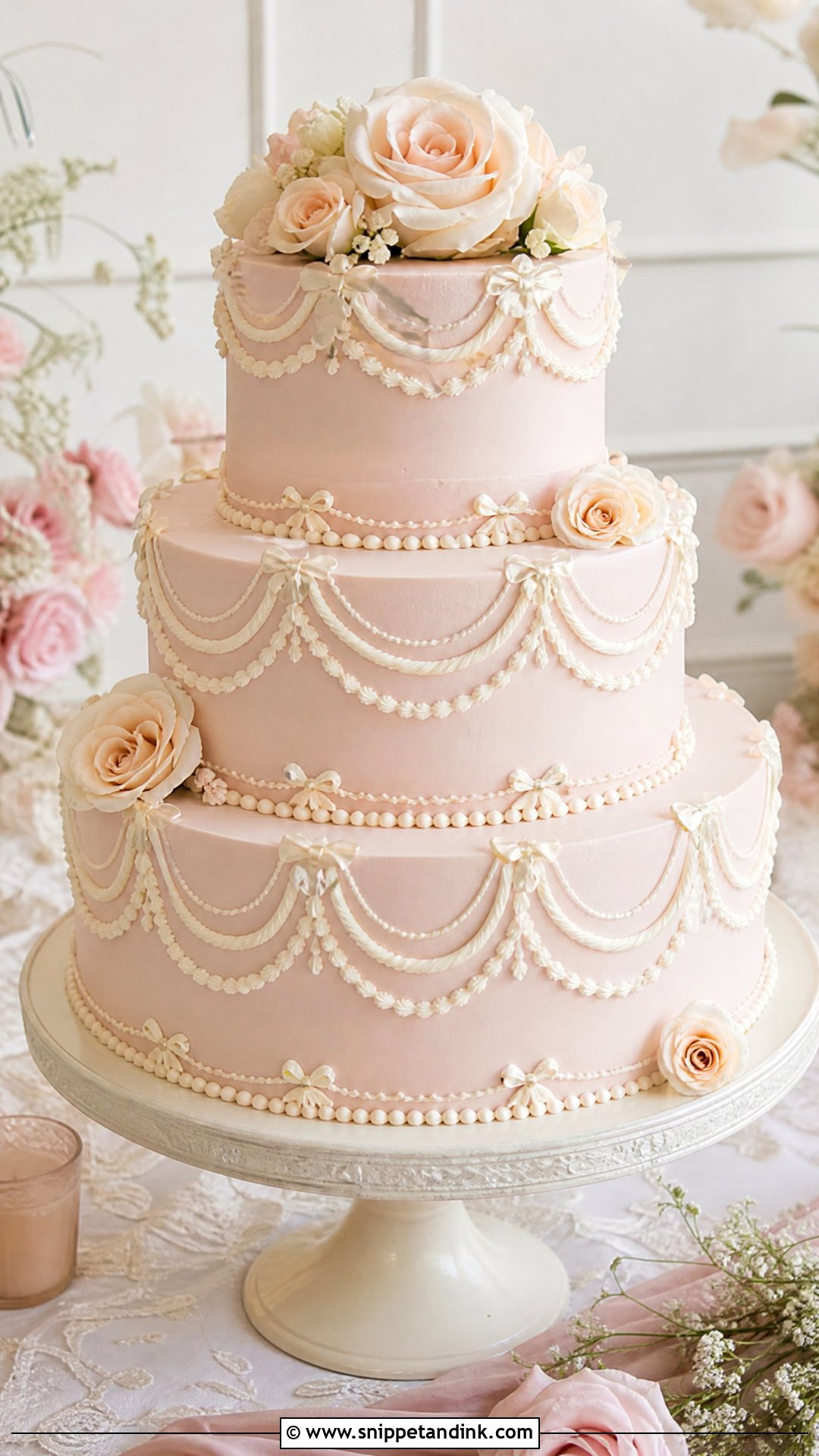
Blush softens all that ornament and makes the cake feel dreamy rather than formal. I either cover every tier in blush buttercream or keep the tiers ivory and bring the blush in through piping, flowers or ribbon. Pearl borders, lace piping and soft pink sugar roses pair naturally, with cream swags and tiny piped dots to finish. Pink buttercream can darken as it sits, so I color it a little lighter than the target. Spring weddings and garden receptions suit it best.
11. Victorian Blue Wedding Cake
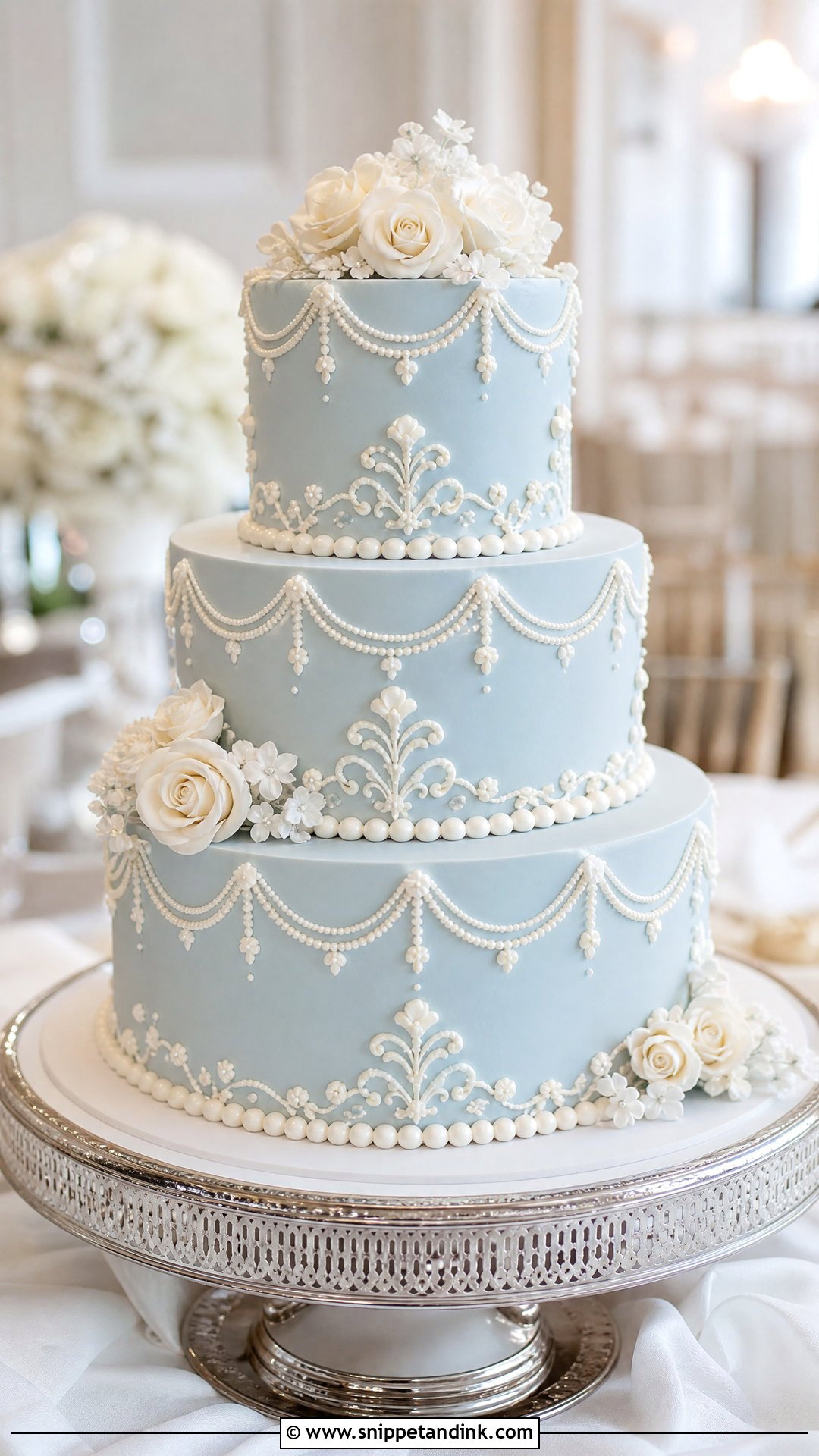
Blue gives the style a cool twist: powder blue, dusty blue or pale duck egg, with ivory piping and pearls. It suits formal weddings, garden settings and receptions with blue china or antique tableware. I usually limit the blue to one or two tiers and balance them with ivory, otherwise it can look heavy. Piped lace, scalloped borders and small white sugar flowers complete it. Pale blue icing fades under strong light, so I’d keep it out of a sunny window until it’s time.
12. Victorian Heart Wedding Cake
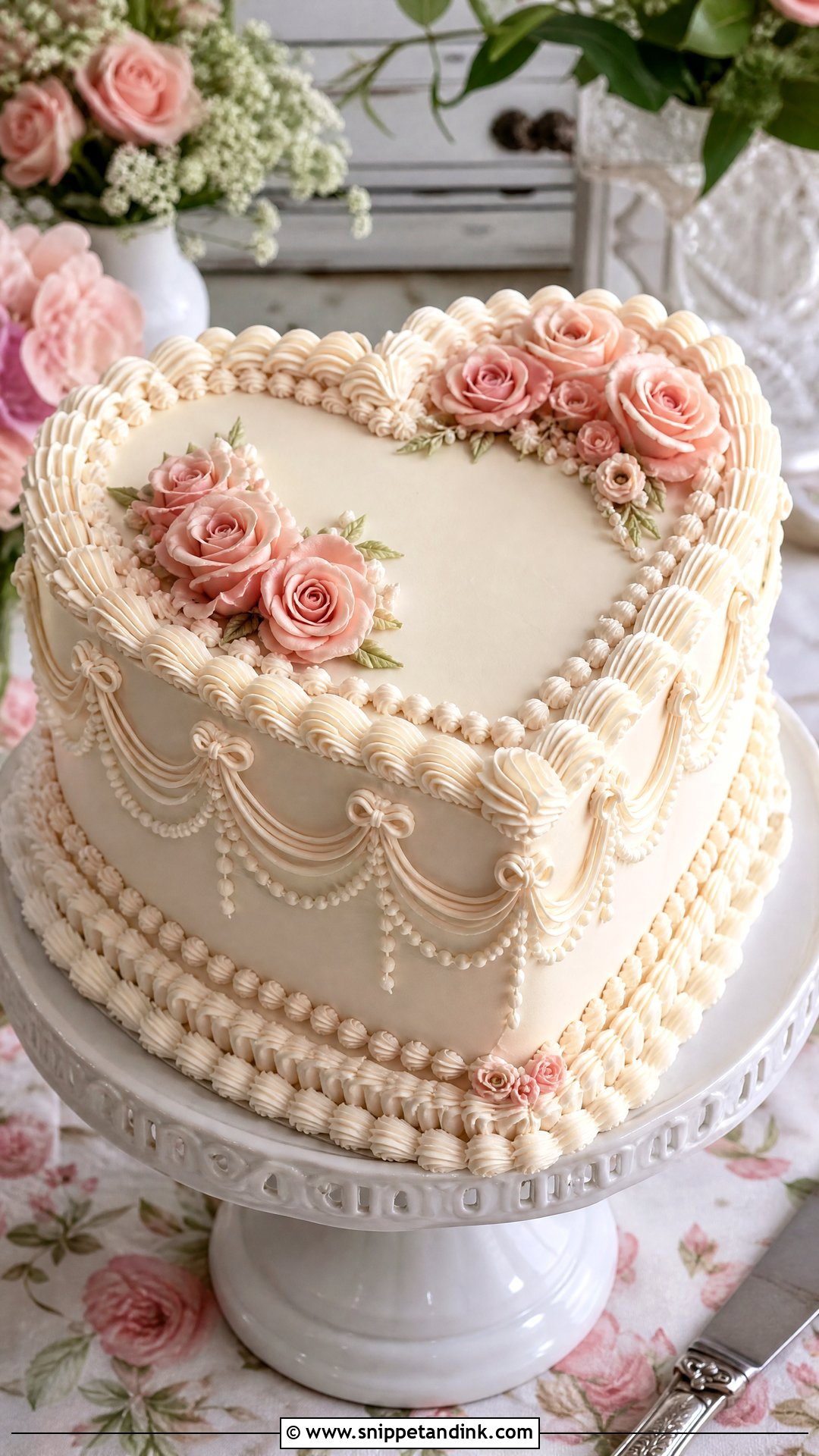
Heart cakes add romance to the vintage piping style, either as a single cake for a small reception or stacked into tiers. Lambeth piping, shell borders, pearl trim and ribbon-like swags follow the shape nicely, though the point and the dip of the heart are the hardest places to keep borders even. Soft colors keep it from looking playful. A small cluster of sugar roses on top or at one side finishes it. Intimate weddings, elopements, bridal lunches and vintage dessert tables suit the shape.
13. Victorian Square Wedding Cake
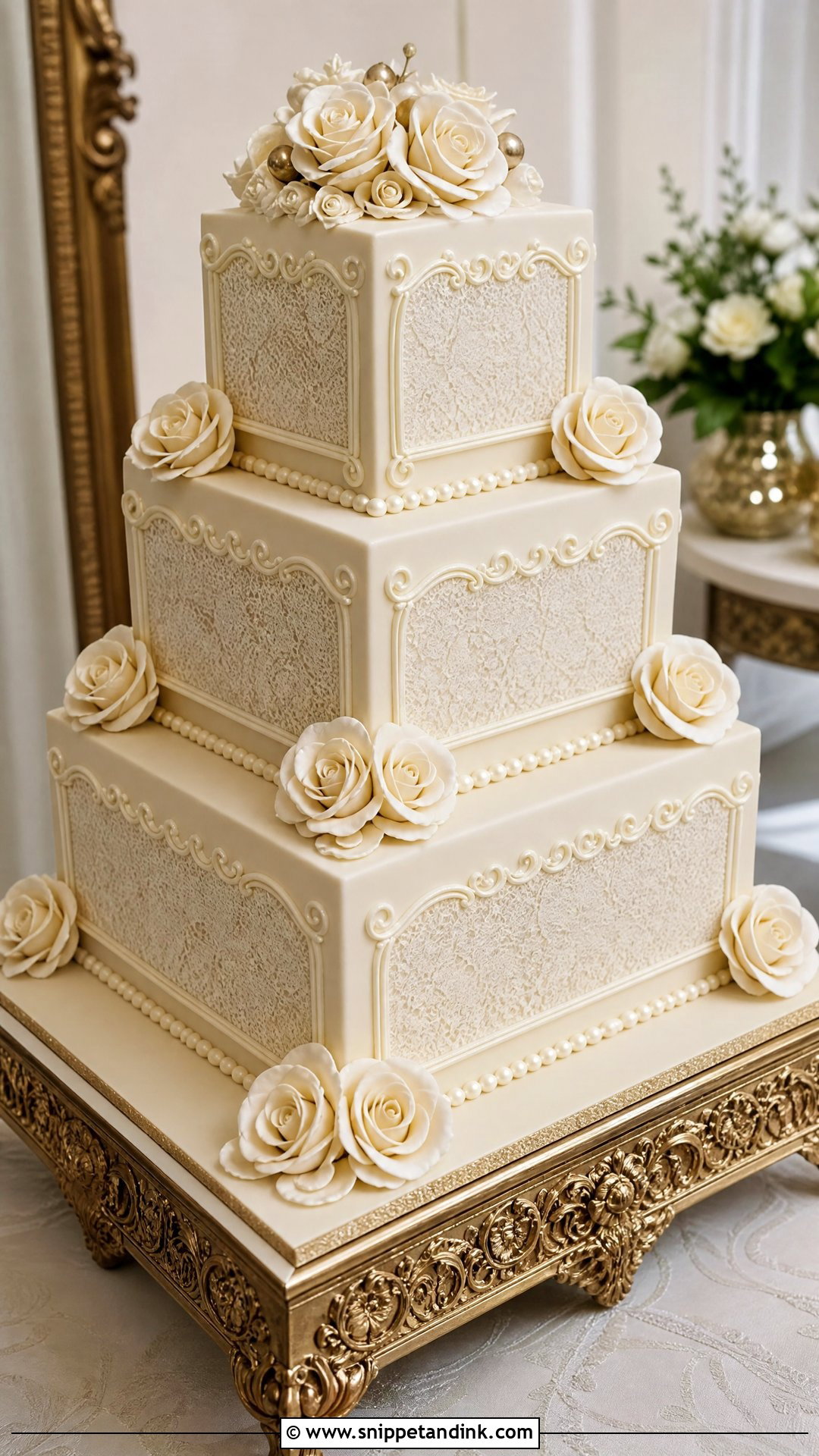
Square tiers suit grand venues because the straight edges make piping look orderly: lace panels framed on each face, scrolls at the corners and pearl borders along the edges. They also look more traditional than rounds when stacked tall. Getting sharp corners in fondant or buttercream takes a firm ganache layer underneath, and that’s where much of the extra time goes. Sugar roses or small floral clusters soften the corners, and a silver or antique gold stand finishes it.
14. Victorian Oval Wedding Cake
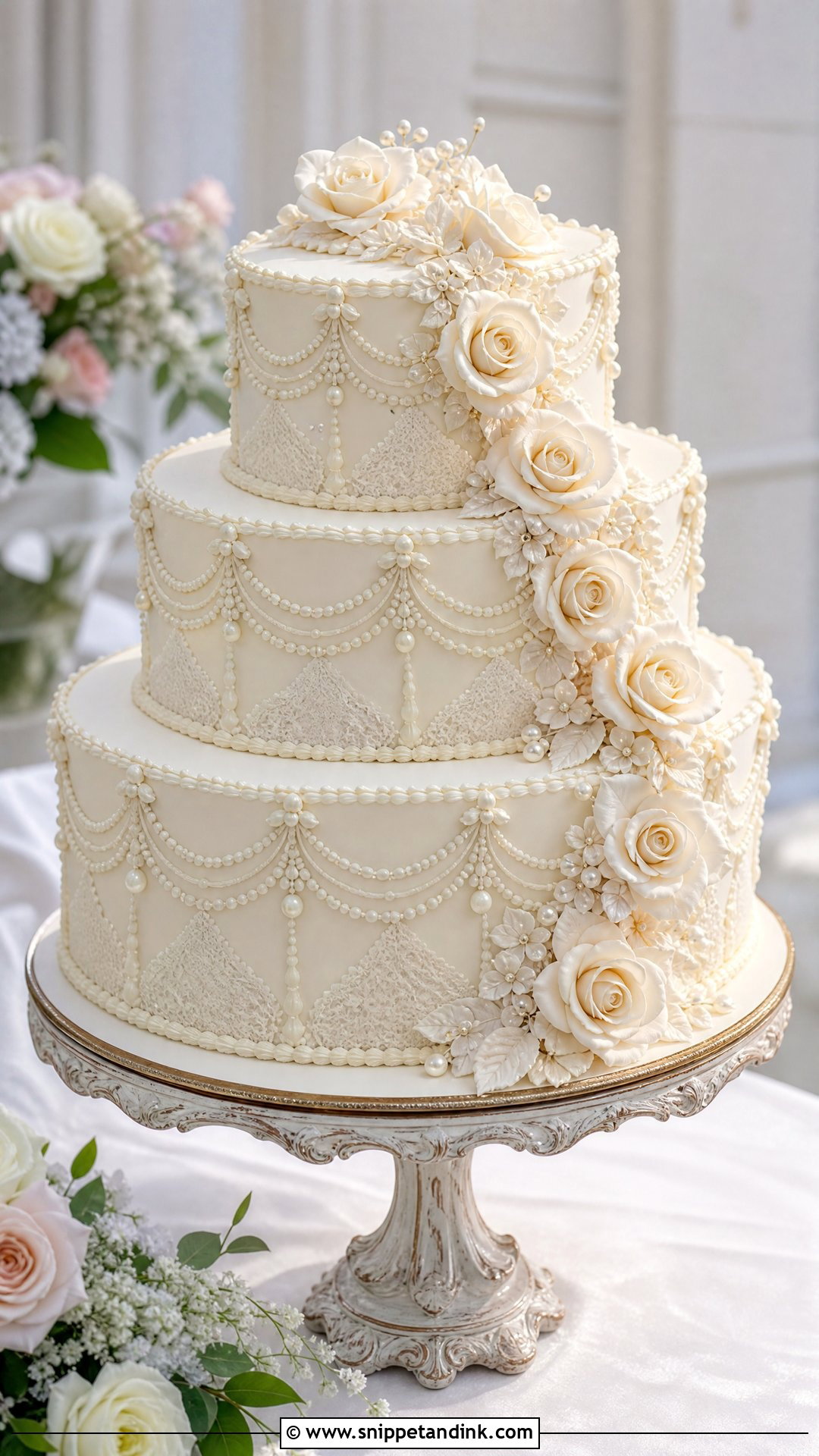
An oval is softer than a square and less expected than a round. The long curve suits draped piping, pearl drops, scalloped borders and delicate lace panels, and it has a parlor feel on a pedestal stand with flowers nearby. Ovals need matching oval boards and pans, which not every baker owns, so ask early. I’d keep the palette traditional, ivory, cream, blush or champagne, and let a cascade of sugar roses follow the curve. Guests rarely see this shape at weddings.

15. Victorian Garden Wedding Cake
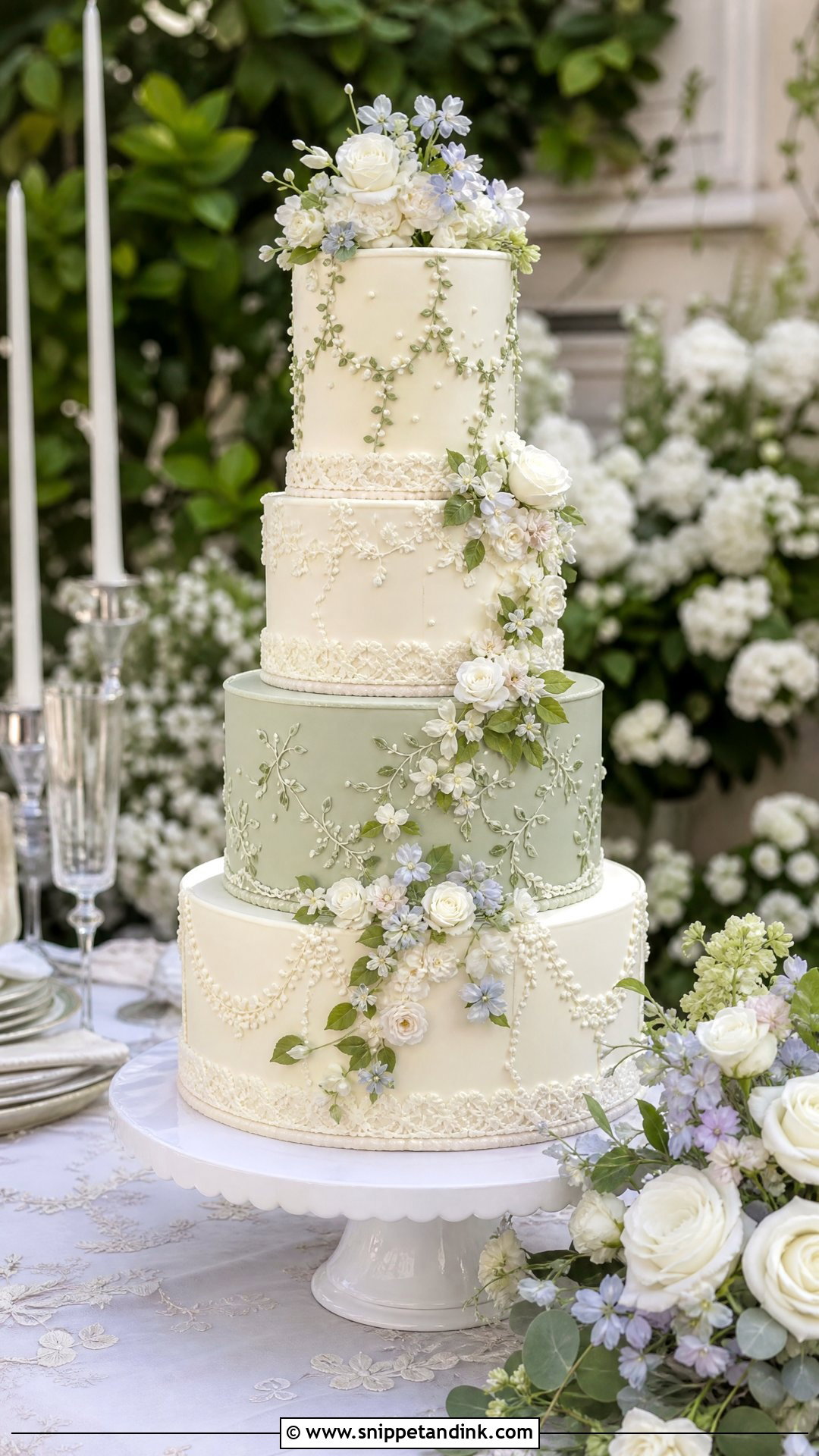
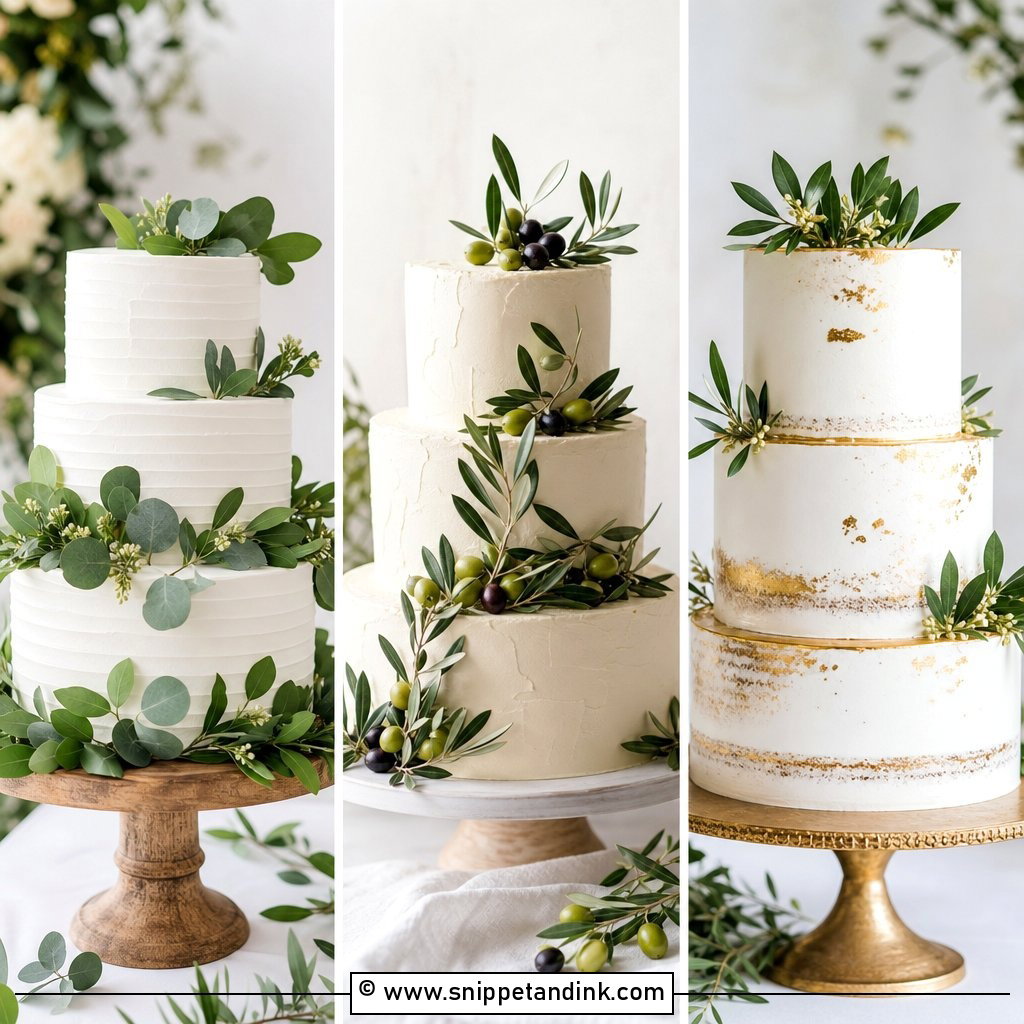
A garden version starts with ivory or pale green tiers and adds piped lace, fine vines, sugar flowers and gentle floral clusters: roses, sweet peas, violets and small leaves. It can be polished or slightly rustic depending on the setting. For a tent or greenhouse, I’d choose buttercream with soft texture and fresh, food-safe blooms, keeping the cake shaded until it’s served. For a formal estate, fondant with detailed piping and sugar flowers holds up better. Either way it should feel natural yet still ornate enough to read as Victorian.
16. Victorian Cameo Wedding Cake
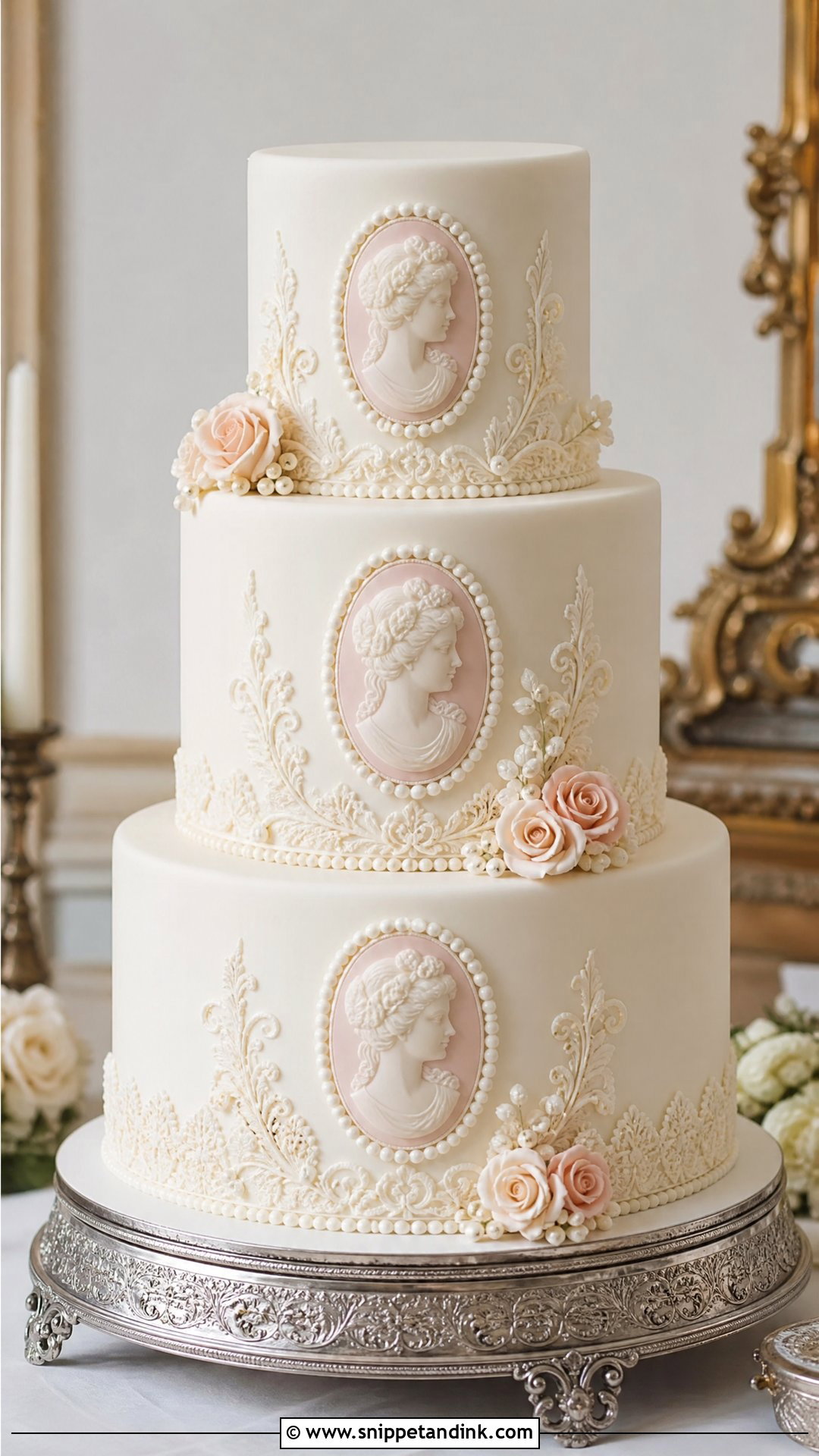
Cameos bring in antique jewelry. I mold the plaques from sugar paste, fondant or modelling chocolate and set them on the tiers like framed portraits, with pearl borders, lace piping and soft pastel accents around them. Subtle versions look best, white on ivory or blush on cream, where the relief shows through shadow rather than color. One cameo per tier or one large cameo as the focus both work. It suits historic venues, museum weddings and anyone fond of old brooches or vintage stationery.
17. Victorian Ribbon Wedding Cake
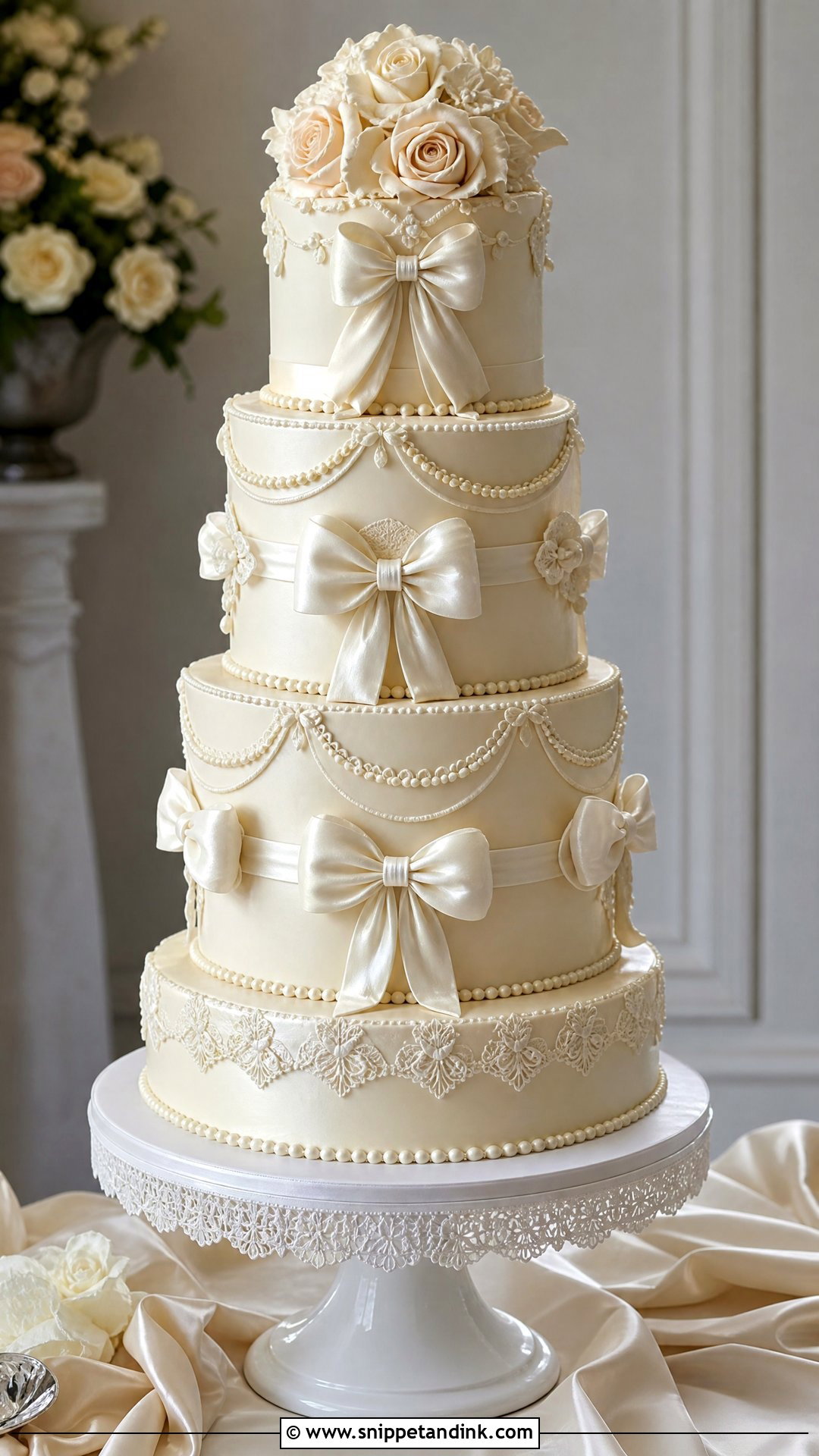
Ribbon gives a soft formal finish, whether it’s real satin, piped ribbon or fondant bands and bows. Real ribbon needs a strip of acetate or paper behind it, because butter seeps into fabric and leaves a dark line within hours. Ivory and champagne feel traditional, while blush, dusty blue or sage can match the wedding palette. Pearl borders and fine lace piping keep the cake from looking plain. A small sugar bow or floral spray on the top tier finishes it neatly.
18. Victorian Monogram Wedding Cake
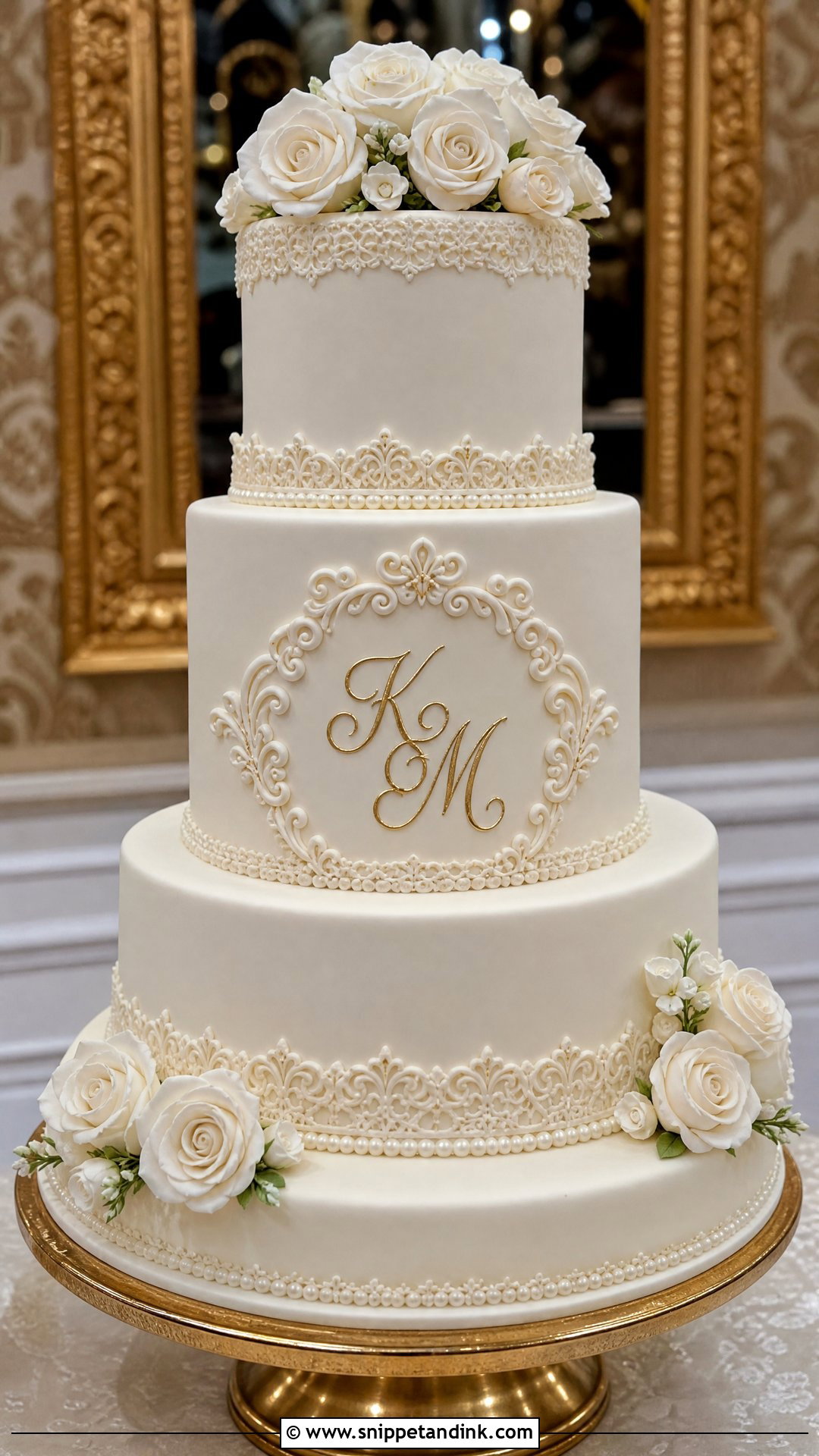
Monograms make the front of the cake a clear focal point. The initials can be piped, embossed or painted on the center tier, surrounded by scrollwork, lace borders, pearls or a sugar frame. I keep the rest of the cake balanced so the letters stay the feature, and I draw the monogram full size on paper first to check it reads from a distance. White piping on ivory is classic, while antique gold lettering feels more regal. It suits ballrooms, black-tie receptions and historic estates.
19. Victorian Fruitcake Wedding Cake
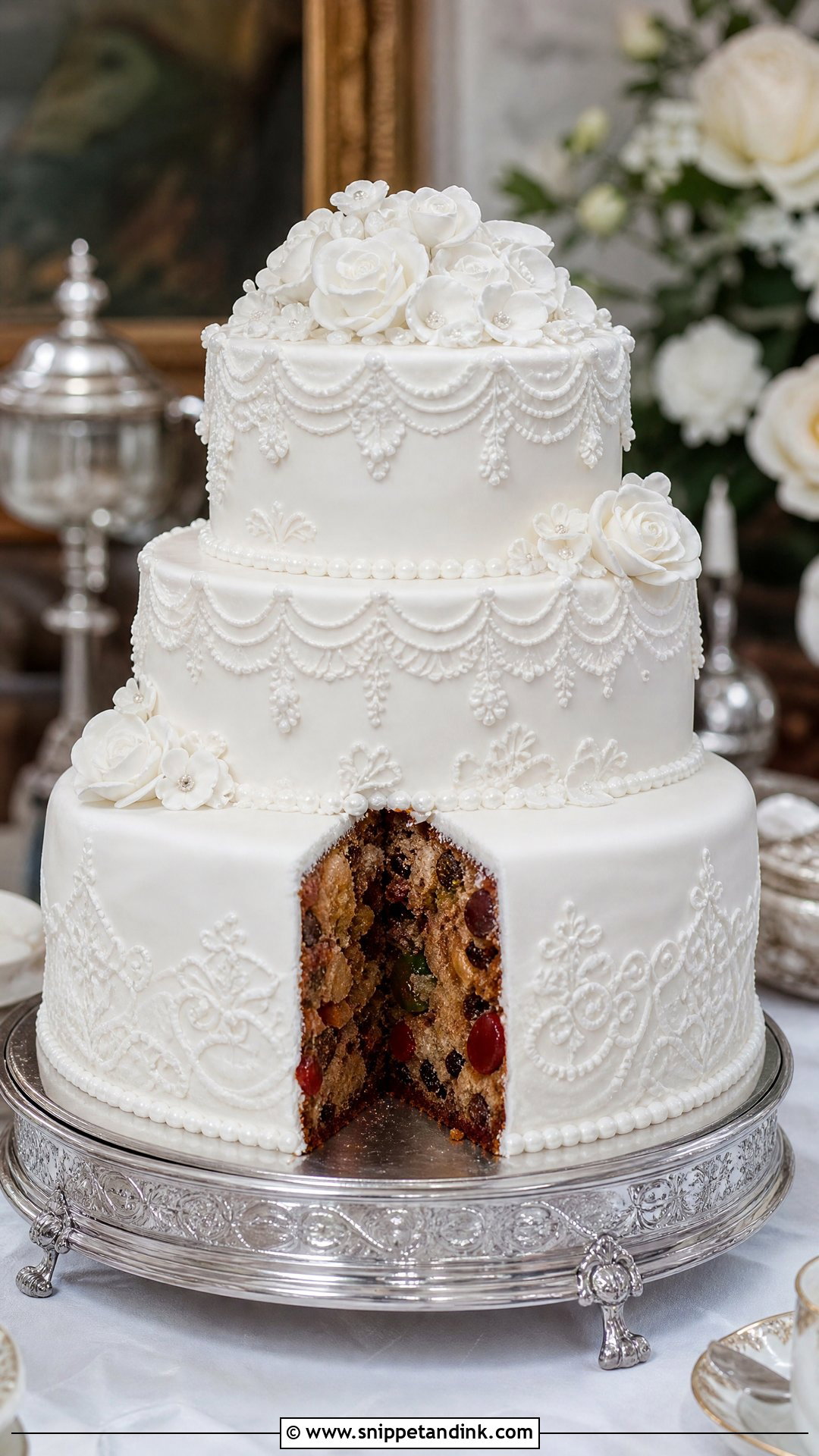
Fruitcake is the classic British wedding cake of the era: rich fruit cake under marzipan, finished with royal icing. Today it can be a traditional fruitcake or a lighter fruit-spiced cake styled the same way. White or ivory icing, piped borders, lace detail and a few sugar flowers keep it formal. Its density is a structural gift, since it carries tiers and heavy decoration easily. It’s also rich, so I portion it in thin fingers and suggest serving it with coffee or tea rather than as the main dessert.
20. Victorian Mini Wedding Cake
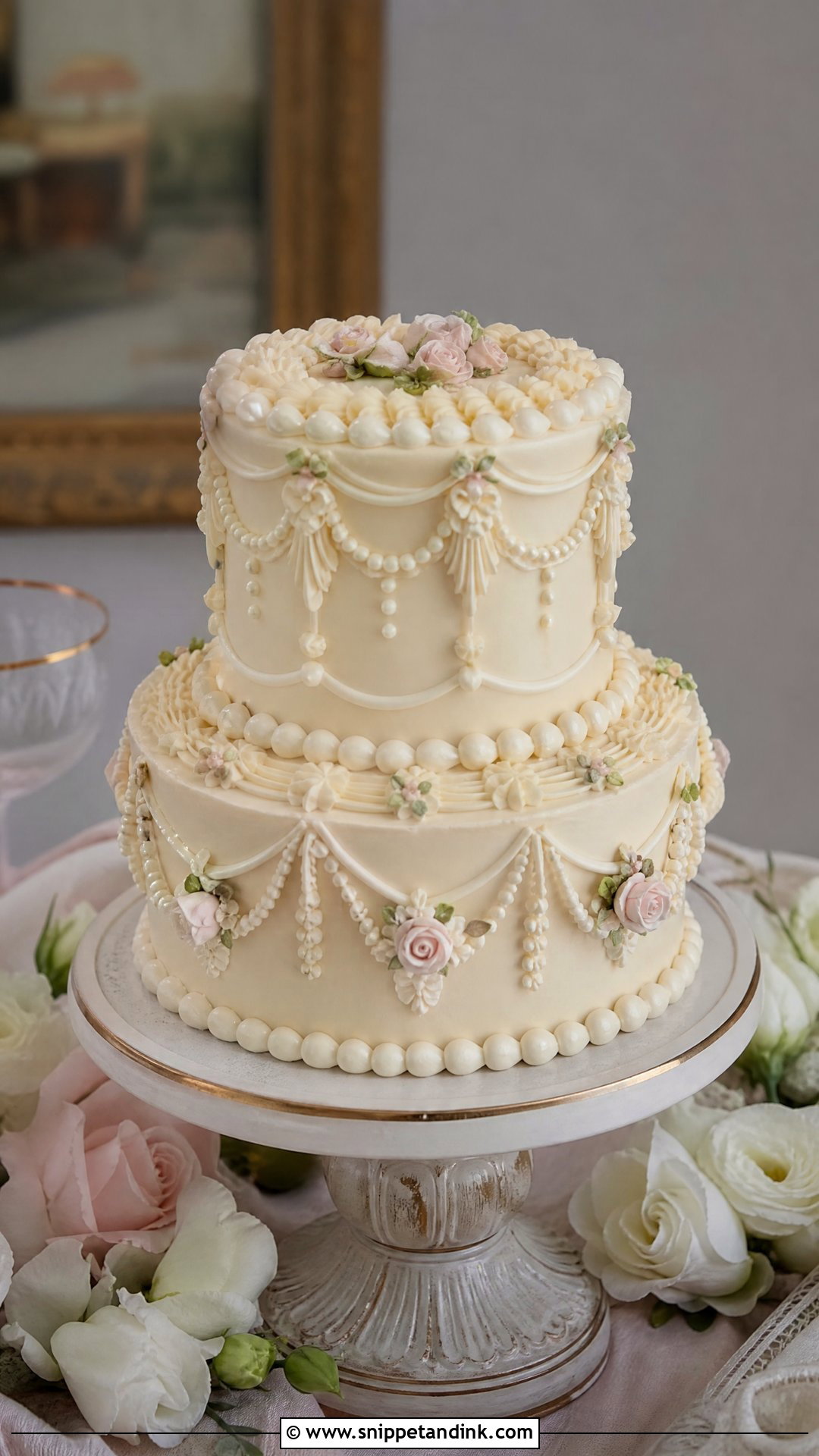
A small cake still carries the full style: Lambeth piping, pearl borders, sugar roses and scalloped edges, scaled down with finer tips and smaller pearls. A two-tier mini cake feels special without overwhelming a small guest list. Ivory buttercream gives softness and fondant gives sharper detail. It also makes a good cutting cake when guests are served other desserts. On a vintage stand with flowers round the base, it still looks grand in photos.
Dummy Tiers, Wired Flowers and Other Things to Settle Before Cutting
Height is part of this style, but you may not need to feed everyone from it. A decorated dummy tier, a foam form iced and piped like the real ones, adds height for a smaller guest count without baking cake nobody eats. Couples are often surprised it’s an option. The cutting has to happen on a real tier, so I mark which one.
Sugar flowers usually have fine wires inside the stems, and wires must never go straight into cake. I set them in food-safe picks or posies, but someone still has to lift every flower off before slicing. Tell the caterer or venue in writing who does that, and give them a box to put the flowers in if you’d like to keep them.
- Agree portion size: finger portions for fruitcake with coffee, larger dessert portions for sponge
- Name the person who removes flowers, wires, ribbons and cameos before cutting
- Ask whether hard decorations like sugar pearls or gold beads should be lifted off the plates
- Plan where the top tier goes if you’re keeping it, and whether it should be boxed or frozen
Sugar flowers kept dry and out of sunlight last for years. A single rose from the cake under a glass dome is one of the easiest keepsakes to take home from the whole day.
Lambeth, Lace or Roses? Let One Lead
These cakes feel historic and romantic because they put craft on show: texture, soft color and detail that make the cake part of the ceremony rather than just dessert. Lambeth piping, lace panels, roses, pearls, gold trim or traditional royal icing can each carry a Victorian cake at almost any size or venue. My advice is to pick one strong focal idea and let the supporting details stay quieter. With a sensible palette and a good spot in the room, the cake will hold attention all evening.
You'll Like These Ideas:










Leave a Reply