
Fifties bridal style is all about shape: a defined waist, a full skirt and usually a hem that stops somewhere around the calf. Lace sleeves, satin, bateau necklines, short gloves, pearls and kitten heels fill in the rest. I enjoy dressing brides in this decade because the silhouette suits so many figures and moves well on a dance floor, but it’s also easy to tip into fancy dress. The trick is one or two period details, not ten. A 1950s-inspired bridal outfit suits courthouse weddings, garden ceremonies, vow renewals and reception changes, and the thirty head-to-toe looks below show where I’d draw the line on each.
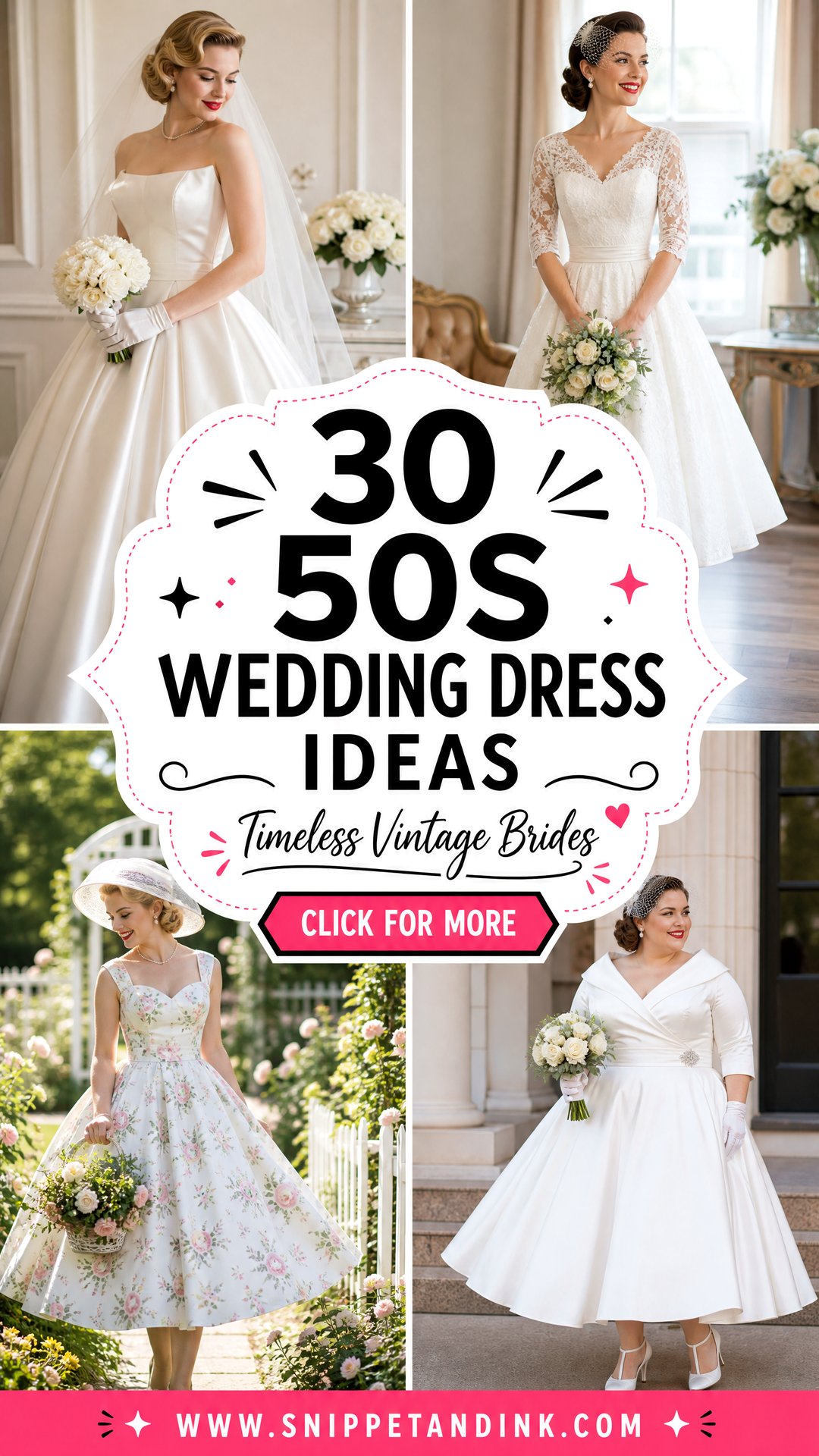
The Petticoat Does Half the Work
The full fifties skirt was rarely just the dress. Most of the shape came from a stiff net petticoat underneath, and the same is true of reproduction styles today. When a bride tells me her skirt looks flat in the mirror, the petticoat is usually the reason.
- Length: it should end slightly shorter than the skirt so it never peeks below the hem.
- Fabric: stiff nylon net gives the most lift, while soft tulle or chiffon layers give a gentler bell and feel kinder against the legs.
- Waistband: a flat elastic or yoke sits smoother under a fitted bodice than a bulky gathered band.
- Lining: pick one with a soft slip layer next to the skin, because bare net scratches over a long day.
Bring the petticoat to every fitting. How much it lifts the skirt changes where the hem falls, so a dress hemmed without it will end up the wrong length on the day.
Sitting Down in All That Net
A stiff petticoat flips up at the front if you sit straight down on it. Gather the back of the skirt and petticoat together in one hand, sit on the gathered fabric, then let the front settle over your knees. Practise it once at home before the ceremony and it becomes automatic.
1. Tea Length 50s Wedding Dress
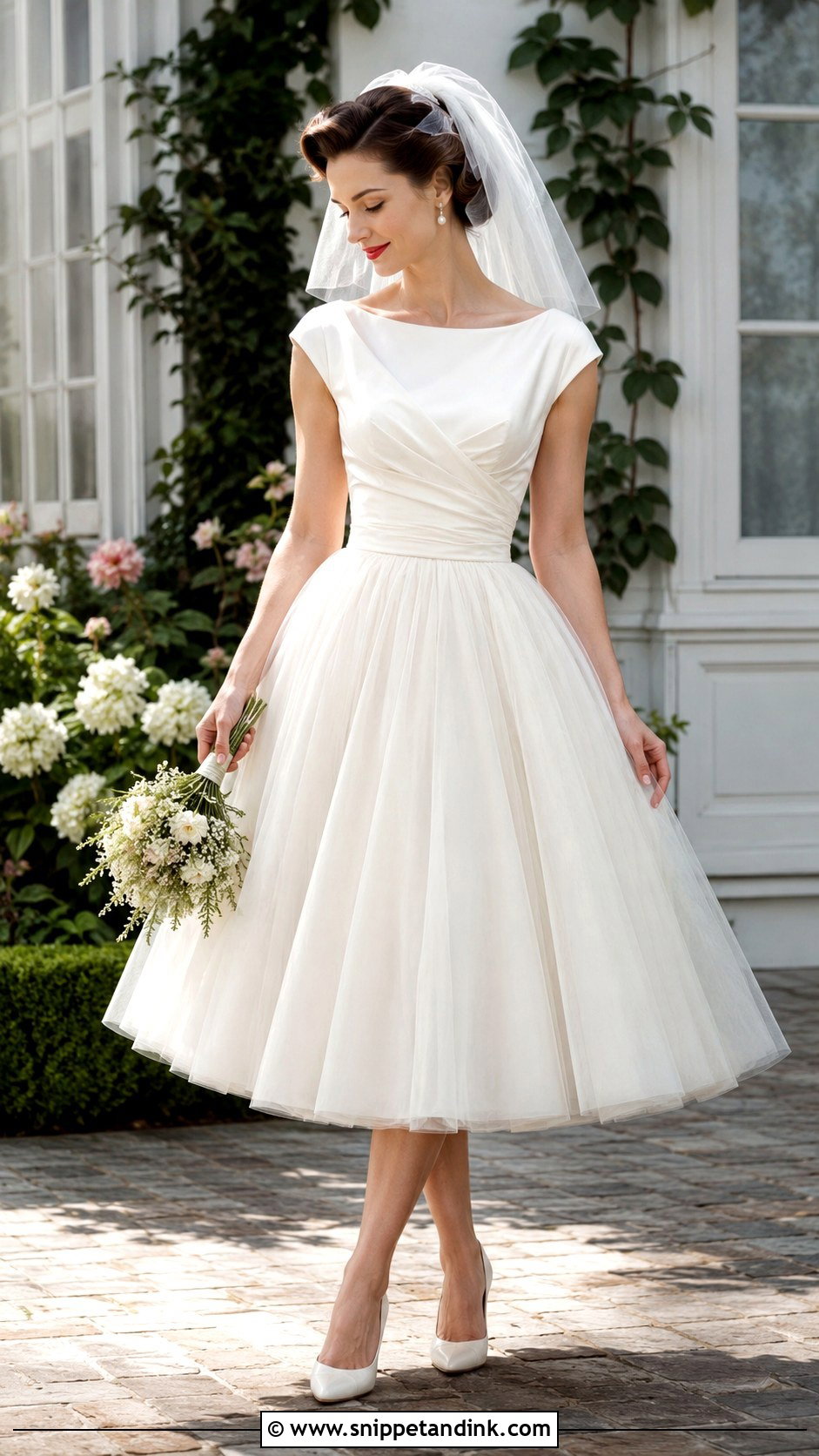
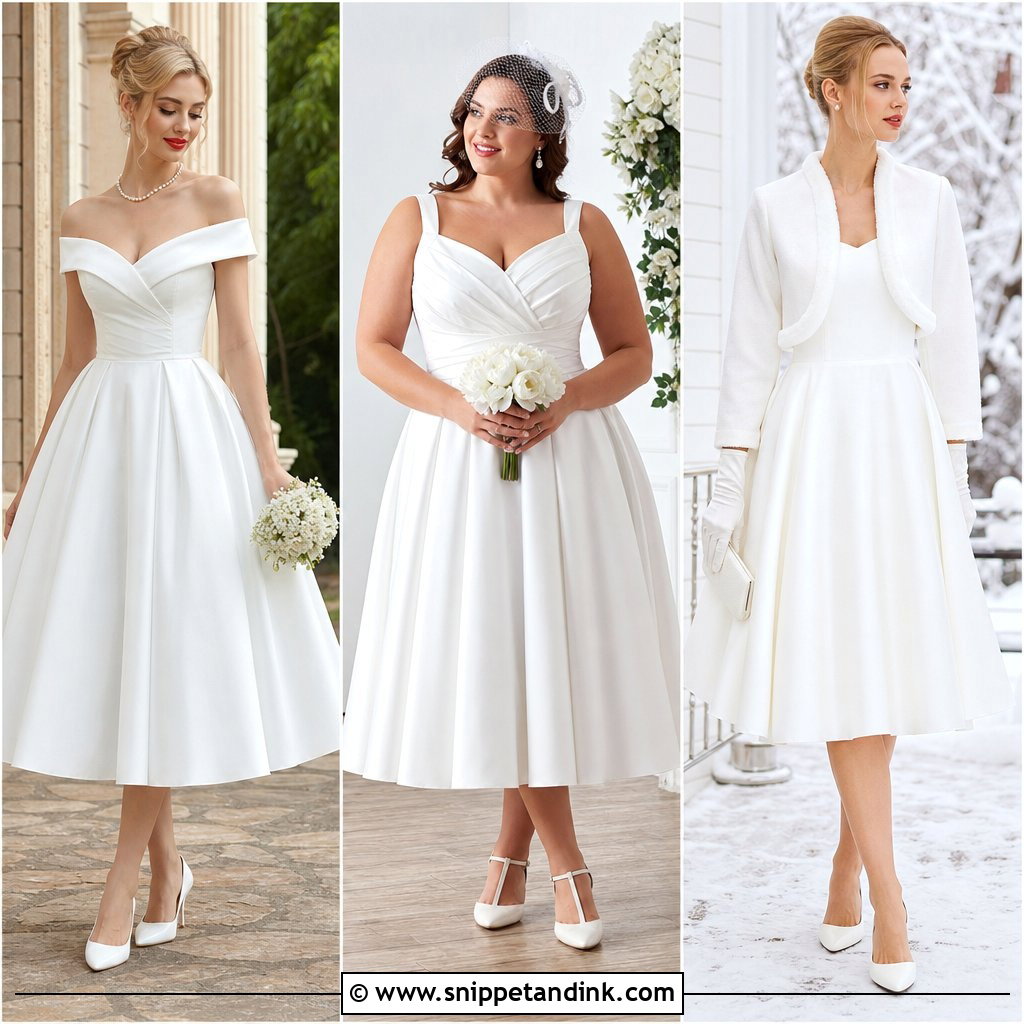
Tea length is the hem most people picture for a fifties bride. It lands below the knee, often around mid-calf, so you can walk and dance freely and your shoes are on show. I set it with the bride standing in her actual shoes, because an inch either way changes the whole proportion. A fitted bodice over a full A-line skirt gives the nipped waist, and a tulle underskirt adds lift without weight. Ivory satin pumps, pearl studs and a short veil finish it. Daytime, garden and courthouse ceremonies suit it best.
2. Lace 50s Wedding Dress
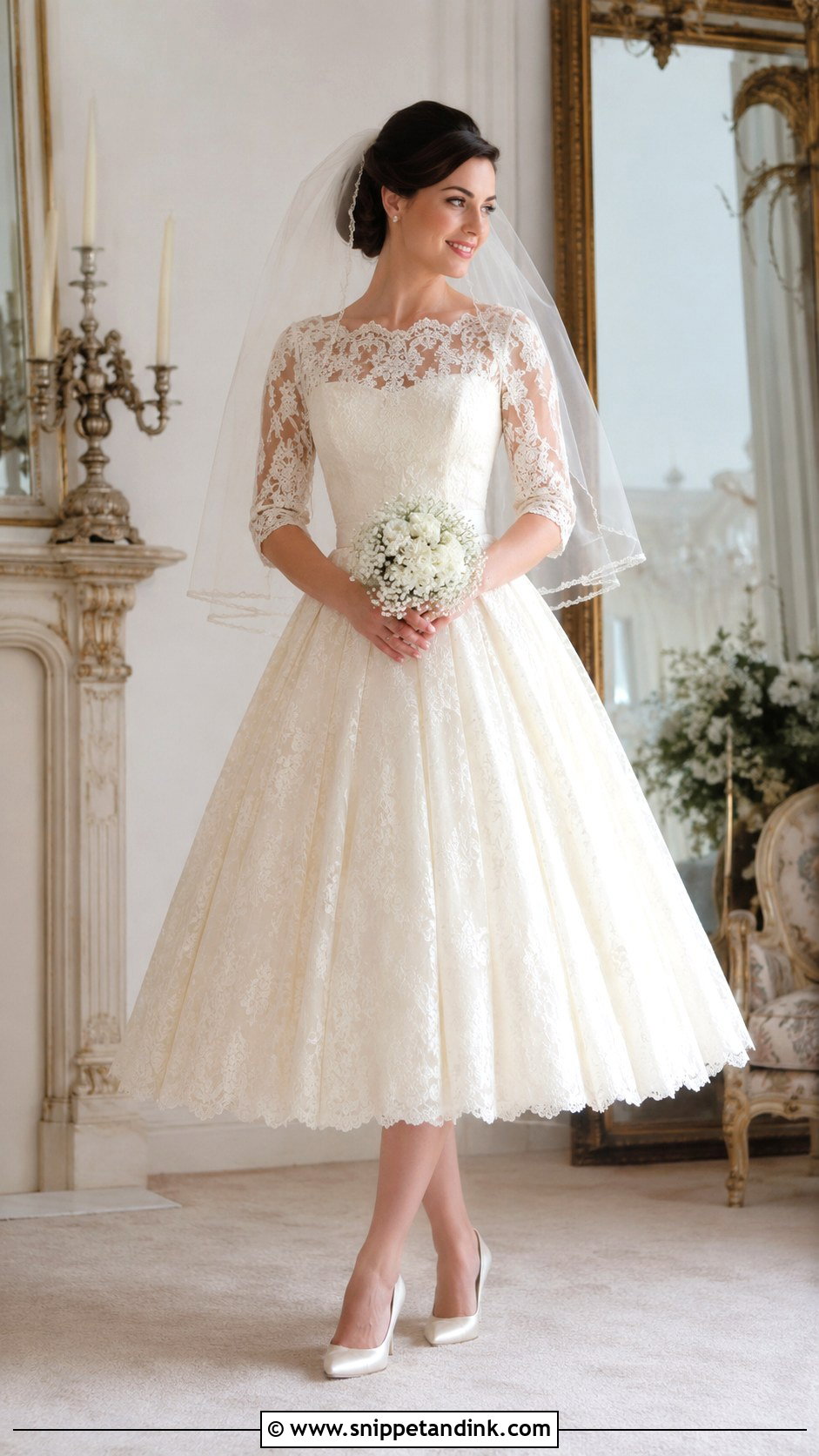
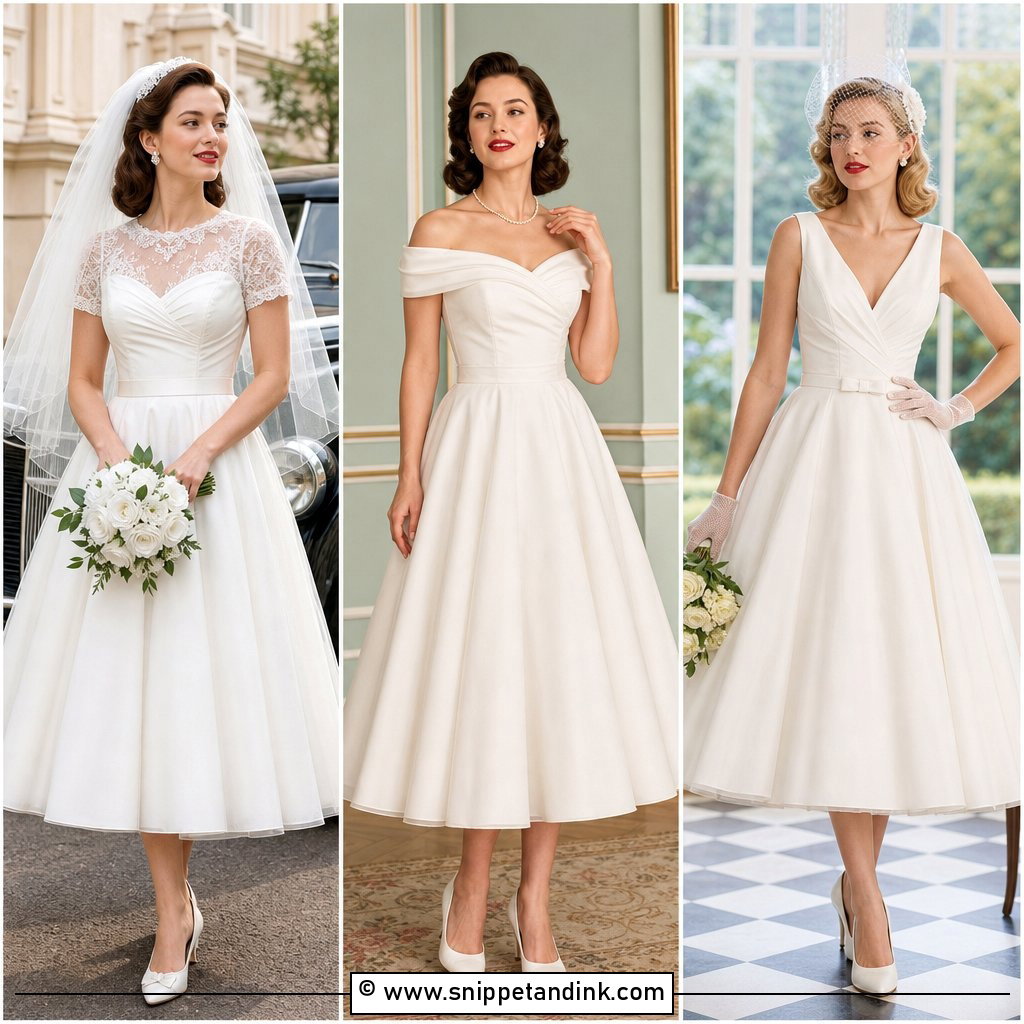
Lace on the bodice with plain tulle or satin on the skirt is the balance I’d aim for, since lace all over a full skirt gets heavy fast. Three-quarter sleeves are the most period-true choice and still feel easy to wear today. A narrow satin belt sharpens the waist. Pearl drops, ivory heels and a fingertip veil are all it needs. When I fit lace sleeves, I check the inside of the elbow, because stiff corded lace can scratch there as you bend your arm.
3. Satin 50s Wedding Dress
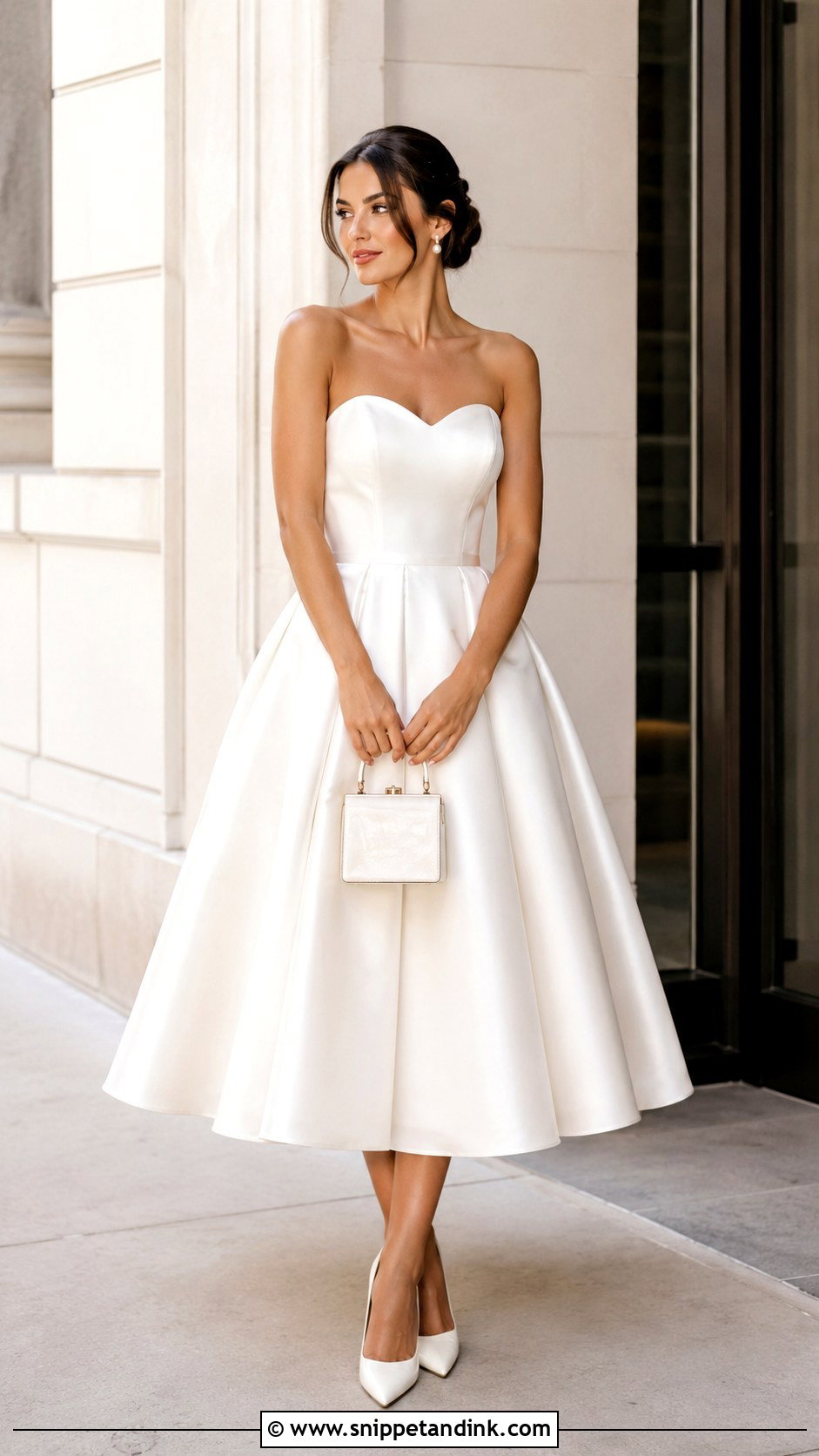
Satin and fifties structure belong together, because satin holds volume and gives a clean surface. A tea-length satin dress with a sweetheart neckline, fitted bodice and full skirt is the classic form. Pointed ivory heels, a small top-handle bag and pearl earrings keep it polished, and a short birdcage veil or a satin bow at the waist adds drama. Satin creases where you sit, so for a long seated dinner a heavier duchess satin recovers better than a thin one. It’s a natural fit for a refined city wedding.
4. Tulle 50s Wedding Dress
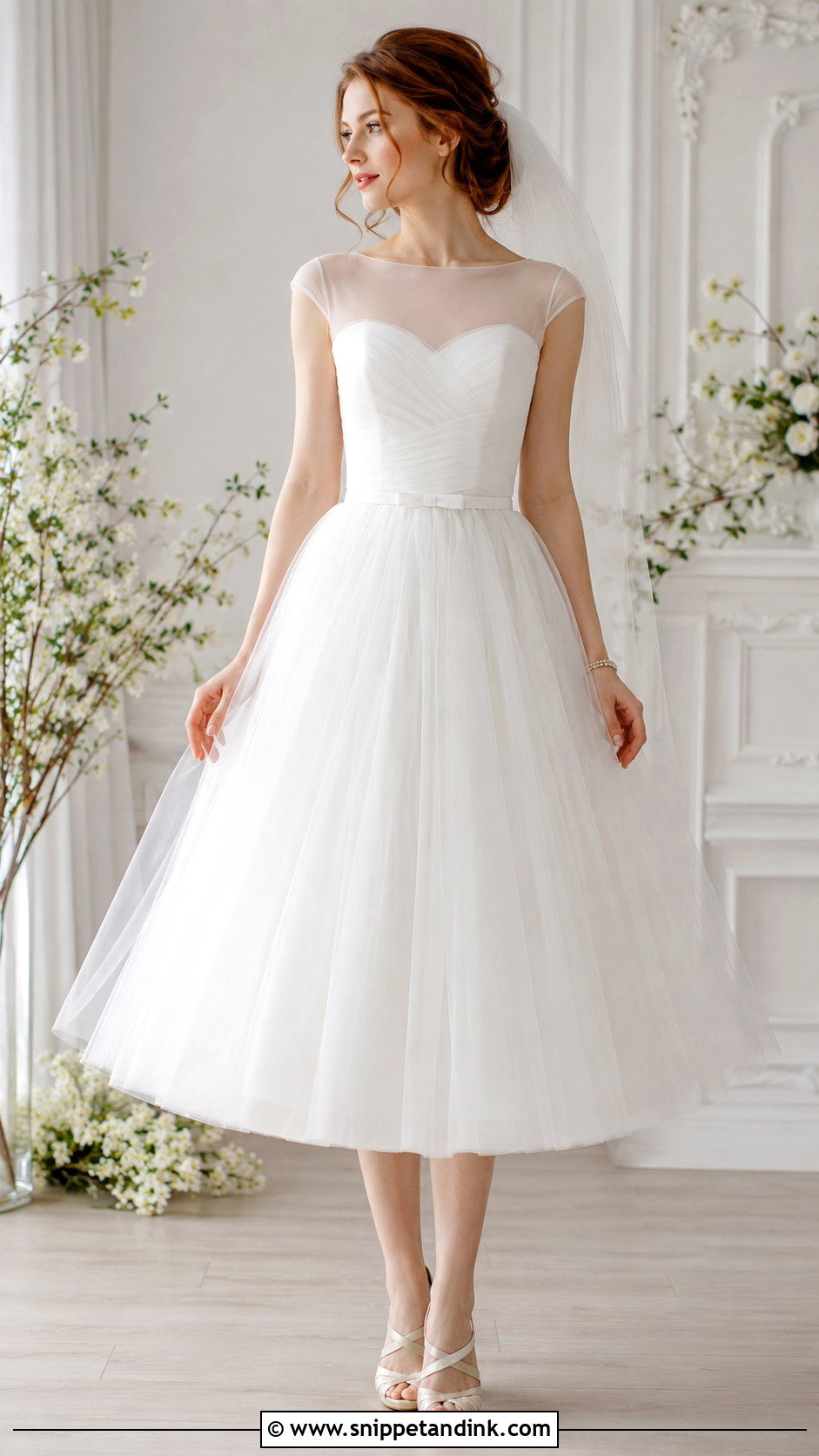
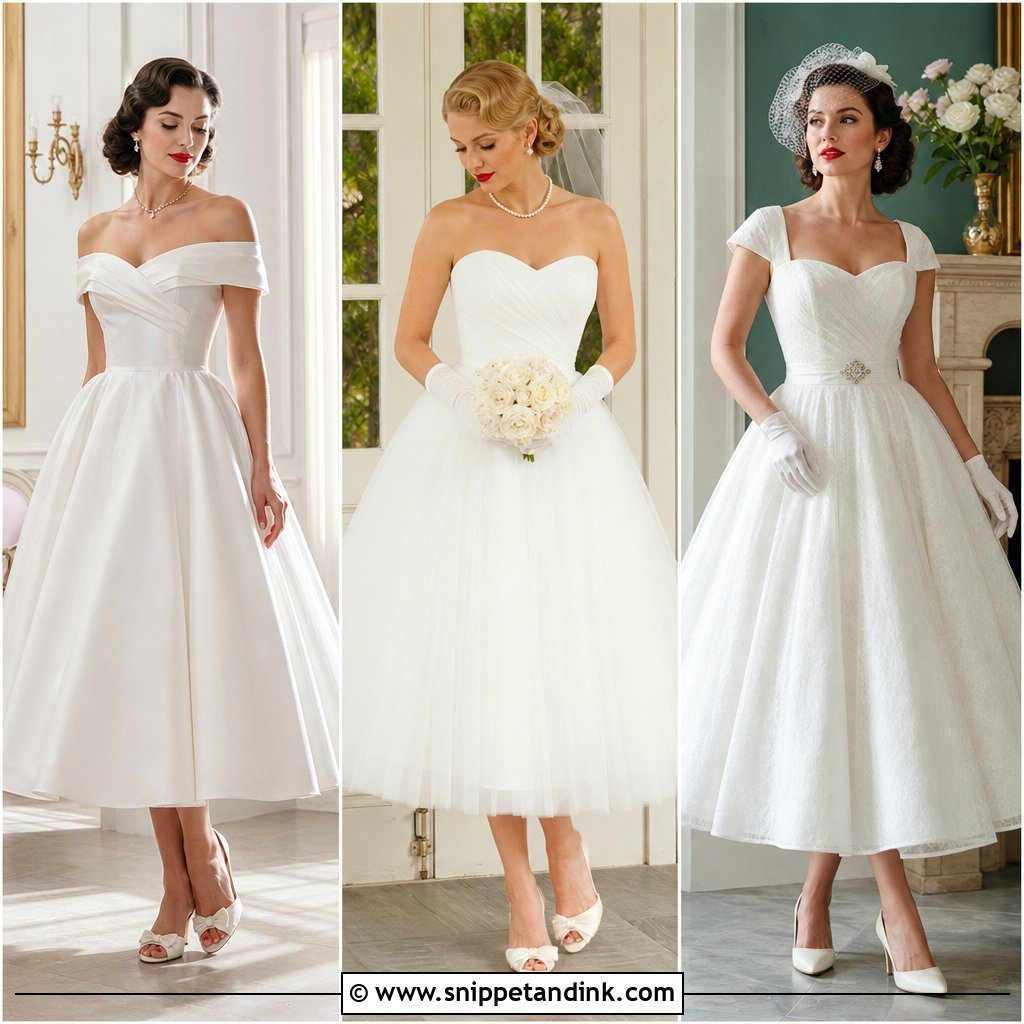
Soft tulle gives the round, floating skirt the decade is remembered for, and it’s far lighter to wear than satin. A fitted bodice, a natural waistline and a tea or ballerina length flatter most brides. Delicate heels, a pearl bracelet and a shoulder-length veil complete it, with a slim ribbon belt to mark the waist. Tulle snags on rough surfaces and rhinestone shoe buckles, so I keep jewelry and shoe trims smooth. Spring and summer weddings suit its airy feel.
5. Bateau Neck 50s Wedding Dress
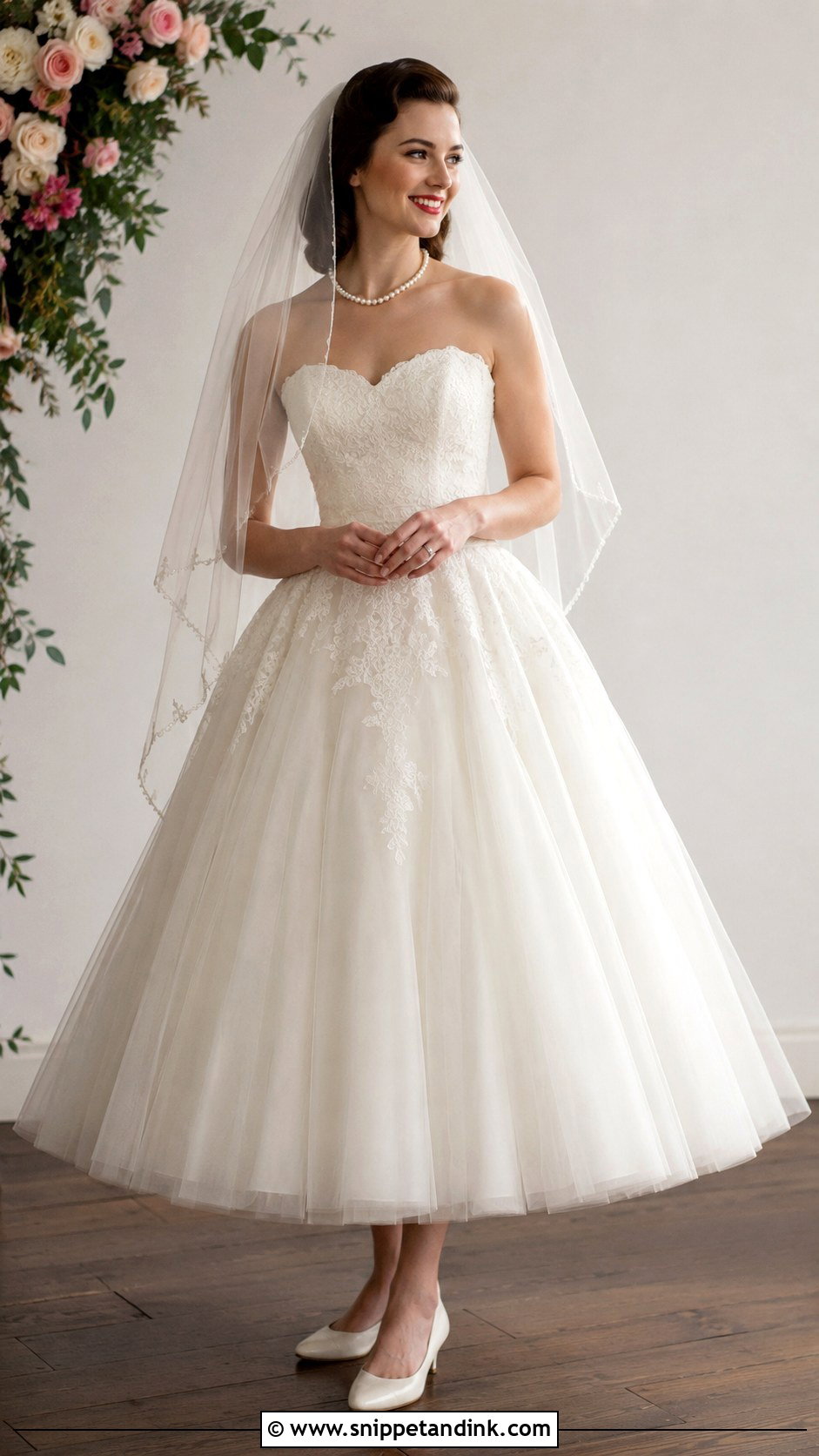
A bateau neckline runs almost straight across, close to the collarbone, and it widens the shoulder line. That suits narrow or sloping shoulders especially well; on very broad shoulders I’d usually suggest a scoop instead. Over a fitted bodice and full skirt it looks clean and covered. Pearl studs, satin kitten heels and a neat updo show off the neckline. A short veil or structured headband keeps it period-true without turning sugary.
6. Sweetheart 50s Wedding Dress
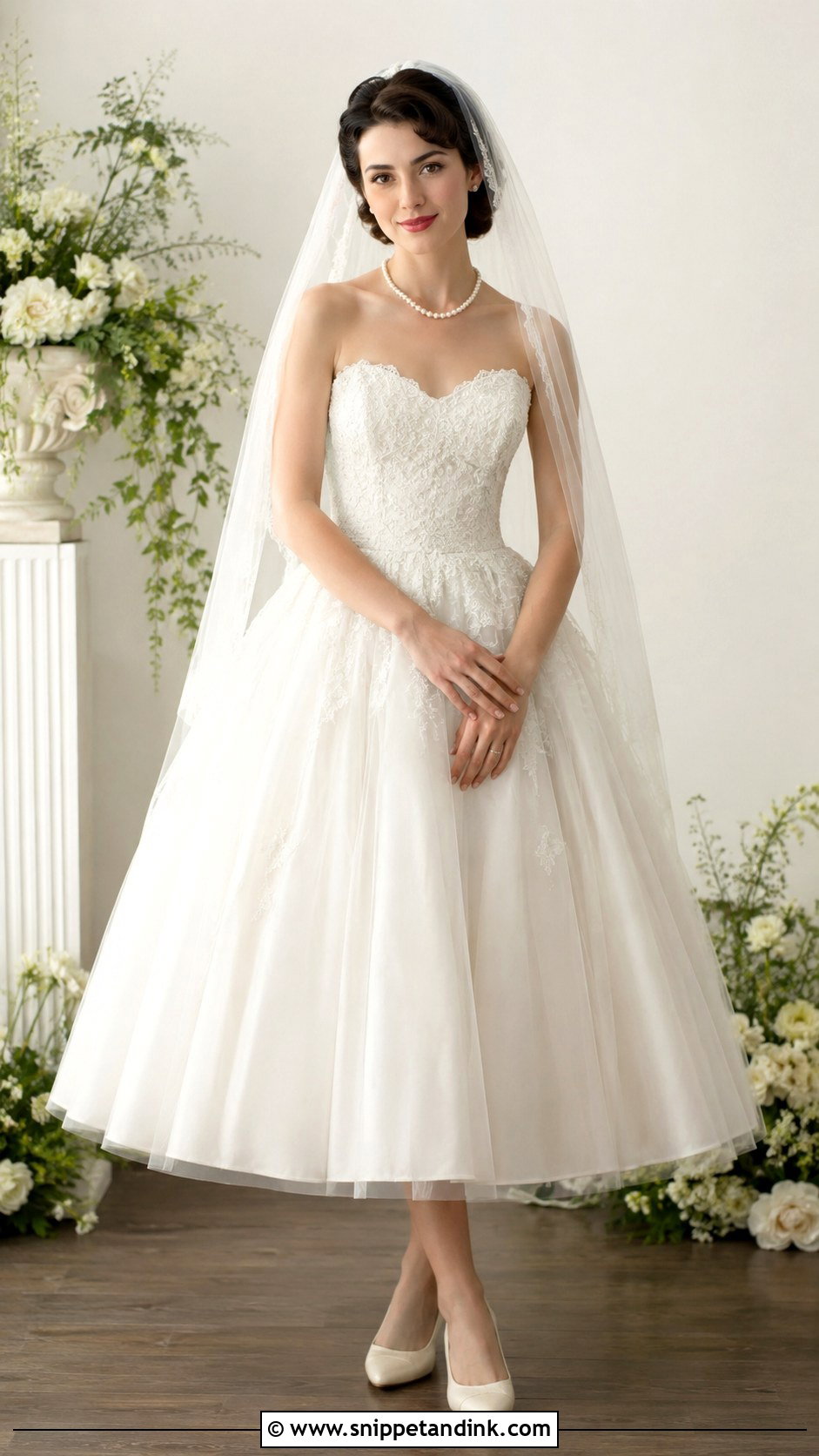
The sweetheart curve softens a fitted bodice and pairs naturally with a full skirt. Satin makes it glamorous; lace makes it traditional. Low ivory heels, a pearl necklace and a waist-length veil finish it. The top edge is what I watch at fittings, because a sweetheart cut even slightly loose gapes at the curves when you lean forward. If it feels too open, a sheer lace bolero or cap sleeves solve that and add a very fifties touch.
7. Halter 50s Wedding Dress
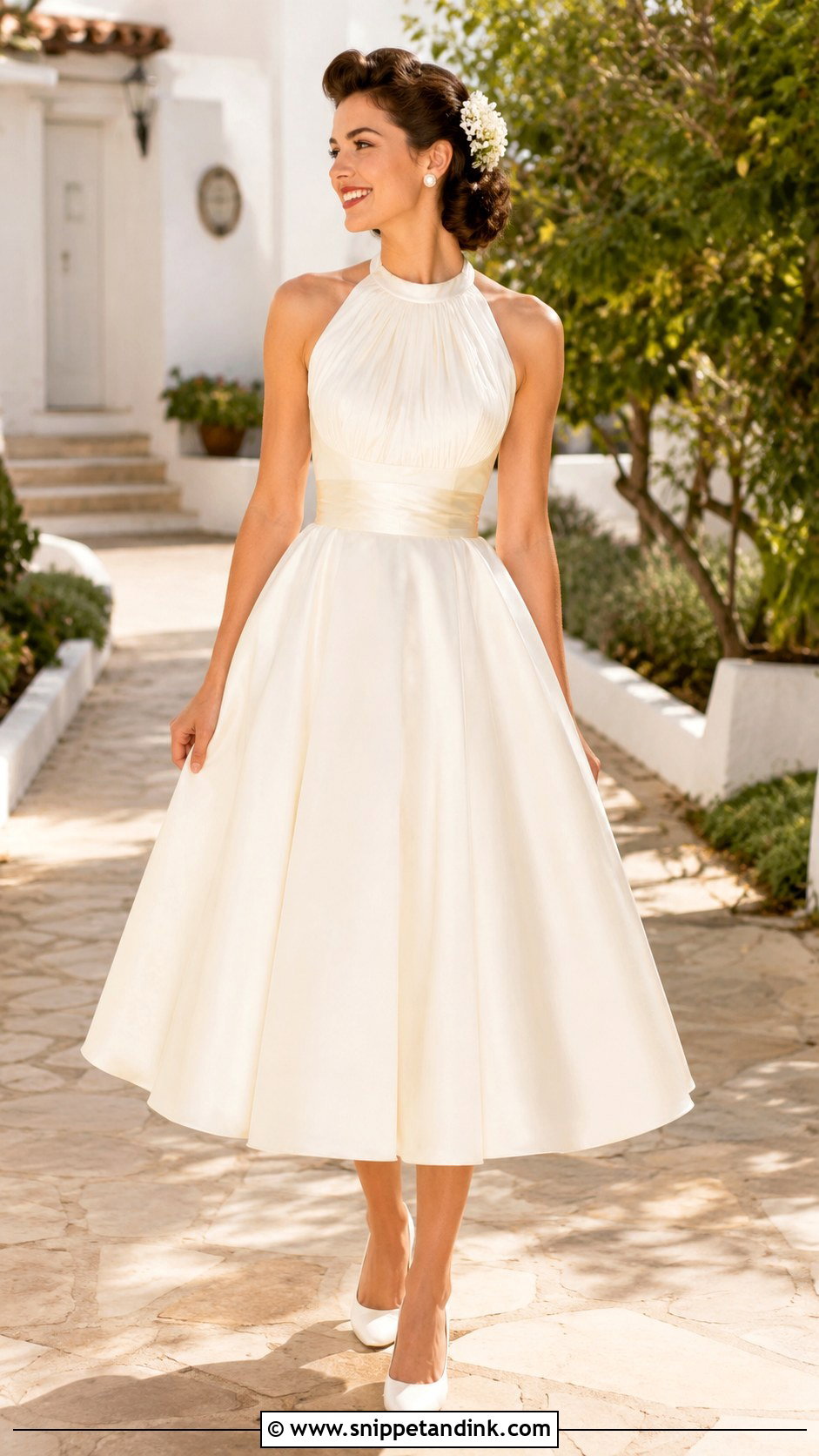
Halters were a fifties summer favourite, and on a bride they feel lively. The neckline frames the shoulders and lifts the eye. A tea-length halter with a full skirt suits warm weather. Closed-toe pumps, pearl earrings and a short veil or floral comb are enough, with a satin belt or fitted seam at the waist. Because the bodice hangs from the neck, ask whether there’s structure built into it so the weight isn’t all on the tie.
8. Cap Sleeve 50s Wedding Dress
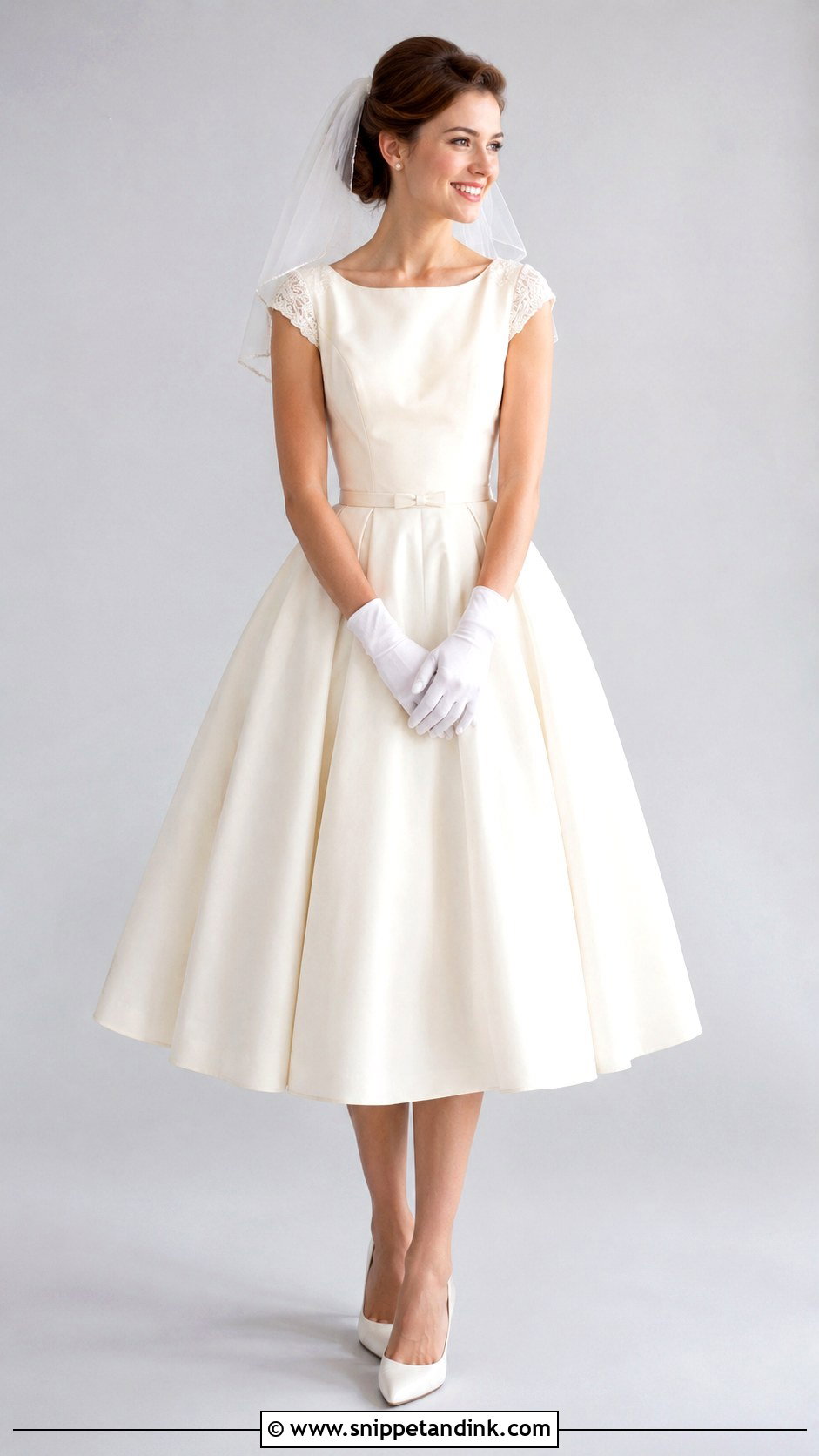
A cap sleeve 50s wedding dress gives just a little shoulder coverage. Cap sleeves work in lace, satin or organza and sit naturally with a fitted waist and flared skirt, ideally over a tea-length hem. Pearl earrings, short white gloves and simple pumps finish it, with a soft veil or small fascinator. Fitted cap sleeves can dig into the upper arm, so I always have the bride lift and cross her arms before we finalise them.
9. Long Sleeve 50s Wedding Dress
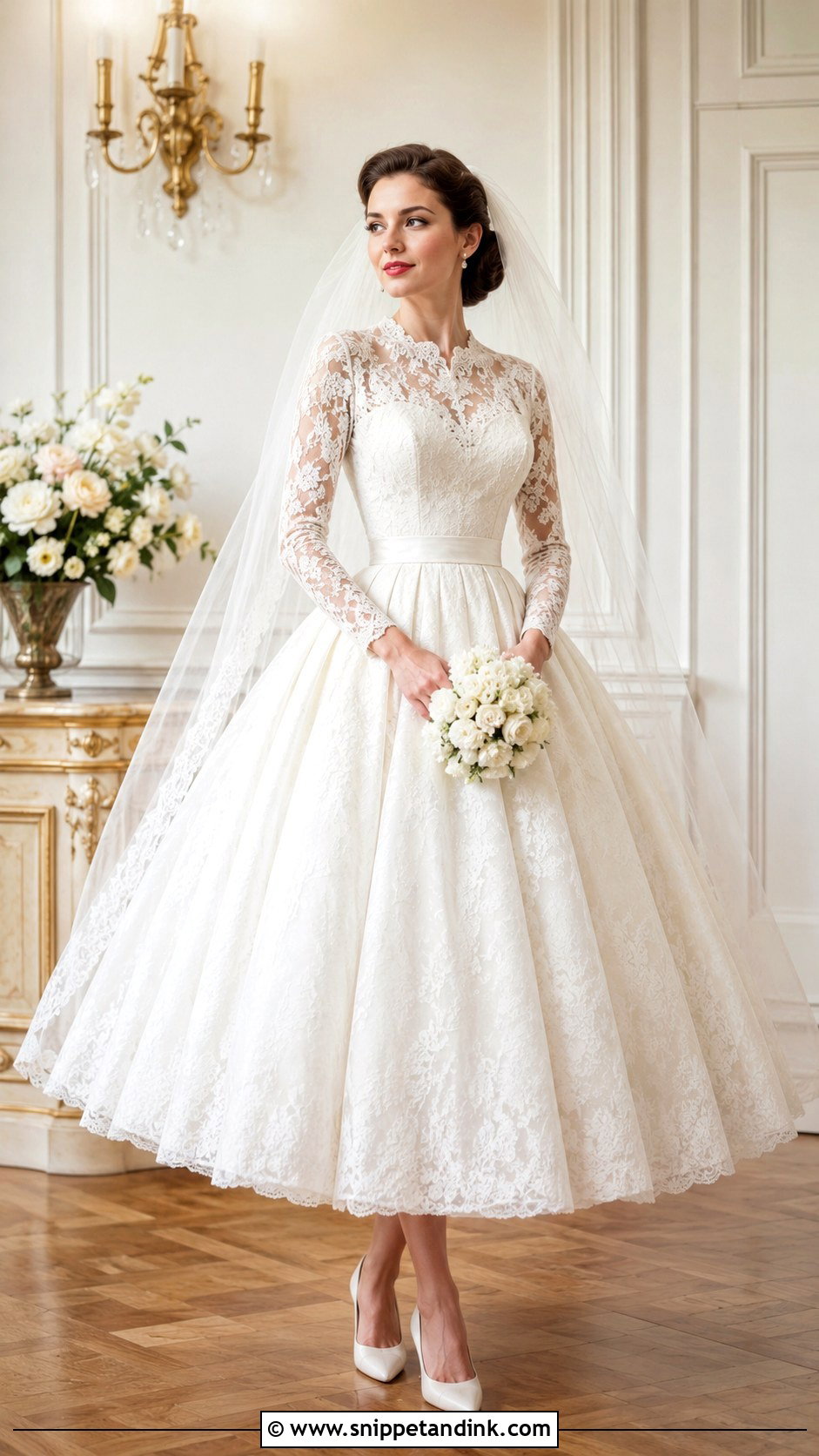
Long lace sleeves add formality and coverage while keeping the shape soft. A fitted bodice, defined waist and full skirt hold the silhouette true to the decade. Satin pumps, pearl earrings and a long veil make it formal, while sheer sleeves with delicate appliqué make it lighter. I’d ask for a small button and loop at each wrist; it’s a period detail and it stops the sleeves riding up. Fall and winter ceremonies suit this one best.
10. Three Quarter Sleeve 50s Wedding Dress
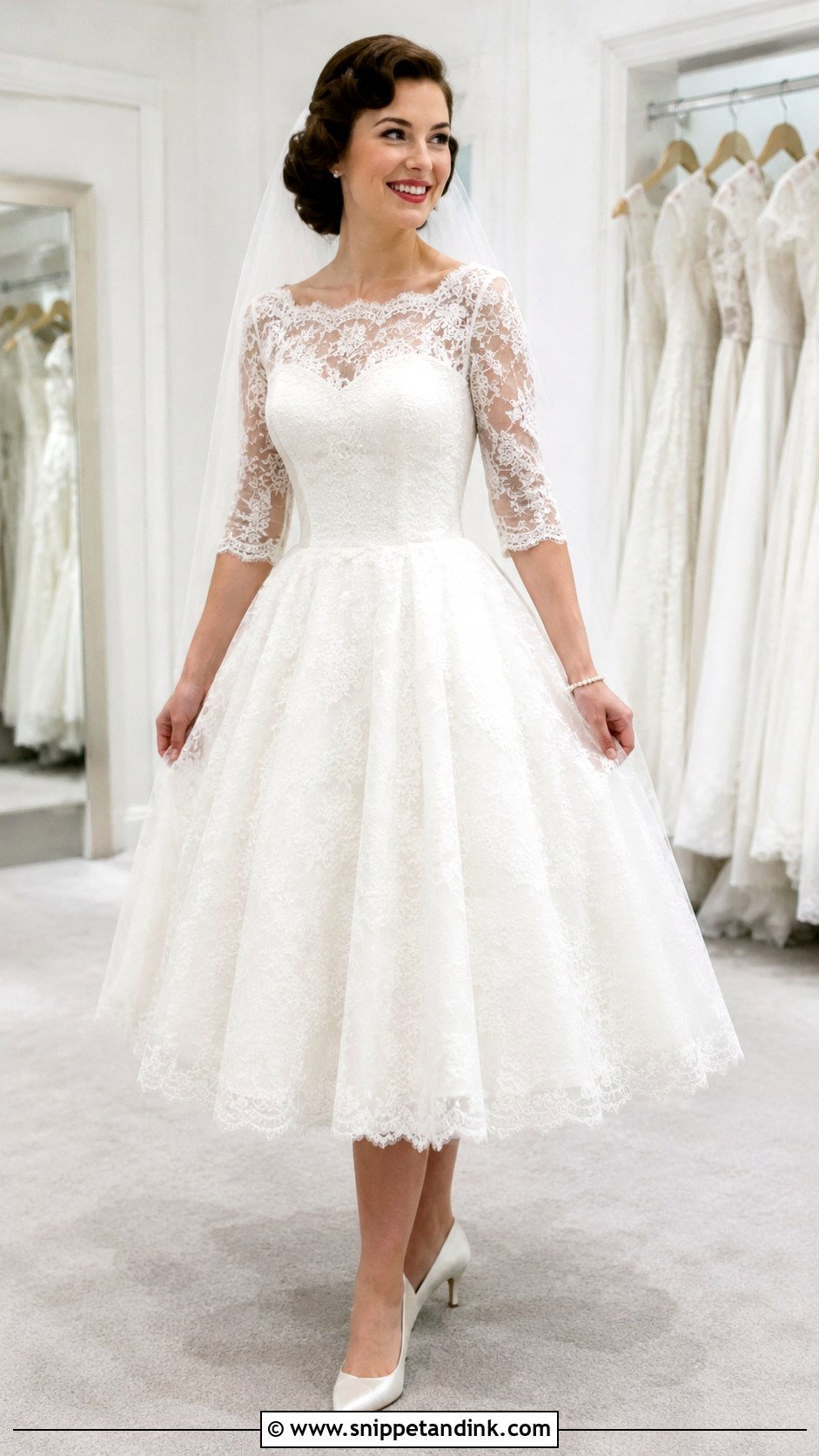
Three-quarter sleeves end between the elbow and wrist, so your hands and bracelet stay visible. Lace or illusion sleeves over a tea-length skirt is the classic pairing. A pearl bracelet, ivory pumps and a short veil complete it. Skip gloves here so the sleeve line stays clean. Because the shape draws attention to the waist and neckline, it suits a wide range of figures, and it’s my usual suggestion for a bride who wants sleeves without heaviness.
11. Off Shoulder 50s Wedding Dress
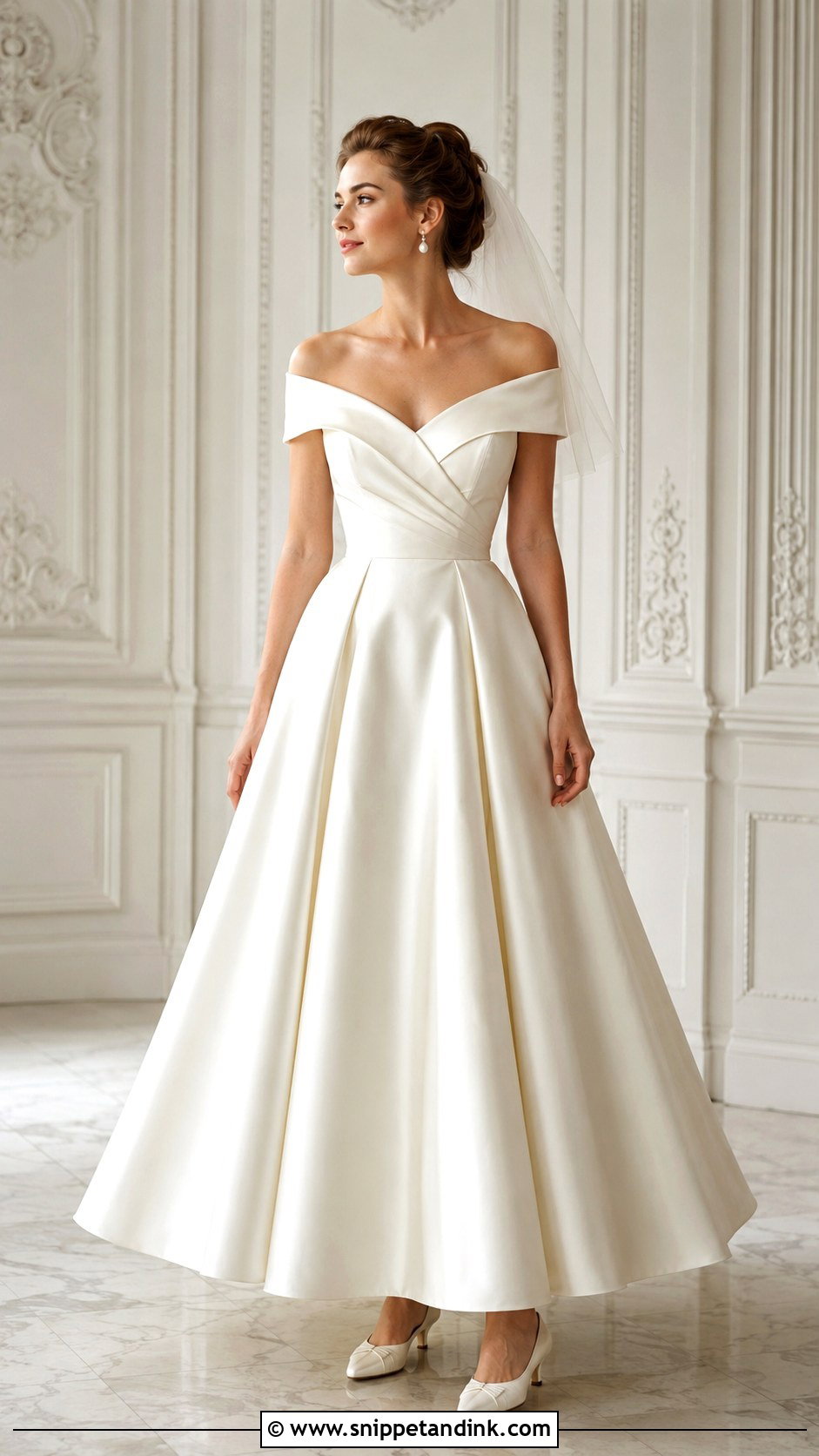
Off-shoulder necklines bring out the old-Hollywood side of the decade. The shoulders are open, while the fitted waist and full skirt keep the shape classic. Satin gives a sleek finish and lace a softer one. Pearl drop earrings, a structured updo and low heels complete it. A short veil tucked behind the hair keeps the neckline visible where a heavy veil would cover it. Good boning matters more here than anywhere, because without straps the neckline needs the bodice to hold it in place.
12. Ballerina Length 50s Wedding Dress
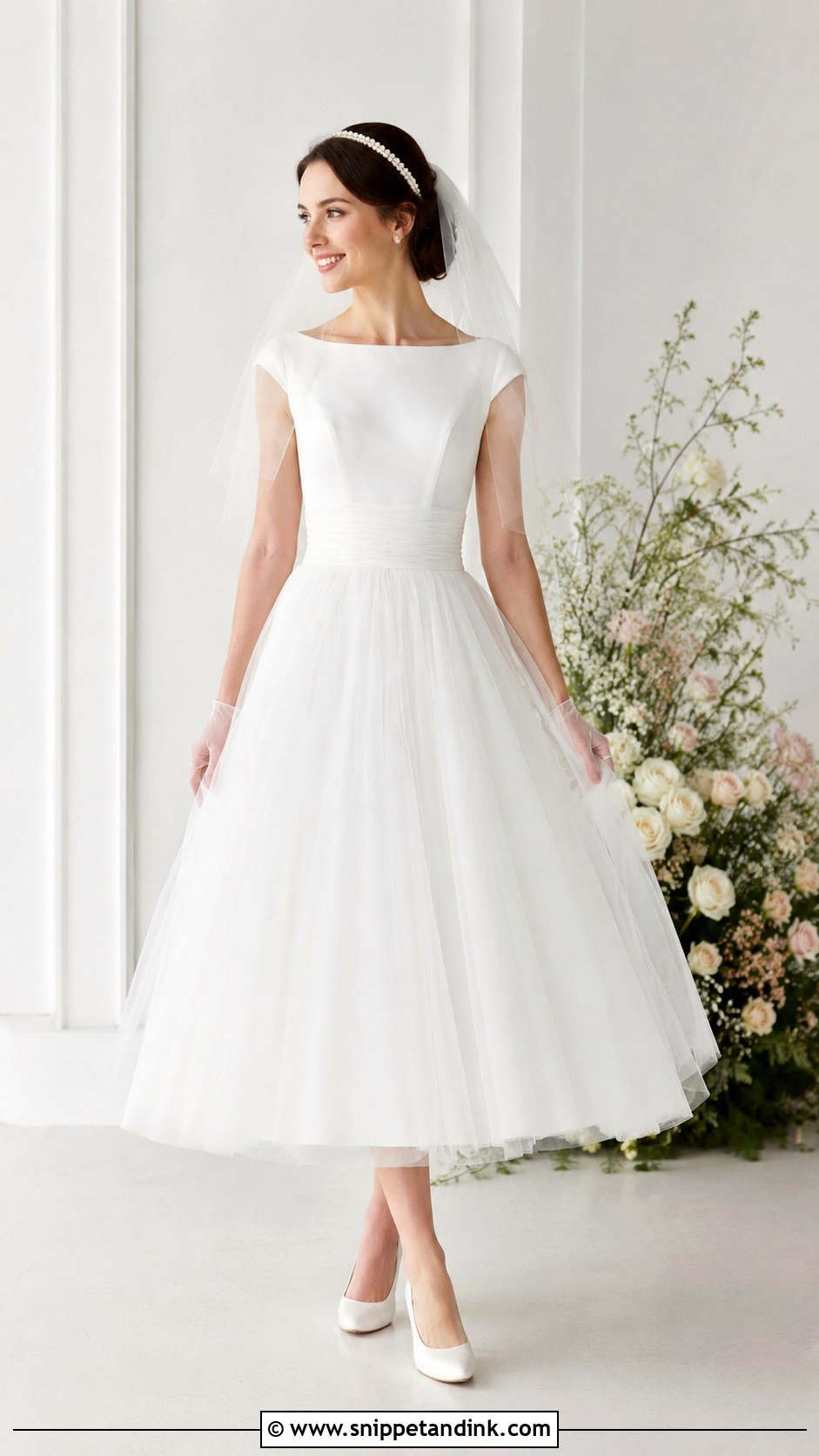
Ballerina length usually falls lower than tea length, often around the ankle, so it keeps the vintage fullness but feels a little more formal. Tulle, organza and lace move softly at this length. Satin pumps, a pearl headband and a fingertip veil suit it, and a fitted bodice stops the longer skirt from looking heavy. At ankle length any change of shoe shows, so have it hemmed in the exact pumps you’ll wear.
13. Full Skirt 50s Wedding Dress
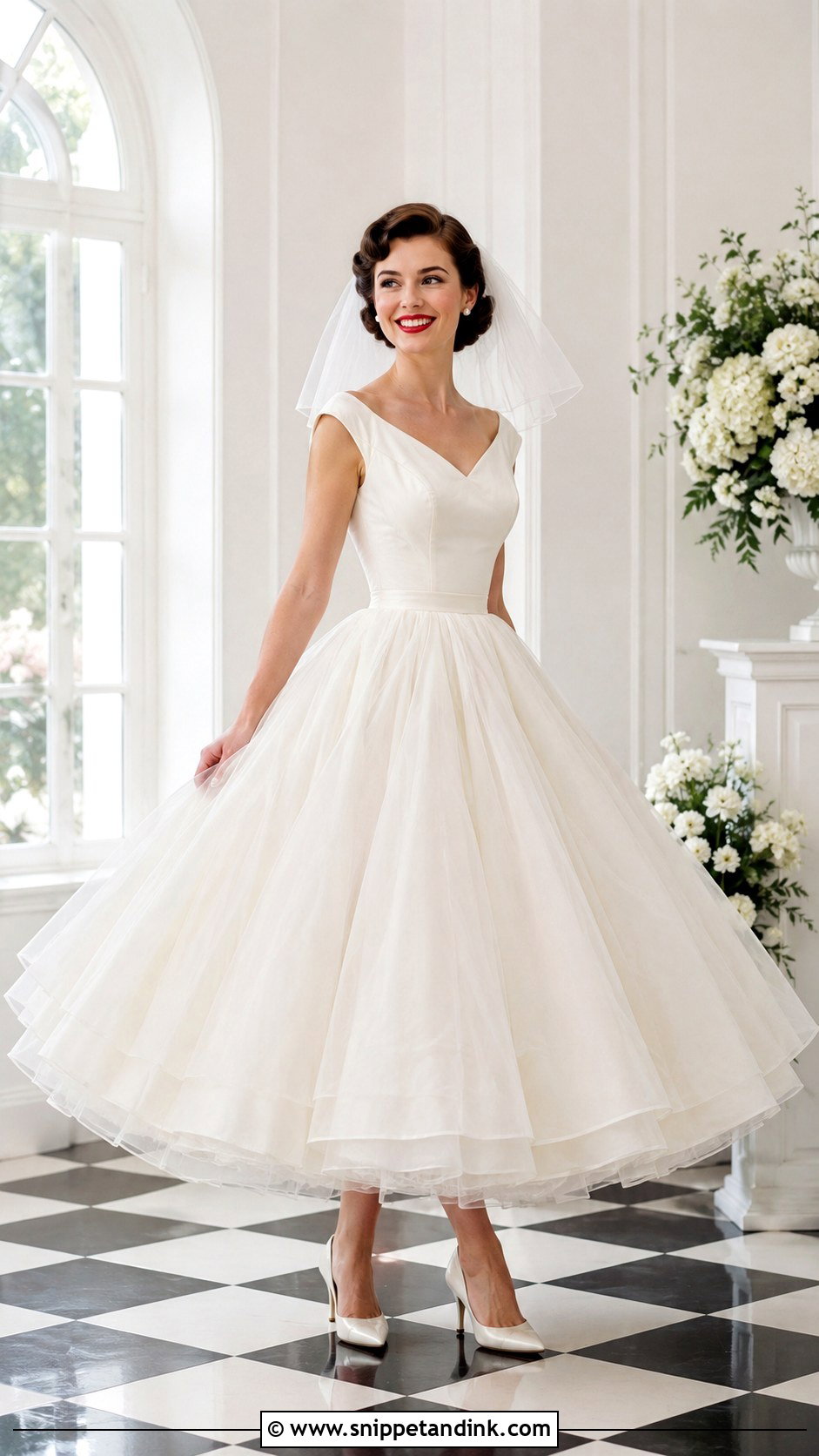
This is the shape everyone recognises, and how dramatic it gets depends on the fabric: tulle, satin, organza or layered lace. A fitted bodice and defined waist make the contrast work, and a petticoat adds more volume. Classic pumps, pearl earrings and a short veil keep the rest neat. A truly full skirt takes up room in aisles and cars, so at the final fitting I walk brides through a doorway and in and out of a chair.
14. Short 50s Wedding Dress
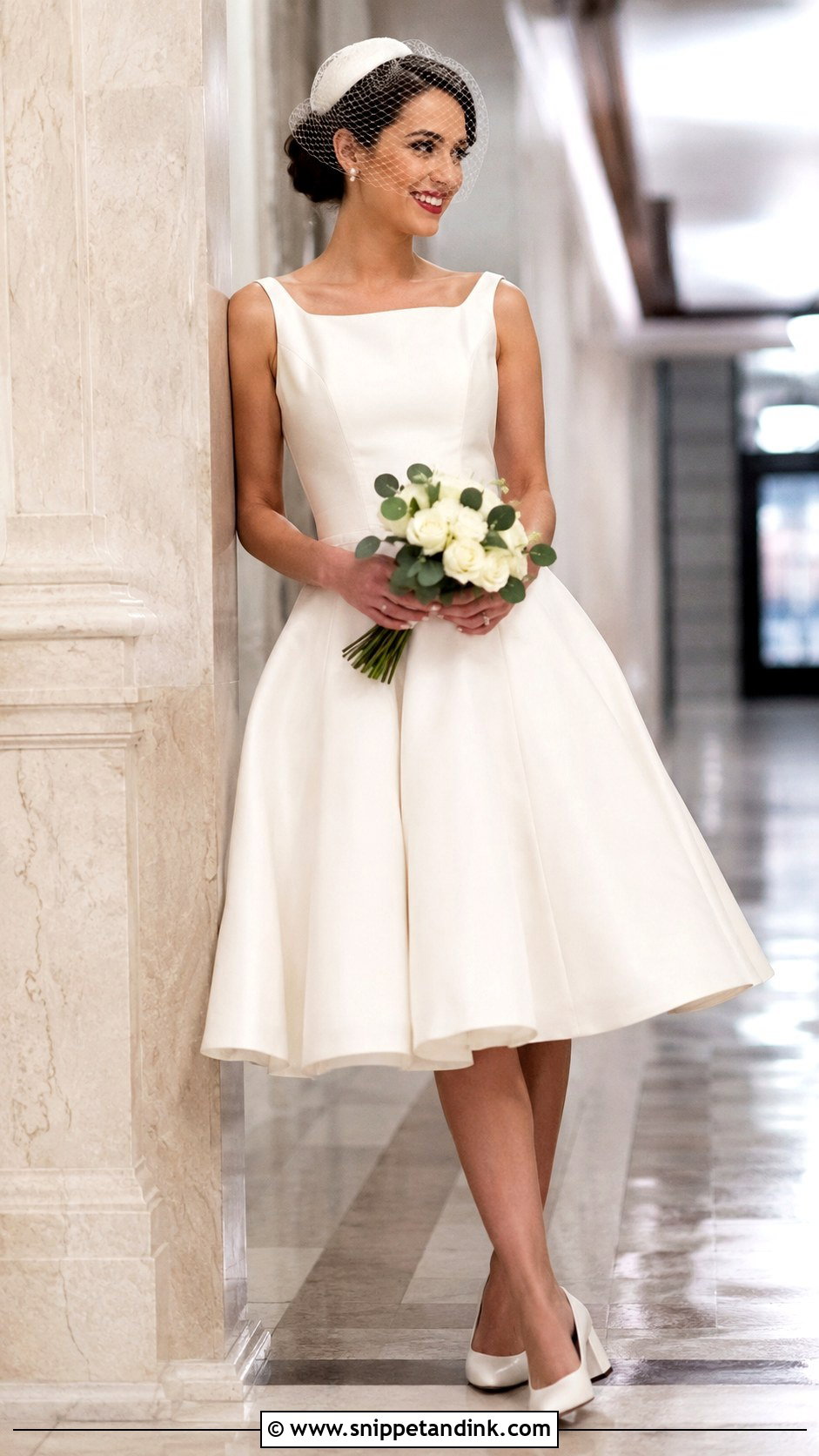
A short fifties dress, knee-length or just below, keeps the retro charm in a more playful form. A fitted waist and flared skirt hold the shape. Lace, satin or cotton eyelet can all work, depending on the setting. Block heels, pearl studs and a small veil or headband finish it. It’s practical for courthouse weddings and warm-weather celebrations and makes an easy second dress for dancing. With a short hem the shoes are fully on show, so that’s where I’d put a bit more of the budget.
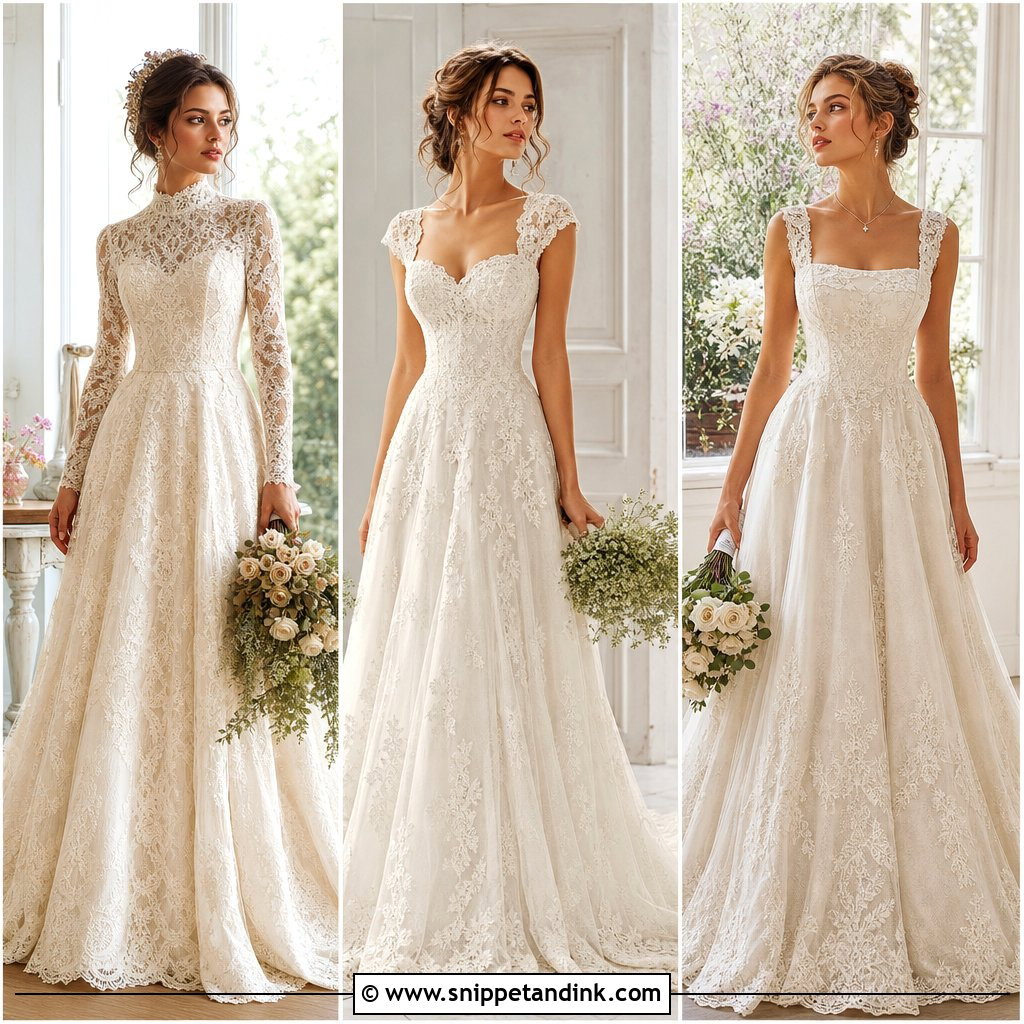

15. Polka Dot 50s Wedding Dress
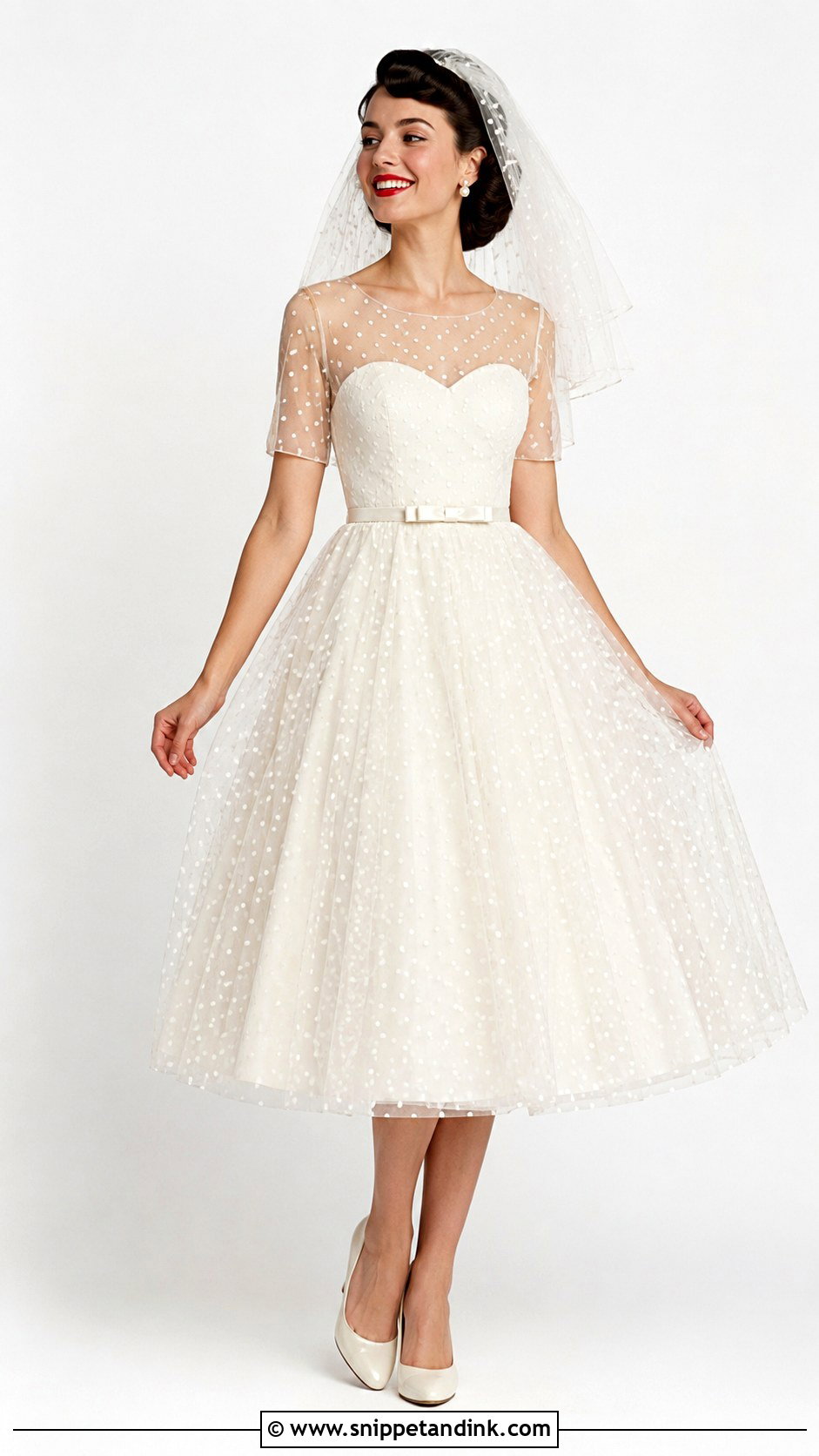
Dots are the most fifties detail on this list and the easiest to overdo. I’d keep them tonal, with sheer dotted tulle or small ivory-on-ivory dots, rather than a contrasting colour. A tea-length skirt, sweetheart neckline and slim waist belt keep the shape classic. Plain ivory heels, pearl earrings and a simple veil stop the outfit from getting busy. Dotted veils exist too, but with a dotted dress, the veil should stay plain.
16. Organza 50s Wedding Dress
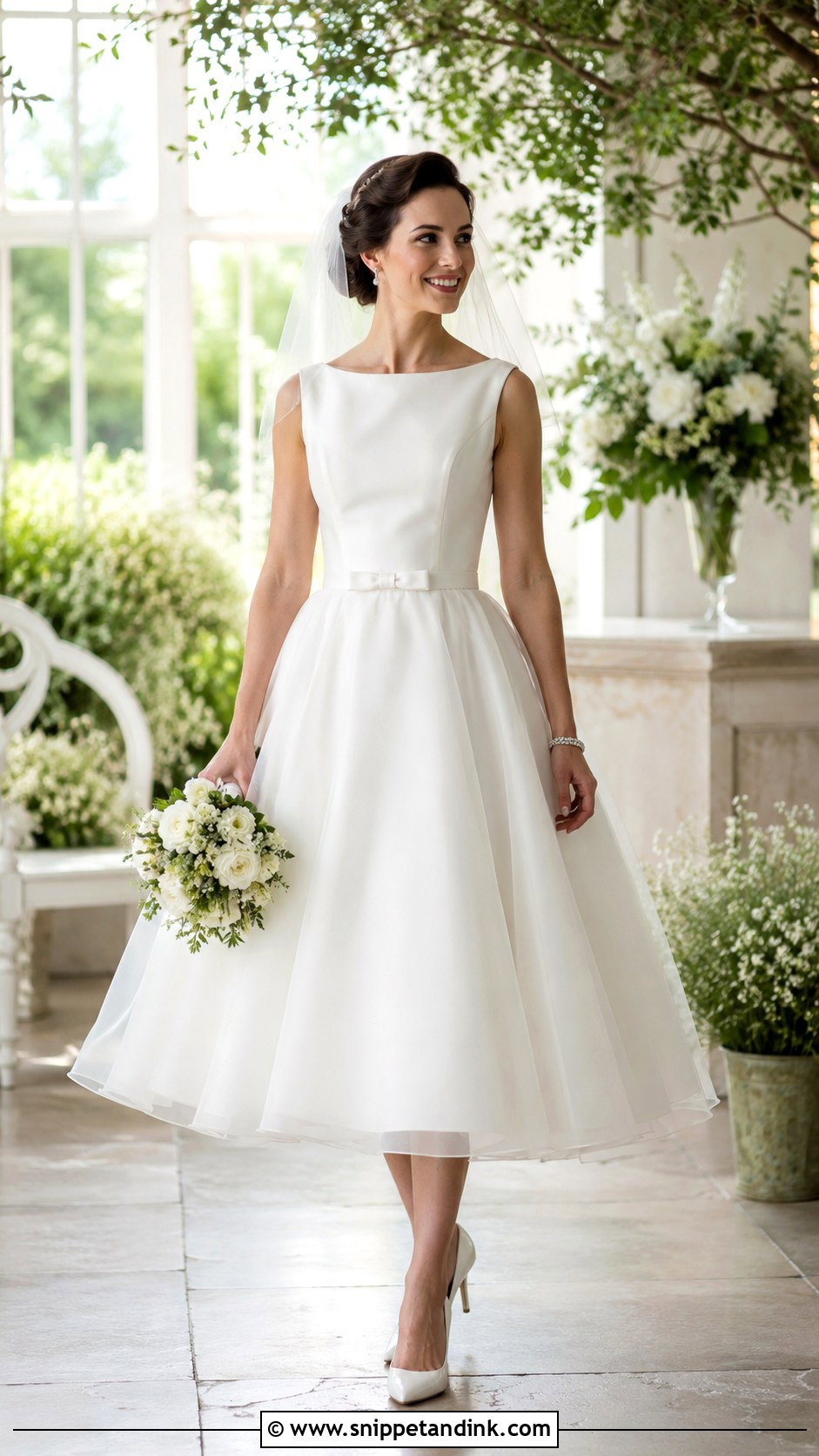
Organza is crisp and airy and holds volume on its own, which suits full skirts and soft sculpted shapes. Try a fitted bodice with a bateau or scoop neckline and a tea-length skirt. Satin pumps, a pearl bracelet and a sheer veil complete it, and a small bow belt adds a detail at the waist. Organza creases sharply and needs a cool steam, never a hot iron. Spring and summer weddings suit its lightness.
17. Mikado 50s Wedding Dress
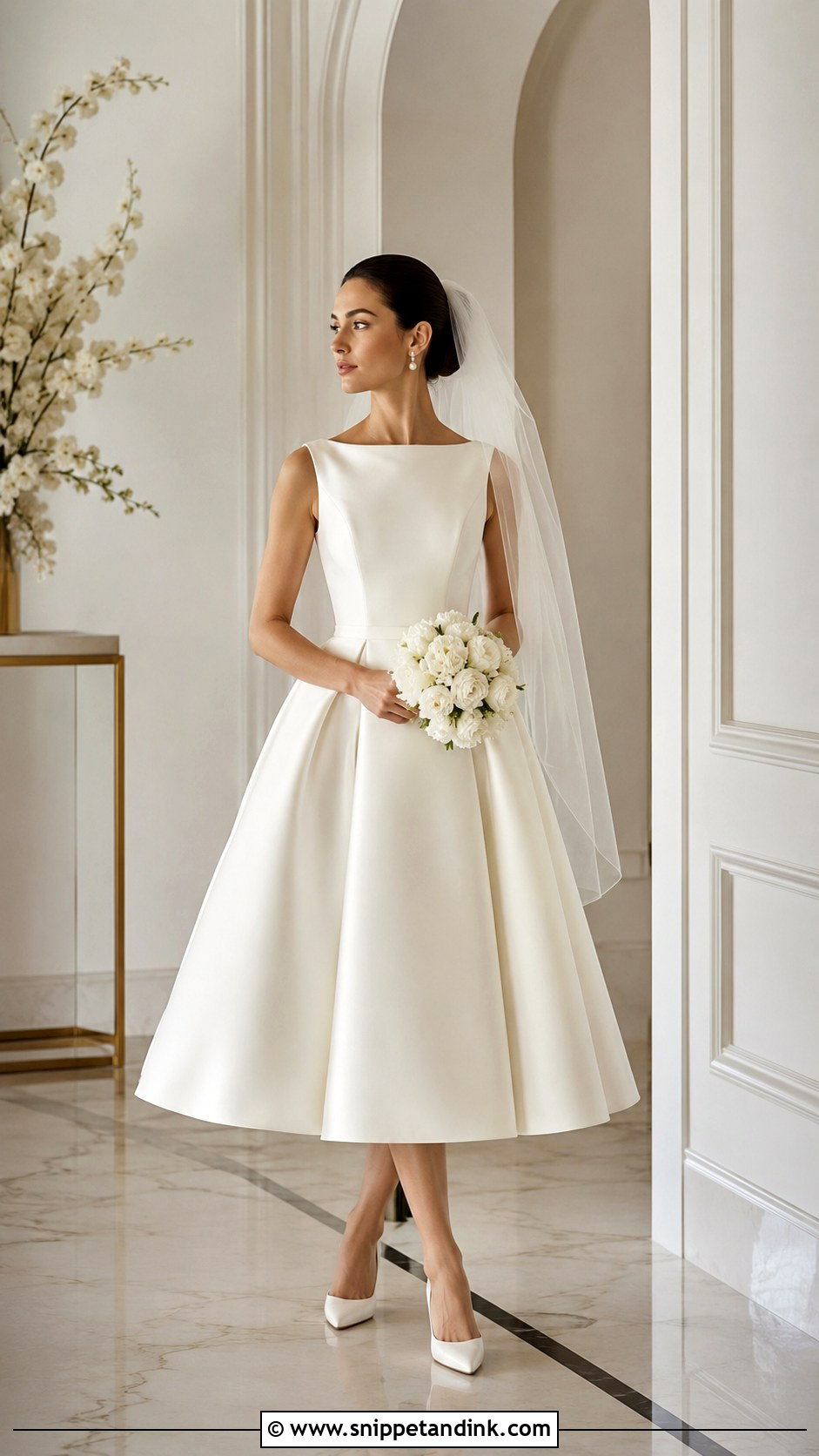
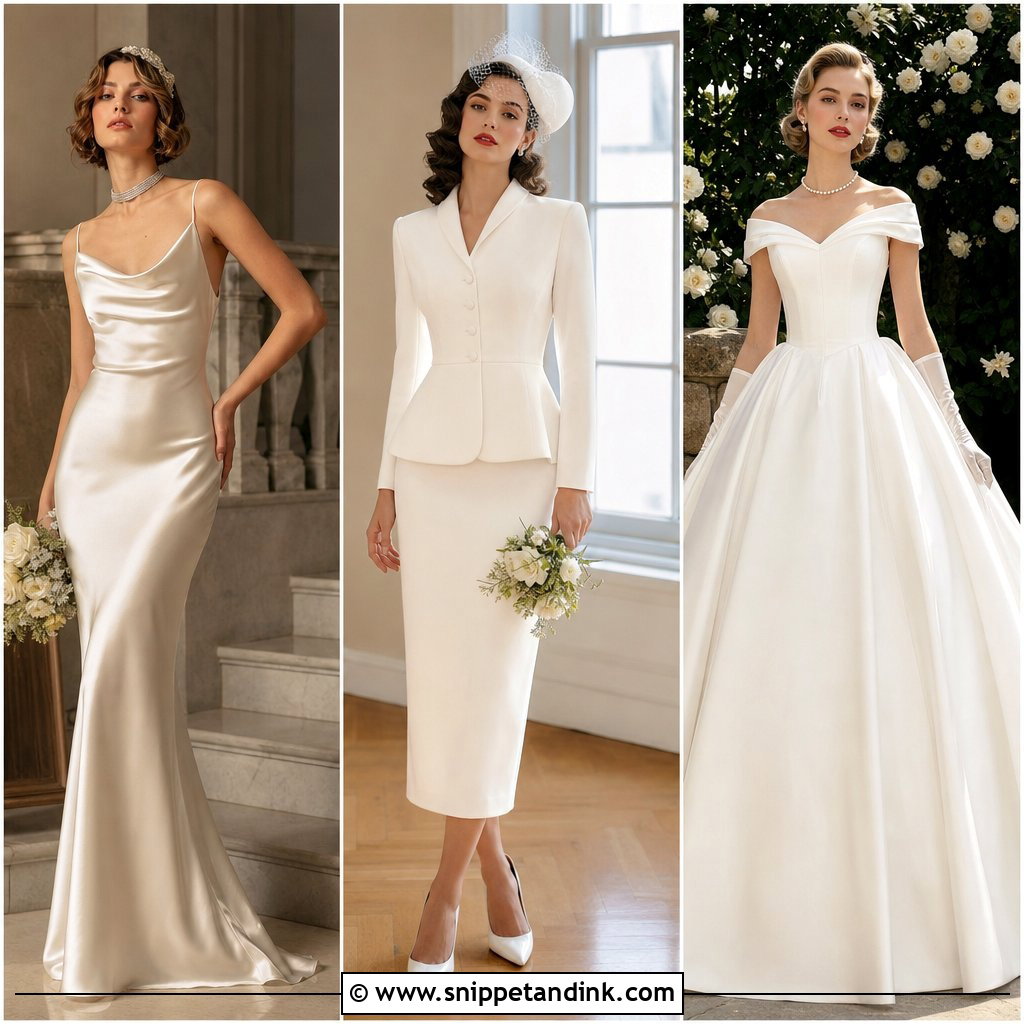
Mikado is stiffer than soft satin, so it gives a smooth bodice and a skirt that holds its shape with less petticoat underneath. A tea or ballerina length with a simple neckline looks polished. Pointed heels, pearl earrings and a sleek veil keep it modern, and a folded waist or satin bow adds subtle interest. It’s the right fabric for a bride who likes minimal dresses but still wants the fifties waist and skirt.
18. Bow Waist 50s Wedding Dress
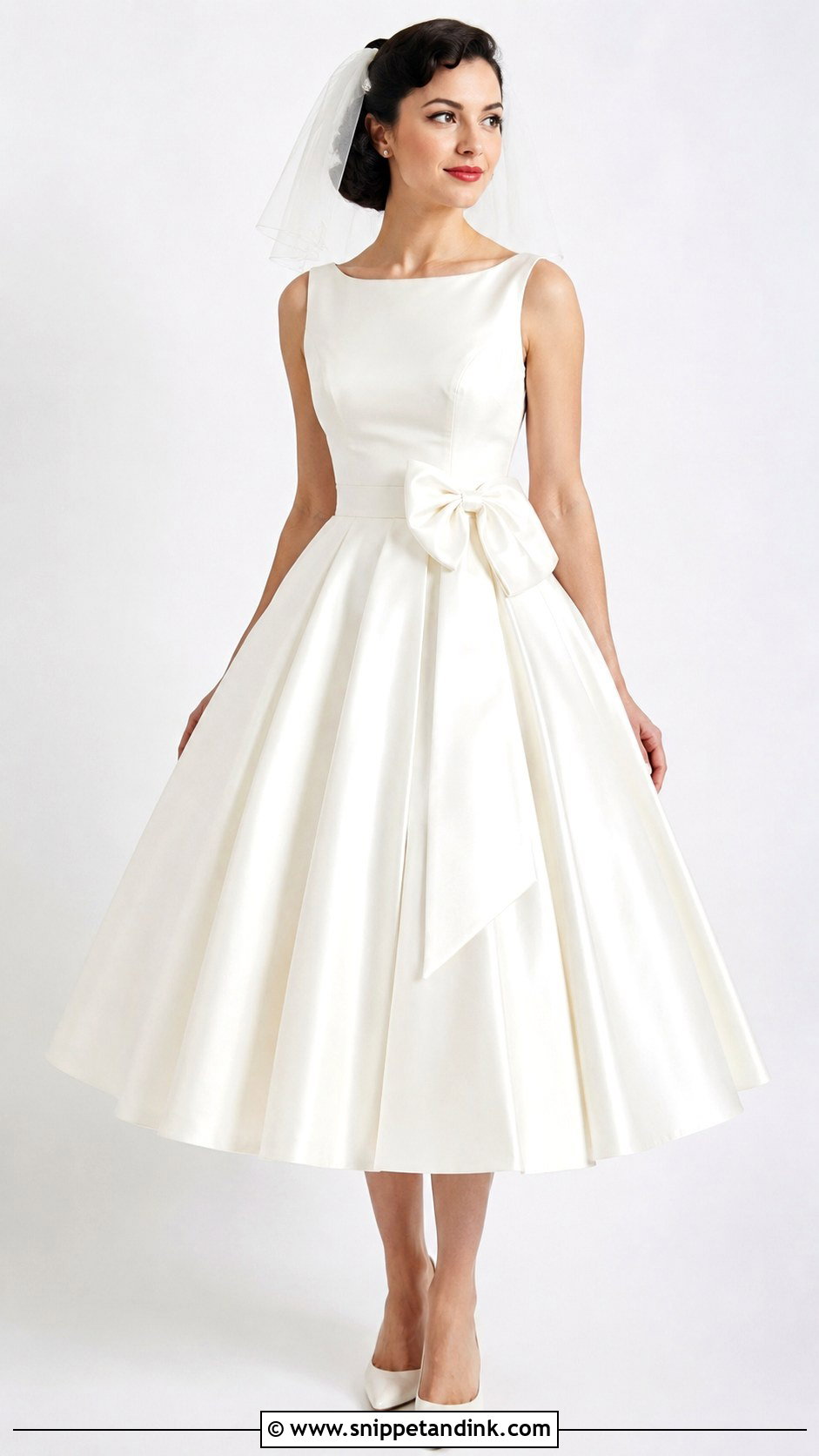
The bow sits right where the silhouette matters most, so it pulls the eye to the waist. Front, side or back placement changes how bold it feels. Satin or mikado with a full skirt carries it best. Pearl studs, ivory pumps and a short veil keep everything else simple, and a large bow rules out heavy jewelry. Ask whether the bow is sewn in or on a separate sash. A detachable sash means you can wear the dress again with a different look.
19. Pearl Detail 50s Wedding Dress
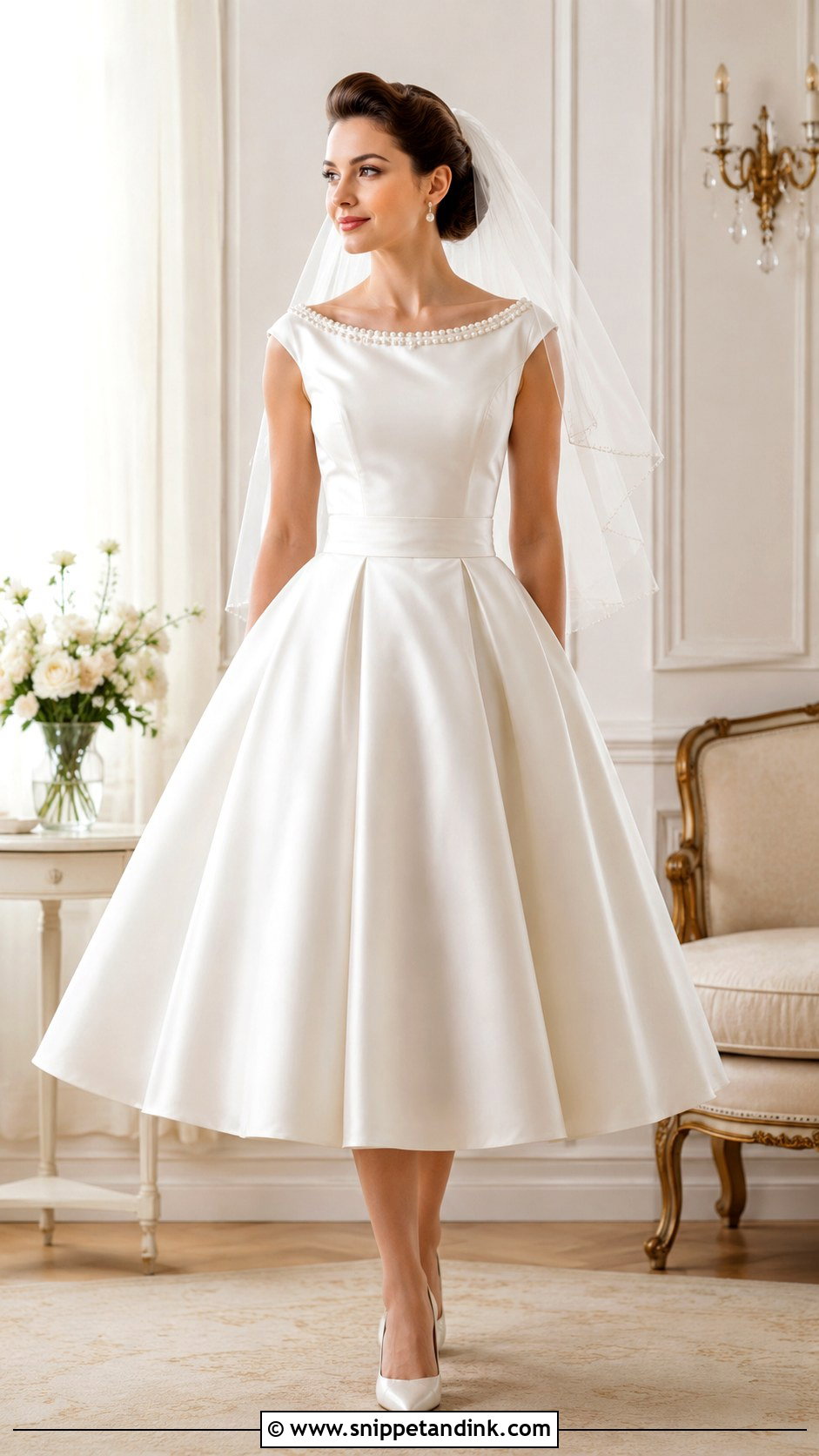
Pearls can sit on the bodice, neckline, belt, veil or accessories, but I’d choose one main pearl feature and stop there. A tea-length lace or satin dress with a pearl-trimmed neckline is a good example. Pearl earrings, simple heels and a soft veil finish it. Look closely at how the trim is attached: pearls stitched on one by one survive hugs far better than pearls glued down or strung on a single thread.
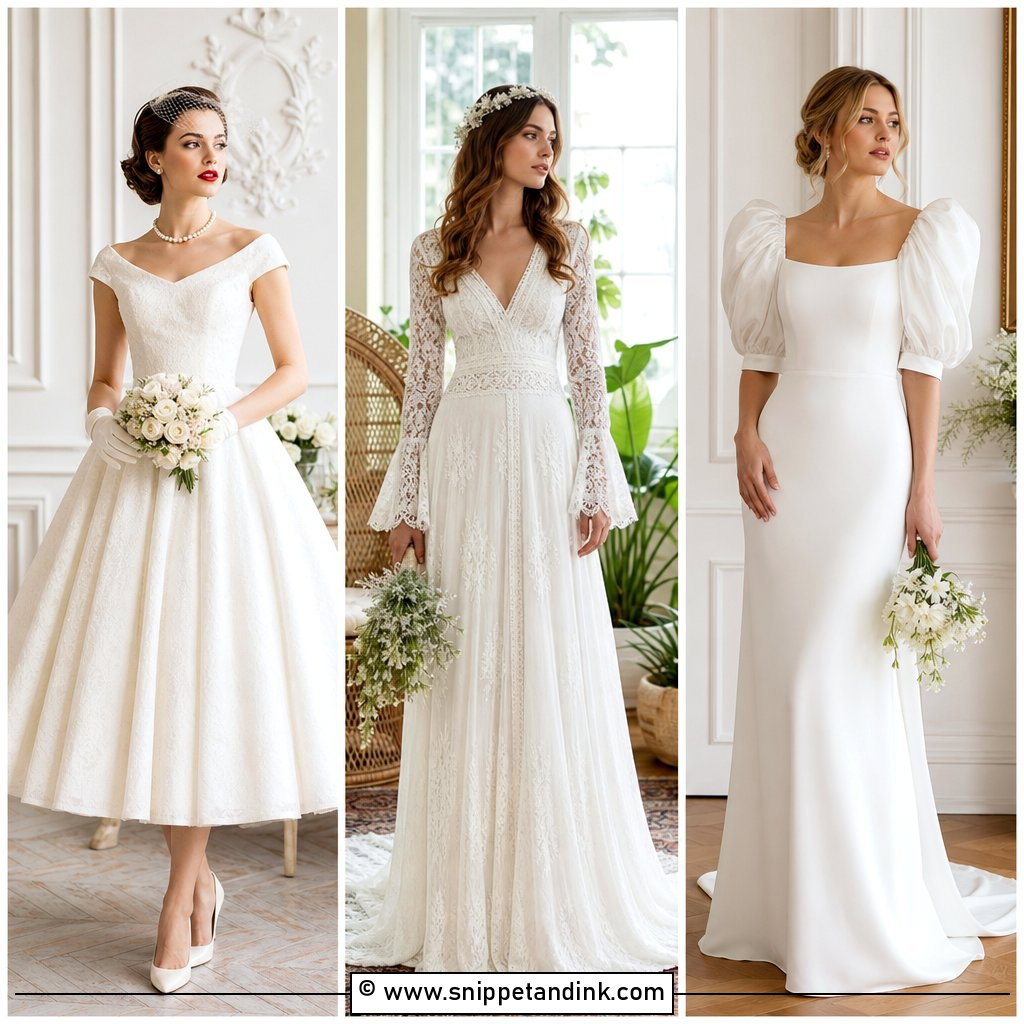

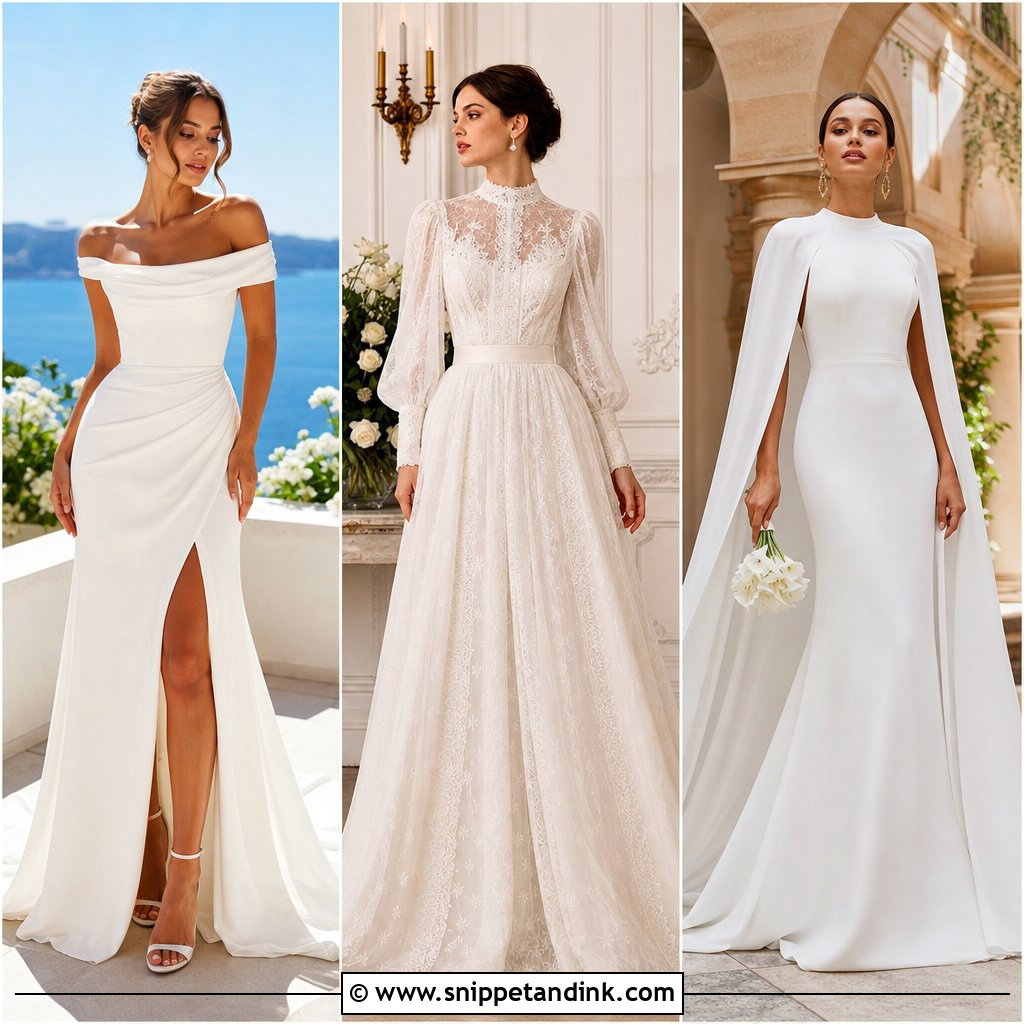
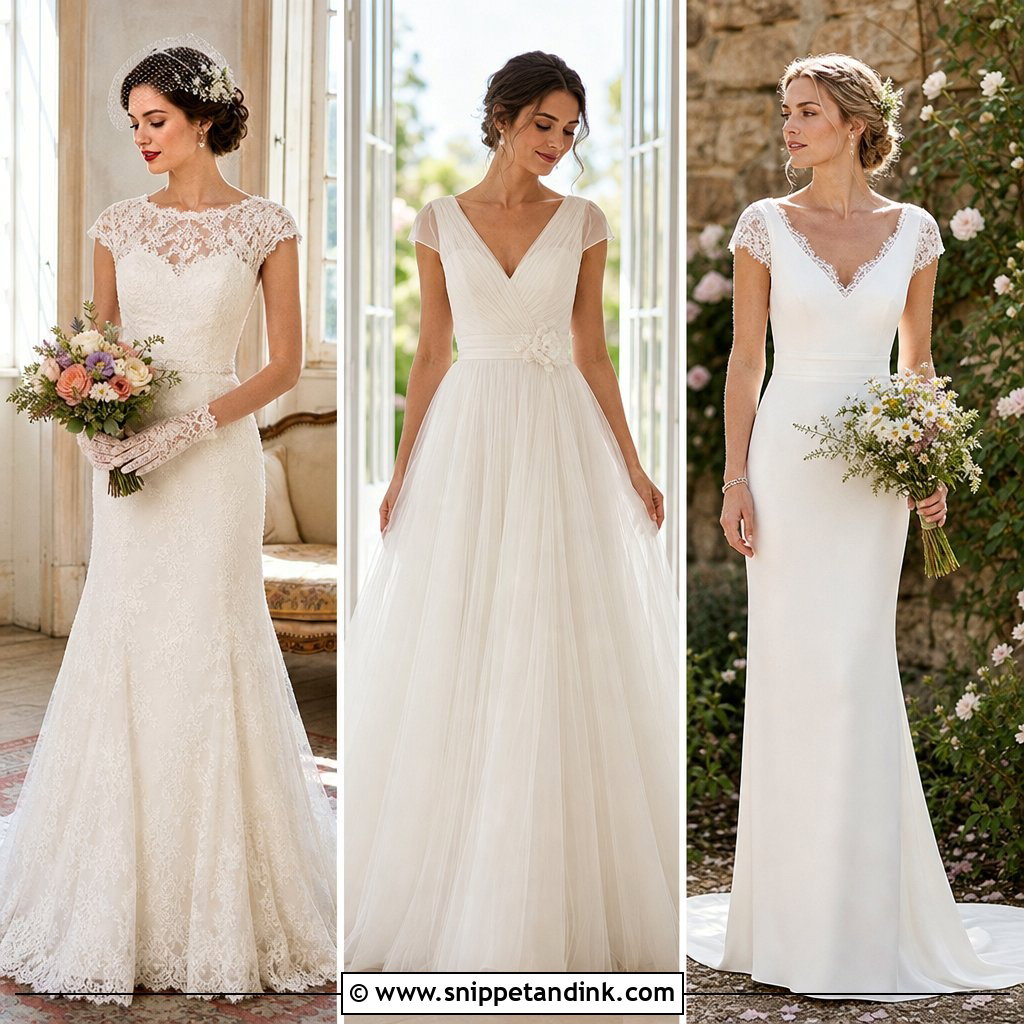
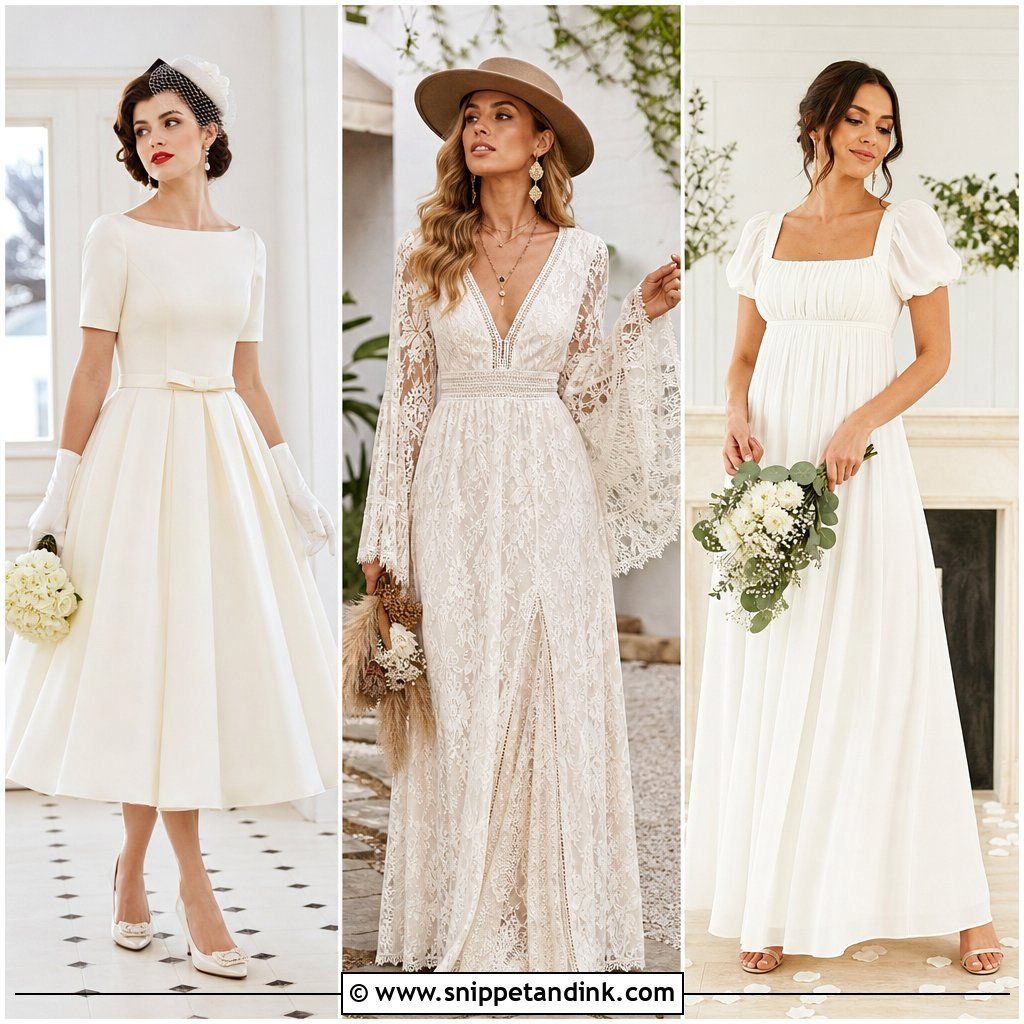
20. Illusion Neckline 50s Wedding Dress
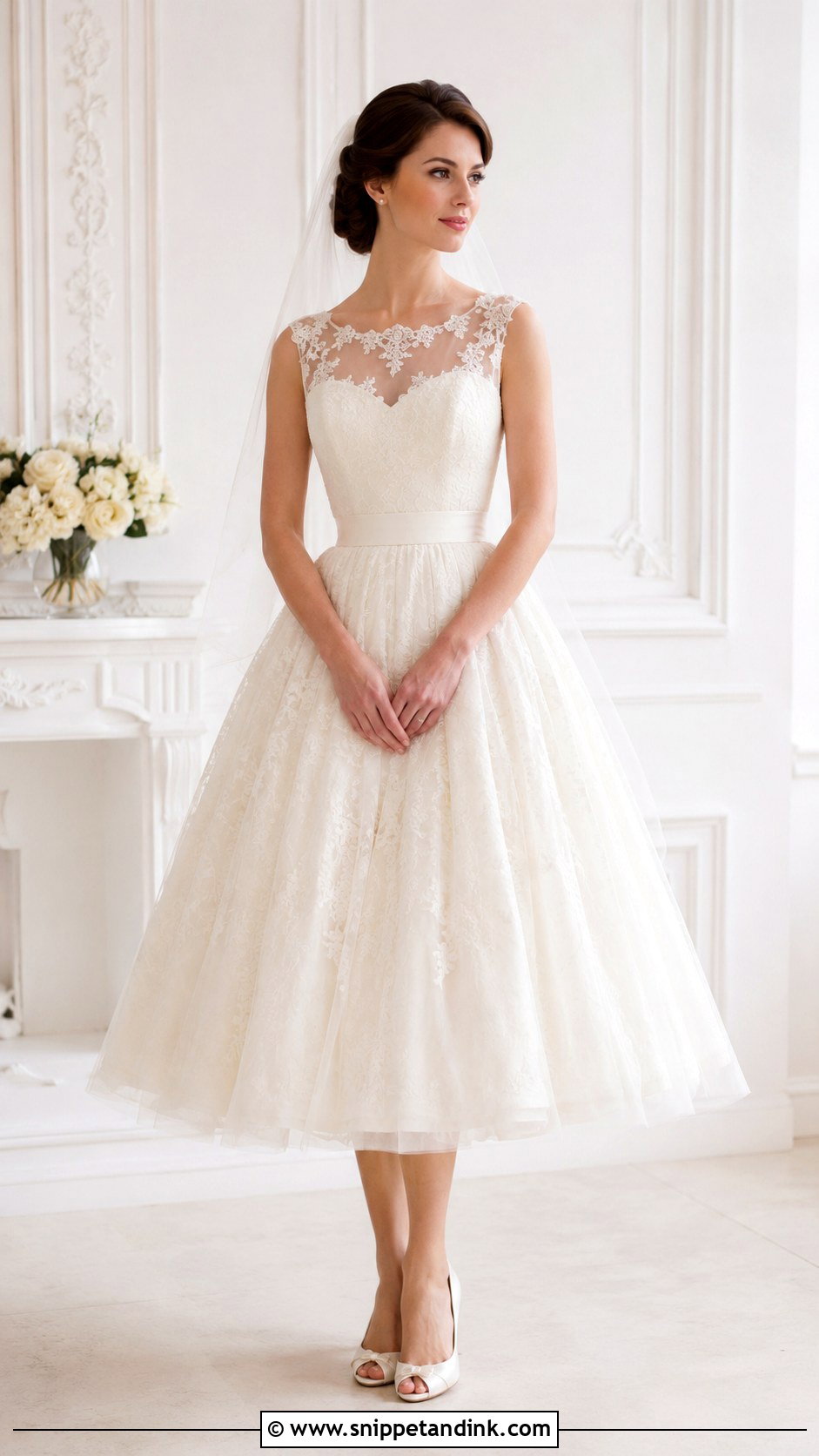
Illusion necklines give coverage while keeping the top of the dress light. Sheer mesh with lace appliqué softens the collarbone and shoulders, and a fitted bodice, defined waist and full tea-length skirt keep the fifties shape. Small earrings, satin heels and a veil that doesn’t hide the neckline complete it. Appliqué placement makes or breaks it: lace that follows the natural lines of the upper body flatters, lace scattered at random looks busy. Match the mesh to your skin tone as closely as you can.
21. High Neck 50s Wedding Dress
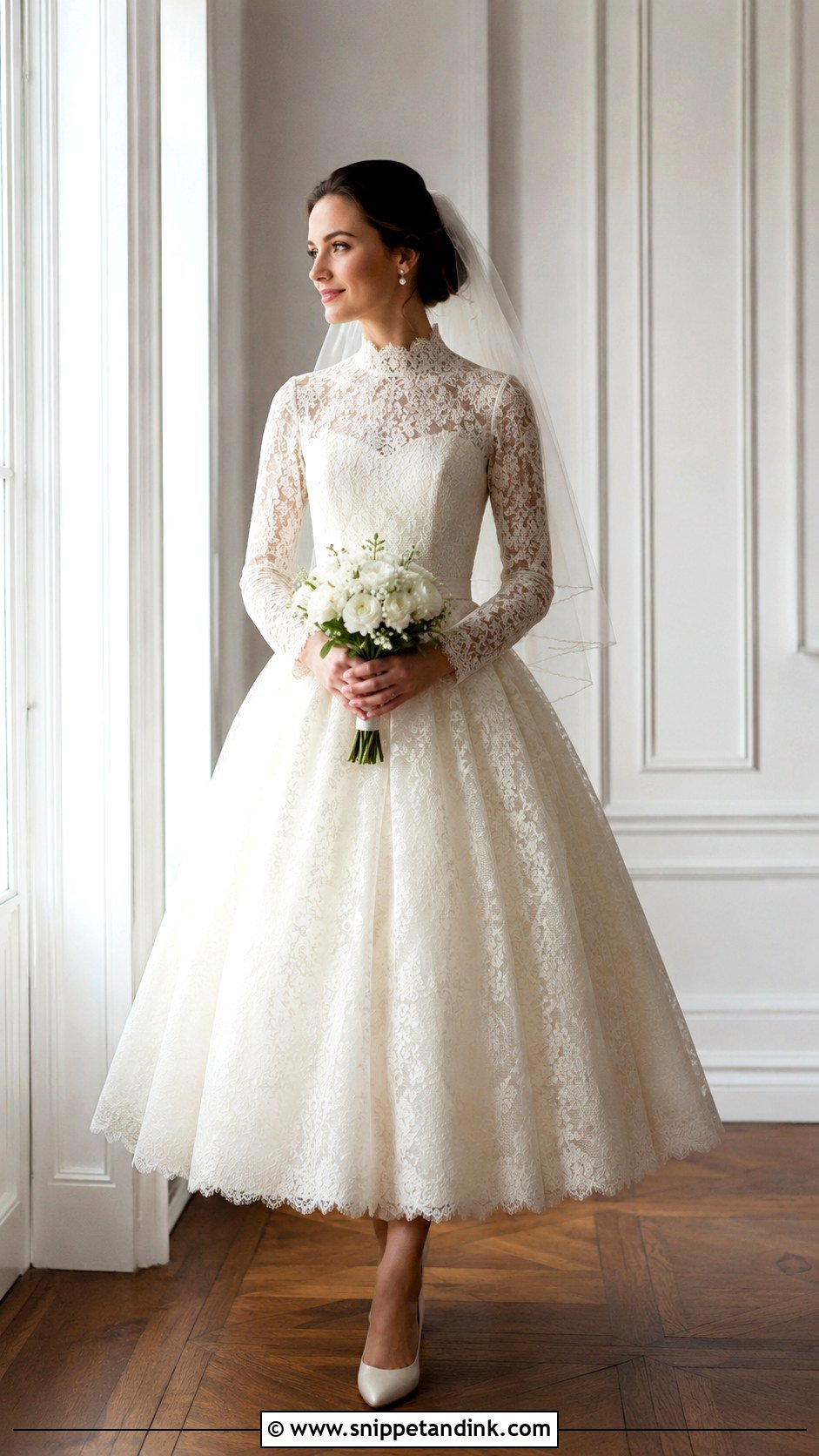
Lace high necklines were a strong part of fifties bridal fashion because they framed the face so neatly. Balance the covered top with a tea or ballerina length skirt so the whole look stays light. Wear your hair up or softly pulled back so the collar shows. Pearl earrings, closed-toe pumps and a neat veil finish it. A high neck in stiff lace can rub under the chin when you look down, which I always test at the fitting.
22. Scoop Neck 50s Wedding Dress
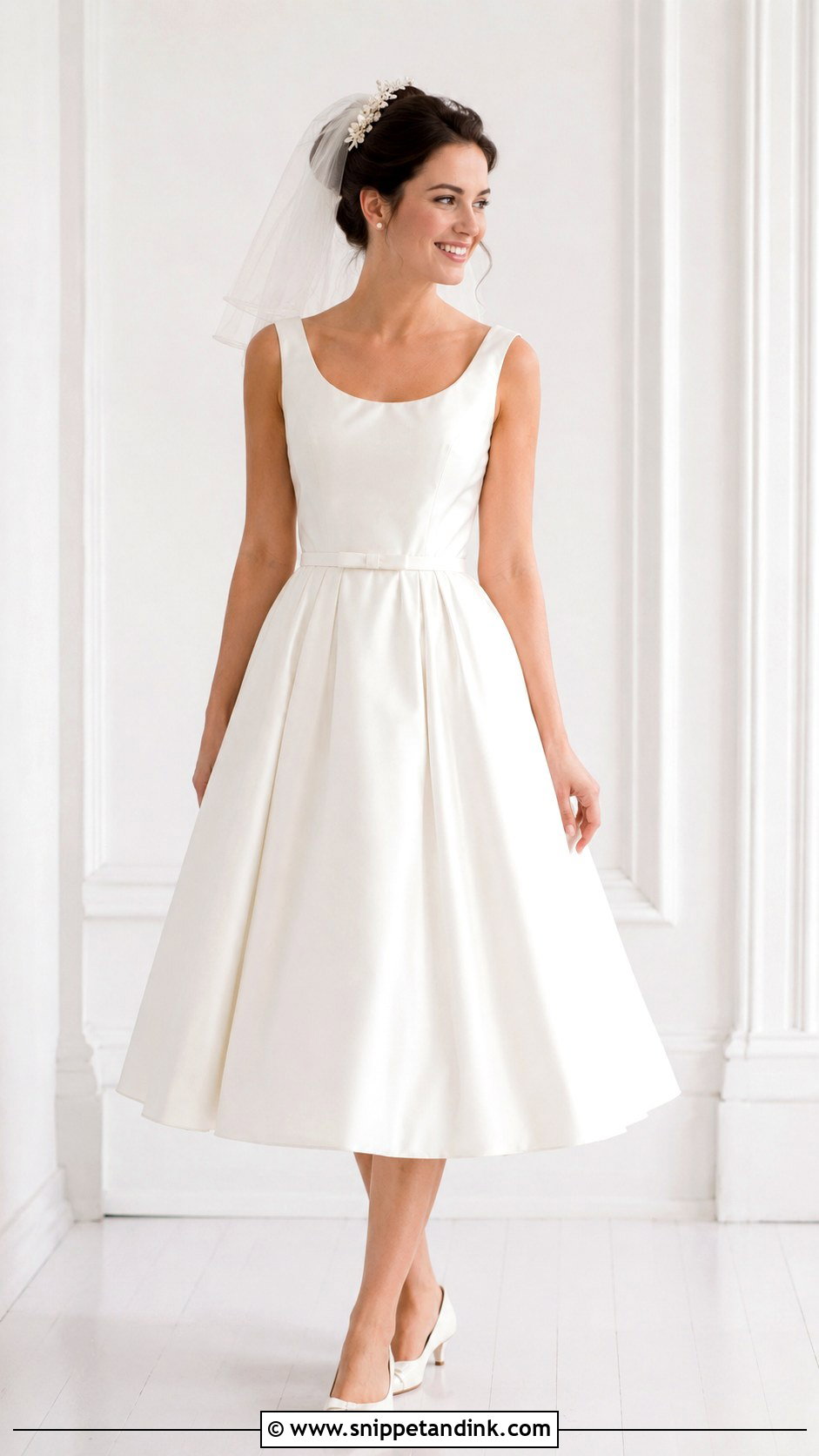
A scoop neckline is simple and suits a wide range of bust sizes. A tea-length dress with lace sleeves, satin straps or a clean sleeveless cut all work, with a narrow belt to sharpen the waist. Pearl studs, low heels and a short veil or hair comb complete it. It’s the most approachable fifties shape here, and the easiest to wear again for an anniversary dinner.
23. Embroidered 50s Wedding Dress
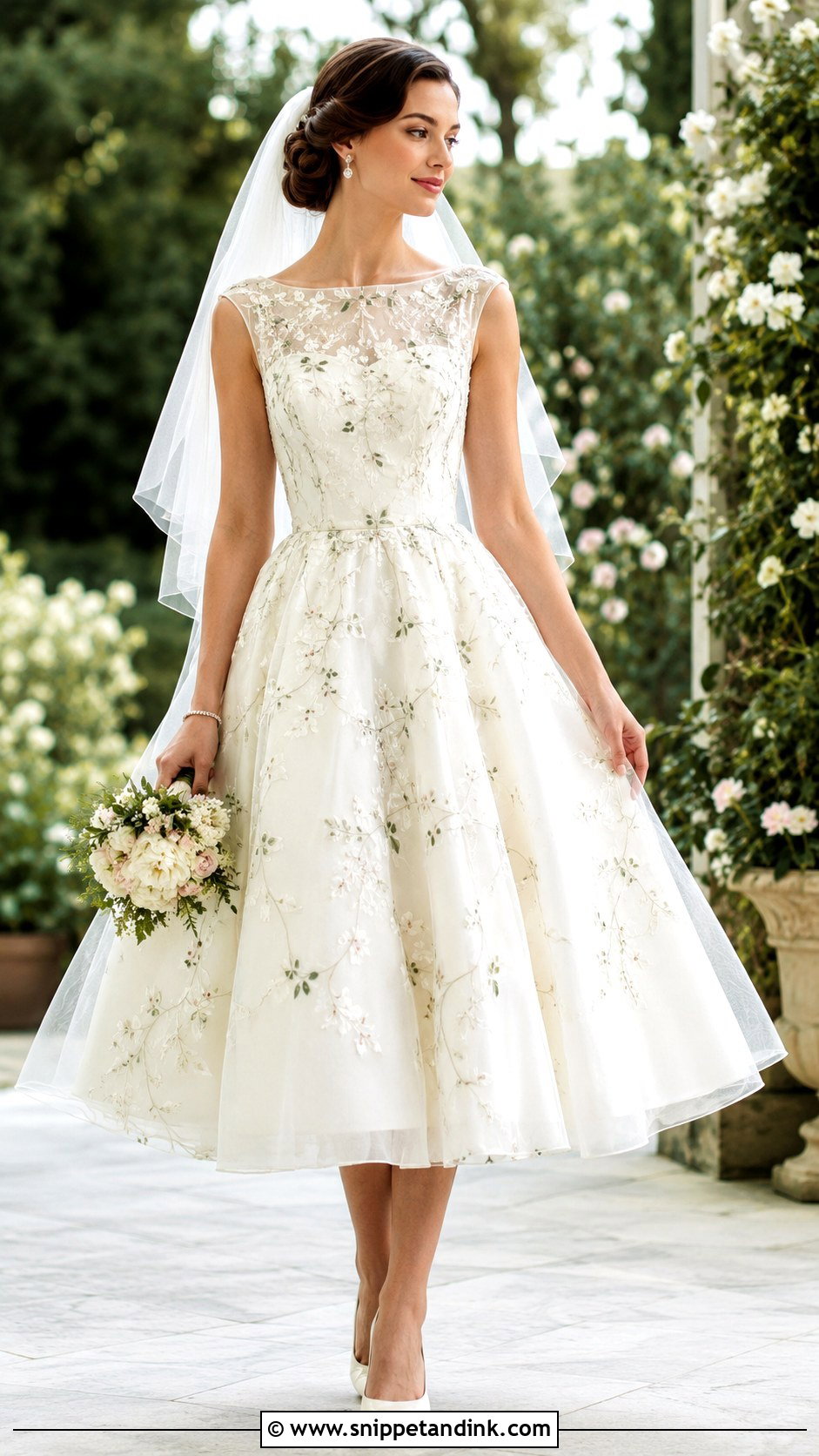
Floral embroidery on tulle, organza or cotton lace gives texture with a handmade feel. A fitted bodice and full skirt keep it true to the decade. Simple shoes, delicate earrings and a plain veil let the embroidery lead. Any coloured thread should stay soft, ivory, blush or pale champagne. Embroidery looks its best in outdoor daylight, which makes garden weddings a good match. Custom hand embroidery is slow work, so if you’re ordering a made-to-order piece, ask about the lead time early.
24. Cotton Eyelet 50s Wedding Dress
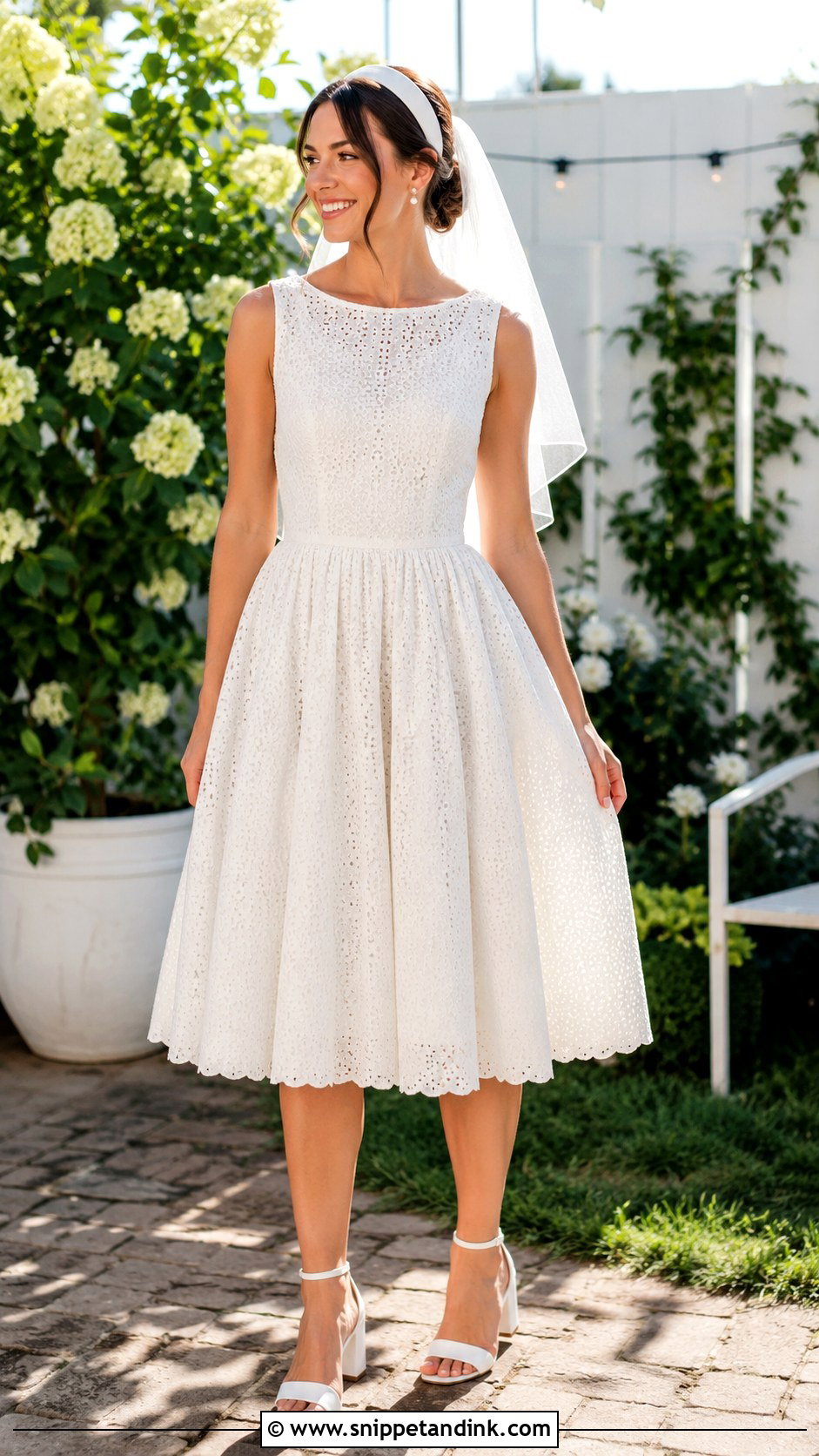
Eyelet is cotton with small embroidered holes, and it’s the most breathable fabric here, which makes it right for a hot, relaxed celebration. Knee or tea length works, with a fitted bodice, full skirt and simple neckline. White block heels, pearl studs and a short veil or ribbon headband finish it, along with a small bouquet of seasonal flowers. Because the holes show skin, eyelet is usually lined, so check the lining colour suits you. Backyard weddings and courthouse ceremonies suit it well.

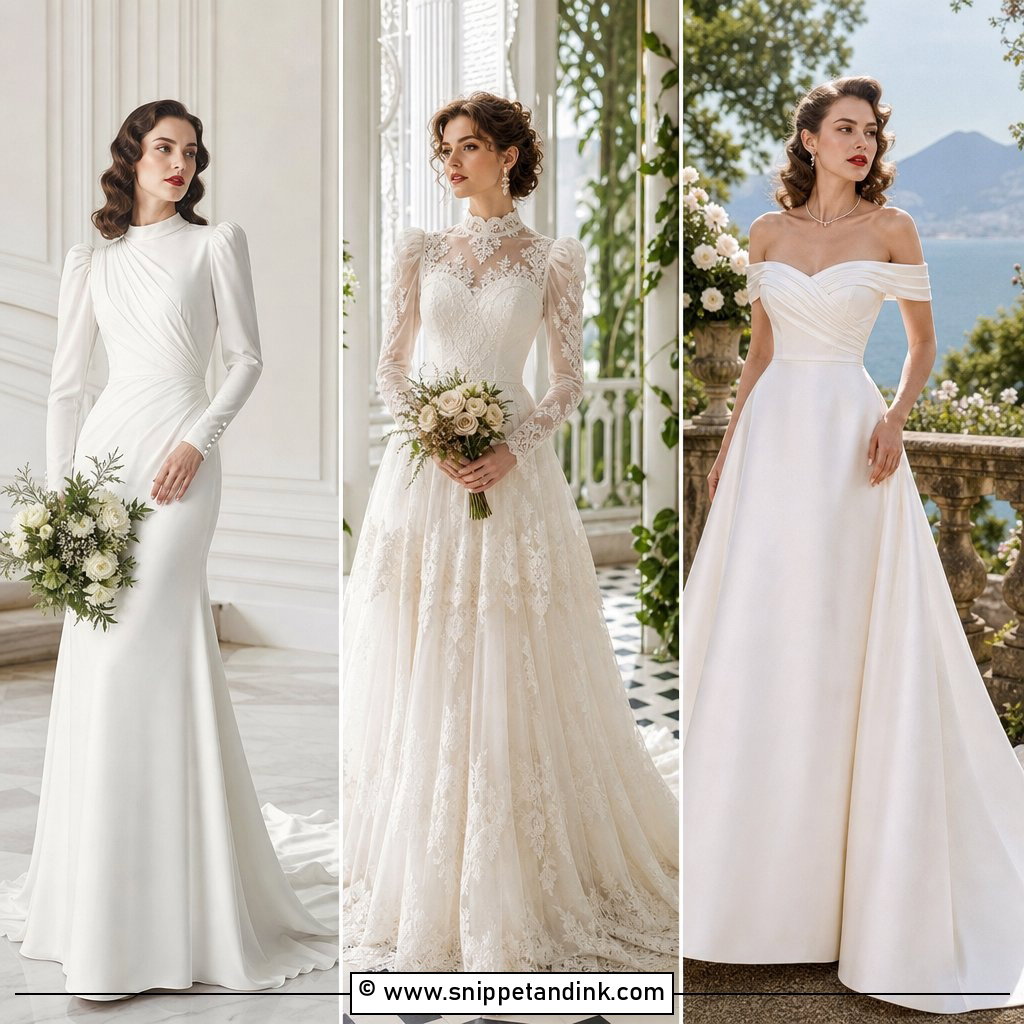
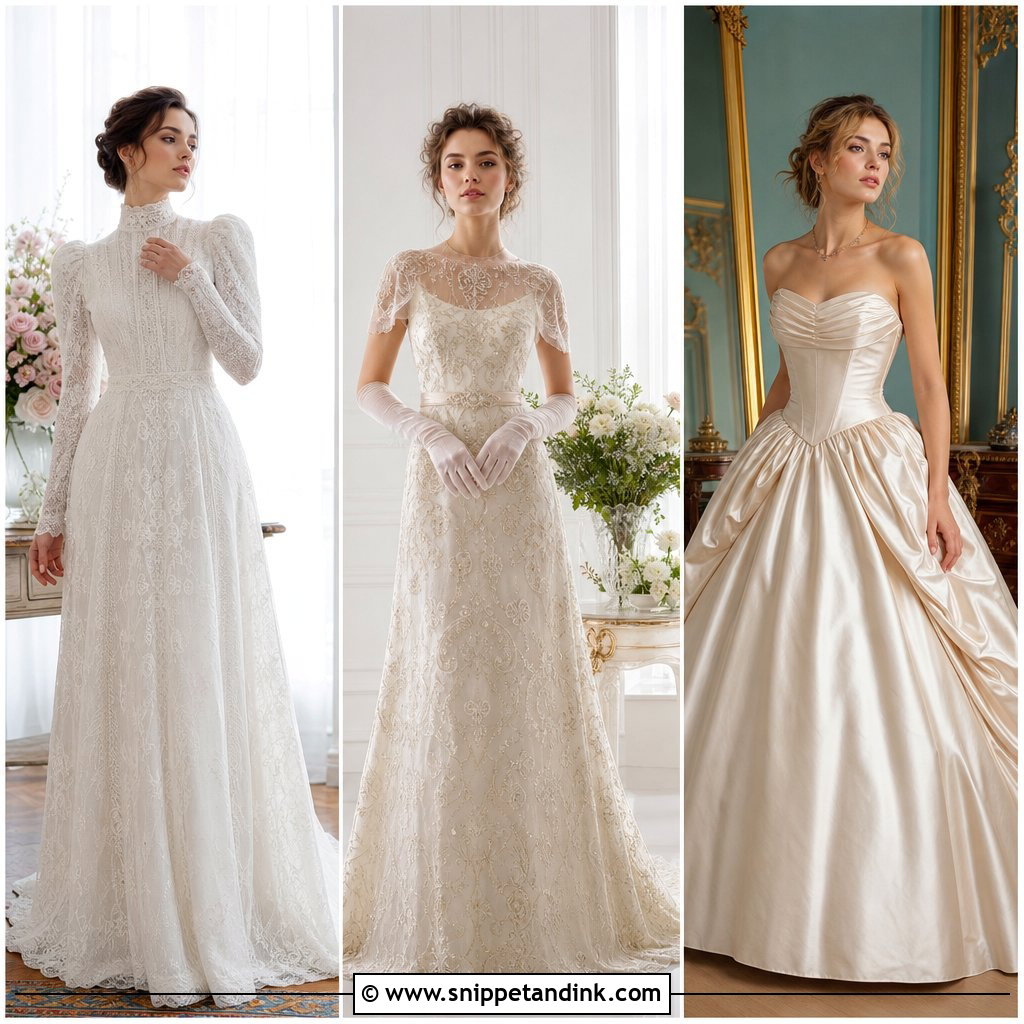

25. Champagne 50s Wedding Dress
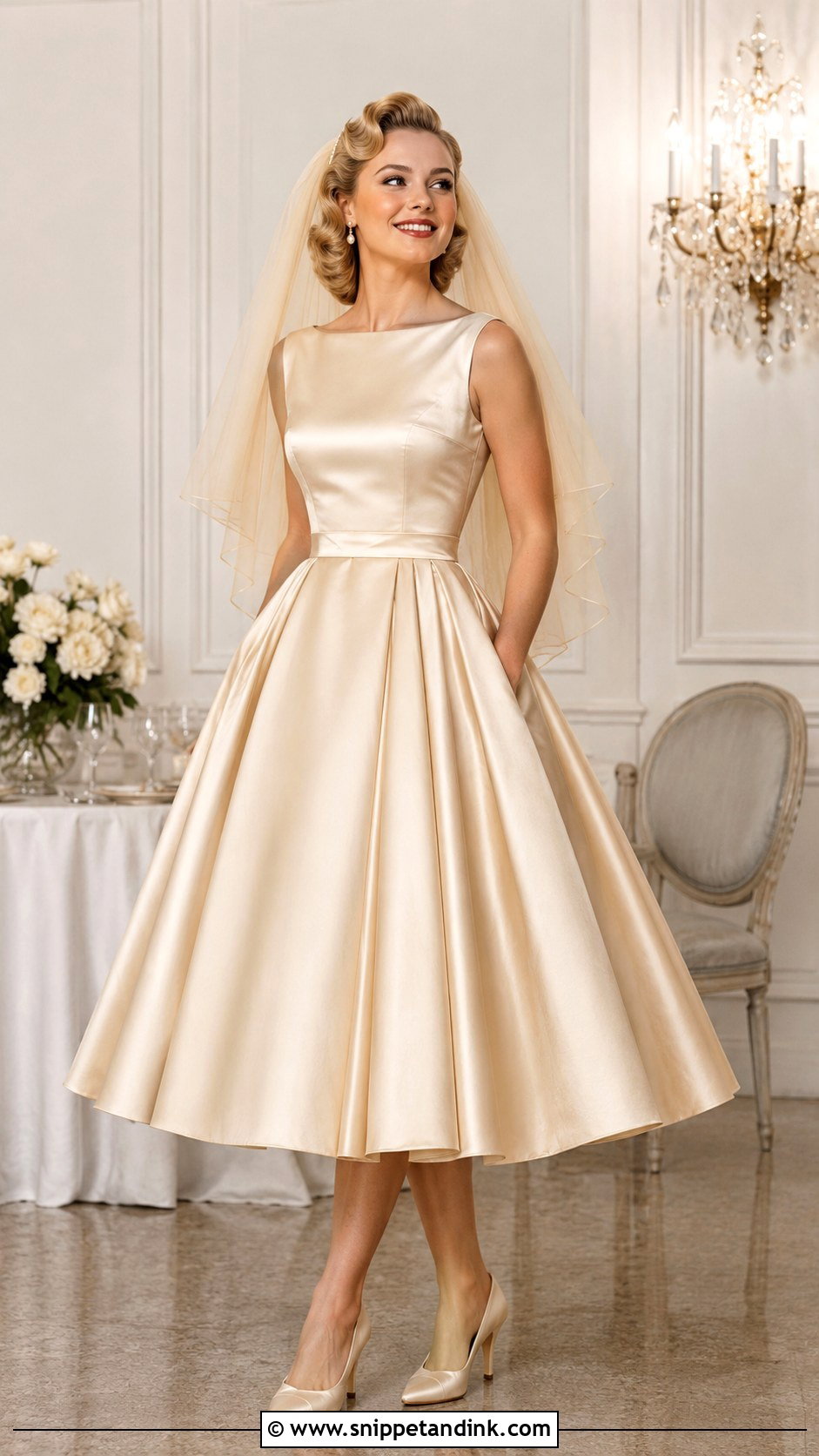
Champagne is what I suggest when bright white feels too stark. The warm neutral gives the retro shape a soft glow while still reading bridal. Satin, lace or tulle in a tea or ballerina length all work. Ivory or champagne heels, pearl earrings and a veil in a matching tone finish it. That veil colour matters: a stark white veil over champagne makes the dress look beige, so take a swatch when you buy it. Keep makeup gentle so the colour stays the feature.
26. Blush 50s Wedding Dress
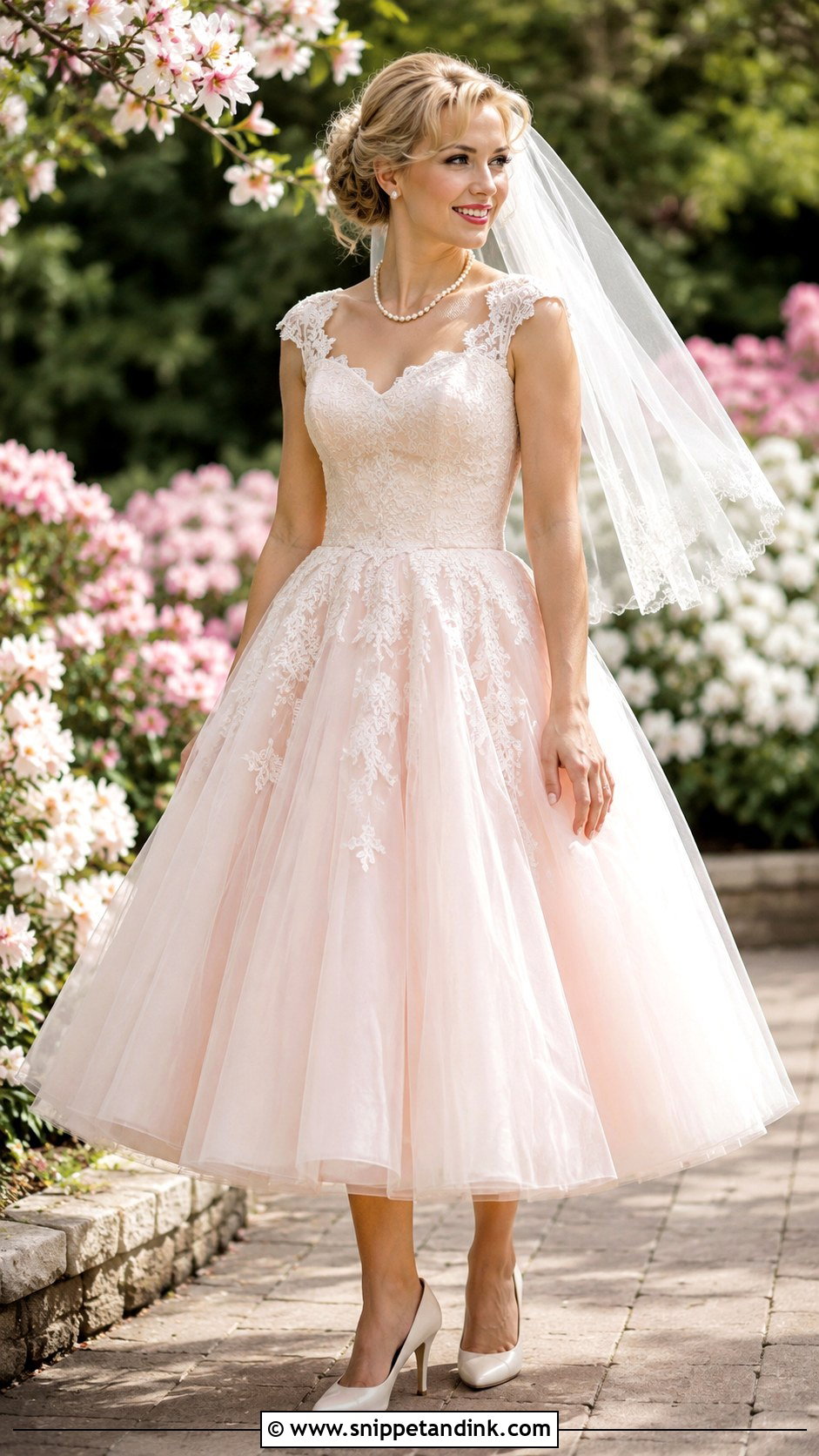
Pale blush in a full tulle or satin skirt adds colour without boldness, because the layers deepen the shade gently. Ivory shoes, pearl accessories and a delicate veil suit it. A lace bodice keeps it bridal, while a plain satin bodice reads cleaner and more modern. Blush can look flat under warm indoor lighting, which is why it’s most at home in natural light at spring, summer and garden weddings.
27. Courthouse 50s Wedding Dress
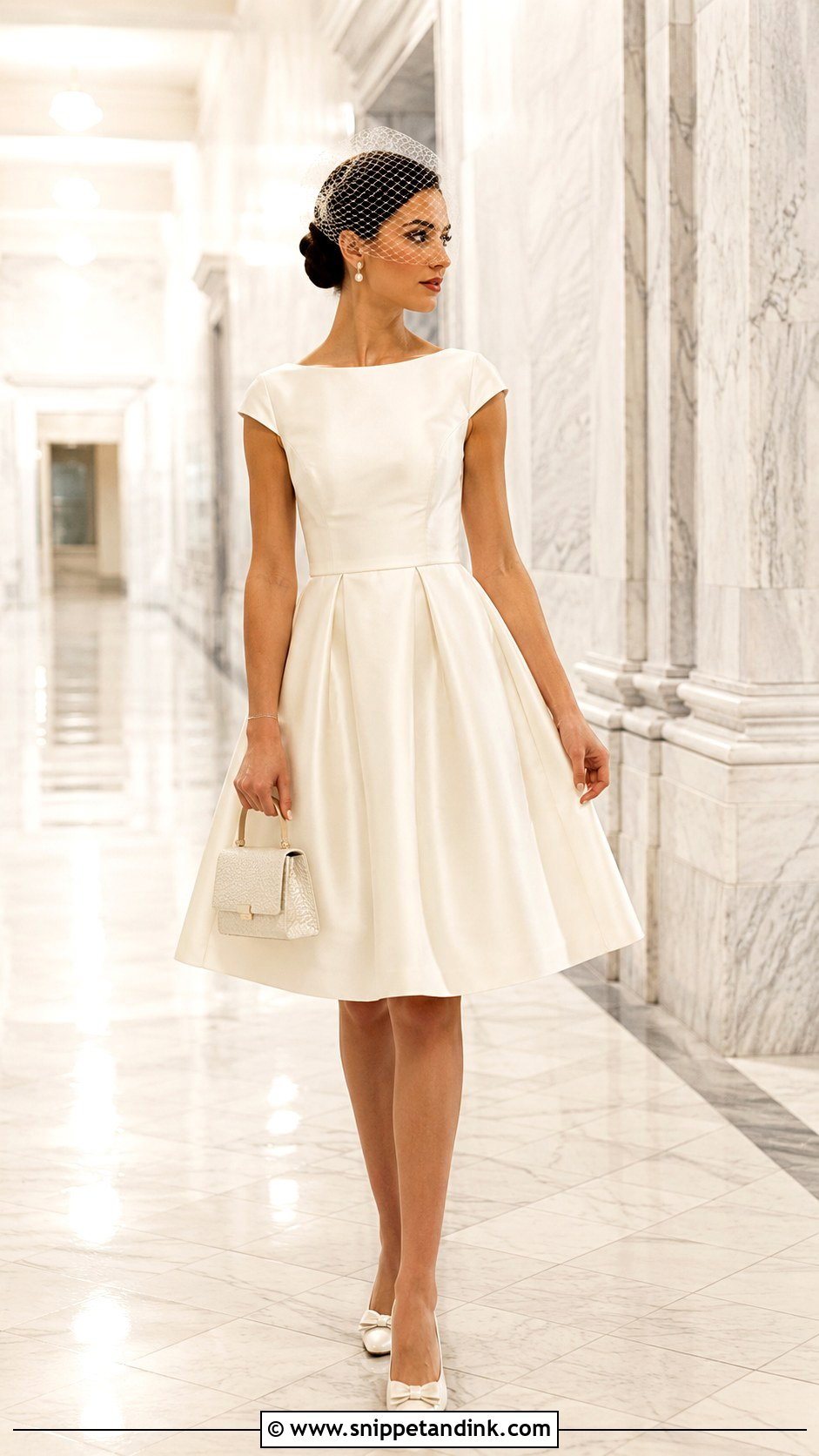
Courthouse ceremonies are short and close-up, so the dress should look polished without being formal. A short or tea-length dress with a fitted waist suits it, in satin, crepe, lace or cotton eyelet. Low heels, pearl earrings and a structured mini bag finish it, and a birdcage veil or simple headband adds period charm. Think about the building itself: full petticoats and narrow corridors are a tricky mix, so a moderate skirt is wiser here.
28. Garden 50s Wedding Dress
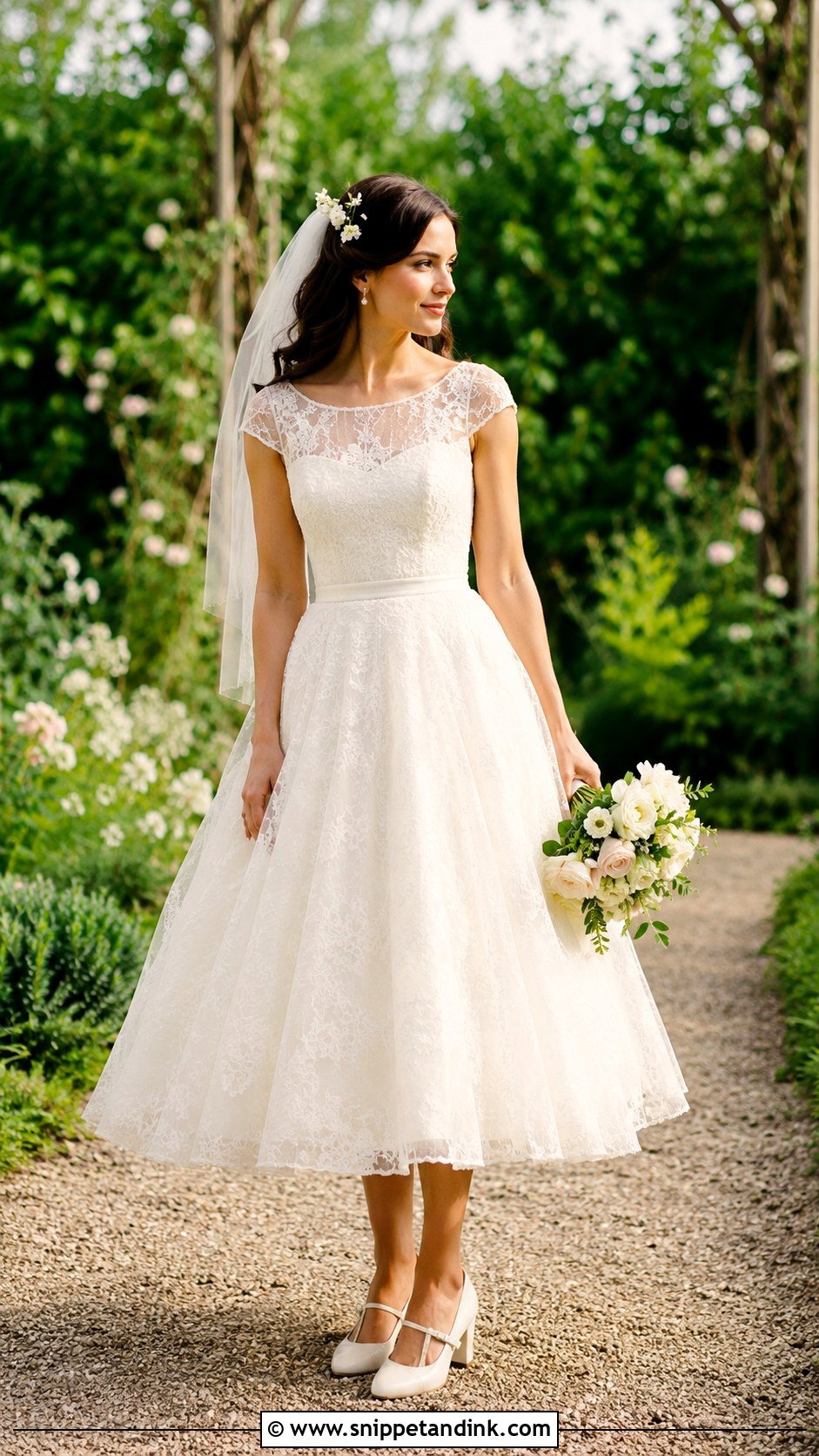
Grass decides two things, the hem and the shoes. Tea length keeps the skirt off damp lawns and gravel paths, and block heels or elegant flats won’t sink. Tulle, organza, lace and embroidered fabrics all suit outdoor light. Pearl earrings, a soft veil and a floral hair comb finish it. On a hot day, choose a comb made with silk or preserved flowers, because fresh blooms wilt in the hair by mid-afternoon.
29. Plus Size 50s Wedding Dress
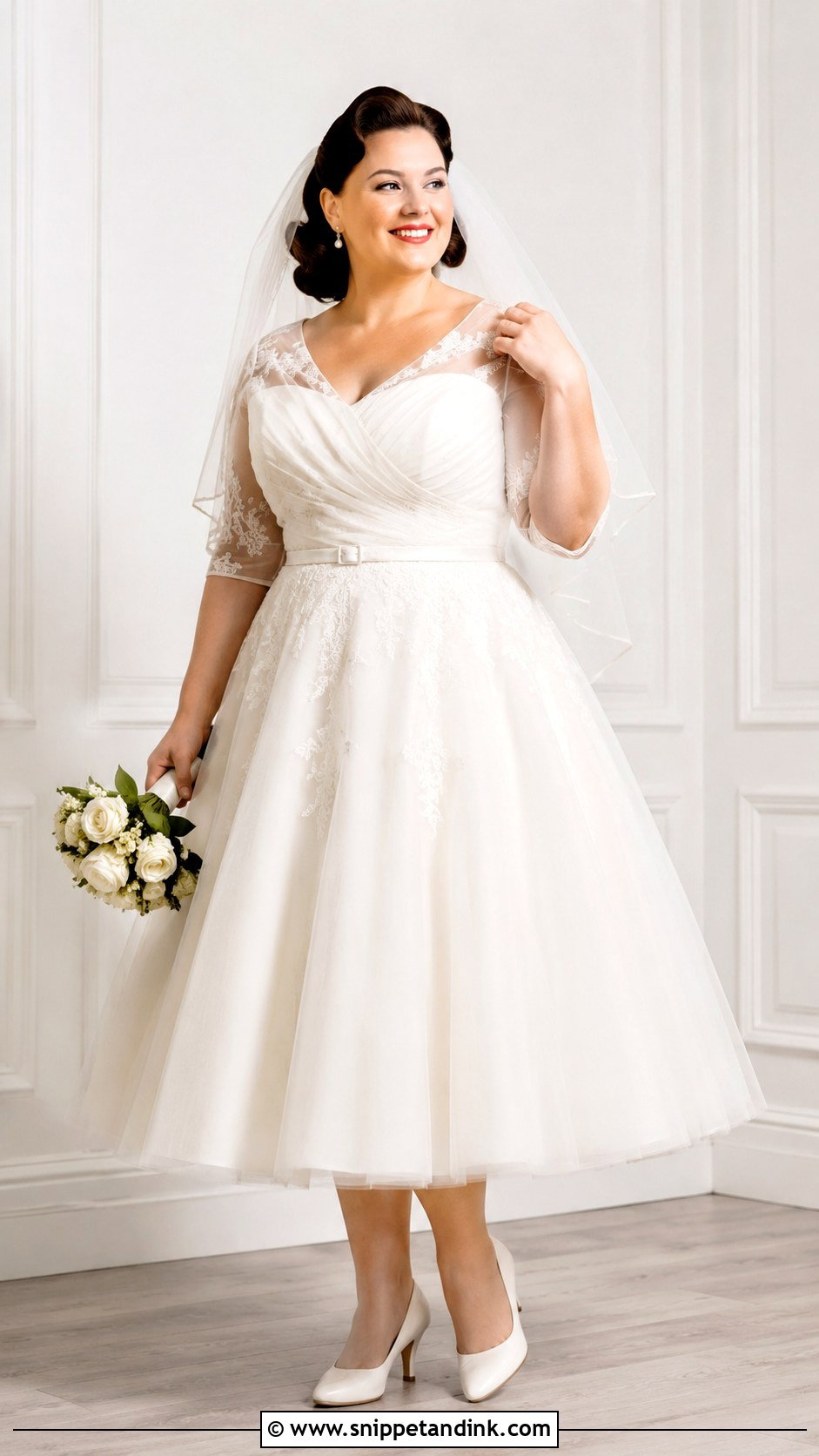
Fifties shapes are often very flattering on curvier brides, because they define the waist and skim over the hips. Look for a supportive bodice with structure built in, comfortable straps or sleeves and a full A-line skirt. Tea and ballerina lengths both work, depending on your height and shoes. A structured belt or seam at the natural waist defines the shape. Stable heels, pearl earrings and a veil that matches the dress fabric finish it. I always check the bodice fit seated as well as standing, since that’s where support shows its limits.
30. Reception 50s Wedding Dress
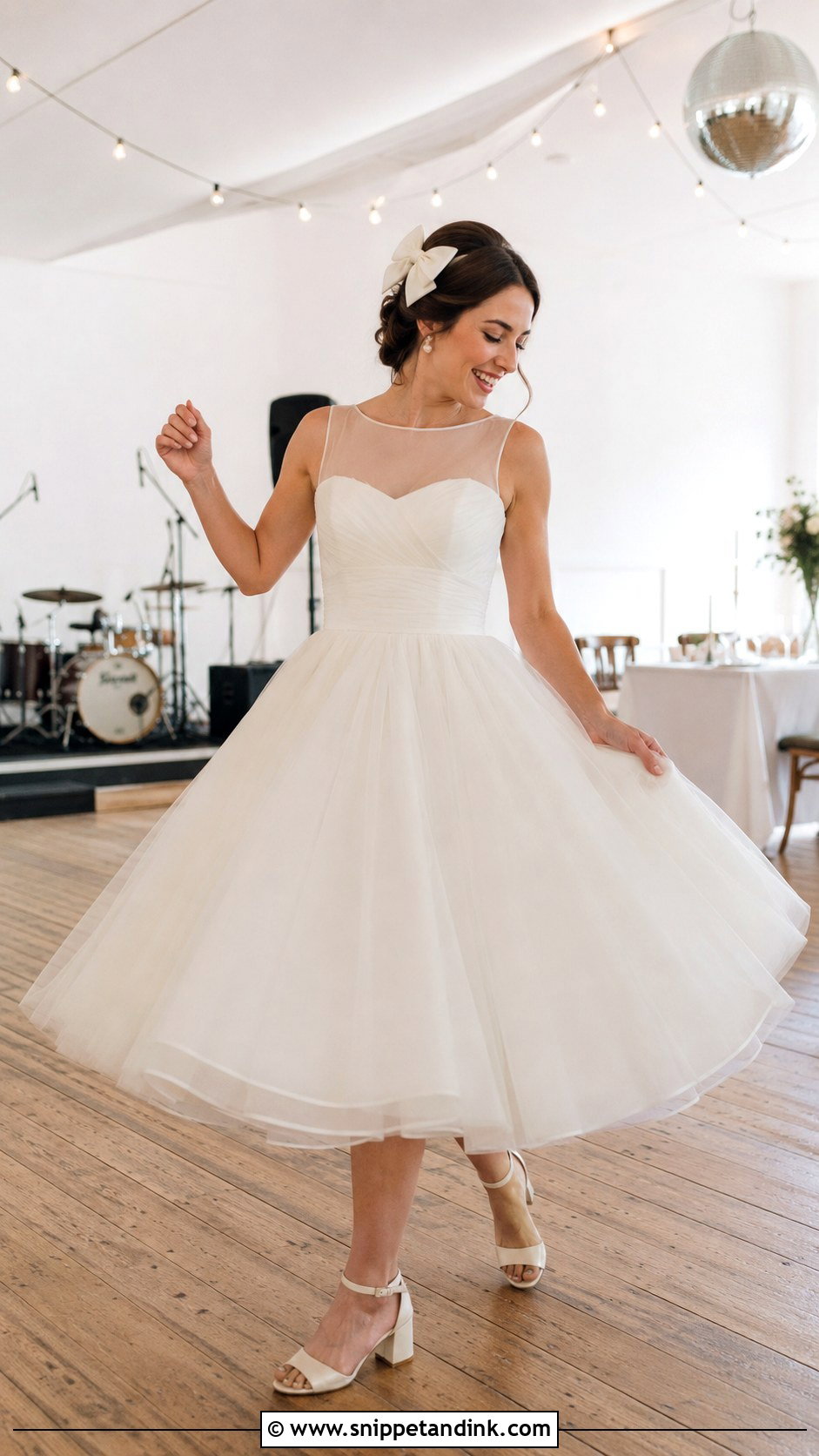
A fifties reception change is the most fun dress of the day: shorter, lighter and built for dancing. A full skirt over a fitted bodice in satin, tulle or lace works, as long as it’s lighter than the ceremony gown. Block heels, pearl studs and a short veil or bow hair clip finish it, and a petticoat adds bounce when you spin. Plan where you’ll change and who will help with the closures, because a back full of buttons takes longer than people expect.
Buying a Real 1950s Dress Versus a Reproduction
Genuine dresses from the decade do turn up, and wearing one feels special, but they need a careful eye. They were cut for the shapewear of the time, so waists tend to run small. Measure your waist and bust and compare them against the dress laid flat instead of trusting any size label.
What I Check on an Original Gown
- The underarms and waist seam for brittle or split fabric, since those areas carry the most strain.
- Yellowing or brown spots. A specialist cleaner can lift some, but old stains may be permanent.
- Metal zips that have rusted or stick, and buttons that need re-sewing.
- The seam allowances, which tell you whether the dress can be let out at all.
If those checks worry you, a reproduction gives the same shape in new fabric and modern sizing, with room for alterations. Plenty of brides wear a reproduction for the ceremony and carry one genuine piece from the era, a pair of gloves or a pearl brooch, as their link to it.
Vintage Without the Costume Feel
A fifties dress can be sweet, elegant or glamorous depending on how you style it. Tea-length skirts, fitted waists, lace sleeves, satin, bows, pearls and pretty heels all build that mid-century shape. Lace and a veil keep it traditional, while clean mikado, a soft colour and simple accessories make it feel modern. Pick two or three period details, wear them in a dress you can sit and dance in, and the look will read as vintage rather than costume.
You'll Like These Ideas:








Leave a Reply