
Rice paper gives a wedding cake something buttercream and fondant can’t: thin, translucent edges that catch light the way a veil does. I shape it into sails, petals, ruffles, fans, lace, butterflies and loose sculptural pieces, and it sits happily on buttercream, fondant, ganache or a stacked tiered structure. The designs that work best pair clean frosting with one strong paper feature, so the cake still looks composed from across the room. Soft whites, muted blush, champagne, pearl, sage and small touches of gold all suit it. Below are twenty ways I’d use it on a wedding cake, with notes on what each one asks of the baker and of the venue.
Rice Paper or Wafer Paper? It Changes What Your Cake Can Do
Bakers use the two names loosely, but they are different sheets. True rice paper is thin, translucent and a little flexible, made from rice or tapioca starch. Wafer paper is made mostly from potato starch; it’s opaque, matte and stiffer, and it takes printed edible ink well. Many of the sails and ruffles in this list are actually wafer paper, while the glassy, see-through pieces are rice paper.
The difference matters on the day. Wafer paper holds a crisp fold and a sharp cut, so I use it for fans, lace and printed butterflies. Rice paper bends when slightly damp, which gives softer petals, but it also wilts sooner. Neither has much flavour, and both are safe to eat, though most guests leave the big sails on the plate.
How the shapes are made
- Sails: sheets are dampened, dried over crumpled foil or a curved mould, and sometimes set with gentle heat.
- Petals and ruffles: cut, curved over a ball tool or a rolled edge, then fixed in overlapping rows.
- Lace: punched or machine-cut, then laid flat on a firm surface such as fondant.
- Colour: airbrushed, or painted with lustre dust in alcohol, because water dissolves the sheet.
1. Rice Paper Sail Wedding Cake
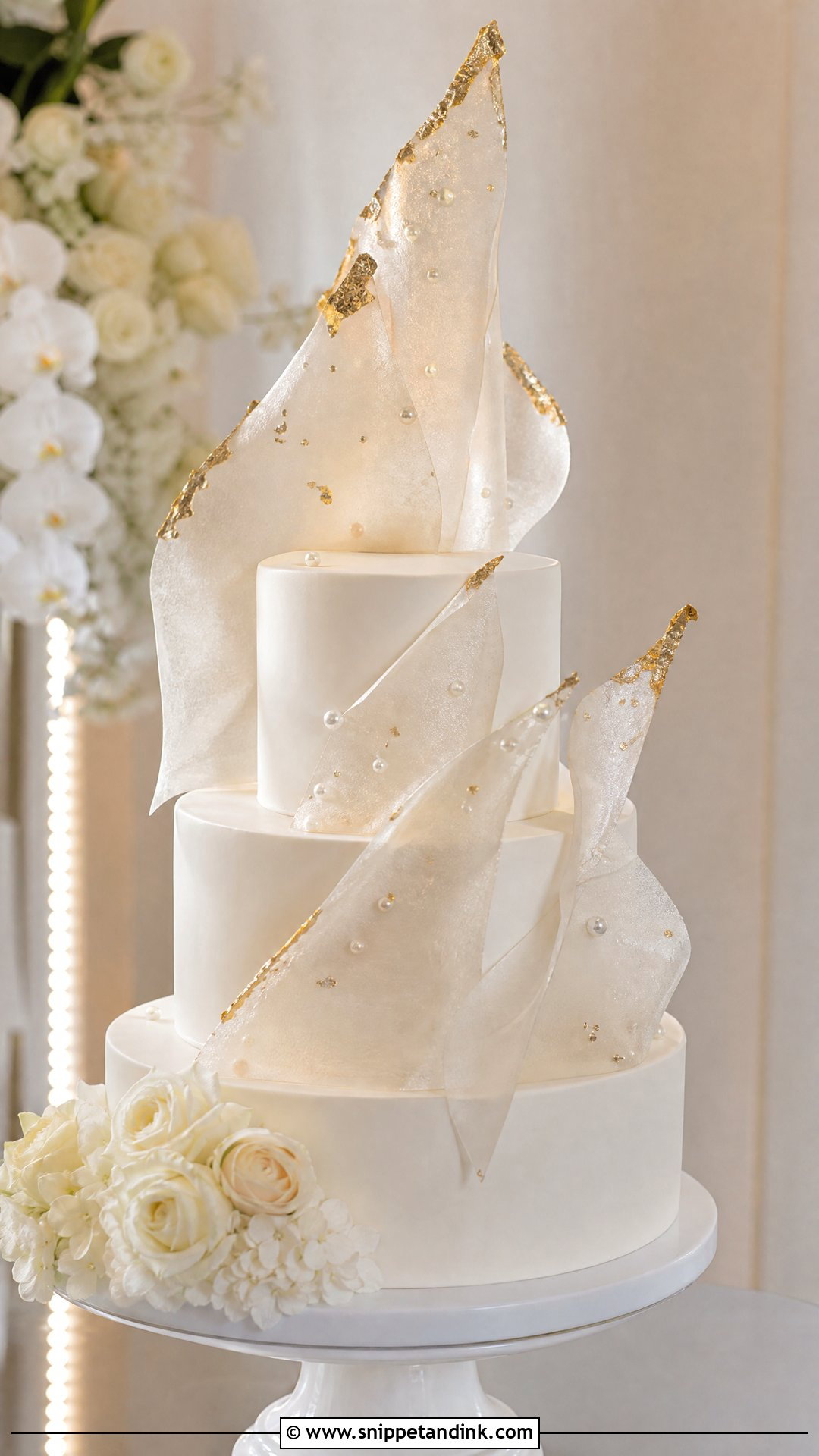
Sails are the design I get asked for most, and they’re also the most temperamental. The sheets are dampened, draped over crumpled foil or a curved form and left to dry stiff, then pushed into the top tier or curved along one side like fabric caught in the wind. I keep the base plain, smooth white buttercream or fondant, because the sails already carry all the movement. Ivory or champagne-tinted sails read warmer than stark white under reception lighting, and a few sugar pearls or flakes of gold leaf add shine without clutter. They need height to look right, which is why I’d put them on tall two-tier or three-tier cakes rather than a short single tier.
2. Rice Paper Flower Wedding Cake
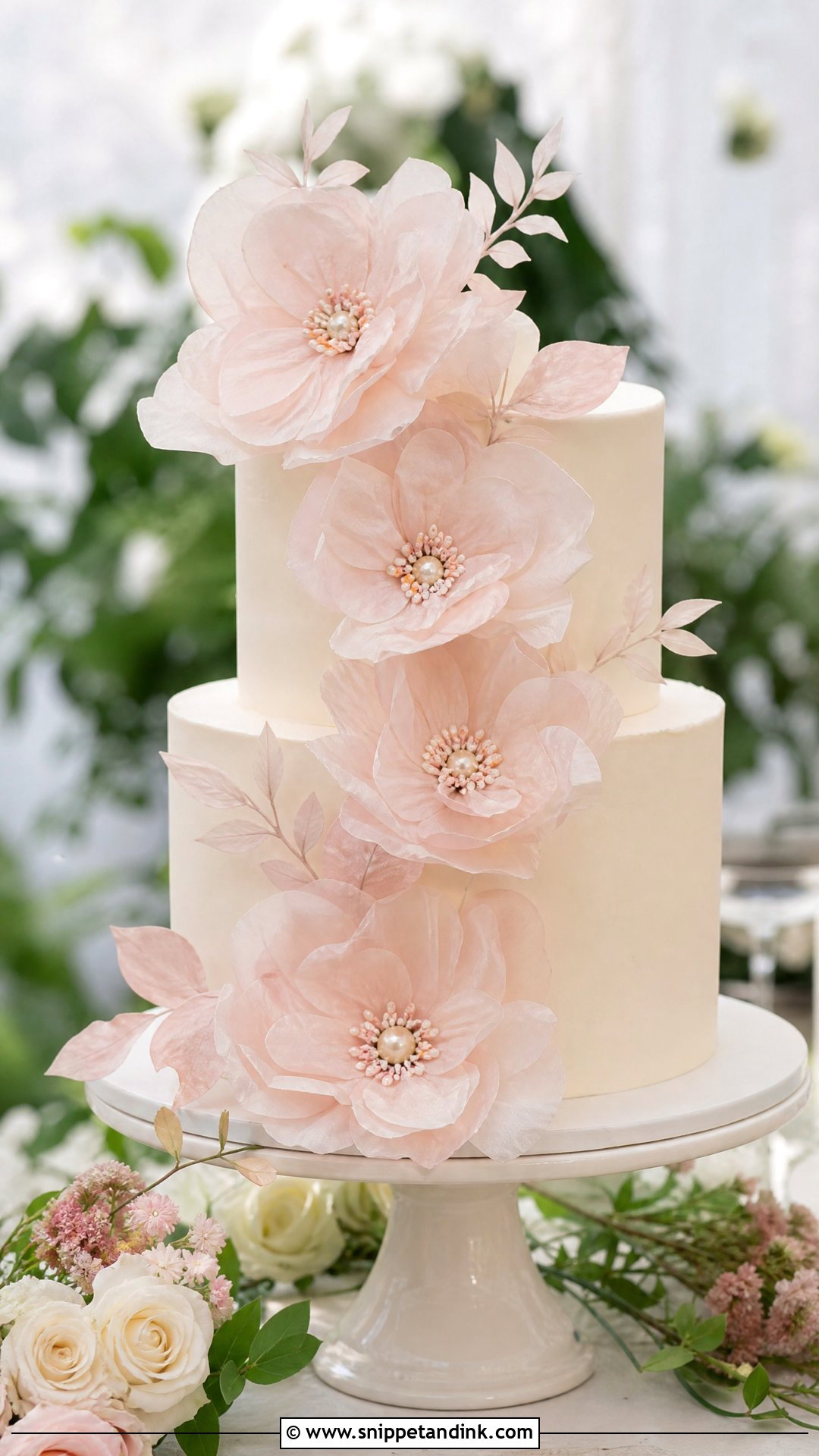
Oversized blooms in sugar paste can weigh a tier down and take days to dry. Rice paper flowers give a similar scale at a fraction of the weight, because each petal is a thin curled sheet rather than a solid piece. White, blush and pale peach keep the palette bridal. I like them cascading from the top tier down one side over plain buttercream, especially for a spring date or a garden venue. One honest caveat: up close, paper petals look papery rather than waxy, so if you want flowers that guests mistake for real ones, sugar is still the better material.
3. Rice Paper Ruffle Wedding Cake
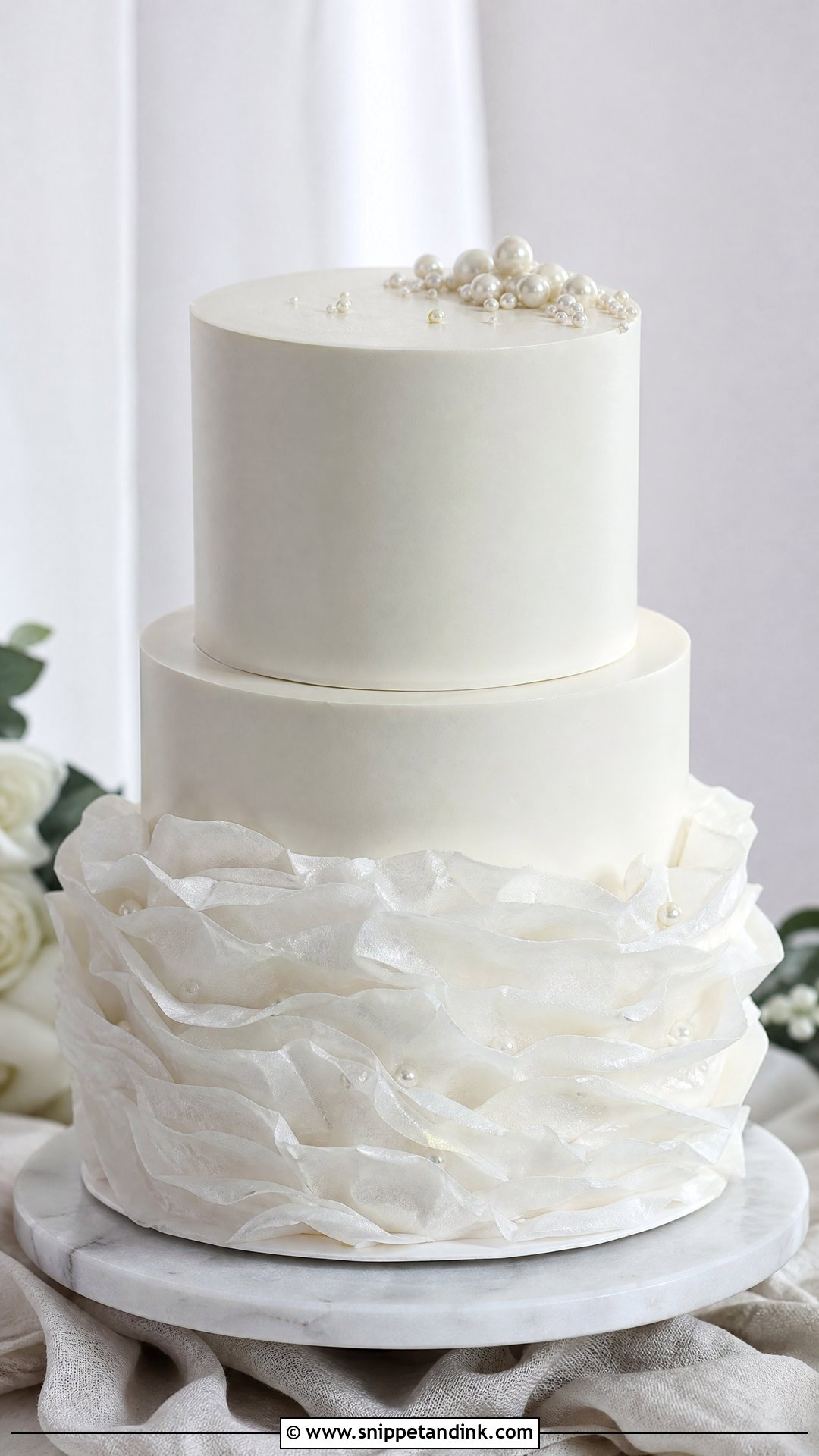
Ruffles are cut into strips, gathered and fixed in rows, and the finished tier looks a lot like the hem of a tulle skirt. I’d cover one full tier or wrap the cake in a loose spiral, then leave the tiers above and below smooth so the texture has something to push against. White on white is the classic version; tinting just the edges blush or champagne gives each row a visible line in photos. Ruffles are also where humidity shows first, because the long free edges droop before anything else does. Finish with a small topper or one tight floral cluster and stop there.
4. Rice Paper Petal Wedding Cake
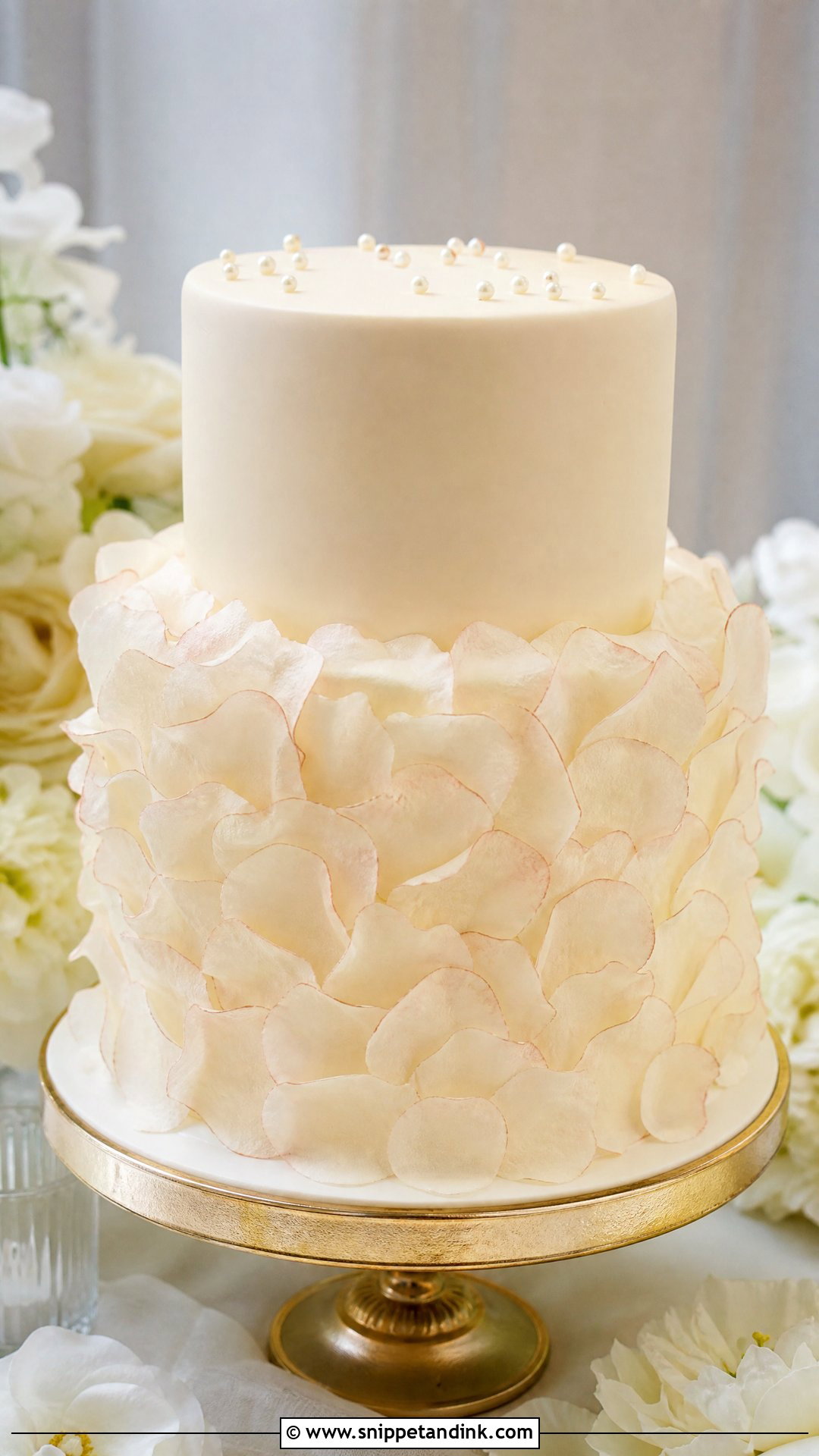
Petal tiers are slow work. Every petal is cut, curved and placed by hand, overlapping like scales, which is why a fully petalled tier usually costs more than a few sails. Done well, it looks like the bodice detail on a couture dress. Ivory petals are the safest; a faint blush or beige brushed on the tips adds warmth. The petals must match in size and curve, because one crooked row on the front of a tier is all anyone will notice. I pair it with smooth buttercream and thin gold separators.
5. Rice Paper Butterfly Wedding Cake
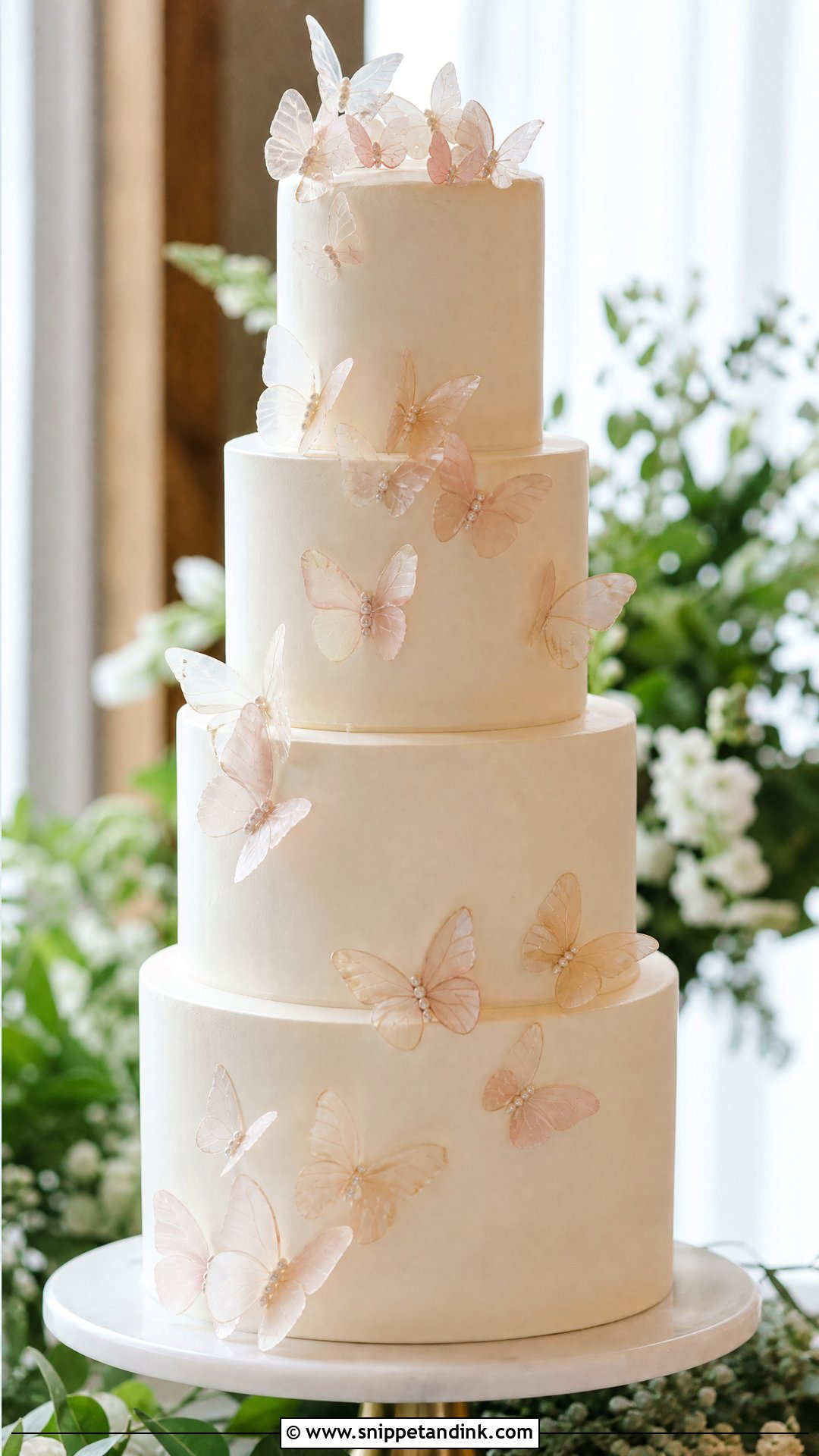
For a rice paper butterfly wedding cake, I usually print the wings on wafer paper with edible ink, cut them out and fold them along the body so they look mid-flight on the tiers. Keep the cake white or ivory, and keep the butterflies pale, blush or sage rather than bright. Overcrowding is the usual mistake. A scattered trail climbing one side looks lighter than a cake smothered in wings, and it leaves a clear spot for the knife at the cutting.
6. Rice Paper Lace Wedding Cake
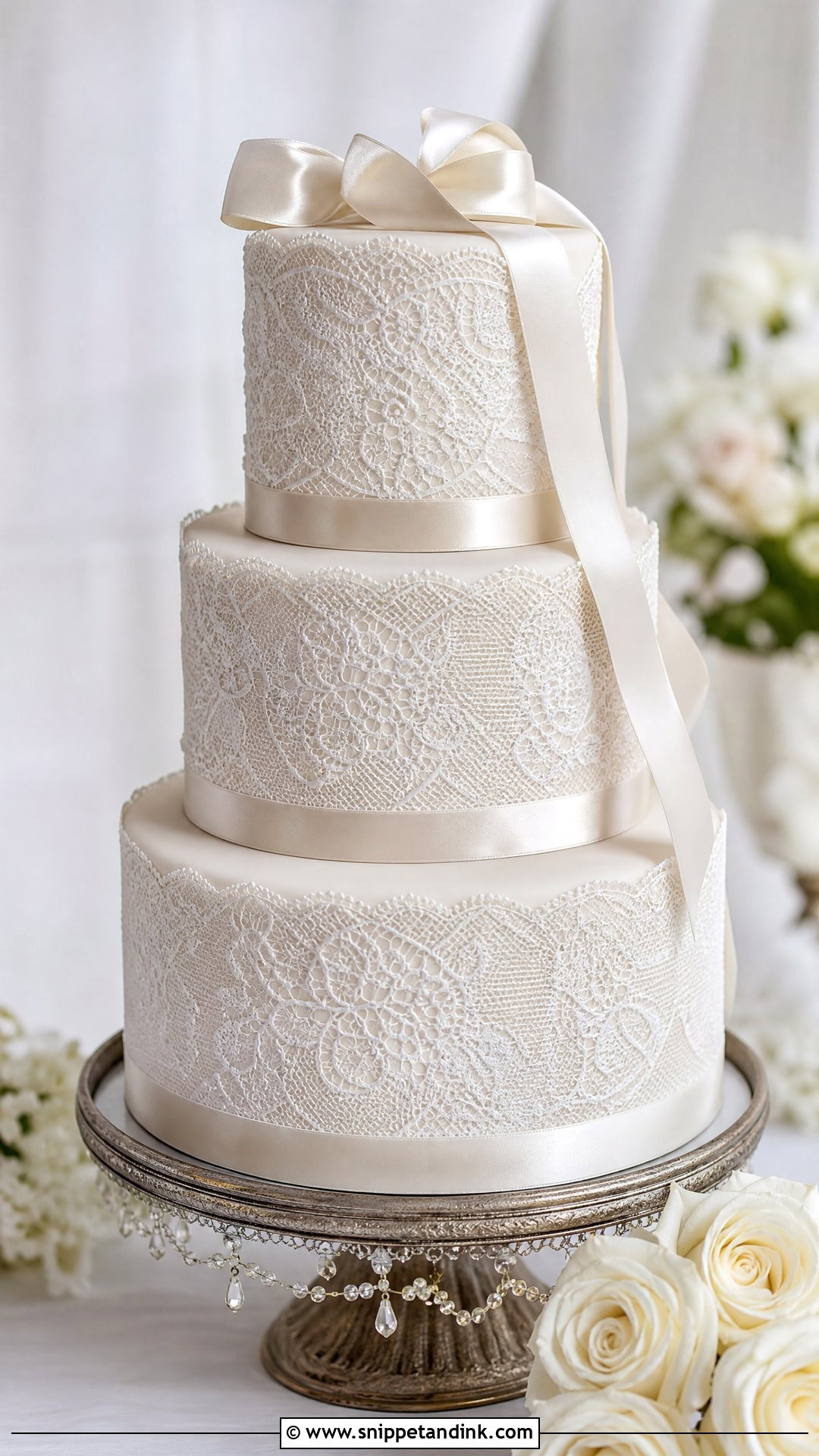
Lace in rice paper is cut with a punch or a cutting machine into panels, borders or appliqué motifs, then laid flat against the tier. It sits cleanest on fondant. Buttercream has enough moisture to soften the paper from behind and blur the pattern over a long day, so I’d only use it there for a short reception. White lace on ivory tiers is the traditional pairing, and a light dusting of pearl lustre makes it more formal. Bring a swatch or photo of your gown’s lace to the tasting so the motif can echo it rather than clash with it.
7. Rice Paper Fan Wedding Cake
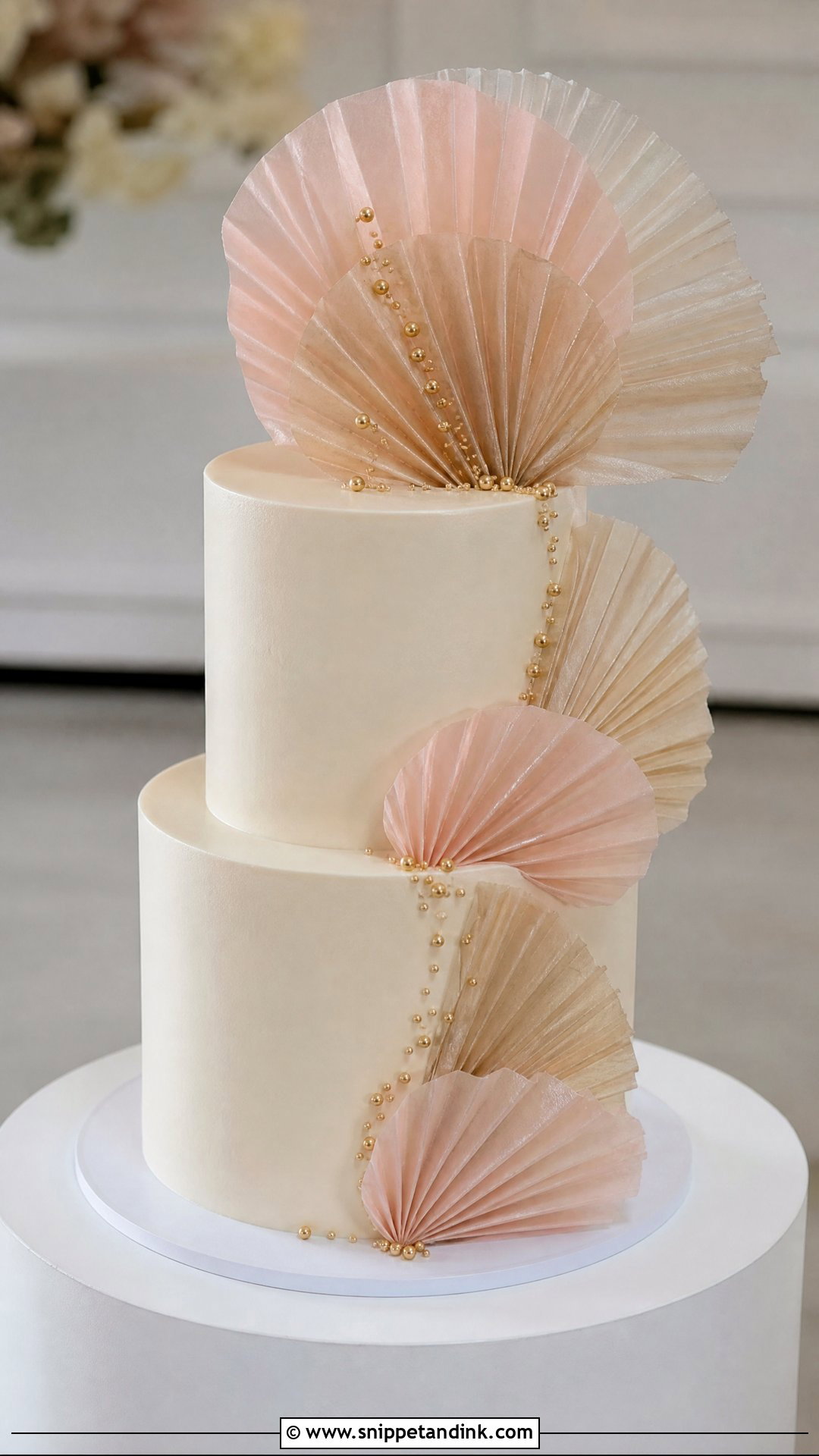
Fans are pleated like a paper hand fan, dried, then stood around a tier or grouped into a topper. They give the cake a gallery feel and add height with almost no weight. They need a structured cake under them, with sharp edges and smooth sides, otherwise the precise folds look accidental. On an ivory cake, champagne or pale blue fans look crisp. I wouldn’t mix them with florals; the folded geometry loses its point next to soft petals.
8. Rice Paper Pearl Wedding Cake
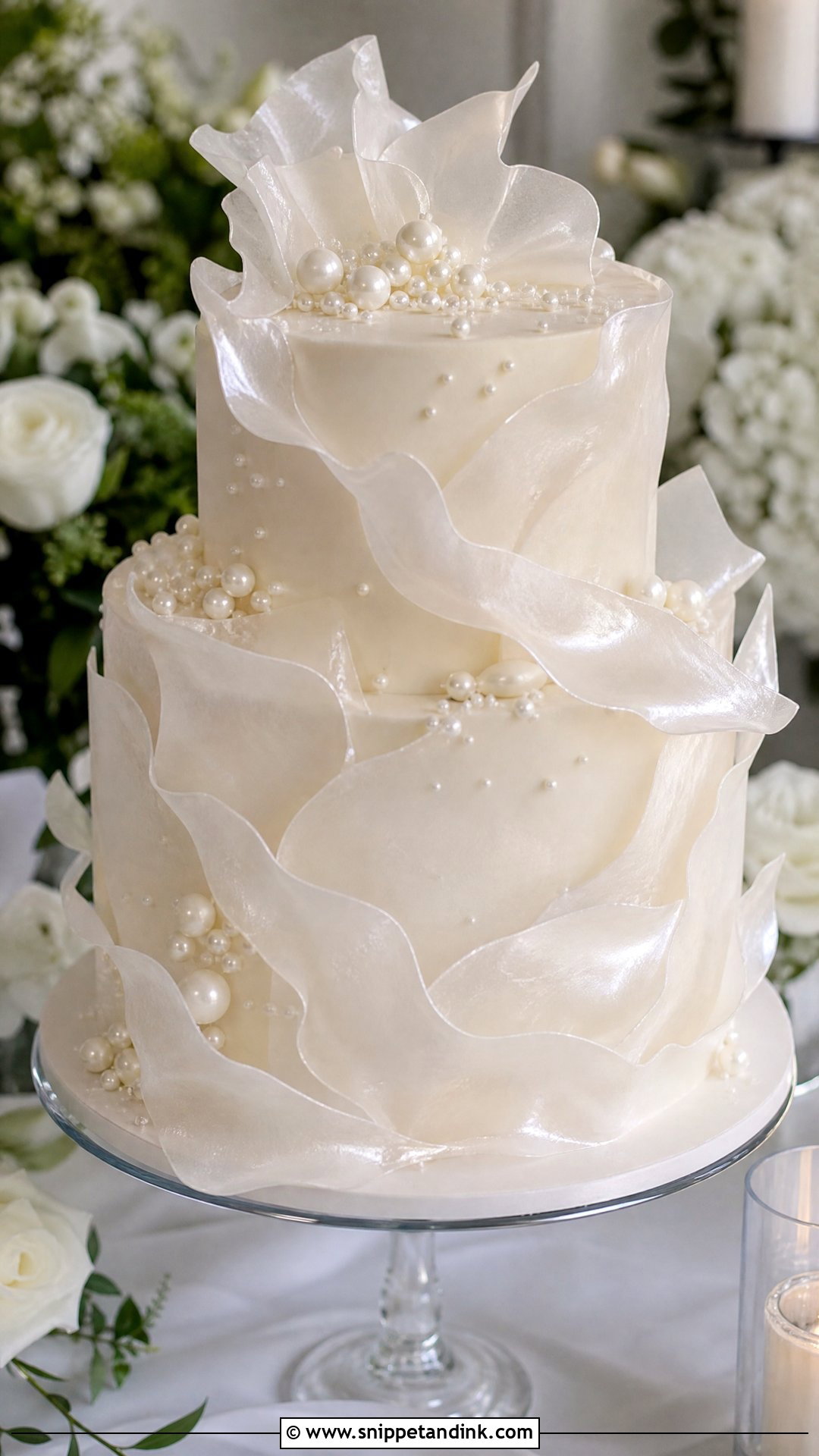
Pearls and rice paper look natural together because both have a soft sheen. I’ll often run petals or gentle waves of paper around a tier and tuck sugar pearls into the folds, with the larger clusters placed where the paper meets the frosting to hide the join. Stay in white, ivory or champagne and scatter the pearls lightly. Sugar pearls are hard on the teeth, and a tier crusted in them is no fun to eat, so I keep them where they can be lifted off easily when the cake is sliced.
9. Rice Paper Gold Wedding Cake
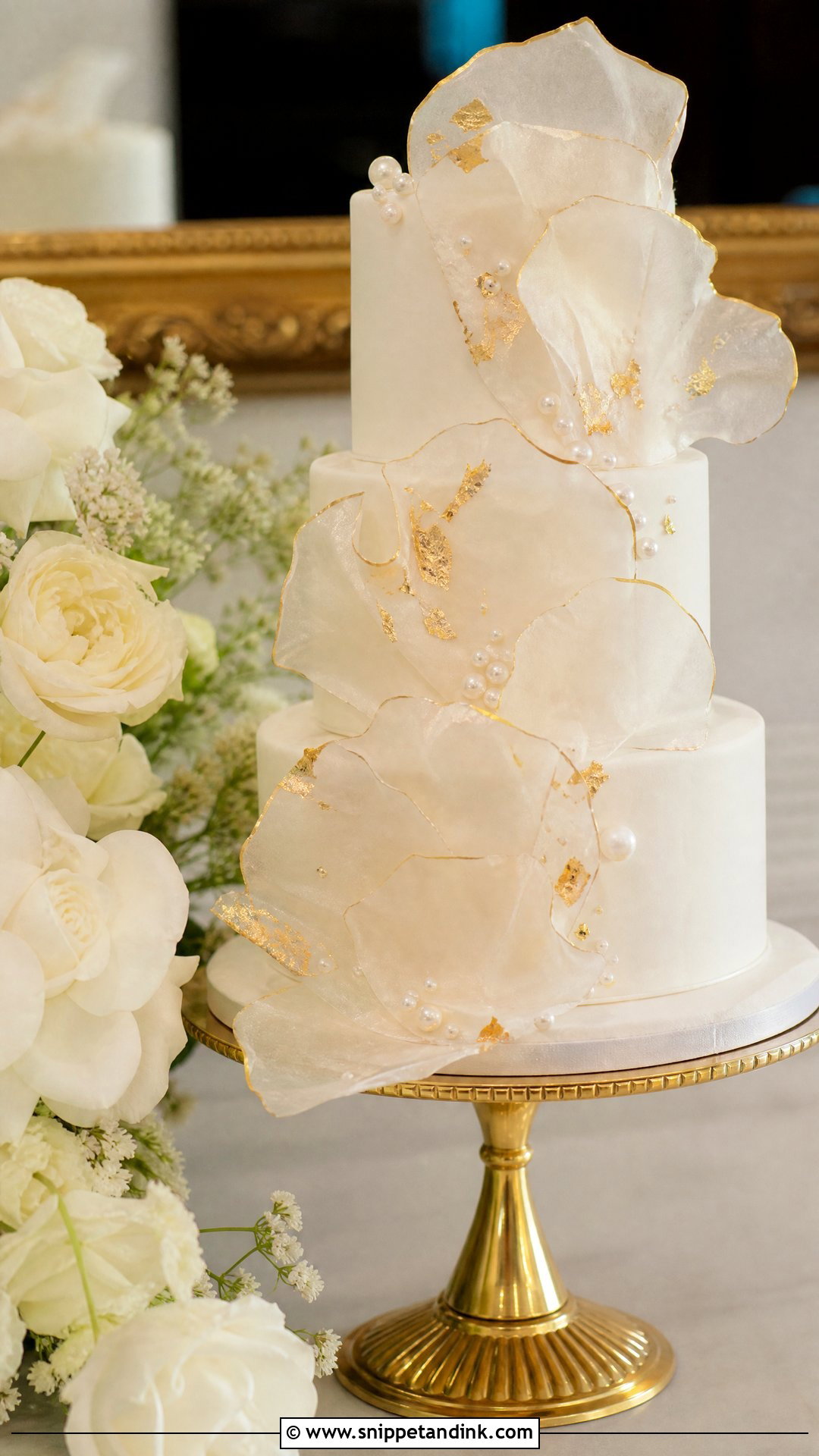
A rice paper gold wedding cake stays light as long as the metal is used with restraint. I paint gold onto sails or torn-edge pieces with lustre dust mixed into a few drops of alcohol, never water, because water dissolves the sheet before the paint dries. A white or ivory base keeps the gold bright. Sharp fondant tiers match the formality of a ballroom or black-tie evening, and a few flakes of gold leaf near the top tier are plenty.
10. Rice Paper Blush Wedding Cake
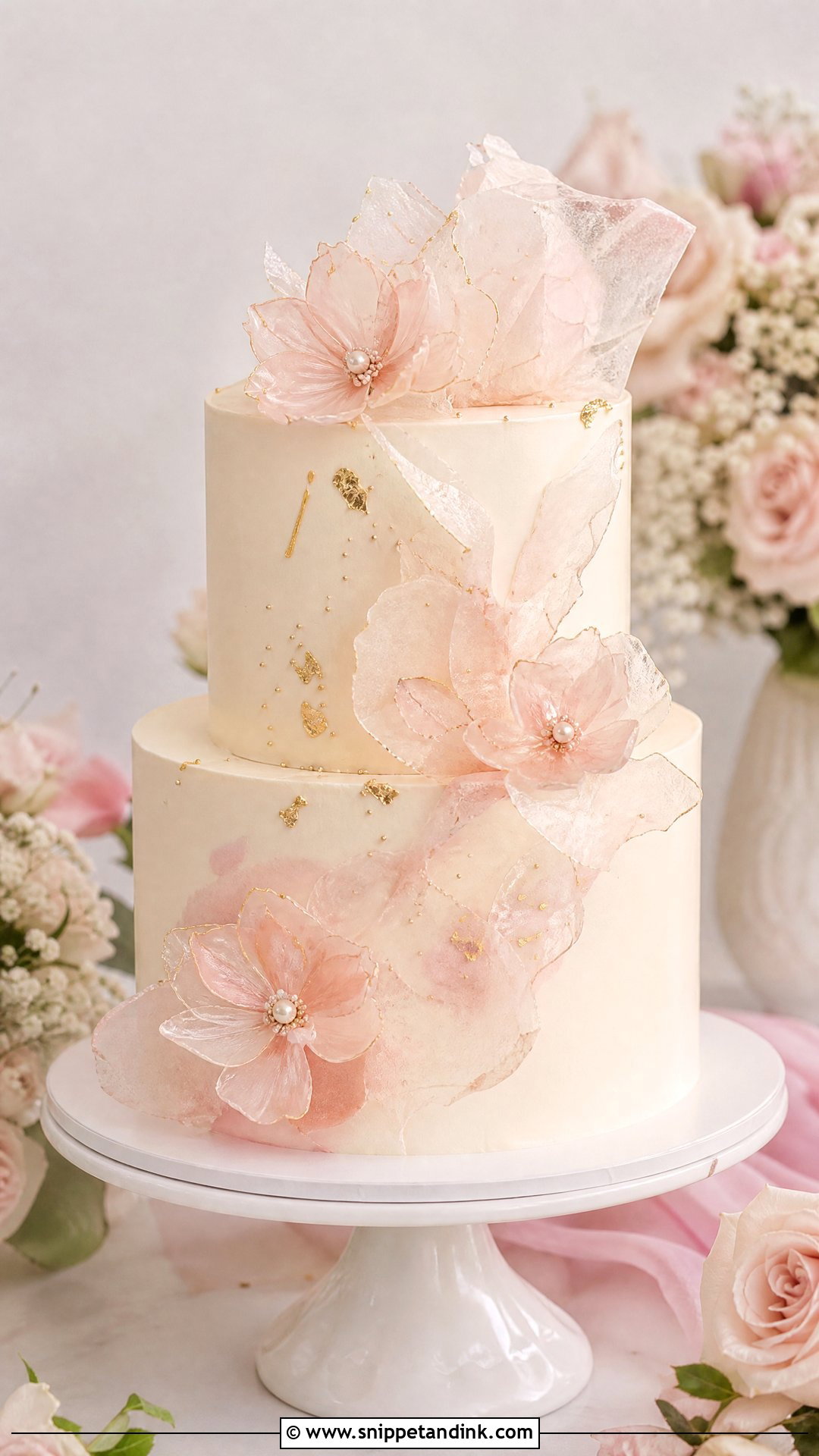
Blush is the easiest way to warm up a white cake without committing to real colour. Blush paper flowers, ruffles or sails sit well over ivory buttercream, and the outside stays bridal enough for a vanilla, almond or champagne sponge inside. Keep the tint muted. Rice paper is translucent, so colour reads lighter on the sheet than it does in the pot, and it’s tempting to over-correct into a bright pink that looks like a birthday cake in photos. I always test the shade on a scrap first.
11. Rice Paper White Wedding Cake
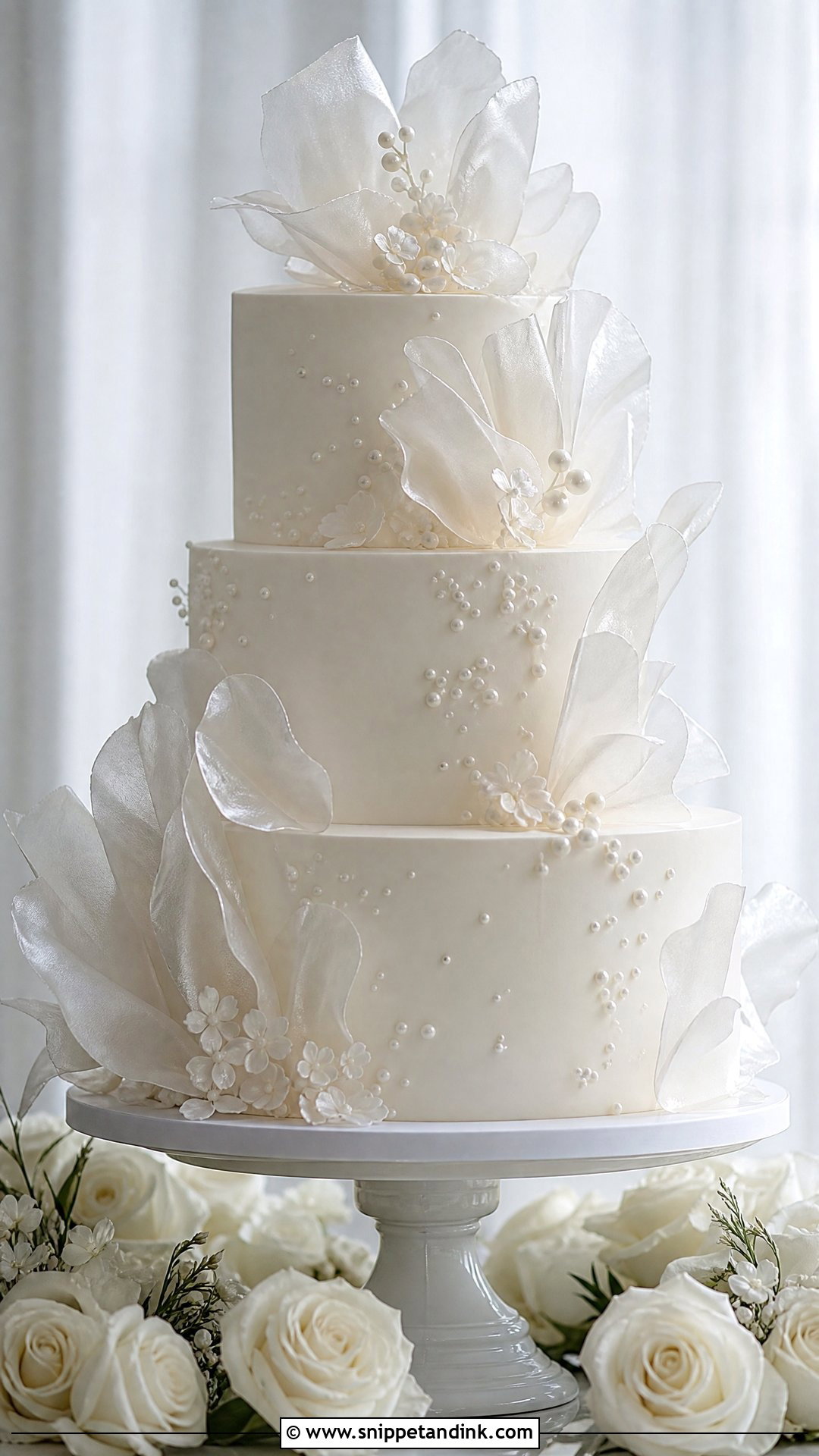
An all-white cake can look flat in photos because there’s nothing for the light to catch. That’s the problem a rice paper white wedding cake solves: ruffles, petals, sails or lace each throw small shadows, so the tier has depth without any colour at all. Use smooth white buttercream or fondant, add white paper with a whisper of pearl dust, and it sits comfortably in a garden tent or a hotel ballroom.
12. Rice Paper Textured Wedding Cake
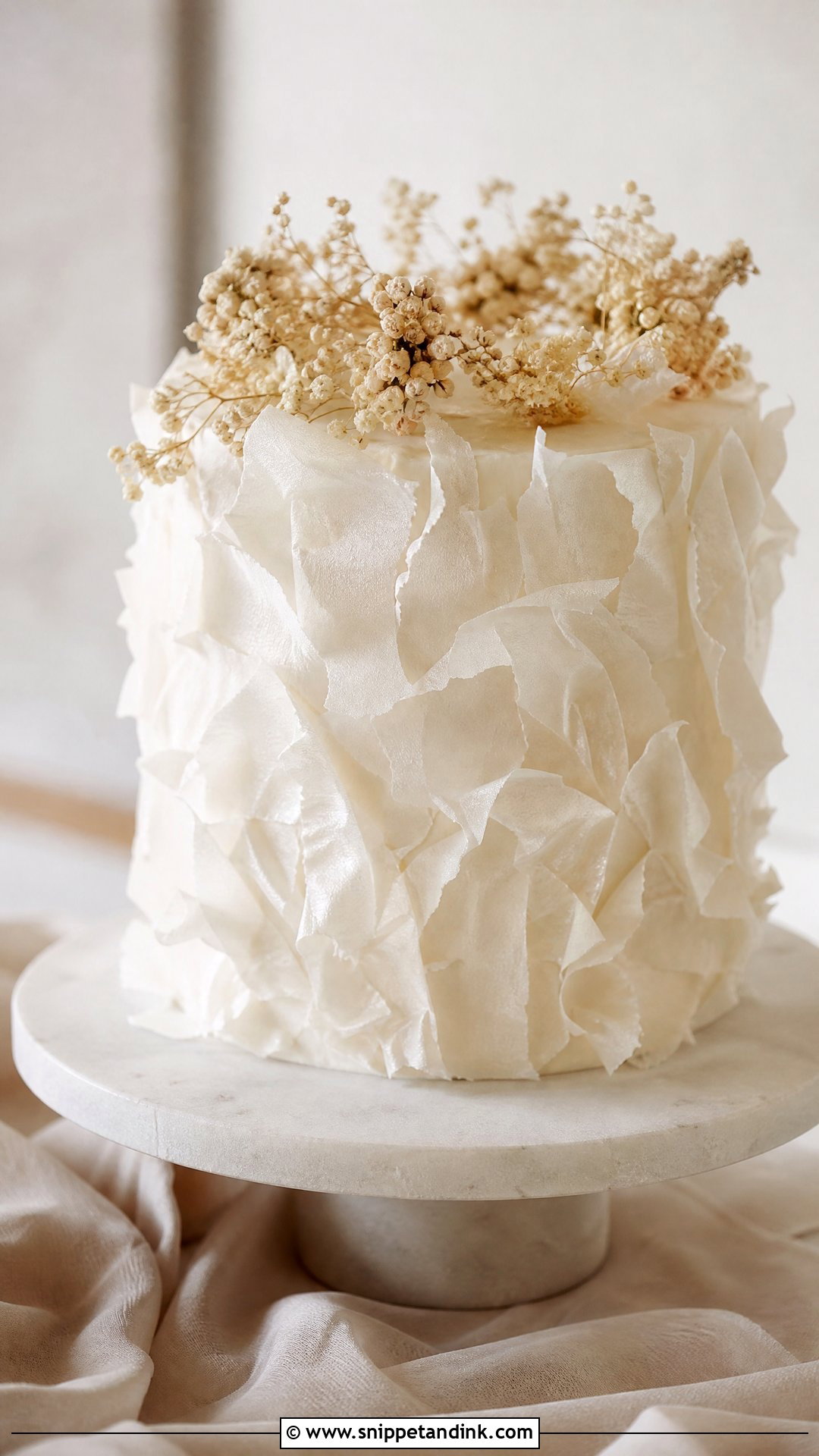
This is the most forgiving rice paper design I make. Small torn or feathered pieces are layered over one tier, and because the look is deliberately irregular, a slightly uneven piece simply blends in. Side lighting picks out every edge, so you get depth with no bold colour. Keep the other tiers smooth and the palette in ivory, cream or beige for a neutral or modern rustic table. It’s the design I suggest to couples worried about a warm room, since a softened edge here doesn’t spoil anything.
13. Rice Paper Tiered Wedding Cake
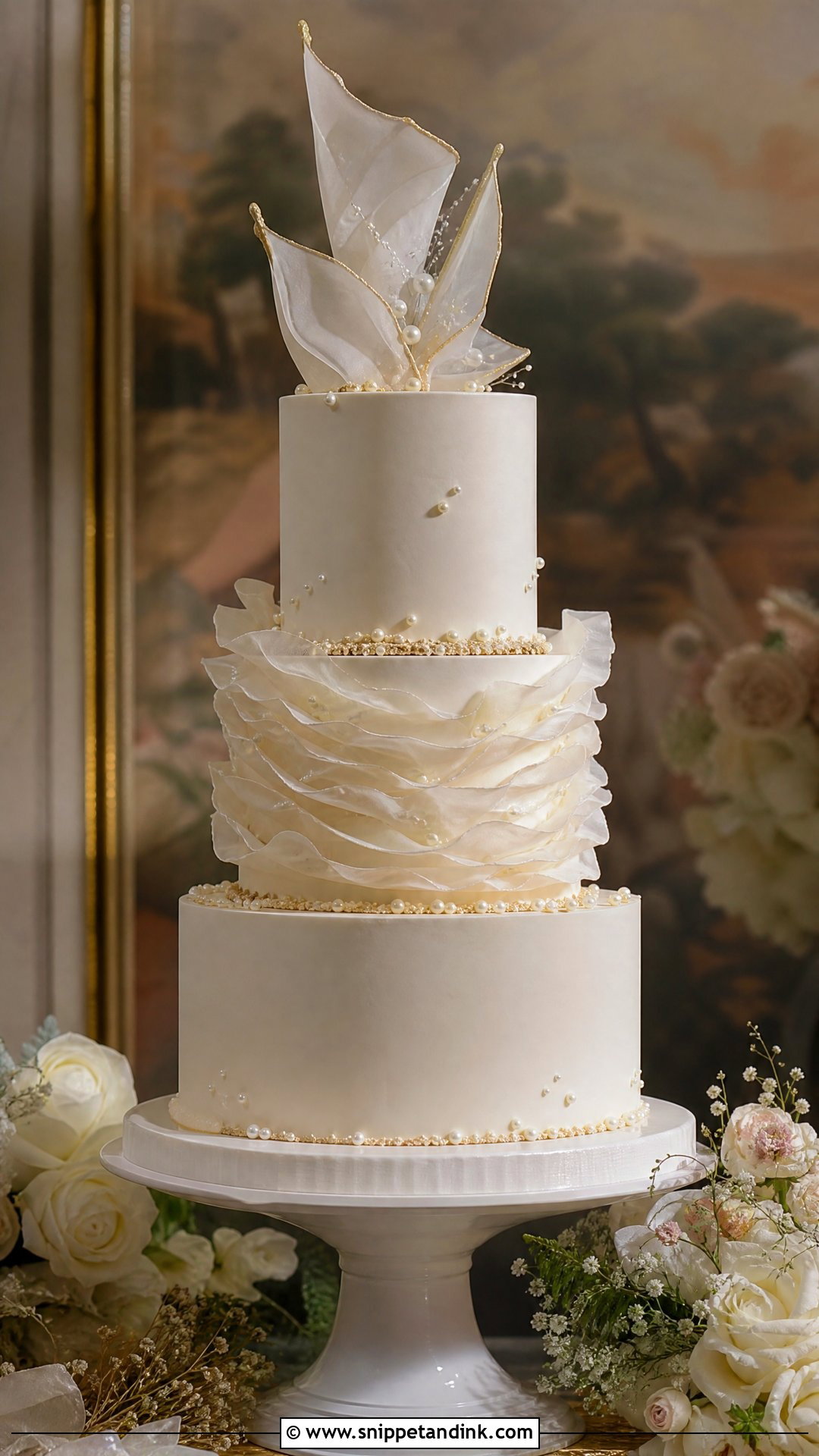
A tall cake lets you change the detail tier by tier: smooth buttercream on one, ruffles on the next, sails or flowers on top. The risk is that it ends up looking like three different cakes stacked together. I limit the palette to two or three colours, such as ivory, champagne and blush, and repeat one paper element on every tier to tie them together. Thin separators, pearl accents or a short floral cascade also help connect the levels. For a larger guest count, it gives the dessert table a proper centrepiece.
14. Rice Paper Square Wedding Cake
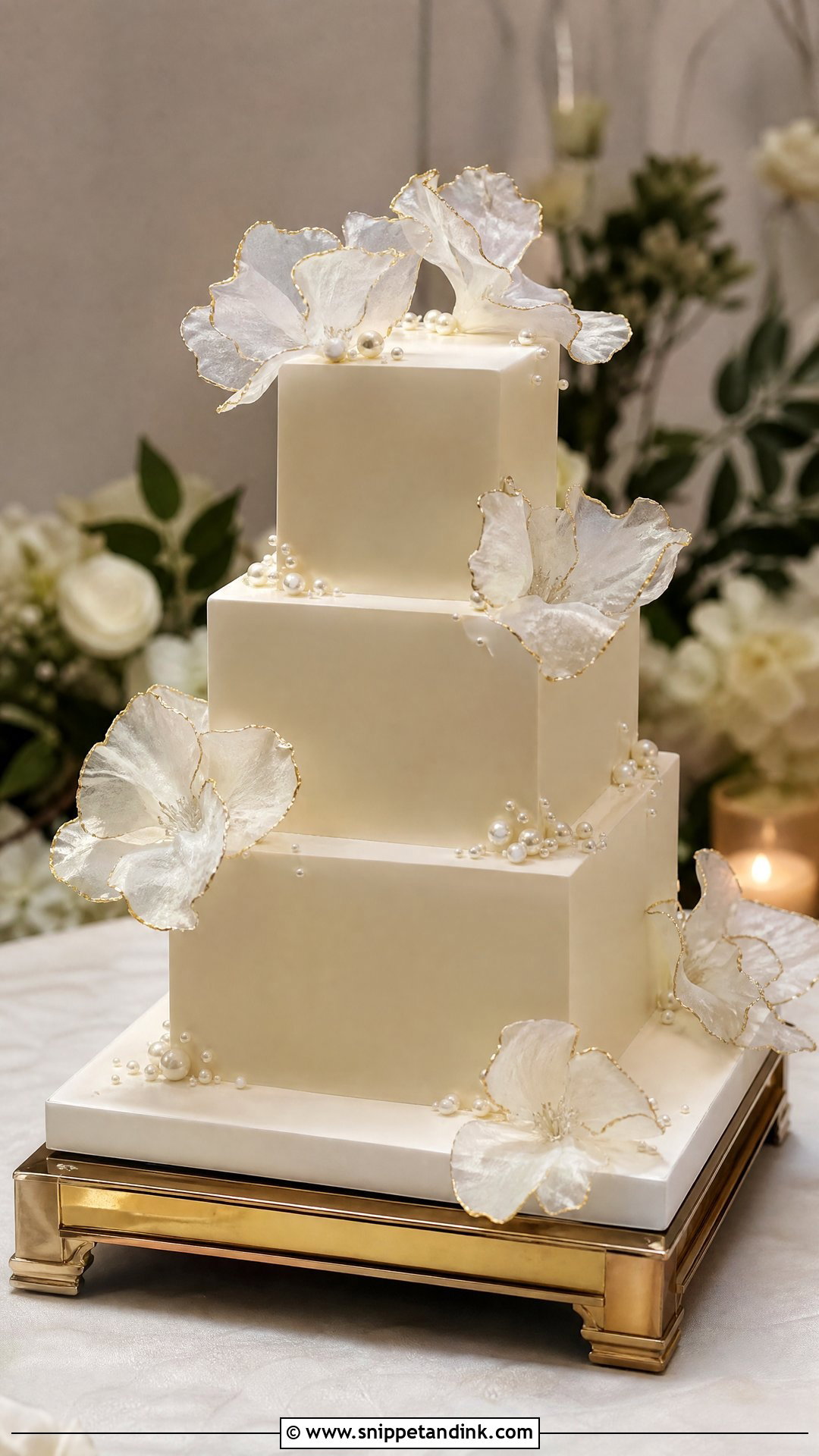
Square tiers are harder to frost than round ones. The corners must be sharp, and any bulge on a side shows immediately. When they’re crisp, though, the straight edges against curled rice paper make a strong contrast. I place paper flowers at the corners, where they also cover any softness, or wrap thin textures around each tier. White with gold is the classic pairing and ivory with blush the softer one. Square cakes also cut into neat, even portions, which caterers appreciate.

15. Rice Paper Minimal Wedding Cake
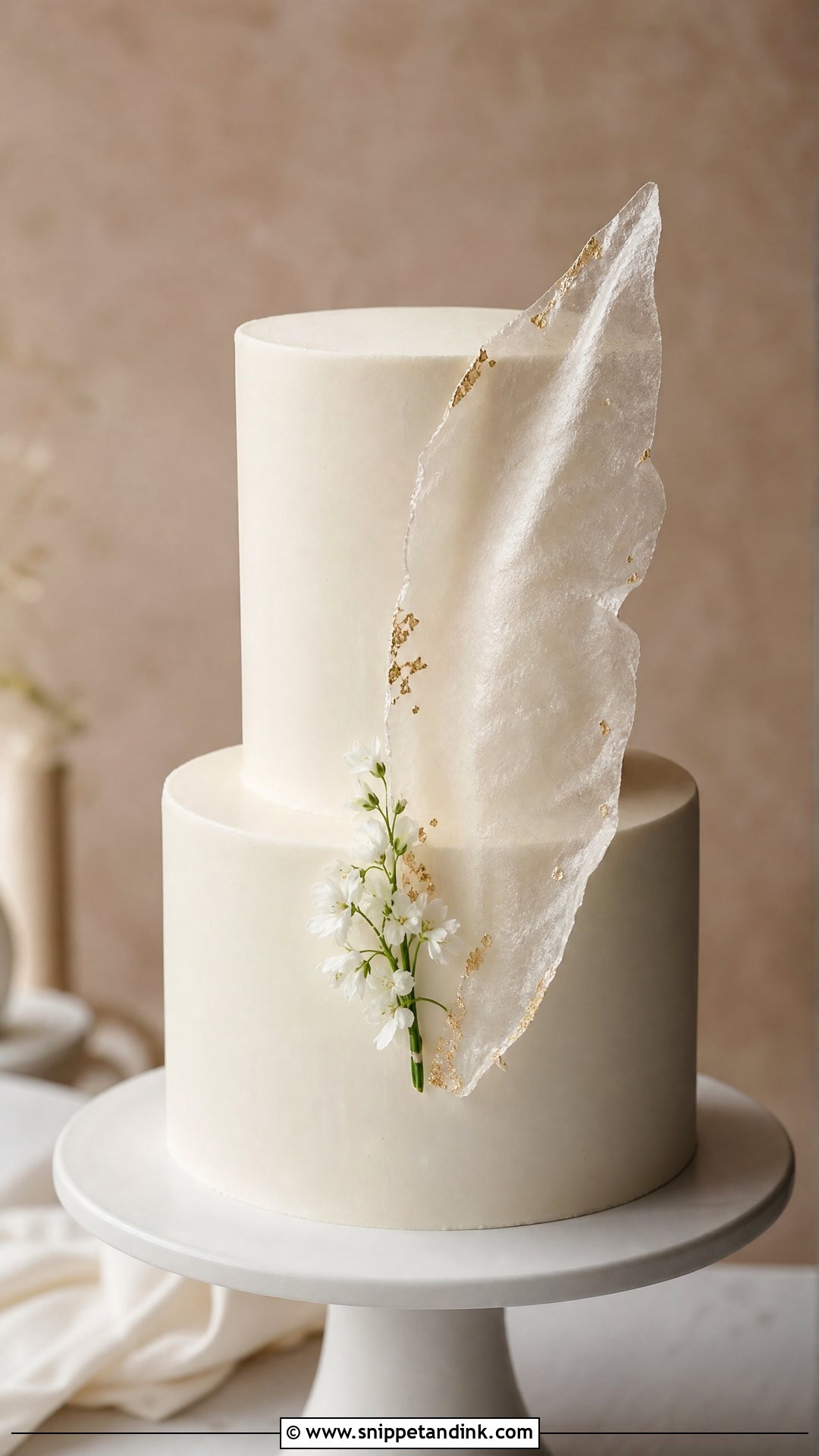
Sometimes one sail, one flower or a single side ruffle is enough. A minimal cake depends on the frosting more than the decoration, so the edges must be sharp and the sides smooth, in a calm ivory, white or pearl. Fewer paper pieces also means less that can wilt. For an intimate wedding or a courthouse ceremony followed by a small reception, I think this is the best-value version of the trend: the detail has room around it and the cake looks deliberate.
16. Rice Paper Watercolor Wedding Cake
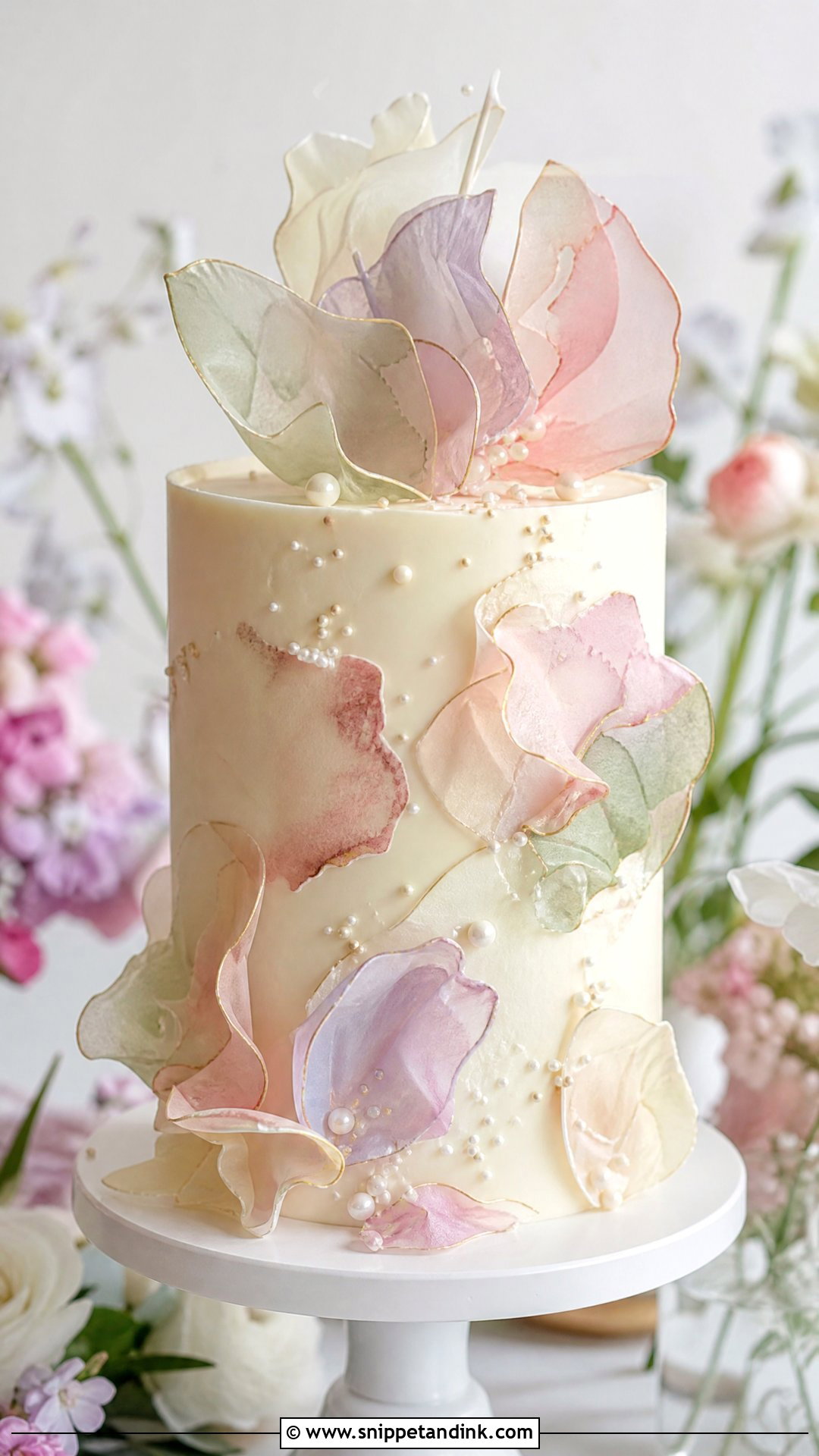
Watercolour sheets are airbrushed or lightly brushed with edible colour and dried before shaping, which gives soft washes of blush, lavender, sage or dusty blue across flowers, sails or abstract layers. The sheet has to be completely dry before it goes near frosting, or the colour bleeds into the cake. Keep the frosting plain so the washes stay the focus. They suit spring and summer dates, and a few small pearls or sugar blossoms finish the design without hardening it.
17. Rice Paper Garden Wedding Cake
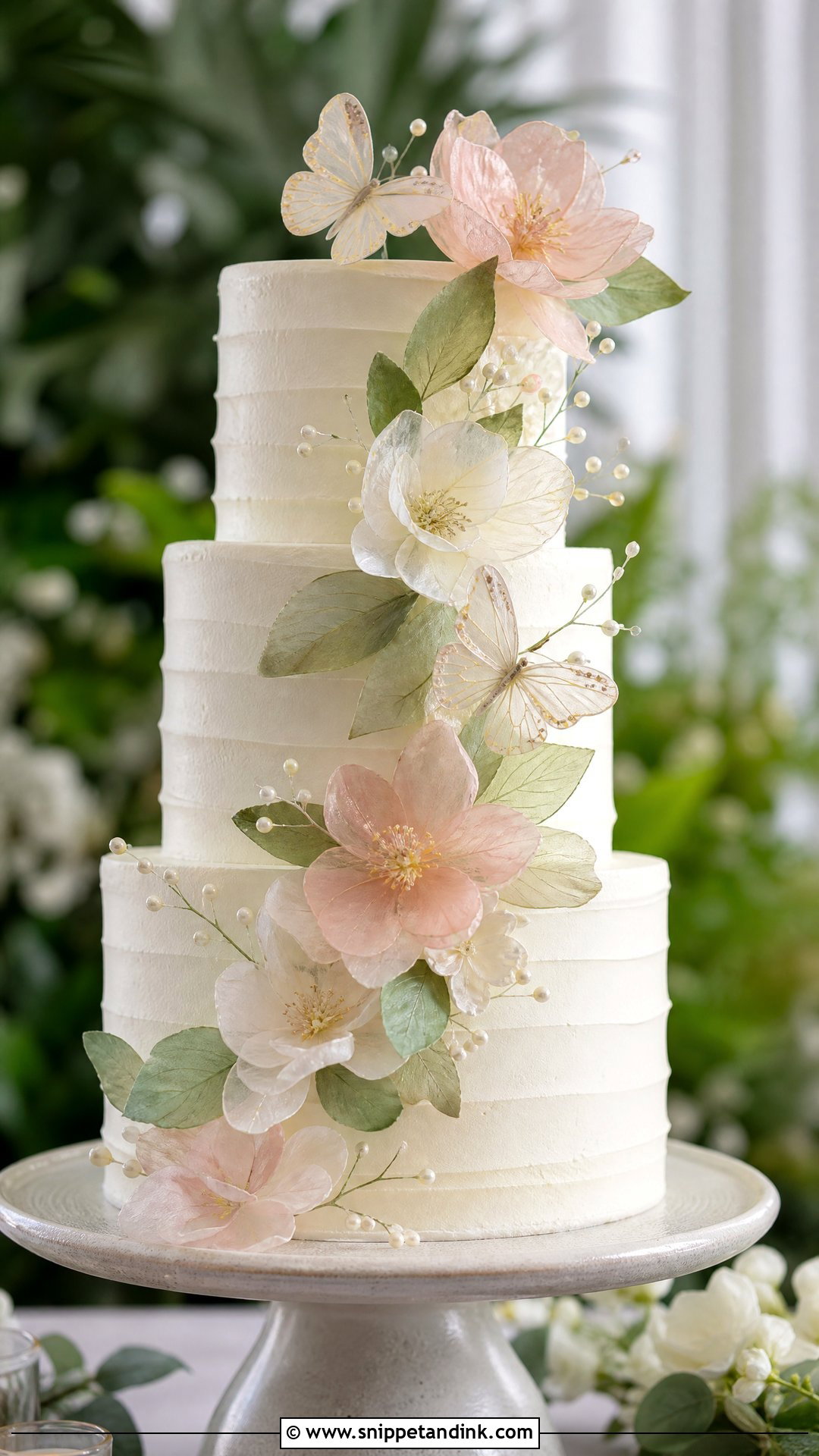
A garden cake mixes rice paper flowers, leaves, butterflies and petals into one scene. I keep the cake white or ivory and decorate in blush, sage, cream and pale yellow. Buttercream suits this design better than fondant because its softer finish looks more natural, but I put a dot of melted chocolate under each piece rather than pressing paper straight into the cream. A few sugar leaves or tiny piped buds fill the gaps. It’s a natural match for an outdoor or greenhouse reception, provided the cake table sits in shade.
18. Rice Paper Vintage Wedding Cake
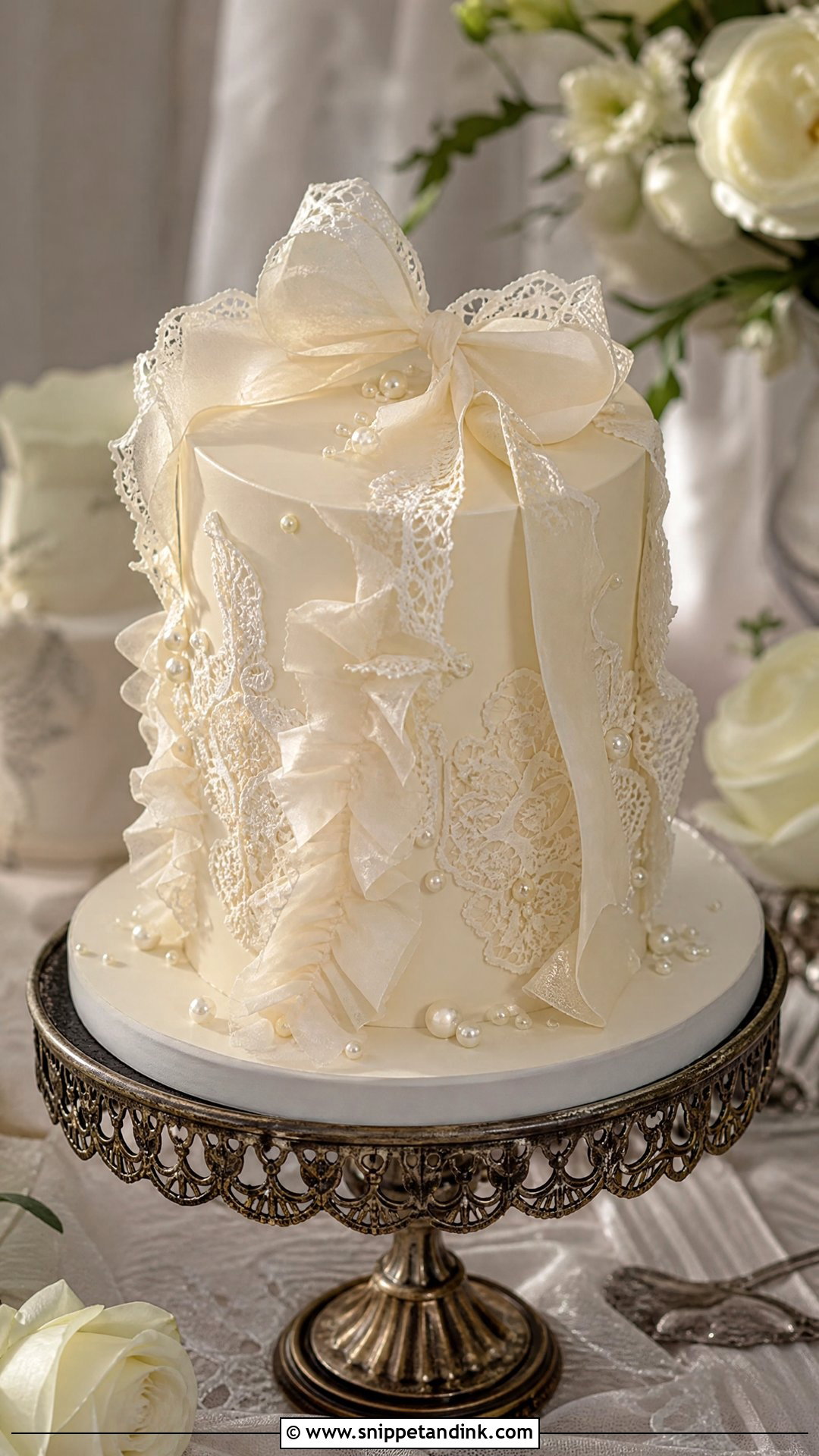
Vintage cakes are traditionally heavy with piping. Swapping some of it for rice paper lace, soft bows, ruffled panels or small flowers keeps the old-fashioned character but lightens the whole cake. Pale ivory with pearl accents is where I’d start. Small buttercream borders still belong, piped neatly and kept thin so they frame the paper rather than compete with it. Oval or round tiers on an antique stand, beside low table flowers, finish the period feel.
19. Rice Paper Modern Wedding Cake
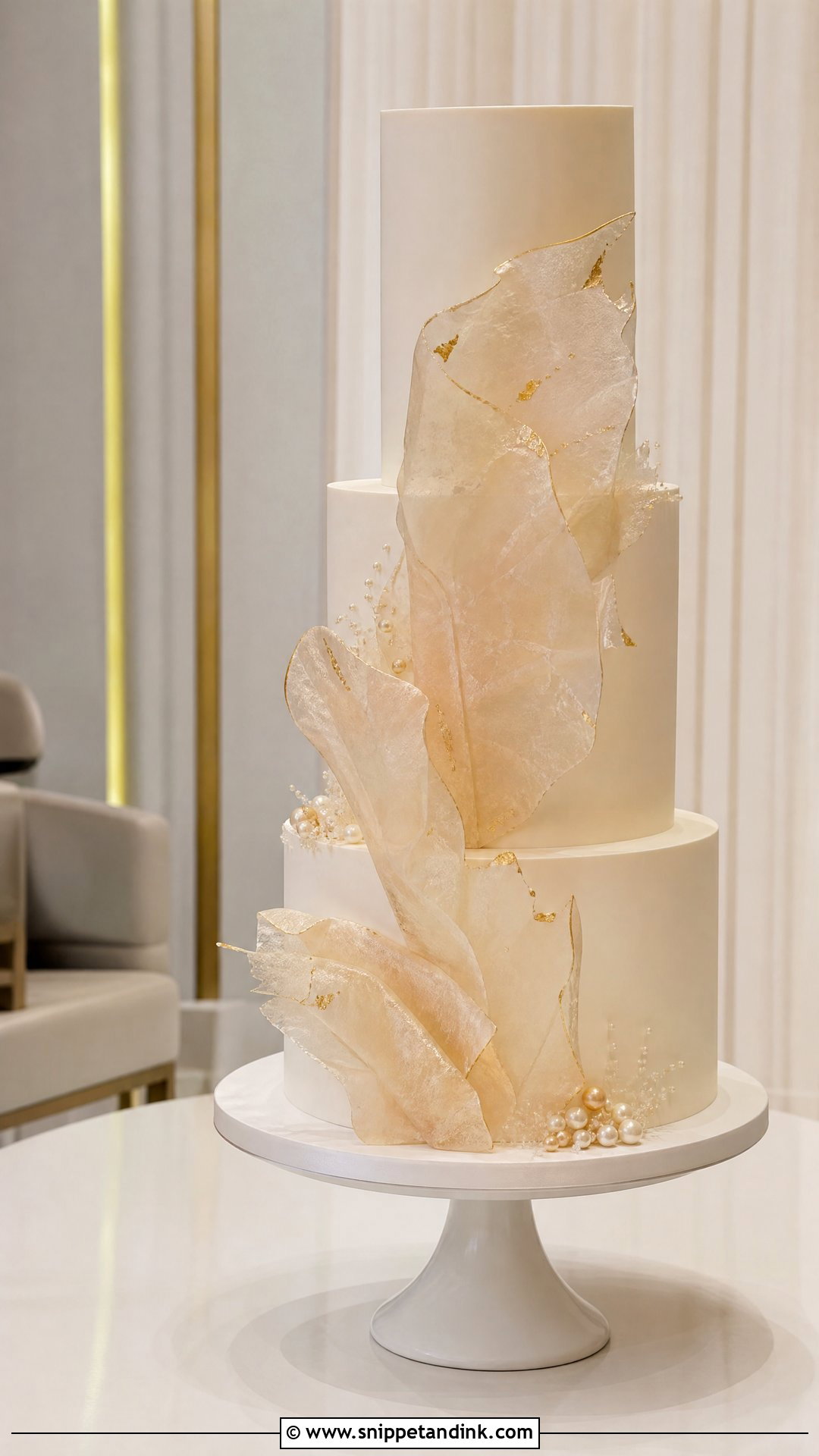
Modern rice paper cakes rely on shape and empty space far more than decoration. Tall tiers, smooth fondant and off-centre sails or abstract pieces placed like sculpture are the usual ingredients. Stay neutral with white, beige and champagne, or add one accent of sage or dusty rose. Then resist adding anything else; the strongest versions I’ve made leave most of the cake bare. This is a good fit for a city wedding, a gallery or a modern hotel.



20. Rice Paper Floral Cascade Wedding Cake
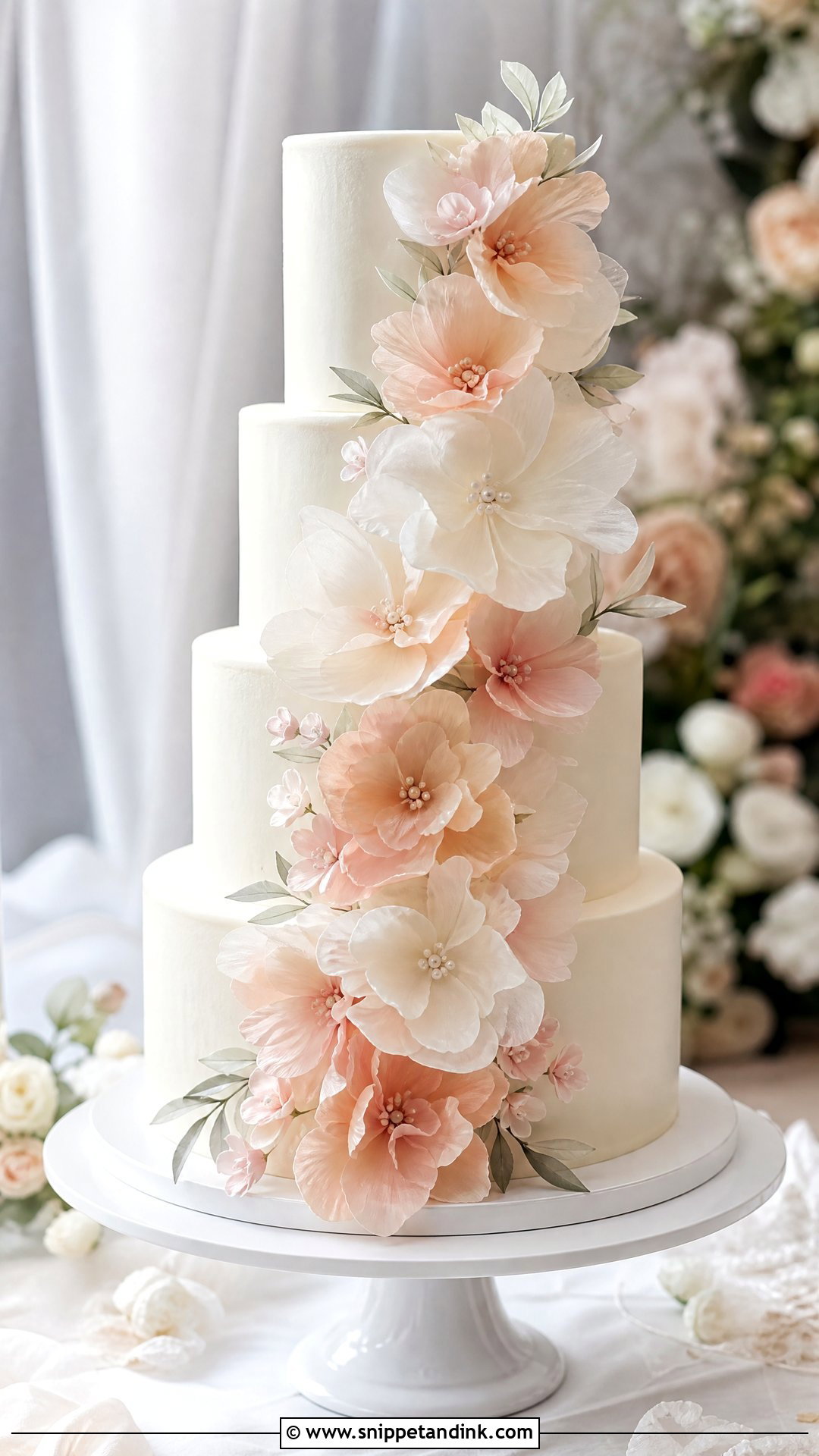
A cascade starts at the top tier and runs diagonally down the front, much like a trailing bridal bouquet. Because rice paper weighs so little, it can be fuller than a sugar-flower cascade without pulling the lower blooms loose. White and blush flowers keep it soft against a smooth, simple base. I don’t wire anything into the cake for a paper cascade; each flower is fixed with a dot of melted chocolate or royal icing, which is food-safe and holds well once set.
Moisture, Not Heat, Is What Ruins Paper Sails
Rice and wafer paper dissolve in water, so anything that puts moisture on the cake works against them. Humid air softens sails until they droop. A cake moved from a cold fridge into a warm room gathers condensation on its surface, and paper pieces can go limp within the hour. Buttercream carries moisture too, which is why I attach paper with melted chocolate or a little piping gel instead of pressing it straight into the frosting.
In practice, that changes how I plan a paper cake:
- I add the largest paper pieces at the venue, or on the morning of delivery, never days ahead.
- Ask for the cake table to stay out of direct sun and away from the kitchen door, buffet steam and outdoor misting fans.
- A summer marquee or beach reception suits textured or petal designs better than tall sails, which show wilting first.
- Some bakers seal pieces with a thin coat of cocoa butter or edible glaze. Ask whether yours does and how it changes the finish.
Reading a Quote for a Rice Paper Cake
Paper work is labour, so two cakes that look alike in photos can be quoted very differently. A clear quote says how many tiers carry paper detail, whether the sails or petals are made in advance and assembled on site, and who sets up at the venue. Ask whether every tier is real cake or one is a decorative dummy; heavy paper work on a dummy tier is common and keeps costs down.
Ask too what happens if a piece breaks in transit. A careful baker packs spares in a sealed box and swaps them in during setup. When you send inspiration photos, add one sentence about what you like in each, such as the colour, the height or the curve of the sails. A picture alone leaves the baker guessing which detail matters to you.
Plain Frosting, One Paper Feature
The rice paper cakes that work share one structure: plain, well-finished frosting and a single paper feature with room to show. Sails and fans lean modern, lace and pearls lean classic, and flowers and watercolour sit between them. Let the venue decide as much as the mood board does. An air-conditioned ballroom can take any design here, while a summer marquee needs fewer, sturdier pieces. Bring your colour swatches and a photo of the venue to your tasting, and ask your baker which version will still look like this at the cutting.
You'll Like These Ideas:






Leave a Reply