
When a couple tells me they want something classy, I hear restraint: a clean structure, one well-made detail, and a finish that still looks crisp after three hours on display. A classy wedding cake can be a smooth buttercream tower, a pearl-studded ivory cake, a vintage Lambeth with layers of piping, a modern square or a single wide tier for a small reception. What these share is proportion and care, not a particular look. Below are twenty-five designs I’d happily make, with notes on how each one behaves in a warm room, what it costs you in time or structure, and who it suits.
How Many Tiers Your Guest Count Really Needs
Couples often pick a cake by photo and then find it feeds half the room, or twice it. I size a design from the guest count first. Wedding portions are cut smaller than party slices, usually a finger of cake about an inch wide and two inches across, so a tier feeds more people than you’d expect.
- As a rough guide, a 6 inch round gives around a dozen wedding portions, an 8 inch around two dozen, a 10 inch close to forty. Bakers’ charts differ slightly, so ask for theirs.
- Square tiers give more portions than round tiers of the same width.
- If you want a tall cake for a small guest list, ask about dummy tiers made from foam and decorated to match. They add height without waste.
- For a large guest list on a modest budget, a smaller display cake plus a plain kitchen cake, cut out of sight, serves everyone and costs less per portion.
Also decide early whether the top tier will be saved. If it will, it shouldn’t count toward the servings, and it needs a flavor that freezes well; light sponges with fresh fruit fillings don’t.
1. White Tiered Wedding Cake
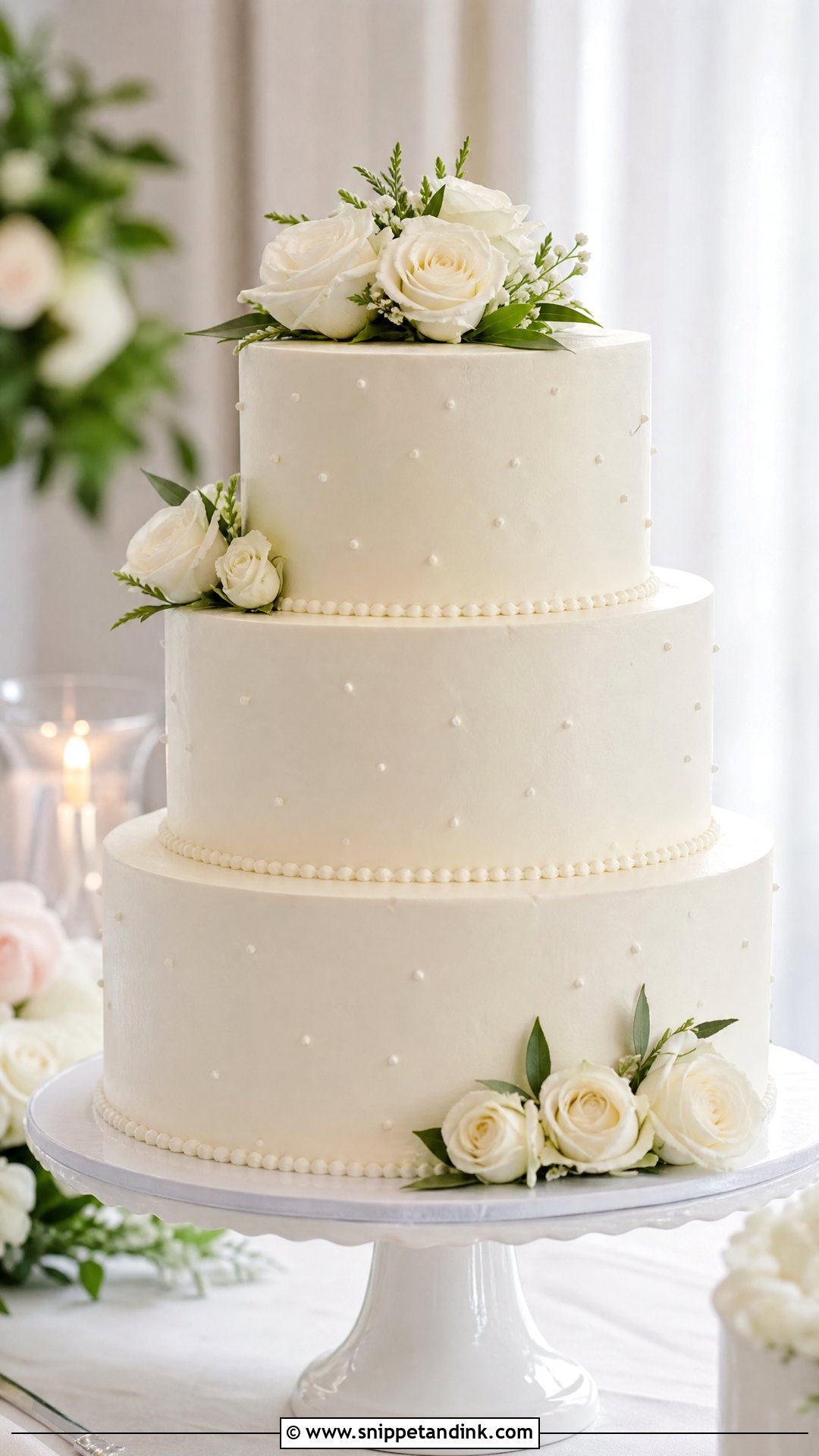
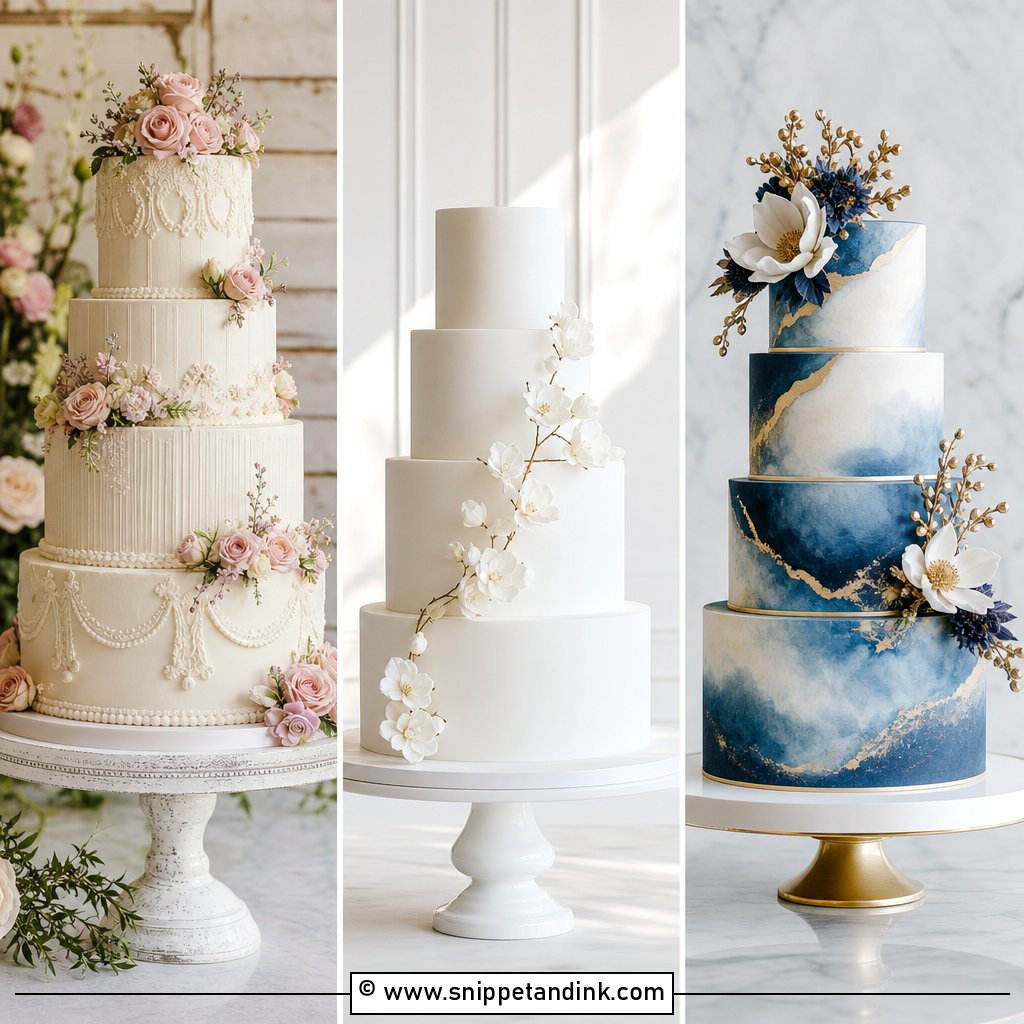
White tiers are the classic for a practical reason: they sit comfortably in a ballroom, a barn or a garden tent, and they leave the florist room to tie the cake into the rest of the room. Buttercream gives a softer, more relaxed edge; fondant gives a sharp, formal one and holds up better in heat. I keep the decoration to one idea: white roses, a band of fine piping, small pearls or a sugar ribbon at the base of each tier. White is also the least forgiving color. Every air bubble and dent shows, so it’s where a baker’s finishing skill is easiest to judge.
2. Pearl Wedding Cake
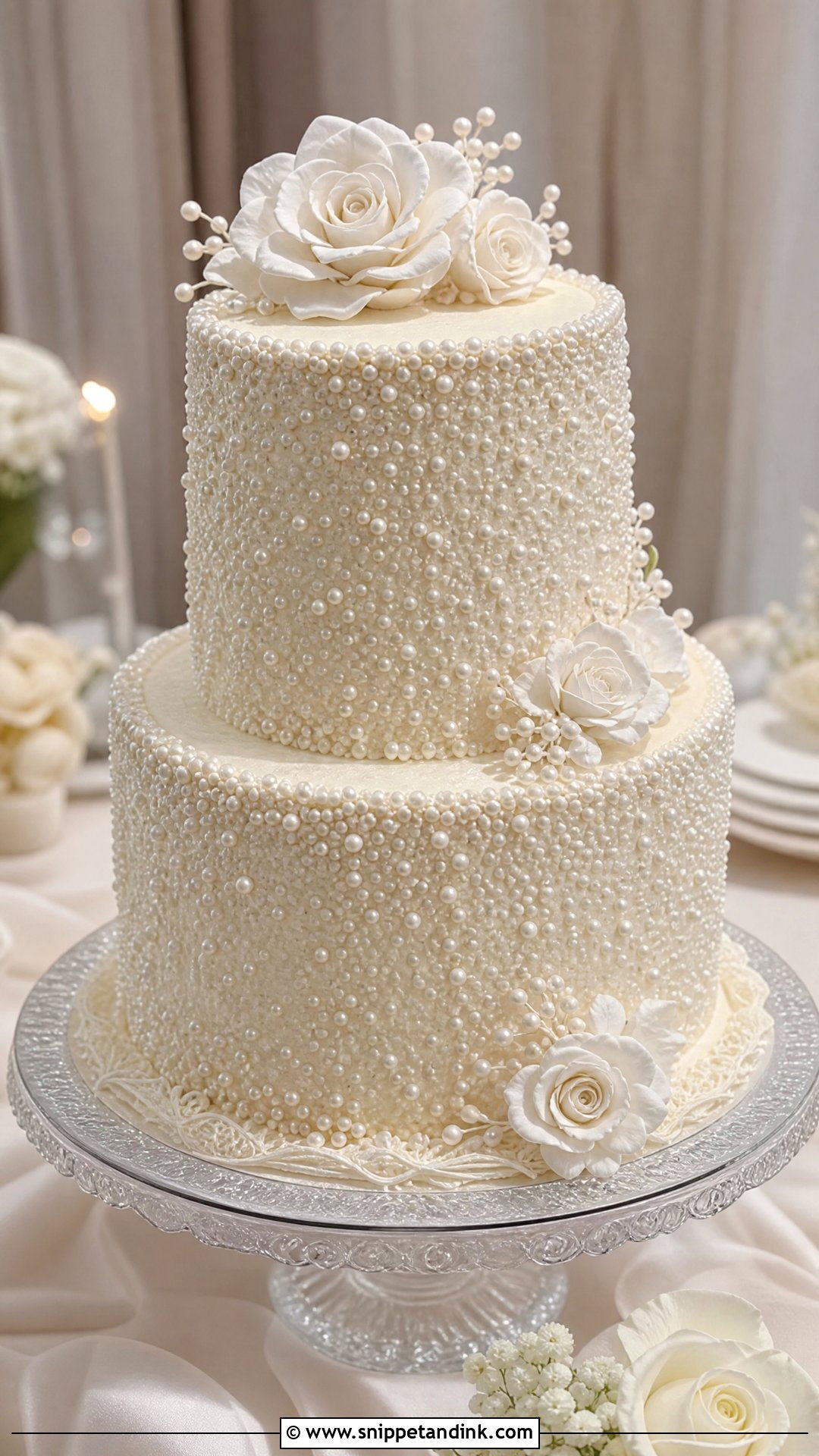
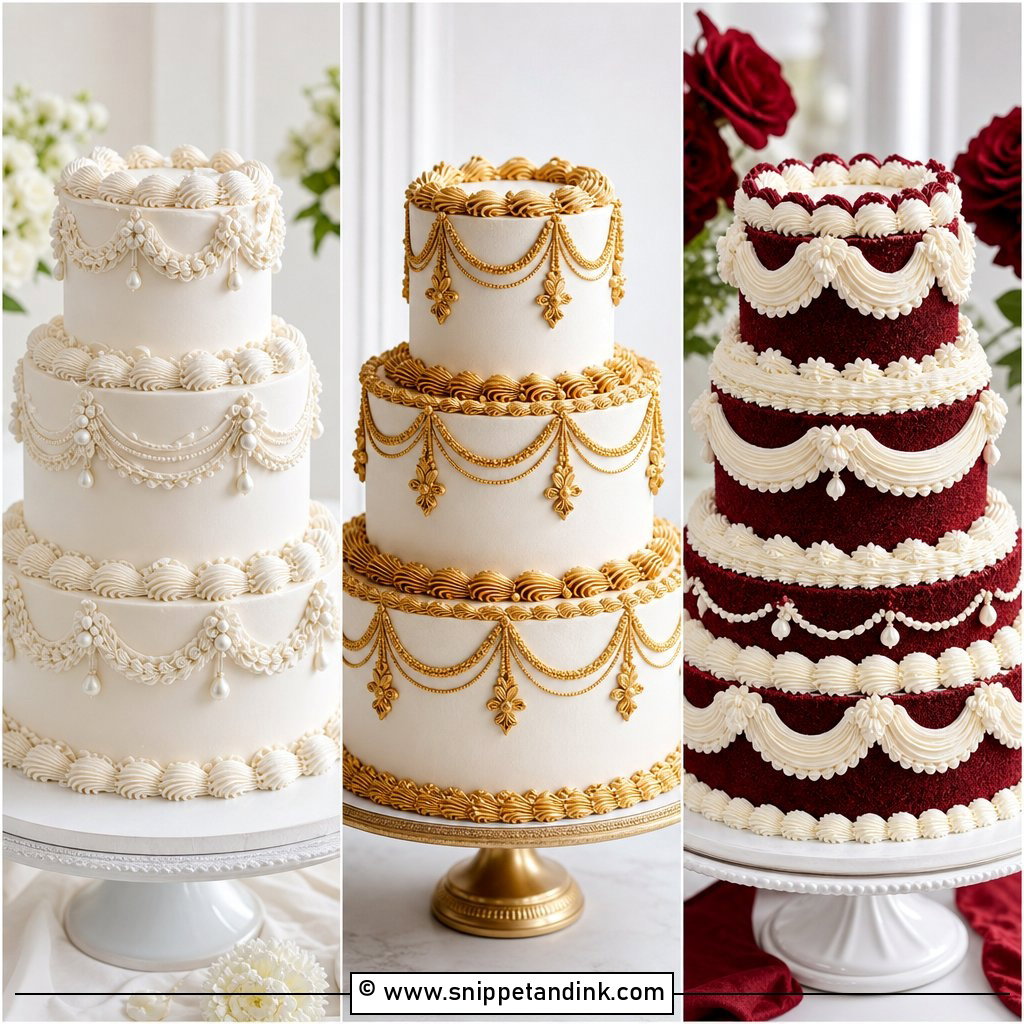
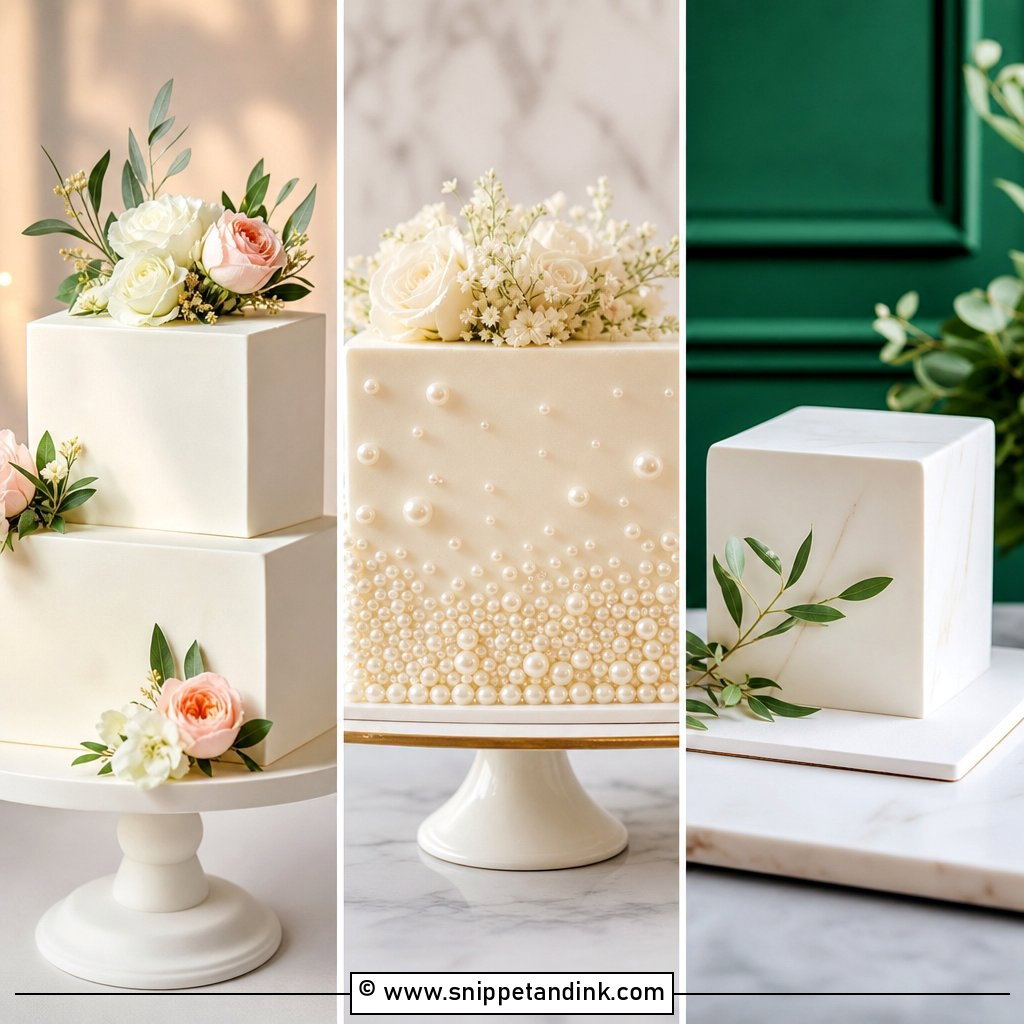
Edible pearls give shine and texture without bulk. I either scatter them lightly over smooth ivory buttercream or set them in tight rows around the tier base, pressing each one in while the surface is still slightly tacky so they don’t drop. They sit well beside lace-style piping, sugar flowers and soft white blooms. Choose one pearl idea and let the rest of the cake stay clean. Hard sugar pearls are a dental hazard if they’re large, so for a cake guests will eat, I use small ones or softer pearl dragees on the cutting tier.
3. Gold Leaf Wedding Cake
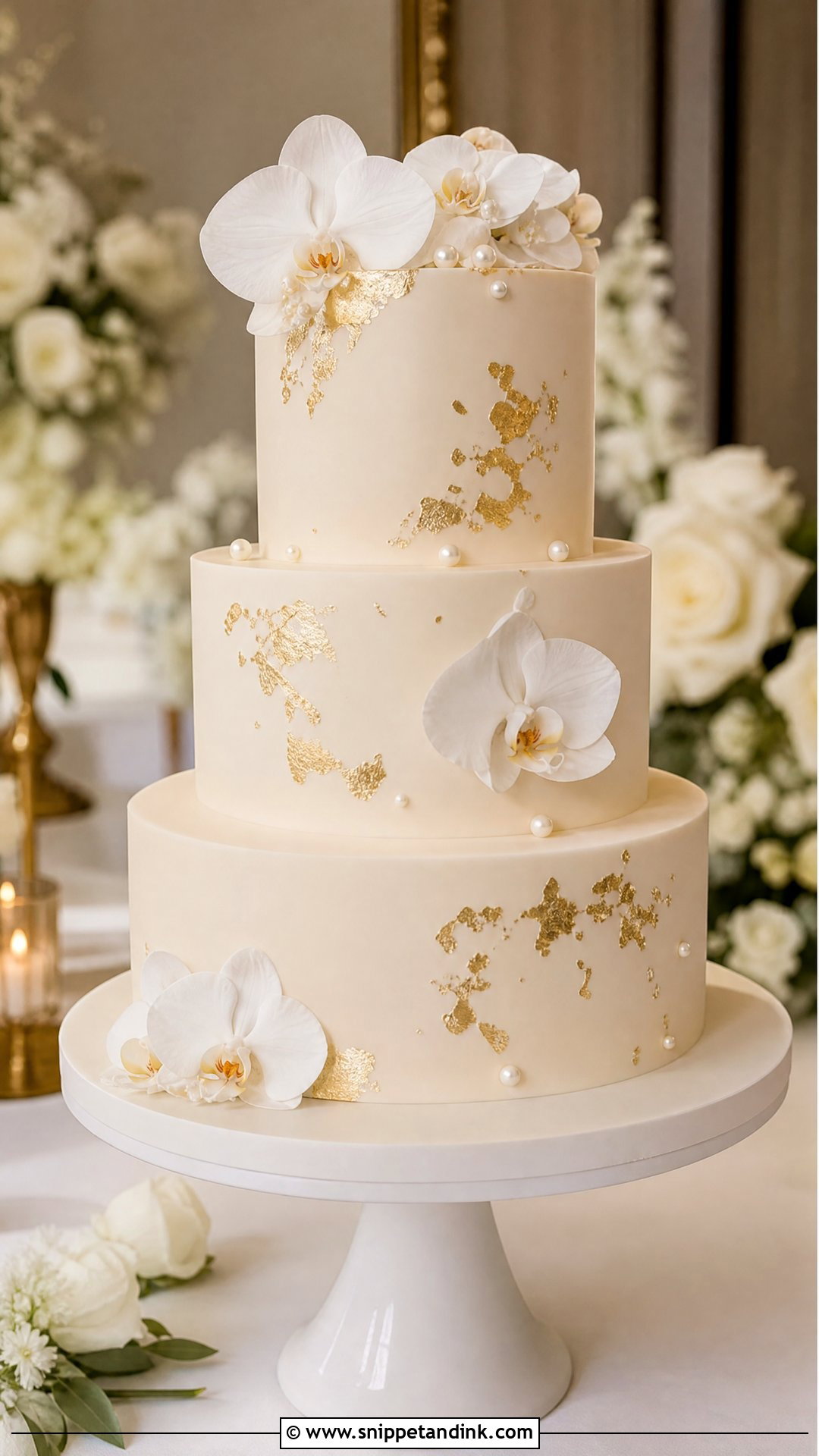
Gold leaf looks richest in small amounts: a torn edge, the corners of a square tier, or one tier gilded among plain ivory. Covering a whole cake in leaf tends to look flat under lights. I apply edible gold leaf with a dry brush onto a slightly tacky surface; on soft buttercream it can wrinkle, so I chill the tier first. It suits round and square cakes, ivory buttercream, white fondant and fresh flowers. If the reception has gold cutlery, candlelight or brass accents, a touch of leaf on the cake connects it to the tables.
4. Fresh Flower Wedding Cake
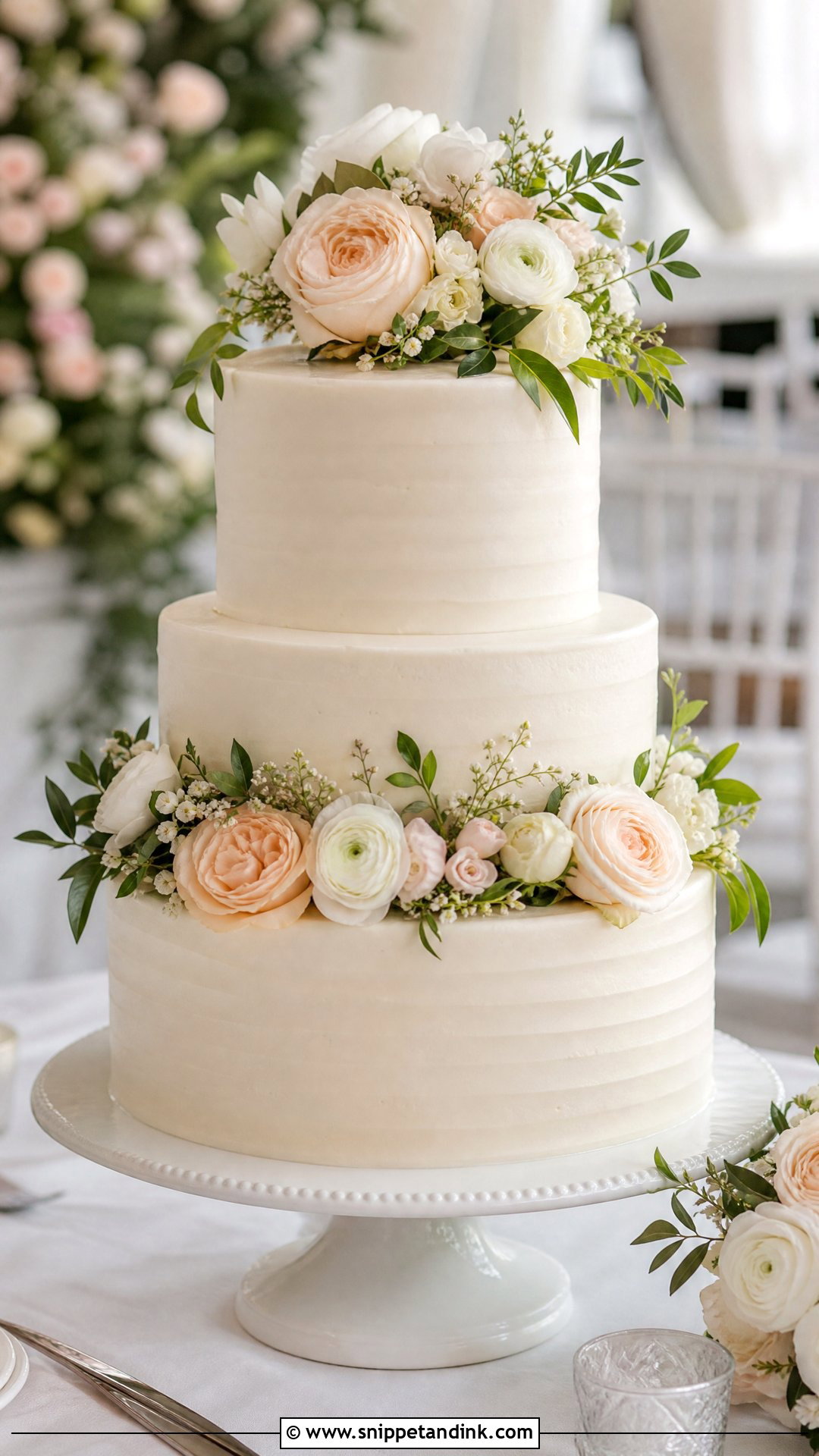
Fresh flowers link the cake to the bouquet and the centerpieces, but they come with rules. Many popular wedding flowers are not food-safe, and some, like lily of the valley and hydrangea, are toxic, so the florist and I agree on varieties before anything goes near the cake. Stems are wrapped in floral tape and pushed into straws or picks, never directly into the sponge, and sprayed flowers are avoided. Roses, ranunculus and small edible blooms all work. For a classy result, one cascade down a side or a few grouped clusters between tiers is plenty.
5. Buttercream Wedding Cake
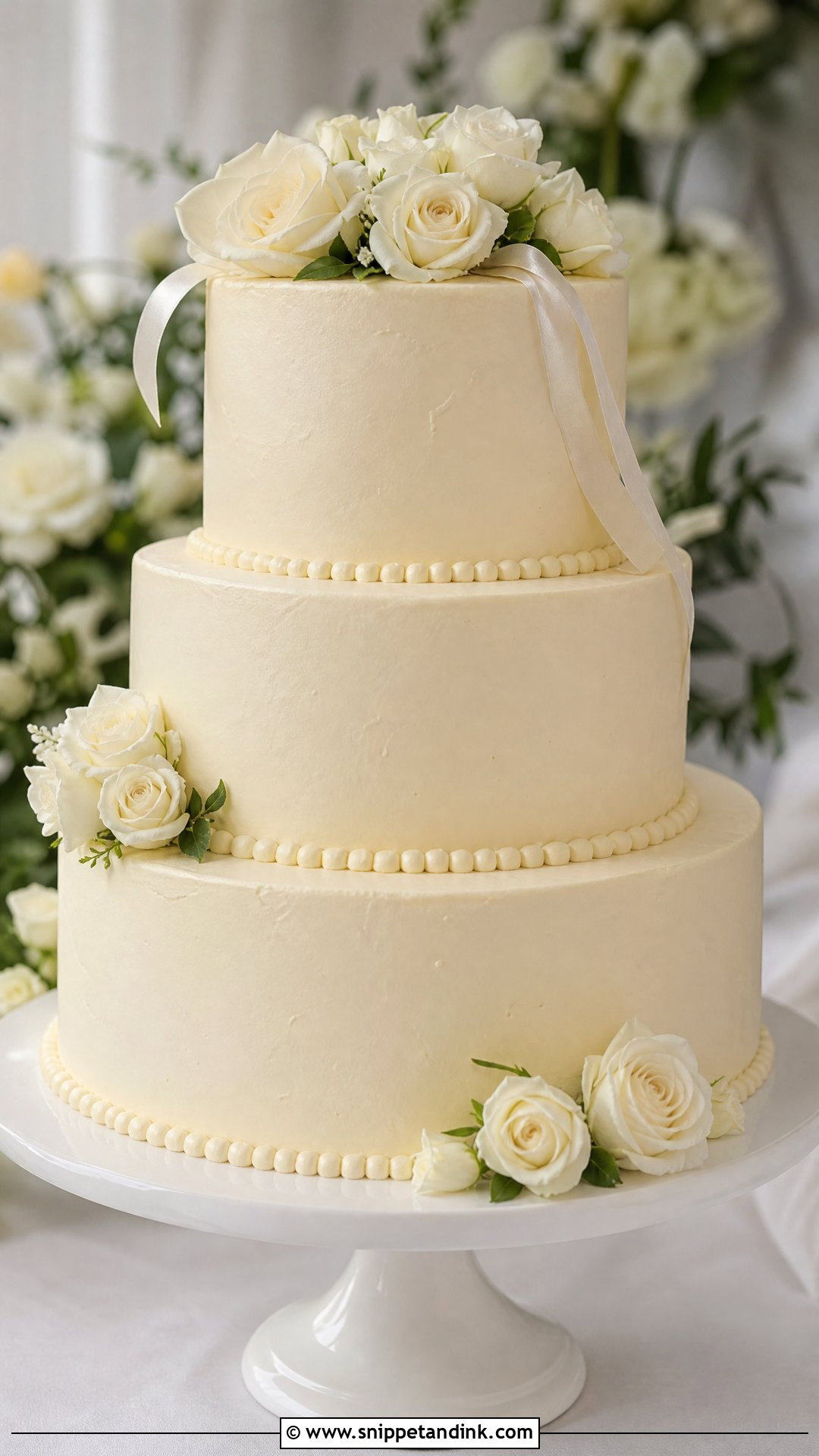
Buttercream is what most guests actually want to eat, and done well it looks as refined as fondant. The finish relies on chilling: I crumb coat, chill, apply a final coat and scrape it smooth with a bench scraper while it’s cold, which is how you get sharp top edges. Swiss meringue buttercream is less sweet and silkier than American buttercream, though it softens faster in warm rooms. Clean edges, soft piping or a few flowers keep it polished. It suits almost every style, provided the venue isn’t hot.
6. Textured Buttercream Wedding Cake
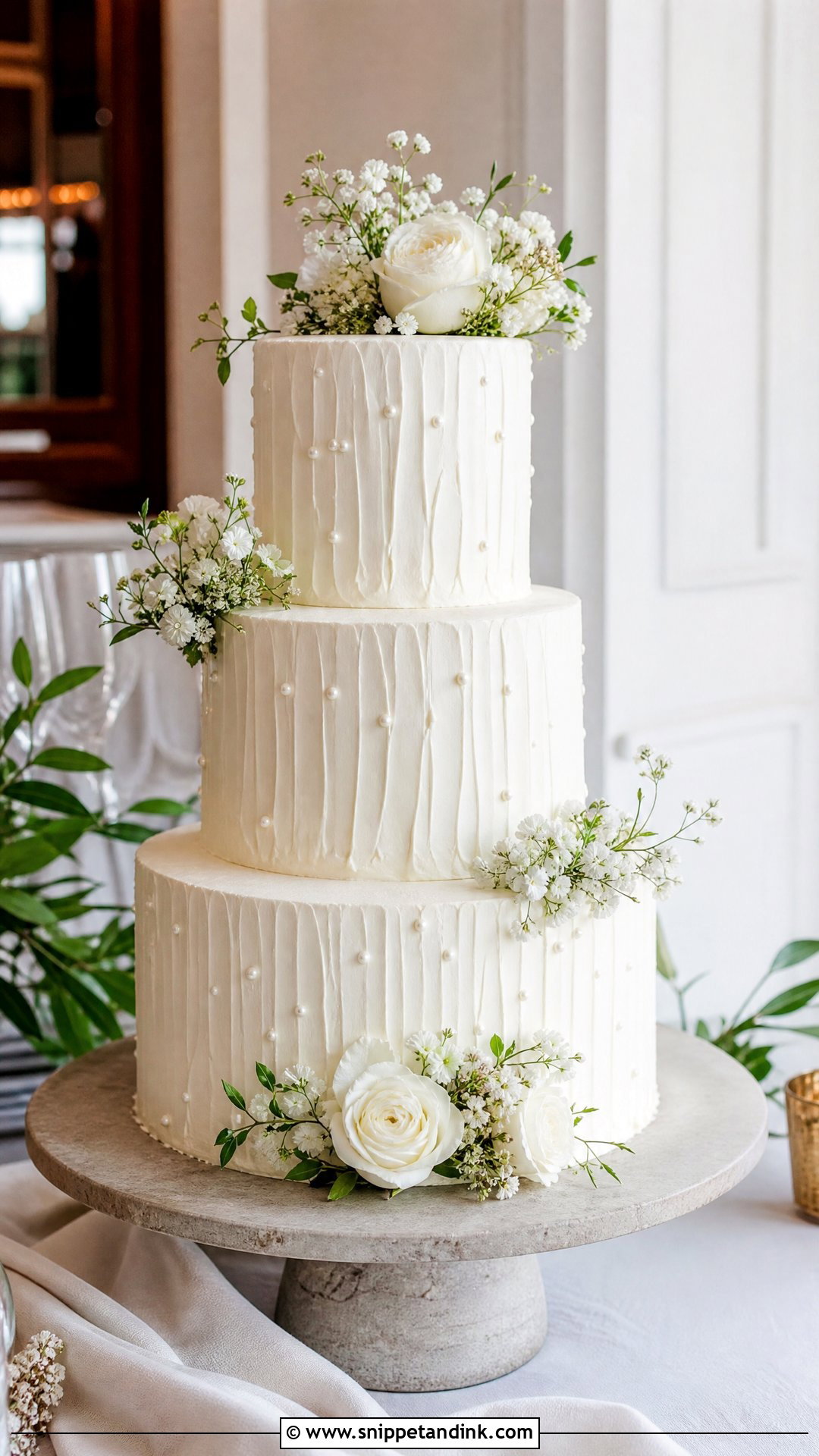
Texture makes an ivory cake look rich without adding a single flower. Waves, vertical combed lines, a plaster-style finish or palette-knife strokes all catch light and photograph with depth. I like texture for couples who find a plain white cake cold. It’s also more forgiving than a mirror-smooth finish, which helps in humid weather when buttercream starts to sweat. Keep the color soft and let the texture lead, adding a few flowers, small leaves or pearls only if the design needs them.
7. Vintage Lambeth Wedding Cake
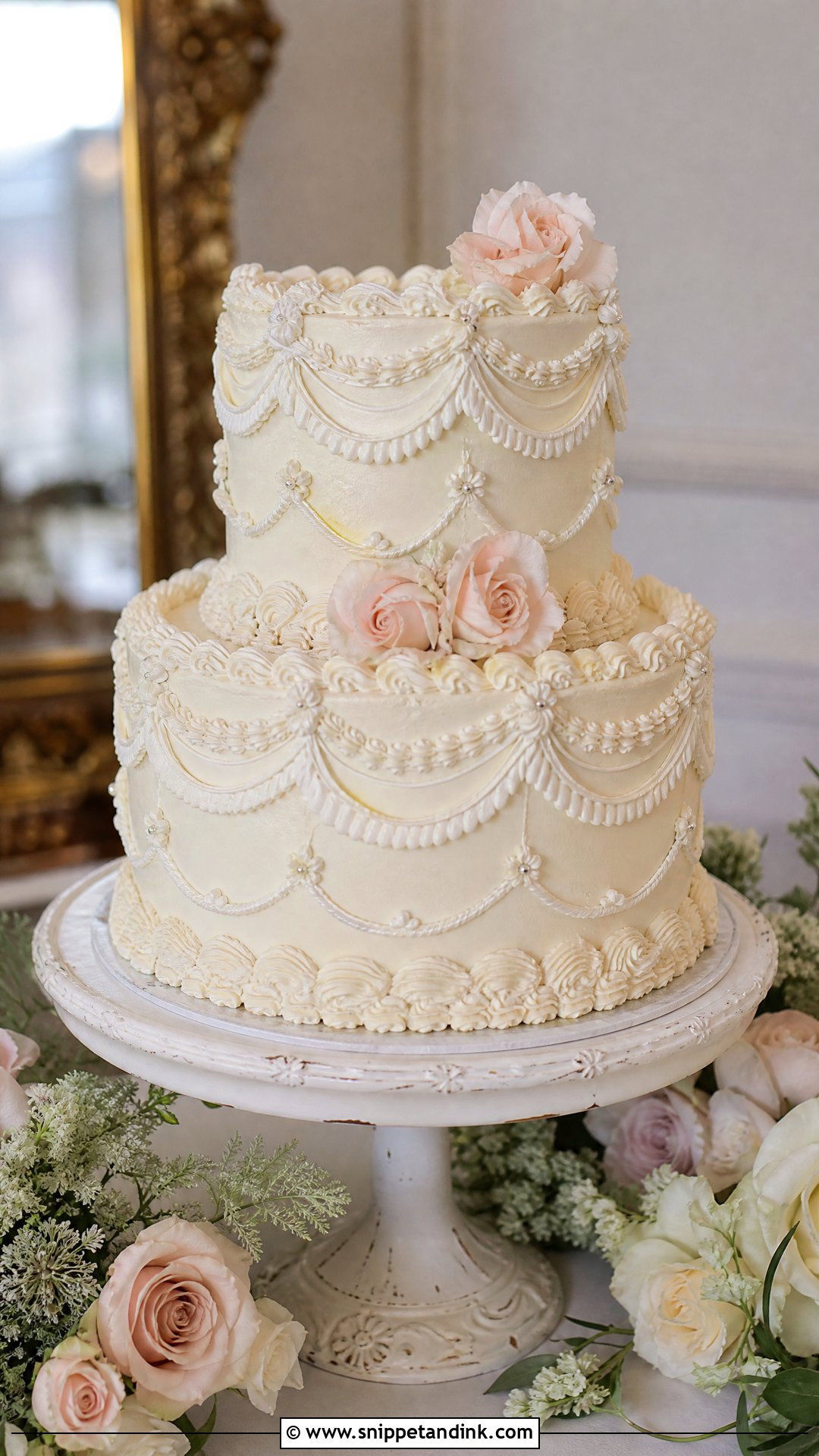
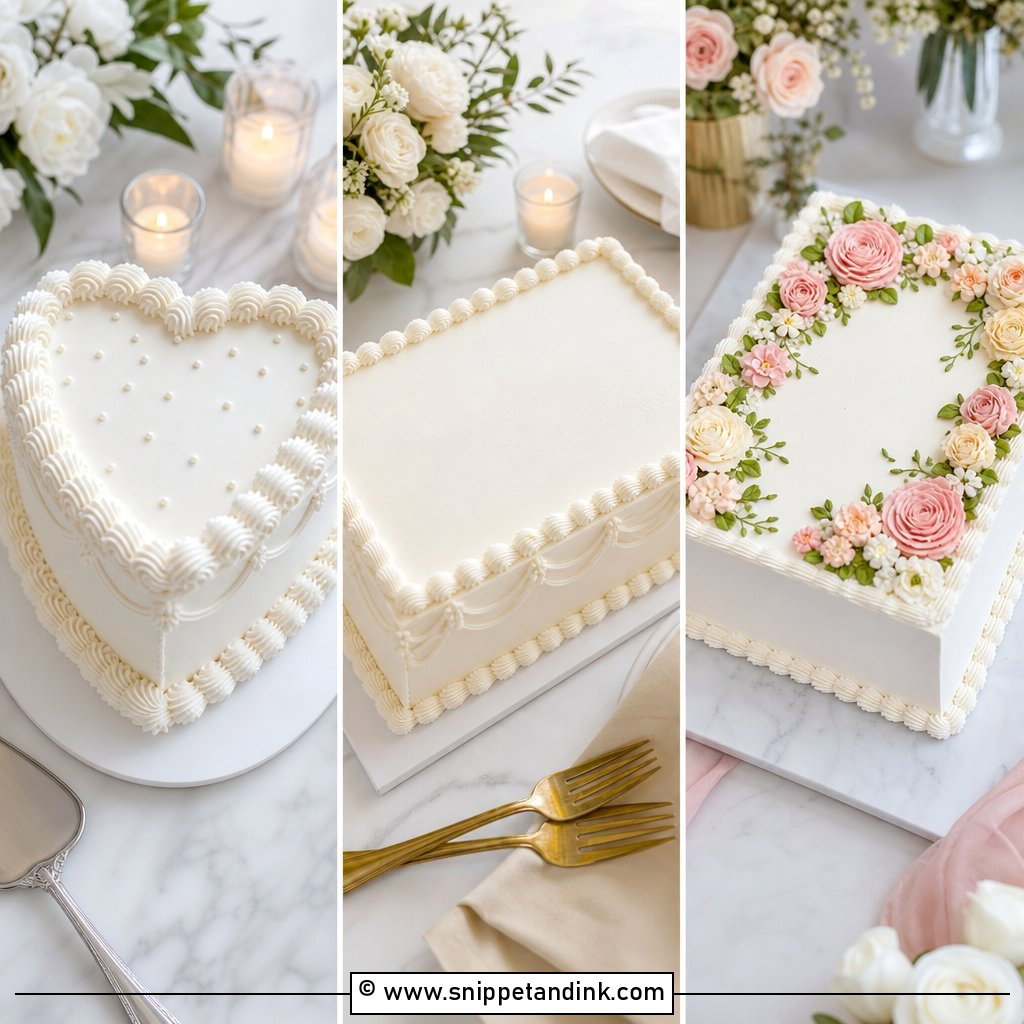
Lambeth piping is layered borders, swags, shells and drop strings built up in tiers of icing, and it takes real time, so it often costs more than its soft color suggests. In white or ivory it reads as heirloom; with butter-yellow, blush or pale blue accents it gets a little playful. I keep the palette controlled and let the piping do the work. A two-tier or three-tier Lambeth cake looks good from every angle, which matters if guests walk all the way around the table. The heavier piping needs a firm buttercream, so it’s not one I’d put outside on a hot afternoon.
8. Minimalist Wedding Cake
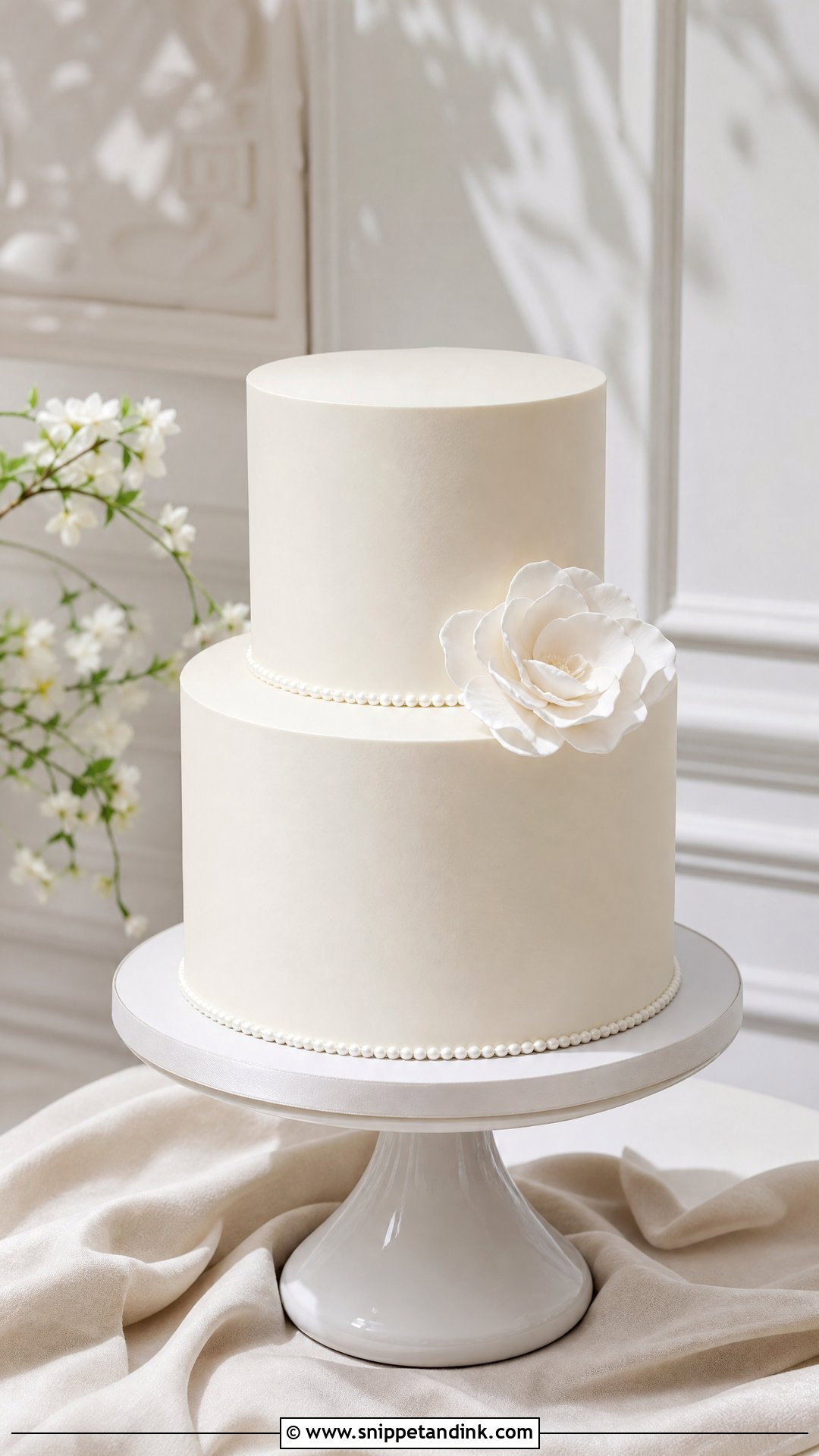
Minimalist cakes look easy and are the opposite. With only one ribbon, a single sugar flower or a few pearl dots, there is nowhere to hide a bulge or a sloping tier. I’m strict about precision here: level layers, sharp edges, and tiers centered exactly. It suits modern venues, small weddings and couples who like quiet design. If you’re comparing bakers, ask to see an undecorated cake in their portfolio, since that shows their finishing better than any floral piece.
9. Square Wedding Cake
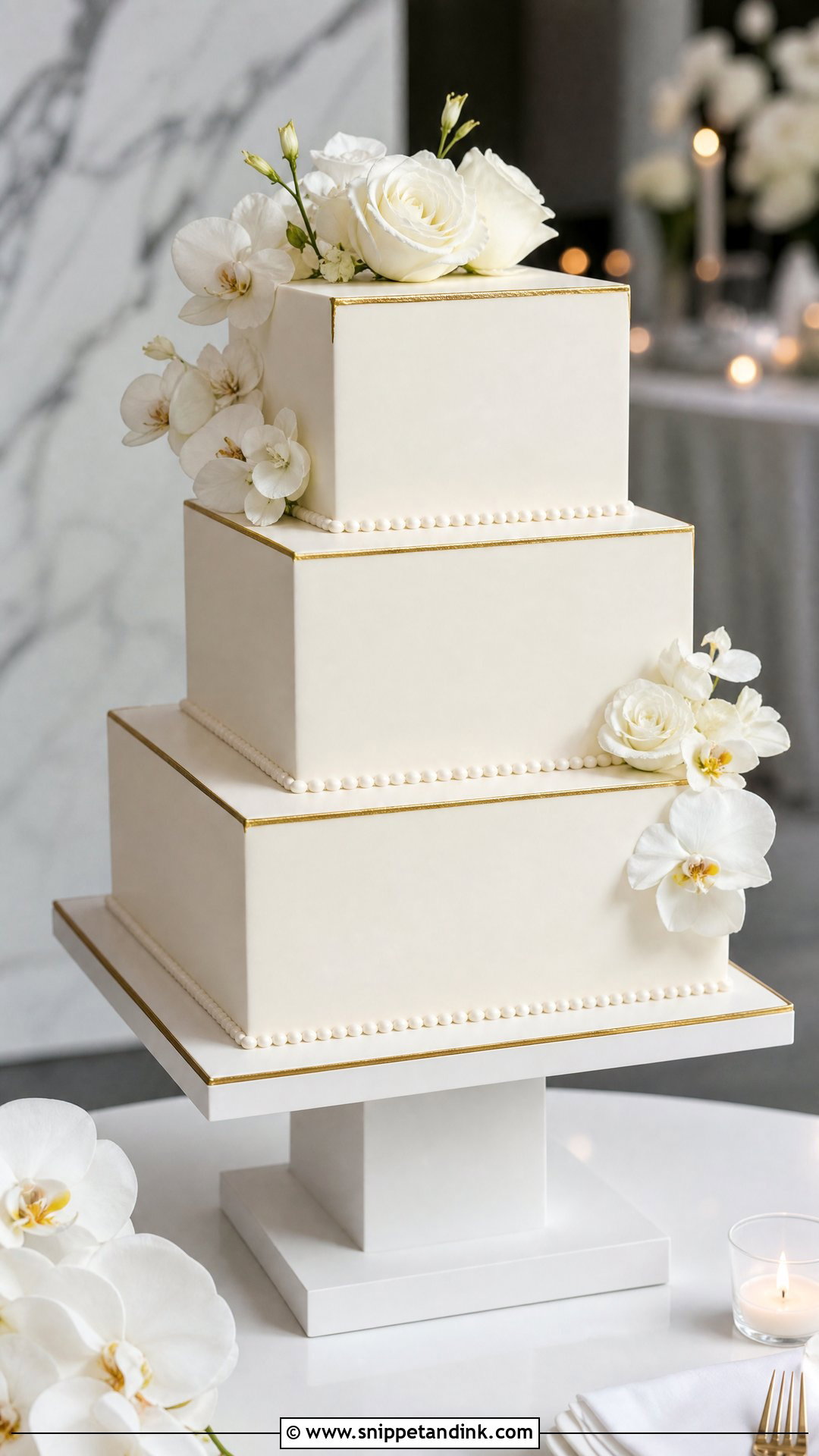
Square tiers give a cake an architectural shape. The corners are the hard part: buttercream wants to round them off, so square cakes are often finished in fondant or a very firm, chilled buttercream. Gold edging, crisp piping or flowers placed at the corners all suit the form. It fits contemporary venues, gallery-style receptions and black-tie weddings with simple decor. One cutting note: square tiers yield more servings than round tiers of the same width, which helps with larger guest lists.
10. Tall Wedding Cake
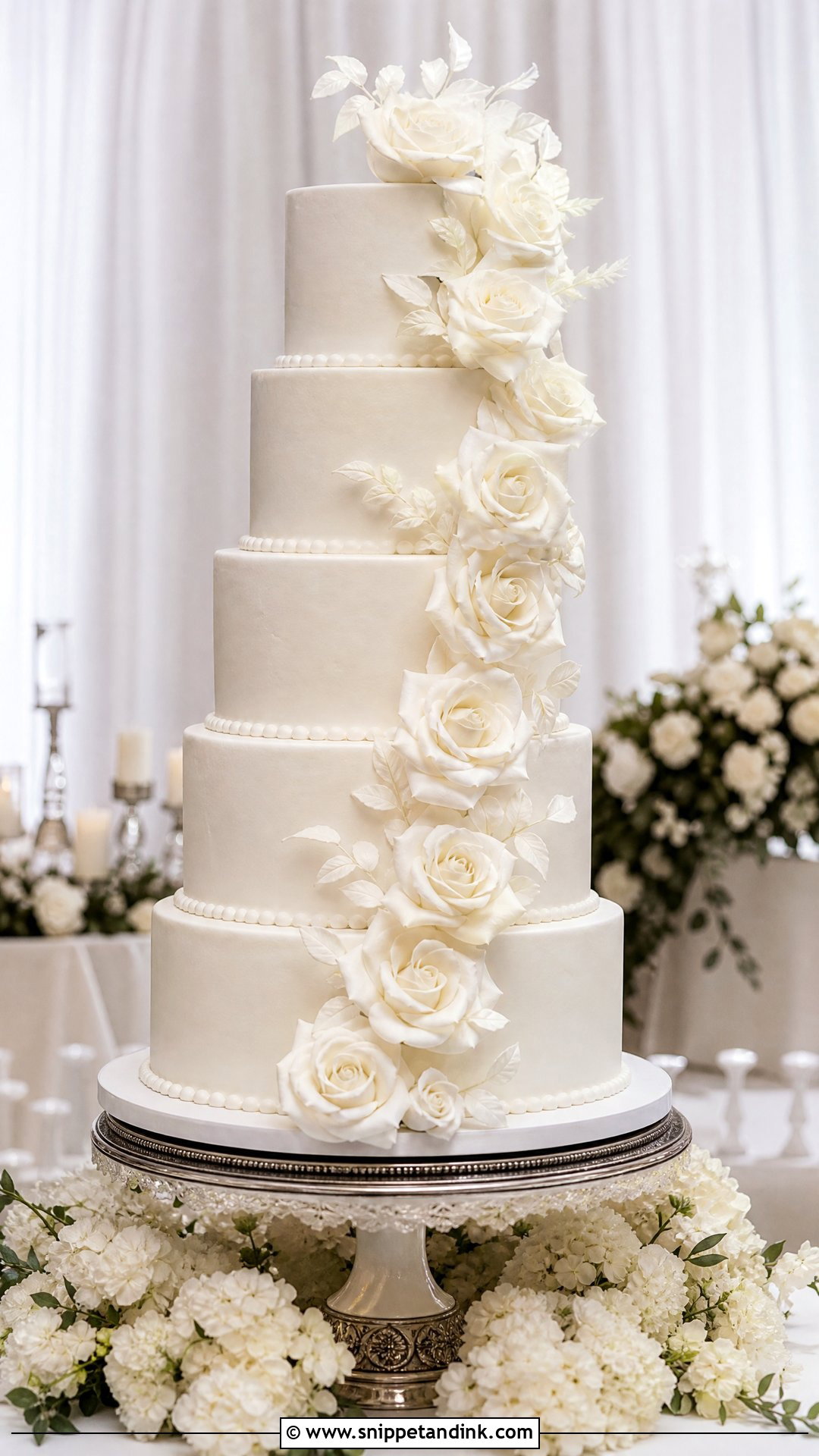
Height gives a cake presence in a big room with high ceilings. It can come from more tiers, extended (taller) tiers, or separators dressed with flowers. Every tall cake needs internal structure: dowels in each tier and a central dowel through the whole stack, especially if it travels assembled. I keep the design consistent from top to bottom, repeating one or two details so it doesn’t look top-heavy. Put it on a raised stand with candles and linens around the base, and check the floor is level before anyone sets it down.
11. Two Tier Wedding Cake
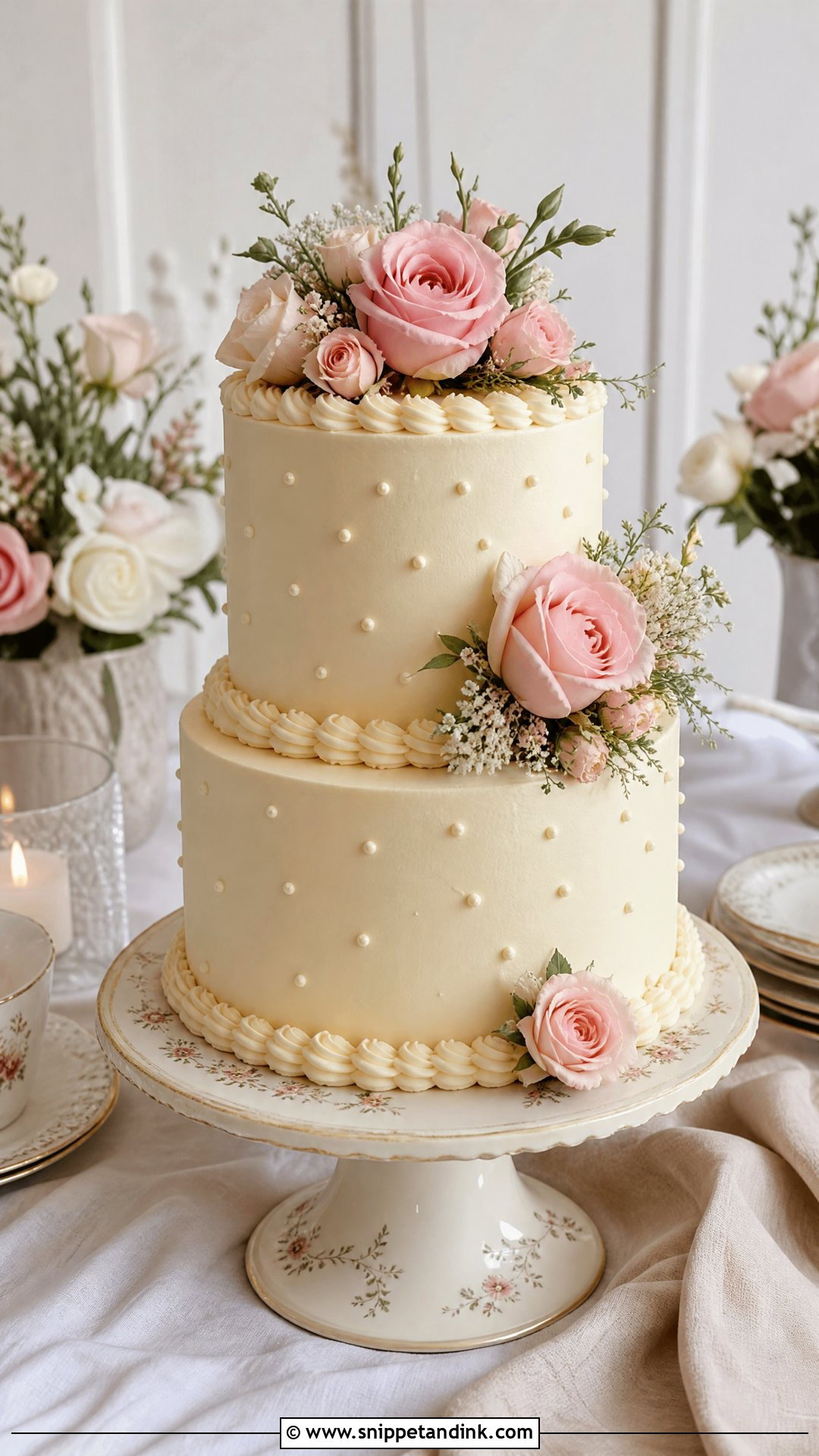
A two tier wedding cake suits intimate weddings, small receptions, or a couple who want a cutting cake alongside a dessert table. It won’t feed a large crowd, so the rest of the servings come from other sweets or a plain kitchen cake. Extended tiers or a statement stand make it look taller. Keep the decoration in proportion: a small floral cluster, a ribbon or light texture rather than a large cascade that swamps it.
12. Three Tier Wedding Cake
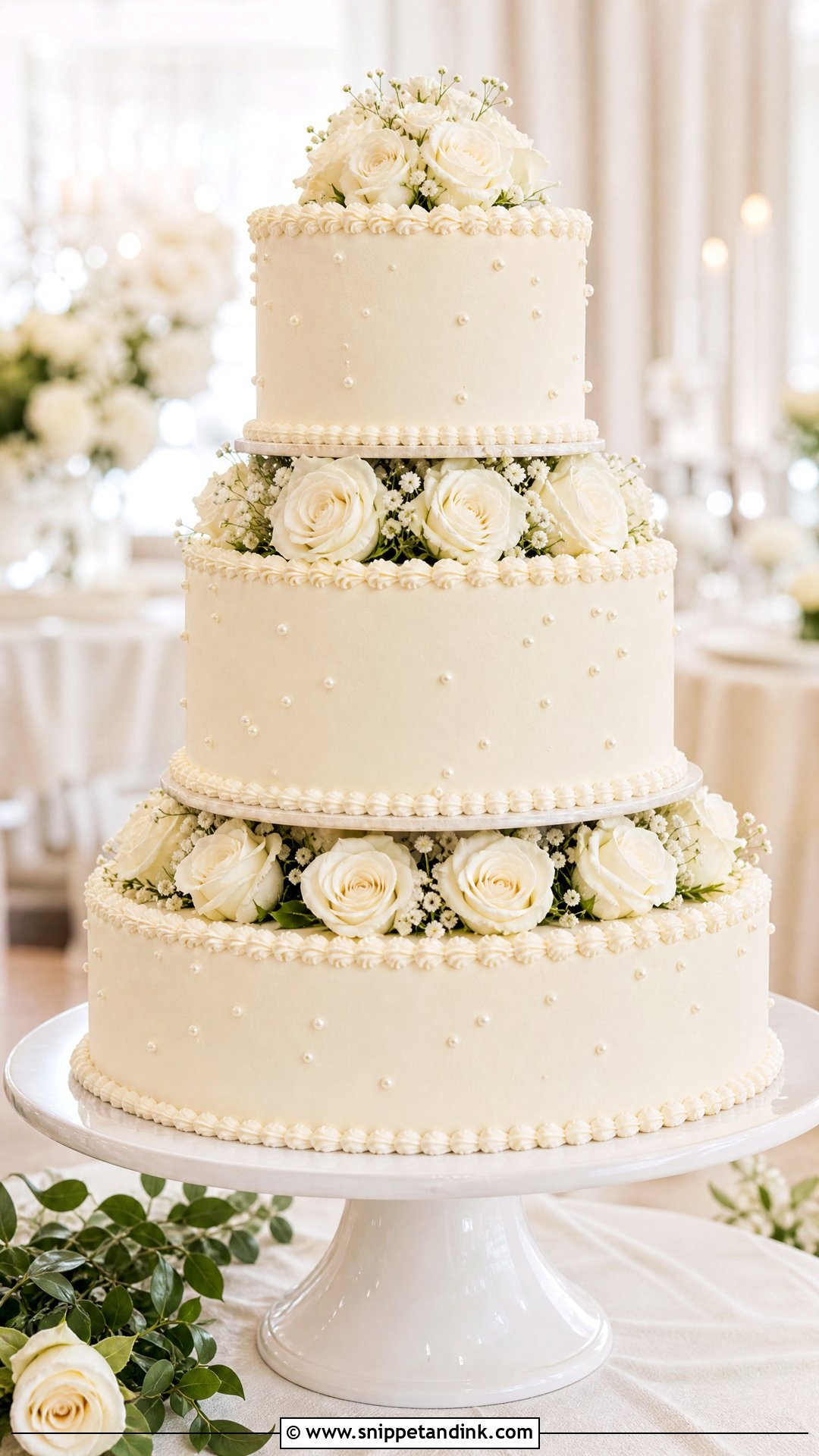
Three tiers is the size I design most. It has the traditional height without taking over the room, and it feeds a medium guest list on its own. It fits classic, modern, garden and romantic styles. Each tier can share one finish for a clean look, or one tier can carry texture, pearls or piping. Three tiers also means three flavors if you like, though I’d suggest keeping the bottom tier the most widely liked flavor, since it holds the most servings.
13. Floral Cascade Wedding Cake
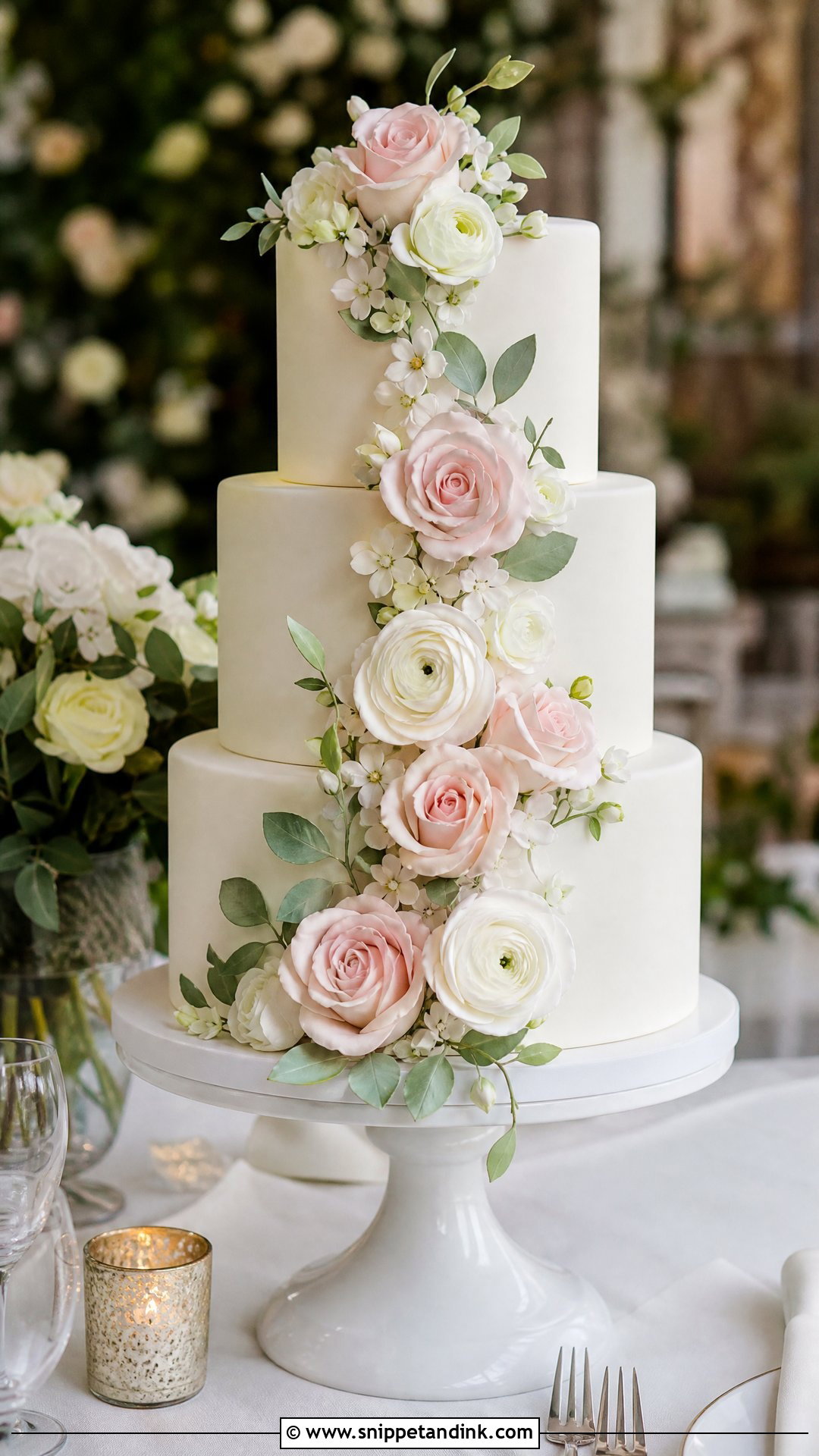
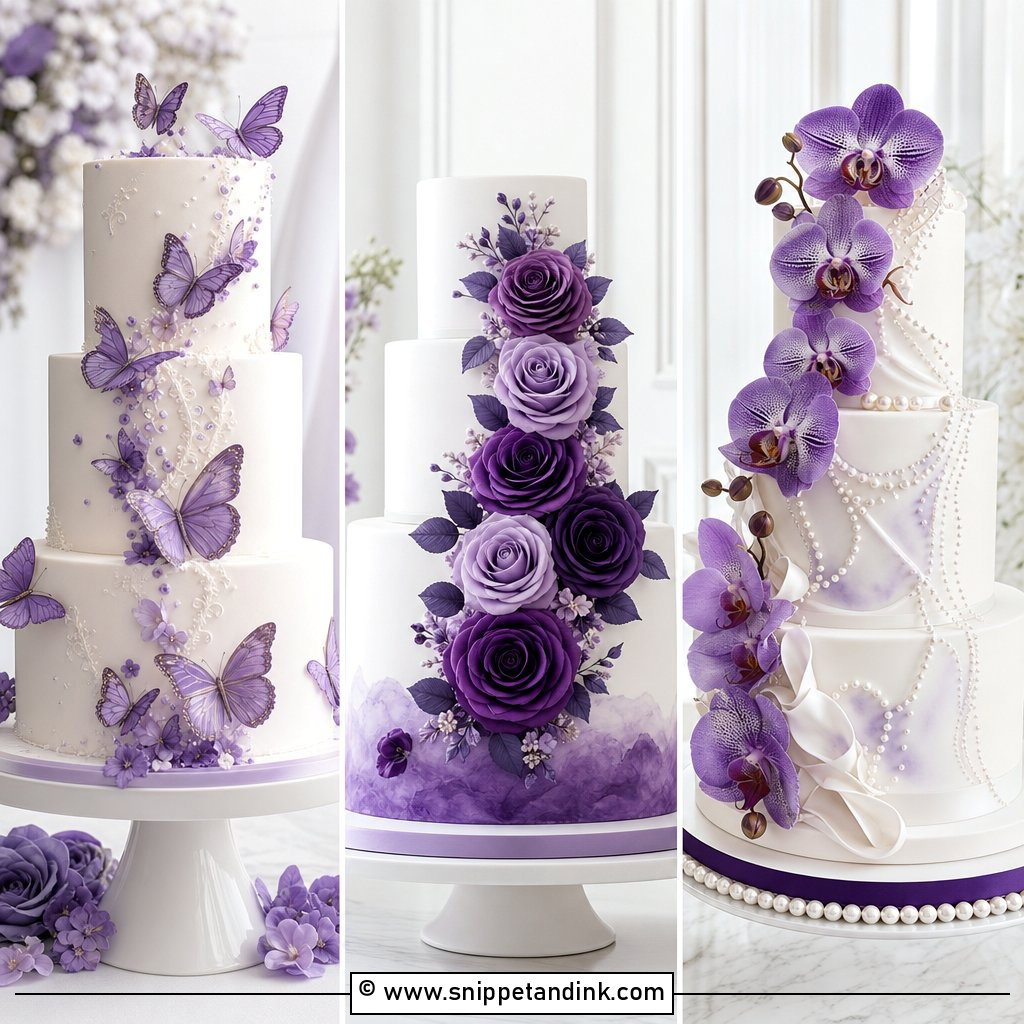
A cascade draws the eye from the top tier down one side and gives the cake a soft curve. It can be fresh flowers, sugar flowers or a mix of both. Fresh cascades are placed on the day, usually by the florist, and they need food-safe varieties and stems kept out of the sponge. Sugar cascades are made weeks ahead and don’t wilt. Keep the cake base simple so the flowers stay the focus. White, ivory, blush and muted pastels look the most graceful.
14. Pressed Flower Wedding Cake
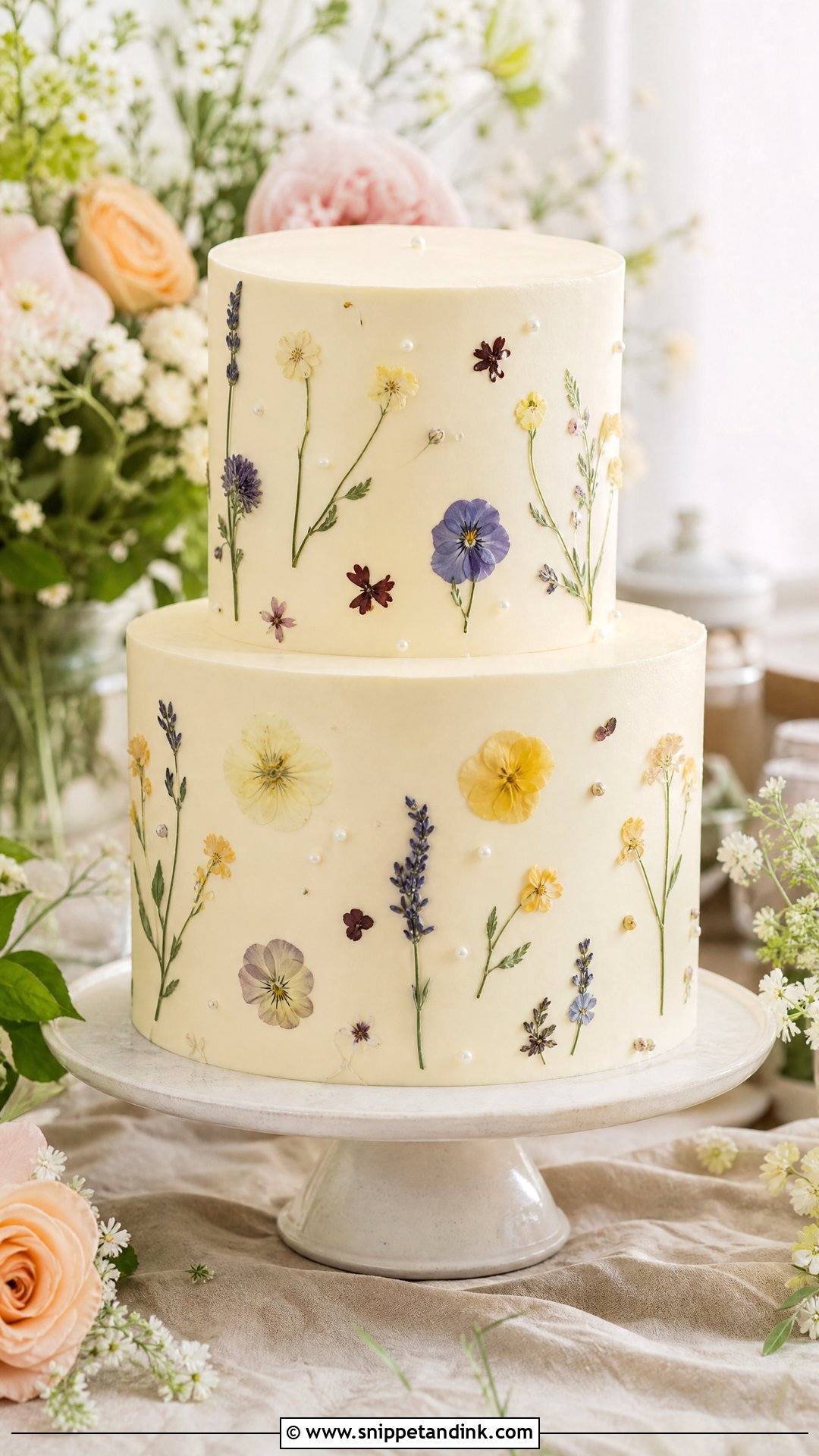
Pressed flowers lie flat against the frosting, making a botanical pattern rather than a sculpture. They need edible varieties, such as pansies, violas, cornflower petals or small herbs, pressed and dried well before the wedding. I press them onto chilled buttercream or fondant so they stick without bleeding color. Soft palettes of ivory, lavender, pale yellow and blush keep it refined. Leave open space between them; a fully covered cake loses the delicate look. Spring and summer garden receptions suit it best.

15. Sugar Flower Wedding Cake
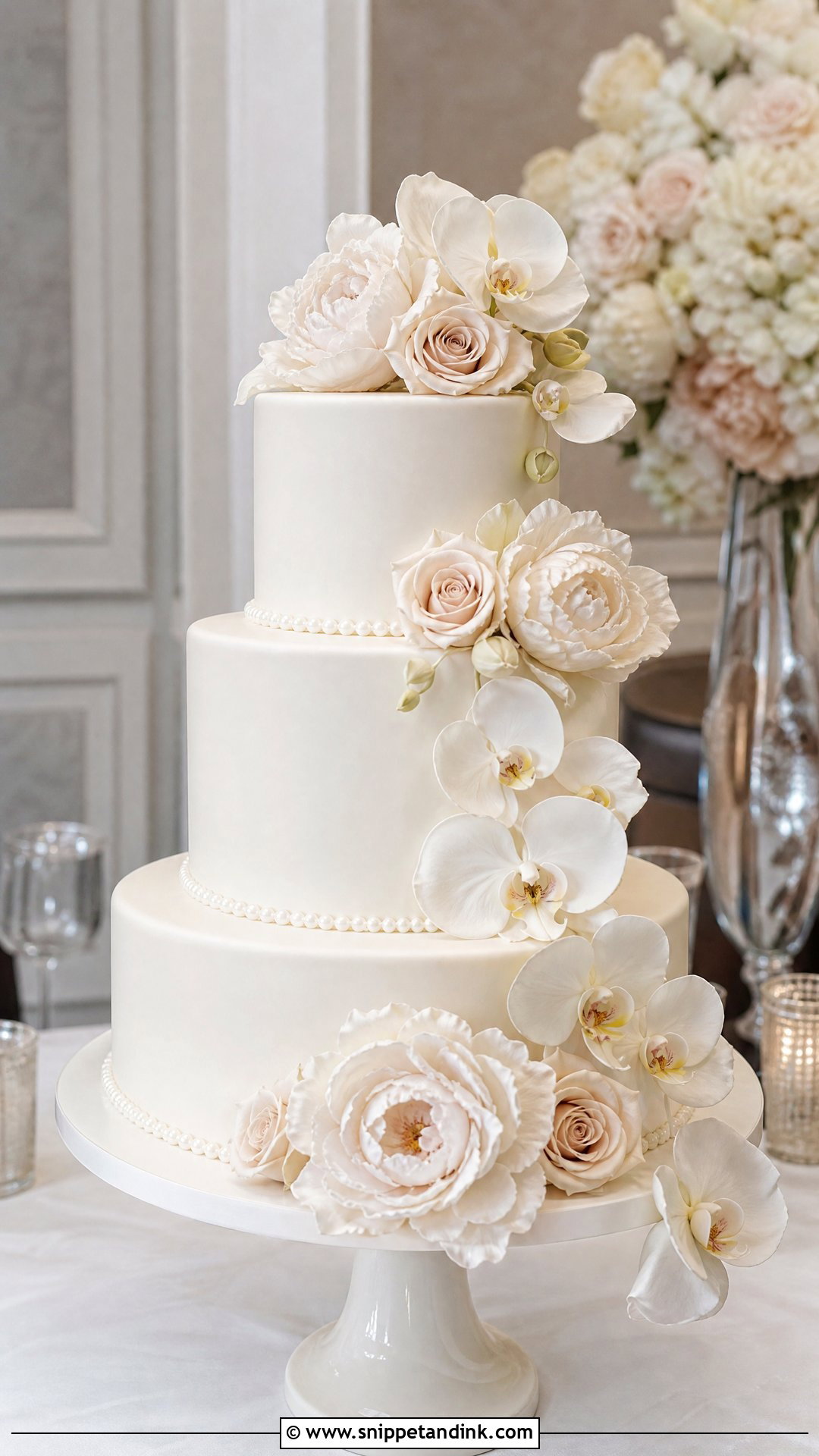
Sugar flowers let you have peonies in October or a flower that isn’t food-safe, made in your exact colors. Each petal is rolled thin, shaped and dried, so they take days to make and are priced accordingly. They hold their shape through a long reception and many couples keep the top piece as a keepsake. I’d rather make three detailed sugar roses than a dozen basic ones. On a smooth ivory cake, realistic sugar blooms look like a centerpiece in their own right.
16. Ruffle Wedding Cake
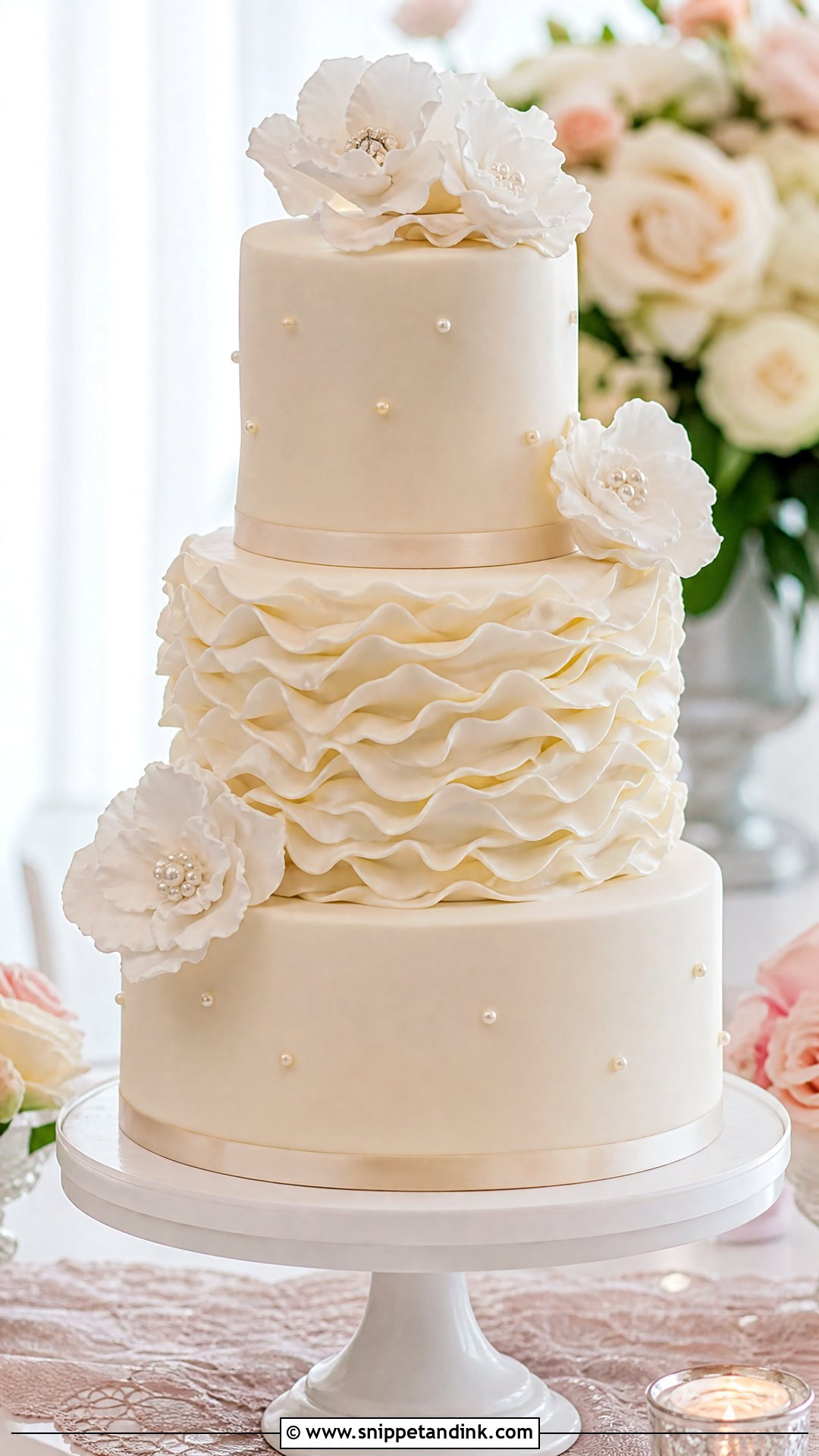
Ruffles can be fondant, wafer paper or piped buttercream, and each behaves differently. Fondant ruffles hold sharp folds; wafer paper is light and airy but softens in humidity; buttercream ruffles are the softest and the most delicious. Tight ruffles look couture, loose ones romantic. In white, ivory or pale blush, the folds create their own shadows. I usually put ruffles on one tier and keep the rest smooth, or make the whole cake one color so it doesn’t look fussy.
17. Bow Wedding Cake
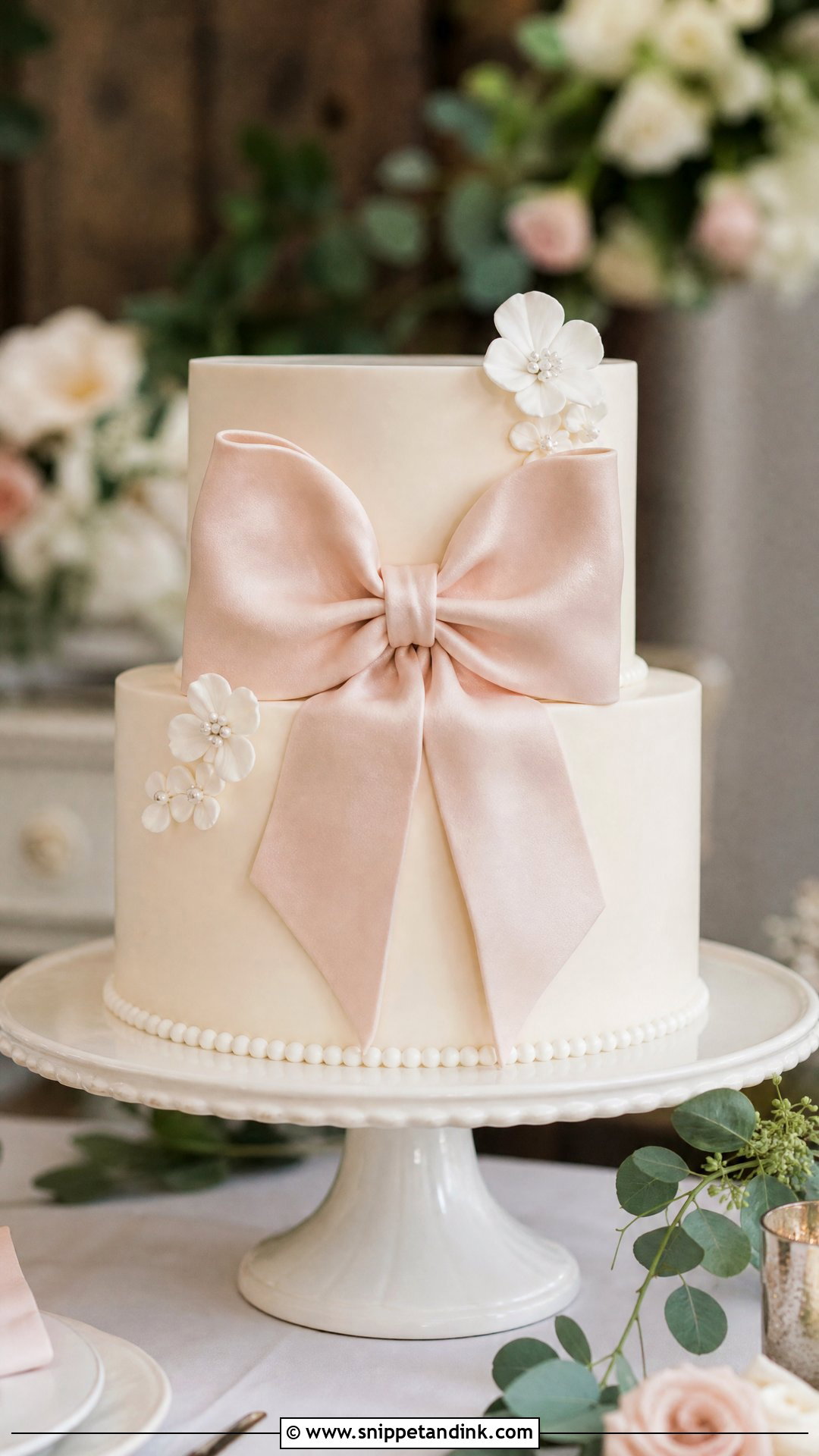
Bows can turn childish quickly, so I use one: a large fondant bow on one tier, a thin sugar ribbon, or a row of small piped bows. A big fondant bow is made in advance and needs to dry so its loops hold their shape, which is why it’s built well before delivery. Smooth frosting and a soft palette of ivory, white, blush or pale blue keep it grown-up. Let the bow be the main decoration and add pearls or flowers only if they support it.
18. Monogram Wedding Cake
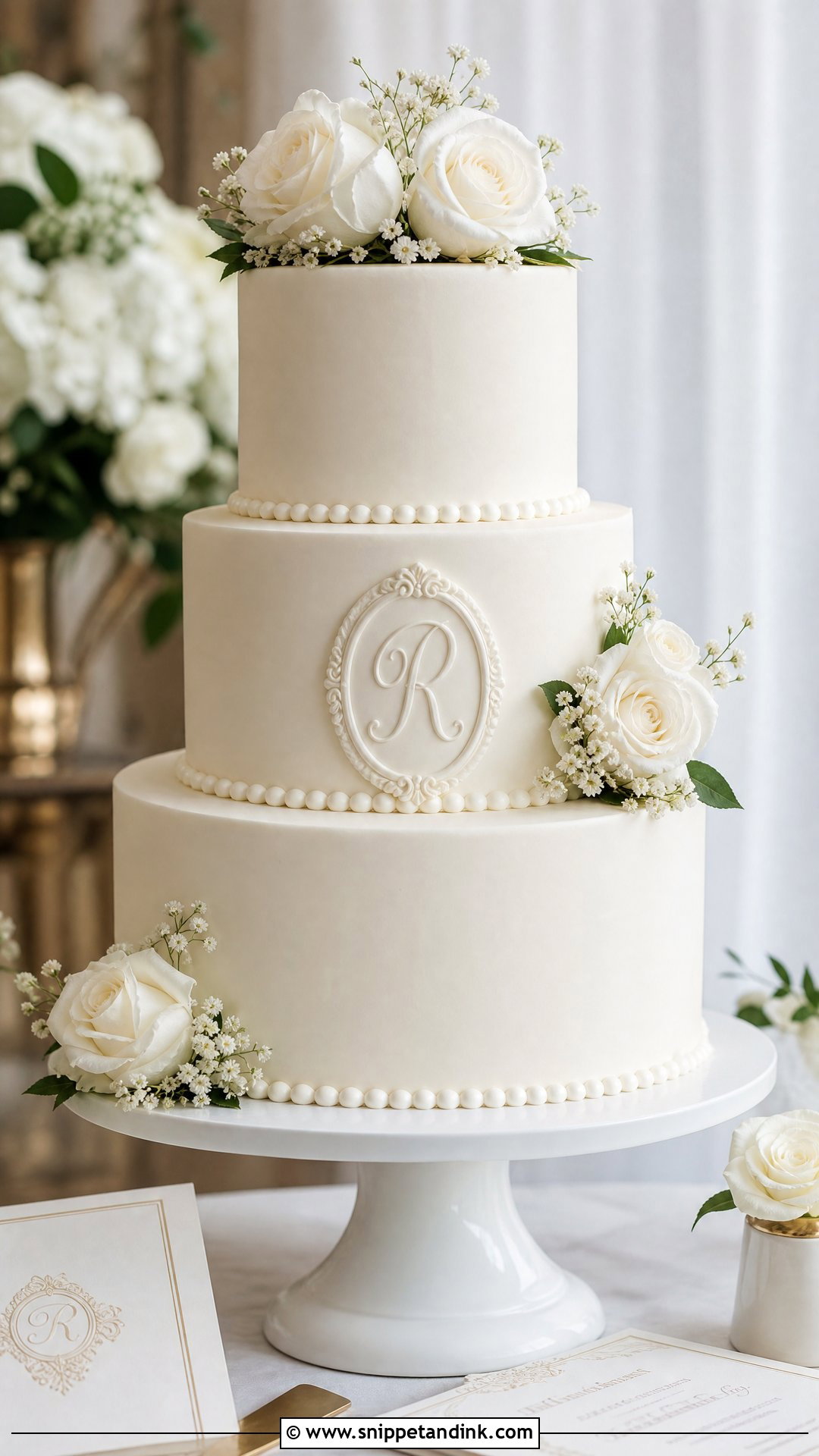
A monogram wedding cake personalizes the cake without turning it into a theme. Initials can be piped, hand-painted, embossed or set on a small edible plaque. I place the monogram once, on one tier, at the side facing the room and the photographer. Match the letterforms to your invitation so the stationery and cake read as one design; I usually ask couples to send me the invitation file. It suits classic weddings and hotel receptions.
19. Marble Wedding Cake
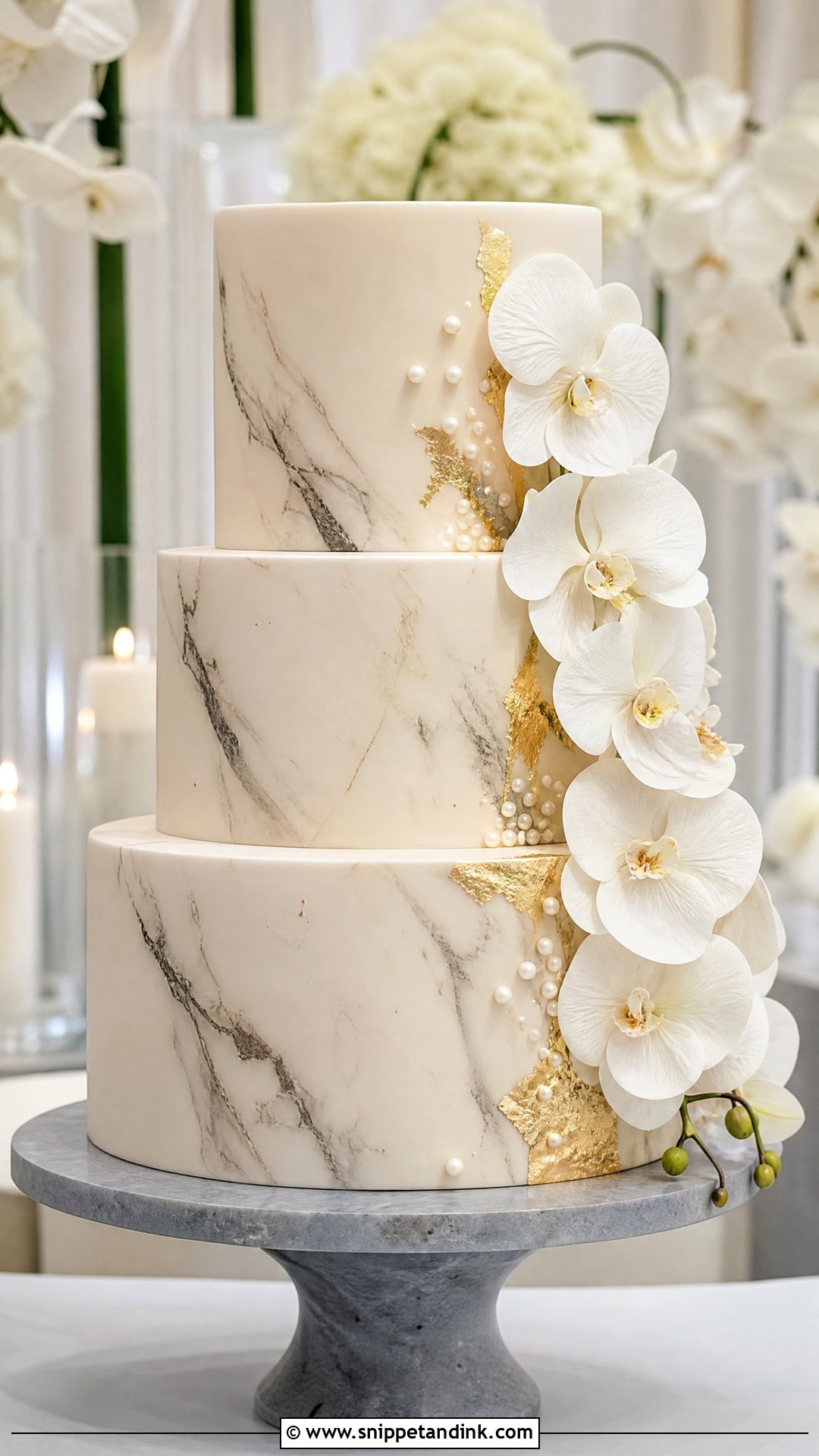
Marbling looks like soft stone, with veins in grey, ivory, beige or pale gold. In fondant, I knead in streaks of color and roll it out so the veins look natural; buttercream marble is possible but softer and less defined. Gold leaf, white flowers or sugar orchids sit well against it. Marble on one or two tiers is enough; a whole marble cake can look like a kitchen counter. It suits modern receptions with clean, pale decor.



20. Black And White Wedding Cake
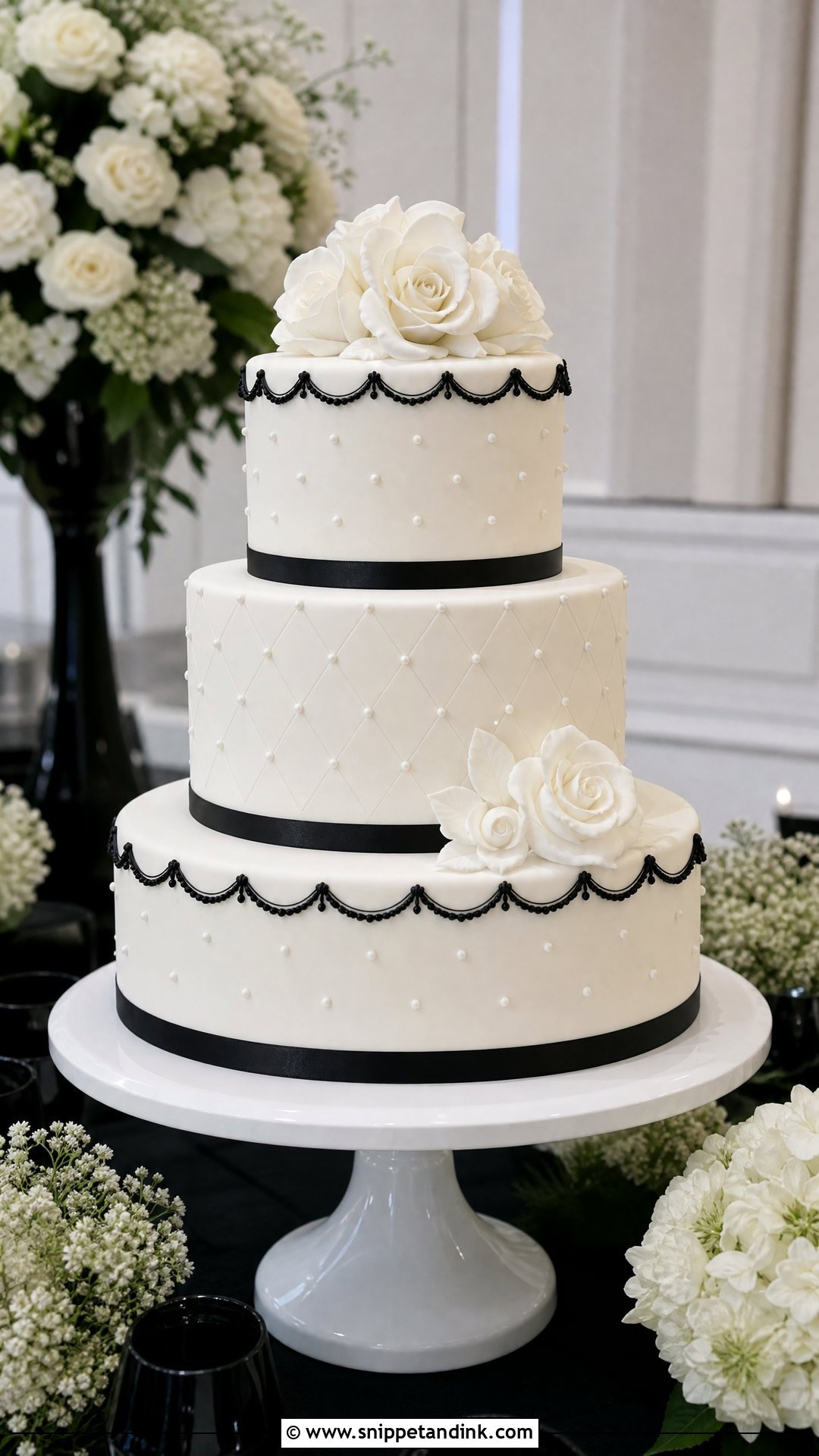
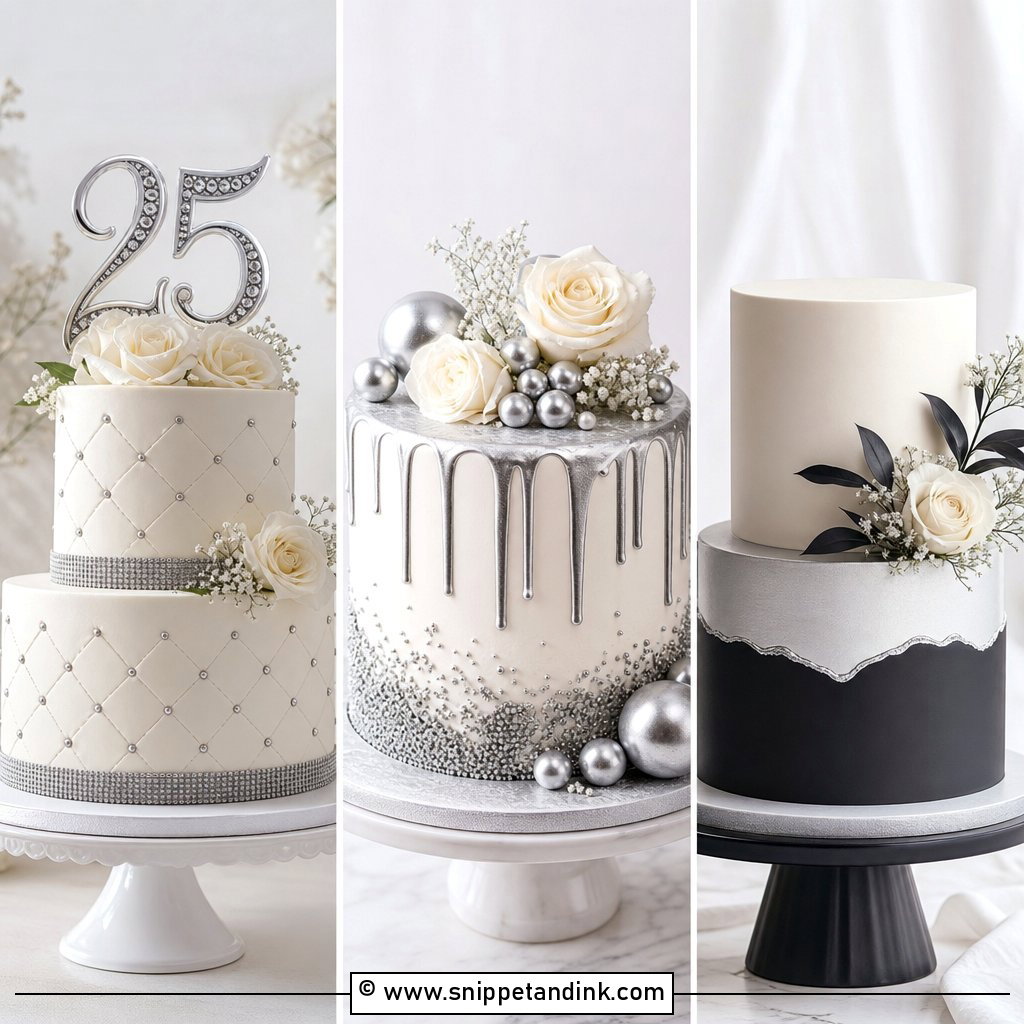
Black and white works when black is the accent. A fully black cake tastes and looks heavier, and black coloring can stain mouths and teeth, which shows in photos. I use thin black ribbon, fine piping, painted edges or a single black tier against white or ivory. Add white flowers, pearls or a geometric detail to soften the contrast. It suits evening receptions, modern venues and formal celebrations.
21. Blush Wedding Cake
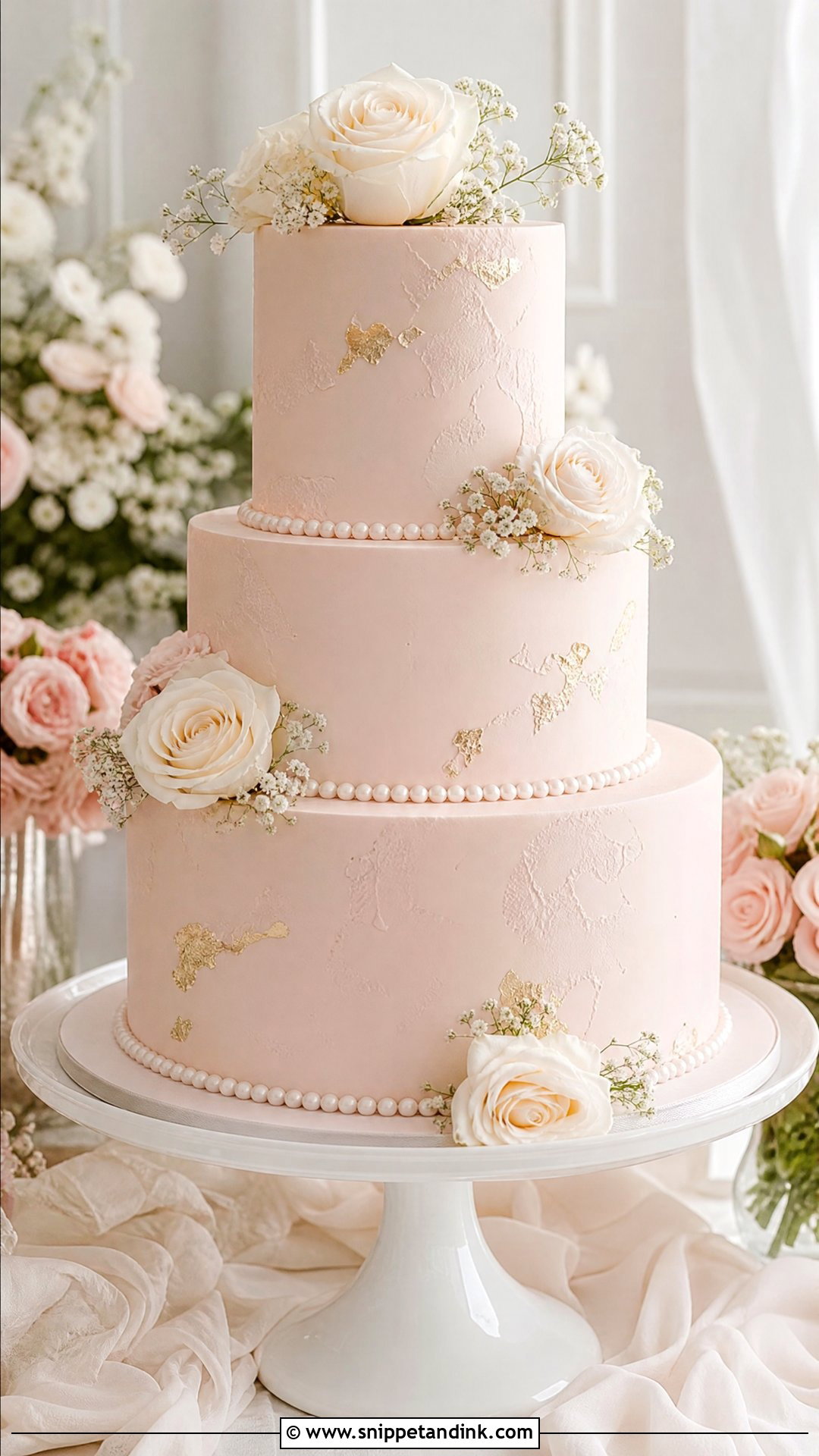
Blush adds warmth while staying refined, as long as the pink stays muted. Pale blush can look almost like ivory with a tint; a deeper shade has more presence. I mix it carefully, because pink coloring can fade under strong light during a long display. It pairs with ivory tiers, gold accents, pearls, garden roses and greenery. Smooth, textured, floral or ruffled finishes all work, and the color coordinates easily with bridesmaid dresses and table linens.
22. Blue Wedding Cake
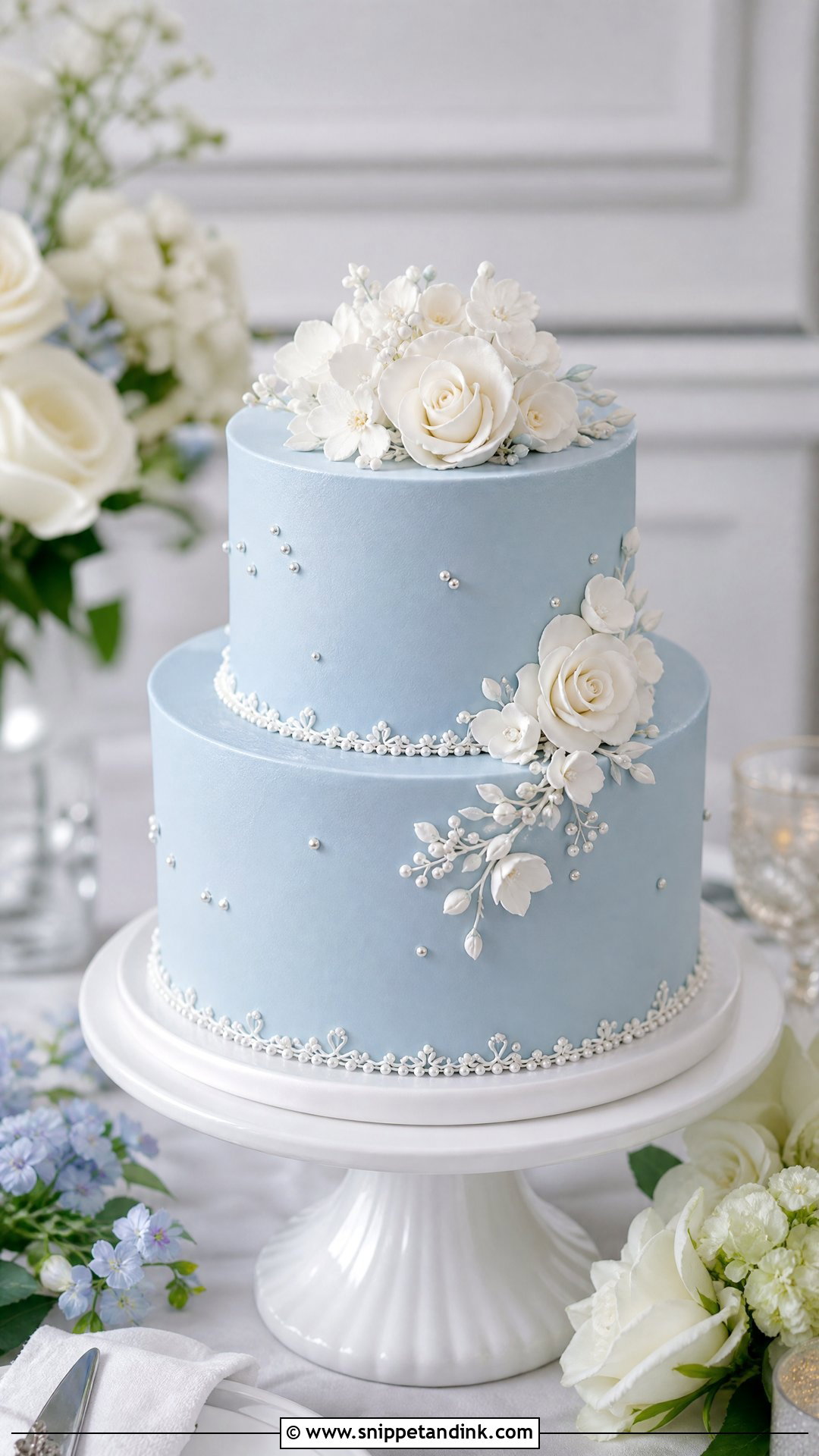
Blue cakes look calm when the shade is dusty, powder or pale slate. Getting a soft blue in buttercream is harder than it sounds, because butter is yellow and turns blue tints greenish; I correct with a touch of violet. Pair it with white flowers, silver details, pearls or fine piping, or alternate a blue tier with ivory ones. It suits coastal weddings, garden receptions and ballrooms. Avoid saturated blues, which look artificial under reception lights.
23. Green Wedding Cake
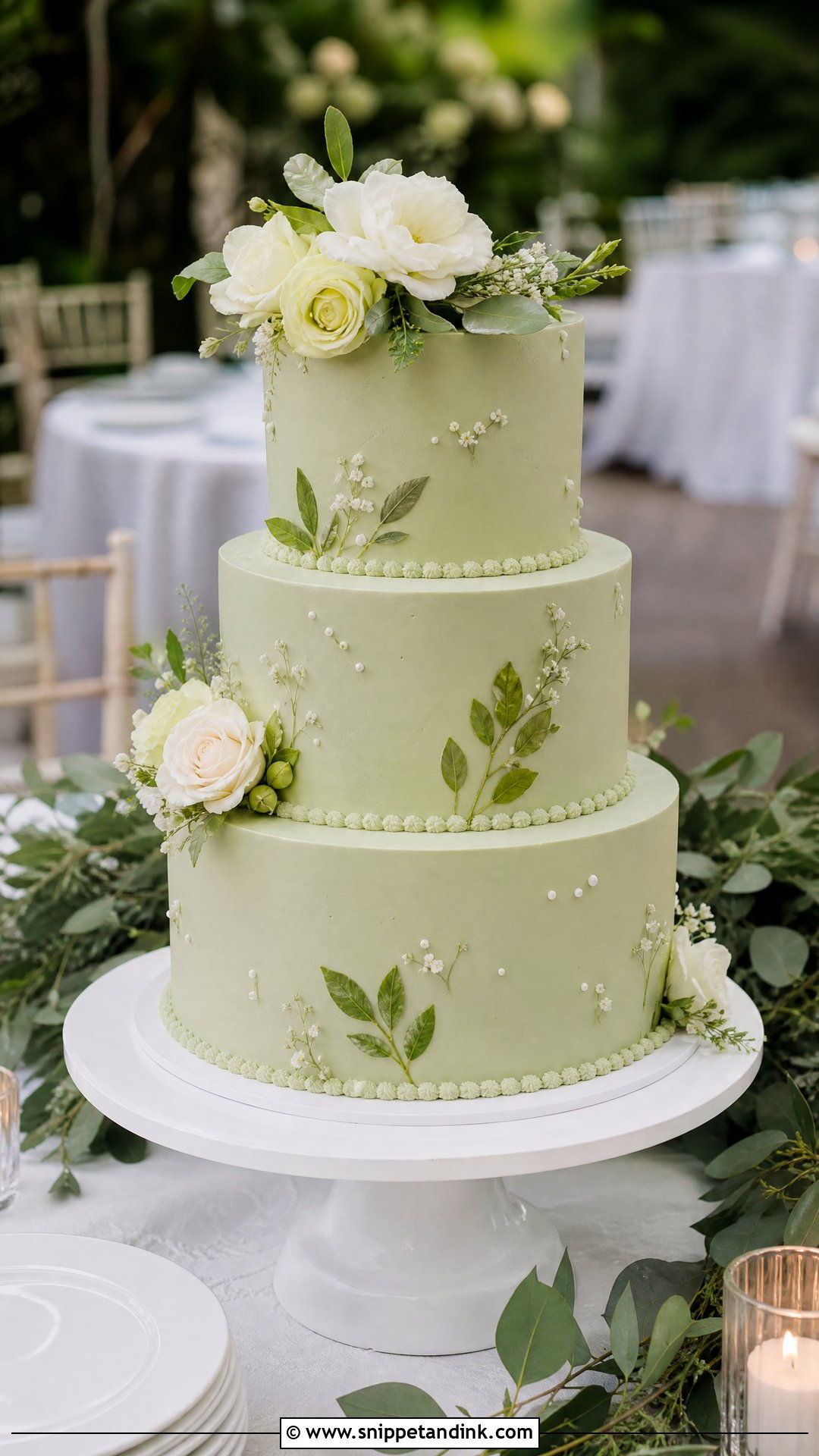
Green ranges from sage and eucalyptus to pistachio and olive, and the muted tones look natural beside white flowers, linen and warm metallics. A green cake can be smooth and minimal, textured, or decorated with pressed leaves and small blooms. Garden venues and outdoor receptions suit it. Pistachio is a good choice if you’d like the color to come from the flavor as well, though natural pistachio tints are softer than dyed green. A sage cake with ivory flowers and a few pearls looks fresh without trying.
24. Single Tier Wedding Cake
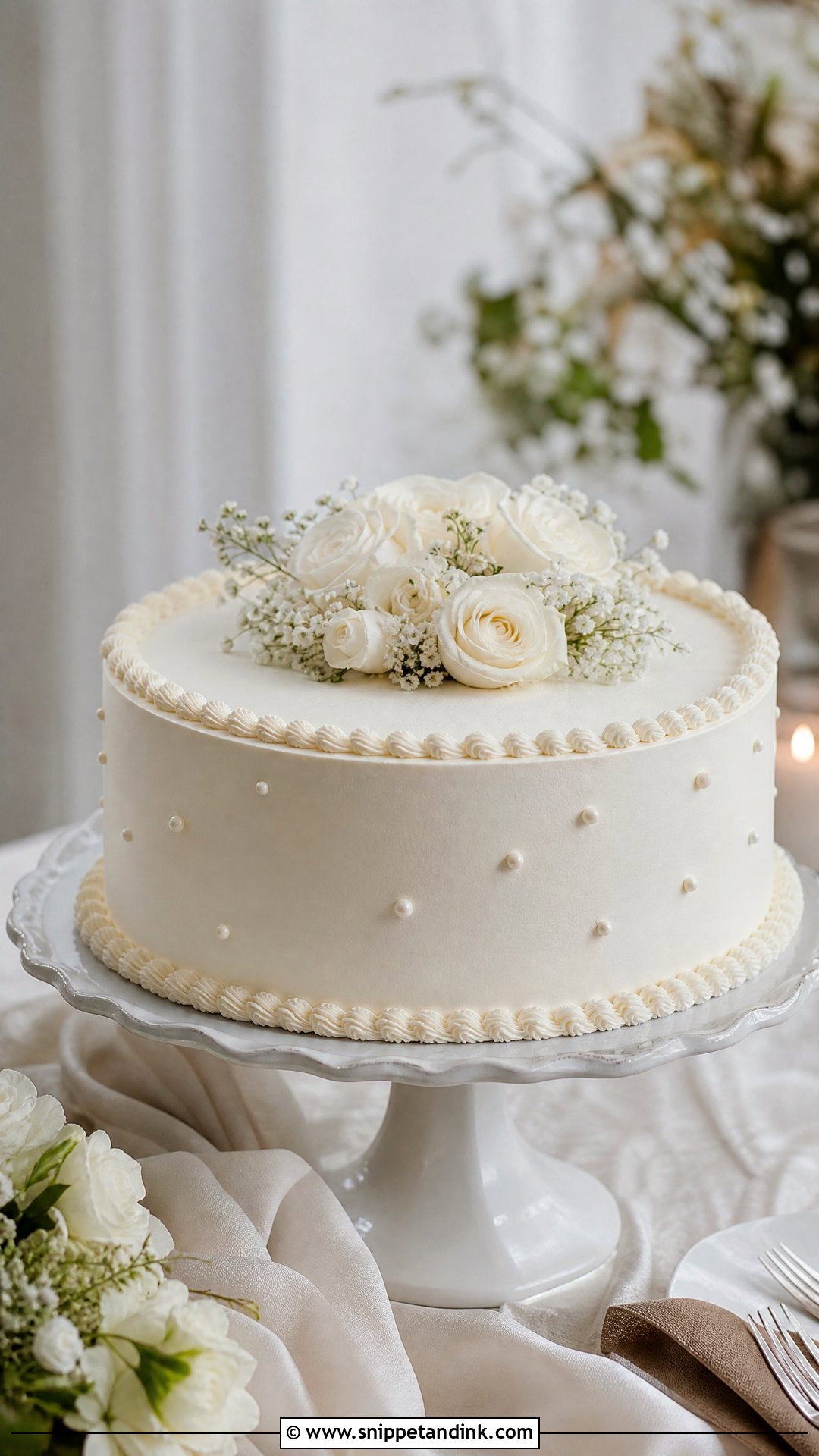
A single tier wedding cake works when the proportions are right. Wide, low cakes are in favor because they have presence without a stack of tiers. It fits micro weddings, courthouse celebrations and receptions with a larger dessert table. I finish it with smooth buttercream, soft piping, flowers or fruit, and often suggest a statement cake stand for height. One tier is also easy to transport and set up, which makes it a sensible choice for a hot or remote venue.
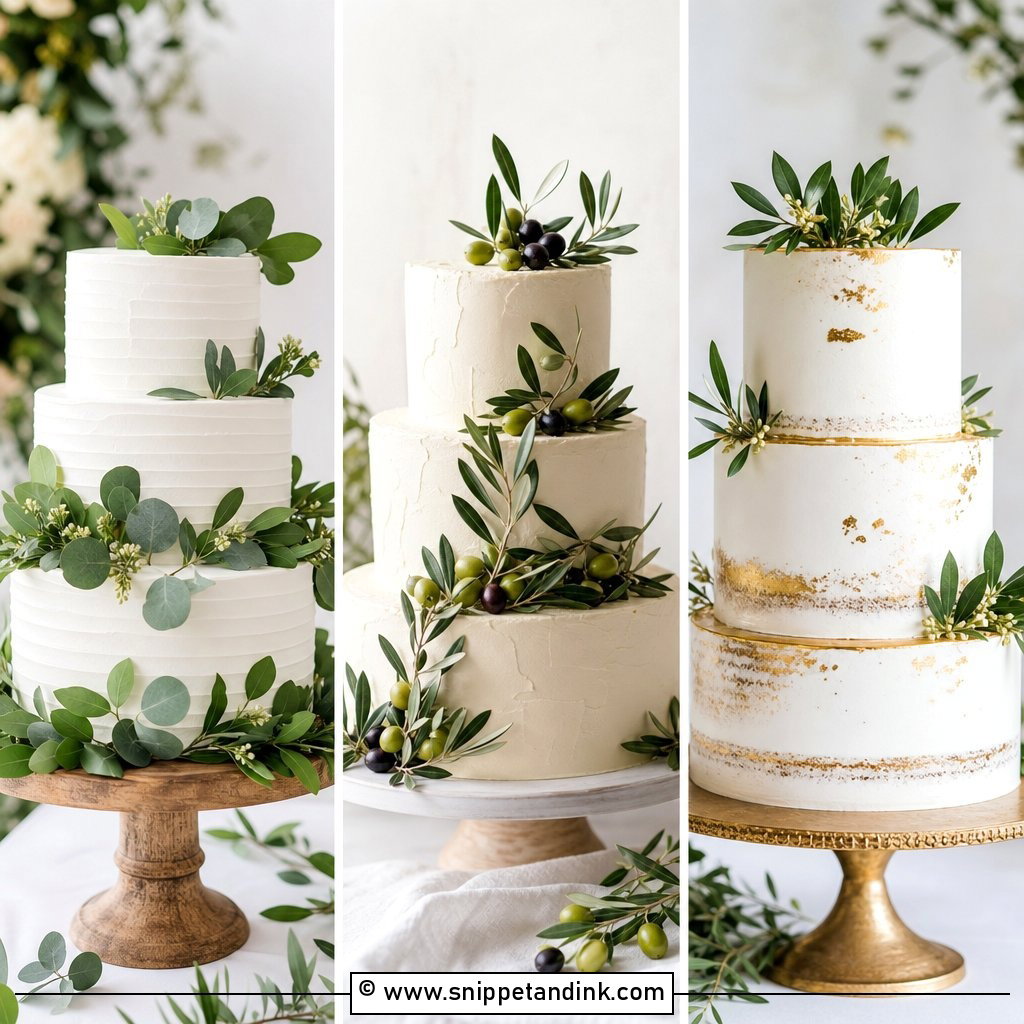
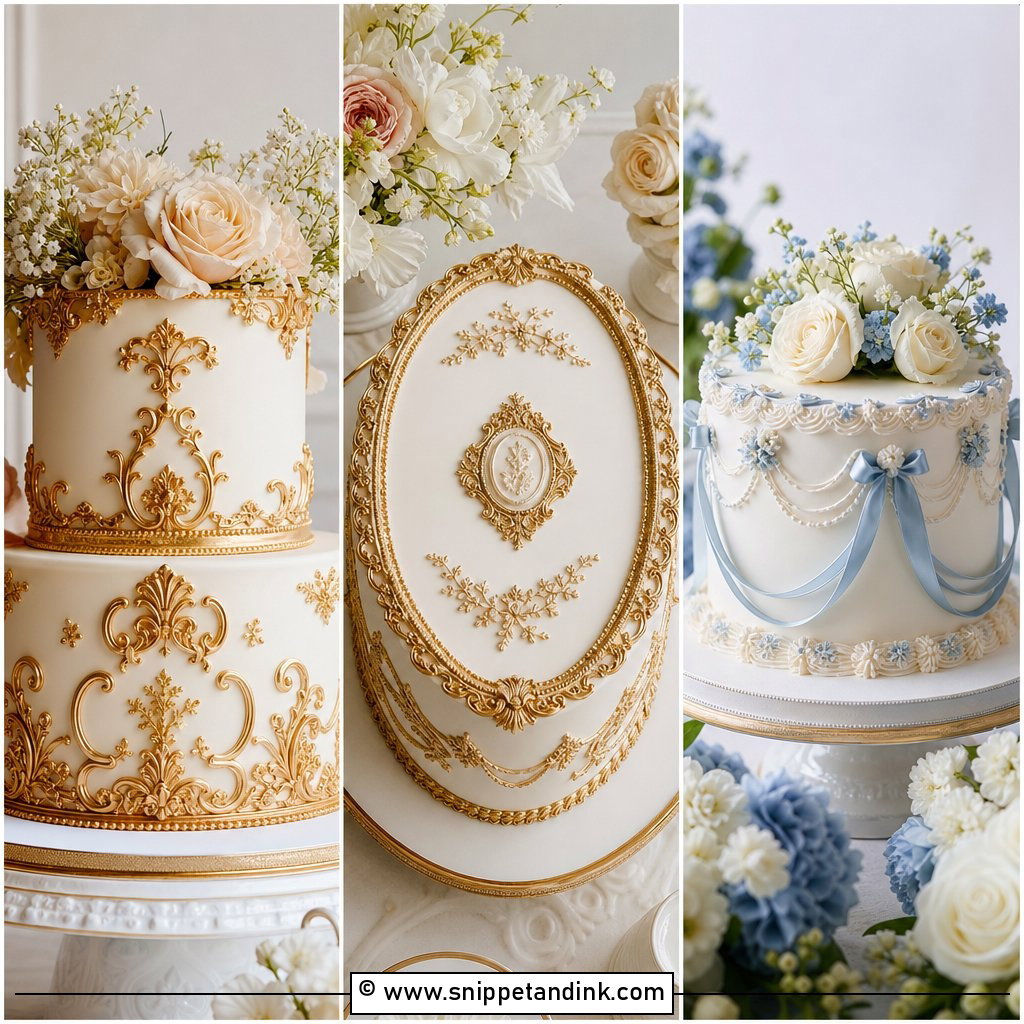
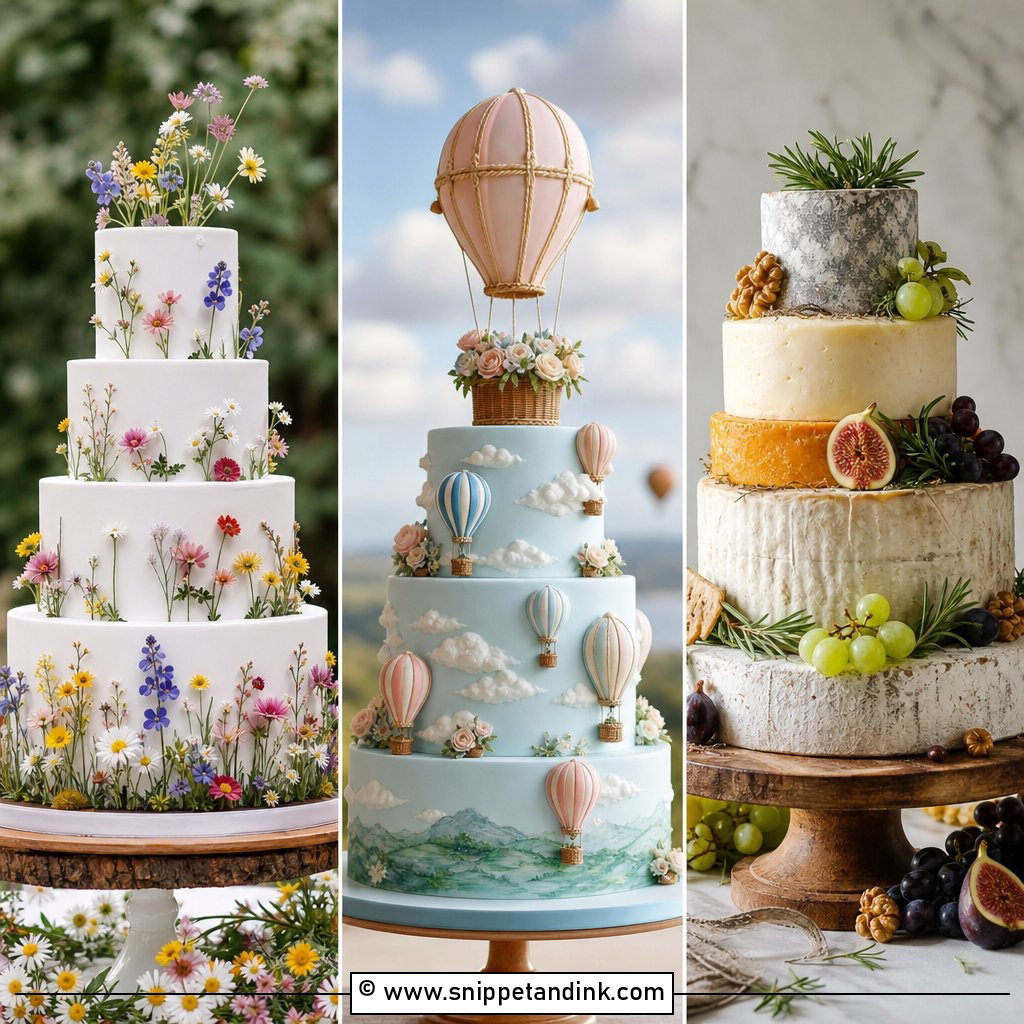
25. Rectangular Wedding Cake
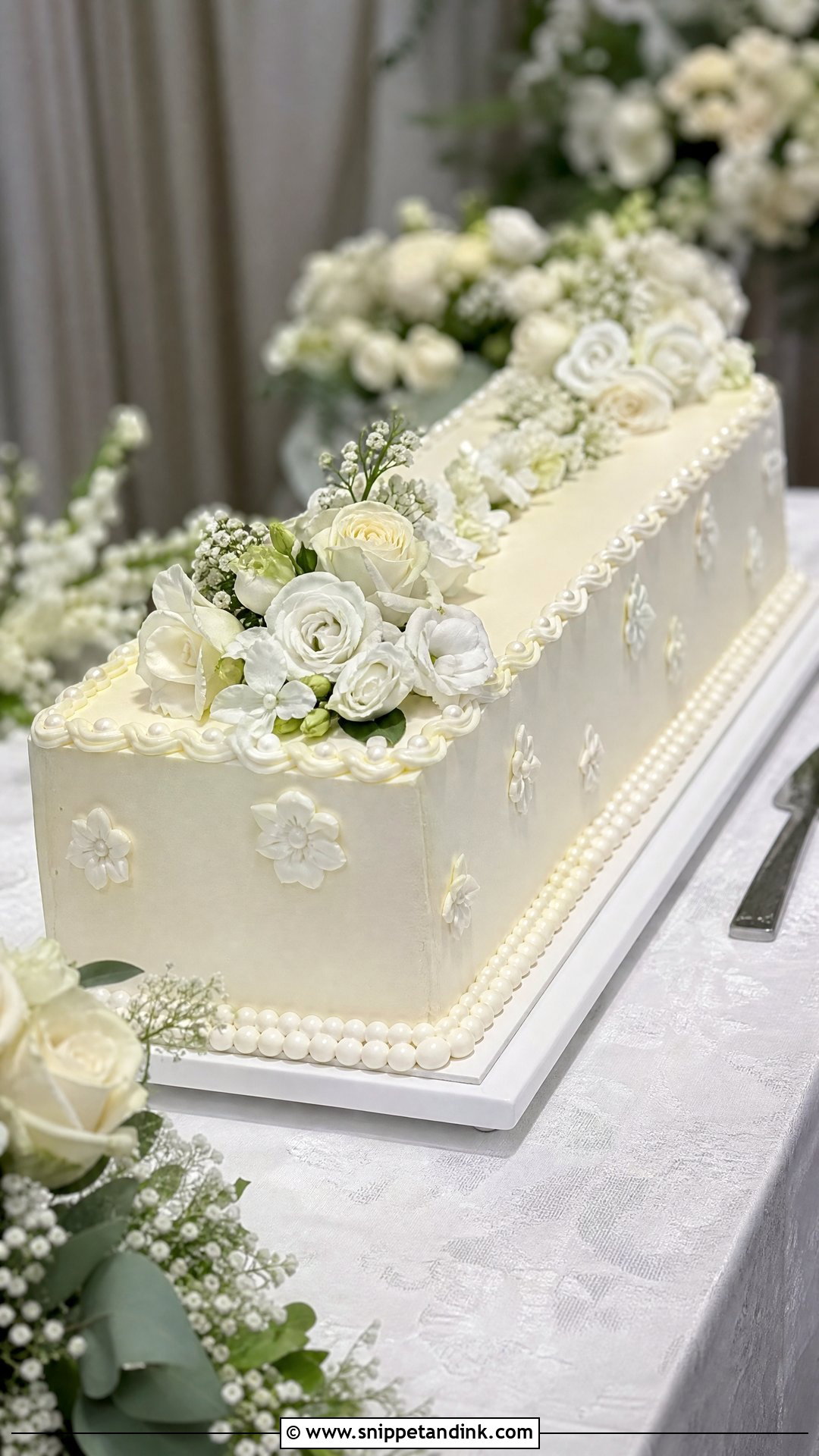
A rectangular wedding cake suits long reception tables, where a tall round cake can look out of place. It can be smooth buttercream, bordered with piping, topped with flowers or finished with fresh fruit for a lighter look. It also slices into neat, even portions quickly, which caterers appreciate. Keep the top clean and deliberate; a long ivory cake with a few floral clusters and pearls is plenty. A large sheet needs a firm board underneath, as it flexes if lifted at one end.
From the Bakery Van to the First Slice
A wedding cake is at its most vulnerable between my kitchen and the cutting. Most of what goes wrong happens there, and much of it can be prevented during planning.
Heat and display time
Buttercream softens as a room warms, and meringue-based buttercream softens sooner than fondant. An outdoor summer display, a spot in direct sun or a table beside a stage light will make tiers bulge and flowers slide. I ask where the cake table will stand and how long it will be on show. If the answer is a sunny tent for three hours, I’ll suggest fondant, a shaded spot, or setting the cake out closer to the cutting.
Delivery and setup
Tall cakes are usually transported in tiers and stacked on site, which needs a stable, level table and about half an hour before guests arrive. A cake moved from a cold van into a warm, humid room can also gather condensation on fondant; it dries if left alone, so don’t let anyone wipe it. Agree who places any fresh flowers, and confirm the venue’s access time with your planner.
Cutting and leftovers
The cutting is usually a single symbolic slice; the caterer then takes the cake away and portions it. Make sure they know which tiers are real and which are dummies, and whether the top tier is going home. Wrap a saved tier tightly in plastic wrap and foil before freezing, and remove sugar flowers and dowels first.
What Makes a Cake Look Considered
Every cake here, plain or detailed, modern or vintage, relies on balance: one leading idea, clean finishing and proportions that suit the room. The right one fits your venue, your flowers, your menu and the time it will sit on display. Smooth buttercream, ivory tones, pearls, florals, gold leaf and clean shapes always look elegant, and texture or soft color can add personality. Before you decide, bring your guest count, the venue’s temperature and your flavor preferences to the tasting. Those three answers shape the design more than any photo.
You'll Like These Ideas:









Leave a Reply