
Most brides walk into their first appointment hunting for one perfect dress. I’d rather start with three questions: where you’re getting married, how long you’ll be wearing it, and how you want to feel at hour nine. The answers narrow the rail faster than any mood board. Below are 25 complete bridal looks, from a satin ball gown to a jumpsuit with an overskirt, with notes on fabric, neckline, shoes and the practical details I check before a bride commits. Use them to compare shapes, not to copy one exactly.
Your Venue Floor Decides More Than Your Mood Board
Before a bride tries anything on, I ask what she’ll be walking on. Grass, sand, cobblestones and old church stone each change what works. A cathedral train looks wonderful on a polished aisle and collects leaves and damp in a garden. Heavy satin is lovely in an air-conditioned ballroom and miserable at an outdoor July ceremony.
- Beach or sand: light fabrics, a shorter train or none, and flat or wedge shoes so heels don’t sink.
- Garden or lawn: a sweep train, which barely touches the ground, rather than chapel length.
- Hotel ballroom or city venue: structure and longer trains work, since floors are smooth and climate is controlled.
- Long travel between ceremony and reception: think about how the skirt fits in the car.
Then count the hours. A dress you’ll wear from hair and makeup through the last dance is on you for a long time. If the honest answer is twelve hours or more, comfort climbs the list and a detachable overskirt or a second look starts to make sense.
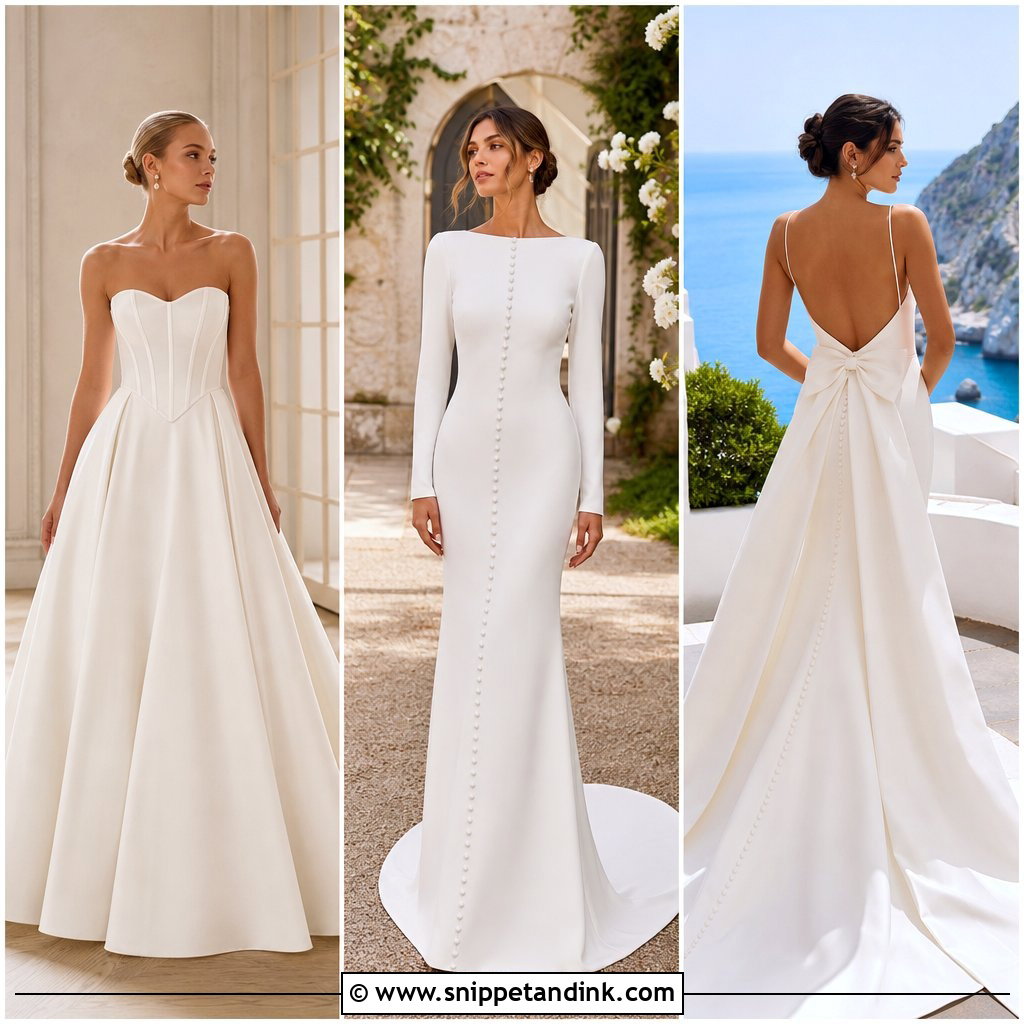
1. Satin Ball Gown Wedding Dress
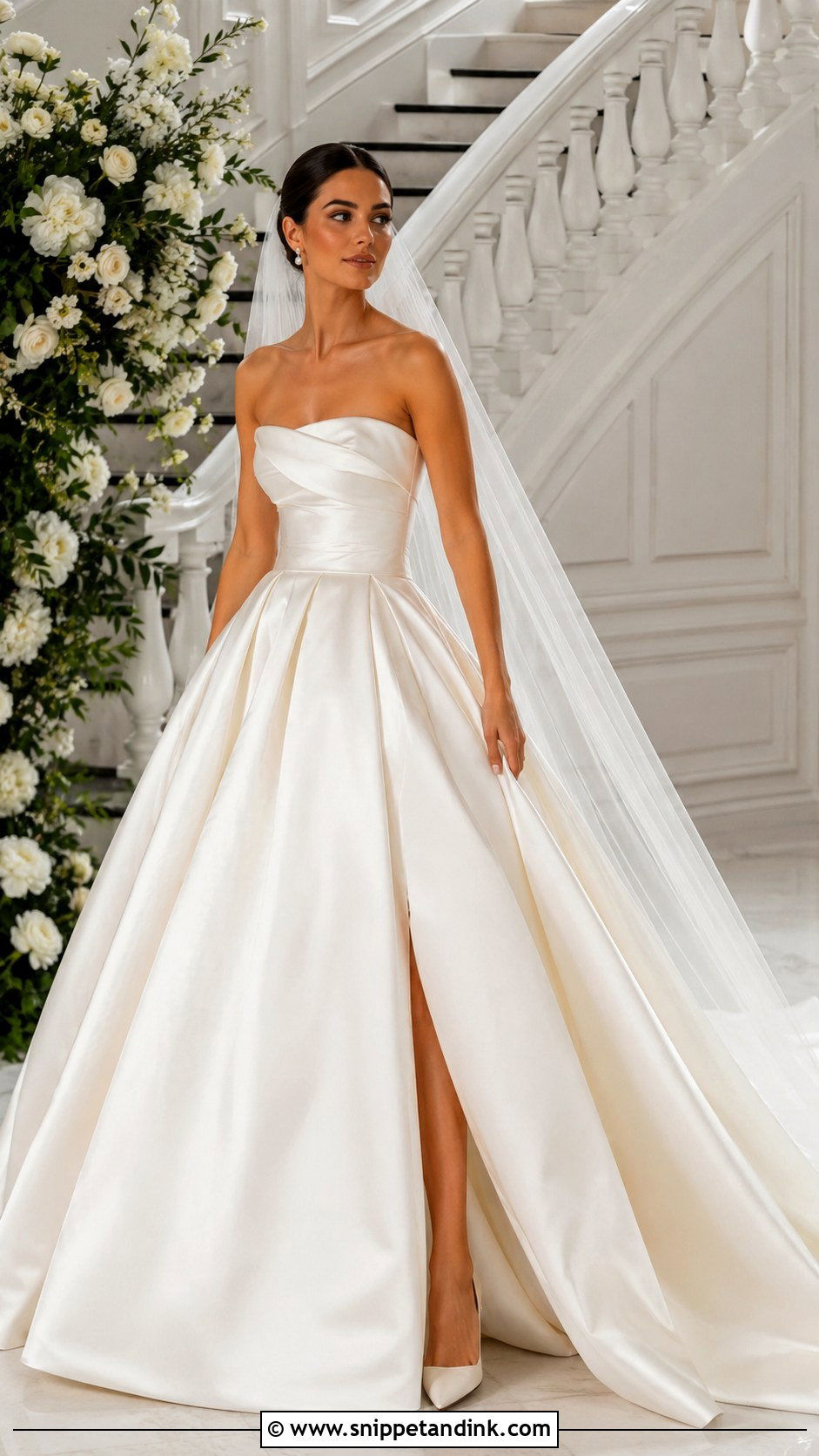
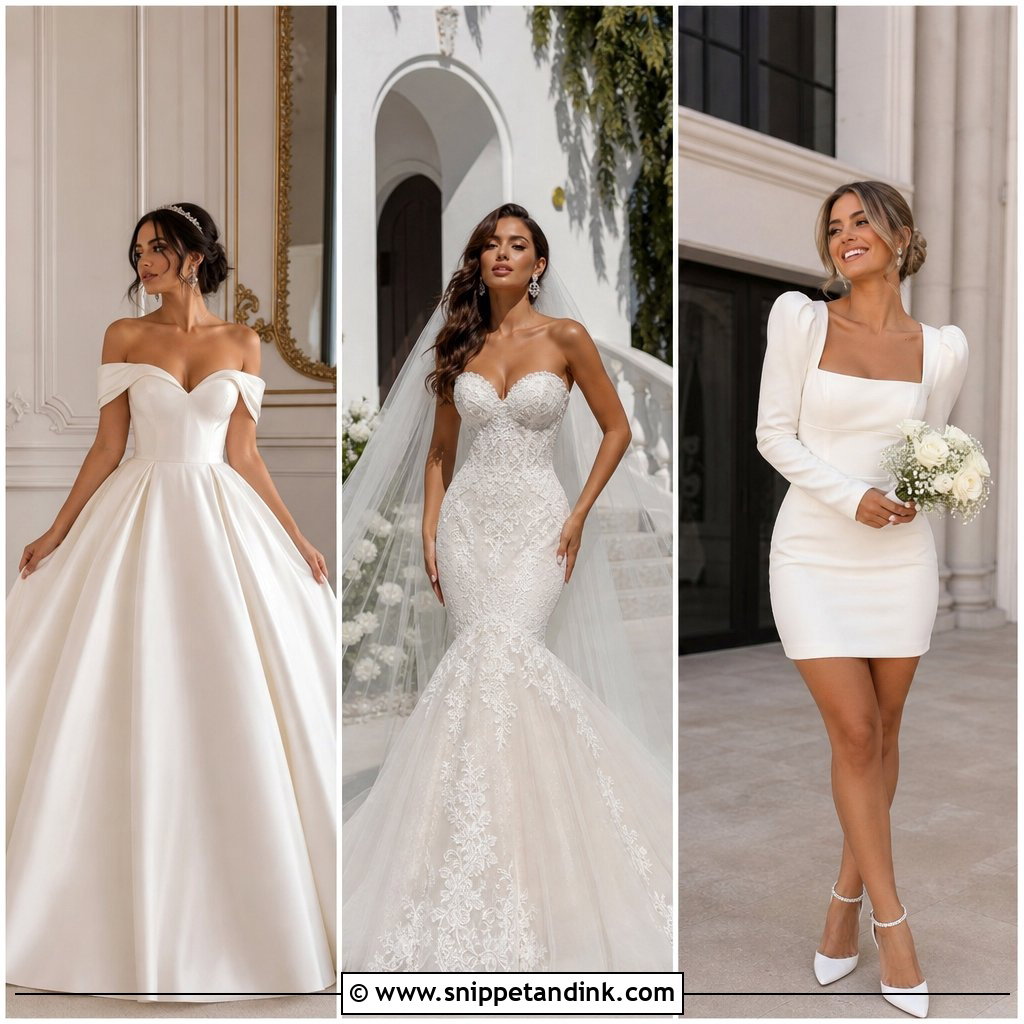
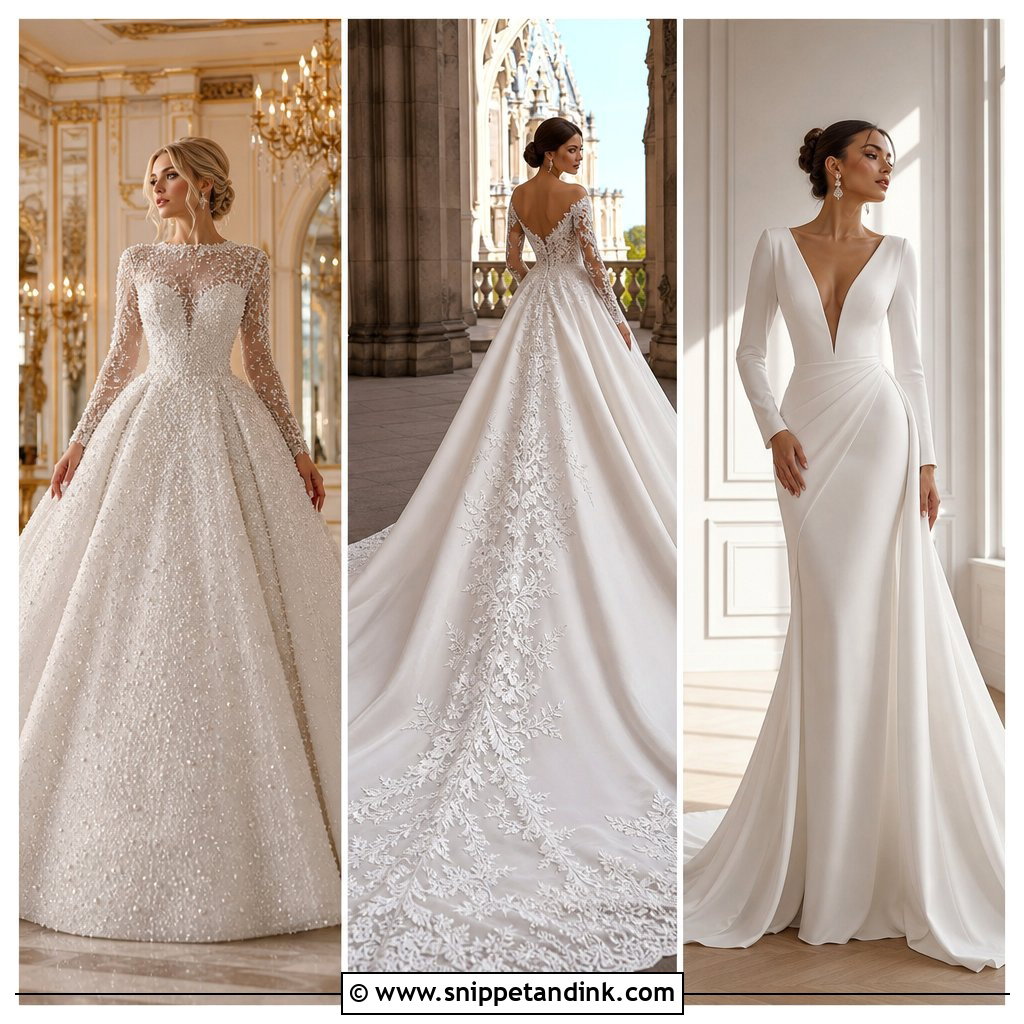
Presence is what a satin ball gown gives you: clean shine and a full skirt that fills a ballroom or hotel aisle. It also weighs more than brides expect, so I ask about the length of the day before anything else. A structured bodice carries that skirt better than a soft one. Strapless, square and off-shoulder necklines all suit it. Keep the bouquet modest in width, or it fights the skirt for space in every photo.
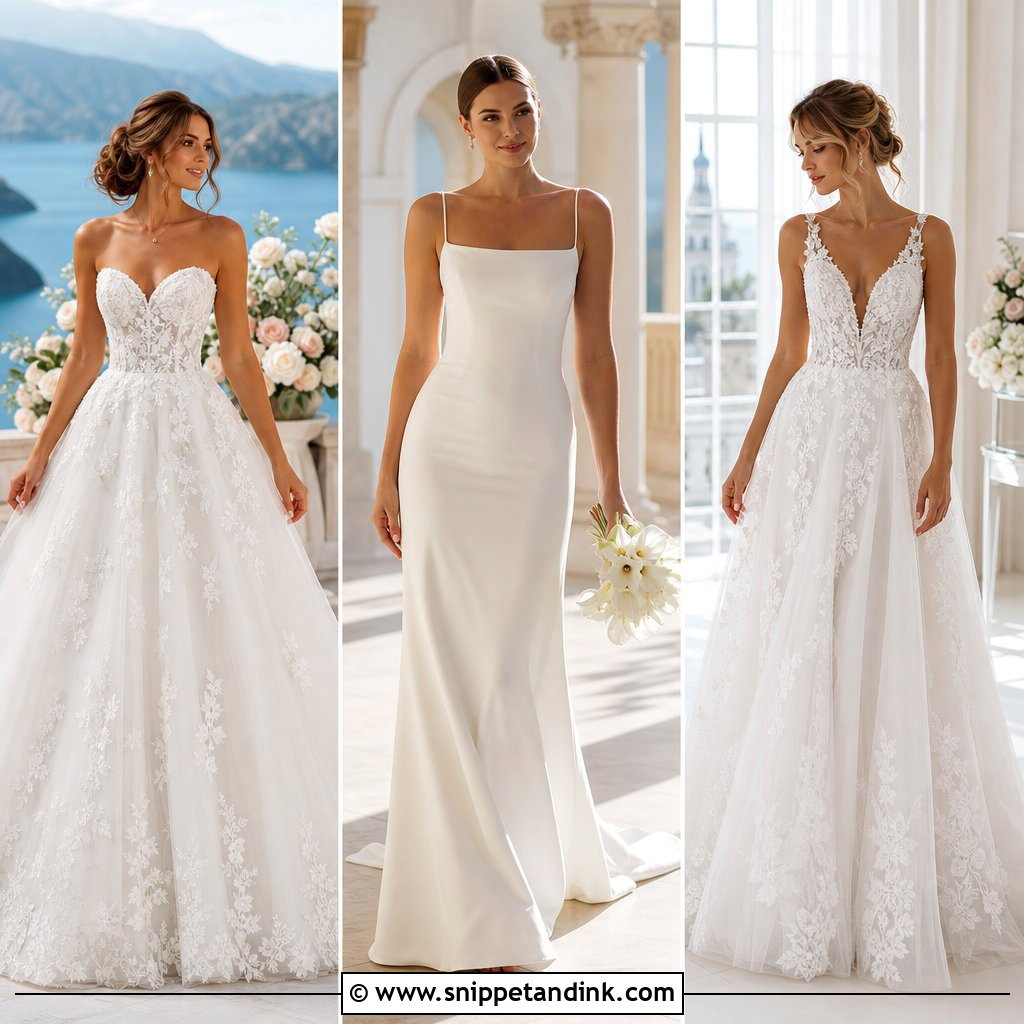
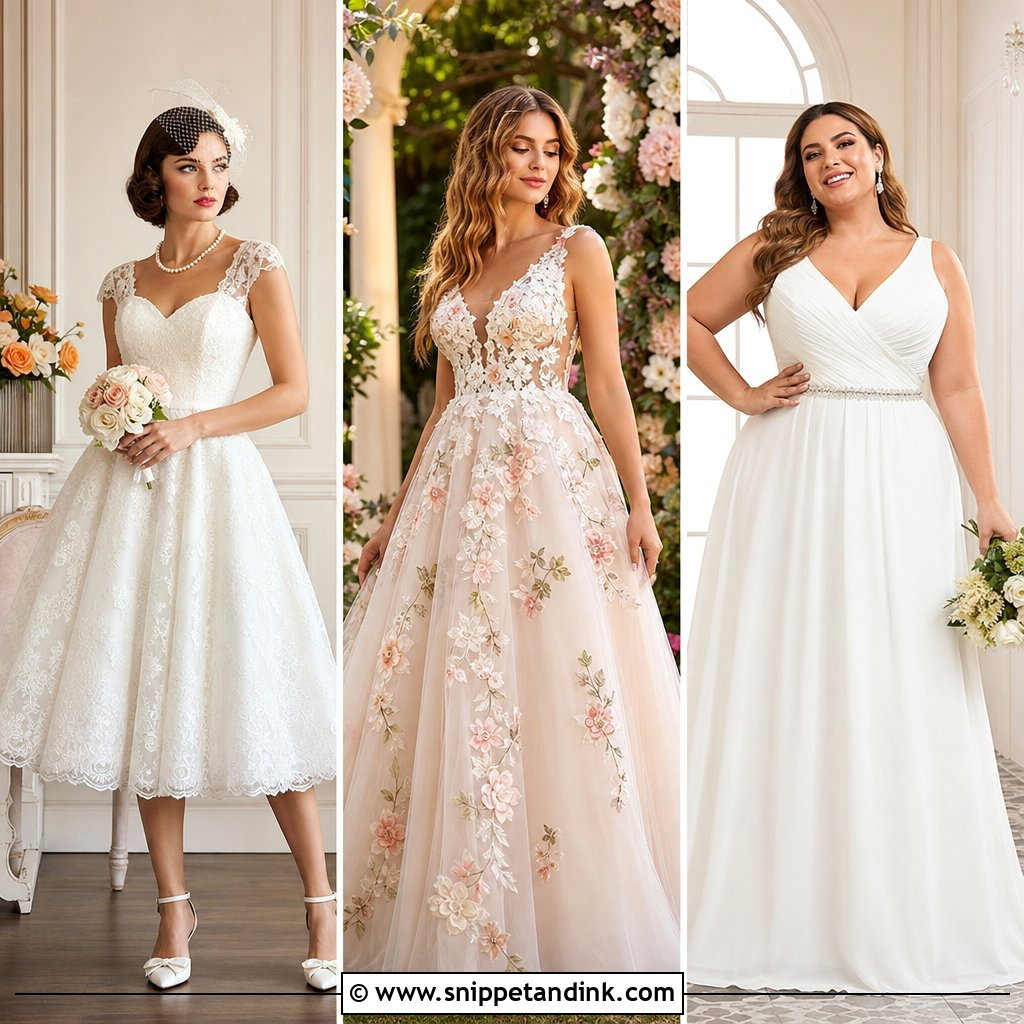
2. Lace A Line Wedding Dress
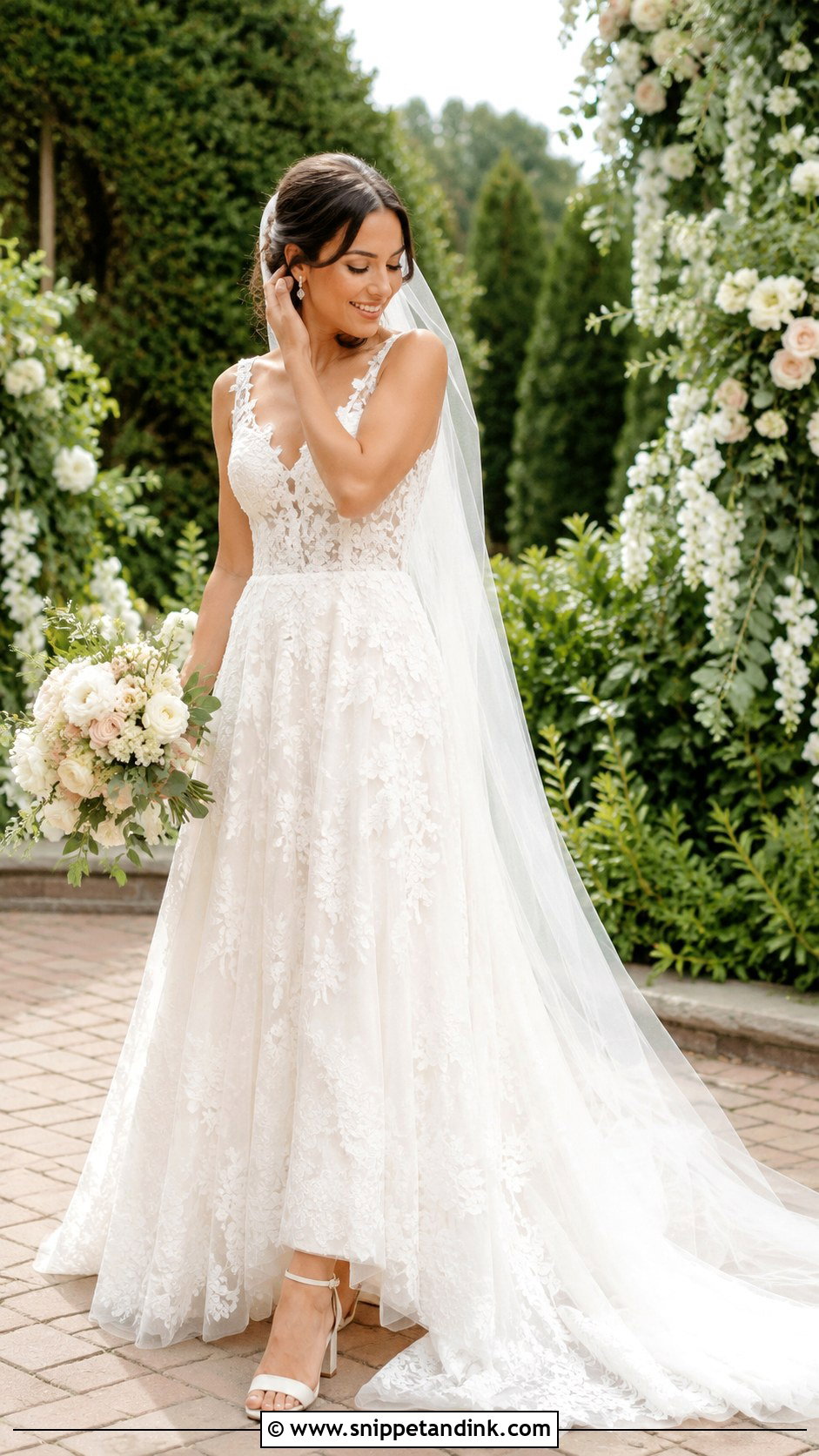
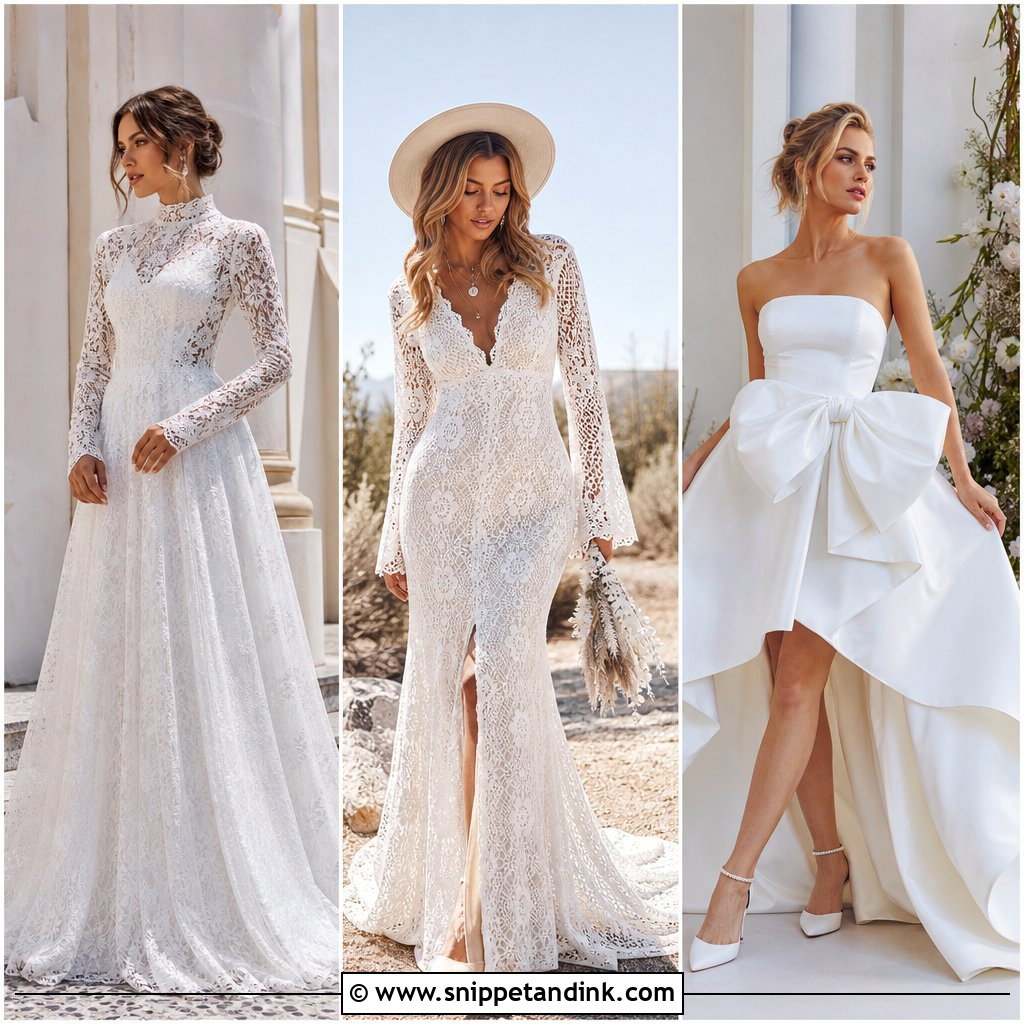
The lace A-line flatters the widest range of bodies I dress, because it defines the waist and then leaves the hips alone. It’s romance without the weight of a princess skirt. Floral lace, light beading or appliqué add texture. When I pull one, I check where the lace motifs fall at the seams; on better gowns they’re hand-matched across the zip, and on cheaper ones the pattern breaks in a hard line down your back. It suits gardens, estates and traditional receptions.
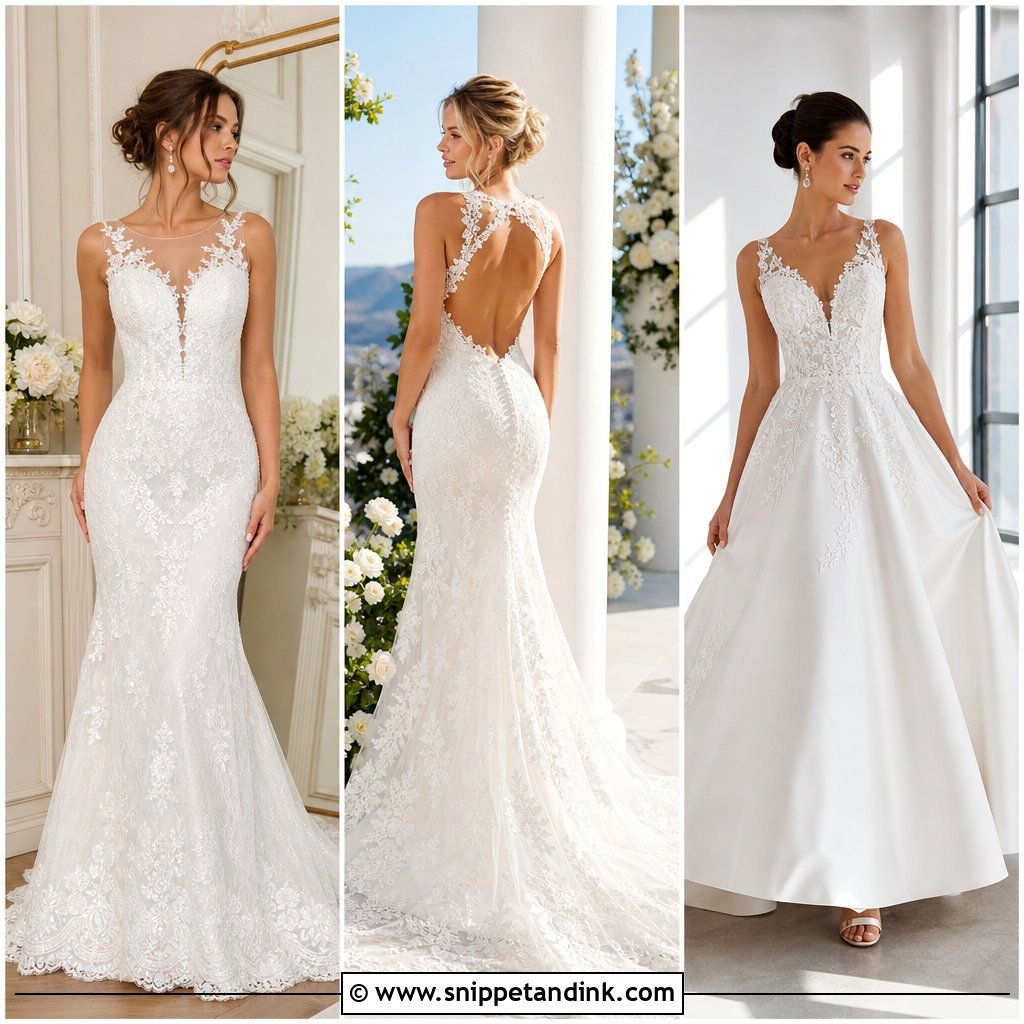
3. Strapless Mermaid Wedding Dress
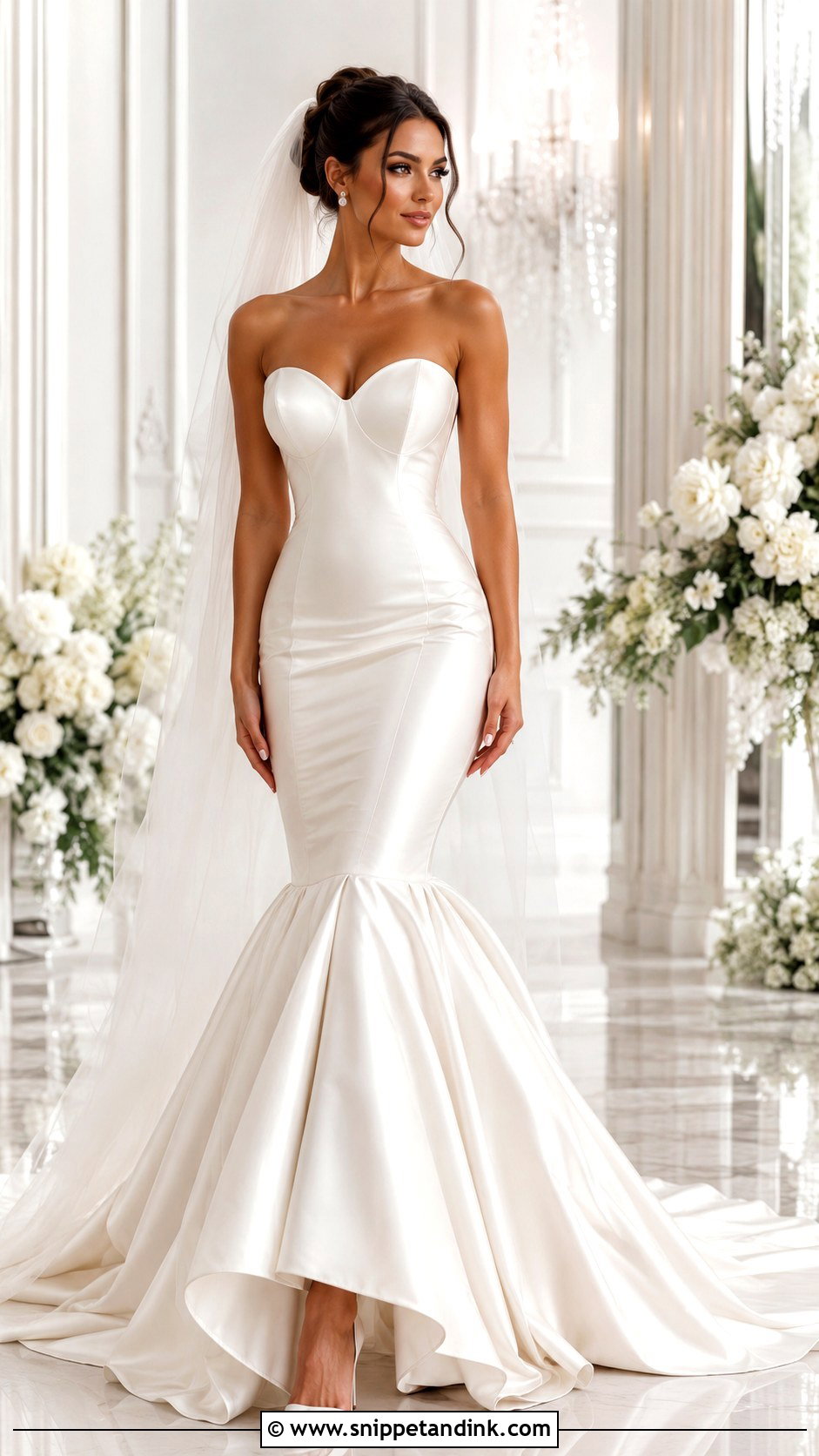
A strapless mermaid hugs bodice, waist and hips and flares near the knee, so it moves with a real swing as you walk. Crepe, mikado, satin and lace hold that structure. The flare point matters more than anything: set too low, it shortens your stride to tiny steps. With an open neckline, choose a polished updo or soft waves and keep jewelry simple, perhaps diamond studs or a delicate pendant. Break in your heels beforehand; a fitted skirt already limits how you walk.
4. Simple Crepe Wedding Dress
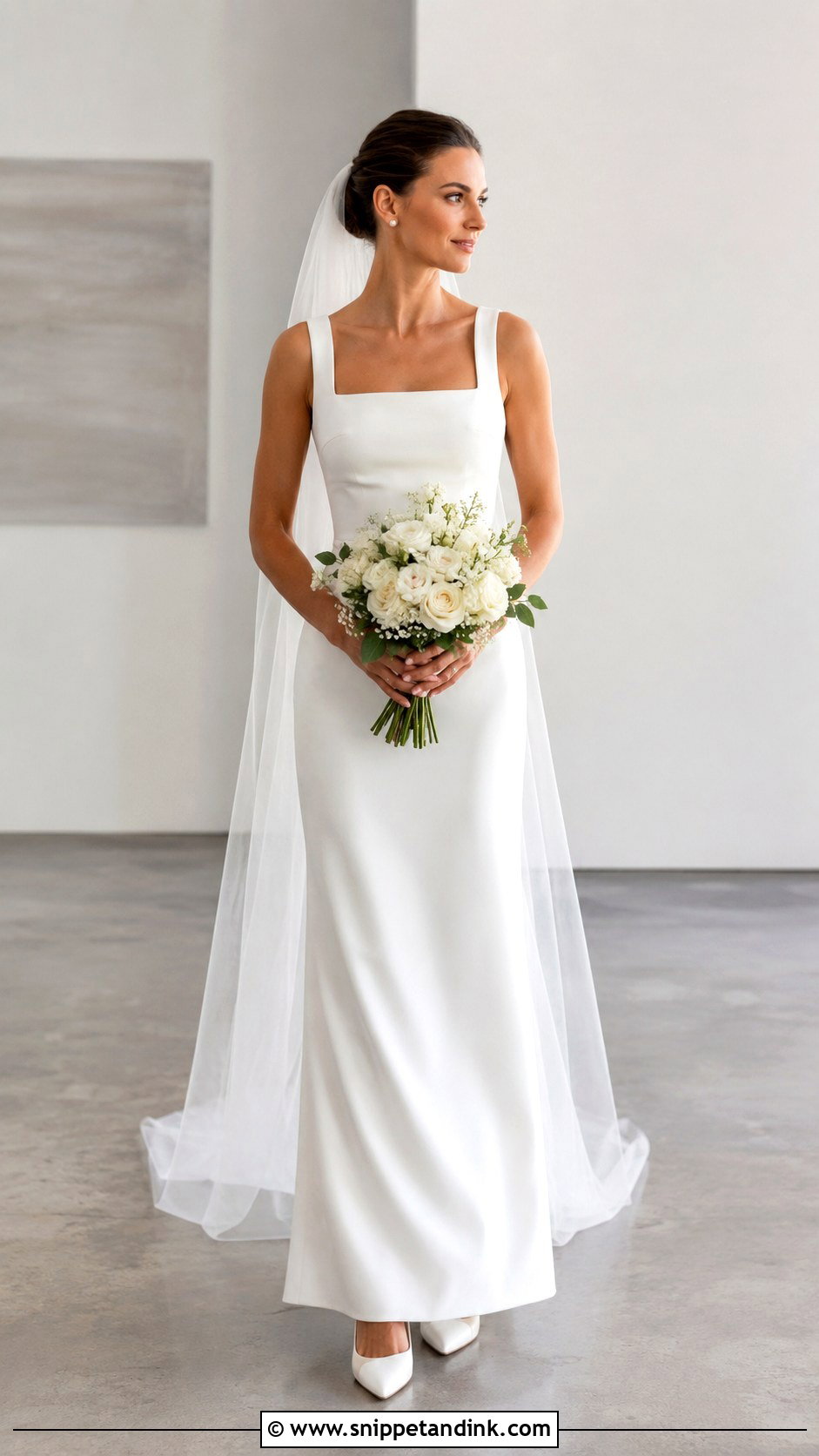
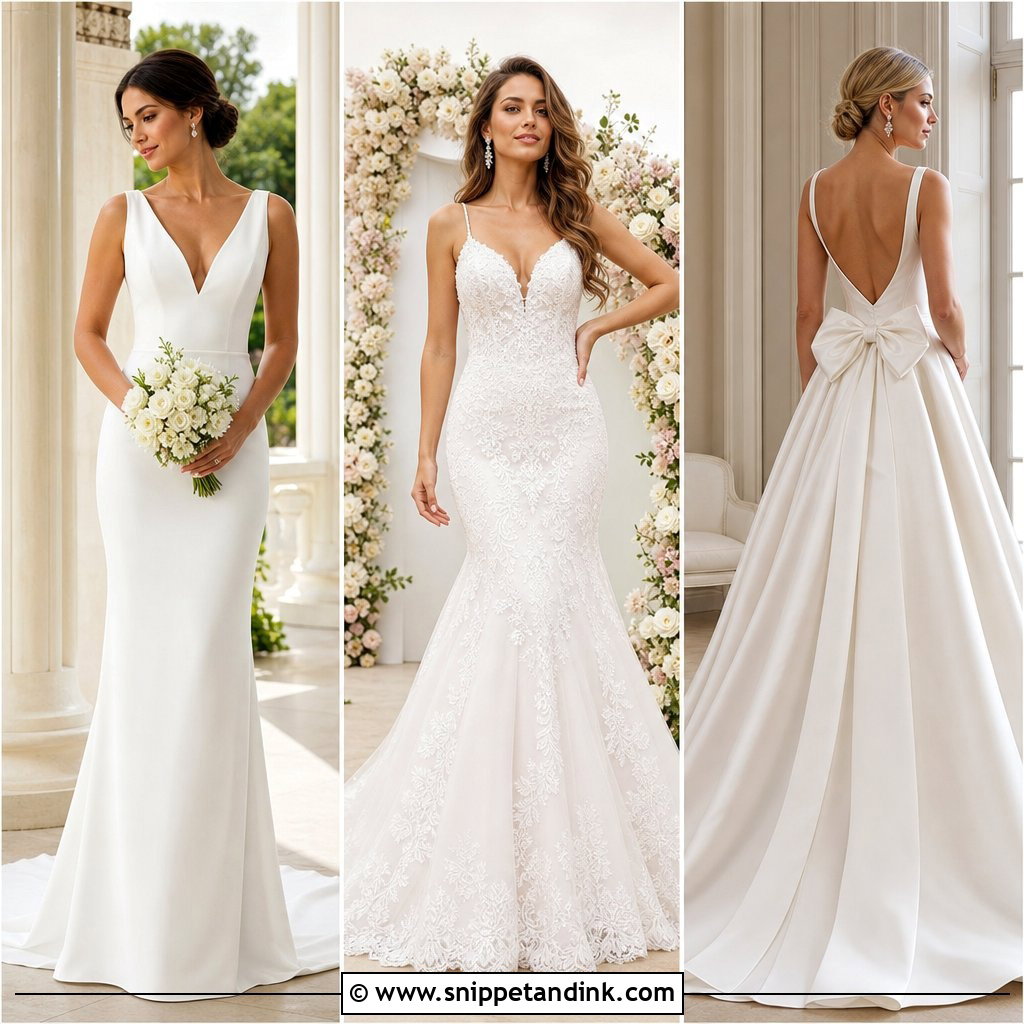
Clean lines can be as memorable as heavy embellishment. Crepe drapes well and often feels lighter than thick satin, so it’s comfortable through a long ceremony and reception. The honest drawback is that crepe shows everything underneath. I always fit a crepe gown over the exact underwear the bride will wear. A square or bateau neck, or long sleeves, keep it refined, and a detachable overskirt adds drama if you want it. City venues, galleries and rooftops suit it best.
5. Off Shoulder Wedding Dress
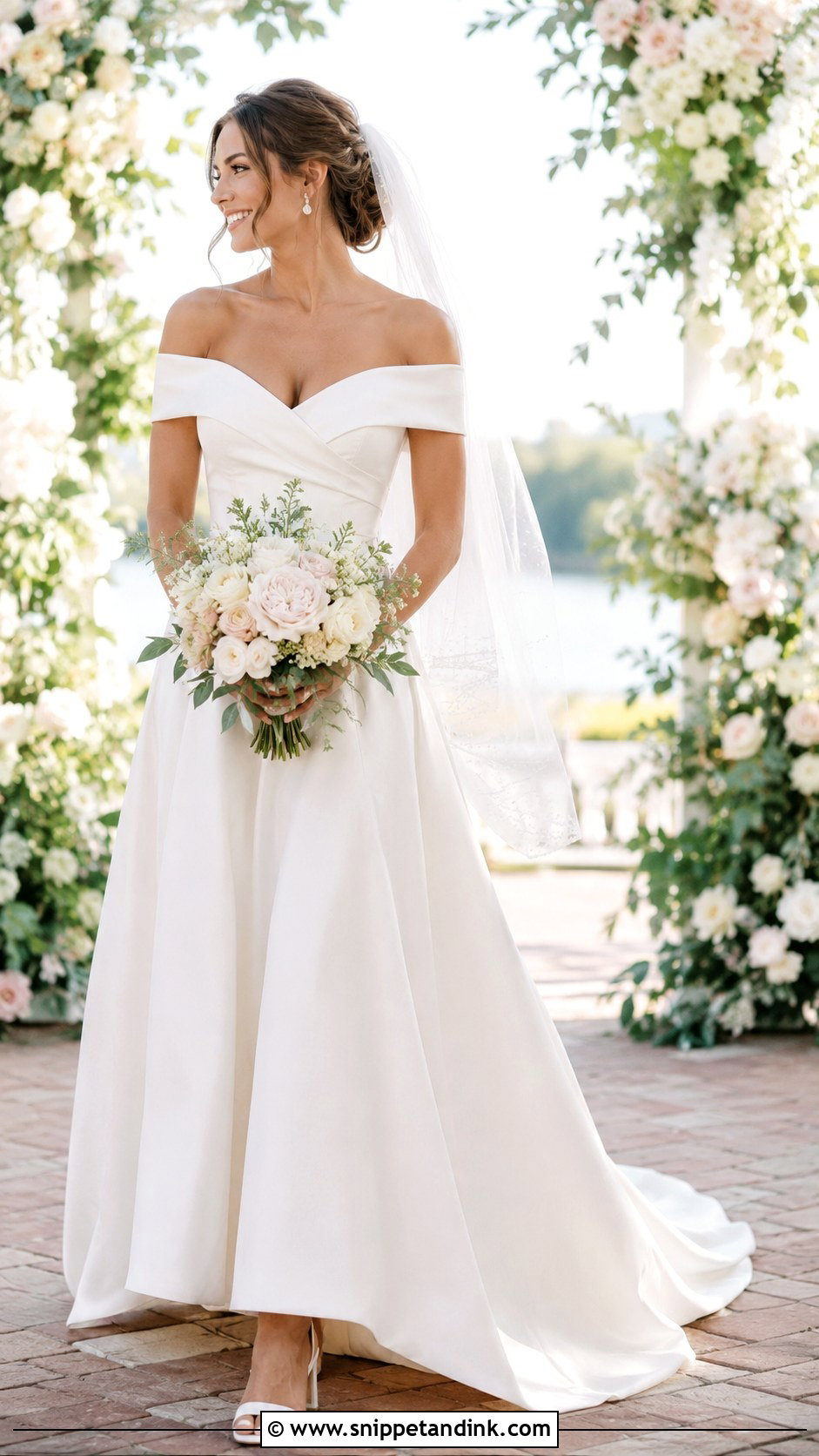
Off-shoulder necklines frame the collarbone softly without feeling revealing, and they give the look of a sleeve with an open neck. Lace, satin, tulle and crepe all work. My fitting test is to have the bride reach both arms forward as if for a hug. If the sleeves pull the bodice down, they need stitching to a firmer inner structure. Skip the necklace here; it competes with the line.
6. Long Sleeve Lace Wedding Dress
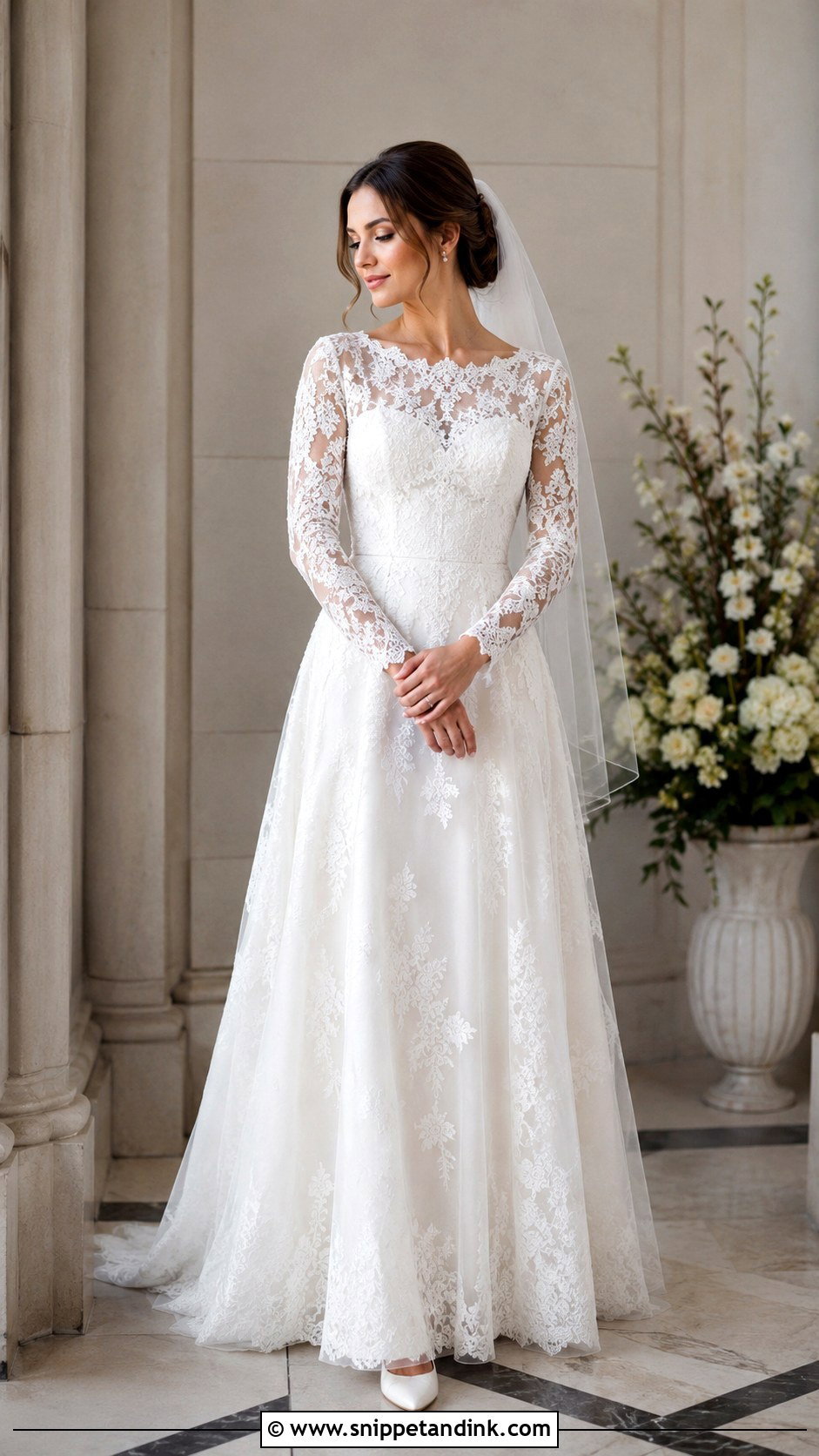
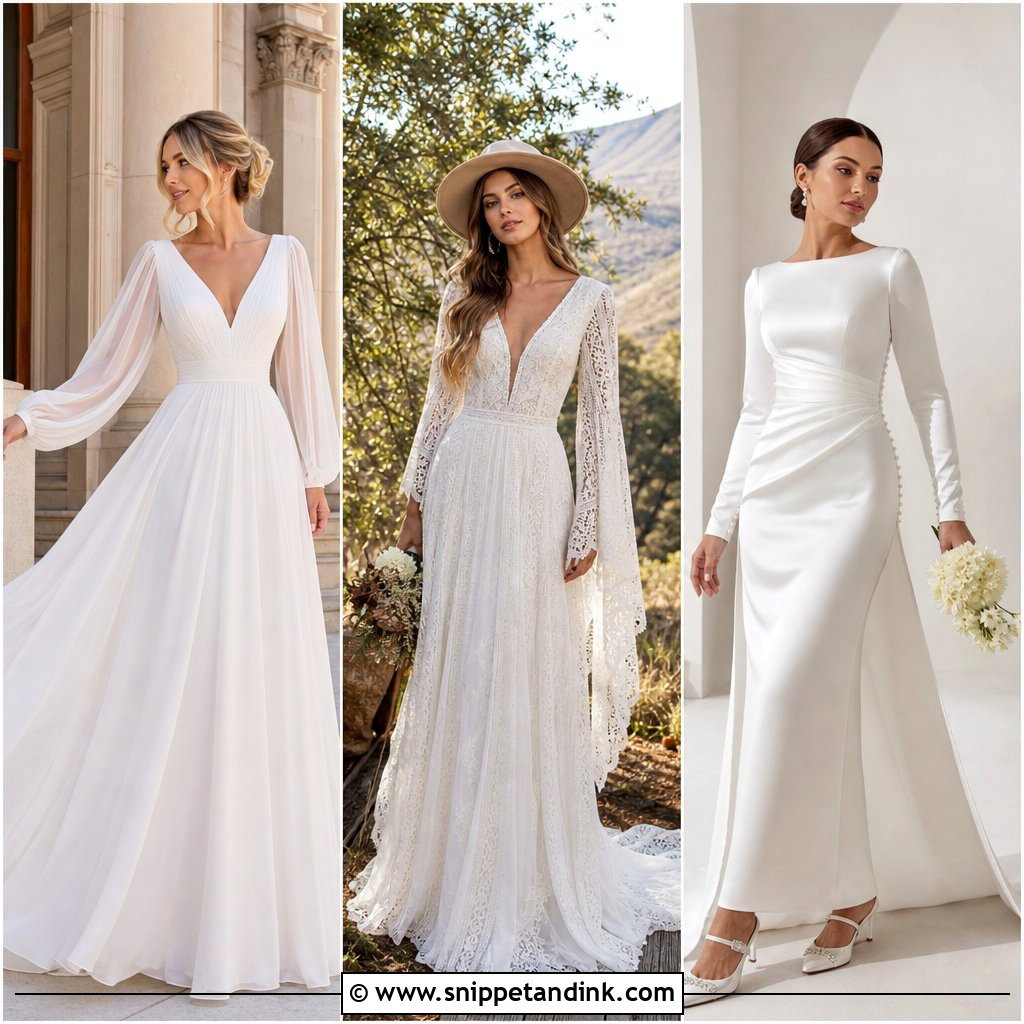
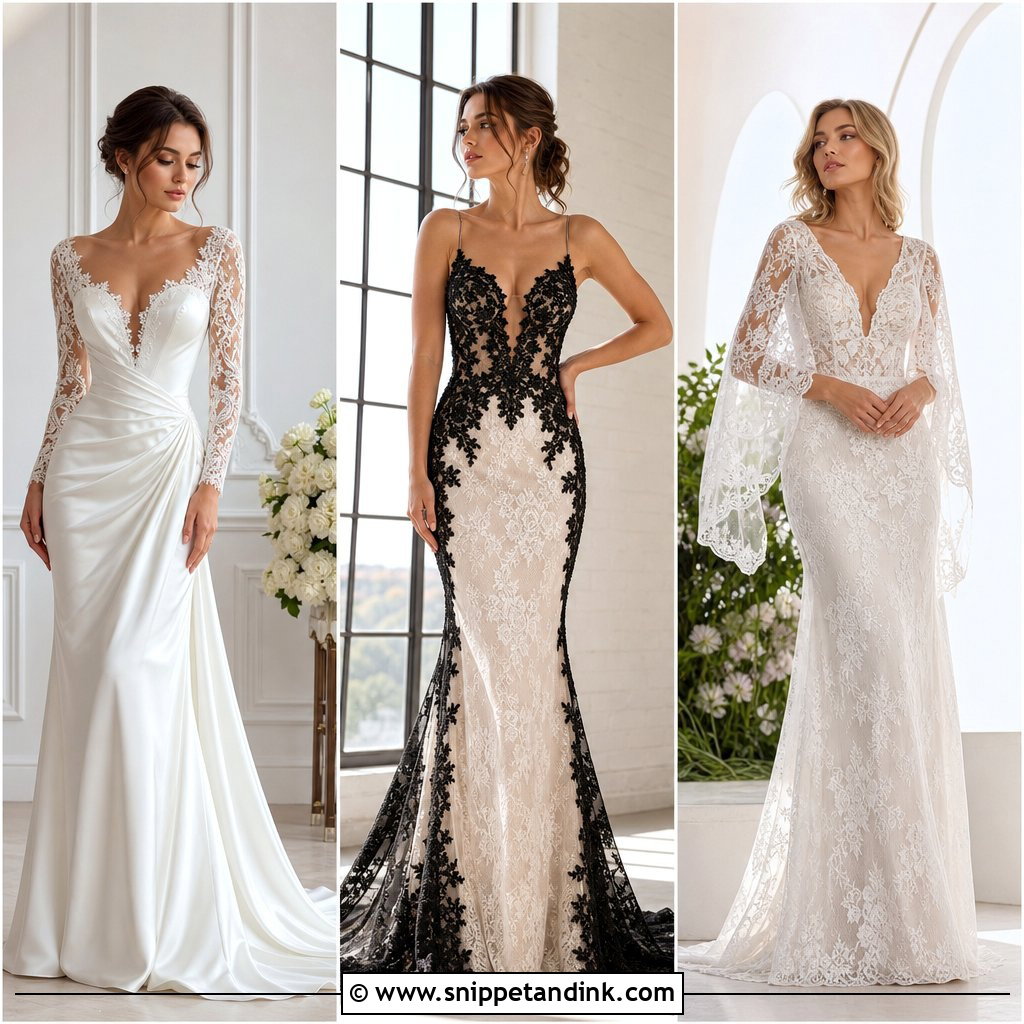
Coverage and detail come together in a long-sleeve lace gown. Sleeves can be sheer, lined, fitted or slightly flared, and floral lace reads softer while geometric lace feels modern. It’s natural in fall and winter, and lightweight lace still works in warmer months. Check the armholes when you lift your arms. Fitted lace sleeves cut high can make it hard to hold a bouquet comfortably, and that’s easier to fix early than in the final fitting. A low bun keeps the neckline clear.
7. Square Neck Wedding Dress
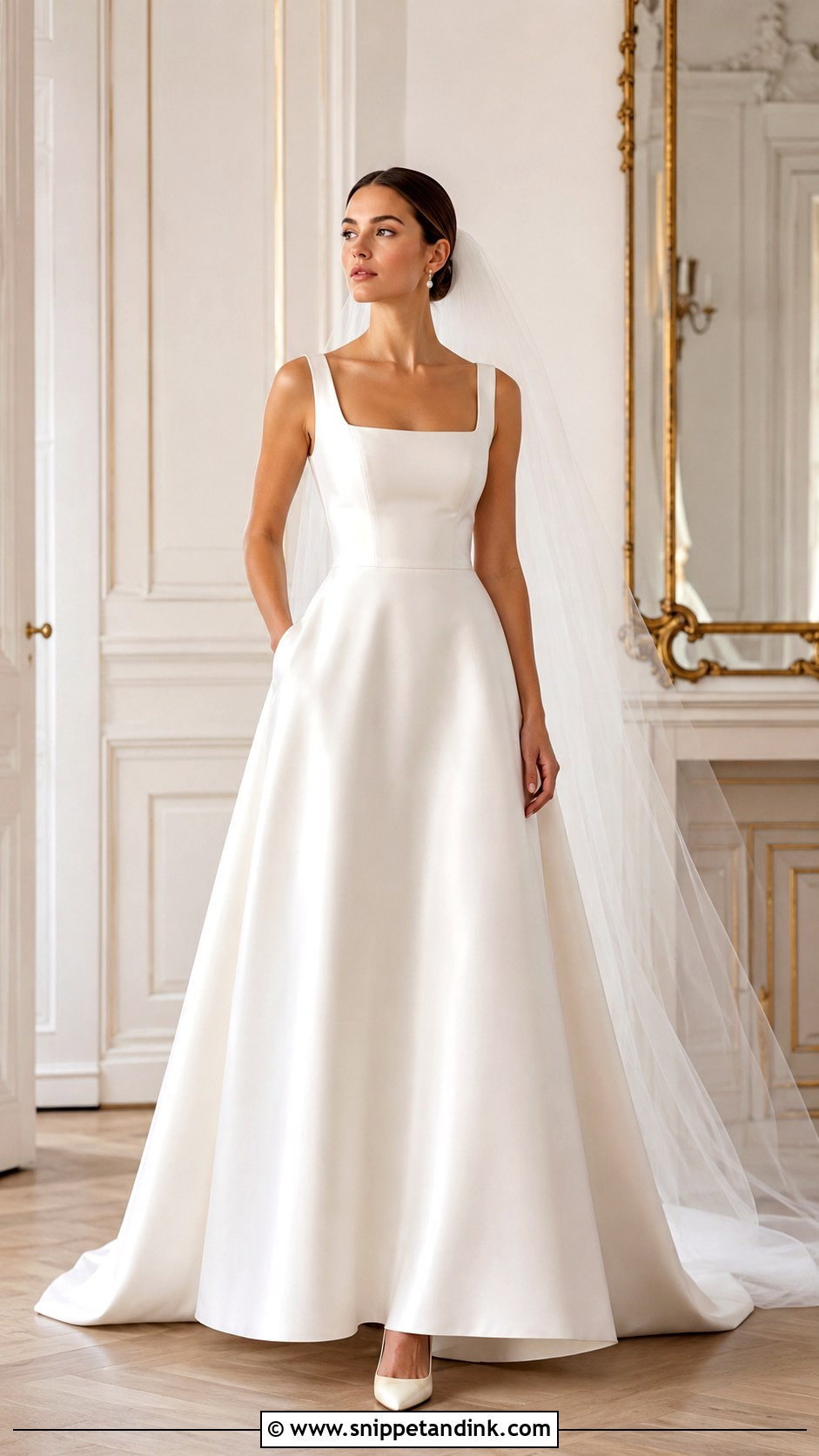
A square neck frames the shoulders with a straight, modern edge, and it suits crepe, satin A-lines and lace alike. It pairs naturally with wider straps and structured bodices, so it’s one I suggest when a bride wants support without a halter. With a plain gown, let an embroidered veil or a textured bouquet bring interest. If the fabric is already detailed, keep everything else quiet.
8. Basque Waist Wedding Dress
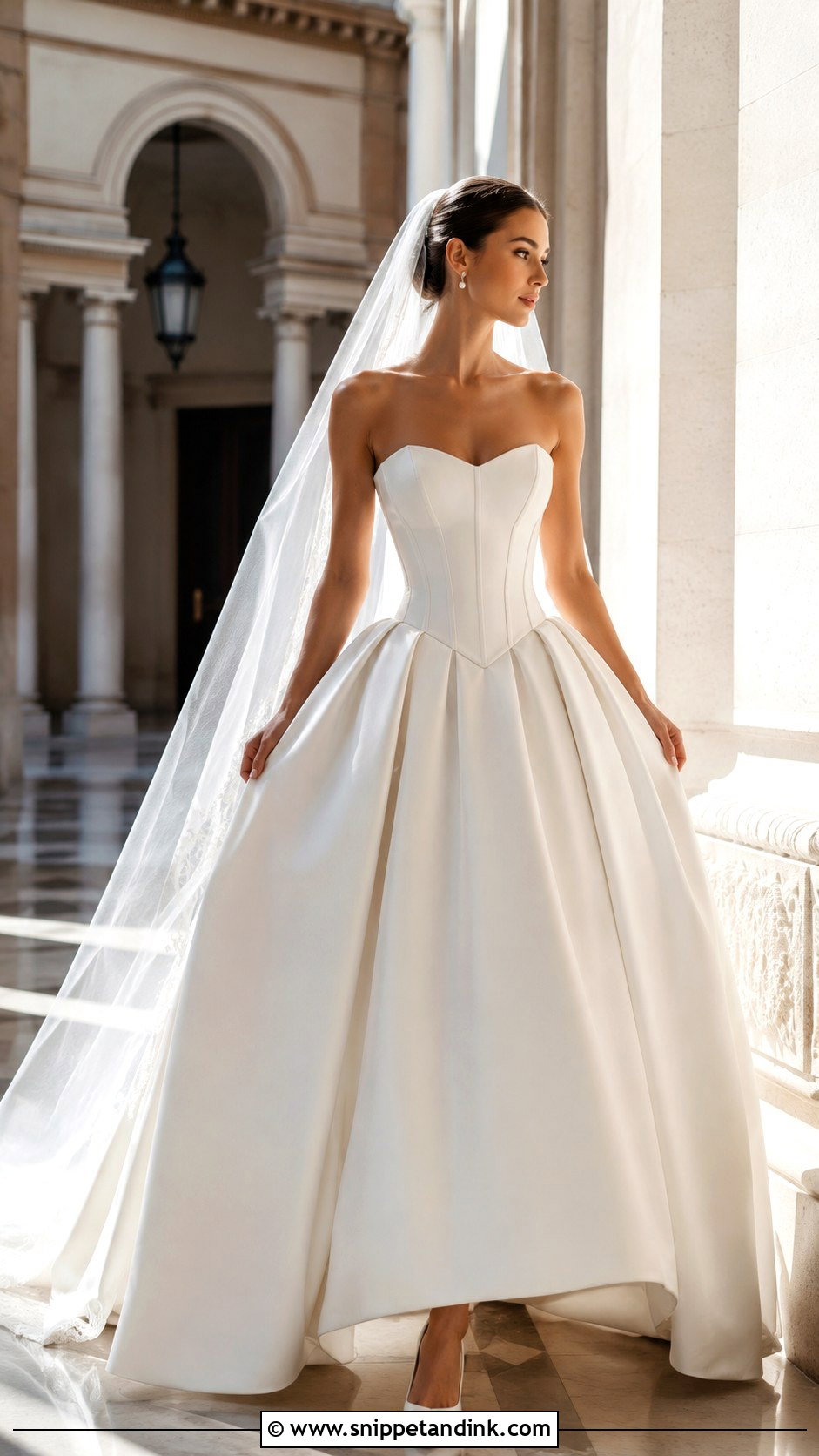
The pointed basque waist is back, and I can see why: the dip at the front lengthens the torso and gives a vintage line. It looks rich over a full skirt, pleated satin, layered tulle or lace. Where it goes wrong is when the point sits too high on a long torso; it should land at or just below your natural waist. Pearl earrings, a long veil and a soft updo keep it regal rather than costume-like.
9. Drop Waist Wedding Dress
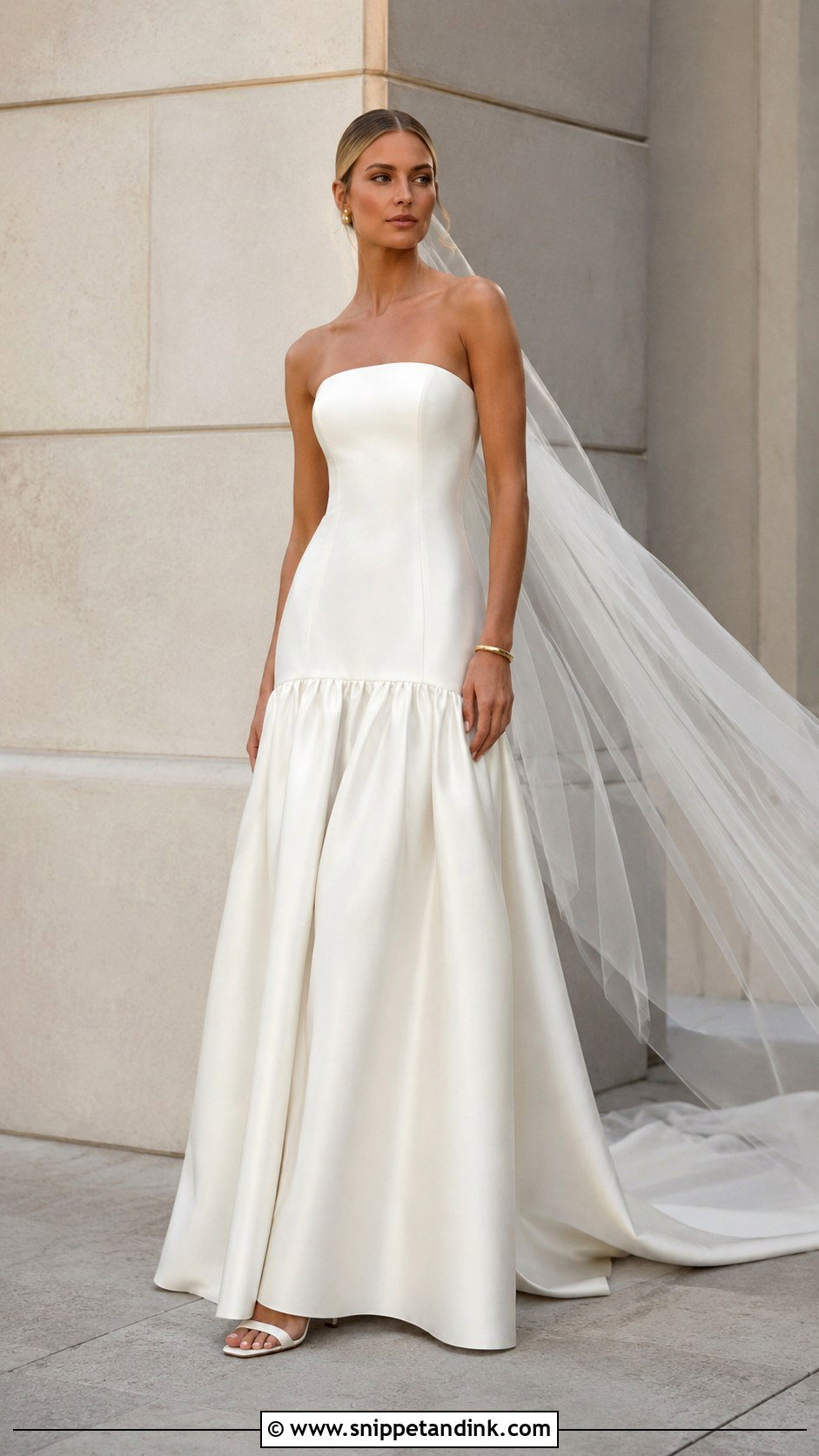
Drop waists start the skirt low on the hips, giving a long, sleek line through the torso that feels both modern and vintage. This is the silhouette I’m most careful with in alterations. If the seam sits a little off, it can shorten the legs instead of lengthening the body. A rule I follow: detailed bodice, softer skirt; volume in the skirt, smoother bodice.
10. Floral Embroidered Wedding Dress
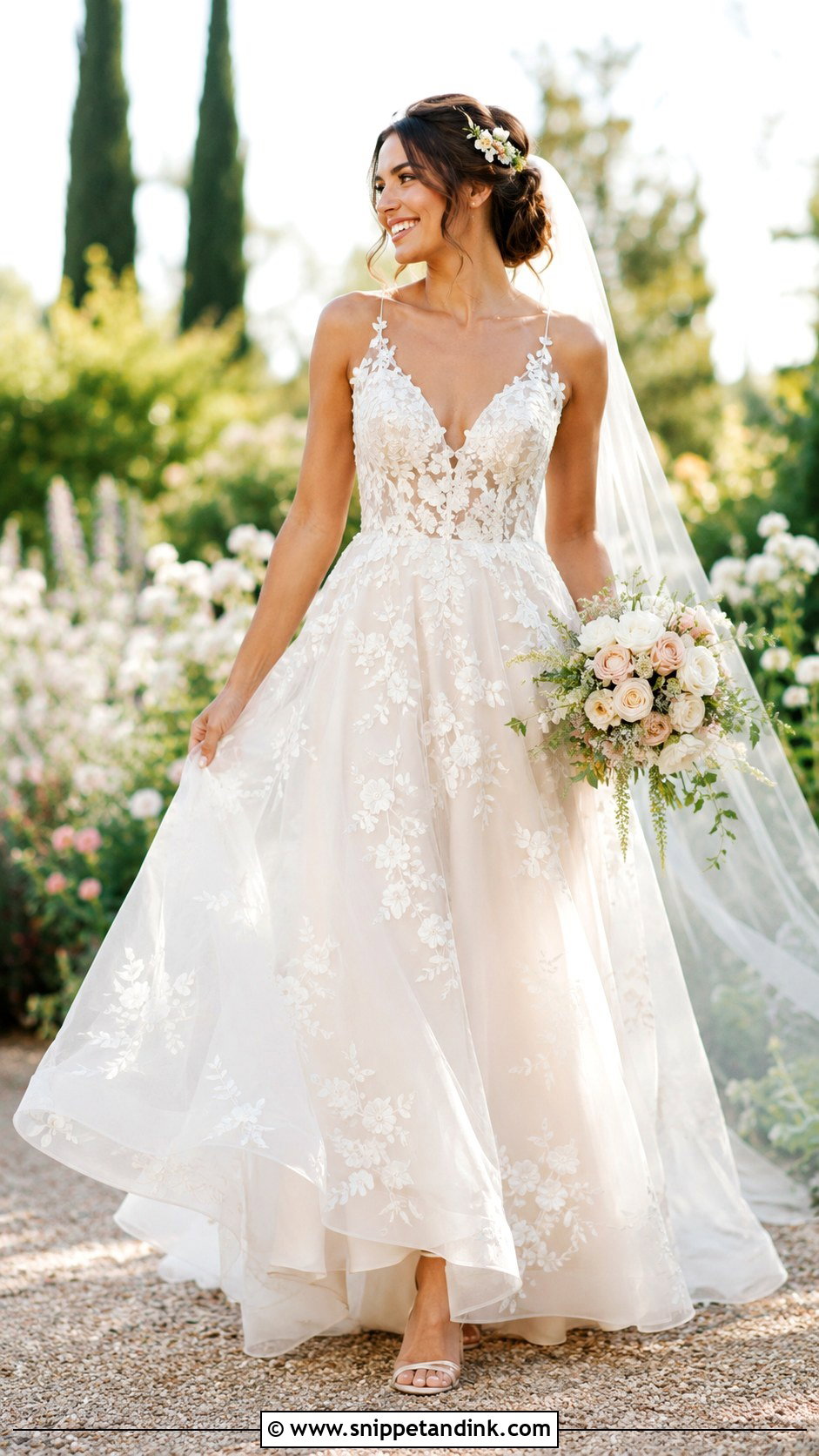
Embroidery adds texture with a lighter hand than heavy lace. It can be white on white, pastel or slightly raised with appliqué. I like it for gardens, outdoor venues, destination ceremonies and spring weddings, in a soft A-line or sheath so the stitching feels airy. One practical point: dimensional embroidery catches on a heavily beaded veil comb, so choose a sheer veil without edging that sits clear of the detail. Floral hair pins echo it nicely.
11. Pearl Wedding Dress
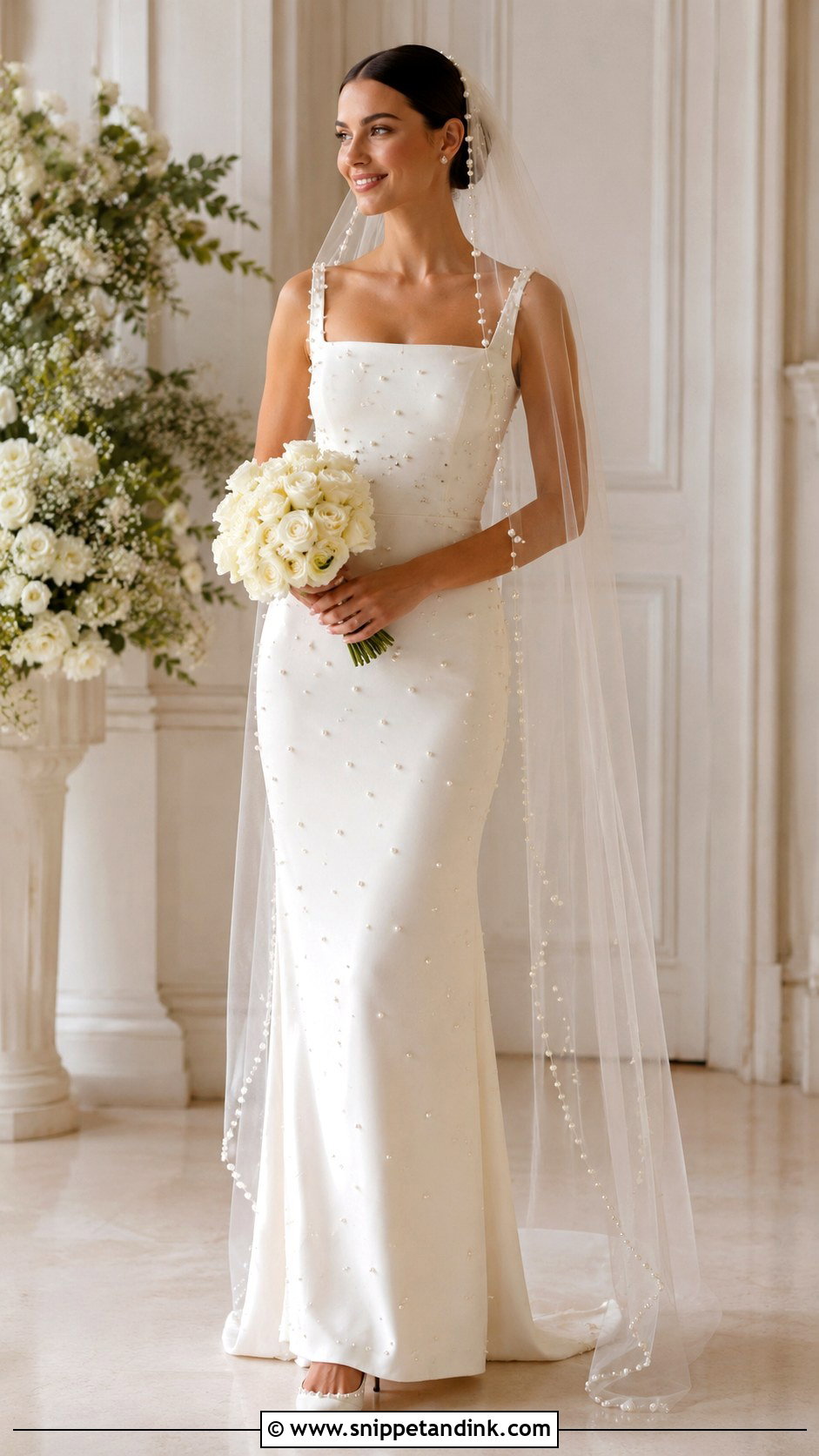
Tiny pearls give a dress a glow that reads well in daylight without looking flashy. They can be scattered, trimmed along the straps, clustered on the bodice or kept to the veil. Balance is the whole skill. A pearl-covered gown wants plain shoes and small earrings; a minimal one can take a pearl veil, pins or a pearl clutch. Check that beading is hand-sewn rather than glued, because glued pearls pop off when you’re hugged.
12. Bow Back Wedding Dress
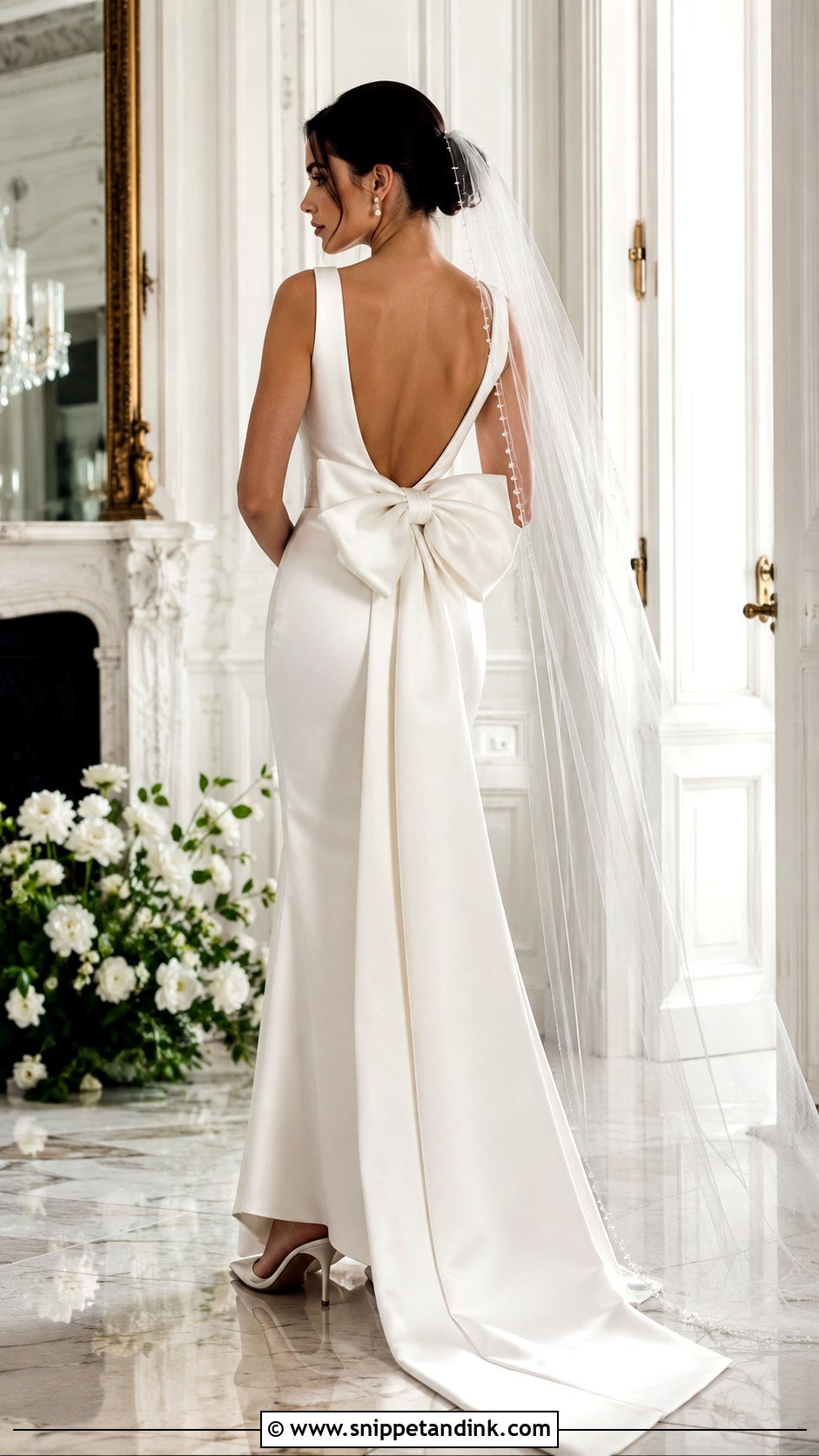
Guests spend the whole ceremony looking at your back, which is why a bow there earns its place. It can be neat, oversized or detachable for the reception. Satin columns, mikado ball gowns and structured A-lines carry it best. Since the bow is the focal point, choose a veil that is short or sheer enough not to bury it, and wear your hair tucked low so the bow shows clearly.
13. High Neck Wedding Dress
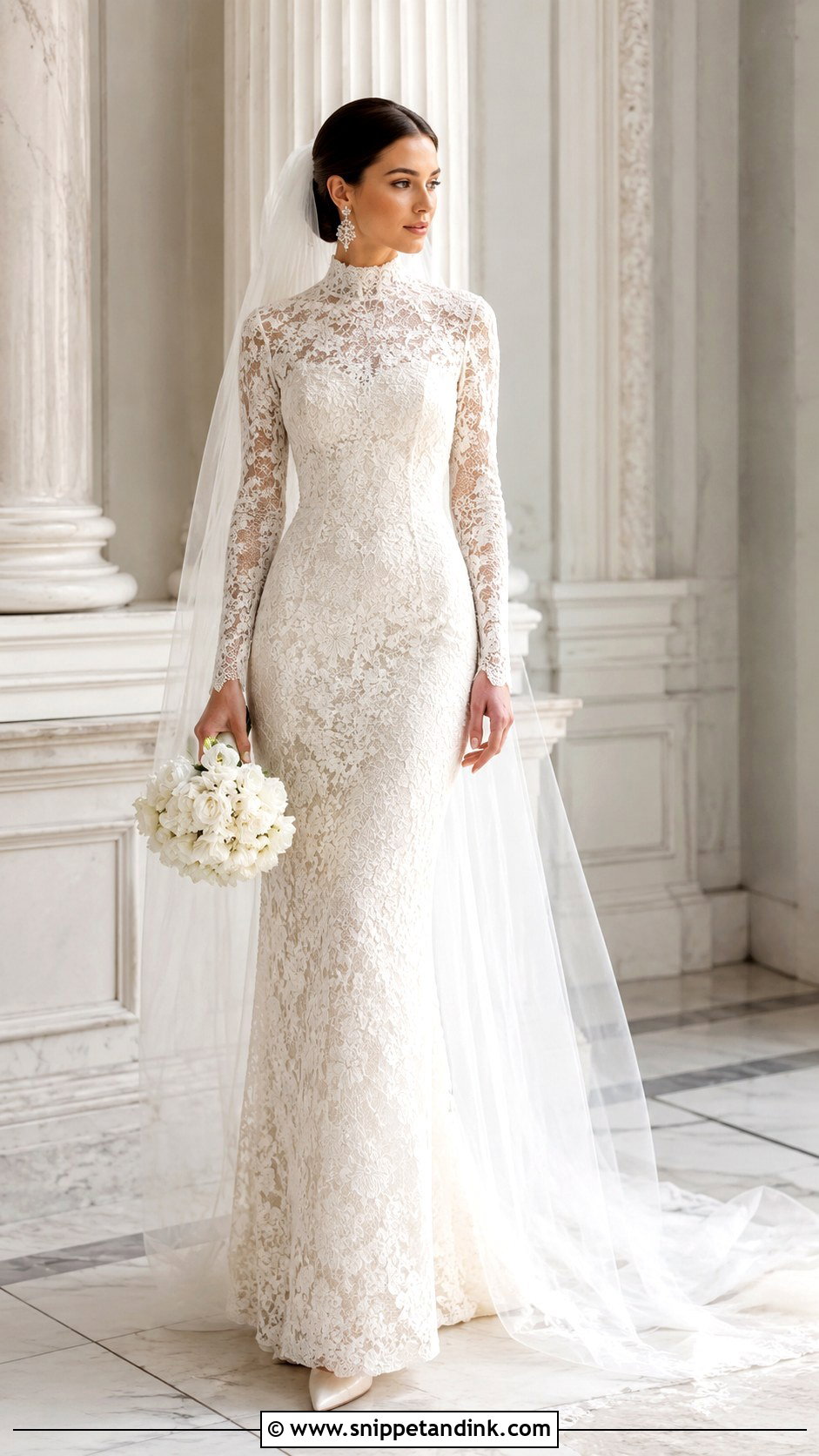
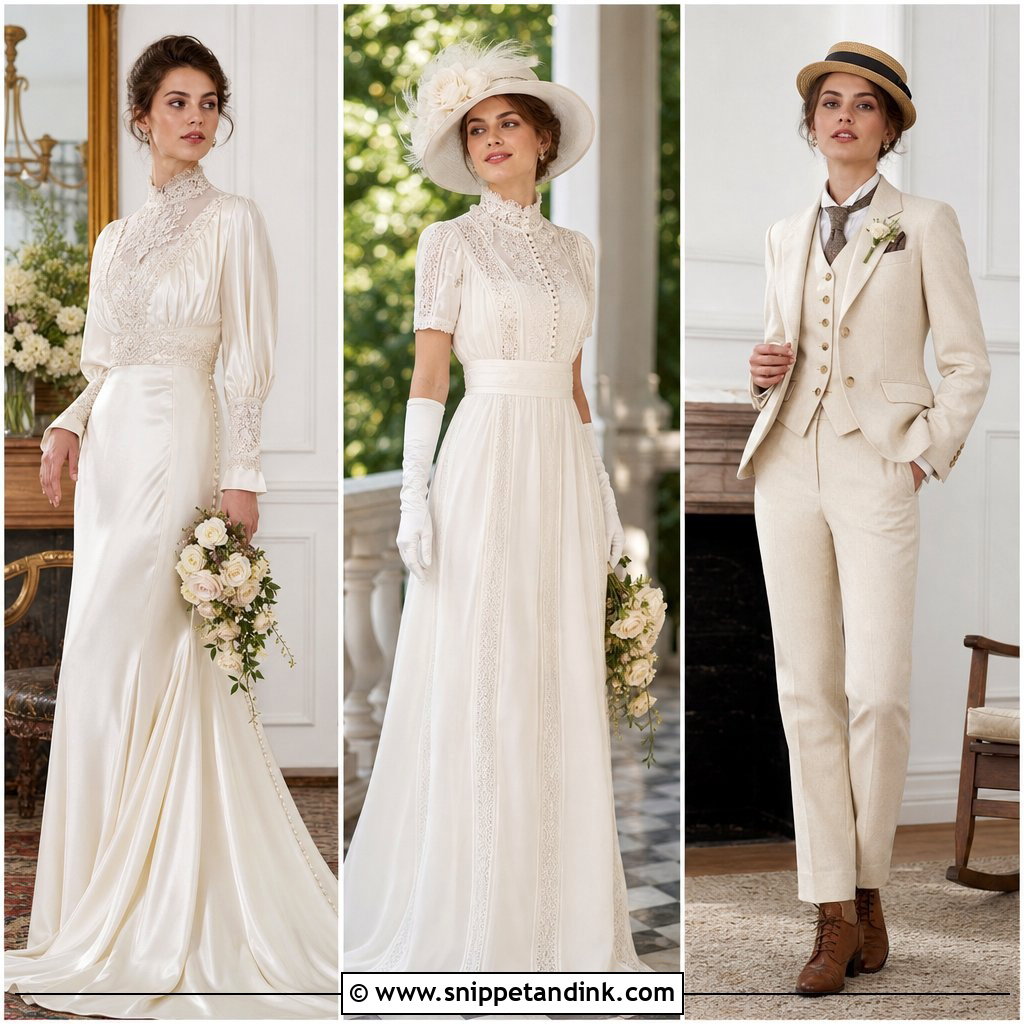
High necks feel vintage in lace, modern in crepe and soft in sheer tulle. They give coverage without losing style. A fitted version looks sleek; an A-line version feels more traditional. Skip the necklace and bring the sparkle up with earrings near the face. I always check the neckline while the bride swallows and turns her head; a high neck cut even slightly tight will be uncomfortable by the speeches.
14. Halter Neck Wedding Dress
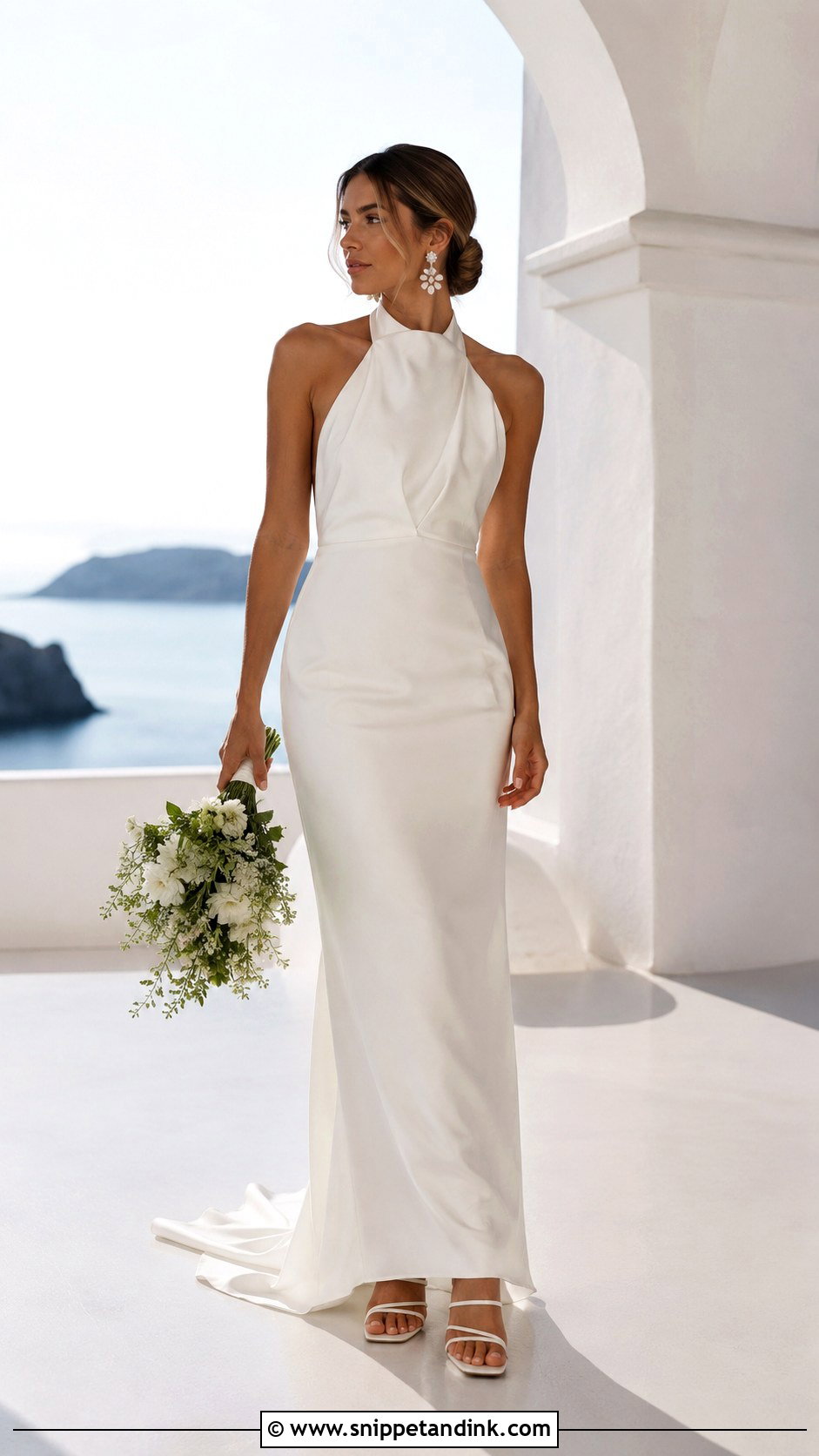
Shoulders take the spotlight in a halter, and it brings support with a modern line. Crepe makes it sleek, satin more glamorous, lace softer. A column silhouette is minimalist; an A-line reads more classic. Wear statement earrings instead of a necklace. I’d pass on thin tie halters for a long day, since they dig into the back of the neck; a wider band spreads the weight.

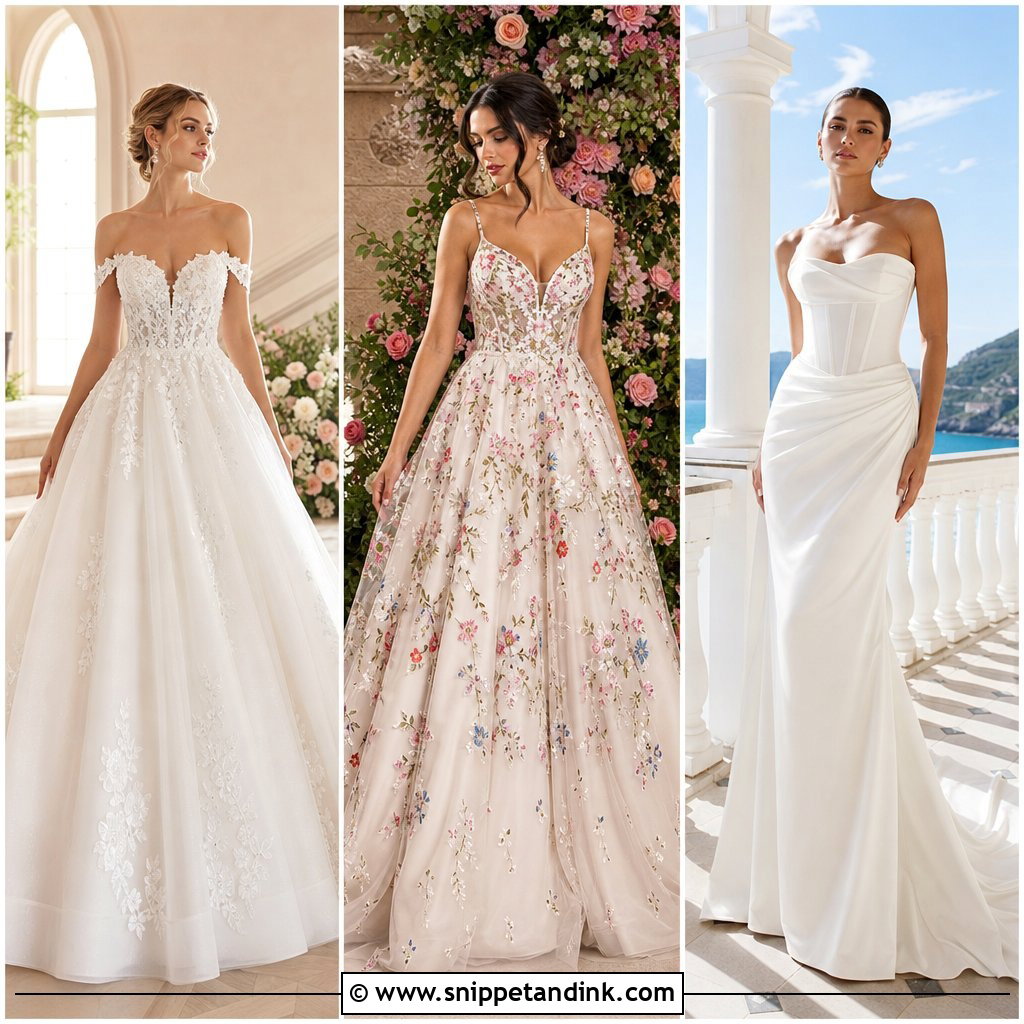

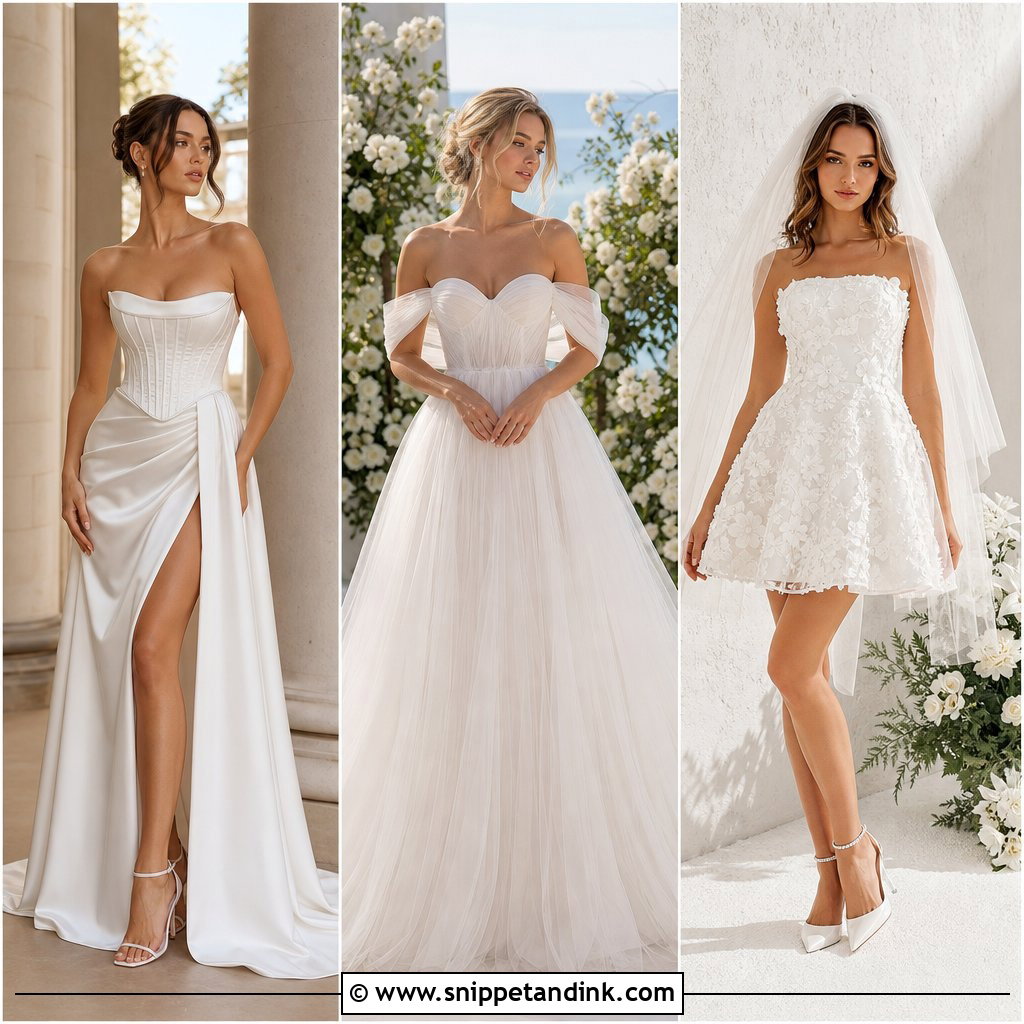
15. Corset Bodice Wedding Dress
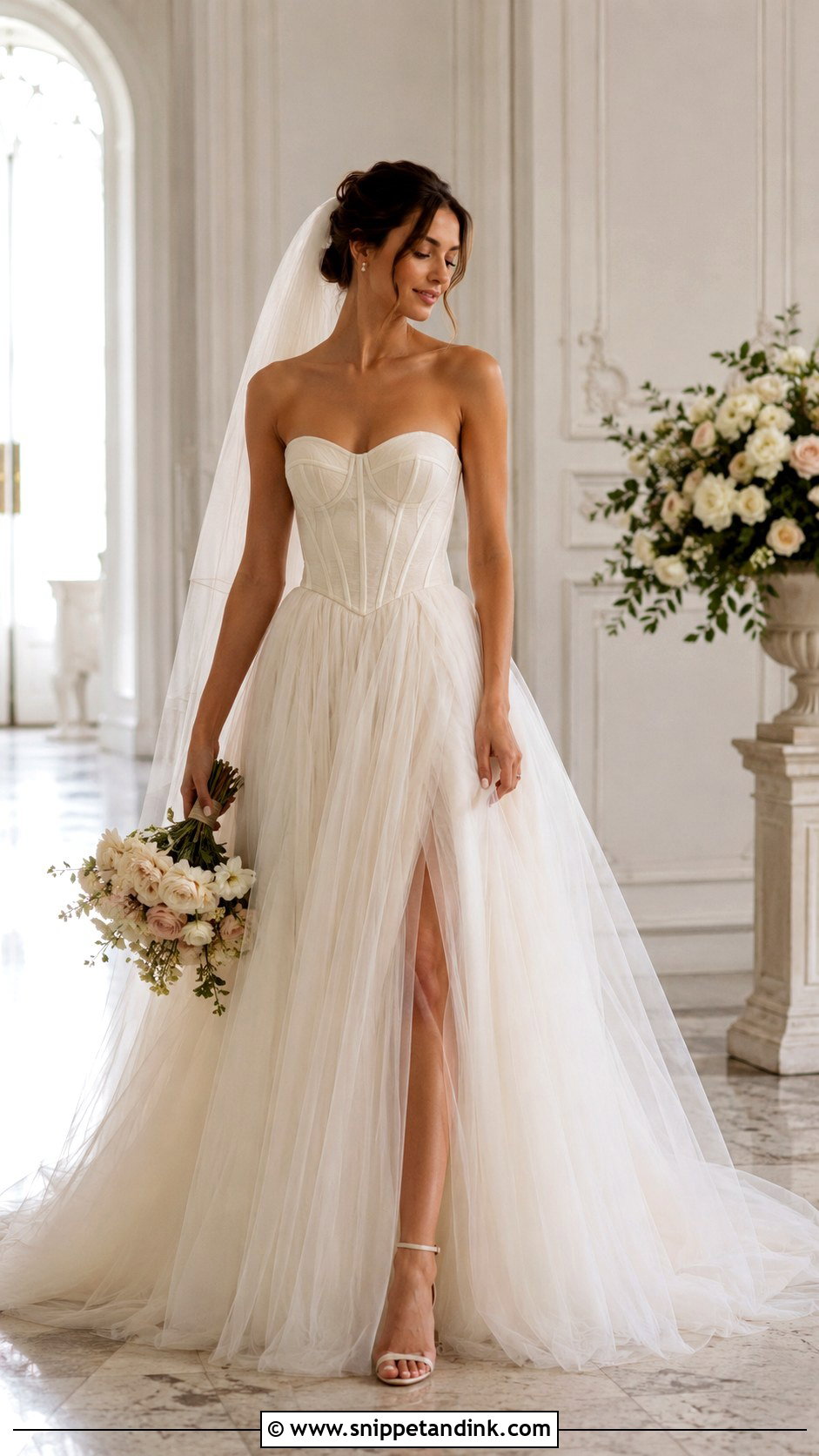
A corset bodice defines the waist and gives strong support, with boning that can be visible, hidden under lace or finished with a softer lining. The skirt has to balance it: full tulle for a dreamy look, fitted crepe for something modern. If the bodice is sheer or heavily detailed, ask about lining options. When I lace one up, I leave a finger’s width of give at the ribs so the bride can eat dinner and breathe through her vows.
16. Tulle Princess Wedding Dress
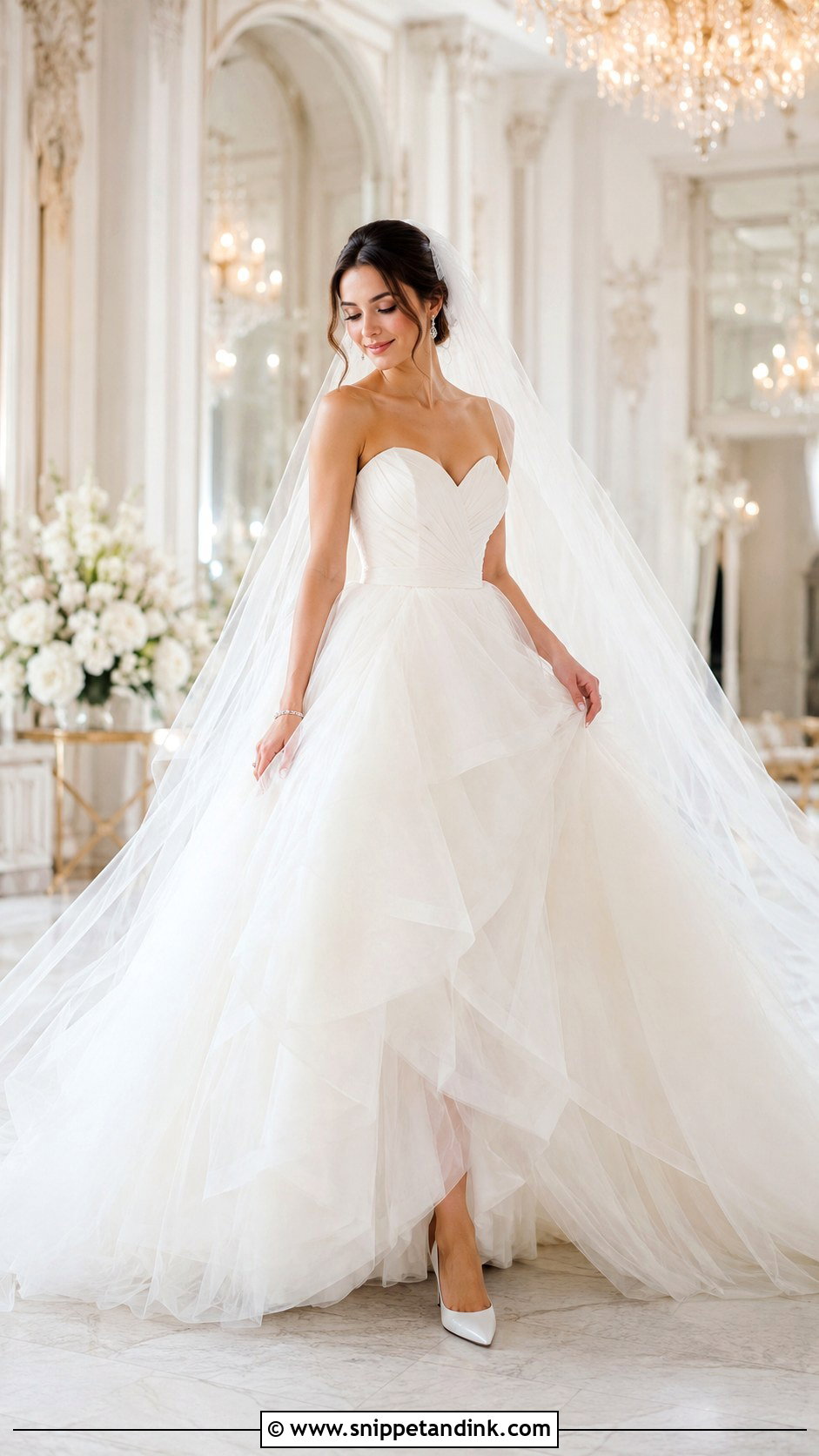
Volume without weight is the appeal of a tulle princess wedding dress. Layers of tulle feel lighter than they look, though a very full skirt still takes up a car seat and a doorway, so plan how you’ll travel in it. A fitted bodice, sweetheart neckline or delicate straps balance the skirt. Sparkle tulle glows softly; plain tulle stays classic. Keep the bouquet compact and the earrings dainty.
17. Satin Slip Wedding Dress
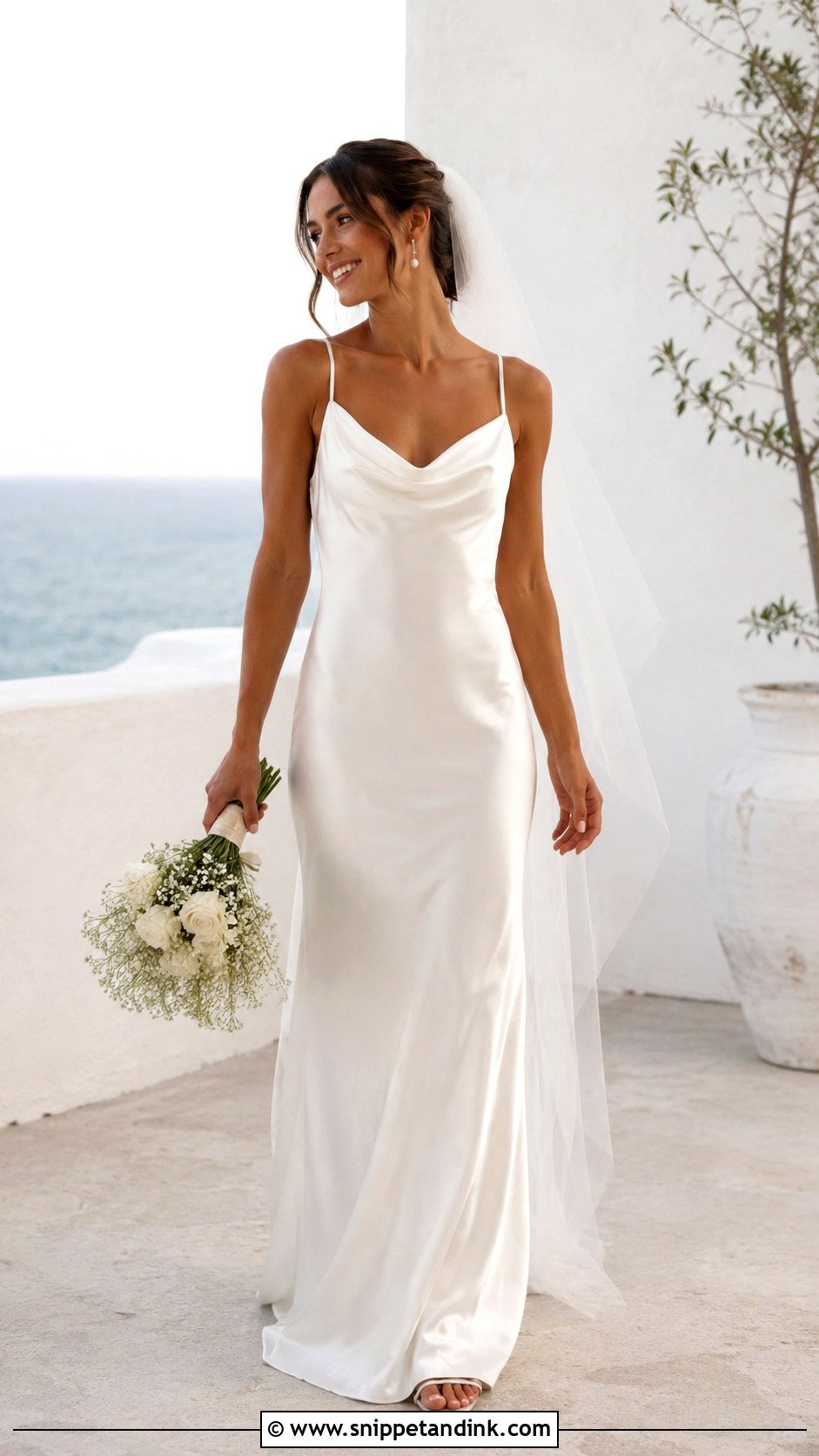
A satin slip skims rather than shapes, for brides who don’t want a structured gown. It suits beaches, small ceremonies, courthouses and modern receptions. Simple dresses show every flaw in the fabric, so buy the best quality you can and check it under daylight. A cowl neck, bias cut or fine straps make it graceful. Bias-cut satin also creases quickly when you sit, so I tell brides to expect soft lines across the lap by evening and not to worry about them.
18. Tea Length Wedding Dress
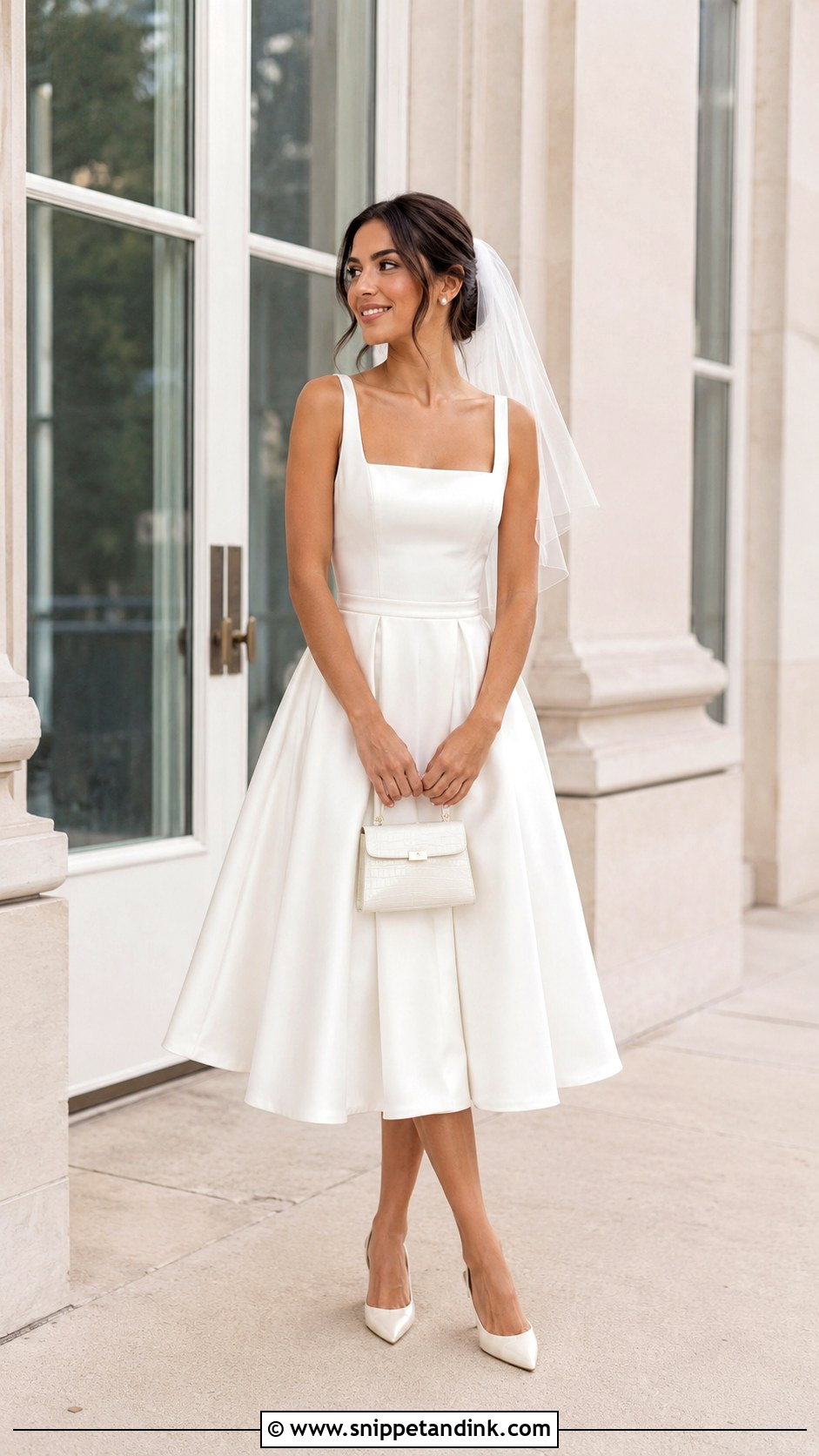
Tea length is the most practical hem I style. It lands between knee and ankle, so walking, dancing and showing off your shoes are all easy. Courthouses, garden parties and brunch receptions suit it. Satin looks polished, lace romantic, tulle softer. The shoes become part of the look, so slingbacks or pointed pumps deserve real thought, along with a short veil and a structured mini bag.
19. Wedding Dress With Detachable Overskirt
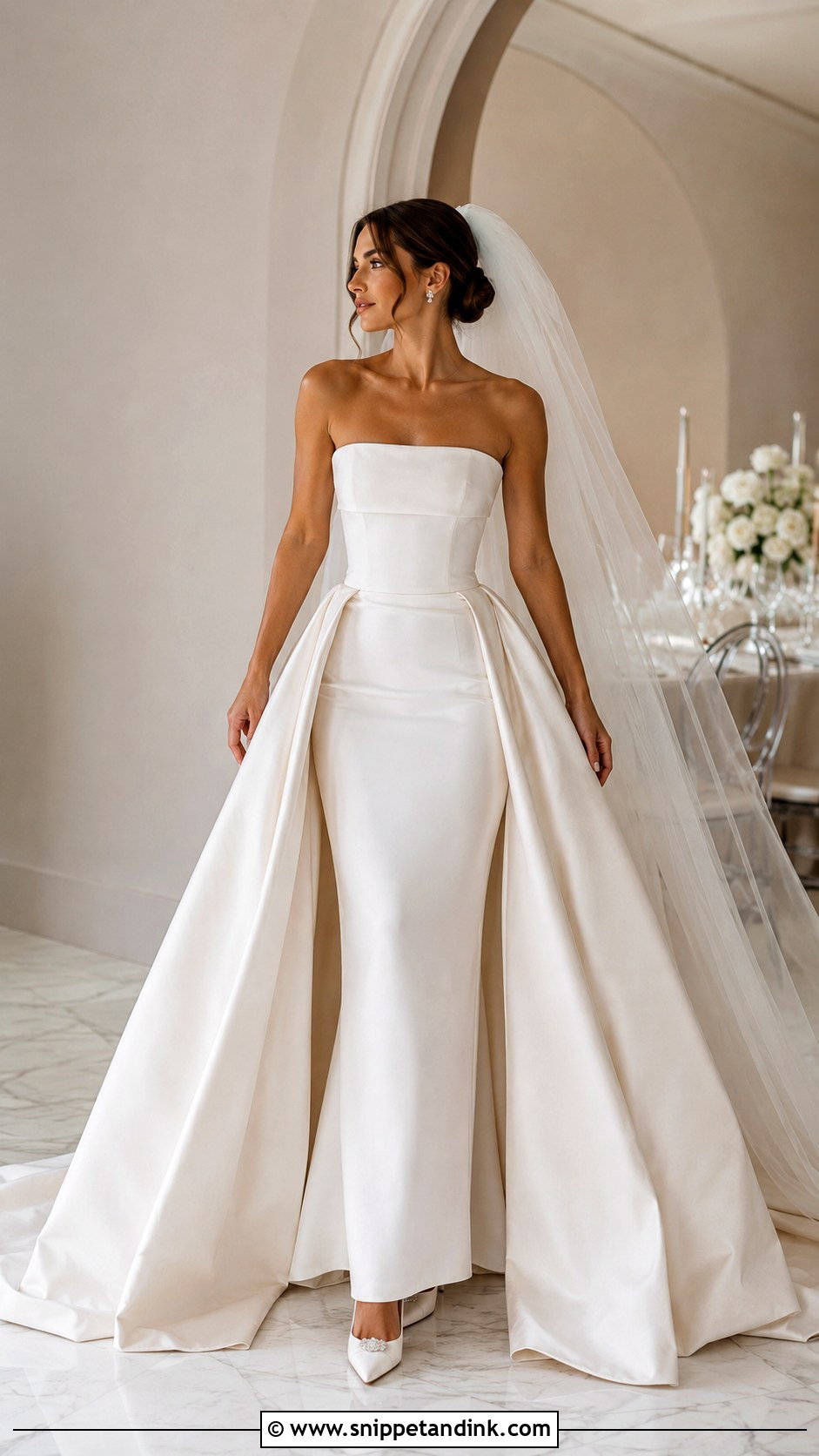
With a detachable overskirt you get two looks without a full change: volume for the ceremony, a slimmer line for dinner and dancing. It works over fitted crepe, lace or satin. The detail I check is the closure. Hooks or snaps should sit hidden under a waistband, and someone in your party needs a practice run at removing it quickly. Pick heels and jewelry that suit both versions.

20. Wedding Dress With Cape
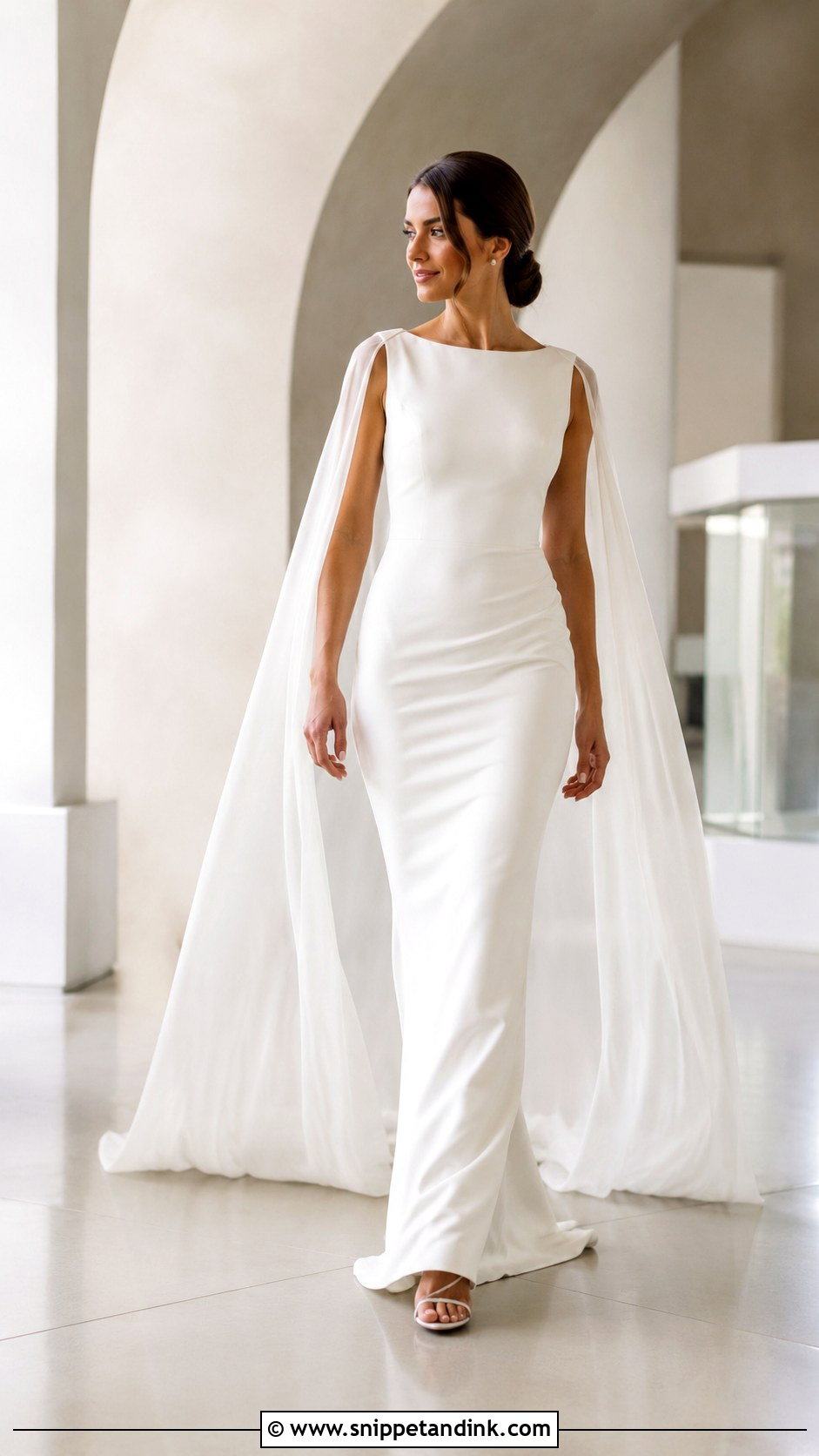
A cape can replace a veil, add shoulder coverage and move as you walk. Sheer tulle reads soft; crepe or satin looks architectural. Keep the gown underneath clean, a column, a fitted mermaid or a simple A-line, so the outfit doesn’t get busy. Watch the cape’s attachment point at the shoulder. If it’s anchored only with snaps, a gust at an outdoor ceremony can pull it sideways, so I prefer it stitched or looped.
21. Wedding Dress With Puff Sleeves
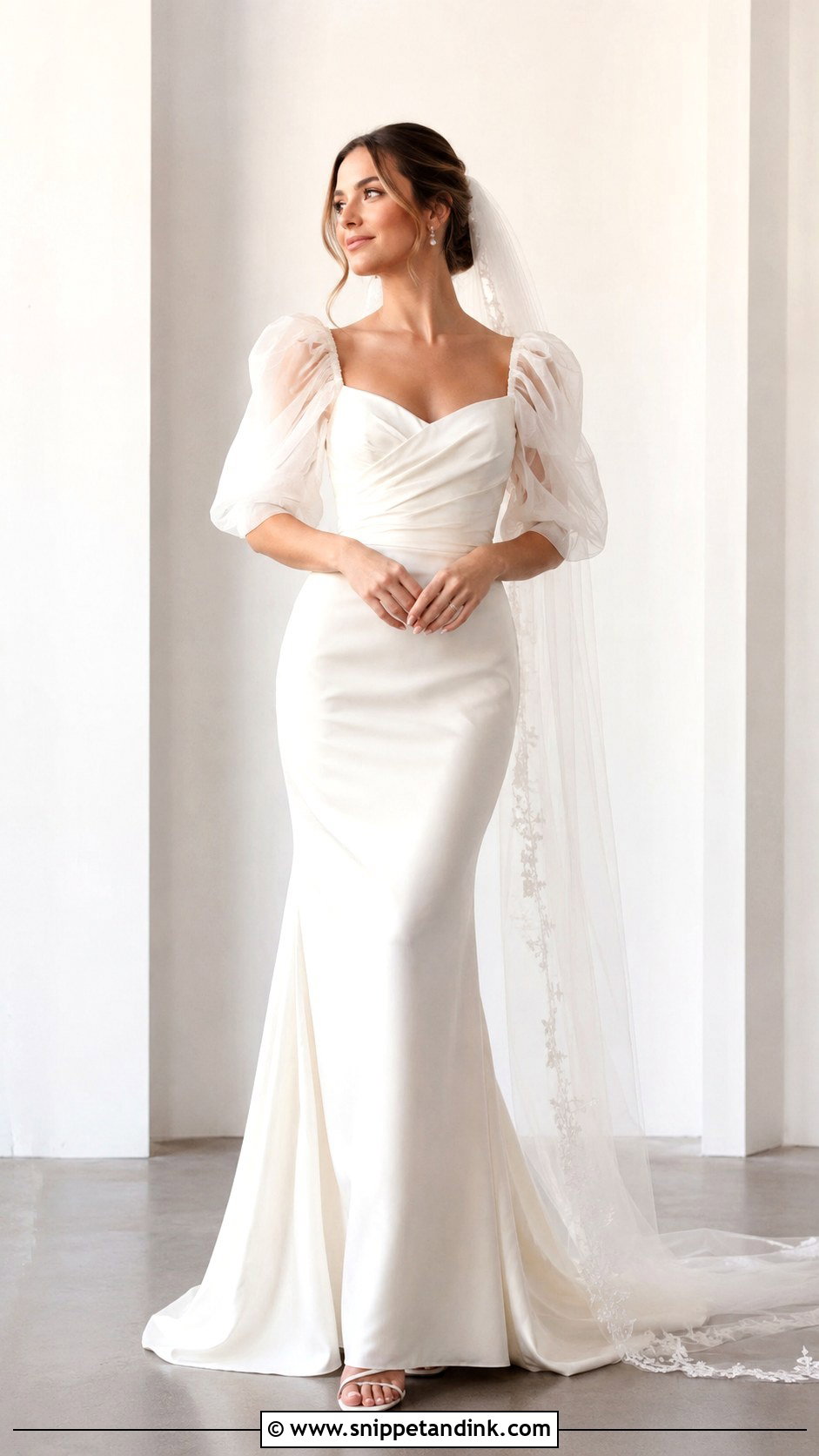
Puff sleeves bring volume and personality, soft and sheer or structured in satin, sometimes detachable. They need a balanced gown: a slim skirt keeps the look modern, a full one turns whimsical. Choose a veil that falls behind the shoulders rather than over the sleeve, or it will crush the shape. Detachable sleeves let you switch to a cleaner line later in the night.
22. Two Piece Wedding Dress
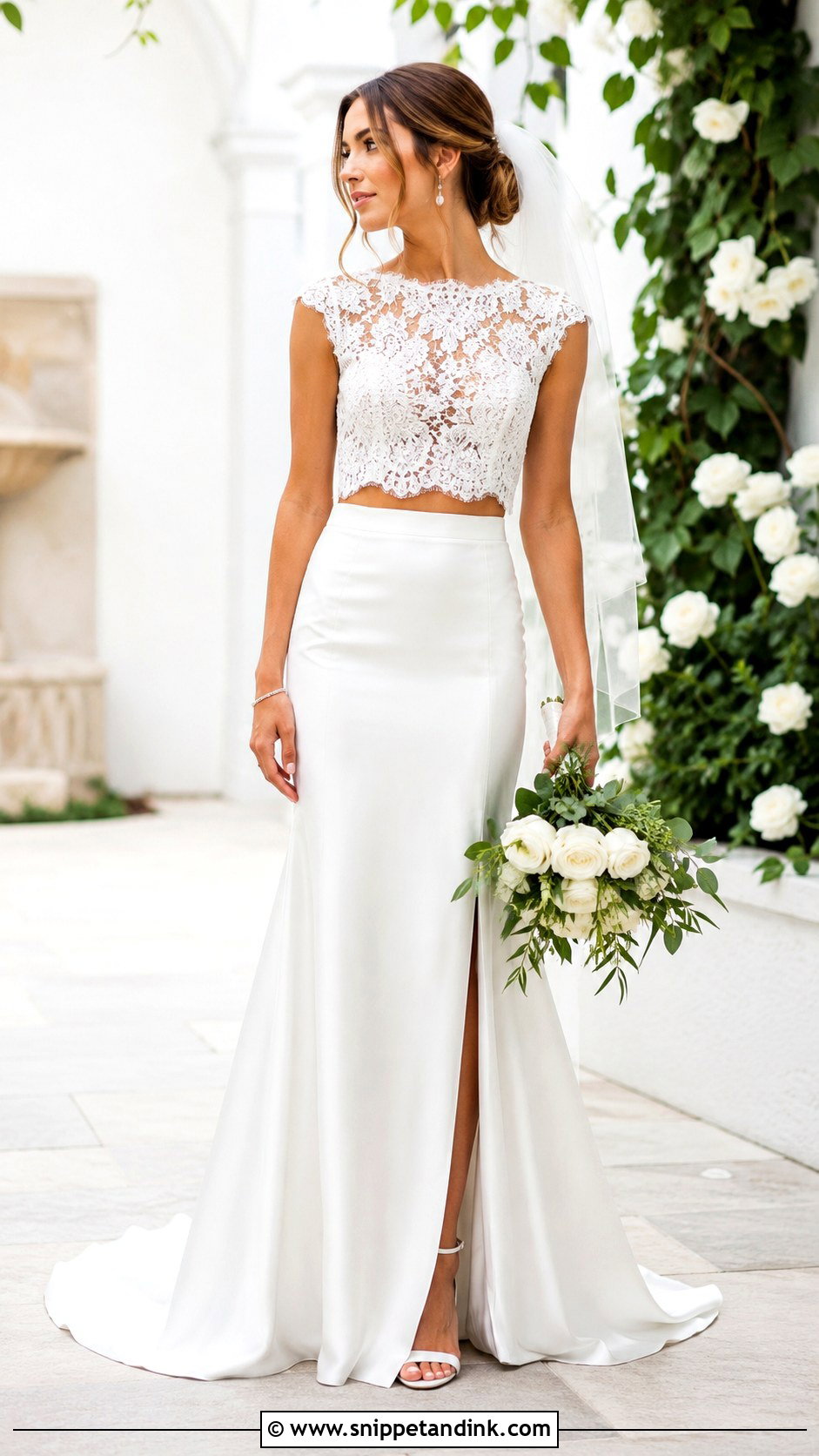
Two-piece bridal looks can mean a crop top with a high-waist skirt, a lace top over satin, or a structured bodice with a flowing bottom. The skill is making both pieces look made for each other, which usually means matching the whites carefully; two ivories from different makers rarely agree in photos. Refined fabrics keep it bridal. A bonus: you can rewear the top or skirt later.
23. Bridal Jumpsuit With Overskirt
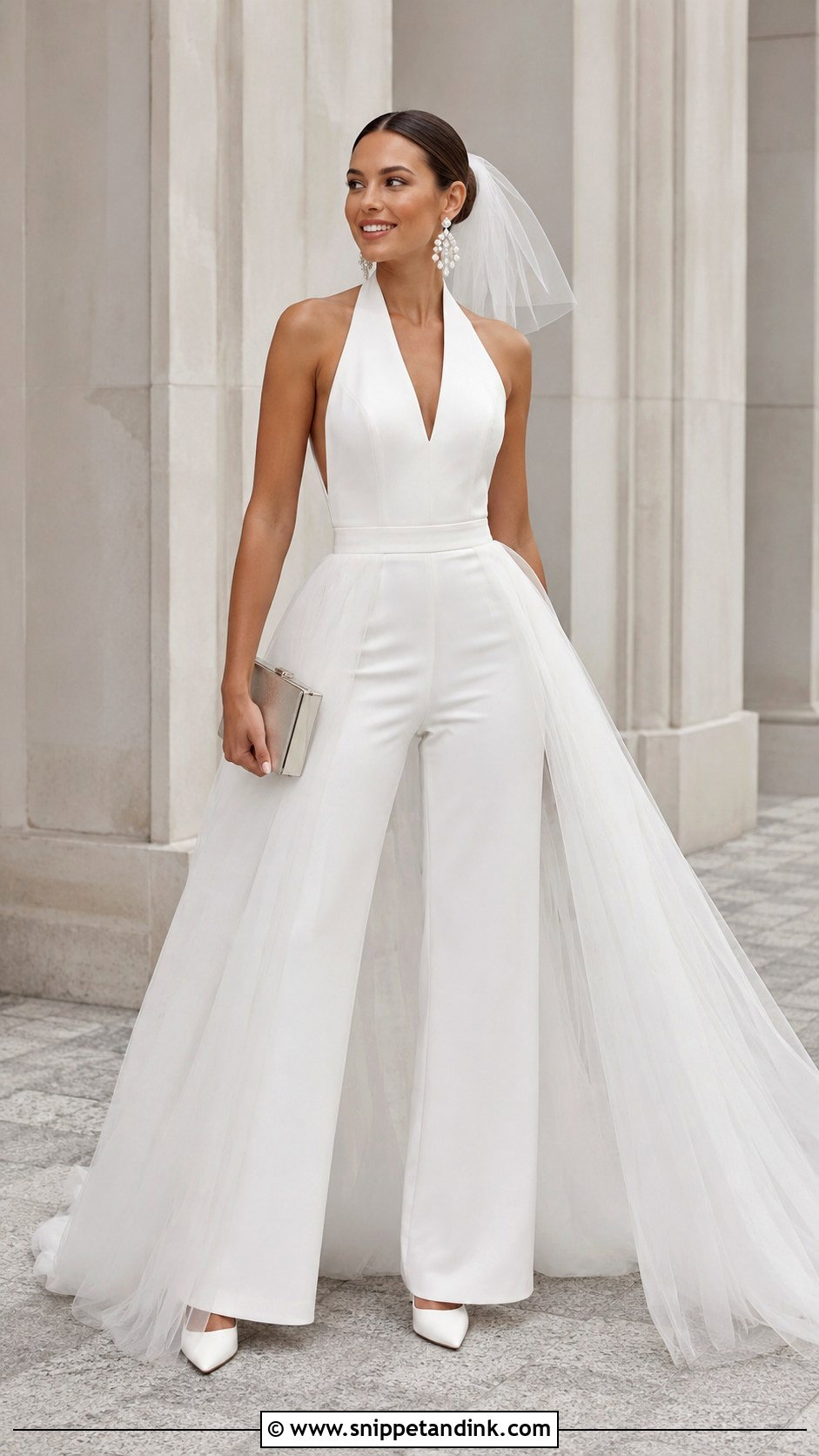
A jumpsuit gives ease of movement, and the overskirt brings ceremony drama. A tailored white wide-leg cut looks especially polished at courthouses, city ceremonies and as a second look. Add a removable tulle or satin overskirt for portraits, then take it off for the party. Get the trouser hem right for your exact heel height; wide legs that drag pick up dirt by the first drink. A short veil or cape keeps it clearly bridal.
24. Short Wedding Dress
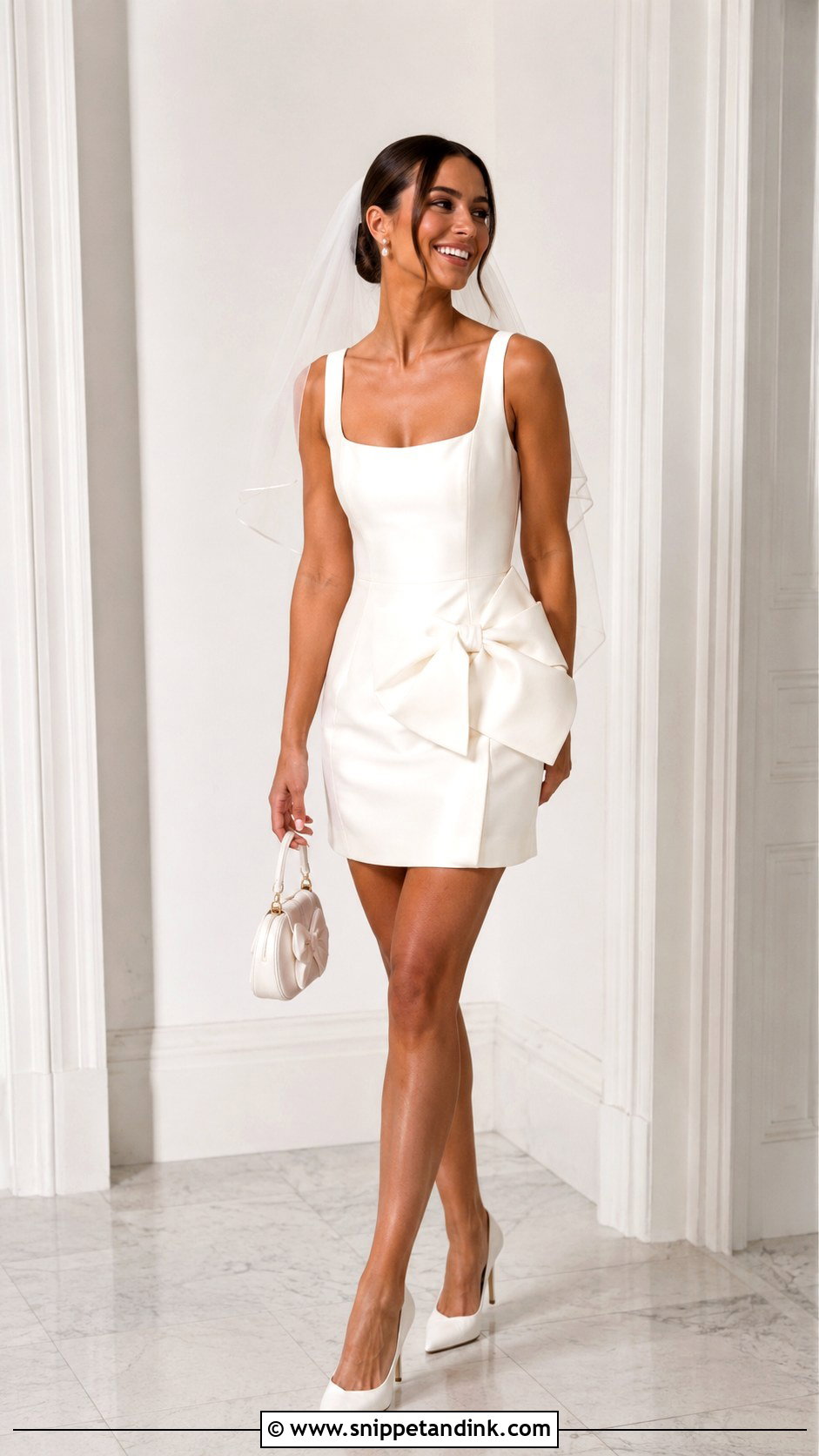
Short dresses are light and easy, whether as a courthouse dress, reception change, elopement look or after-party outfit. A structured mini looks modern, lace romantic, and a feather hem moves softly. Balance the length with polished accessories: pointed heels, pearl earrings, a small bridal bag. Sit down in it in front of a mirror before buying, since a mini that rides up on a chair will show in every reception candid.


25. Colored Wedding Dress
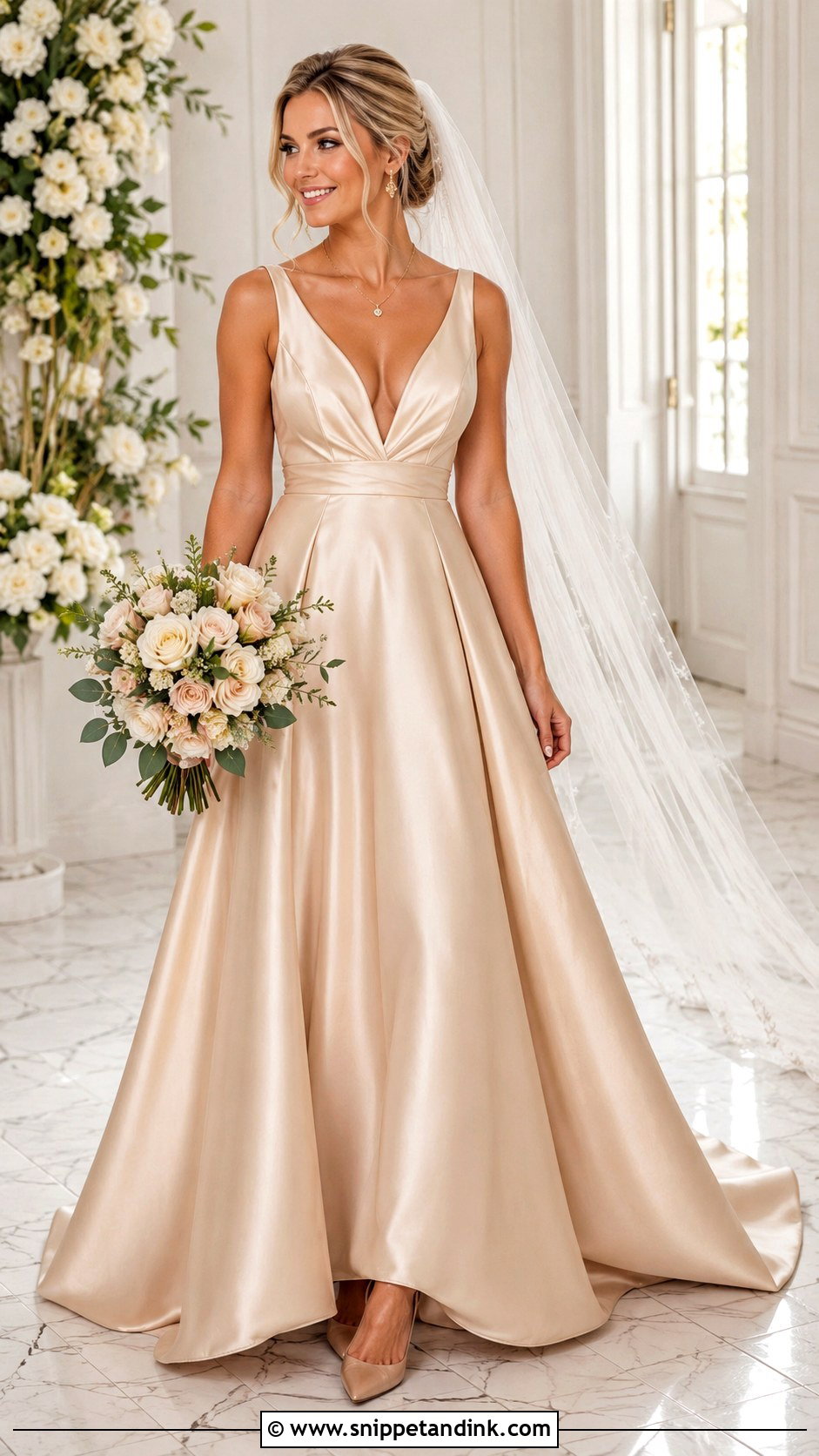
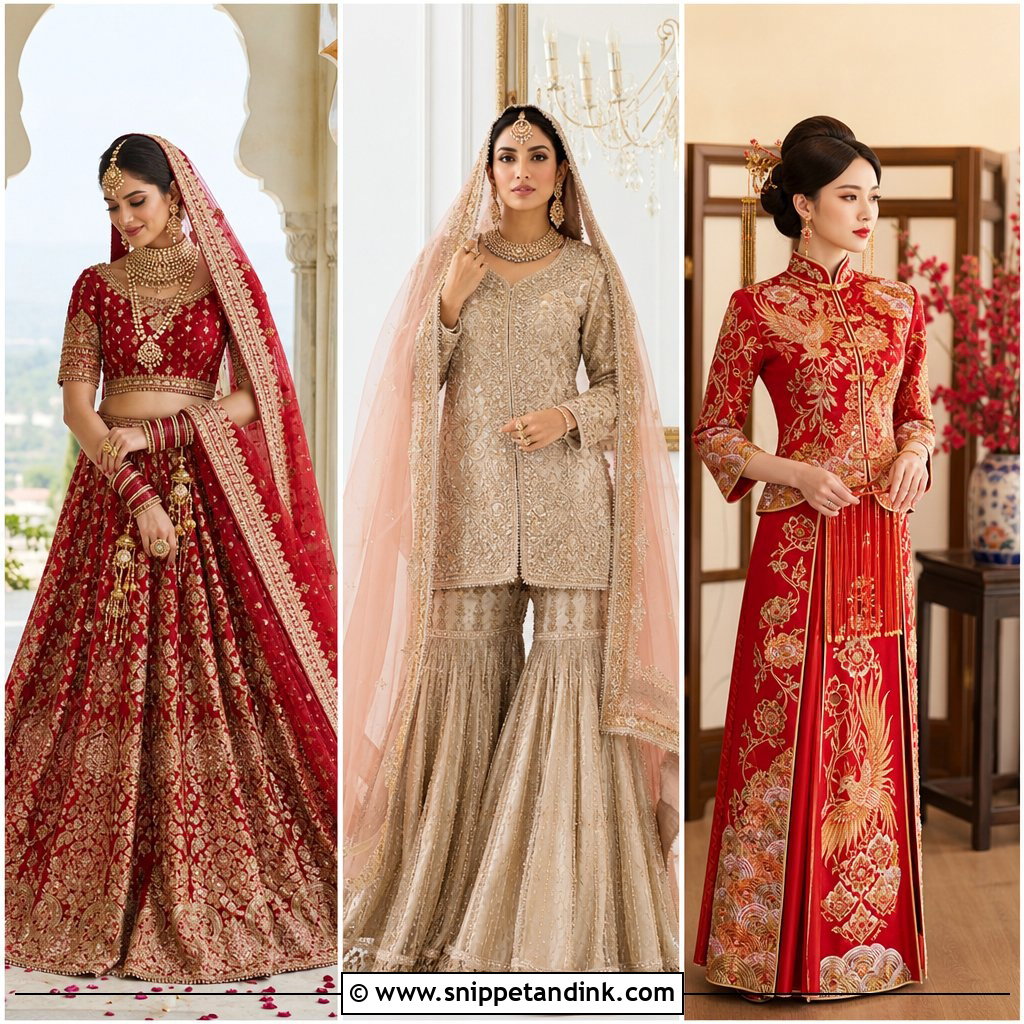
Color in a colored wedding dress doesn’t have to mean bright. Champagne, blush, pale blue, silver and warm ivory are gentle alternatives to white that add depth in photos. Champagne satin looks luxurious; blush tulle reads romantic. I hold swatches against the bride’s face near a window, because undertone matters more than shade. Keep shoes and jewelry close to the dress’s undertone.
What Happens to the Gown After Midnight
Brides plan the dress down to the last button and then forget the day after. A few decisions made early save the gown.
Bustle it before the dancing
Any train longer than a sweep needs a bustle, which your seamstress adds during alterations. Ask her to show your maid of honor how it works at the final fitting, and take a short phone video. In a dim reception room, hooks and ribbon loops are hard to find without one.
Cleaning and storage
Get the dress to a cleaner who specializes in bridal wear within a few weeks. Sugar from champagne or cake dries clear and invisible, then oxidizes and turns brown over months. Point out every spill you remember. For storage, I prefer acid-free tissue and an acid-free box kept somewhere cool, dark and dry. Avoid plastic garment bags, attics and basements, and don’t hang a heavy gown on its shoulder straps for years; the weight stretches them. Once a year, lift the lid and refold along different lines so permanent creases don’t set into the satin or lace.
One Gown, a Very Long Day, and You Inside It
The right bridal gown is the one you forget you’re wearing by the second hour. From satin ball gowns to crepe columns, lace, short dresses, color and jumpsuits, there are more directions than ever. Weigh your venue, season, how much you’ll move and how long you’ll be in it. Factor in alterations, the right underwear, shoe height and whether you want a second look. Trends can suggest a shape; your day and your body should make the decision.
You'll Like These Ideas:





Leave a Reply