
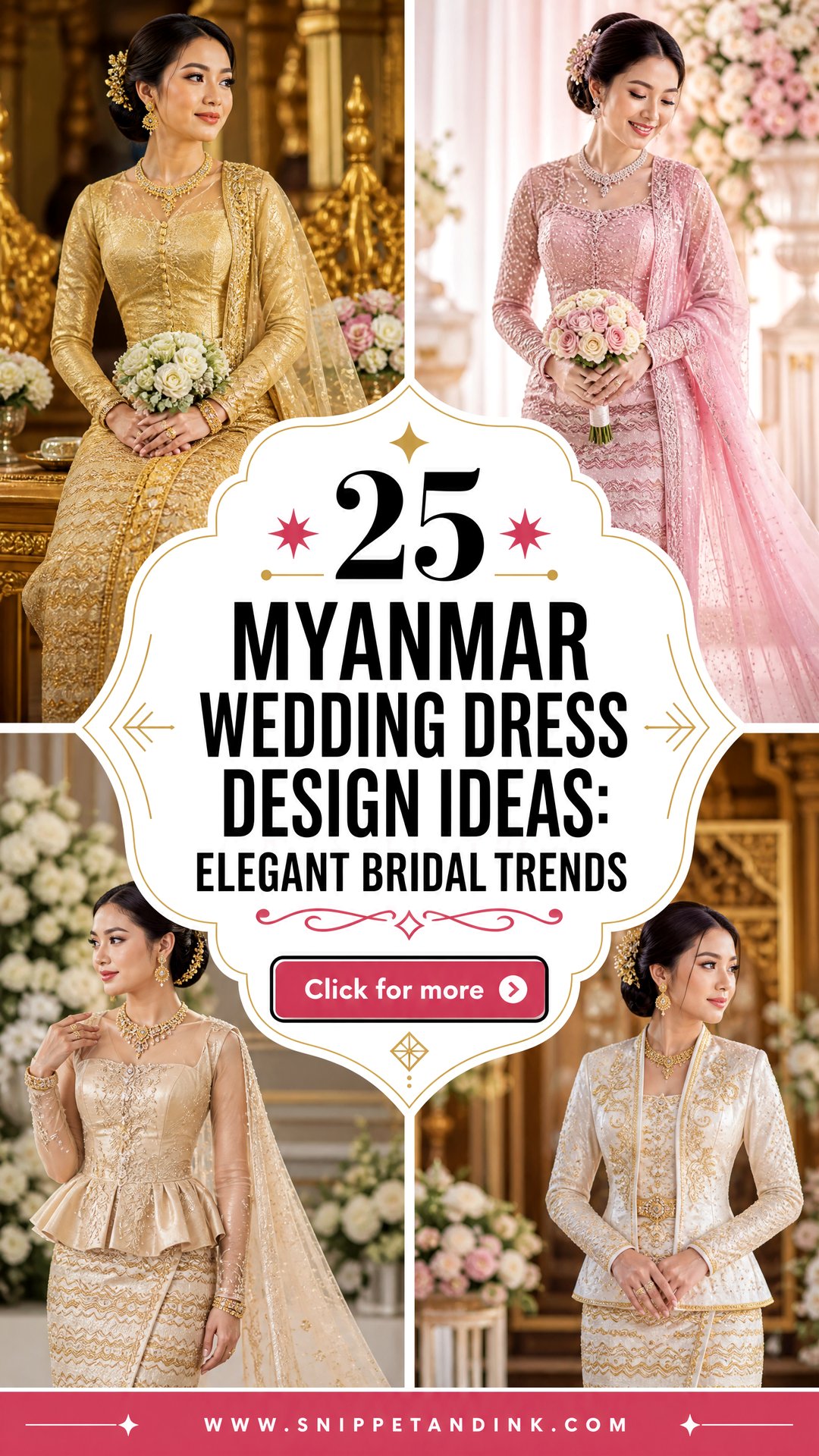
A Myanmar bridal outfit can stay fully traditional or travel a long way toward a Western gown, and the designs below cover that whole range: classic acheik textiles, fitted bridal blouses, htamein skirts, acheik gowns and fusion pieces. The longyi is everyday wear across Myanmar, but woven silk acheik is the fabric families keep for formal occasions and weddings, so most of these looks are built around it. For each one I’ve added what I’d pair with it and what I’d watch for at a fitting, with options for ceremonies, receptions, different body shapes, and brides who want heavy embellishment or almost none.
Two-Piece Set or Acheik Gown? Start With the Ceremony
Before you fall for a silhouette, I’d map out what actually happens on the day. The ceremony decides the outfit far more than any trend does.
A blessing at home or at a monastery
A traditional blouse and htamein is the natural fit. Shoulders and knees stay covered, you can kneel and bow without wrestling the skirt, and elders tend to expect it. Monasteries generally ask for covered shoulders, so an off-shoulder or sheer neckline needs at least a shawl over it.
A hotel reception as the main event
This is where gowns, mermaid shapes and trains make sense. Floors are flat, there’s room behind you for a train, and air conditioning makes heavier fabric bearable for hours.
A morning ceremony and an evening party
Couples holding both often end up with two outfits: the two-piece for the ceremony, then a gown or a detachable train later. If the budget covers only one outfit, a two-piece with a removable jacket or shawl adapts to both settings far better than a gown does.
1. Gold Acheik Myanmar Wedding Dress
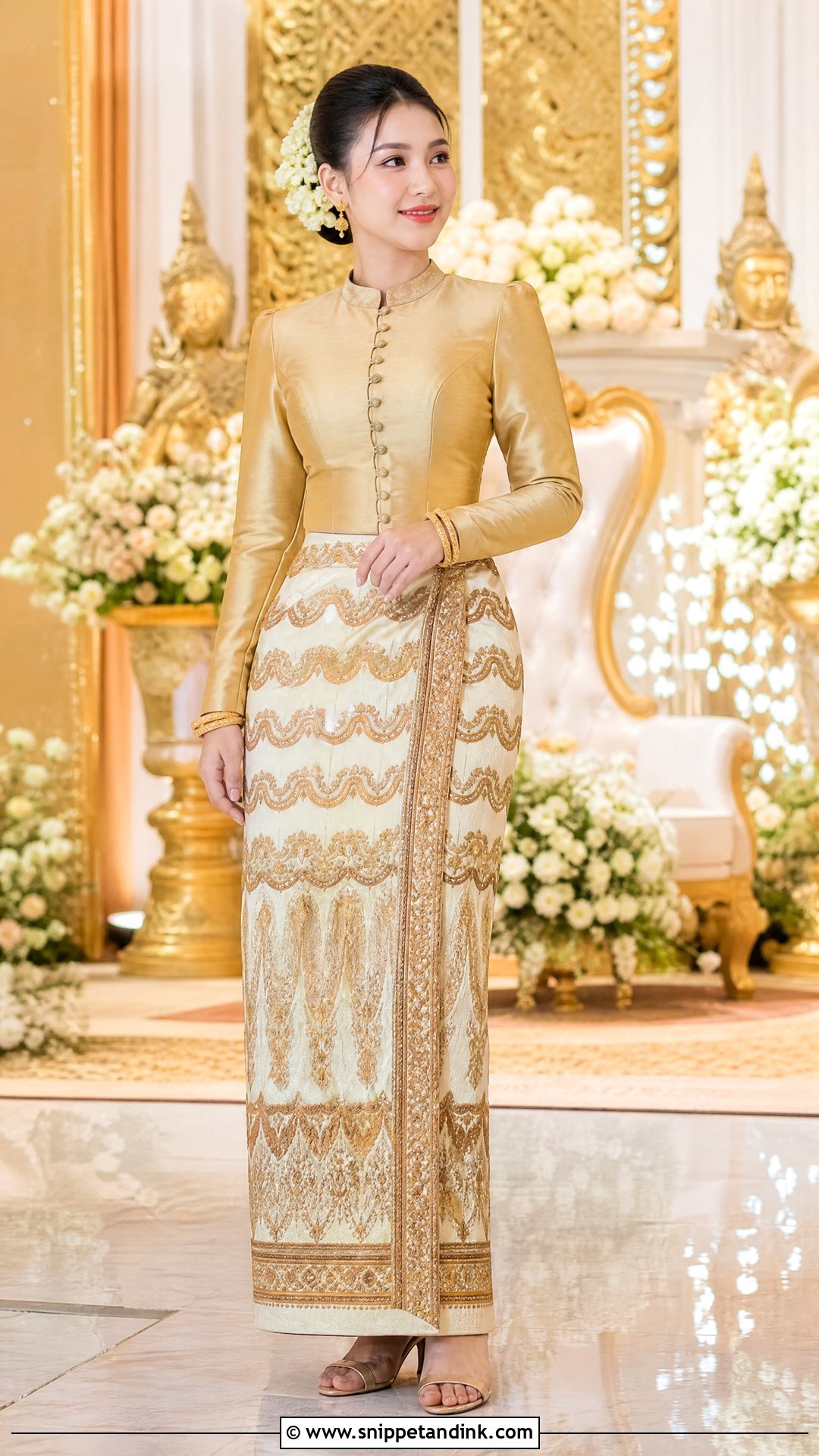
Rich gold acheik is the backbone of a traditional Myanmar bridal look, and because the woven waves are so busy, everything else has to calm down. Pair a fitted long-sleeve yinzi blouse with an ankle-length htamein running through gold, ivory and soft bronze. I keep the blouse embroidery to the neckline, cuffs and front closure only, since embroidery across the whole blouse fights the skirt. Low gold heels or decorated velvet slippers, depending on the floor, then a polished bun with jasmine and fine gold pins, a short necklace and slim bangles are all it needs.
2. Ivory Silk Myanmar Wedding Dress
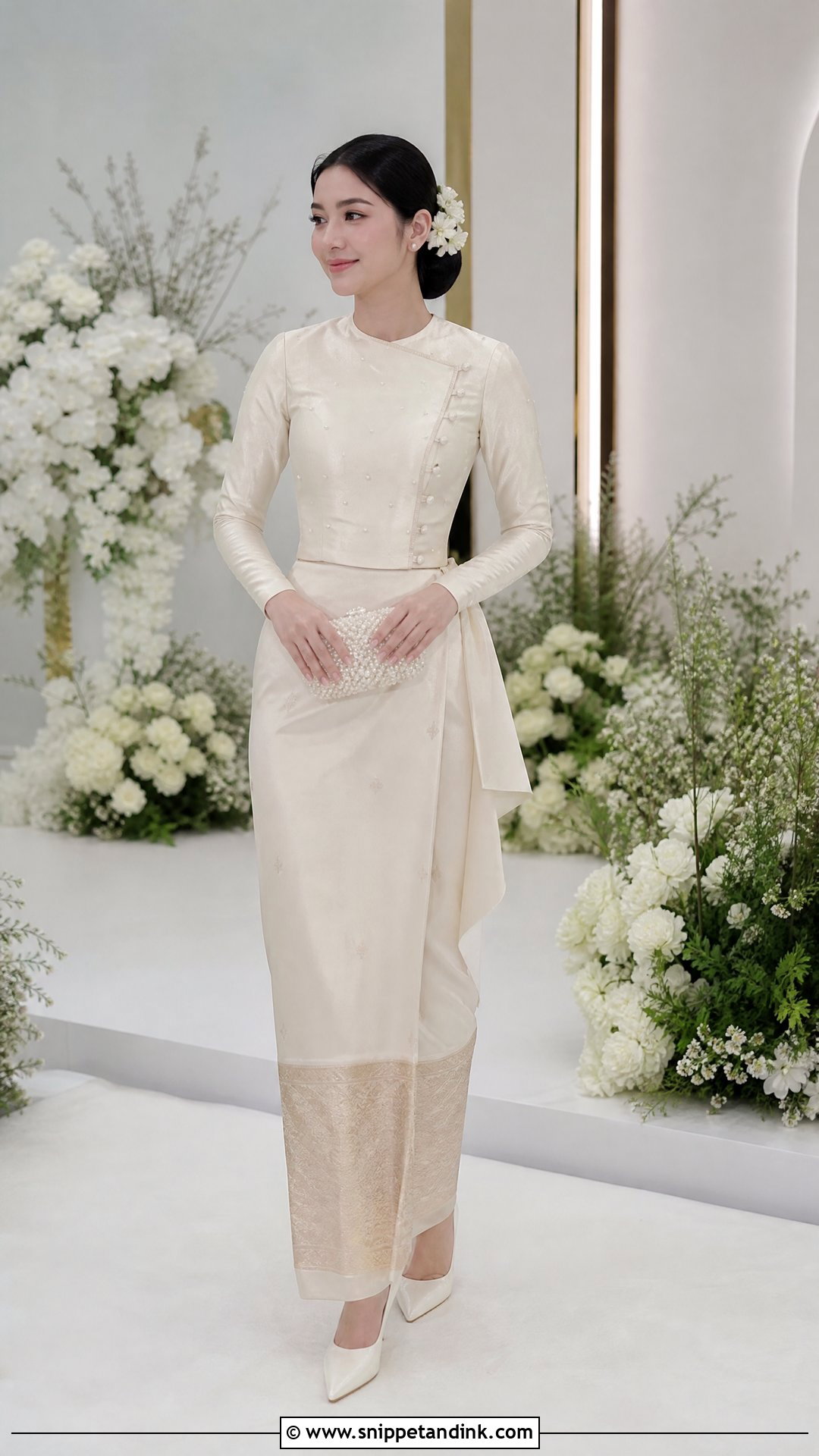
An all-ivory outfit lives or dies on texture. With no colour to look at, the eye goes straight to the finish of the fabric and the fit, so this is the look where I’d spend on better silk. A fitted yinbon blouse with side fastening, covered buttons and light pearl embroidery over a smooth ivory htamein with a champagne-gold woven border keeps everything tonal. Pointed ivory heels, a pearl clutch and a fine gold bracelet suit it, with a low chignon and white flowers. If you want more shape, a narrow embroidered waistband breaks the column without adding colour.
3. Red And Gold Acheik Myanmar Wedding Dress
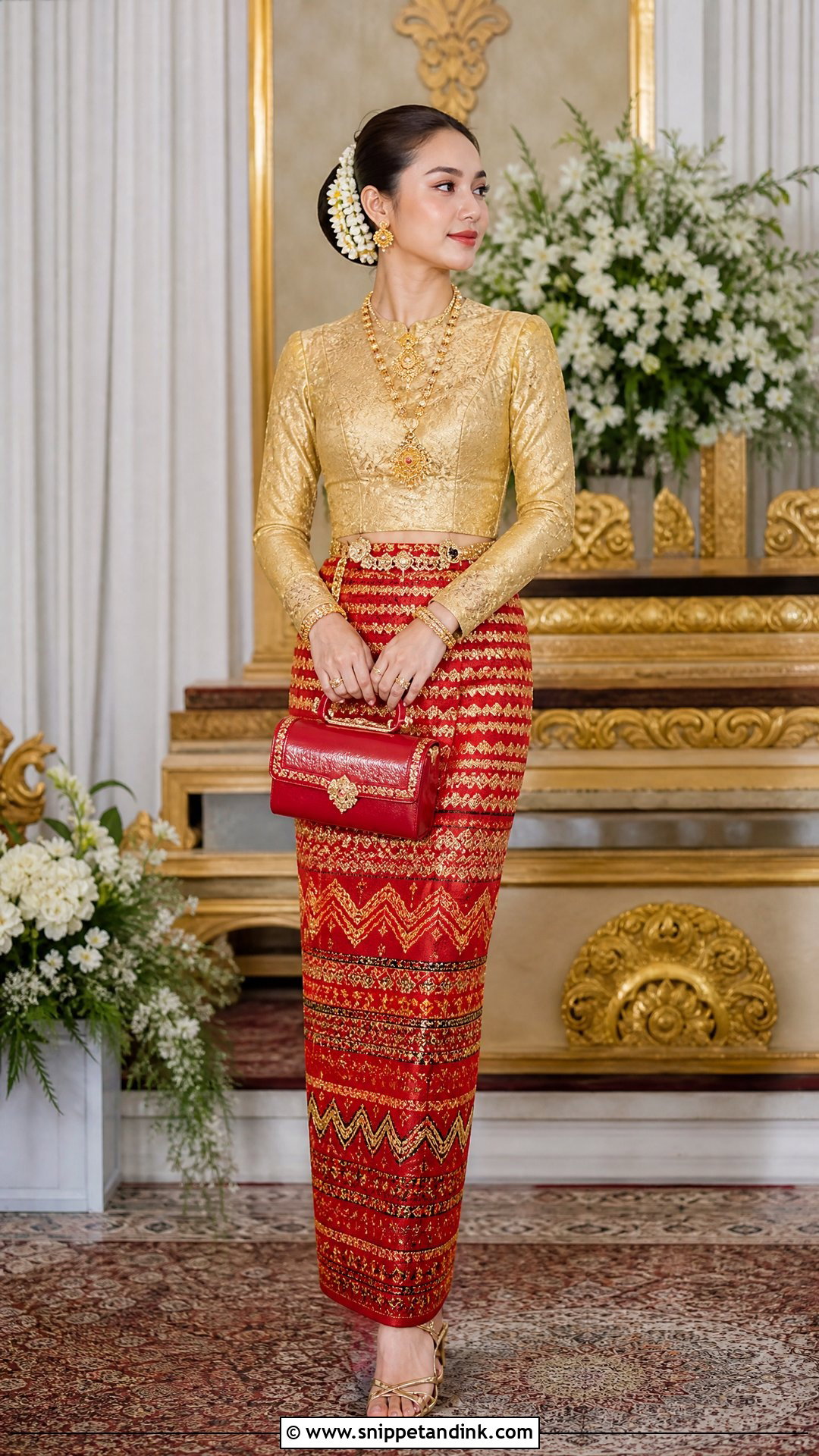
Red acheik with a gold blouse is the most ceremonial pairing here. Give the blouse a high round neckline and elbow-length sleeves, then add red piping or covered buttons so top and skirt read as one outfit instead of two separate pieces. Gold heels, a structured red handbag and traditional gold jewelry complete the palette. With this much colour, I’d keep embellishment to one zone, the neckline or the cuffs, never both. A side-parted bun with jasmine or red roses and a classic red lip suit it, as long as the lipstick shares the silk’s undertone. A blue-red lip against an orange-red htamein clashes in every close-up.
4. Blush Pink Myanmar Wedding Dress
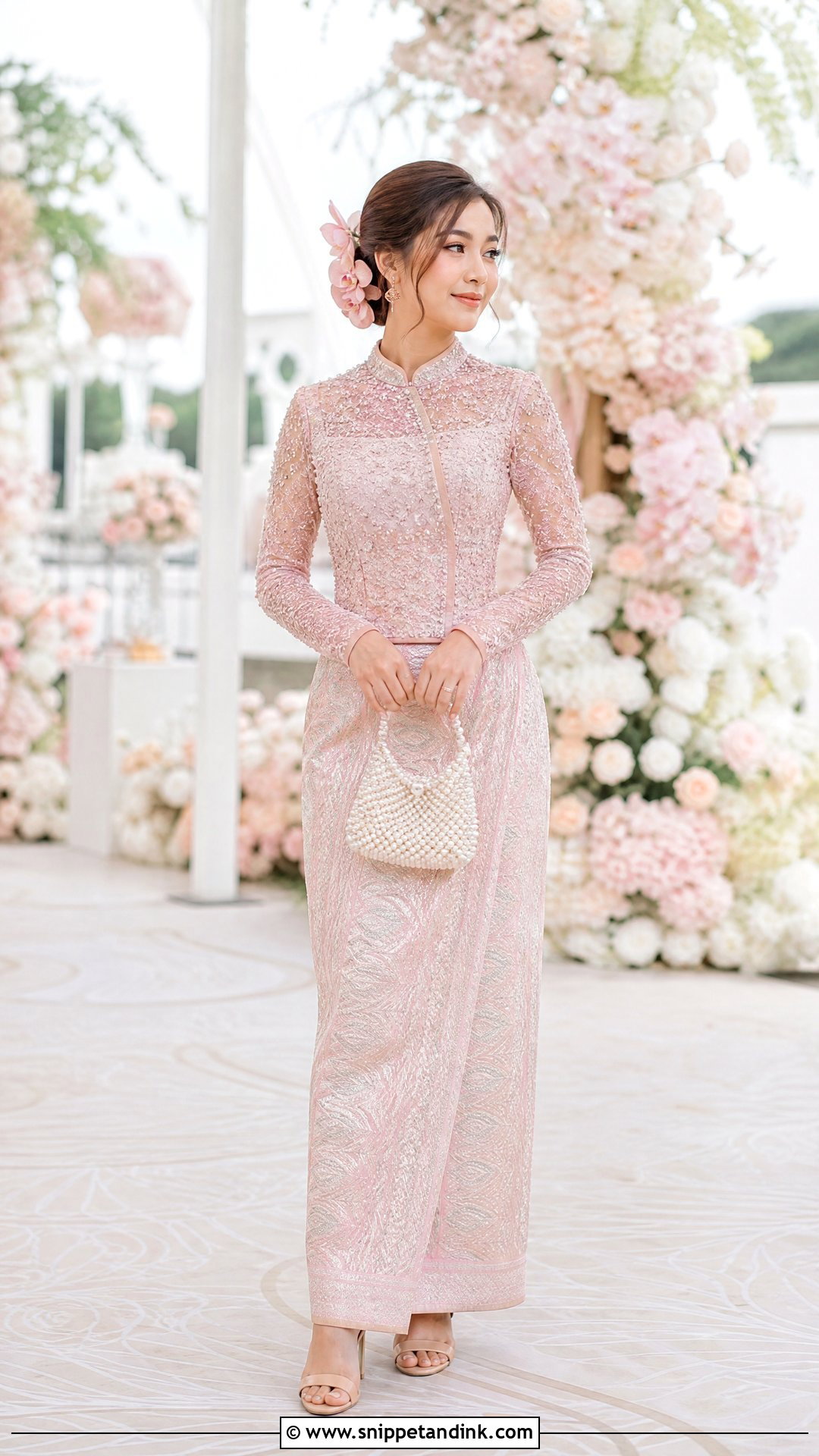
Blush is the shade most likely to go flat, so it needs layers. Start with a pale pink silk htamein carrying silver or champagne acheik, then a fitted blouse with a modest V-neck, three-quarter sleeves and pearl beadwork that thins out toward the waist. Flowers and makeup should sit in neighbouring pinks rather than the exact same one. Nude pointed heels, a small pearl bag and rose-gold earrings work, and blush orchids in a twisted bun connect the head to the outfit. A sheer embroidered shawl adds coverage for the ceremony and comes off for later photos.
5. Emerald Green Myanmar Wedding Dress
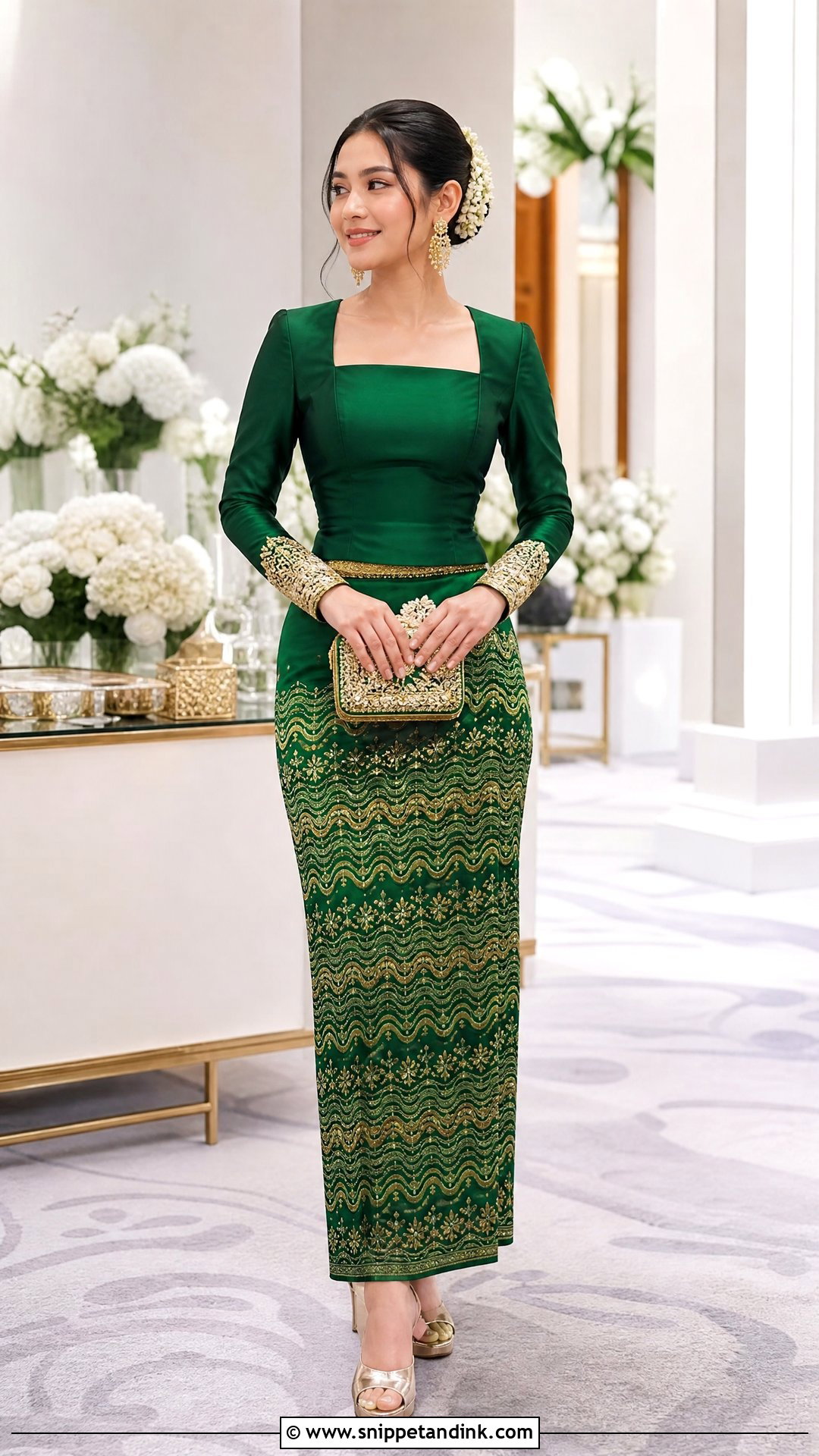
Emerald takes gold better than almost any colour, and the trick is not overdoing either one. A fitted emerald yinzi blouse with a square neckline, structured shoulders and gold cuff embroidery, over a green-and-gold acheik htamein sitting at the natural waist, is already rich. I ask brides to pick one statement piece, the necklace or the drop earrings, not both. Metallic heels and a compact embroidered clutch carry the gold down to the floor. A slightly shaped blouse hem defines the waist and still lets you lift your arms, and white flowers in a sleek bun soften the depth of the green.
6. Royal Blue Myanmar Wedding Dress
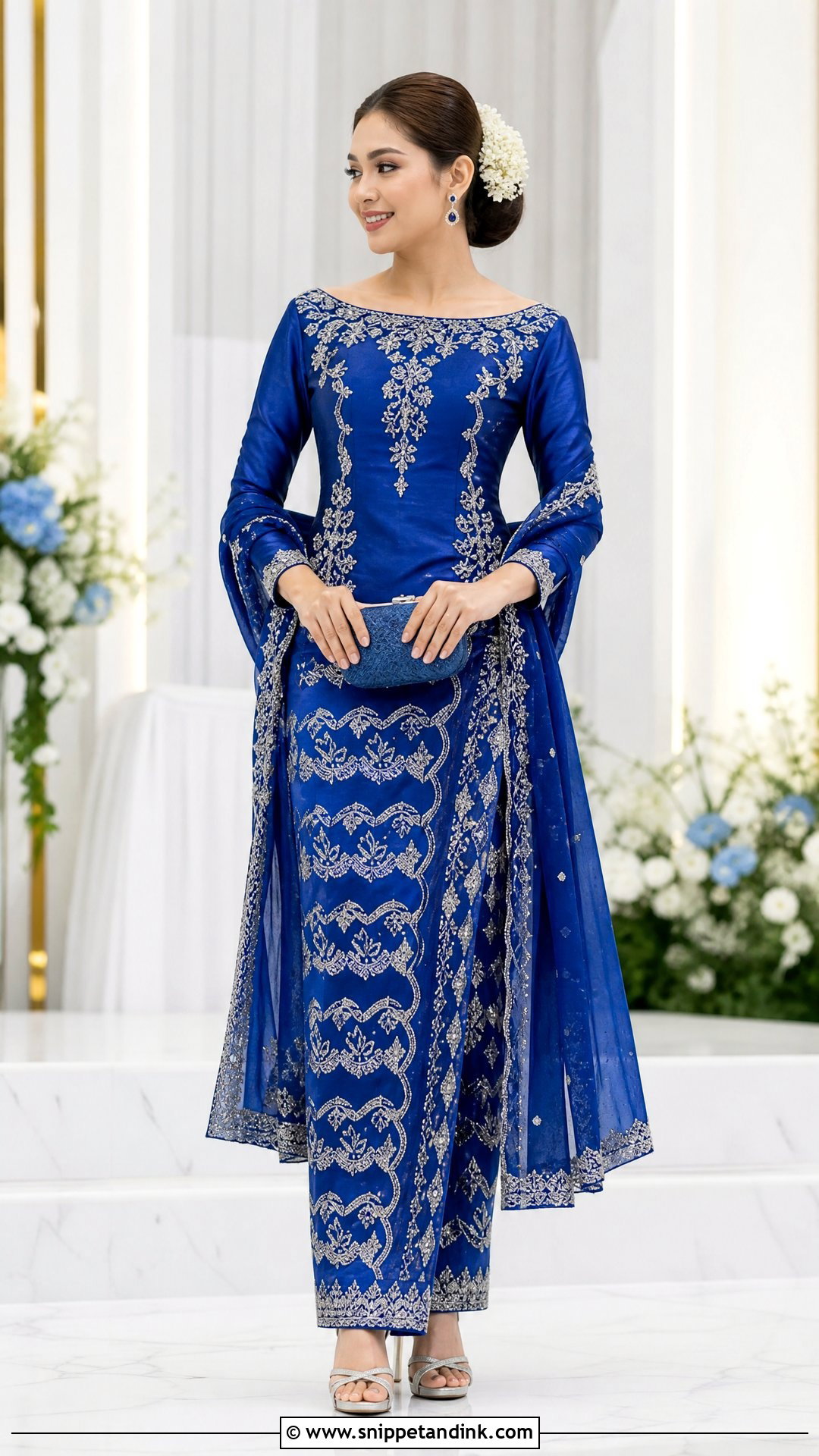
Royal blue with silver threadwork reads crisp rather than warm. A boat neckline and bracelet-length sleeves frame the face and hands, which matters more than people expect, because your hands are photographed constantly during the ceremony. Silver heels, sapphire-toned earrings and a plain blue clutch keep the metal consistent. If the htamein carries a large woven pattern, I’d hold blouse embroidery to the neckline. For a more modern shape, ask for subtle peplum seaming instead of a straight hem, and finish with a centre-parted low bun and a slim silver comb.
7. White Lace Myanmar Wedding Dress
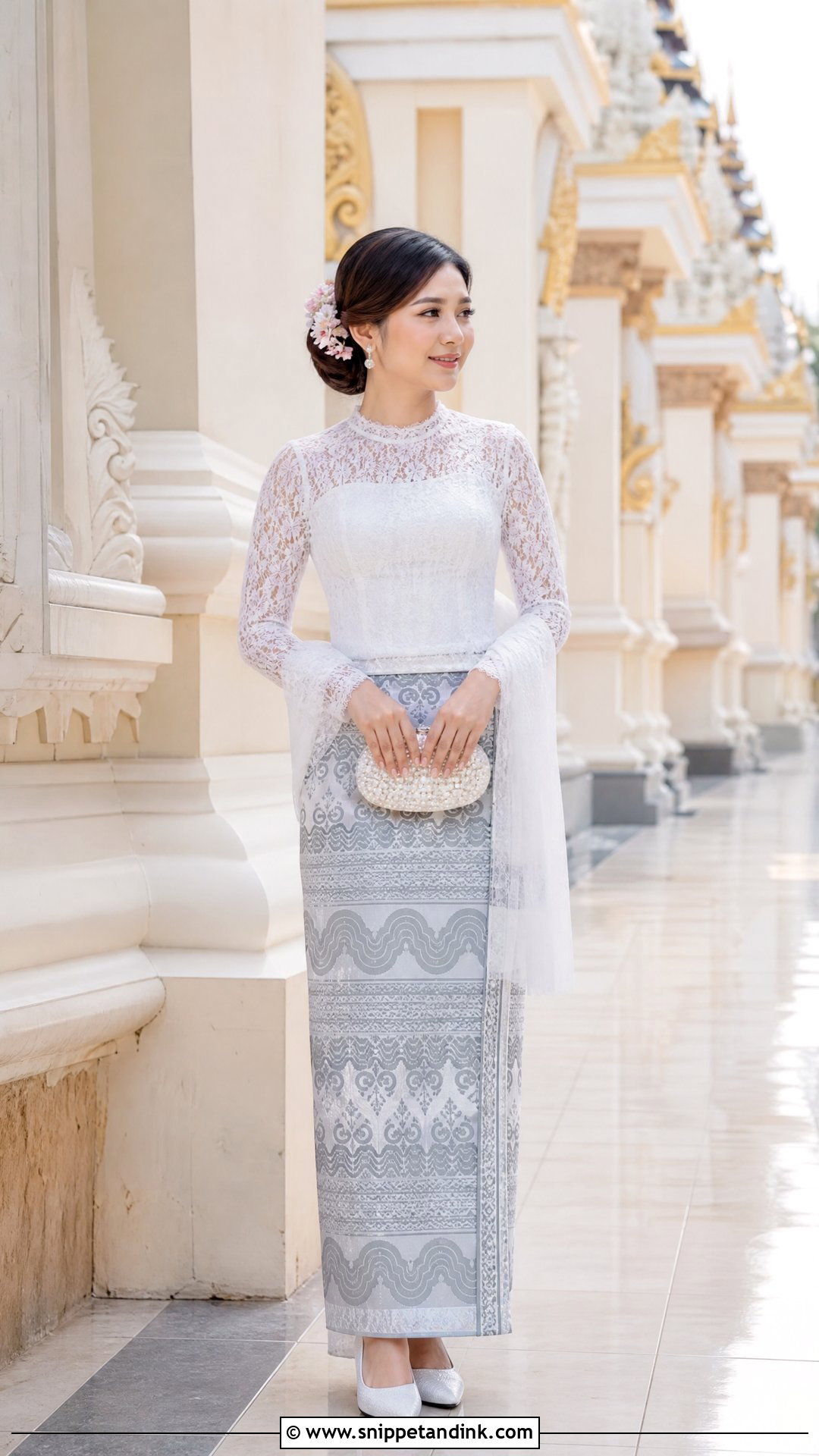
White lace over a silver acheik htamein mixes Western bridal detail into a traditional two-piece Myanmar wedding dress, and it’s what I suggest when a bride wants white but her family expects the two-piece shape. Choose a lined lace blouse with a high neckline, fitted sleeves and small covered buttons, and a silver-grey htamein woven with white waves. The lining should match either the lace or your skin; anything in between shows up as an odd third colour. Medium-scale lace stays readable in full-length photos, where tiny patterns blur into texture. White closed-toe heels, pearl drops and a neat bun with white flowers finish it.
8. Champagne Peplum Myanmar Wedding Dress
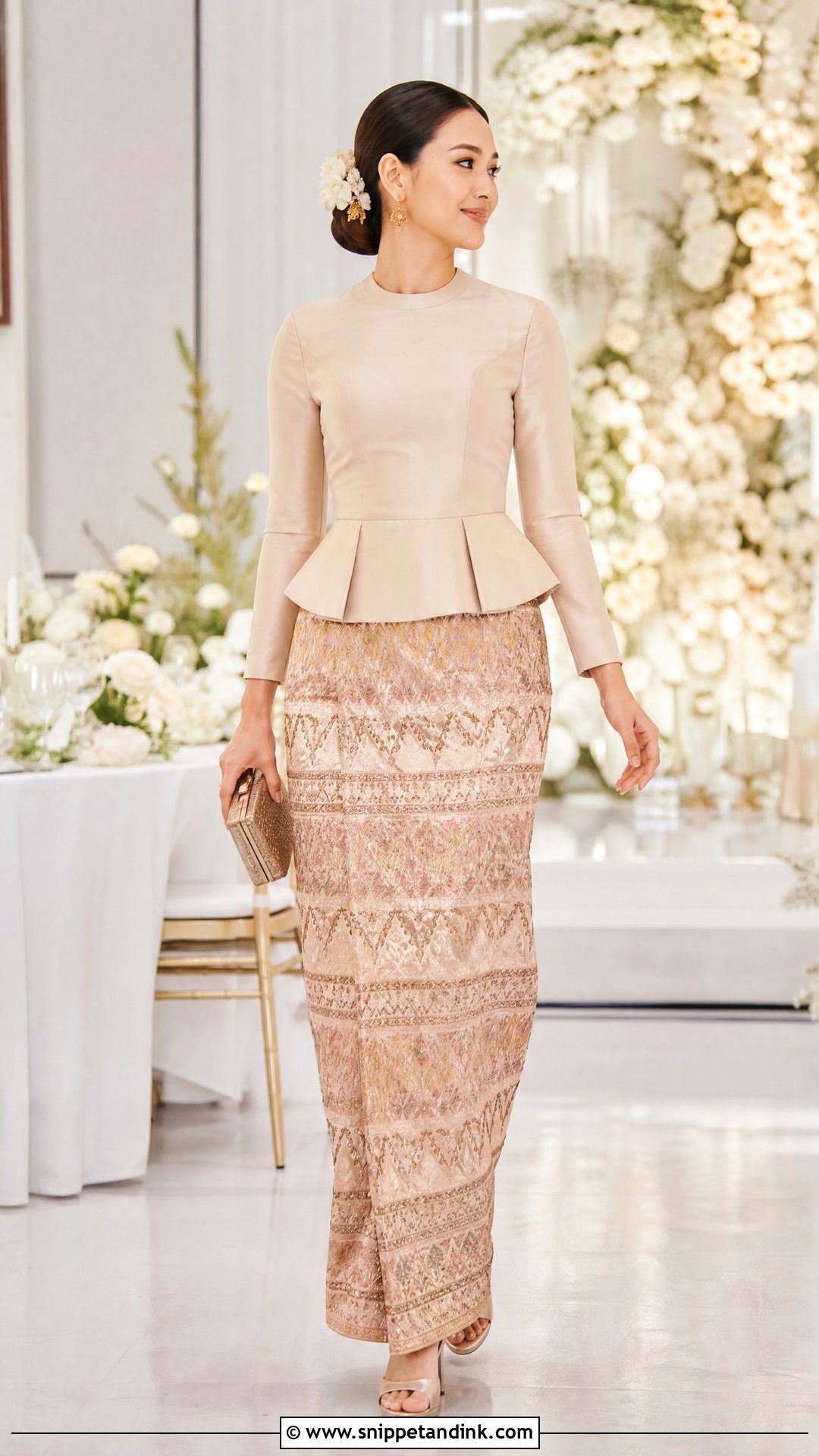
The peplum length is the whole decision here. It should end above the widest part of your hips; any lower and it adds width exactly where you don’t want it. Choose a champagne blouse with a round neckline and fitted three-quarter sleeves, and keep the peplum smooth rather than gathered, especially over a complex bronze, blush and champagne acheik htamein. Staying in that close colour family keeps the weave visible. Champagne heels, a metallic box clutch, refined gold earrings and a low bun with cream flowers pinned to one side complete it.
9. High-Neck Myanmar Wedding Dress
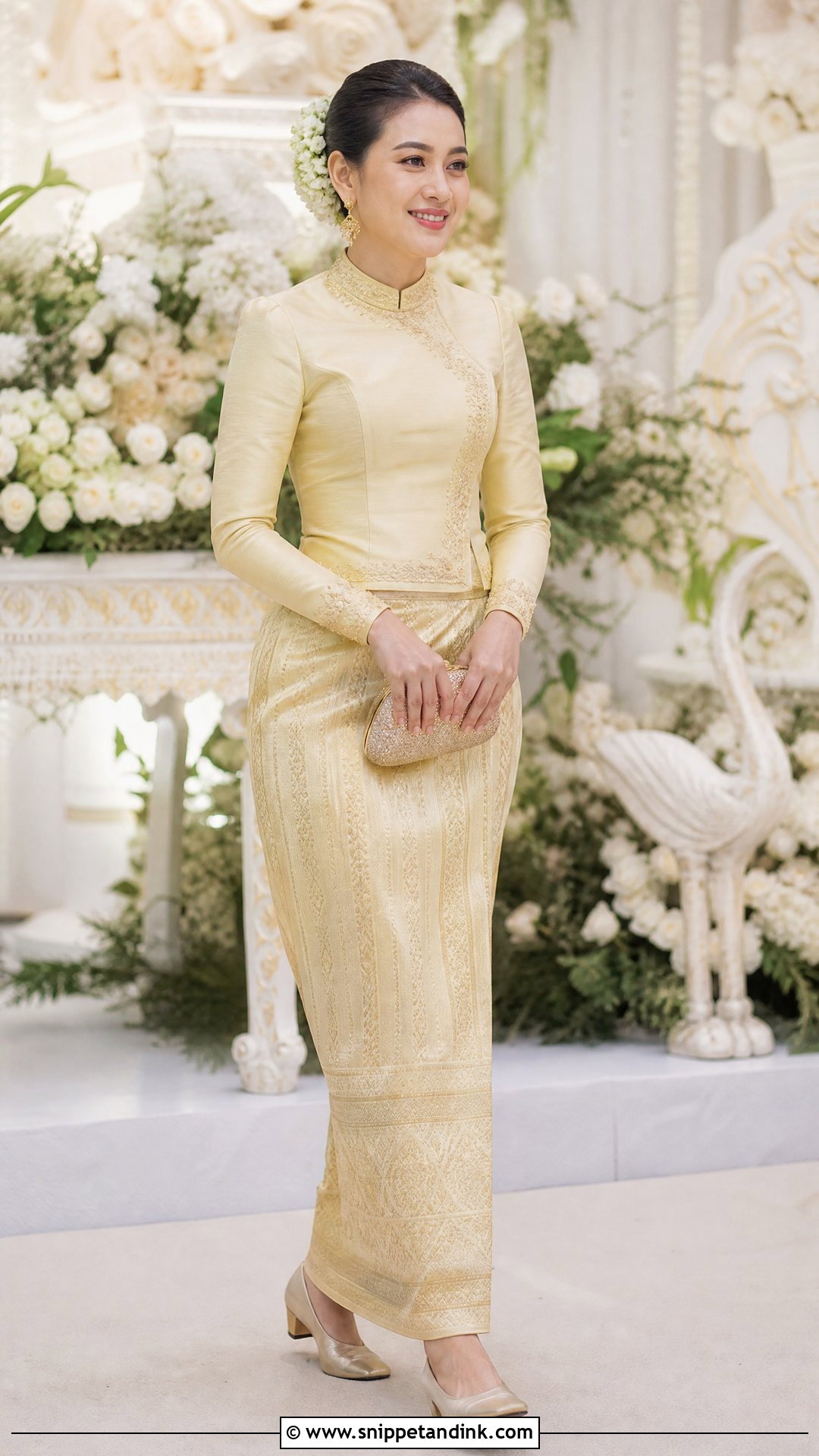
A high neck hands the attention to your face and earrings, so I’d skip the necklace altogether and go with gold drops. A fitted long-sleeve top in ivory, pale gold or soft peach, with fine beadwork at the collar, shoulders and cuffs, pairs with an acheik htamein that repeats one or two of the blouse colours. Swept-back hair is essential with this neckline, ideally a smooth bun with jasmine. For comfort, ask for a lightweight lining and enough room through the shoulders. A high fitted collar plus tight armholes gets very hot by mid-afternoon.
10. Off-Shoulder Myanmar Wedding Dress
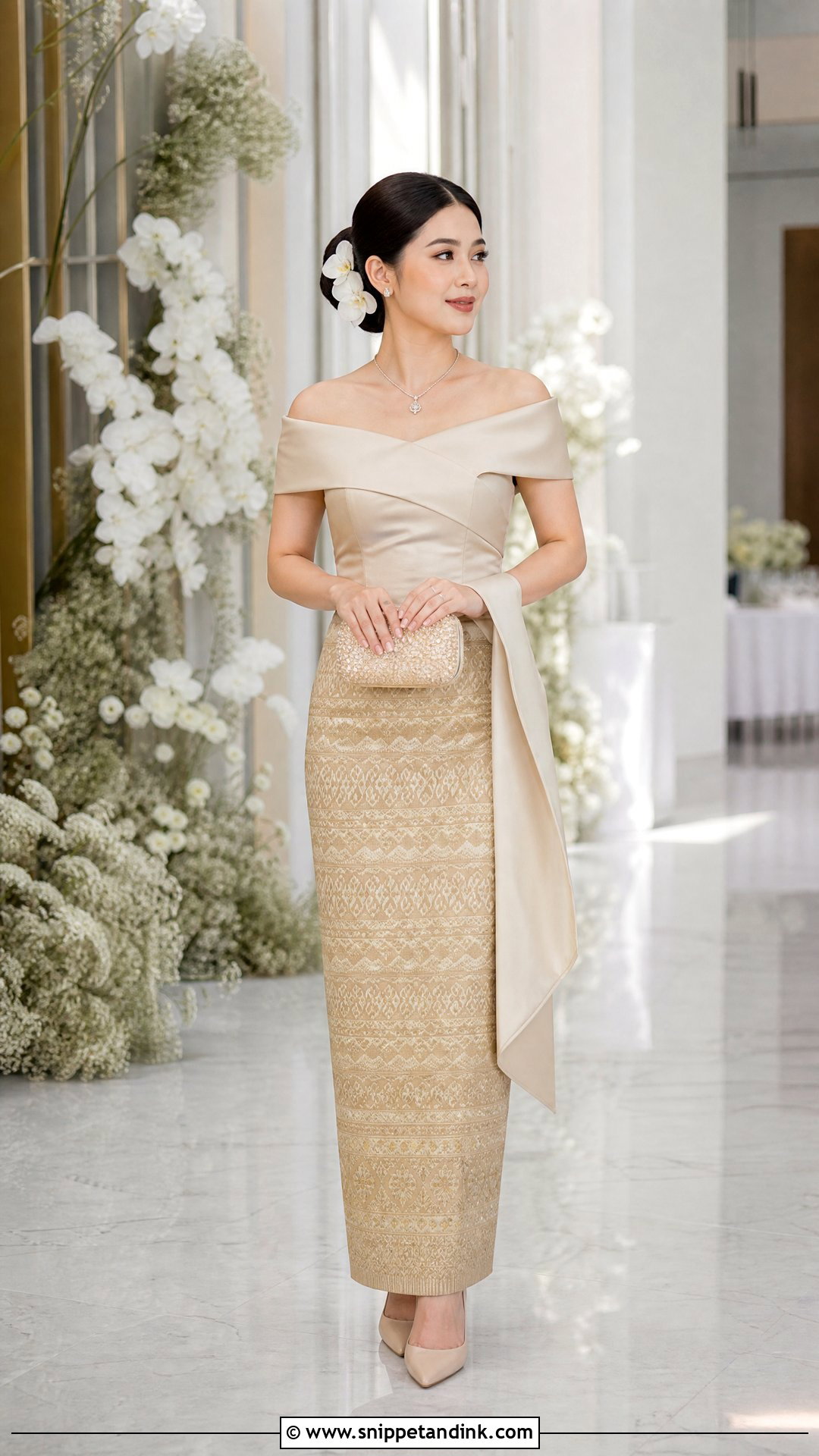
Off-shoulder is the most fashion-led blouse on this list, and the one I’d fit most carefully. The neckline has to sit securely on the upper arms with internal structure, or you’ll spend the day hitching it up. Pearl white, blush or champagne silk over a muted gold and pastel acheik skirt keeps the colour soft. Skip ruffles: a clean folded neckline sits better against intricate weaving. A delicate necklace resting above the neckline, pointed heels, a small beaded clutch and a side-swept bun to show the shoulders finish it. Ask for detachable straps as insurance, and check that your family and ceremony venue are comfortable with bare shoulders before you order.
11. Yethina Train Myanmar Wedding Dress
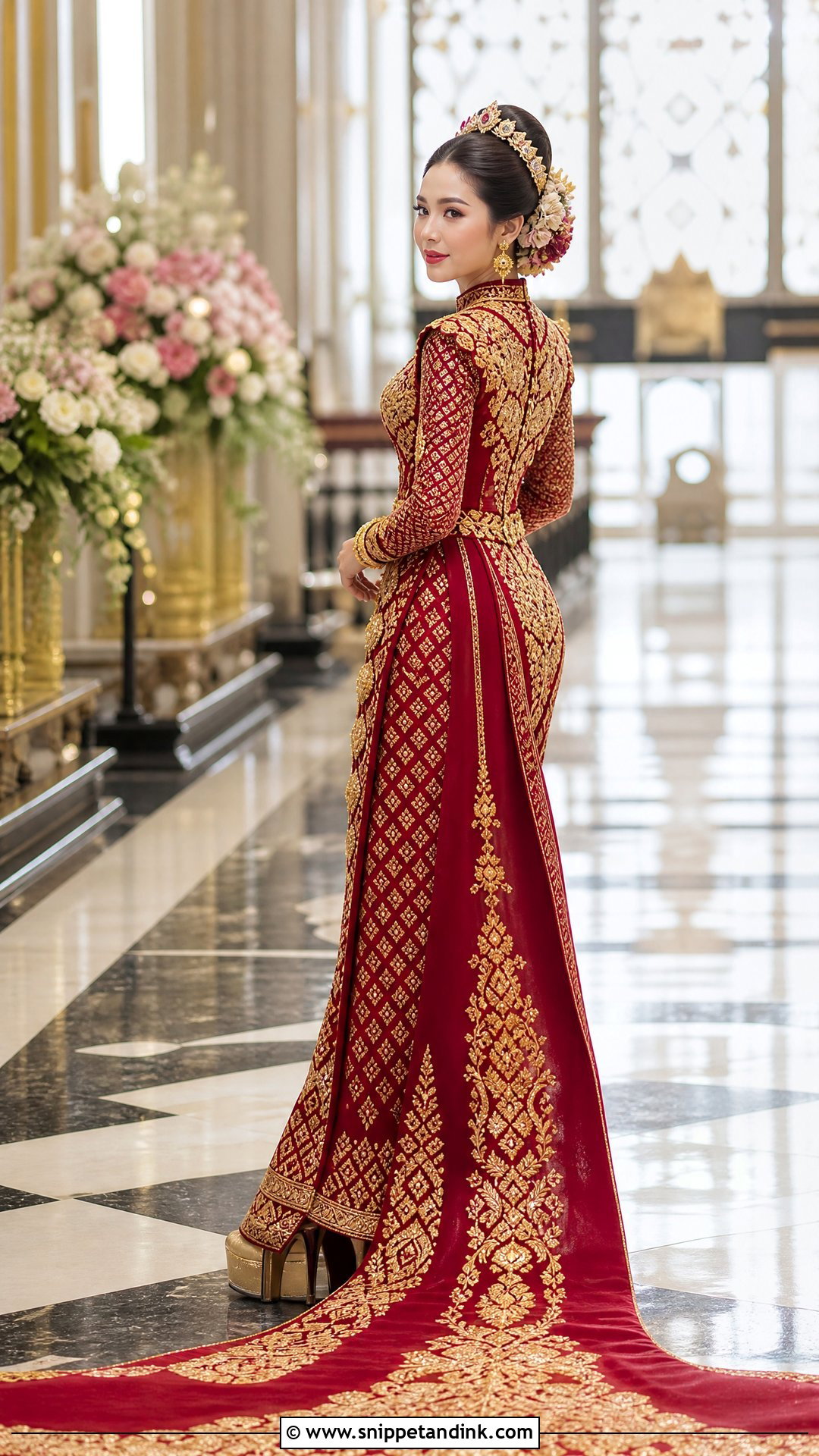
A yethina-inspired train borrows from the pre-colonial htamein with its broad trailing panel, a style that today appears mostly at weddings, stage performances and formal cultural events. Choose a rich acheik in gold, crimson, emerald or royal blue and let the back panel extend behind you, with a fitted long-sleeve blouse, a high neckline and precise metallic embroidery. Hidden platform heels give you height and keep the front hem off the floor. A formal updo, a jeweled hairpiece and traditional gold finish the look. Plan the train length around the venue floor and any stairs, and build in a discreet wrist loop or bustle so you can move freely once the main ceremony ends.
12. Mermaid Acheik Myanmar Wedding Dress
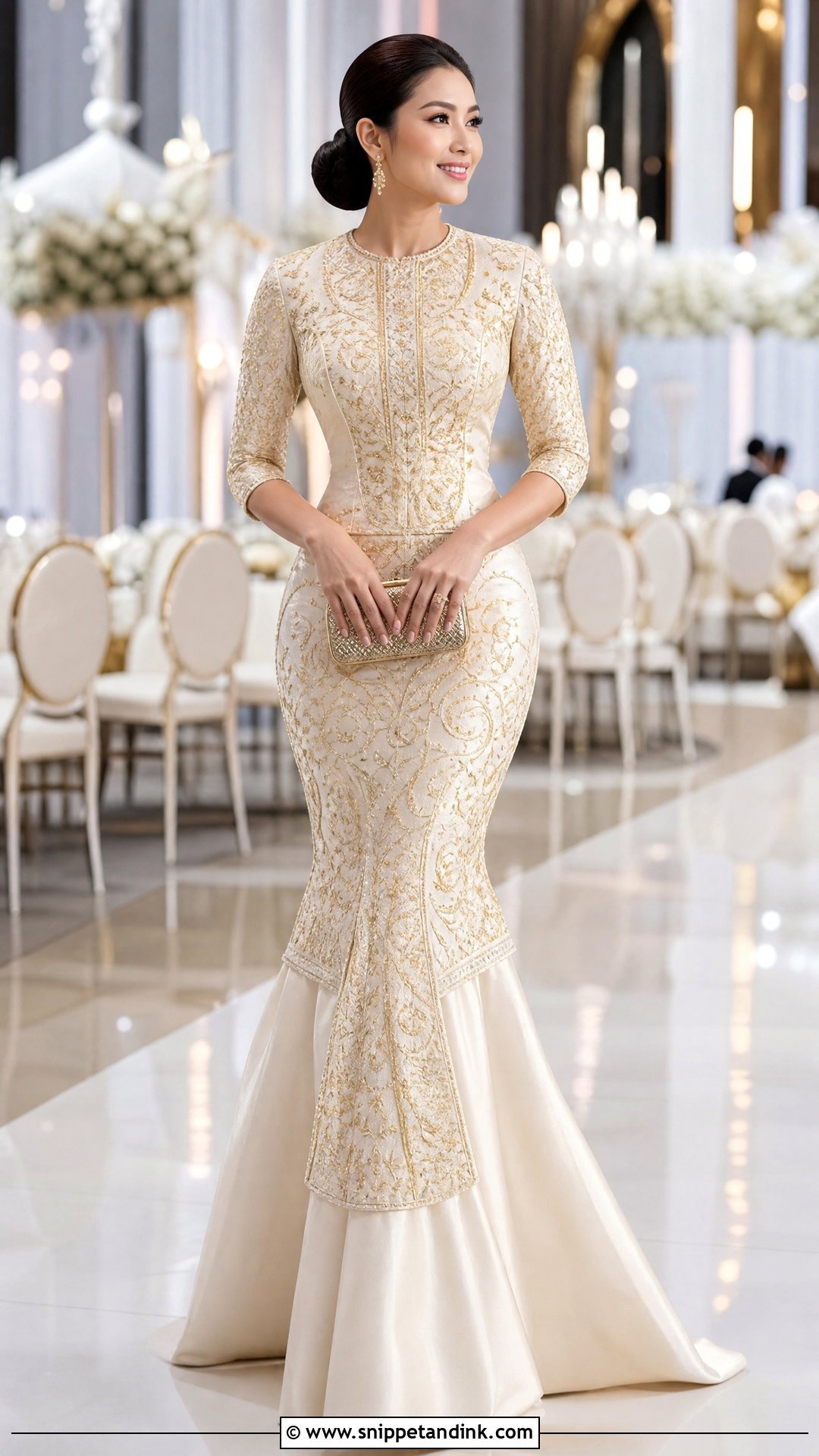
A mermaid silhouette is the hardest way to wear acheik, because woven silk has almost no stretch. The patterned textile works through the bodice and hips, with matching silk panels below the knee for the flare. A square or softly curved neckline and three-quarter sleeves balance the fitted shape, in ivory and gold, emerald and bronze, or burgundy and champagne. I’d insist on a sitting test at every fitting, and a back vent or flexible inner panel if your stride feels short. Concealed platforms, a metallic clutch and a smooth low bun keep it streamlined. Save it for the reception or a second entrance, not a ceremony with kneeling.
13. A-Line Acheik Myanmar Wedding Dress
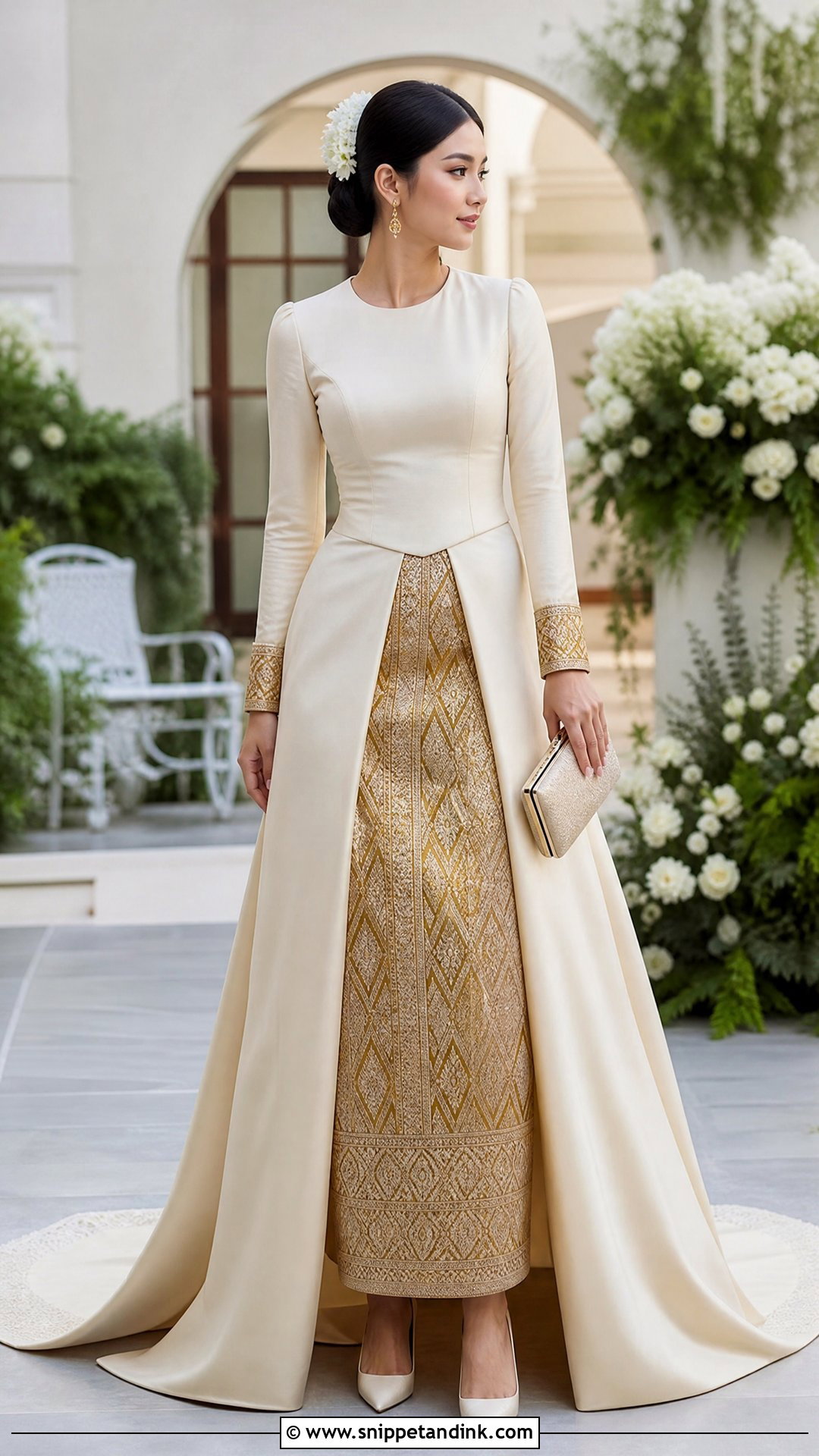
An A-line is the friendliest gown shape for an acheik accent, since a skirt that widens gradually doesn’t fight the stiff weave. Start with a fitted ivory silk bodice opening out from the natural waist, then place the acheik as a centre skirt panel, a wide border, a waistband or a detachable sash. Keep the placement symmetrical; a border that sits slightly off-centre looks like a sewing error in full-length photos. Repeat the accent once more at the cuffs or back. Ivory heels, gold earrings and a clutch picking up one woven colour suit it, with a low bun or half-up hair.
14. Two-Piece Lace Myanmar Wedding Dress
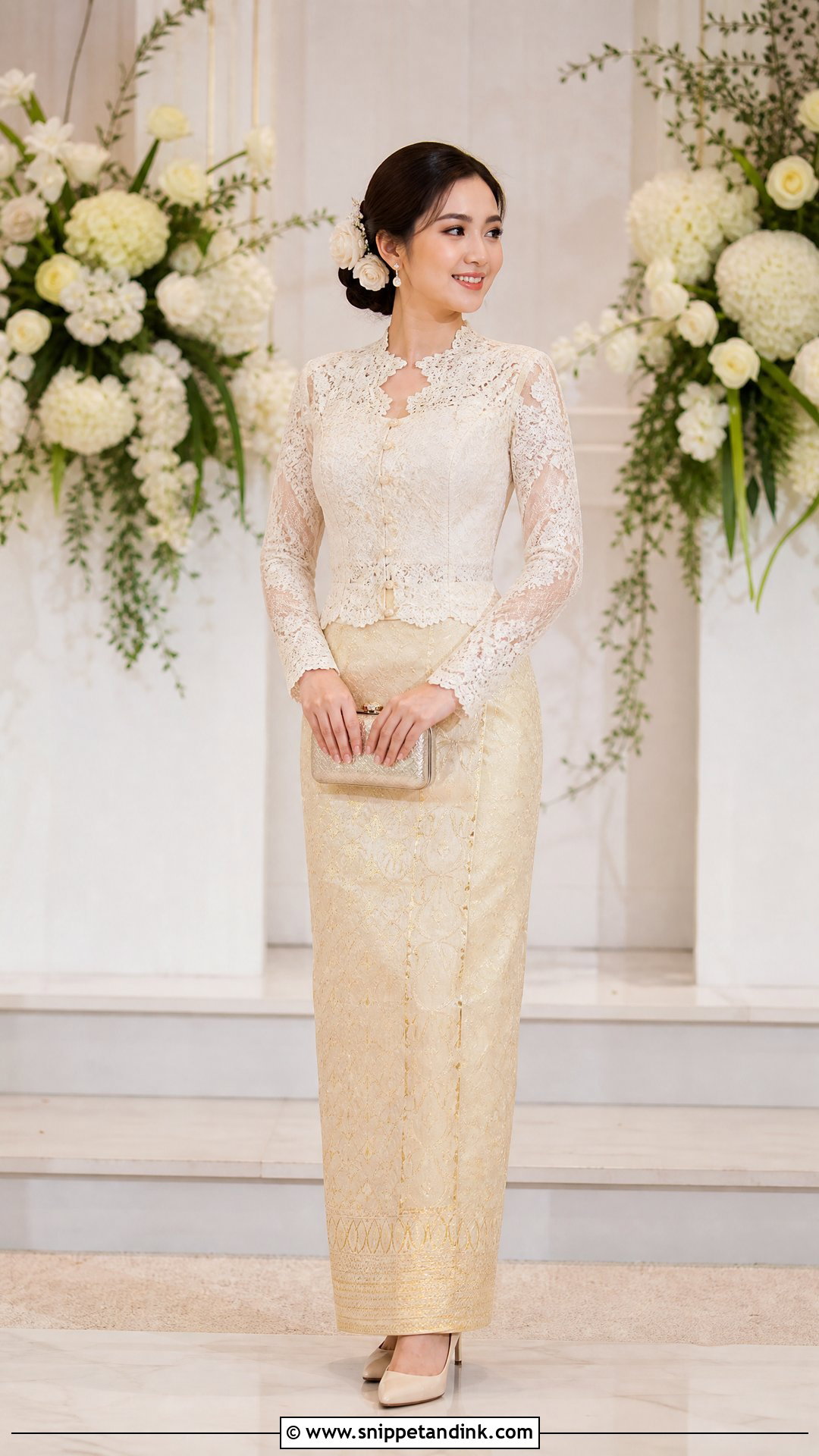
Separates are the easiest outfit to fit, because the top and skirt are adjusted on their own. An ivory lace blouse with elbow-length sleeves and a scalloped hem, over a pale gold silk htamein joined by a narrow waistband, avoids bulk at the middle. If you hate a blouse riding up, hidden hooks between the two pieces fix it far better than tucking. Line the lace through the bodice and leave the sleeves lightly sheer. Ivory pumps, pearl earrings, a small gold clutch and a soft bun with one decorative comb complete it.

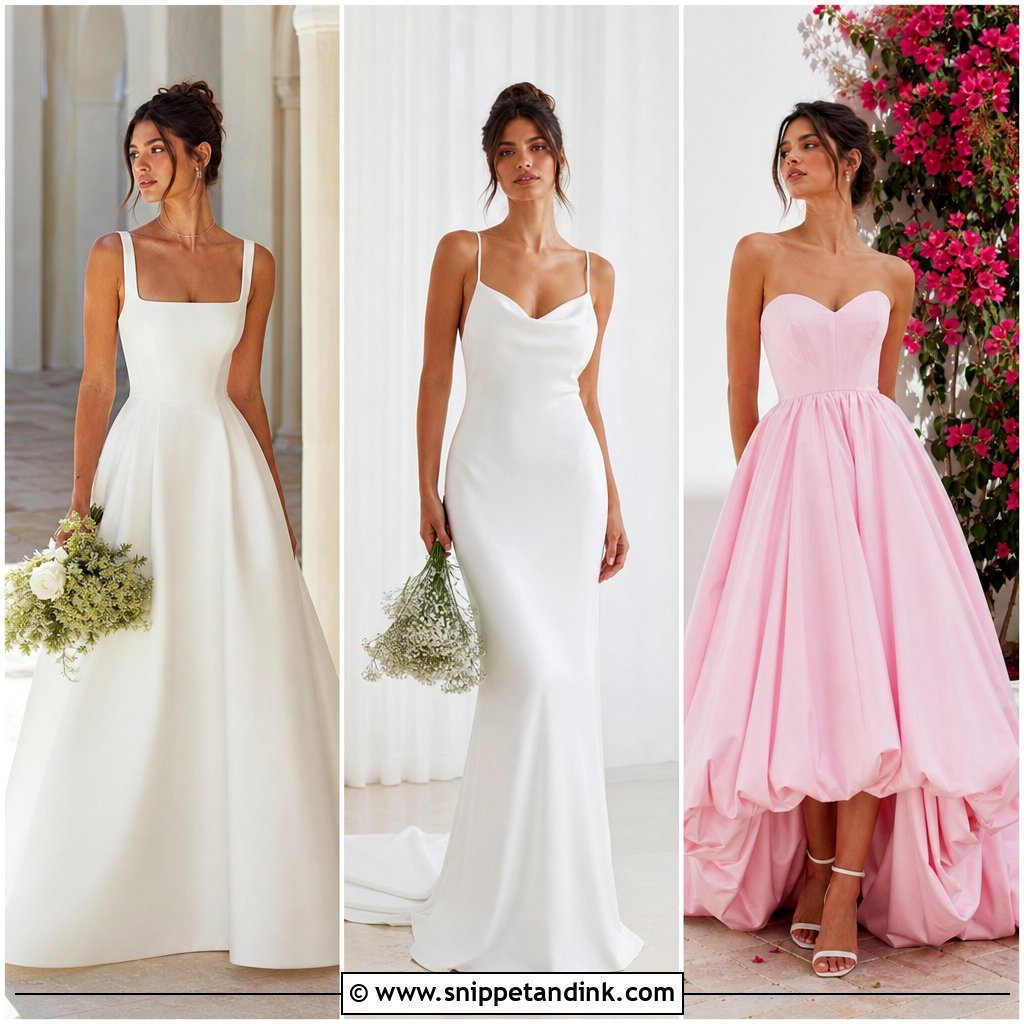
15. Cape-Sleeve Myanmar Wedding Dress
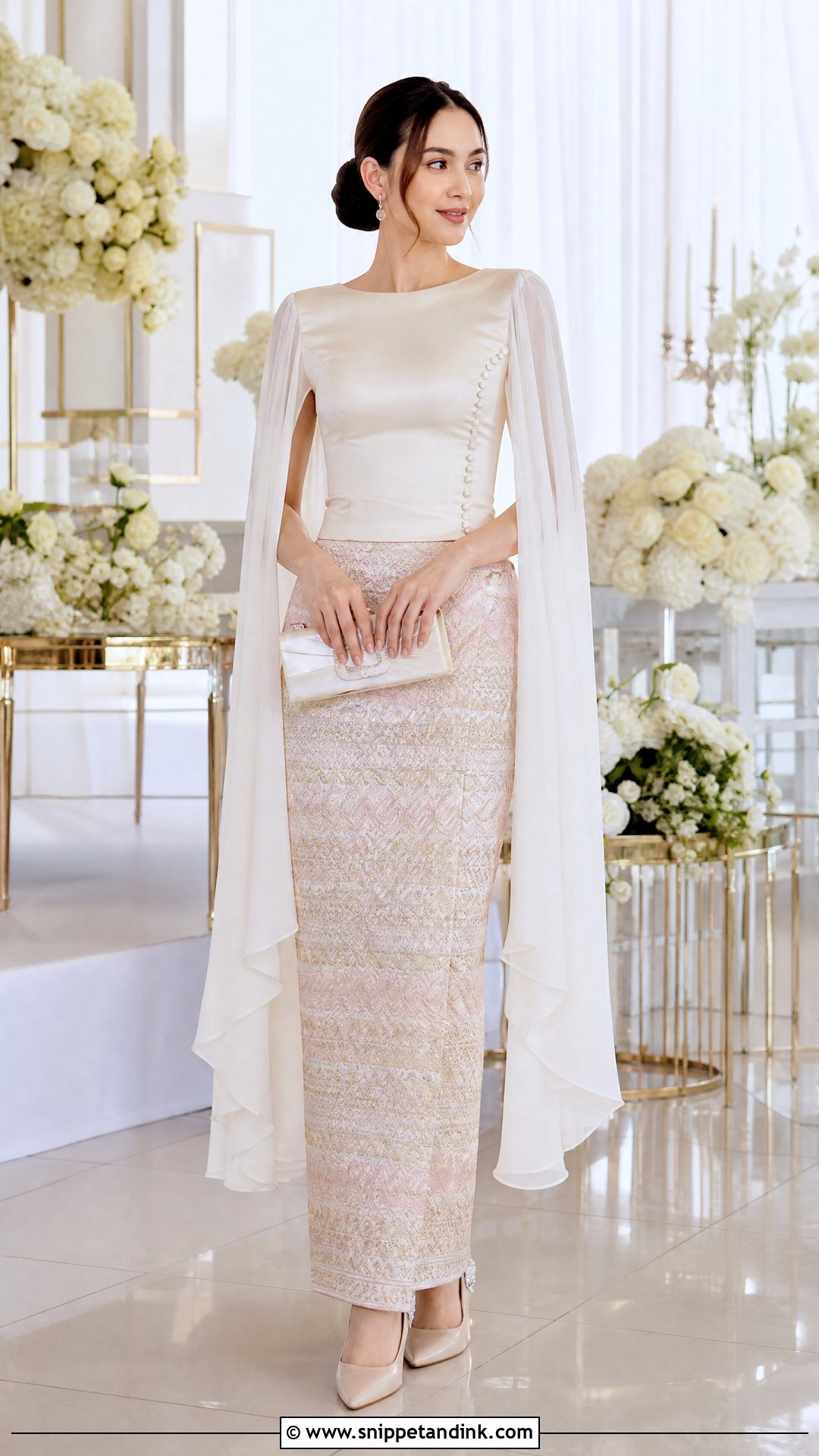
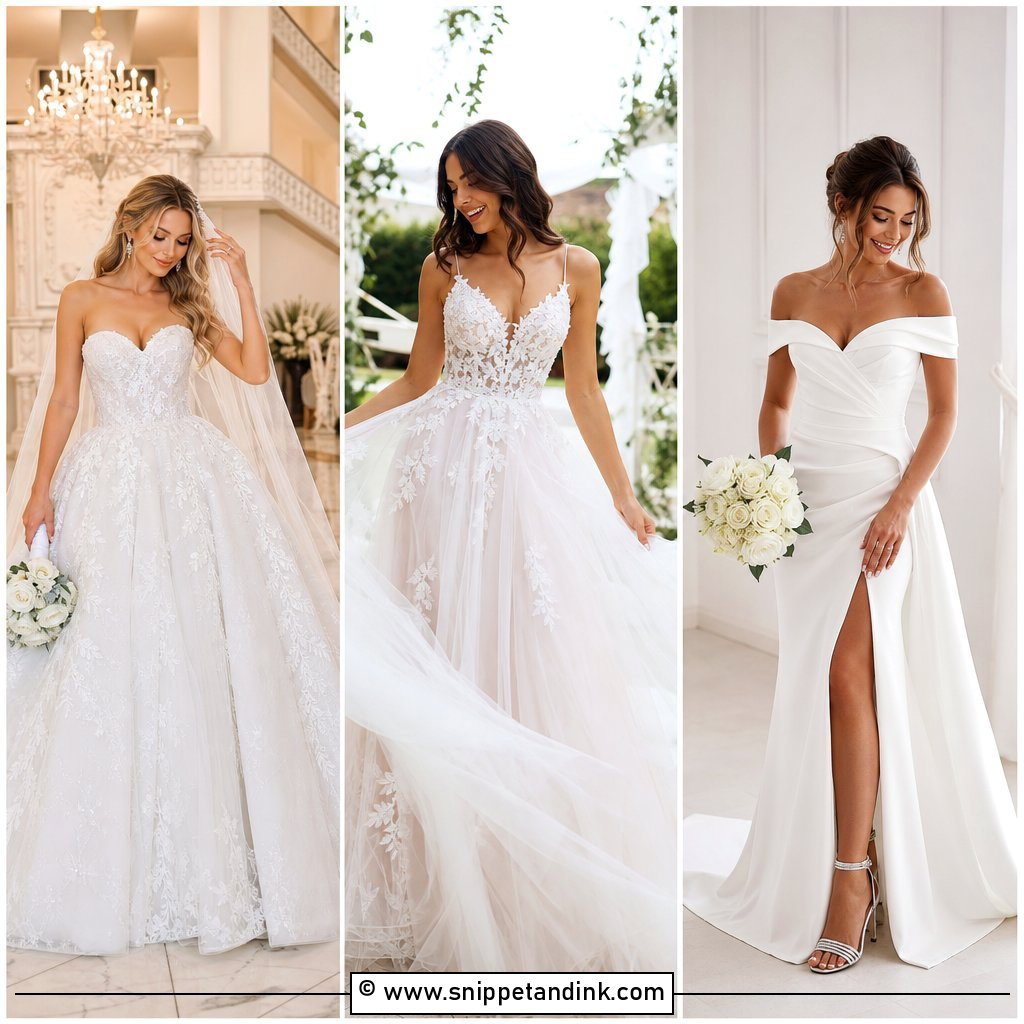
Cape sleeves move every time you do, which is exactly why I keep them indoors: wind lifts sheer panels into your face and tangles them in your jewelry. A fitted ivory or champagne blouse with sheer capes falling to the elbow or wrist, over a slim gold, blush and cream acheik htamein, balances the volume. Keep embroidery on the neckline and cape edges, since heavy beadwork drags light fabric down and spoils the drape. Choose earrings that won’t catch on the chiffon, simple pointed heels and a satin clutch. A sleek bun is more practical than loose hair here.
16. Sheer-Sleeve Myanmar Wedding Dress
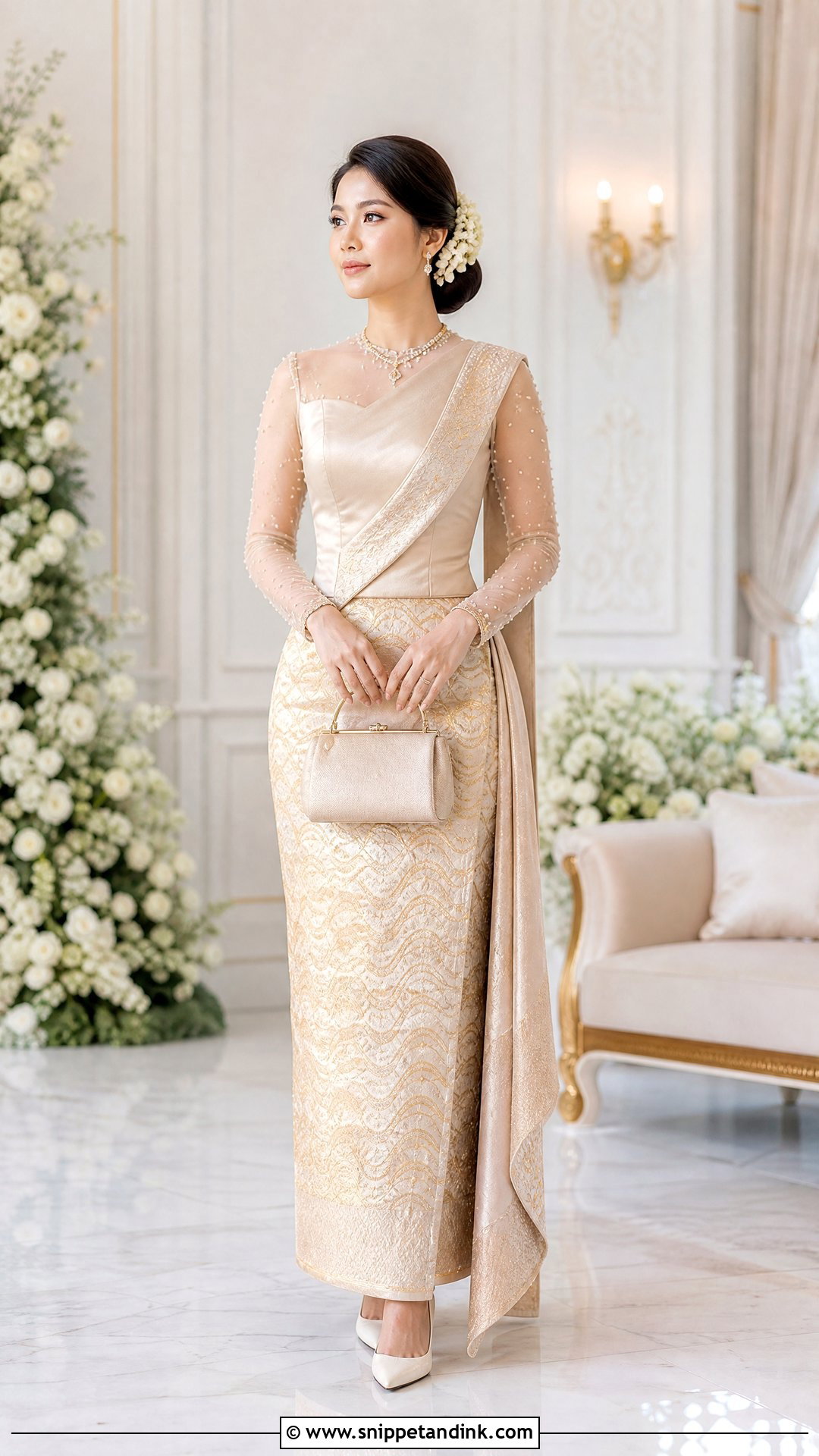
Illusion sleeves give coverage that still feels light. A lined silk bodice with sheer sleeves carrying pearls, floral appliqué or fine gold thread pairs with a smooth silk or acheik htamein in ivory, champagne, blush or pale blue. The mesh colour is what I check first. It has to match the blouse or your skin closely, or the sleeves turn grey in photos. Embroidery that thins out toward the wrist reads more refined than an even scatter. Closed-toe heels, a small structured bag and a low bun with a narrow floral line carry it from the ceremony to formal portraits.
17. Floral Embroidered Myanmar Wedding Dress
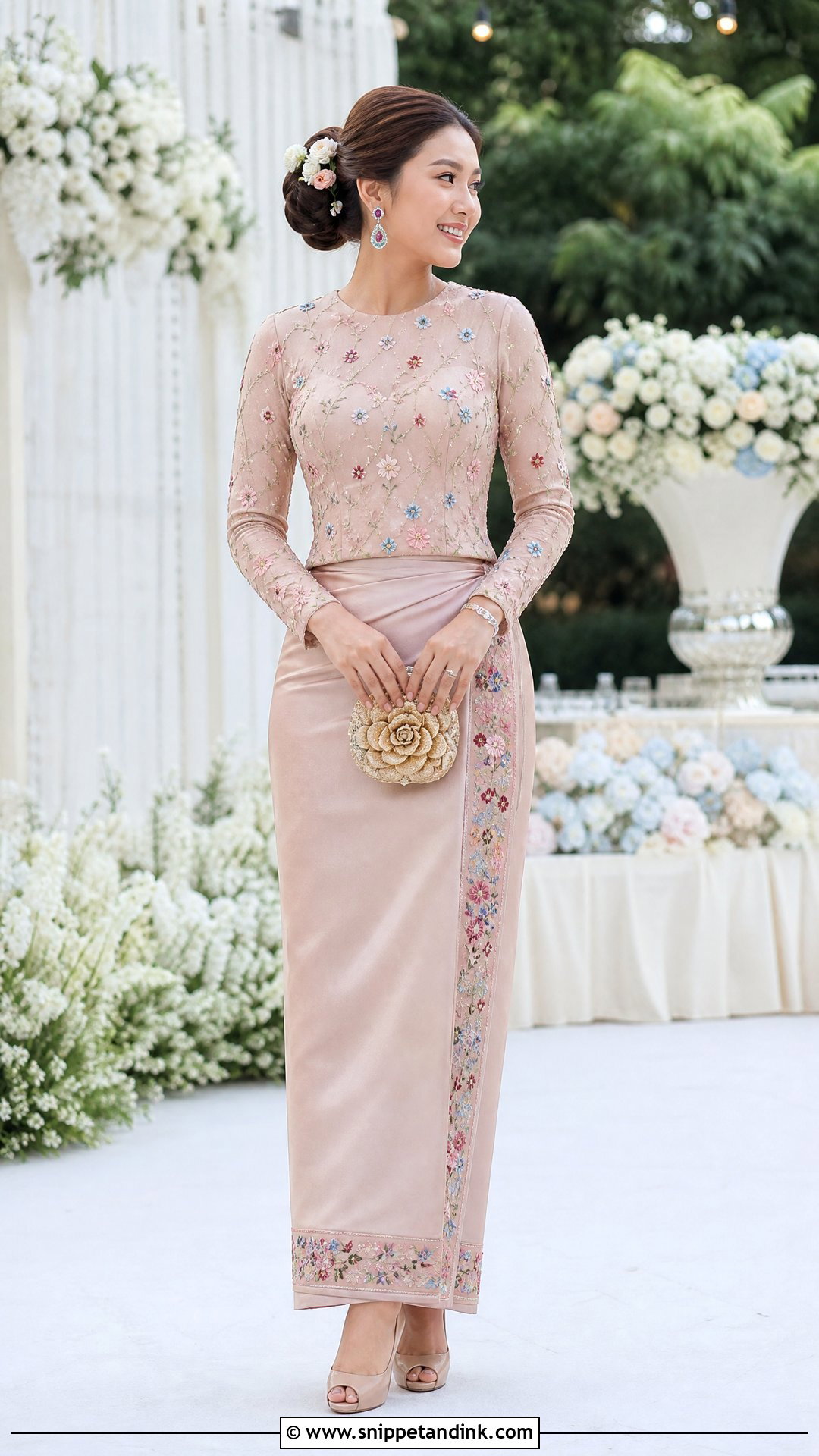
Small flowers scattered over the neckline, sleeves and upper bodice of a pastel blouse give colour without metallic weight, in blush, lavender, mint or ivory. The skirt should step back: a coordinating silk htamein with a narrow woven border, not an all-over pattern that competes. I choose earrings with stones matching one thread colour from the embroidery, which ties the face to the blouse. Nude or metallic heels, a flower-shaped clutch and a low textured bun with a few real flowers finish it. Keep the motifs small and spaced out, because dense flowers start to look like a cheap print. Daytime celebrations and airy rooms suit it best.
18. Lotus Motif Myanmar Wedding Dress
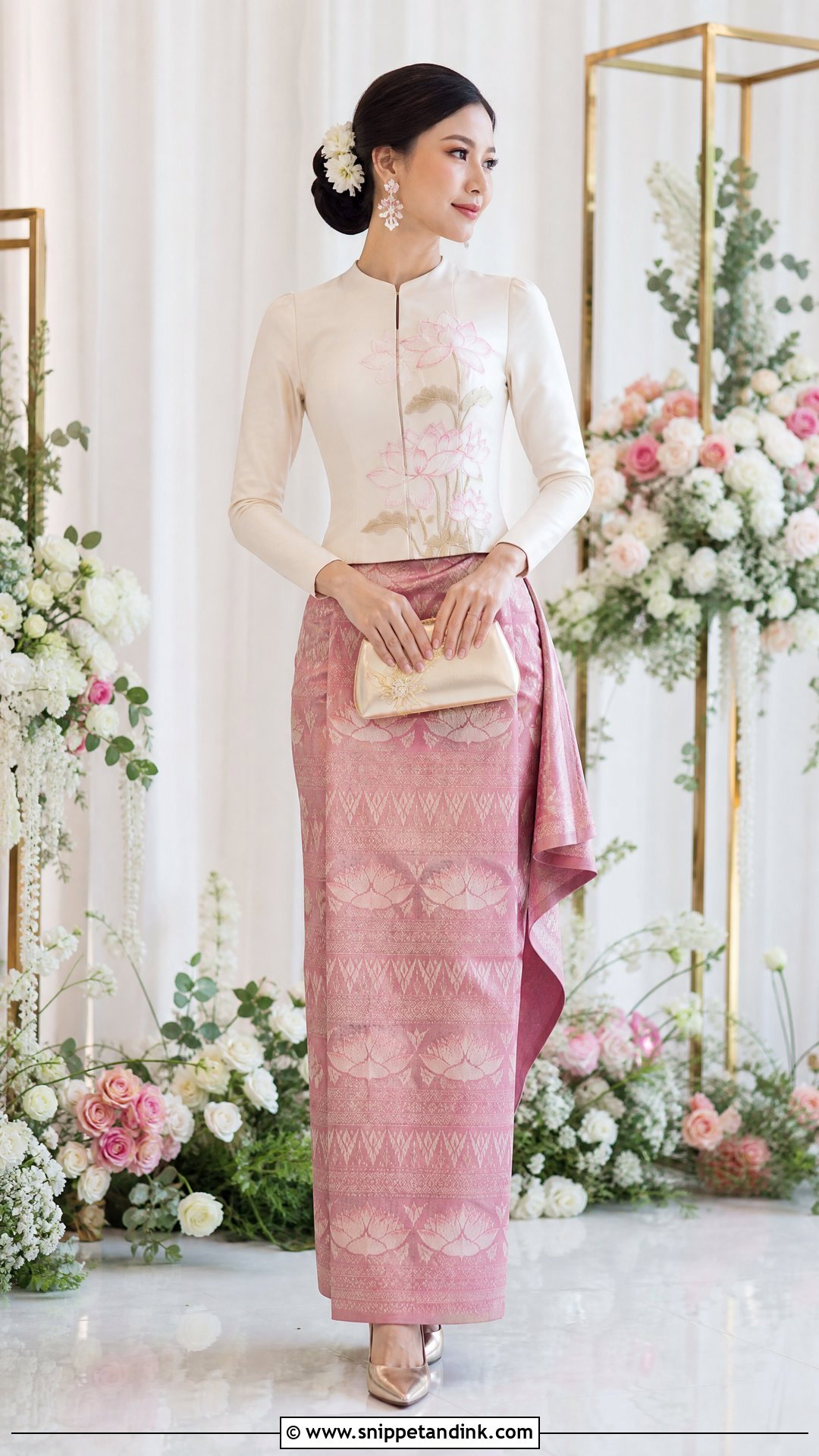
The lotus carries deep meaning in Buddhist tradition, so at a Myanmar wedding the motif reads as more than decoration. Place stylised lotus embroidery at the neckline, cuffs and waist of an ivory or pale pink blouse, then repeat it smaller in the woven border of a dusty rose, champagne or soft gold htamein. Spacing matters more than size; one well-placed lotus says more than fifty. Pointed metallic heels, lotus-inspired earrings, a satin clutch and a polished bun with white or blush flowers keep it coordinated. A gently shaped waist or a short peplum both work.
19. Minimalist Ivory Myanmar Wedding Dress
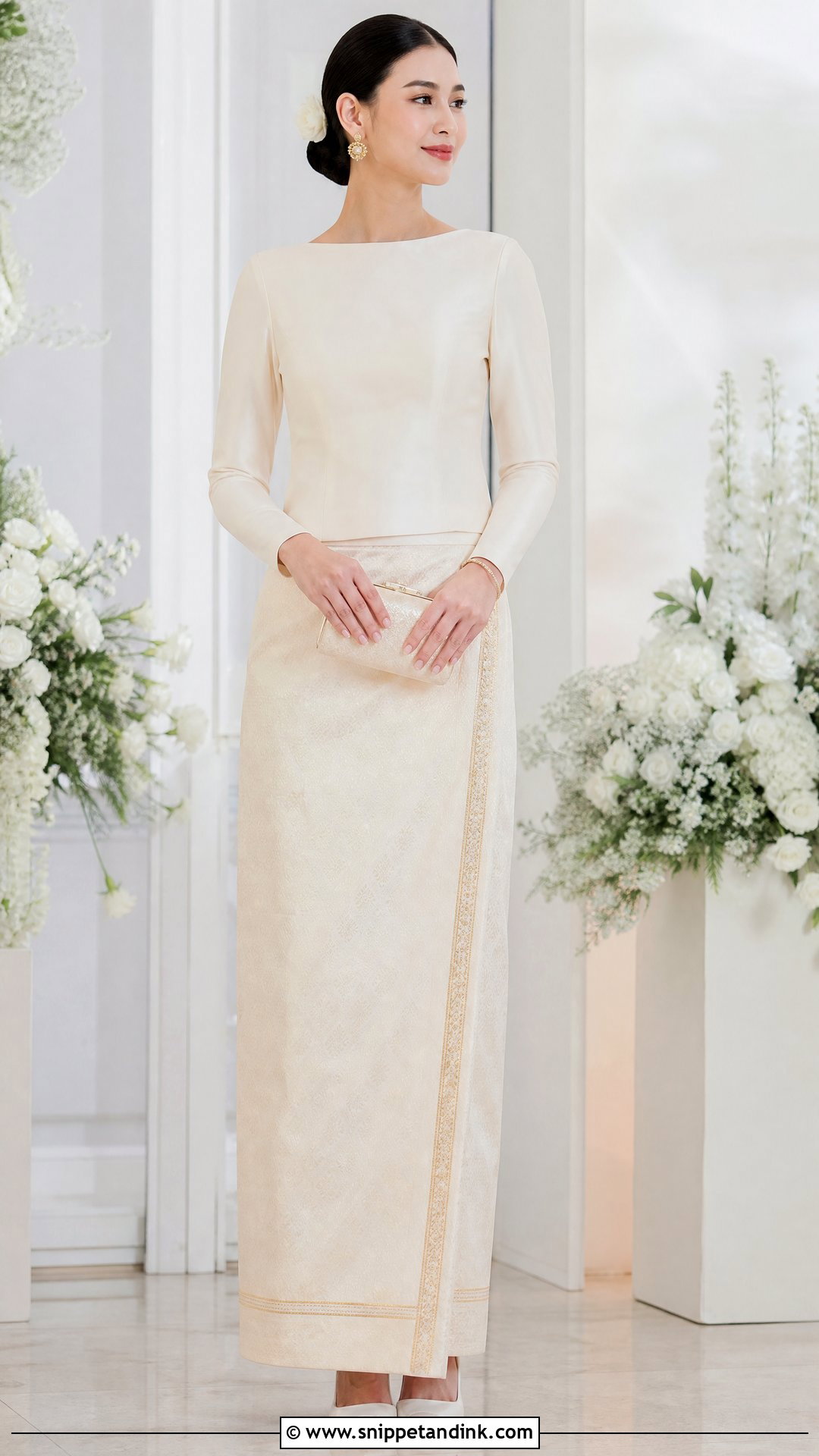
Minimalism exposes everything, so tailoring matters more here than anywhere else on the list. Pair a smooth silk blouse with a boat neckline, fitted sleeves and hidden closures with a straight ivory htamein carrying only a narrow gold border at the hem. Darts or princess seams shape the blouse with no decoration needed, and I check that the sleeves end exactly at the wrist bone. Pointed ivory heels, sculptural gold earrings, a small structured clutch and a sleek centre-parted bun with one white flower finish it. It’s the right call when the venue is ornate and you’d rather stand out against it than compete with it.

20. Plus-Size Peplum Myanmar Wedding Dress
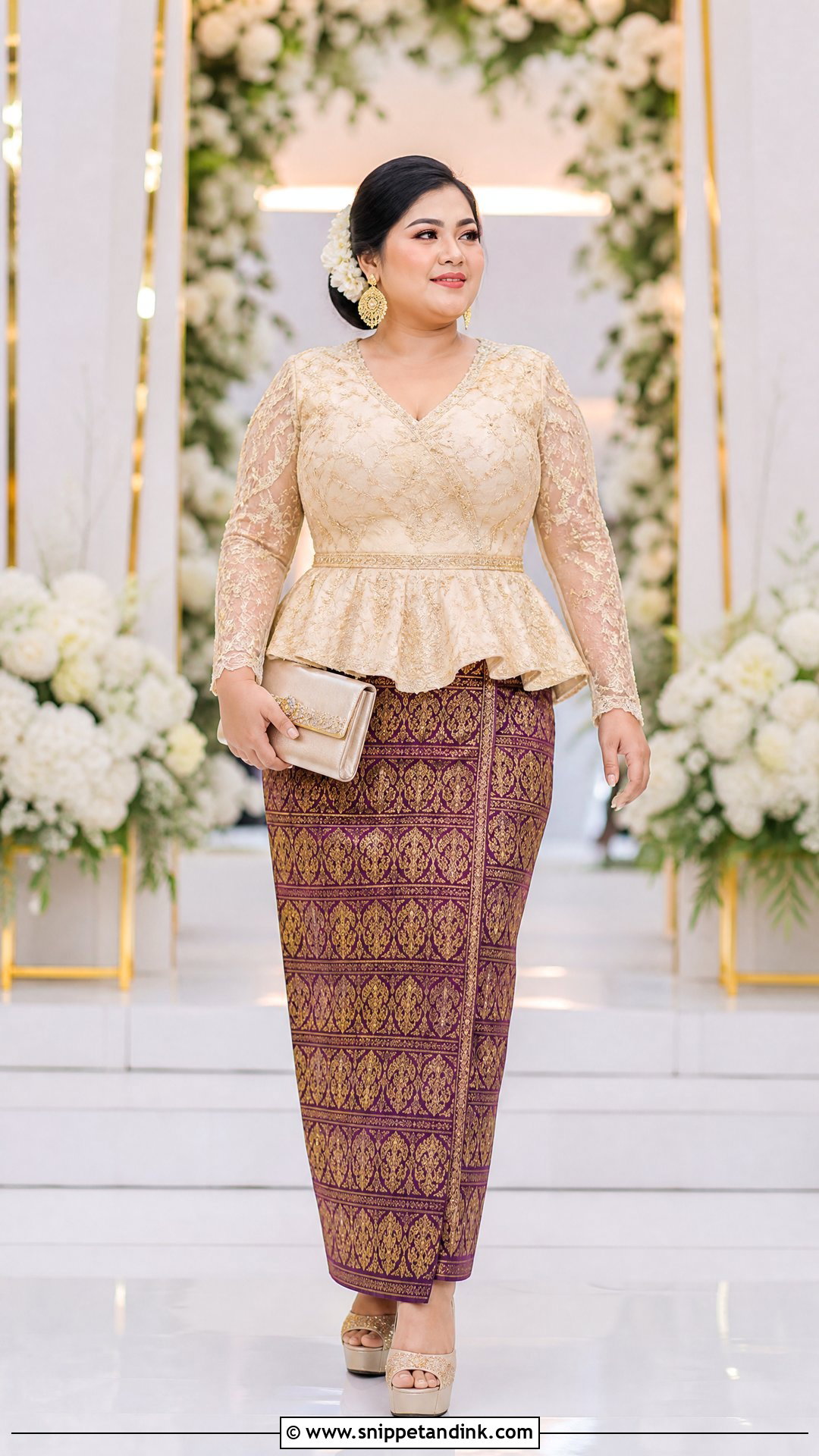
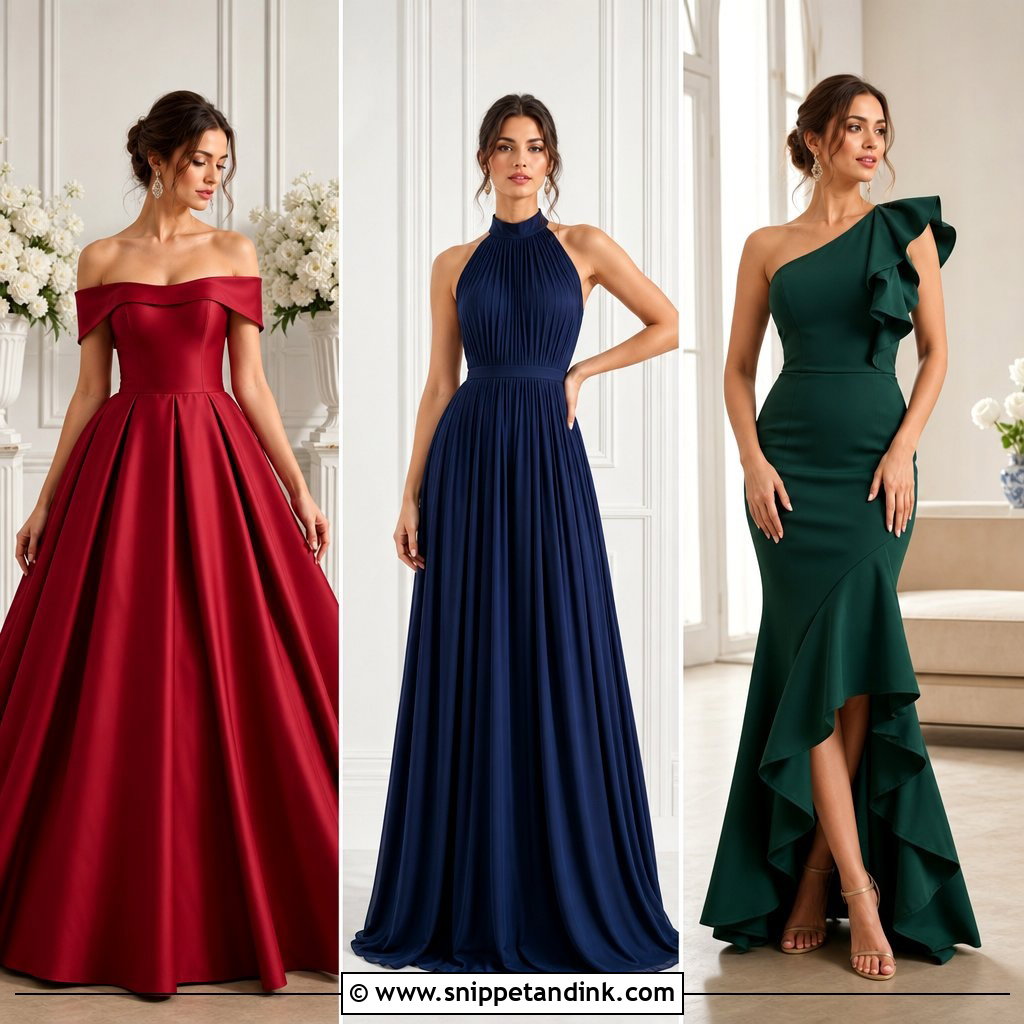
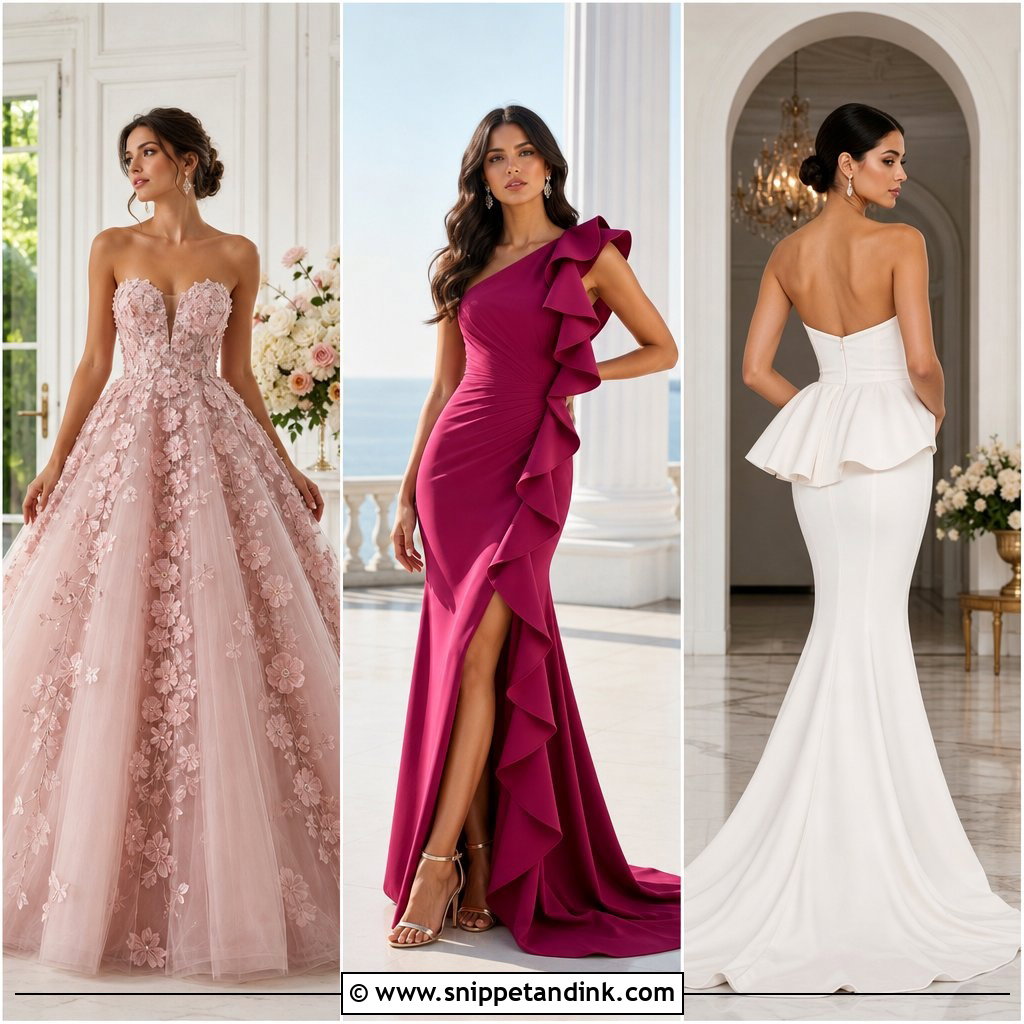
For a curvy bride, the structure inside the blouse matters far more than coverage outside it. Ask for supportive inner construction, a V-neck or open round neckline, and a smooth peplum that follows the body rather than standing away from it. A high-waisted acheik htamein in a rich colour that matches the blouse makes one long line. Three-quarter sleeves show off bangles and let you move freely. I place the boldest part of the pattern wherever the bride wants the eye to go, a conversation worth having at the very first fitting. Stable block heels, a medium clutch and statement earrings complete it.
21. Petite Acheik Myanmar Wedding Dress
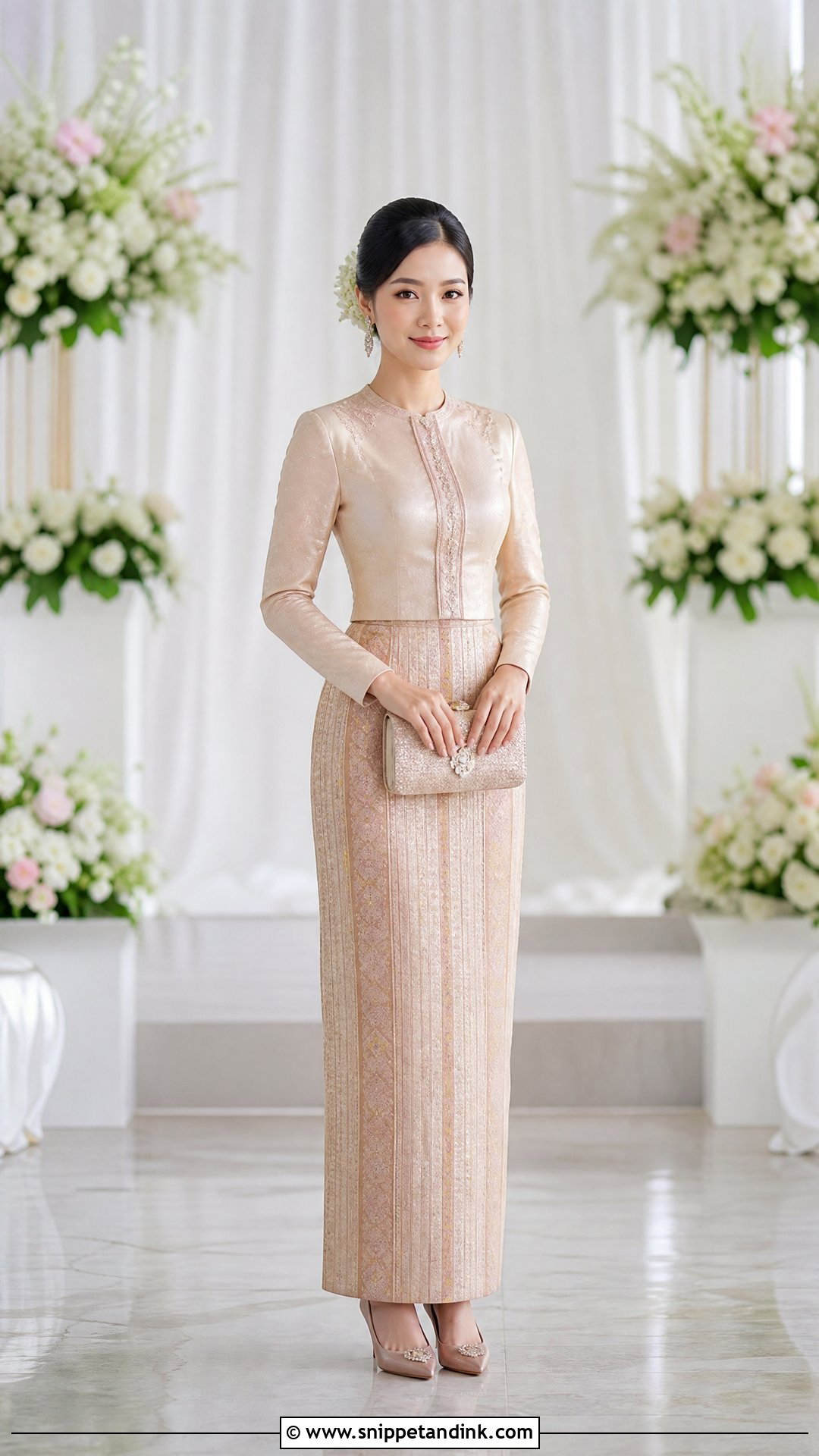
Pattern scale is everything for a petite bride. Oversized acheik borders cut the leg line in half, so look for small-scale waves or narrow vertical details on a high-waisted htamein, with a blouse that ends exactly at the natural waist. Shoes close to the skirt colour extend the line further. A slightly open neckline gives the upper body more breathing room. Keep blouse and htamein in one colour family, and choose a compact clutch, delicate earrings and a neat bun. Detailed traditional textiles work on a small frame as long as everything around them is scaled down too.
22. Bridal Jacket Myanmar Wedding Dress
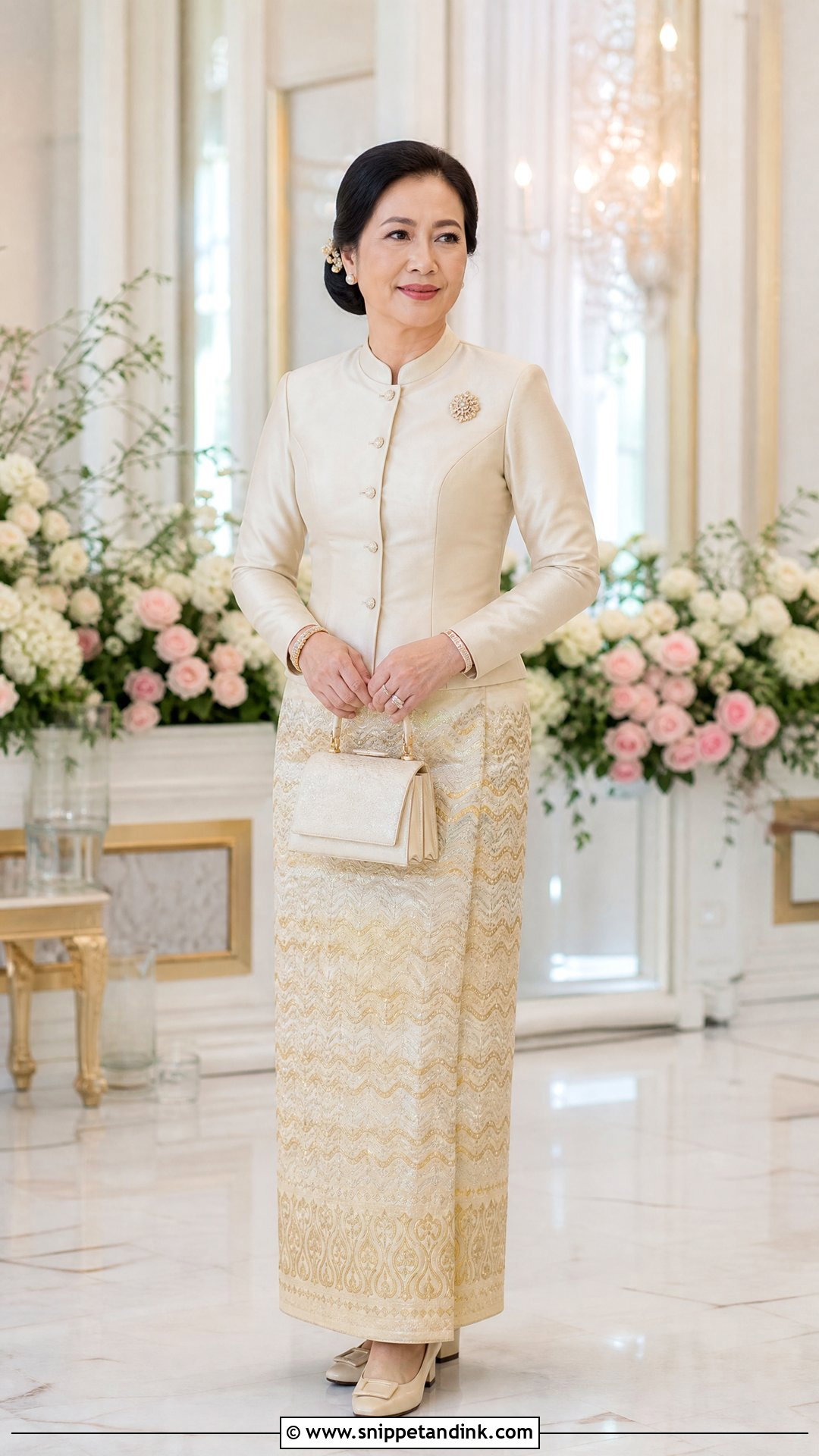
A collarless silk jacket gives coverage and structure, and brides who don’t want a fitted blouse on show often prefer it. Choose ivory, gold or a deep jewel tone with covered buttons and subtle embroidery at the neckline and cuffs, over a coordinated acheik htamein. The jacket should skim rather than grip; if it pulls across the bust when you sit, it’s too tight. Soft shoulder shaping looks better than a hard pad. Comfortable low heels, a structured handbag, classic gold or pearls and a neat chignon with a comb finish it. Wear a short-sleeve inner blouse underneath and the jacket can come off for the reception.
23. Shan-Inspired Myanmar Wedding Dress
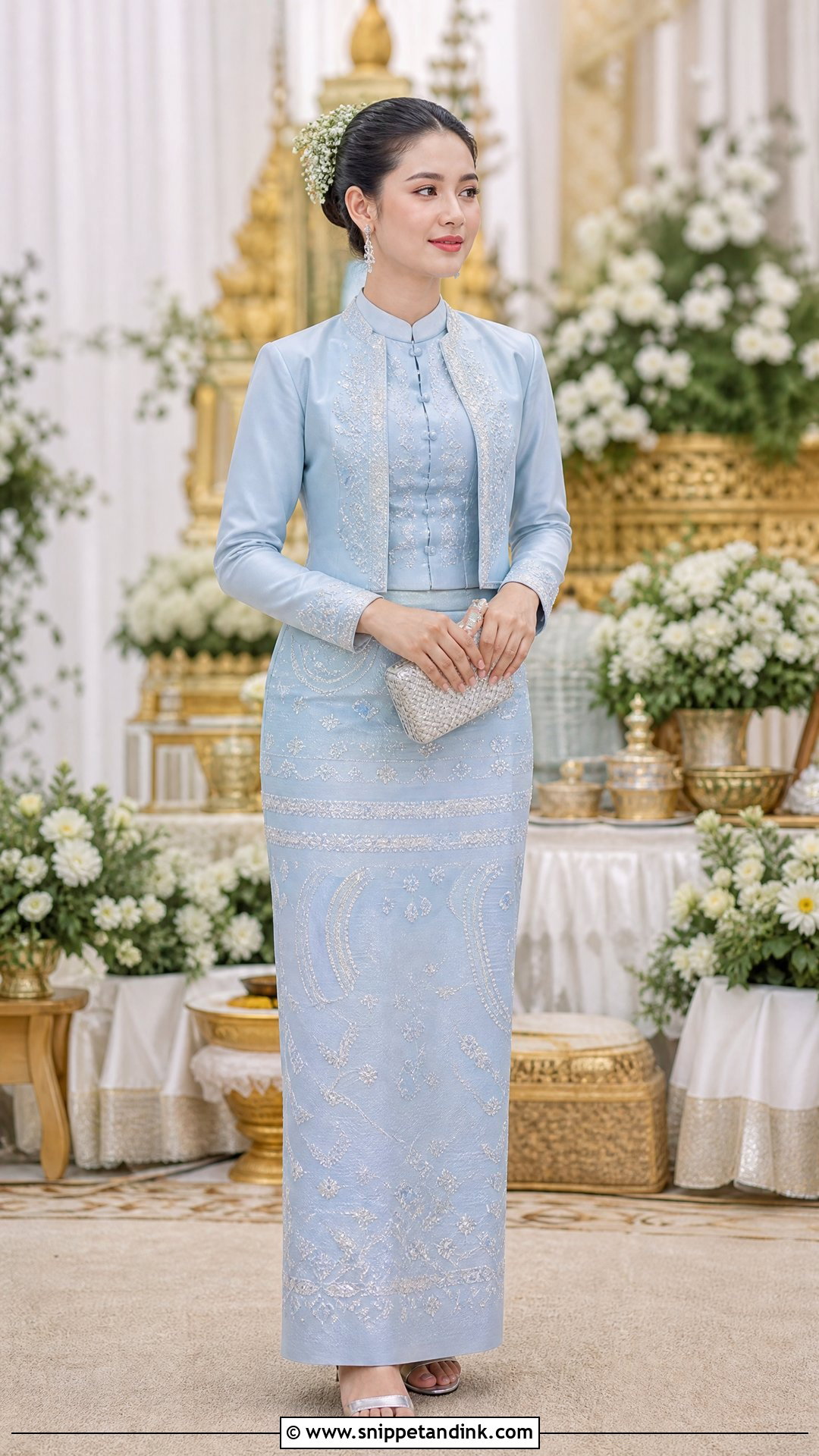
Shan women’s formal dress is known for a coordinated blouse over a long fitted skirt in fine fabric and gentle colours, so a Shan-inspired wedding look starts there. Pale blue, dusty pink, ivory or mint silk with refined silver embroidery suits it, with a cropped fitted jacket or a long-sleeve blouse that closes neatly at the front. Silver heels, a woven clutch, delicate drop earrings and a smooth bun with small white flowers keep the palette quiet. If you’re drawing on a community’s dress, I’d involve family members, artisans or a designer who knows it, so patterns and accessories are chosen for what they mean rather than how they look.
24. Kachin-Inspired Myanmar Wedding Dress
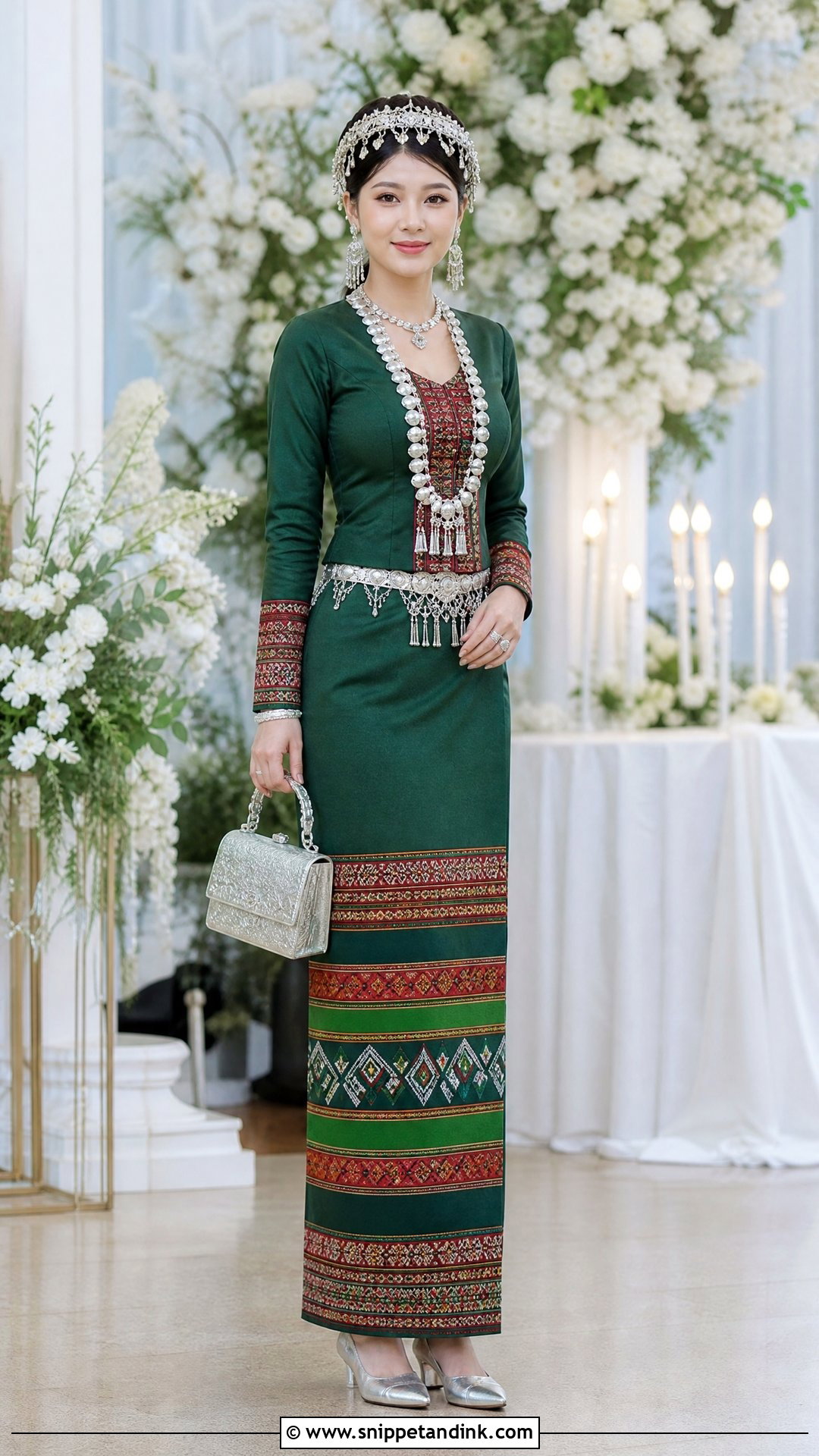
Kachin ceremonial dress is recognised for colourful embroidery, geometric weaving and silver ornament, and the textile is the whole point of the outfit. Build around a fitted black, red or deep green blouse and a long woven skirt with carefully placed geometric bands. Polished silver jewelry, low heels and a structured handbag repeating one textile colour support it, and depending on family tradition you might add an appropriate headpiece. Keep any modern tailoring plain. Patterns and ornaments can carry specific meaning, so I’d plan the design with Kachin makers or relatives who know the tradition well.


25. Detachable Train Myanmar Wedding Dress
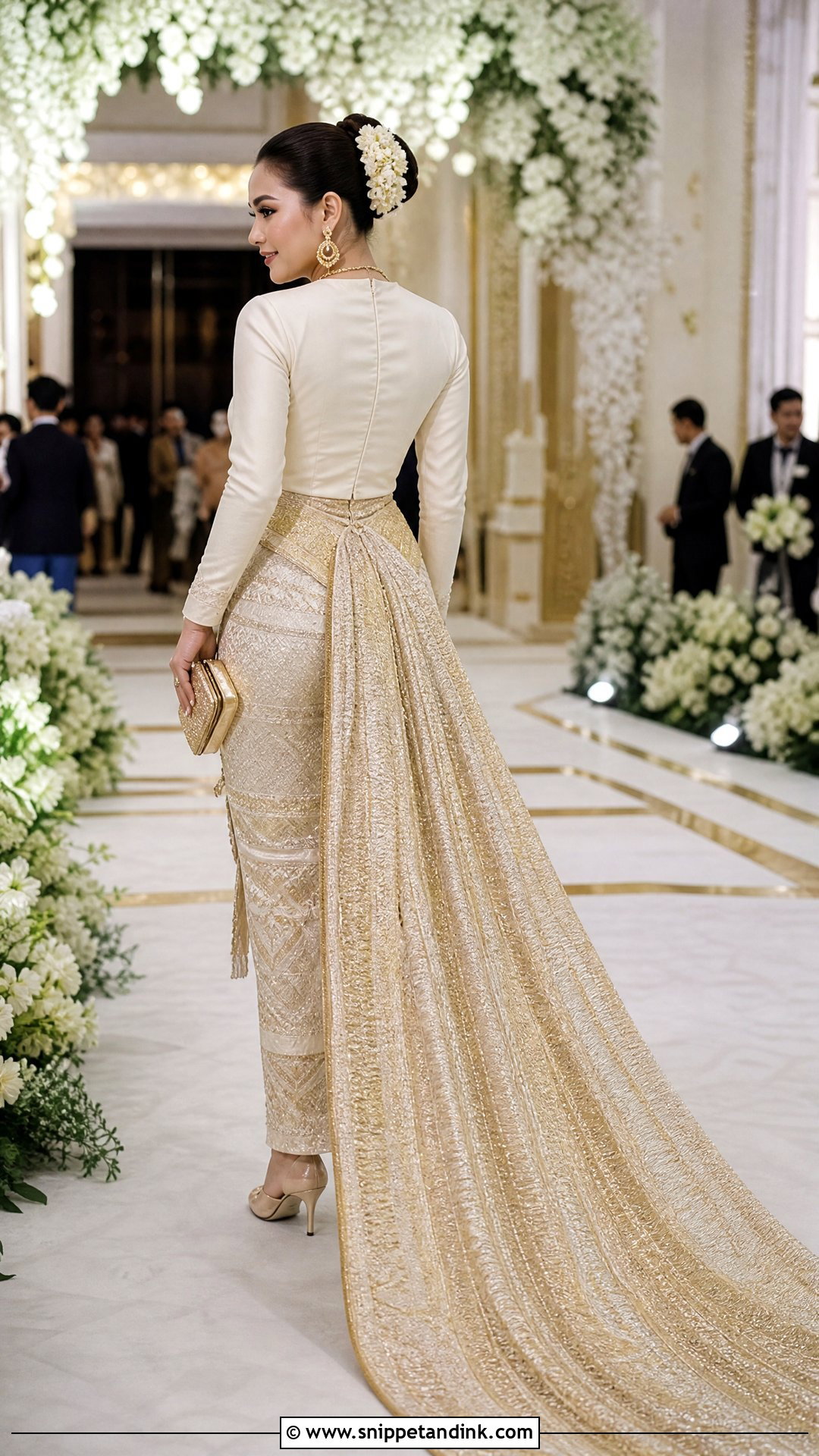
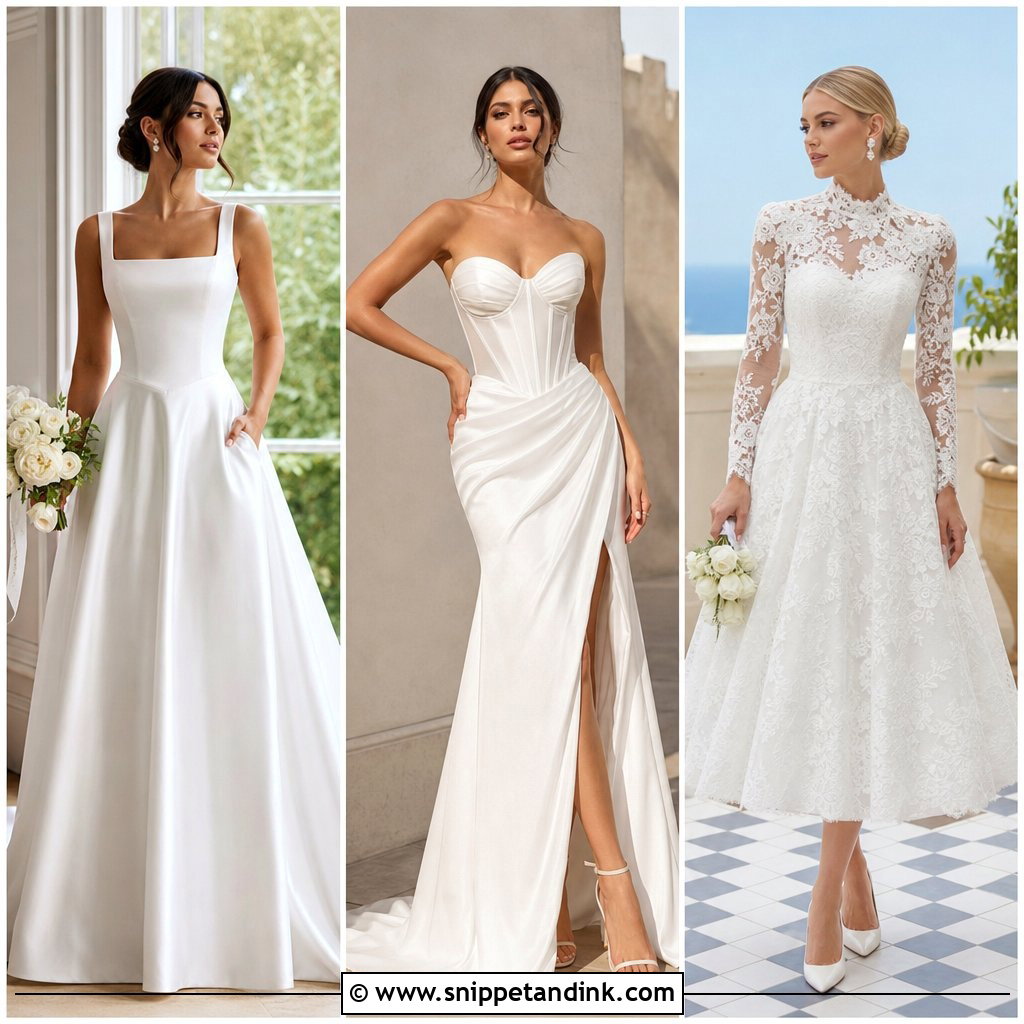
A detachable acheik train gives you two looks without a full change. Start with a fitted ivory gown or a slim blouse-and-htamein set, then attach a wide acheik panel at the back waist for the entrance and formal portraits. The attachment is what I’d test hardest: hooks or snaps strong enough for a heavy woven panel, yet simple enough that an attendant can release them in under a minute. Ivory with gold, blush with champagne and emerald with bronze all coordinate well. Matching heels, a structured clutch, statement earrings and a floral bun finish it.
Cutting Acheik for a Gown, Train or Peplum
Acheik is woven rather than printed, and that changes how a designer can use it. The interlocking waves run in one direction, so turning the fabric sideways to save yardage breaks the pattern. When I brief a designer on any of the fusion looks above, these are the points I raise first.
- Buy more than the pattern asks for. Matching waves across a seam can use an extra half metre or more, and hand-woven acheik is rarely possible to reorder in the same dye batch.
- Ask where the waves will meet at the centre back and side seams. A careful designer sketches the placement before any scissors come out.
- Woven silk frays quickly once cut, so the seams on a train that drags across floors should be properly finished, not just overlocked.
- There is almost no give in the fabric. Any fitted shape needs real ease or a stretch lining, and later alterations are limited because a trimmed seam can’t be let out.
For trains in particular, rehearse the bustle at least once with the person who will do it on the day, with you wearing the dress. Stairs and doorways are where trains catch, so walk the actual route at the venue if they’ll let you.
Pattern Placement Matters More Than the Silhouette
Acheik htamein, silk blouses, lace tops, jackets, gowns and detachable trains can each make a complete Myanmar bridal look; what separates a good one from an awkward one is proportion and fit. Rich traditional colours and quiet ivory or pastel palettes both work, provided the accessories support the textile instead of competing with it. Community-specific patterns, garments and ornaments deserve guidance from relatives, designers or artisans who know them. After that, a skilled tailor adapts the design to your body, your venue and the way your ceremony actually runs.
You'll Like These Ideas:










Leave a Reply