
More couples are asking me for a display cake with foam tiers, and I understand why. You get the tall, finished cake table without baking, filling and stacking every tier. The foam rounds are covered in fondant or a buttercream-style coating and decorated exactly like a real cake. Most people still want one real tier to cut, with sheet cake sliced in the kitchen, so the photos look grand while the serving plan stays practical. The bigger advantage, from my side, is freedom: foam lets me go taller, sharper and more sculptural than real sponge will allow. Twenty designs follow, with notes on where foam genuinely helps.
Where the Real Cutting Tier Goes in a Foam Cake
Almost every dummy cake I make has some real cake in it, because couples want an actual cut for the photos and the first bite. There are three common ways to do it, and each has a catch.
- A real bottom tier. Easiest to cut and serve, since it sits at table height. It needs proper support under the foam tiers, light as they are, and it must be decorated to match them exactly.
- A real top tier. Simple to lift off for cutting, and it can be boxed for the couple afterwards. It’s the smallest tier, so it serves only a handful of people.
- A cutting slot. A wedge is cut out of a foam tier and a slice of real cake is fitted in, iced over to blend in. It photographs as a full cake, but the cut has to happen in exactly the right spot.
Whichever you choose, tell your venue and caterer clearly which tiers are foam. I’ve learned to label the board underneath, because a well-meaning server who hasn’t been briefed will try to slice a foam tier.
The guests themselves are fed from kitchen cakes: plain sheet or slab cakes in the same flavours, cut out of sight and plated. Make sure the number of servings matches your guest count, since the display tiers feed nobody.
1. White Fondant Dummy Wedding Cake
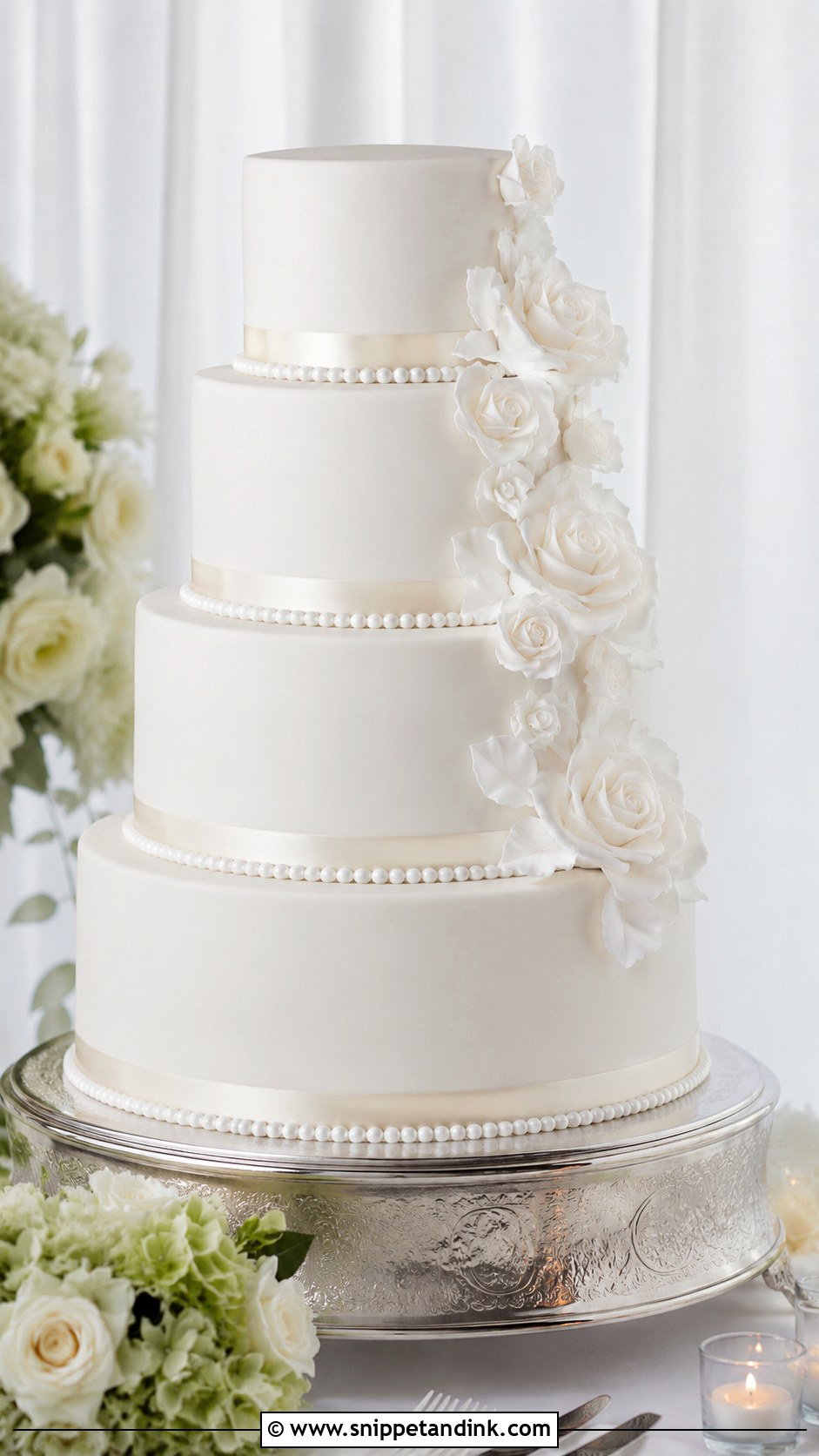
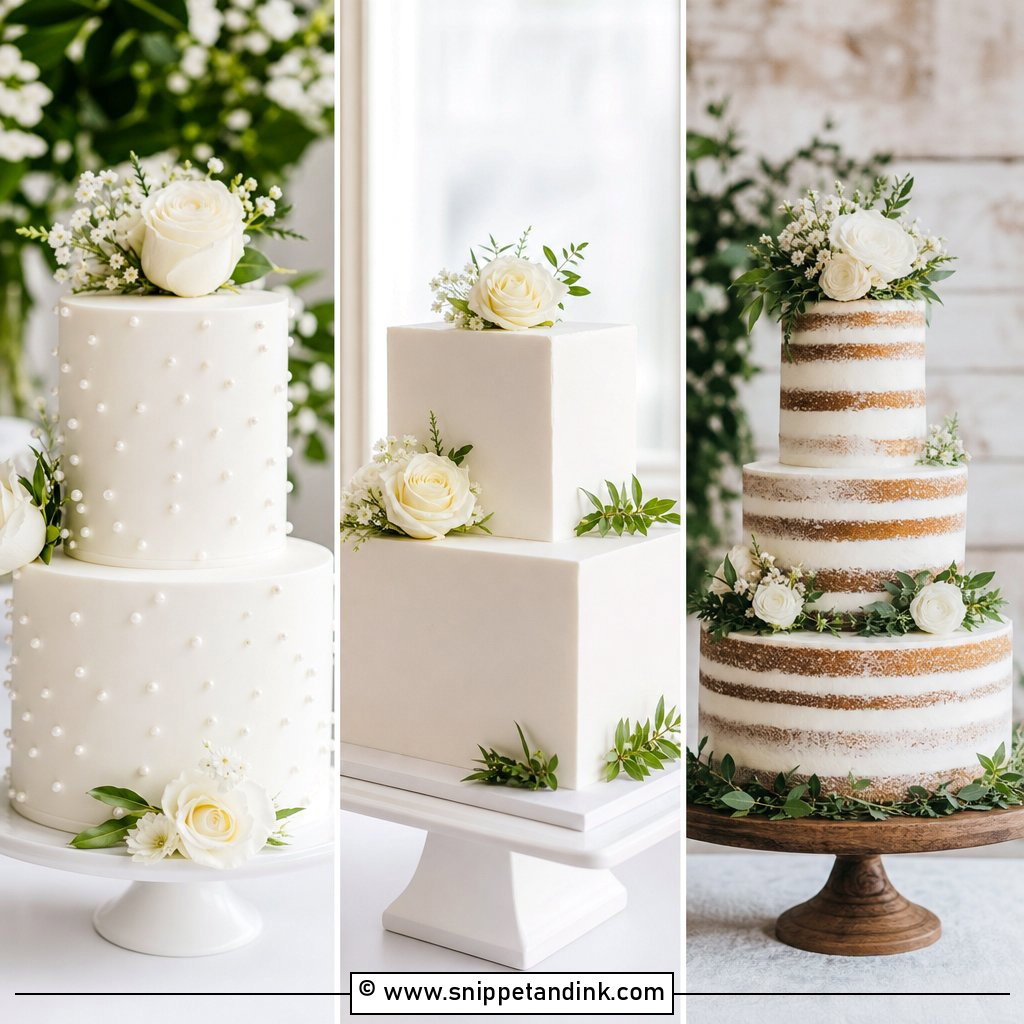
A white fondant dummy wedding cake is the classic for a reason, and foam suits it better than sponge does. Real tiers settle under their own weight and fondant can bulge at the base after a few hours; foam doesn’t move, so the sides stay ruler-straight all evening. Three to five tiers with sharp edges and a satin ribbon at each base, then sugar roses, white orchids or a few pearls. It fits ballroom, church hall and hotel receptions without fuss.
2. Buttercream Style Dummy Wedding Cake
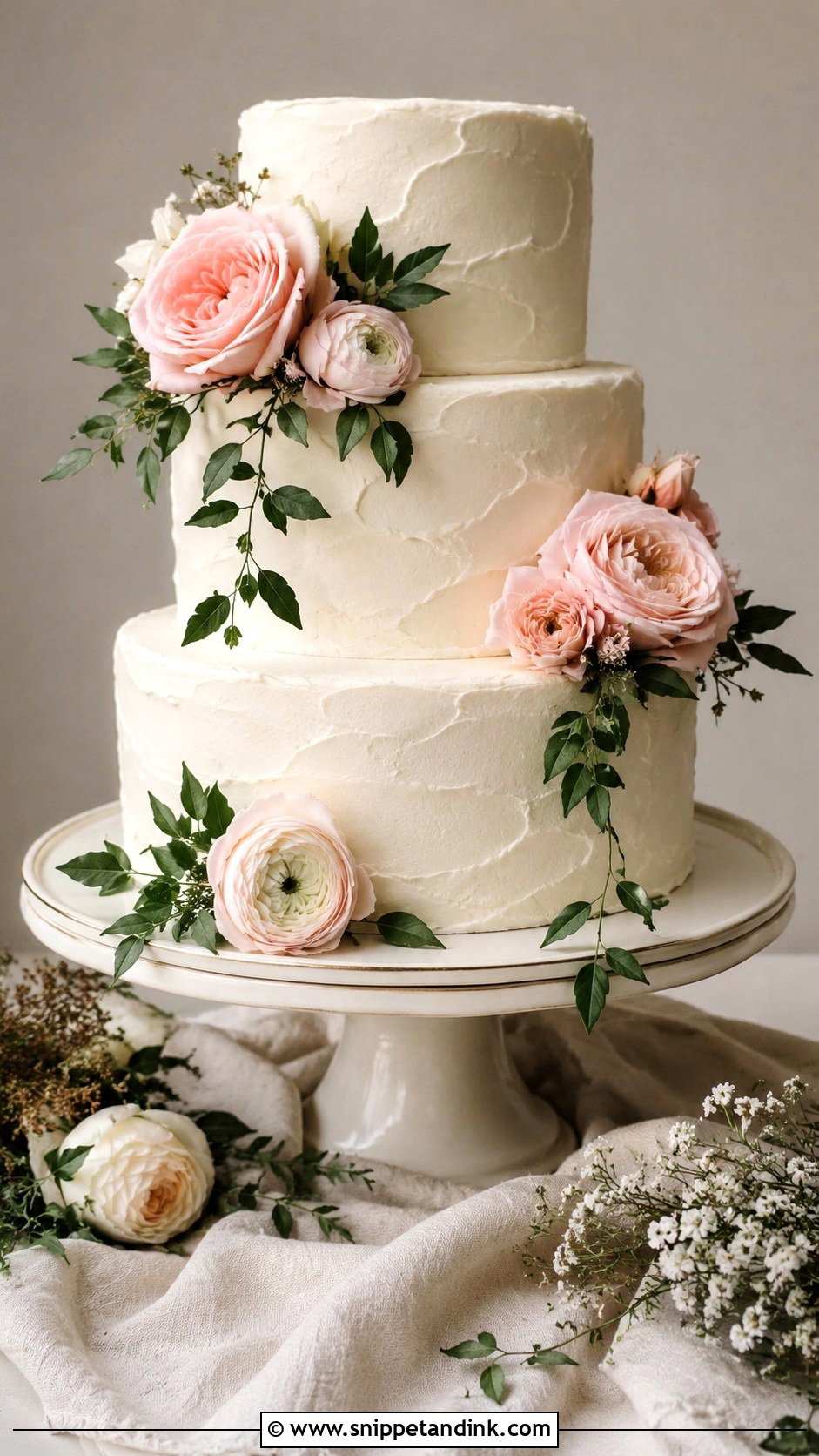
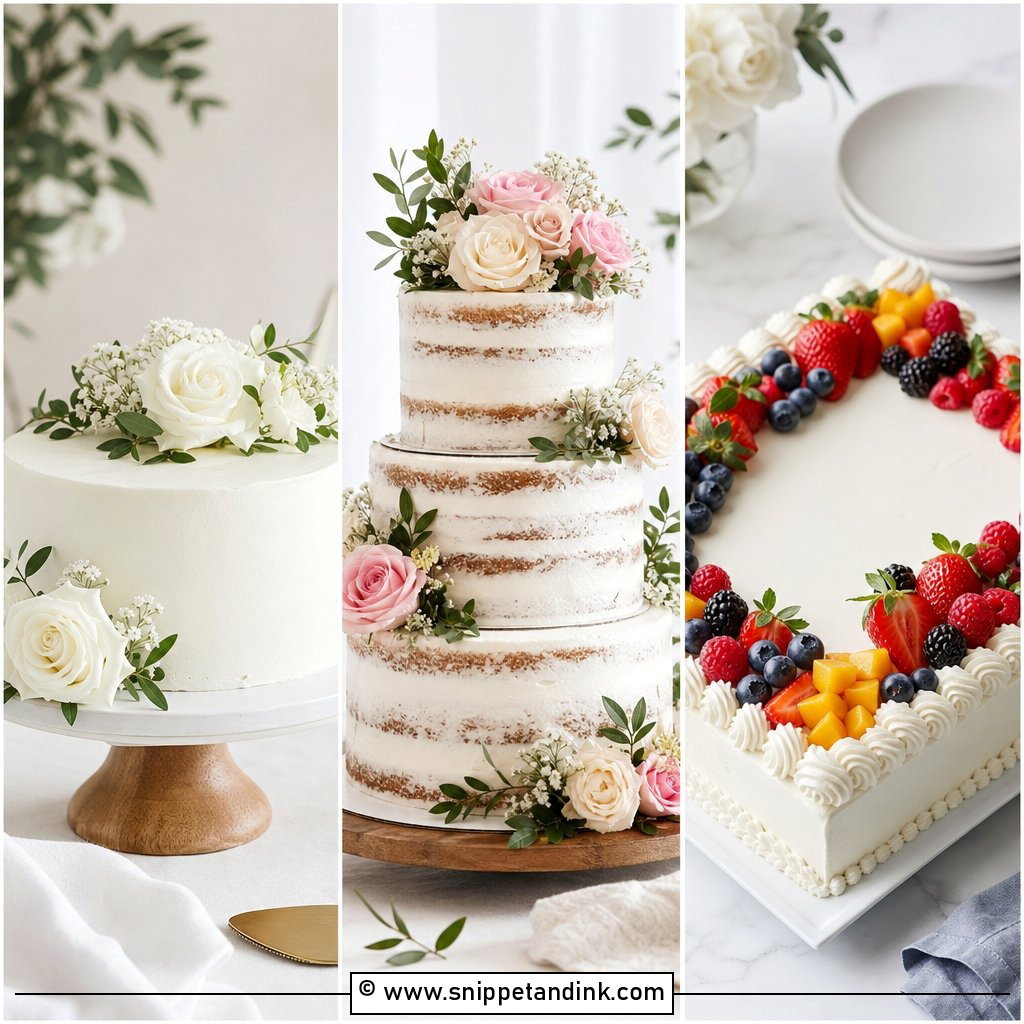
Buttercream on a dummy is a decorating trick: real buttercream won’t last for weeks on foam, so we use a royal icing, a stiff decorator’s coating or a sealed buttercream applied like plaster. The result looks homemade in the good sense and never melts or smears under warm lights. Ivory, cream or soft blush, a slightly rough finish rather than perfectly smooth, then garden roses, ranunculus or greenery. If one tier is real, ask your decorator to match its texture to the foam ones, because a smooth real tier next to rough faux ones gives the game away.
3. Vintage Lambeth Dummy Wedding Cake
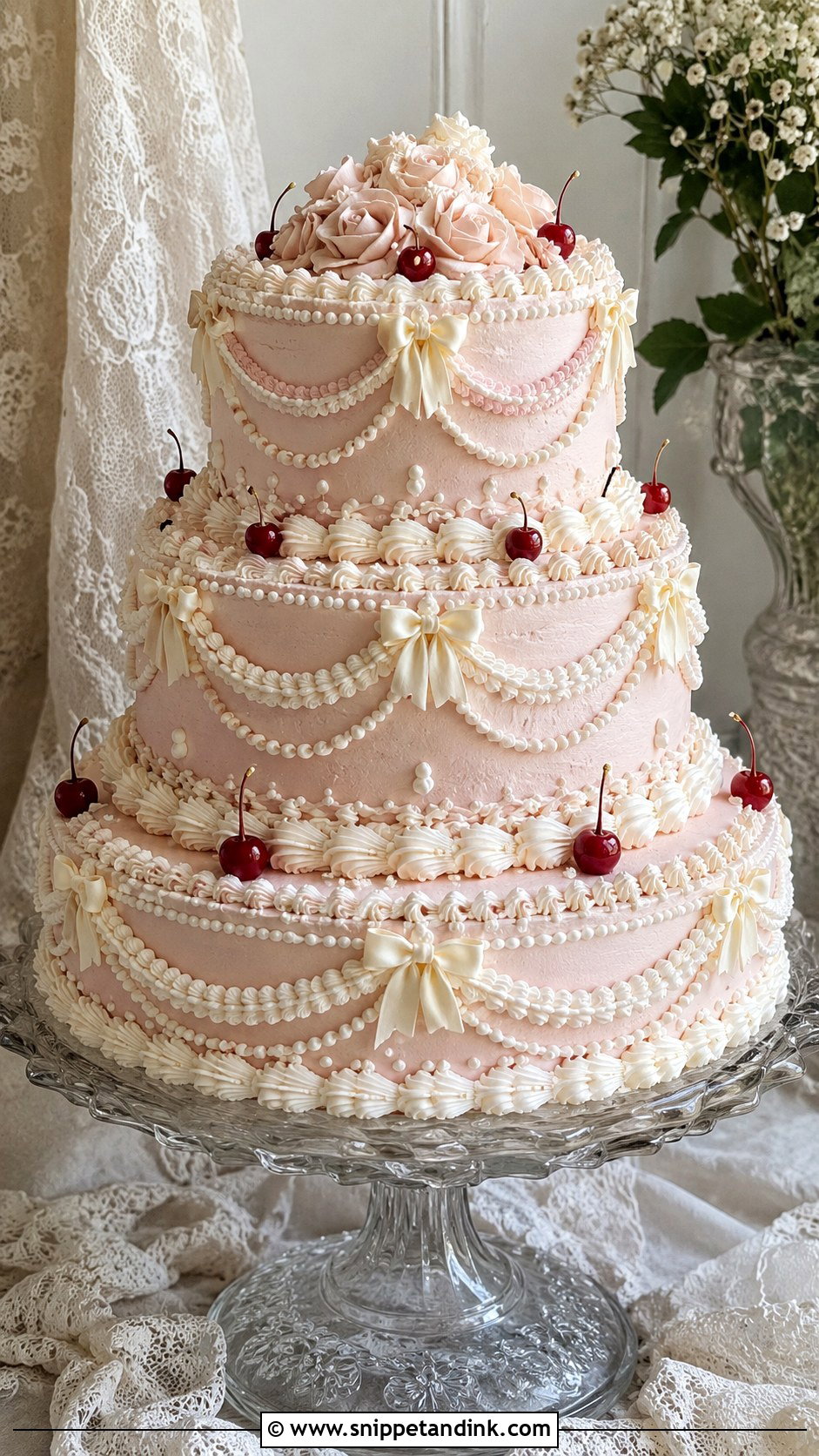
Lambeth piping is where foam pays for itself. A vintage Lambeth dummy wedding cake can carry layer upon layer of shells, swags, scrolls and pearl dots that would be too heavy and too sweet on a real cake, and the piping, done in royal icing, sets rock-hard. It is slow, detailed work, so this is not the cheap option, even in foam. Soft ivory, pale pink, butter yellow or powder blue with sugar cherries or bows suits it, and it sits naturally beside vintage dresses and lace linens.
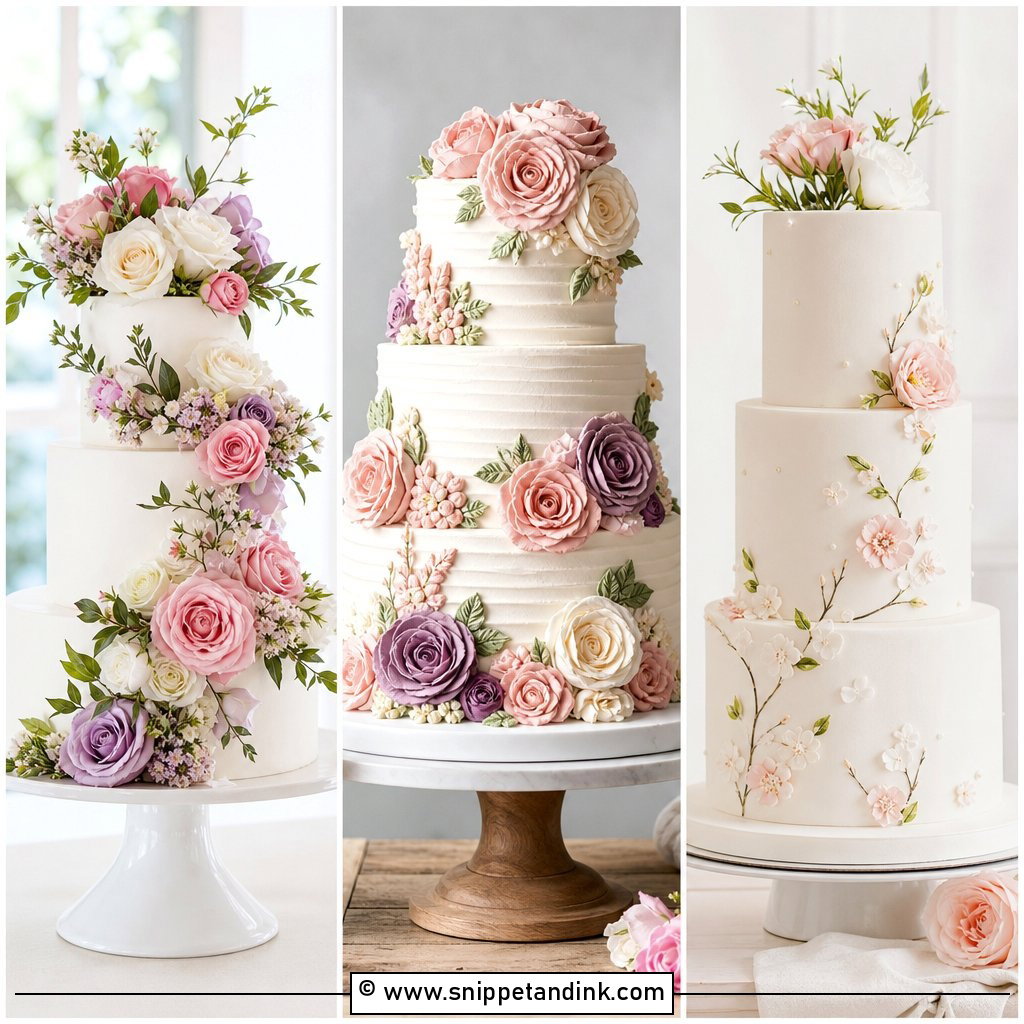
4. Floral Dummy Wedding Cake
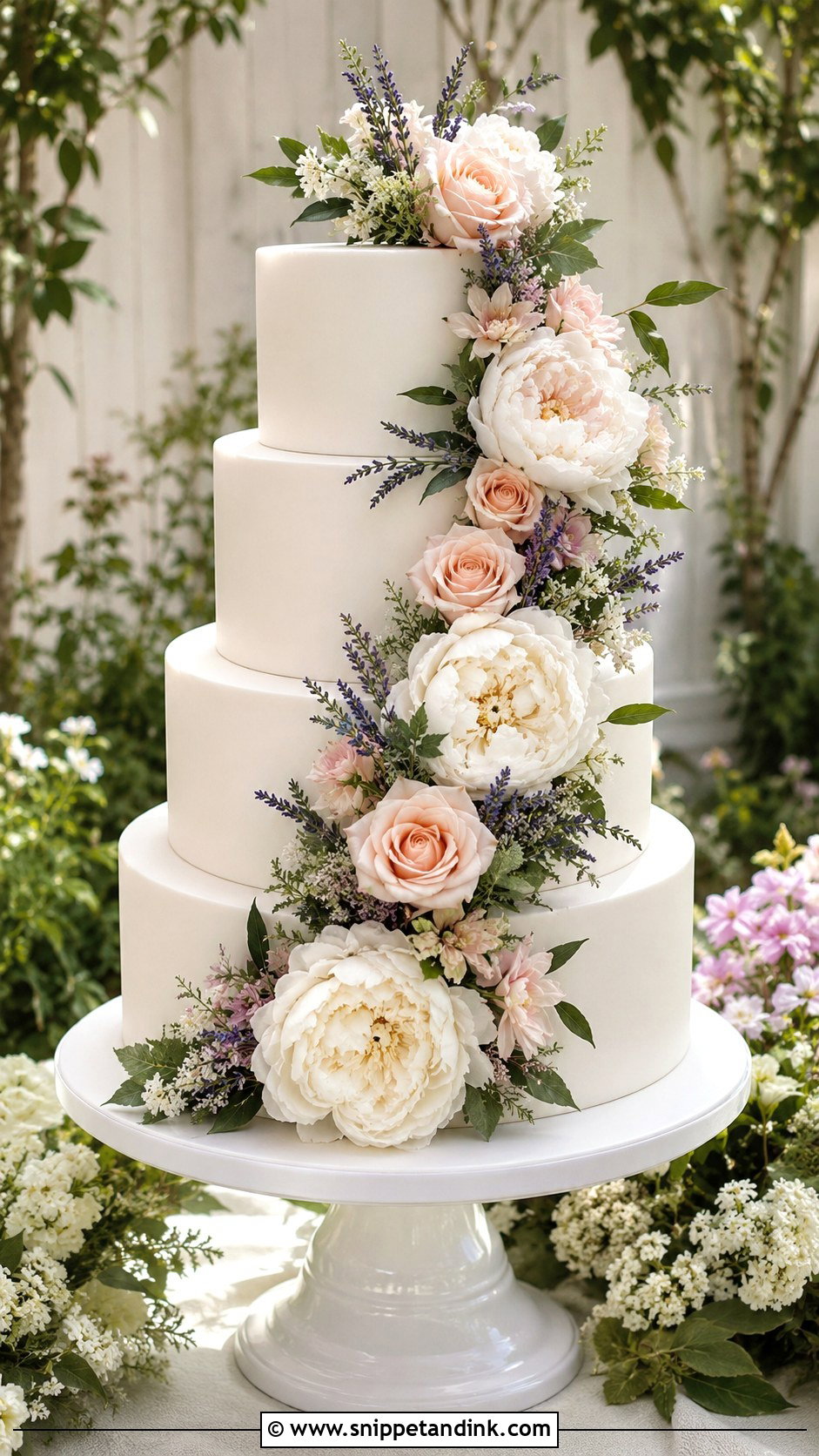
On a floral dummy, I design the flowers as part of the cake’s outline: a diagonal cascade, a meadow around the base, or clusters tucked between tiers. Foam takes wires and picks cleanly, so arrangements can be placed precisely without poking holes into something people will eat. Silk and sugar flowers are easiest. Fresh flowers can go on too, but they still wilt on schedule, so the florist should add them on the day. White, blush, peach, lavender and soft green palettes suit garden and spring receptions.
5. Tall Tiered Dummy Wedding Cake
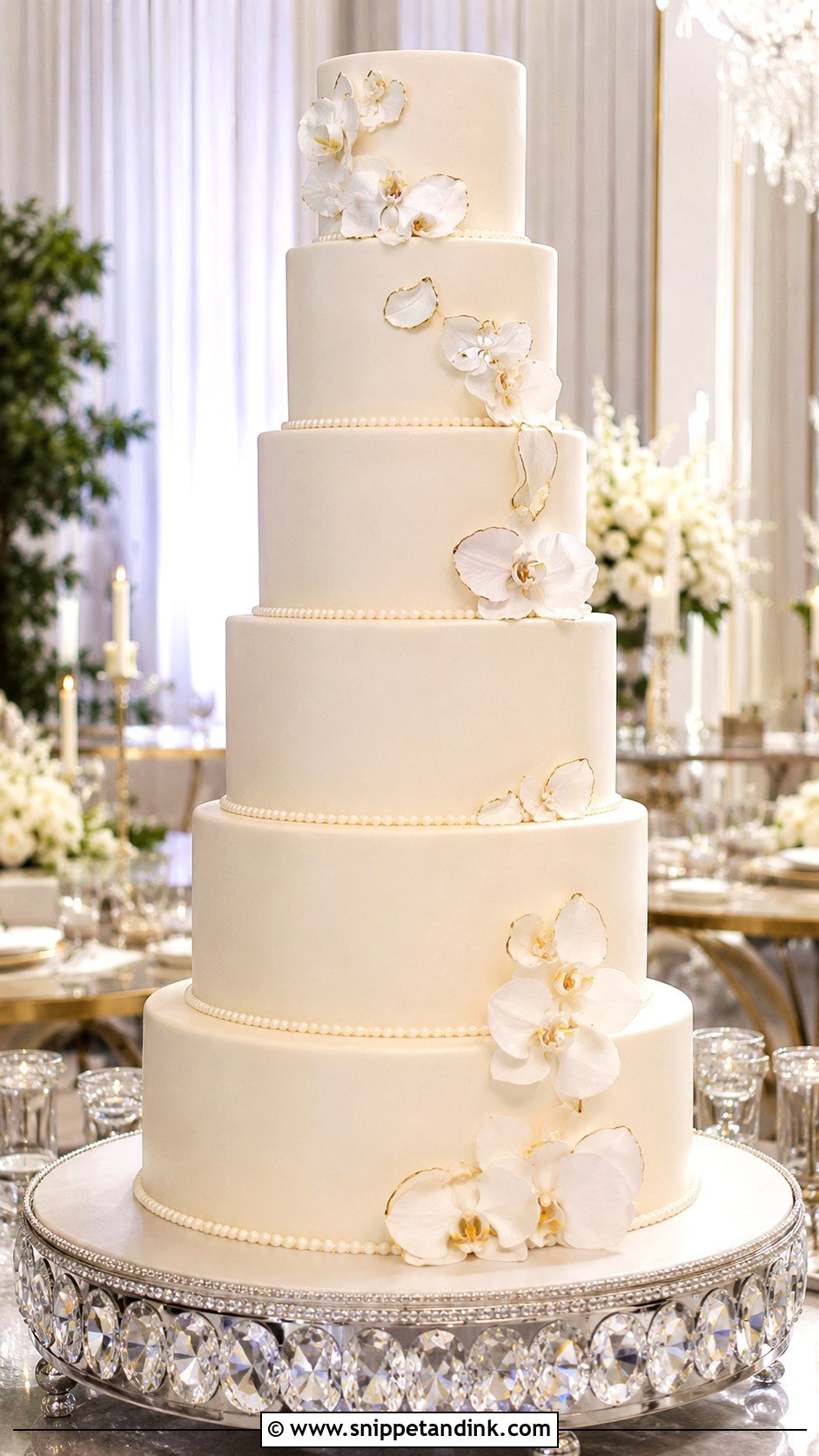
Height is the main reason people choose foam. A tall tiered dummy wedding cake at five or six tiers would be enormously heavy as real cake, needs serious internal support, and is nerve-wracking to transport. Foam weighs very little, so I can stack it high on a sturdy stand while the real dessert is served separately. Keep the decoration measured, with clean fondant, subtle piping and a few large flowers, and make sure the bottom tier is wide enough to look like it carries the rest.
6. Minimalist Dummy Wedding Cake
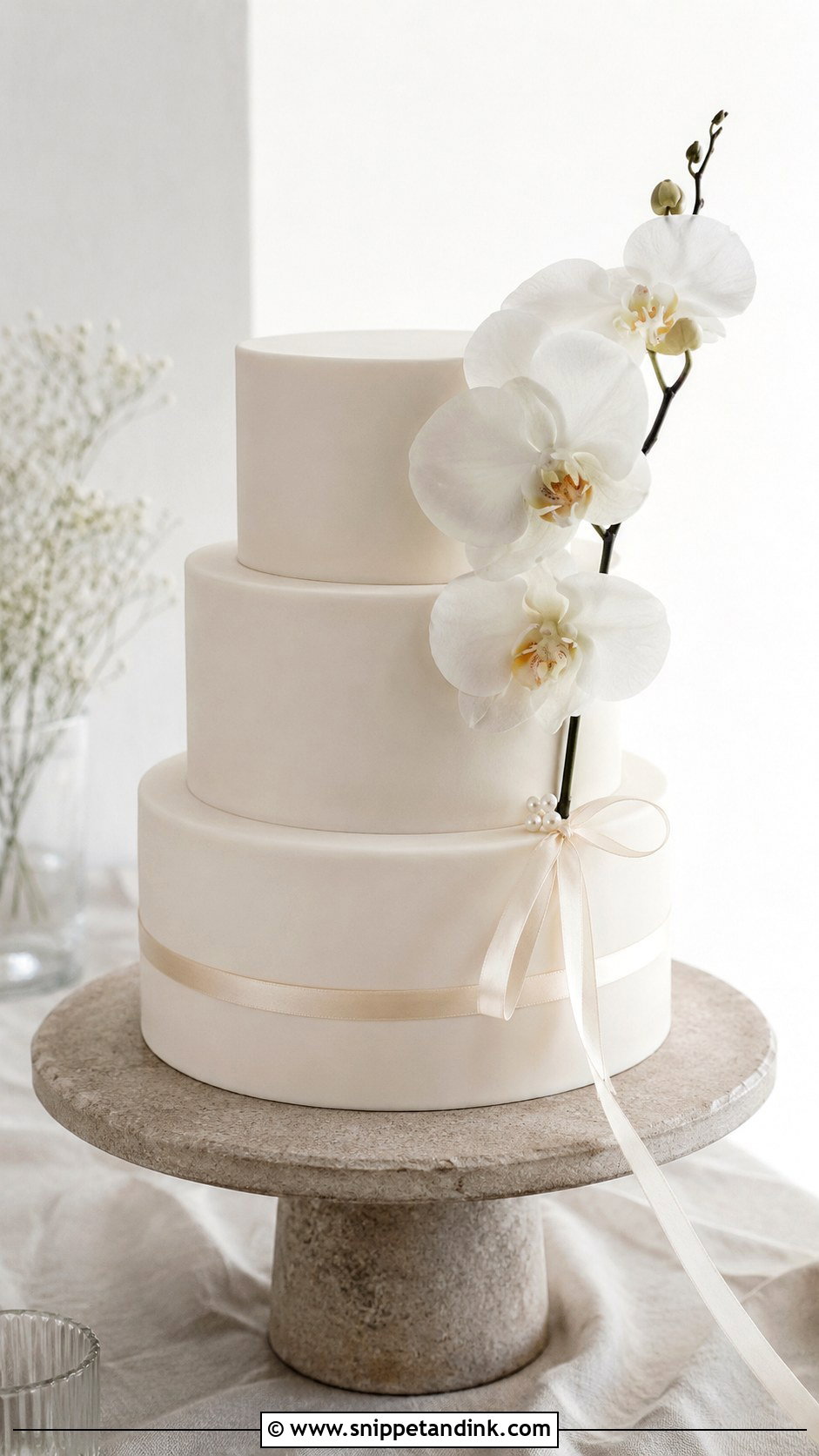
Minimal designs show every flaw, which is why foam helps. Clean shapes, smooth surfaces and careful spacing are the whole design, and a two-tier or three-tier cake with sharp edges in matte white, ivory or soft beige needs perfectly crisp edges that foam holds without effort. One sculptural flower, a small cluster of orchids or a single thin ribbon is enough decoration. In photos it stays quiet beside the dress and the flowers, which is the point.
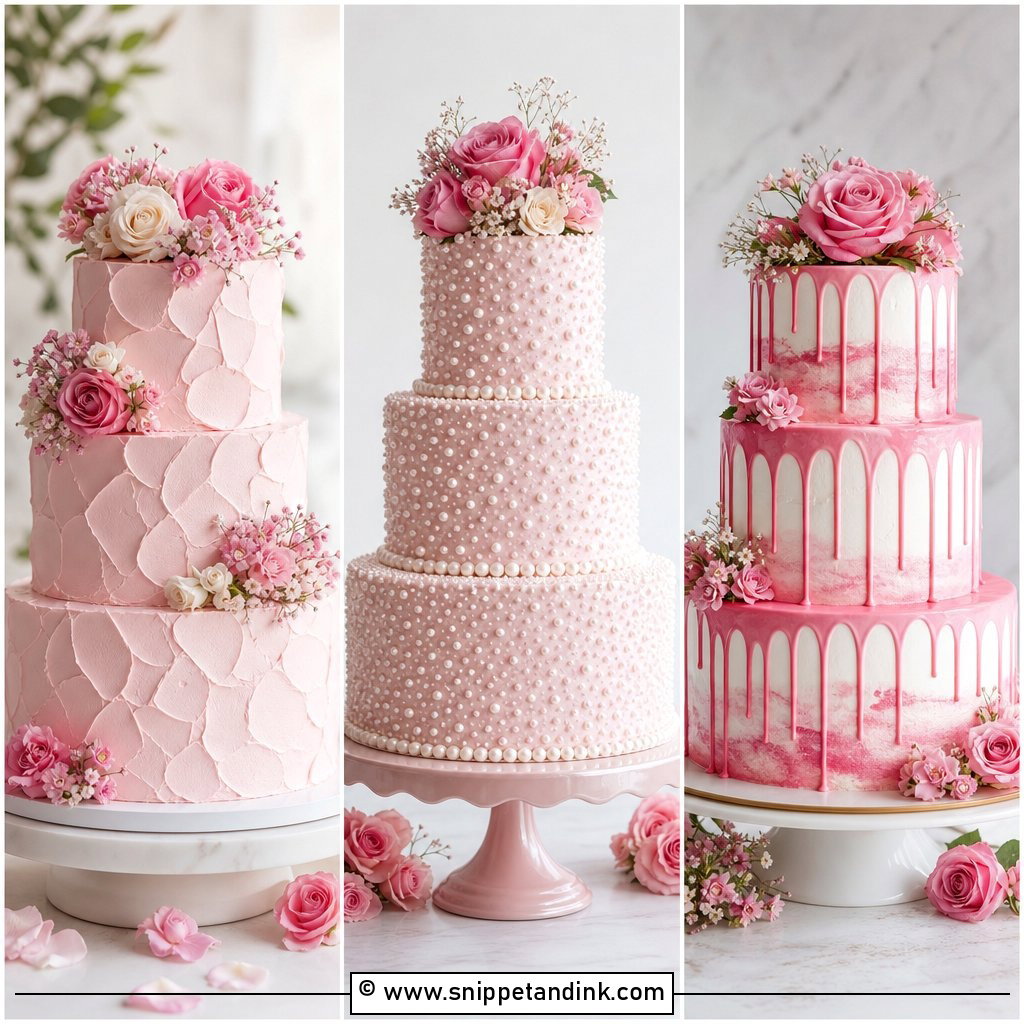
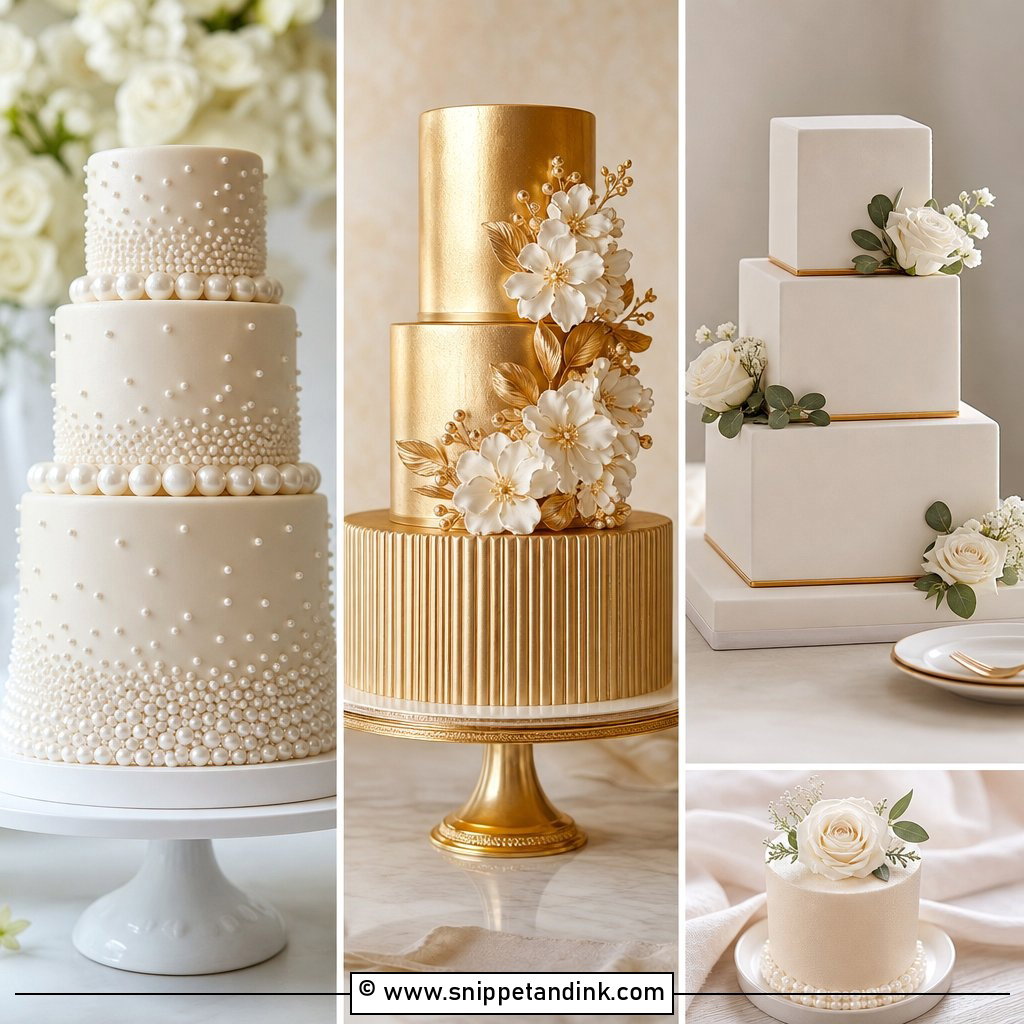
7. Pearl Dummy Wedding Cake
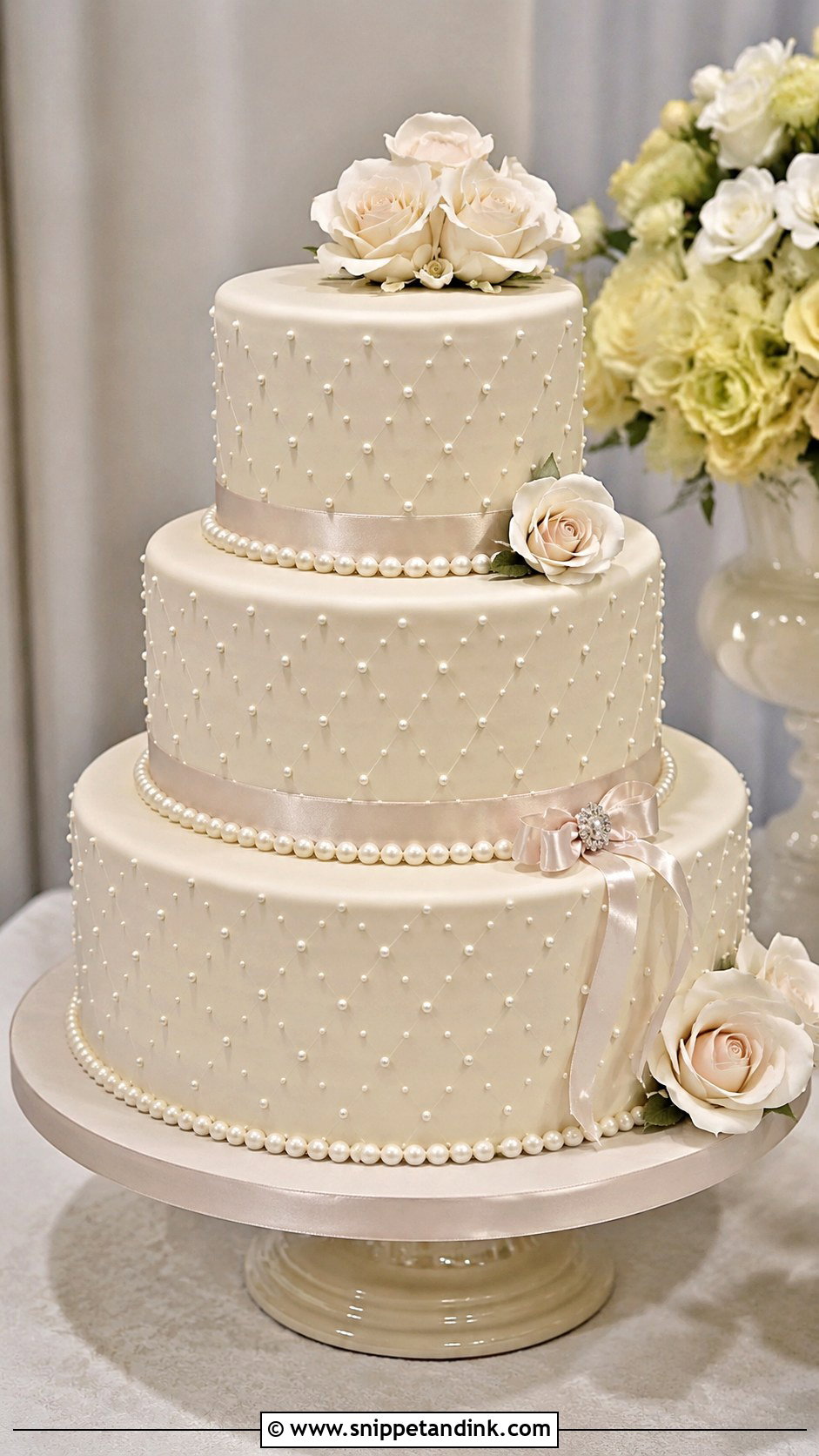
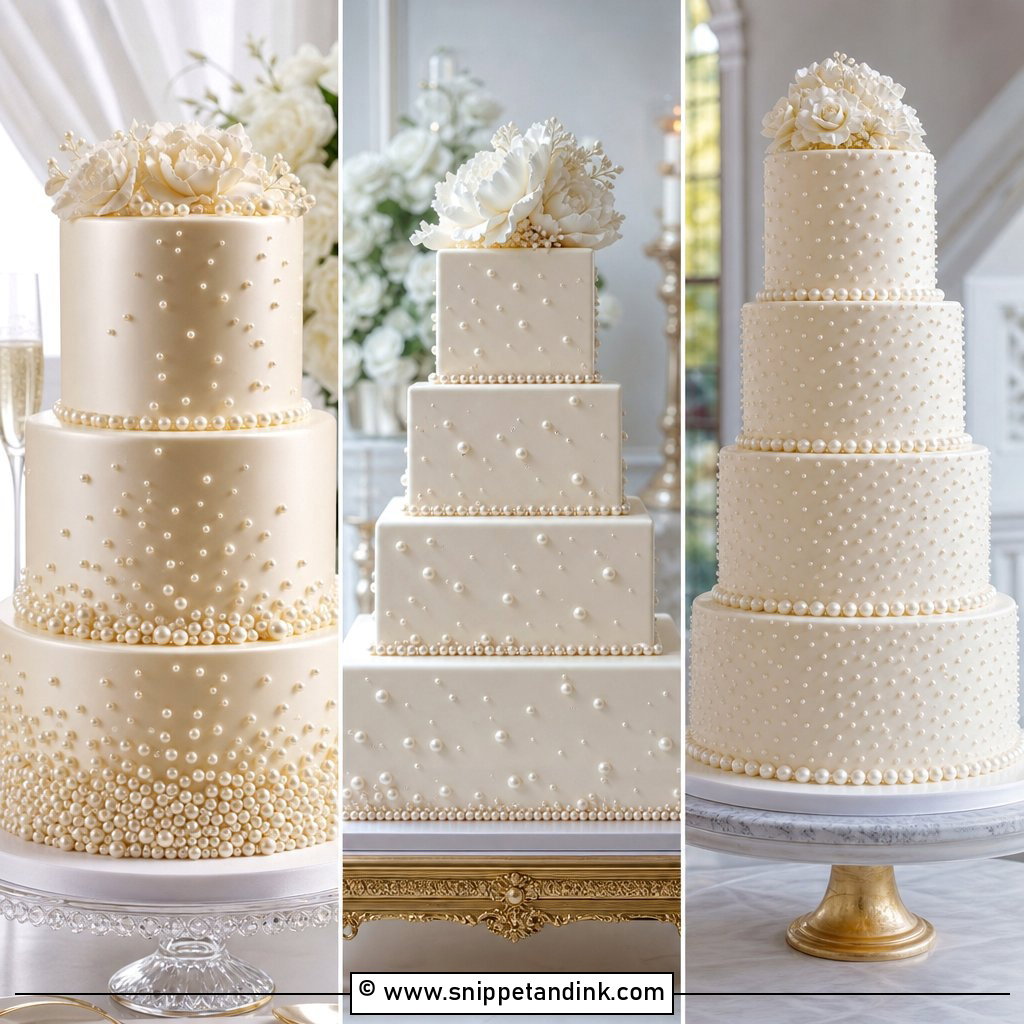
Pearls are fiddly on real cake; they shift as fondant softens. On foam, they stay exactly where I set them, so I can run perfectly straight rows, dense scatters or borders between tiers. Ivory, white and champagne pearls look softest on a cream base. If one tier is real, the pearls on that tier should be edible sugar pearls, and the ones on display tiers can be decorative; tell your decorator which tier is which.
8. Blush Pink Dummy Wedding Cake
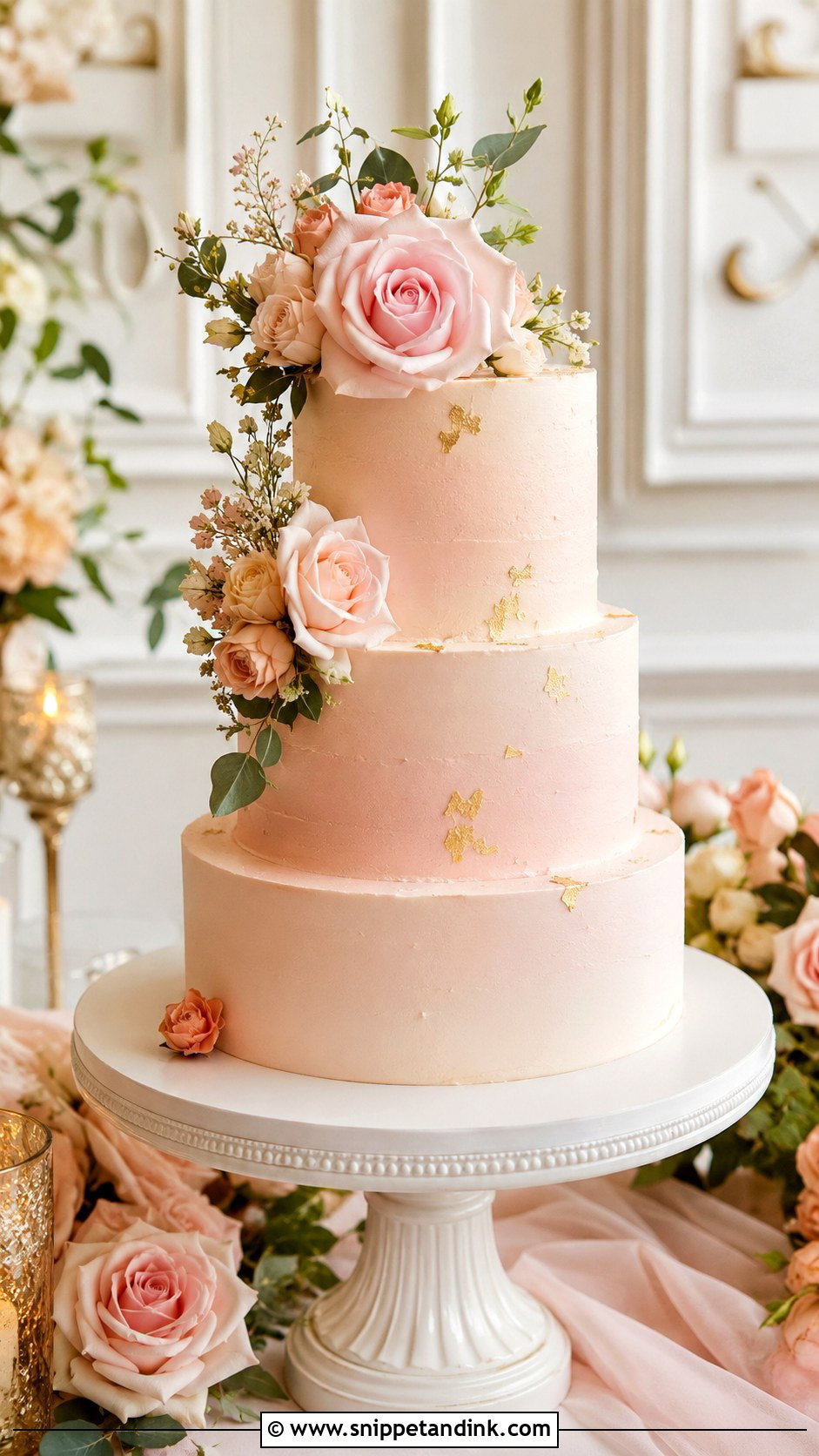
Colour is harder to keep even across large real tiers, because tinted fondant and buttercream can fade under bright light or shift slightly batch to batch. On a display cake, the whole thing can be covered from one batch and kept out of sunlight until the event. Blush across every tier, or an ombré from blush into ivory, with sugar roses, pale peach flowers or a little gold leaf. Greenery, cream linens and candlelight round out the table.
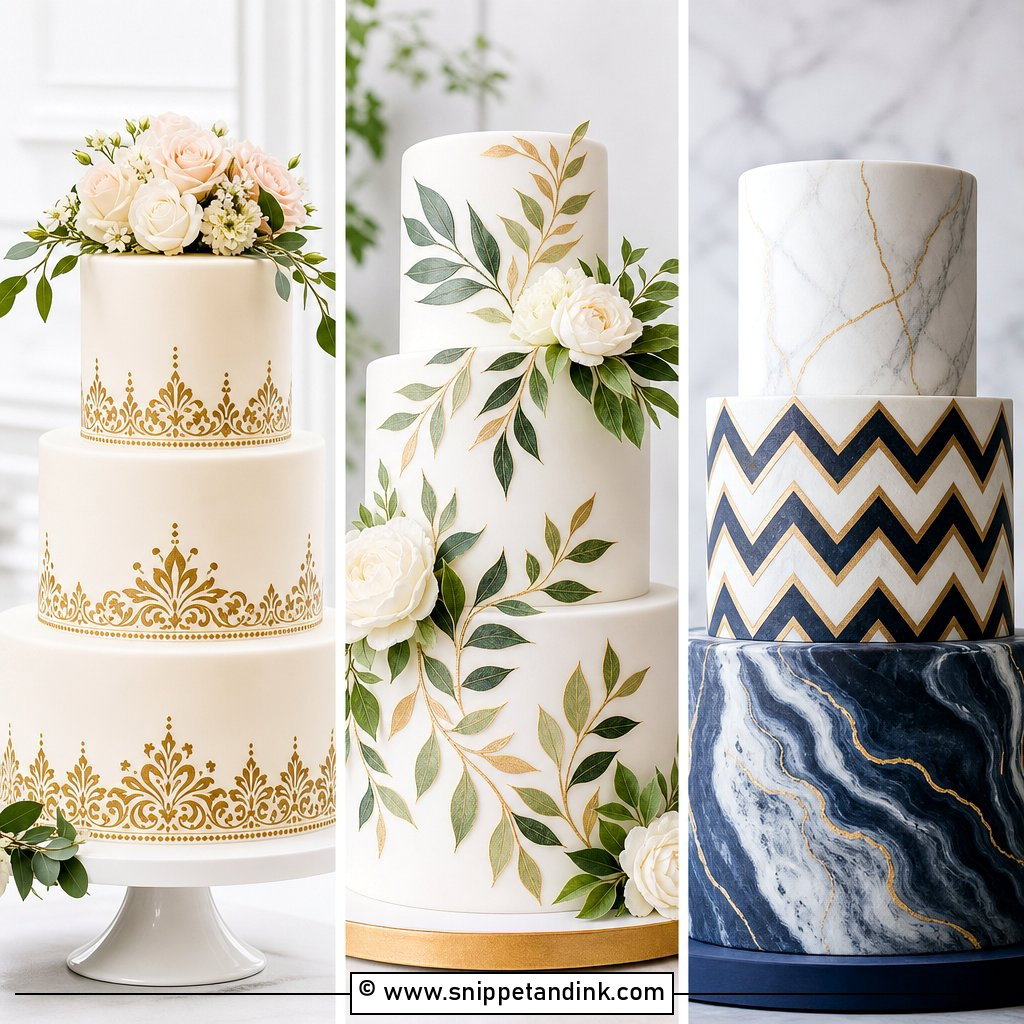
9. Gold Accent Dummy Wedding Cake
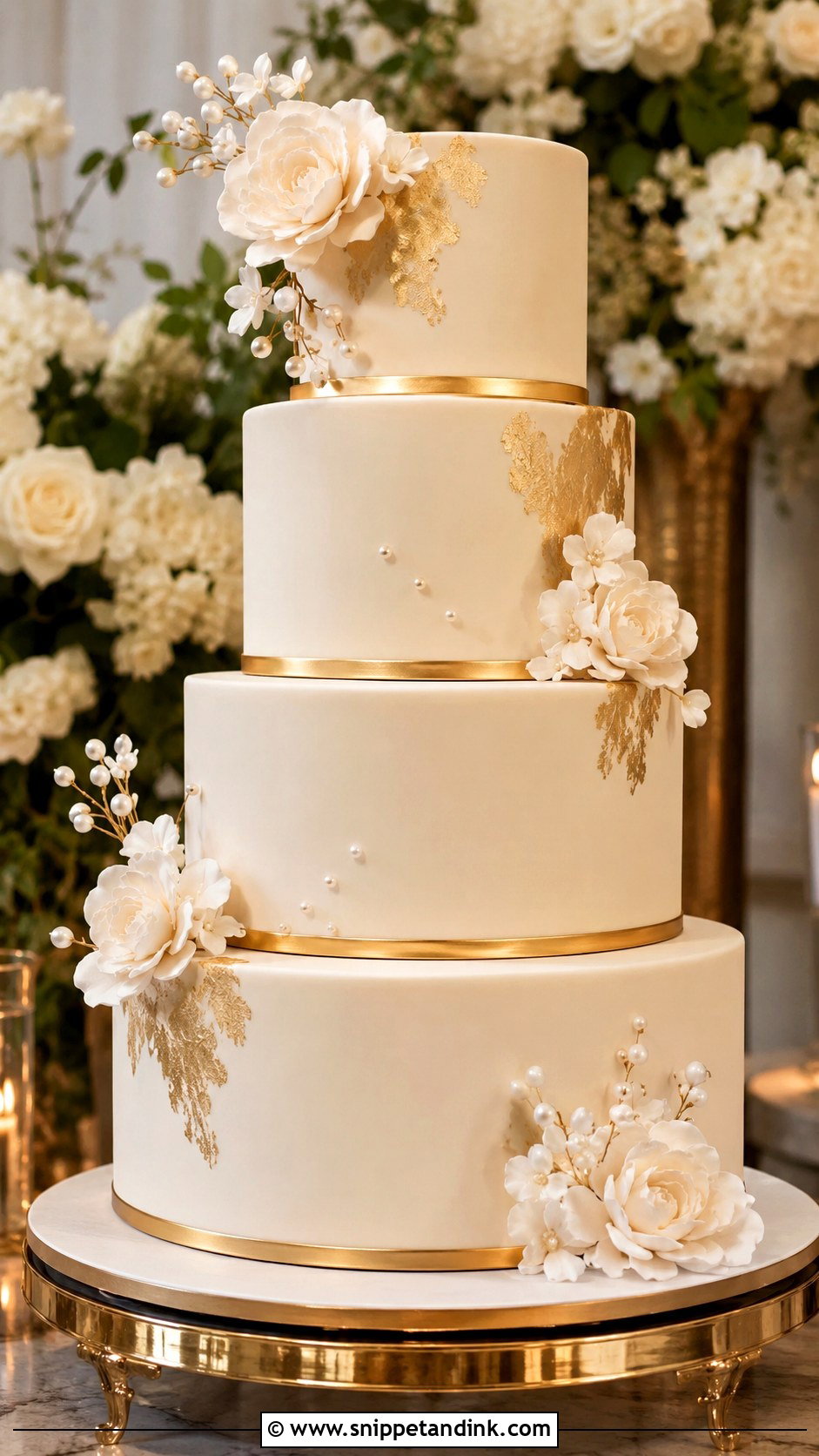
Gold reads as luxurious only when it’s rationed. Leaf, thin metallic bands, painted edges or a few geometric accents on one tier or along a floral cascade, never every surface. Metallic paints on a foam display don’t need to be edible, but on any real tier they must be food-safe, and some ‘non-toxic’ lustre dusts are decorative only. Ask. Under warm evening light in a ballroom, a little gold goes a long way.
10. Greenery Dummy Wedding Cake
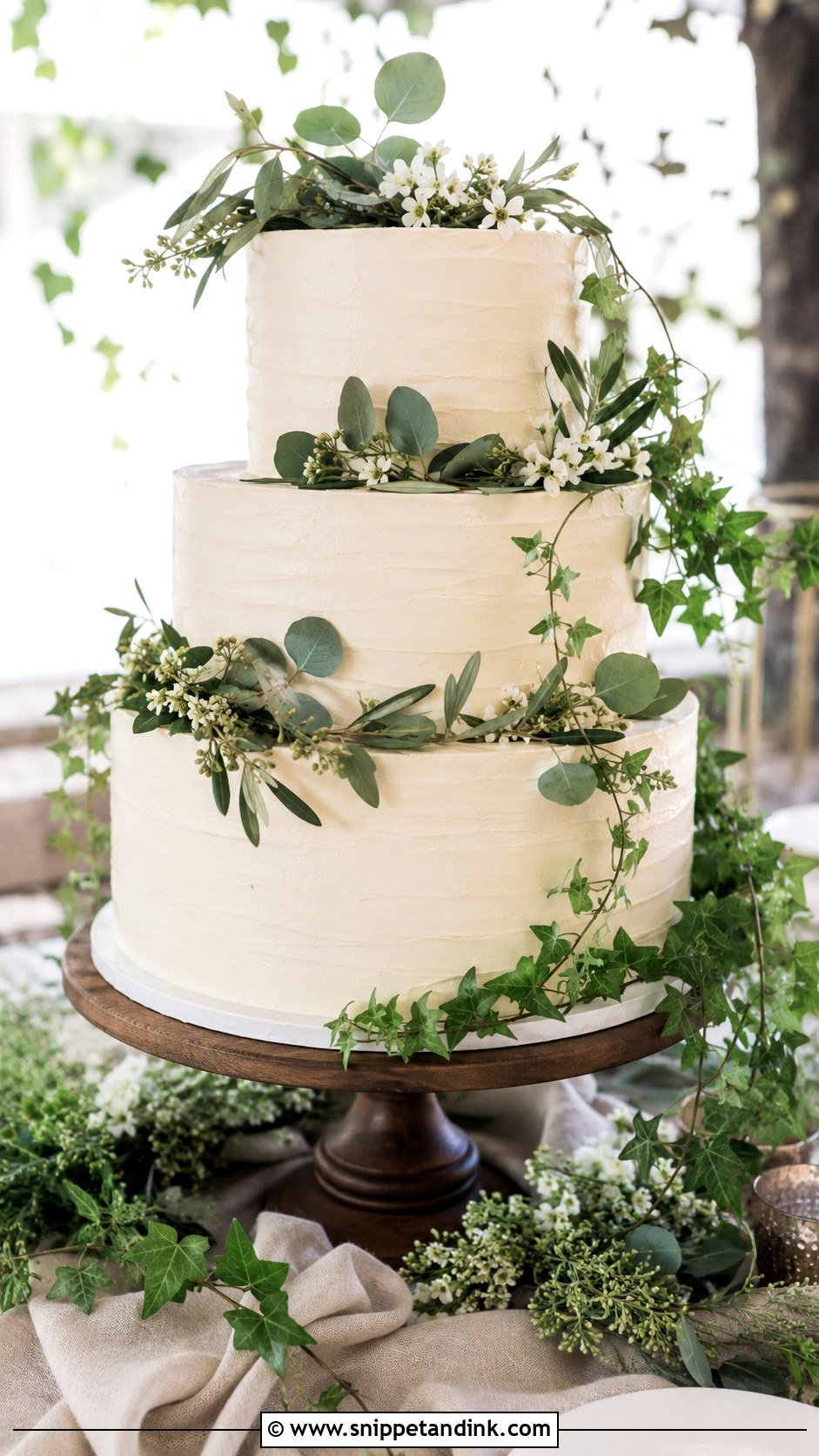
Greenery is the easiest way to make a foam cake look garden-fresh. Smooth ivory tiers, then eucalyptus, olive, ivy or fern wrapping each tier or trailing down one side. The foam won’t mind how long it sits out, but the leaves will, so cut greens go on as late as possible. Several common decorative foliage types aren’t food-safe, which doesn’t matter on a dummy tier but matters a lot if any of it touches the real cutting tier. A wood stand and linen cloth finish it.
11. Rustic Dummy Wedding Cake
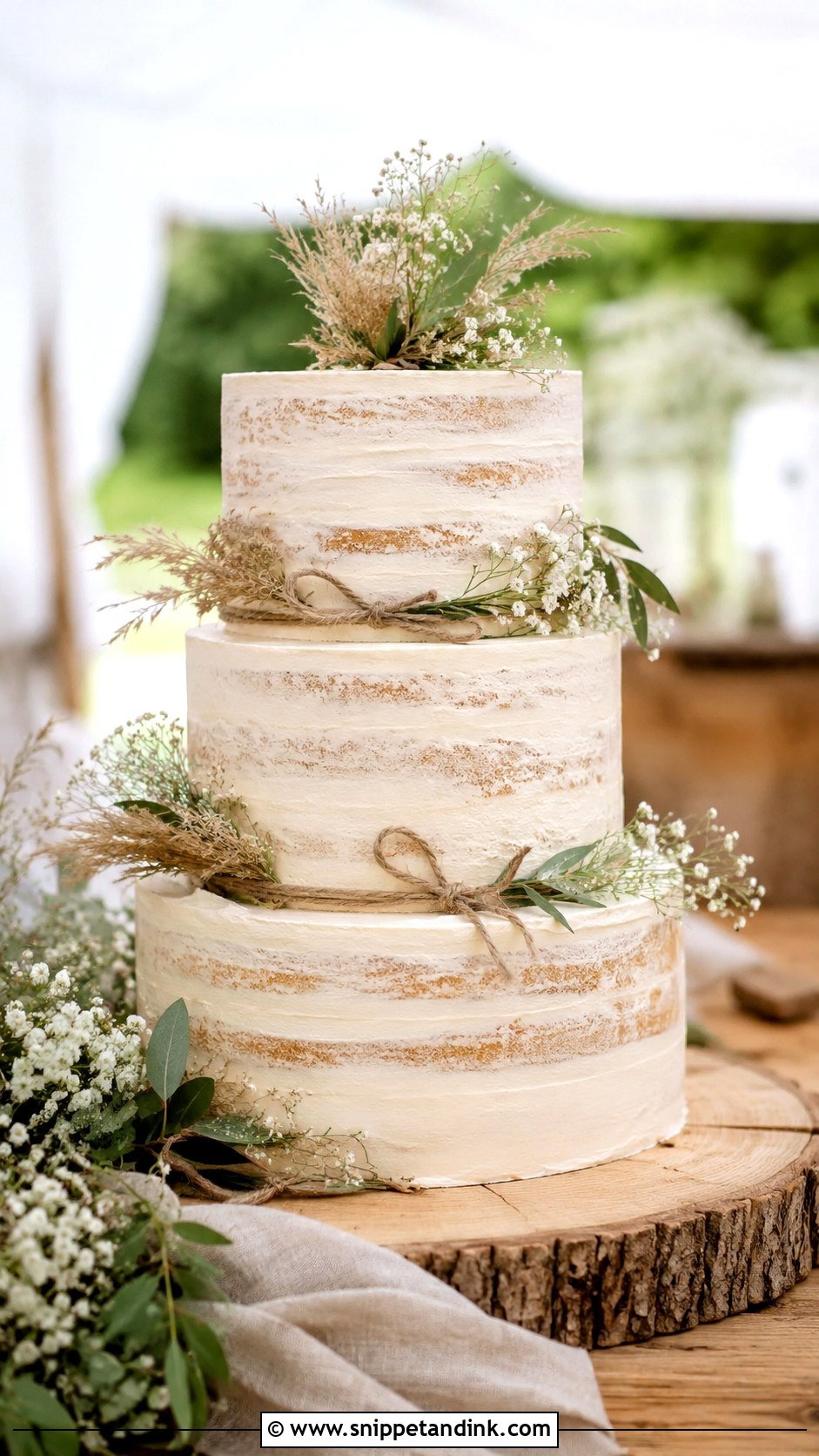
Rustic is a texture brief: faux buttercream, a semi-naked look or a soft scraped finish in ivory, cream or light beige, with small flowers, greenery, dried grasses or ribbon. A real semi-naked cake dries out within hours on display, which is one of the strongest arguments for foam here; the faux version looks the same at midnight as it did at noon. Set it on a wood slice or a simple ceramic pedestal for barn and backyard receptions.
12. Modern Square Dummy Wedding Cake
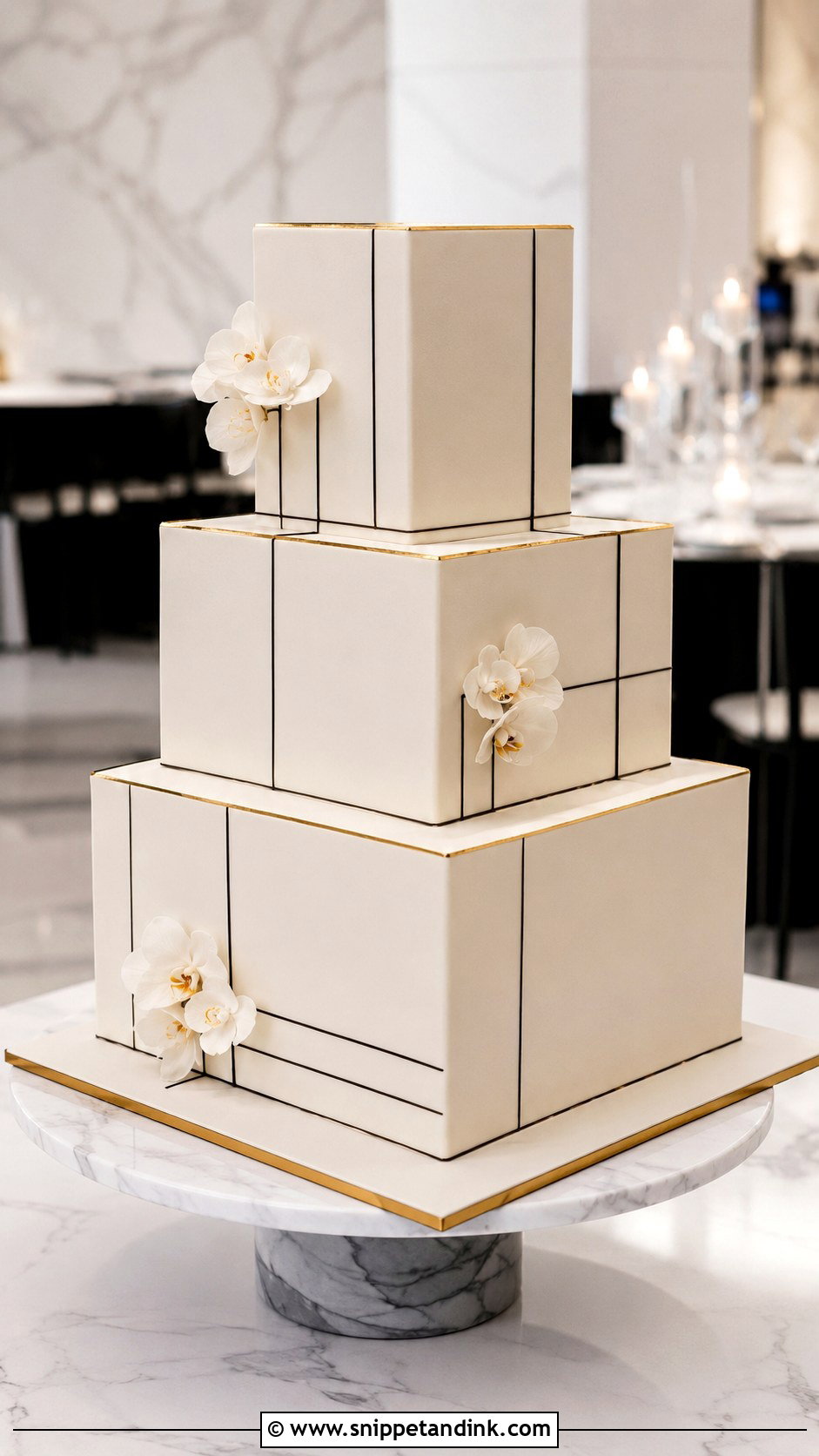
Square tiers are notoriously hard in real cake. Getting crisp corners and straight sides takes ganache, patience and a steady hand, and corners still crack. Foam comes pre-cut with true right angles, so a modern square cake looks architectural from the start. White, ivory, taupe or soft grey, with thin black lines, gold edges or one sculptural accent. It belongs in city venues and galleries with clean decor.
13. Round Tiered Dummy Wedding Cake
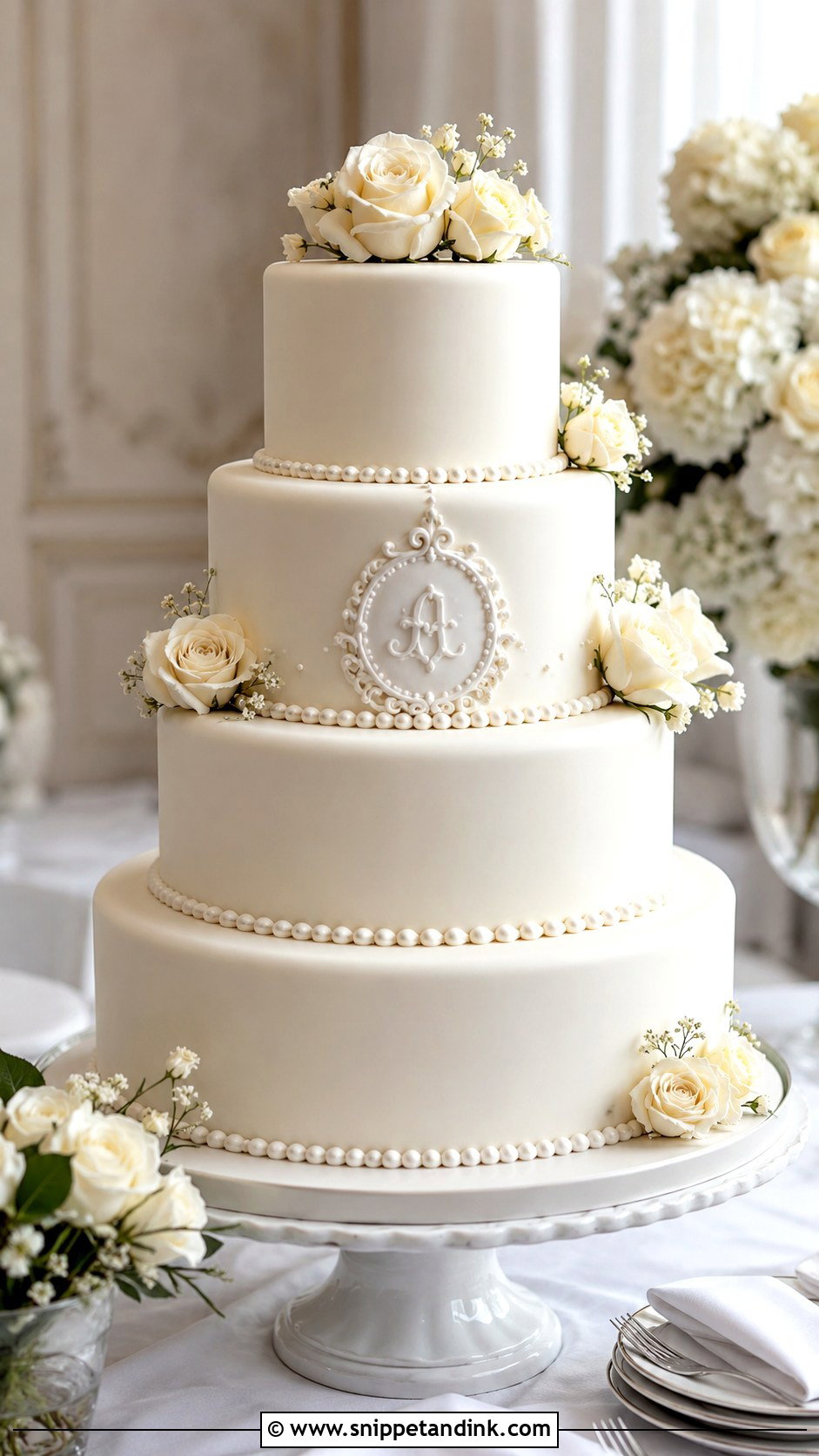
Round tiers are the safe, familiar choice, and that’s not a criticism. They suit almost any style: smooth white fondant for classic, flowers for romantic, texture for something softer. Three tiers fit an intimate wedding; four or five feel formal. On foam, each tier sits perfectly centred and stays put. If you’re undecided about everything else, start with round tiers and let ribbon, monograms, pearls or flowers carry the personality.
14. Black And White Dummy Wedding Cake
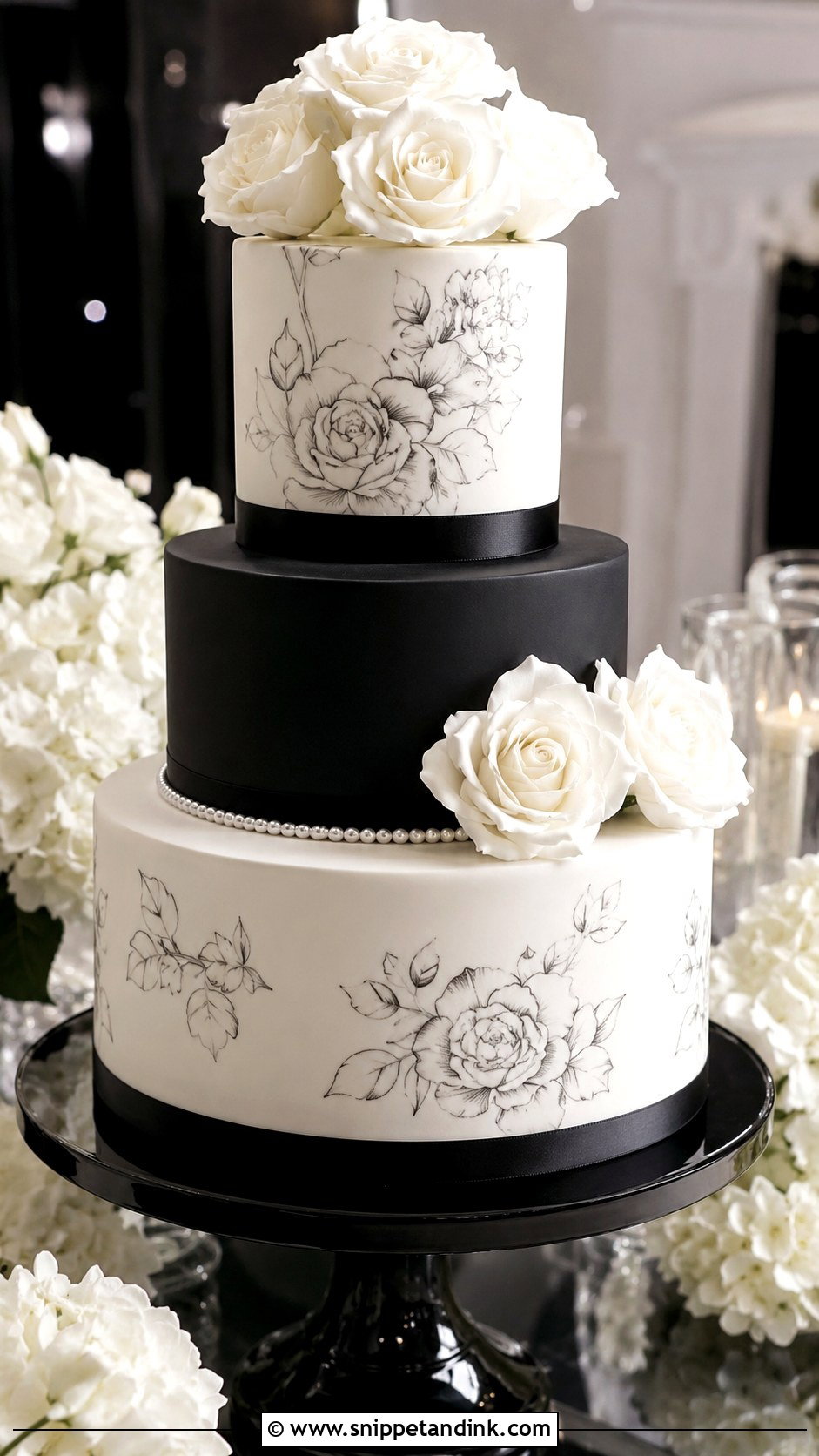
Black and white looks sharp on a cake table, but black icing is one of the hardest colours to make taste and look good on real cake. On foam, the taste problem disappears. Keep black to controlled details: thin ribbon bands, painted floral outlines, a bow, or one black tier among white ones. Soften the contrast with white flowers, pearls or a matte finish. It suits formal evening weddings and modern venues.

15. Blue Dummy Wedding Cake
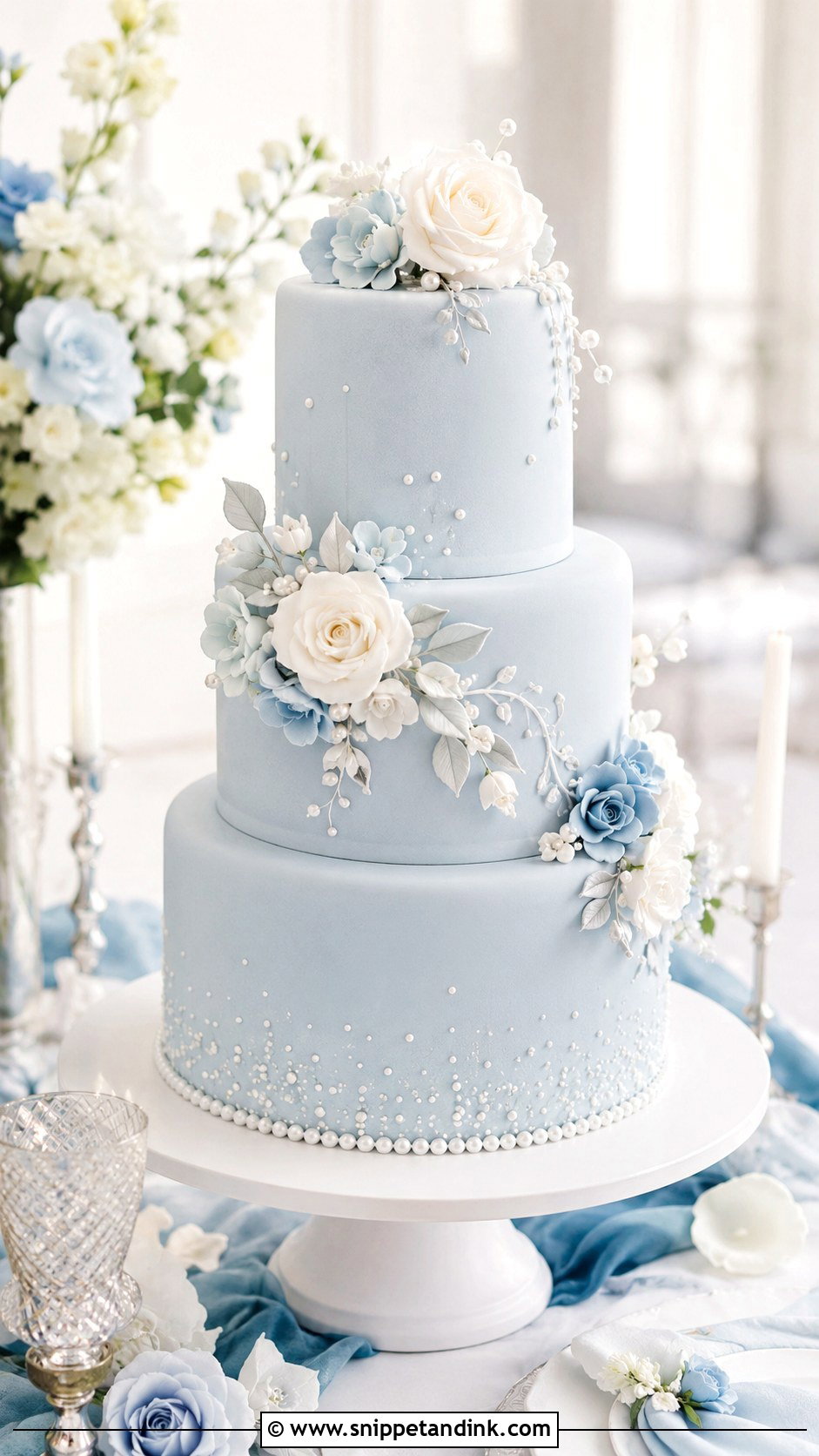
Blue changes character with the shade: pale blue reads airy, dusty blue reads refined, and navy reads dramatic. Pair any of them with white florals, silver or pearl details to keep it bridal. Large blue tiers are where foam earns its place, because an even blue over several real tiers is hard to achieve and it can fade near windows. I like blue for waterfront weddings and blue-and-white palettes, as long as the decoration doesn’t tip into a nautical theme.
16. Floral Meadow Dummy Wedding Cake
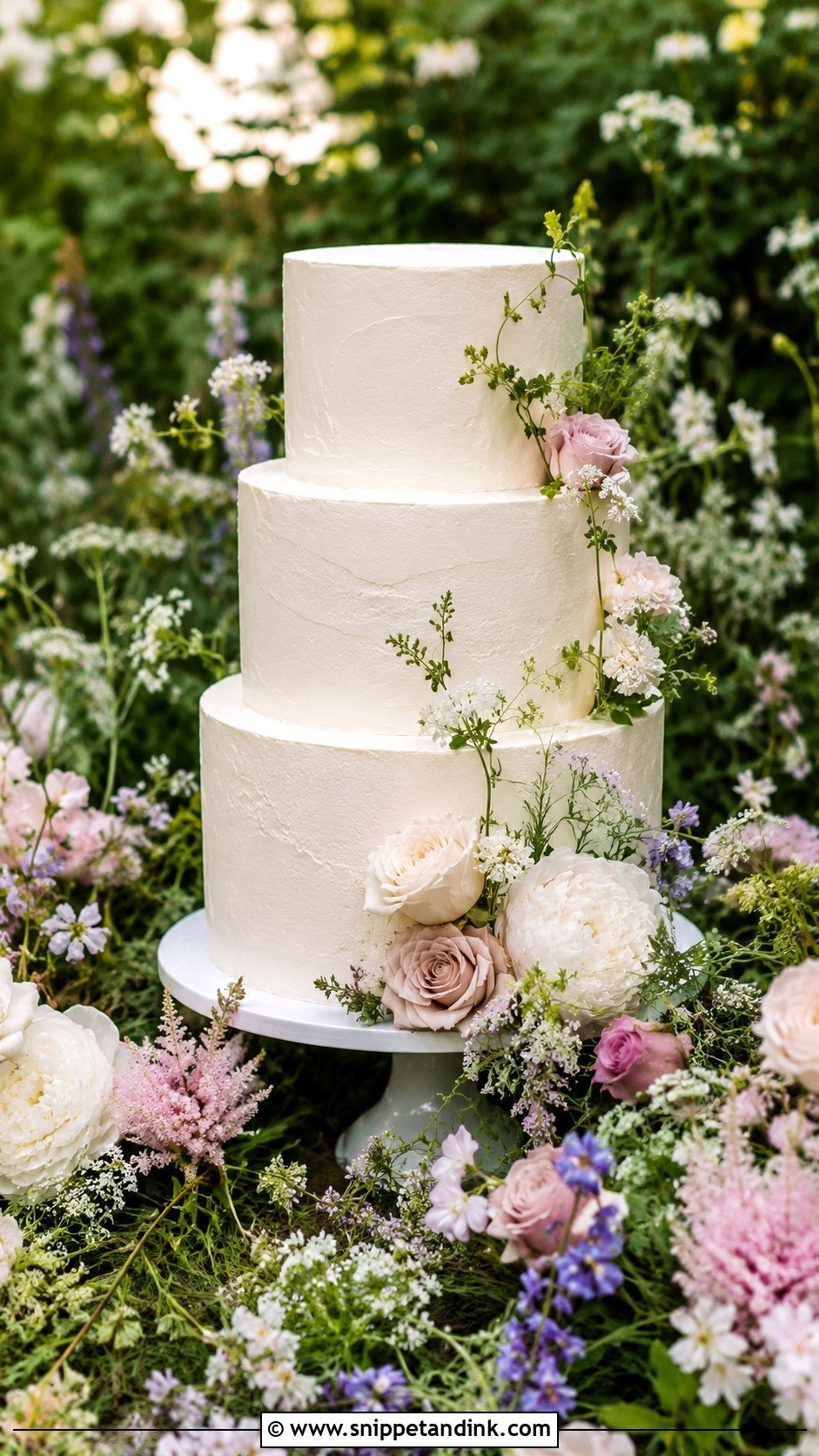
Here the flowers build the drama and the cake stays plain. Smooth ivory fondant or a soft buttercream-style finish sits inside an arrangement of roses, peonies, wildflowers and greenery that gathers around the base and climbs a little way up. This is really a florist and cake designer collaboration, so introduce them early and agree who supplies the stand and riser. Garden receptions and outdoor ceremonies suit it.
17. Textured Dummy Wedding Cake
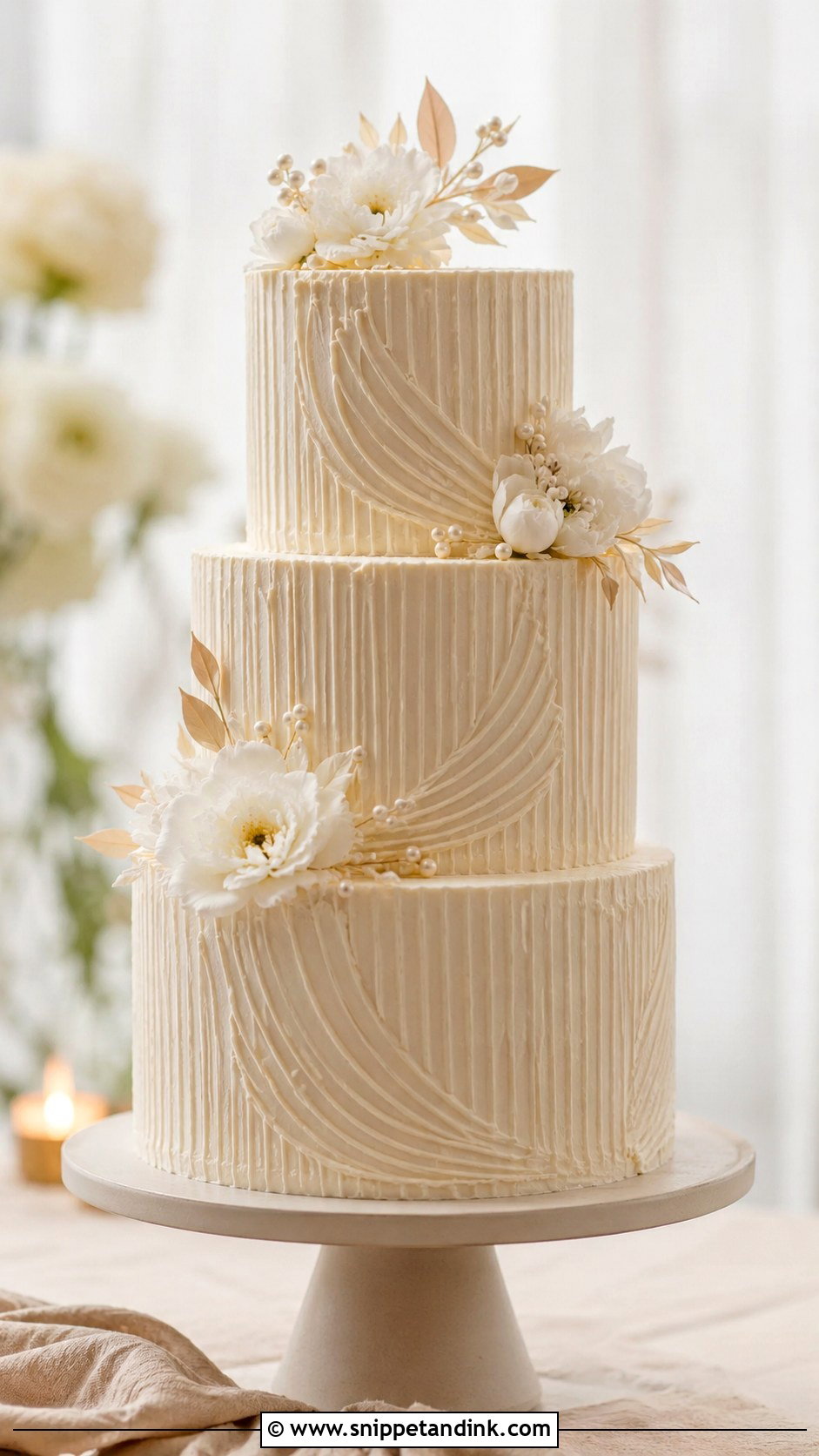
Texture gives a plain cake a reason to be looked at: rough strokes, vertical ridges, ruffles, linen-effect fondant or soft waves. Ruffles in particular are heavy and sag on real sponge after a while; foam holds them crisply. Ivory, white, beige and soft grey let the texture show in photographs. Add minimal flowers or none. Depending on the stand, the same textured cake can read rustic, coastal or contemporary.
18. Orchid Dummy Wedding Cake
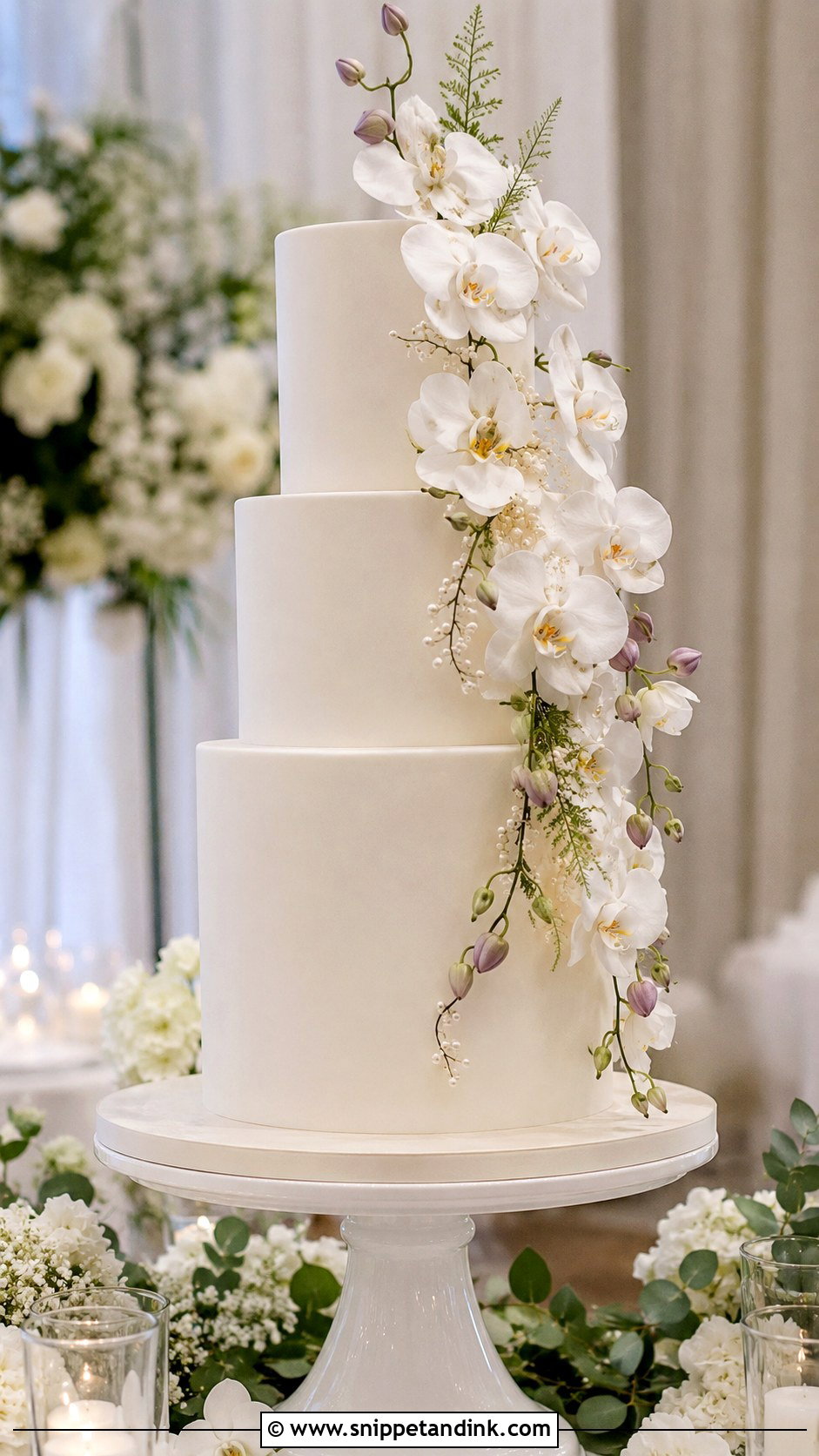
Orchids trail naturally, which makes them ideal for tall faux tiers. A cascade down the front or tidy clusters between tiers on a smooth white or ivory base looks crisp and modern. White orchids are classic; pale pink or lavender is warmer. Real orchids are reasonably hardy out of water for a few hours, but I’d still wire them into tubes for a long display. Hotel and tropical-inspired venues suit this one.
19. Bow Dummy Wedding Cake
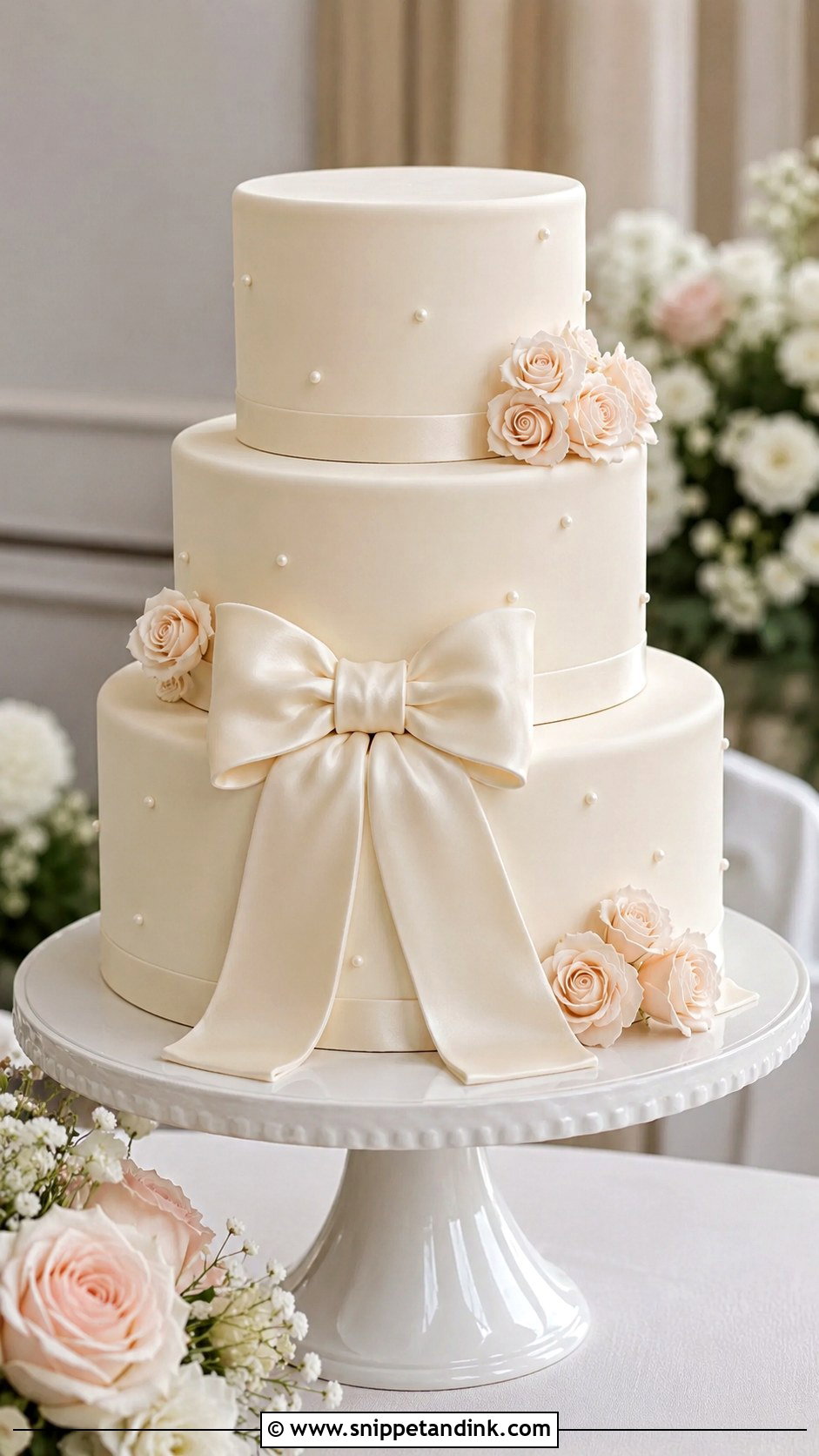
A bow should be the only feature, so I keep everything else on the cake plain. It can be fondant, sugar paste or real satin ribbon, set on the front of one tier of a two or three tier cake in white, ivory, blush or pale blue. Real fabric is fine on foam, but on an edible tier it needs a barrier so the ribbon doesn’t soak up grease. If your gown has a bow or satin detail, echoing it here ties the table to the dress.
20. Sculptural Dummy Wedding Cake
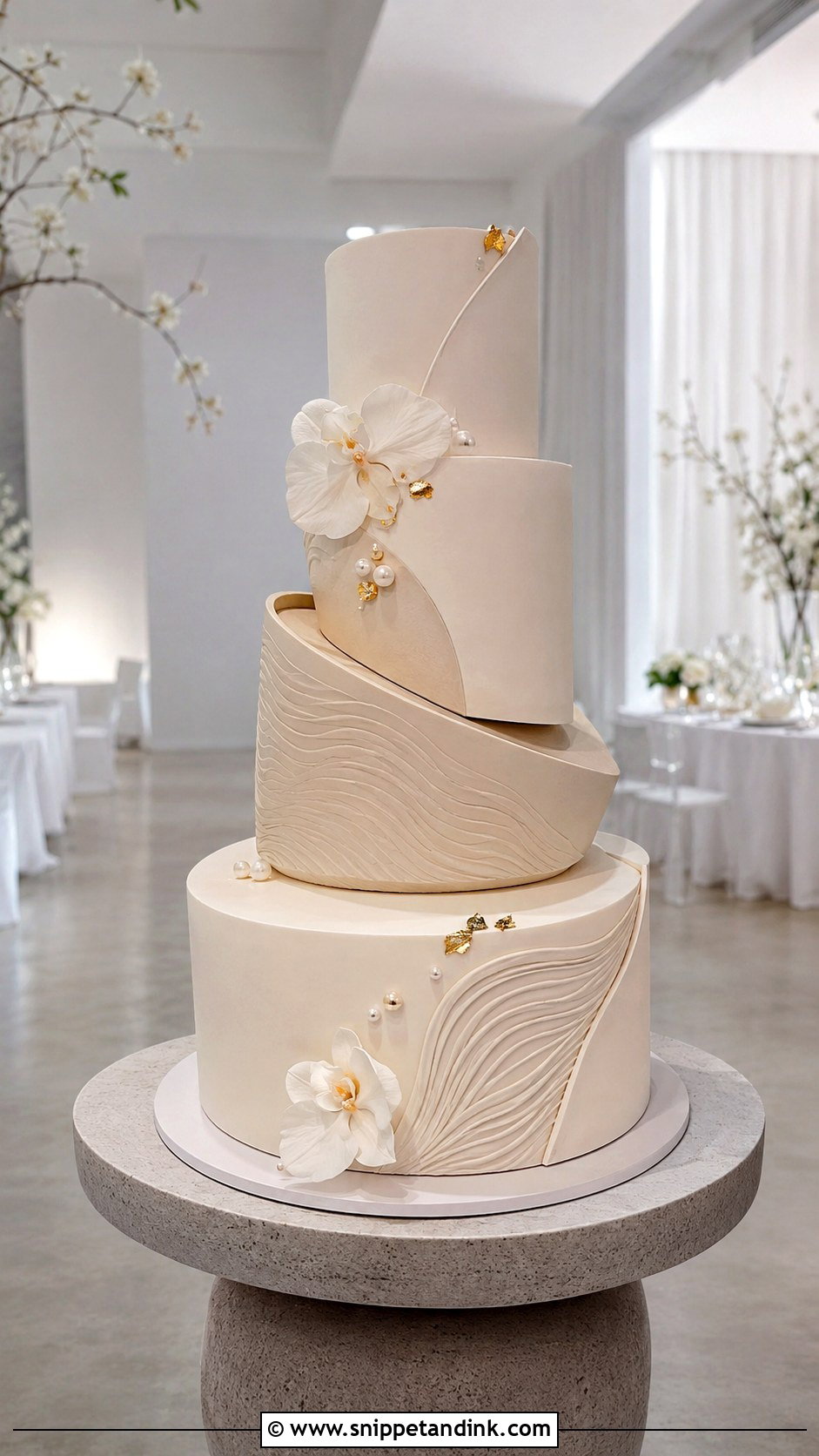
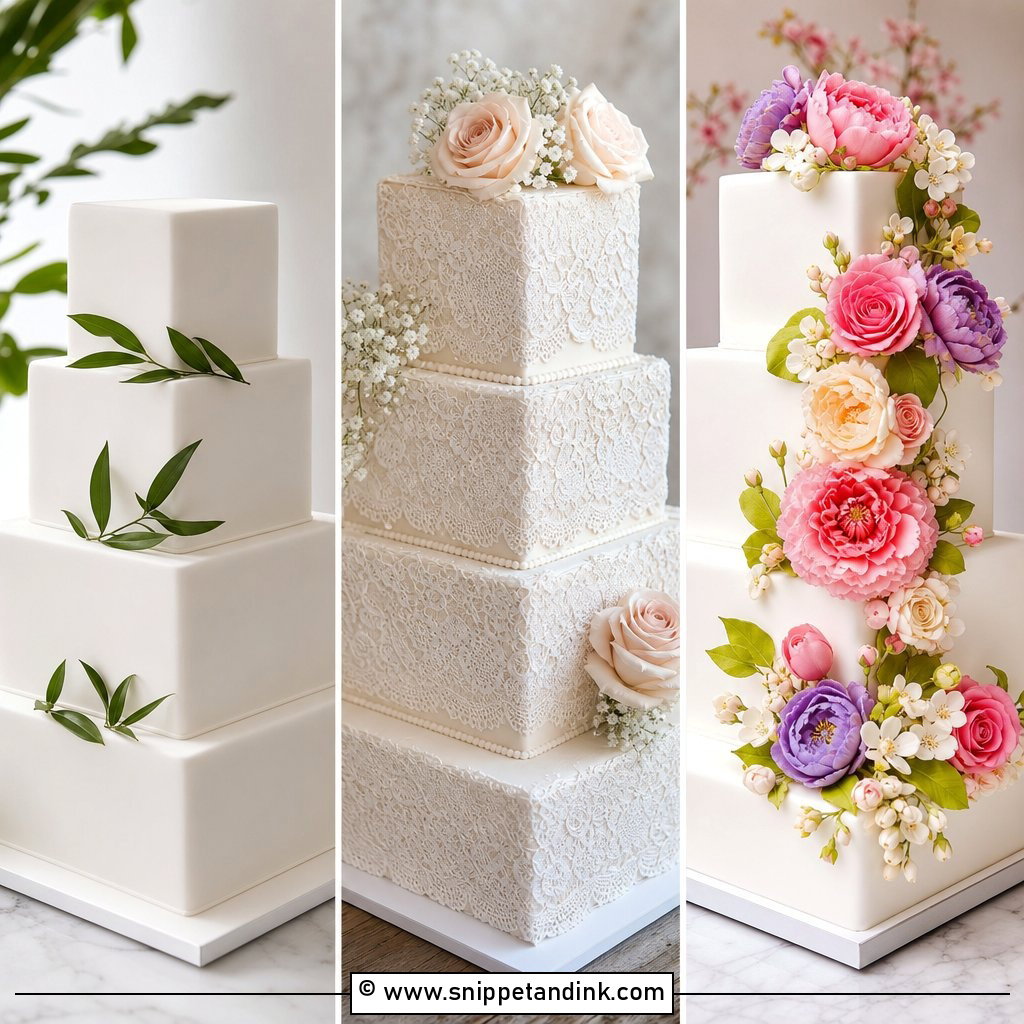
Sculptural cakes are the most foam-dependent designs on this list. Curved tiers, offset stacking, spirals, waves and carved panels would need internal engineering in real cake, and even then they can lean as the sponge compresses. Foam can be carved and stacked off-centre safely. Keep the palette restrained, ivory, white, beige or one soft accent, and add flowers or metallics only where they sharpen the shape. Gallery venues and modern weddings suit it best.
Is a Foam Cake Actually Cheaper?
Sometimes, but less than most couples expect. In a decorated wedding cake, much of the price is the decorator’s time: covering, piping, sugar flowers, stacking and delivery. Foam removes the baking and filling, not the decorating, so a five-tier Lambeth dummy still takes many hours of piping.
Where the real saving comes from:
- Kitchen cake costs less per serving than decorated tiers, because it has no finish work.
- Fewer real tiers means less internal support and an easier delivery.
- Rental dummies. Some bakers rent out pre-decorated display cakes, which is usually the cheapest route if you like one of their existing designs.
- Height for less. A sixth tier in foam costs far less than a sixth tier of real cake.
Prices vary a lot by region and decorator, so ask for two quotes: the design as a fully real cake and as foam with one real tier plus kitchen cake. Seeing the two side by side is the quickest way to know whether the dummy route makes sense for your numbers.
Display Tiers Up Front, Kitchen Cake Behind
A foam cake isn’t a cheat; it’s a decision about where the cake budget and effort go. You get easy transport, a display that holds for hours, and freedom over height and shape. Most couples still cut one real tier and serve kitchen cake, so nobody misses dessert. From plain white fondant to sculptural tiers, choose the design that suits your venue, flowers and palette, and talk to your decorator early about which tier is real and how the serving will work.
You'll Like These Ideas:




Leave a Reply