
Guests walk past the cake table more than once during a reception, and the cake is usually in the background of half the speeches. That’s why I treat a wedding cake as part of the room, not just dessert. The design has to suit the dress, the flowers and the venue, but it also has to survive the temperature of that room, travel there safely and feed the right number of people. Below are 20 bridal cake styles couples bring to me most, with what I think about as a designer when I’m planning each one.
Servings, Tiers and the Slice Size Nobody Mentions
Before you fall for a design, know how much cake you need. Bakers cut wedding cake into small, tall slices, roughly an inch wide and two inches across, which is much smaller than a party slice. That’s why a three-tier cake can feed far more guests than you’d guess from looking at it.
- As a loose guide, a 6-inch round gives around 12 wedding slices, an 8-inch around 24 and a 10-inch around 38. Every baker’s chart differs a little.
- A common round three-tier combination of 6, 8 and 10 inches feeds roughly 70 to 75 guests.
- If you plan to save the top tier for your anniversary, don’t count it in your servings.
- Kitchen sheet cakes in the same flavor can cover a large guest list while the display cake stays smaller.
Most designers book up months ahead, especially for summer Saturdays. Ask about the deposit, the final guest count deadline and whether the tasting fee comes off the order.
1. White Bridal Cake
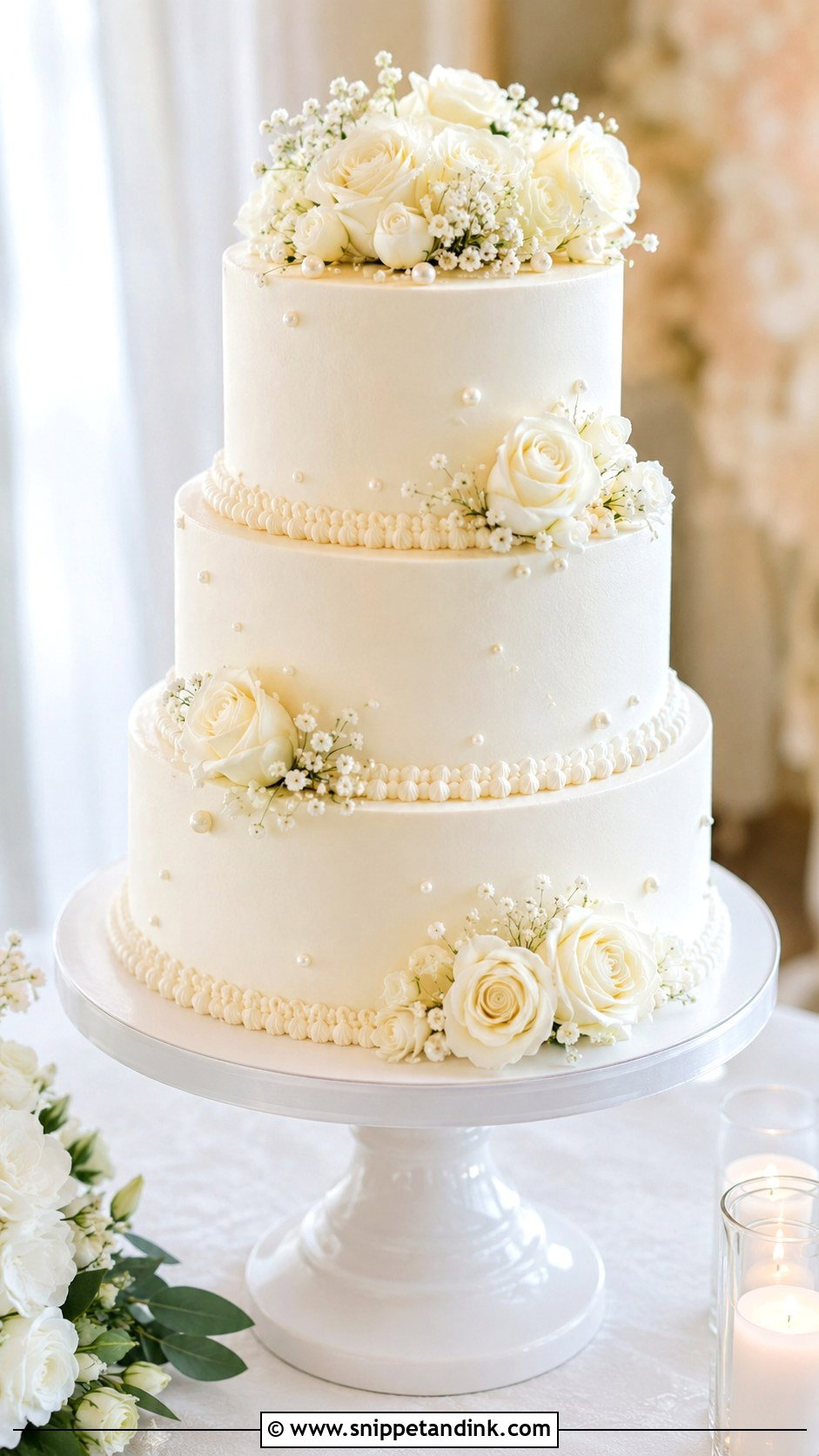
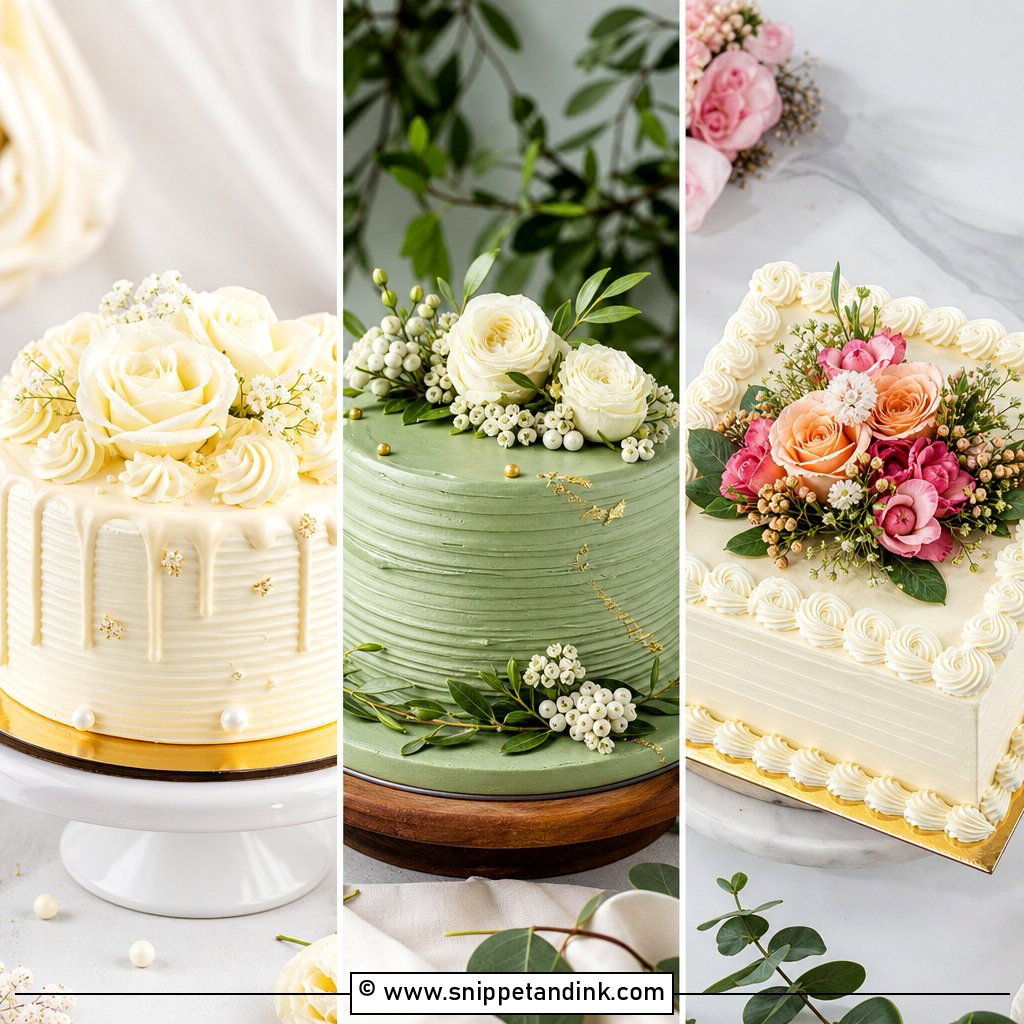
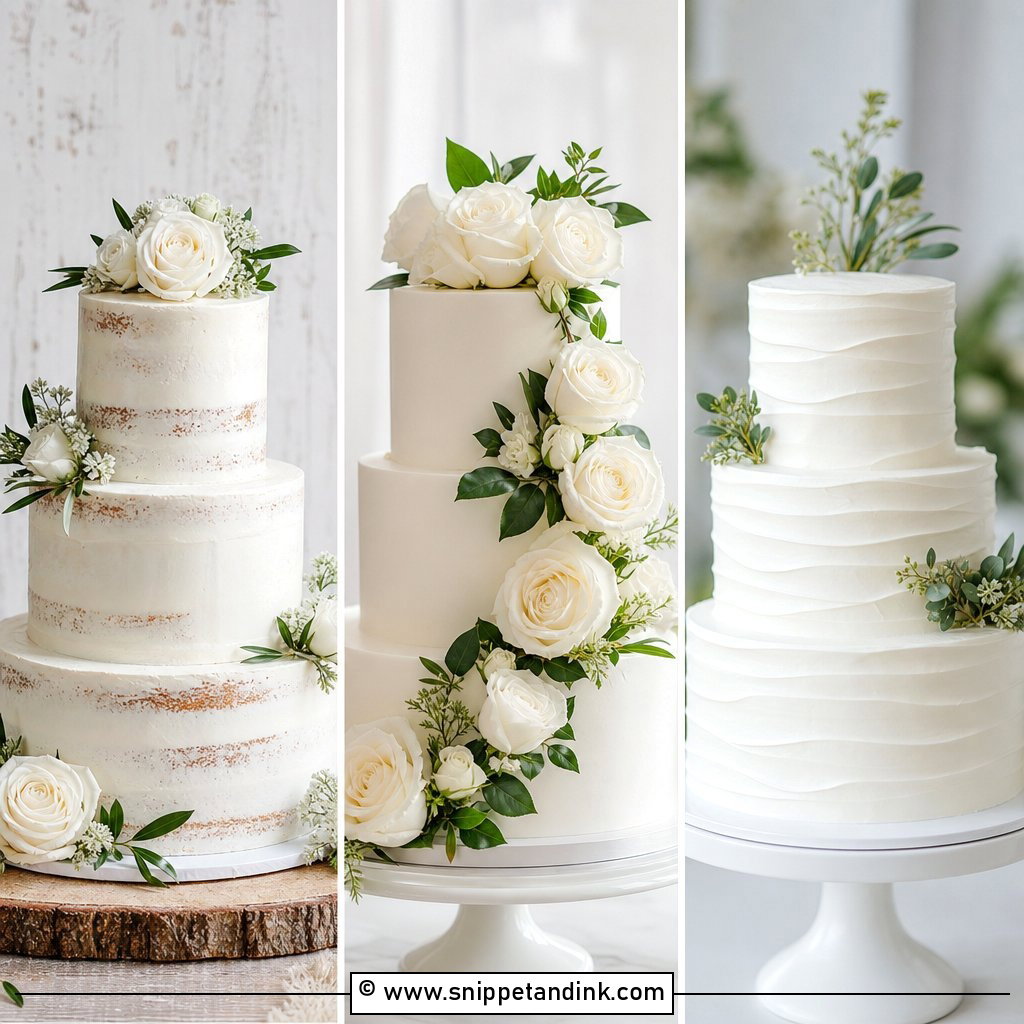
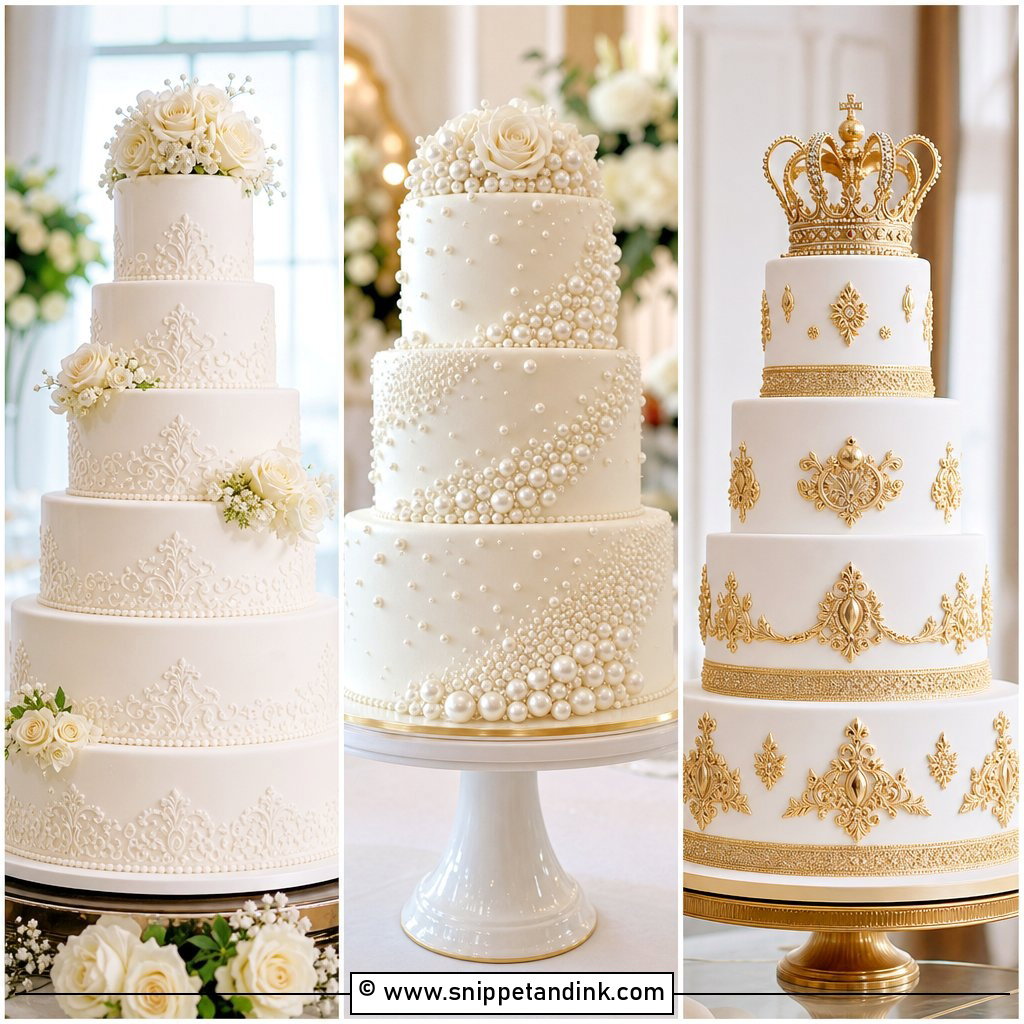
A white bridal cake goes with almost every venue, from a chapel to a ballroom. The risk is that plain white reads flat in photographs, so I always give it texture. Smooth buttercream has a soft, handmade feel, while fondant gives a crisp surface for piping or sugar flowers. Pure white icing can also look slightly grey next to an ivory gown, so I tint it a touch warmer when the dress is ivory. Vanilla almond, white chocolate and lemon vanilla suit it well.
2. Vintage Bridal Cake
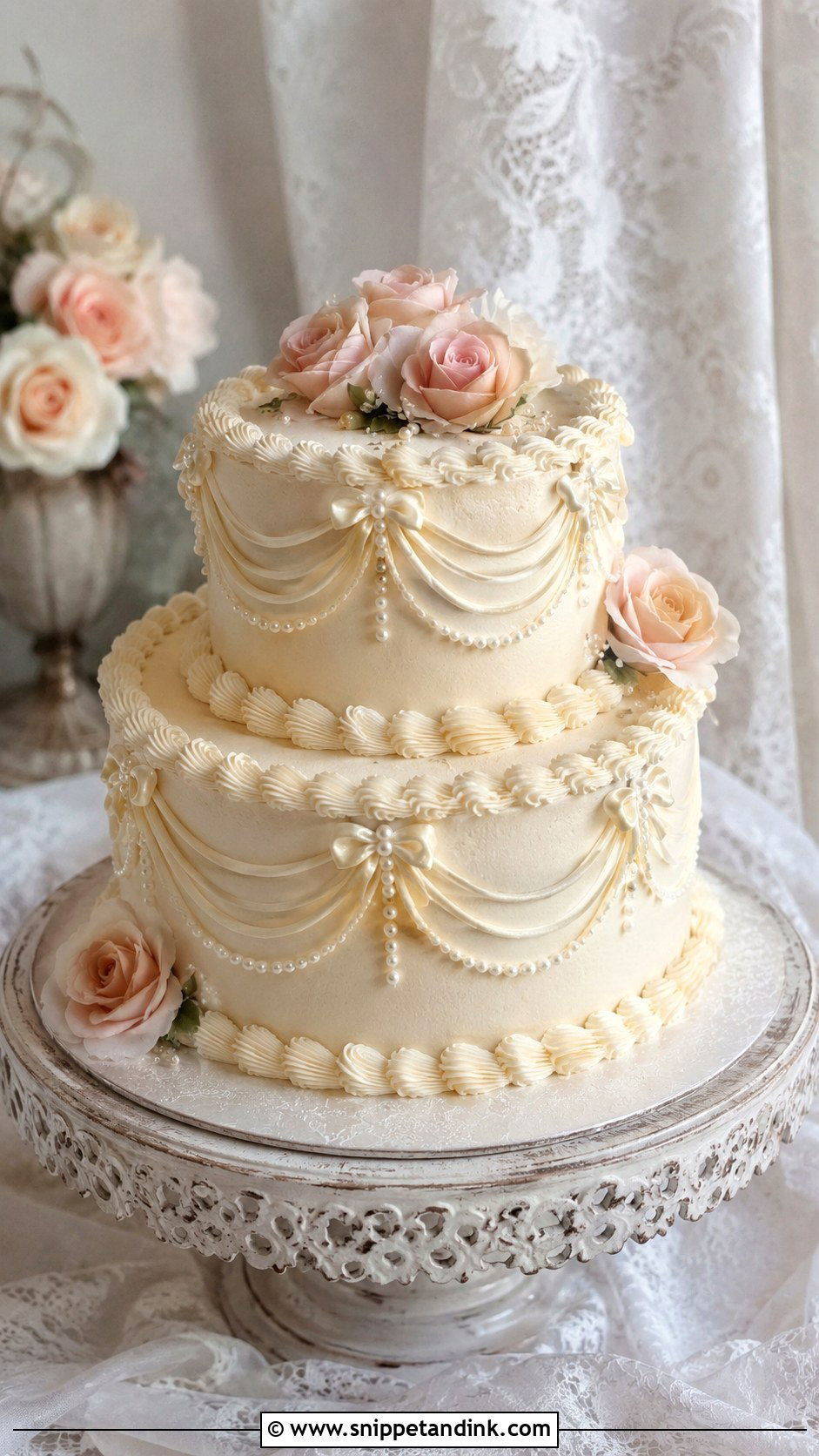
Vintage piping, with shell borders, swags, bows and drop strings, is having a real comeback, and I enjoy it because the craft shows. Every line is piped by hand, so this style takes longer to decorate than a smooth cake, and that time is reflected in the quote. Ivory buttercream and two or three tiers are the classic base. Keep it all white or add blush, pale blue or champagne in the piping. Vanilla bean, almond and raspberry cream fit the old-fashioned feel, and the raised detail catches light from every side.
3. Pearl Bridal Cake
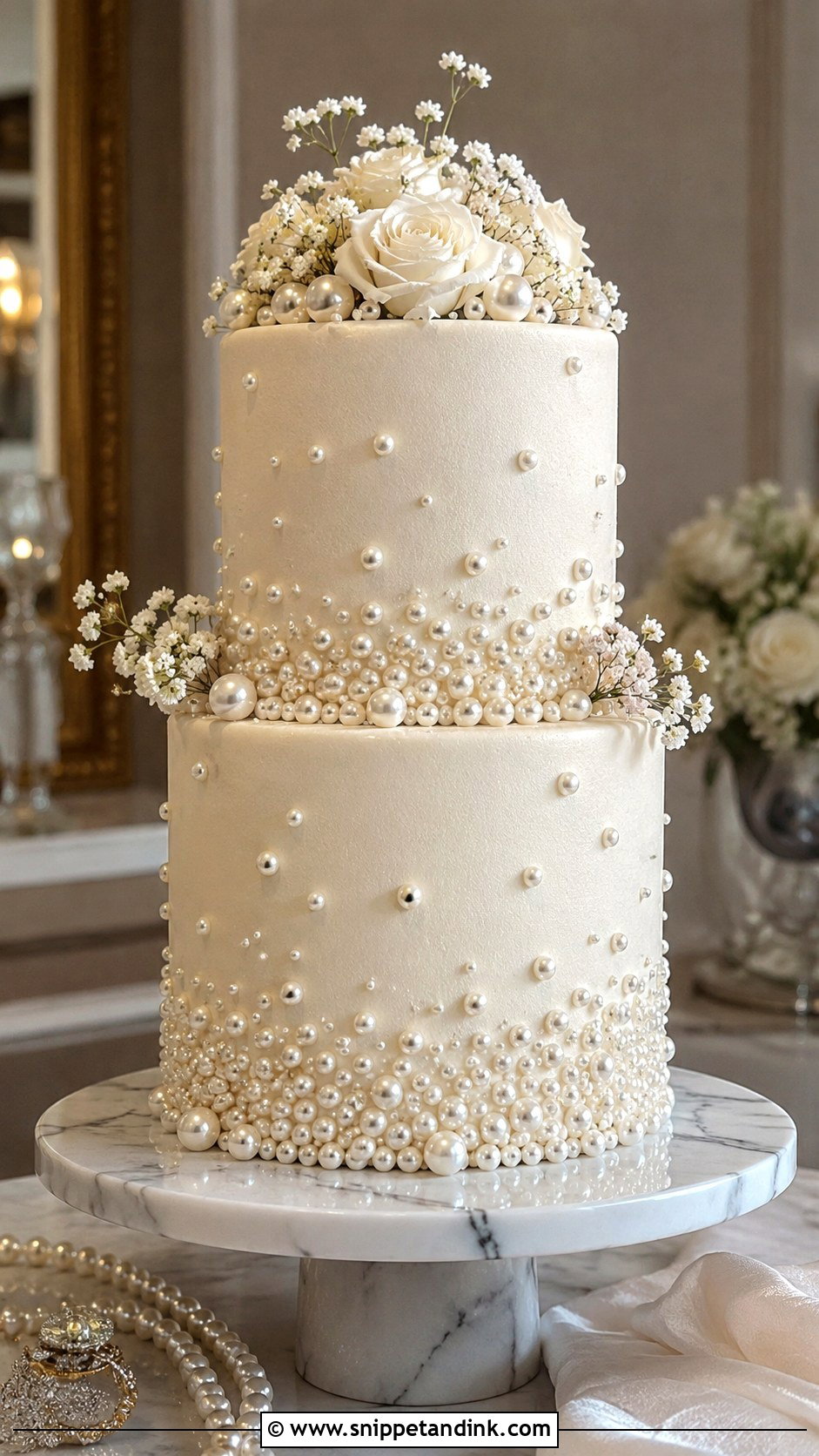
Edible pearls are small dragées, usually sugar coated with a pearl luster, and they need a sticky surface to hold. On buttercream they press in easily; on fondant I attach each one with a dot of royal icing. Rows look formal, a scatter looks softer, and mixing sizes gives a more modern finish. Keep the cake ivory, cream or pale blush so the pearls show. One practical note: large dragées are hard to bite, so I tell couples to keep the biggest ones on the top tier, which usually isn’t served.
4. Floral Bridal Cake
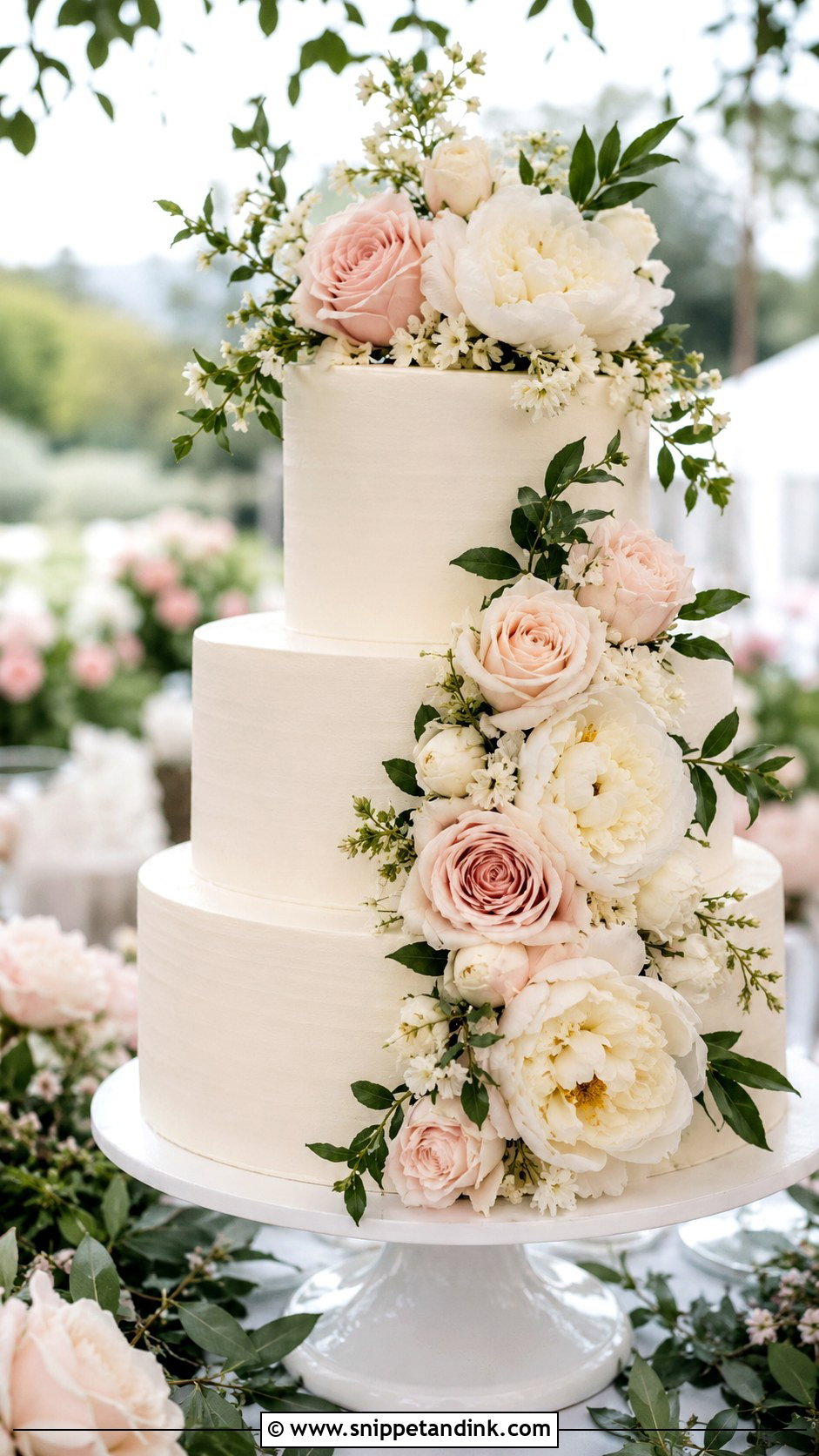
Flowers are the decoration couples ask about most. Sugar flowers give me total control over color and shape and last for weeks, but they take hours to make. Fresh flowers are quicker and cheaper but need care: they must be pesticide-free, and stems should never touch the icing directly. I wrap them in floral tape and insert them into straws or picks. Roses, ranunculus and orchids hold up well; avoid lily of the valley, hydrangea and other toxic varieties. A white buttercream cake with flowers cascading down one side looks balanced as long as the flowers are placed with intention.
5. Simple Bridal Cake
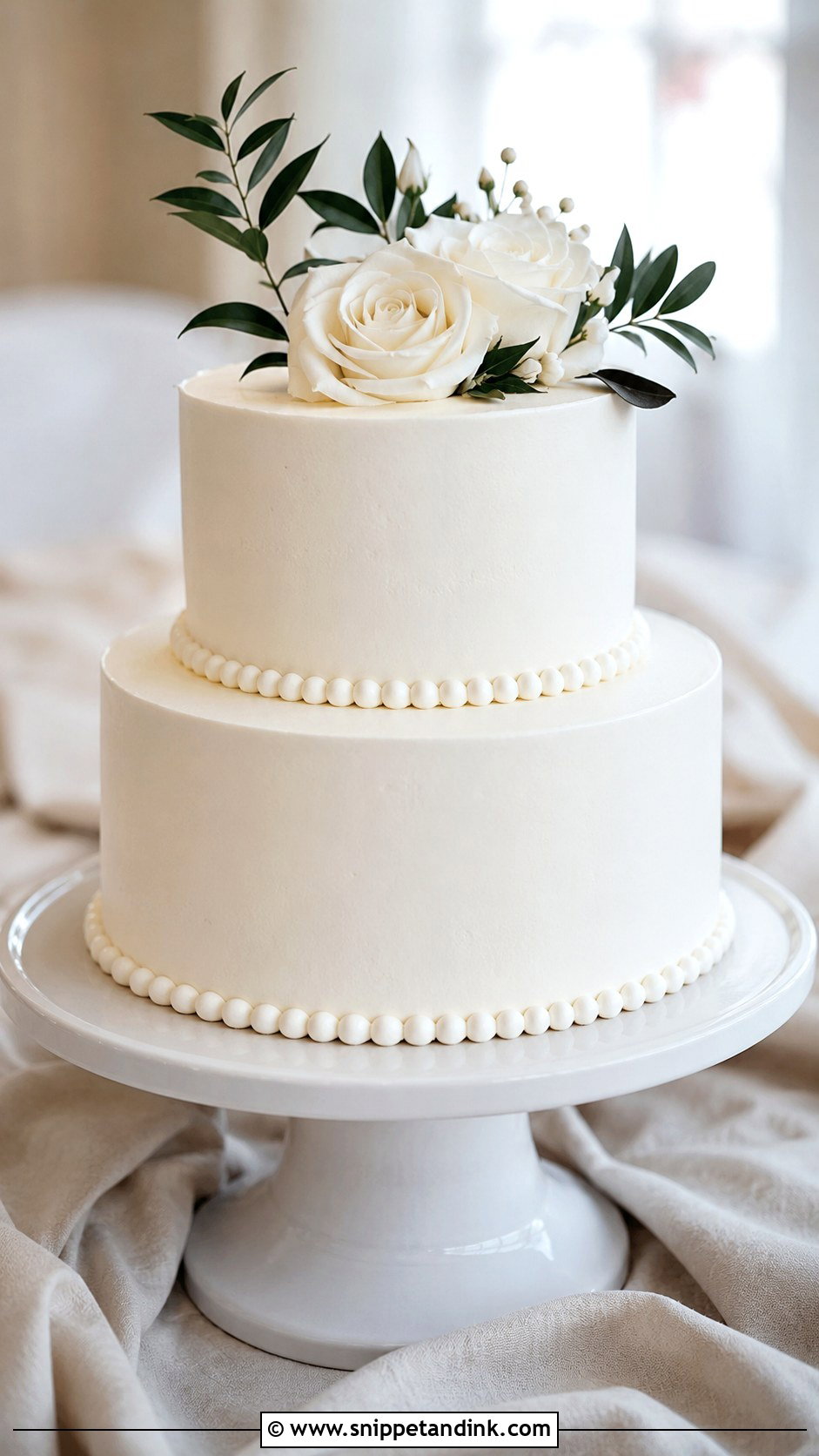
A simple cake hides nothing, so the finish has to be flawless. Straight sides, sharp top edges and tiers stacked exactly level are what make two plain tiers look expensive rather than unfinished. It suits a courthouse ceremony, an intimate dinner or a minimalist reception. A few fresh flowers and a neat piped border at each base are enough. Vanilla, lemon, coconut and almond keep it light. If you go simple, put the budget toward the baker’s finishing skill, not extra decoration.
6. Modern Bridal Cake
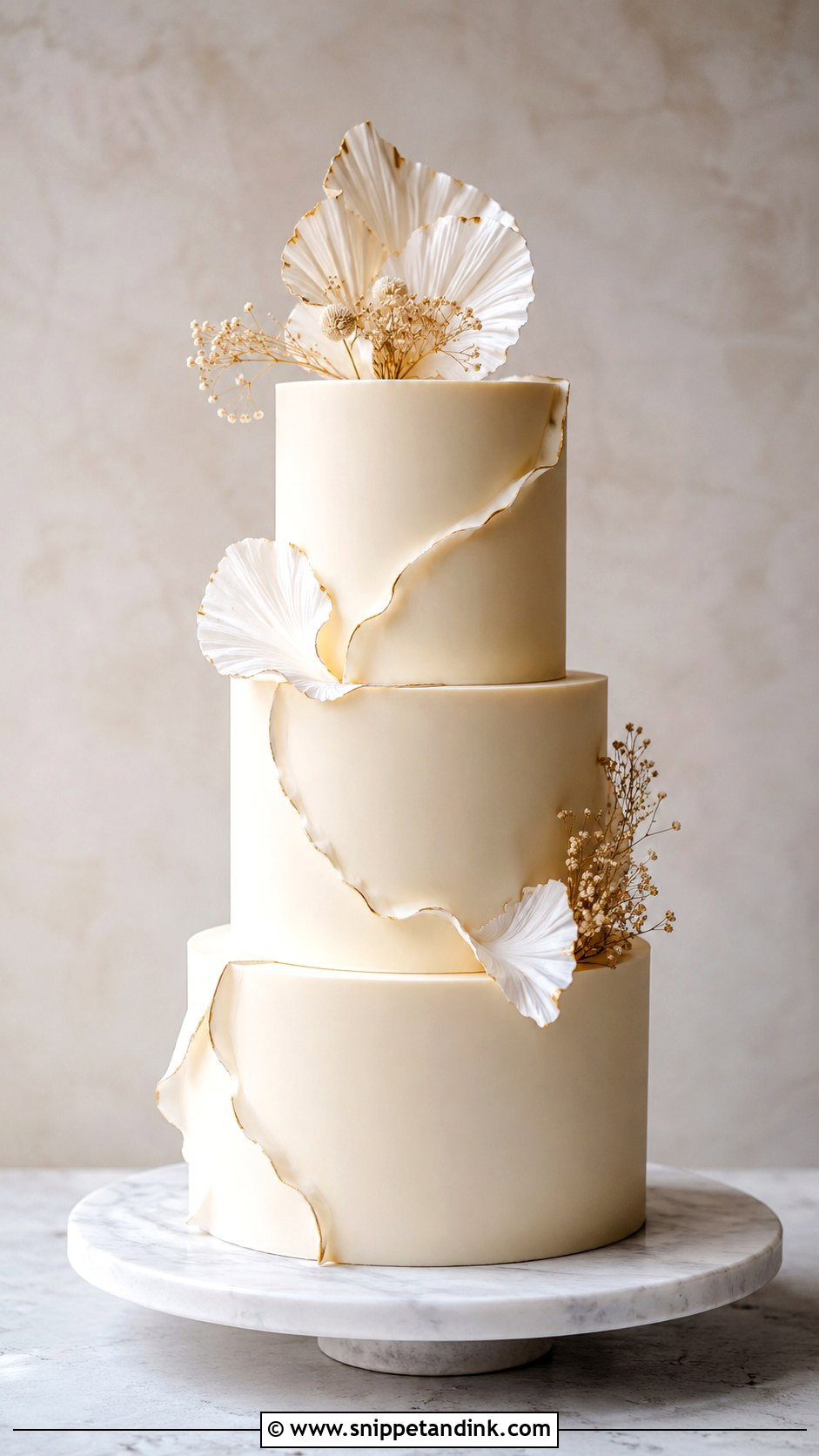
Modern cakes usually rely on clean shapes and one strong detail: an asymmetric flower placement, sculpted buttercream, square tiers or a band of gold. They suit lofts, gallery spaces and modern hotels. Keep the palette to two or three colors, such as white with nude, beige or a soft metallic. This is where flavor can be bolder too, like vanilla bean with passion fruit curd or almond cake with raspberry. When I design one, I sketch it in profile first, because modern cakes are all about how they look from across the room.
7. Buttercream Bridal Cake
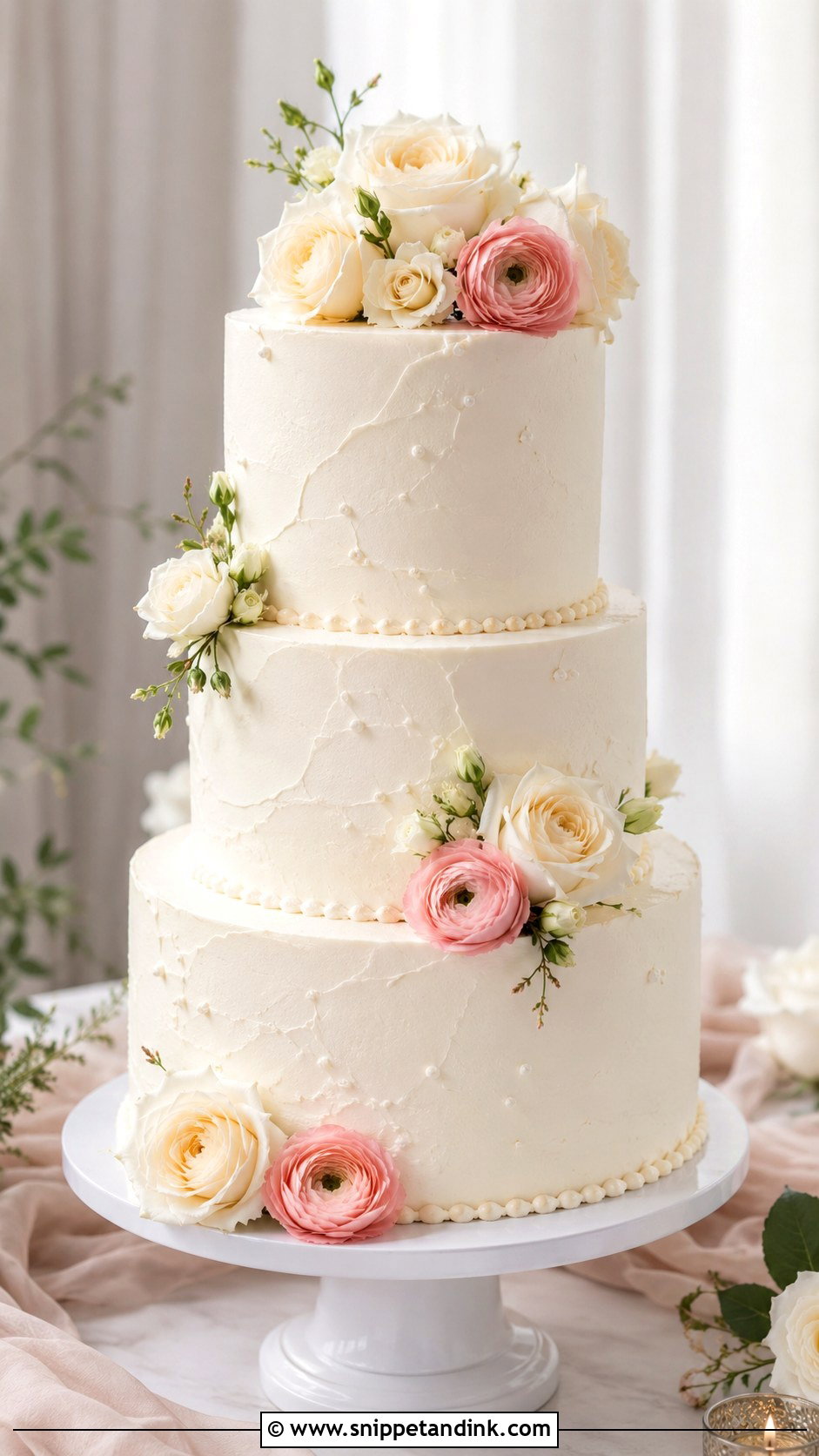
Buttercream tastes better than fondant to most guests, and it has a soft, handmade look. It can be smooth, ruffled, ridged with a palette knife or piped. The drawback is heat. American buttercream crusts and holds shape reasonably well, while Swiss meringue buttercream tastes lighter but softens fast in a warm room. For an outdoor summer wedding, I either adjust the recipe or ask for the cake to stay inside until shortly before it’s displayed. Vanilla bean, lemon, strawberry and almond all suit a buttercream finish.
8. Fondant Bridal Cake
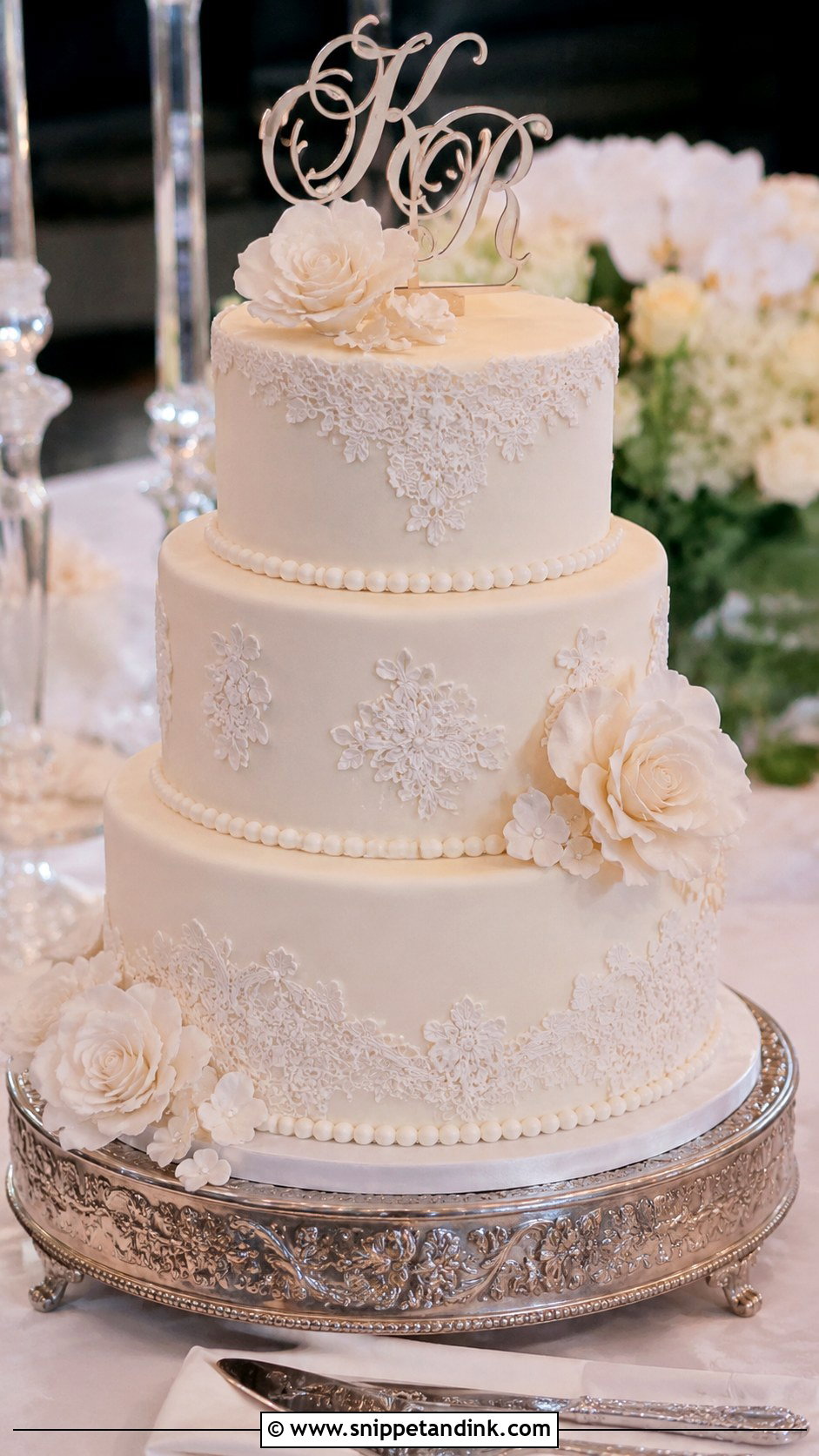
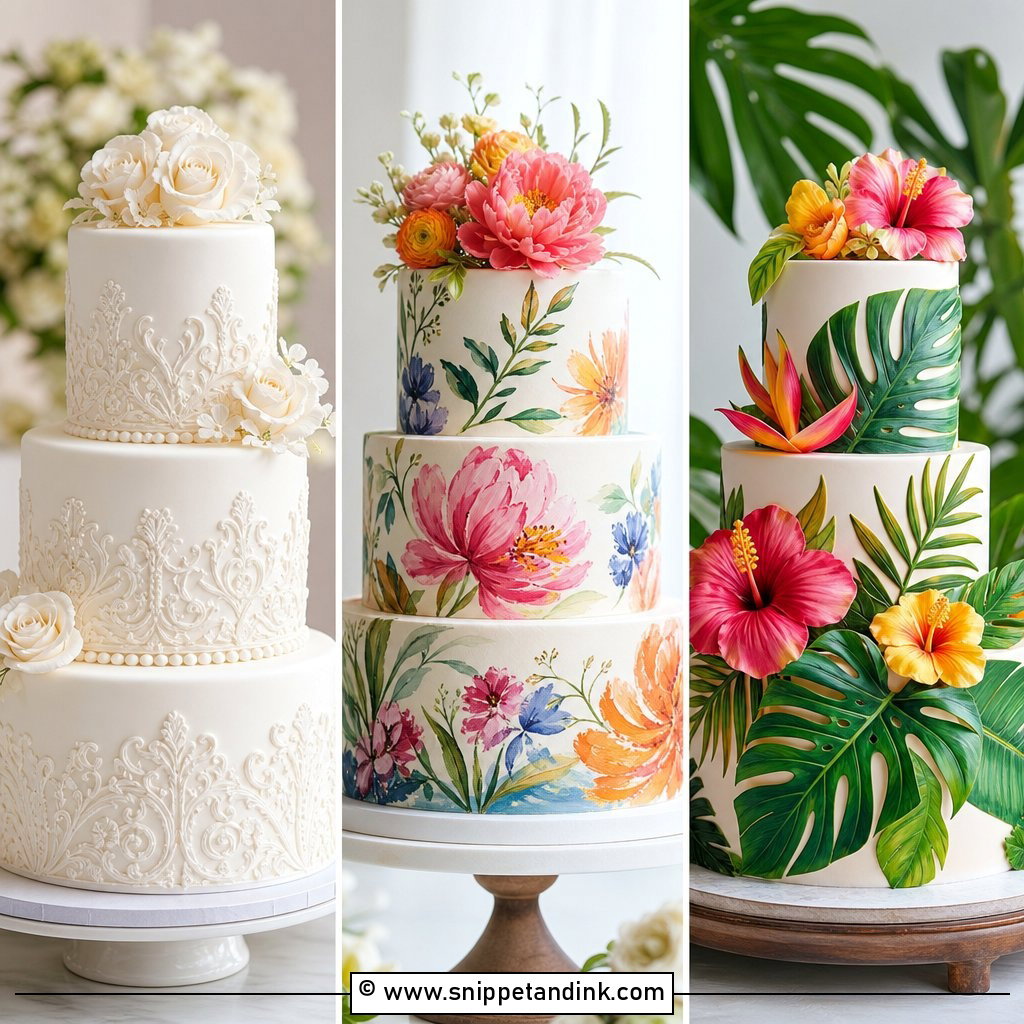
Fondant gives the smoothest surface for lace patterns, embossing, sugar flowers and sharp, modern edges. It’s also a protective layer, which helps with transport and longer display times. Ivory fondant with lace detail can reflect the gown, and pearls, monograms, bows or floral appliqué all sit well on it. Many guests peel fondant off, so I keep it thin and put real effort into the filling. Vanilla almond, red velvet and chocolate raspberry are dependable choices under fondant.
9. Lace Bridal Cake
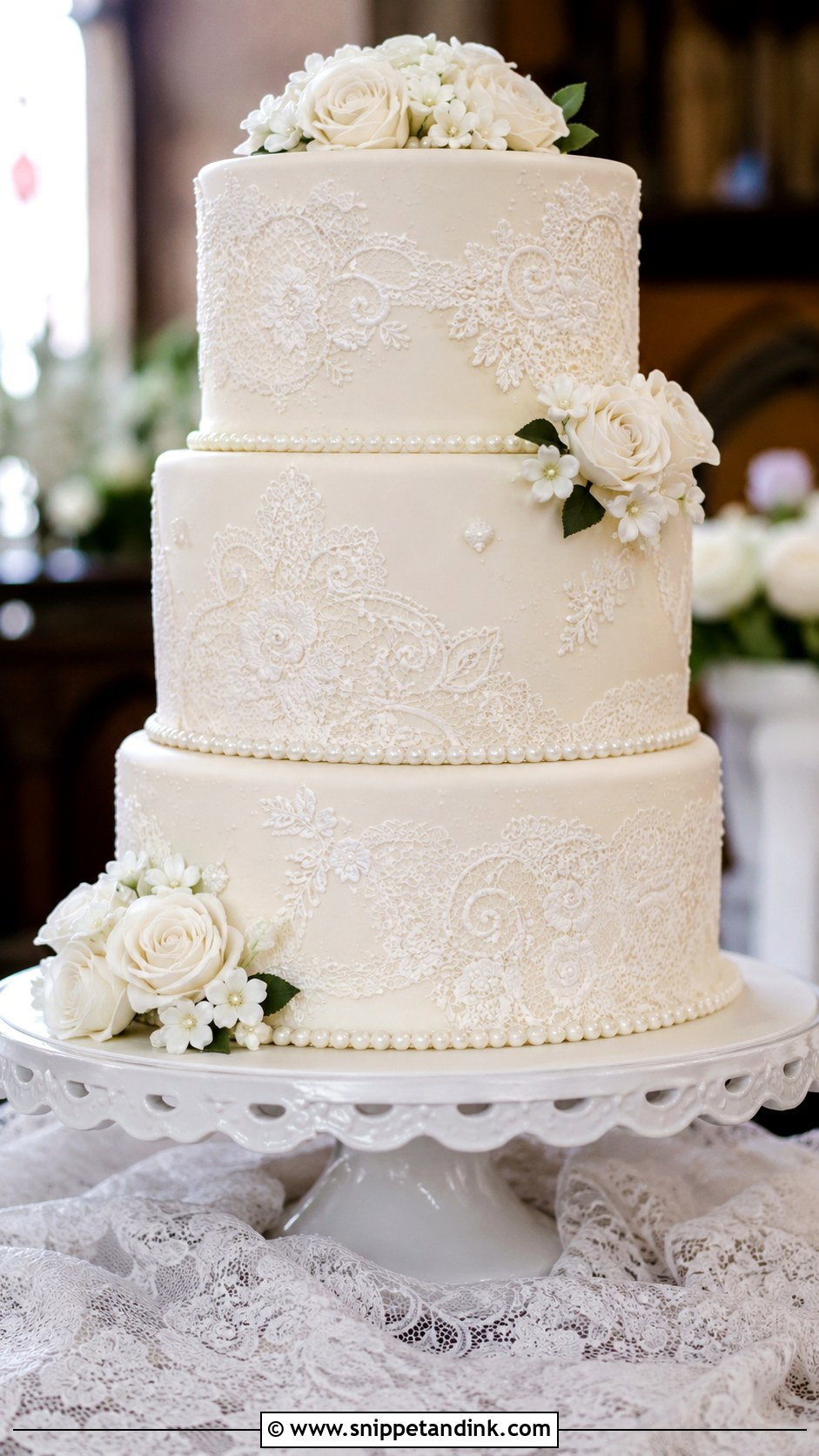
Lace can be piped in royal icing, pressed into fondant with a mold or applied as a pre-made edible lace sheet. If you want it to echo your gown, bring a photo or a fabric sample to your consultation so the pattern can be matched closely. Ivory on ivory feels classic; white lace over blush fondant is softer and more romantic. Keep the flowers minimal so the lace stays the focus. Church, estate and vintage-inspired weddings suit it, with vanilla, almond or white chocolate inside.
10. Bow Bridal Cake
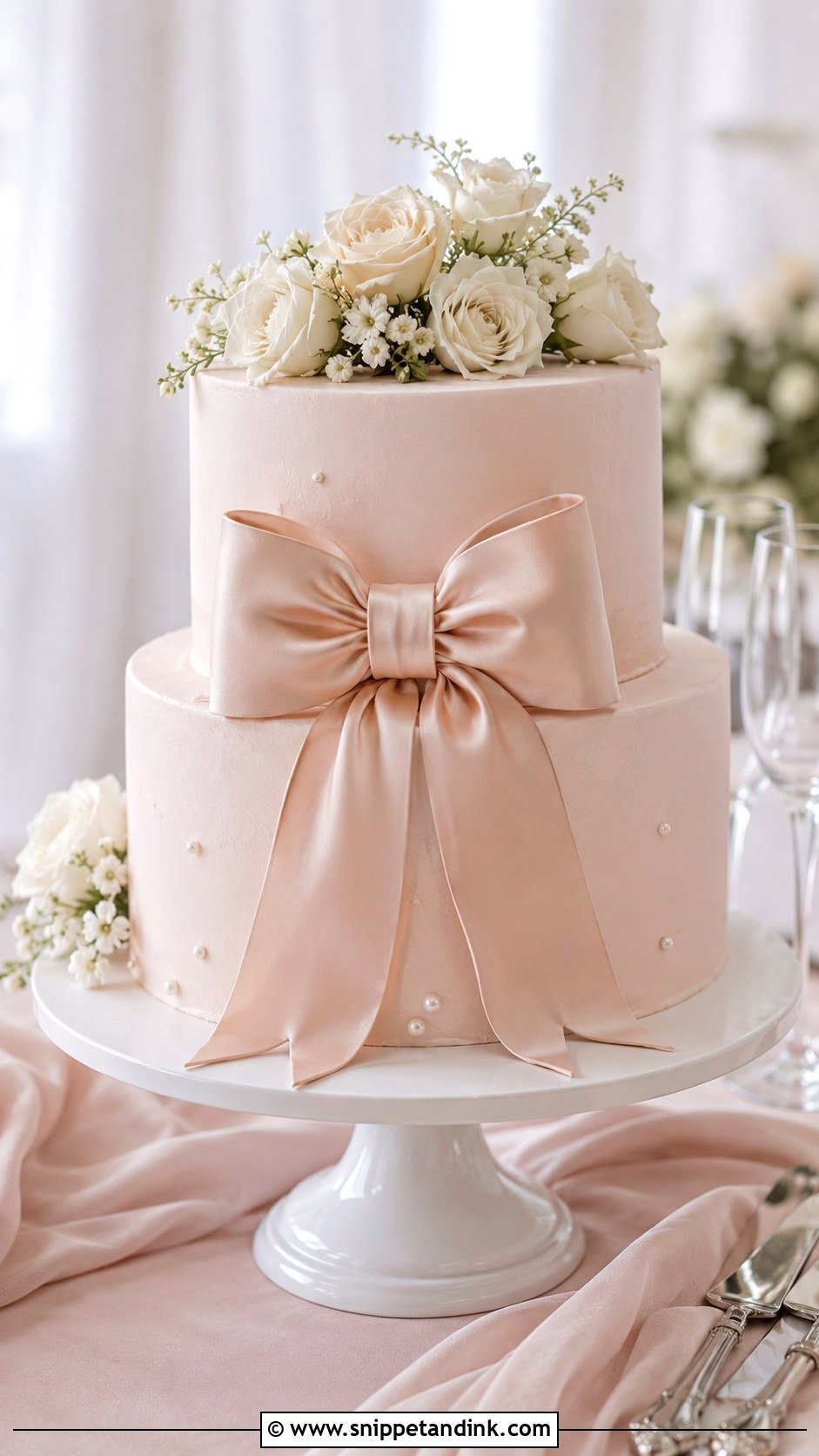
Bows are everywhere in bridal fashion at the moment, so a bow on the cake can mirror the dress or bridesmaid styling. A large fondant bow on one tier makes a strong statement; small piped bows are softer and more vintage. Large sugar bows need to dry for a few days so they hold shape, which is one reason they’re ordered well ahead. White, ivory, blush and pale blue all work. On two smooth buttercream tiers with vanilla bean, strawberry cream or lemon raspberry inside, it’s playful but still suits a wedding.
11. Pink Bridal Cake
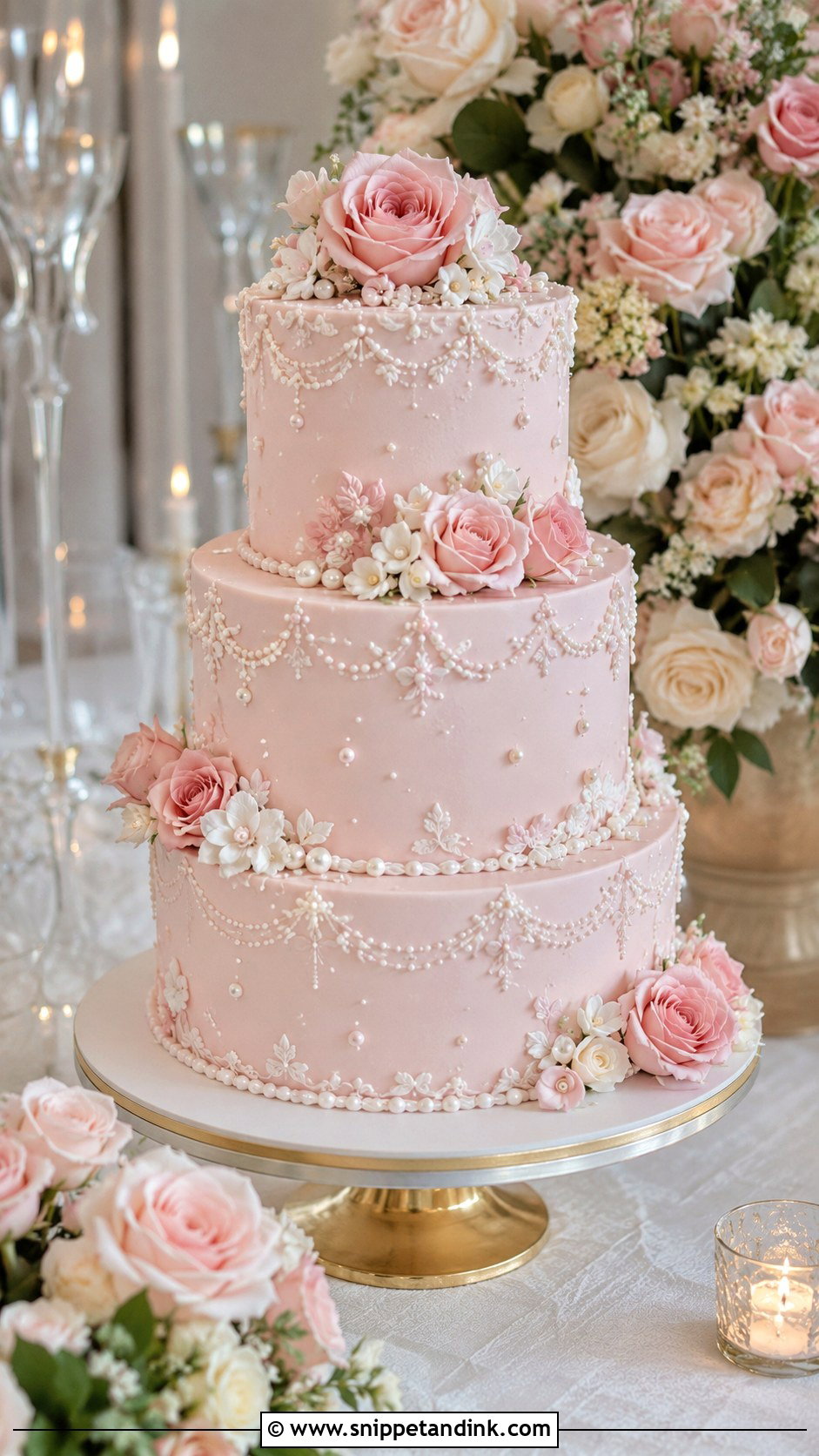
Blush pink is the easiest pink to work with, because it suits white flowers, greenery, pearls and gold. Deeper rose shades are more dramatic. Pink buttercream can fade in strong light and shift color slightly as it sits, so I color it a shade deeper than the target and keep the cake out of direct sun. Strawberry, raspberry, rose vanilla and almond all suit the color. Pick one main decoration, such as flowers, pearls or a white bow, so the cake stays graceful.
12. Blue Bridal Cake
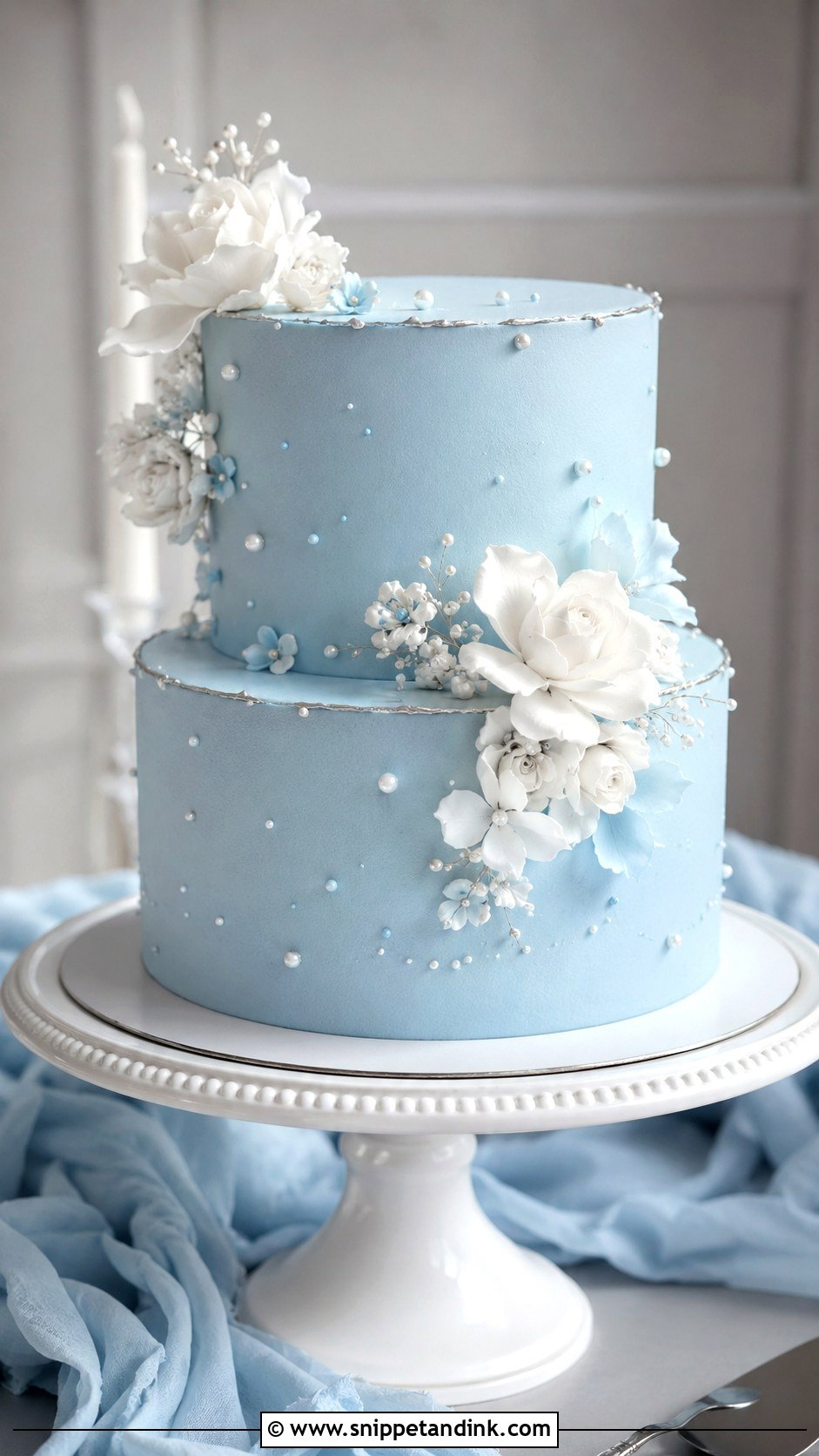
Blue is a fresh choice and can be your “something blue.” Pale, dusty and powder blue suit white sugar flowers and silver or pearl accents best. Blue is one of the harder colors to mix in buttercream, because the yellow in butter can push it toward green, so I start with a whiter base. For a coastal wedding, a gentle wave texture and sugar shells work. Vanilla, lemon, coconut and blueberry fillings all fit. Keep the shade muted and it stays bridal.
13. Gold Bridal Cake
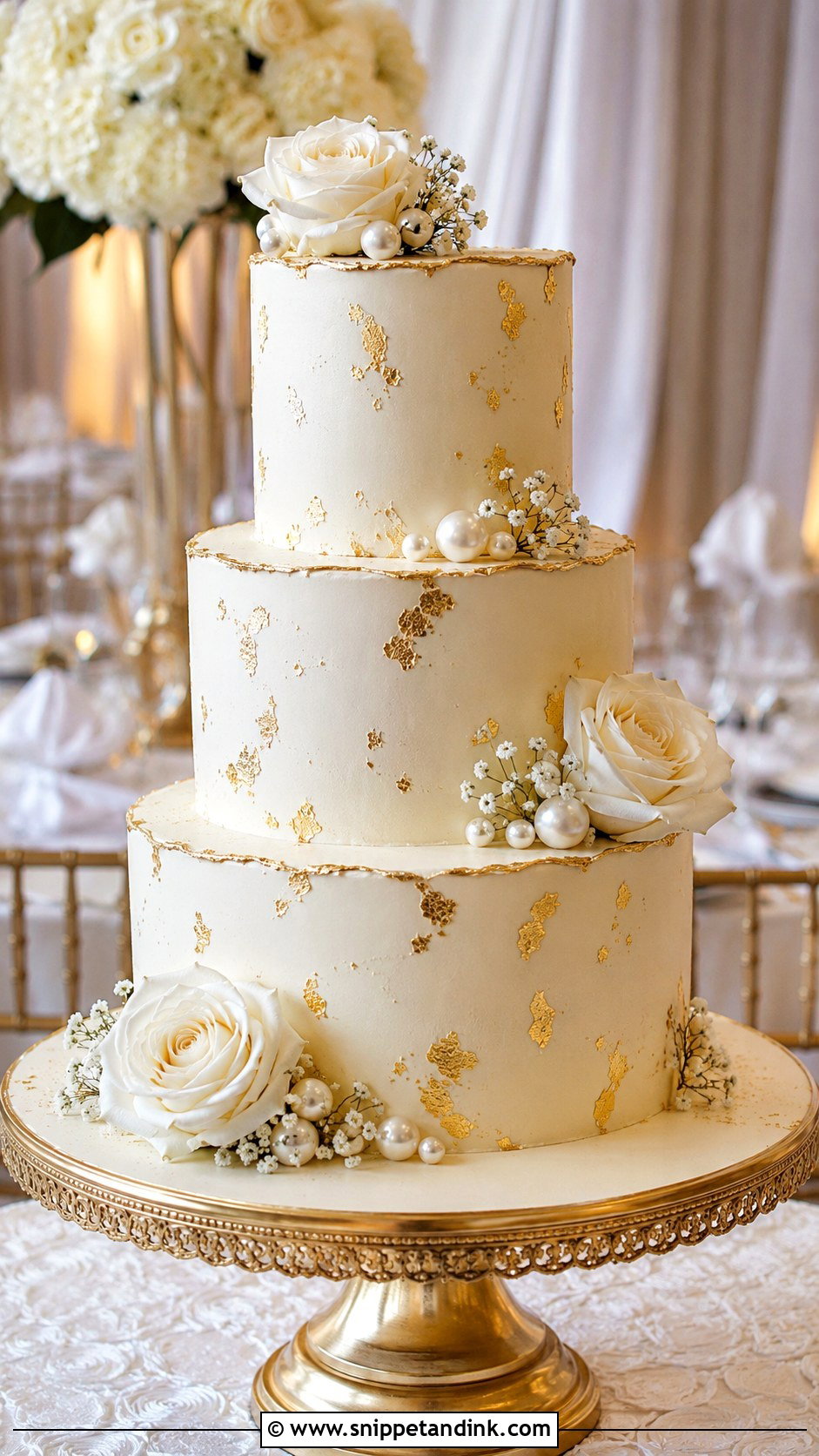
Gold works best in small amounts. A painted edge, a few flecks of edible gold leaf or one gold monogram can lift a plain white cake for an evening reception. Check what is being used: edible gold leaf and edible-labeled lusters are meant for eating, while some craft dusts sold for cakes are decoration only and shouldn’t go on parts guests eat. Gold pairs with ivory, cream, champagne and blush. Flavors like vanilla almond, salted caramel and chocolate ganache suit the richness.
14. Rustic Bridal Cake
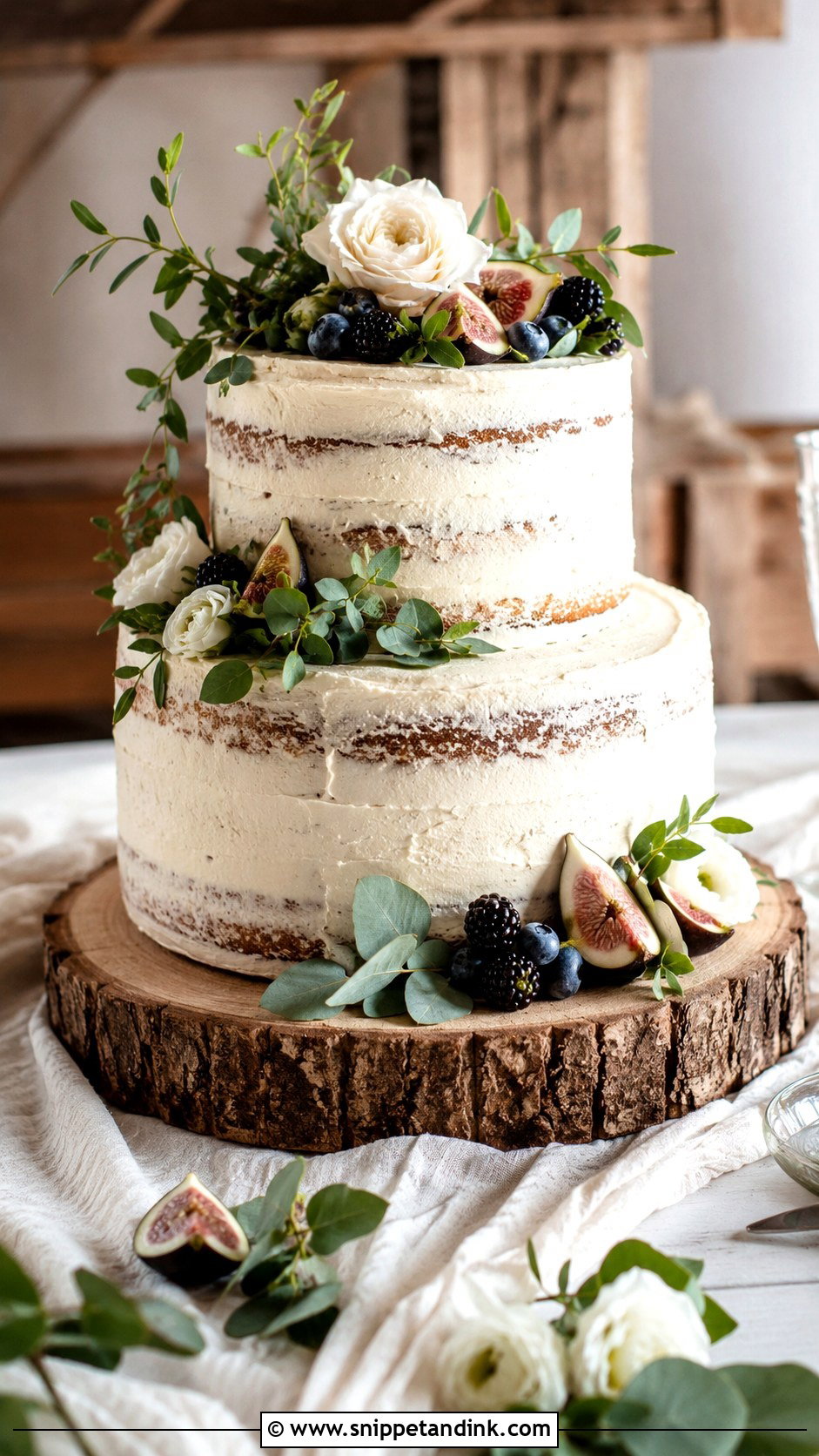
Semi-naked buttercream lets the cake layers show through a thin coat of icing, and it suits barns and countryside venues well. Because there’s so little icing, the sponge dries out faster, so this cake shouldn’t be assembled too early and shouldn’t sit out for hours. Fresh flowers, greenery, figs, berries and herbs suit the look, and a wooden stand needs little else. Spice, carrot, vanilla and honey almond fit the setting. Keep the edges clean so it looks intentional, not unfinished.

15. Small Bridal Cake
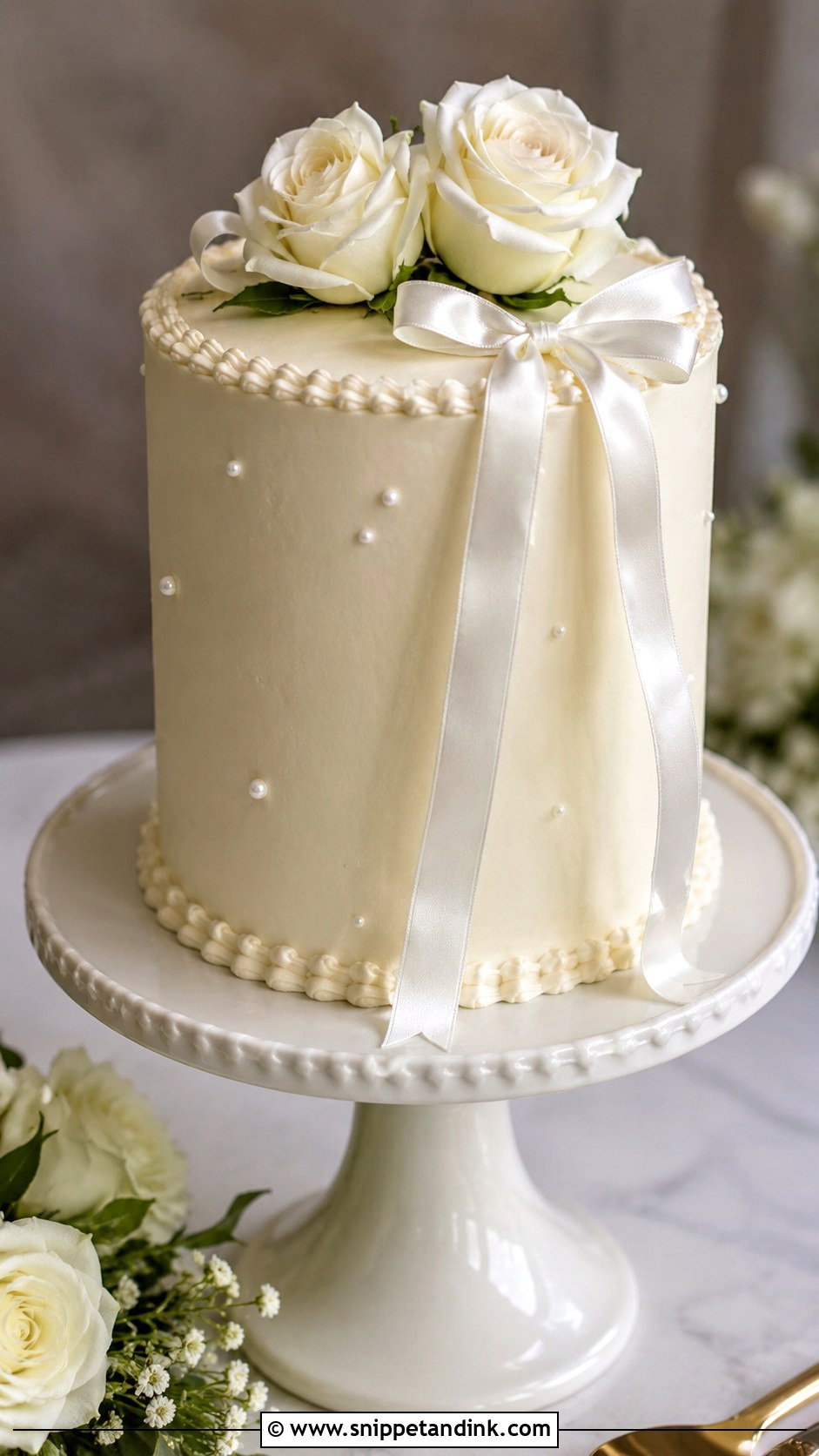
A small cake still deserves careful design. A single-tier or two-tier cake with smooth buttercream, flowers, pearls, bows or vintage piping looks bridal, especially on a raised stand. Many couples pair a small cutting cake with sheet cakes kept in the kitchen to serve the rest of the guests, which is usually cheaper than extra tiers. Since fewer people taste it, pick a flavor you love. Lemon, almond, chocolate raspberry and vanilla bean are all good options.
16. Tiered Bridal Cake
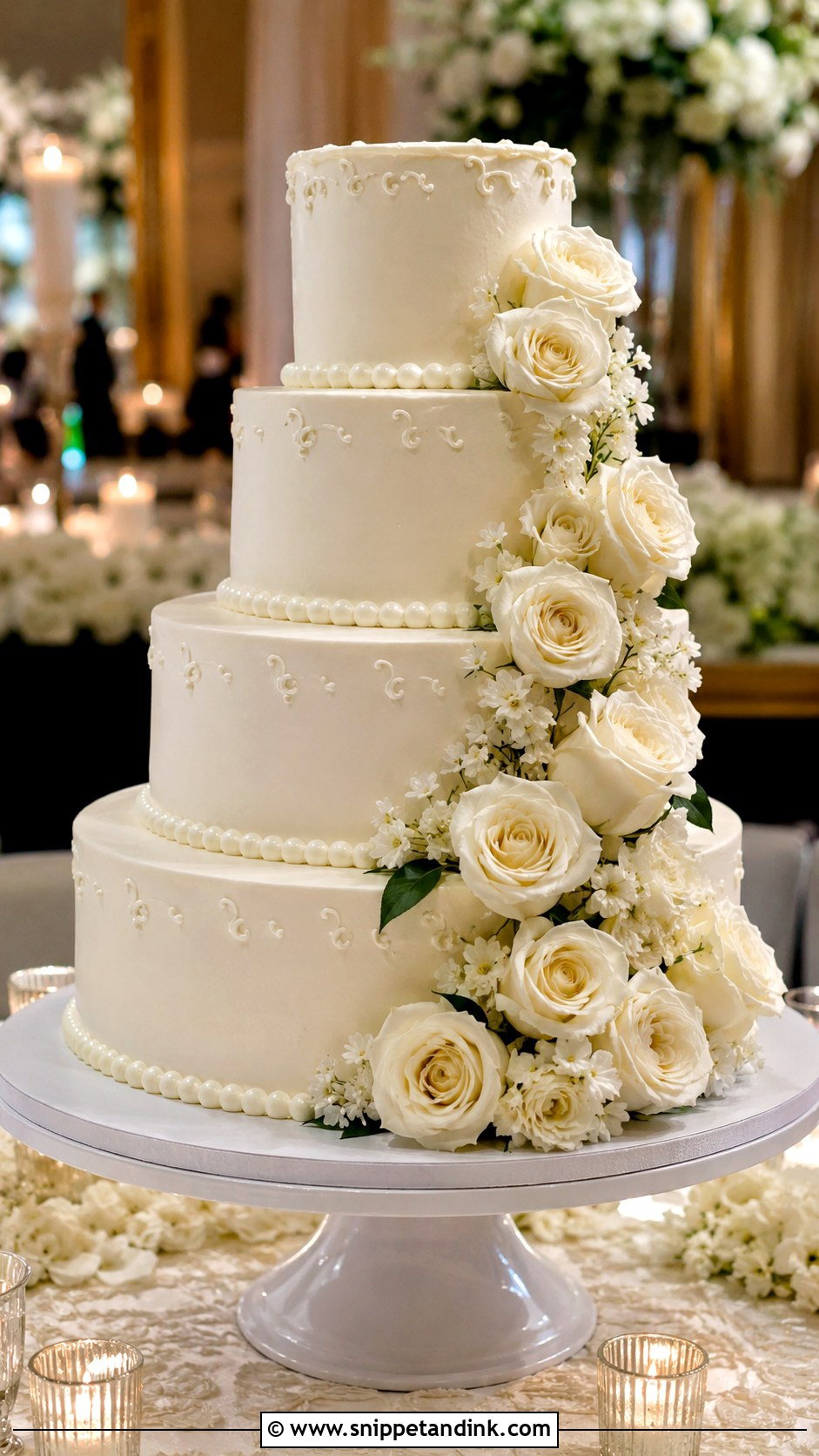
Three tiers suit many weddings, and taller cakes fit large rooms and formal receptions. Every tier above the base needs internal support, usually dowels or plastic supports with a cake board under each layer, plus a central dowel for tall cakes. That structure is what stops tiers sinking. The decoration can be smooth white with flowers, textured buttercream or lace. Size it to your guest count and table. Vanilla almond, chocolate, red velvet and lemon raspberry are common choices, and a tall tiered cake makes for a classic cake-cutting photo.
17. Garden Bridal Cake
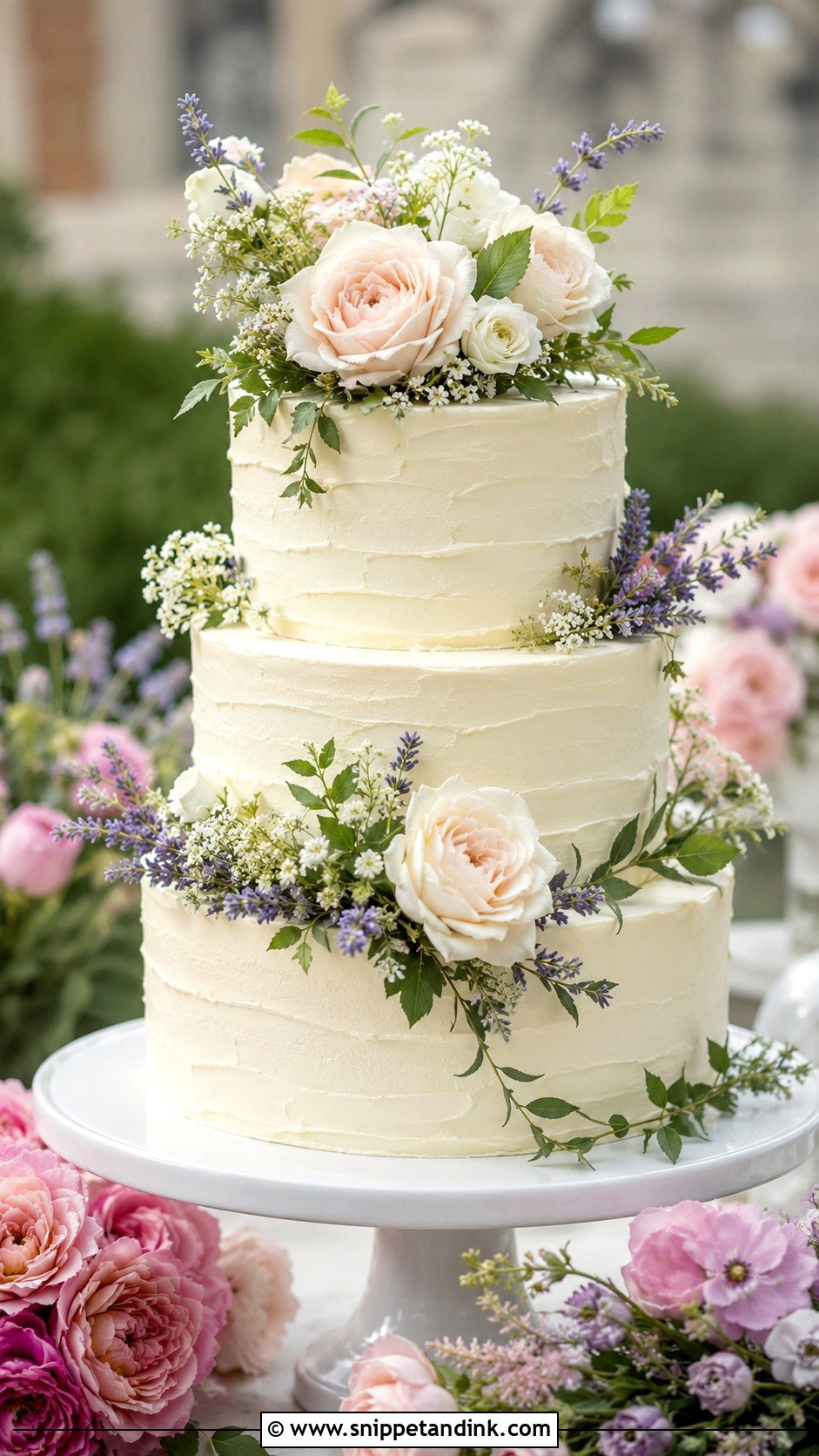
A garden cake has flowers that look as if they grew there: greenery trailing around tiers, small seasonal blooms tucked into gaps. Roses, sweet peas, lavender and chamomile all appear on garden designs, though sweet peas are toxic, so they should be sugar replicas. A white or ivory buttercream base keeps the flowers clean. Lemon, vanilla, strawberry and coconut suit the fresh mood. Under a tent in summer, ask about heat, since buttercream and fresh flowers both wilt.
18. Beach Bridal Cake
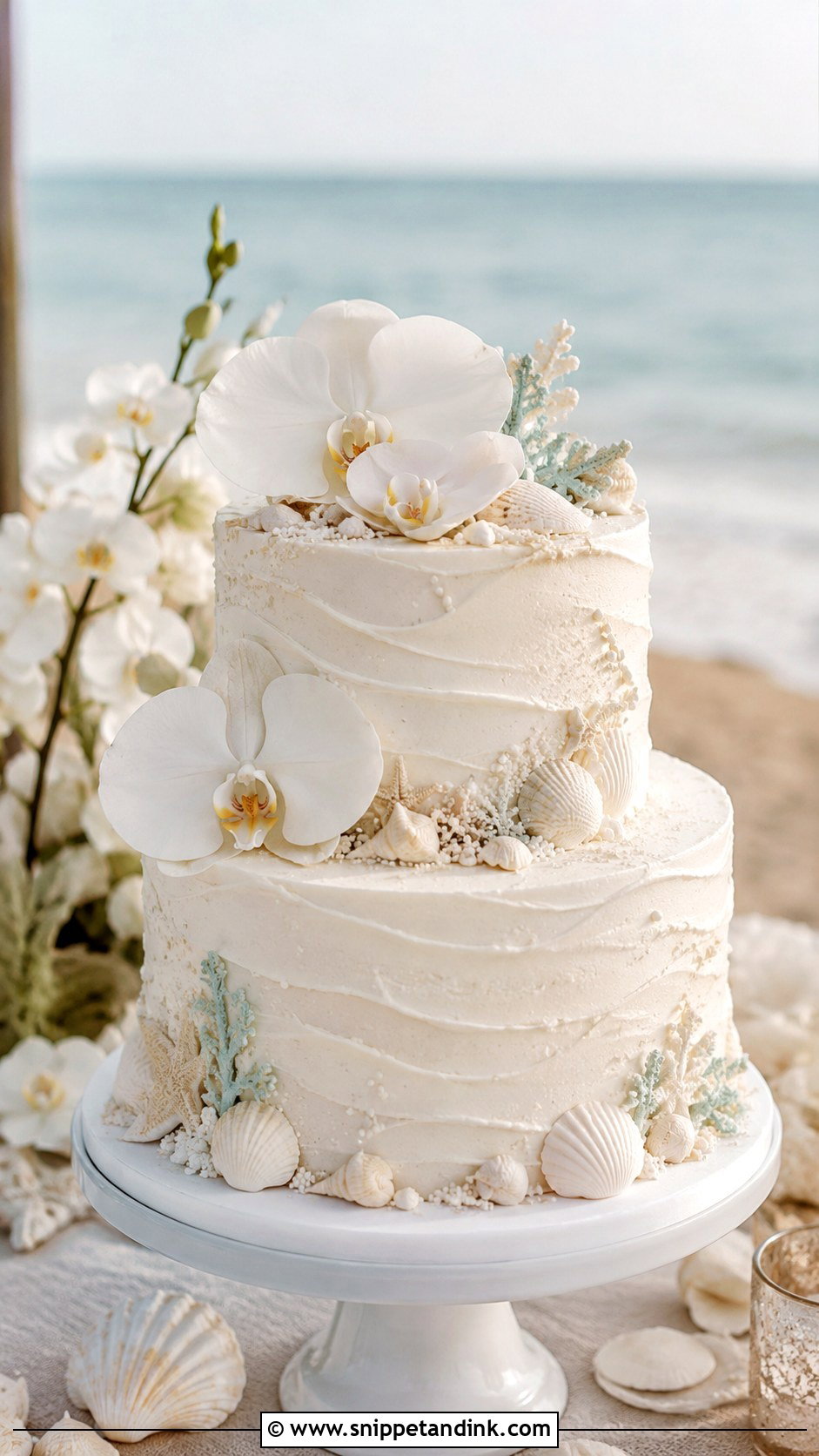
Beach cakes go wrong when they become novelties. Soft white buttercream, pale blue accents, a few sugar shells and a gentle wave texture are enough. The bigger concern by the sea is heat and humidity: buttercream softens, fondant gets tacky, and sugar decorations can droop. I’d keep the cake indoors or shaded until just before display. Coconut cake, vanilla lime, lemon and passion fruit fillings all fit. A plain white stand or woven table completes it.
19. Square Bridal Cake
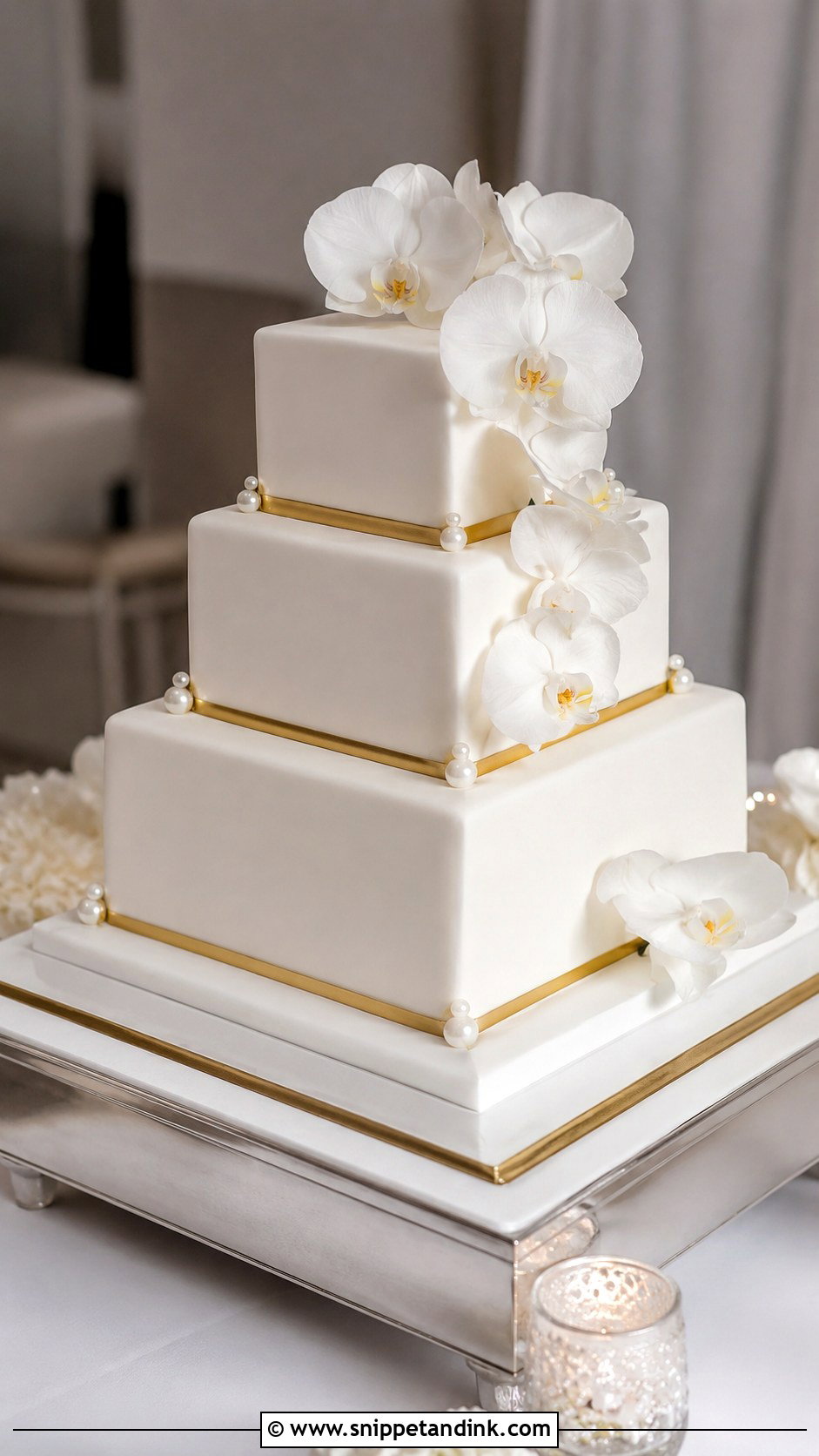
Square tiers look sharp and modern, especially for black-tie and hotel receptions. They’re also harder to finish than round tiers, because each corner needs to be crisp, so they can cost more. Square cakes give more servings per tier than round cakes of the same width, which is useful for a large guest list. Orchids, pearls or thin gold borders are enough decoration. Offsetting the tiers slightly feels more contemporary. Vanilla bean, chocolate ganache and almond raspberry suit the shape.

20. Heart Bridal Cake
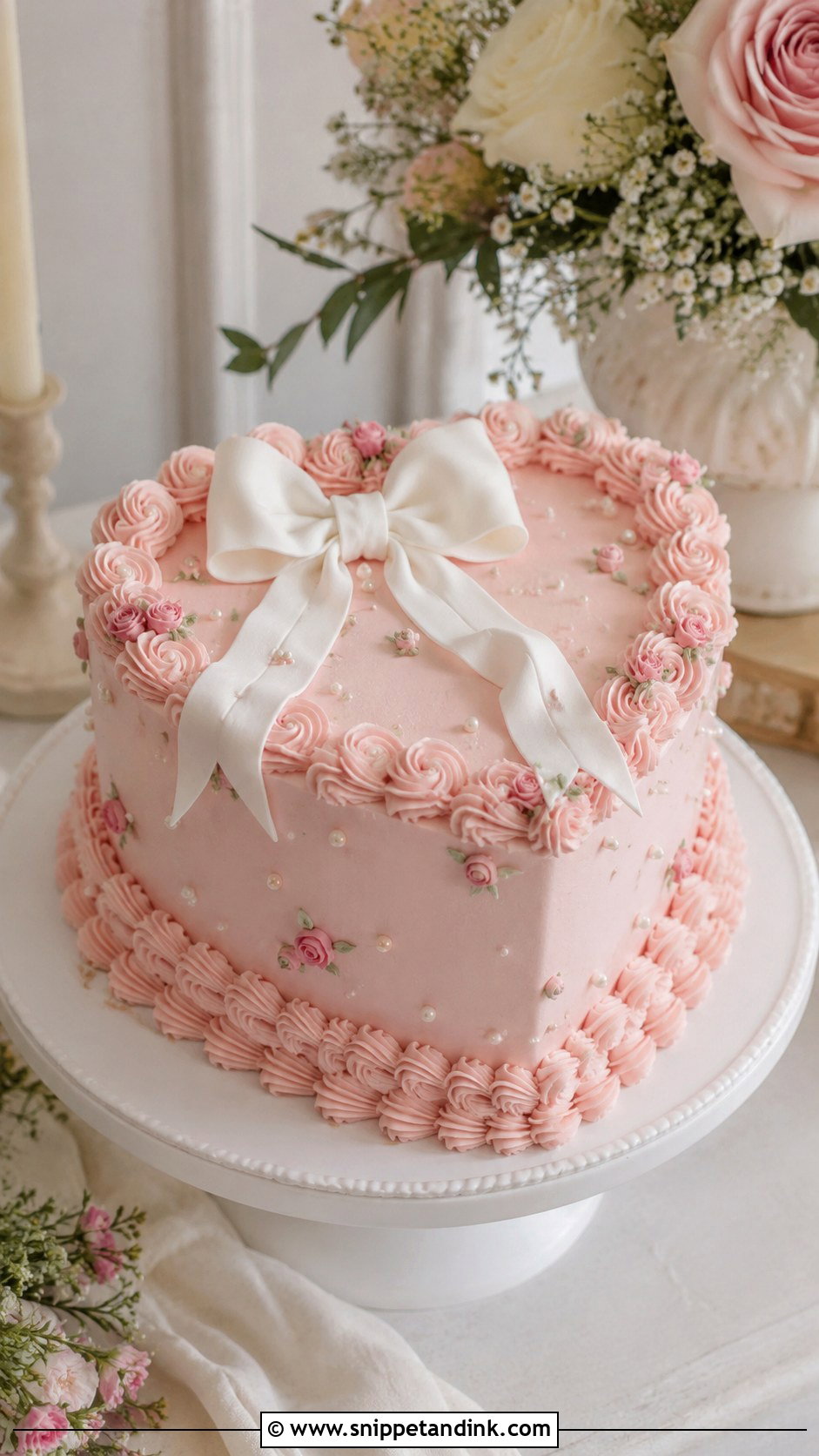
A heart bridal cake is romantic and a little playful. It can be vintage with piped borders, modern with smooth buttercream, or sweet with pearls and bows. A single heart tier is great for an elopement or a small reception, while stacked heart tiers make a bold centerpiece. White, blush or ivory icing keeps it from looking like a birthday cake. Vanilla strawberry, almond raspberry and red velvet are fitting flavors. The shape already says romance, so a few roses or pearl piping are plenty.
Heat, Delivery and the Hour Before the Cut
A cake that looks perfect at my bench still has to reach your reception in one piece. These are the questions I’d want any couple to ask their baker.
Will the room be warm?
Buttercream starts to soften in a warm room, and in direct sun it can slide. If your cake will sit in a tent or by a window, tell your baker. They may change the icing, suggest fondant or recommend displaying the cake later. Cakes stored in a fridge can also sweat when moved into a humid room, leaving beads of moisture on fondant, so ask how they plan to handle that.
Who delivers and sets up?
Tall cakes are often delivered in separate tiers and stacked on site. Confirm the delivery window, who signs for it, and that a sturdy, level table will be ready near a wall, away from the dance floor and heaters. Ask your venue whether they charge a cutting fee and who handles the slicing.
Flowers and toppers
If your florist supplies fresh flowers for the cake, decide who places them. Many bakers prefer to do it themselves so stems are wrapped and nothing toxic touches the icing. Heavy acrylic or porcelain toppers need a support dowel underneath, so mention them at the order stage, not on the day.
A Cake That Suits the Room and Gets Eaten
Classic, modern, colorful or small, the right cake is the one that suits your wedding and tastes like something you’d order again. Think about your dress, flowers, venue, season and the feel you want guests to remember. Then book a tasting, bring photos, and ask practical questions about heat, delivery and servings before you sign. When the details and the flavor both fit, the cake looks right in photos and gets eaten, which is what every baker hopes for.
You'll Like These Ideas:











Leave a Reply