
The cake is usually the one reception decoration that guests also eat, so it has two jobs: look right in the room and taste good on the plate. The ideas below cover the styles couples bring to my consultations most often right now, from classic white tiers and piped vintage work to pearls, pressed flowers, textured buttercream, sculptural shapes and small cakes for intimate dinners. For each one I’ve added what it asks of the baker, how it behaves in a warm room, and which flavours hold up inside it. Have your colour palette, your florist’s plans and a rough guest count to hand while you read; they narrow the list quickly.
How Many Tiers Your Guest List Actually Needs
Couples often fall for a five-tier photo and then realise they’re feeding sixty people. Size follows servings, and wedding servings are cut narrower than party slices, usually about one inch wide by two inches deep.
- As a rough guide using wedding portions, a 6 inch round serves about a dozen, an 8 inch around two dozen, a 10 inch close to forty. Bakers’ charts vary, so ask yours for her numbers.
- Need more height than servings? Ask for one or two dummy tiers, made of foam and decorated to match. Nobody can tell in photos.
- Need more servings than height? Add a kitchen cake in the same flavour, sliced out of sight and plated with the rest.
- If you’re keeping the top tier for an anniversary, leave it out of your serving count.
I usually suggest ordering for your confirmed guests rather than everyone invited. Some guests skip cake, and others leave before it’s cut.
1. White Tiered Wedding Cake
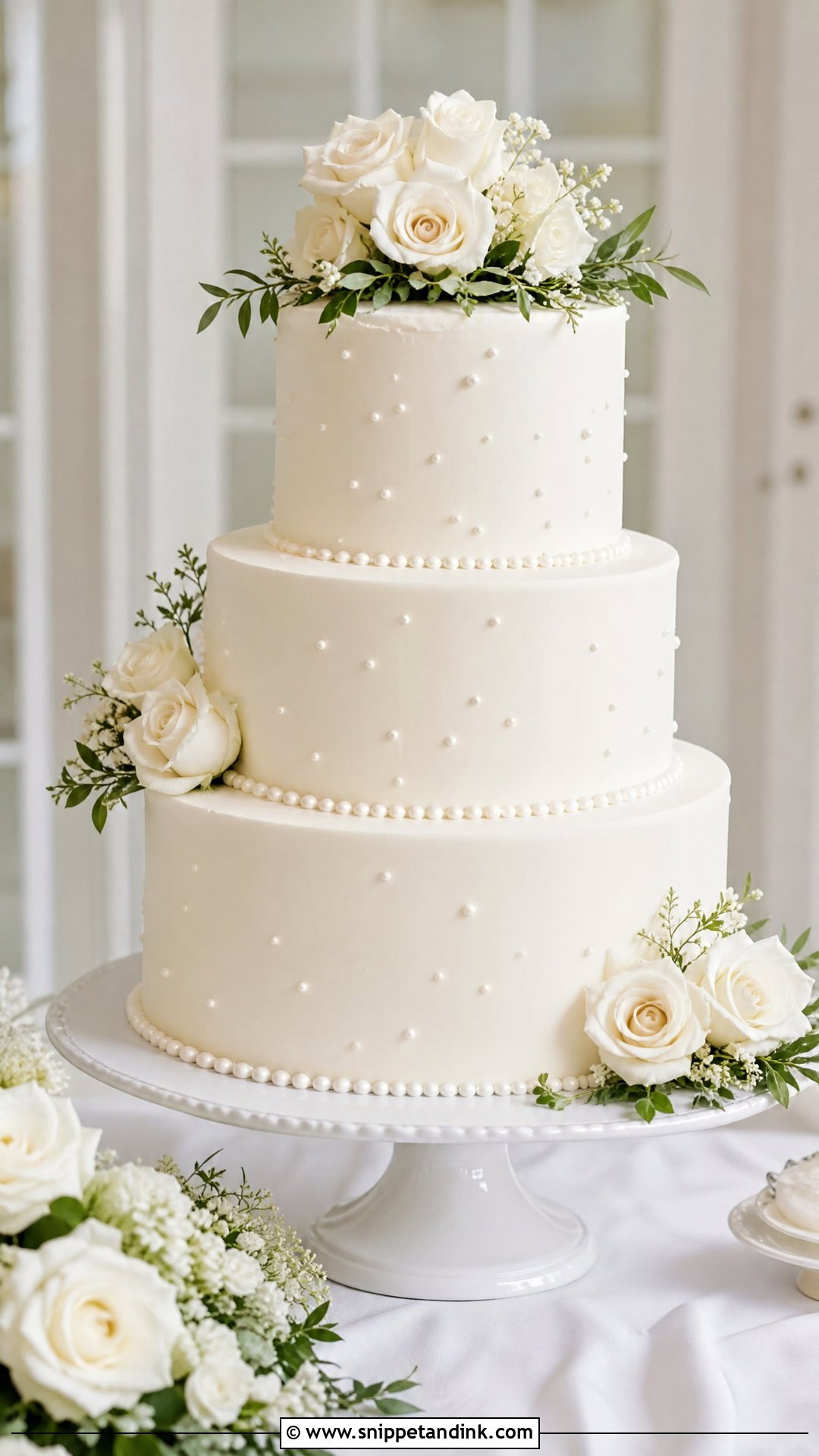
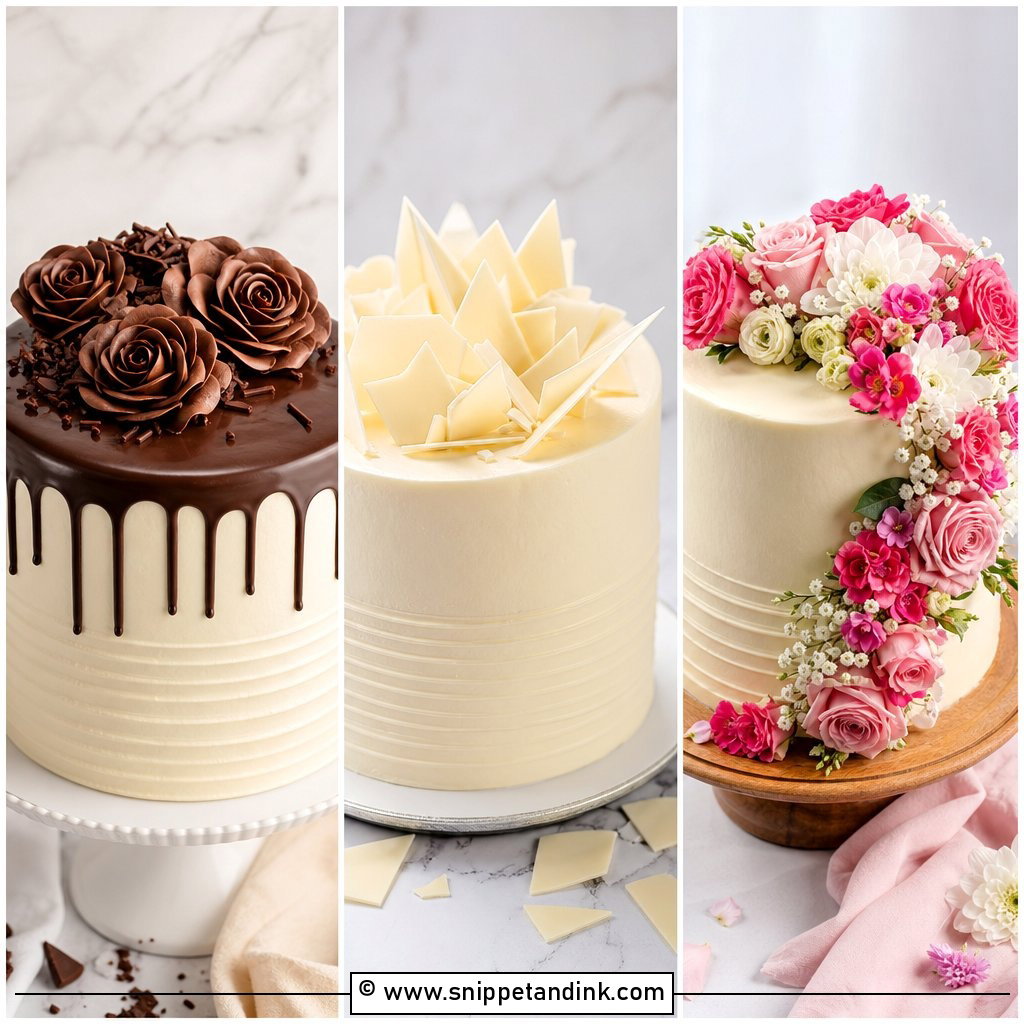
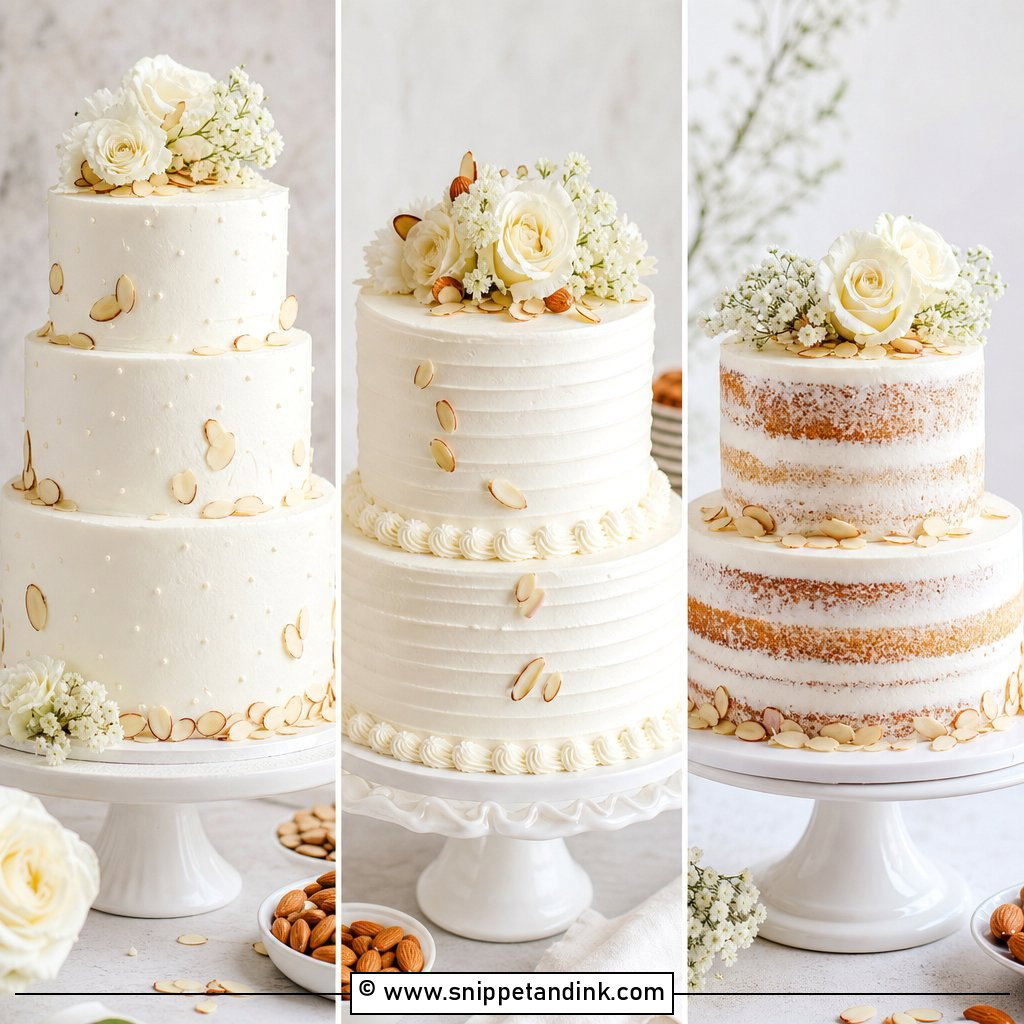
A white tiered wedding cake suits almost any venue, from a ballroom to a backyard, which is why it never really leaves my order book. The finish is a choice between smooth buttercream, which tastes better and softens in heat, and fondant, which holds sharp edges and travels well. I’d let one detail lead, whether that’s flowers, piping or texture, and keep the tiers in steady proportion. Vanilla bean, almond, lemon and white chocolate are dependable fillings for a mixed crowd. Under warm reception lighting, white also reads as clean rather than flat.
2. Vintage Lambeth Wedding Cake
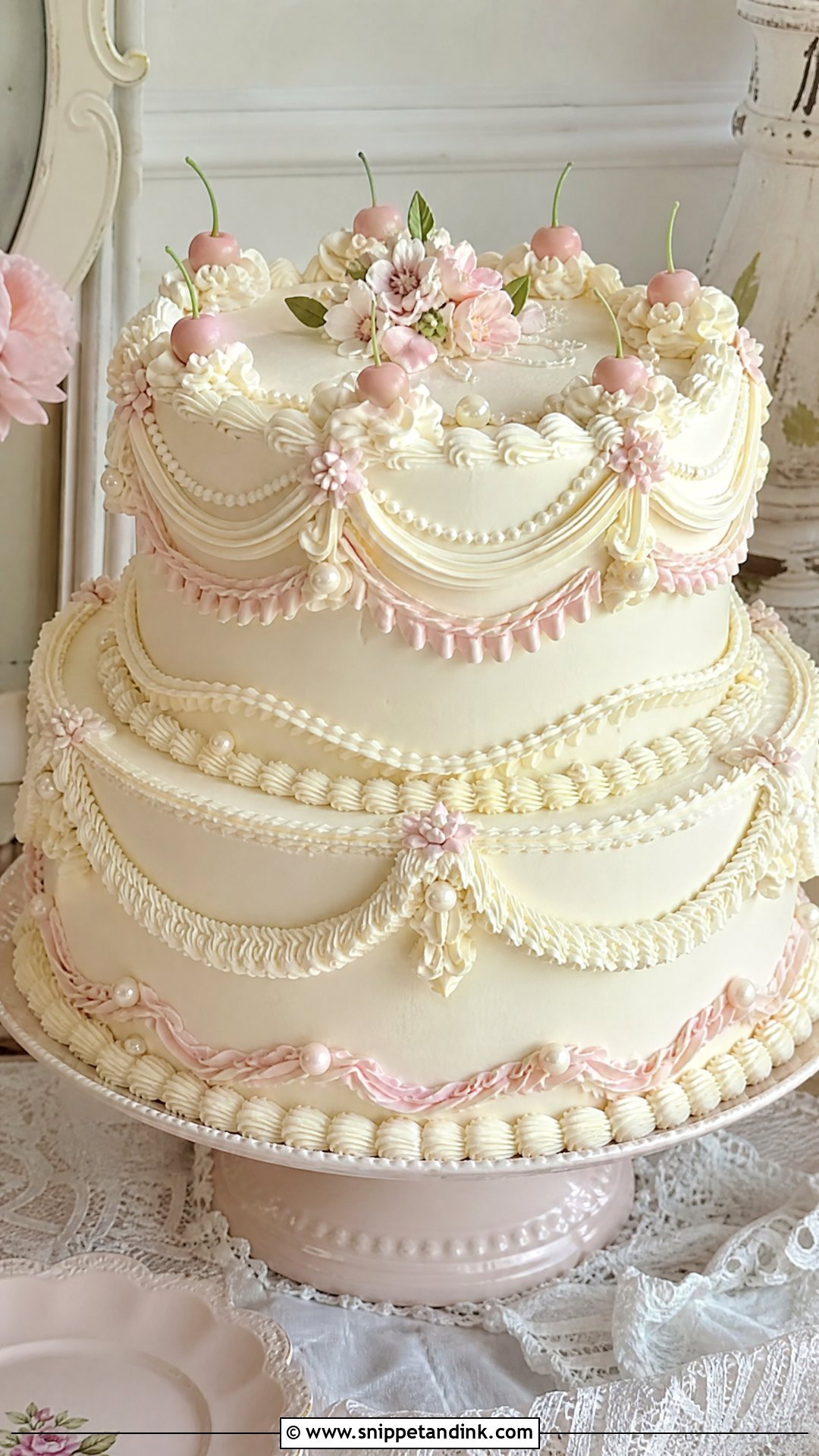
Lambeth piping is all overpiped borders: shells, swags, scrolls, ruffles and dots built in layers. It takes hours of steady hand work, so look for a baker whose portfolio shows real piped cakes, not just one. I pipe these in a crusting buttercream, because a softer frosting slumps once the room warms up. White, ivory, blush, pale blue and soft sage all look right, and you can keep it formal with pearls and ribbon or make it playful with cherries and pastel piping. It suits vintage, garden and romantic indoor weddings.
3. Pearl Wedding Cake
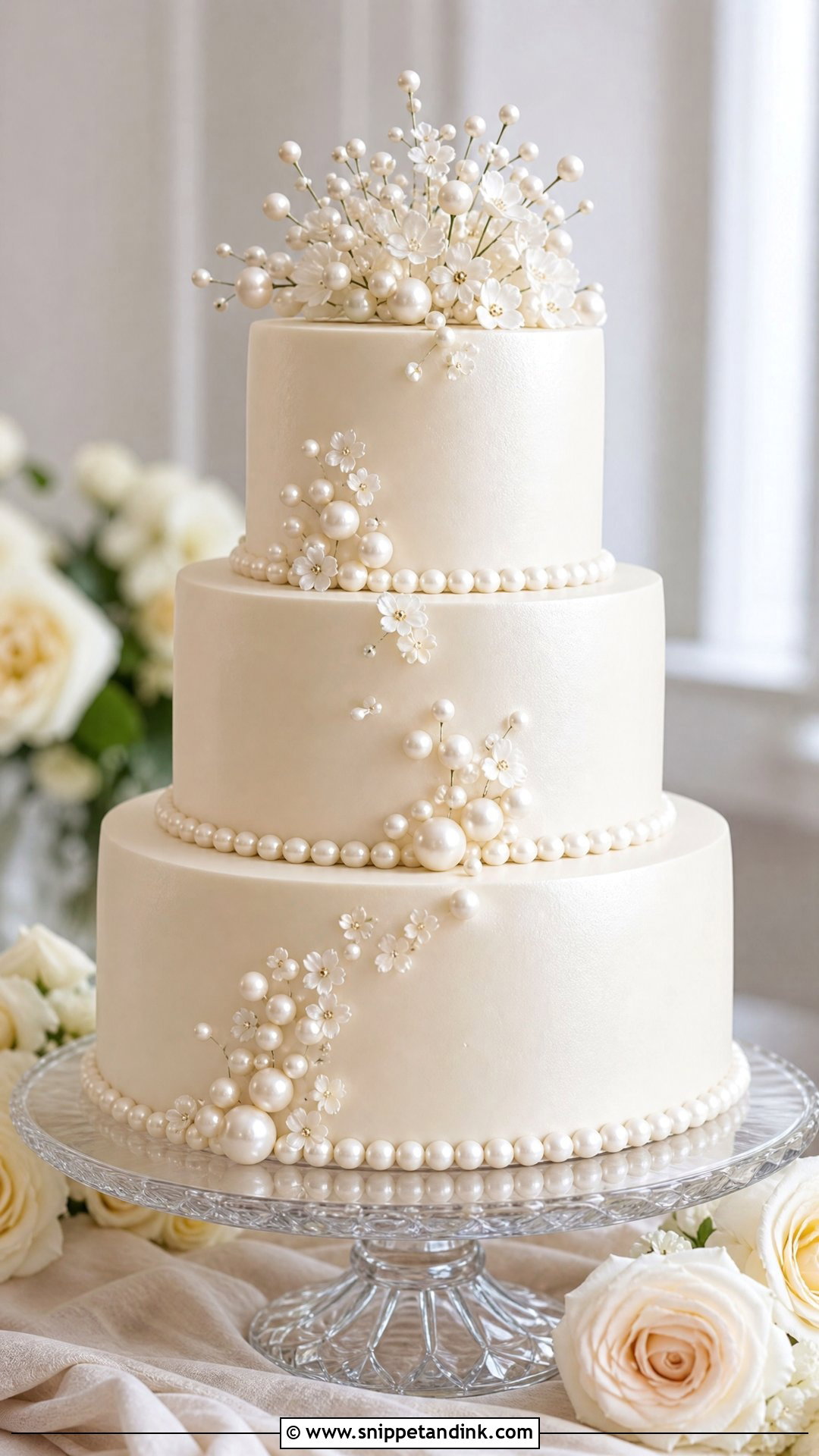
Pearls can be piped, moulded from sugar or bought as edible dragées, and each looks different up close. Dragées are glossy but hard to bite, so for a fully pearl-covered cake I’d use soft sugar pearls instead. A lighter version simply dots pearls around the base of each tier. Ivory buttercream, satin fondant or a pearl lustre dusted on top gives the cake a soft glow under reception lights. Almond sponge with raspberry, or vanilla with white chocolate mousse, sits well with the look. Keep other decoration minimal so the pearls carry it.
4. Fresh Flower Wedding Cake
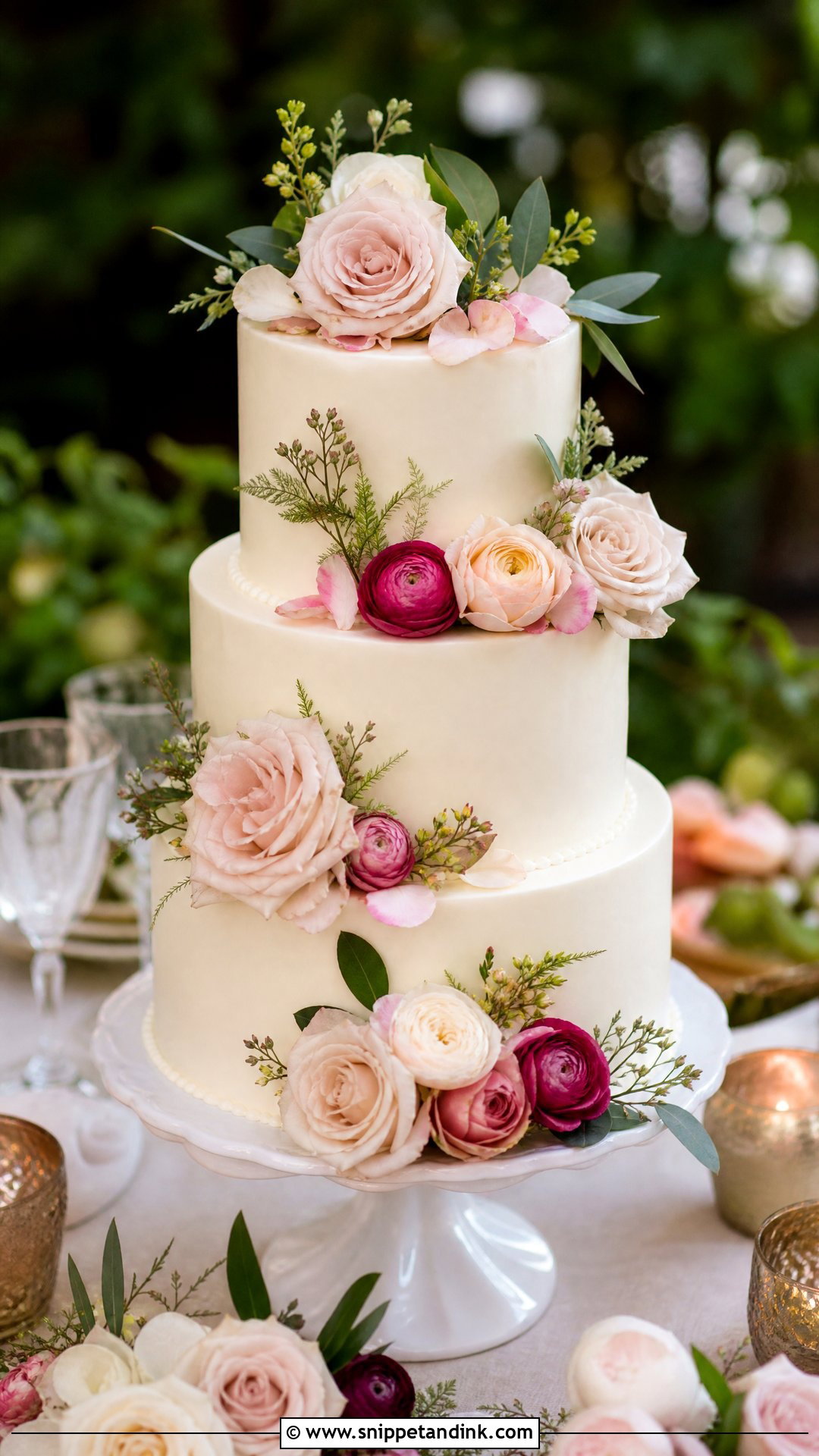
Fresh flowers are the most requested cake decoration I see, and the one that needs the most coordination. Not every bloom is safe near food; some are toxic, and most florist stock is treated with pesticides. I ask the florist for unsprayed flowers, then wrap every stem in floral tape and insert it into a plastic pick or straw, so nothing touches the cake directly. Roses, ranunculus, orchids and small greenery all work; peonies look generous but drop petals quickly in warm rooms. Buttercream gives a softer setting, fondant a more polished one. Match the flowers to the season and the rest of the decor.
5. Textured Buttercream Wedding Cake
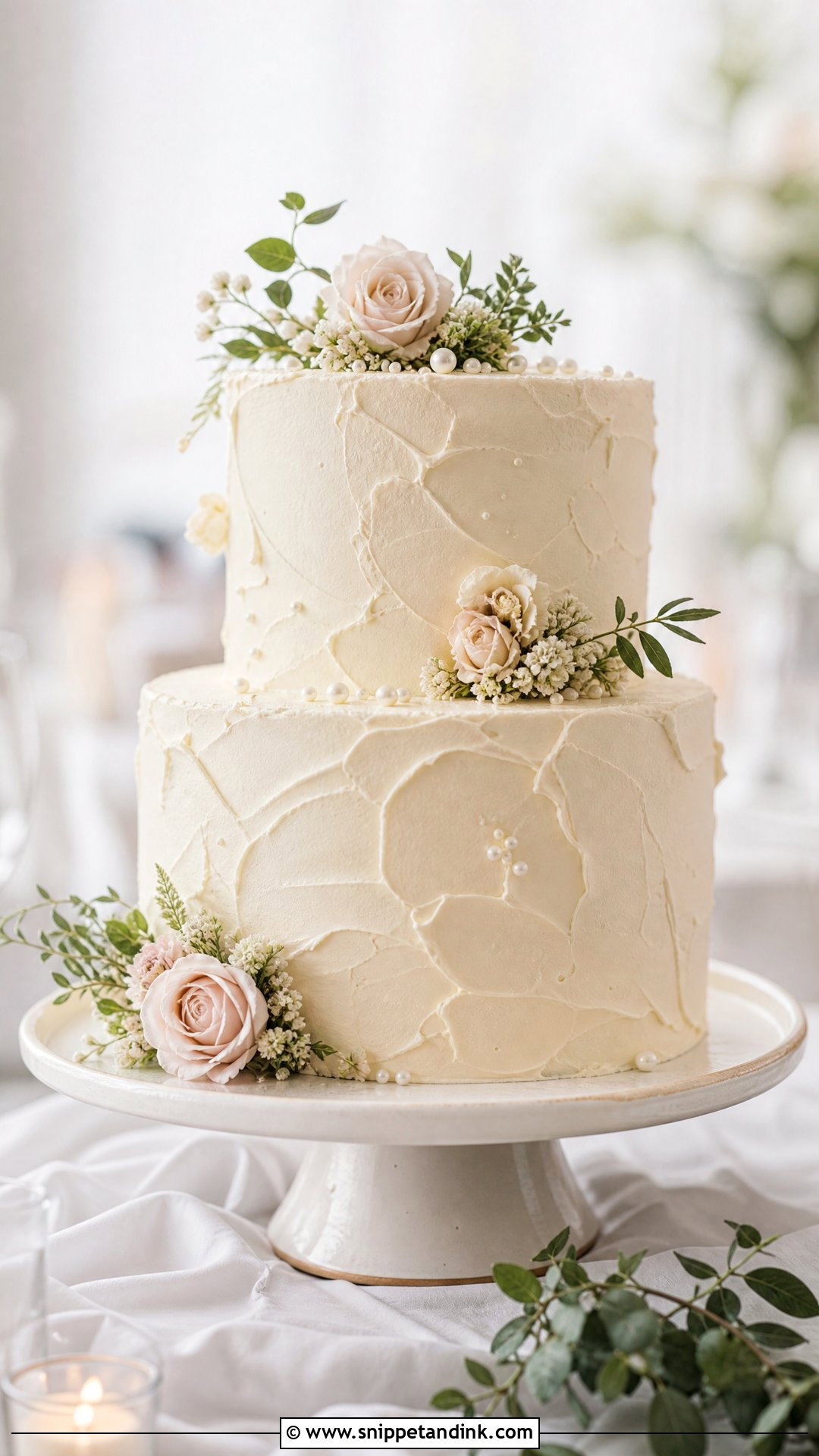
Textured buttercream shows the tools: ridges from a comb, palette-knife strokes, stucco or soft waves. Couples like it because it feels handmade rather than stiff. From my side, the texture also hides small marks from transport and setup, which makes it a practical choice for a warm venue or a rustic setting. It pairs well with fresh flowers, dried petals, fruit or greenery. Vanilla, lemon, coconut and berry sponges all suit it. Natural light shows the texture best, so if you can, place the cake near a window but out of direct sun.
6. Pressed Flower Wedding Cake
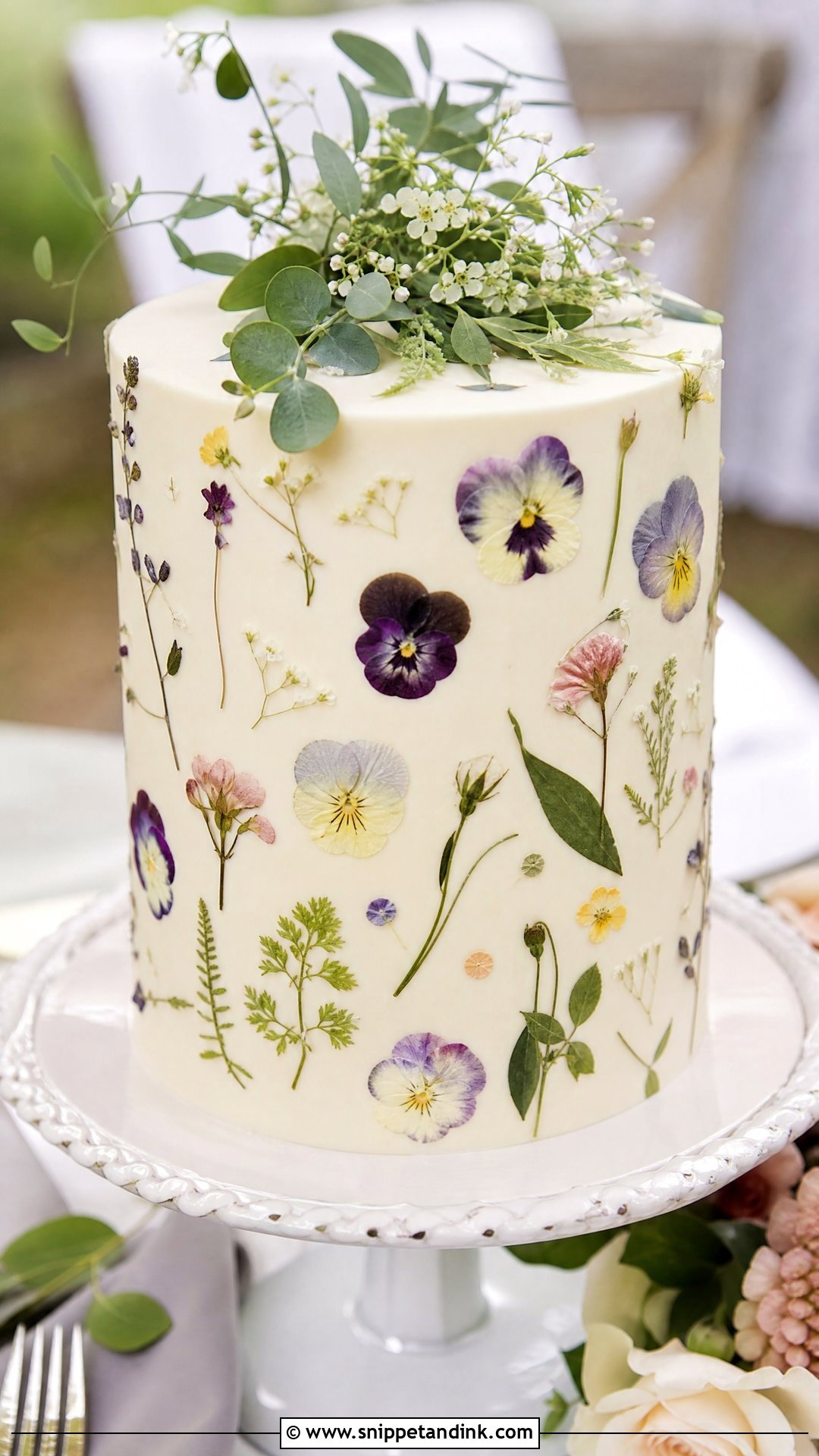
A pressed flower wedding cake uses edible flowers that have been flattened and dried, then pressed onto smooth buttercream or fondant. They have to be edible varieties grown for eating, not florist stock, so order them early from a supplier. Layout makes or breaks this one. I plan the pattern on paper first, leaving space between each bloom, because scattered flowers look accidental. Vanilla, lemon elderflower, honey or lavender sponges match the botanical mood, and a white or pale ivory base lets each petal show clearly.
7. Minimalist Wedding Cake
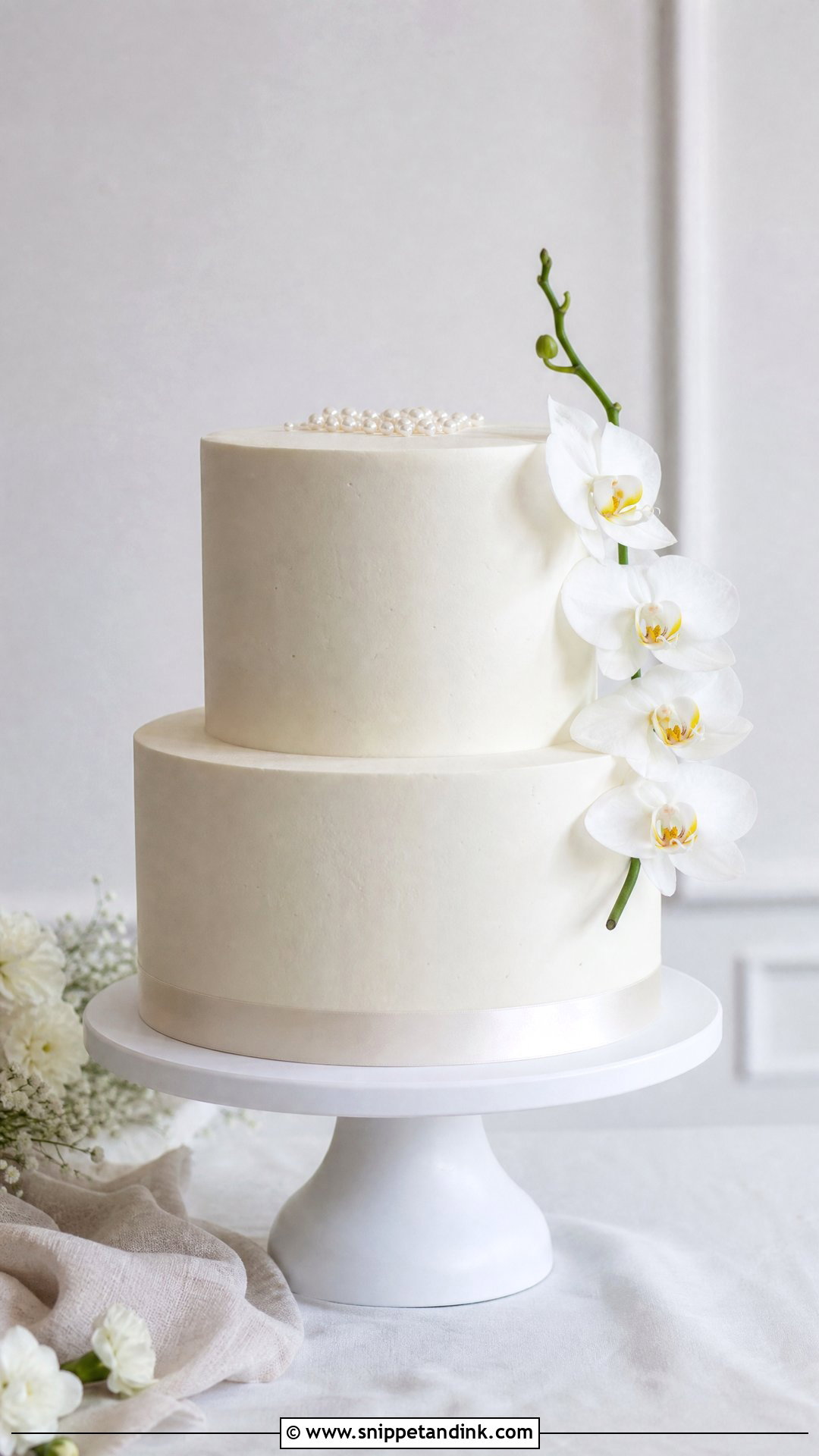
Minimalist cakes are less forgiving than they look. With one accent, a silk ribbon, a single flower, a pearl trim or a small sugar detail, there’s nothing to hide behind, so the finish has to be truly smooth and the edges sharp. Proportion becomes the decoration: tier heights, how much the tiers step in, the height of the stand. It suits a modern wedding, a courthouse celebration or a small reception. Vanilla bean, almond, lemon and pistachio work well under a smooth buttercream finish.
8. Rustic Naked Wedding Cake
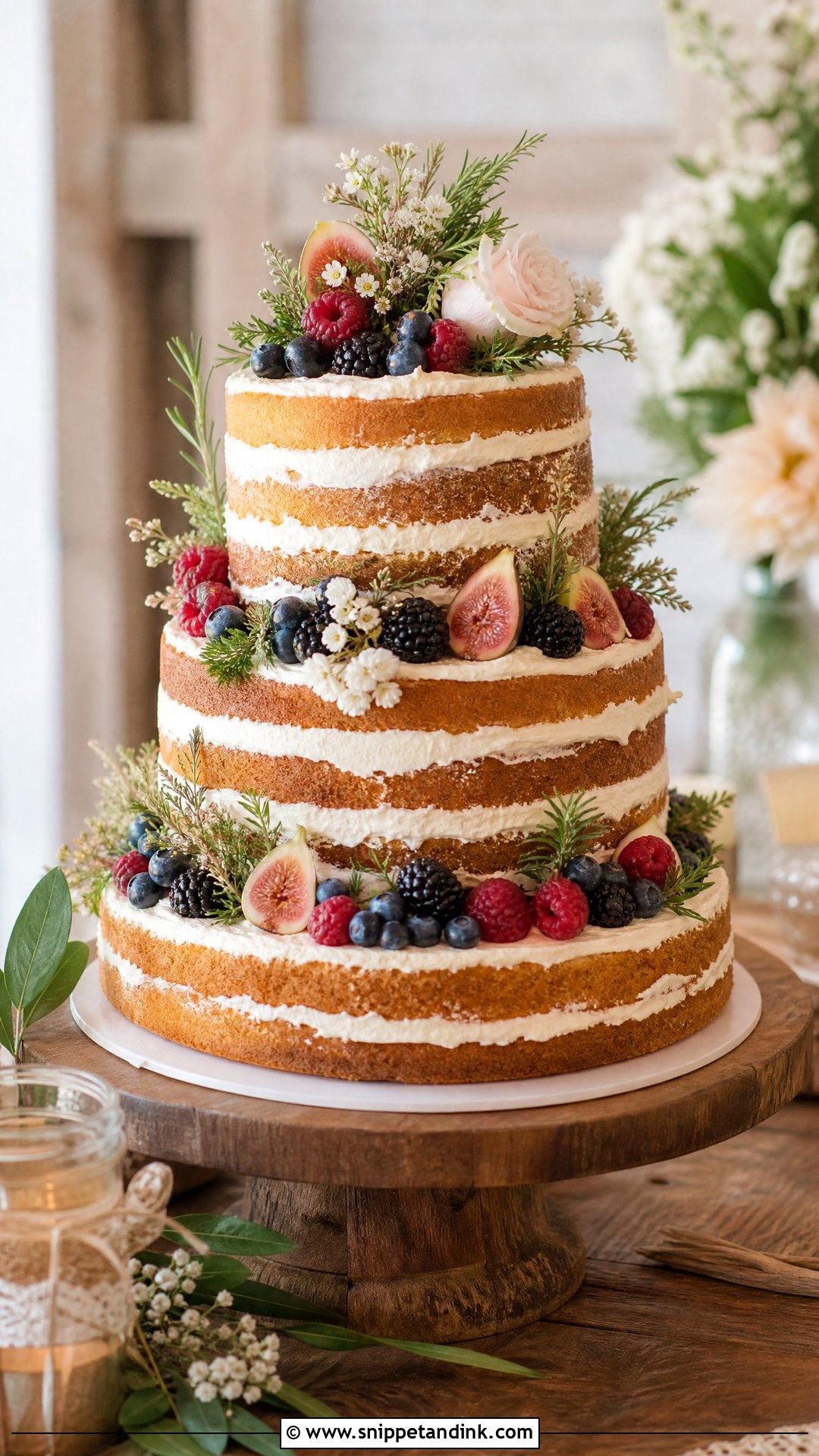
A naked cake has almost no frosting on the sides, so the sponge is exposed to air from the moment it’s assembled. That’s its weakness. I bake these as close to the wedding as I can, brush the layers with syrup to keep them moist, and assemble on site or as late as possible. The visible layers make flavour part of the design, so vanilla, spice, carrot, lemon and chocolate all show well. Berries, figs, herbs and flowers add colour. It sits nicely on a wooden stand or simple white pedestal at a barn or outdoor reception, ideally in the shade.
9. Semi Naked Wedding Cake
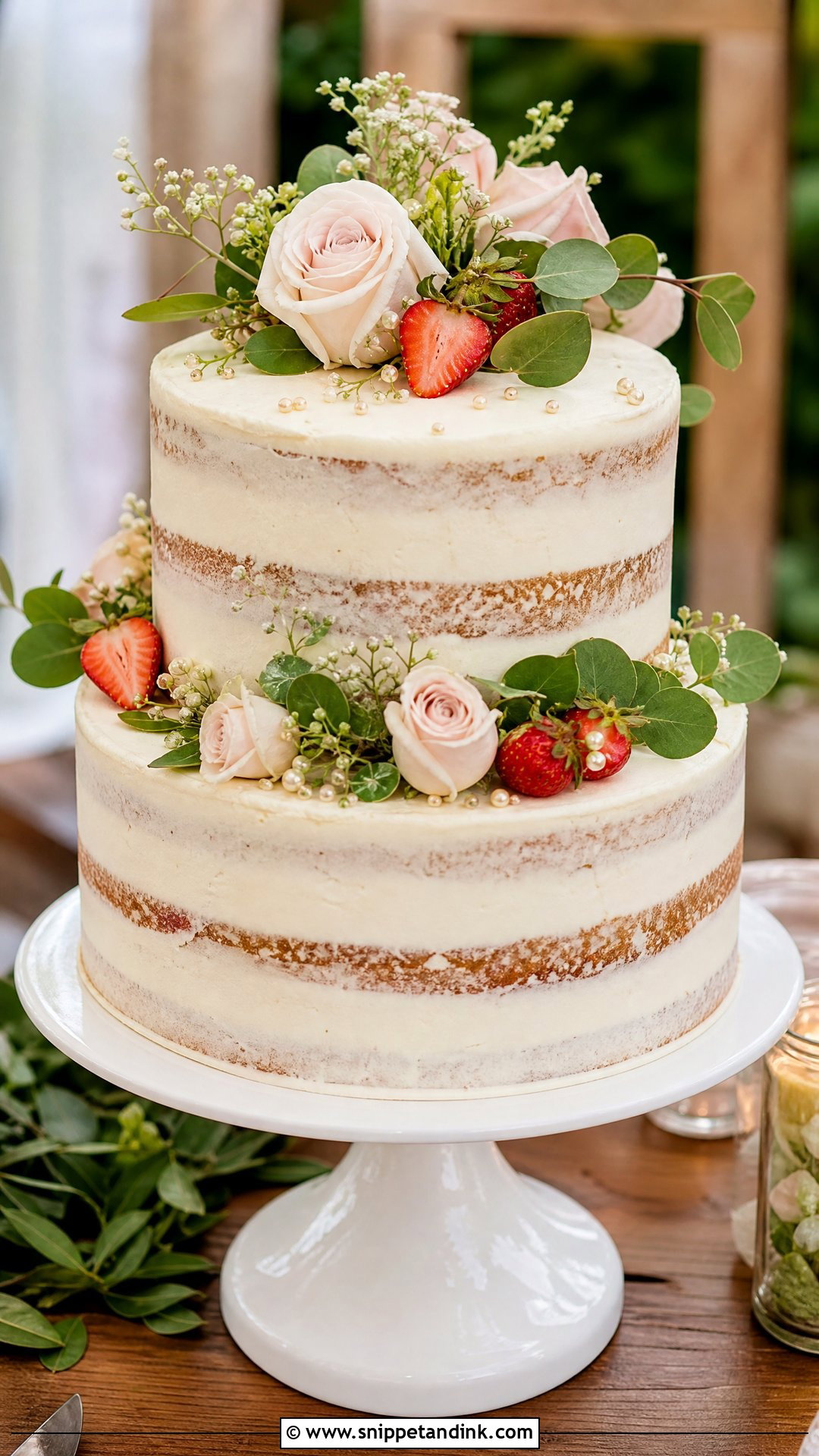
A semi naked wedding cake gets a thin scraped coat of buttercream, enough to let the sponge peek through while protecting it from drying out. I find it holds up much better than a fully naked cake over a long reception. Fresh flowers, berries, greenery, citrus slices or caramel drizzle all suit it. Vanilla, almond, lemon, spice and red velvet look good through the scrape. Keep decorations light so the finish remains visible. It works in barns, vineyards, gardens and smaller indoor rooms.
10. Gold Accent Wedding Cake
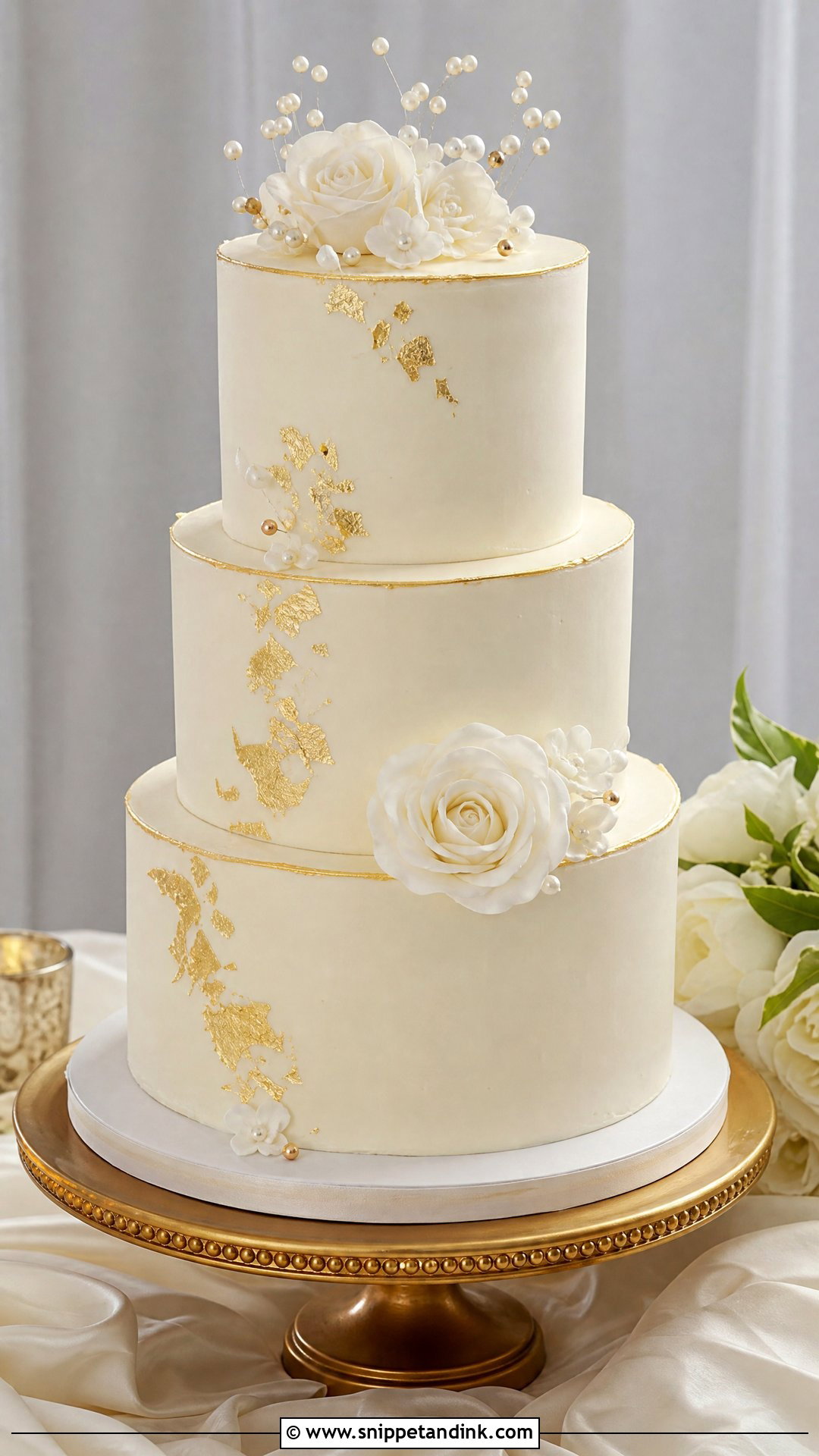
Gold works best in small doses: gold leaf on one tier, a painted edge, gold pearls, brushed strokes or a slim band around each tier. Covering a whole cake in metallic tends to look heavy. Edible gold leaf is applied by hand and moves with any breath of air, so I add it in a still room, and I’d steer clear of non-edible craft lustre, which some decorators still use. Ivory, white, blush, sage and black all pair well with gold. Vanilla bean, salted caramel and almond sponges suit the richer feel. It belongs at a ballroom, an evening reception or an art deco theme.
11. Black And White Wedding Cake
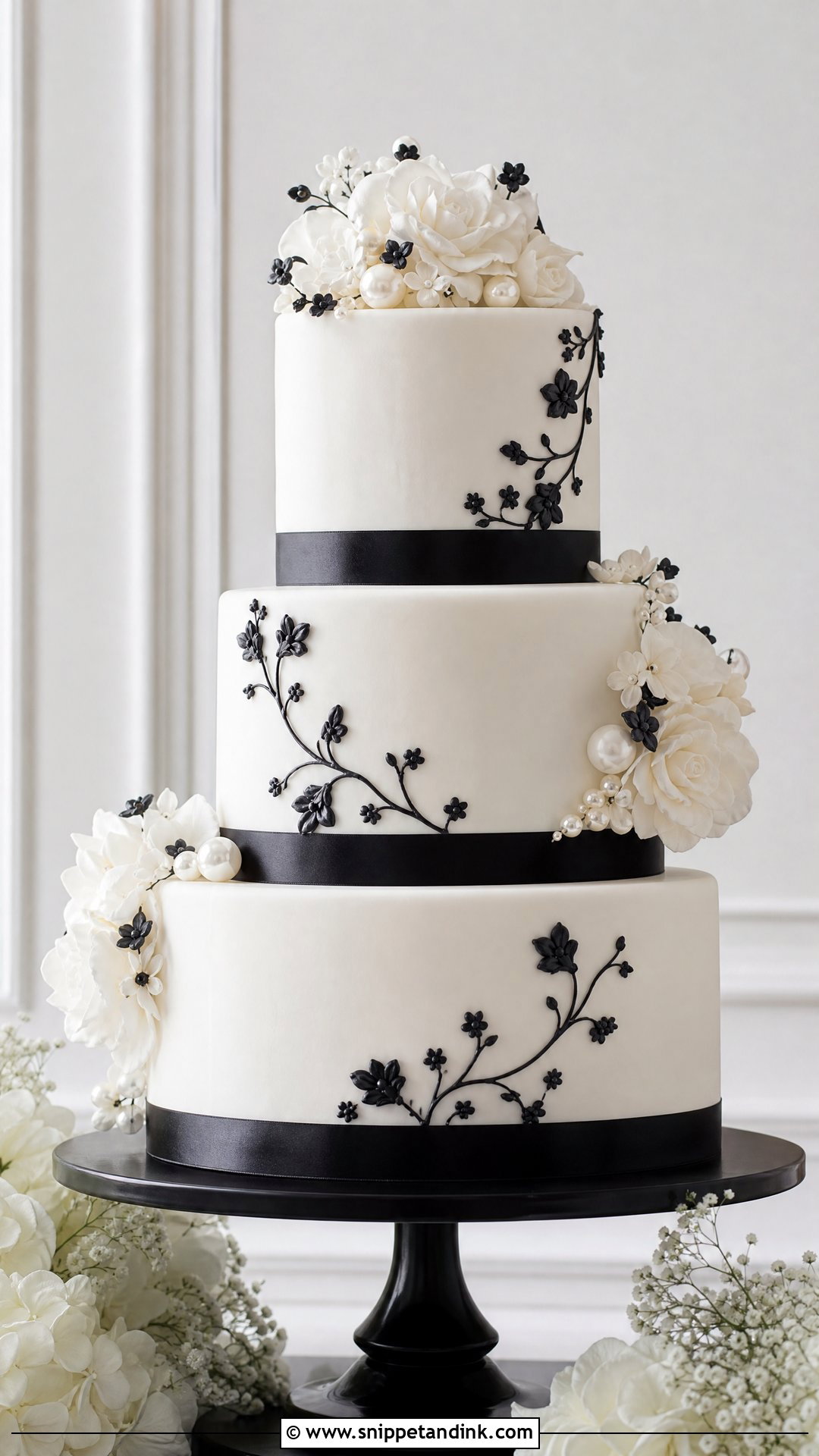
Black and white is the most graphic cake on this list. It can be white tiers with black ribbon, black piping or painted florals, or one black fondant tier for contrast. A word of warning: black icing needs a lot of colouring, which can stain teeth and taste slightly bitter, so I usually keep black to accents or a dark chocolate base rather than coating a whole tier. Sugar flowers or pearls soften the effect. Chocolate, vanilla or cookies-and-cream fillings fit naturally. Keep the table decor simple so the contrast looks deliberate.
12. Floral Cascade Wedding Cake
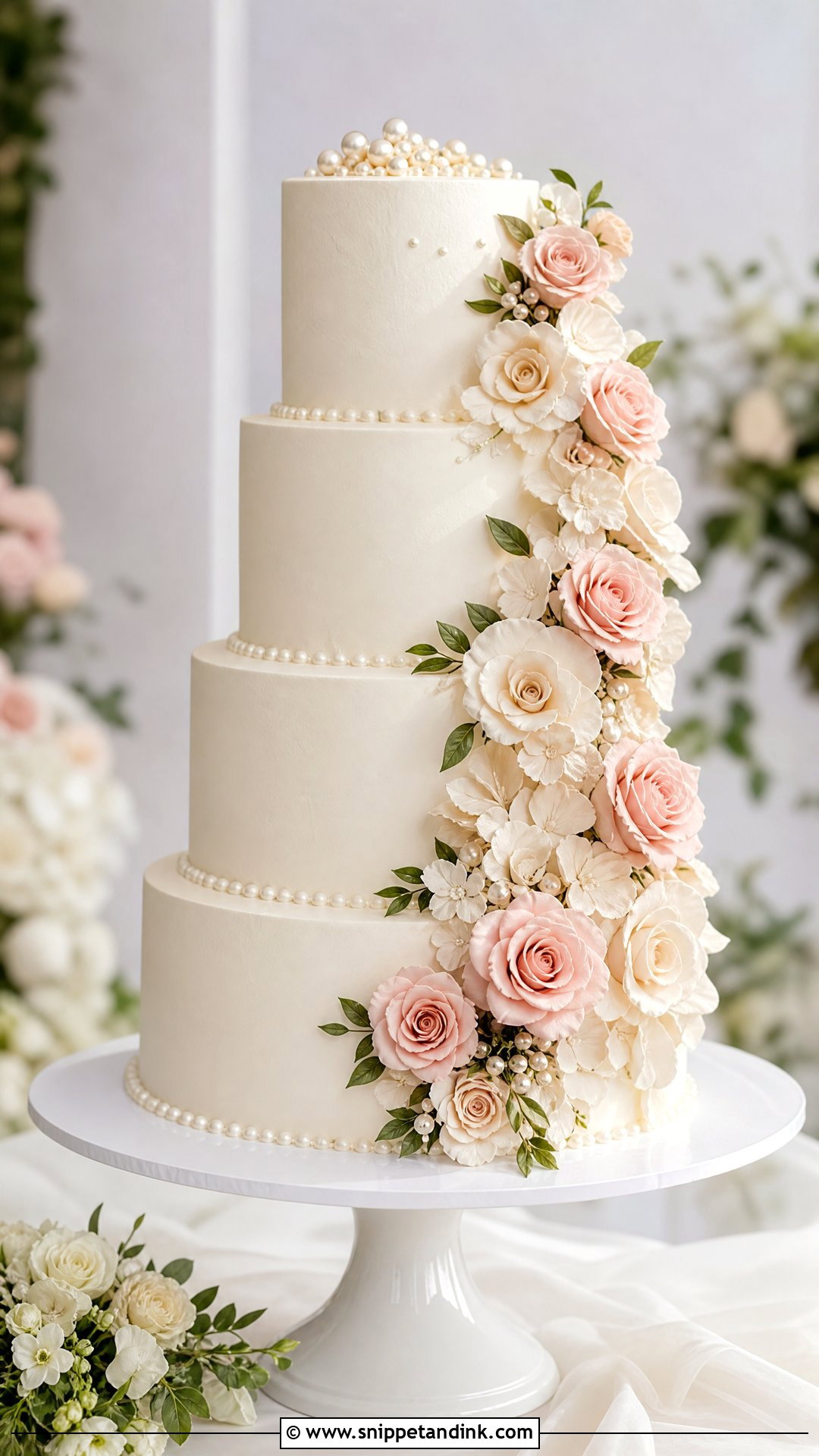
A floral cascade connects every tier with flowers that trail down one side, spiral around the cake or fall diagonally. It’s especially good on tall cakes, where the flowers make several tiers read as one piece. Fresh flowers, sugar flowers or wafer paper blooms all work; sugar flowers are the safest because they’re made to touch the cake and won’t wilt. Tall cakes need a firm structure inside, with dowels and boards in every tier, and a dense sponge like vanilla or chocolate holds better than a light chiffon. White or ivory buttercream lets blush, peach, lavender or greenery show.
13. Two Tier Wedding Cake
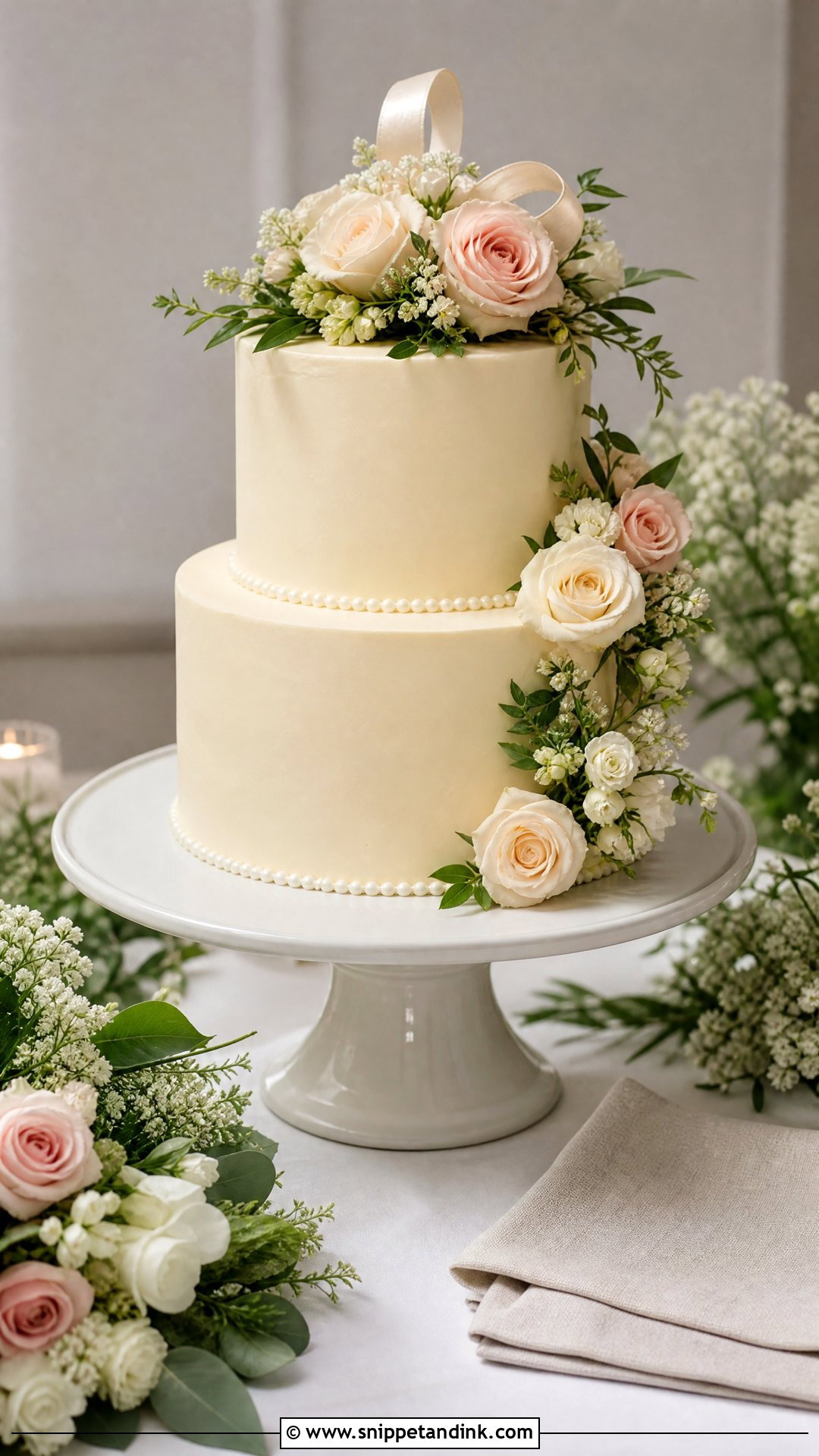
Two tiers give you a proper cake-cutting moment without the size or the cost of a tall cake. That makes them a good fit for smaller weddings, elopements, brunch receptions, or when there’ll be other desserts. You can go classic with smooth white buttercream and flowers, modern with texture and ribbon, or vintage with piped borders. You also get two flavours, say vanilla raspberry on top and chocolate ganache below. A tall stand adds the height the cake itself doesn’t have, which matters more than you’d think in photos.
14. Single Tier Wedding Cake
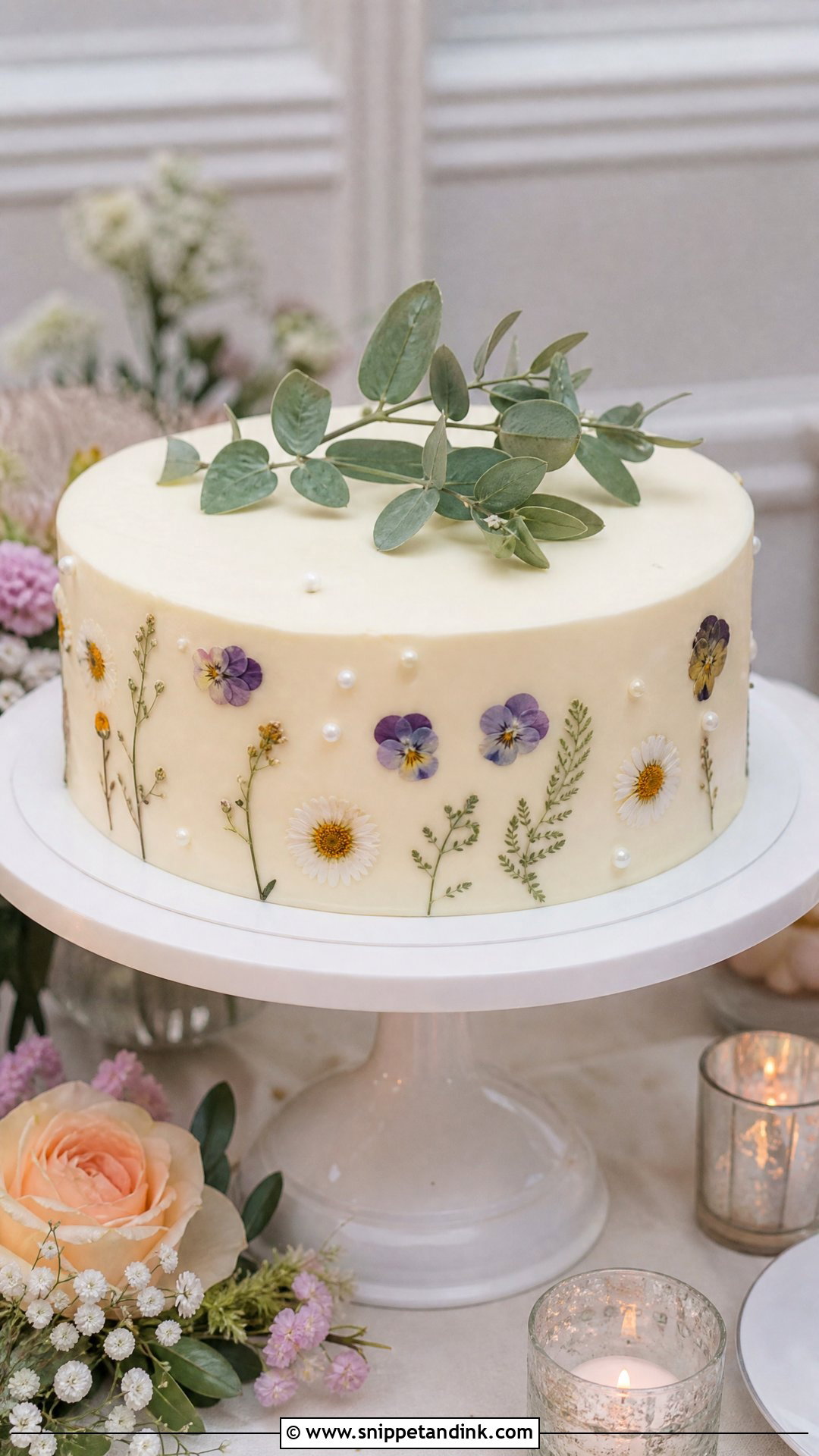
A single tier wedding cake can hold its own if the shape is strong. Wide rounds, tall cylinder cakes (often called double-barrel) and sculptural single tiers all suit an intimate wedding. A tall single tier needs internal support like a stacked cake, because the height puts weight on the bottom layers. Buttercream texture, fresh flowers, pressed petals, pearls or a bold ribbon make it feel bridal. Flavour can be more personal, perhaps lemon lavender, pistachio, chocolate raspberry or brown butter vanilla. Set it on a raised stand so it doesn’t disappear on the table.



15. Square Wedding Cake
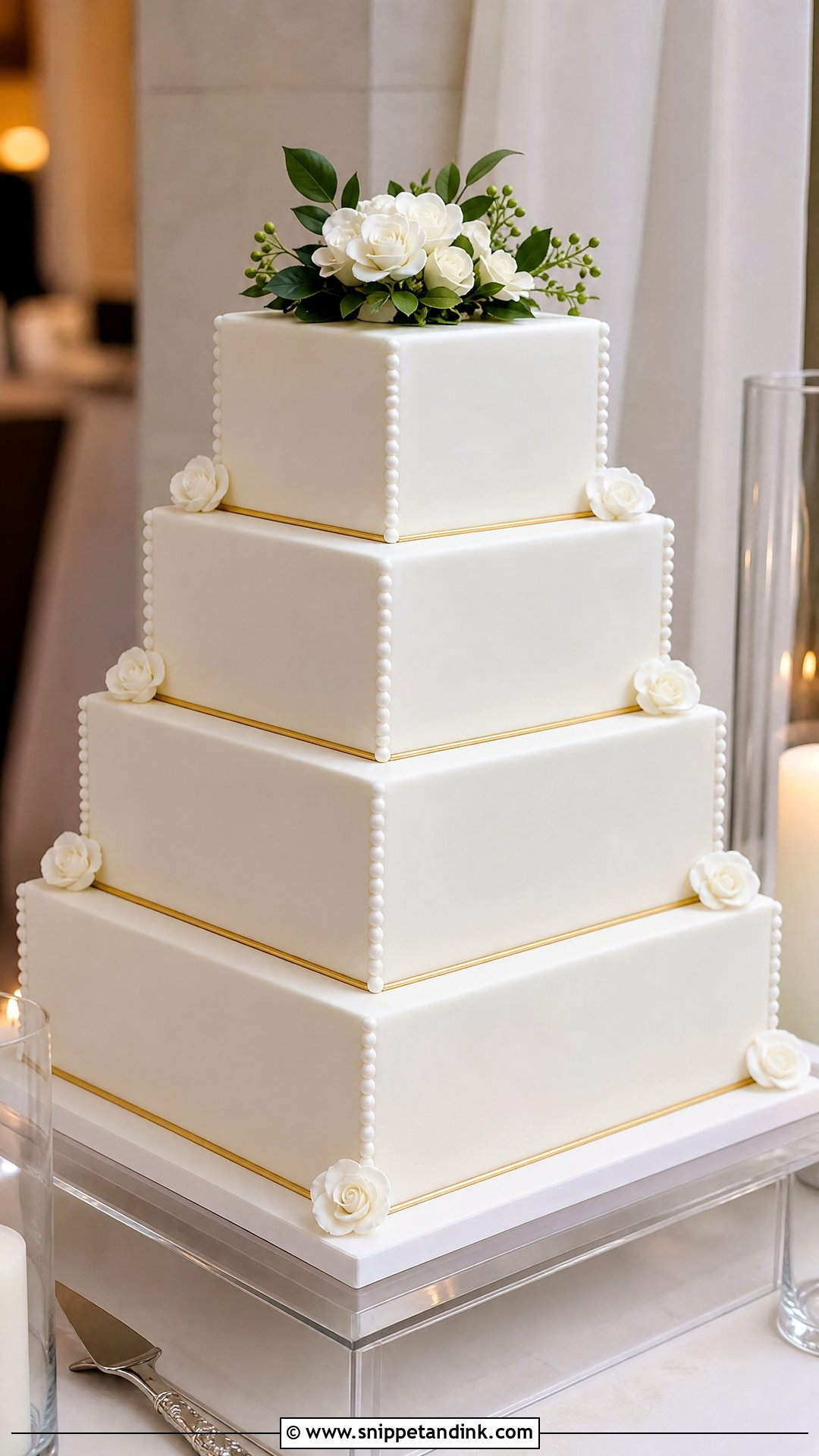
Square tiers look architectural, and they’re one of the hardest shapes to finish well. Sharp corners need fondant or a very firm, well-chilled buttercream, and any bump along an edge shows from across the room. It suits a modern wedding, a hotel, a gallery or a city reception. Minimal white tiers with tiny florals keep it calm; gold lines, marble effect, pearls or geometric piping add more. Square tiers cut into neat portions, which helps your caterer. Vanilla almond, chocolate, lemon or coconut sit well inside.
16. Oval Wedding Cake
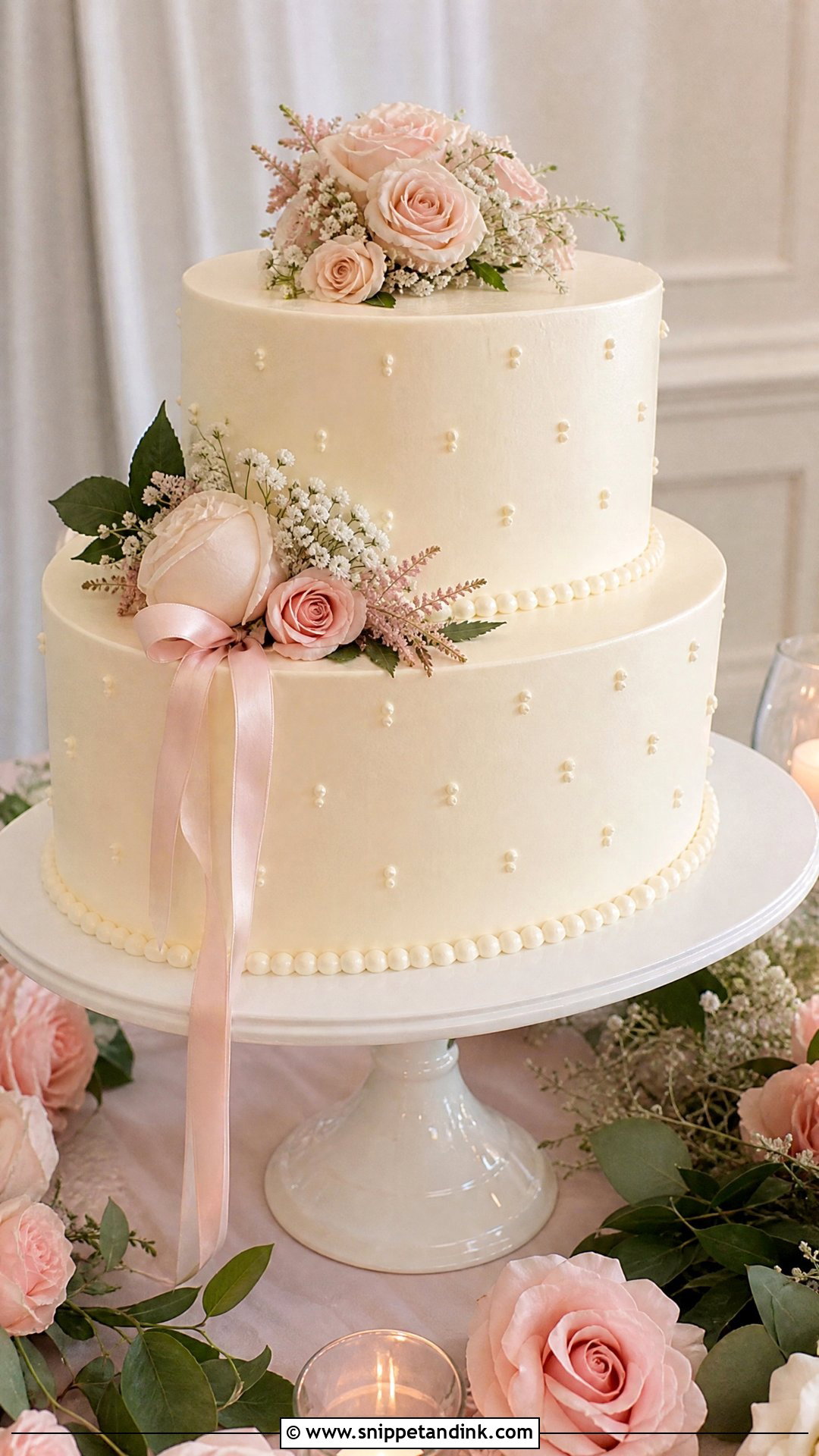
Oval tiers are less common, so ask your baker whether she has oval pans or will carve them, since that affects price and finish. The curve looks softer than a square and fresher than a round, and the shape has natural width from the front, which helps in photos. Smooth buttercream, pearl borders, pressed flowers, ribbon or fine piping all suit it. Light sponges like vanilla bean, lemon, almond or strawberry cream fit the airy look. Keep decoration balanced so the outline stays readable.
17. Bow Wedding Cake
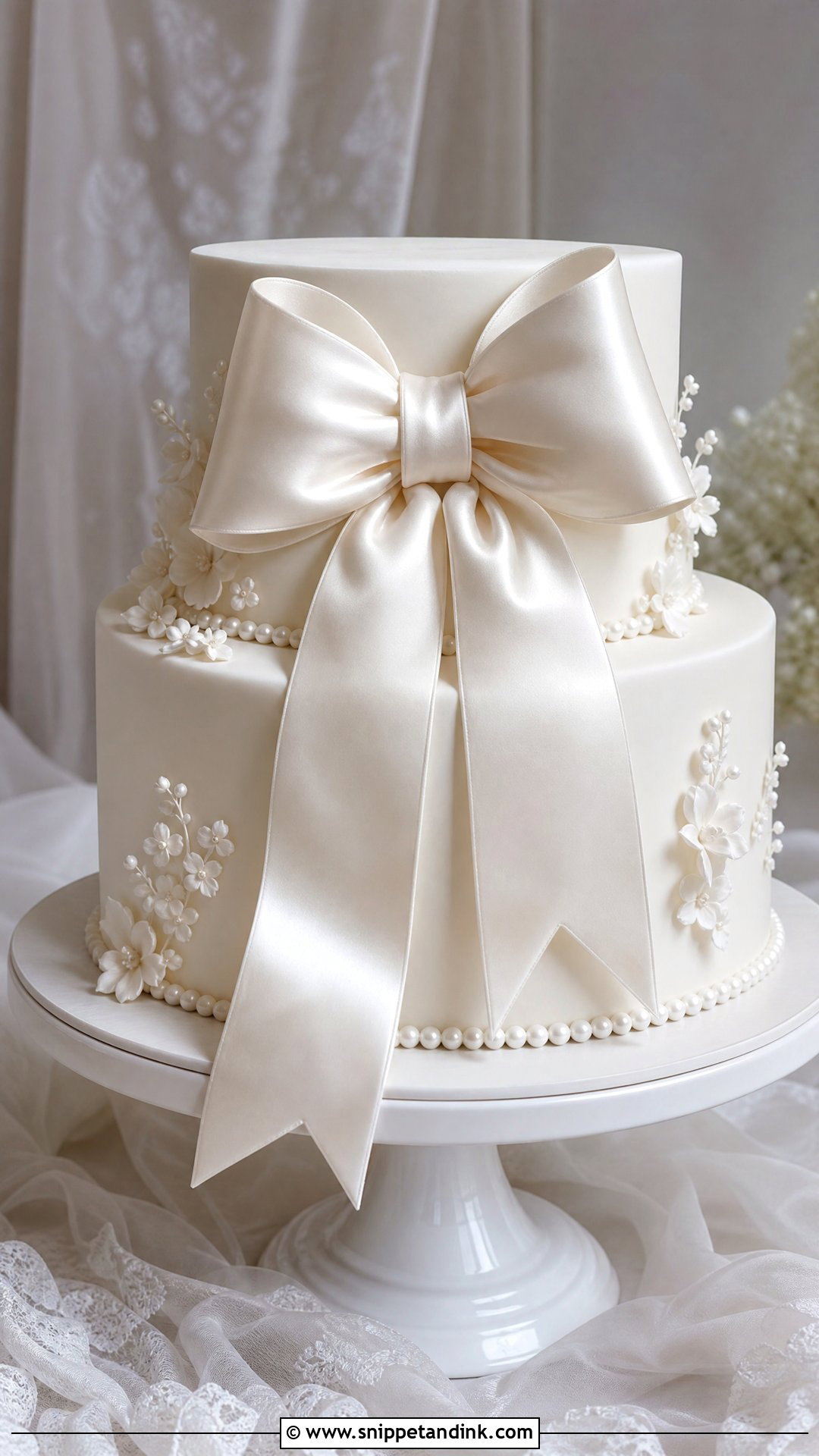
A bow wedding cake can carry one large bow on a simple white tier for a fashion-led look, or tiny bows around every tier for a vintage feel. Fondant and sugar paste bows hold their shape; wafer paper is lighter but wilts in humidity. If you’d like real ribbon, I line it with tape or a strip of acetate so the buttercream grease doesn’t seep through and stain it. Smooth buttercream, satin fondant, pearl trim or piped borders all pair well. Vanilla, almond, strawberry or white chocolate keeps the taste as soft as the look. Choose one bow feature and keep the rest clean.
18. Blue Wedding Cake
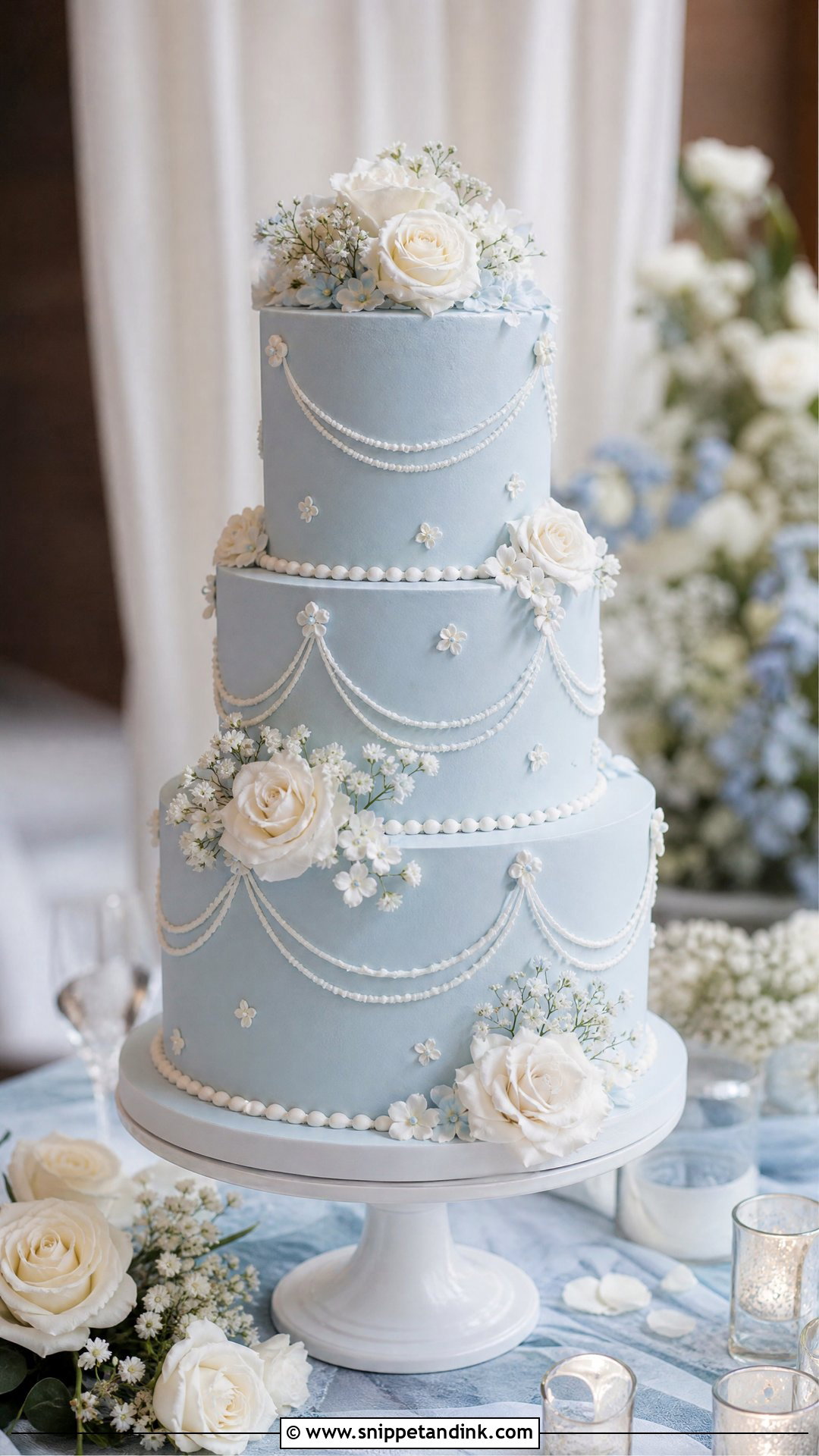
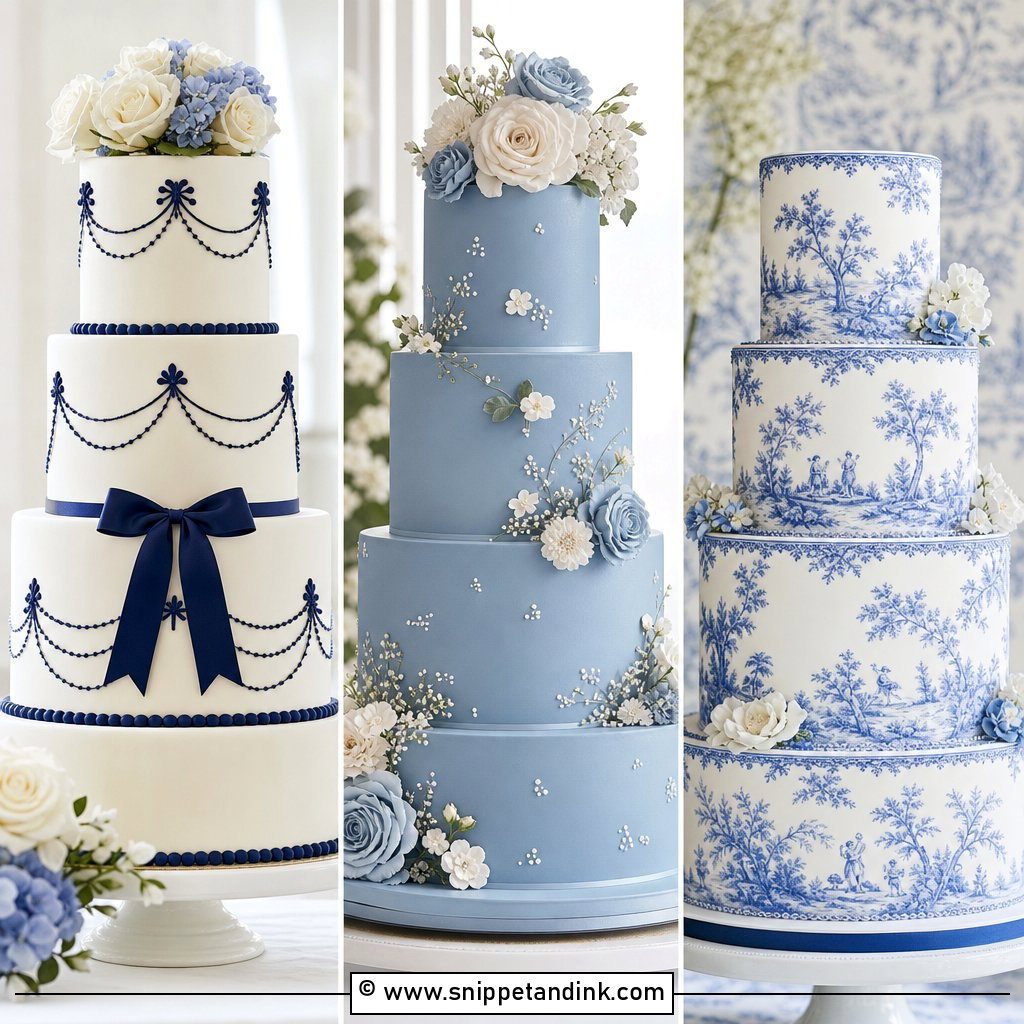
Pale blue, dusty blue and powder blue are the shades I’m asked for most, and they need a careful hand with colour. Buttercream with a yellow tint from butter can turn blue slightly green, so I start from the whitest base I can. The cake can be vintage with Lambeth piping, modern with smooth buttercream, or garden-like with white flowers and pearls. Blue sits well next to ivory, silver, gold, blush and greenery. Vanilla blueberry, lemon, almond or coconut suit the cool palette. A painted blue accent on white is the subtler route.
19. Greenery Wedding Cake
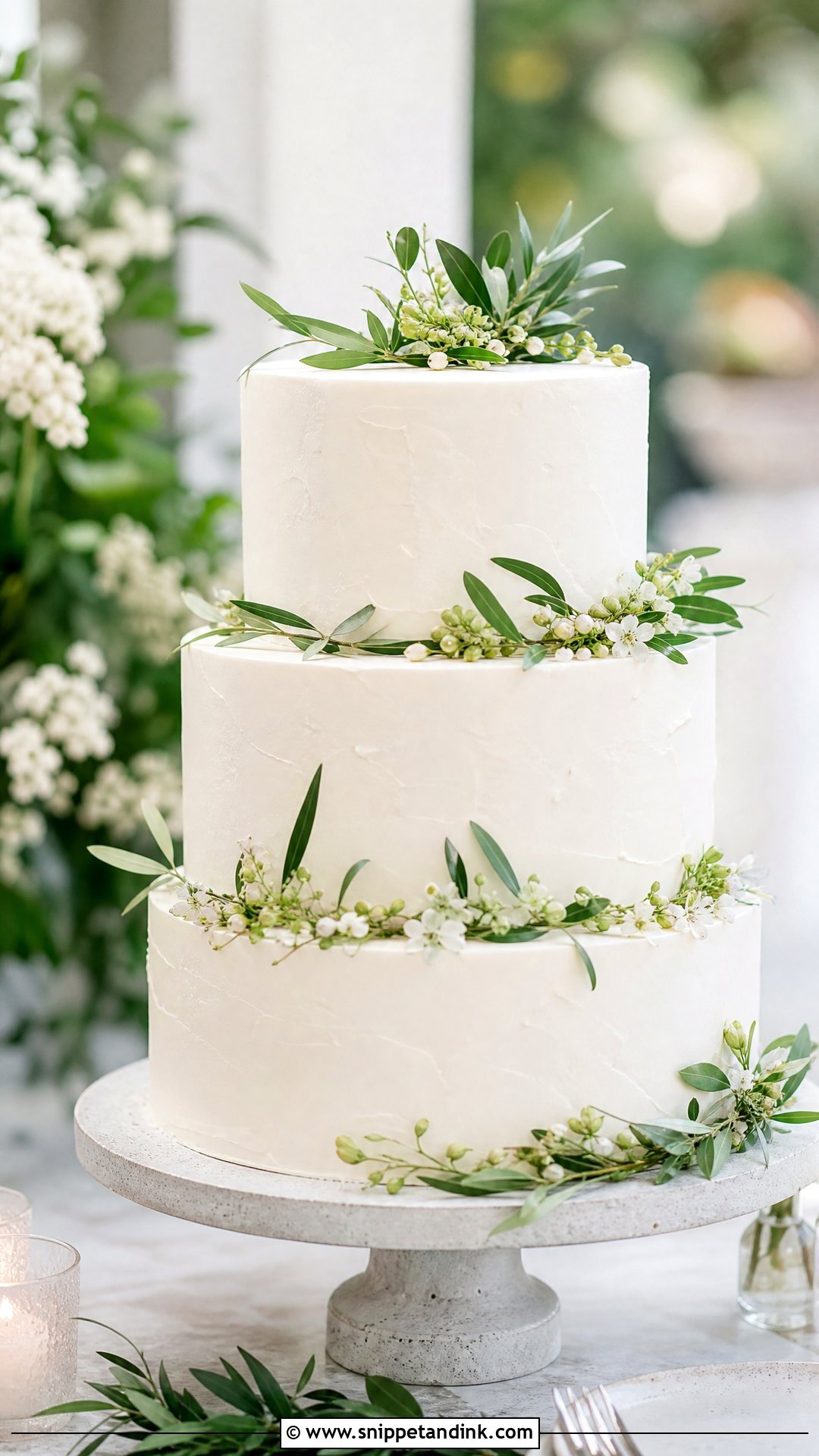
Greenery cakes rely on leaves, herbs and vines rather than flowers. They have the same safety rule as flowers: eucalyptus, for example, is popular on cakes but shouldn’t touch the frosting, so I wrap the stems and keep leaves on a barrier, or use sugar greenery instead. Olive branches and small edible herbs like rosemary or thyme add movement. A white or ivory buttercream base keeps the cake bright. It suits outdoor weddings, gardens, minimalist receptions and neutral palettes, with lemon, vanilla, pistachio, almond or honey sponges.


20. Dessert Table Wedding Cake
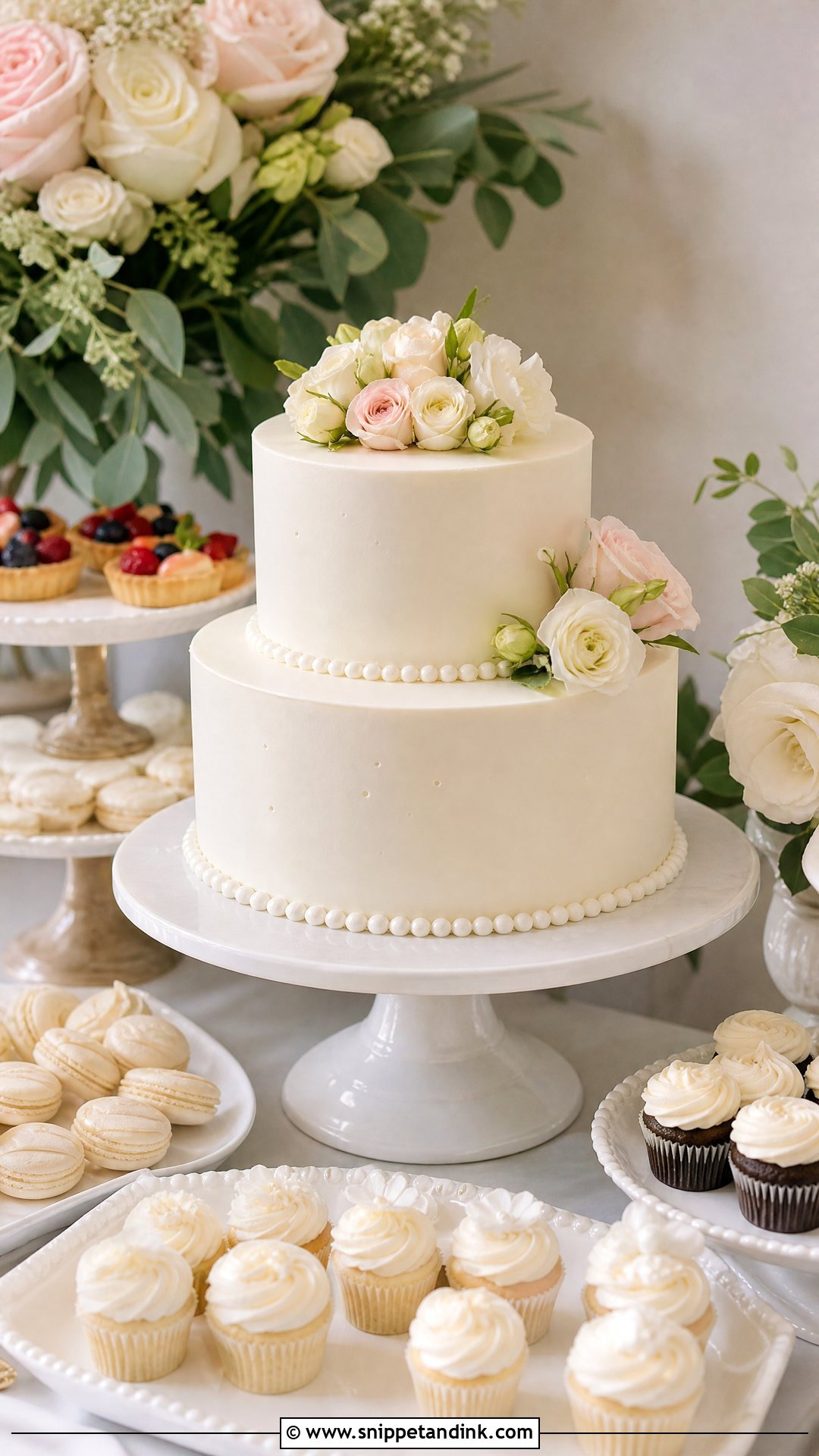
A dessert table wedding cake gives you a cutting cake and plenty of choice for guests. The display cake is usually one or two tiers, and the table adds cupcakes, cookies, macarons, mini cakes and fruit tarts, with sliced sheet cake served from the kitchen to cover the numbers. Kitchen cakes are an easy way to feed a big guest list without paying for a tall decorated cake. Match the cake finish to the desserts so it all looks planned. A white buttercream cake with flowers, pearls or texture works as the centrepiece; add height, labels and simple florals.
Heat, Humidity and the Drive to Your Venue
Most cake disasters happen between my kitchen and your cake table, not in the oven. A few things decide whether a cake arrives the way it left.
Room temperature matters more than the recipe
Buttercream softens as a room warms up, and in strong heat it starts to slide. If your reception is outdoors in summer or in a marquee, ask for a firmer frosting, a ganache coat under the buttercream, or fondant. Place the table in the shade, away from windows, heaters and the dance floor.
Fondant sweats when it moves
A chilled fondant cake carried into a warm, humid room collects condensation, which can make colours run and gold leaf slip. I bring it to room temperature gradually and leave it alone until the droplets dry. Please don’t wipe it.
Tall cakes travel in pieces
Anything over three tiers I usually stack at the venue, with dowels and boards in each tier. That needs a level table and about half an hour of setup time, so ask your planner to build it into the schedule.
Weighing How a Cake Looks Against How It Travels
Trends come and go, but a cake has to suit the room and the day it’s in. A tall white tiered cake belongs in a formal ballroom; a pressed flower cake fits a garden; a small two-tier cake is right for an intimate dinner. When you narrow your list, think about flavour, frosting, decoration, venue, weather and guest count together, because they all affect each other. Bring your favourites to a tasting, and ask your baker honestly what will be stable and delicious on your date. I’d always rather adjust a design at the consultation than watch it struggle on the day.
You'll Like These Ideas:







Leave a Reply