
Aari is the embroidery I reach for when a bride wants her outfit to look made for her. The work is done with a fine hooked needle on fabric stretched tight over a wooden frame, and it produces a neat chain stitch that can follow almost any curve. That is why it carries peacocks, paisleys, temple borders and even tiny bride-and-groom figures so well. Add zari, beads or stones and the same stitch can look rich or restrained. It suits silk saree blouses, lehenga cholis, dupattas, sleeves and accessories. The right design depends on your outfit colour, jewelry, ceremony and how much weight you are happy to wear for hours. Below are 25 ideas, from heavy gold work to pastel pearls, with notes on what each one needs from the fabric and the fit.
Measurements Come Before the Needle on Aari Blouses
With most custom bridal pieces, embroidery happens on marked fabric panels before the garment is stitched together. That order matters. The design has to land in the right place on your shoulders, back and sleeves, so your measurements and blouse cut have to be fixed first.
- Finalise the blouse style, neckline and sleeve length before the embroiderer marks the design.
- Bring your jewelry, or photos of it, so the neckline work is not hidden under a heavy necklace.
- Approve a drawn or printed layout of the motifs on the actual fabric.
- Allow time. A detailed blouse can take one to several weeks of handwork, and a full bridal lehenga far longer. Timelines vary widely by artisan and season, so ask early.
- Book a trial fitting after stitching, while there is still time to adjust the side seams.
I tell brides to avoid big weight changes once embroidery starts. Side seams can be let out a little, but the motifs at the shoulders and back cannot move.
1. Red Bridal Aari Work Lehenga
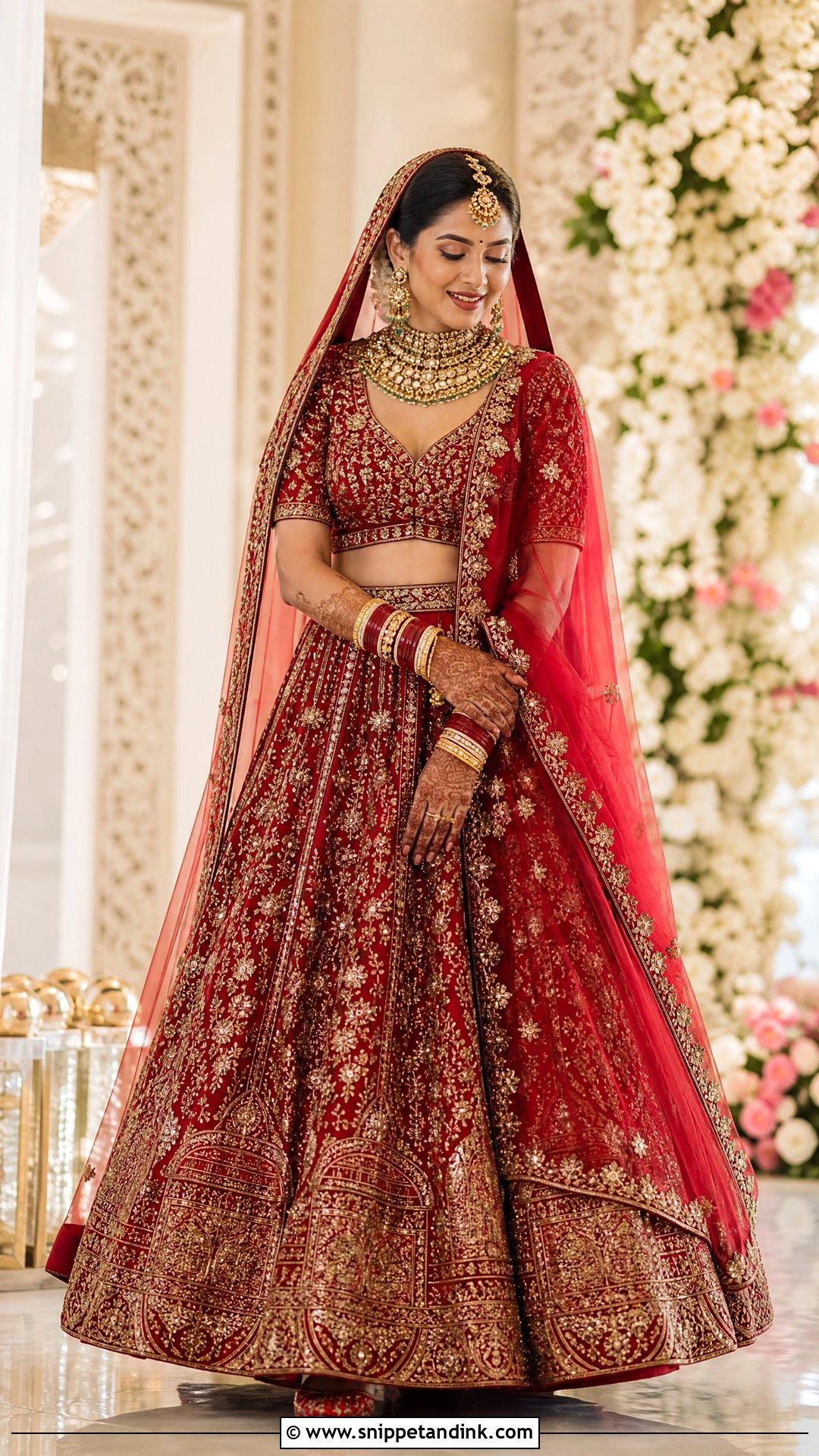
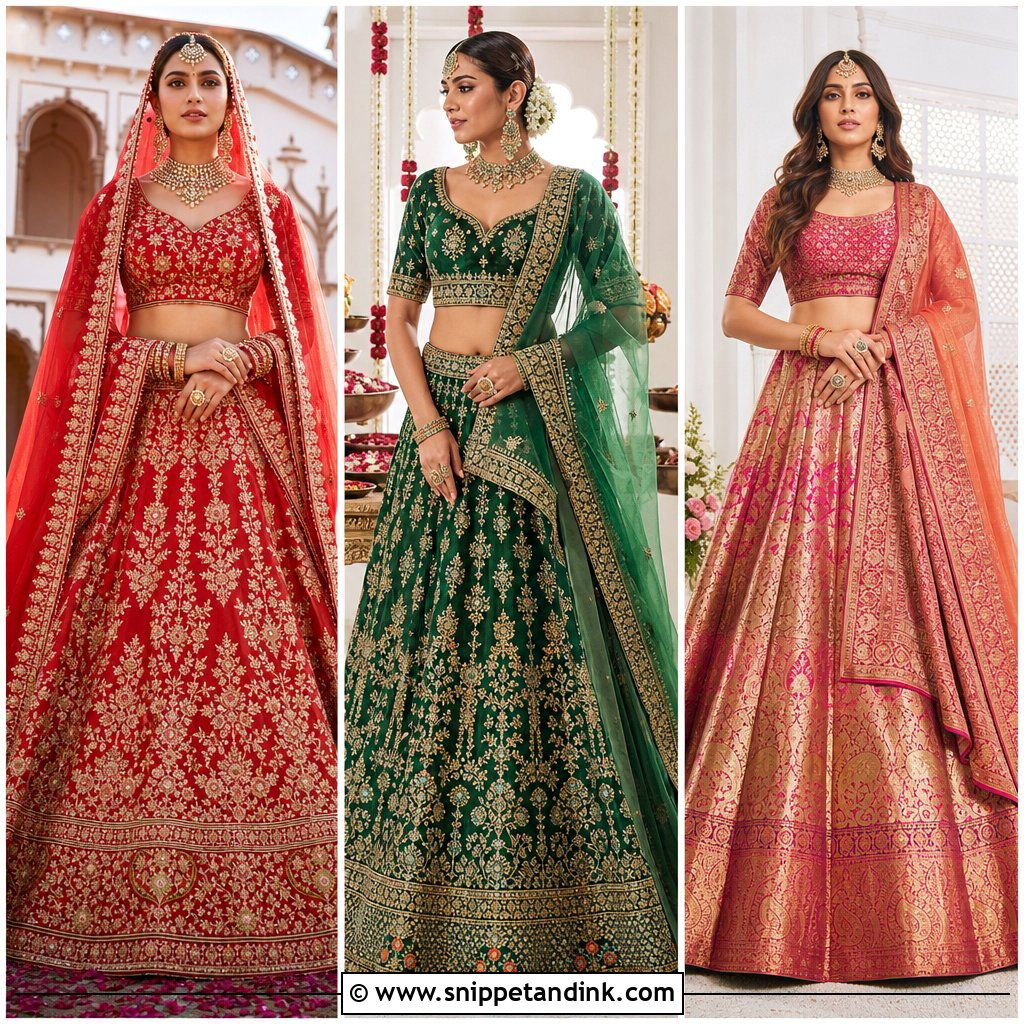
Red with gold zari is the classic main-ceremony lehenga for good reason: gold thread glows against deep red in both daylight and indoor light. Floral vines, paisleys and small bead accents can cover the skirt, choli and dupatta border without crowding if the motifs are spaced. A matching blouse with elbow sleeves and a detailed back balances the skirt. I always ask how heavy the finished skirt will be, because dense zari on every panel can make a lehenga hard to walk in. Kundan layers, jhumkas and a matha patti complete it.
2. Kanjivaram Saree With Aari Work Blouse
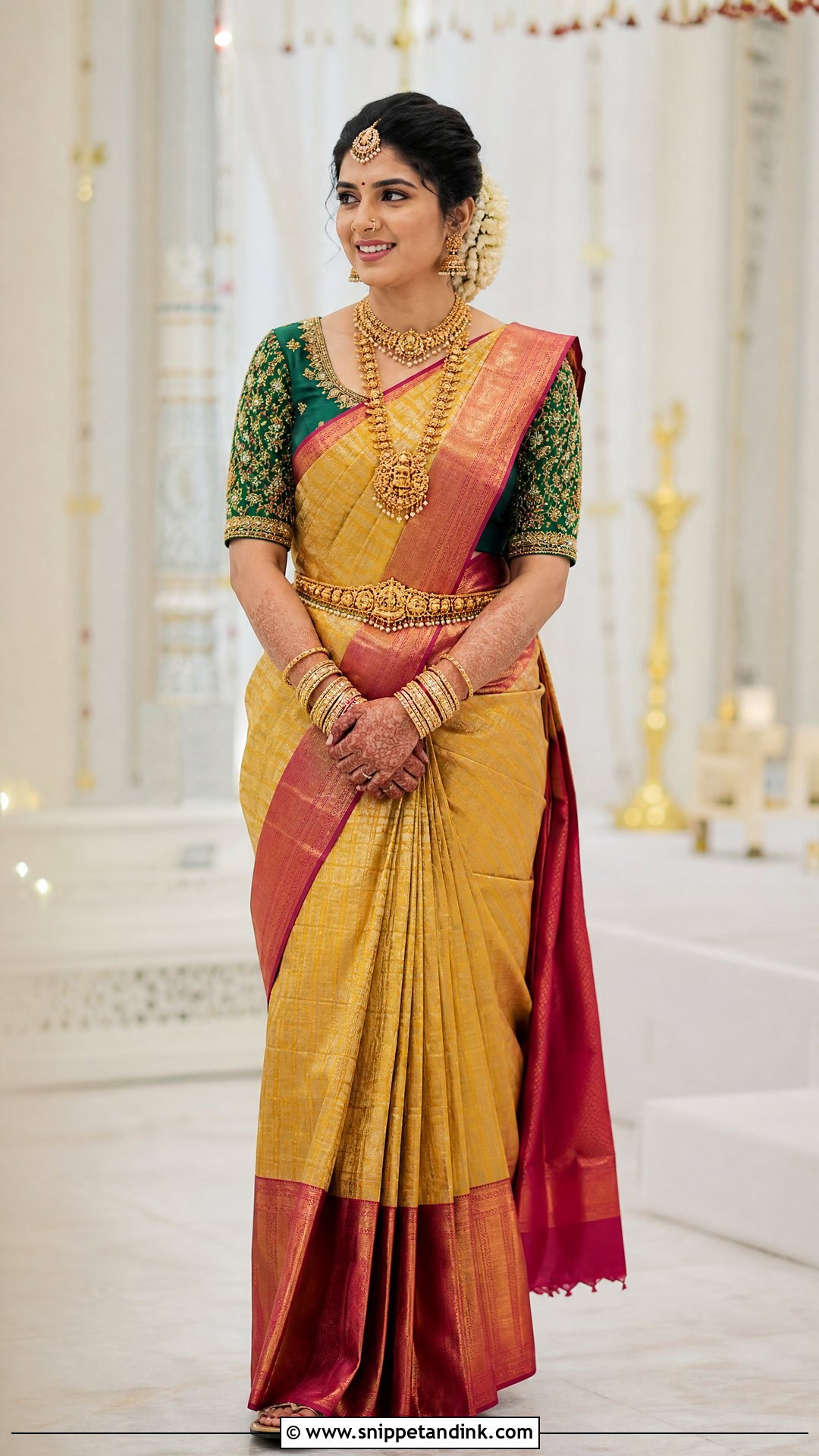
A Kanjivaram already has a heavy silk body and a woven zari border, so the blouse has to support it rather than compete. A Aari work blouse in a contrast shade like bottle green, royal blue or magenta works well. Keep the embroidery on the sleeves, back neck and border. Peacock, mango, temple and lotus motifs sit naturally with South Indian jewelry. My tip is to take the actual saree to the embroiderer, since gold zari comes in several tones and a mismatch between blouse and border shows clearly in close-ups.
3. Pastel Bridal Aari Work Lehenga
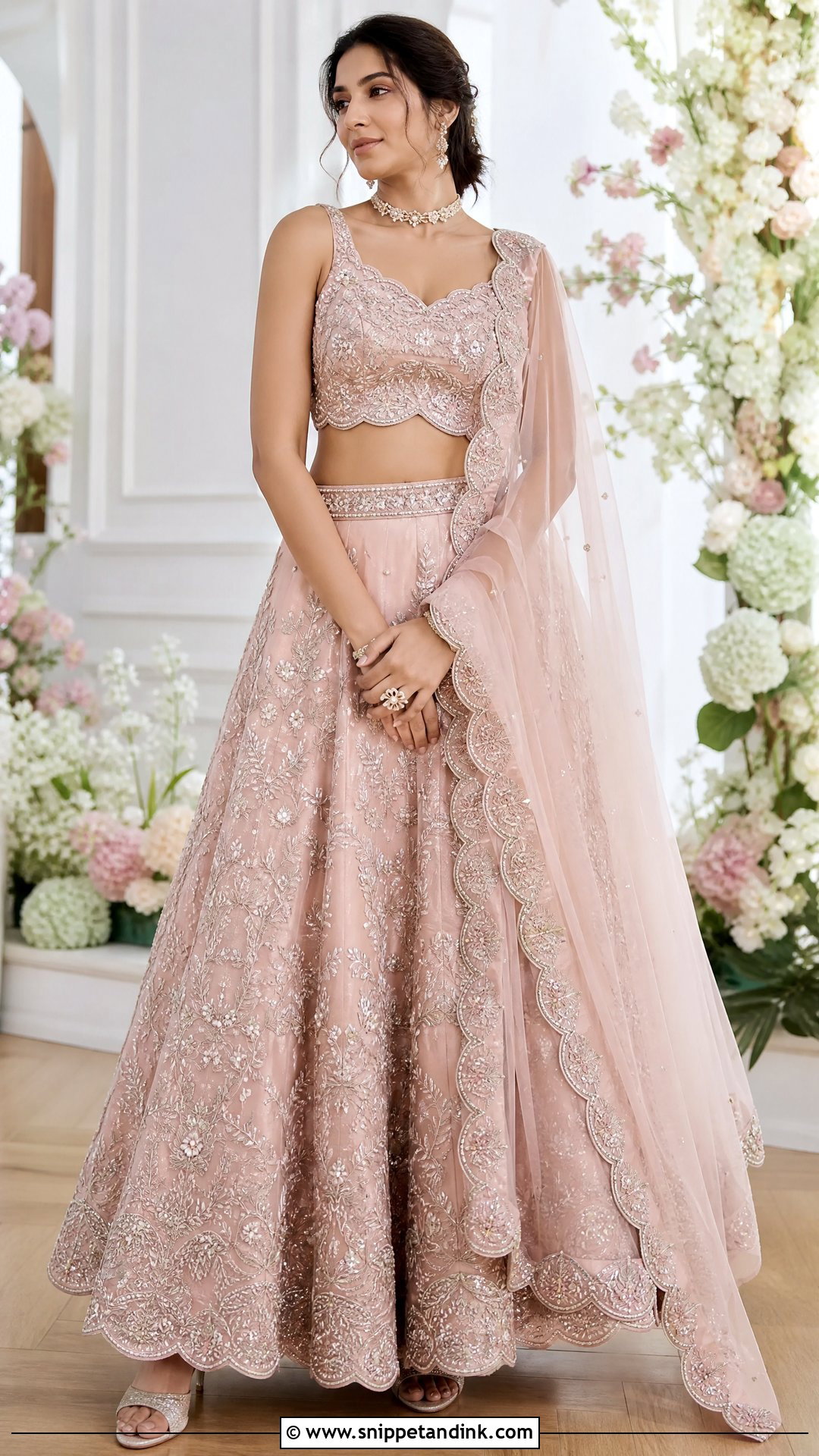
Pastels need detailed embroidery to read as bridal, and Aari does that well. Blush, mint, ivory, peach and powder blue lehengas look fresh with silver zari, champagne thread, pearls and sequins. A scalloped Aari border on the dupatta softens the outfit. Pale fabrics show marks easily, though, so I ask the artisan to cover the frame and keep the work clean during stitching. Pearl or diamond-style jewelry suits it, especially for a daytime wedding or reception.
4. Peacock Aari Work Bridal Blouse
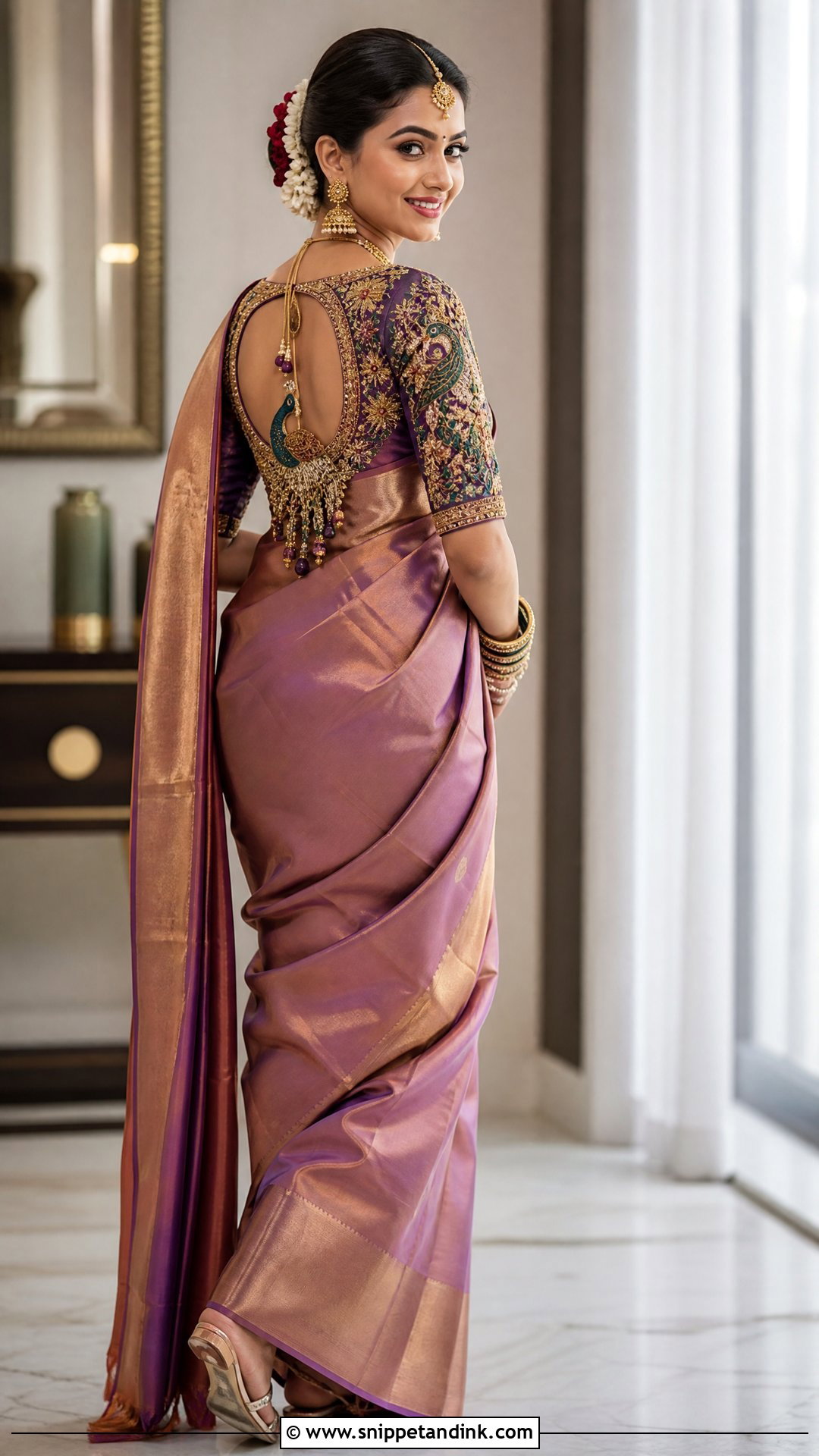
Peacocks suit the blouse back and sleeves because their curved necks and feathers flow along the shape of the body. Silk, velvet or raw silk lets the embroidery sit flat and crisp. Gold zari, green thread, blue stones and pearls bring out the feather detail. The motif needs room, so a heavy back design pairs best with a clean front neckline. Temple jewelry and a sleek bun keep the back visible.
5. Floral Aari Work Bridal Saree
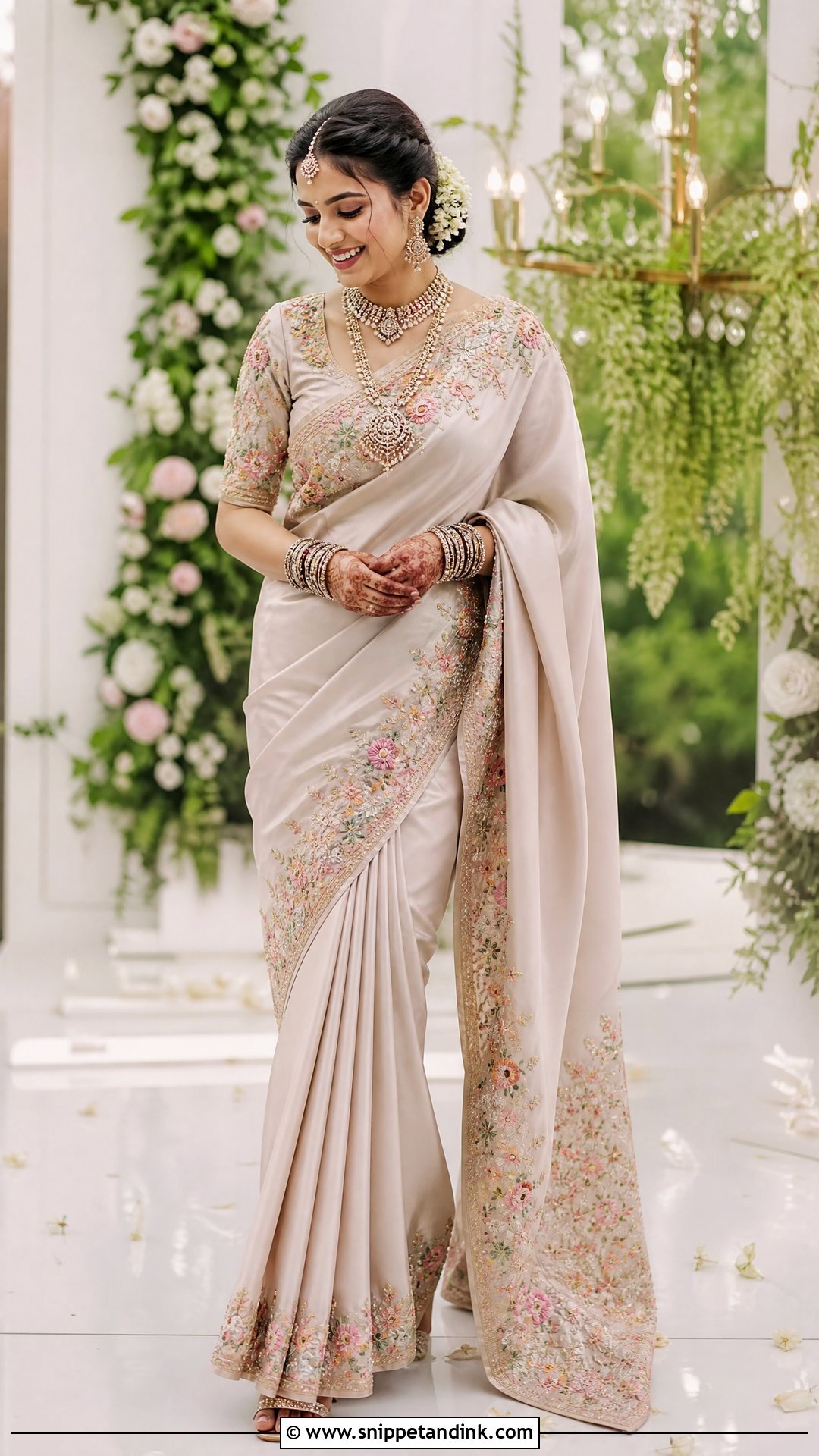
Floral Aari on a saree border and pallu feels feminine but still rich. Silk, georgette, organza or net all take the work well, though lighter fabrics need a backing during stitching so they do not pucker. Repeat the flower pattern on the blouse sleeves and back to connect the pieces. Red and gold reads classic; ivory or peach thread with pearls reads softer. Fresh flowers in the hair suit the floral theme.
6. Gold Aari Work Bridal Blouse
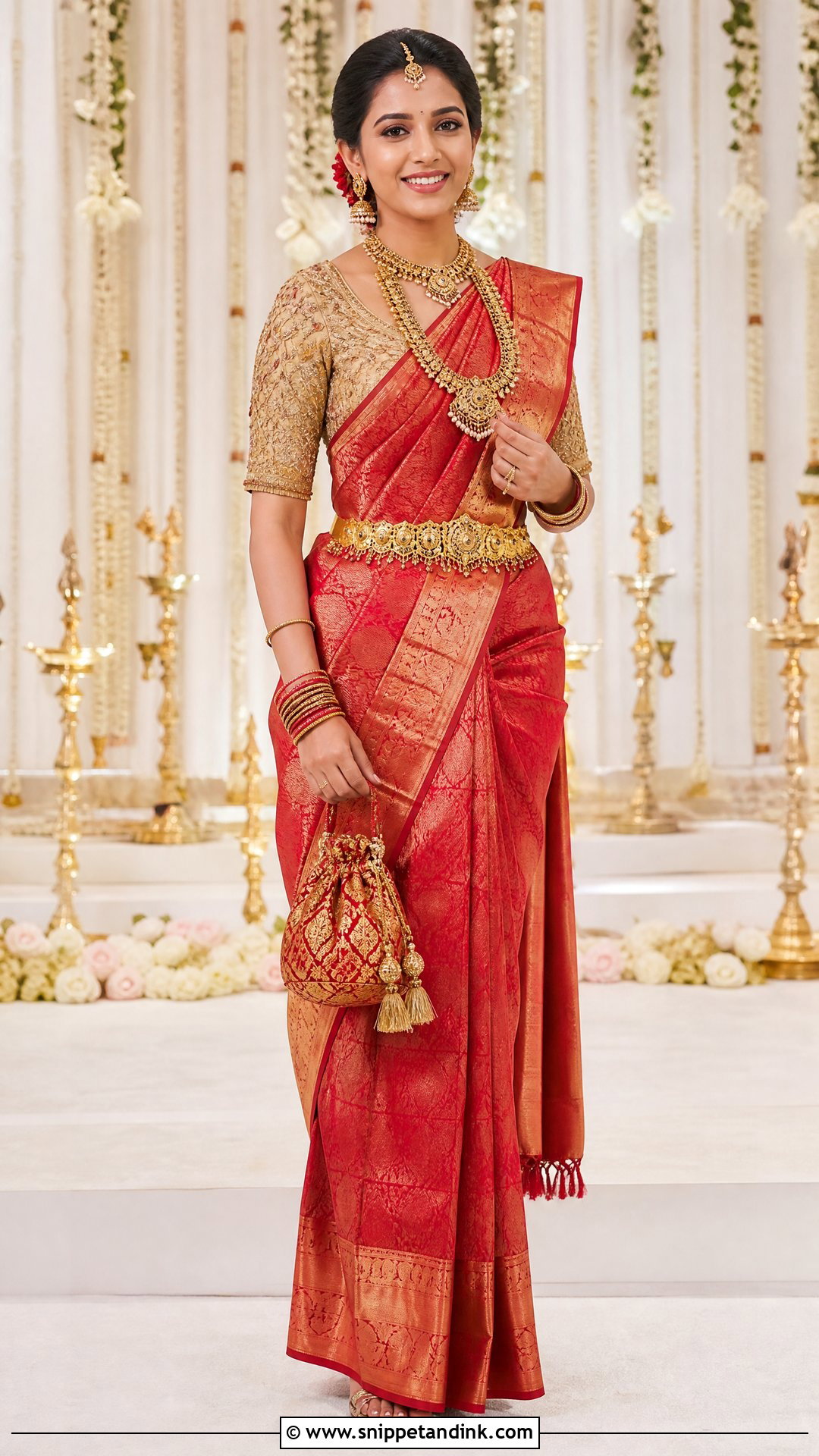
A gold blouse in silk, tissue, brocade or velvet can turn a plain saree into wedding wear. Dense work on the sleeves, neckline and back with zari, beads and stones gives it weight. It pairs with red, green, pink, cream, orange or purple sarees. I like suggesting it to brides with several sarees for different functions, because one well-made gold blouse can be worn with many of them. Keep the drape clean and structured so the blouse stays the focus.
7. Velvet Bridal Aari Work Lehenga
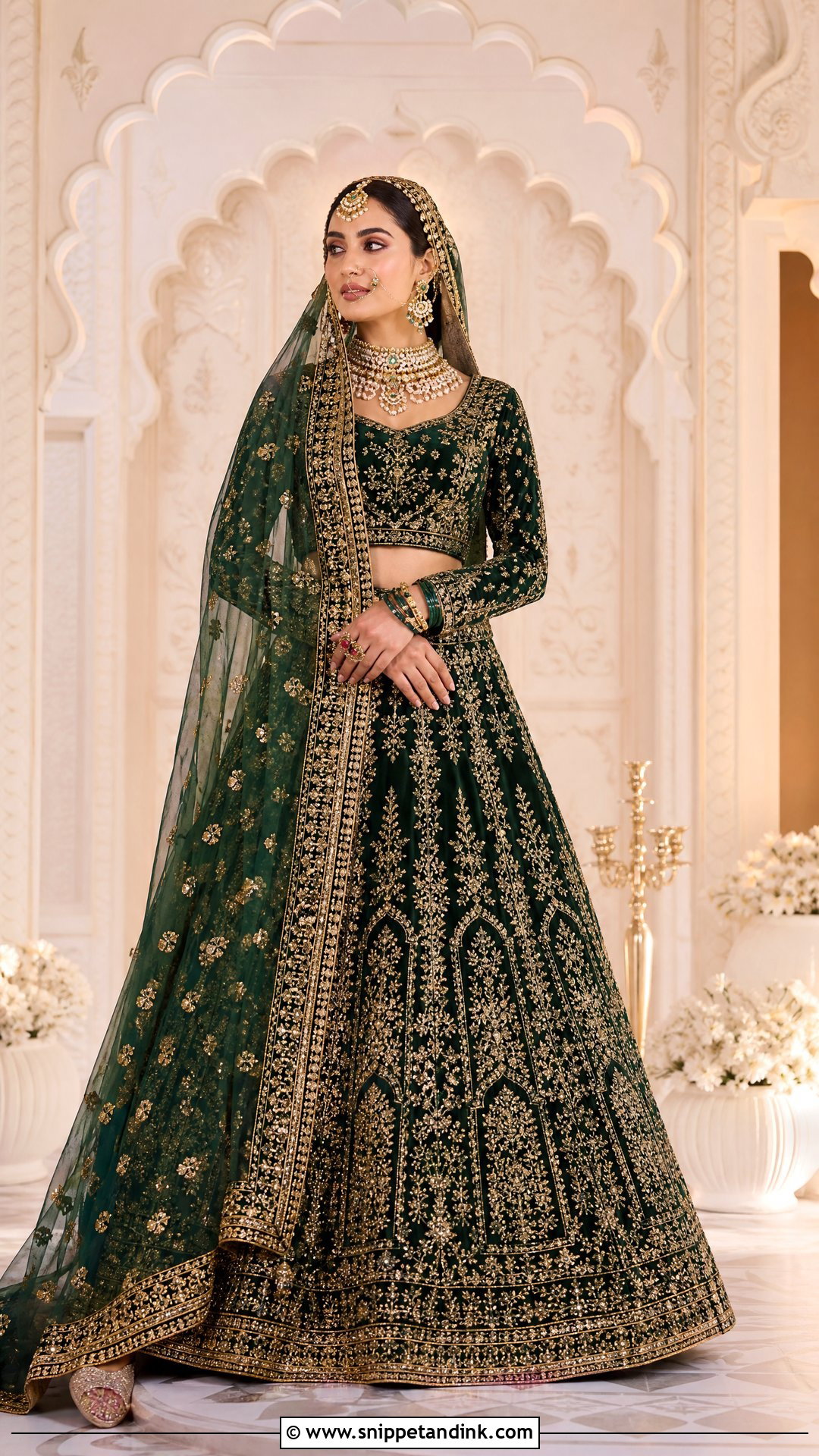
Velvet gives Aari a deep, royal surface. A velvet bridal Aari work lehenga in maroon, emerald, navy, burgundy or deep purple looks rich, and antique zari shows clearly against the pile. Larger motifs on the skirt and finer work on the choli keep it balanced. Velvet is warm and heavy, so I’d steer away from it for a summer daytime wedding outdoors. A sheer dupatta with a heavy border adds movement without adding much weight.
8. Bridal Aari Work Blouse With Name
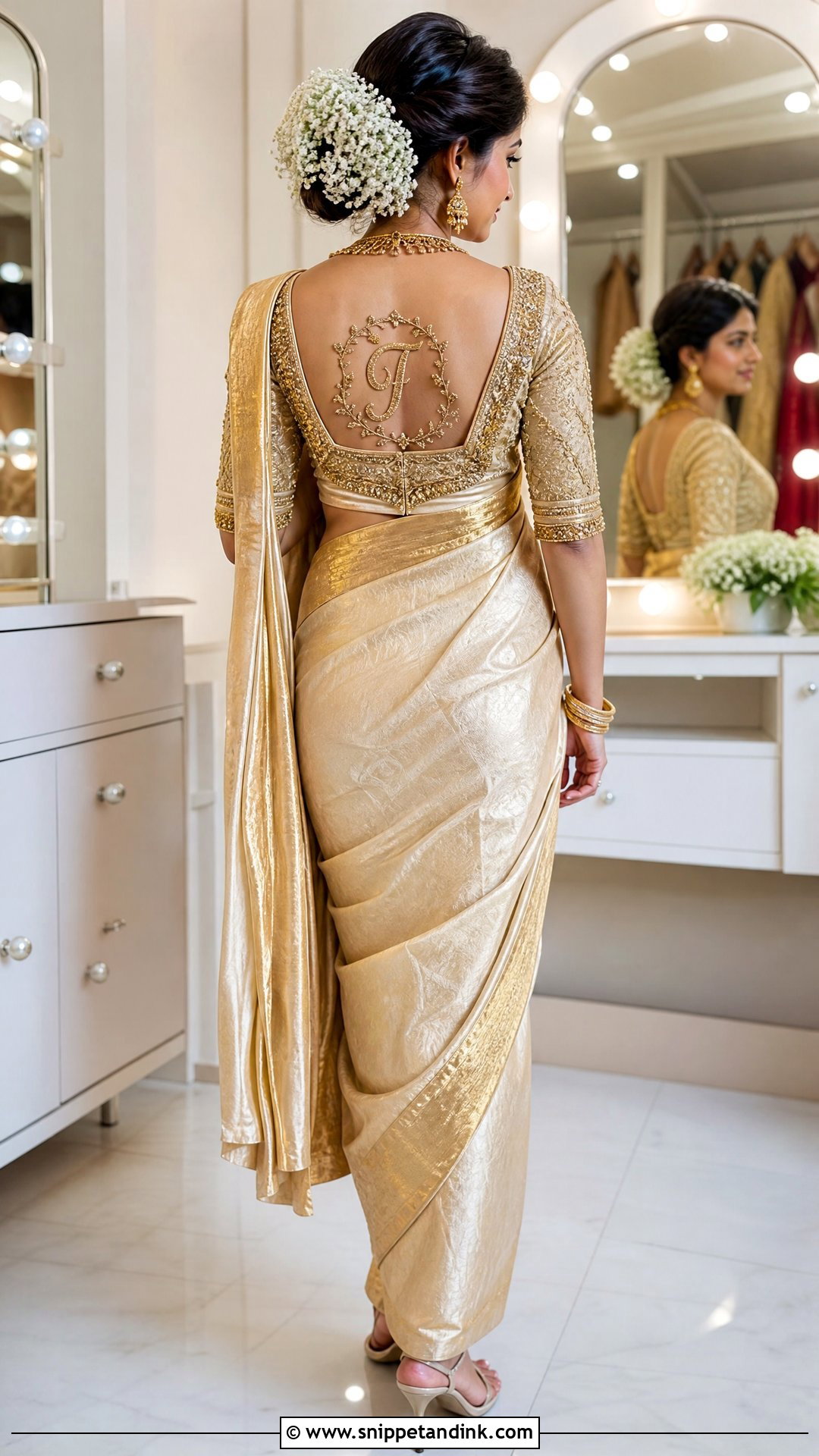
Embroidering the couple’s names is one of the most personal Aari details. The names can sit on a sleeve, the blouse back, the waistline or inside a heart, lotus or paisley. Keep the letters small and legible, surrounded by vines or bead borders. Double-check the spelling with the embroiderer in writing before work starts, because stitched letters cannot be unpicked cleanly from silk. Choose a saree or lehenga with enough breathing room around the blouse so the lettering is visible.
9. Temple Aari Work Bridal Saree
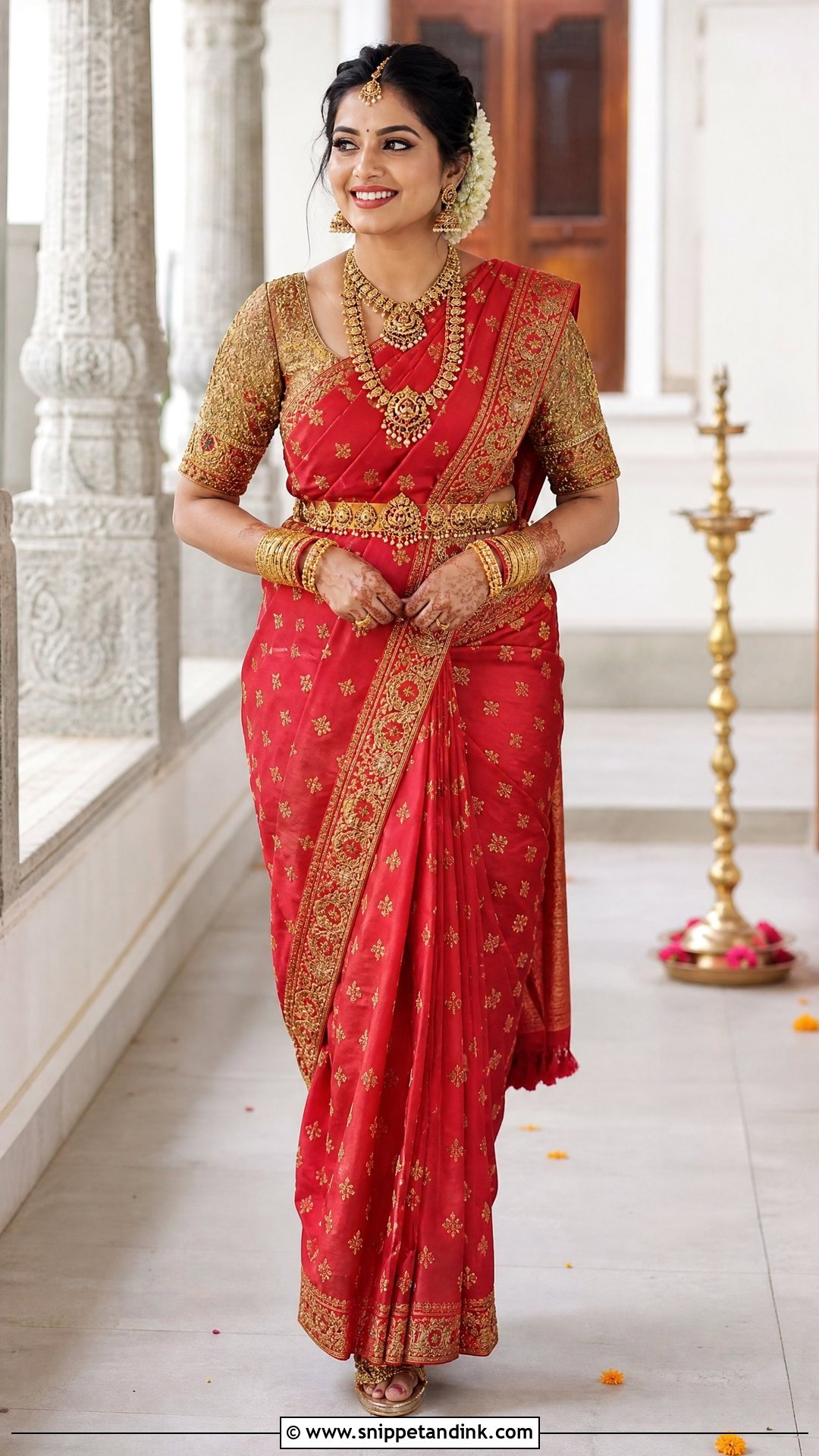
Temple Aari work draws on heritage motifs: temple borders, lotus, mango and tiny bells. They suit silk sarees in red, mustard, green, maroon or royal purple with antique gold thread. A blouse with a high back, elbow sleeves and a heavy sleeve border carries the theme. Antique gold zari has a muted shine that sits well beside temple jewelry, whereas bright gold can look harsh next to it. Bangles, a waist belt and fresh flowers complete the look for a traditional South Indian ceremony.
10. Mirror Aari Work Bridal Lehenga
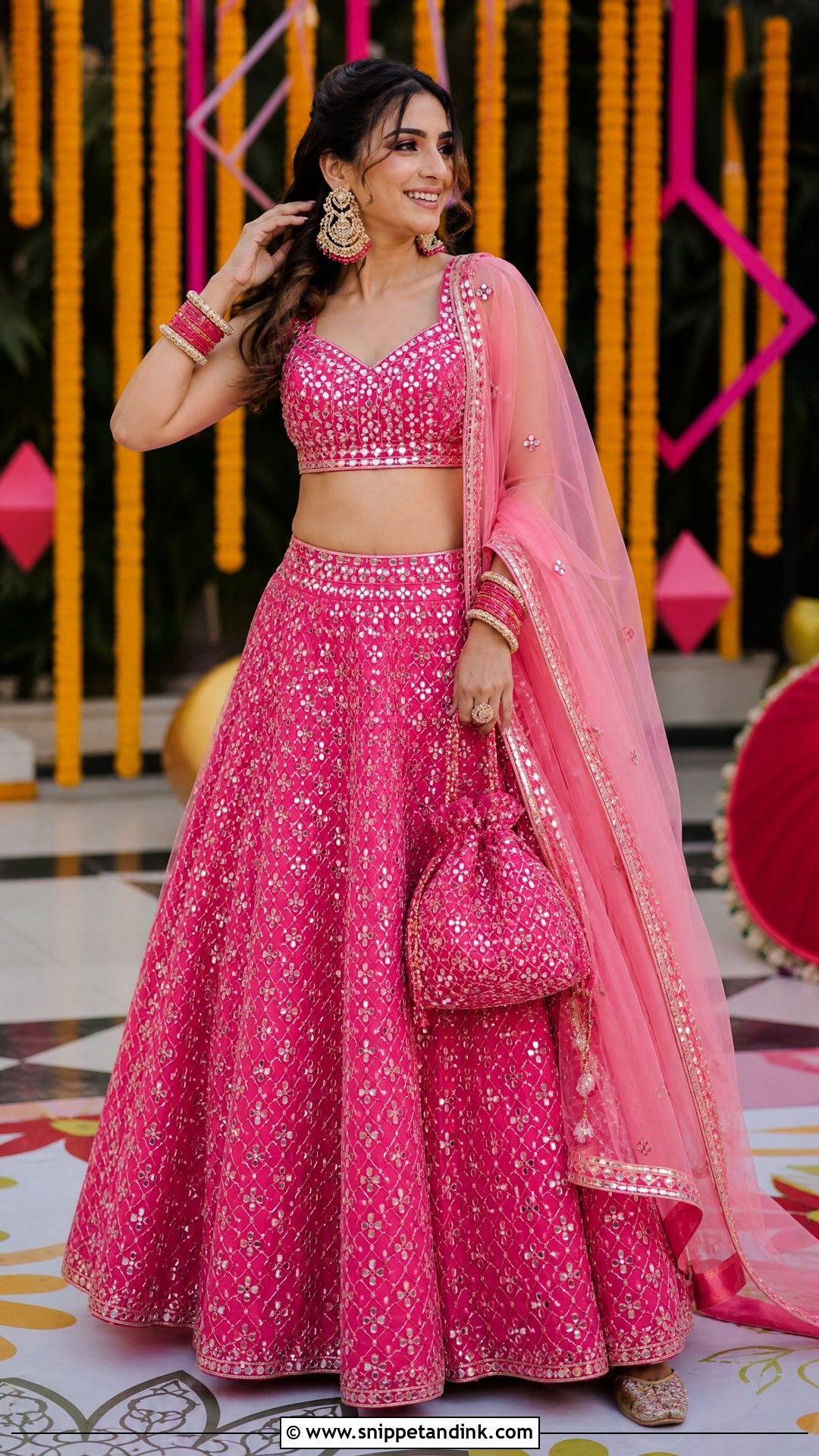
Mirror work brings sparkle and movement. Small mirrors are held in place with a ring of thread, beads and zari, then arranged in floral, geometric or paisley layouts. Rich colours like red, rani pink, emerald and mustard suit it. Mirrors add real weight and can scratch delicate fabrics nearby, so I keep them to the blouse and border and use lighter scattered motifs on the skirt. It suits mehendi, sangeet or a colorful wedding celebration.
11. Full Sleeve Aari Work Bridal Blouse
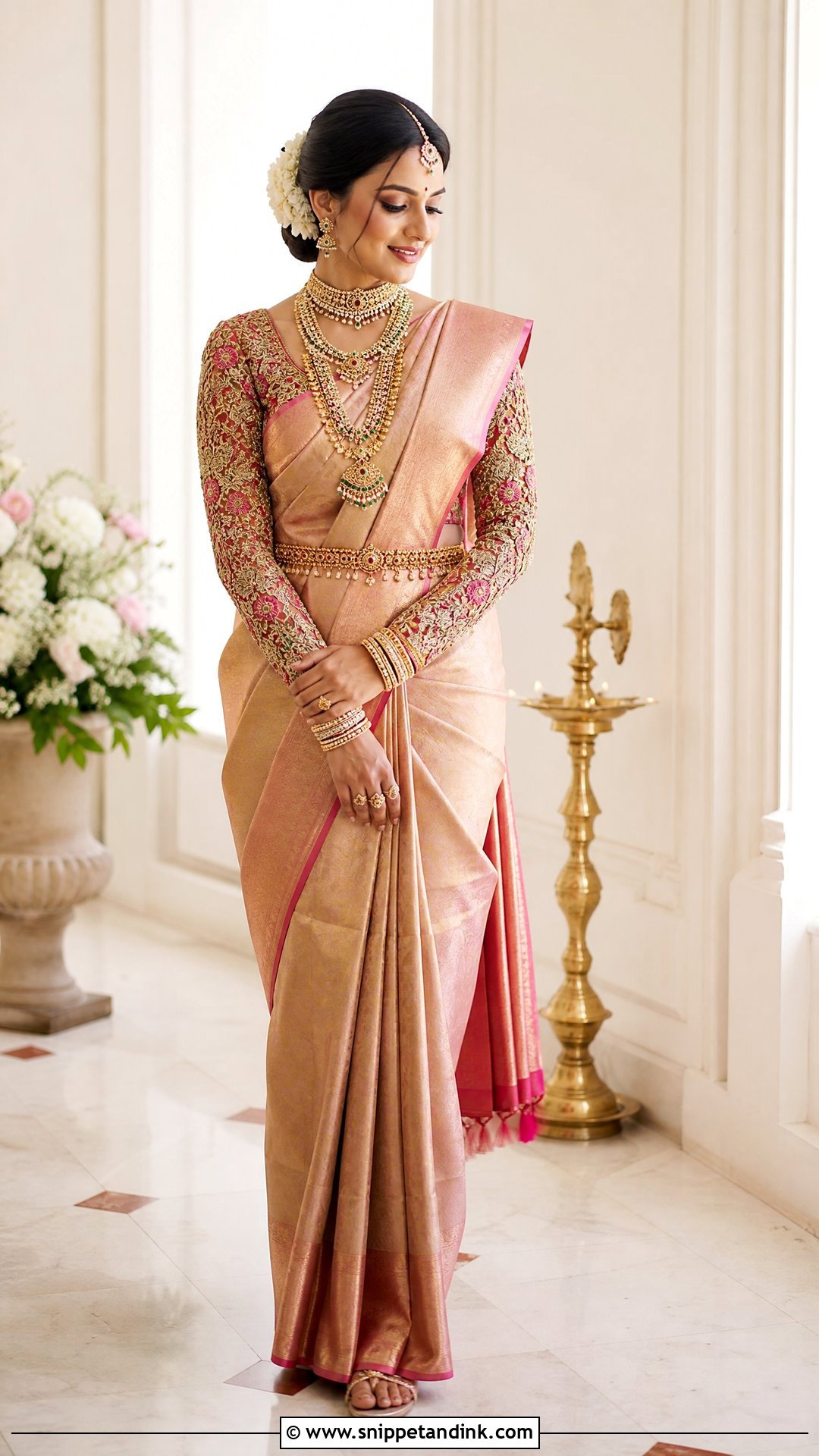
Full sleeves give the embroidery a large, visible surface in close-up and side-angle photos. Floral vines, peacock feathers, paisleys or geometric borders all work. Sheer net sleeves feel lighter; silk feels traditional. Embroidery stiffens the fabric, so the sleeve must be cut with a little ease or you will struggle to lift your arms during rituals. Stack bangles carefully so they do not cover the cuff work.
12. Bridal Aari Work Dupatta
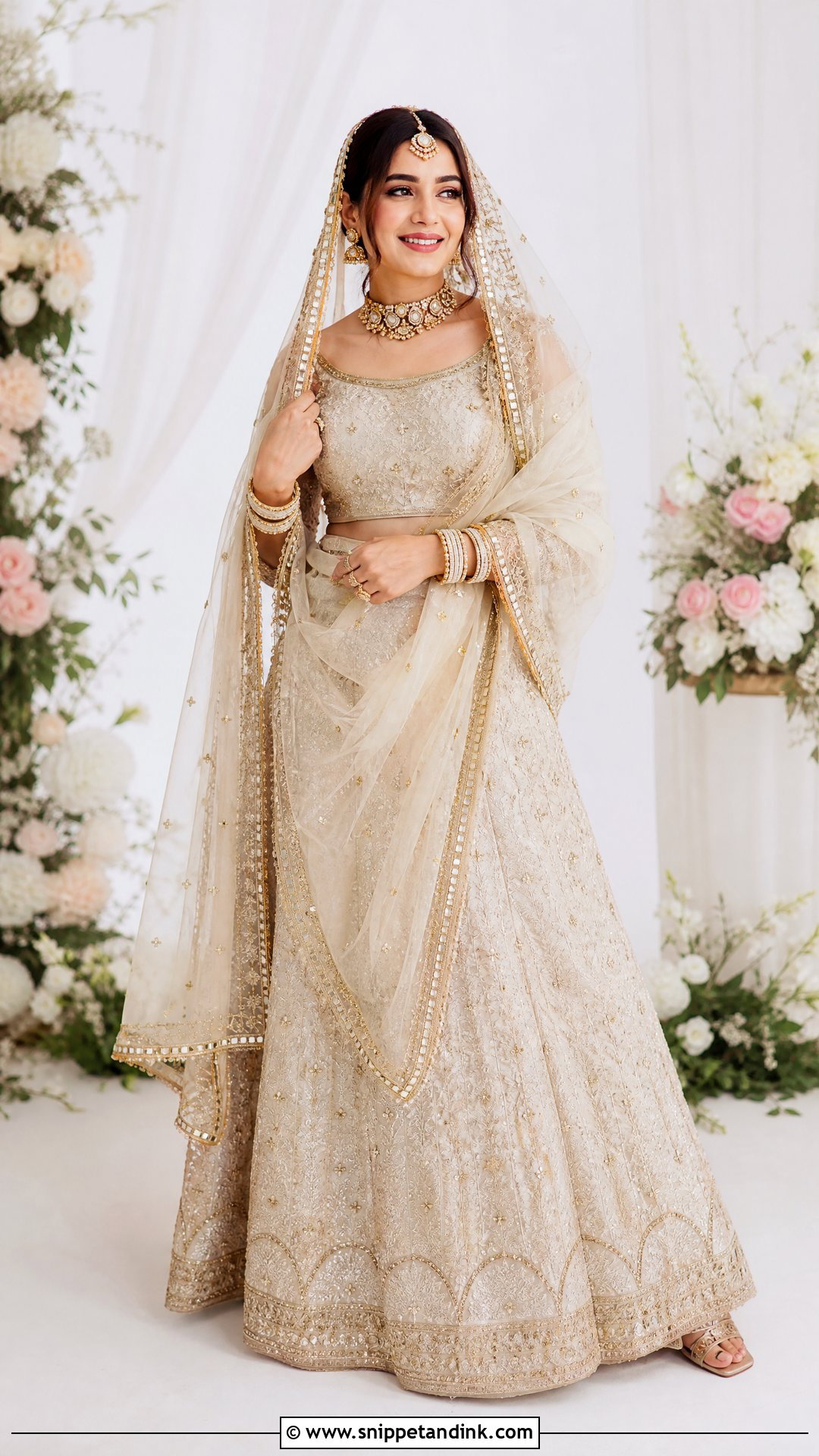
A heavily worked dupatta can carry a simpler lehenga or saree. Net, organza, silk or georgette all take Aari on the border and scattered motifs across the body. Too much zari makes a dupatta stiff and hard to drape over the head, so I keep the centre lighter than the edge. Wear it over the head for the ceremony, then across one shoulder for portraits.
13. Green Bridal Aari Work Blouse
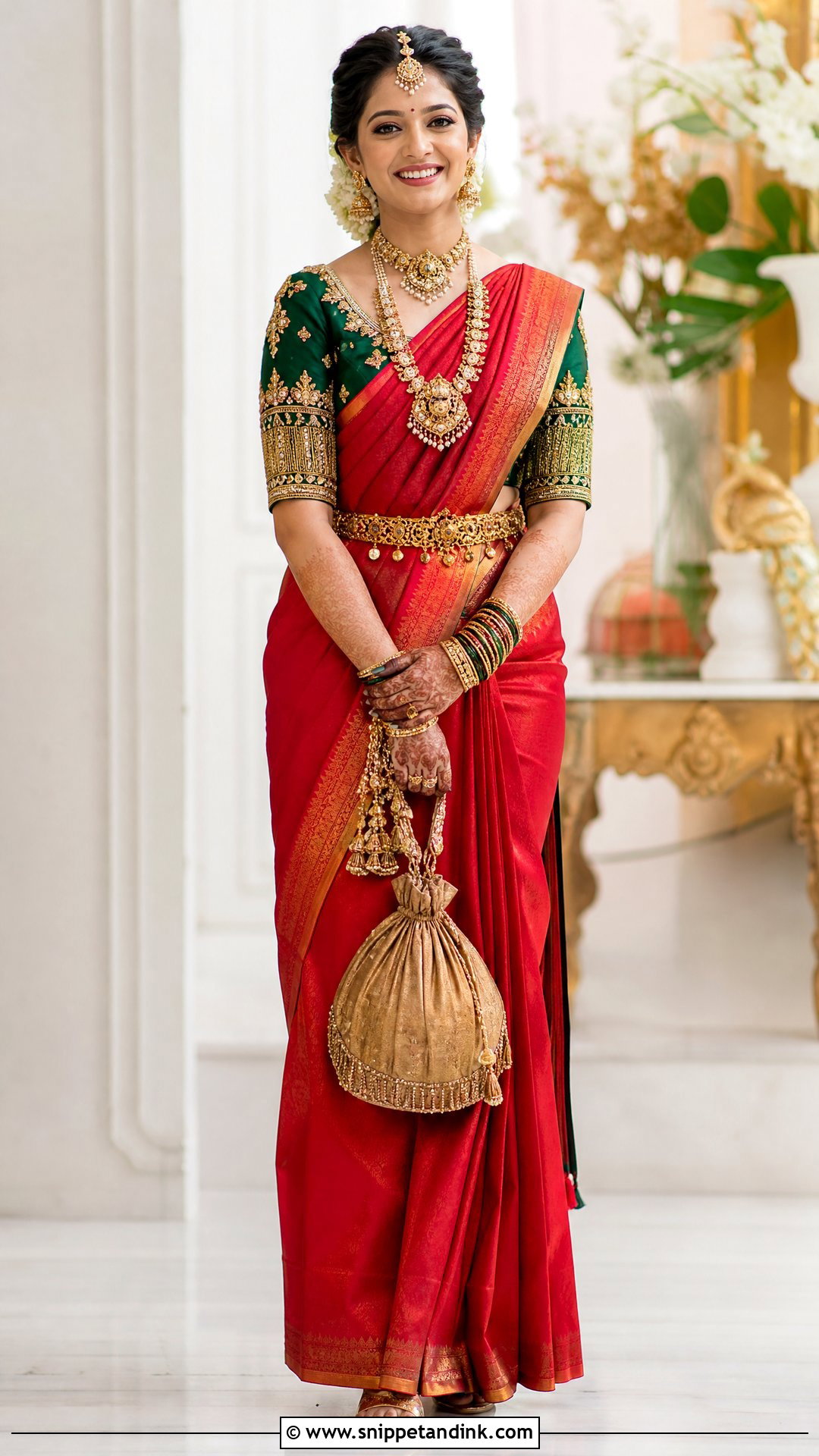
Green blouses match red, gold, pink, yellow, orange and cream sarees. Bottle green, emerald and parrot green each feel festive differently. Gold Aari on the sleeves, back and neckline is the classic finish, and peacock, lotus, leaf and temple motifs suit it. My rule: if the saree is heavy, keep the blouse motifs structured; if the saree is plain, go heavier on the blouse back and sleeves.
14. Pearl Aari Work Bridal Lehenga
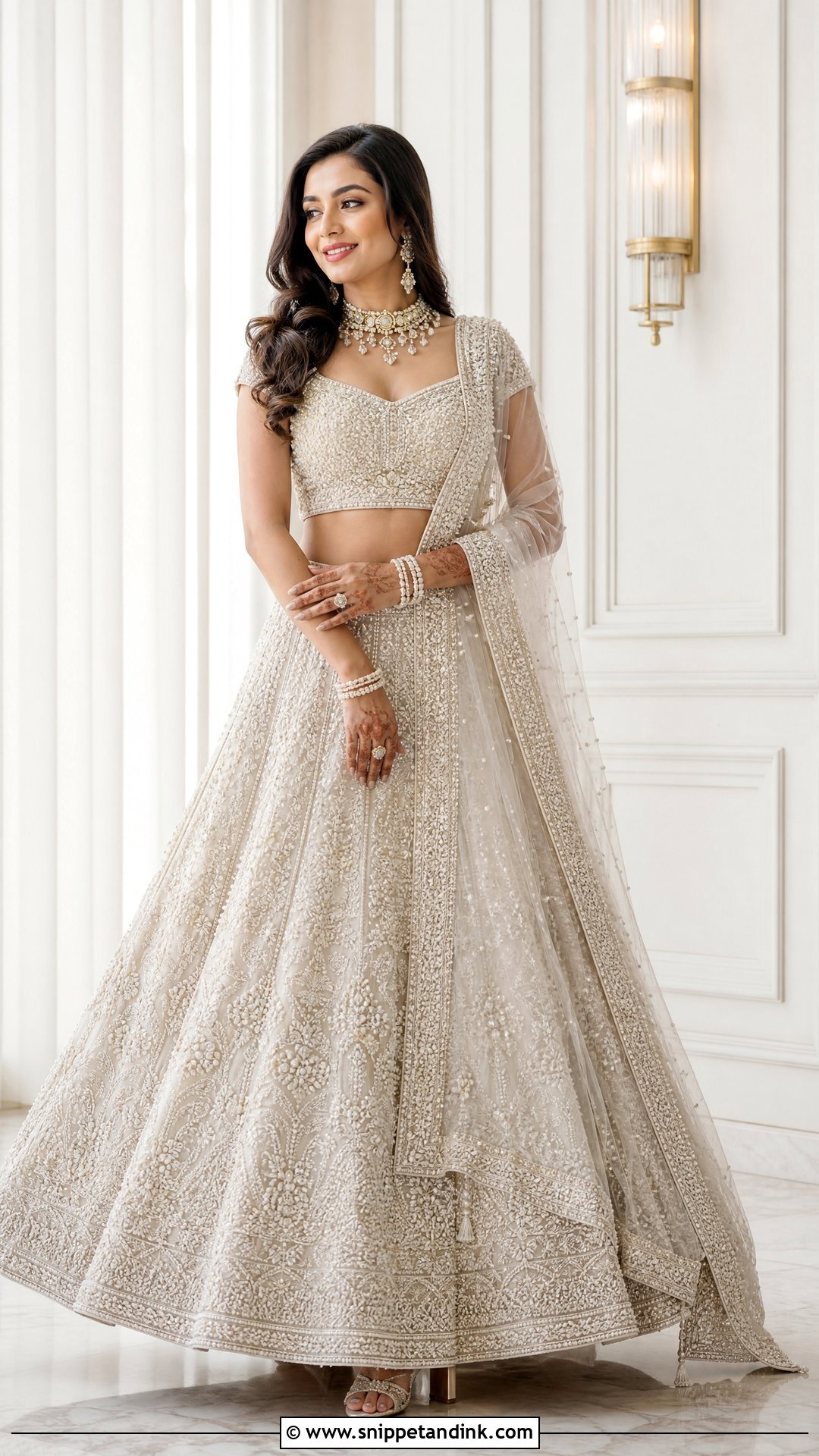
Pearl Aari work looks soft and refined in ivory, champagne, blush or silver. Pearls combine with thread, sequins and fine zari for a smooth finish. Repeat pearl borders around the neckline and sleeve ends, the skirt hem and the dupatta edge. Glass and plastic pearls look similar in photos but behave differently: cheaper coatings can peel with sweat and friction, so I ask about the bead quality before ordering. Pearl jewelry and soft curls suit it.
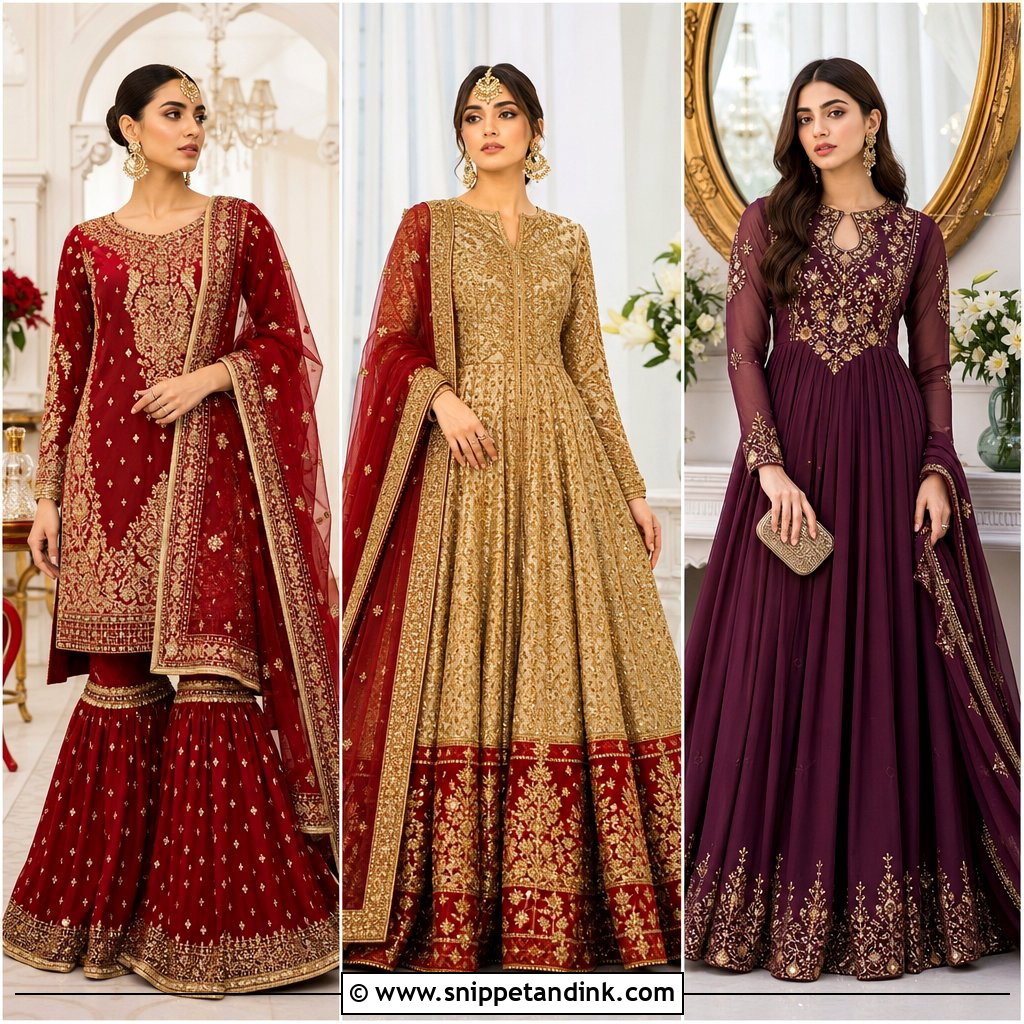

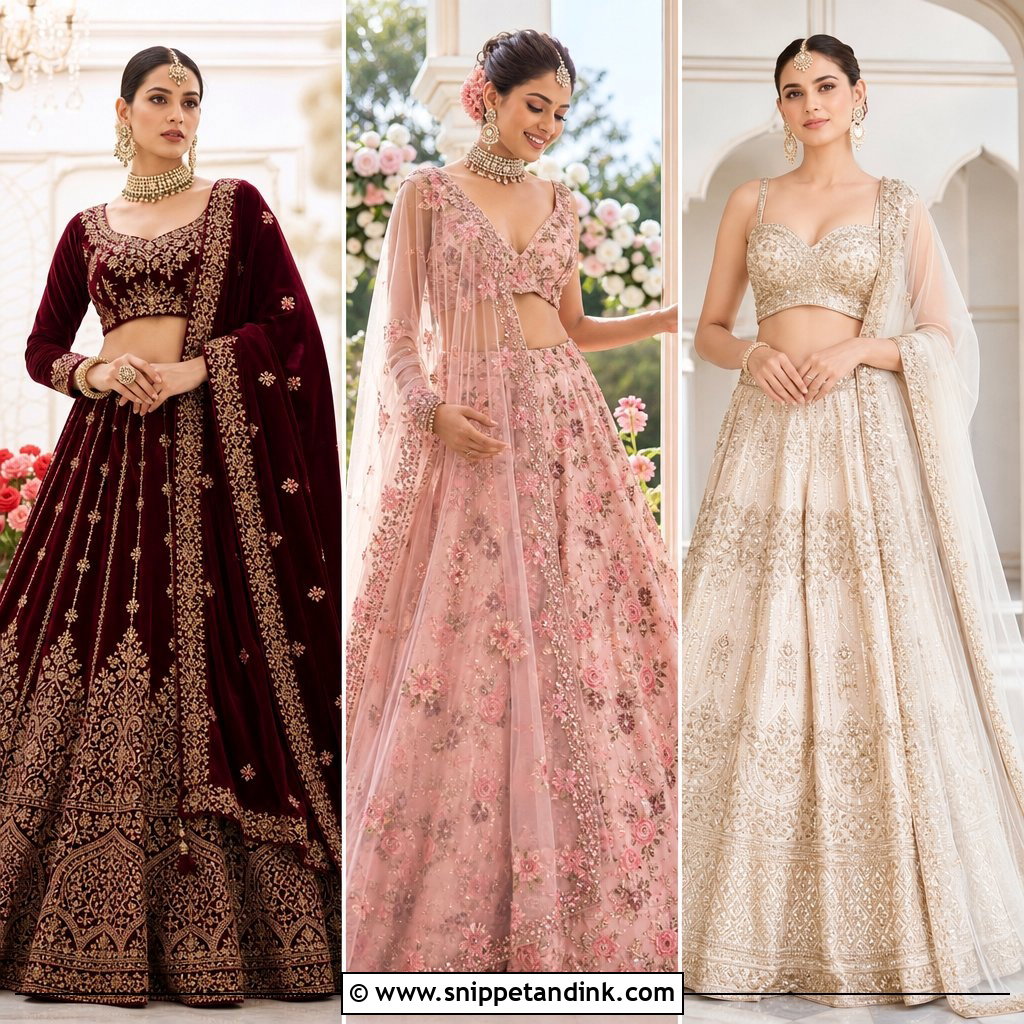
15. Zardosi Aari Work Bridal Blouse
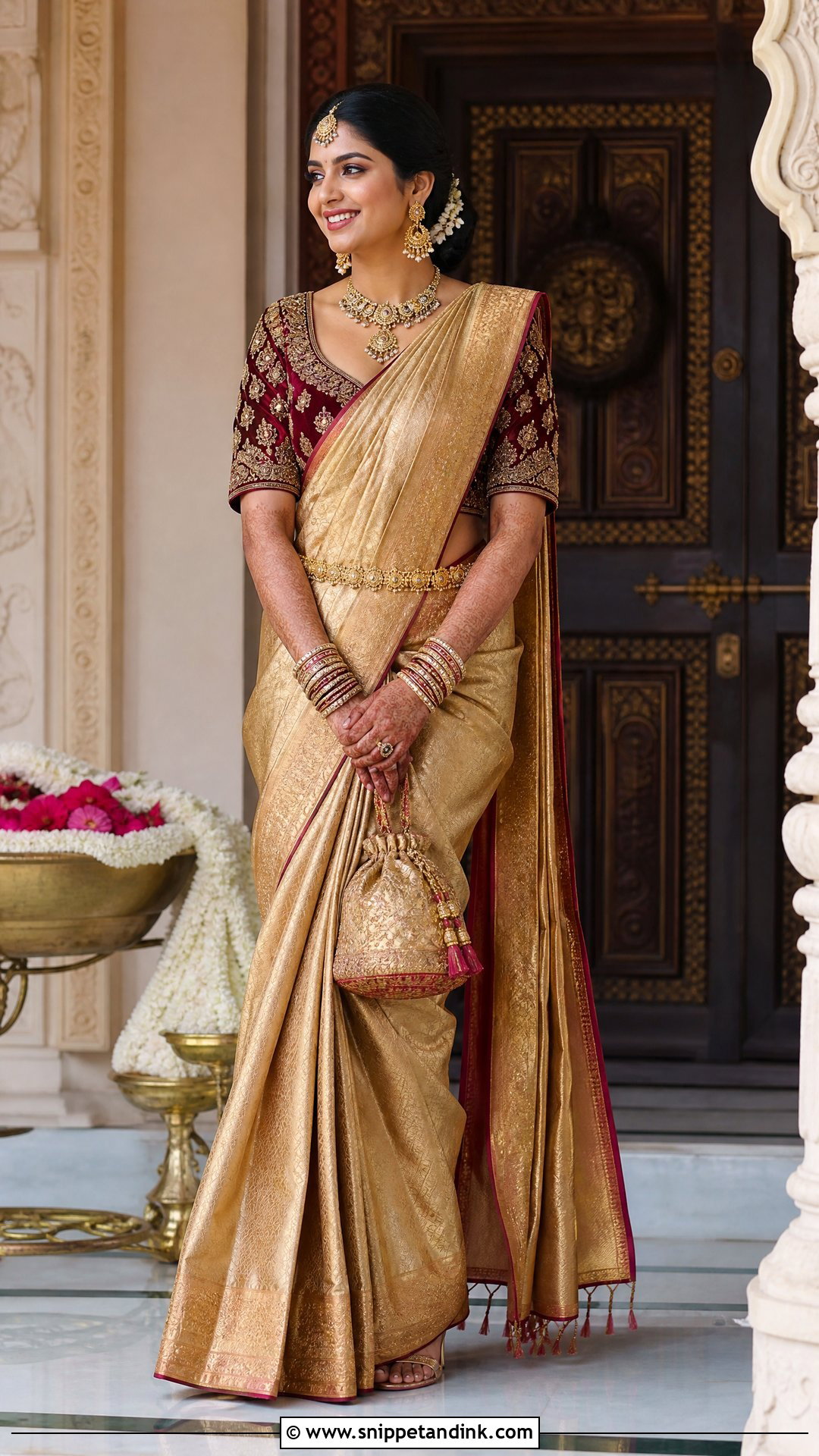
Zardosi adds raised metallic texture, while Aari gives fine structure and outlines. Together they make a rich blouse for silk sarees, lehengas and receptions. Deep maroon, navy, emerald, purple and antique gold suit it. Spacing is what keeps it looking expensive rather than overloaded. Paisleys, vines and royal arches with some plain fabric showing between them read clearer than solid coverage.
16. Bridal Aari Work Blouse Back Design
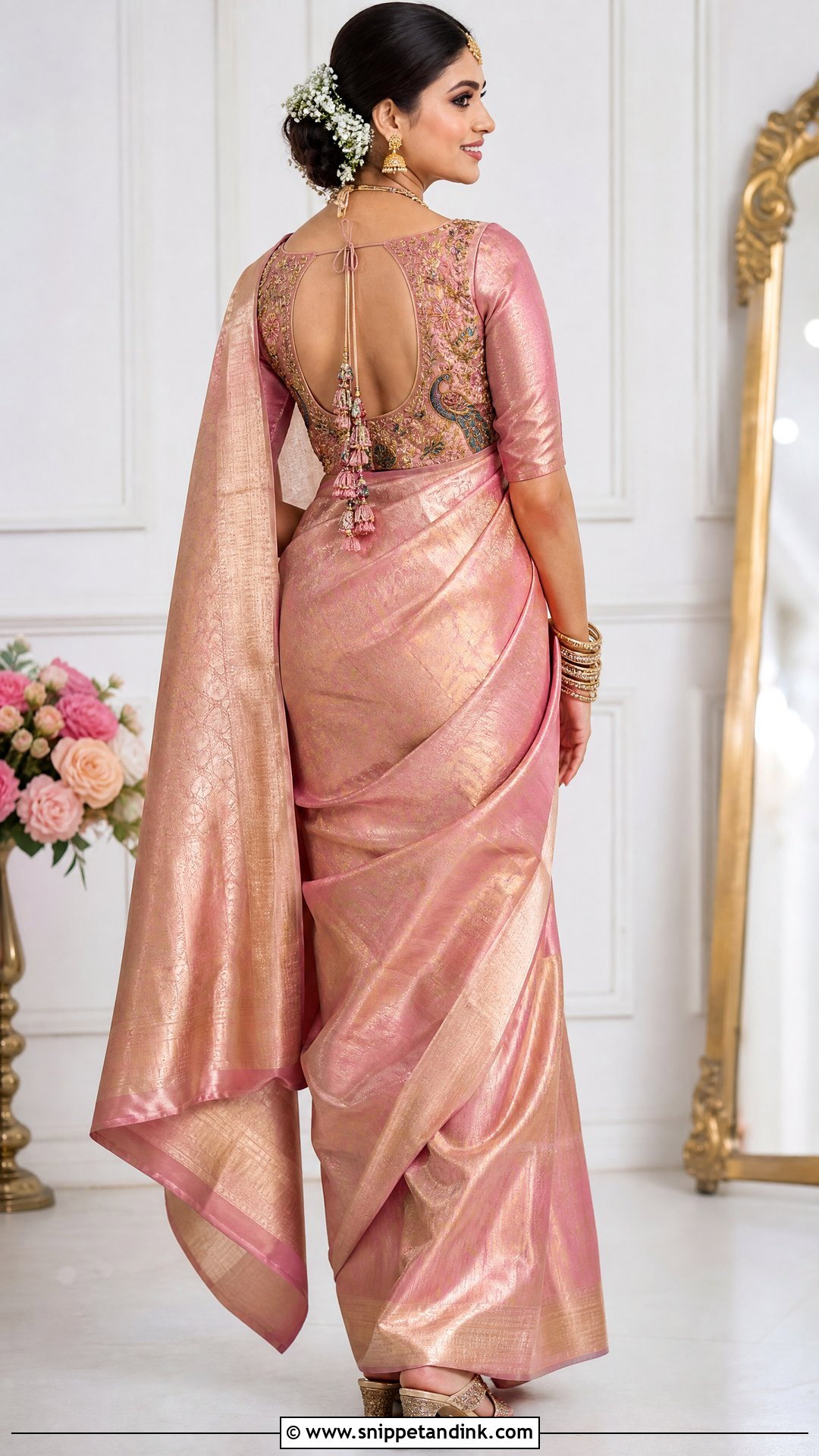
The blouse back is where Aari work can really perform. Peacocks, elephants, bride-and-groom figures, lotuses or a monogram all sit well there. Round, deep U, boat and keyhole backs each frame the design differently. Tie strings with tassels add a traditional touch. If the back is detailed, keep the front simpler. Plan the saree drape with your stylist so the pallu does not cover the back design in entry photos.
17. Bridal Aari Work Blouse For Silk Saree
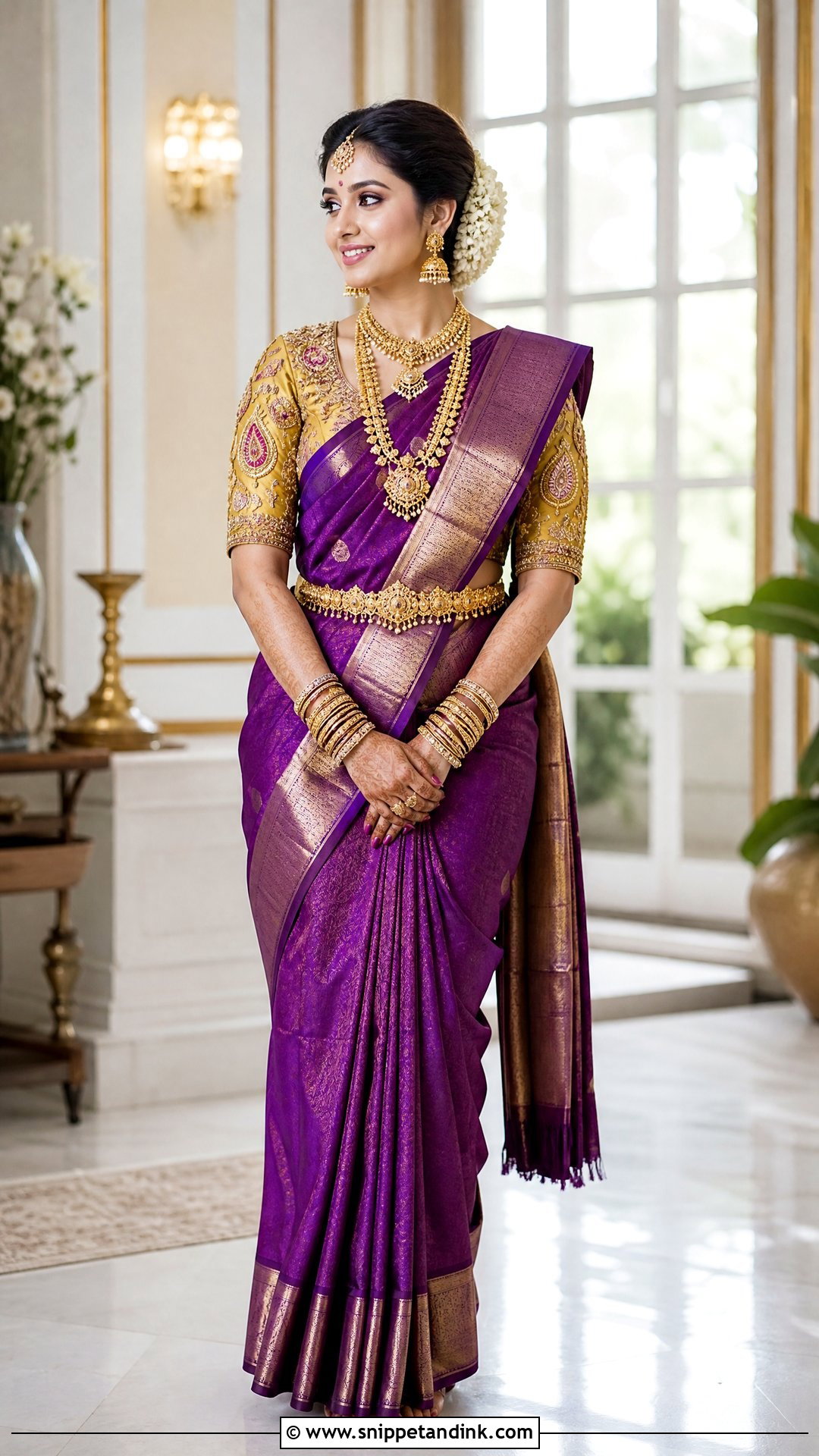
For a silk saree, start by picking one colour from the border and using it for the blouse fabric. Then add Aari in gold, antique gold or a contrast thread. Elbow sleeves, a structured neckline and a detailed back are reliable choices. Mango, peacock, lotus and temple motifs pair naturally with silk. Fit is critical here: a heavy silk saree pulls on the shoulders all day, so the blouse needs a precise shoulder seam and a firm lining. Layered gold jewelry and a polished bun finish it.
18. Bridal Aari Work Lehenga Choli
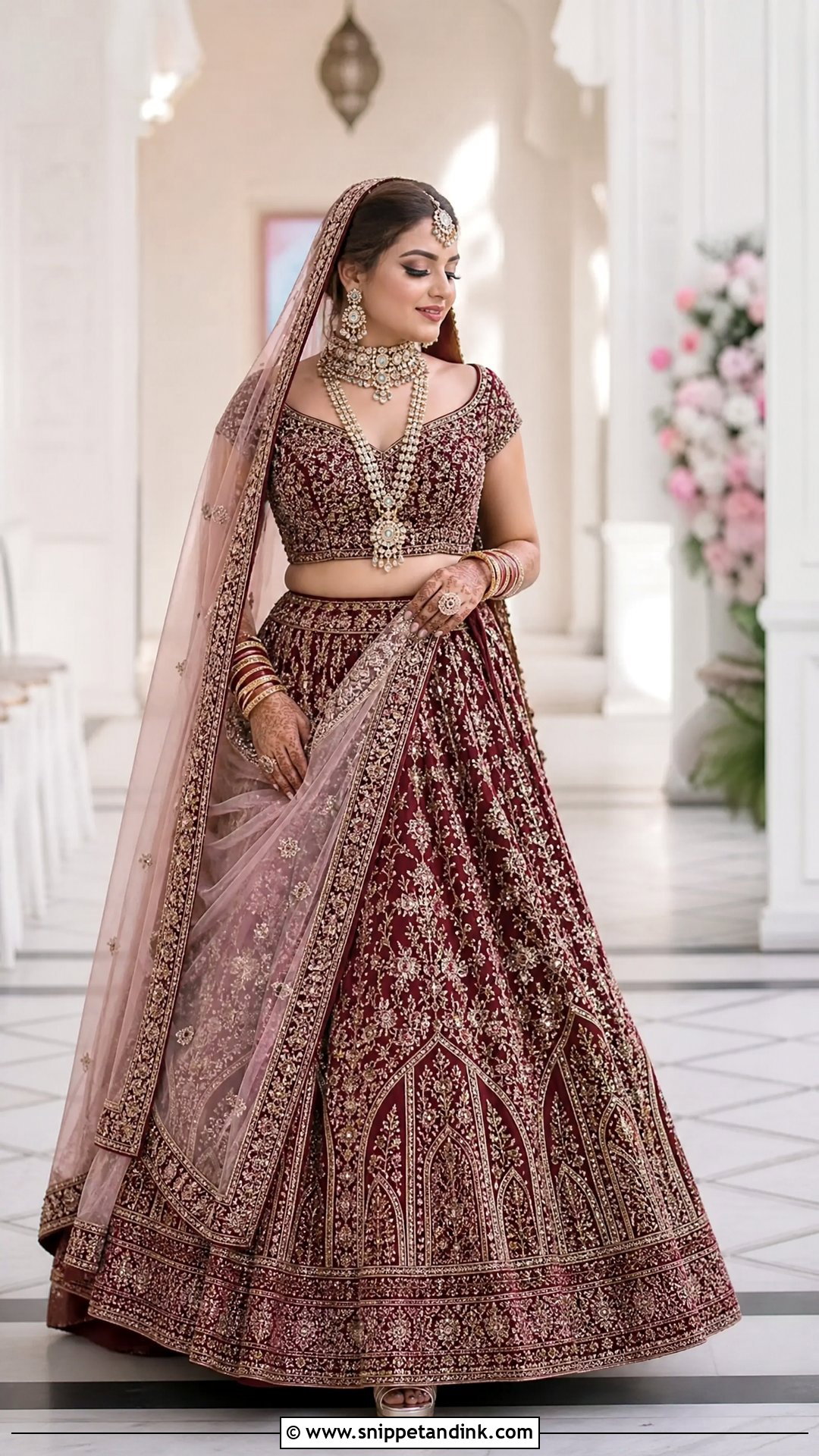
A coordinated lehenga choli puts dense work on the choli, larger motifs and a heavy border on the skirt, and a lighter dupatta with a defined edge. That distribution keeps the outfit from becoming exhausting to wear. Red, maroon, blush, ivory, green and royal blue are all popular. Beadwork, sequins, pearls or stones can be added depending on the ceremony. A choker, long necklace and bangles complete it.
19. Bridal Aari Work Reception Gown
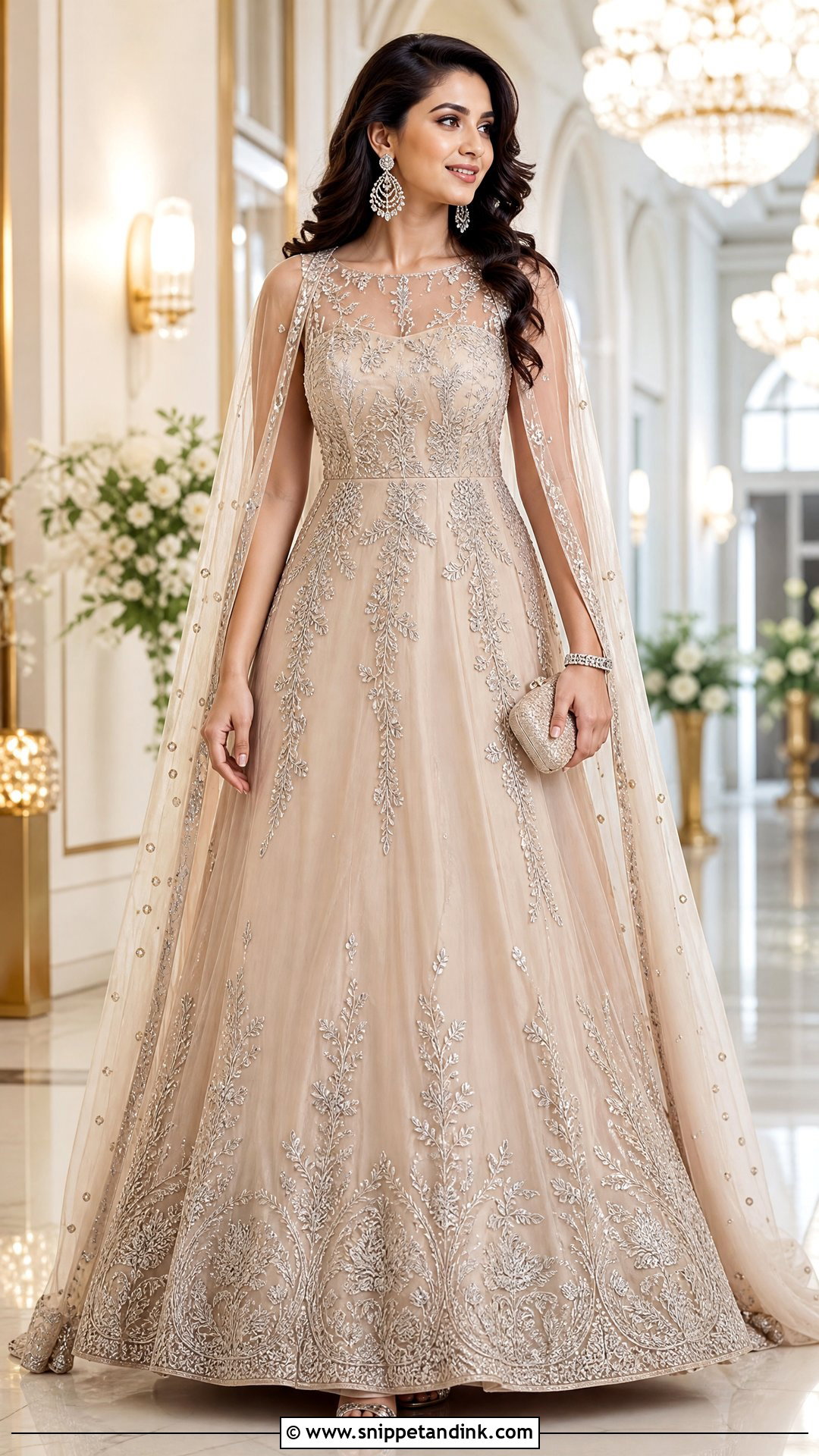
Aari on a reception gown brings Indian handwork into a Western silhouette. A floor-length gown in satin, silk, net or velvet with embroidery around the bodice, sleeves, waist and hem works well. Silver, champagne, pearl and tone-on-tone thread suit evening light. Embroidery on a gown is usually done on cut panels before assembly, so your measurements must be final before the work starts. Statement earrings and a sleek clutch are enough jewelry.
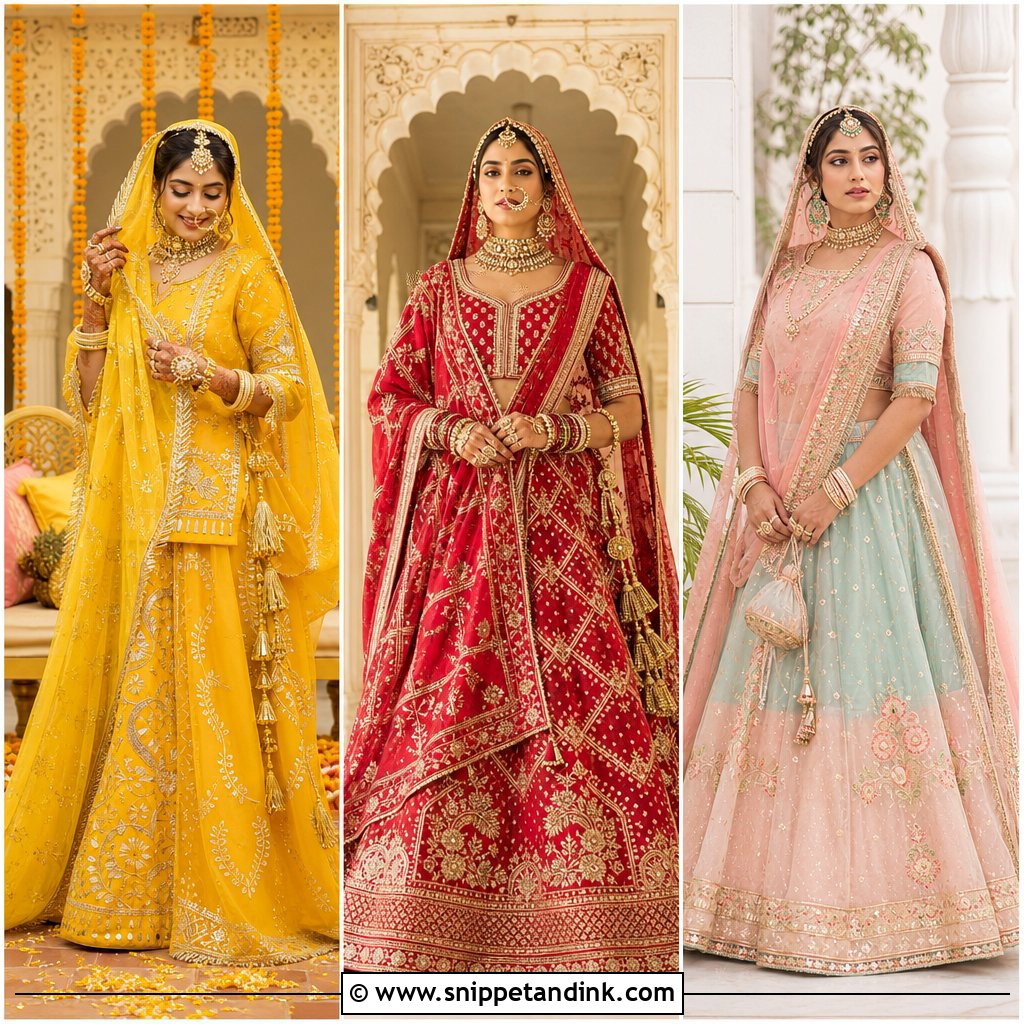
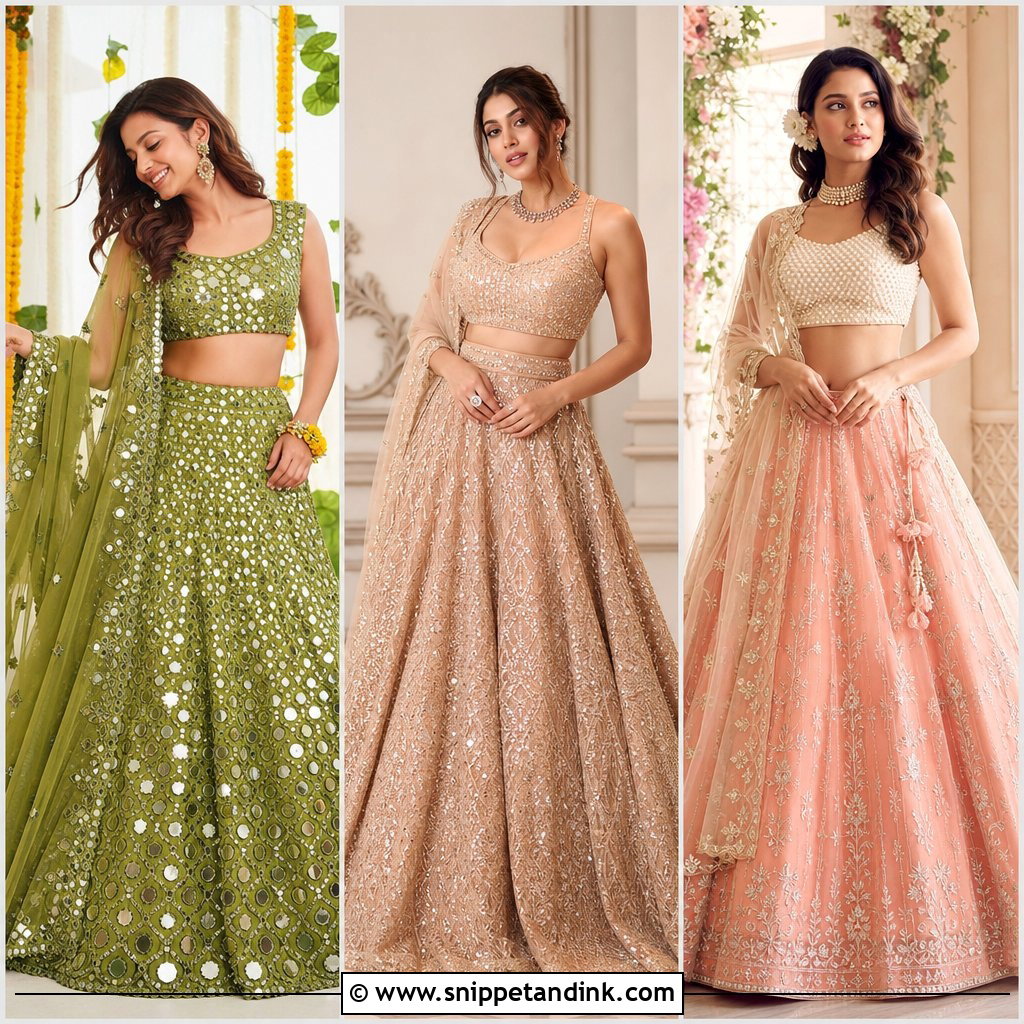
20. Contrast Aari Work Bridal Blouse
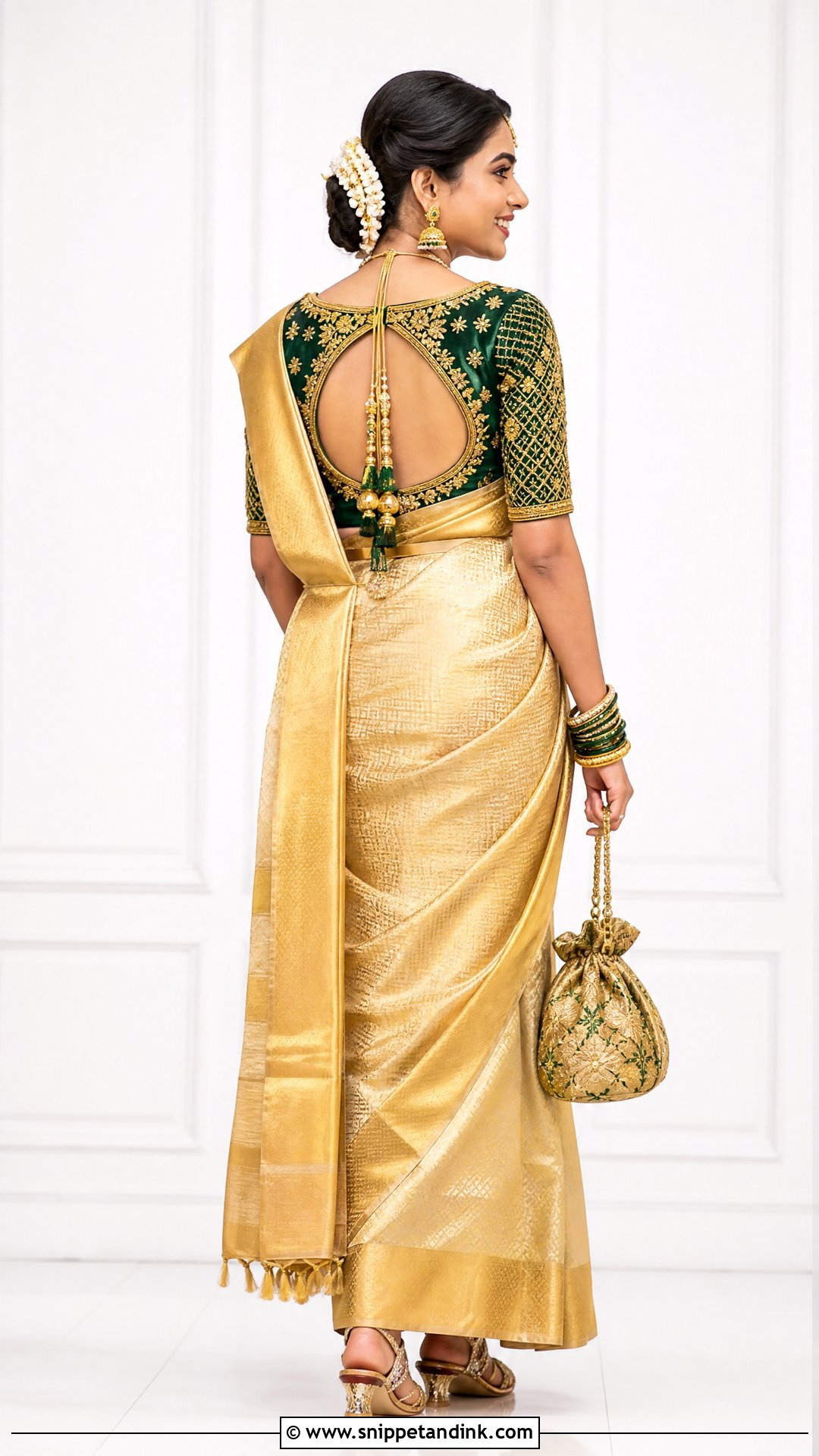
A contrast blouse is a smart way to make a saree, especially an heirloom one, look bridal. Red sarees take green, blue, gold or pink blouses; gold sarees take maroon, purple or emerald. Pick up the saree border colour in the Aari thread so the two pieces connect. Heavy sleeves, a decorated back and a neat neckline border carry the look. I hold the saree and blouse fabric together in daylight before ordering, since some contrasts that look good indoors clash outside.
21. Stone Aari Work Bridal Saree
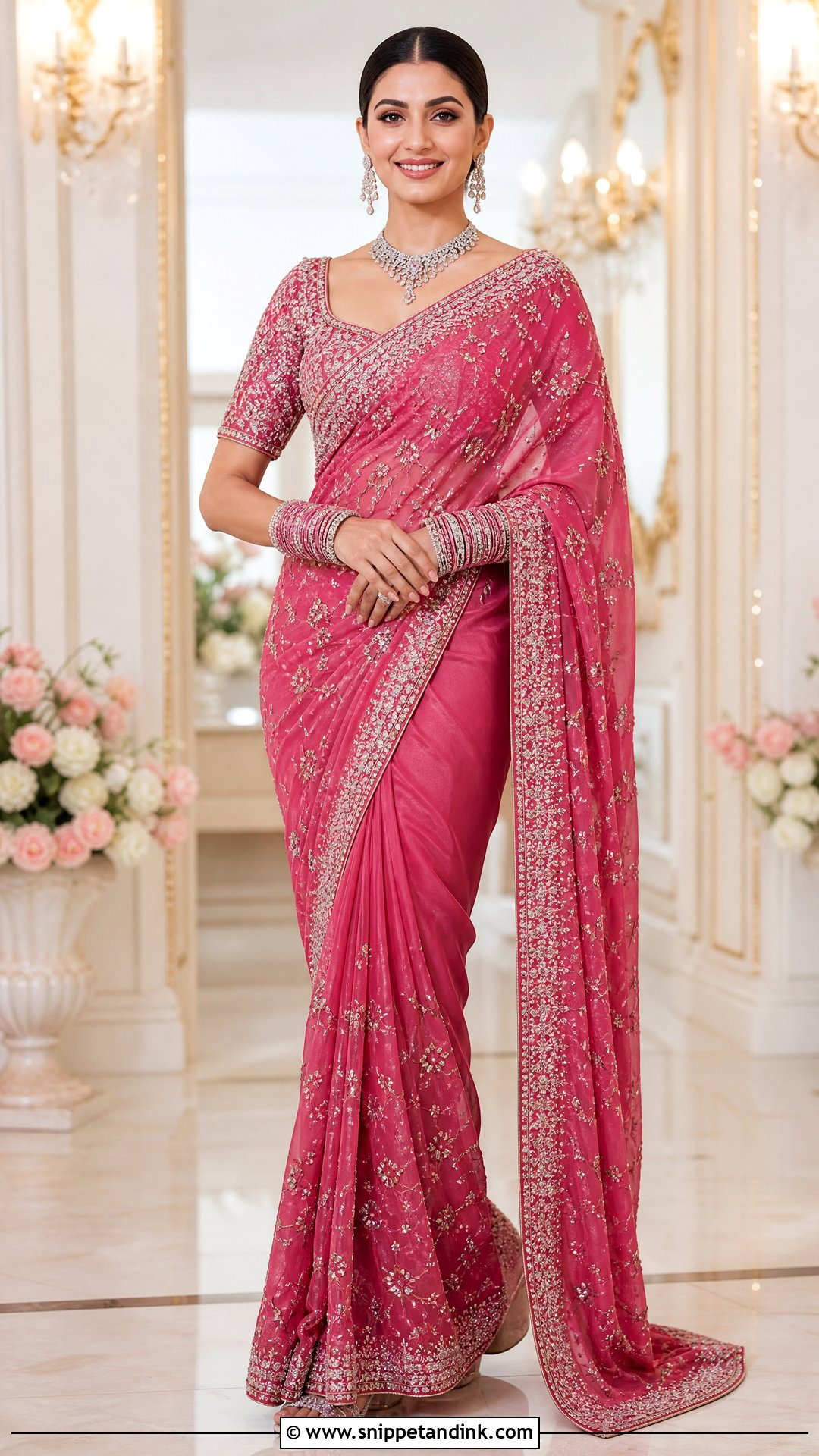
Stones add shine without making the whole outfit heavy, if they are placed well. They can be stitched into floral, paisley or border patterns, outlined with Aari threadwork. Silk, georgette, net or velvet can support them. Use stones on the blouse sleeves, saree border and pallu rather than everywhere. Match jewelry to the stone colour. Stones catch on lace and hair, so check that the pallu edge will not snag your hair accessories.
22. Minimal Bridal Aari Work Blouse
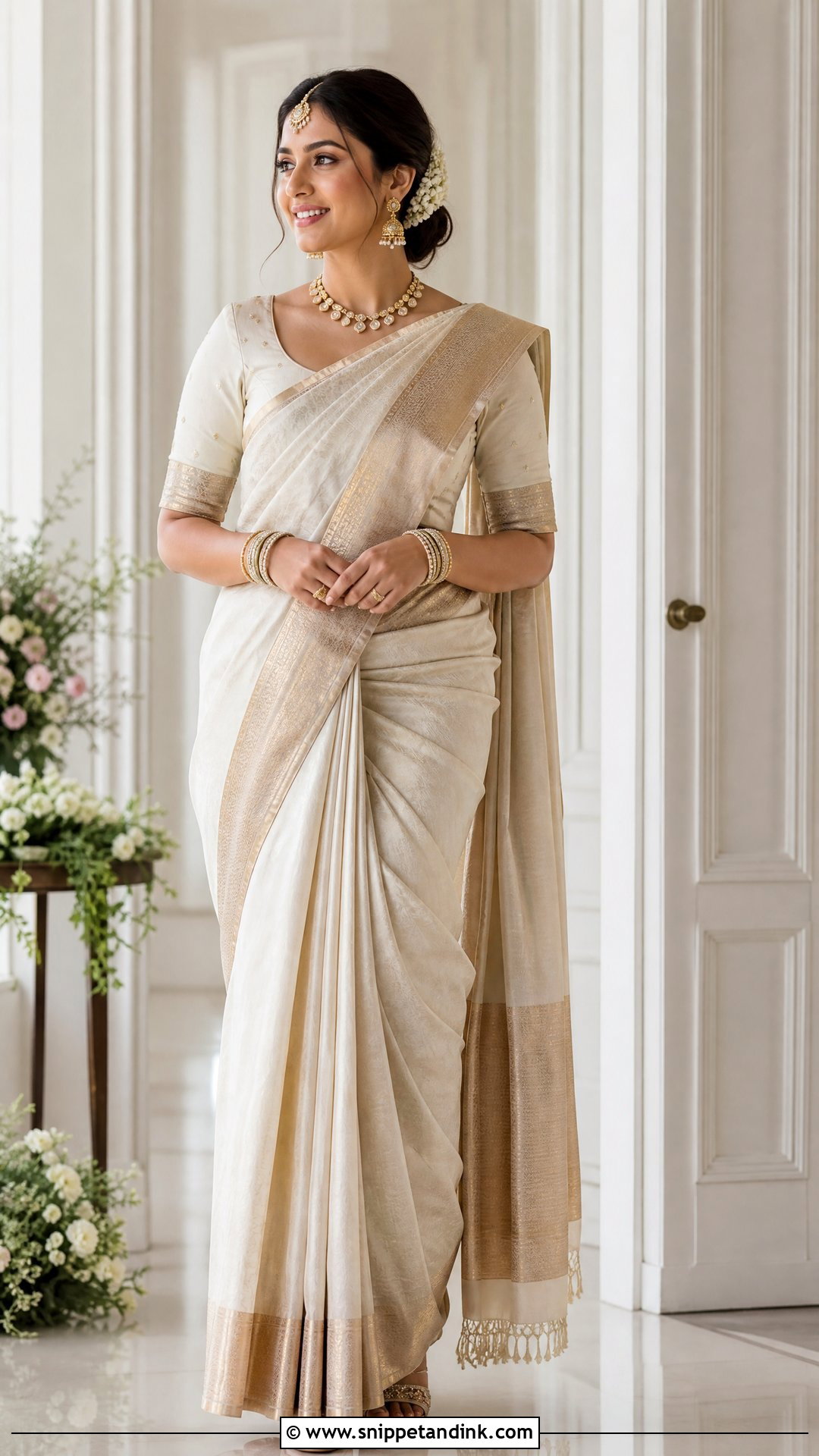
A minimal bridal Aari work blouse relies on fine borders around the neckline, sleeves and back rather than dense coverage. Small vines, tiny pearls, simple zari lines or bead edging are enough when the fabric and fit are good. Pair it with a heavy silk or brocade saree or an embroidered lehenga skirt. This is the blouse I point brides toward when they want something they will actually wear again after the wedding.
23. Heavy Bridal Aari Work Blouse
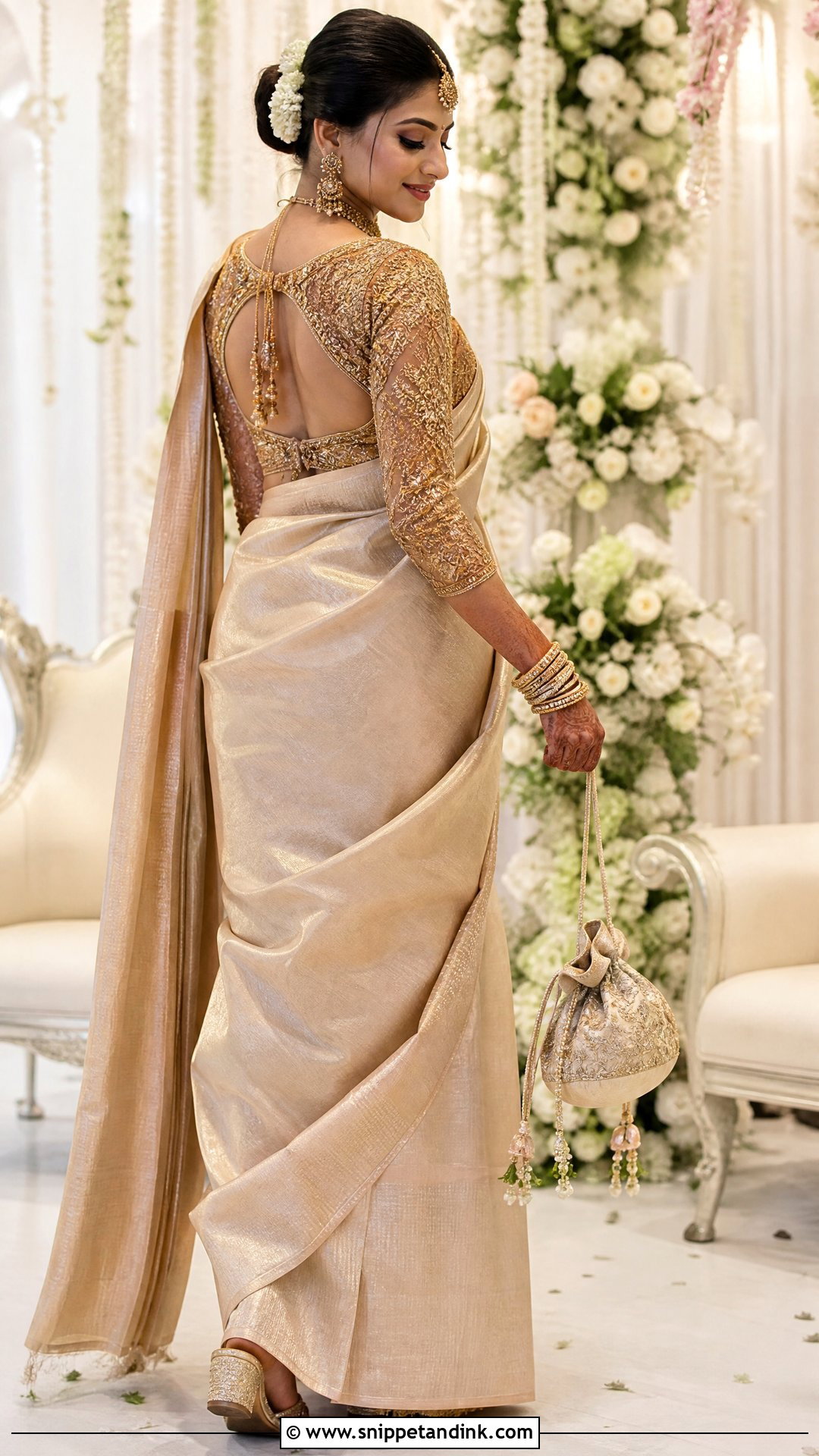
A heavy blouse is meant to be the focus. Dense work on the sleeves, back, neckline and waist with zari, pearls, stones and beads needs a plain silk or tissue saree so it is not competing. The blouse fabric must be strong enough to carry the weight: raw silk, velvet or thick silk. Thin fabric under heavy embroidery sags and puckers. Keep jewelry clear of the neckline so the work stays visible.
24. Bridal Aari Work Half Saree
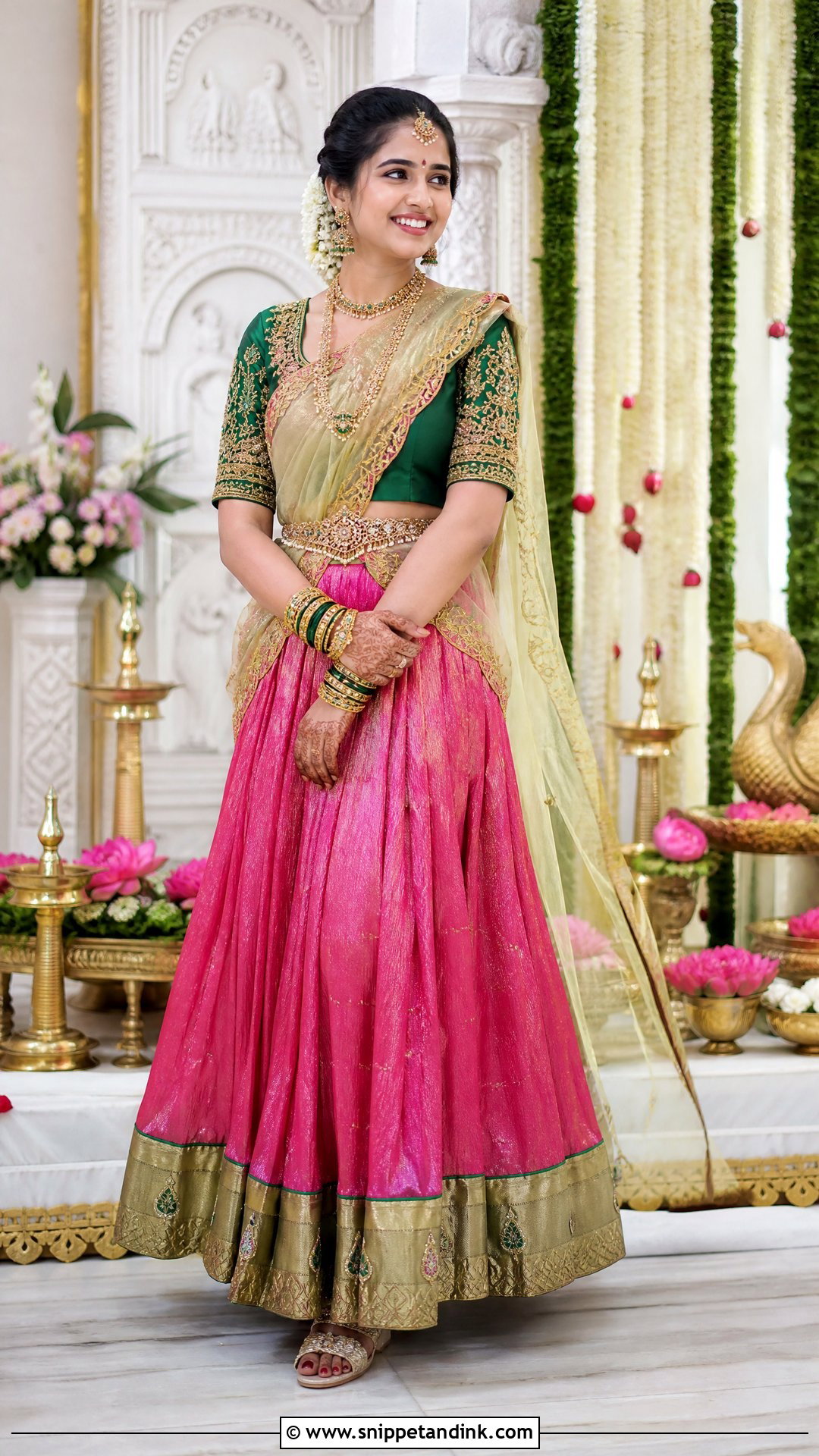
A bridal Aari work half saree suits pre-wedding ceremonies and traditional South Indian events. It combines a blouse, skirt and dupatta-style drape with a youthful but ceremonial feel. Put Aari on the blouse sleeves, skirt border and dupatta edge. Pink, yellow, green, orange and red pair well with gold embroidery. Half sarees are easier to move in than a full drape, which matters during long rituals and photos.
25. Bridal Aari Work Potli Bag Outfit
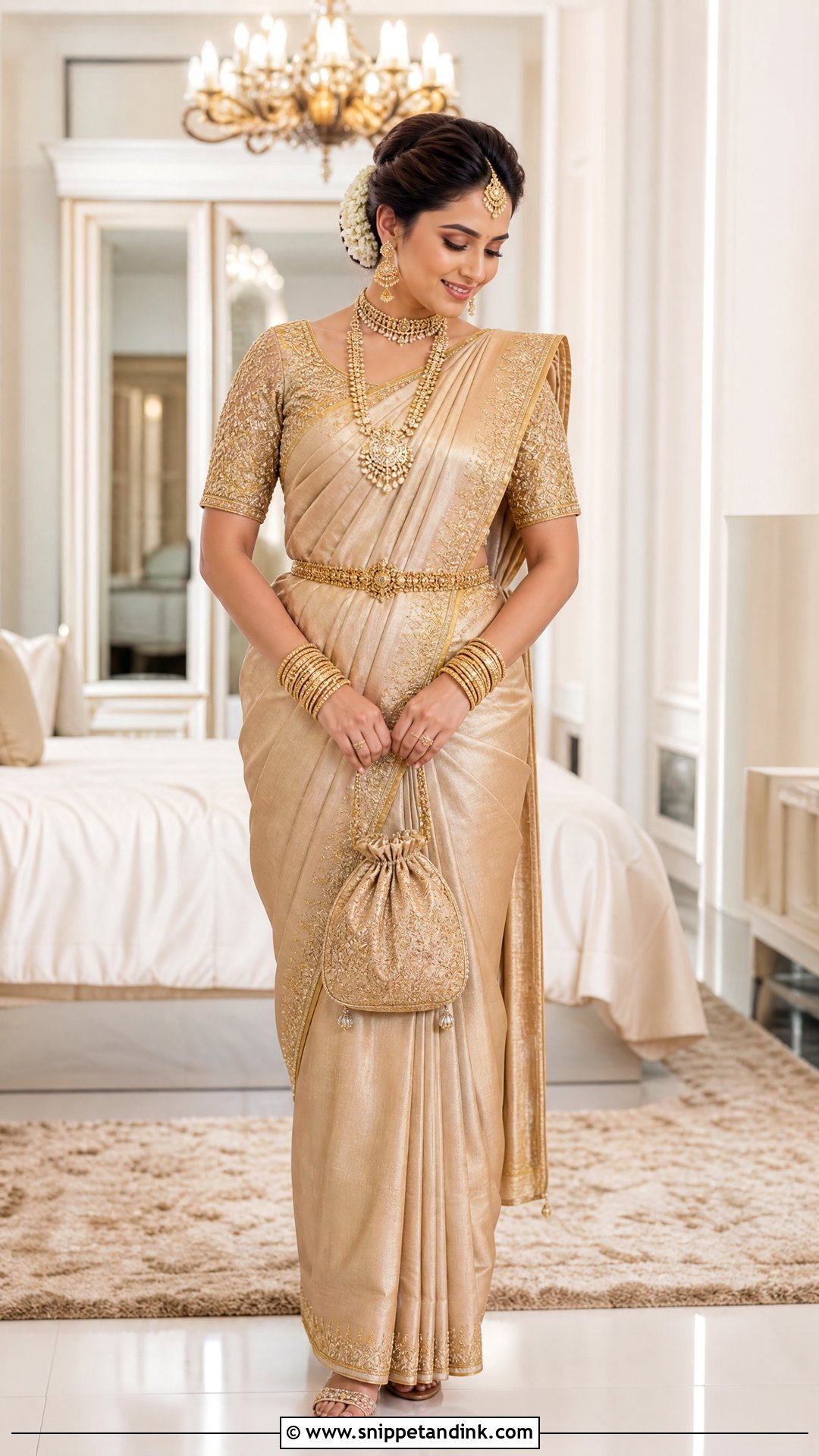
A potli with Aari work ties the outfit together. Match it to your blouse embroidery, lehenga border or saree pallu with pearls, zari, beads, mirrors or small floral motifs. Ask the embroiderer for leftover fabric and thread from your outfit, since that gives the closest match. It still needs to hold a phone, lip colour and a few safety pins, so check the size before the work begins.
Telling Hand Aari From Machine Copies
Machine embroidery that imitates Aari is common and cheaper, and it is not a bad choice if the budget is tight. You should simply know what you are paying for. Turn the fabric over. Hand Aari shows small, slightly irregular stitches on the reverse and the curves follow the drawing smoothly. Machine work usually has a stiff backing sheet behind it and repeats with perfectly identical motifs. Hand-set beads and stones sit at small natural angles; machine-applied ones are often glued or perfectly uniform.
Zari, Pearls and Perfume Don’t Mix in Storage
Metallic zari tarnishes with moisture, perfume and air, and pearls lose their coating to sweat. After the wedding, I recommend a gentle dry clean by someone who handles embroidered bridal wear, then storage away from light and damp.
- Spray perfume before you dress, never directly onto embroidery.
- Wrap pieces in soft muslin or cotton, not plastic, so the fabric can breathe.
- Fold with the embroidery facing inward and tissue between layers to stop beads catching.
- Refold every few months so permanent creases do not form along the same lines.
- Hang only light blouses. Heavy lehengas stretch on a hanger and should be stored folded.
Heavy Work Needs Quiet Company
Aari work fits almost any piece of a wedding wardrobe: a red lehenga, a silk saree blouse, a pastel pearl outfit, a name blouse or a single statement dupatta. Balance is what makes it work. Heavy embroidery needs clean styling, while simple outfits can carry one detailed piece. Focus on good fabric, neat finishing, a comfortable fit and motifs that mean something to you. Give the embroiderer enough time, and the work will last long after the wedding.
You'll Like These Ideas:







Leave a Reply