
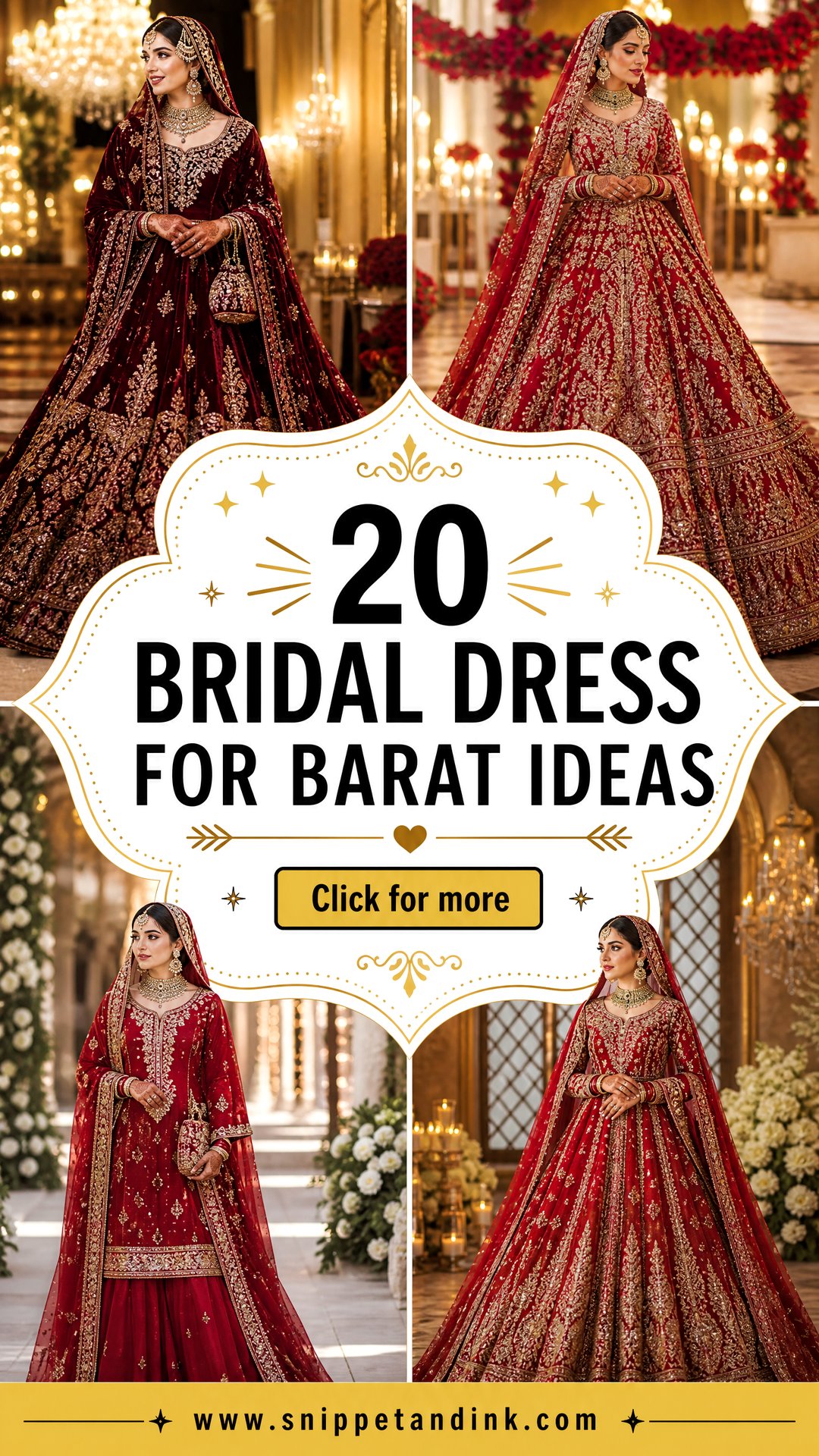
A Barat outfit has to do two things at once: carry the weight of tradition and let you sit on a stage for hours, greet a few hundred guests and still be standing at the rukhsati. I style these looks as complete outfits, because a lehenga that’s right on its own can be wrong once two dupattas, a full jewelry set and heels go on top. Pakistani bridal fashion still loves rich reds and maroons with dense handwork, but long shirts, statement dupattas and newer cuts give you far more choice than a few years ago. Below are twenty looks, from classic red lehengas and velvet to pishwas, ghararas and gowns, with the jewelry, shoes and dupatta placement I’d pair with each and the fitting point to watch.
How Much Can You Carry? Weight, Heat and the Stage
Before you fall for a picture, ask the designer what the finished outfit weighs. A heavily worked lehenga with a can-can, a full blouse and a dupatta covered in zardozi can be far heavier than brides expect, and every gram hangs from your waist and shoulders through the stage, the photos and the rukhsati. I ask brides to try a sample of similar weight for half an hour, sitting and standing, before ordering.
What I brief a designer on
- The venue and month. A winter hall can take velvet and heavy lining; a summer marquee needs raw silk, organza or net with cotton lining.
- Where the weight should sit. Heavy work at the hem keeps you grounded; heavy work at the waist and hips adds bulk and pulls downward.
- The can-can. Ask whether it can be detachable or replaced by a lighter layer of net.
- Dupatta weight. One heavy and one light is plenty; two heavy dupattas strain the neck and the hair.
- Your shoe height, so the hem is cut to the heels you’ll actually wear.
Hand embroidery takes time, so order early. Many designers want several months for a bridal piece and more in the busy wedding season, so confirm dates and a fitting schedule in writing before you pay the deposit.
1. Classic Red Lehenga Bridal Dress for Barat
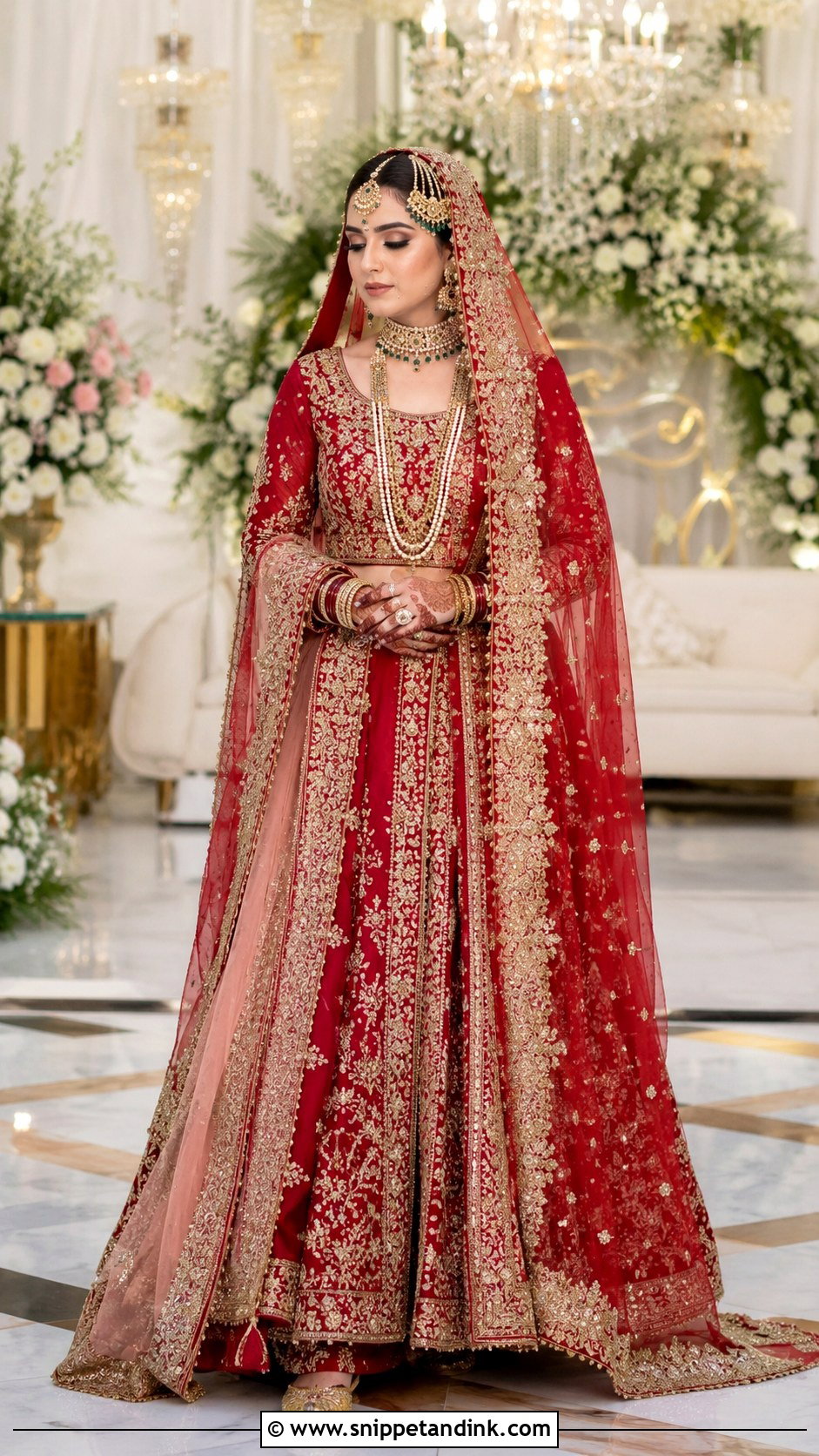
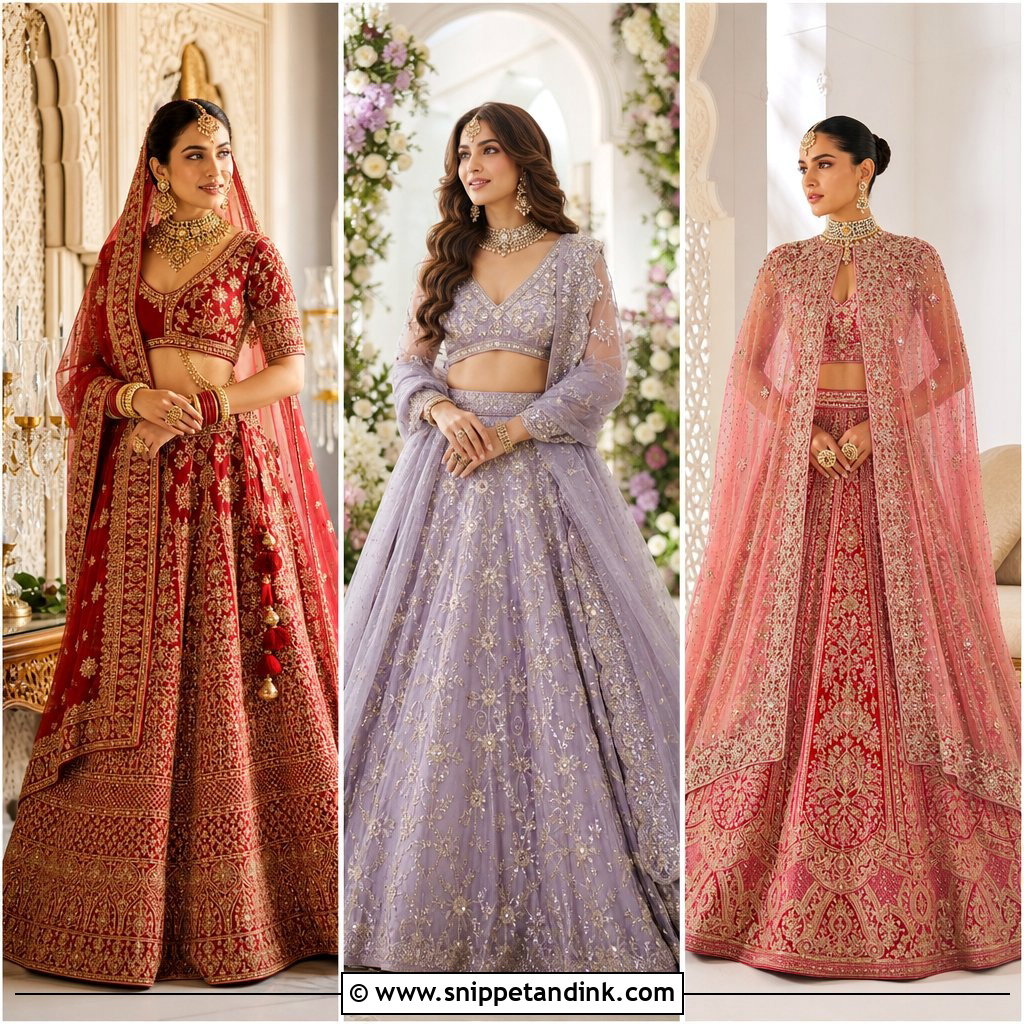
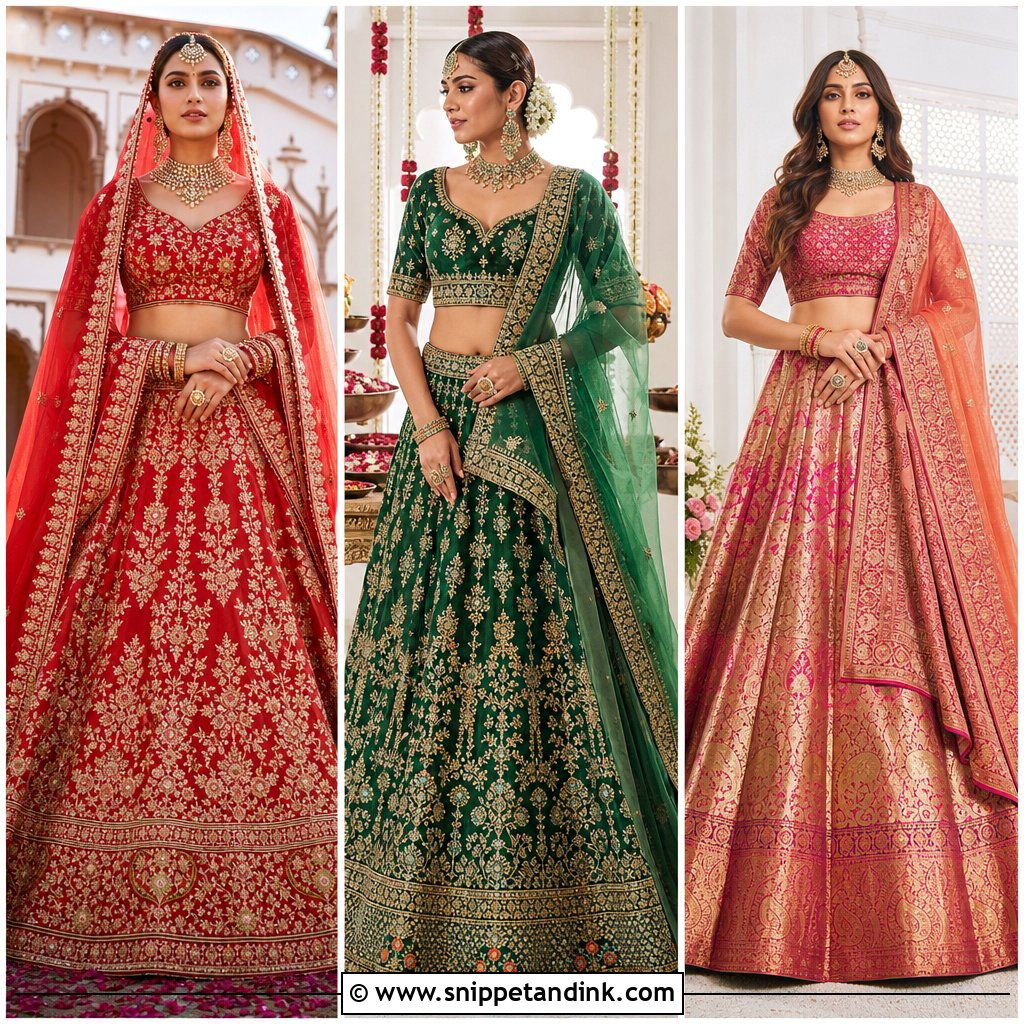
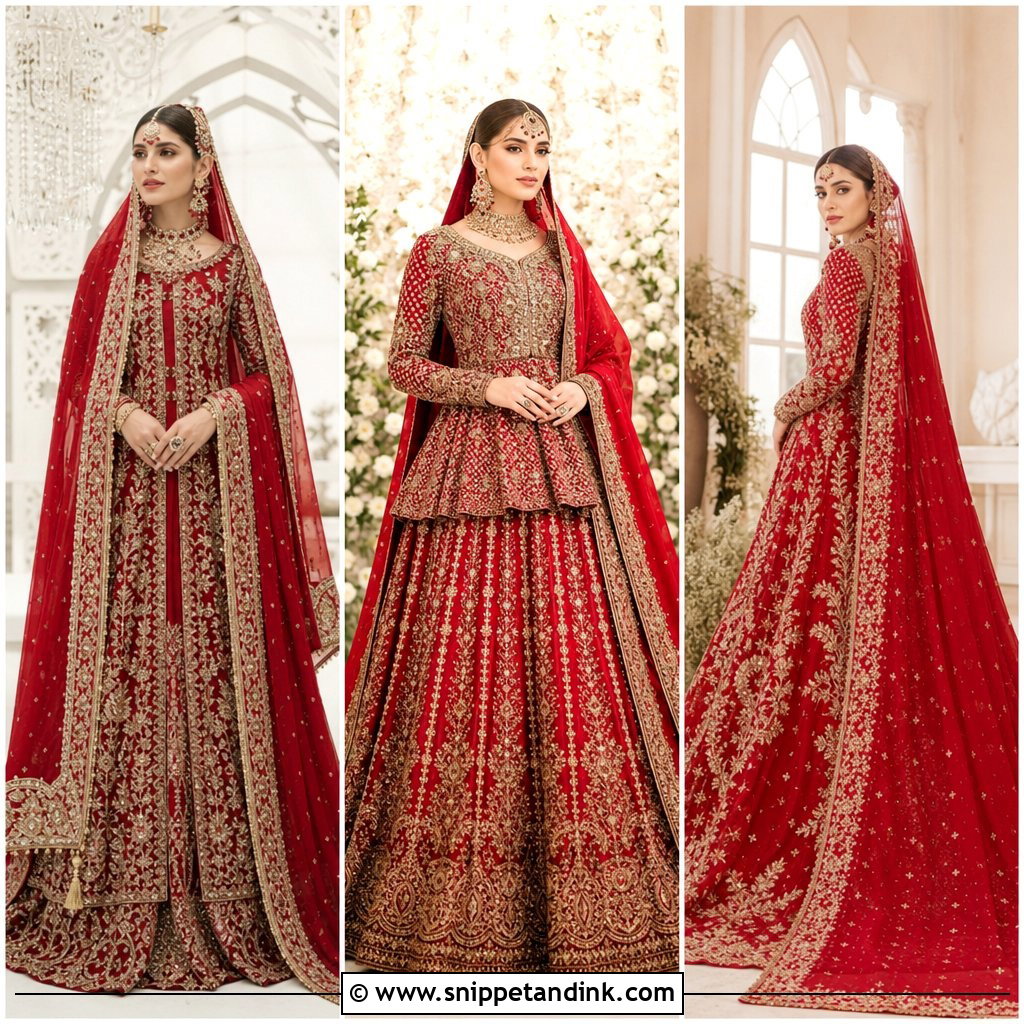
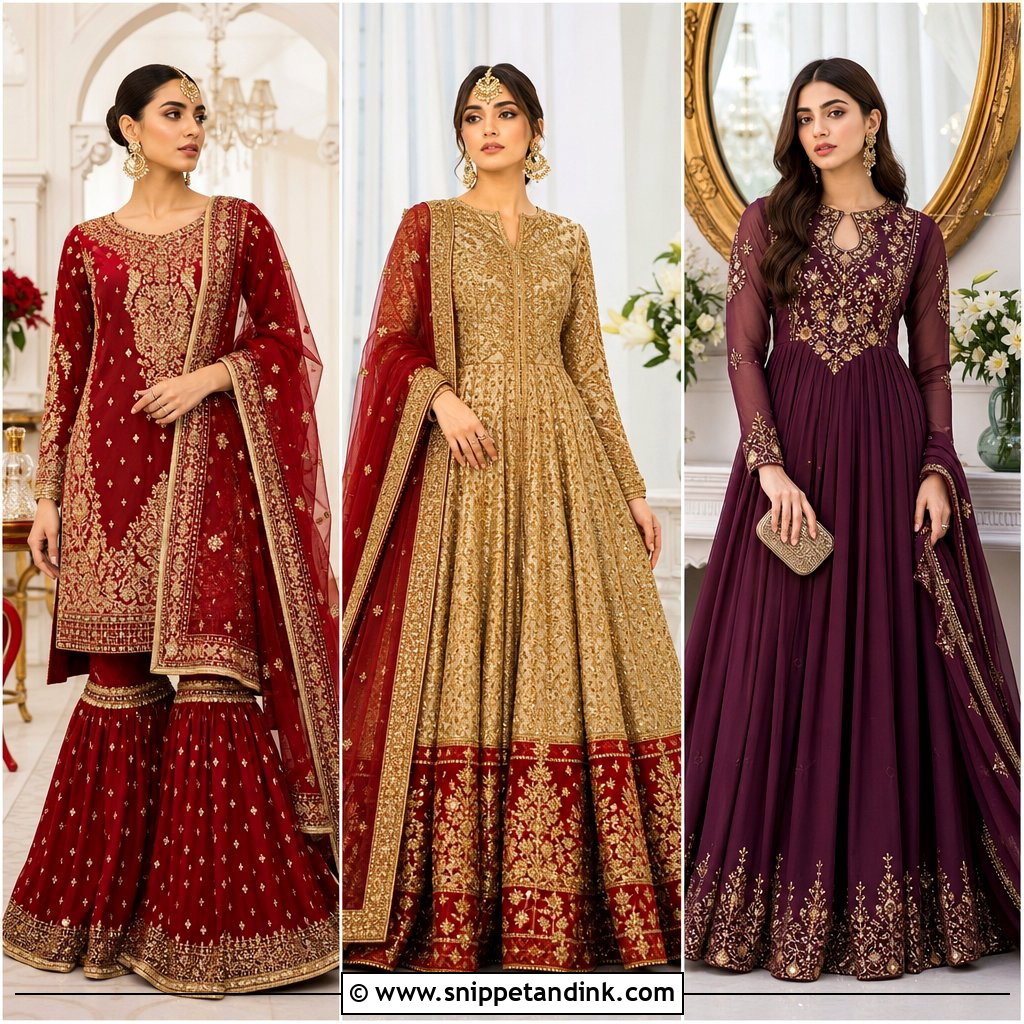
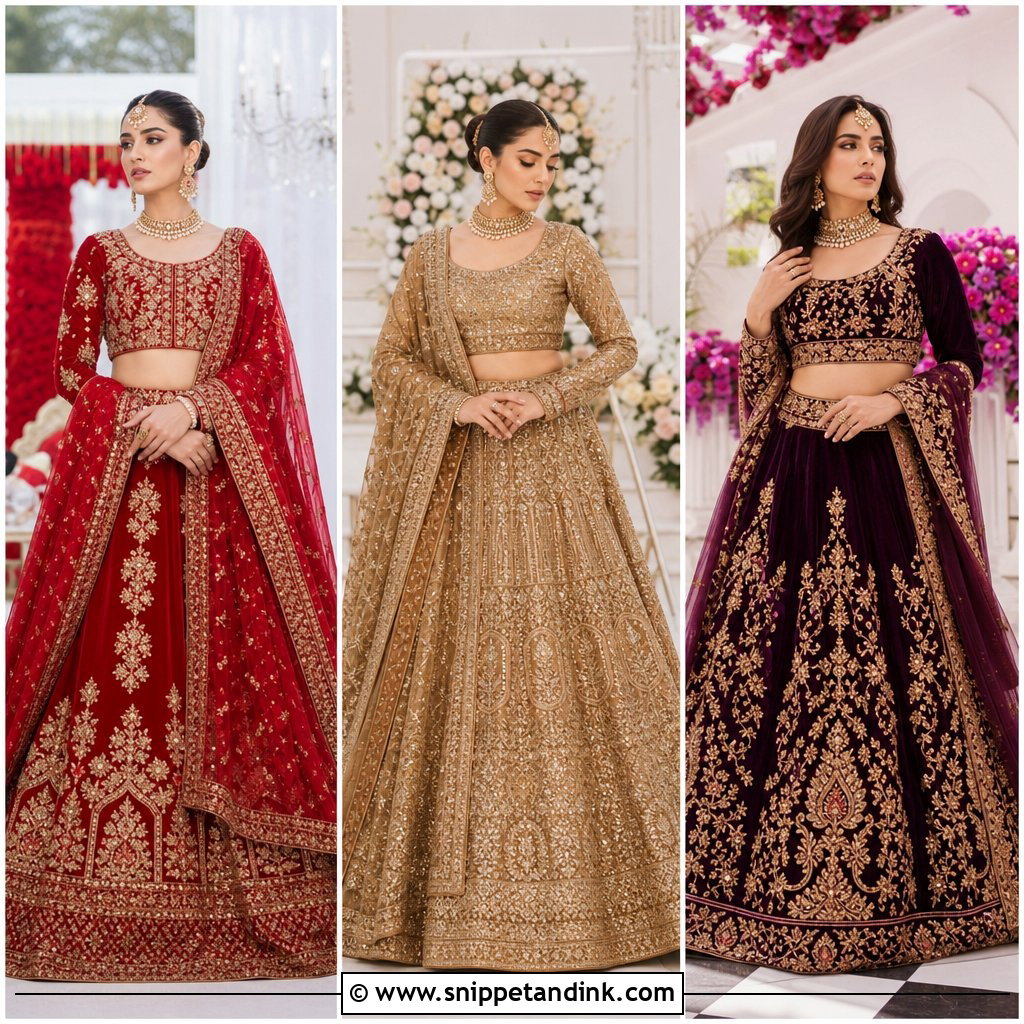
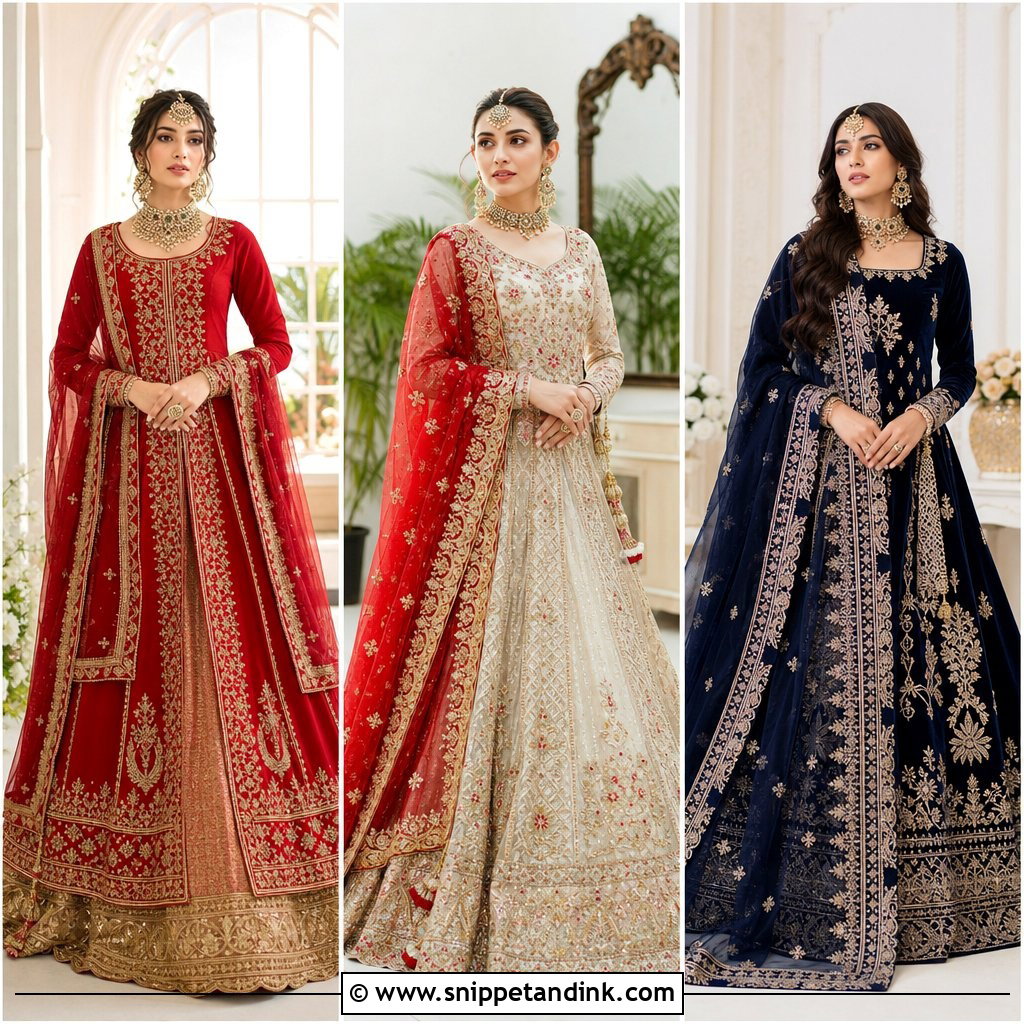
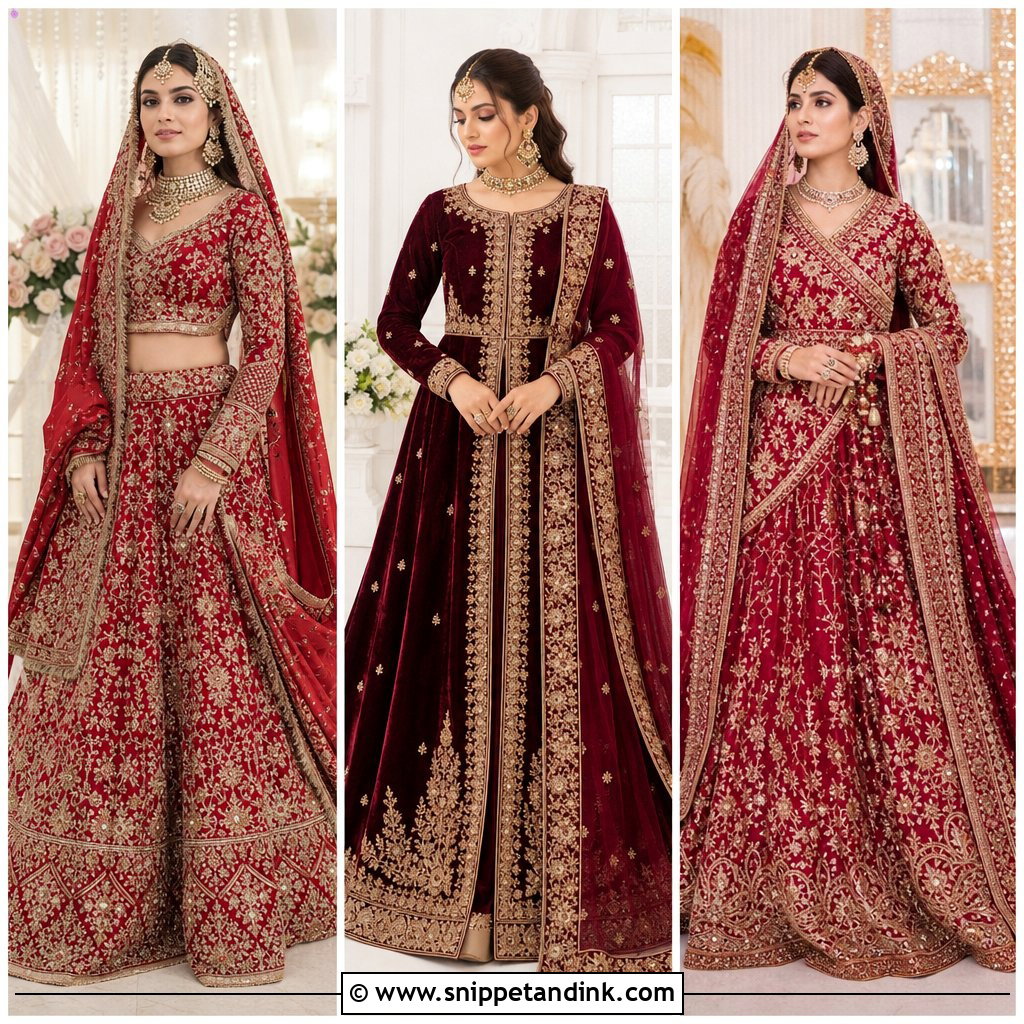
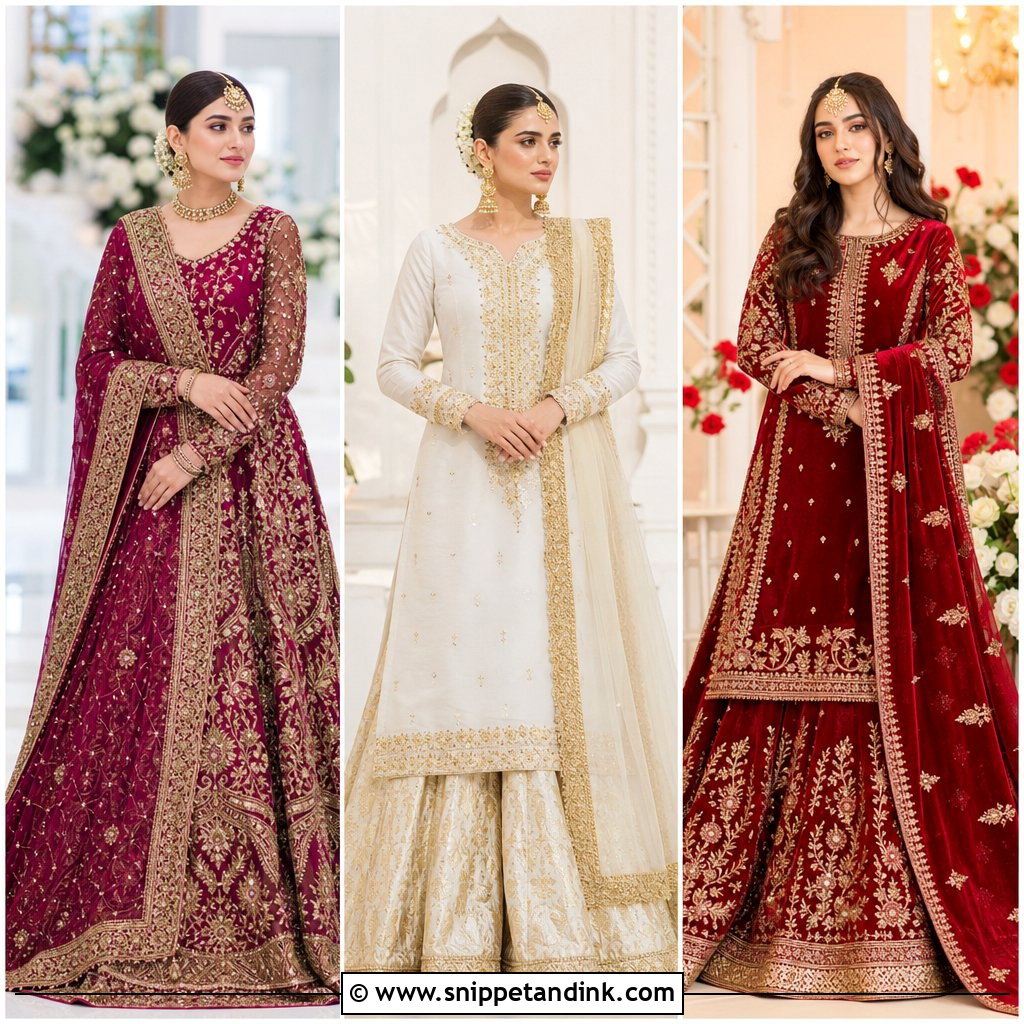
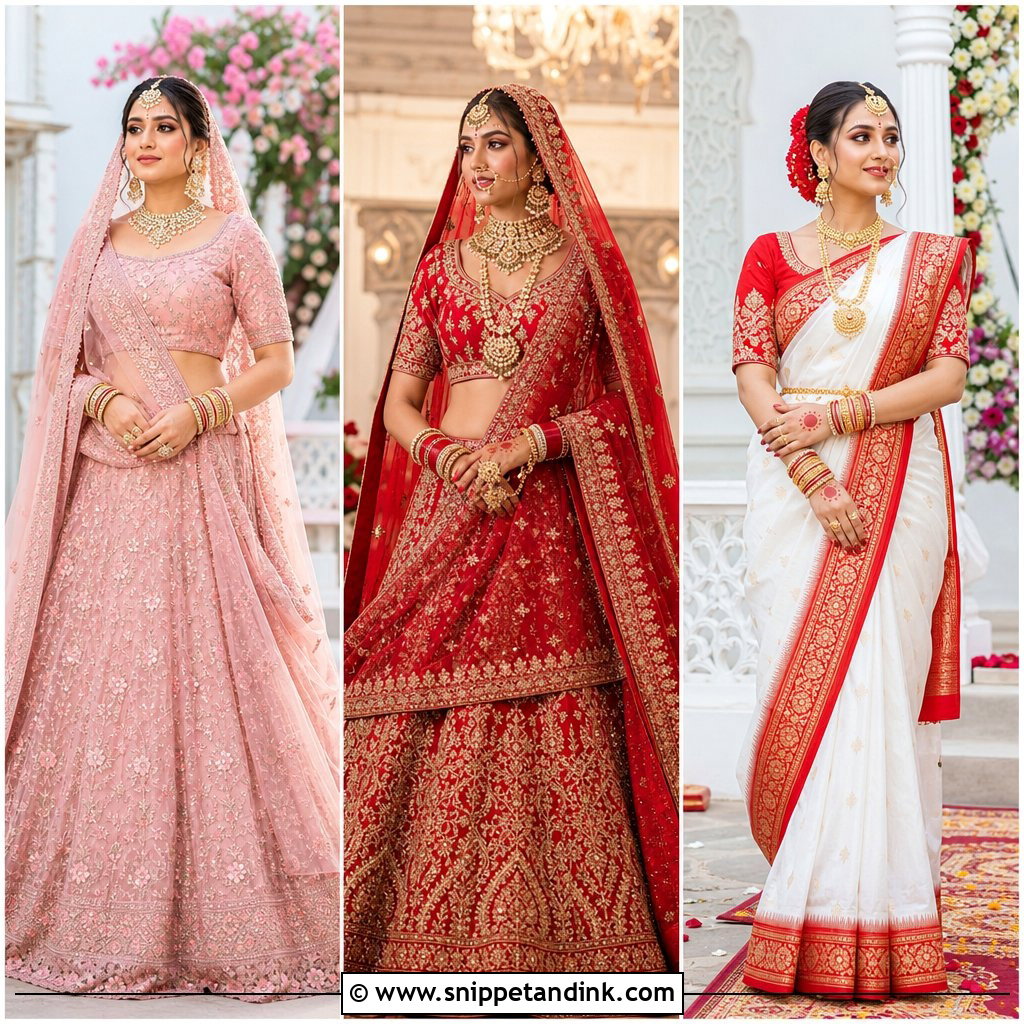
Red raw silk or velvet with antique gold zardozi, dabka and fine threadwork is the look most families picture, and it earns that place. My caution is the flare. A moderate flare moves well; a very full can-can skirt doubles the weight and makes stairs and stage steps difficult. A fitted choli defines the waist. The heavy embroidered red dupatta goes over the head and a light net one across a shoulder. Gold khussas keep you comfortable for hours. Pair a kundan choker with a longer necklace, matching earrings, bangles and a fine matha patti. If you’d like less skin at the midriff, ask for a slightly longer blouse with a structured neckline.
2. Maroon Velvet Lehenga Bridal Dress for Barat
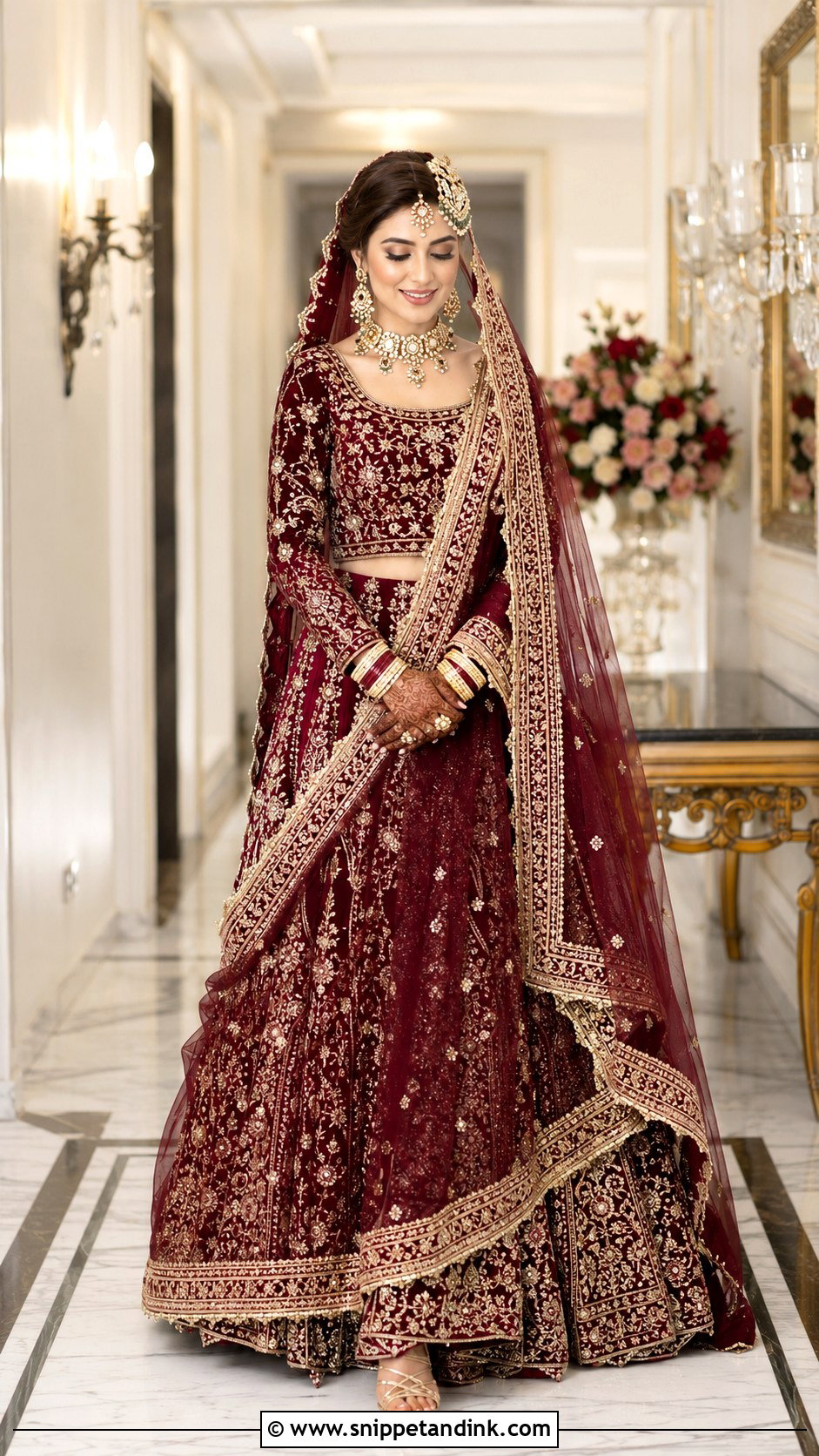
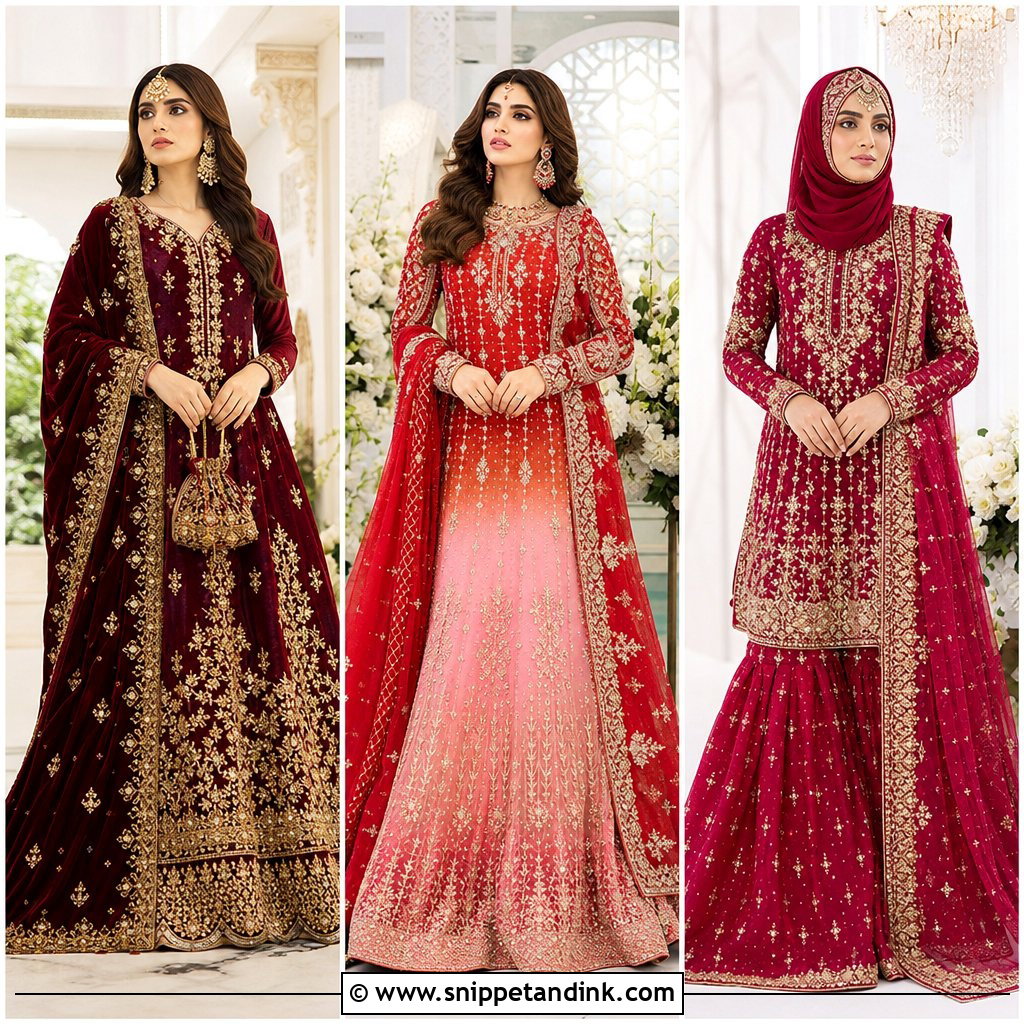
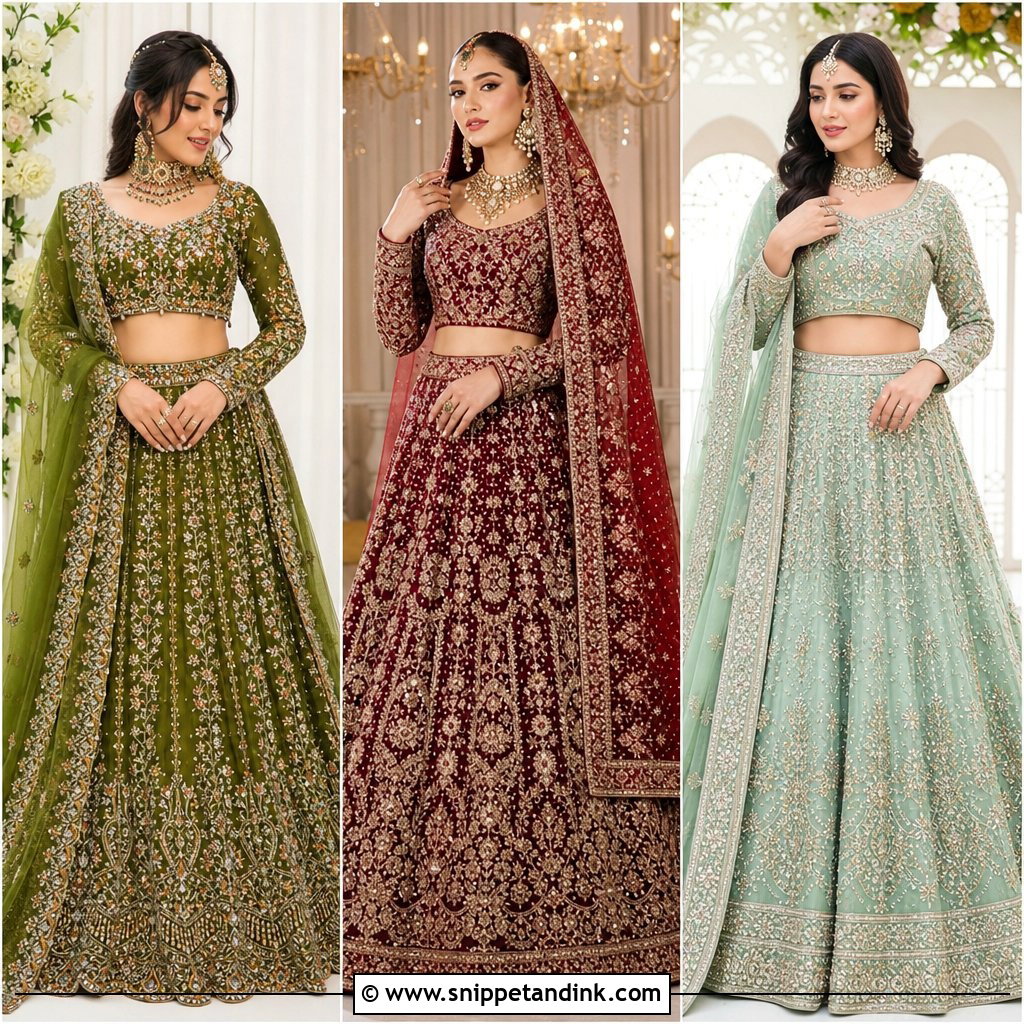
Deep maroon velvet belongs at a winter Barat or an indoor hall with the air conditioning tamed. In a summer marquee it’s genuinely punishing, because velvet traps heat close to the body. I like the embroidery concentrated at the hem and thinning toward the waist, which keeps the eye moving upward. A matching long-sleeved blouse, and a sheer maroon dupatta with a wide border so the whole outfit doesn’t look like one heavy block. Antique gold heels or padded khussas, a polki necklace, statement earrings, a passa and bangles. Petite brides should keep embroidery running vertically; curvier brides do well with a supportive blouse and a skirt that skims before it flares.
3. Red Farshi Lehenga Bridal Dress for Barat
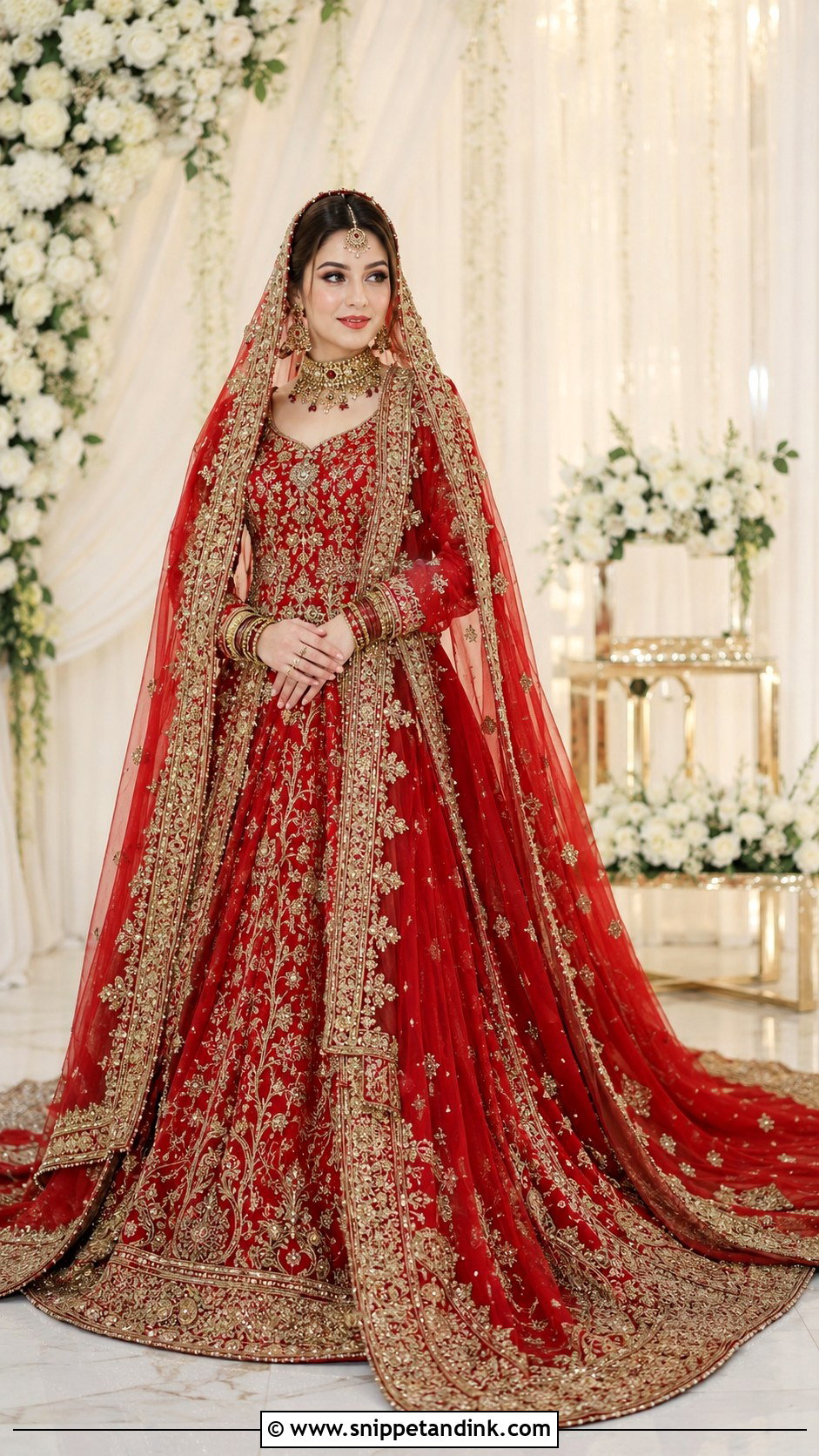
Farshi lehengas make the entrance, and they demand rehearsal. The trail sweeps the floor behind you, so someone has to lift it on stairs and arrange it on the stage, and I always brief a sister or cousin for that job. Ask for a fitted waist with controlled volume through the hip so the length looks deliberate, not bulky. Gold and copper embroidery along the border is enough; it doesn’t need to cover every inch. A neatly fitted blouse with a square or round neck balances the skirt. One dupatta over the head and the second pinned diagonally across the torso so your shape still shows. Platform heels, a broad choker, smaller earrings, a centered tikka and stacked bangles. Walk and sit in the whole outfit at least once before the day.
4. Long Red Shirt Bridal Dress for Barat
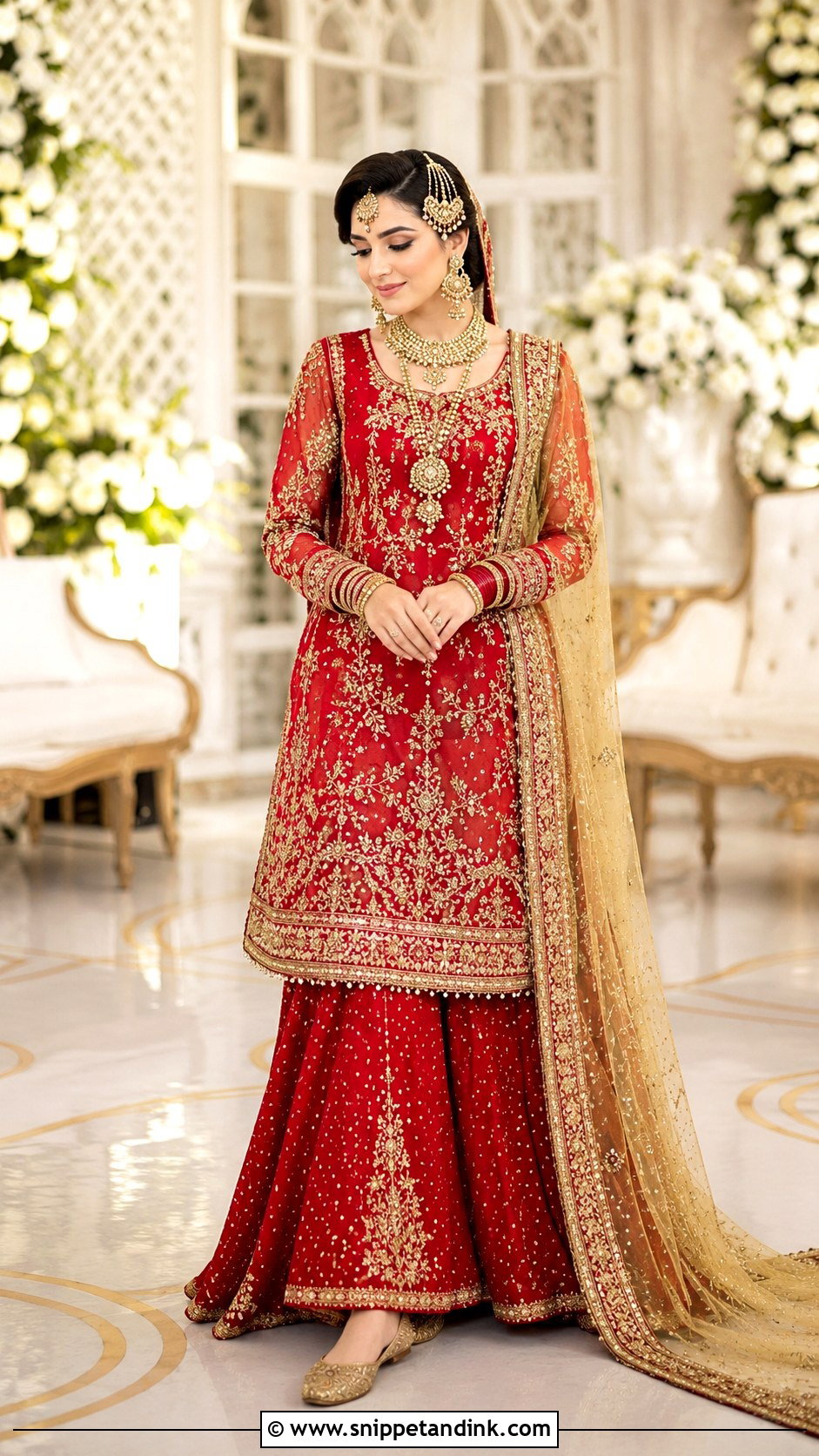
If you’d rather not show your midriff, the long shirt is the answer I suggest first. A straight or gently flared red shirt below the knee, with side slits that let the embroidered lehenga show beneath, gives coverage without losing the bridal impact. Vertical zari work and a detailed hem lengthen the frame. Matching red keeps one unbroken line, and a contrasting gold dupatta adds definition. Gold khussas, a layered necklace, jhumkas and a side passa. The fit at the shoulders and bust decides everything: too loose there and a long shirt looks borrowed, so this is where I spend most of the fitting time.
5. Red Pishwas Bridal Dress for Barat
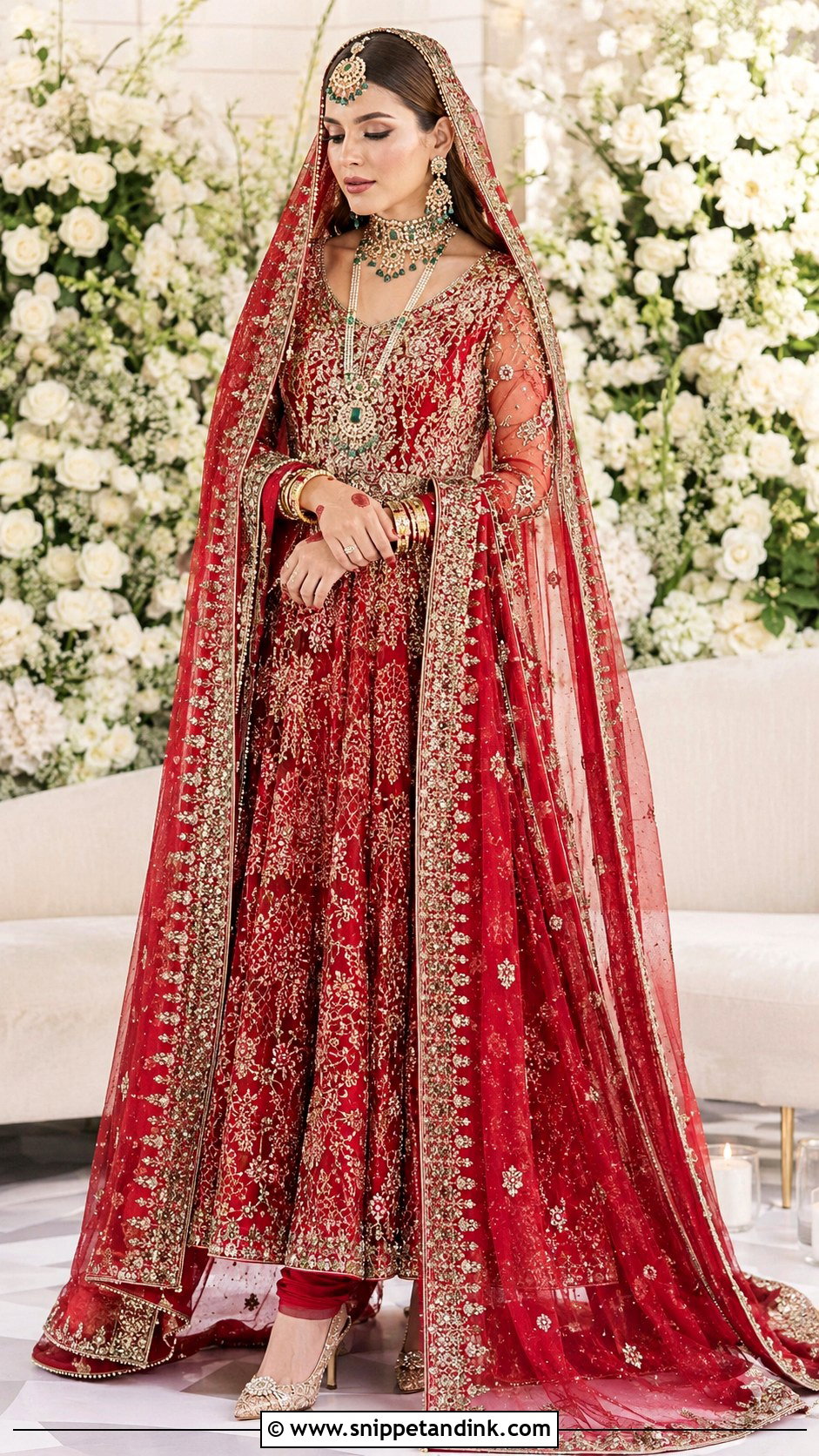
A pishwas is one of the most comfortable Barat options because the weight is spread from the shoulders down instead of hanging off the waist. Look for a fitted bodice and panels that open into a full floor-length skirt, with embroidery at the neckline, waist, cuffs and hem so some plain fabric still shows. Wear it over a churidar or narrow trousers, with embroidered heels hidden under the hem. A sheer red dupatta over the head; a lighter second one along the arms. Choker, long pendant, earrings and matha patti. The flare should start right at your natural waist. Too high and it reads maternity; too low and it shortens the legs.
6. Burgundy Gharara Bridal Dress for Barat
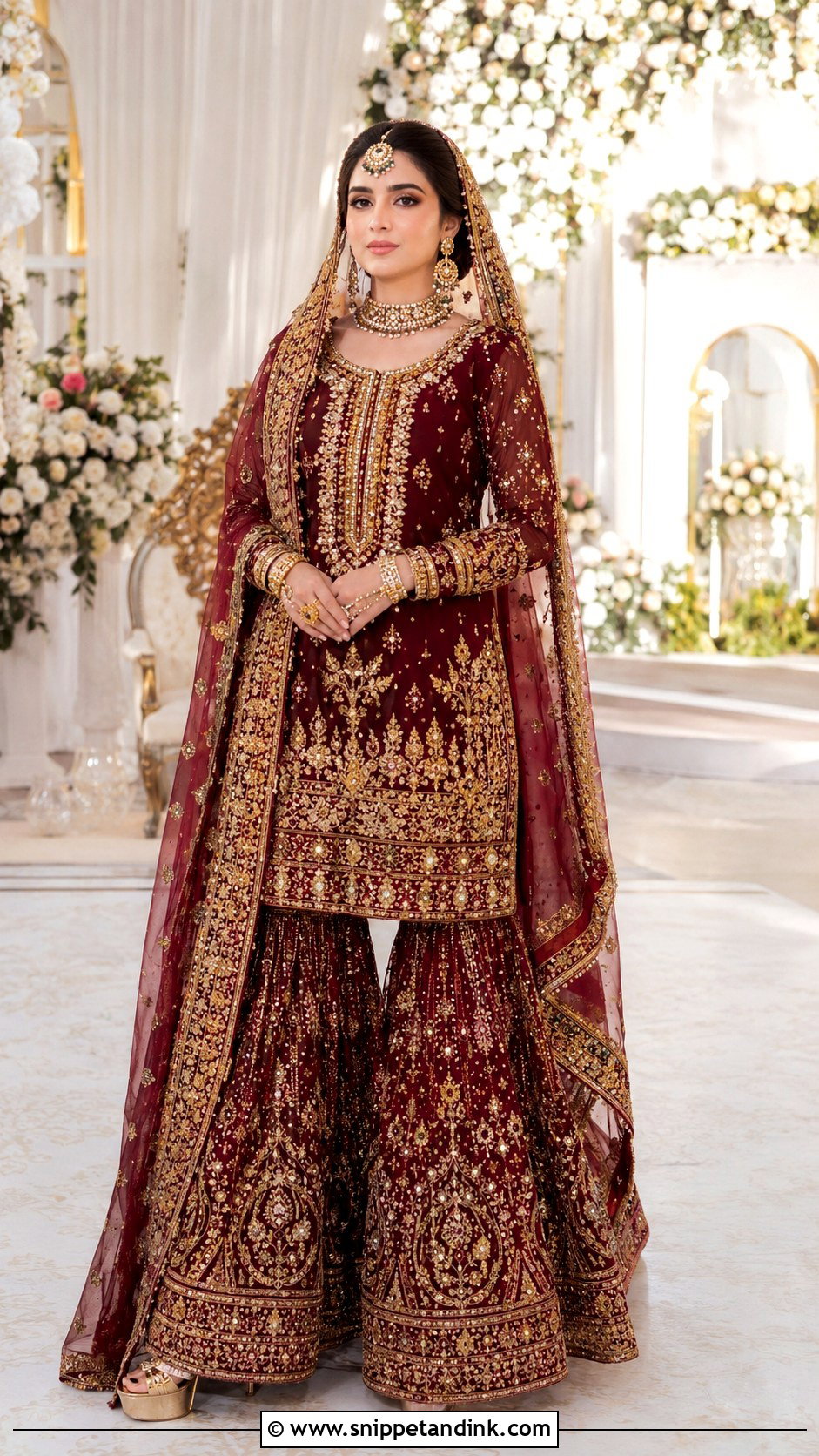
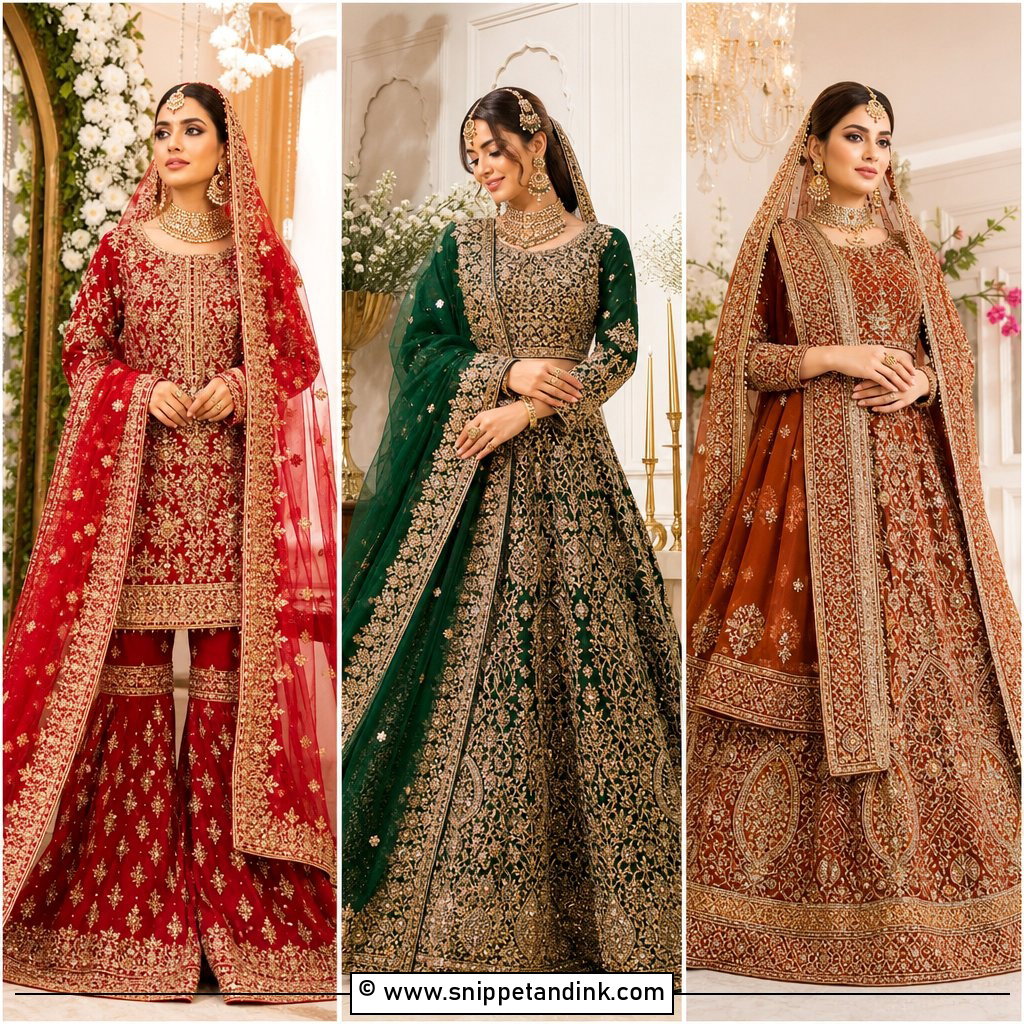
A gharara lives or dies on one seam. The joint where the fitted upper leg meets the flared lower part should sit at or just below the knee; if it lands too high, the proportion looks squat, and if it’s too low you’ll trip on the folds. I check it with the actual heels on. Burgundy pairs well with a fitted knee-length shirt embroidered at the neckline, sleeves, hem and slits. Gold platforms help the trousers fall and keep the hem off the ground. A sheer burgundy dupatta over the head should frame the shirt without hiding its embroidery. Add a kundan choker, long earrings, a small tikka and hand jewelry.
7. Deep Red Sharara Bridal Dress for Barat
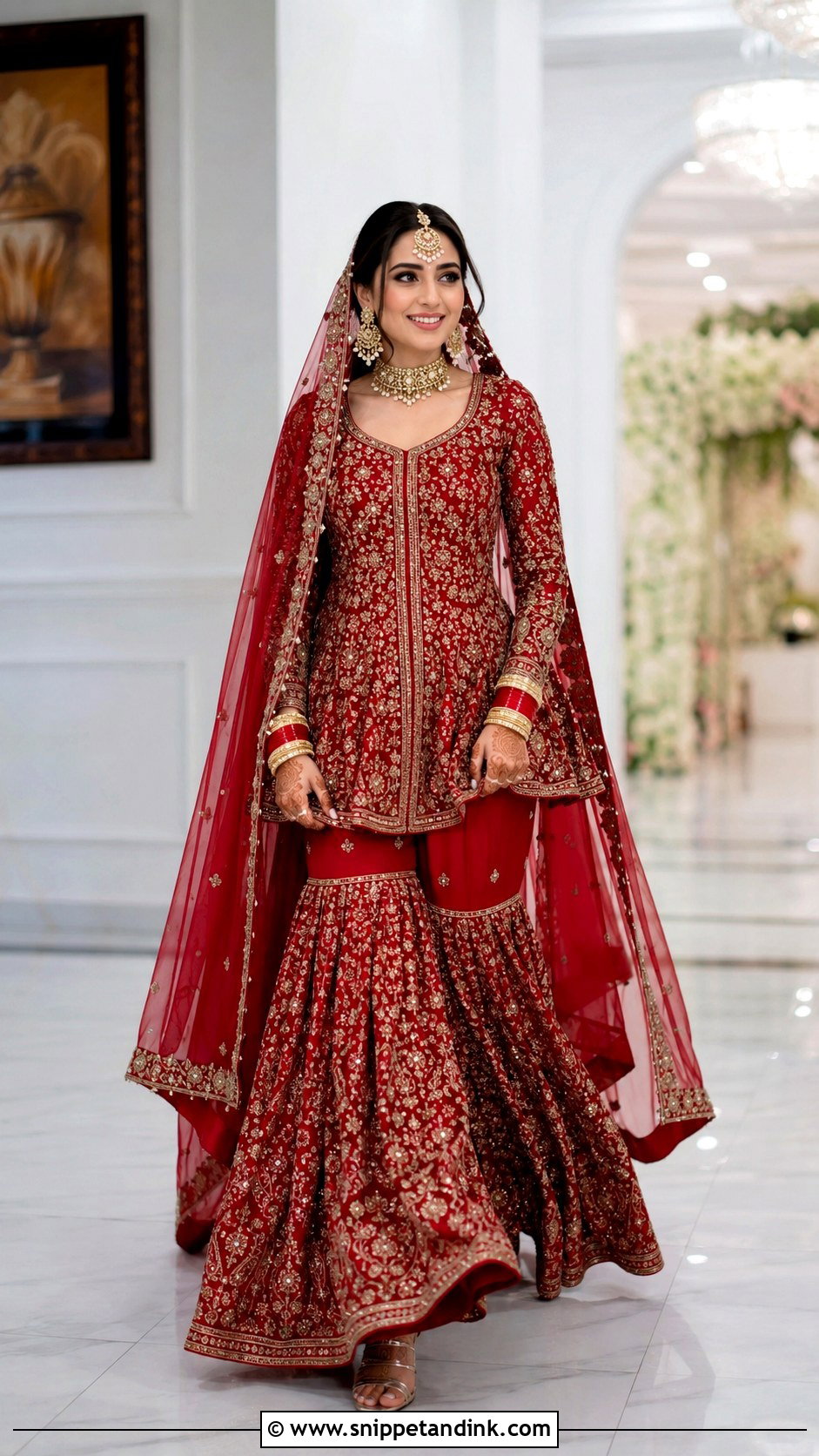
A deep red sharara gives you volume without lehenga weight, since the fullness is split between two legs. Wide raw silk, tissue or brocade trousers with a fitted short shirt or structured peplum top. Concentrate the embroidery on the shirt’s neckline and hem so the simpler trousers can move. A long net dupatta with scattered motifs and a strong border frames it. Metallic heels, choker, jhumkas, tikka and bangles. Shorter brides look taller with a higher waist and controlled width; taller brides can carry wider panels and a longer dupatta. The trouser hem must clear the floor, because wide sharara legs catch heels very easily.
8. Rust Angrakha Bridal Dress for Barat
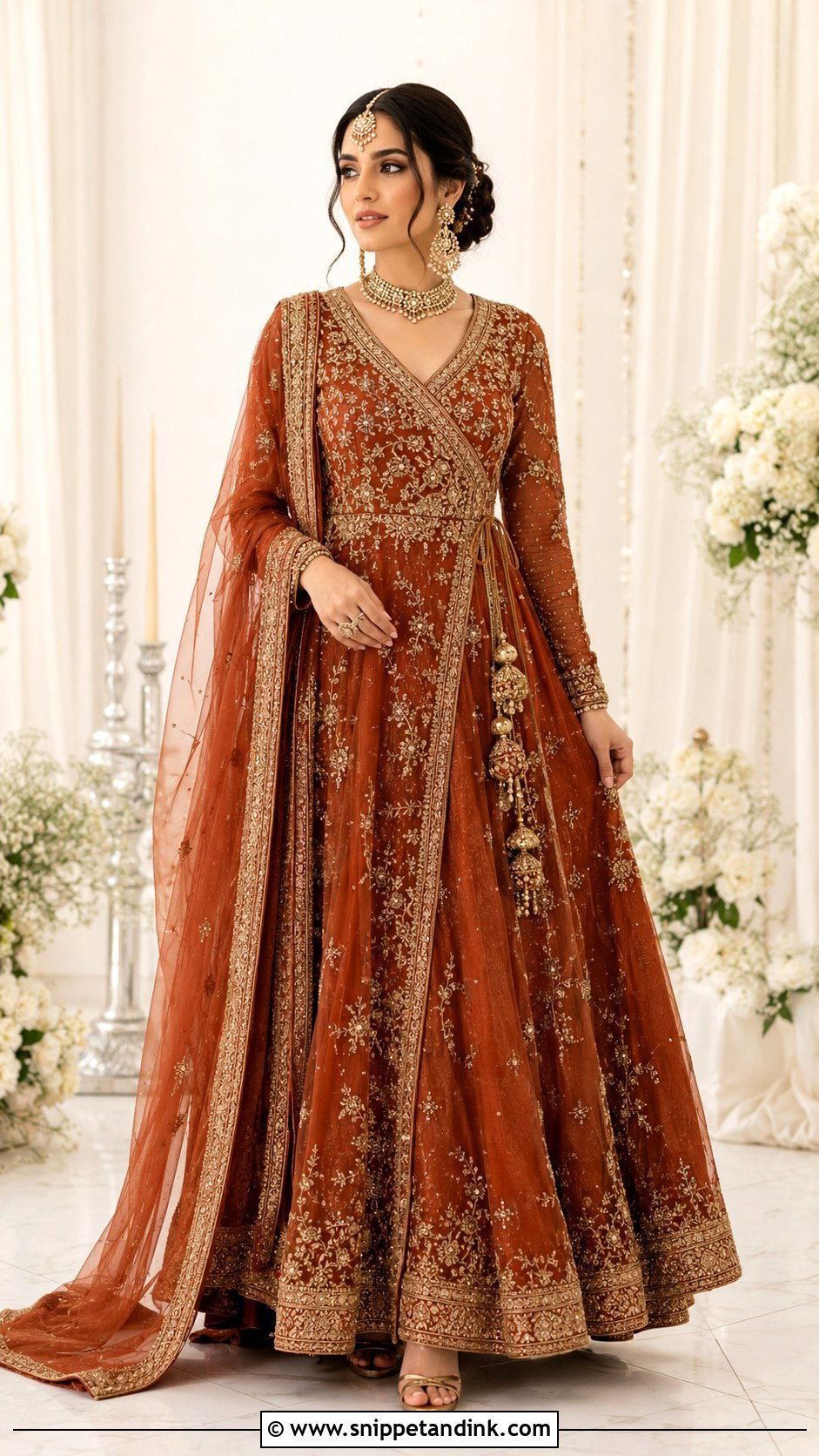
Rust is the shade I suggest to brides who love red but whose skin turns slightly pink against it. It’s warm, formal and reads clearly as bridal. A floor-length angrakha with a wrap bodice, defined waist and full skirt shows off its construction, especially with antique gold along the overlapping neckline. Tassels at the waist add movement; keep them small. Rust net dupatta, gold heels and kundan jewelry, with a low bun, centered tikka and statement earrings. The diagonal wrap shapes the upper body naturally, but it can slip open when you bend to greet elders. Ask for hidden hooks or a snap where the panels cross.
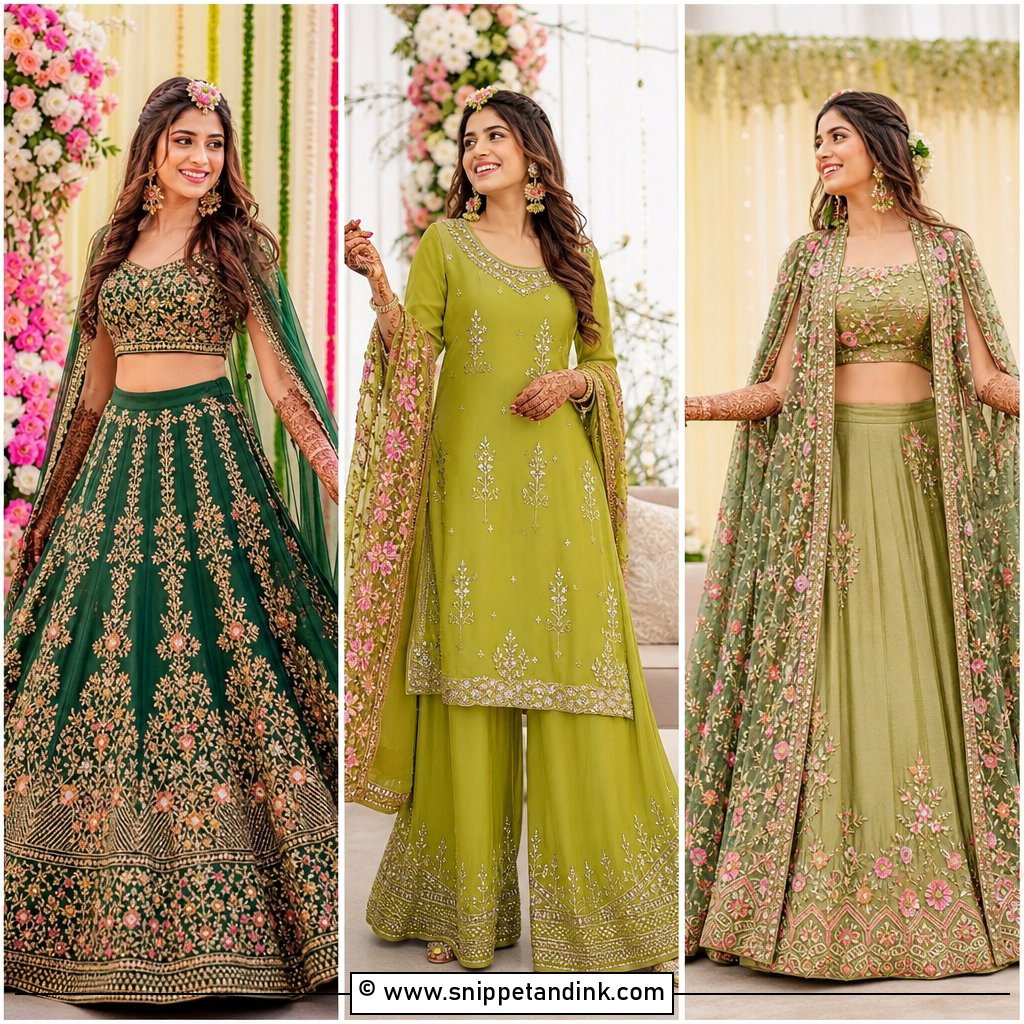
9. Emerald Green Lehenga Bridal Dress for Barat
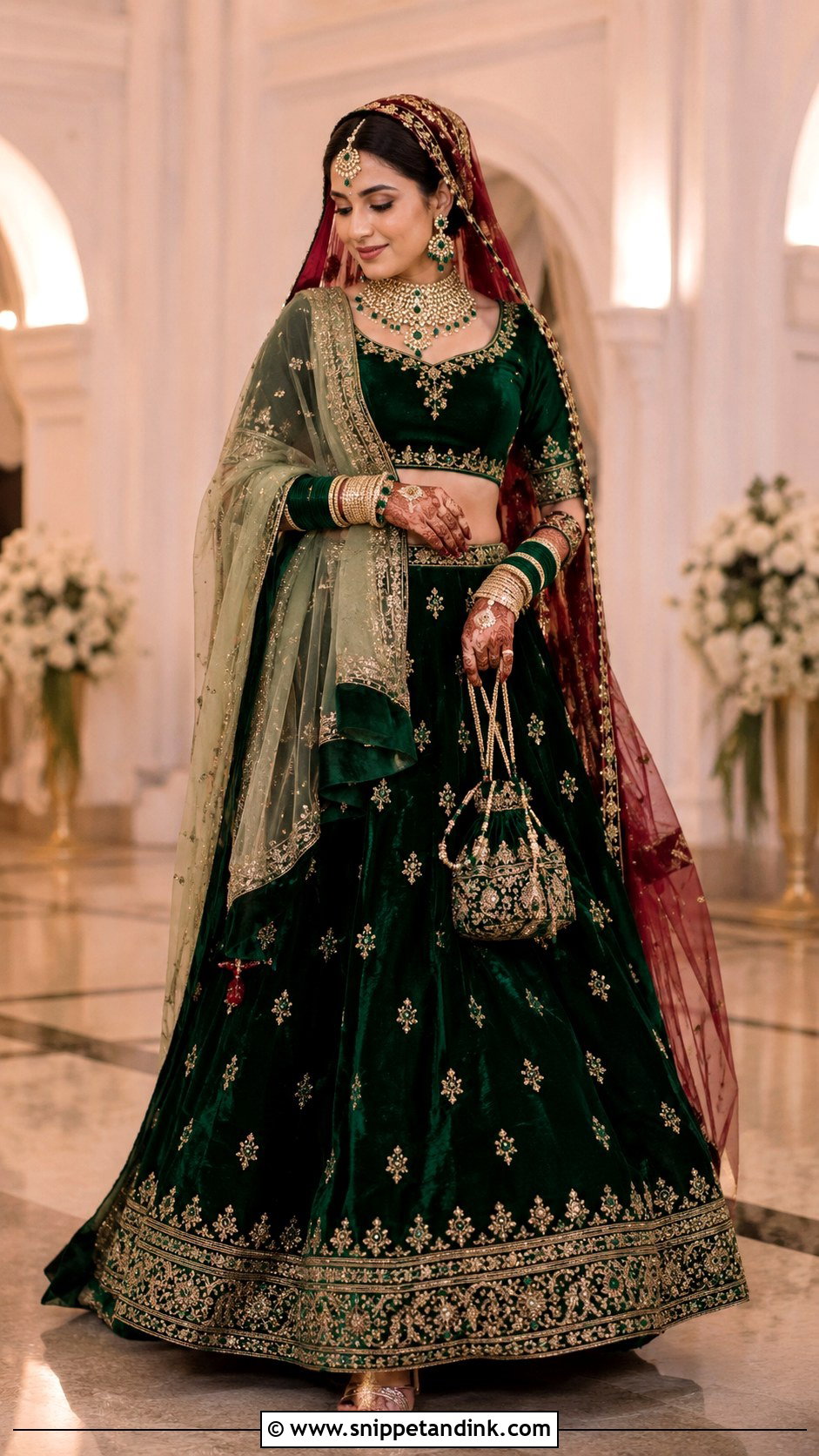
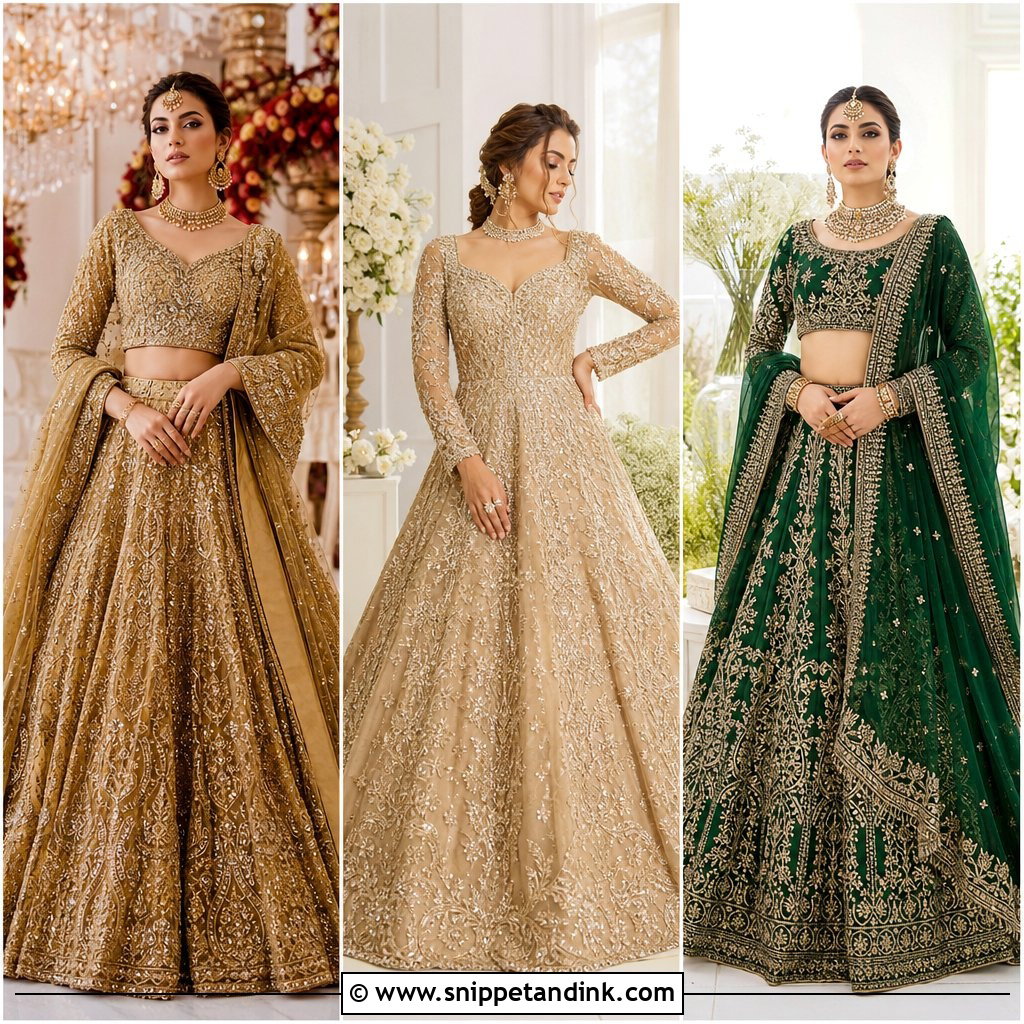
An emerald green lehenga takes you away from red without losing the formality. Deep green velvet or raw silk with antique gold embroidery, and a fitted blouse in the same green. I’d bring red back through the dupatta, bangles or a border so the family still sees a bride, not a guest. Gold heels and a structured potli. Polki or kundan with green stones, but don’t match every accessory exactly; a little contrast looks richer. A red dupatta over the head and a lighter green one on one arm. Keep the neckline open enough to frame the necklace, and put the heaviest work at the hem.
10. Plum Bridal Maxi Dress for Barat
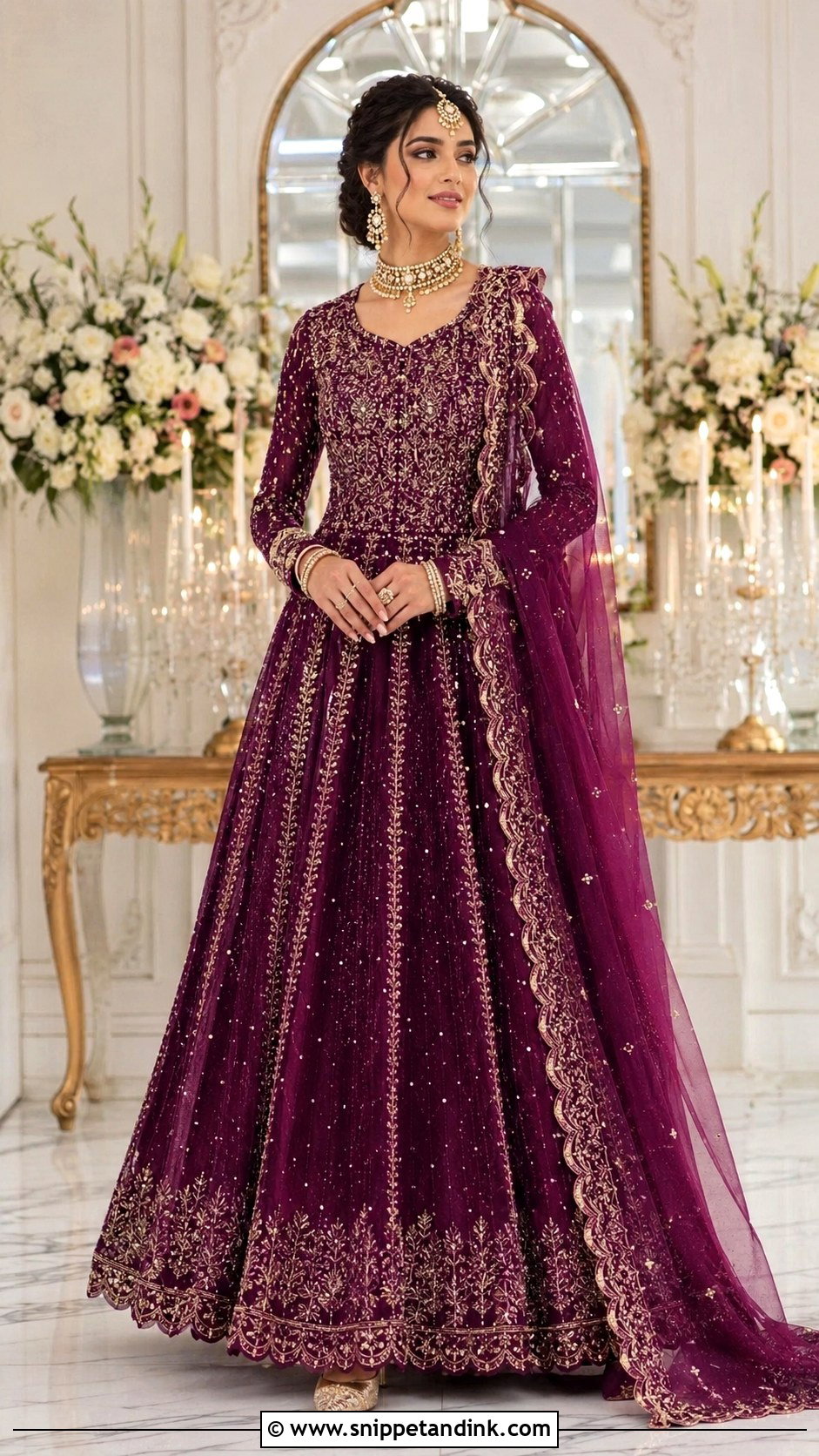
A plum maxi suits the bride who wants one continuous garment instead of separates. Ask for a structured bodice, a defined waist and a paneled skirt that opens gradually rather than puffing out suddenly. Embroidery in gold, copper or muted silver can be dense on the bodice and fade toward the hem. A plum dupatta with a scalloped border, over one shoulder or lightly over the head. Closed-toe metallic heels, a polki choker, drop earrings and a delicate tikka. My non-negotiable here is an inner waist belt with proper lining; it holds the dress in place so it doesn’t drag down or feel stiff during hours of sitting.
11. Ivory and Red Lehenga Bridal Dress for Barat
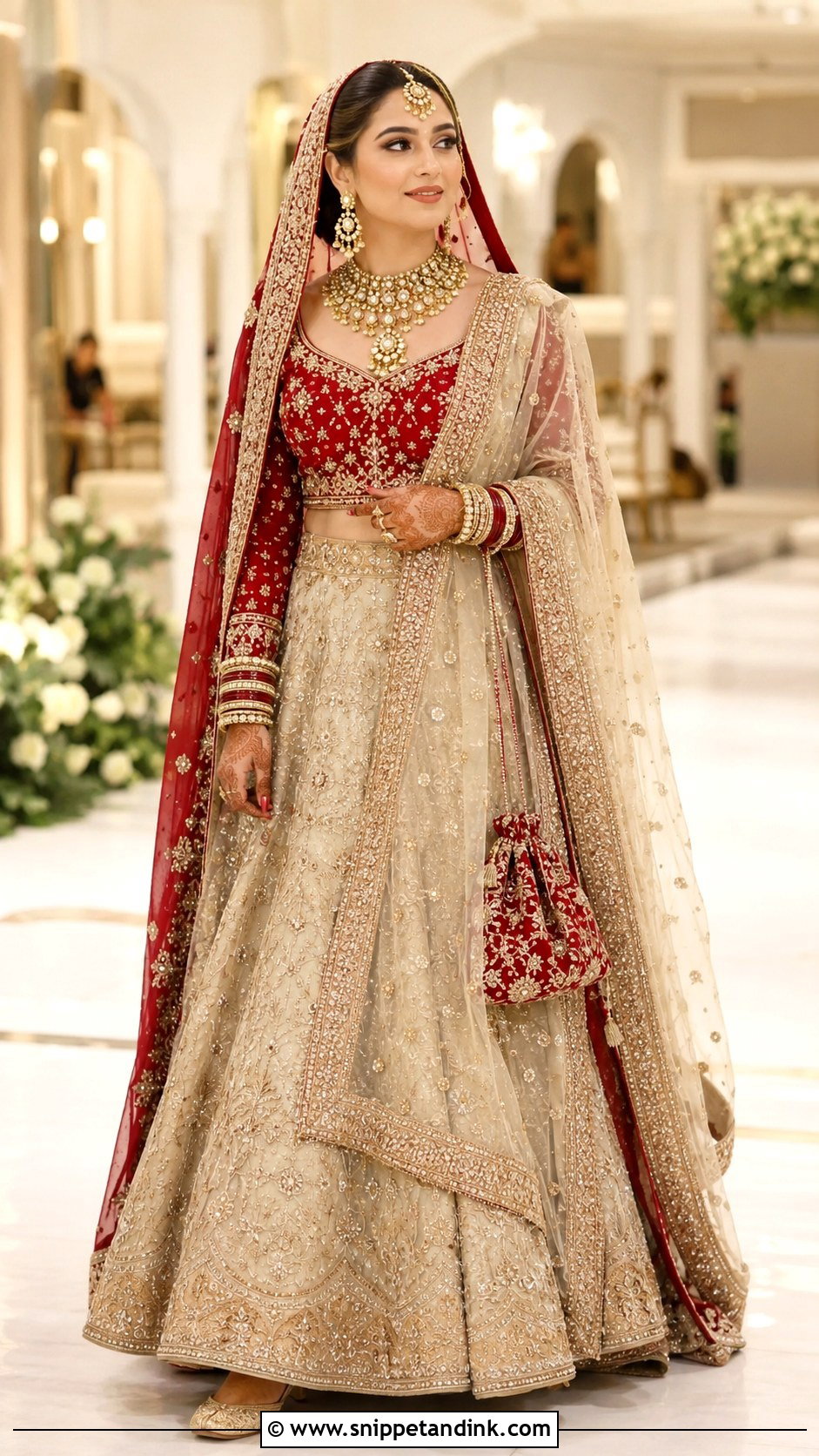
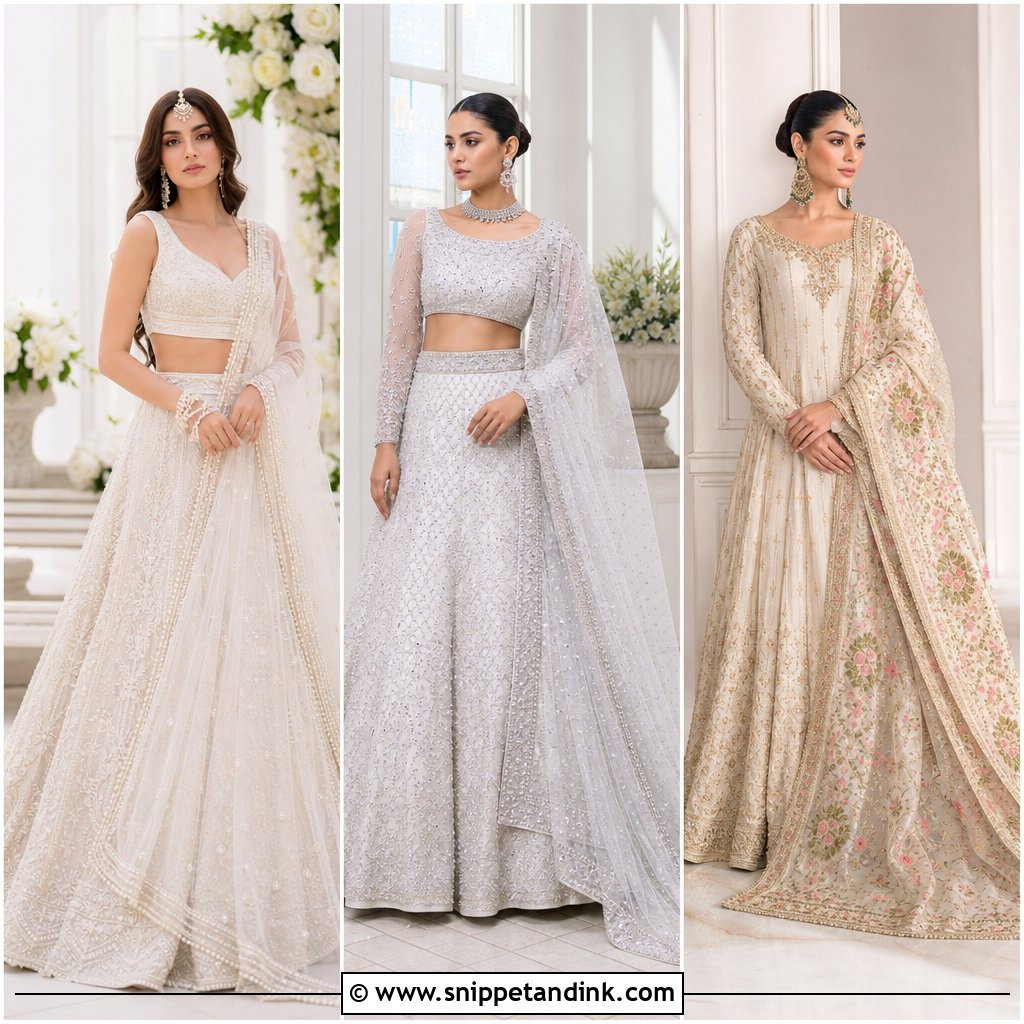
Ivory and red photograph with real contrast, but ivory shows everything: henna transfer, makeup on the neckline, dust from the stage floor. An ivory lehenga with gold embroidery and red floral accents, anchored by a fitted red blouse and a red dupatta over the head, keeps it unmistakably bridal. A second ivory dupatta across the shoulder adds depth. Gold khussas, a red potli, kundan jewelry and red-and-gold bangles. Ivory must be fully lined and opaque or it looks like a mehndi outfit. An A-line skirt keeps volume down; structured panels add grandeur. Repeat the red in small places so the skirt doesn’t look disconnected.
12. Gold and Red Lehenga Bridal Dress for Barat
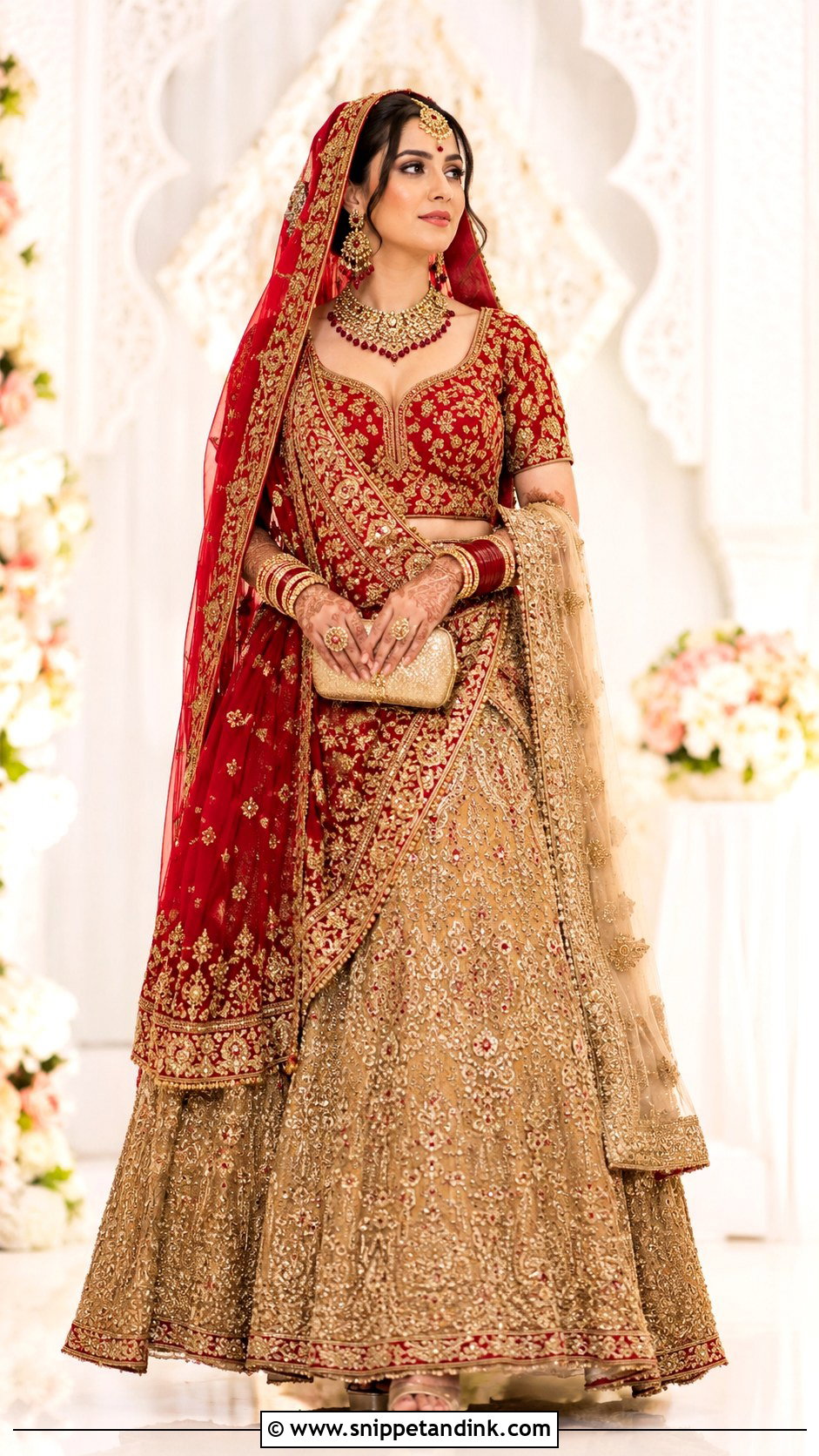
Gold and red together glow under stage lights, but the gold has to suit your skin. Deeper antique gold flatters warm undertones; pale champagne gold is kinder to cool ones. A muted gold skirt with red threadwork and maroon accents, paired with a red blouse carrying enough gold to tie the pieces together. Red dupatta over the head, lighter gold one along the arms. Metallic heels, a small embroidered clutch and ruby-toned bangles. Choose kundan or polki that contrasts gently with the fabric; plain gold jewelry on gold fabric disappears. I always test the outfit under the venue’s lighting, since warm bulbs can turn gold slightly brassy.
13. Red Bridal Saree Dress for Barat
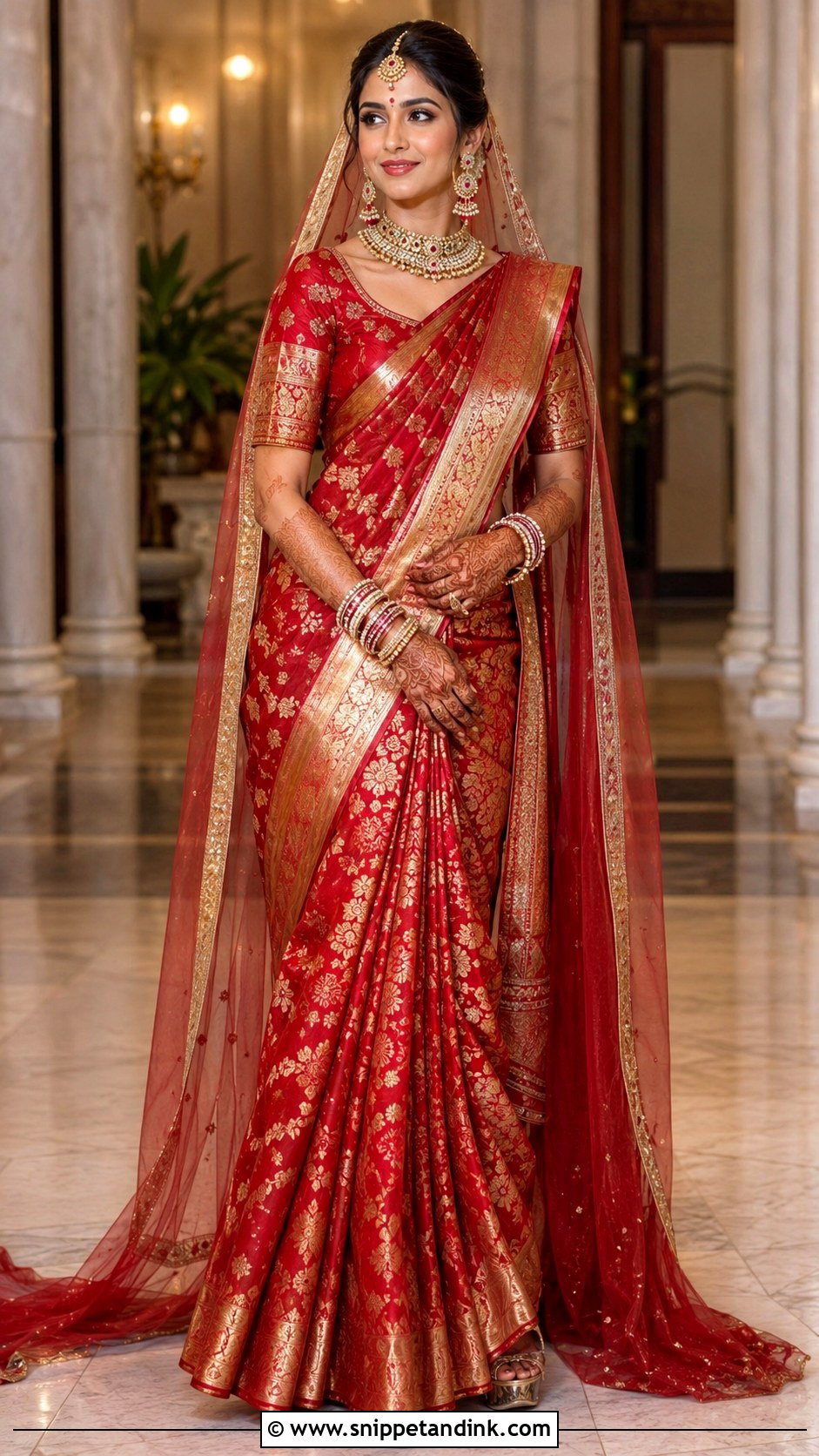
A saree draws a long, clean line where a lehenga flares, and it’s lighter than most of the alternatives. Silk, net with velvet trim or embellished organza with a wide gold border all work. The petticoat and blouse decide whether the drape stays put: a well-fitted petticoat gives the pleats something to grip, and I pin pleats in two places, not one, because they shift once you start sitting and standing on stage. Elbow-length sleeves on a supportive blouse. A long pallu for a formal line, and a light dupatta over the head if your family expects it. Metallic heels, a kundan choker, long earrings, bangles and a centered tikka.
14. Red Peplum Lehenga Bridal Dress for Barat
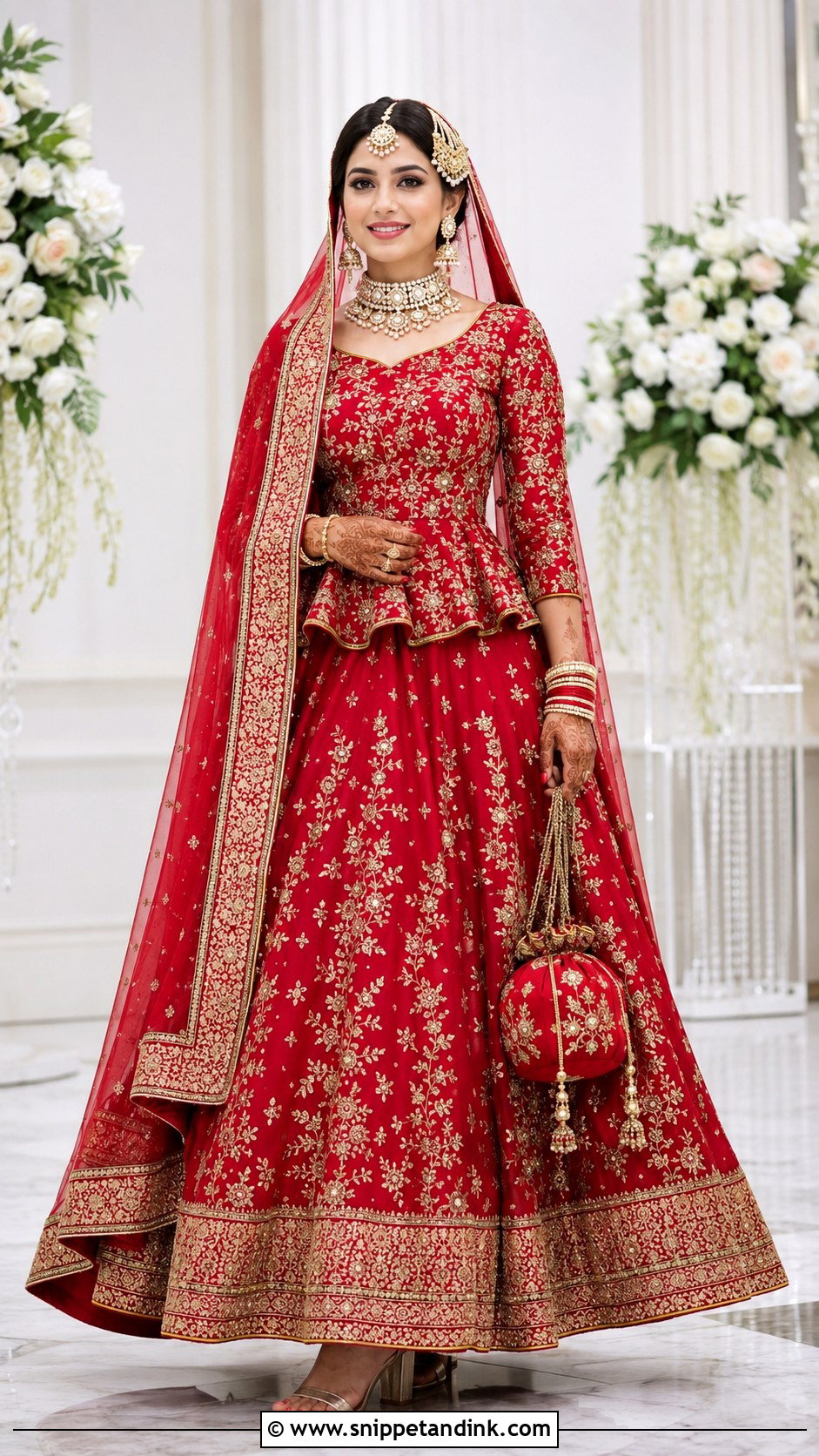
A peplum top sharpens the waist and gives a more structured, modern shape. It should start at your natural waist and end around the upper hip; a shorter flare lengthens the legs, while a longer, softer peplum covers more of the hip. Pair it with a moderately flared lehenga embroidered at the hem, and leave some plain space between the top’s embroidery and the skirt’s so they don’t crowd each other. Sheer red dupatta over the head, metallic block heels and a small potli. A choker fits the defined neckline; a passa and jhumkas keep it traditional. Hourglass figures look especially sharp in this one.
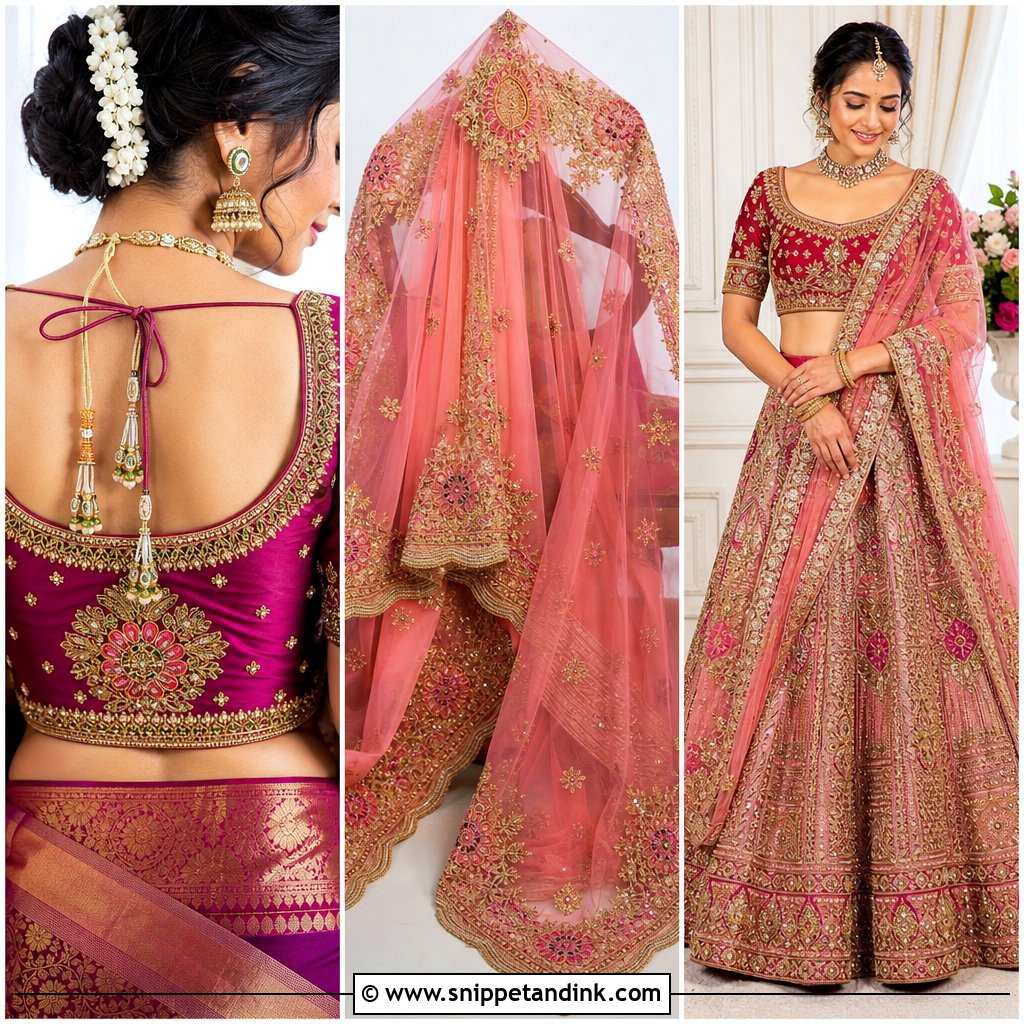
15. Red Trail Gown Bridal Dress for Barat
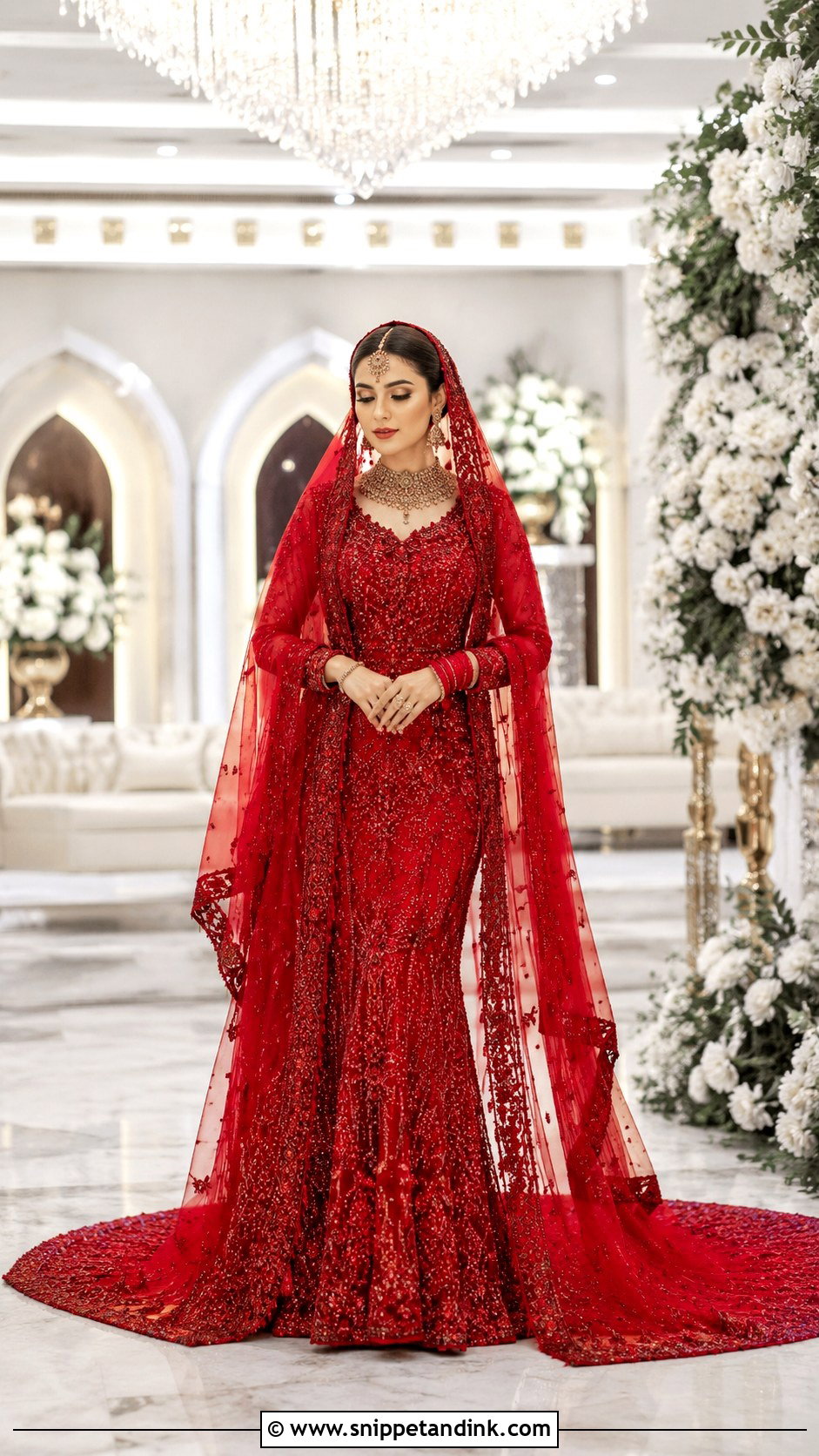
Trail gowns photograph dramatically, but on a crowded Barat floor they get stepped on. That’s why I always ask the designer for a concealed wrist loop or a bustle, so you can lift the train when greeting guests and let it down for photos. A fitted upper section, a defined waist and a train you can manage. Red-on-red embroidery, fine gold threadwork and a few crystals give texture without clutter. A sheer embroidered dupatta over the head or fixed neatly at the shoulders. Closed-toe platforms keep the front hem off the floor. A statement necklace, matching earrings, a delicate tikka and slim bangles complete it.
16. Jamawar Lehenga Bridal Dress for Barat
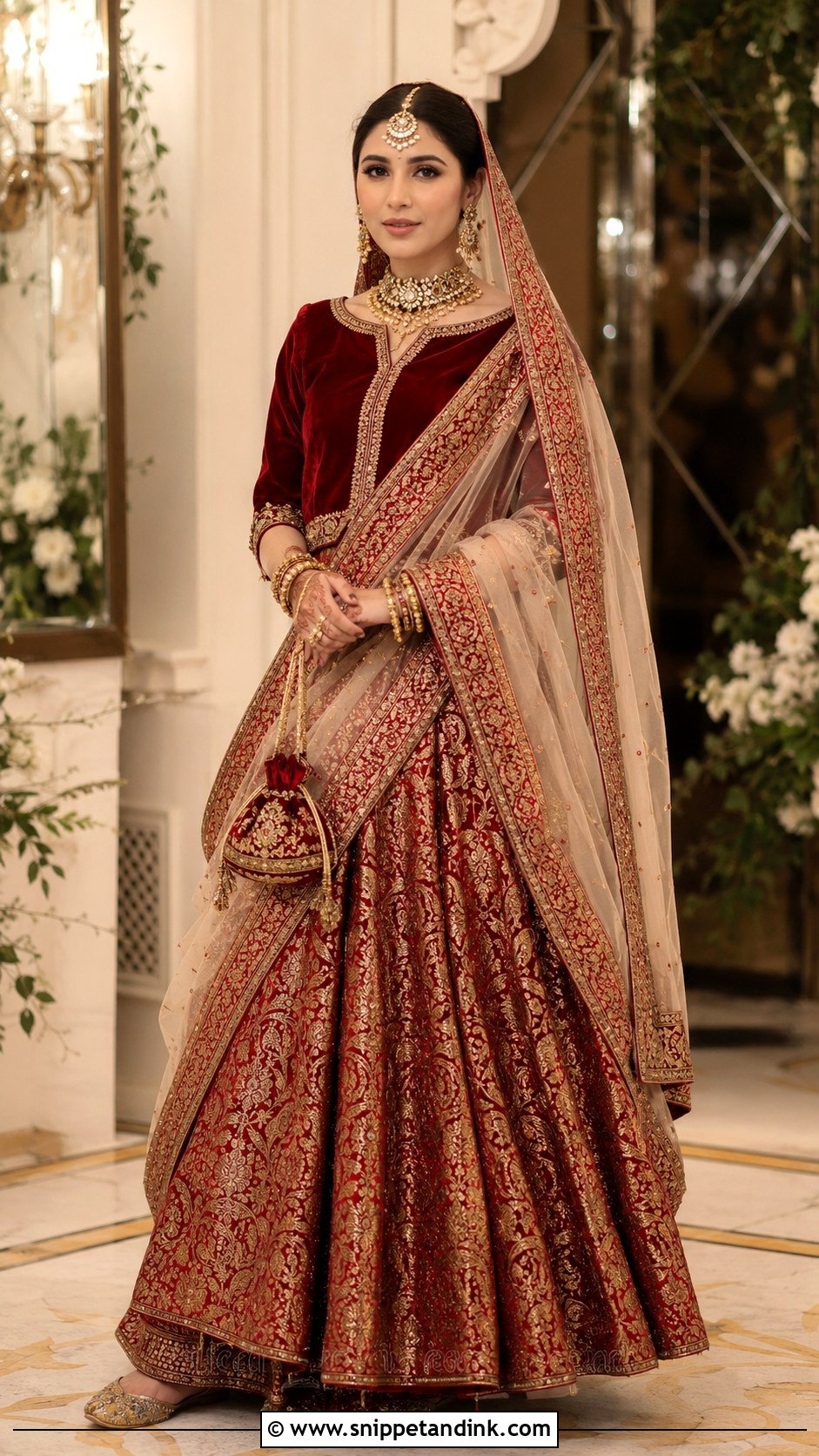
Jamawar already has woven pattern, so adding heavy embroidery on top of it is the most common mistake I see. A red, maroon or rust jamawar skirt with gold motifs works best against a plain velvet blouse carrying concentrated hand embroidery. A net dupatta with a jamawar border over the head ties it together. Gold khussas, a structured potli and antique jewelry suit the heritage feel; a broad choker with smaller earrings looks more balanced than several oversized pieces. Jamawar is dense, so keep the skirt volume controlled and ask for a lightweight lining. That’s what makes it wearable for a full evening.
17. Red Organza Lehenga Bridal Dress for Barat
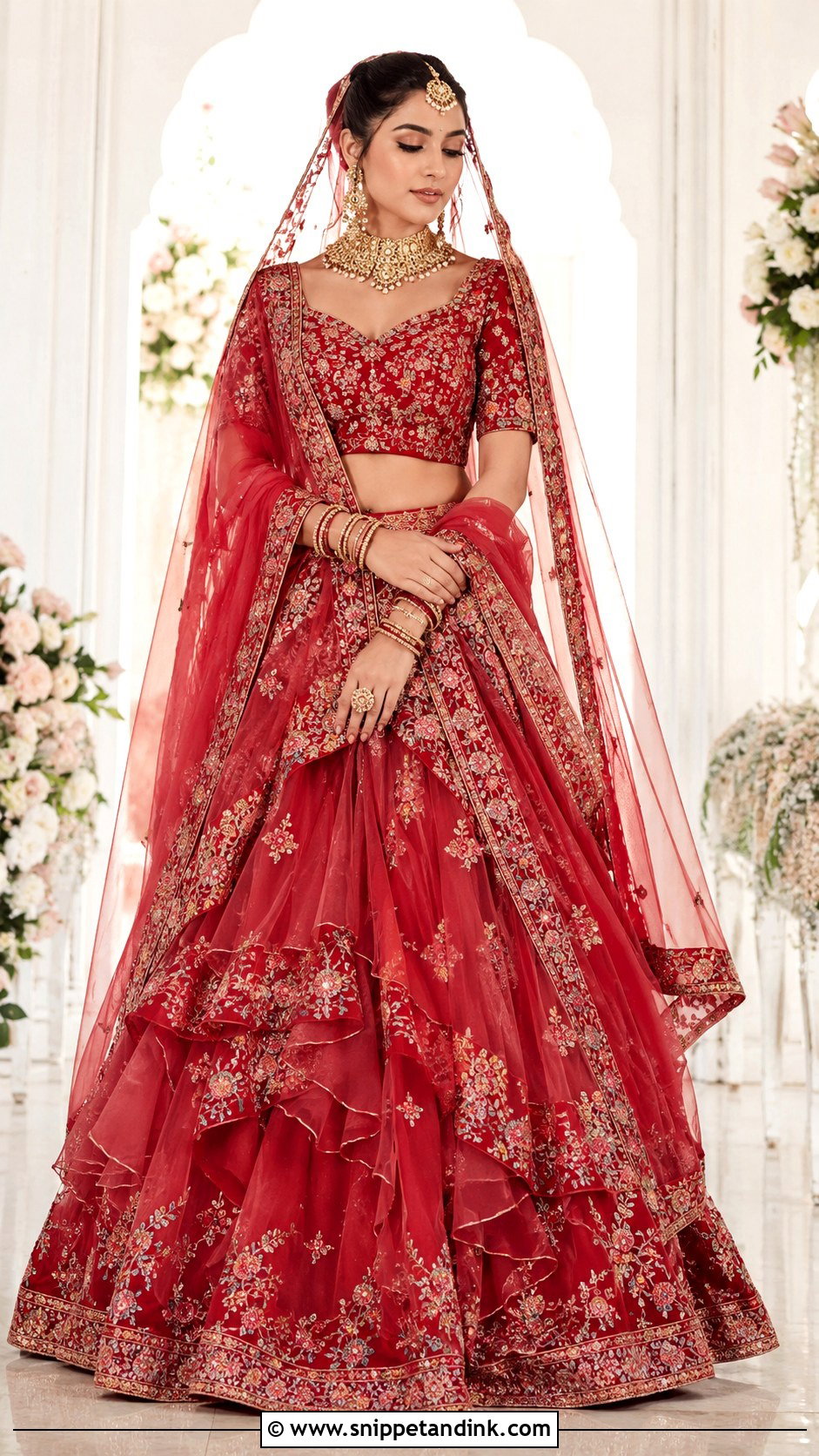
Organza gives an airy, dimensional skirt that still looks formal, and it’s a good choice for a warm-season Barat. Layer it over structured lining so it holds shape without weight. Gathering organza at the waist makes it stand away from the body, so I ask for shaped panels instead. Embroidered panels and a defined border help the sheer layers look finished. Pair it with a raw silk blouse for support and contrast. An organza dupatta over the head, or a softer net one if you’re doing a double drape. Padded heels, a kundan necklace, earrings, tikka and bangles. Steam it on the day, since organza holds every fold from the garment bag.
18. Red-on-Red Embroidered Lehenga Bridal Dress for Barat
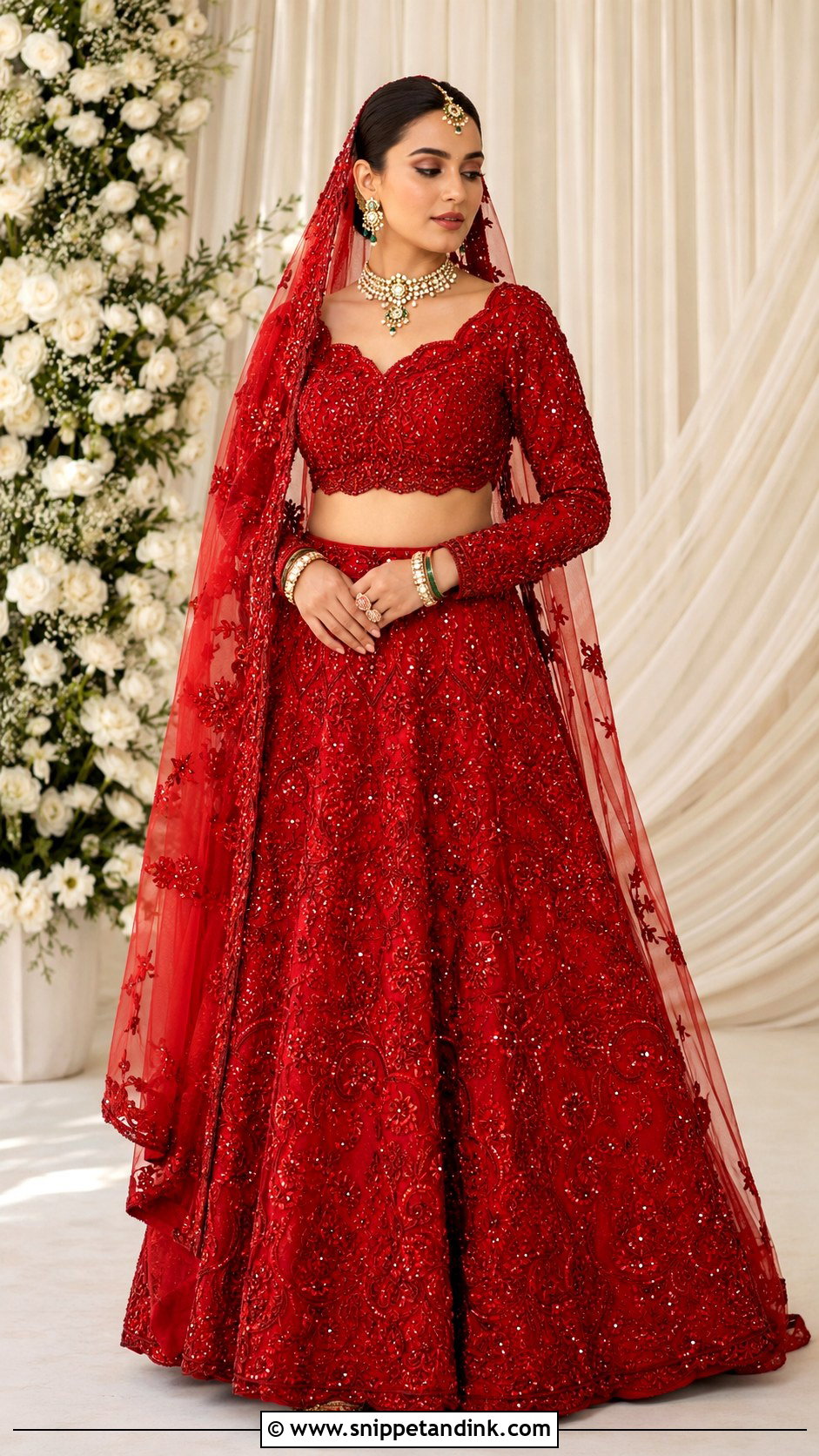
Red on red works through texture, not contrast. A crimson or deep red lehenga with tonal threadwork, beads, sequins and velvet appliqué, with just a touch of antique gold at the border so the outline shows under bright lights. Matching blouse, a sheer red dupatta with tonal motifs, and gold or red khussas. Choose jewelry with pearls, kundan or muted green stones; plain red stones vanish against the fabric. The hard part is matching reds. Velvet, silk, net and organza dyed the same shade still look different, so I compare swatches together in daylight and under artificial light before anything is cut.
19. Double Dupatta Red Lehenga Bridal Dress for Barat
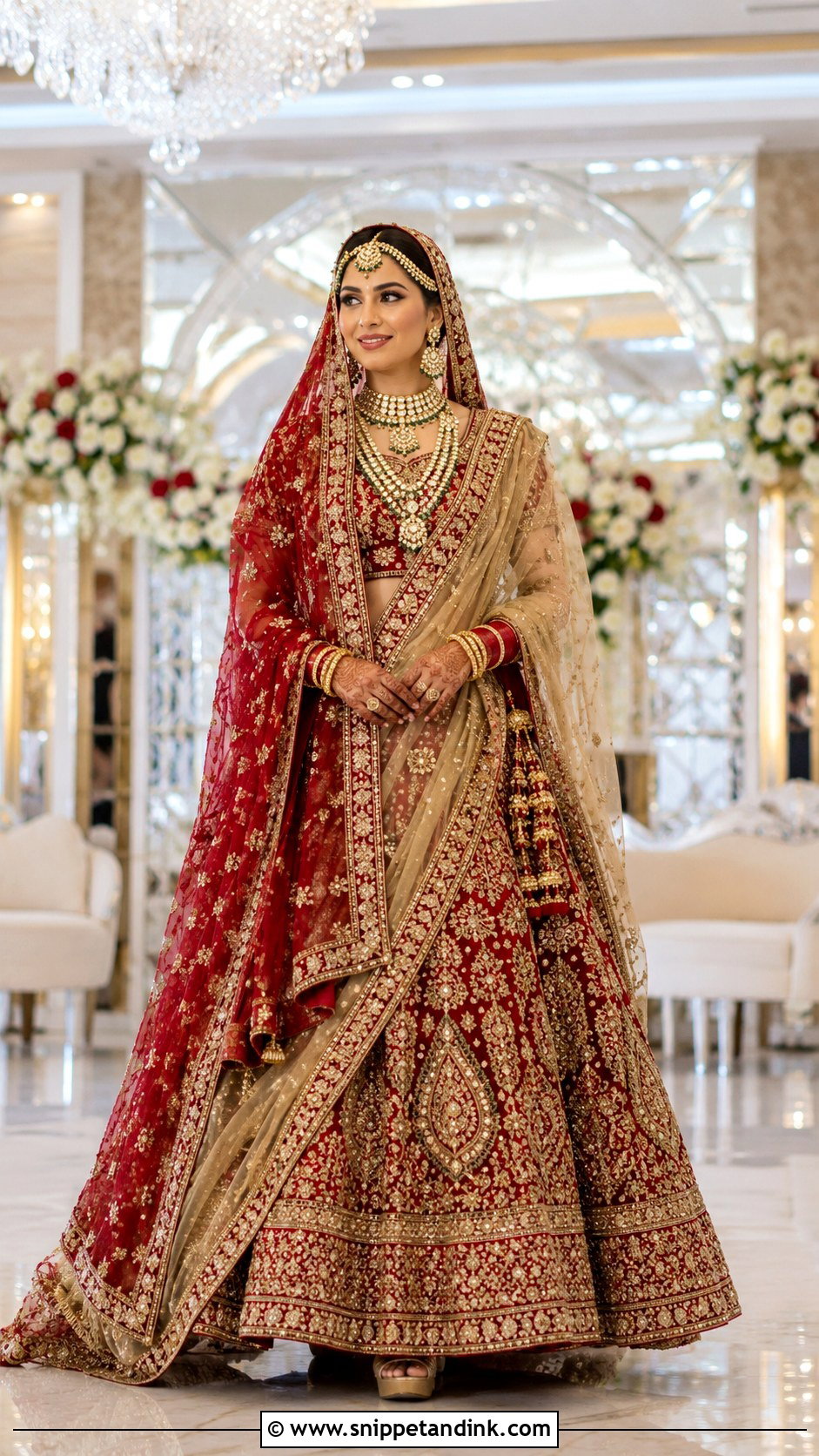
A double dupatta red lehenga is the most ceremonial look here and the heaviest on your head. Start with a richly embroidered skirt and matching blouse. The heavier dupatta goes over the head, set around the crown and shoulders so the border frames your face; the lighter one drapes diagonally across the torso or along one arm. Muted gold, soft blush or deep maroon for the second adds depth. Platform heels, layered kundan, a matha patti, earrings and bangles. I always make one dupatta genuinely lightweight, because two heavy ones pull on the scalp and the hair pins by the second hour. Small fabric loops and hidden pins keep both in place.
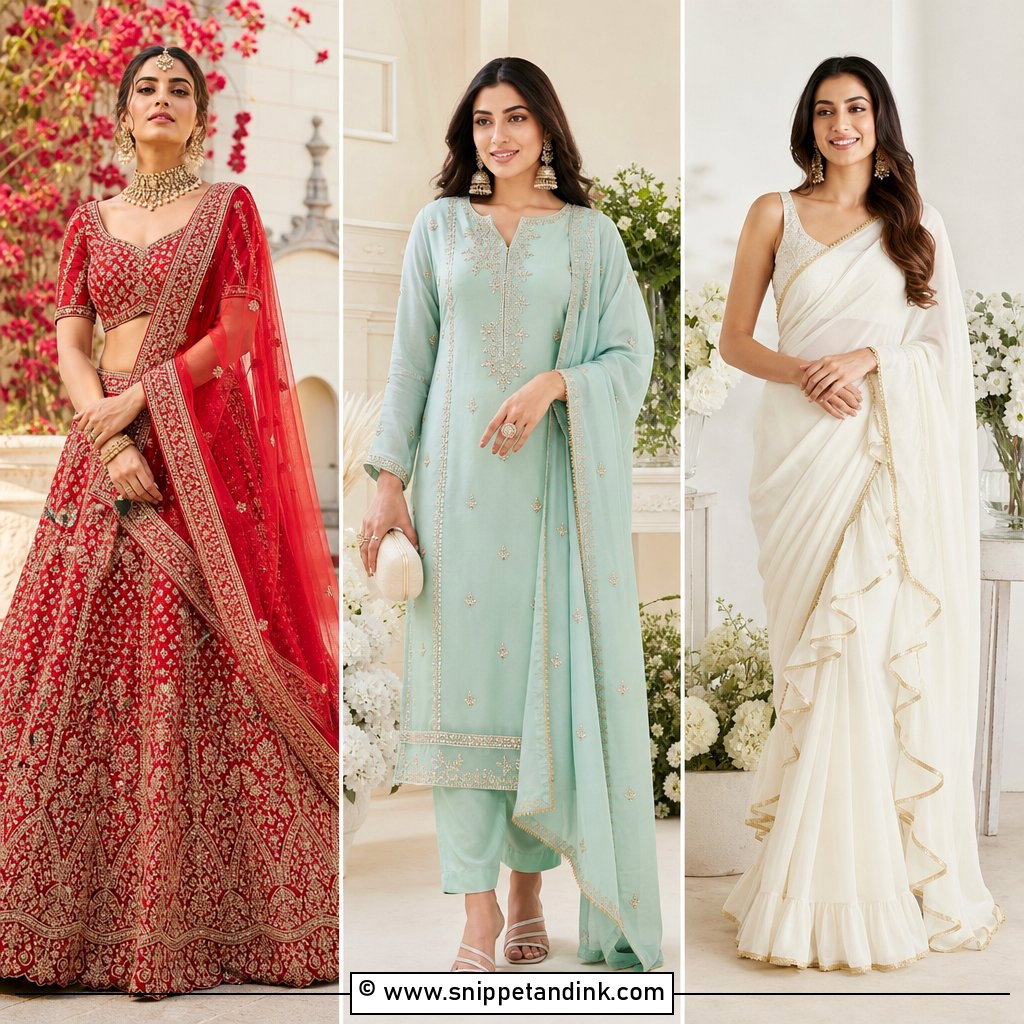
20. Minimal Red Lehenga Bridal Dress for Barat
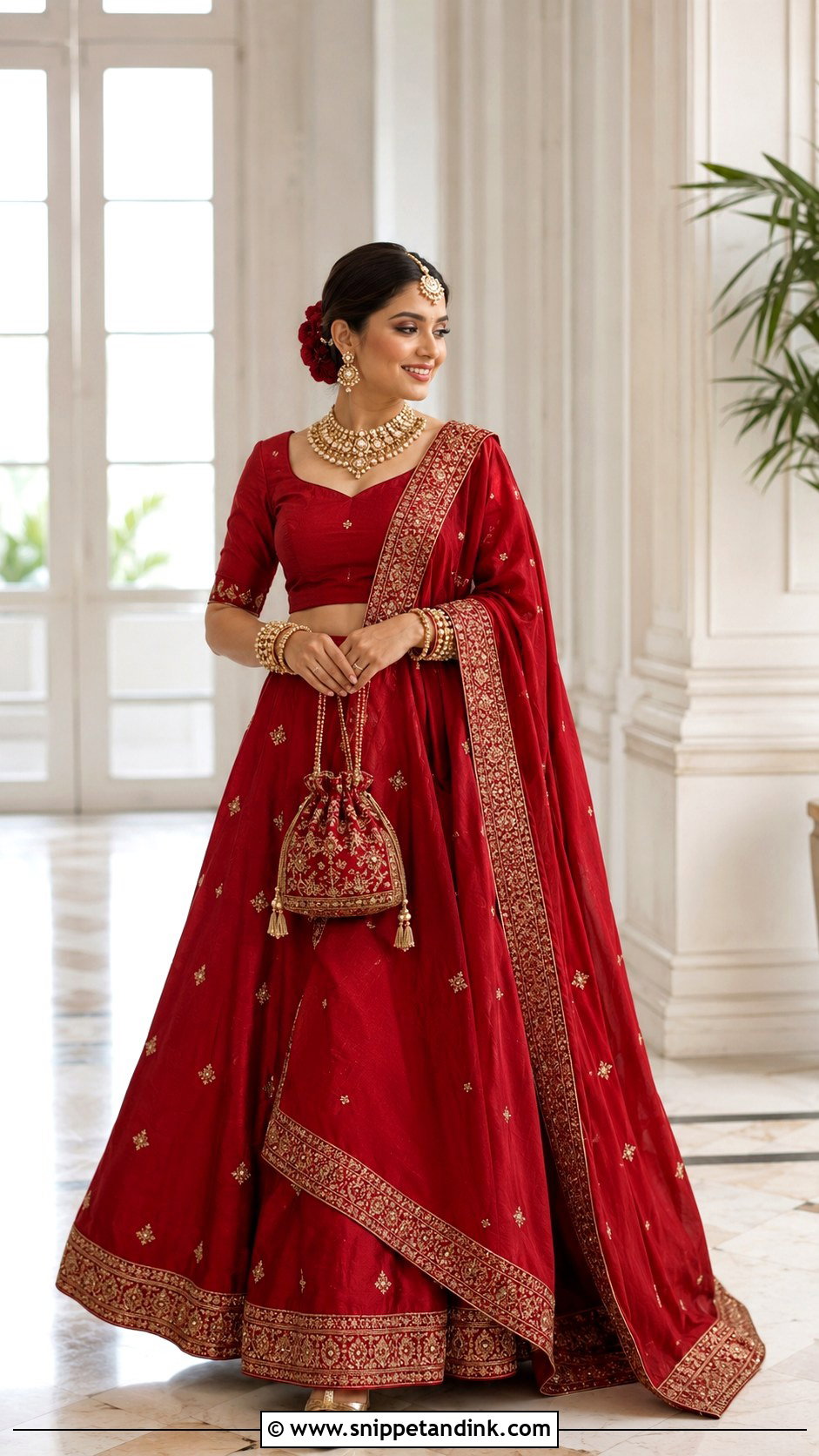
Minimal doesn’t mean plain. A red lehenga in rich raw silk with spaced gold motifs, a detailed hem and a precisely fitted blouse can look completely bridal with half the weight of a fully worked skirt. Keep the embroidery at the neckline, cuffs, waist and border. Then let a wide-bordered dupatta add importance around the face. Gold heels, a structured potli and one strong jewelry set. An A-line skirt moves easily, and three-quarter sleeves give coverage. It’s the outfit I’d recommend to a bride who wants clean photos and can’t bear the thought of a heavy can-can. A smooth bun and polished makeup finish it.
Wrapping a Heavy Lehenga in Muslin for the Years After
A Barat outfit is often kept for decades and sometimes passed down, and most damage happens in the first months after the wedding, not on the day. Here is how I tell brides to put theirs away.
- Air it out for a day or two first. Sweat, perfume and henna oil left in the fabric cause yellowing and tarnish later.
- Have marks cleaned by a specialist who handles hand embroidery. Ordinary dry cleaning can dull zari and loosen sequins.
- Never store a heavy skirt on a hanger. The weight stretches the waistband and the seams over time. Fold it flat instead.
- Wrap it in soft muslin or plain cotton, with acid-free tissue between the folds and over any embroidery. Plastic traps moisture.
- Turn embroidered panels inward so metal threads don’t rub against each other.
- Refold it along different lines every few months so permanent creases don’t set, and keep a small sachet of silica gel nearby in humid weather.
Metallic zari can still darken with time even when stored well. That’s the nature of the metal, not a fault in the outfit, and a good restorer can often brighten it.
Let Comfort Decide Between Two Favorites
You should look grand and still be able to move, sit and enjoy your Barat. Lehengas, velvet, long shirts, pishwas, ghararas, sarees, gowns and modern color pairings can all get you there. Start with the silhouette you feel most confident in, then weigh the season, the venue, how heavy the fabric is, where the embroidery sits and how your dupattas will be arranged. Do every fitting in your real shoes and underlayers. And if you’re torn between two outfits, choose the one you can wear comfortably for six hours. Good tailoring and balanced jewelry beat extra embellishment every time.
You'll Like These Ideas:


Leave a Reply