
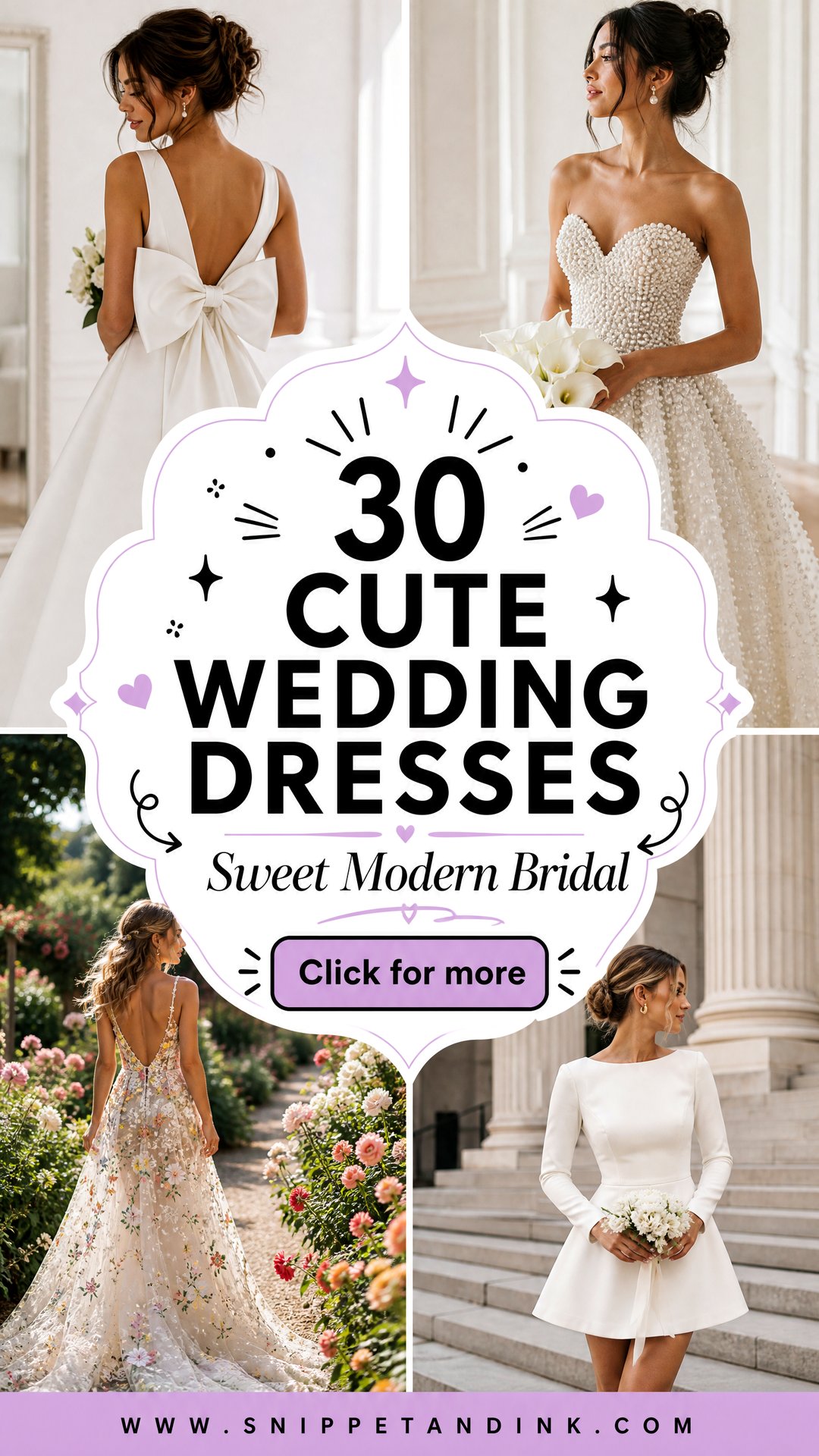
A cute wedding dress is harder to get right than a grand one. Sweetness lives in small things: a bow, a shorter hem, a puff of sleeve, a scatter of pearls. When one of those details is slightly off in scale, the dress tips from charming into costume. In fittings I spend most of my time on exactly that balance, adjusting where a bow sits or how far a hem falls above the knee. The thirty dresses below run from courthouse minis to full tulle skirts, and for each one I’ve noted what I look at first and what tends to go wrong, so you can judge the shapes on your own body and not only on a hanger.
Sitting, Hugging and Dancing at the Try-On
Short and playful dresses get judged in the mirror while standing still, which is the one position you’ll hardly hold on the day. Before I let a bride fall in love with a dress, I ask her to move in it. Most of the problems with cute styles only appear in motion: hems that ride up, sleeves that bind, bows that flatten.
- Sit on a hard chair for a full minute, then stand and look at the back. Satin and lace with no stretch will show you exactly where they crease and climb.
- Raise both arms as if hugging someone taller. Strapless and off-shoulder bodices that slip here will slip at the reception.
- Walk a few steps and turn quickly. A mini or tea-length hem should move with you, not flick up at the back.
- Check yourself in daylight near a window. Ivory, champagne and bright white look very different outdoors than under shop lighting.
- Bring your intended shoes or something the same heel height. Hem length is set by the shoe, not the dress.
If a dress fails one of these, it isn’t automatically out. Many issues are fixable with a stay, an extra hook or a different hem. But I’d rather you know at the first appointment than at the last fitting.
1. Short Lace Wedding Dress
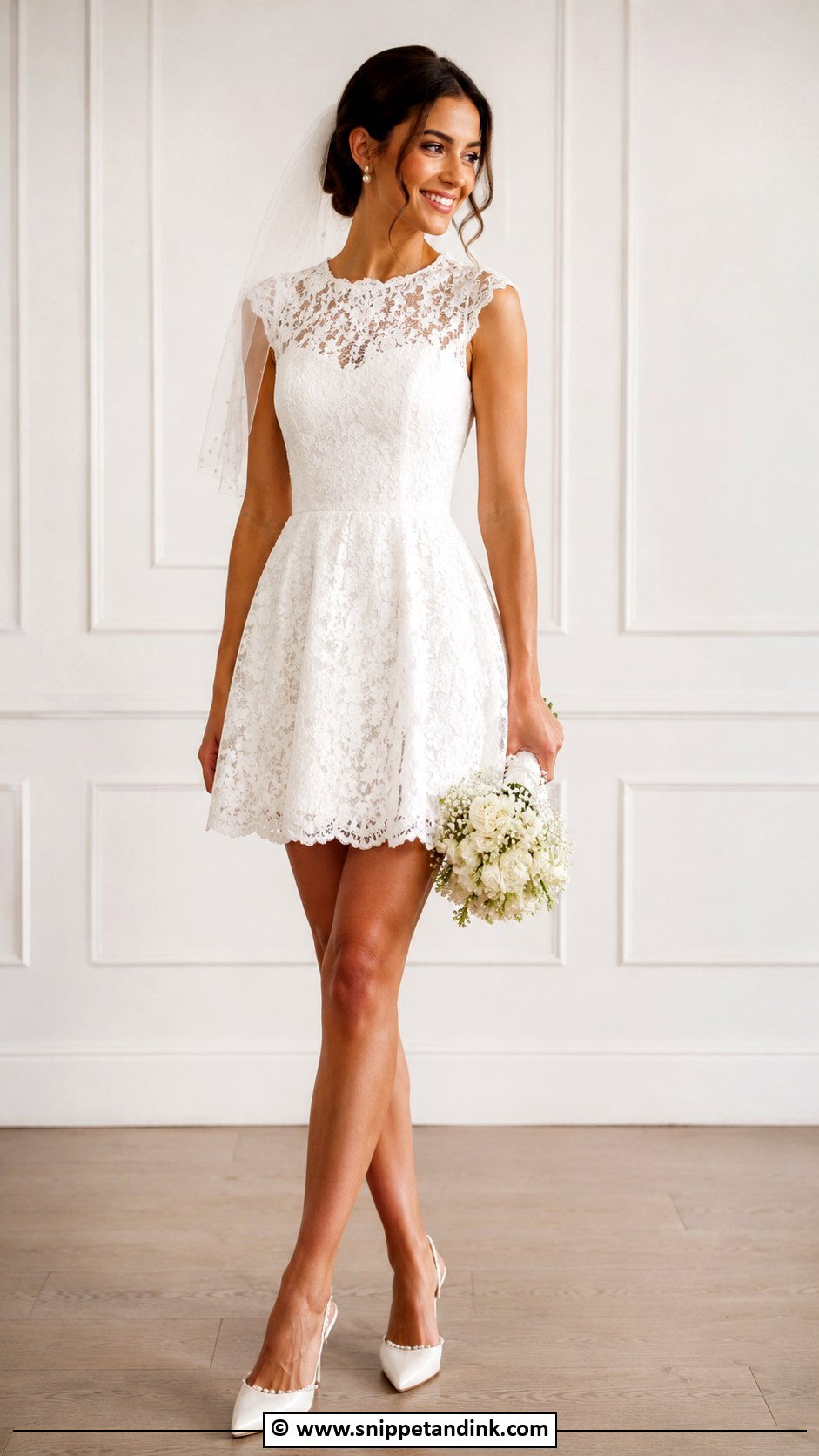
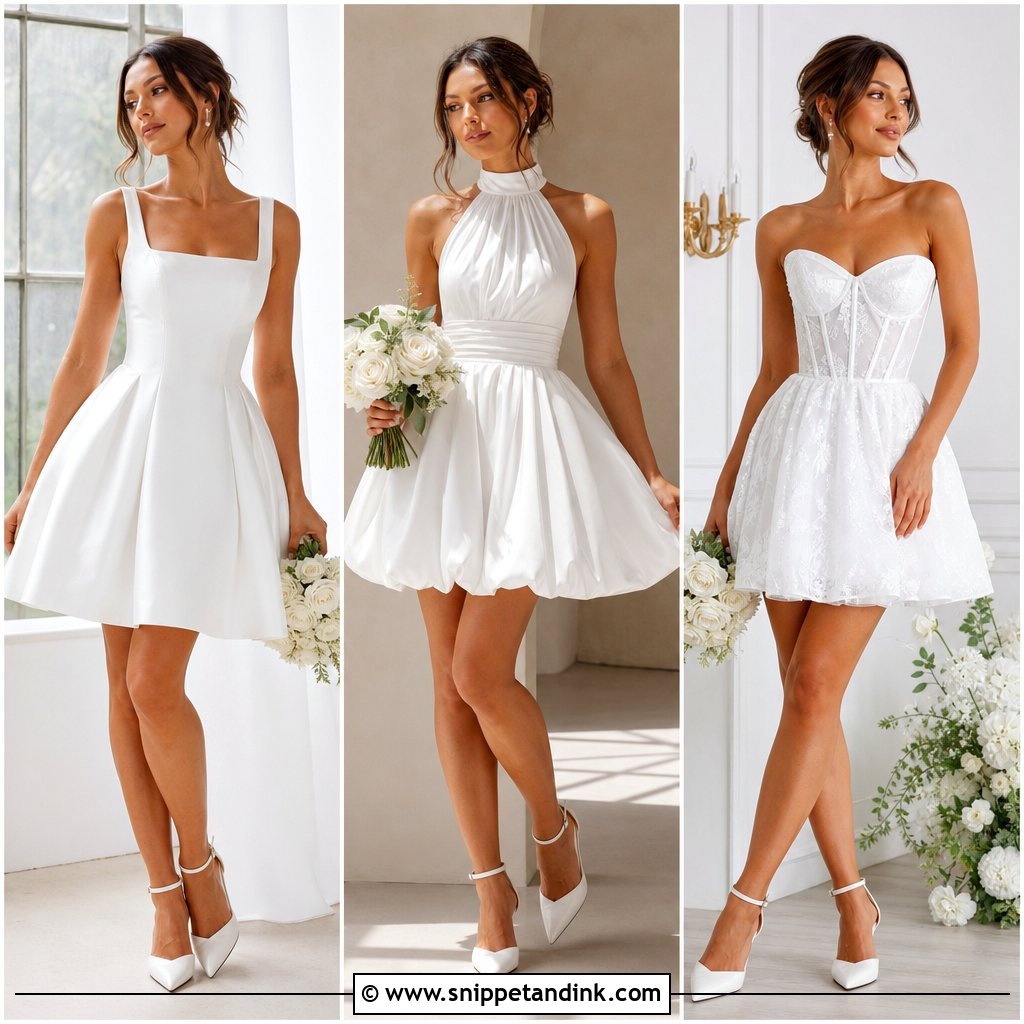
Short lace is the dress I see chosen most often for a courthouse ceremony or a reception change, and the hem is where it succeeds or fails. I usually set it two or three fingers above the knee, then ask the bride to sit down, because lace with no stretch rides up further than people expect. A fitted bodice over a small A-line skirt gives shape without pulling. Bring the actual shoes to the fitting; pearl heels and flats change the ideal hem by a surprising amount. Keep the rest quiet: pearl studs and a mini veil or a satin bow are enough.
2. Satin Mini Wedding Dress
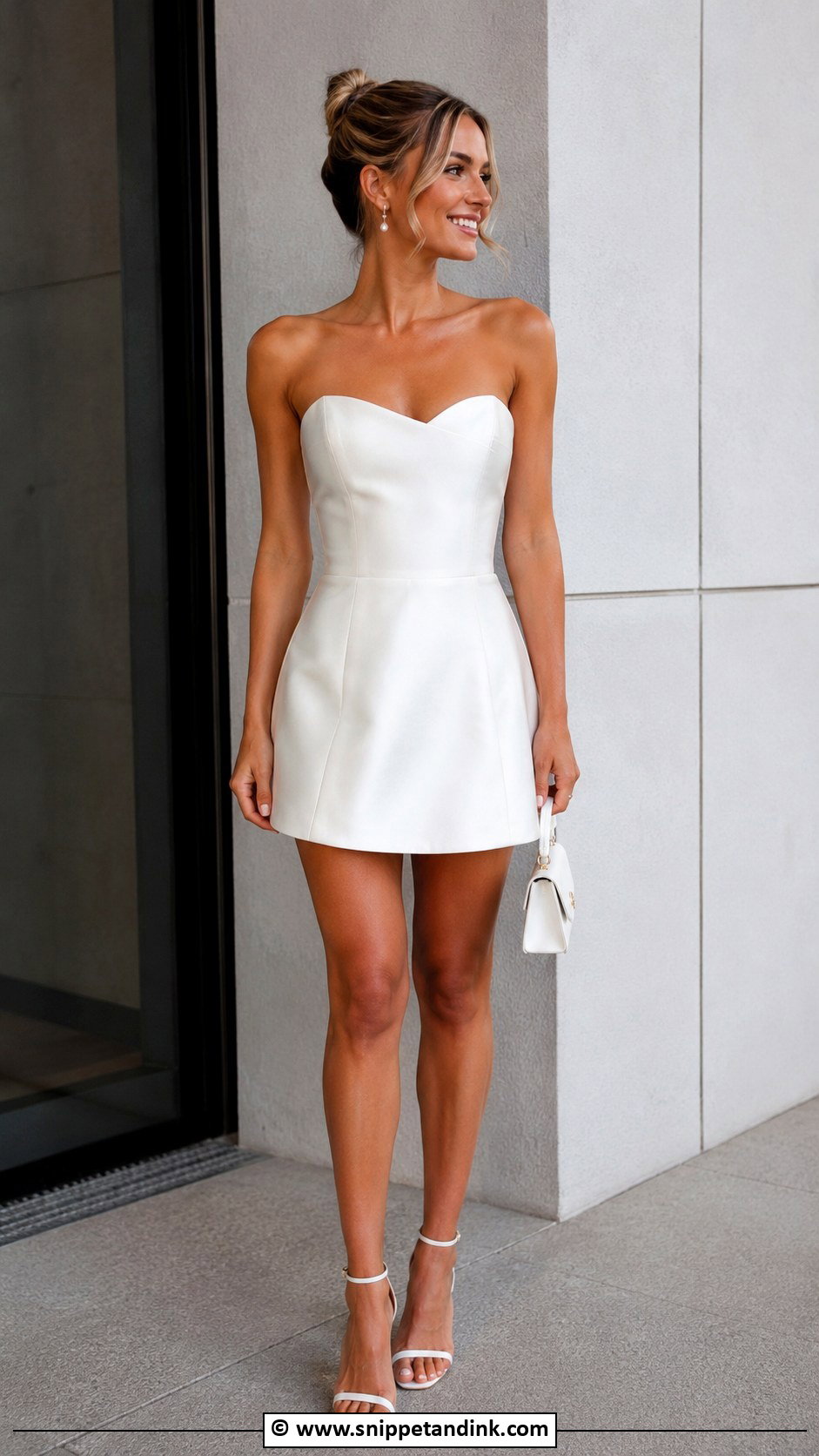
Satin is unforgiving on short lengths, which is why a satin mini wedding dress needs a precise fit more than any other dress here. Heavy duchess satin holds a square neckline or strapless bodice crisply; thin charmeuse shows every seam and every line underneath. I always check the back of the skirt after the bride has been sitting for a few minutes, since satin creases across the seat. For a ceremony-to-party switch, a detachable sheer overskirt or a long veil adds formality and comes off in seconds. Ankle-strap heels and small drop earrings finish it.
3. Floral Applique Wedding Dress
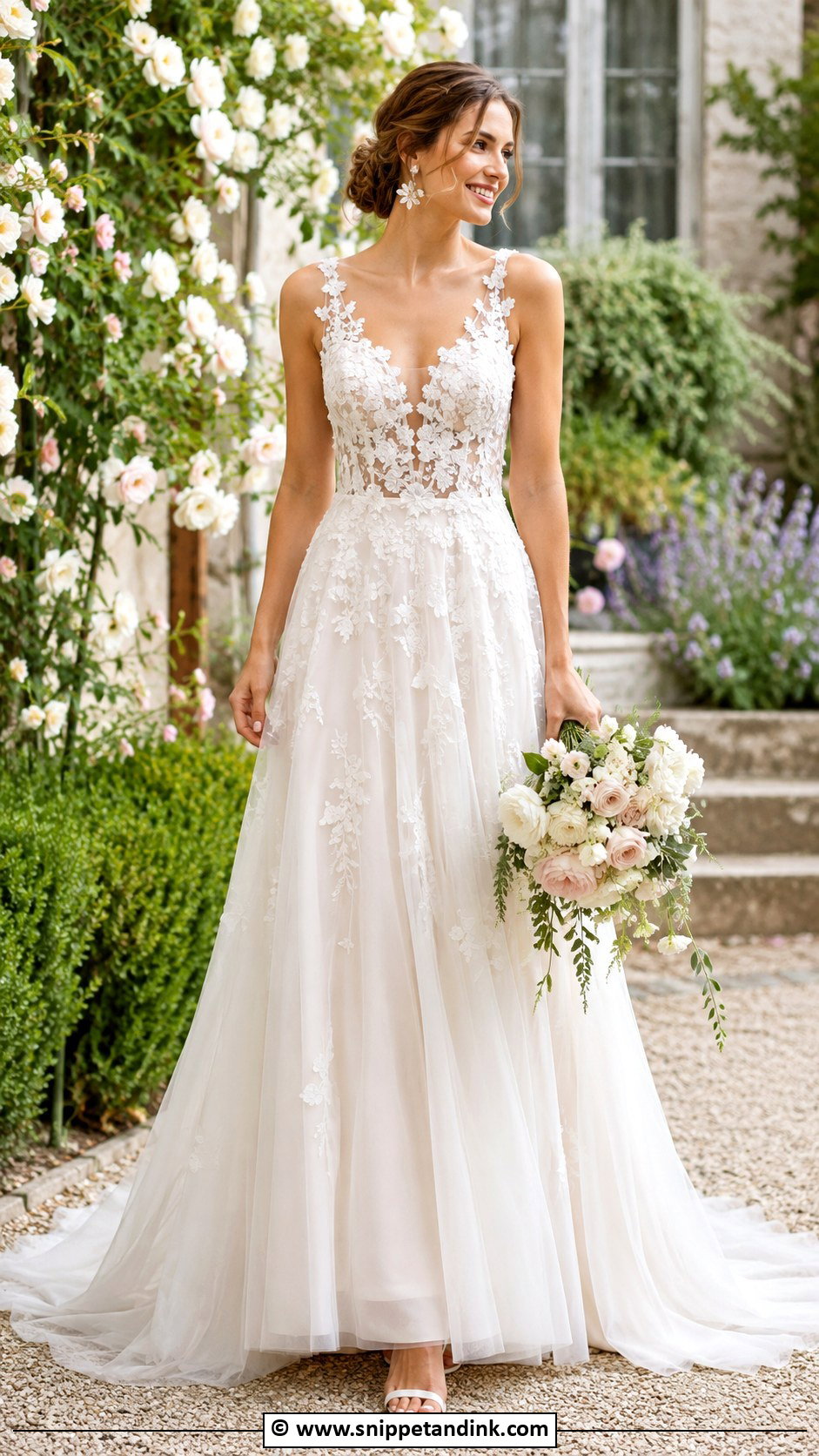
Floral appliqué gives texture without heavy beading, and it reads well in daylight at spring and summer garden weddings. Where the flowers sit matters more than how many there are. A scatter across a sheer neckline feels light; a fully covered skirt reads as the main event and needs everything else pared back. At fittings I check that appliqués near the underarm and waist are stitched flat, because that is where they catch and lift as you move. Simple heels, tiny earrings and a loose updo let the flowers lead.
4. Tulle A Line Wedding Dress
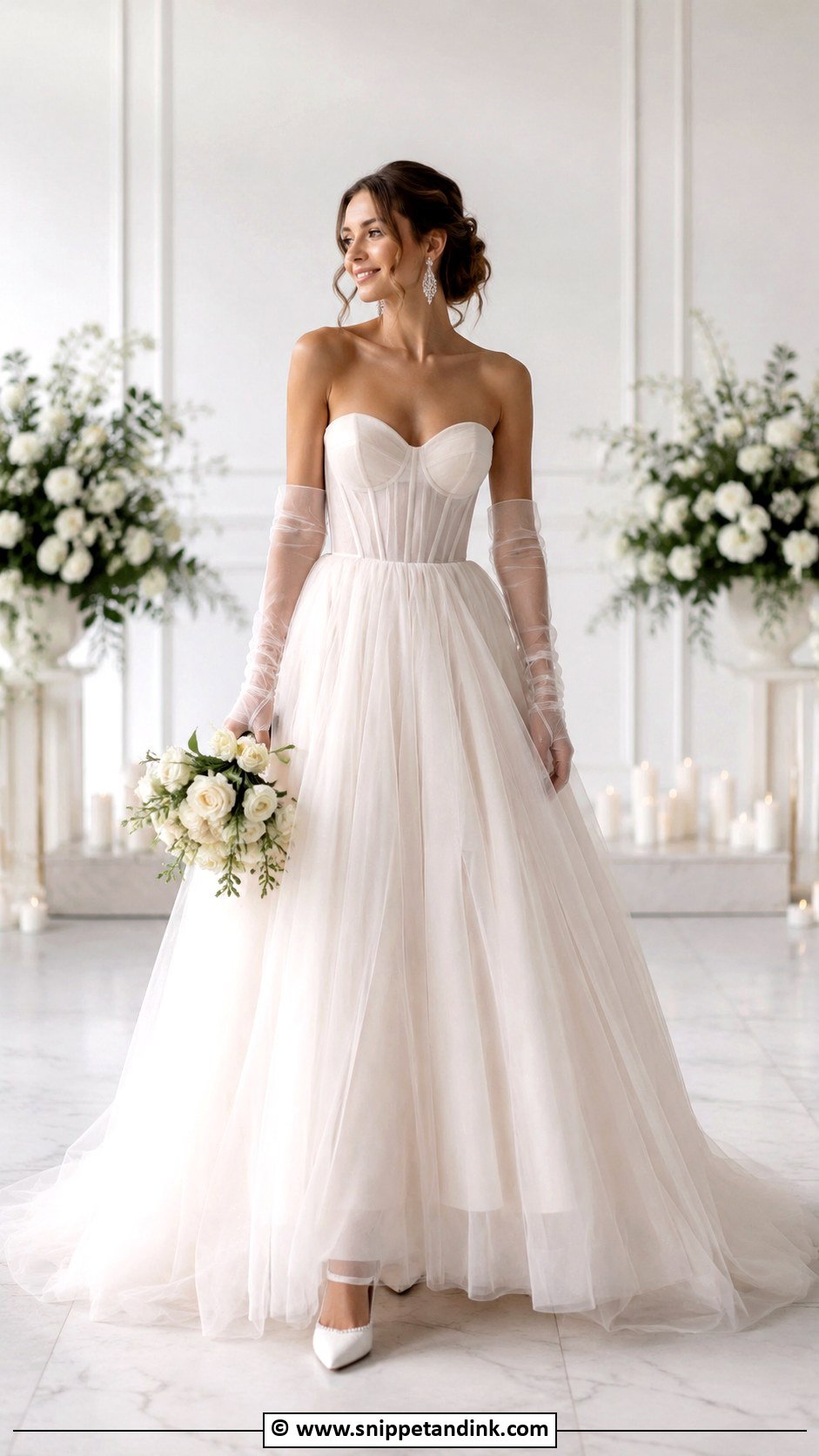
Tulle has a way of floating that no other fabric copies, and on a tulle A-line wedding dress it keeps a full skirt from feeling heavy on the dance floor. The A-line sets the waist and then falls away from the hips, which is why it suits so many figures. One honest warning: soft tulle snags on rough stone, bark and bracelet clasps, so I tell brides to skip chunky cuffs with this one. A sweetheart neckline, sheer gloves or crystal earrings, and a plain veil are plenty.
5. Bow Back Wedding Dress
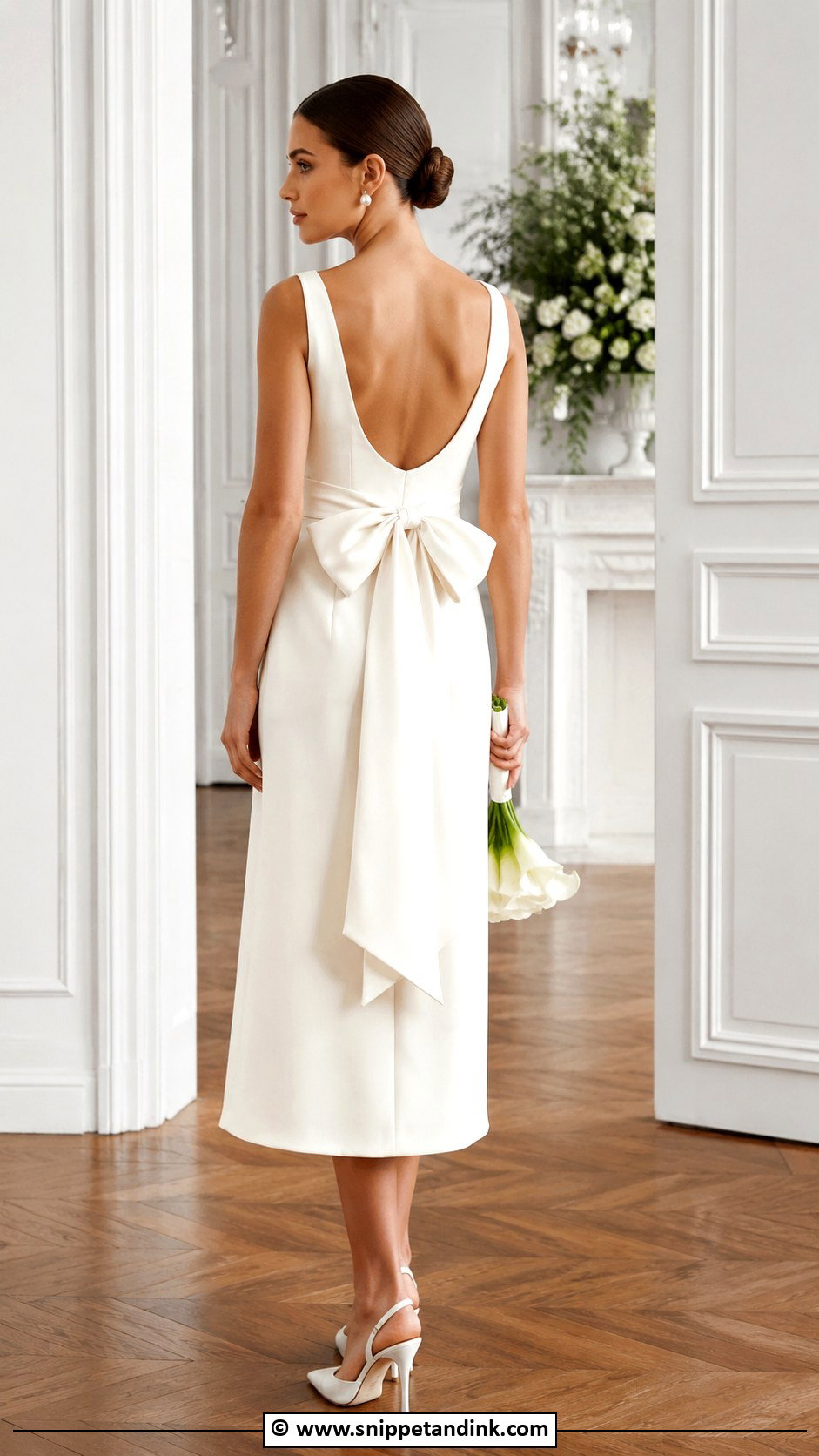
A bow at the back gives you a clean front for the ceremony and a surprise for everyone seated behind you. Scale is the whole decision. A large satin bow needs a structured fabric and a simple skirt; a narrow bow suits a slip or tea-length shape. I ask the seamstress to tack the bow loops so they don’t collapse after hours of hugging and sitting against a chair back. Wear your hair up, in a bun or low ponytail, so the bow isn’t hidden, and keep jewelry minimal.
6. Puff Sleeve Wedding Dress
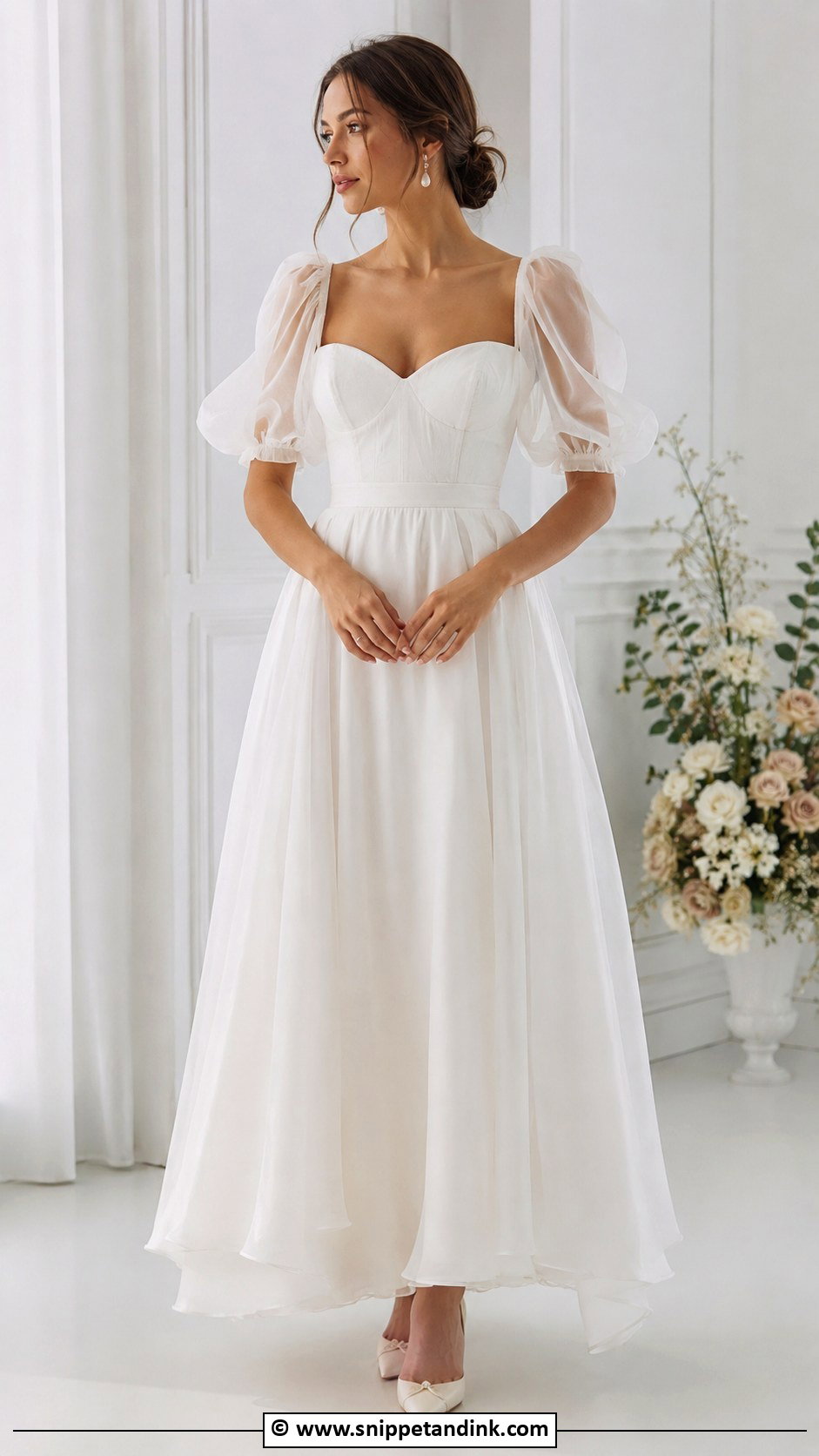
Puff sleeves bring a vintage softness, but they add width at the shoulder line, so the rest of the dress has to stay slim. My rule at fittings is one volume zone: big sleeves with a fitted waist and a straight or modest skirt. Sheer organza puffs feel airy; structured satin ones feel modern and hold their shape better in humid weather. I always ask the bride to hug someone and raise her arms, because a tight sleeve band can dig in. Pearl earrings, satin heels and a simple veil keep it polished.
7. Tea Length Wedding Dress
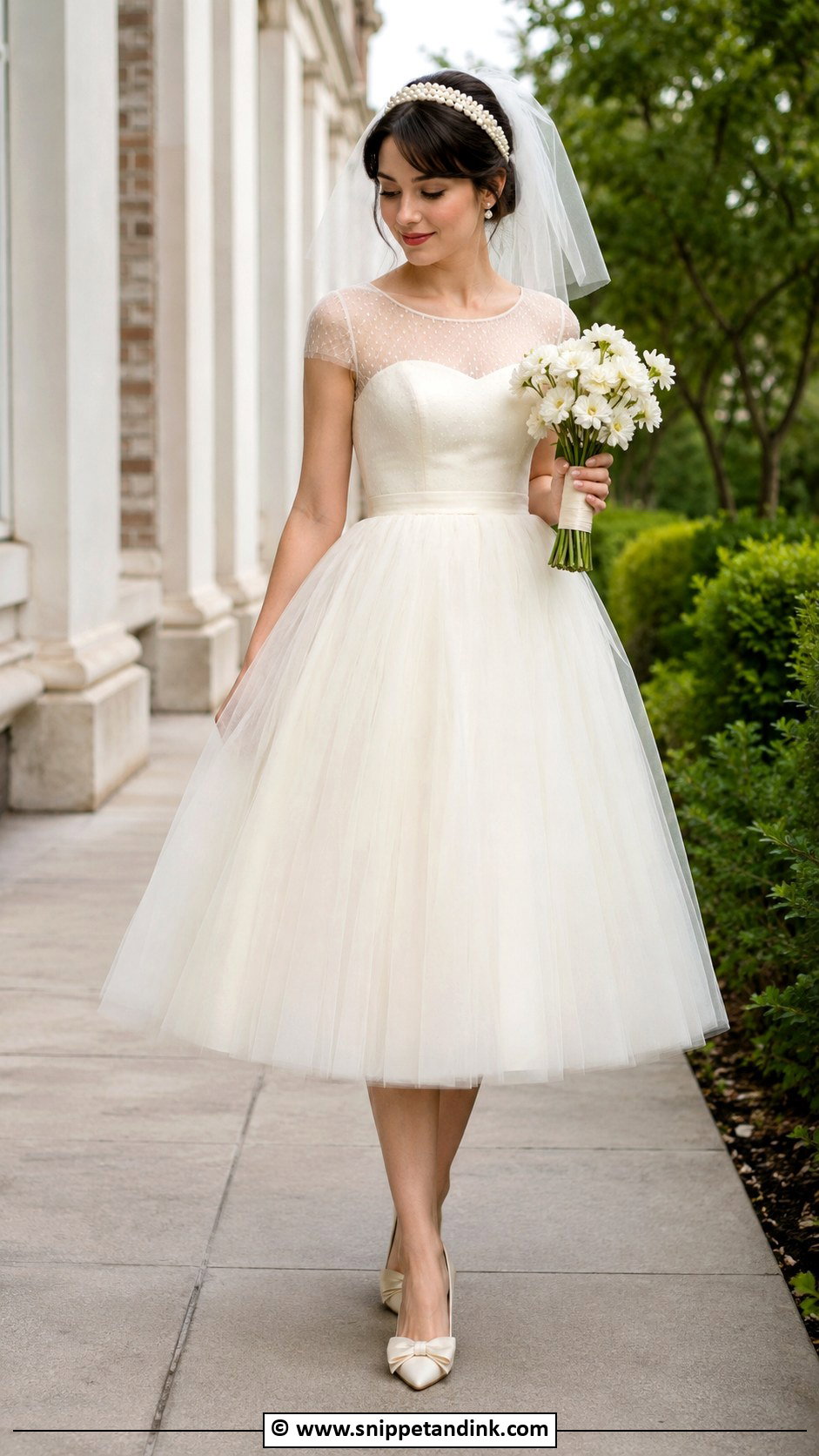
Tea length sits between the knee and the ankle, which puts your shoes on show, so choose them as carefully as the dress. It’s a practical length for city hall, a garden ceremony or a brunch reception, and it handles stairs and grass without a bustle. Lace leans romantic, satin leans sharp and tulle gives a little bounce. The detail I watch is hem height against the shoe: a hem that hits the widest part of the calf can shorten the leg, so I move it an inch up or down. Block heels or bow pumps and a short veil fit the mood.
8. Off Shoulder Wedding Dress
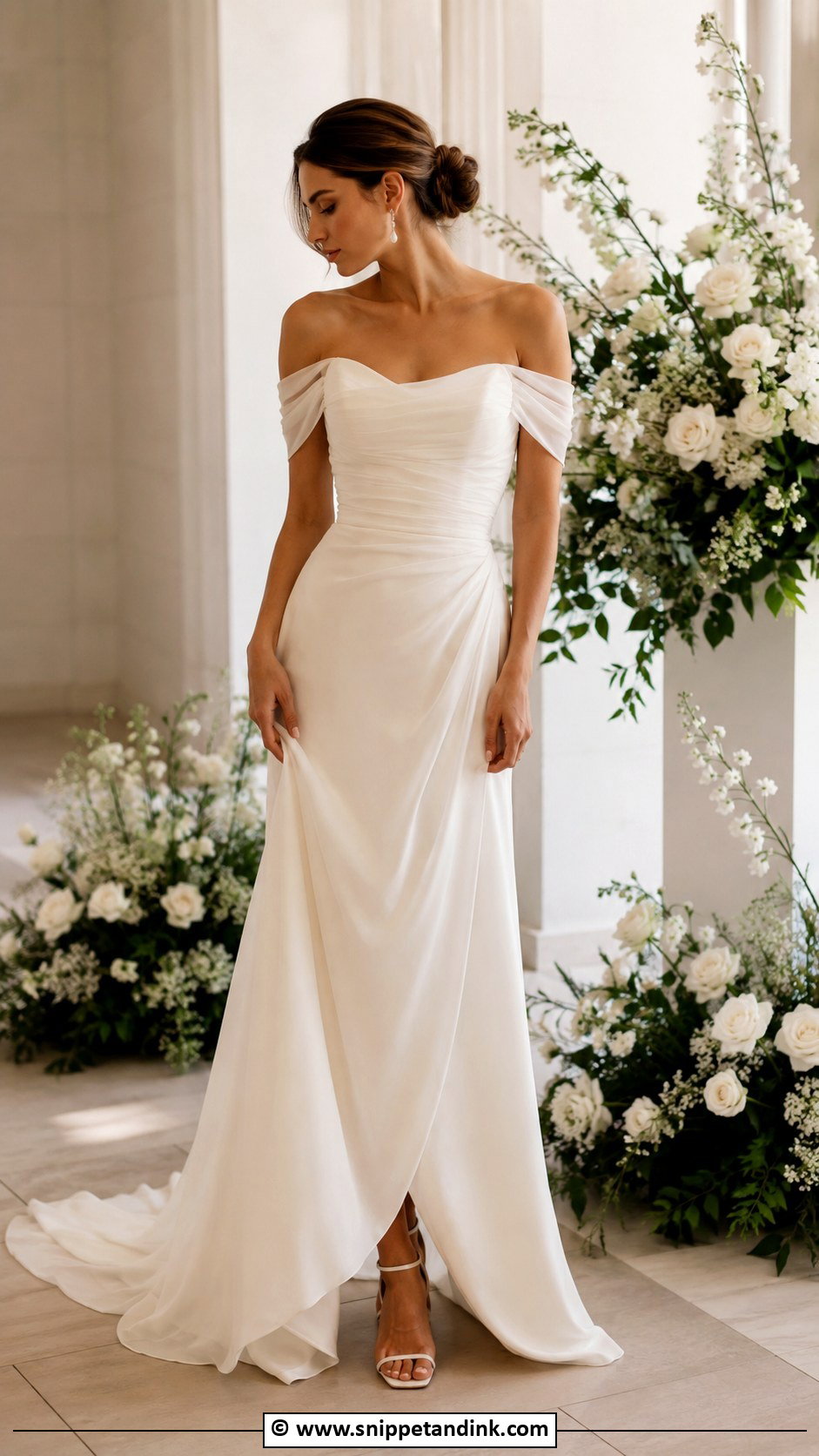
An off-shoulder neckline frames the collarbones, but it only works if it stays put. When I fit one I ask the bride to lift her arms as if hugging; if the band slides up, it needs firmer boning or a hidden elastic gripper inside. Soft draping or lace sleeves keep it gentle, and it pairs with mermaid, A-line or chiffon shapes. Skip the necklace and let earrings frame the face. A low bun or side-swept waves suit the open line.
9. Corset Wedding Dress
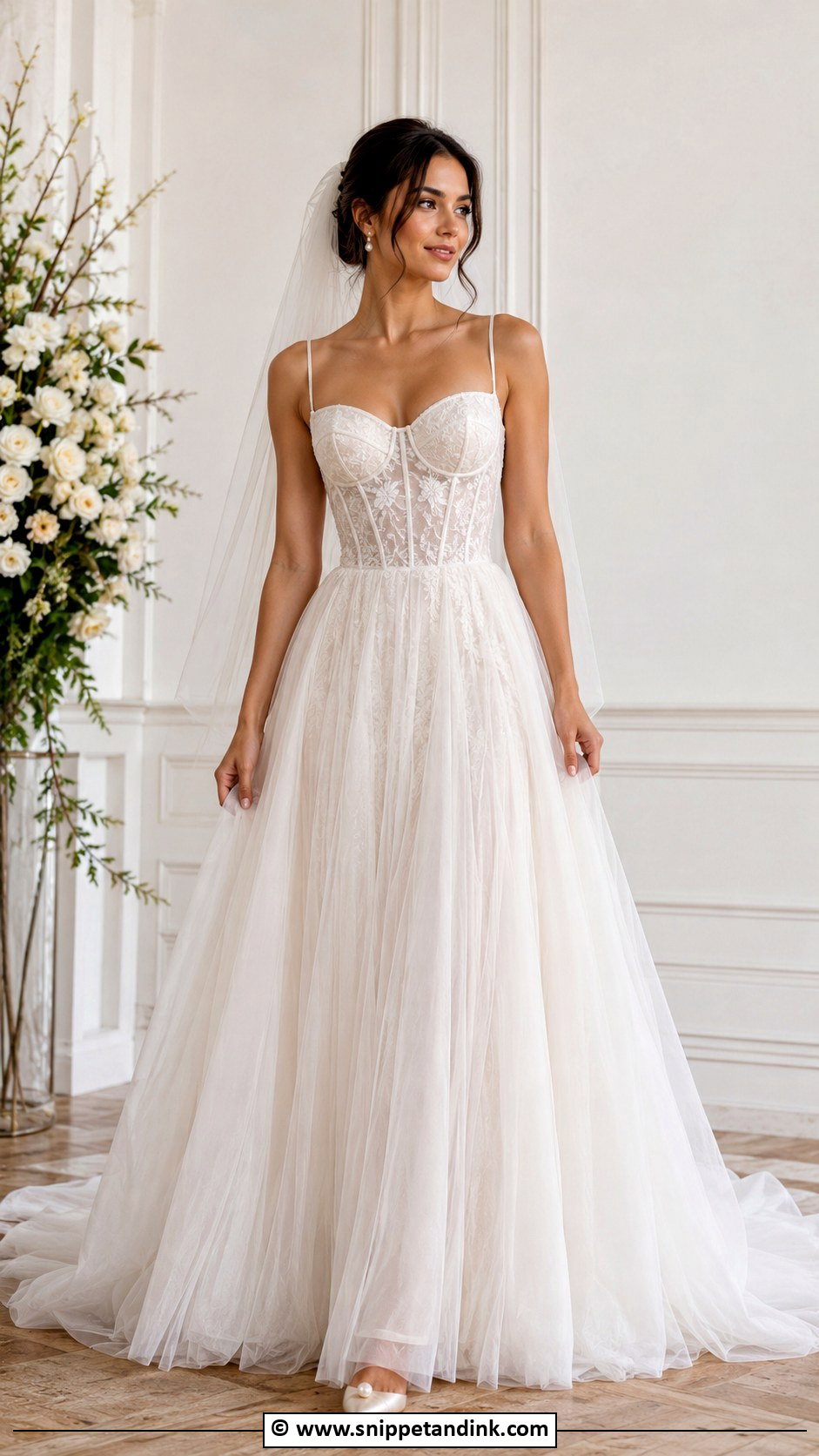
A corset bodice carries the shape for you, so the skirt can stay simple: tulle, lace or satin all sit well beneath it. The difference between comfortable and miserable is in the fitting. I want to be able to slide two fingers flat under the top edge, and I ask the bride to eat a little and sit before we sign off, because a corset laced tight at 10am feels very different after dinner. For a sweeter version, add thin straps, a sweetheart neckline or floral lace over the boning. Match the veil to how formal the skirt is.
10. Pearl Wedding Dress
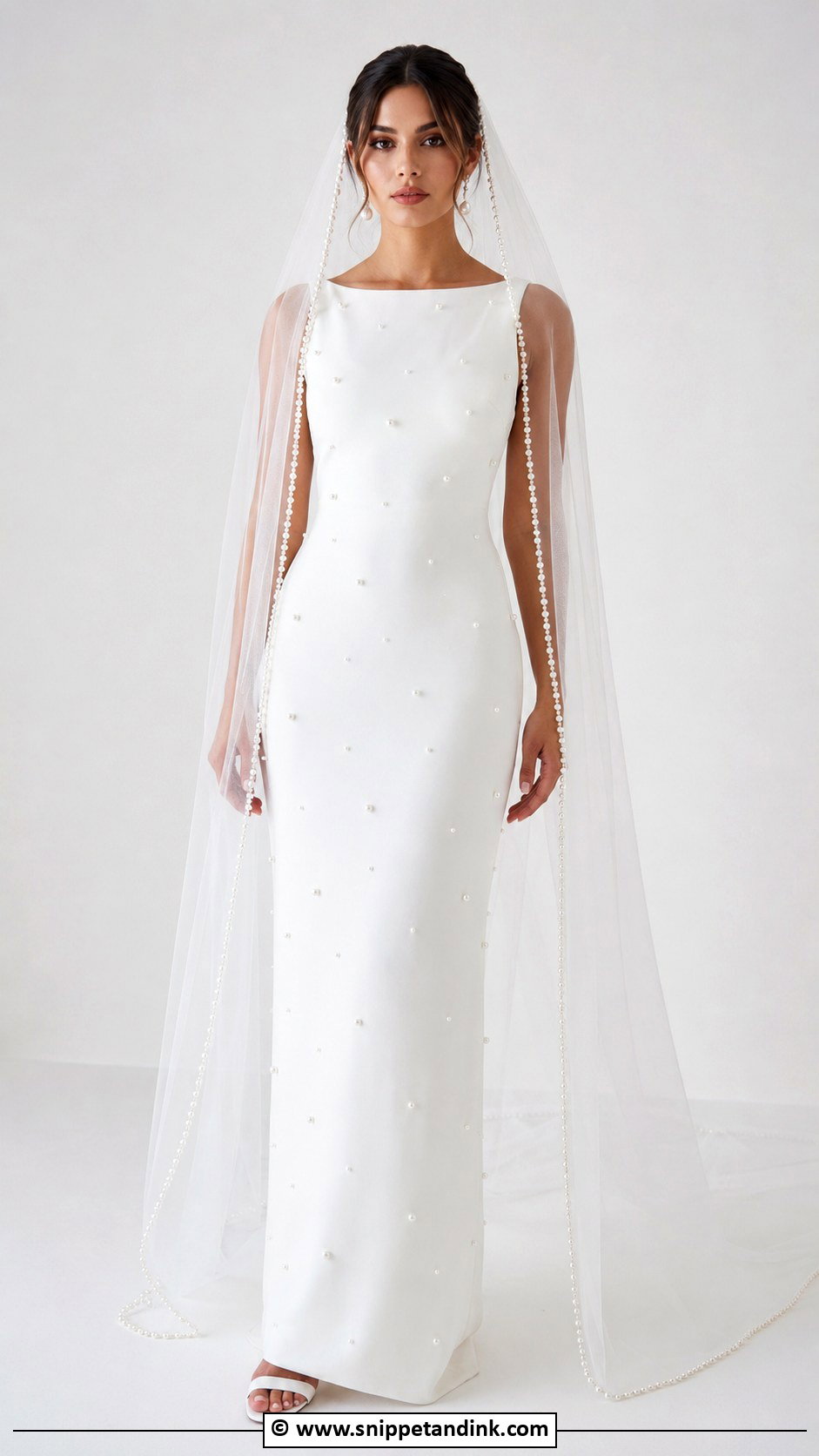
Pearls give polish without glitter, which is why I suggest them to brides who like detail but not sparkle. They can trace a neckline, dot sheer sleeves or cover a plain gown in texture. The practical thing to know is weight: a heavily pearled sleeve pulls the fabric down, so the dress needs a stable base and the seamstress may add a stay. When the dress is heavily pearled, keep the silhouette simple, a column, a soft A-line or a mini. A pearl-trimmed veil and satin heels finish it without crowding.
11. Square Neck Wedding Dress
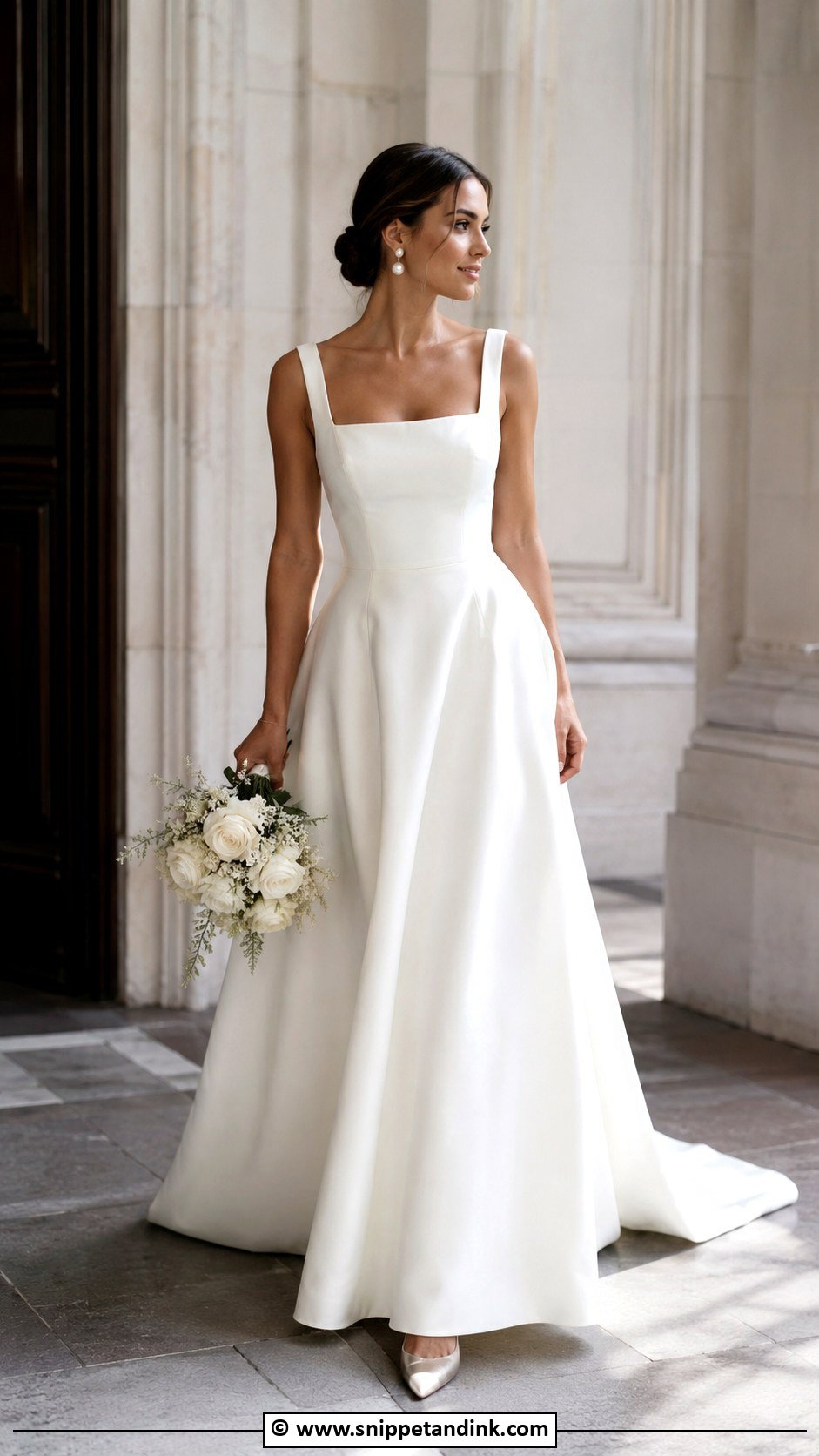
I like a square neckline on brides who want structure without any fuss. It flatters most shoulders and sits well with straps, long sleeves or no sleeves at all. Satin looks modern, lace softer, crepe smooth and close to the body. The fitting check is the corners: if they gape when you lean forward, the bodice needs taking in at the side seams, not at the neckline itself. Pearl drops, a low bun and pointed heels suit it, and the straight edge works under both a veil and a hair bow.
12. Ruffle Wedding Dress
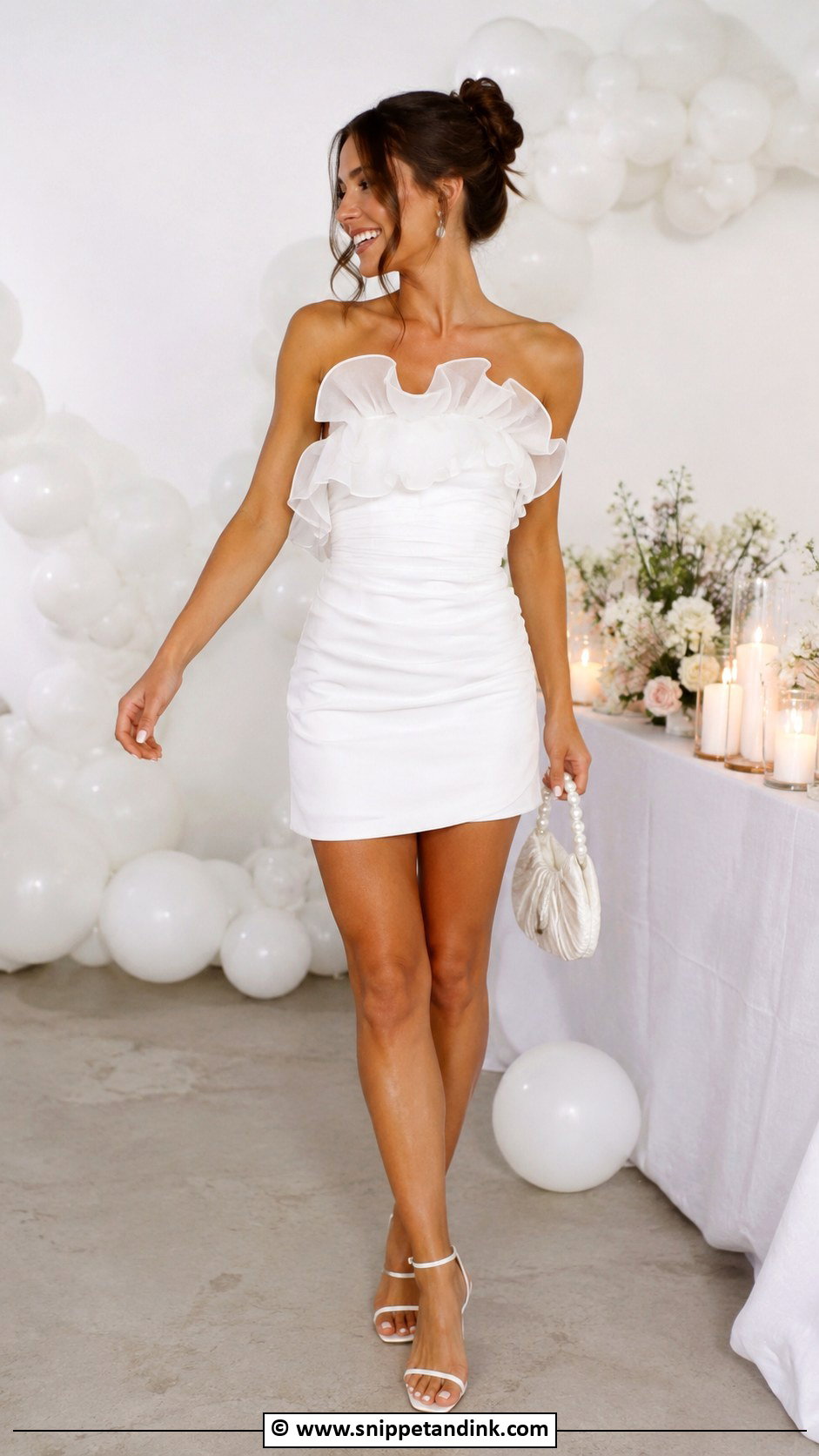
Ruffles are where cute can turn fussy fastest. My advice is to pick one ruffle feature, at the neckline, down the straps or through the skirt, and let it carry the dress alone. A ruffled mini suits the reception; a ruffled full skirt reads romantic for the ceremony. Lightweight ruffles crush in a suitcase and in the car, so plan a quick steam before you dress. Keep shoes and jewelry understated so the movement of the fabric does the talking.
13. Simple Slip Wedding Dress
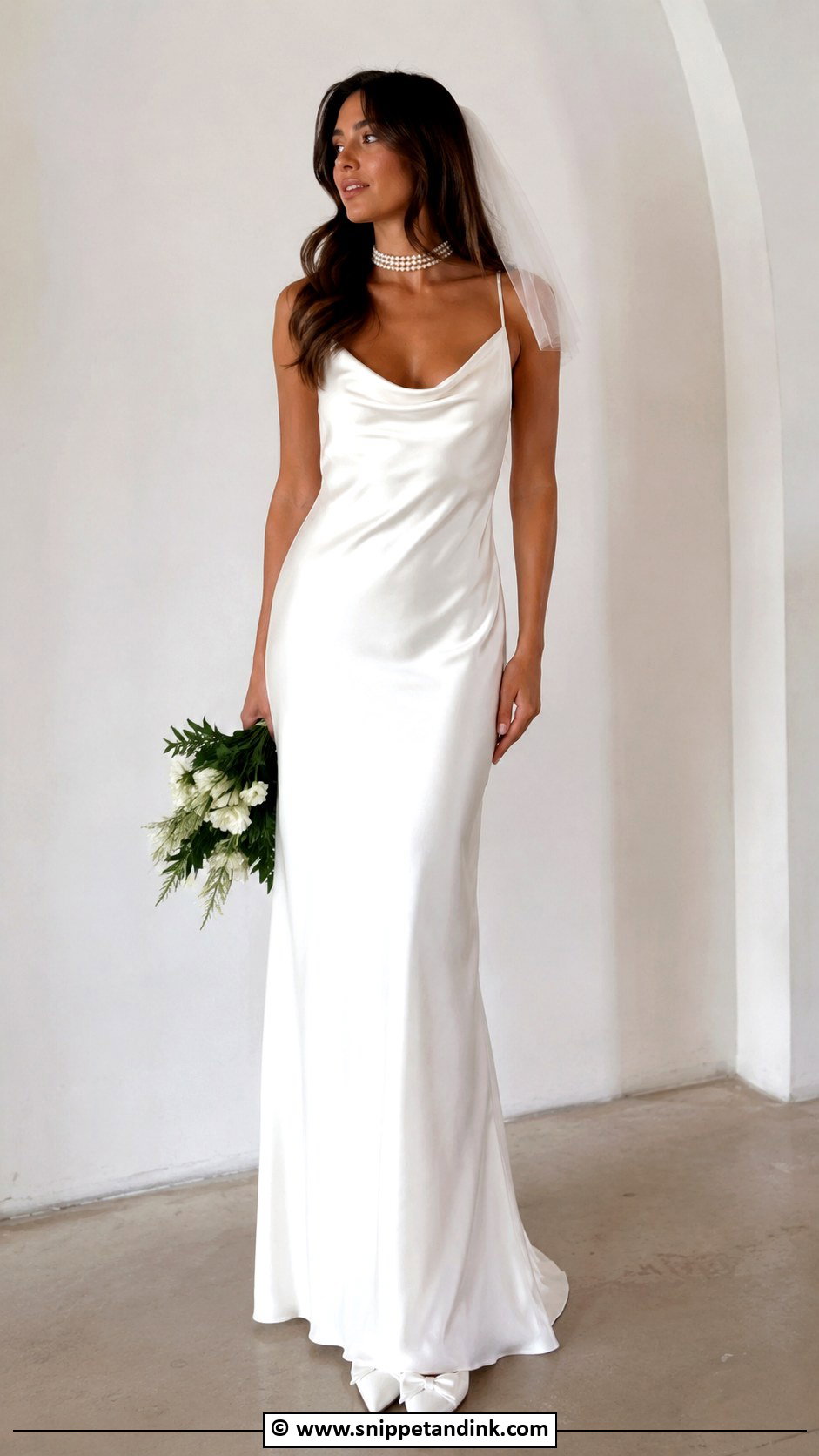
A slip dress hides nothing, and that is both its charm and its challenge. Because it skims the body, fit and fabric are everything: a bias cut in heavier satin drapes and forgives, while thin polyester satin clings and shows underwear lines. I ask every slip bride to bring her exact undergarments to the first fitting, ideally smooth-edged and close to your skin tone. It suits beach weddings, city ceremonies and small dinners. A short veil, sheer gloves or bow heels add bridal detail, and a cowl, square or V-neckline changes the whole feel.
14. Long Sleeve Lace Wedding Dress
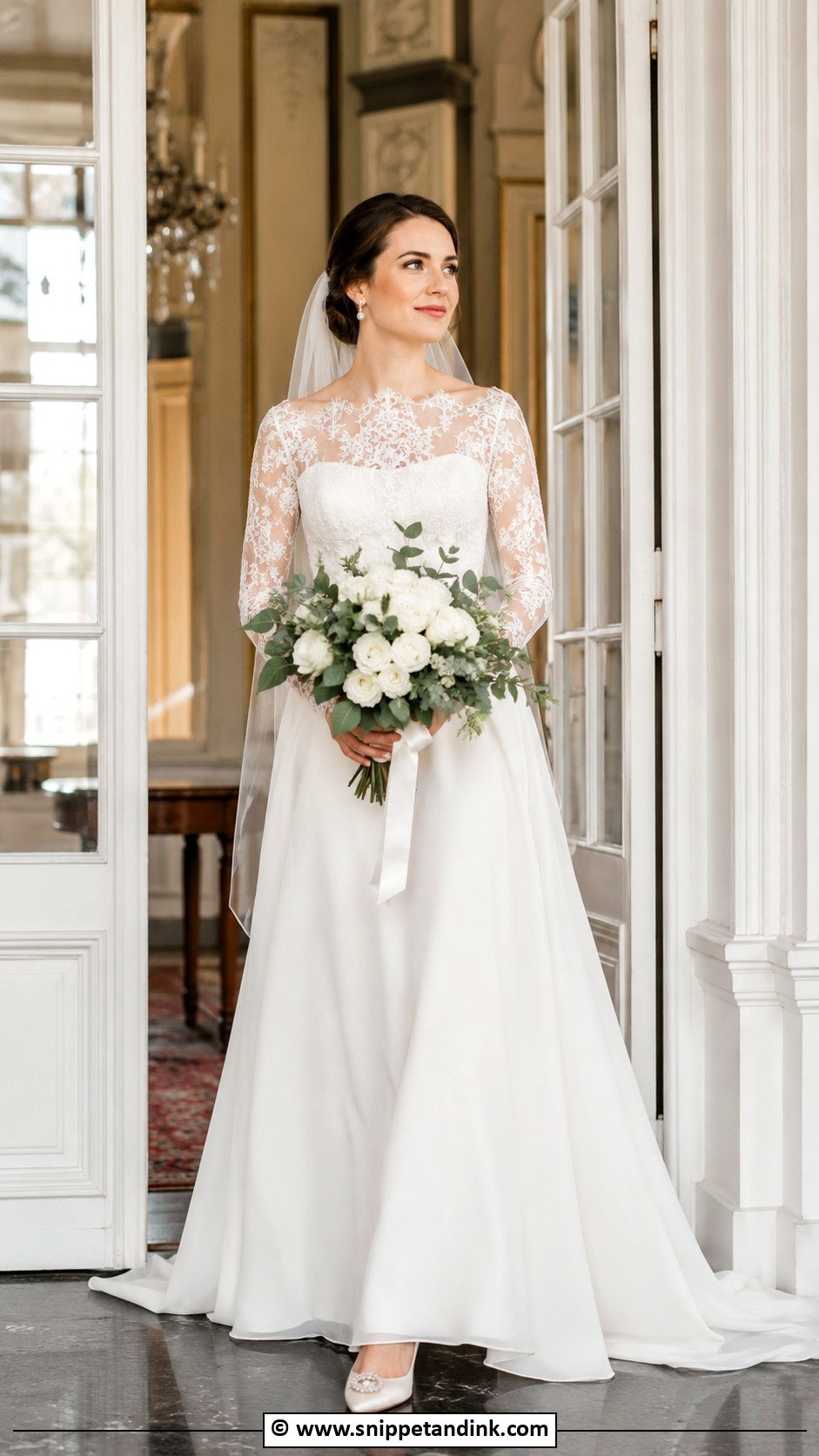
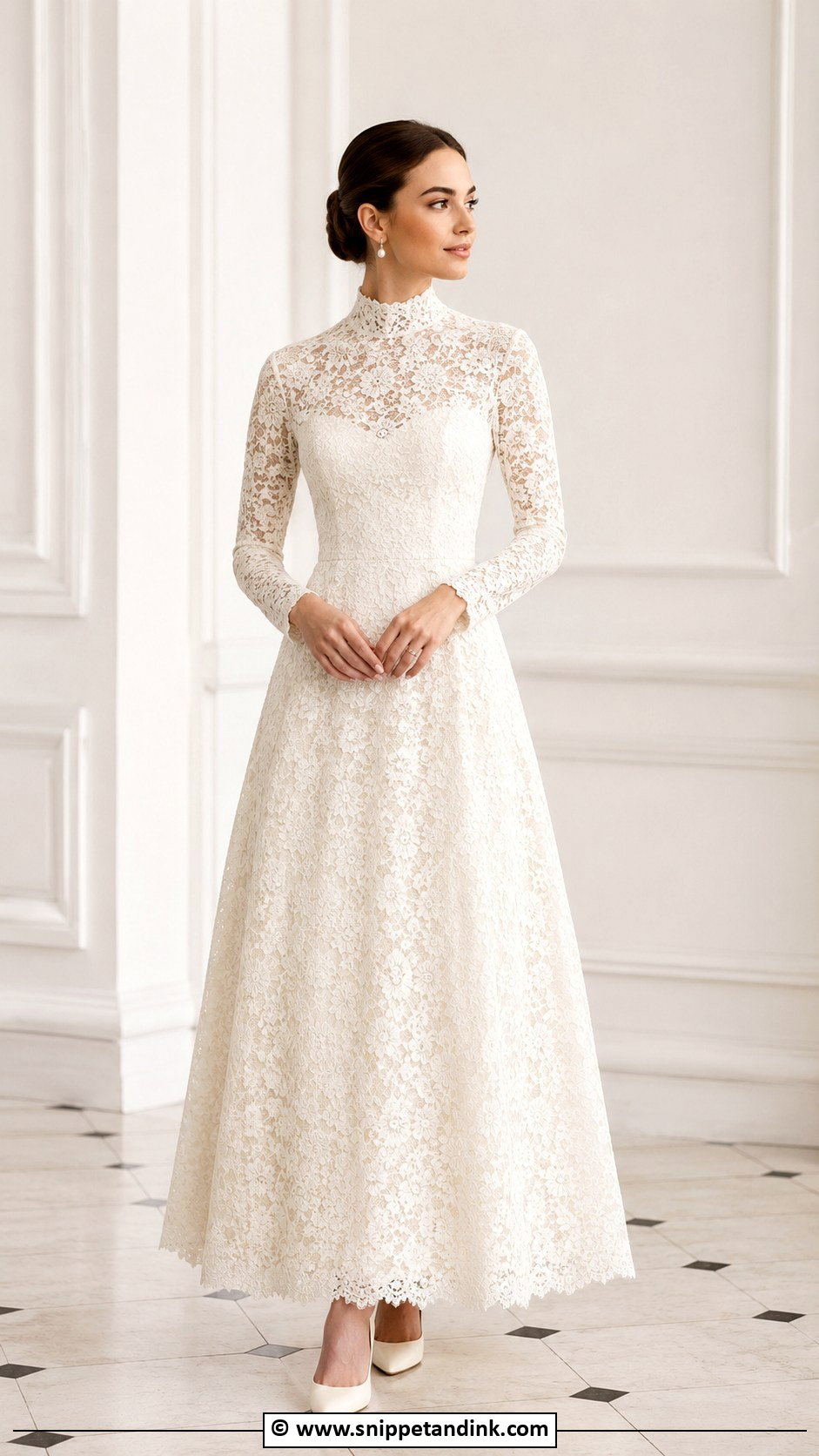
Long lace sleeves give coverage and warmth for autumn, winter or a formal church, and they still look delicate when the lace is sheer. The thing I check is the cuff and elbow. Sleeves cut too close stop you from lifting your arms for a bouquet toss or a hug, so I want a little ease at the elbow. Floral lace, scalloped cuffs or covered buttons down the back give the sweet touch. Pair it with a soft updo, pearl earrings and a plain veil that won’t fight with the lace.


15. Chiffon Beach Wedding Dress
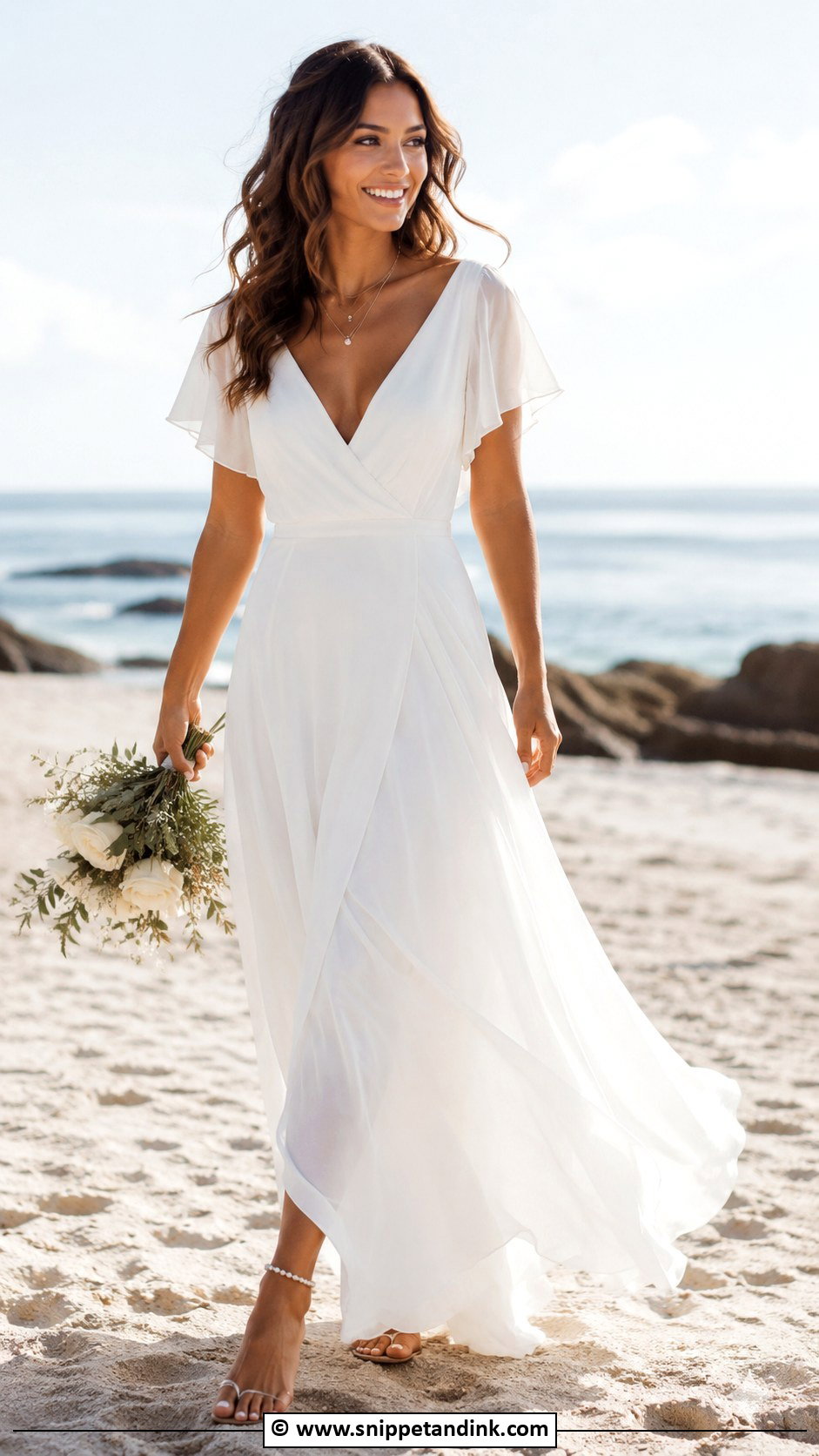
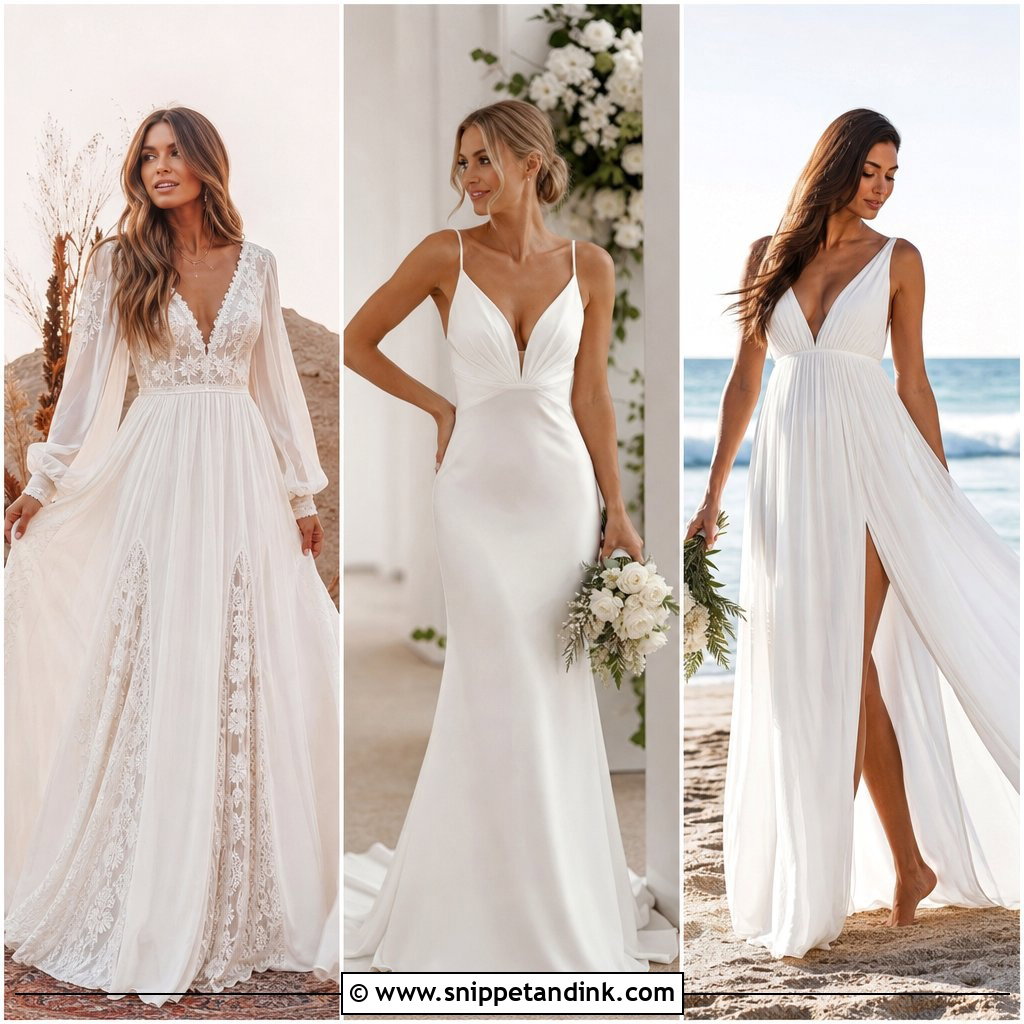
Chiffon is the fabric I reach for on a beach because it breathes and moves in the wind instead of fighting it. Soft A-lines, flutter sleeves, thin straps or an empire waist all stay comfortable in heat. Leave heavy trains behind if you are walking on sand, and have the hem taken to just above the ground in flat sandals. Wind is the real issue: a weighted hem or a skirt lining keeps chiffon from blowing too high. Loose waves, natural makeup and a small bouquet keep everything light.
16. Garden Wedding Dress
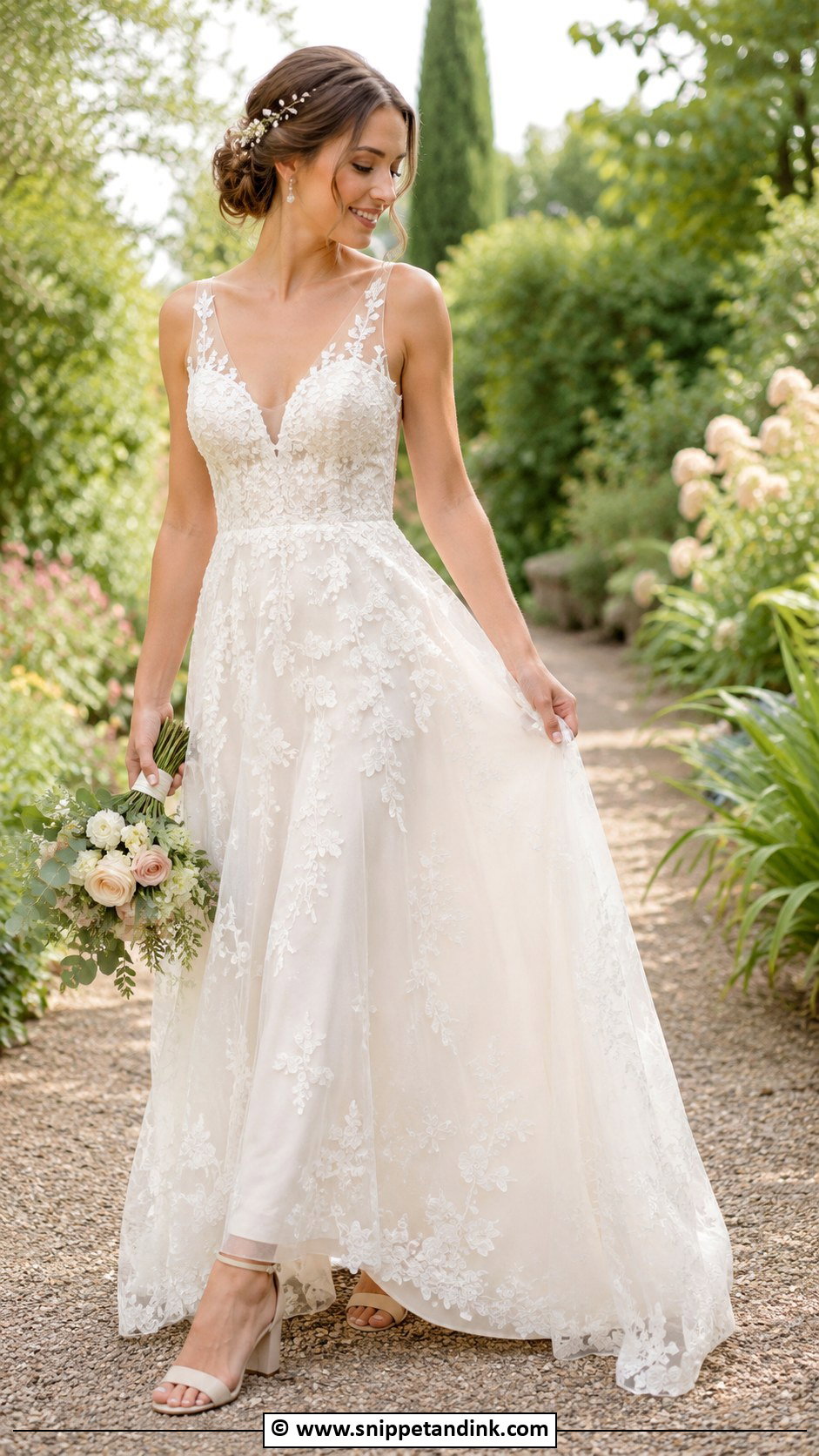
For a garden ceremony, I think about the ground before the gown. Grass, gravel and soft lawns catch heels and drag long hems, so a midi or a full-length A-line that clears the floor slightly is the practical choice. Floral lace, embroidered vines and sheer sleeves suit the setting. Bring block heels or dressy flats to every fitting so the hem is set for them. Floral hair pins, pearl earrings and a soft veil finish it, and pastel bouquet colors sit nicely against ivory or white.
17. Courthouse Wedding Dress
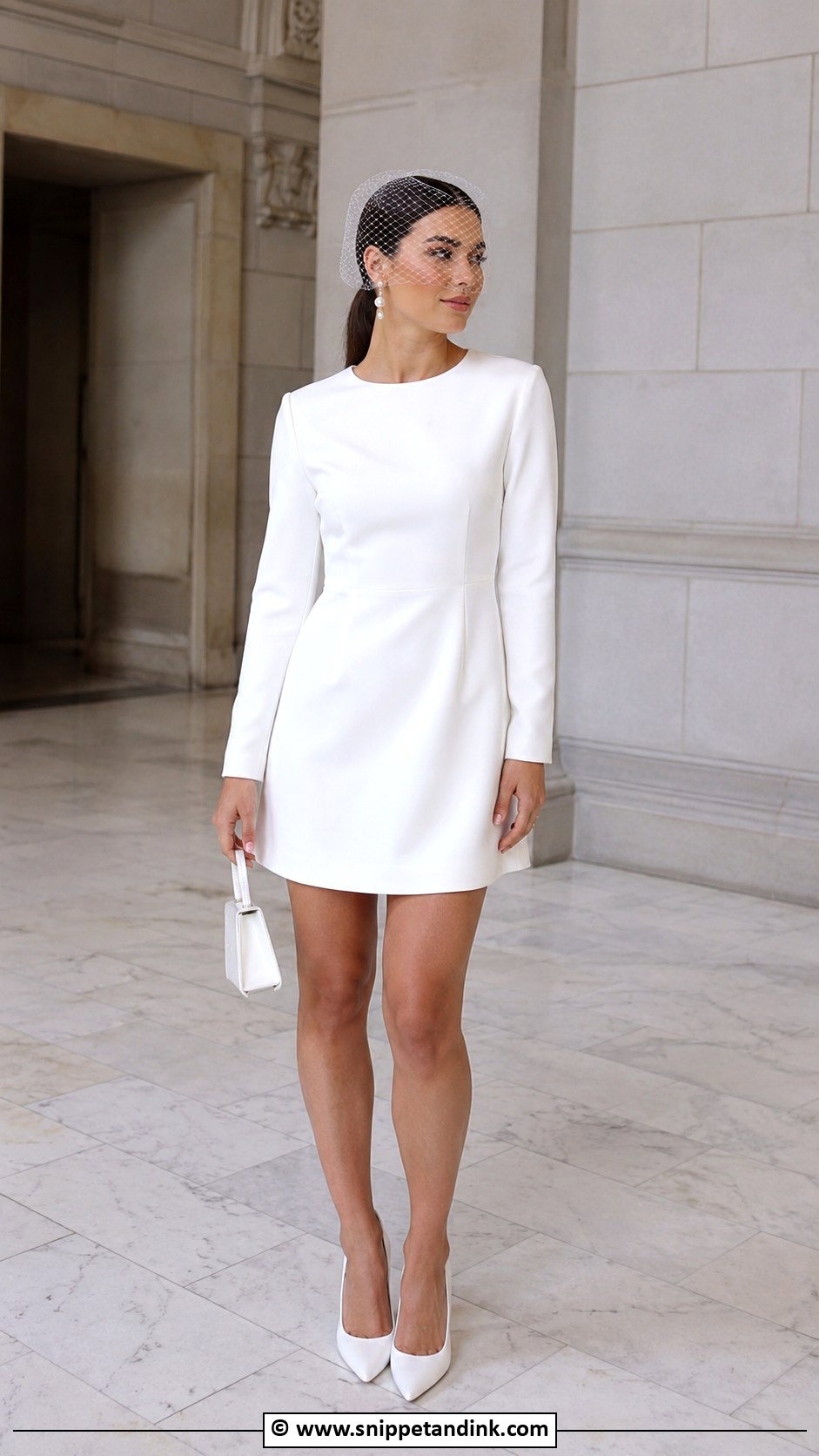
Courthouse dresses only need to look polished in a small room and close-up photos, which opens up a lot of options. Minis, sleek midis, blazer dresses and clean columns all work. What I check is how the dress handles standing still in a queue and sitting on a hard bench: stiff fabrics crease, crepe and heavier satin hold up. A long-sleeved white mini, a satin midi or a tailored dress with pearl buttons are reliable picks. Pointed heels, a structured bag and small earrings, plus a birdcage veil or a hair bow, make it clearly bridal.
18. Vintage Inspired Wedding Dress
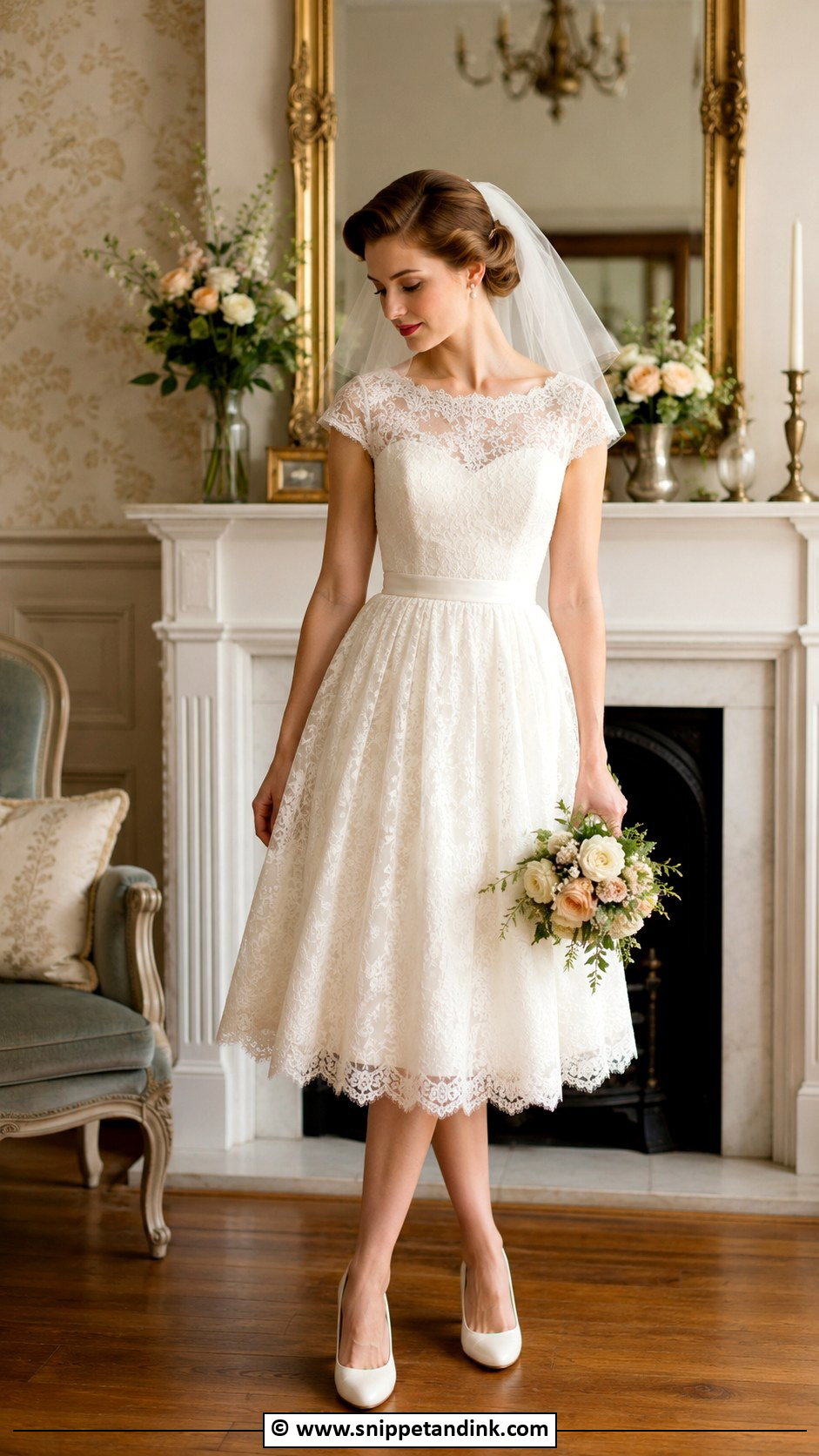
Vintage inspiration works best when you borrow one era and keep the rest of you current. Look for tea-length hems, lace sleeves, high necklines, satin buttons or fine embroidery. A full skirt leans 1950s, a simple shift leans 1960s, and a bias satin slip leans 1930s. If you are buying a genuine older dress, have a seamstress check the seams and fabric strength first, as old silk can split under stress. Gloves, pearl studs, a short veil or classic pumps add mood; modern hair and makeup stop it looking like a costume.
19. Strapless Wedding Dress
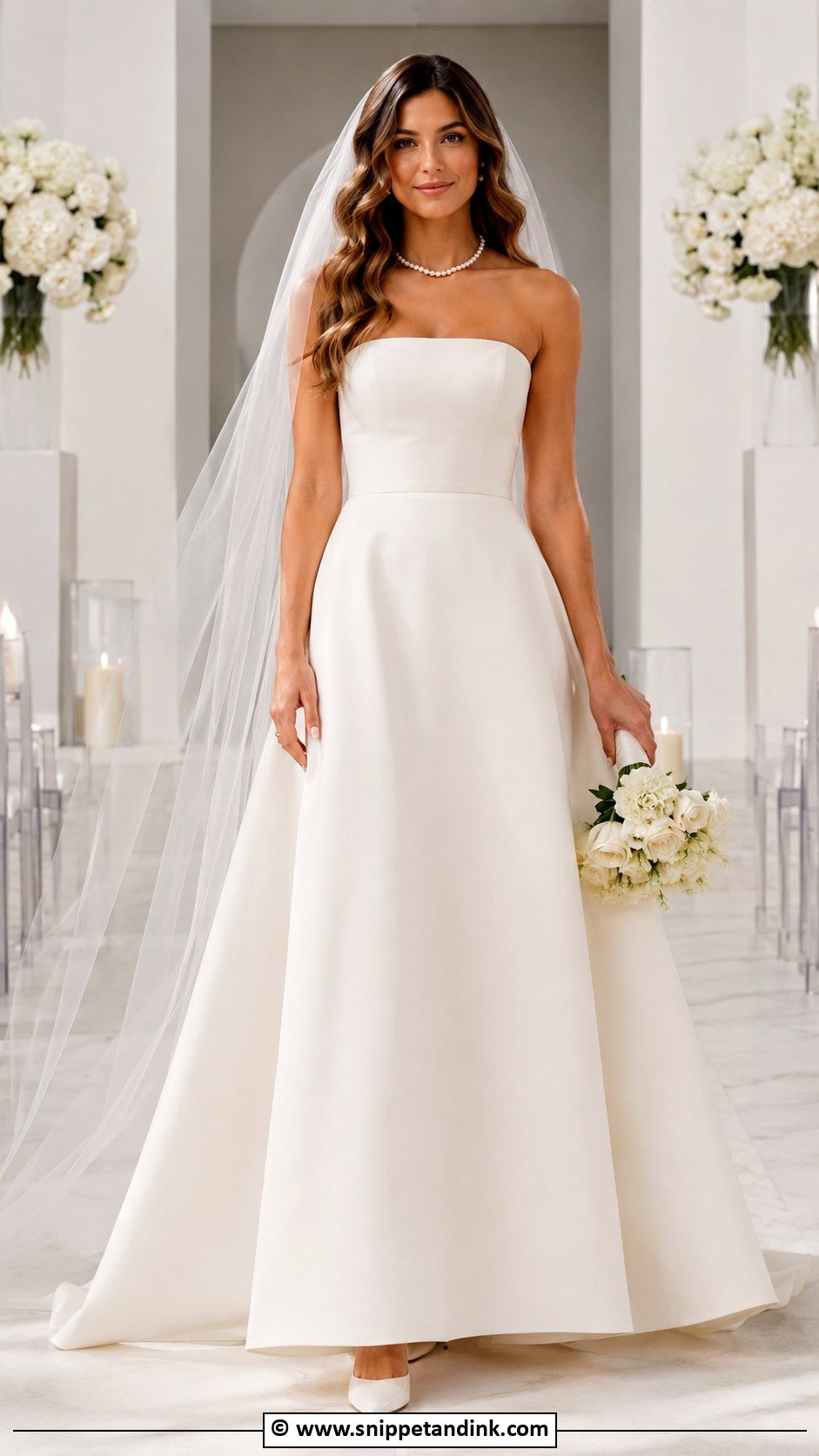
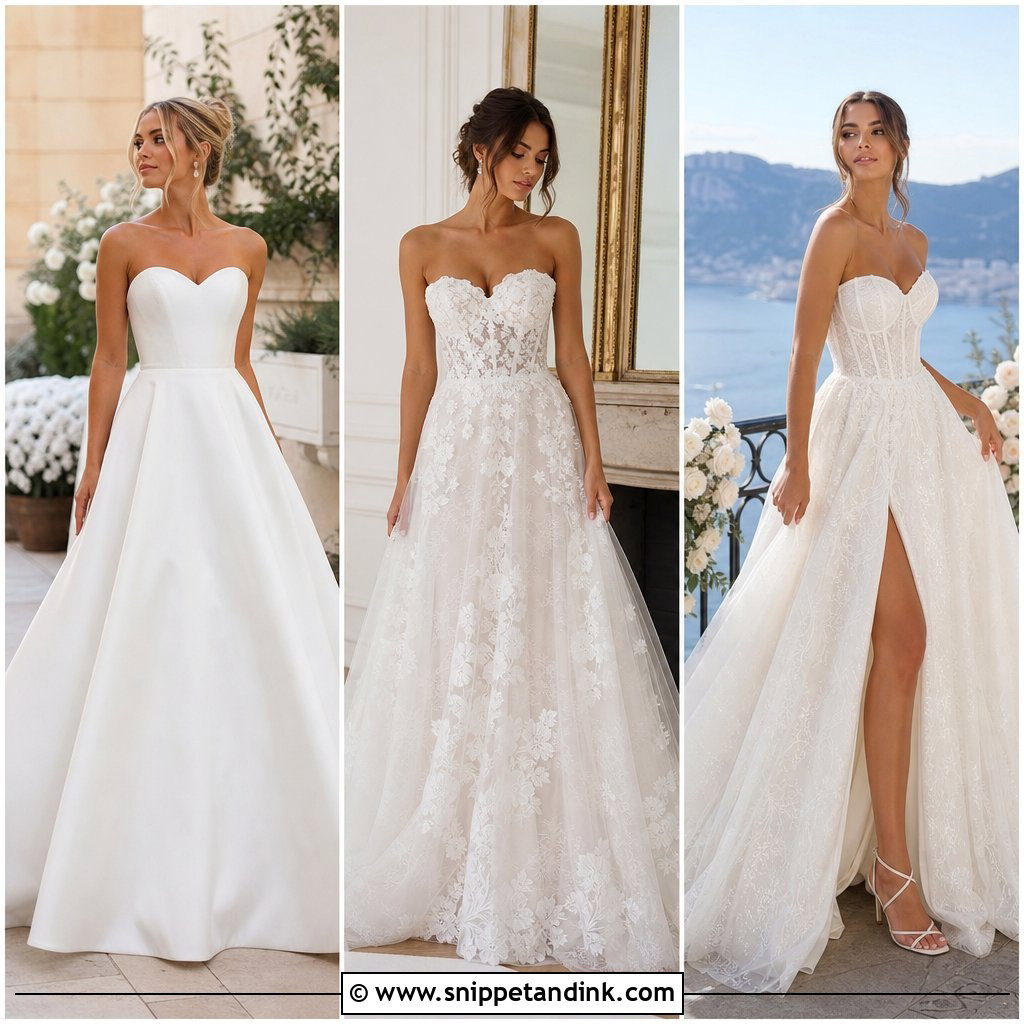
A strapless bodice can feel playful in a mini, romantic in an A-line or sleek in a fitted column. Comfort depends entirely on construction. I look for internal boning and a waist stay, so the dress is held up by your waist, not by gripping your chest. If you find yourself tugging the top up in the mirror at the fitting, it isn’t right yet. A pearl necklace, sheer gloves or a long veil add detail; on a plainer strapless, shoes and jewelry bring the personality.
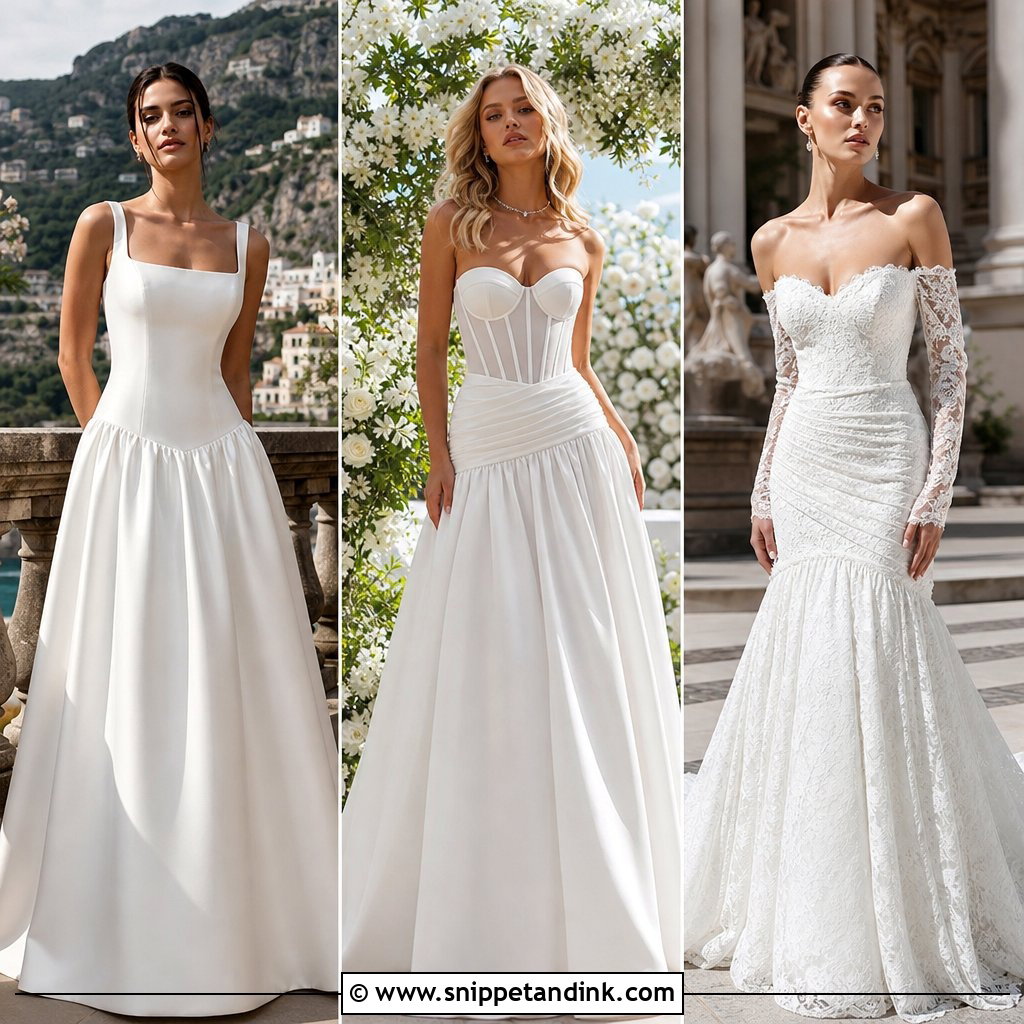
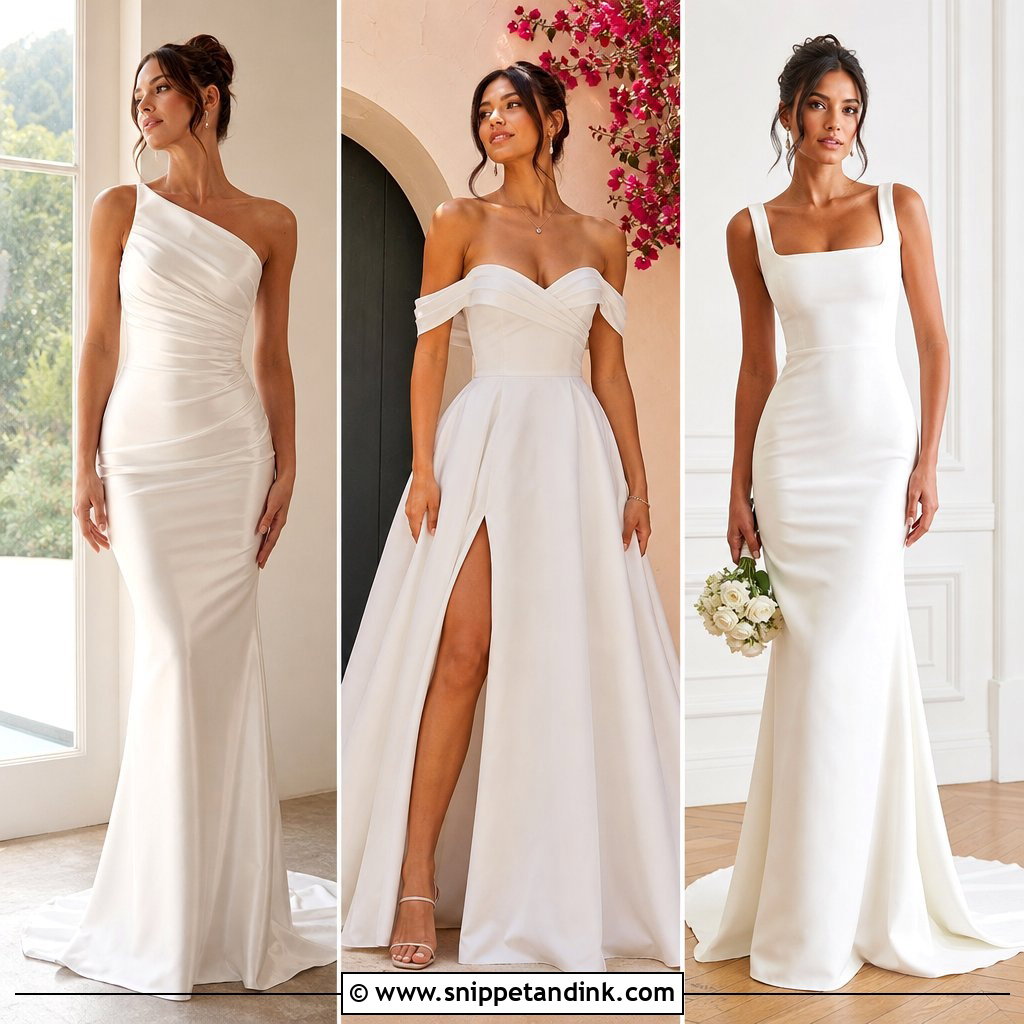

20. Ball Gown Wedding Dress
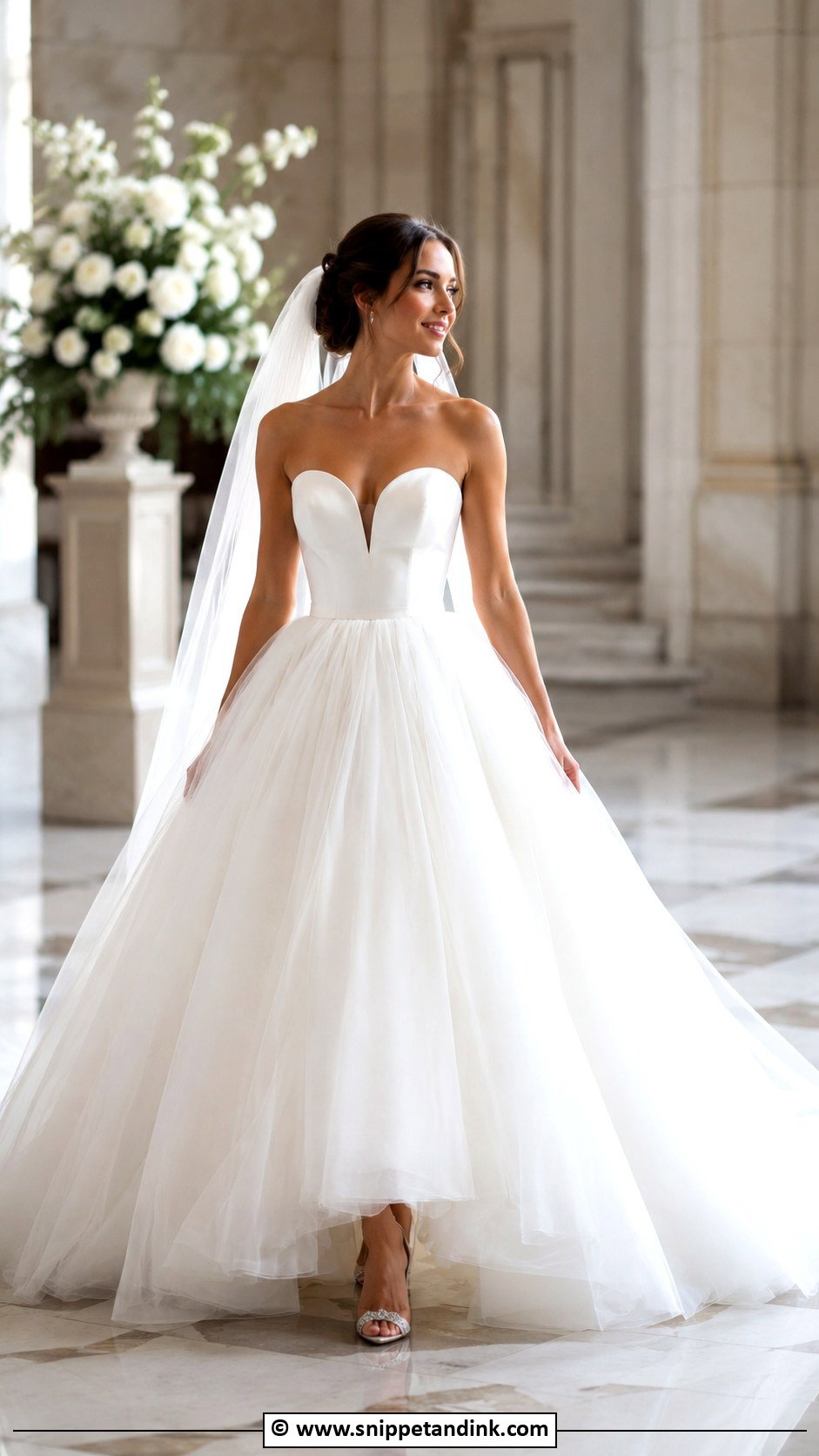
A ball gown wedding dress gives the fairytale entrance, and keeping it sweet rather than overwhelming comes down to the skirt. Soft tulle reads lighter than heavy satin, and a defined waist keeps all that volume from swallowing you. A sweetheart or square neckline softens the top. Practically, a full skirt needs a bustle for the reception and a plan for the bathroom, so ask your seamstress about both at the first fitting. Keep accessories small: earrings, a simple veil and comfortable heels.
21. Midi Wedding Dress
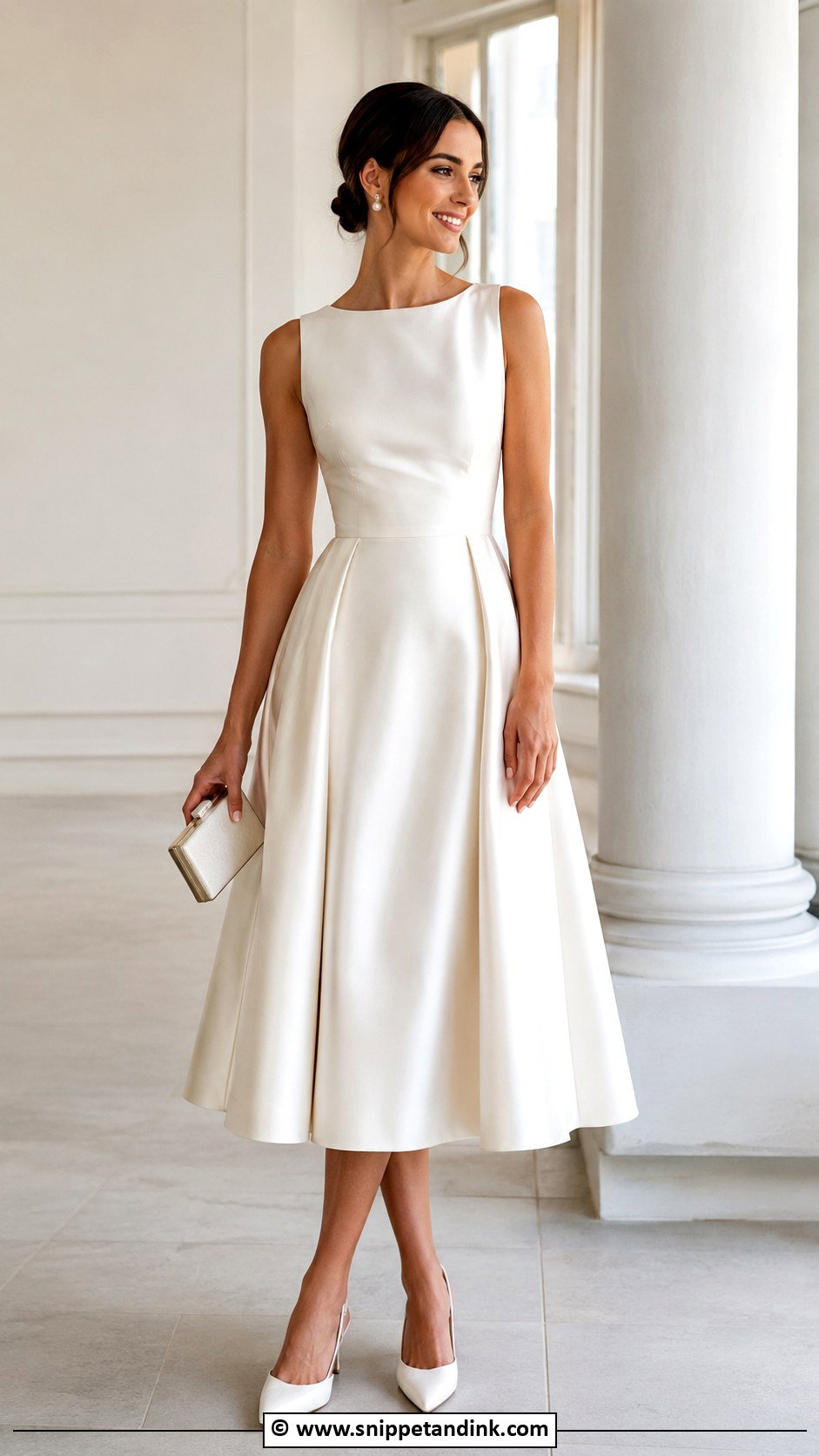
A midi hem falls below the knee, dressier than a mini but far easier to move in than a gown. Satin, lace, crepe and mikado all hold this length well, with mikado giving a crisp, sculpted skirt. I set midi hems with the bride in her shoes and standing naturally, because a hem that looks right in the mirror can hit the calf at an awkward point when she walks. It suits courthouse weddings, small receptions and civil ceremonies, and it is the length brides most often wear again. Slingbacks, a small clutch and pearl or crystal earrings complete it.
22. Sheer Sleeve Wedding Dress
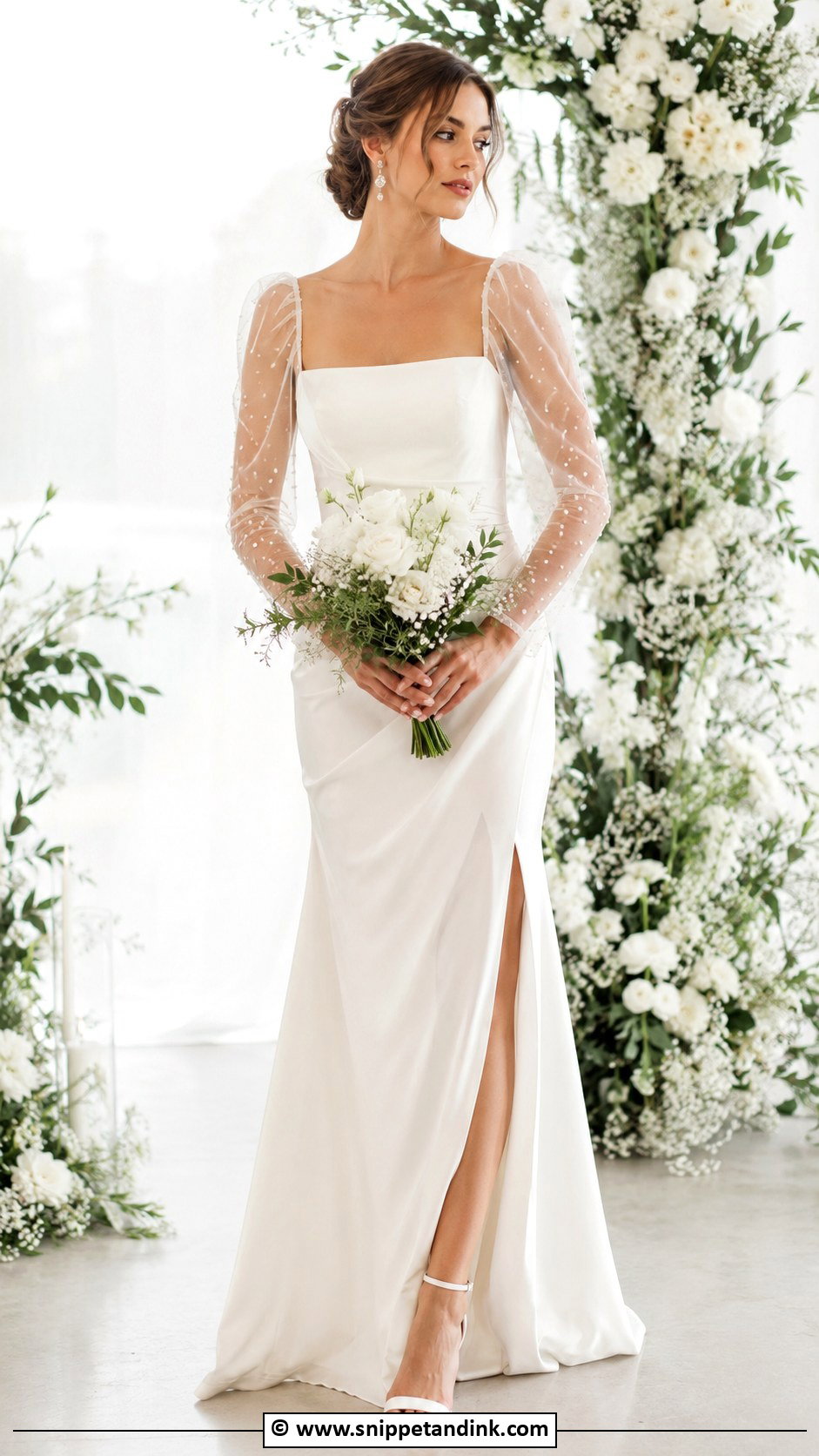
Sheer sleeves add coverage without weight, which makes them a good fit for a simple gown that needs one point of interest. Plain tulle, pearl-dotted mesh, lace or tiny cuffs all change the effect. Sheer puff sleeves with a fitted bodice feel sweet; long sheer lace feels more classic. The thing to check is the seam where sleeve meets bodice, because thin mesh can show a harsh line under flash. Choose delicate earrings and a hairstyle that leaves the shoulders clear.
23. High Neck Wedding Dress
High necklines read modest and refined, and they turn cute when the rest of the dress loosens up with lace, a shorter hem or a soft A-line skirt. A high lace neck feels vintage; sleek crepe feels modern. Because the throat is covered, I always skip the necklace and put the attention on earrings. Check how the collar feels when you turn your head and swallow, since a tight high neck is tiring over a long day. A bun, sleek ponytail or tucked waves keep the line clean.
24. Halter Wedding Dress
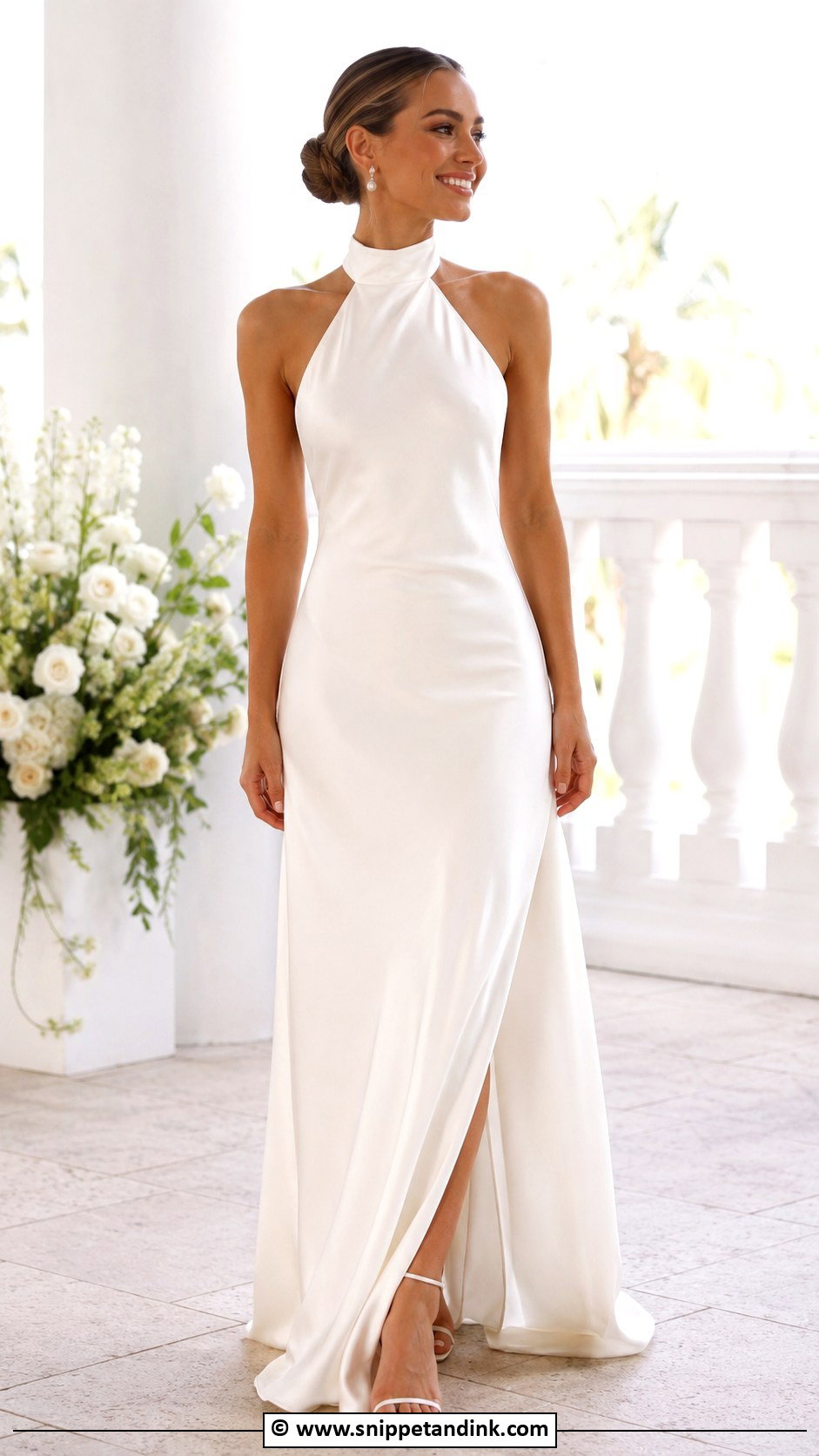
A halter carries the bodice from the neck, which gives secure support and shows off the shoulders. Satin feels modern; lace feels softer. I check the strap at the back of the neck carefully, since a halter that is too tight pulls on the neck after a few hours and the fix is an extra inch at the clasp. A flowing skirt, open back or small bow at the neck makes it sweet. It suits warm-weather weddings, styled with sleek earrings, a low bun and strappy heels.

25. Two Piece Wedding Dress
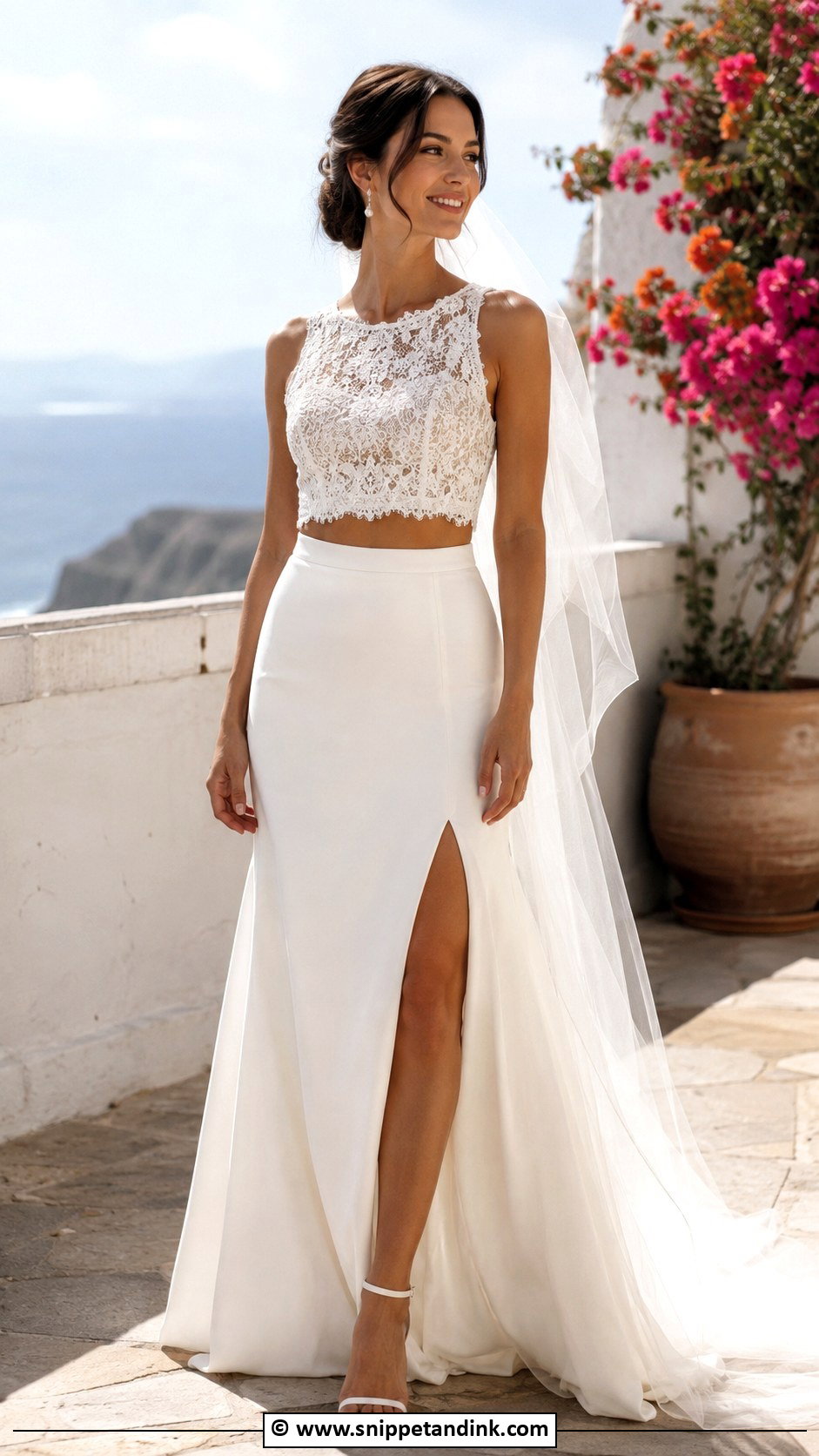
Two pieces give you a less traditional silhouette and far more movement. A lace crop top with a high-waisted skirt feels romantic; a satin top with a sleek skirt feels modern. The pieces have to look intentional, so I keep the whites matching closely, since ivory against bright white looks like an accident in daylight. Make sure the skirt waistband sits at or above the natural waist so it doesn’t roll when you sit. Simple heels, pearl earrings and a soft veil if you want it.
26. Embroidered Wedding Dress
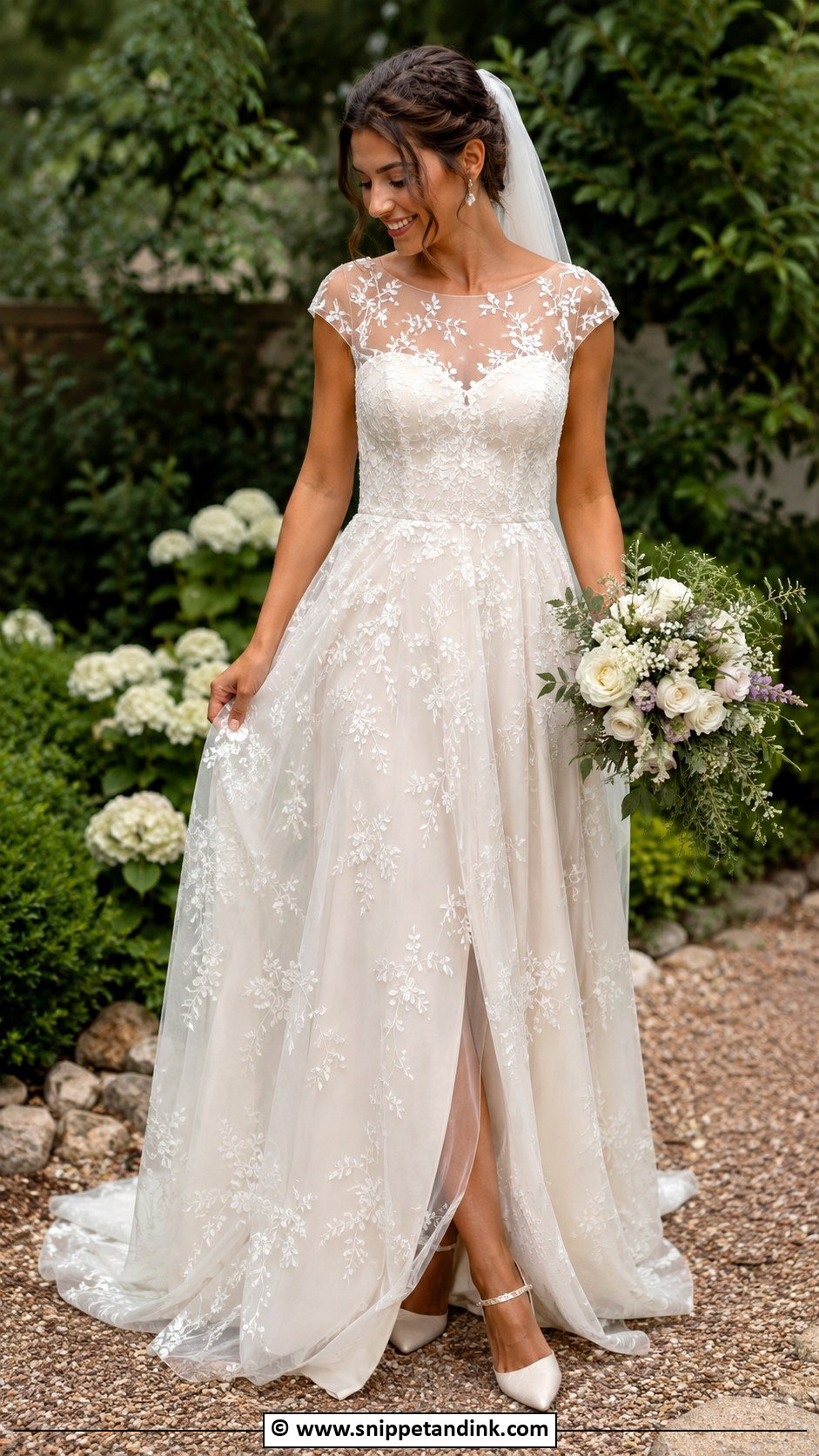
Embroidery gives a handmade depth that suits gardens and outdoor venues especially. Floral, leafy, pearl-accented or abstract threads all sit well on sheer overlays, bodices, sleeves and skirts. If the embroidery has a hint of color, I pull exactly that tone into the bouquet so the two look planned together. Raised embroidery can catch on lace veils, so check the veil edge against the bodice at the fitting. Ivory or nude heels, delicate earrings and a plain veil let the stitching show.
27. Reception Wedding Dress
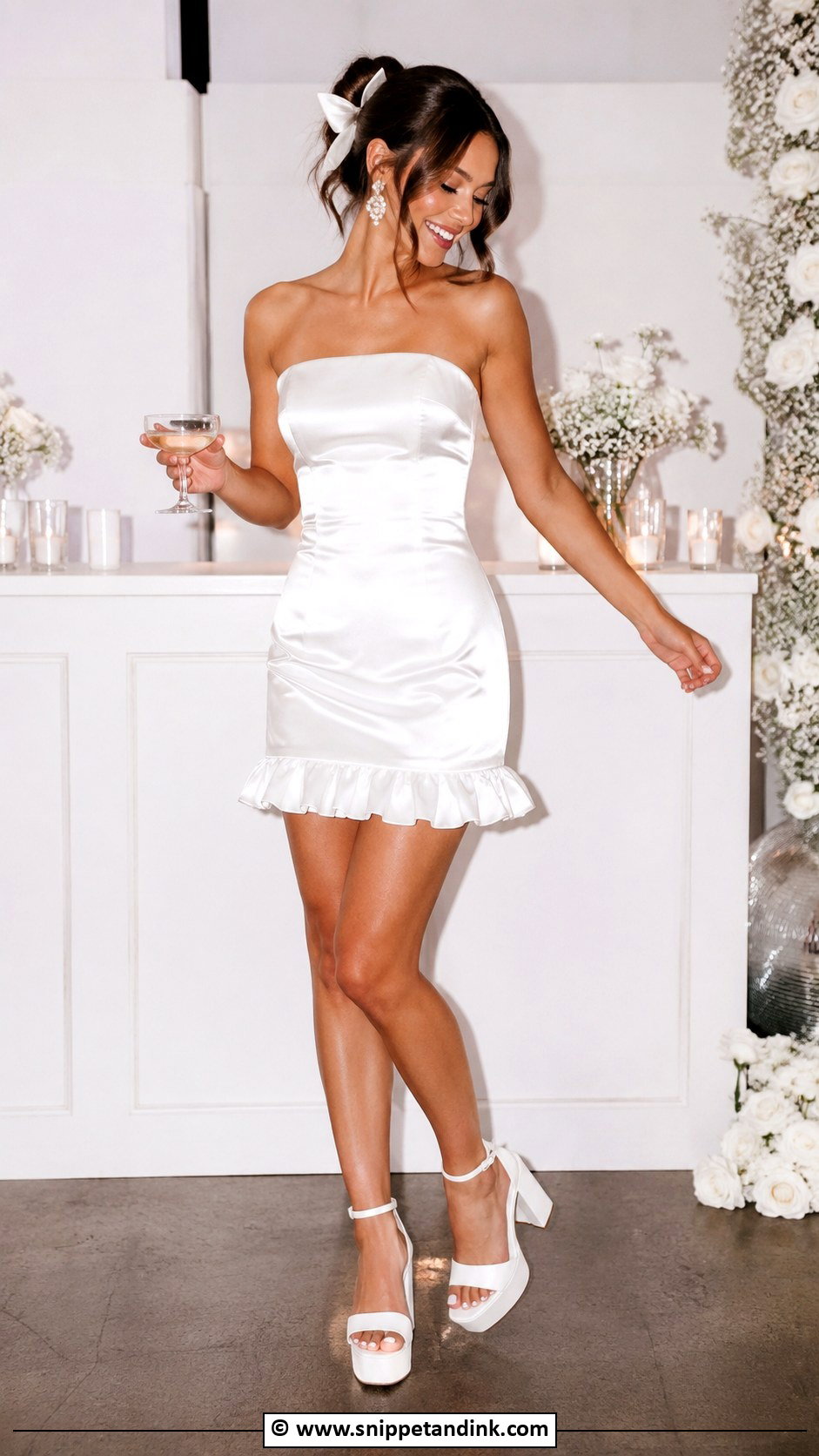
A reception dress has one job: let you dance, sit and hug for hours while still looking bridal. A mini, a feather-trim dress, a satin slip or short lace are the usual choices. Look for a lighter fabric, a neckline that stays put when you move, and a hem that allows a proper dance. I suggest timing the change before the first dance, so you get the full party in it. Block heels, platform sandals or embellished flats, plus statement earrings or a bow clip, keep it fun.
28. Plus Size Wedding Dress
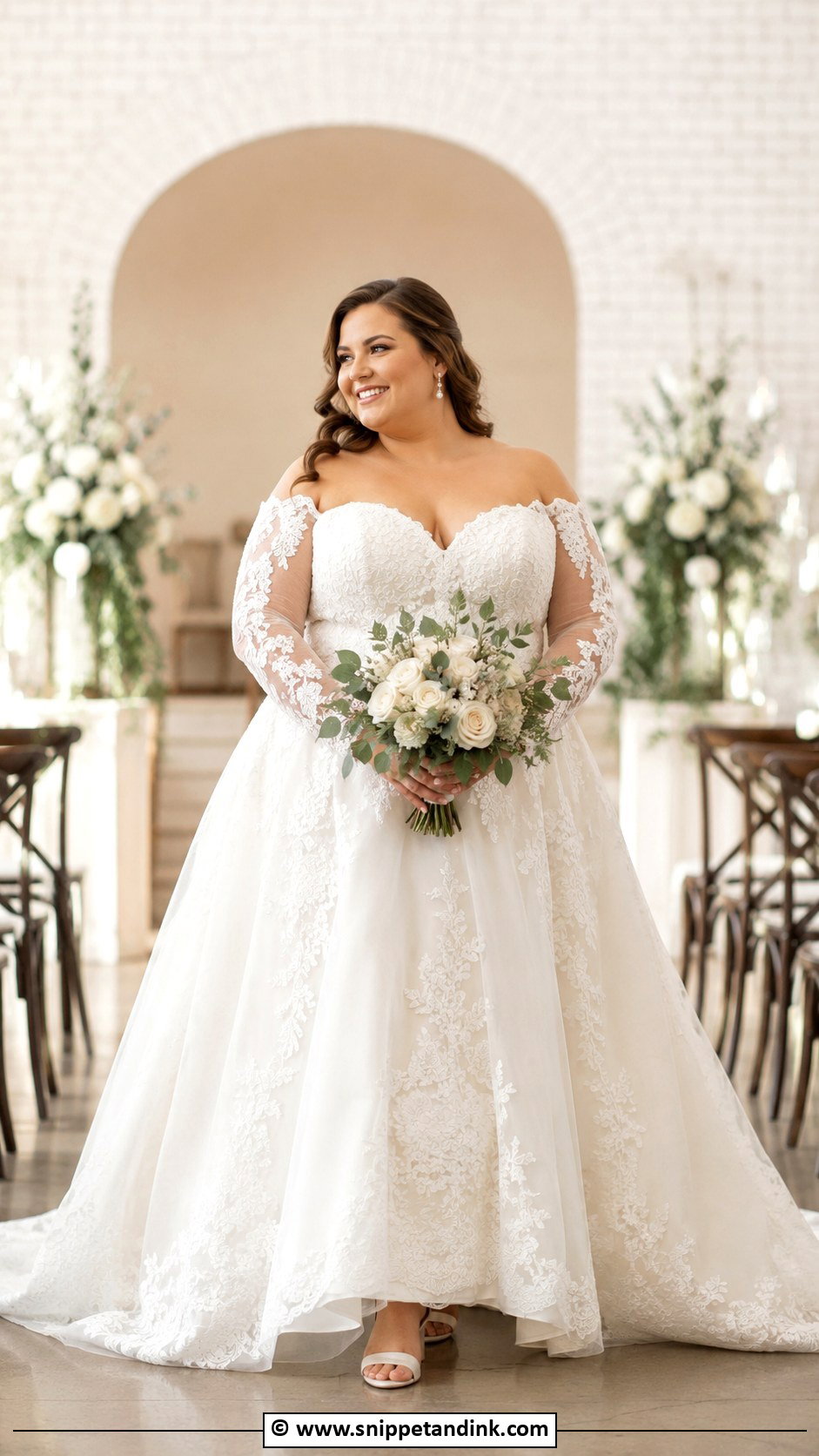
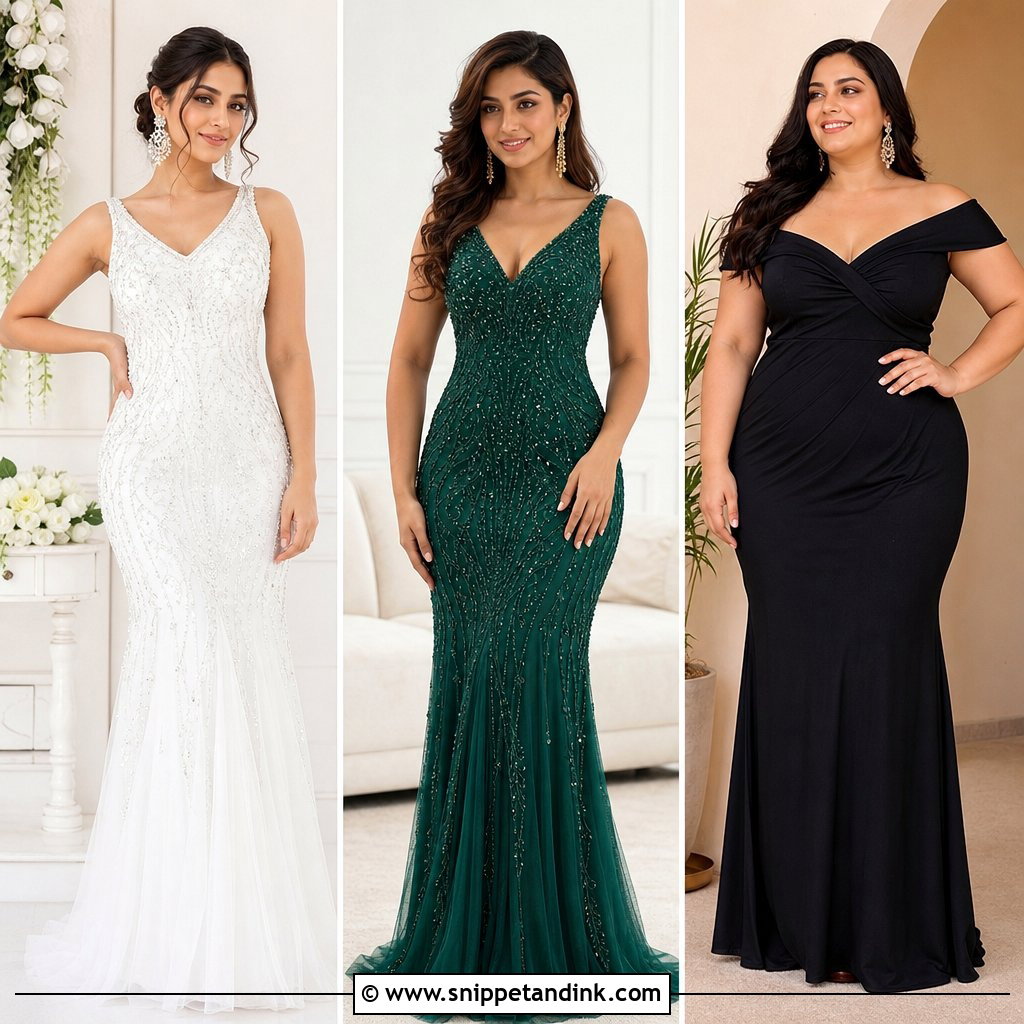
For plus-size brides, I start every appointment with support, because the right internal structure changes how every style feels. A-line skirts, corset bodices, wrap shapes, off-shoulder necklines and structured satin can all look wonderful. Look for proper boning, wider straps if you want them, and fabrics like crepe or heavier satin that drape smoothly instead of clinging. Cute details such as lace sleeves, pearl straps, floral appliqués or a bow back add charm. Wear comfortable heels or flats and choose jewelry by the neckline. The goal is a dress you forget you are wearing.
29. Petite Wedding Dress
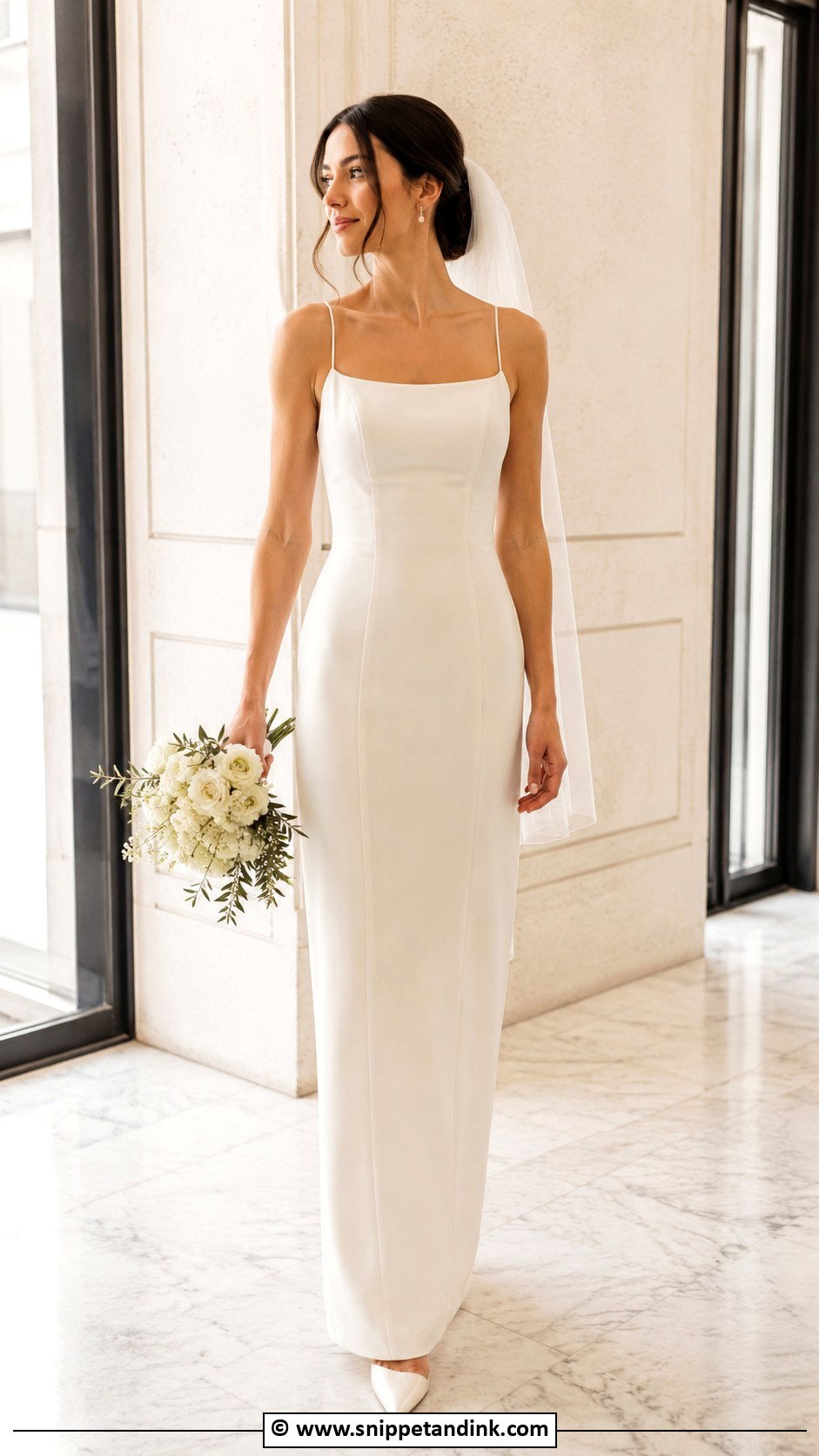
Petite brides get the best results from proportion, not from avoiding volume. Sheaths, A-lines, tea lengths and minis all work, and a defined waist with vertical seams helps lengthen the frame. The main adjustments I make are moving the waistline up to your true waist and shortening straps, since sample gowns are cut for taller bodies. Heavy detail can overwhelm, so choose one feature. Pointed heels, fine straps and a shorter train keep everything in scale.
30. Modern Minimal Wedding Dress
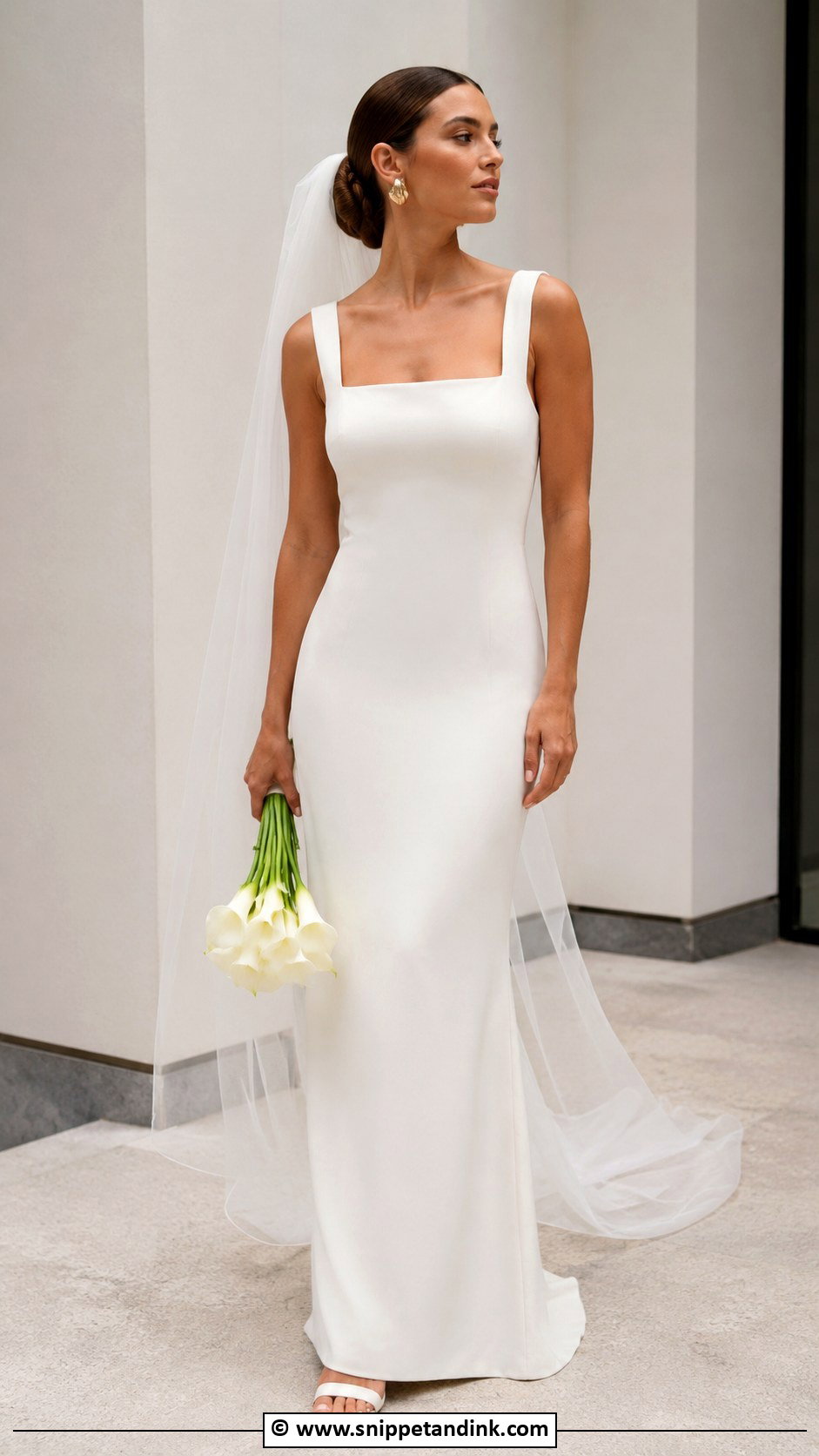
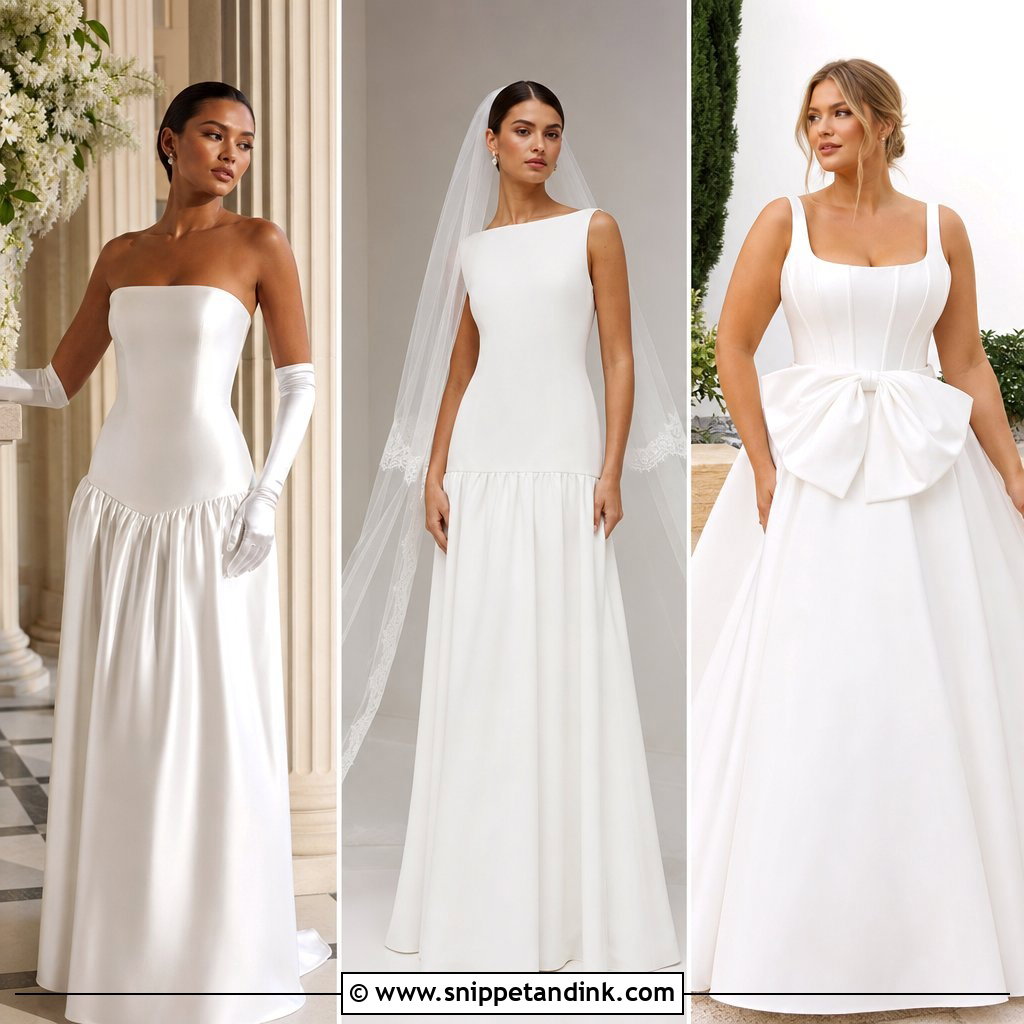
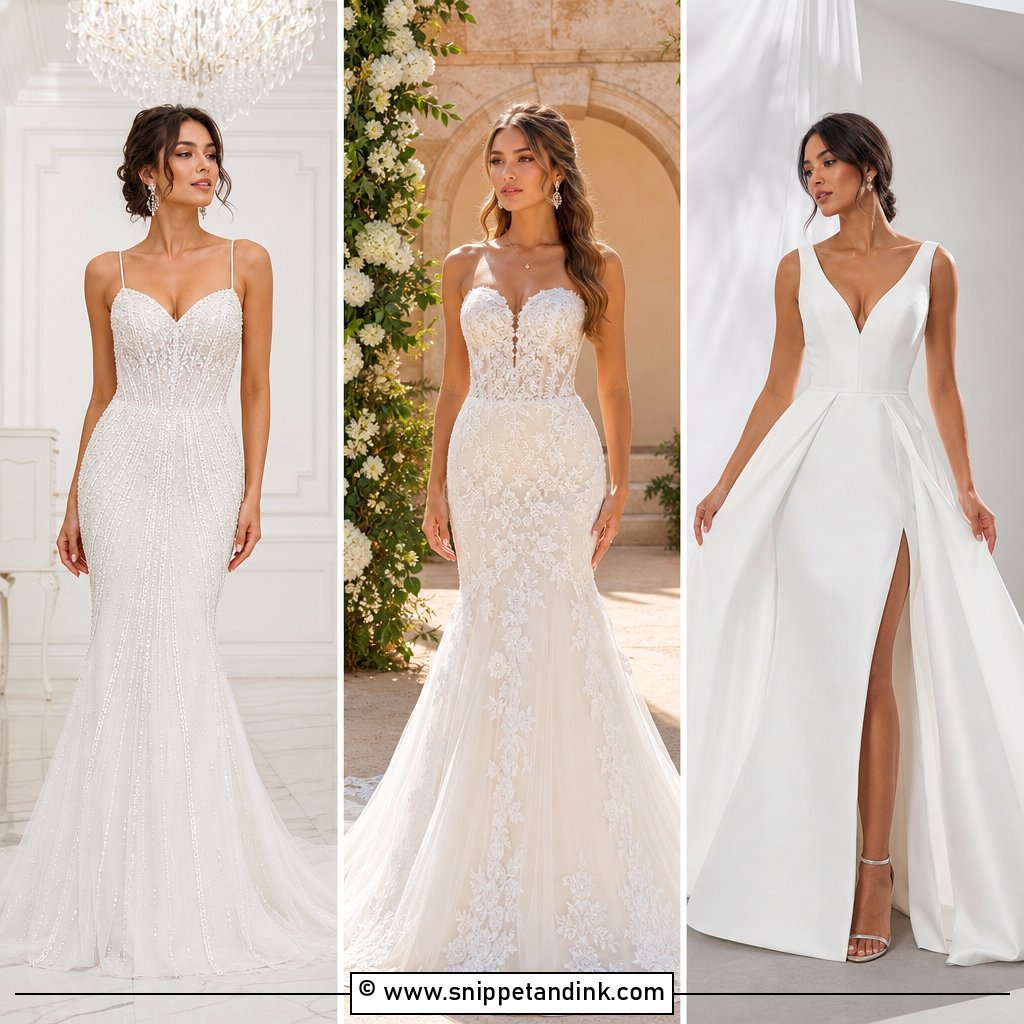
Minimal dresses rely on what is usually hidden: the cut, the weight of the fabric and how cleanly the seams are finished. Smooth satin, crisp crepe, square necklines, columns and simple A-lines are the vocabulary. A low back, tiny buttons, a bow strap or a structured neckline keeps it from feeling plain. I check minimal dresses under bright light because any pucker or pull shows instantly with no lace to hide it. Sculptural earrings, sleek heels and a simple veil suit nearly any venue, from a city wedding to a formal ballroom.
Alteration Timing for Minis, Midis and Full Gowns
Shorter dresses look simpler, so brides often assume they need less time. In practice the timeline depends more on where you buy than on the length. Made-to-order bridal gowns commonly take several months to arrive, so ordering around eight to ten months out leaves room for delays. Ready-to-wear minis and midis can arrive in weeks, but they still need fitting.
A realistic fitting schedule
- First fitting about eight to ten weeks before the wedding, wearing your actual undergarments and shoes.
- Second fitting a few weeks later to check the hem, bodice and any bustle or detachable skirt.
- Final fitting or pickup roughly two weeks out, close enough that the fit still holds but early enough to fix a surprise.
- Allow extra time for adding sleeves, moving appliqués or changing a neckline, as these are hand jobs that can’t be rushed.
Alteration costs vary widely by city and by how much work the dress needs, so ask for a written estimate at the first appointment rather than at pickup.
Satin Creases, Lace Snags and Fixes on the Morning
Every fabric in this list has one predictable weakness, and I’d rather you pack for it than discover it an hour before the ceremony. Satin creases across the lap and back of the skirt after a car ride. A handheld steamer held a few inches away, never touching the fabric, will lift most of it; don’t iron satin directly, as it can leave a shine.
Lace and tulle snag on jewelry clasps, rough walls and Velcro on bags. A loose thread is better trimmed than pulled. Puff sleeves and ruffles flatten in a suitcase, so carry them on a padded hanger or in the garment bag the shop provides. Keep a small kit with white thread, safety pins, double-sided fashion tape and a stain pen, and give it to someone who isn’t you.
After the wedding, get the dress to a specialist cleaner within a few weeks. Sugar from cake or champagne can be invisible at first and turn yellow over time, especially on ivory satin.
A Sweet Dress Still Needs a Good Tailor
Cute is a mood, not a single detail. Lace, bows and soft fabrics help, but the dress only feels right when it suits your venue, your comfort and the way you move. A satin mini, a courthouse midi, a floral appliqué gown or an airy chiffon beach dress can all get you there. Put your money and attention into fit, fabric and accessories that support the dress instead of competing with it, and give yourself time for at least two fittings. When the dress feels like you, everything else in the picture falls into place.
You'll Like These Ideas:





Leave a Reply