
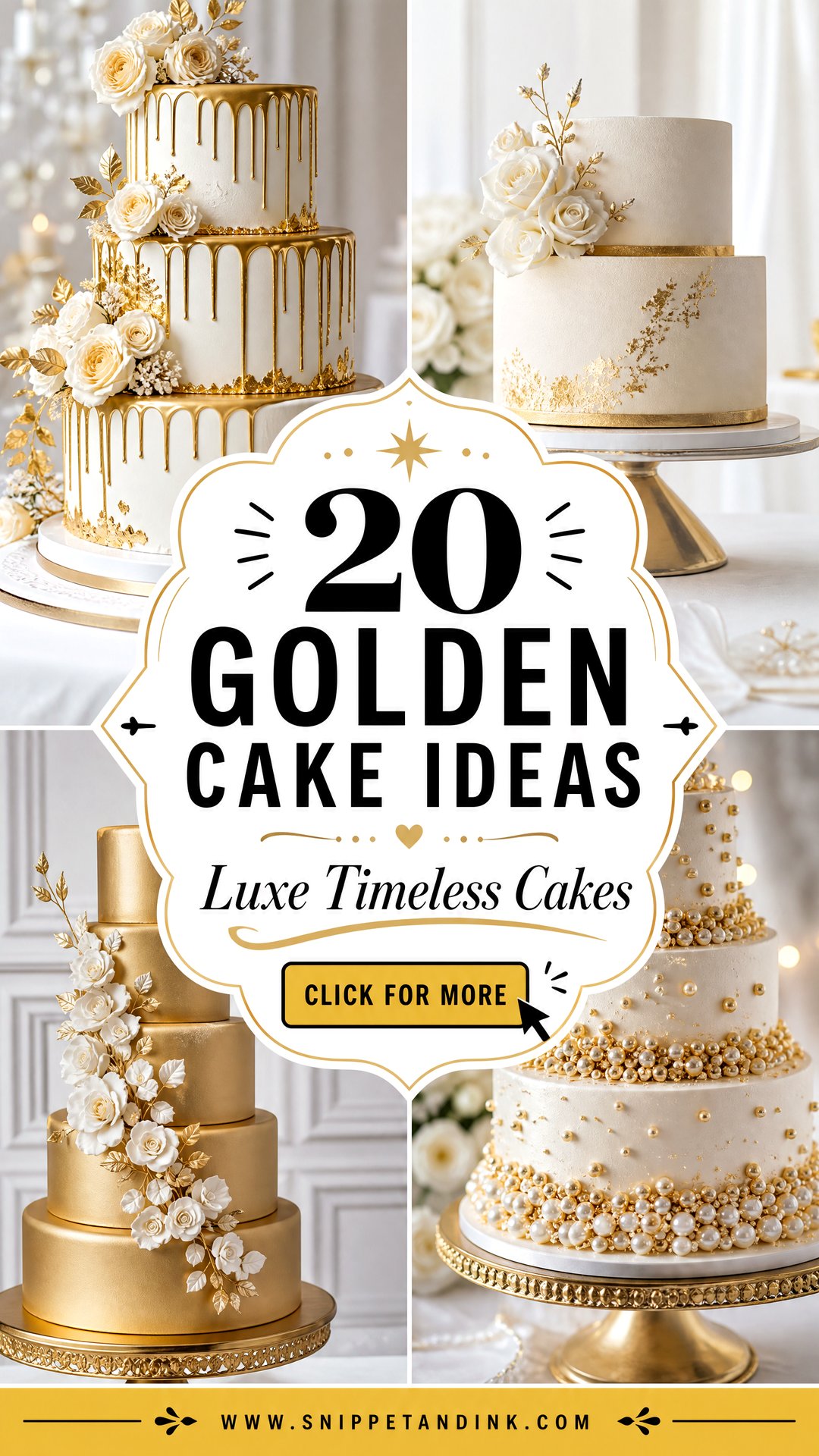
Gold is the most requested accent at my consultation table, and it covers a wider range than people think. It can be a few torn flakes of leaf on ivory buttercream, a hand-painted band on fondant, or a full metallic tier under candlelight. It sits happily with ivory and blush, with emerald and black, with soft blue. What changes from cake to cake is how the gold gets onto the surface, and that decides how it looks, how it travels and how it holds up in a warm room. Below are the designs I’m asked about most, with what each one really takes to make.
Which Gold You Can Actually Eat
Not every gold product sold for cakes is meant to be eaten, and couples are often surprised by that. Before you fall for a design, it helps to know what is going onto the tiers.
- Edible gold leaf is real high-karat gold beaten paper-thin. It is safe to eat in the tiny amounts used on a cake and has no taste.
- Edible lustre and metallic paints are made with food-grade ingredients and are labeled as edible. These give painted bands, drips and full tiers.
- “Non-toxic” or “decorative only” dusts are a different thing. They are meant for pieces that get removed, like toppers and sugar flowers, not for frosting your guests will eat.
I only use edible-labeled metallics on any surface that gets served, and it’s a fair question to put to any baker you’re considering. Leaf costs more than paint, but a little goes a long way. Paint gives you even coverage and clean lines, while leaf gives that broken, glowing texture you see in close-ups.
1. White And Gold Wedding Cake
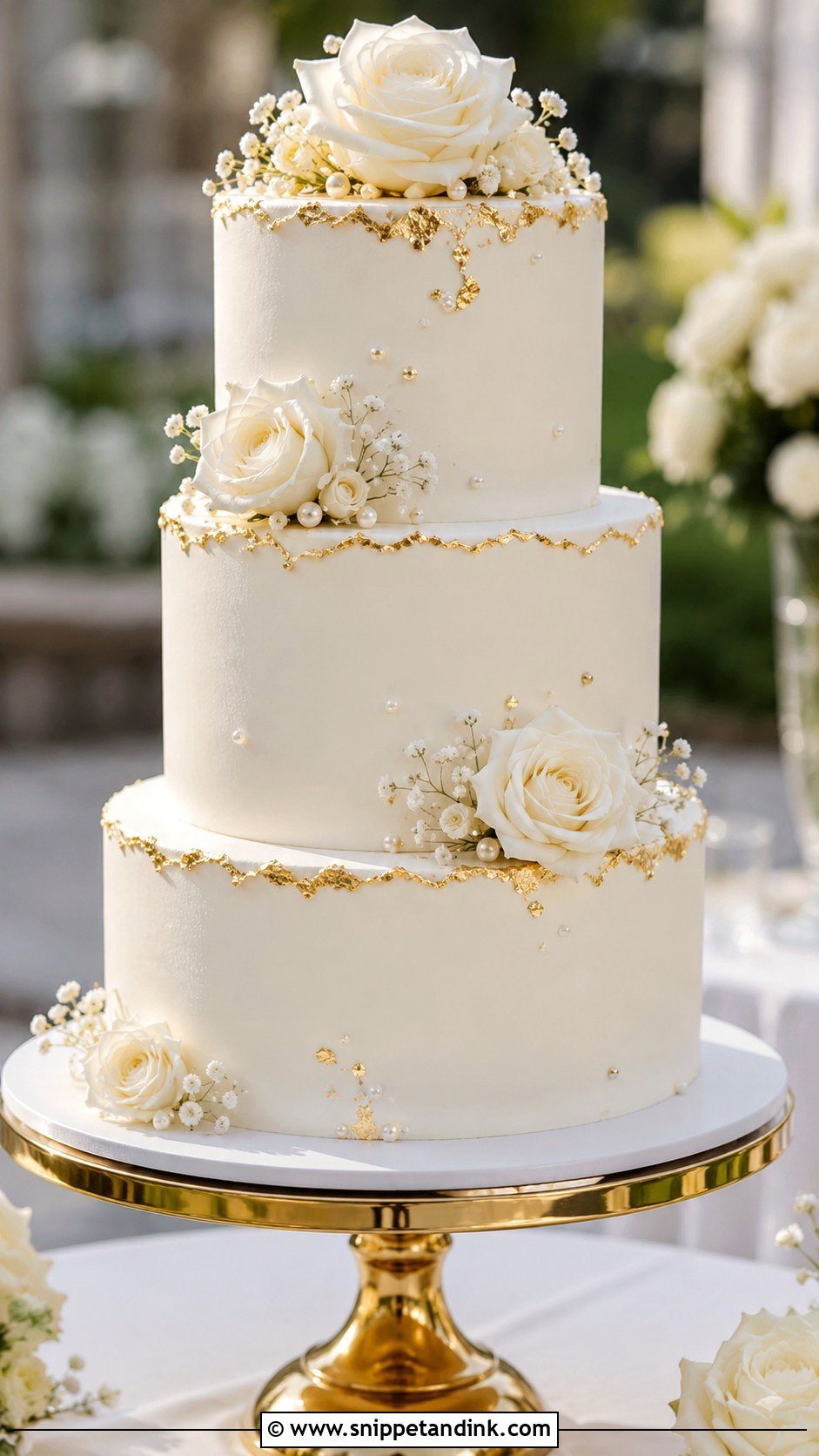
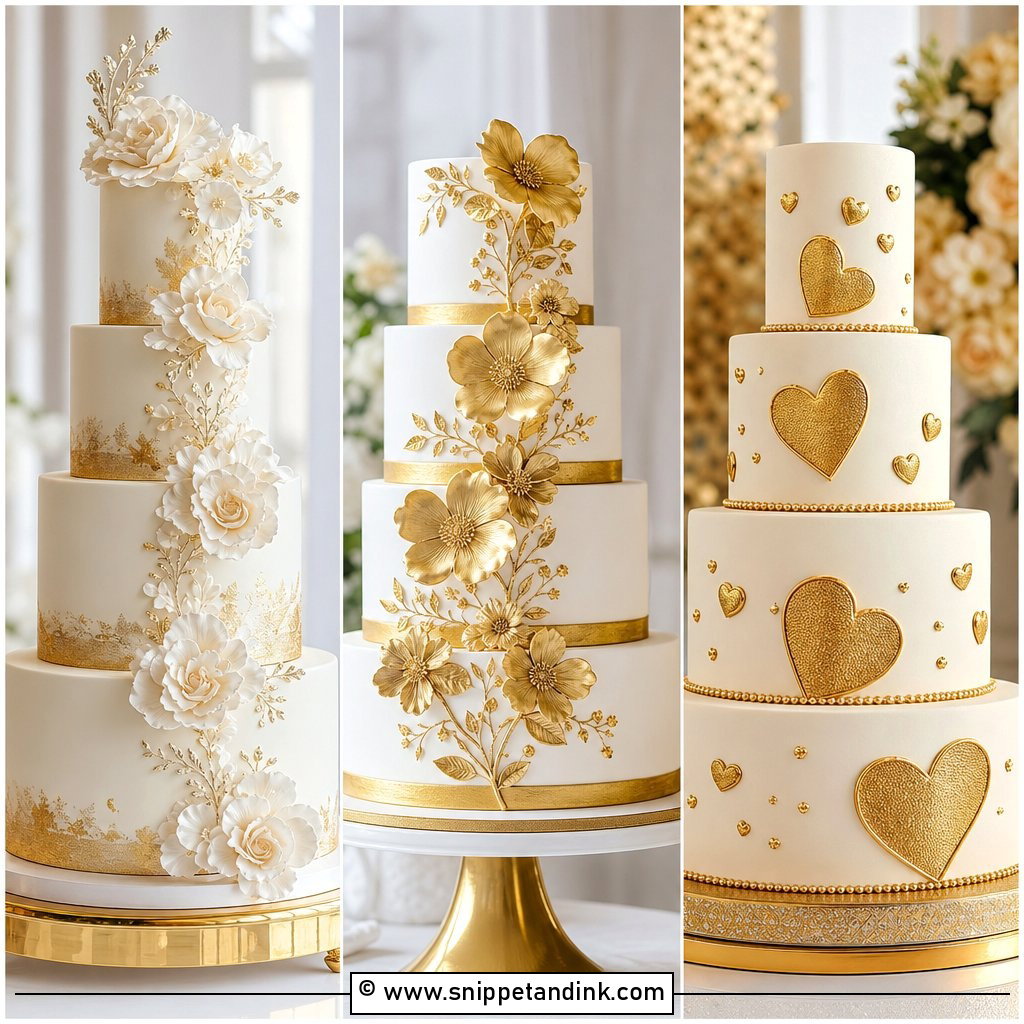
A white and gold wedding cake is where I send couples who know they want gold but not how much. The white base keeps it bridal and the gold stays an accent. On three classic tiers I’ll paint a fine rim on each edge; for a more modern table, one wide band across the middle tier. Smooth buttercream works, but a painted gold line is crisper on fondant or a well-chilled ganache shell, because soft buttercream drags under the brush. White roses or orchids keep the palette clean.
2. Gold Leaf Wedding Cake
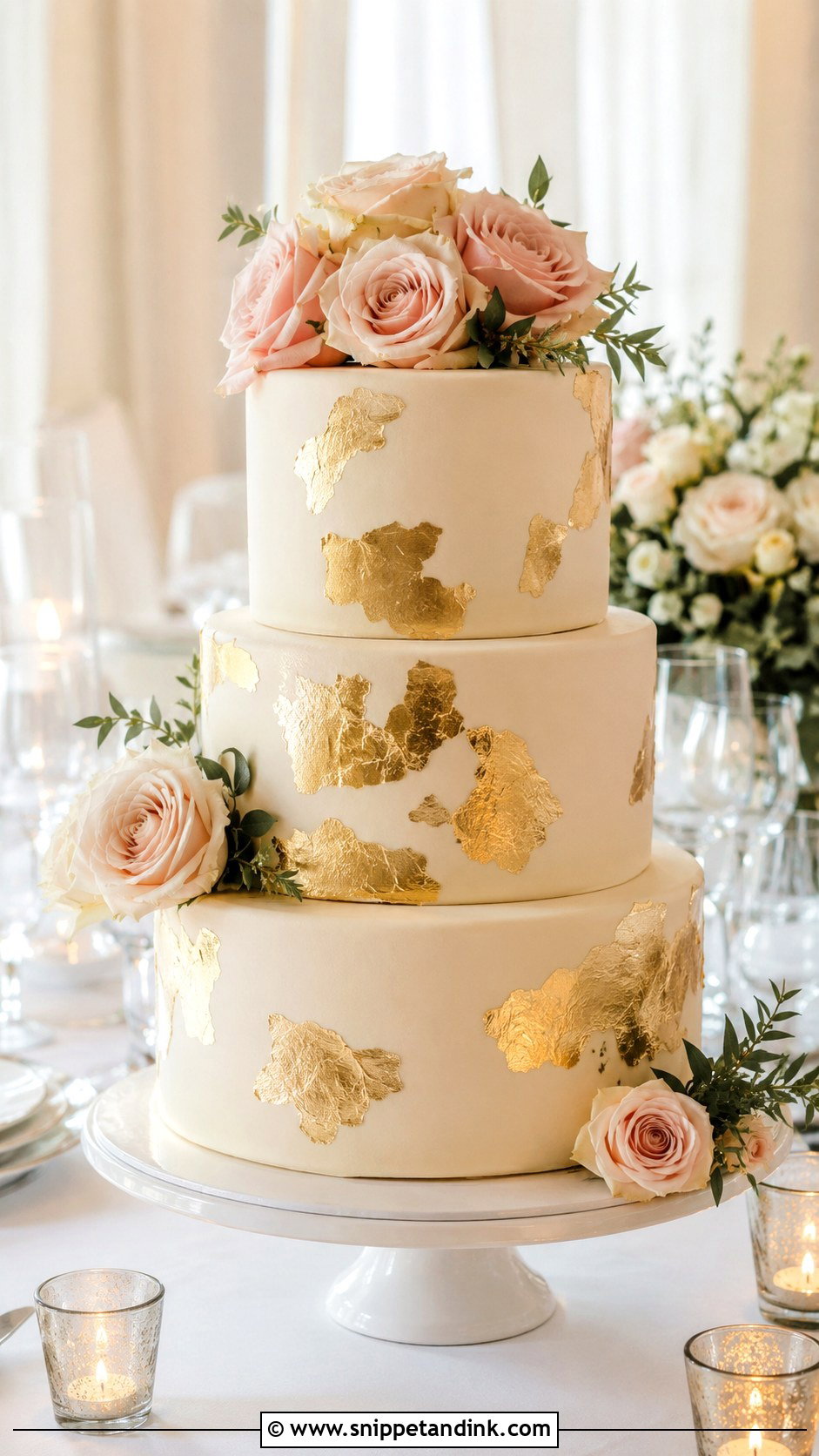
Real edible gold leaf is so thin it lifts on a breath, which is exactly why it looks handmade. I lay it with a soft brush onto chilled frosting, pressing it into torn, uneven patches rather than full coverage, so the light breaks across the tiers. Larger clusters on one side read as luxurious, while small flecks near the base of each tier keep it quiet. It sits well on white, ivory, blush, sage and even black. The one thing leaf hates is a warm, soft surface: on buttercream that has started to sweat, it wrinkles instead of lying flat.
3. Black And Gold Wedding Cake
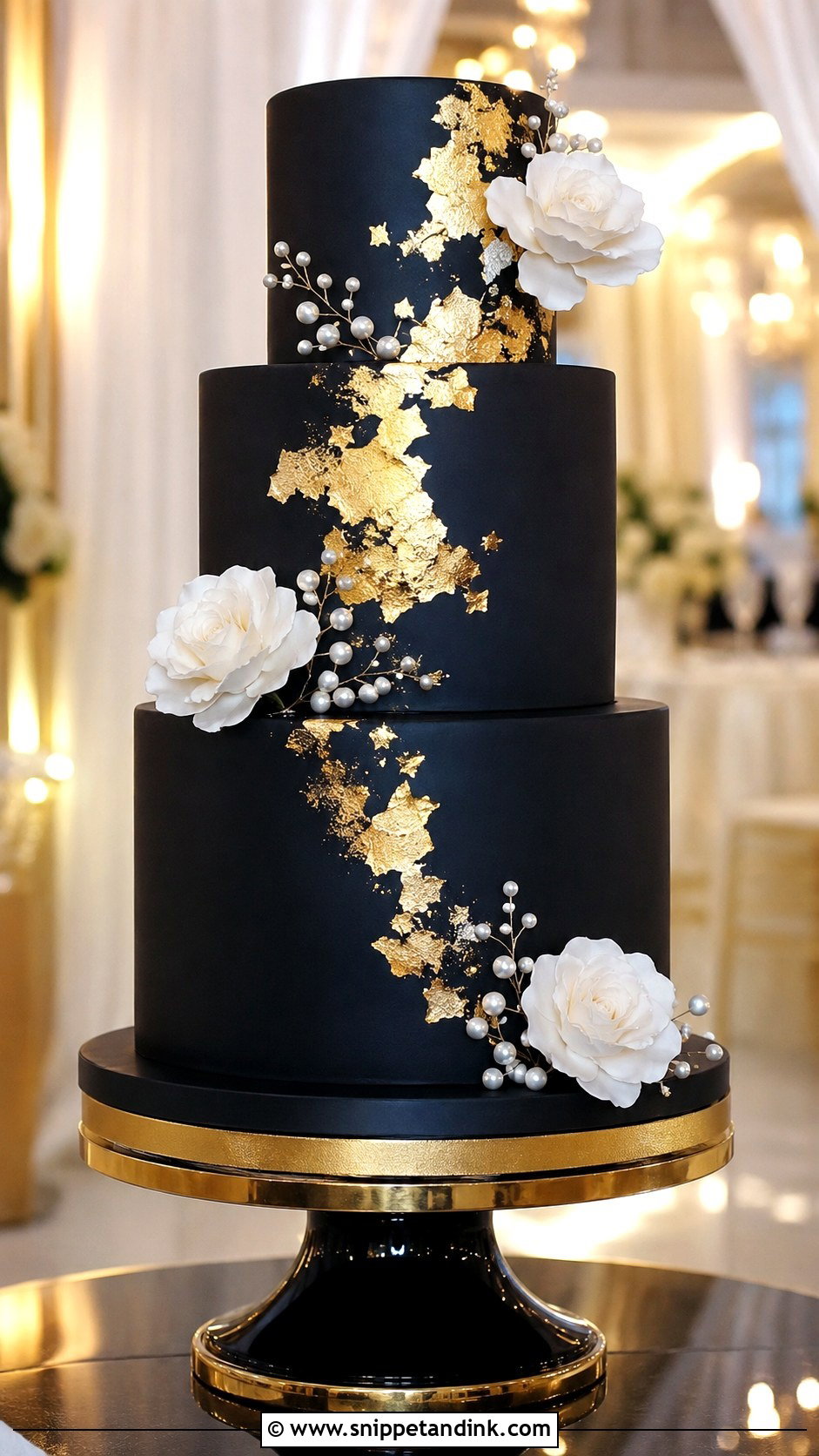
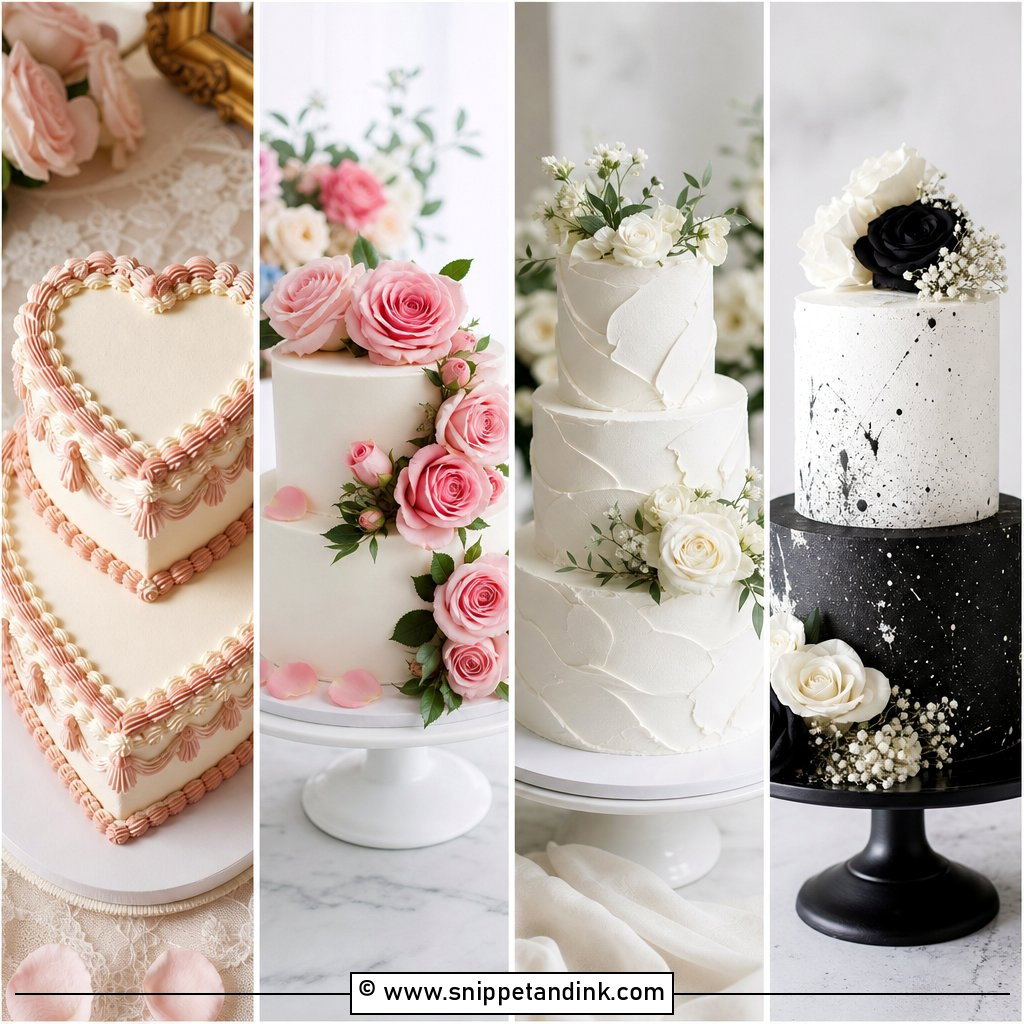
Black and gold is a formal evening cake for a ballroom, a loft or a candlelit room. Matte black fondant or frosting makes the base, and gold leaf, piping or geometric lines sit on top. A true black takes a lot of color, and heavily dyed frosting stains teeth and tastes bitter, so I build from a dark chocolate or black cocoa base and only finish with color. A chocolate sponge inside matches the outside. White sugar flowers or a few pearls stop the contrast feeling harsh, and the cake needs very little else around it.
4. Rose Gold Wedding Cake
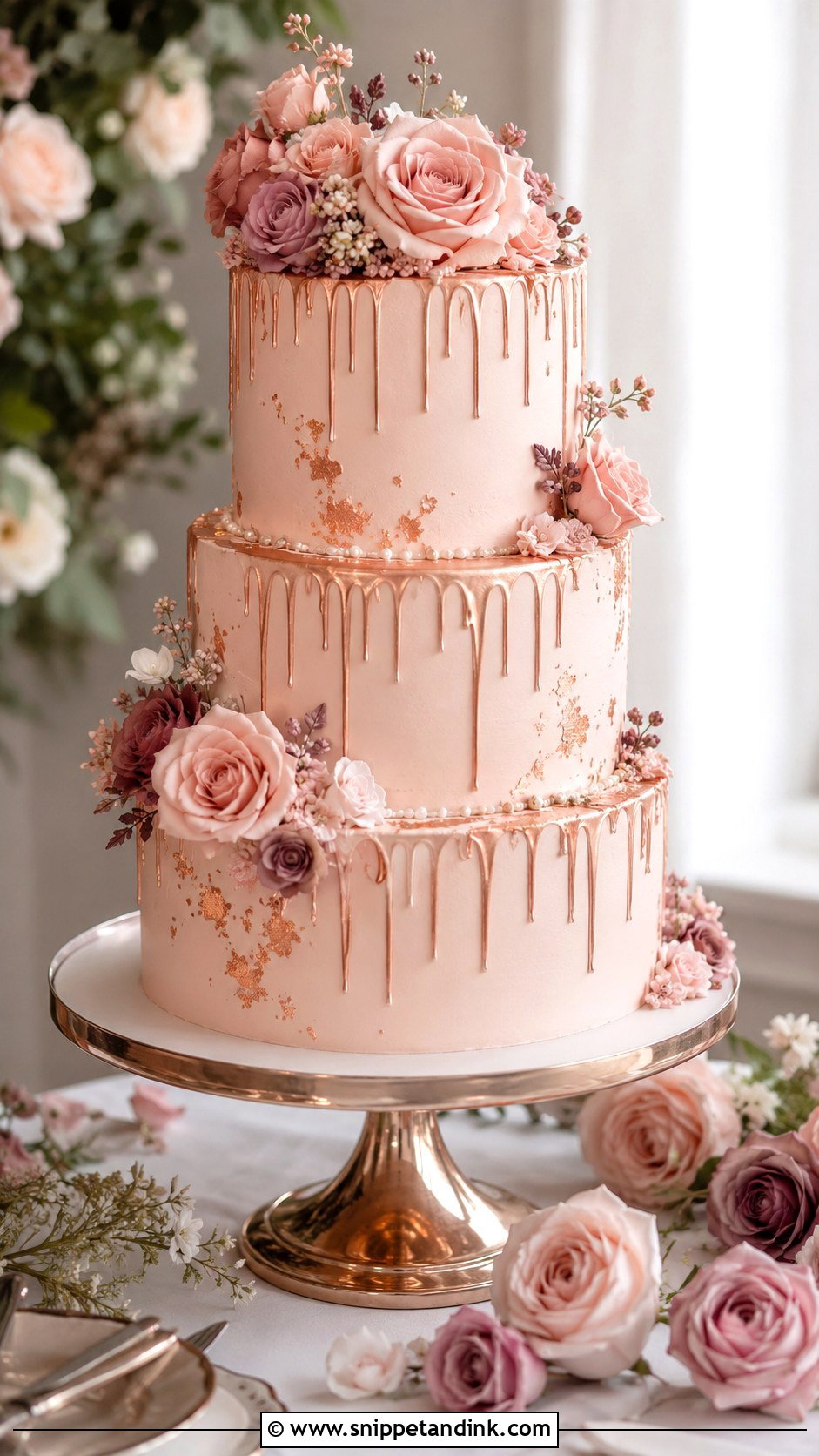
Rose gold reads warmer and softer than yellow gold, and it suits blush, champagne, mauve and dusty rose flowers. I mix it by tinting a gold lustre with a touch of pink, then use it as a drip, a painted tier or a few leaf accents. The color shifts a lot with lighting, so I always send couples a photo of a test panel under warm light before the cake is finished. Vanilla, almond, strawberry or champagne sponges fit the mood. Smooth frosting looks modern, while soft buttercream texture suits a garden wedding.
5. Gold Drip Wedding Cake
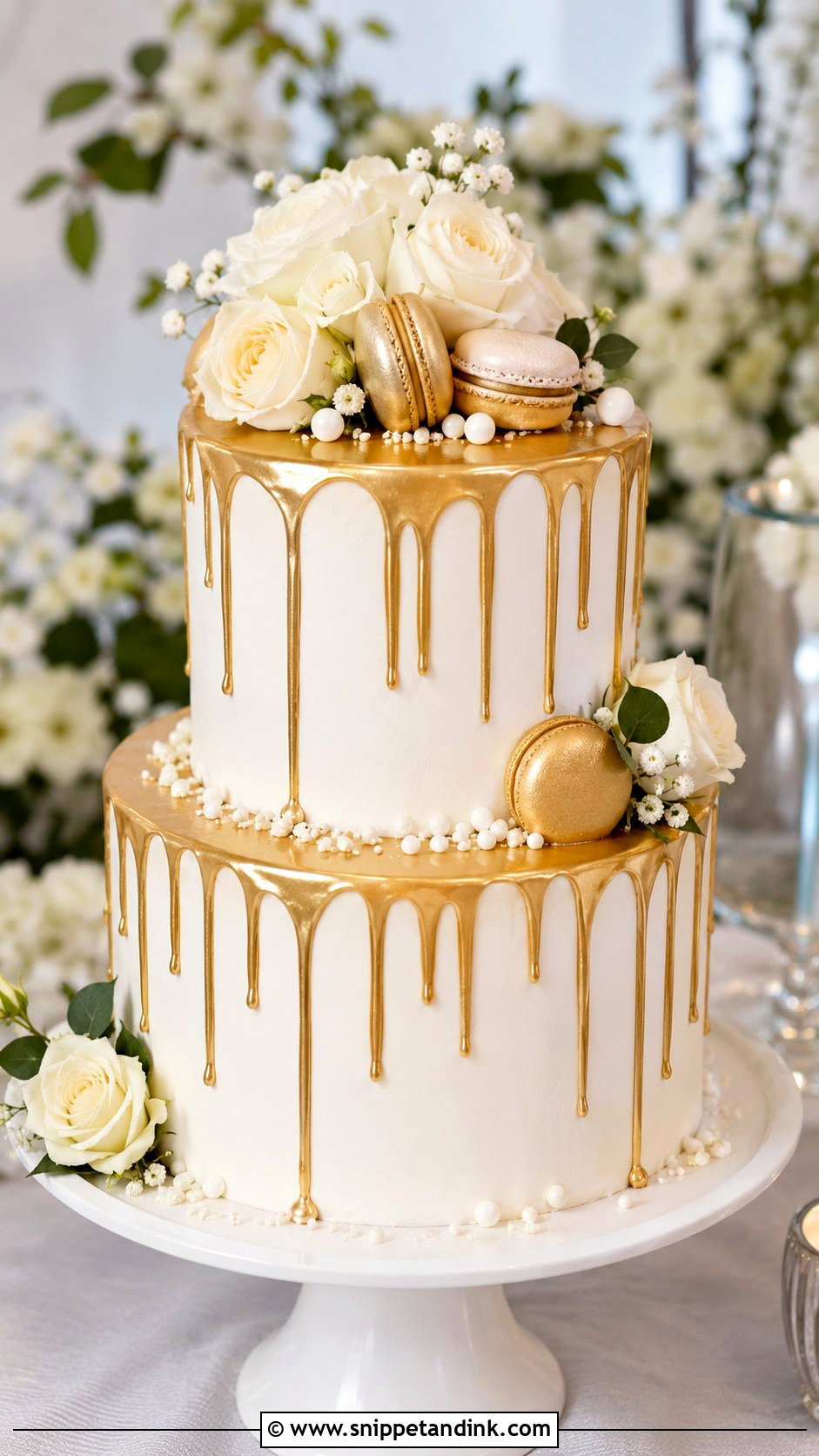
A gold drip wedding cake is a playful finish, and its neatness comes down to temperature. I pour a ganache drip onto a fully chilled cake so the drips stop where I want them, let it set, then paint the gold over the top. Pour onto a warm cake and the drips run to the board. It can cover the top tier, run down every side or sit on one section only, and it works over white, pale pink, navy or emerald tiers. Macarons, sugar flowers or fresh roses finish the top.
6. Gold Marble Wedding Cake
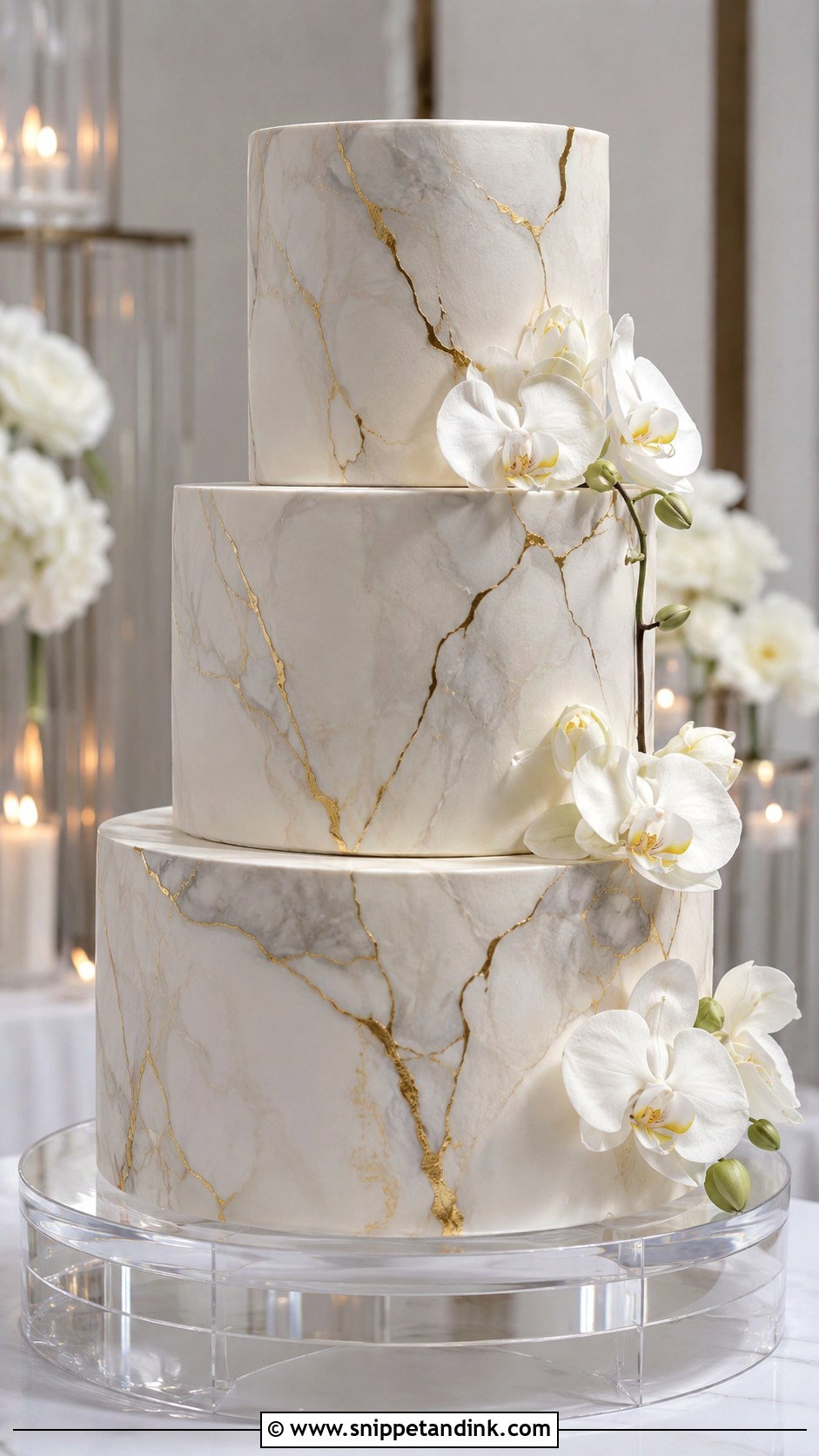
Marble is achieved by kneading streaks of grey, ivory or blush into fondant, or by working colors into buttercream with a scraper, and then painting thin gold veins along the natural lines. The veins should follow the marble, not cross it, or the stone effect falls apart. Pale ivory marble with delicate gold reads soft, while charcoal veining and heavier metallic reads bold. It suits hotel and museum venues and minimal table settings. White orchids or a sleek topper are all it needs.
7. Gold Tier Wedding Cake
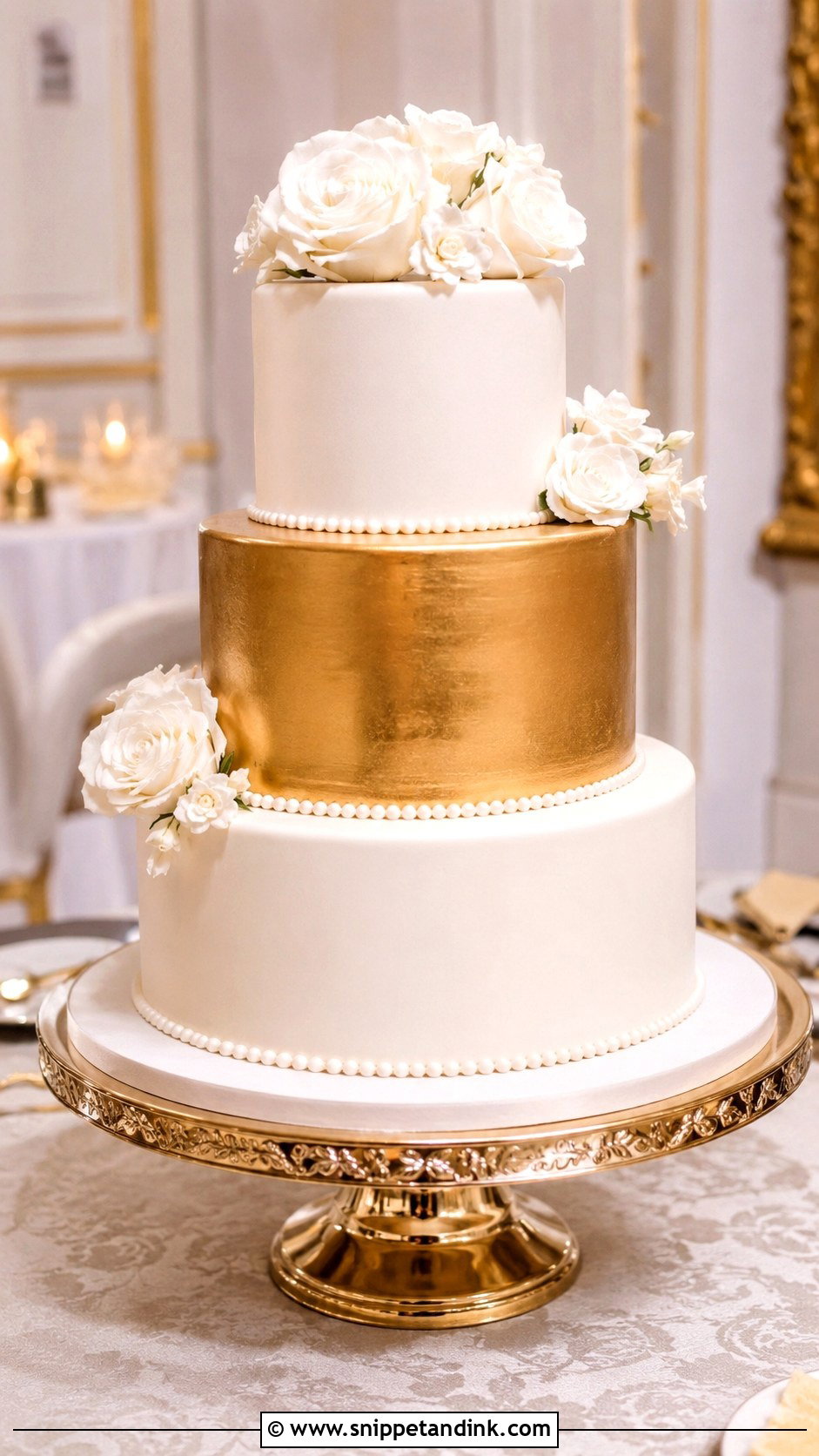
One fully gold tier gives you the metallic moment without shimmer everywhere. I usually place it at the bottom or in the middle; on top, a solid gold tier can make the whole cake look top-heavy in photos. Full coverage paints most evenly on fondant, so I build that tier in fondant even when the rest is buttercream. Edible metallic paint gives a smooth satin finish, and leaf gives a broken, glowing one. Pair it with white tiers and a few flowers.
8. Vintage Gold Wedding Cake
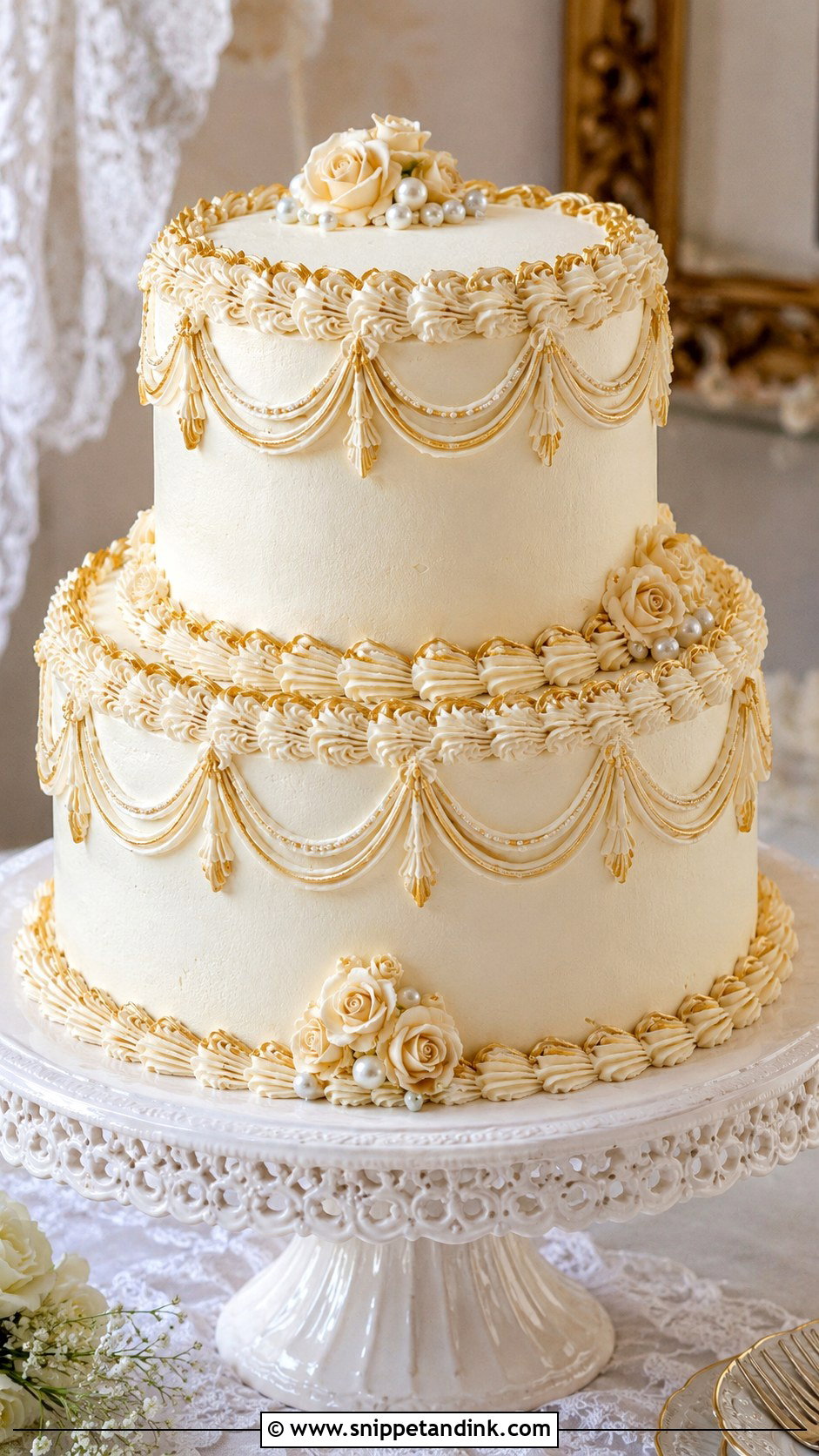
Vintage gold lives in the piping. Think piped buttercream swags, shell edges, pearl borders and lace patterns, with gold brushed only onto the raised details. I prefer ivory frosting here, since bright white makes the gilding look newer than the style. Piped work needs a firm buttercream that holds a sharp edge, which matters in a warm room. Small roses, ribbon or a delicate topper complete it. Keep the gold as a highlight on the piping, never as a coating.
9. Modern Gold Wedding Cake
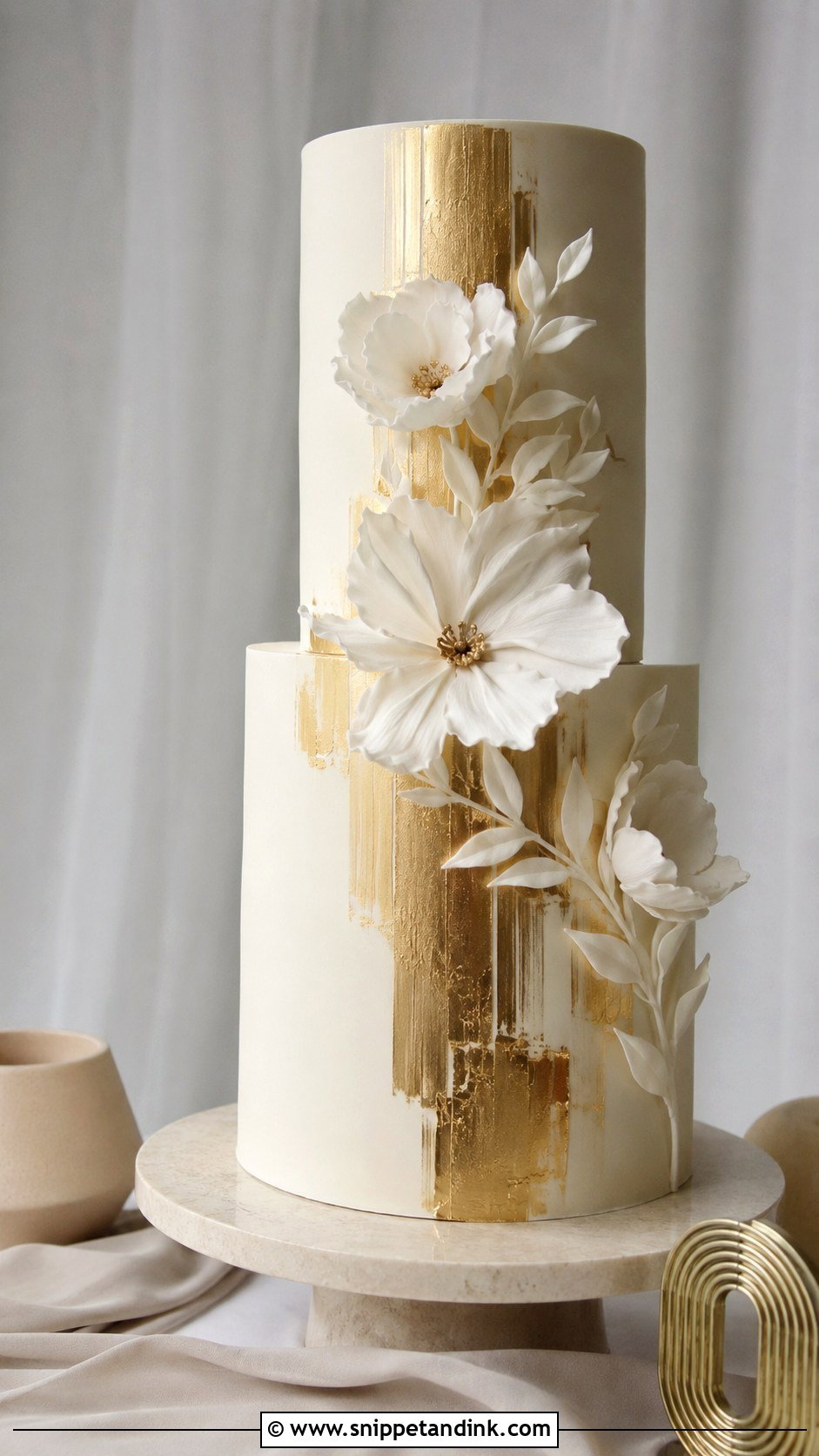
Modern gold means clean lines and very little else: one gold stripe, abstract brushstrokes, a geometric shape or a smooth metallic panel on tall, sharp-edged tiers. Sharp edges are a finishing skill, so ask to see a baker’s photos of plain tiers before trusting them with this. White, black, taupe or soft grey bases all work. If it starts to feel plain, I add texture with a ribbed buttercream comb or one cluster of sculptural sugar flowers instead of more gold.
10. Simple Gold Wedding Cake
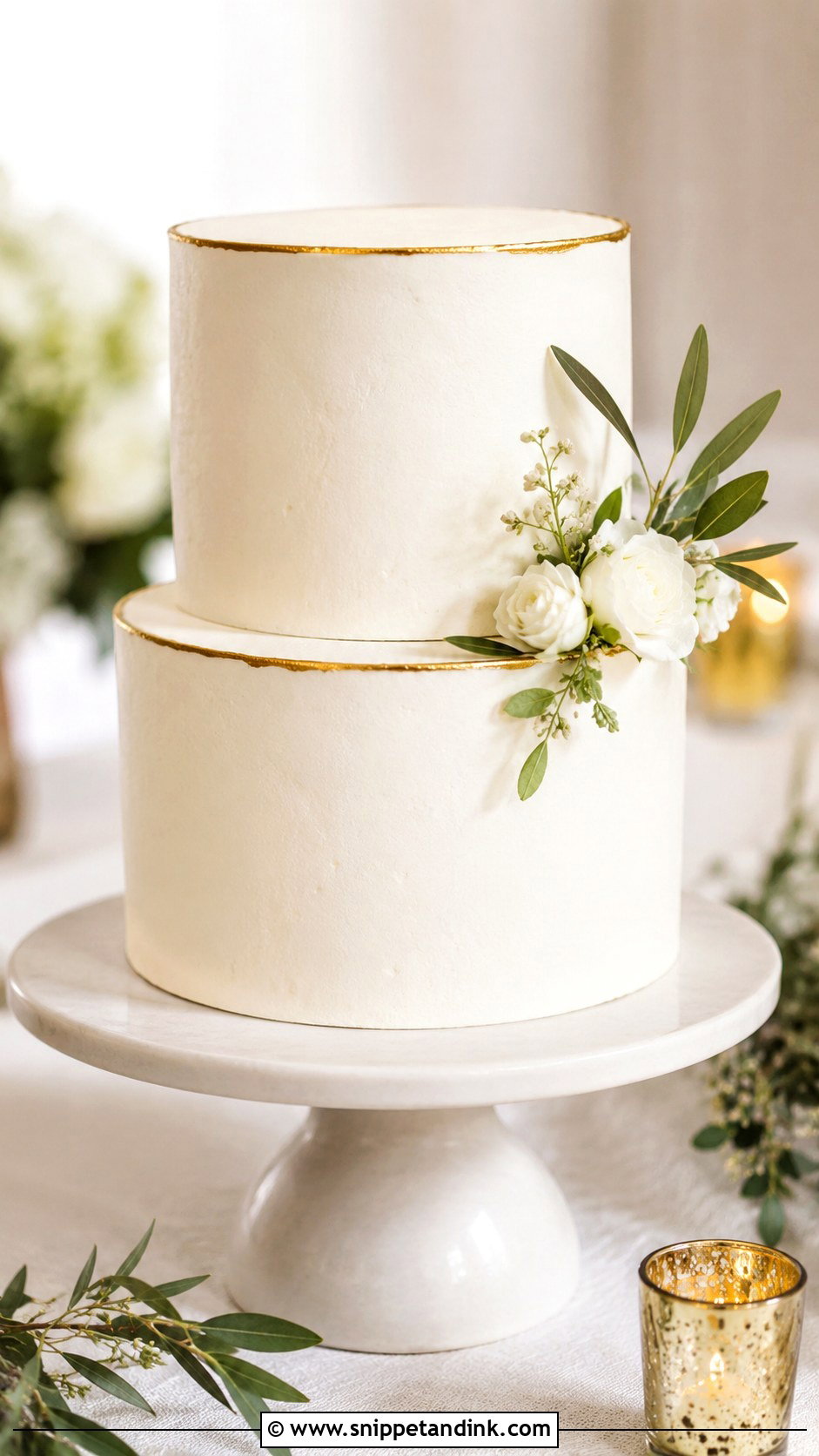
A simple gold cake only works if the finish underneath is excellent, because there is nothing to hide behind. My usual version is white buttercream with a thin painted rim on each tier, a few leaf flakes at the base, or a small gold topper. It fits intimate weddings, courthouse dinners and backyard receptions. Keep the palette to ivory, cream and champagne. One small floral cluster is plenty, and leaving the cake almost bare is a real option.
11. Gold Floral Wedding Cake
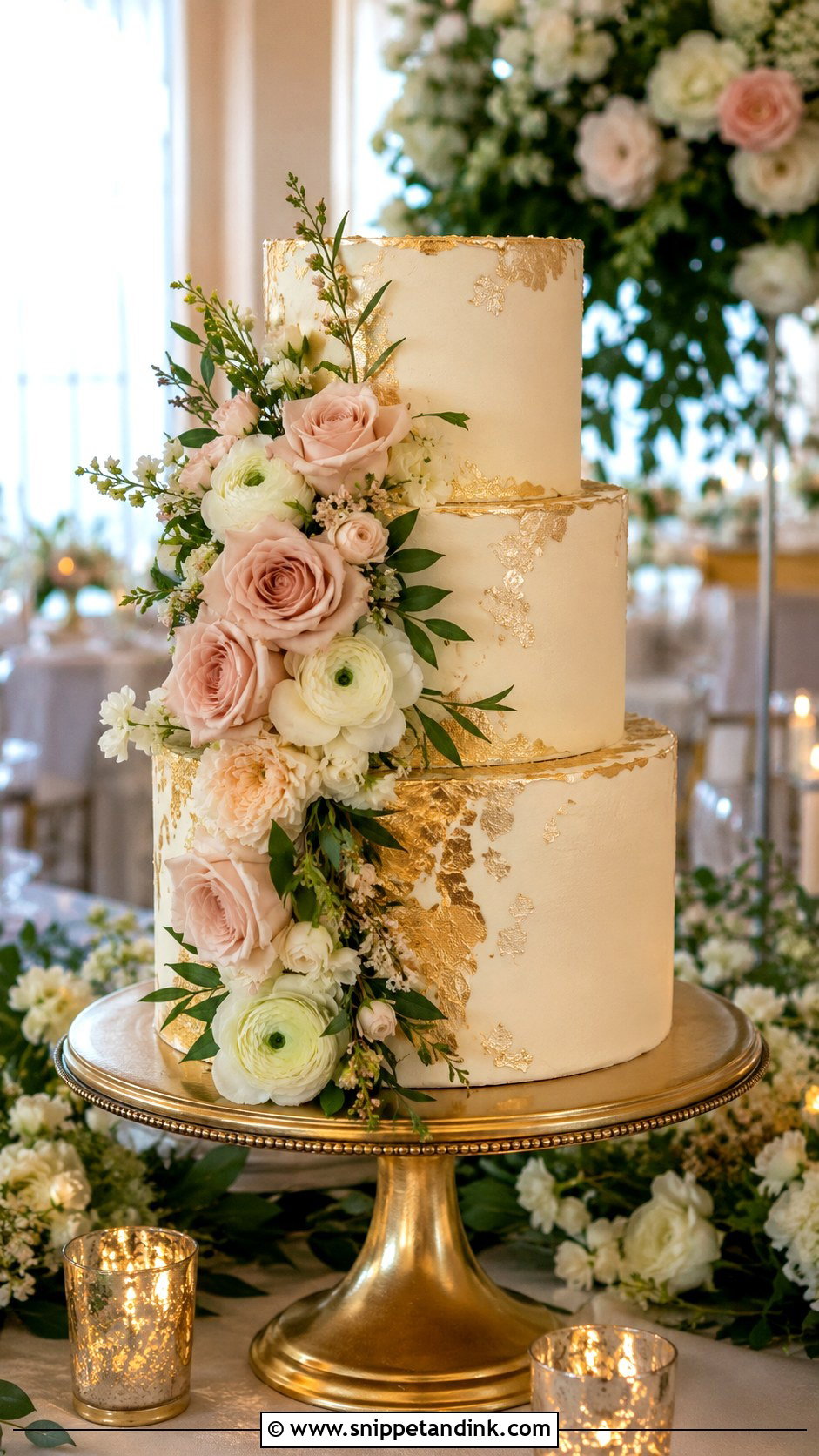
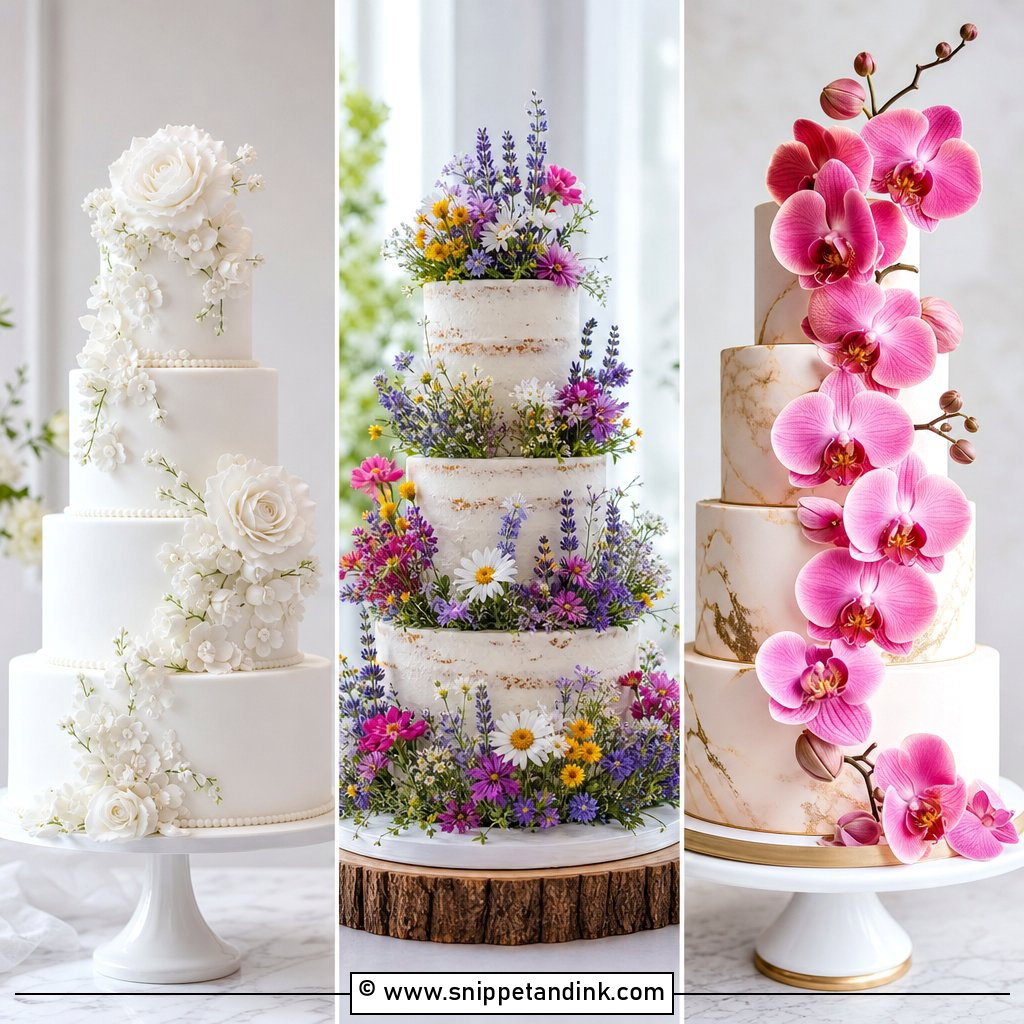
Flowers and gold are the most flexible pairing I make. The blooms can be fresh, sugar or pressed edible flowers, depending on budget and the venue’s rules. Gold leaf placed behind roses, orchids, ranunculus, peonies or small wildflowers creates a glowing backdrop. With fresh flowers, I need to know they are grown without pesticides, and the stems are wrapped or set into picks so they never touch the cake directly. Ivory frosting with blush and cream flowers reads soft, while burgundy or emerald florals with gold read bold, especially alongside gold chargers and candlelight.
12. Champagne Gold Wedding Cake
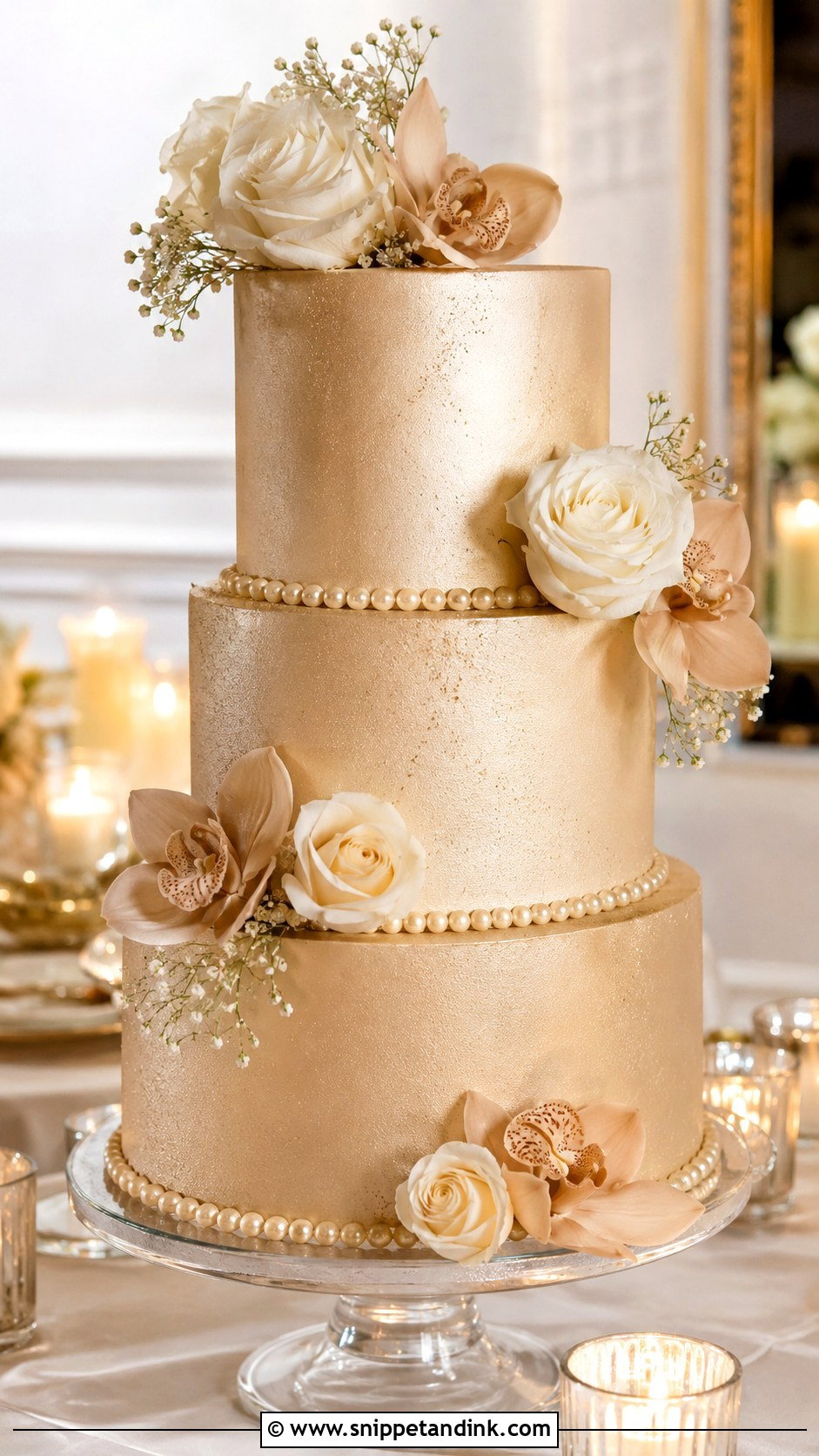
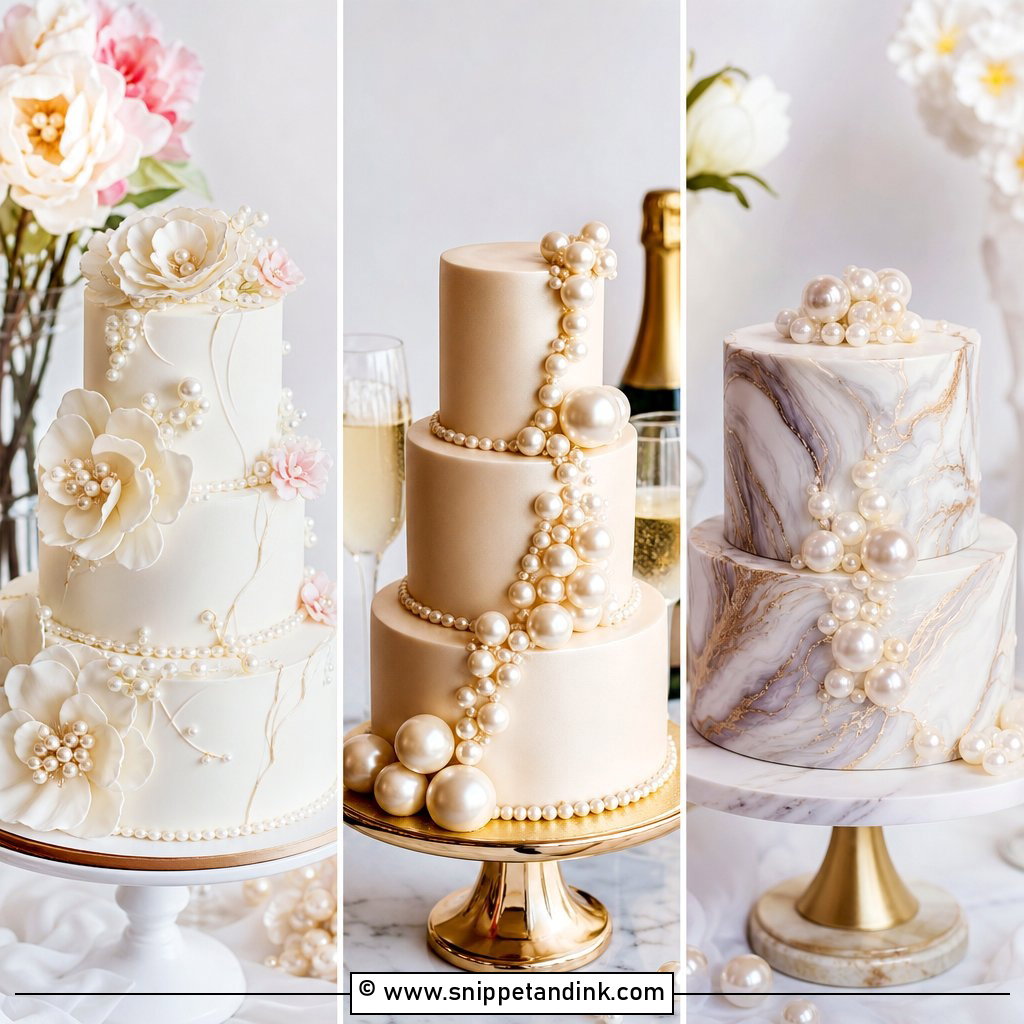
Champagne gold sits between ivory and gold, so it lands softly with neutral palettes, satin dresses and candlelight. I get it from champagne-tinted fondant, a pale metallic wash or a lightly tinted buttercream with pearl accents. The wash goes on in two or three thin coats; one heavy coat streaks. White roses, beige orchids, dried grasses or sugar flowers suit it. Vanilla bean, almond, honey and champagne sponges fit the mood, and smooth tiers with minimal decoration let the tone carry the design.
13. Gold Sequin Wedding Cake
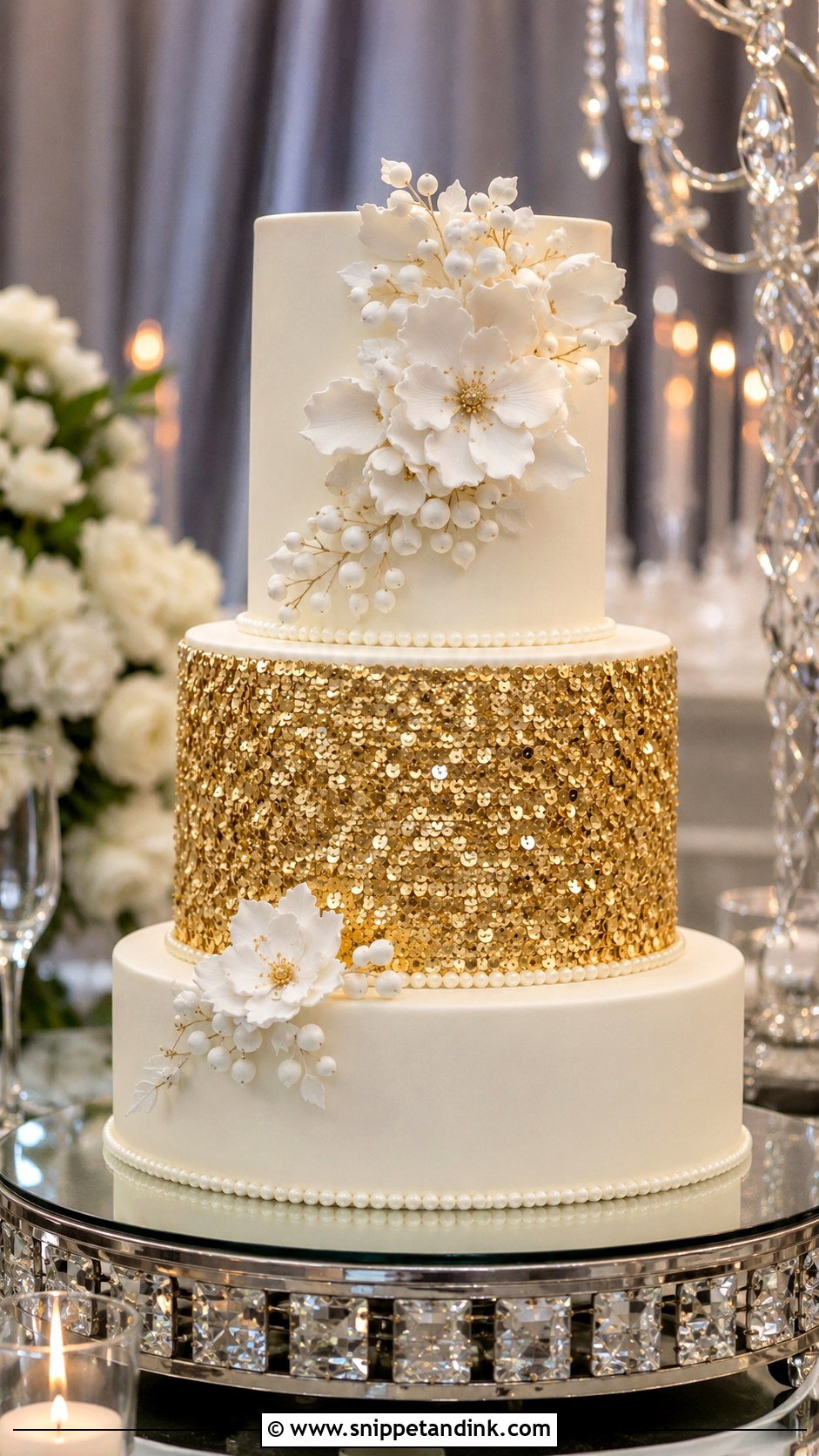
Sequins on a cake are individually placed discs, usually gelatin, isomalt or fondant brushed with gold, set one by one onto a tier. It is slow work, and that labor shows in the price, so I often suggest one sequin tier between smooth white, ivory or blush tiers. Under warm lights every disc catches, which is the whole point. A few white flowers or pearls are enough decoration. Gelatin and isomalt sequins soften in humidity, so this one belongs indoors.
14. Gold And Ivory Wedding Cake
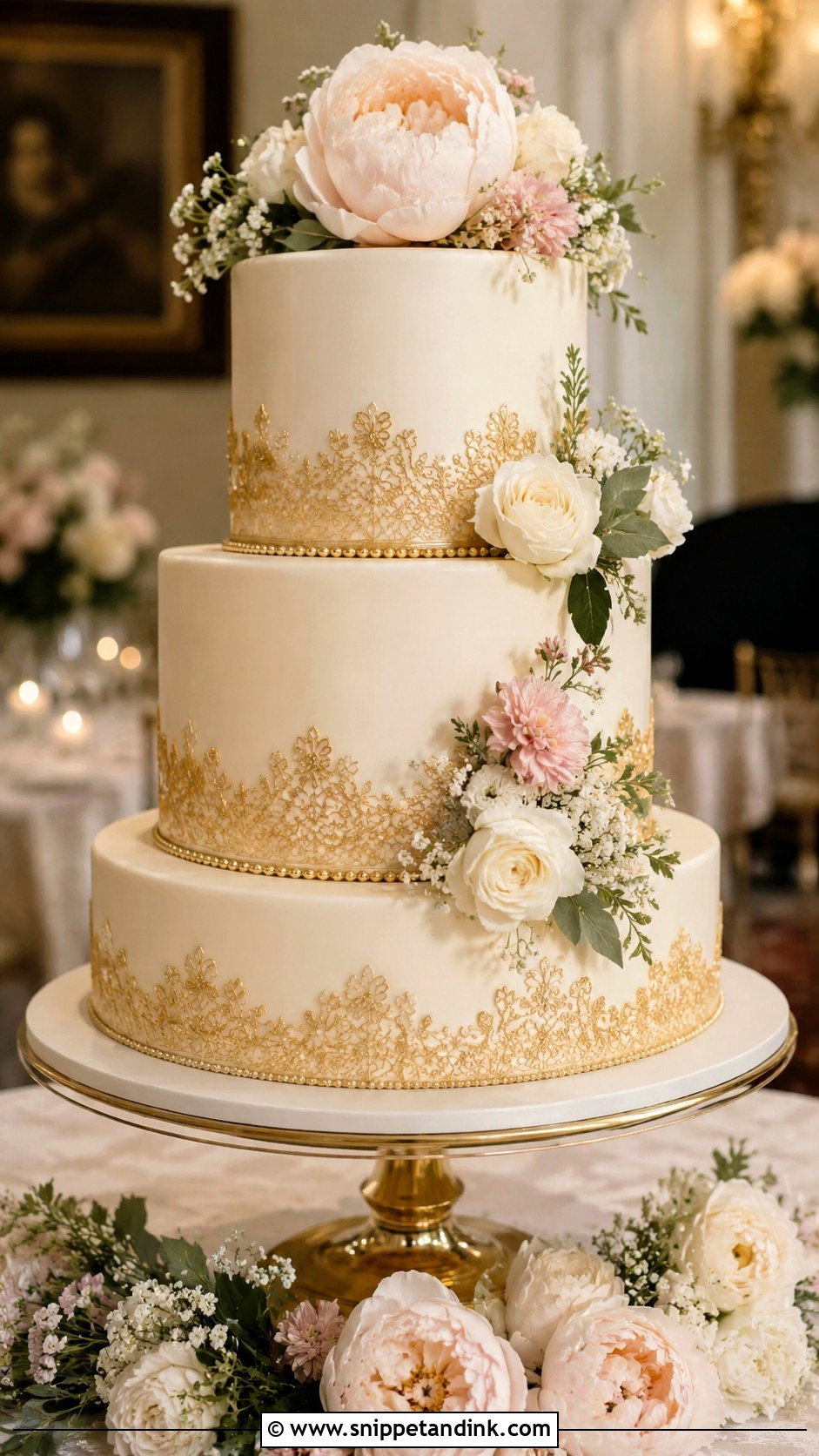
Ivory is warmer than bright white, and gold blends into it instead of jumping off it. That gentle contrast is the appeal. Lace impressions, pearl borders, pressed texture and thin gilded edges all suit it, as do cream roses, white orchids, blush peonies and a little greenery. For flavor, vanilla bean, almond, lemon or coconut match the softness. I’d steer anyone who wants a crisp, graphic look toward white instead, because ivory and gold will always read traditional.

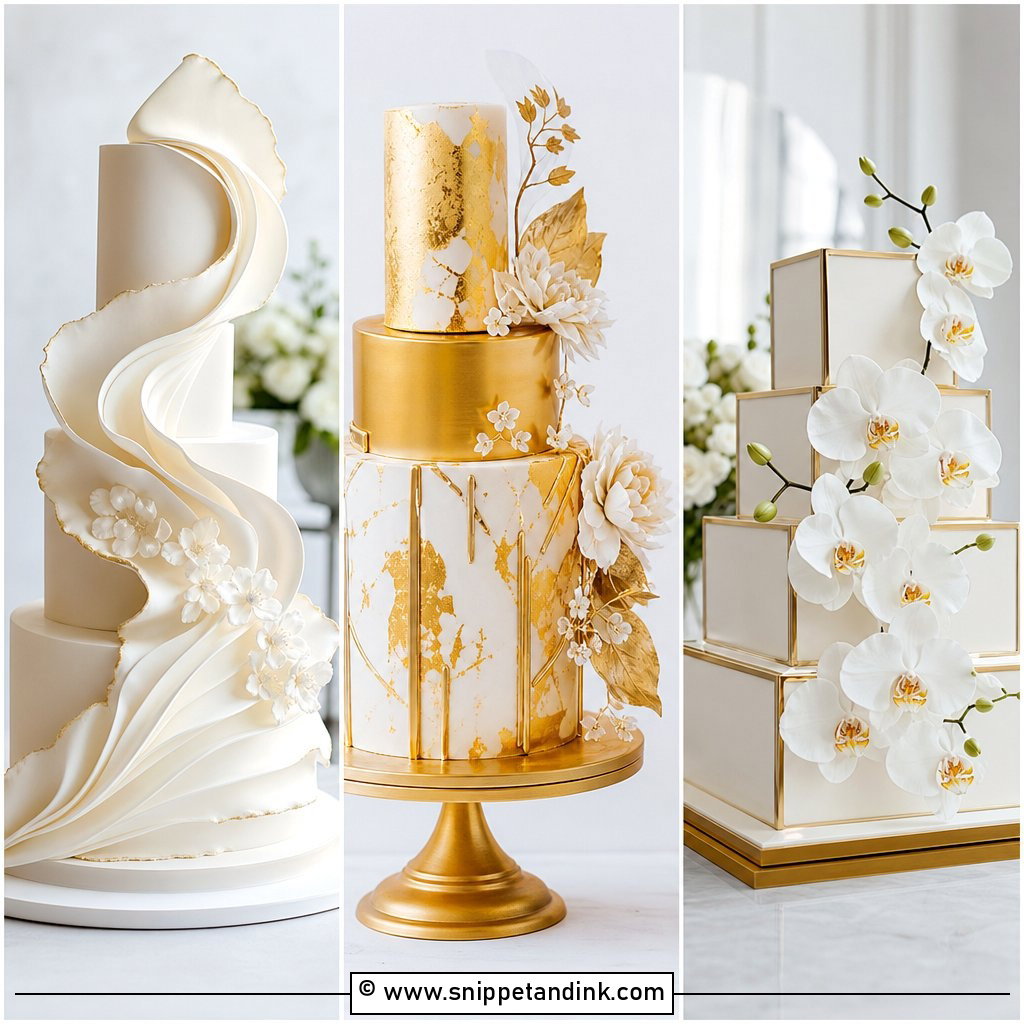
15. Gold Buttercream Wedding Cake
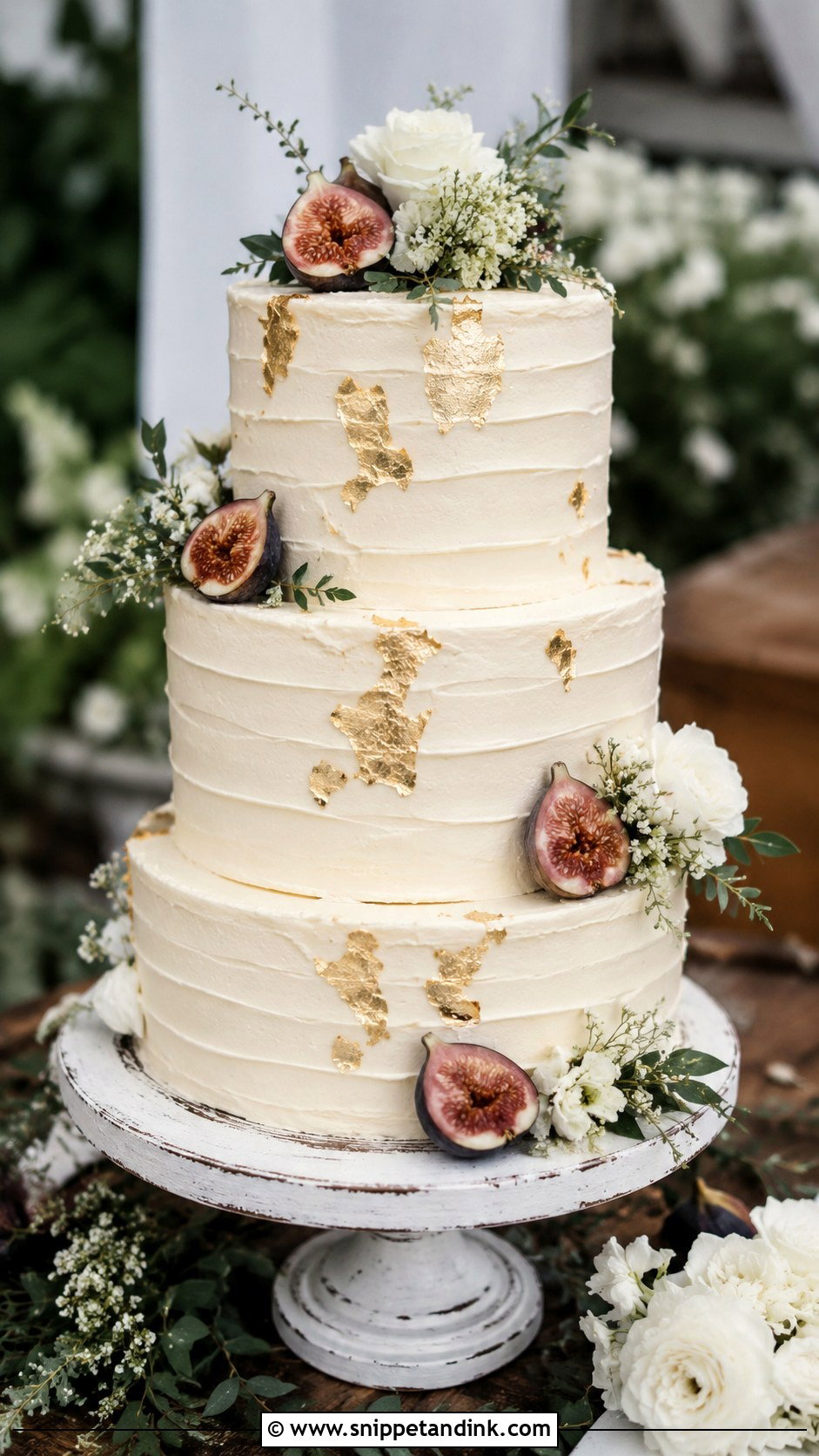
Buttercream gives gold a softer, more relaxed surface than fondant: smooth, lightly ridged, ruffled or palette-knifed. Gold goes on as leaf, paint, a metallic splatter or a thin drip. Painting directly onto buttercream is tricky because it is soft, so I chill the tier until the surface is firm before the brush touches it. It fits garden, barn and outdoor receptions, with one caveat: buttercream softens in direct sun and heat, so the cake needs shade and should come out as close to serving as possible. Fresh figs, berries or greenery suit it.
16. Gold Fondant Wedding Cake
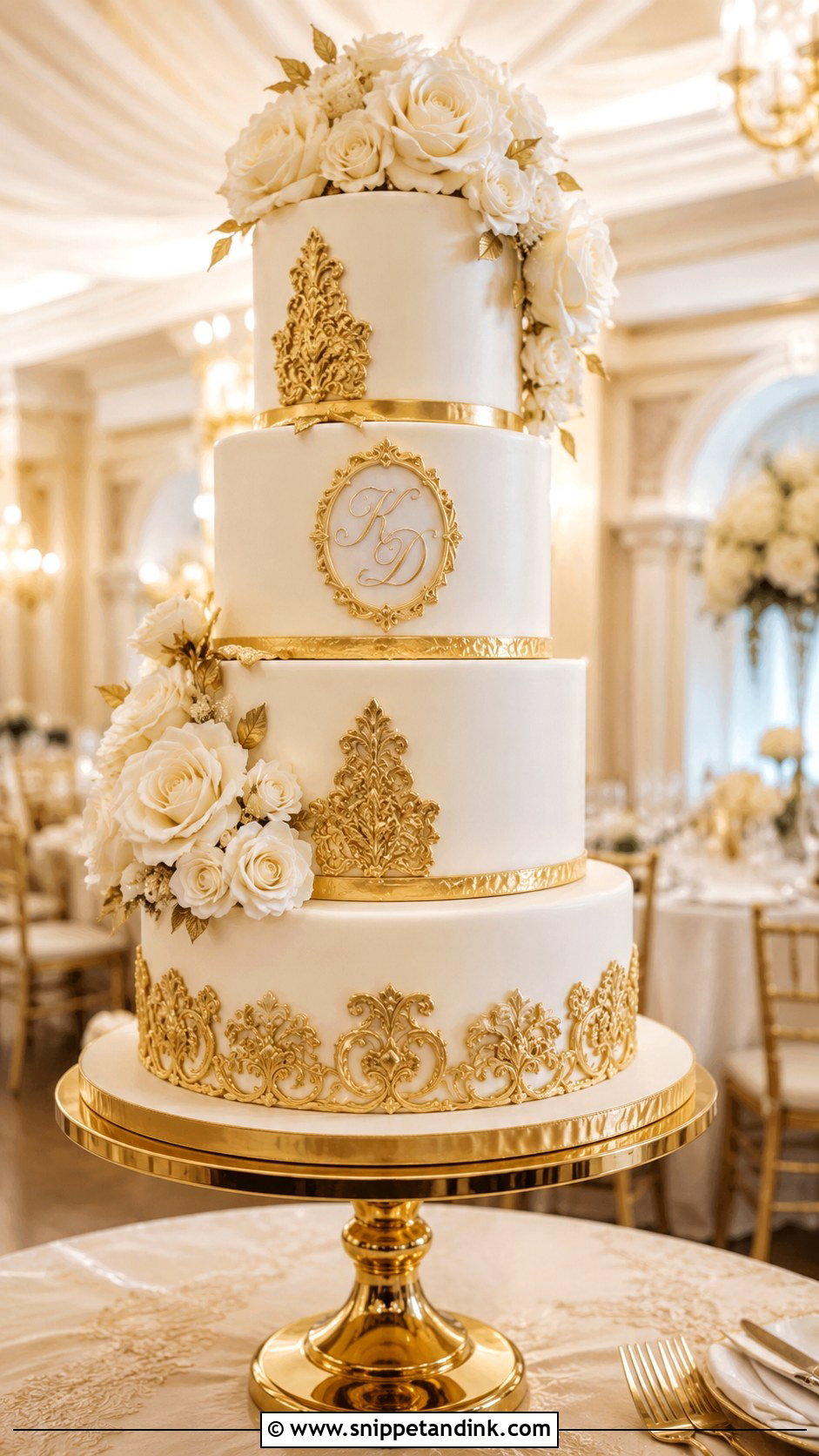
A gold fondant wedding cake is the most reliable canvas for metallic finishes. Fondant takes paint evenly and holds sharp edges, clean panels, lace impressions and marbling. A full gold fondant tier looks luxurious, and white fondant with gold trim reads classic. The one weakness I plan for is condensation: a fondant cake moved from a cold fridge into a warm room sweats, and beads of moisture can spot painted gold. I let it come to room temperature in its box before it’s unpacked. Sugar flowers, embossing or a monogram make it personal.
17. Gold Pearl Wedding Cake
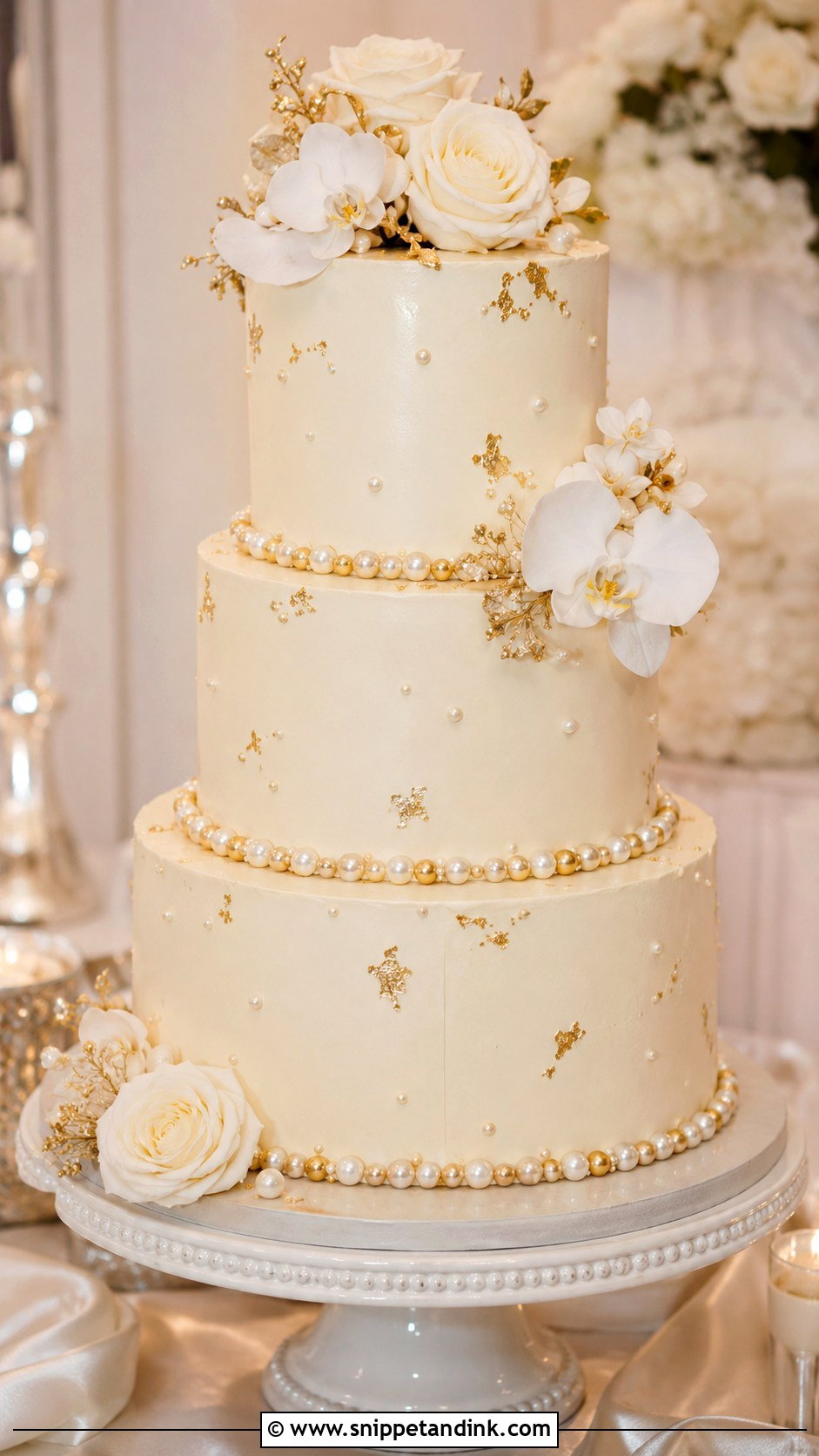
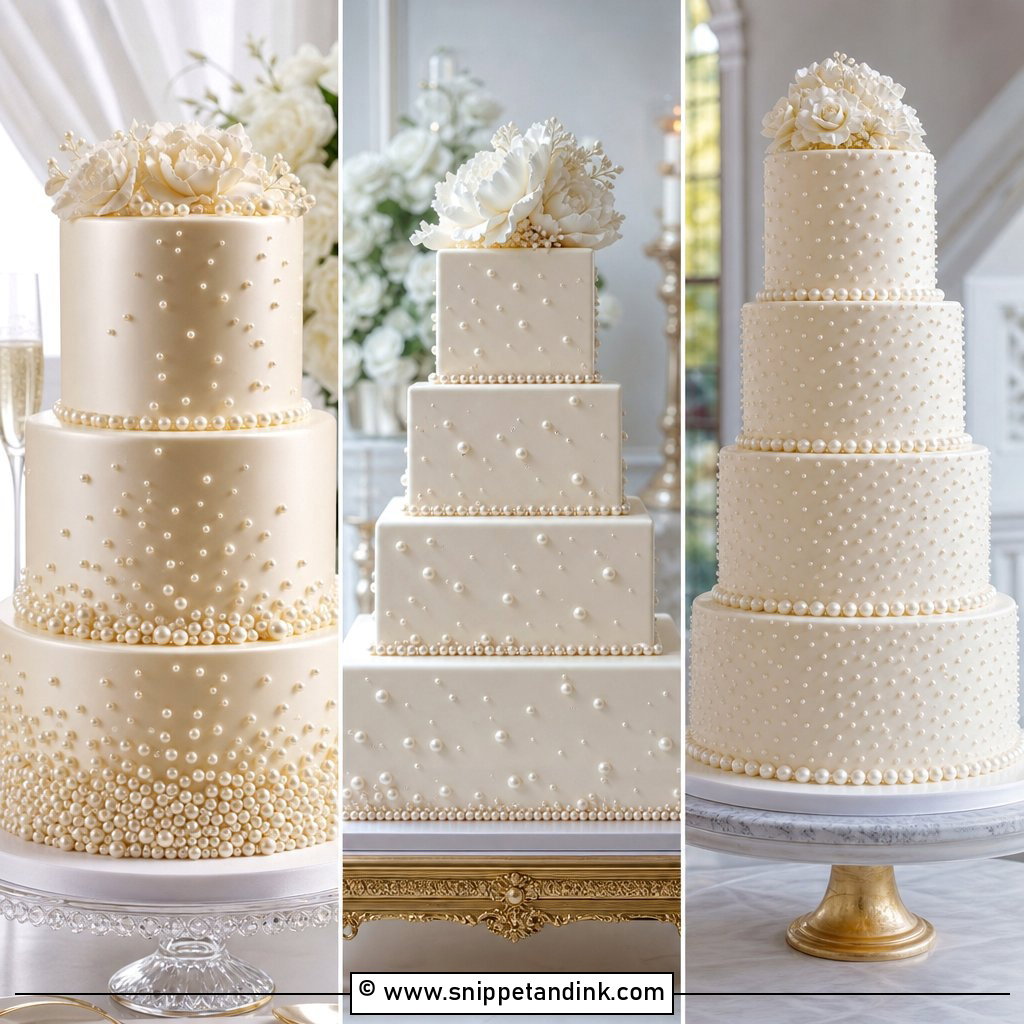
Pearls soften gold and gold warms pearls, which is why this pairing looks so bridal. I place sugar pearls around tier borders, scatter them, or set them in patterns with leaf accents. They go on while the frosting is still slightly tacky, or with a dab of edible glue on fondant, otherwise they roll off during transport. White or ivory frosting keeps it light. White roses, sugar orchids or a small pearl topper finish it, and it pairs naturally with pearl earrings and satin.
18. Gold Geometric Wedding Cake
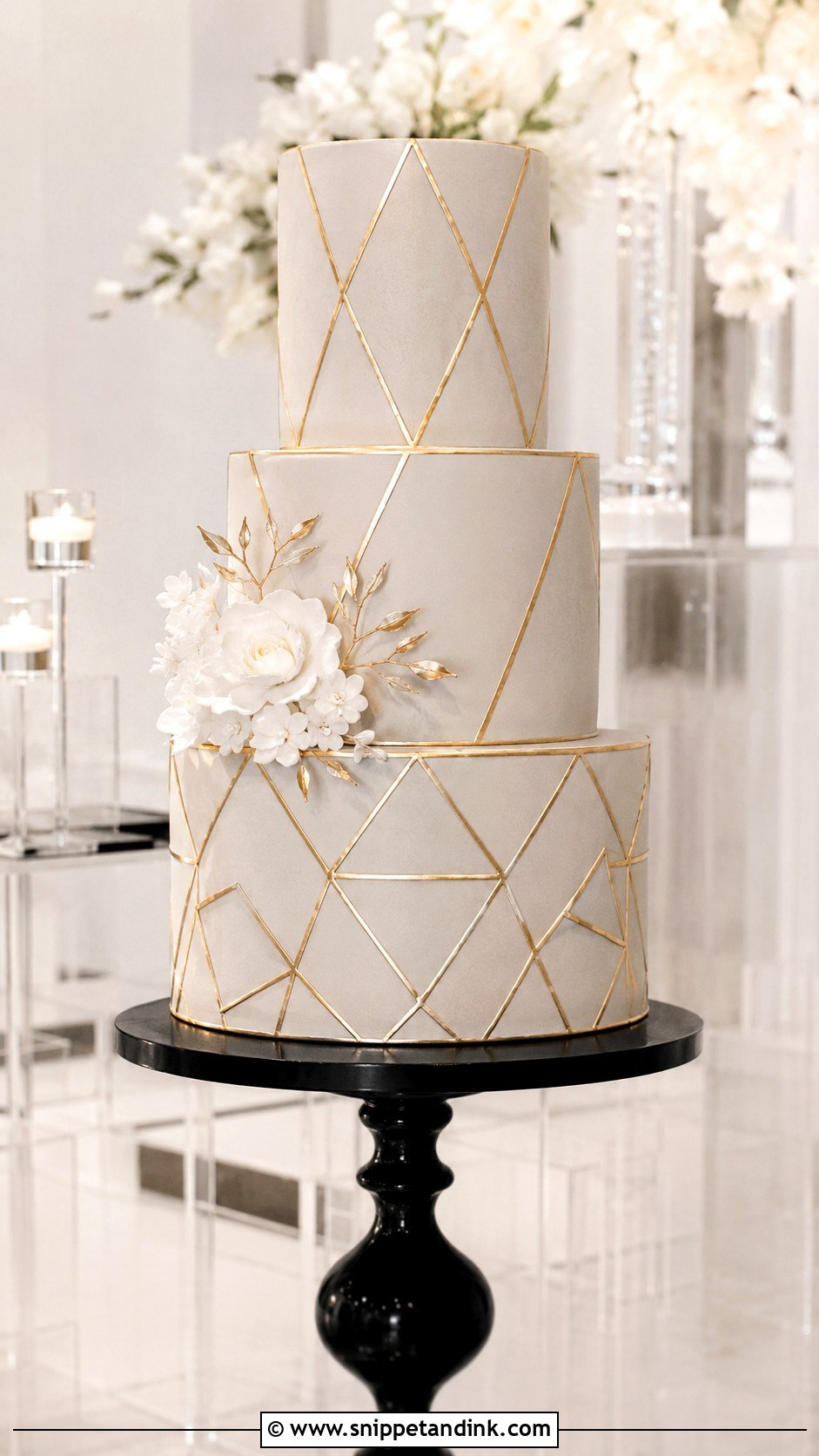
A gold geometric wedding cake depends entirely on straight lines, so I mark the pattern with a scribe tool or a stencil before any gold goes on. Triangles, arches, diamonds, hexagons and Art Deco panels all work on white, black, emerald, navy or grey. Keep the cake structure simple and the decoration minimal; even one sugar flower cluster can fight with the pattern. It suits rooftop receptions, acrylic signage and sleek table settings.
19. Gold Ruffle Wedding Cake
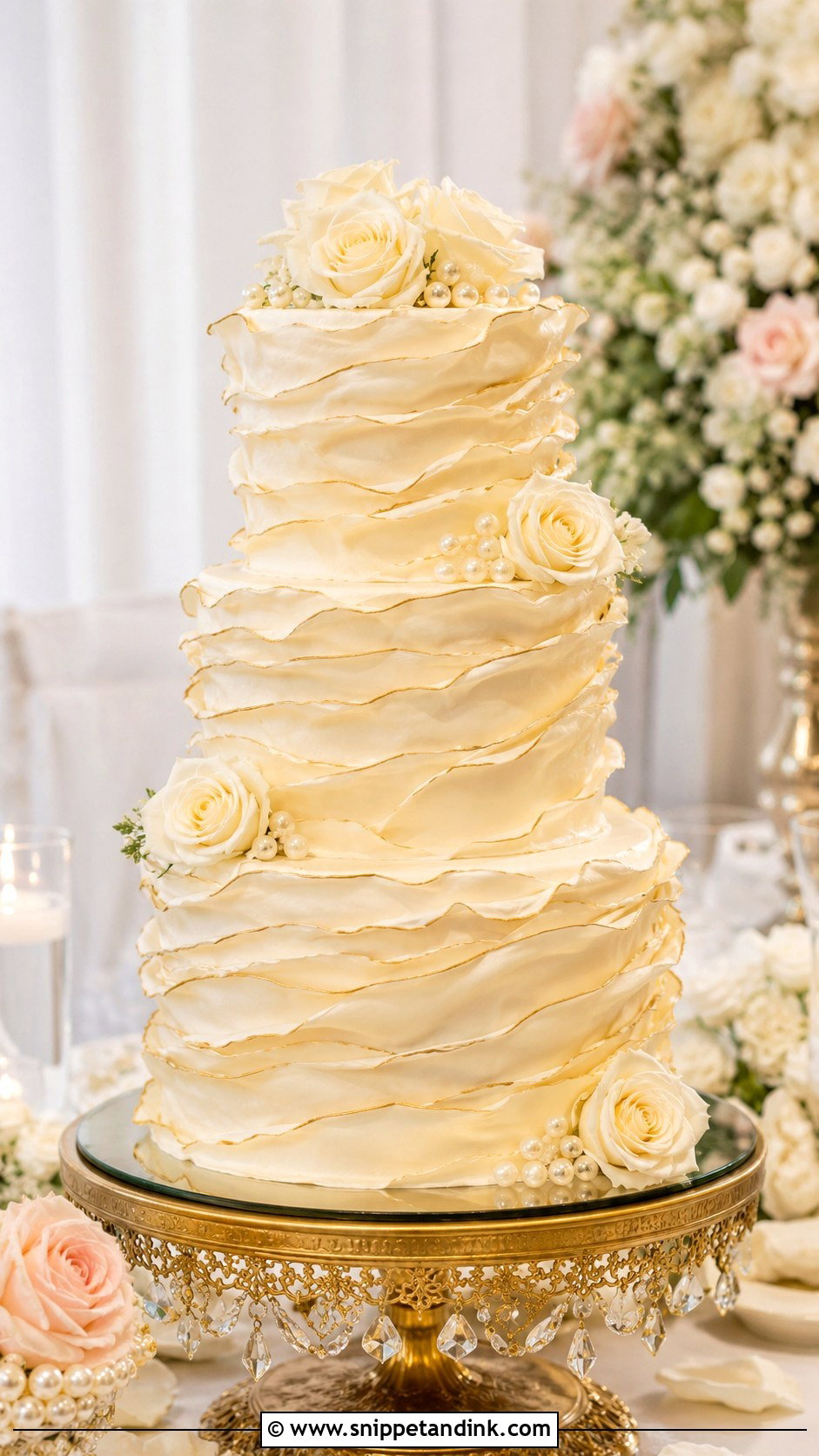
Ruffles can be fondant, wafer paper or buttercream, then brushed with gold shimmer so the edges catch the light. Each material behaves differently. Fondant ruffles hold their shape best, buttercream ruffles are the softest to eat, and wafer paper is the lightest but wilts in humidity, so I won’t use it for an outdoor summer cake. A full ruffle tier next to smooth tiers gives contrast, or the whole cake can move. Keep the palette in ivory, champagne or blush and add only a few flowers or pearls.
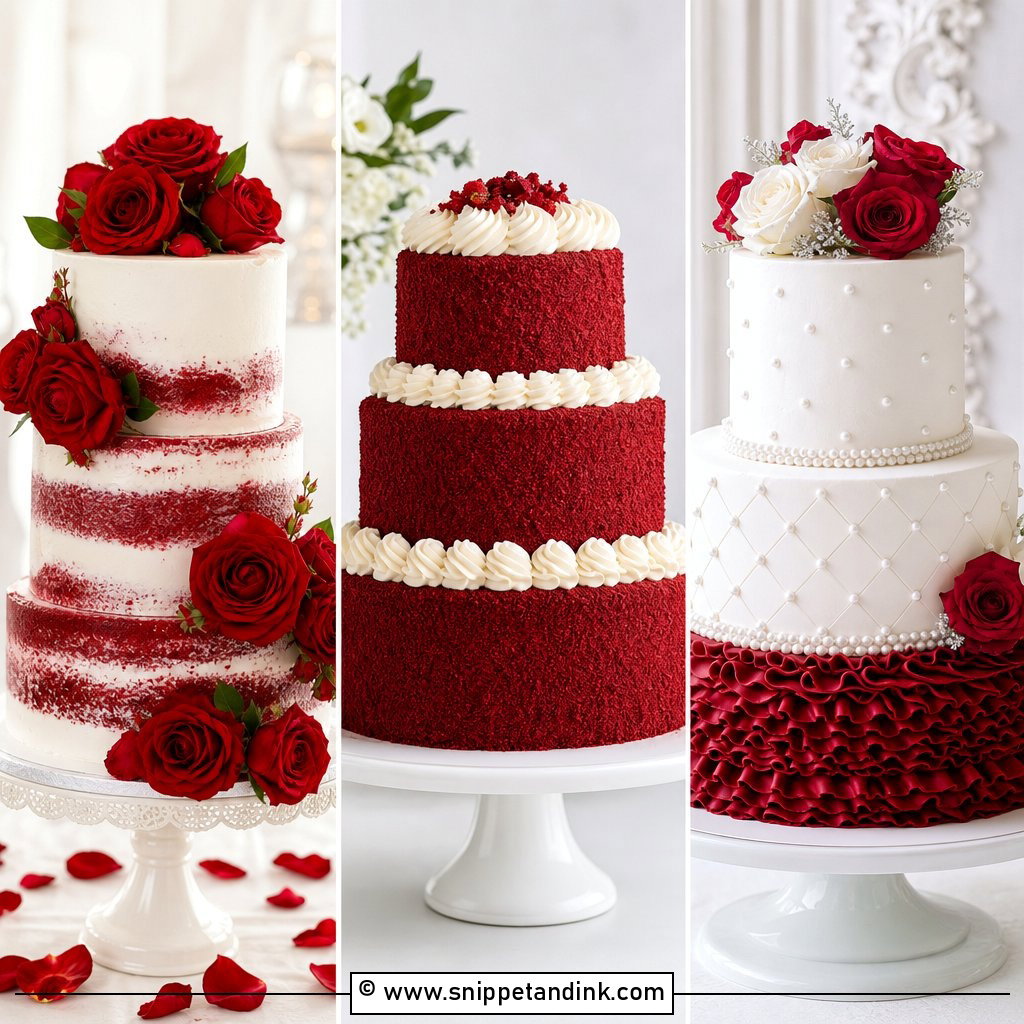

20. Gold Ombre Wedding Cake
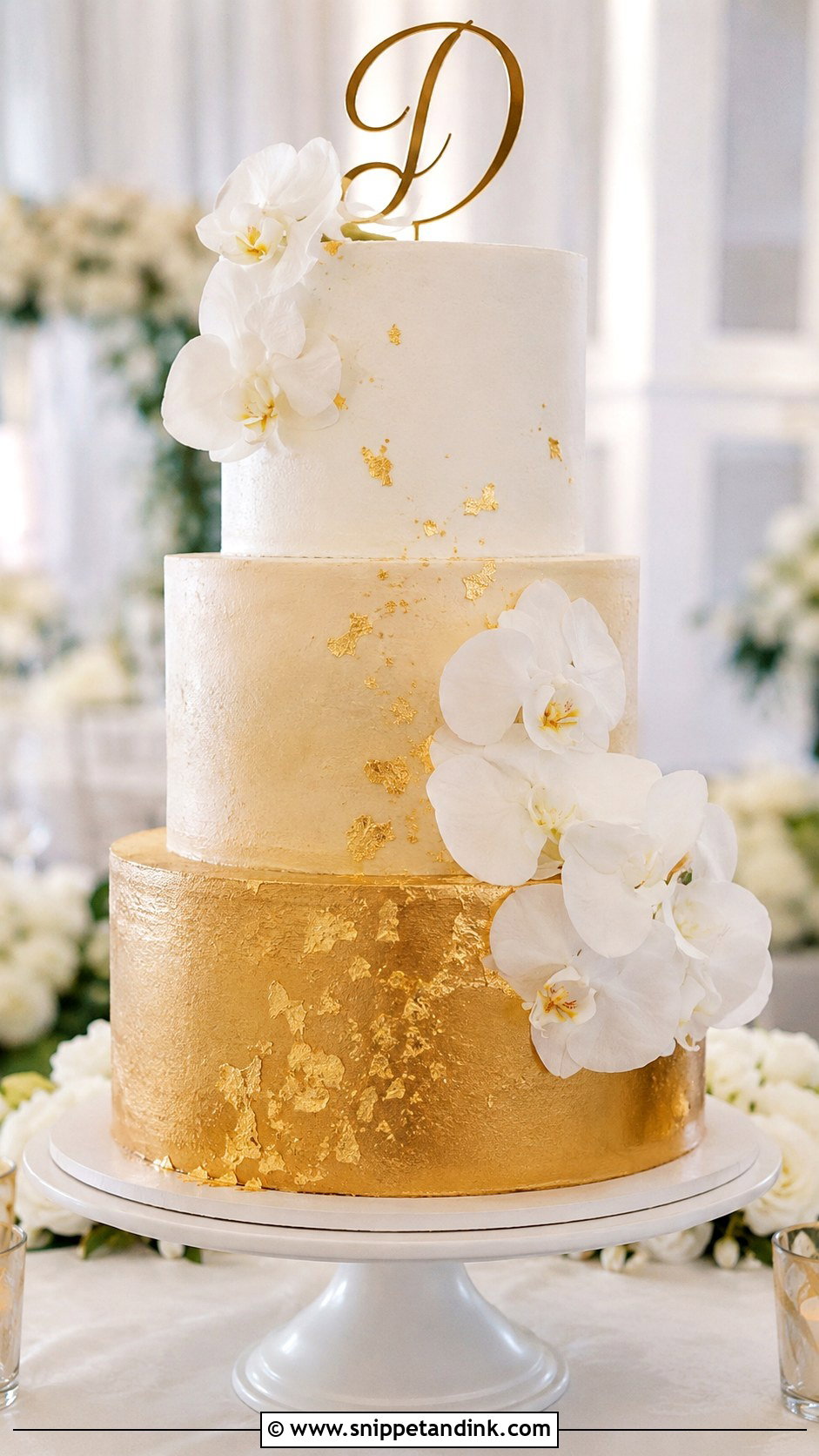
Ombre fades from light to rich metallic, white to champagne to gold, or blush to rose gold. I build the fade in the frosting color first and add the metallic only at the deep end, because painting the whole gradient in gold tends to look patchy up close. Buttercream blends more softly, and fondant gives a cleaner, polished fade. Minimal flowers, a little leaf or a simple topper keep the gradient visible. It reads best photographed straight on.
From My Kitchen to Your Cake Table With the Gilding Intact
Most damage to a gold cake happens between the kitchen and the reception, not on the turntable. These are the things I plan around for every gilded order.
Temperature changes
A chilled cake carried into a humid room collects condensation, and wet beads can spot painted gold or make leaf curl. I let boxed tiers warm gradually and leave them closed until they stop sweating. Ask your venue for a cool corner, away from windows and kitchen doors, and keep the cake out of direct sun even indoors.
Stacking and setup
Tall cakes are doweled tier by tier. On heavy designs I stack on site, which means I need time and a clear, level table before guests arrive. Fresh flowers and anything fragile, like sugar pearls on the top edge, go on last.
Lighting the table
Gold only shines when light hits it. A cake in a dark corner looks brown. One warm spotlight or a cluster of candles nearby does more for a metallic finish than any extra decoration. Bring the cake into the planning conversation with whoever is lighting your room.
How Far Ahead a Gilded Design Needs Booking
Most designers I know fill their wedding weekends months in advance, and hand-placed work like sequins, sugar flowers or detailed piping needs extra production days in the week before. Book your tasting early, bring your color swatches and a photo of your venue, and settle the design a few weeks out. Late changes to metallic work are hard, because paint and leaf can’t be lifted off cleanly once they’re down.
Where the Gold Should Stop
Gold suits nearly any wedding, from ivory and classic to black and dramatic, blush and romantic or marbled and modern. What makes it work is restraint and the right surface for the finish. If you want an easy start, a white and gold cake or a gold leaf finish rarely disappoints. If you want the cake to be a talking point, black and gold, sequins, ruffles or a full gold tier will do that. In my sketches, I always leave somewhere for the eye to rest, so the gold reads as a choice rather than a coating.
You'll Like These Ideas:









Leave a Reply