
Gold is the accent I’m asked for most, and it’s more versatile than people expect. A few flakes of leaf on a plain buttercream tier look quiet and polished; a fully painted tier turns the cake table into the brightest thing in the room. Current wedding cake trends lean toward texture, sculptural shapes, pressed flowers, pearls and vintage piping, and gold sits comfortably beside all of them. It also partners with almost any palette, from white and ivory to black, sage and deep florals. Below are 35 gold designs, with notes from the bench on how each finish is made and what it needs to survive the day.
Is That Gold Actually Edible?
This is the first thing I explain at every tasting where gold comes up. Not every gold product used on cakes is meant to be eaten, and the labels can be confusing.
- Edible gold leaf is very high-karat gold beaten paper thin. It’s safe to eat in the tiny amounts used on cakes, has no taste and is the most expensive option.
- Edible gold paints and dusts are made from food-approved colorings. They give a convincing shine on fondant and set buttercream.
- Products labeled “non-toxic” or “for decorative use only” are not the same as edible. They’re for parts that get removed, like toppers, wired sugar flowers or the cake board.
Ask your baker exactly which product goes where. If any gold is decorative only, it should be on pieces your caterer takes off before slicing. A good baker will tell you this without being asked, but it’s worth checking.
Gold also takes time. Applying leaf patch by patch or painting a full tier by hand adds hours of work, so heavy gold designs usually cost more and need booking further ahead than plain ones.
1. White And Gold Wedding Cake
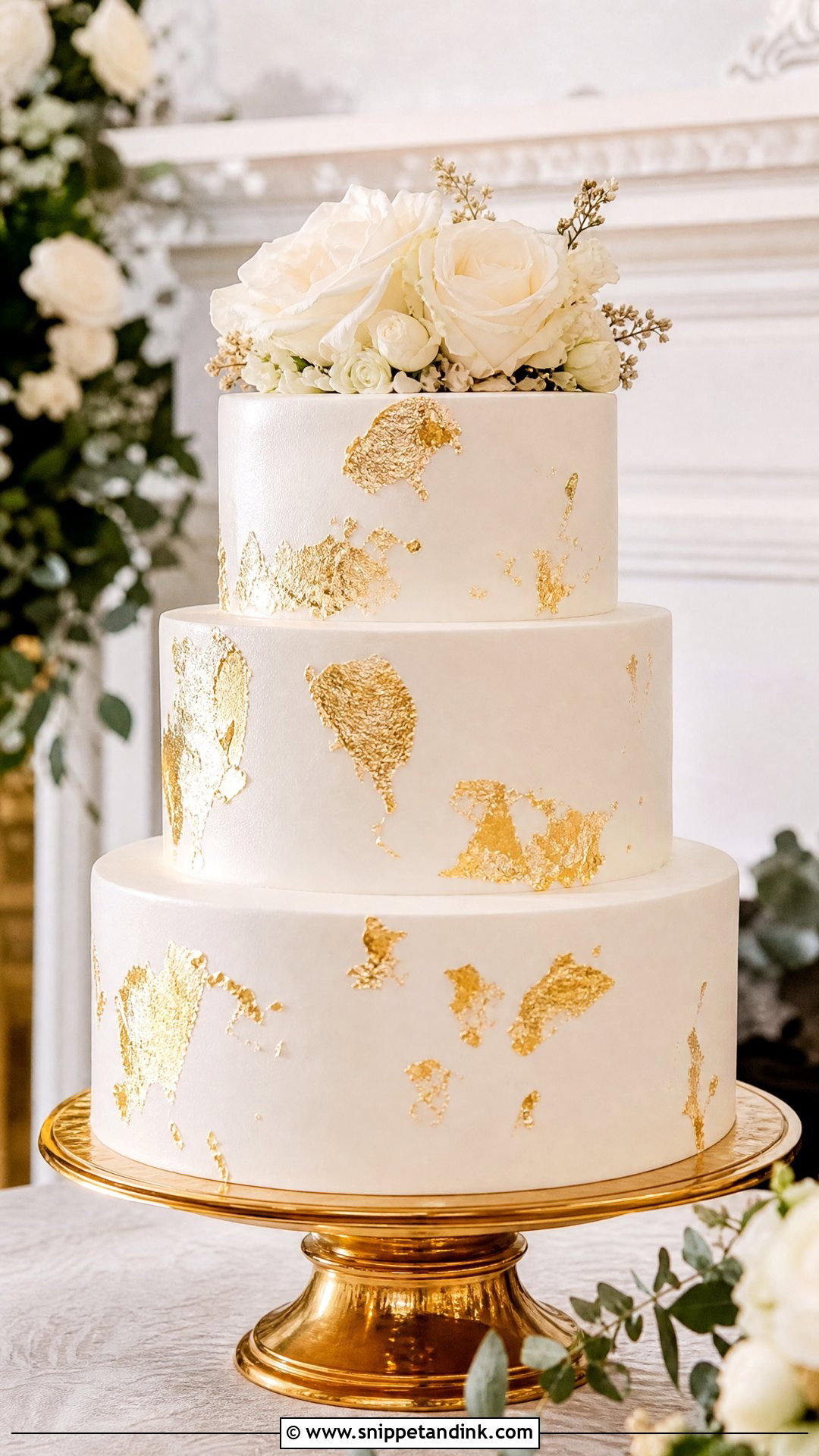
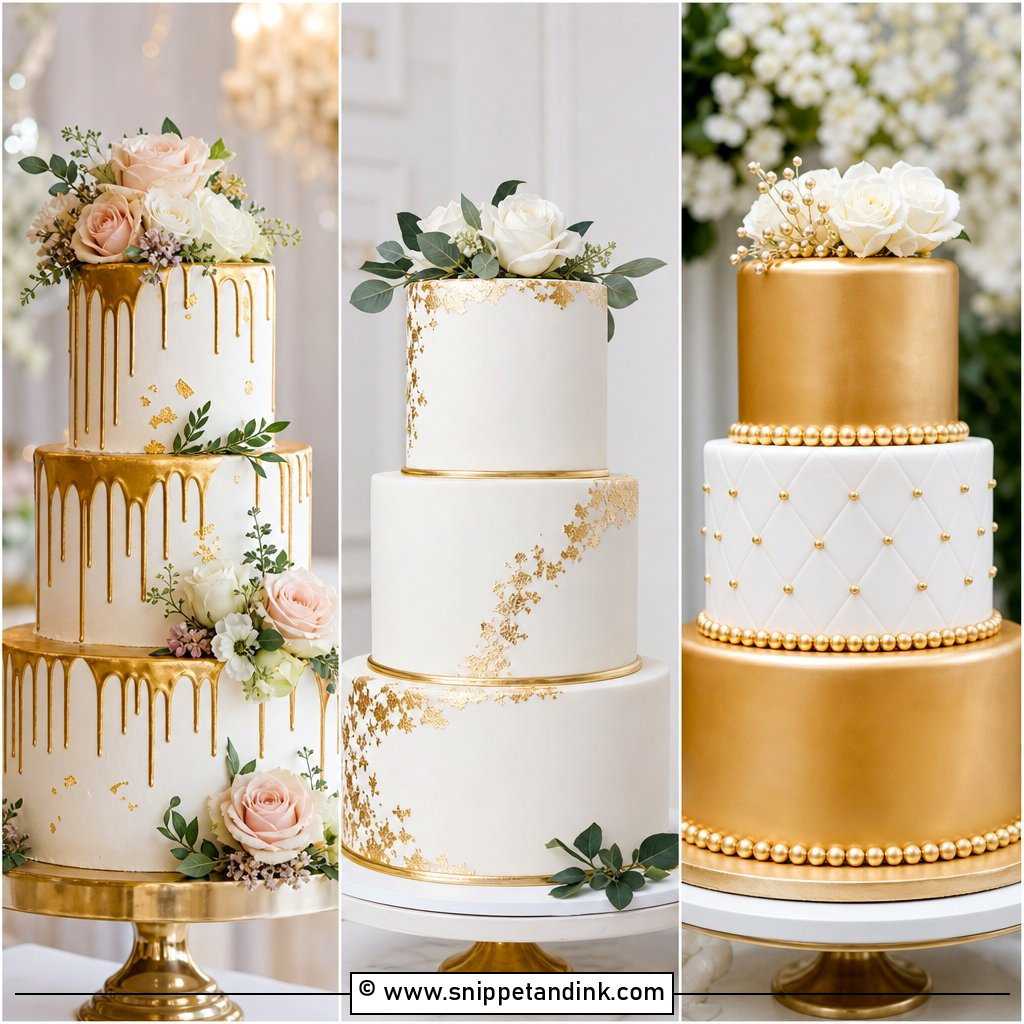
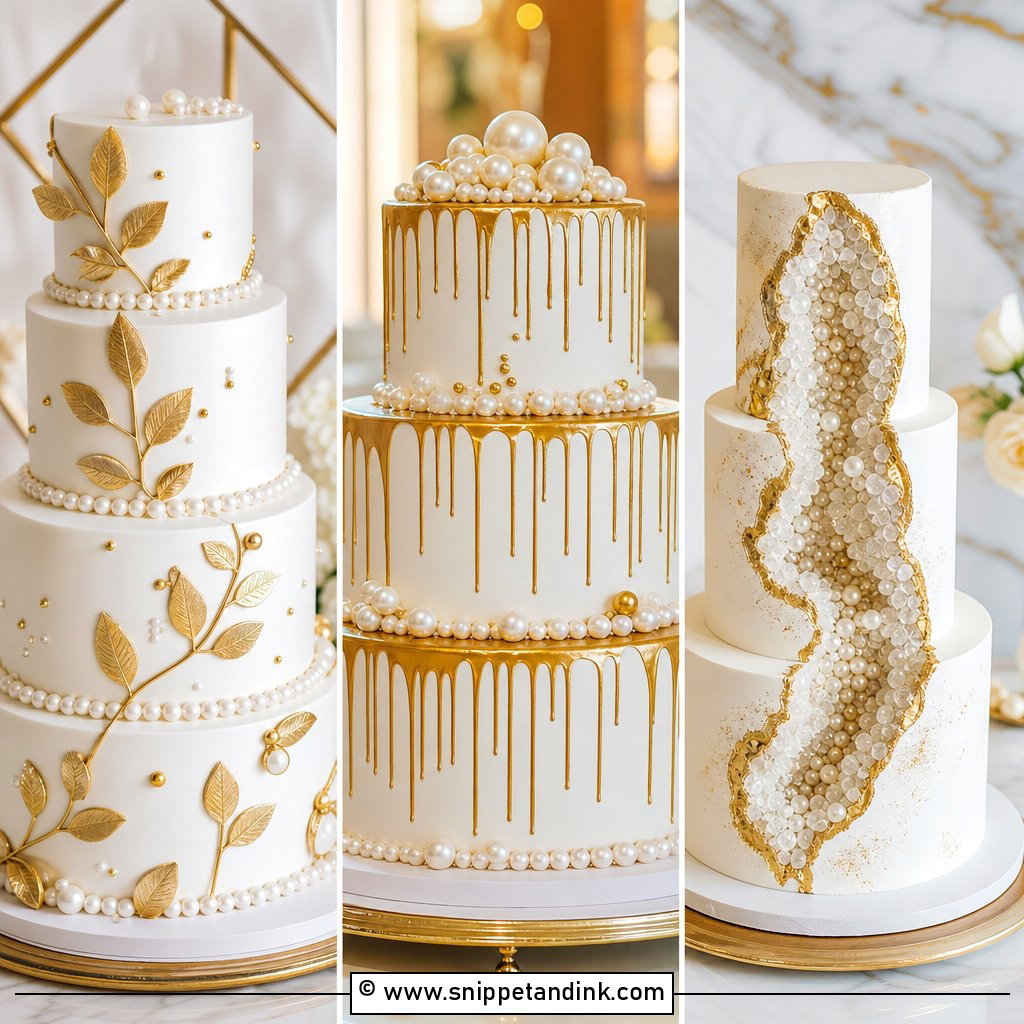
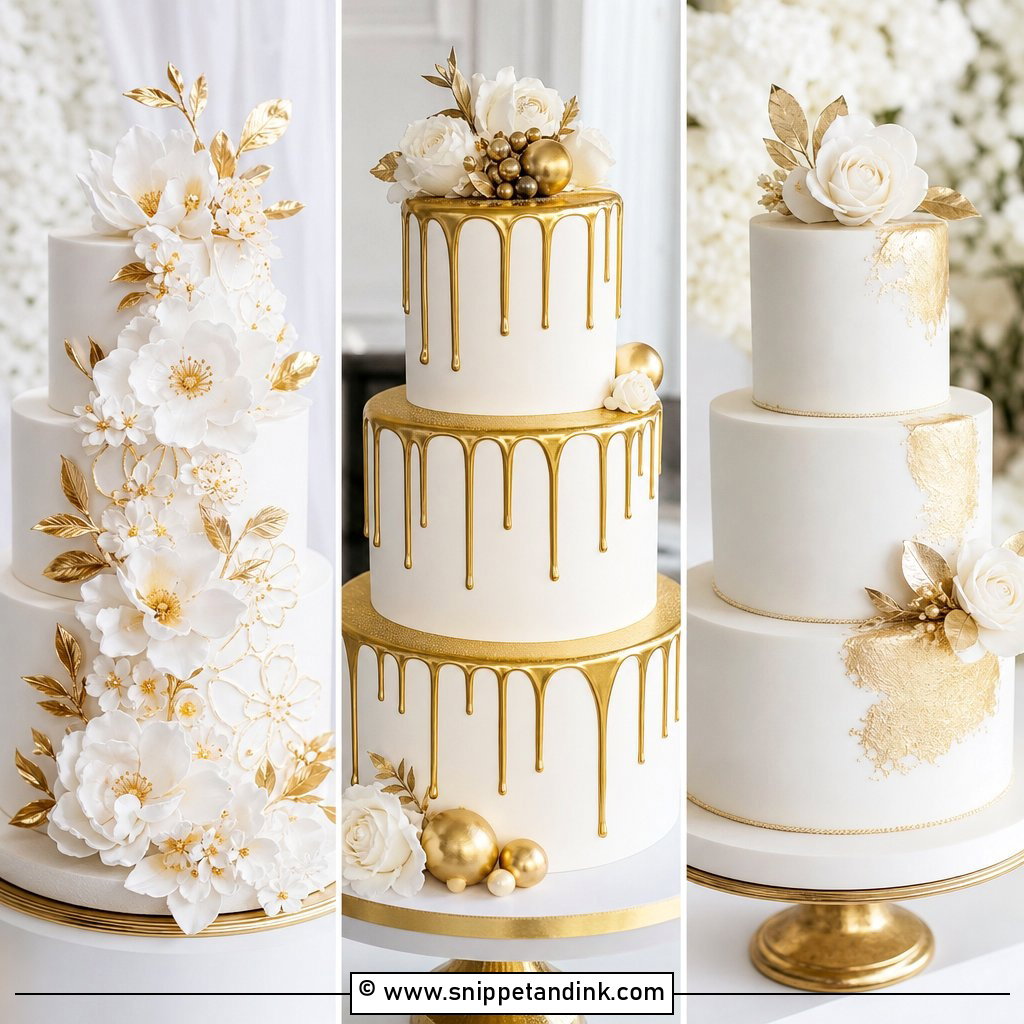
White and gold is the pairing I’d call hardest to get wrong. The white base keeps it bridal, and gold brings warmth and a formal edge. It works on smooth fondant, soft buttercream or a light texture. Ask for leaf around the tier edges, thin gold bands between tiers or a few brushstrokes placed off-center. On buttercream I chill the tier well before applying any gold, because metallic paint or leaf on soft frosting drags and smears. White roses, orchids or small sugar flowers keep it romantic.
2. Gold Leaf Wedding Cake
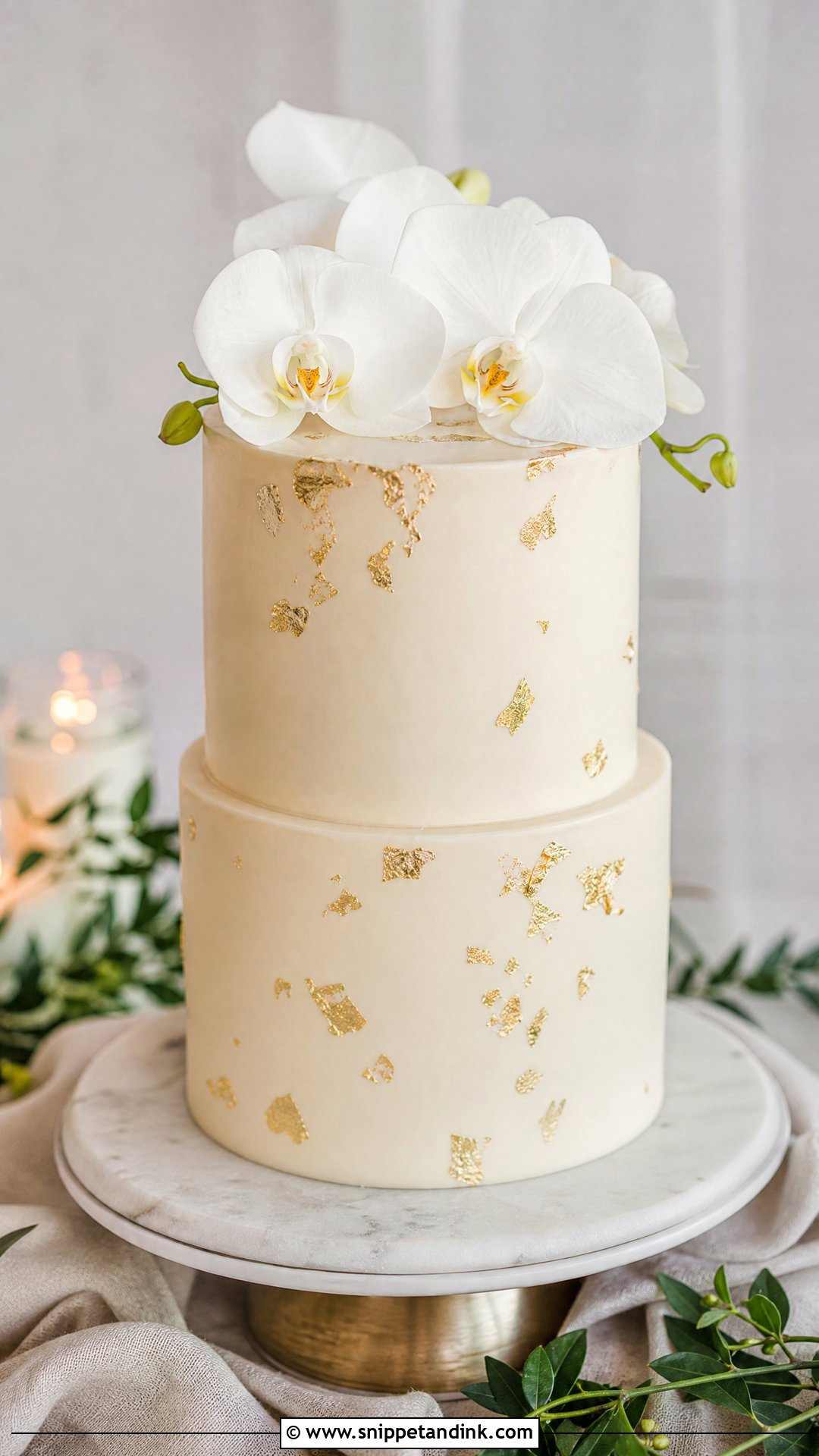
Leaf gives the prettiest imperfect shimmer, since each fragment catches light at its own angle. Rather than covering the whole cake, I like patches climbing up one side or wrapping the base of each tier. Real edible leaf is extremely thin and floats away at a breath, so I lift it with a soft dry brush and press it onto a slightly tacky surface. Ivory buttercream over vanilla, almond or lemon sponge suits it. Keep flowers minimal for a modern feel, or add white blooms and greenery for something softer.
3. Black And Gold Wedding Cake
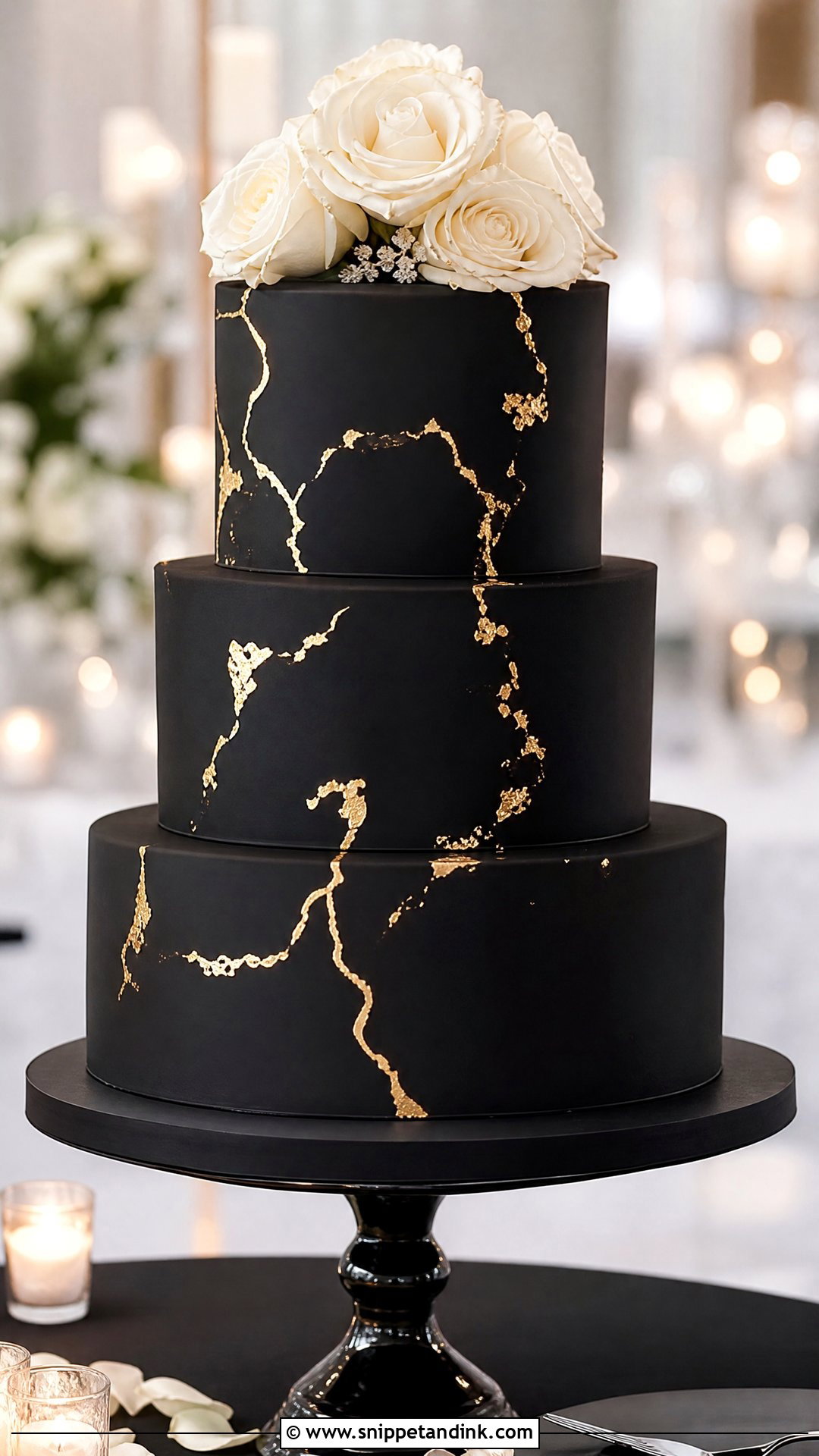
A black and gold wedding cake is a formal evening statement. The black can be matte fondant, dark chocolate ganache or charcoal buttercream. Fair warning about black buttercream: it takes a lot of coloring to get there, and that can stain teeth and taste slightly bitter, so I usually start from a chocolate base or use fondant. Gold leaf cracks, stenciling, painted edges or a fully gold middle tier keep it from feeling heavy. Ivory flowers soften the contrast; burgundy blooms push it further.
4. Blush And Gold Wedding Cake
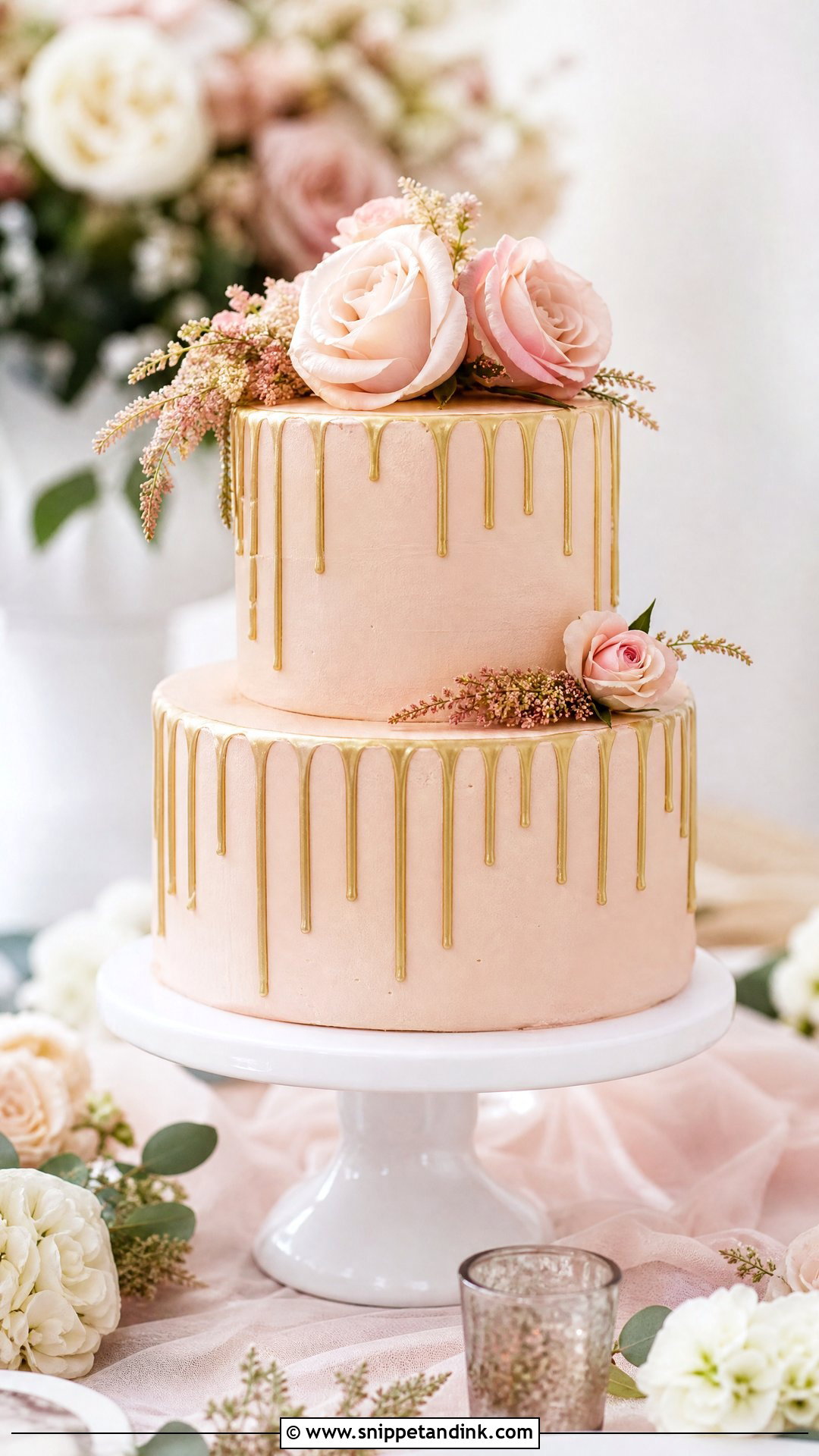
Blush and gold is the easiest gold pairing to match with wedding flowers. A blush buttercream gives warmth without brightness, and gold leaf at the tier edges, fine metallic piping or a soft gold drip makes it feel occasion-worthy. Roses, peonies and ranunculus suit it. Strawberry, raspberry cream and vanilla bean fit the gentle color. One tip: blush tints shift toward peach or beige in some light, so I match the tint to a petal from your actual florist, not a screen.
5. Green And Gold Wedding Cake
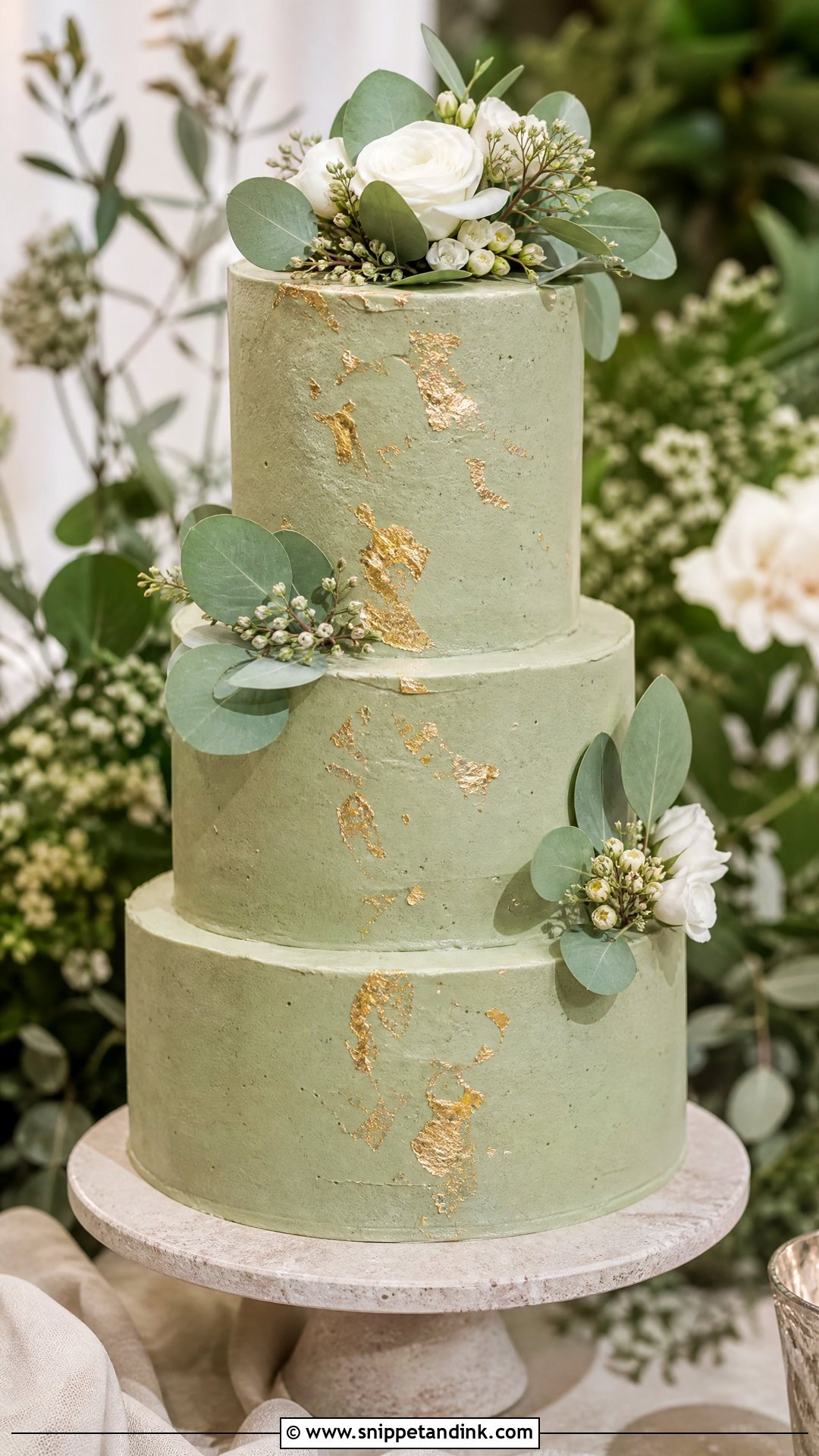
Green covers a wide range here. Soft sage buttercream with leaf feels calm and organic; emerald fondant with gold bands feels rich and formal. Fresh greenery, white flowers, pressed botanicals or small gold pearls add texture. These suit outdoor and greenhouse weddings and venues full of wood and stone. Keep the gold in proportion, as on pale sage a heavy hand with metallic paint makes the green look muddy.
6. Navy And Gold Wedding Cake
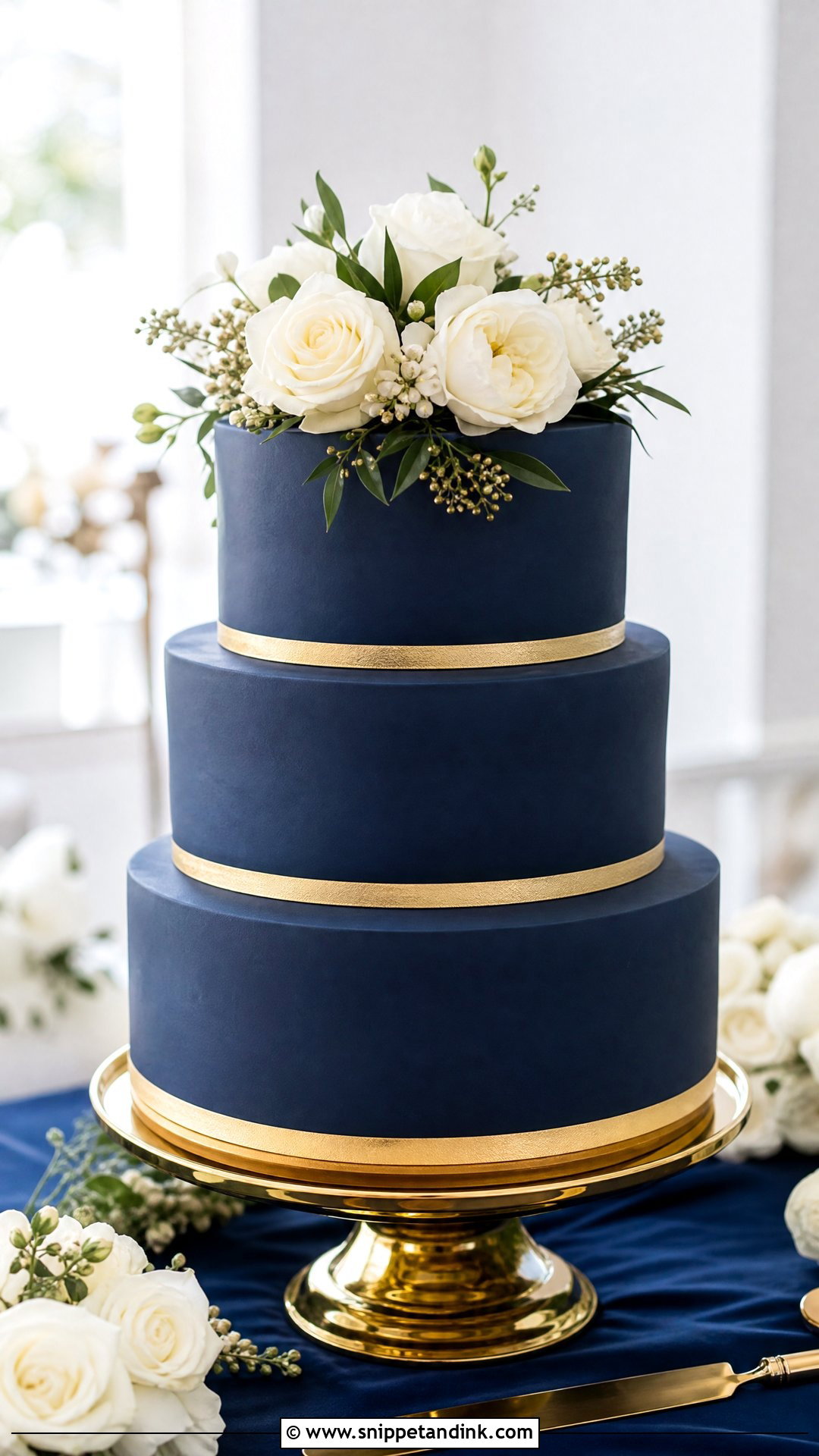
Navy and gold is formal without feeling old-fashioned. Deep blue gives depth, and gold brightens it. You can use a single navy bottom tier under white upper tiers, or go fully navy with painted detail. Brushstrokes, thin lines and leaf all show crisply against navy fondant. Deep blues are hard to reach in buttercream without a bitter taste, which is why I usually suggest fondant for full navy tiers. White flowers, blue thistle or gold sugar pearls finish it.
7. Emerald Gold Wedding Cake
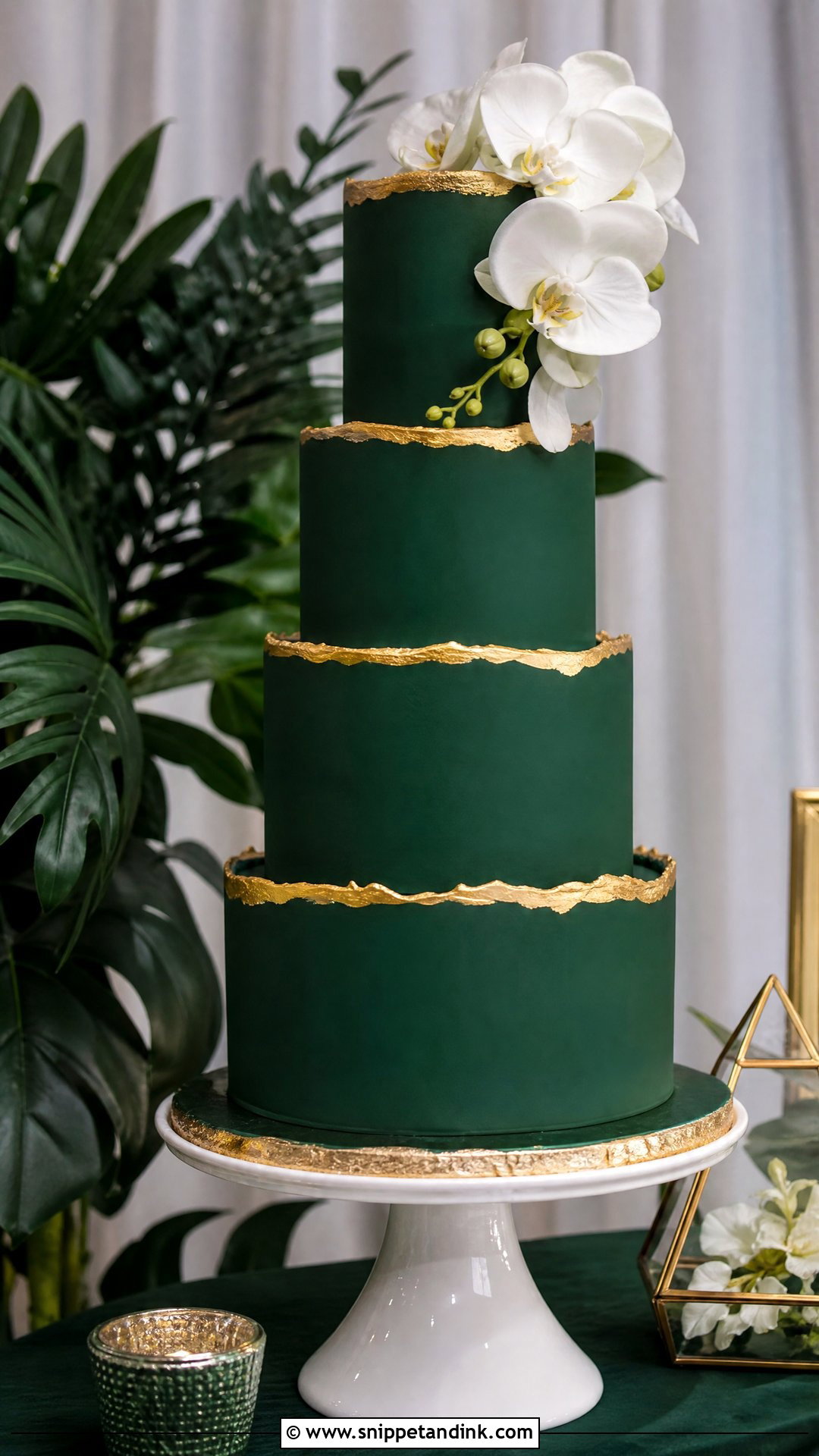
An emerald gold wedding cake is jewel-toned and dramatic. Emerald works as a smooth fondant tier, velvet-textured buttercream or a marble with gold veins running through it. The gold can be leaf, geometric lines, painted edges or a metallic separator between tiers. White orchids or cream roses keep it refined. Pistachio sponge underneath is a nice quiet echo of the color, though vanilla, chocolate and citrus all work too.
8. Ivory And Gold Wedding Cake
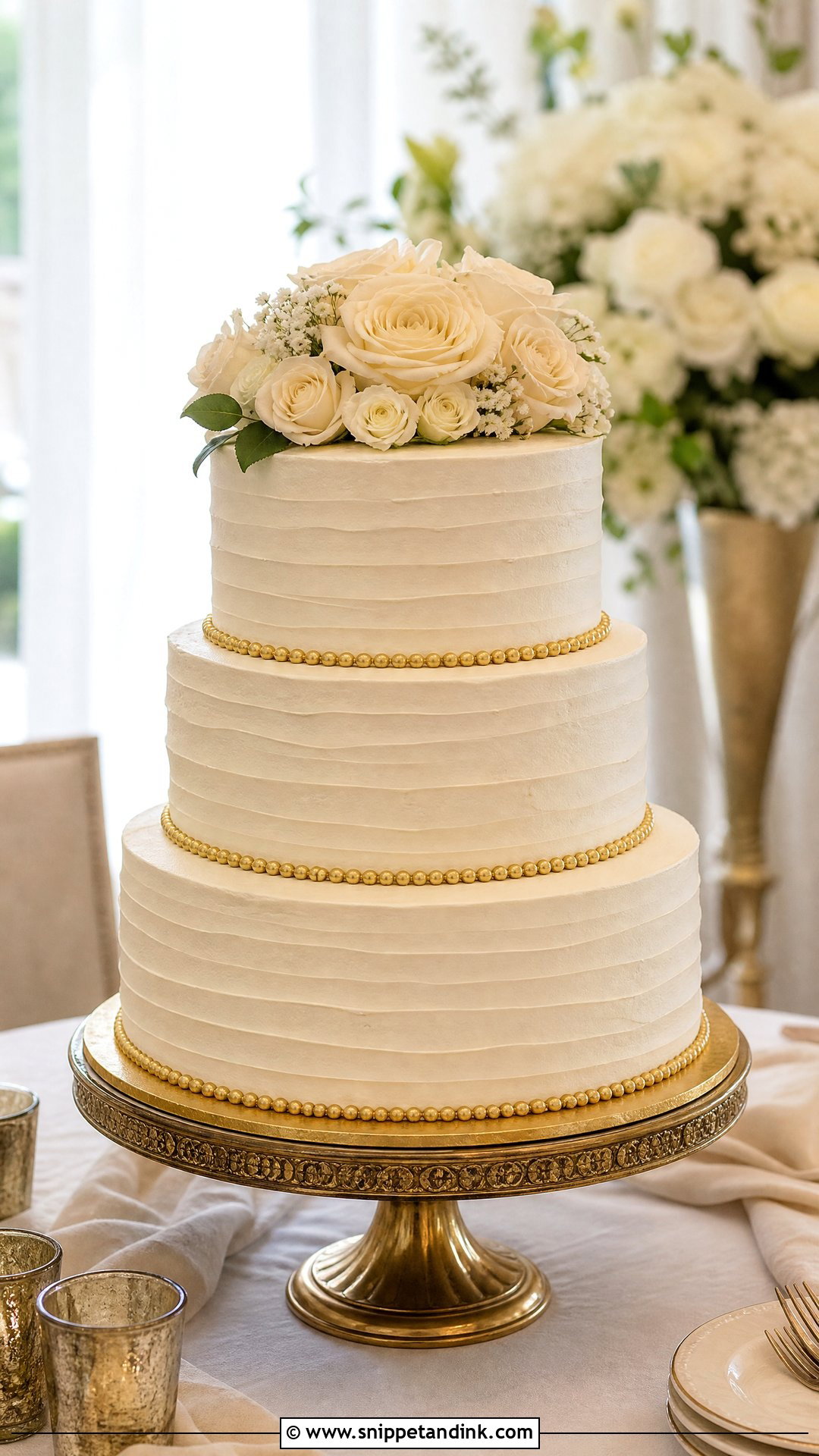
Ivory is softer than white and warms up under reception lighting, which is why I often steer couples toward it when the dress is ivory too. Bright white next to an ivory gown can make the dress look yellow in photos. Gold edging on each tier, a monogram or scattered leaf around floral clusters adds just enough shine. Textured buttercream, pearl piping and sugar flowers all suit it. Vanilla, almond, coconut or lemon fit the palette.
9. Gold Drip Wedding Cake
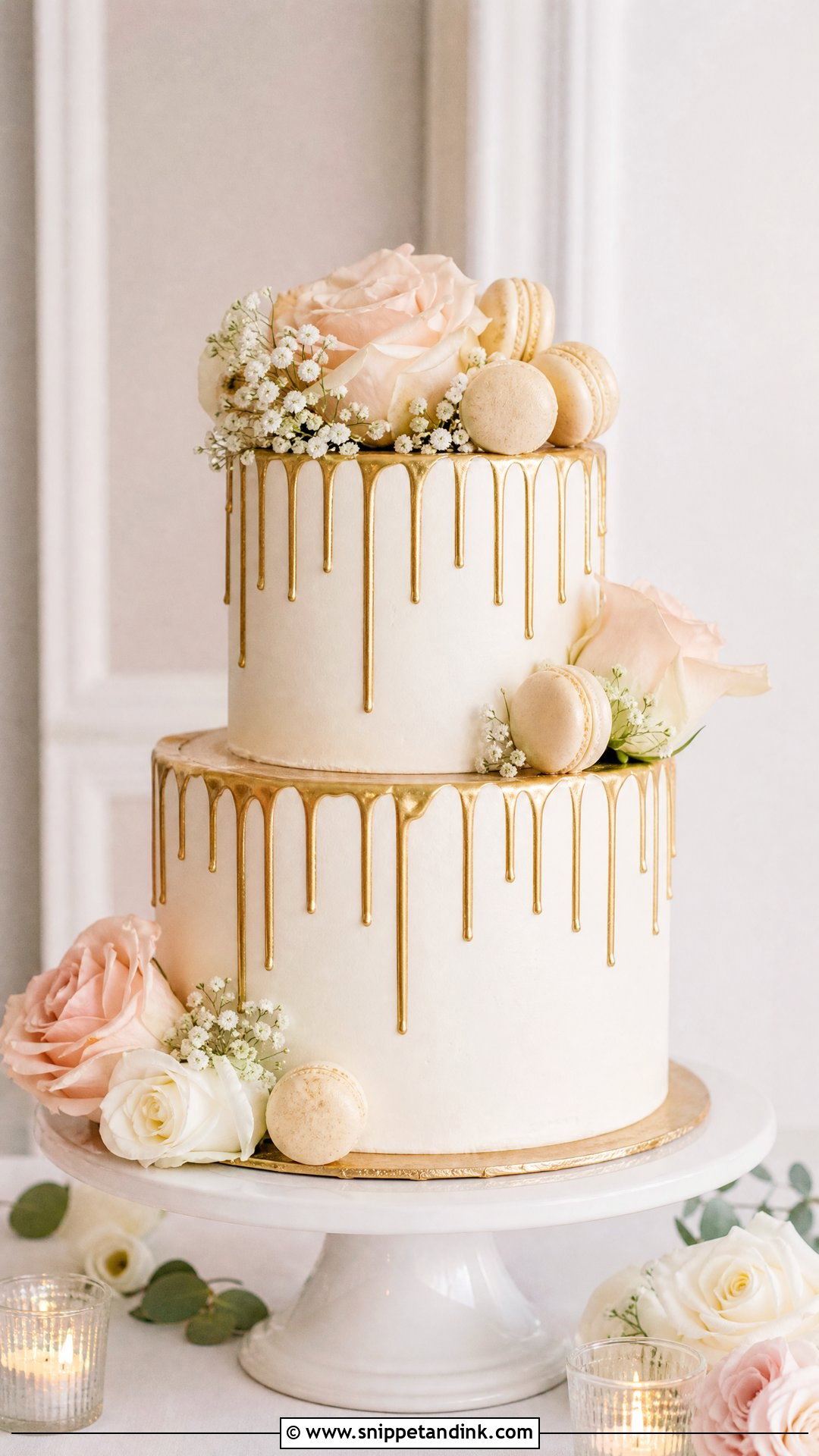
A gold drip is fun and still polished. Thin and delicate reads refined; fuller reads dramatic. It shows best over white, ivory, blush or dark chocolate. I usually pipe a white chocolate ganache drip, let it set and then paint it gold, which is cleaner than mixing metallic dust into warm ganache. Space the drips evenly and keep them from reaching the board. Flowers, macarons or small meringues on top finish it.
10. Gold Buttercream Wedding Cake
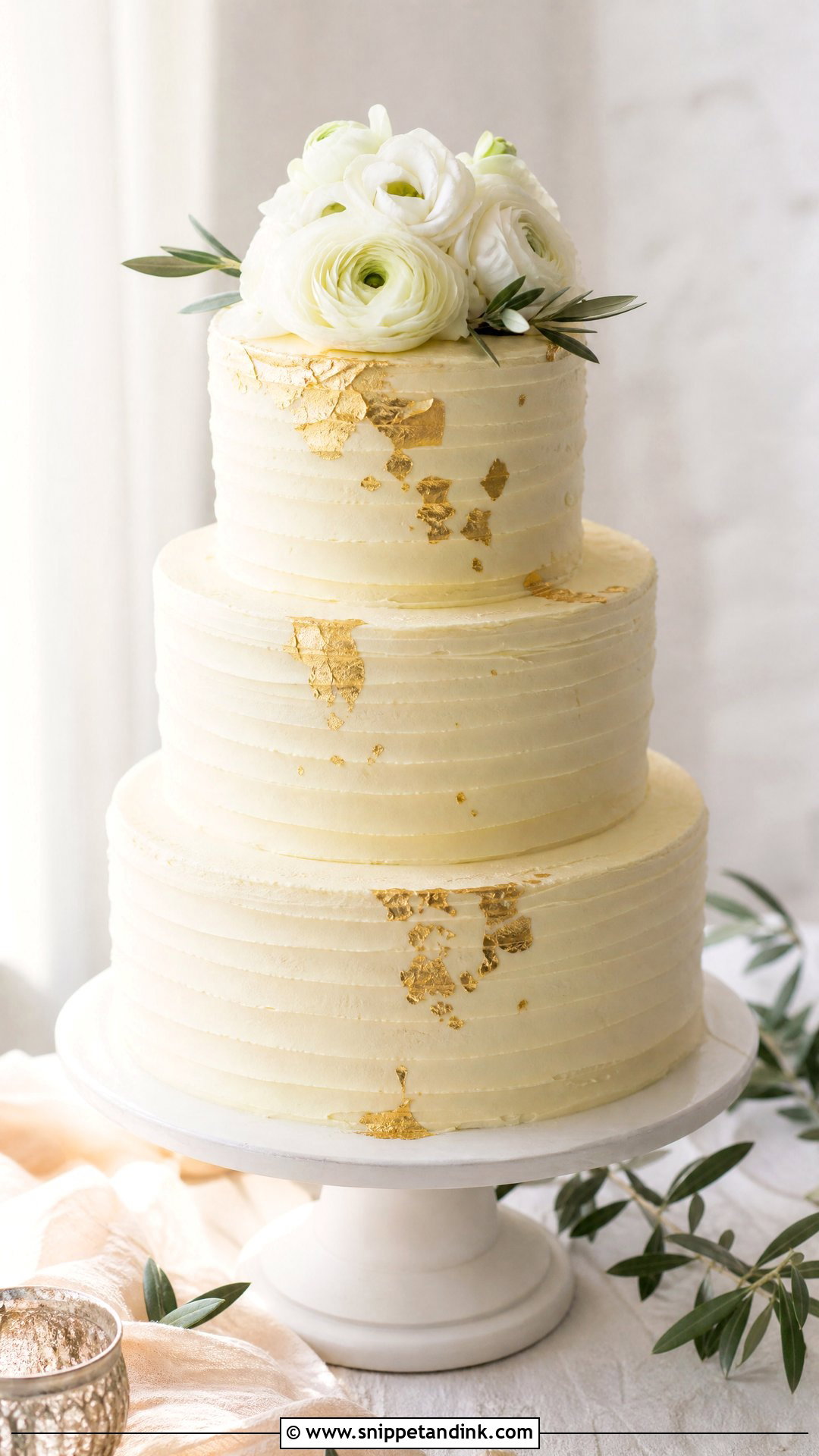
Buttercream gives a softer, more relaxed result than fondant. It can be smooth, ribbed, stucco-textured or lightly swirled. Gold can come from leaf, painted strokes, pearl dust or a narrow border. Painting on buttercream needs a firm crust, so I use a crusting recipe or chill the tier well and paint quickly. Uneven gold accents look modern; clean bands look classic. Fresh flowers sit naturally against the creamy texture.
11. Gold Fondant Wedding Cake
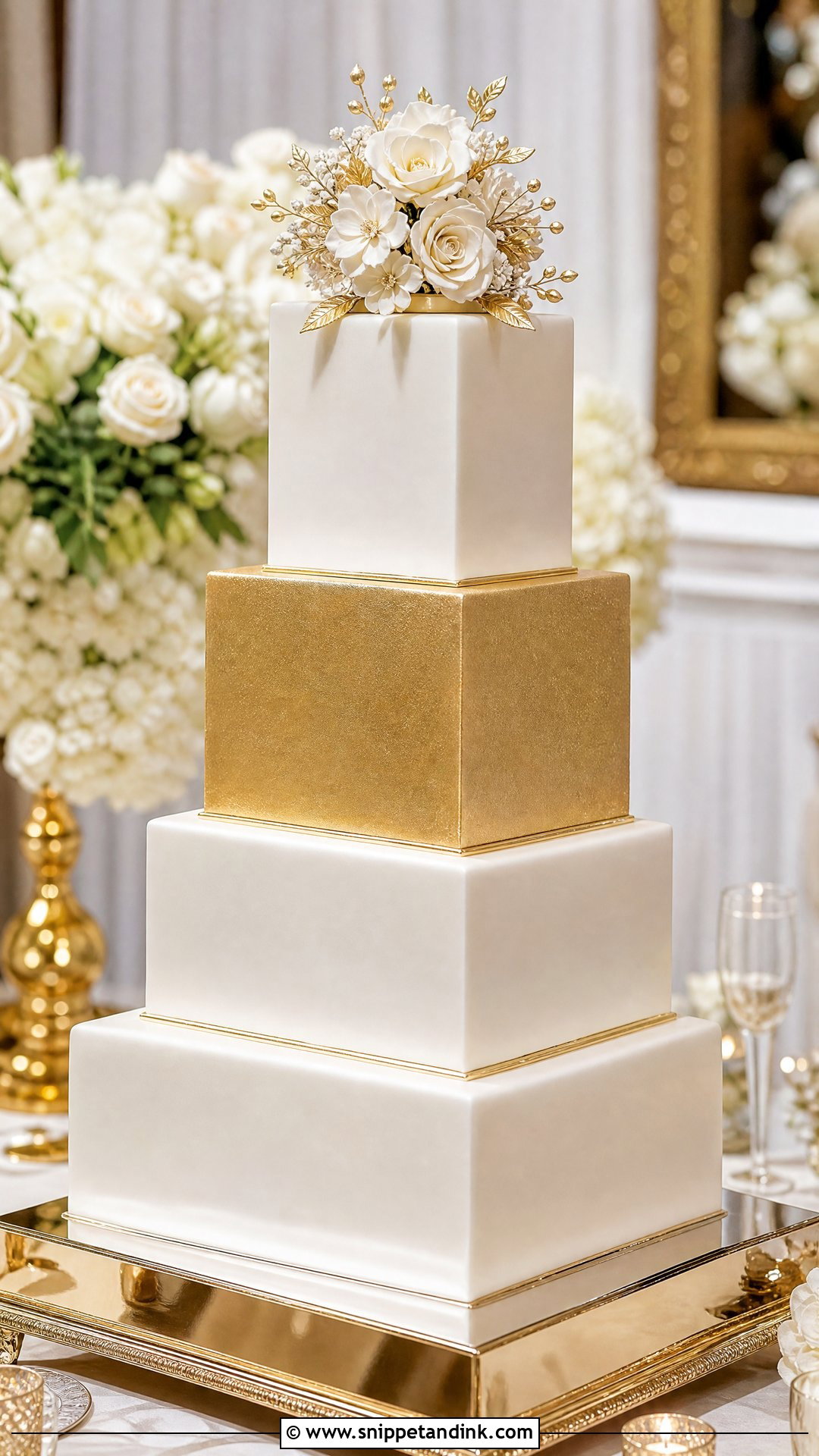
Fondant gives the cleanest metallic finish because gold paint glides over a smooth, dry surface and dries to a true shine. It’s what I’d use for sharp edges, sculptural tiers, metallic panels or a fully gold tier. Gold ribbons, lace patterns and thin trim all sit crisply on it. Pair it with white, ivory, black, emerald or navy. Sugar flowers and pearls also hold well on fondant. If you dislike the taste, ask for a thin fondant layer over a good ganache and peel it back when serving.
12. Gold Floral Wedding Cake
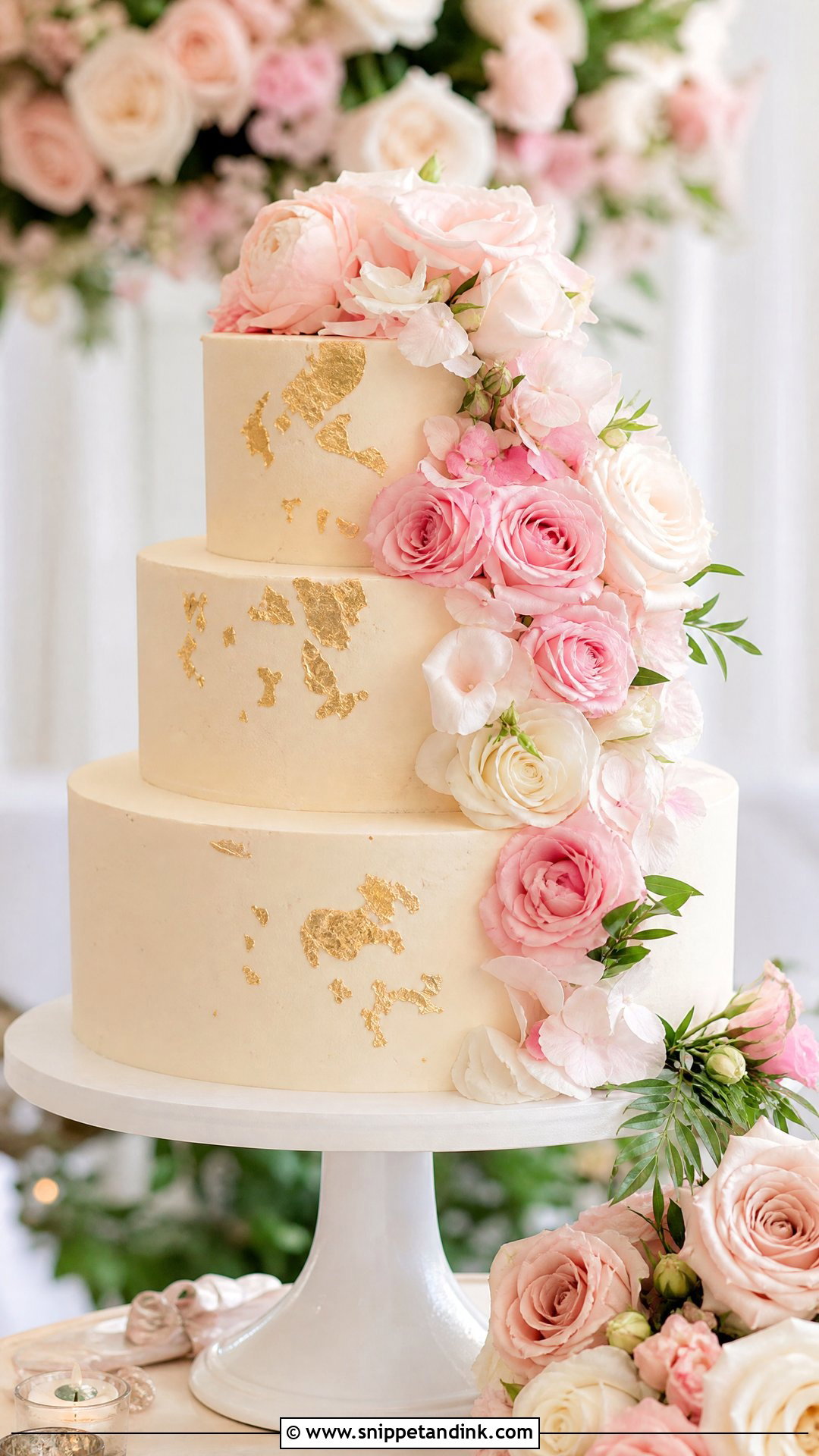
Flowers and gold work as a team. Fresh, sugar, pressed or painted flowers each give a different mood. Tucking leaf behind a floral cluster adds depth; gold stems or painted petals look more artistic. White and blush keep it soft, while deep red, plum or coral make it bolder. Spacing is what I watch. Leave clean frosting between the clusters, or the gold has nowhere to shine.
13. Gold Pearl Wedding Cake
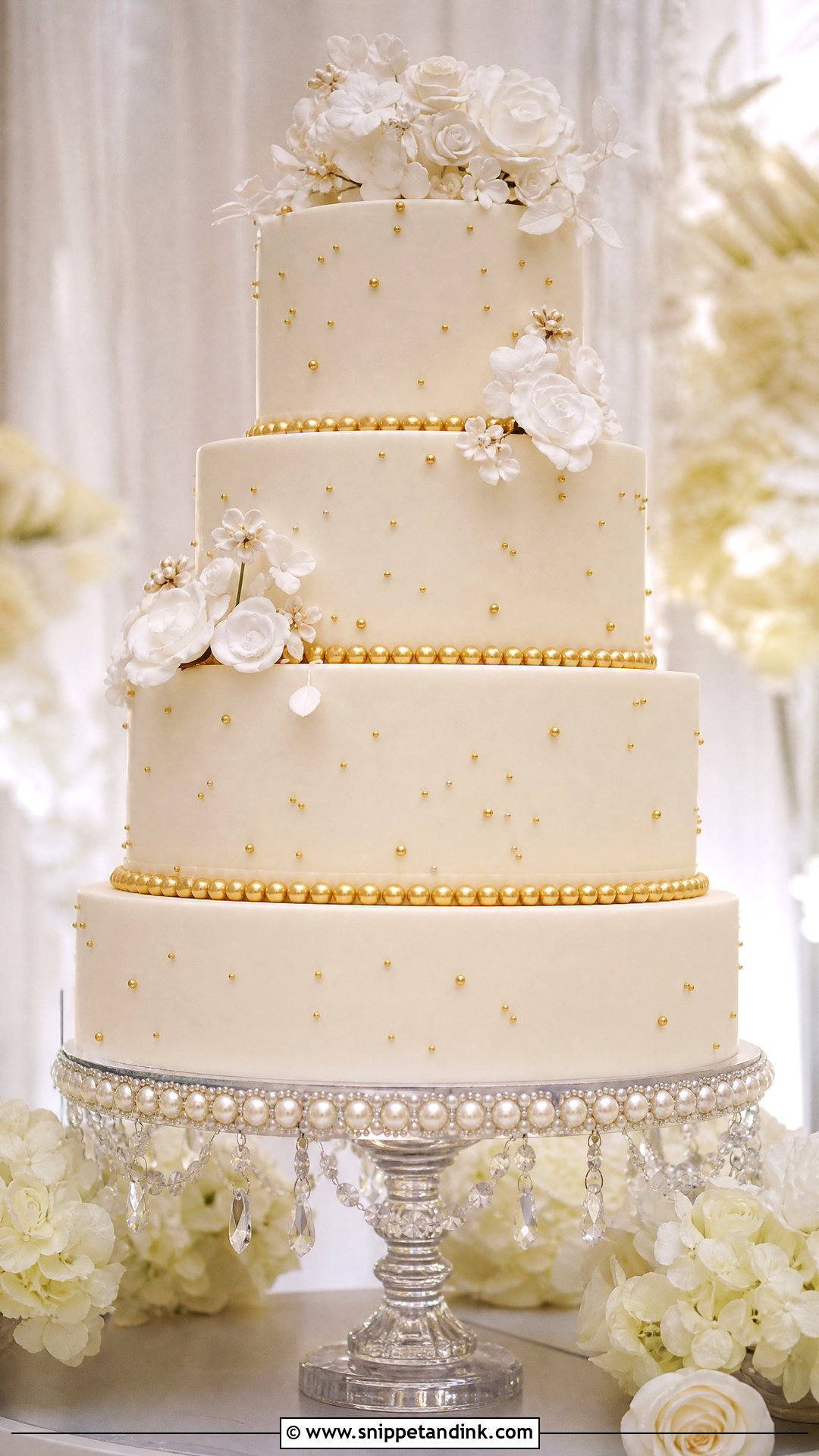
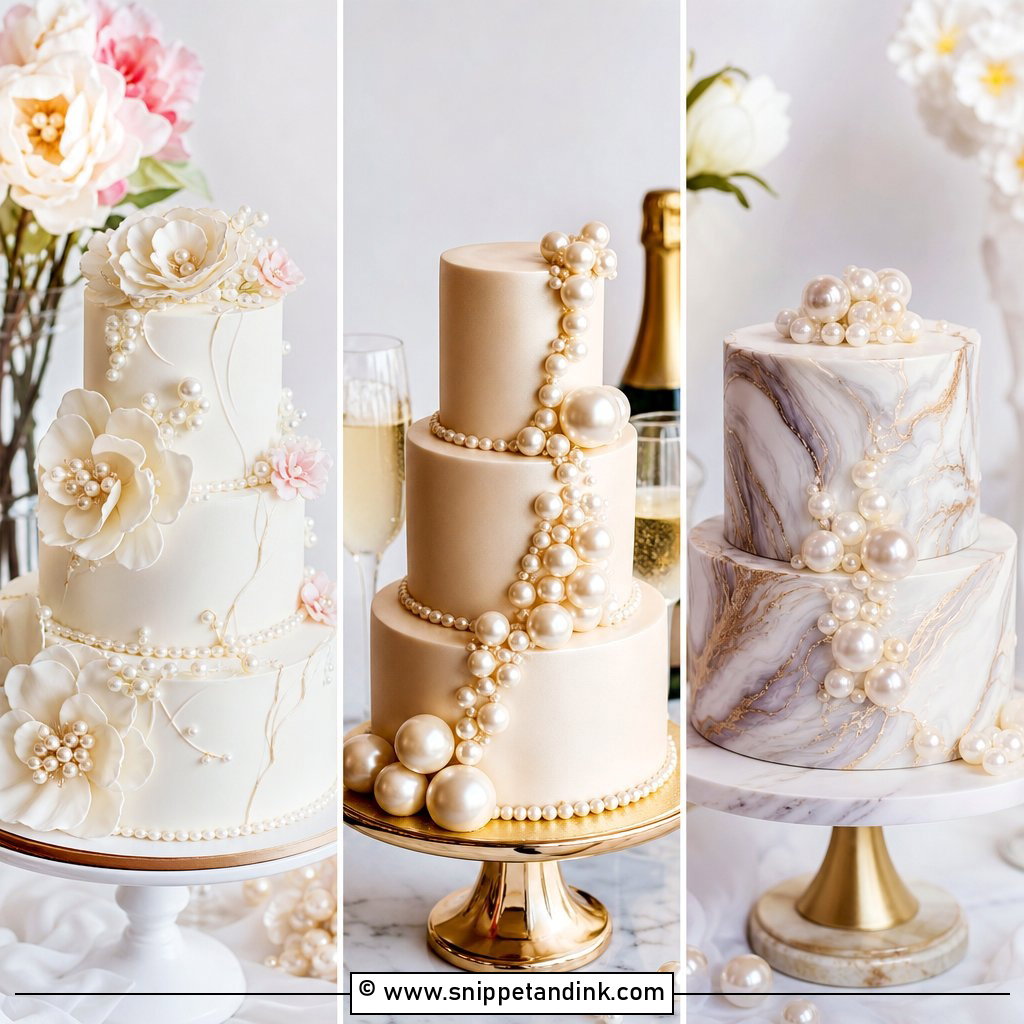
Gold pearls bring texture and a little vintage charm. I place them in neat rows, scatter them or ring each tier. White or ivory with gold pearls is classic; blush or sage is softer. They pair well with smooth buttercream, Lambeth-style piping or fondant ruffles. Sugar pearls are hard, so I place them where they’re easy to brush off a slice, not on top where guests bite straight into them. Tall tiered cakes with clean lines carry them best.
14. Gold Marble Wedding Cake
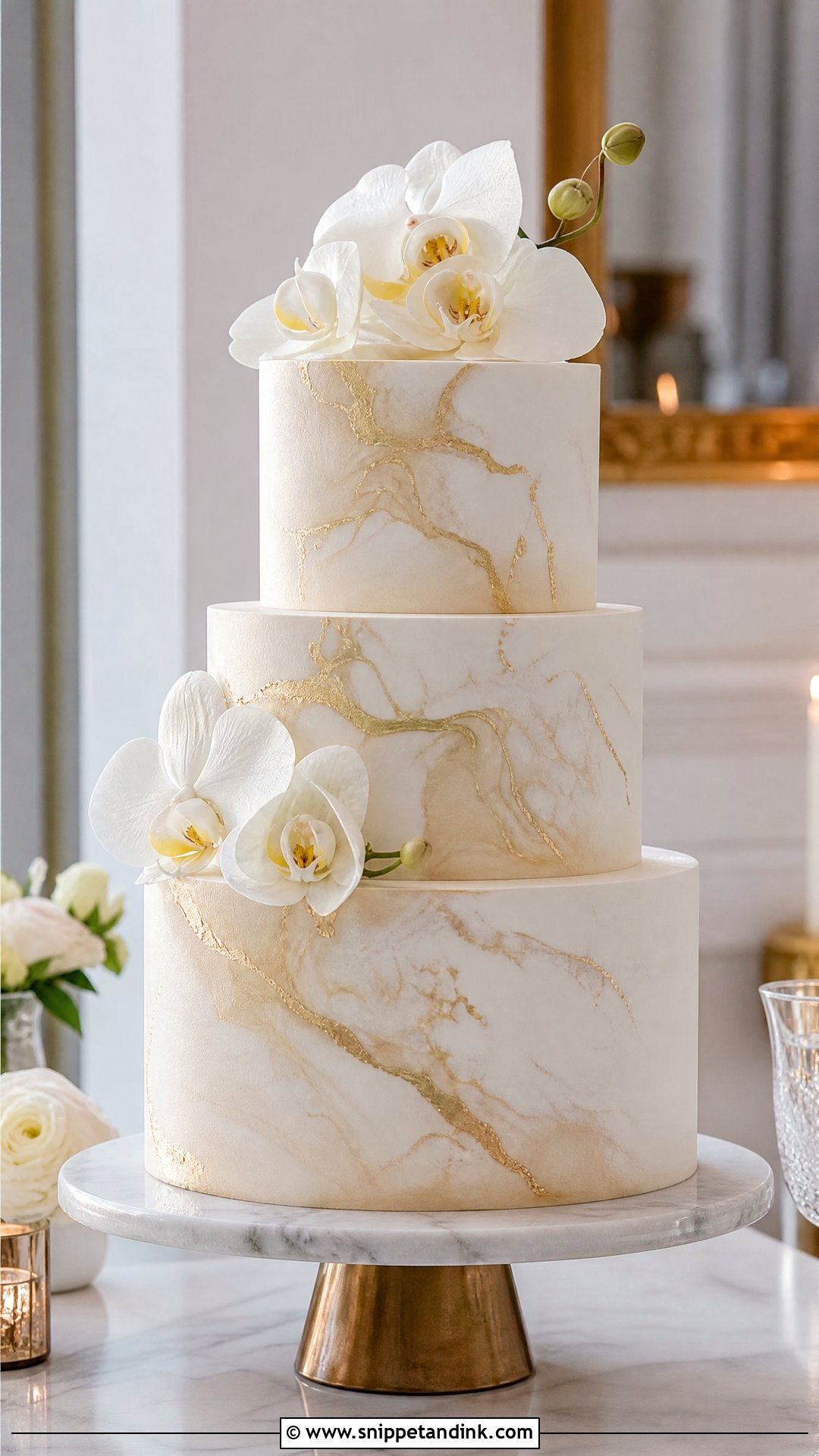
Marble is modern and endlessly adjustable: subtle with white and grey, warm with ivory and beige, bold with black and emerald. Gold veining traced along the darkest marble lines gives a stone-like finish without extra decoration. I marble fondant before covering, since marbling buttercream rarely gives crisp veins. A few orchids, roses or sugar leaves soften it if you want something more bridal.

15. Gold Geode Wedding Cake
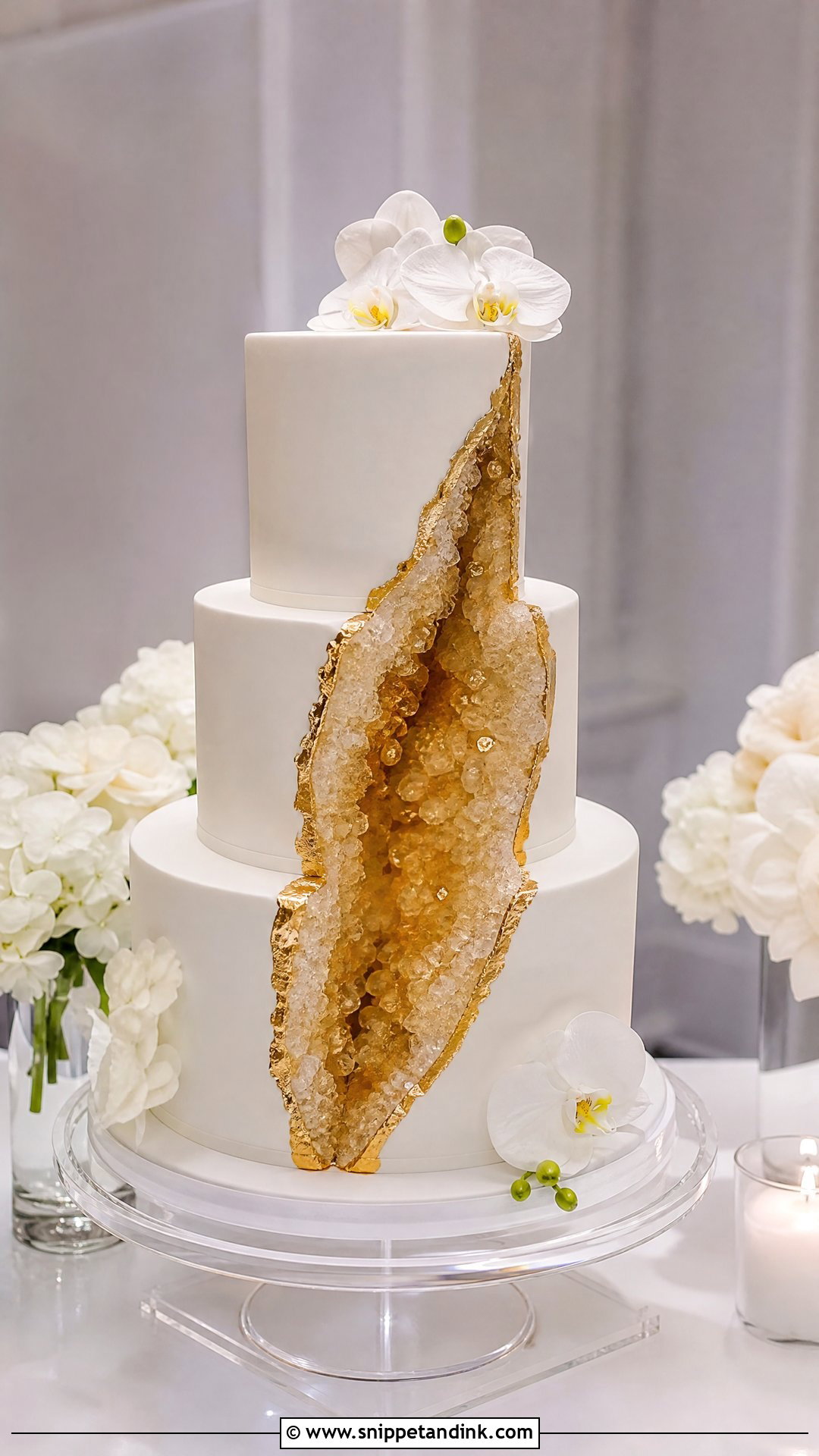
A geode cake is cut open to look like a crystal cavity, filled with rock candy or sugar crystals and edged in gold. It’s a showpiece. Keep the rest of the cake plain so the geode stays the focus. Crystals are heavy and need a stable cake behind them, so I’d suggest a firmer sponge with ganache rather than a light chiffon here. White, ivory, grey or a deep jewel tone suit the gold edging.
16. Gold Lace Wedding Cake
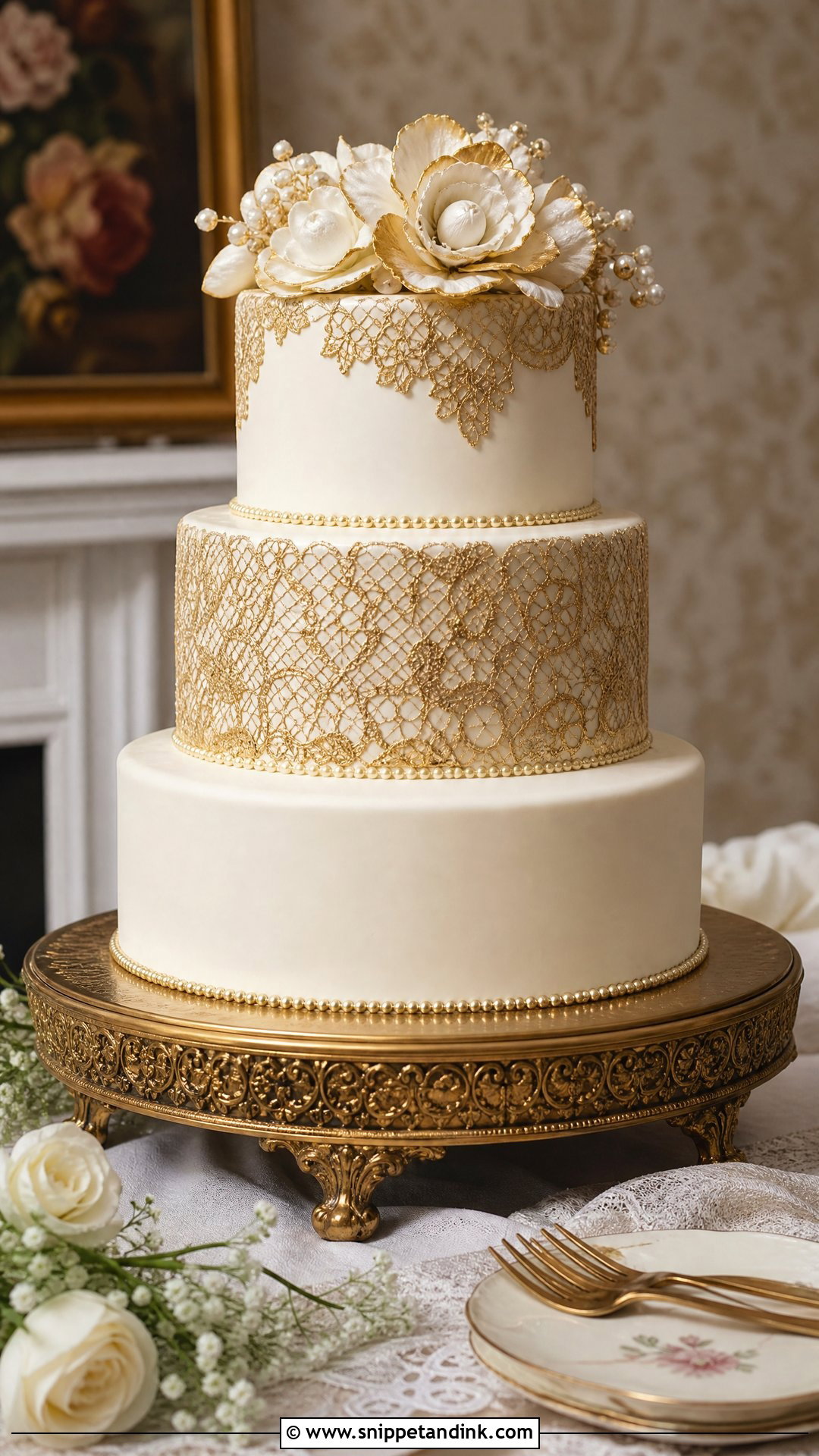
Lace adds detail you notice up close but still reads graceful across the room. It can be piped, stenciled, molded from sugar or painted onto fondant. Molded sugar lace is the most realistic, but it’s delicate and can soften in humidity, so I add it as late as possible. Gold lace sits well on white, ivory or blush, on one tier or all of them. Small sugar flowers or pearl borders complete it.
17. Gold Sequin Wedding Cake
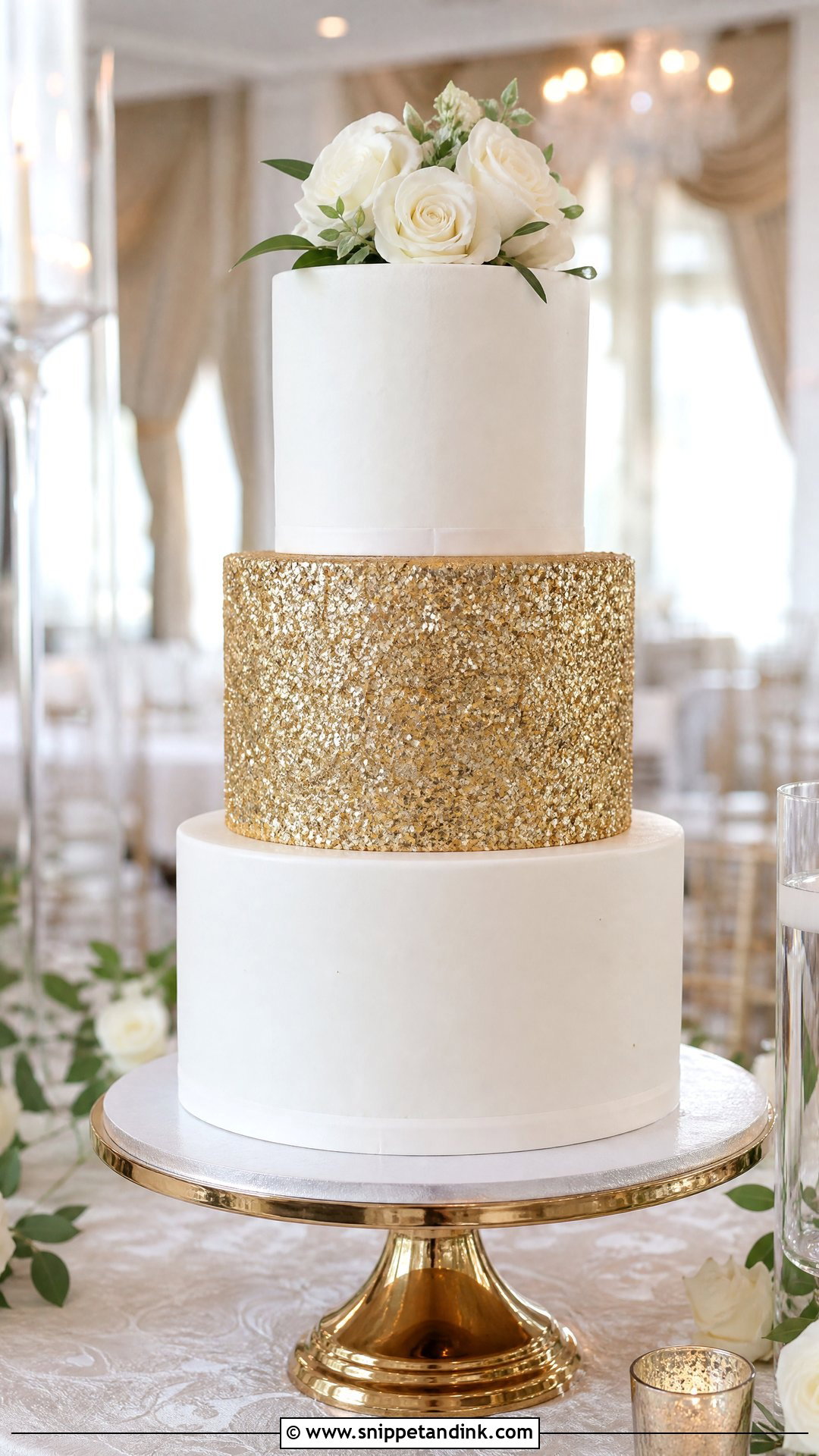
Sequin tiers are made for sparkle lovers. The effect covers one accent tier or the whole cake, using edible sequins or small fondant discs painted gold and applied one at a time. That’s slow work, so expect a sequin tier to add noticeably to the cost. Next to smooth white or ivory tiers, one gold sequin tier is glamorous without being busy. Keep everything else simple: a few flowers, clean borders or a sleek topper.
18. Gold Ruffle Wedding Cake
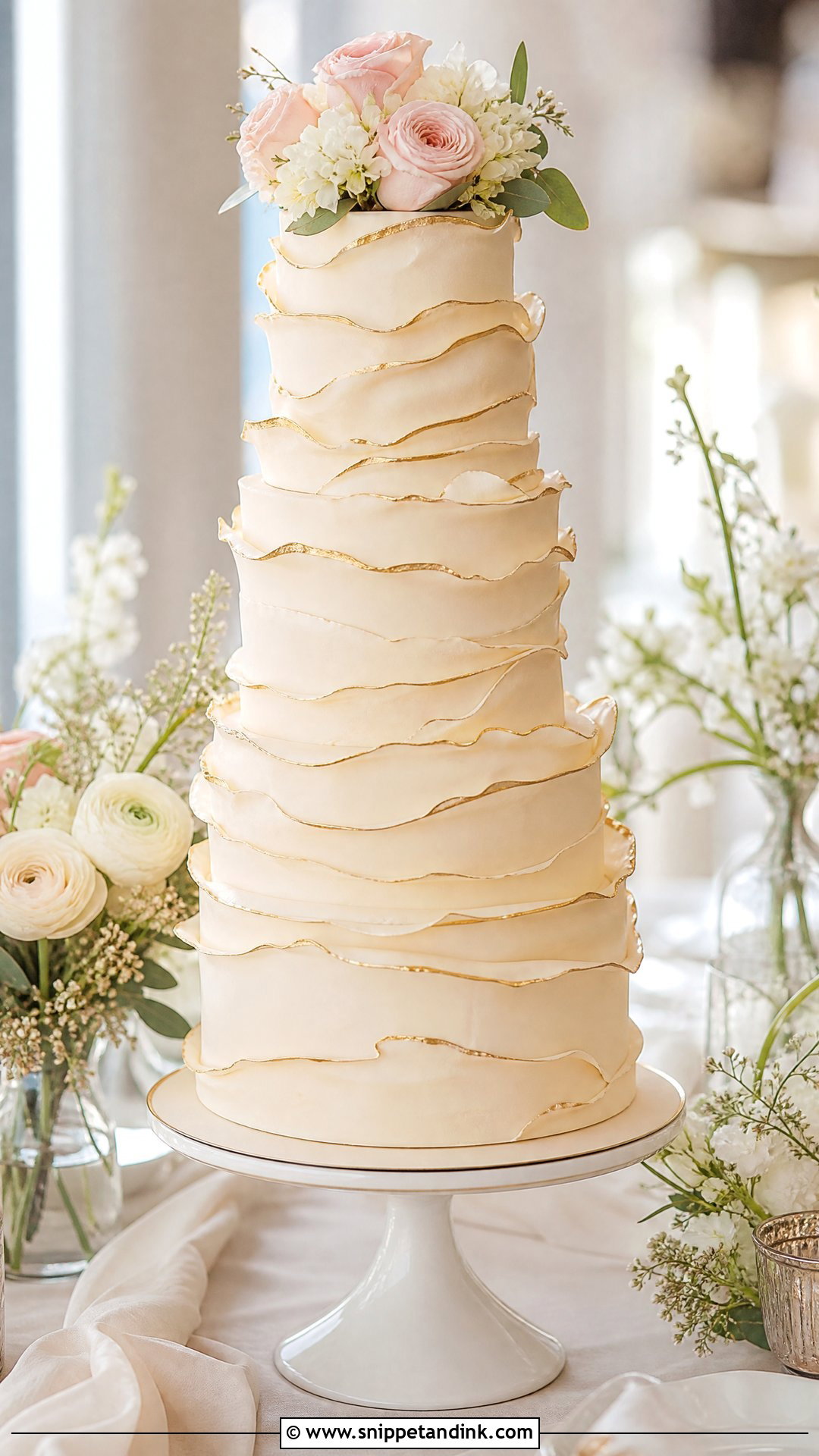
Ruffles bring movement and softness. They can be fondant, wafer paper or buttercream. White with gold-edged ruffles feels airy; a fully gold ruffle tier is more dramatic. Wafer paper ruffles are light and hold a crisp edge, but they wilt with moisture, so I keep them away from fresh-flower stems and humid tents. Cascading flowers or a smooth top tier suits this design.
19. Gold Vintage Wedding Cake
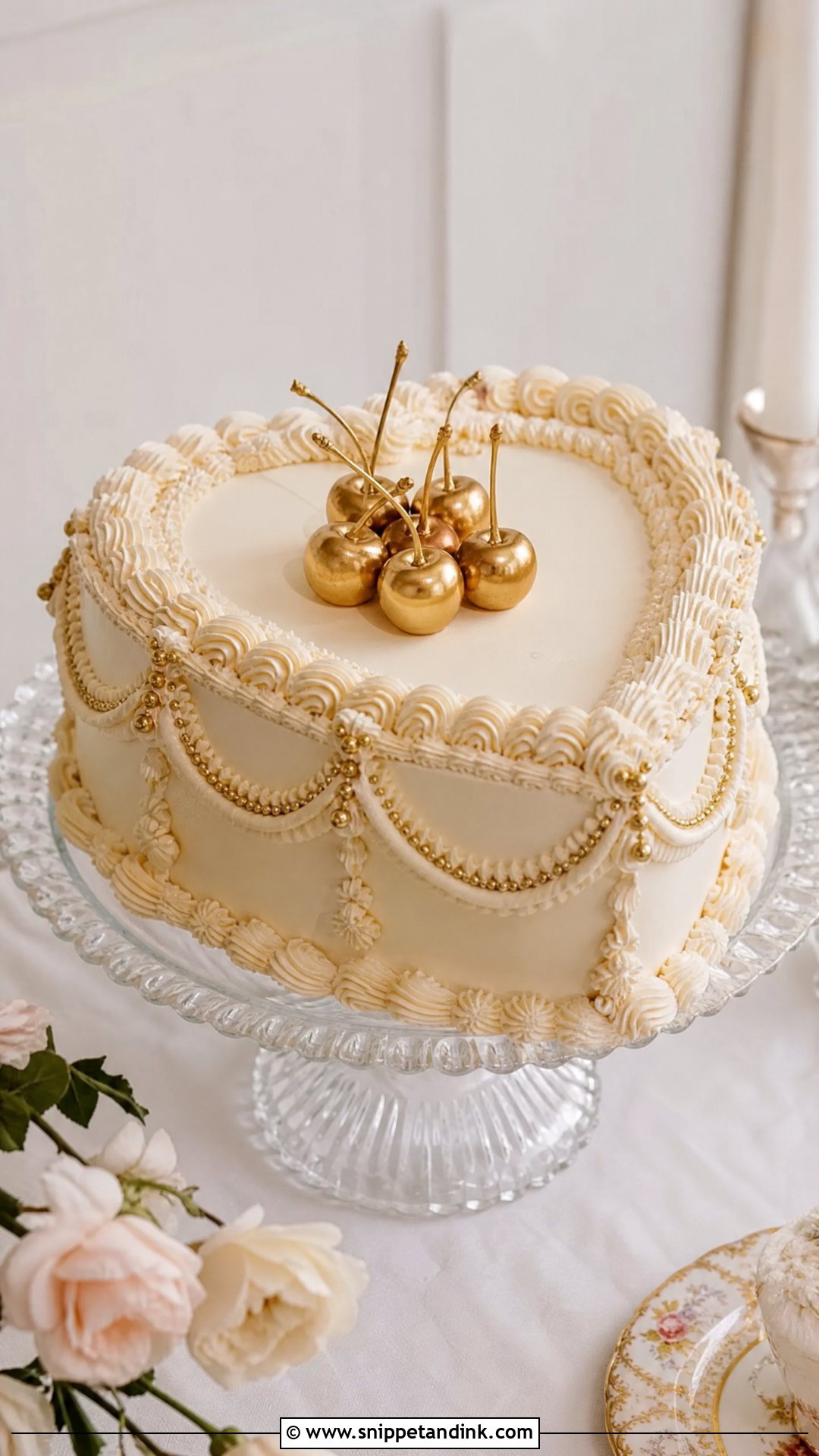
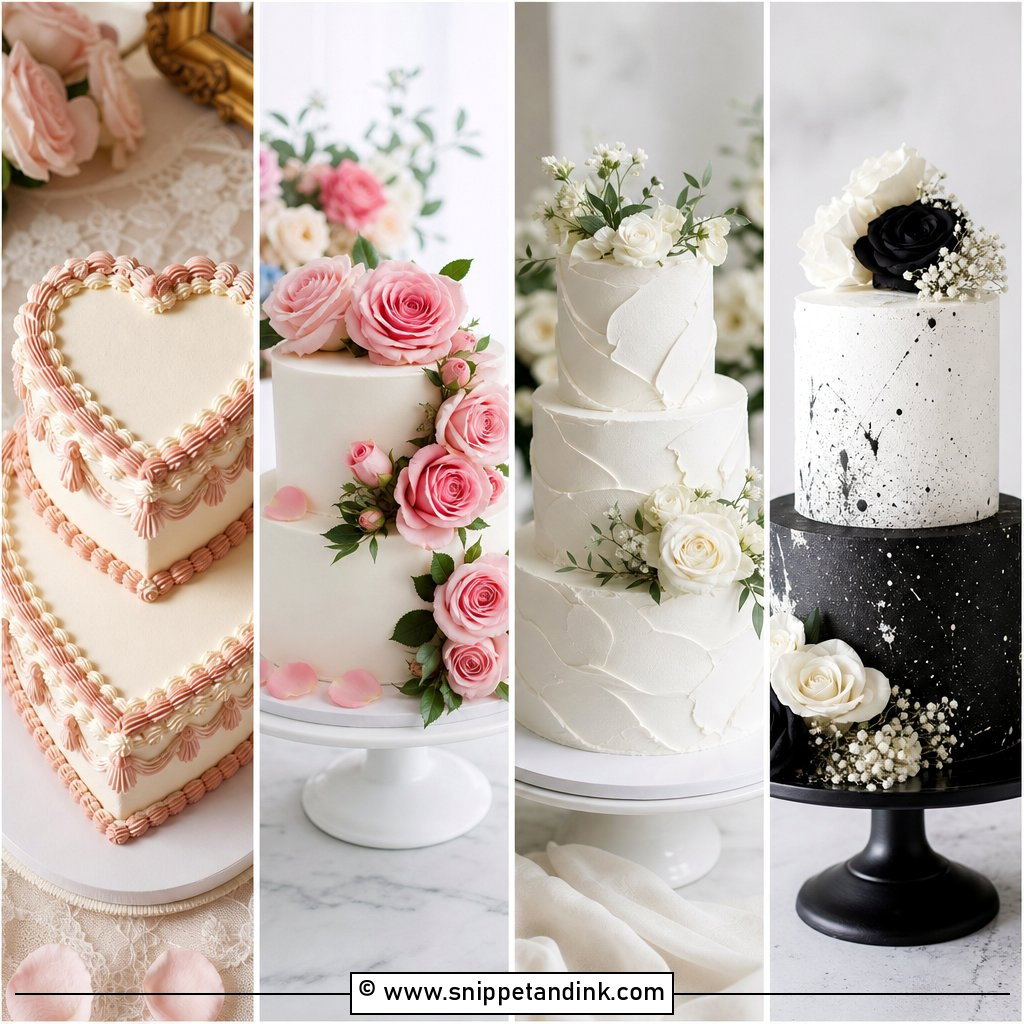
Vintage gold is ornate piping, scalloped borders, pearls, gold cherries and delicate metallic touches. White, ivory, blush and pale blue bases all work. It can be a single heart, a tall round cake or a multi-tier Lambeth-inspired design. Keep the palette limited. With this much piping, two colors plus gold is the most I’d use before it starts to look crowded.



20. Gold Lambeth Wedding Cake
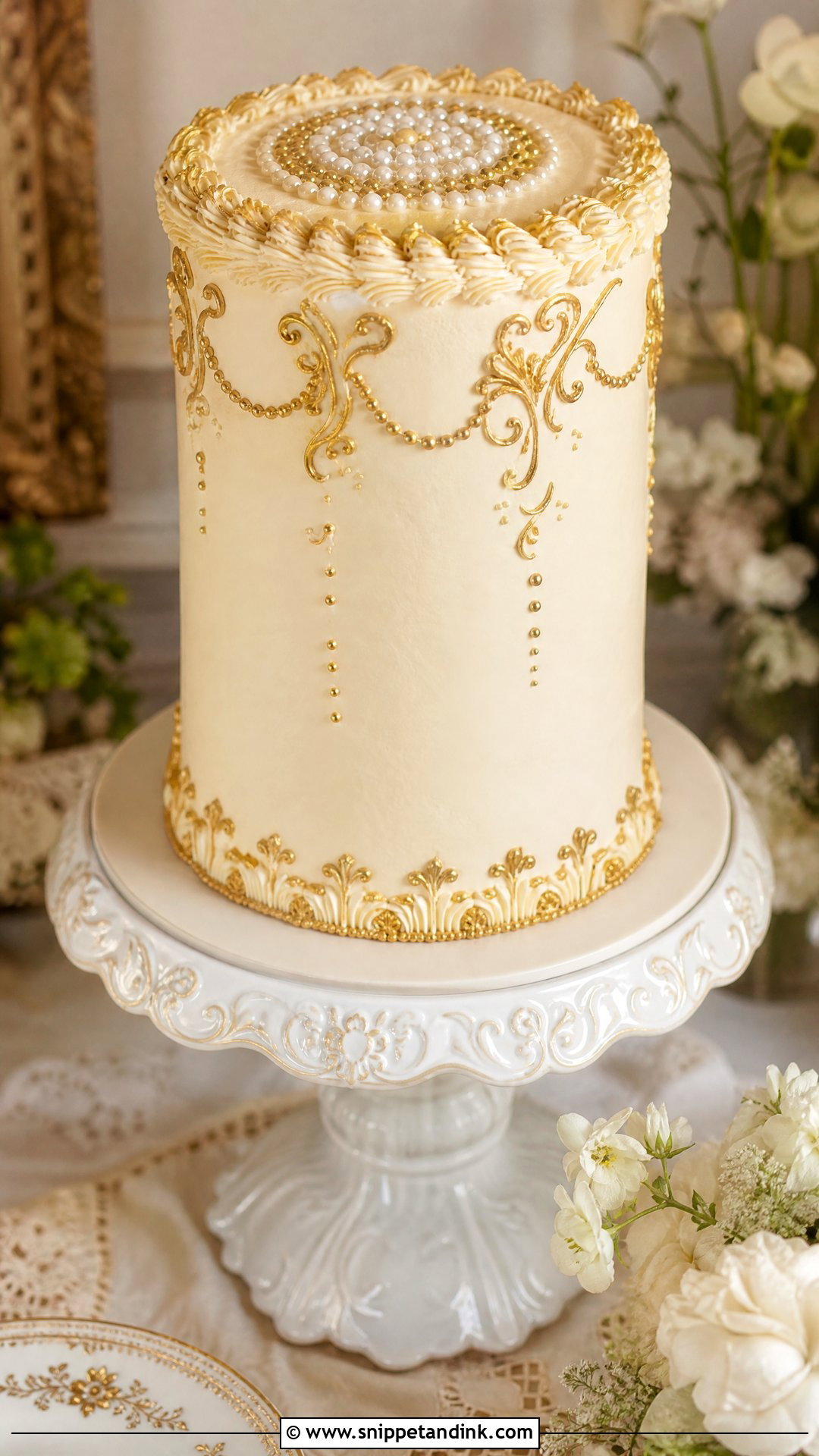
Lambeth is all about overpiping: borders built up layer on layer with shells, swags, pearls and scrolls. Gold goes on the piped edges, pearl accents or small highlights. White or ivory keeps it bridal; blush or pale blue makes it playful. Overpiped buttercream needs firm, stable icing and a cool room, as soft buttercream sags under its own weight. Skip flowers entirely and the piping becomes the decoration.
21. Gold Heart Wedding Cake
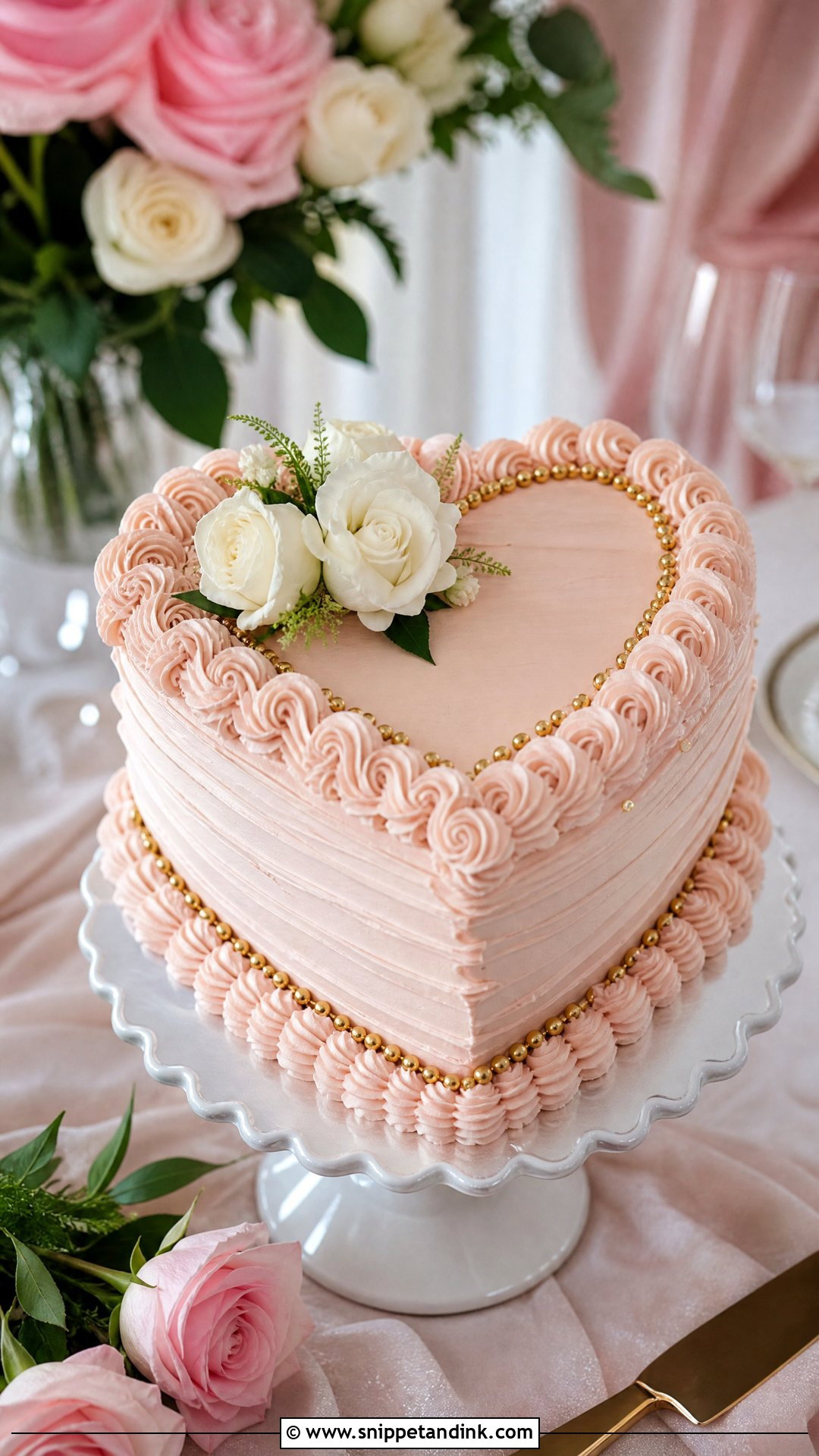
A heart cake is sweet and nostalgic. It can be a small cutting cake, a dessert table centerpiece or one of several cakes. Vintage piping, gold pearl borders, metallic cherries or soft florals all suit the shape. White buttercream gives it a classic feel; blush or ivory warms it. Hearts look best on intimate weddings. A short piped message or a monogram on top makes it personal.
22. Gold Square Wedding Cake
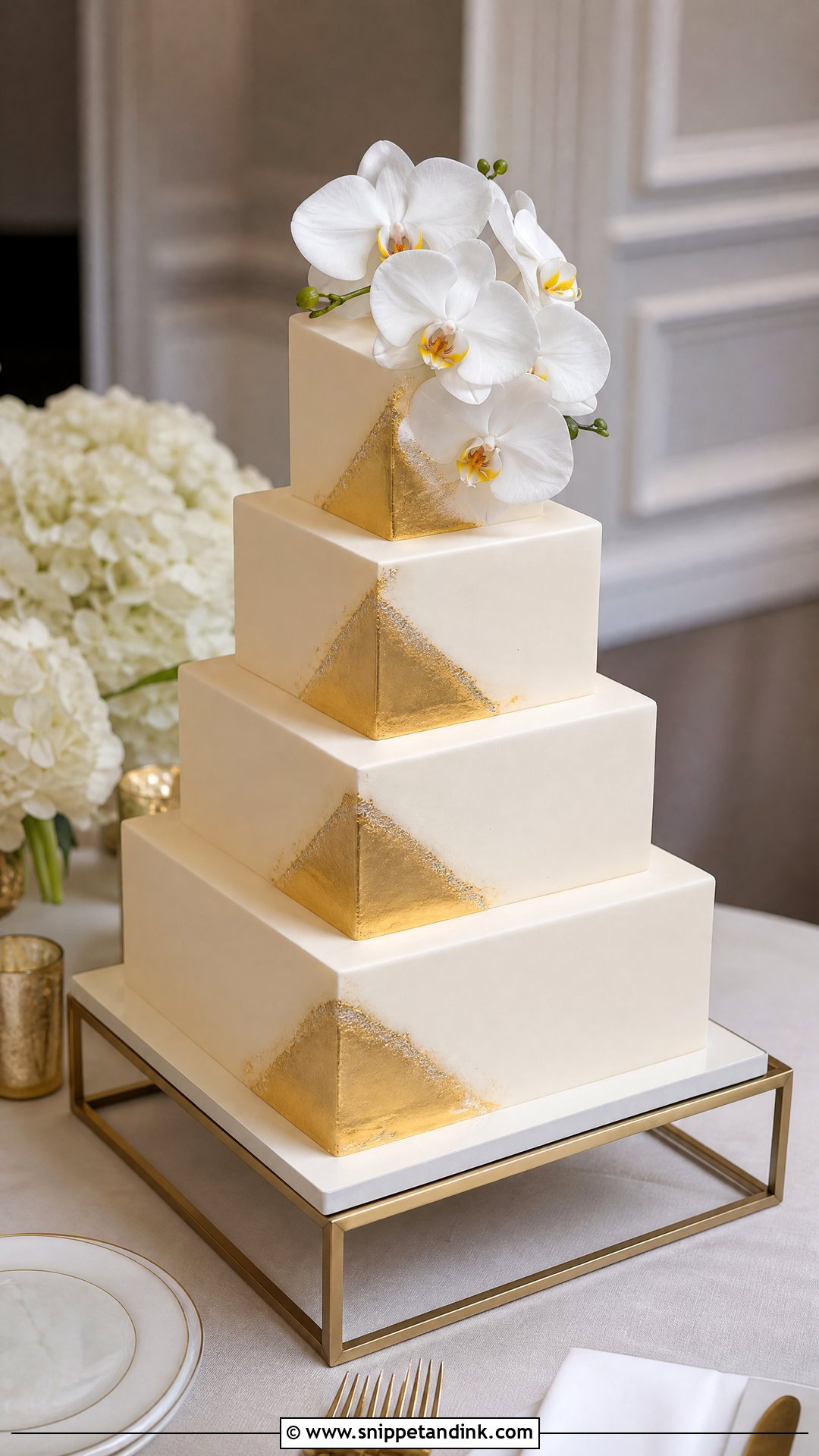
Square tiers feel modern because the shape is so structured. They need smooth fondant or very sharp buttercream edges; a soft corner on a square tier is obvious. Gold can be thin borders, metallic panels, painted corners or stacked geometric accents. White, black, ivory, navy or emerald all work. Square cakes also cut neatly into even portions, which helps catering staff serve faster.
23. Gold Hexagon Wedding Cake
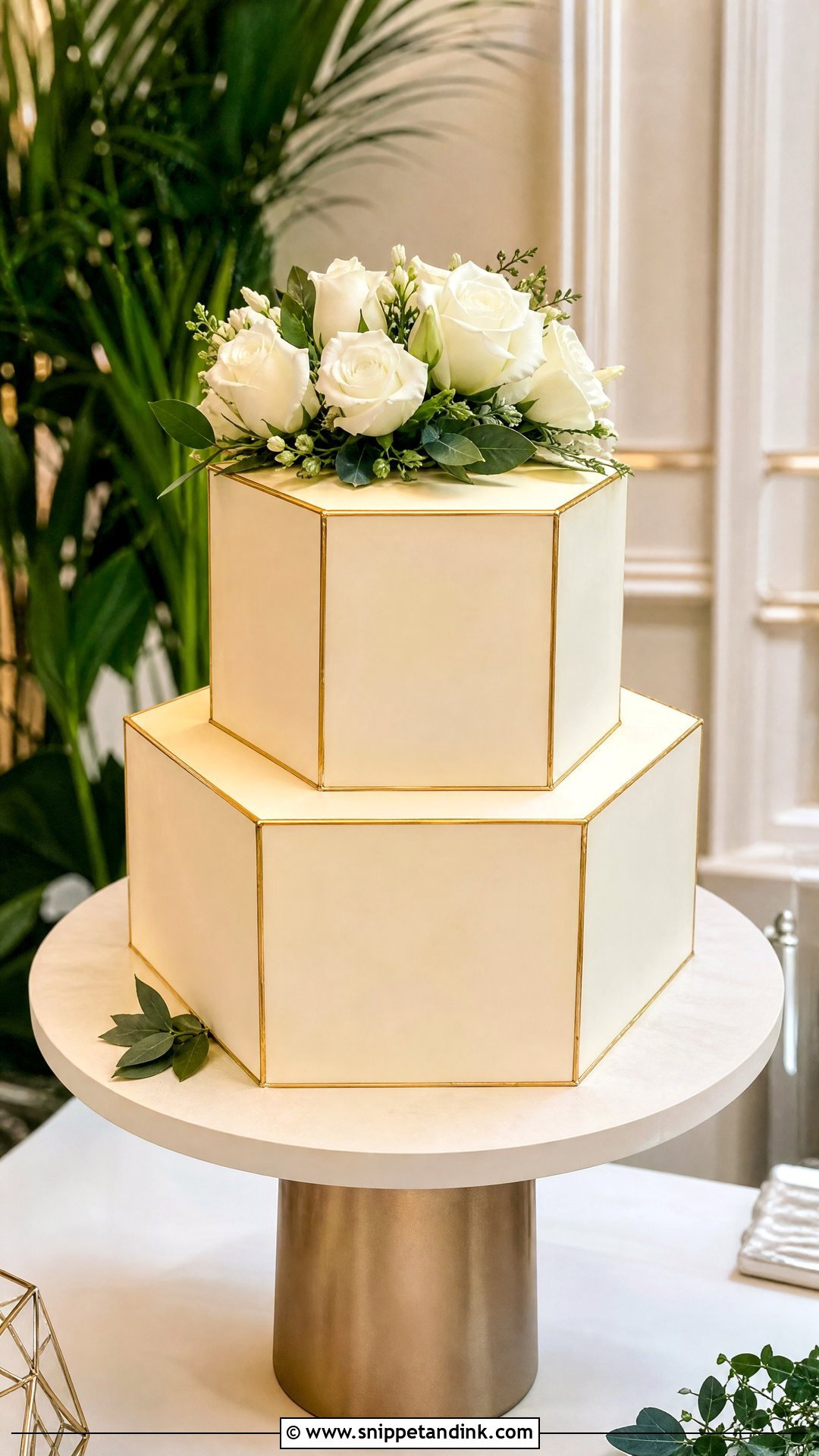
Hexagon tiers offer a modern shape without going too far. The angled sides catch light and shadow differently, and gold on each edge highlights that structure. Try white fondant with gold trim, marble with metallic veining or one gold accent tier between ivory layers. Hexagons need precise stacking, as any twist between tiers shows at the corners. Orchids, roses or greenery soften the geometry.
24. Gold Tall Wedding Cake
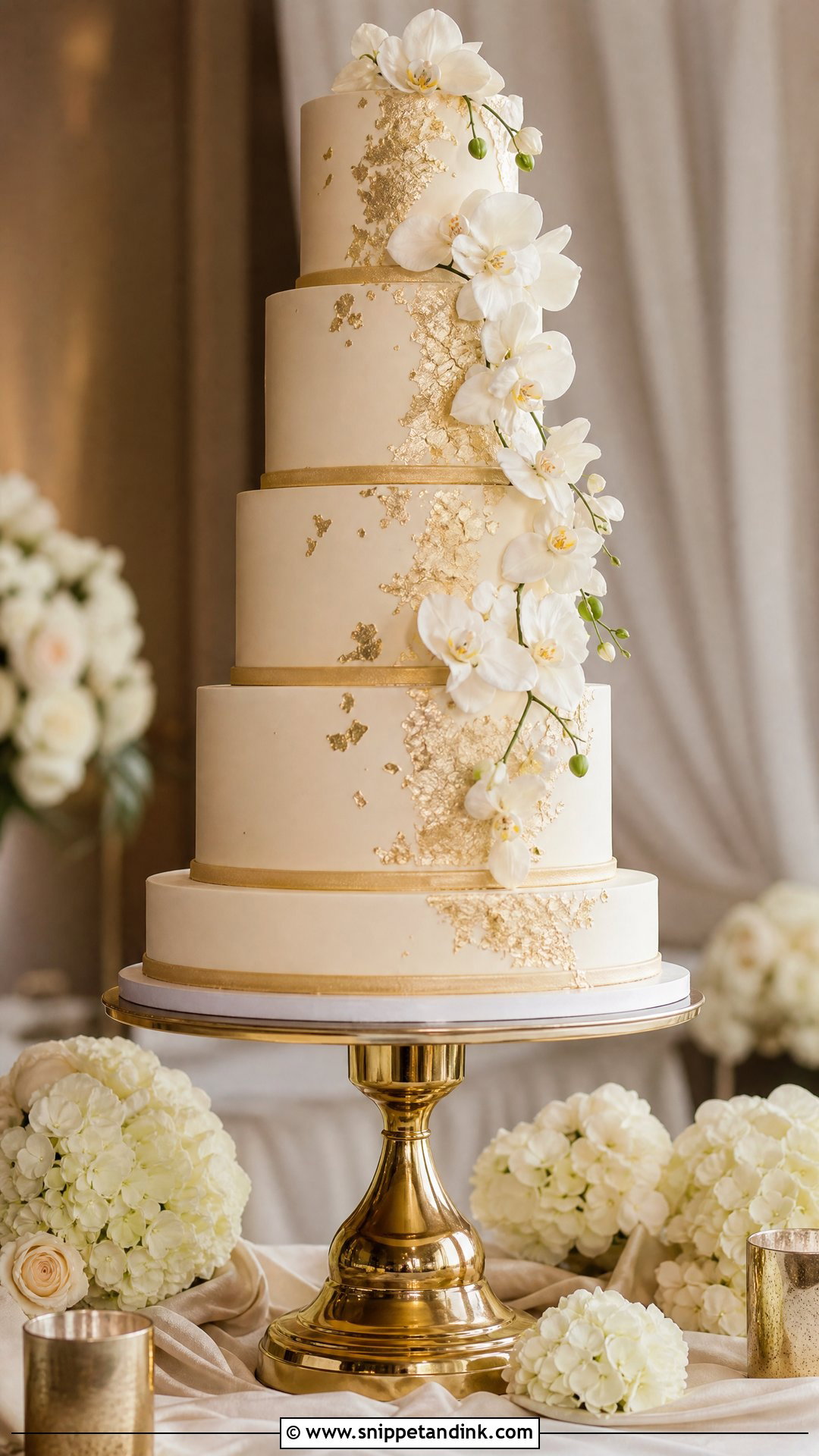
Height draws the eye instantly. A tall cake can be more tiers, extended-height tiers or a mix of slim and wide layers. Gold bands, leaf or cascading accents emphasize the vertical. Soft colors keep it classic; black, navy or emerald add drama. Every extra inch needs internal support: dowels in each tier and a central rod through the whole cake. I’d only build very tall cakes on a sturdy stand and a level table.


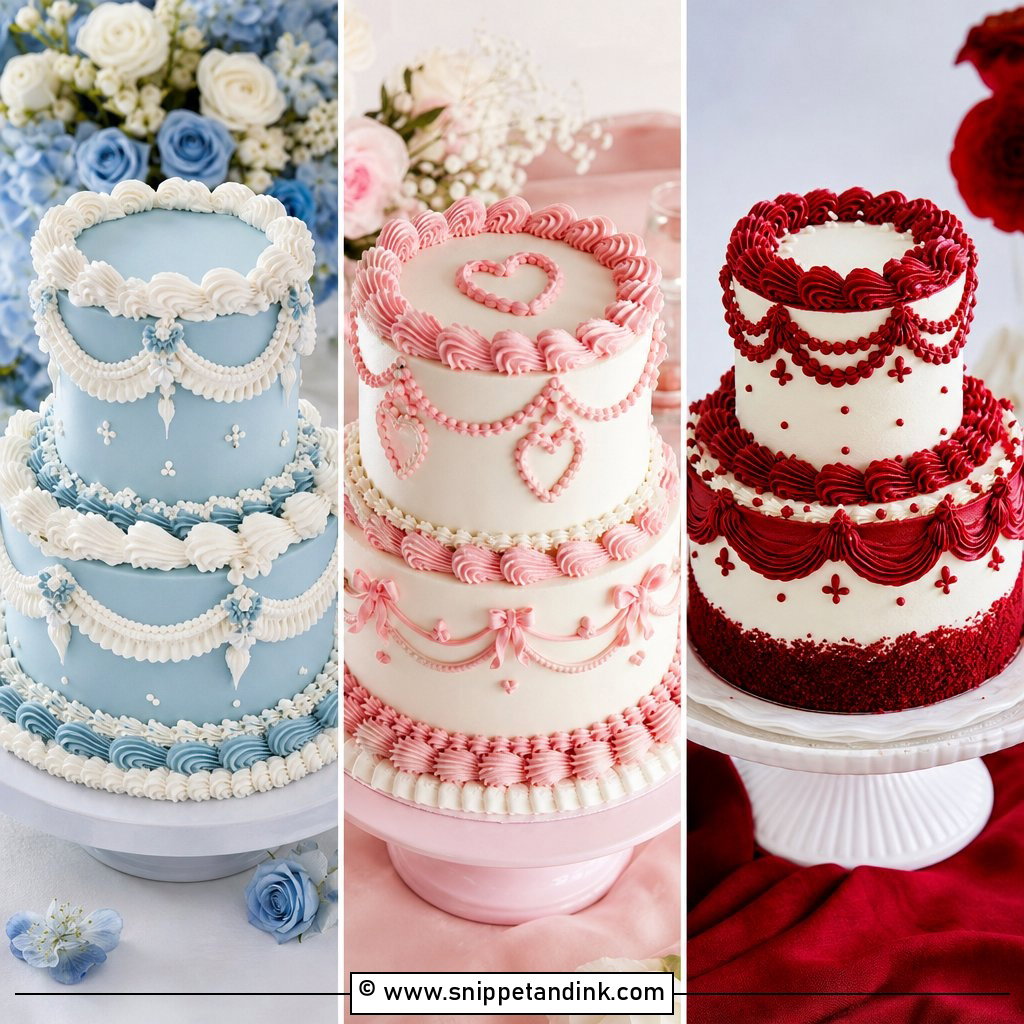

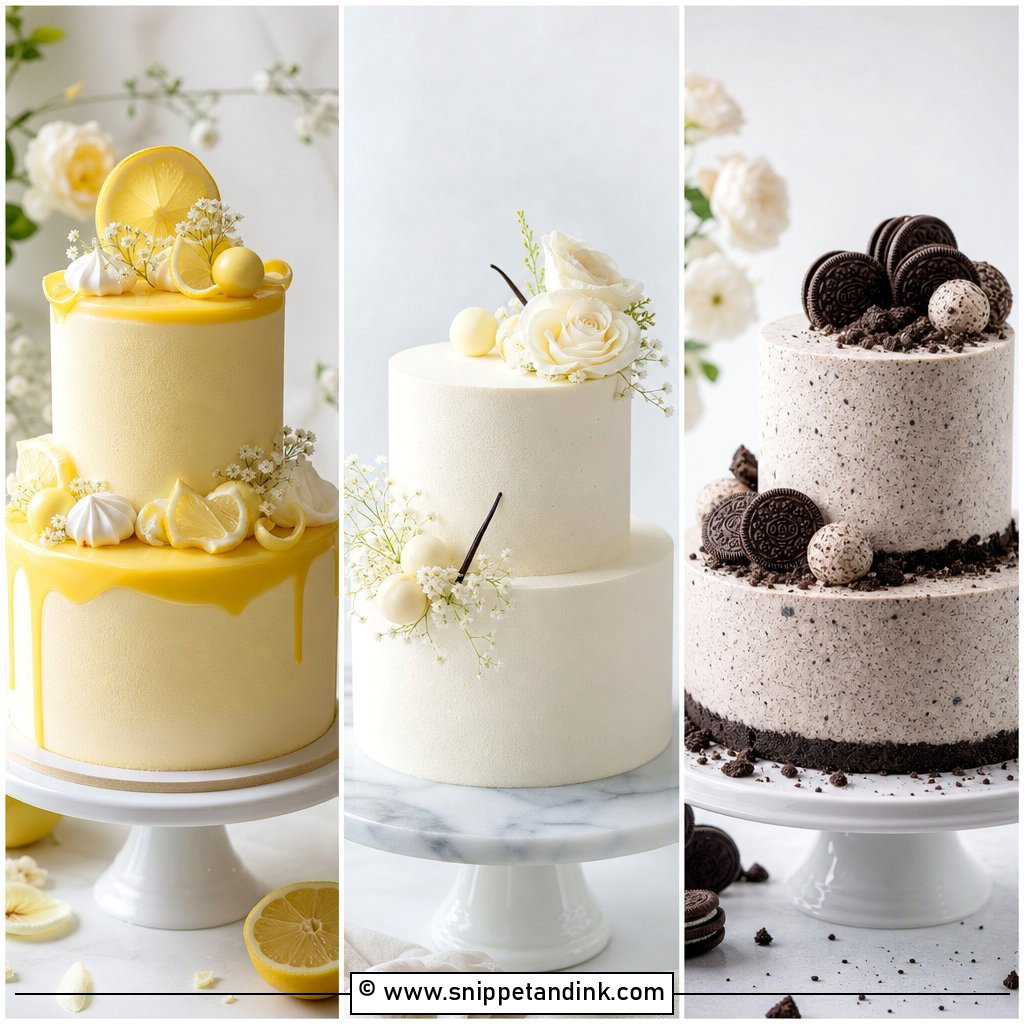
25. Gold Two Tier Wedding Cake
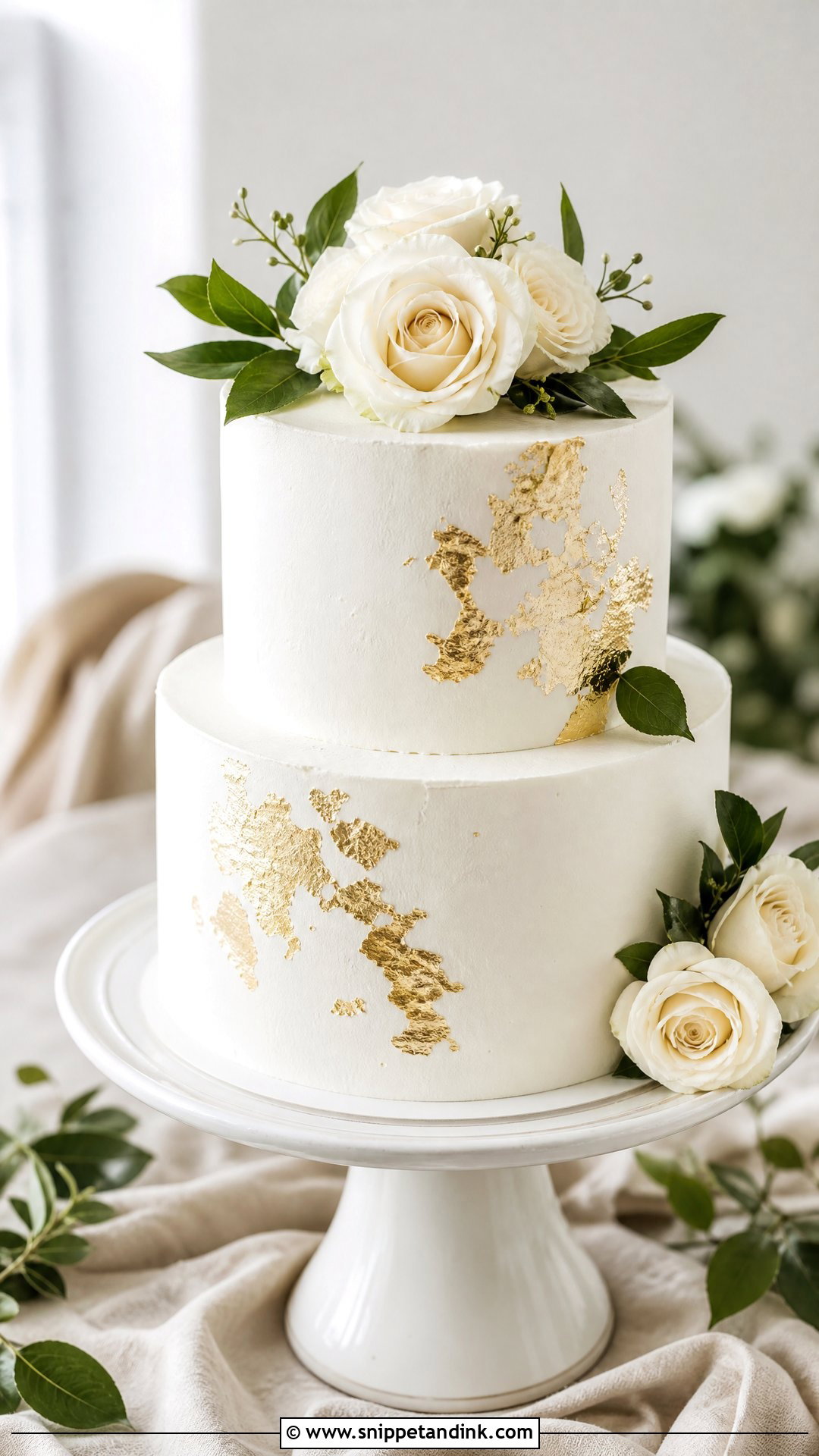
Two tiers suit smaller weddings and elopements, with enough room for gold leaf, flowers, piping or a drip. White buttercream with gold is classic; blush, sage or ivory feels more personal. Fresh roses, orchids or greenery between the tiers add dimension. A two-tier cake is easy to transport and display on a pedestal stand. If you need more servings, a plain kitchen cake in the back keeps the display small.
26. Gold Three Tier Wedding Cake
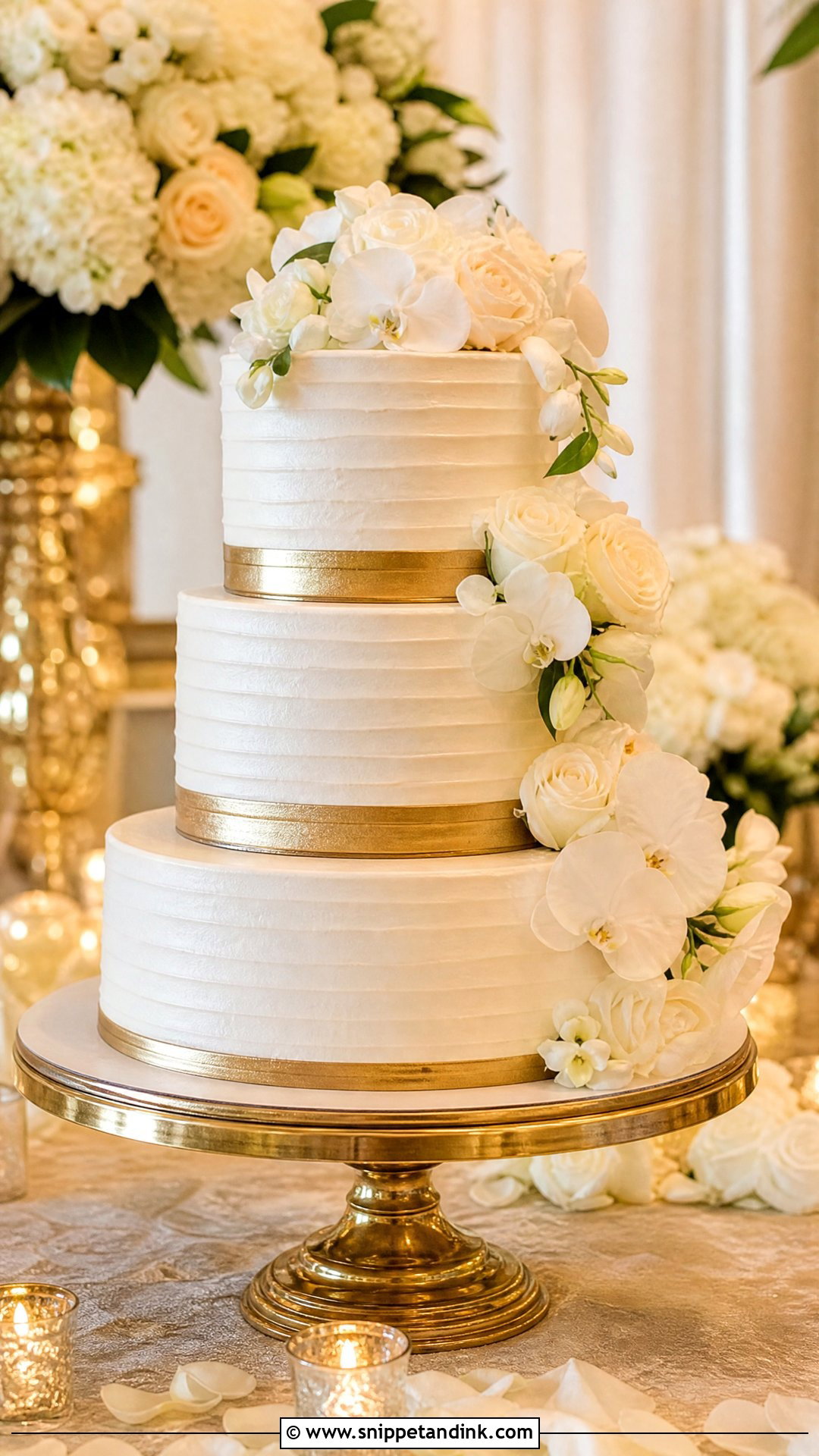
Three tiers give height without overwhelming a room, and they suit a traditional reception. Each tier can have its own finish, say smooth buttercream, gold leaf and a subtle texture. Or keep all three white and let gold tie them together. Flowers placed diagonally add movement; clean gold bands look more formal. I usually suggest different flavors per tier, so guests can choose.
27. Gold Five Tier Wedding Cake
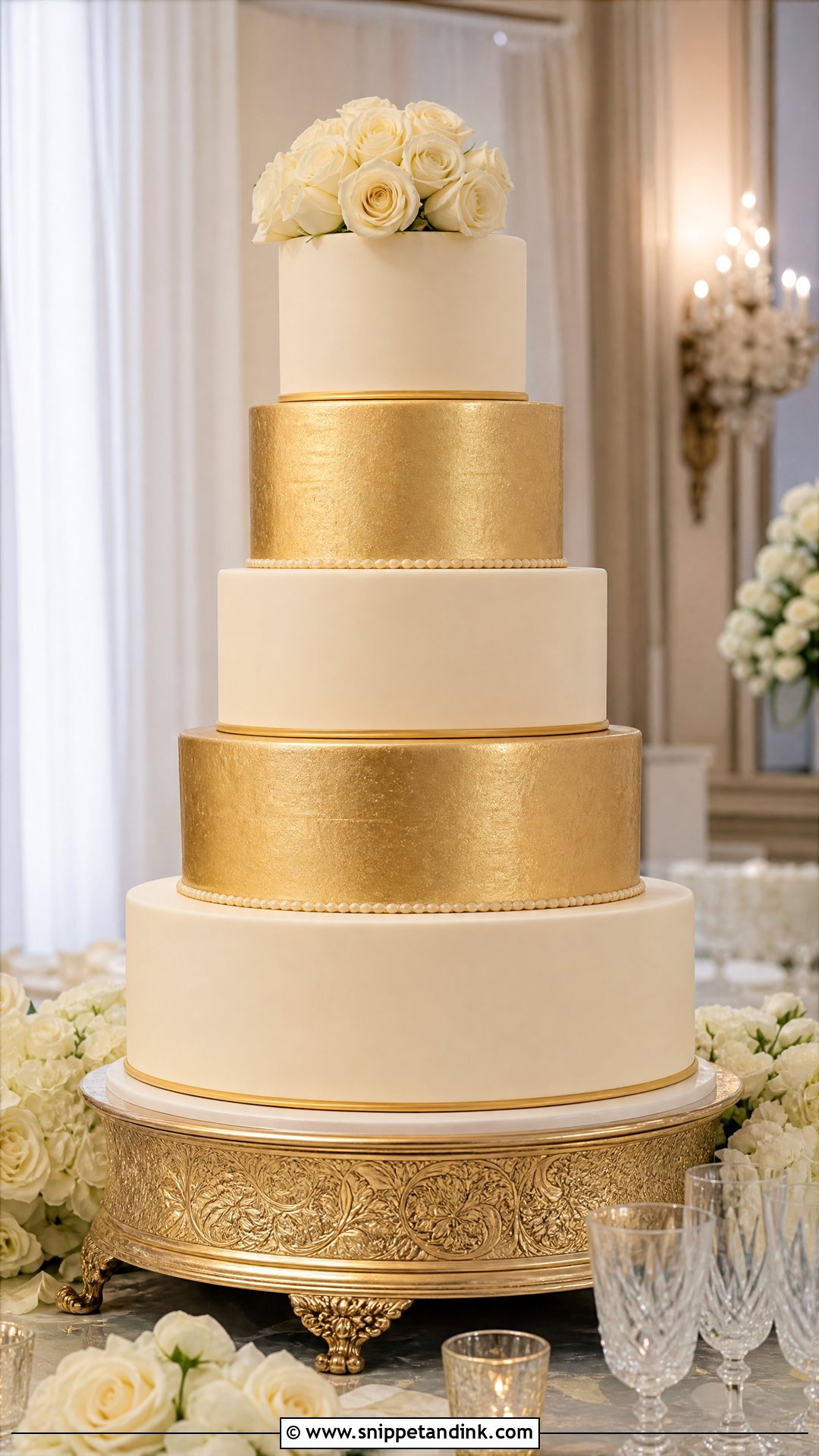
Five tiers is grand, and with that much surface the design needs restraint. I alternate white tiers with gold accent tiers, run leaf in a soft cascade or add metallic trim to each layer. Large floral clusters can balance the scale if placed with intention. A cake this size is heavy, so it’s usually stacked at the venue rather than transported fully assembled. It needs a large room with high ceilings to look right.
28. Gold Floral Cascade Wedding Cake
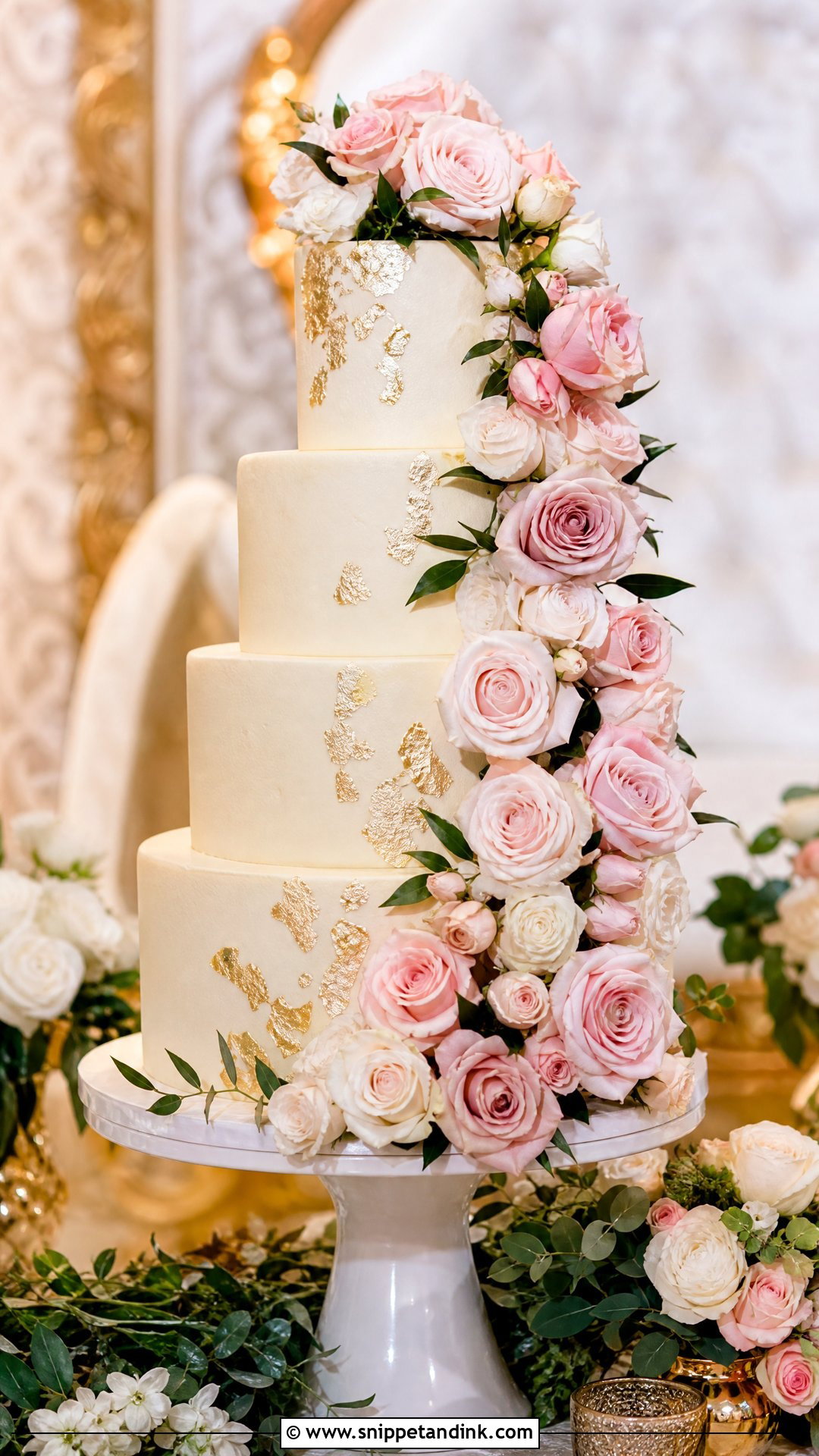
A floral cascade travels from the top tier down the side and leads the eye with it. Leaf or metallic piping behind the cascade adds depth. White, ivory, blush and sage bases work. I match the flowers to the bouquet so the cake ties into the day. Fresh stems must never touch the cake directly; I wrap them or set them in food-safe picks, since many popular wedding flowers are not safe to eat.
29. Gold Pressed Flower Wedding Cake
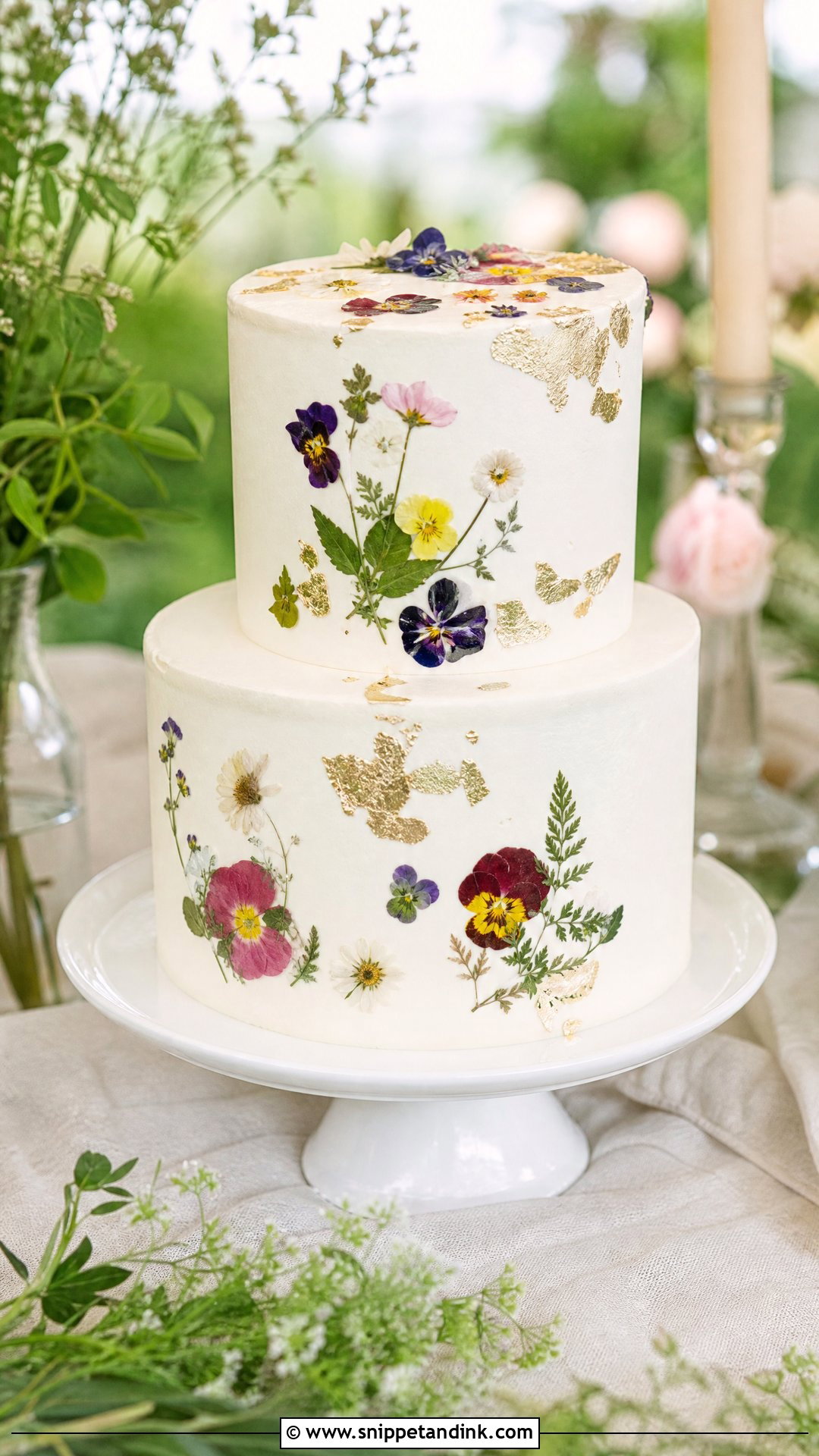
Pressed flowers look fresh and delicate, and gold leaf or thin metallic edges give them a finished, refined edge. They sit flattest on smooth buttercream or fondant. Use only edible flowers pressed for food use, not craft-pressed ones. Soft yellow, blush, lavender, blue and white all pair well with gold. Pressed petals can fade or darken if they sit in strong sunlight, so the cake should be displayed out of direct sun.
30. Gold Orchid Wedding Cake
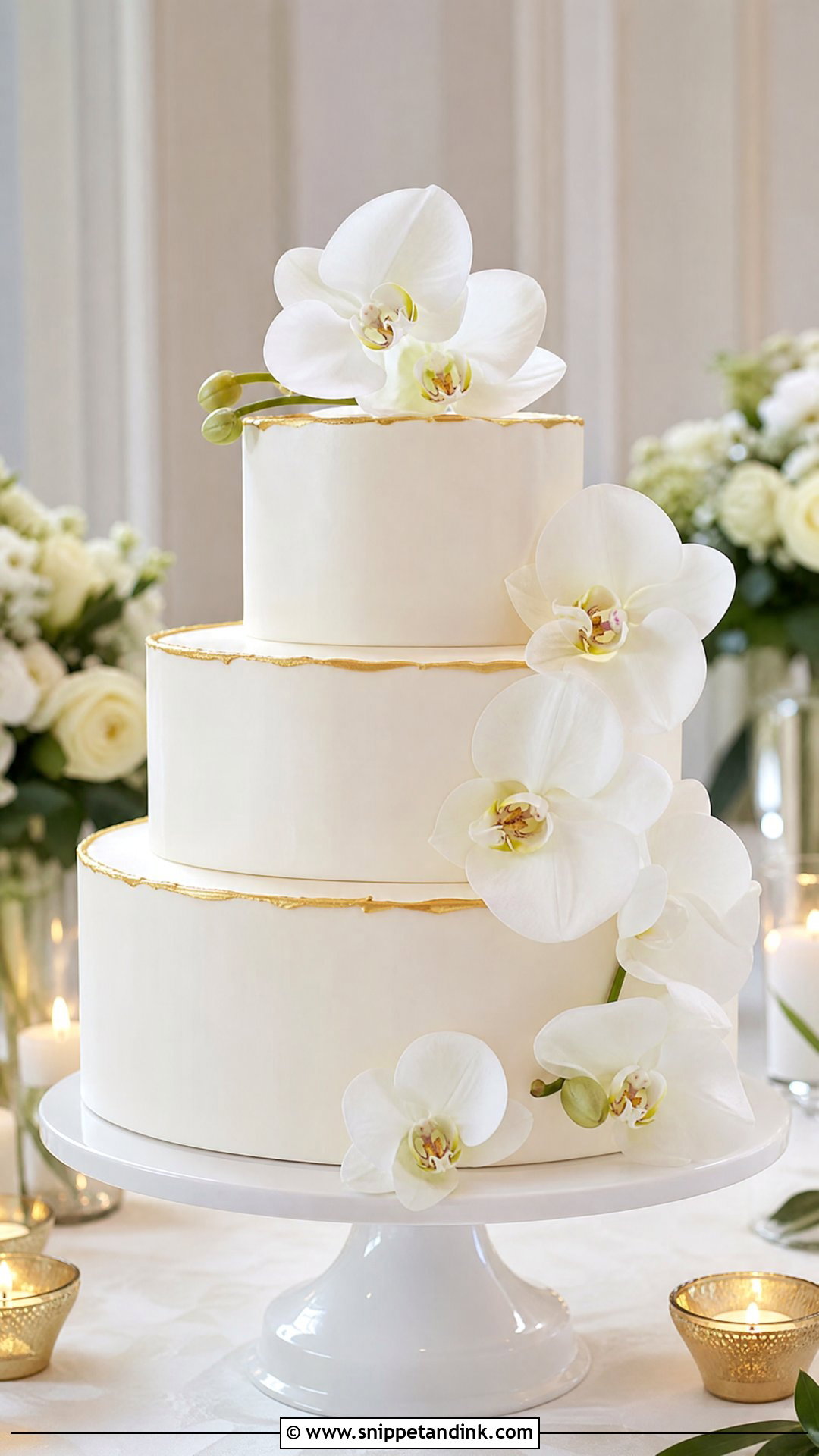
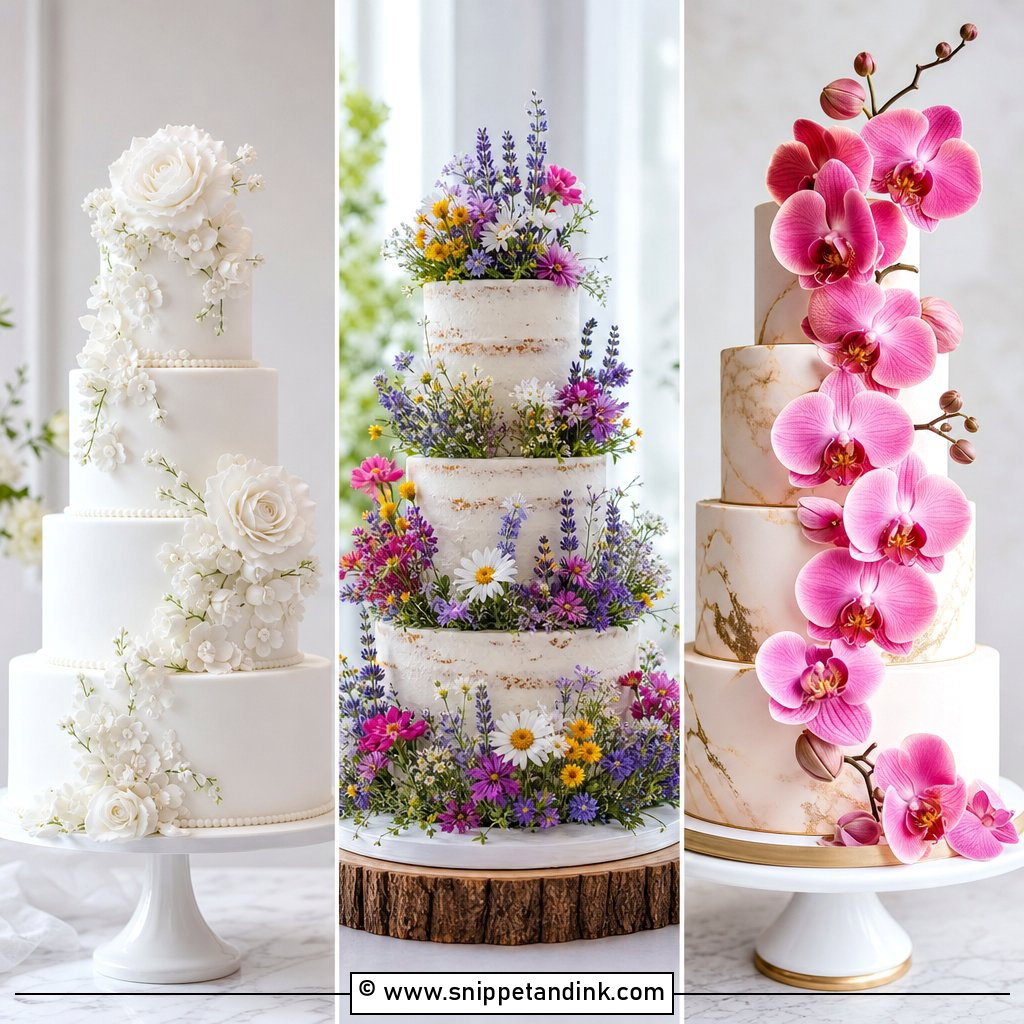
Orchids have a sculptural shape that pairs well with smooth fondant, sharp tiers and metallic accents. White orchids on ivory with gold leaf look classic; blush or pale yellow orchids add warmth. Cluster them, trail them down the side or ring the base. Orchids are fairly sturdy and less likely to wilt than loose garden blooms, which makes them a sensible choice for warm venues.
31. Gold Rose Wedding Cake
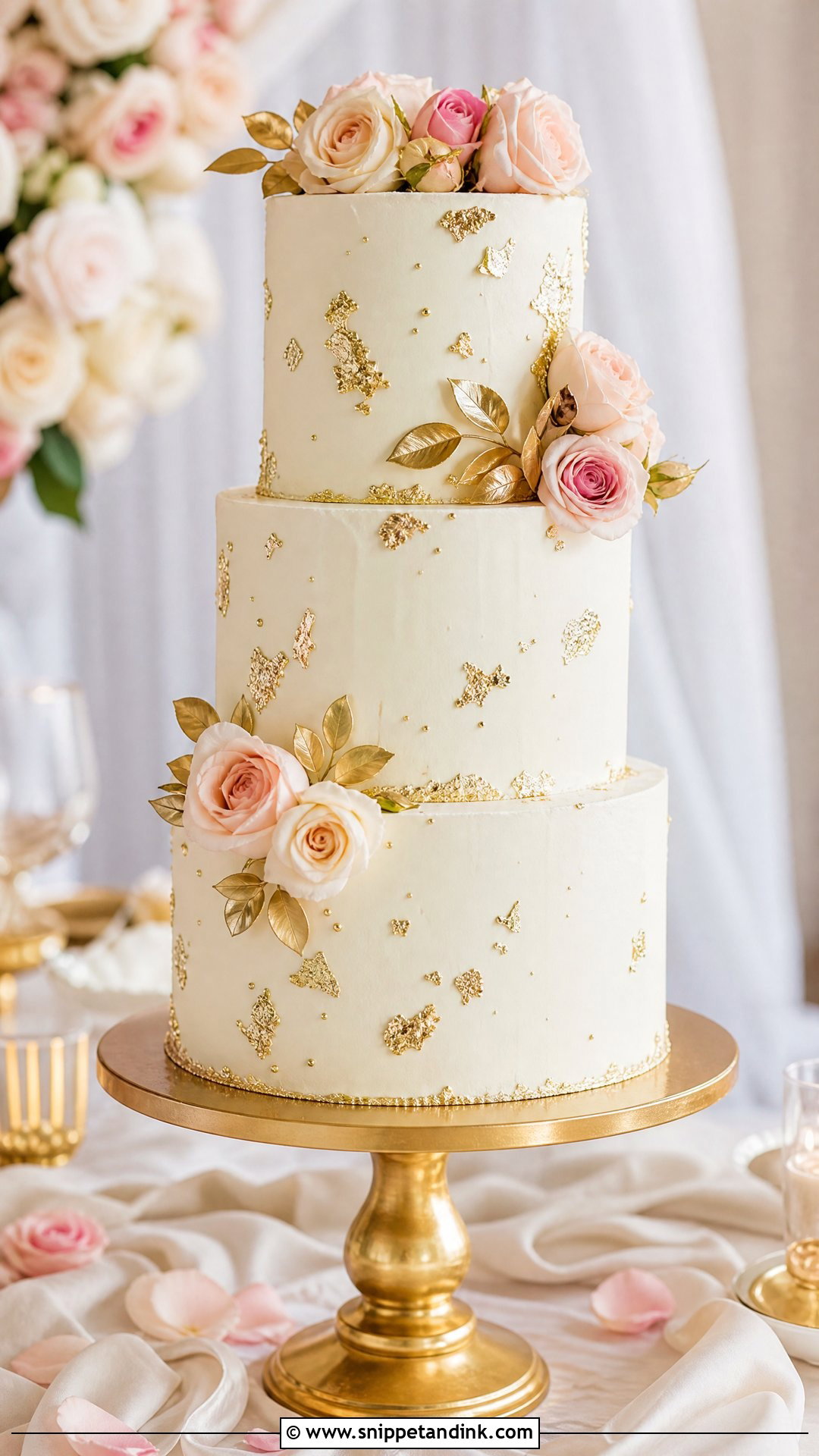
Roses are the romantic classic, on white or ivory frosting. They can be fresh, sugar or piped buttercream, depending on style and budget; sugar roses cost more because each petal is shaped by hand, but they last for years if you want to keep one. Leaf behind the roses glows softly; gold piping or pearl borders feel more formal. Blush is gentle, red is dramatic, white is classic.
32. Gold Minimal Wedding Cake
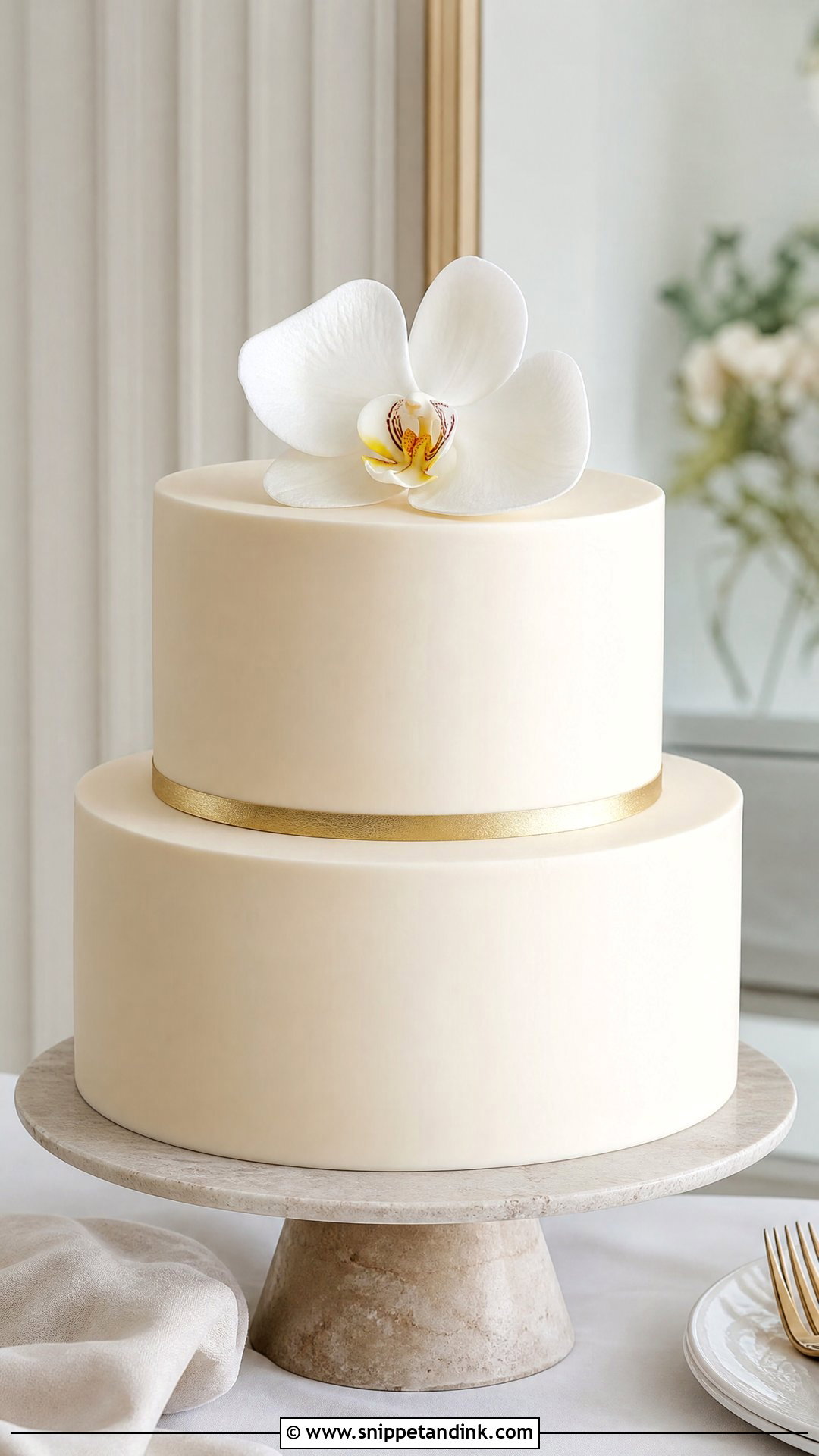
Minimal cakes need only one gold detail: a single band, a few pieces of leaf, a slim metallic line or one small flower. Start with a smooth white, ivory or beige base. The trick is that with nothing else on the cake, the finish has to be flawless, so I spend more time on sharp edges and smooth sides here than on decorated cakes. It’s a smart pick when the room already has strong flowers, linens or lighting.
33. Gold Modern Wedding Cake
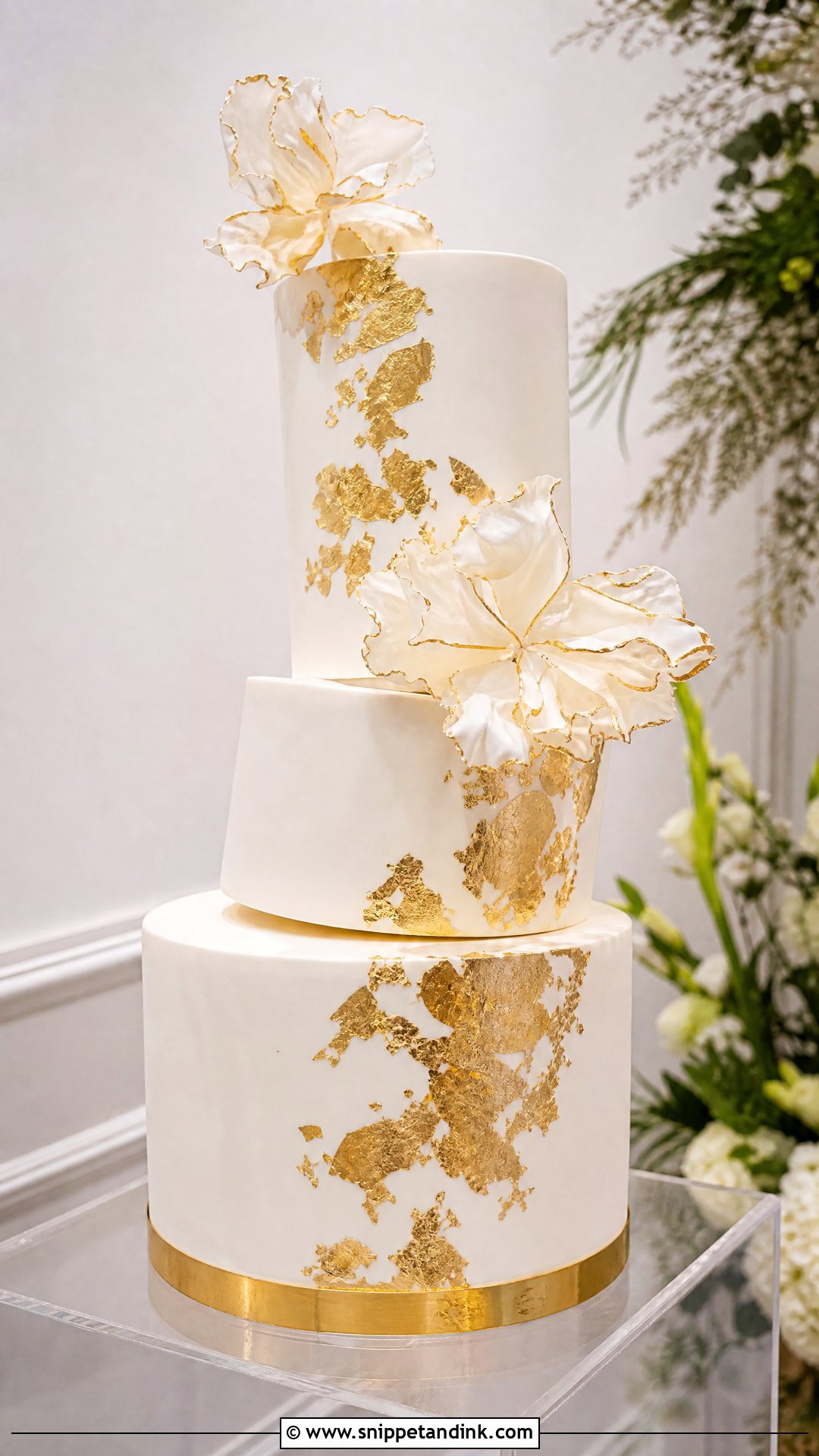
Modern gold uses shape, texture and contrast. Think offset tiers, floating separators, sculptural sugar pieces, clean fondant panels or asymmetric leaf. Colors might be white, black or emerald with gold. Keep florals minimal or architectural. The best modern cakes have one clear statement, so choose shape, texture or color as the lead and let the rest support it.
34. Gold Rustic Wedding Cake
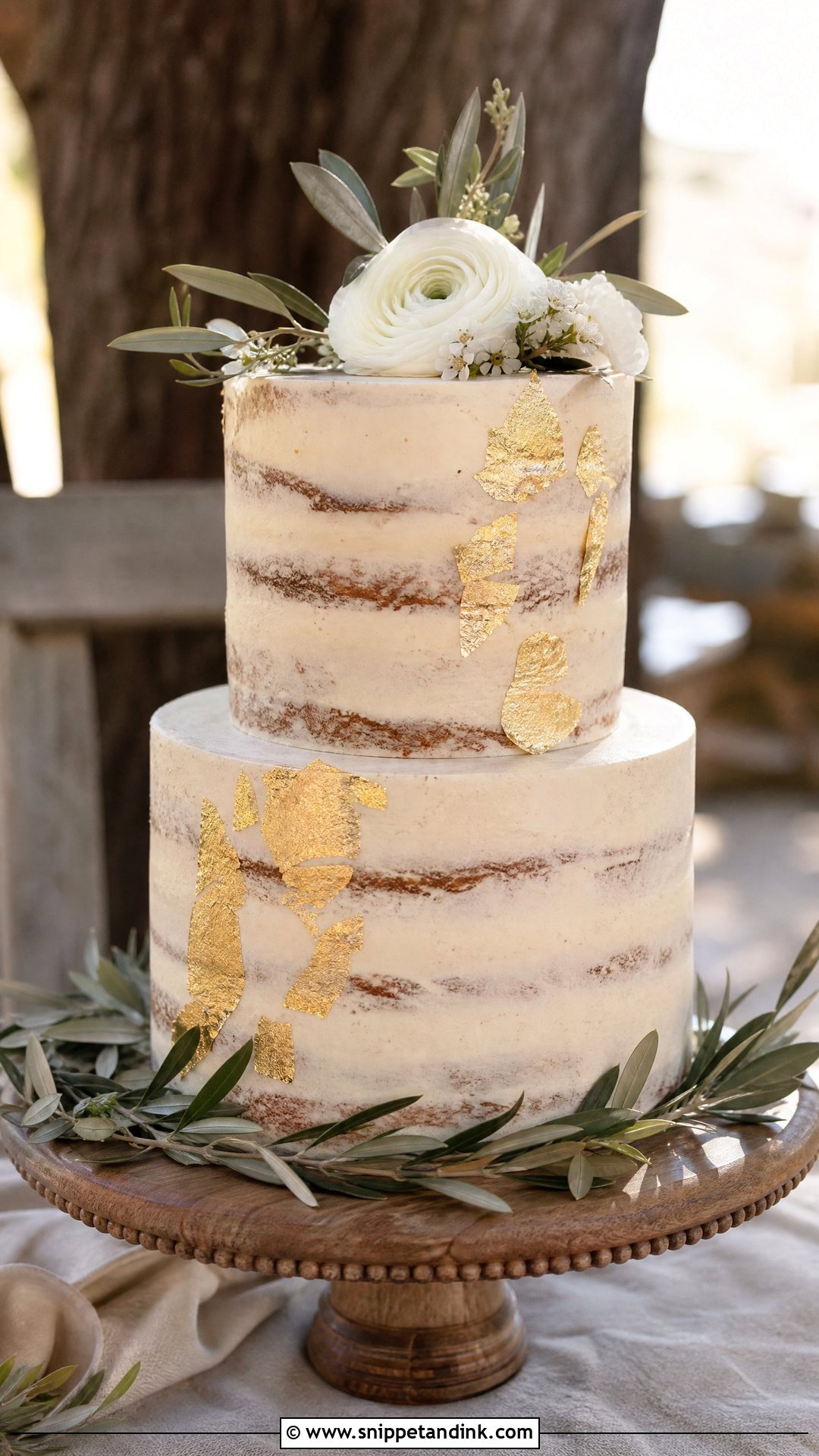
Rustic gold mixes natural texture with a soft shine. Textured or semi-naked buttercream, a lightly ridged surface and leaf applied loosely by hand all fit. Greenery, white flowers, figs, pears or dried citrus finish it. Semi-naked cakes dry out faster since less frosting protects the sponge, so I brush the layers with syrup and assemble them as close to the day as possible. Barn venues, vineyards and wood stands suit it.
35. Gold Dessert Table Wedding Cake
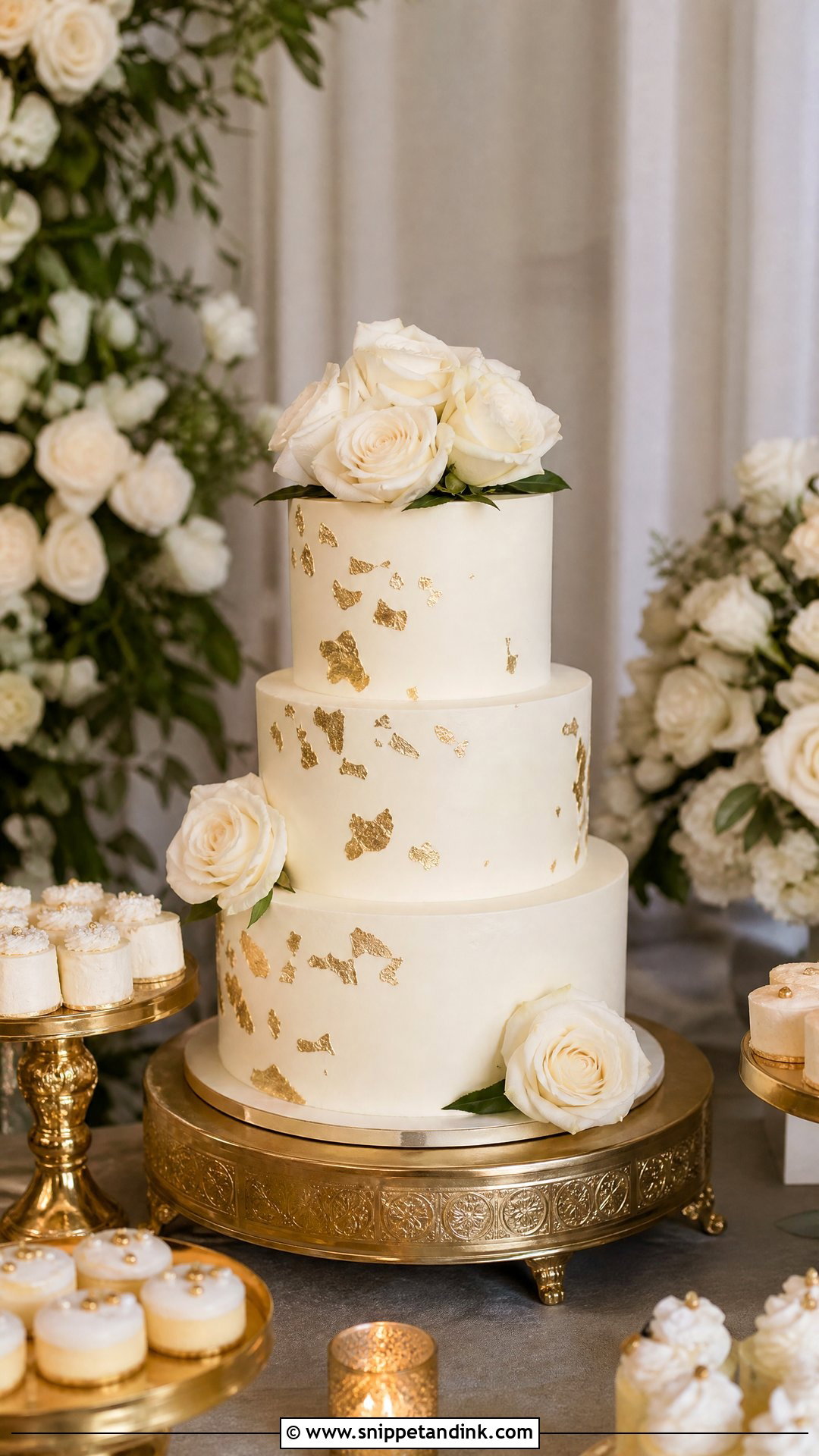
Here the cake is the centerpiece of a larger sweets display. The main cake might be two or three tiers, with matching mini cakes, cupcakes, cookies or macarons carrying the gold across the table. Keep one palette throughout so it looks planned. Vary stand heights for depth and match the flowers to the room. A dessert table also means the main cake can be smaller, since the other sweets share the serving load.
From Bakery Fridge to a Warm Reception Room
Gold finishes are sensitive to temperature in ways plain frosting isn’t. A cake that leaves a cold fridge and enters a warm, humid room collects condensation, like a cold glass in summer. On fondant, those beads of water can streak painted gold and dull leaf. So I let gold cakes come up to room temperature in their boxes and only unbox once the surface is dry.
What to sort out with your venue
- Put the cake table away from windows, heaters and the dance floor lights, which all warm one side of the cake.
- Ask when the room will be cool and quiet enough for setup. Usually that means before guests arrive.
- Check the table is level and sturdy. A tall gold cake on a wobbly trestle is a real risk.
- In outdoor or tent weddings, plan a shaded spot and keep the cake inside until just before it’s needed.
Buttercream softens quickly in heat, and gold on soft buttercream wrinkles or slides. If your wedding is in high summer, ask your baker about a firmer frosting or a ganache layer under the buttercream. It holds shape far longer and keeps the gold looking sharp through speeches and cutting.
One Metallic Finish, Many Kinds of Cake
Gold can be quiet or loud, depending on how much you use and where. Start with the style of your wedding and add gold where it supports the whole look. For a timeless reception, ivory buttercream with leaf. For a bold celebration, black, emerald or navy with metallic accents. For a softer look, blush, pressed flowers, pearls or roses. Bring photos of your flowers, linens and dress to your tasting, and your baker can show you how much gold the design can carry.
You'll Like These Ideas:








Leave a Reply