
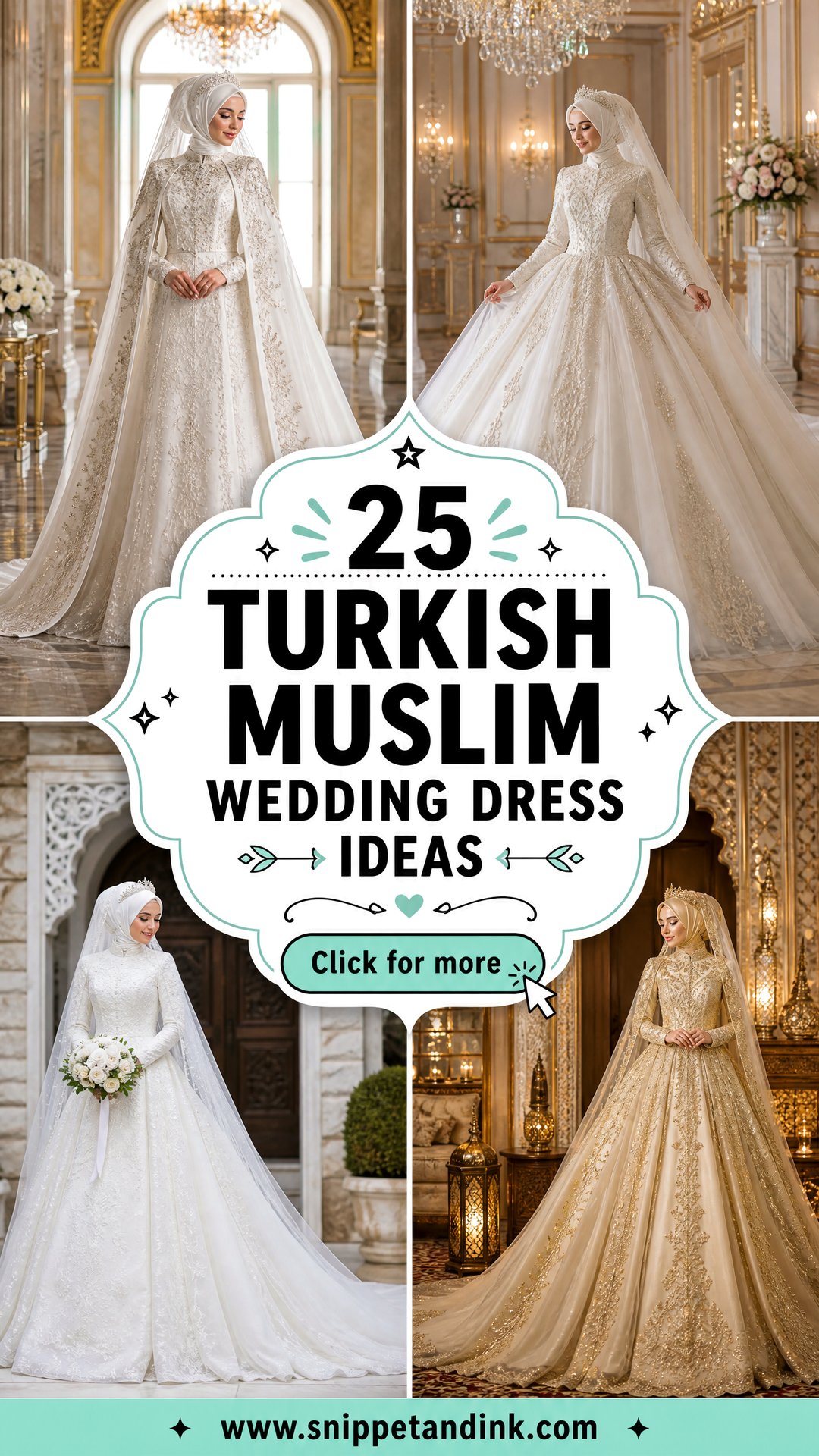
The best Turkish Muslim wedding dress ideas treat coverage as part of the design, not as something added afterward. Long sleeves, higher necklines, flowing skirts, embroidery, lace, satin, chiffon and pearls all show up below, and in every case the hijab is styled as part of the outfit. When I dress a modest bride, I plan for the whole day: the nikah, the entrance, family portraits and hours at the reception, so the gown has to be comfortable as well as photogenic. Here are 25 looks, from princess gowns and Ottoman embroidery to clean satin and modern capes, with notes on how each one works with a hijab.
If the Nikah Takes Place in a Mosque
A nikah held in a mosque asks different things of an outfit than a hotel ballroom does, and I always check with the bride where hers will be before we shortlist gowns. Customs vary between mosques and families, so confirm the details with the imam or venue, but these come up often.
- Shoes come off at the entrance, so the hem should be set for flat feet or a slipper, not for heels. A hem fitted for heels will pool on the carpet.
- You may sit on the floor or on cushions. A skirt with enough room to kneel and stand gracefully matters more than a dramatic train.
- Sheer sleeves and illusion necklines may not be considered covered. A removable lining or a light bolero solves it without a second dress.
- Photography rules differ, and some mosques limit flash or where photographers can stand. Ask before you plan portraits there.
- Lighter makeup and a hijab already finished before you arrive save rushed adjustments in a busy entrance hall.
1. Turkish Hijab Princess Wedding Dress
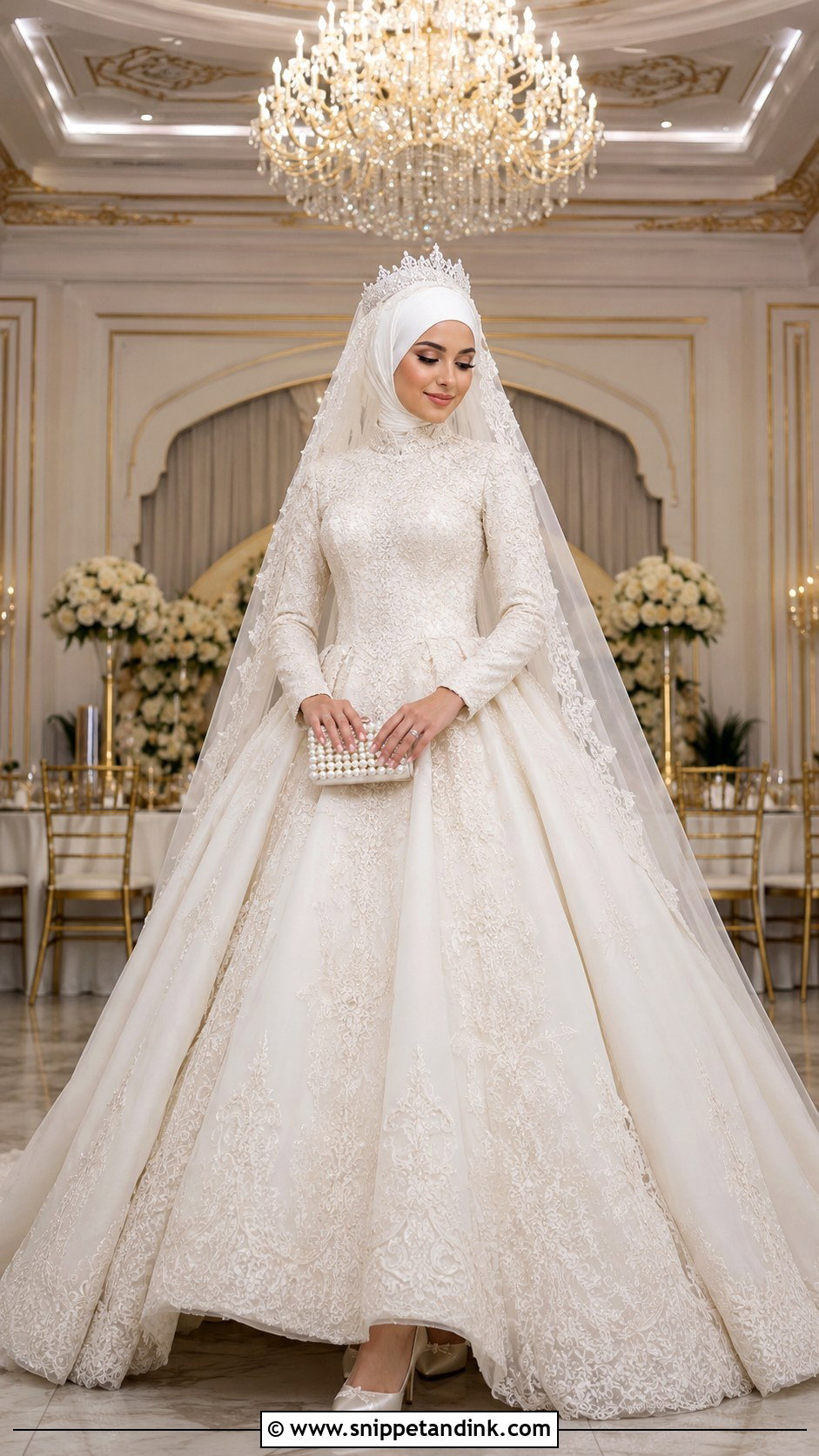
For a grand, formal entrance, a full ball gown with long sleeves, a high neckline and a structured bodice is hard to beat. Turkish ateliers are known for detailed lace and beading on exactly this shape. Style it with a smooth ivory hijab, a long veil and a delicate tiara or crystal headpiece, then pointed satin heels and a small pearl clutch. The tiara sits on top of the hijab, so it needs a firm base: I fit it over the underscarf before the outer layer goes on, so its combs grip something that won’t slide. Give this gown a large venue, because the skirt needs width to look right.
2. Turkish Lace A Line Wedding Dress
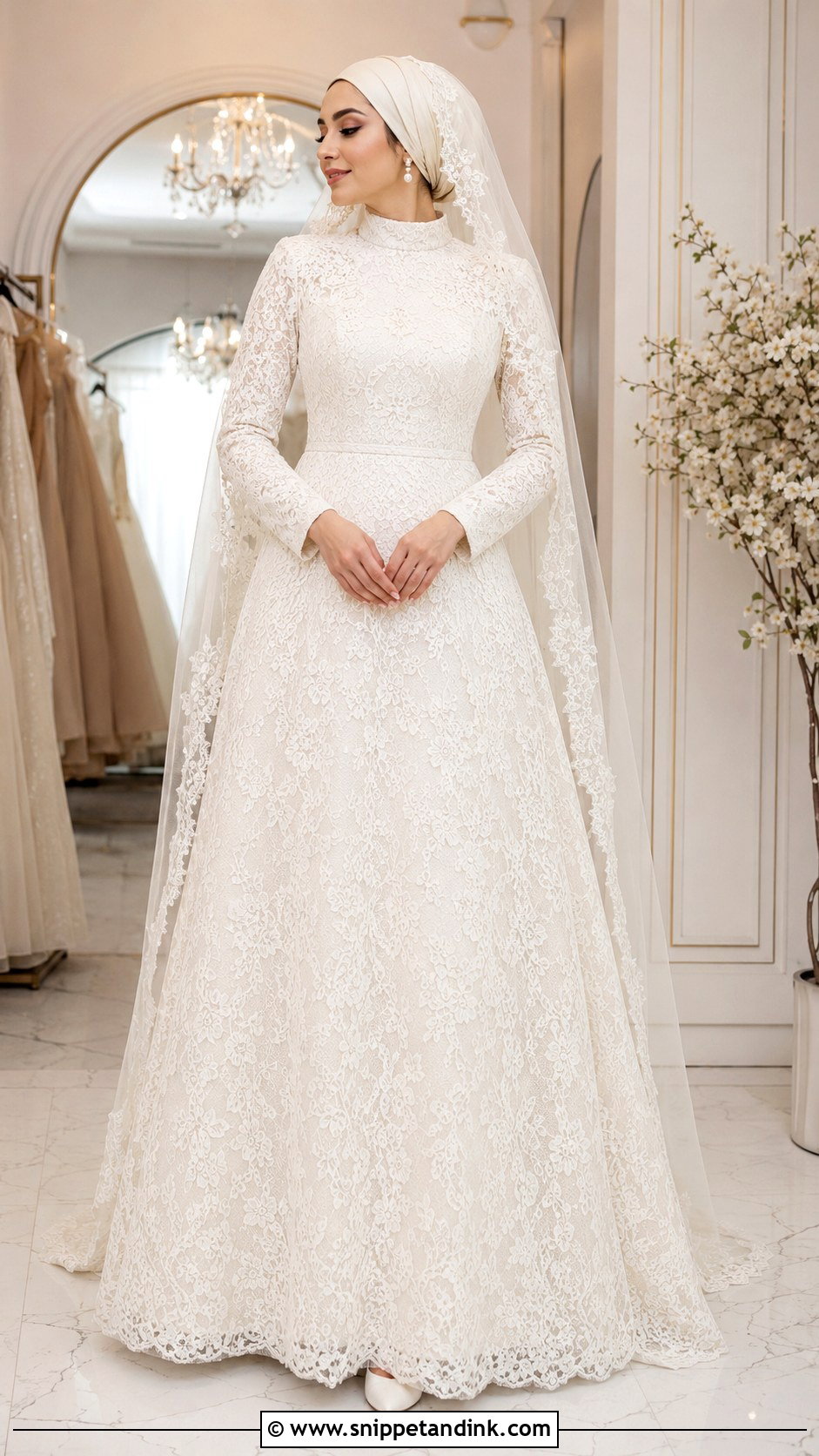
Soft lace with a gently flaring skirt is the safest shape for most figures, because the fitted top defines the waist while the skirt simply falls. Look for long lace sleeves, a lined bodice and a neckline that sits flat under the hijab; raised lace at the throat makes the hijab fabric bump over it. A lace-trimmed veil ties the look together. Pearl earrings, a slim bracelet and closed-toe heels keep it refined for a nikah, a ballroom or a family celebration. I’d ask the seamstress to line the sleeves in a fine mesh, which stops lace from scratching the inner arm during a long day.
3. Turkish Satin Muslim Wedding Dress
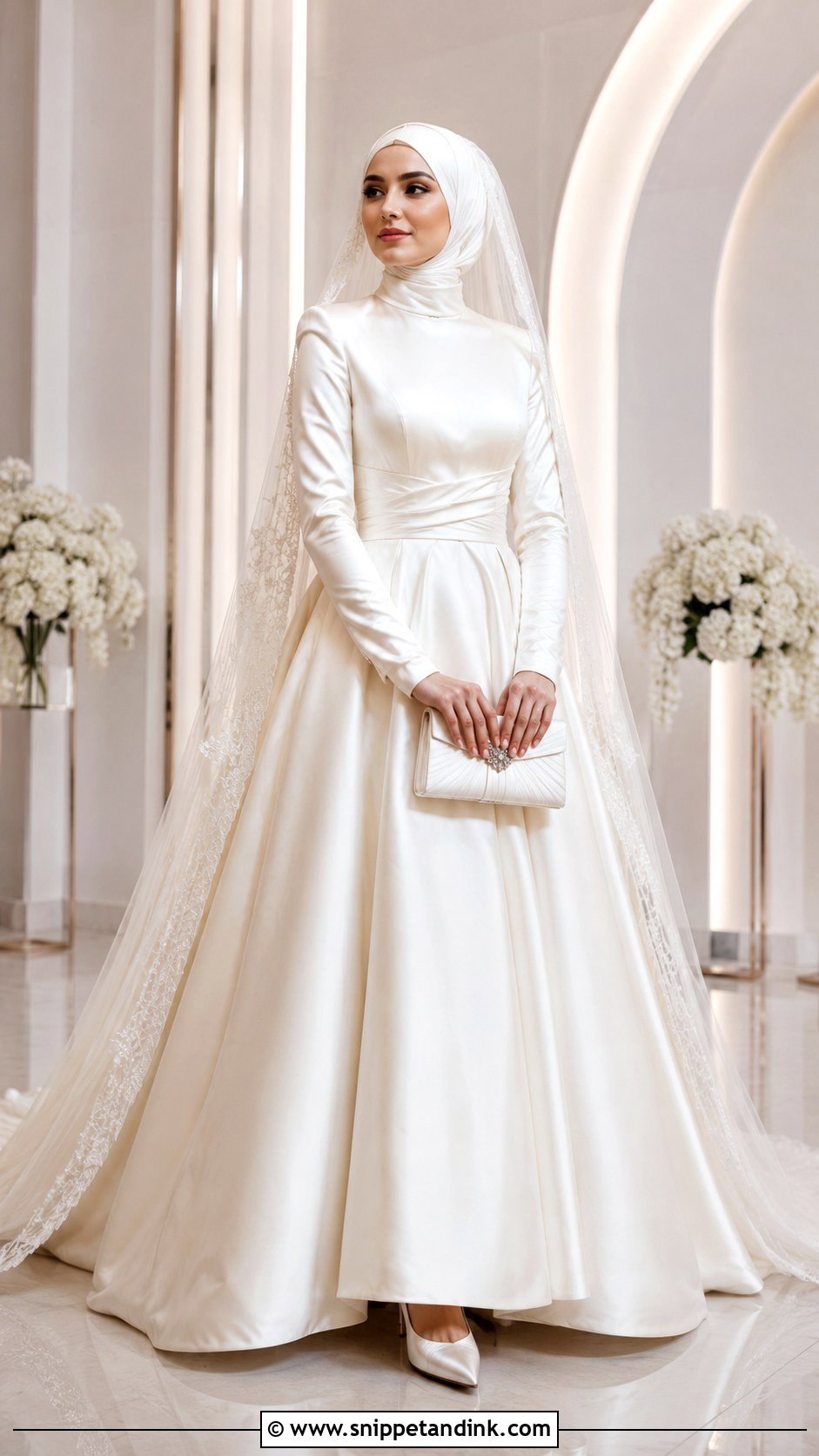
Satin looks expensive in bright light with almost no embellishment. A long-sleeve satin gown with a high neck, soft pleating or a structured waist keeps the line clean, and a satin hijab in the same ivory or pearl tone gives a smooth, modern finish. One thing to know: satin on satin slips. A satin hijab over a satin neckline will slide all day unless it’s anchored to a grippy underscarf. Add a cathedral veil for drama or keep to a short veil and pearl pins. A sleek bouquet, pointed heels and a structured mini bag are all it needs.
4. Turkish Ottoman Wedding Dress
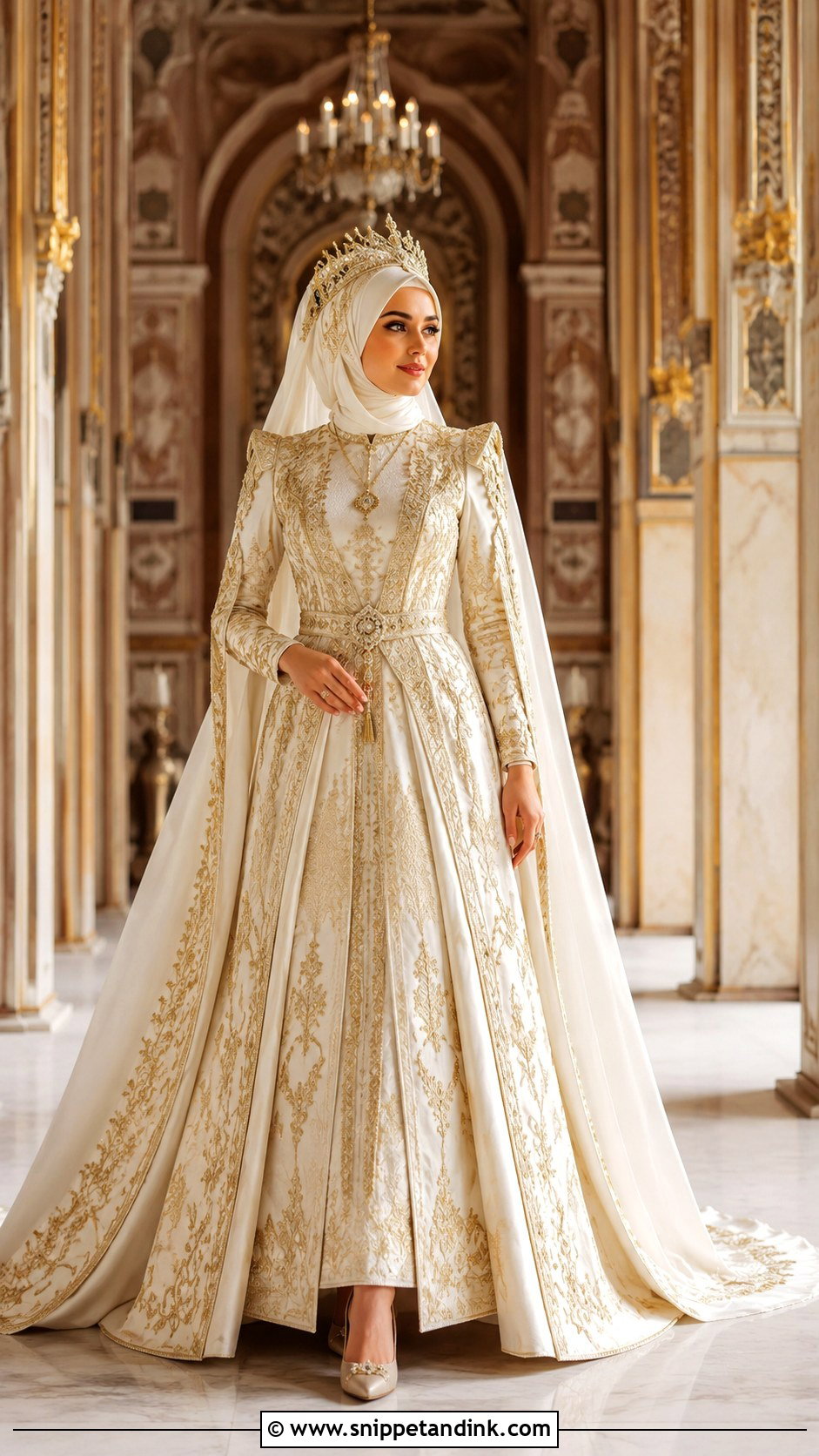
A Turkish Ottoman wedding dress uses embroidery, metallic threadwork and rich fabric to carry heritage into the gown. Ivory, champagne, gold and soft blush all suit it. Choose a long covered dress with a defined waist, elegant sleeves and motifs concentrated around the bodice and hem. A coordinated hijab with a crown-style headpiece adds a ceremonial note, and simple shoes let the dress lead. Metallic thread can feel rough at the wrists and neckline, so I check the inside finishing on these gowns before anything else. Historic venues and ornate halls suit it.
5. Turkish Cape Wedding Dress With Hijab
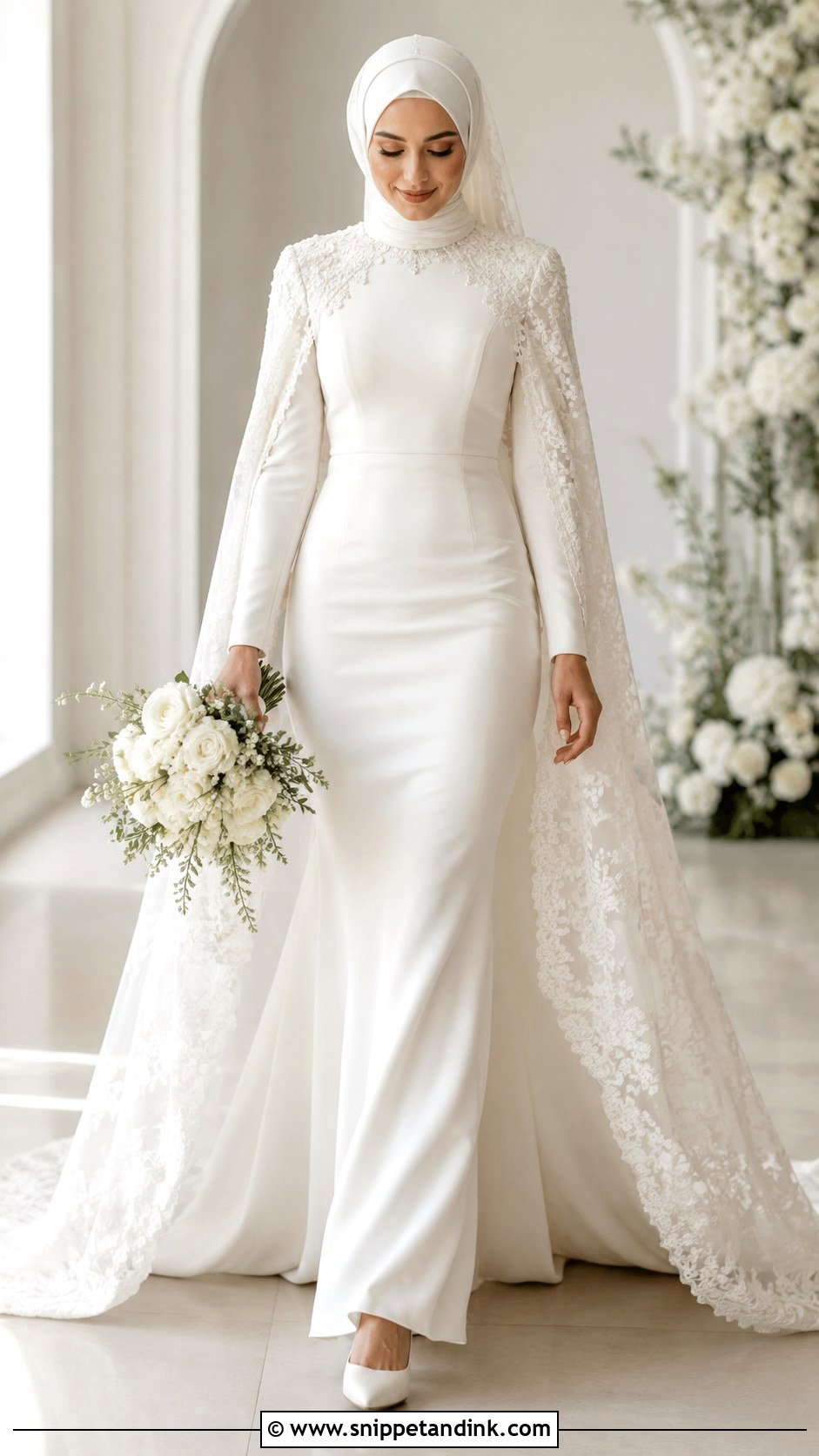
A cape adds movement and a modern edge to a modest outfit. The base can be a fitted A-line, a column or a soft satin dress with long sleeves, with the cape attached at the shoulders or falling from the neckline like a veil. Lace, tulle or chiffon changes how dramatic it feels. Keep the hijab wrap clean so the cape stays the focus, and choose minimal jewelry, pointed heels and a soft bouquet. If the cape attaches at the neckline, make sure the hijab is finished first and the cape fastens beneath it, or the two will fight for the same space at the back of the neck.
6. Turkish Beaded Muslim Wedding Dress
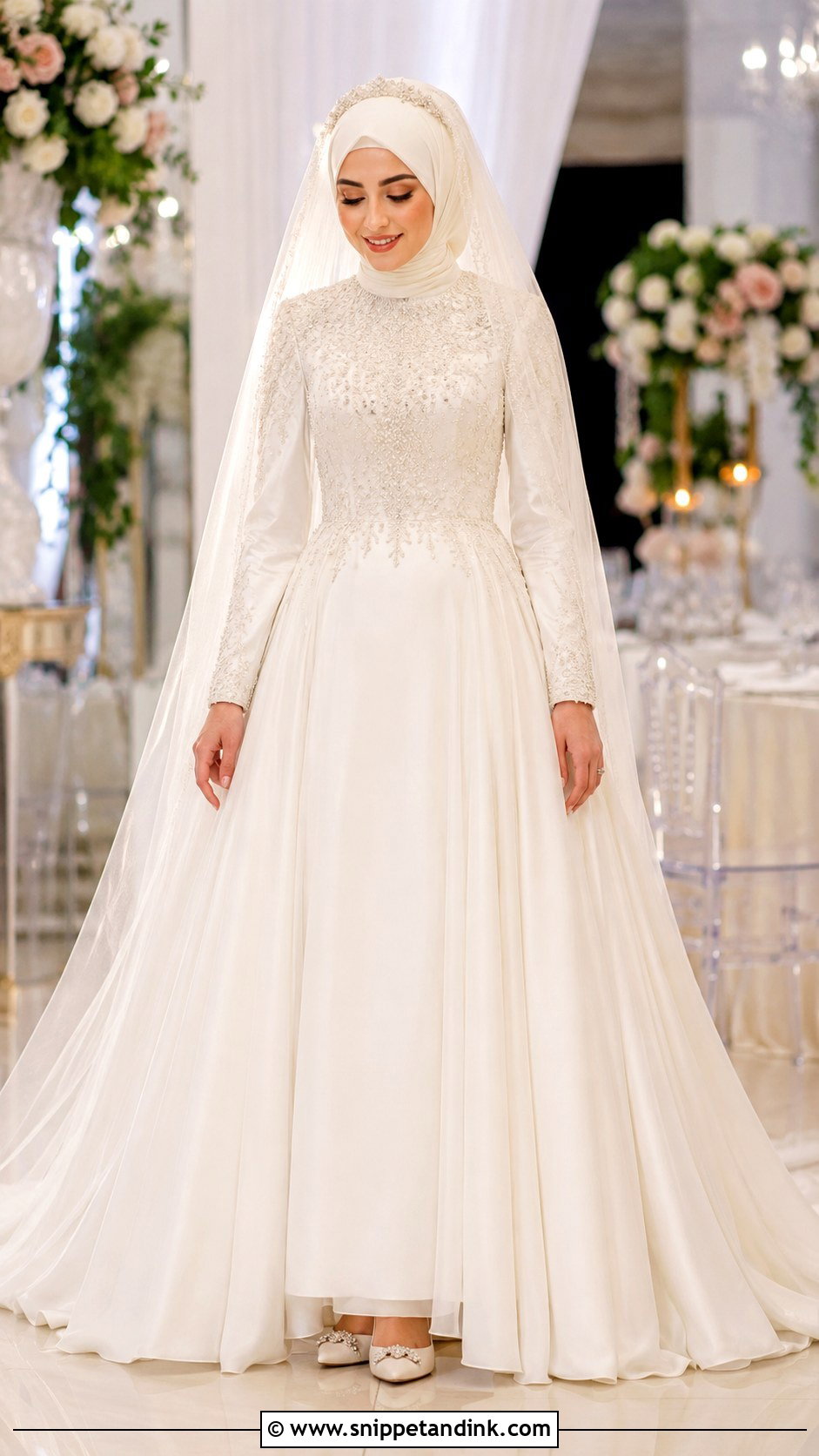
Sparkle and modesty sit together comfortably in a Turkish beaded Muslim wedding dress, as long as the beading is controlled. Place it across the bodice, sleeves or skirt rather than everywhere. A high neckline, full lining and long sleeves keep it hijab-friendly, and a plain chiffon or satin hijab stops the details from competing. Crystal hair pins, pearl heels and a simple veil add polish. Beads at the shoulder can snag a chiffon hijab as you turn your head, so I’d keep beading below the collarbone. Evening light picks up the beadwork during the entrance and first photos.
7. Turkish Tulle Ball Gown Wedding Dress
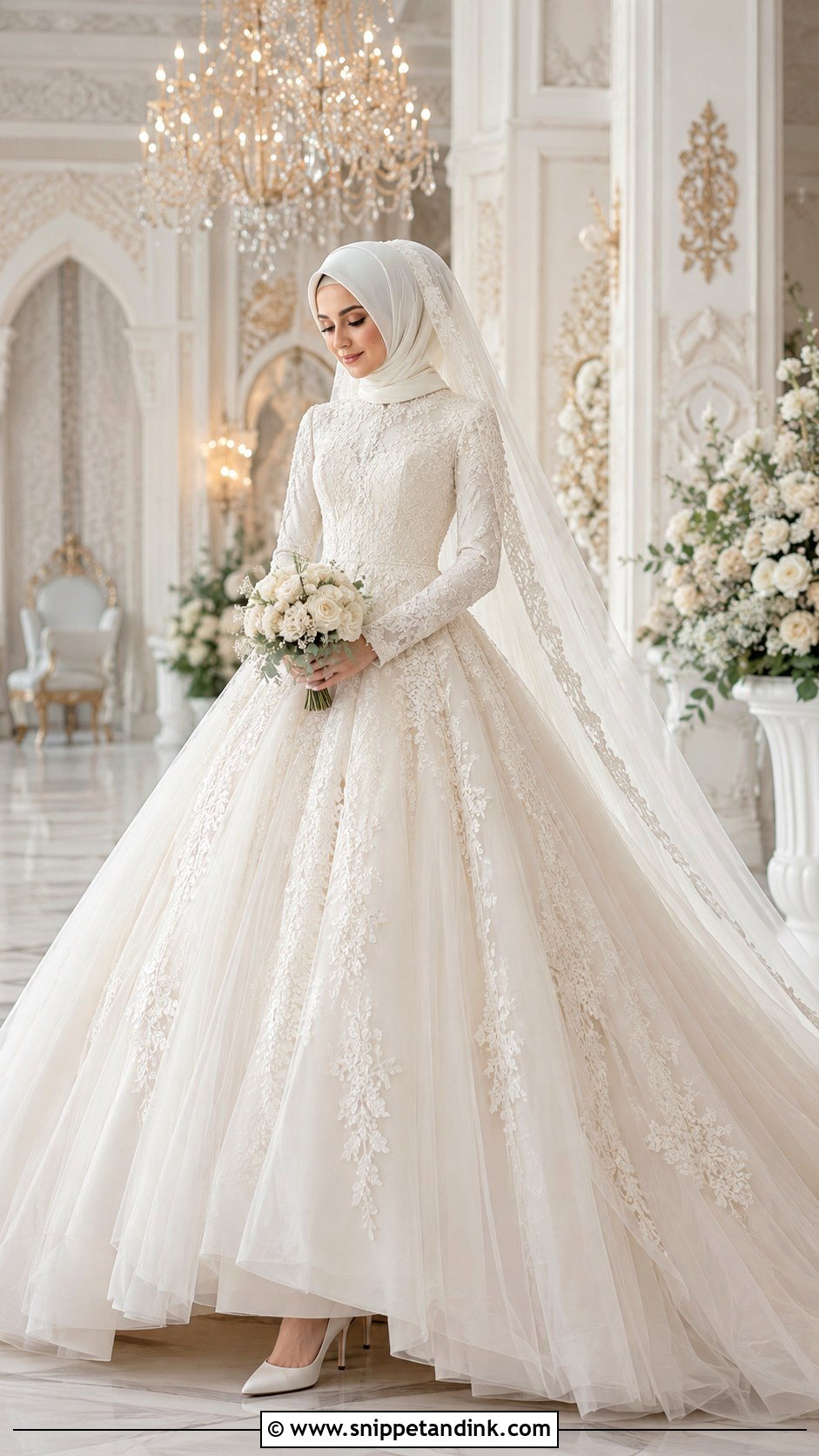
Layered tulle over a full lining gives the airy volume of a ball gown while staying fully covered. Lace appliqué on the bodice and sleeves adds detail, and a covered neckline with a fitted waist balances the width of the skirt. A soft ivory chiffon hijab keeps it light. Choose a long veil that blends into the skirt. Satin heels, a small bouquet and delicate jewelry finish it. Several tulle layers plus a lining and a hijab can get warm, so for a summer wedding I’d ask whether one underlayer can be removed without losing the shape.
8. Turkish High Neck Wedding Dress
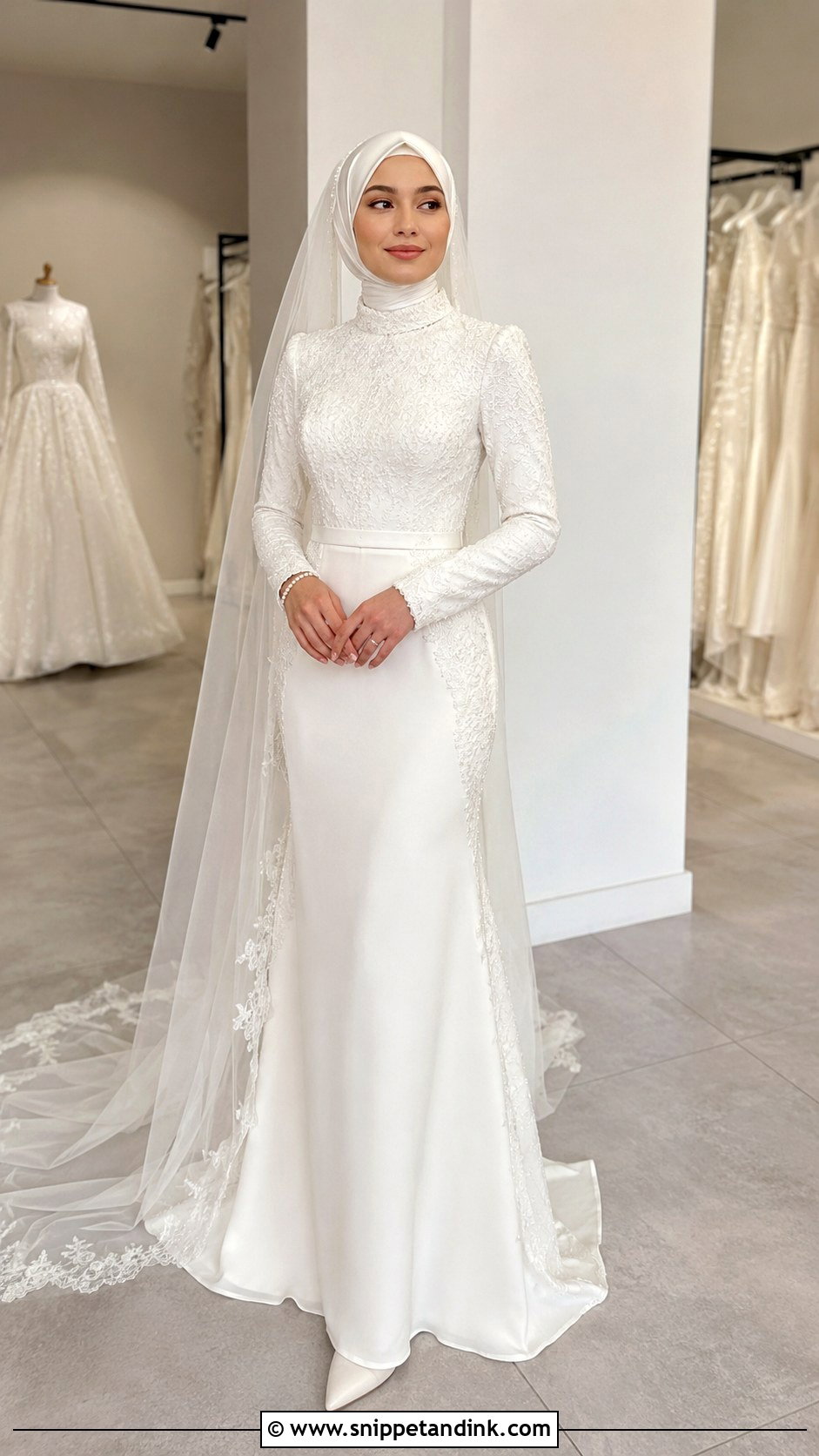
A high neckline is the simplest route to a polished modest look. Lace, crepe, satin or mikado decide how structured it feels, and the neck itself can be plain or decorated with embroidery, pearls or sheer lace over lining. Pair it with a neatly wrapped hijab that sits smoothly around the face, plus a longer veil for movement. Since the hijab covers most of the neckline anyway, I usually tell brides not to pay extra for elaborate detail at the throat; put that budget into the sleeves or bodice, which stay visible. A defined waist and an elegant skirt keep it from looking plain.
9. Turkish Long Sleeve Mermaid Wedding Dress
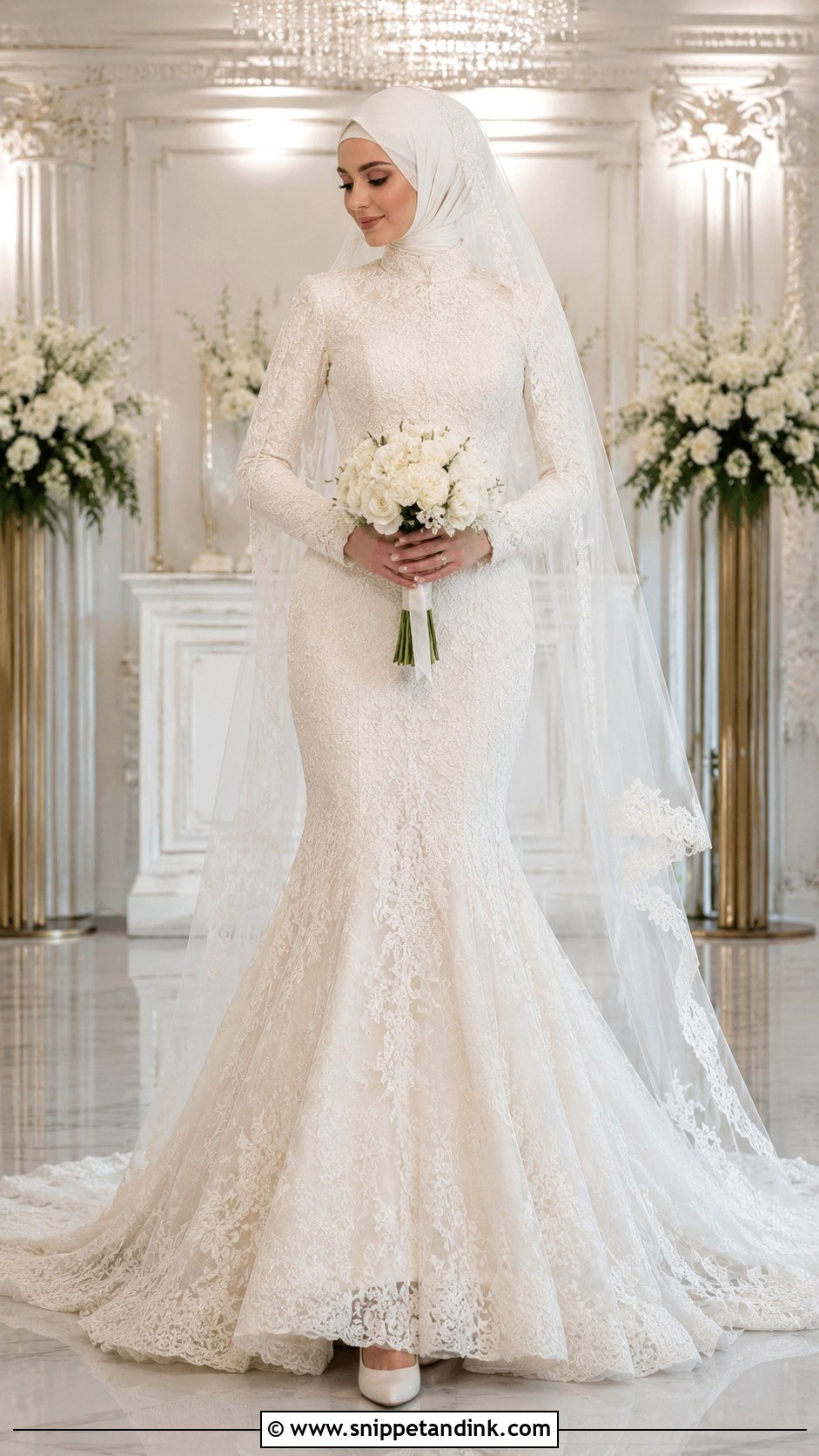
A long-sleeve mermaid can still be modest when it’s cut with care. Look for a lined bodice, a higher neckline and a fabric with enough give to walk in. Lace appliqué, satin panels or subtle beading add dimension. Because the shape is fitted, balance it with a soft veil, an elegant hijab wrap and minimal jewelry, plus closed-toe heels. Some families prefer a looser silhouette for the nikah, so it’s worth asking before you fall for this one; many brides keep the mermaid for the reception. Test sitting and greeting guests at every fitting.
10. Turkish Modest Minimal Wedding Dress
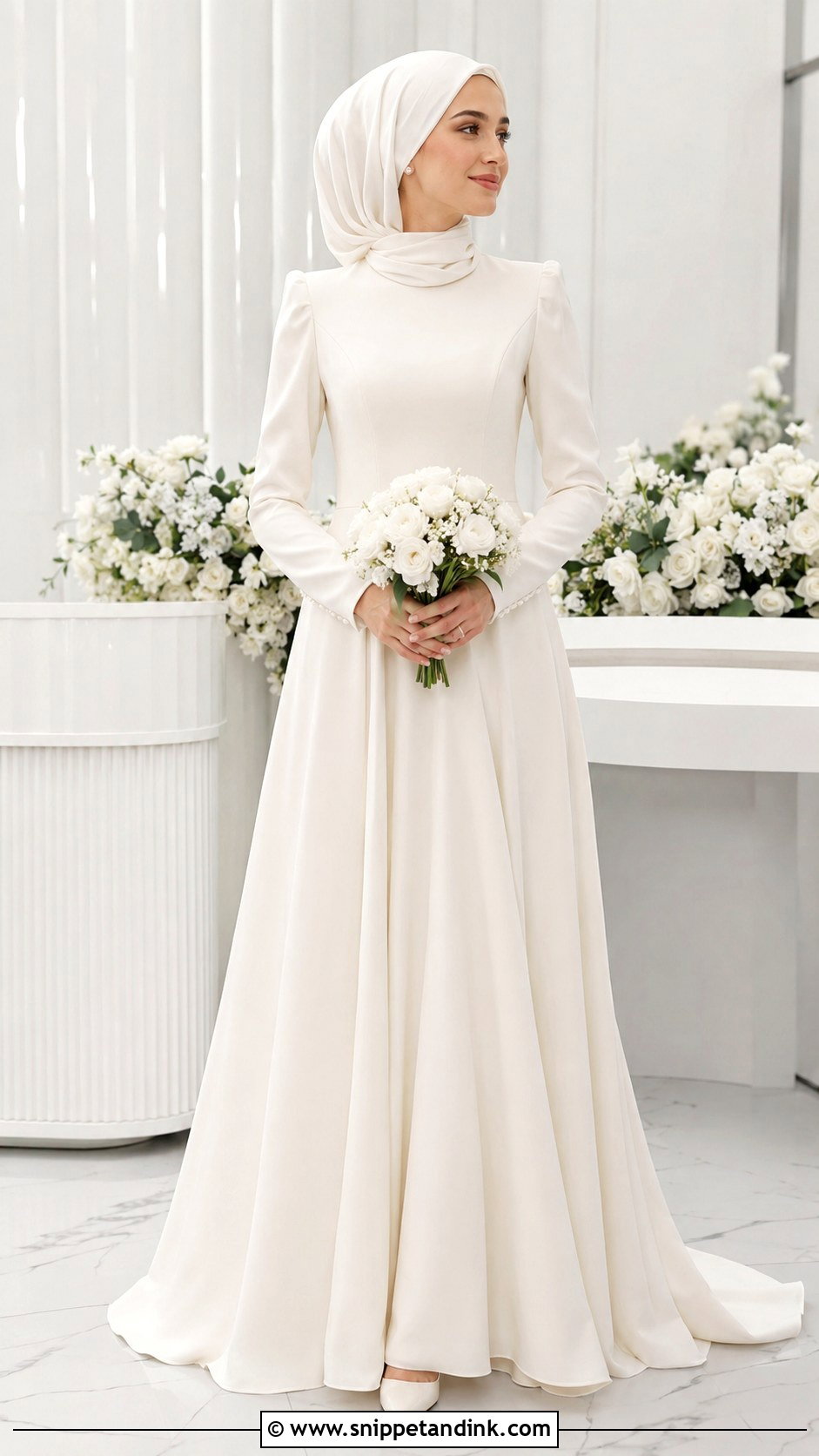
Not every bride wants lace, glitter or a princess skirt. A Turkish modest minimal wedding dress in long-sleeve crepe or satin, with a high neck, soft waist shaping and a fluid skirt, lets the cut and fabric do everything. A matte satin or chiffon hijab keeps it sleek. Pearl studs, a slim bracelet, pointed heels and a small bouquet of white flowers complete it for a nikah, civil ceremony or intimate wedding. Crepe is my favorite fabric here because it drapes softly and hides small fitting imperfections better than satin.
11. Turkish Pearl Wedding Dress With Hijab
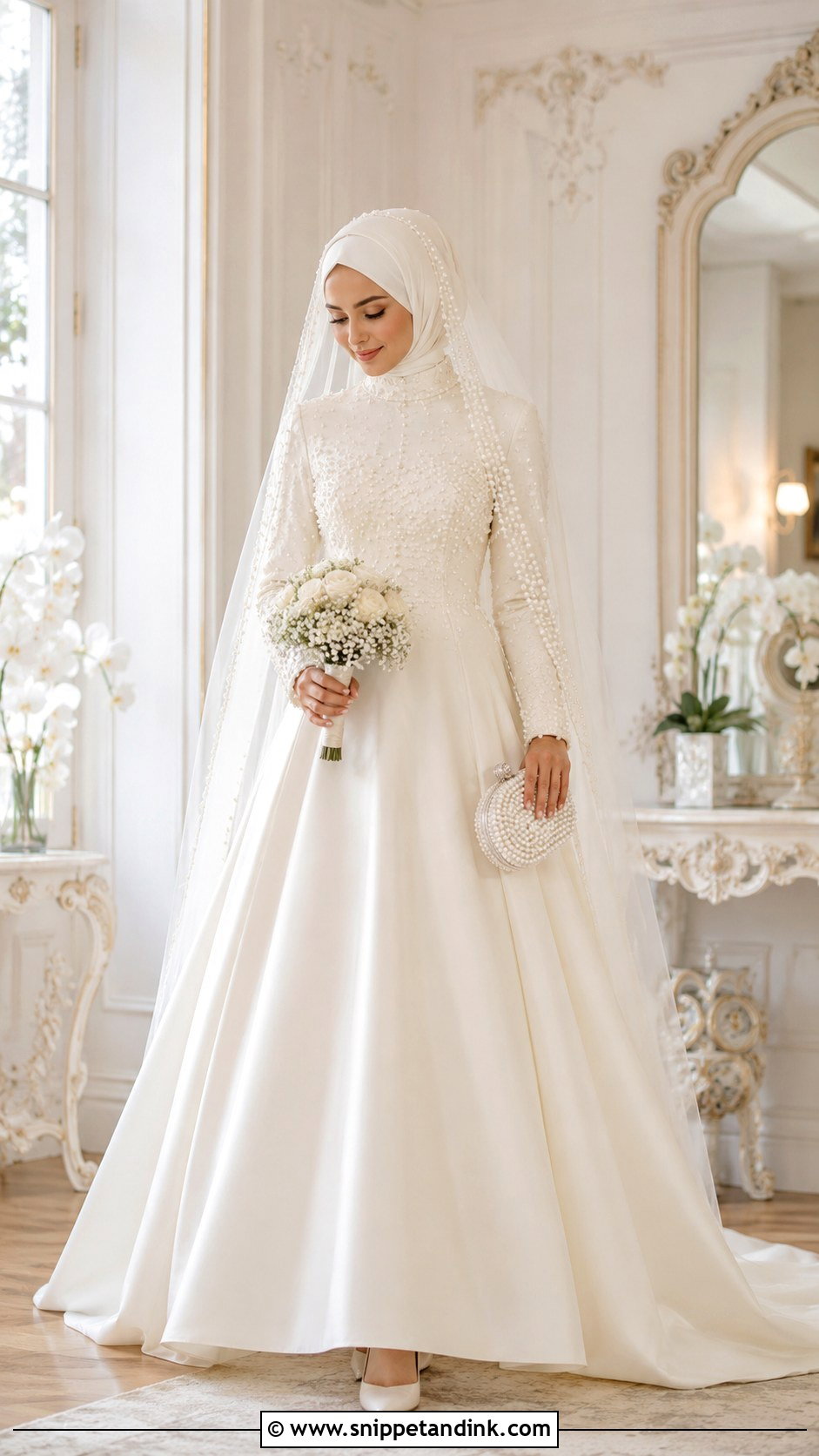
Pearls soften a modest gown, and they can sit on the sleeves, neckline, bodice or veil. Balance is the rule. Heavy pearl work on the dress calls for a simple hijab; a plain dress can take a pearl-trimmed veil or headband. A-line and ball gown shapes suit pearls well, with ivory or pearl-toned shoes and a structured clutch. Pearl-headed hijab pins are useful here too, because they read as jewelry rather than hardware when they show near the temple.
12. Turkish Chiffon Muslim Wedding Dress
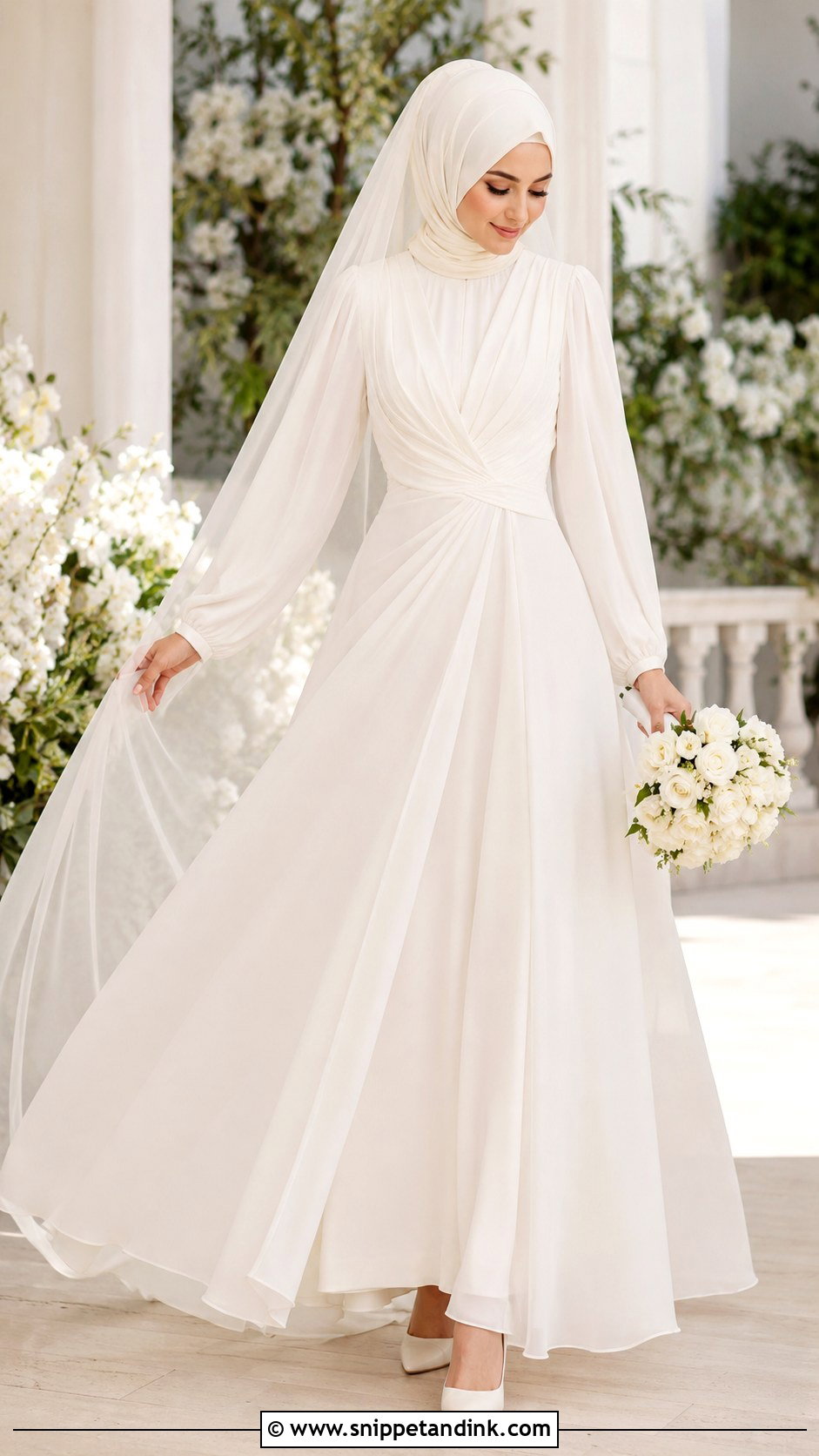
Chiffon is the coolest fabric for a covered bride, which makes it my first suggestion for spring, summer and daytime ceremonies. A fully lined gown with long sleeves, a high neckline and a flowing skirt keeps the coverage while the outer layer moves. Soft draping at the waist or shoulders adds shape without tightness. A chiffon hijab in the same shade matches the texture exactly. A simple veil, satin heels and a floral bouquet finish it. Chiffon frays and snags easily, so keep rough bracelets and rings with prongs to a minimum.
13. Turkish Embroidered Wedding Dress
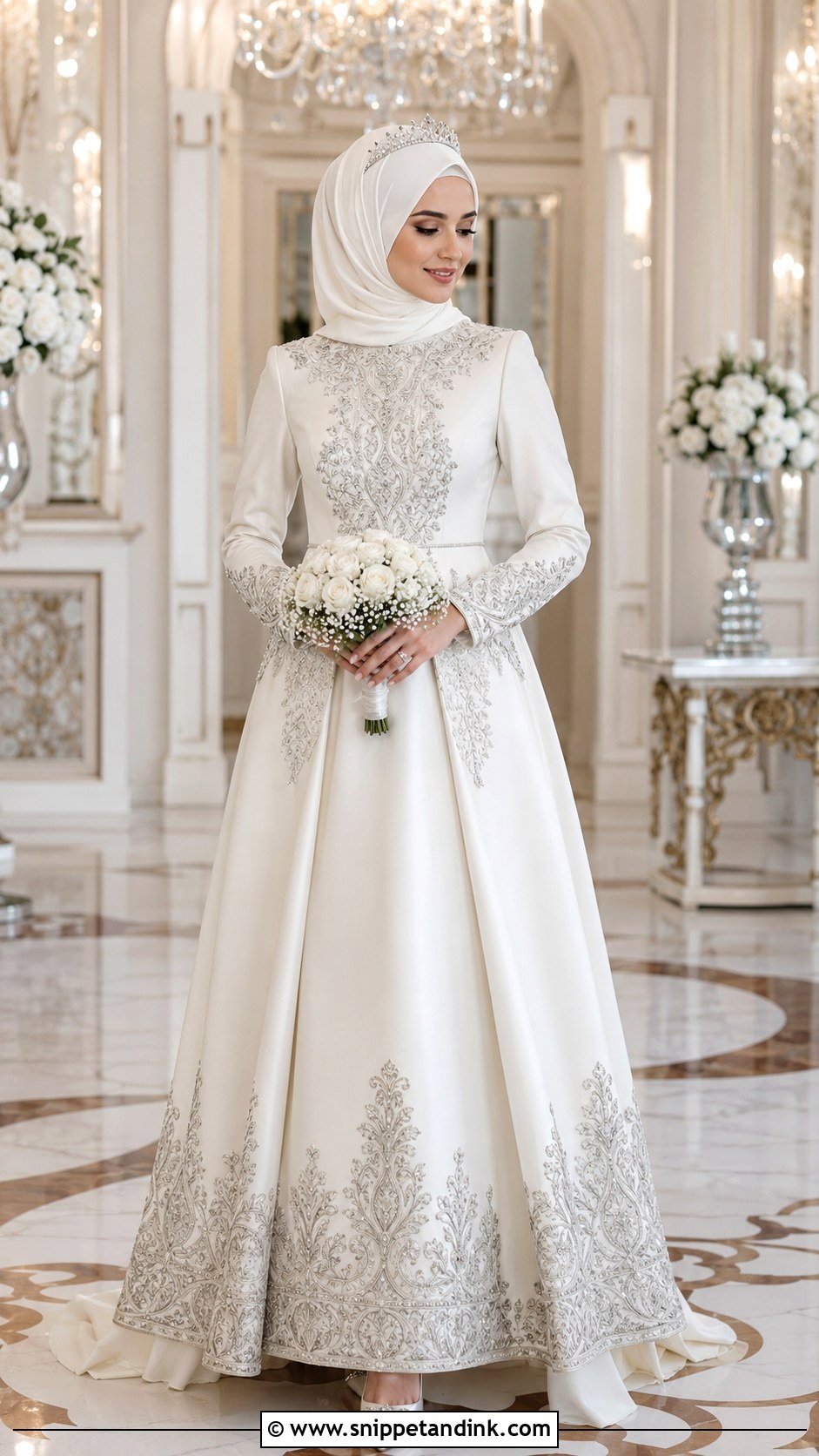
Turkish embroidery brings floral motifs, vines, gold thread, silver accents or delicate raised stitching into the gown. Place it around the bodice, cuffs, waist or hem of a covered dress so the shape stays clean. A plain hijab usually works best. Match your accessories to the thread: gold embroidery with gold-toned pieces, silver with crystal or pearl. Raised stitching at the cuff rubs on the wrist bone over a long day, so I check that the inside is backed with soft fabric. It’s a meaningful choice when you want a gown that looks clearly handmade.
14. Turkish White Wedding Dress With Hijab
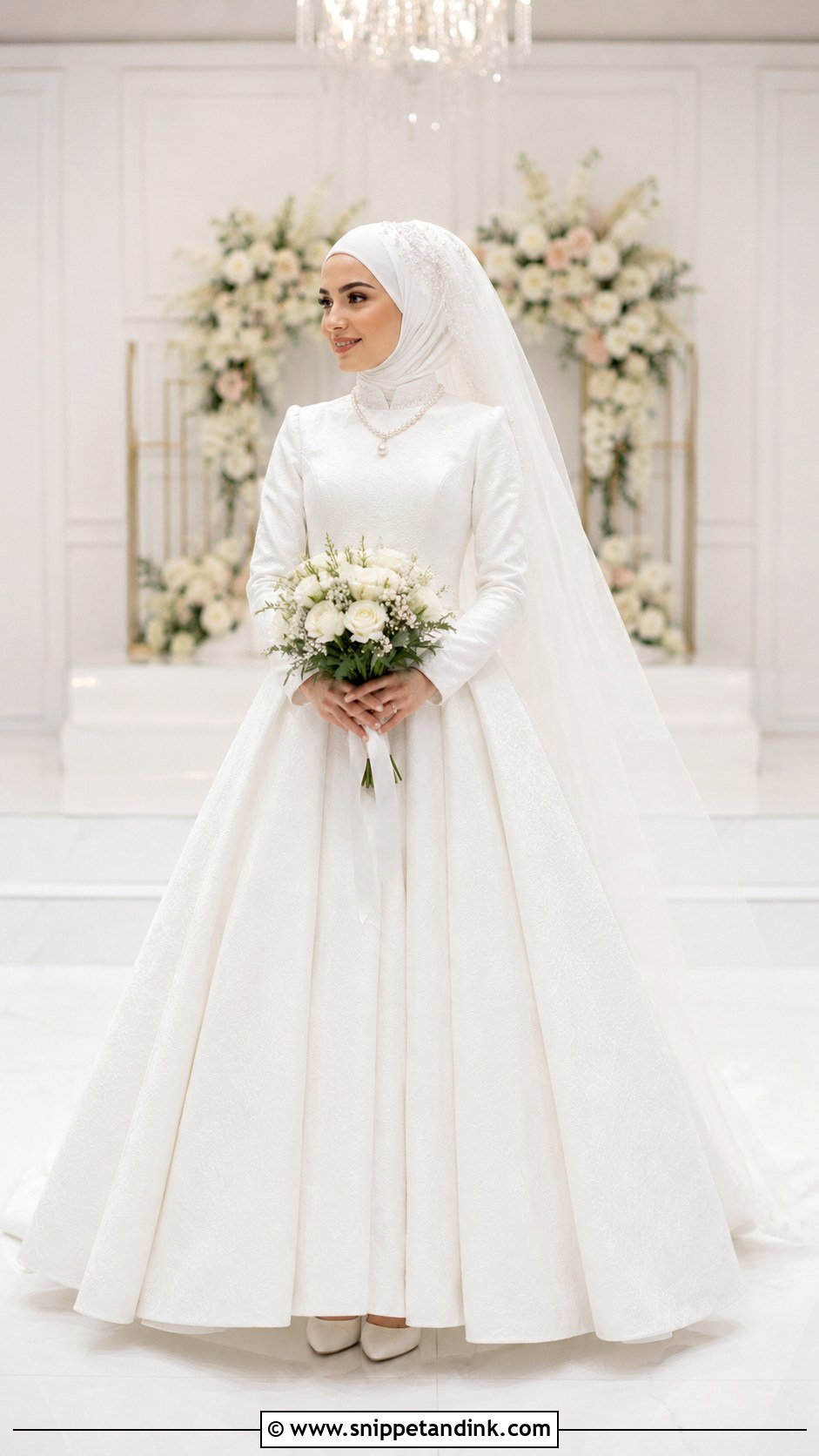
White with a matching hijab is the classic look, and it can be simple, lace-covered, beaded or princess-shaped. The detail that matters most is the shade of the hijab. Bright white, ivory and cream are very different under a camera, and a mismatched hijab sits right next to your face in every photo, so compare the fabrics together in natural light. Add a white veil, closed-toe heels and delicate jewelry. It works almost anywhere, from a mosque nikah to a formal banquet.
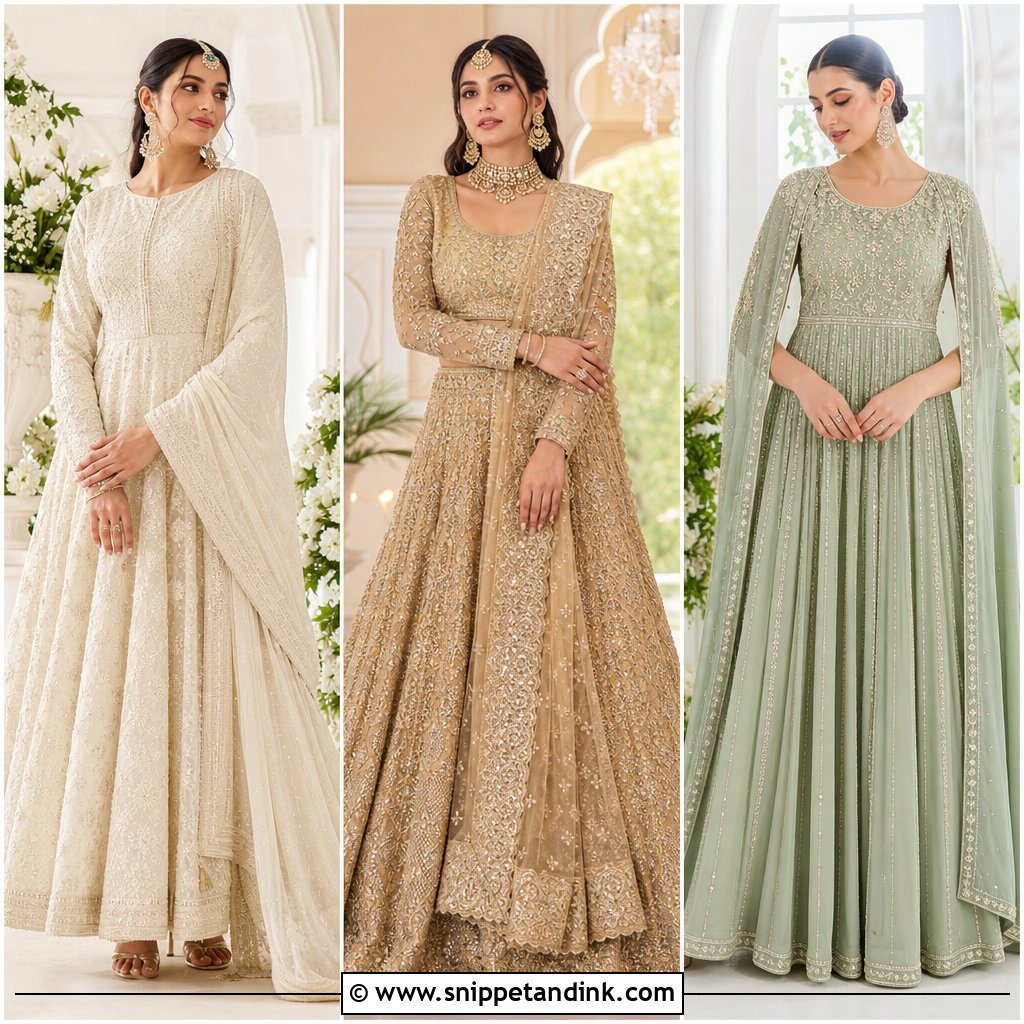
15. Turkish Cream Wedding Dress With Hijab
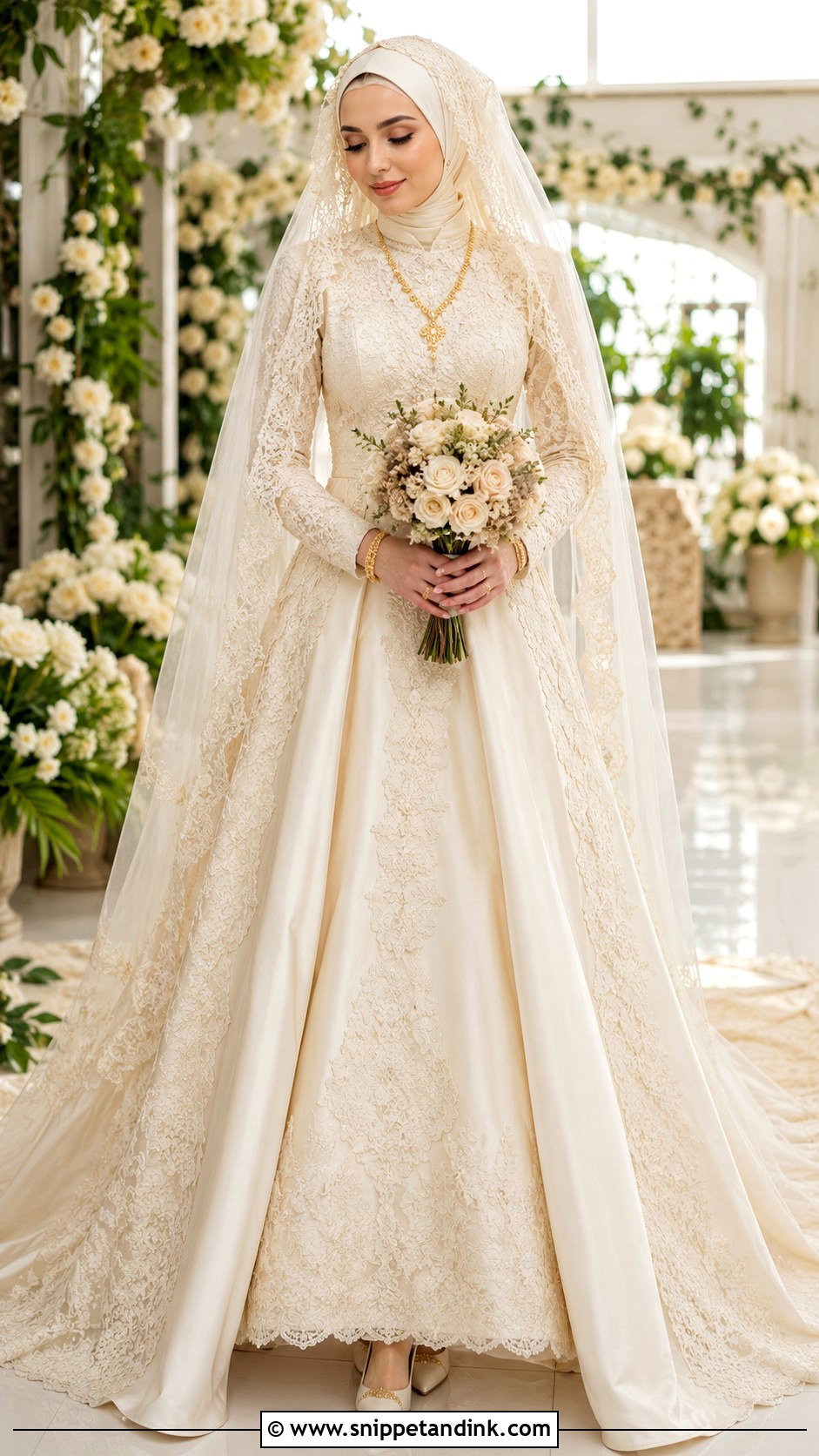
Cream often looks softer than bright white on warm skin tones and gives a gentle vintage feel. Satin, lace or chiffon in cream or ivory works, with the hijab matched carefully. Gold jewelry adds warmth without harshness. A lace veil, nude or ivory heels and a bouquet of white and beige flowers complete the look. Cream can look slightly yellow under fluorescent venue lighting, so if your hall uses cool white bulbs, ask to see the fabric under similar light first. It’s at its best in bright indoor venues and gardens.
16. Turkish Gold Wedding Dress With Hijab
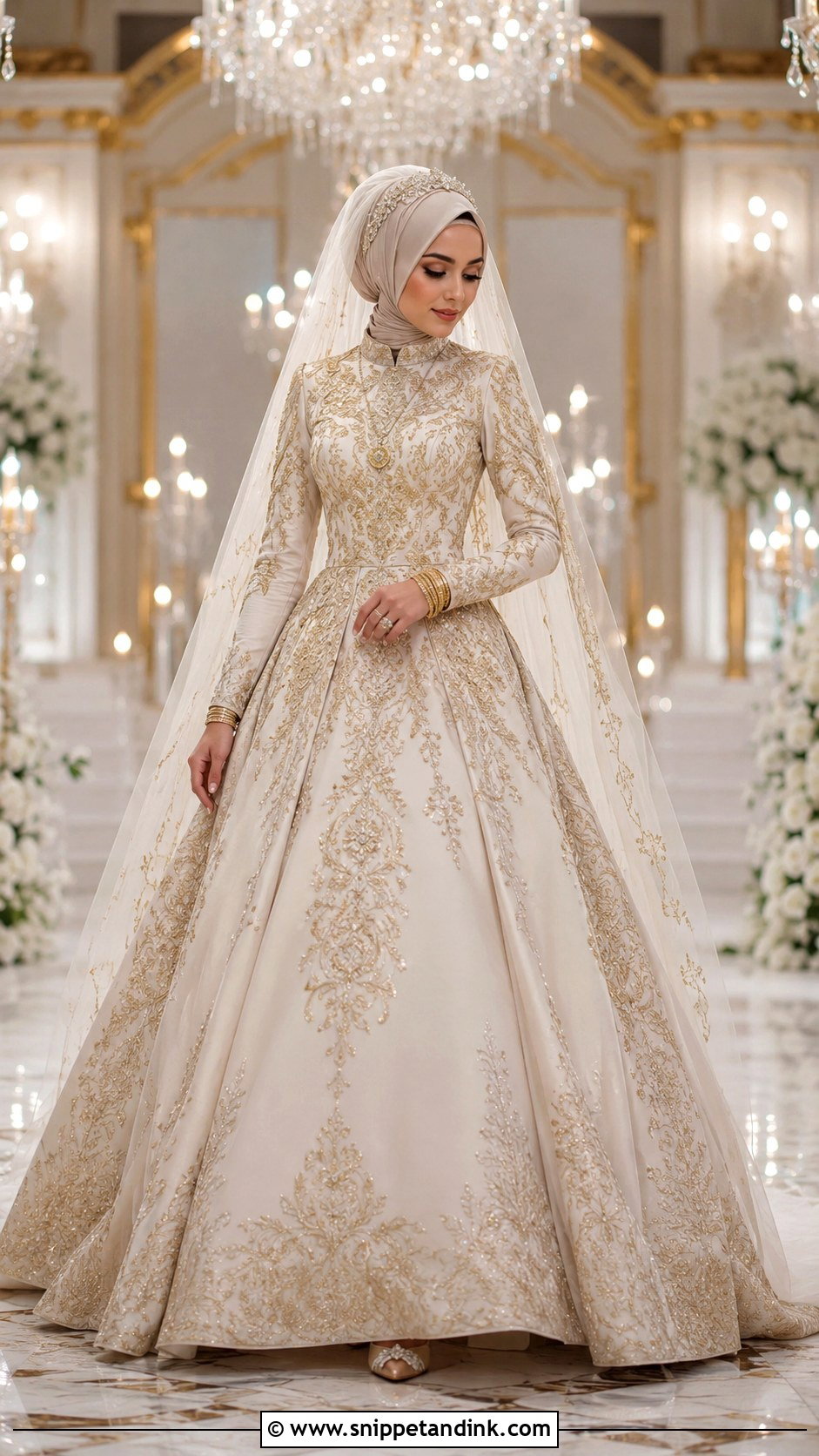
Gold can look luxurious and cultural without becoming costume, provided you avoid full metallic shine. I’d look at soft champagne gold, antique gold embroidery or gold thread over ivory. A covered gown with long sleeves and a flowing skirt carries the color well, with a cream or champagne hijab and gold accessories. Keep the veil light so the outfit doesn’t feel heavy. Gold reads richest under warm evening light, so it suits night weddings, henna-inspired celebrations and anyone after a regal mood.
17. Turkish Blush Muslim Wedding Dress
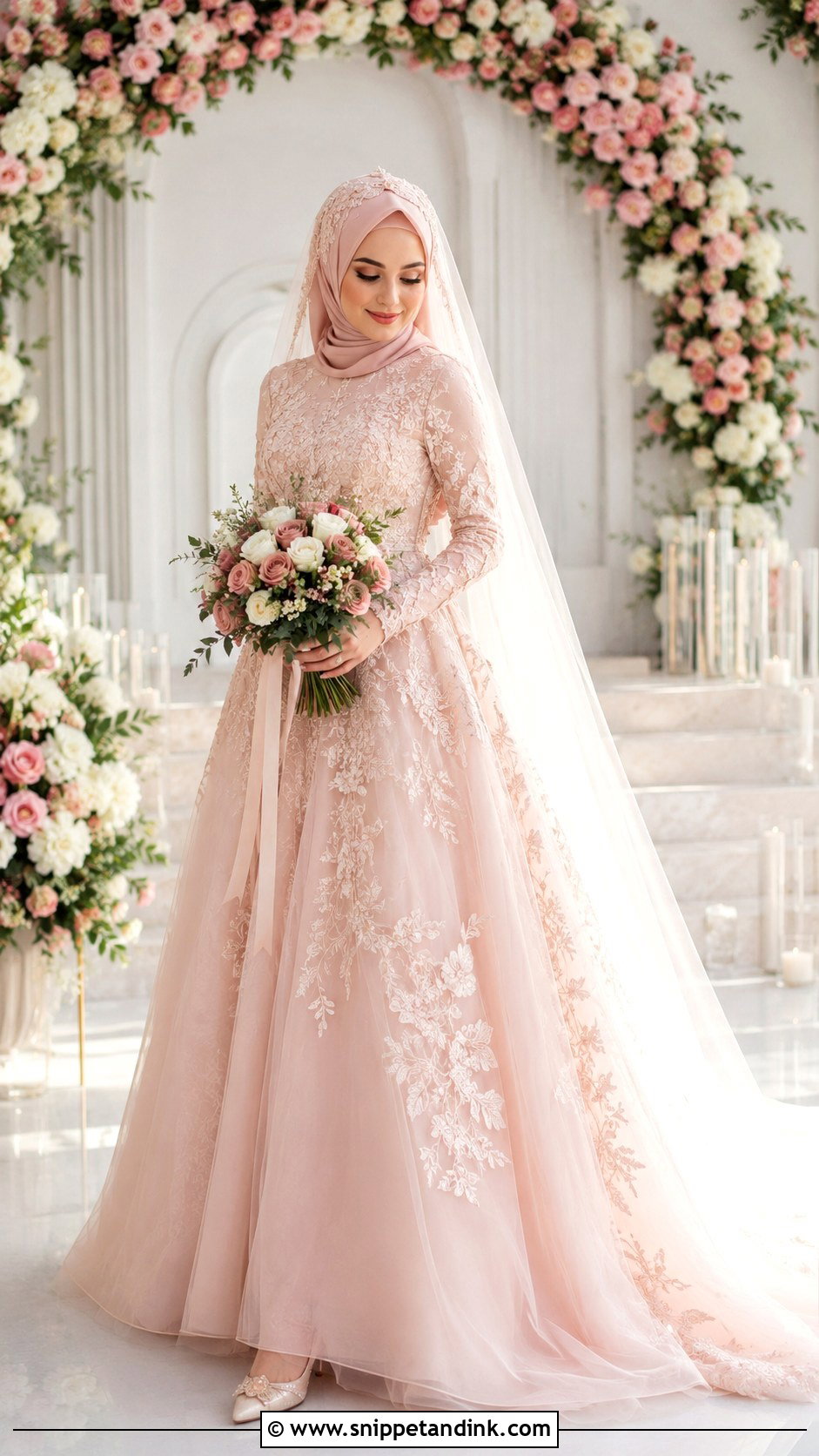
Blush is romantic and still soft enough to read as bridal. It works in tulle, lace, satin or chiffon with full coverage, and it pairs well with pearl details, floral embroidery and a matching blush hijab. Choose a pale blush rather than a bright pink. Ivory heels, a delicate veil and rose-toned makeup finish it. Blush shifts with light, so dye lots matter: if the hijab and dress come from different makers, check them side by side outdoors. Spring weddings and daytime receptions suit it.
18. Turkish Detachable Train Wedding Dress
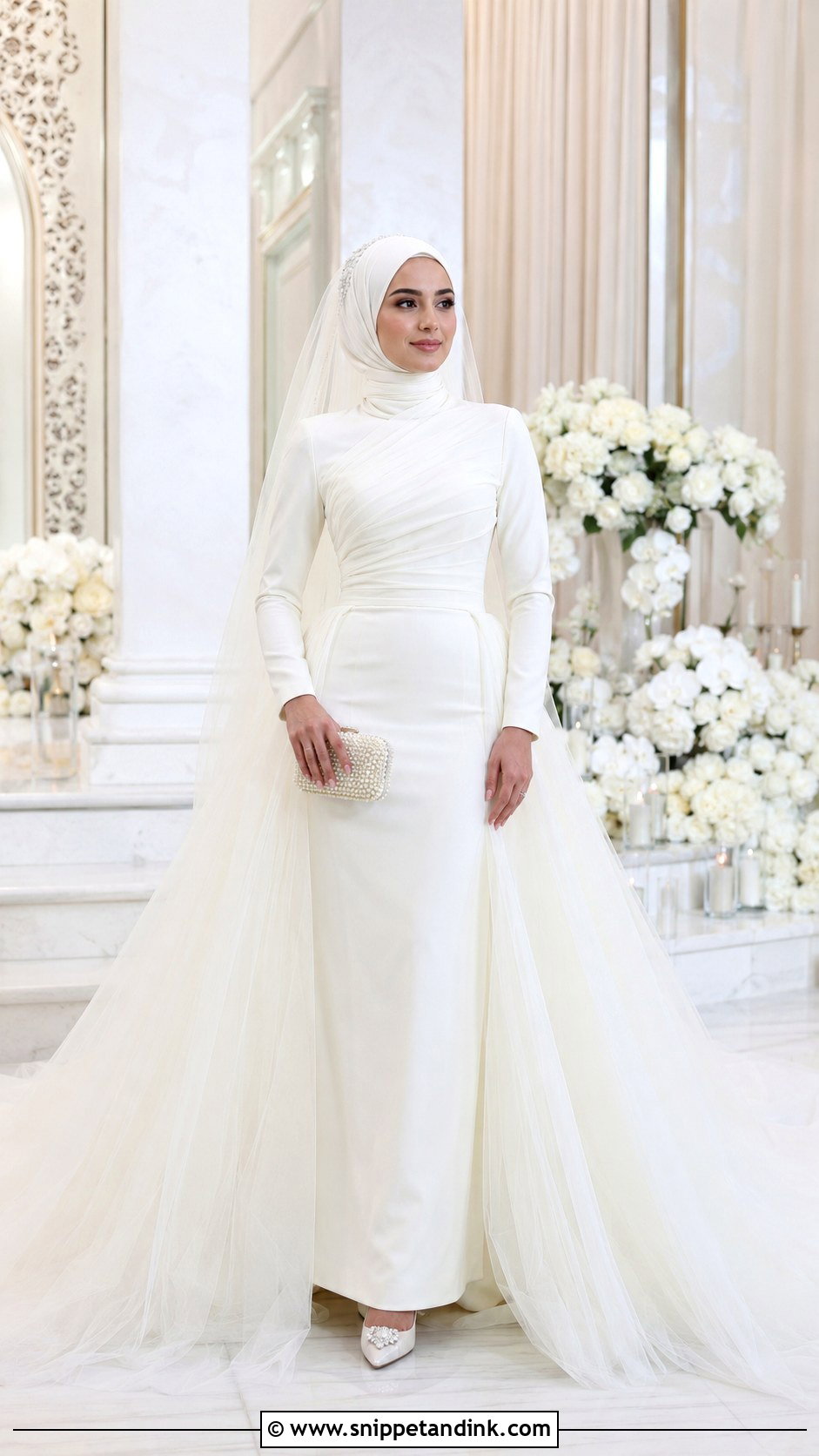
A detachable train lets you have the dramatic entrance and still move freely later. Start with a modest base gown, long sleeves, a high neckline and a fitted or A-line skirt. The train can attach at the waist or the shoulders. Lace or tulle trains look romantic; satin feels more structured. A smooth hijab and a long veil suit ceremony photos. Shoulder-attached trains pull backward on the neckline, which can tug the hijab out of place, so for a hijabi bride I usually recommend waist attachment. Remove it after the formal moments for dancing and moving between tables.
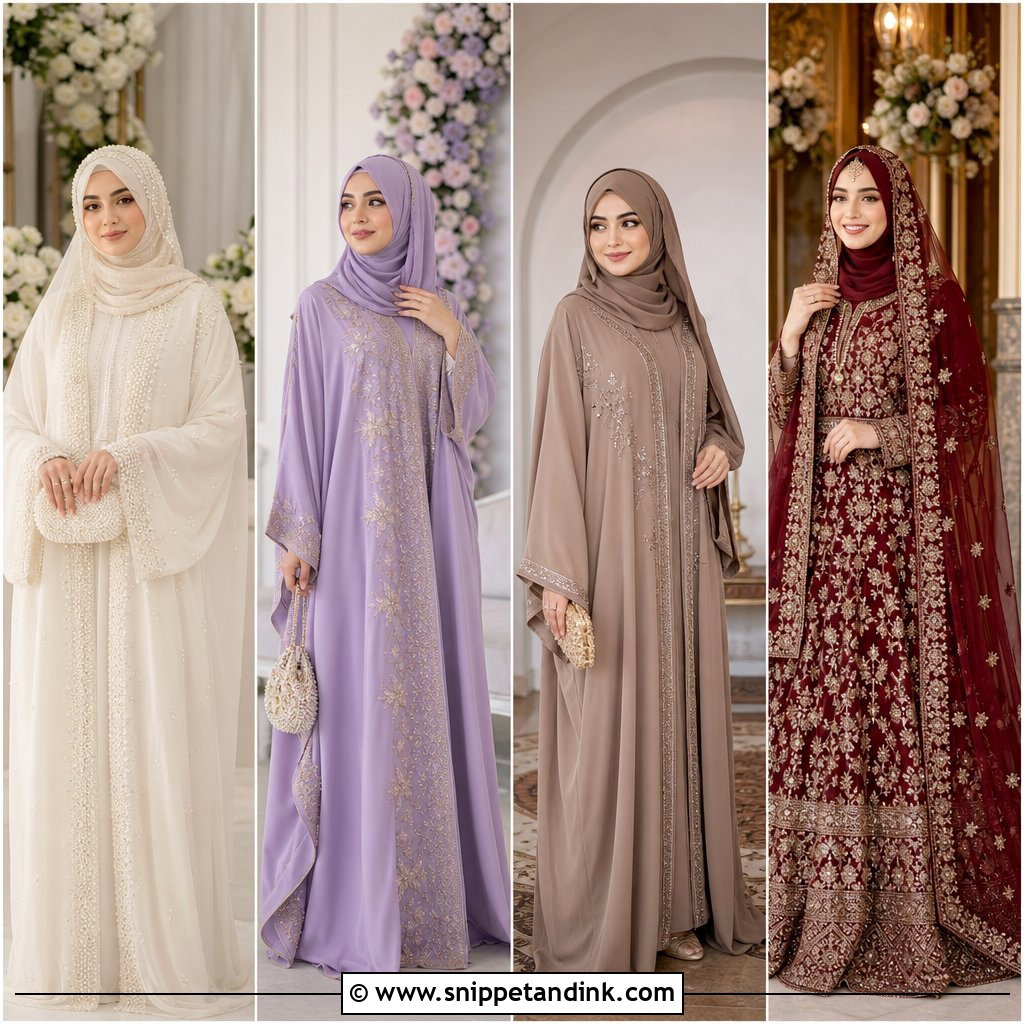
19. Turkish Bridal Kaftan Wedding Dress
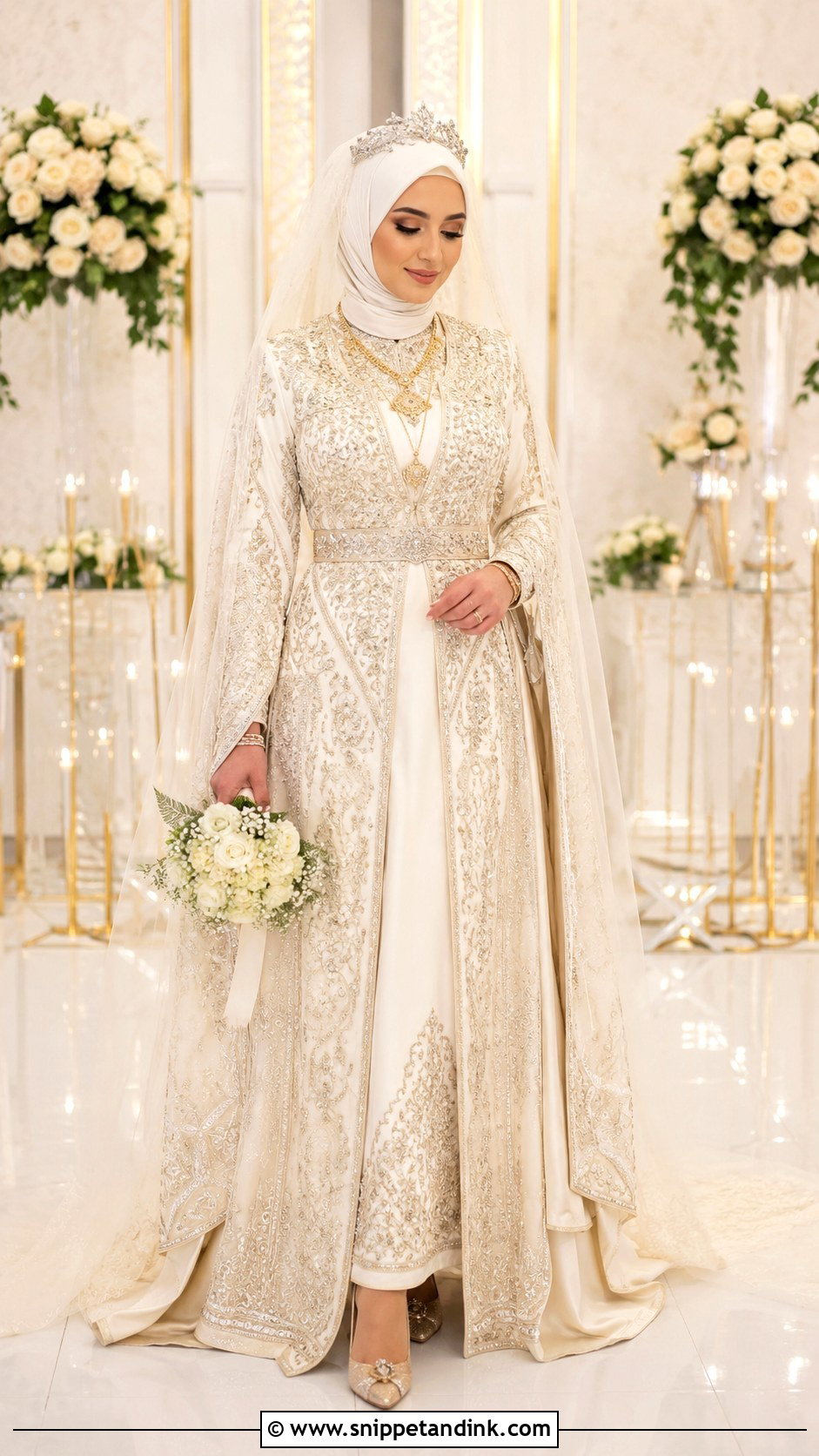
A bridal kaftan suits brides who love cultural silhouettes and a more relaxed fit. Expect a long flowing shape, ornate embroidery and detailed sleeves, in ivory, cream, champagne or soft gold. A matching hijab and delicate veil keep it modest and polished. Kaftans can swamp the figure, so I’d look for waist detailing, a structured underdress or a subtle belt to define the shape. Embellished heels and refined jewelry finish it. It’s very comfortable over a long day and makes a meaningful alternative to a classic gown.
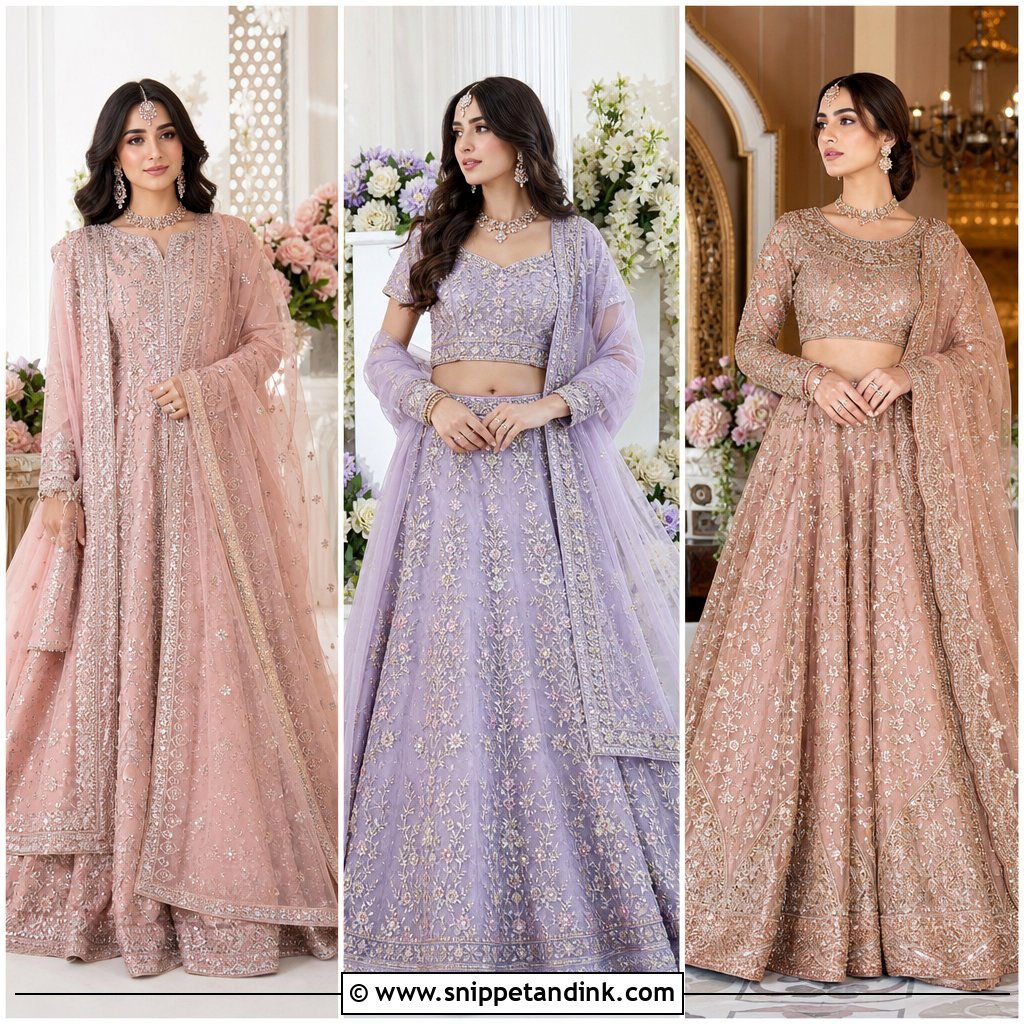
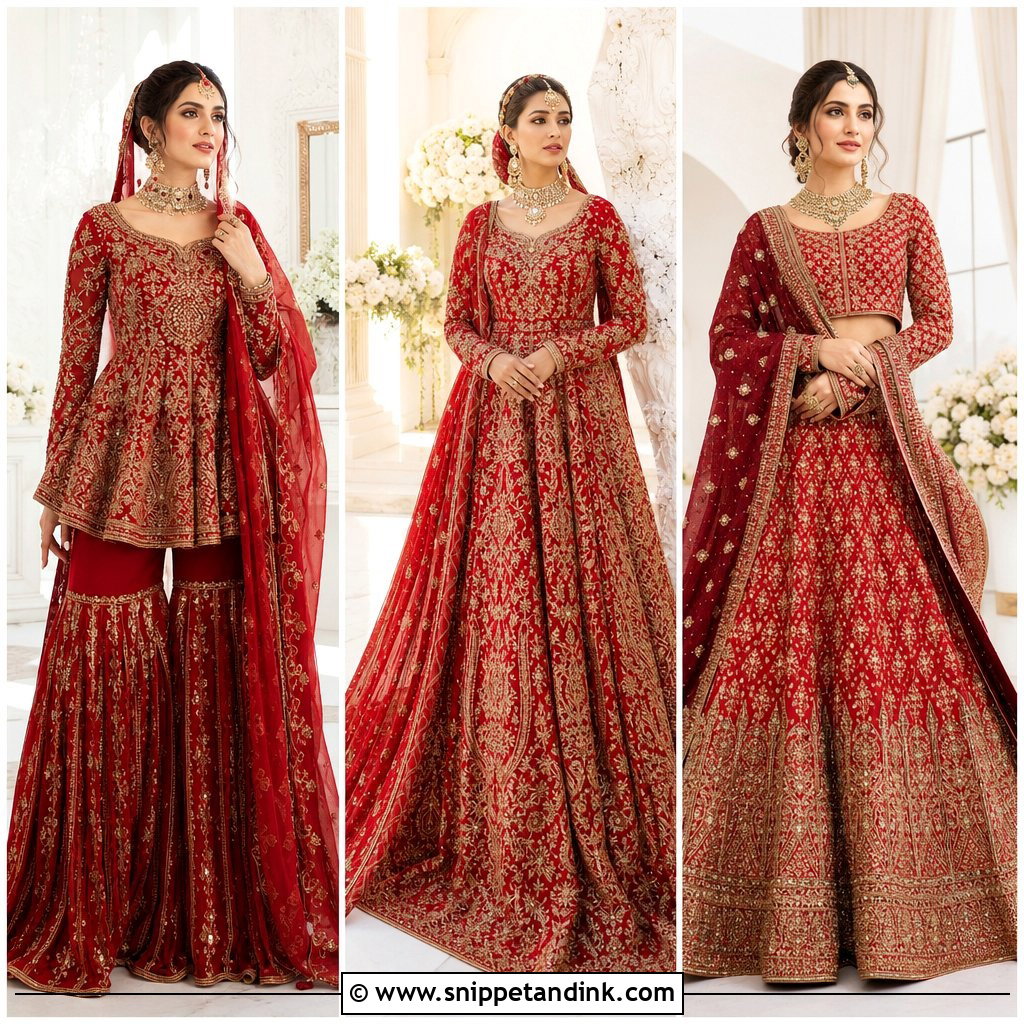
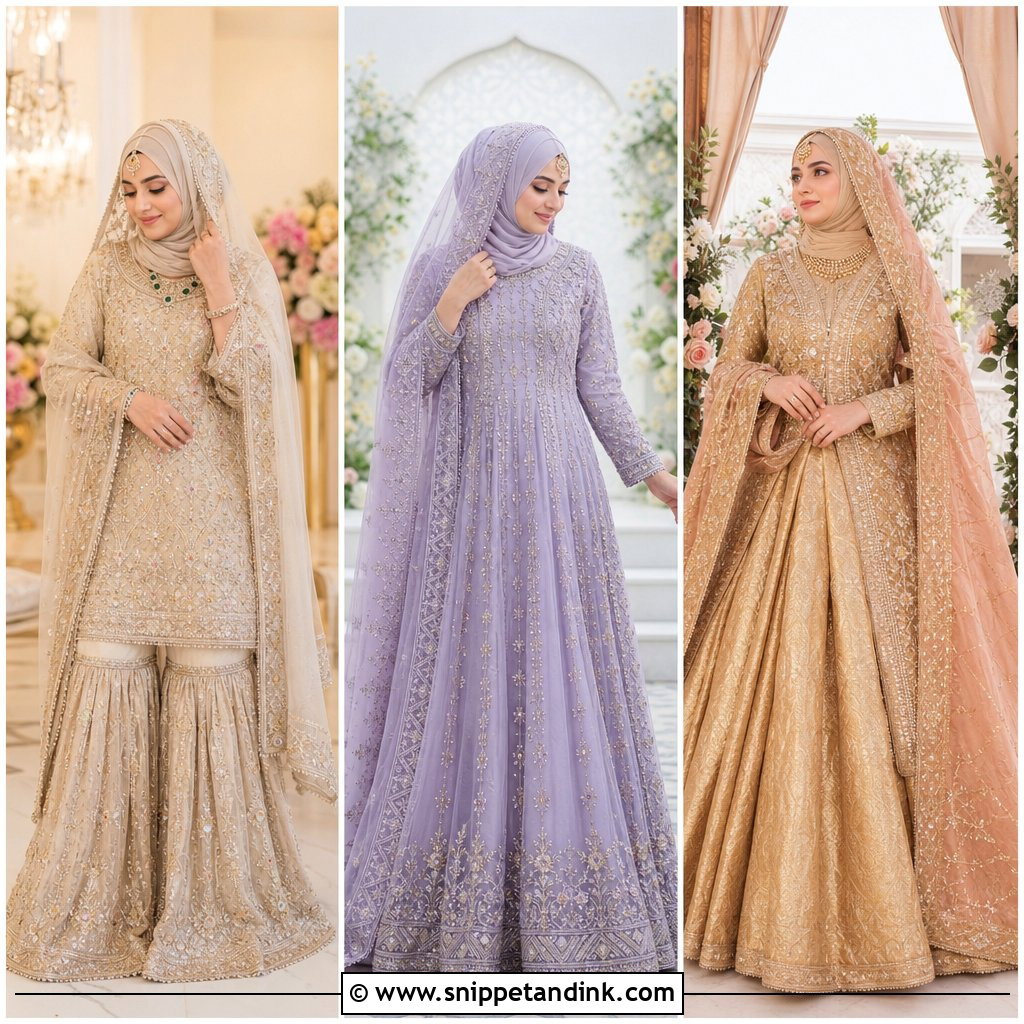
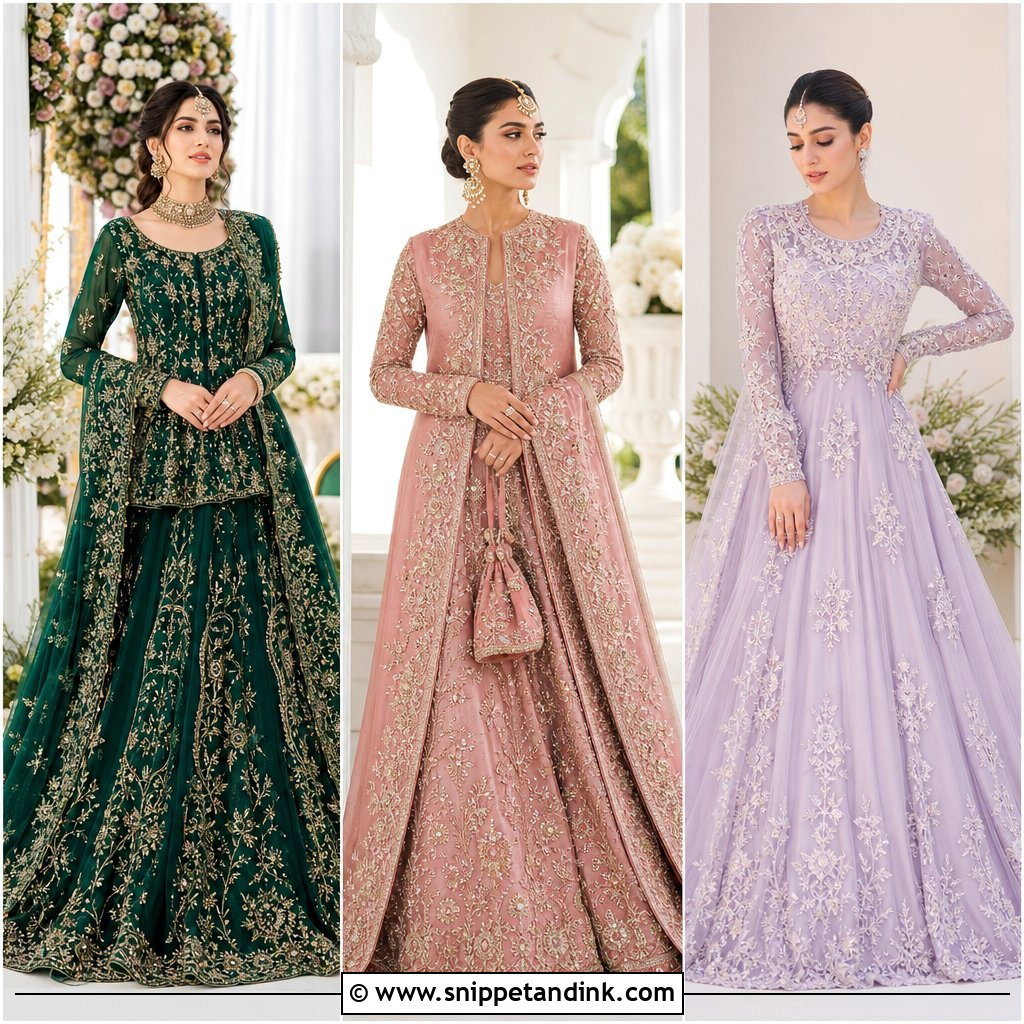
20. Turkish Bridal Abaya Wedding Dress
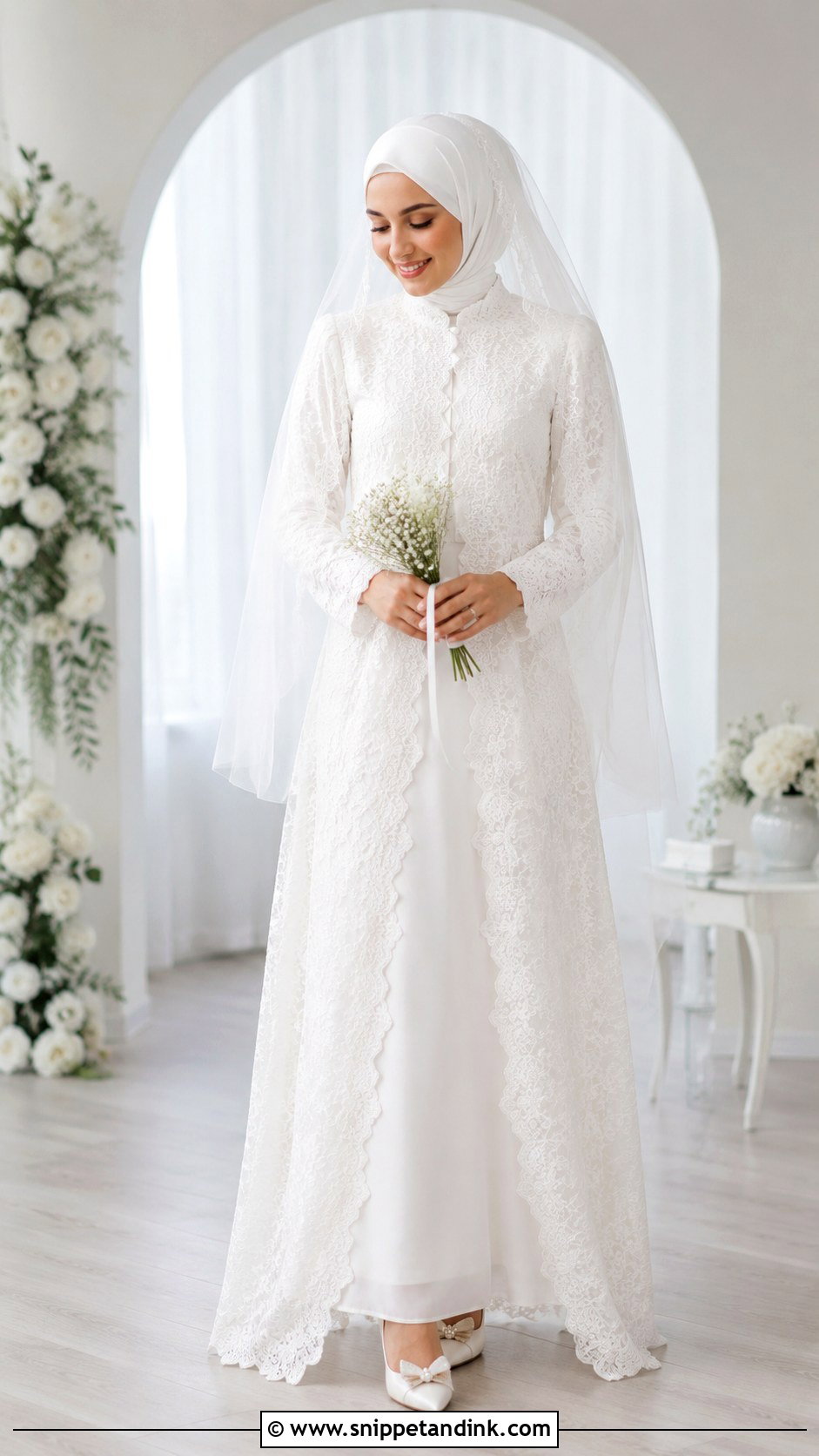
A Turkish bridal abaya wedding dress gives full coverage with a clean shape. A bridal abaya differs from everyday wear through lace, beadwork, pearls, satin panels or a layered chiffon overlay. Choose a soft inner dress with an embellished outer layer for depth, a matching hijab and a light veil. Because there’s no tight structure, it’s very comfortable for long days. Watch the length: an abaya cut for flats will drag if you switch to heels, so decide on footwear before the hem is set. Pearl heels, a small bouquet and simple jewelry suit it.
21. Turkish Ruffle Wedding Dress With Hijab
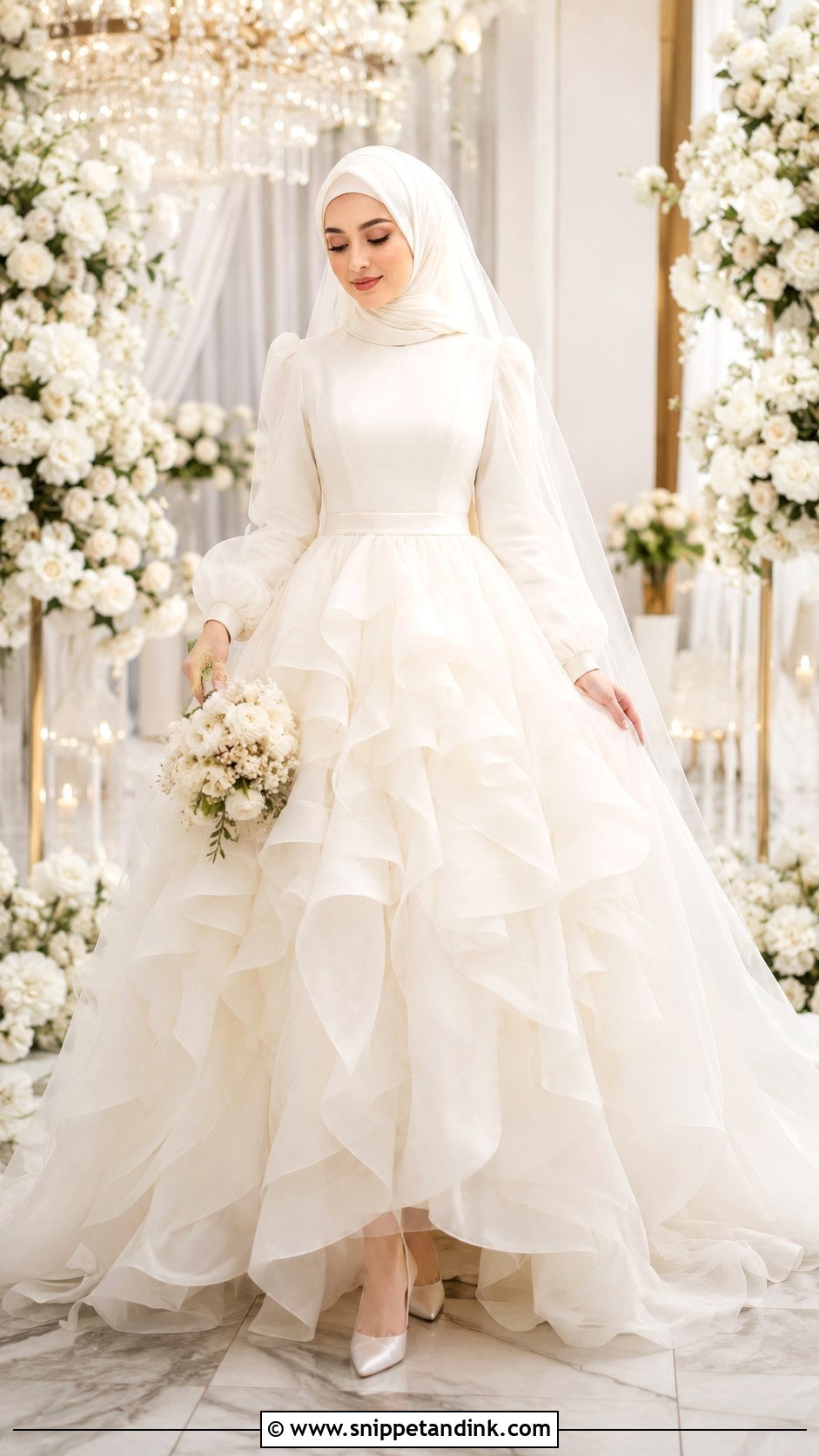
Ruffles add volume and softness without beadwork, but they need restraint. Place them along the skirt, cuffs or train, and keep the bodice simple with a clean hijab. Organza, tulle and chiffon ruffles move; heavier fabric ruffles sit stiffly. A full skirt with layered ruffles gives a romantic shape while staying modest. A plain veil, minimal jewelry and satin heels finish it. Ruffles at the wrist catch on food and drinks, so I’d keep cuff ruffles small if you’ll be eating at the head table.
22. Turkish Pleated Muslim Wedding Dress
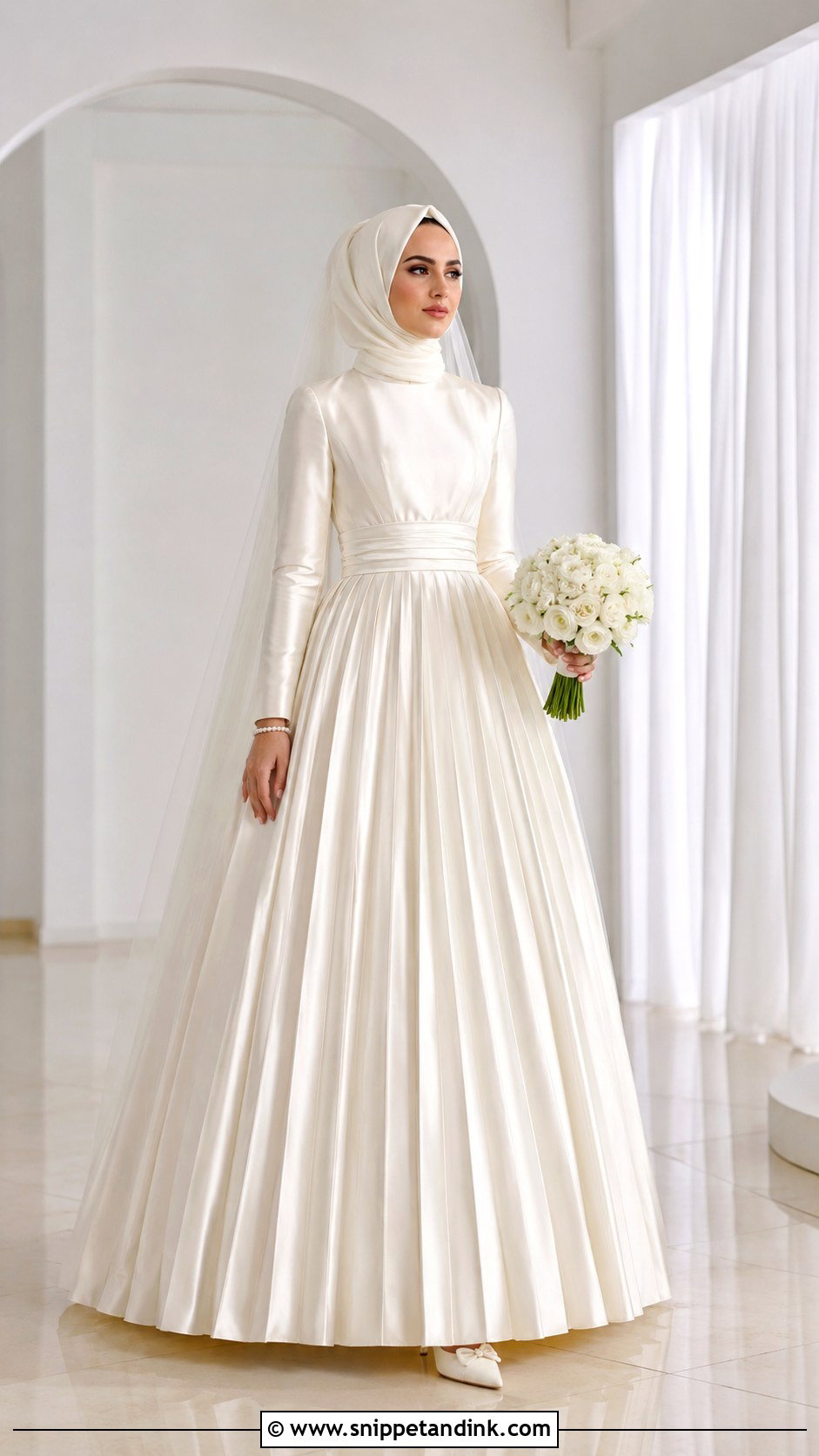
Pleats give structure and movement together. Look for pleating on the skirt, sleeves, bodice or waistline. Satin pleats feel formal, while chiffon pleats look soft and airy. A high neckline and long sleeves keep it hijab-friendly, with a smooth hijab, pointed heels and a clean bouquet. It’s a good fit for brides who like modern modest fashion. Pressed pleats can fall out in humidity or after a long car ride, so ask how they’re set; permanently heat-set pleats on polyester chiffon hold far better than pressed ones on silk.
23. Turkish Two Piece Wedding Dress With Hijab
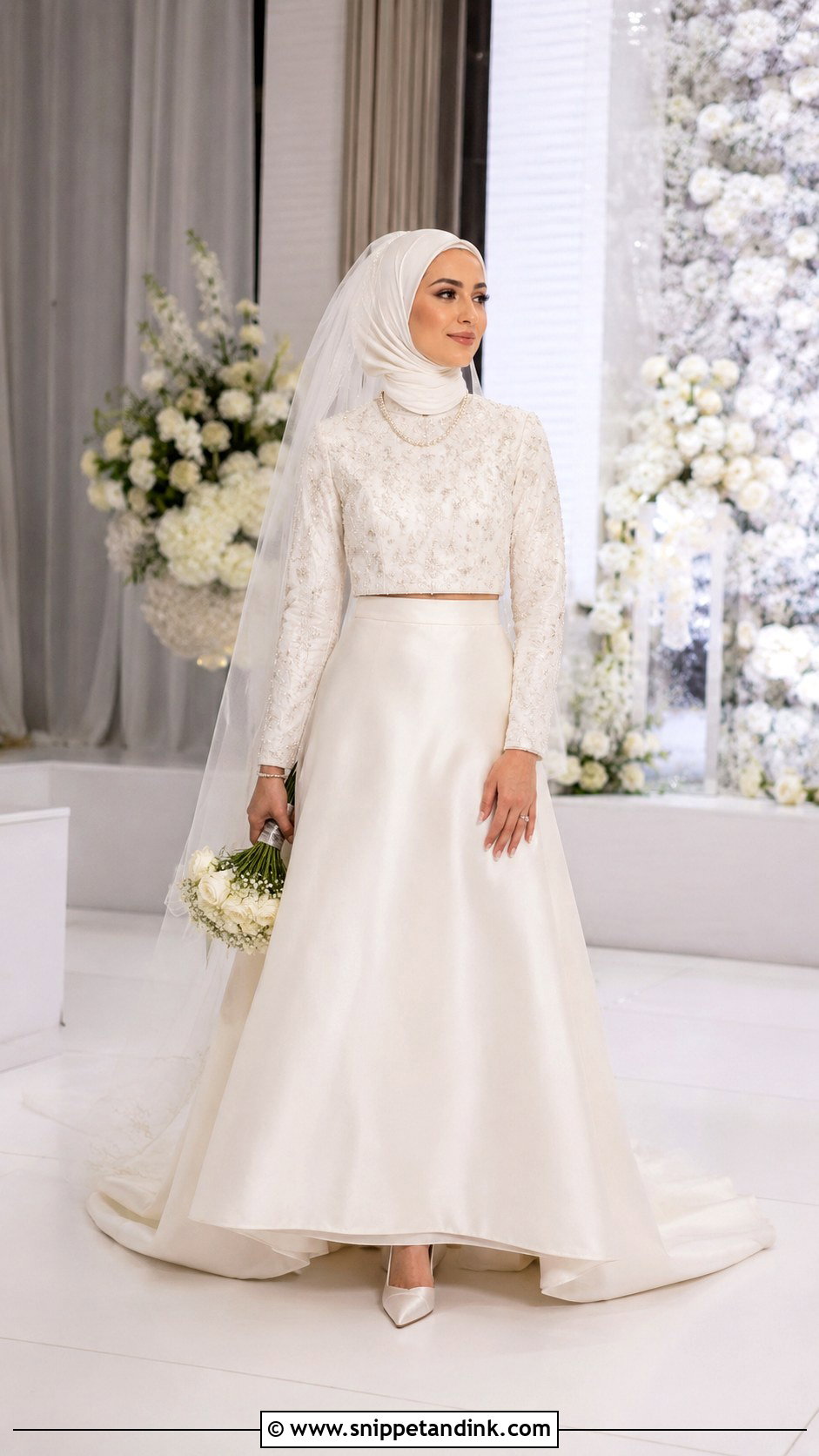
Separates can look modern and still modest: a long skirt with a covered blouse, a structured top or an embroidered jacket. Match fabric and color so the outfit looks deliberate rather than casual. A high-waisted skirt gives a graceful line, and a longer top adds coverage. A matching hijab and veil finish it. Separates are easier to alter and useful if you’re different sizes on top and bottom. When a top tucks in, I have brides raise their arms during fittings to check that nothing comes untucked. Elegant heels, pearl jewelry and a simple bouquet suit it.
24. Turkish Winter Muslim Wedding Dress
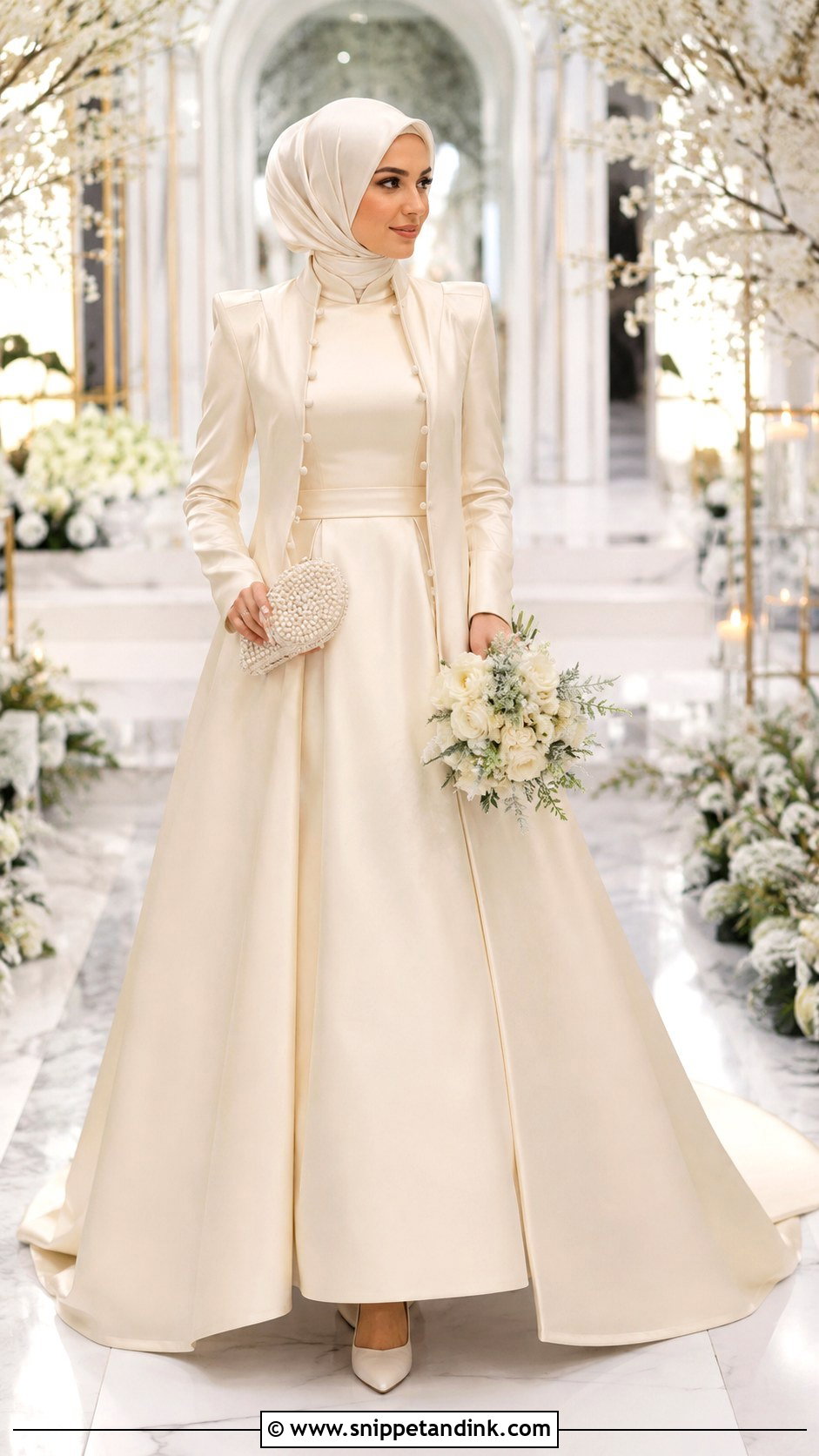
Winter calls for richer fabric and thoughtful layers: mikado, satin, velvet accents, heavy lace or an elegant bridal coat. Long sleeves, a high neck and a fuller skirt bring warmth along with coverage. A matching hijab in satin or heavier chiffon feels seasonal. For outdoor photos, add a faux-fur trimmed cape, a structured coat or a long embroidered jacket, and closed-toe heels. Heavy fabrics generate static in dry, heated rooms, so a light anti-static spray on the lining, tested out of sight, keeps the hijab from clinging to the gown.
25. Turkish Nikah Wedding Dress With Hijab
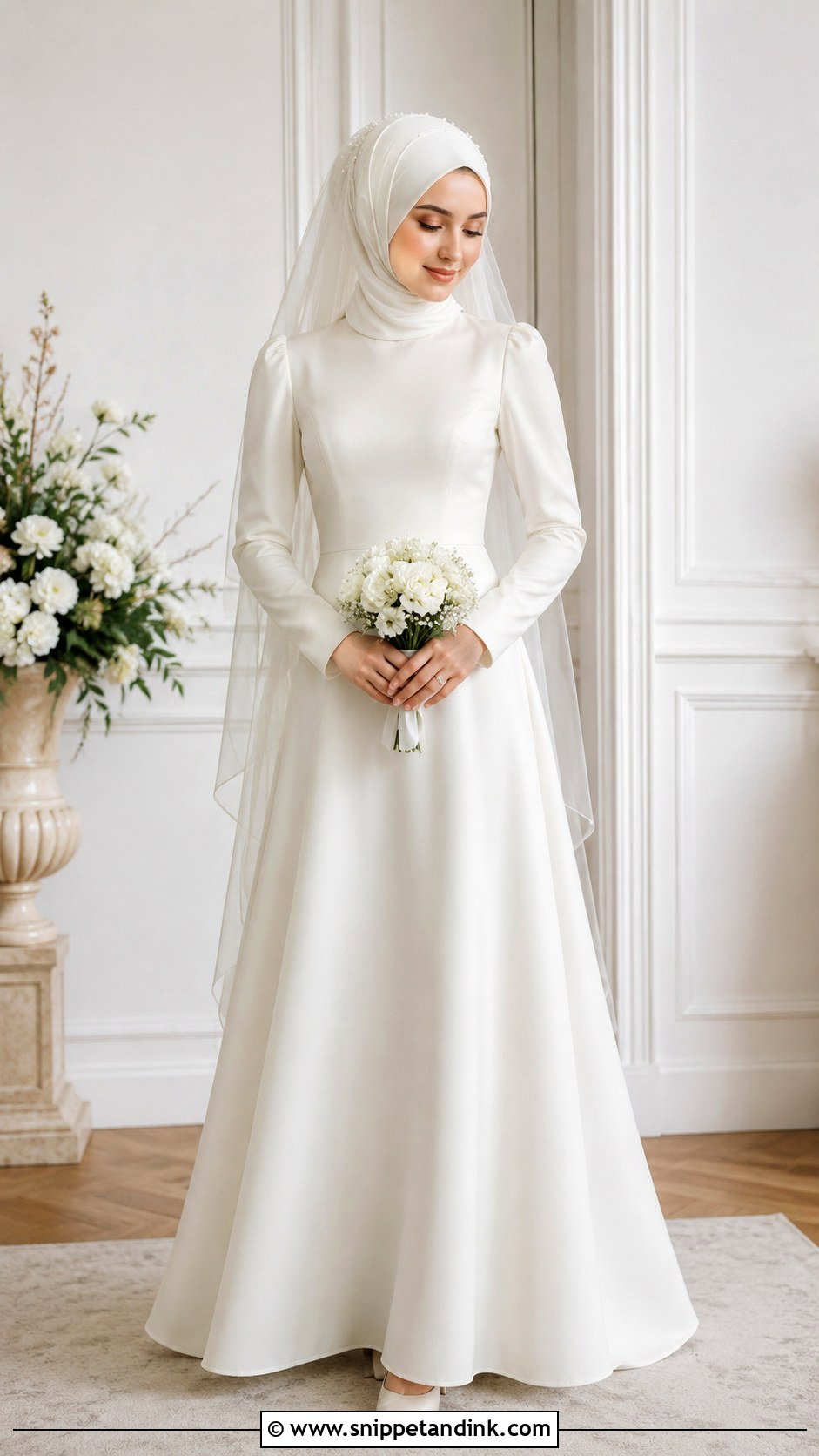
The nikah outfit is usually simpler and lighter than the reception gown. A modest white or ivory dress with long sleeves, a high neckline and a clean silhouette suits the religious ceremony, and A-line, column and soft chiffon shapes all work. A neat hijab, a short veil, pearl pins and comfortable heels complete it. For an intimate ceremony, skip heavy trains or dramatic skirts. You may be sitting for a while and signing documents, so choose sleeves that let you write without dragging lace across the table.
A Hijab That Stays Put Through Hugs, Photos and a Heavy Veil
Most hijab problems on a wedding day come down to two things: the wrong fabric for the job and nothing for the pins to grip. I build the head covering in layers, the same way every time.
- Start with a cotton or jersey underscarf that grips the hair. This is what everything else is pinned to.
- Choose the outer hijab by behavior. Chiffon drapes well but slides; jersey holds its shape but can look casual; satin looks rich but needs firm anchoring.
- Pin into the underscarf, not through the outer layer alone, so the weight of a veil or tiara is carried by something fixed.
- Use safety pins at the back and under the chin where they won’t be seen, and save decorative pins for places that show.
- Add the veil and headpiece last, then turn your head fully, hug someone and sit down before you leave the room.
Do a full trial with the real veil and headpiece, not a stand-in. A tiara and a cathedral veil together can be surprisingly heavy, and you’ll only learn whether the pinning holds by wearing it for an hour. Keep a few spare pins and a small mirror in your bag for the reception.
Coverage and Comfort Can Share One Dress
The right modest dress respects your faith and still feels like you. Turkish-inspired bridal fashion gives a wide choice, from princess gowns and Ottoman embroidery to minimal satin, abayas, kaftans, capes and soft chiffon nikah looks. Weigh coverage, comfort, fabric and how the hijab will sit with the neckline. A well-styled modest bridal look works as one piece, from the hijab to the shoes, and you’ll feel it most in how easily you move through the day.
You'll Like These Ideas:



Leave a Reply