
Choosing a Nikah outfit is a different job from dressing for the Barat. The ceremony is quieter, often held at home or in a mosque, and you’ll spend much of it seated with your head covered, listening and signing papers. That changes what works. Pishwas dresses, ghararas, lehengas and saris can all suit it, and ivory, blush, champagne and pastels remain the usual palette, while red, maroon and gold keep tradition front and center. Lighter fabrics and restrained embroidery tend to serve you better than Barat-level weight. Each look below comes with the jewelry, shoes, makeup and dupatta placement I’d suggest.
Mosque, Home or Hall: What the Venue Asks of Your Outfit
Where the Nikah happens shapes the outfit more than any trend does. Find out the setting and the seating before you commit to a silhouette.
At a mosque
Expect to take your shoes off, so pick khussas or flats you can slip out of without help, not strappy heels. Arms, neckline and hair need to be covered, and a long trail is impractical on a shared prayer floor.
At home
Home Nikahs often happen on floor cushions or a low sofa in a crowded room. A pishwas, sharara or soft gharara sits comfortably there. A lehenga with a stiff can-can takes up space and pushes up awkwardly when you sit.
In a hall or marquee
You have more freedom with structure and length, but the lighting is usually artificial. Check pale colors under similar light before you order, because ivory and champagne can shift warm or gray.
Whatever the setting, plan for the signing of the nikahnama. Close-ups of your hands holding the pen are photos families keep for decades, so wear bracelets slim enough not to catch the paper and make sure your sleeves don’t hide your henna.
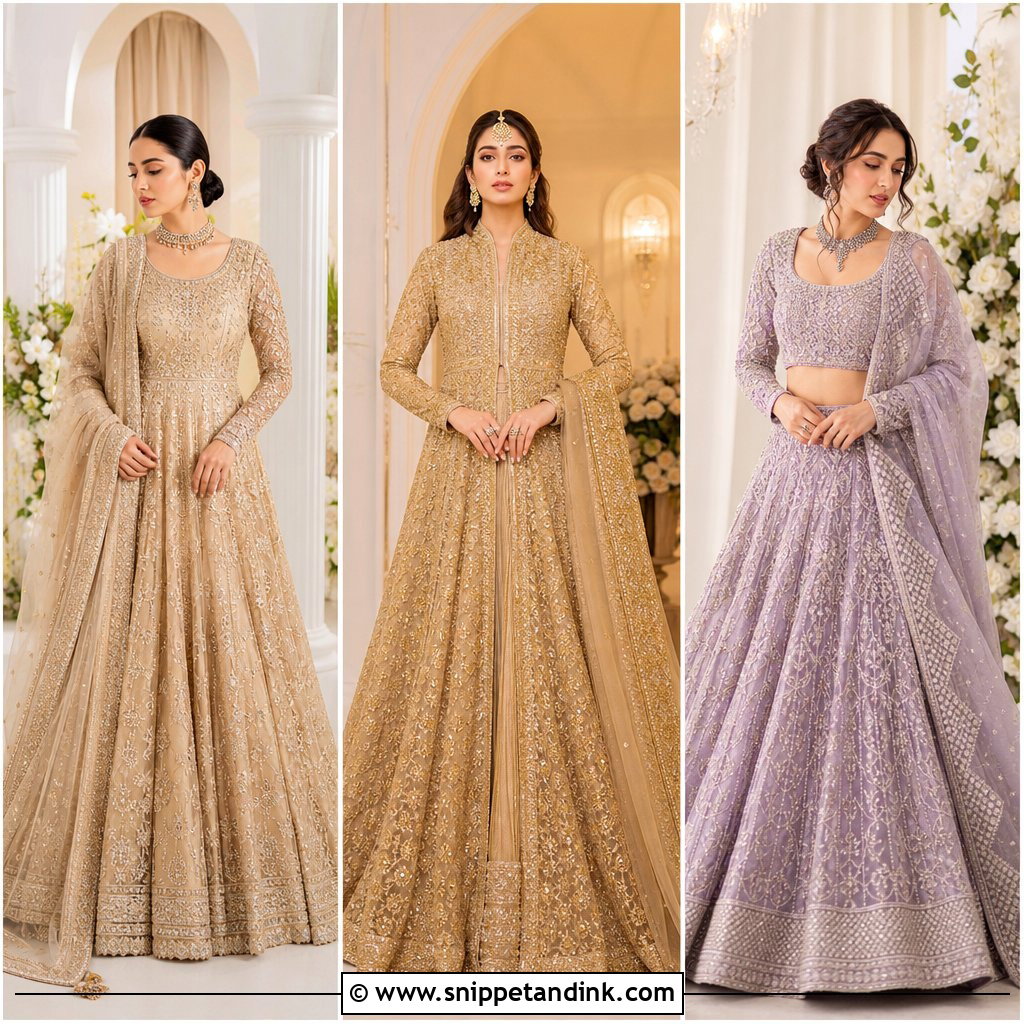
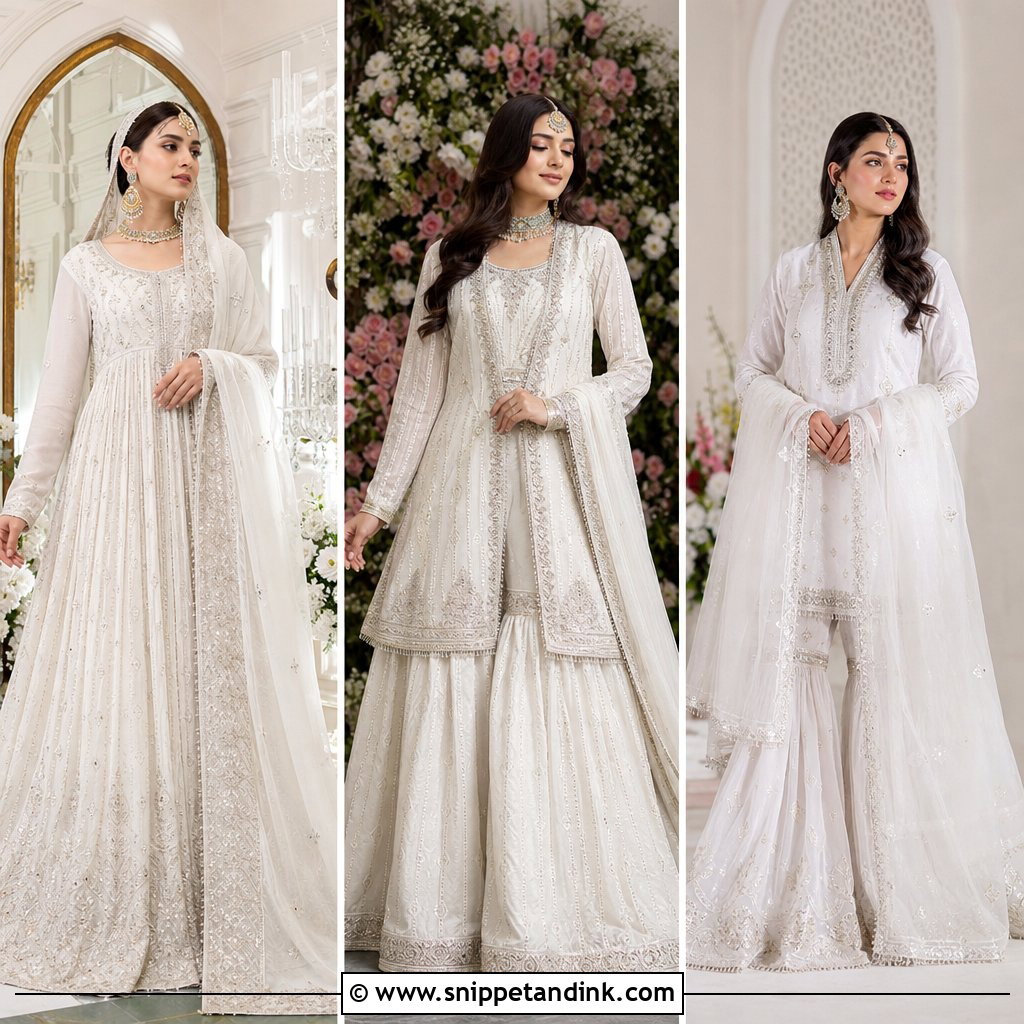
1. Ivory Pishwas Nikah Dress With Gold Dupatta
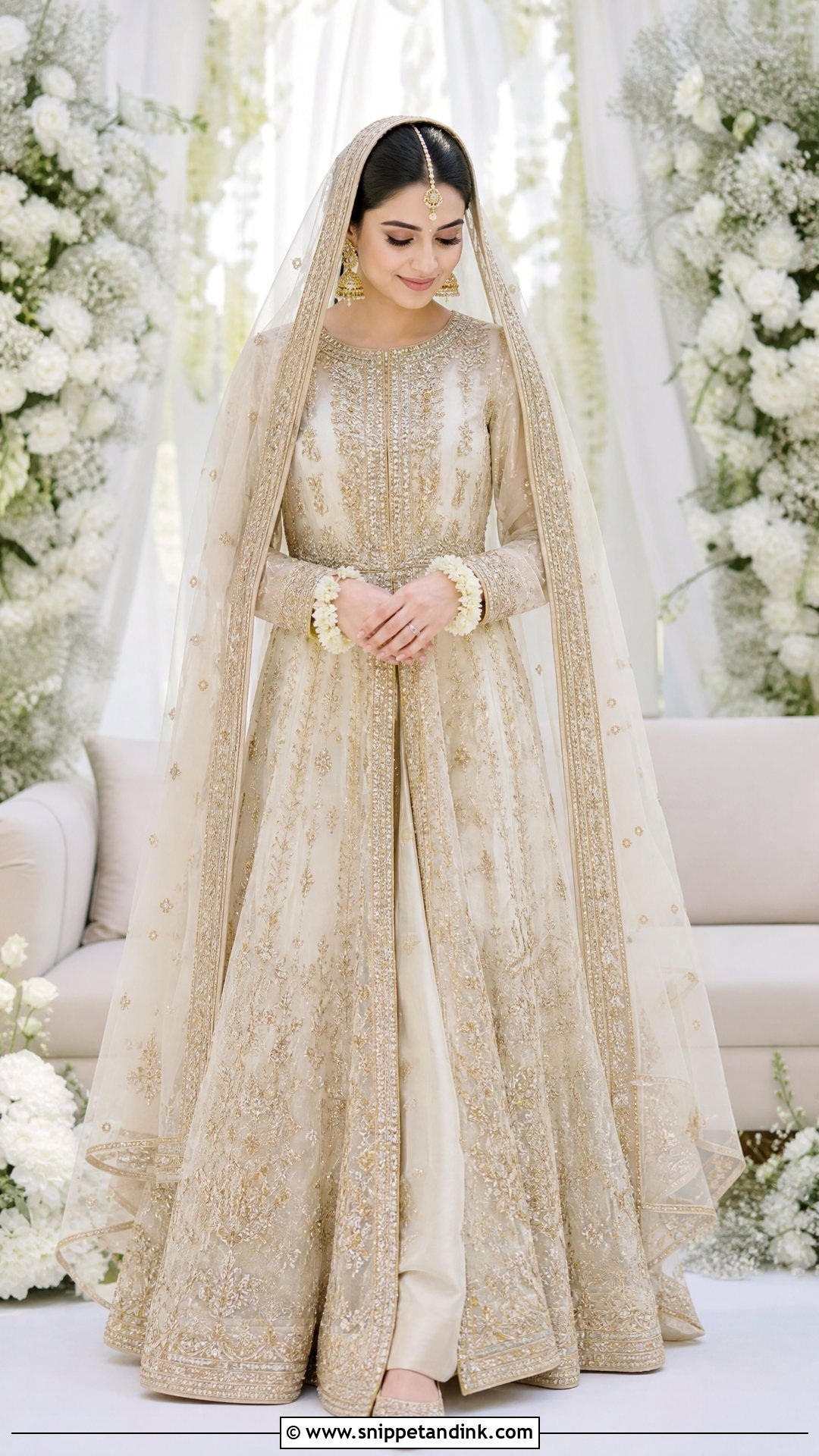
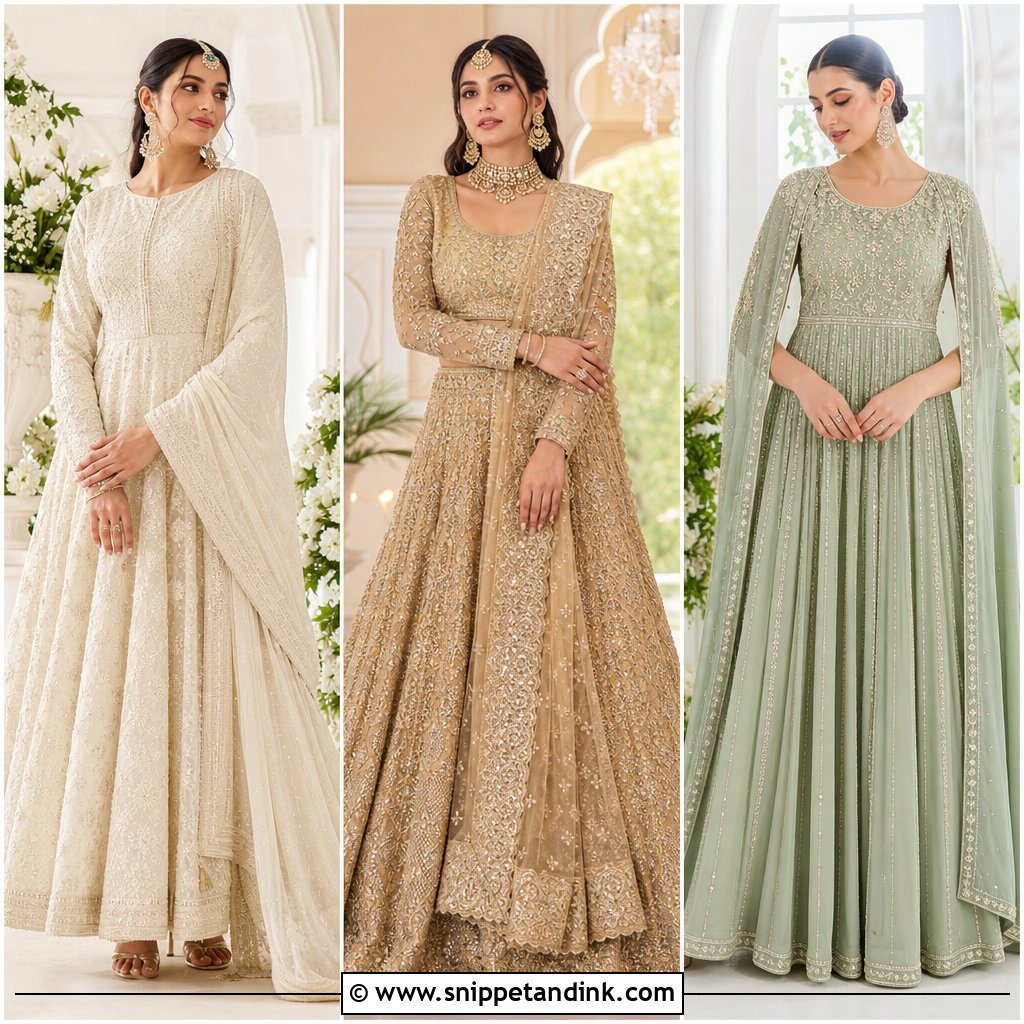
Ivory in a pishwas has enough flare to feel bridal without the weight of a lehenga, which matters when you’ll be seated for most of the ceremony. Keep the dabka, pearls or threadwork at the neckline and cuffs; an ivory base covered all over in gold stops looking soft. Full sleeves are a sensible call for a mosque Nikah. The ivory organza dupatta with a scalloped gold border goes over the head, with one side falling across the arm so you can lift it easily when you sign. Gold jhumkas, a slim tikka, embroidered khussas, softly defined eyes and a rose-nude lip. I’d keep this one for daylight at home, in a mosque or in a garden.
2. White Gharara Nikah Dress With Short Kameez
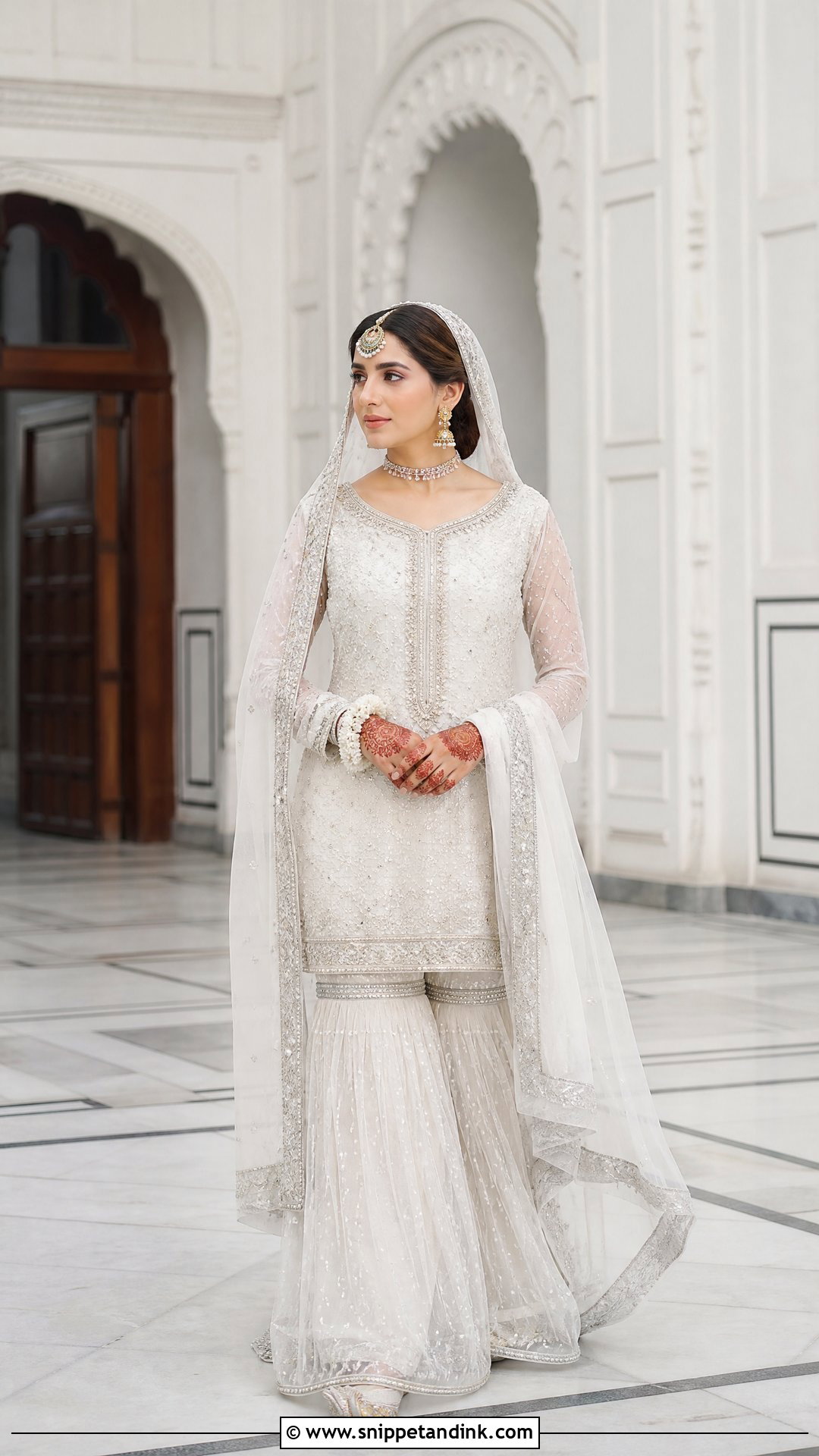
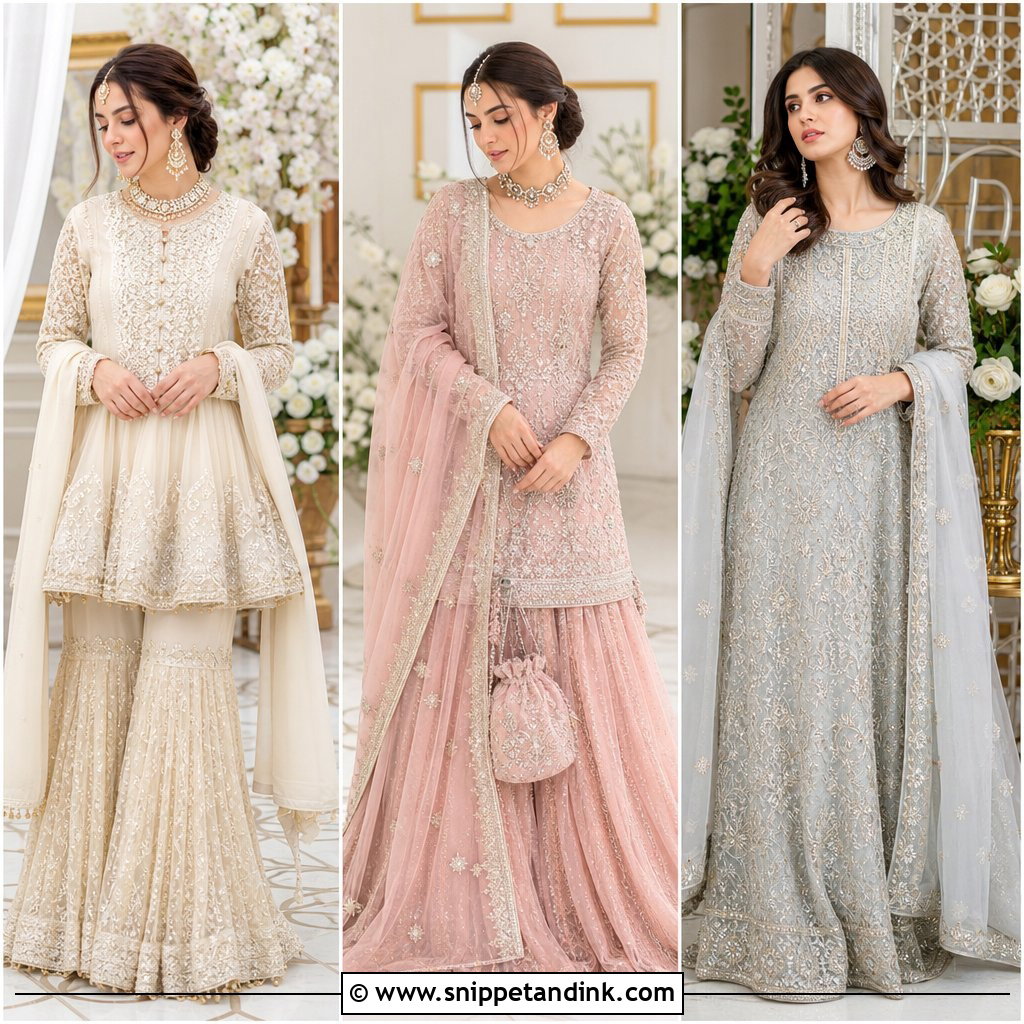
Jamawar is a woven brocade, and a gharara cut from it holds the knee joint crisply, which is why I reach for it over soft silk here. Put the gota, zari or silver work at that joint and at the hem, then let the short white kameez carry a modest boat neckline, fitted sleeves and pearl detailing. A sheer organza dupatta with a four-sided border frames the face in family photos. One passa, medium jhumkas and a delicate choker are enough; several heavy necklaces on a white kameez look crowded. Metallic khussas, a low bun with fresh white flowers and soft pink makeup.
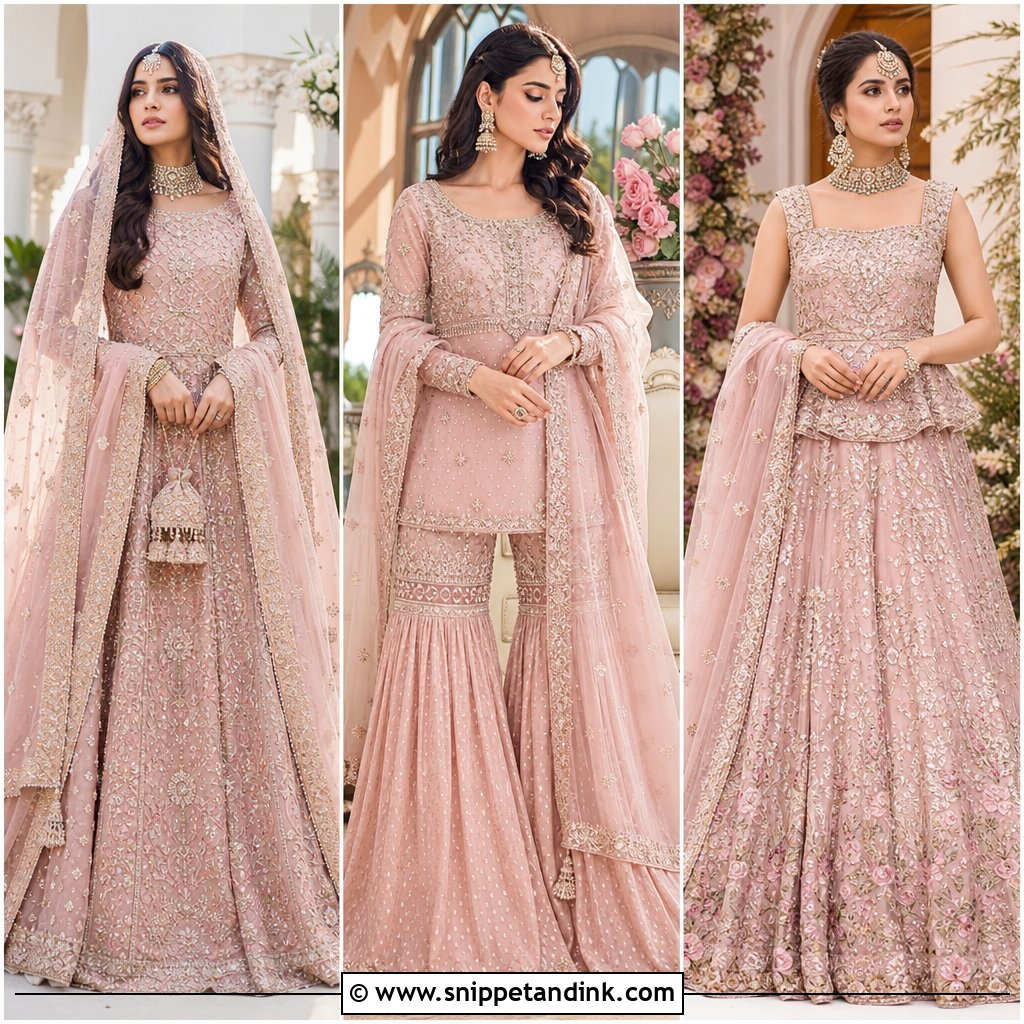
3. Blush Pink Lehenga Nikah Dress With Pearl Work
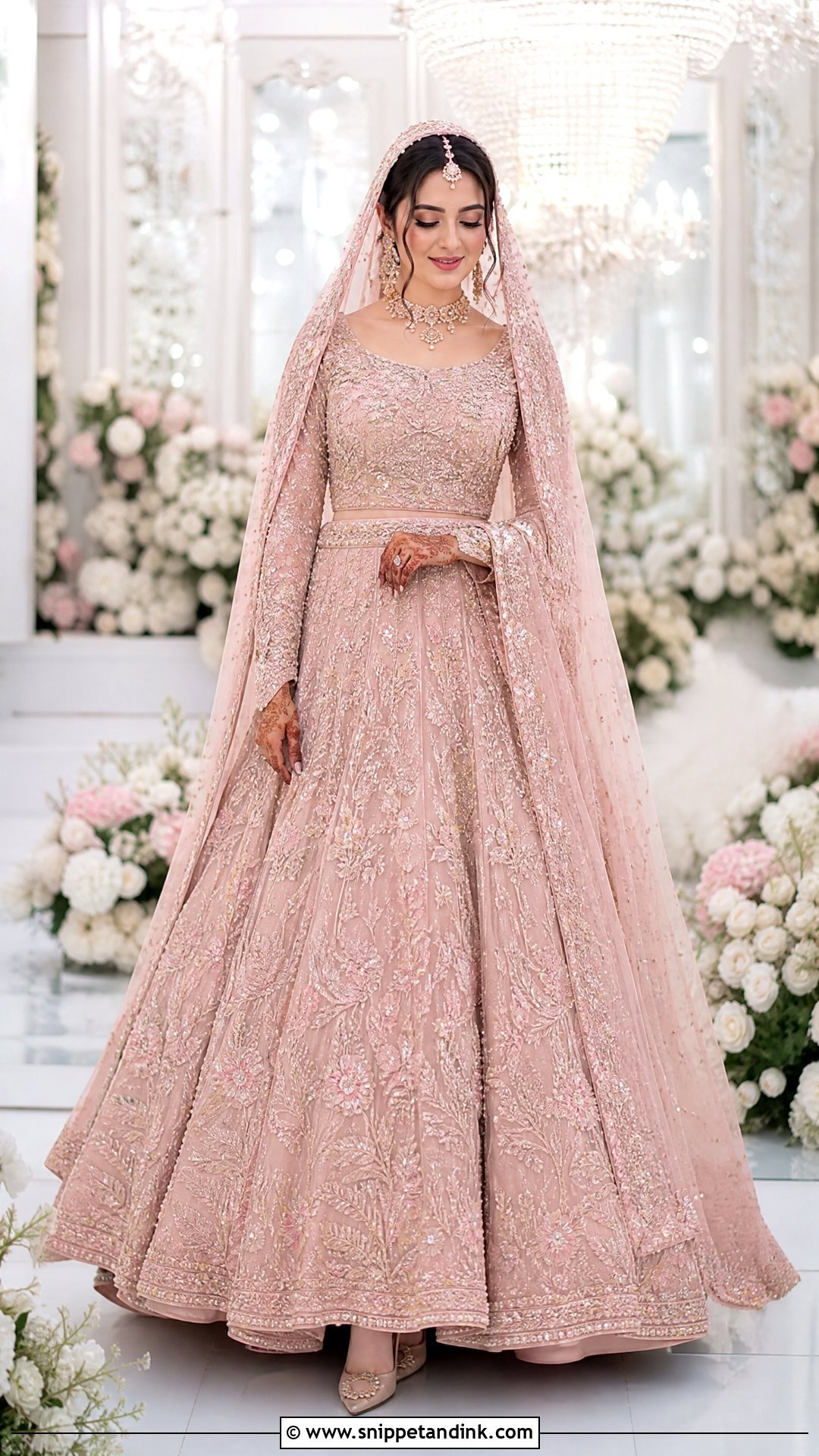
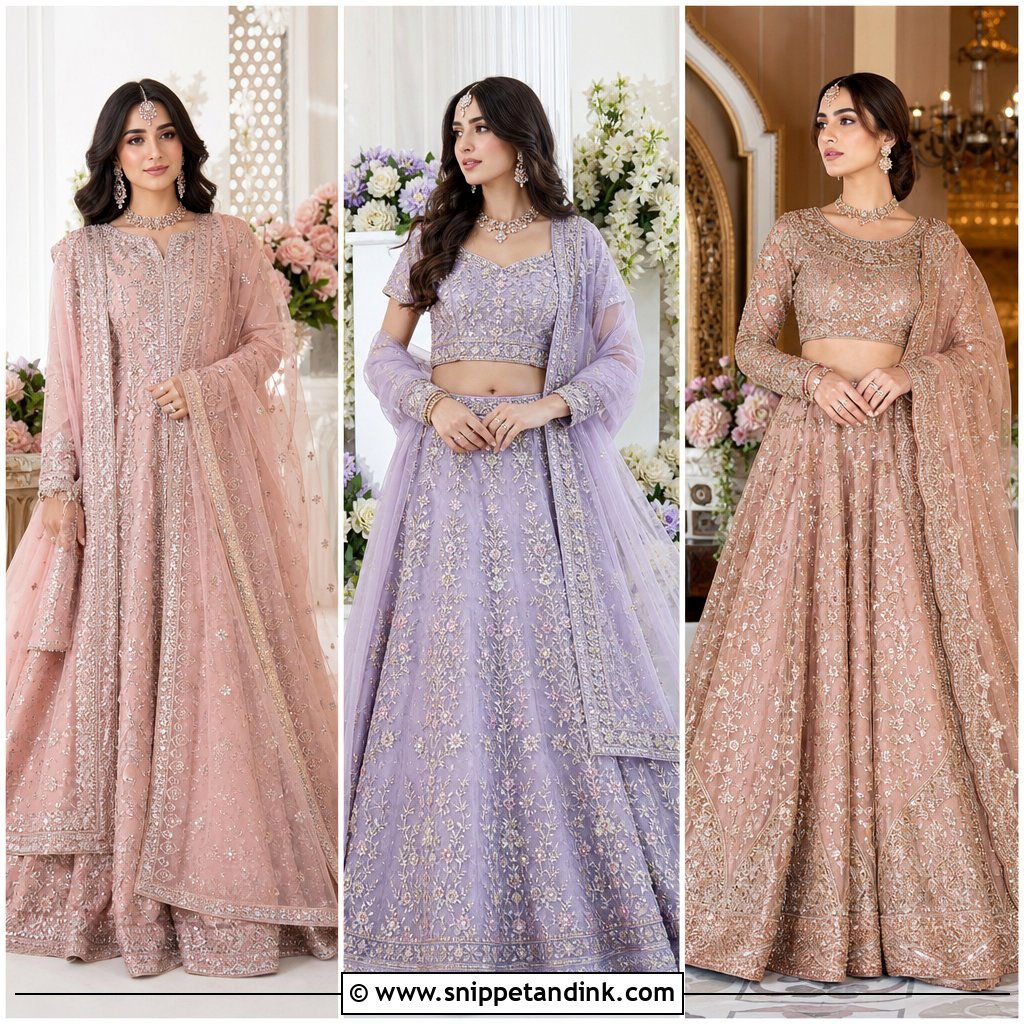
Pearl vines look delicate, but hundreds of pearls add real weight to a net skirt, so ask your designer to back the work with a sturdier lining. A blush raw silk or net lehenga with tonal threadwork and light sequins, worn with a longer blouse and full sleeves, keeps the Nikah modest. Many brides wear two dupattas with this: a pale pink one with pearl edging over the head and a lighter one across one shoulder. Rose-gold earrings, a fine choker, a small tikka and blush pumps or closed-toe flats. Loose waves or a textured bun, rosy cheeks and a mauve-pink lip.
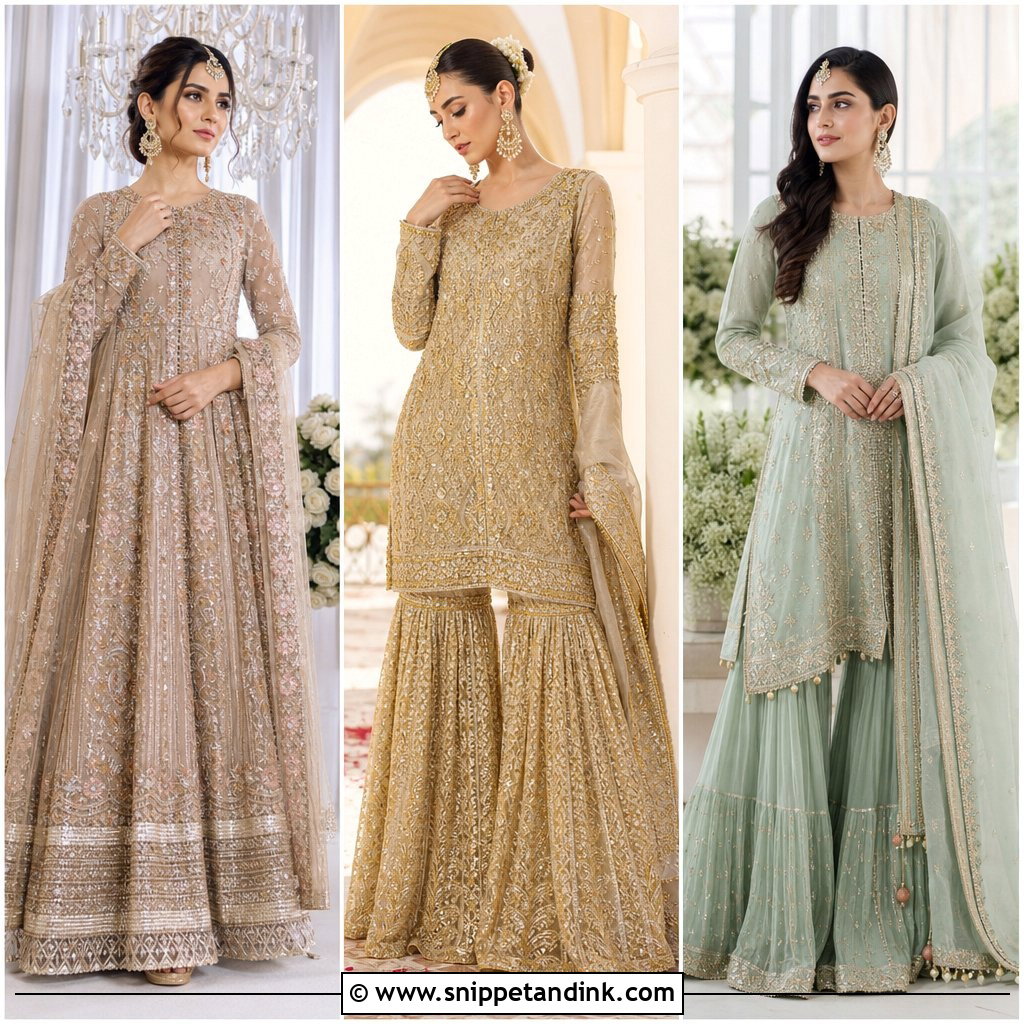
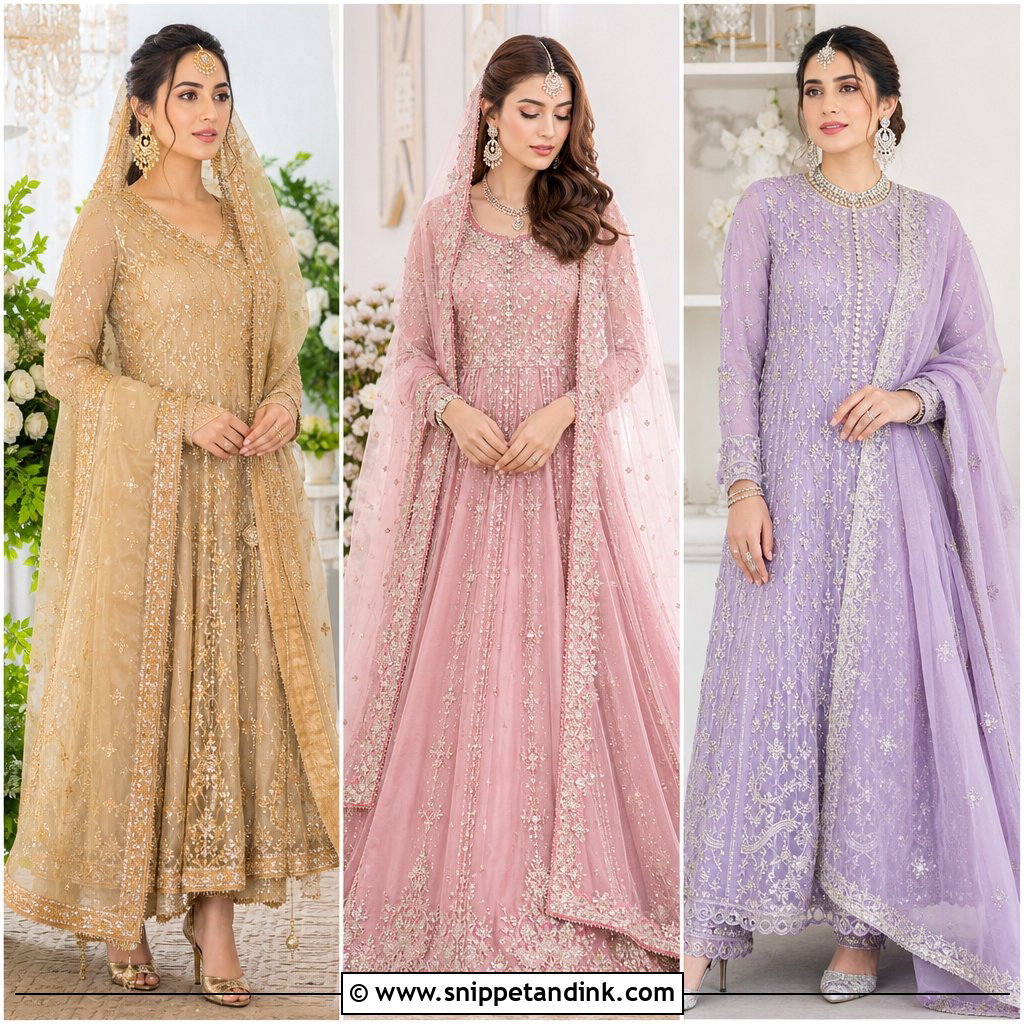
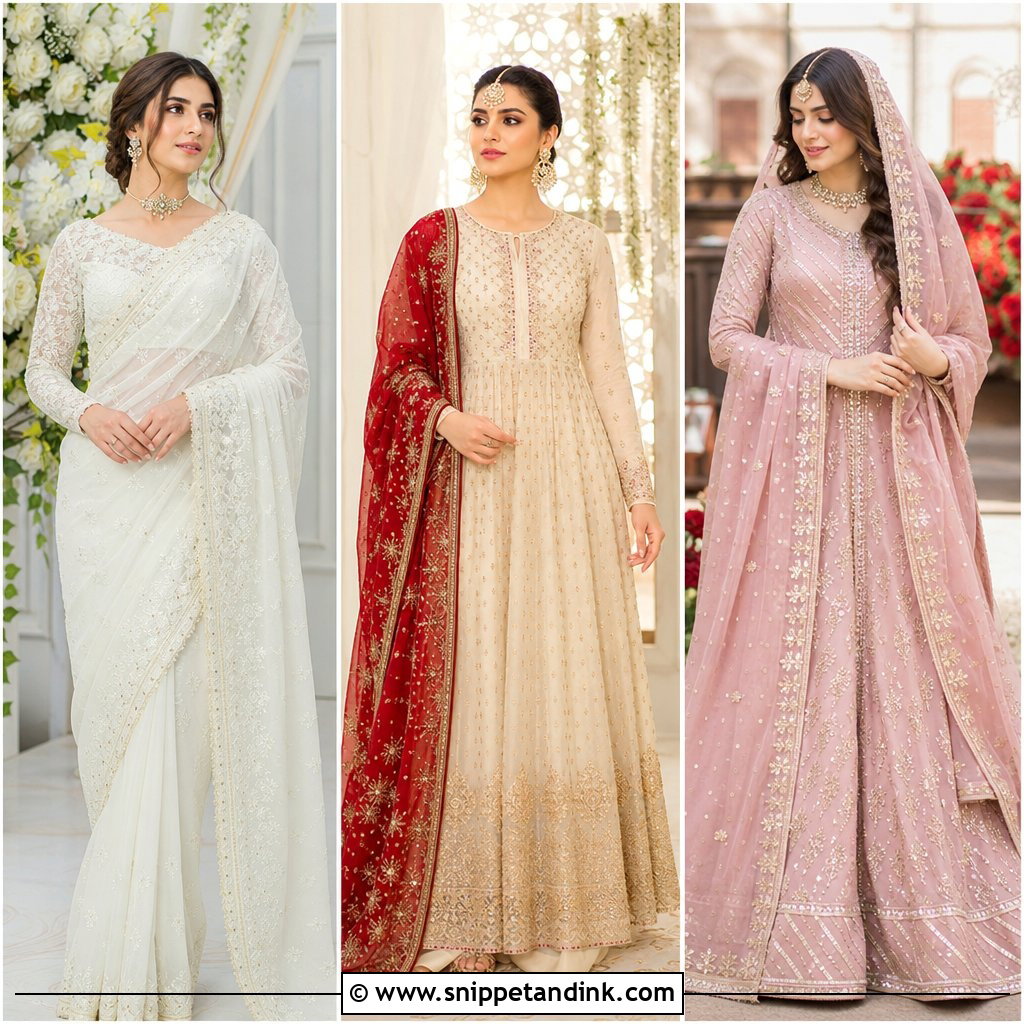
4. Champagne Angrakha Pishwas Nikah Dress
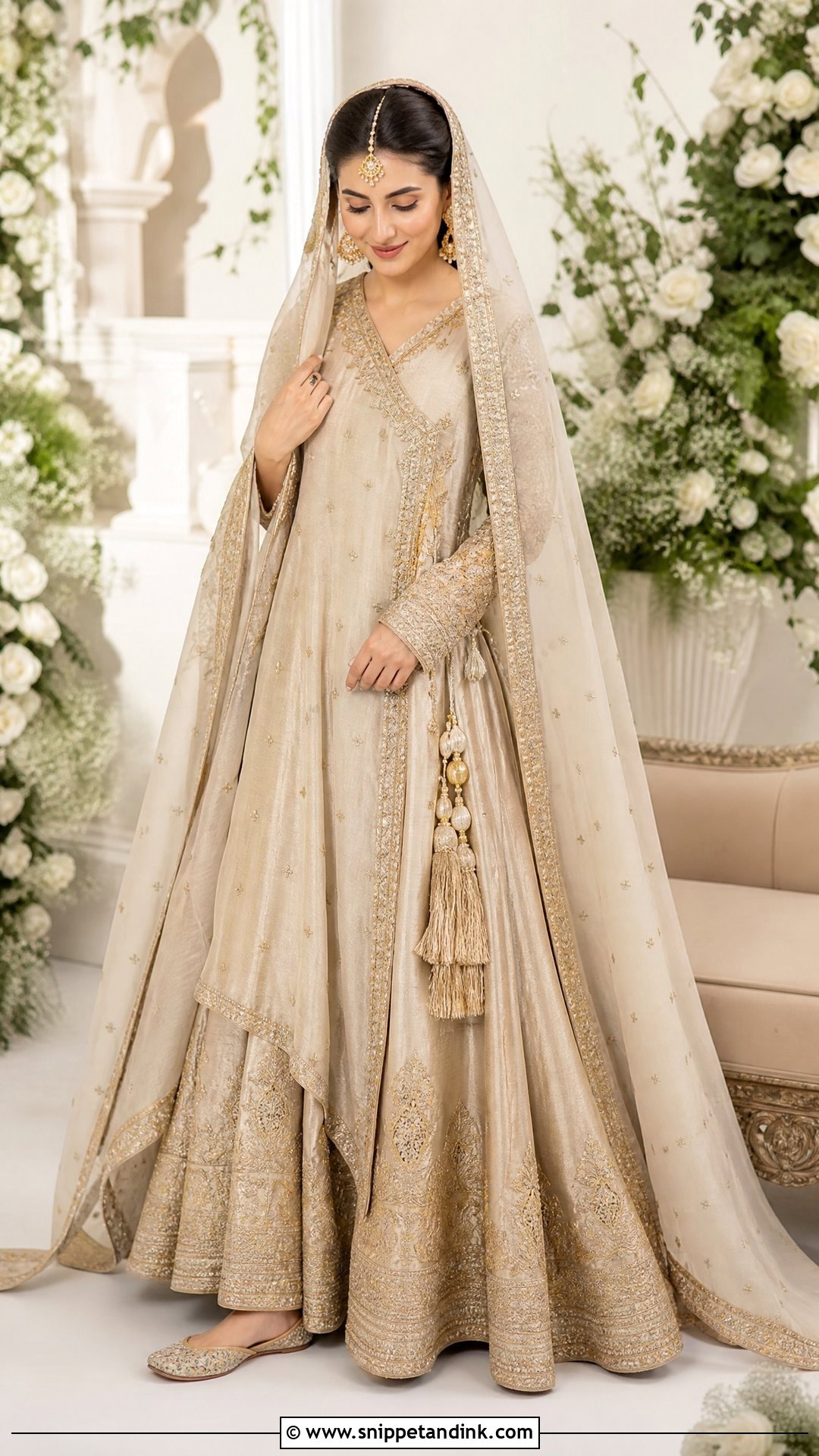
An angrakha’s crossover bodice paired with a wide kalidar skirt, cut from many long panels, gives you shape and freedom at once. On champagne I keep the antique-gold embroidery to the neckline, waist, sleeves and hem, because dense all-over work on this shade turns muddy in photos. Small tassels at the side closure are a traditional touch, though they tangle with chunky bangles, so wear slim ones. Pair it with a sheer champagne dupatta finished with kiran or a narrow velvet border. Antique-gold earrings, a classic tikka and neutral khussas. A center-parted bun and softly bronzed makeup suit an evening Nikah under bright white event lighting.
5. Sage Green Sharara Nikah Dress With Ivory Embroidery
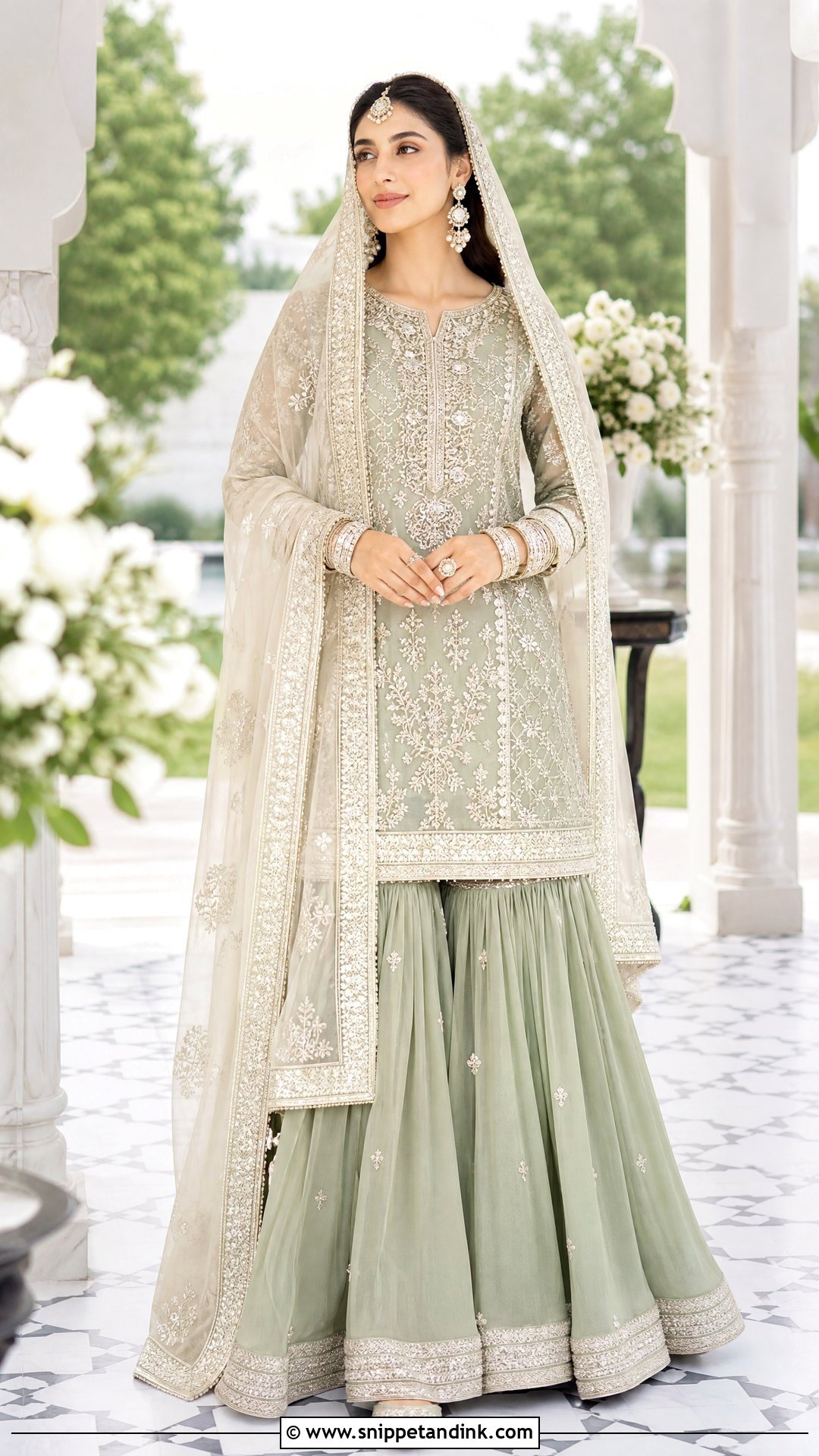
Sage green is calm, and it’s the color I suggest to brides who already know white and pink won’t feel like them. Wear a wide chiffon or georgette sharara for movement under a slightly more structured knee-length shirt with ivory resham embroidery, small pearls and a touch of silver. That difference in fabric weight matters: two soft fabrics together collapse, and two stiff ones look boxy. An ivory organza dupatta with sage appliqué at the corners connects the colors. Pearl drops, a matching tikka, a few slim bangles and ivory embroidered flats. A smooth low bun, brown eyeliner and a muted pink lip.
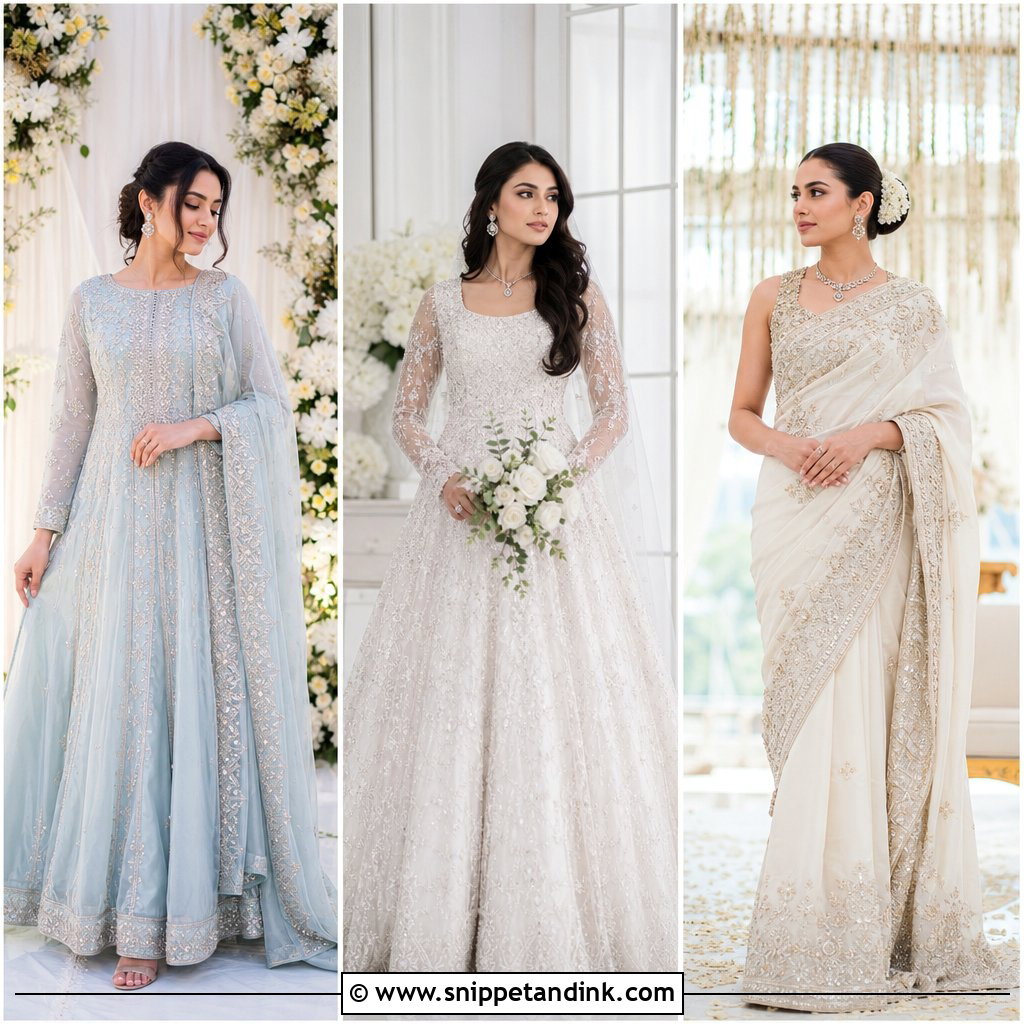
6. Powder Blue Anarkali Nikah Dress With Silver Details
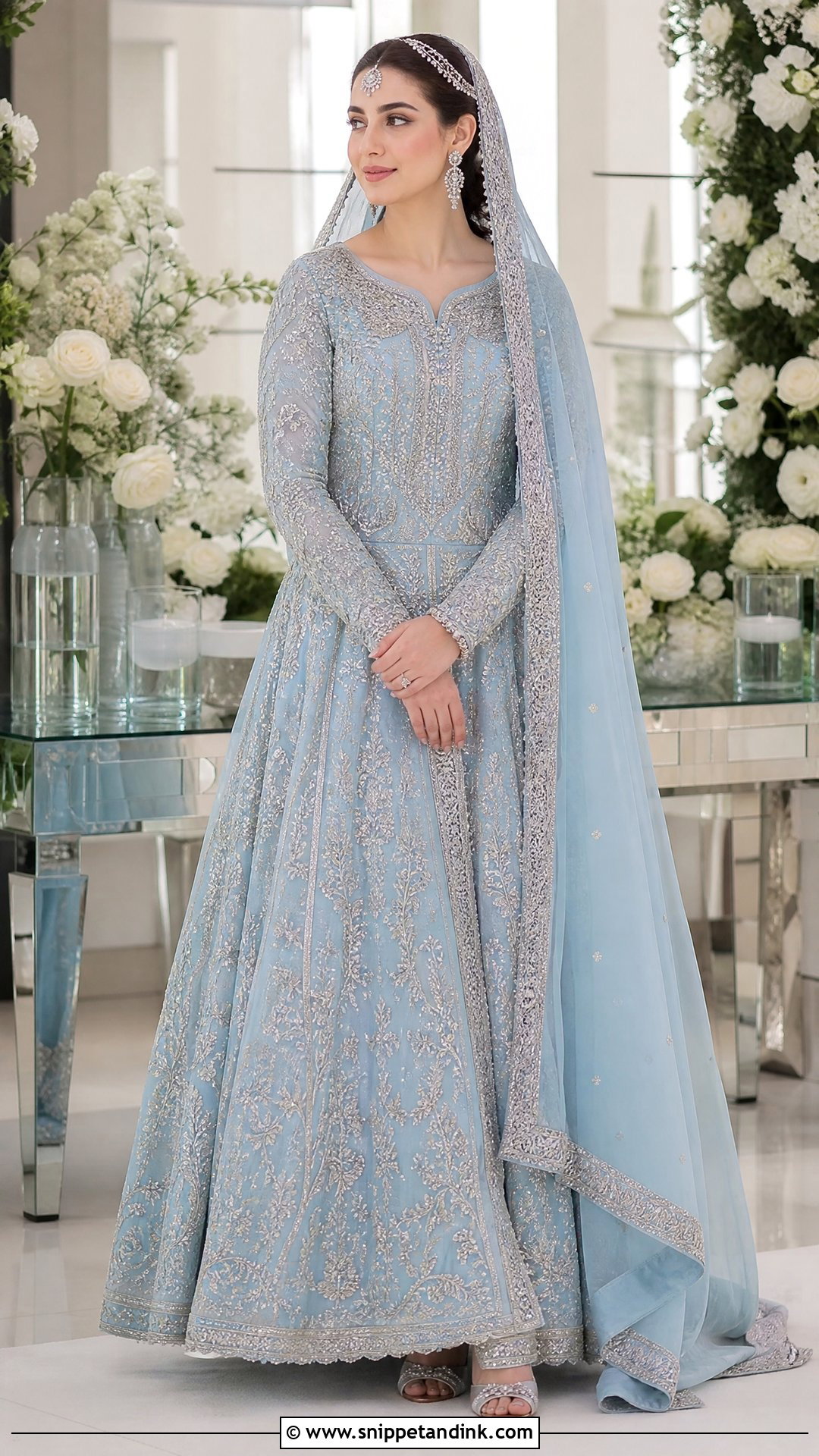
Petite brides often worry that a flared silhouette will swallow them. A full-length bridal anarkali in powder blue works if the flare starts at the natural waist and the hem isn’t cut too wide; I’d ask the tailor to take volume out rather than add it. Silver zardozi, crystal beads and fine motifs belong at the neckline and lower panels. Drape a powder blue organza dupatta edged in silver and pearl over the head and pin one end at the shoulder so you can move. Diamond-style earrings, a matha patti and silver heels. A soft bun beneath the dupatta, gray-brown eyeshadow and a pink lip.
7. Pearl White Sari Nikah Dress With Embellished Blouse
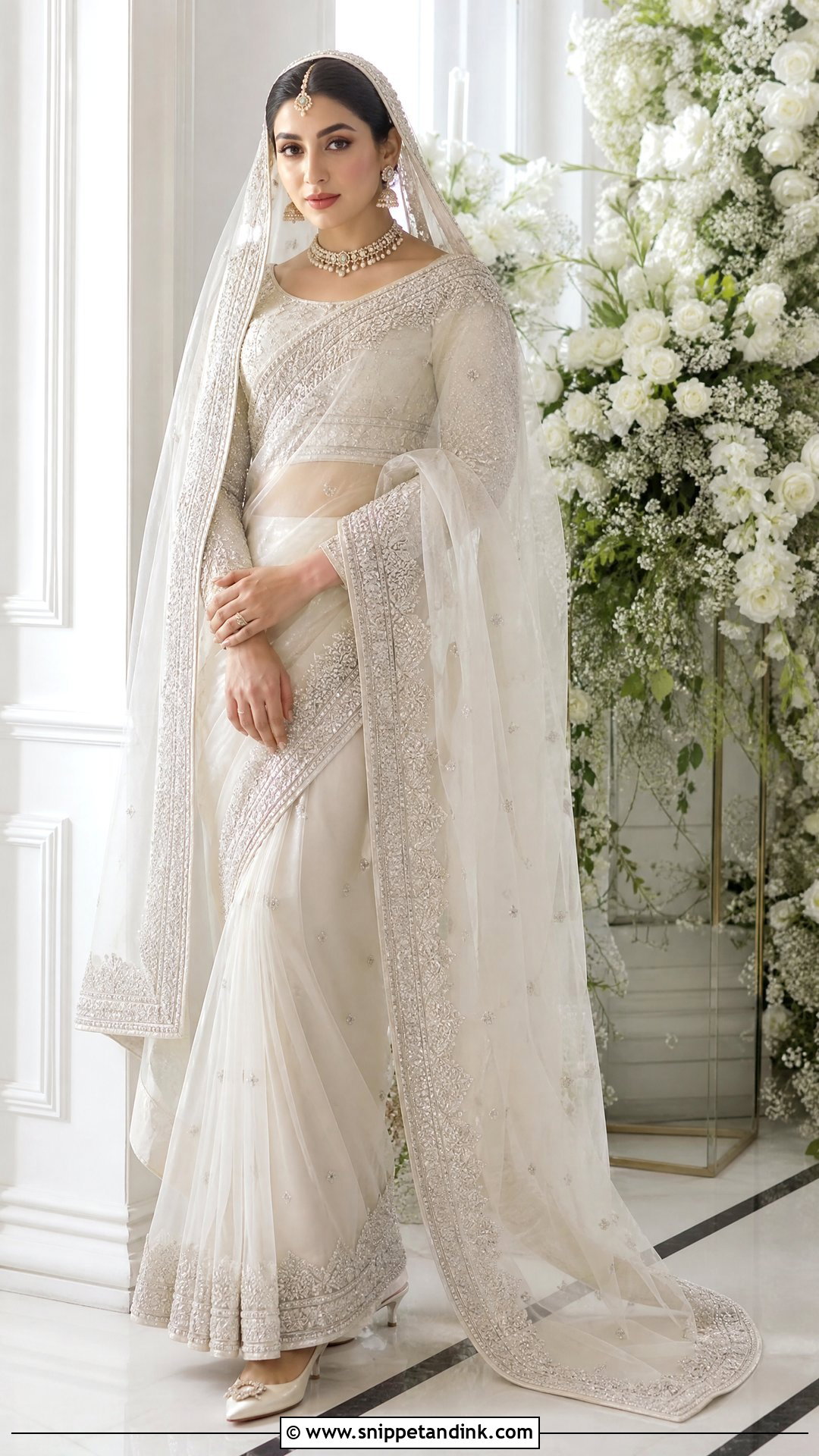
For a bride who’d rather drape than wear a big skirt, a pearl white sari in chiffon, tissue or organza with a worked border and small hand-embroidered motifs is a clean answer. The blouse makes or breaks it for a Nikah: fully lined, elbow or full sleeves, a higher neckline and pearl or silver embellishment. Wear the pallu over your head during the ceremony and let it drop to the shoulder for portraits, and practice that change at home with the pins in place. A kundan choker, pearl studs or jhumkas and a small tikka frame the face. Ivory heels lengthen the line; flats are kinder. A center-parted low bun, defined eyeliner and a soft berry-pink lip.
8. Ivory Front-Open Maxi Nikah Dress With Trail
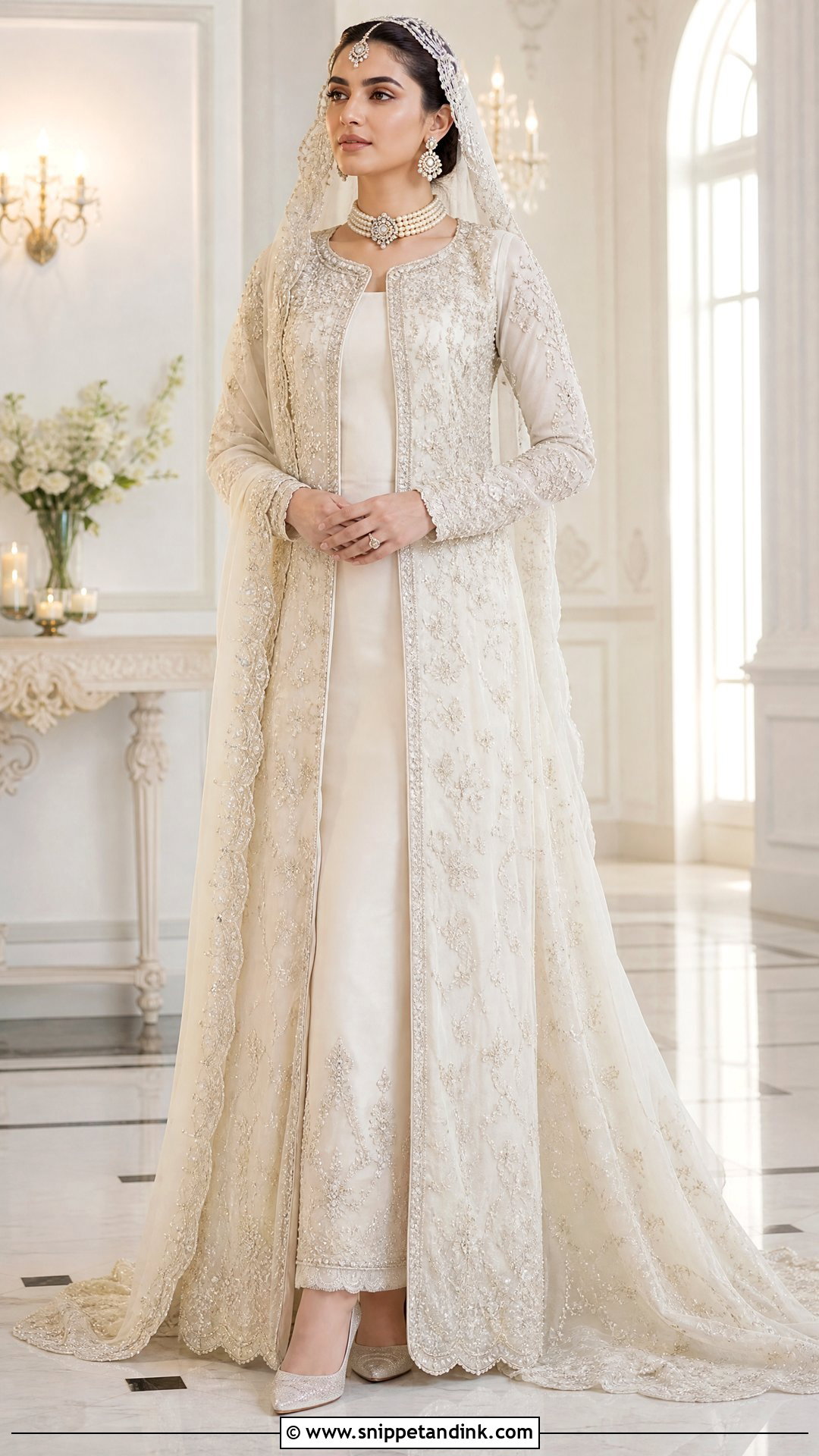
A trail looks wonderful on the walk in and becomes a nuisance the moment you sit on a floor cushion. If you want one on an ivory front-open maxi, keep it short enough to gather in one hand and ask for a hidden wrist loop. The fitted inner dress sits under a long embroidered jacket that opens from the waist or neckline, with tonal pearls, white threadwork and light gold along the panels and edges. Place the long organza dupatta over the head, kept back from the jacket’s detailed front. Pearl earrings, a slim choker, closed-toe ivory heels and a smooth, structured hairstyle. Champagne eyes and a nude-pink lip.
9. Peach Peplum Nikah Dress With Lehenga
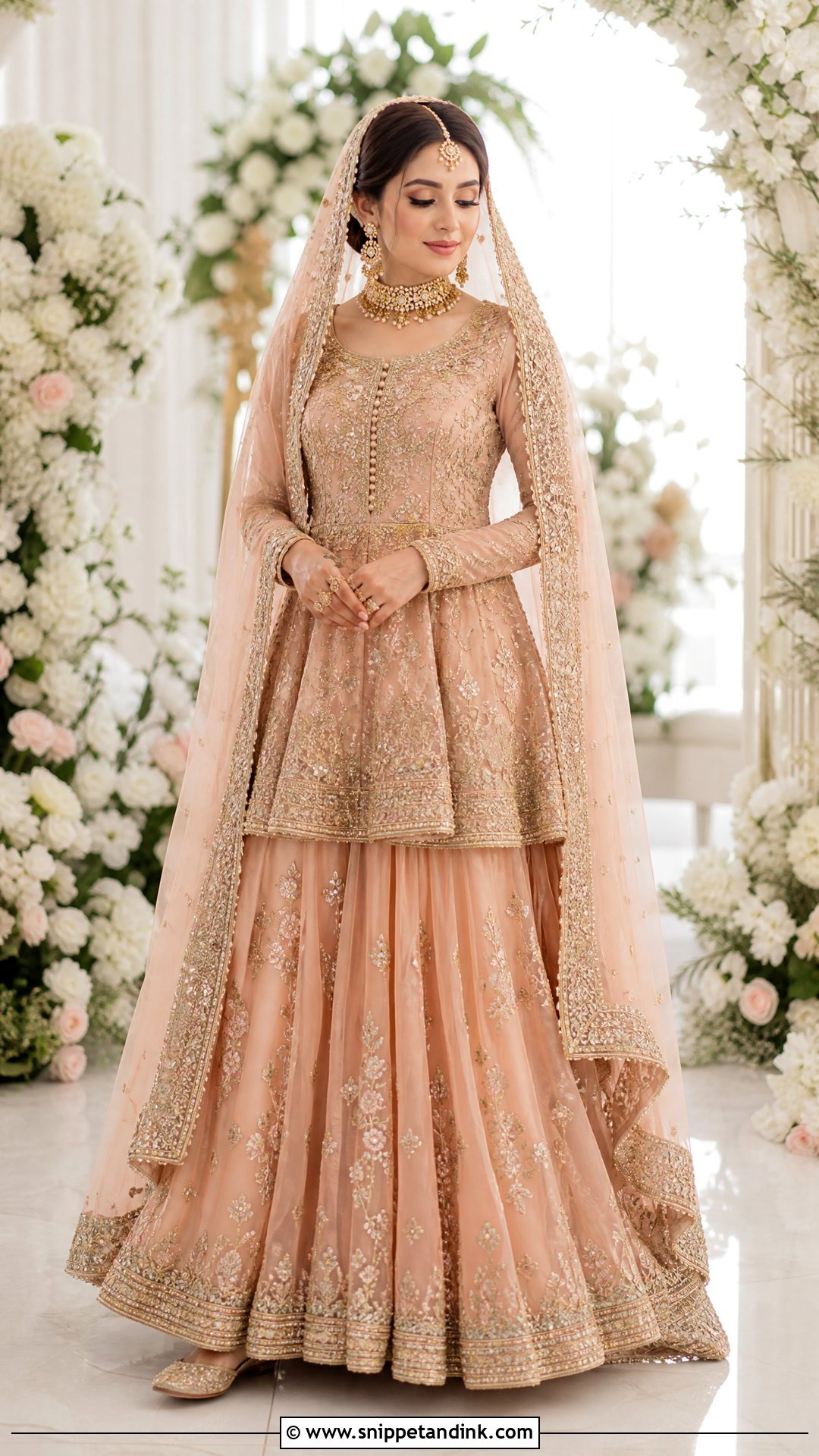
A peplum adds shape at the waist, which suits brides who feel lost in a long loose shirt. It should end just below the waist and flare gently over the lehenga; any longer and it fights the skirt’s volume. On peach, tonal embroidery, tiny pearls, gold sequins and small florals keep it right for an intimate ceremony. Drape a peach net dupatta with a narrow gold border over the head and pin it along one shoulder. A polki choker, drop earrings, a small tikka and peach-gold khussas. A textured low bun, coral blush and a peachy nude lip.
10. Lilac Kalidar Nikah Dress With Floral Embroidery
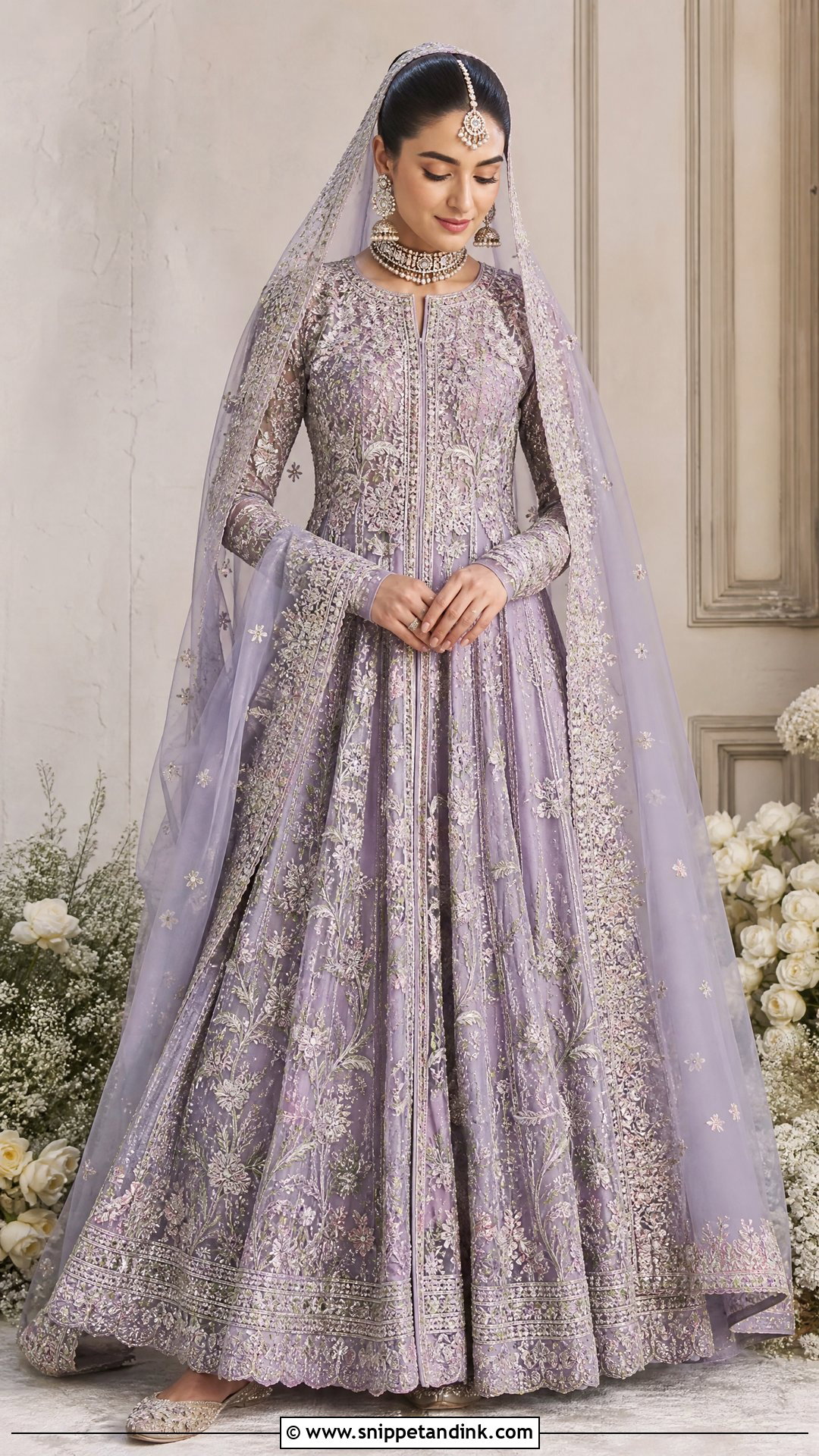
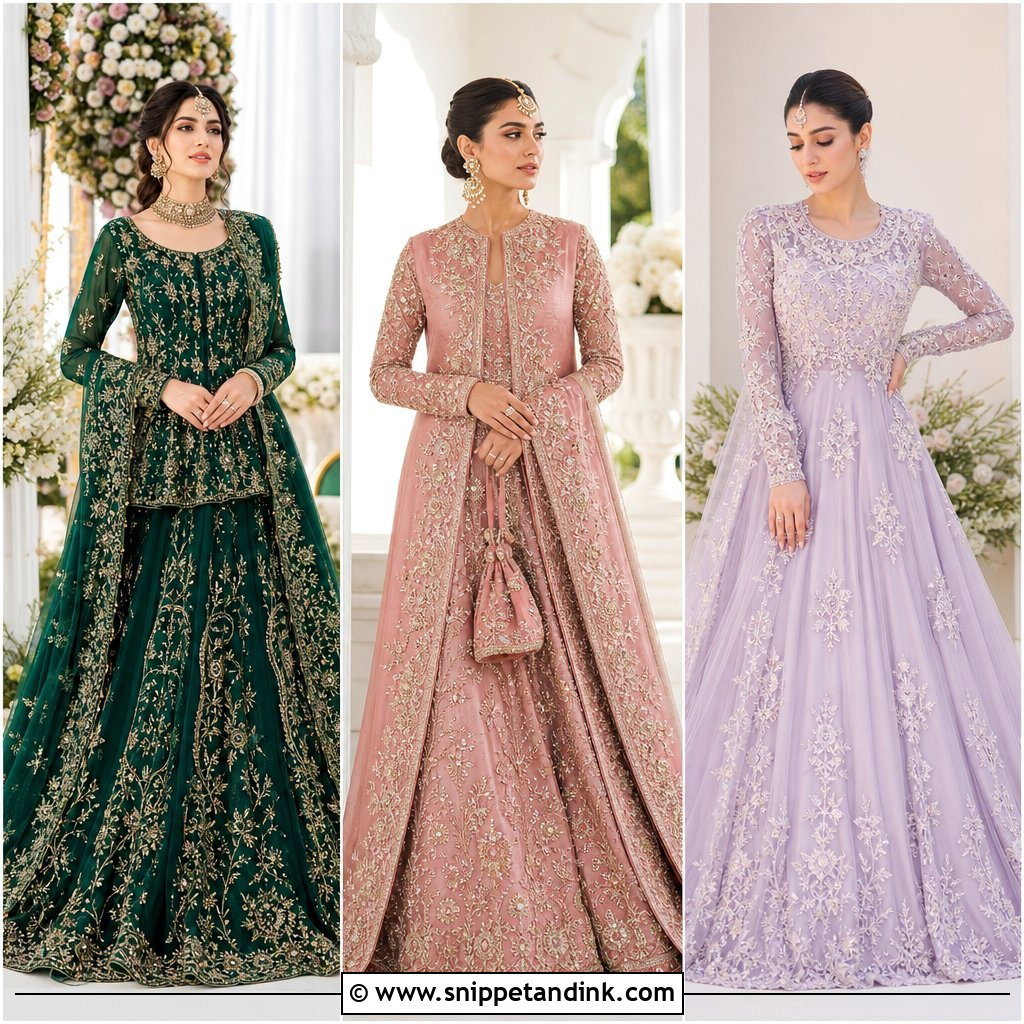
Lilac with ivory, lavender, silver and muted green florals reads light and modern on a kalidar. Full sleeves and a fitted bodice balance all those flowing panels. Add a sheer lilac dupatta scattered with tiny sequins and finished with an embroidered border, plus silver jhumkas, a dainty choker and a central tikka. If the dress already brushes the floor, wear flats: heels under a kalidar hem mean stepping on your own skirt every time you stand. A soft bun with a few face-framing strands, mauve eyeshadow and a cool pink lip. It sits nicely against ivory flowers and neutral decor.
11. Mint Green Farshi Gharara Nikah Dress
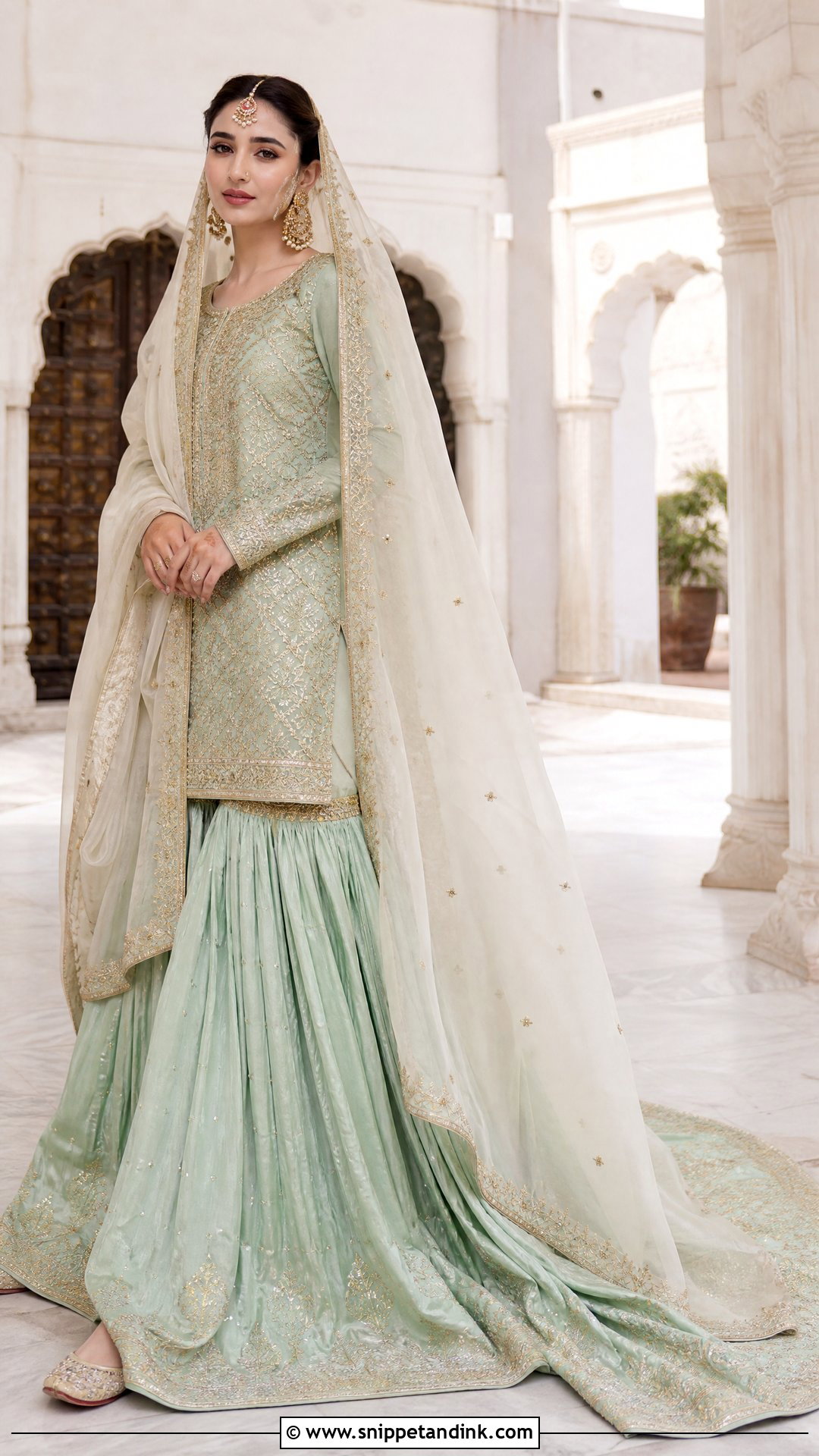
A farshi gharara is the grandest silhouette here, and the most work to walk in. Cut from silk, tissue or jamawar, it keeps its shape as it spreads along the floor. The mint is fresh, while the fitted short shirt with gold zardozi, resham flowers and pearl highlights brings it back to ceremony. An ivory dupatta over the head gives a clear bridal focus. Antique-gold earrings, a traditional passa, a small nath if you like and embroidered khussas. Ask for an internal loop or discreet lifting point, then practice walking in it on a hard floor before the day. A sleek bun, warm gold eyeshadow and rosy lipstick.
12. Beige Raw Silk Lehenga Nikah Dress
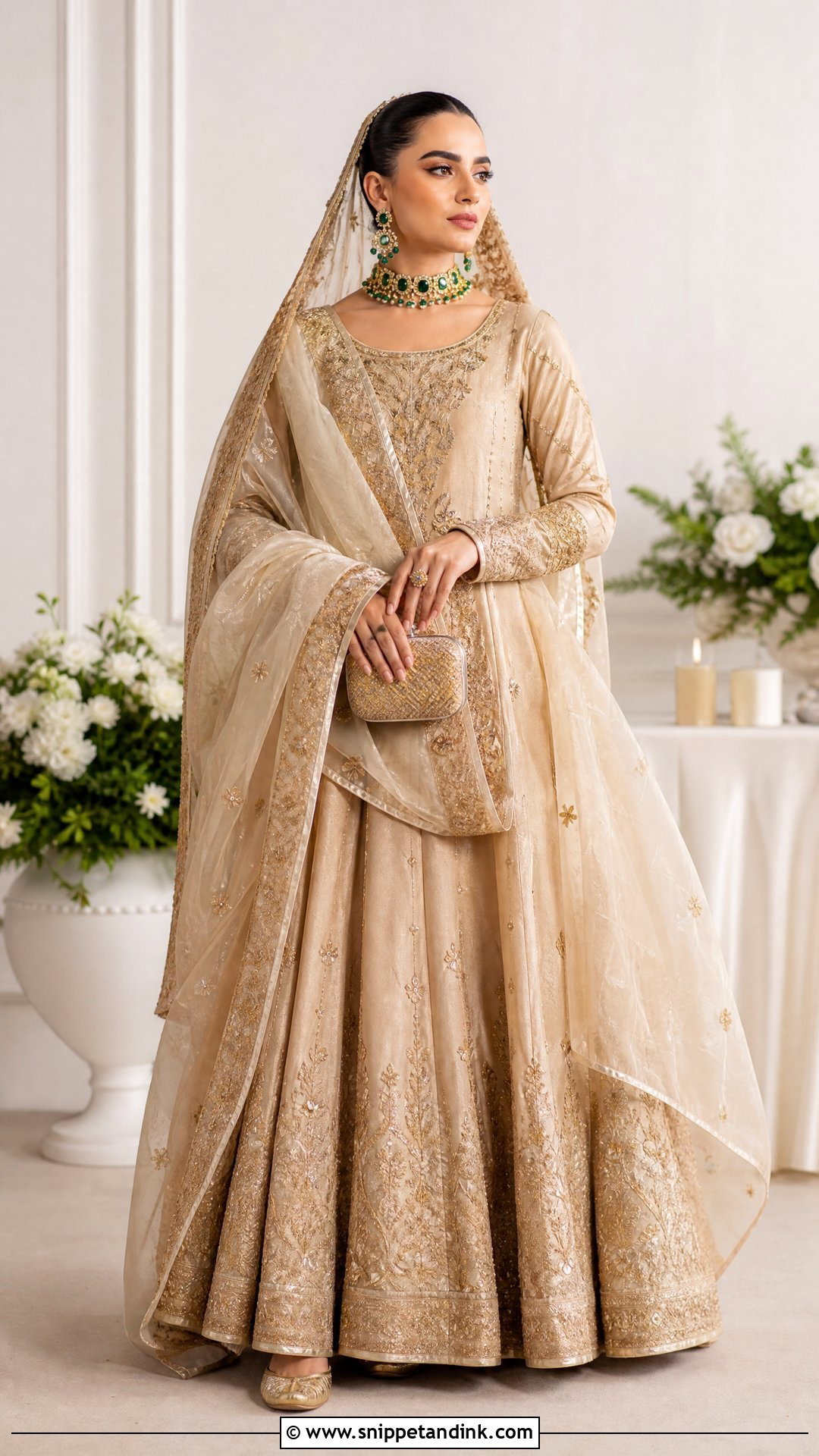
Beige raw silk has a slight slubbed texture, so a neutral looks rich instead of flat. Concentrate the antique-gold embroidery along the border and let lighter motifs scatter upward. A longer blouse with fitted sleeves and a modest neckline balances the paneled skirt. Wear an ivory or beige organza dupatta with gold edging over the head, and a second across the front if you like layers. This is the outfit where colored stones earn their place: emerald earrings or a green-stone choker give the neutrals some contrast. Gold heels or khussas, a compact clutch, a smooth bun, bronze eyes and a rose-brown lip.
13. Dusty Rose Long Shirt Nikah Dress With Sharara
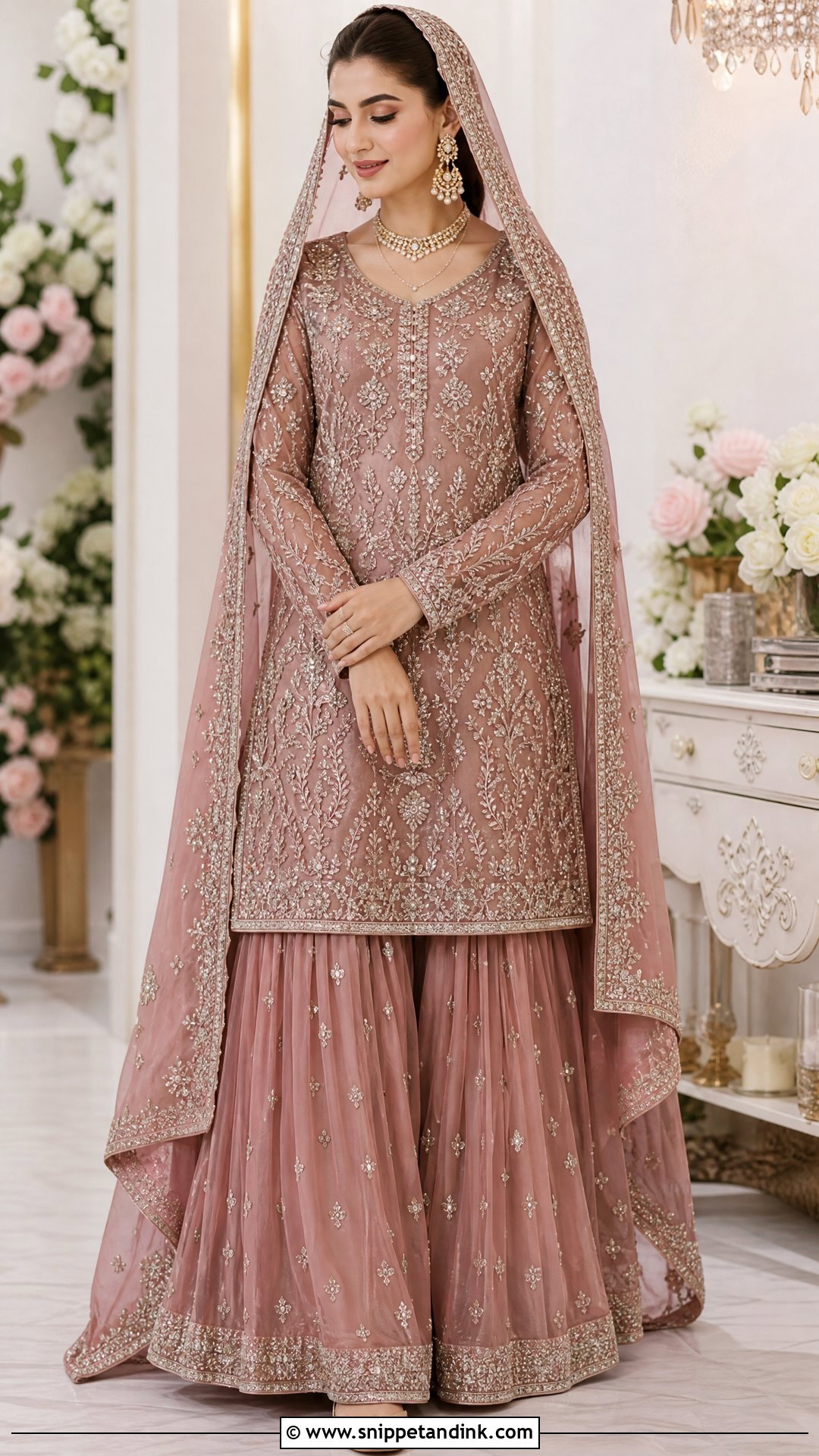
A long shirt over a sharara skips the conventional bridal silhouette altogether. The shirt should fall below the knee, straight or lightly flared, with vertical embroidery to lengthen the line, and the sharara should match it in chiffon, georgette or silk. Fine silver threadwork, pearls and muted florals give it enough ceremony detail. Let the dusty rose dupatta’s embroidered border frame your face, and add pearl-and-kundan earrings, a delicate layered necklace and rose-gold flats. A loose low bun or soft side waves, softly smoked eyes and a neutral mauve lip. Check that the side slits are deep enough for you to sit cross-legged.
14. Silver Gray Organza Pishwas Nikah Dress
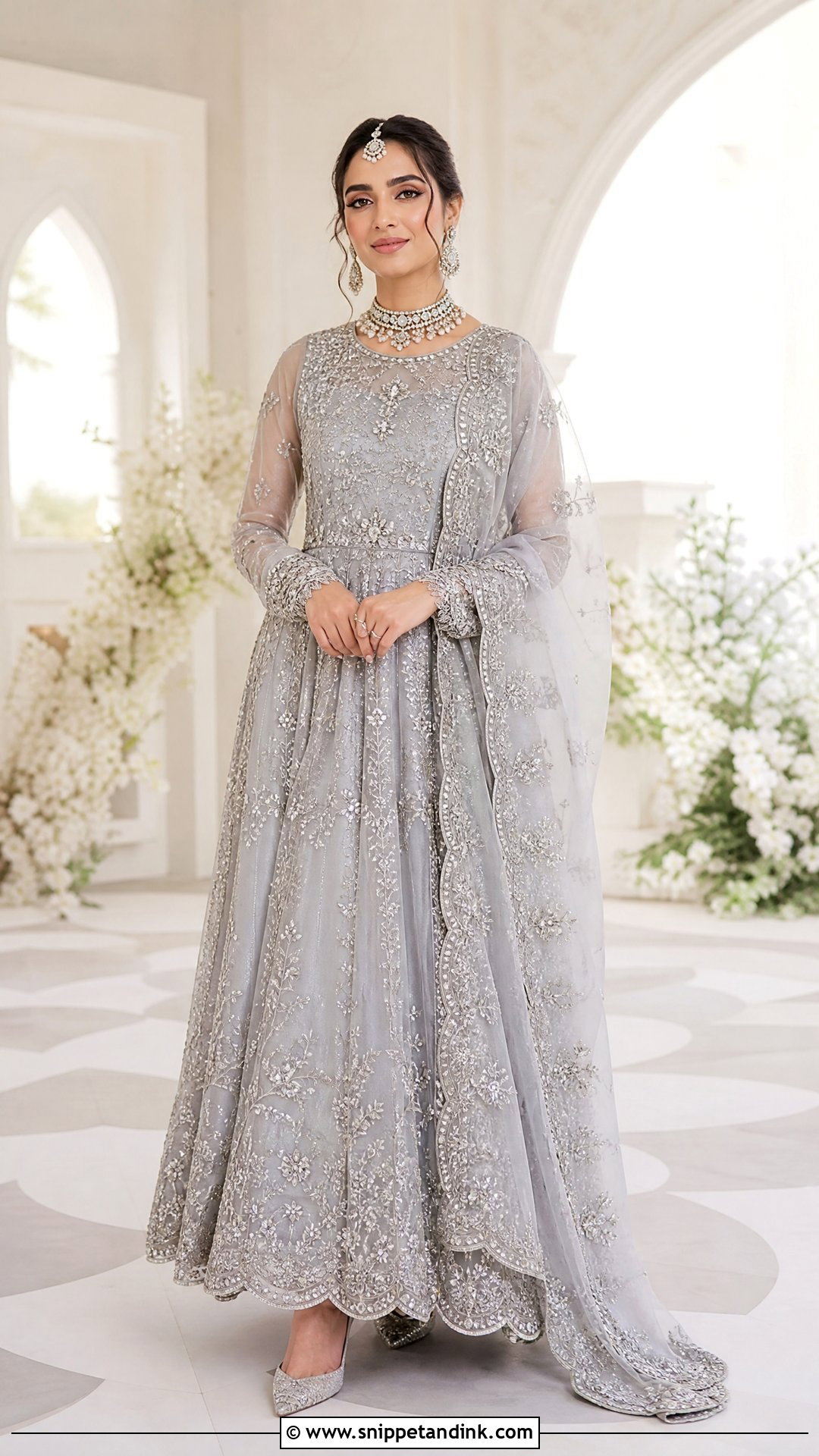
Organza is crisp and slightly sheer, so the full lining isn’t optional on a silver gray pishwas; without it the skirt shows light straight through. Silver thread, clear crystals and tiny pearls at the neckline, sleeves and wide hem keep the shine tonal. Organza also creases sharply when crushed, so travel to the venue with the skirt spread out rather than bunched on a car seat. Pin the matching scalloped dupatta over the head without hiding the bodice. Diamond-style earrings, a fine silver choker and a small tikka. Pointed pumps for indoors, embellished flats outdoors. A sleek low bun, cool neutral makeup and a pink-nude lip.
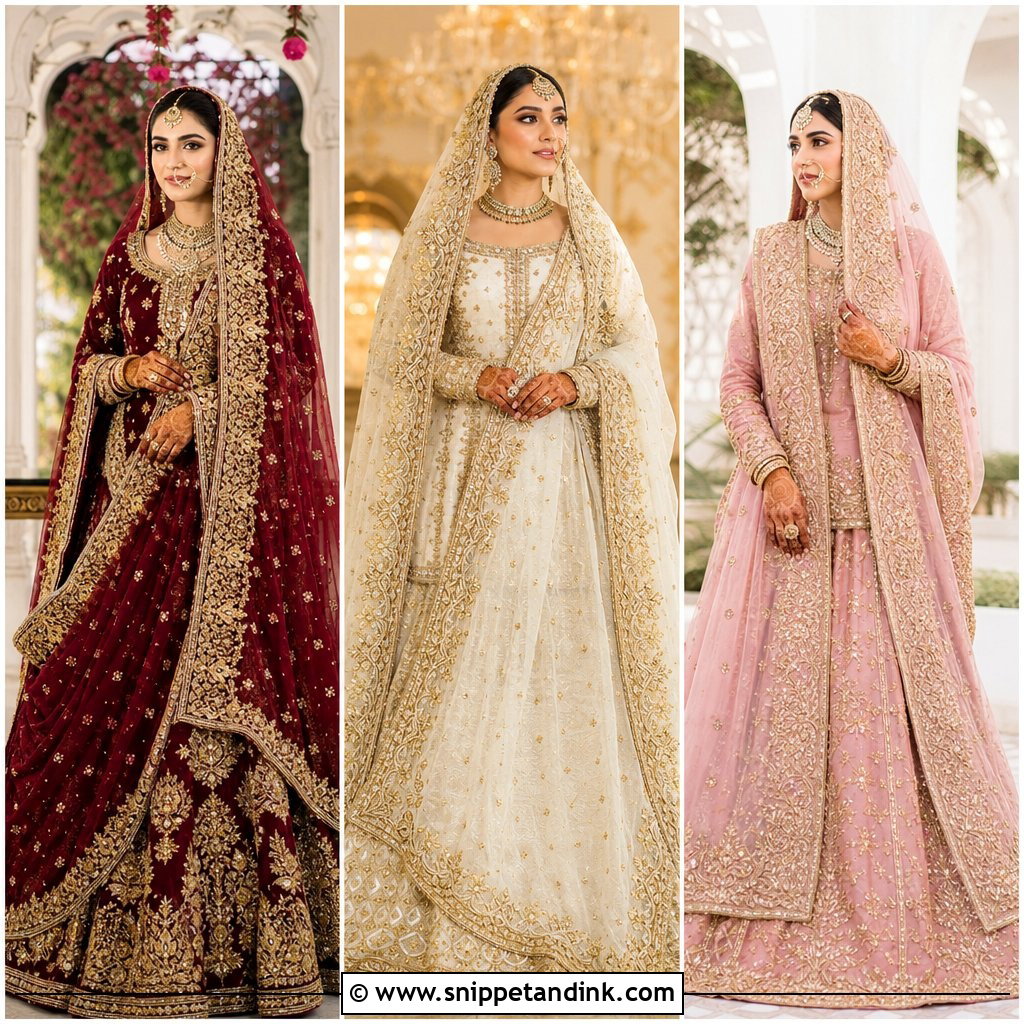
15. Traditional Red Lehenga Nikah Dress With Gold Work
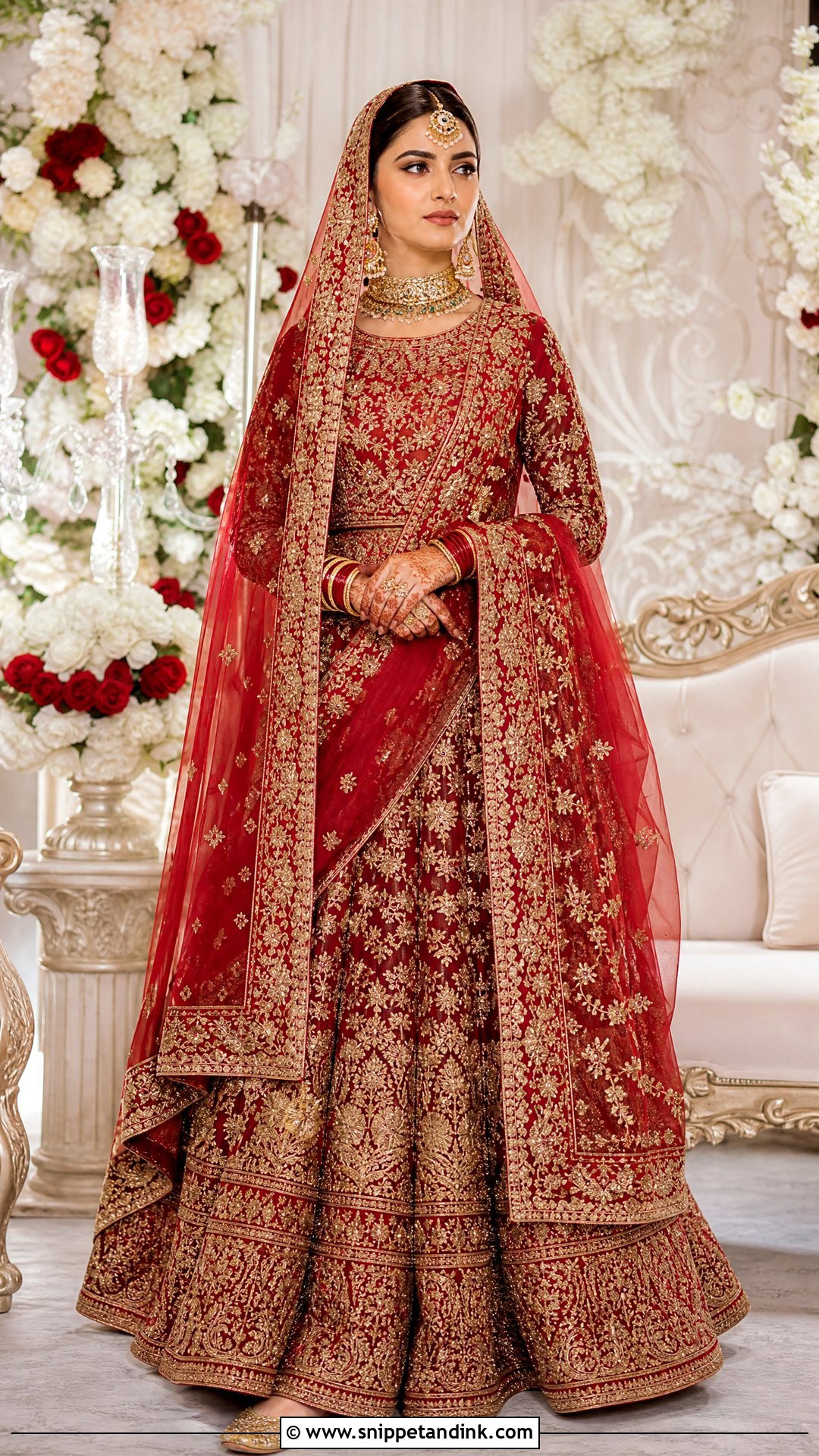
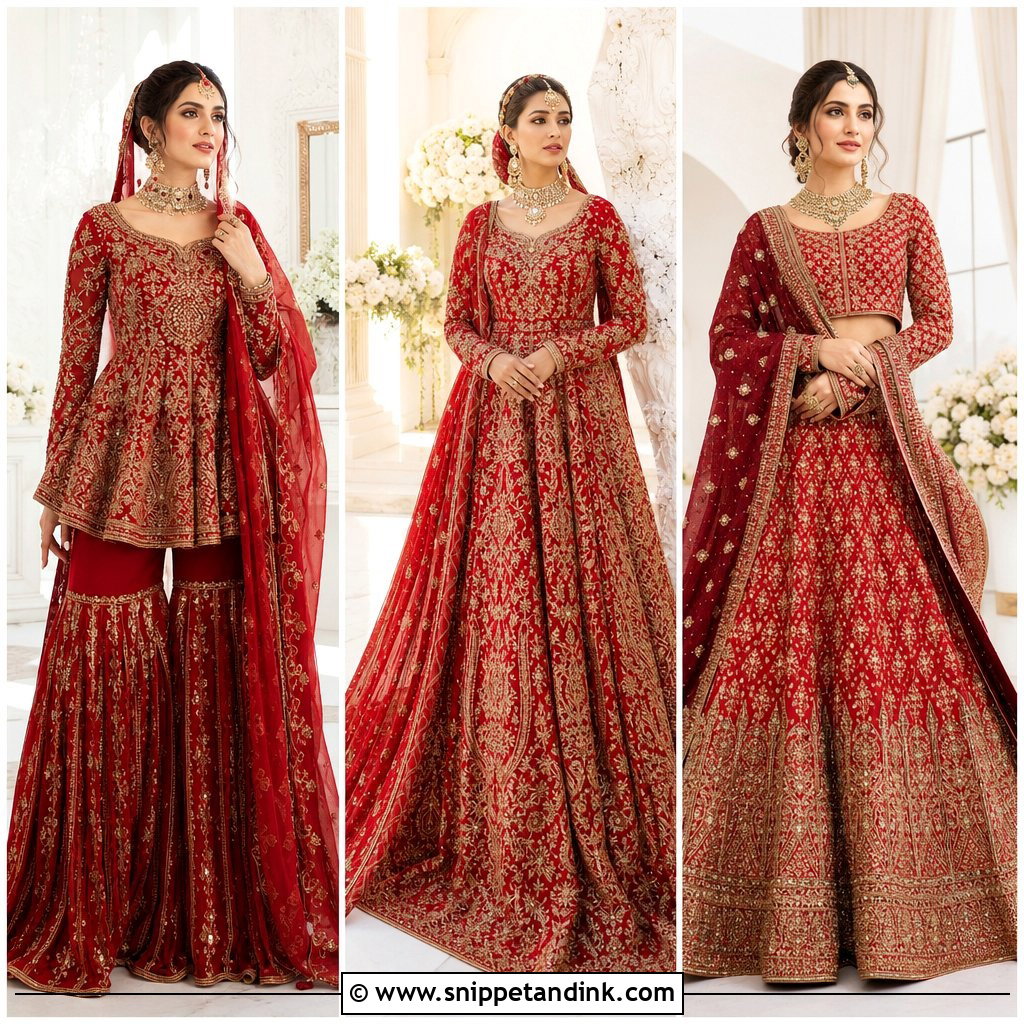
Some brides want the Nikah, not the Barat, to be the deeply traditional moment, and red does that. Choose crimson or a classic bridal red lehenga with gold zardozi, dabka and resham arranged in balanced borders rather than covering every inch; you’ll be seated for a long time, and heavy all-over work is tiring to carry. A modest choli or longer blouse with full sleeves suits the ceremony. Put a red organza dupatta with a gold border over the head and drape a lighter second one at the front. A kundan choker, jhumkas, a tikka, red-and-gold bangles and khussas. A center-parted bun, defined eyes and a muted red or rose-brown lip.
16. Maroon Velvet Gharara Nikah Dress
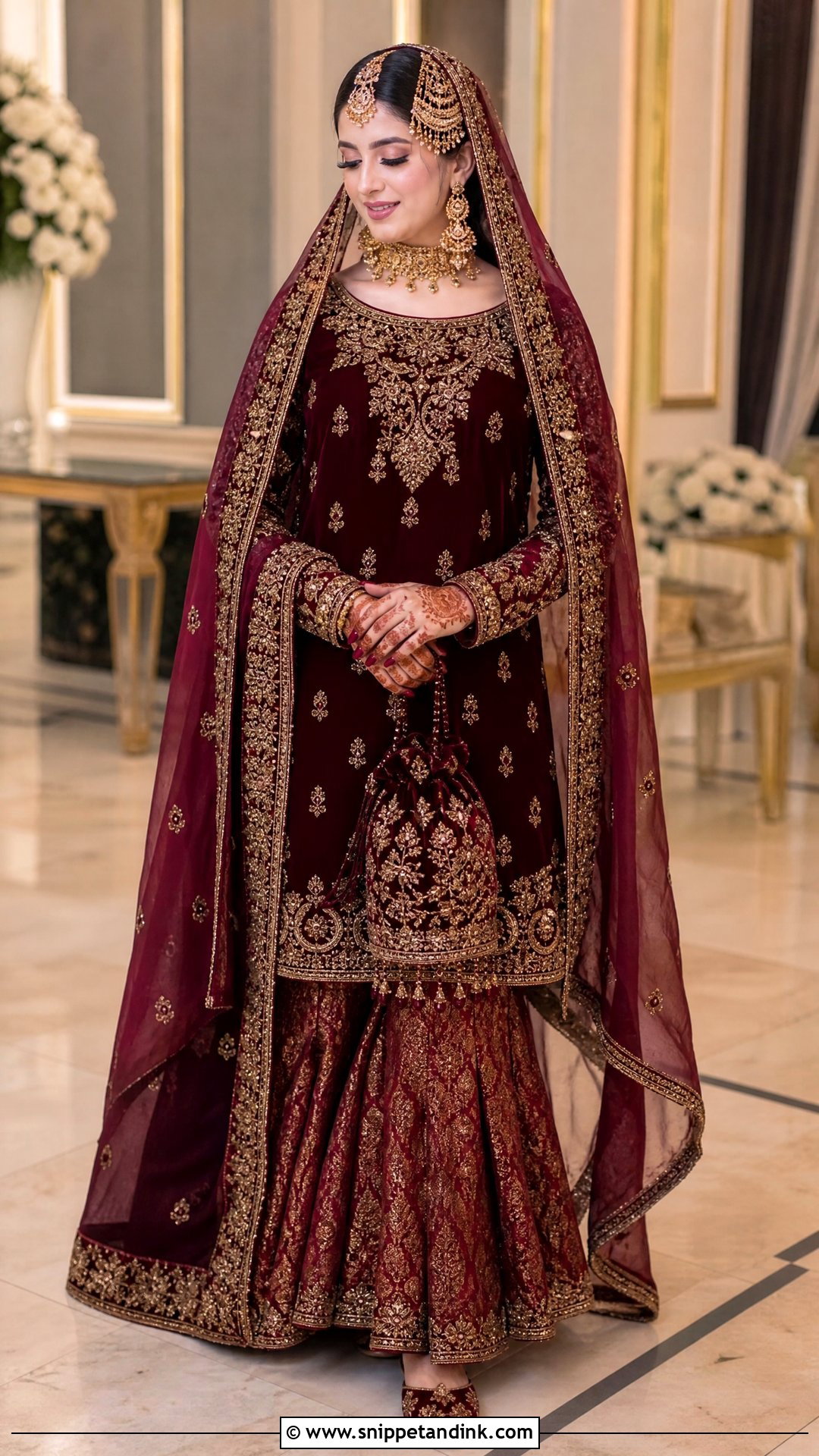
A velvet kameez over a raw silk or jamawar gharara mixes two textures, and that contrast is what gives maroon its depth. It’s cool-weather clothing; in a warm room it’s a lot. Antique-gold embroidery at the neckline, cuffs, shirt hem and gharara joint looks luxurious without sparkle. Choose a lighter organza or tissue dupatta, since a heavy head covering on top of velvet slides and pulls at the pins. Gold jhumkas, a passa, a choker and velvet khussas. A clean bun gives those pins somewhere to anchor. Bronze eyes and a deep rose lip, for an evening ceremony indoors.
17. White Bridal Suit Nikah Dress With Long Dupatta
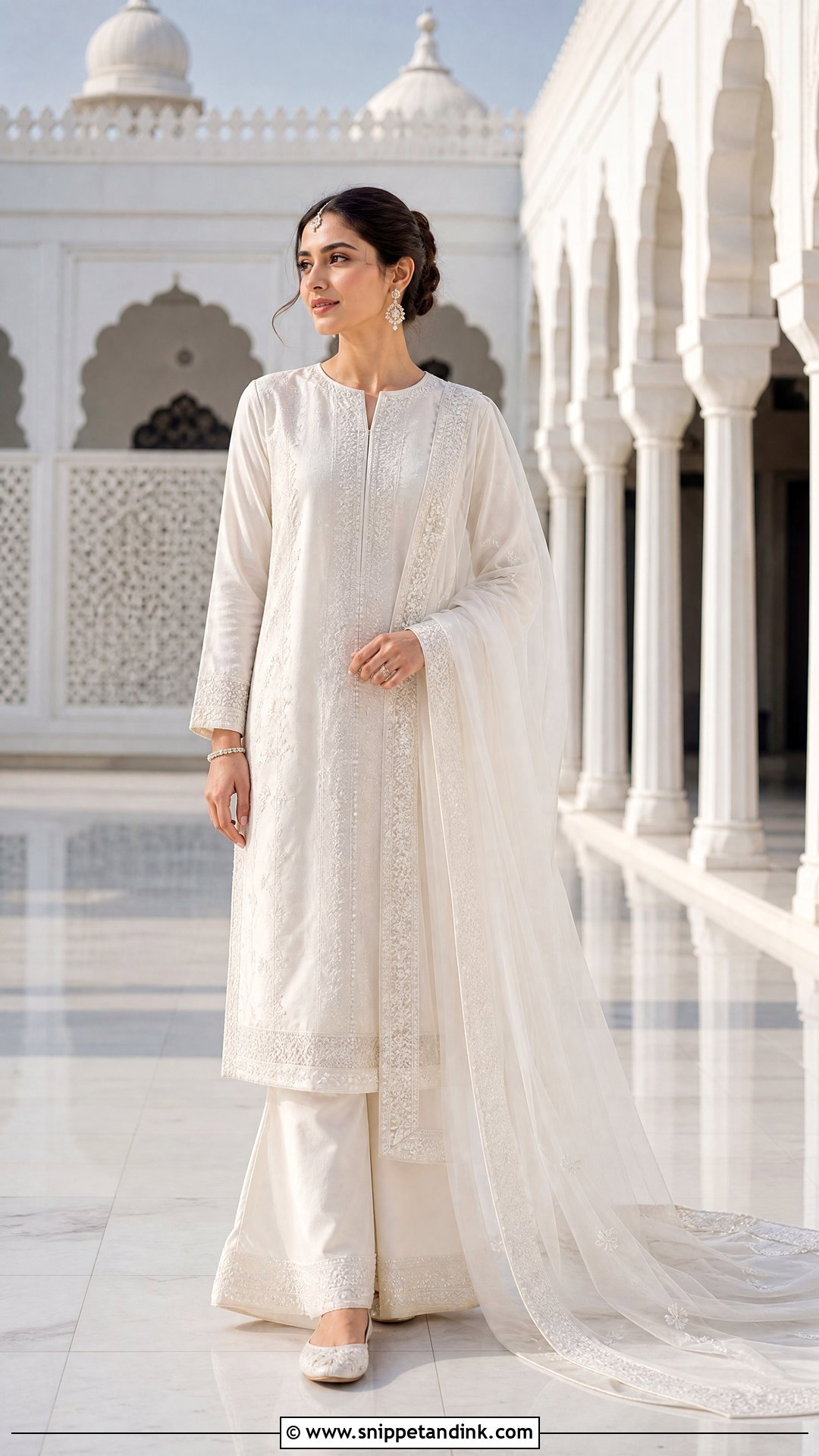
For a simple Nikah at home or at a mosque, a white suit is the most practical outfit on this list. Start with a straight calf-length kameez in raw silk or embroidered cotton net, over slim trousers or a softly flared shalwar. White-on-white threadwork, pearls and a restrained silver border make it bridal. A long organza dupatta with embroidered edges can trail slightly behind you, though at a mosque I’d keep it shorter. Pearl earrings, a slim bracelet, a tiny tikka and white embroidered flats. A low bun or neat waves, fresh skin and a pink-beige lip.
18. Floral Pastel Lehenga Nikah Dress
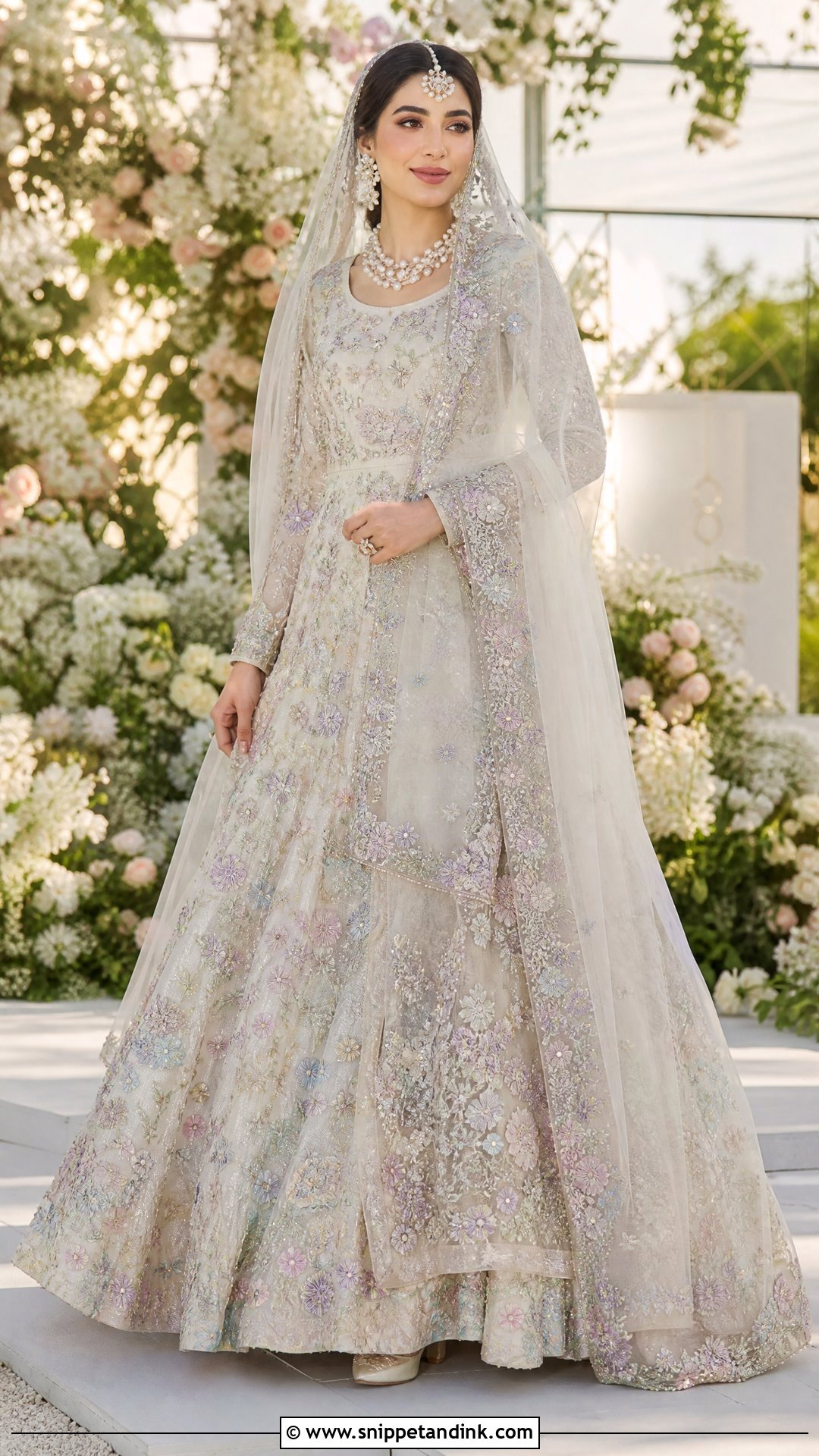
Several pastels in one lehenga suit a bride who can’t settle on a single shade. An ivory, blush or pale peach base with flowers in lilac, mint, powder blue and muted pink carries it. With that much going on below, the blouse should stay simple, with small florals at the neckline and sleeves, and the dupatta should be plain organza with only a floral border. Pearl earrings, a delicate necklace, a floral tikka and ivory heels or khussas. A soft bun with a few fresh flowers to echo the embroidery, subtle shimmer on the eyes and a pink lip. It suits a garden Nikah.
19. Gold Tissue Sari Nikah Dress
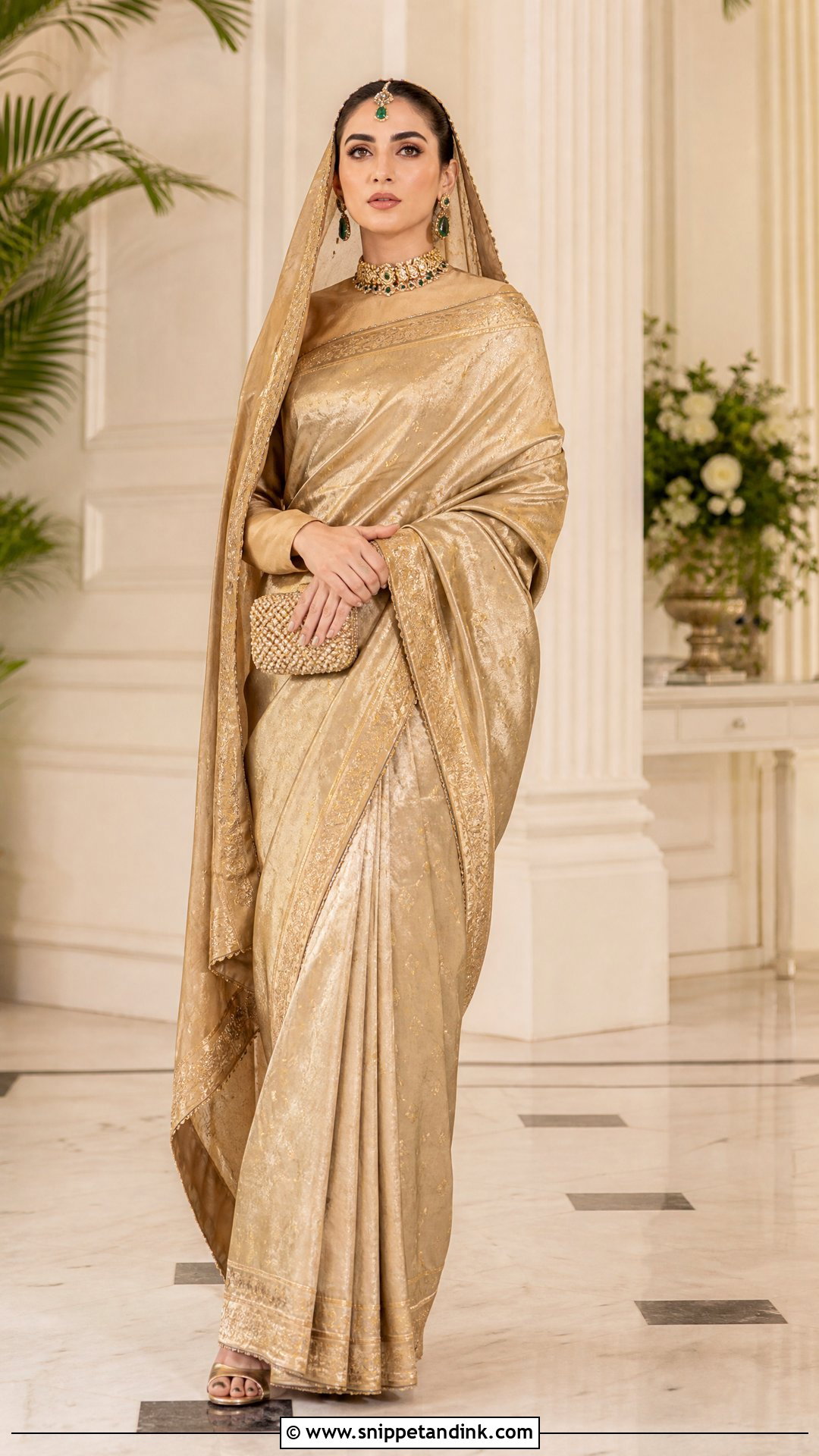
Tissue is silk woven with metallic thread, so it shimmers before any embroidery is added. Pick a soft antique gold over bright yellow gold. A woven border, fine zari motifs or light pearl work is enough decoration. The blouse should be fully lined raw silk with longer sleeves and a higher neckline. Tissue is slippery, so the pallu over your head will need two or three discreet pins, not one. Emerald earrings, a kundan choker and a small green-stone tikka add classic contrast. Gold heels, a beaded clutch, a neat low bun, bronze eyes and a warm rose lip.
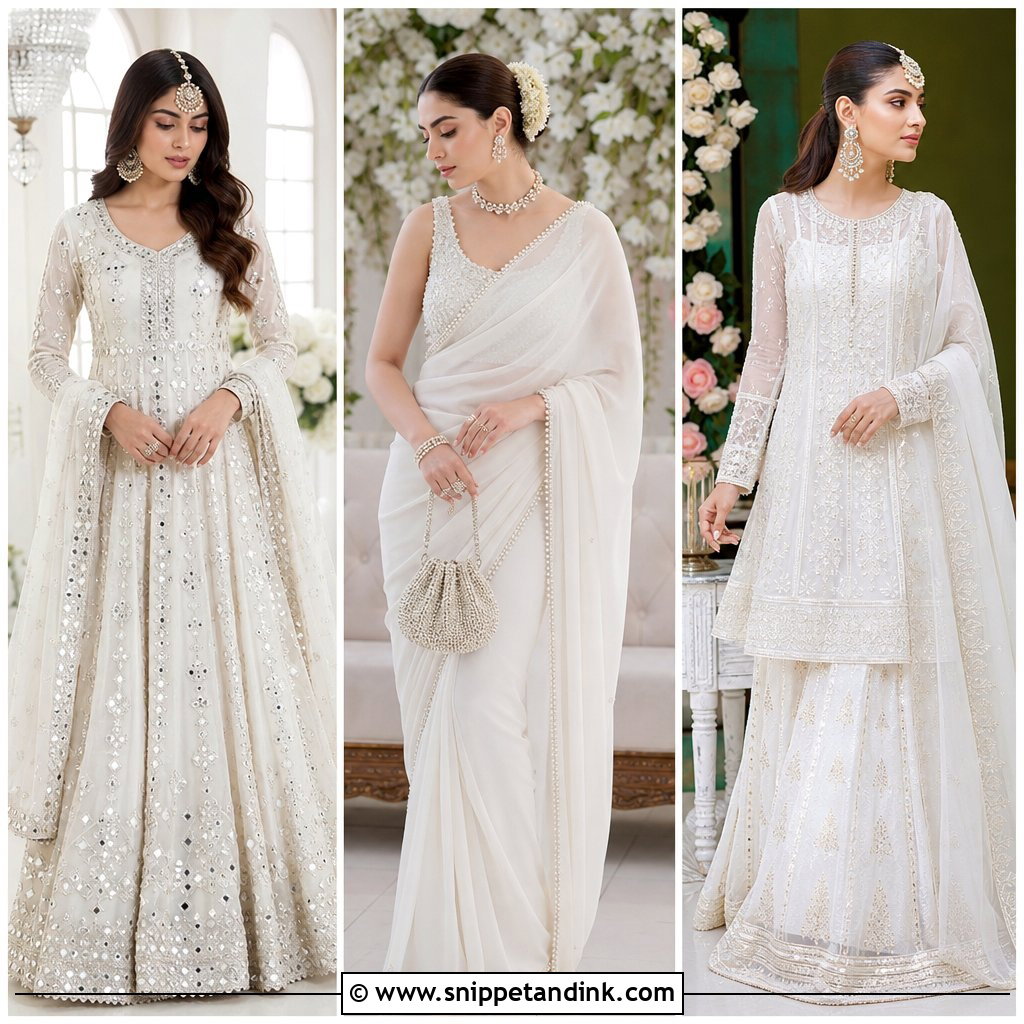
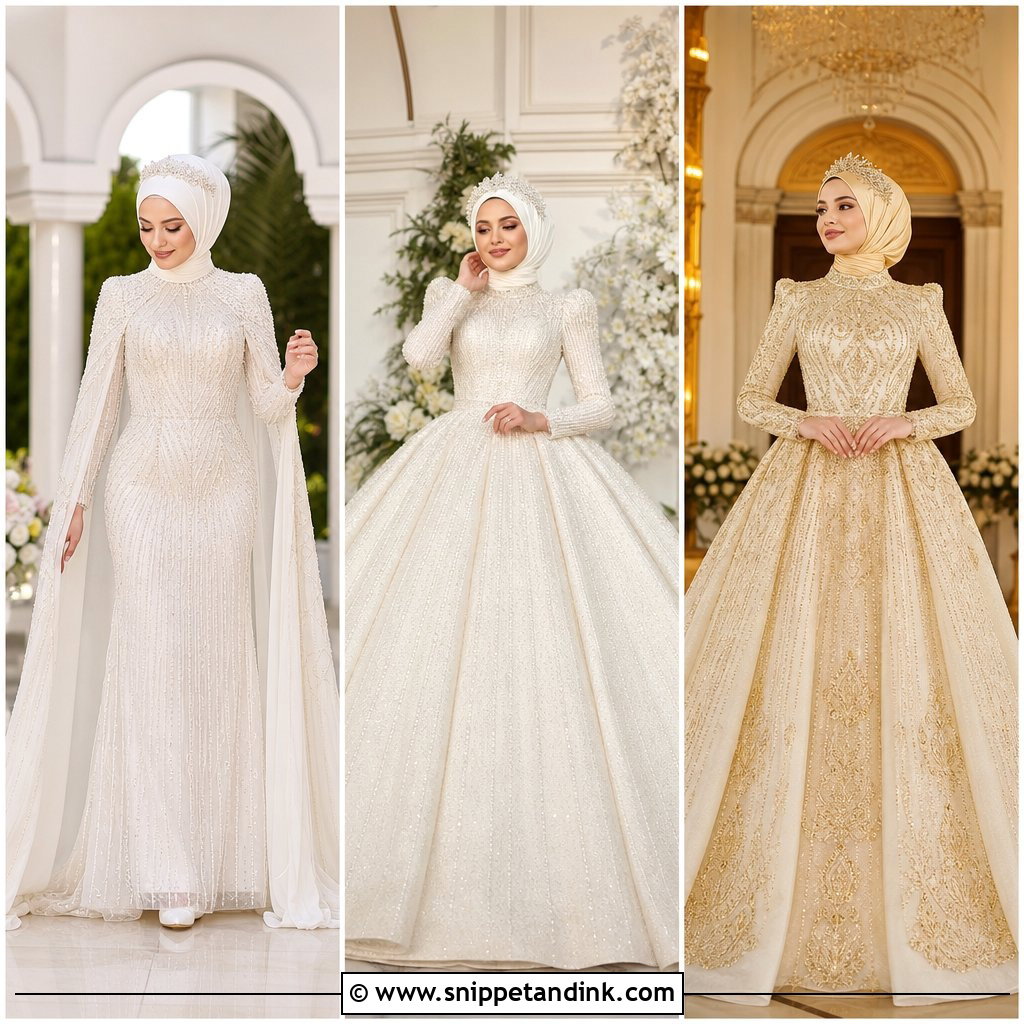
20. Hijab-Friendly Ivory Gown Nikah Dress
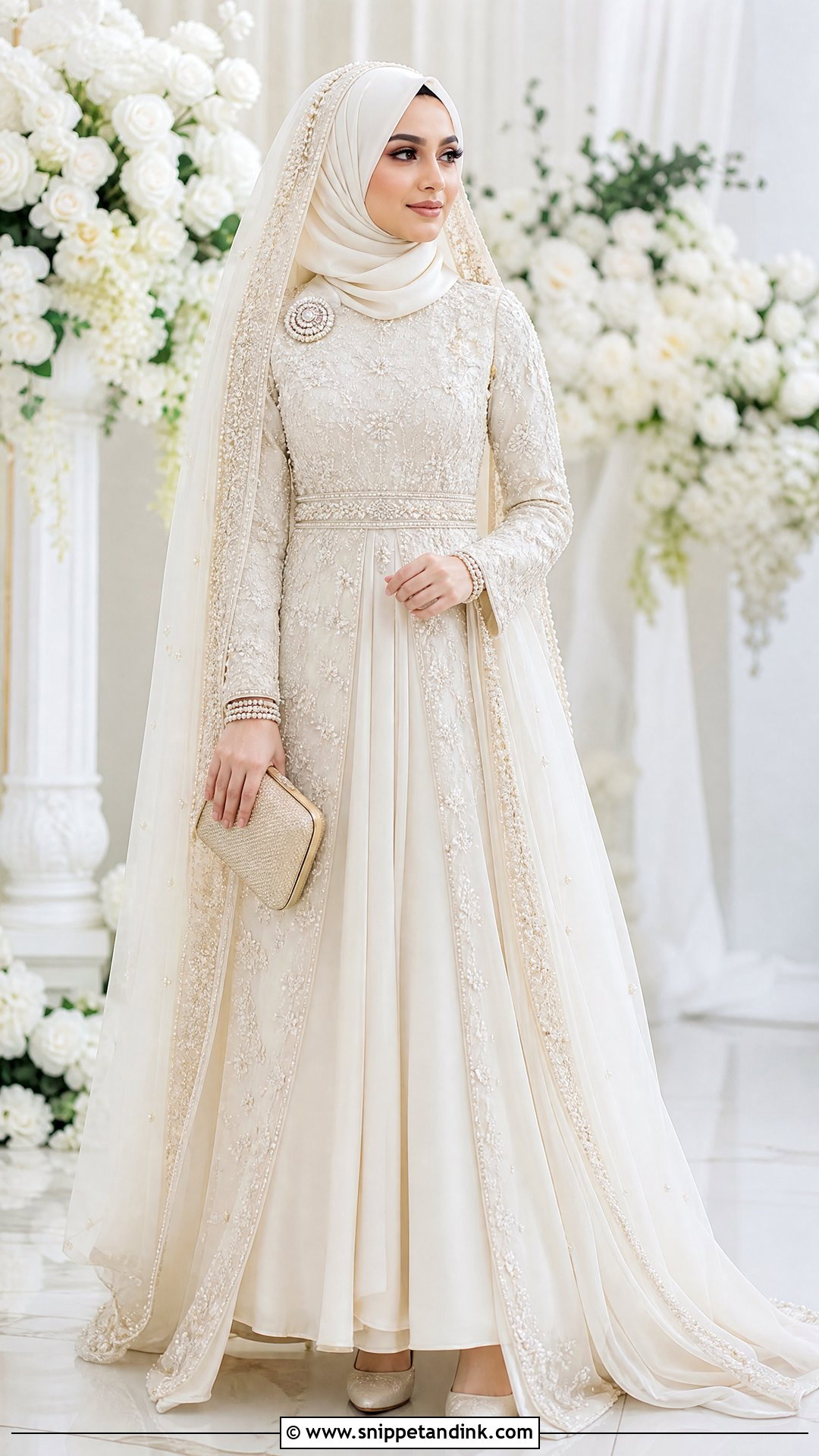
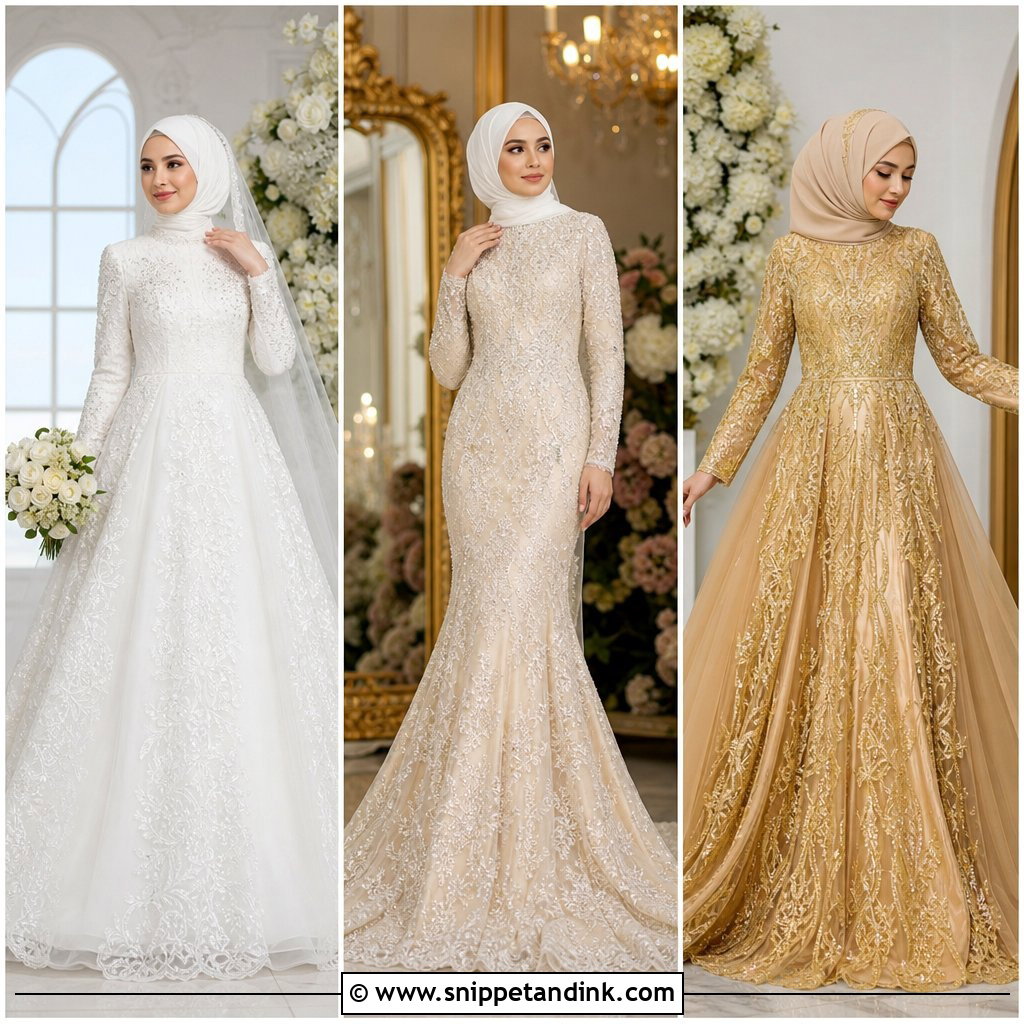
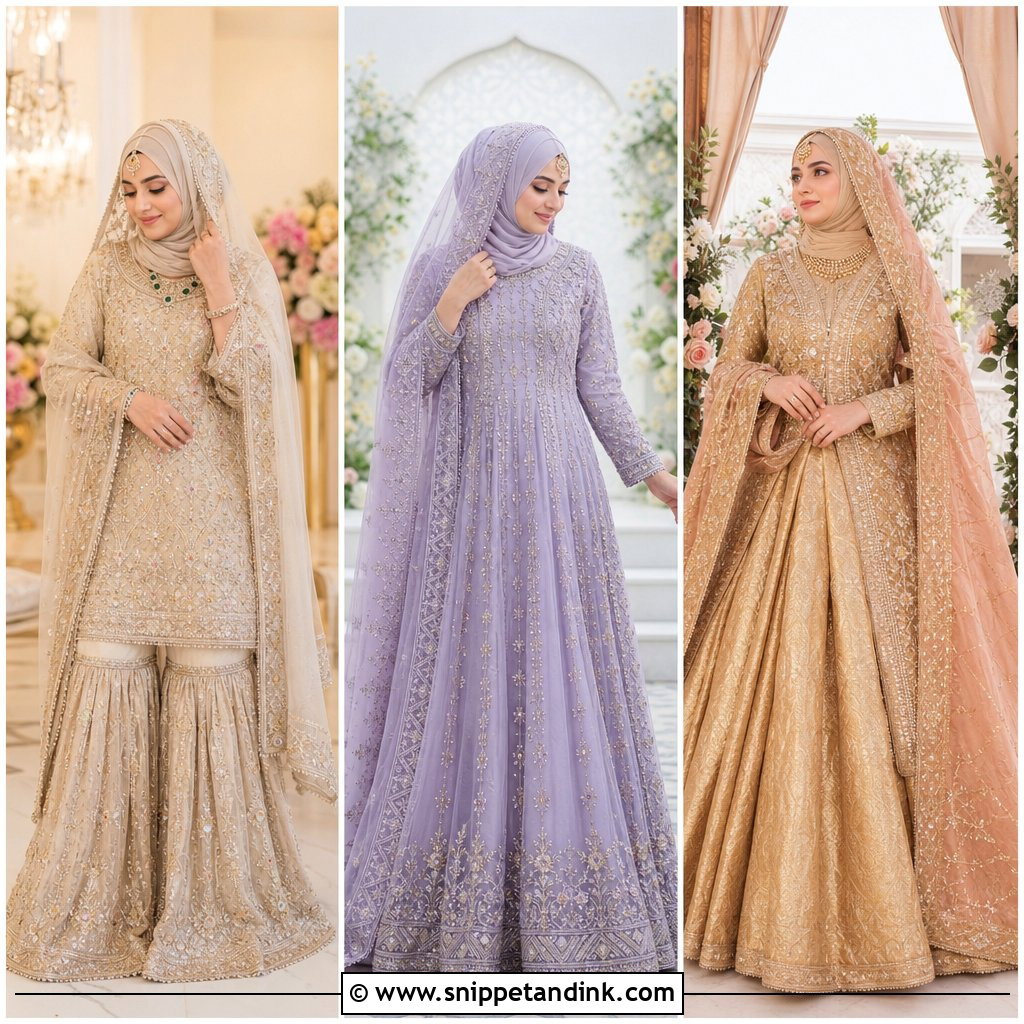
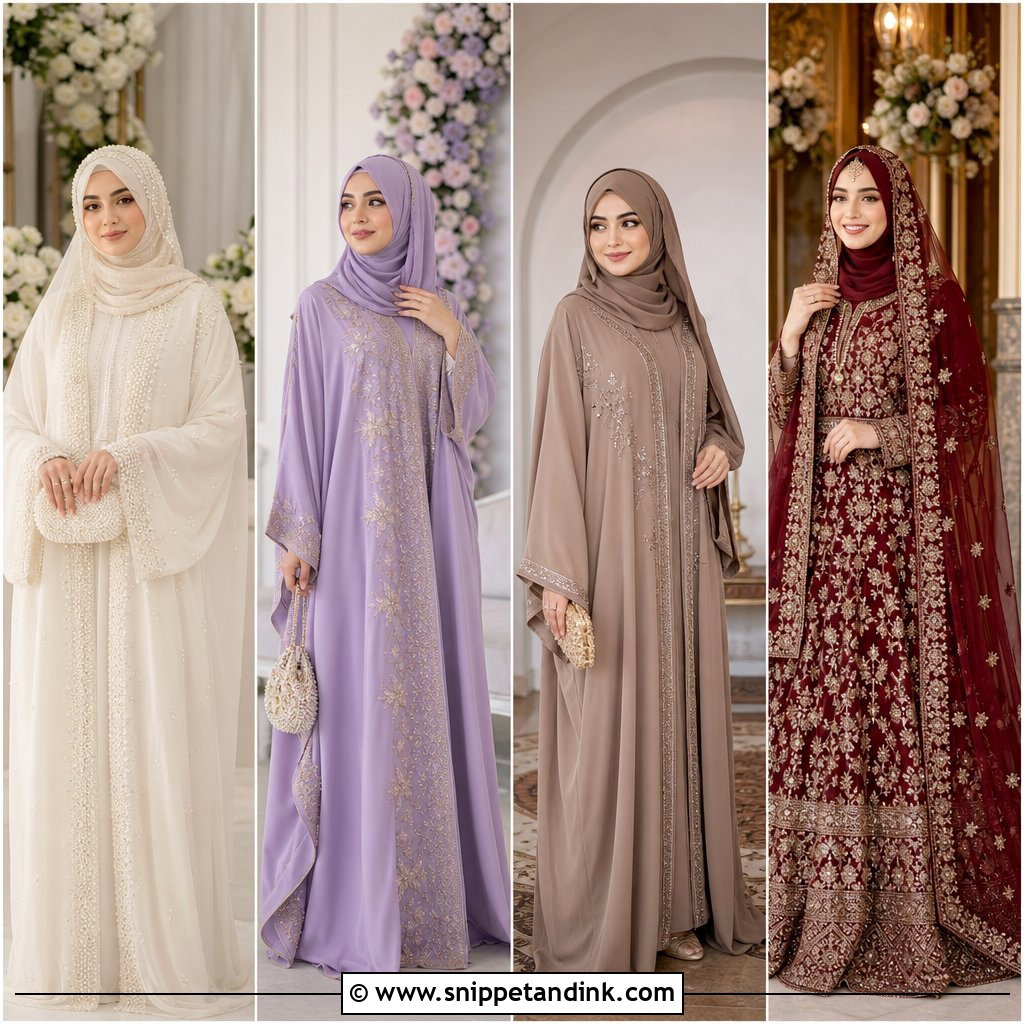
An ivory gown adapts well into a hijab-friendly Pakistani Nikah outfit as long as the neckline is high and opaque and the sleeves are full. A softly defined waist with tonal embroidery, pearls and fine silver or champagne detail keeps it refined. Set the ivory hijab first and let it settle before anything goes on top. Silk jersey grips better under a heavy dupatta; chiffon looks lighter but slides. The embroidered dupatta then rests loosely over the head and shoulders. If earrings press against the hijab, skip them for a jeweled headpiece, brooch or bracelets. Ivory closed-toe heels, a structured clutch and a rose-nude lip.
Pinning a Head Dupatta That Won’t Slide Mid-Ceremony
A head dupatta that keeps slipping is the Nikah complaint I hear most. The fix starts with the hair: a low bun or a firmly set hijab gives the pins something to grip, while loose waves give them nothing.
- Set the center of the dupatta at the crown and secure it into the bun or hijab with two crossed pins rather than one.
- Fold back a heavy border at the forehead so its weight doesn’t drag the fabric down toward your eyes.
- Pin the sides at the shoulder seams of your outfit, then let the rest fall.
- If you wear a second dupatta, pin it separately so lifting one never moves the other.
Net and organza hold pins well. Tissue and chiffon are slippery and need more of them. Ask whoever does your hair to set the dupatta too, and have a sister or cousin carry spare pins and a small mirror for the rest of the day.
Can You Sit Through the Khutbah in It?
Your Nikah outfit has to let you sit, sign, listen and greet family for a long stretch with your head covered. Ivory pishwas dresses, pastel lehengas, ghararas, saris and modest gowns can all do that when the details are thought through. Weigh the venue, weather, time of day and amount of embellishment before you decide. Then put the whole outfit on at home, with shoes, jewelry, hair and dupatta, and sit in it for half an hour. Anything that pinches, slips or overheats will show up then. Keep the details that mean something to you and your family; trends can wait for the Walima.
You'll Like These Ideas:



Leave a Reply