
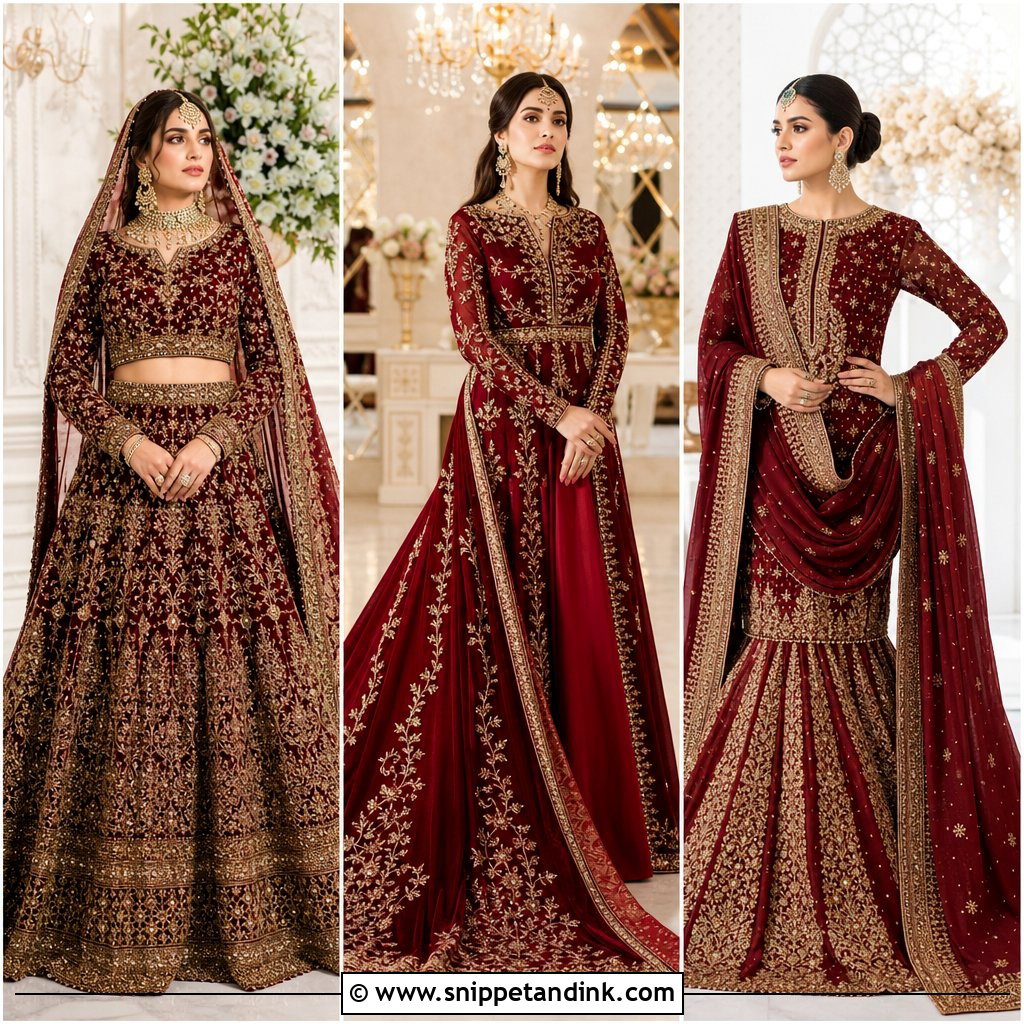
Red has dressed Indian brides for generations, and it carries meaning in so many traditions that most brides I work with start their search there, even the ones who end up somewhere else. The same red behaves very differently in velvet, organza, Banarasi silk or sequinned georgette, and the embroidery, jewelry and drape decide whether it reads regal or soft. When I put a red bridal look together, I’m thinking about the whole person from the matha patti down to the shoes: how heavy the outfit feels by the fourth hour, how it sits on a mandap floor, what the weather and venue will do to the fabric, and what the family expects. Below are 25 red outfits, from lehengas and sarees to shararas, gowns and regional bridal dress, with the notes I’d give you at a fitting.
Which Red Suits Your Skin, and the Light You’ll Marry In
Bridal red isn’t one color. Some reds lean blue, like cherry, crimson and ruby, and some lean orange, like vermilion, tomato and brick. Cooler reds tend to sit better on skin with pink or olive undertones, while orange-leaning reds warm up golden and deeper skin. It’s a starting point rather than a rule, which is why I never let a bride decide from a screen.
At the first appointment I drape a length of the actual fabric under the bride’s chin, with no makeup on, next to a window. Then we look again under the warm yellow light most halls use at night, and once more on a phone photo with the flash on. A red that glows in daylight can go brown under tungsten bulbs, and a very bright scarlet sometimes turns slightly orange on camera.
- Ask for a fabric swatch to take home and look at in your own light over a few days.
- Check the red next to your jewelry: yellow gold flatters warm reds, and polki or silver tones sit better with cooler ones.
- If two events share one red, see both venues lit before you commit, because a garden at noon and a ballroom at night will show different shades.
1. Red Bridal Lehenga
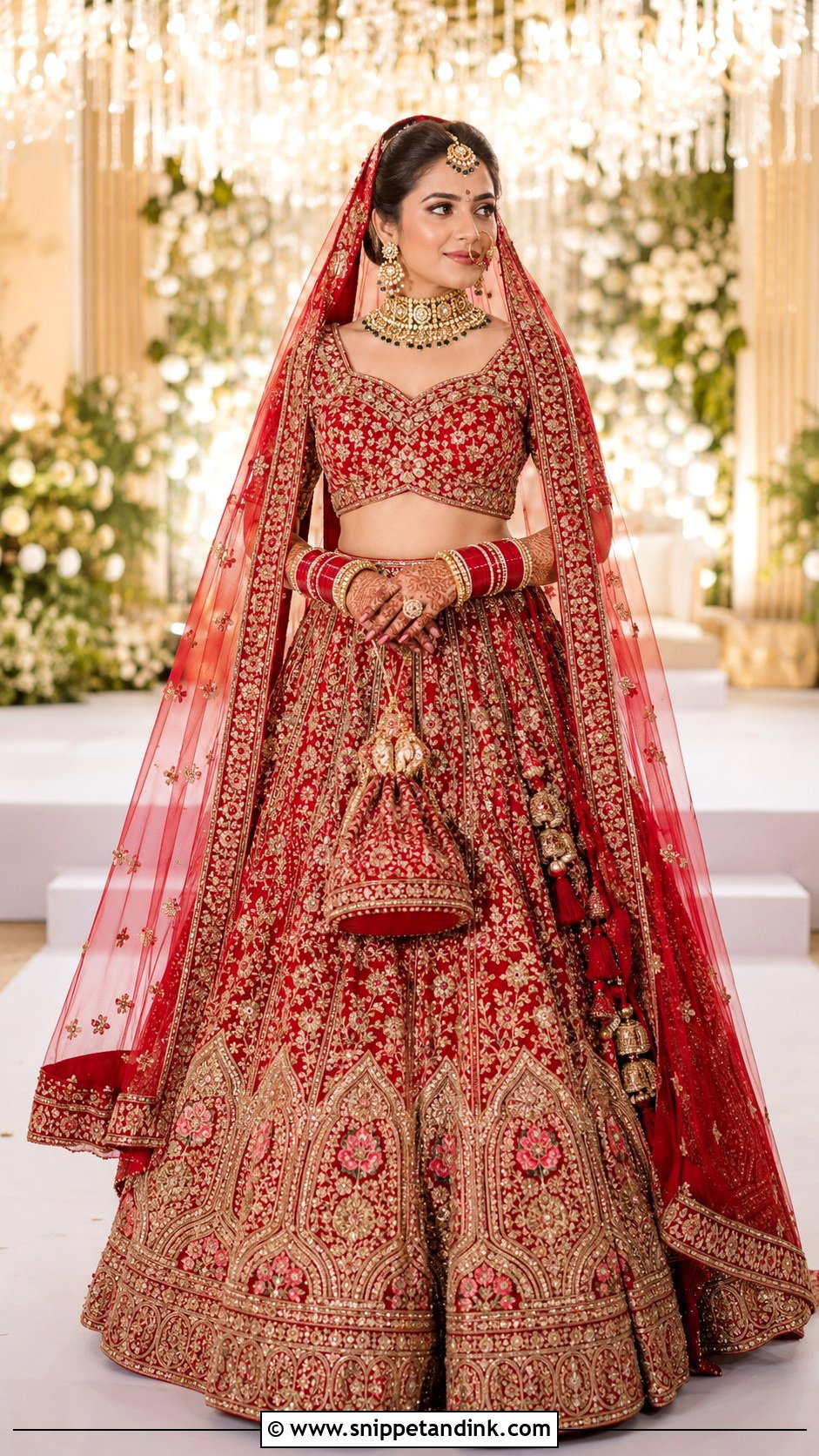
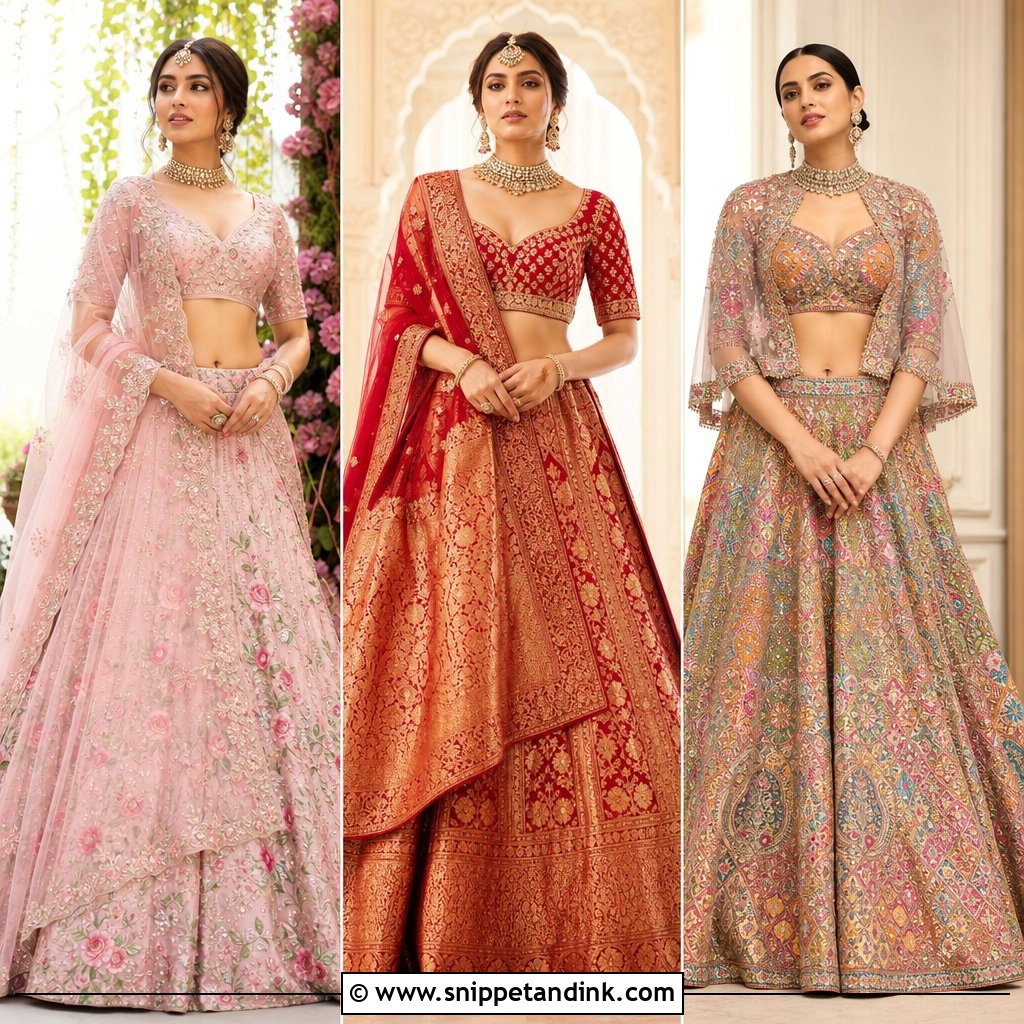
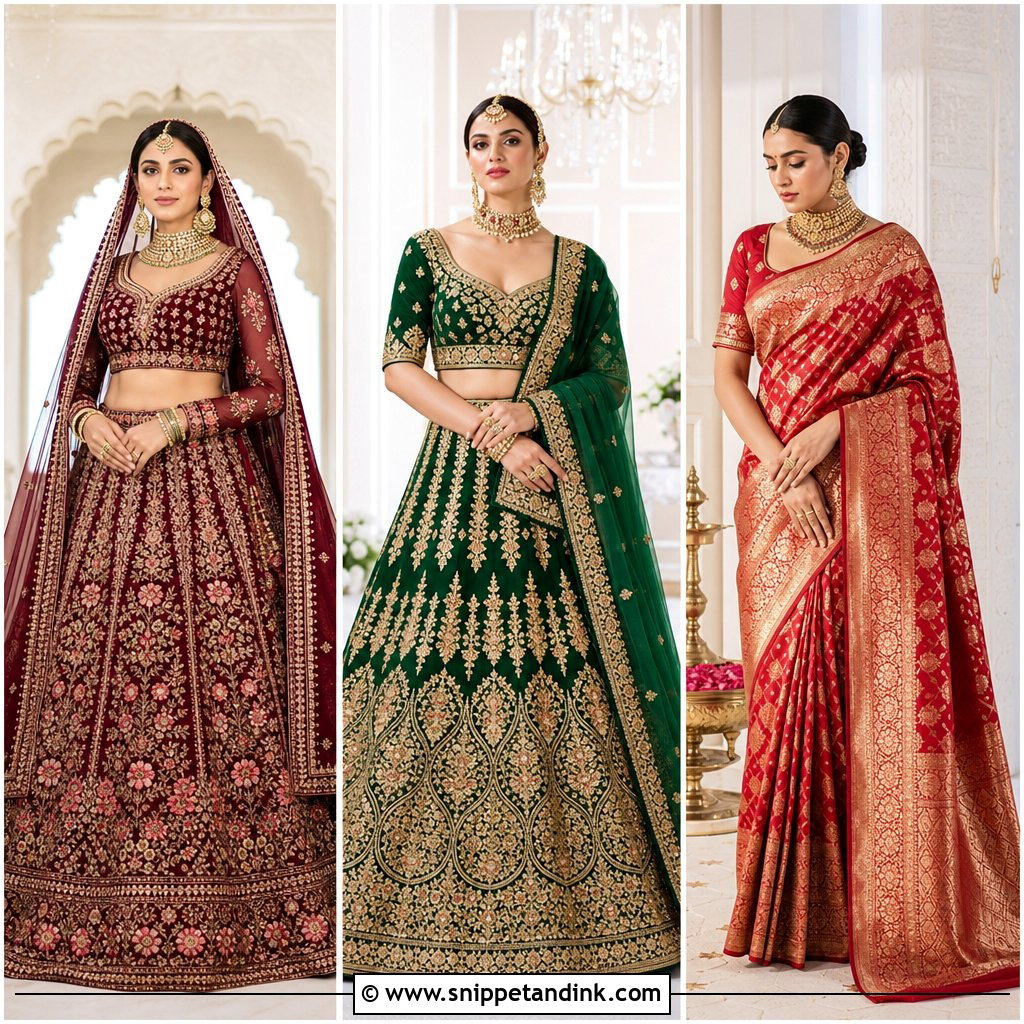
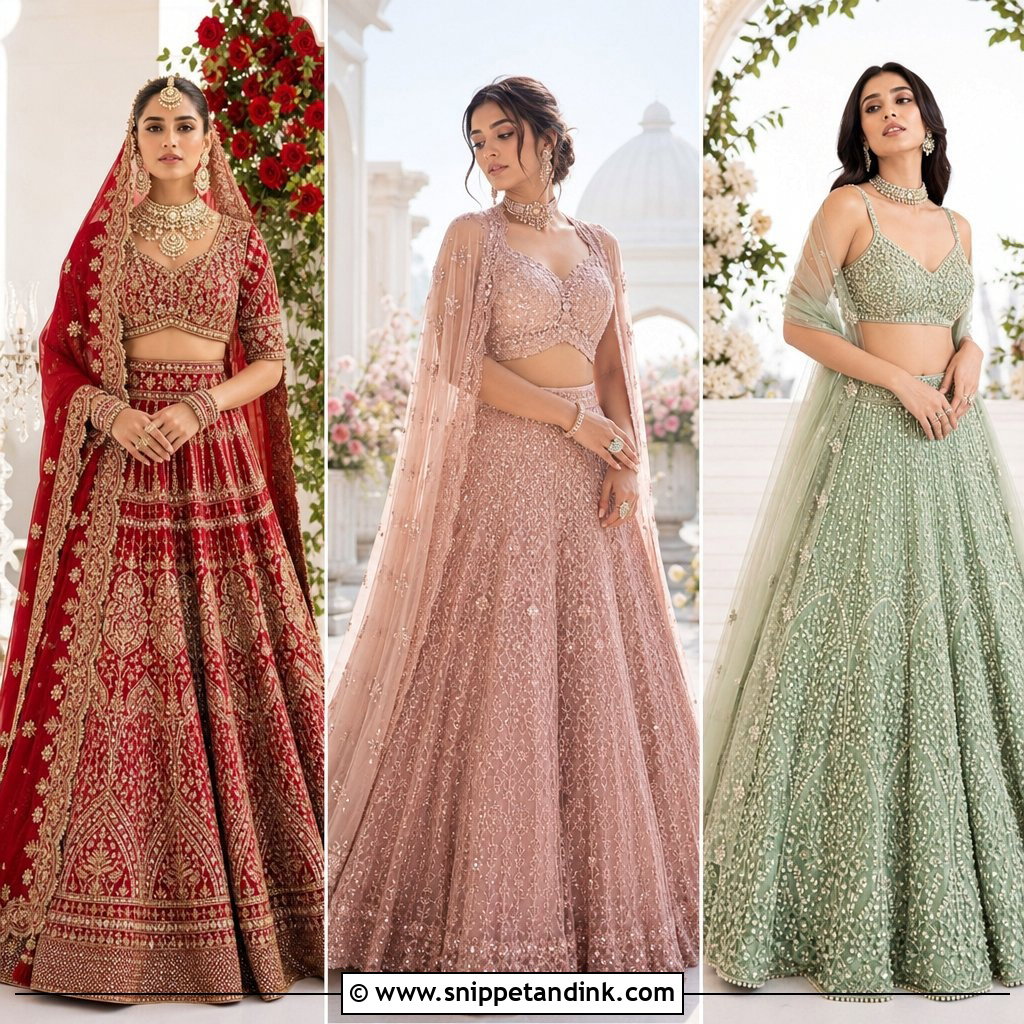
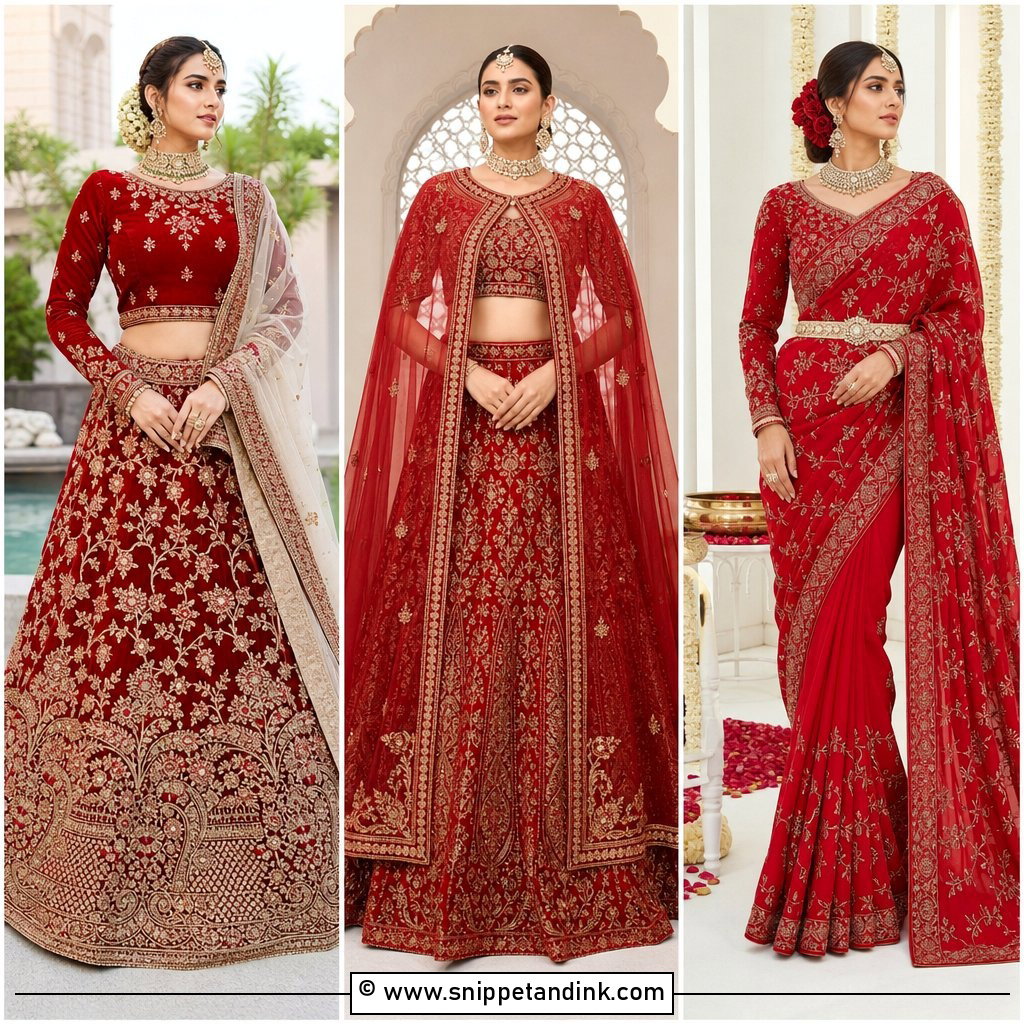
A red bridal lehenga is still the outfit most brides picture for the pheras, and for good reason. Look for a rich red skirt worked in zari, zardozi, sequins or thread, a fitted blouse and a matching dupatta; a second dupatta pinned over the head gives the classic veiled bride. The first thing I check is how the weight is carried. A heavily worked skirt drags at the waist, so I ask the tailor for a wider, firmer waistband with a hook closure instead of a drawstring alone. Gold jewelry, a matha patti, layered necklaces and embellished heels finish it, and palace venues or grand halls carry this much detail well. If the skirt is dense with work, keep the blouse neckline and dupatta border quieter so your face stays the focus.
2. Red Banarasi Saree
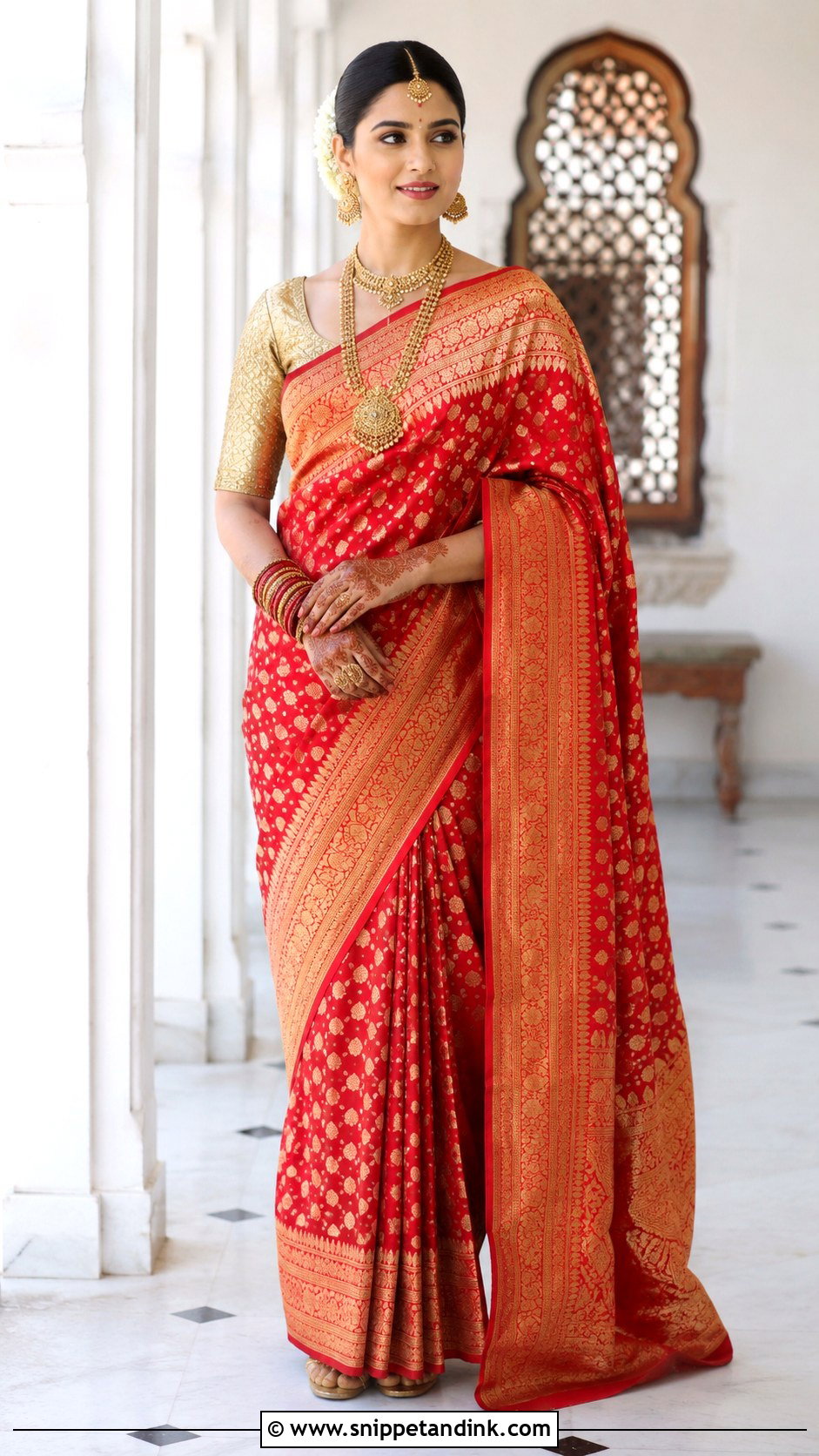
The woven zari and silk motifs of a red Banarasi do most of the work, so this saree rarely needs extra embellishment. I match the blouse to the undertone of the red: gold or deep maroon for a brick or orange-leaning red, a true red for a cooler one. Temple jewelry, a sleek bun with fresh flowers, gold bangles and embroidered sandals complete it. Banarasi silk is stiffer than it looks, and the pleats splay if the petticoat is flimsy, so ask for a structured, slightly flared petticoat and pin the pleats at the waist and once more halfway down. It’s also a saree you’ll keep and wear again, which makes the cost easier to justify.
3. Red Velvet Lehenga
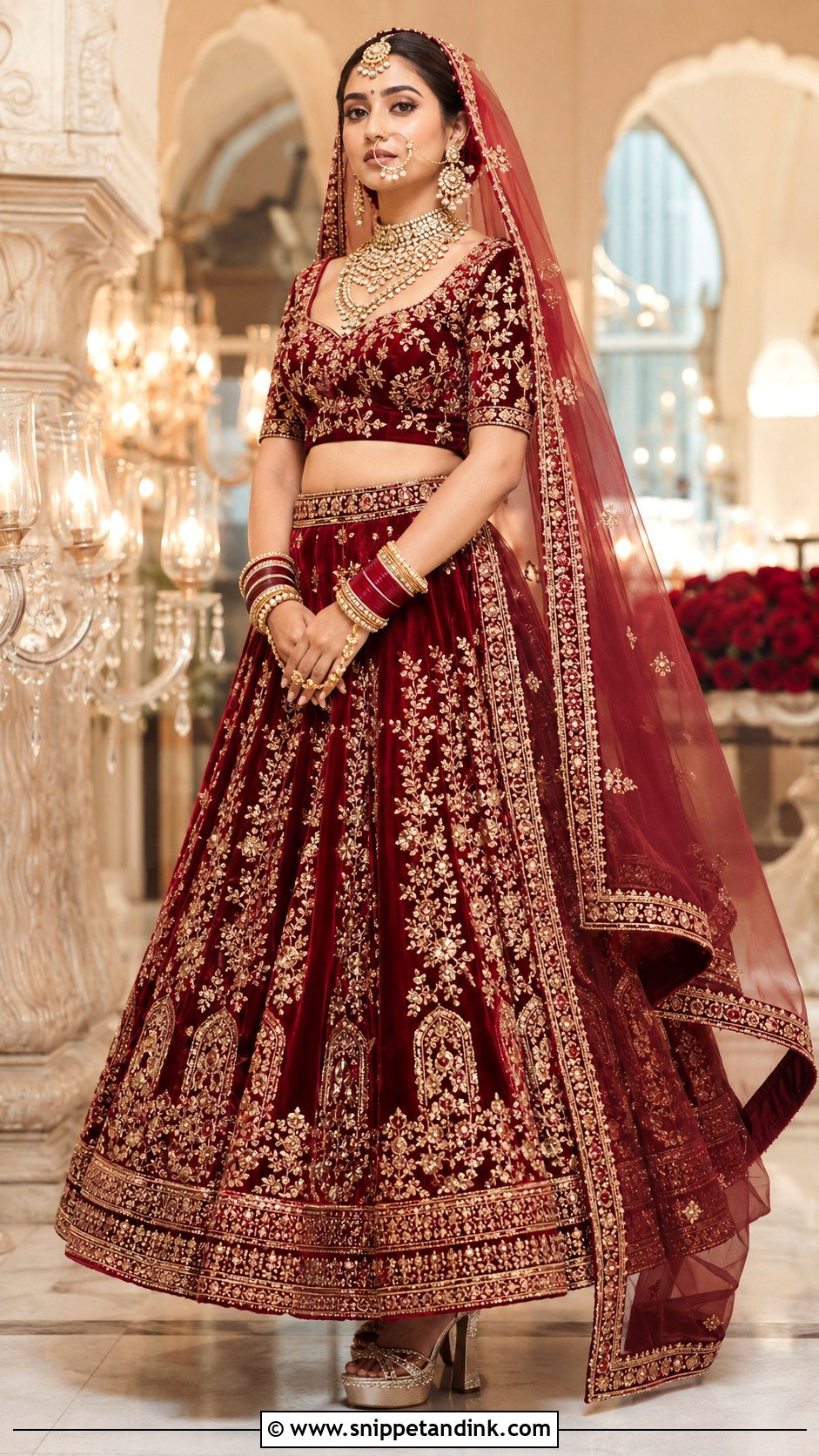
Velvet deepens red more than any other fabric I dress brides in, which is why a red velvet lehenga looks royal even with modest embroidery. It belongs to winter weddings and evening ceremonies. In a warm, crowded hall it gets hot fast, and I’d steer you away from it for a summer daytime event. Pair it with a velvet or silk blouse, a sheer dupatta to lighten the top half, and antique gold or kundan jewelry. Velvet also marks when it’s crushed, so don’t sit bunched on the skirt in the car on the way to the venue. Platform heels or embellished juttis hidden under the hem give you height and support through long rituals.
4. Red And Gold Lehenga
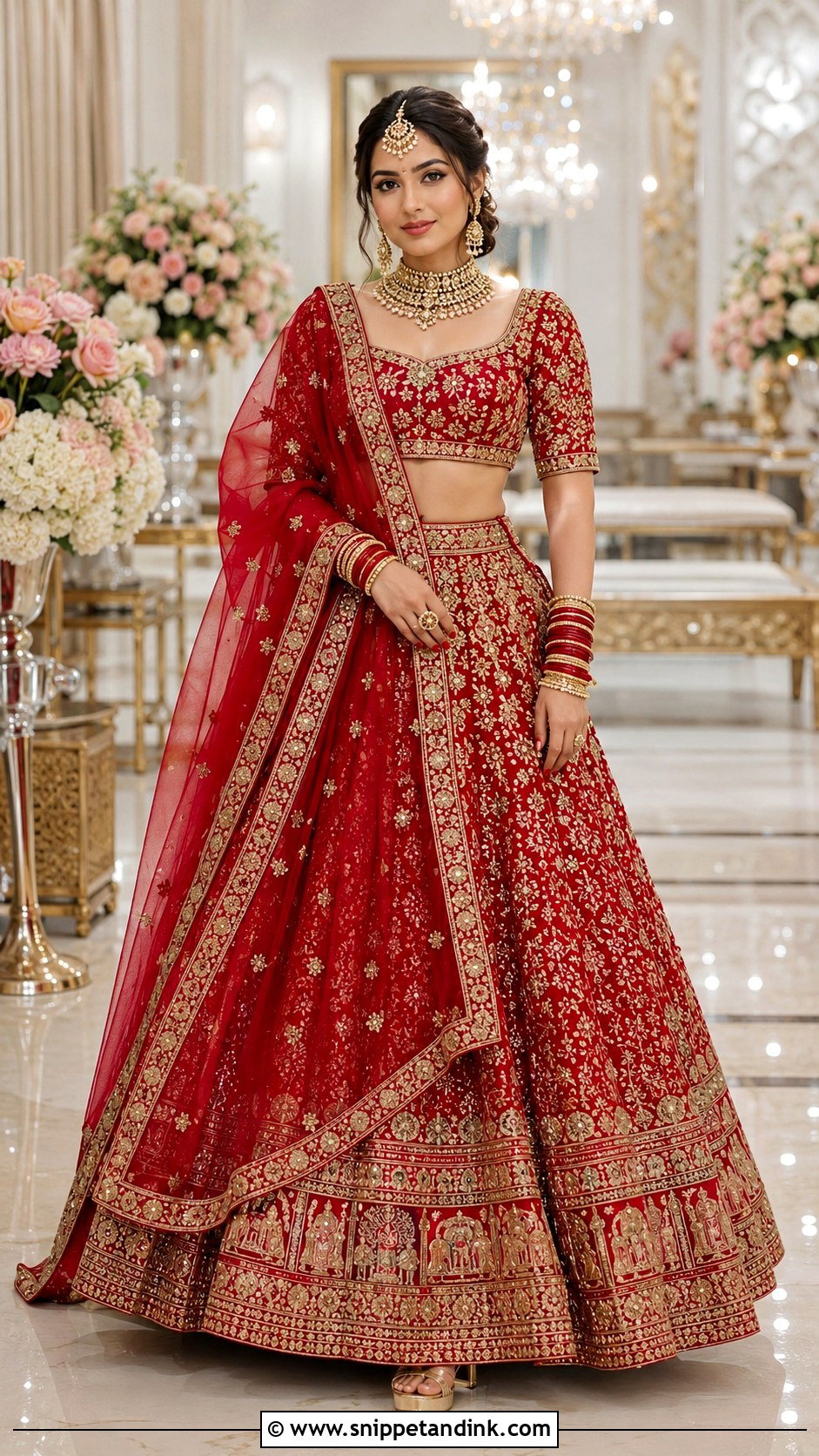
Red with gold embroidery is the pairing many families expect for the main ceremony, and it rarely lets anyone down. Keep the blouse work in the same gold as the skirt and choose a dupatta with a border that sits well around the face once it’s pinned. Traditional gold, kundan or polki jewelry all sit naturally with it. One thing I watch for: heavy gold work plus heavy gold jewelry plus a shimmery eye can flatten into one glare in flash photos, so I ask the makeup artist for a softly defined eye and a balanced lip. Gold catches daylight and evening lamps alike, which is why this combination holds up at any hour.
5. Red Organza Lehenga
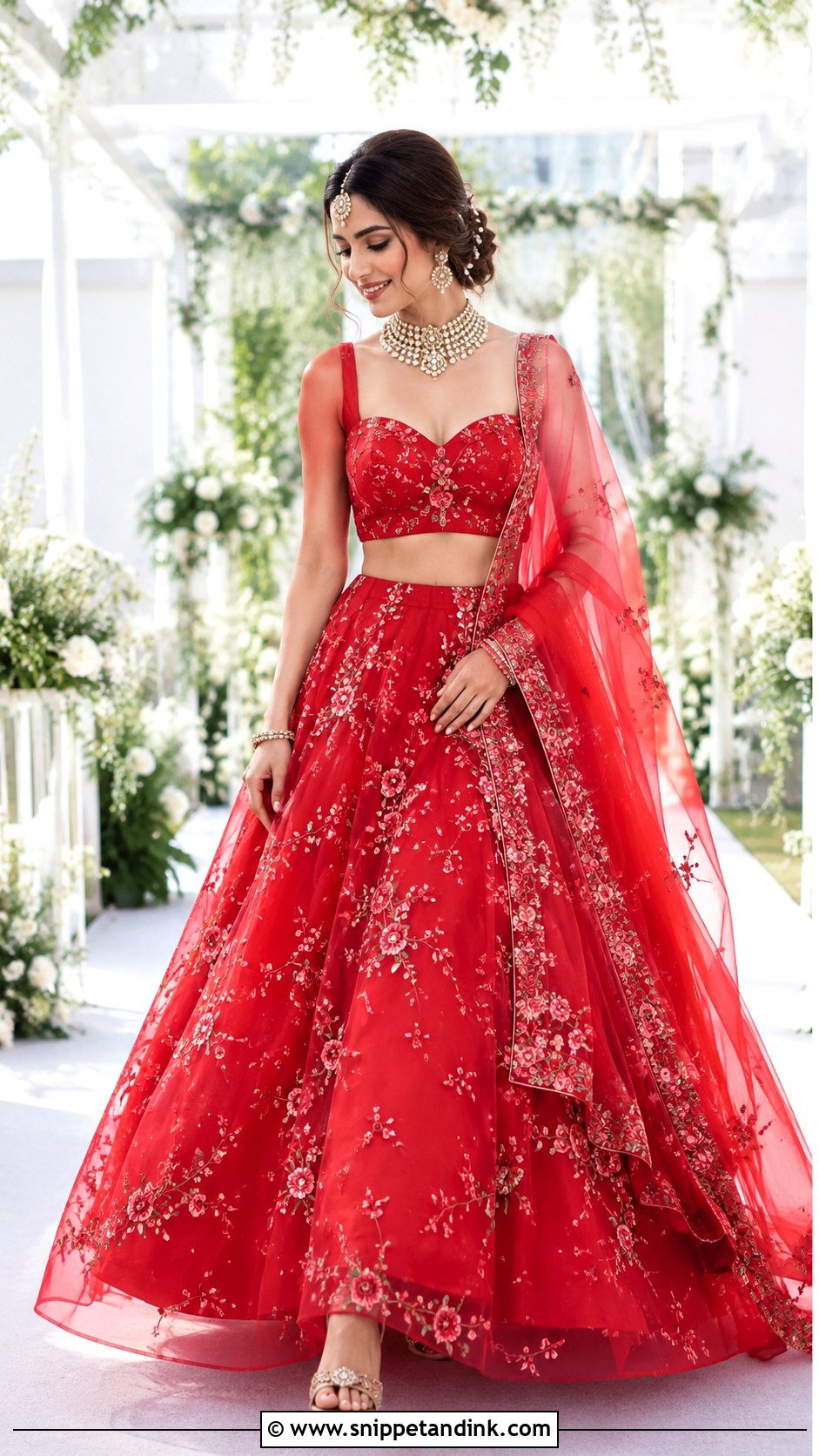
Organza gives volume without the weight of velvet or dense brocade, so a red organza lehenga is a sensible pick for warm weather or a long daytime ceremony. Floral embroidery, fine sequins or tone-on-tone threadwork suit it; very heavy work drags sheer organza out of shape. Pair it with a structured blouse, a sheer dupatta, pearl or polki jewelry and shoes you can stand in. The lining is the part I fuss over most. Organza is translucent, so the skirt needs a full, color-matched lining, and I check it in daylight at the final fitting because shop lights hide what the sun shows. Garden venues and outdoor ceremonies are where it shines.
6. Red Silk Saree
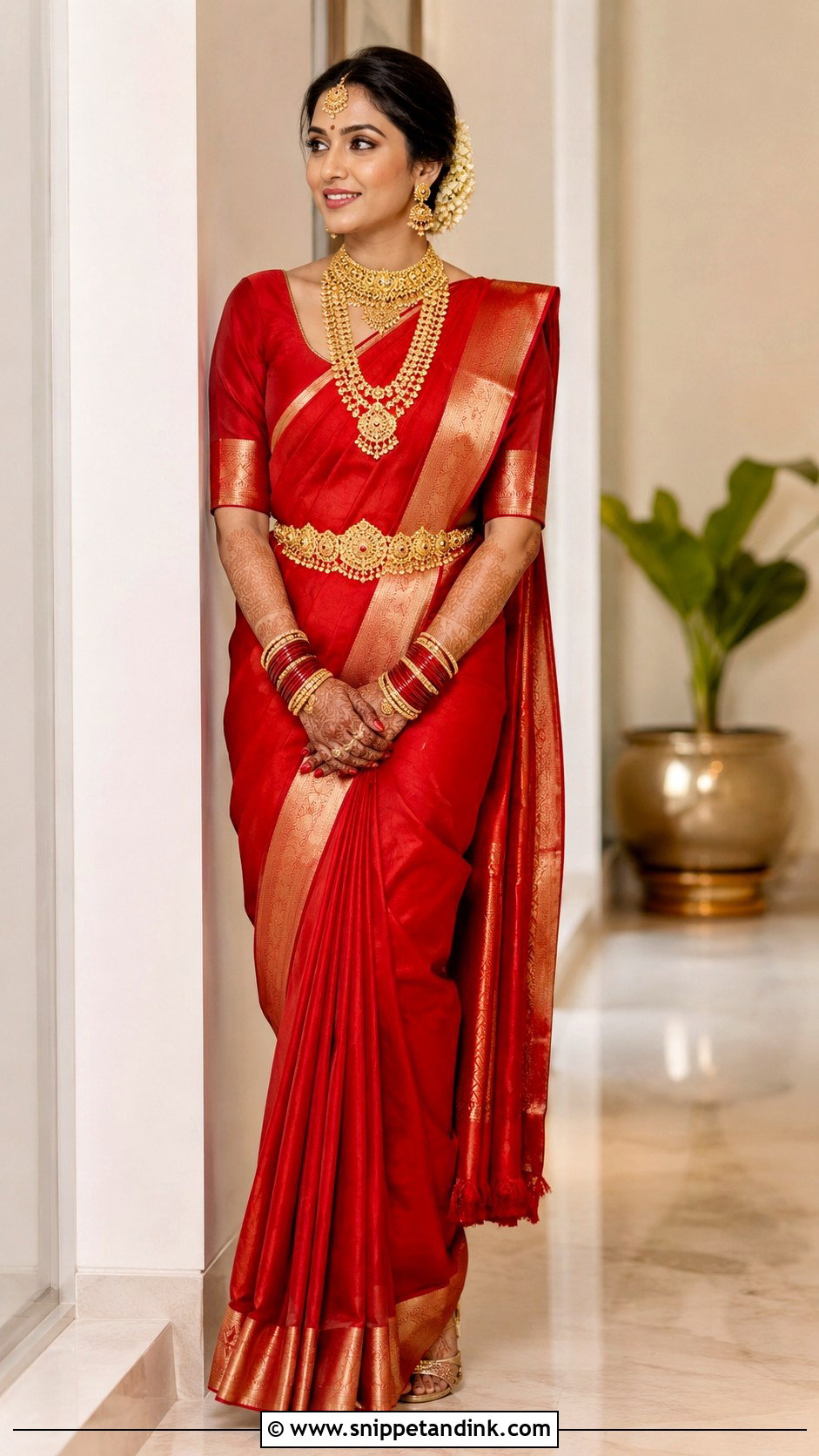
A plain red silk saree is quieter than a lehenga and depends on three things: the sheen of the silk, sharp pleats and the fall of the pallu. Pair it with a gold blouse, traditional jewelry, bangles and a neat bridal hairstyle. I like a kamarbandh here for a practical reason as much as a decorative one, since it holds the drape at the waist each time you stand, sit and stand again during rituals. Want more presence at the ceremony? Choose a wide border. Blouse fit matters more than it does with a lehenga, because there’s no heavy skirt to pull the eye away from a gaping back.
7. Red Kanjeevaram Saree
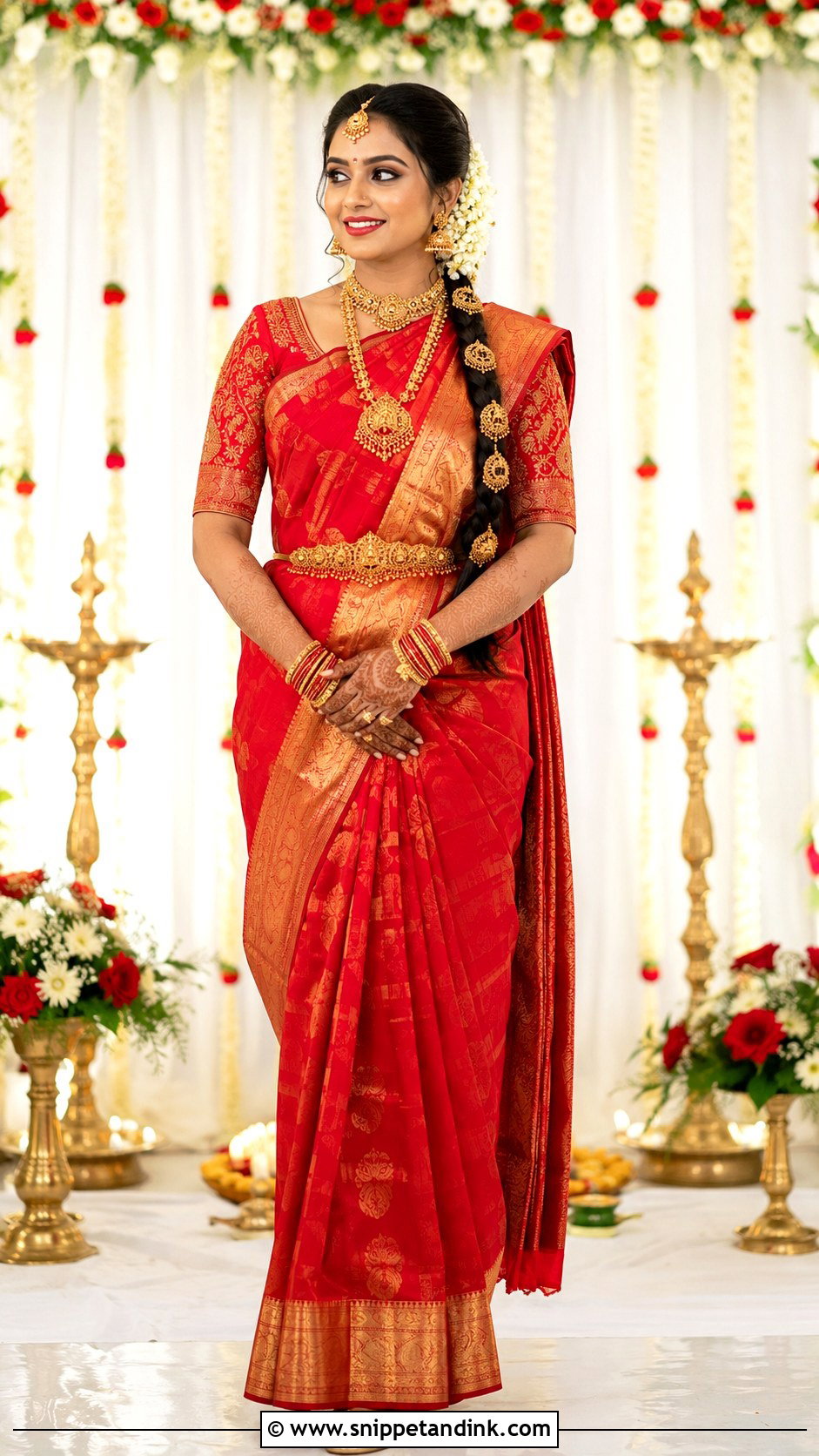
A red Kanjeevaram saree anchors so much South Indian bridal dressing. The heavy silk, contrast border and woven motifs give it real weight. Temple jewelry, layered necklaces, jhumkas, bangles and a gold waist belt are the traditional pairing, with a long braid wrapped in flowers. Red with a green, gold or mustard border photographs especially well because the contrast holds even in dim temple light. Kanjeevaram silk is thick, so I use firm, narrow pleats and more pins than brides expect; a loose drape bulks out at the hips. Let the jewelry follow the border rather than fight it.
8. Red Anarkali Suit
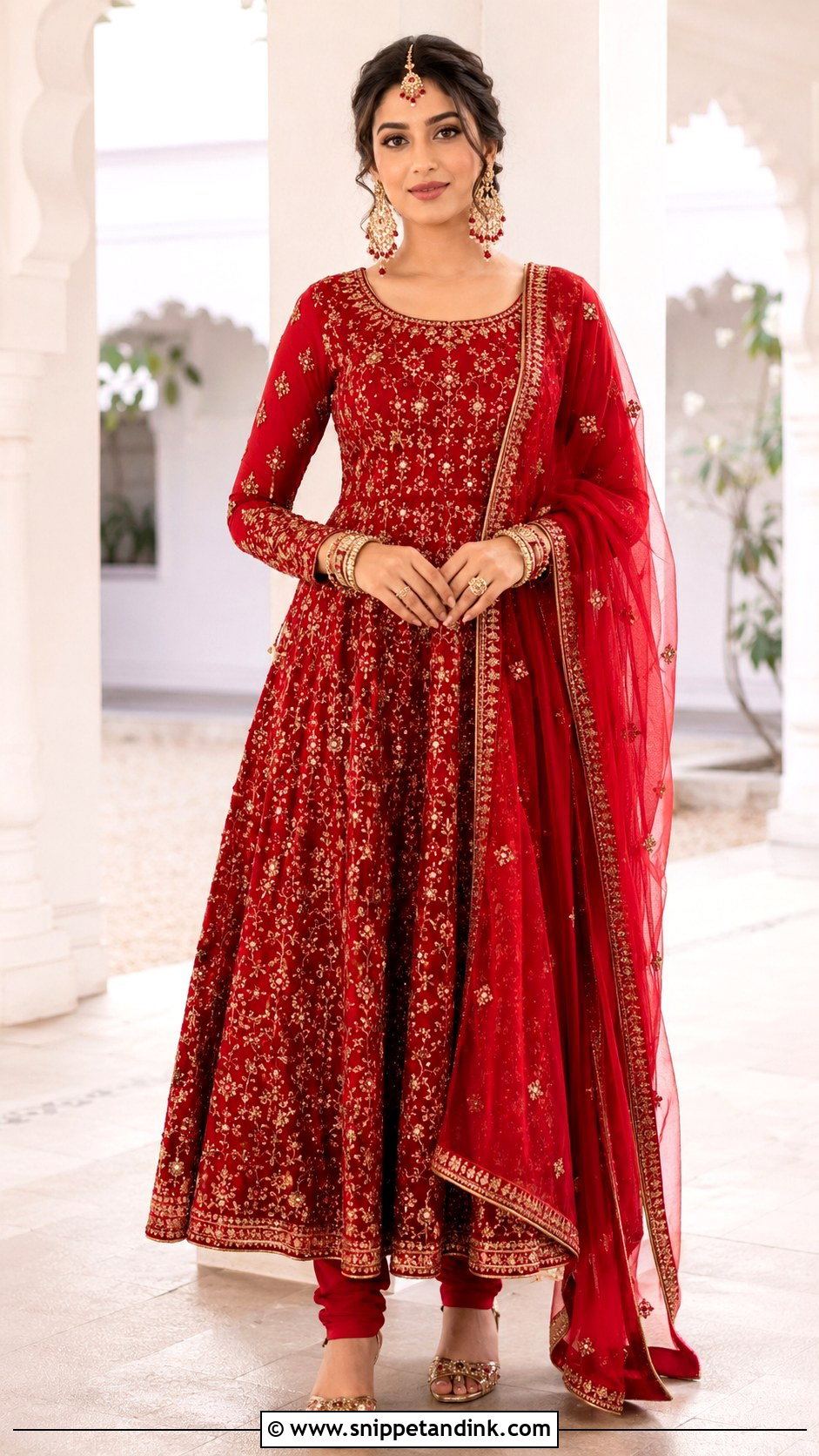
A red Anarkali gives coverage and flow, and it is far easier to move in than most heavy lehengas, which is why I suggest it for smaller ceremonies, pre-wedding rituals or brides who simply prefer a softer silhouette. Look for a floor-length cut with embroidery at the neckline, sleeves, hem and dupatta border, worn with churidar, embellished heels, statement earrings and a maang tikka. The fit point that makes or breaks it is where the bodice meets the flare. If that seam sits too low, the dress looks shapeless, so I place it at the natural waist or just above. Silk, georgette, velvet or brocade give it bridal weight, with the dupatta over one shoulder or the head.
9. Red Sharara Suit
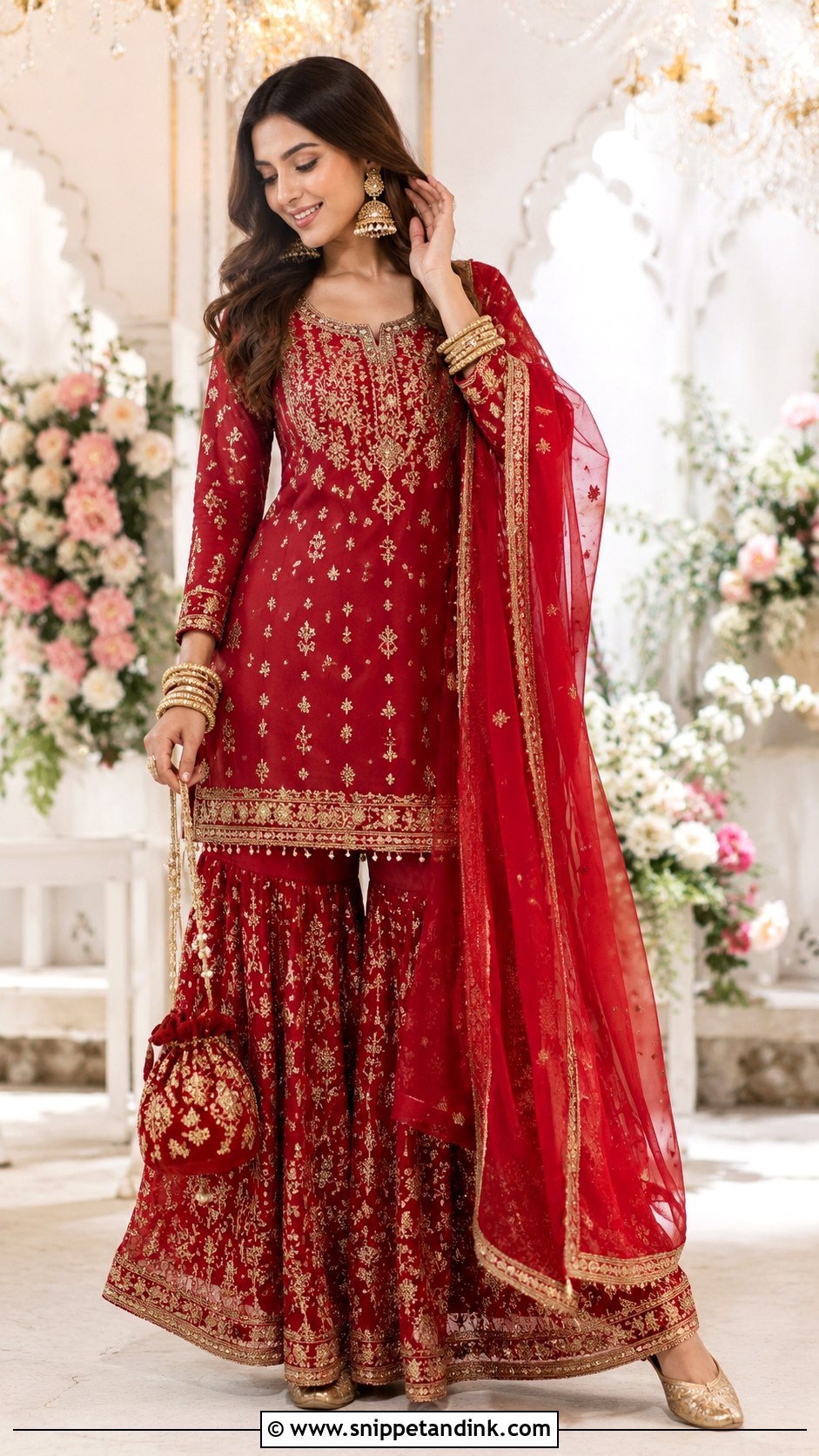
Sharara pants give you the swing of a lehenga while letting you walk, climb steps and dance, so a red sharara suit is one of the first things I suggest for sangeet, mehndi or a reception. Pair a short or mid-length kurta with heavily embroidered sharara pants and a matching dupatta, then add jhumkas, bangles, a potli bag and juttis. For a bridal version, push the fabric and embroidery richer and let the dupatta carry the drama. Keep the kurta fitted. A loose kurta over wide pants turns the whole silhouette boxy.
10. Red Gharara Suit
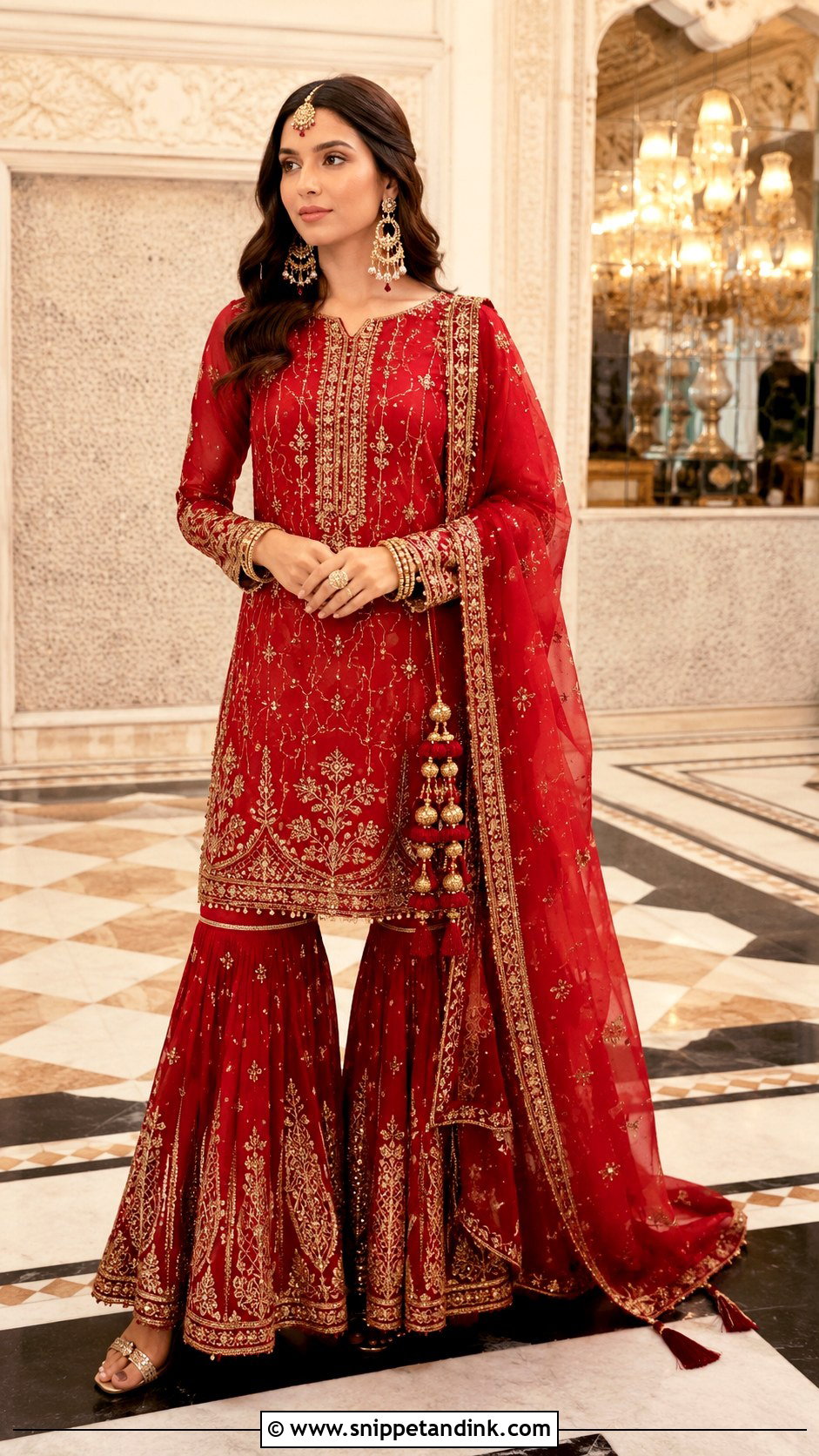
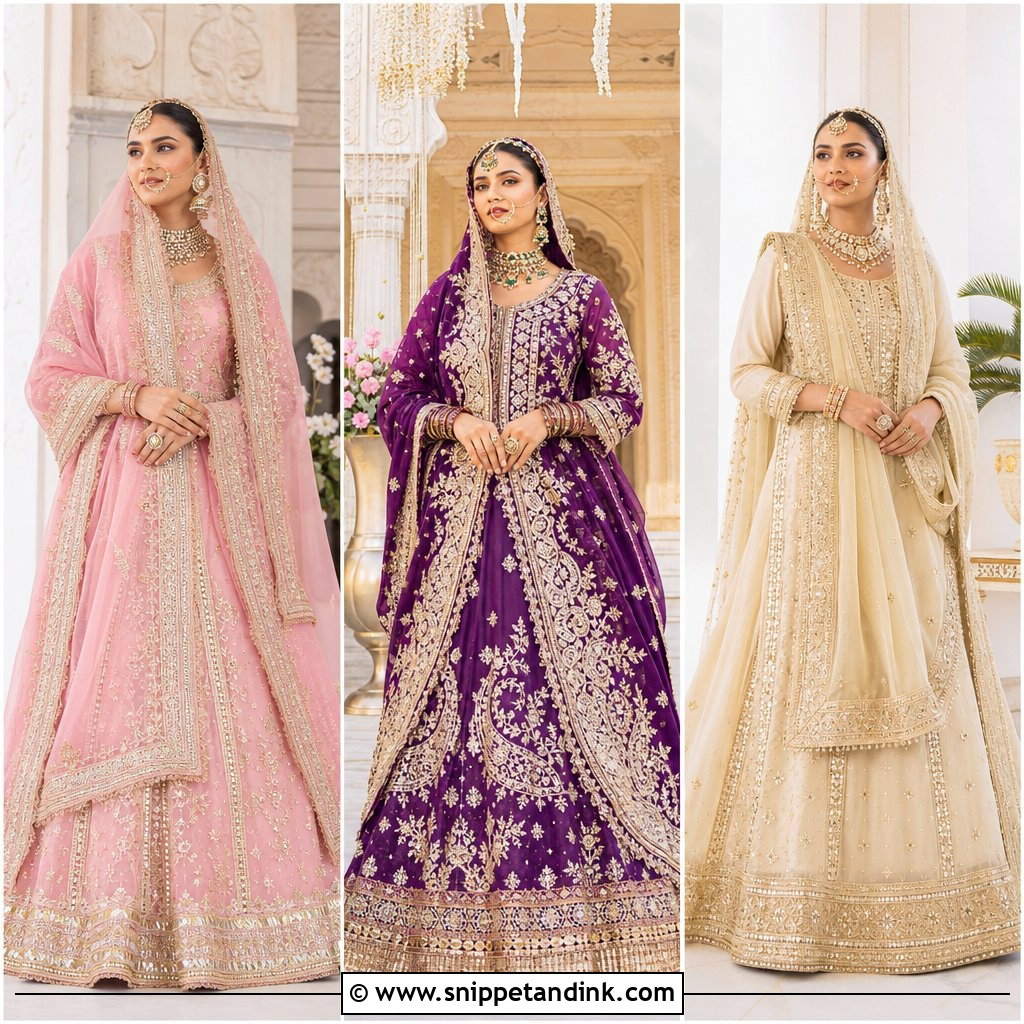
The gharara’s shape comes from the knee: fitted through the thigh, then flaring out below a gathered joint that’s usually covered with a band of gota or embroidery. That gives a red gharara suit its vintage, regal line. Choose a red kurta with gold, silver or antique embroidery, a matching gharara and dupatta, then add a passa, statement earrings, bangles and embroidered heels. It’s a classic for Muslim wedding events and formal receptions. A shorter kurta shows off the knee detail best; if the kurta falls below the knee, the gharara loses its point. I always ask the photographer for full-length frames so the flare actually makes it into the pictures.
11. Red Bridal Gown
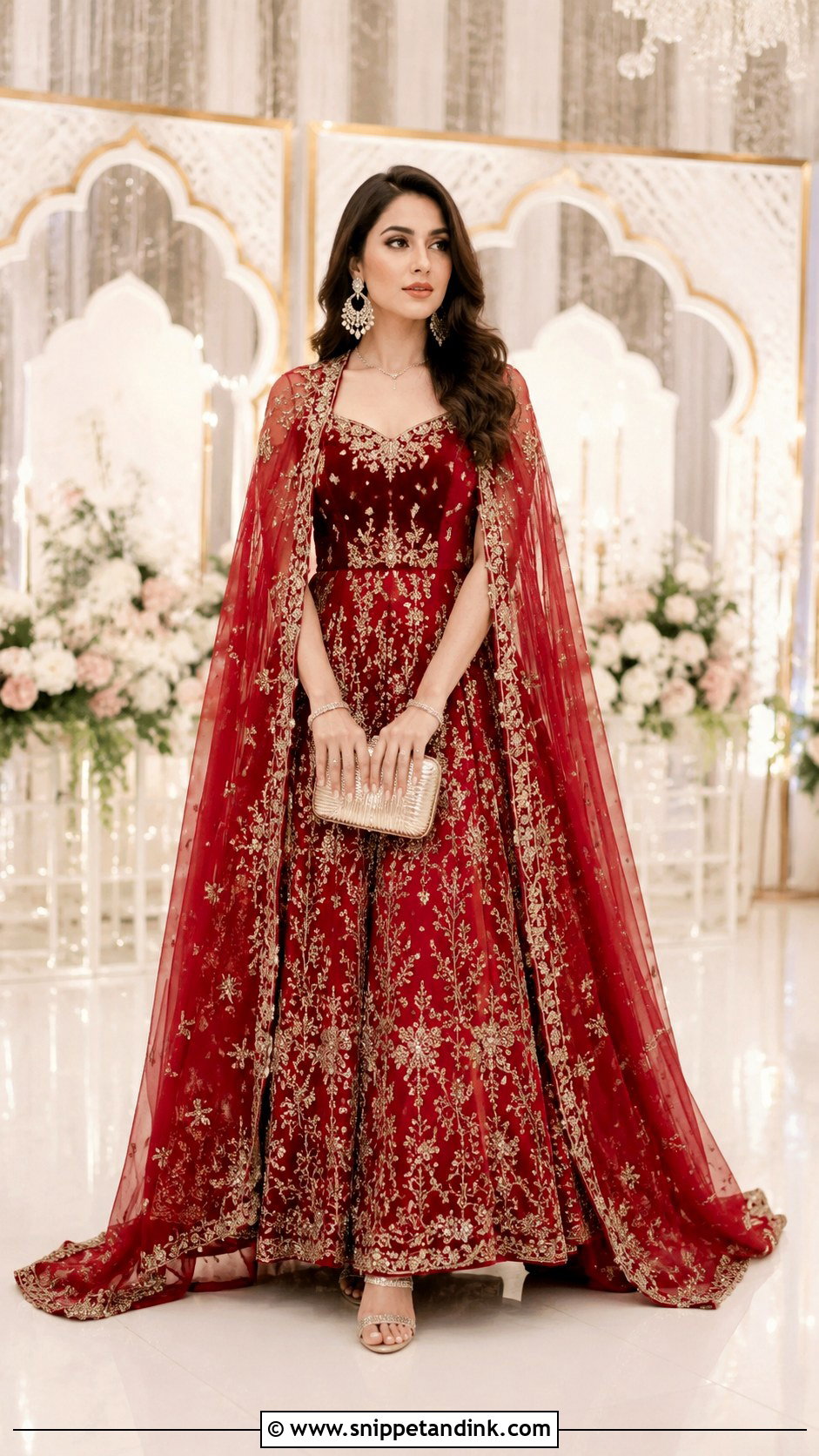
A red gown with Indian embroidery suits receptions, cocktail-style evenings or a fusion wedding. Look for zardozi, mirror work, sequins or embroidered panels so it still reads as Indian bridal wear, with a fitted bodice over a flared skirt; a cape, dupatta or sheer veil adds drama. Heavily embellished gowns often have a boned bodice, and at fittings I have the bride sit, raise her arms and hug someone, because boning that feels fine standing can dig in once you sit down to dinner. Pick diamond, polki or crystal jewelry by how much sparkle the gown already carries, and keep the rest clean: heels, a small clutch and soft waves or a low bun.
12. Red Lehenga Saree
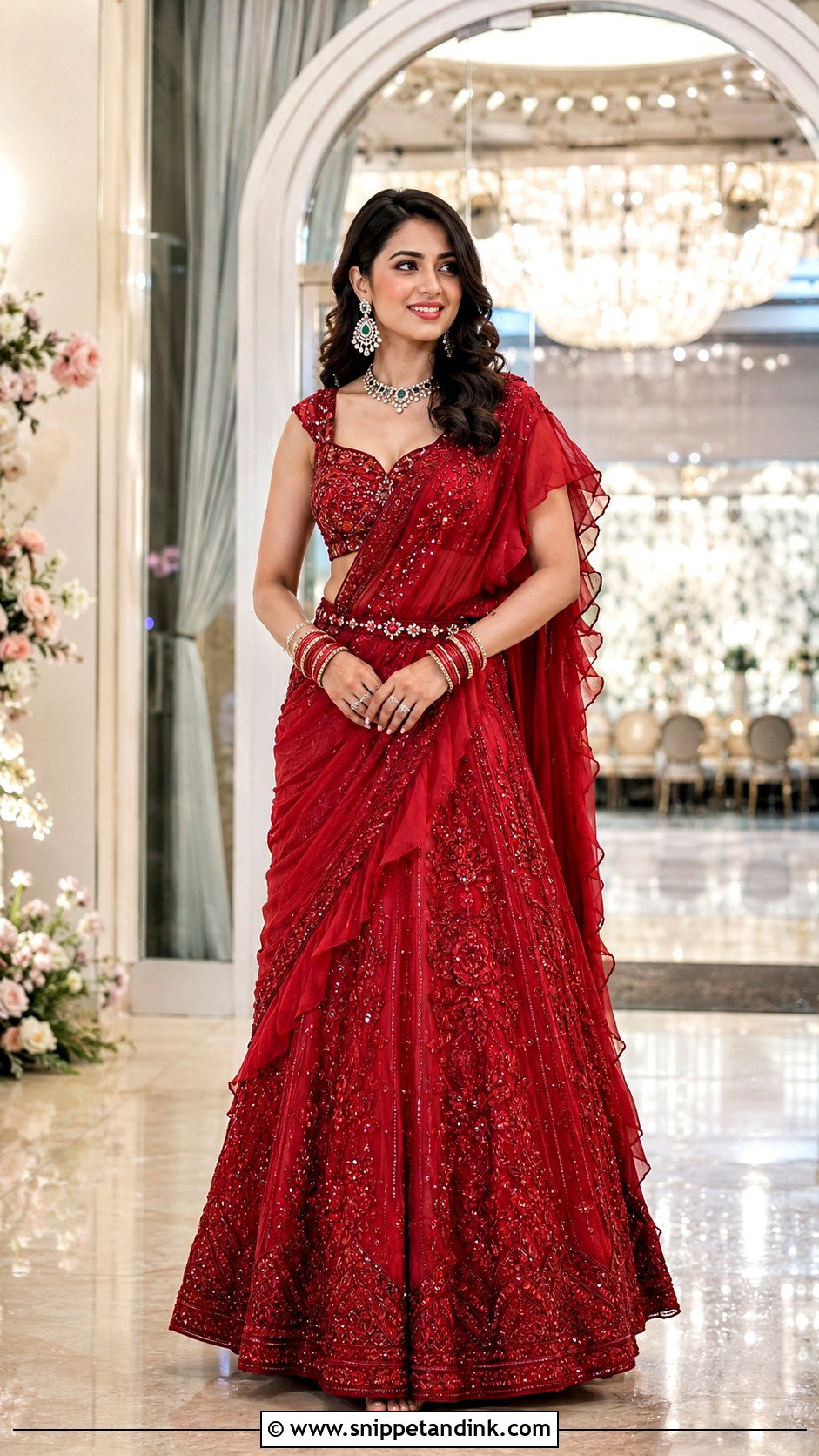
A red lehenga saree suits brides who love a saree drape but worry about pleats coming loose. It’s usually a pre-stitched or structured skirt with a saree-style pallu, so you get the line of a saree with the security of a skirt. Choose rich red fabric with a bordered pallu, an embroidered blouse and a defined waist, then add a kamarbandh, statement earrings, bangles and bridal heels. I see it most at receptions, engagements and modern functions. Practice wearing the pallu once at home, because even a stitched drape behaves differently on your shoulder after an hour of hugging relatives.
13. Red Embroidered Saree
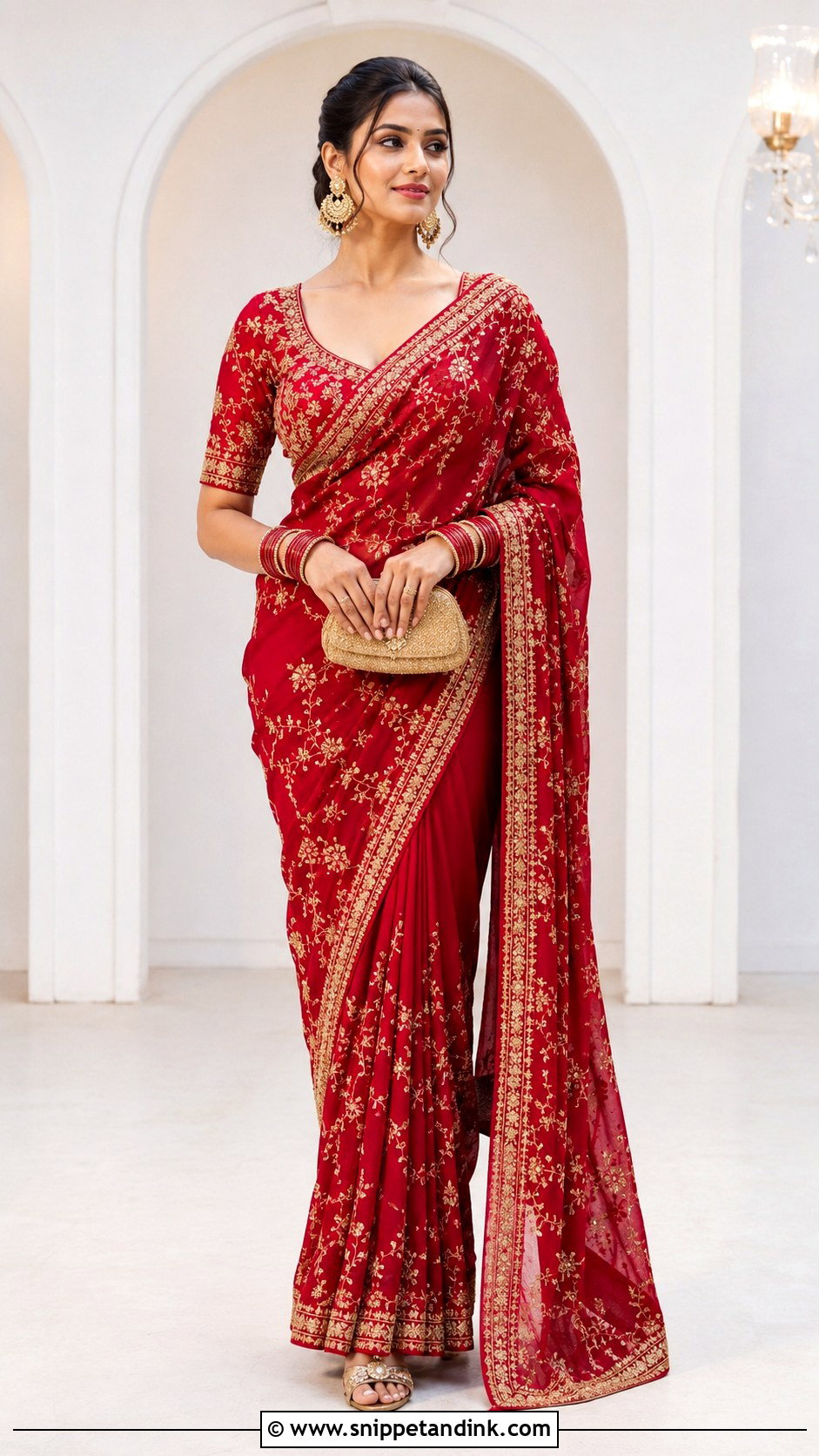
An embroidered red saree sits between a plain silk saree and a full bridal lehenga, and the type of embroidery sets the mood: zari for a traditional ceremony, sequins for evening, threadwork for something gentler. Deep red with antique work reads regal, while bright red with fine work feels fresh. Pair it with a matching or contrast blouse and jewelry in the same register as the embroidery. Heavy embroidery stiffens a pallu so it can stick out from the shoulder, so I pin it at the shoulder and again under the arm. Sisters of the bride and guests wear this style too; as a guest, just keep the work lighter than the bride’s.
14. Red Mirror Work Lehenga
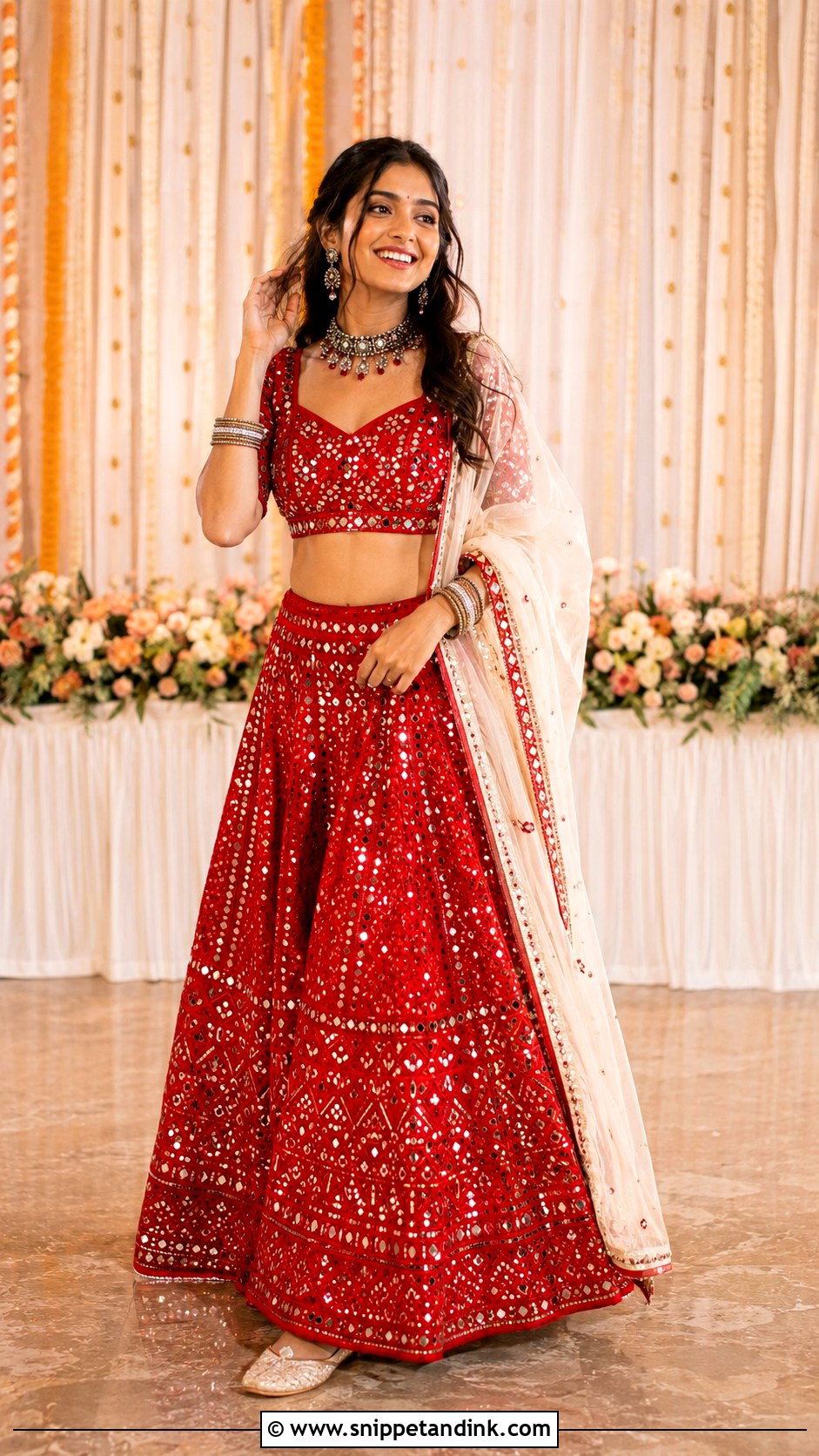
A red mirror work lehenga is made for nights with music. Mirrors throw light as you move, so sangeet, garba, mehndi and lively receptions are its natural home. Pair the skirt with a matching blouse and a lighter dupatta; oxidized jewelry, kundan earrings or simple gold all suit it. The mirrors already act as jewelry, so go easy on accessories. A warning from fittings: mirror work has hard edges that catch on net dupattas and can scratch your inner arms when you dance. I ask for soft lining behind the worked areas, and for garba I’d wear juttis rather than heels.

15. Red Sequin Lehenga
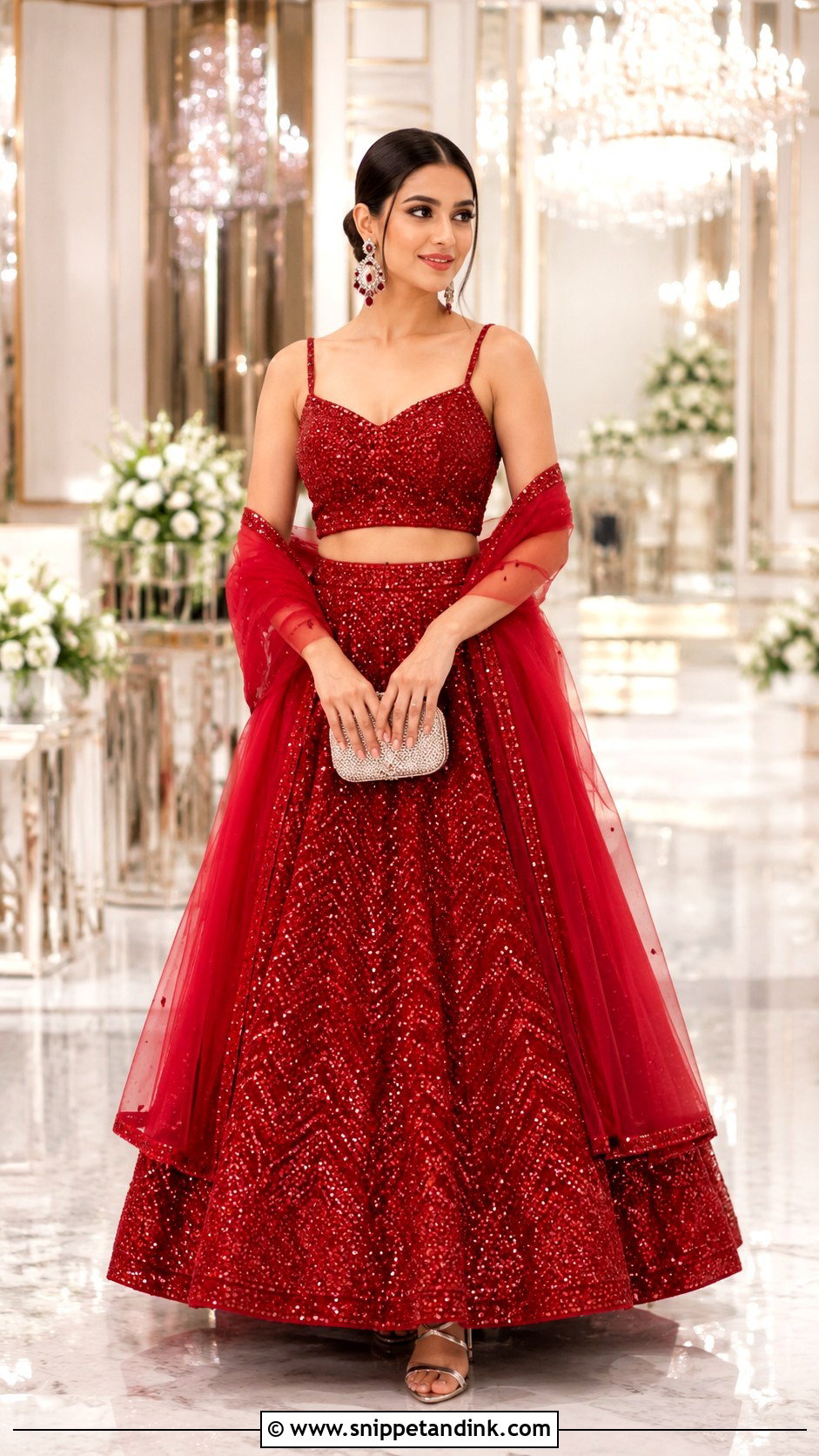
Sequins need light to do anything. That’s why a red sequin lehenga belongs in banquet halls, hotel ballrooms and evening receptions where chandeliers and spotlights hit the fabric. Choose balanced sequin work over all-over coverage, which looks heavy and traps heat. A simple blouse, a soft dupatta, clean jewelry, sleek hair and defined eyes keep it polished. Sequins also scratch: if your arms rest against a fully sequinned blouse all evening, you’ll feel it, so I ask for the inner sleeves and underarm panels to be left plain. Matte sequins or tone-on-tone work give a softer glow.
16. Red Floral Lehenga
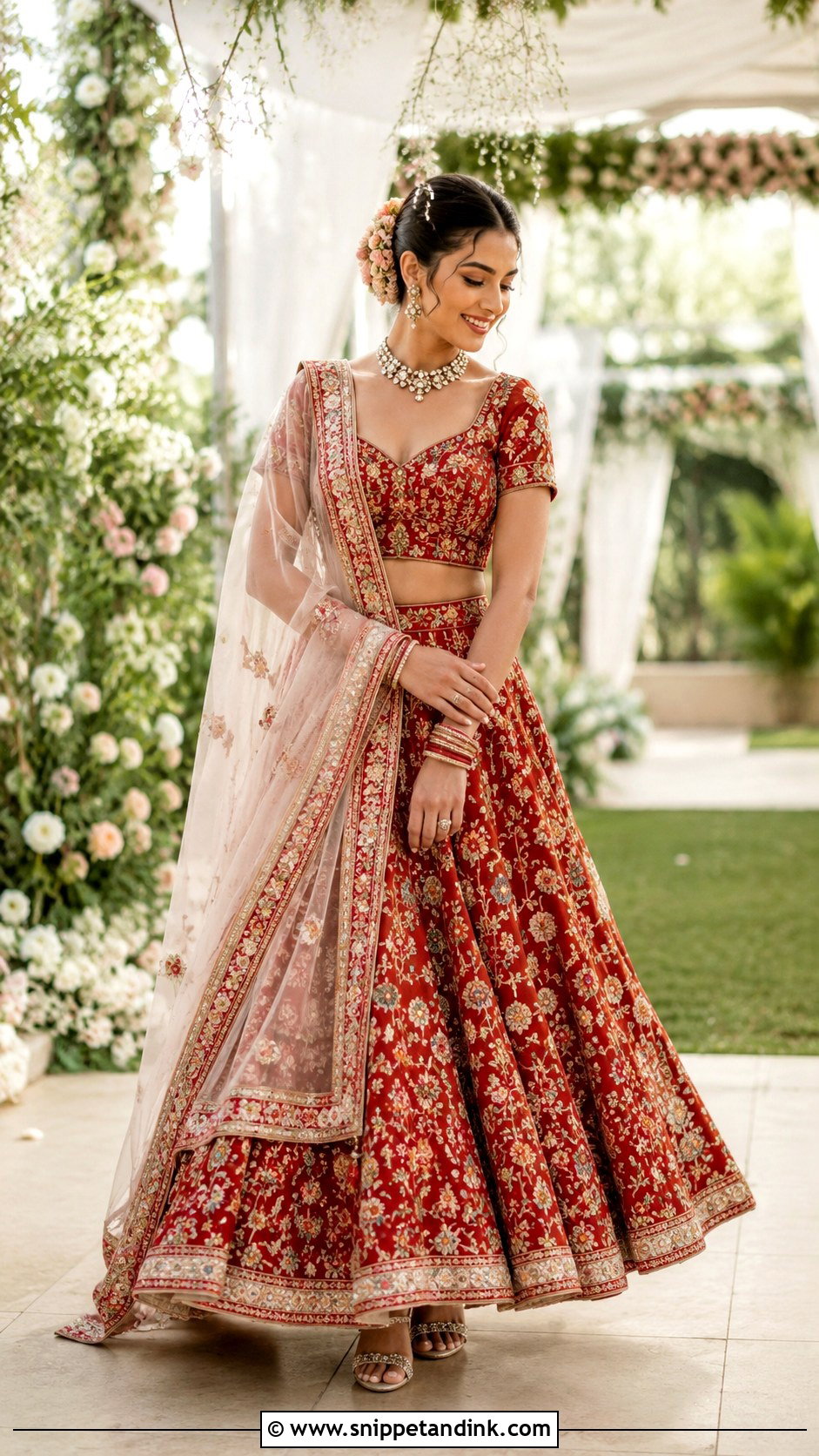
Floral embroidery, prints or appliqué soften classic red, and a red floral lehenga suits daytime weddings and garden venues where heavy zari can look out of place in strong sun. I like the blouse to pick up one secondary color from the flowers, gold, blush, green or ivory, instead of introducing a new one. Pearl, polki or kundan jewelry and a light dupatta keep it airy, and a bun with fresh flowers repeats the motif. Small motifs read delicate. Oversized florals are bolder and sit better on taller frames, since a very large print can swallow a petite bride.
17. Red Maroon Lehenga
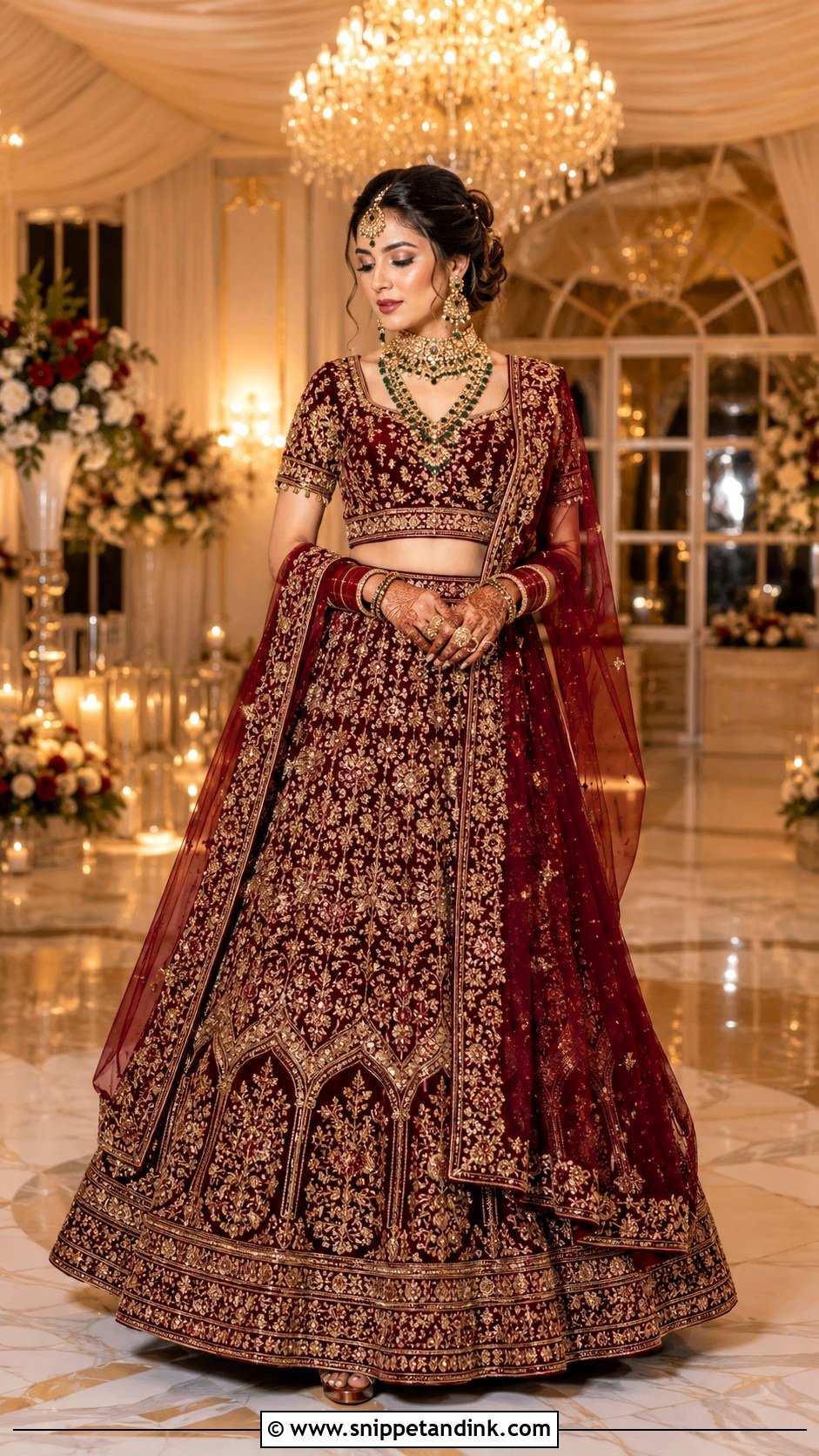
Maroon is red pushed toward brown and plum, and it reads more settled than scarlet. A red maroon lehenga is strongest at evening ceremonies and winter weddings, in velvet or silk with antique gold embroidery, and a maroon dupatta with a gold border warms the face in photos. Add a choker, long necklace and bangles with a structured hairstyle. Very deep shades can drain cool, fair skin under harsh overhead light, so I hold maroon up to the bride’s face by a window and again under warm bulbs before she commits. Warm rose, bronze or deep red makeup suits it.
18. Red Punjabi Bridal Suit
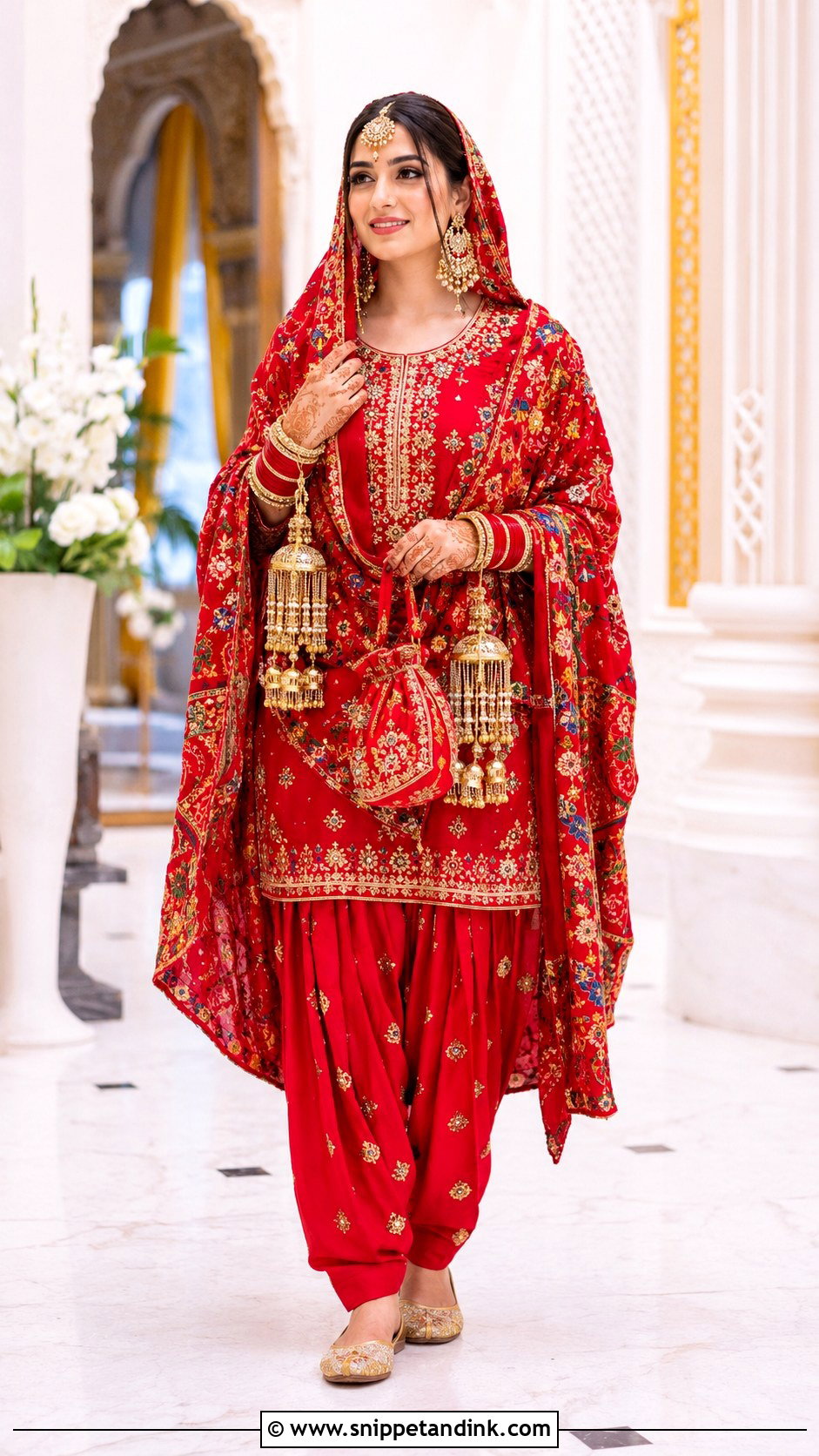
A red Punjabi bridal suit keeps the bride light on her feet. Choose a rich red salwar kameez or Patiala suit worked with phulkari, gota, zari or thread, then add a heavily bordered dupatta, juttis, kaleere, bangles and statement earrings. It carries real meaning at Sikh and Punjabi weddings and suits pre-wedding events too. For an Anand Karaj you’ll sit on the floor and walk the laavan around the Guru Granth Sahib, so I check that the kameez slits and salwar give you room to sit cross-legged and rise without help. Bright red with gold reads classically bridal; deeper reds are quieter. Pin the dupatta firmly so it stays over the head.
19. Red Pakistani Bridal Dress
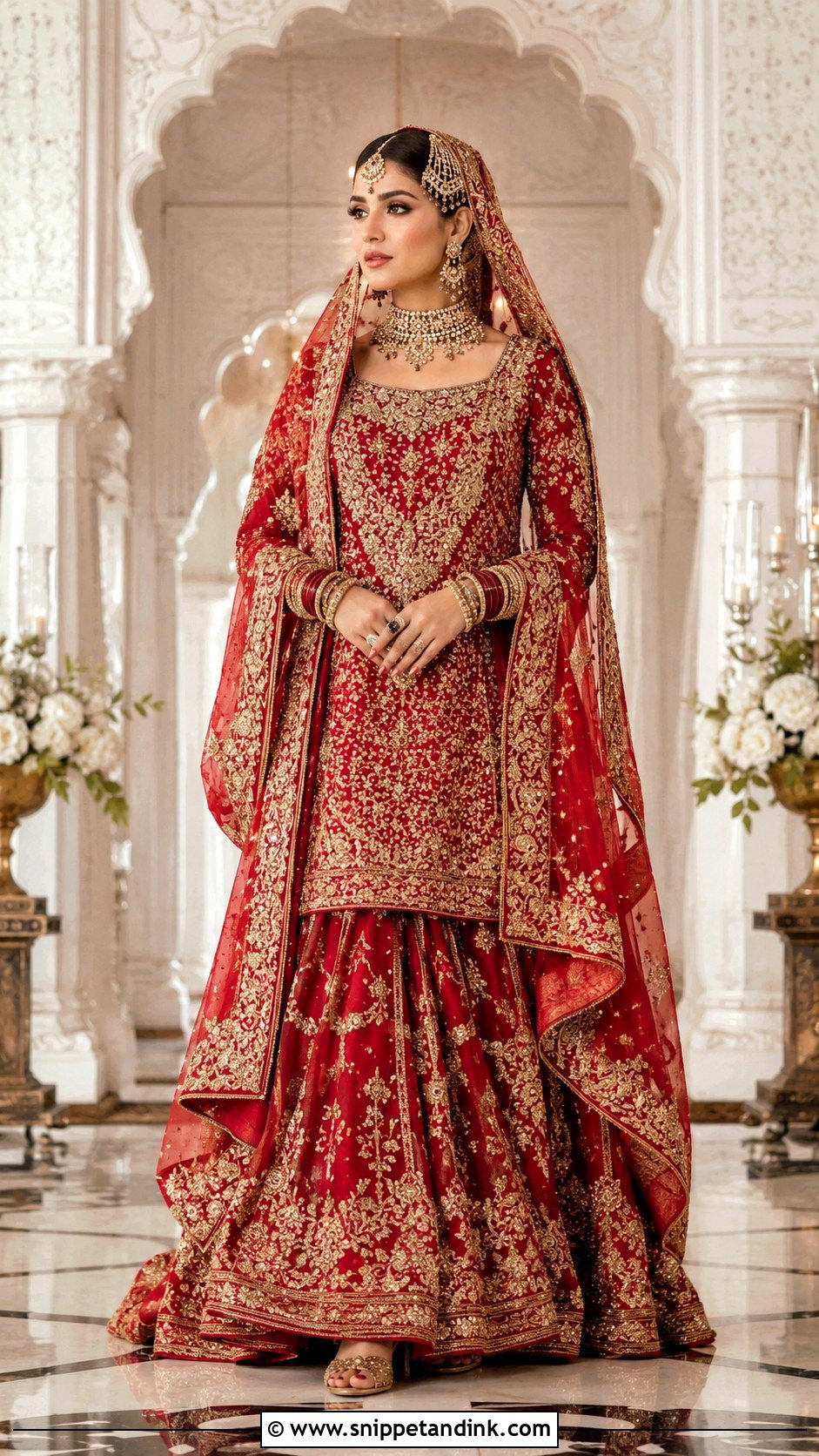
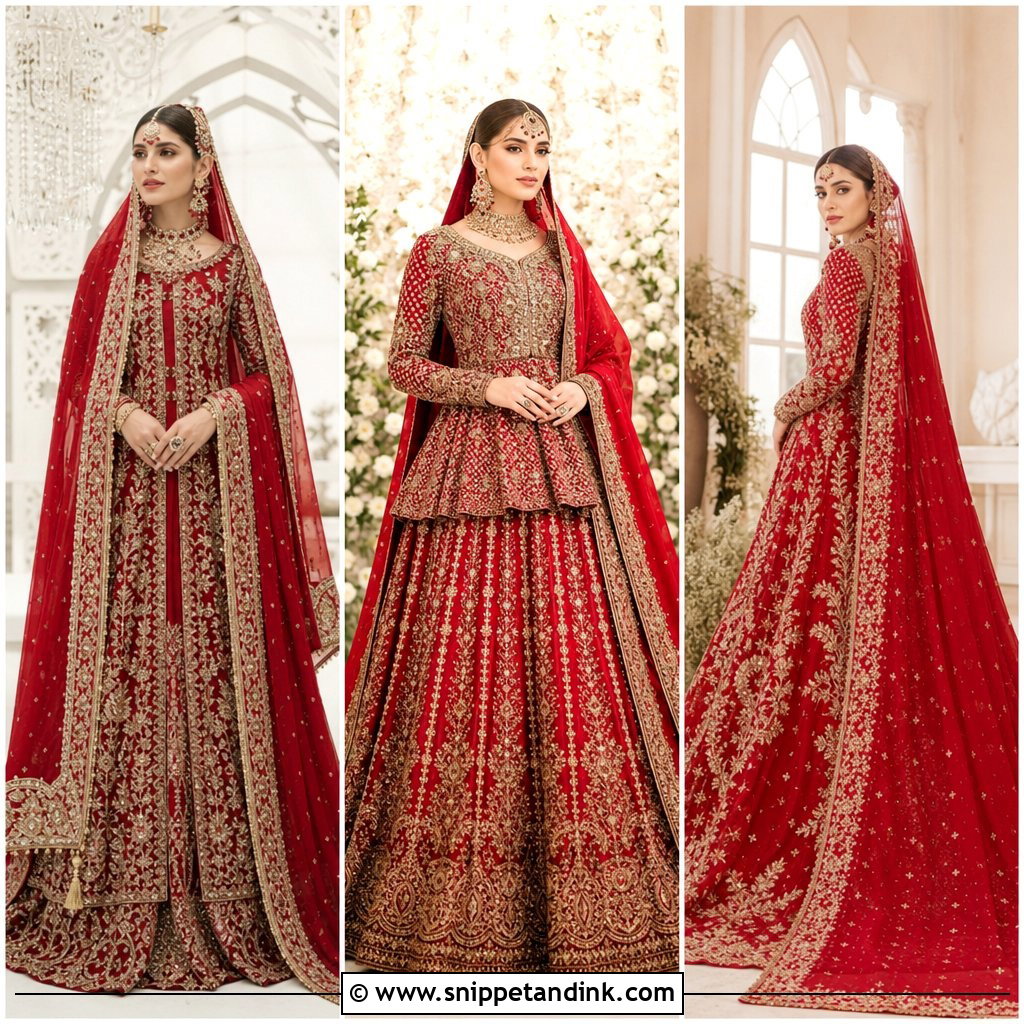
A red Pakistani bridal dress usually pairs a long shirt with a lehenga, gharara or sharara and a heavily embroidered dupatta. The look is regal and modest, in deep red, ruby or maroon with gold, copper or antique work, worn with a passa, tikka, choker, long necklace, bangles and embroidered heels for a nikah, reception or formal ceremony. A longer kameez draws an elegant vertical line while the flared bottom adds volume. These outfits carry a lot of handwork, and the dupatta is often the heaviest single piece. I pin it at several points to the hair and the blouse so the weight isn’t pulling from one spot all evening.
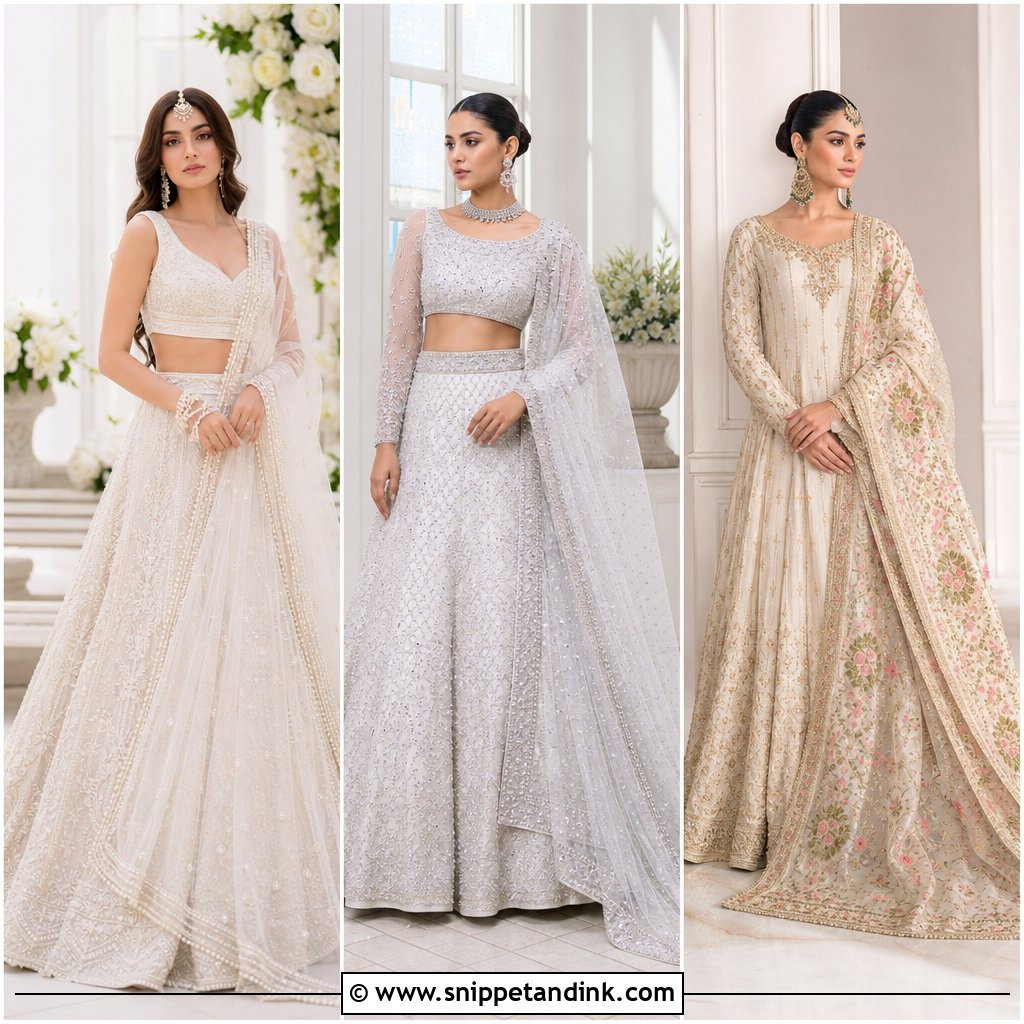


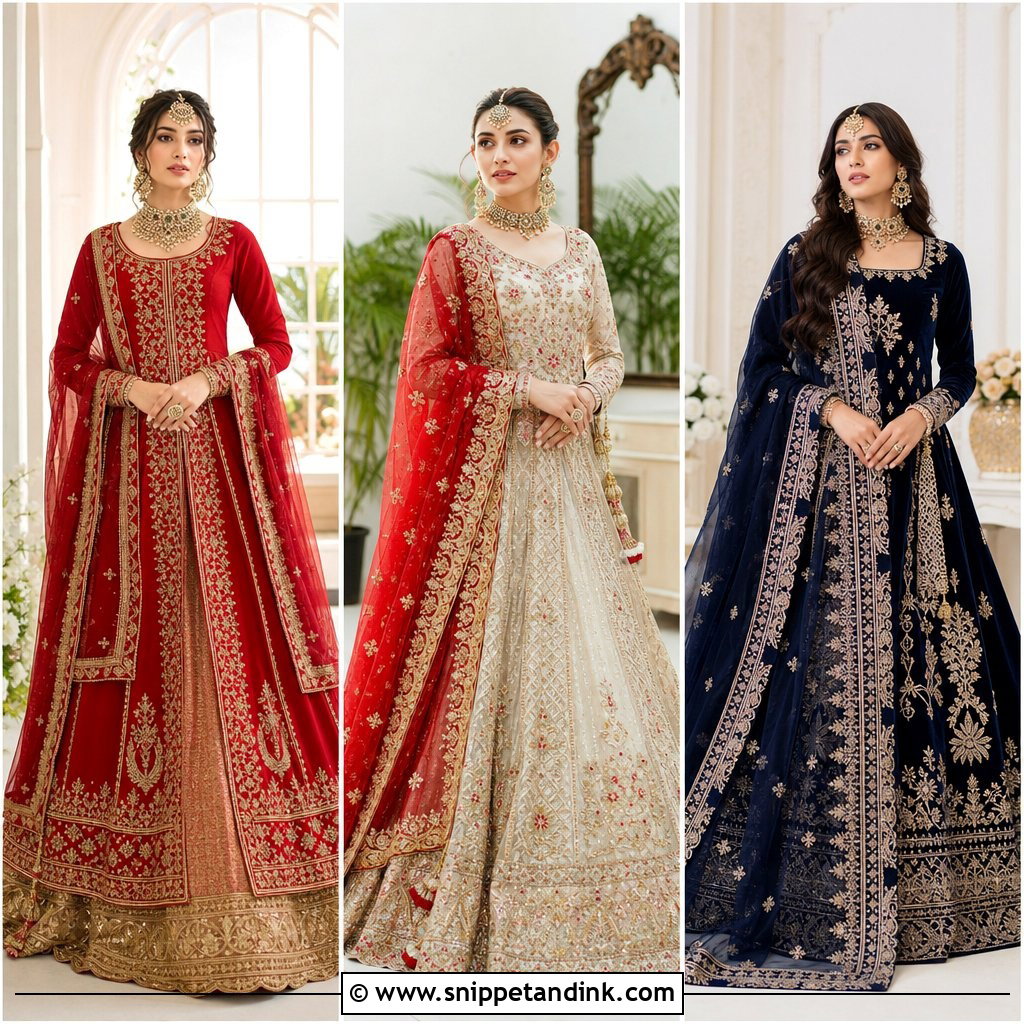

20. Red Reception Lehenga
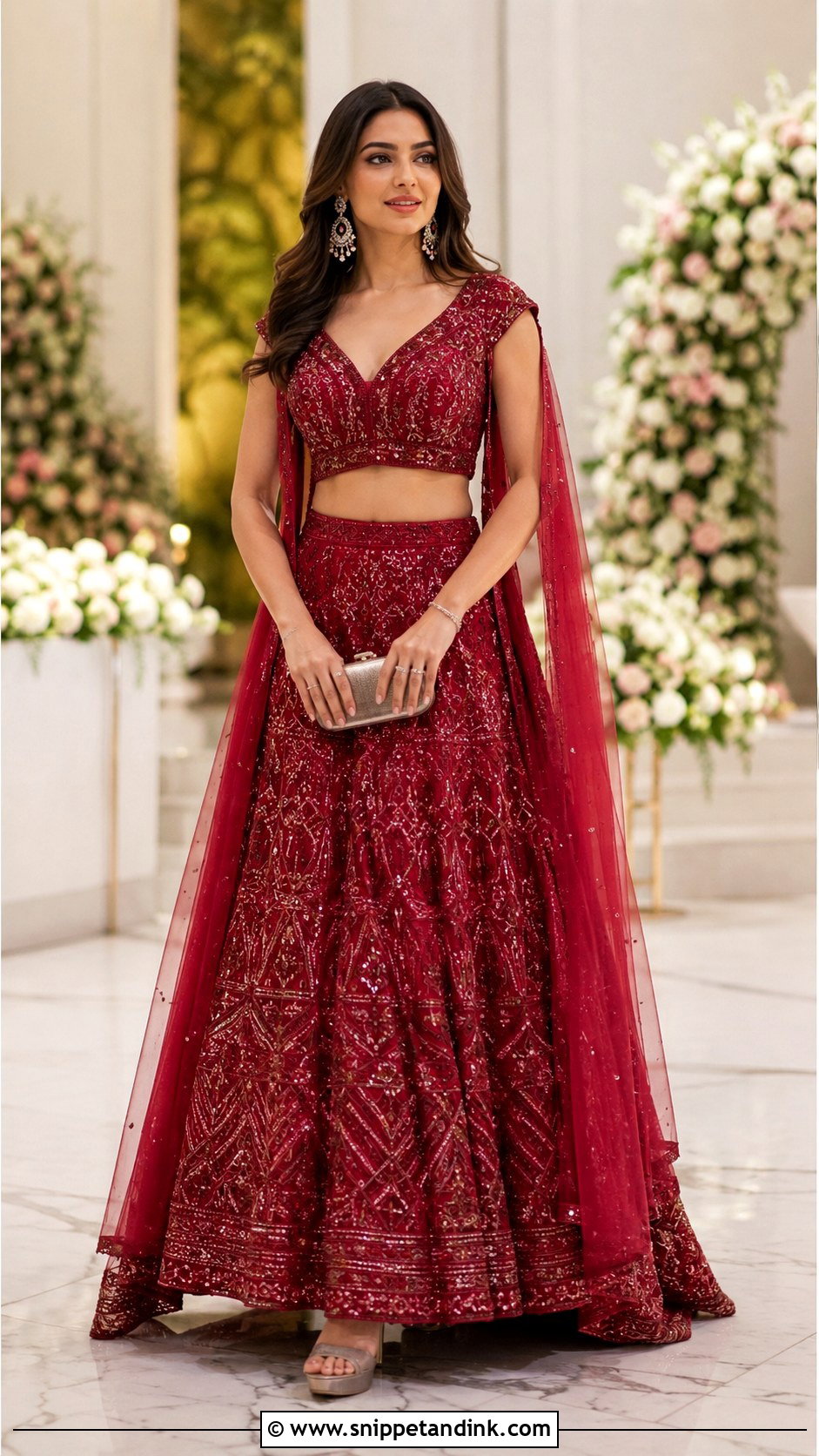
The reception is where I encourage brides to loosen up, and a red reception lehenga can be sleeker and more modern than the ceremony outfit. You’ll be standing, greeting and posing for hours, so the silhouette has to be easy to live in. Sequins, crystal work, metallic embroidery or a sculpted blouse give it evening presence. Pair it with statement earrings, a lighter necklace than the ceremony set, heels and a small clutch. If the ceremony look was very traditional, try a contemporary blouse or cape dupatta here. Ruby and cherry tones glow under warm evening light, but colored uplighting can shift a bright red, so it’s worth seeing the venue lit before you decide.
21. Red Wedding Guest Lehenga
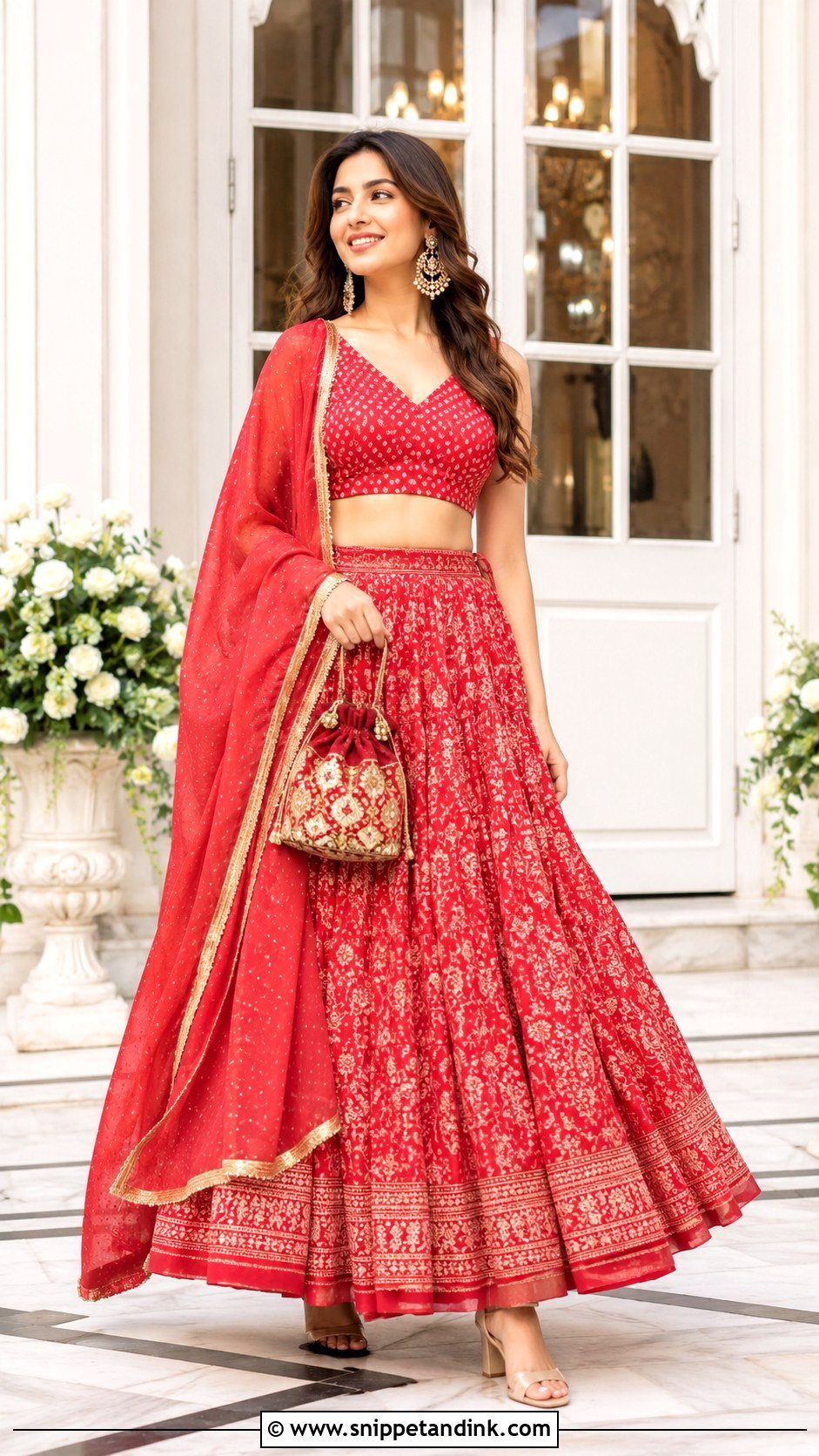
Red is fine for guests at many Indian weddings, but it has to read as festive rather than bridal. That means lighter embroidery, simpler fabric and a dupatta that stays on the shoulder. A printed red lehenga, a georgette skirt or a minimal sequin set suits sangeet, reception or family functions, with statement earrings, a small potli and comfortable heels or juttis. Skip heavy can-can, oversized bridal jewelry and a head-covered dupatta. If you’re unsure, ask the family, since some would rather guests avoid red at the main ceremony. Rust, softer reds or red with pink and gold accents feel celebratory without competing.
22. Red Wedding Guest Saree
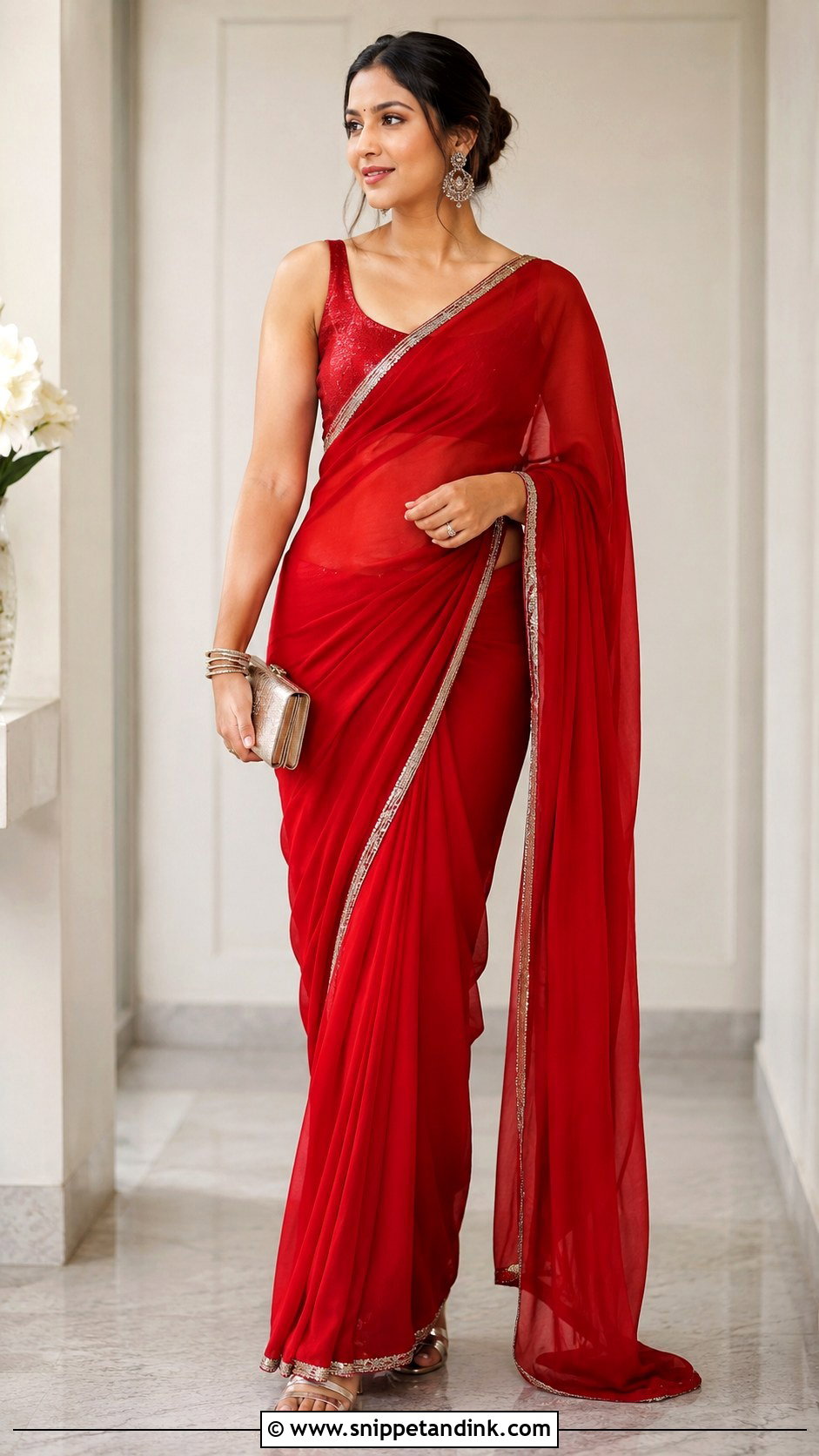
A guest’s red saree works best in lighter fabrics, chiffon, georgette, organza or a light silk, with a thin border, a floral print or subtle sequins. Pair it with a simple blouse, earrings, bangles and a small clutch. At a traditional ceremony, avoid heavily embroidered bridal red unless you’re close family and the dress code allows it. Guests spend the day sitting, eating and dancing, so I suggest fewer pleats, a safety pin at the shoulder and a drape you can fix yourself in a restroom mirror. Chiffon also creases far less than silk over a long day.
23. Red Indo Western Dress
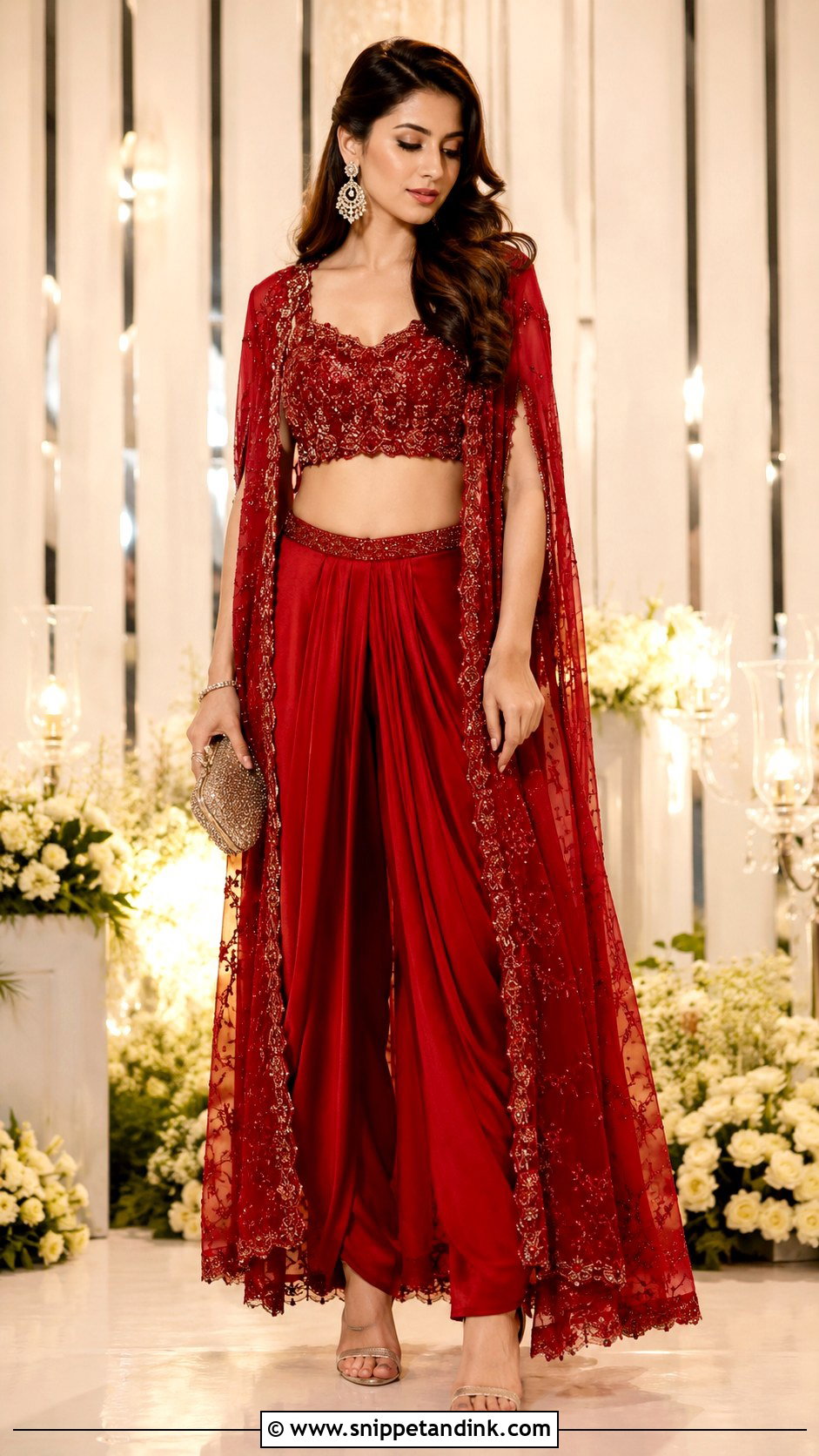
Indo Western dressing works when the Indian element is obvious, through embroidery, fabric, jewelry or drape. A red embroidered crop top with palazzos, a draped skirt with a cape blouse or a structured gown with Indian detailing all suit engagement parties, receptions, sangeet nights and destination events, with statement earrings, heels and a clutch. A cape, attached dupatta or asymmetrical layer adds movement without anything to manage. Where these outfits go wrong is when the cut is so Western and the trims so minimal that it reads as a party dress. I’d keep at least one strongly Indian detail, such as zardozi on the cape.
24. Red Pre Draped Saree
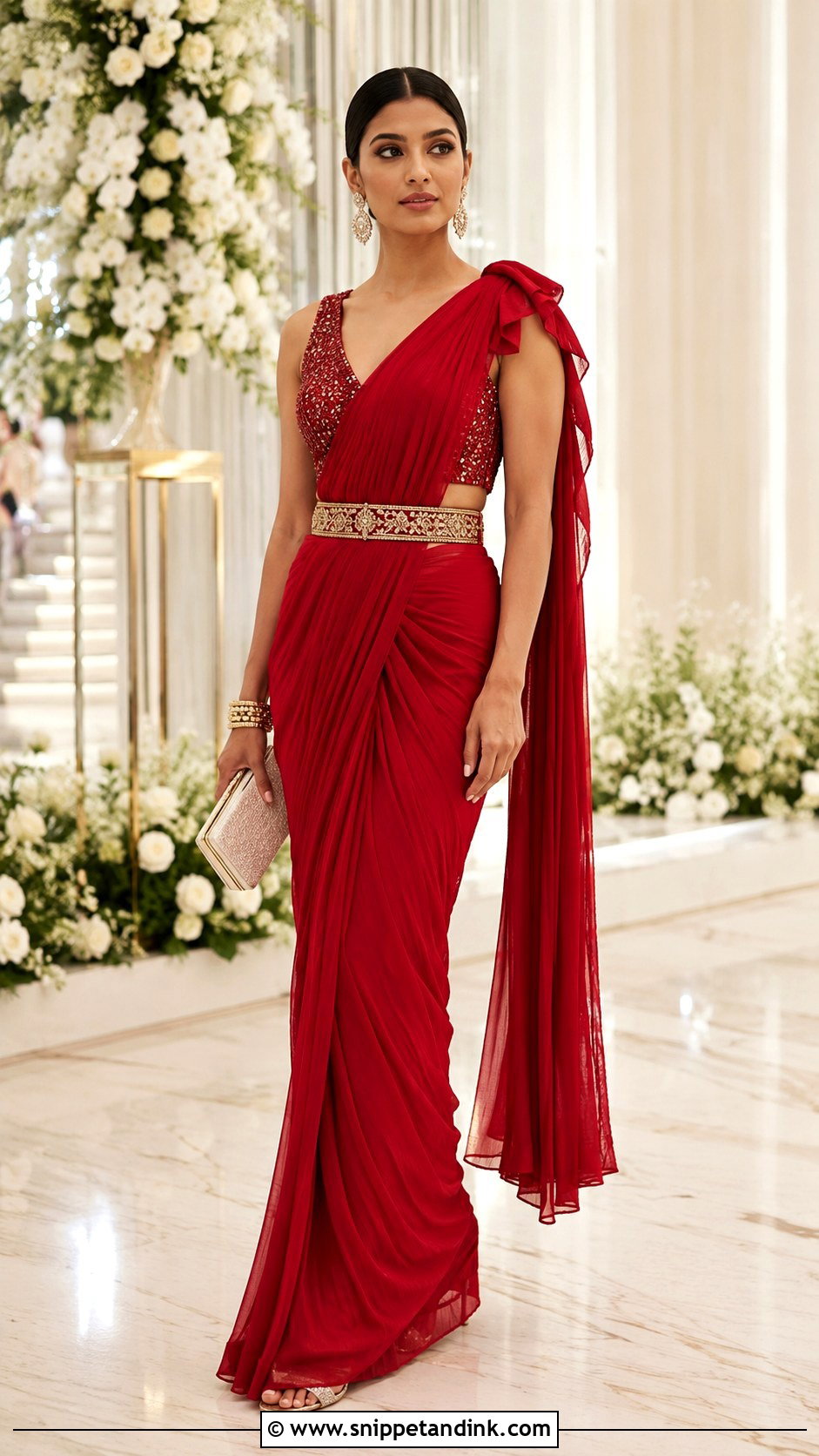
A pre-draped saree has its pleats and pallu stitched in place, so you step in, fasten it and it stays neat for hours. That makes a red pre draped saree a good pick for receptions, engagements, sangeet or guests who don’t want to keep adjusting. Choose one with an embellished blouse, waist detail or soft embroidery, and add heels, earrings, bangles and a sleek clutch. A belt or kamarbandh defines the waist and steadies the drape. Have it fitted in the shoes you’ll actually wear, because the hem length is fixed and a pre-draped saree that’s too long will catch under your heel.


25. Red Destination Wedding Lehenga
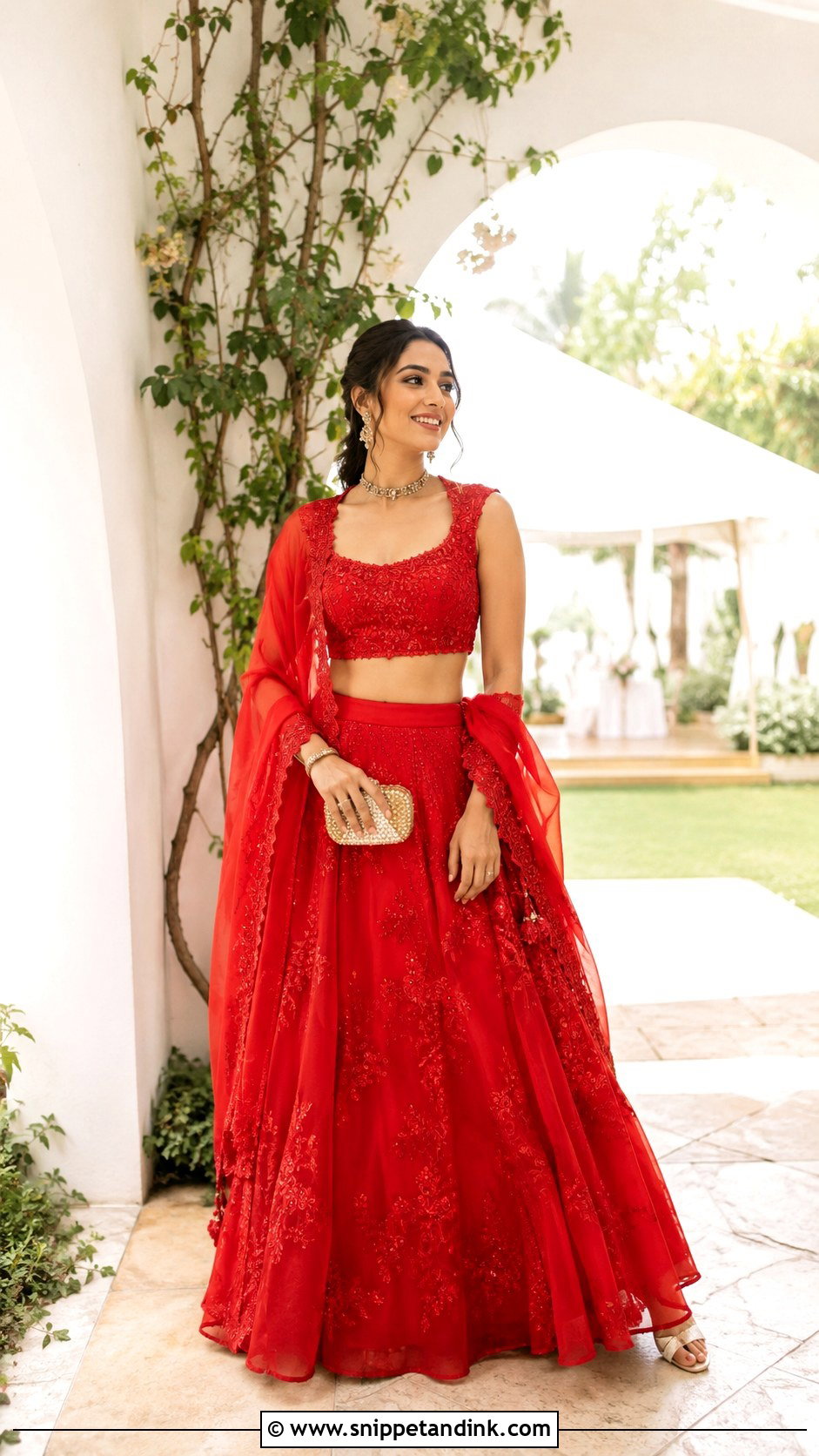
For a destination wedding I think about the suitcase as much as the photos. A red destination wedding lehenga should pack well and stay comfortable in heat, so organza, georgette, chiffon, crepe or lighter silk blends make more sense than velvet or brocade. Delicate embroidery, mirror accents or floral work give bridal impact without the weight. Pair it with a breathable blouse, a soft dupatta, comfortable sandals or wedges and jewelry that won’t feel heavy in warm weather, and check the skirt moves freely on grass, sand or stone. Carry it on the plane folded in tissue rather than checking it, and ask the hotel for a steamer when you land.
How Heavy Is Too Heavy for a Six-Hour Ceremony?
A fully worked bridal lehenga with can-can, lining and a heavy dupatta can weigh several kilograms, and you’ll feel every gram during a long ceremony. I ask shops to let the bride wear the complete outfit, dupatta pinned, for at least twenty minutes before she buys. Sit down on a low stool, stand up without using your hands, take a few steps backward and lift your arms as if greeting someone. If any of that is a struggle at minute twenty, it will be worse at hour five.
Custom embroidery takes time, and lead times vary a lot between makers, so order early enough for two or three fittings. I like the last fitting a couple of weeks before the wedding, done in the real shoes and the real blouse padding. Ask the tailor to add hidden loops so the dupatta can be pinned to the blouse and hair, and keep a small kit of safety pins, a needle with red thread and fashion tape with whoever is helping you dress.
After the Last Ritual: Airing and Storing a Red Bridal Outfit
Don’t zip a heavy lehenga or silk saree into a plastic bag the night of the wedding. Hang it somewhere airy, out of direct sun, for a day so the sweat and perfume can dry out, then send it to a cleaner who handles embroidered silk. Never dab a stain with water yourself: some red dyes bleed, and a damp patch can leave a ring on silk.
- Fold heavy skirts with acid-free tissue between the layers instead of hanging them by the waistband, which stretches over months.
- Wrap the outfit in soft muslin or an old cotton saree so the fabric can breathe.
- Refold along different lines every few months so zari doesn’t crack along one crease.
- Keep it away from perfume bottles and damp walls, which speed up tarnish on metallic thread.
Wearing Red From the Pheras to the Last Photo
Red suits brides, guests and almost every kind of ceremony when the whole outfit is planned together. A lehenga is the classic, a Banarasi or Kanjeevaram saree carries regional tradition, and a sharara, Anarkali, gown or pre-draped saree trades some grandeur for comfort. Your role, the venue, the season and how much weight you can carry for hours should decide the outfit before the embroidery does. Get the fit right, balance the jewelry against the work on the fabric, and make sure you can sit, walk and bend in it. Then red does what it has always done at Indian weddings: it makes the bride easy to find in every photo.
You'll Like These Ideas:









Leave a Reply