
A wedding cake does more than finish the meal. It anchors the dessert table, tells guests something about your style, and ends up in more reception photos than almost anything else in the room. Current cakes mix classic shapes with modern finishes: textured buttercream, fresh flowers, pearls, bows, sculpted tiers and soft colour. Some couples want a grand tiered cake; others want one small cake beside a dessert table. When I sit down with a couple, the venue, guest count and favourite flavours narrow the field quickly, and the pictures below cover the styles I’m asked about most.
What a Baker Reads in Your Inspiration Photos
Photos are the fastest way to show a baker what you like, but I read them differently from the way you probably see them. I’m looking at the finish, the size of the tiers, how many flowers there are and whether they’re real or sugar, because each of those drives the time and the price.
Bring three to five pictures rather than thirty, and say what you love in each one. The ruffle on the bottom tier, the colour of the roses, the height: one sentence per photo tells me far more than a whole board of saved images. One picture of a cake you dislike helps too, because it rules out a lot quickly.
Why your cake won’t be an exact copy
Inspiration shots are often styled cakes, lit for the camera and sometimes built partly on dummy tiers. The flowers in the picture may be out of season on your date. A good baker translates the idea to your guest count, venue and season, and the result usually suits your wedding better than a copy would.
1. White Wedding Cake With Fresh Flowers
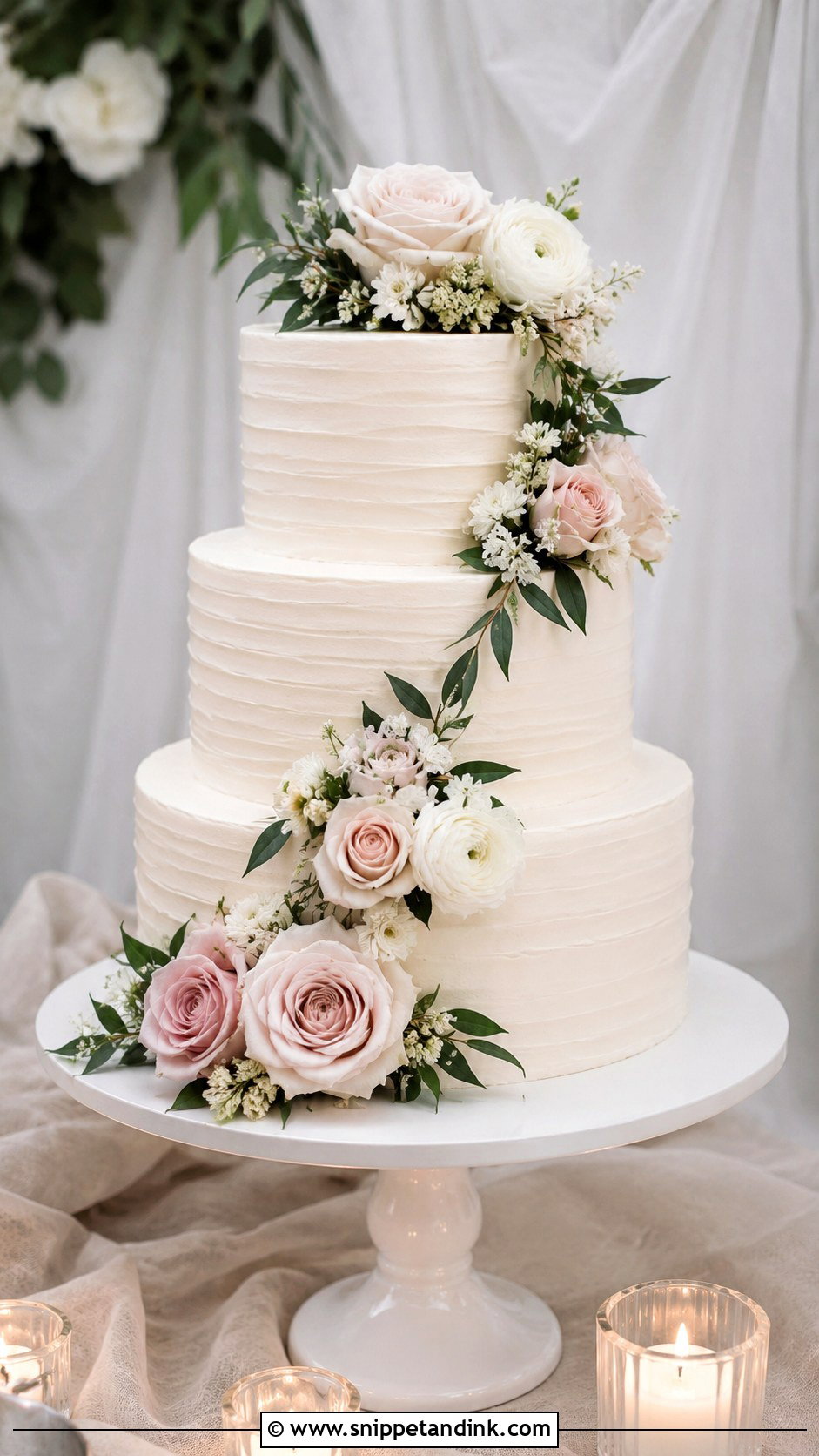
White with fresh flowers is the cake I’m asked for most, because it adapts to almost any room. The flowers decide the mood: garden roses feel relaxed, orchids formal, ranunculus soft. Smooth buttercream reads gentle and fondant reads crisp. The part couples underestimate is the flowers themselves. They need to be unsprayed, and I wrap or pick every stem so sap never touches the frosting, which means the florist and I agree weeks ahead on who does what. Vanilla, almond, lemon or champagne-style sponge suits it.
2. Three Tier Wedding Cake
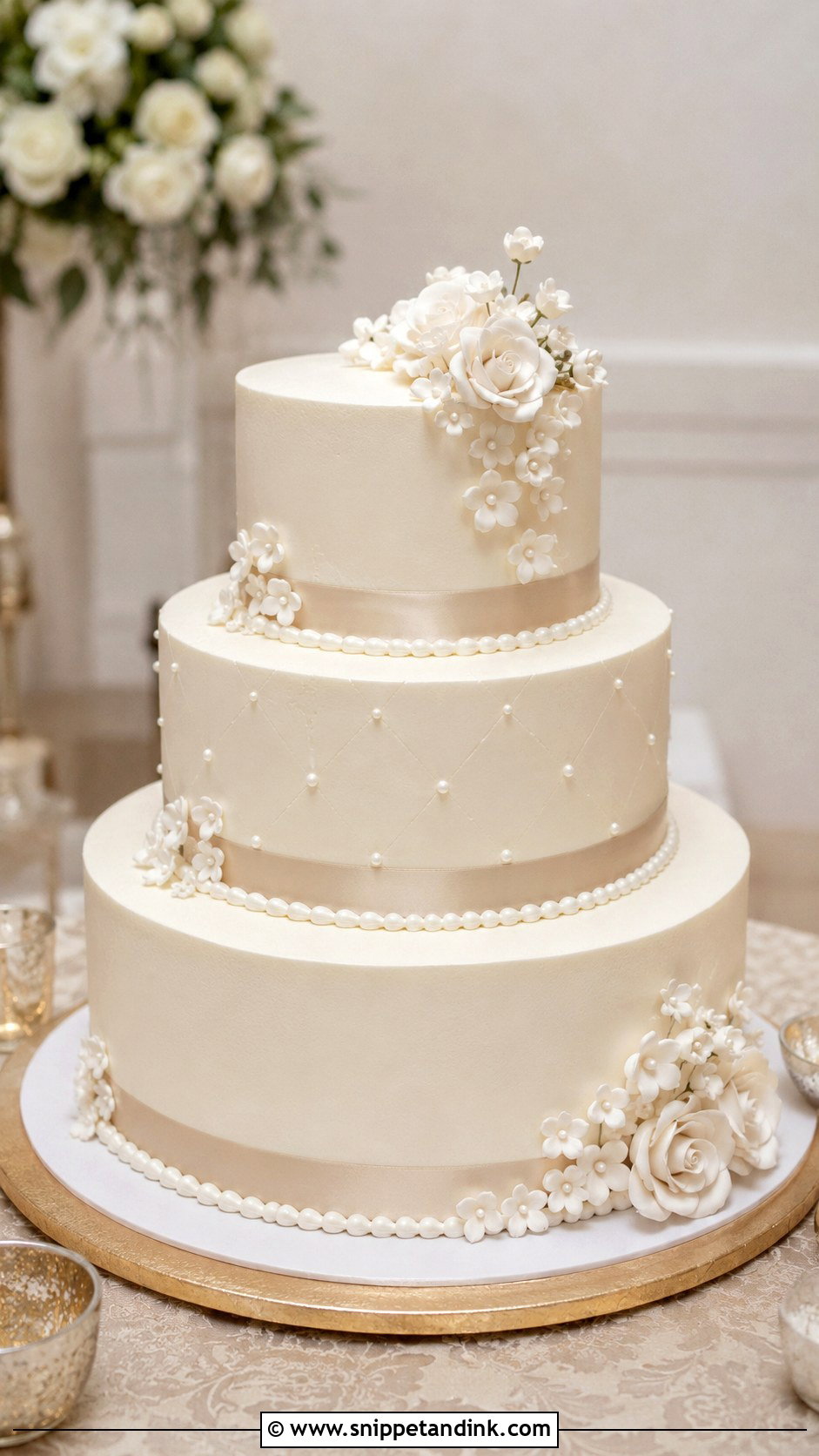
Three tiers is the shape most people picture when they hear wedding cake. It has enough height for photos and still feeds a typical guest list without much waste. Each tier can be a different flavour, which I like, as long as fillings that need refrigeration, such as fresh cream or custard, go in the tiers that get cut first. Keep it clean with smooth white buttercream or add texture, piping, florals or pearls. On a pedestal stand with candles or greenery at the base, it holds a table on its own.
3. Vintage Wedding Cake
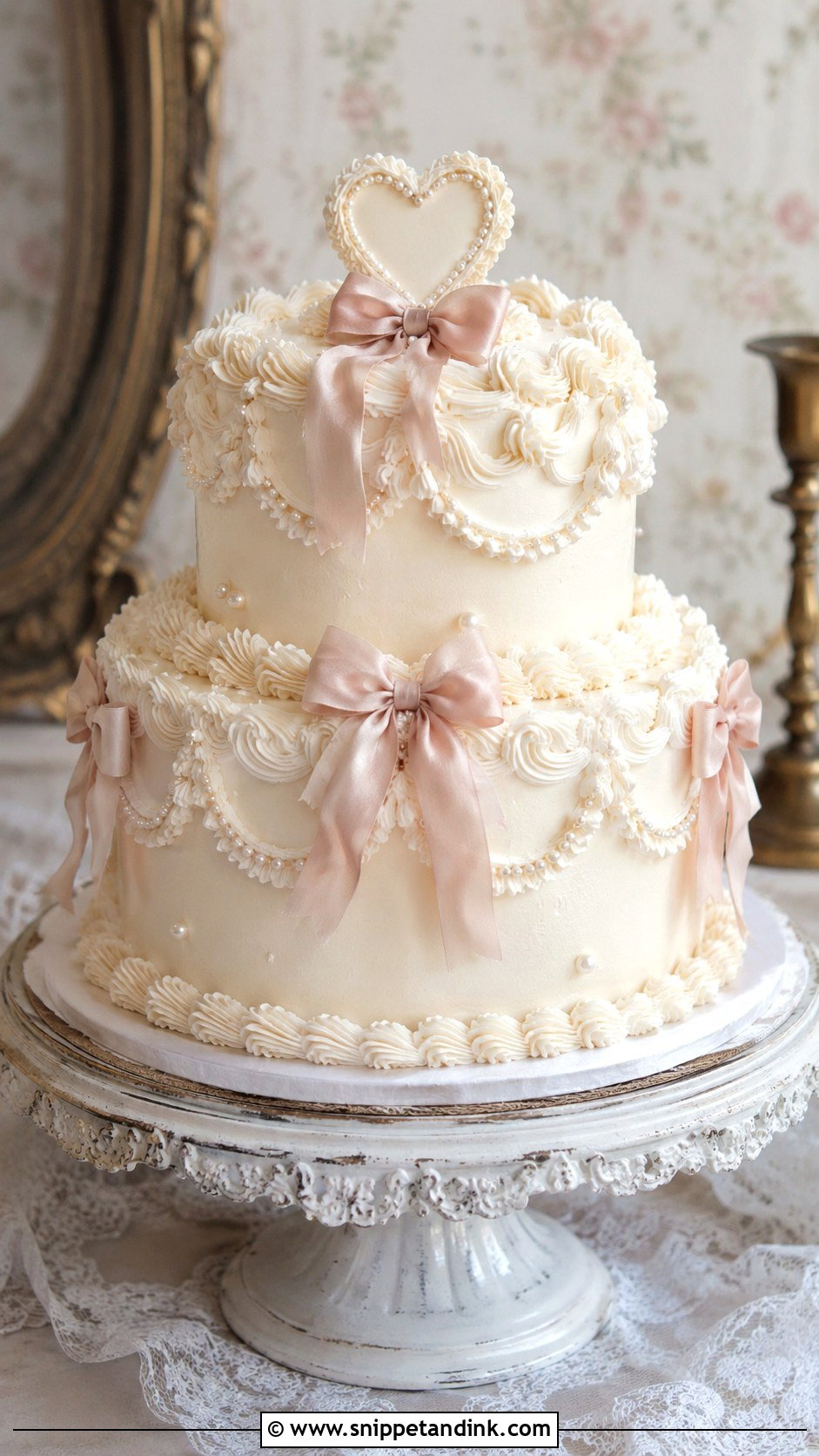
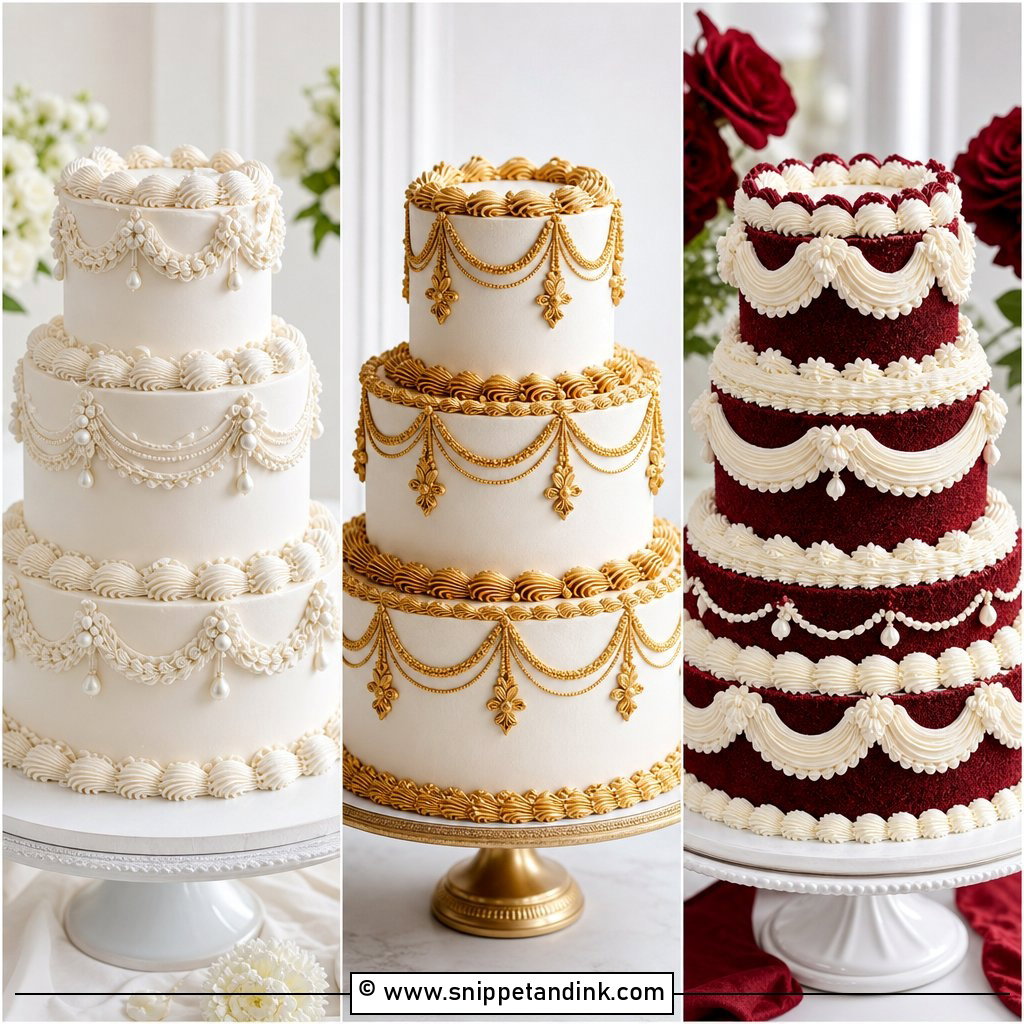
Vintage cakes are about handwork: piped borders, ruffles, shells, swags and bows. Ivory, blush, pale blue, butter yellow and classic white all suit the style, and a heart topper, lace cloth or antique-style stand finishes it. Inside, think vanilla raspberry, almond, lemon or chocolate with buttercream. The risk is crowding. When every surface is piped the eye has nowhere to rest, so I keep the palette to one or two colours and leave a band of plain frosting on at least one tier.
4. Lambeth Wedding Cake
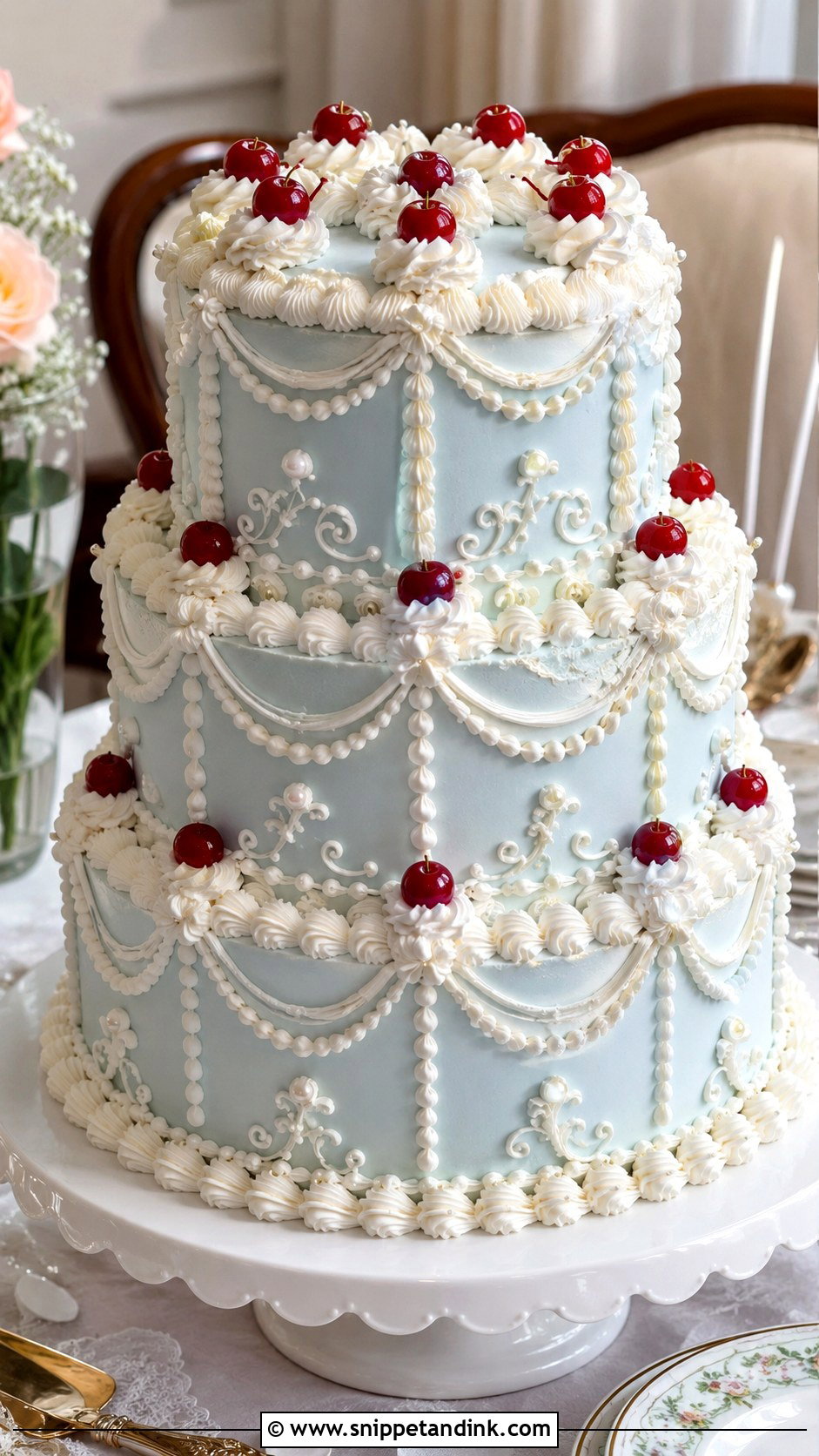
Lambeth is the most ornate piping style here, layer upon layer of shells, drop lines, scrolls and raised borders built out from the cake. It can be all white or playful with pastels and cherries, as a single statement cake or tiered. It takes far longer to pipe than a smooth finish, so expect the price to reflect that, and ask whether the baker has made one before, because the overpiping needs a practised hand. Buttercream Lambeth also softens in heat faster than flat finishes, since the piped ridges are so thin.
5. Pearl Wedding Cake
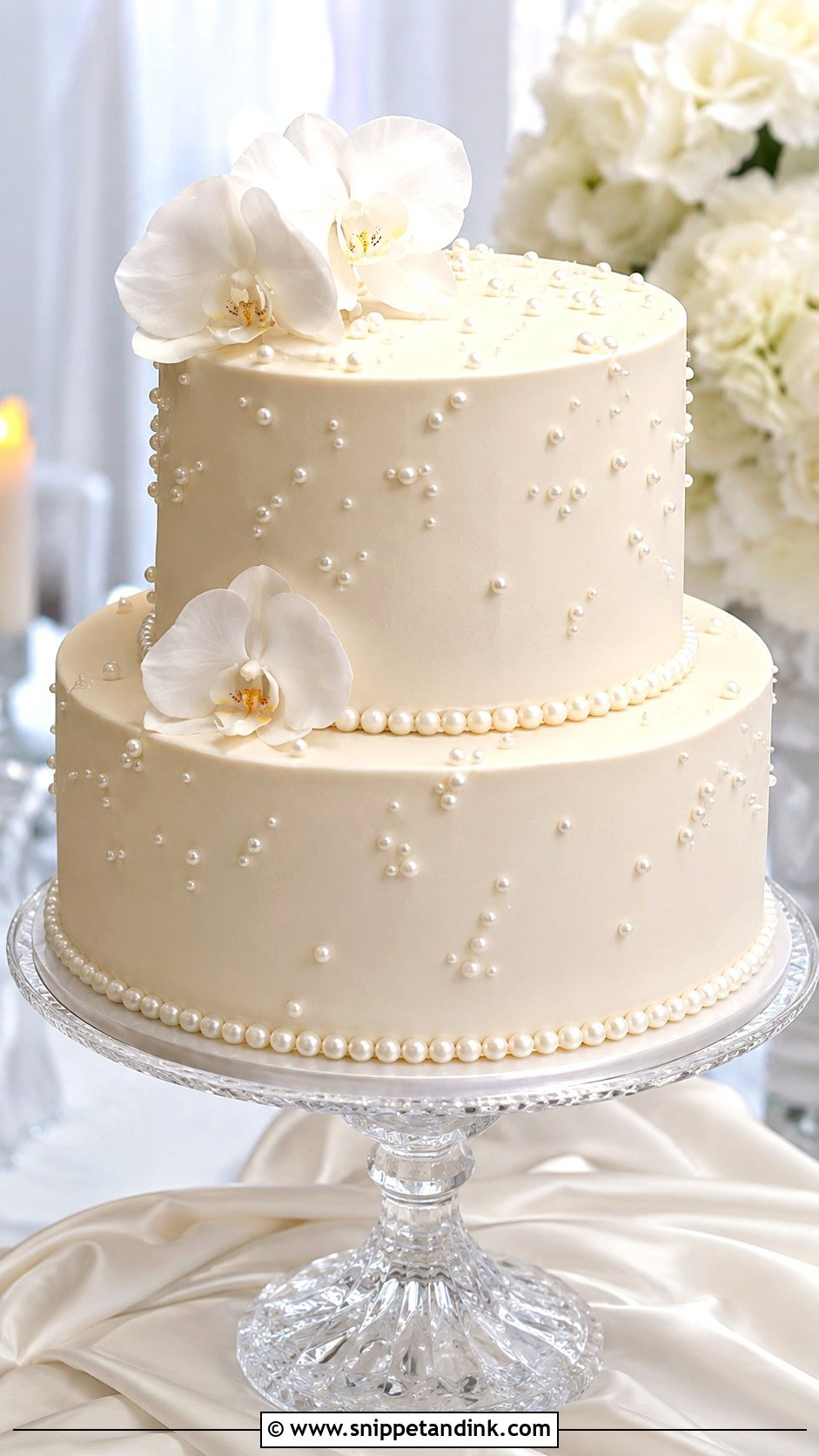
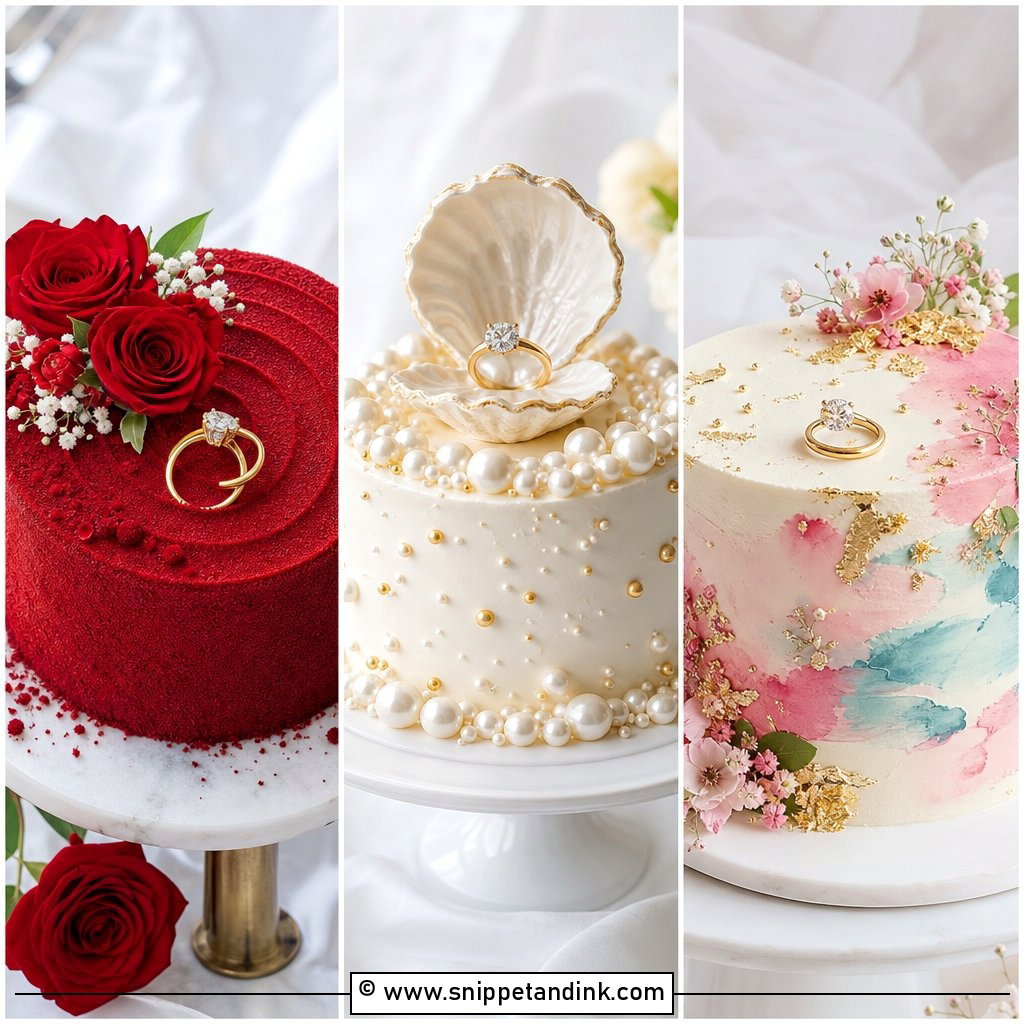
Pearls dress a cake without heavy decoration. They can be tiny edible beads, clusters, borders or a full pearlised finish brushed over fondant. White, ivory, champagne, blush and soft gold palettes suit them best, alongside satin linens and candlelight. Clean tiers make them modern; piped borders make them vintage. I’d pair them with vanilla bean, almond, coconut or white chocolate raspberry. Hard sugar pearls crunch, so wherever guests will eat a lot of them, I switch to soft moulded ones.
6. Gold Leaf Wedding Cake
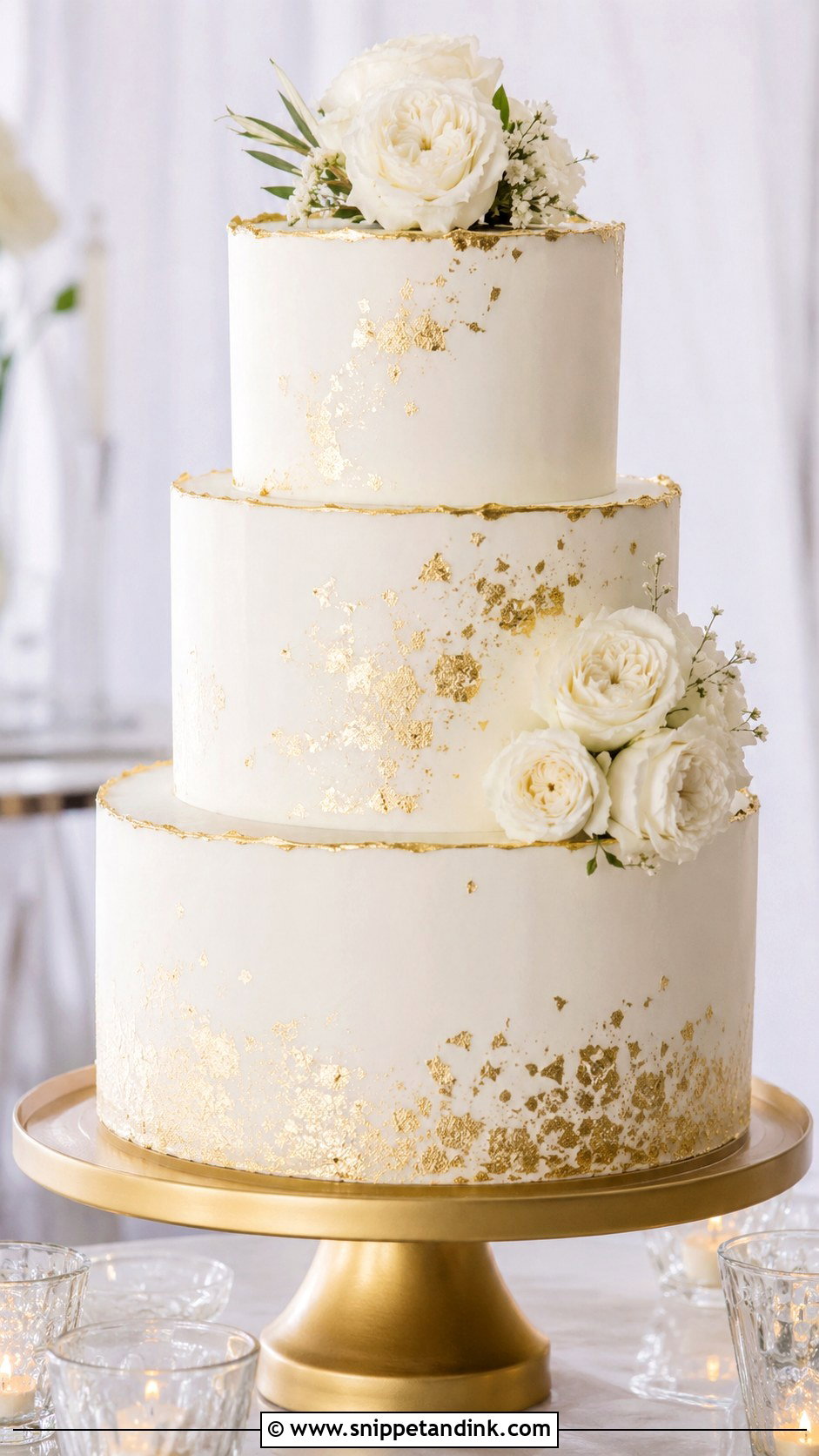
Gold leaf adds warmth without shouting. It can be scattered flakes, brushed edges, abstract patches or a thin band between tiers, and it sits well on white buttercream, ivory fondant, blush, deep green or navy. Edible gold leaf is so thin it lifts on a breath, so I apply it with a dry brush in still air, usually as the very last step. Keep everything else simple so the metal feels special. Under candlelight at an evening reception, it gives the cake a warm glow.
7. Buttercream Wedding Cake
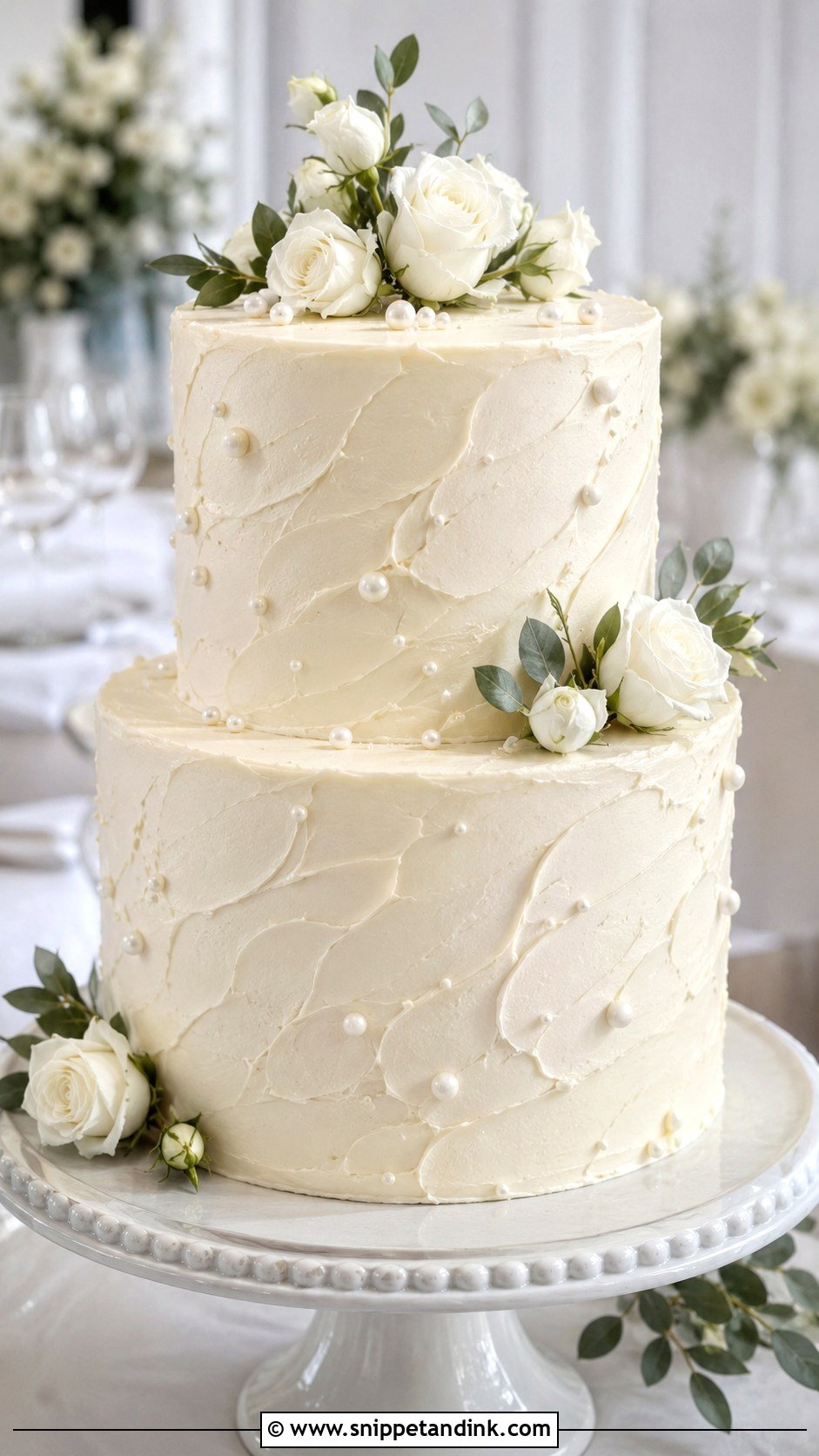
Buttercream is the finish most couples choose for flavour first. It can be smooth and classic, textured and rustic, or swept with palette-knife strokes, and it takes fresh flowers, fruit, pearls and colour washes easily. Swiss meringue buttercream is the silky, less sweet version I use most for weddings. Its trade-off is that it softens sooner in heat than a sturdier American-style buttercream. Vanilla, lemon, almond, strawberry and chocolate all work under it.
8. Textured Wedding Cake
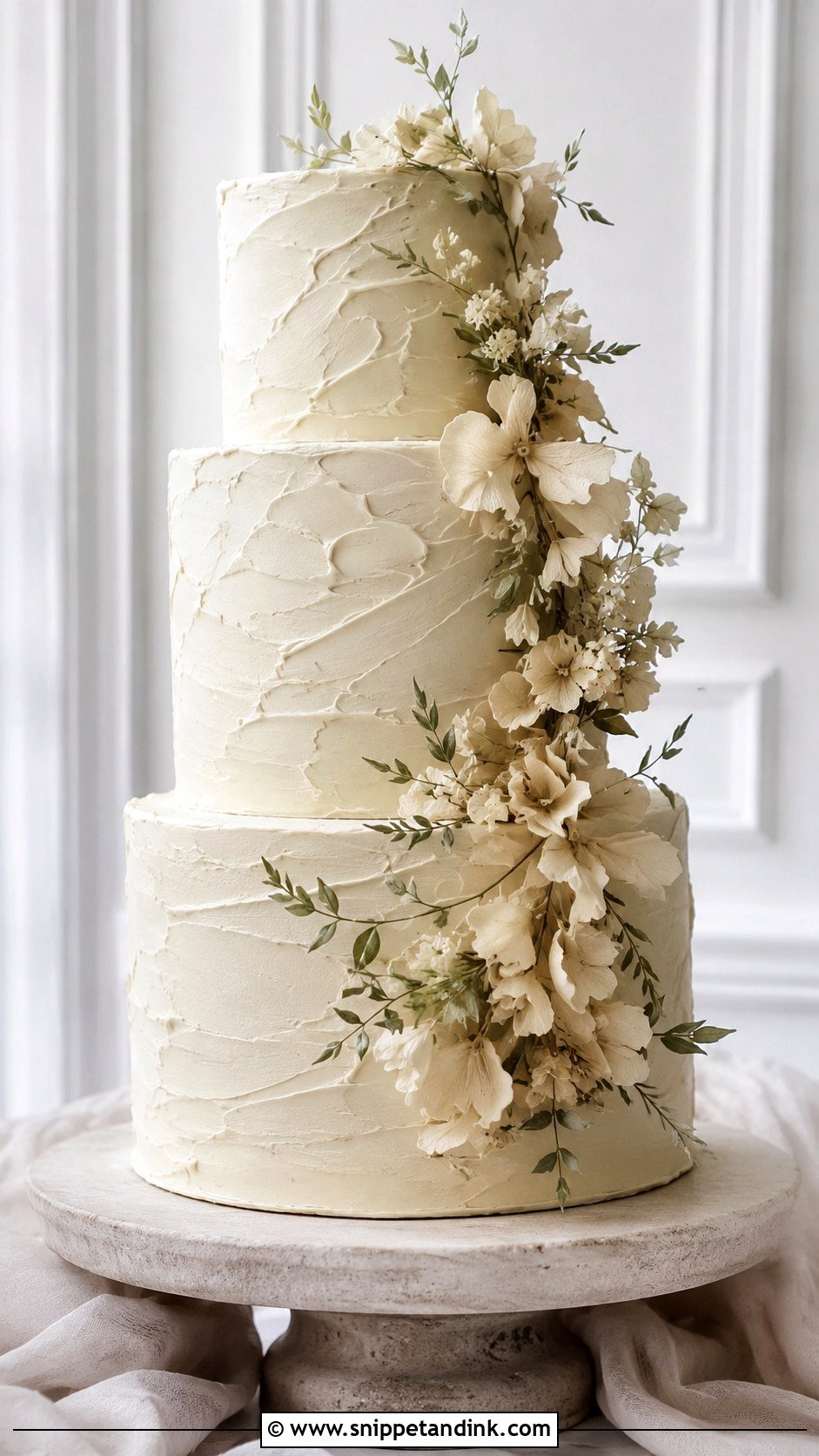
Texture gives a cake interest without adding decorations. Ridges, vertical lines, ruffles, waves and hand-smoothed marks each catch the light differently, so even a plain colour has life in photos. Depending on the room, it reads modern, rustic, beachy or romantic. I keep the add-ons to one floral cluster, a few sugar petals or a sprig of greenery. Neutral palettes like ivory, beige, blush and sage show texture best; dark colours swallow it.
9. Floral Wedding Cake
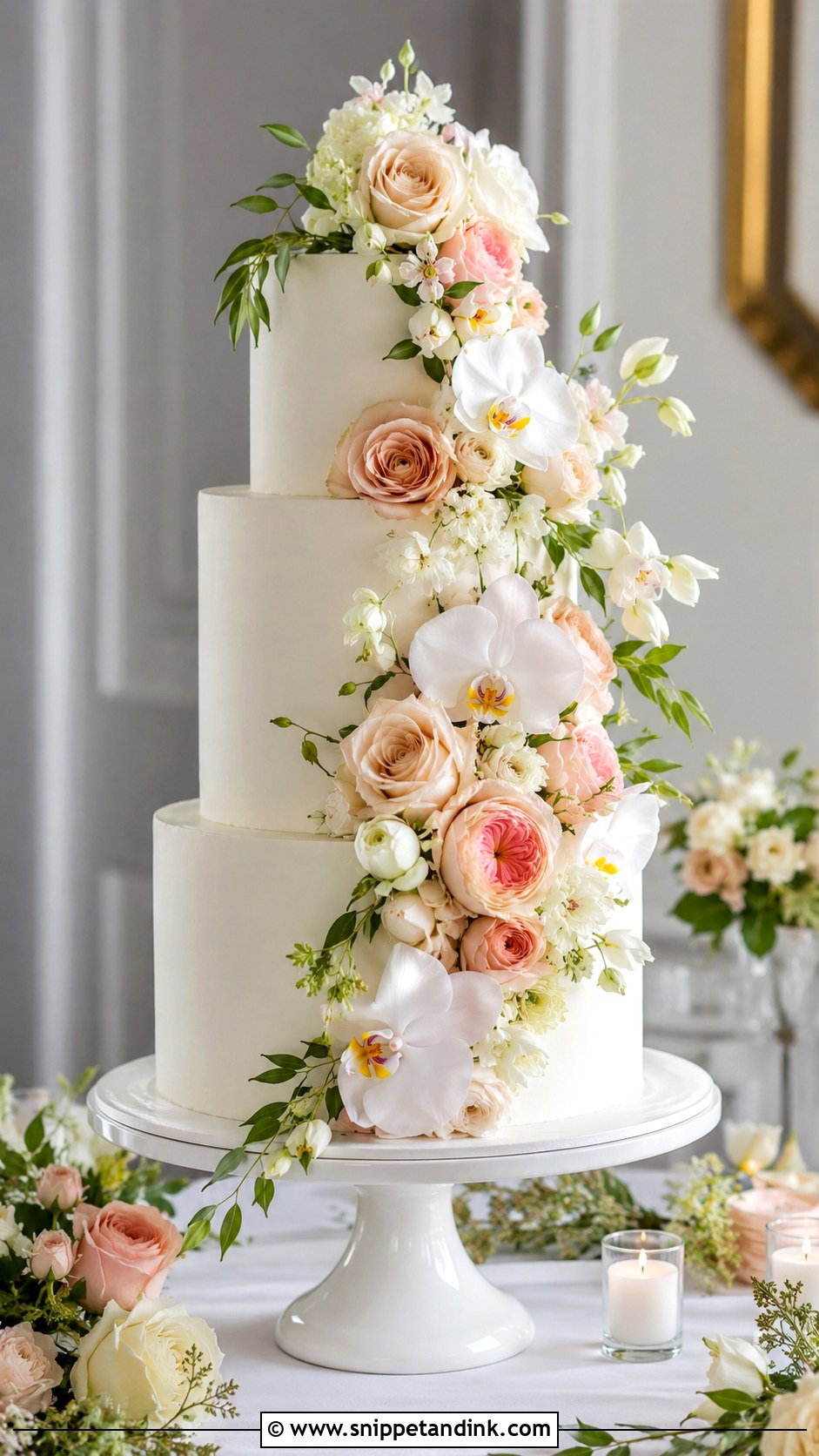
Flowers make a dessert table feel fresh. A full cascade, small clusters, pressed edible flowers, sugar flowers or piped buttercream blooms all have their place. Garden roses and peonies feel classic, orchids modern, wildflowers relaxed, and matching the cake flowers to the bouquet ties the day together. Fresh blooms need food-safe handling. Sugar flowers cost more because every petal is shaped by hand, but they can be made weeks ahead and kept afterwards as a keepsake.
10. Minimalist Wedding Cake
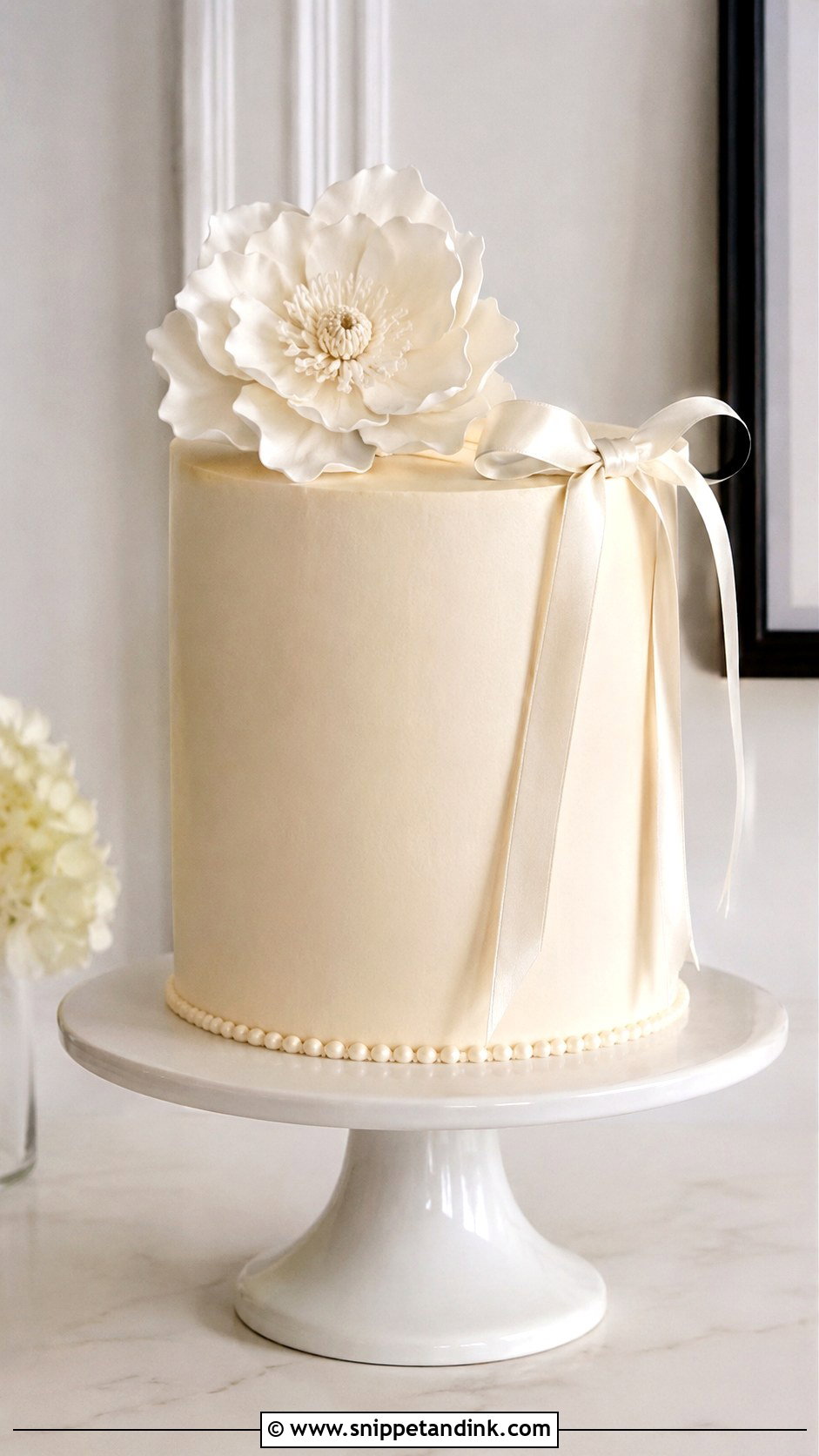
A minimalist wedding cake depends entirely on finish. Smooth buttercream, soft ivory, and one delicate flower, a small bow or a fine pearl border. Round, square, oval or one tall tier all work. With nothing to hide behind, every bump in the frosting shows, so I’d only choose this style from a baker whose plain cakes you’ve seen in person or in unedited photos. The inside is where it can be bold: lemon elderflower, pistachio raspberry, chocolate caramel or vanilla bean.
11. Modern Wedding Cake
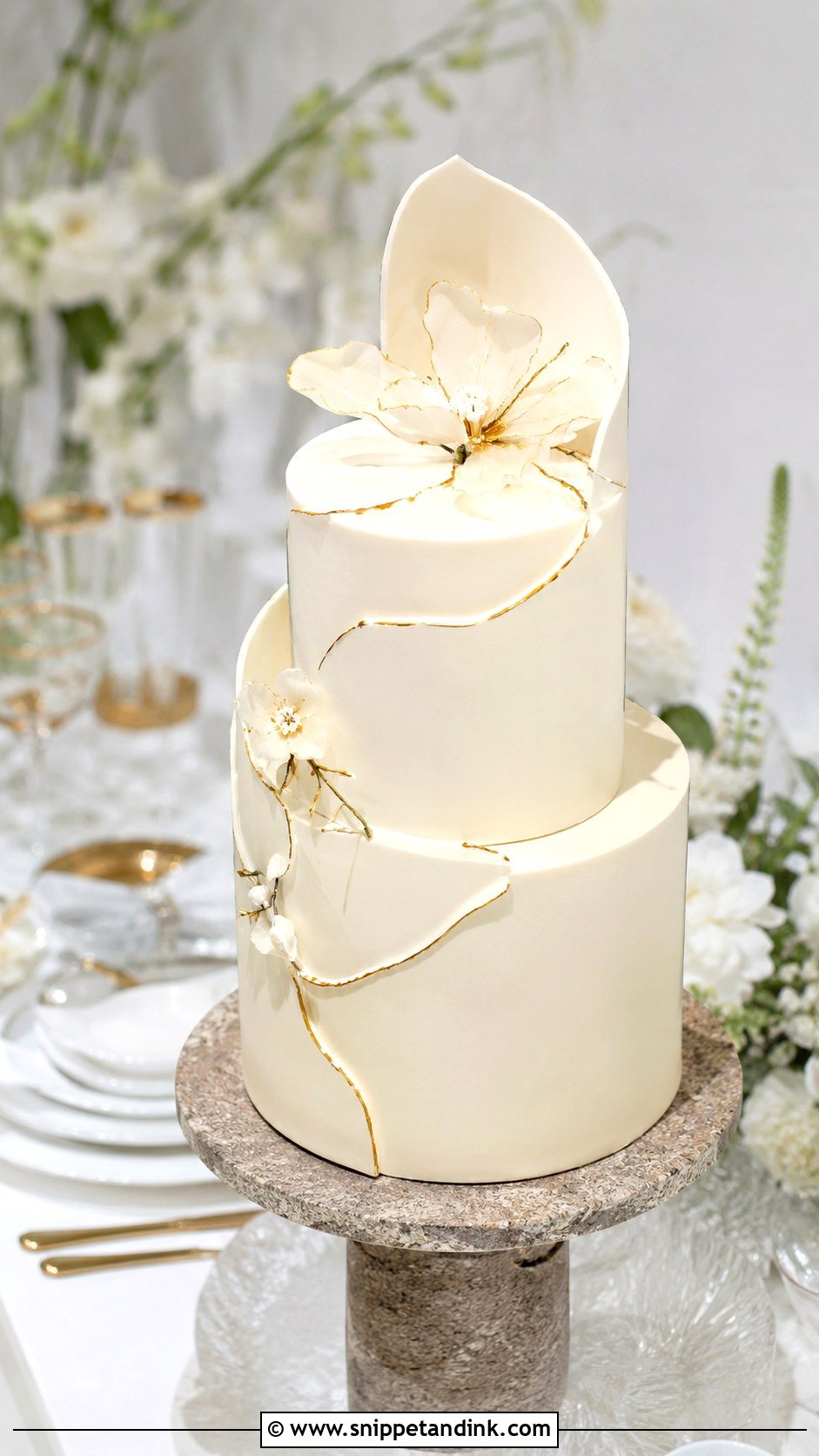
Modern cakes lean on shape rather than decoration: sculptural tiers, clean lines, abstract texture, unusual forms or one bold colour. A curved tier, an oval cake or an offset stack changes the whole table. Offset stacks need careful internal structure, because the weight no longer sits over the centre, so I plan the supports before the design is finalised. A few sugar flowers, a metallic touch or a monochrome palette is plenty. Gallery venues, rooftops and contemporary ballrooms suit it.
12. Rustic Wedding Cake
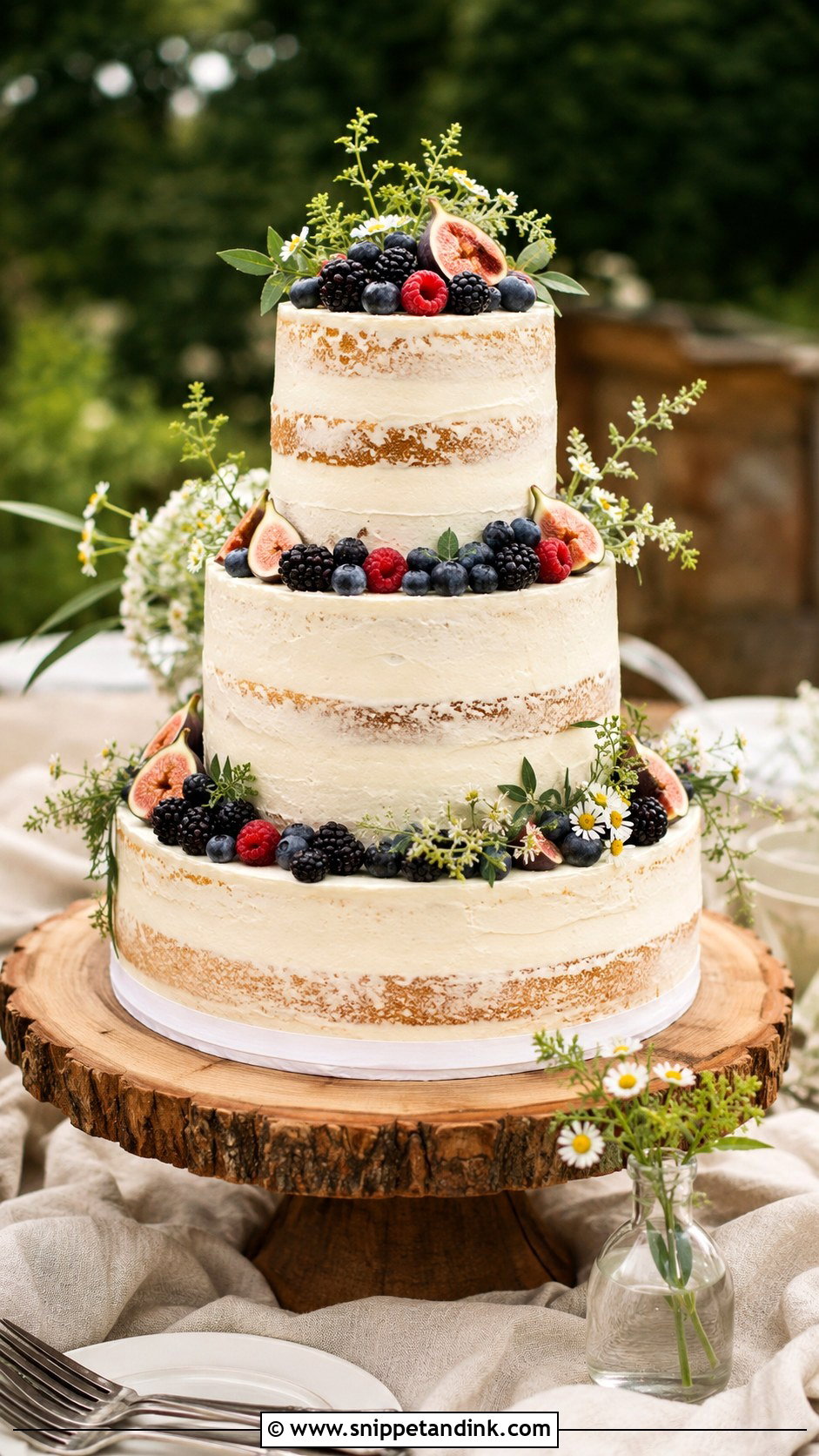
Rustic cakes feel warm and relaxed: textured buttercream, semi-naked sides, greenery, berries, figs or simple flowers, on a wood stand with linen and candles. Flavours can lean cosy, such as vanilla berry, carrot, spice, honey almond or chocolate. Rustic shouldn’t mean unfinished, though. A semi-naked cake still needs even layers and a clean crumb coat; the only difference is how much frosting gets scraped back. Cut fruit weeps over time, so I add berries and figs at the venue rather than in the kitchen.
13. Boho Wedding Cake
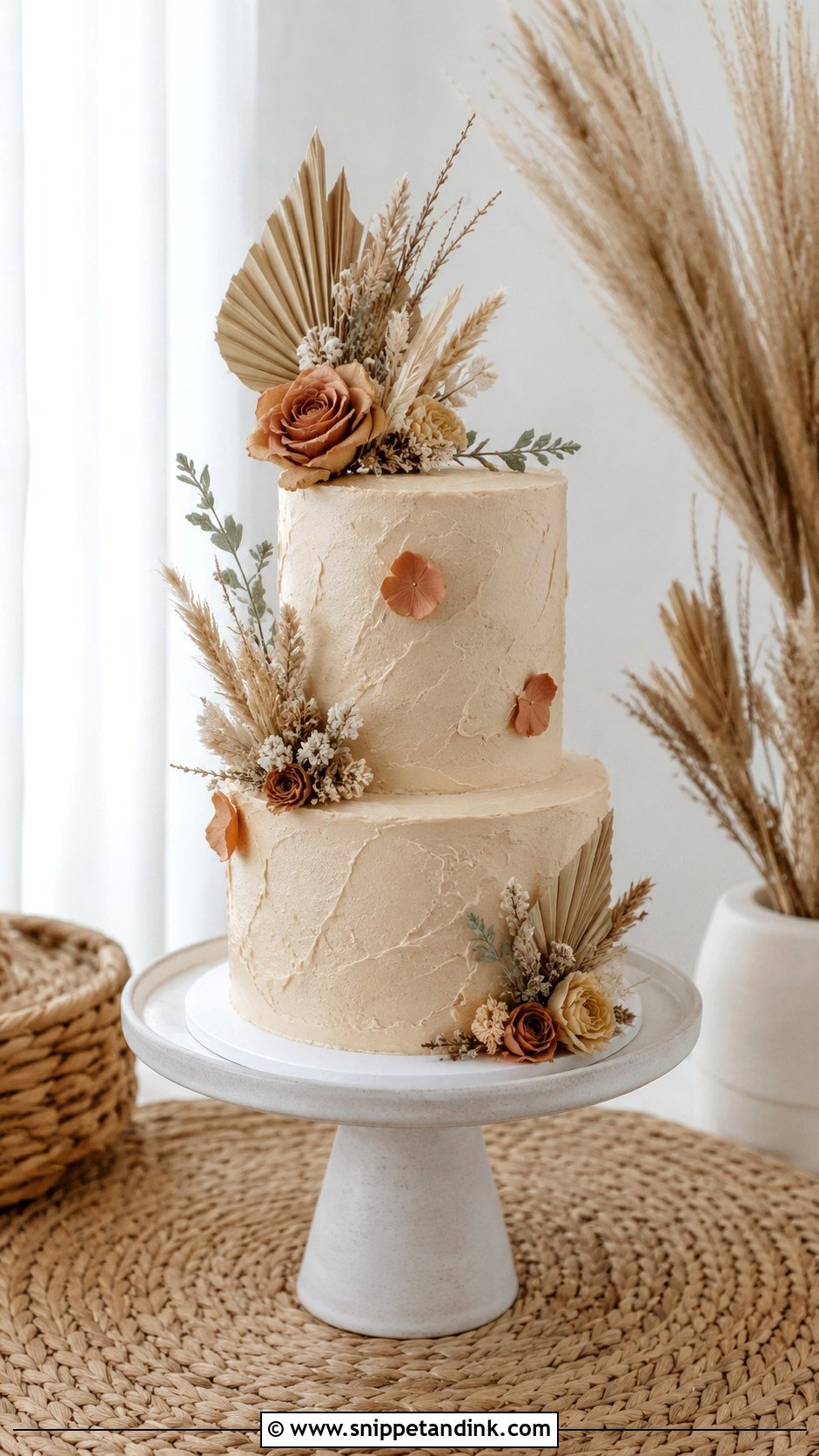
Boho cakes use earth tones, dried florals, pampas grass and organic texture. Ivory, beige, terracotta, peach and sage are the usual colours, and they suit outdoor ceremonies and desert palettes. The cake can be semi-naked, fully frosted or textured. Dried flowers and pampas are often treated with preservatives or dyes, so I keep them out of the frosting entirely and set them on a small fondant disc or in a wrapped pick. Honey, almond, vanilla, carrot or coconut flavours fit, on a wood, ceramic or stone stand.
14. Black And White Wedding Cake
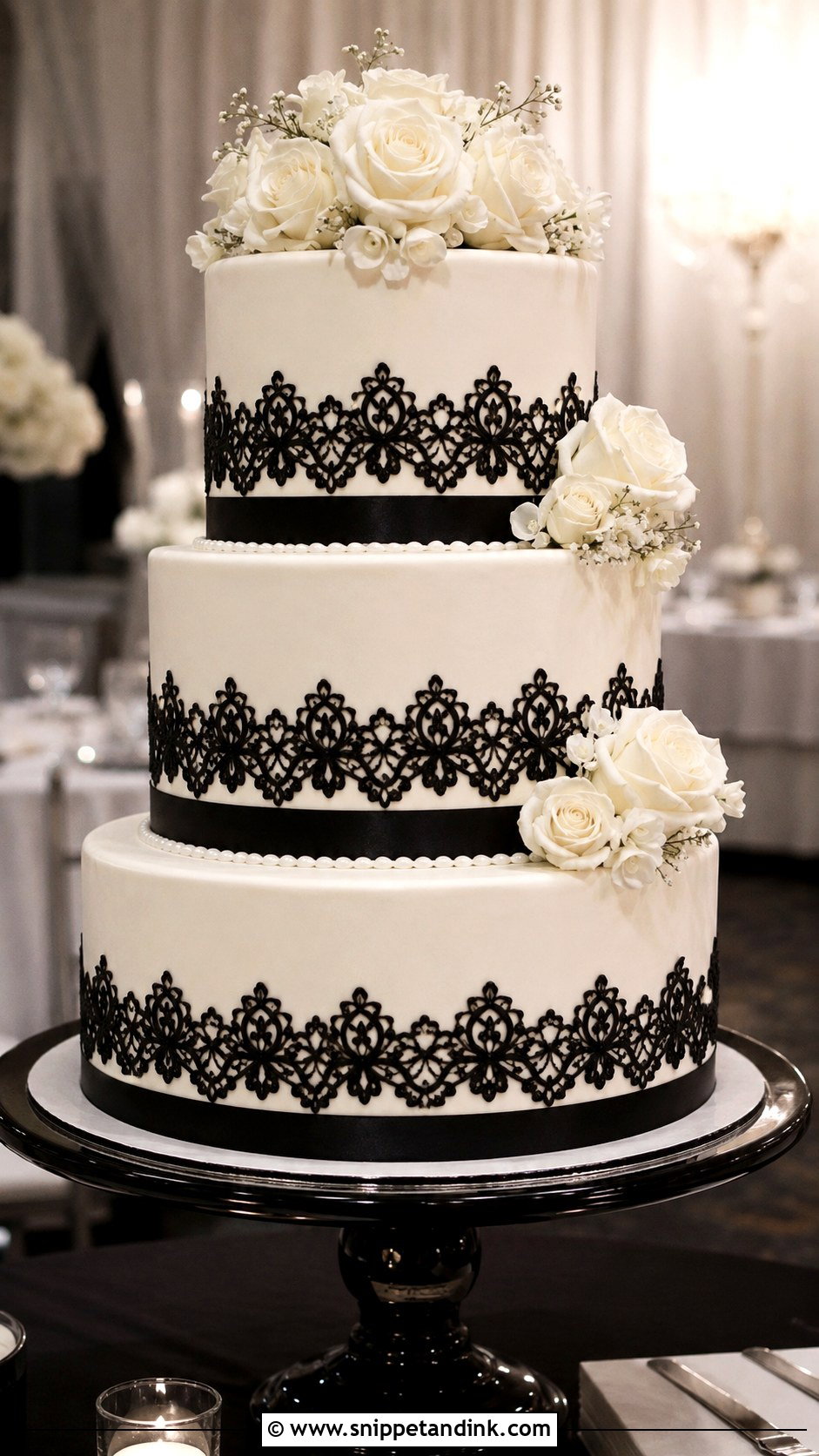
Black and white is the sharpest contrast you can put on a cake table. It can be modern with black ribbon, romantic with white flowers on dark frosting, or classic with black piping on ivory. Balance is the challenge, since too much black weighs the cake down, so I usually limit it to one base tier, bows or lace-style piping. Black frosting needs a lot of colouring and can stain teeth, which is why black cocoa or black fondant are the better routes. Chocolate, vanilla and cookies and cream suit it.


15. Blue Wedding Cake
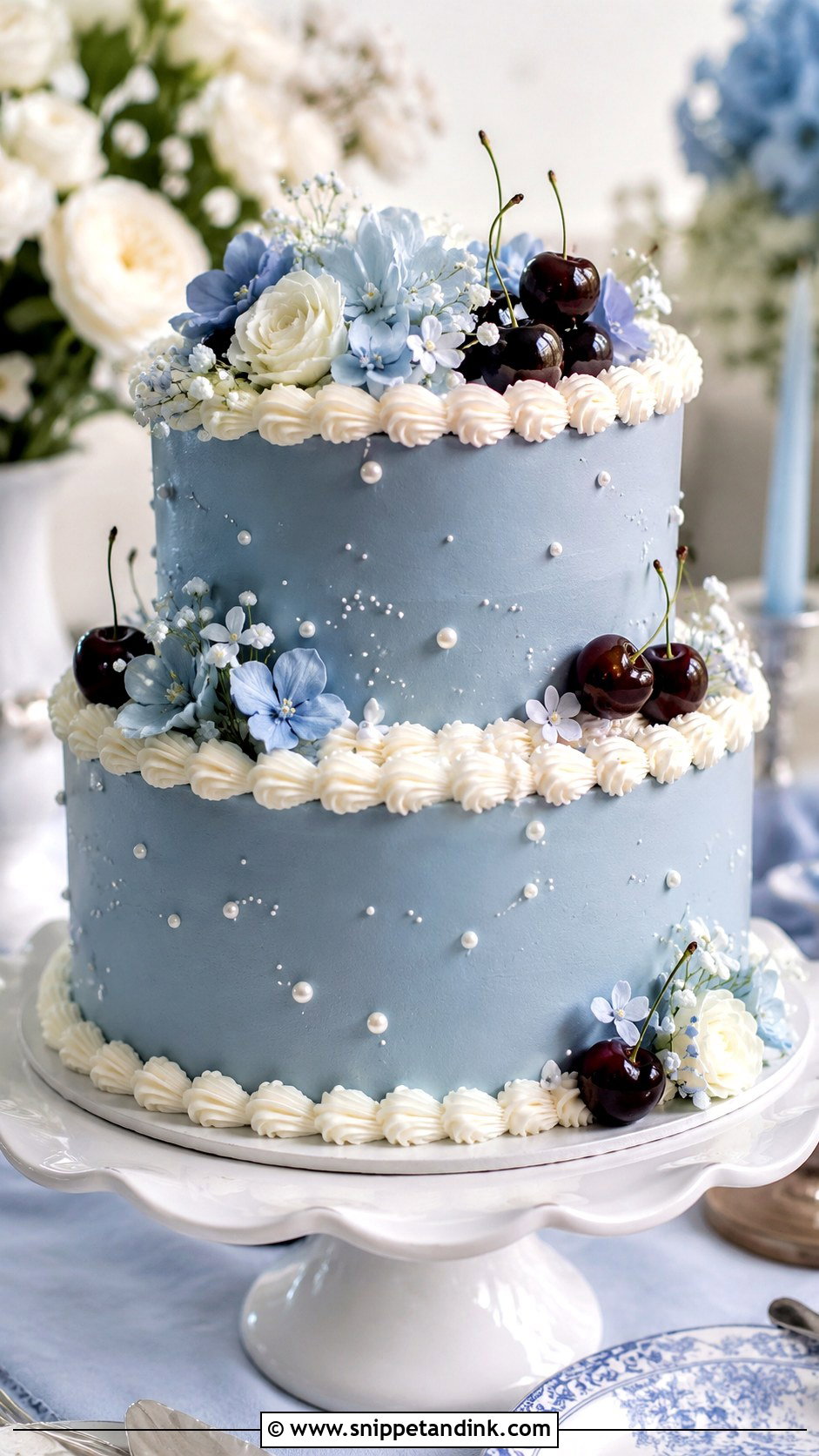
Blue brings colour in without much risk. Pale blue reads romantic, dusty blue soft and formal, deep blue modern. It pairs with white piping, pearls, sugar flowers or a few red cherries for a vintage touch, and it doubles as your something blue. Blue is tricky to tint, though. Buttercream has a yellow cast from the butter, so a pale blue can turn faintly green unless the baker corrects for it. Vanilla, lemon, almond, blueberry and white chocolate all fit inside.
16. Pink Wedding Cake
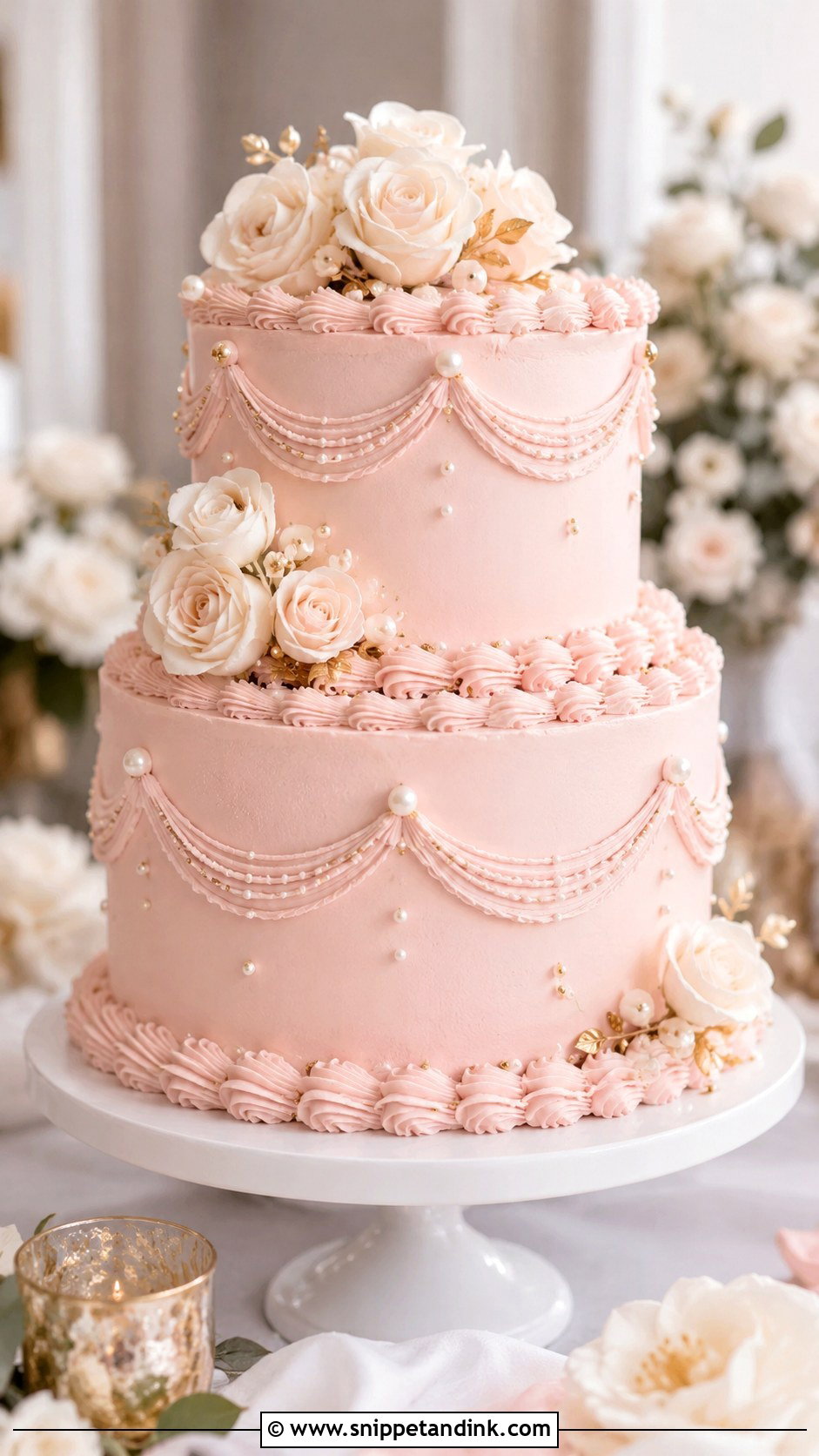
Pink adds softness and some personality. Blush is subtle; bright pink is playful. Smooth buttercream, vintage piping, sugar roses, pearl borders and a watercolour finish all work, with ivory flowers, gold accents and greenery around the cake. Strawberry, raspberry, vanilla bean, rose and almond flavours match the colour. Pink from fruit purée alone can dull towards beige over a day, so if the shade matters I add a little food colouring alongside the fruit.
17. Heart Wedding Cake
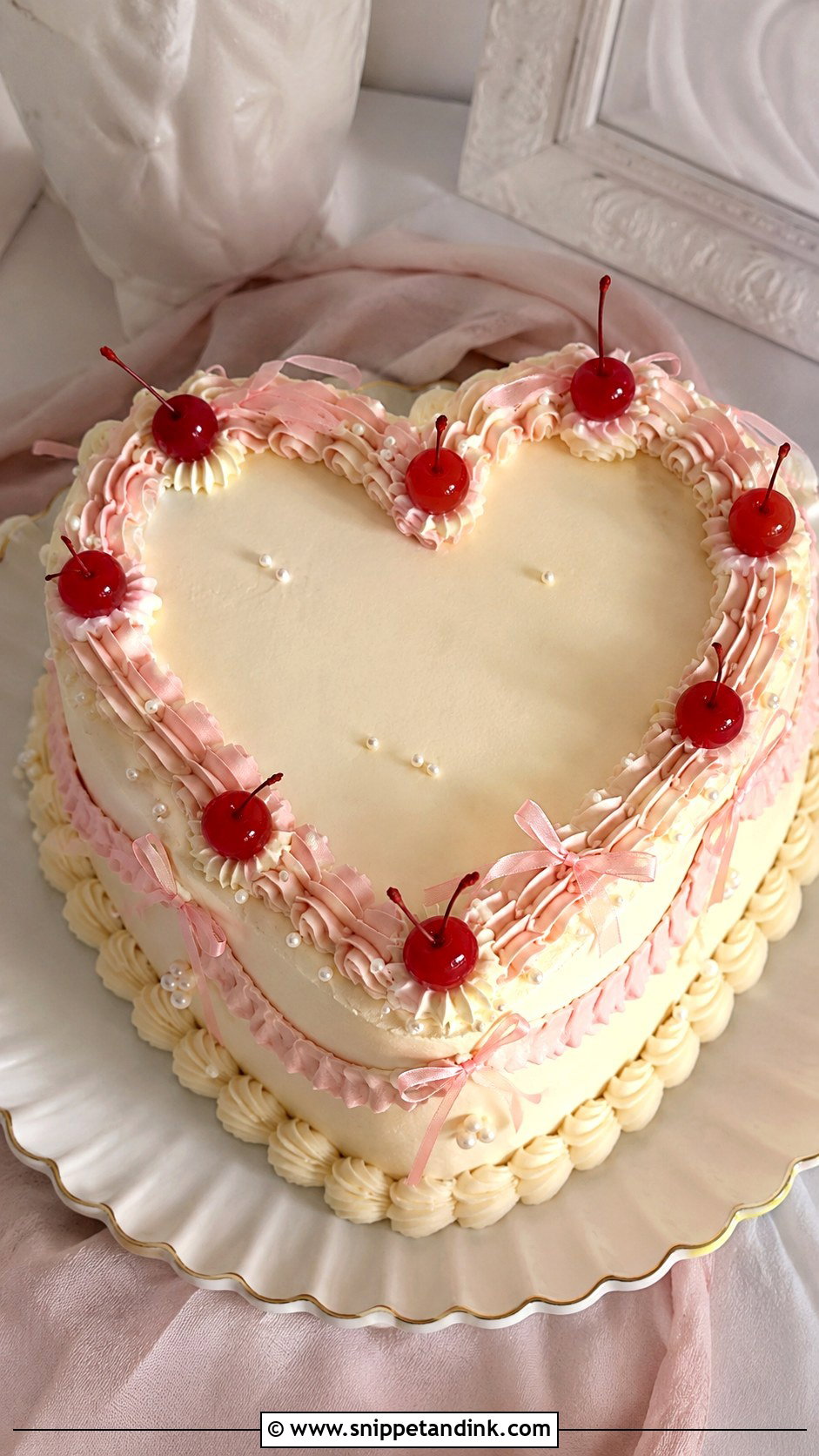
Heart cakes are nostalgic and have become a favourite small statement. They usually work best as a single tier with vintage piping, ruffled borders, cherries, pearls or a short message, and they suit courthouse celebrations or a cutting cake beside a larger dessert table. The shape already carries personality, so the decoration should be deliberate. Borders are slower on a heart than a round, because the piping has to turn the point cleanly. White, blush, baby blue or ivory outside; vanilla raspberry, lemon, chocolate or strawberry inside.
18. Sheet Cake Wedding Cake
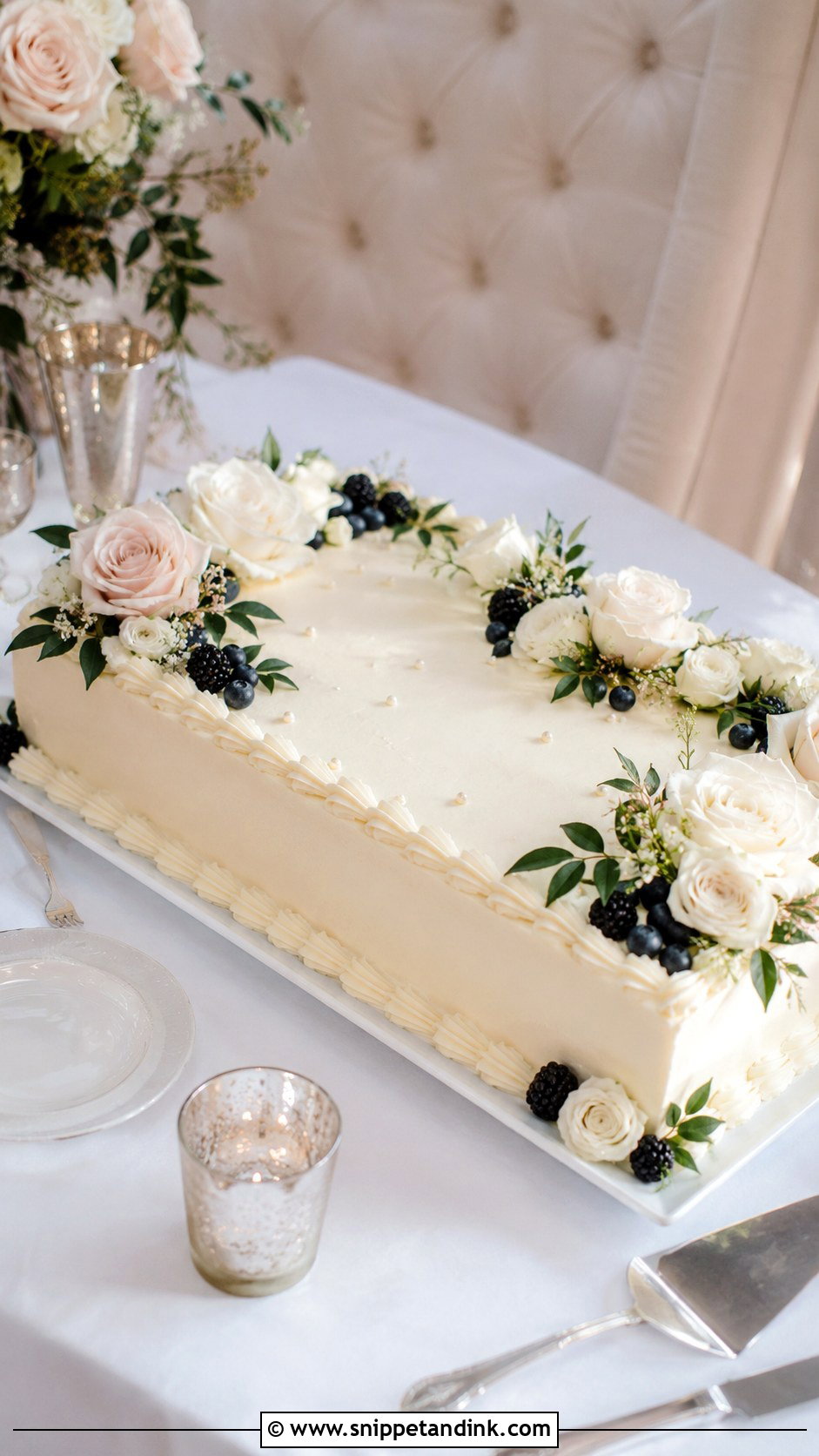
A sheet cake wedding cake is the practical answer to a big guest list. It can be displayed as a long decorated cake or kept in the kitchen while a smaller tiered cake handles the cutting photos. Finished with piping, flowers, fruit, pearls and clean borders, it looks deliberate rather than budget. Caterers can cut it into even squares quickly with almost no waste. Crowd-friendly flavours work best, such as vanilla, chocolate, lemon, almond or strawberry.
19. Small Wedding Cake
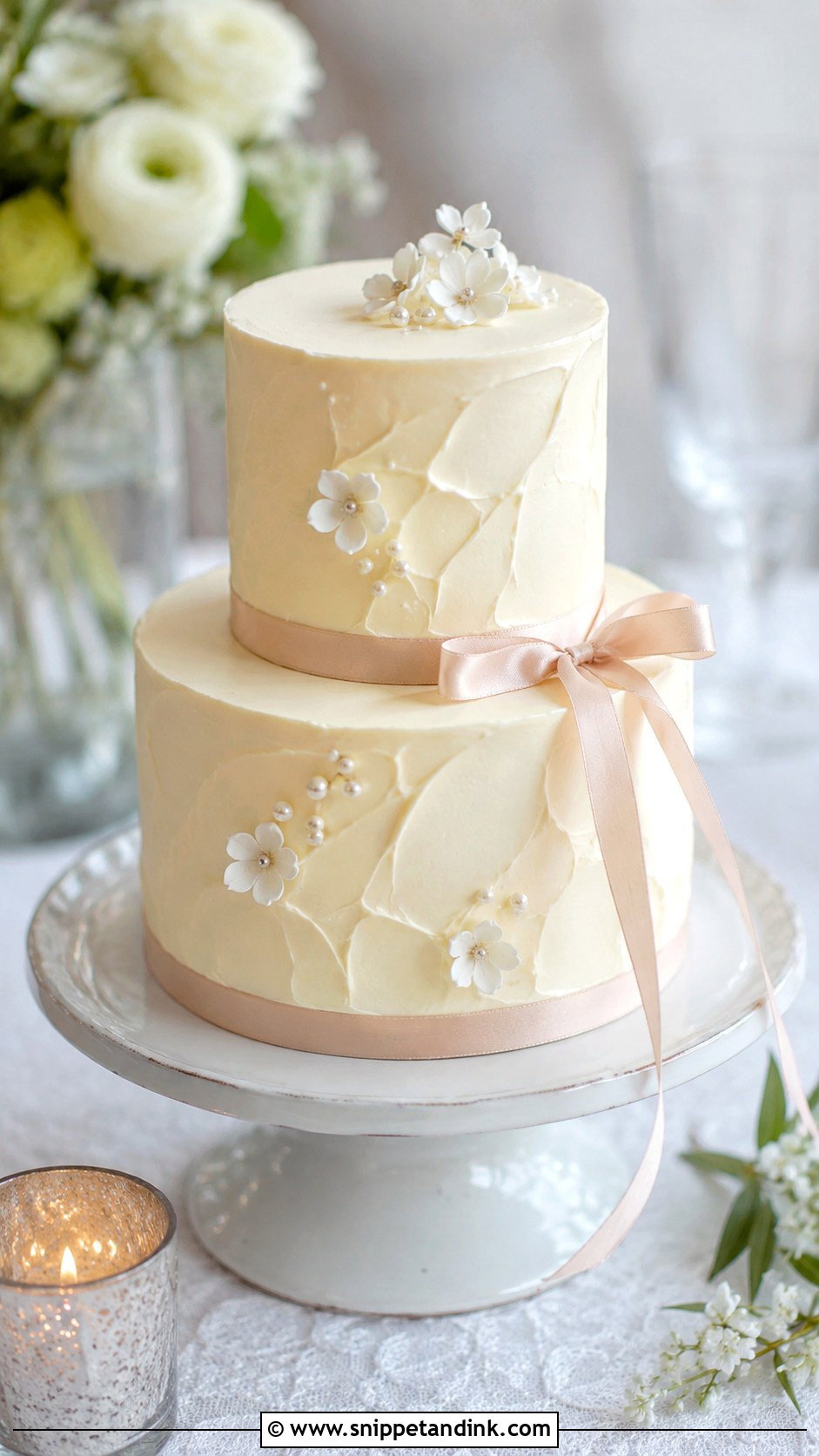
Small cakes suit elopements and intimate weddings. One or two tiers can still look finished with the right stand, flowers, texture or piping, and they leave room for cookies, cupcakes or plated desserts. A smaller canvas means more of the budget can go into detail, such as sugar flowers, pearls or a sculpted shape. Flavour matters more because every slice counts. Decoration sized for a 12 inch tier looks oversized on a 6 inch one, so I scale flowers and borders down to match.
20. Square Wedding Cake
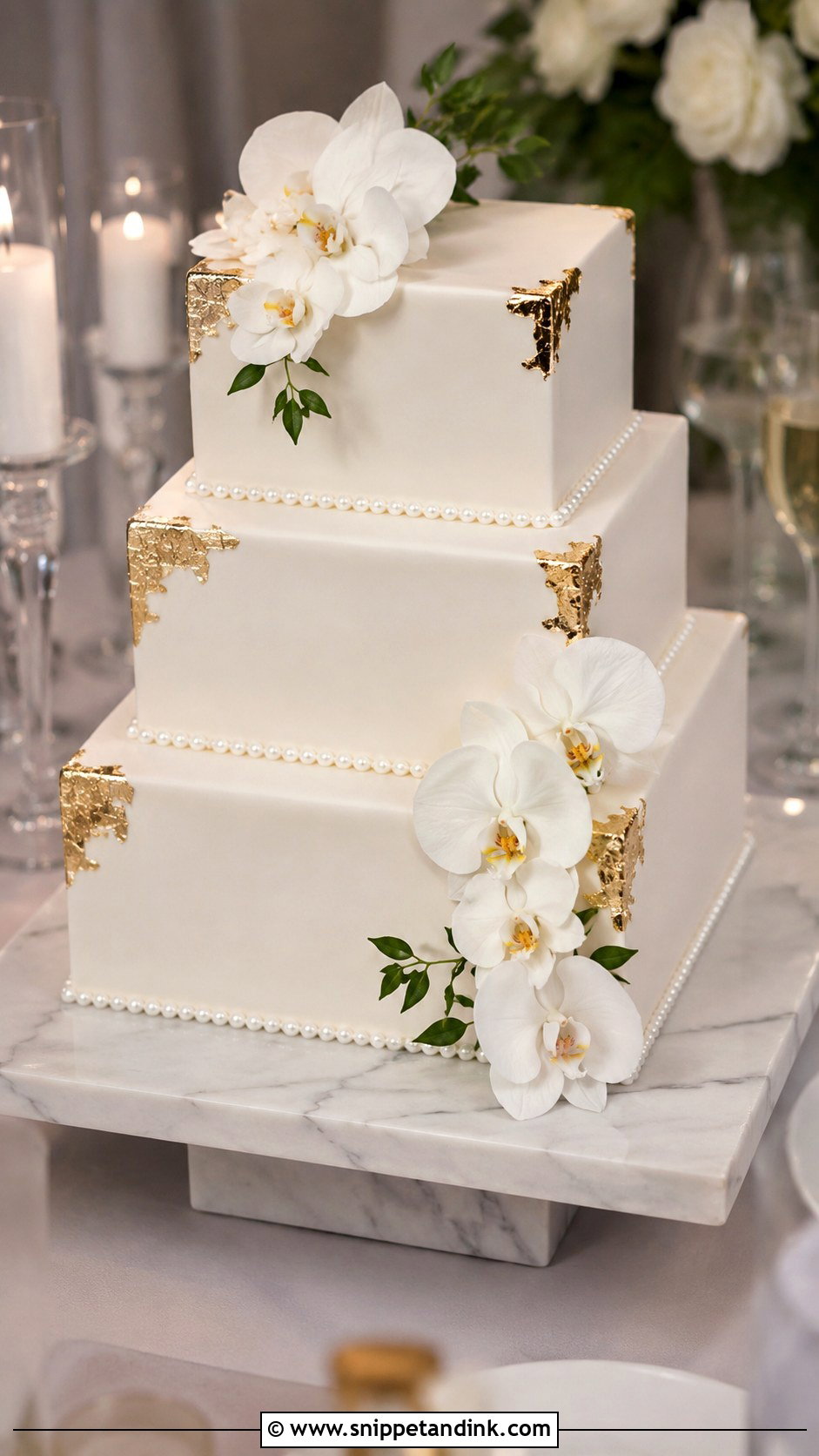
Square tiers feel structured and a little unexpected. Stacked evenly they look classic; offset slightly, they look contemporary. Smooth fondant gives the sharpest corners, while buttercream softens them, and crisp corners in buttercream take real practice. Fresh flowers, gold leaf, pearls or simple piping are enough decoration, and squares pair well with marble effects or a monochrome palette. A square tier also serves a few more slices than a round of the same width.
Which Finishes Survive a Hot Afternoon Outdoors?
Several styles in this list look their best at garden and barn weddings, which are exactly where heat causes trouble. This is roughly how the common finishes behave once the temperature climbs.
- Fondant holds its shape well, but it sweats if the cake goes from a fridge straight into humid air.
- Ganache under fondant or buttercream sets firm and is the most heat-tolerant base I work with.
- American buttercream forms a light crust and copes with warmth better than meringue-based versions.
- Swiss meringue buttercream tastes silkier but softens fastest, so it needs shade and a short time on display.
- Fresh cream and mousse fillings shouldn’t sit out for hours at all.
Whatever the finish, I ask for the cake table to be in shade, away from windows and heaters, and for the cake to come out as close to the cutting as the schedule allows.
Placing the Cake Table So the Cutting Shot Works
The cutting photo is the one most couples keep, and it depends partly on where the cake stands. I suggest soft side light, near a window but out of direct sun, and a plain background behind it rather than the bar or an exit sign. Leave room on both sides so you can stand at the cake comfortably while guests gather in front. Then check that the table is level and solid, because a folding table with a wobble is a real risk under a tall cake.
Let the Room, the Season and the Guest List Decide
A good wedding cake looks right, tastes memorable and fits the rest of the celebration. White with flowers is the safe classic, but vintage piping, pearls, blue frosting, textured buttercream, small sculpted cakes and decorated sheet cakes are all open to you. Think about the venue, season, guest count and the flavours you love before settling on a style. Then ask your baker about delivery, setup, heat, flower safety and portion sizes. I’d much rather answer those questions at the first meeting than discover a problem on the day.
You'll Like These Ideas:











Leave a Reply