
Simple is harder to bake than it looks. On a heavily decorated cake, piping hides a dented edge; on a plain ivory tier, every bulge and air bubble shows. That is the honest reason I enjoy these orders: the finish has to be right, and one well-placed detail does more than a dozen sugar roses. Couples ask me for simpler cakes because they cut cleanly, travel more safely and suit almost any room, from a courthouse lunch to a ballroom. Below are twenty simple wedding cake designs I’d happily make, with notes on what each one needs from your baker and where it can go wrong.
Slices per Tier, and the Kitchen Cake Trick
Bakers count wedding servings as narrow slices, about one inch by two inches and as tall as the tier. That is smaller than a party slice, so the numbers below assume a caterer cutting properly. Exact counts vary between bakers, so always confirm with yours.
- Six-inch round: roughly 10 to 12 wedding servings.
- Eight-inch round: roughly 20 to 24.
- Ten-inch round: roughly 35 to 40.
- Six-inch on eight-inch two-tier: about 30 to 36, which suits many small weddings.
- A square tier of the same width gives a few more slices than a round one.
If your guest list is bigger than the cake you want to look at, the usual fix is a display cake that’s cut for photos and a plain sheet cake of the same flavour waiting in the kitchen. Guests can’t tell the difference on the plate, and the design stays as small as you like.
1. Simple Two Tier Wedding Cake
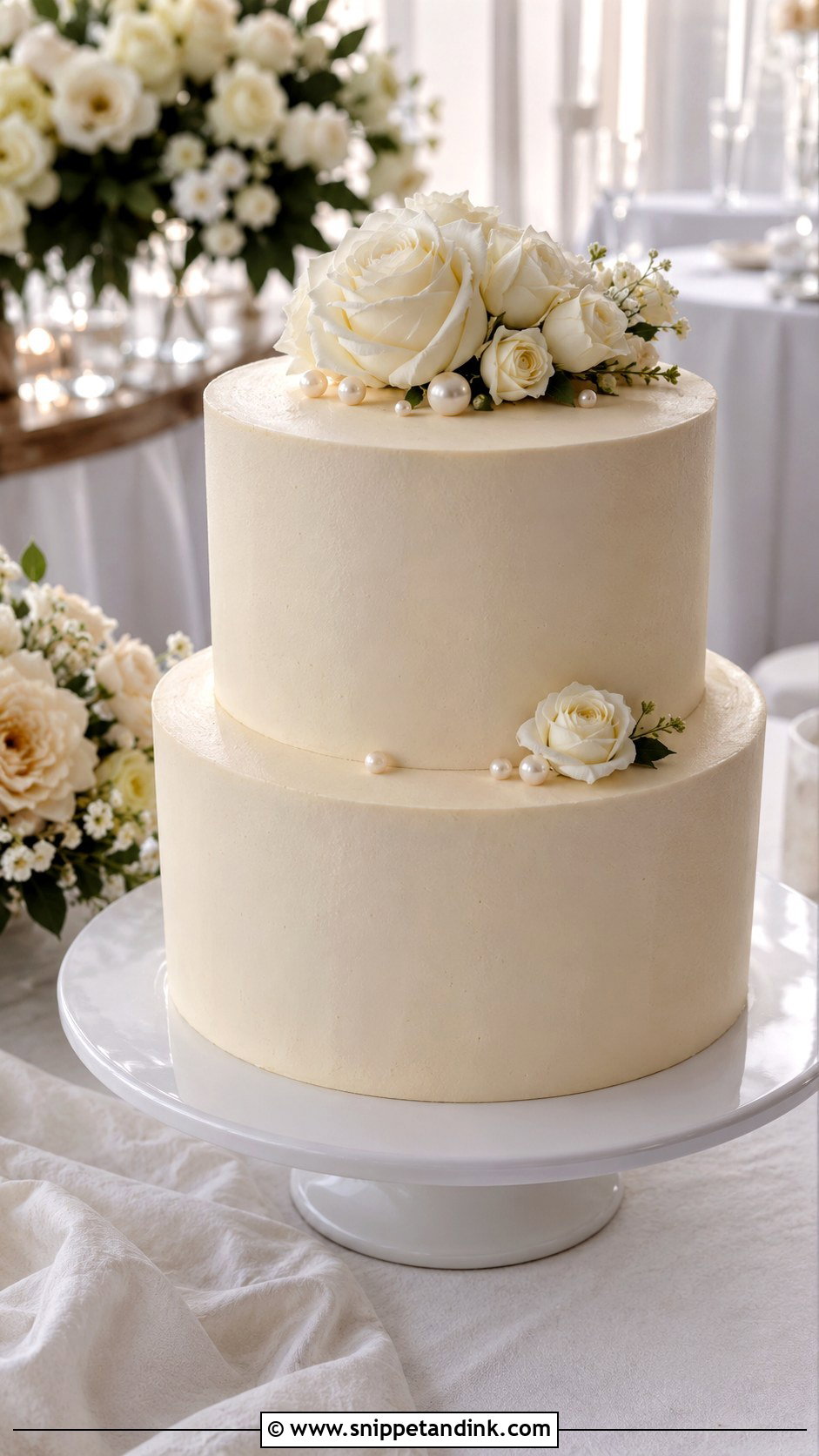
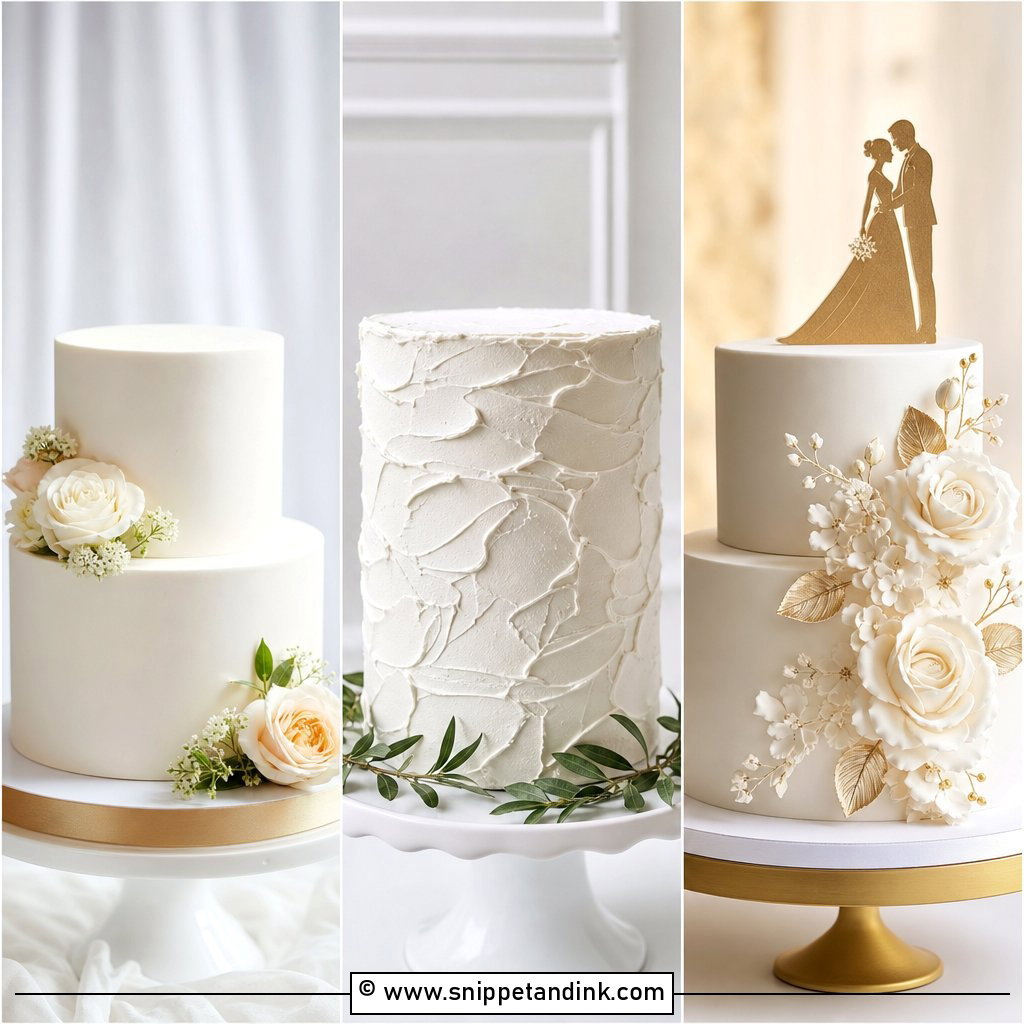
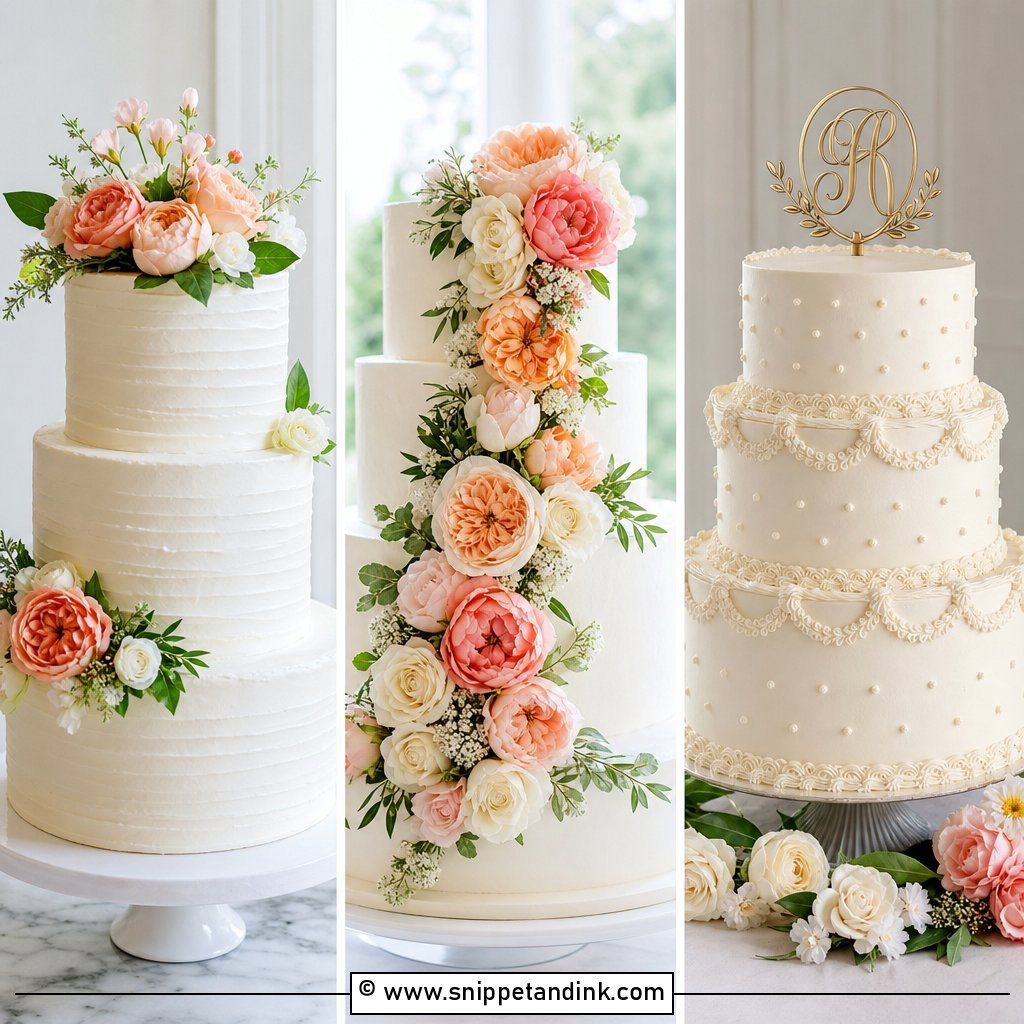
A simple two tier wedding cake gives you height without filling a whole dessert table. I usually pair a six-inch tier on an eight-inch, finished in smooth ivory buttercream with a slightly rounded top edge, and one cluster of flowers tucked where the tiers meet. Every stacked cake needs dowels or straws in the bottom tier to carry the weight of the top; without them the lower tier slowly sinks and bulges. If you want to keep the top tier for your anniversary, tell your baker early so it can be boxed and chilled as soon as it comes off.
2. Simple One Tier Wedding Cake
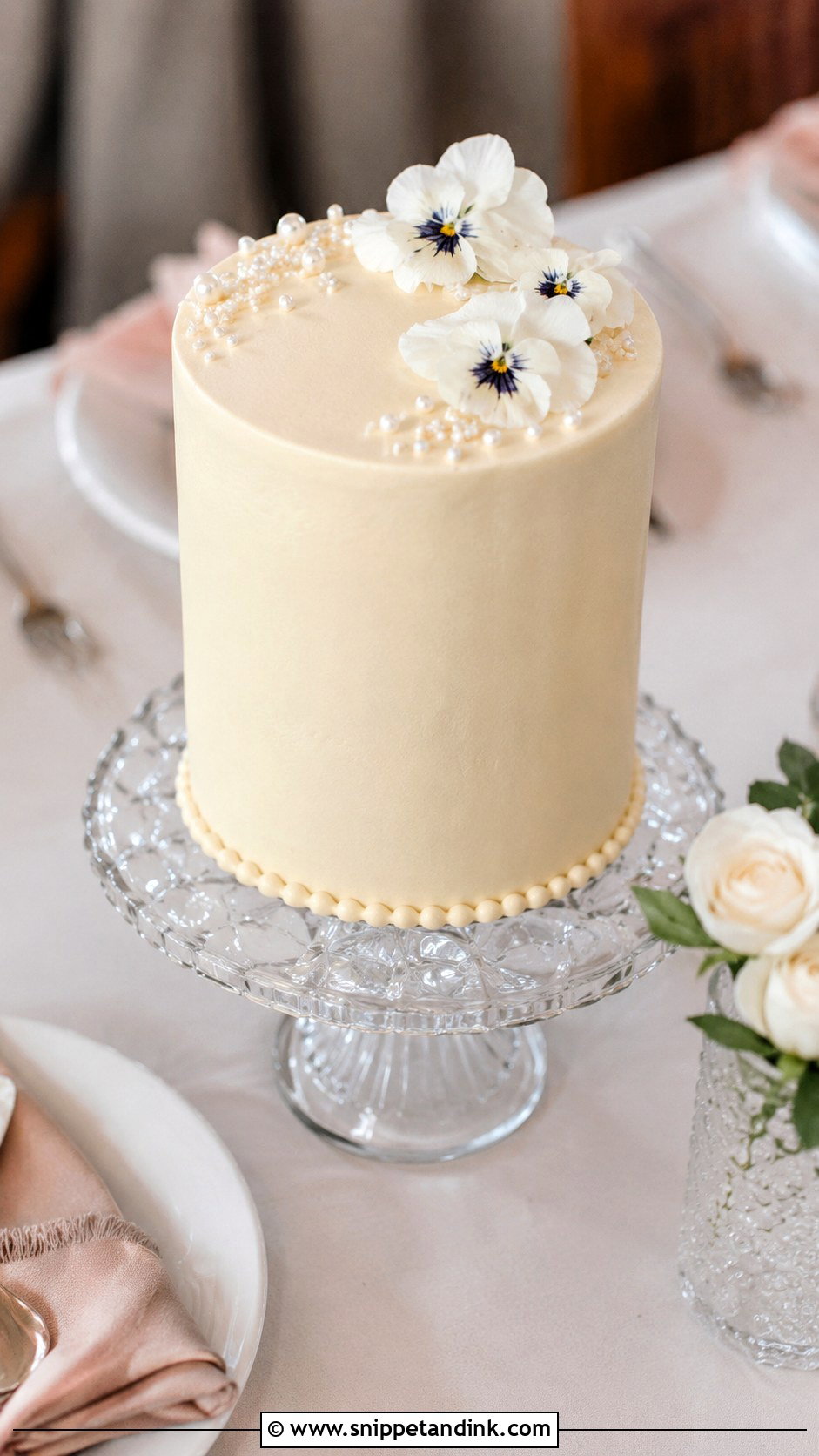
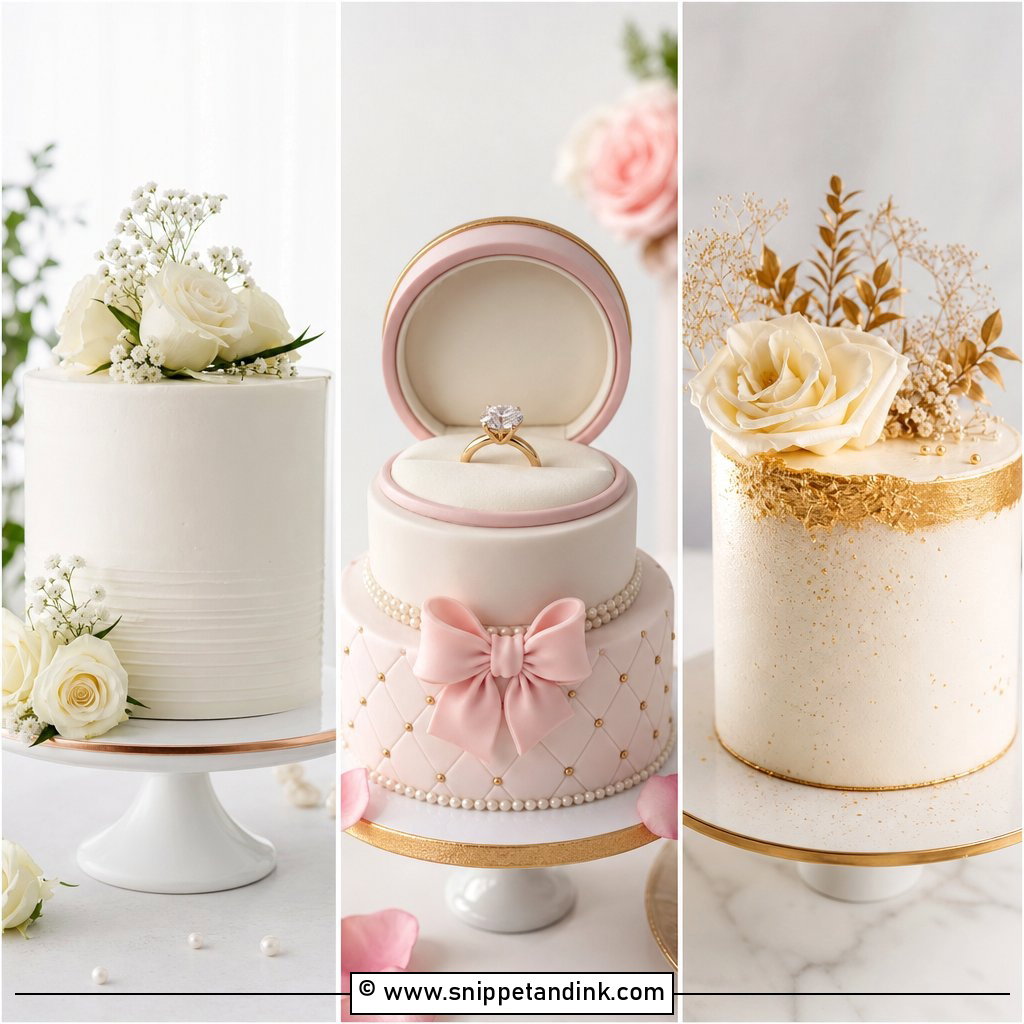
A single tier can look like a birthday cake if it’s too short, so I build wedding versions taller: three or four layers of sponge with filling, around five to six inches high. That extra height is what makes it read as intentional on a stand. Keep the decoration to a piped border or a ribbon at the base and a few edible flowers on top. It’s the easiest cake to transport, and pairing it with a sheet cake in the kitchen covers a larger guest list for less.
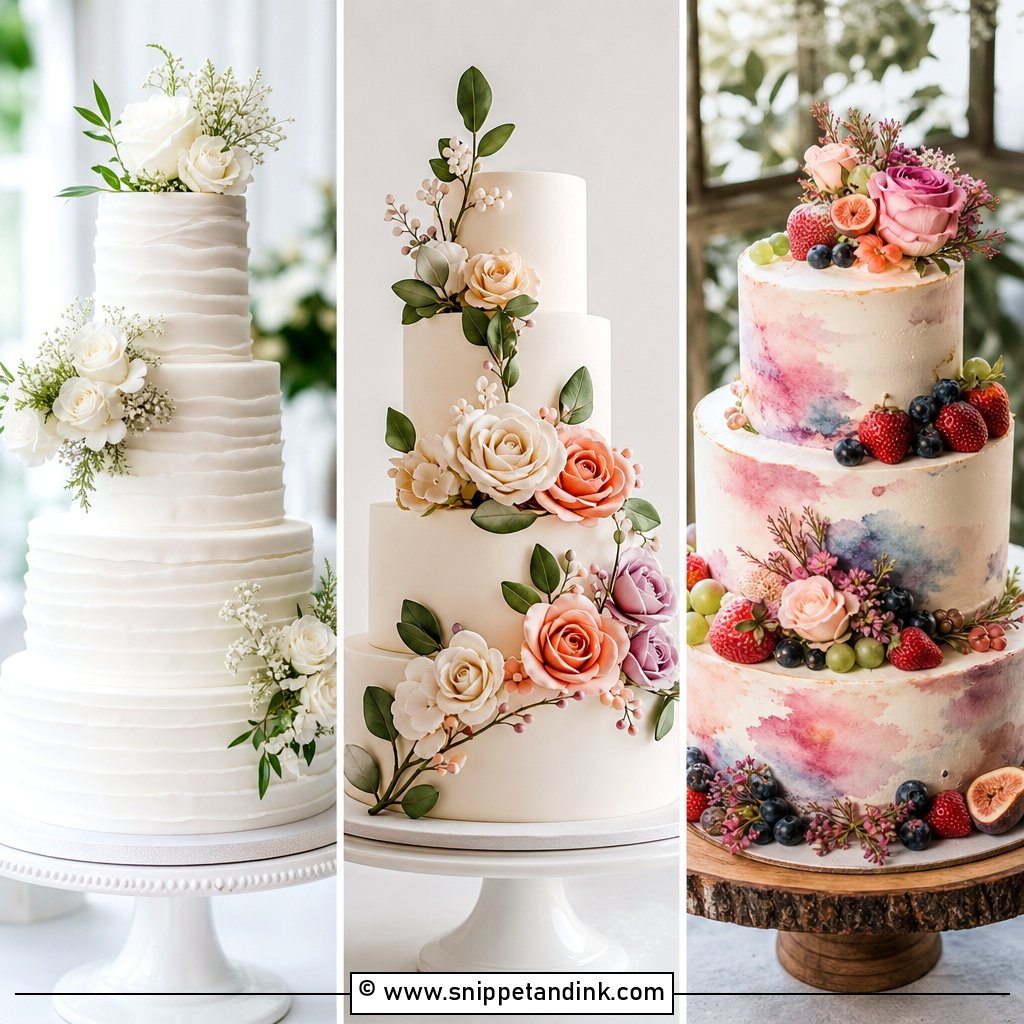
3. Simple Buttercream Wedding Cake
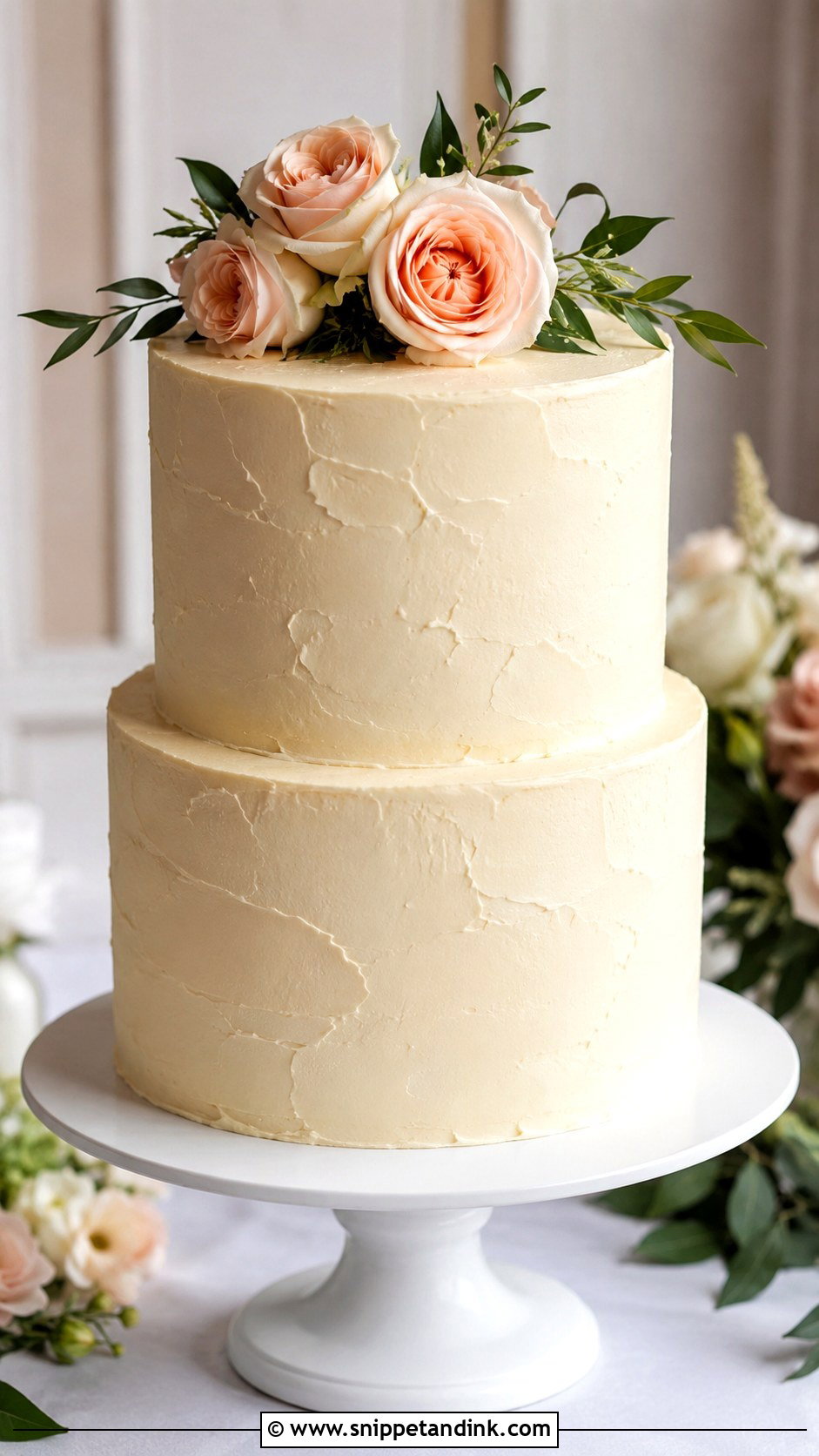
Buttercream tastes better than fondant to most guests, and that alone wins a lot of my consultations. The two styles behave differently, though. Swiss or Italian meringue buttercream is silky and less sweet but softens faster in heat; American buttercream is sweeter and crusts over, which makes it a bit sturdier on a warm afternoon. For a garden or barn wedding I often suggest a light spatula texture, which hides the small marks that delivery and handling leave. Pale blush, sage and cream all tint well in buttercream; a strong colour needs a lot of gel and can taste bitter.
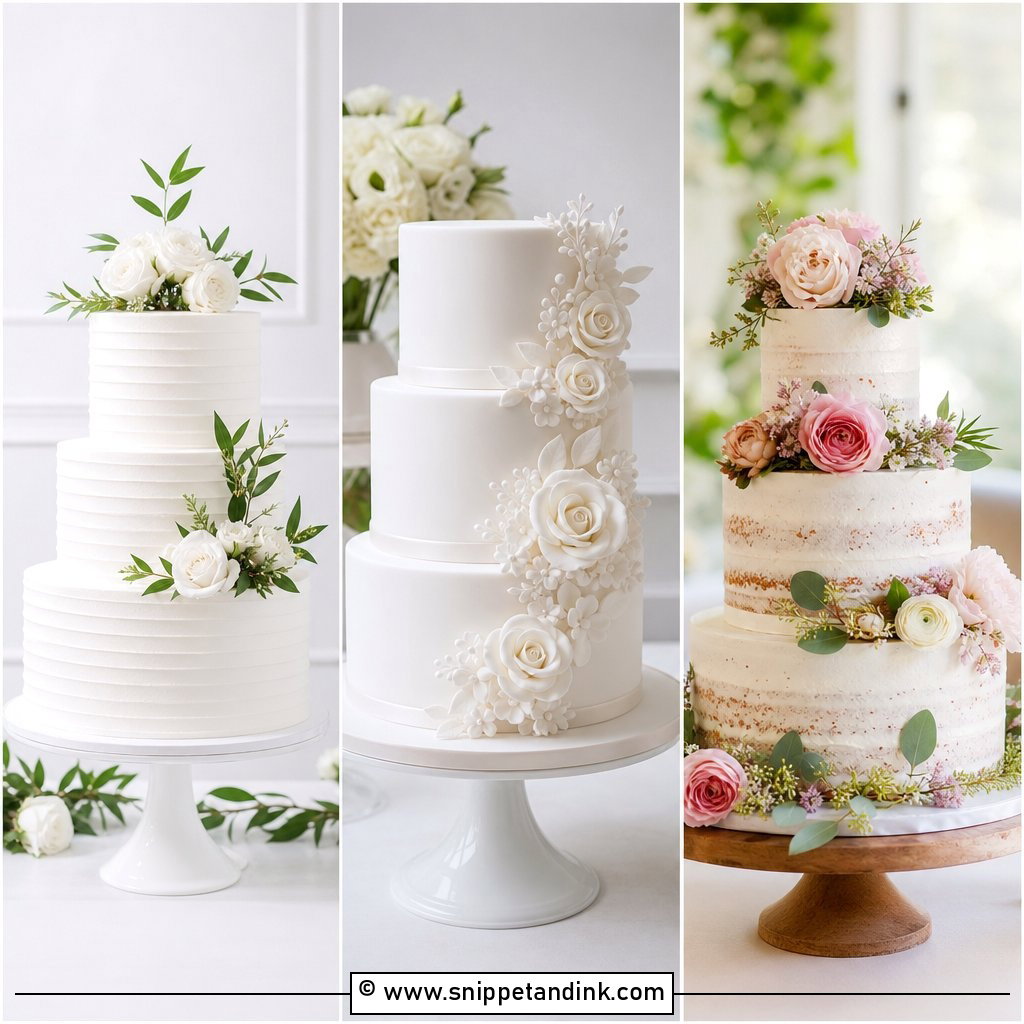
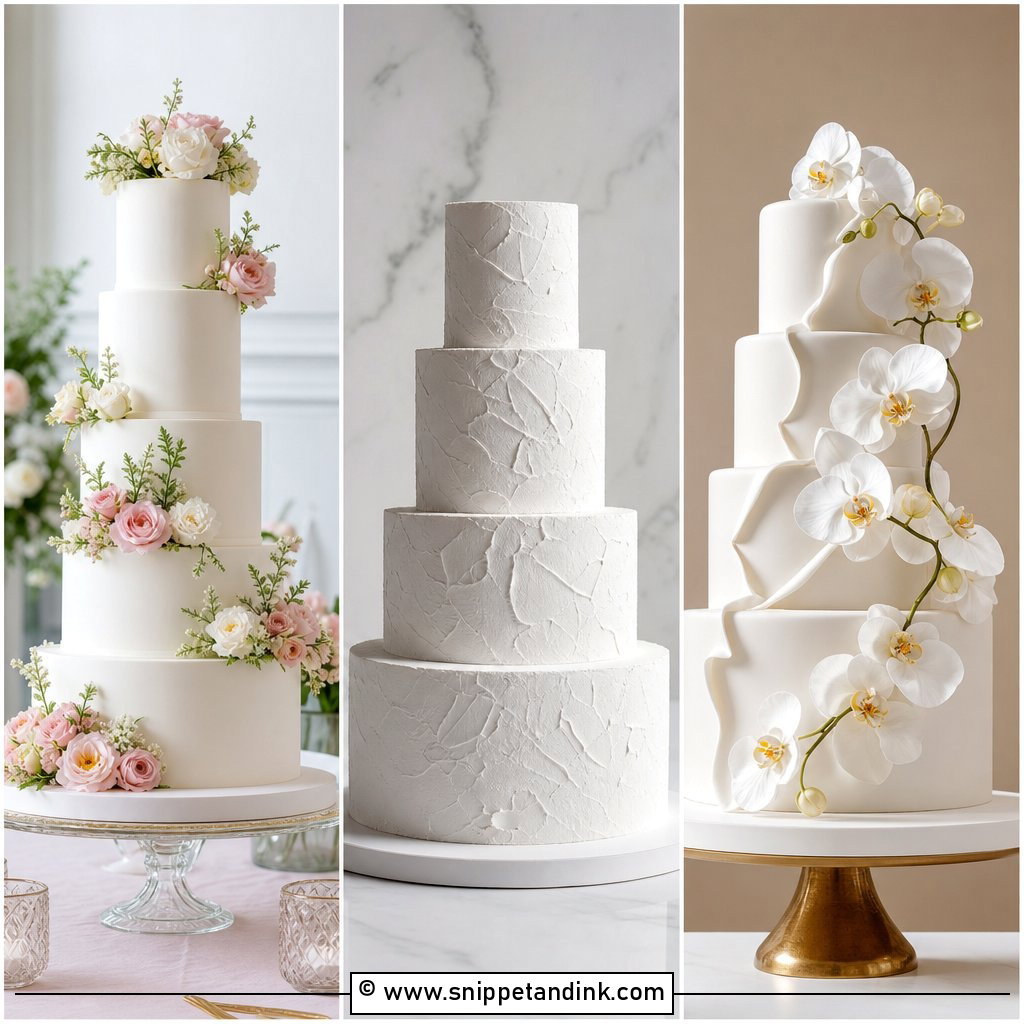
4. Simple White Wedding Cake
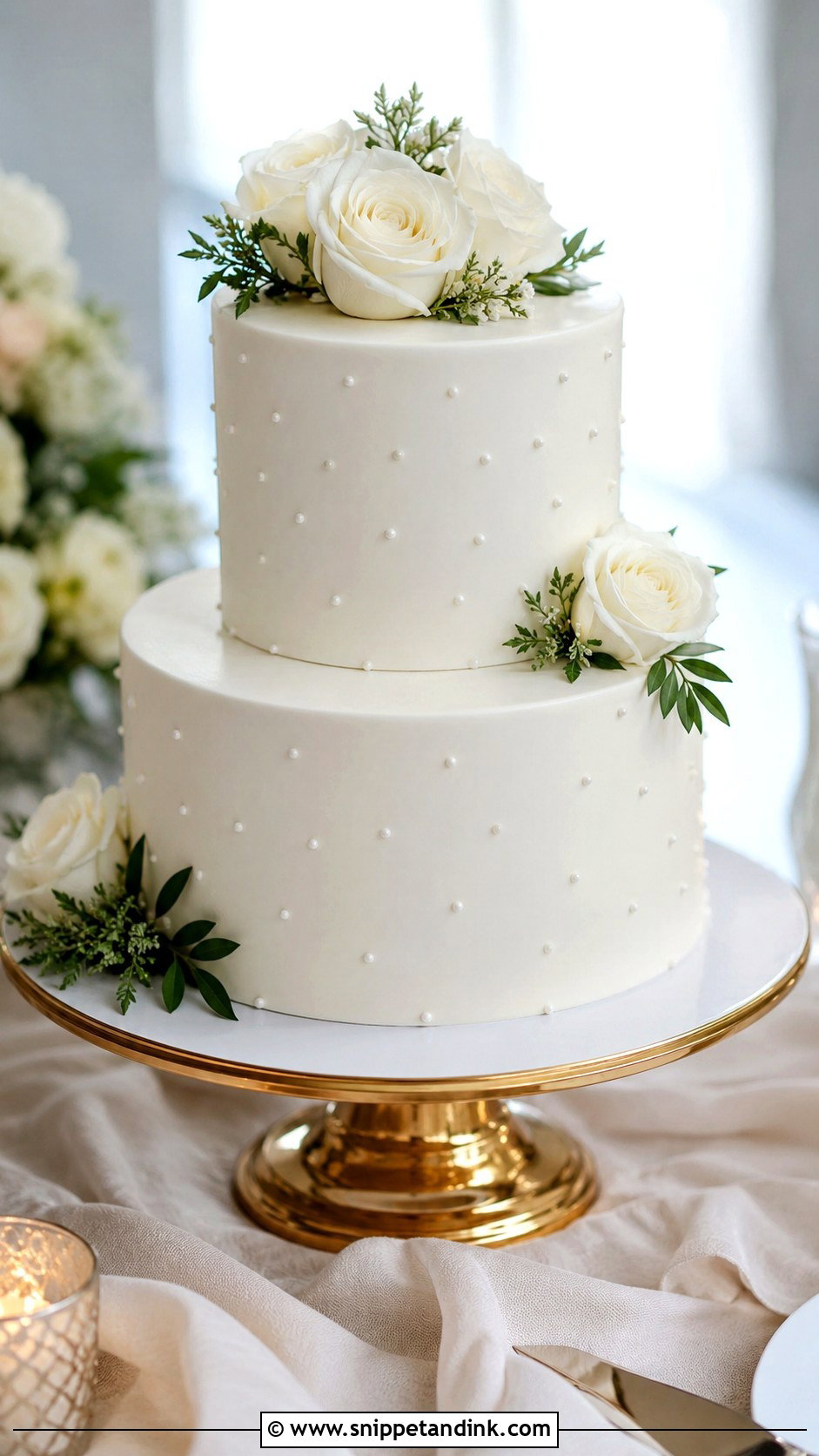
White isn’t one colour on a cake. Butter-based frosting is naturally ivory, so a true bright white needs a vegetable-shortening base or a white fondant, and it looks different again under warm reception lighting. I’d ask your baker to hold a swatch of the finished frosting against your dress fabric or your linens if matching matters. Set against a white tablecloth, a plain white cake disappears, so put it on a gold, glass or wooden stand to give it an edge. Vanilla bean, almond and white chocolate raspberry are the flavours I’m asked for most with this look.
5. Simple Floral Wedding Cake
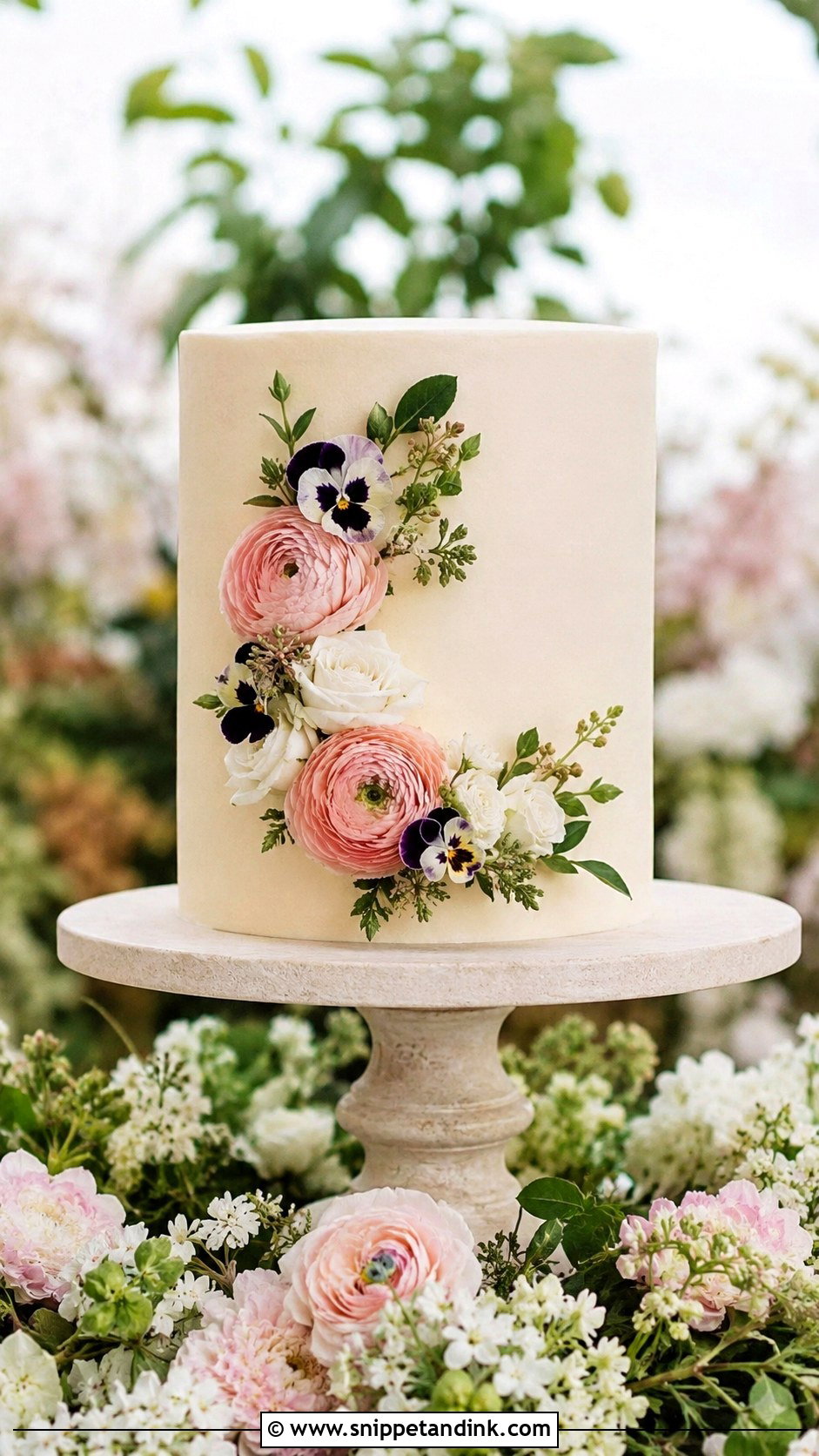
One deliberate placement looks better than flowers scattered everywhere. I like a small crescent on the front of one tier or a single diagonal spray running down the side. The flowers usually come from your florist, so I coordinate with them a week ahead about which varieties, how many stems and when they’ll arrive. Ranunculus, garden roses and edible pansies sit well on cake; anything sprayed with florist chemicals should never touch the frosting directly. Lemon, honey or elderflower sponge suits the garden mood.
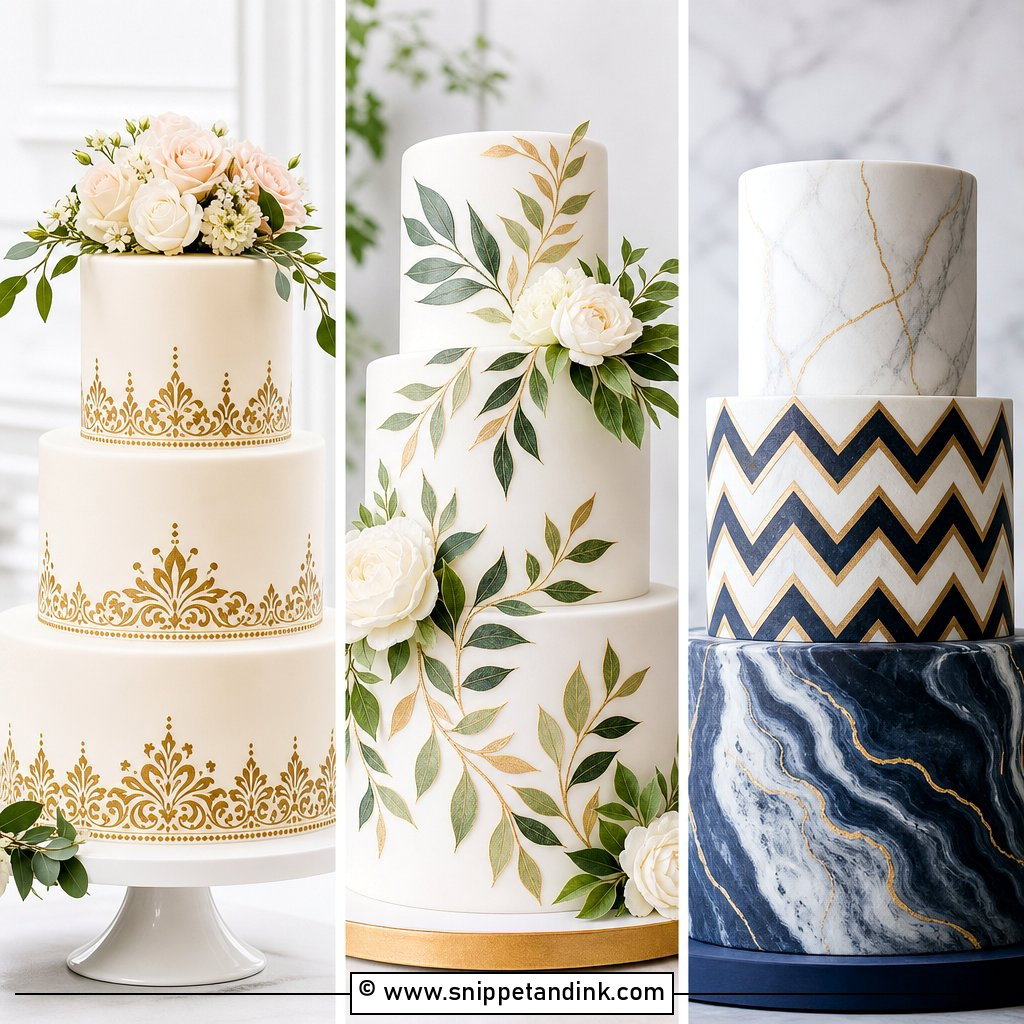
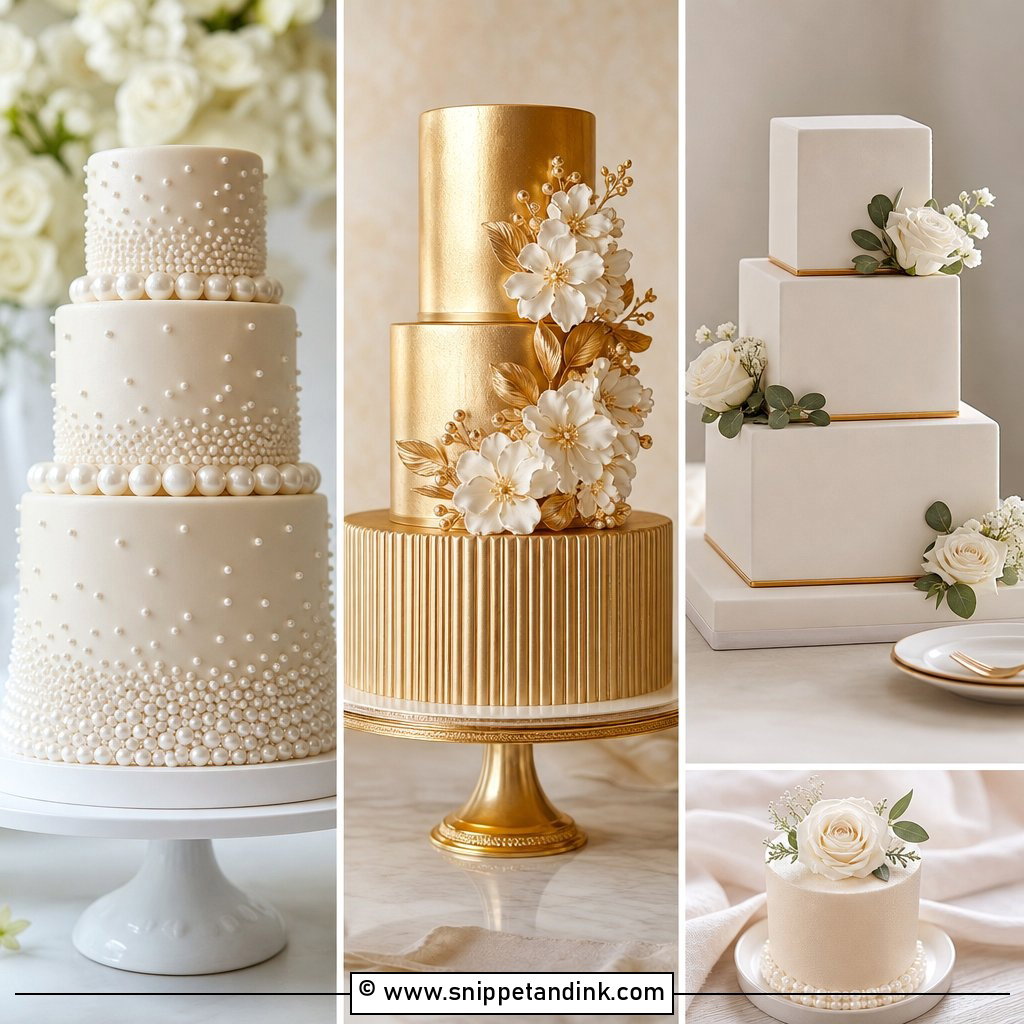
6. Simple Pearl Wedding Cake
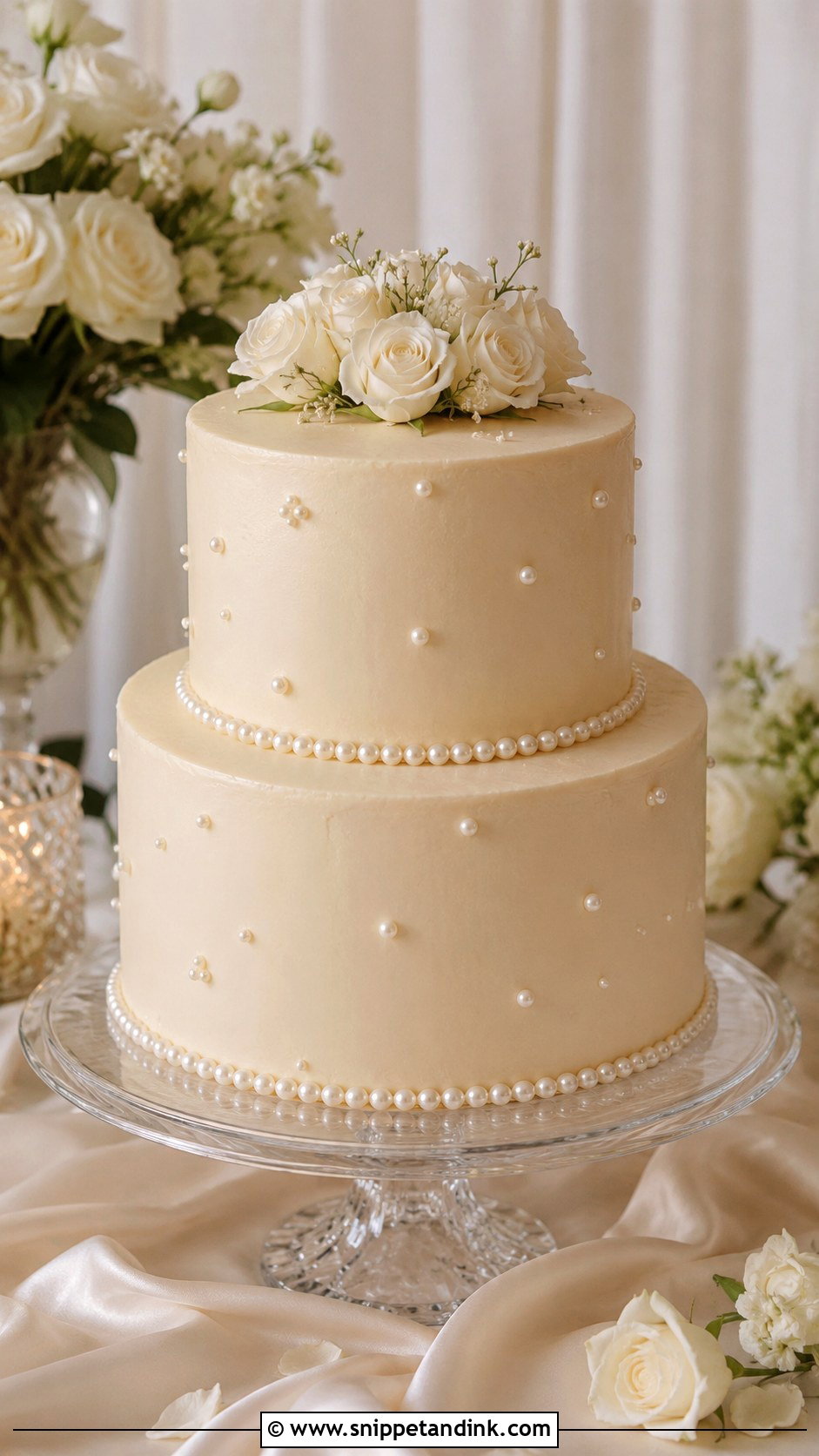
Pearls show every inconsistency, so the base underneath needs to be very smooth for this one to work. I pipe buttercream pearls in graduated sizes or set edible sugar pearls by hand, and keep them to a border or a light scatter on one side. A pearl on every inch looks busy and takes hours. Hard dragées can be tough on teeth, so I warn couples to tell their caterer before slicing. Ivory or champagne bases suit a ballroom or vintage setting best.
7. Simple Vintage Wedding Cake
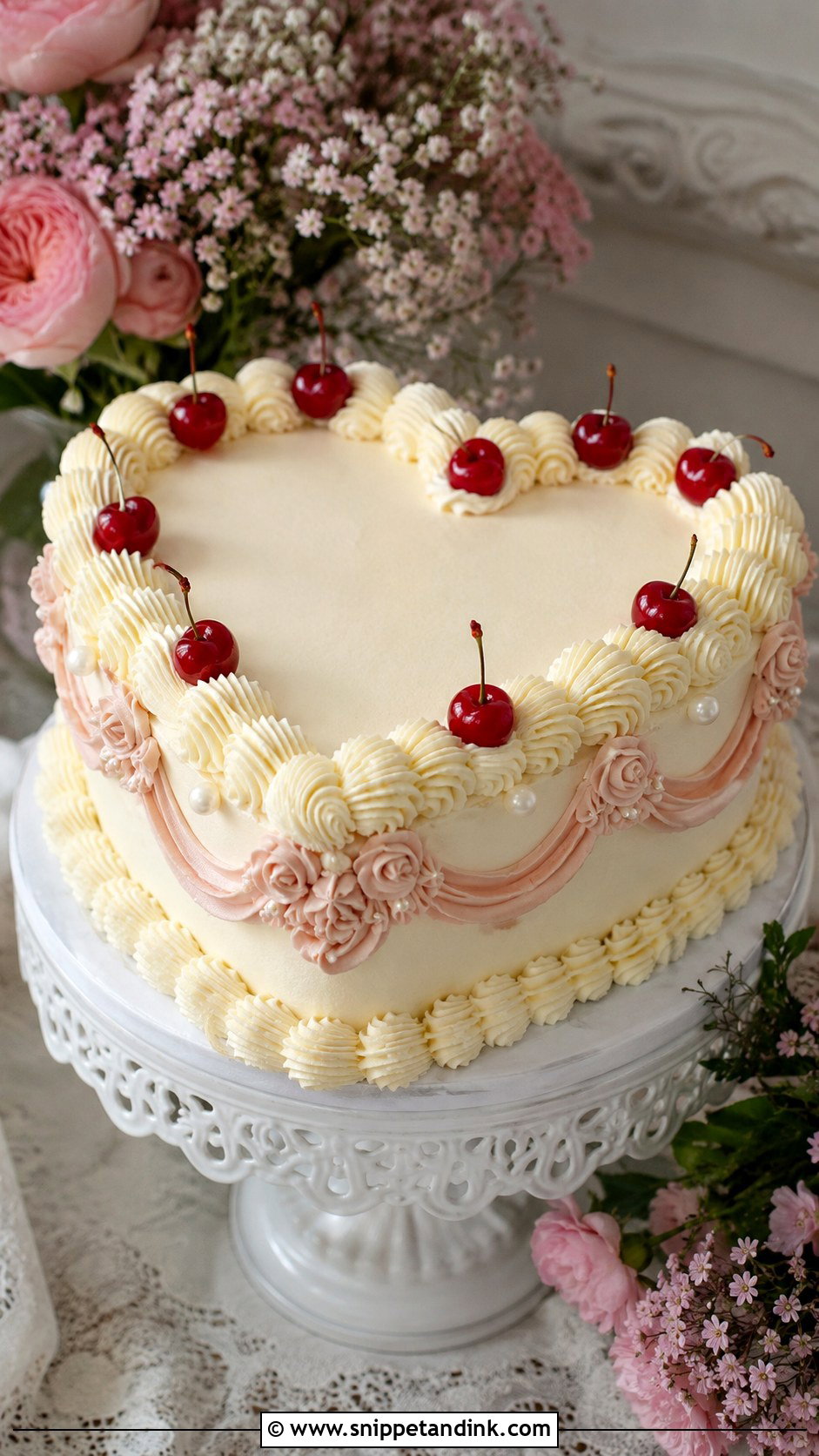
The trick to a simple vintage cake is choosing one or two old-fashioned details and stopping. A shell border with a few rosettes, or small swags with a piped bow, is enough. A heart-shaped single tier is sweet for a small reception; a round two-tier suits a more formal hall. Cherries look charming but bleed into pale buttercream within hours, so I place them just before the cake leaves my kitchen. Keep the palette to two colours at most.
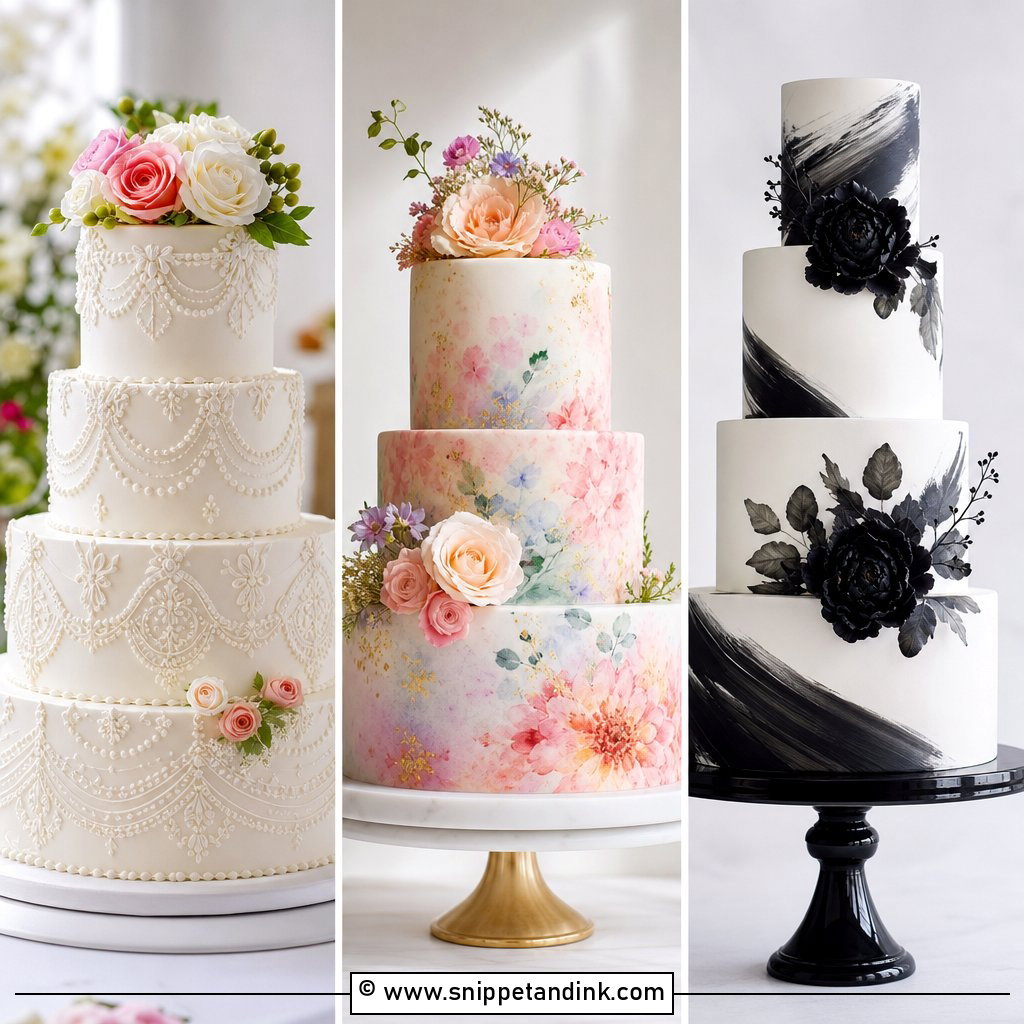
8. Simple Lambeth Wedding Cake
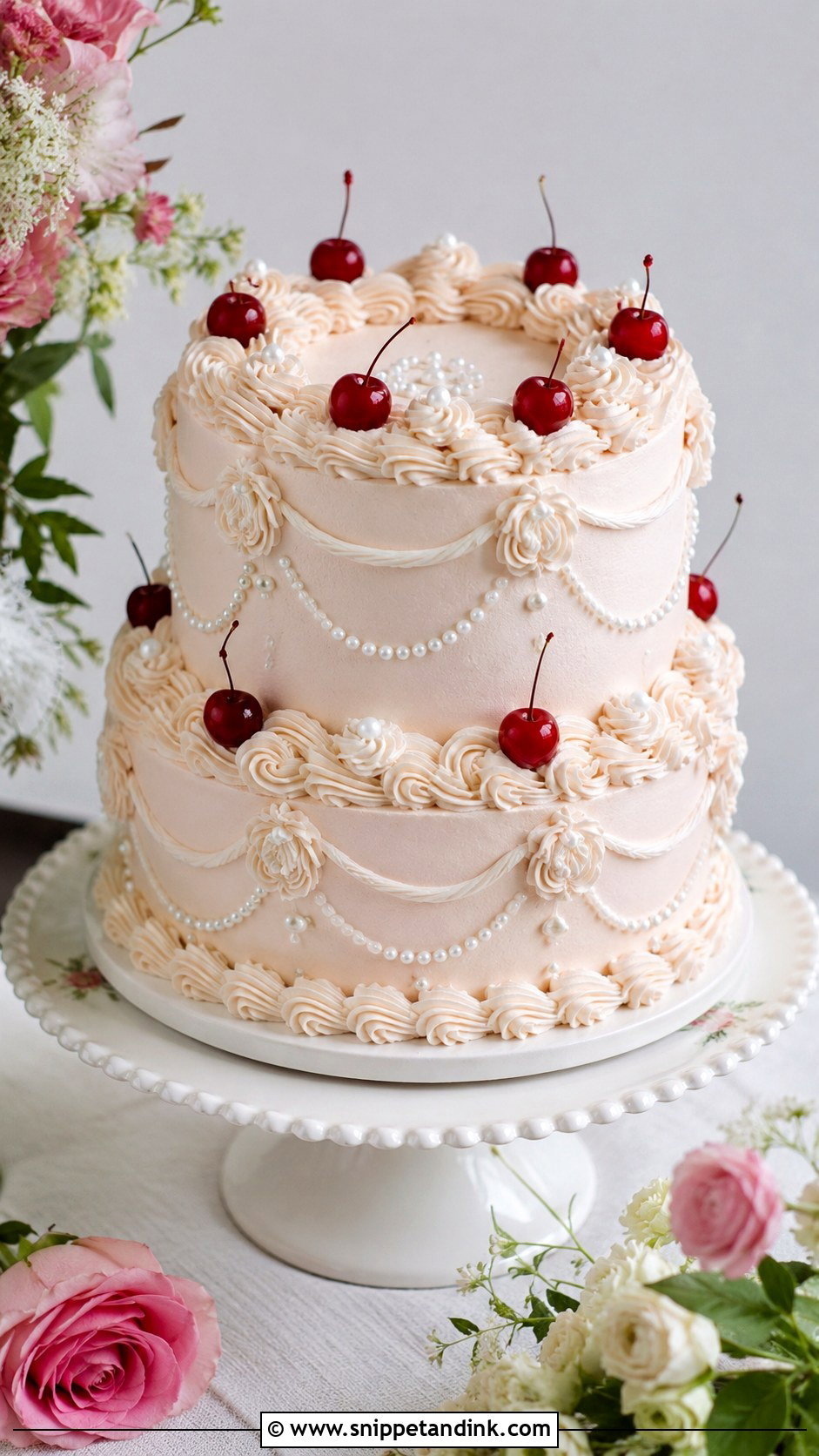
Lambeth piping is an overpiped vintage technique, layer on layer of borders and swags. A pared-back version uses neat shell borders, a few drapes and some rosettes on a smooth base, which is far quicker to pipe and much less likely to get damaged in transit. Ivory on ivory is classic; butter yellow or baby blue gives it a fresher feel. Piping like this needs a stiff, stable buttercream, so on a hot day it is safer indoors than on a sunny terrace.
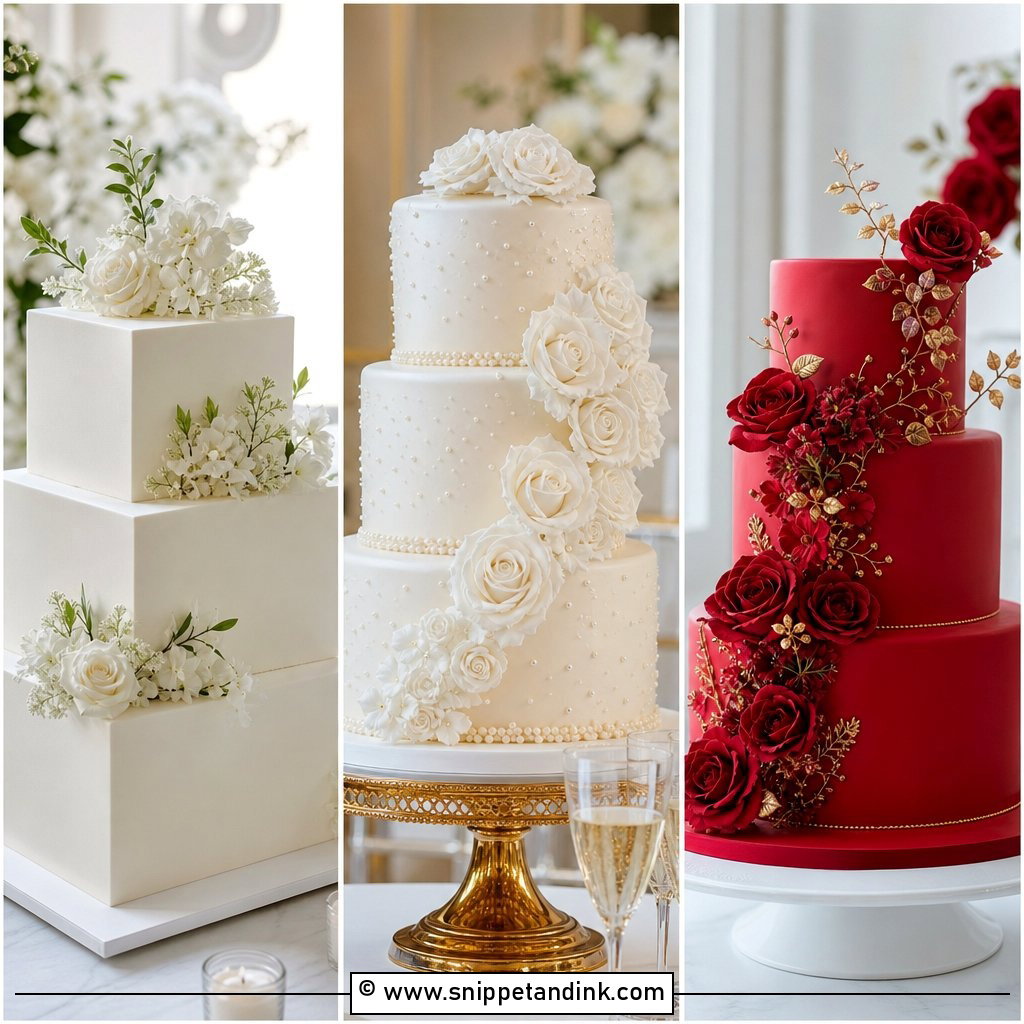
9. Simple Square Wedding Cake
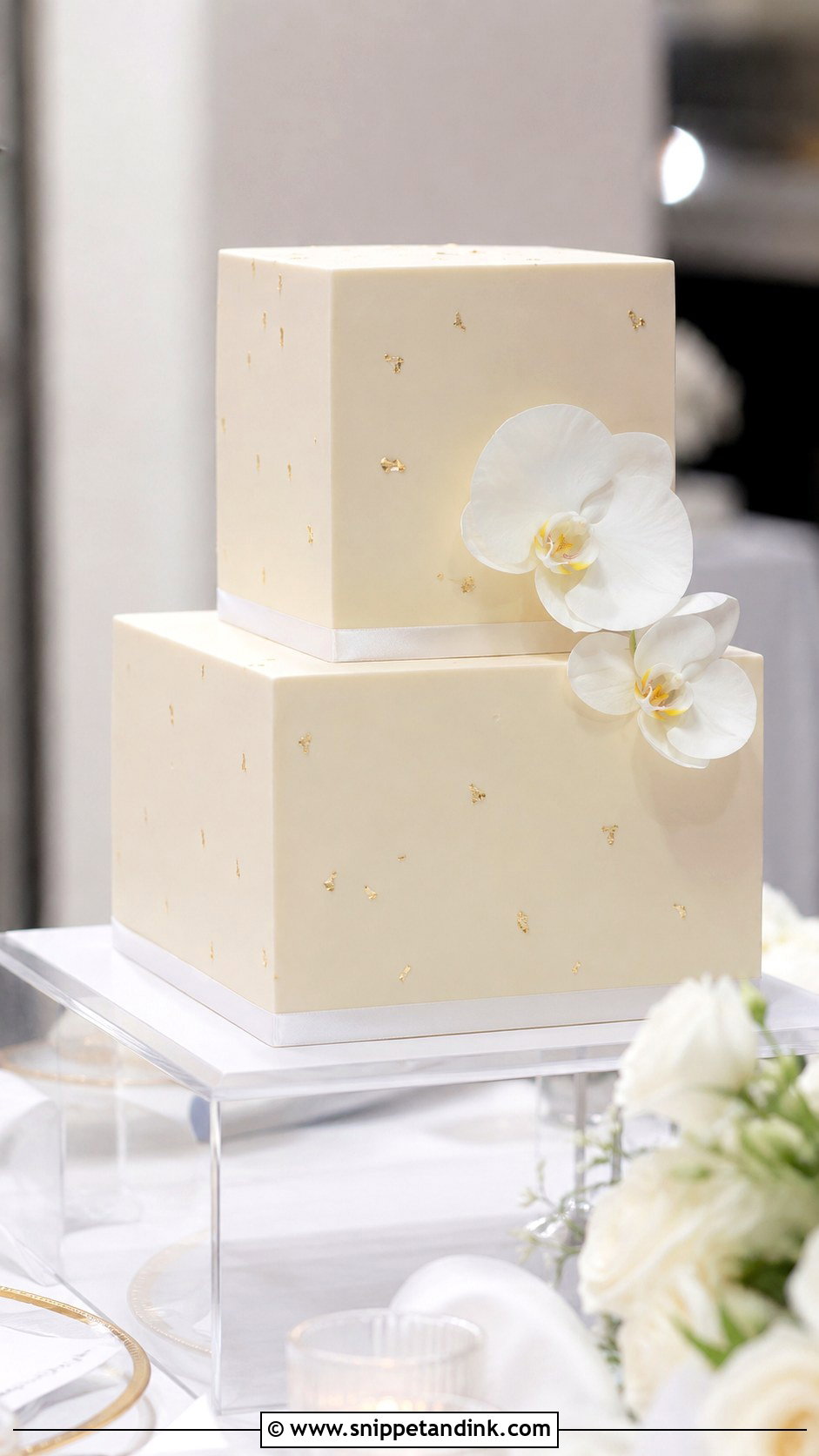
Square tiers are the hardest shape to finish well. Sharp corners in buttercream take time and a chilled cake, and fondant gives the crispest edge if you love that architectural look. Two practical points: a square tier gives more servings than a round one of the same width, because the corners hold extra cake, and those corners are also the first place a bump in transit shows. Keep the decoration to a thin ribbon or a single flower cluster so the lines stay the focus.
10. Simple Round Wedding Cake
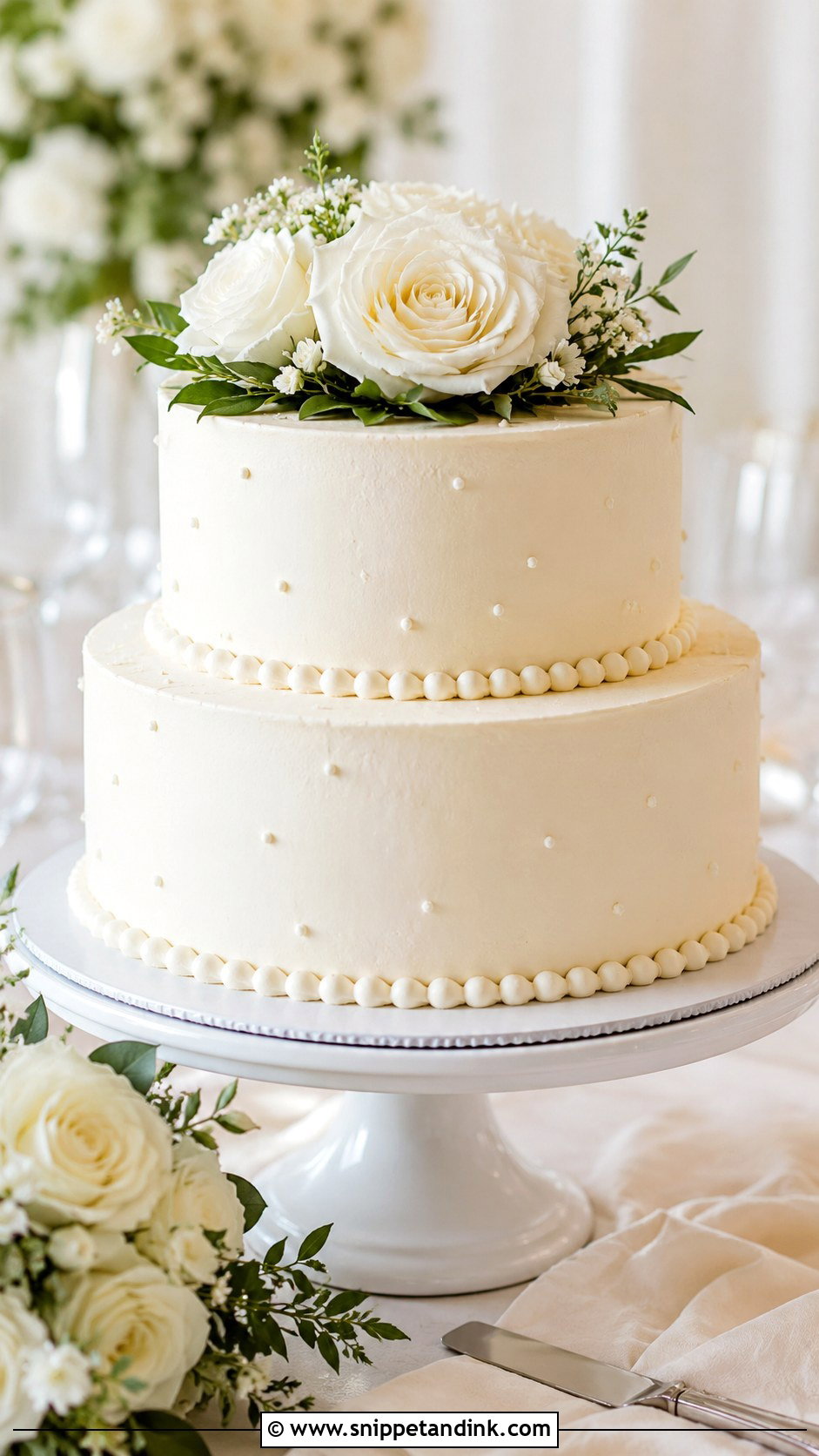
Round is the shape I’d recommend if you’re unsure. It stacks evenly, travels well and suits every style from smooth and modern to lightly combed and rustic. A low floral crown on the top tier and a neat base border is all a round cake needs. Flavors like vanilla bean, almond, lemon and strawberry please most guests, which matters more than people expect when half the room are children or grandparents.
11. Simple Textured Wedding Cake
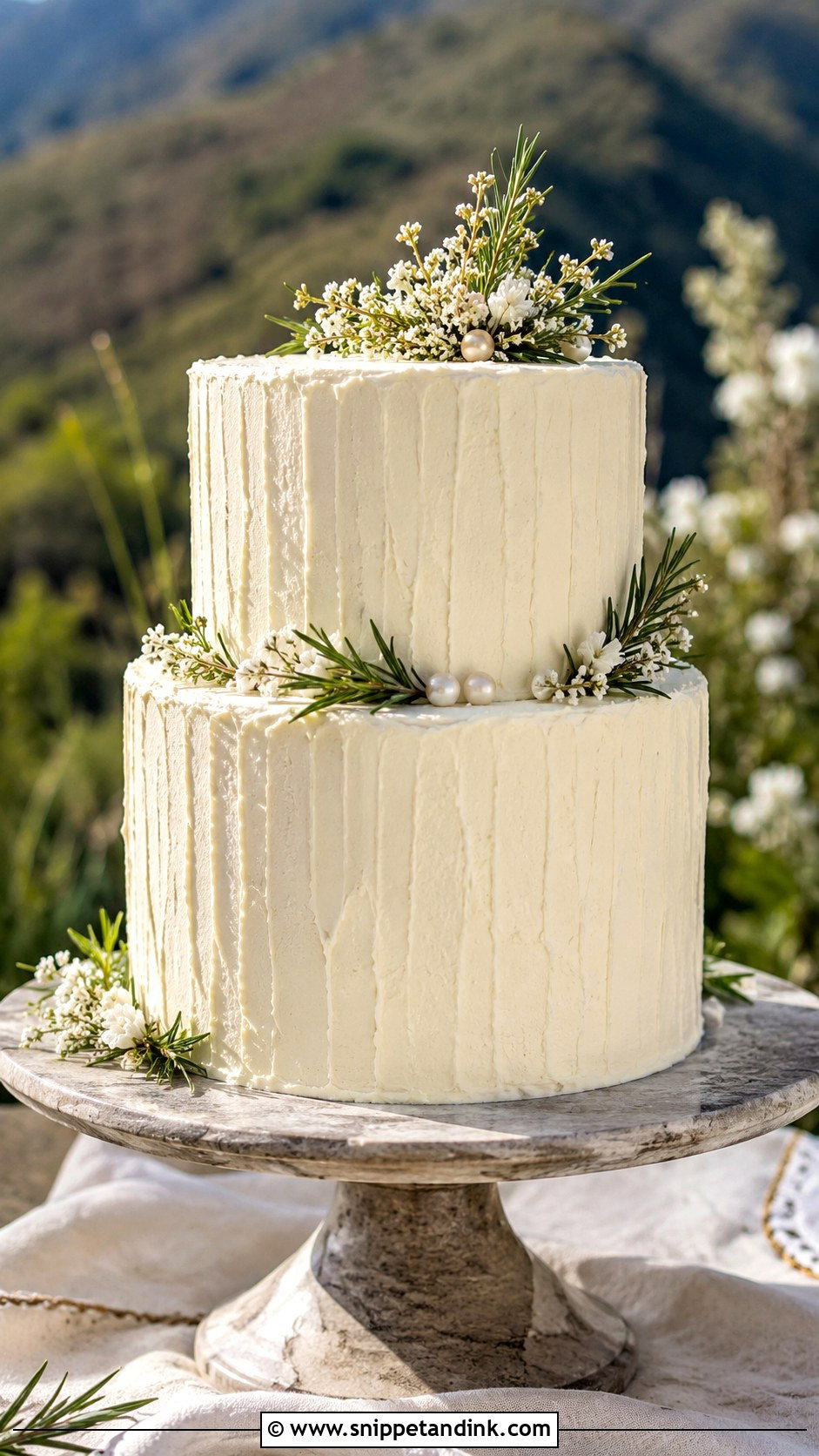
Texture is the most forgiving finish I offer, and that’s its secret. Vertical lines, horizontal combing or loose spatula strokes catch light and shadow, so the cake looks finished without decoration. It also hides the small fingerprints and scuffs that happen when a cake is moved onto a stand at the venue. Keep the colour in the ivory to pale beige range so the ridges show. A sprig of greenery or a few blooms finishes it.
12. Simple Naked Wedding Cake
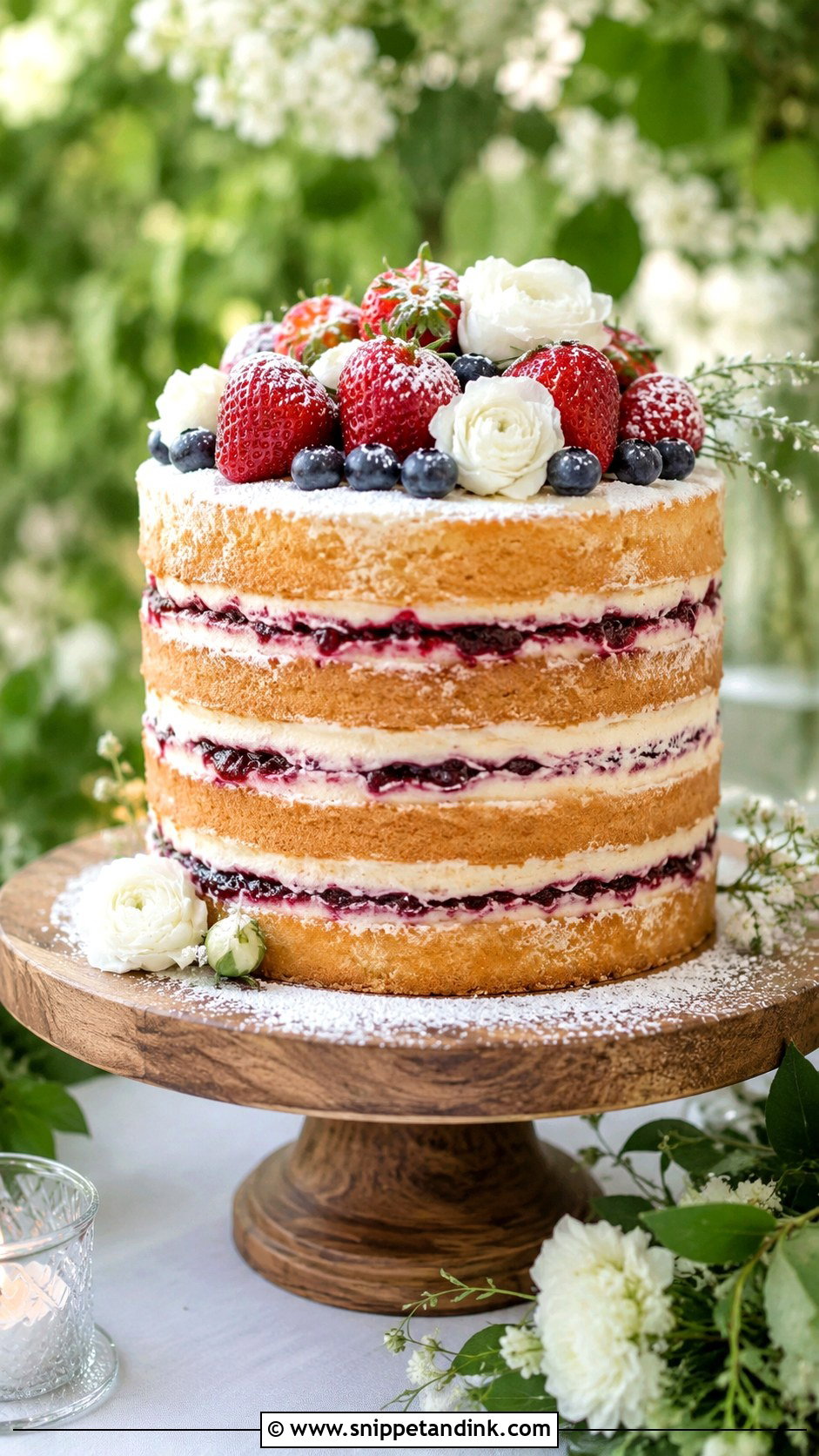
A naked cake shows its sponge, so even layers and clean filling lines matter more than anywhere else. The thin frosting means the sides are exposed to air, and they dry out faster than a fully frosted cake; I brush the layers with a light syrup and deliver as close to the reception as possible. Berries and fruit should go on at the venue, not the night before. Vanilla with berry filling or lemon with elderflower cream suits a garden table. I’d avoid it for a long, hot outdoor afternoon.
13. Simple Semi Naked Wedding Cake
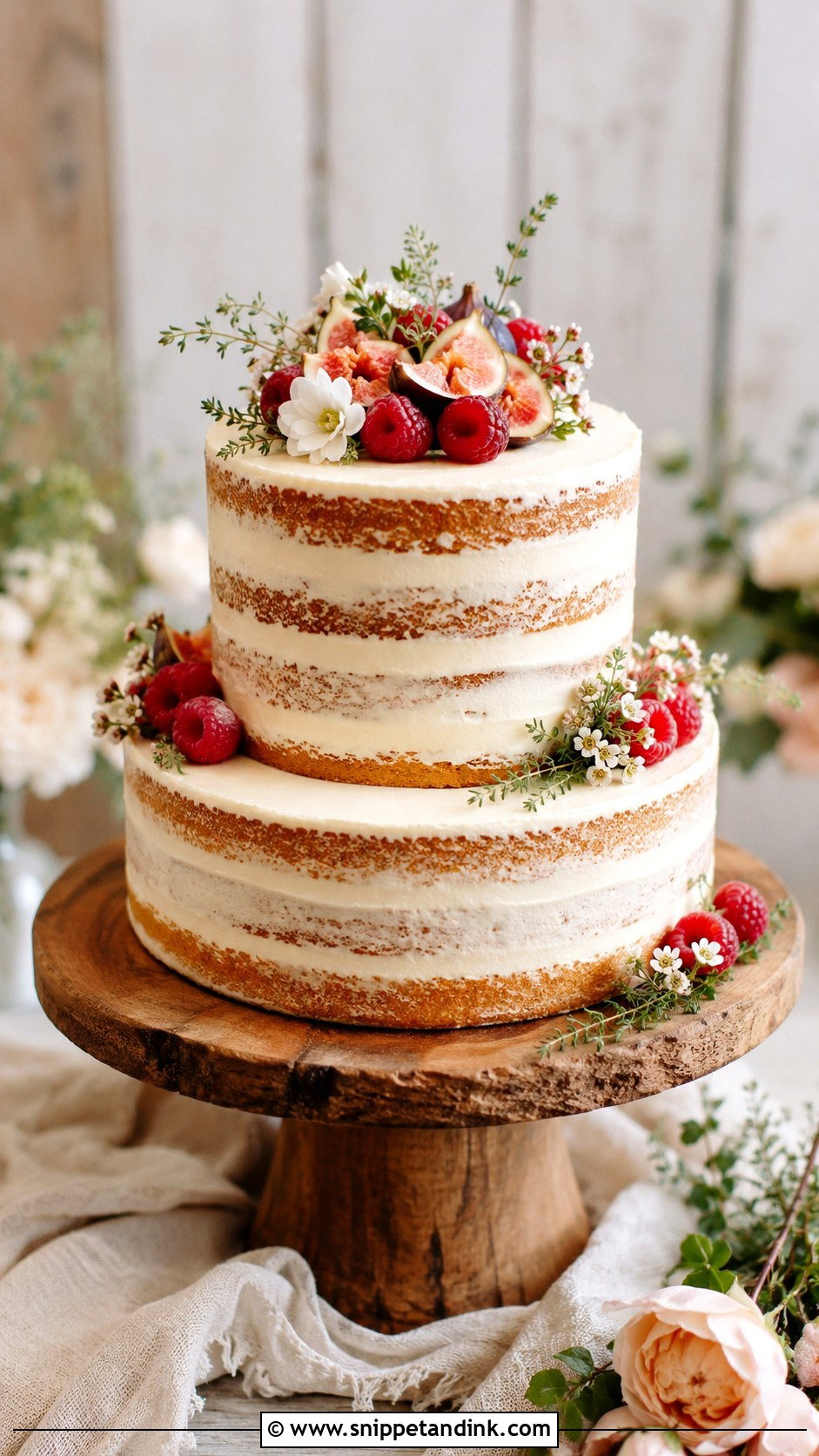
A semi naked wedding cake sits halfway: a thin scraped coat that lets the sponge show through in places. That coat protects the cake from drying better than a fully naked finish, which is why I steer outdoor summer couples toward it. Figs, berries, small flowers and herbs give it an organic finish. It looks right on a wooden stand or a stone pedestal, and carrot, lemon blueberry or almond apricot sponge all suit its homemade feel.
14. Simple Greenery Wedding Cake
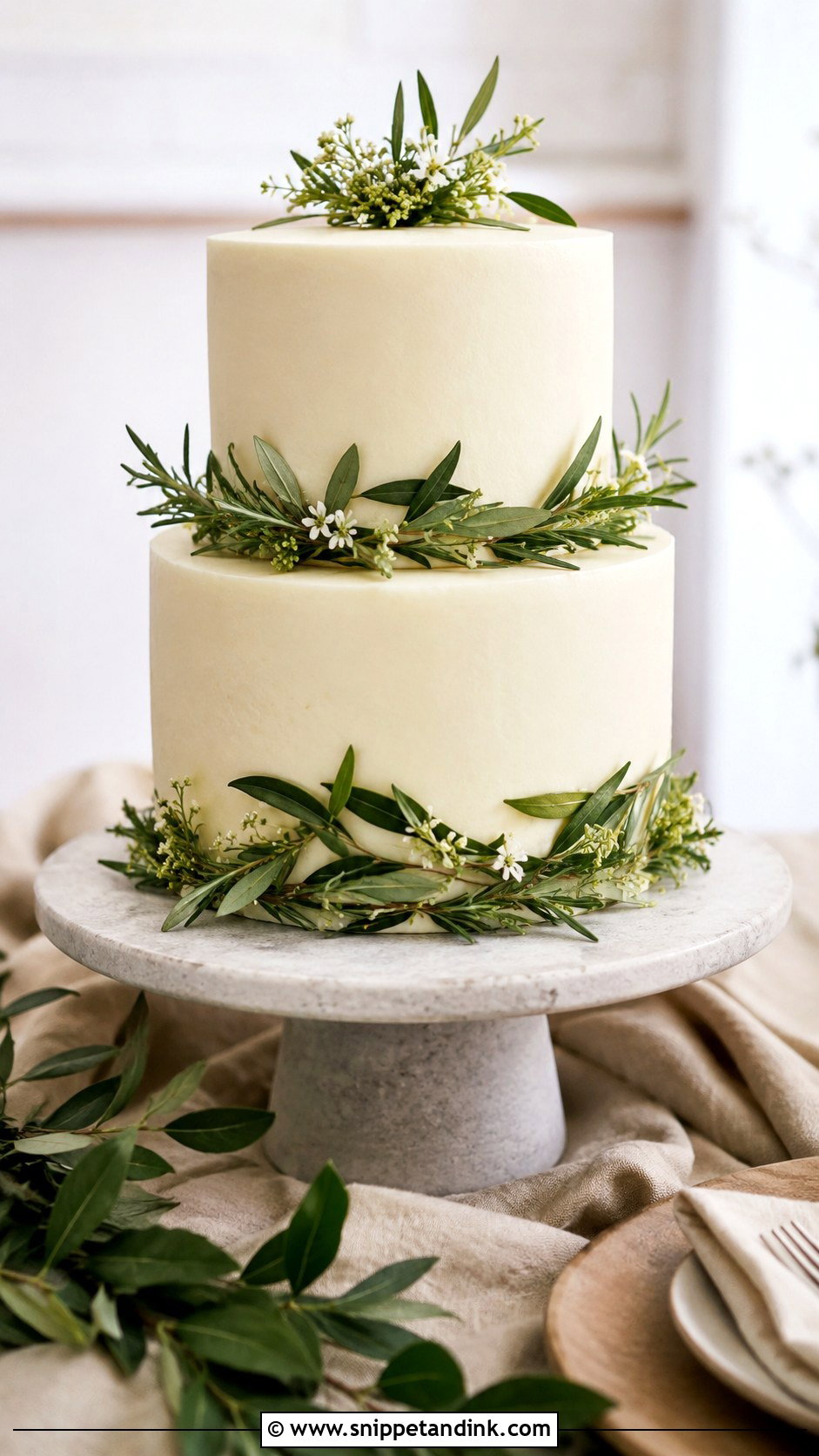
Greenery is a good choice when flowers stretch the budget. I use olive leaves, rosemary and small herb sprigs, all of which are safe near food. Eucalyptus is popular in bouquets but it is toxic, so it shouldn’t touch the cake; ask for a faux or sugar version if you want that silvery shape. Ivory buttercream makes the green stand out; sage-tinted buttercream gives a calmer, tone-on-tone look. Stems are wrapped in floral tape or set in food-safe picks before they go in.
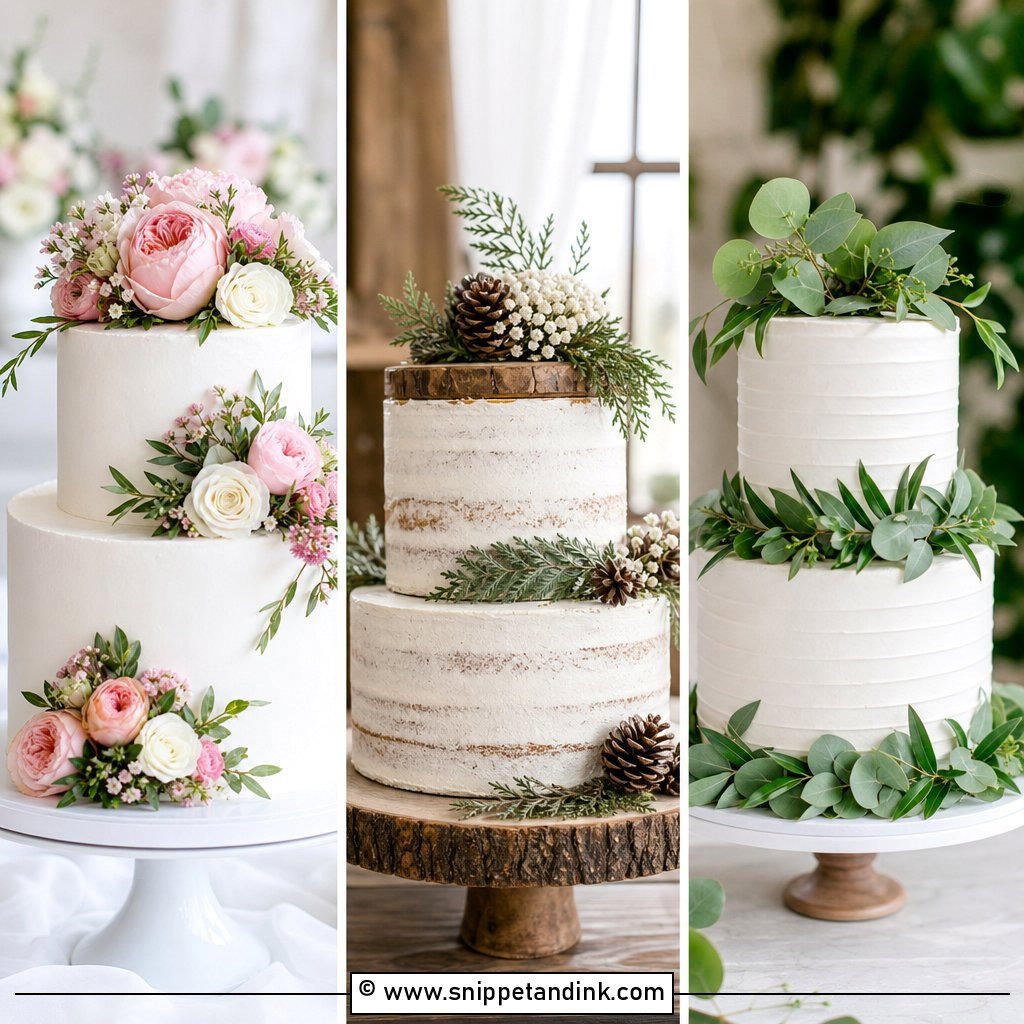
15. Simple Gold Wedding Cake
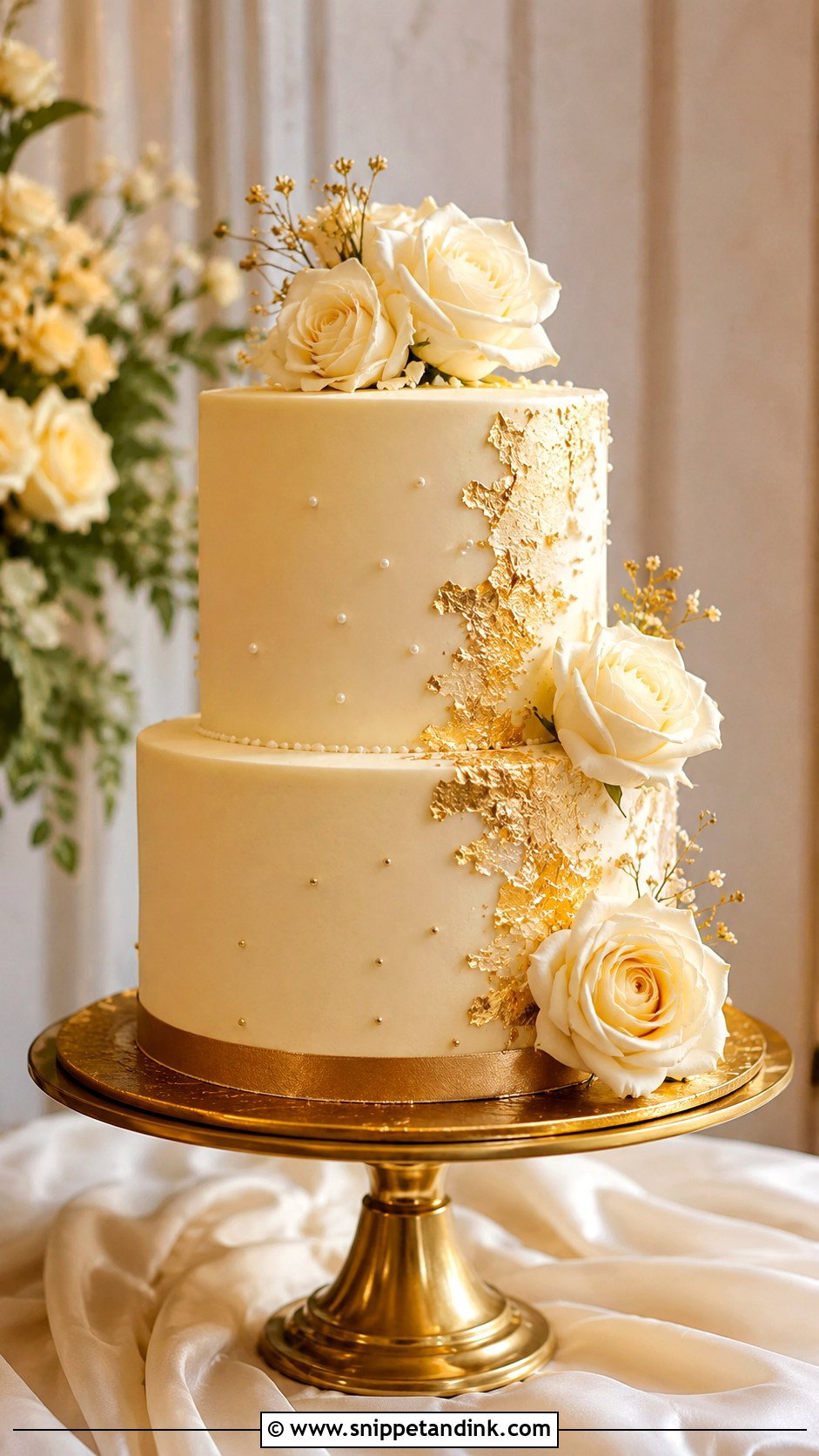
Gold works as an accent, not a coat. I apply edible gold leaf along one edge, paint a thin base border or scatter tiny flecks on one side of a tier. Gold leaf is fragile and sticks to anything warm, so it’s applied last and the cake shouldn’t be touched afterwards. On smooth ivory buttercream with a few white flowers, it reads expensive without shouting. Champagne, caramel or almond sponge suit an evening reception.
16. Simple Blush Wedding Cake
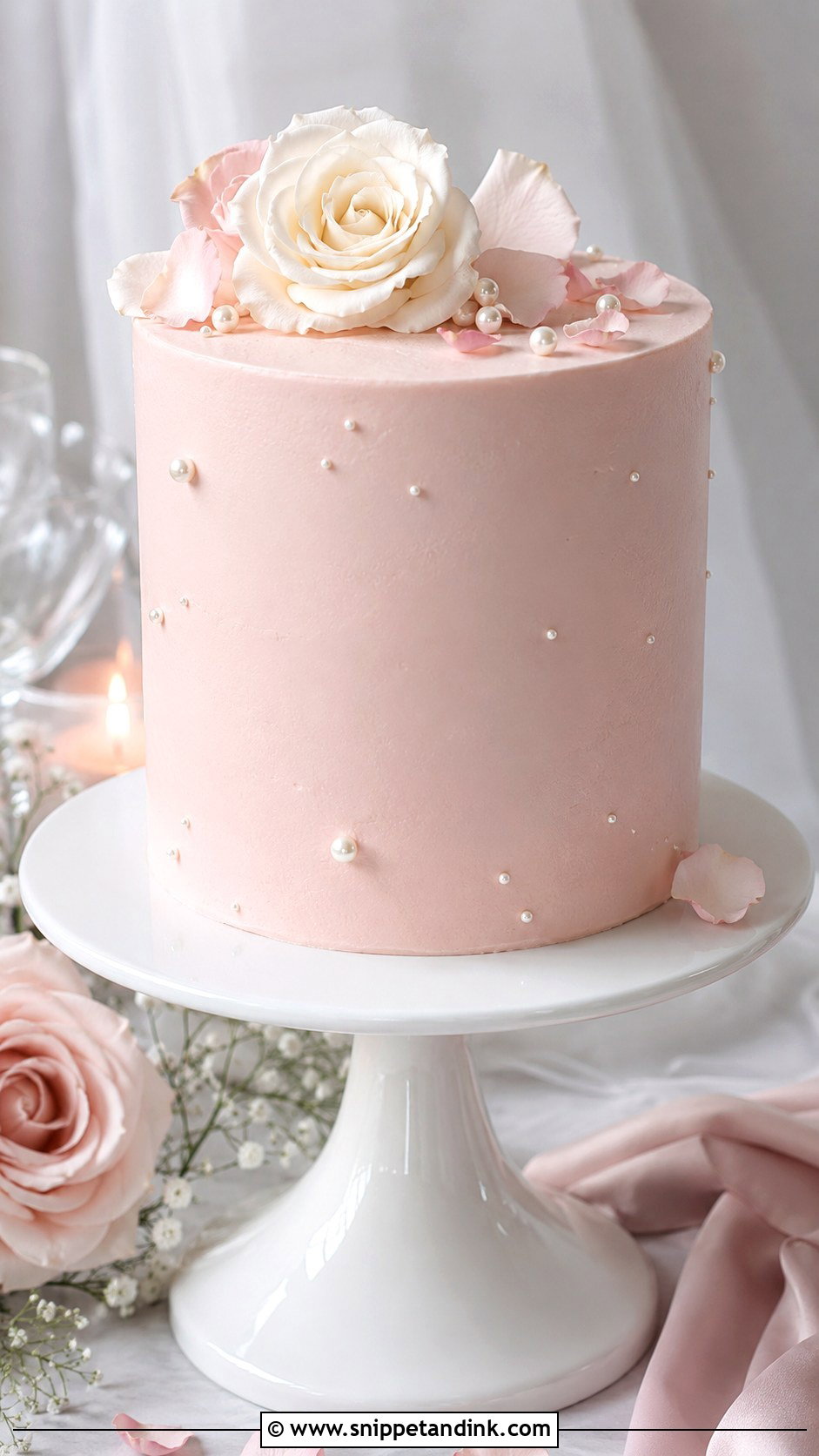
Blush ranges from barely pink to dusty rose to peach, and the shade shifts under different lights, so I always tint a test swatch for couples to approve in daylight. Keep the finish smooth or lightly textured and add white flowers or a simple piped border. Too many pink decorations on a pink cake makes it look like a nursery party; let the colour do the work. Strawberry, raspberry or vanilla rose sponge sit well with it.
17. Simple Blue Wedding Cake
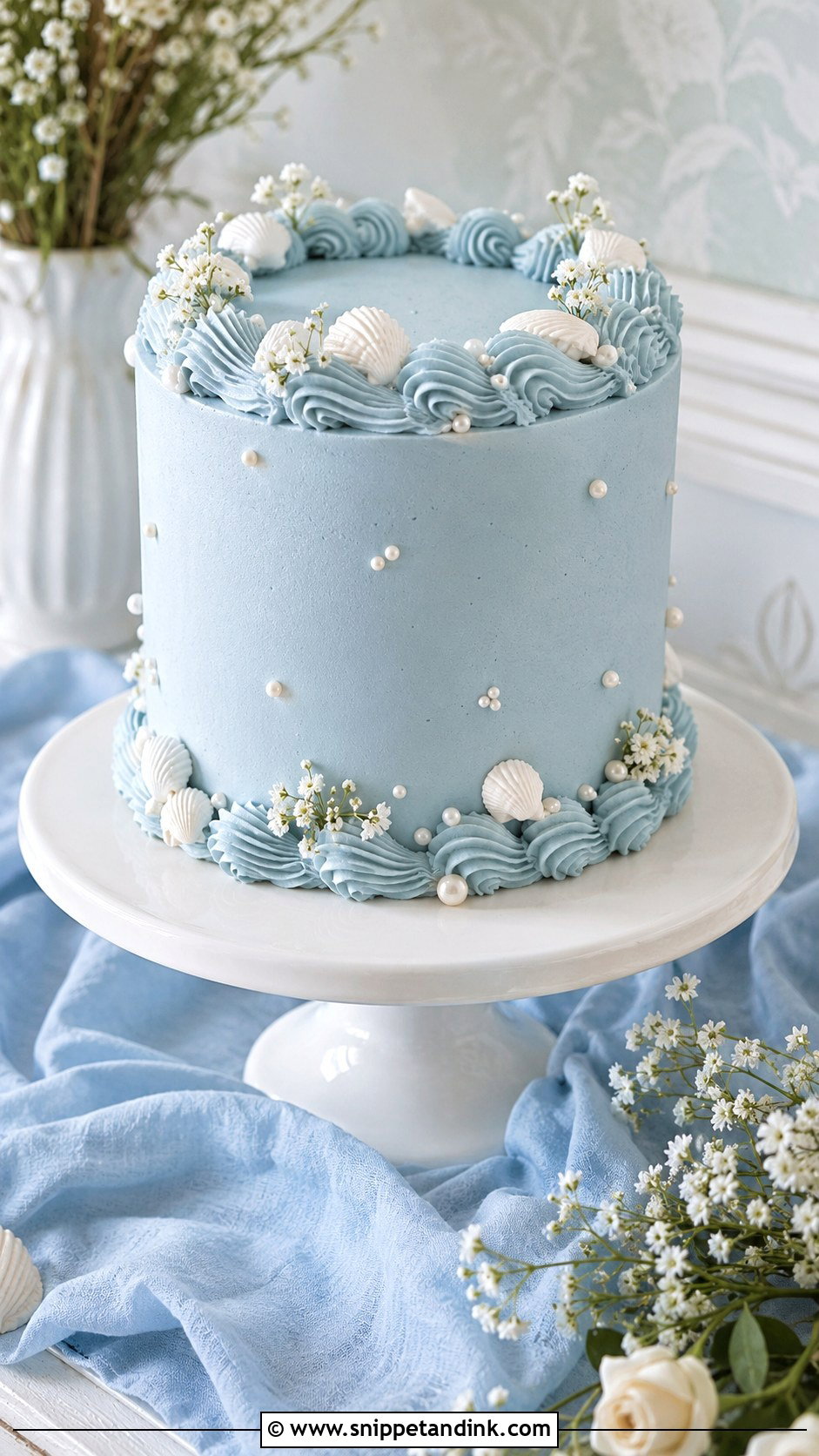
Blue is the colour I’m most careful with. It tends to tint toward green in butter-yellow buttercream, so the base needs to be whitened first, and too much colouring can taste bitter. Pale blue reads vintage or coastal; dusty and slate blues feel more formal. White flowers or sugar pearls give contrast, and a little shell piping turns it vintage. Lemon, almond and earl grey sponge pair well with it.
18. Simple Pressed Flower Wedding Cake
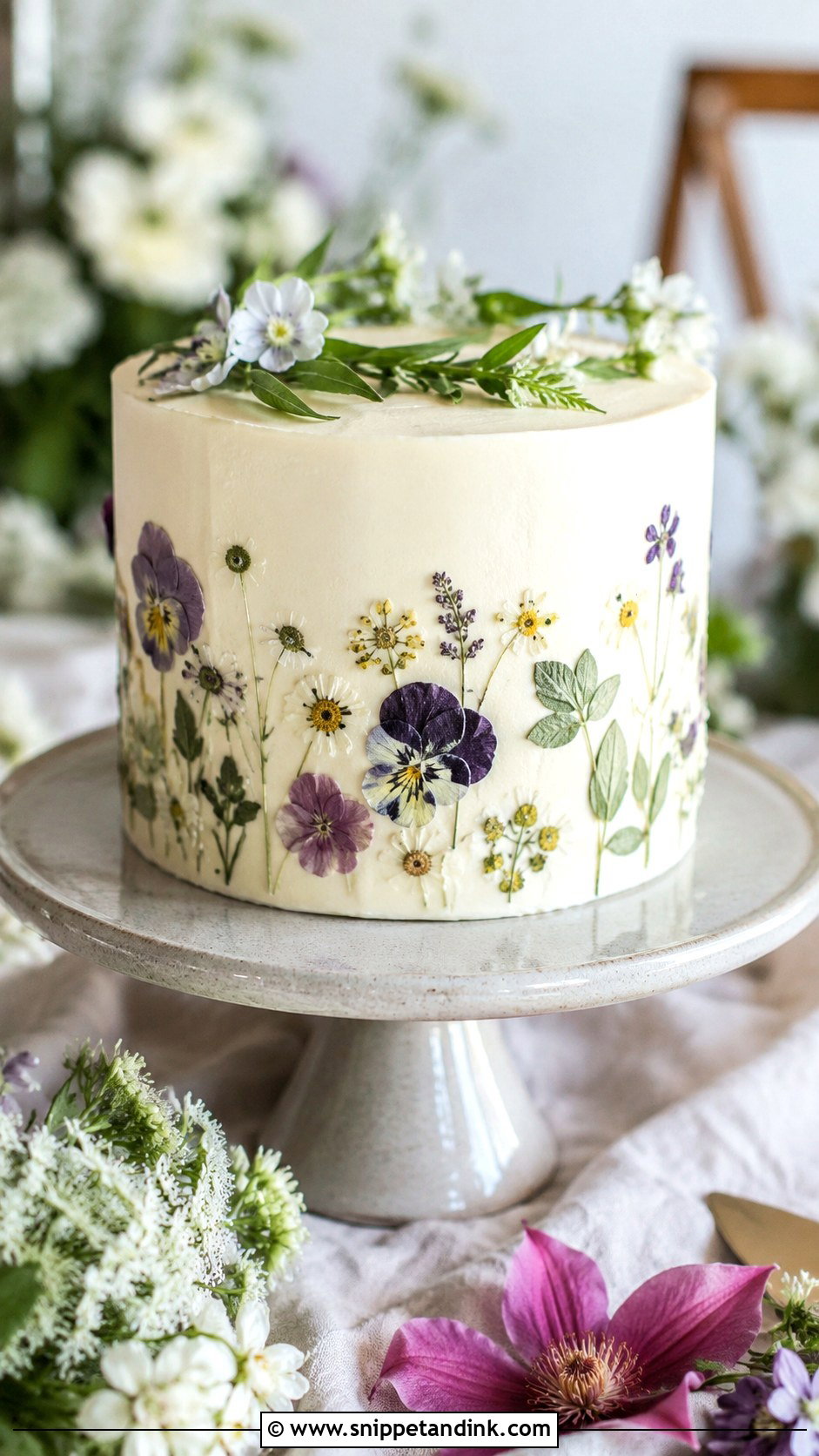
Pressed flowers lie flat against the frosting, so the cake underneath must be very smooth or the petals buckle. Only use flowers that are edible and grown without pesticides, pressed by someone who knows what they’re doing. I press them gently onto a chilled cake so they stick without smearing. A scattered side placement or a light frame on the front is enough. Lavender honey, lemon or elderflower sponge suit the botanical look.
19. Simple Ribbon Wedding Cake
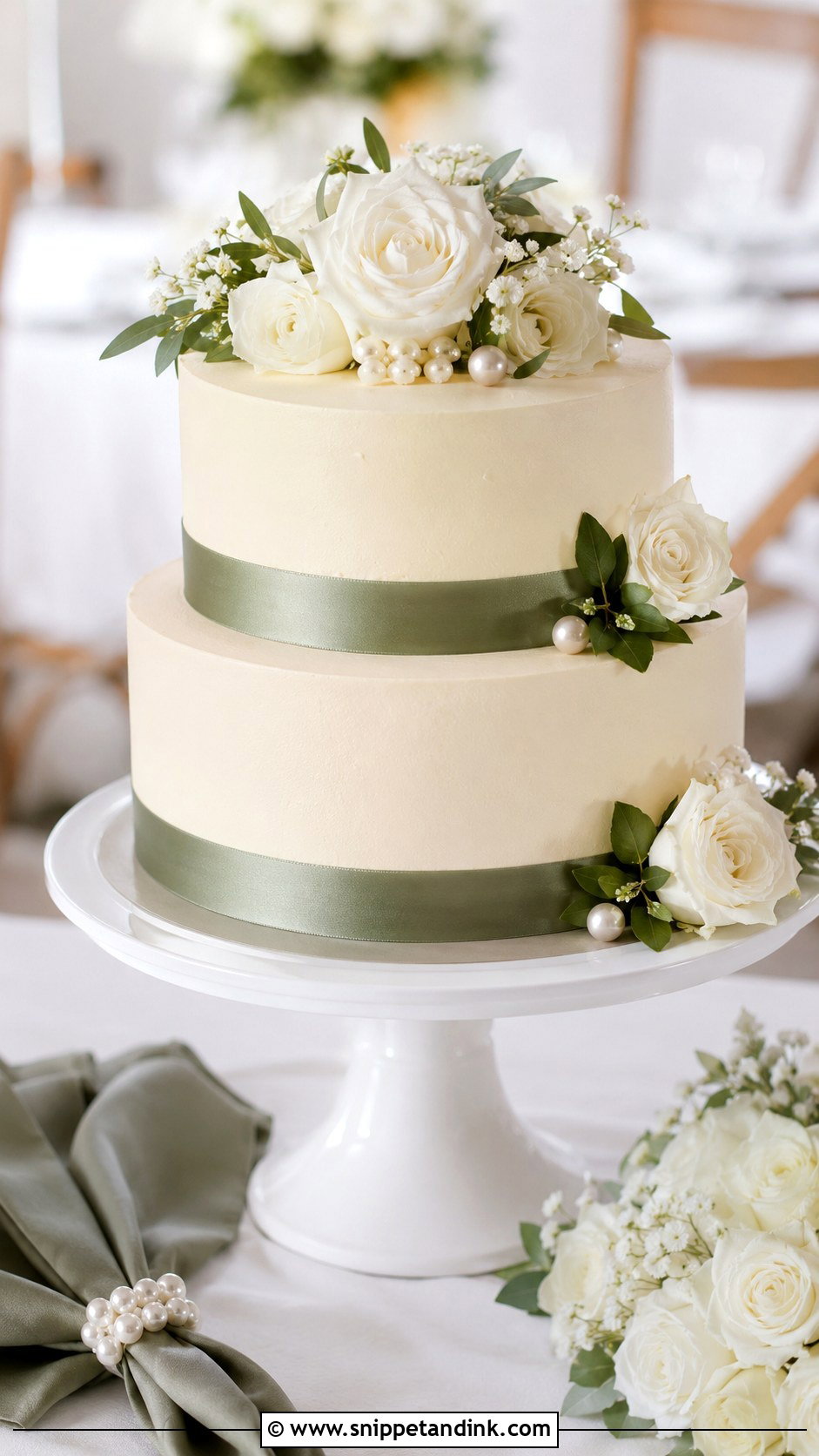
Ribbon is the quickest way to tie a plain cake to your colours. One thing couples rarely know: fabric ribbon absorbs butter from buttercream and leaves a greasy line, so I back satin or silk with a thin strip of acetate or use a fondant ribbon instead. Ivory looks classic, black looks modern, sage looks garden-like. Keep the tiers smooth so the ribbon looks intended. It’s an easy brief for any baker to follow.
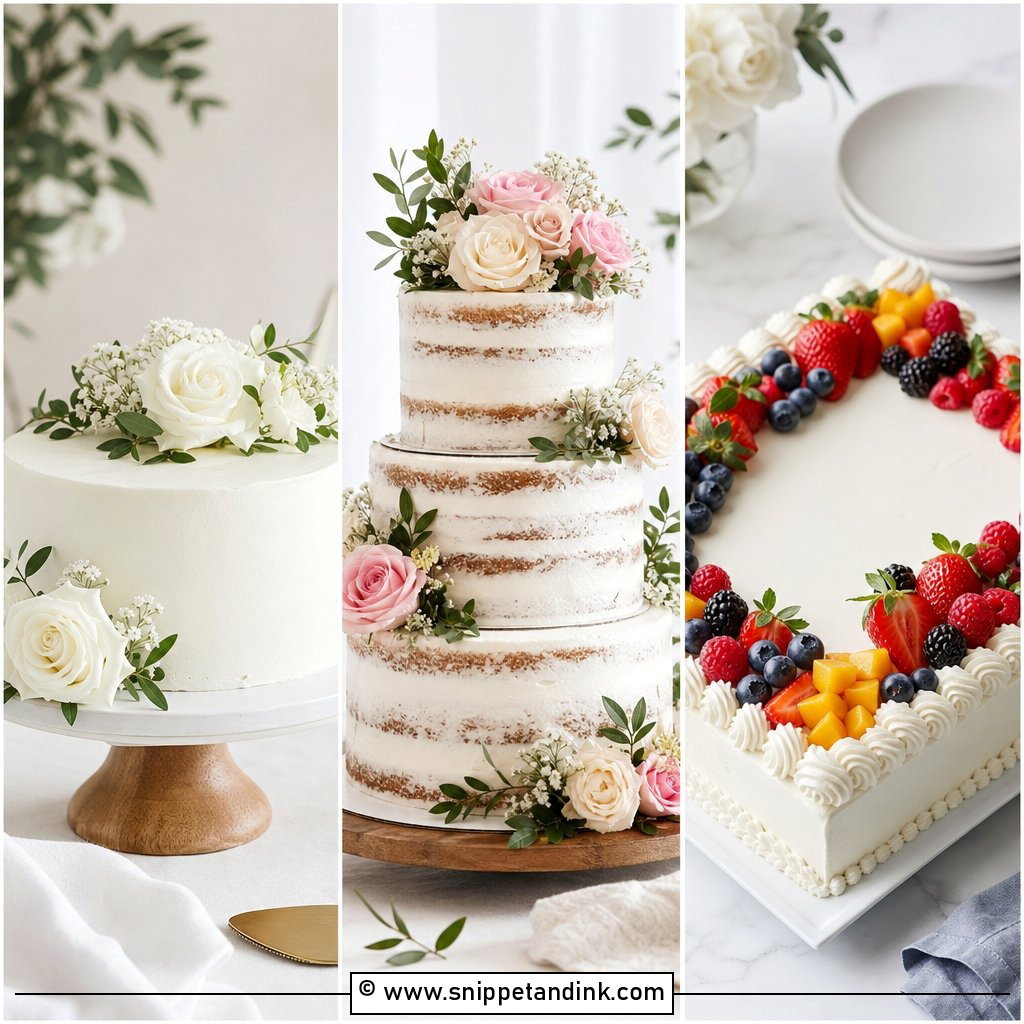

20. Simple Small Wedding Cake
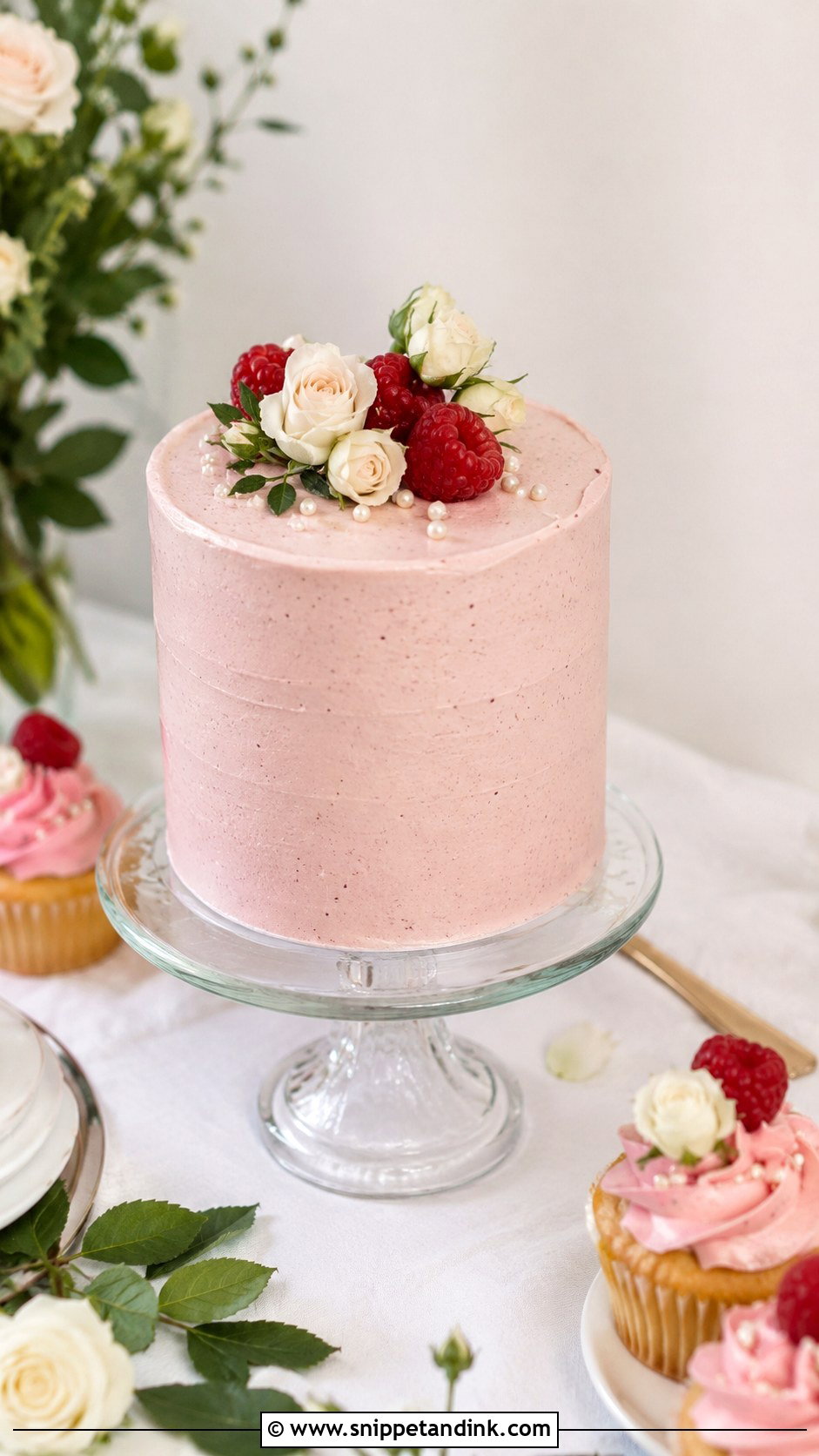
A simple small wedding cake works best when it’s tall. A six- or eight-inch round made extra high looks like a centerpiece; a short one looks like dessert. Put it on a raised stand and fill around it with petals or cupcakes if you need extra servings. A small size also gives room to splurge on a flavour that would be costly at scale, such as pistachio raspberry or brown butter caramel.
Heat, Delivery and the Two Hours Before Cutting
Simple cakes are mostly buttercream, and buttercream is fat. Once a room gets warm it starts to soften, and in direct sun a smooth finish can slump, crack at the tier joins or slide. I ask every couple where the cake table will stand and for how long.
- Keep the cake indoors and out of direct sun, away from candles, heaters and the kitchen door.
- For an outdoor summer reception, plan for the cake to come out shortly before cutting rather than sitting through the meal.
- Stacked tiers travel in a cool car and are often assembled on site; leave room in the timeline for that.
- Agree who is placing fresh flowers and when, so they go on after the cake is in position.
Questions worth asking your baker
Ask which buttercream they’d use for your month and venue, whether they’ll deliver and set up, and how they support stacked tiers. Ask what happens if a corner gets bumped on arrival, since a good baker brings a small repair kit. And ask how the top tier will be packed if you plan to freeze it, because a tightly wrapped tier keeps its flavour far better than one left in a cardboard box.
A Plain Cake Still Needs a Plan
Most simple cakes come down to three decisions: the shape and number of tiers, the finish, and one detail. Pick the tier count from your guest numbers, the finish from your venue and season, and the detail from your flowers or palette. Then talk to your baker about delivery time, who places the flowers and how long the cake will sit before cutting. Those conversations matter more for a plain cake than an ornate one, because there is nothing to hide a problem.
You'll Like These Ideas:







Leave a Reply