
Most brides walk into their first appointment with a screenshot folder and walk out loving something they would never have pulled off a rail. That’s normal. A gown reads completely differently once it’s on a body, pinned to your size and lit by a fitting room mirror. Below are 25 dress ideas I’d put in front of a bride early on, from structured satin and full lace to slips, capes and a jumpsuit, with notes on how each one actually behaves when you sit, walk, dance and get altered. Use them to work out which shapes deserve a try-on and which ones only look good in a flat-lay.
Getting the Most From a Bridal Appointment
Salon appointments usually run about an hour to ninety minutes, and you’ll try on more dresses than you expect in that window. Sample gowns are often a standard size, so a consultant will clip the back if it’s too big or leave it open if it’s too small. Neither tells you much about final fit. What a sample does tell you is how the fabric moves, how heavy the skirt is, and whether a neckline suits your shoulders.
I ask brides to bring a strapless or nude bra, underwear that matches their skin tone, and shoes close to the heel height they’ll wear. Two or three trusted people is plenty. A big group usually ends with you trying to please everyone in the room instead of noticing how you feel.
- Sit down in every gown you like, and stay seated for a full minute.
- Raise your arms as if hugging someone taller than you.
- Walk away from the mirror and look back over your shoulder at the back view.
- Ask what the dress is made of and whether it can be ordered in a different length or lining.
- Take one photo from a distance, not just close-ups, to see the overall shape.
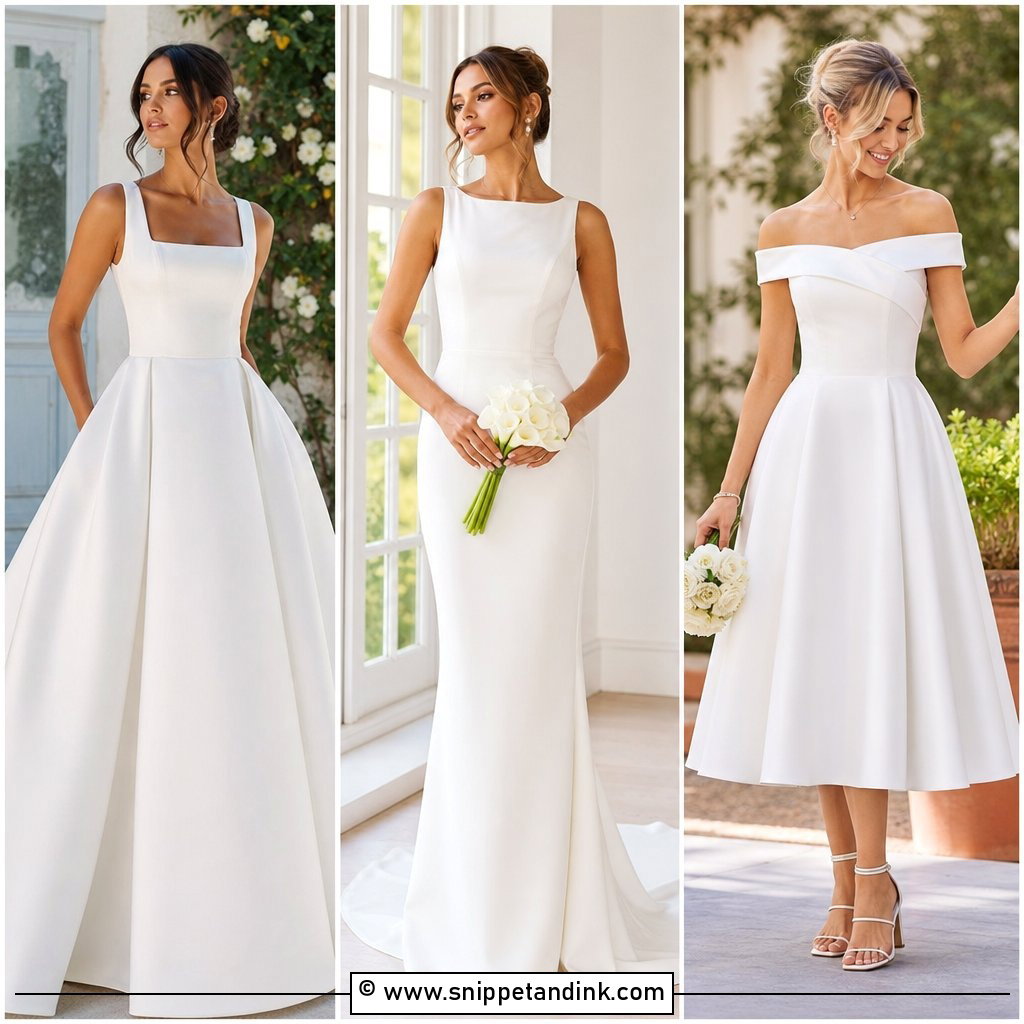
1. Satin A Line Wedding Dress
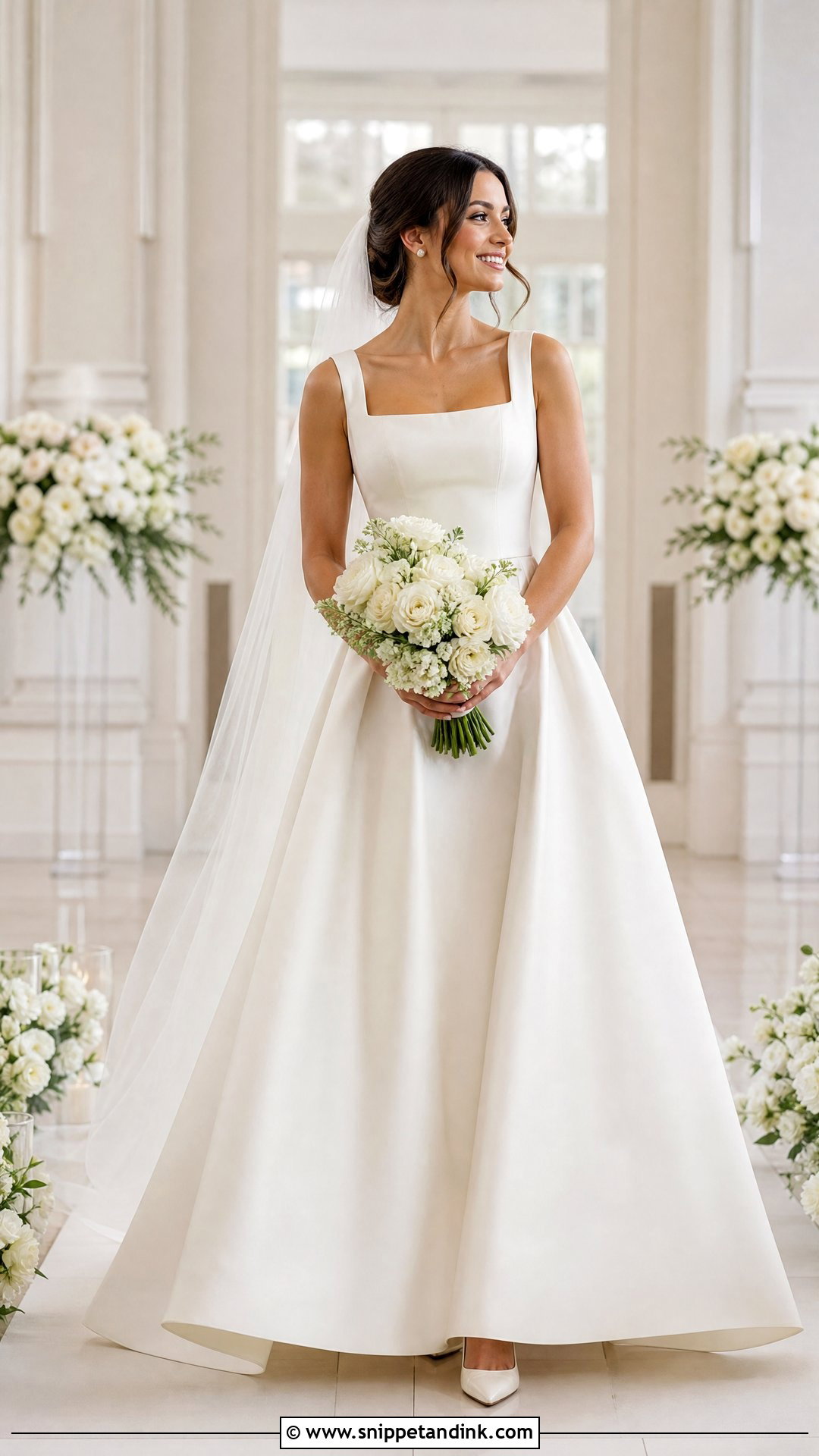
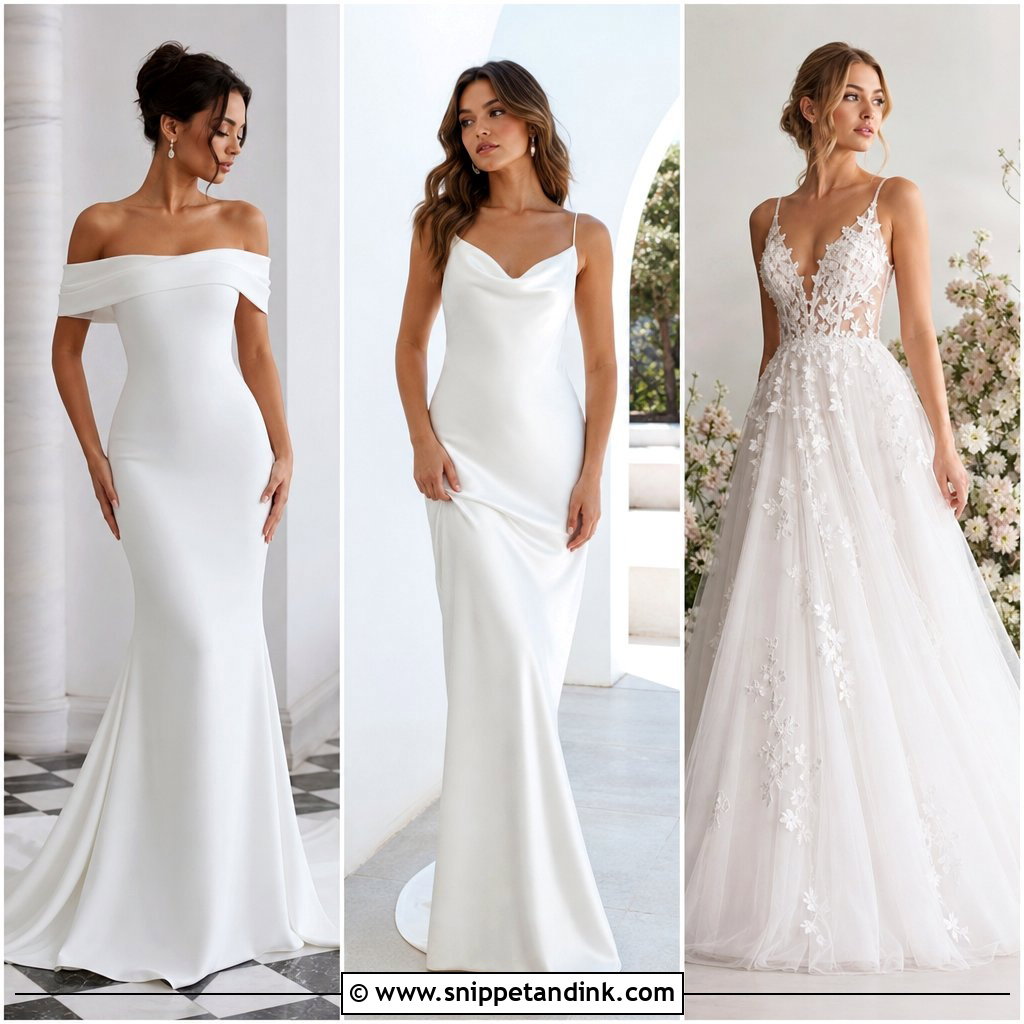
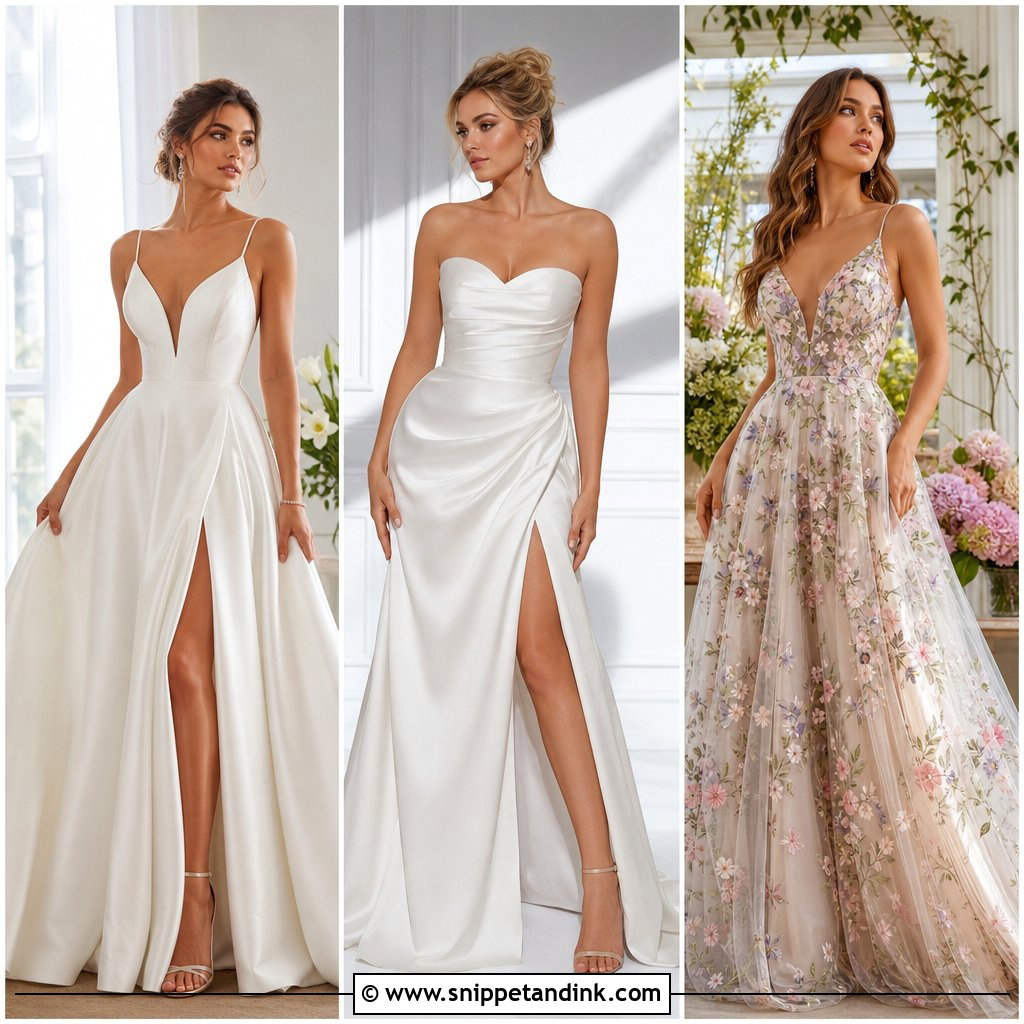
Satin A lines are the gown I hand to a bride who isn’t sure where to start, because the shape forgives a lot. The seam lines run from bodice to hem without cutting across the hips, so the skirt falls away cleanly on a straight figure and a curvier one alike. What I check is the satin weight. A thin, shiny satin shows every pin mark and every crease from the car, while a heavier duchess or matte satin holds its line all day. Pearl studs and a low bun are enough; a busy bouquet only fights the clean surface.
2. Lace Ball Gown Wedding Dress
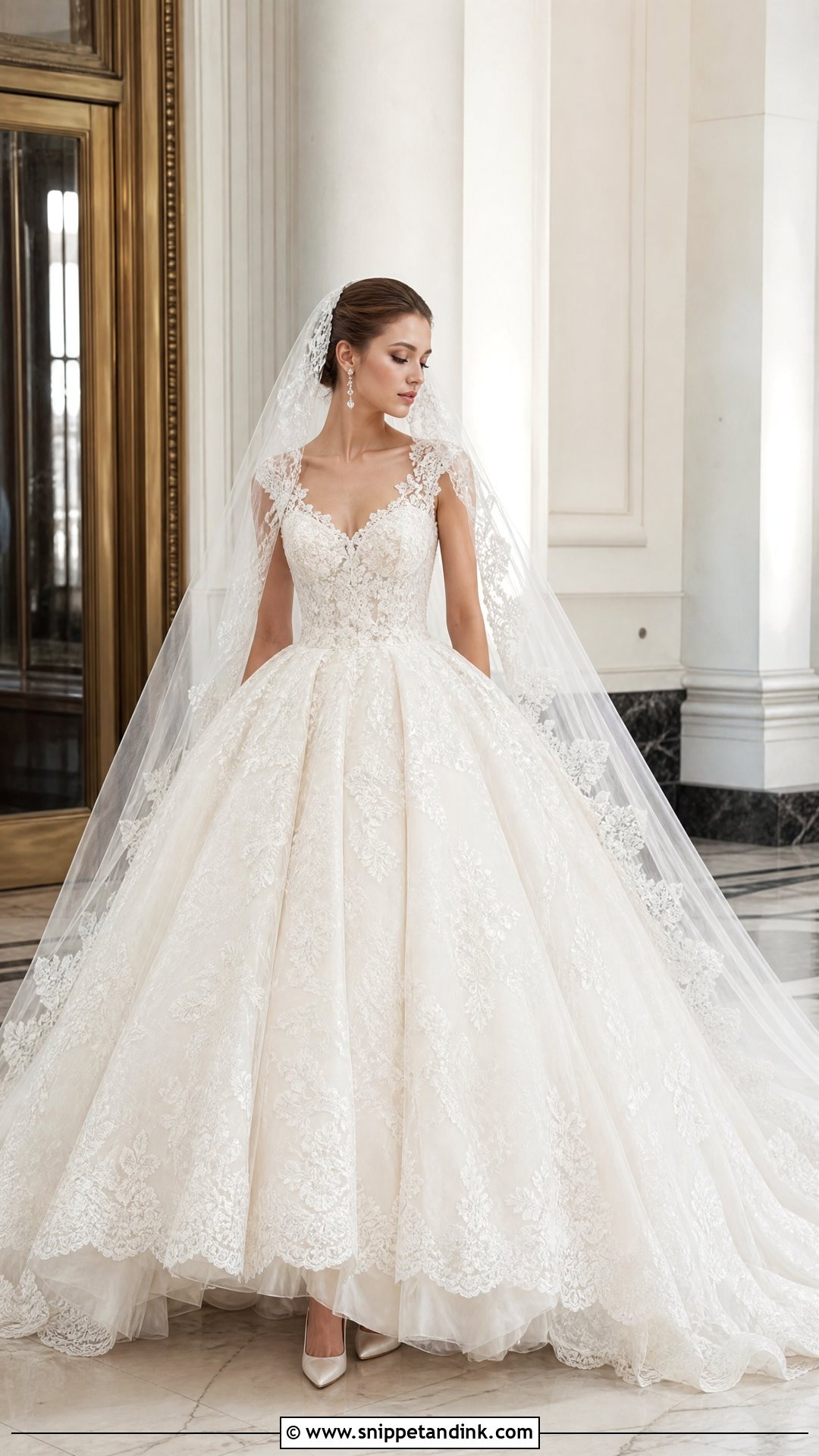
Lace on a full skirt gives you that bridal entrance many brides dream about, and the lace keeps all that volume from looking stiff. The weight is the part people underestimate. Several layers of tulle under corded lace can be heavy by the reception, so I always ask a bride to walk the length of the salon twice and sit down before she decides. Petite frames do better with a lighter crinoline and a lace that has open space in the pattern; dense allover lace on a small frame can swallow her. A cathedral veil suits the scale, provided the venue has a long enough aisle to show it.
3. Minimalist Silk Slip Wedding Dress
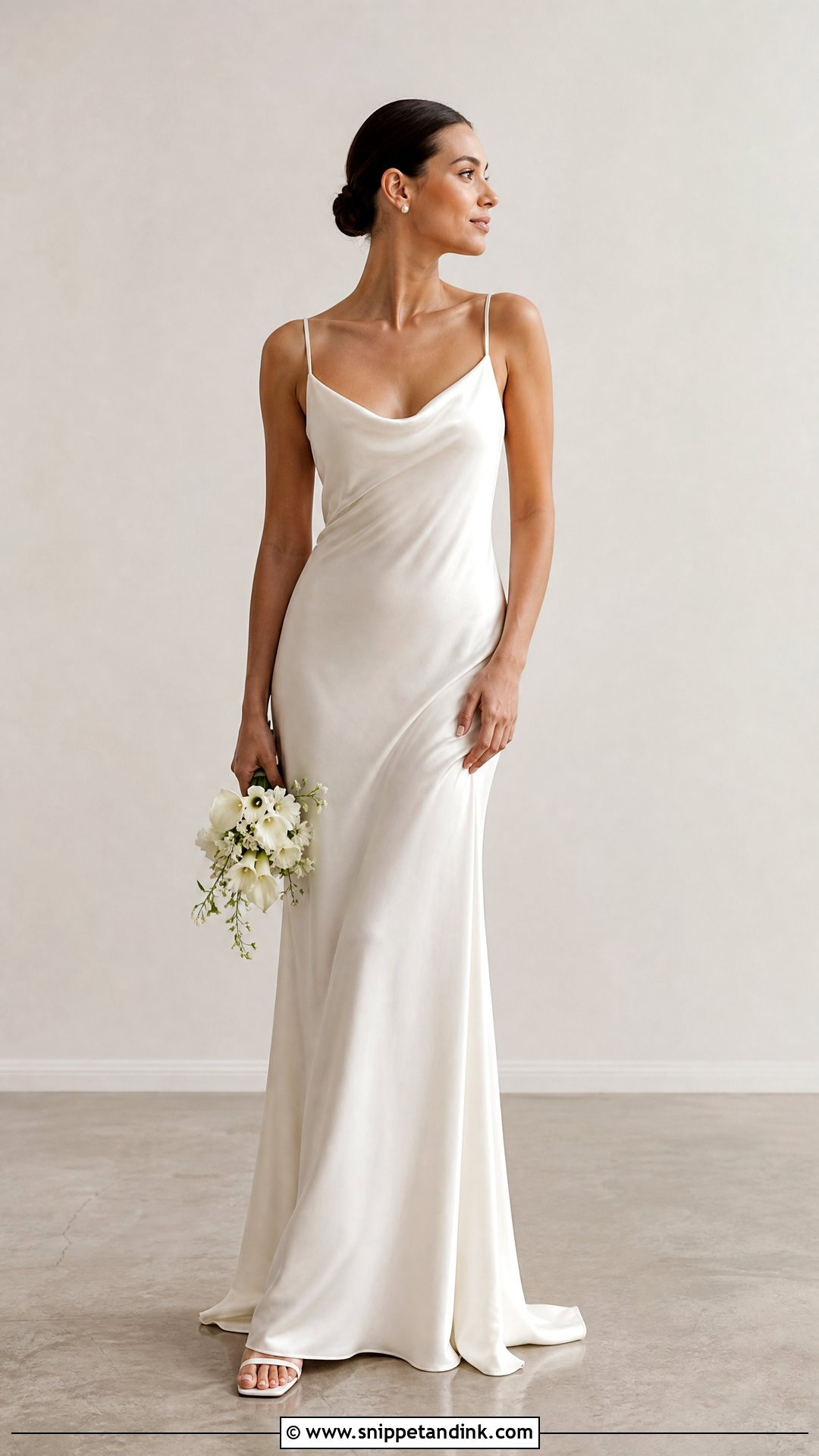
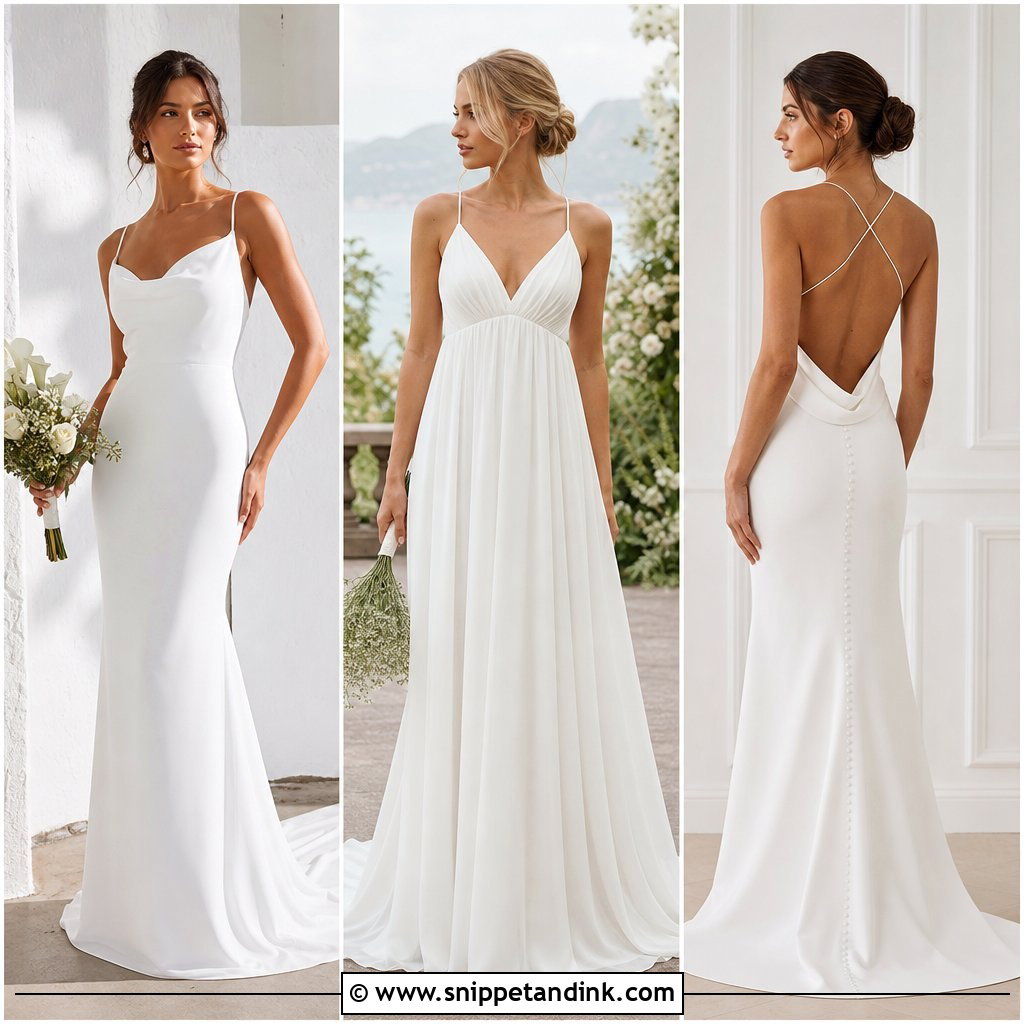
Slips are the most honest dress in the shop. A bias-cut slip is cut diagonally across the grain, which is why it drapes and clings the way it does, and also why it shows every seam of your underwear. I plan the undergarments before the first fitting, not after. Silk creases fast when you’re seated, so expect some softness by the toasts; heavier silk crepe or a satin back-crepe recovers better. In cooler months a tailored blazer or sheer wrap is kinder than goosebumps on a thin strap.
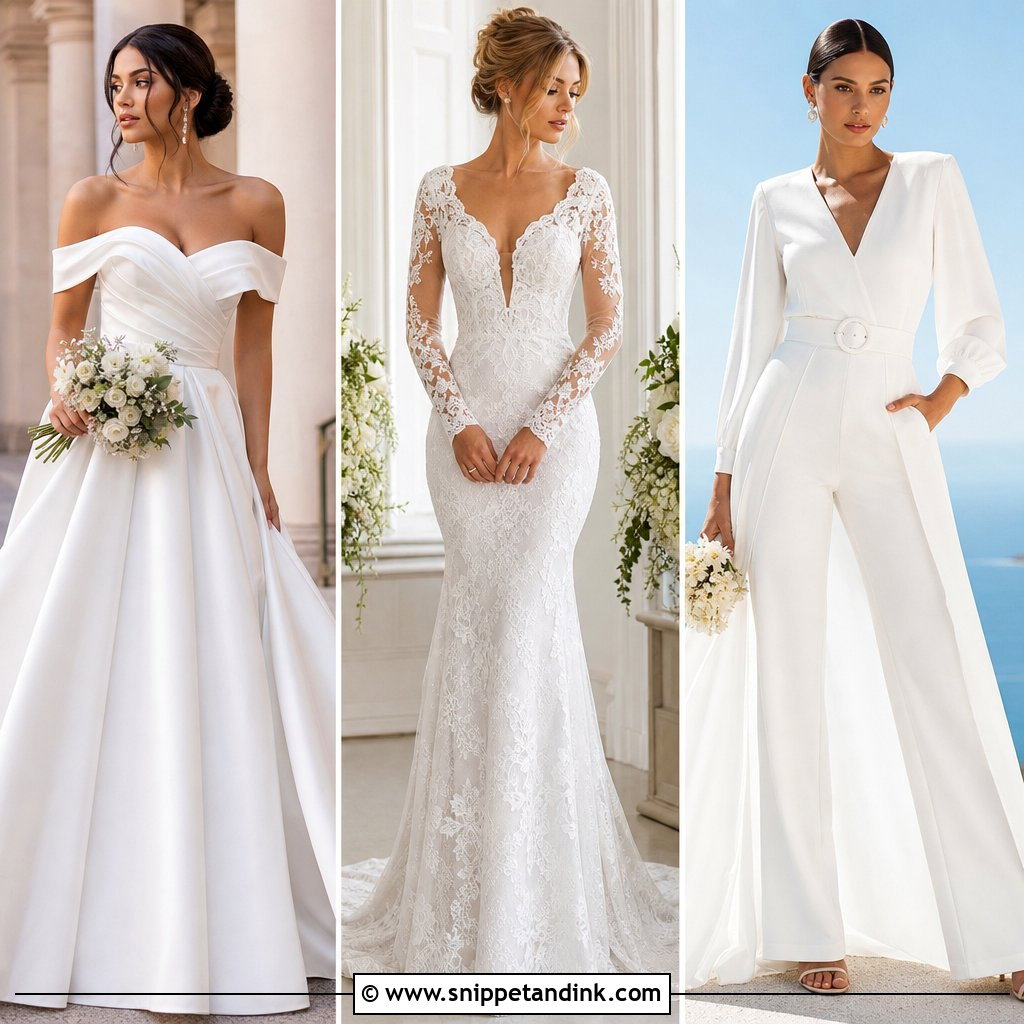
4. Off The Shoulder Wedding Dress
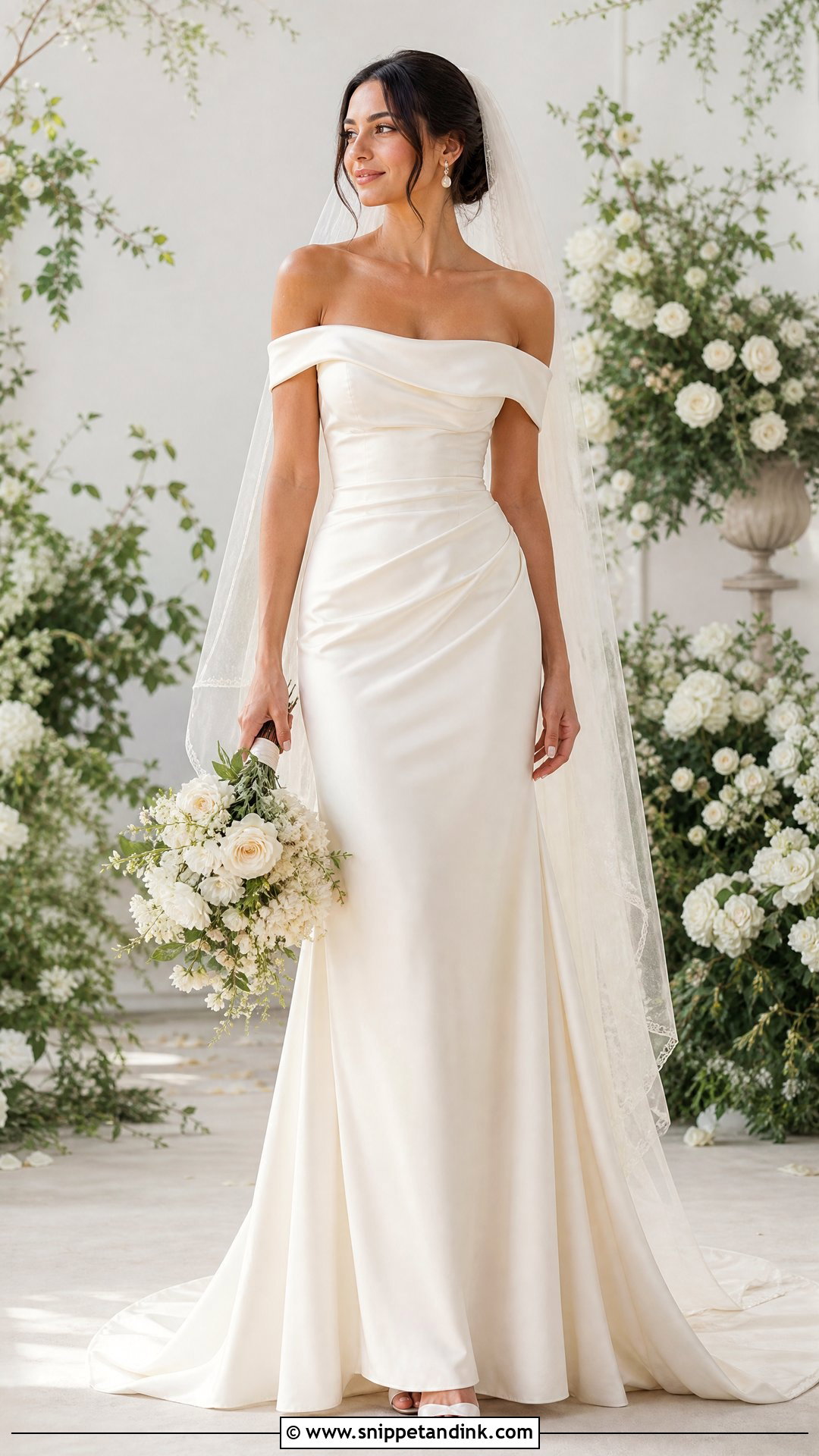
The thing nobody warns you about with an off the shoulder neckline is your arms. Dropped straps sit on the upper arm, so a dress that’s slightly too tight there stops you lifting your hands much above the waist, which matters for hugging and for the first dance. I always have brides raise both arms at the fitting. Smooth satin or crepe keeps it clean and graphic, while lace or tulle softens the line. Keep earrings small and hair up so the collarbone stays the focus.
5. Long Sleeve Lace Wedding Dress
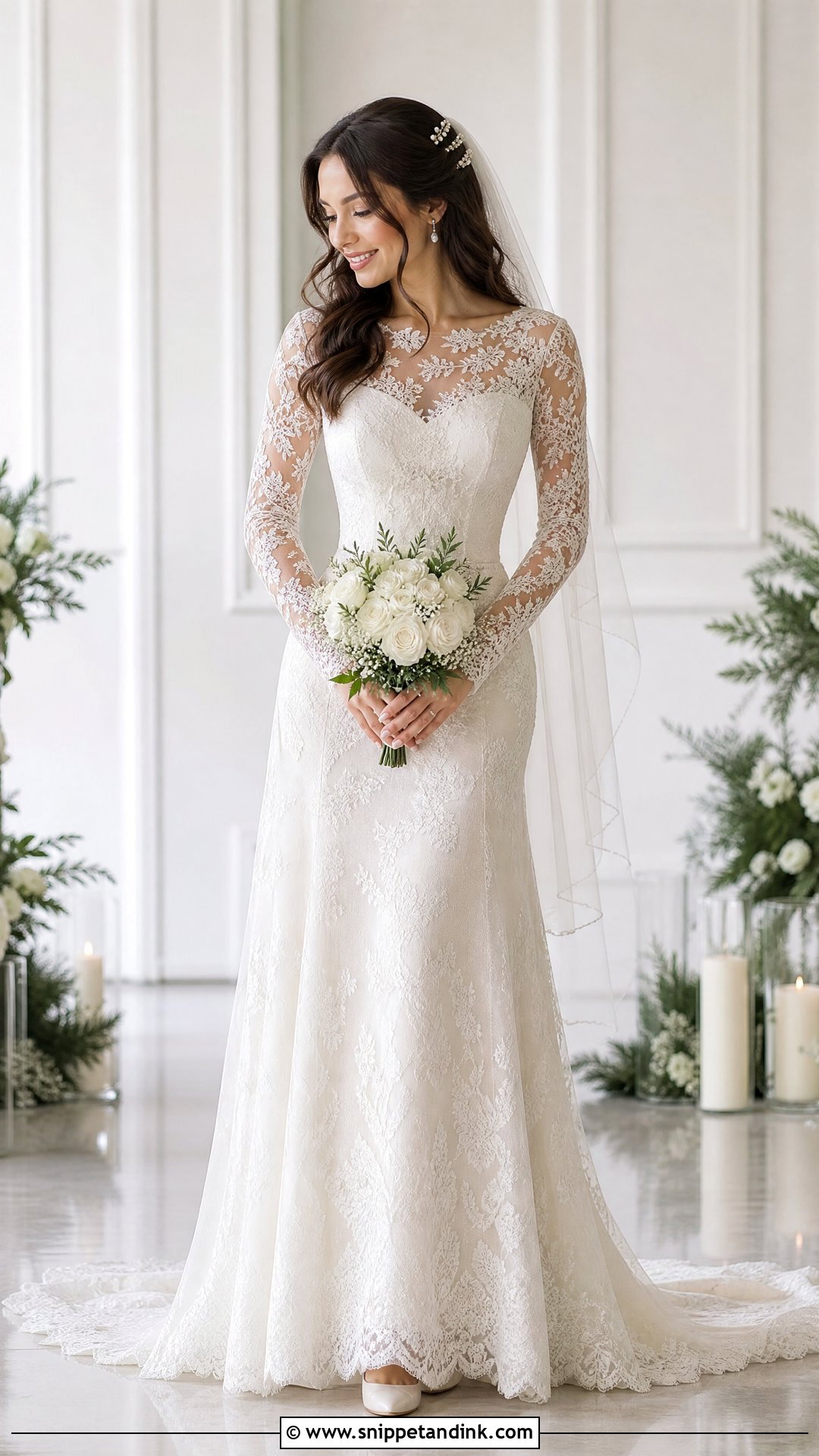
Long lace sleeves work in more seasons than people assume. An unlined Chantilly sleeve is cool enough for a June garden, while a heavier corded lace with a lining belongs to autumn and winter. The fitting point is the armhole. Lace sleeves set too low or cut too slim pull the whole bodice up when you reach for your bouquet or put your arms round someone’s neck, and the seamstress can only fix that if you show her the movement. A low chignon and pearl pins keep the line tidy at the back, where most of the lace detail usually sits.
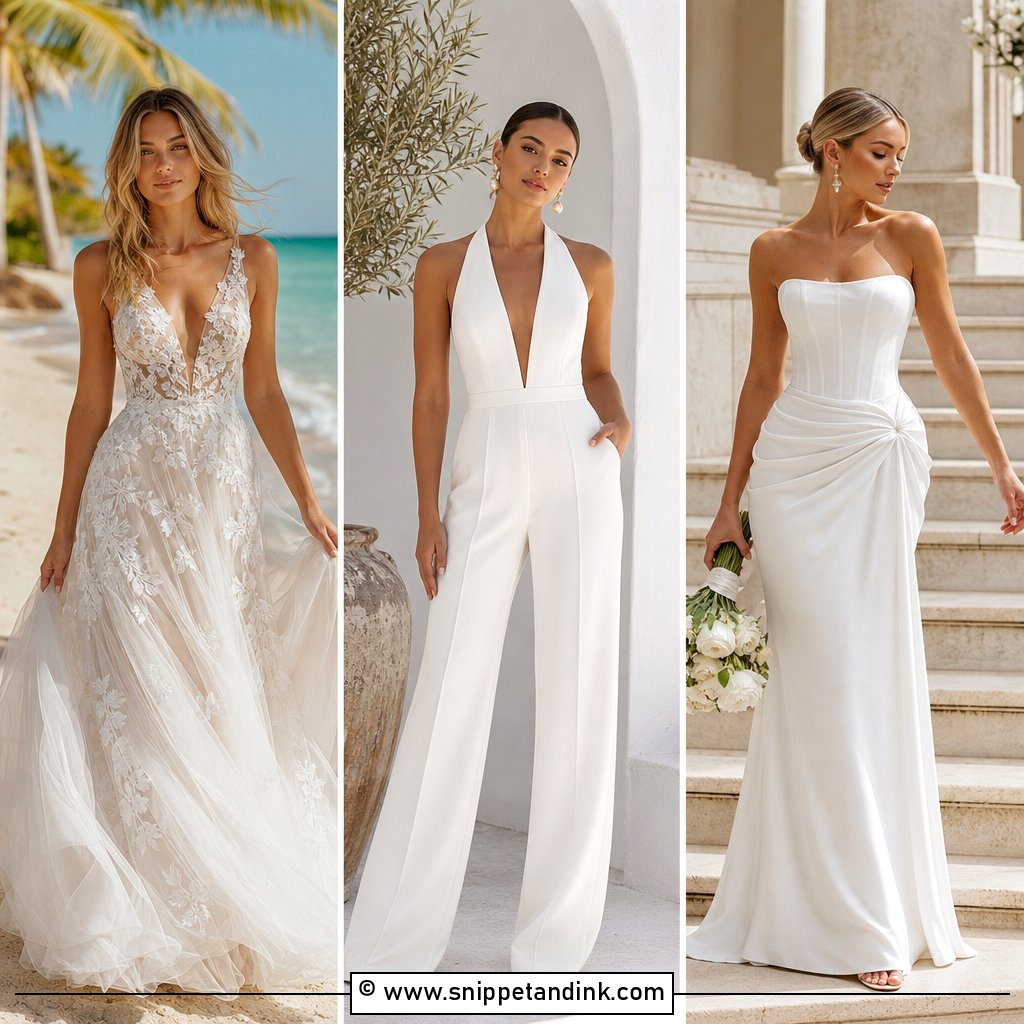
6. Strapless Mermaid Wedding Dress
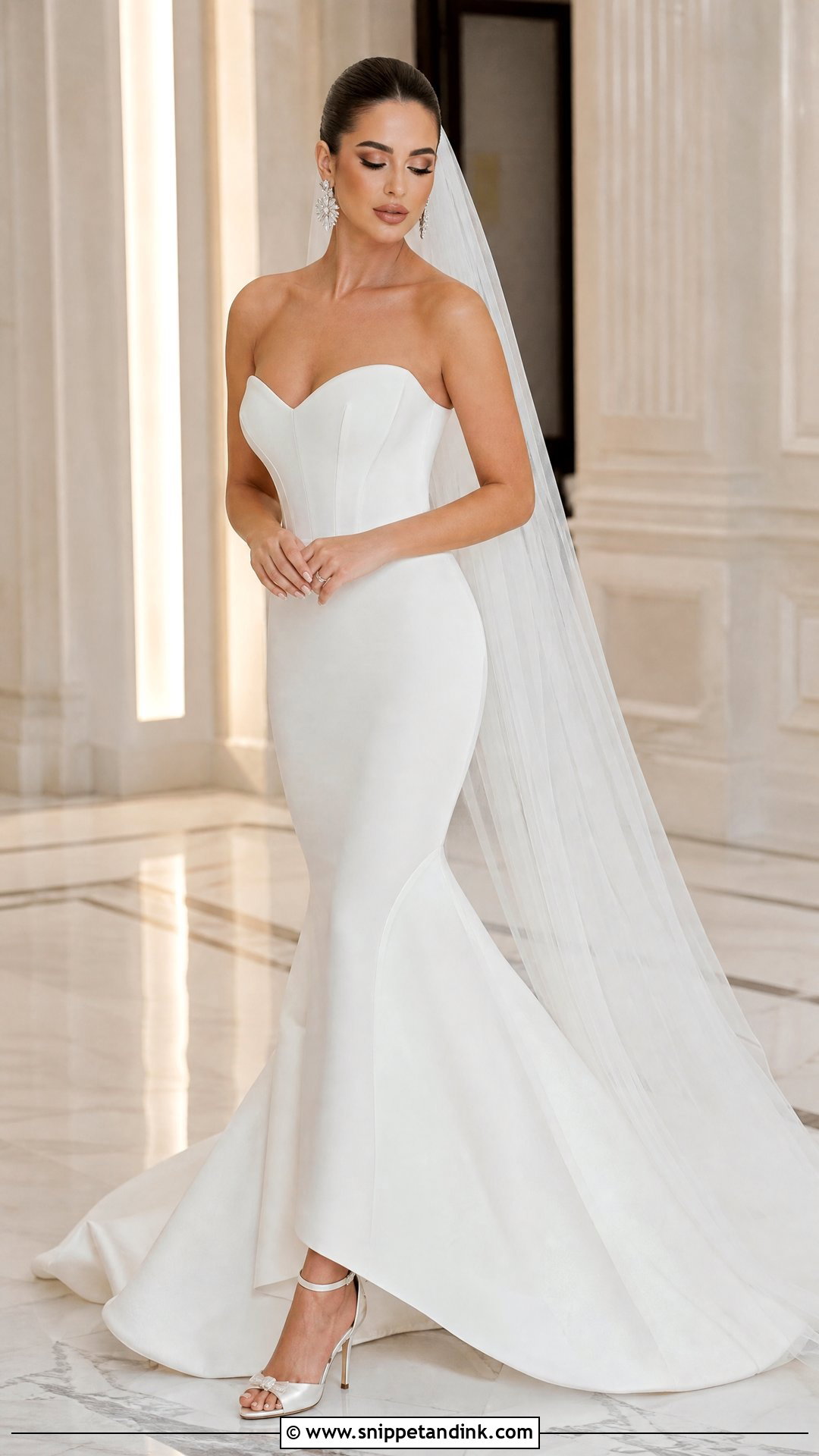
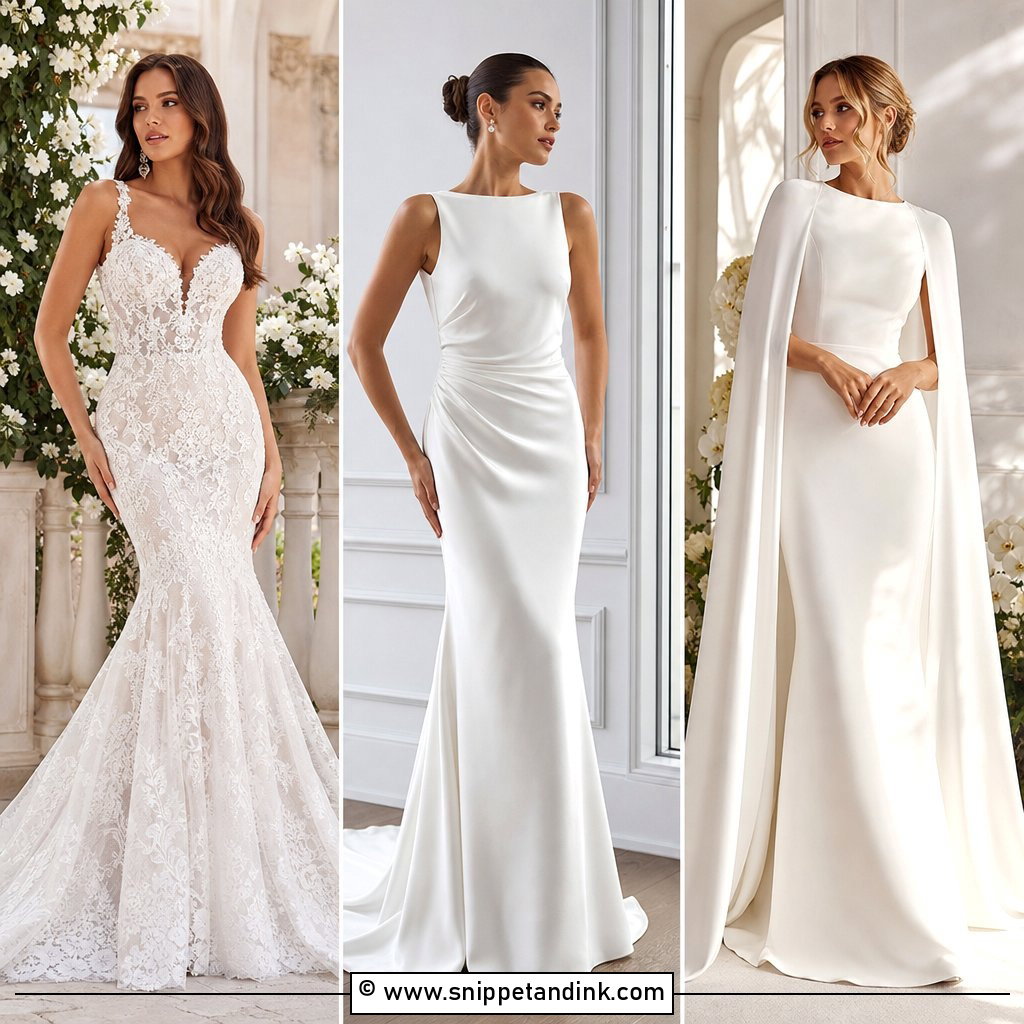
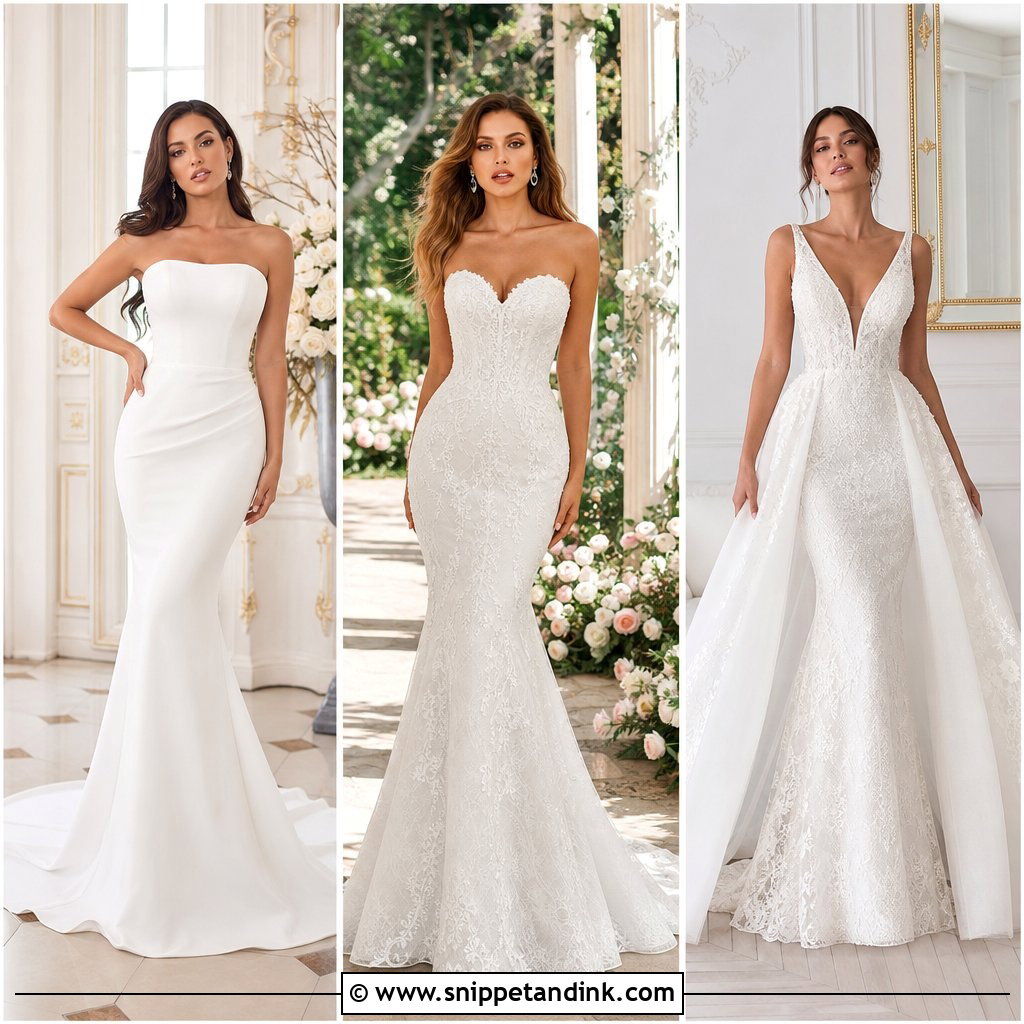
A strapless mermaid relies entirely on the bodice doing its job. If the boning and the waist stay aren’t fitted to you, the dress slides down every time you breathe out, and you’ll spend the night hitching it up. I’d rather see a bride take in an extra half inch at the waist than at the bust. The flare point matters too: a knee-level flare is far easier to walk and sit in than one set low on the calf. A detachable overskirt or a second dress is worth considering if dancing is a big part of your plan.
7. Floral Applique Wedding Dress
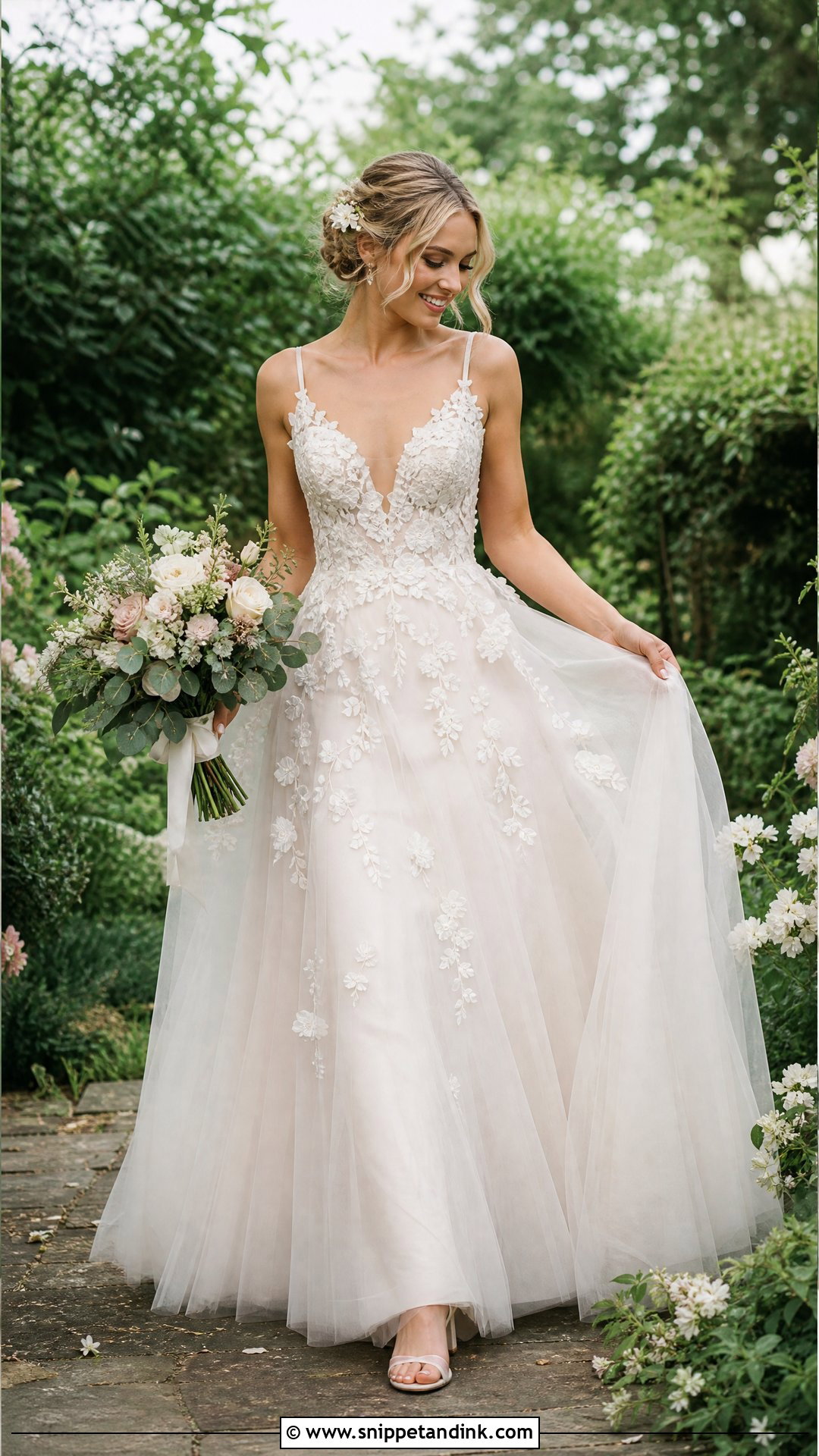
On a floral applique wedding dress I look at how the flowers are attached before I look at anything else. Hand-stitched appliqué sits flat and survives a long day; glued or loosely tacked three-dimensional petals can catch on a bouquet wrap, a lace veil or a guest’s cufflink. Scattered appliqués down the skirt suit a garden or outdoor ceremony, while flat lace motifs on the bodice read more classic. A blush or ivory lining behind the flowers makes them show from a distance.
8. High Neck Wedding Dress
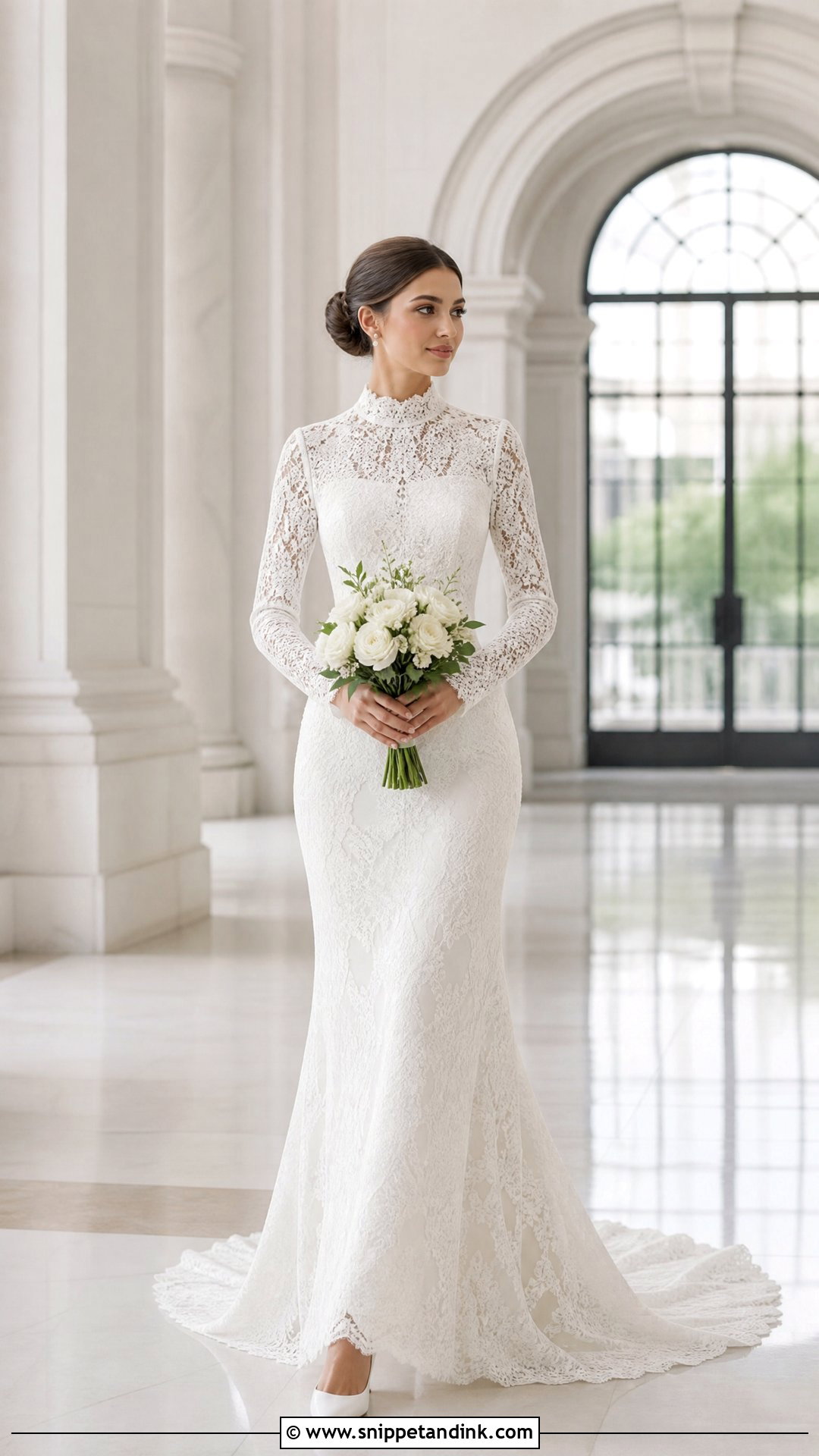
High necklines do a lot of the styling work for you. Because the neck is covered, I usually tell brides to skip a necklace altogether and keep earrings small, then pull the hair up or tuck it behind the shoulders so the collar isn’t hidden. The cut decides the mood: a lace high neck leans vintage, a smooth crepe halter reads modern. If the front is fully covered, an open or keyhole back keeps the gown from feeling buttoned up when the guests see you walking away.
9. Square Neck Wedding Dress
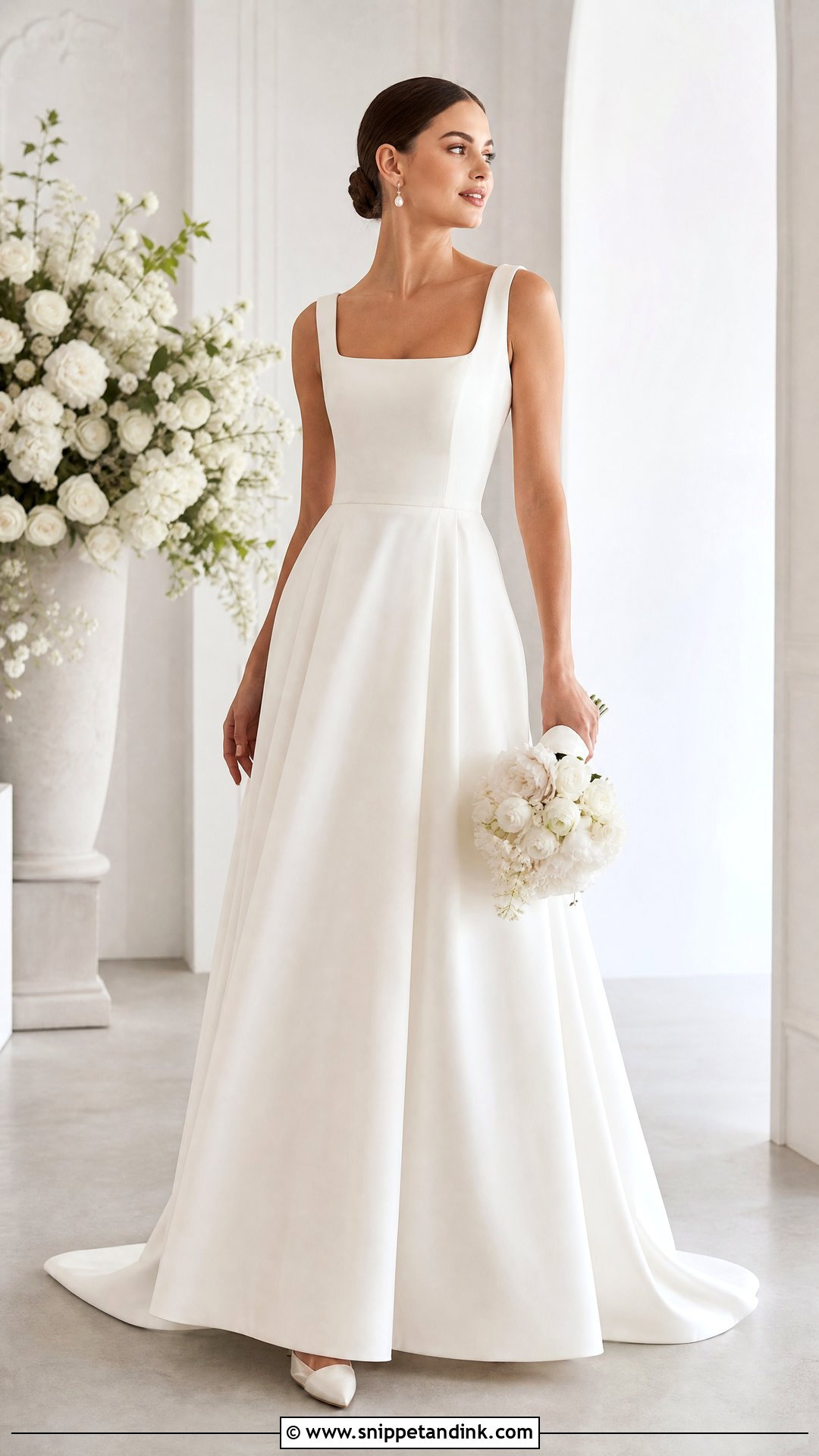
Square necks are a quiet favourite of mine because they suit a wide range of bust sizes and give a fitted gown a crisp frame. Strap width is where the decision really sits. Wider straps hold a fuller bust and let you wear a normal bra cup sewn in; thin straps look lighter but need a bodice that’s built to support you on its own. A low bun and a sleek veil keep that straight line visible.
10. Pearl Beaded Wedding Dress
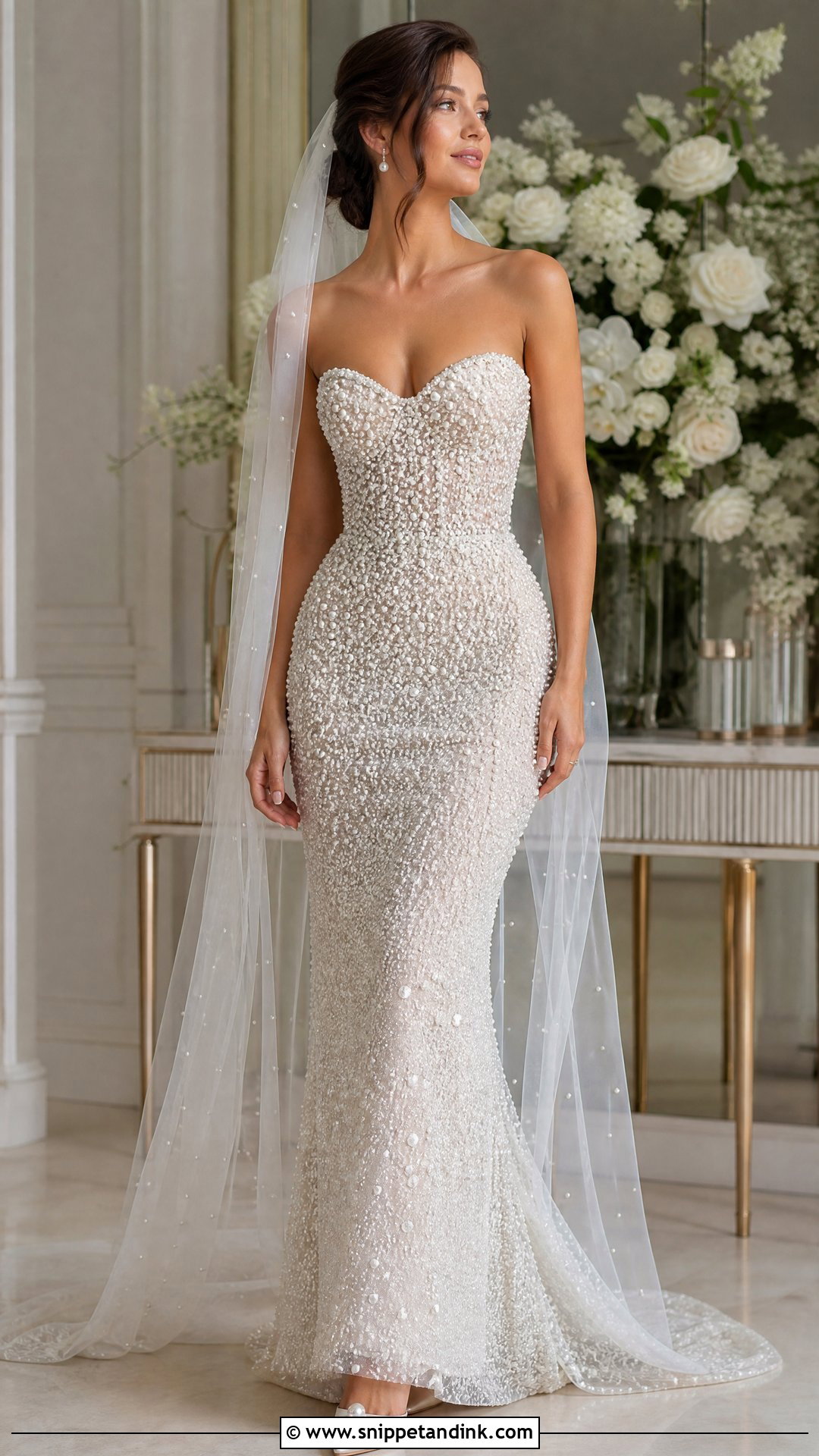
Pearl beading gives shine that looks soft under flash, unlike sequins, which can bounce light back and burn out in photos. Hand-sewn pearls are heavier than they look, so a gown covered from bodice to hem needs strong straps or a well-boned bodice to carry the weight. I check the hem beads too, since those take the most scuffing on stone floors. Keep the jewellery quiet; three sets of pearls on top of a pearl gown starts to look like a costume.
11. Tulle Princess Wedding Dress
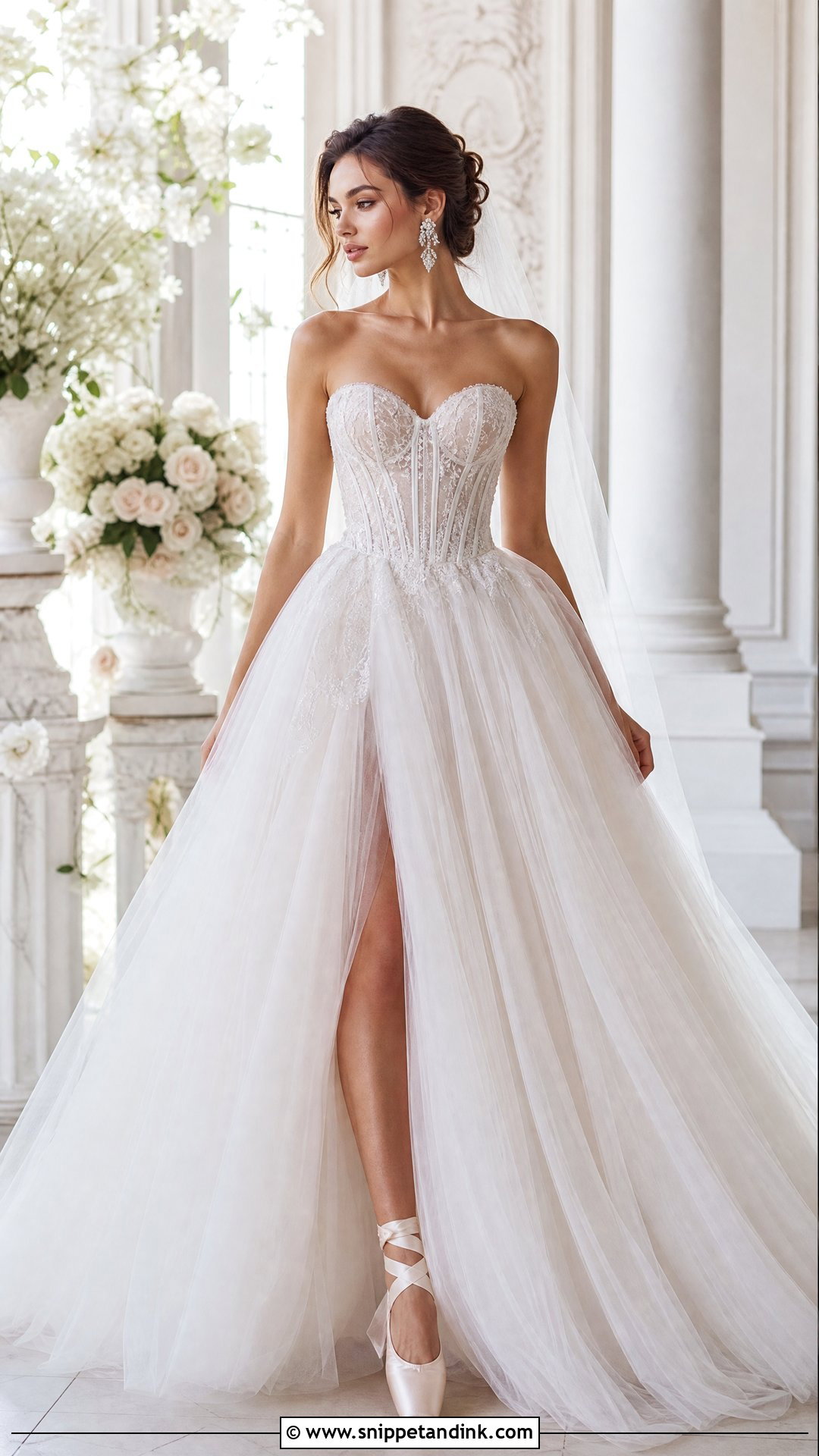
Several layers of tulle give you a big princess skirt without the weight of satin, which is why so many brides who think they can’t manage a ball gown end up in this one. Tulle does snag. Rings with raised settings, rough venue chairs and outdoor brick all pull threads, so I warn brides to lift the skirt when they sit on anything rustic. A corset bodice anchors the volume and stops it looking shapeless. Ask the seamstress for a bustle with enough attachment points to hold all the layers, or the top tulle will drag behind you on the dance floor.
12. Crepe Sheath Wedding Dress
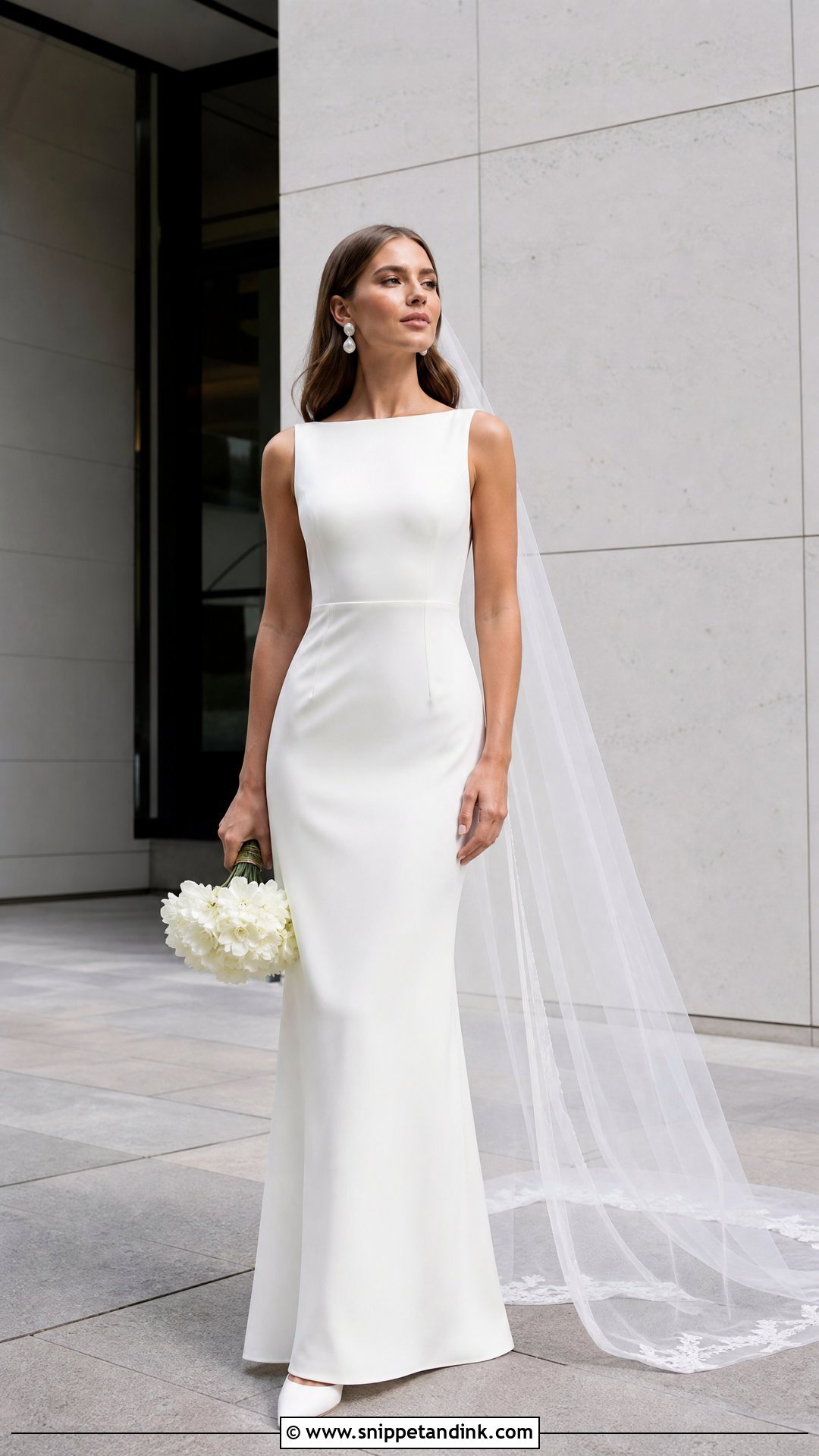
Crepe is the fabric I trust most for a clean crepe sheath wedding dress, because it has enough weight to skim rather than cling. That same smoothness means it hides nothing. A visible bra line or a seam that pulls across the hip shows straight away, so smooth, no-line shapewear and two careful fittings are non-negotiable. The neckline sets the tone: a bateau feels classic, a V more modern. Sculptural earrings and sleek hair suit how little else is going on.
13. Corset Bodice Wedding Dress
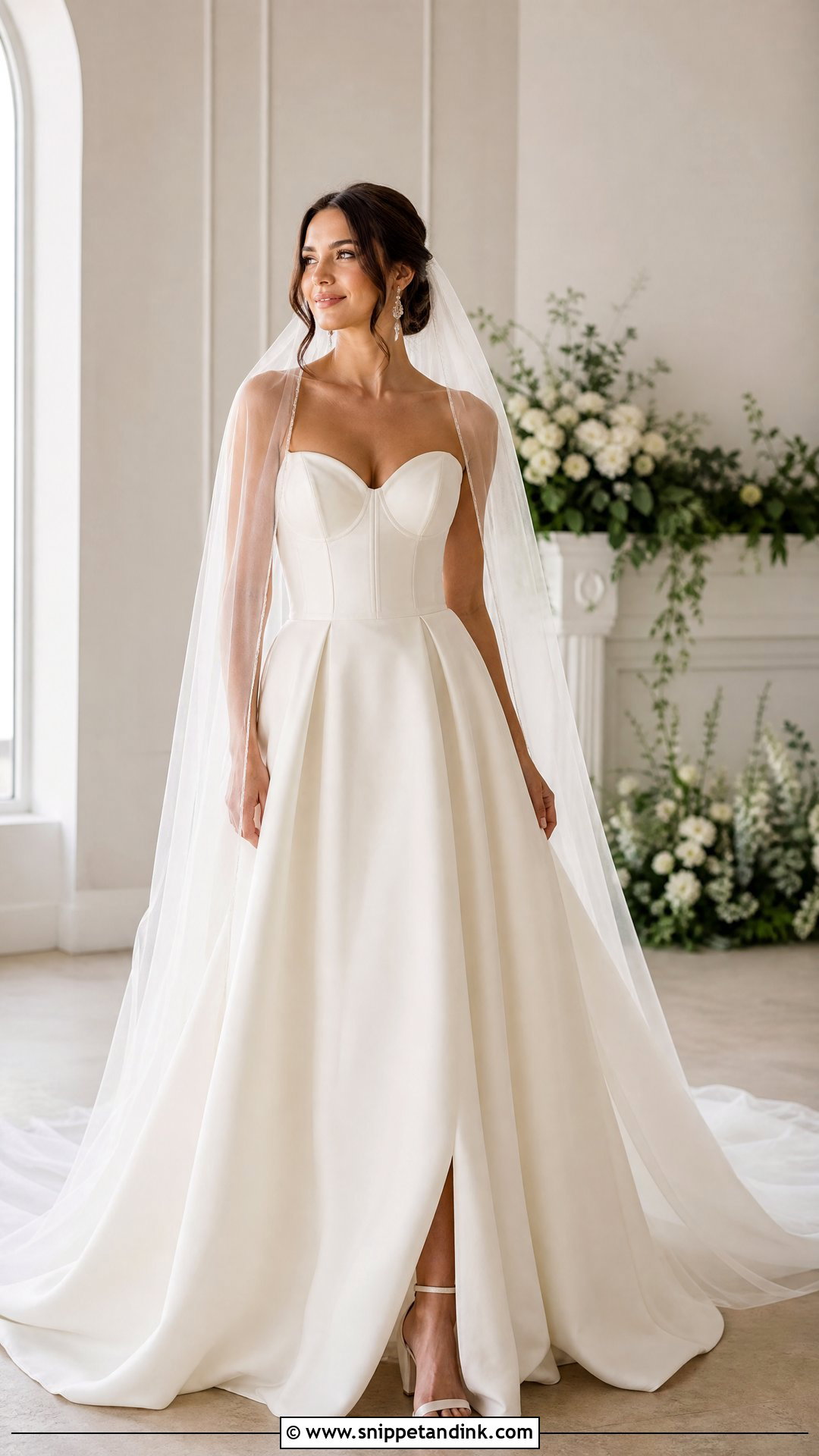
A good corset bodice feels like a firm hug, not a squeeze. If you can’t take a full breath or lift your arms at the fitting, it’s too tight and it will only feel worse after dinner. Visible boning is a fashion detail; hidden boning gives the same support under a plain or lace surface. Steel spiral boning holds shape better than plastic over a long day, which is worth asking about. Once the waist sits right, the gown takes almost any skirt, from A line to mermaid.
14. Bow Back Wedding Dress
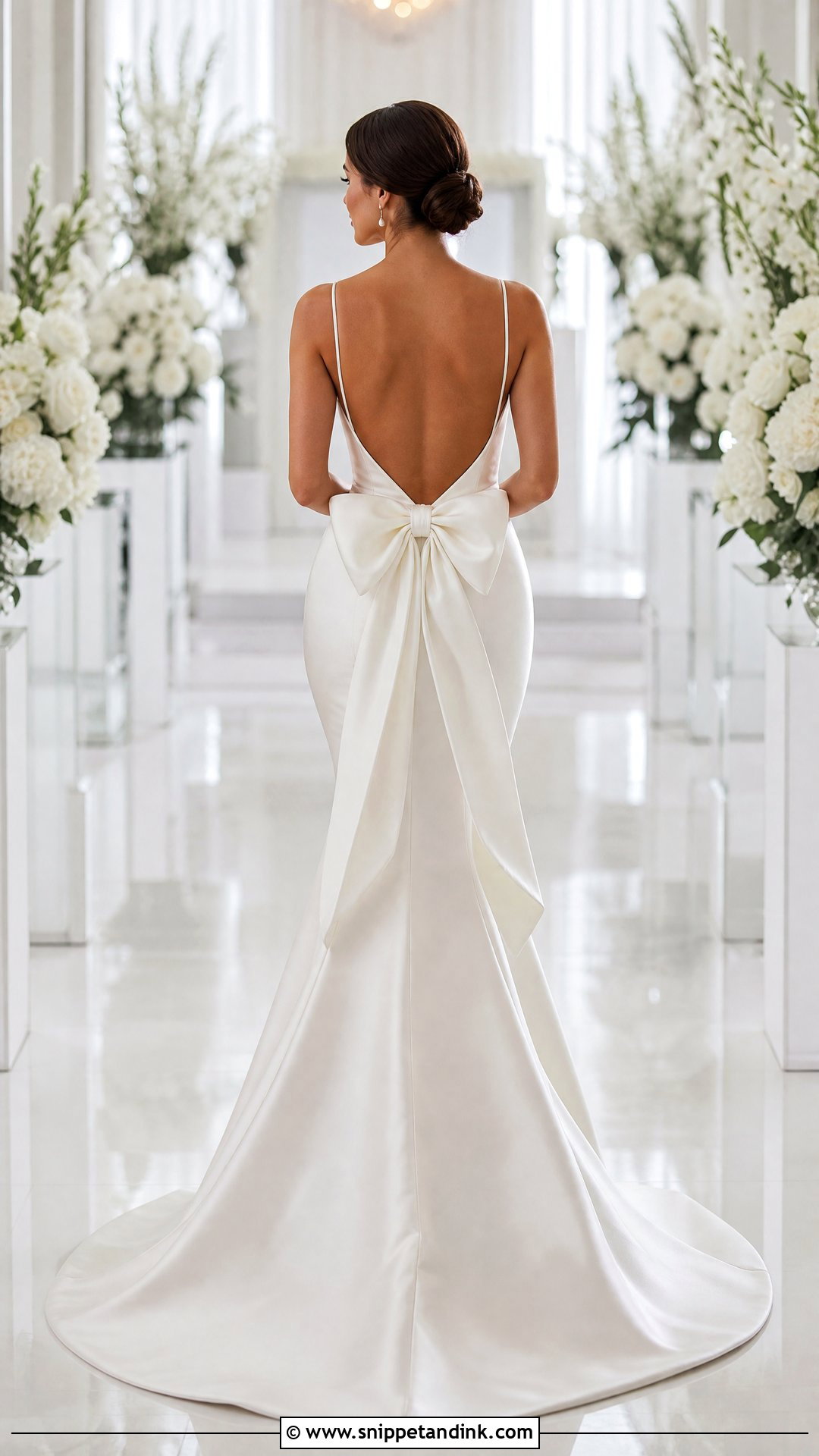
A back bow is the detail guests see the most, since they spend the ceremony looking at you from behind. I ask how the bow is fixed: sewn in place it stays put, while a bow on a hook or snap can be removed for dancing, which I’d recommend if it’s large. Satin bows on a clean gown read modern; a tulle bow on lace feels softer. Leave the back free of hair jewellery and long dangling veil combs so nothing competes with it.



15. Detachable Overskirt Wedding Dress
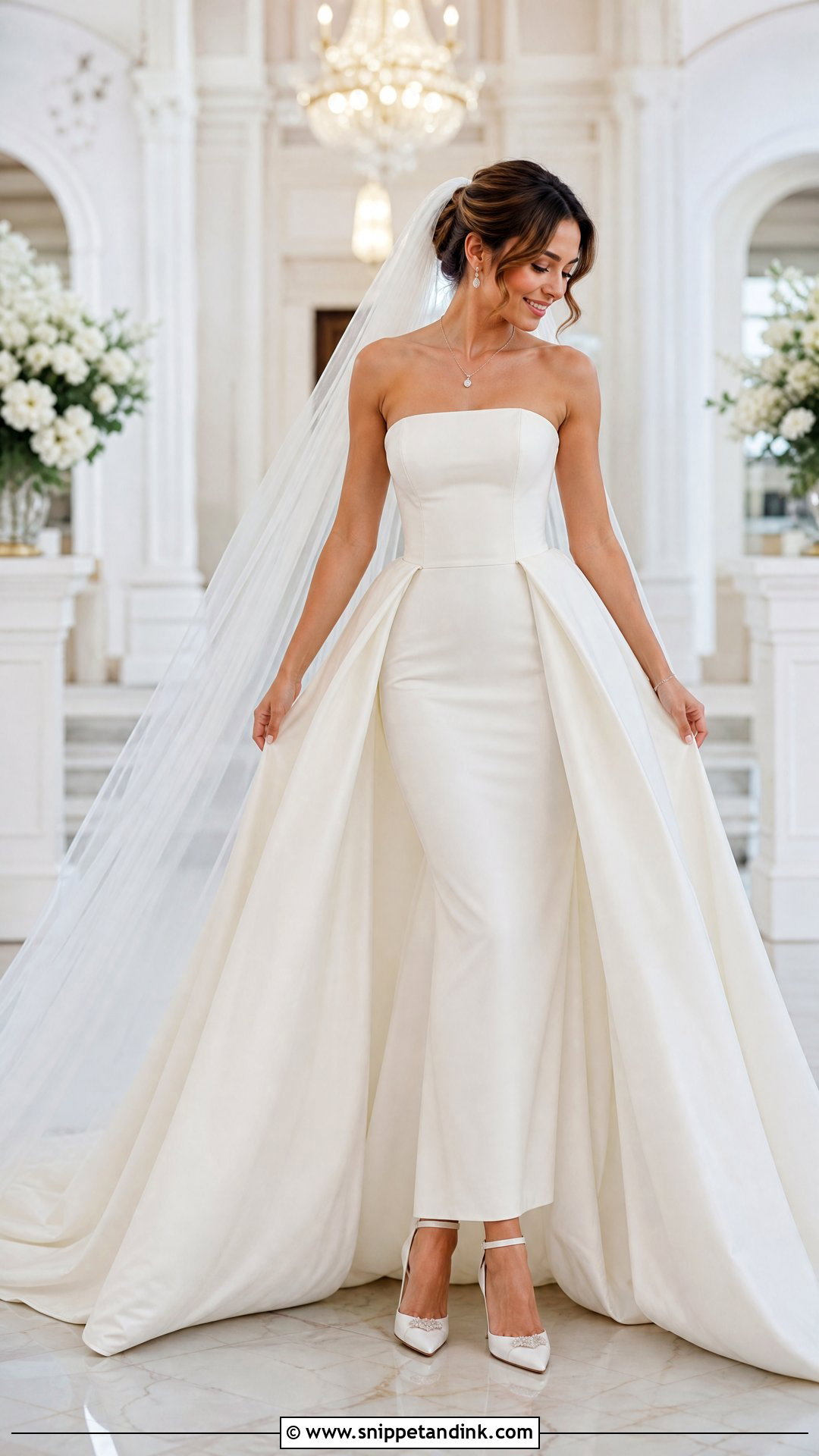
With a detachable overskirt wedding dress you get a full ceremony skirt and a fitted reception dress in one purchase. The weak point is the waist. Overskirts fasten with hooks, snaps or buttons, and if the band isn’t fitted to the dress beneath it twists when you walk and gaps at the side seam. I have brides practise taking it off with a bridesmaid at the final fitting, because the first time shouldn’t be in a toilet cubicle with ten minutes to spare. Swap the long veil for statement earrings when it comes off.
16. Short Reception Wedding Dress
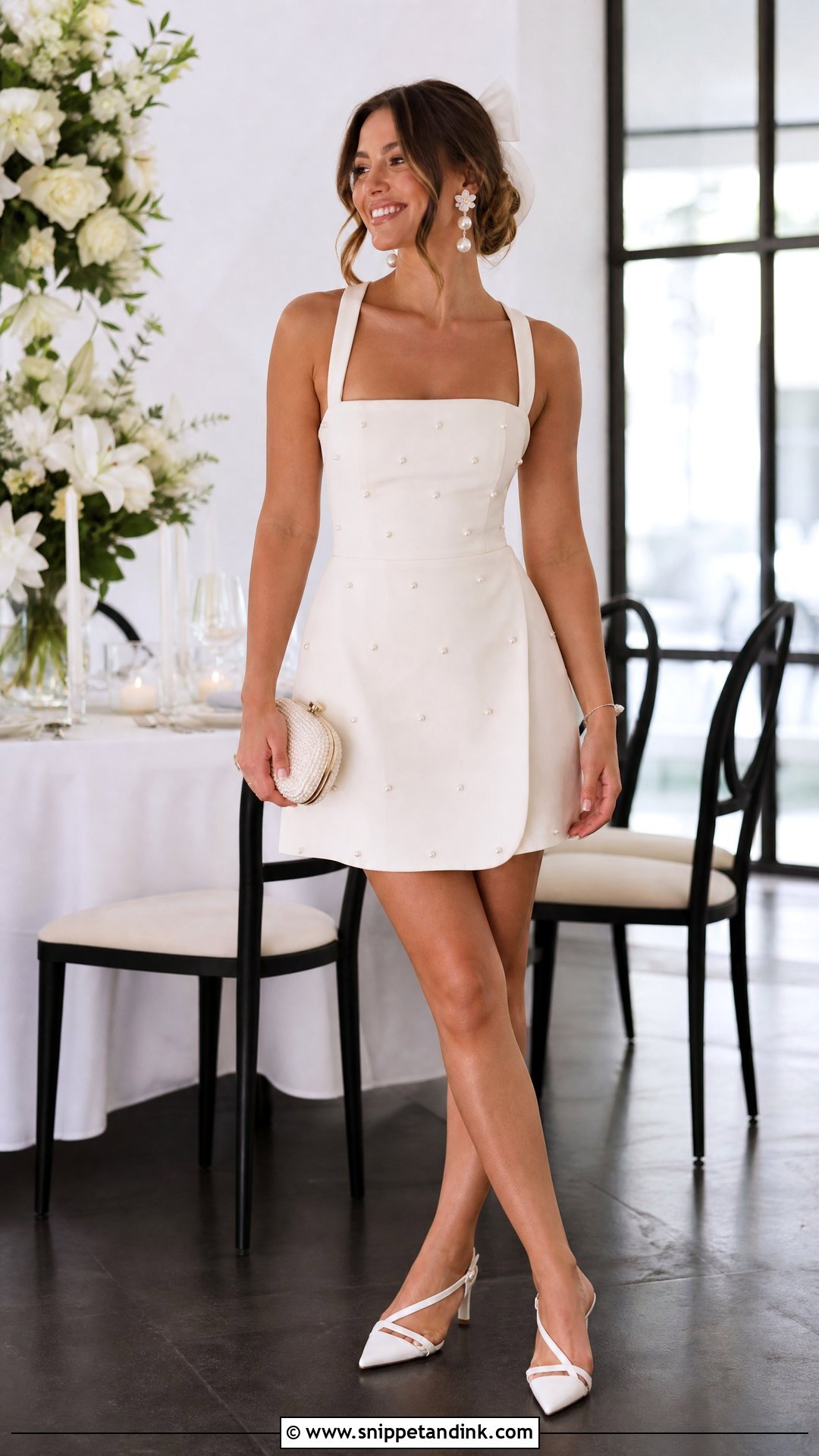
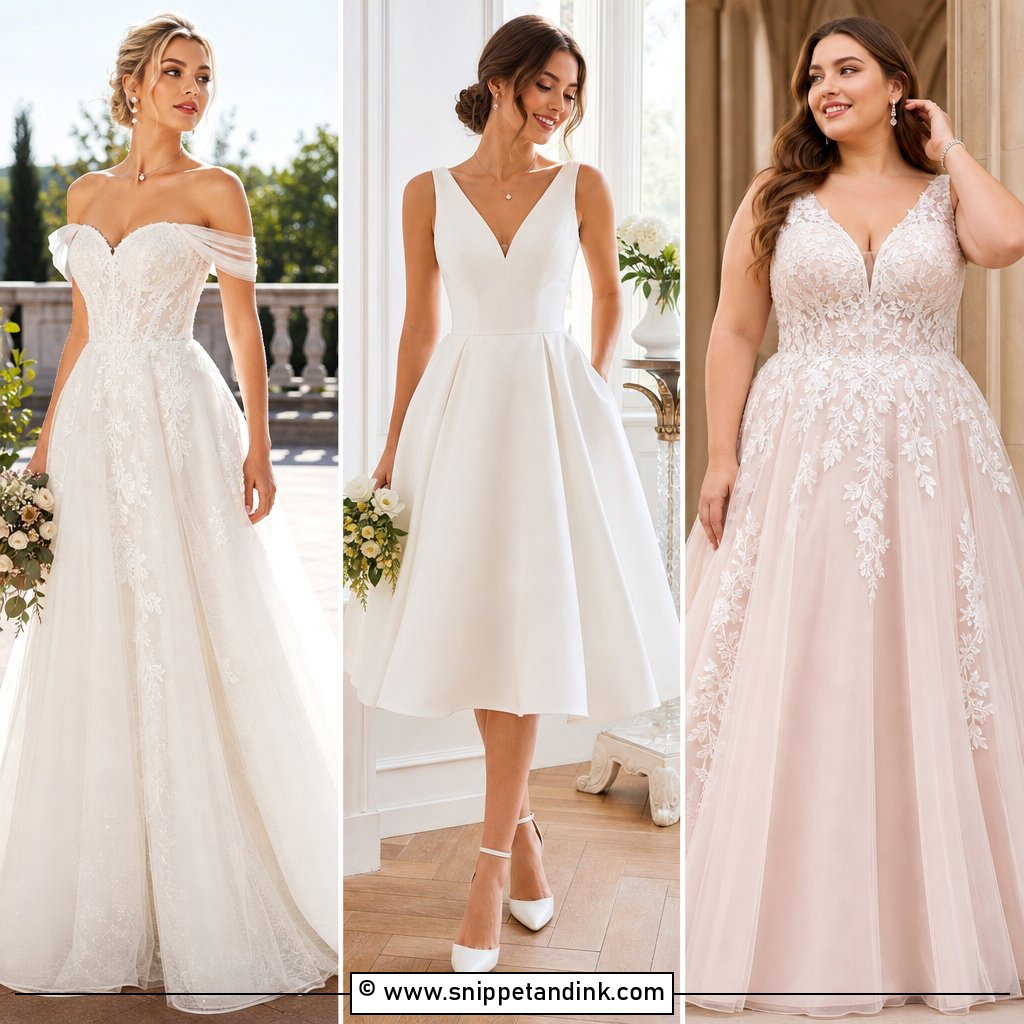
A short second dress is often the happiest change of the night. After a heavy gown or a long train, a mini or tea-length lets you dance properly and use the bathroom without help. I steer brides toward a fabric with some structure, like satin, crepe or a beaded mini, so it still reads bridal next to guests in cocktail dresses. Bring the reception shoes to the fitting as well; a hem that’s right in ceremony heels can look wrong with flatter dance shoes.
17. Tea Length Wedding Dress
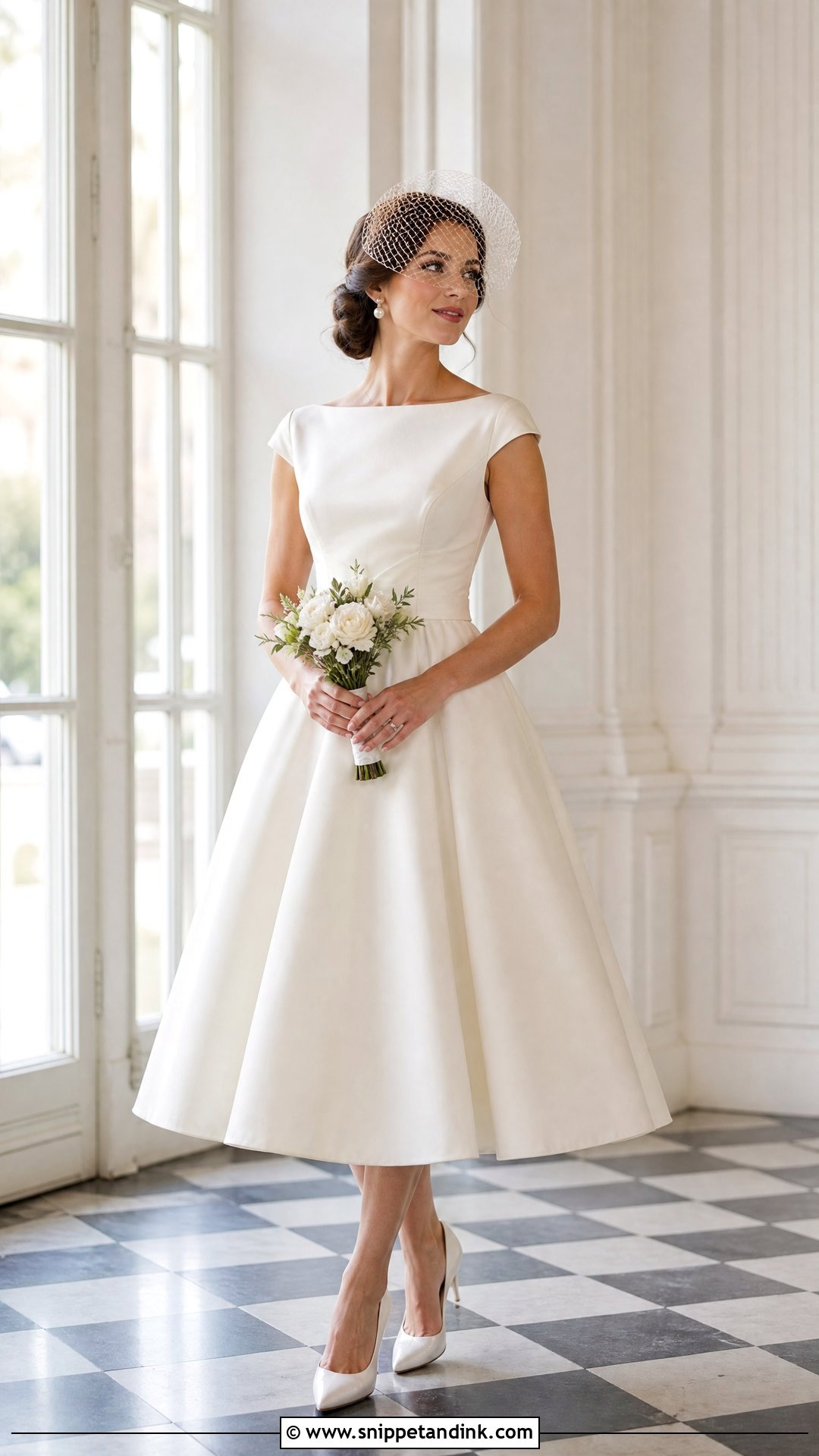
Tea length sits between the knee and ankle, which means your shoes are on show the whole day. That’s half the appeal. I’d budget properly for shoes here and break them in, because there’s no long skirt to hide a blister plaster. A fitted bodice with a full skirt gives the classic 1950s outline, while a straight column feels more current. This length suits courthouse and garden weddings where a long hem would collect grass or pavement dust.
18. Boho Lace Wedding Dress
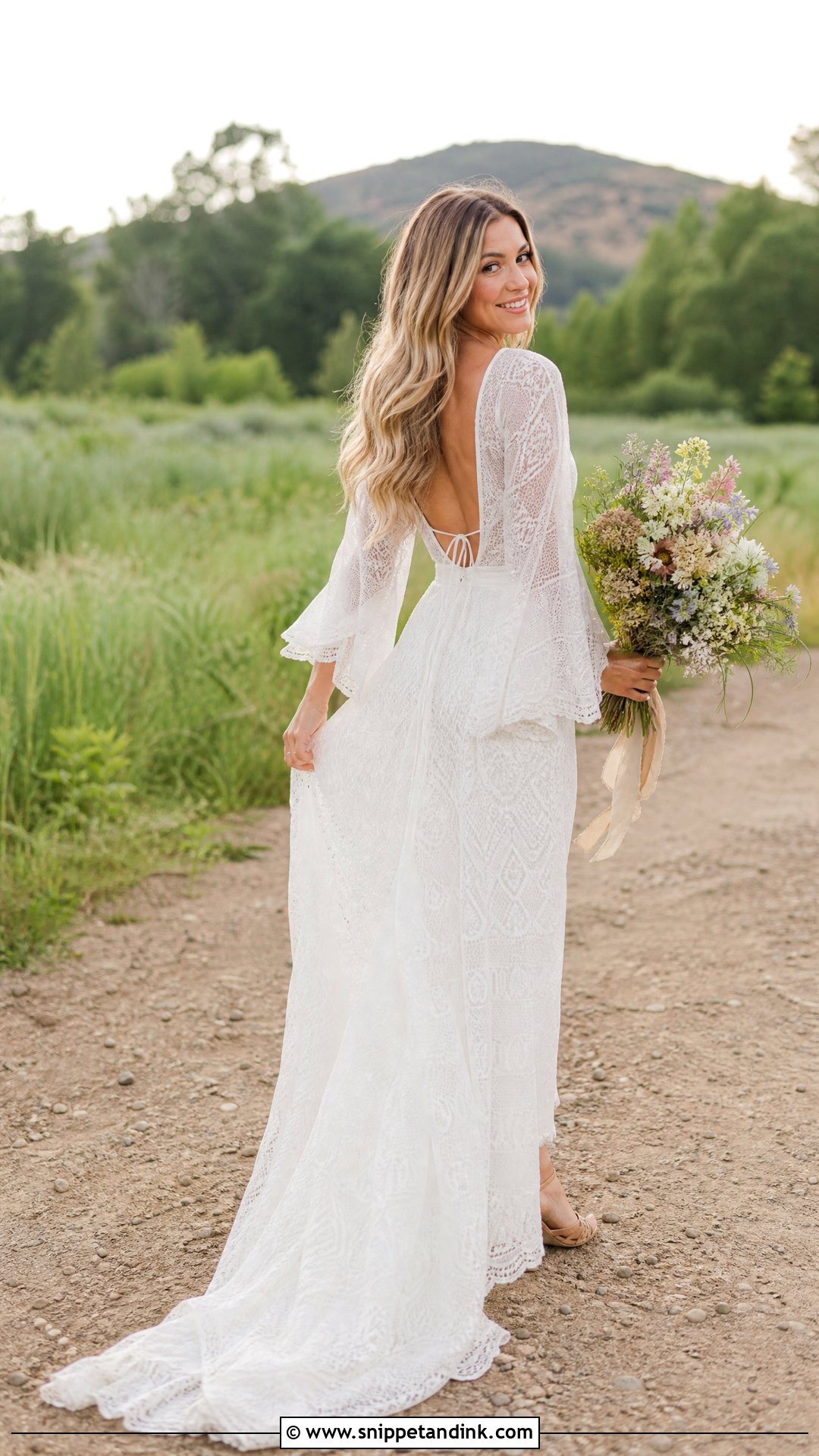
Relaxed lace gowns are lighter and simpler to move in than most, and that’s their real strength for outdoor and desert venues. Look for an unlined or lightly lined lace with a soft skirt; anything with heavy beading defeats the purpose. Flutter or bell sleeves look free-moving but can catch on bouquet stems, so I check sleeve length against how you’ll hold the flowers. Flat sandals or low block heels and loose waves fit the mood better than formal pumps and a tight updo.
19. Beach Wedding Dress
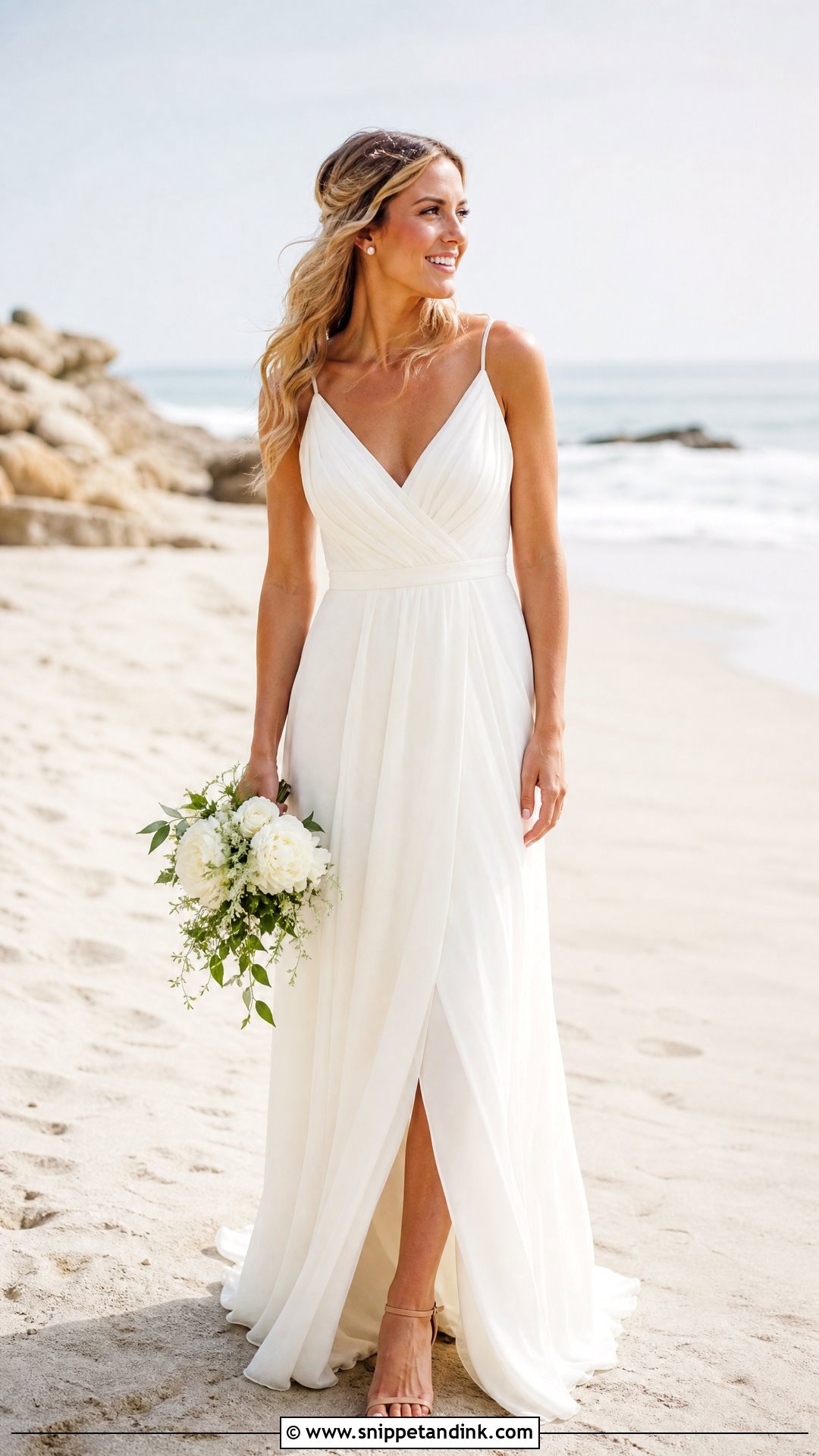
Sand, wind and salt air change what works. Chiffon, light crepe and organza move with a breeze, while heavy satin traps heat and beading gets gritty. I’d keep the train short or skip it, since a long one drags wet sand into the hem and nobody can bustle it quickly on a beach. Flat sandals help, as heels sink. A short veil or a flower pinned in the hair is easier to manage when the wind picks up mid-vows.


20. Courthouse Wedding Dress
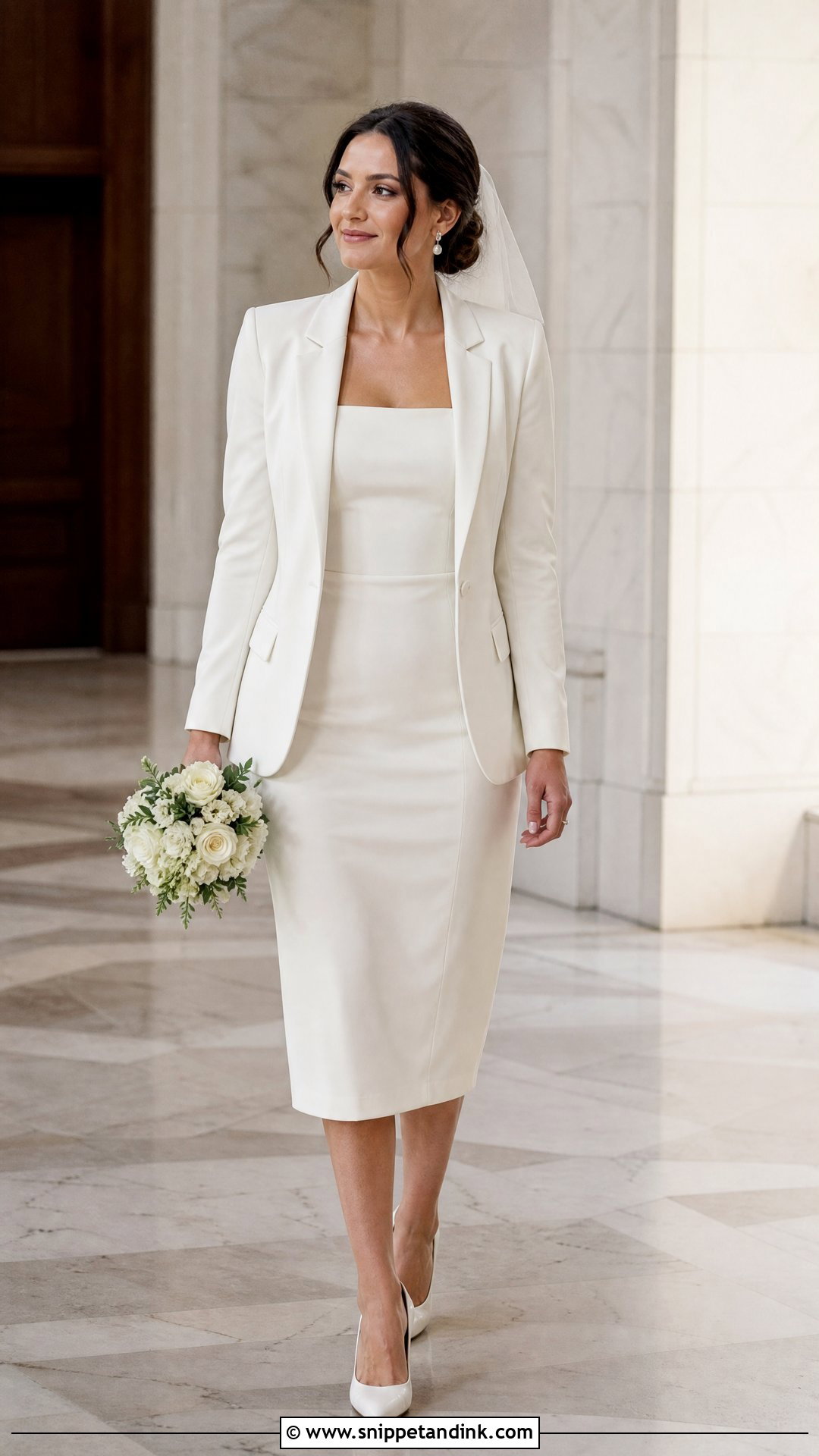
For a courthouse ceremony I start with how long you’ll be standing and walking on hard floors, then work backward to the dress. A structured midi, a clean crepe sheath or a tailored mini all suit the setting and fit through narrow corridors and lifts. A white blazer over the top keeps it sharp, and it’s handy because many government buildings are cold. Add pointed pumps and a short veil or bow so it still reads as a wedding outfit rather than a smart work day.
21. Vintage Inspired Wedding Dress
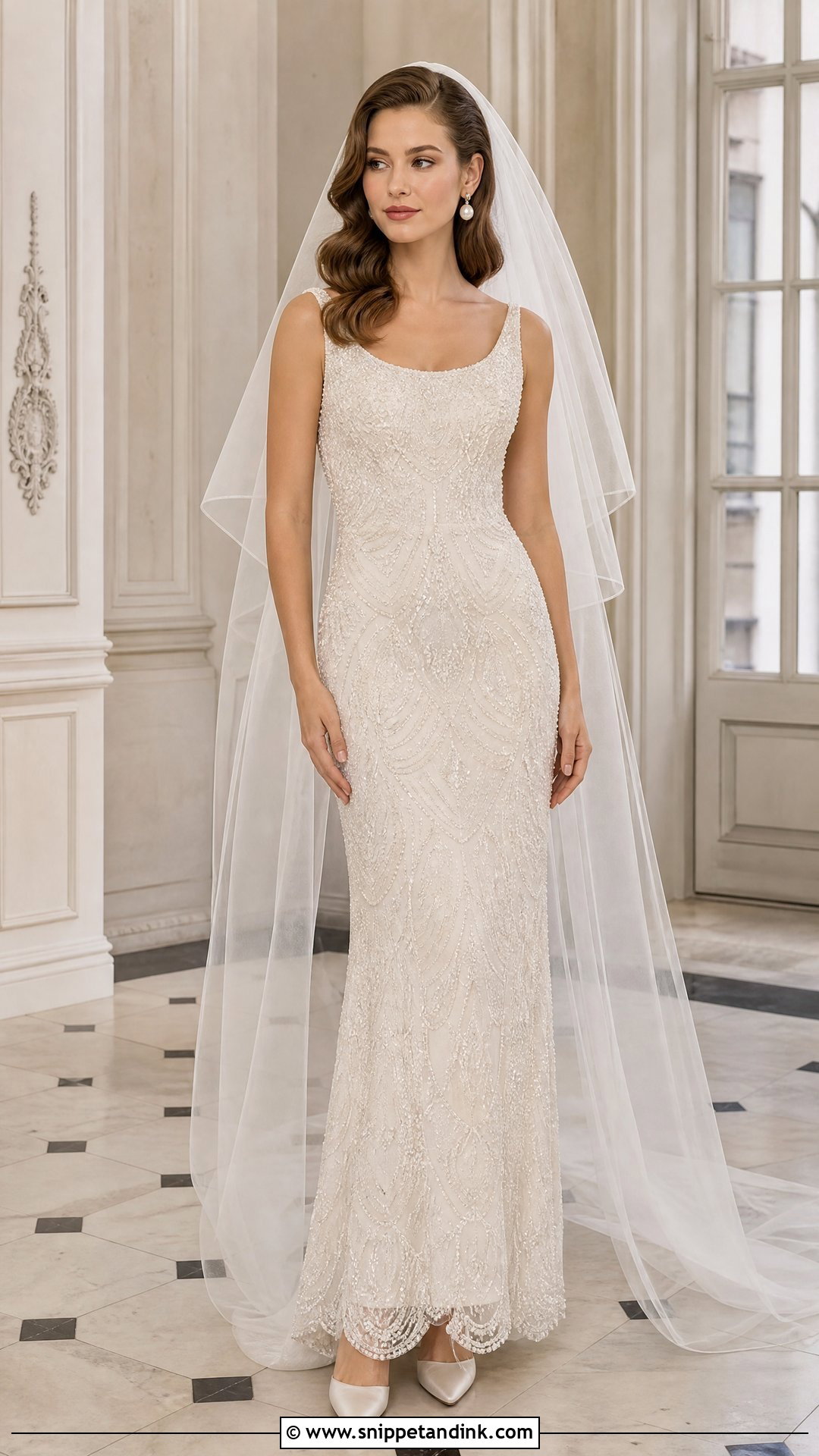
A vintage inspired wedding dress works when you borrow one era’s details rather than the whole costume. A 1920s beaded column, a 1950s tea-length, a 1970s lace sleeve or a 1990s slip each bring a different mood. Genuine vintage pieces need a careful look at the fabric: old silk can split at stress points and yellowed lace rarely whitens fully, so I’d budget for a specialist seamstress. Pick one or two period accessories, like satin gloves or soft finger waves, and keep the rest modern.
22. Floral Lace Wedding Dress
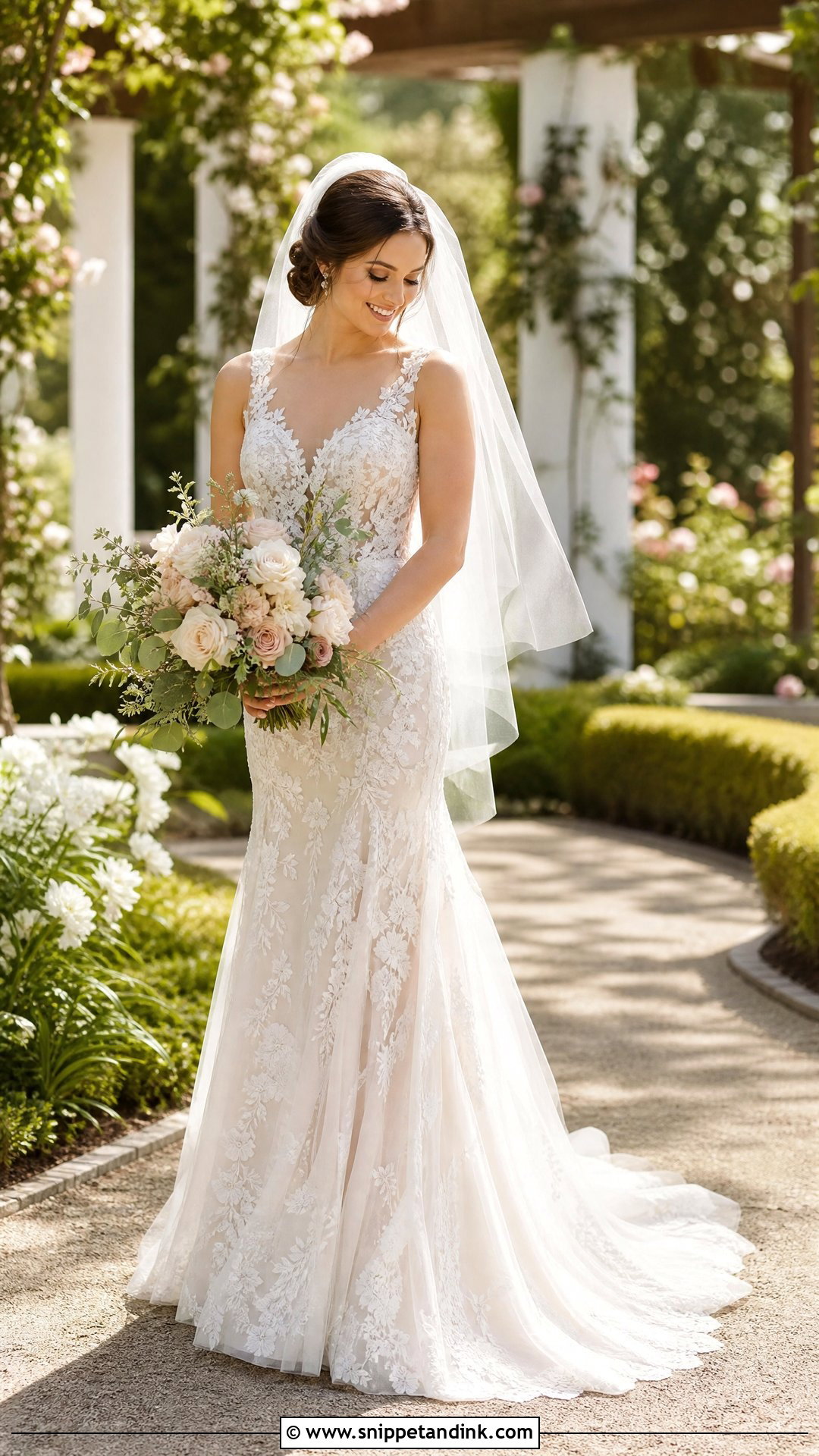
The scale of the lace motif changes the whole gown. Large open florals look graphic and current; small, dense patterns feel traditional. I hold lace samples up to a bride’s face and shoulders, because a big motif can overwhelm a petite frame while tiny lace can look busy across a wide skirt. Your florist can echo one flower shape from the lace in the bouquet, which ties the look together without matching everything. This works year-round, though heavier corded lace is warm in midsummer.
23. Champagne Wedding Dress
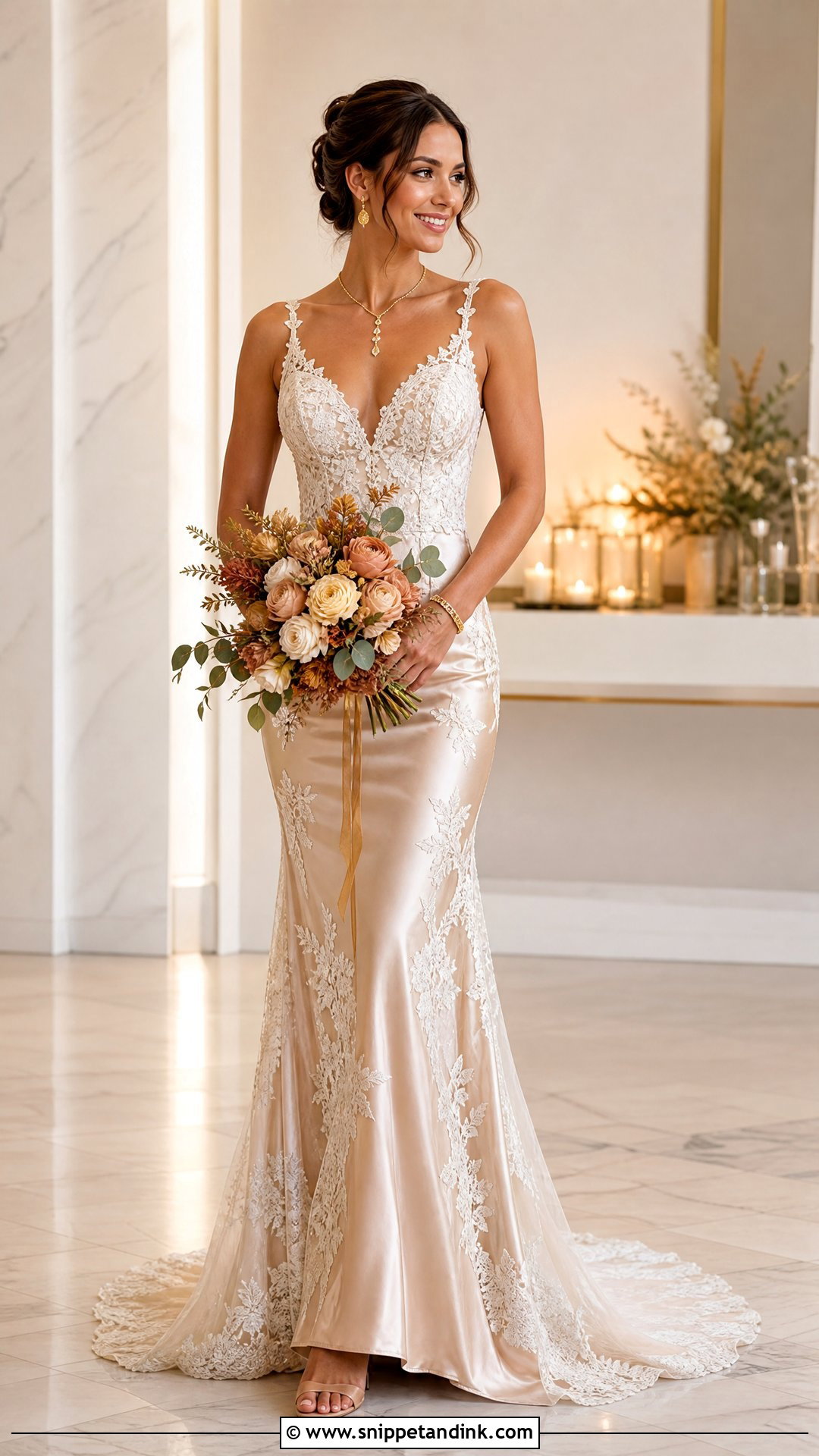
Champagne is what I suggest when bright white makes a bride look washed out, which is common with warm or olive skin. The warmth sits close to the face and gives a little glow in photos. My favourite version is ivory lace over a champagne lining: the lace pattern stands out far more than it does on white. Gold jewellery suits it better than silver, and a warm-toned bouquet keeps the colour looking deliberate. Do check it under the venue’s lighting if you can, since some tungsten light pushes champagne toward beige.
24. Bridal Jumpsuit Wedding Outfit
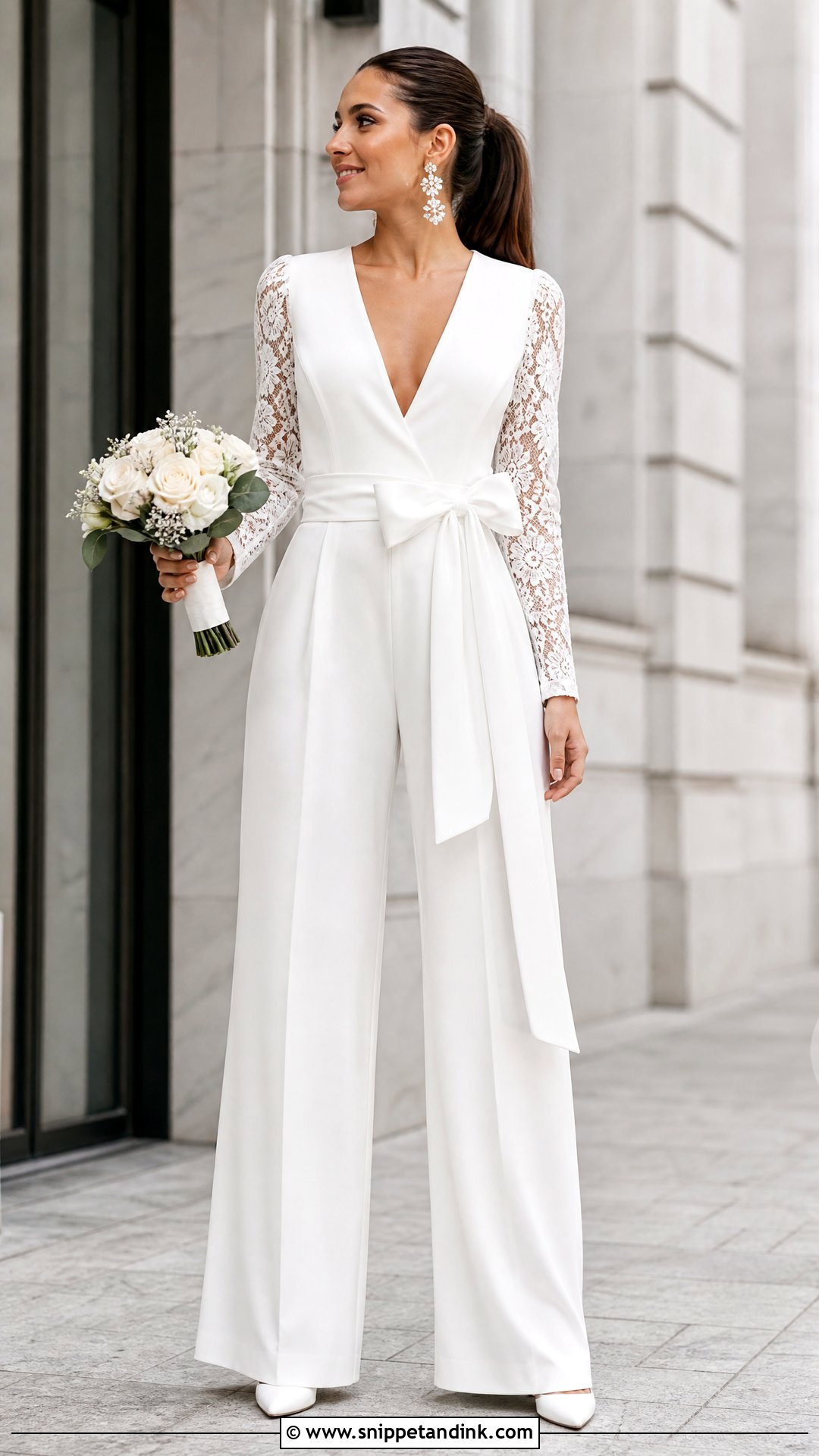
A bridal jumpsuit is the outfit I suggest to brides who already know they’ll feel wrong in a gown. Wide-leg trousers give a dress-like line when you stand still; a straight leg looks sharper and more tailored. Fit through the rise is the tricky part, and it’s where a jumpsuit off the rack usually fails, so book a tailor. Practically, think about the bathroom: a back zip or a two-piece look in the same fabric saves a lot of trouble. Lace sleeves, a bow belt or a cape bring it firmly into bridal territory.

25. Cape Wedding Dress
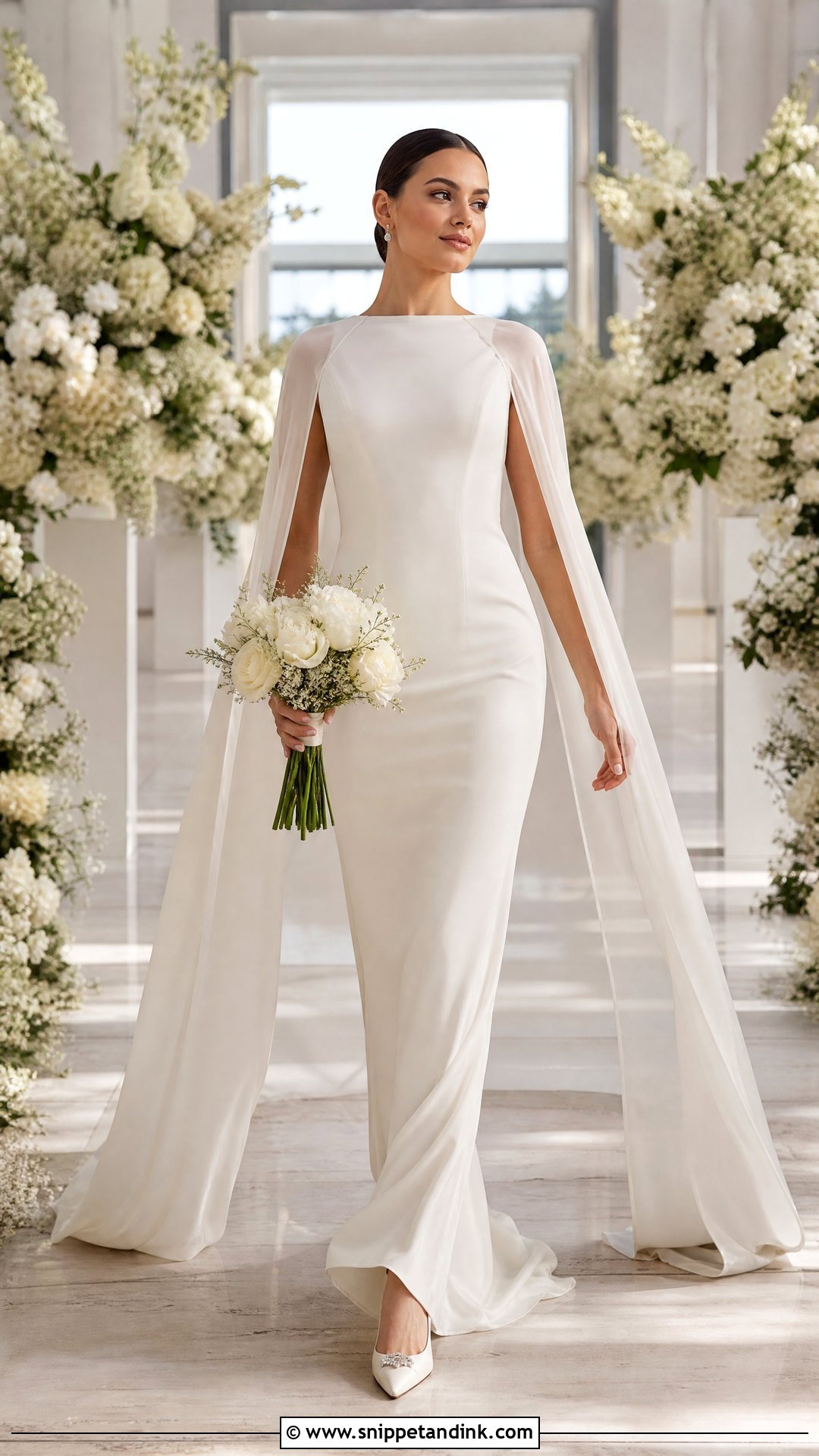
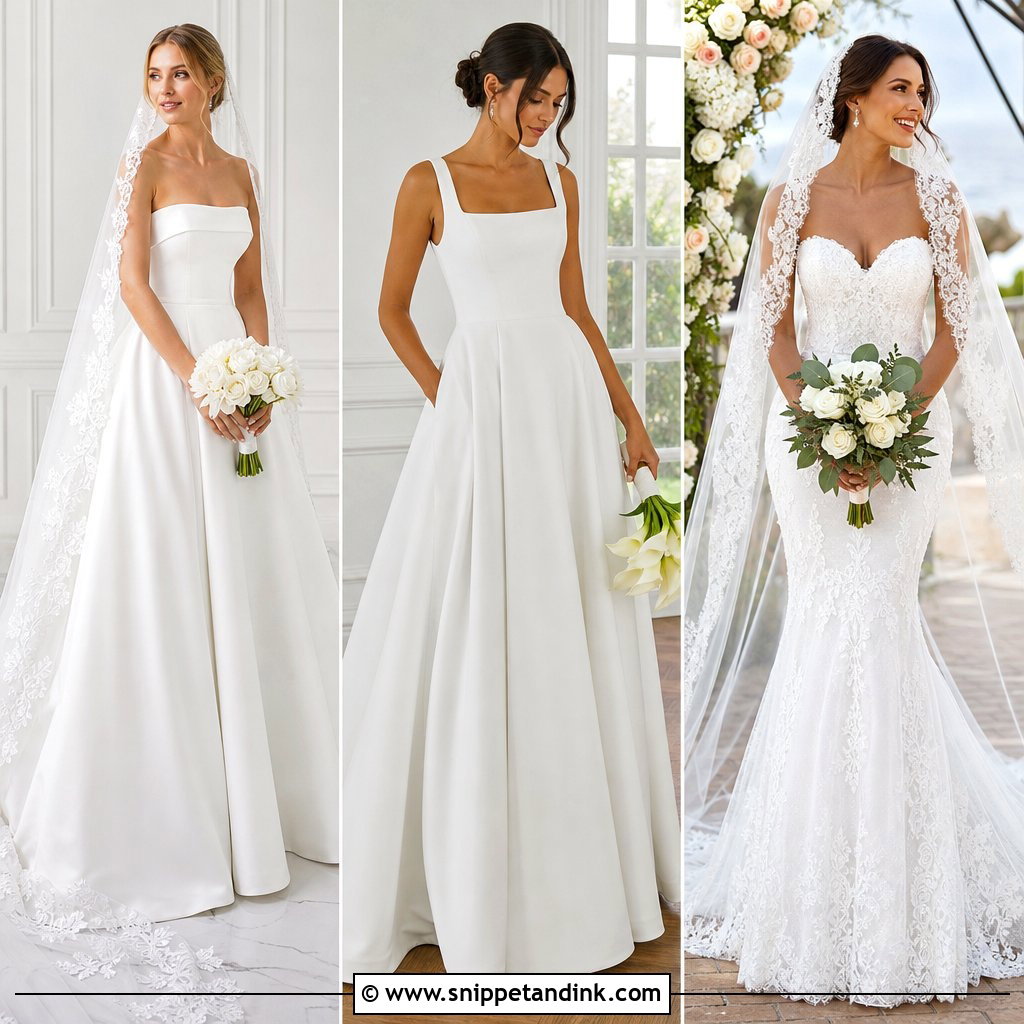
A cape gives you movement and drama as you walk without the weight of a ball gown, and it can replace a veil entirely. Sheer capes need weighting or a heavier edge to fall properly; very fine chiffon tends to blow over the shoulder outdoors. I fasten capes at the shoulders or neckline and check that they don’t pull the gown’s straps down when you move your arms. Keep the dress beneath simple and the hair sleek, so the line of the cape is clear.
How Long Ordering and Alterations Really Take
Made-to-order gowns are built after you buy them, which is the part that catches couples out. Many designers quote several months for production alone, so I encourage brides to order roughly eight to twelve months before the wedding. Lead times vary a great deal between labels, so always ask the shop for the date your dress is expected to arrive, in writing.
Alterations come next. Most seamstresses want the gown in their hands two to three months ahead, and they plan two or three fittings. Bring your actual wedding shoes and undergarments to every one, because the hem is measured against the shoes and the bodice is shaped around the bra or the lack of one.
- First fitting: the seamstress pins the main changes to bust, waist and hem.
- Second fitting: you check the adjusted fit, sit, walk and practise the bustle.
- Final fitting, about one to two weeks out: a last check, then the gown comes home pressed.
If your weight is likely to shift because of training, stress or a medication change, tell your seamstress. She can leave a little more seam allowance until the last fitting rather than taking it in too early.
After the Wedding, Before the Dress Goes in a Cupboard
Champagne, sugar and grass stains are invisible on the night and turn yellow-brown over months, so I’d get the gown to a specialist cleaner within a few weeks. Ask whether they clean beading and lace by hand. At home, store it flat or folded with acid-free tissue in a breathable box, away from light and damp. The plastic bag it came in traps moisture, and hanging a heavy skirt for years stretches the shoulder seams.
The Dress You Forget You’re Wearing by the Speeches
Of the 25 dresses here, the right one will be the shape you forget you’re wearing by the time the speeches start. Trends are useful for ideas, but the gown has to suit your venue, your season and how you plan to move through the day. Try on at least one style you think you’d hate. It’s often the one that changes your mind, and it helps you see which details you actually care about before the order and fittings begin.
You'll Like These Ideas:








Leave a Reply