
Shimmer is the finish I get asked about most, and the one I talk couples out of overdoing most often. On a cake, shine behaves like lighting. Pearl dust settles into piping and makes it readable, a strip of gold leaf catches a candle, and a fully metallic tier can flatten the very shape you paid to have carved. I’d rather a cake glow in two places than glitter in ten. Below are twenty ways to work shine into a wedding cake, with what I look for when I make each one and where each tends to go wrong.
Edible, Non-Toxic or Craft Glitter? Read the Pot Before It Touches Icing
Not every shimmer product sold for cakes is meant to be eaten, and couples rarely know to ask. Before I quote a shimmer cake, I explain the three kinds of label you’ll see on dusts and glitters, because they decide where on the cake each one is allowed to go.
- Edible: made from food ingredients and permitted food colourings, with an ingredient list on the pot. This is the only kind that belongs on any surface a guest will eat.
- Non-toxic or decoration only: safe to handle, not designed to be swallowed. Many of the brightest metallic dusts fall here, so I use them only on pieces that come off before serving, such as a topper or a sugar plaque.
- Craft glitter: plastic. It has no place anywhere near a cake, however tiny the amount.
Truly edible glitter also looks different. It’s made from sugar or gum arabic, so the flakes are softer and less mirror-bright than craft glitter. If a sample photo shows hard, disco-ball sparkle across a whole tier, ask what was used to get it.
Questions worth asking at your tasting
- Is every shimmer on the parts we’ll eat labelled edible?
- Is the gold leaf a food grade product of 22 karat or higher, which is what edible leaf should be?
- Which decorations have to be removed before the cake is cut?
- Can I see your shimmer options on a sample board rather than only in photos?
1. Pearl Shimmer Wedding Cake
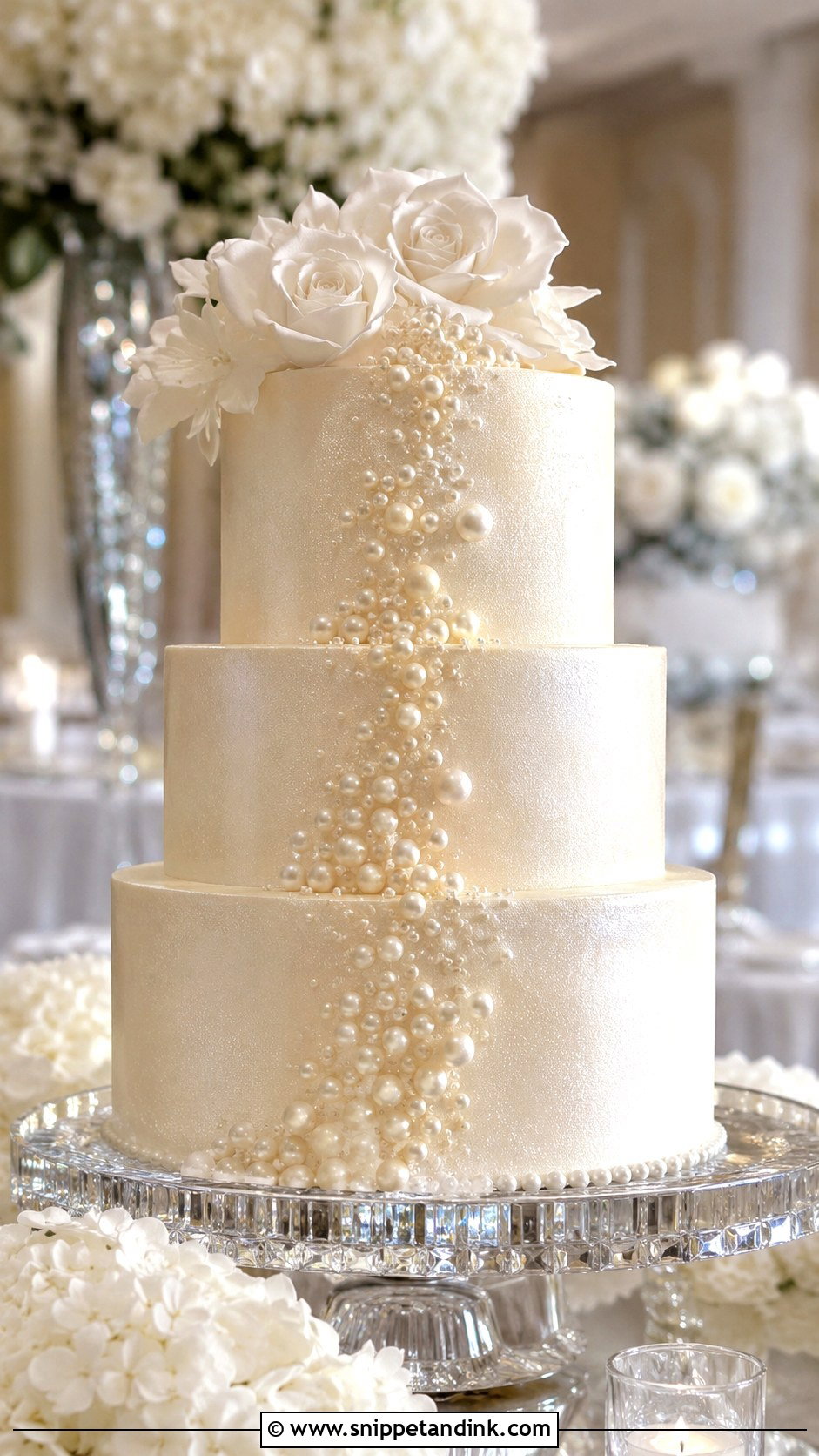
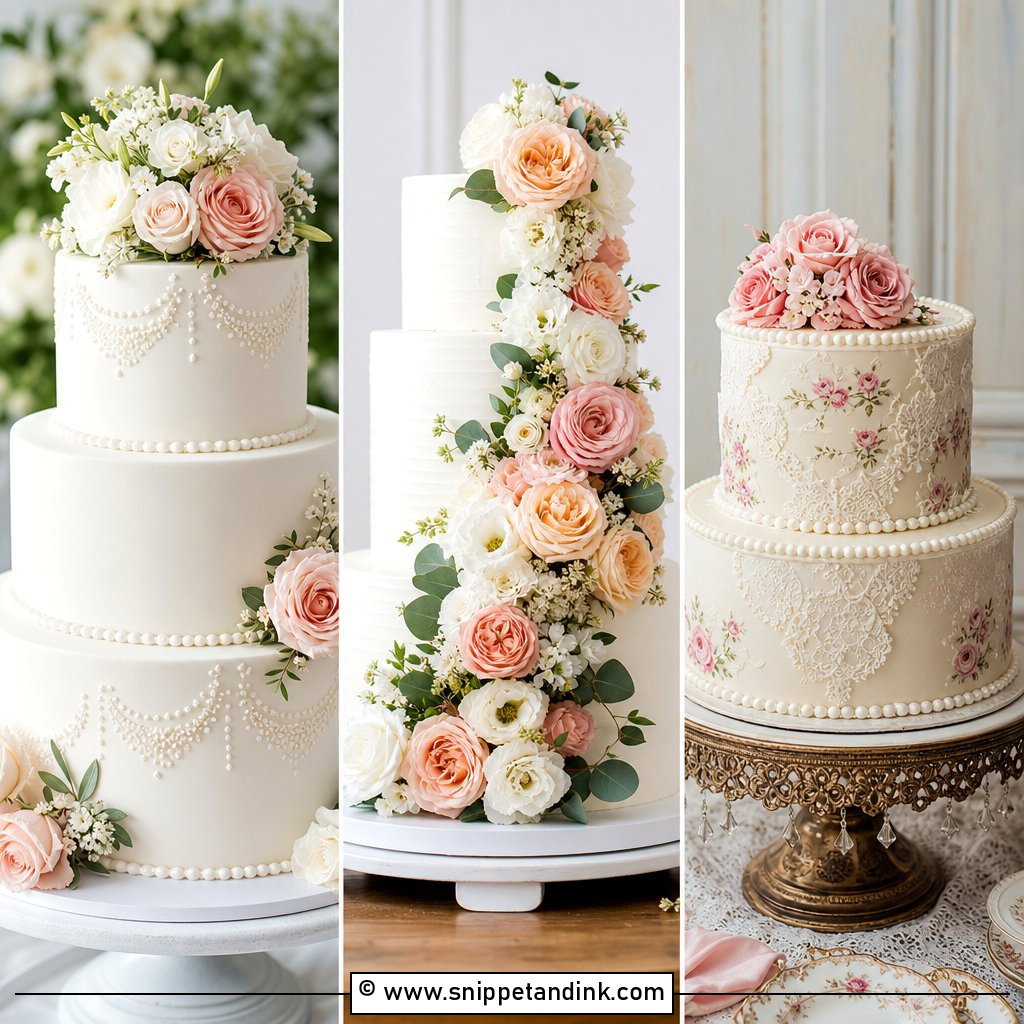
Pearl is where I start most nervous couples, because it’s the most forgiving finish I own. I brush pearl lustre over ivory or champagne icing with a wide soft brush, always in one direction, so the sheen moves as guests walk past instead of sitting in blotches. Edible pearls go on last, pressed in while the icing is still slightly tacky; on set buttercream they need a dot of piping gel or they roll off during the drive. Keep the flowers few and simple, such as white roses or small sugar blossoms, or they cover the texture you’re paying for.
2. Gold Shimmer Wedding Cake
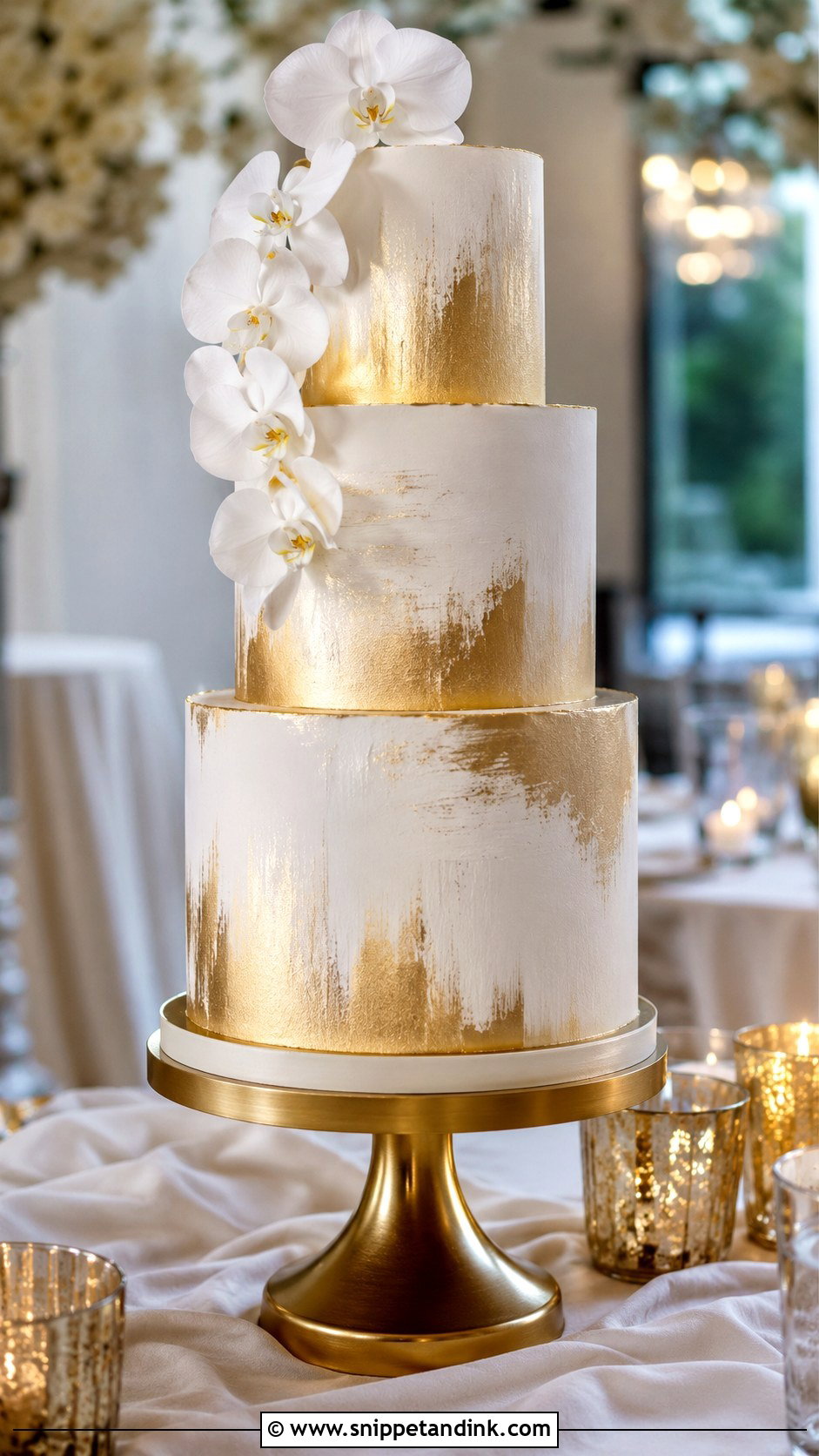
Gold looks cheap when it’s overdone and expensive when it isn’t. A whole tier painted gold tends to read brassy in photos, so I usually suggest brushed panels, torn leaf along one edge, or a single gold tier between plain white ones. Real edible gold leaf is fragile. I lay it with a dry brush and let it wrinkle, but it cracks if the fondant underneath is still soft. Warm flavours like almond, caramel and champagne sit naturally under it, and a little white and green in the flowers stops it tipping into costume.
3. Silver Shimmer Wedding Cake
Silver is my answer for a cool palette of ice blue, grey or pale lavender, where gold would fight the colours. On smooth fondant with sharp edges it looks crisp; dusted lightly over textured buttercream it softens. Silver leaf, edible glitter and pearlized piping give three very different strengths of shine, so I put samples of each side by side at the tasting. One honest caution: rules on edible silver differ from country to country, and a good baker will tell you which products they can legally use. Under chandeliers the silver picks up every flicker, so a few pale orchids are all it needs.
4. Rose Gold Shimmer Wedding Cake
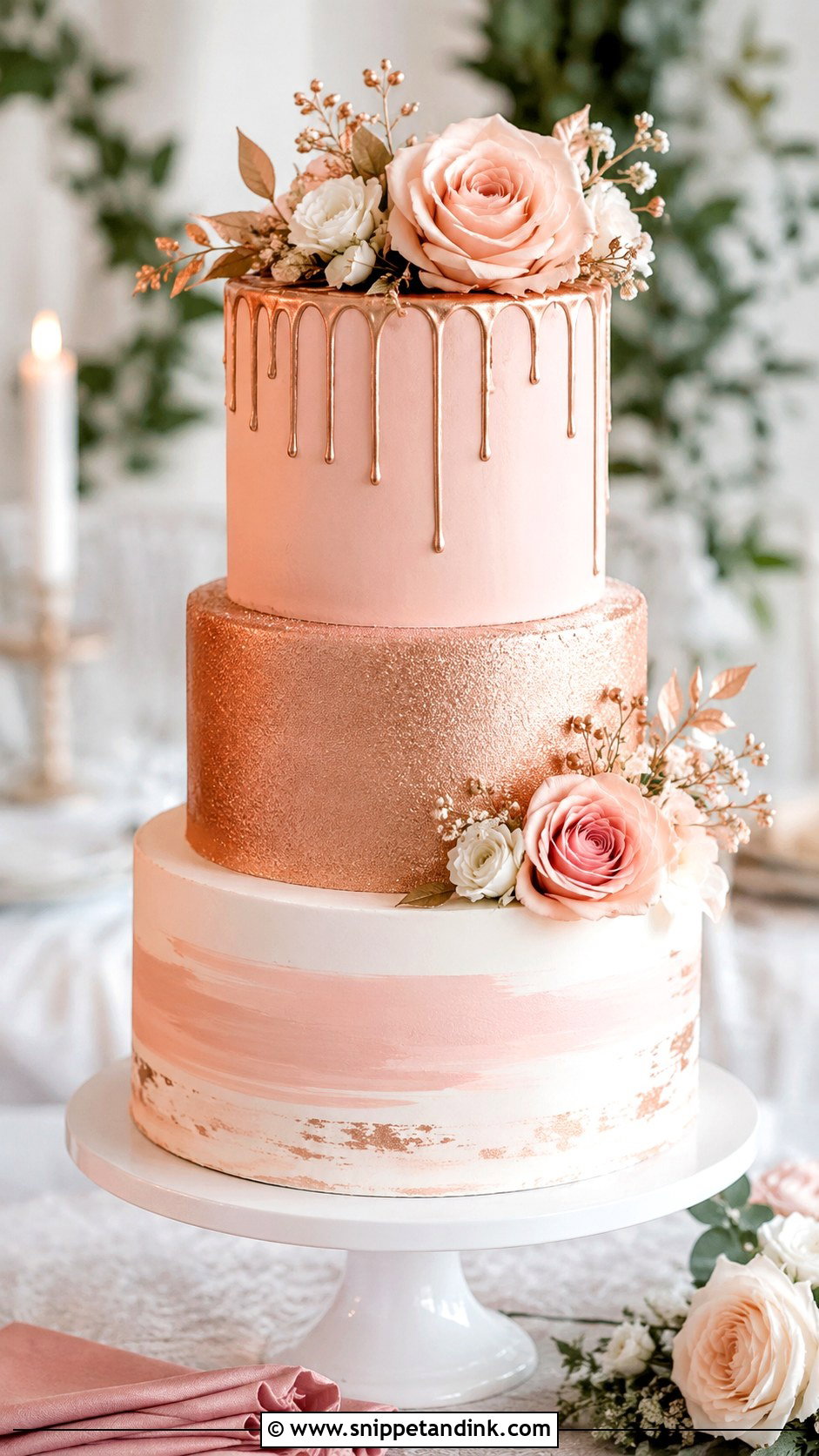
I’ll admit rose gold is tricky to mix. It sits between blush and gold, and a slightly heavy hand pushes it toward copper or muddy peach, especially under warm tungsten light. I mix it in small batches and test it on a spare piece of fondant before it touches the cake. A rose gold drip over white buttercream suits a relaxed reception; full rose gold fondant tiers are far more formal. It sits well beside nude, mauve and dusty rose flowers, and with a strawberry champagne or vanilla bean sponge.
5. Champagne Shimmer Wedding Cake
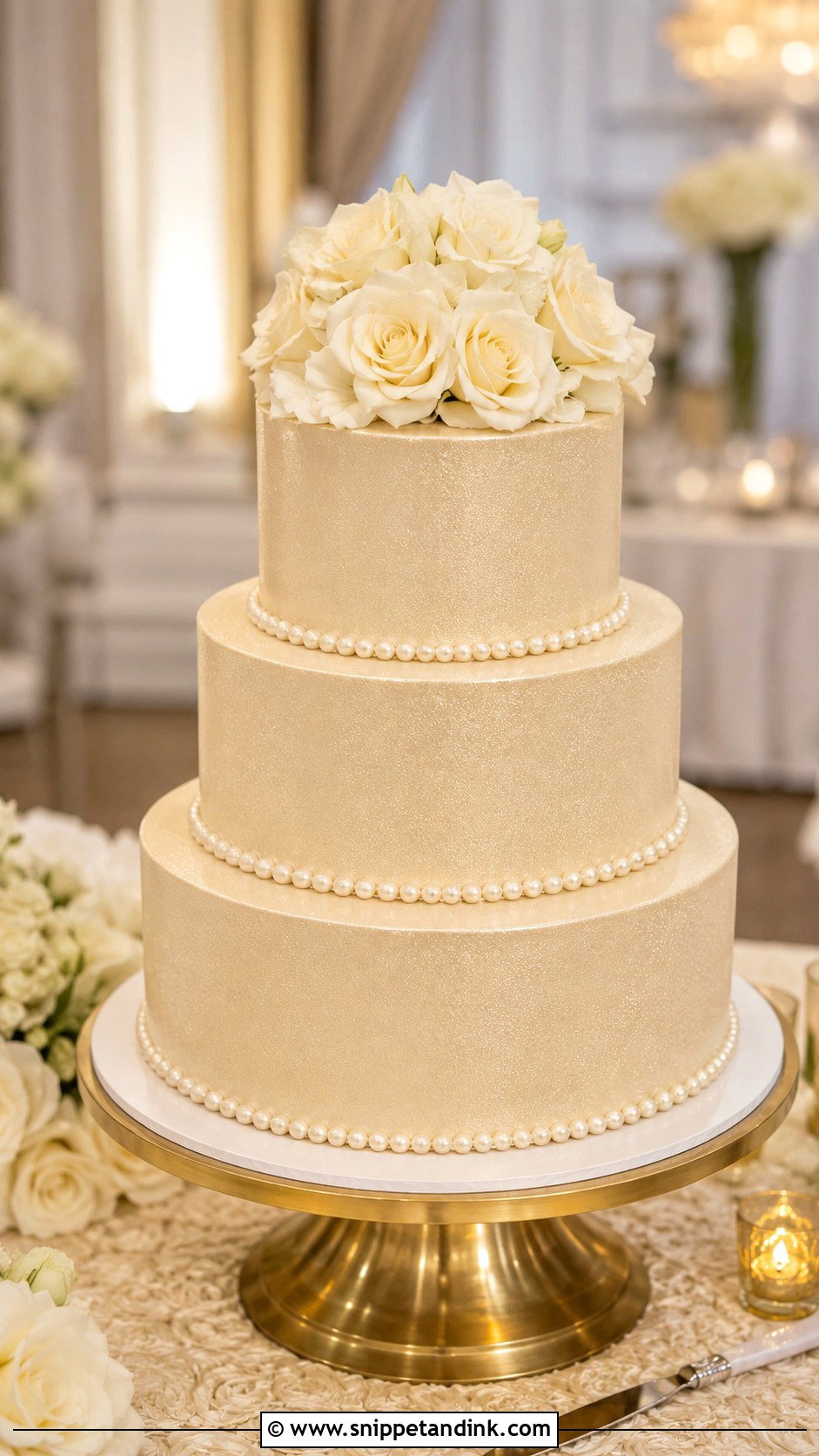
When someone tells me they want a glow but no glitter, I reach for champagne. It’s warmer than ivory and quieter than gold, so it rarely argues with the flowers. On a tall fondant cake it looks tailored; in buttercream it’s softer and more relaxed. In a low-lit evening room it reflects candlelight gently instead of flaring. I like it with pearl piping and a honey or brown butter sponge.
6. Iridescent Shimmer Wedding Cake
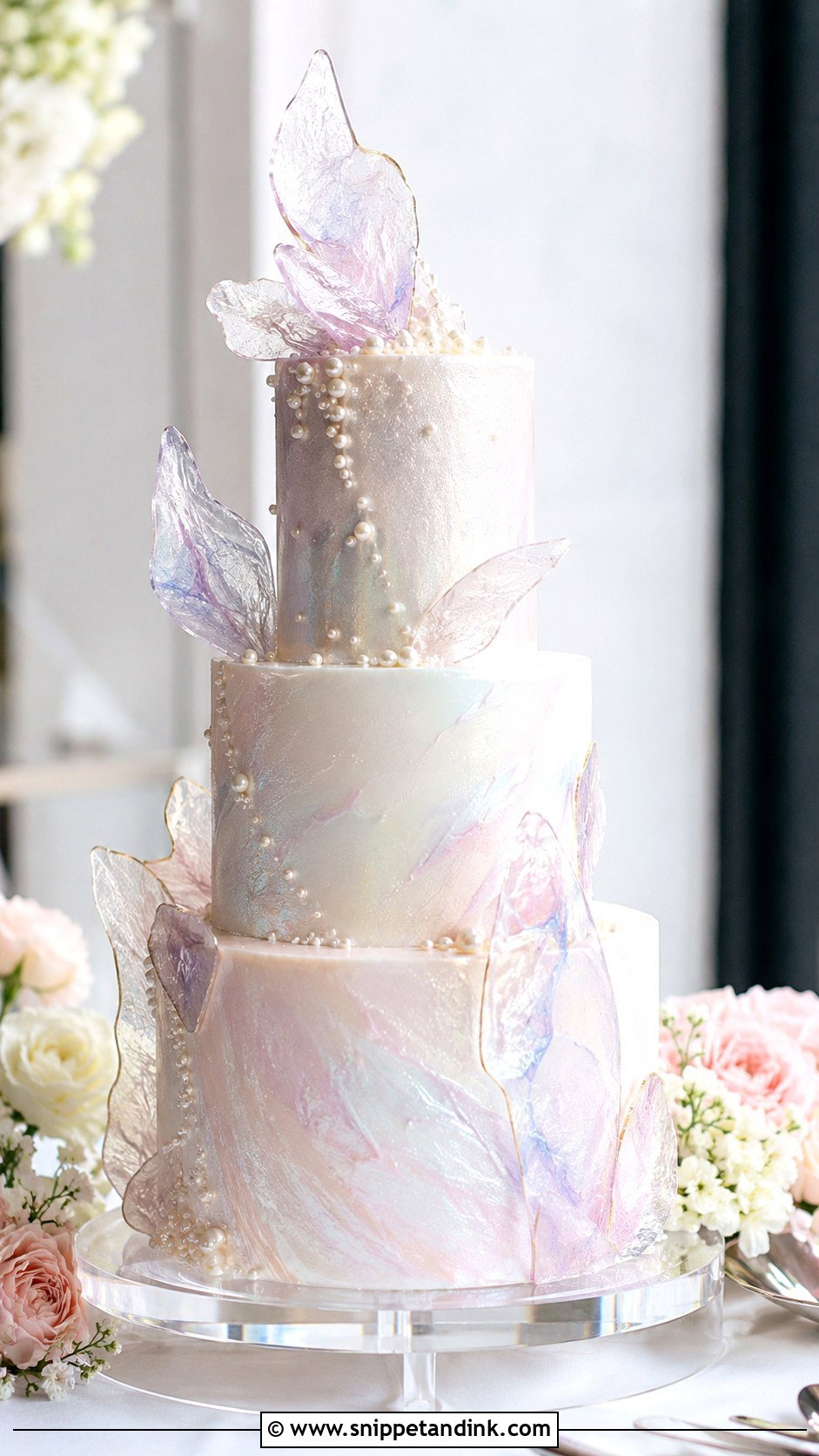
The colour shift in an iridescent finish comes from the angle of the light, so a cake that flashes pink to blue in my studio can read plain white in flat daylight. I warn couples about that before they fall for a photo. I build it over a white or very pale pastel base with a fine lustre spray, misted on in several thin passes, because one heavy pass pools and dries patchy. Translucent sugar sails and edible pearls suit the effect since they catch light too. It’s at its best indoors or on a rooftop at dusk, where the light keeps moving.
7. Shimmer Buttercream Wedding Cake
Buttercream is the warmer, more handmade route to shimmer. I comb, ribbon or ruffle the icing first, chill it until firm, then brush or spray the pearl dust, because brushing soft buttercream just drags the texture flat. The shine catches the ridges and leaves the grooves darker, which is what gives the cake depth in photos. Swiss meringue takes dust more evenly than a crusting American buttercream, though both work. The catch is heat: buttercream softens fast in a warm marquee, and the shimmer smears the moment anyone touches it.
8. Shimmer Fondant Wedding Cake
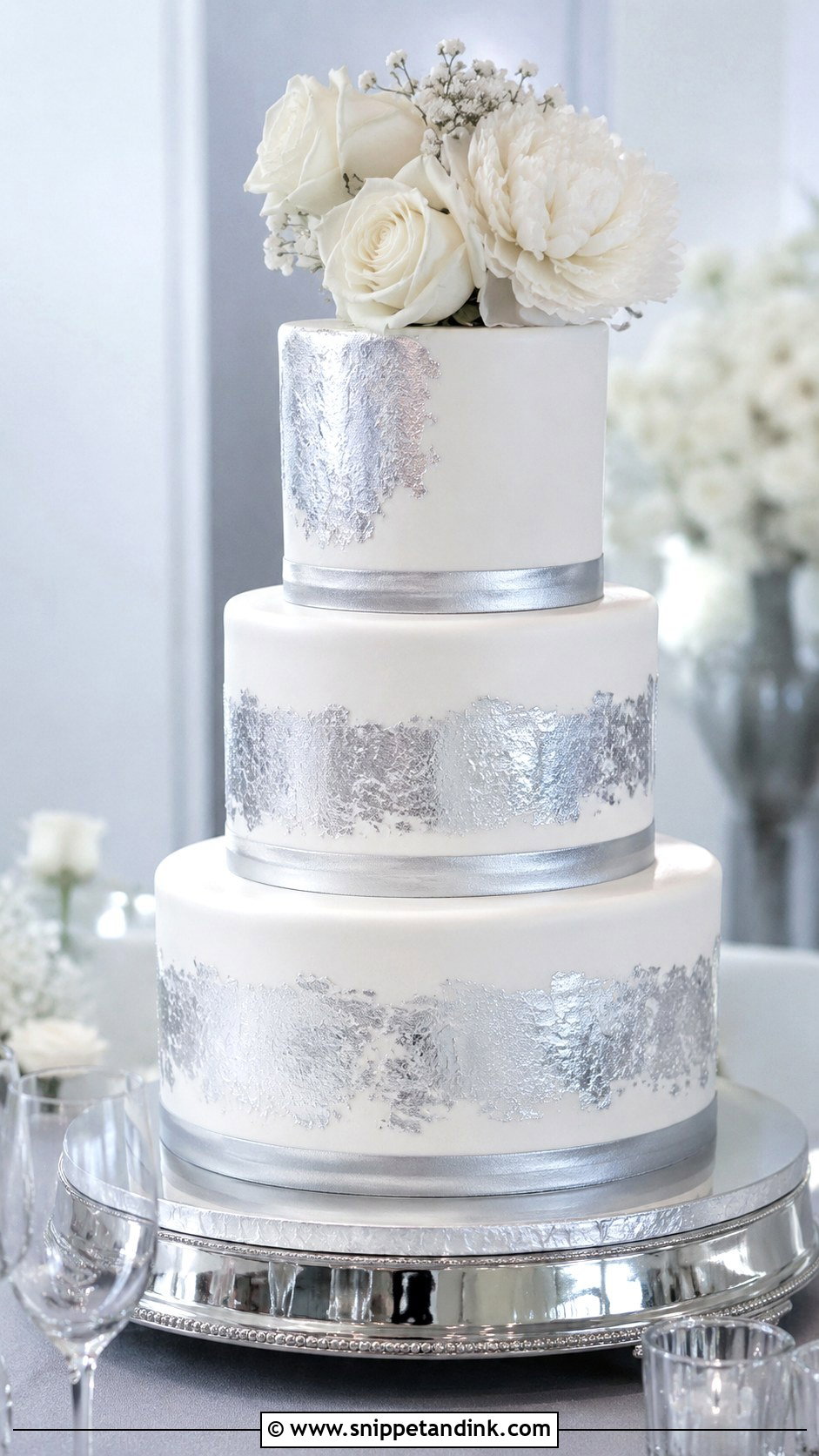
Choose a shimmer fondant wedding cake when you want the sharpest, cleanest finish. Fondant is a smooth canvas, so pearl dust, painted metallics and stencilled patterns show exactly as applied, mistakes included. That’s why I only paint metallic onto fondant after it has firmed overnight. It also holds structured work like bows, pleats and drapes that buttercream can’t. My one rule is to leave at least one tier plain. Without that rest for the eye, a fully decorated fondant cake starts to look busy.
9. Shimmer Floral Wedding Cake
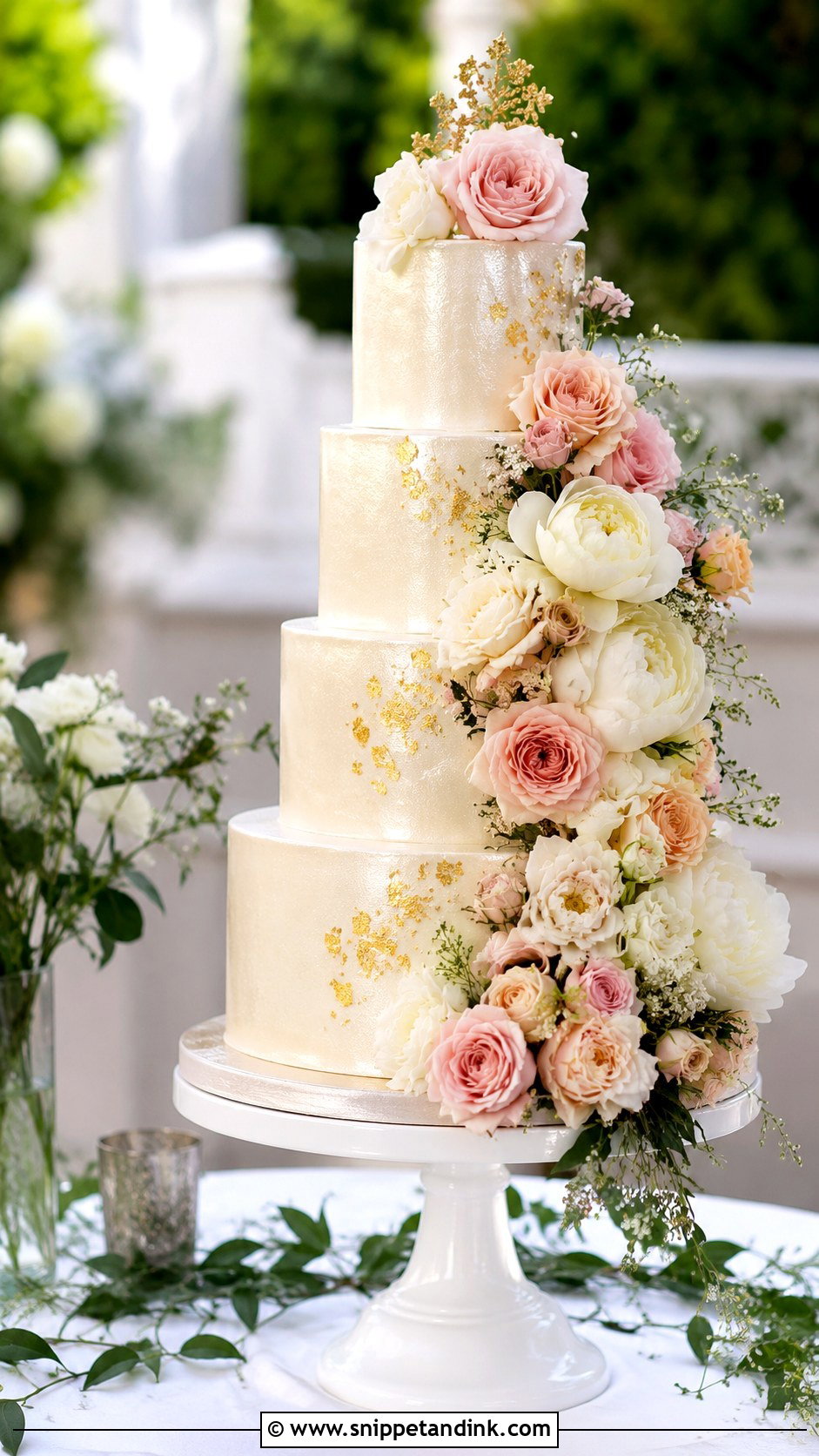
Flowers and shimmer compete for attention, so I decide early which one leads. Usually it’s the flowers, and the shine moves into supporting places: a pearlized base, gold-dusted petal edges, metallic flower centres. Fresh flowers bring natural texture, but they must be pesticide-free and wrapped or sealed wherever a stem enters the cake. Sugar flowers let me control colour exactly and never wilt. White, blush and pale peach look luminous against a pearl surface, and a cascade down one side makes a short cake look taller.
10. Shimmer Ruffle Wedding Cake
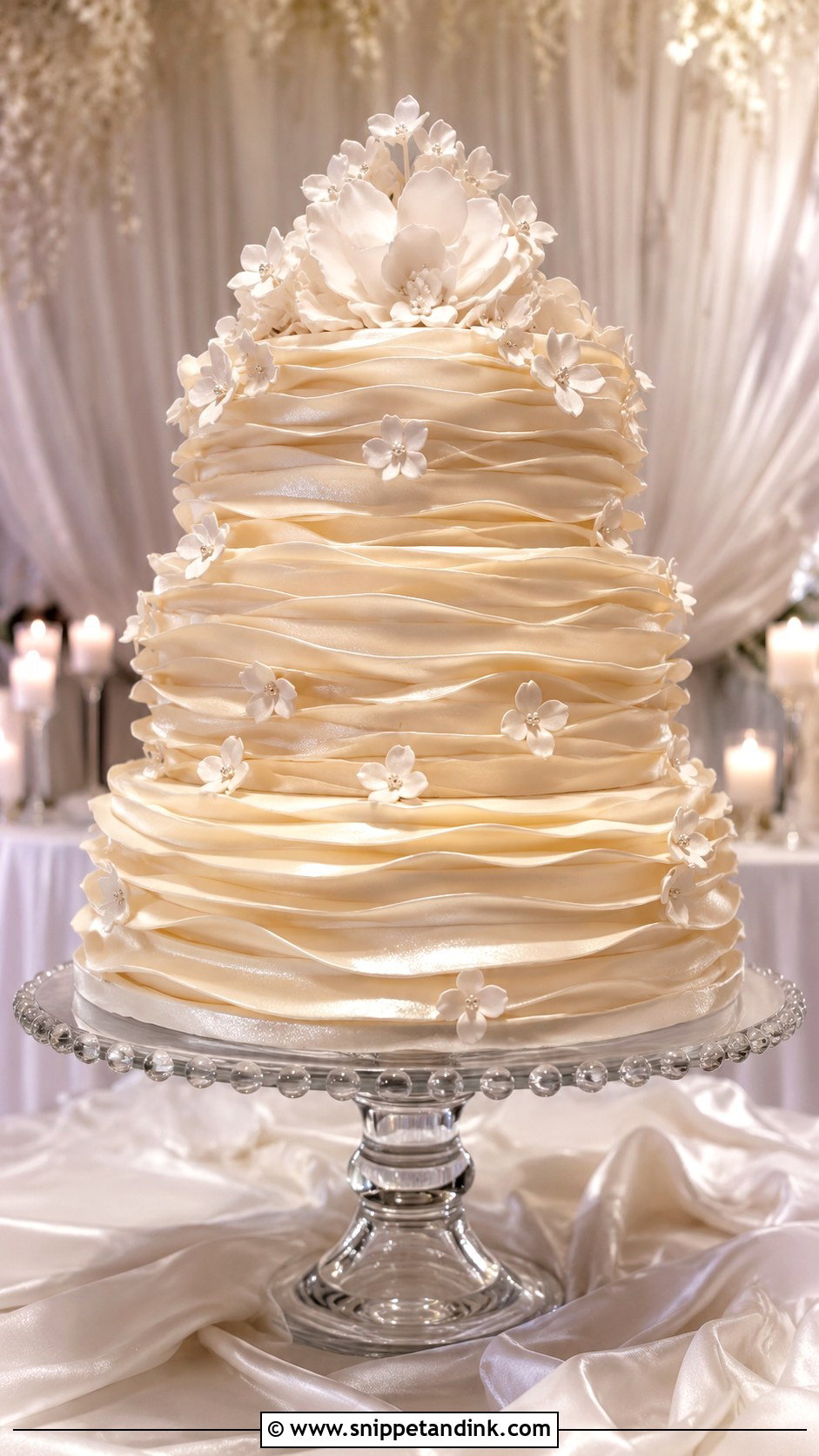
Ruffles take hours. Each strip of fondant is thinned along one edge and frilled before it goes on, and that thin edge is where pearl or champagne lustre catches, so the shimmer outlines every fold like the hem of a skirt. The texture already does the decorating, and a small cluster of flowers or a delicate topper is plenty. I’d steer you away from ruffles for a hot outdoor reception, though. Thin fondant edges soften and droop in humidity.
11. Shimmer Drip Wedding Cake
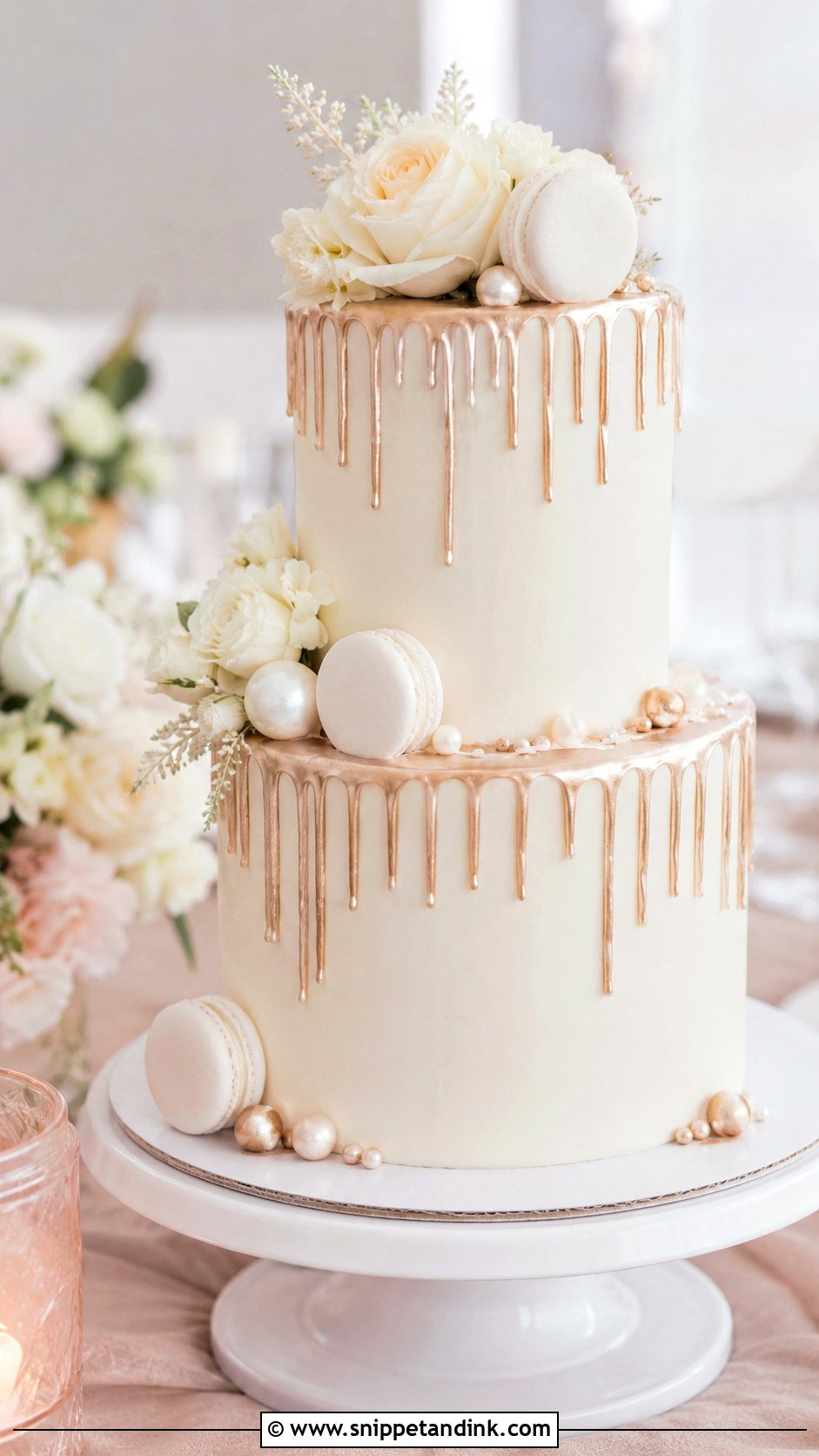
A metallic drip is the quickest way to make a traditional tiered cake feel modern, and the hardest finish to keep tidy on tall tiers. I pipe the drip in ganache onto a chilled cake so the drops stop where I want them, then paint gold, silver or pearl over it once it sets. Painting straight into wet ganache gives a dull, streaky shine. Uneven drips look accidental on a four-tier cake, so I space them deliberately. Macarons or a little gold leaf on top suit the slightly playful mood.
12. Shimmer Geode Wedding Cake
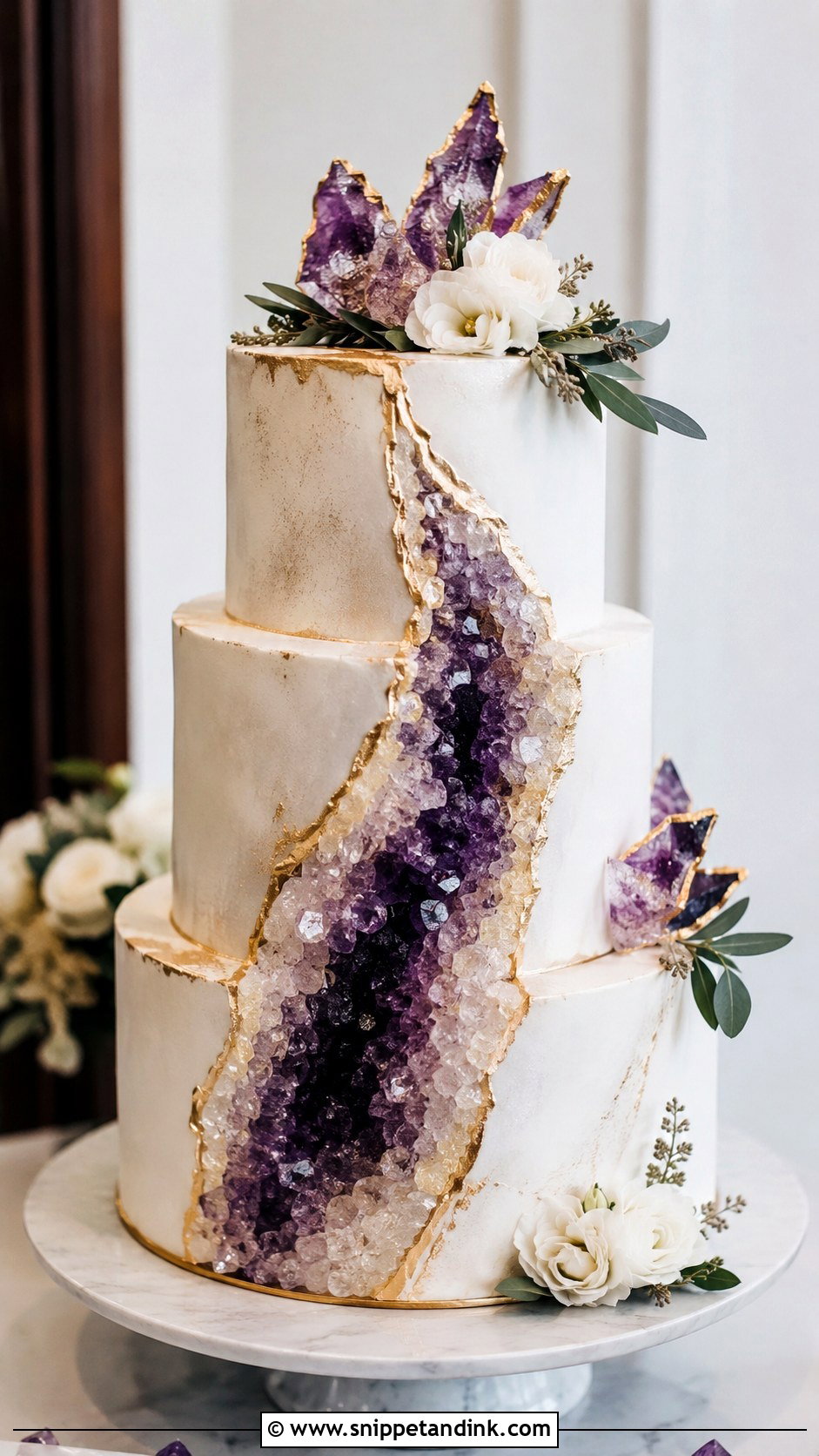
I plan a shimmer geode wedding cake structurally before I plan its colour. The carved cavity gets filled with rock candy or isomalt crystals, which are heavy, so that tier needs extra dowels. Shimmer goes on the crystal tips and the gold or silver rim, and that’s what makes the opening look deep rather than flat. Amethyst, blush quartz and clear crystal are the colours I’m asked for most. Keep the rest of the cake plain white or ivory, and know that rock candy is hard enough to warn guests about before they bite.
13. Shimmer Marble Wedding Cake
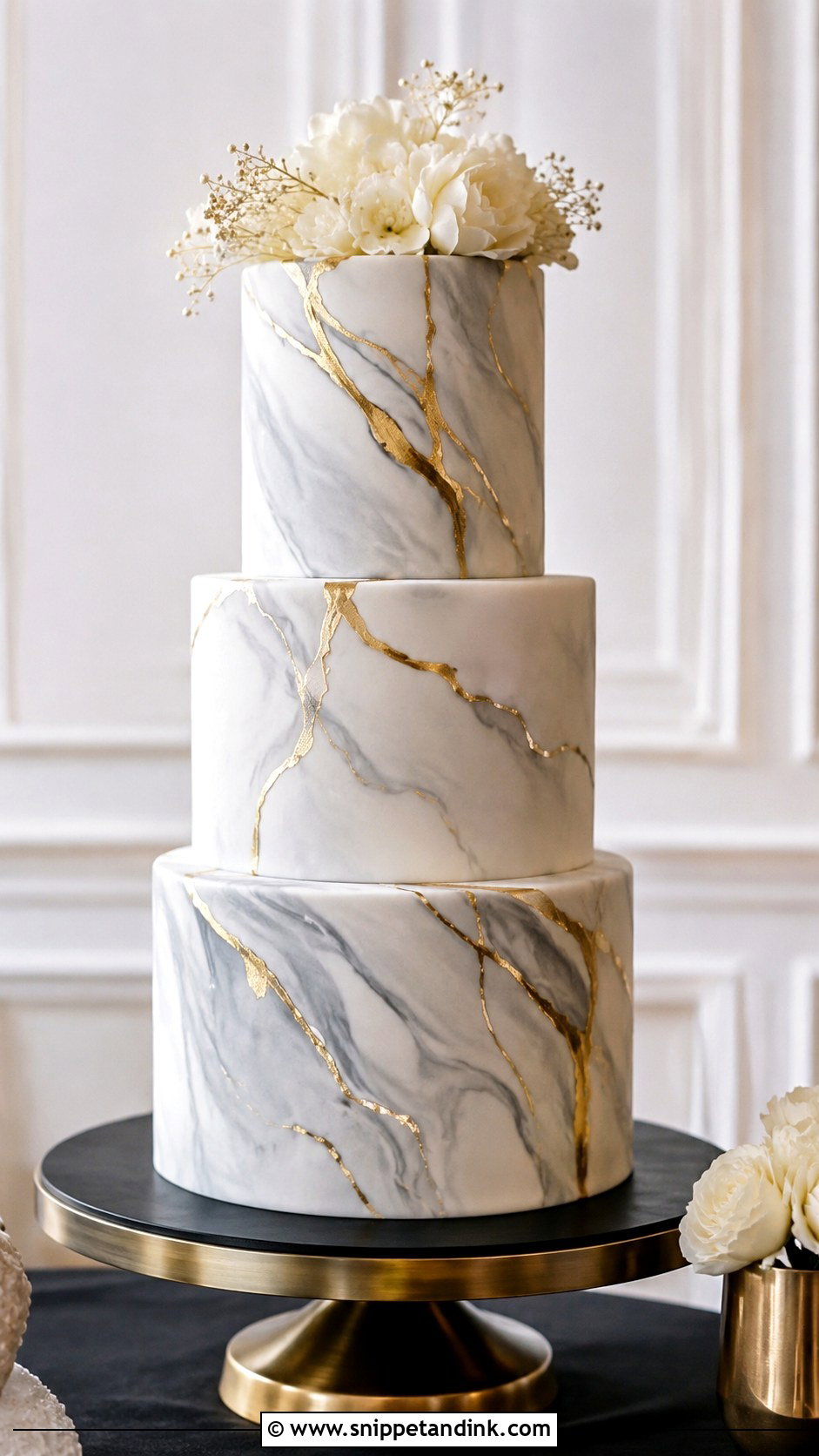
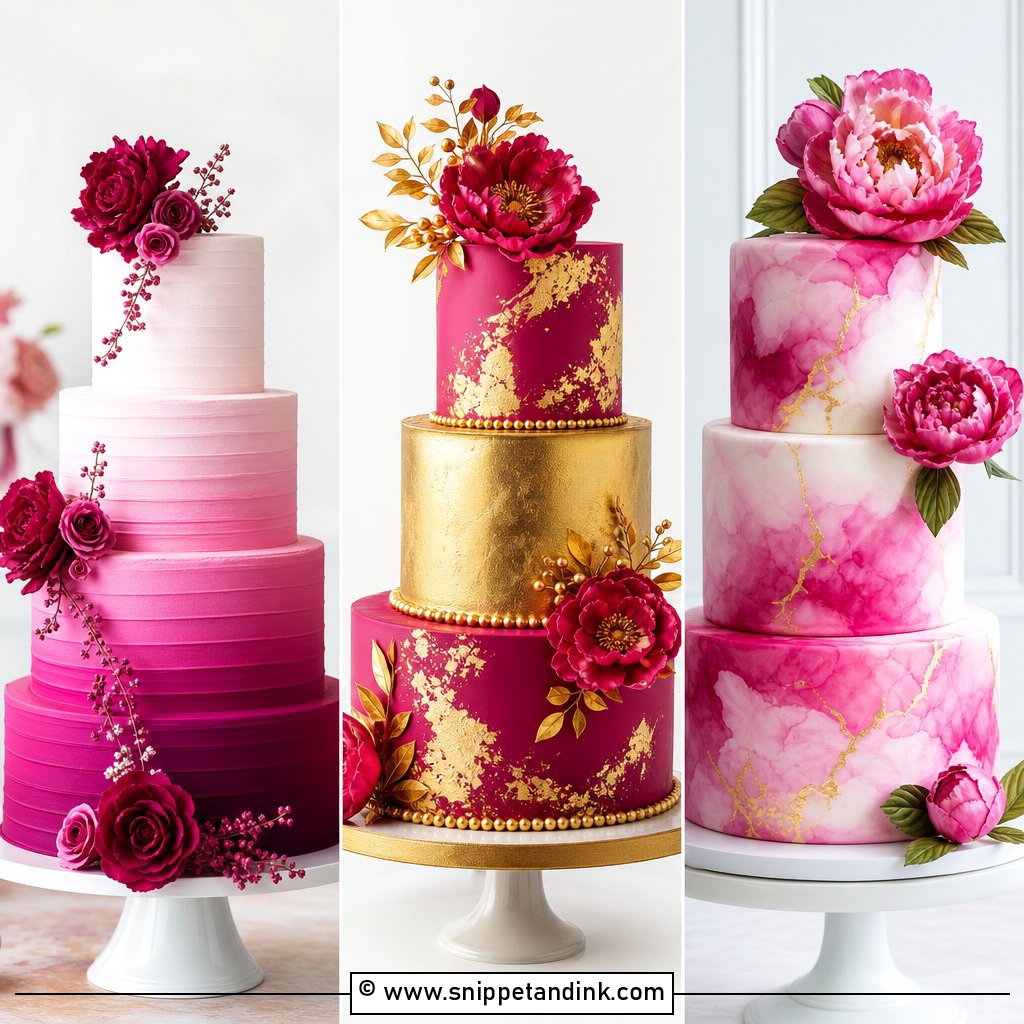
Marble is fondant work: two or three colours twisted together and rolled until the veins look natural. It’s harder than it sounds, because over-rolling turns the whole thing grey. Then I paint a few metallic veins by hand with a fine brush. Gold veining warms the cake, while silver makes it cooler and more architectural, which suits gallery and hotel receptions. Clean round or square tiers help; marble on a fussy shape looks chaotic. A small floral cluster or a metallic monogram is enough.
14. Shimmer Lace Wedding Cake
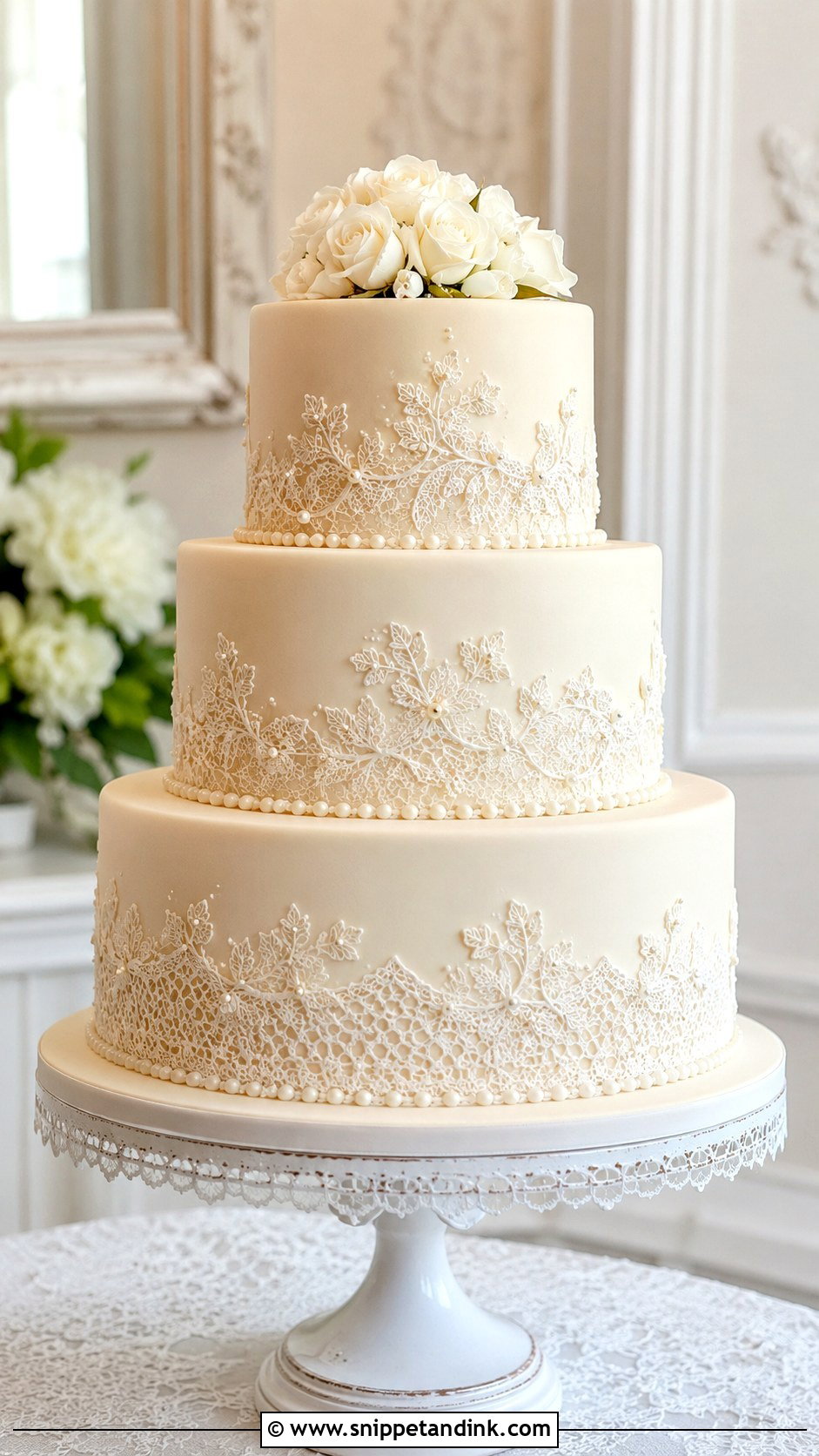
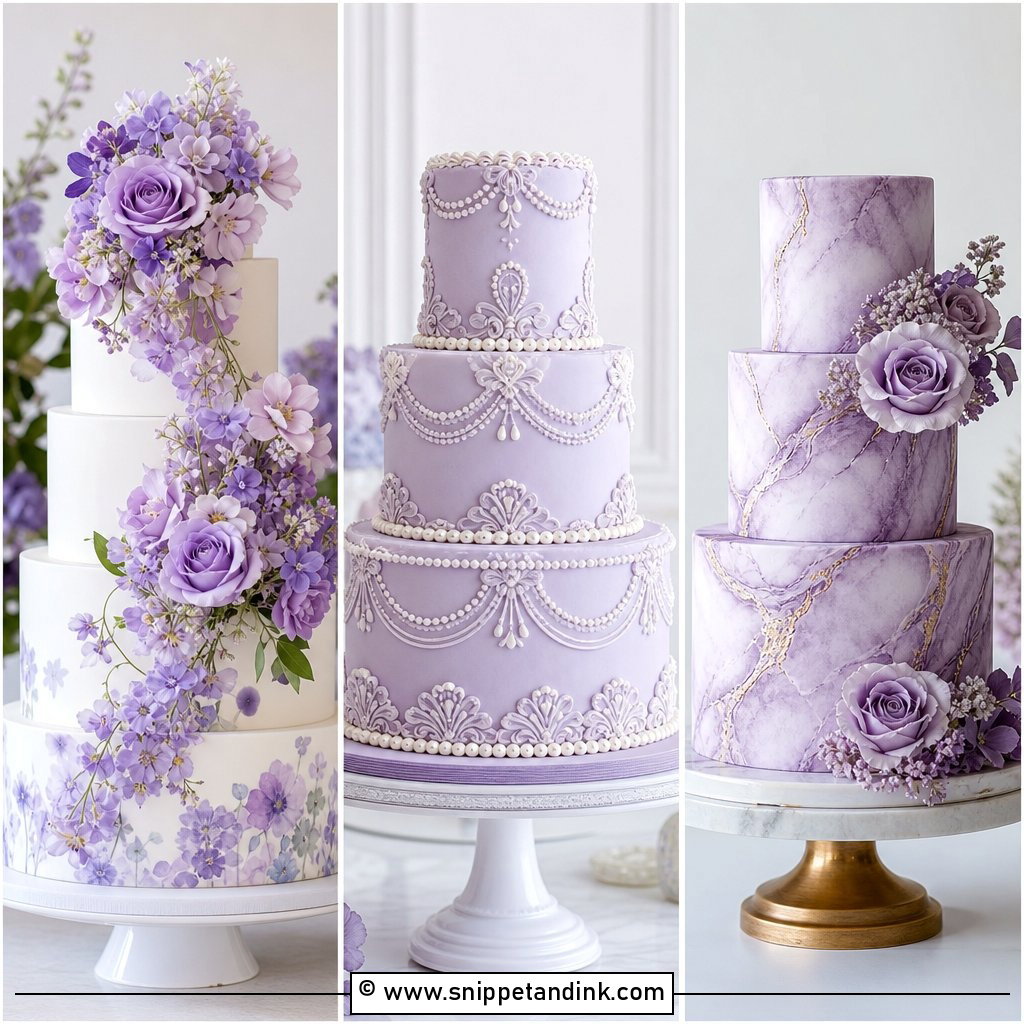
Lace is where shimmer does real work. Piped royal icing, fondant pressed into a silicone mould and pre-made edible lace sheets all go flat white under bright light, and a pass of pearl or champagne lustre makes the pattern visible again, especially in photos. If the gown has lace, bring a photo or a fabric offcut to the tasting and I can echo the motif. White on white is subtle; ivory lace over champagne fondant has more contrast. Small sugar roses keep it delicate.

15. Shimmer Bow Wedding Cake
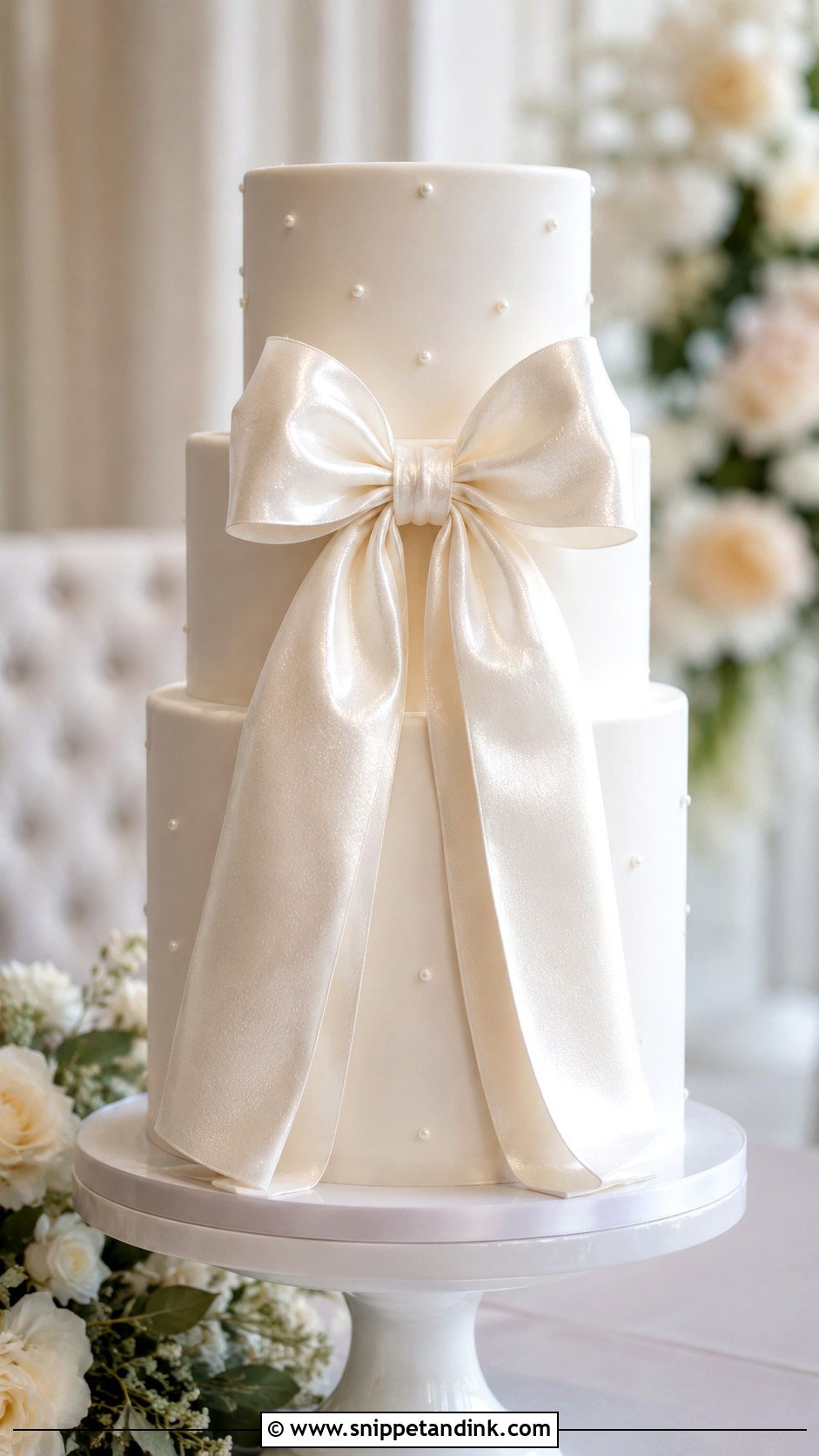
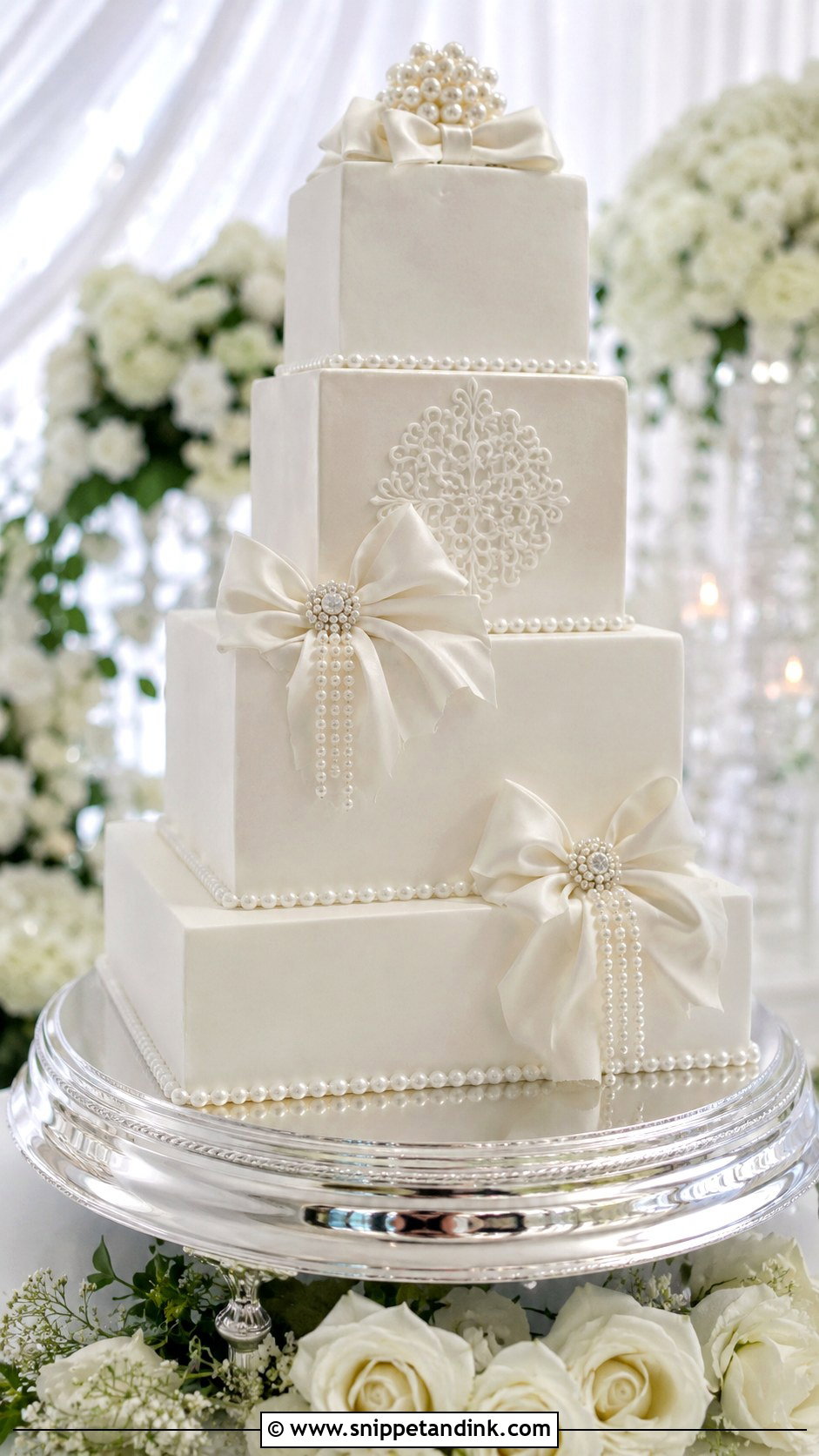
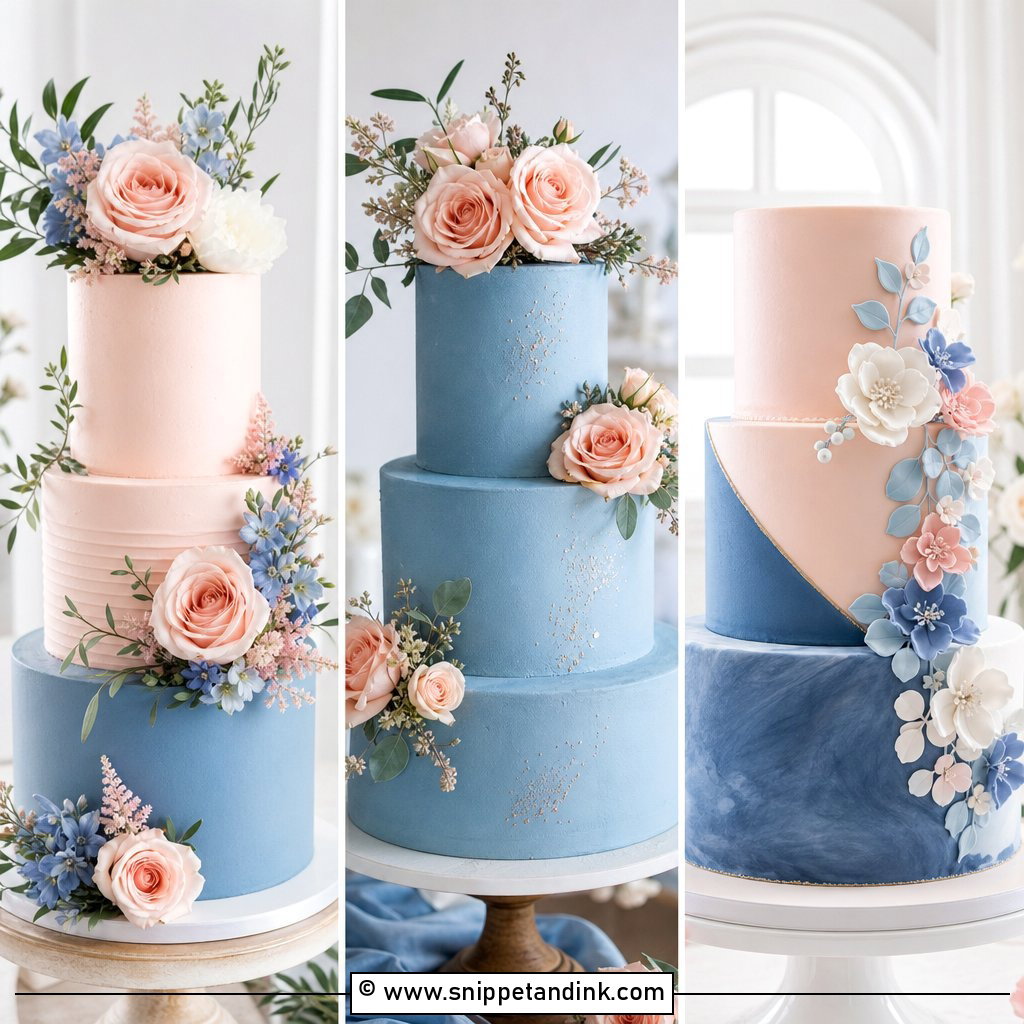
Bows are having a real fashion moment, and on a cake they’re made from fondant, wafer paper or gum paste. Wafer paper is lightest and holds a crisp loop, but it wilts in humidity. Gum paste dries hard and survives the drive far better. I dust the finished bow with pearl lustre so it reads like satin. One oversized bow on a single tier is the fashion version; small bows ringing every tier feel more classic. Either way, keep the base plain white so the bow is the only thing talking.
16. Shimmer Ombre Wedding Cake
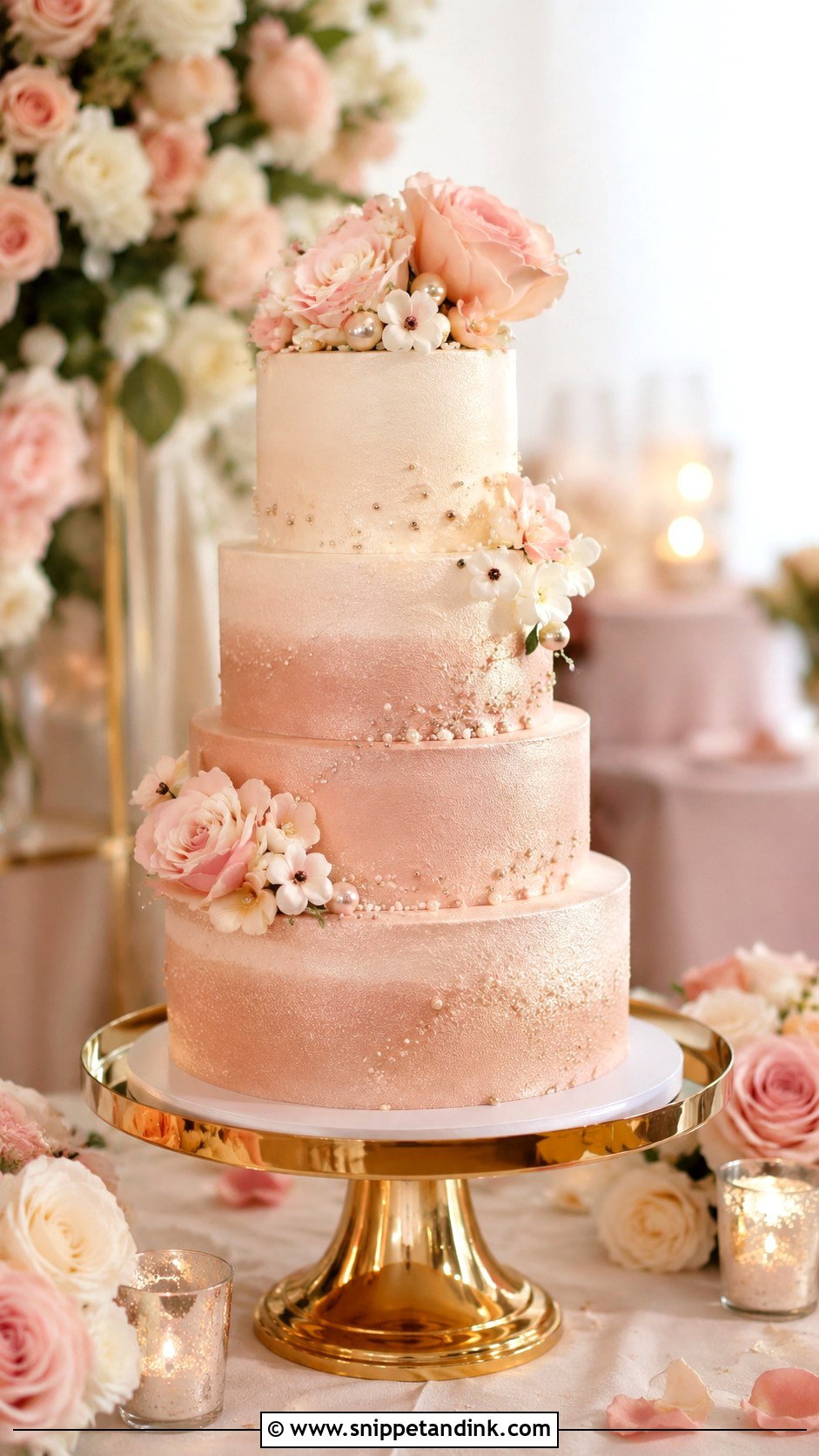
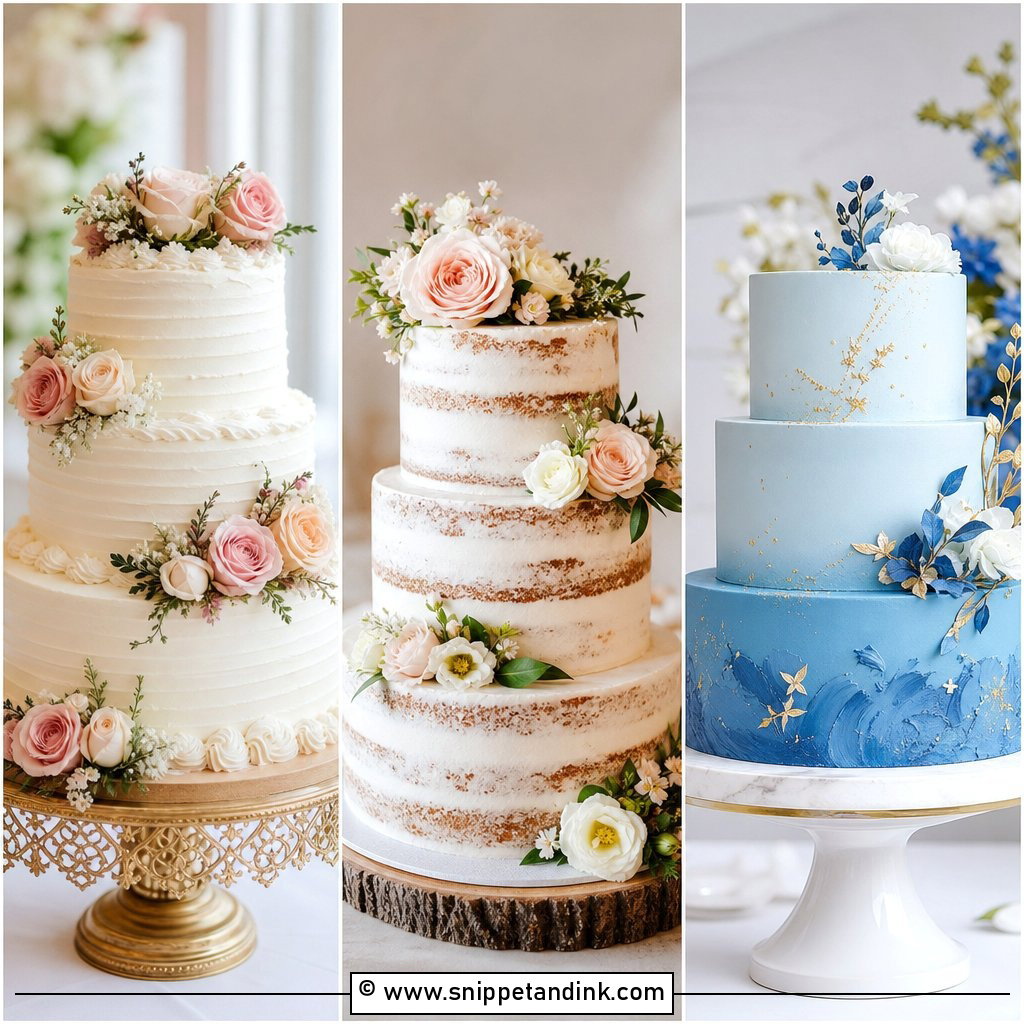
Ombre works when the colour steps are small. I mix each tier’s shade from the same base colour so a white to champagne or blush to rose gold fade stays in one family, then mist a light shimmer over the whole cake to blur the joins between tiers. Buttercream can fade within a single tier, which looks airy, while fondant fades tier by tier and looks more formal. Bring a bridesmaid dress swatch if you want the fade to echo it. Keep the decoration minimal or the gradient disappears.
17. Shimmer Pearl Cascade Wedding Cake
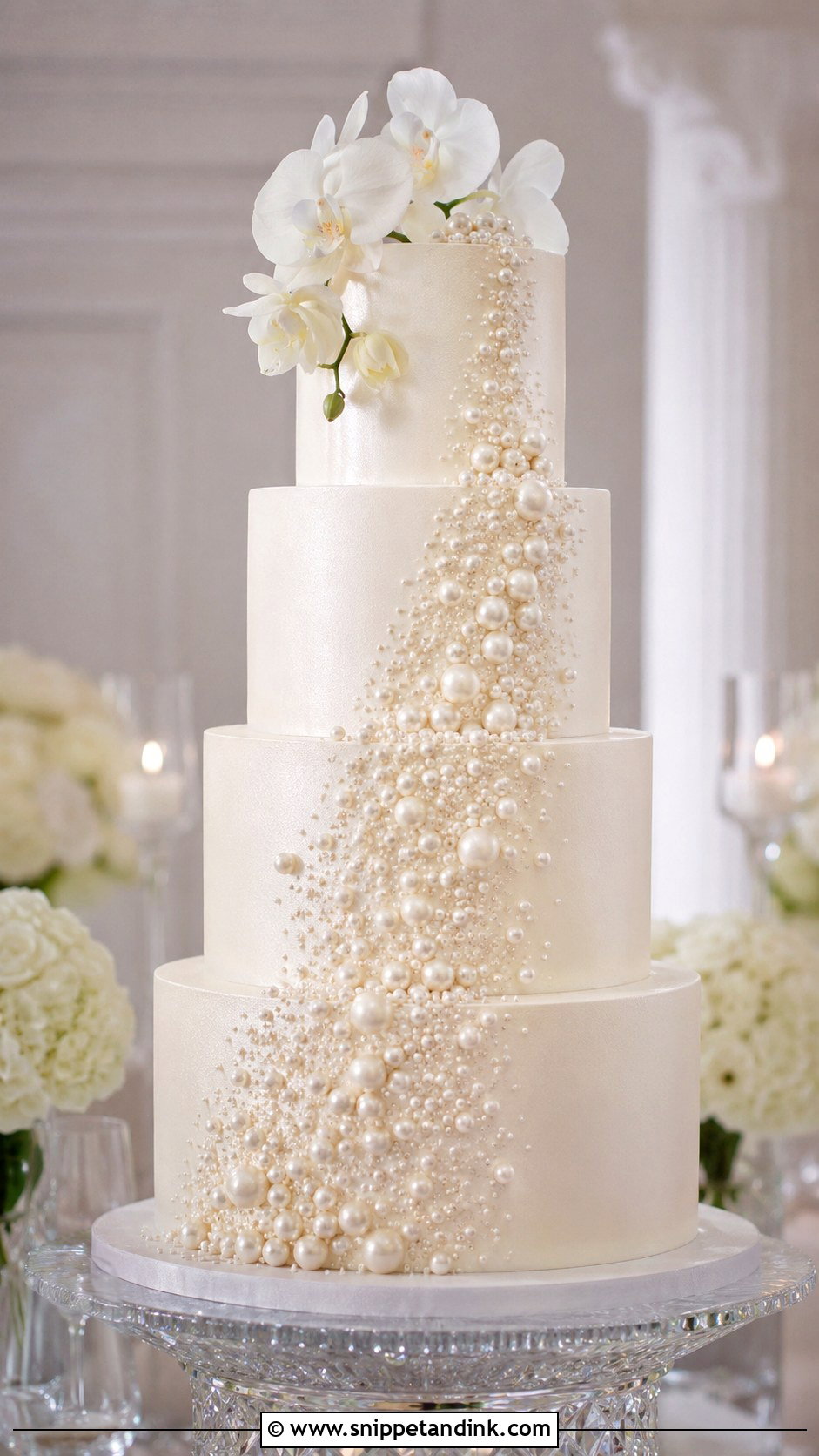
For a shimmer pearl cascade wedding cake, I treat the pearls like jewellery draped down the tiers. I mix at least three sizes and cluster the larger ones where the flow starts, thinning toward the bottom, which is what makes it look like it’s moving rather than stuck on in a line. Every pearl is fixed by hand, so this one takes time. Tall three or four tier cakes give the trail room to travel. A few flowers at the top or base are fine, as long as the pearls still lead.
18. Shimmer Textured Wedding Cake
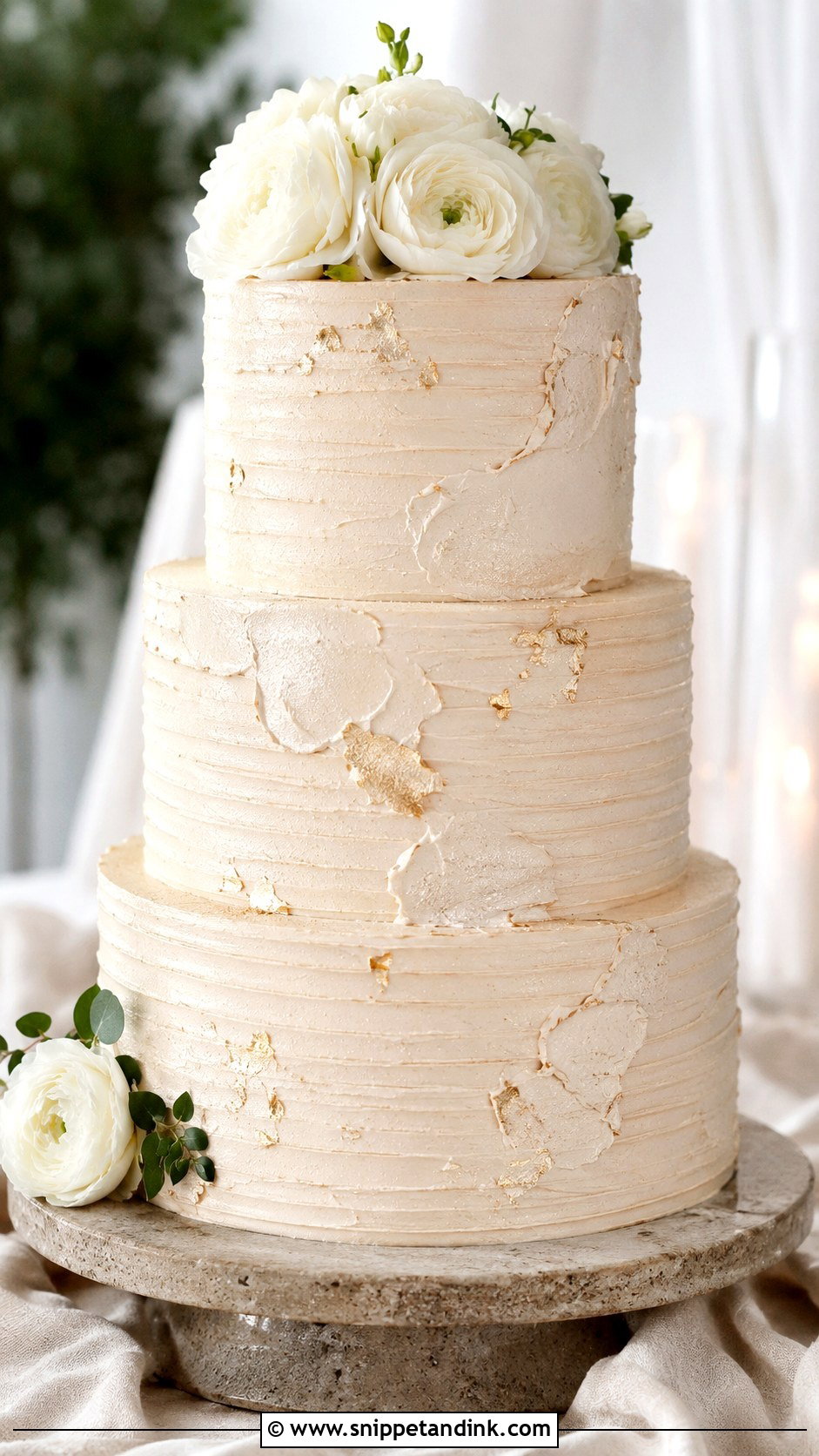
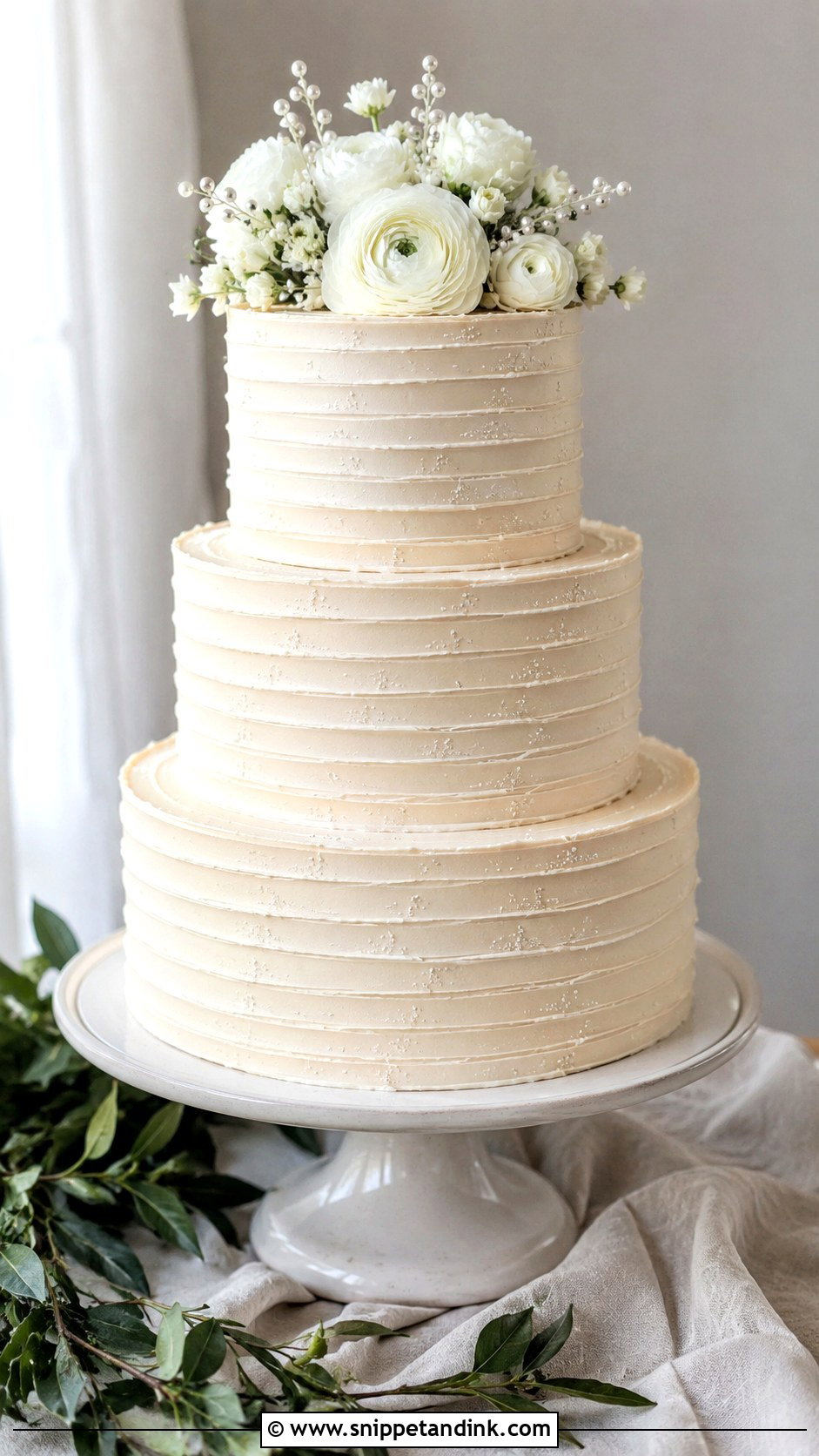
Texture plus shimmer is what I recommend to couples who want simple but not plain. Combed ridges, stucco, pleats or palette knife strokes give the dust raised surfaces to catch, so the cake hardly needs other decoration. I apply the shimmer with an almost dry brush so it only touches the high points and the low points stay matte. Ivory buttercream with champagne dust is warm; white with silver looks fresher. One restrained floral spray finishes it.
19. Shimmer Black Wedding Cake
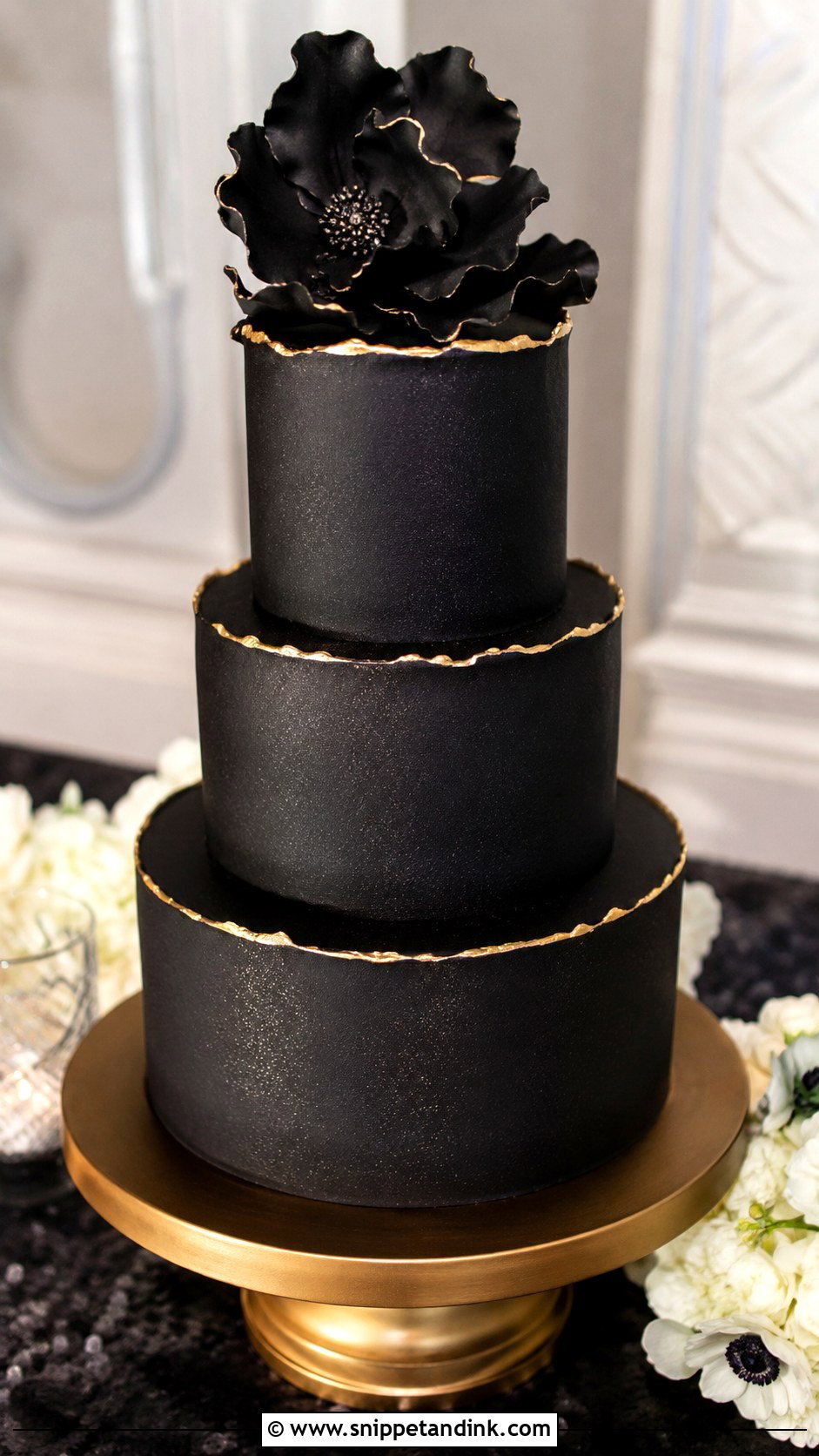
Black is the cake I quote with the most caveats. A true black needs a lot of colouring, and it can stain lips and teeth, so I often cover a lighter cake in black fondant that guests can peel away, or suggest a plain kitchen cake for serving. A whisper of shimmer turns the dark surface from flat matte into satin. Gold, silver or pearl accents look sharp against it, as do black sugar flowers, and dark chocolate, espresso or blackberry fillings suit the mood. Light it softly. Under a hard spotlight, black reads as a hole in the photo.
20. Shimmer Mini Wedding Cake
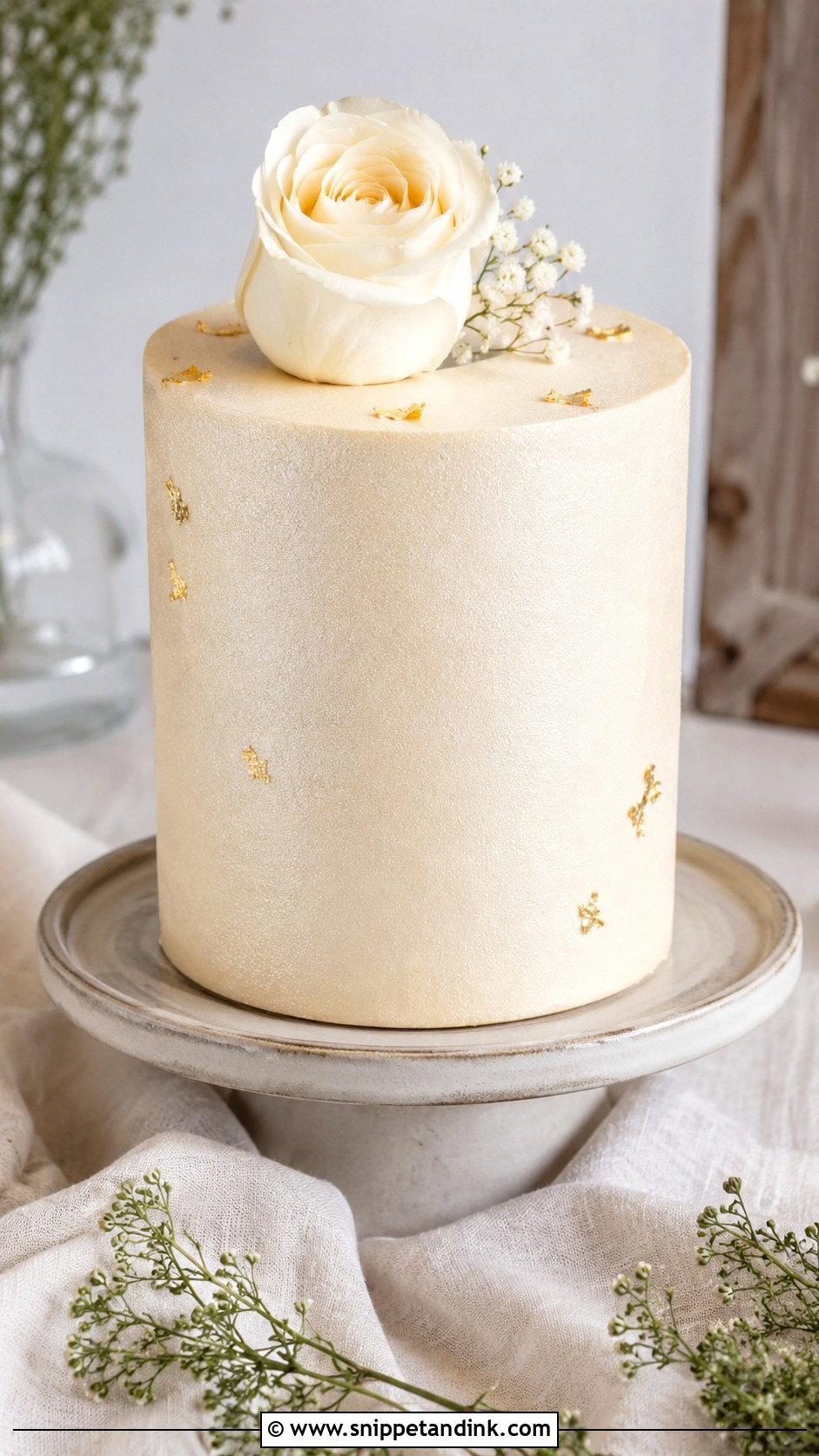
Elopements and sweetheart tables suit a shimmer mini wedding cake, as does a small cutting cake backed by sheet cakes in the kitchen. On one tier every flaw shows, so I commit to one idea: pearl icing with a few tiny flowers, or a rose gold drip with macarons, never both. Minis also make good centrepieces if each table gets its own. Just remember that’s a lot of small cakes to finish and deliver, which changes the lead time and the price.
How Metallic Finishes React to Flash, Candles and Daylight
Metallic finishes behave like small mirrors, so they change completely with the light in the room. A gold tier that looks rich by candlelight can look brassy under one overhead spotlight, and an iridescent cake that shimmers at dusk can look plain white at noon.
Direct on-camera flash is the hardest test. It bounces straight back off leaf and metallic paint, turning a shiny tier into a white blowout or, on angled surfaces, a muddy brown. Pearl and champagne dusts cope far better because they scatter light instead of throwing it back in one direction. If you love high-shine metallic, mention it to your photographer; bouncing the flash off a wall or ceiling solves most of it.
Daylight does the opposite and flattens pearl and iridescent effects. For an afternoon garden reception I lean toward texture with shimmer, because the relief still shows when the sparkle fades. Wherever you are, put the cake near candles or warm low lamps and keep it out of direct sun, which softens icing and leaves the shine patchy.
Condensation, Fingerprints and Other Enemies of Lustre Dust
Shimmer is the first thing to show damage on delivery day. A cake that leaves a cold fridge for a warm, humid room collects condensation, and those beads dissolve lustre dust into streaks and can make painted metallic run. Where I can, I let fondant cakes come up to temperature inside their box, and I never wipe a sweating cake. Left alone, the moisture evaporates.
Leaf and loose dust also transfer to anything they touch: box walls, a sleeve, the fingers of a well-meaning coordinator moving the cake to a better spot. Ask for it to be placed once and left there, and if it must move, lift it by the board, never the sides. In summer, buttercream shimmer softens under heat too, so I’d rather the cake arrive close to the reception than sit out through a long dinner.
Let the Lighting in Your Room Set the Shine
Shine on a cake is really about where the light lands. Pearl, gold leaf, metallic paint, edible glitter and iridescent spray all glow when they’re placed with restraint, and all look busy when they’re everywhere. A ballroom with chandeliers can carry a gold or full pearl finish. A modern room with flat light often suits marble, geode or black with metallic edges. If you want it soft, buttercream, ruffles, lace and champagne tones are your shortlist. Bring photos of your venue to the tasting and I’ll tell you honestly which finish the room will flatter.
You'll Like These Ideas:












Leave a Reply