
A gown on a hanger tells you very little. Satin that looks plain on the rail can be the most flattering thing in the room once it’s on a body, and a lace dress that seems perfect can itch at the underarm within ten minutes. I dress brides by starting with how they need to move: how long the day is, what the floor is like, whether they’ll sit for a long dinner. The designs below cover necklines, silhouettes, fabrics and convertible details. For each one I’ve added what I look for when a bride tries it on, and where it tends to go wrong.
A Realistic Calendar From First Appointment to Final Pressing
Most brides start shopping later than they’d like, so here is the order I work in. Exact lead times vary a lot by designer and shop, so confirm every date with yours.
- Shop around nine to twelve months out. Made-to-order gowns are cut after you order, and many take several months to arrive.
- Order with your measurements taken by the shop, not from a home tape. Ask what the size chart is based on, because bridal sizing often runs smaller than high street sizing.
- Book alterations as soon as the gown is ordered. Good seamstresses fill up in peak season, and you’ll usually need two or three fittings spread over the last couple of months.
- Bring your real shoes and undergarments from the first fitting onward. Hem length and bodice fit are set against them.
- Plan a final pressing in the last week, then leave the dress hanging in its breathable bag until the morning.
If your date is close, look at sample sales and off-the-rack gowns. You lose some choice of size and colour, but alterations can usually close the gap if the dress fits at its widest point.
1. Minimalist Satin Wedding Dress
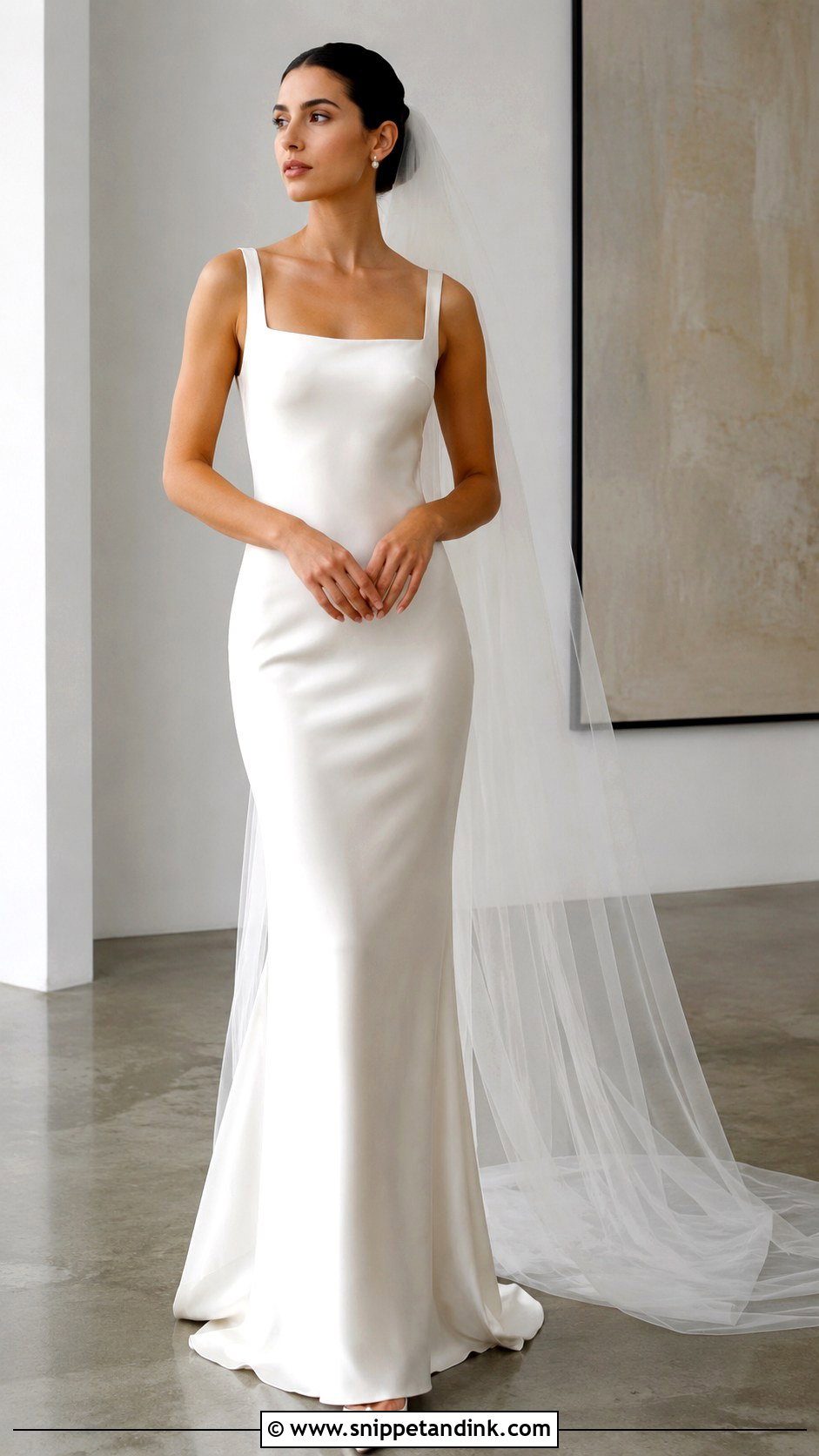
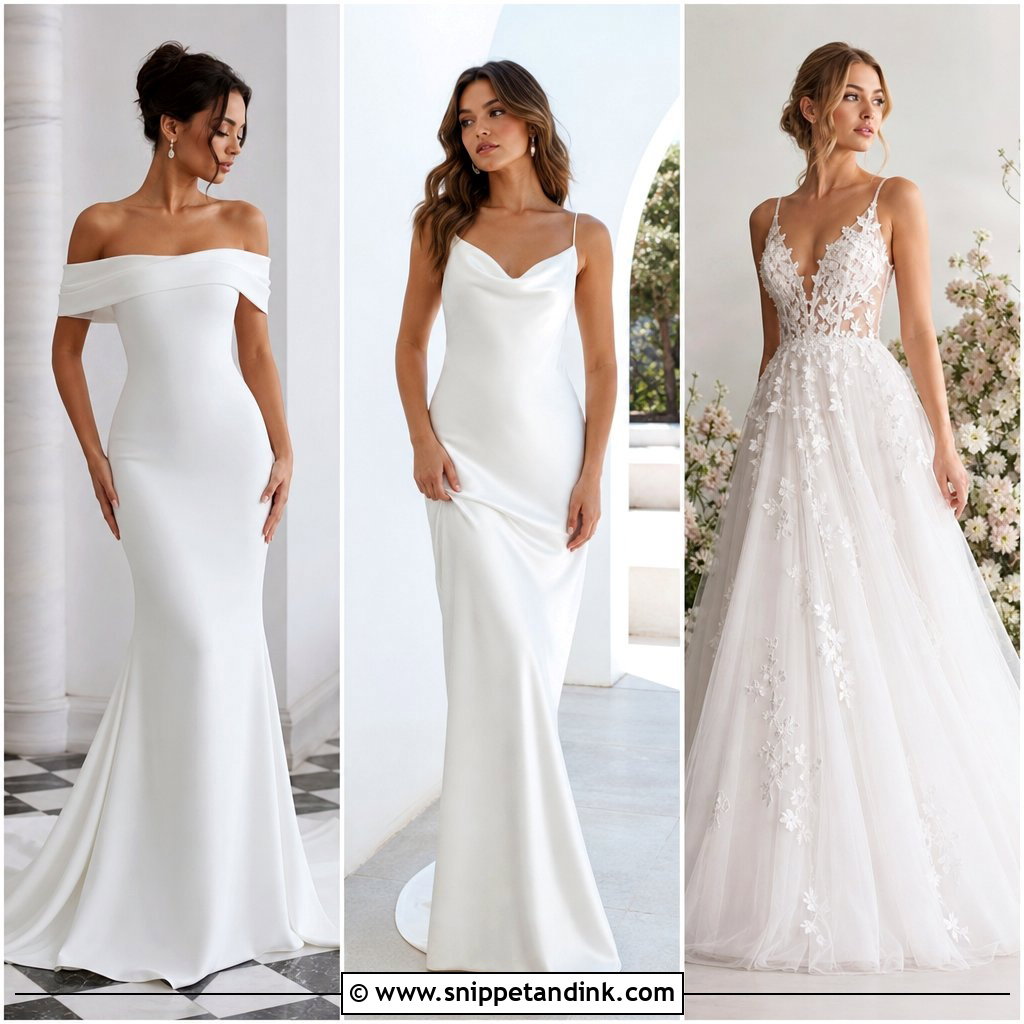
Plain satin is the hardest dress to fake. Every seam, pull and dimple shows, so I only recommend it when the fit can be perfected in alterations. A smooth column or soft A-line with a square, scoop or strapless neckline is enough design on its own. Heavy satins hang better than thin ones; if you can see light through the fabric, the dress will crease badly when you sit. Pearl studs, a sleek low bun, pointed satin heels and a plain cathedral veil finish it. It suits city venues, galleries and ballrooms, and it dates more slowly than almost anything else here.
2. Lace A Line Wedding Dress
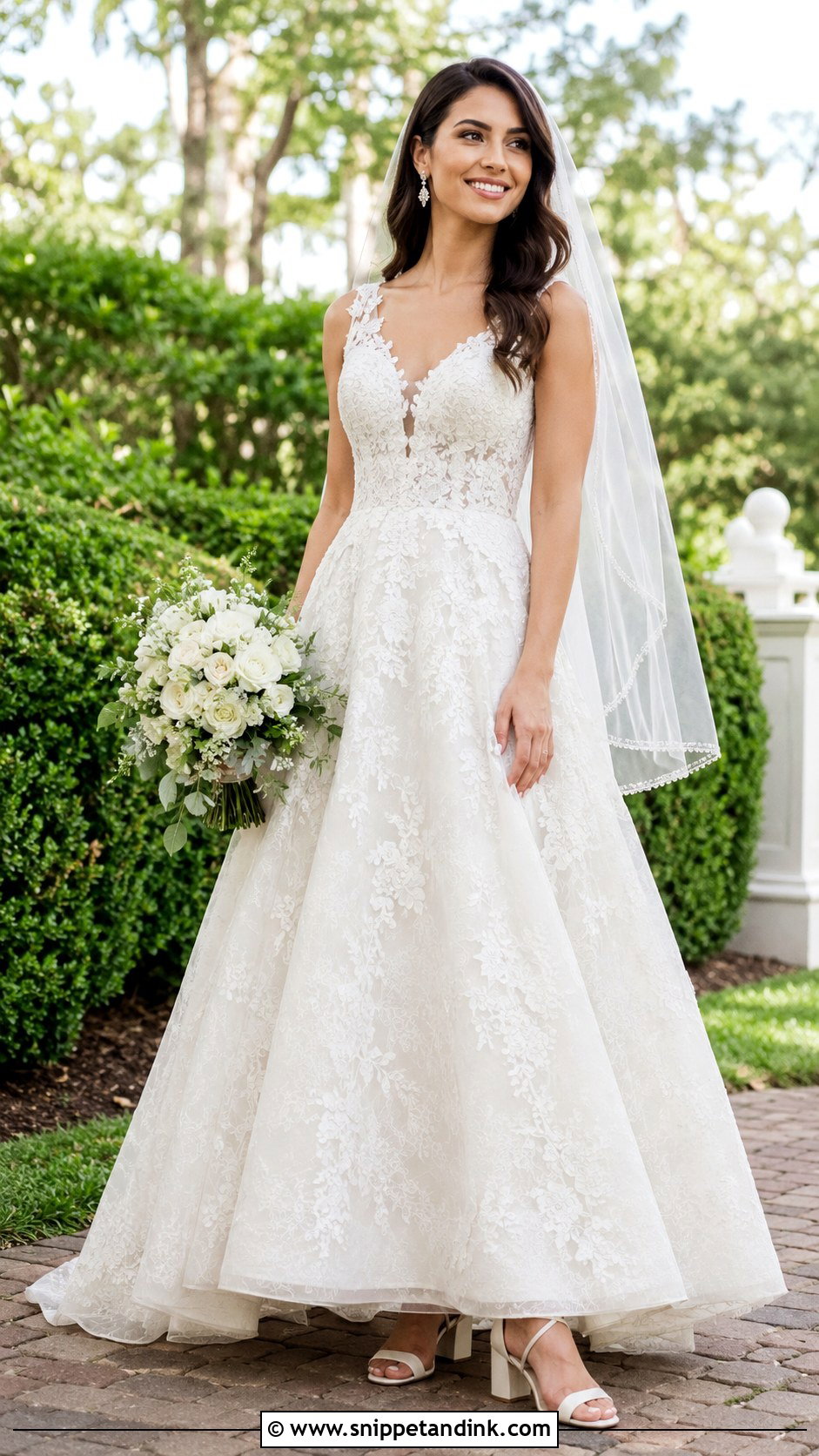
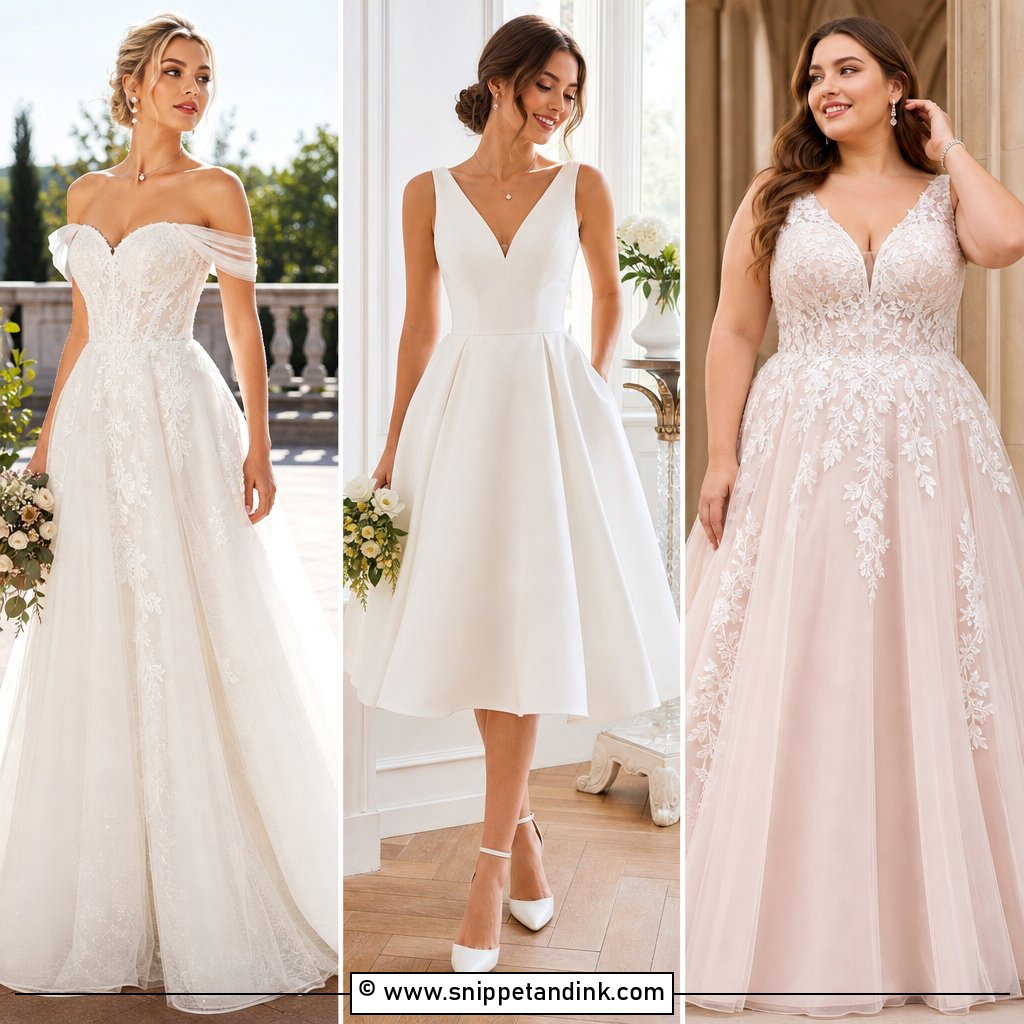
The A-line earns its reputation because the skirt leaves the hip without clinging, so it suits most figures and most venues. Lace type changes the mood: floral reads soft, geometric reads modern, allover lace leans vintage. Before you commit, rub the inside of the bodice against your inner arm. Some corded lace is scratchy at the seams, and that matters over a ten-hour day. A V-neck, illusion sleeves or fine straps change the feel further. Soft waves, a fingertip veil, crystal earrings and block heels suit a garden or estate wedding.
3. Off Shoulder Wedding Dress
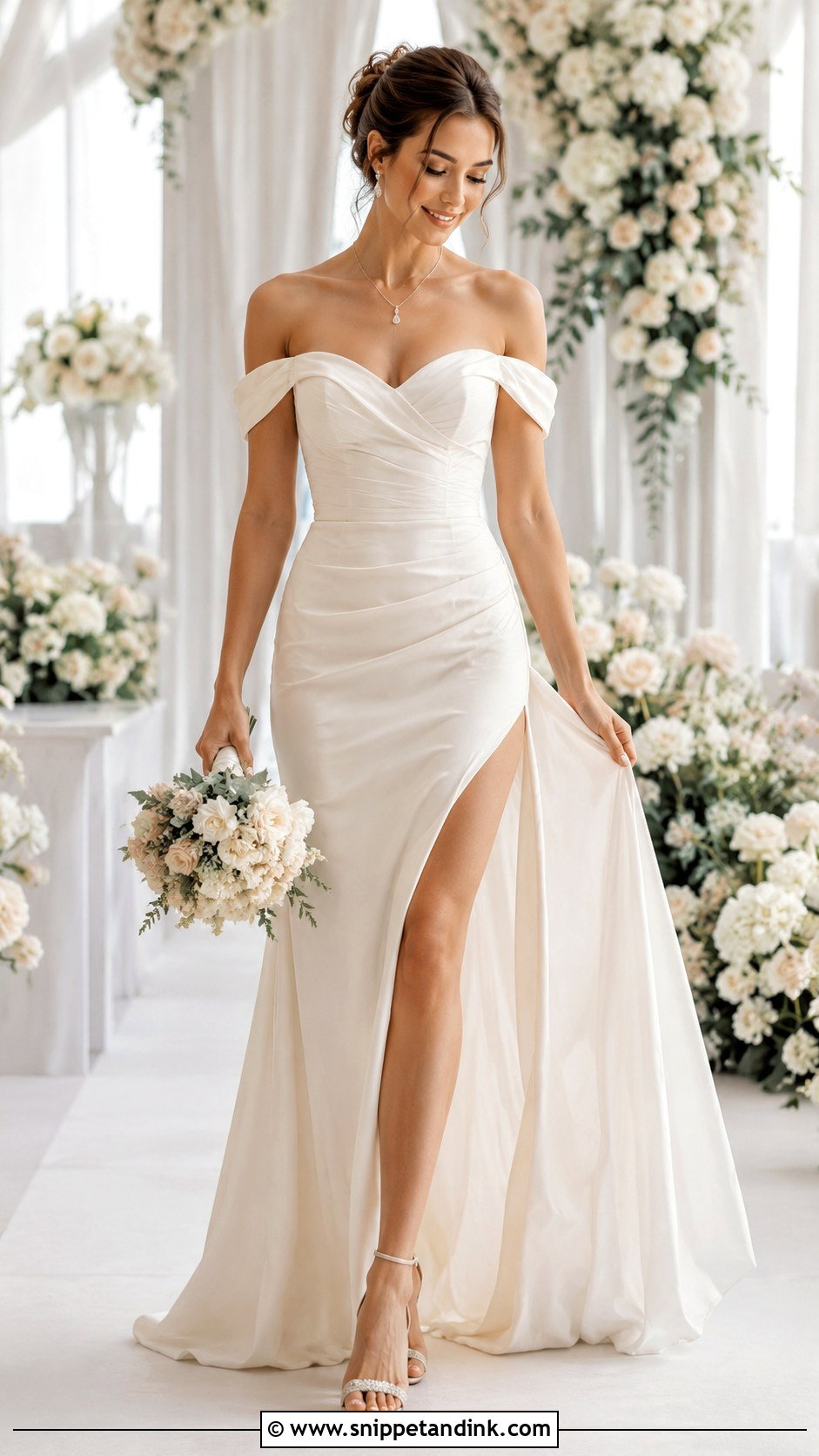
Off-shoulder necklines frame the collarbone, but they only work if the bodice holds the dress up, not the sleeves. I test it at the fitting by asking the bride to raise her arms as if she’s hugging someone taller. If the sleeves ride up, the bodice needs more structure or a grip strip. Crepe and satin give a modern finish; lace, tulle or organza look softer. It pairs with a mermaid, ball gown or A-line skirt. A fine necklace, drop earrings and an updo keep the neckline clear.
4. Strapless Ball Gown Wedding Dress
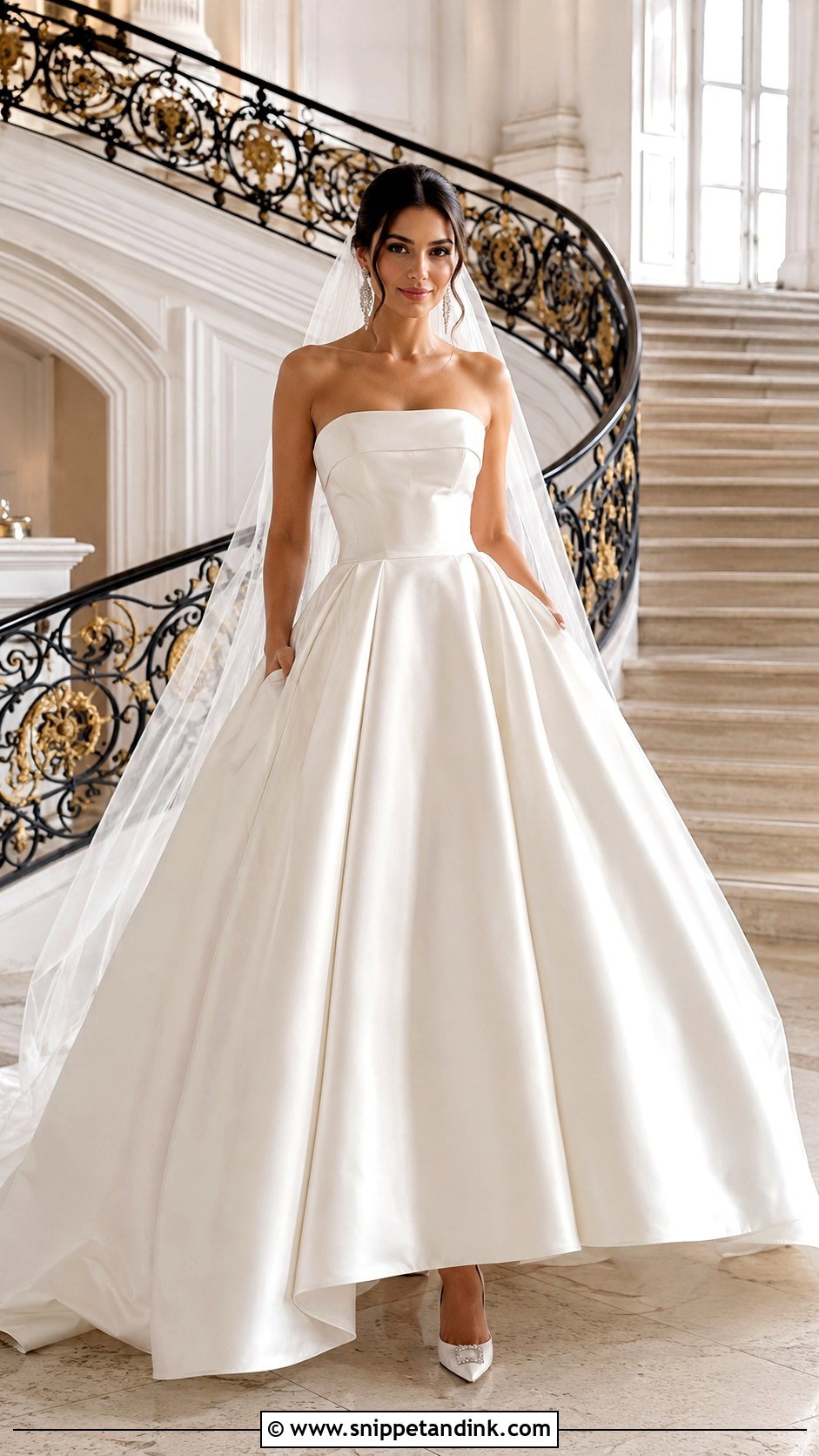
A strapless ball gown is the classic entrance, with a fitted bodice holding up a volume of skirt. Satin feels formal, tulle feels lighter and softer. A basque waist adds a dipped point at the front that makes the waist look narrower against all that skirt. The weight is the honest downside: a full satin skirt can be heavy, so try walking a long aisle-length in it, then sitting in a chair with arms. A long veil, sparkling earrings and classic heels suit formal venues. Keep accessories few, because the skirt is already doing a lot.
5. Corset Wedding Dress
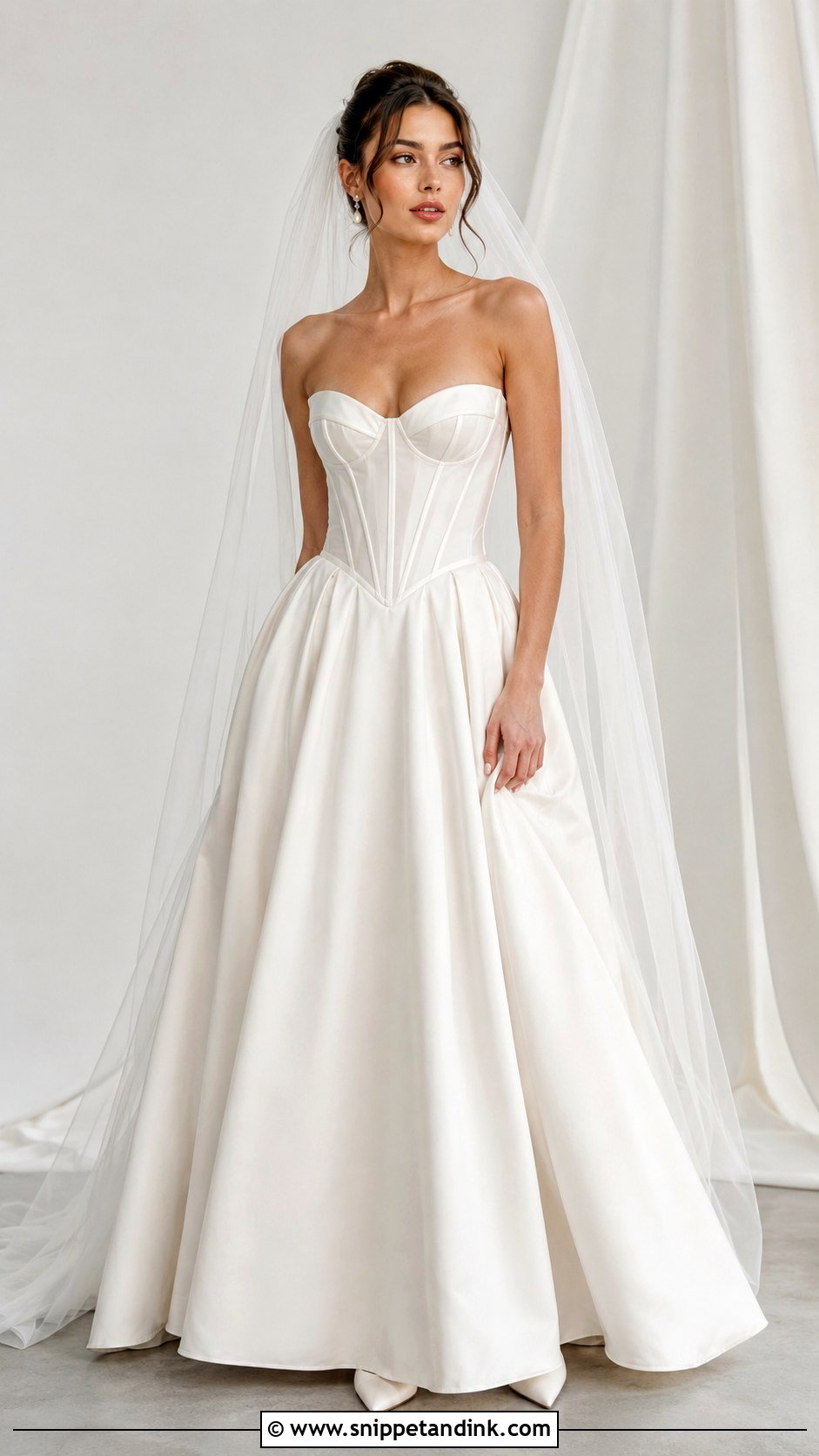
Corset bodices give shape and support, and the boning is what makes them feel secure all day. Exposed boning looks fashion-led; boning hidden under lace, satin or tulle looks softer. Plastic boning bends and can kink after a long day, while spiral steel boning keeps its line, so it’s worth asking which a gown uses. A corset top works over a ball gown, A-line, fit-and-flare or column skirt. A clean veil, soft makeup and elegant heels let the bodice lead. If you like structure with a couture influence, this is the shape to try first.
6. Long Sleeve Wedding Dress
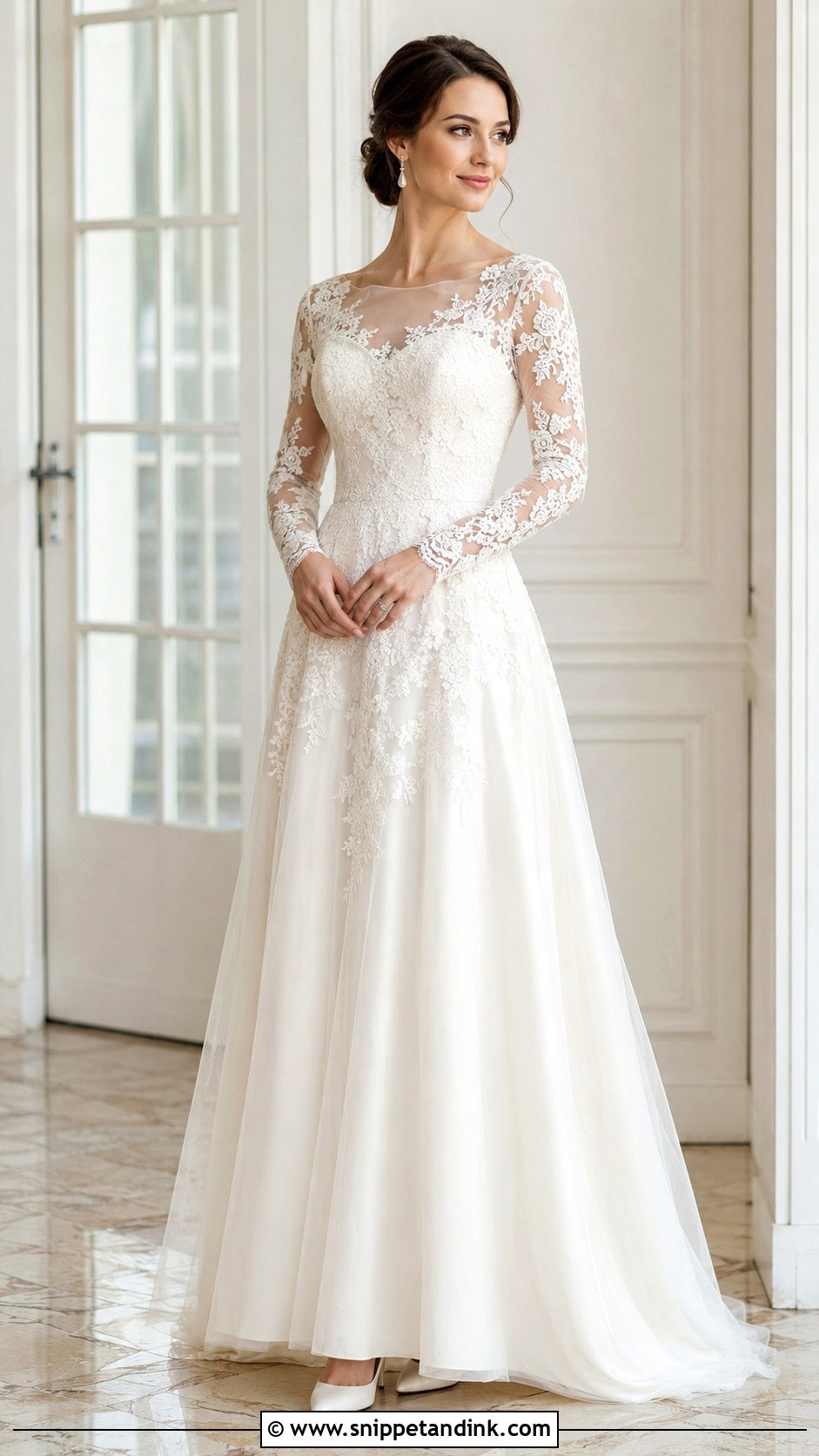
Sleeves change how a gown feels more than any other detail. Sheer lace sleeves look romantic, fitted crepe looks minimal and puffed organza adds volume at the shoulder. I check one thing before anything else: can you lift your arms above your head? Fitted sleeves set too tightly will stop you hugging, throwing a bouquet or dancing. Autumn, winter and formal indoor weddings suit them, and light illusion sleeves work for spring. Balance heavy sleeves with a clean neckline. Pearl earrings, a sleek bun and closed-toe heels finish it.
7. Square Neck Wedding Dress
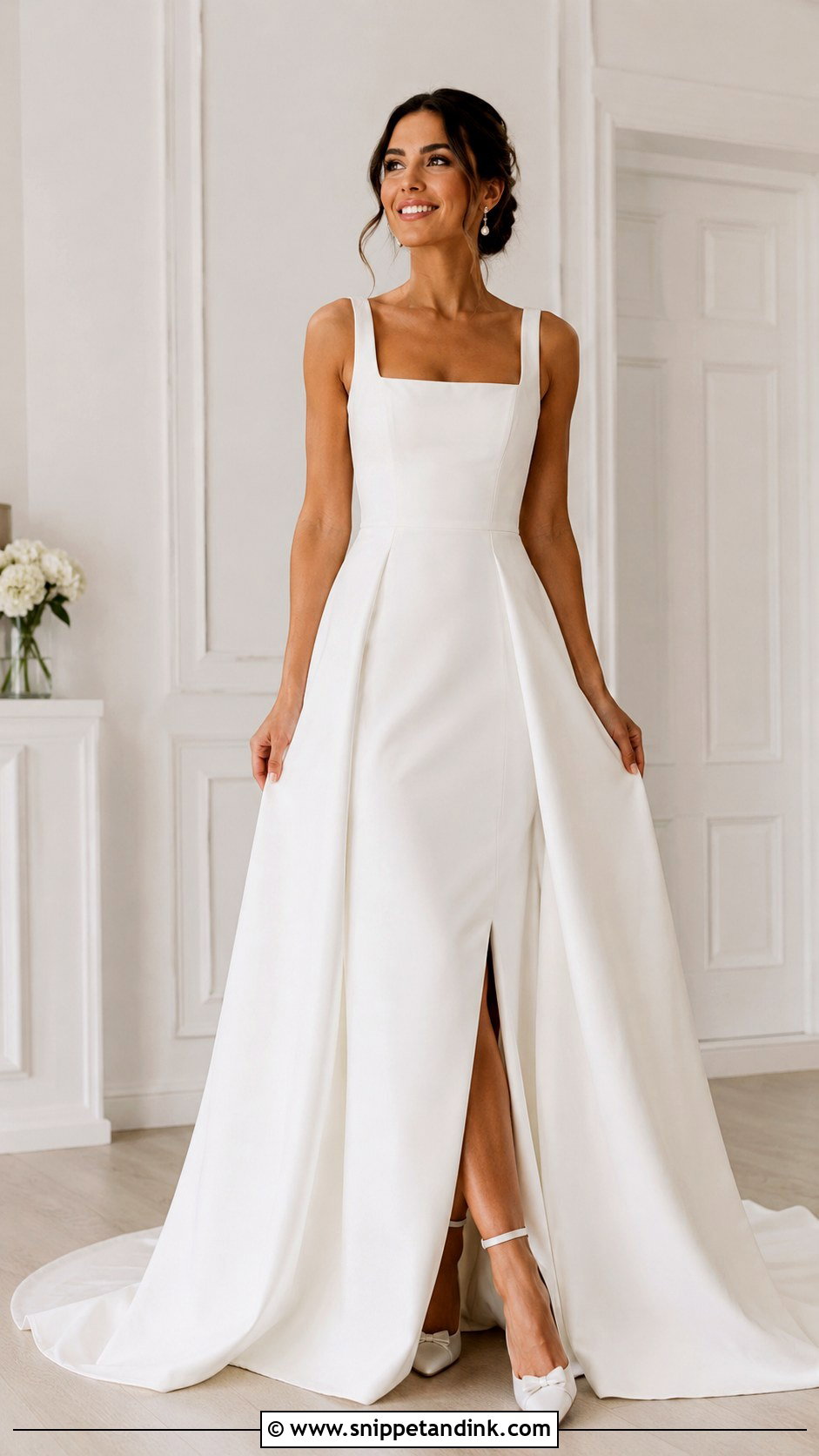
The square neckline highlights the collarbone and gives the bodice a crisp, architectural shape. It sits on thick or thin straps or long sleeves. Crepe or satin with a fitted waist keeps it simple; lace appliqué or a tulle skirt softens it. The corners are the detail to watch in fittings. On a fuller bust they can gape outward when you lean forward, so I have them tacked or lightly boned. A neat chignon, pearl drops and a medium-length veil suit it, and it offers modest coverage without looking plain.
8. Sweetheart Neckline Wedding Dress
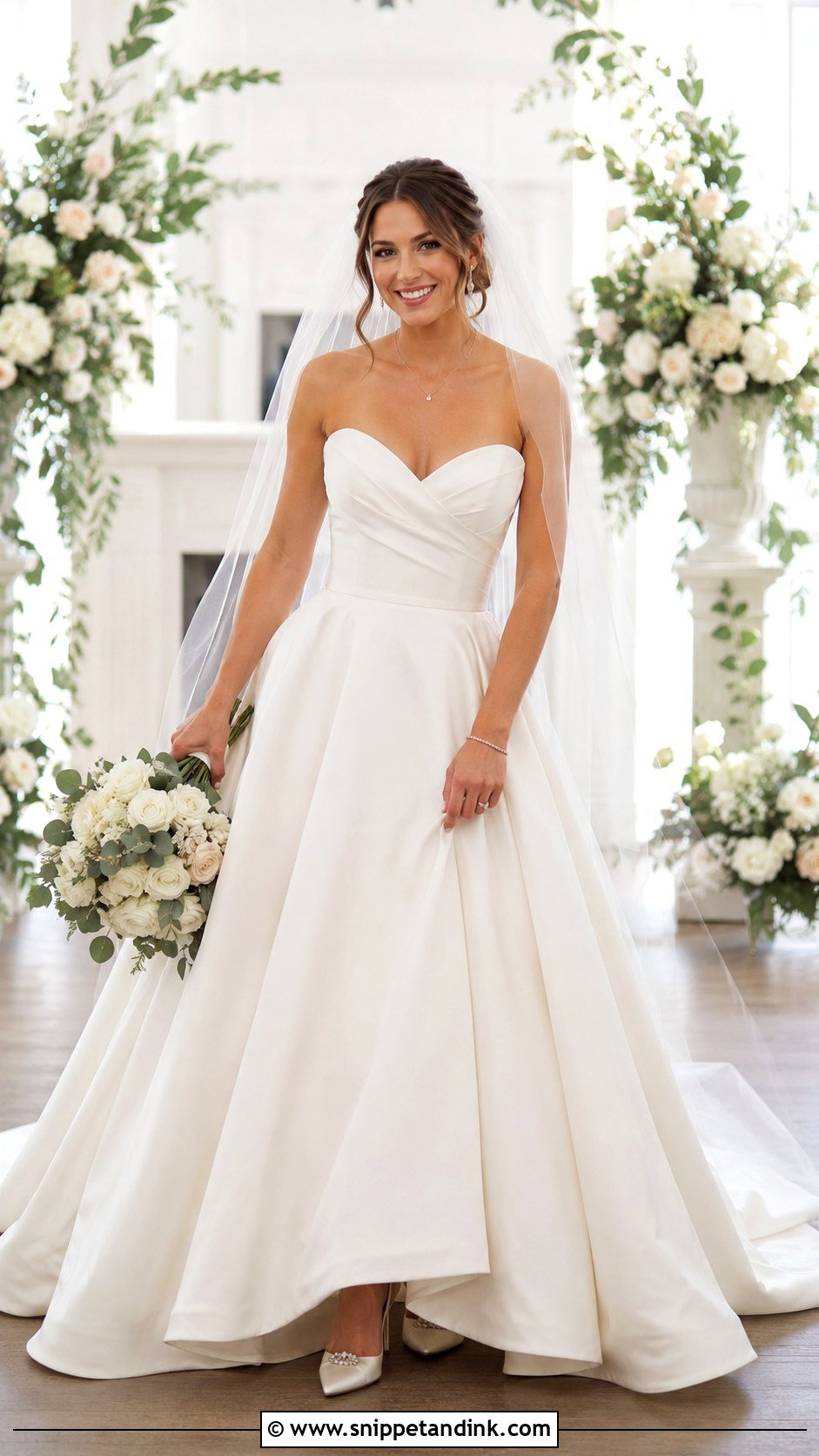
A sweetheart neckline wedding dress softens the upper body with its curved top edge. It sits well on strapless gowns, fine straps, detachable sleeves and corset bodices. Satin keeps it classic, tulle makes it dreamy, lace adds detail. The dip at the centre of the sweetheart should sit flat against the chest; if it lifts away when you breathe in, the bodice needs taking in at the side seams. Pair a defined waist with a full skirt or a fit-and-flare, and keep jewelry dainty with soft curls and a sheer veil.
9. High Neck Wedding Dress
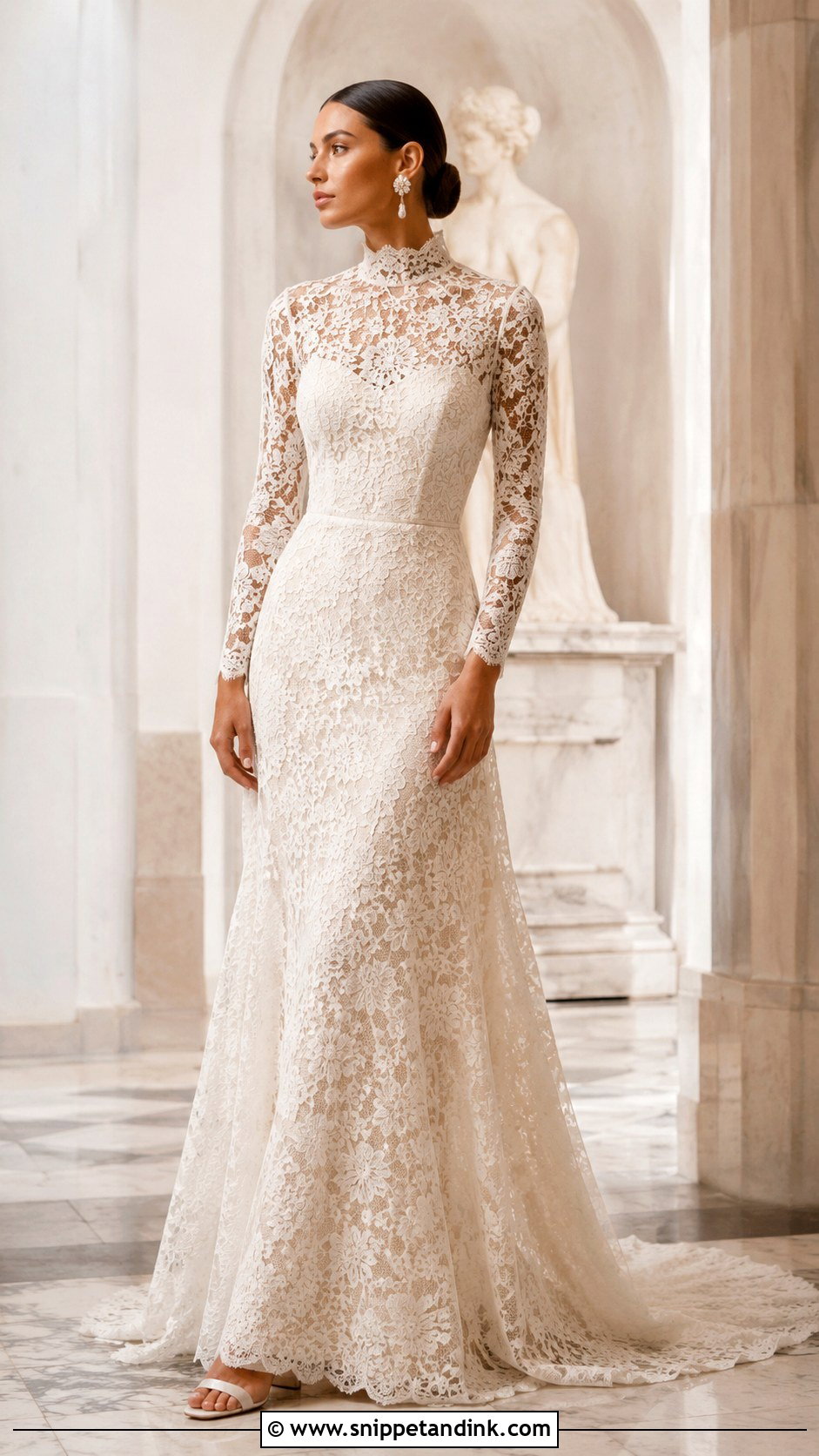
A high neck reads modest, fashion-led or vintage depending on fabric. Sheer lace looks soft; satin and crepe look sleek. Skip necklaces and let earrings carry the jewelry. High necklines can feel warm during a summer ceremony, so I’d weigh the season honestly before choosing one in thick satin. A low bun, smooth ponytail or a veil tucked under the hair keeps the line clean. It suits formal weddings, museums, rooftops and colder months.
10. Mermaid Wedding Dress
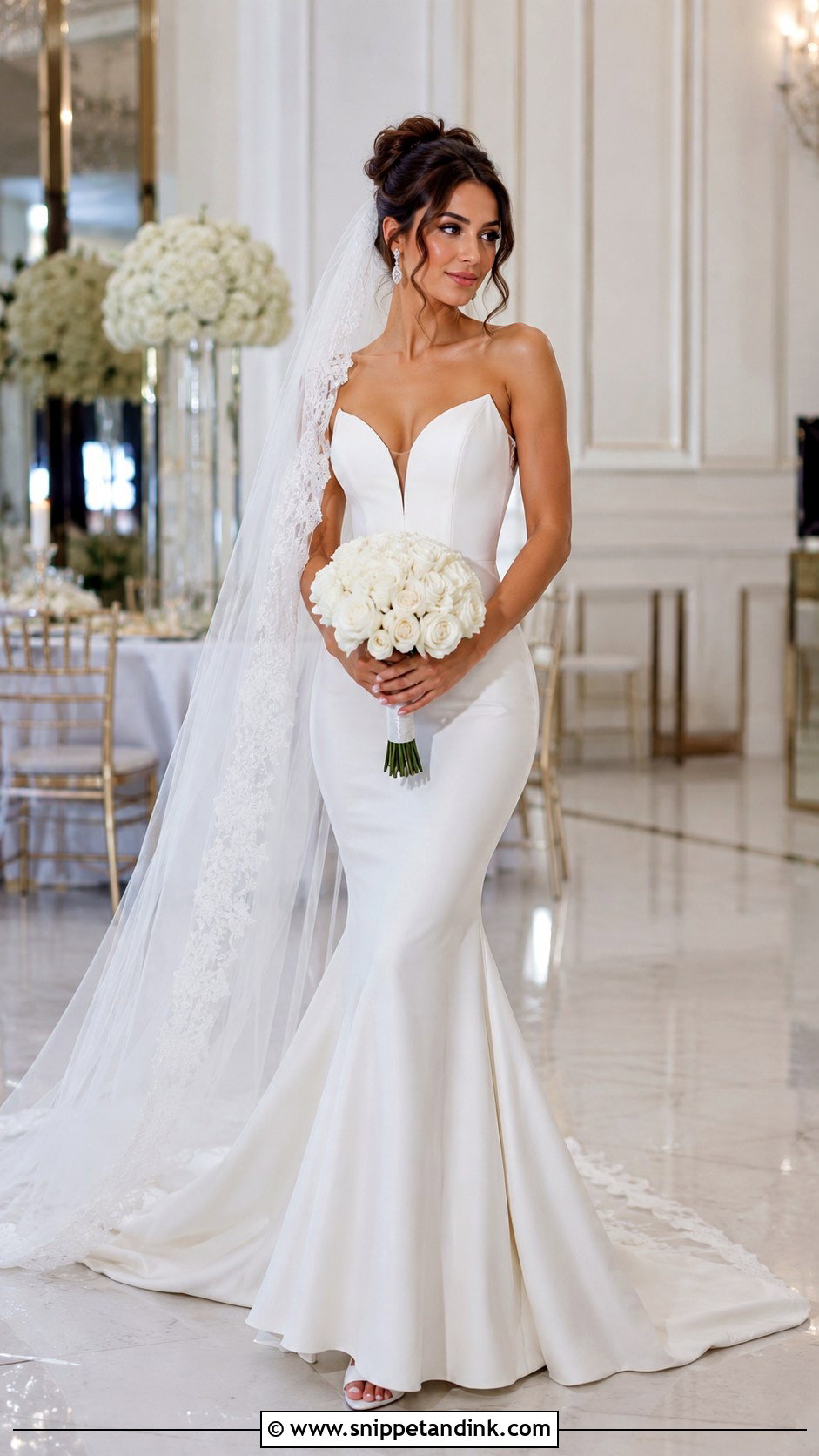
A mermaid follows the body through the bodice, waist and hips, then flares near the knee. Satin, crepe, lace and beaded fabric all suit it. The flare point is the decision that matters. Low flares look dramatic but restrict your stride; a slightly higher flare lets you climb steps and dance. Walk, sit and dance at every fitting, not just stand in front of the mirror. Supportive heels, a long veil and earrings matched to the dress’s detail level finish it for formal and evening receptions.
11. Fit And Flare Wedding Dress
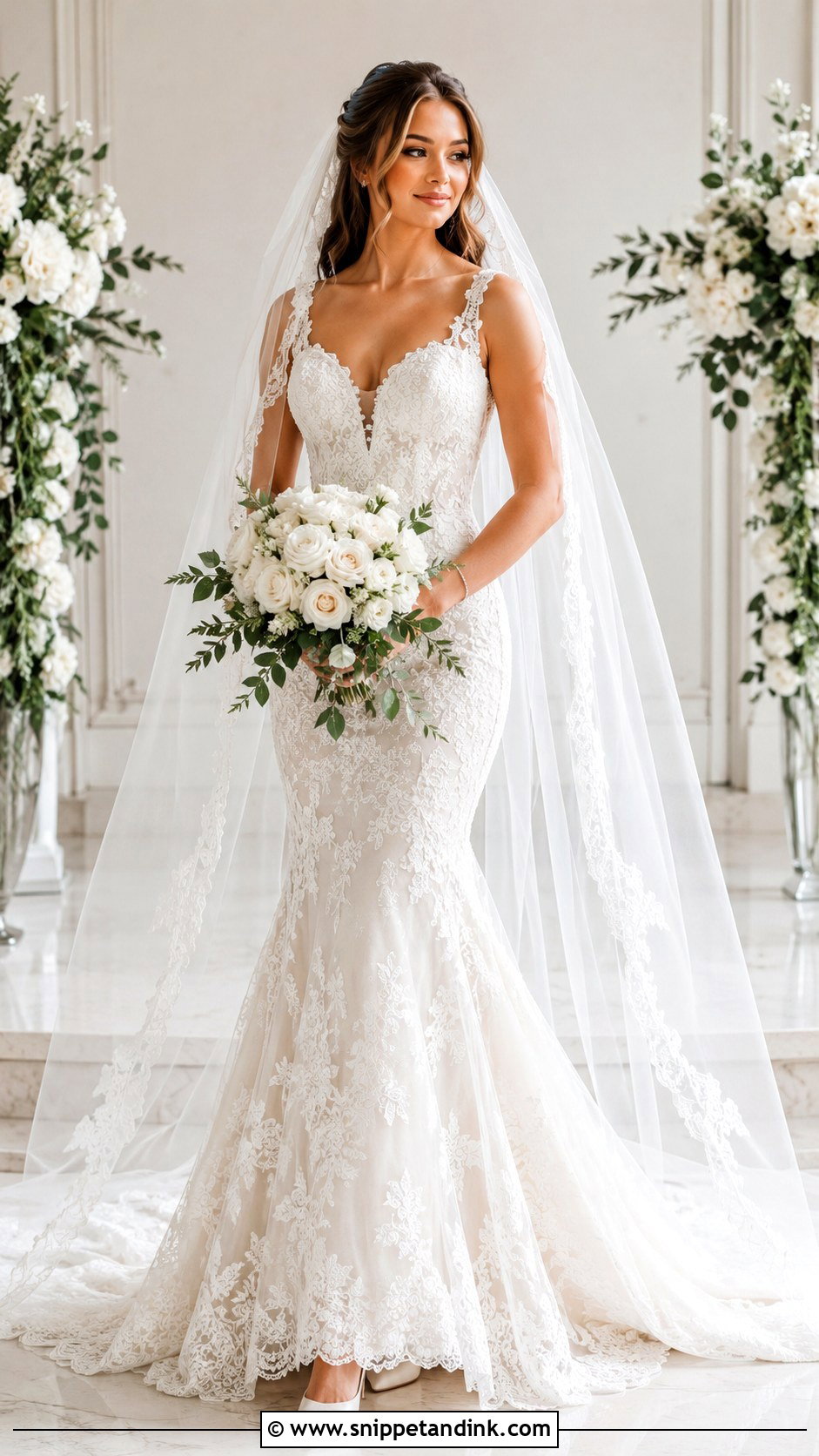
Fit and flare is the mermaid’s easier sibling. It fits through the bodice and hips and opens gradually from mid-thigh, so you see the figure without feeling locked in. That makes it the shape I suggest to brides torn between an A-line and a mermaid. It works in lace, satin, crepe, tulle or mixed fabrics. Add a chapel veil, a fine bracelet and classic pumps. It’s comfortable enough for outdoor ceremonies and polished enough for formal receptions.
12. Basque Waist Wedding Dress
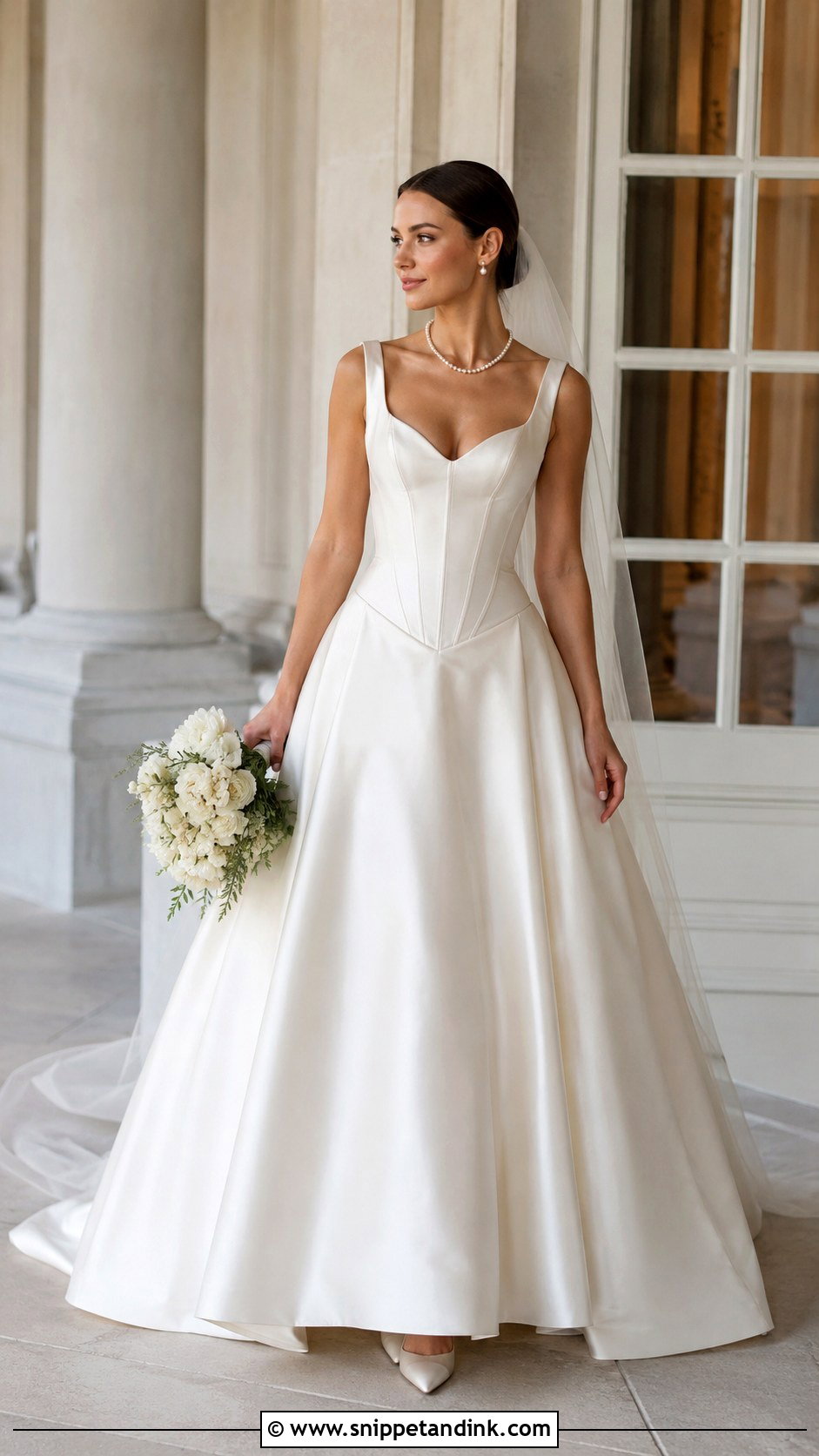
The basque waist dips into a V at the front, lengthening the waistline and making the skirt look fuller by contrast. It feels historical but looks current in clean satin, tulle or structured mikado. The point of the V should sit centred and flat; if it rides up when you sit, the bodice is too short for your torso. It pairs best with a full skirt. A simple veil, pearl accessories and a soft updo keep the focus on the waist, and it needs very little embellishment.
13. Drop Waist Wedding Dress
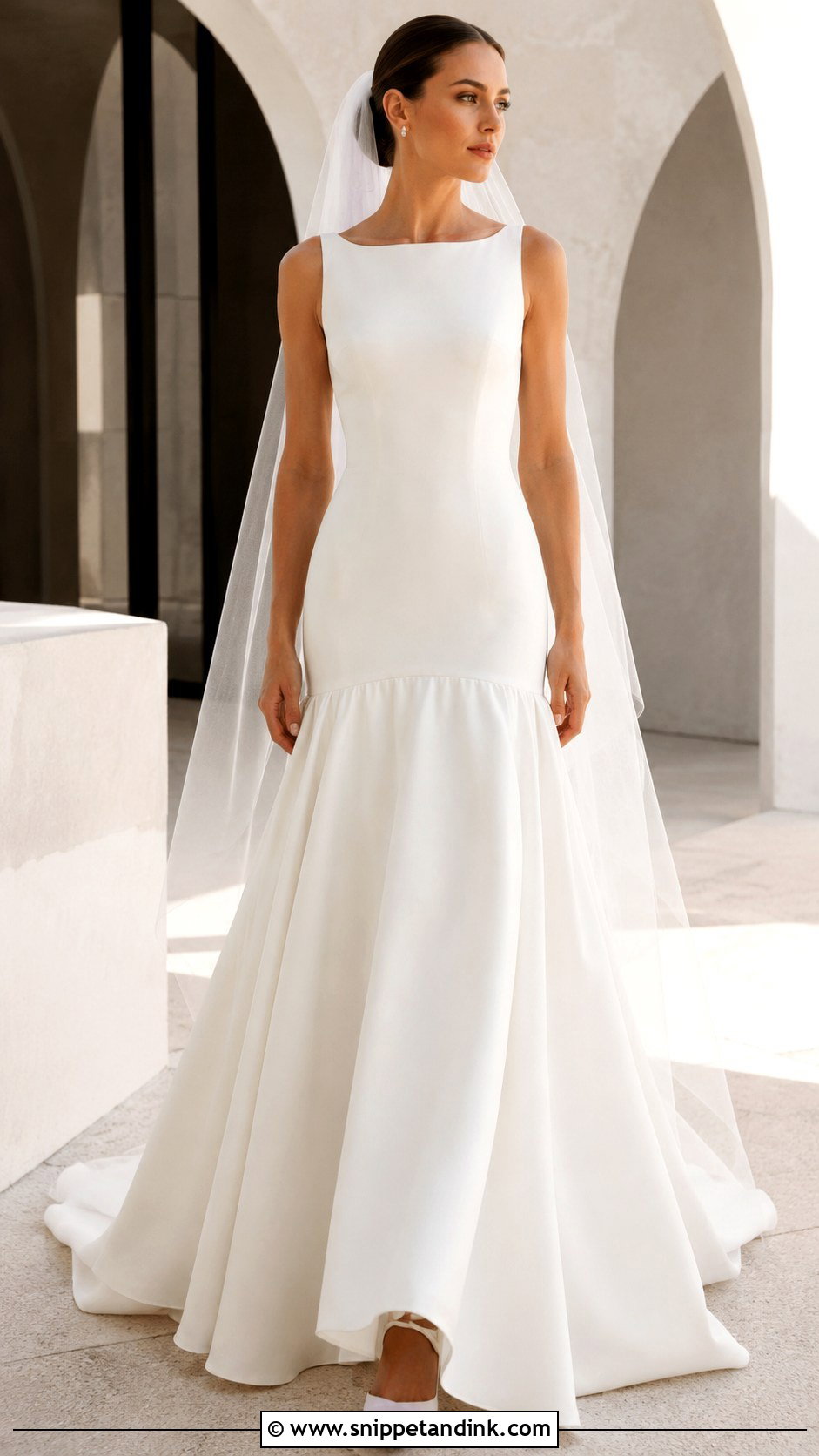
A drop waist places the seam below the natural waist, often near the upper hip, before the skirt begins. That lengthens the torso and gives a sculptural line in satin or crepe, or a romantic one in lace or tulle. It’s the least forgiving waist placement for a short torso, because it can make the legs look shorter. Fittings matter more here than for most gowns. Minimal jewelry, a clean veil and elegant heels keep the shape uncluttered.
14. Pearl Embellished Wedding Dress
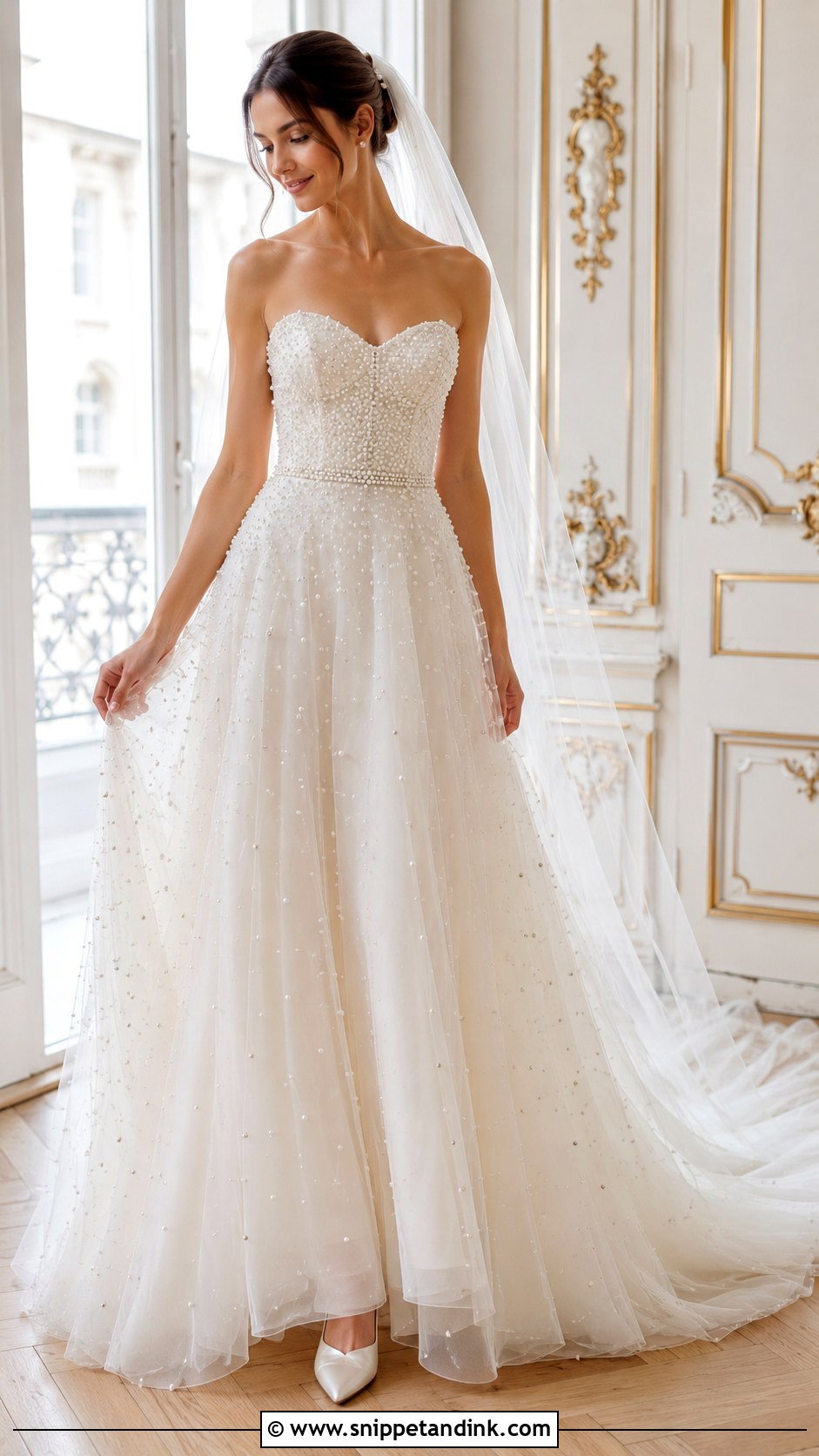
Pearls give a soft, rounded shine instead of the sharp sparkle of crystals. They can be scattered over tulle, lined along straps, set into sleeves or used to outline a neckline. On heavily pearled gowns I check the thread work inside the bodice, because loose strands snag on lace and pearls start dropping after a few hours. Pearl earrings, satin shoes and a simple veil suit it, but avoid stacking pearl necklace, bracelet and hair pins all at once. It fits romantic, formal and vintage-inspired weddings.
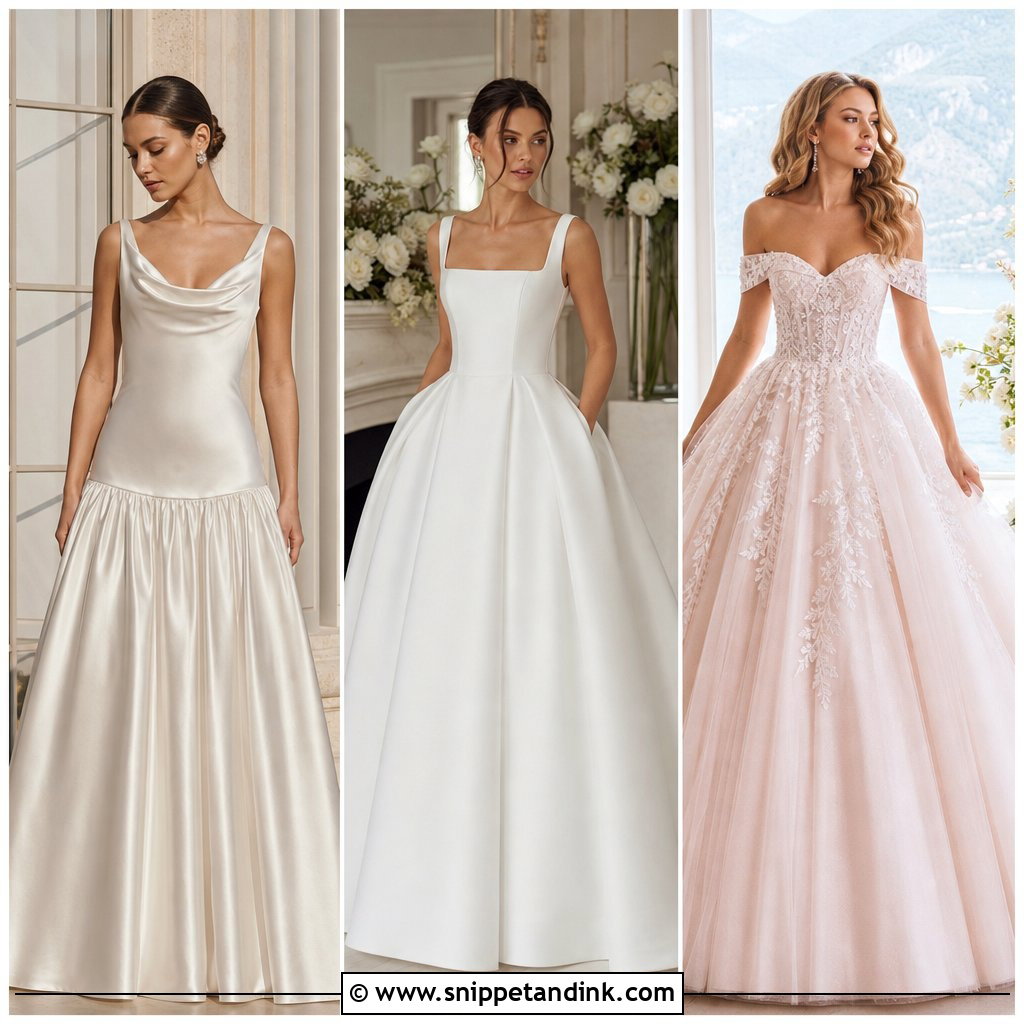
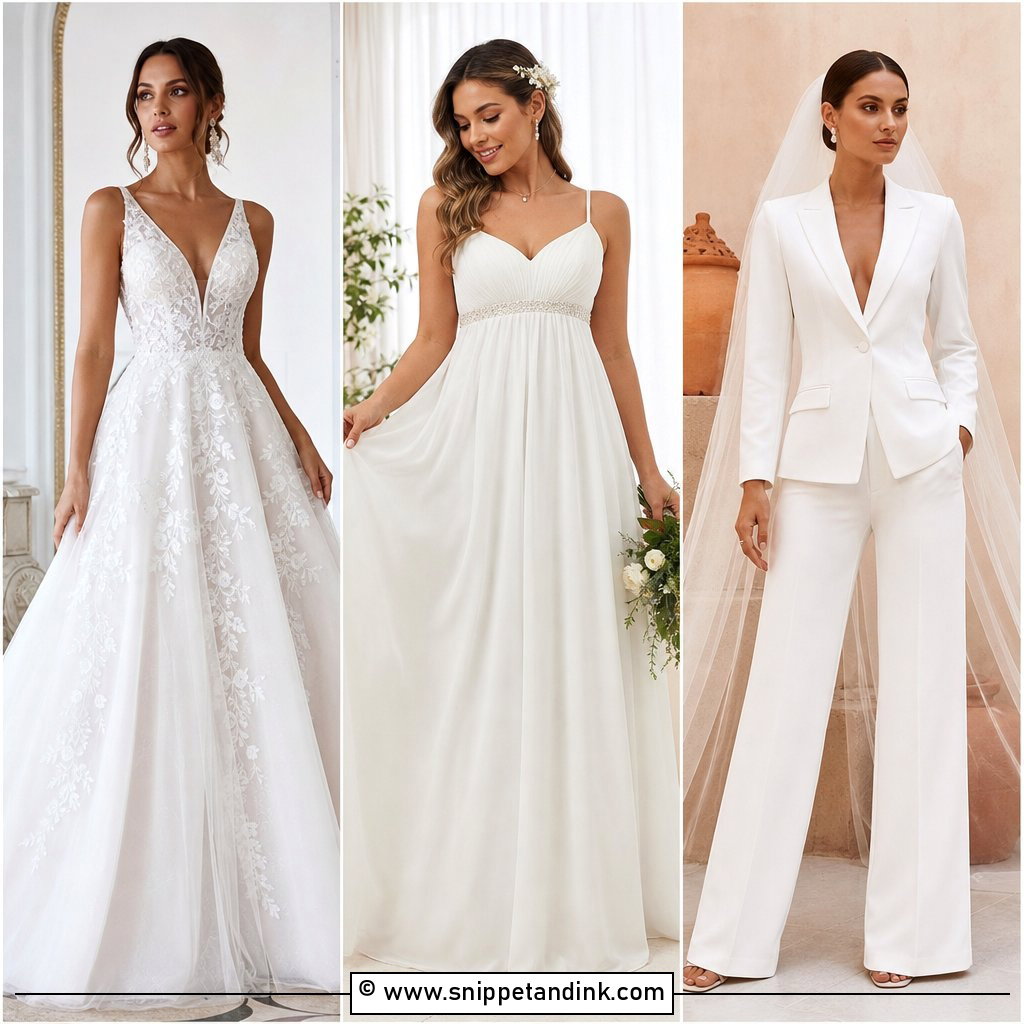
15. Floral Applique Wedding Dress
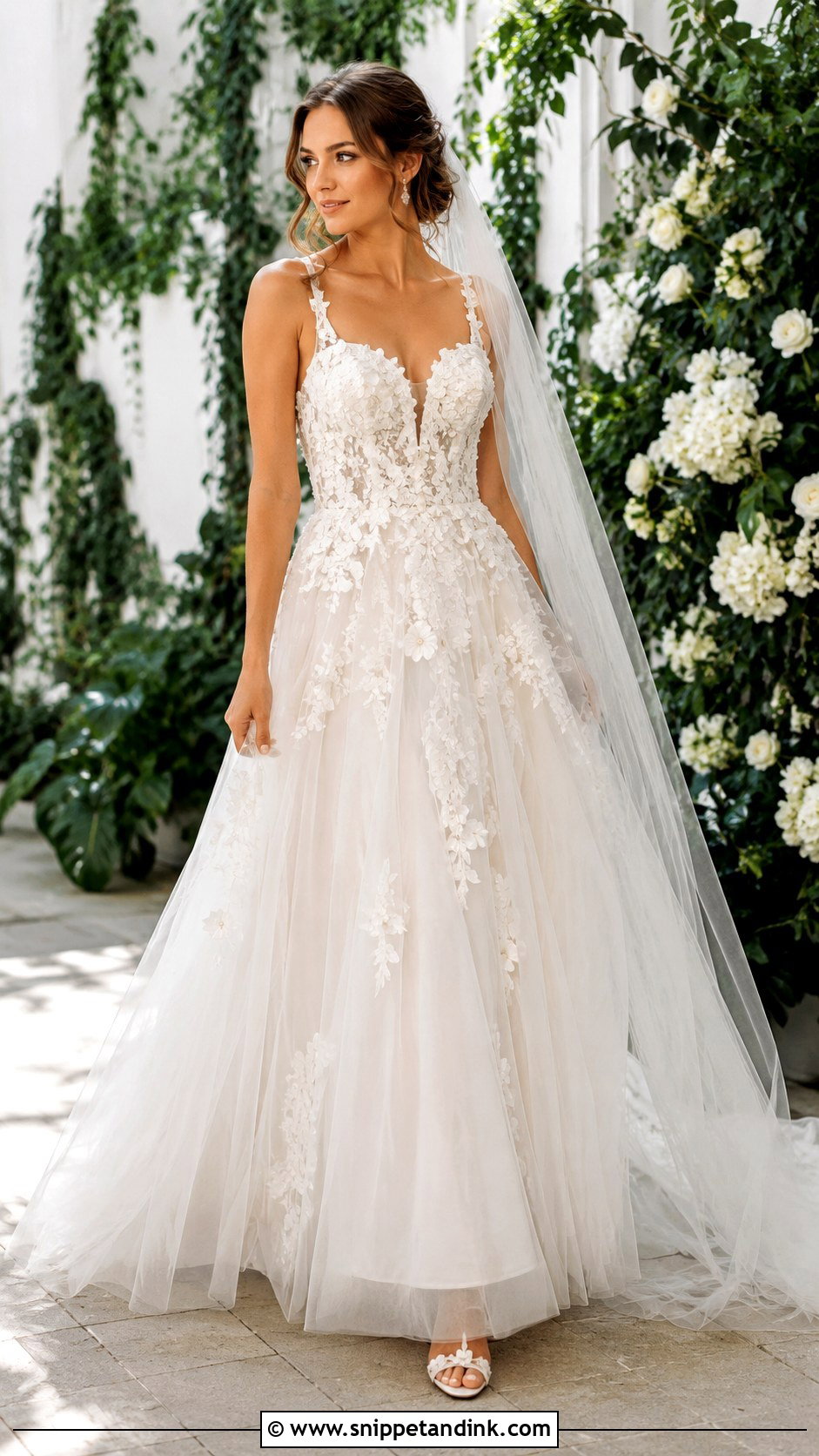
Appliqués are cut-out flowers sewn on top of the fabric, which gives a raised, three-dimensional surface that printed florals can’t match. They can cover the whole dress or sit only on the bodice, sleeves, train or skirt. Tulle, organza and lace suit them best. I’d look at how the appliqués are attached around the underarms and waist; stiff edges there rub as you move. Simple earrings, a soft veil and natural makeup keep it from feeling crowded at spring and outdoor weddings.
16. Bow Back Wedding Dress
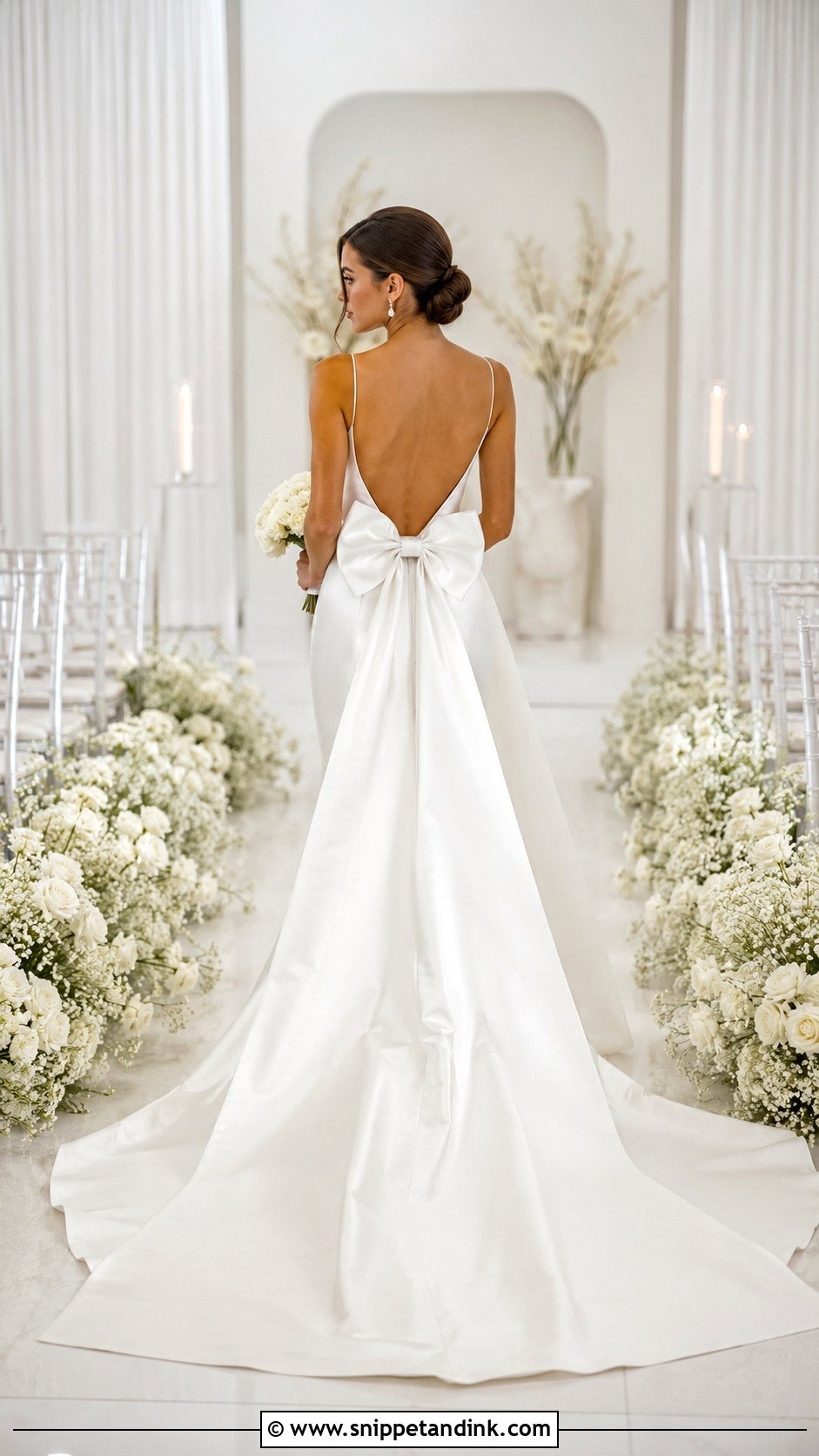
Guests spend the whole ceremony looking at your back, which is why a bow there is such a smart place for a statement. It can be oversized and sculptural, soft and trailing or small and neat. Satin, mikado, organza and crepe hold the shape; very soft fabric droops by evening. Sit in a chair with a back during the fitting to make sure a large bow doesn’t crush or push you forward. A low bun or side-swept hair keeps it visible. Keep jewelry minimal when the bow is big.
17. Detachable Sleeve Wedding Dress
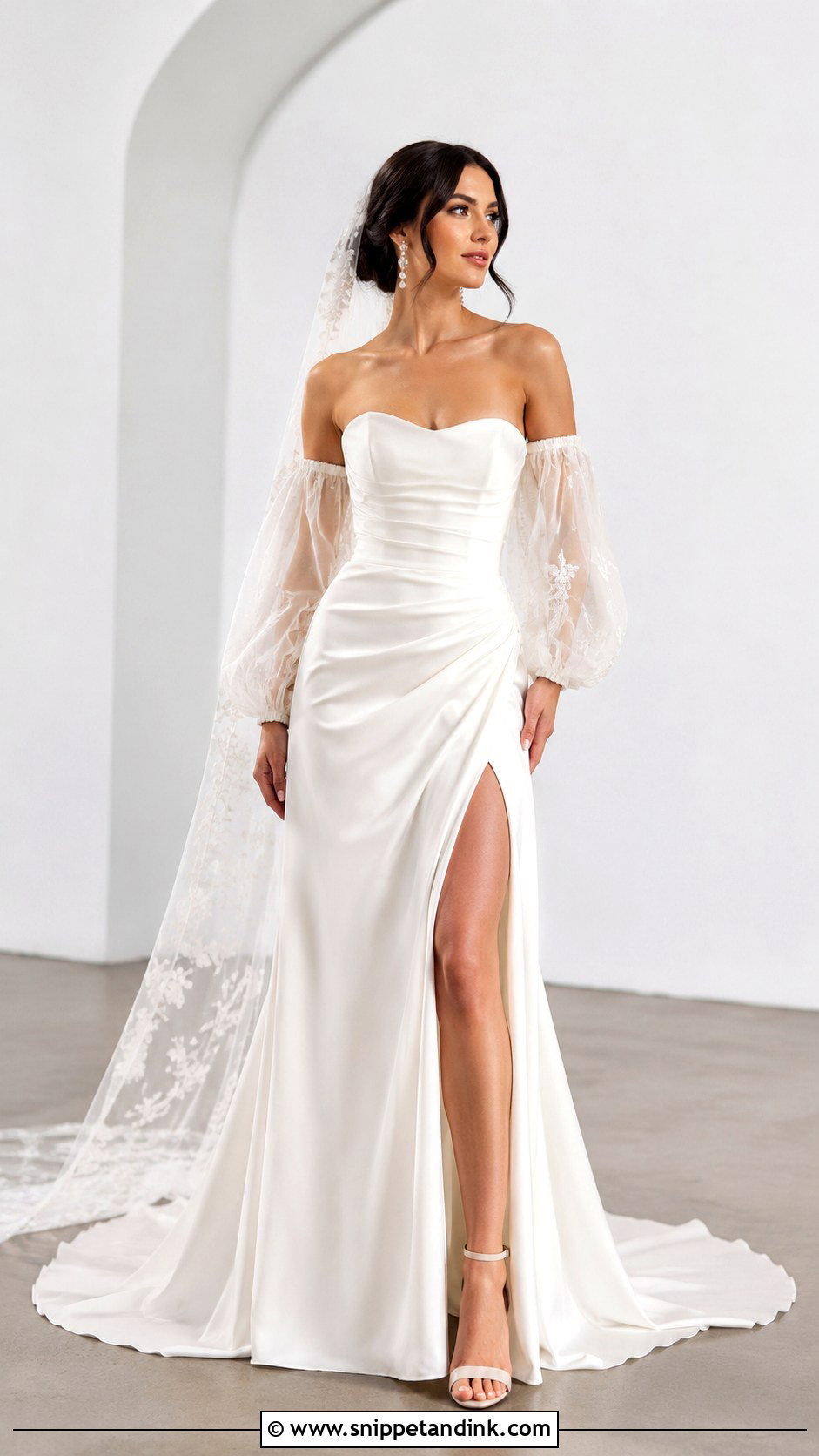
Detachable sleeves let you wear coverage for the ceremony and bare shoulders for dancing. Puff, lace, sheer fitted, off-shoulder and cape-style sleeves all exist. How they attach decides how they look: hidden hooks or snaps sewn into the bodice sit cleanly, while elastic-only sleeves can slip. Practise removing them once with whoever will help you. Wear a veil for the first look and switch to statement earrings when the sleeves come off. They suit changeable weather well.
18. Cape Wedding Dress
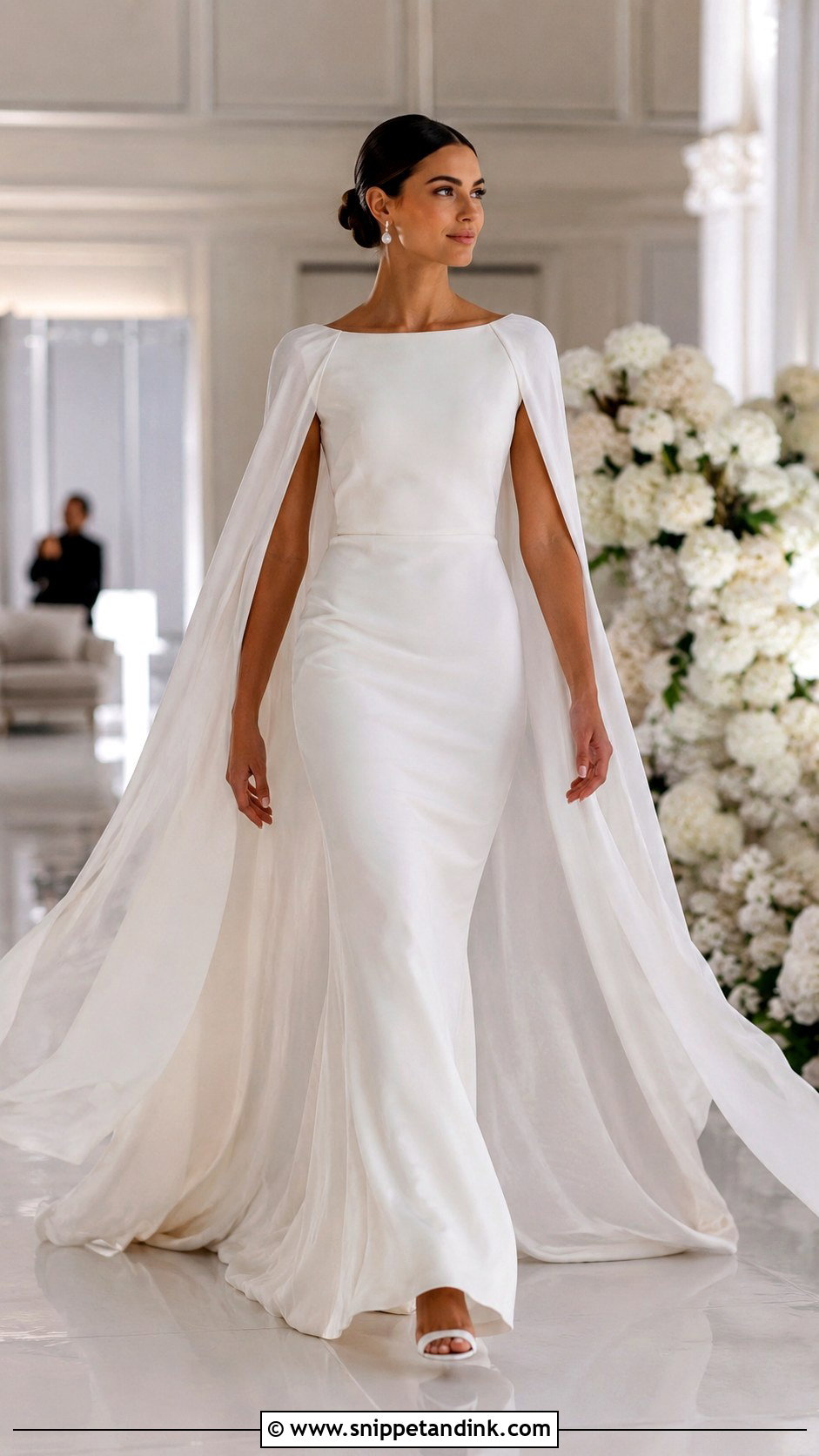
A cape replaces the veil and attaches at the shoulders, neckline or back. Sheer tulle looks soft; satin or crepe looks architectural. Lace trim, pearls or floral appliqué add detail. I prefer capes fixed at the shoulder seam, because those tied only at the neck pull backward when you sit. Keep the gown underneath simple. It looks best on wide aisles and outdoor steps where it has room to trail, and it saves you from a veil catching on everything.
19. Tea Length Wedding Dress
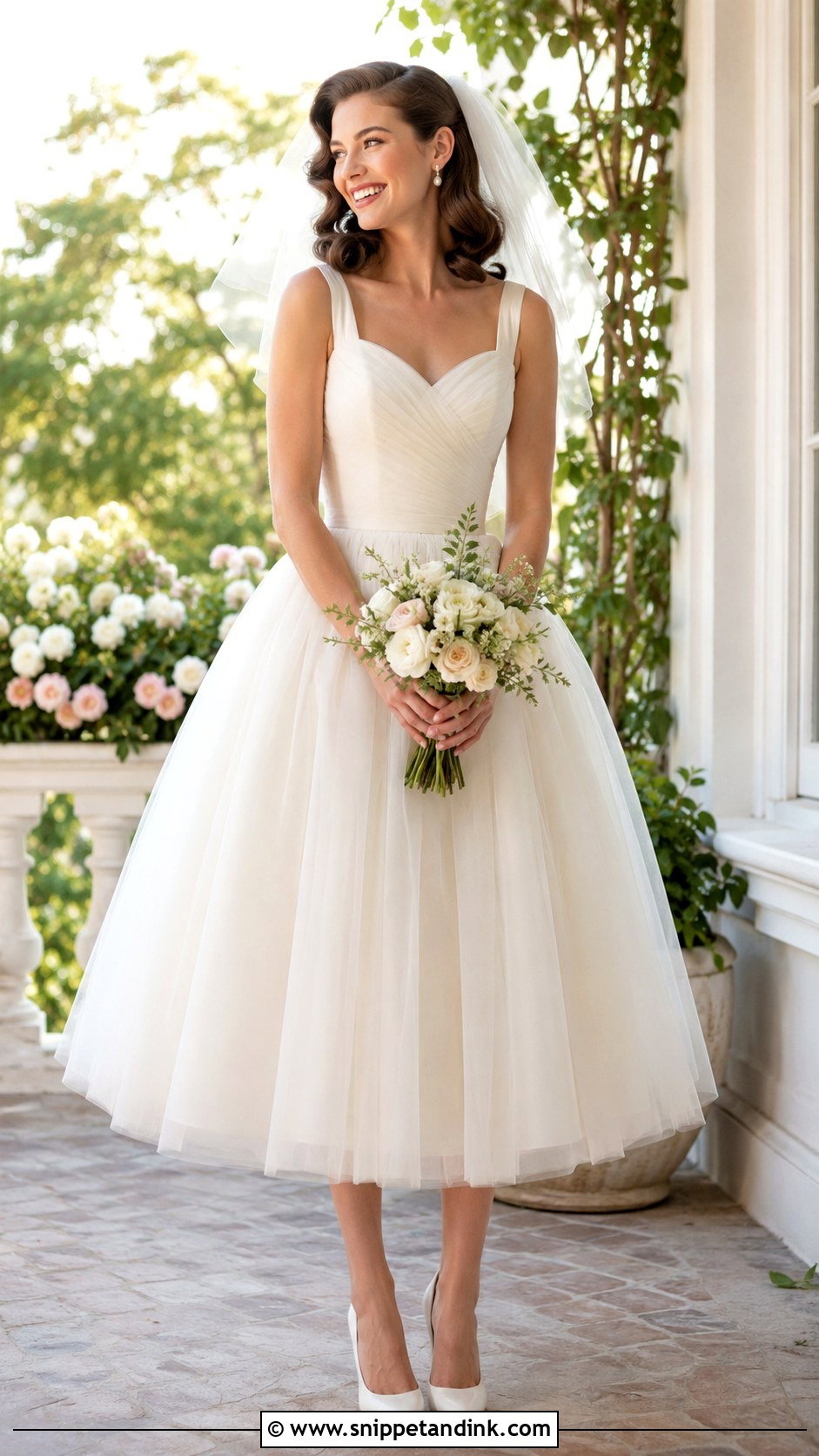
Tea length falls between knee and ankle, so you walk and dance without holding the skirt and your shoes become part of the outfit. Satin, tulle, lace and organza all work. A full skirt reads retro; a clean structured shape reads modern. Pick the shoes before hemming, because the hem is measured against the ankle and an ankle strap changes the proportion. Pointed pumps, pearl earrings and a short veil or hair bow suit courthouses, garden receptions and brunch weddings.





20. Short Wedding Dress
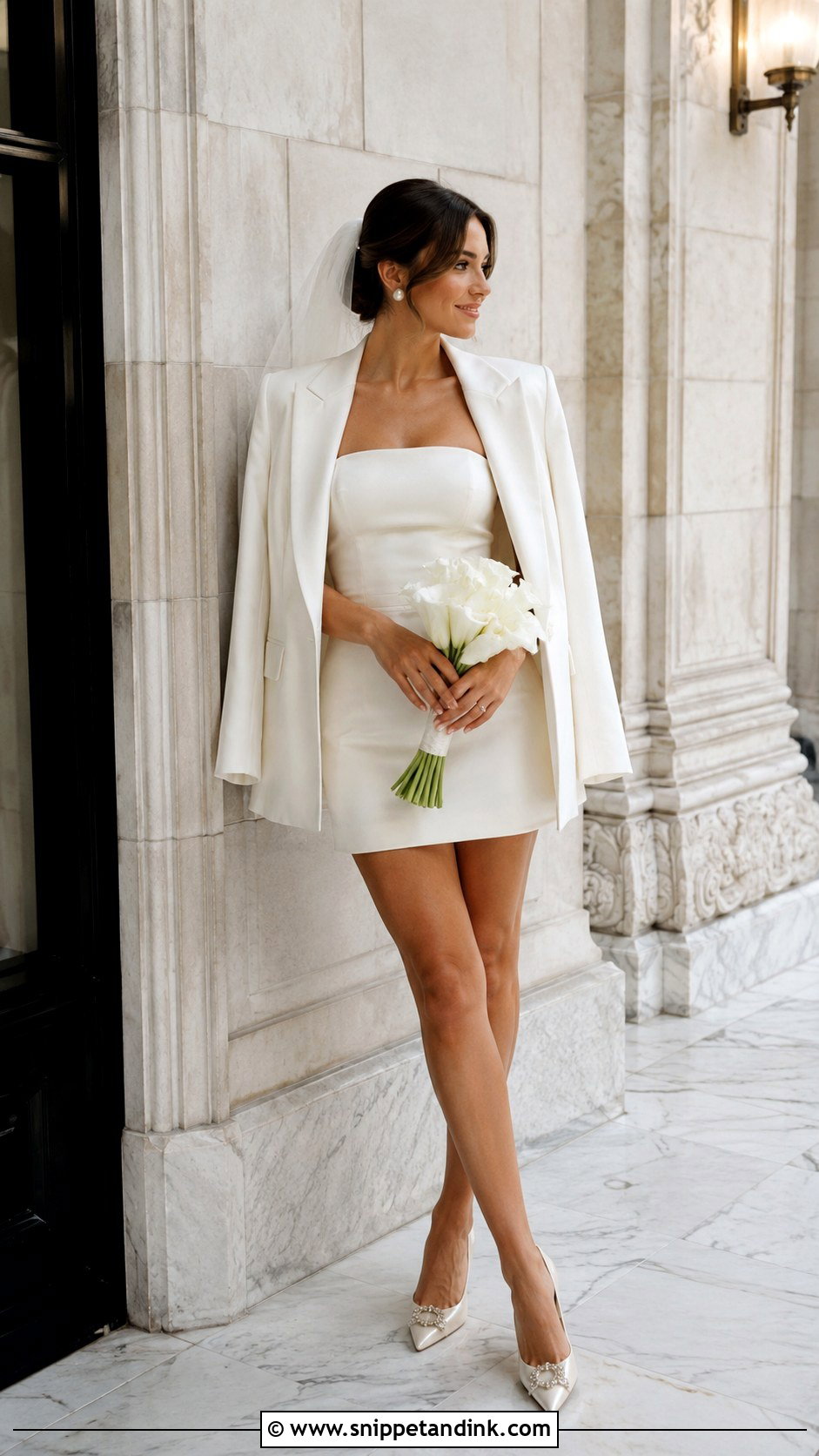
Short dresses run from minis to knee-length to tailored shifts, and the length should match your comfort, not a trend. Satin minis look sleek, feather trim looks playful and short lace looks romantic. Short hems show every flaw in tailoring, so the fit at the hip and the hem’s straightness matter more than on any long gown. Statement heels, a small veil, pearls or a structured blazer finish it. It works as a ceremony dress or as the reception change.
21. Two Piece Wedding Dress
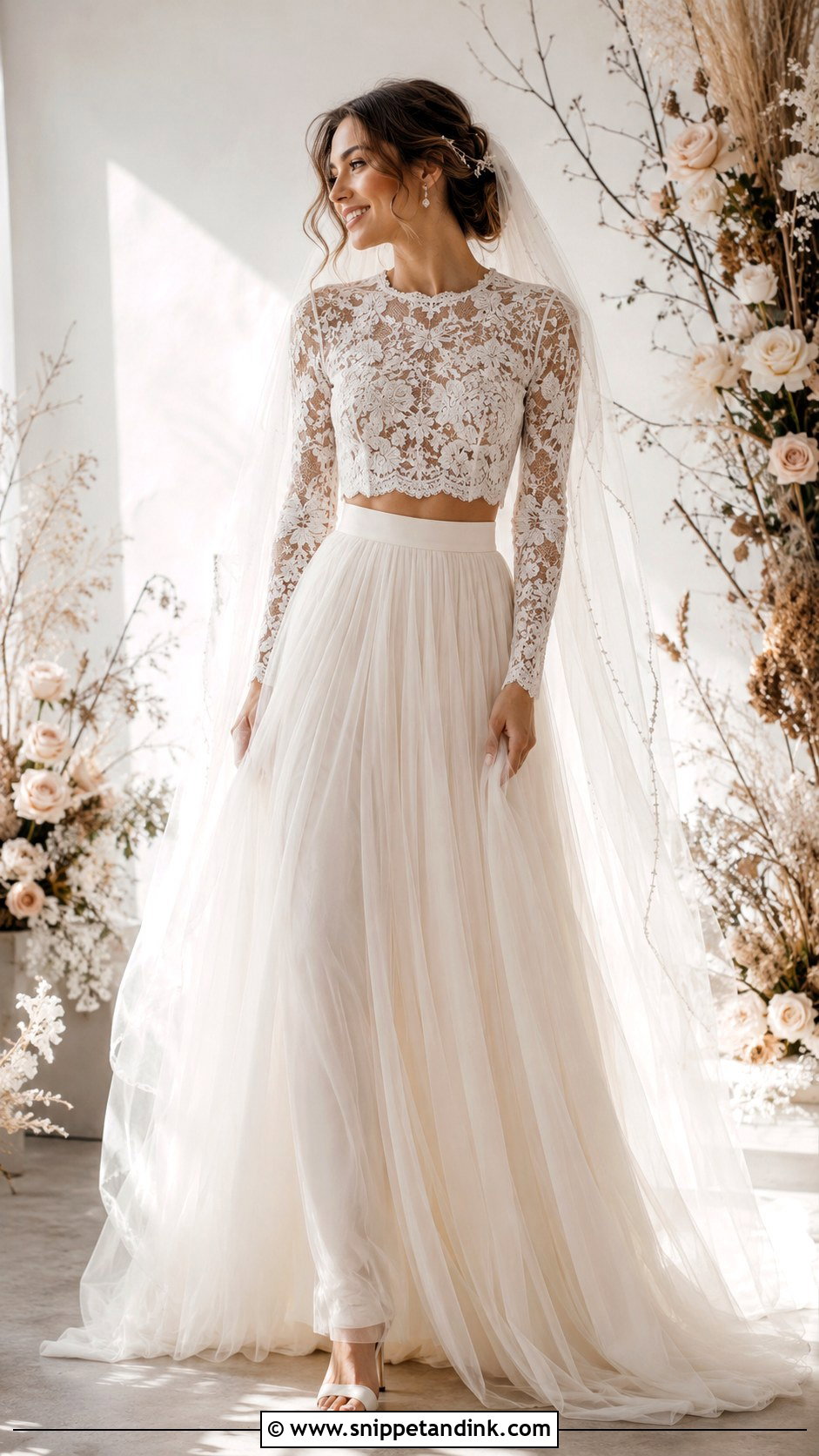
Two-piece gowns pair a separate top and skirt, which is why I suggest them to brides whose top and bottom measure as different sizes. Each piece is fitted on its own. A lace crop top over a full tulle skirt feels romantic; a satin bandeau with a column skirt feels minimal. Show as much or as little midriff as you like, and ask for a hidden hook between top and skirt if you’d rather nothing rides up when you dance. Delicate jewelry, bridal heels and a veil keep it ceremonial.
22. Wedding Dress With Overskirt
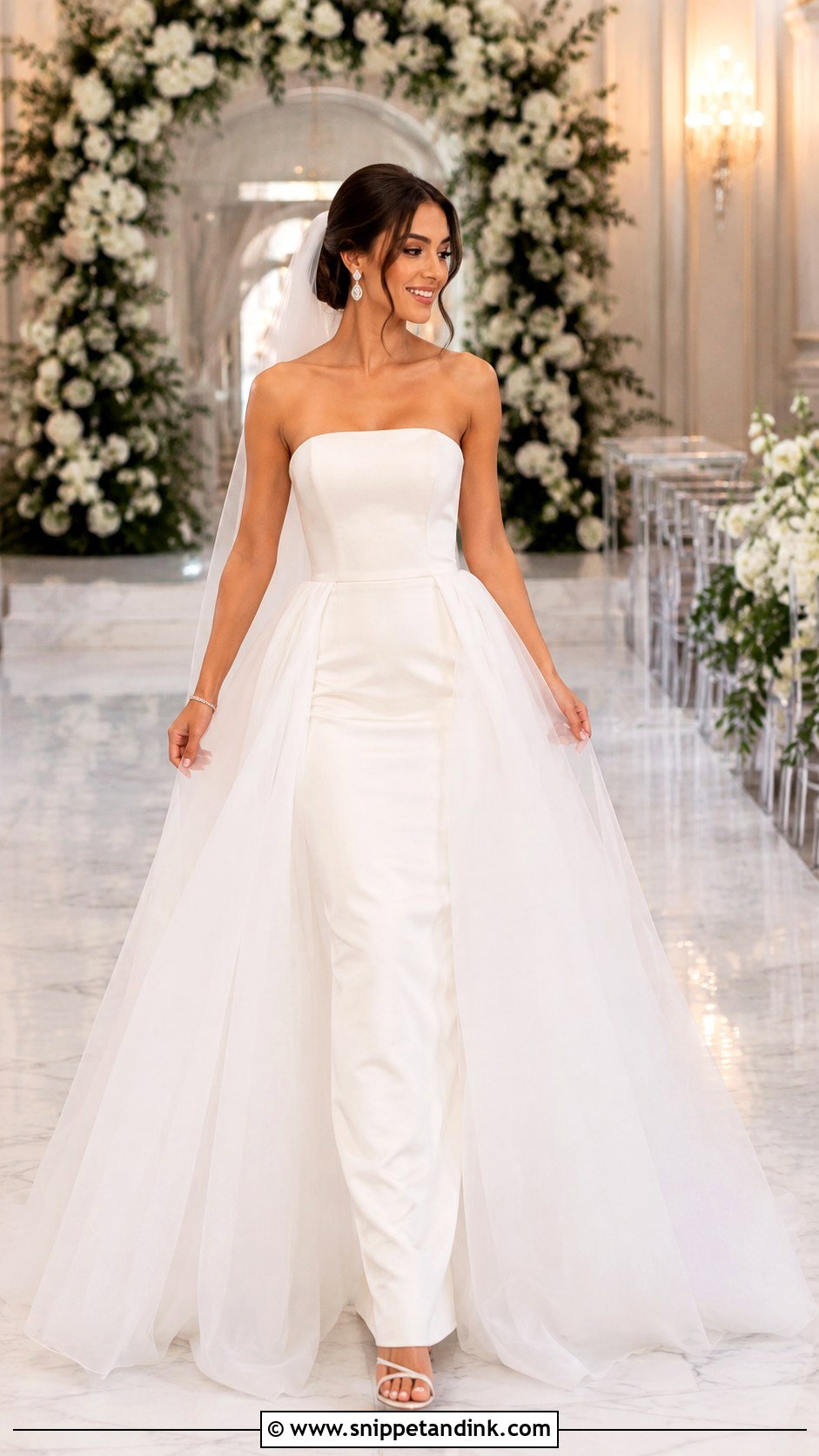
An overskirt gives you ball gown volume for the aisle and a slimmer dress underneath for dancing. It’s worn for the ceremony and removed for the reception, revealing a fitted column, sheath or mini. That suits anyone who wants a grand entrance without carrying the weight all night. Tulle is soft, satin is structured, organza adds airy volume. Hem the dress underneath as its own garment, since it often ends up too long once the overskirt comes off. Long veil first, bold earrings after.
23. Sheer Bodice Wedding Dress
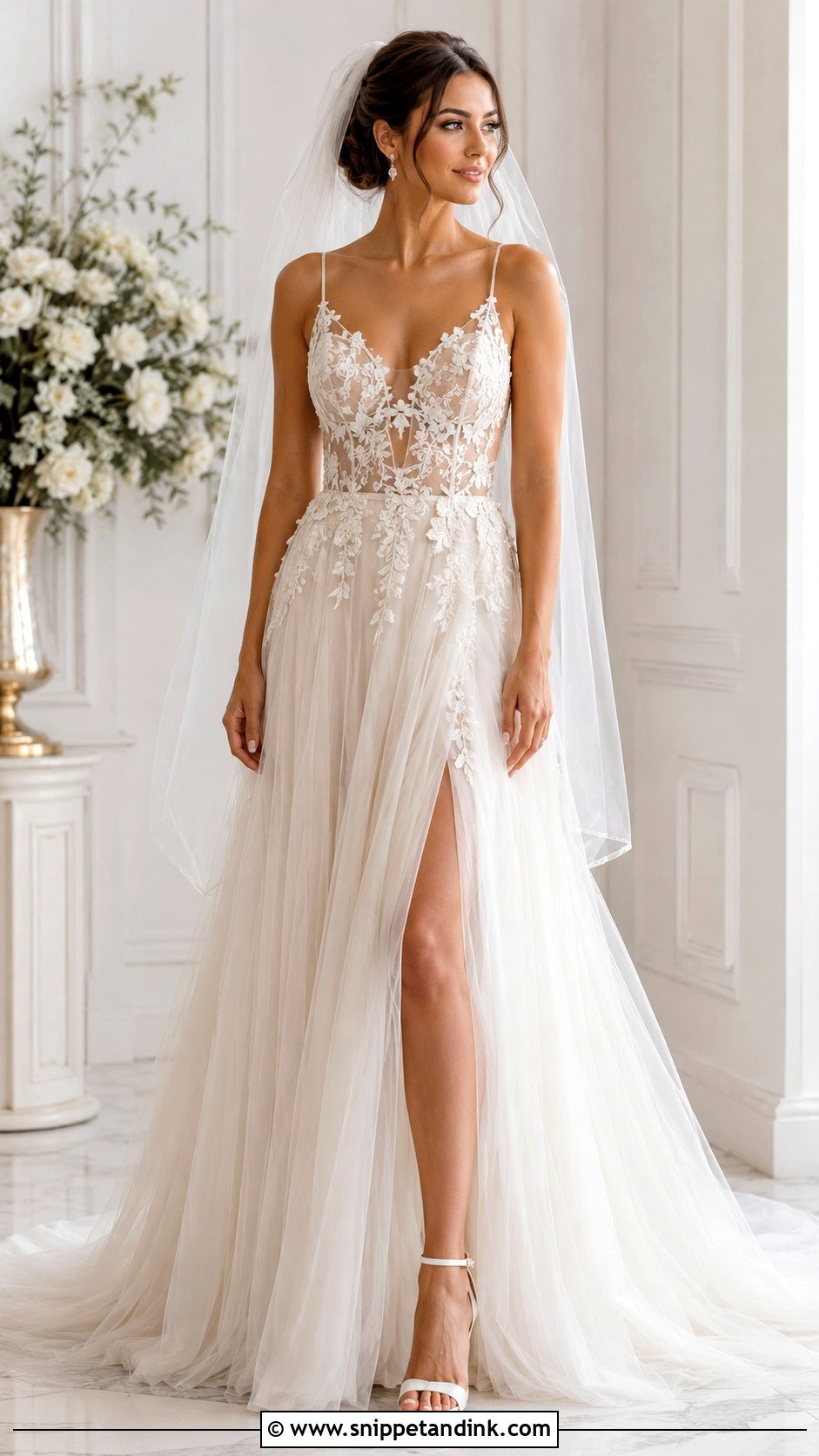
A sheer bodice uses illusion tulle as a base for lace, beading, pearls or embroidery, so the detail looks as if it’s sitting on your skin. The mesh shade is the decision. Ask for lining and mesh close to your skin tone, or the bodice will show as a pale or grey film in photos. A sheer panel only at the neckline or sleeves is a gentler version. It works over full, fitted or A-line skirts. Simple shoes, soft earrings and a veil without a heavy edge let the bodice show.
24. Beaded Wedding Dress
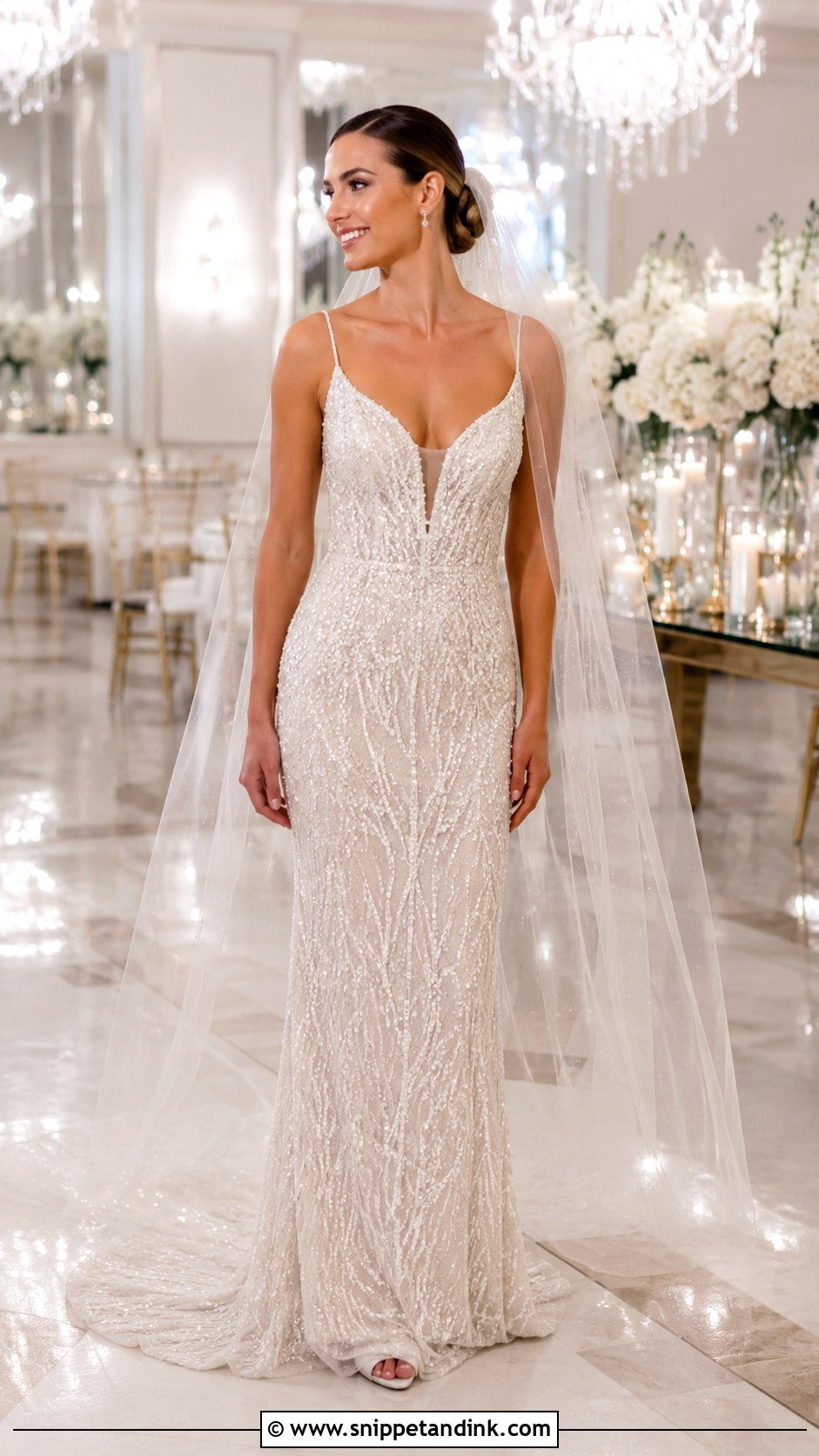
Beading catches the light every time you move, which is why it suits evening weddings, ballrooms and formal receptions. It can be scattered or cover the whole gown in pattern. Heavy beading adds real weight; I always ask brides to wear a fully beaded sample for twenty minutes, not two, before deciding. Beaded hems also scrape and snag on rough floors, so ask about a bustle. Simple jewelry and a sleek hairstyle are enough when the dress already shines.



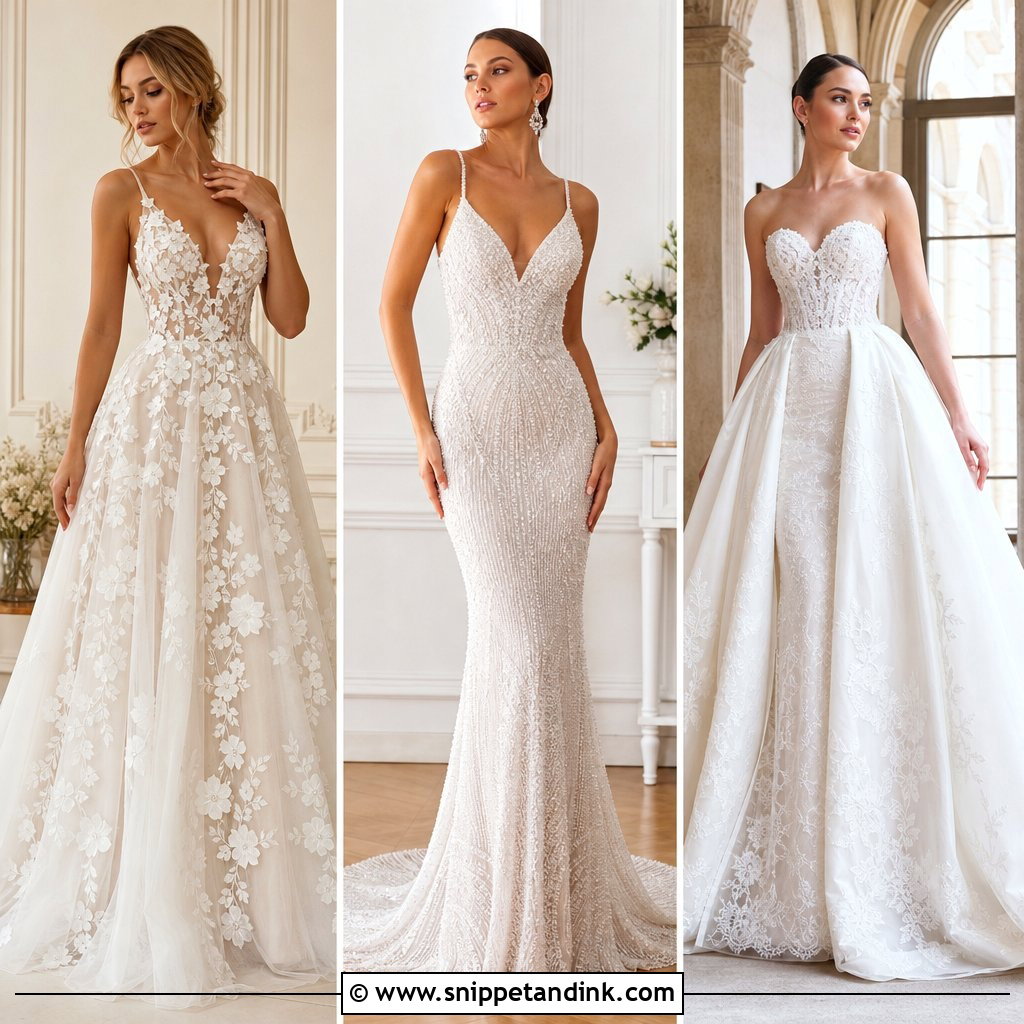
25. Tulle Wedding Dress
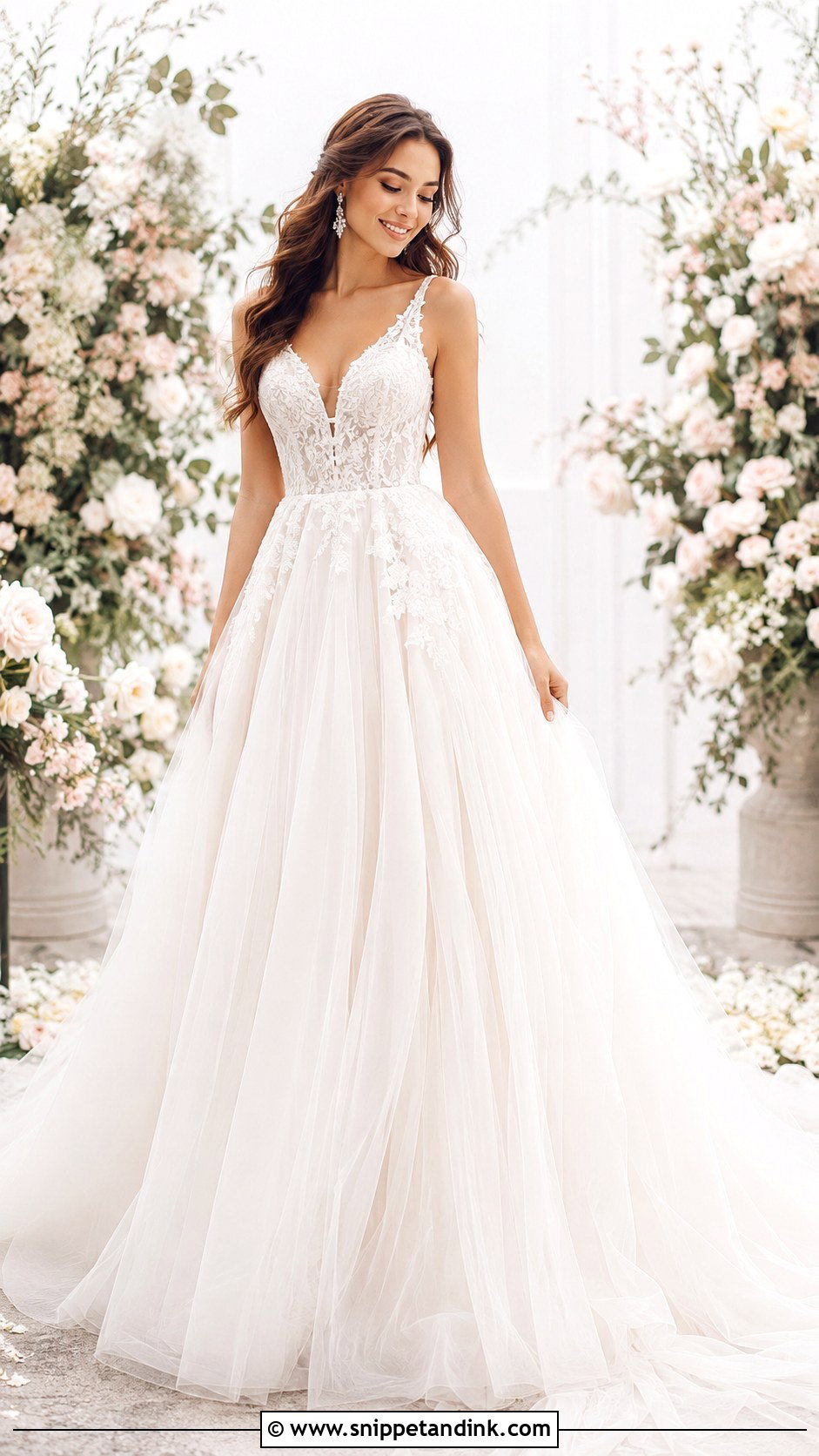
Tulle creates volume without much weight, so it’s the fabric for a dreamy skirt you can still move in. Layered, it forms a ball gown, A-line or soft overskirt. A clean corset bodice, a square neckline or a minimal satin top keeps it modern; lace appliqué or tiny pearls make it sweeter. Tulle snags on rough bark, stone walls and bracelets with claws, so choose smooth jewelry. Soft curls and comfortable heels hidden under the skirt suit garden and estate venues.
26. Organza Wedding Dress
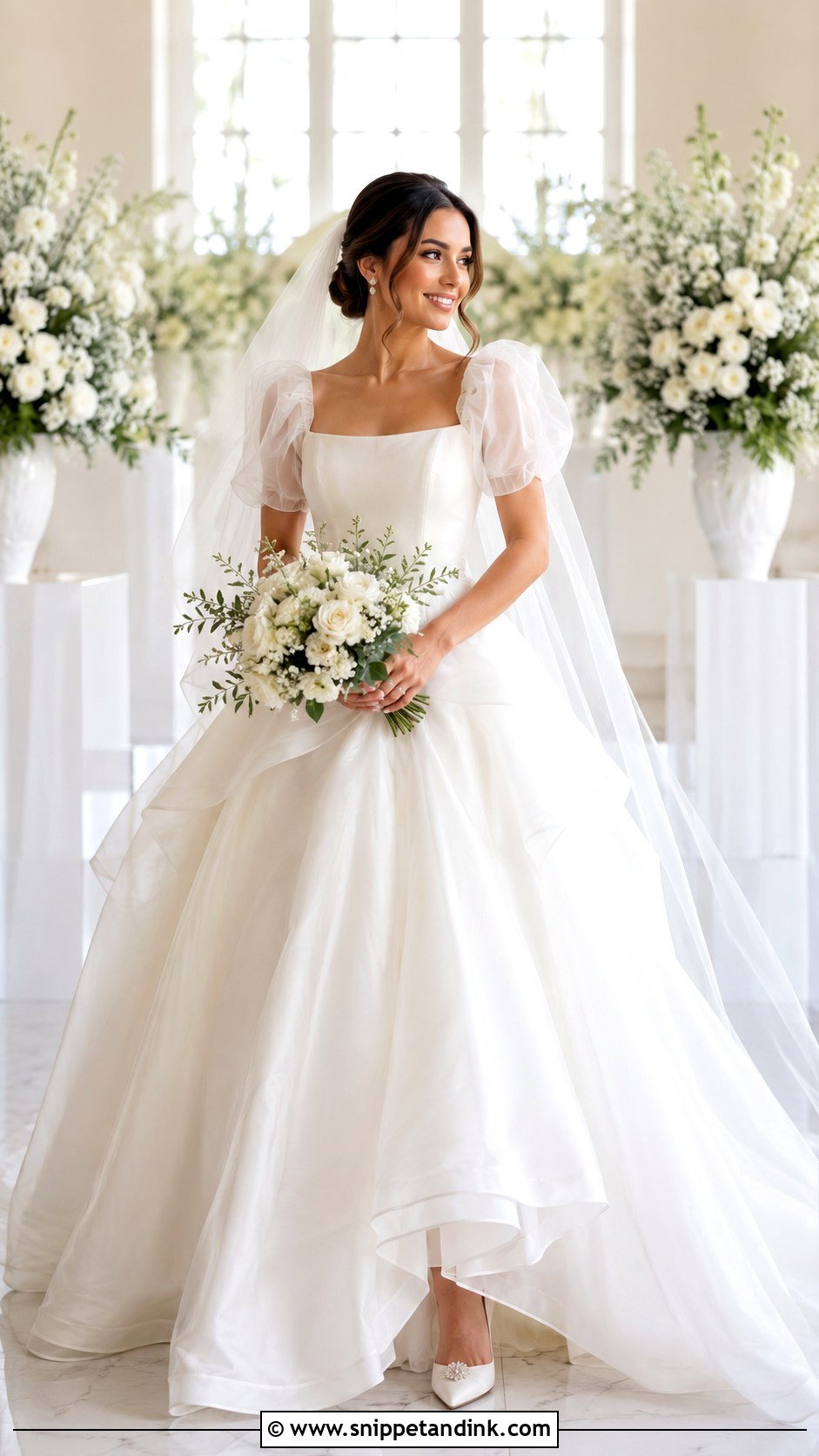
Organza is crisper than tulle, so it holds sculptural skirts, ruffles, puff sleeves and trains with less layering. It catches light with a slight sheen and can make a simple design look special on its own. The trade-off: organza creases more sharply than tulle, and it shows those creases in daylight photos. Ask for a steam just before you dress, and travel with the skirt loosely bagged rather than folded. Pearl studs, satin heels and a neat veil keep it refined.
27. Crepe Wedding Dress
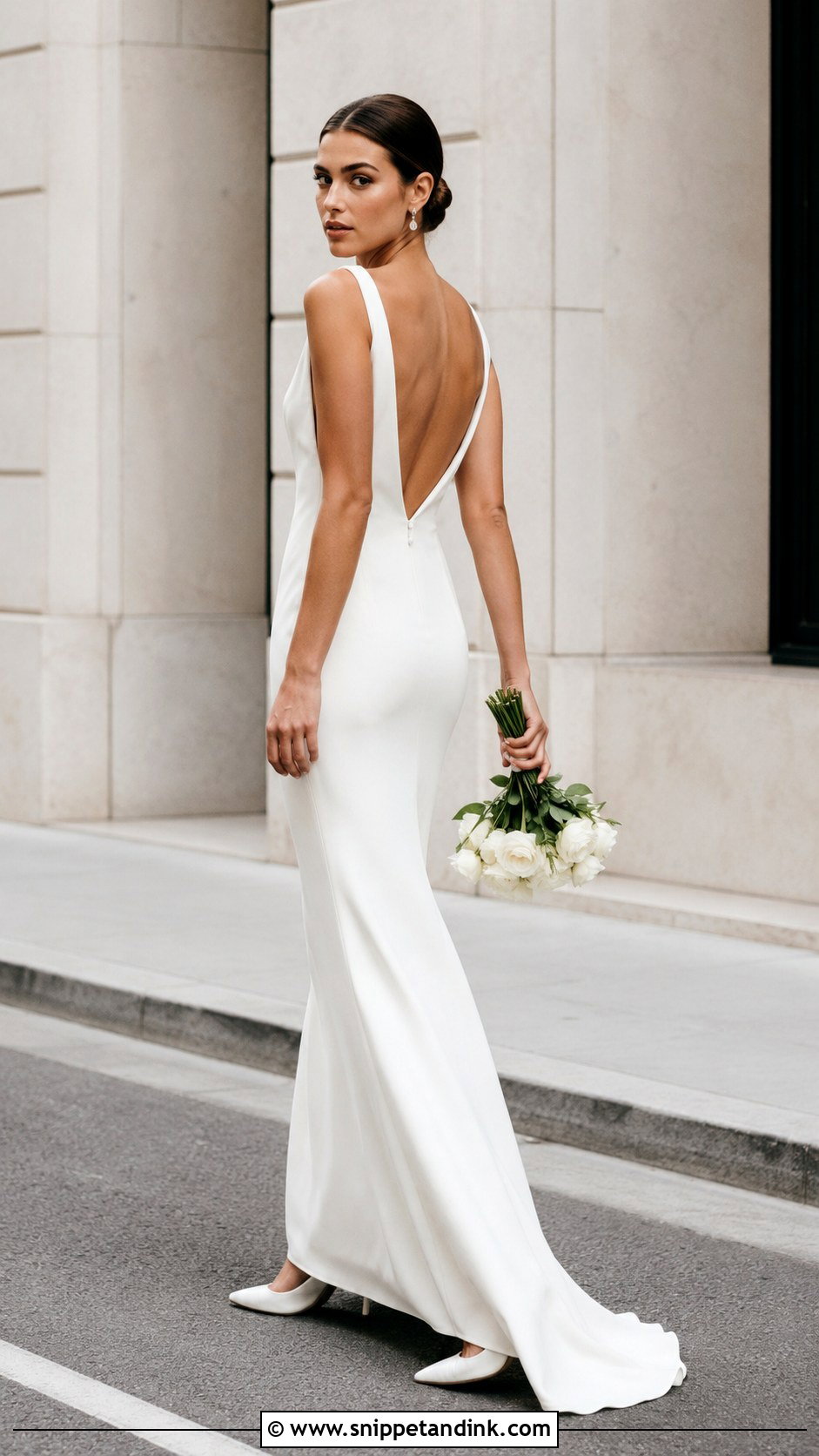
Crepe has a matte finish and a little stretch, so it follows the body without stiffness and stays comfortable through a long day. It suits sheaths, columns, fit-and-flare and minimal gowns. A high slit, a low back, a cowl neckline or covered buttons add interest without decoration. Because crepe is so plain, it shows underwear lines and uneven seams, so wear your actual undergarments to fittings. A smooth bun, fine earrings and pointed heels suit modern venues, beaches and city weddings.
28. Colored Wedding Dress
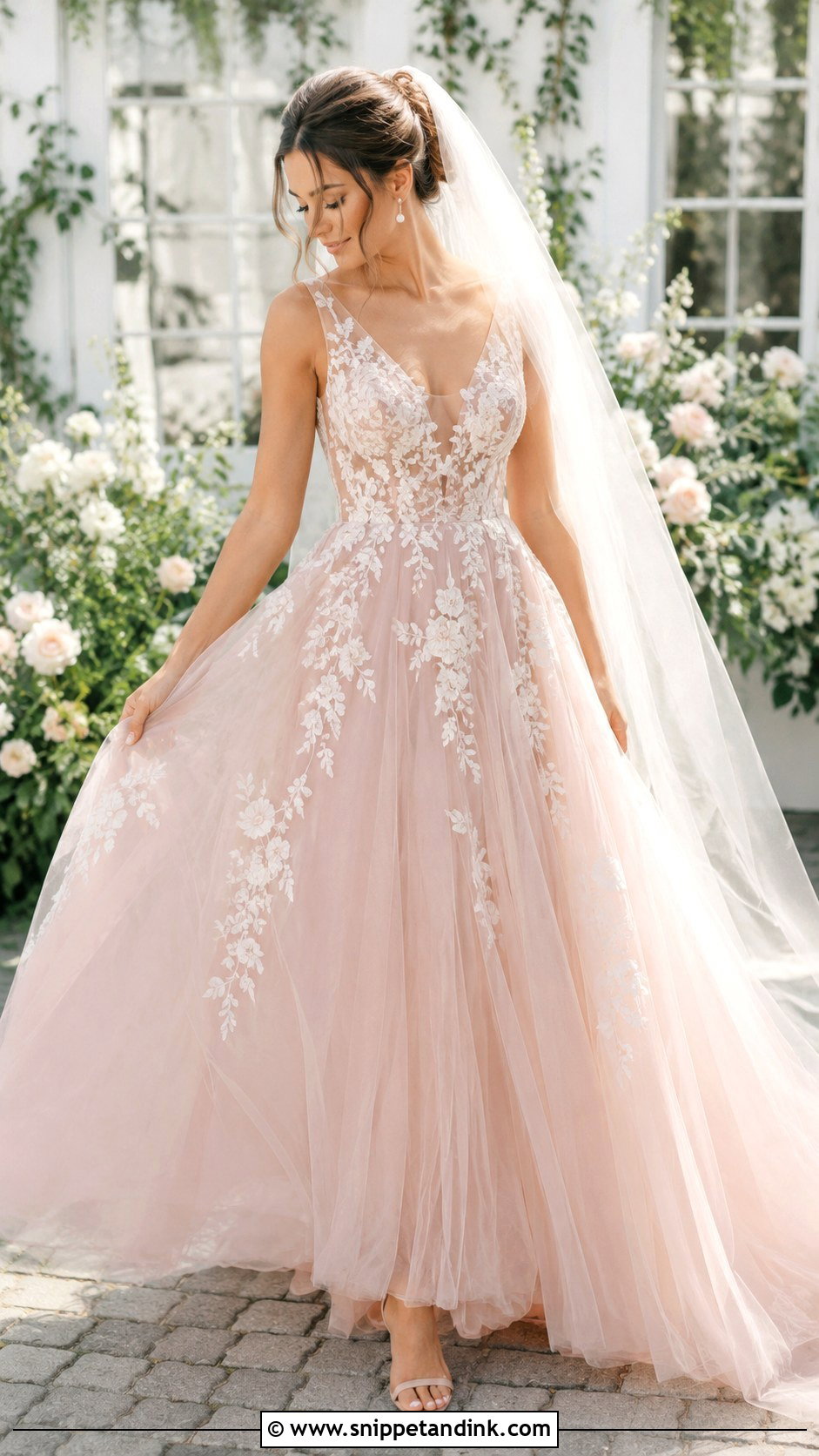
Colour lets a gown feel personal while still looking bridal. Blush, champagne, pale blue, lavender and warm ivory are the shades I see most, appearing in the fabric, the lining, embroidery, appliqué or a soft ombré. Colour looks different under salon light and daylight, so carry the gown or a swatch to a window before deciding. Keep accessories simple: nude or metallic heels, pearl earrings and a sheer veil. A coloured gown can also be kinder to skin that bright white washes out.
29. Vintage Inspired Wedding Dress
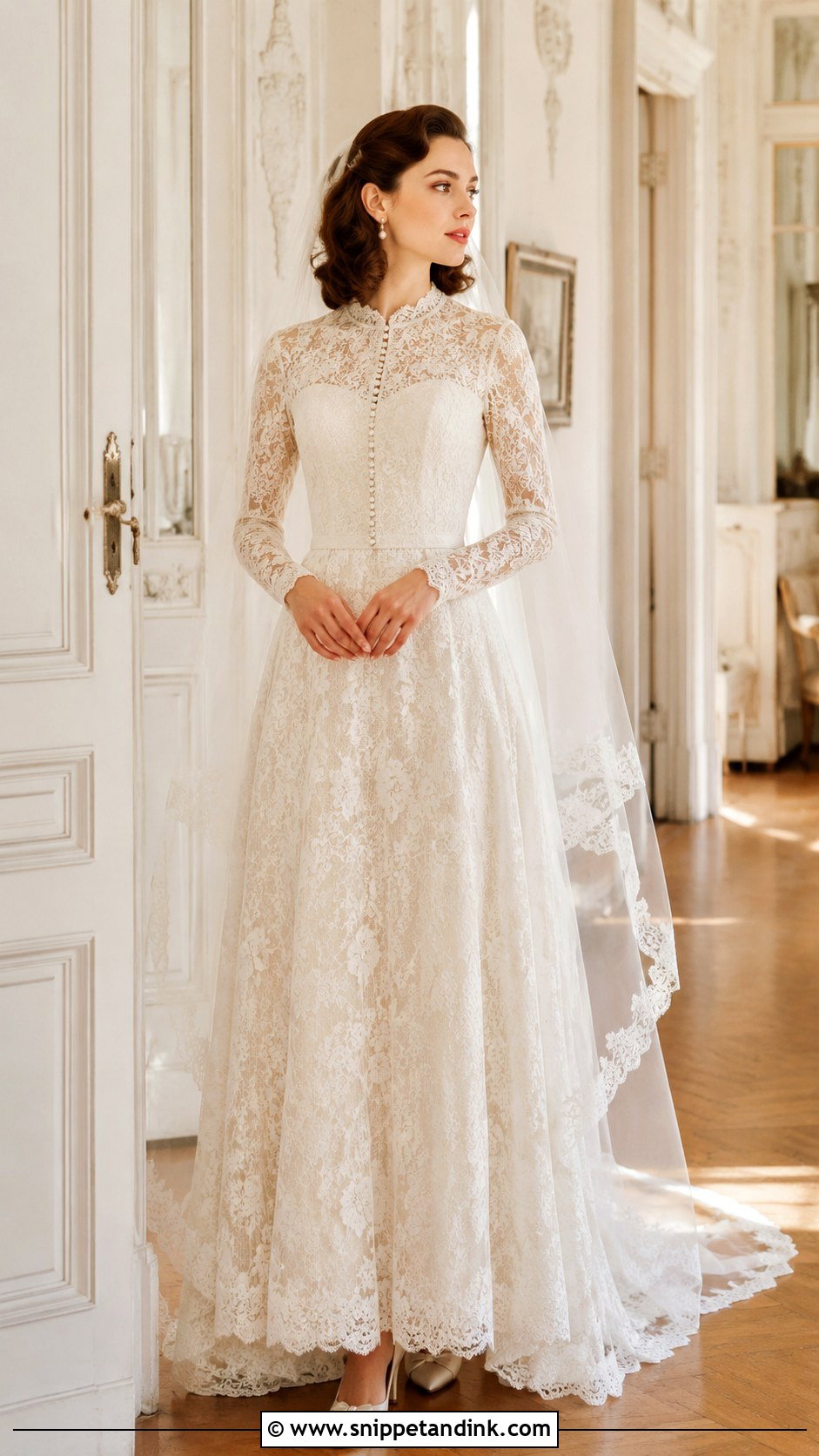
Vintage-inspired gowns borrow lace sleeves, high necklines, basque waists, pearl buttons, tea-length skirts, Art Deco beading or draped satin, while keeping modern construction underneath. I limit it to one or two period details. Combine five and the dress starts to look like fancy dress. Soft waves, pearl earrings, a classic veil and simple heels finish it. Historic venues, gardens and small weddings suit it.
30. Modern Jumpsuit Wedding Dress
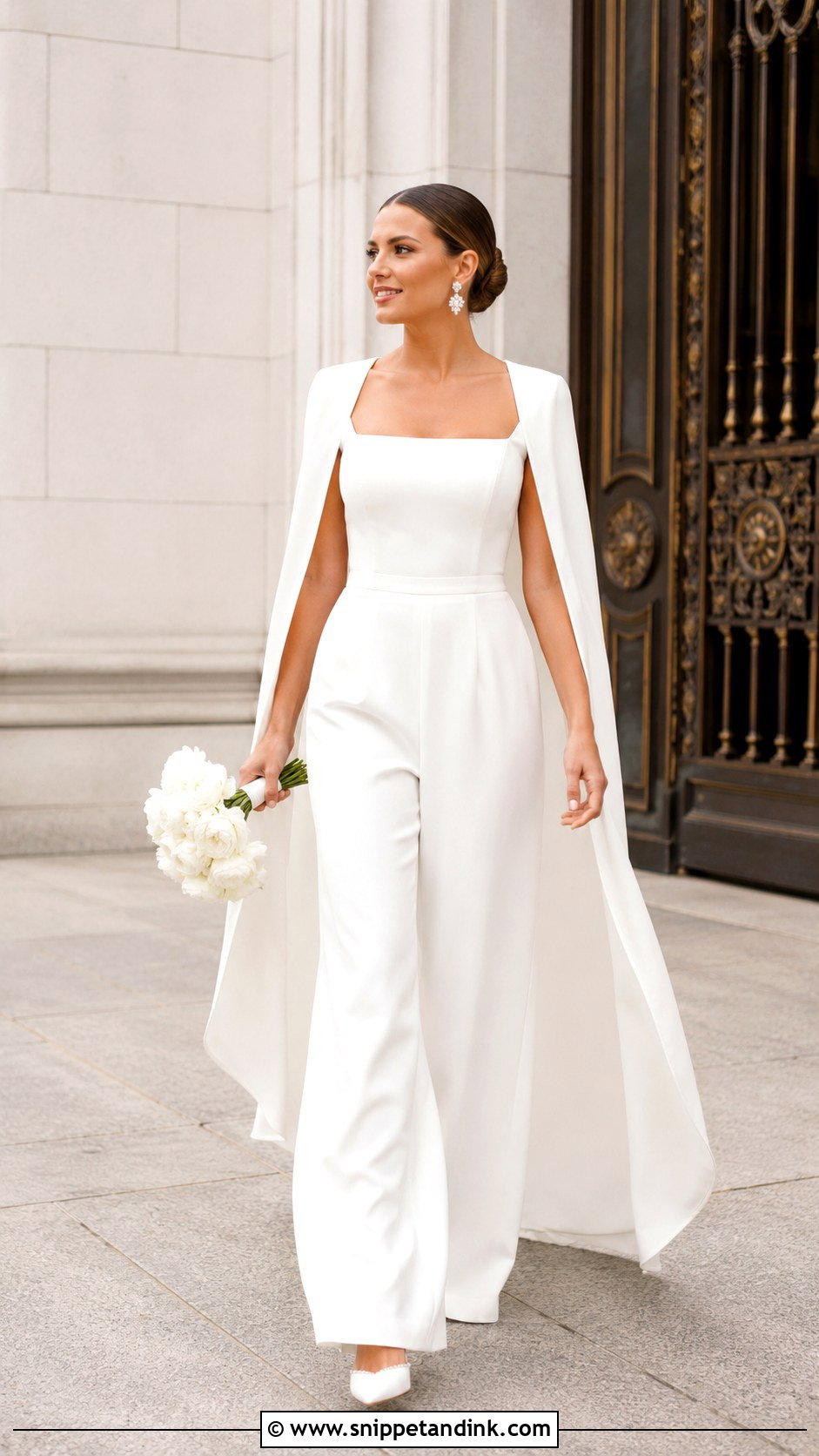
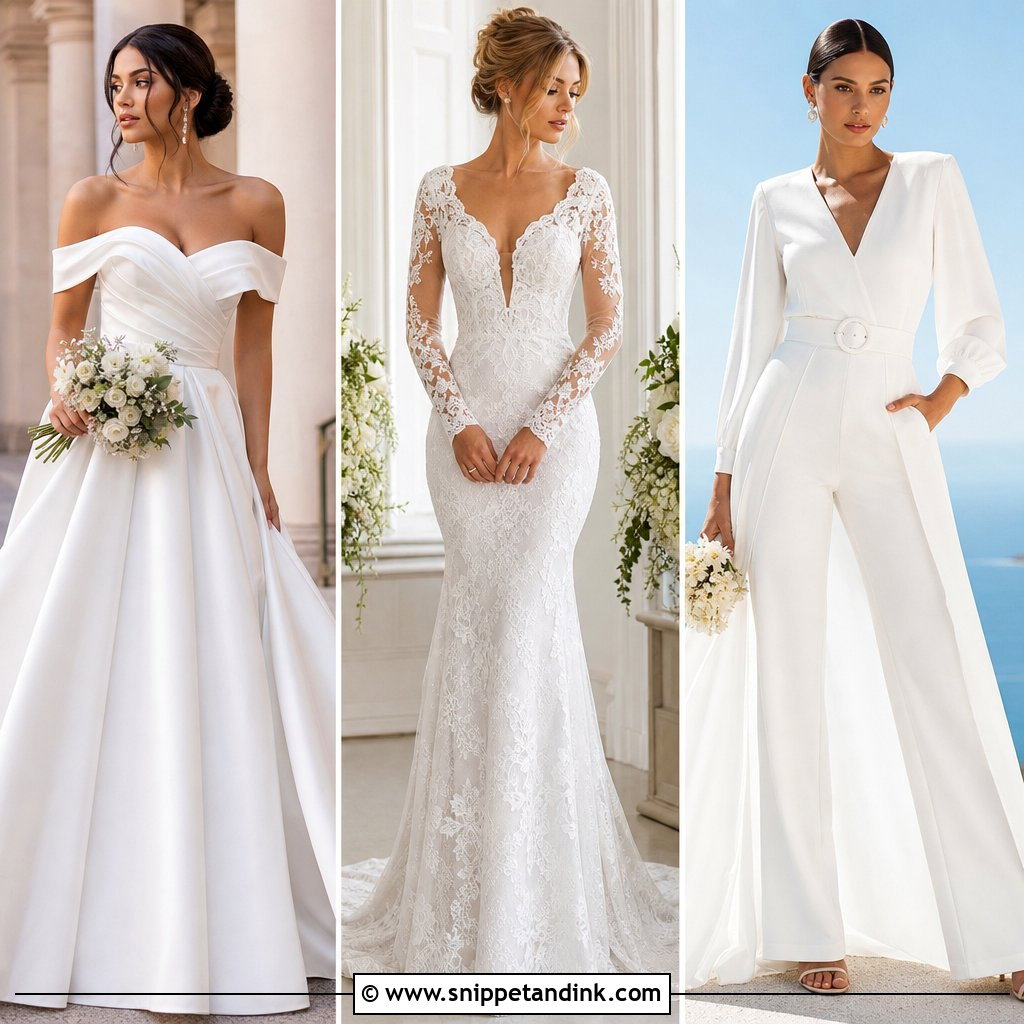
A bridal jumpsuit gives freedom of movement and a non-traditional outline. Crepe looks sleek, satin polished, and lace sleeves with wide legs feel romantic. Overskirts, capes, trains or detachable bows add ceremony when you want it. Practical point: check you can manage the zip yourself, or plan who will help, because you’ll need the bathroom at some point. Pointed heels, bold earrings and smooth hair suit courthouse weddings, elopements and second looks.
How Satin, Crepe, Tulle and Organza Look by the Last Dance
Fabric decides how you’ll look in the evening photos far more than in the morning ones. Hours of sitting, hugging, heat and dancing treat each fabric differently, and it’s worth choosing with that in mind.
The fabrics that hold up
Heavier satin and mikado keep their shape and shrug off light creasing. Crepe stretches a little and moves with you, which makes it one of the most comfortable fabrics for a long day, though it shows any marks from a spill. Tulle springs back after sitting, but snags on rough surfaces and jewelry.
The fabrics that need care
Thin satin creases across the lap the moment you sit through dinner. Organza holds sharp folds and shows them in daylight. Silk chiffon is beautiful in movement but marks easily with water. If your dress is one of these, ask someone to hang it, not lay it, during the drive, and keep a handheld steamer at the venue for the bustle and train before the evening portraits.
Try On the Shape You Think You’d Never Wear
The gown that works is the one you forget you’re wearing by the second hour. Satin columns, lace A-lines, bows, colour and convertible pieces all appear above, but the decision usually comes down to fit, fabric weight and how you move. Think about your venue, season, budget and the details you already reach for in everyday clothes. Then try at least one silhouette you’d have ruled out. I’ve watched that wildcard win more fittings than any saved photo. Choose a dress that supports the day instead of competing with it.
You'll Like These Ideas:







Leave a Reply