
Most brides who ask me for a vintage dress don’t actually want a museum piece. They want one or two details from a period they love, sleeves or a waistline or a particular fabric, on a gown that fits a modern body and survives a twelve-hour day. You can go all in on one era, like a 1920s beaded gown or a 1950s tea-length skirt, or borrow a single feature for a new design. Below are 30 directions, from the Victorian high neck to the 1960s mini, with what I watch for when each one goes on in a fitting.
Daylight Decades and Evening Decades
Each era was designed for a particular kind of occasion, and the dresses still carry that. Before a bride picks a decade, I look at the time of the ceremony, the season and the room. It saves a lot of heartache later.
- Morning and afternoon: tea-length fifties skirts, Edwardian cotton lace and seventies boho all look at home in daylight and on grass.
- Evening: bias-cut thirties satin and twenties beading come alive under candlelight and warm bulbs, and can look flat at noon outdoors.
- Cold months: Victorian collars, forties long sleeves and bishop sleeves give coverage without needing a wrap.
- Heat: empire waists, slip dresses and sheer sleeves breathe; heavy beading and boned satin make you hot fast.
Venue matters too. A full ball gown overwhelms a small registry office, and a mod mini can look underdressed in a cathedral. If the dress and the room match, the look reads as considered rather than themed.
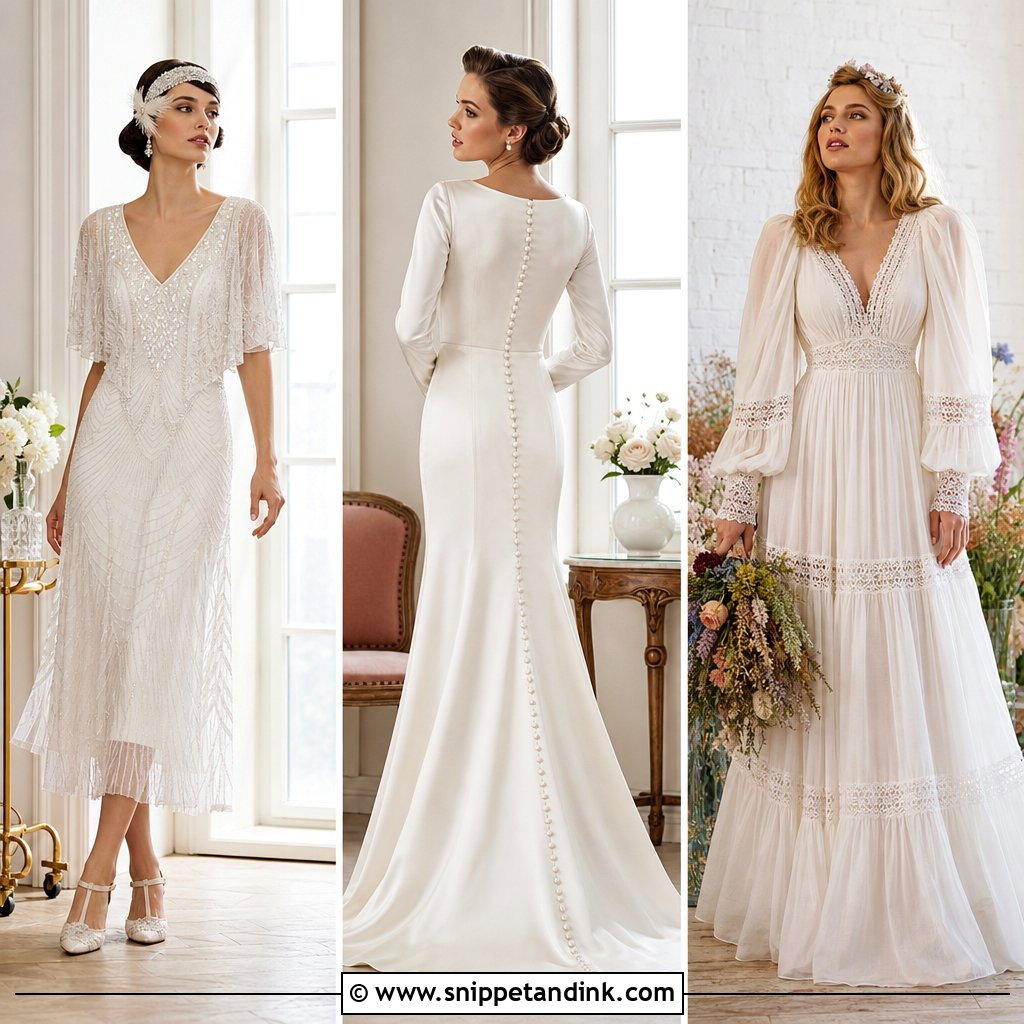
1. 1920s Beaded Wedding Dress
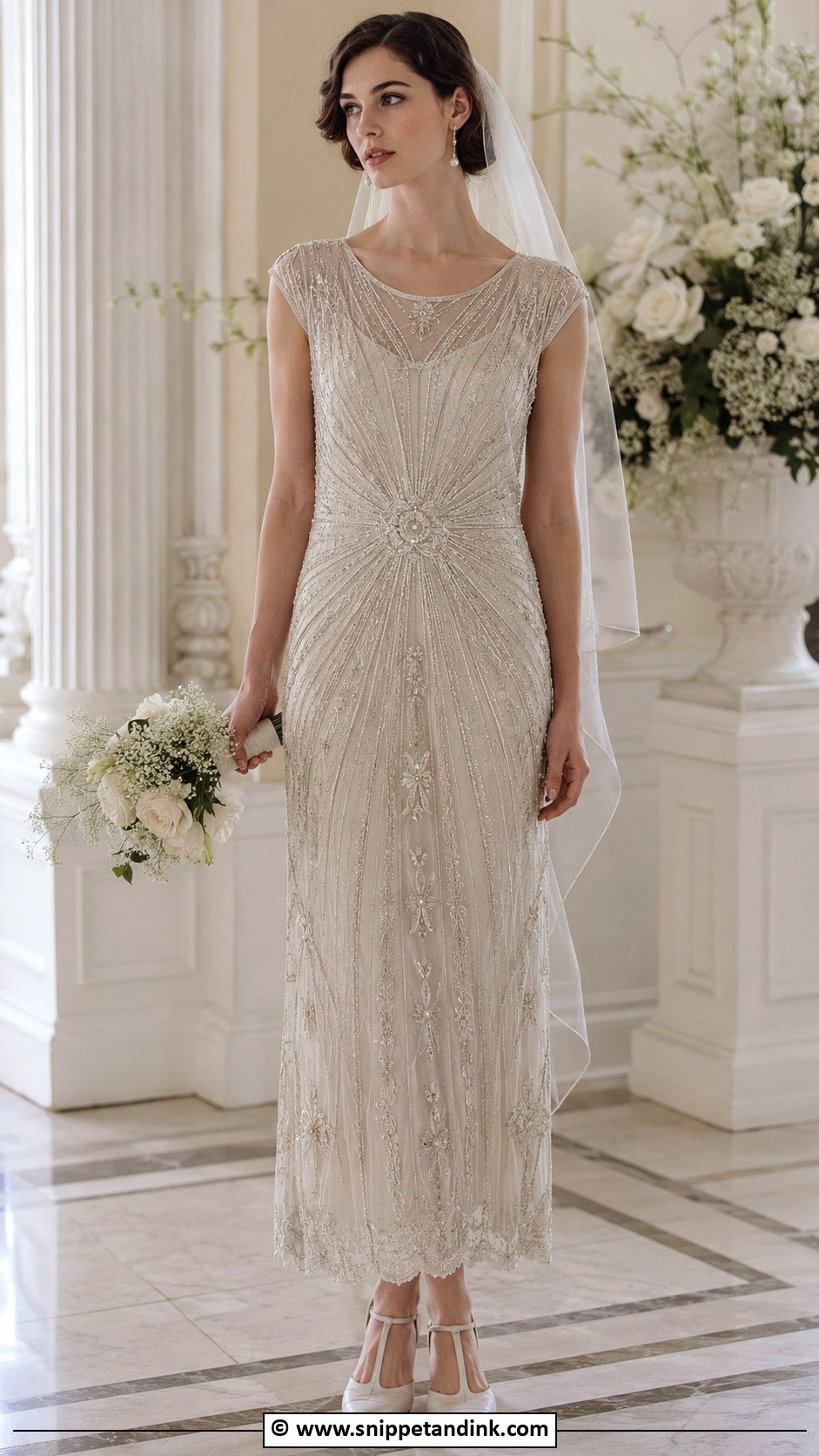
Beadwork is heavy. A fully beaded 1920s column can weigh far more than brides expect, and that weight pulls the dress straight down, which is exactly what gives it that liquid fall. It also means the shoulder straps carry everything, so I check that they’re reinforced. Keep the hair low, a finger wave or a soft bun, add pearl drops and satin block heels, and leave the bouquet small. I tuck a needle, thread and a few spare beads into the emergency kit, because one snag on a chair can start a run.
2. 1930s Satin Wedding Dress
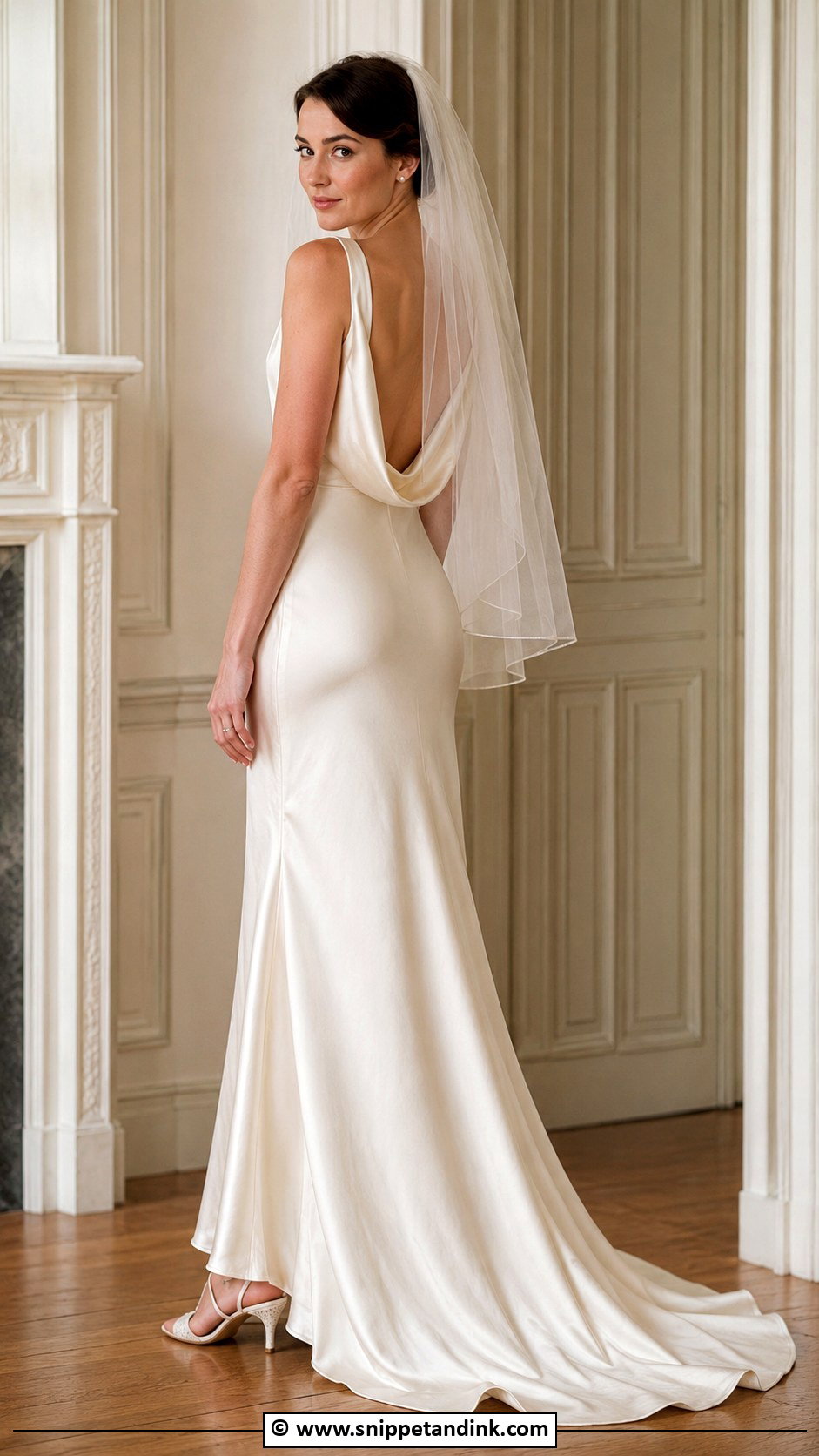
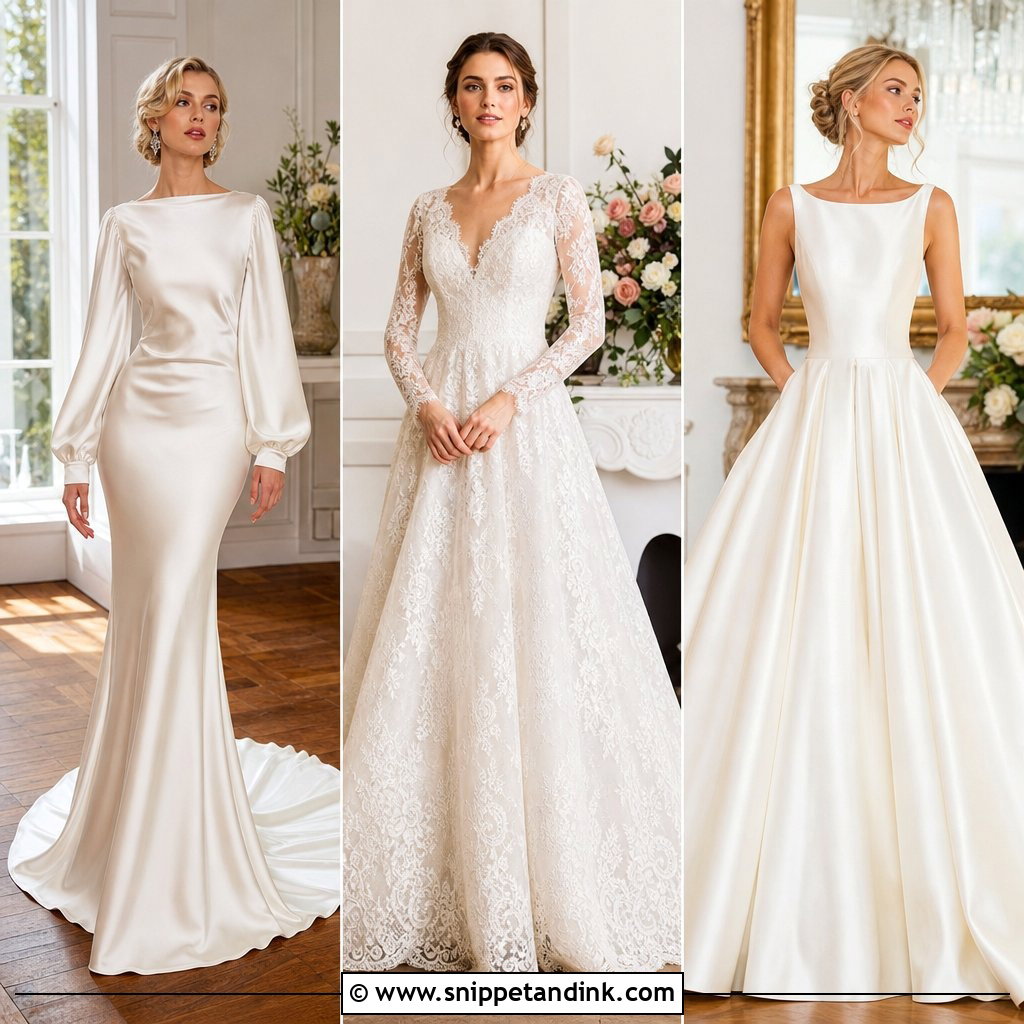
Bias-cut satin is the 1930s signature: fabric cut on the diagonal so it stretches over the hip and swings at the hem. It’s honest about every line underneath, which is why I’d steer anyone who hates clingy fabric toward crepe-backed satin instead of silk charmeuse. A bias hem also drops after hanging, so a good seamstress lets the dress hang before levelling it. A cowl neck, low back, slingback heels and a fingertip veil finish the look.
3. 1940s Long Sleeve Wedding Dress
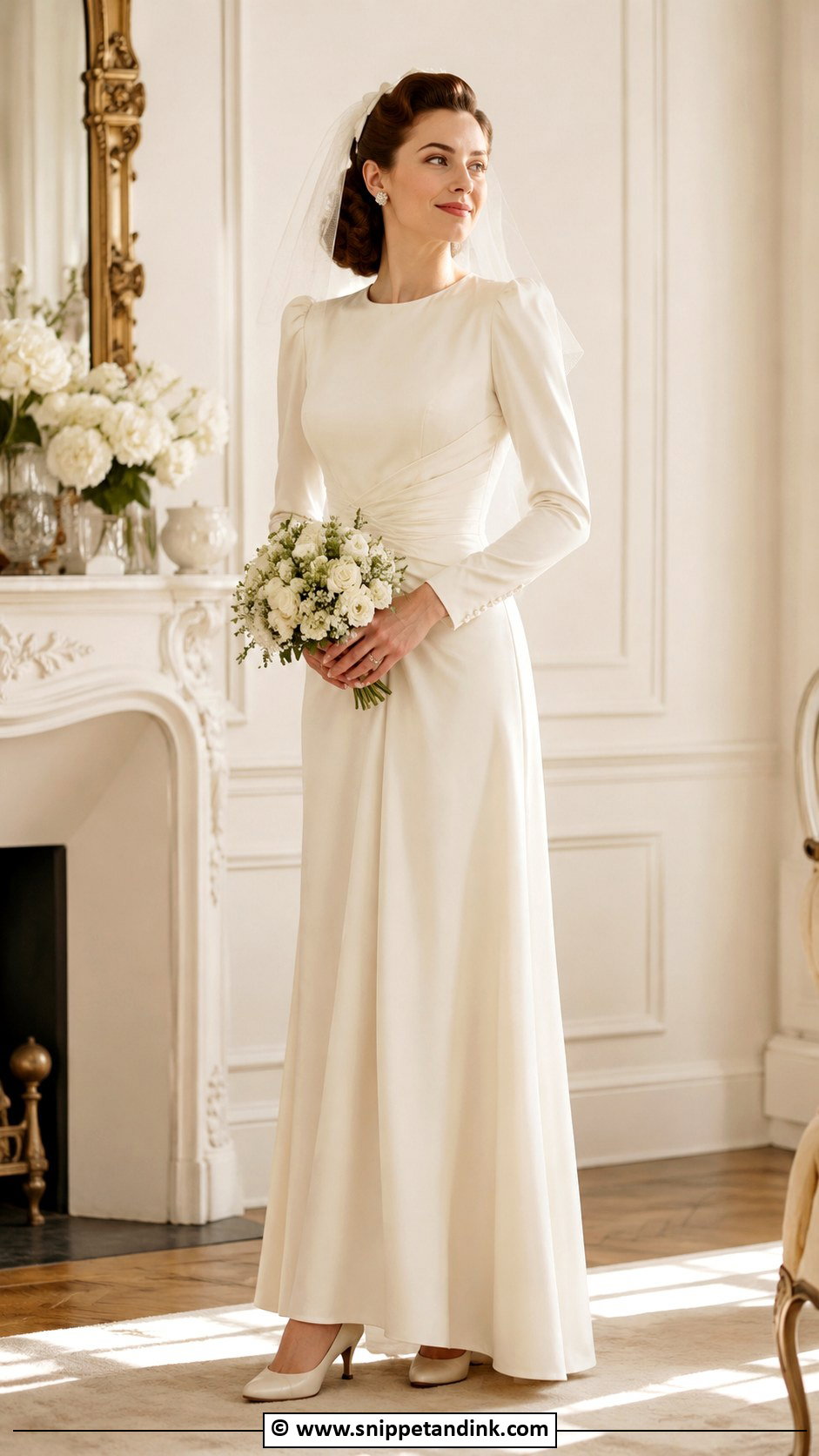
Forties gowns came from a decade of rationed fabric, so they are neat rather than lavish: a fitted waist, some shoulder structure, covered buttons and a skirt that falls straight or slightly flared. I like crepe here because it hangs without clinging. If you add the period shoulder pad, keep it soft, since a hard pad under lace can look like football kit in side profile. Closed-toe pumps and a short veil keep it period-true; a V-neck with sheer sleeves softens it.
4. 1950s Tea Length Wedding Dress
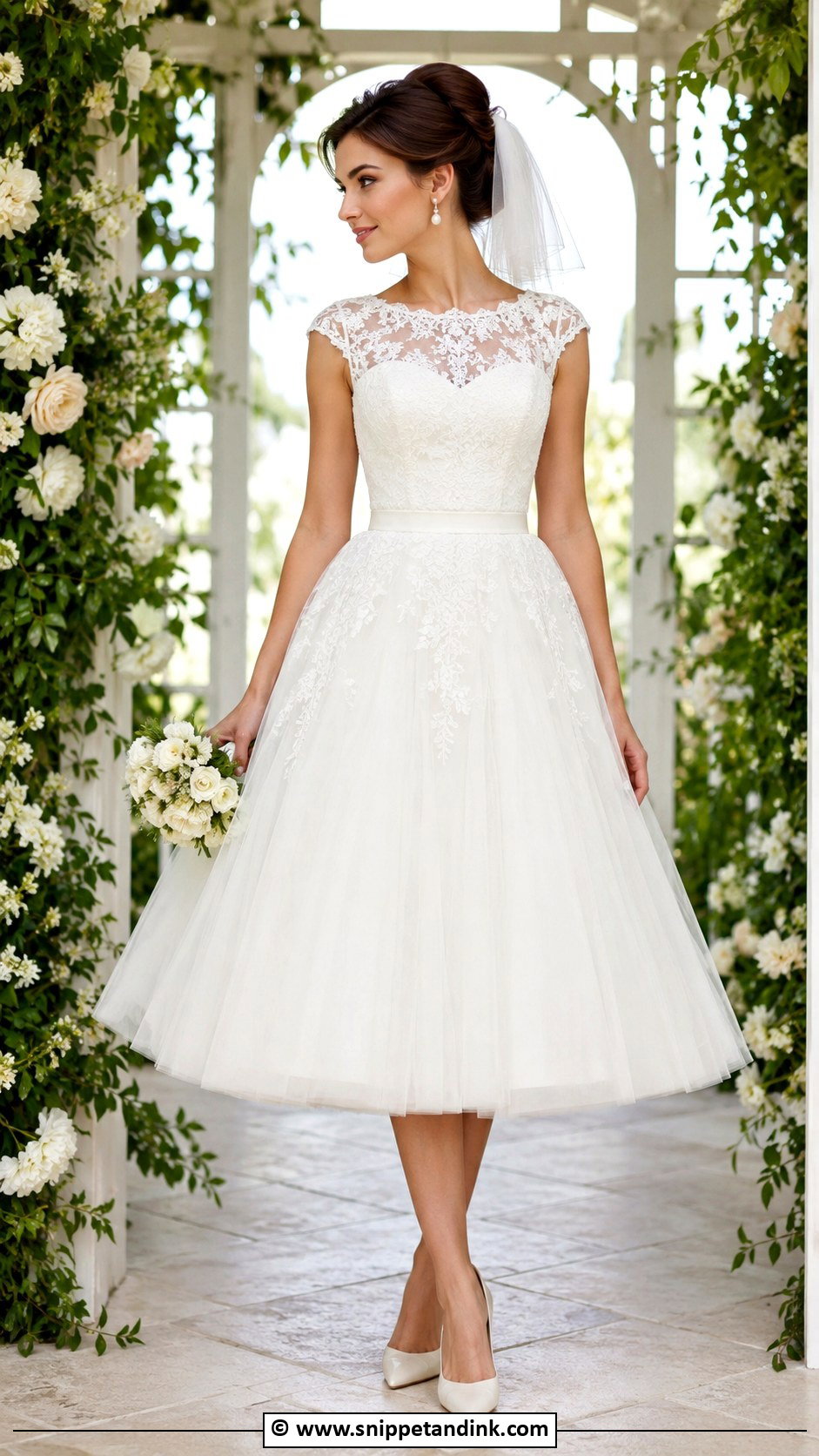
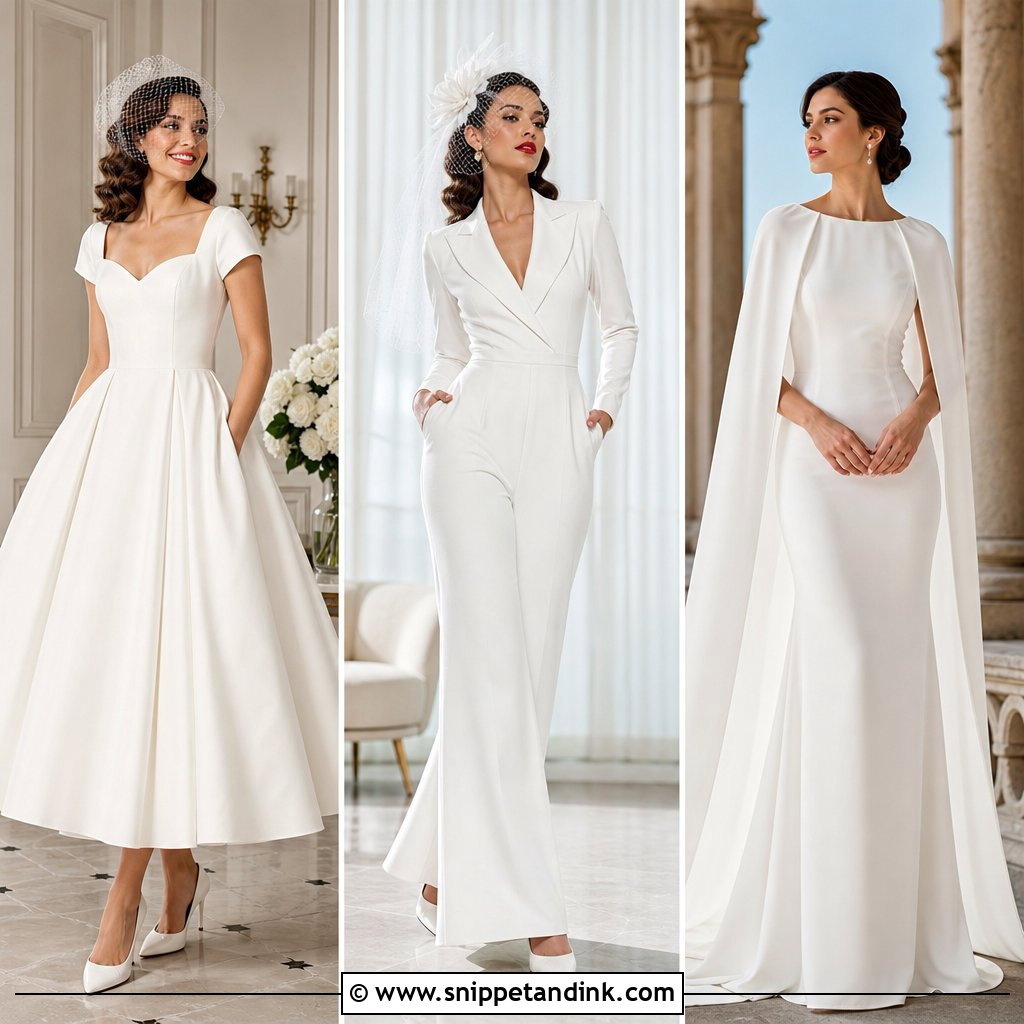
A 1950s tea length wedding dress stops between knee and ankle, so the shoes become part of the outfit and need to be chosen with as much care as the gown. The full skirt usually relies on a petticoat. I bring the actual petticoat to every fitting, because hemming without it gives you a skirt that sits too short on the day. Pointed pumps, pearl earrings and a bow headpiece suit a city ceremony or a garden lunch.
5. 1960s Mod Wedding Dress
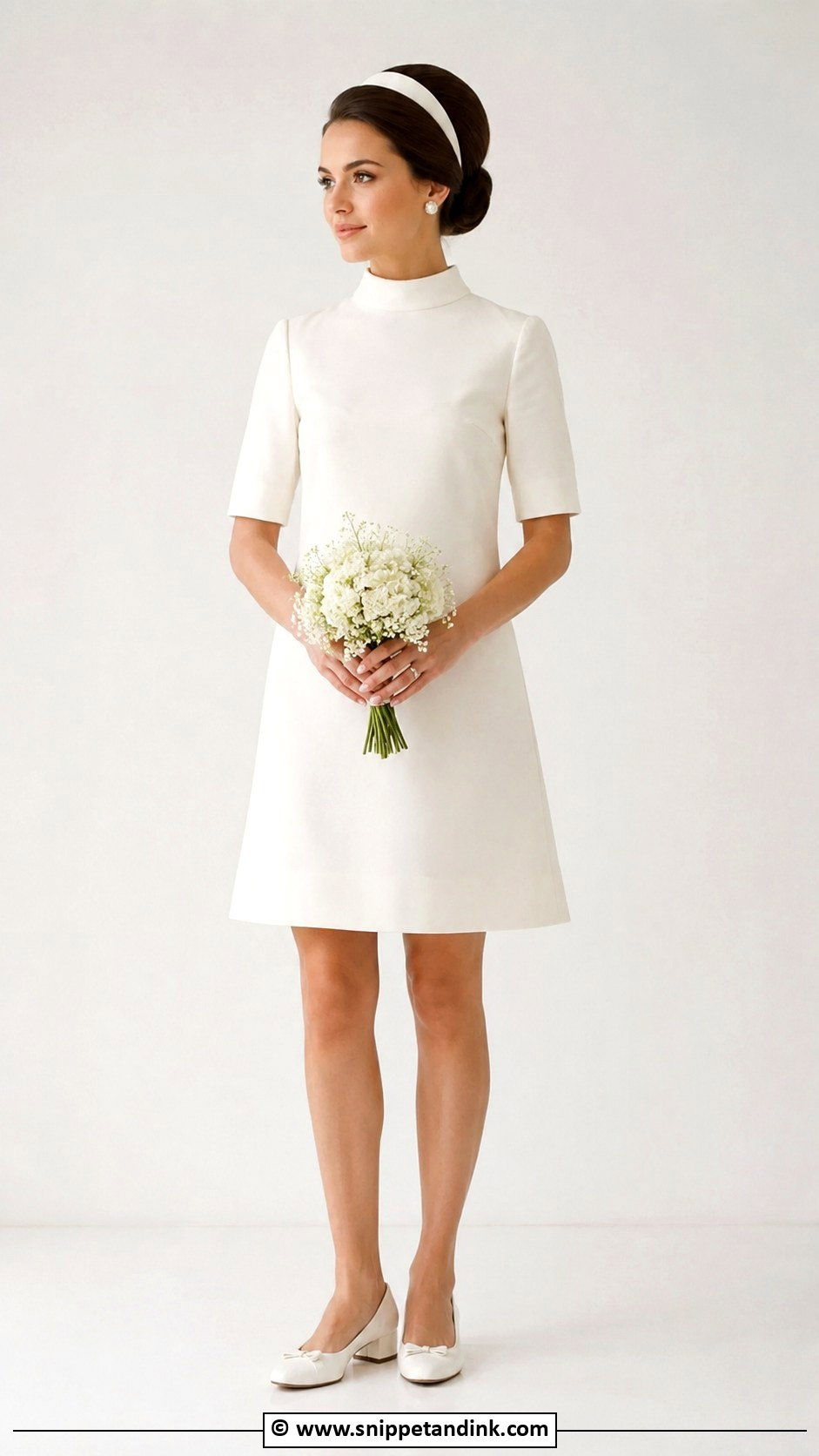
Mod gowns live or die on cut. With a short or knee-length shift, a high neck and bracelet sleeves, there is no lace to hide behind, so fabric matters: mikado and structured crepe hold that crisp line, while thin satin collapses. Mikado does crease when you sit, so I steam it just before the ceremony. A sleek headband or pillbox-style piece with a short veil is enough, and bright ivory keeps the edges sharp.
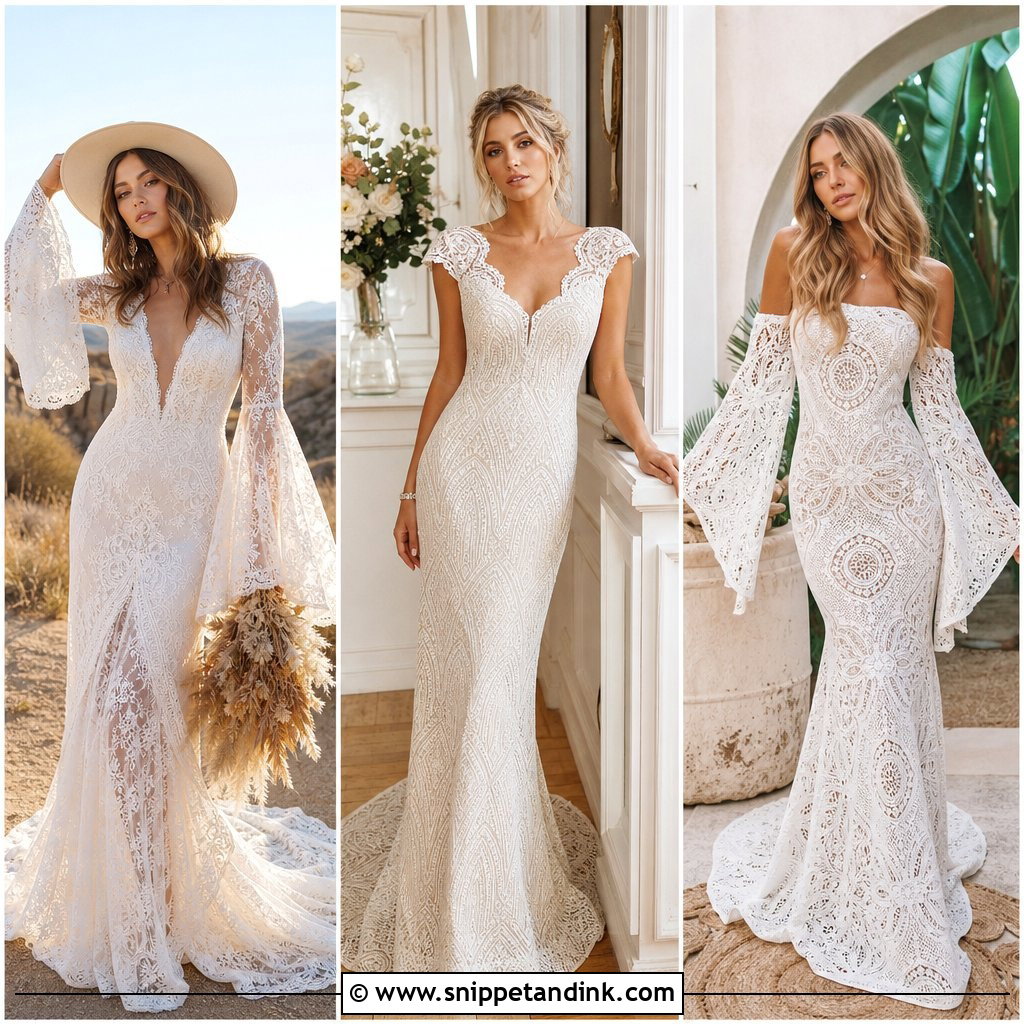
6. 1970s Boho Lace Wedding Dress
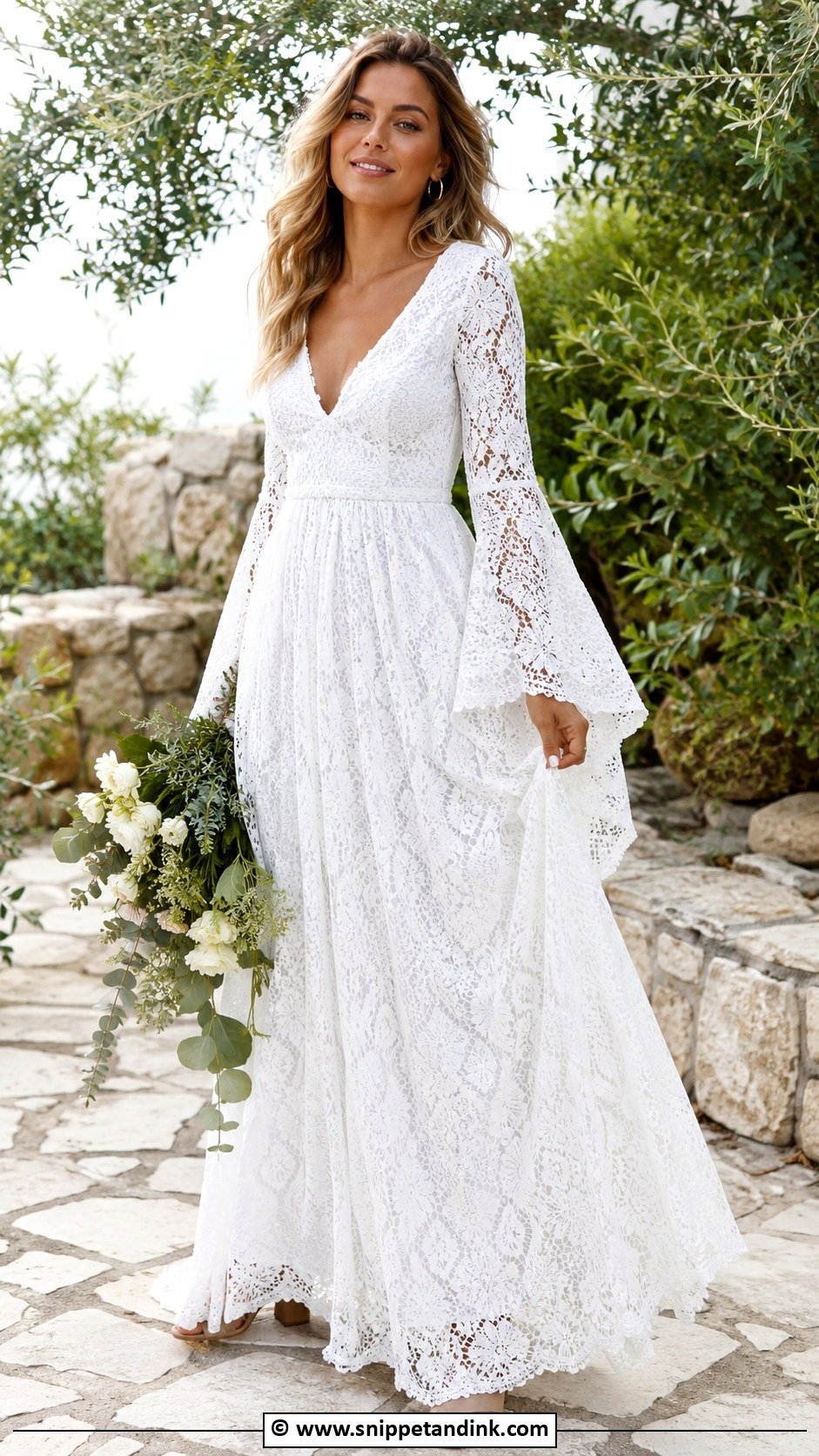
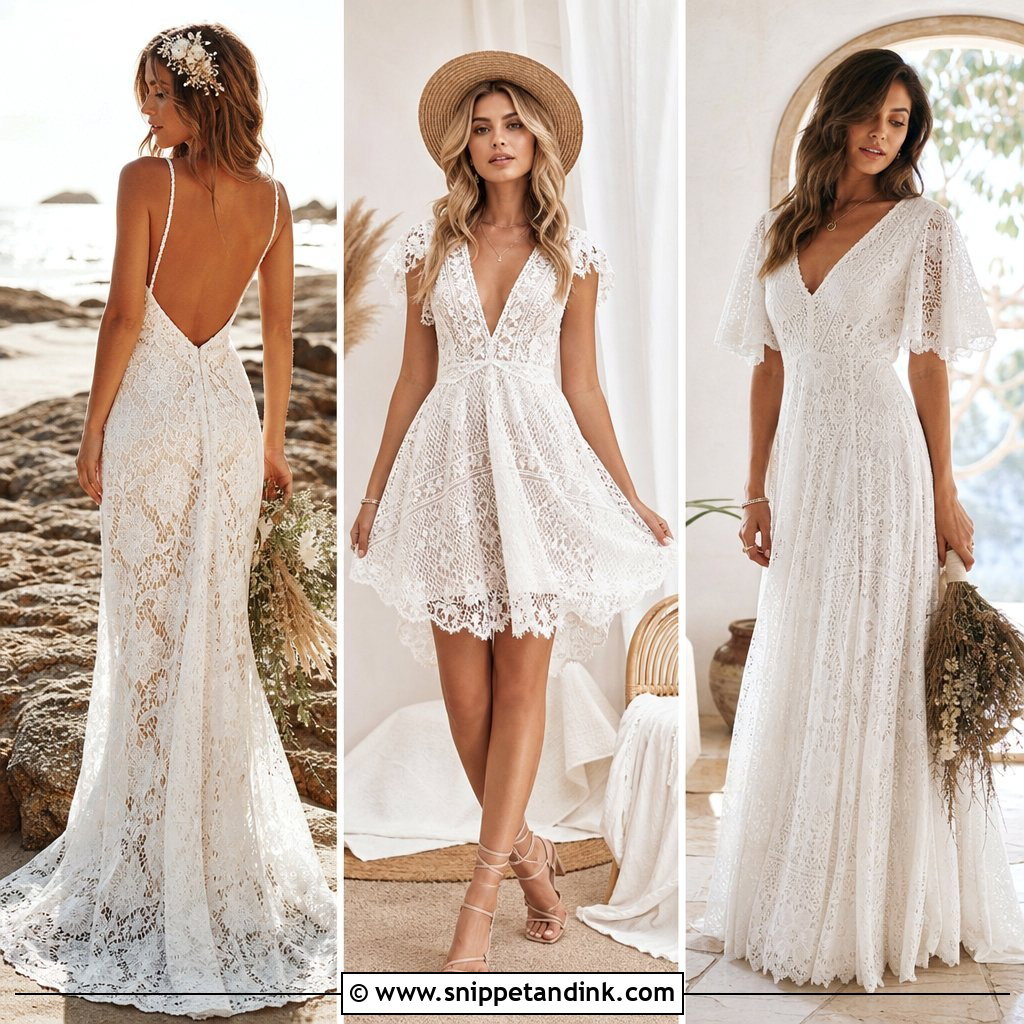
Bell sleeves, crochet-style lace and an empire waist give the seventies boho dress its loose ease. I try to keep it light, which usually means skipping a stiff lining. Loose waves, simple gold hoops and ivory suede-look heels finish it, and many brides here skip the veil entirely. Garden ceremonies and warm-weather weddings suit it; an airy bouquet of greenery keeps the mood.
7. Victorian High Neck Wedding Dress
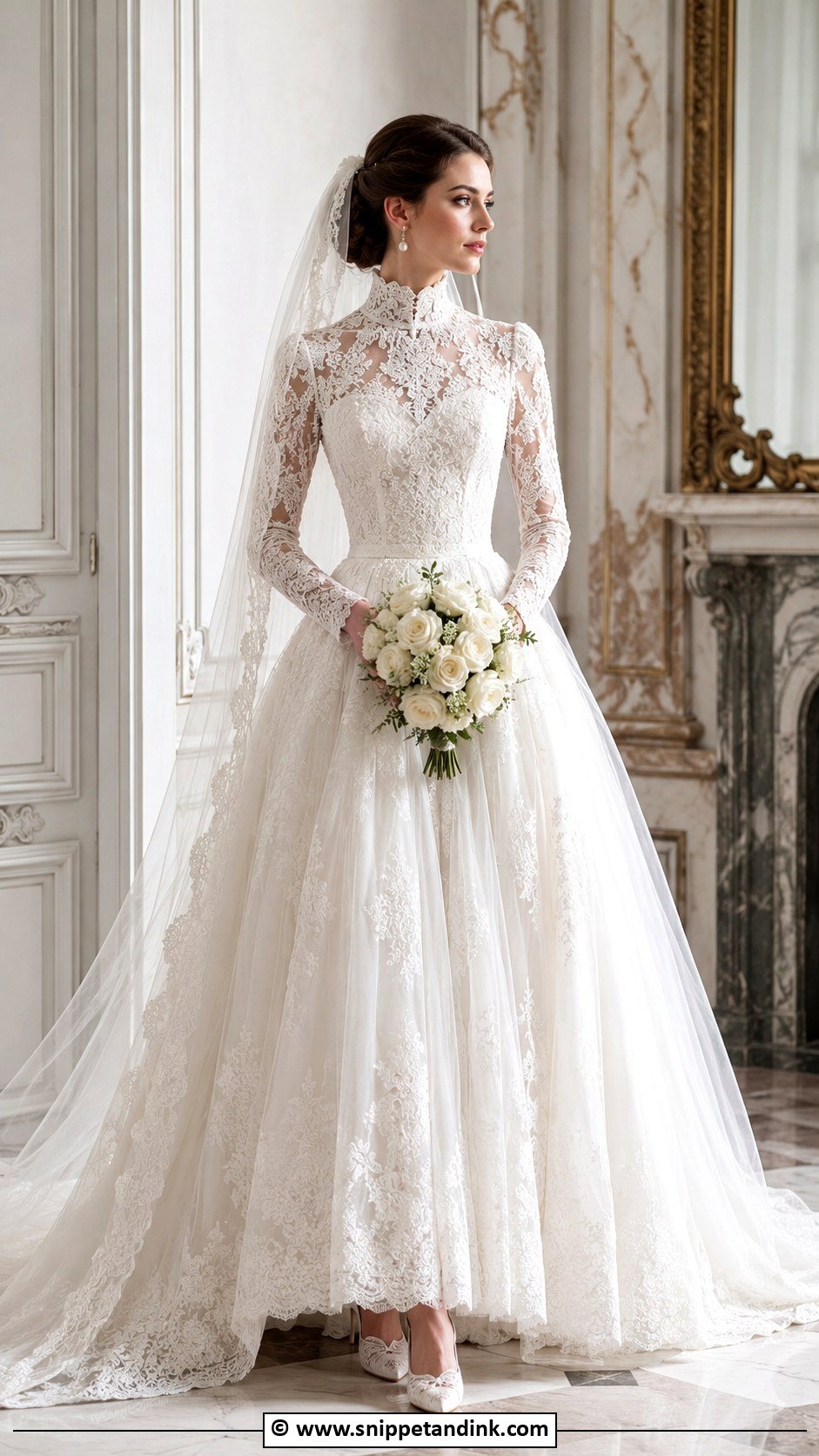
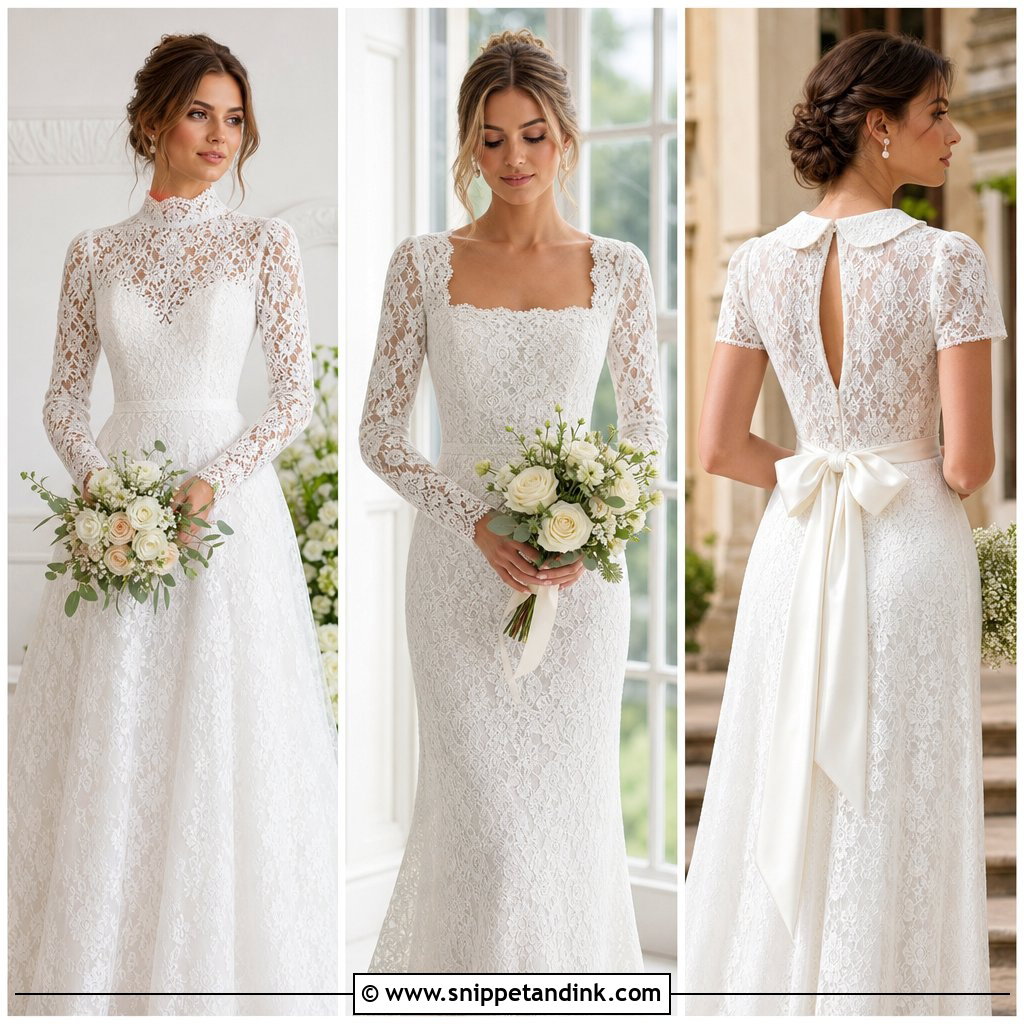
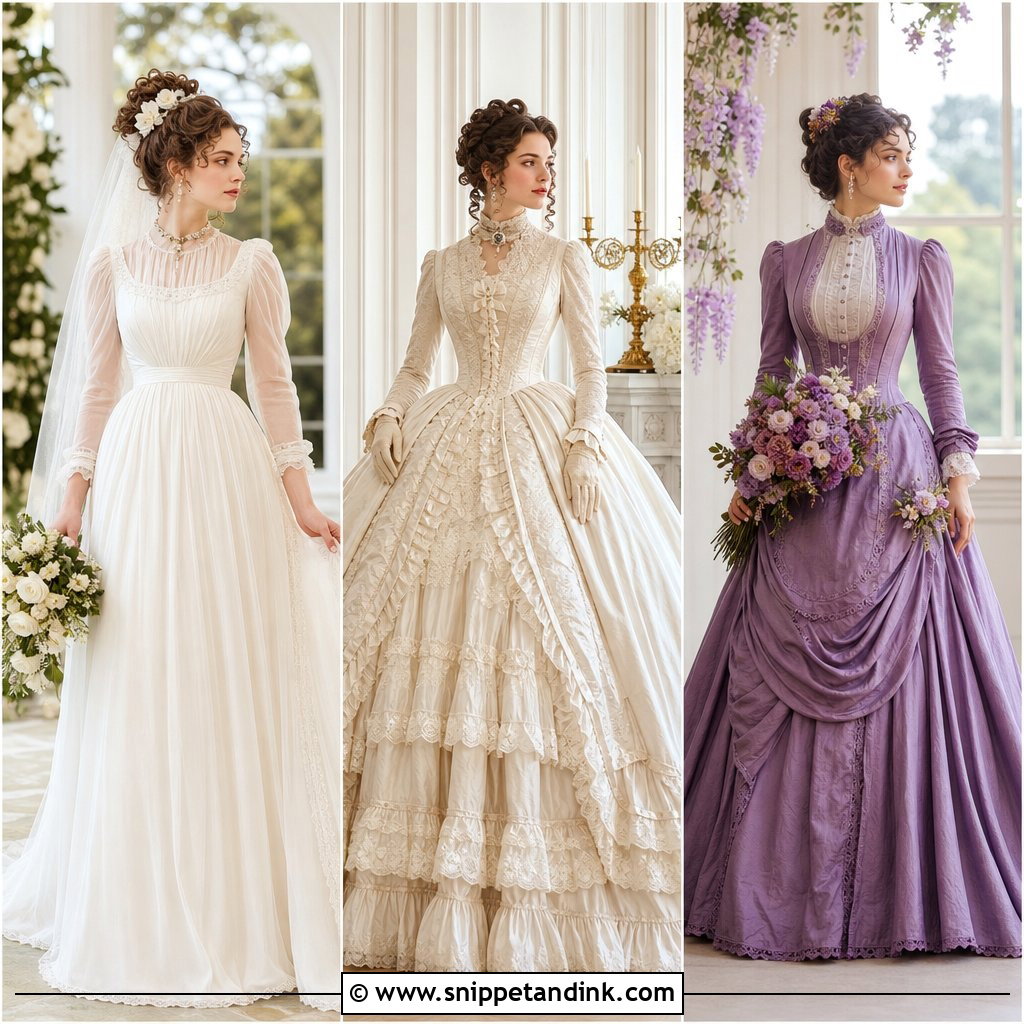
A Victorian high neck in lace, with long sleeves and a fitted bodice, is all about the throat and the line of buttons down the back. Modern versions use illusion tulle to keep the collar from feeling like a vice. I do the button check early: thirty covered loops take time to fasten, so whoever dresses you needs a crochet hook and ten spare minutes. Let a low chignon and pearl earrings be the only jewellery.
8. Edwardian Lace Wedding Dress
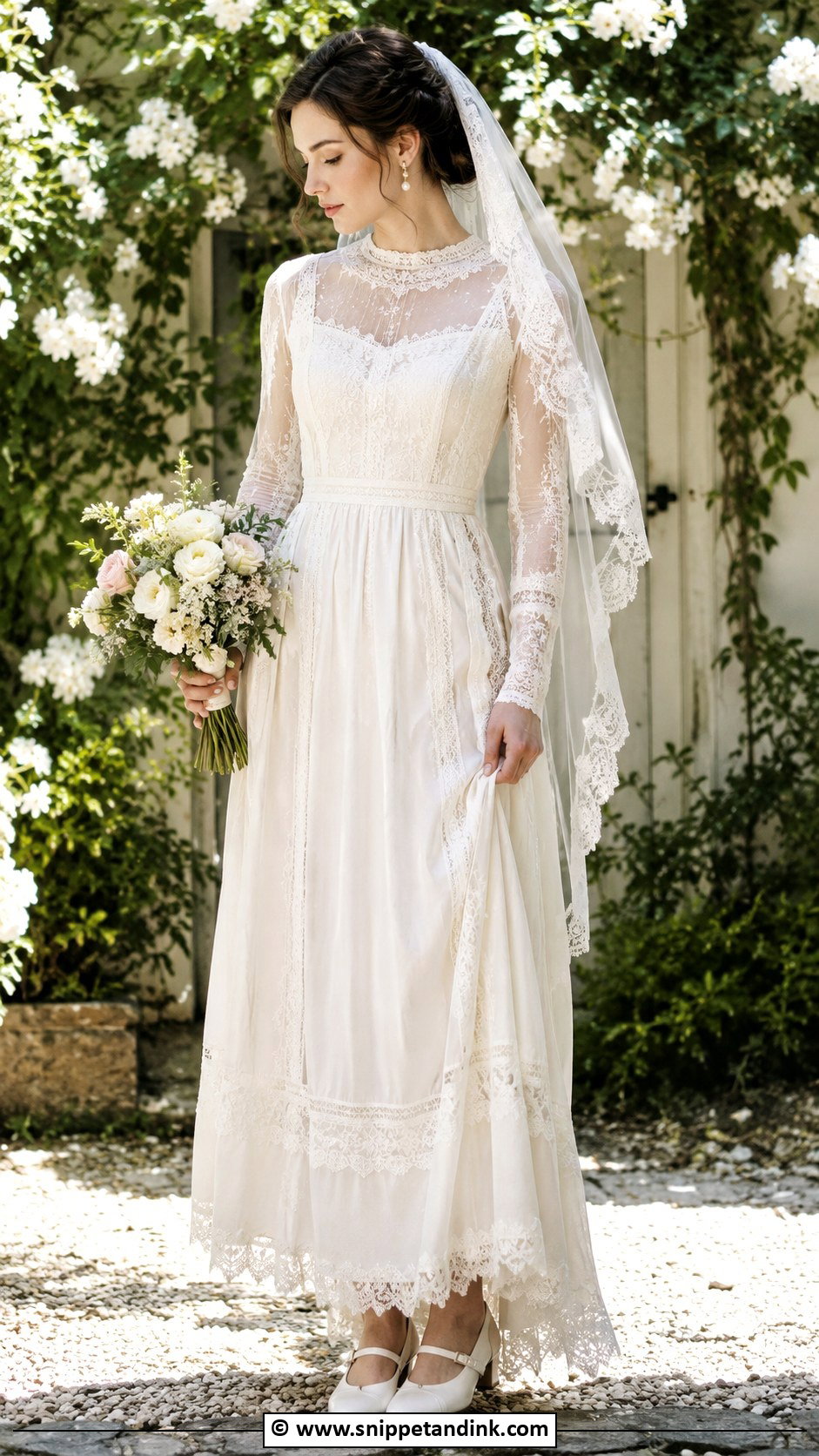
An Edwardian lace wedding dress takes after the light cotton lawn and lace dresses of that period: a slightly raised waist, sheer sleeves, tiny buttons and soft ruffles. Cotton lace and embroidered tulle keep it airy for spring and summer. These dresses are cut loose through the body, so I’d suggest it to anyone who wants romance without a fitted bodice. Satin Mary Janes and a loose updo with face-framing pieces fit the period.
9. Vintage Lace Ball Gown Wedding Dress
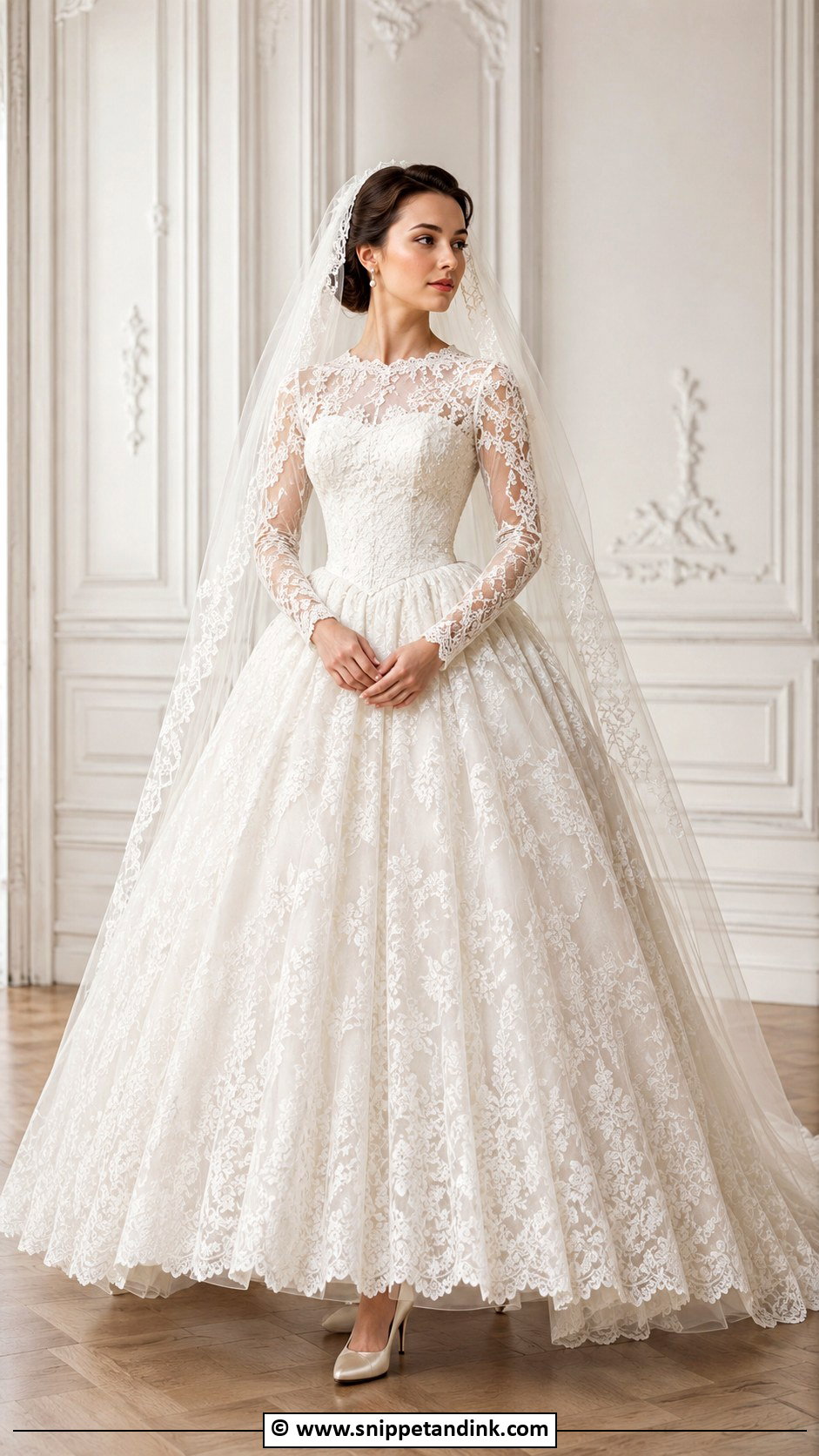
Volume changes how you move through a day. A lace ball gown with a basque or natural waist and a full skirt needs a wider aisle, a car with room and a plan for the loo, so I talk logistics before anyone falls in love. Long lace sleeves make it traditional; cap sleeves lighten it. Choose a medium bouquet in proportion to the skirt and a chapel or cathedral veil for a formal venue.
10. Vintage Satin Ball Gown Wedding Dress
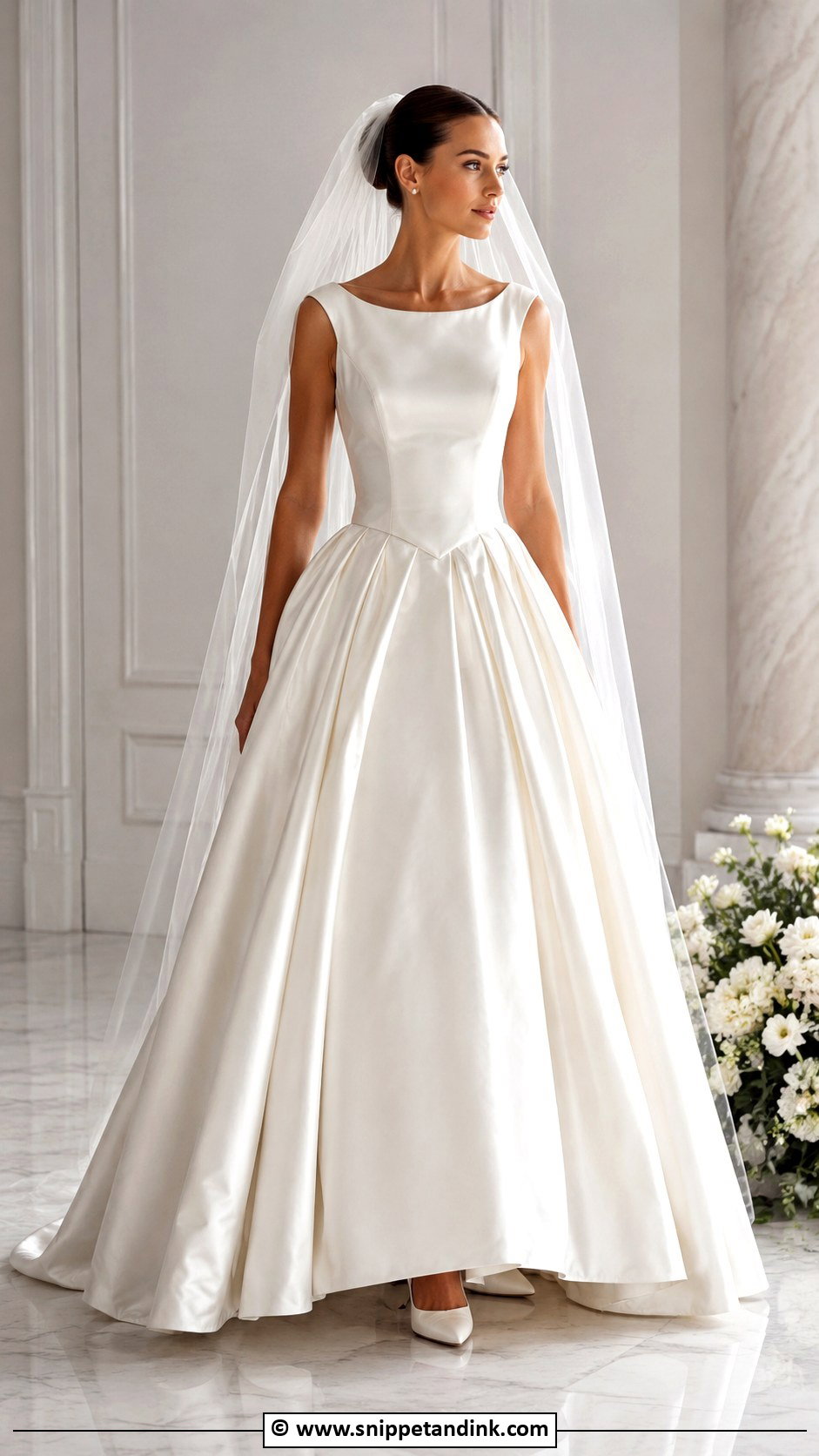
Satin shows every seam. A vintage-style satin ball gown with a sweetheart or off-shoulder neck will reveal a puckered side seam from across the room, which is why I’d put the alterations budget here rather than on accessories. Opera gloves add drama; pearl studs and a smooth veil keep it simple. Closed-toe satin pumps finish it head to toe.
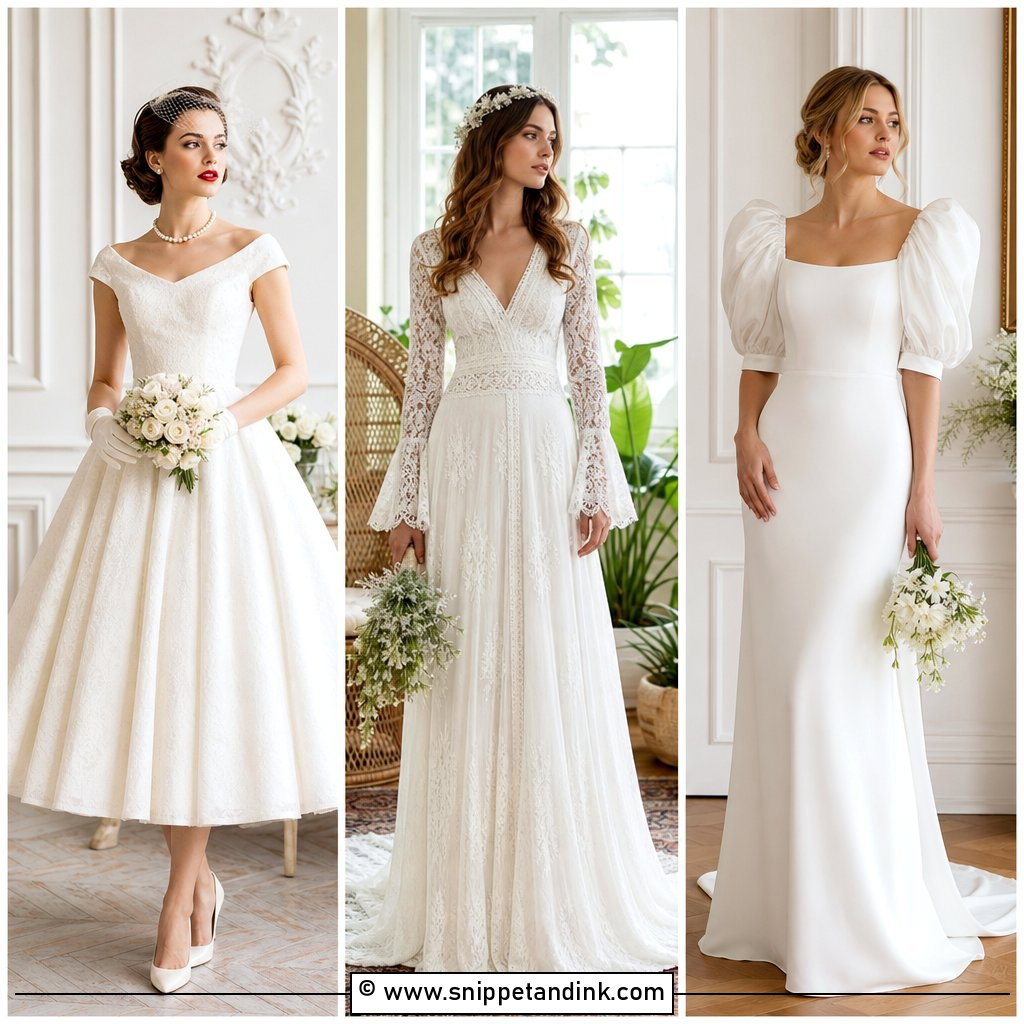
11. Vintage Off Shoulder Wedding Dress
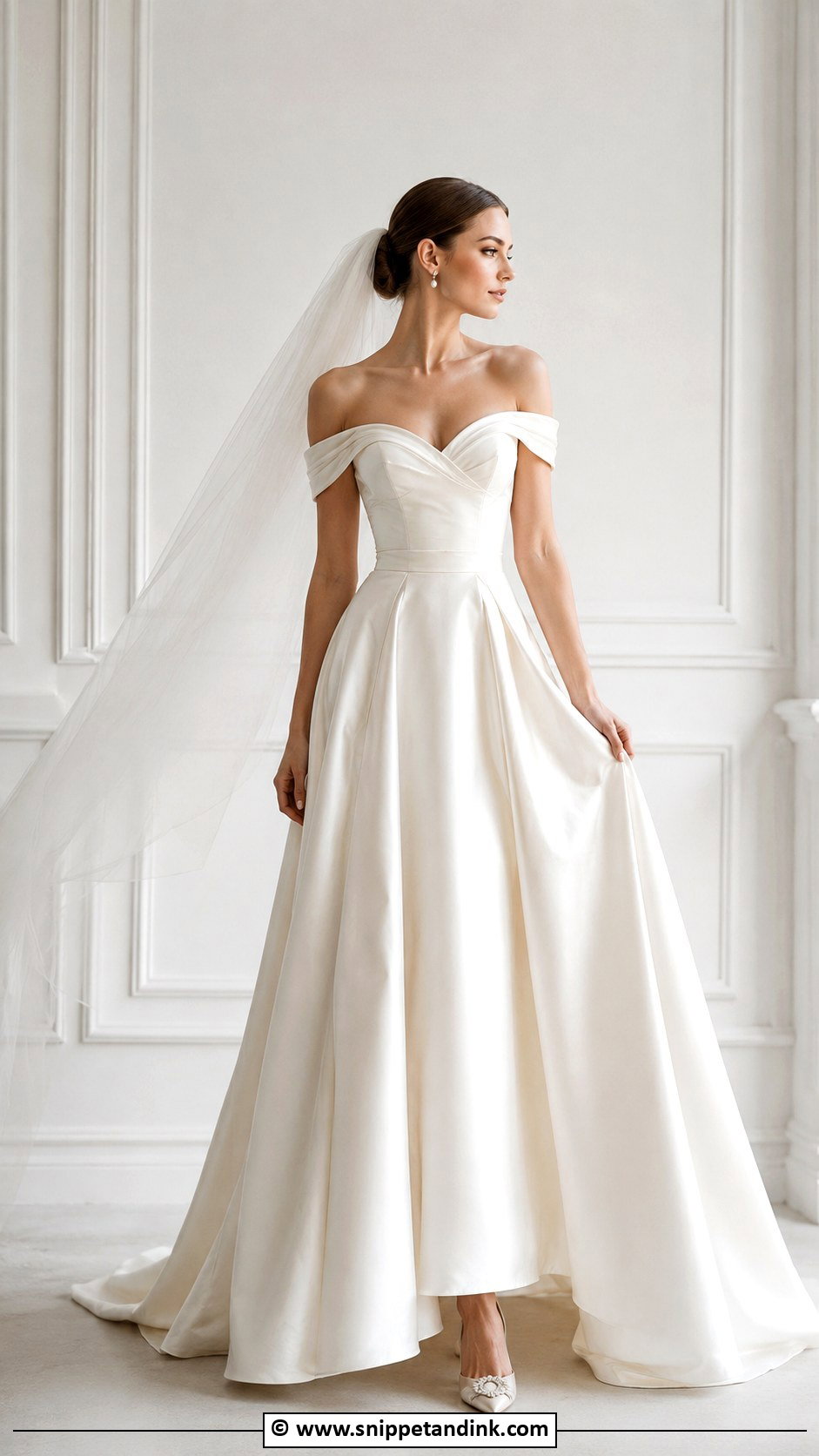
Off-shoulder necklines are flattering on the collarbone and restrictive on the arms. A 1950s foldover collar is stiffer and sits more securely than lace off-shoulder sleeves, which can slip. I always have brides reach up as if to hug someone tall during the fitting; if the neckline climbs, it needs a grip strip. A low bun and pearl studs keep the focus upward.
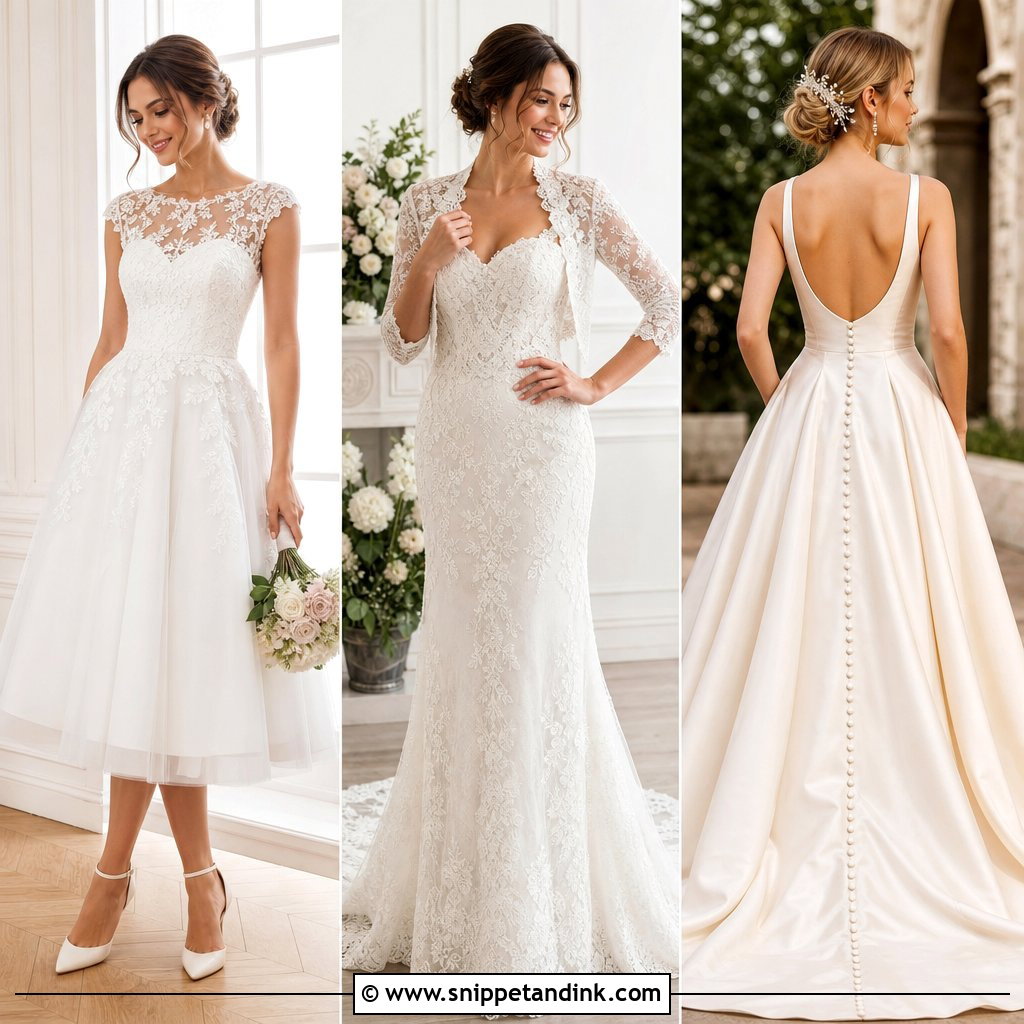
12. Vintage Cap Sleeve Wedding Dress
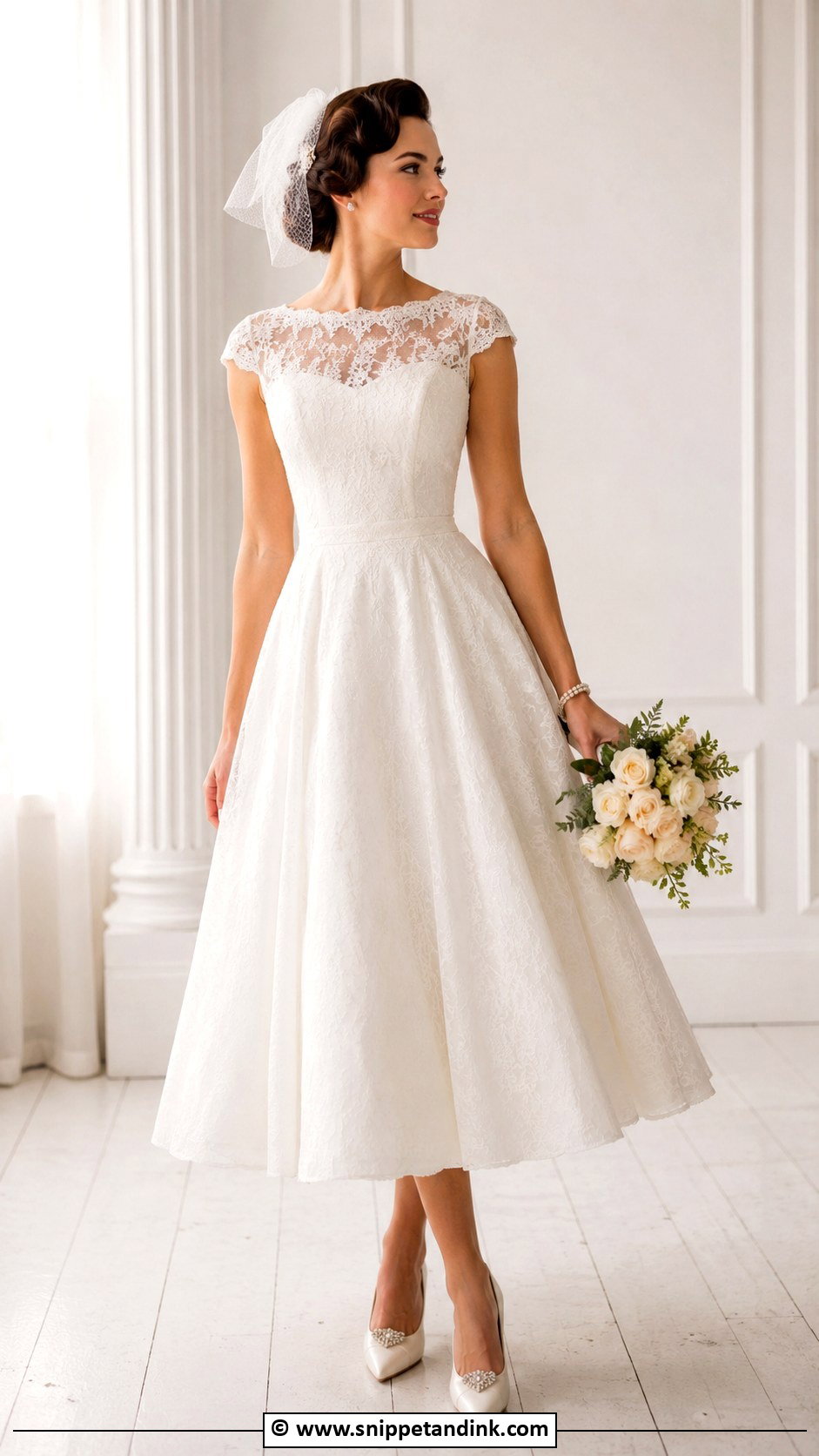
Cap sleeves cover the very top of the arm and nothing more, which gives the dress a polished outline with almost no weight. They suit lace bodices, illusion necklines and tea-length skirts. My caution: a cap sleeve cut too tight digs into the arm when you hold a bouquet, leaving a red line in close-ups. With detailed lace, keep jewellery minimal; with clean satin, add a pearl bracelet.
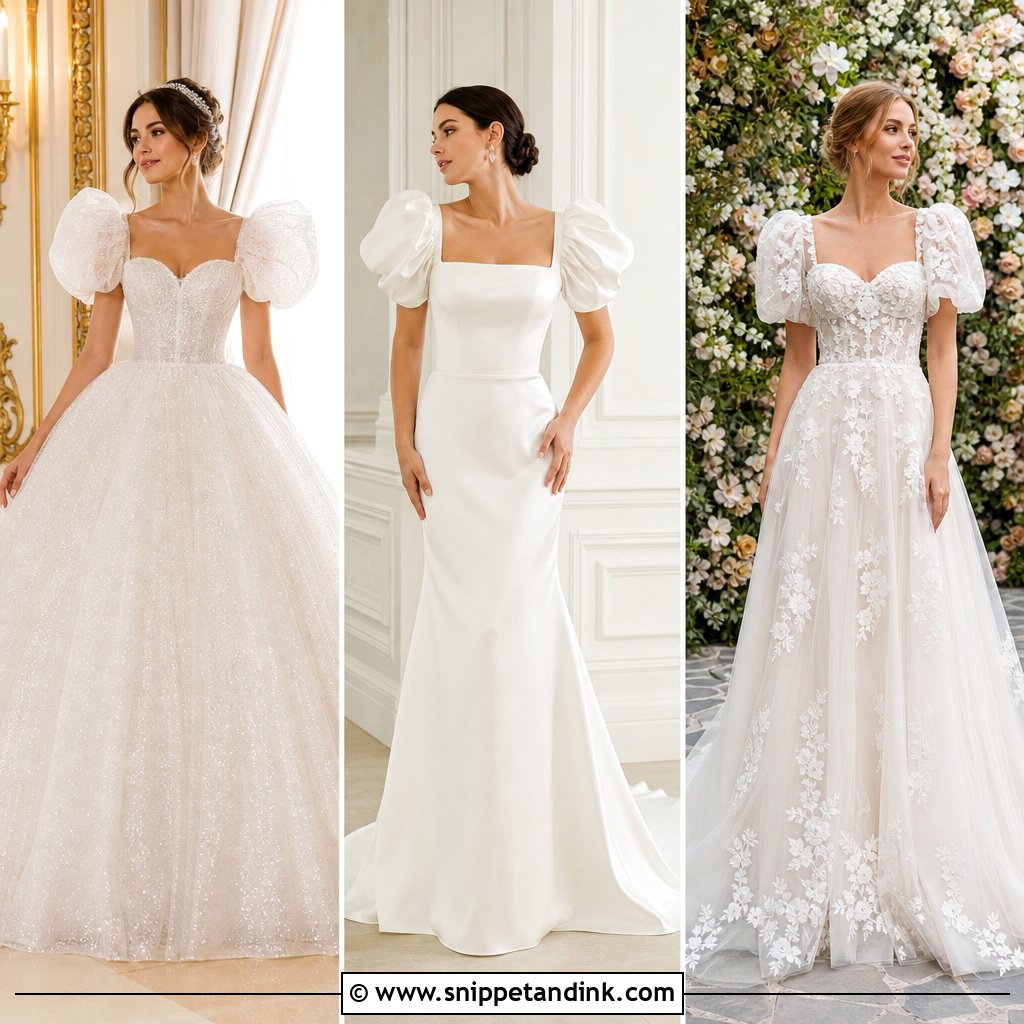
13. Vintage Puff Sleeve Wedding Dress
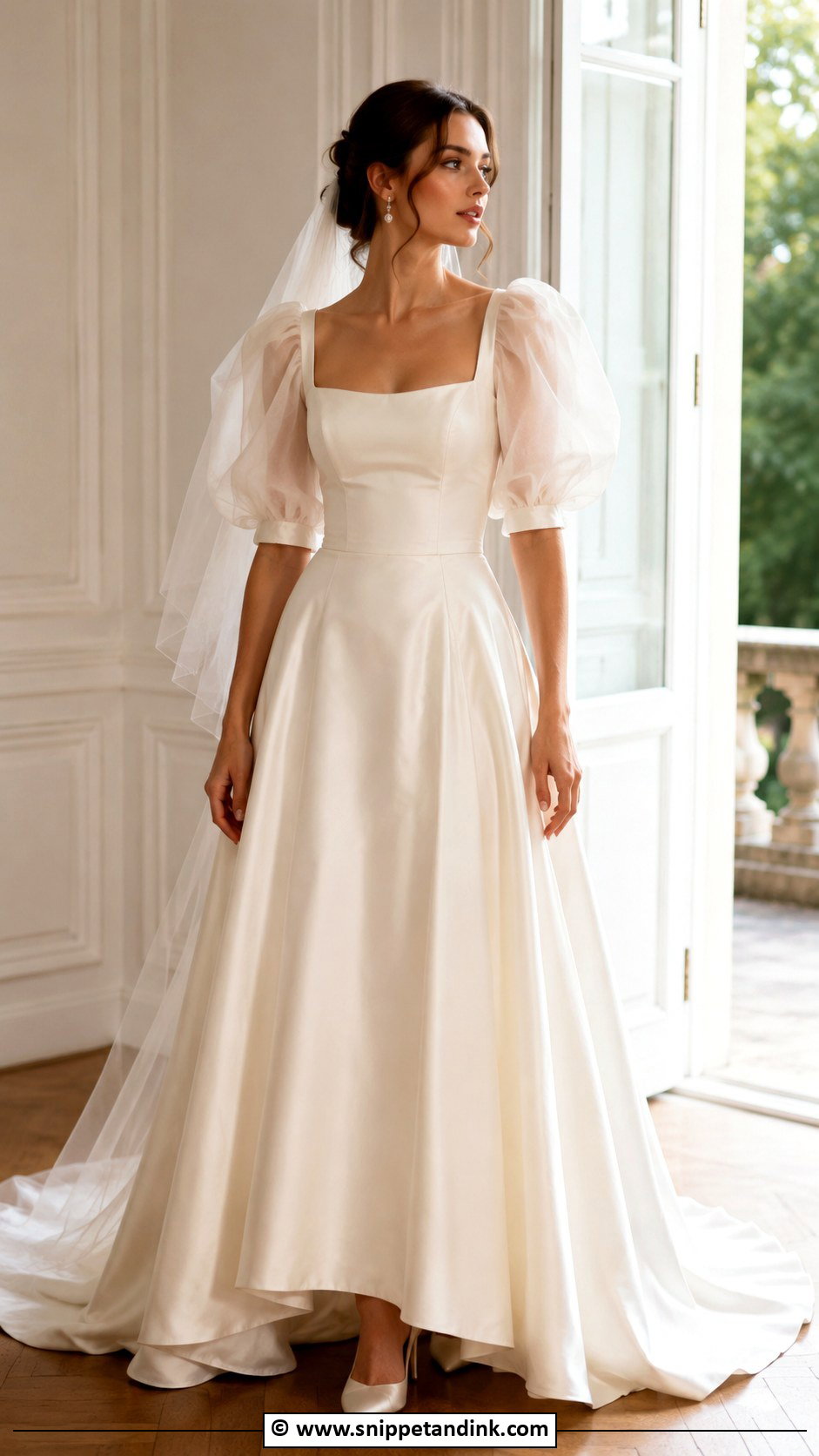
Puff sleeves can be short and round, which reads more eighties, or long and sheer for an antique mood. Volume is the thing to control. I ask the seamstress to keep the puff in proportion to the shoulder, because an oversized sleeve widens the frame in every photo. They can also balance wider hips and make the waist look smaller. Keep the earrings and veil plain.
14. Vintage Bishop Sleeve Wedding Dress
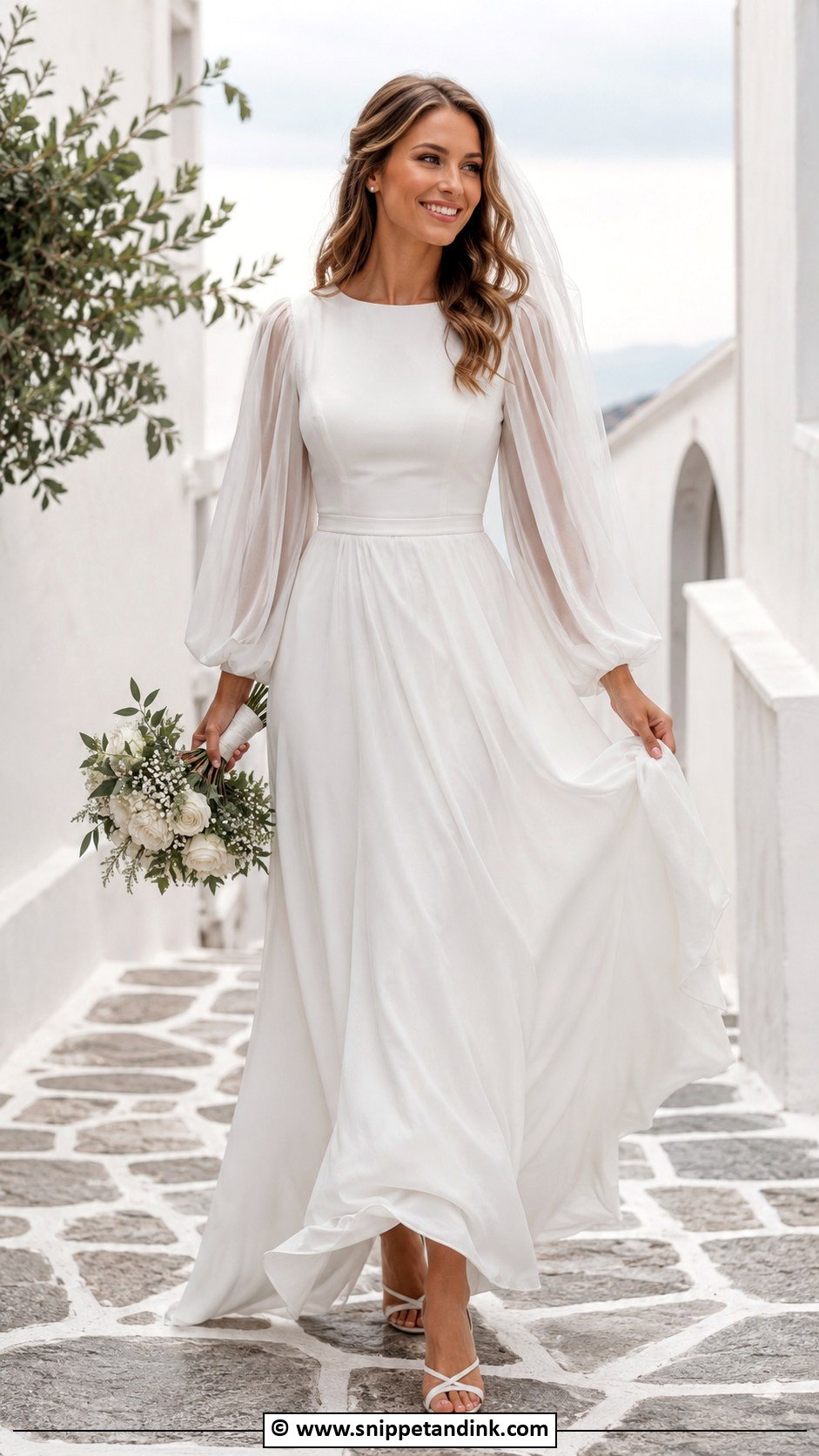
Bishop sleeves gather the fullness at the wrist cuff, so the arm looks soft without bulk at the shoulder. Chiffon, lace and sheer tulle all suit it. The wrist cuff is where I’m picky, since it should close without pulling the sleeve up when you raise your hand. Loose waves or a low bun, simple earrings and a light veil keep the look quiet and a little bohemian.
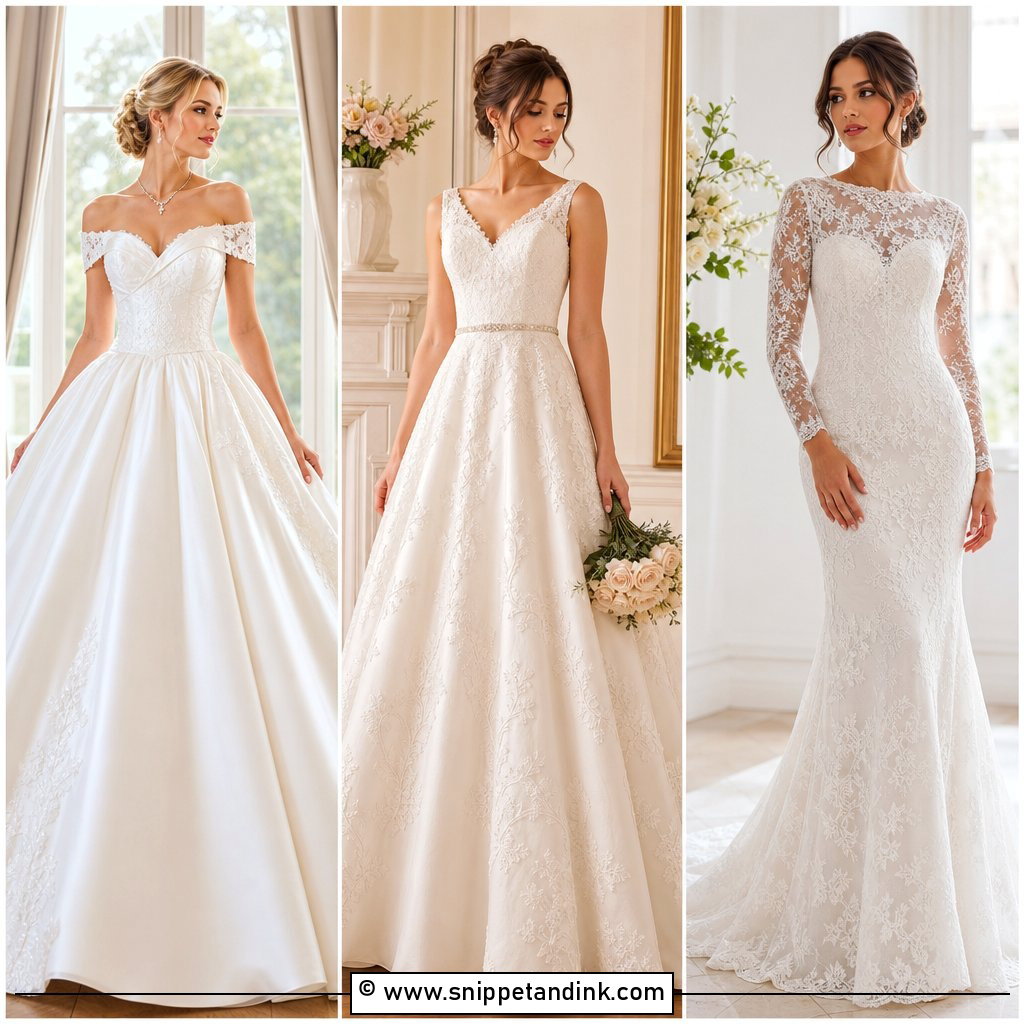
15. Vintage Square Neck Wedding Dress
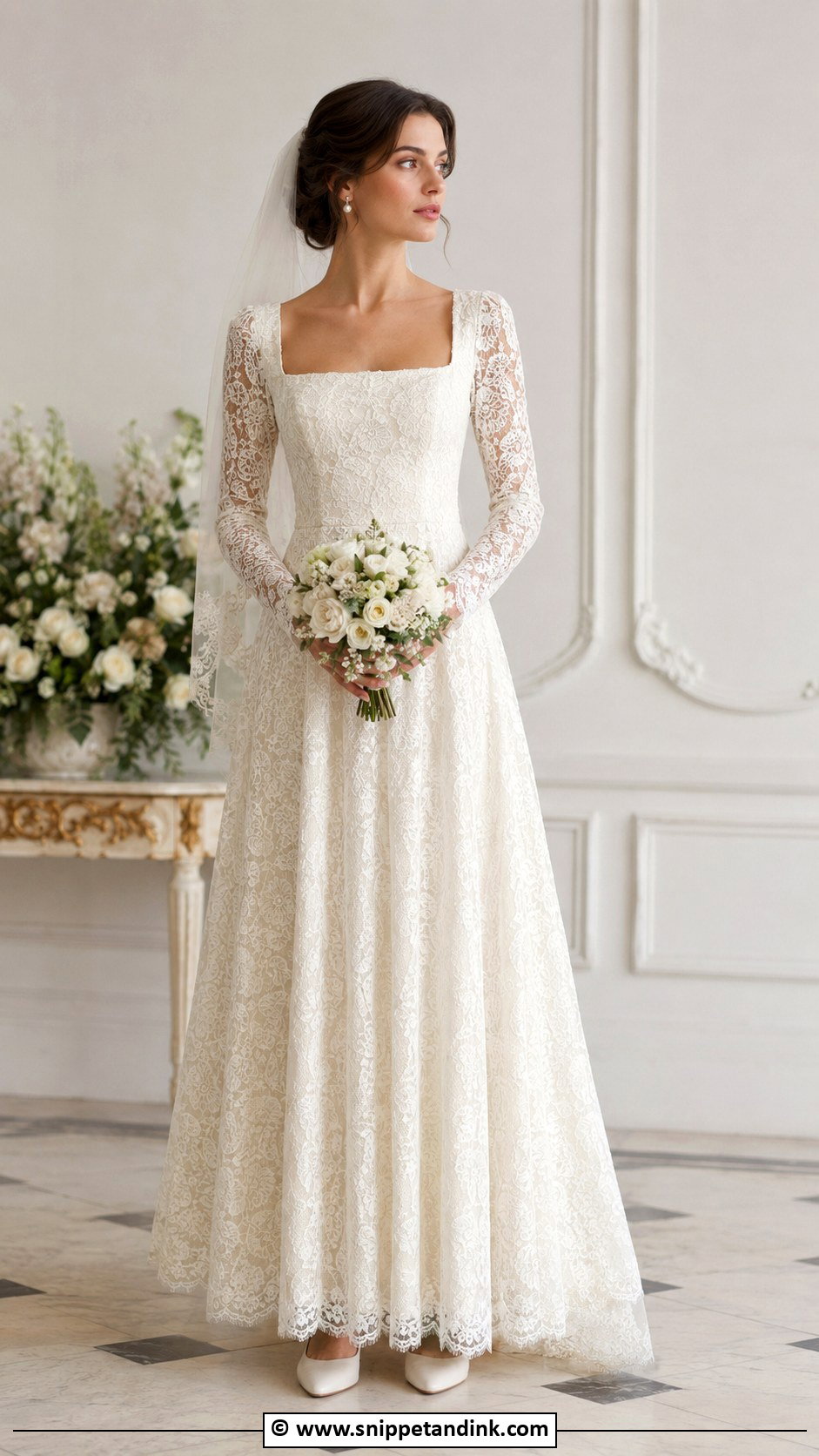
A square neck gives structure to the upper body and sits as happily with long sleeves as with thin straps. Lace leans seventies, satin feels classic and crepe looks more modern. The corners are what I watch at a fitting: if they gape when you exhale, the bodice needs taking in at the side seams. A soft updo and slingbacks suit it.
16. Vintage Sweetheart Wedding Dress
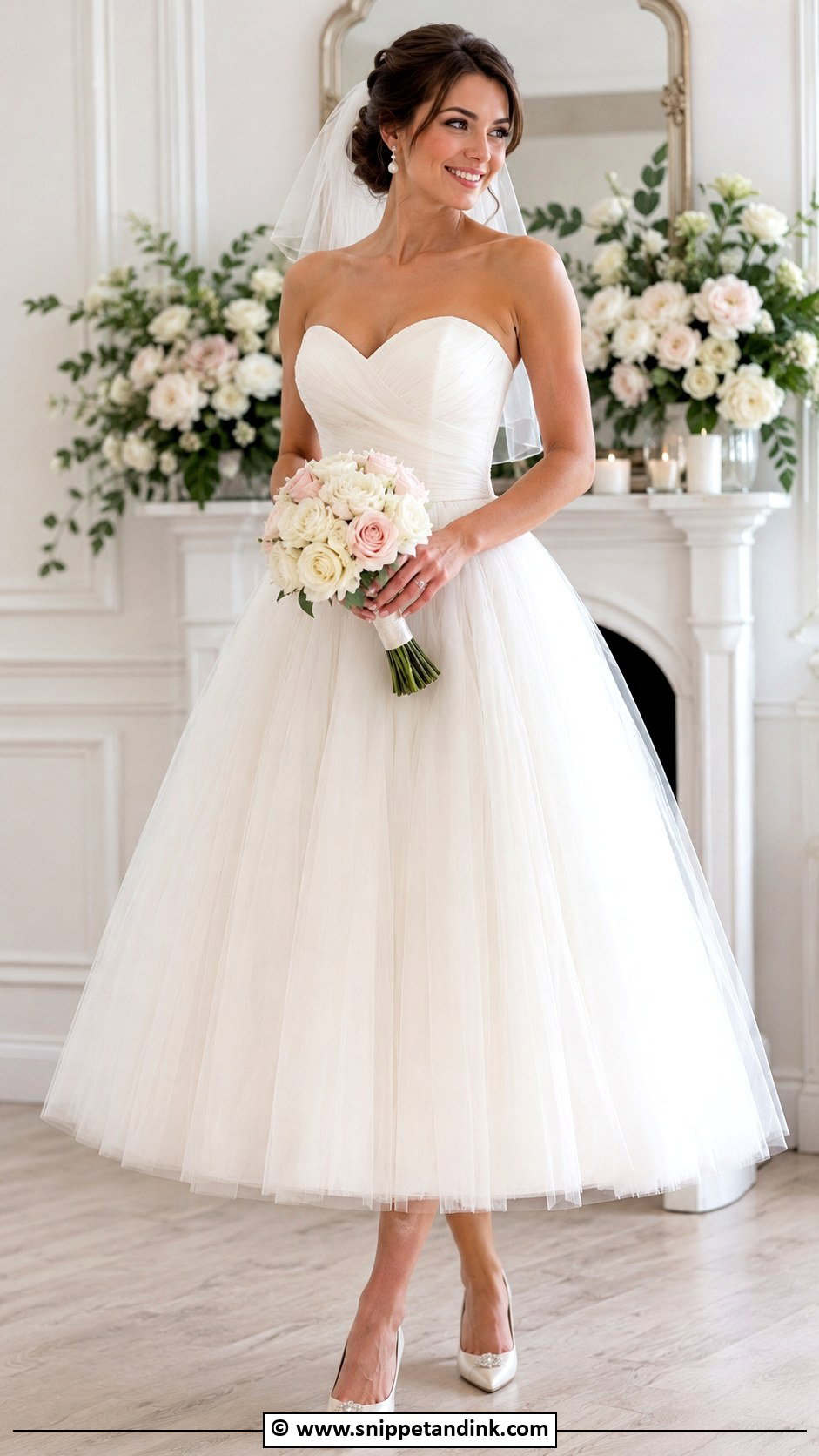
The curved sweetheart neckline softens a bodice and works with full skirts, tea lengths, mermaids and lace overlays. Its weak spot is the centre dip, which can sit away from the body on smaller busts. I usually ask for a little boning or a hidden cup to keep it close. Satin or floral lace with a defined waist keeps it vintage; a lace bolero adds coverage for the ceremony.
17. Vintage Drop Waist Wedding Dress
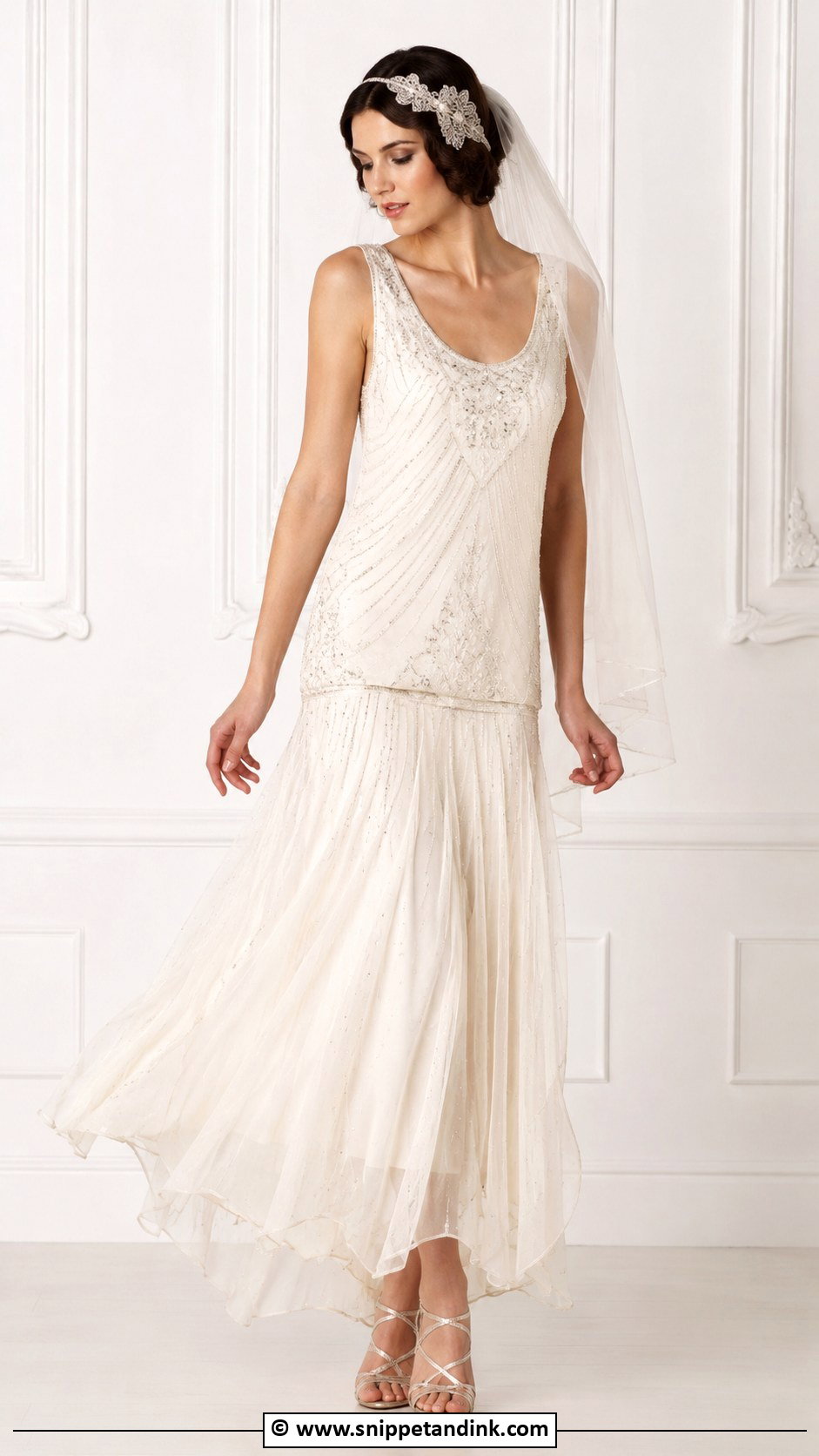
The drop waist borrows from the 1920s, setting the seam low on the hip and lengthening the torso. Placement is everything. A seam two centimetres too low shortens the legs in photos, so I’d only choose this one with a seamstress who will fit it carefully. Beading, lace or soft crepe keeps it bridal; strappy heels and a beaded hair piece fit the era.
18. Vintage Basque Waist Wedding Dress
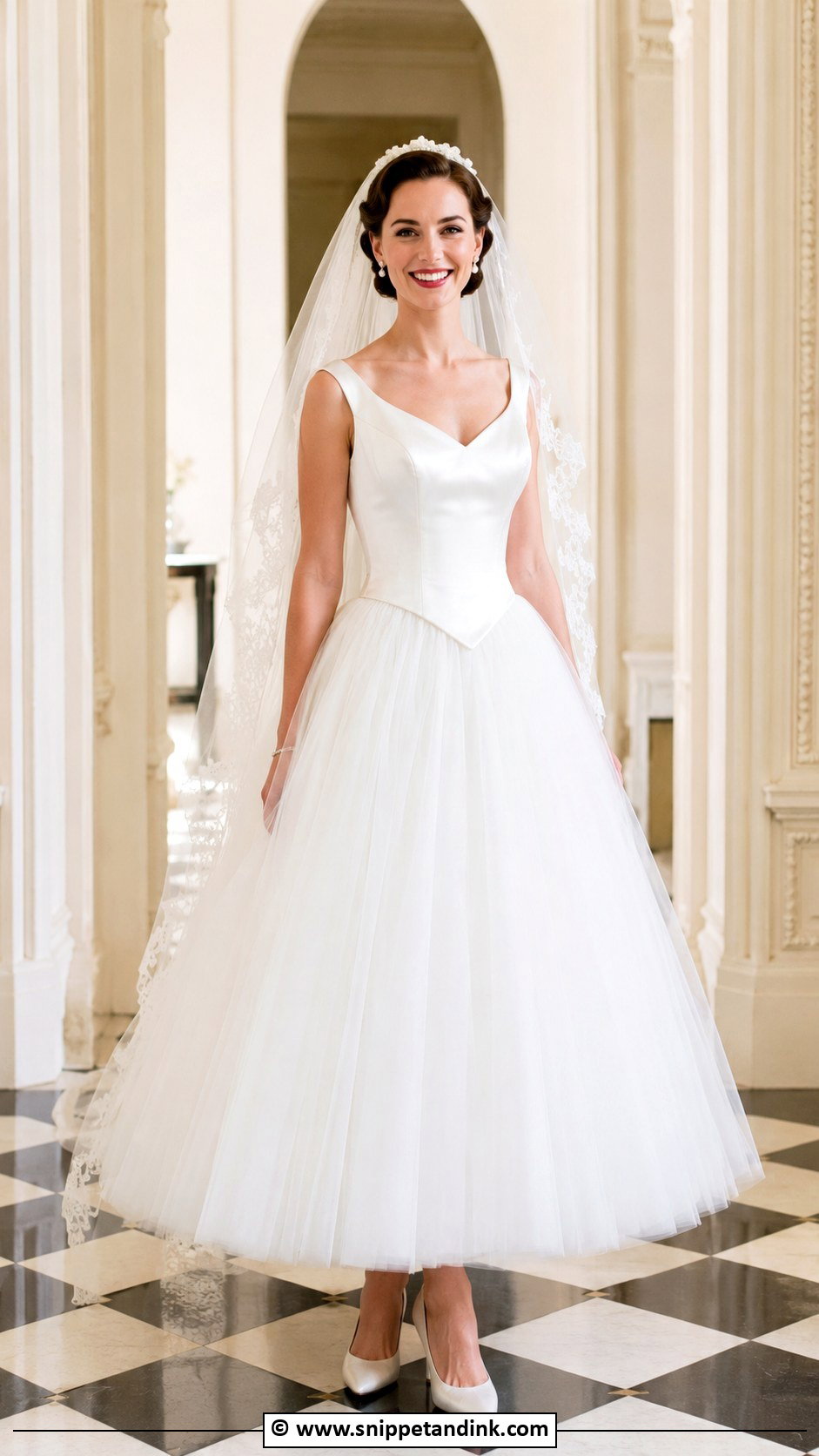
A basque waist dips to a point at the centre front, which lengthens the torso and sharpens an hourglass on a full skirt. Sitting is the test. That point can dig into the stomach when you sit for dinner, so I always do a seated fitting with this shape. A long veil and pumps keep it regal, and the bodice must fit smoothly, since the waistline is the star.
19. Vintage Corset Wedding Dress
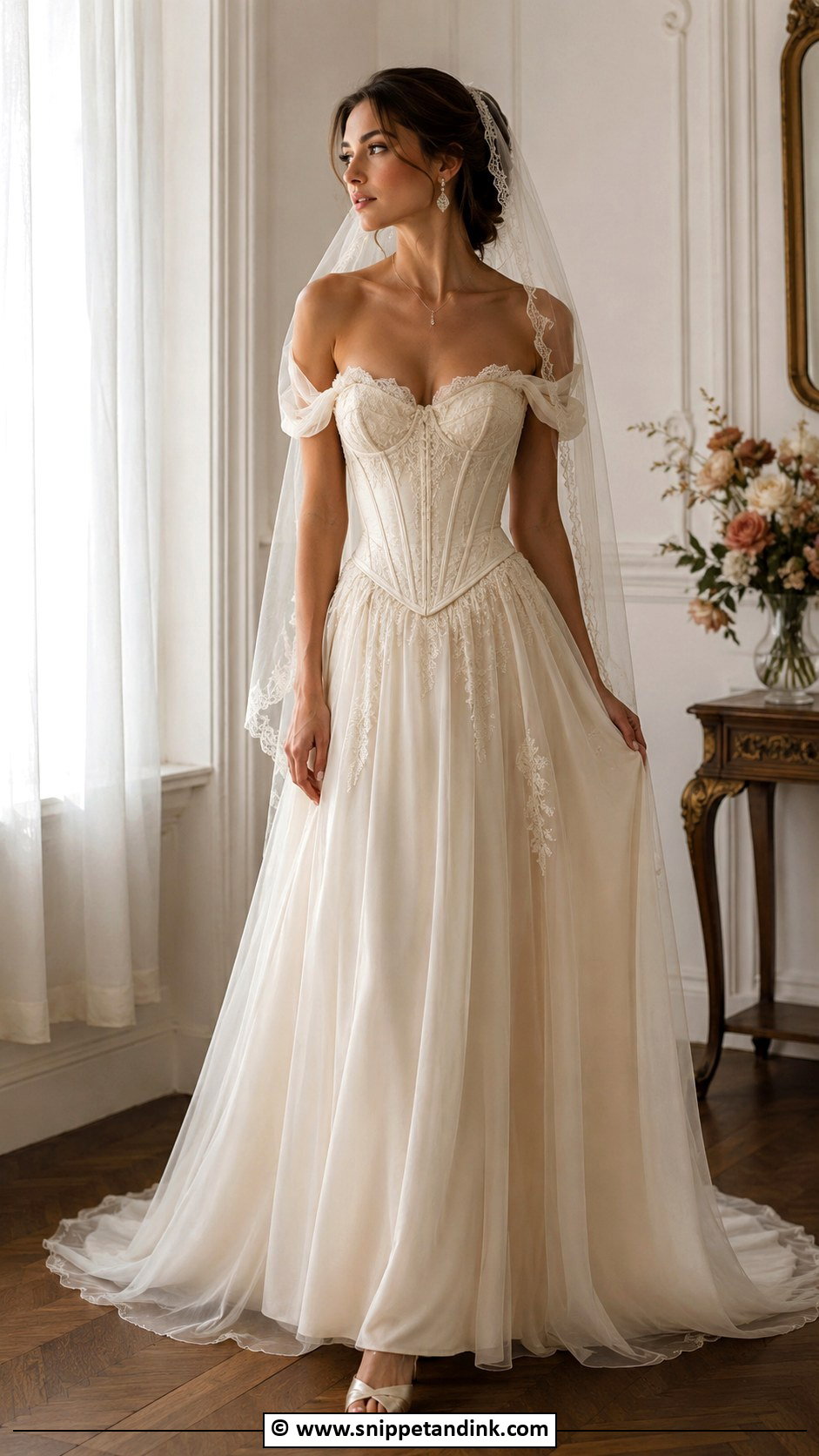
Corset bodices give shape and support, with visible boning or a lace-up back. The lacing is useful, since it can be tightened in the morning and eased after dinner. I tell brides it should be firm, not breath-stealing; if you can’t laugh in it at the fitting, it’s too tight for a ten-hour day. A soft A-line skirt or tulle overlay keeps it bridal, and ivory or champagne adds warmth.


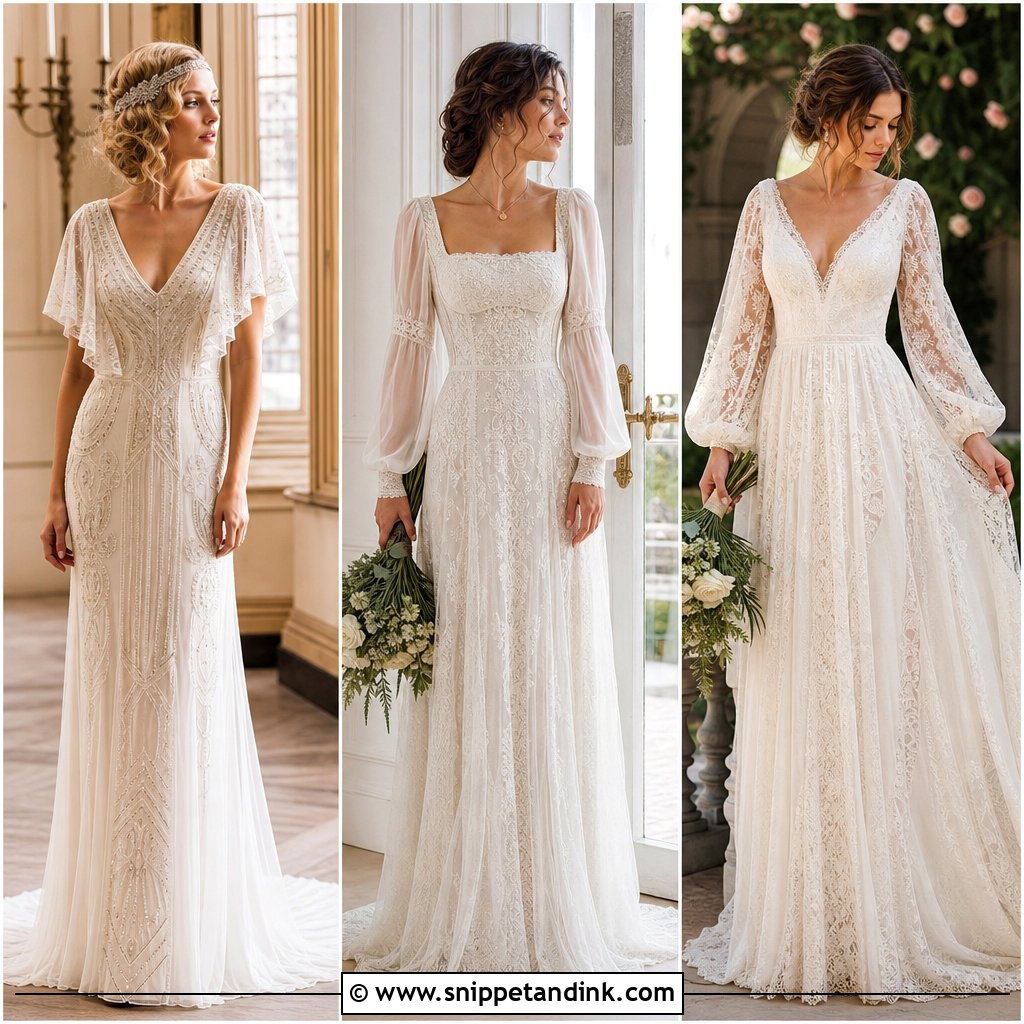
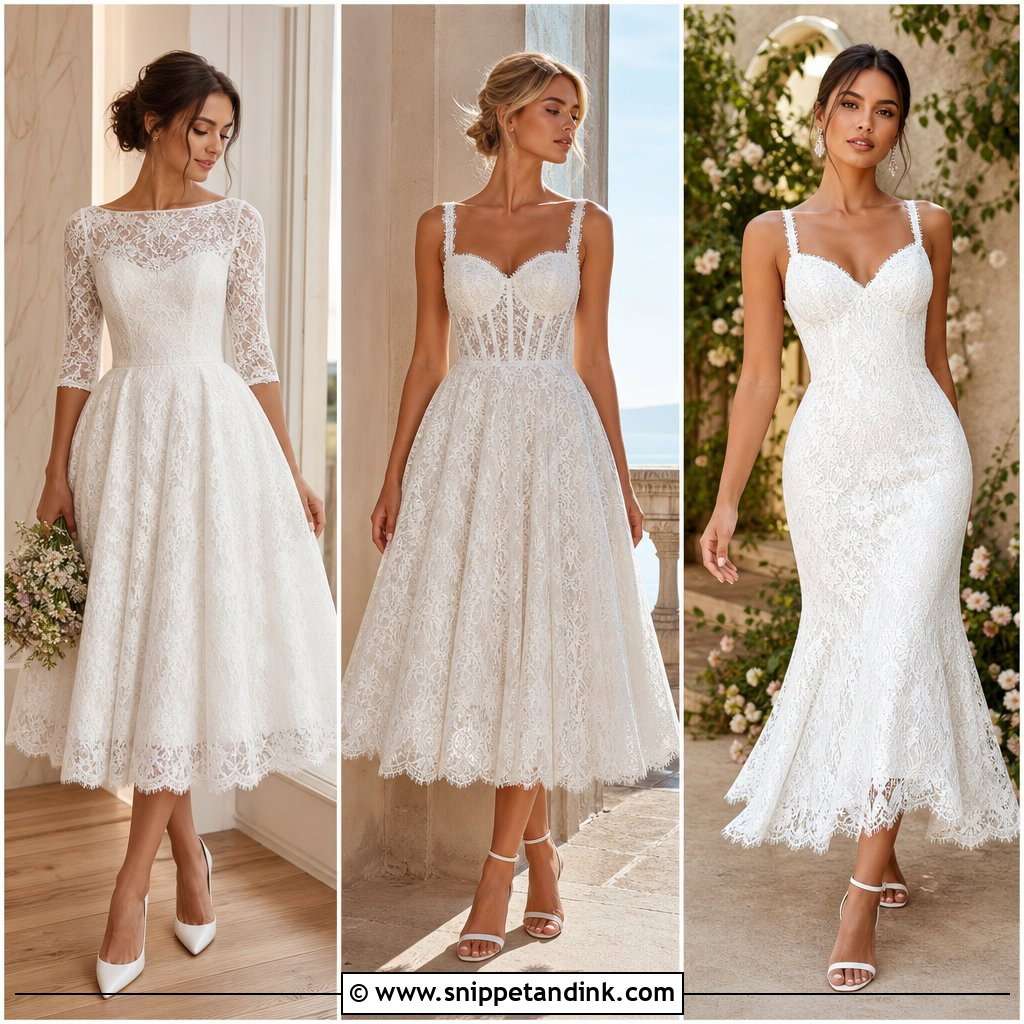

20. Vintage Slip Wedding Dress
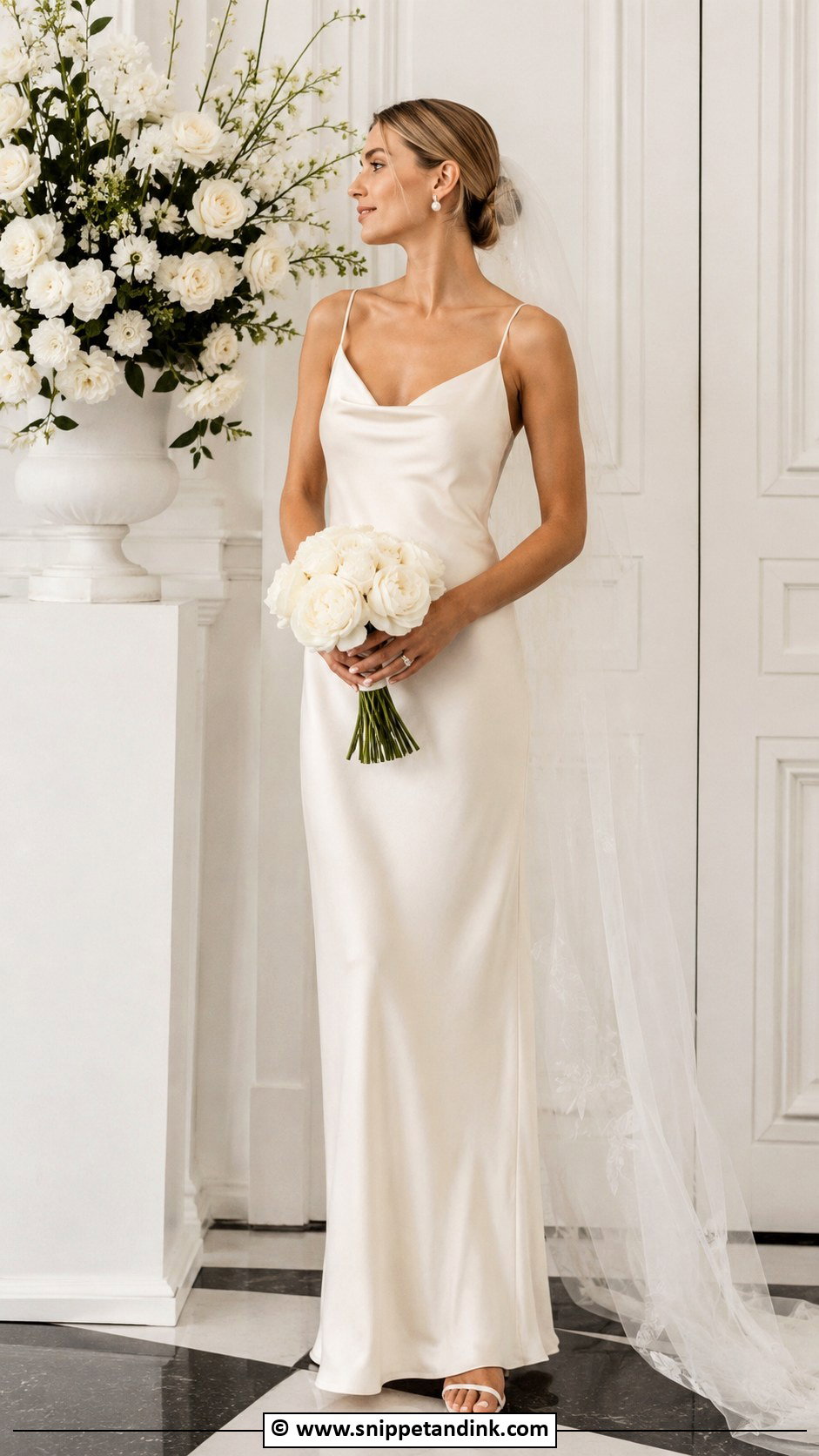
A vintage slip wedding dress borrows the thirties bias cut with thin straps and soft satin or silk. The straps are worth checking: they carry the whole dress, so I make sure they’re adjustable. It should skim, never cling, and the underwear plan matters more here than anywhere else. A lace topper or cropped cardigan covers the shoulders for a church ceremony.
21. Vintage Empire Waist Wedding Dress
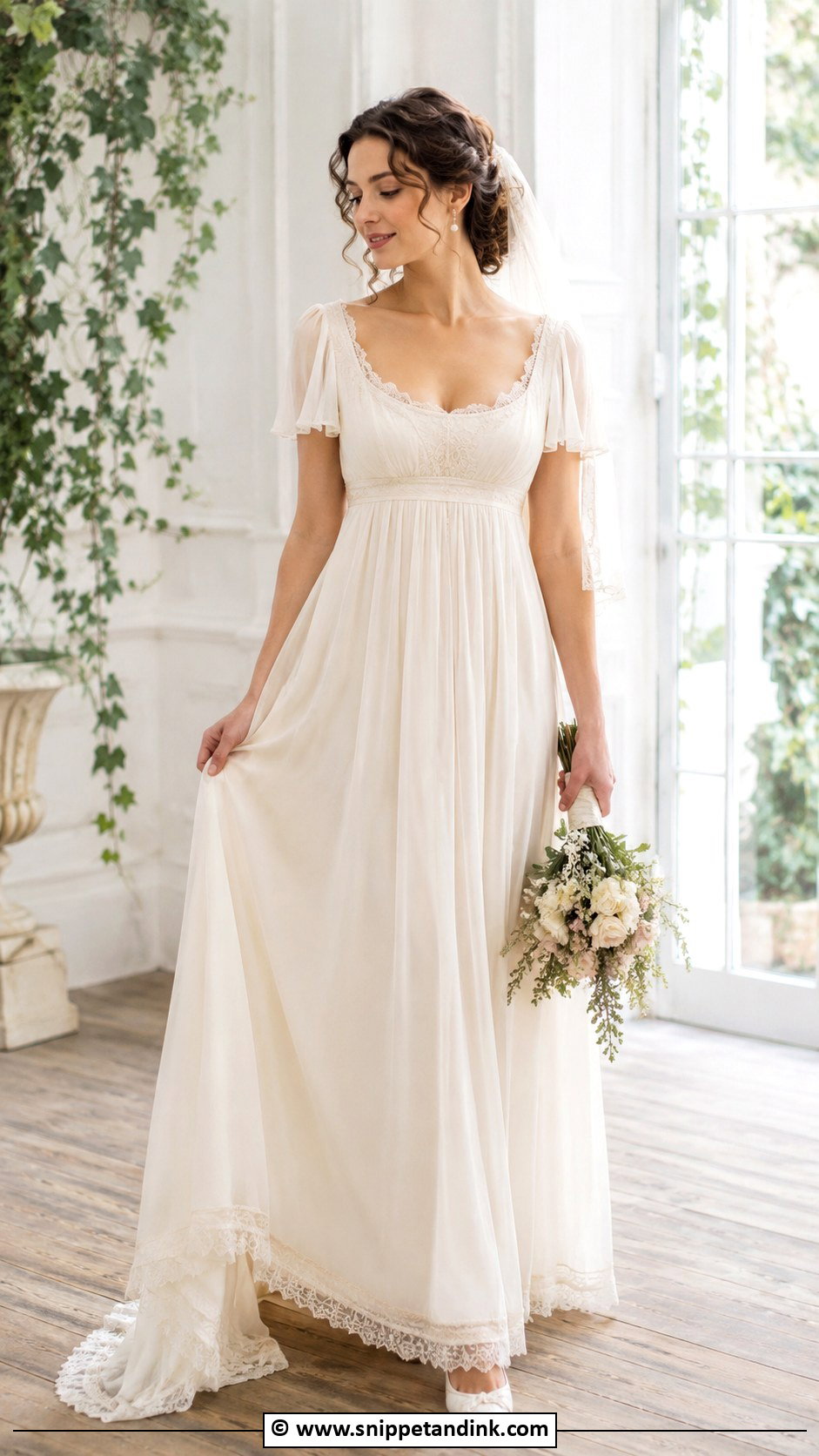
A vintage empire waist wedding dress sits just under the bust and falls away from the body, a line linked to the Regency era and later revived in the seventies. Chiffon, lace and lightweight satin move best. It’s forgiving and comfortable, so I suggest it to brides who don’t want a fitted waist. On a full bust, check that the seam sits under it rather than across it. Flats or low heels and loose waves suit the shape.
22. Vintage A Line Wedding Dress
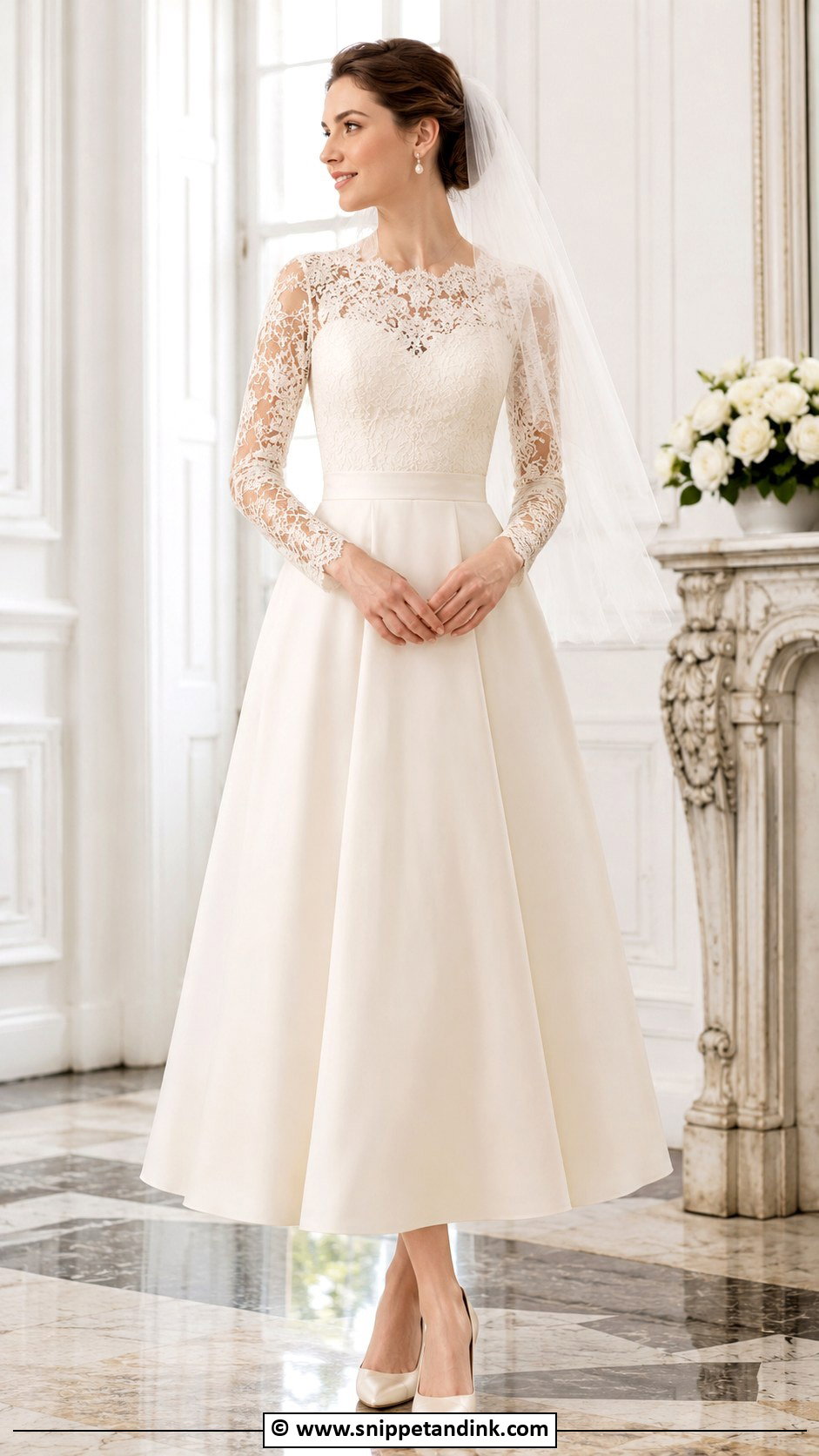
The A-line widens gently from the waist, which balances most figures without the bulk of a ball gown. Fabric and neckline decide the era: lace sleeves and covered buttons lean Edwardian, a sweetheart neck with tulle leans fifties. It’s the easiest shape to walk, sit and dance in, which is why I suggest it to brides who are torn between periods. Classic pumps and a medium veil finish it.
23. Vintage Mermaid Wedding Dress
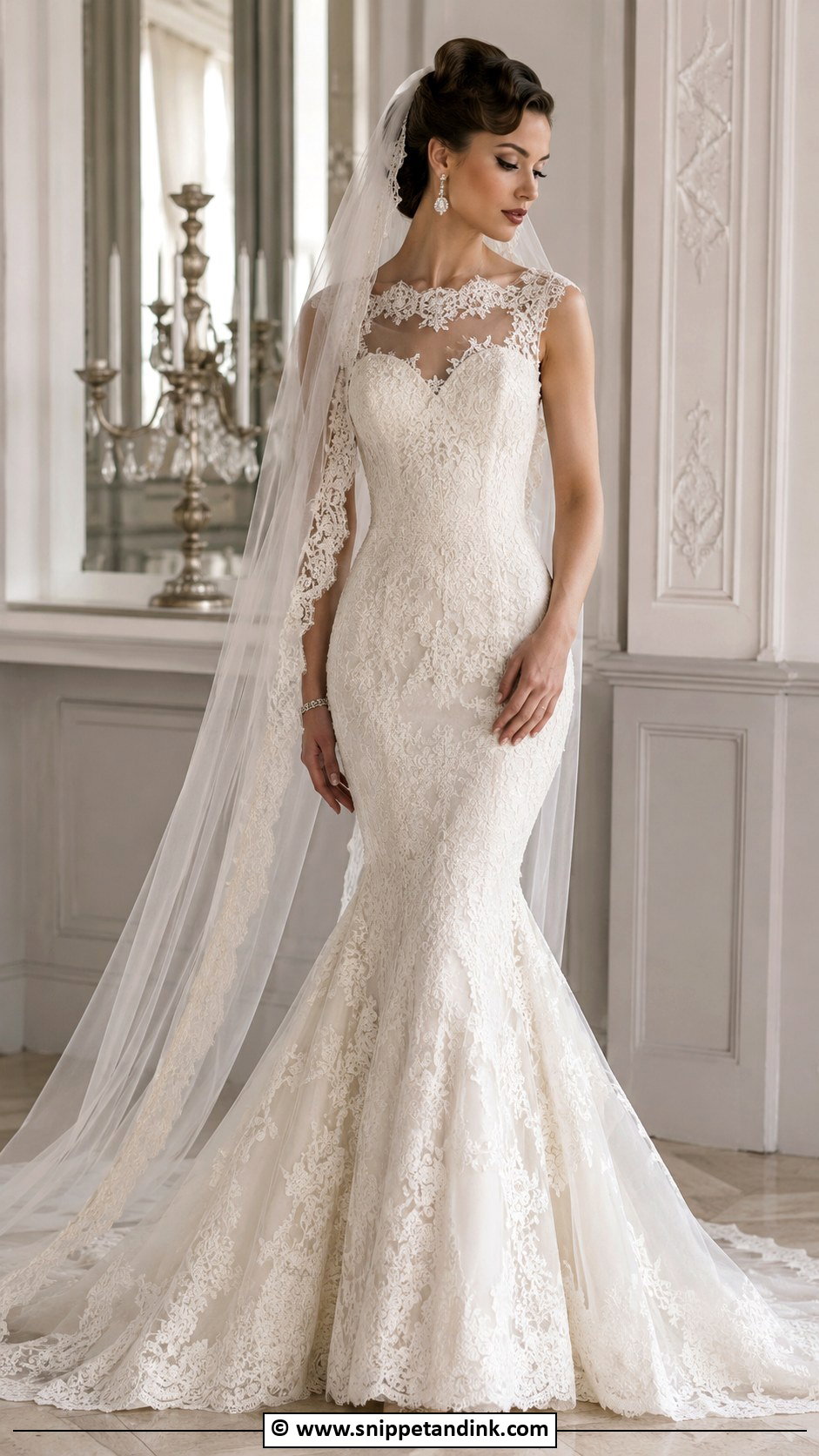
Mermaid gowns fit closely through the hip and flare near the knee. Vintage detail comes from lace, covered buttons or an illusion neckline. Stairs are the real-world issue: I have every mermaid bride walk up and down steps before the hem is set, because the flare can sit too low to lift the knee. A narrow bouquet keeps the outline clean.
24. Vintage Floral Lace Wedding Dress
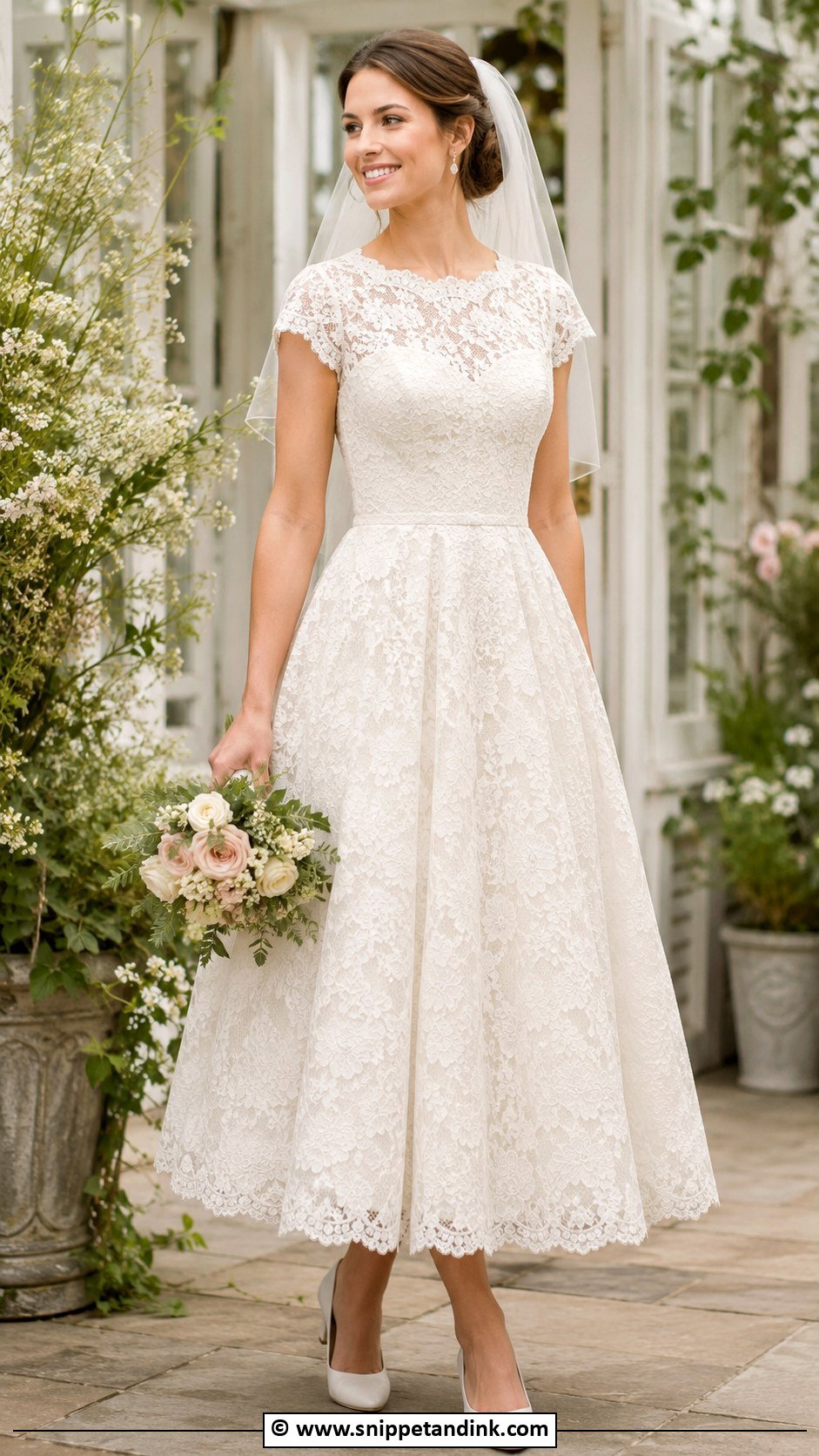
Floral lace changes character with the scale of the motif. Fine lace over a nude or ivory lining reads soft and modern; all-ivory lace with scalloped edges looks traditional. I compare lining colours in daylight, since a nude lining that matches one skin tone can look grey on another. With busy lace, skip heavy jewellery and keep hair soft.



25. Vintage Champagne Wedding Dress
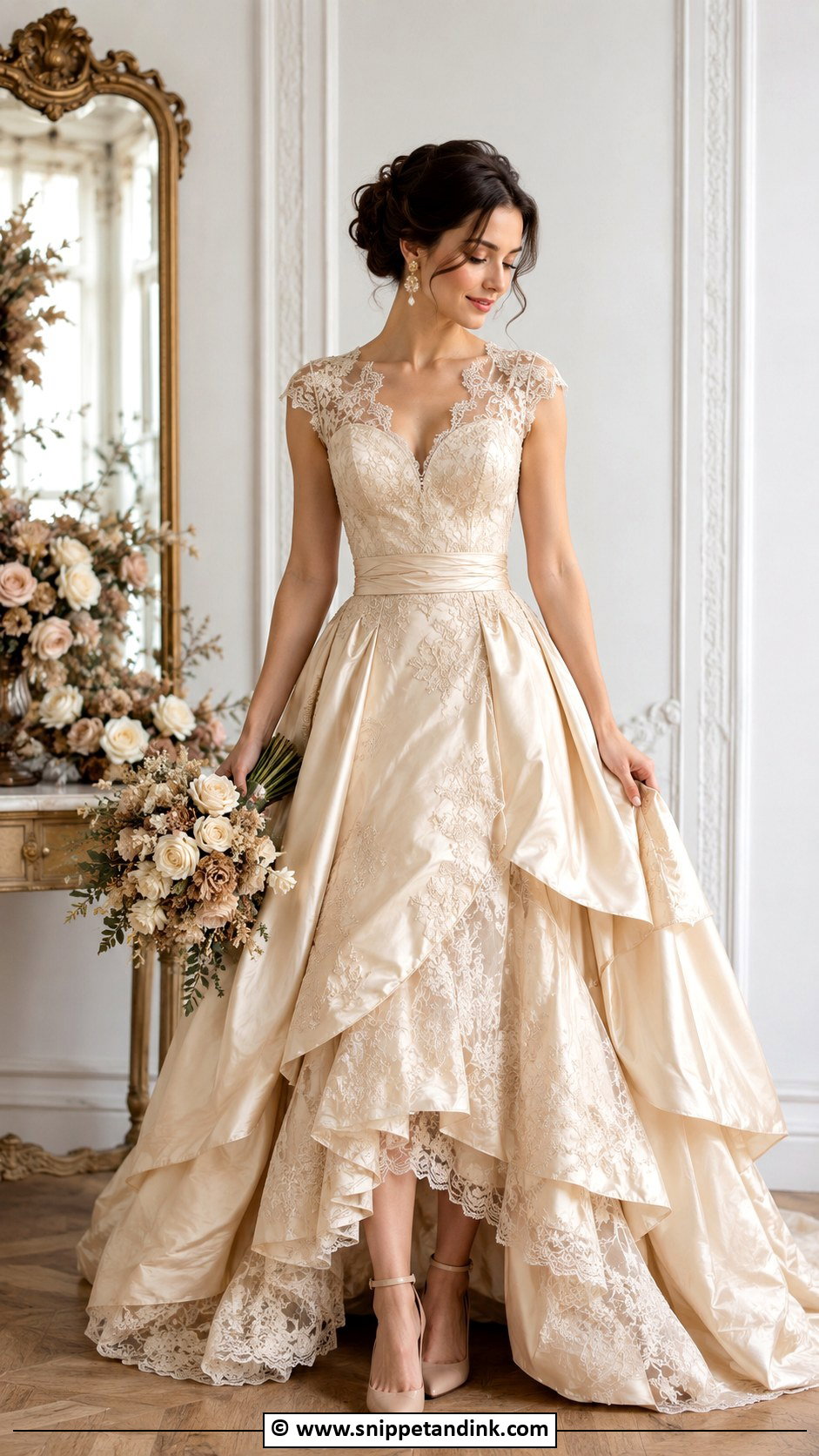
Champagne gives an antique glow, but it’s a colour that shifts with the light. I always check a swatch against the bride’s skin in daylight and under warm indoor bulbs, because some champagnes turn yellow under tungsten. It suits beading, floral embroidery and layered skirts, and can lean 1920s or Victorian depending on the cut. Pick nude or ivory heels and a neutral bouquet.
26. Vintage Ivory Wedding Dress
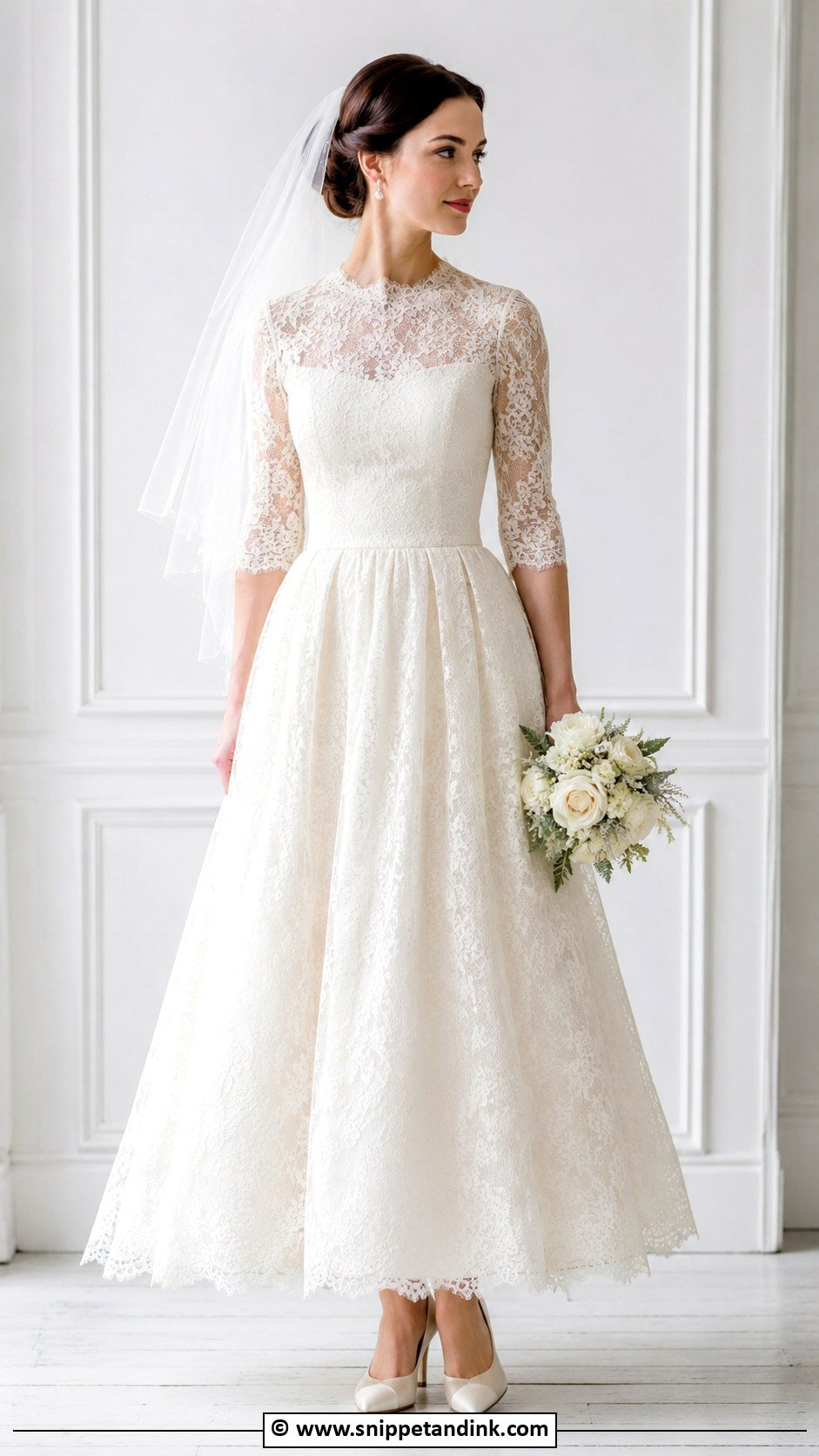
Ivory is warmer than stark white and suits almost every era, from Edwardian lace to fifties satin. Fabric sets the mood: lace for romance, satin for structure, crepe for simplicity. The detail brides miss is shoe and veil colour. Ivory varies from maker to maker, so I bring a fabric snip to match shoes and veil against. A plain veil suits a lace gown; a lace-edged veil adds interest to a simple one.
27. Vintage Short Wedding Dress
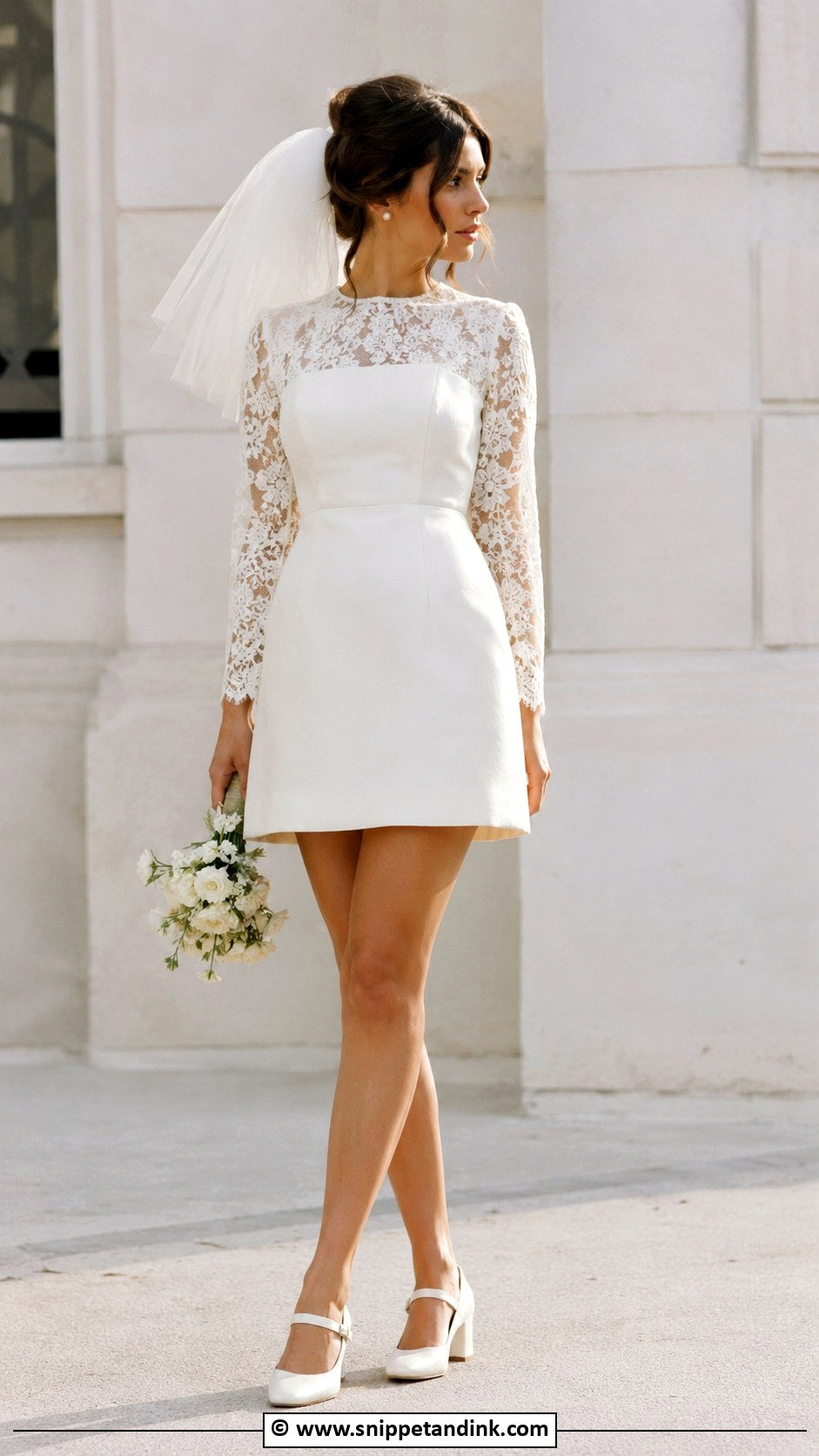
A short vintage dress moves freely and puts the shoes on show. Mod minis, knee-length lace and structured satin with a bow are all options for a courthouse ceremony or a reception change. Quality fabric and a precise fit keep it bridal rather than casual. Choose shoes you can stand in for hours, since a short hem means everyone sees them.
28. Vintage Two Piece Wedding Dress
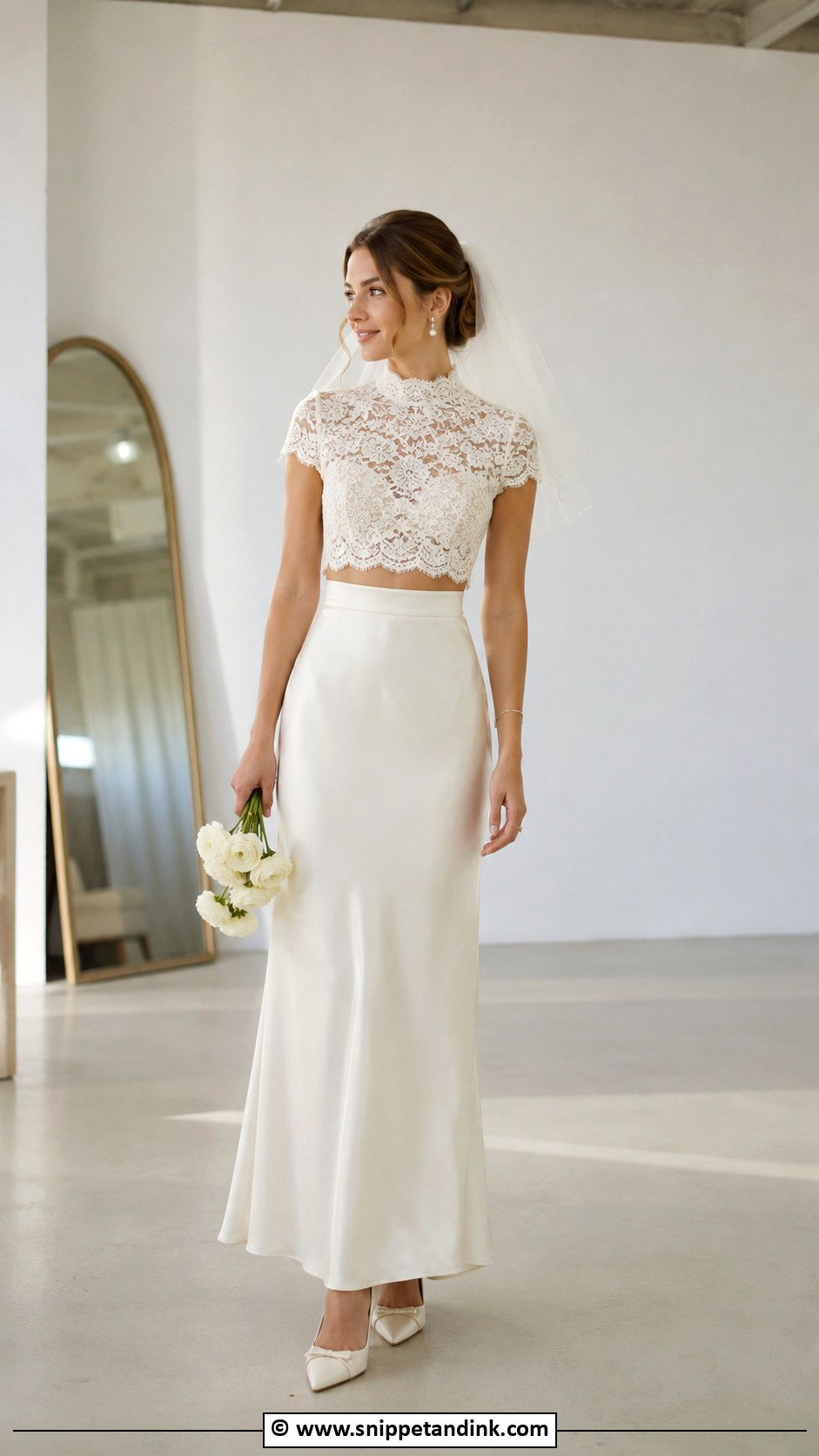
Separates suit brides who are a different size on top and bottom, because each piece can be fitted on its own. A lace top with a satin skirt, a cropped jacket with a pencil skirt or a blouse over a full tea-length skirt can all read 1950s or 1960s. The tones must match exactly; ivory lace and ivory satin from different makers can look mismatched in photos. Pointed heels and a hair bow suit it.
29. Vintage Wedding Dress With Gloves
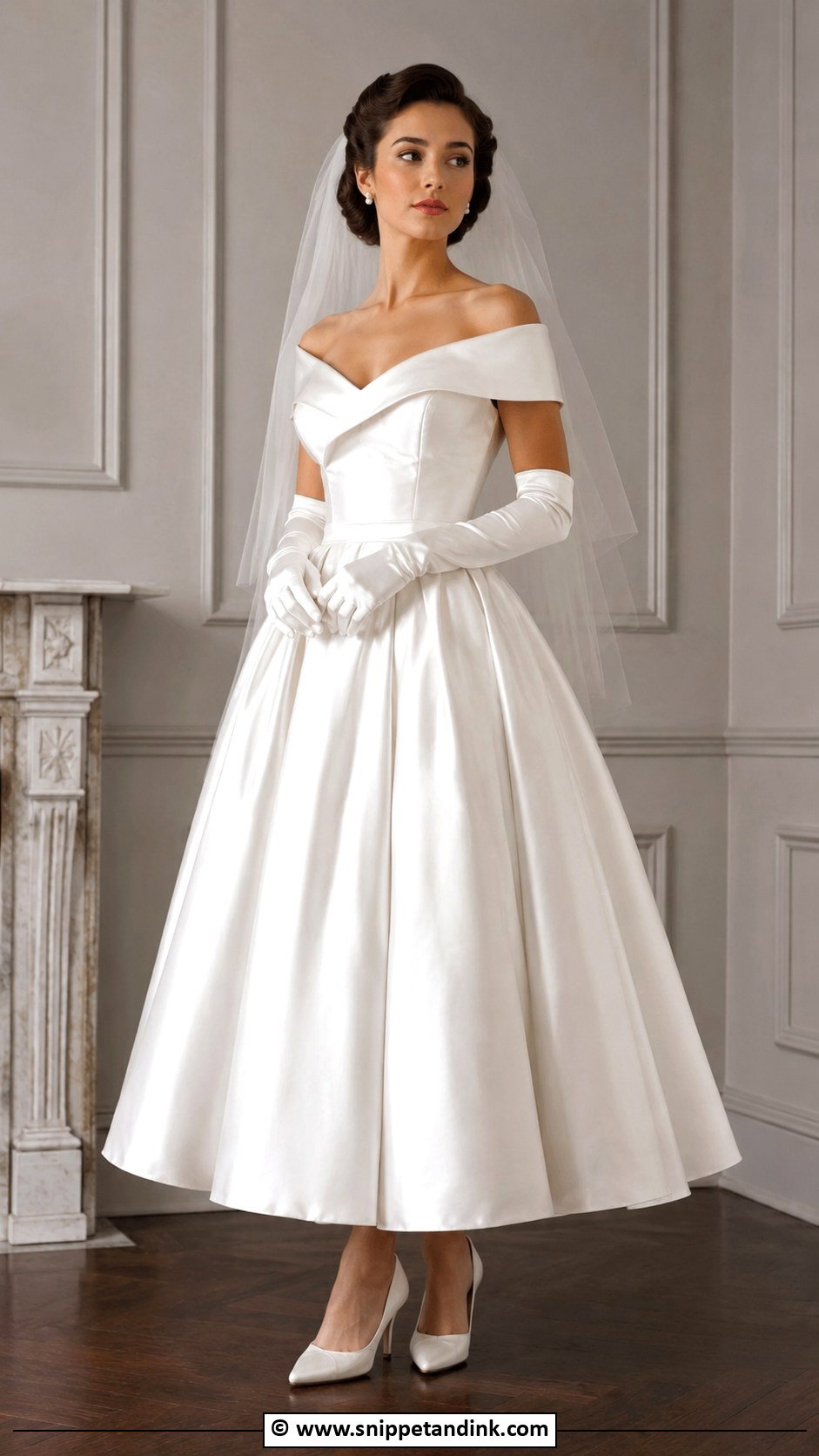
Gloves balance a bare arm, so they look best with strapless, off-shoulder and cap-sleeve gowns. Satin opera gloves suit a ball gown, lace gloves an antique mood and wrist-length gloves a retro touch. Plan for the ring exchange: either slip the left glove off and hand it to your maid of honour, or choose a pair with a discreet opening at the ring finger. I rehearse that moment, because fumbling with a tight glove at the altar happens more than you’d think.
30. Vintage Wedding Dress With Veil
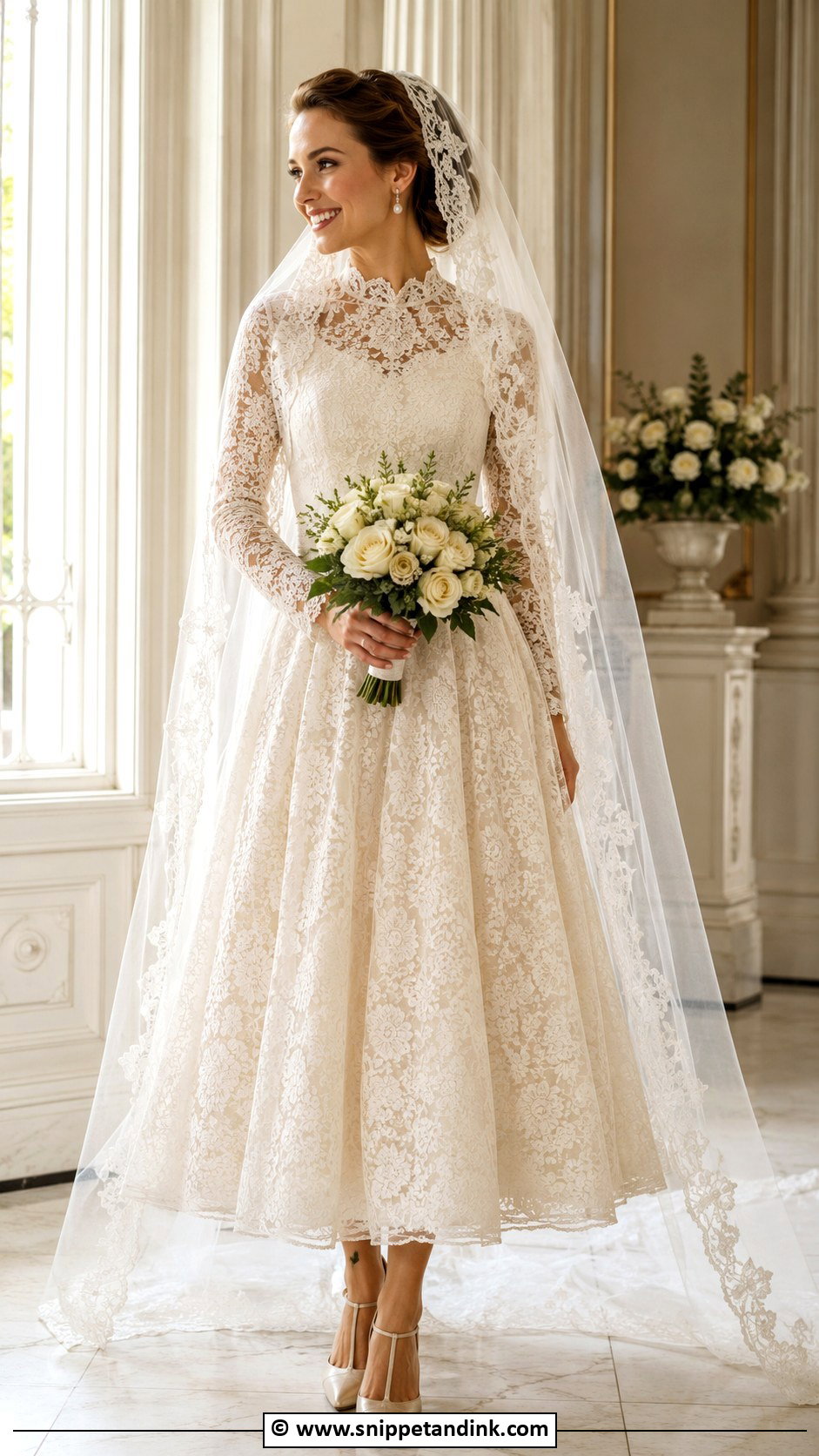
The veil has to suit the gown rather than compete with it. A lace gown pairs with a plain veil; a simple satin gown can take lace trim or a dramatic length. With a 1920s dress, I’d try a Juliet cap. For a 1950s tea length, a short veil. For a Victorian or Edwardian look, a long lace-edged veil. Echo the era in shoes and jewellery without copying it piece for piece.
The Underpinnings Each Decade Quietly Depends On
What you wear under a vintage-style gown changes its shape more than any alteration. I ask brides to buy their foundations before the first fitting, because the seamstress fits the dress to the body plus whatever sits underneath.
Bias cuts and slip dresses
Smooth, no-line underwear in a shade close to your skin, not white, which can show through ivory satin in bright light. Some brides go without a bra and use adhesive cups instead.
Fifties and full skirts
A petticoat or crinoline gives the skirt its shape, and a longline bra smooths the waist under a fitted bodice. Bring both to every fitting so the hem is set to the right height.
Boned bodices and basque waists
The gown often provides its own structure, so heavy shapewear underneath can make it uncomfortable. Try it with nothing more than smooth briefs first, then add only what you need.
If you’re ordering a new gown in a vintage cut, ask early how long it takes to arrive. Made-to-order dresses commonly take several months, with alterations needing another two or three on top, so starting about nine months out gives you a comfortable margin.
One Era, Fitted Properly, Beats Five Borrowed Details
From twenties beading and thirties satin to fifties tea lengths, seventies lace and Victorian collars, the old decades give you plenty to borrow from. My advice is to pick one era and do it properly rather than mixing a little of everything. Fit, comfort and fabric quality matter more than any accessory. Fresh hair, clean makeup and sensible shoes keep the dress feeling current, and a gown you can move in will always look better in photos than one you’re tolerating.
You'll Like These Ideas:





Leave a Reply