
I end up dressing a lot of wedding cakes. Couples often don’t realise that the flowers on the cake are usually the florist’s job, arranged on site an hour or so before guests reach the reception. A two-tier cake is my favourite canvas for it: big enough to carry a proper arrangement, small enough that the flowers can echo the bouquet without swallowing the cake. The options range from fresh blooms to sugar flowers, pressed petals, piped buttercream and full cascades. Below are the designs I see work best, and what I think about as the person holding the stems.
Which Blooms Can Sit on the Icing, and Which Need a Barrier
This is the conversation I wish every couple had before falling in love with a cake photo. Many popular wedding flowers are mildly toxic or have sap that irritates, and almost every flower from a wholesaler has been treated with something. None of that rules a flower out, but it changes how it goes on the cake.
Generally fine to touch the cake, if grown without sprays
- Roses, including garden roses
- Pansies, violas and calendula
- Lavender, cornflowers and chamomile
- Dendrobium orchids from a food-safe grower
- Herbs such as rosemary, thyme and mint
Keep these off the icing entirely
- Ranunculus and anemones, both in the buttercup family
- Sweet peas, hydrangea and baby’s breath
- Lily of the valley, lilies, calla lilies and foxglove
- Eucalyptus and most other cut foliage
For anything in the second group, or any flower I can’t vouch for, I wrap the stems in floral tape, push them into plastic flower picks, and set larger heads on a small disc of wax paper or a thin fondant pad. Guests should never eat the flowers anyway, and I remove them before the cake is cut. If that sounds like too much fuss, sugar flowers give you the same look with none of the worry.
1. Two Tier Wedding Cake With Fresh Roses
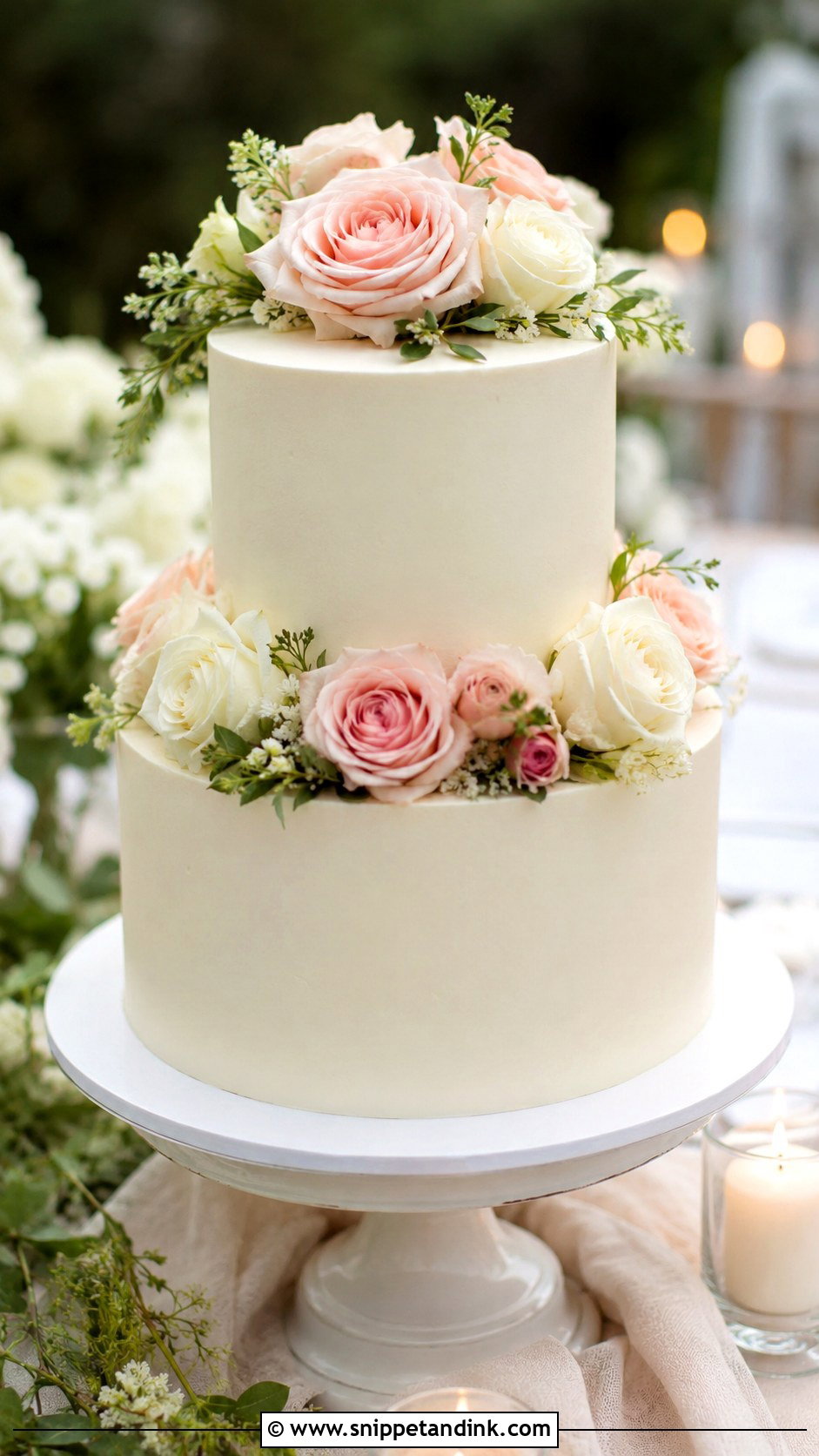
Roses suit almost every wedding, and the variety sets the tone: white for classic, blush for soft, garden roses for a fuller, cupped look. On a smooth ivory cake I place them at the join between tiers and along the top edge. A short trail down one side adds movement without becoming a full cascade. I keep greenery to a few leaves here, because rose foliage is dark and can look heavy on a small cake. Roses also hold up well out of water, which is part of why bakers and florists both like them.
2. Two Tier Wedding Cake With Cascading Flowers
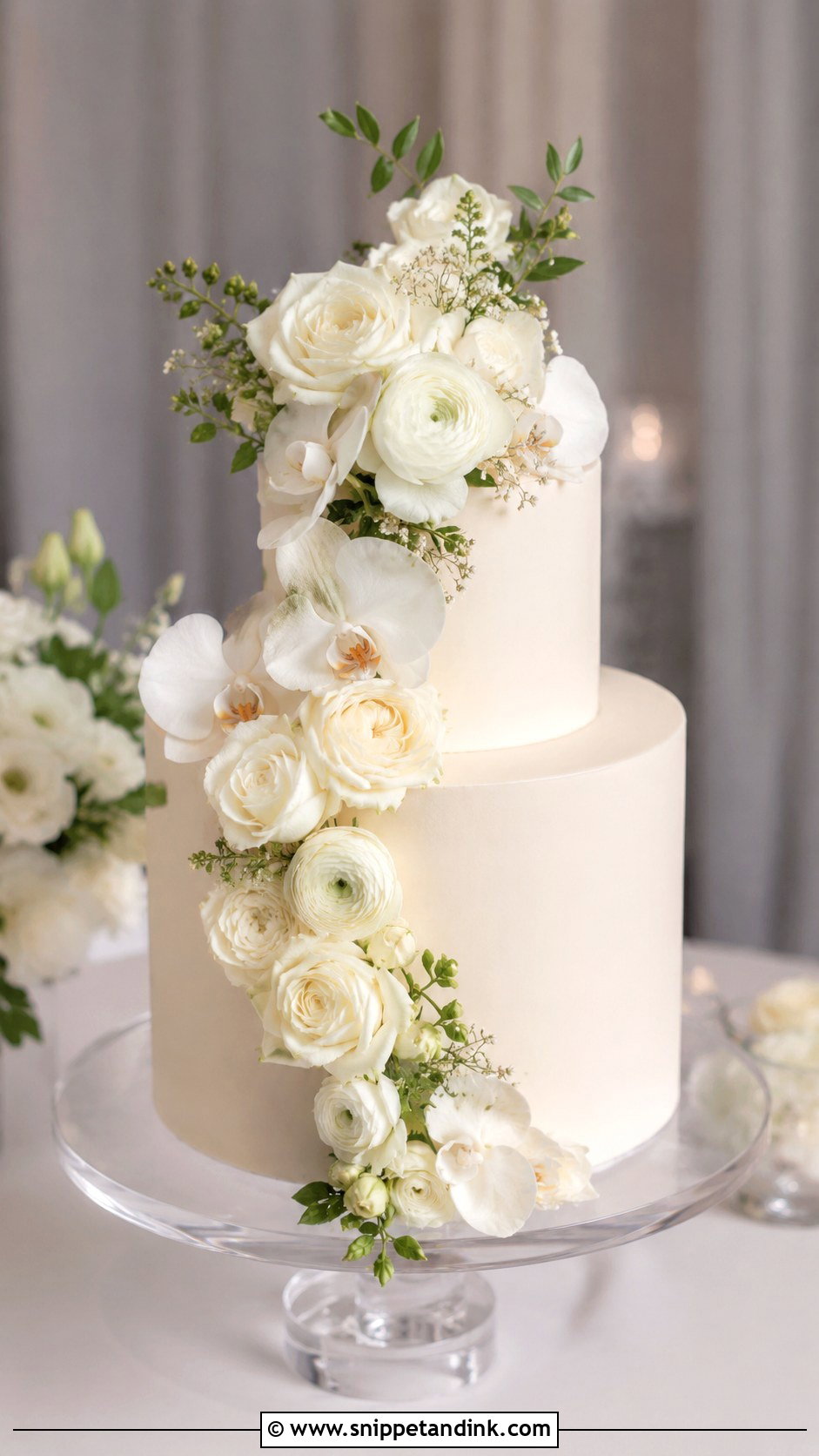
A cascade is how a small cake gets drama. I start the line at the top tier and let it fall on a diagonal toward the base, using a mix of sizes: roses or orchids as the main blooms, ranunculus in the middle, small fillers at the tail. Each stem is wired and taped so it sits where I put it, rather than sliding as the room warms. Blush, cream and pale peach look soft; mauve, burgundy or terracotta look bolder. On a tall stand the cascade can even spill past the cake board, which photographs well.
3. Two Tier Wedding Cake With Pressed Flowers
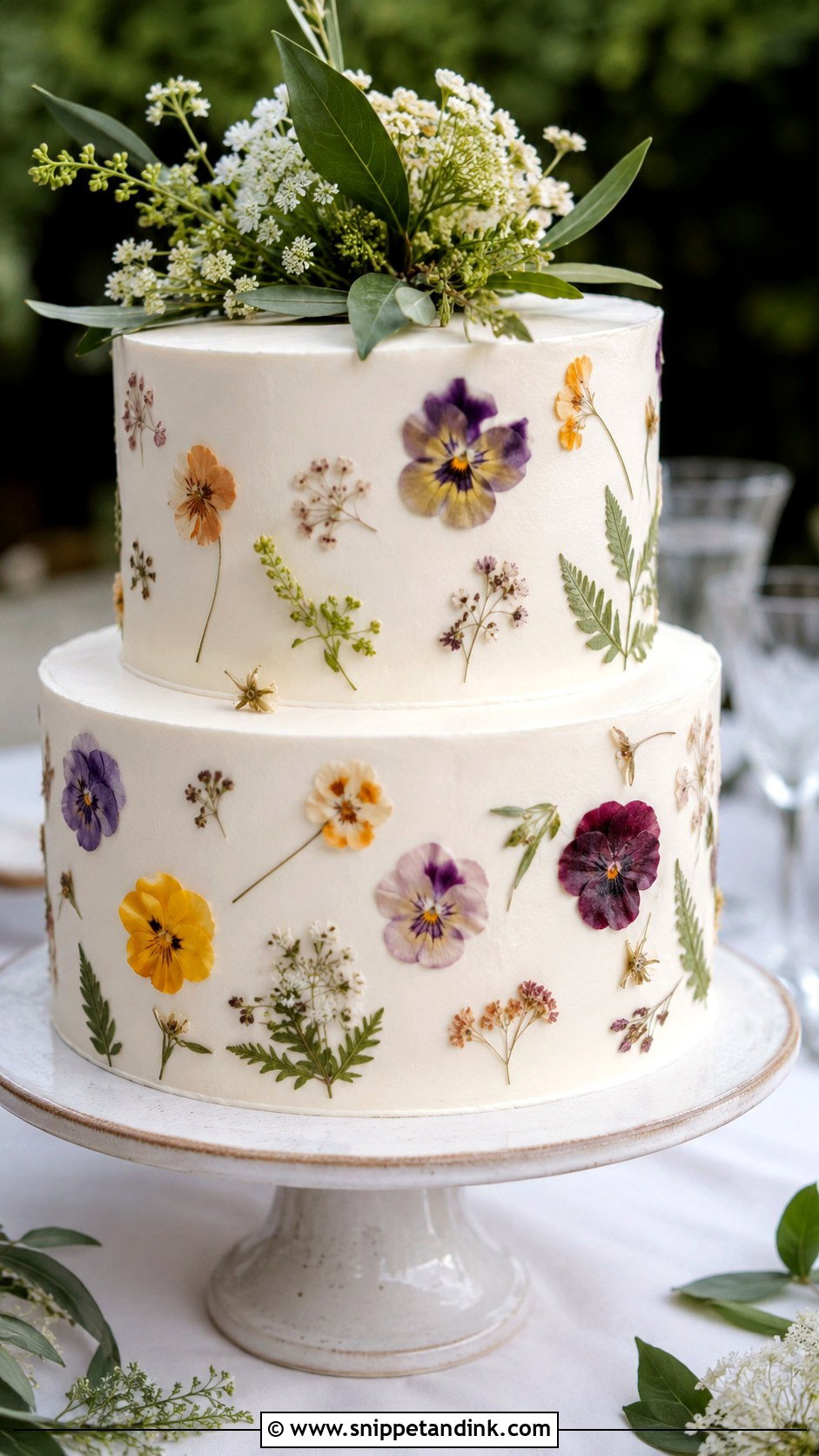
Pressed flowers are the one floral design I hand back to the baker, because they’re edible and pressed flat into the icing. Pansies, violas, calendula and small herb leaves give a watercolour effect on smooth buttercream. Grown without sprays, pressed a week or two ahead, and laid out with gaps between them, they look like a botanical print. Crowding is the common mistake. Vanilla, lemon or almond sponge suits the light look, at a spring wedding, a brunch or an outdoor reception.
4. Two Tier Wedding Cake With Sugar Flowers
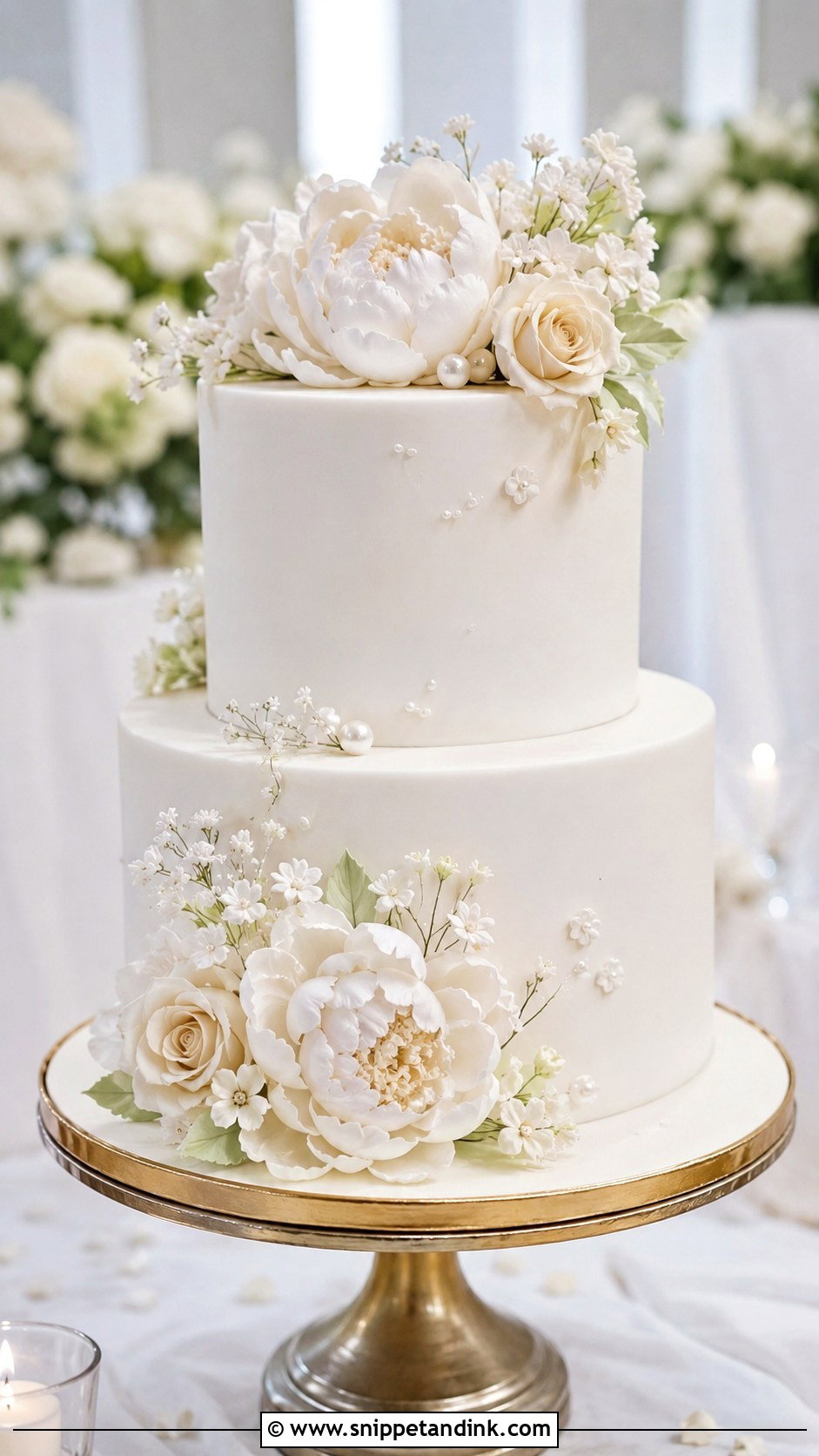
Sugar flowers are what I suggest when the bride’s favourite bloom is out of season or isn’t safe near food. A sugar artist can make roses, peonies, orchids, magnolias or tiny fillers, and the good ones are botanically accurate down to the stamens. They also won’t wilt under hot lights. Smooth fondant shows the detail best. White sugar flowers look classic; colour-matched to the bouquet, they tie the cake to my arrangements, which is why I’m often asked to send the sugar artist a sample stem.
5. Two Tier Wedding Cake With Buttercream Flowers
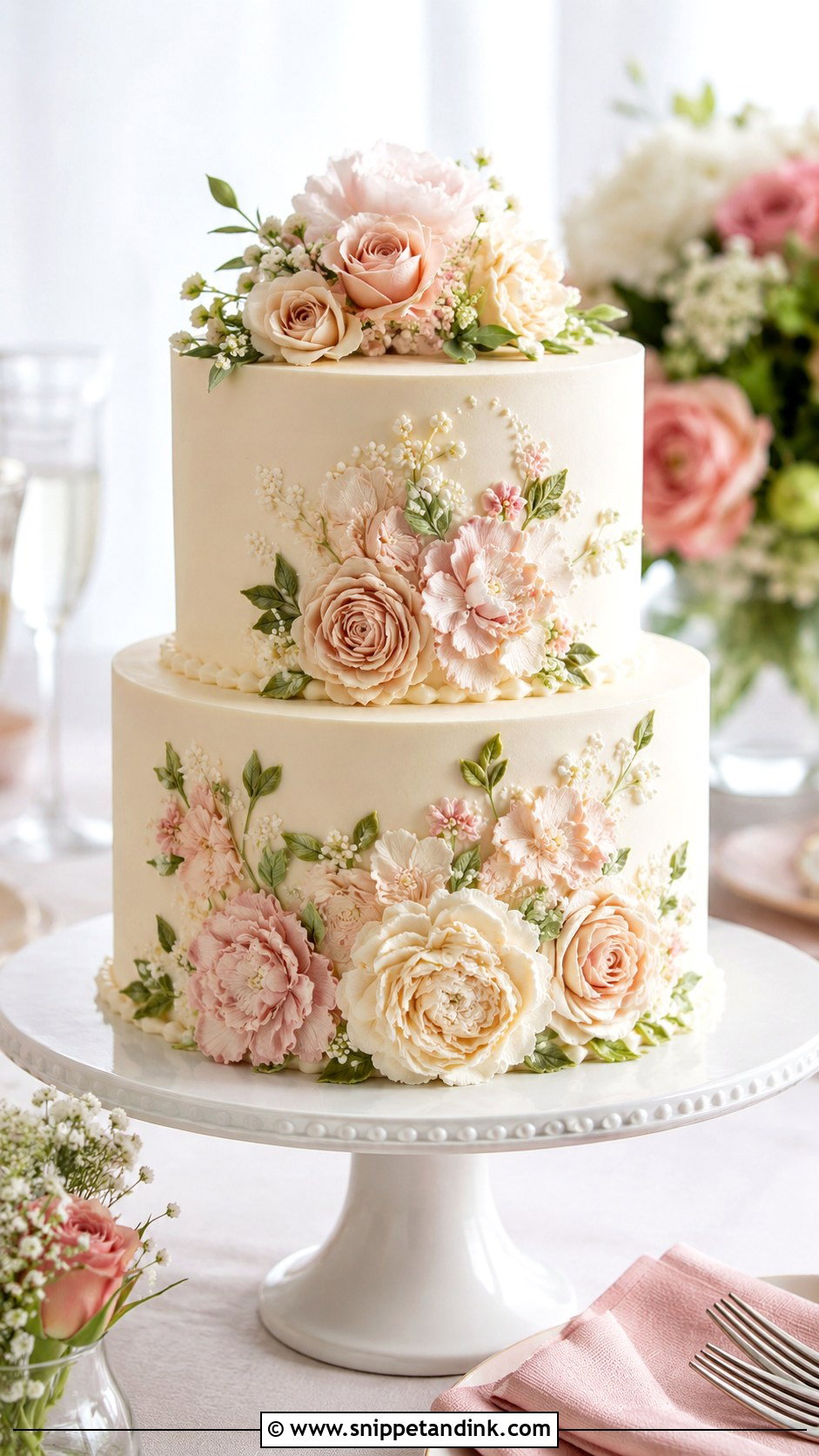
Piped buttercream flowers are entirely the baker’s craft, and they make the whole cake edible. Roses, peonies, blossoms and vines are piped straight onto the tiers, either wrapped round or in clusters. The style depends on the icing: Swiss meringue or American buttercream behave differently, with the meringue version smoother and softer and the American one crusting and holding sharper petals. Ivory is classic; pale pink, lavender or sage details look like a cottage garden. If you’d rather avoid fresh flowers entirely, this is the softest way to do it.
6. Two Tier Wedding Cake With White Flowers
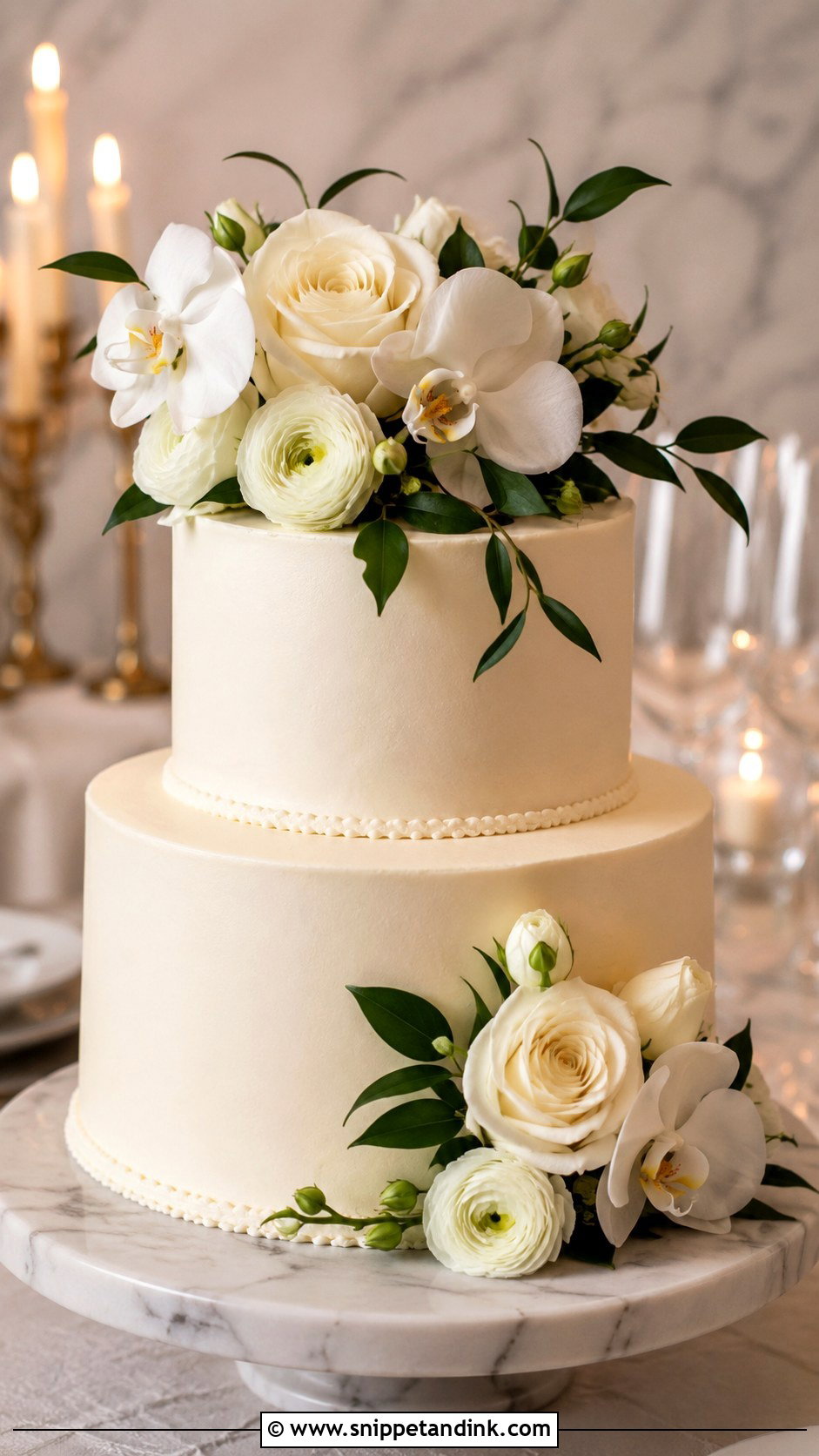
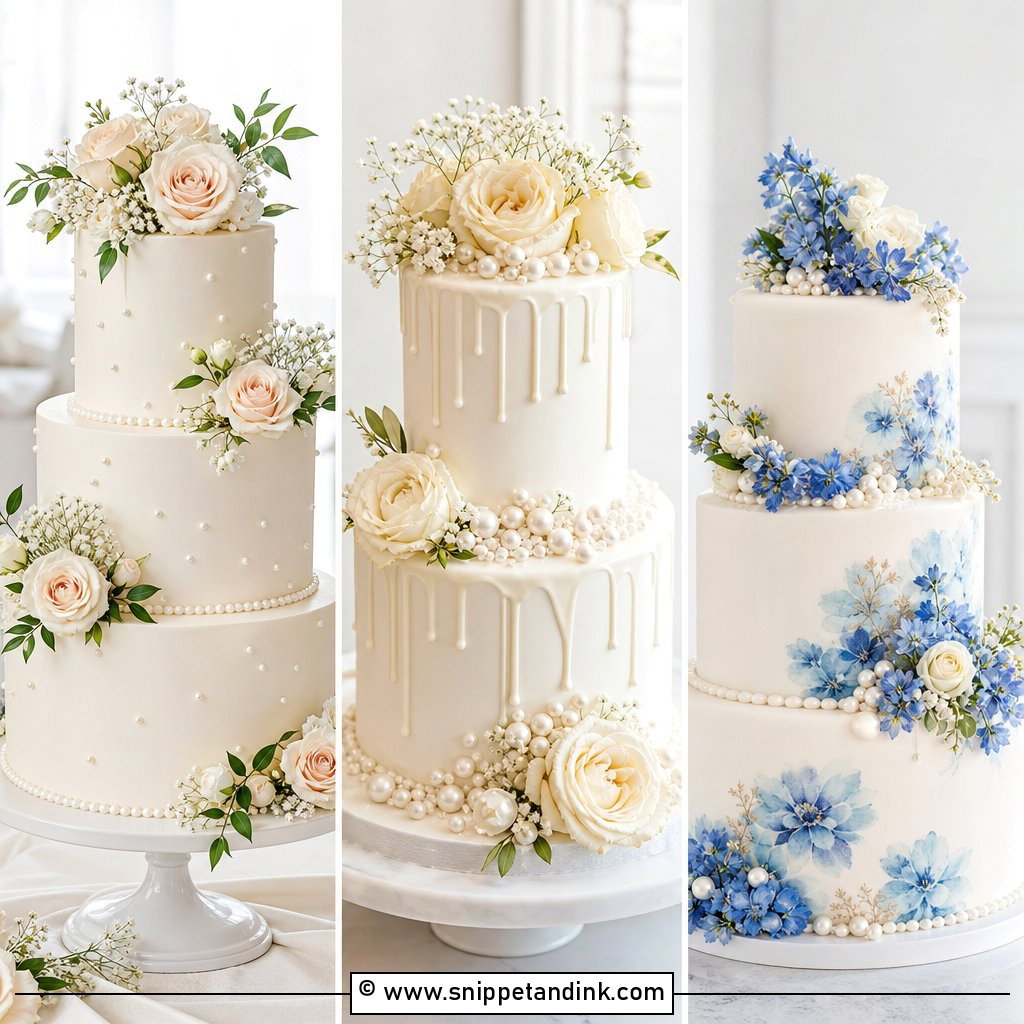
All-white flowers are never wrong, but white on white can look flat. White roses, orchids, ranunculus and anemones work, or hydrangea made in sugar, since fresh hydrangea shouldn’t go on a cake. I add contrast with ivory buttercream behind them, a pearl border or a little texture on one tier, and a few deep green leaves tucked under the blooms so they stand off the icing. It suits neutral venues, candlelight and greenery-heavy tables, and matches any palette.
7. Two Tier Wedding Cake With Blush Flowers
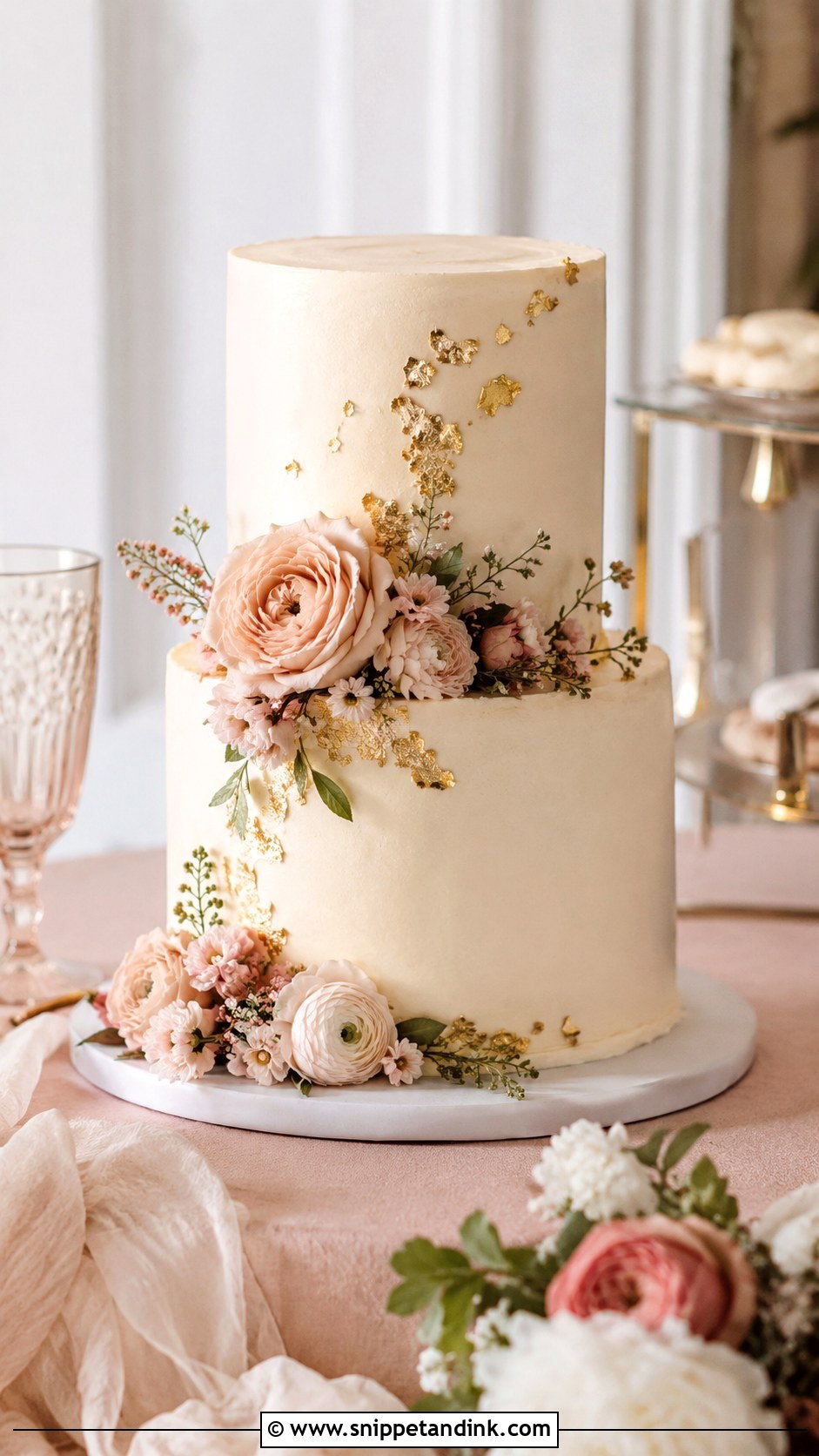
Blush gives warmth without much colour. Against ivory, white, champagne or the palest pink frosting, blush roses, ranunculus and sweet peas grouped at the base of each tier look balanced. Sweet peas are delicate and, like ranunculus, shouldn’t touch the icing directly, so I set them on a small barrier or tuck them into the cluster on wired picks. A bit of gold leaf or a few pearls suits a romantic theme; loose petals and greenery round the stand suit a garden. Blush works in every season.
8. Two Tier Wedding Cake With Wildflowers
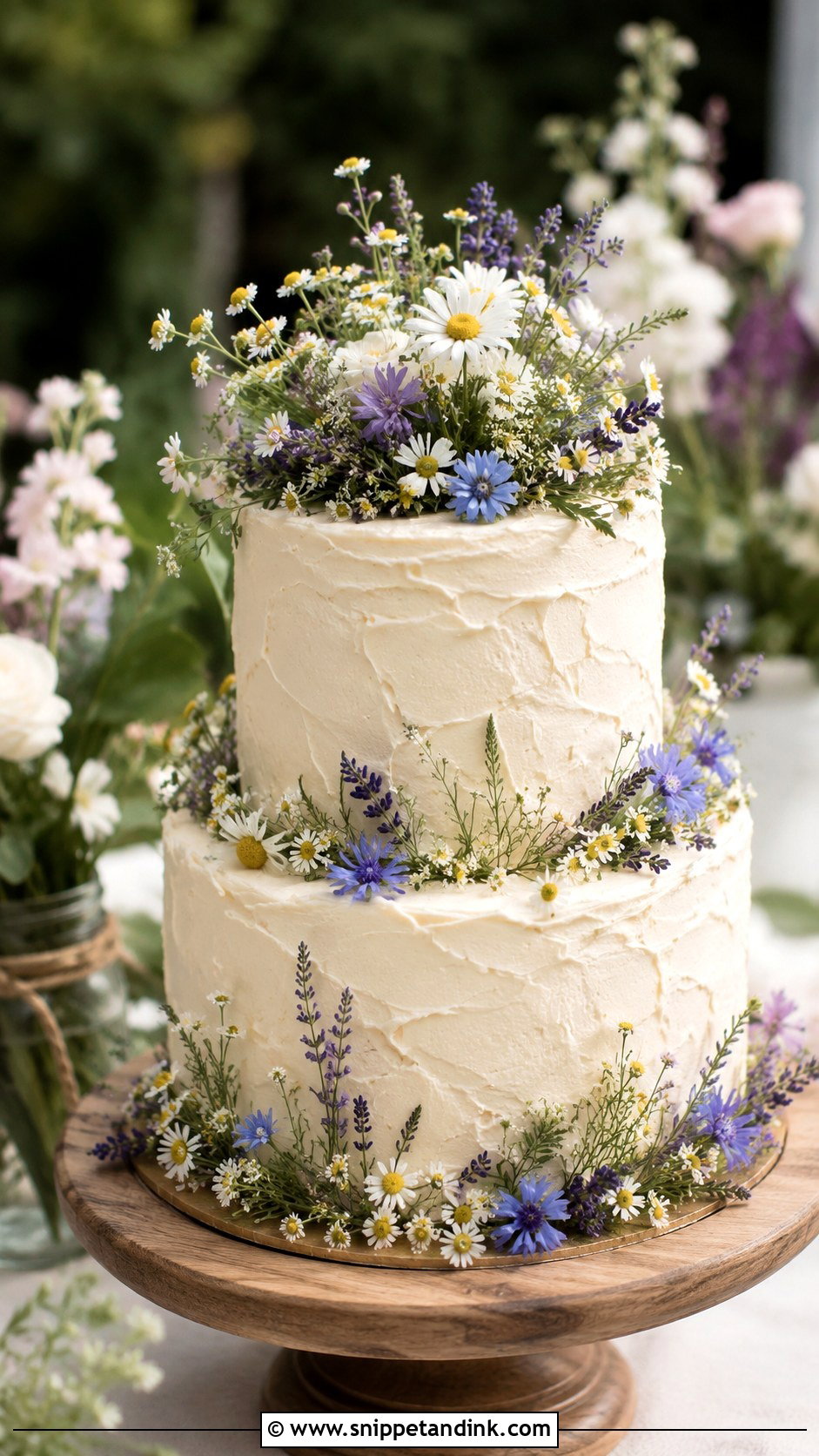
A two tier wedding cake with wildflowers should look gathered rather than arranged, so I work in small loose bunches and let stems sit at slightly different angles. Daisies, chamomile, lavender sprigs and small blue flowers such as cornflower all suit it, and several of those are edible, which helps. Wildflowers are thirsty and wilt quickly, so I condition them overnight in deep water and place them last. A textured buttercream underneath looks natural. Keep it pale for cottage style, brighter for a backyard party.
9. Two Tier Wedding Cake With Peonies
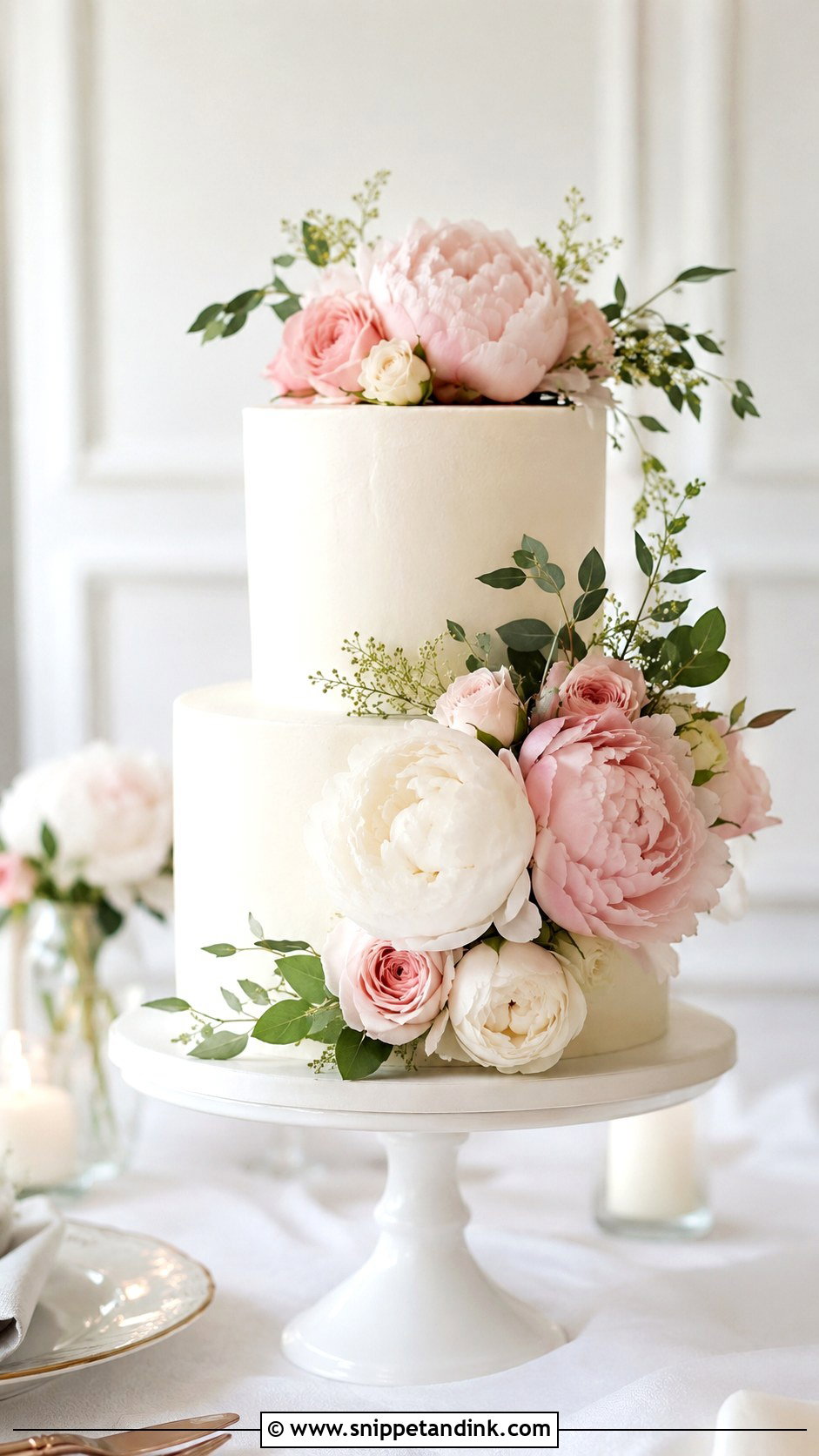
Peonies are big enough that two or three do the job: one open bloom on the top tier and a smaller cluster near the base. Timing is the trick. Peonies open fast in a warm room, so I buy them a few days ahead and bring them to the right stage in the cooler; a tight bud on a cake looks like a ball, and a blown one drops petals on the icing. Fresh peonies are only around from late spring into early summer, so sugar peonies are the answer the rest of the year. Smooth buttercream, ruffles or fondant all suit them.
10. Two Tier Wedding Cake With Orchids
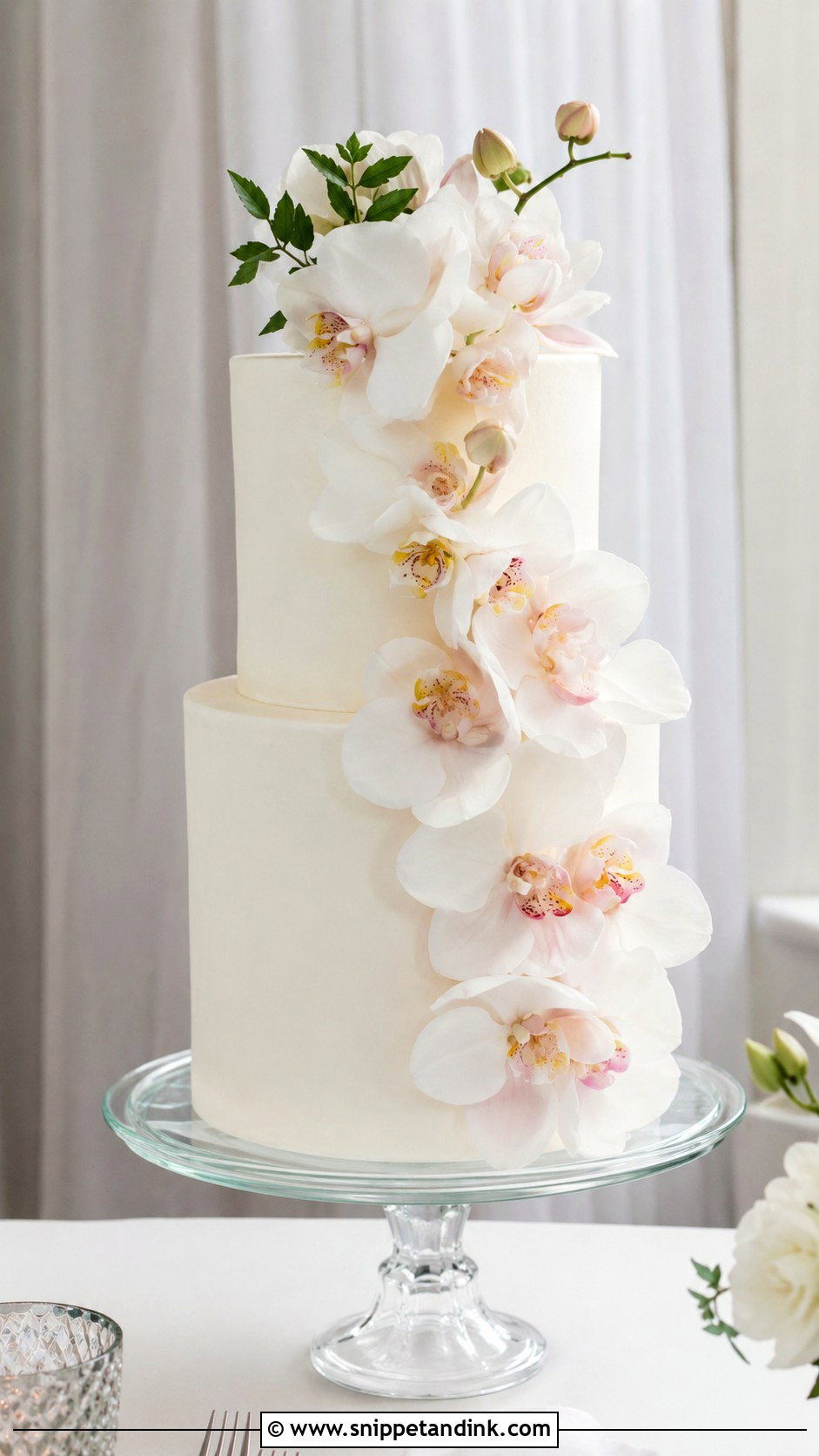
Orchids are sculptural, so a few carefully placed stems do more than a handful of roses. White orchids give a clean luxury look; pink, purple or peach add colour without clutter. My favourite way to use them is a single vertical trail down one side of a smooth fondant cake. Phalaenopsis blooms bruise easily, so I handle them by the stem and place them in one go. Dendrobium orchids are sturdier and are the ones most often sold as safe near food. They suit hotels, beaches and modern rooms.
11. Two Tier Wedding Cake With Greenery And Flowers
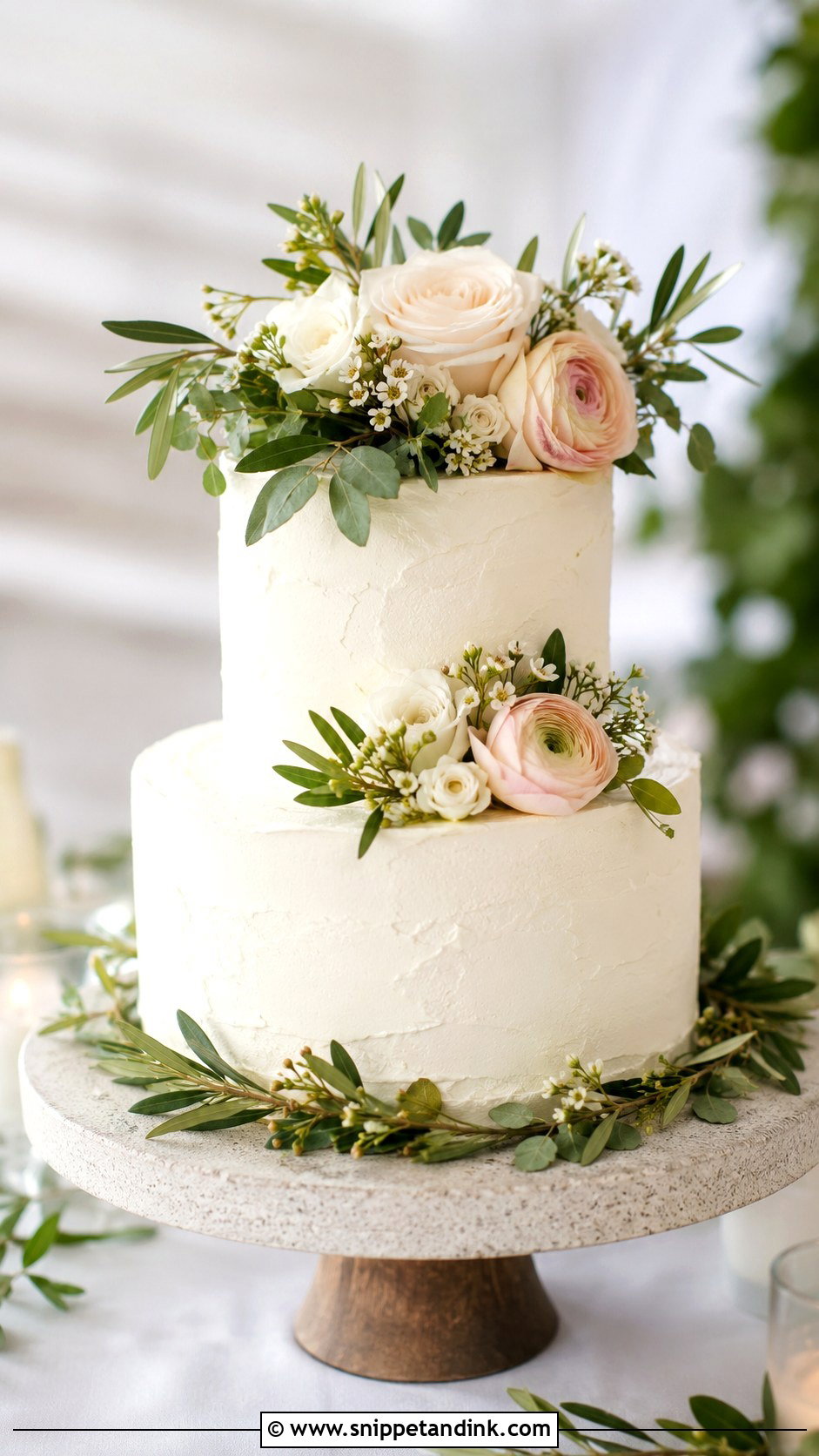
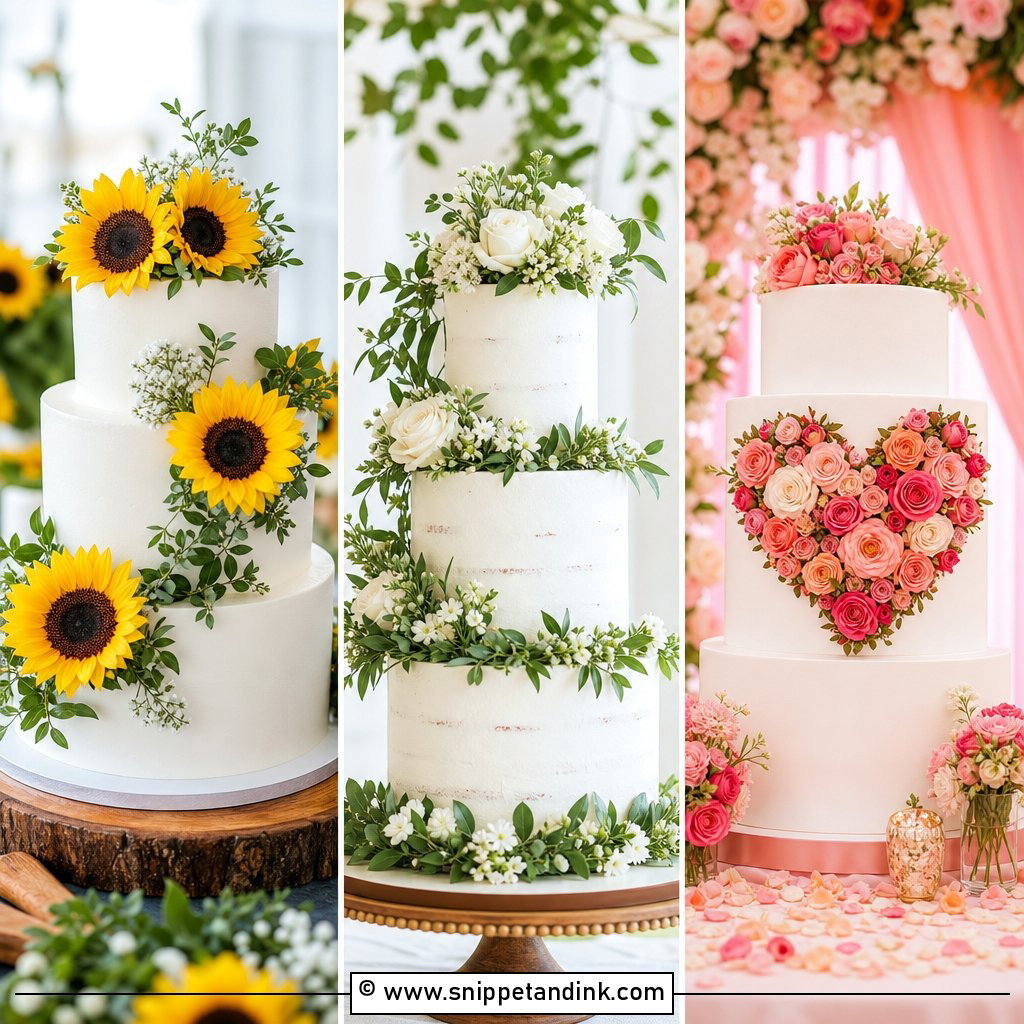
Greenery gives a floral cake its shape. I use it to frame the flowers and guide the eye, with roses, ranunculus or wildflowers sitting in it. Choose foliage carefully, though. Eucalyptus is popular but isn’t safe on food, so it needs a barrier; olive and rosemary are kinder choices. White buttercream with green accents looks crisp on a wooden or stone stand. Textured frosting with loose greenery round the base feels rustic, while two or three structured sprigs feel modern.
12. Two Tier Wedding Cake With Floral Wreath
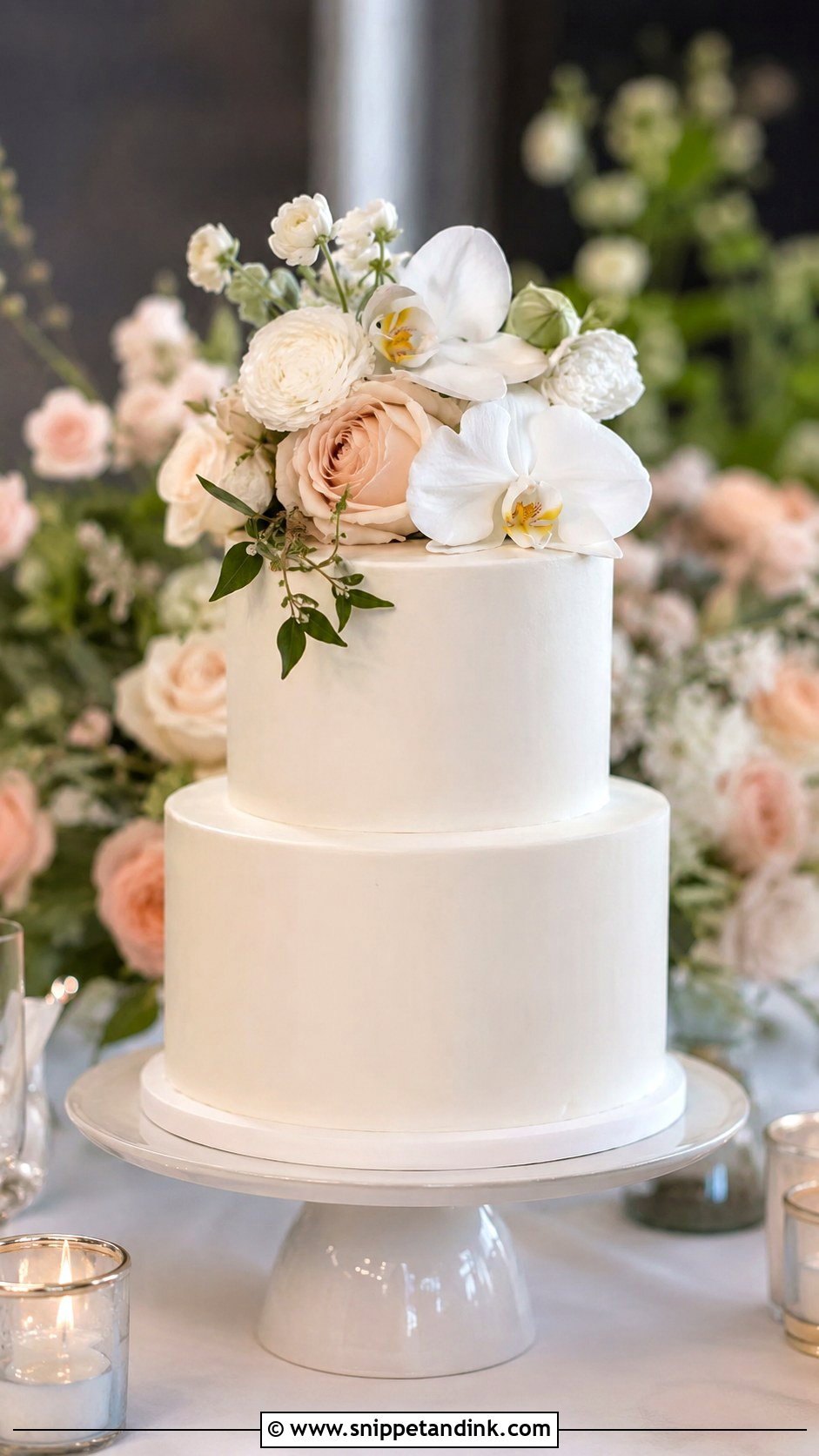
A wreath can circle the base of the bottom tier, the top tier, or both. I build small wreaths on a ring of floral wire so they can be slipped on whole, which keeps stems off the icing and saves time on site. Small roses, tiny blossoms, herbs and greenery follow the curve without looking bulky. A smooth ivory cake and a plain top let the ring read clearly. It can be full and garden-like or thin and delicate, and it’s one of the tidiest floral styles to photograph.
13. Two Tier Wedding Cake With Floral Topper
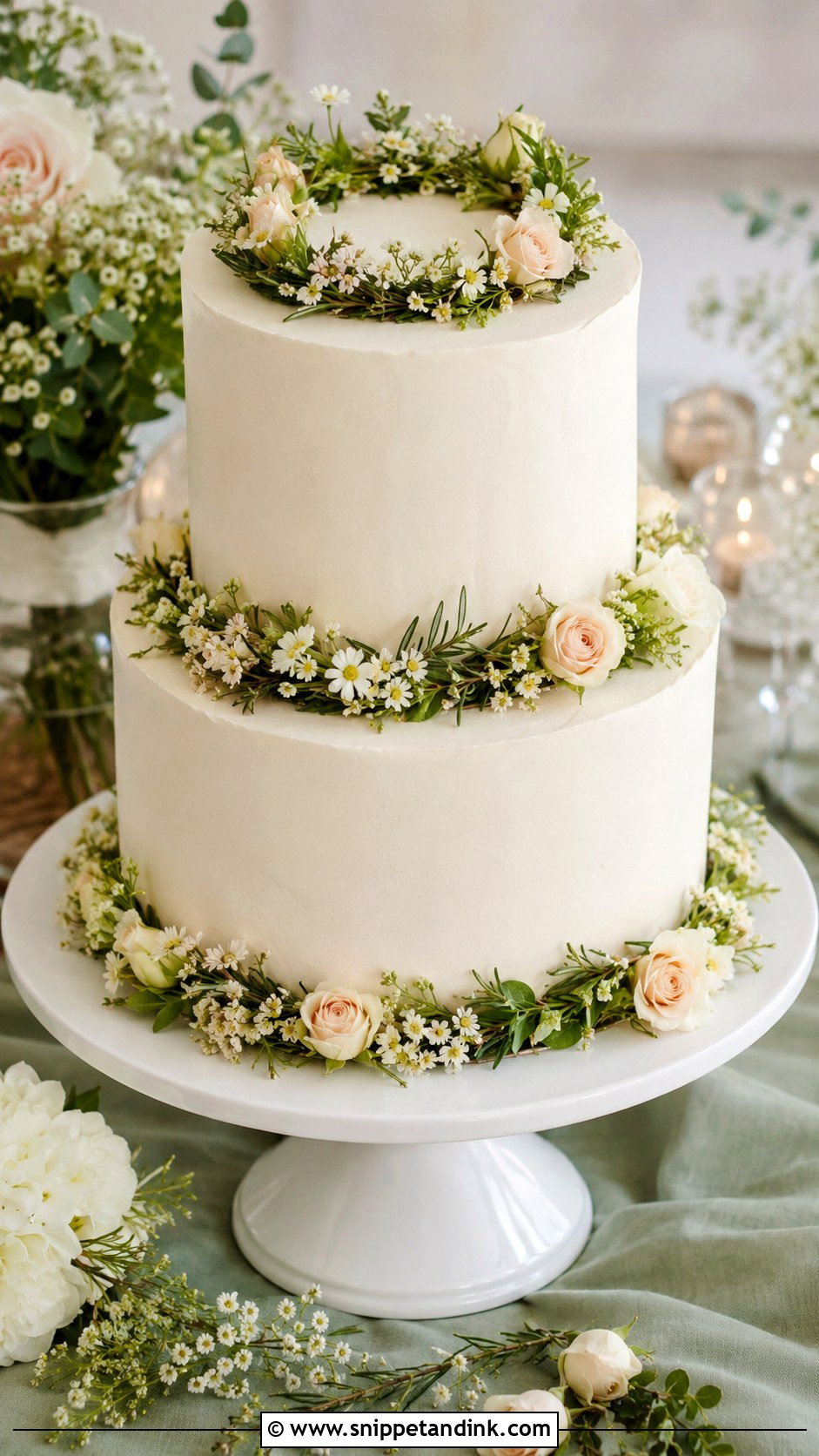
A floral topper keeps the sides clean and puts all the flowers on top, like a miniature bouquet. I make these as a small posy on a pick, with the stems bound and wrapped so nothing touches the cake. Roses, peonies, orchids, ranunculus or sugar flowers all work. The common mistake is making it too wide: if it overhangs the top tier, the cake looks top-heavy. A few petals or leaves at the base balance it. It’s a good fit for intimate weddings and modern rooms.
14. Two Tier Wedding Cake With Floral Cascade And Gold Leaf
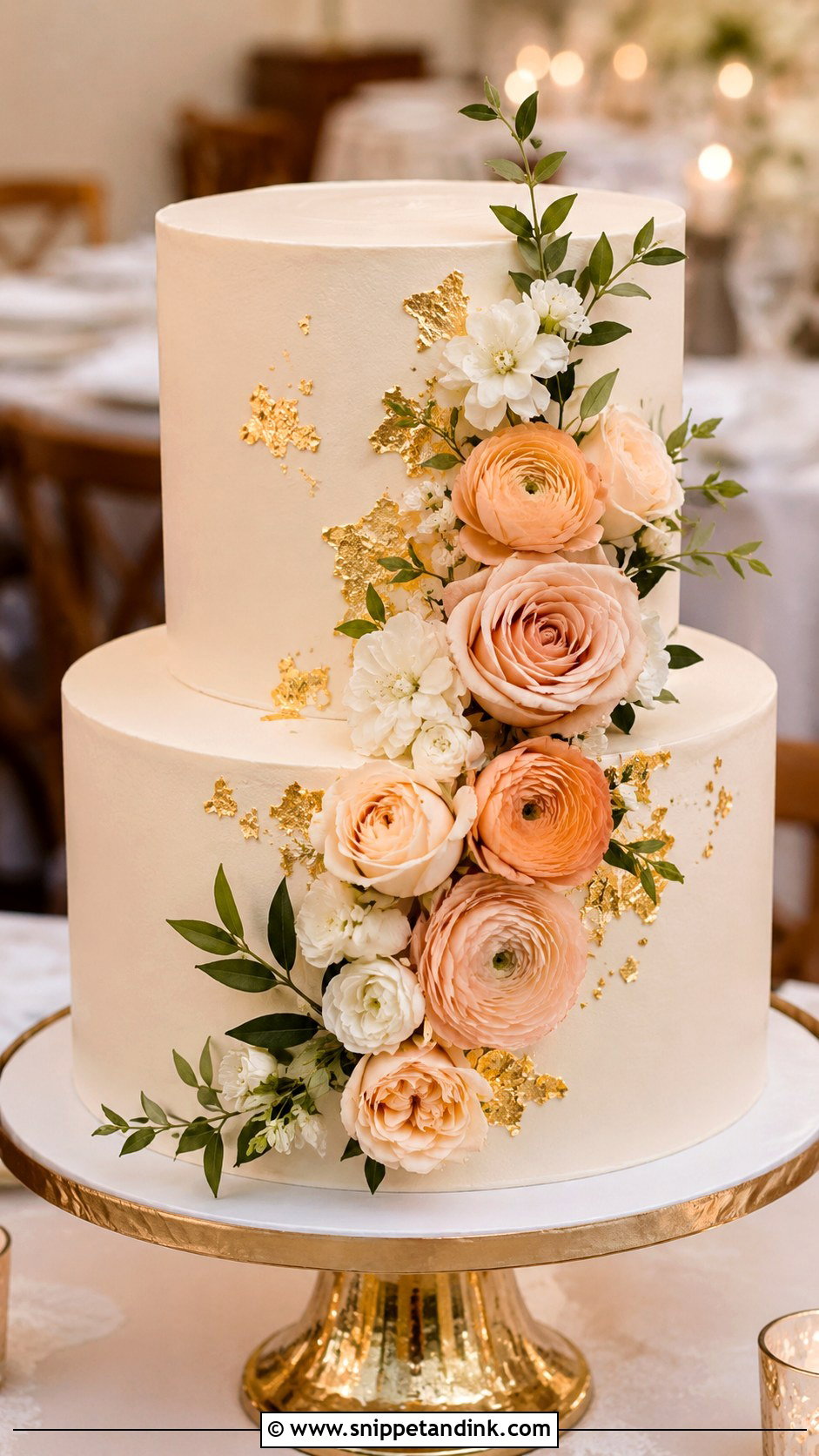
Gold leaf and flowers work together when the gold is used to point at the flowers. A diagonal cascade of blush, ivory and peach blooms on white buttercream, with gold flecks gathered near the arrangement, looks deliberate; gold scattered evenly over the cake competes with it. Edge gilding on each tier is another option. I keep the flower colours gentle so the metallic doesn’t feel brash. It’s at home at evening receptions and venues with gold details.
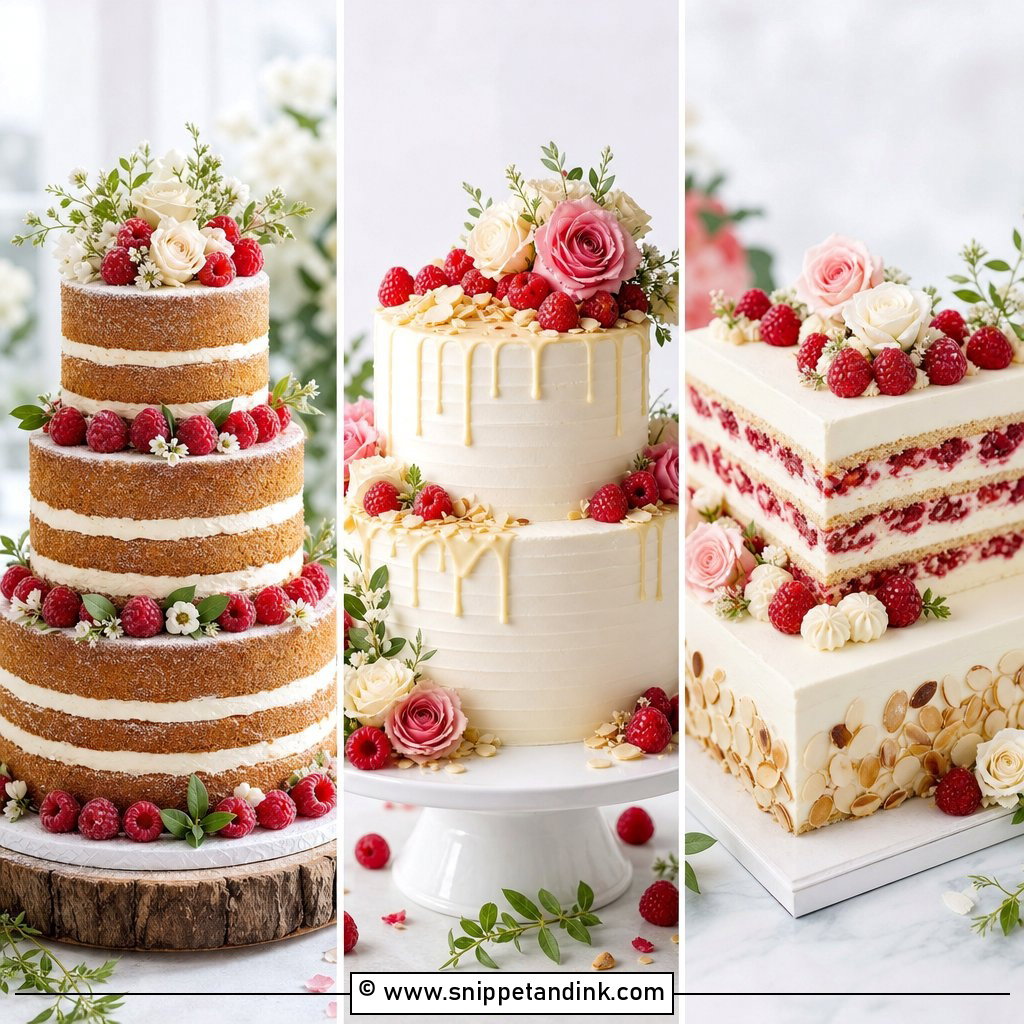

15. Two Tier Wedding Cake With Floral Buttercream Texture
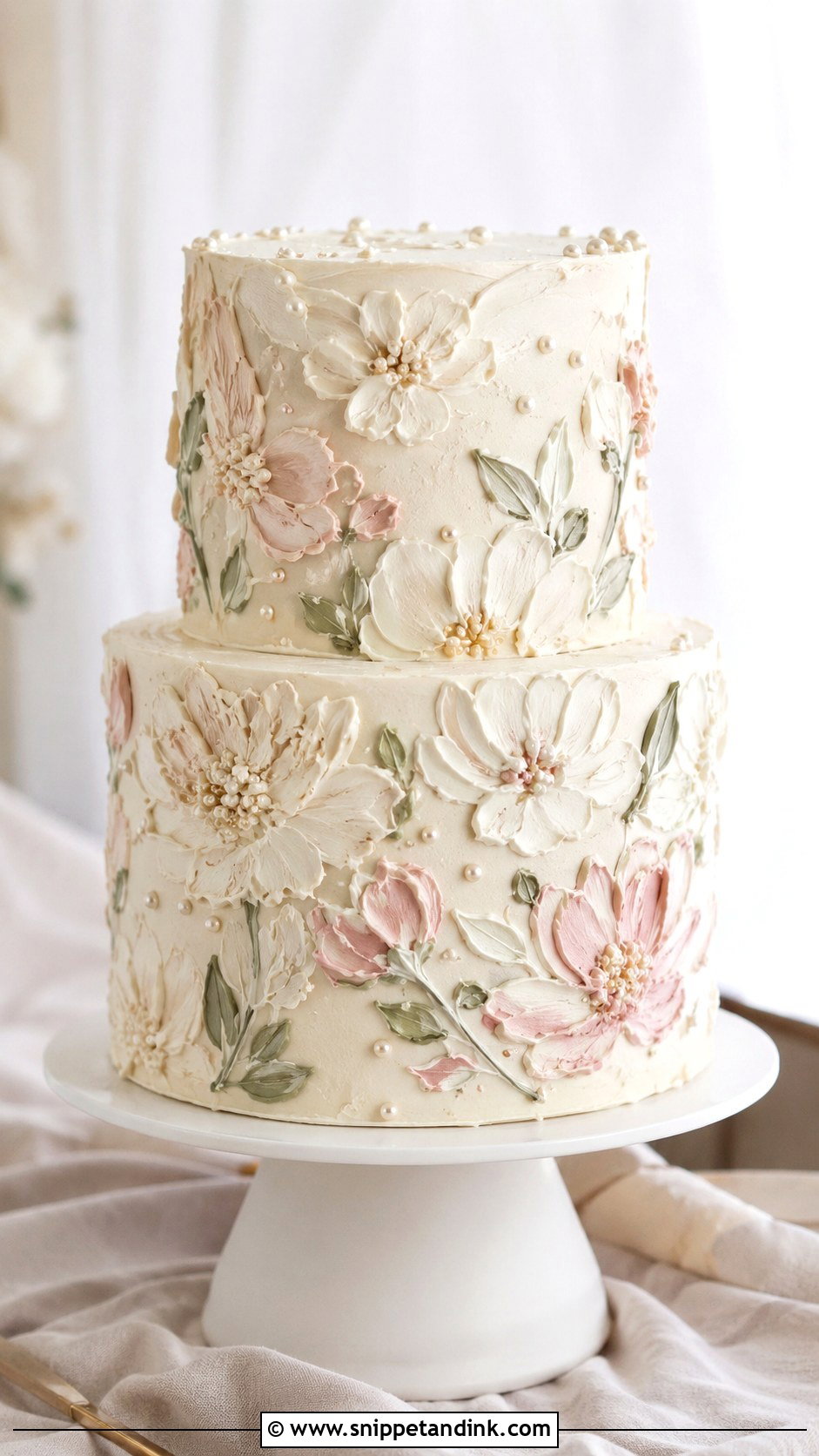
Palette knife flowers are painted with buttercream instead of piped, in soft ridged petals and raised strokes. White looks subtle; blush, cream, sage or lavender adds a little colour. From a florist’s point of view, I love these for couples who want floral detail with no fresh flowers at all, perhaps because of allergies or a hot outdoor venue. Keep the rest of the cake plain so the texture has room. Up close, in photographs, the knife marks are what make it.
16. Two Tier Wedding Cake With Floral Lace
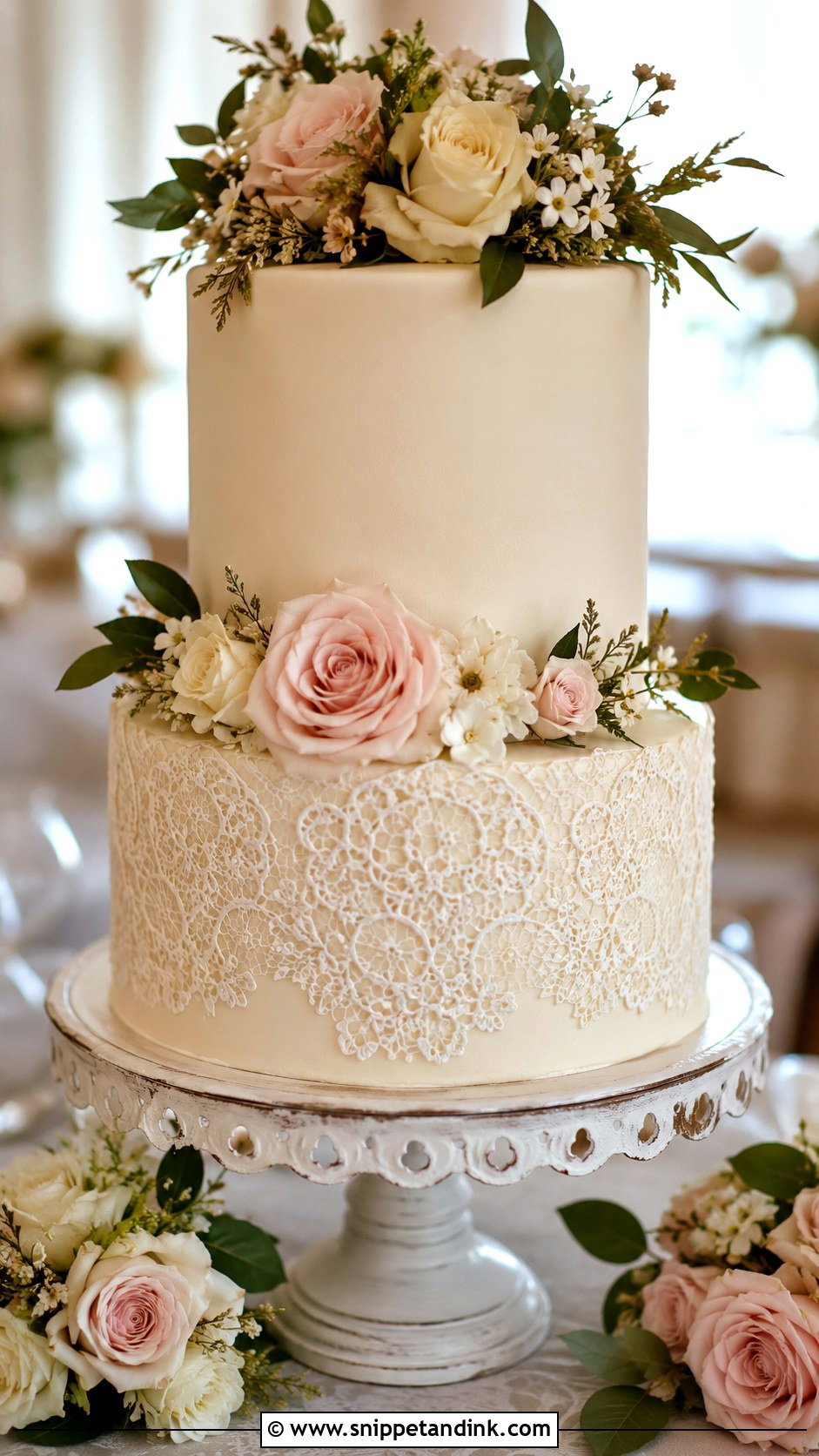
Lace and flowers make the most bridal combination here. The lace can be fondant, piped royal icing or a stencil over buttercream, and it looks best on one tier with the other kept smooth. I add flowers where the tiers meet, on top or down one side. White-on-white is traditional; ivory lace with blush flowers is warmer. If your dress has a distinctive lace, show the baker the pattern and me the flower in it, and we can echo both. It suits vintage venues, garden chapels and formal receptions.
17. Two Tier Wedding Cake With Floral Drip
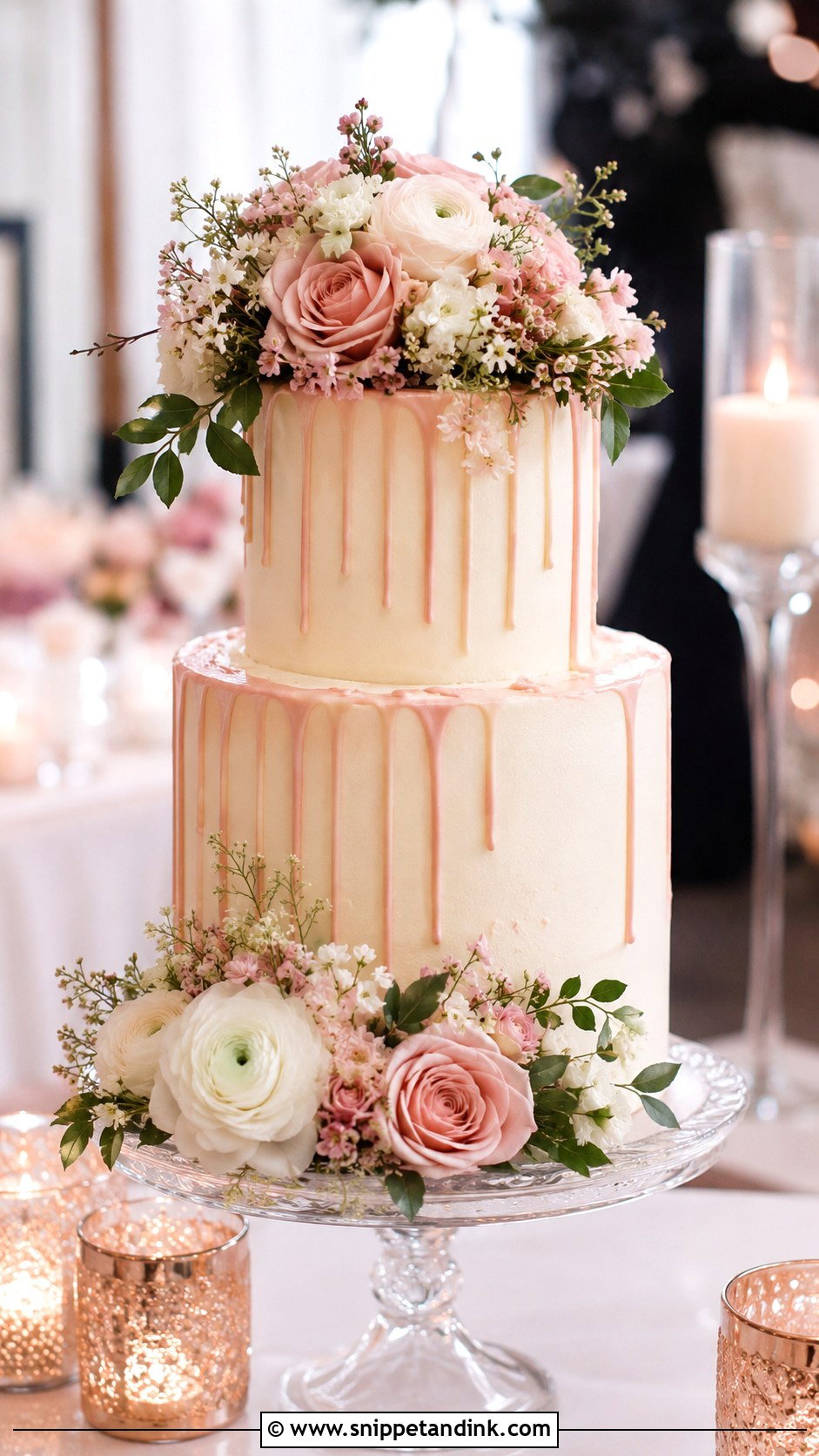
A drip adds a playful touch, and the flowers keep it bridal. White chocolate, pale pink ganache, champagne glaze or caramel all work. I match the flowers to the drip colour, so a caramel drip gets peach and cream roses, and place them on top and at the base, never in the drip itself, since wet ganache stains petals. Roses, ranunculus, orchids or small blossoms all suit it. It’s a fun choice for brunches and modern receptions.
18. Two Tier Wedding Cake With Floral Ruffles
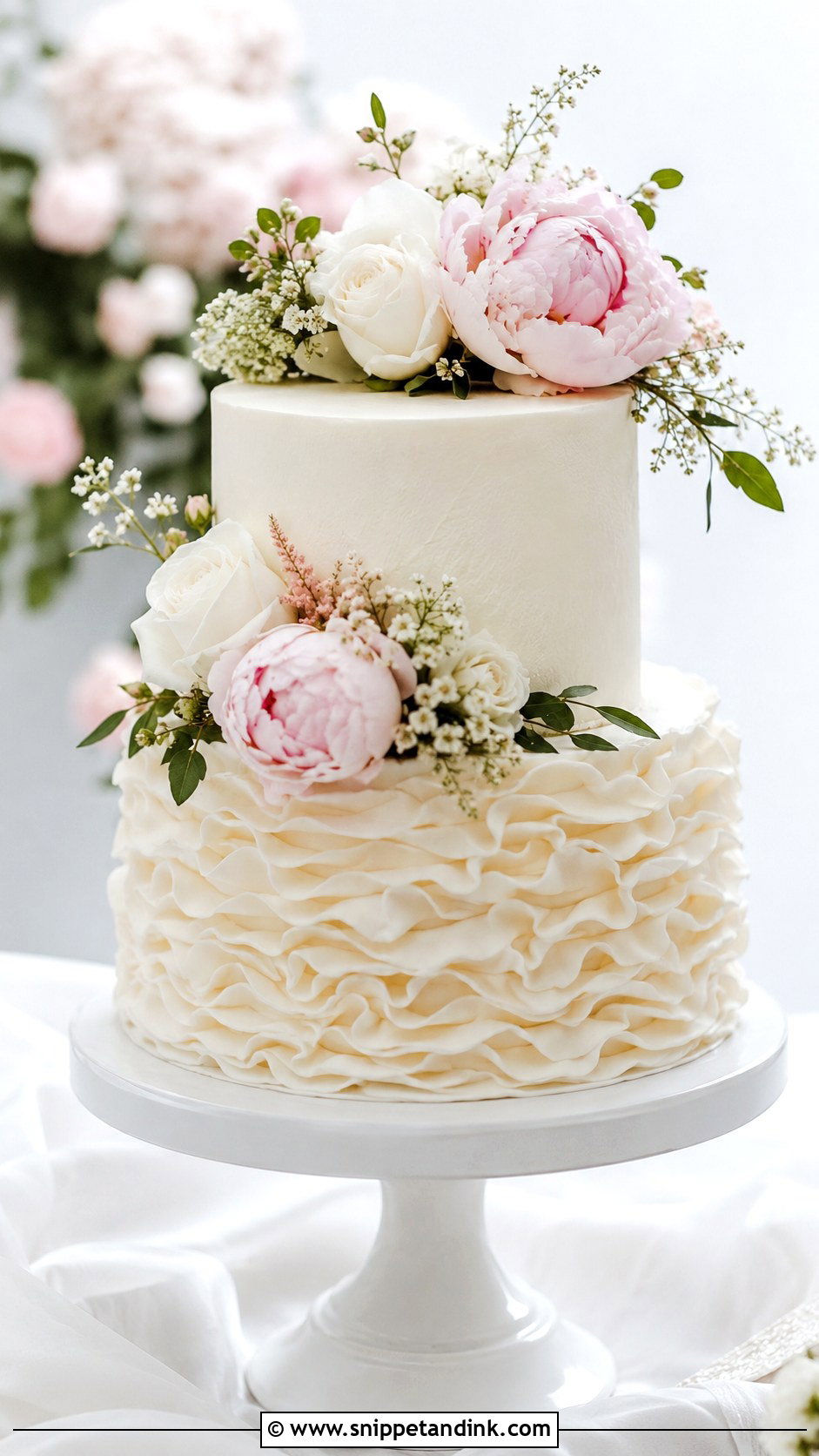
Ruffles look best on one tier, with flowers marking where they meet the smooth tier. I put the blooms right at that join so they look like they’re tucked into the folds. Ivory ruffles with blush flowers feel romantic; all-white with white flowers feels formal. A tall, narrow cake suits ruffles because they add movement up the height. It’s an especially nice match for a dress with flowing chiffon or tulle.
19. Two Tier Wedding Cake With Floral Semi Naked Finish
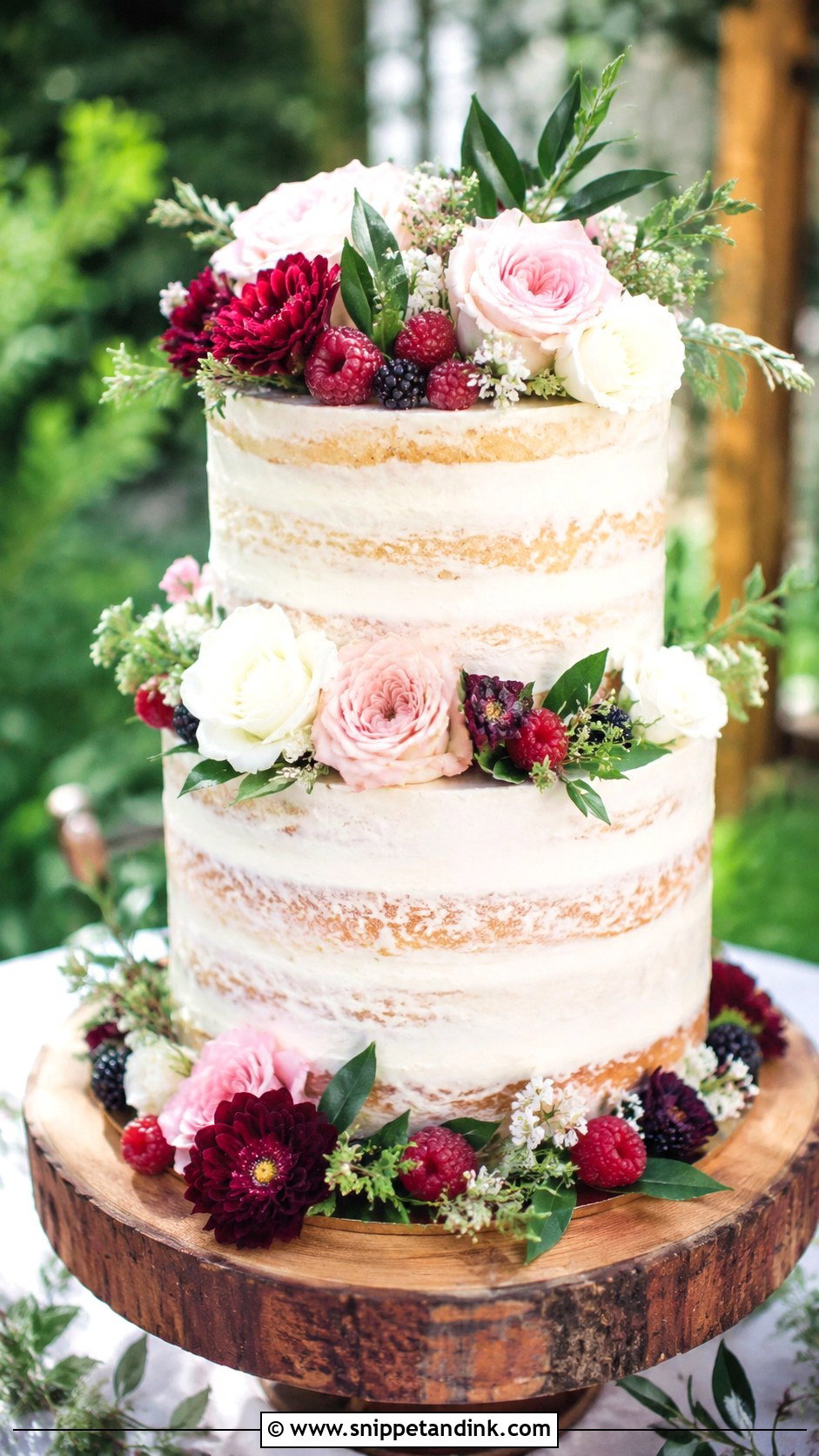
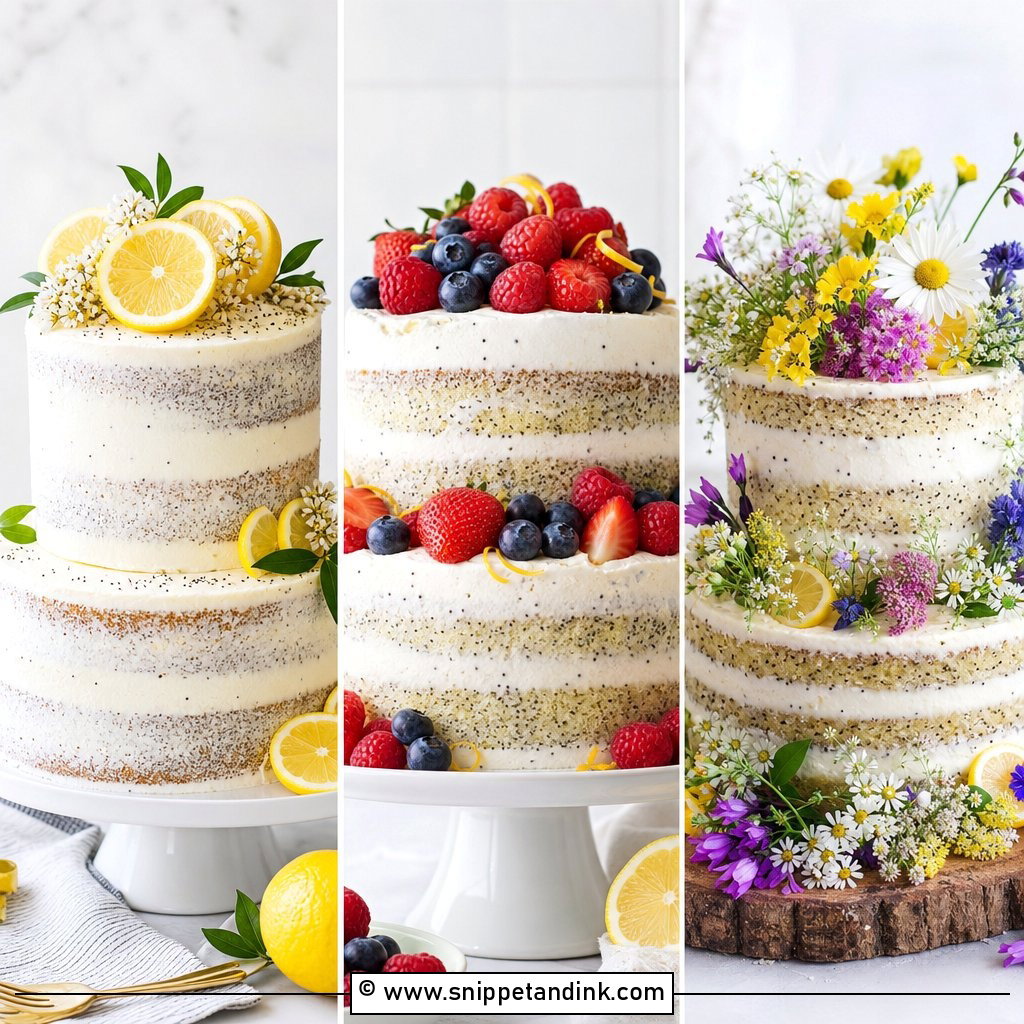
A semi naked cake is the friendliest base for fresh flowers, since the thin, scraped buttercream already looks loose and garden-made. I place flowers and greenery between the tiers, on top and round the base. The exposed sponge dries out quickly, so ask the baker to keep it wrapped until I arrive, and I’ll work fast. Vanilla, almond, lemon or spice cake shows through as part of the design. Seasonal berries add colour if they fit the menu. Barns, gardens and backyards suit it.

20. Two Tier Wedding Cake With Floral Watercolor
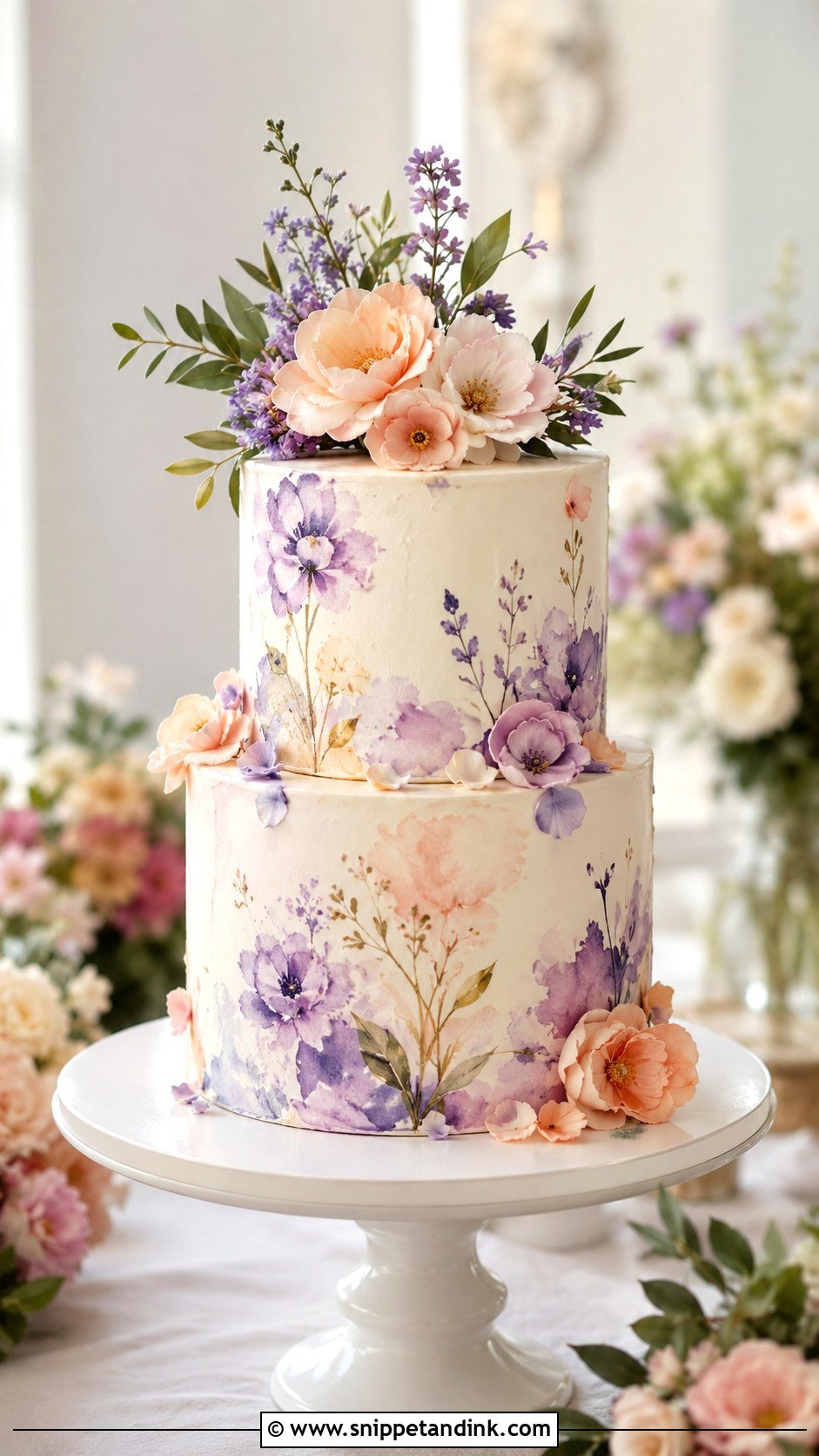
Watercolour cakes are painted in soft washes of blush, lavender, peach, blue, or sage, and the flowers should pick up those same tones. Real flowers, sugar flowers or painted blooms all work. I usually choose the painted colours from the bouquet first, then the baker matches the wash, which keeps everything blended rather than busy. Spring weddings and art-loving couples suit it. A plain stand and soft table flowers let the painting show.
21. Two Tier Wedding Cake With Floral Arch
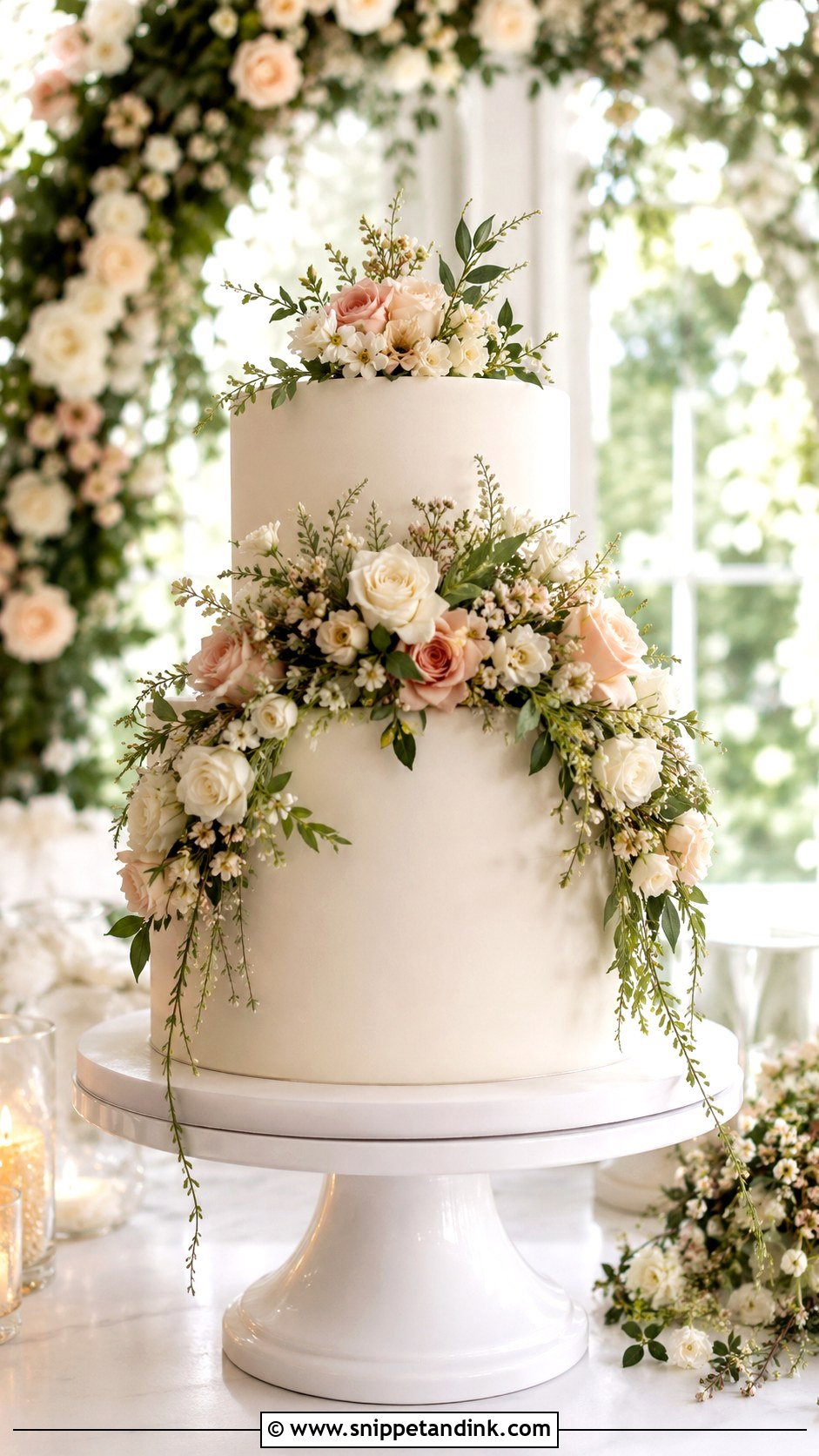
A floral arch frames the front of the cake, curving from one side of the top tier down toward the bottom tier like a little doorway. I build the curve on a bent wire armature so it keeps its shape, then cover it with small roses, tiny blossoms and soft greenery. It’s surprisingly structured for something so natural-looking. A smooth white or ivory cake keeps the line clear. Candles or a floral backdrop behind it suit garden weddings and chapels.
22. Two Tier Wedding Cake With Floral Monogram
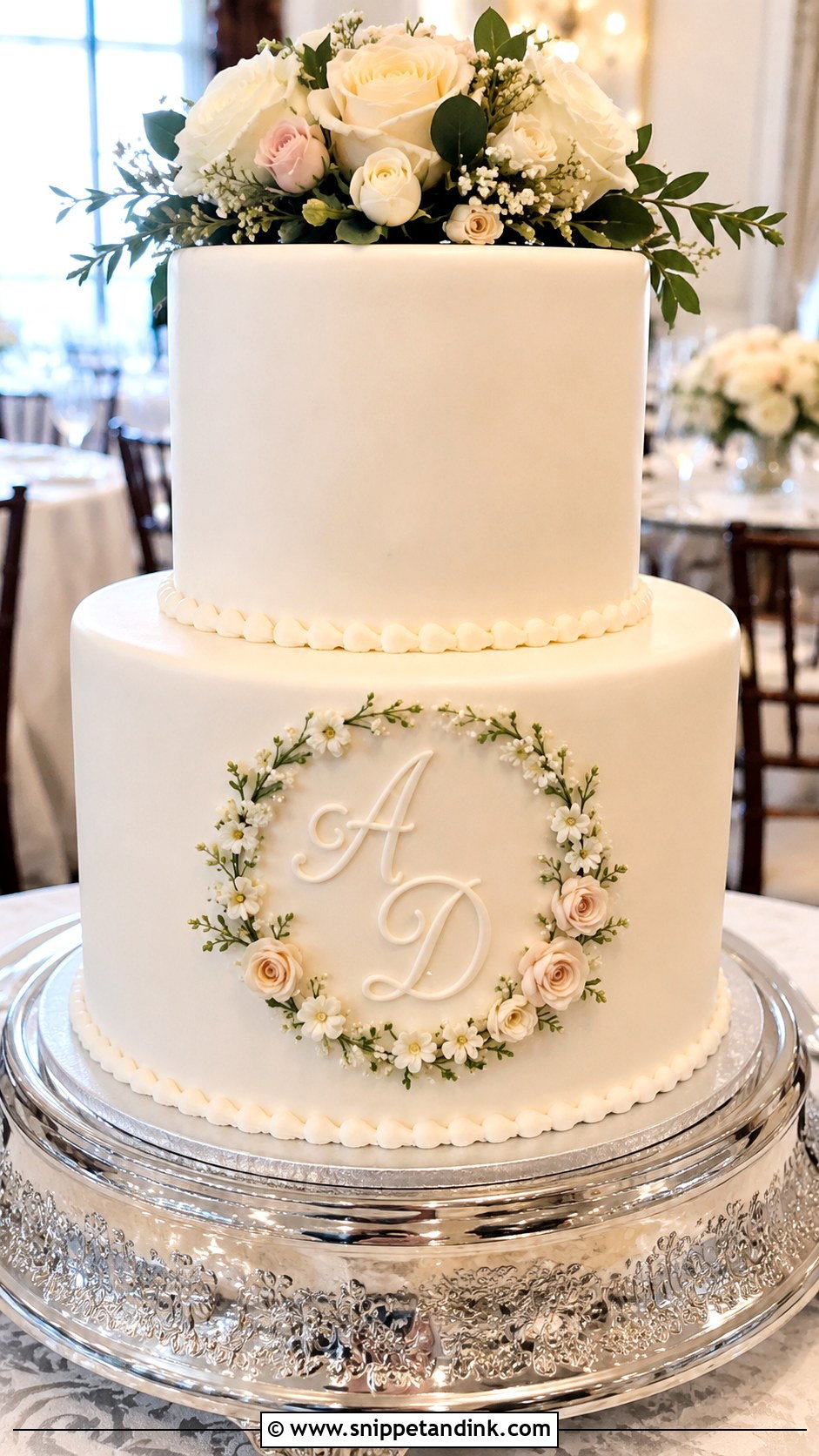
A floral monogram puts your initials on the front of the lower tier, framed with flowers and greenery. The letters can be piped, painted or cut from thin fondant. My part is keeping the flowers small, so the initials stay readable from across the room; a single sprig to each side is usually enough. White or ivory icing gives the cleanest background. It suits classic and formal weddings, and the initials show up nicely in the cake-cutting photos.
23. Two Tier Wedding Cake With Floral Pearls
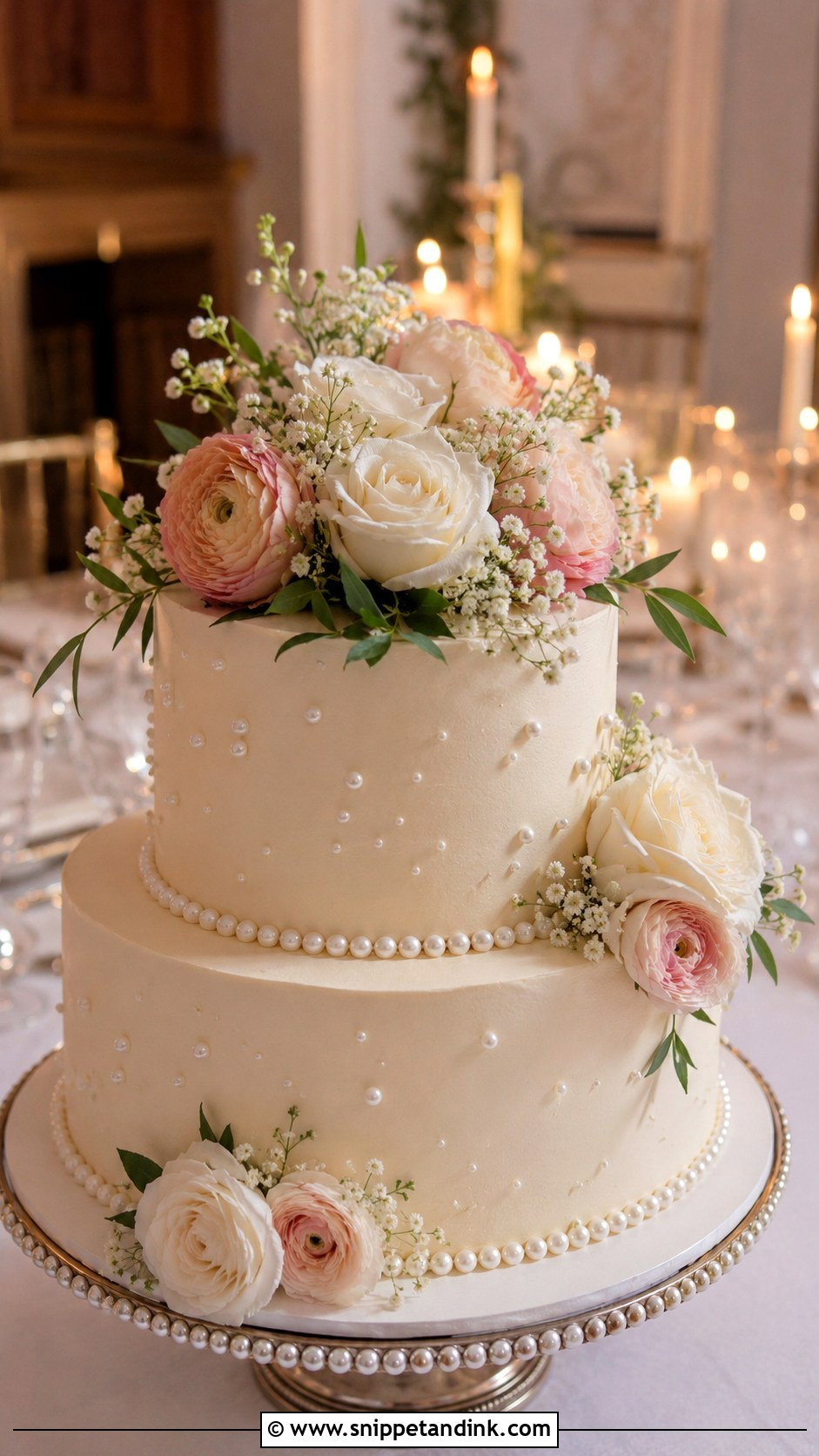
Pearls and flowers balance each other: the pearls add polish and the flowers stop them looking stiff. Small sugar pearls go in neat lines or light scatters over smooth buttercream, with white roses, blush ranunculus and tiny fillers clustered alongside. Ivory frosting and pearl borders look vintage; sparse pearls and a single floral cluster look modern. It’s a natural match for a classic gown and a candlelit room.
24. Two Tier Wedding Cake With Floral Ribbon
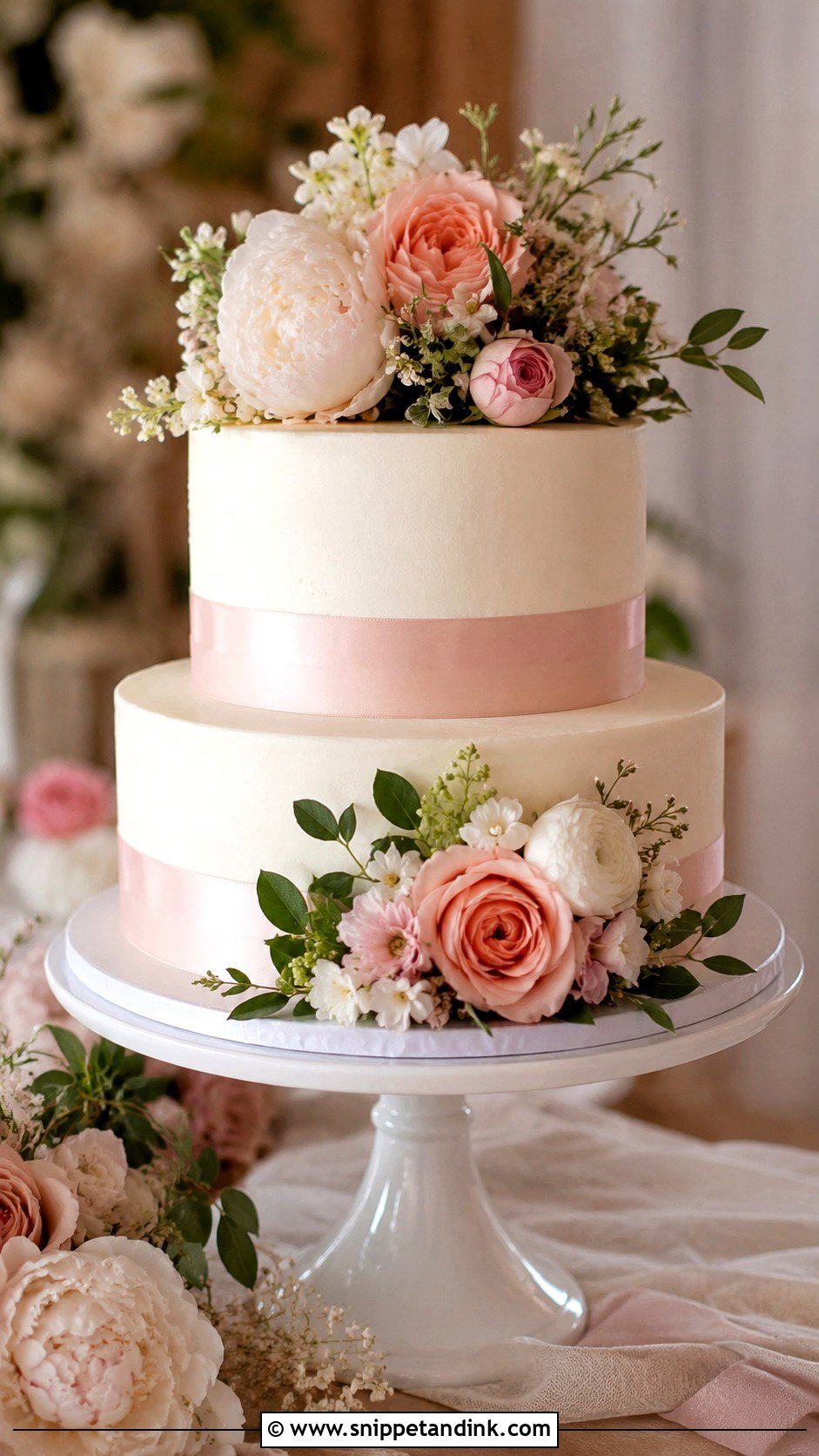
Ribbon round the base of each tier with flowers at the front, top or side is one of the neatest styles and the easiest to match to your colours. Satin looks classic, velvet romantic, and fondant ribbon keeps everything edible. Real ribbon needs a backing strip so butter doesn’t stain it. Roses, peonies, ranunculus and small blossoms suit it. I often tie in the same ribbon used on the bouquet, which links the two without any extra effort. Smooth frosting keeps the ribbon line crisp.


25. Two Tier Wedding Cake With Floral Garden Style
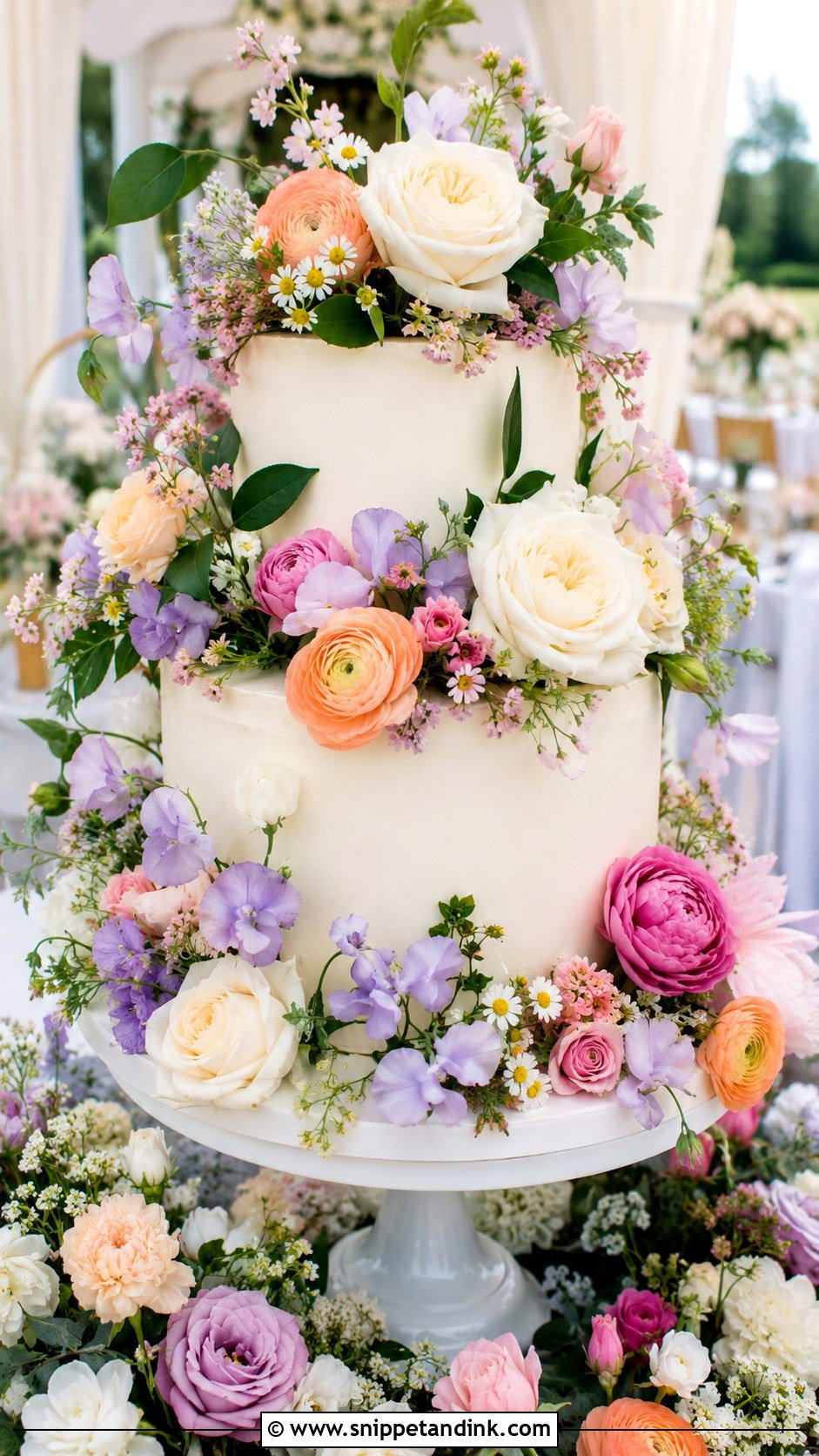
Garden style means the cake looks like part of the arrangements, with blooms wrapping round the tiers in different sizes, colours and greenery. Roses, ranunculus, sweet peas, peonies and tiny blossoms give the lush, abundant feel. On a cake this full, a lot of stems are close to the icing, so I wrap every one and use barriers under the bigger heads. Soft buttercream keeps it warm and natural. It works best when the flowers repeat the bouquet and the tables, at tented, estate and outdoor weddings.
The Last Hour Before Cutting: How a Cake Gets Dressed
Most couples never see this part, and it explains a lot about what’s realistic on the day.
- The day before, I condition the cake flowers in deep, cool water and set aside more stems than I’ll need, because some heads always bruise in transport.
- On the morning, stems are cut short, wired if they need to bend, taped and placed in picks. The cake flowers travel in their own box, apart from the bouquets.
- The baker delivers and stacks the cake. I arrive after that and dress it in place, usually within an hour of guests coming in, so nothing has time to wilt.
- I leave a few spare blooms with the planner or venue staff, in case one droops or someone knocks the table.
- Before cutting, the caterer lifts the flowers off in one piece where possible. That’s why I build clusters on picks rather than pushing single stems in everywhere.
Two things make this run smoothly. First, tell both vendors the cake’s delivery time and position, so I’m not working round a cake that’s still being stacked. Second, if the cake will sit near a window or under hot lights, let me know. I’ll choose sturdier flowers, such as roses, orchids and spray roses, over delicate ones like sweet peas that collapse in heat.
Send Your Baker the Florist’s Recipe, Not Just a Photo
A small cake can carry a lot of feeling with the right flowers, whether that’s classic roses, bold orchids, pressed petals or a full garden arrangement. Before you finalise a design, think about your venue, your bouquet, the season and how many people the cake needs to serve. Then put your baker and florist in touch. Share the flower recipe, agree who supplies and places the blooms, and ask which flowers should be made in sugar or buttercream instead of fresh. Get those details settled and the cake will look like it belongs to the rest of the room.
You'll Like These Ideas:








Leave a Reply