
Pink covers more ground on a cake table than any other color I work with. It can be barely-there blush on smooth buttercream, a deep rose tier in a modern stack, or the soft background to old-fashioned piping, glossy drips and sugar flowers. It suits a garden tent, a hotel ballroom or a rooftop just as easily. What decides whether it looks considered is the shade, the texture and how high the cake stands against the room. Below are twenty pink cakes I’d be glad to make, with the details I’d talk through with you before quoting.
The Pink You Approve at the Tasting Can Shift by the Wedding
Pink frosting doesn’t stay still. Buttercream tinted with gel color keeps darkening for several hours after mixing, which is why I tint a little lighter than the sample and check it again the next day. Some pink colorings also fade in strong light; a cake displayed near a sunny window for an afternoon can come out of the photos noticeably paler than it went in.
There are natural routes too. Freeze-dried strawberry or raspberry powder gives a soft dusty pink and flavors the frosting at the same time, which I love for blush and dusty shades. It won’t reach a bright pink, though, and beetroot-based colors can turn brownish when baked. For vivid or deep shades, a good gel color is still the reliable choice.
Whatever the method, I compare the frosting against your fabric swatch in daylight and under warm light, because venue lighting is usually warm and will push pink toward peach.
On the day, ask the venue to set the cake table out of direct sun and away from heat lamps or a radiator. That one choice protects the color and the frosting far more than anything I can do in the kitchen.
1. Blush Pink Wedding Cake
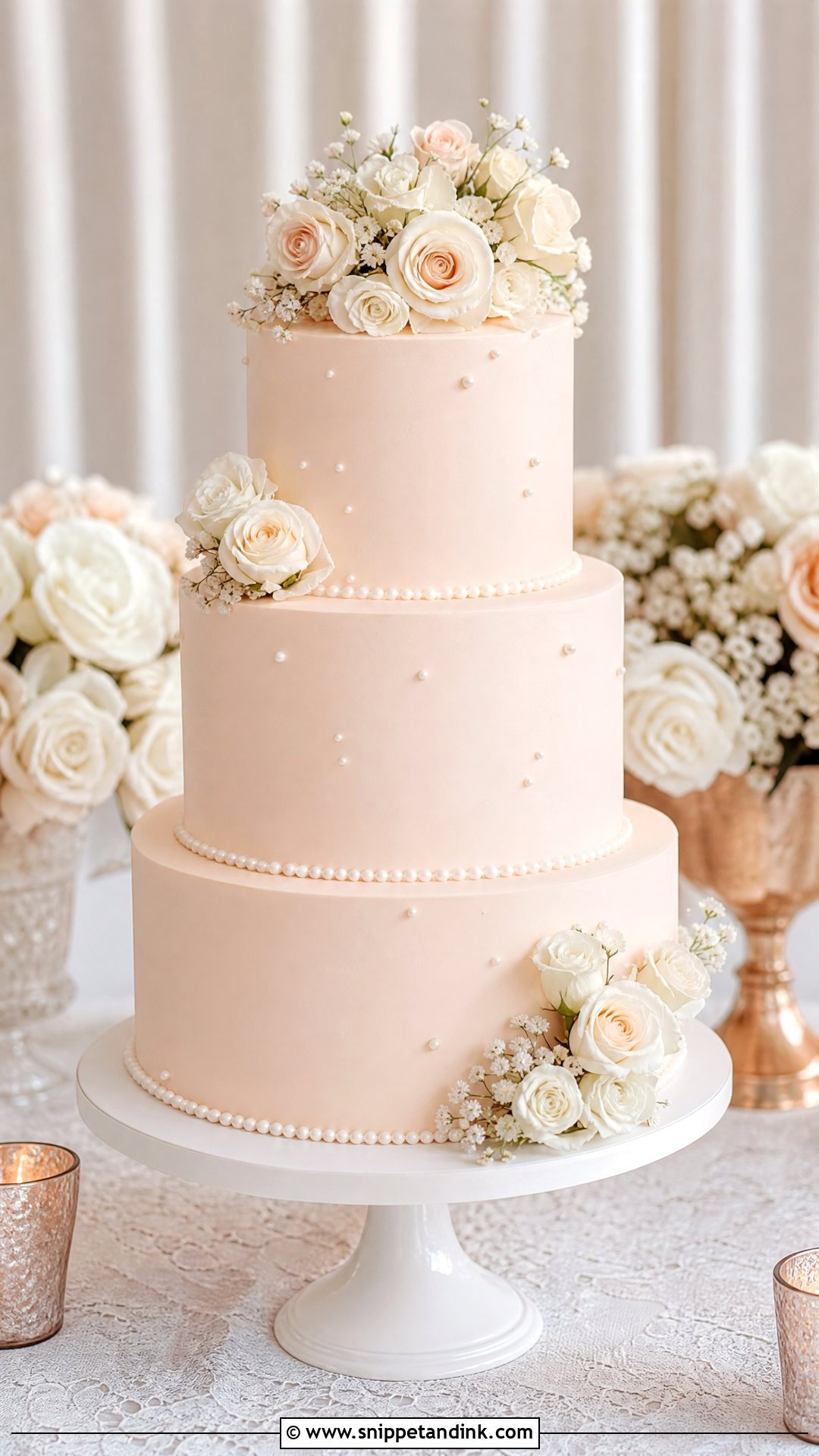
Blush is where most couples start, and for good reason: it sits happily beside ivory flowers, pearls, gold and greenery. Three tiers of smooth blush buttercream look clean; a few sugar roses add texture without fuss. I mix blush a shade lighter than the target, because buttercream color deepens as it sits for a few hours. Muted reads more elegant in photos than bright candy pink. Vanilla, almond, strawberry or pink velvet all suit it.
2. Pink Ombre Wedding Cake
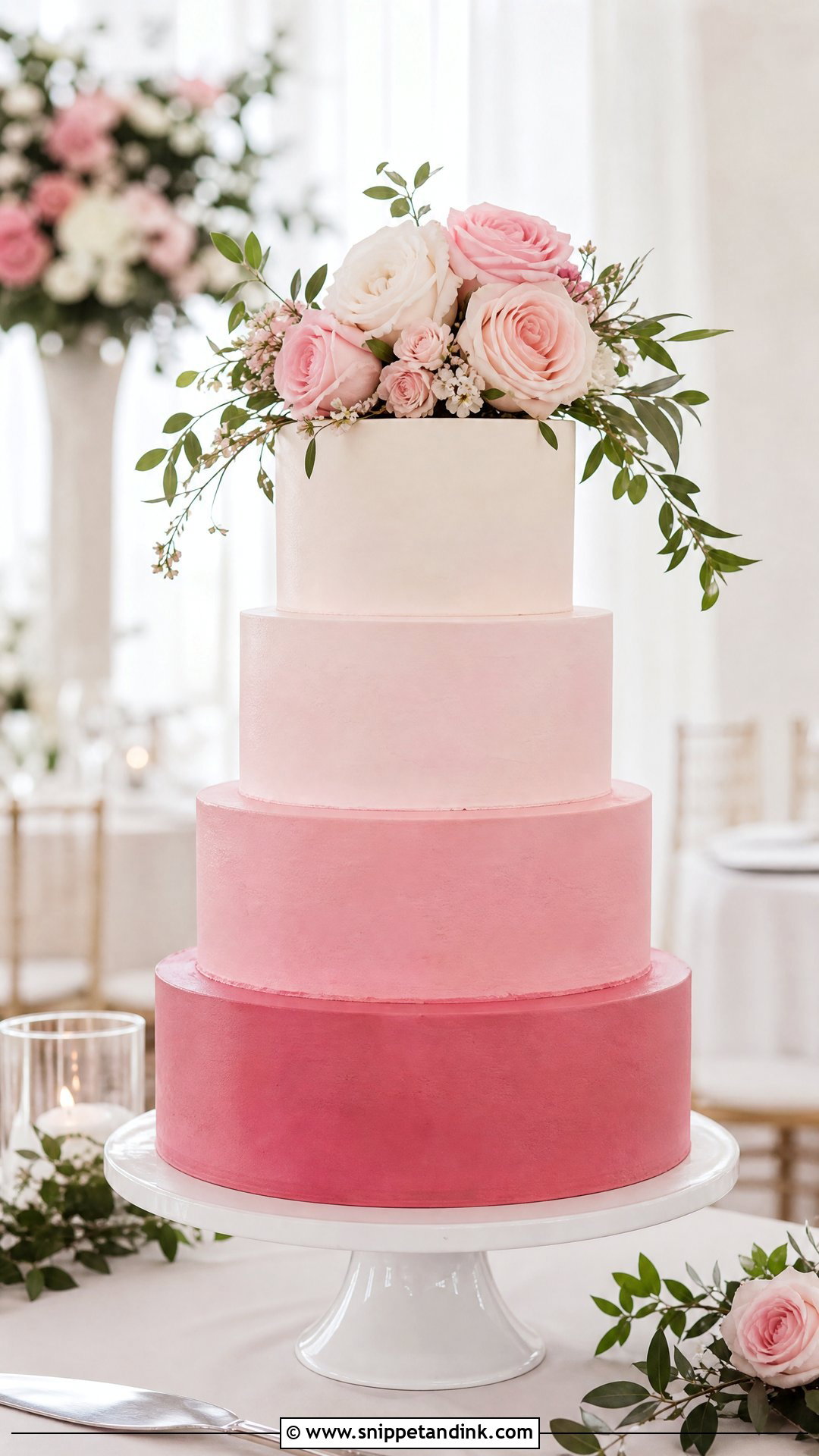
Ombre tells a color story from the base up: rose at the bottom, then blush, pale pink and finally ivory at the top. I mix all the shades from one batch of frosting, stepping the color down each time, so they belong together. It’s a smart choice when your flowers, bridesmaid dresses and linens already use several pinks, since the cake ties them up. Buttercream blends more softly than fondant. A few roses, ranunculus or sugar blooms near the base finish it.
3. Pink Floral Wedding Cake
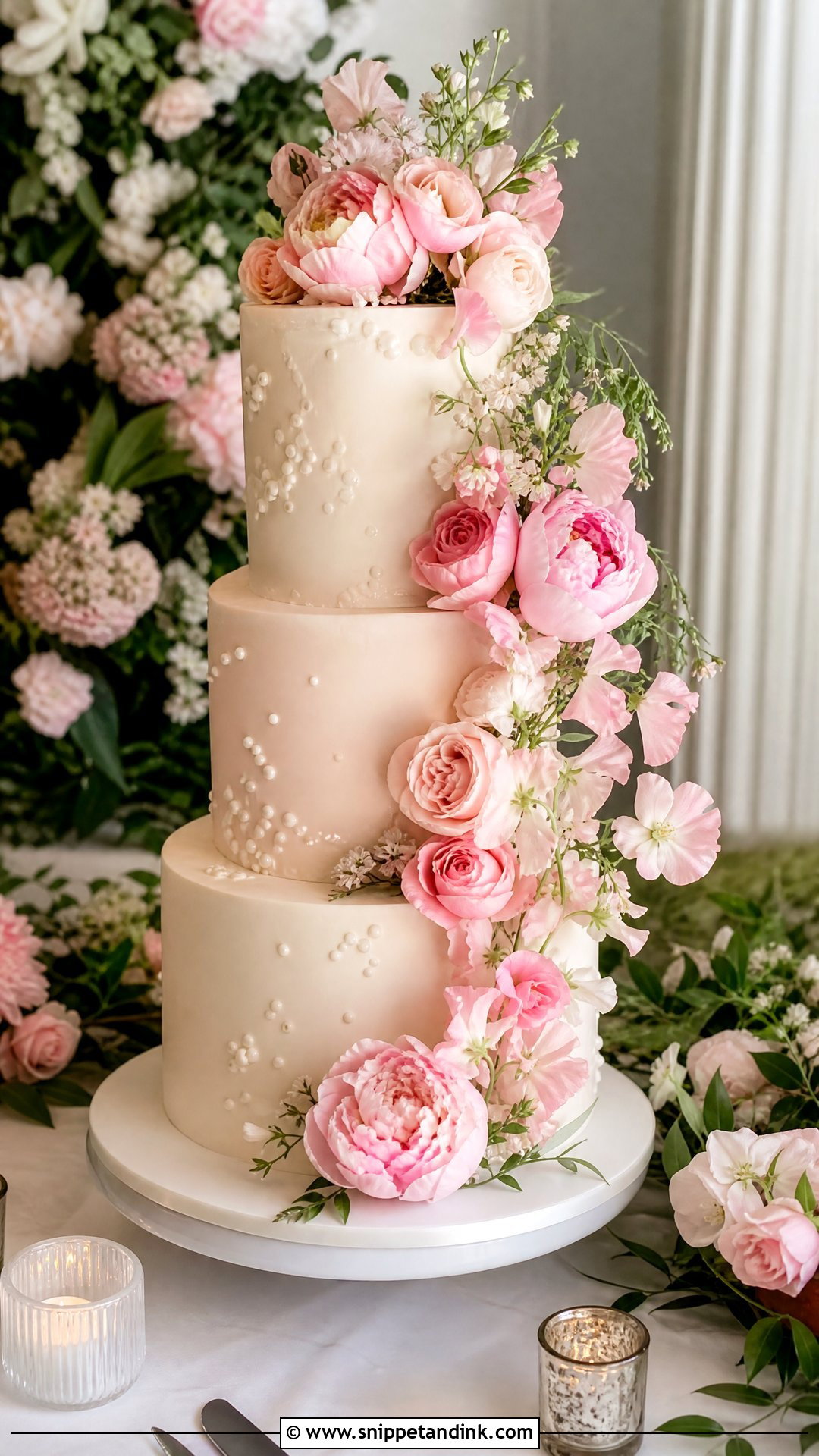
When flowers are the heart of your wedding, the cake can carry them too. Pale pink buttercream or ivory frosting gives the blooms a quiet background. Fresh flowers look gathered and natural but need wrapped stems and food-safe picks; sugar flowers last all evening and can be kept afterward. Roses, peonies, orchids, sweet peas and small fillers all work. I place them with intent, a diagonal cascade or one generous cluster per tier, rather than dotting them evenly, which tends to look spotty.
4. Dusty Pink Wedding Cake
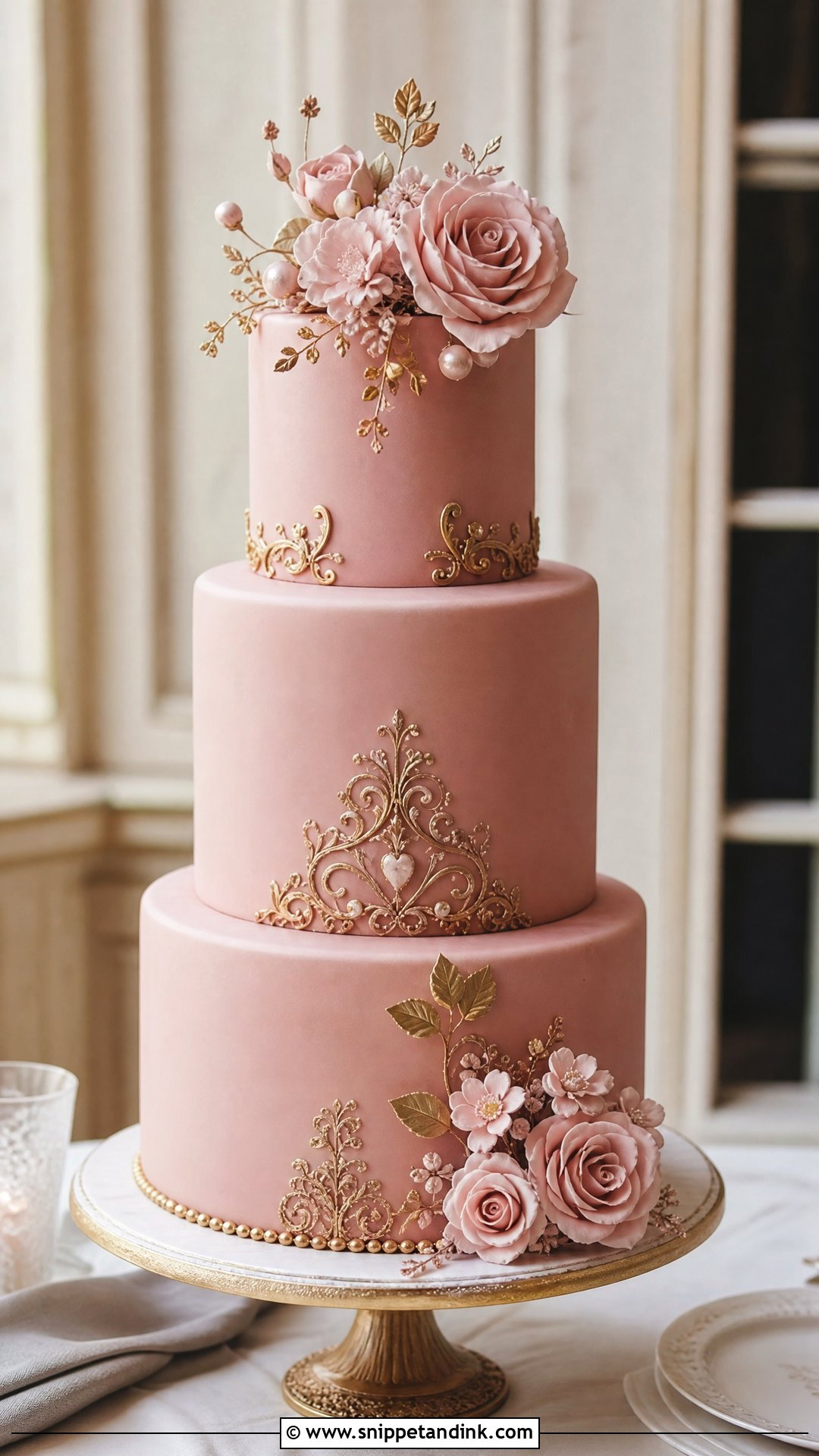
Dusty pink has a grey or brown note that makes it feel vintage and grown-up. A dusty pink wedding cake works with taupe, ivory, sage, mauve and antique gold. I often reach the shade with a touch of brown or violet in the pink rather than a single bottle color, which looks flat. Smooth fondant suits a formal room; textured buttercream a relaxed one. Dried-look sugar flowers and fine piping finish it nicely for a fall wedding or a historic venue.
5. Pink And Gold Wedding Cake
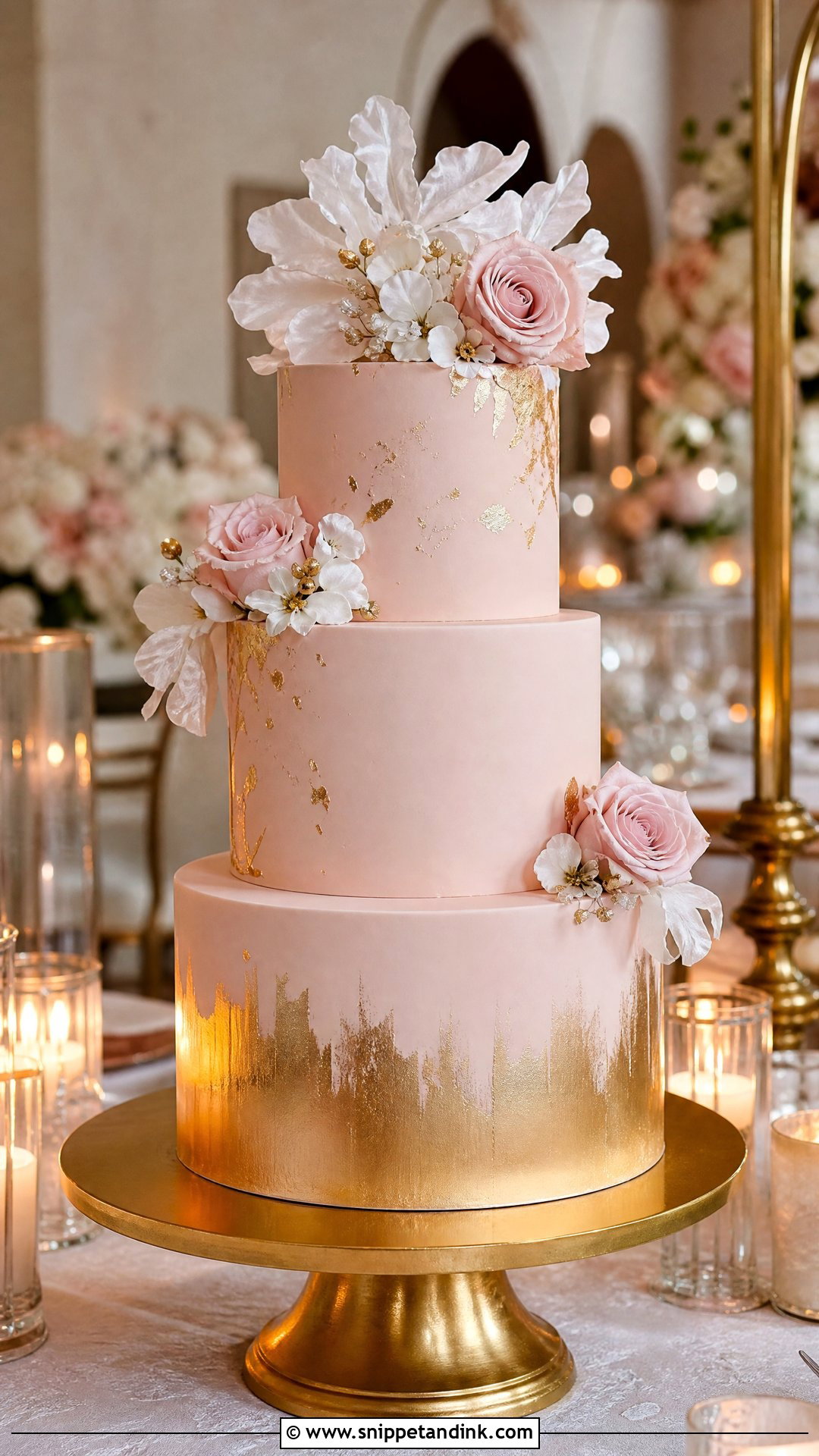
Pink and gold looks festive, and it stays graceful only with restraint. I’d use blush buttercream, a few thin gold leaf accents and soft flowers, and treat gold as the highlight. Brushed gold edges, a gold drip or small metallic flecks on one tier are plenty; covering everything makes it look like a trophy. Candlelight, cream linens and warm flowers suit it. Vanilla bean, raspberry almond or pink velvet would sit nicely inside. Make sure every gold product on the cake is labeled edible.
6. Pink Vintage Wedding Cake
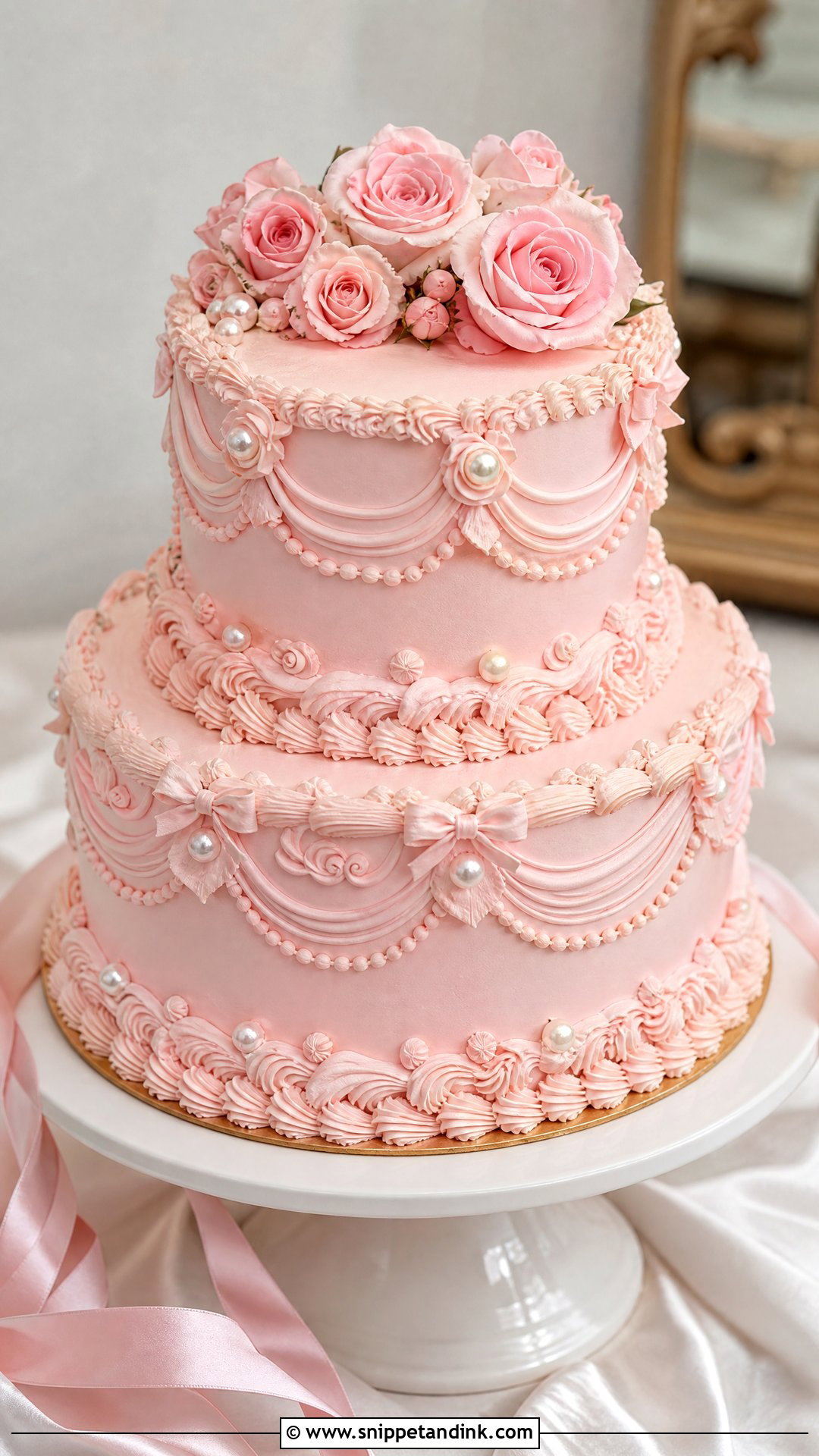
A pink vintage cake brings back classic piping: shell borders, Lambeth-style overpiped swags, tiny rosettes and pearl beads. It’s slow, layered work, and the quote reflects the hours. Two or three tiers depending on guest numbers. Pale pink keeps it romantic; deeper rose makes it more playful. A heart topper, satin ribbon or piped bows finish it. In warm weather I use a crusting buttercream so the fine lines keep their edges.
7. Pink Buttercream Wedding Cake
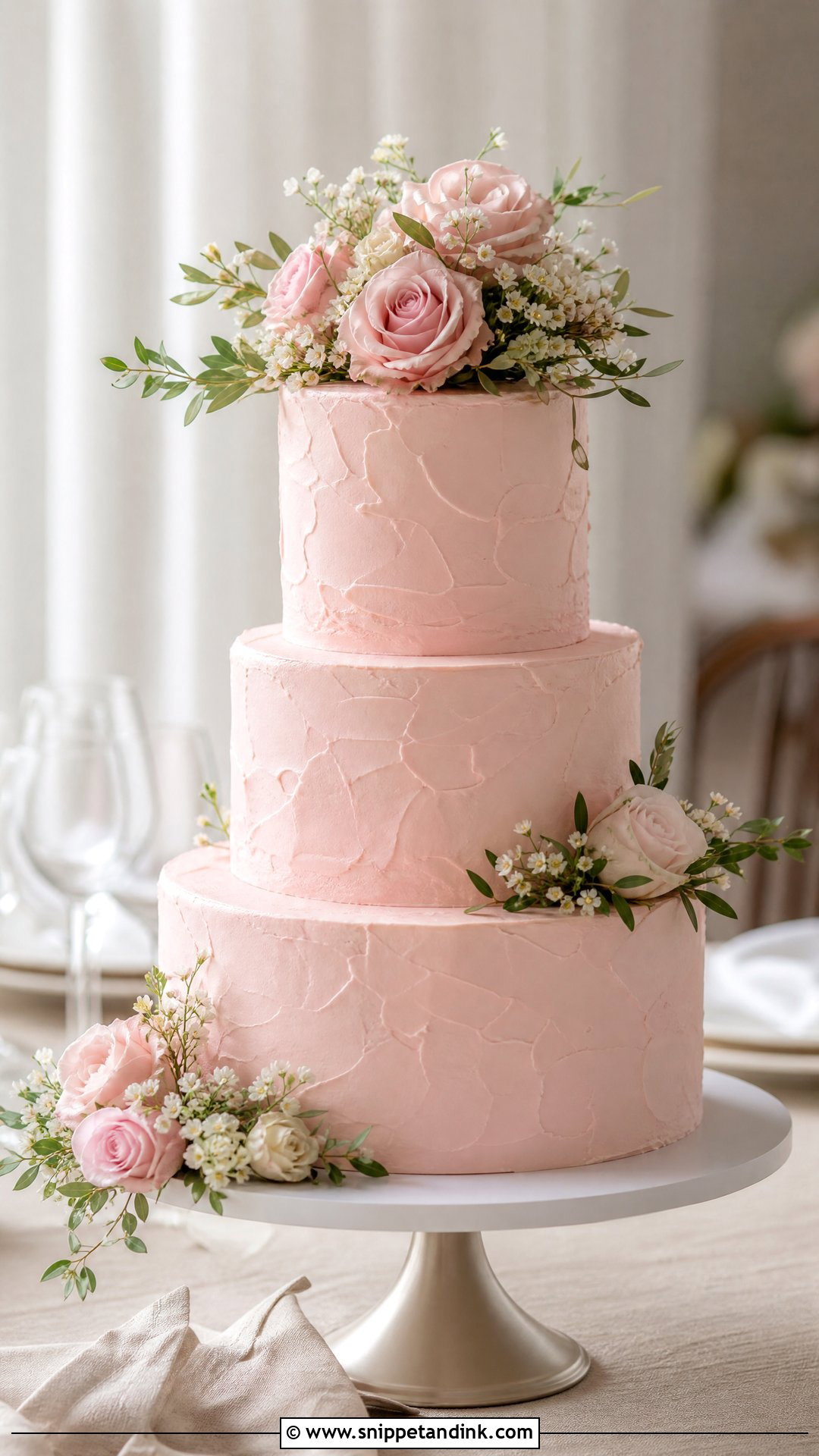
Buttercream is the most flexible finish: smooth and sharp-edged, spatula-textured or swept in horizontal strokes. It also feels softer and less formal than fondant, and guests actually eat it. The downside is heat; it starts to slump in a warm, sunny room, so placement matters. Raspberry, strawberry, lemon, vanilla or almond fillings suit a pale pink frosting. Buttercream is also the easiest finish to tint to an exact linen or flower shade, so bring a swatch.
8. Pink Rose Wedding Cake
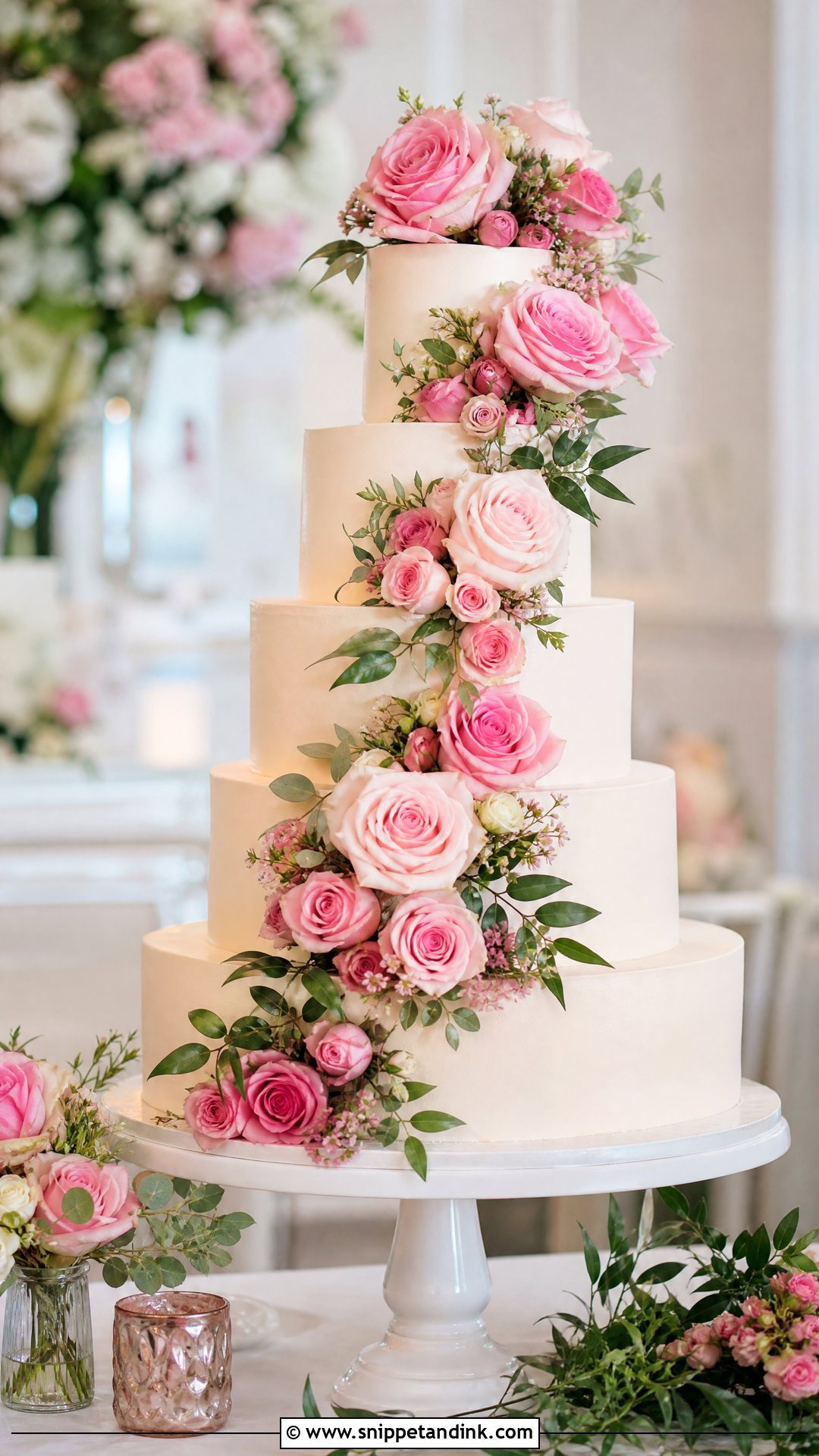
Roses can be fresh, sugar or piped in buttercream, and each gives a different finish. A white or blush cake with a cascade of pink roses looks traditional; an all-pink cake with roses gathered at the base looks fuller. I like mixing blush, rose and dusty pink blooms so the flowers have depth. Tall tiers show a cascade well. Soft greenery or baby’s breath adds a garden feel, though fresh baby’s breath should be kept off the frosting itself; I use it on wrapped stems or in sugar.
9. Pink Pearl Wedding Cake
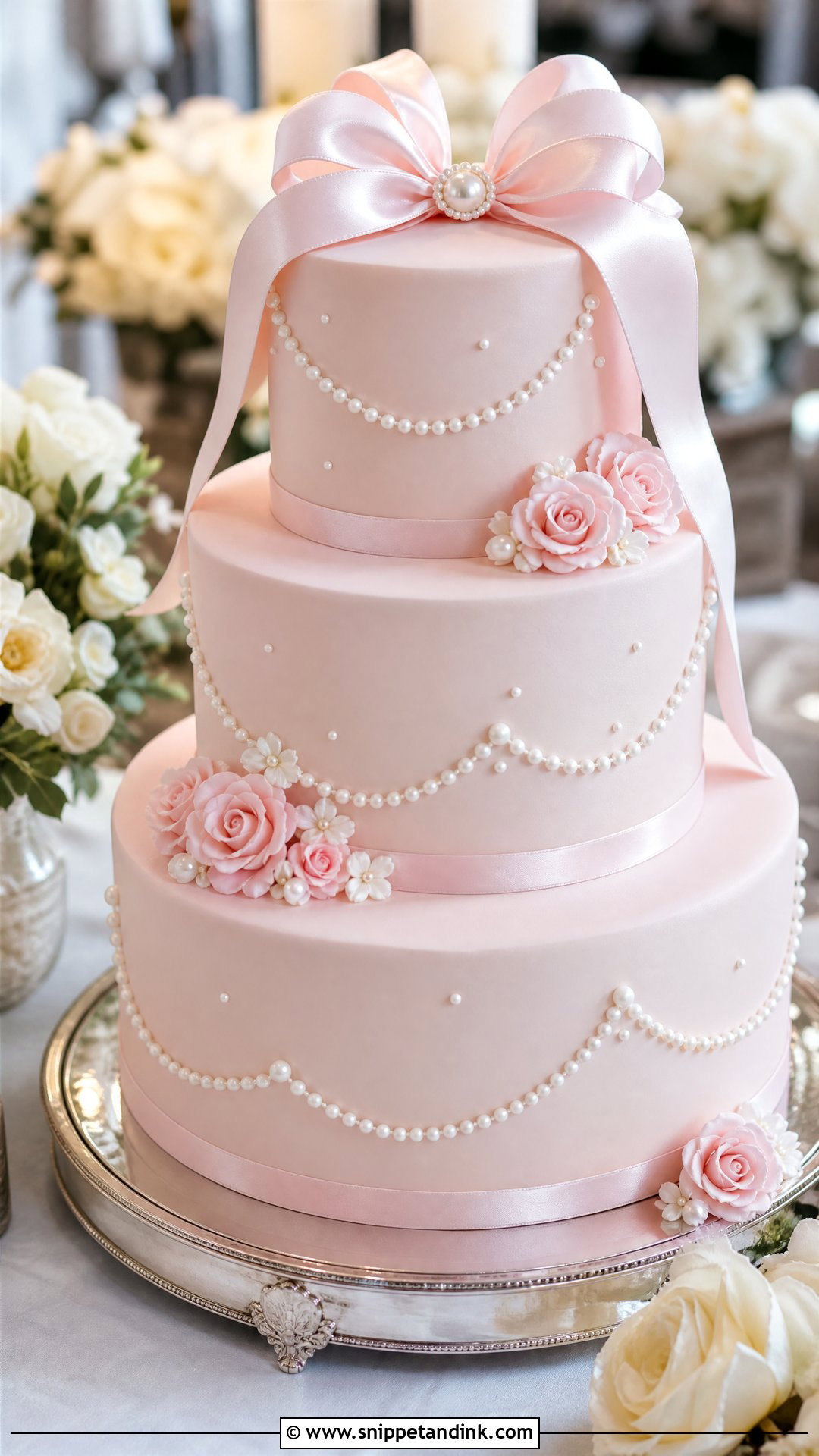
Pearls give a cake the look of a beaded gown. On pale pink fondant or buttercream, I set edible pearls in neat rows, small clusters or along each tier’s edge. They show up best on smooth frosting. On a tall cake, fewer pearls look more expensive than many. It suits formal venues and brides wearing satin, lace or pearl jewelry. A thin ribbon or a couple of sugar flowers is all the decoration it needs.
10. Pink Watercolor Wedding Cake
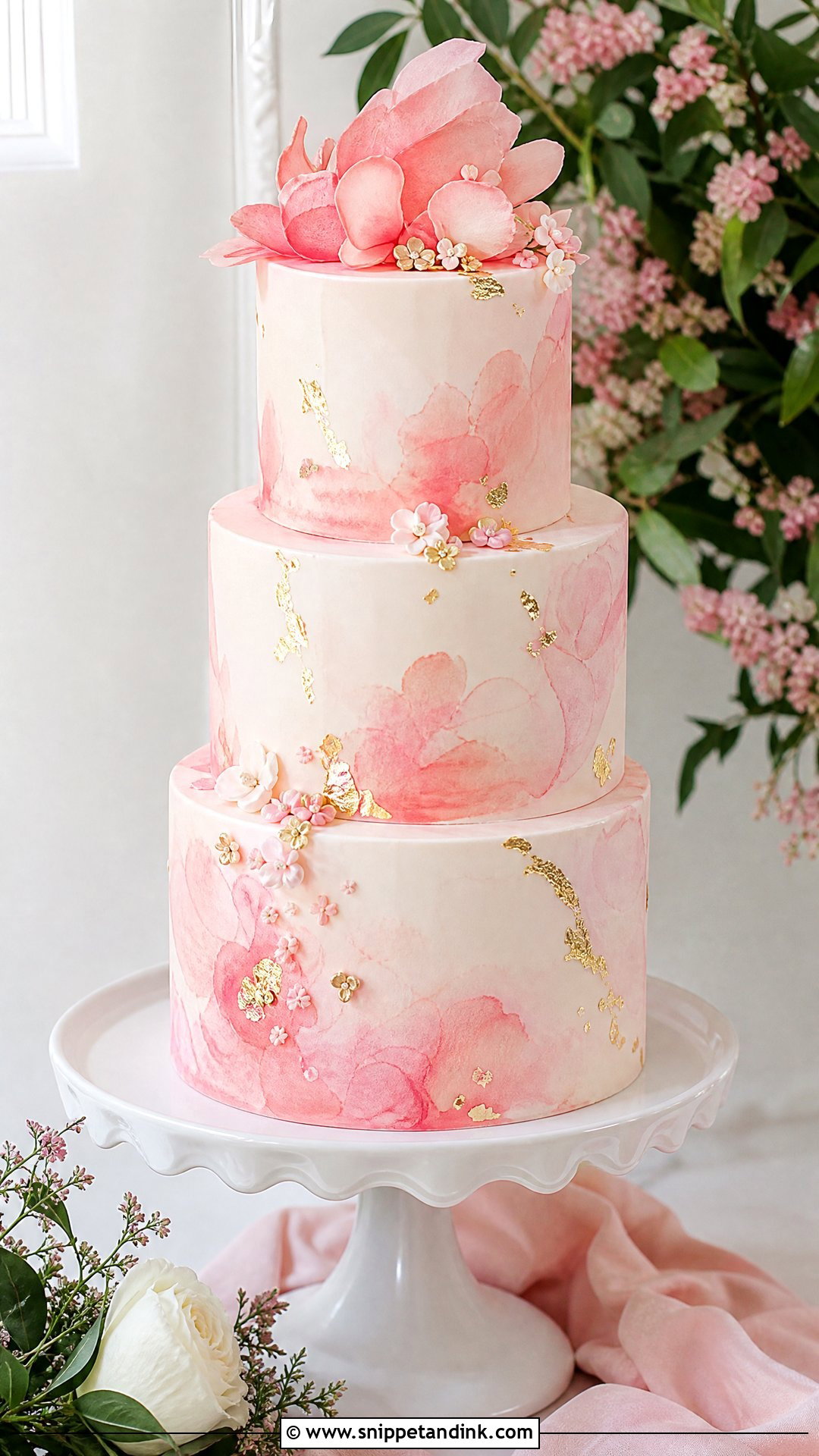
Watercolor cakes are painted in soft washes, blush drifting into rose, on smooth buttercream or fondant. I use thinned gel color with a wide brush and build the layers slowly, so the edges stay soft. It suits couples who want something creative without heavy decoration. Small flowers, gold flecks or a minimal topper are enough. Because it’s painted by hand, every one looks slightly different, which I see as part of the appeal.
11. Pink Drip Wedding Cake
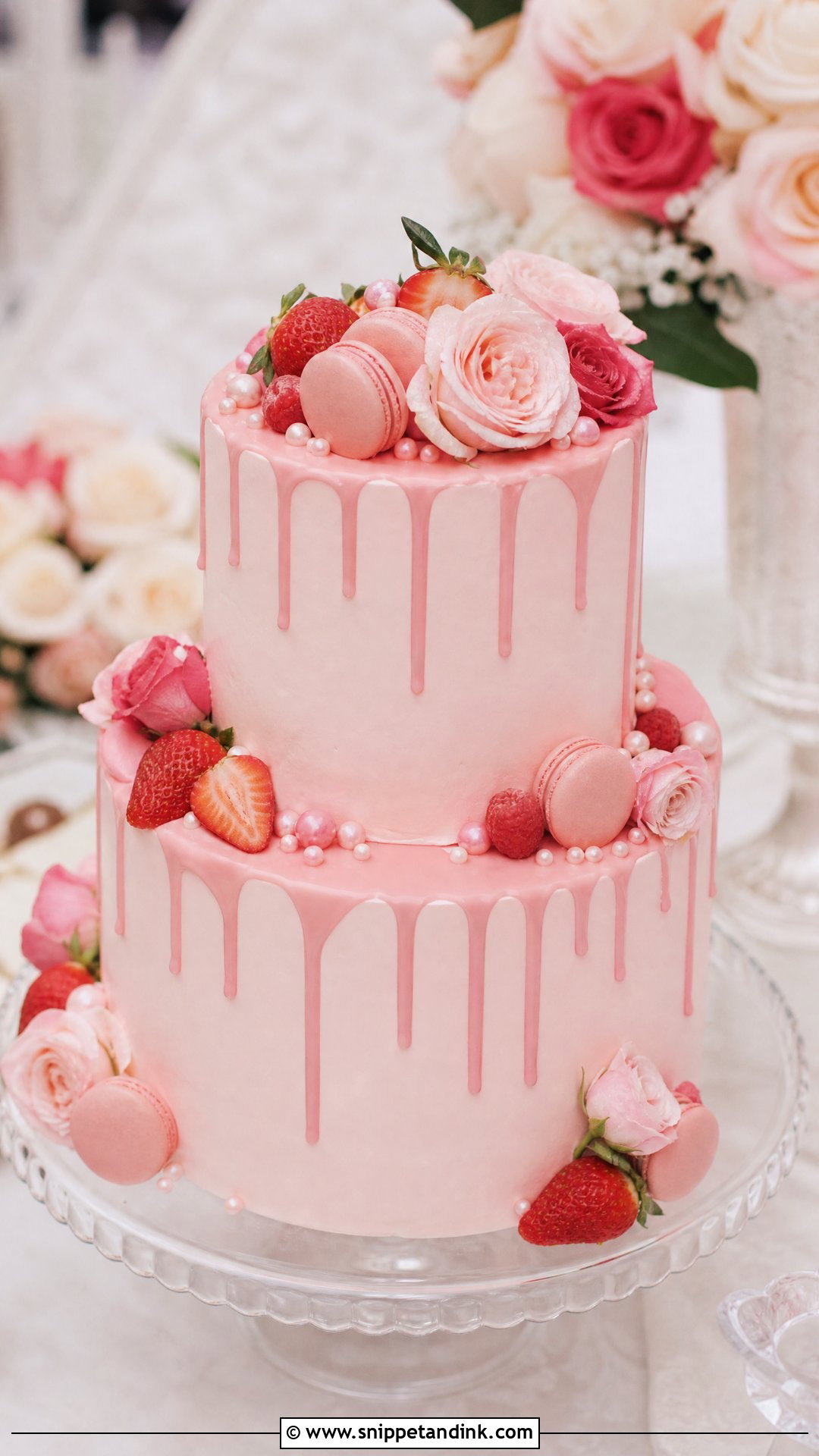
A drip adds a playful edge: pale pink buttercream with a deeper pink running over the top. White chocolate ganache is the usual base for drip cakes because it takes color smoothly, but its temperature decides everything, so I test a drip on the back before going round the front. Macarons, roses, berries or sugar flowers keep the top bridal. Short, even drips look neat; long ones look messy in photos. Strawberry, vanilla, raspberry and almond flavors all fit.
12. Pink Ruffle Wedding Cake
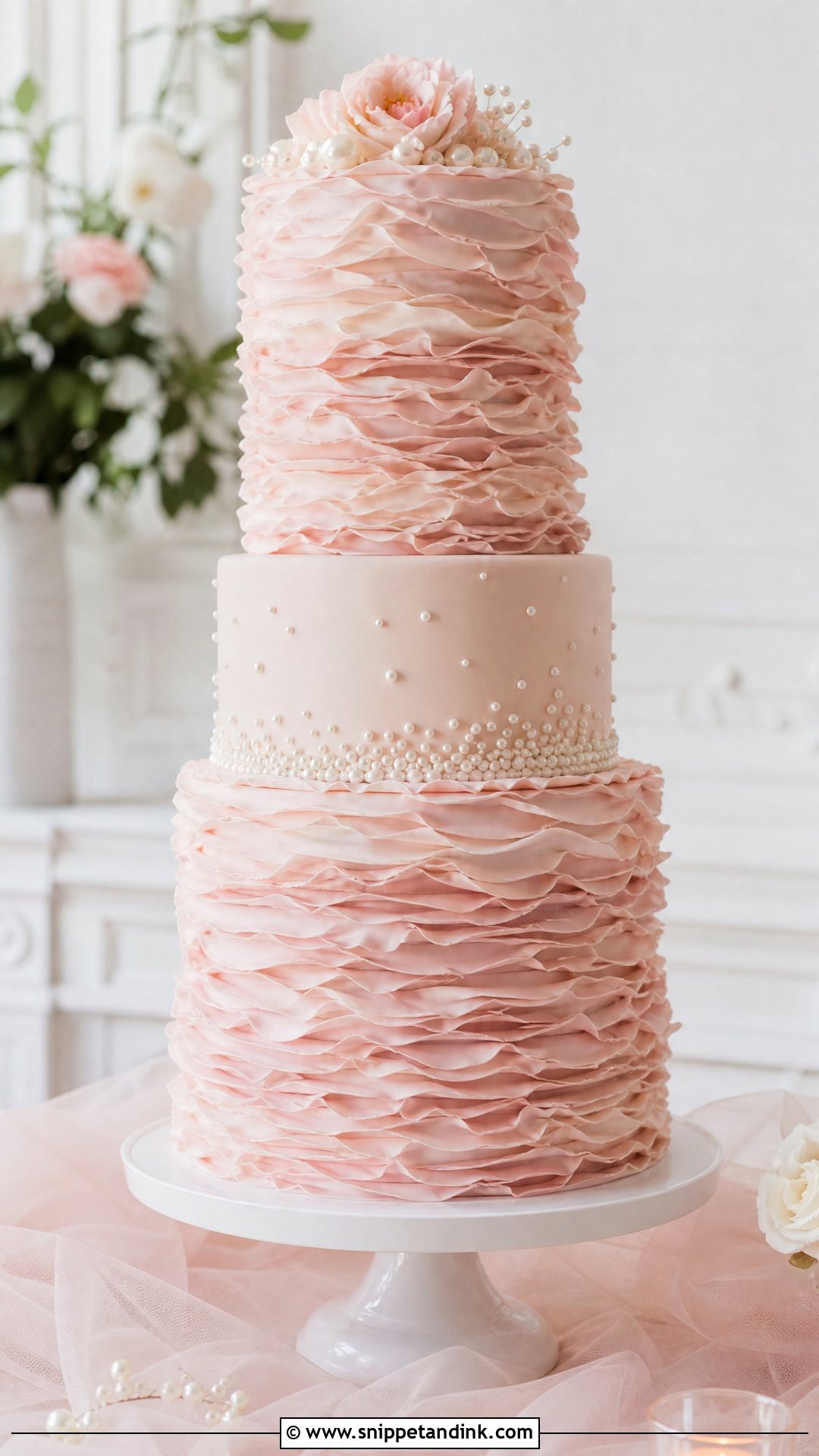
Ruffles bring movement, almost like soft layers of fabric. They can cover every tier or sit on one statement tier between smooth ones, which costs less. Pale pink frills feel airy, rose pink ones more striking. The texture is detailed enough that minimal flowers are best. It suits tulle gowns and garden receptions. I keep the frills thin; thick ruffles look heavy and add a lot of frosting to every slice. A simple topper keeps it balanced.
13. Pink Marble Wedding Cake
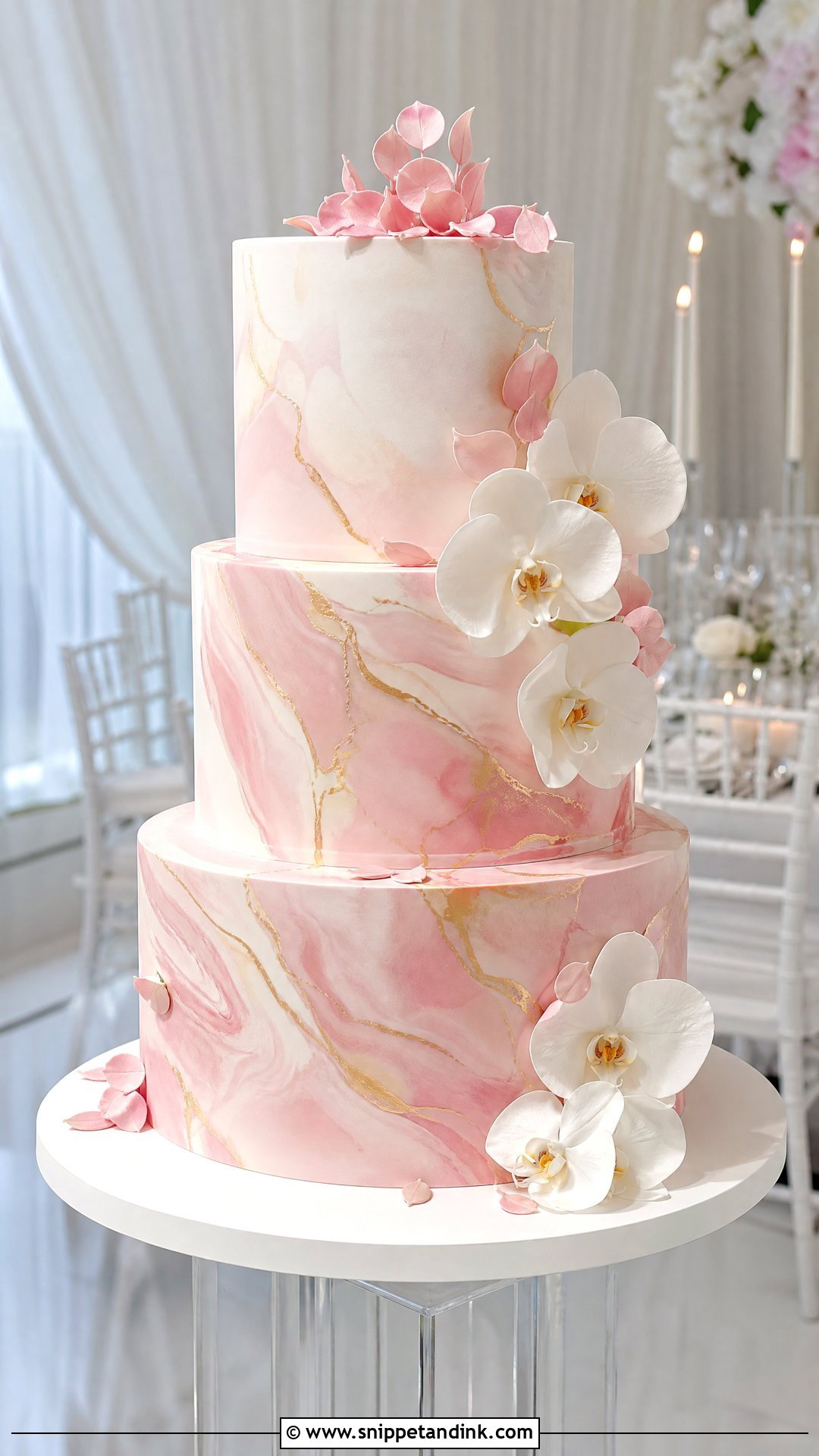
Marble mixes blush, ivory and rose, sometimes with fine gold veining. I knead colors loosely into fondant and roll it so the veins stretch naturally; buttercream marble is softer and more blended. Over-mixing turns the whole thing a muddy pink, so I stop early. It suits modern venues and minimalist décor. Keep flowers to one cluster or a few small blooms; the pattern already holds the eye, and restraint makes it look more expensive.
14. Pink Lace Wedding Cake
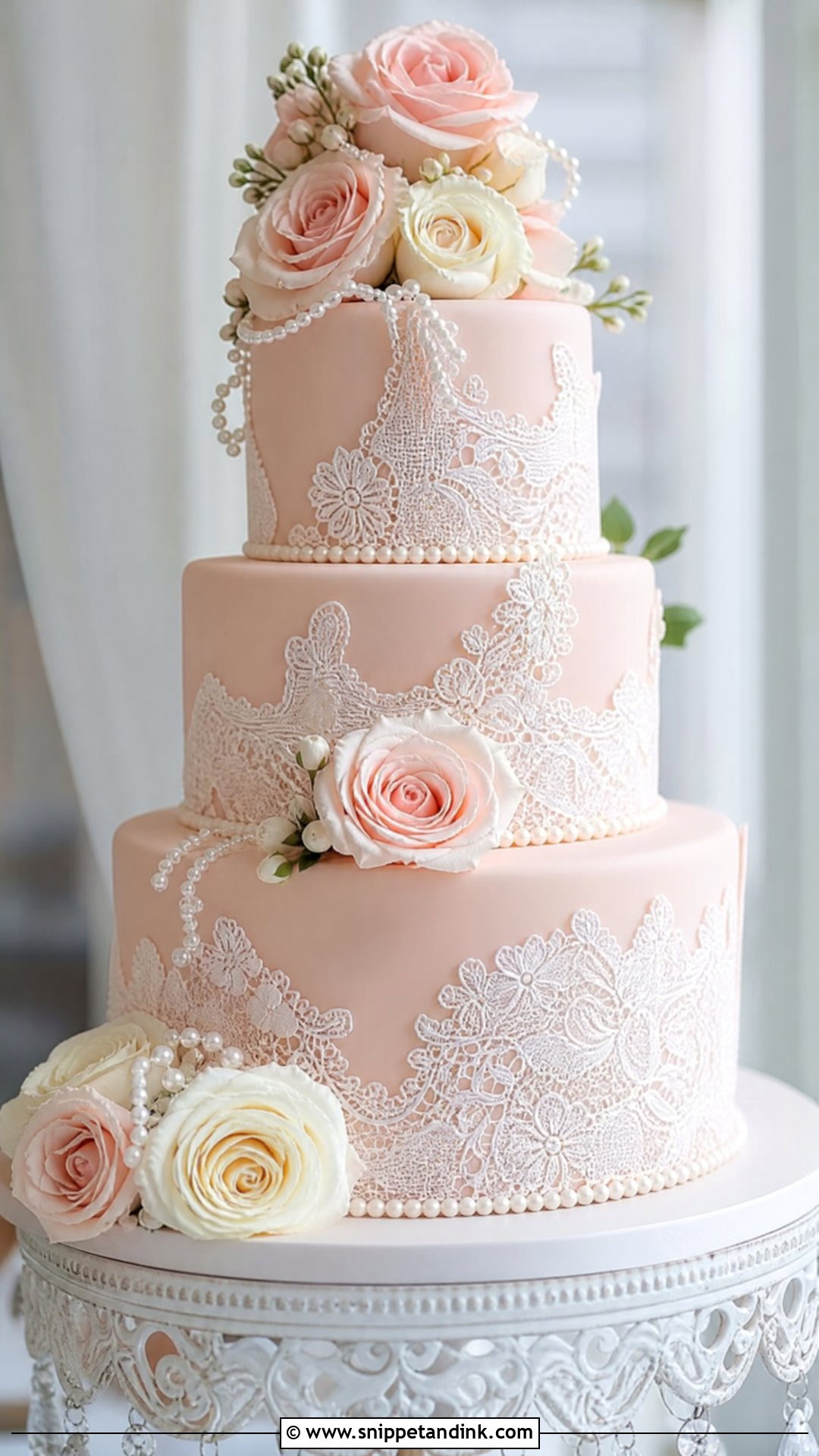
Lace on a blush base echoes a wedding dress. It can be white piped lace, edible lace panels made in a silicone mat, or sugar appliqué. Edible lace sheets are delicate and soften in humidity, so they go on close to delivery. Keep the base light so the pattern shows. Pearls, small roses or a satin ribbon finish it. Inside, almond, vanilla or raspberry-filled layers match the mood. It suits traditional and vintage-style weddings.



15. Pink Minimalist Wedding Cake
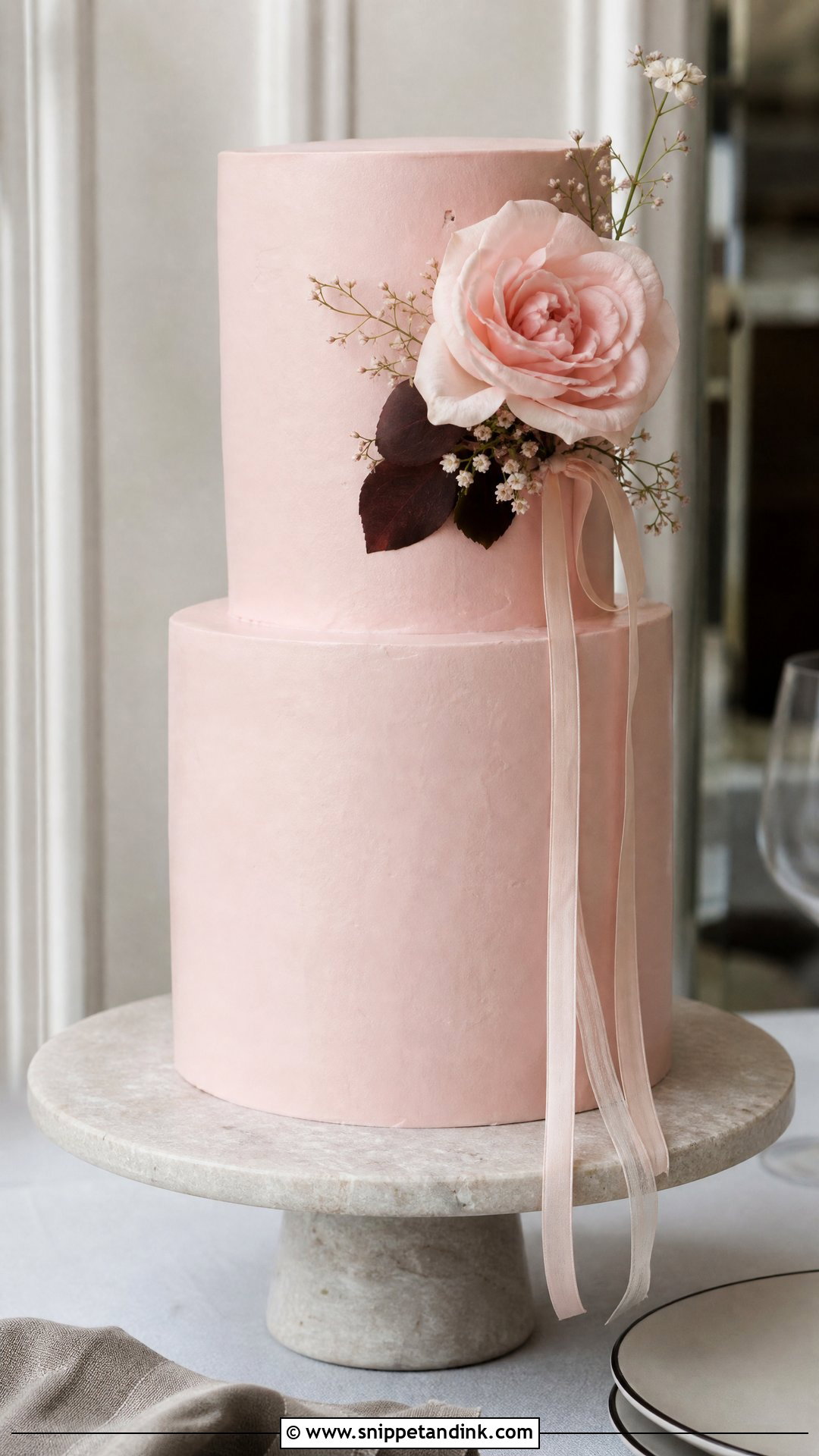
Minimal cakes are harder to make than they look, because there’s nothing to hide behind. Two or three tiers of smooth pale pink buttercream with crisp edges, then one floral cluster, a slim ribbon or a single modern topper. The shade does all the work, so match it carefully to your palette: soft blush feels airy, a warmer pink more romantic. I spend longer on the frosting finish for a minimal cake than for a decorated one.
16. Pink Square Wedding Cake
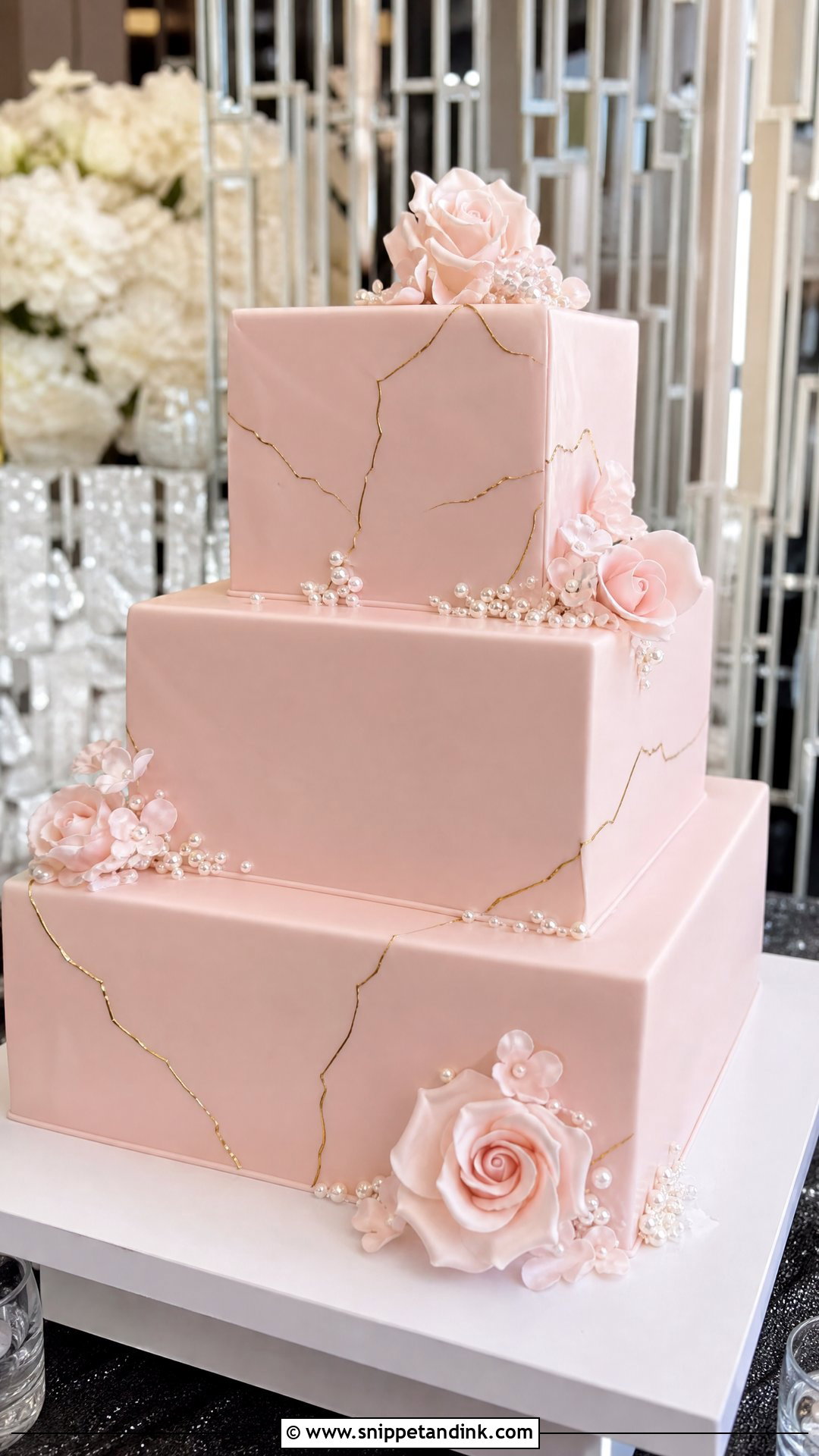
Square tiers stand out simply because most cakes are round. The corners need to be sharp and the sides flat, which takes skill, so look for square cakes in your baker’s portfolio. Smooth blush fondant gives the cleanest edge. Sugar flowers at the corners, a pearl border or thin gold lines suit it. It fits hotel ballrooms and rooftop venues. Square tiers also yield more slices than round ones of the same width, a small practical bonus.
17. Pink Tall Wedding Cake
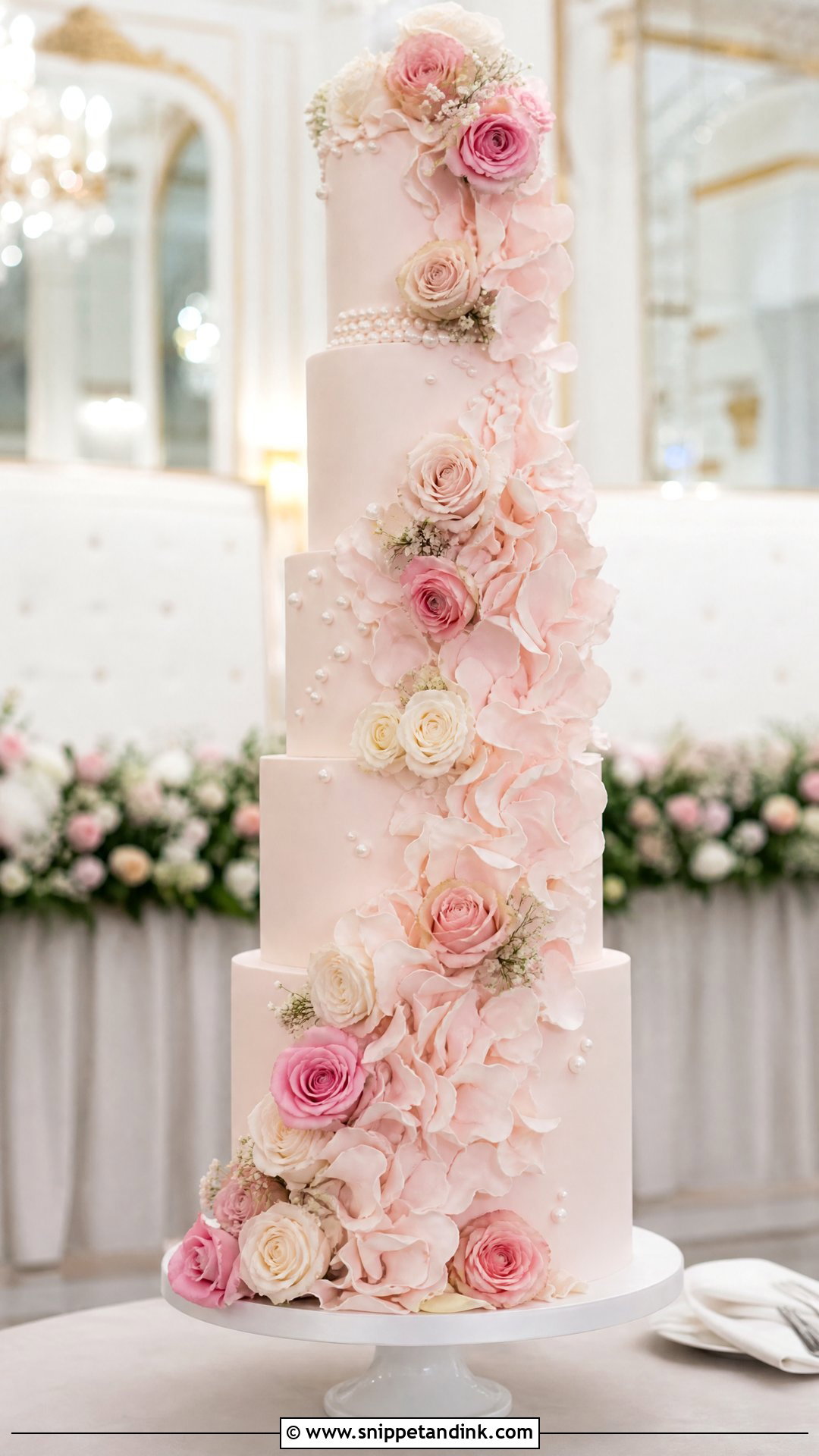
Extended or tall tiers look editorial and dramatic in a big room. Each tall tier is really two stacked cakes with a board and dowels in between, so the structure needs care and I usually assemble on site. Soft pink keeps the height from feeling heavy. Smooth buttercream, fondant or light texture all work, finished with a vertical floral cascade, a slim ribbon or scattered sugar petals. Choose a sturdy, plain stand; the cake is already tall enough.
18. Pink Garden Wedding Cake
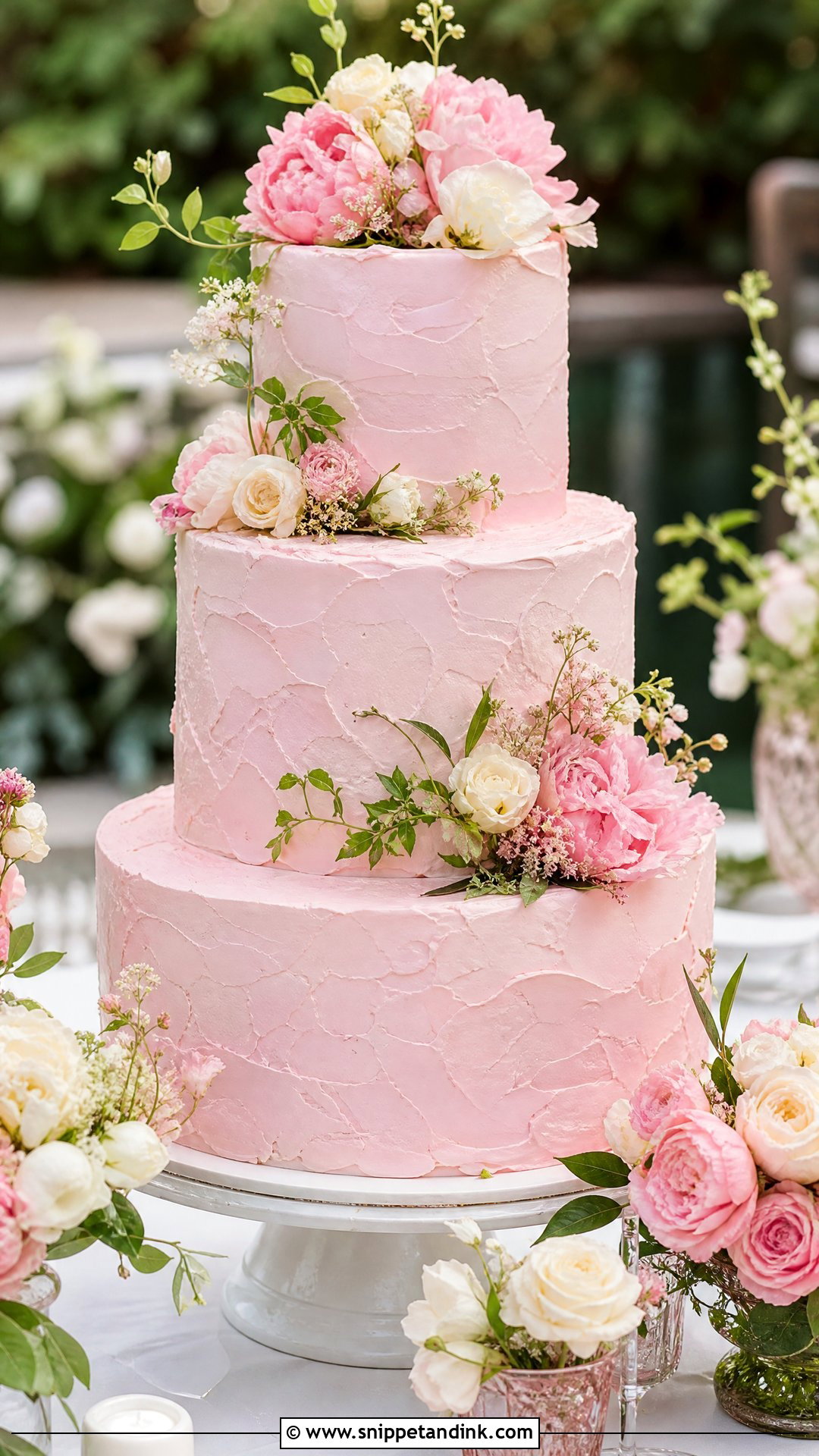
A garden cake should look like the flowers were just picked: soft pink frosting with roses, peonies, sweet peas and tiny blossoms. Keep the greenery light and food-safe so pink stays the main color. Textured buttercream gives it a relaxed finish. It suits outdoor receptions, spring weddings and tents, though a tent in summer is warm, so I’d keep the cake indoors until shortly before cutting. Fresh fruit works if it suits the menu, but it weeps over time, so it goes on last.
19. Pink Heart Wedding Cake
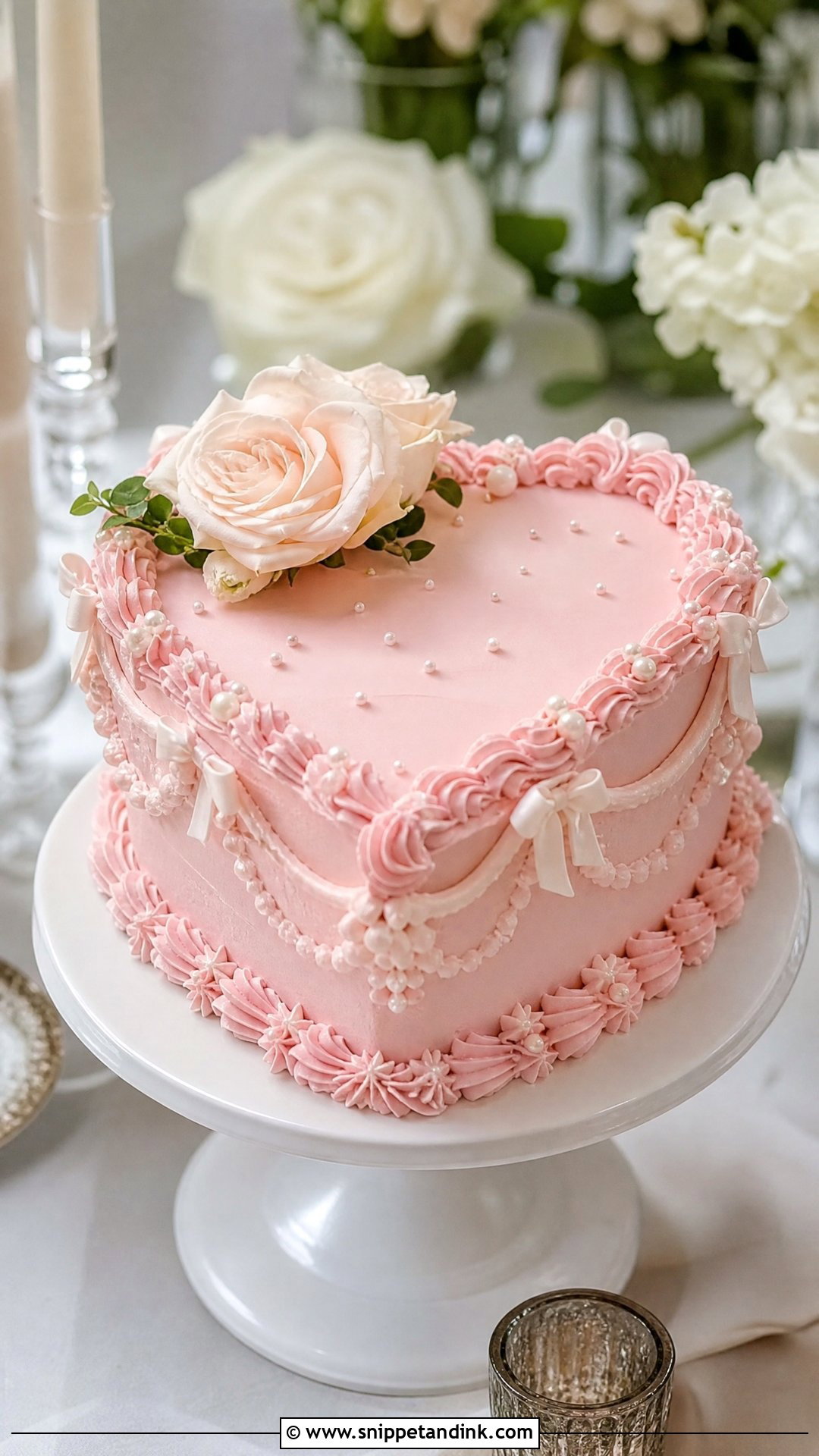
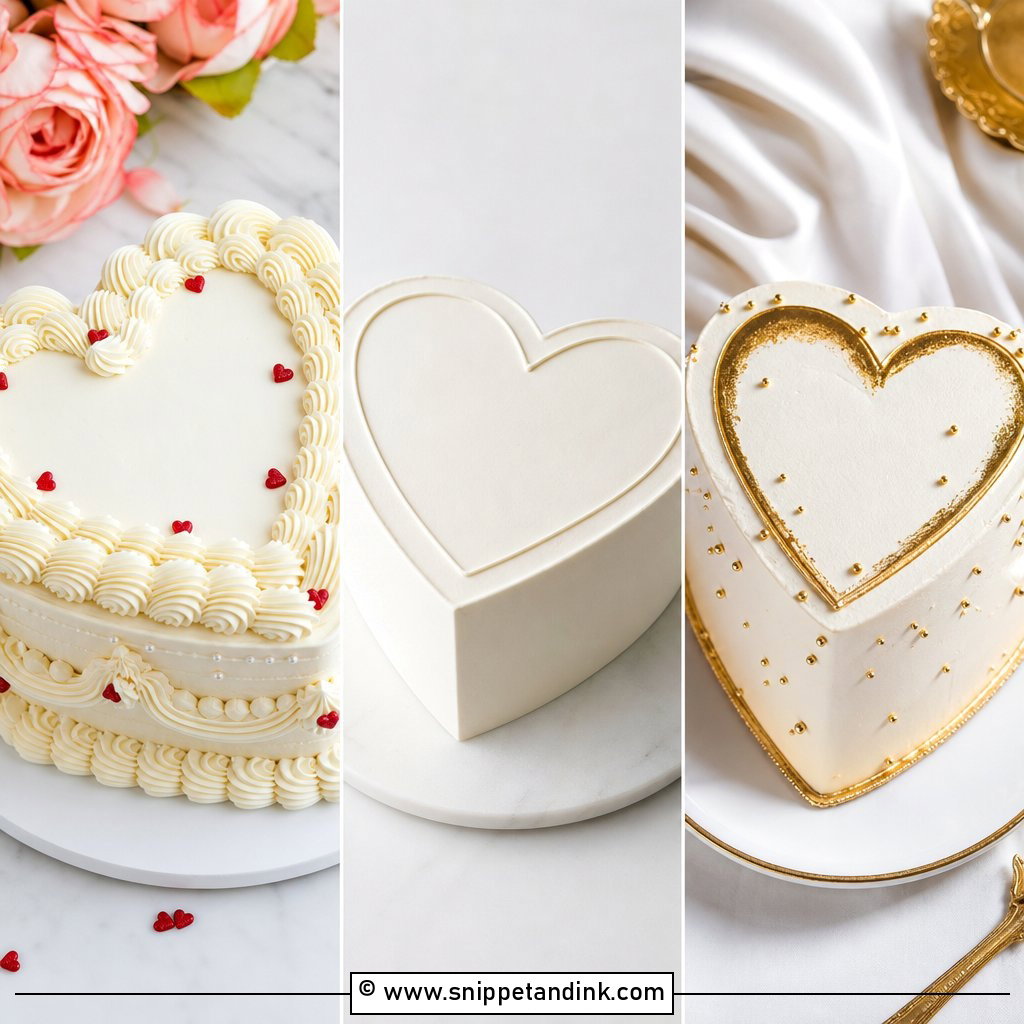
A pink heart wedding cake works best small: a cutting cake, a sweetheart table cake or a dessert table centerpiece. Pale pink buttercream keeps it bridal, and piped borders with tiny bows give it a vintage touch. Pearls, cherries, roses or a message topper all suit it. It’s a natural fit for elopements and courthouse weddings. Neat piping is what keeps it charming rather than childish, and a heart cuts into fewer clean portions than a round, so plan servings accordingly.





20. Hot Pink Wedding Cake
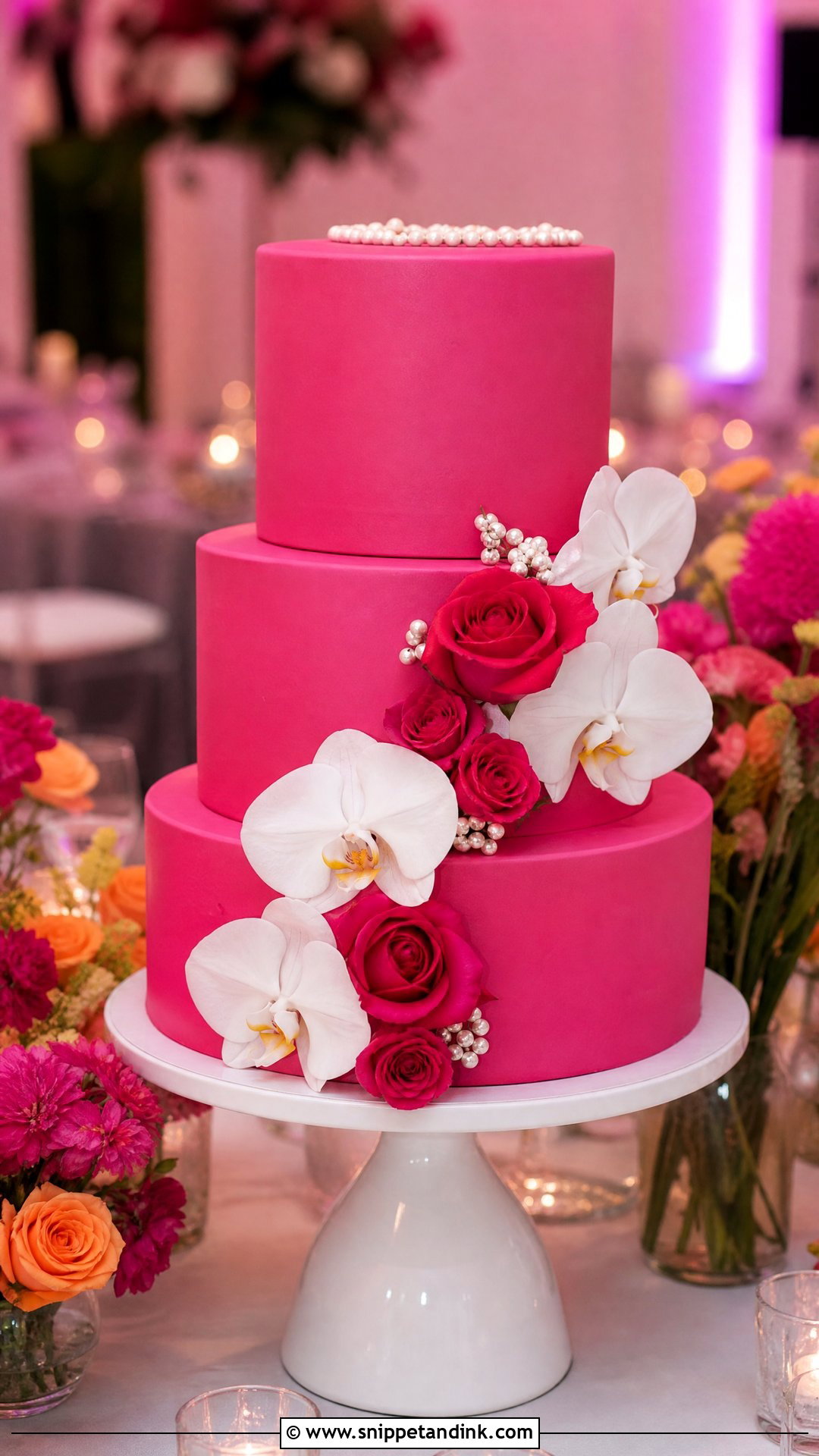
Hot pink is for couples who love strong color and want the cake to say so. It works best when everything else stays controlled: one hot pink tier among pale pink or ivory tiers, or a fully bright cake with very little decoration. White flowers, orchids or modern roses balance it. Deep pinks need a lot of coloring and can taste slightly bitter if overdone, so I build the shade with a quality gel and let it develop overnight. Sharp edges and smooth frosting keep it chic.
Pink on the Inside, Not Only the Frosting
Guests see the inside of the cake when it’s cut, and a pink interior is a nice surprise that ties the whole design together. These are combinations I make regularly:
- Strawberry sponge made with real fruit purée or powder, which gives a soft pink crumb and genuine flavor.
- Pink velvet, a light cocoa sponge tinted pink, paired with cream cheese or vanilla frosting.
- Vanilla or almond sponge with a raspberry jam layer, so every slice shows a clean pink stripe.
- Lemon sponge with rhubarb or strawberry compote, which balances a sweet frosting with some tartness.
- Different flavors on different tiers. Three tiers can mean three flavors, which helps if the couple can’t agree.
Fruit fillings need a stiff frosting dam round each layer so they don’t seep into the outside finish. If the cake will sit out for a long time, I avoid fresh cream and custard fillings and choose jams, compotes or ganache, which stay stable at room temperature.
Bring a Swatch, a Guest Count and a Photo of the Room
Pink wedding cakes stretch from soft and vintage to bold and modern, which is why they fit so many weddings. Your venue, dress, flowers and palette will point you toward a style. Blush and dusty pink hold up well over the years; ombre, marble, drip and hot pink feel more current. For the tasting, bring a fabric swatch, your guest count, a few inspiration photos and a picture of the room, and ask which finish your baker trusts for your season.
You'll Like These Ideas:







Leave a Reply