
A single tier has nowhere to hide, which is exactly why I enjoy designing them. With no height to lean on, the cake has to carry itself through finish, shape, color and one well-placed decoration. Small weddings, elopements, courthouse lunches, garden receptions and dessert tables all suit this format, and so does any couple who mainly wants a real cake to cut together. It’s quicker to build, simpler to serve and usually kinder to the budget than stacked tiers. My one rule for every design below: pick a single strong idea and give it room.
How Many People One Tier Really Feeds
The first question I ask any couple wanting a single tier is the guest count, because wedding portions are smaller than party slices. Bakers usually cut wedding cake into narrow fingers about one inch by two inches, roughly four inches tall, which stretches a round much further than you’d expect. These are approximate figures and every baker cuts a little differently:
- 6 inch round: around 12 wedding portions, enough for an elopement or a dinner for two families.
- 8 inch round: around 20 to 24 portions.
- 10 inch round: around 35 to 38 portions.
- 8 inch square: around 30 portions, since squares cut with less waste.
If your list is bigger than that, you don’t have to give up the single tier. Many couples have one display cake cut on camera and a matching plain sheet cake kept in the kitchen, sliced and plated by the caterer. Guests never see the difference, and you pay decoration costs on only the small cake.
Height matters too. A standard tier is about four inches; asking for a taller tier of five or six inches, with an extra layer of filling, gives a small cake more presence on the table and adds a handful of portions.
1. Simple One Tier Wedding Cake
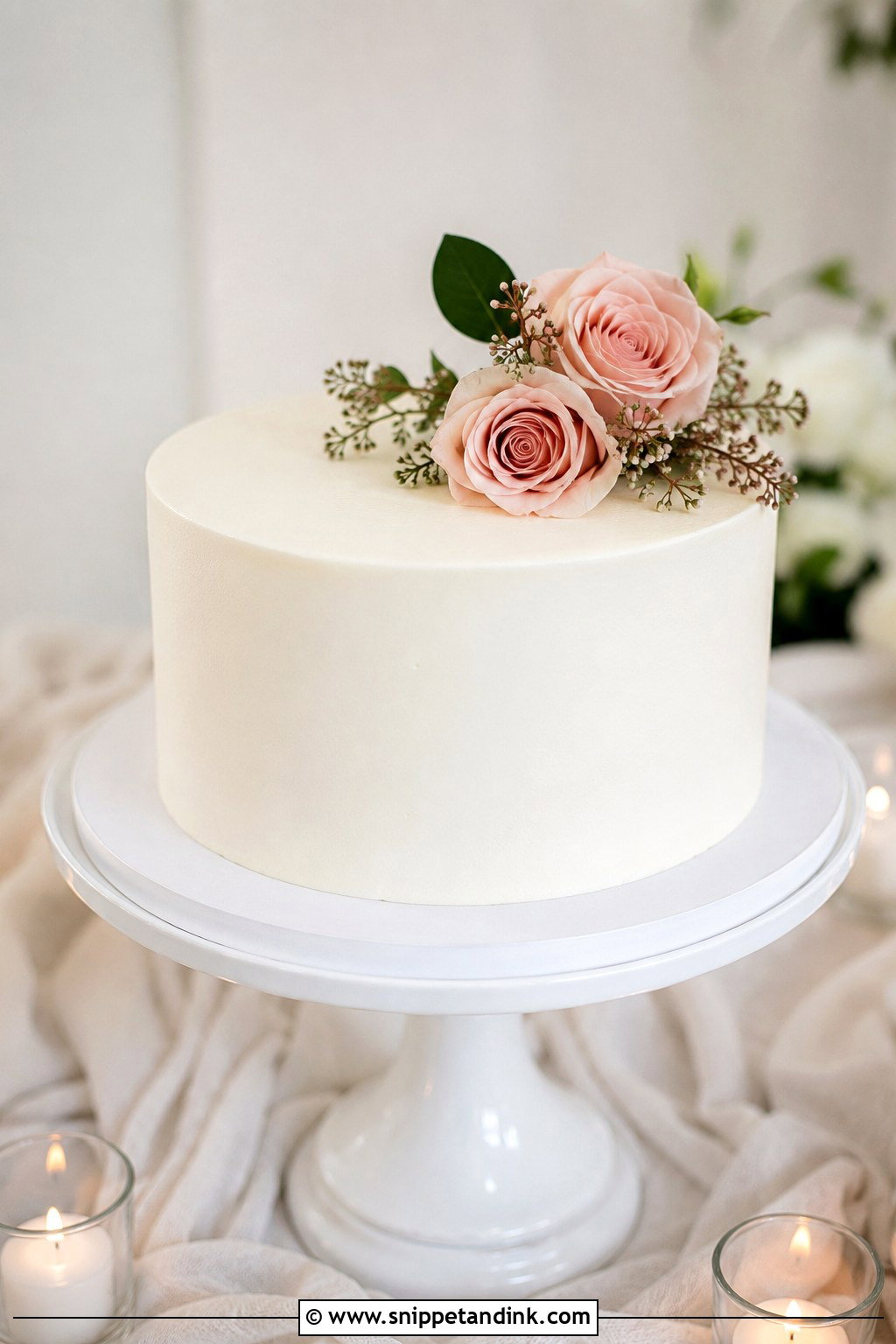
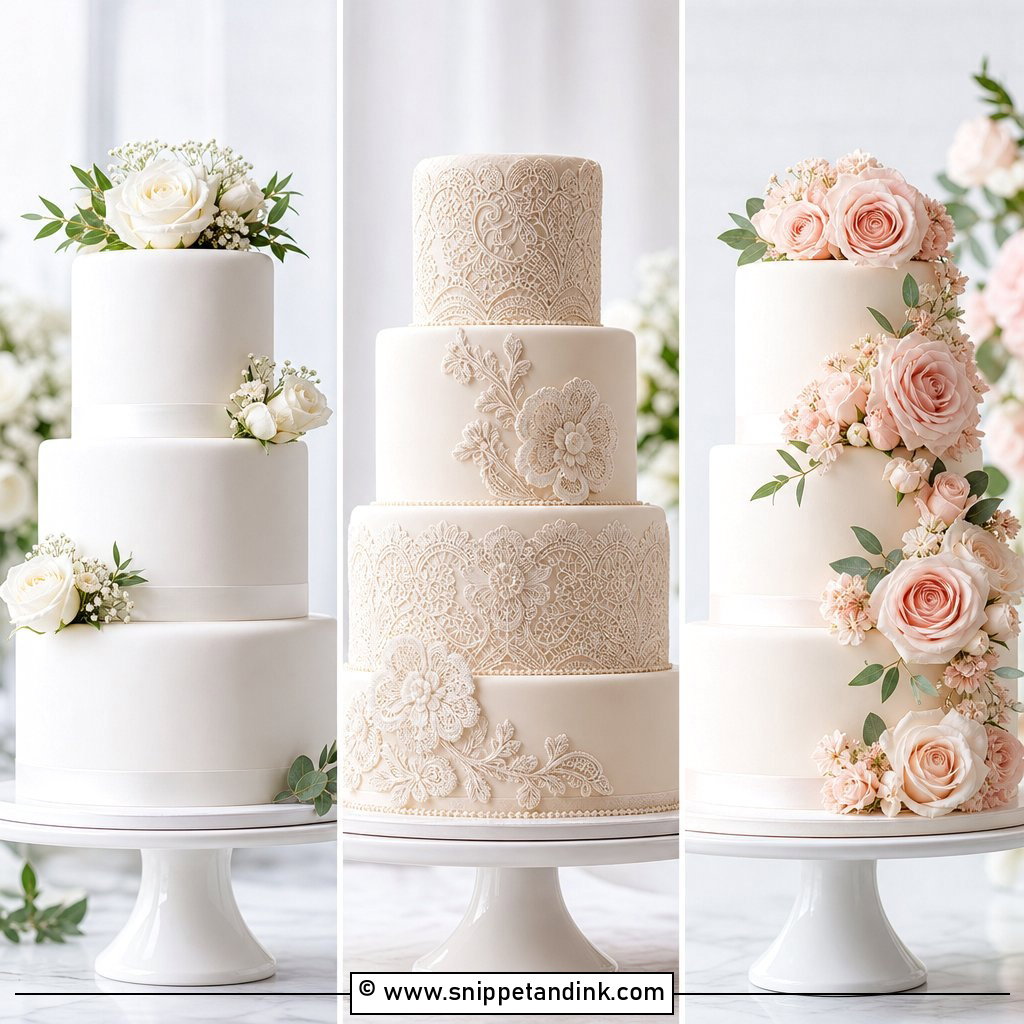
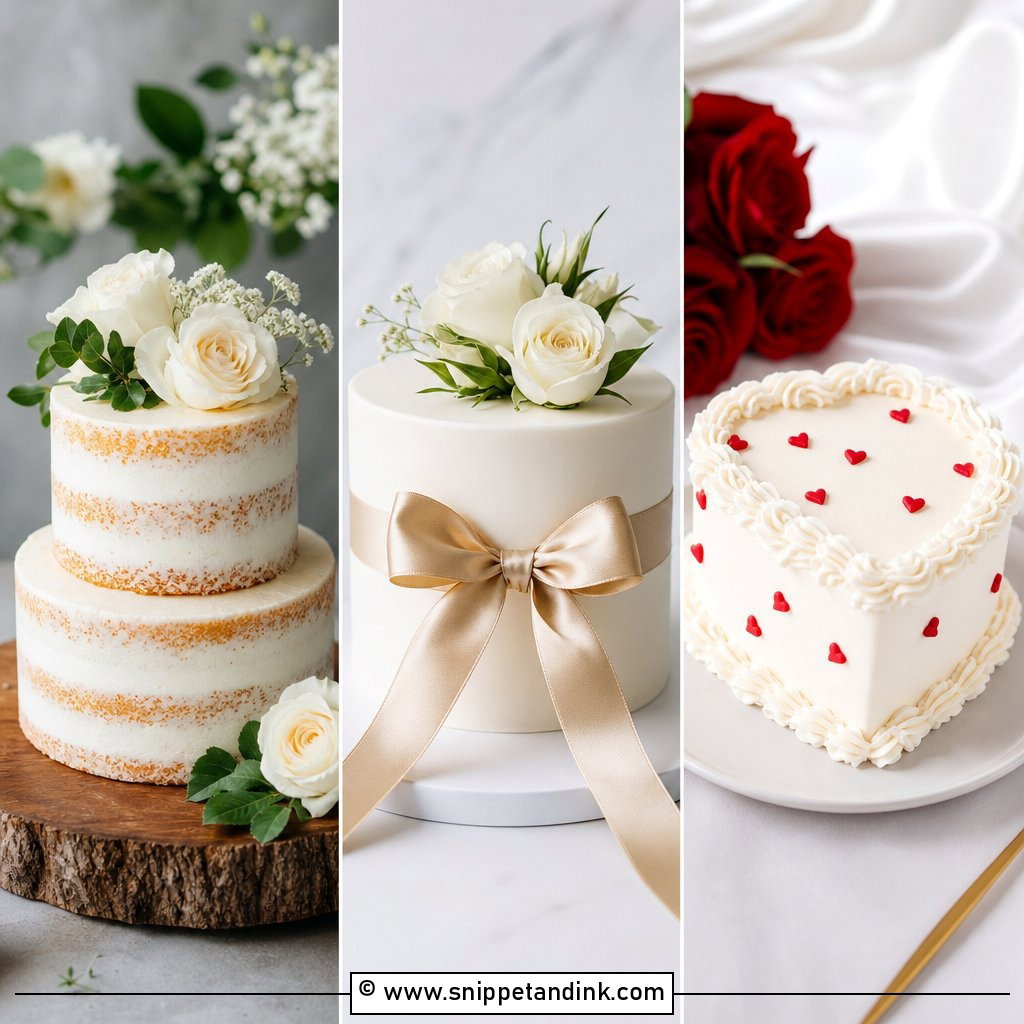
The plain round is the hardest cake to fake, because every flaw in the finish shows. What turns it from a bakery-counter cake into a wedding cake is sharp top edges, walls that sit truly straight, and a tidy piped or ribbon border hiding the board. I keep the floral accent to one small cluster, a few roses with a little greenery, sitting slightly off center. Then raise it on a stand; at table height a 6 or 8 inch round reads as small from across the room.
2. One Tier Buttercream Wedding Cake
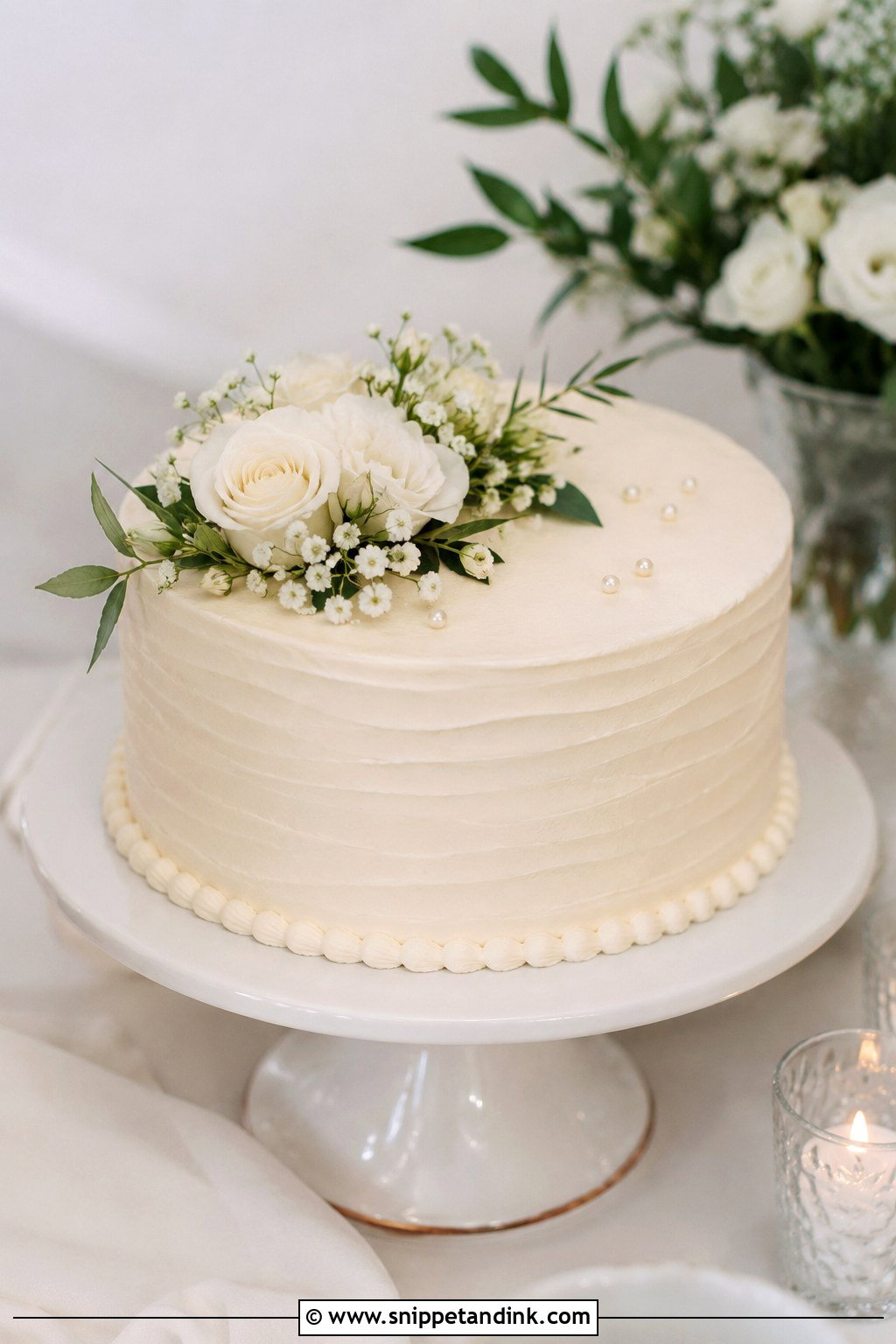
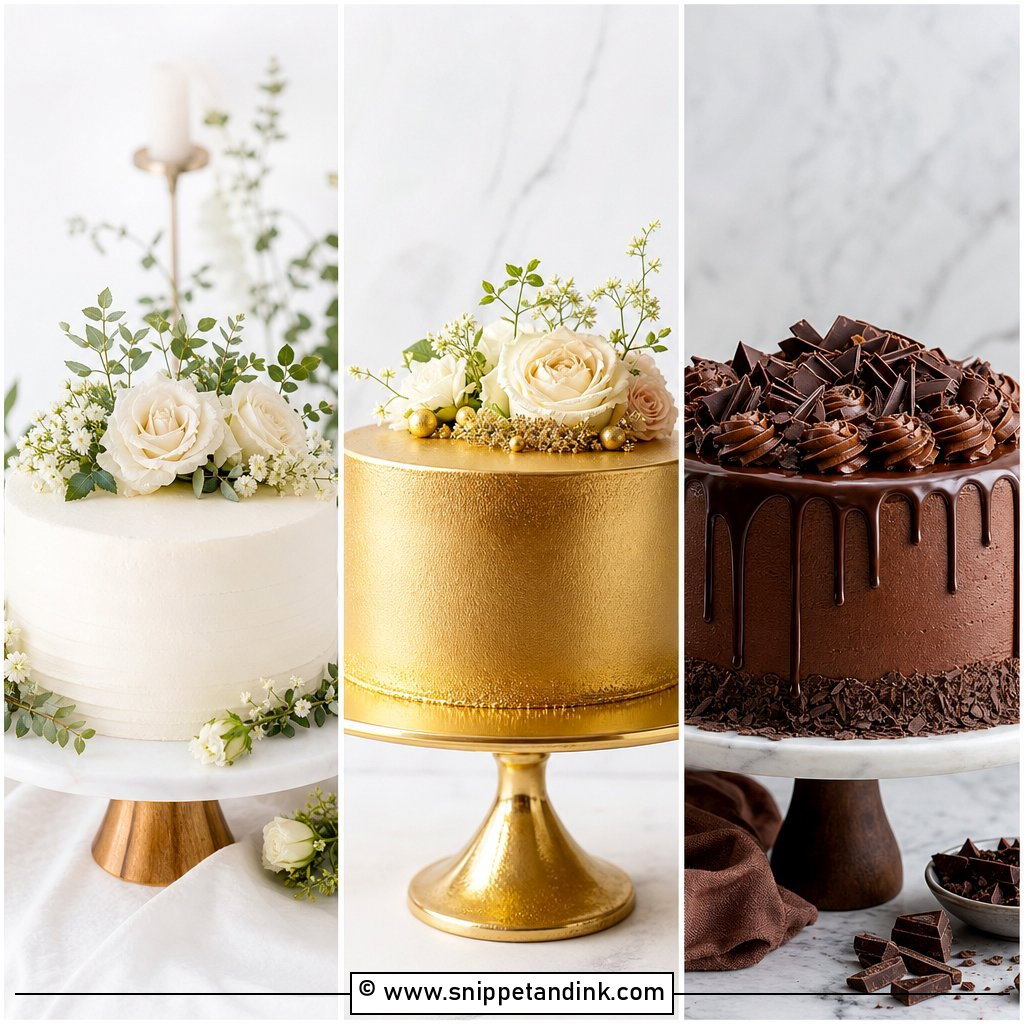
Buttercream is my default for most single tiers because it tastes better than it looks, and it looks very good. A smooth scrape gives a classic finish; leaving soft spatula marks makes it more relaxed and also forgives a warm room. American buttercream crusts and holds up better in heat than Swiss meringue, which is silkier but softens sooner, so the venue temperature should decide which one I use. For color I stay with ivory, blush or pale champagne, finished with a few fresh flowers, small pearls or a fine piped border.
3. One Tier Fondant Wedding Cake
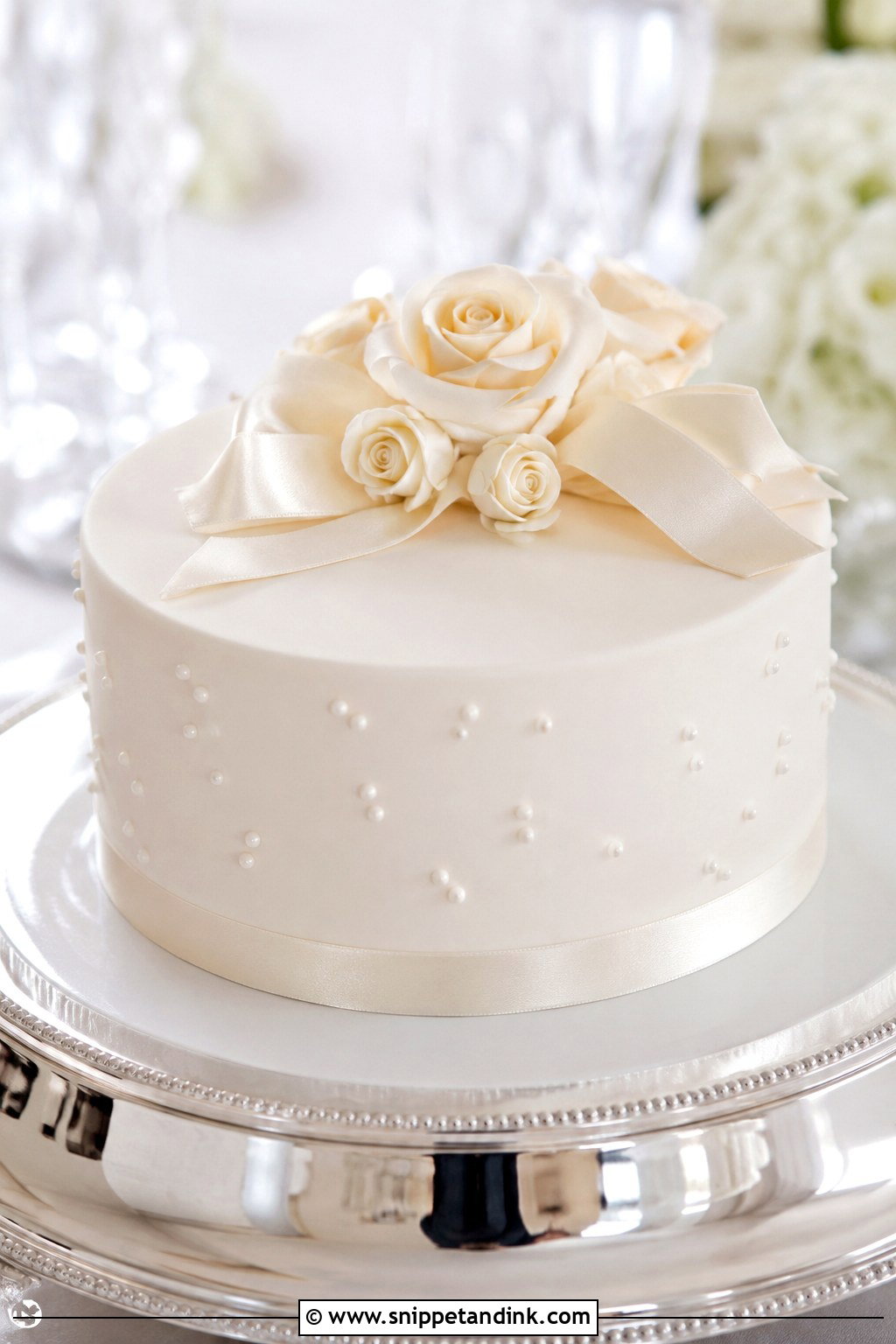
Fondant gives you the knife-sharp edges and flat panels that formal rooms like, and it’s the best surface for ribbon, painted details, a monogram or sugar flowers. The catch on one tier is that every detail is at eye level, so restraint matters more than on a tall cake. I’ll often finish with a satin ribbon at the base and nothing else. Ask for ivory rather than bright white fondant; pure white can look grey or blue next to an ivory dress in photos. One honest note: plenty of guests peel fondant off, so a good buttercream layer underneath is what they’ll actually eat.
4. One Tier Wedding Cake With Fresh Flowers
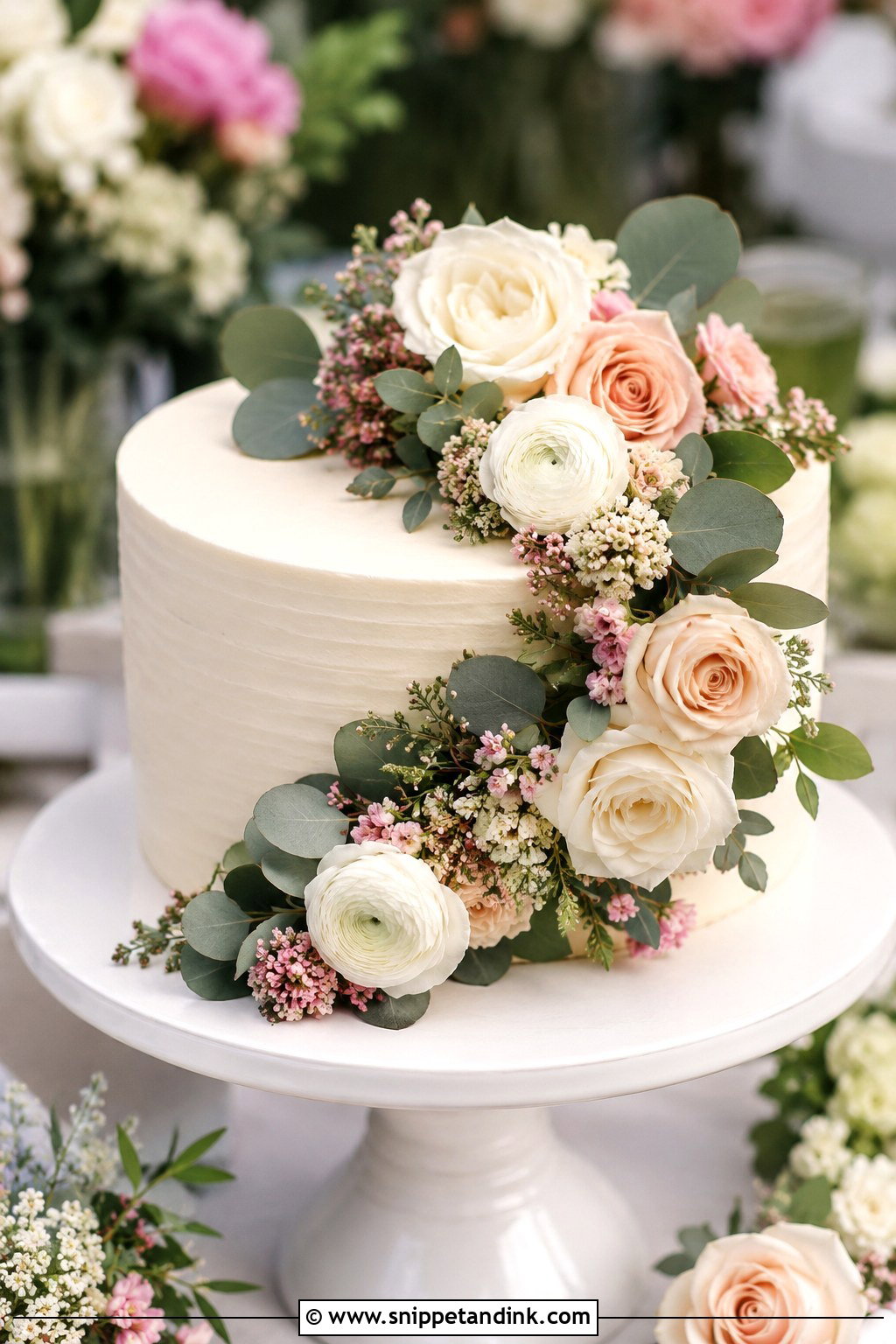
Real flowers can make a small cake the centerpiece, especially when they repeat the bouquet. On one tier I limit it to a single floral moment: a crescent sweeping down one side, a small posy on top, or a diagonal line across the front. Stems should never go straight into the sponge. I wrap them in floral tape or put them in food-safe picks, and I check every variety, because some common wedding flowers are toxic and shouldn’t sit on anything people eat. Roses, ranunculus, orchids and herbs are the usual safe pairings, sourced unsprayed and placed as close to serving time as I can.
5. One Tier Naked Wedding Cake
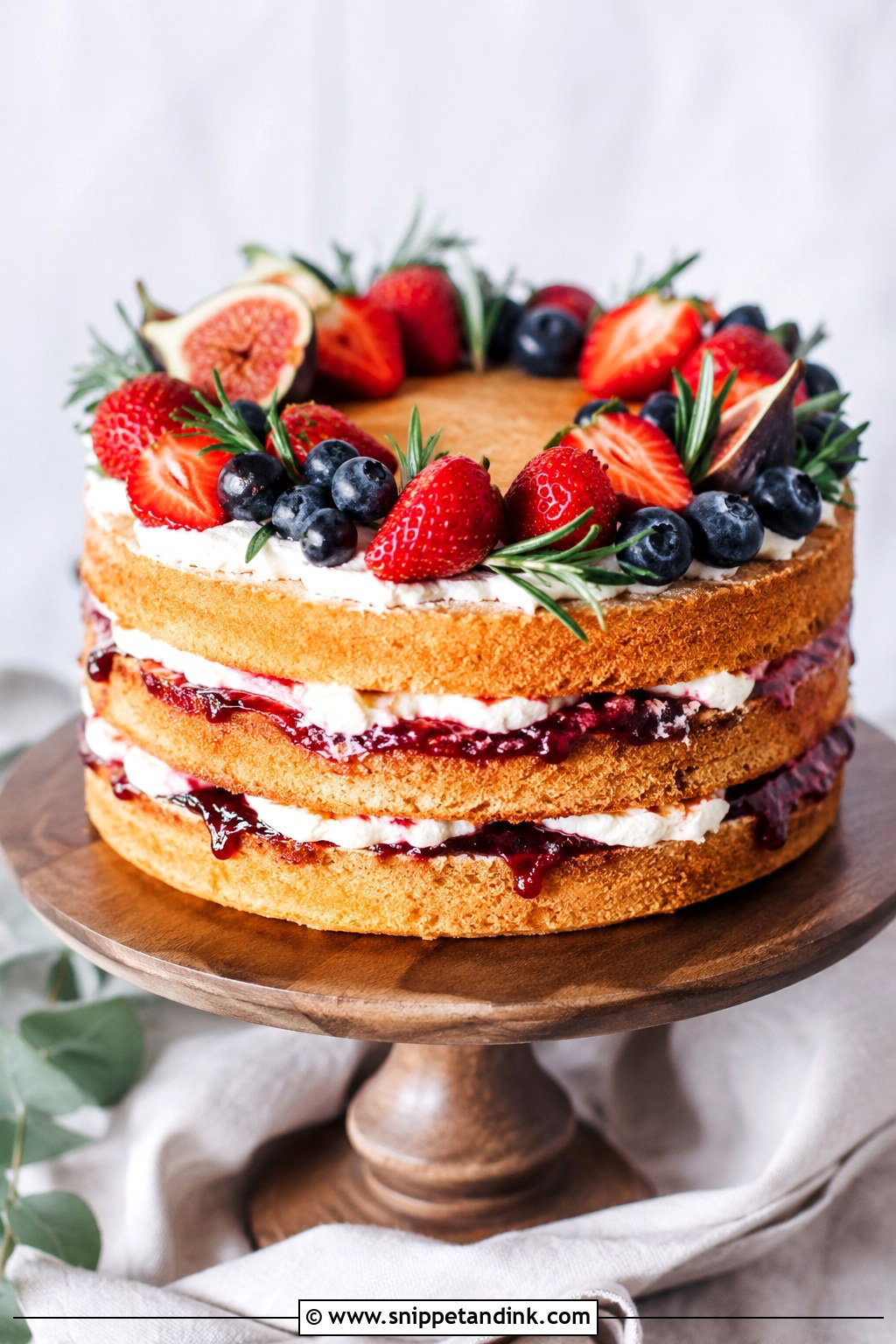
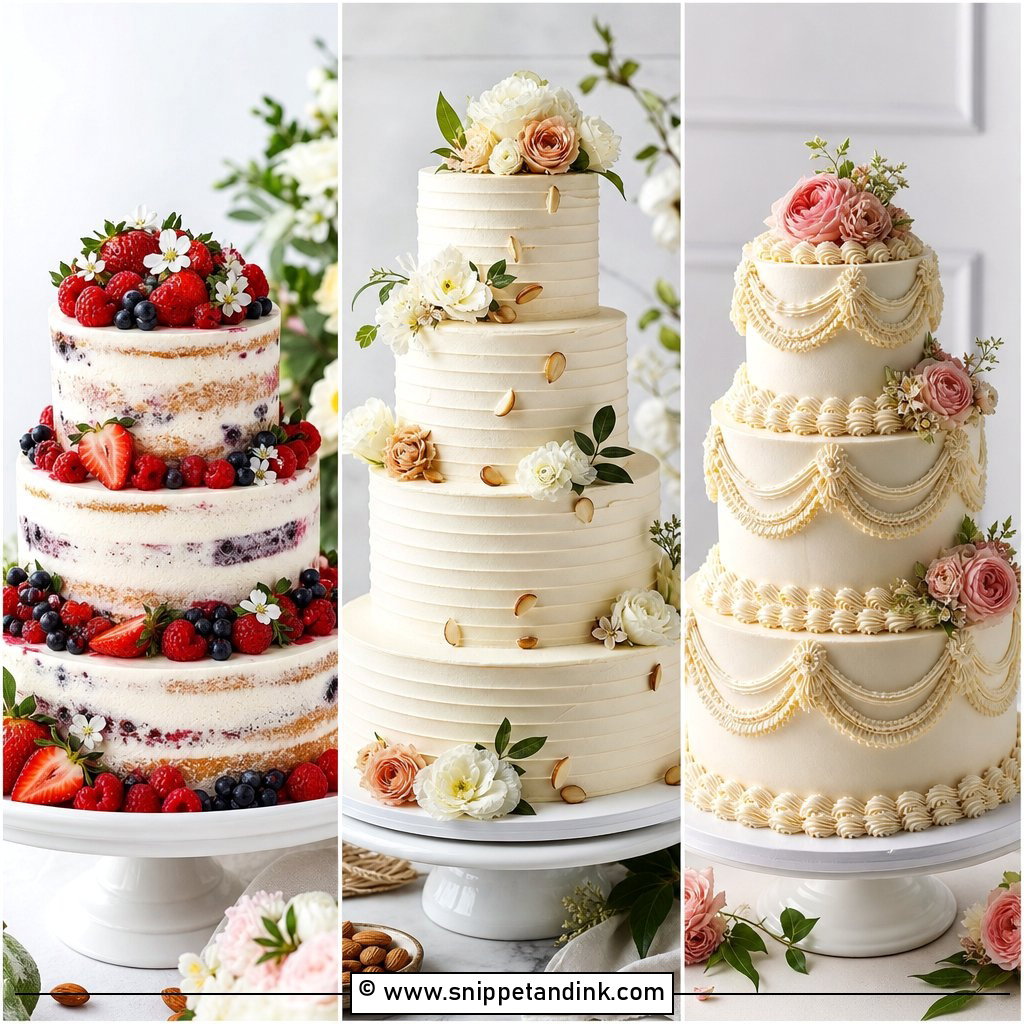
A naked one-tier wedding cake leaves the sponge and filling on show, so the flavor pairing becomes part of the decoration. Vanilla with a berry jam stripe or chocolate with a pale cream filling gives you that clean contrast at every layer line. The weakness is moisture loss: exposed sponge starts drying within a few hours at room temperature. I brush the layers with syrup, assemble on the day and keep it covered until setup, which is the kind of timing question worth raising with your baker. Figs, berries, herbs or a few flowers finish it off.
6. One Tier Semi Naked Wedding Cake
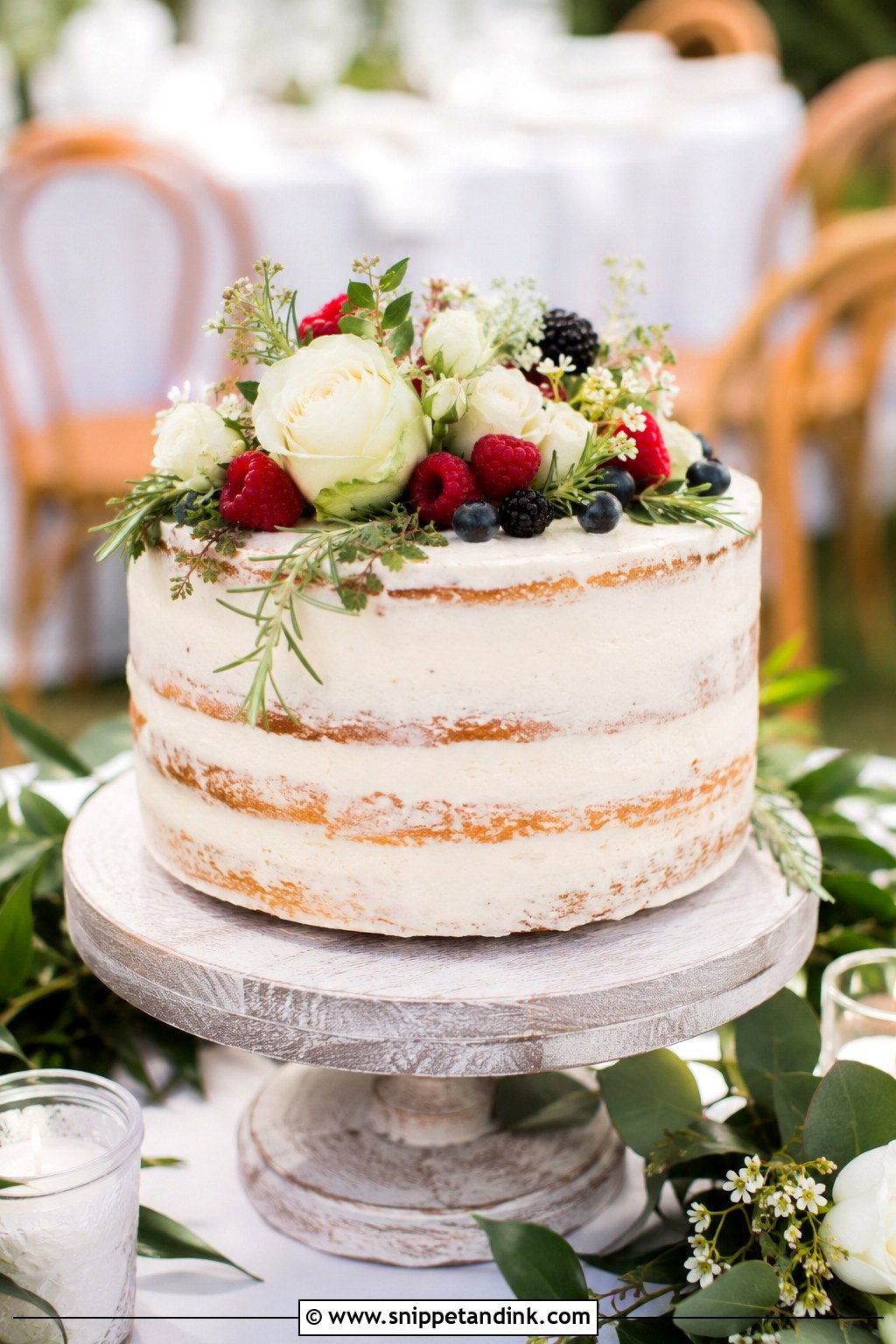
Semi naked means a thin coat of buttercream scraped back until the sponge just shows through in patches. It reads as relaxed but finished, and the light coat protects the cake better than a fully naked one. I like it for farm tables, beach receptions and outdoor venues where a high-shine finish would look out of place. Put it on a white or gold stand if you want it to read slightly more formal than a wooden board allows.
7. One Tier Vintage Wedding Cake
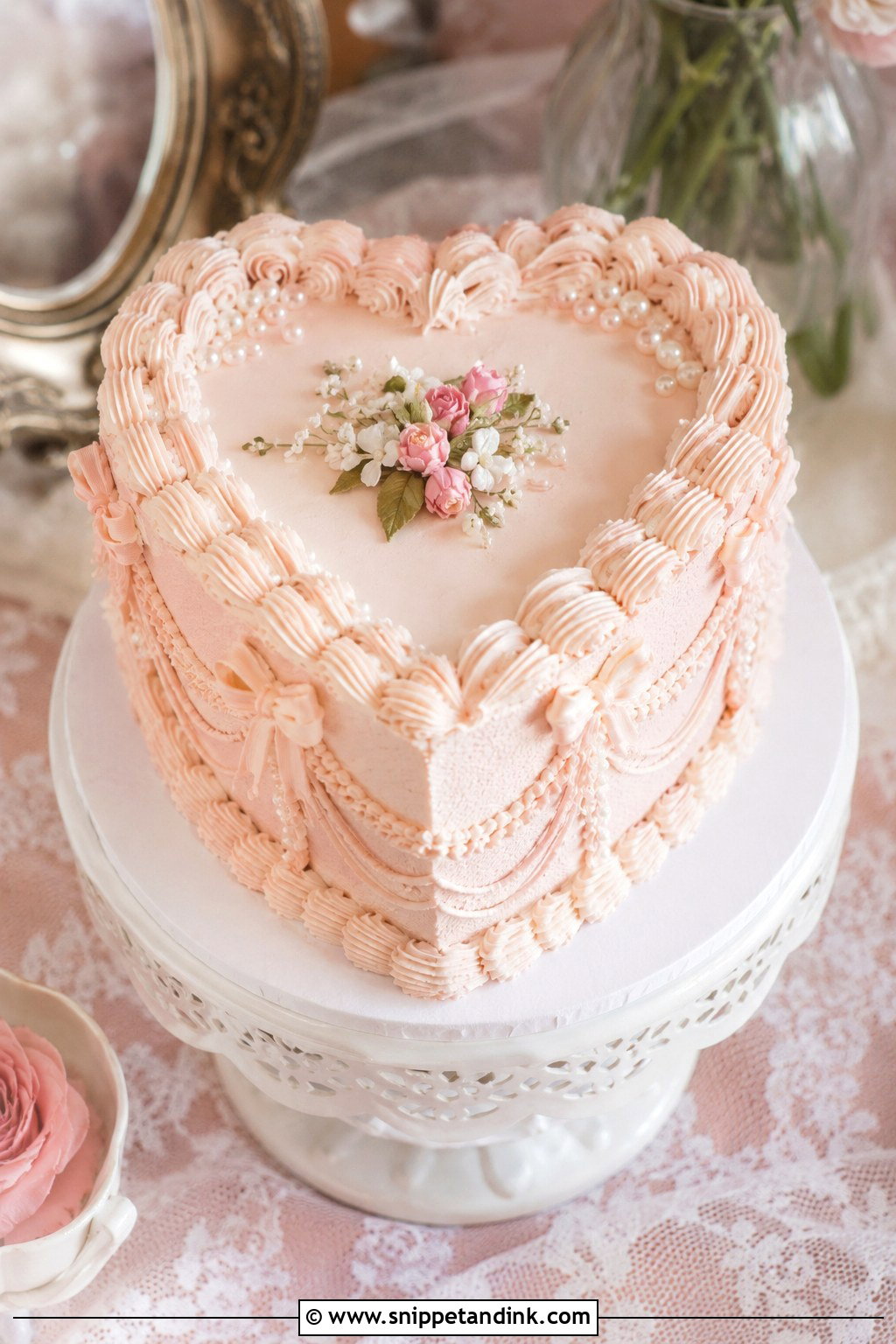
The vintage look lives in piped details: shell borders, swags, ruffles, bows and tiny dots. This style rewards a steady hand and a stiff buttercream, because soft frosting lets the shells slump within an hour in a warm room. On a single tier I’d keep it to two or three piping motifs repeated cleanly rather than every technique at once, or it starts to look crowded. White, ivory, blush, pale blue and butter yellow all work, and a heart-shaped base pushes the nostalgic feel further.
8. One Tier Pearl Wedding Cake
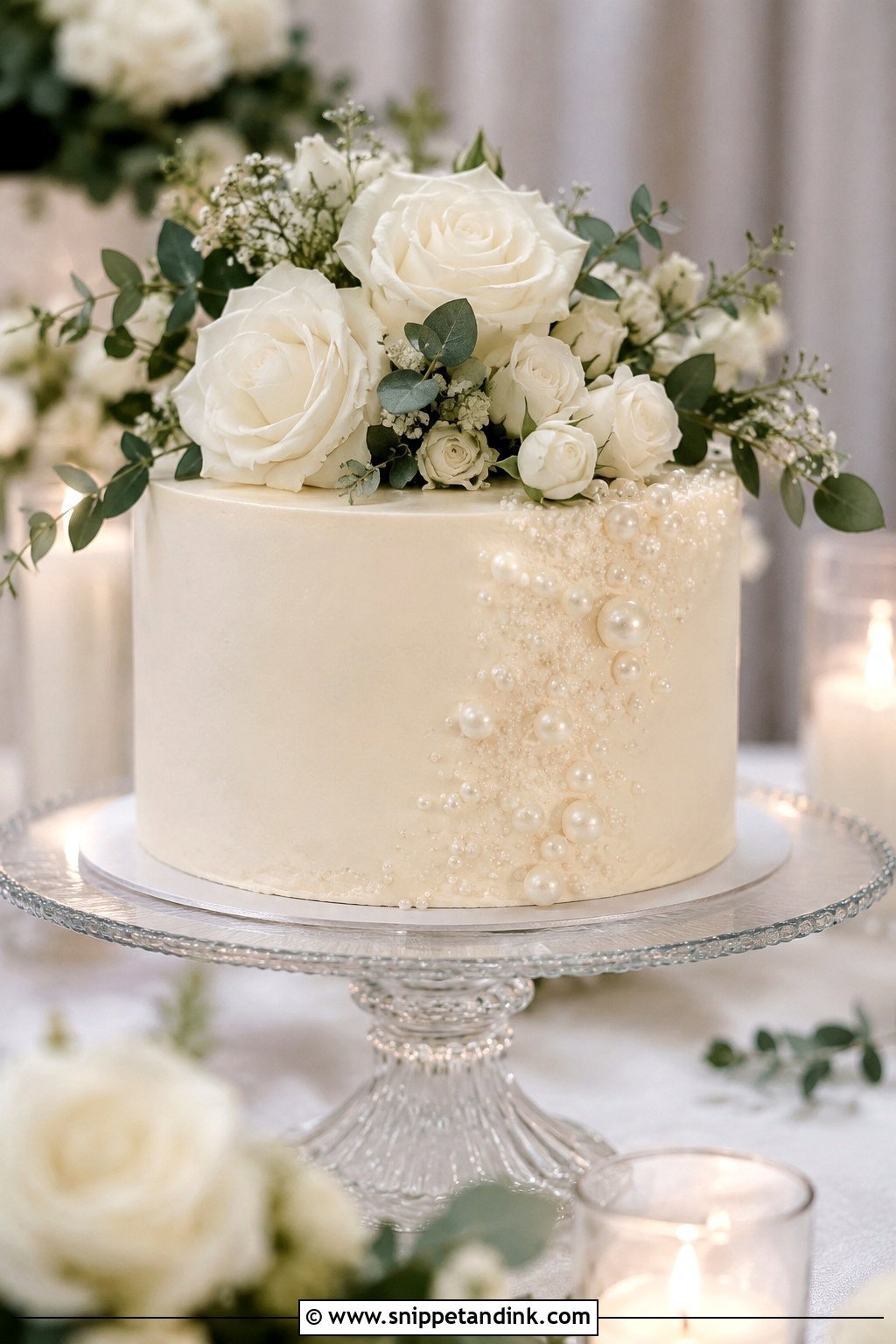
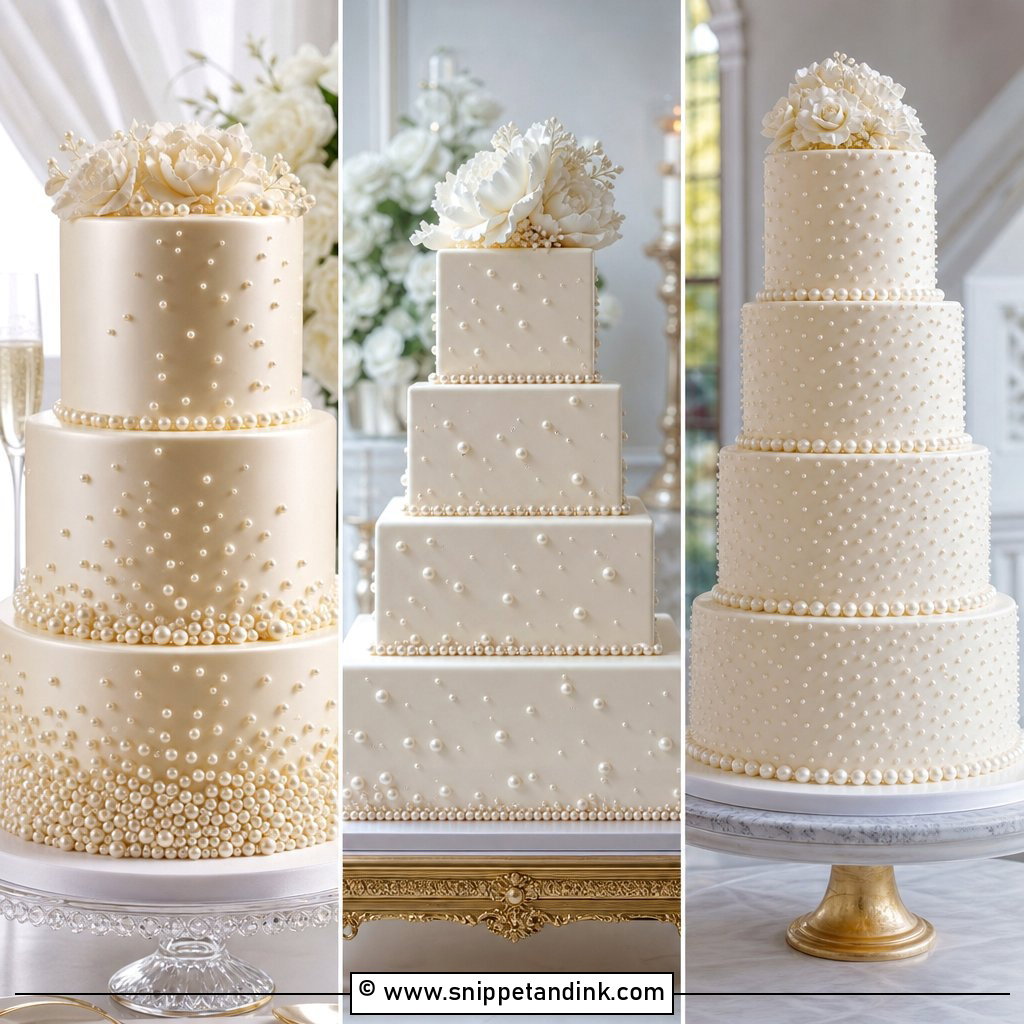
Pearls add polish without needing color or height. I use edible dragees as a border at the base and top edge, scattered across the sides, or in mixed sizes clustered on one side for a more modern take. They need a smooth buttercream or fondant behind them to show up; on a textured finish they disappear. Silver and metallic dragees are often labelled as decorative only, so ask your baker which ones are fully edible before anyone bites into one. Ivory frosting and a glass or silver stand finish the look.
9. One Tier Pressed Flower Wedding Cake
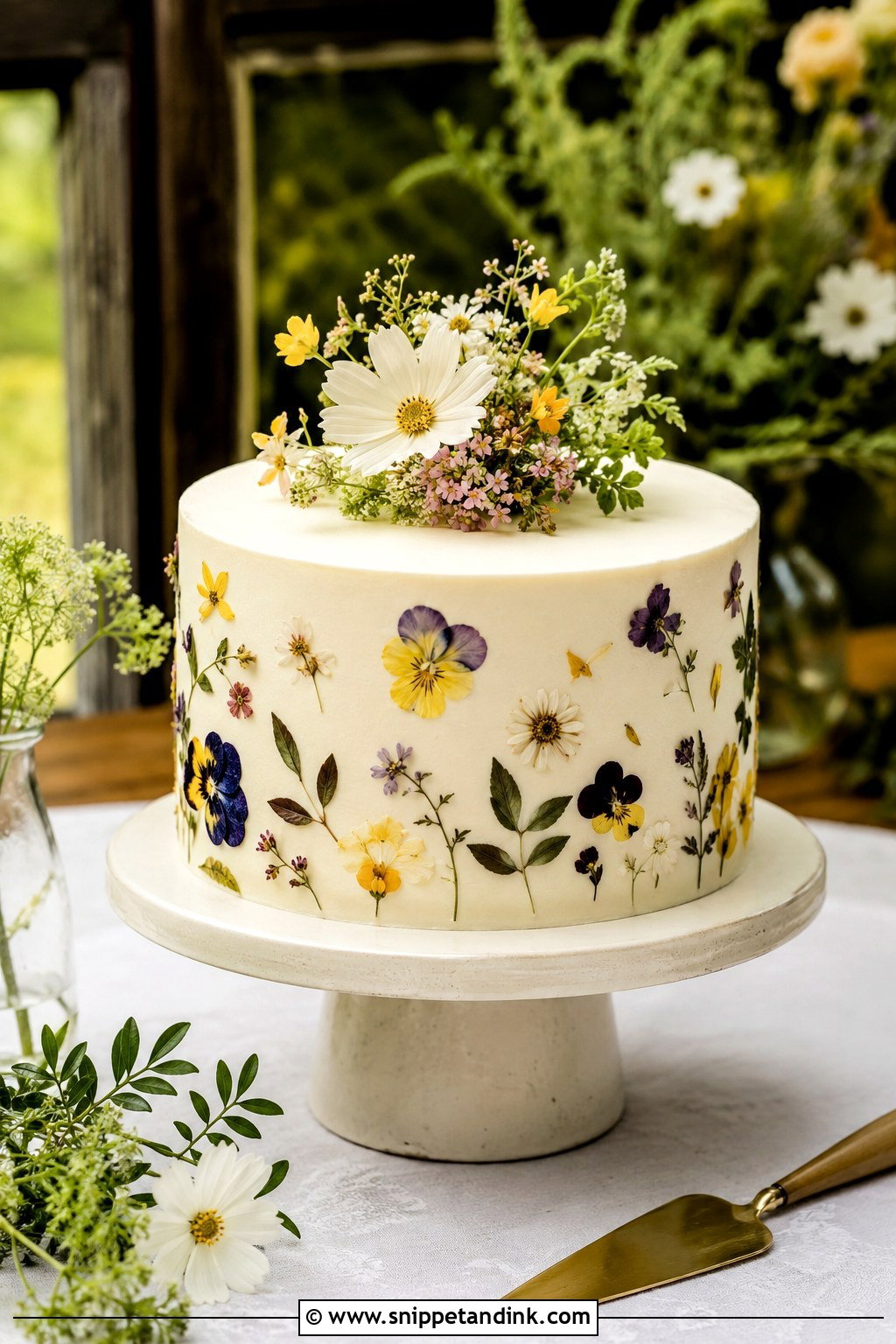
Pressed flowers sit flat against the frosting, so the cake reads almost like printed botanical fabric. I lay them out on paper before pressing them onto the sides, because once a petal touches buttercream it won’t move cleanly. Edible blooms such as violas, pansies and cornflower petals are what I use, and I add them close to the event; they can darken or lose color on a moist surface over a day. Keep the top bare or lightly scattered so the sides stay the focus.
10. One Tier Marble Wedding Cake
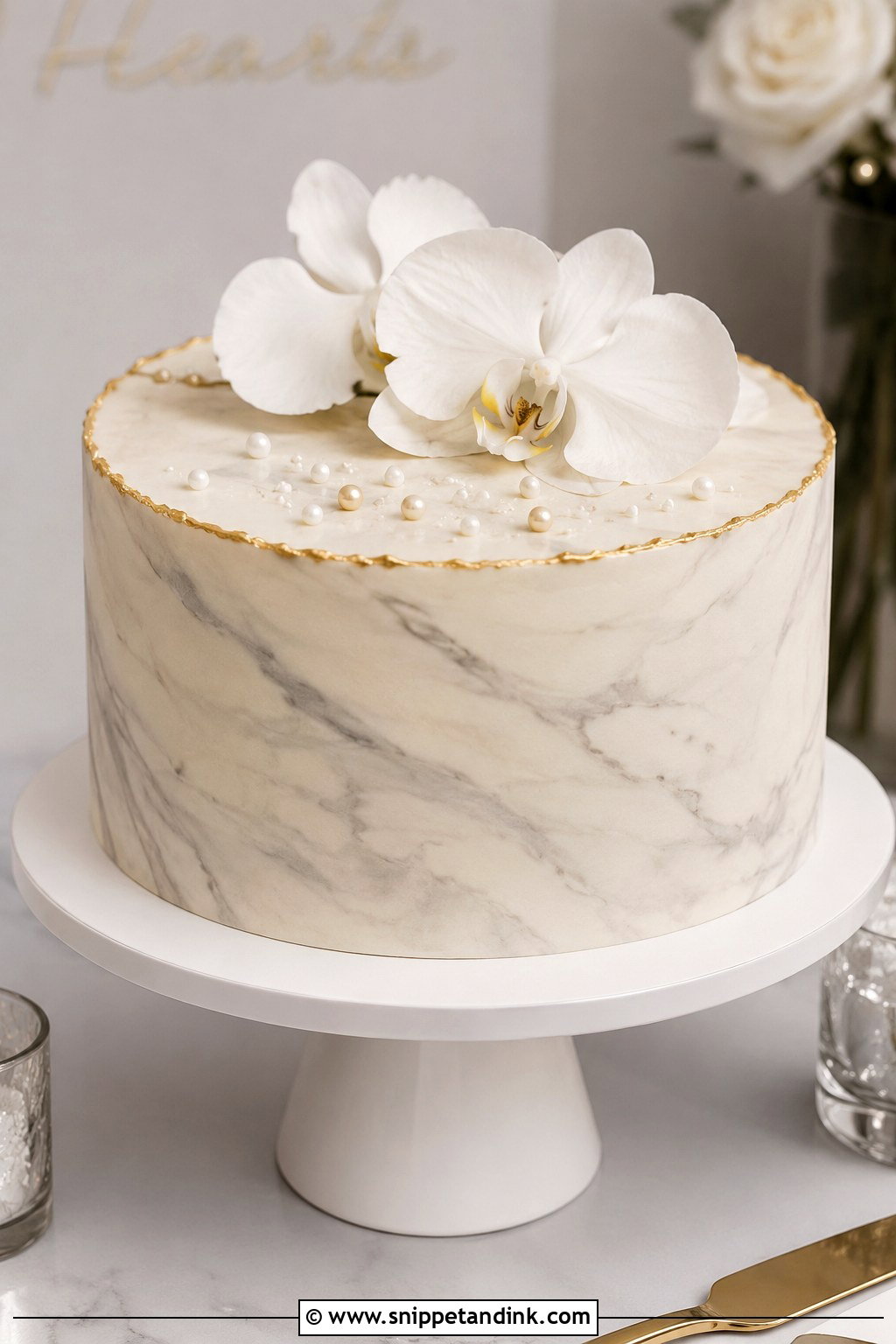
Marbling suits couples who want a modern cake with movement but little decoration. Fondant gives the crispest veining since the colors are kneaded together before rolling; buttercream marble is softer and more watercolor in feel. Grey, ivory, blush, beige, blue and muted green all work as vein colors. Because the surface is already doing the work, a thin gold edge or one small flower cluster is plenty. It sits naturally in galleries, city venues and minimalist rooms.
11. One Tier Textured Wedding Cake
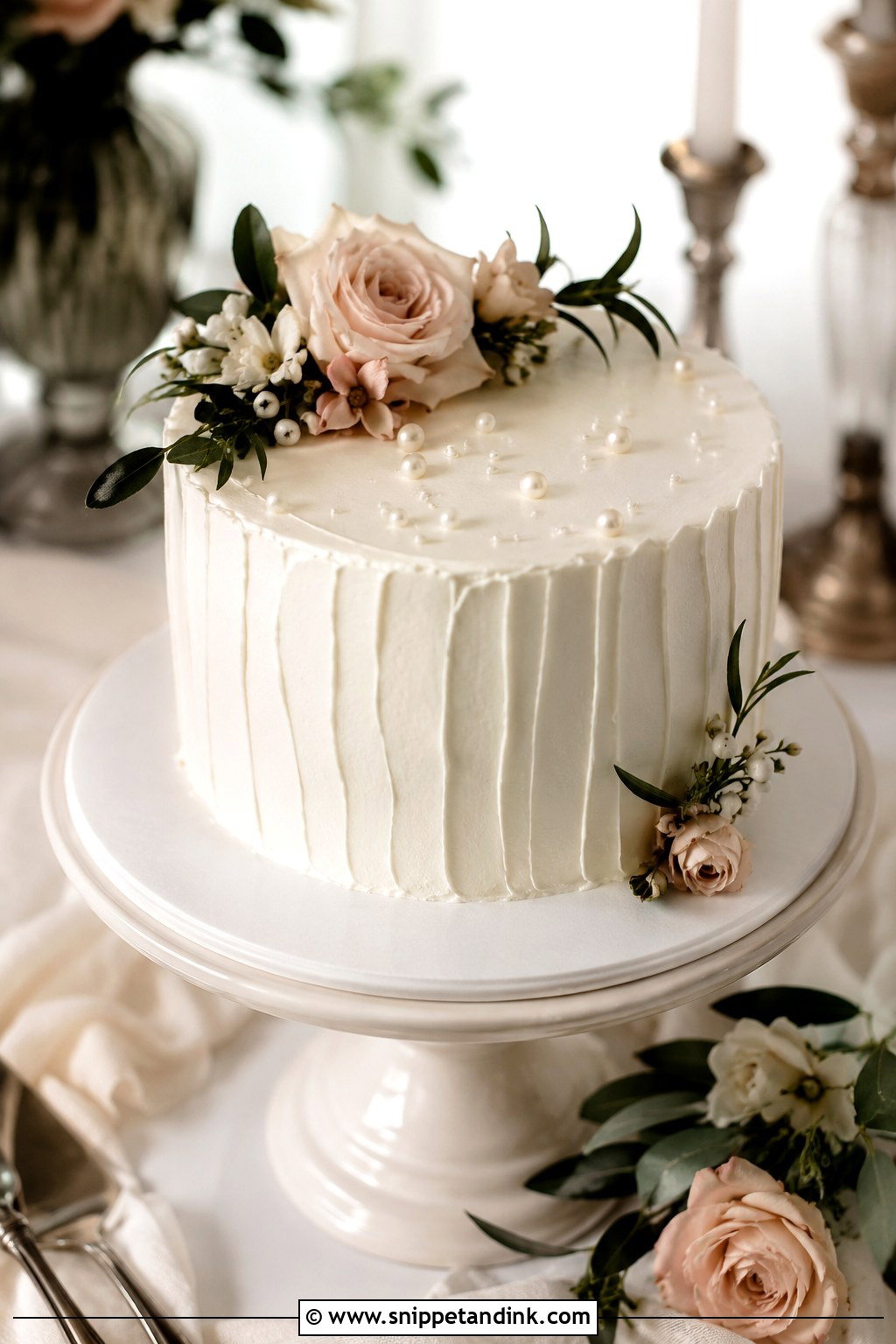
Texture is how I make one tier look more detailed without adding a single extra decoration. Palette knife strokes, combed ridges, vertical lines and soft waves all catch side light, which is why these cakes look plain from across the room and rich up close. Commit to one texture all the way round; mixing two on a single tier makes it look unfinished. A few flowers or pearls can sit in the grooves if you want softness.
12. One Tier Square Wedding Cake
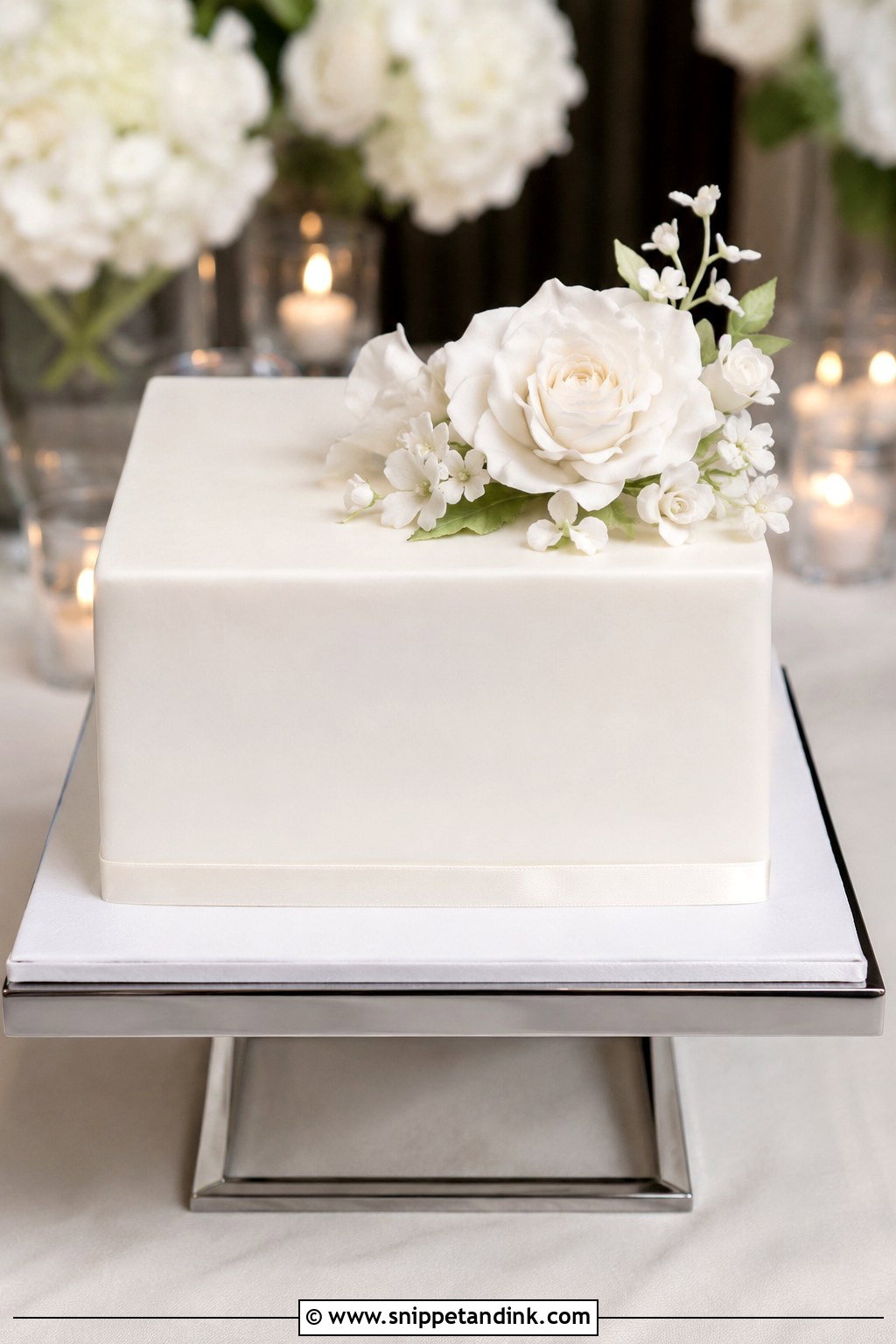
A square tier looks structured and a little unexpected, but it’s more demanding than a round. Corners are where buttercream rounds off and fondant tears, so I’d hand this one to a baker whose square work you’ve actually seen. Smooth fondant or very sharp buttercream keeps the geometry clean. A ribbon, one floral corner or delicate piping is enough, in ivory and pastel for softness or with black ribbon or metallic edges for a graphic look. Squares also cut into neater portions than rounds, which caterers appreciate.
13. One Tier Heart Wedding Cake
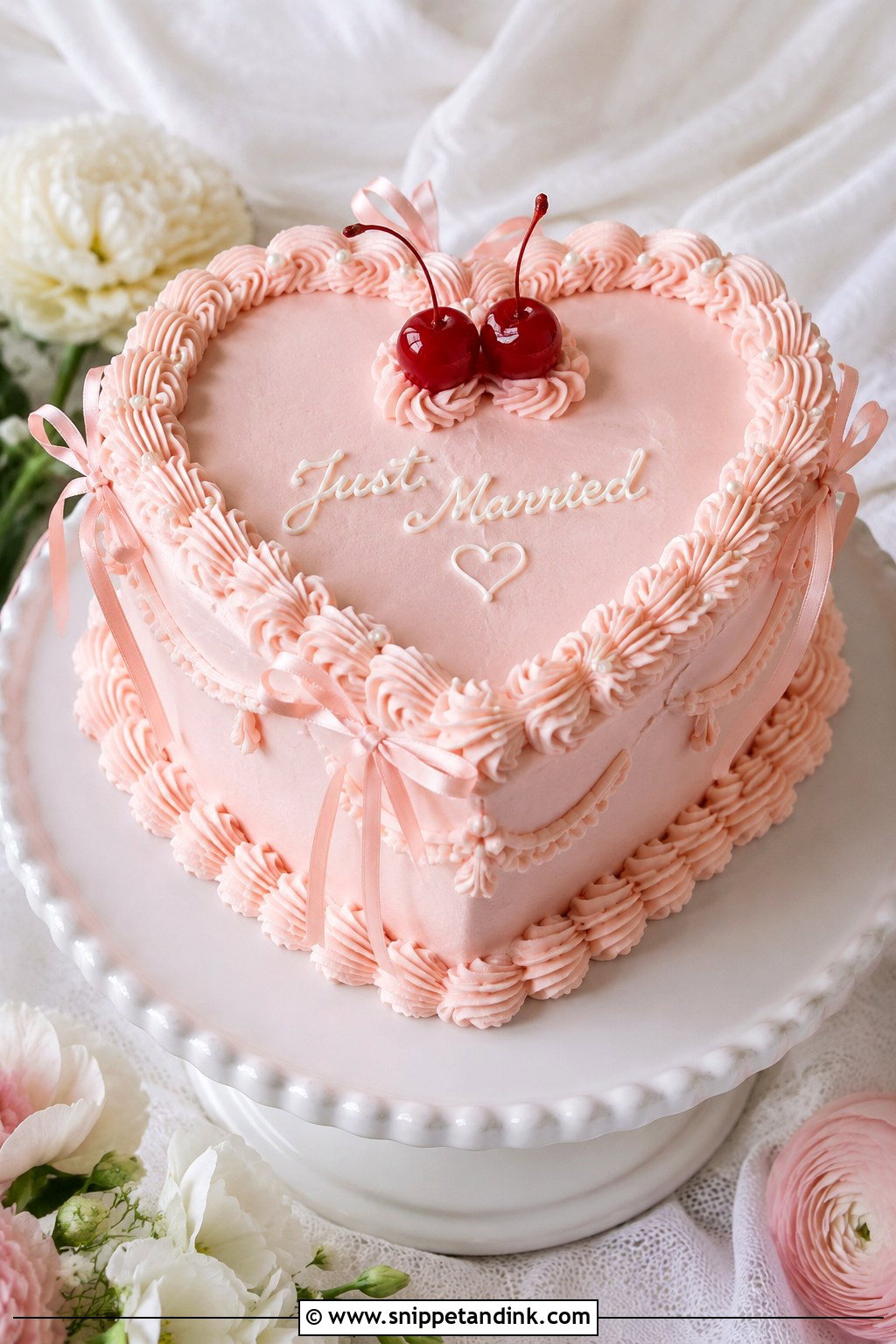
A heart-shaped one-tier wedding cake has become a favorite for elopements and courthouse weddings, and it makes for a sweet photo of the two of you cutting it. Vintage piping follows the curves well, so a shell or ruffle border is my usual starting point. The risk is tipping into birthday-party territory. I keep the palette to white, ivory, blush or one pastel and choose a single extra detail, cherries, pearls, bows or tiny piped flowers, rather than all four.
14. One Tier Oval Wedding Cake
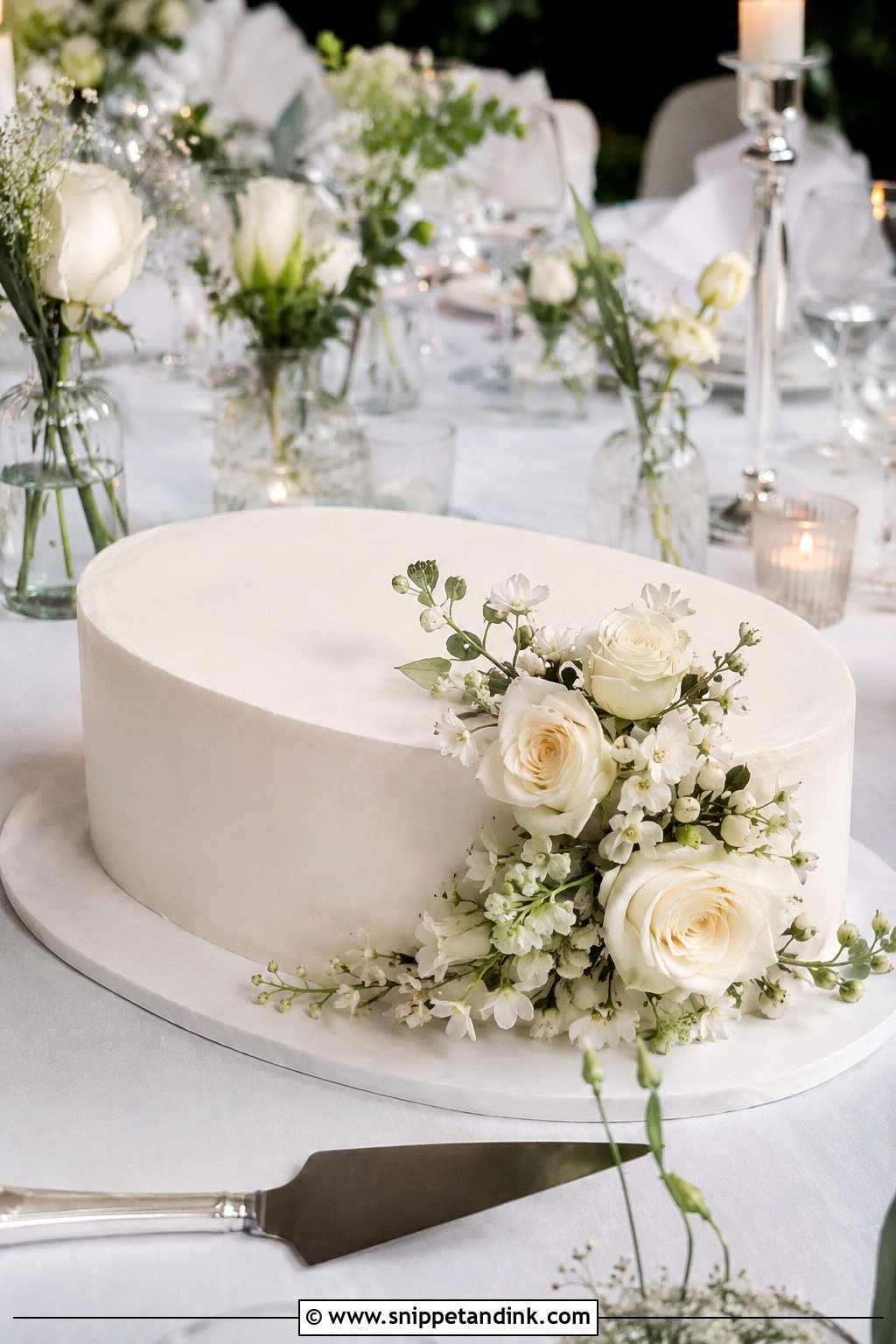
An oval breaks the round habit while keeping the soft outline. Its longer face gives me room for a low floral arrangement running along one side, a band of piping or fruit, or painted detail. It sits especially well on a long dining table among candles and bud vases, where a round can look like it’s floating in the middle. Do check that your baker has an oval pan and board; not every kitchen does, and a hand-carved oval costs more time.
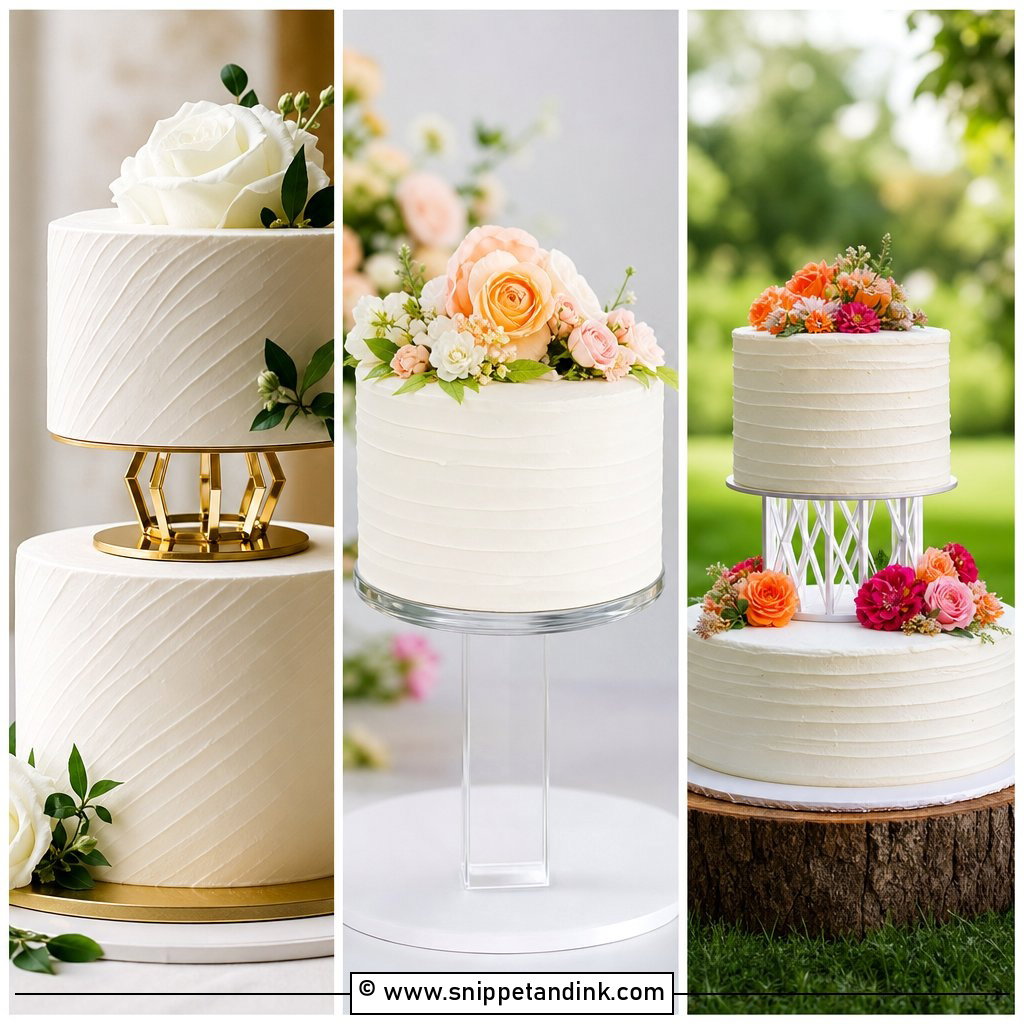
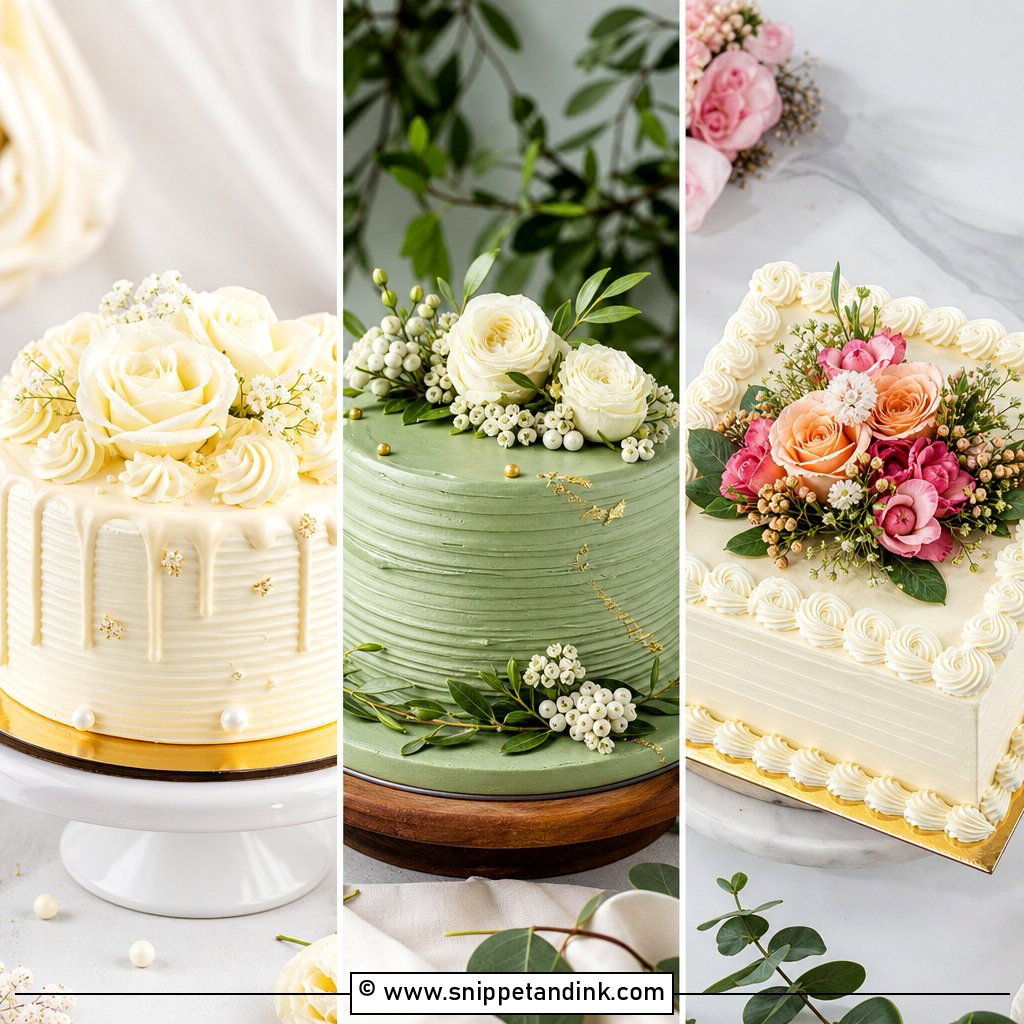
15. One Tier Sheet Wedding Cake
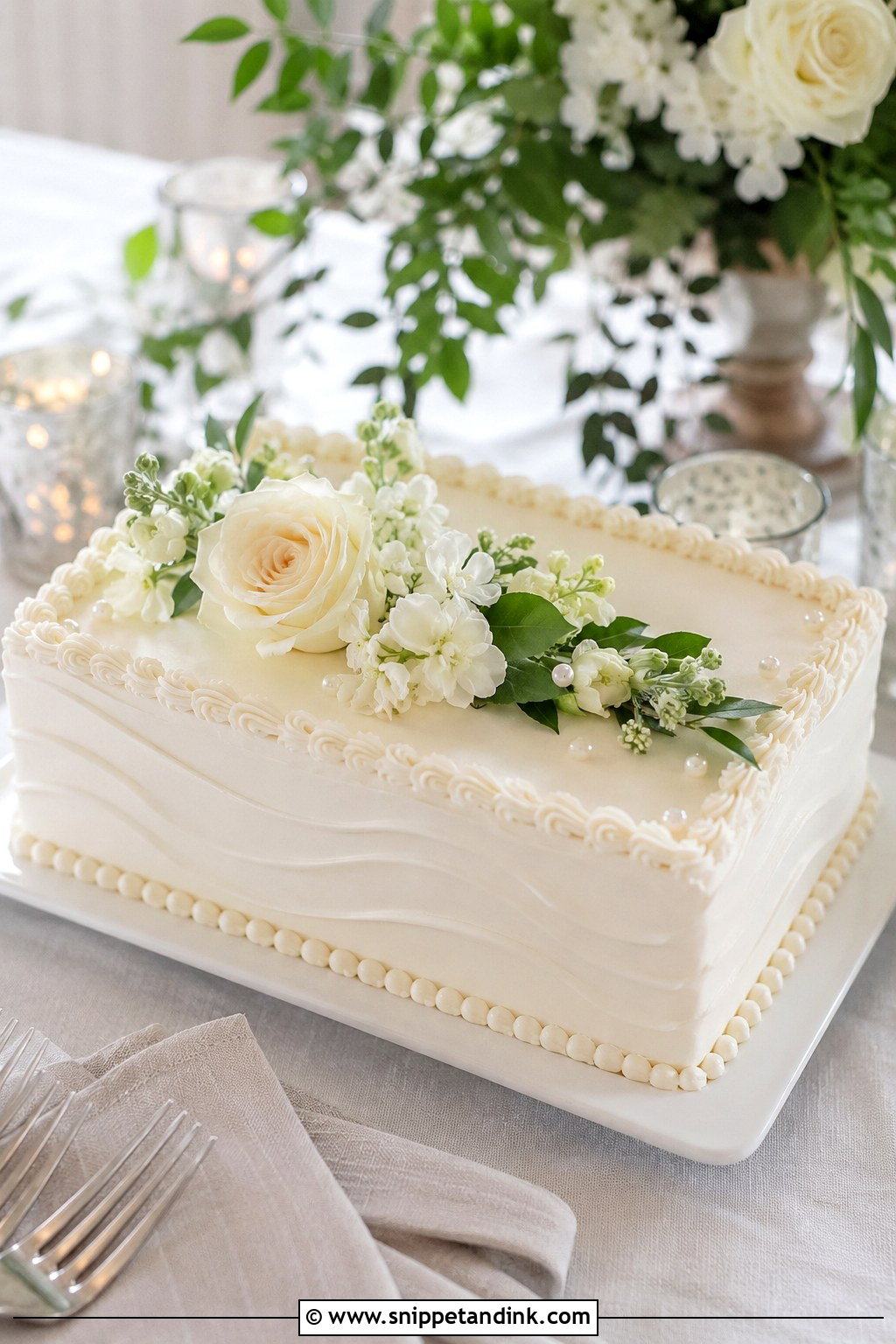
A one-tier sheet wedding cake is the most practical cake on this list and can look far more refined than a party slab. Buttercream waves, a floral border, piped corners or a clean minimal top all lift it. I ask for a taller sheet, around four inches deep with filling, because the extra height reads as a wedding cake rather than an office cake. It’s the right answer when the guest list is bigger than one round can feed but you still want something low and simple.
16. One Tier Black And White Wedding Cake
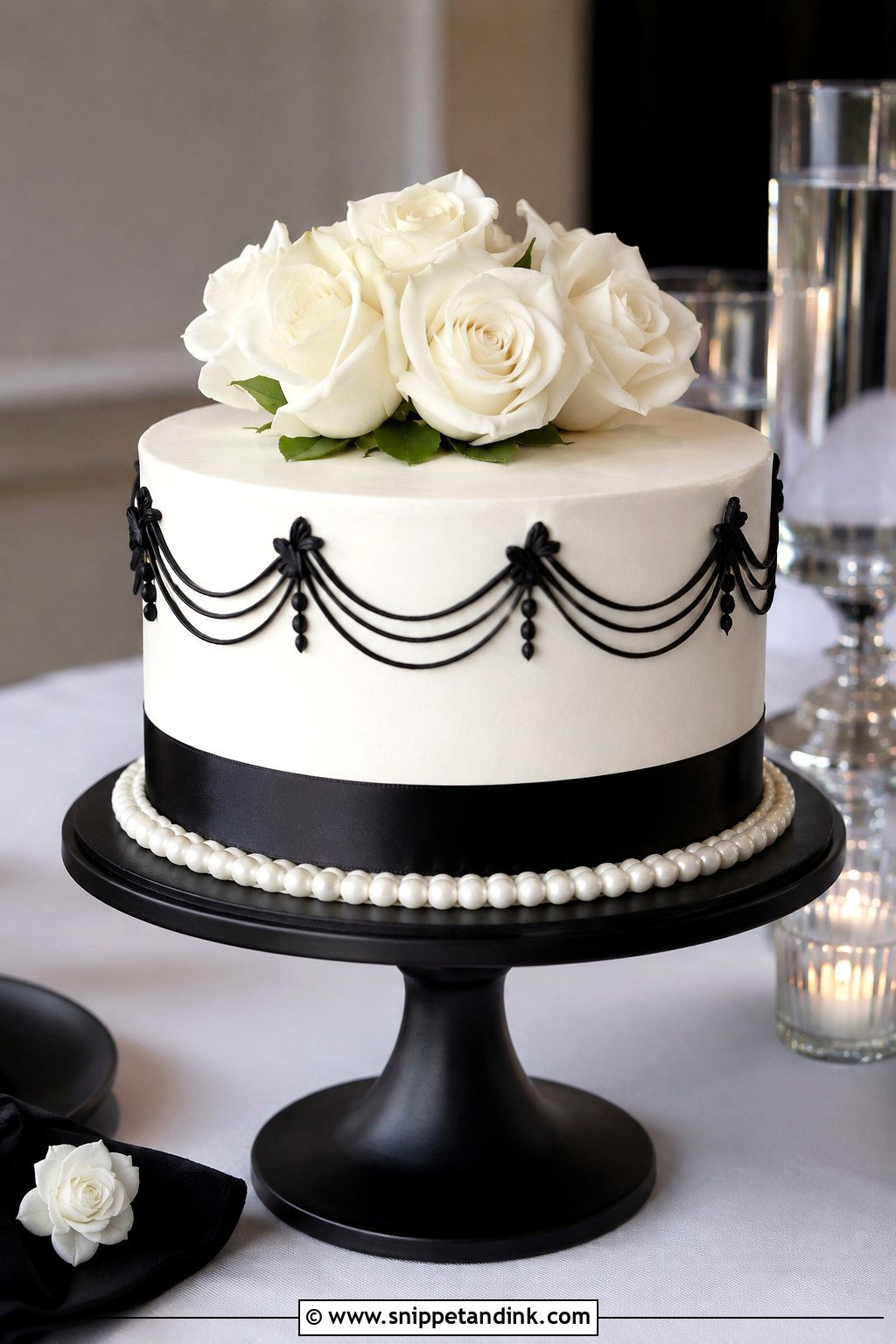
Black and white works when white does almost all of the work. I build on ivory or white and bring black in through one element: ribbon, fine piping, painted lines or a small bow. Black frosting needs a lot of coloring to reach true black, which can taste bitter and stain teeth and fingers, so I keep it to accents. A smooth finish suits the contrast best, and white flowers or edible pearls stop it feeling severe at an evening or black-tie reception.
17. One Tier Blue Wedding Cake
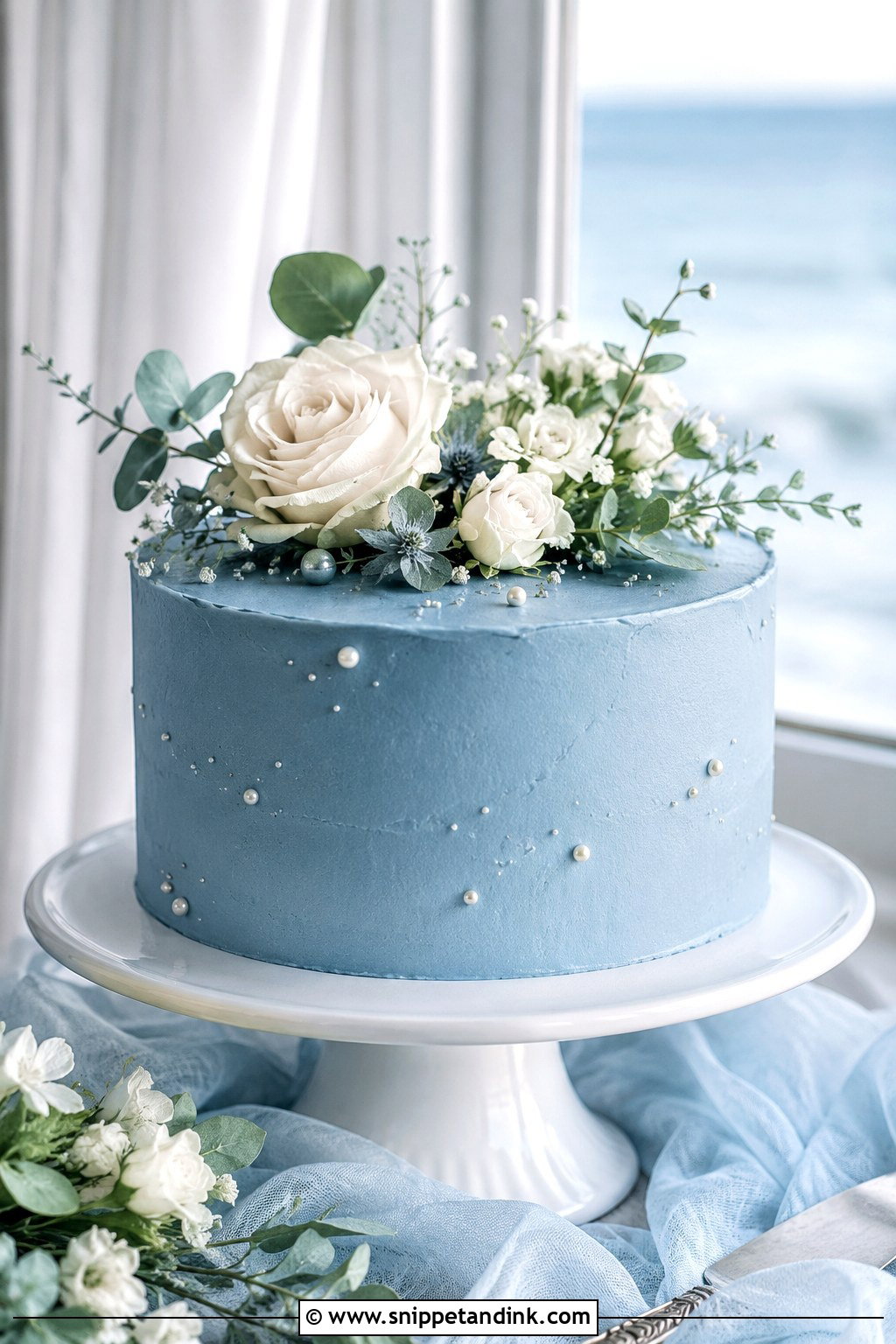
Blue changes mood with its shade: pale blue for spring, dusty blue for a quieter, more formal look, deep navy for evening. Bakery lighting and venue lighting rarely match, so I test a swatch beside your bridesmaid fabric or linen sample before mixing the full batch. White flowers, pearls or silver accents keep the cake bridal, and a soft watercolor effect works well on buttercream. Leave the decoration simple, since the color is already the feature.
18. One Tier Sage Green Wedding Cake
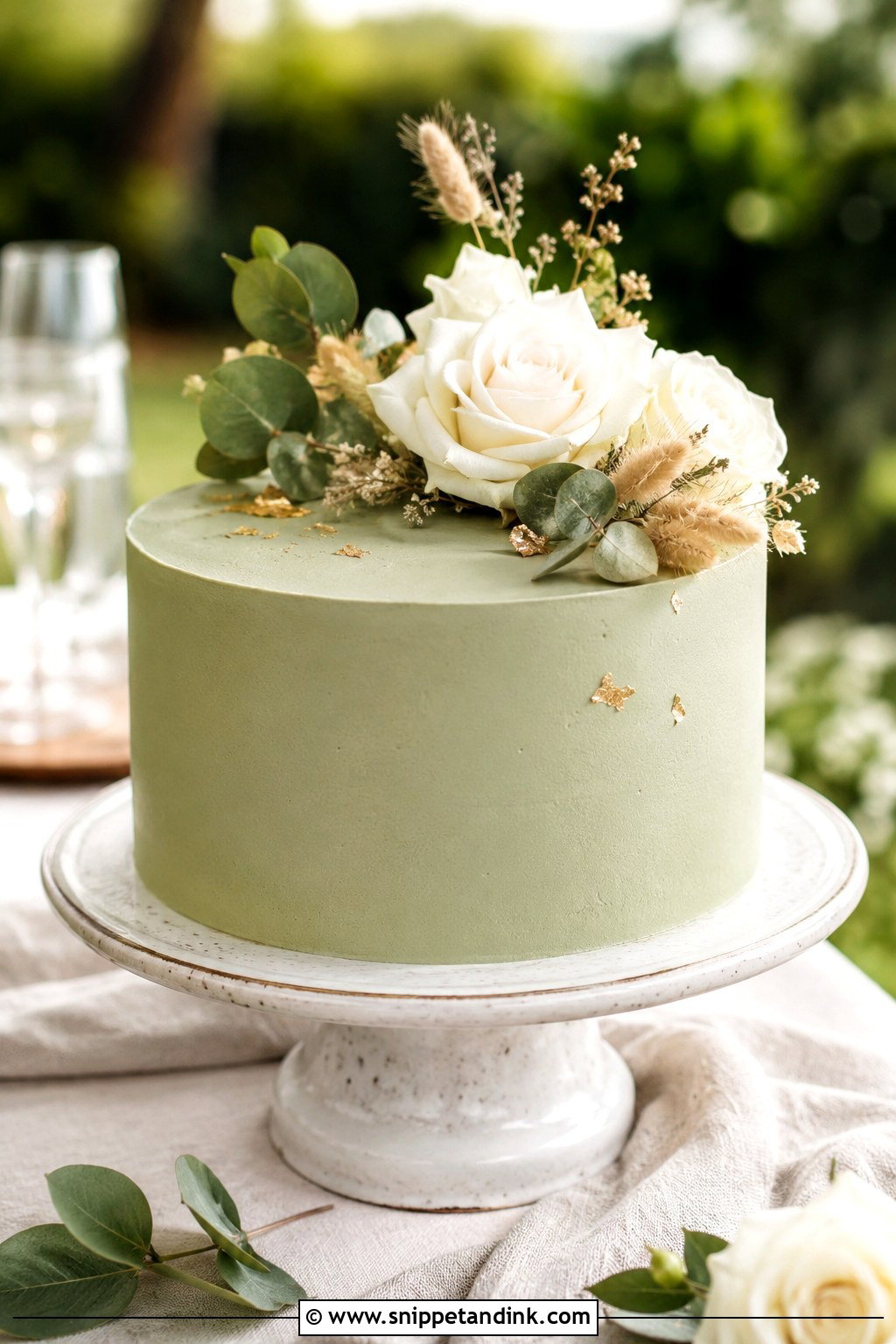
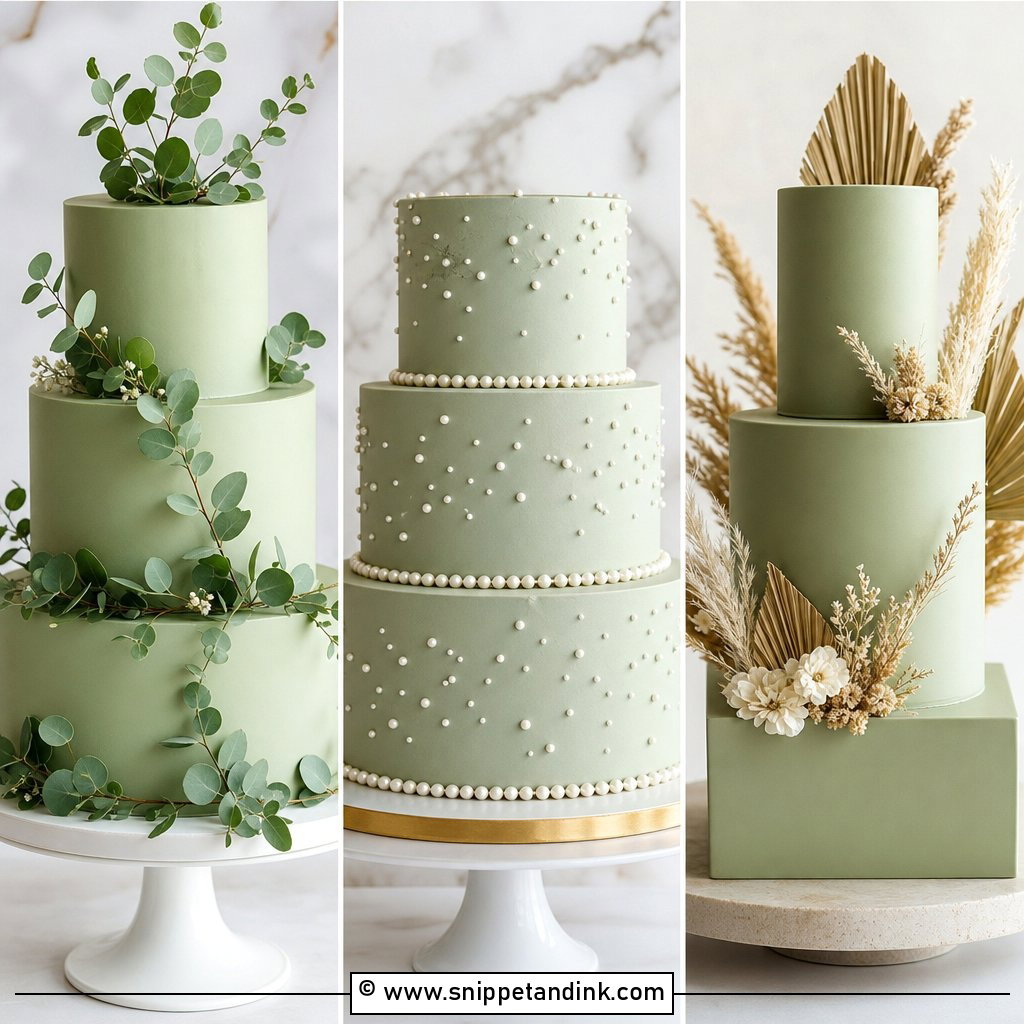
Sage is calm and earthy, and it’s one of the easier greens to get right in buttercream because it’s tinted down from a grey-green rather than built from bright gel. It pairs with white flowers, dried grasses, eucalyptus and gold. A smooth finish feels modern, a combed one more natural. One small cluster on top or along a side is enough. It adds color in photos without pulling the eye away from the couple.
19. One Tier Fruit Wedding Cake
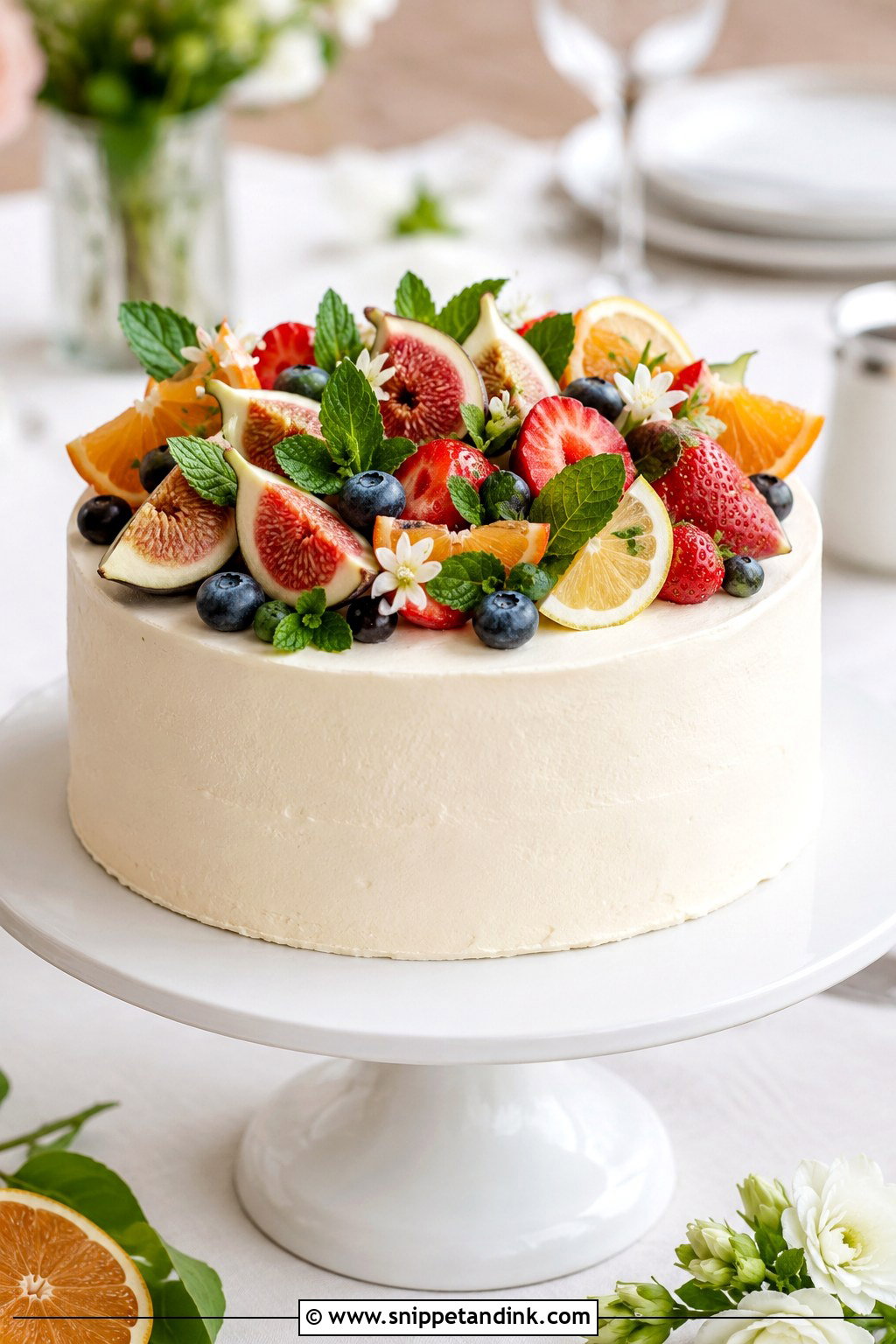
Fruit adds color and flavor at the same time, and on one tier I arrange it as a tight, deliberate cluster rather than a scatter. Berries are the reliable choice; figs, cherries, citrus slices and grapes look good too, but cut fruit like peaches weeps juice and browns, so I add it at the last moment or skip it. Whipped cream finishes are the most fragile here and need to stay cold. Buy what’s in season, because it looks and tastes better than imported fruit out of season.



20. One Tier Chocolate Wedding Cake
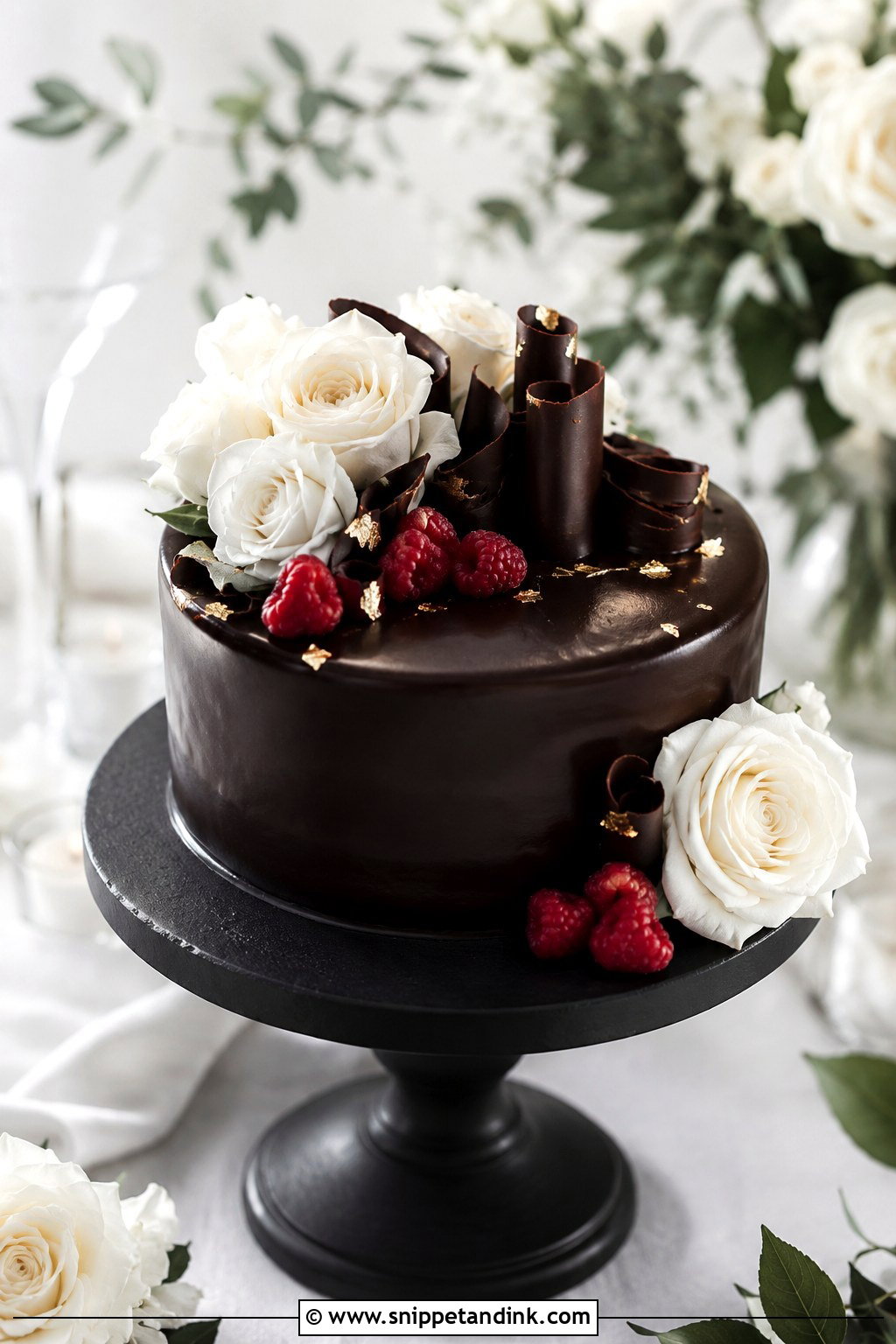
Chocolate suits couples who’d rather the cake taste like a dessert than a tradition. Dark chocolate ganache sets to a sleek, firm shell that handles a warm room better than most buttercreams, while chocolate buttercream looks softer and more classic. White flowers, berries, gold leaf or a controlled drip show up sharply against the dark surface. It’s a natural fit for fall and evening receptions. Keep the decoration restrained so it still reads as a wedding cake.
Getting a Small Cake Through a Long Day
One tier travels far better than a stacked cake, which is a real advantage for elopements and venues with awkward access. It still needs care. I deliver on a board slightly wider than the cake, in a box on a flat, non-slip surface, never on someone’s lap or a sloping car seat. Air conditioning on during the drive is not optional in summer.
Heat and sunlight
Buttercream starts to soften in a warm room and slides in direct sun, so ask the venue where the cake table sits before you book a finish. Outdoor receptions in summer are where ganache, fondant or a crusting buttercream earn their place over silky meringue frostings and whipped cream.
Moving from fridge to room
A chilled fondant cake carried into a warm, humid room will bead with condensation. Don’t wipe it; let it dry on its own and it usually settles. Buttercream cakes taste best after about an hour out of the fridge, so I time setup to give the cake that hour before it’s cut.
The top portion
With one tier there’s no spare top layer to freeze for your anniversary. If you want that tradition, order a small extra 4 or 6 inch cake in the same flavor, wrap it well in plastic and foil, and freeze it straight away rather than after it has sat out all evening.
One Tier, One Clear Idea
A single tier earns its place when it commits to one thing: a shape, a finish, a color or a single decoration done properly. Before you settle on a design, think about the room temperature, the season, your flowers and how the cake table will be lit, because those decide which finishes will hold up. Give the cake a raised stand and a clear space of its own. Then let it be small; that’s the point of it.
You'll Like These Ideas:




Leave a Reply