
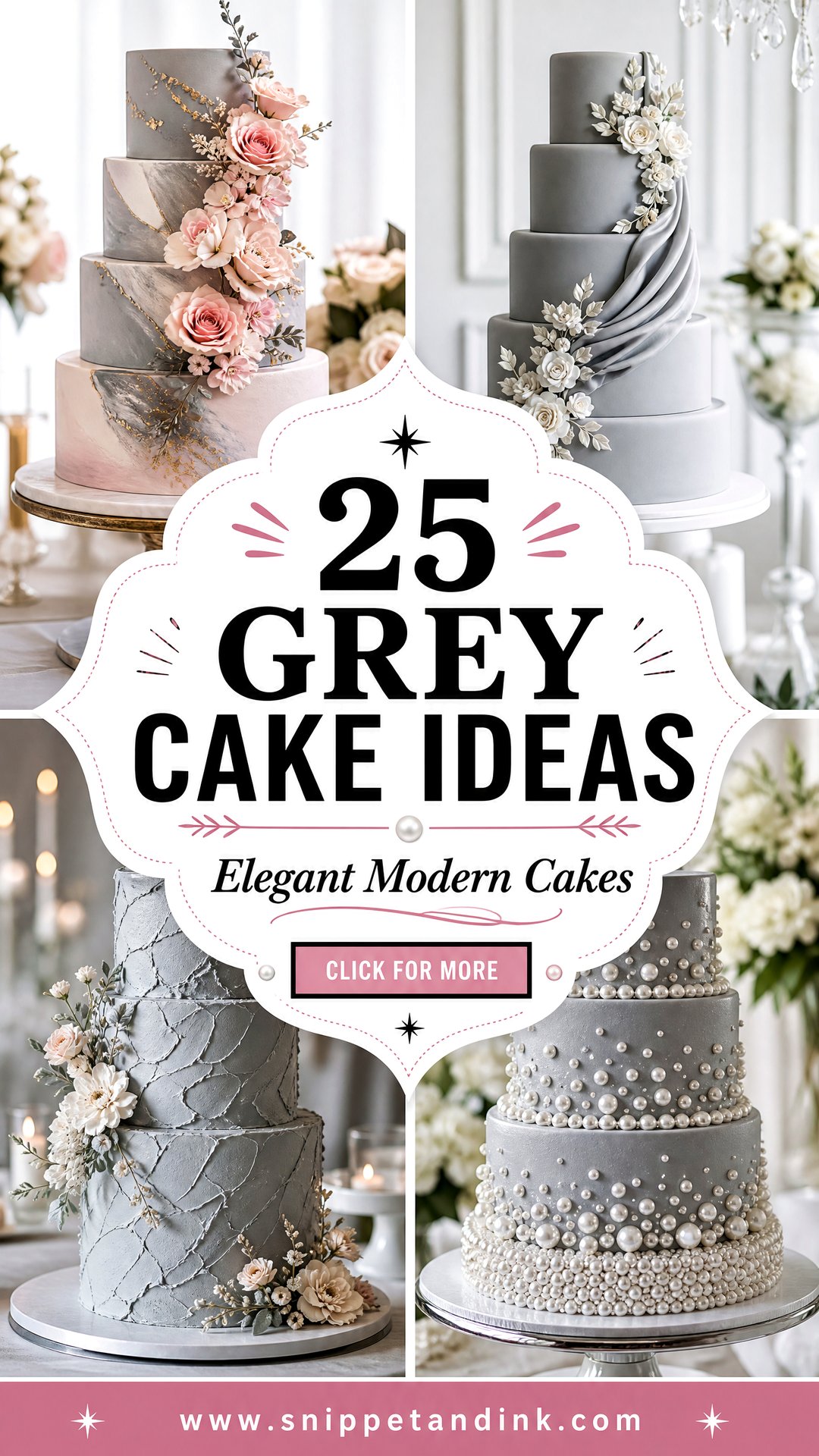
Grey is one of the most adaptable colors I put on a cake, and one of the most misunderstood. It can go soft and romantic with white roses, modern with marble veining, rustic in rough buttercream, or dramatic under silver leaf and dark flowers. It sits next to ivory, blush, sage, dusty blue, lavender, black and silver without fighting any of them, and on a cake table it adds depth without taking over the room. What surprises couples is how much work goes into a grey that reads as grey and not faintly green or purple. The ideas below cover the range, from pale dove to charcoal, with notes on how each one behaves once it leaves my kitchen.
Mixing a Grey That Doesn’t Turn Green on the Table
Grey looks like the easiest color to mix. In practice it’s the one I re-mix most. Buttercream made with butter starts out pale yellow, and black coloring added to a yellow base drifts toward olive. On top of that, many black gel colors are built from blue, red and green dyes, so a grey can lean cool and steely or warm and purplish depending on the brand.
My routine is to whiten the base first, then build the grey with tiny amounts of black and a speck of violet to cancel any remaining yellow. Darker shades deepen as they sit, often noticeably over several hours, so I mix charcoal a step lighter than the target and let it rest before judging it.
- Ask your baker for a photo of the mixed frosting in daylight, not under kitchen lights.
- If your colors are specific, bring a ribbon or napkin so the grey can be matched against the real thing.
- Fondant colored grey ahead of time can shift slightly over a few days, so it’s usually colored close to decorating.
- Very dark frosting on a light sponge shows on teeth and lips. A charcoal outer coat over a thin white crumb coat keeps the color only where it’s needed.
1. Grey Marble Wedding Cake
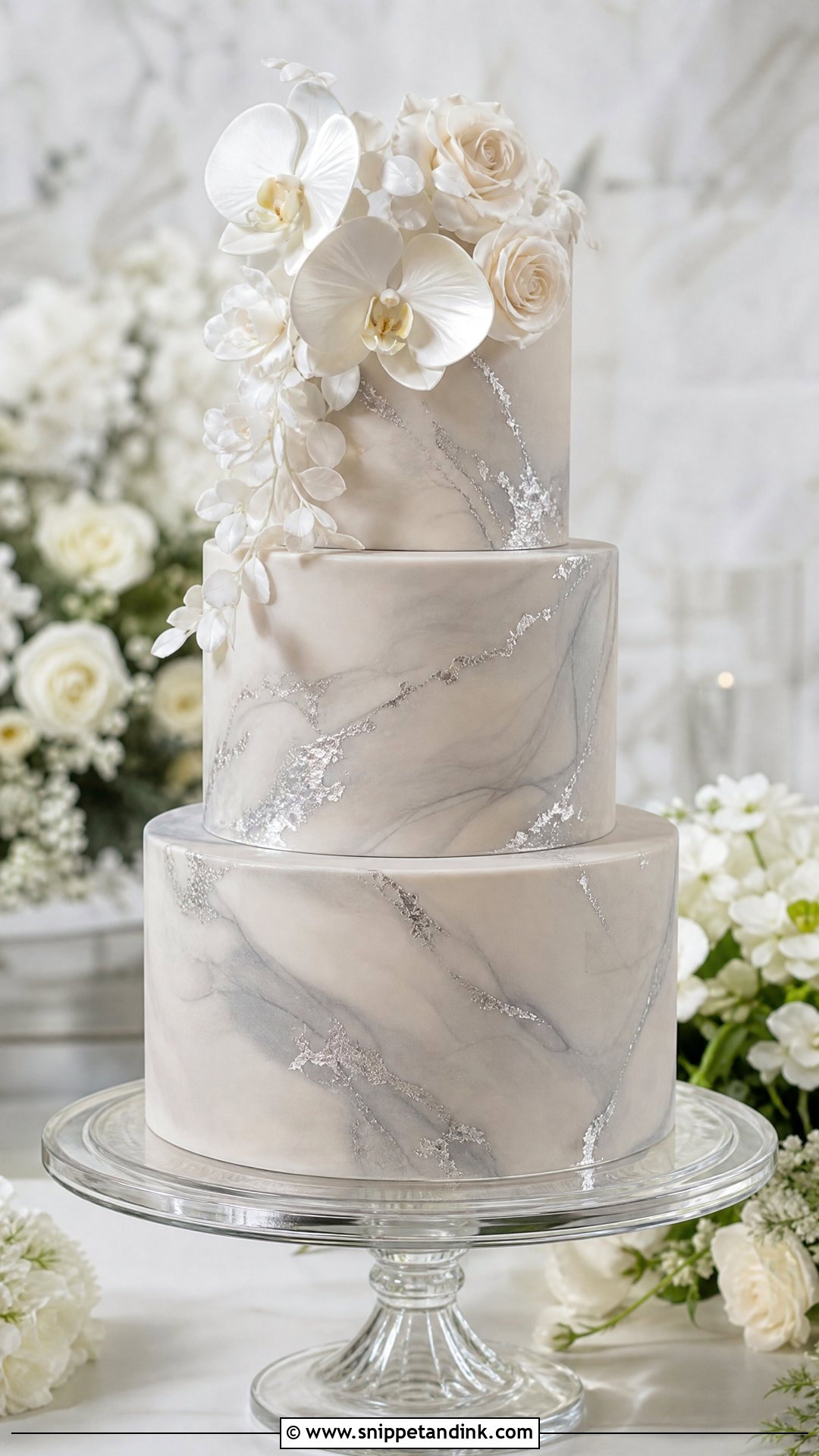
A grey marble wedding cake gives you pattern without clutter. I marble by folding pale grey, charcoal and white fondant together and rolling it only a few times, because overworking the paste turns crisp veins into a muddy all-over grey. In buttercream, I streak the colors on with a palette knife and scrape once. It suits hotel ballrooms, gallery spaces and black-tie receptions. Thin silver leaf, white orchids or a few sugar roses finish it. If dark streaks feel heavy, ask for light grey veining; each tier will still look like its own slab of stone.
2. Light Grey Wedding Cake
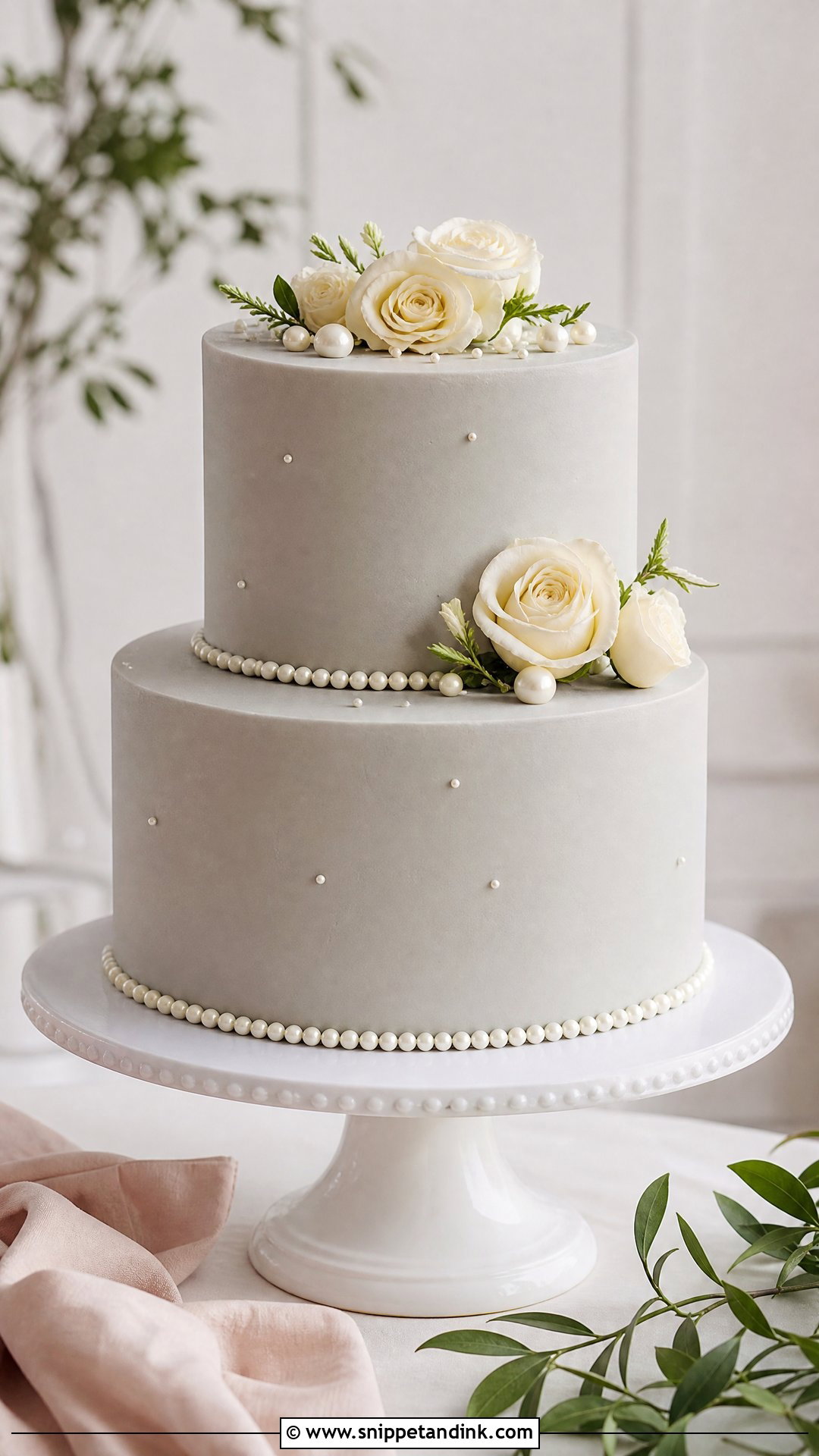
Pale grey sits between white and a real color, softer than one and calmer than the other. It looks right with ivory flowers, pearl details and champagne accents, and it suits a garden ceremony as easily as a classic ballroom. Smooth buttercream keeps it relaxed and fondant makes it tailored. I’d add only subtle piping, a few small sugar flowers or one floral cluster. The thing I watch for with pale grey is warm lighting. Under yellow bulbs it can read as plain off-white, so I mix it a shade deeper than the sample swatch if the reception is candlelit.
3. Dark Grey Wedding Cake
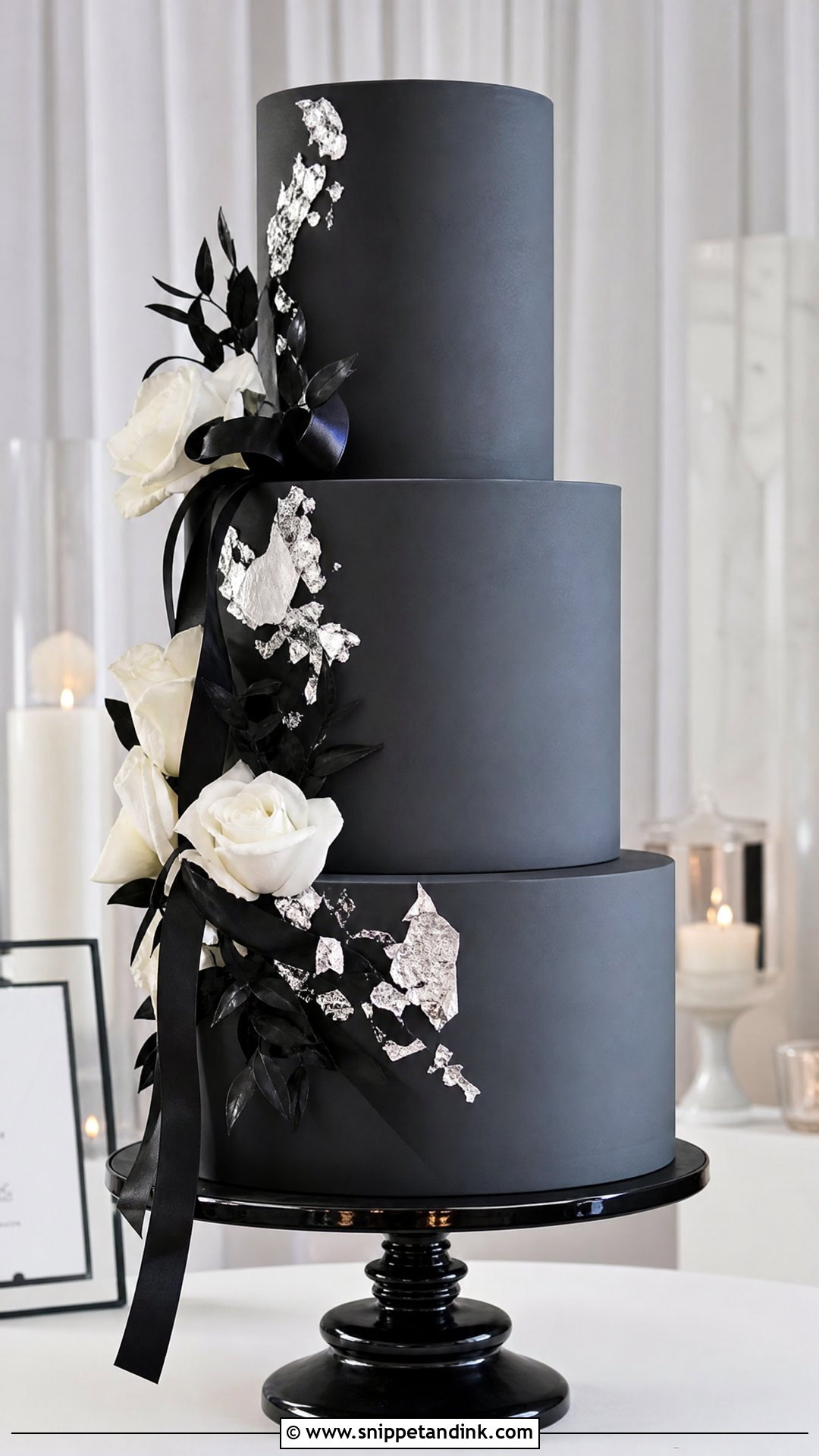
Charcoal is the cake I’d suggest for an evening reception, an industrial venue with brick and steel, or a couple who finds white cakes dull. It comes alive against white flowers, silver leaf, black ribbon or deep burgundy blooms. Clean tiers and very little decoration keep it from feeling heavy; one cluster of bright flowers gives all the contrast it needs. Flavor-wise, I lean on chocolate, espresso or black cocoa sponge, because achieving deep charcoal in vanilla buttercream takes a lot of black coloring, and that much coloring can leave a faint bitter taste and grey-tinged lips. Starting from a cocoa base needs far less.
4. Grey And White Wedding Cake
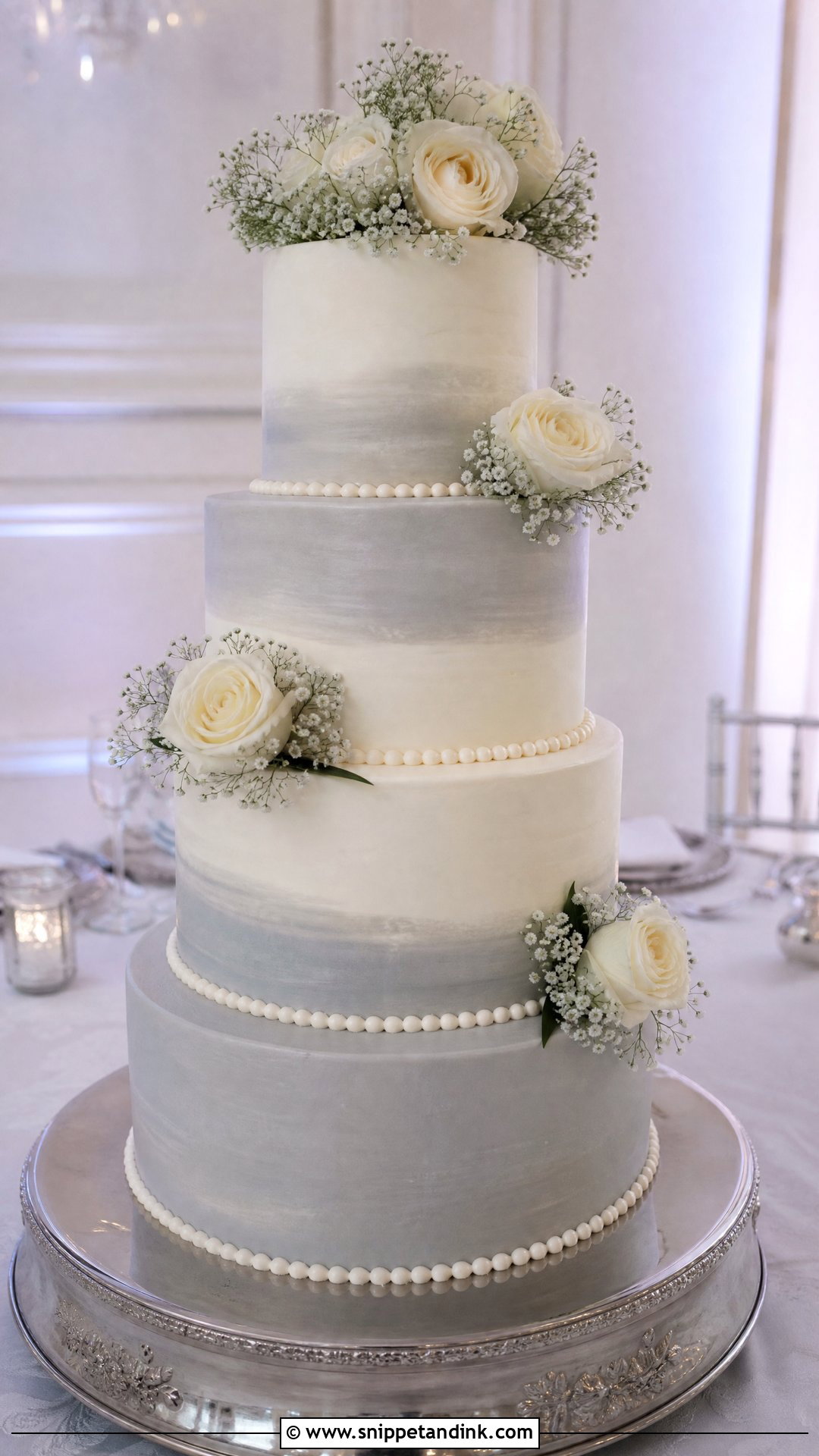
Grey and white gives you the bridal freshness of white with the depth of grey. My two usual layouts are one grey tier among white ones, or an ombre that shades from ivory at the top to silver grey at the base. Both suit almost any venue. White roses, baby’s breath, edible pearls or a thin metallic edge finish it. On a mostly neutral table, this cake gives just enough contrast to show up in the wide shots of the room without clashing with the linens.
5. Grey And Silver Wedding Cake
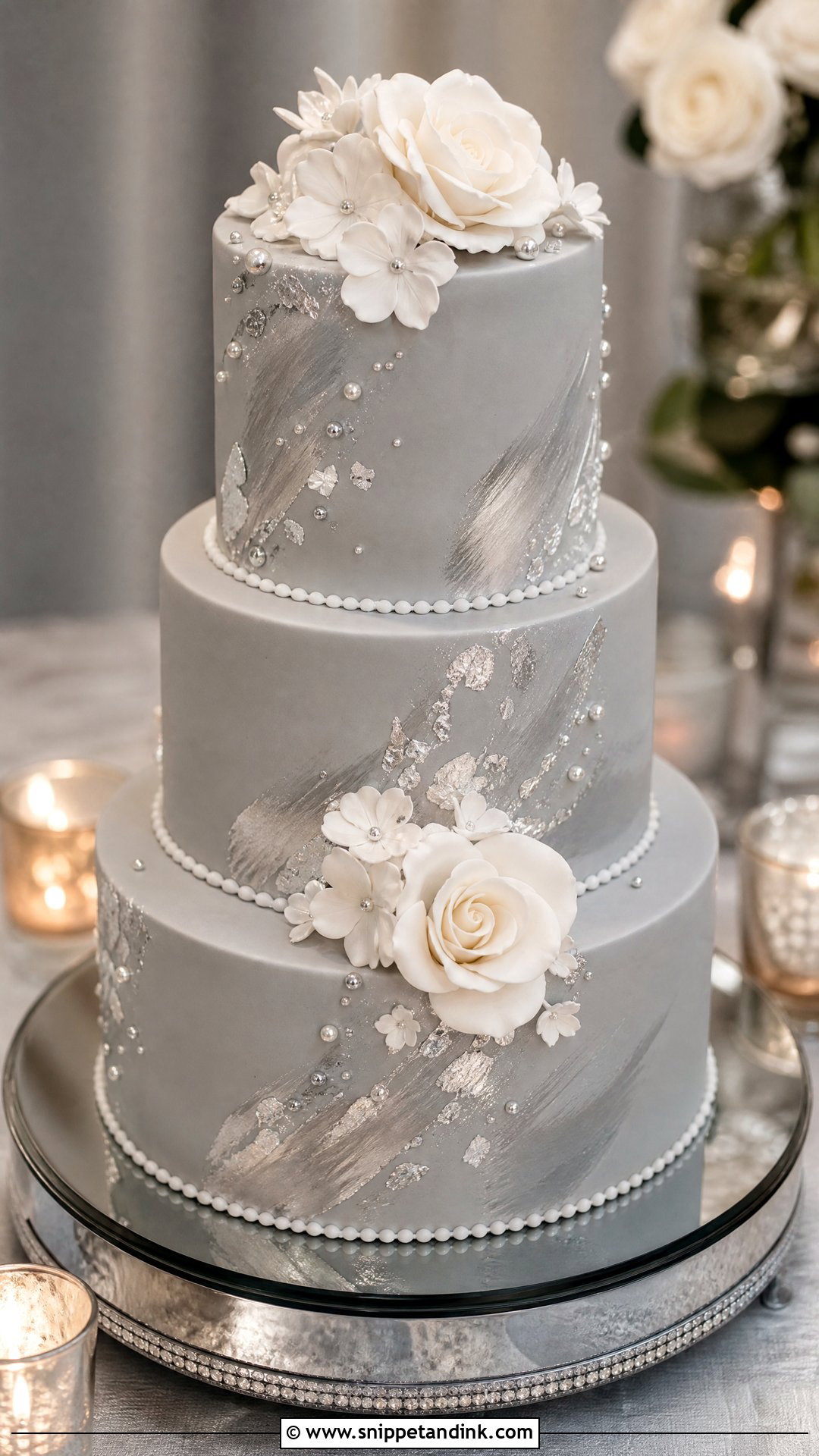
Silver is the cool alternative to gold, and against grey frosting it looks sleek. I use silver leaf, metallic brush strokes, thin silver ribbon or pearl-like dragees around each tier. It suits winter weddings, city venues and formal evening receptions, and it still looks fresh in a minimal room. Restraint is what keeps it tasteful. One metallic treatment is enough; combine leaf, dragees and a painted edge and the cake starts to look like a holiday ornament. Ask your baker which silver decorations are edible and which are decorative only, as it varies a lot between products.
6. Grey And Blush Wedding Cake
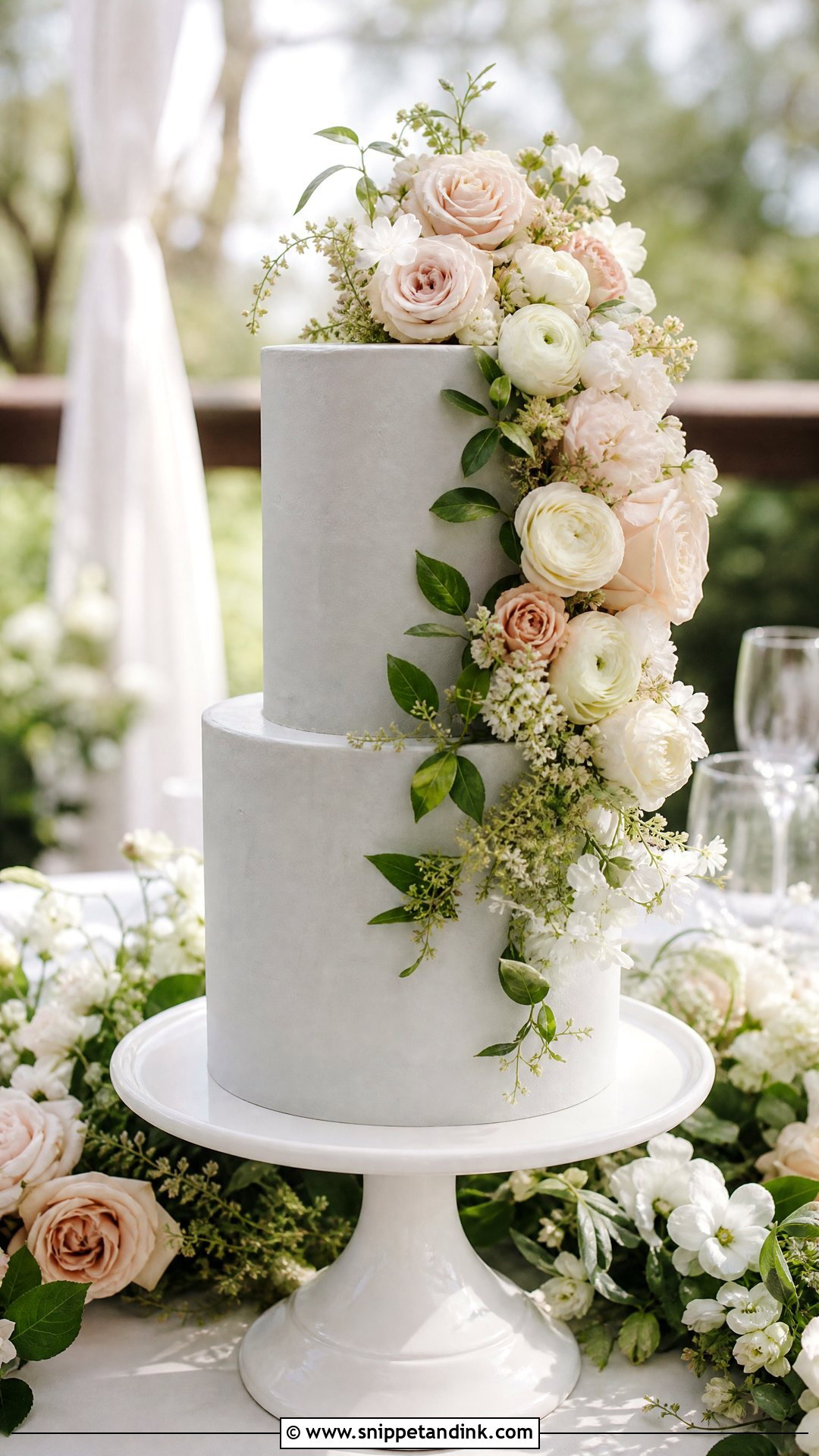
Grey keeps blush from going sugary, and blush keeps grey from going cold. I build the base in pale grey buttercream or fondant, then add blush roses, peonies, ranunculus or sugar flowers, with a little ivory or soft greenery so the arrangement looks gathered rather than placed. It’s at home at a spring wedding, a garden reception or a romantic indoor venue. For a modern take, keep the cake smooth and put all the blush on one corner of one tier. Peonies are the bloom I’d plan around carefully, since they open fast in a warm room and can look blown by the time you cut.
7. Grey And Gold Wedding Cake
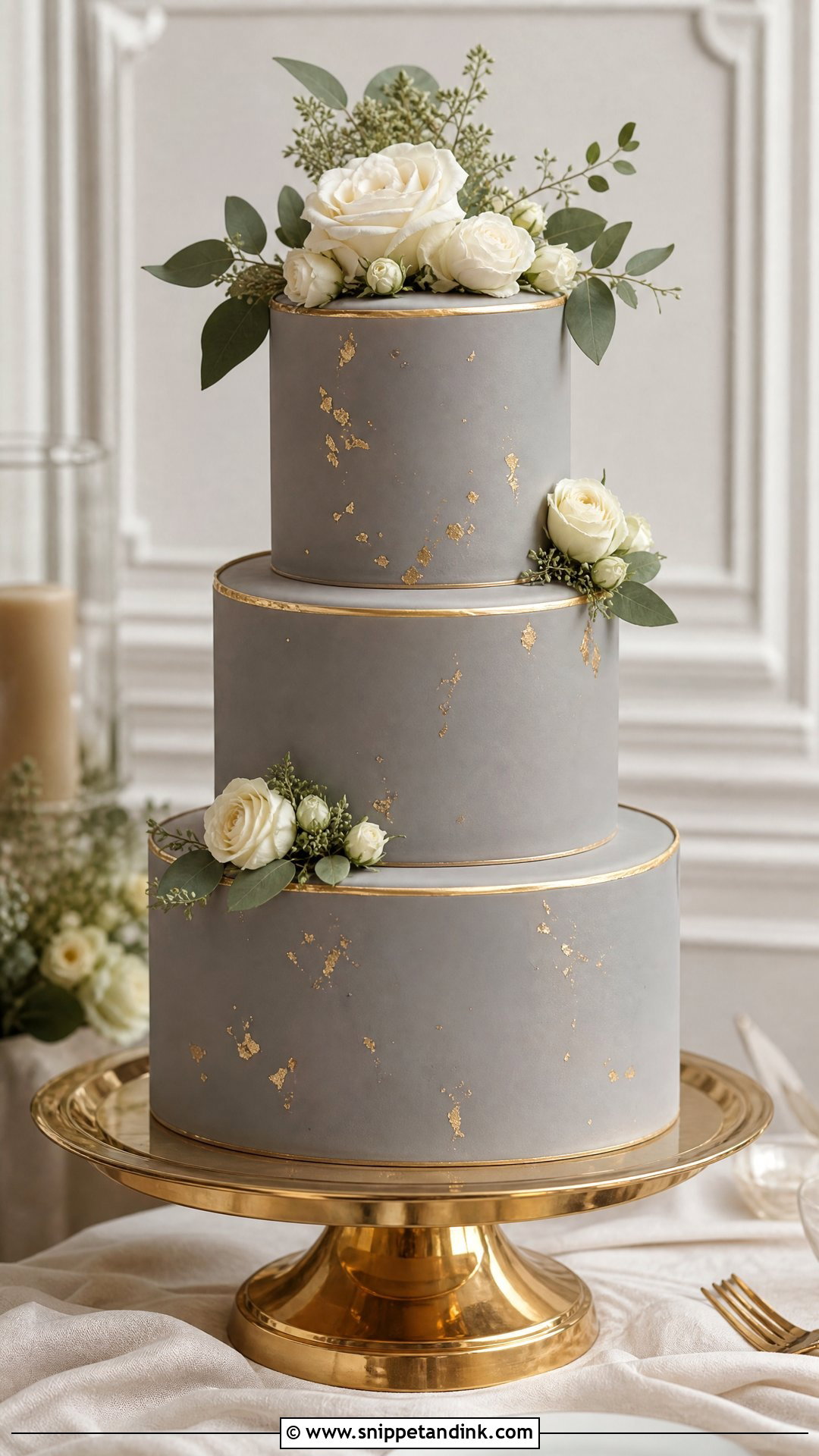
Cool grey makes gold look richer than it does on white, whether it’s edible gold leaf, a hand-painted edge or a metallic drip. It suits a ballroom, a formal reception and candlelit tables, where gold catches the flames. I’d choose one main gold detail and leave the grey alone; white flowers, cream roses or soft greenery balance the shine. Inside, vanilla, almond, caramel or honey sponges pair naturally with the warmth of gold. If you want a gold drip, it’s usually colored white chocolate with gold paint brushed on once set, so it needs a cool room to stay crisp.
8. Grey Floral Wedding Cake
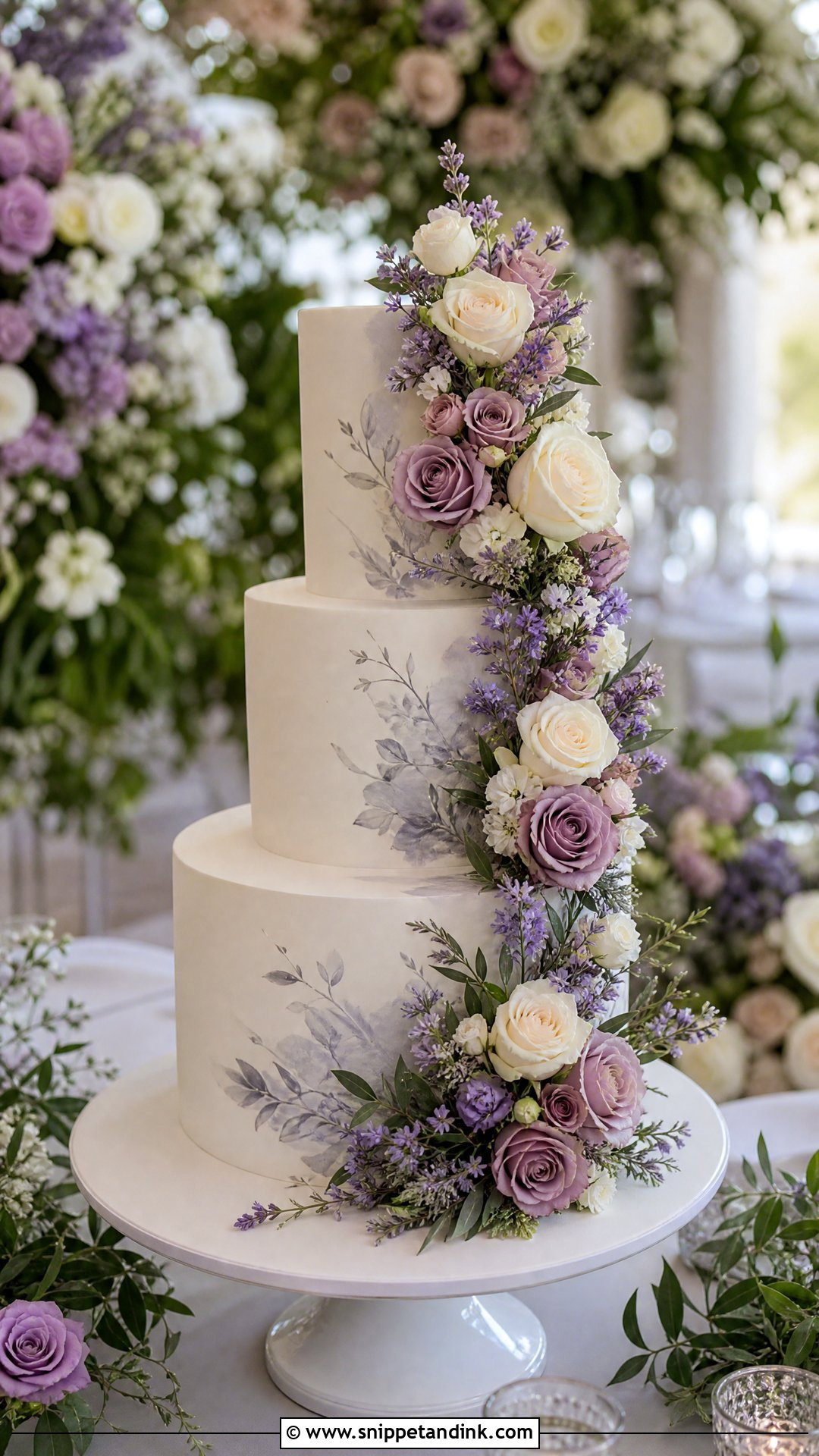
Grey frosting makes flowers jump forward, especially white, blush, mauve, lavender and dusty blue. Fresh flowers are possible only when your baker and florist agree they’re food-safe and unsprayed, and I always insert stems into wrapped picks or tape them so nothing touches the cake directly. Sugar flowers cost more in hours but give complete control over color and placement. A cascade looks dramatic; small clusters look refined. Estate venues, gardens and outdoor receptions suit this style. Leave the grey background calm so the flowers carry the cake.
9. Grey Buttercream Wedding Cake
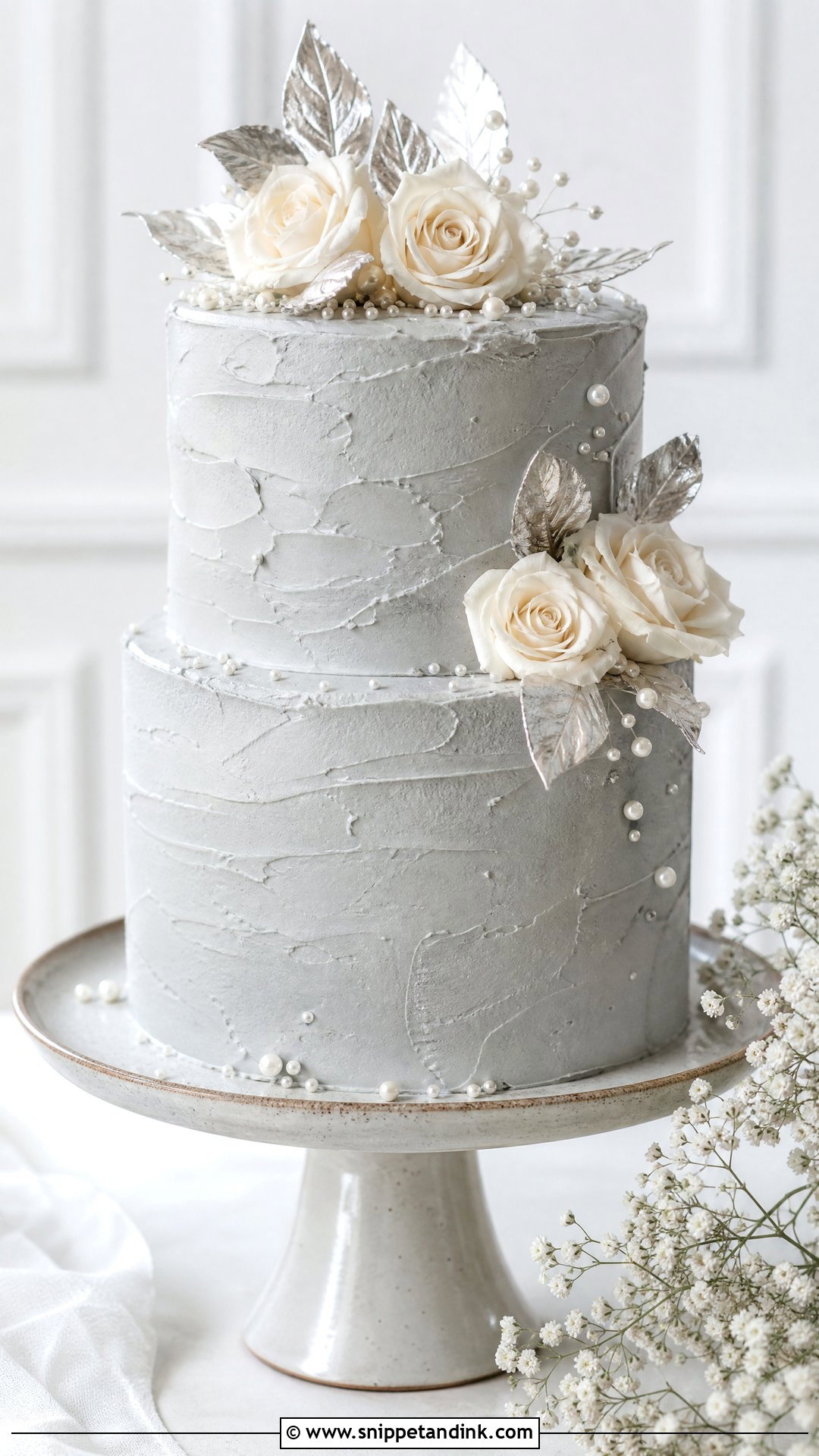
Buttercream gives grey a soft, handmade surface that people want to touch. I can smooth it with a hot scraper for a clean finish or texture it with swirls, ridges or palette strokes. Pale grey buttercream sits well with ivory flowers, and darker grey holds bold blooms or silver accents. Most guests also find it creamier and nicer to eat than fondant. The honest drawback is heat: buttercream softens in a warm tent, and a cake that sits in the sun will start to sag and weep. If your reception is outdoors in summer, ask how your baker stabilizes it, or plan for the cake to come out of a cool room shortly before the cutting.
10. Grey Fondant Wedding Cake
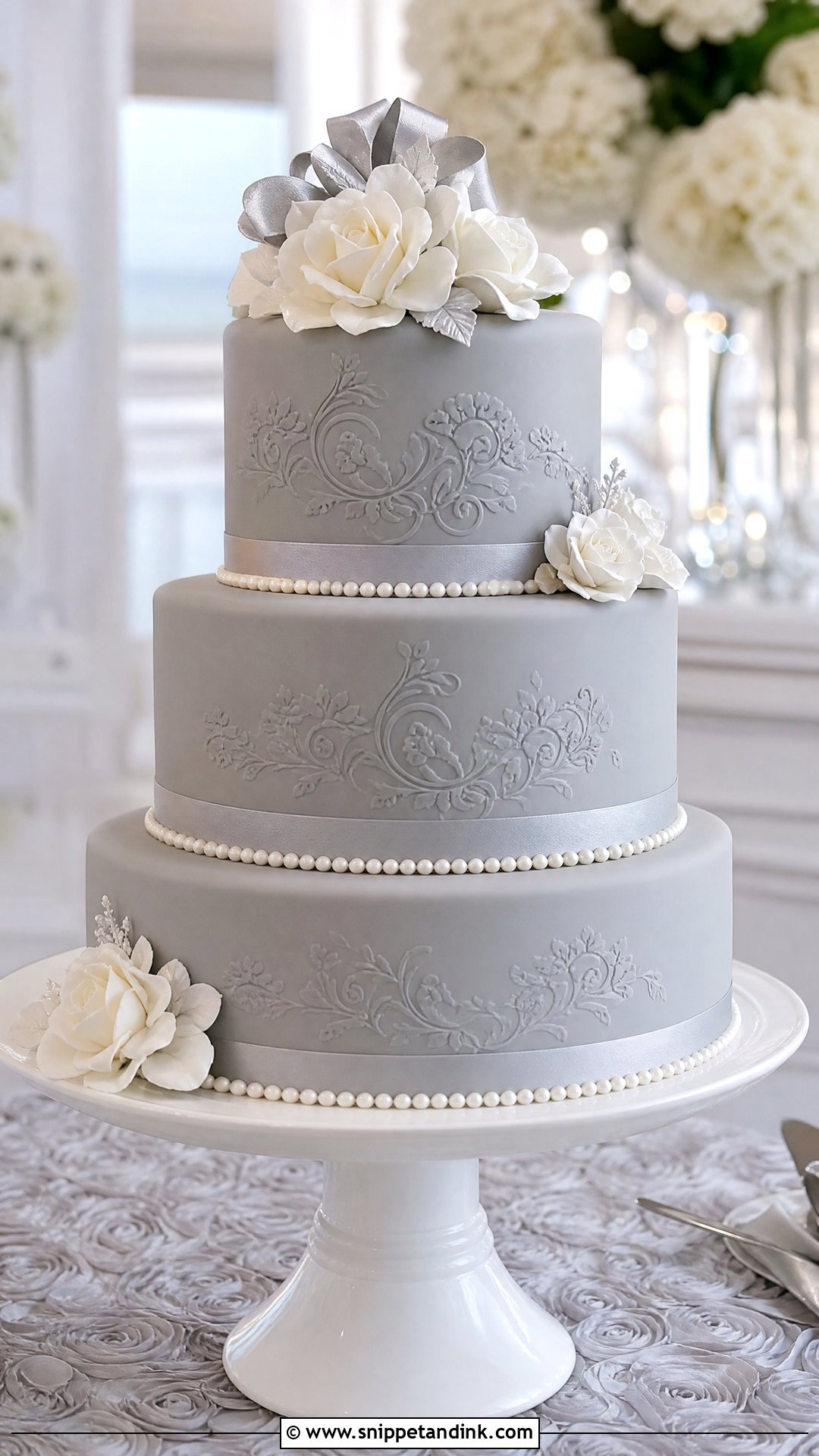
A grey fondant wedding cake gives you sharp edges, smooth tiers and room for sculpted detail. Dove grey with white sugar flowers looks classic, while a deeper grey reads architectural. Embossed patterns, hand-painted florals, marbling and metallic edging all sit well on fondant. On tall tiered cakes it creates a uniform surface that buttercream struggles to match. Two things to know. Dark grey fondant shows every crack and stretch mark, so it needs an experienced hand, and fondant sweats when a cake moves from a cold fridge into a humid room, leaving beads of moisture that can spot the surface.
11. Grey Ombre Wedding Cake
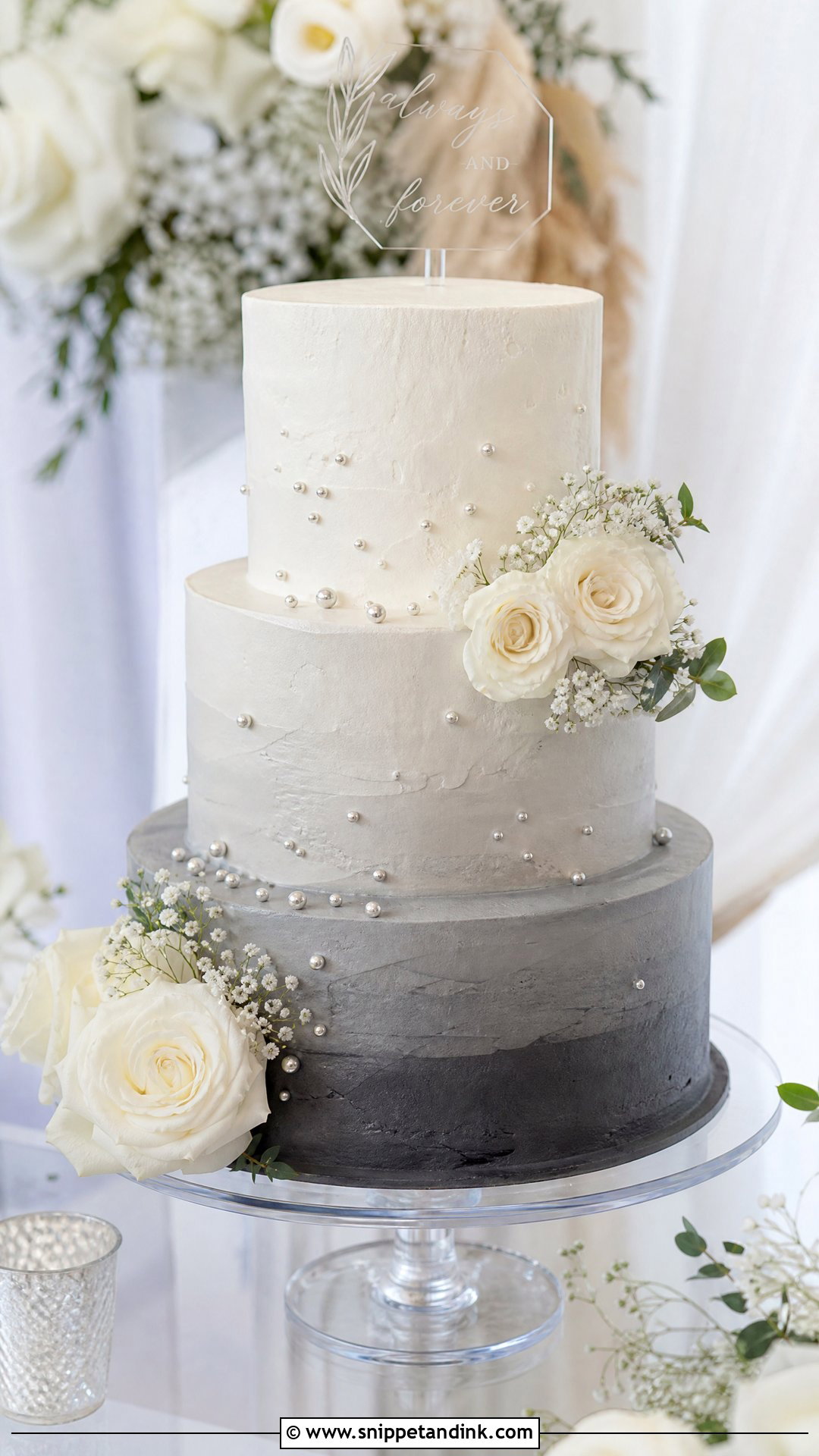
Ombre shades from white at the top to charcoal at the bottom, or more gently from pale silver to mid-grey. I mix every shade from one master batch of grey and simply dilute it with white, which is the only reliable way to keep the tones related rather than drifting between green-grey and blue-grey. Buttercream blends best for this effect. Keep the decoration small, white flowers, silver pearls or a clear acrylic topper, so the color shift stays the point. A good fit for couples who want interest without heavy pattern or a lot of metal.
12. Grey Textured Wedding Cake
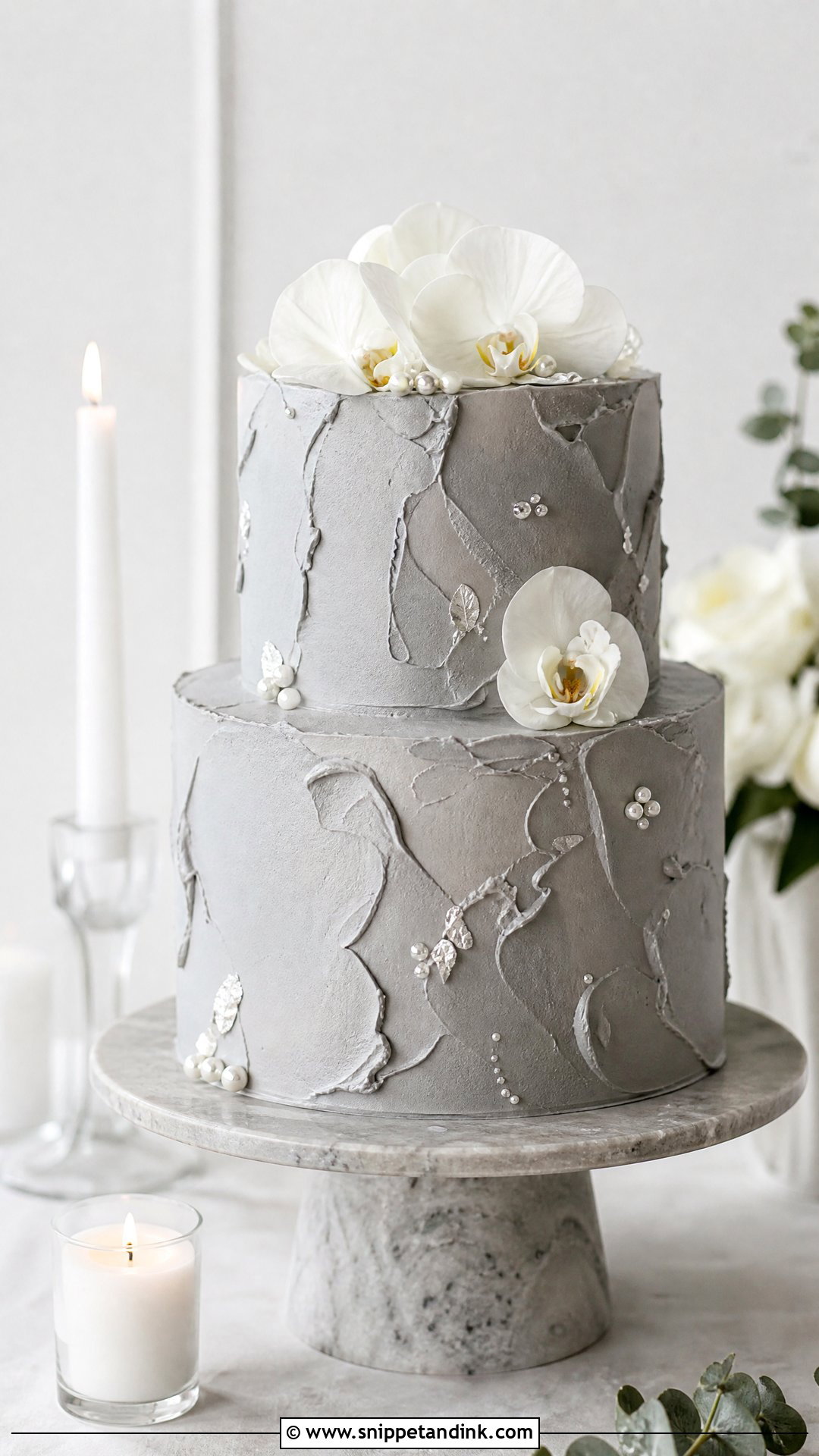
Texture is where grey earns its keep. Soft ridges, stucco-like strokes, fabric-style waves or small ruffles all throw shadows, and grey shows those shadows better than white, which tends to flatten them out in photos. I comb ridges with a textured scraper on a turntable and apply stucco with an offset spatula, deliberately leaving it uneven. It suits minimal weddings and modern venues. A small floral cluster or a few edible pearls is plenty, and some textured cakes look best with nothing at all. If your venue has linen, stone or concrete details, this cake picks them up naturally.
13. Grey Concrete Wedding Cake
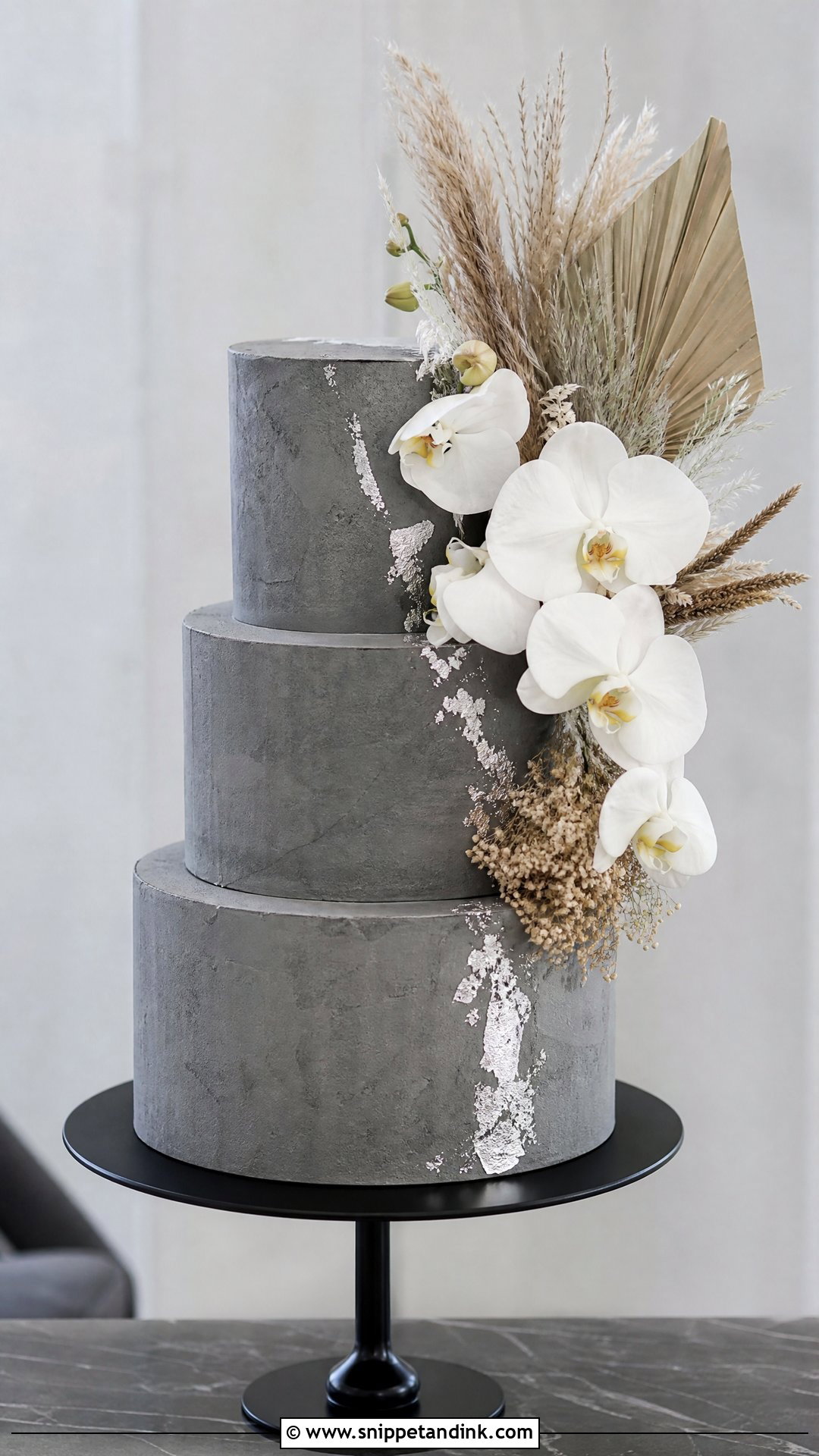
A grey concrete wedding cake belongs at an industrial, urban or minimalist wedding. I get the matte, stone-like finish by layering a couple of greys and pressing in tiny flecks, then leaving the surface slightly pitted. It pairs with black accents, white orchids, silver leaf, dried grasses or simple greenery. Don’t expect it to look sweet or traditional; it reads more as an edible sculpture. One soft element, white roses or a few delicate sugar petals, keeps it a wedding cake. It looks strongest on a black stand or clear acrylic pedestal with plain candles around it.
14. Grey Geometric Wedding Cake
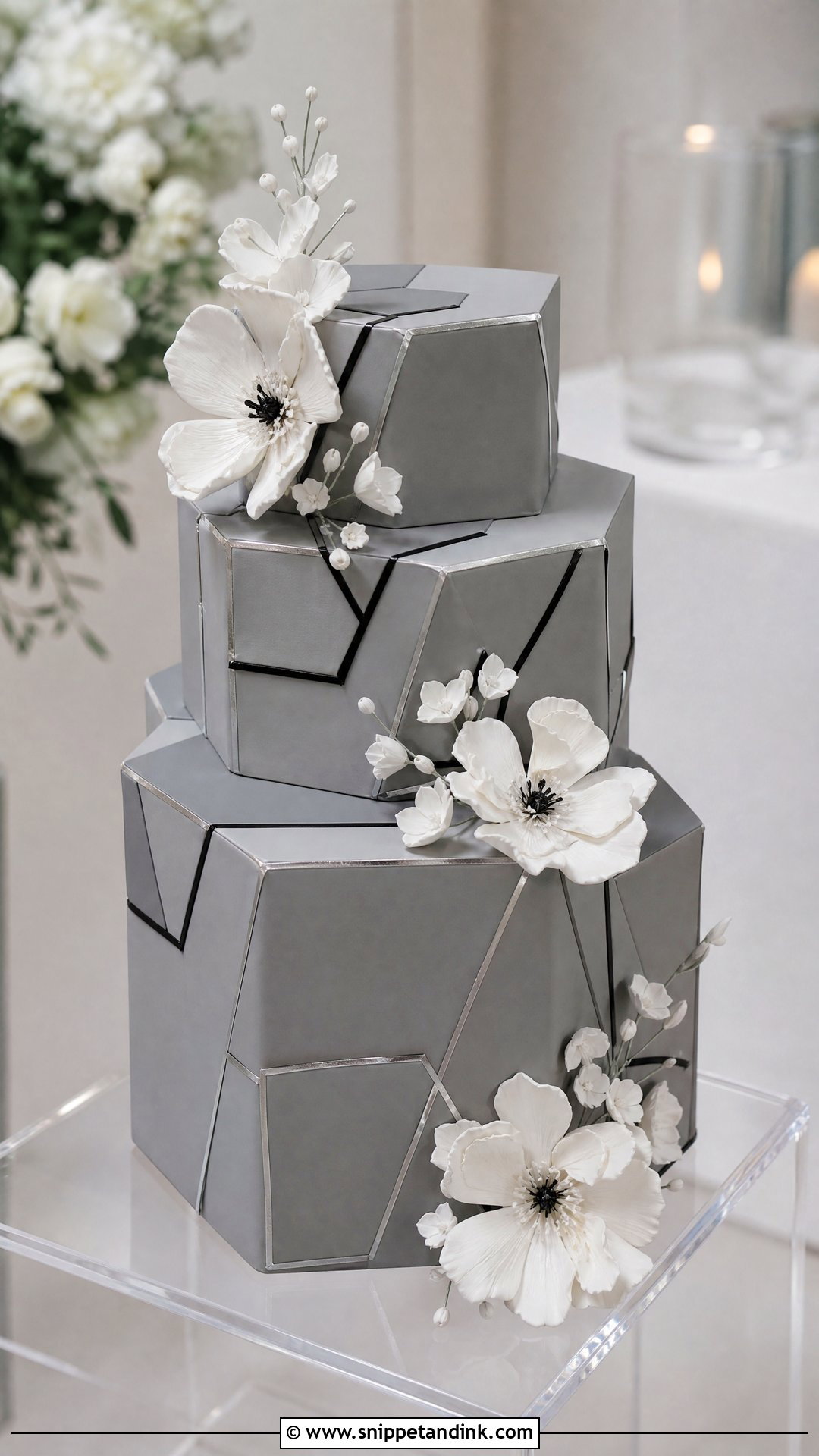
A grey geometric wedding cake brings structure to the table through hexagon tiers, angular fondant panels, knife-sharp edges or painted lines. Grey suits it because the color stays out of the way and lets the shape speak. I add silver, white or black for a modern palette, or a few small flowers to soften it. Rooftops, contemporary venues and design-minded couples tend to choose it. Keep the decoration focused. Hexagon and square tiers do take longer to cover cleanly than rounds, and each sharp corner is a point that can crack in transport, so they’re best from a baker who does them often.

15. Grey Pearl Wedding Cake
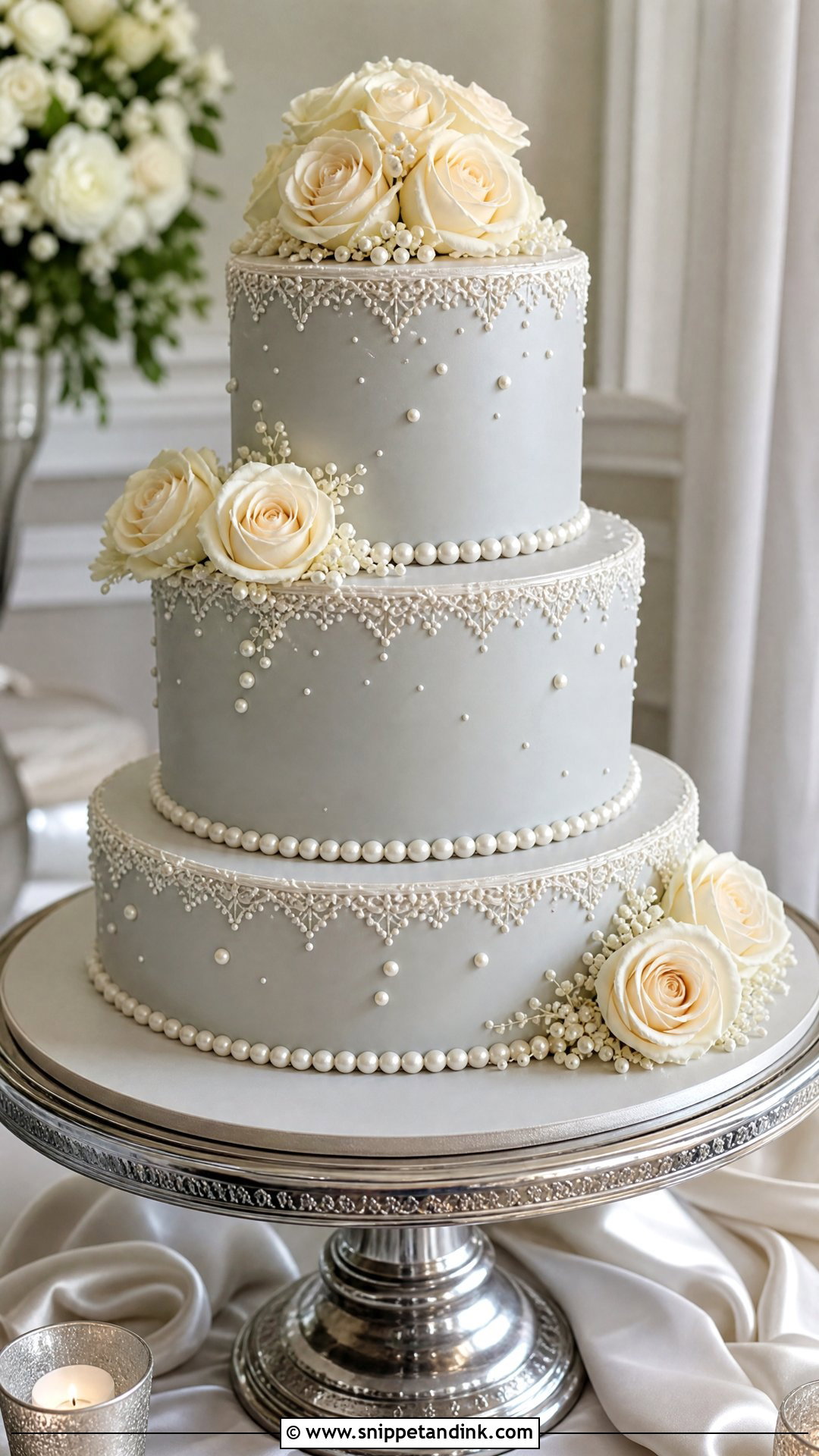
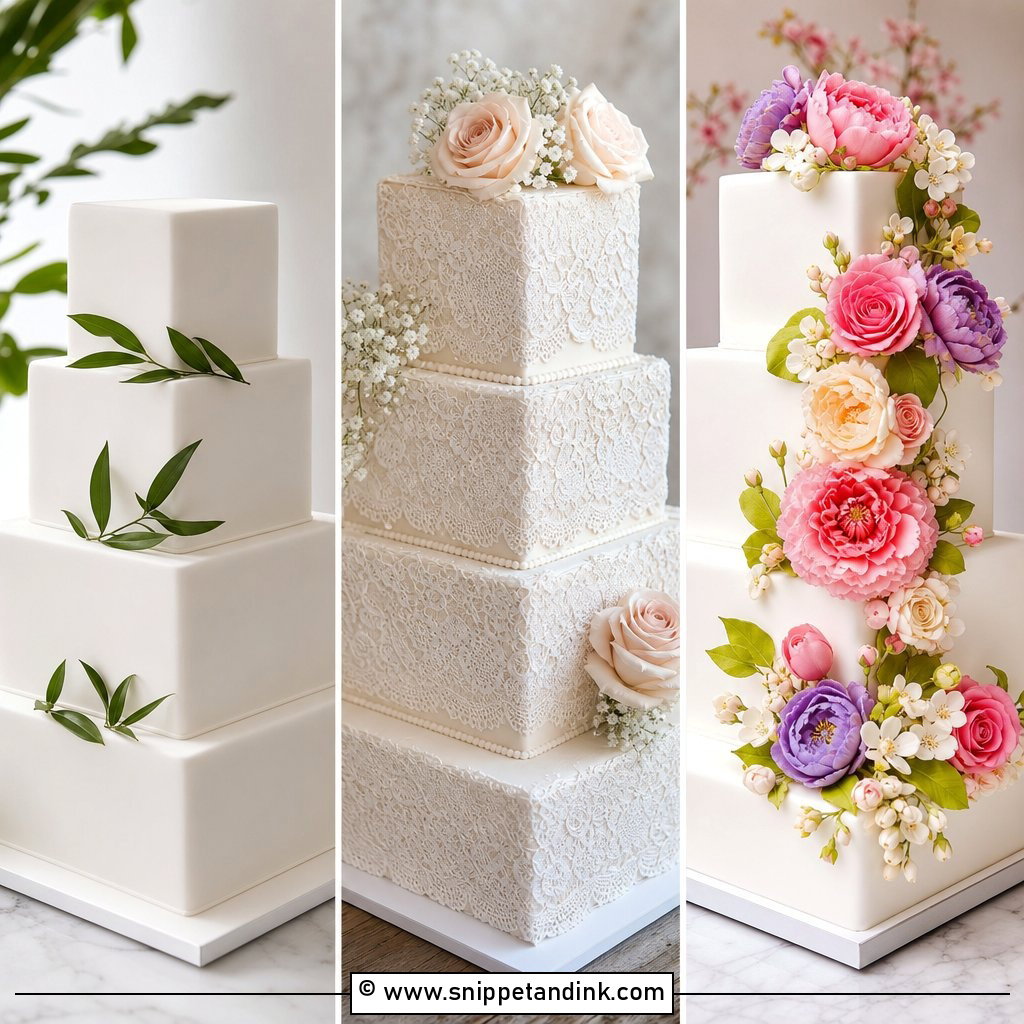
A grey pearl wedding cake leans slightly vintage, and pale grey makes edible pearls, pearl borders and fine piping stand out more than white would. It suits classic weddings and brides wearing pearl jewelry or satin. I place pearls in small clusters, as a border around each tier, or scattered lightly. Covering every inch is very dramatic, and very slow. White flowers, ivory ribbon or a soft lace pattern pair with it. A practical note: sugar pearls are hard, so I keep them off the slices that will be served to children, or use the softer fondant kind.
16. Grey Lace Wedding Cake
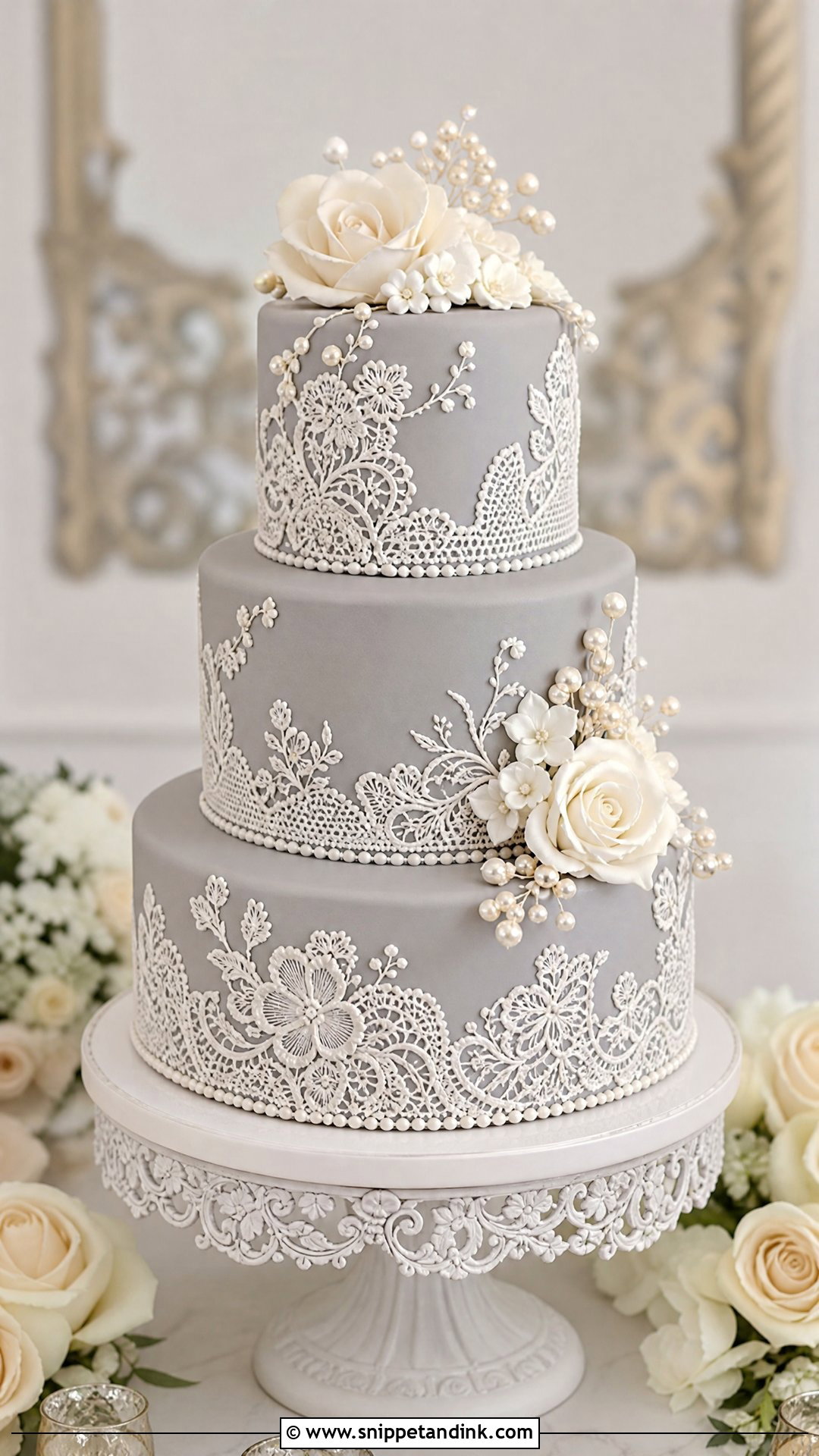
Lace on grey can be made with fondant cutters, molded edible lace, piping or embossing, and white lace against a grey base shows every thread of the pattern. It suits vintage gowns, garden venues and candlelit receptions. Keep the full cake grey with white lace overlays, or alternate grey and ivory tiers. If you want the cake to echo your dress, bring a photo or a small offcut of the actual lace; I can match the motif closely by piping. Small sugar flowers, pearls or a soft ribbon complete it. Edible lace sheets are sensitive to humidity and can turn sticky, so I apply them close to delivery.
17. Grey Ruffle Wedding Cake
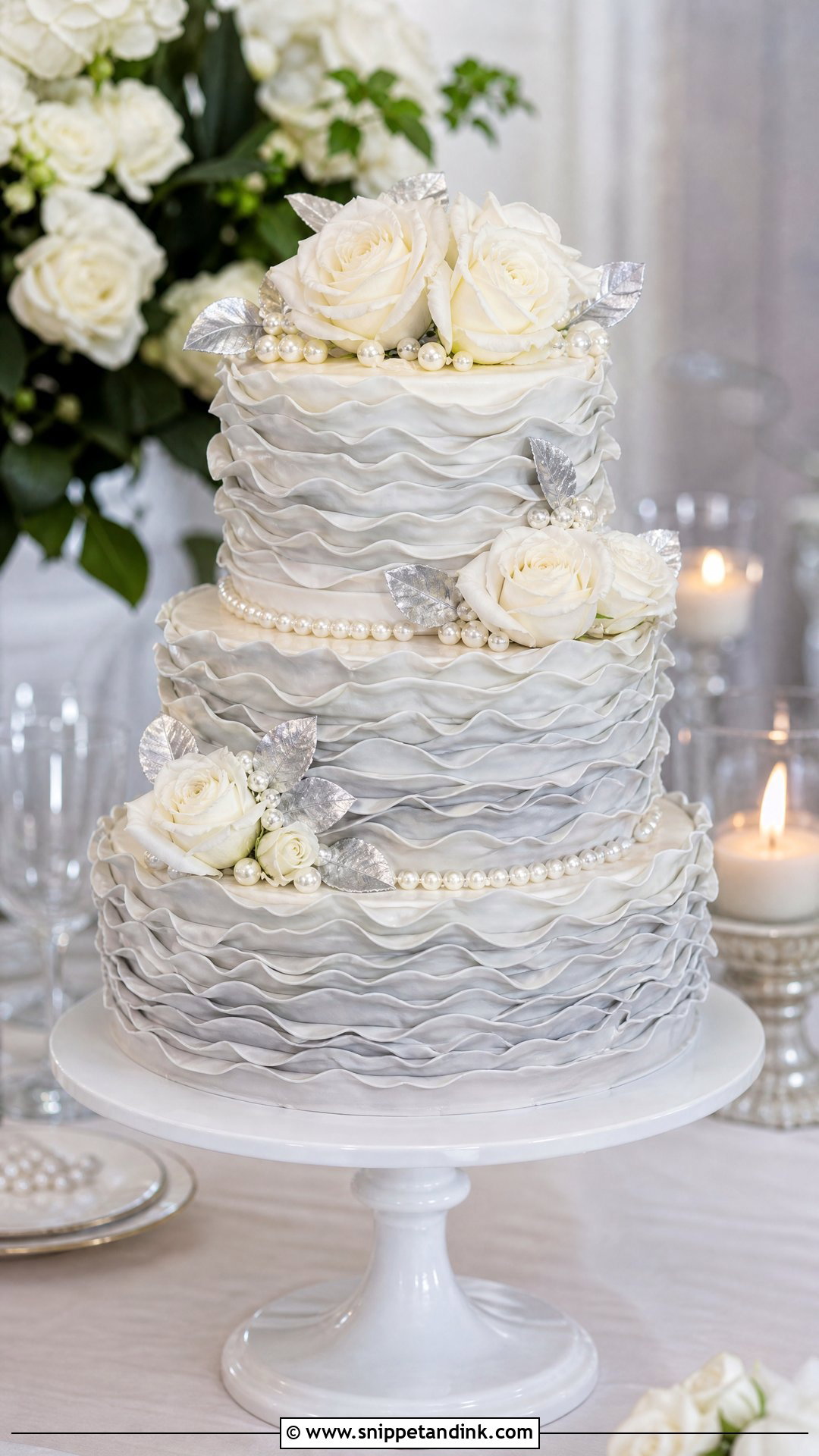
Ruffles add movement and softness. They can wrap one tier or the whole cake, depending on how much drama you want. Pale grey ruffles look airy, and deeper grey ones look almost couture. I cut fondant ruffles thin and attach them in rows from the bottom up, which takes hours, so a fully ruffled cake usually costs more than its plain size would suggest. It suits elegant indoor weddings and couples who want detail without heavy florals. A few white roses or pearl accents are enough, and the folds look good from every side of the table.
18. Grey Watercolor Wedding Cake
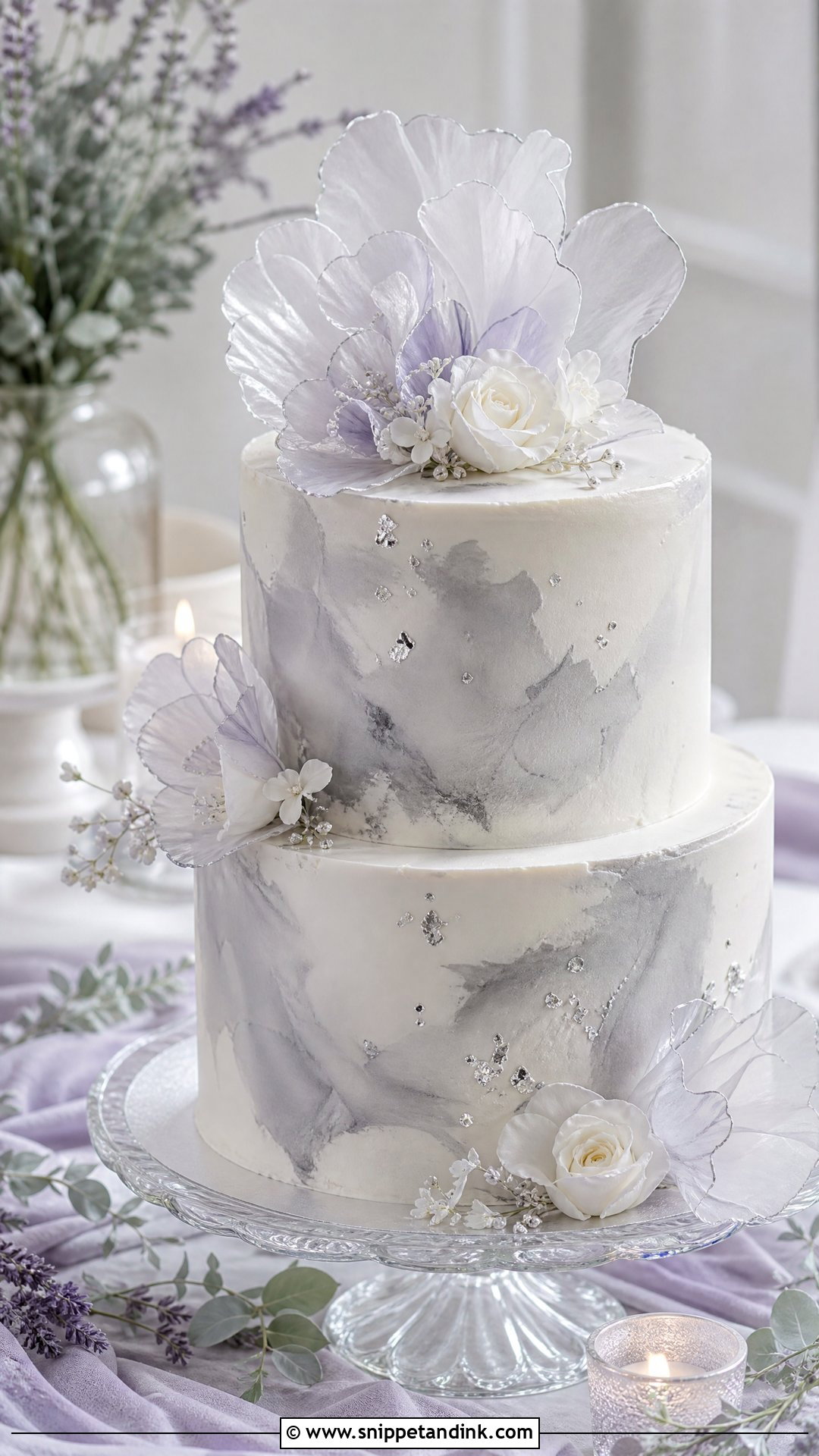
Watercolor lets grey into the design without committing every tier to it. I brush washes of pale grey, smoky strokes or blended silver over chilled white buttercream with diluted gel color, working fast before the surface softens. The result looks handmade and soft. White flowers, translucent sugar petals or a touch of silver keep the mood light, and it sits well with dusty blue, lavender, blush and ivory palettes. Ask to see a sample if you can, since no two watercolor cakes come out alike.
19. Grey Drip Wedding Cake
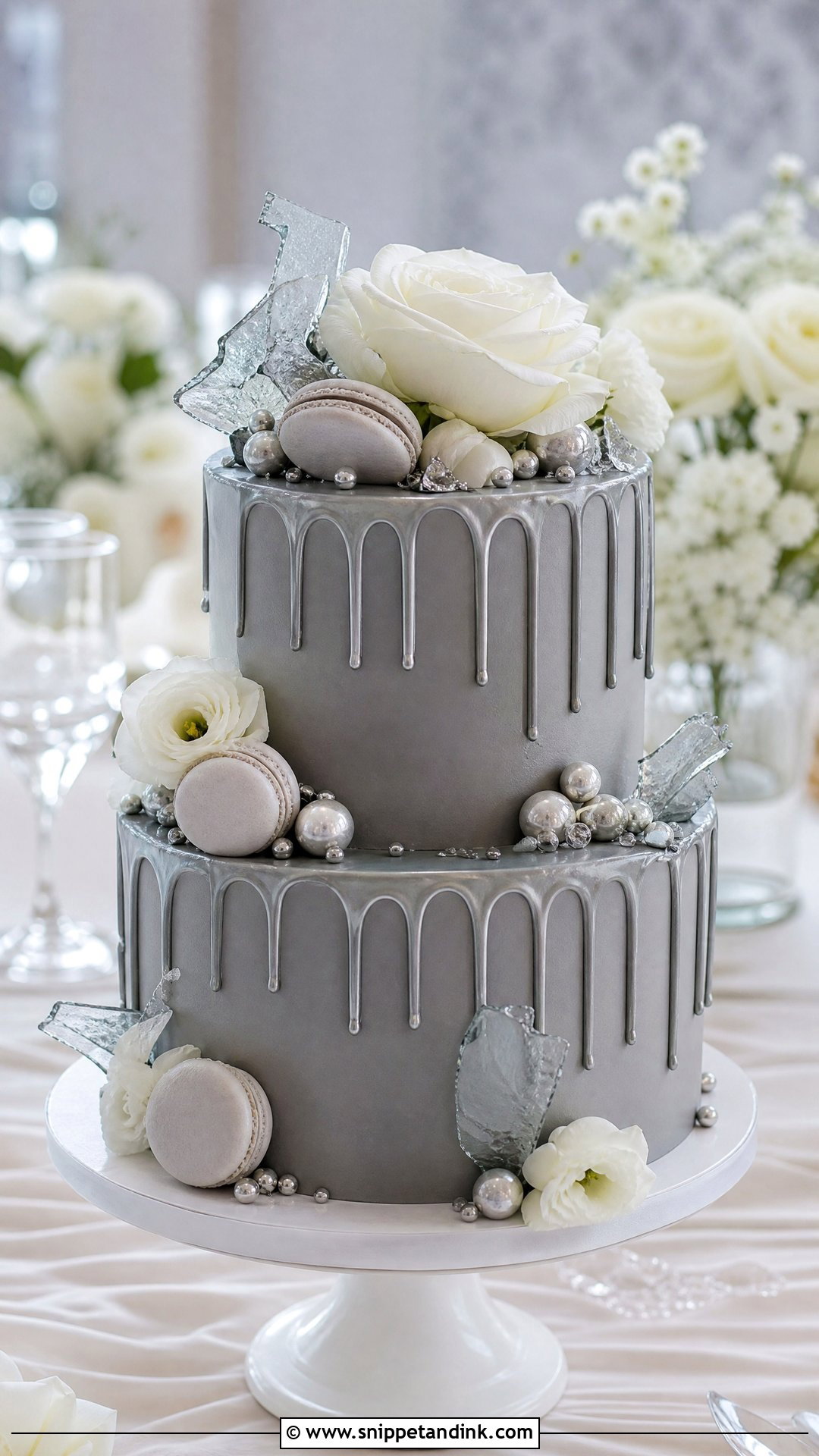
A drip makes a grey cake a little more playful while staying wedding-appropriate. I pour it in silver, in white chocolate tinted grey, or in dark charcoal for contrast, over a chilled smooth grey buttercream so it sets in neat runs instead of sliding to the board. Macarons, white flowers, sugar shards, berries or metallic details can crown it. For a formal wedding, keep the drips thin and evenly spaced. For a relaxed reception, fuller drips feel fun. The temperature of the ganache decides everything, and a drip that’s too warm will run all the way down.





20. Grey Single Tier Wedding Cake
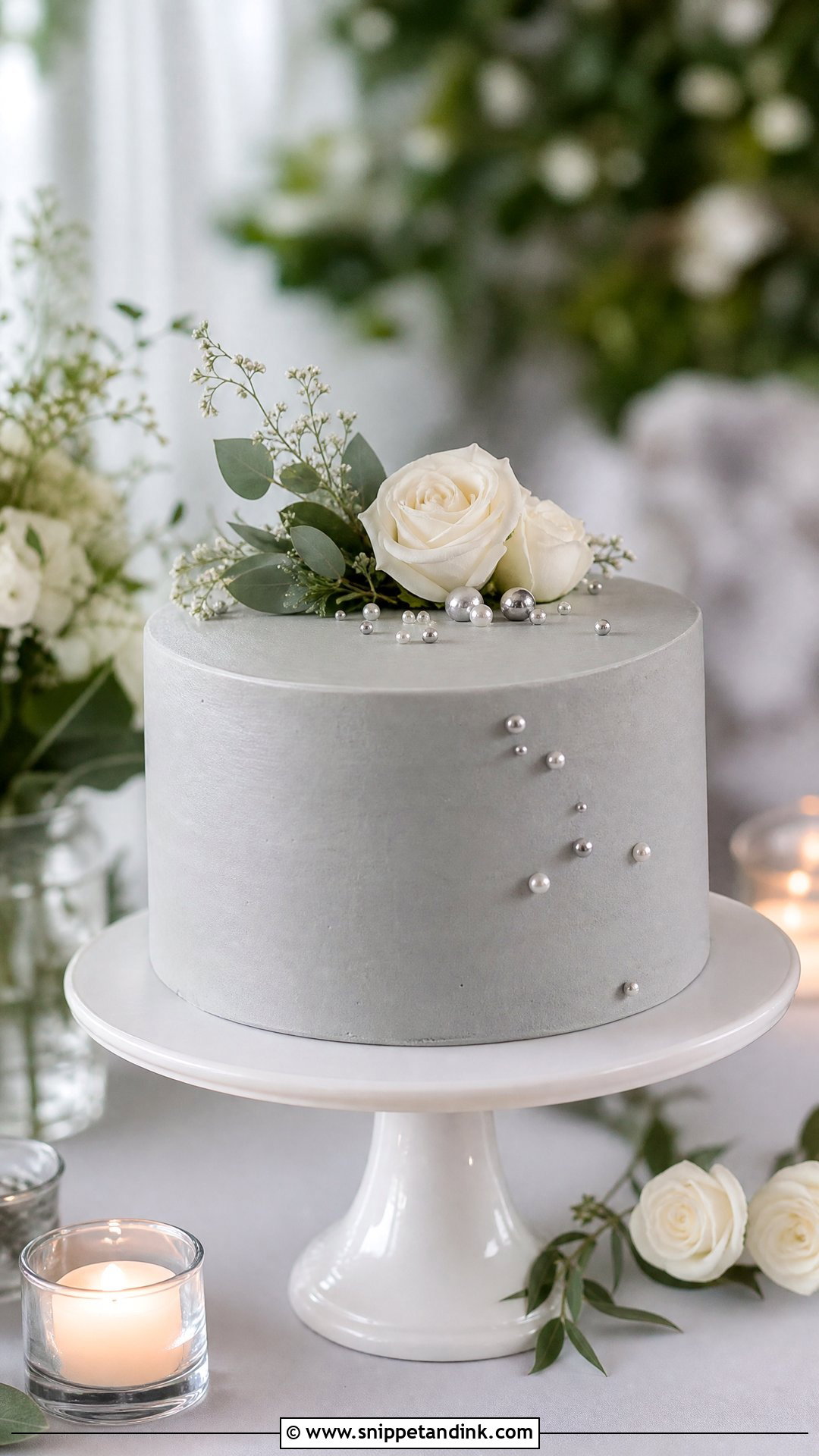
One tier suits intimate weddings, elopements and receptions with a separate dessert table. Because it’s small, the budget can go into better flavor and finer detail: a smooth grey finish, soft texture or marble, plus flowers, pearls or a small topper. I’d lift it on a tall stand with candles and a few flowers around it so it still holds its place in the room. If you need it to serve more people than one tier can, a plain kitchen cake in the same flavor, sliced out of sight, is a common and sensible solution.
21. Grey Two Tier Wedding Cake
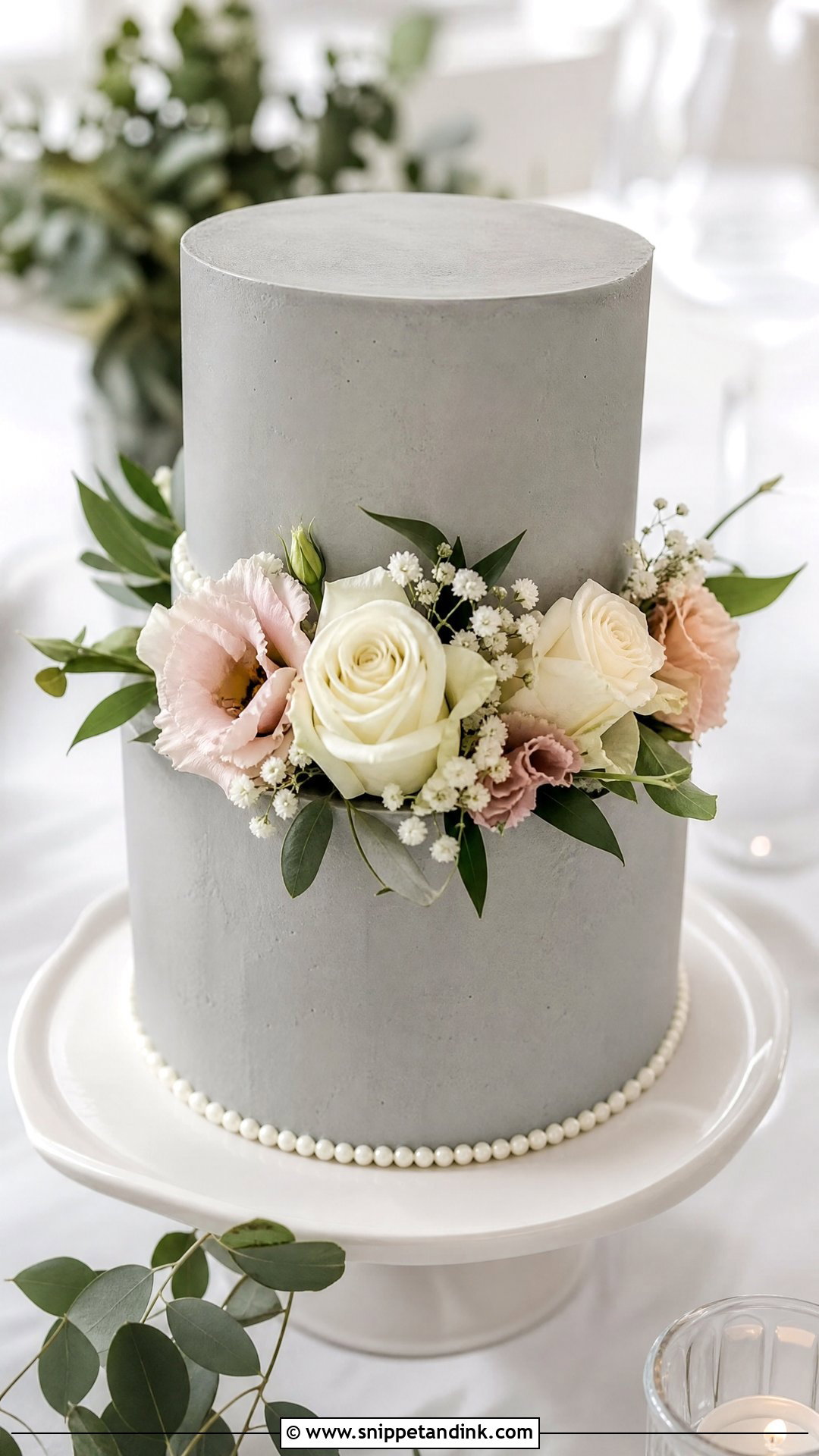
Two tiers sit between the intimacy of one and the formality of a tall cake, and they suit small to medium guest counts, especially alongside other desserts. Keep both tiers the same grey or pair pale grey with white. Flowers on top and between the tiers lean romantic; smooth frosting with a silver edge leans modern. Height is the thing I’d adjust. Extra-tall tiers, made with more layers of sponge, make a two-tier cake look grander in photos without adding many more servings.
22. Grey Three Tier Wedding Cake
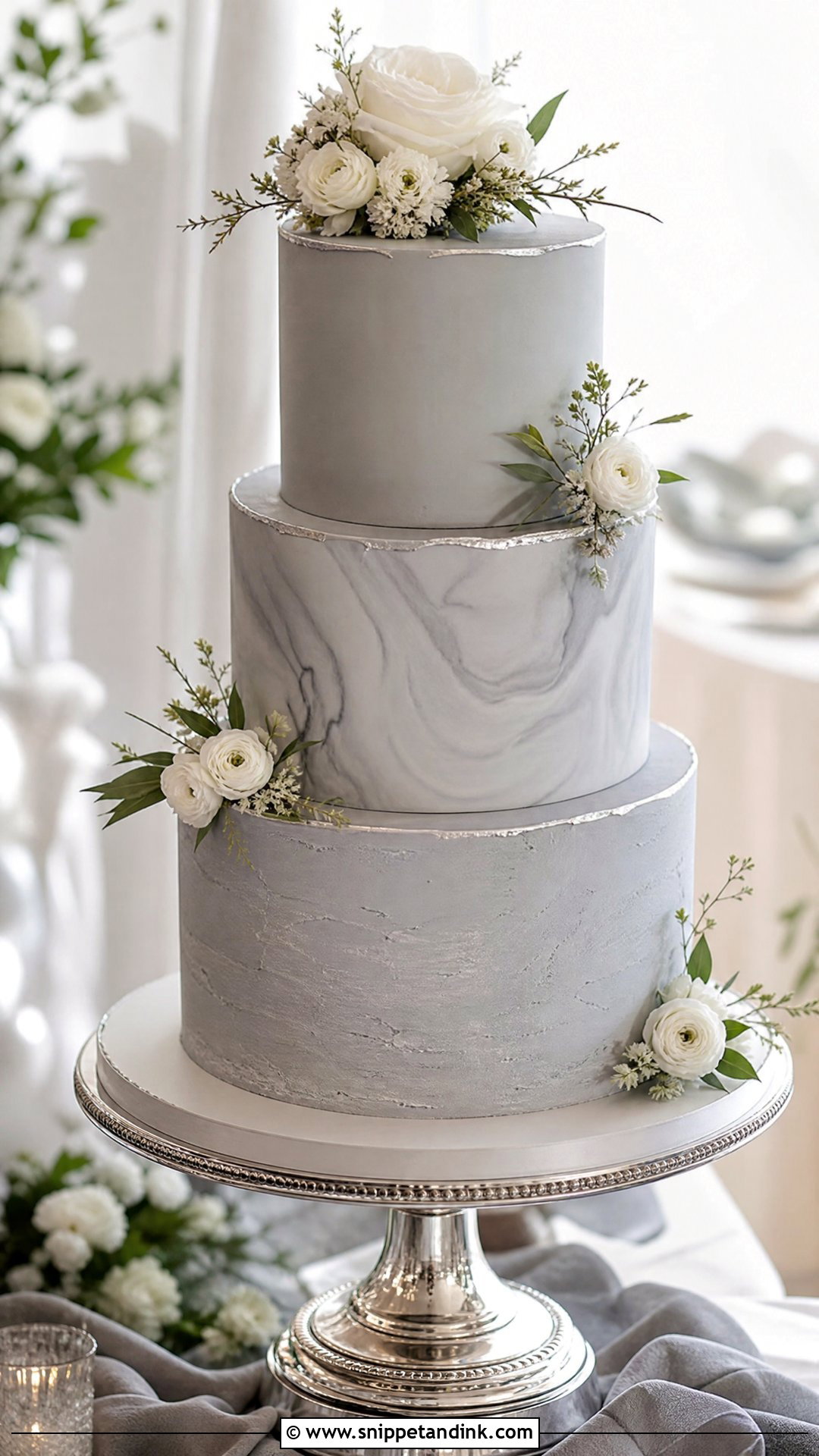
Three tiers give you a proper centerpiece without feeling oversized, and enough surface for texture, flowers, metallic accents or mixed finishes. A marble bottom tier, a smooth middle and a floral top tier is one combination I like. Pale grey stays elegant; charcoal adds drama. Repeat one detail across all three, silver edging or white blooms, so the tiers look like one cake. Any stacked cake this size needs internal dowels and a central support, and I’d ask your baker whether it travels stacked or gets assembled at the venue.
23. Grey Vintage Wedding Cake
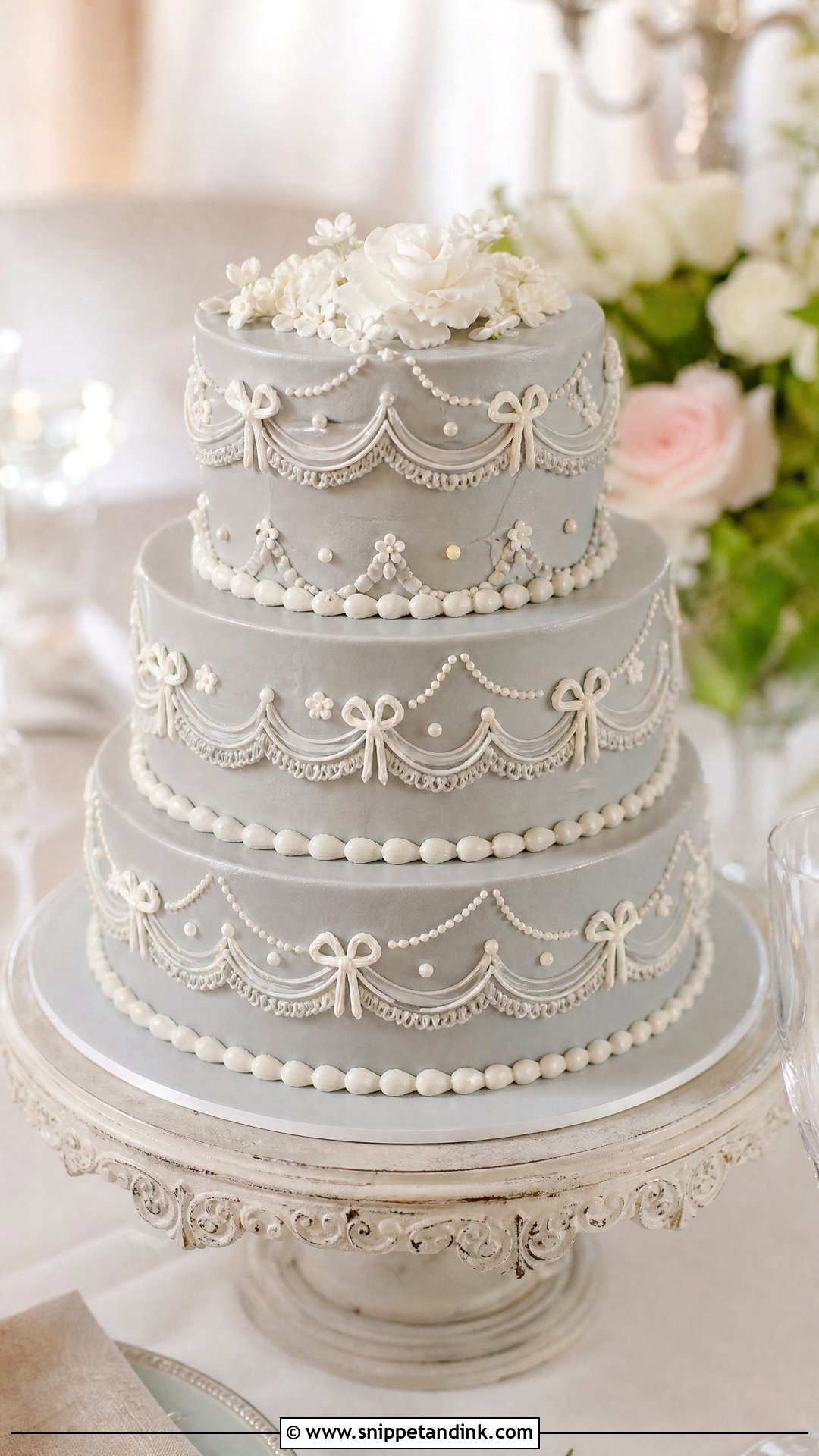
Vintage piping in grey feels fresher than the usual all-white version. Think piped borders, scalloped edges, pearl accents and soft buttercream details, done as a round tiered cake or a heart-shaped one for nostalgia. White piping over light grey gives the clearest contrast, and small bows or sugar flowers add charm. It suits historic venues and romantic receptions. Keep the grey soft; on a dark base, heavy Lambeth-style piping starts to look gothic. This kind of piping is all freehand and slow, which is worth knowing when quotes come back higher than a smooth cake of the same size.
24. Grey Minimalist Wedding Cake
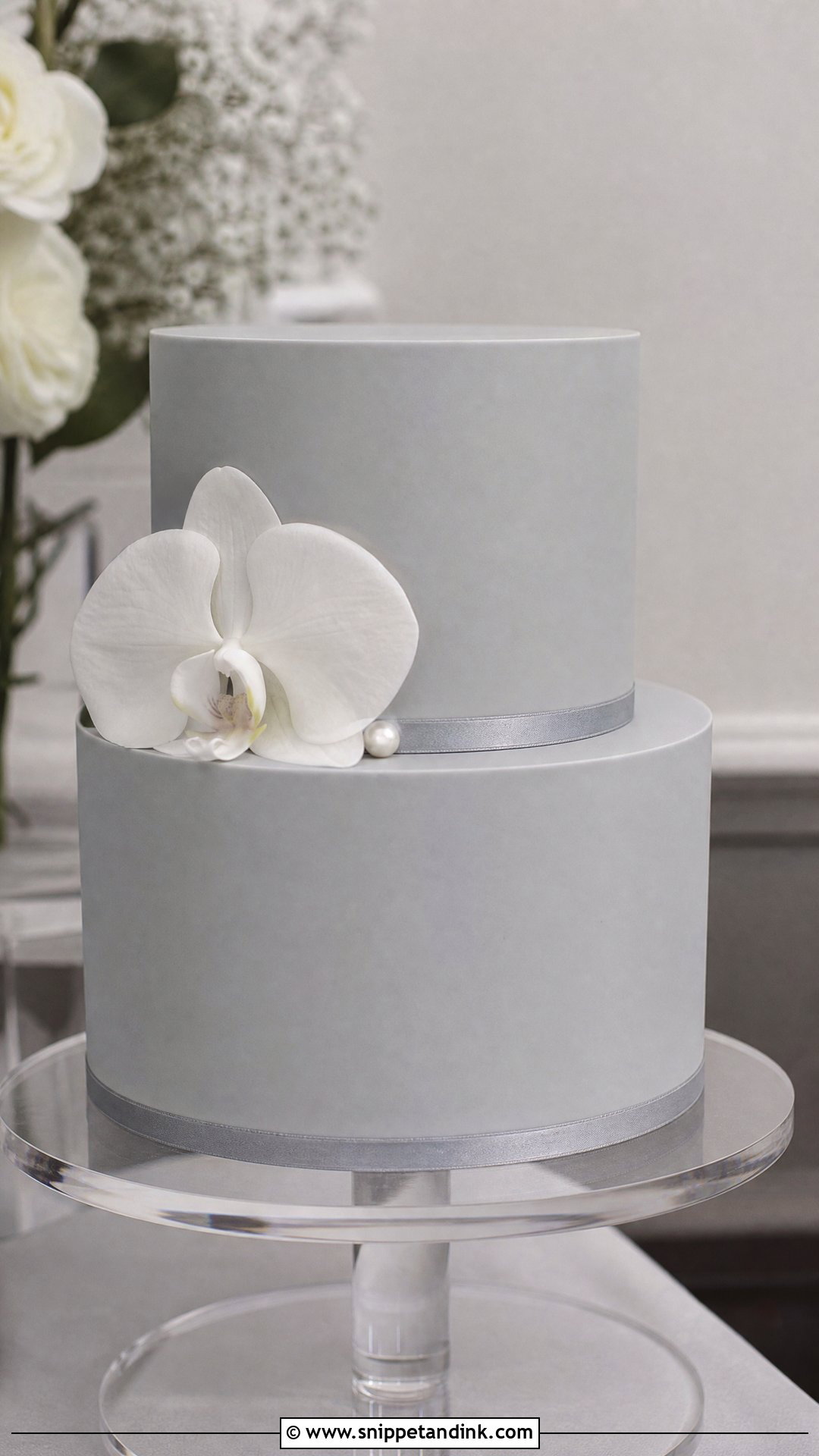
A minimalist cake has nowhere to hide, so the finish has to be flawless. Smooth pale grey, sharp edges and one detail, a single flower, a thin ribbon or a small metallic touch, is the whole design. I chill each tier between coats and finish with a hot bench scraper to get edges that sharp, which is more time than people expect for a cake with so little on it. It suits modern weddings, small ceremonies, neutral linens and clear glassware. Nothing else on the cake will distract the eye, so even a small dent shows.




25. Grey Cake With White Roses
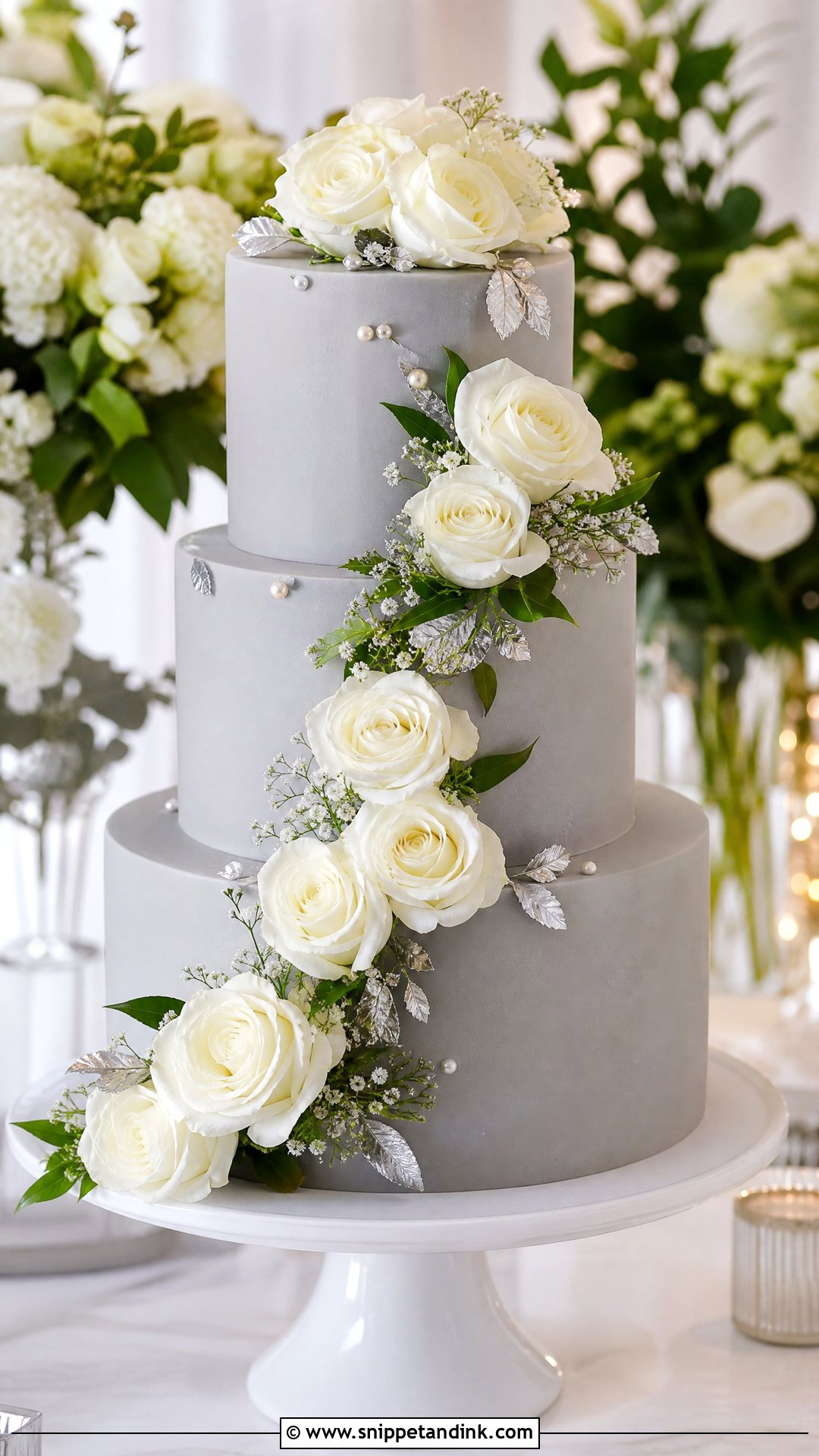
White roses on grey is the contrast most people picture first, and it works with buttercream, fondant, marble or texture underneath. Grey gives depth while the roses keep it bridal. I place them in a cascade, around the base, or in small clusters between tiers. Greenery leans garden; silver detail leans formal. If the roses are fresh, ask your florist for a variety that holds its shape out of water for several hours, because cake flowers get no water at all once they’re placed.
Silver Leaf and Luster Dust Aren’t Always Food
Grey cakes lean on metallics more than most, so this matters here. Some silver and shimmer products sold for cake decorating are labeled non-toxic, which means they’re safe to touch the cake but are not meant to be eaten. Food regulations on edible silver also differ by country. I keep anything that isn’t clearly approved as edible on removable pieces only: a sugar plaque, a topper or a ribbon band that comes off before slicing.
A simple question settles it: “Which decorations on this cake can guests eat, and which ones come off before cutting?” A good baker answers that right away and will tell the catering team too.
How Far Ahead to Order, and Getting Charcoal to the Venue Clean
Most wedding cake designers book months out, and popular dates fill early, so it’s sensible to start inquiries about six months ahead and earlier for peak season, though it varies widely. Sugar flowers are made days or weeks in advance and need time to dry, which is one reason late changes to the flower plan are hard.
Dark cakes need extra care on delivery day. Every fingerprint, scuff from the box or smear from a dowel shows on charcoal far more than on white, so I bring a small repair kit of matching frosting and a palette knife. Ask where the cake will sit at the venue. Direct sun, a spot next to the kitchen door or a table under heat lamps will soften buttercream, and a cake that came out of cold storage into a humid room can bead with condensation for a while before it settles.
Start From the Flowers, Then Pick the Grey
Grey can be soft, bold, modern, romantic, vintage or almost bare, which is why it fits so many weddings. Pale grey feels airy, charcoal feels dramatic, marble feels modern and silver adds polish. When couples can’t decide, I ask them to bring photos of their flowers and linens, then mix a grey that supports those rather than competing with them. Taste a sample of the colored frosting at your tasting if you’re leaning dark. A grey cake should feel connected to the rest of the room, and when the shade is right, it does.
You'll Like These Ideas:





Leave a Reply