
A 3 tier floating wedding cake gives a reception table real height without the cost and weight of a five-tier build. Each tier sits on its own board and its own support, with a gap between them held open by clear acrylic separators, hidden columns or a ring of flowers. I like this format because the air between tiers does half the decorating for you; even a plain cake suddenly has shape. The trade-off is engineering. Every gap is a joint that has to be level, supported and assembled at the venue, so the ideas below come with notes on how each one is actually built and where it tends to go wrong.
What Actually Holds a Floating Tier in the Air
Every floating cake is really three separate cakes sharing one support system. Each tier is baked, filled and iced on its own cake board, then dowelled so the board, not the sponge, carries the weight of whatever goes above it. The separator sits on those dowels, and in most of my builds a central rod runs down through all three tiers so nothing can slide sideways if someone knocks the table.
That’s why I’d never assemble one in my kitchen and drive it across town. The tiers travel in separate boxes, flat and chilled, and the cake goes together at the venue on the table it will actually stand on. Expect your baker to need around an hour on site, and longer when fresh flowers are going into the gaps.
Questions worth putting to your baker
- Do you own your separators or hire them, and is there a deposit for returning them?
- Is there a central rod, or does each separator rest on dowels alone?
- How tall will the gaps be? Too tall and the cake looks spindly; too short and the floating effect disappears.
- Who sets it up, and how much time do you need at the venue?
- Is the cake table solid and level? A wobbling folding table will make any tall cake lean.
1. 3 Tier Floating Floral Wedding Cake
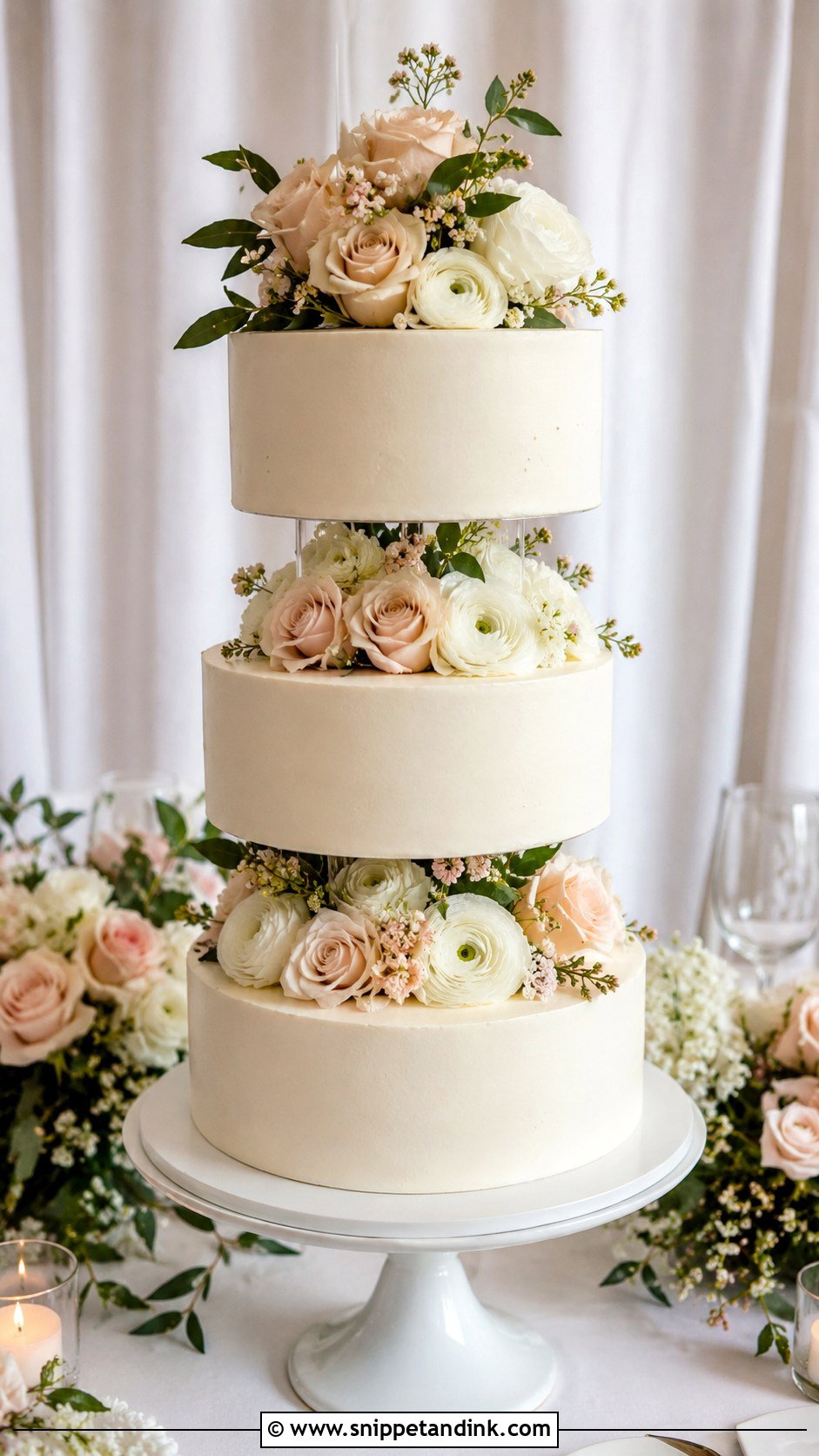
Flowers growing through the cake are the reason most couples ask for a floating design, and it’s the version I plan most carefully. Fresh roses, orchids and ranunculus can sit in the gaps, but every stem has to be wrapped or set in a food-safe pick so sap and florist chemicals never touch the sponge. Sugar flowers skip that problem entirely and won’t wilt under lights, though they cost more in hours. Keep the icing smooth ivory so the blooms read clearly, and ask your florist to supply the cake flowers from the same order as the centerpieces so the colours match exactly.
2. 3 Tier Floating Pearl Wedding Cake
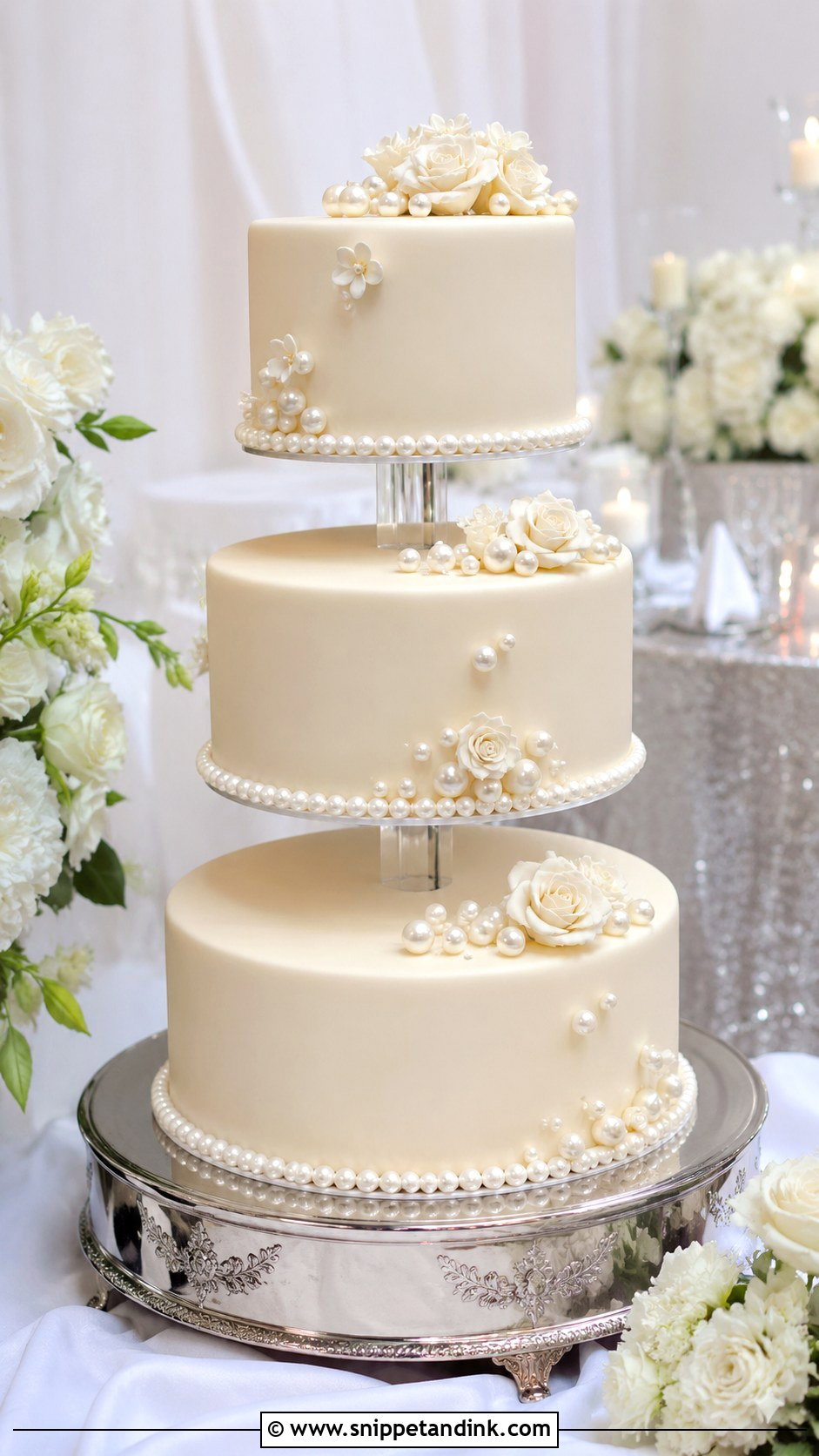
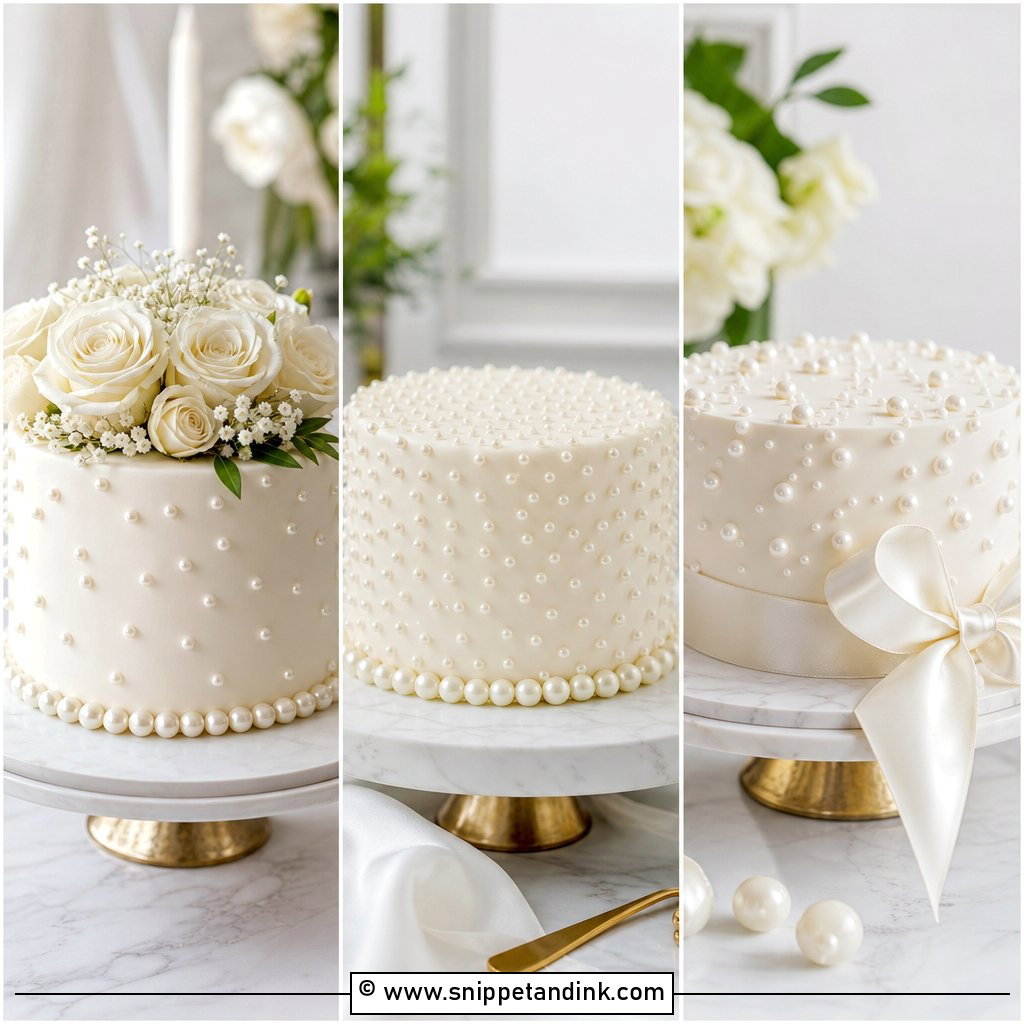
Edible pearls are fiddly to place but forgiving to look at. I pipe them on in neat borders or let them trail down one side, and on a floating cake they look lighter than on a stacked one because each tier is framed by air. Stick to white and ivory; mixing gold and silver dragées on top reads busy fast. One thing worth knowing: pearls pressed into buttercream need the cake chilled first, or they creep downward as the room warms. A satin ribbon at each base is enough to finish it.
3. 3 Tier Floating Gold Wedding Cake
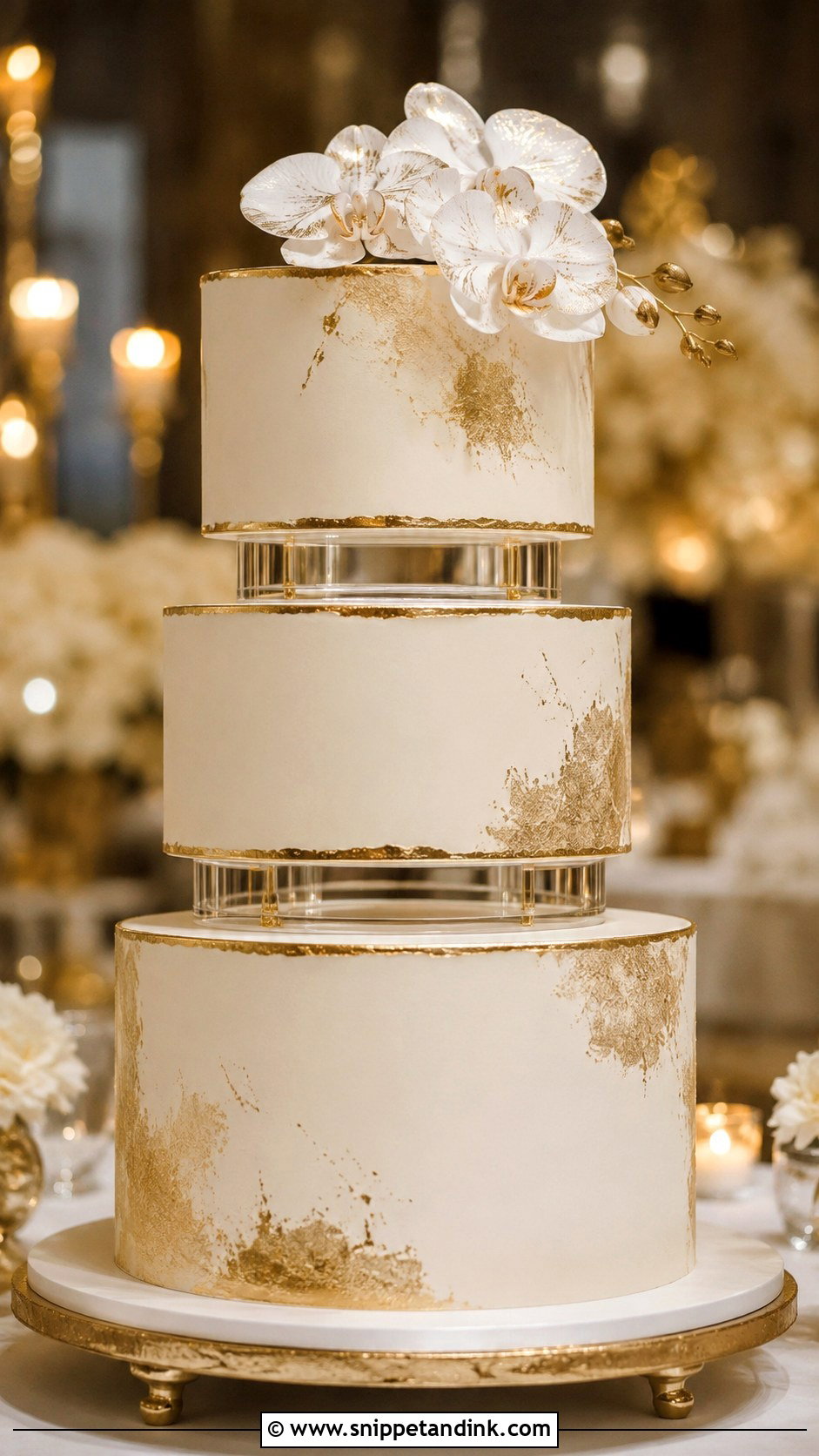
Gold leaf catches the light in the gaps, which is why this design glows under a chandelier. I apply leaf to fondant or to a well-chilled buttercream crust, because it tears on soft icing and wrinkles if condensation forms on the surface. Pick one gold moment, say the middle tier or a thin edge, and leave the rest ivory. Gold everywhere plus gold separators tends to look like a hotel lobby. White orchids or cream roses sit well against it at an evening reception.
4. 3 Tier Floating Buttercream Wedding Cake
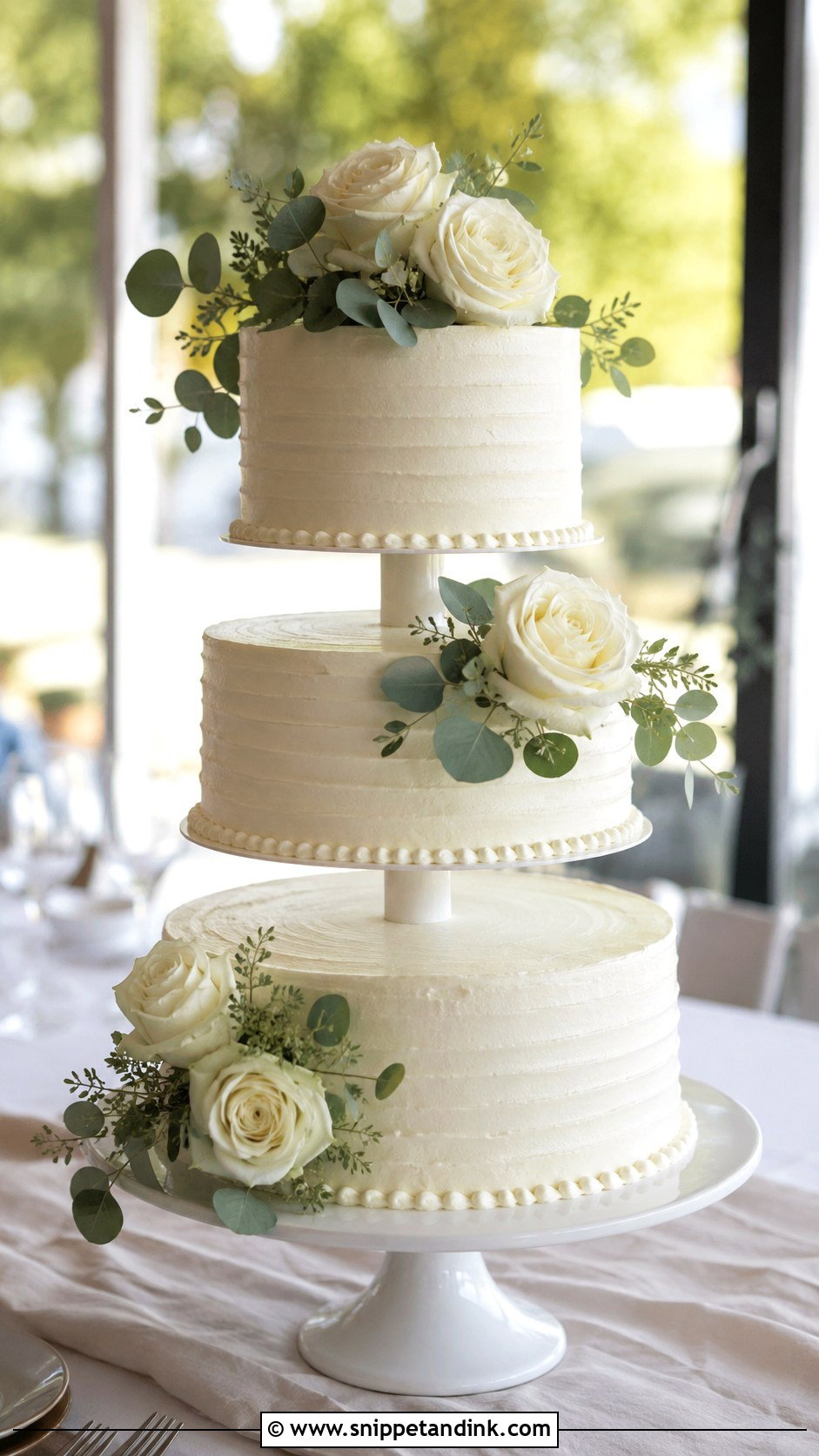
Buttercream on a floating structure feels warmer than fondant and is easier to soften with texture. I usually finish these in smooth Swiss meringue buttercream for clean sides, or with a gentle horizontal comb when a couple wants something that looks handmade. The catch is heat. Buttercream softens well before fondant does, and a raised tier rests its whole weight on a small contact point, so I won’t set one up in direct sun or a stuffy midsummer marquee. Separator panels covered in matching buttercream hide the supports if you’d prefer a solid look.
5. 3 Tier Floating Vintage Wedding Cake
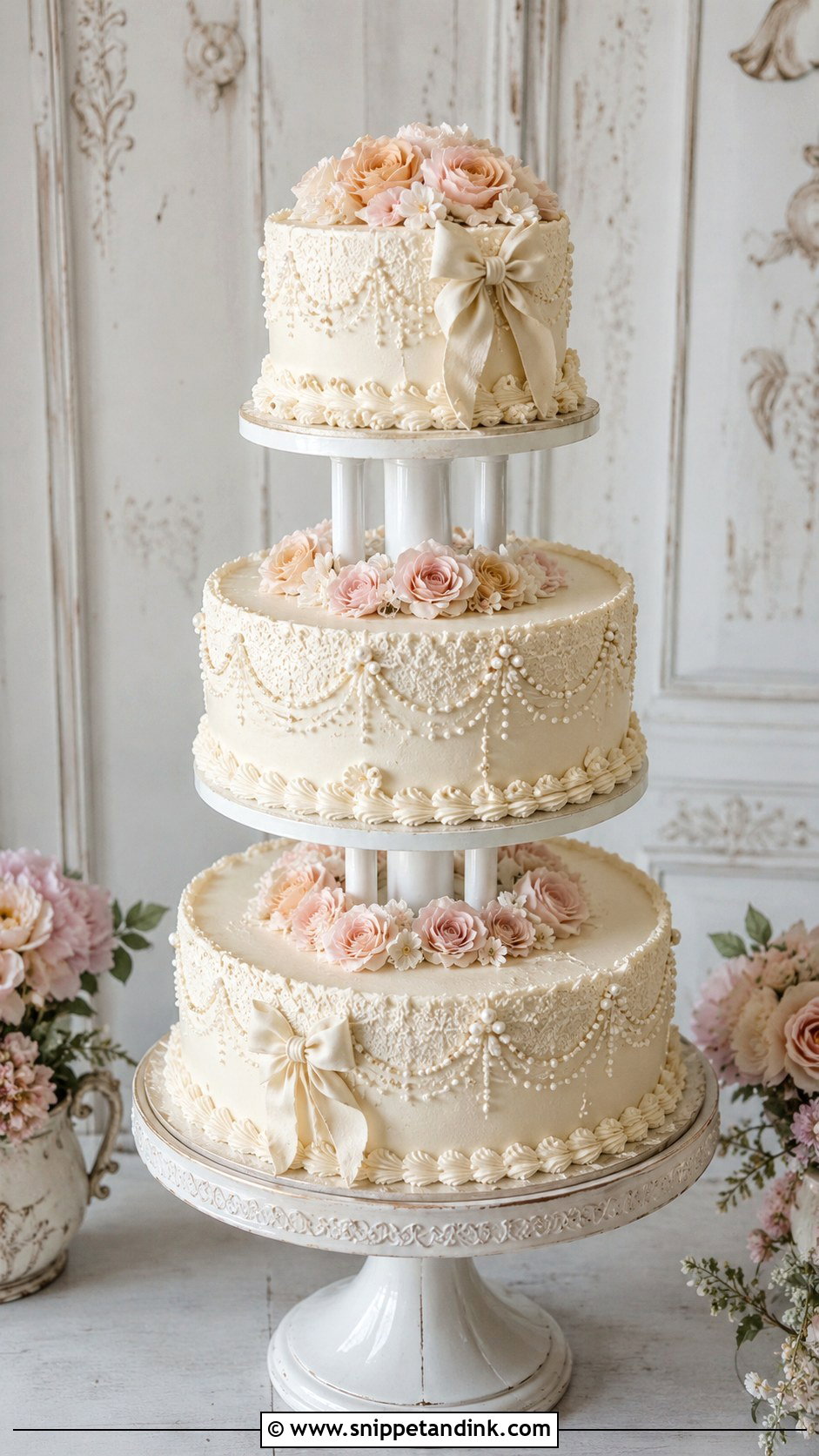
Lambeth piping is the old over-piped style of layered scrolls, swags and drop strings, and it’s slow, careful work. On a stacked cake that much detail can feel crowded; lift each tier apart and the piping finally has room to be seen. I pipe it in ivory or pale pink, because strong colour fights the texture. Columns suit this look better than clear acrylic, which can feel too modern beside all that ornament. The borders are fragile, so each tier travels in its own box and the joins get touched up after assembly.
6. 3 Tier Floating Minimalist Wedding Cake
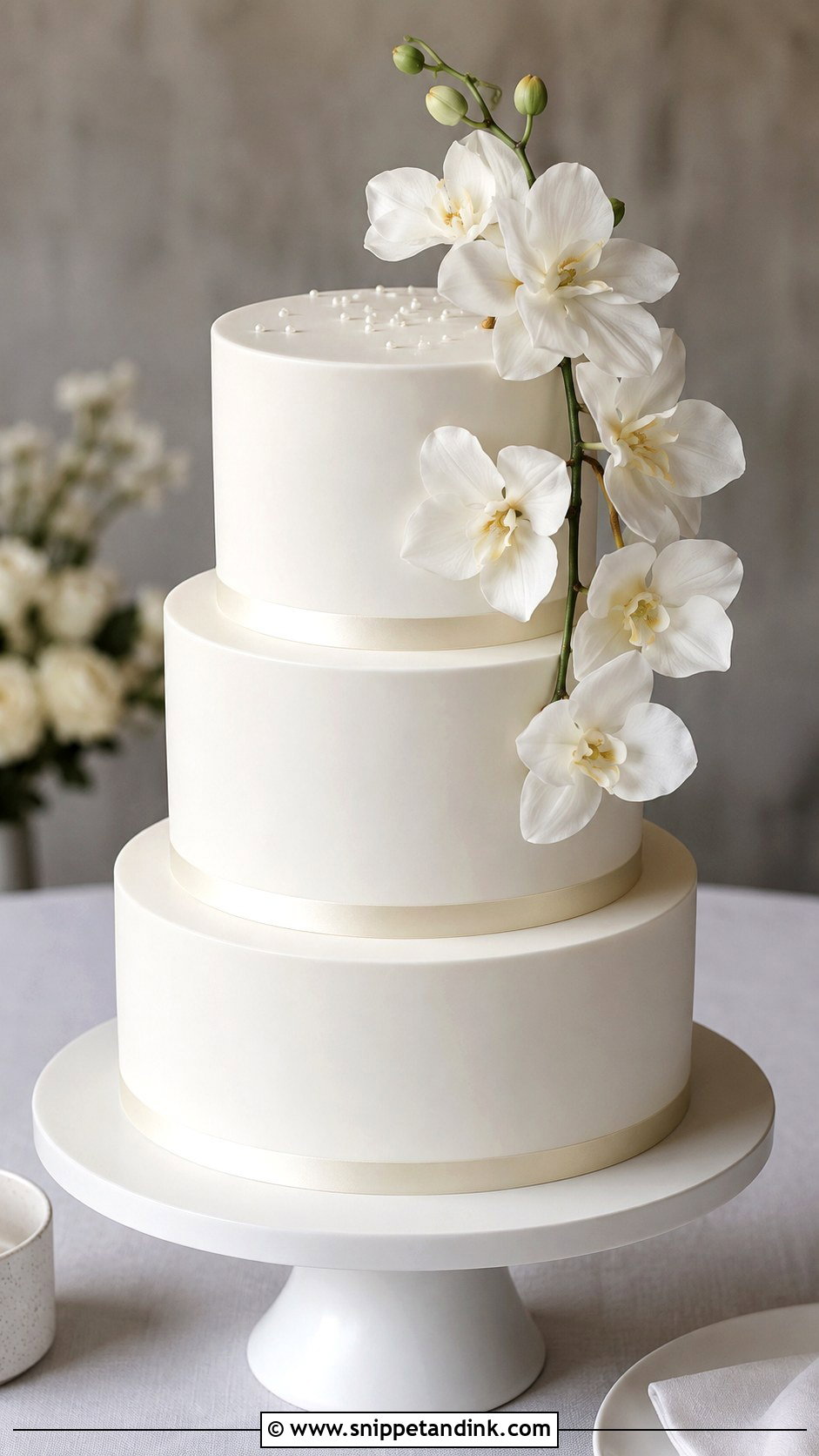
With nothing to hide behind, a minimalist floating cake shows every flaw. Sharp edges, level tiers and identical gap heights matter more here than on any decorated design, so this is the one where I’d ask to see a baker’s photos of plain cakes, not flower-covered ones. Clear acrylic, white icing and a single orchid stem or slim ribbon is plenty. Keep the table bare as well. A busy backdrop swallows the silhouette.
7. 3 Tier Floating Greenery Wedding Cake
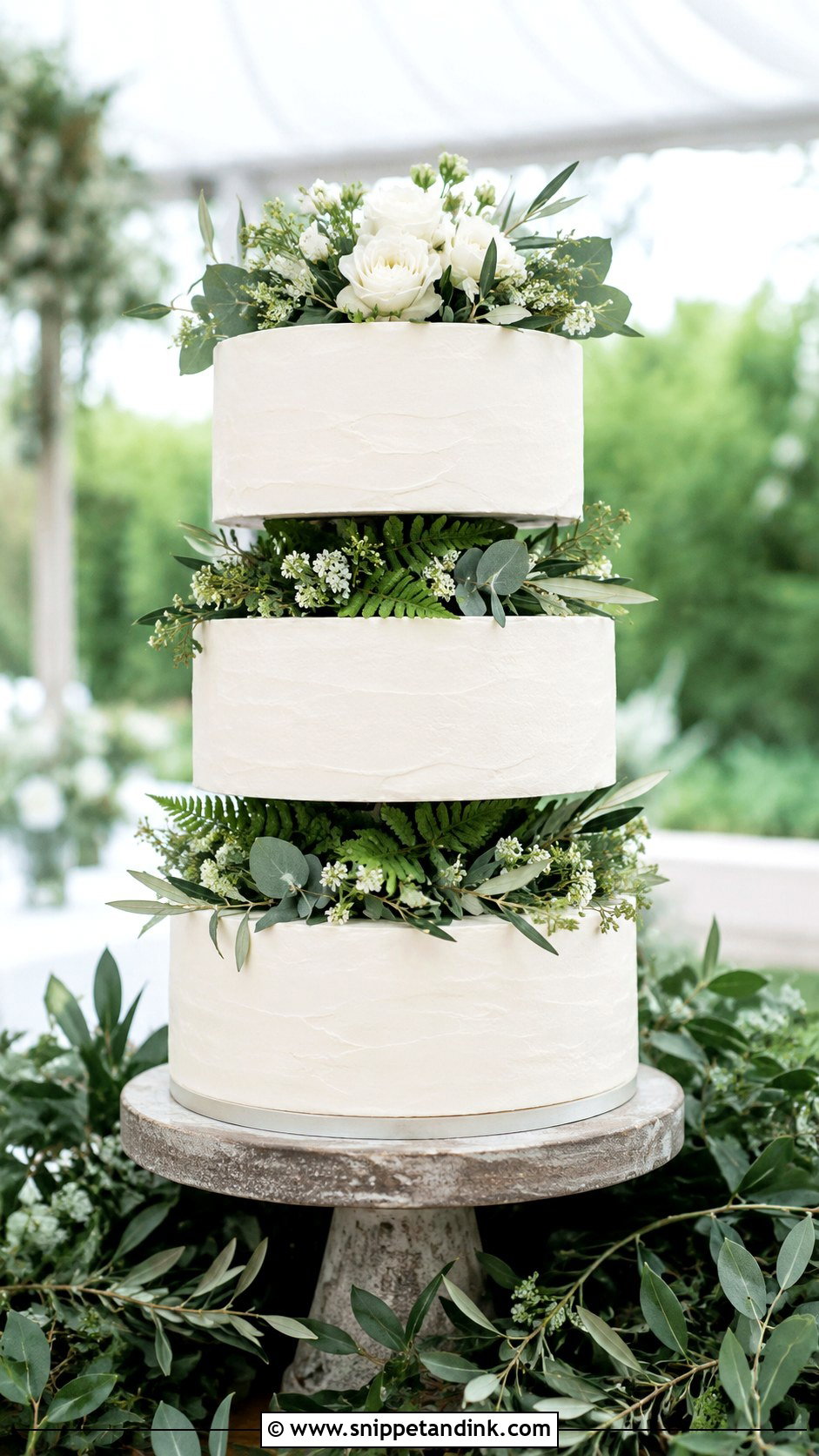
Eucalyptus, olive and fern give a floating cake an airy garden feel, and greenery is more forgiving than flowers because it doesn’t brown as quickly. Silver dollar eucalyptus is a favourite of mine, but it isn’t food-safe, so it rests on wrapped stems or on the boards, never pushed into the sponge. The stand and separator style set the mood: clear acrylic keeps it modern, wood tips it rustic. Let one or two vines trail if you want softness. Covering the whole cake makes the gaps disappear, which defeats the point.
8. 3 Tier Floating Orchid Wedding Cake
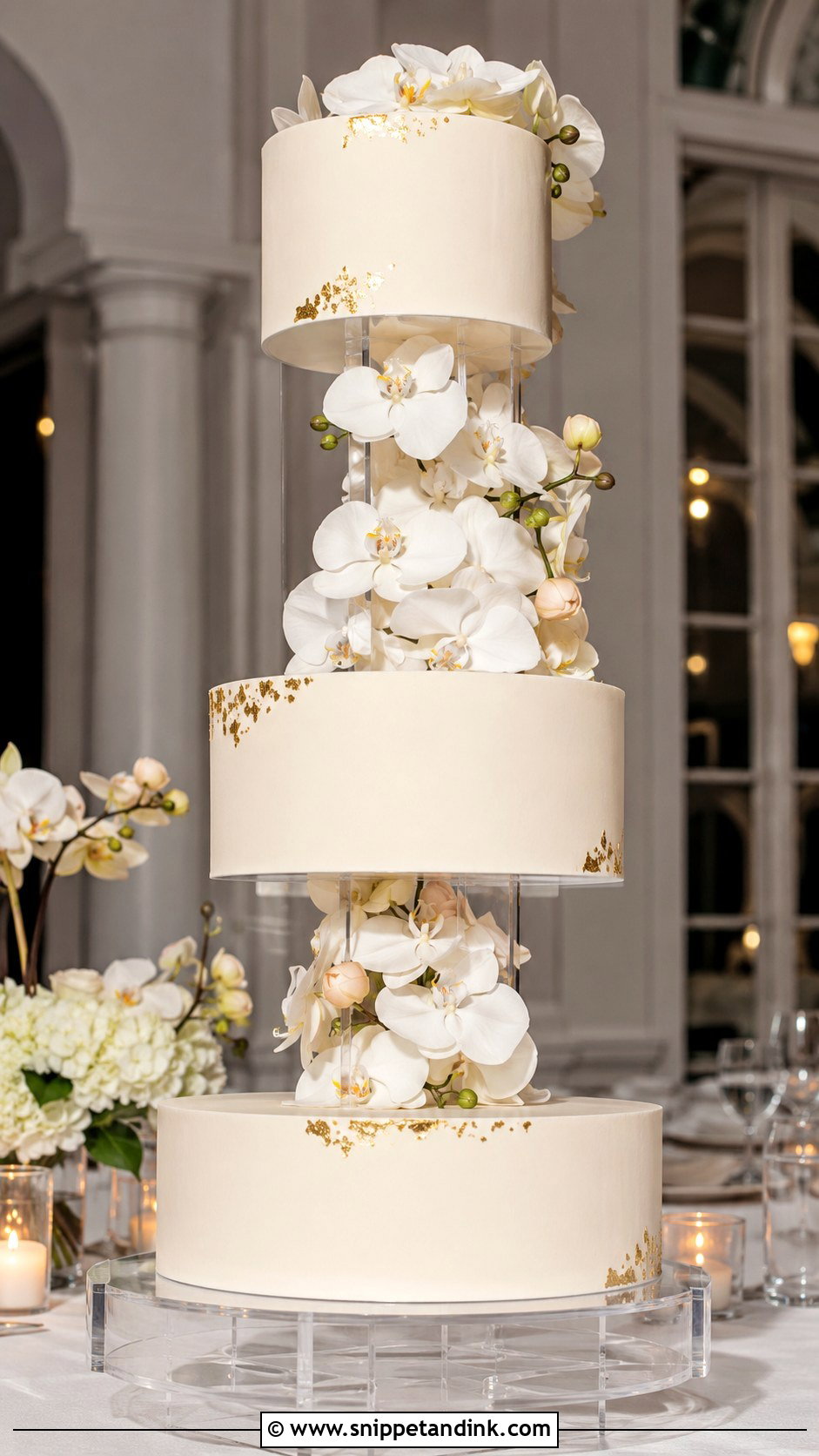
Phalaenopsis orchids are the flower I reach for most in floating gaps. Their arched stems already have the shape a cascade needs, and the blooms are flat enough to sit against a tier without crushing the icing. White reads clean and modern; blush, peach or mauve softens it. They also last for hours out of water, which helps on a long reception. I’d skip them only for a very warm, rustic palette, where their glossy petals can look out of place.
9. 3 Tier Floating Rose Wedding Cake
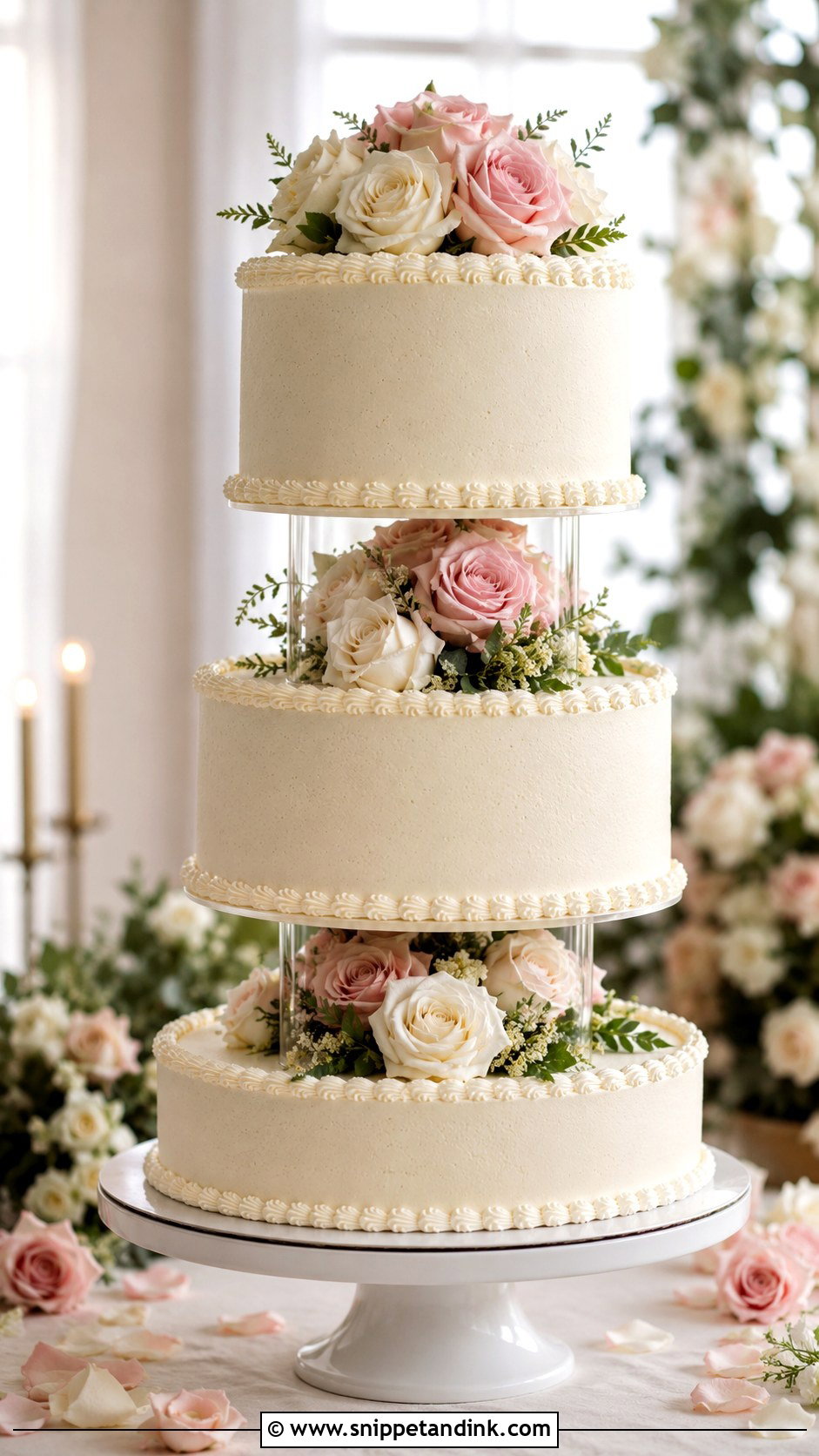
Roses are easy to source in almost any shade and they hold their heads well, which is why they fill so many floating gaps. White and blush keep it bridal; dusty pink or mauve adds depth. I prefer garden roses opened a day or two ahead, since tight florist roses can look stiff against icing. For a more modern finish, use fewer heads and leave space visible. A full ring of roses in every gap needs separators wide enough to hold them, so that has to be planned before the stand is ordered.
10. 3 Tier Floating Square Wedding Cake
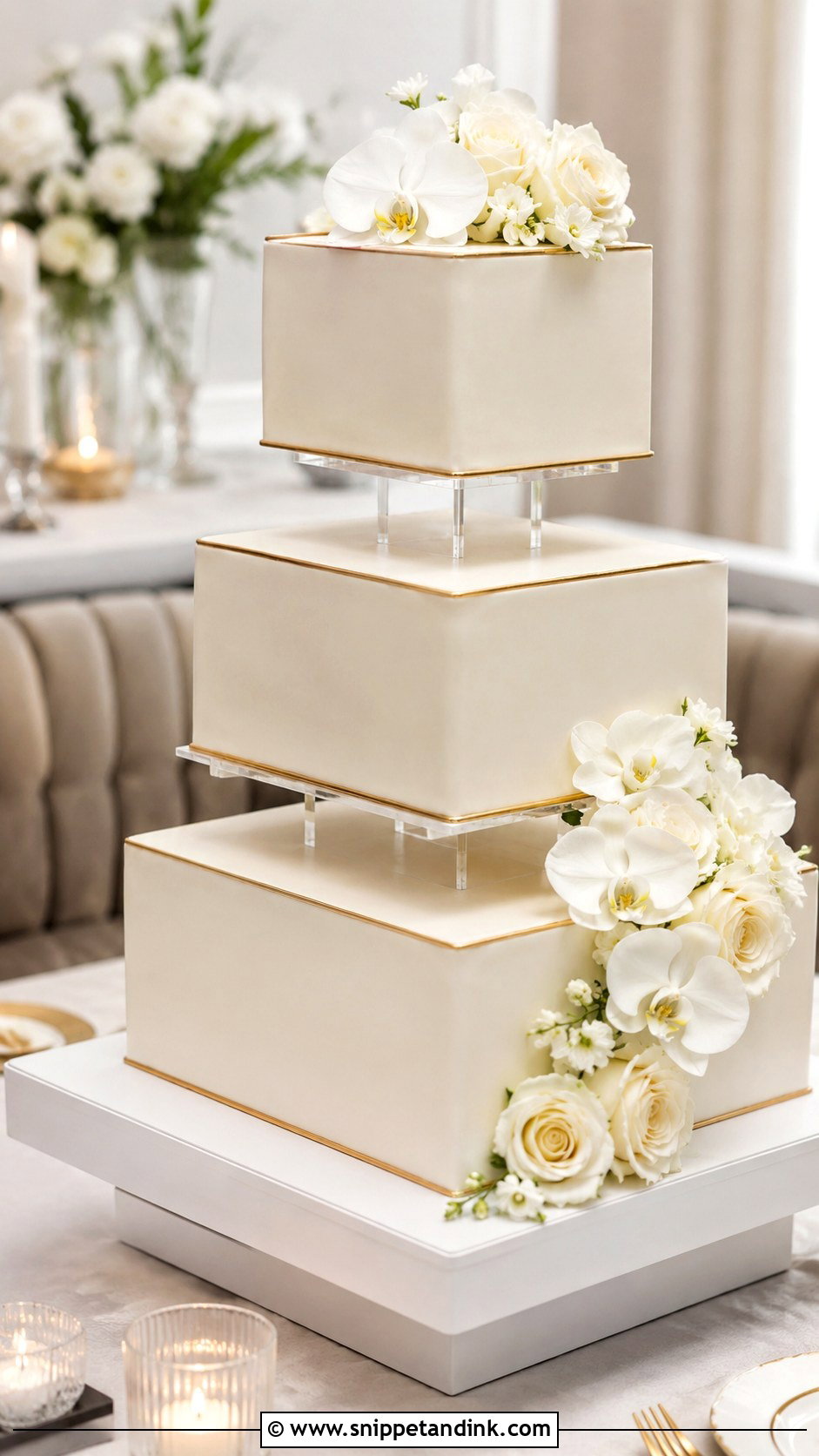
Corners change everything. A square floating wedding cake looks architectural with clear spacers, but square tiers are harder to finish sharply, and any lean or bulge at a corner shows instantly. For that reason I set square tiers under a firm ganache or fondant layer rather than soft buttercream alone. Decorate one corner rather than all four, and if the shape feels severe, a few white roses along a single side will soften it. Gallery spaces and rooftop venues suit it well.
11. 3 Tier Floating Acrylic Wedding Cake
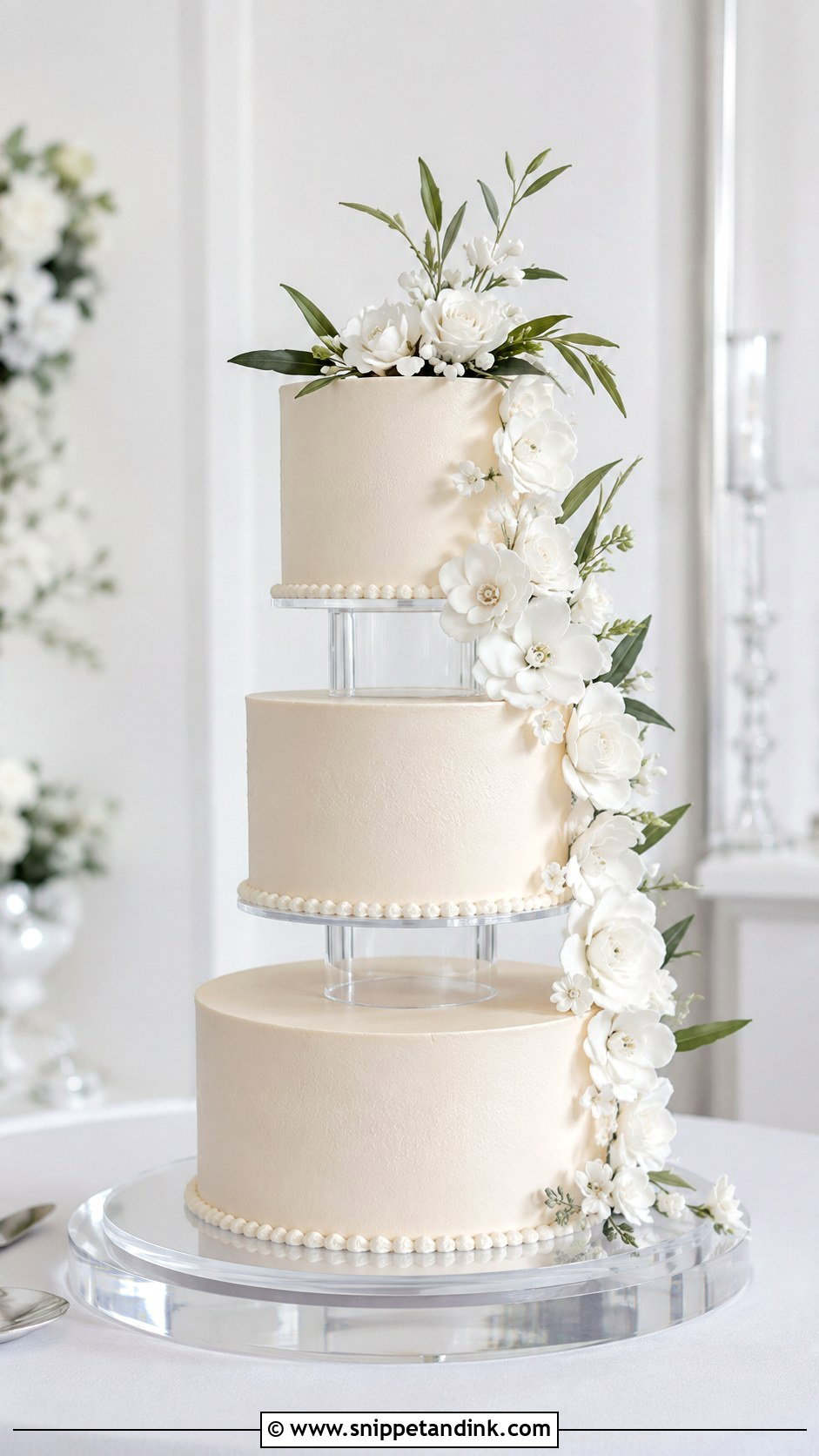
Clear acrylic separators are what most floating cakes are built on. Underneath, each tier still has its own dowels and board, and the acrylic either sits on those dowels or locks onto a central rod, so the hovering illusion never relies on the plastic alone. Ask whether your baker owns the stands or hires them, because cheap acrylic scratches easily and shows every fingerprint in close-up photos. Empty gaps look sleek. If you want tiny lights inside, use battery ones and clear it with the venue first.
12. 3 Tier Floating Crystal Wedding Cake
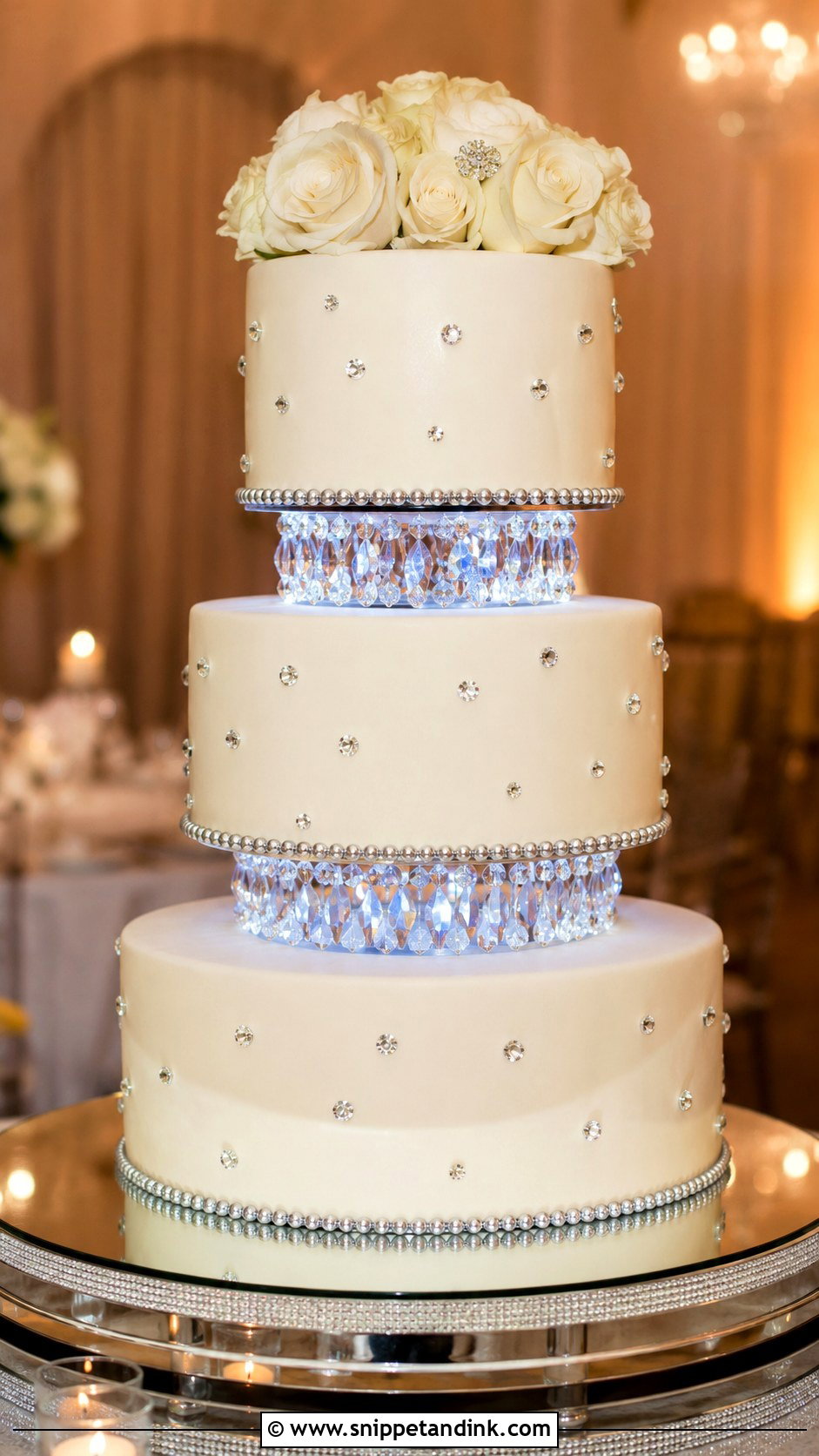
Crystal details come in two kinds: sugar gems you can eat, and real crystal or bead strands that must come off before cutting. I always tell the caterer which is which so nobody plates a slice with a glass bead in it. The open tiers let the sparkle catch uplighting, which is where this cake earns its place, especially in ballrooms and glass venues. Pair the crystals with white or pale champagne icing and one floral accent, no more.
13. 3 Tier Floating Garden Wedding Cake
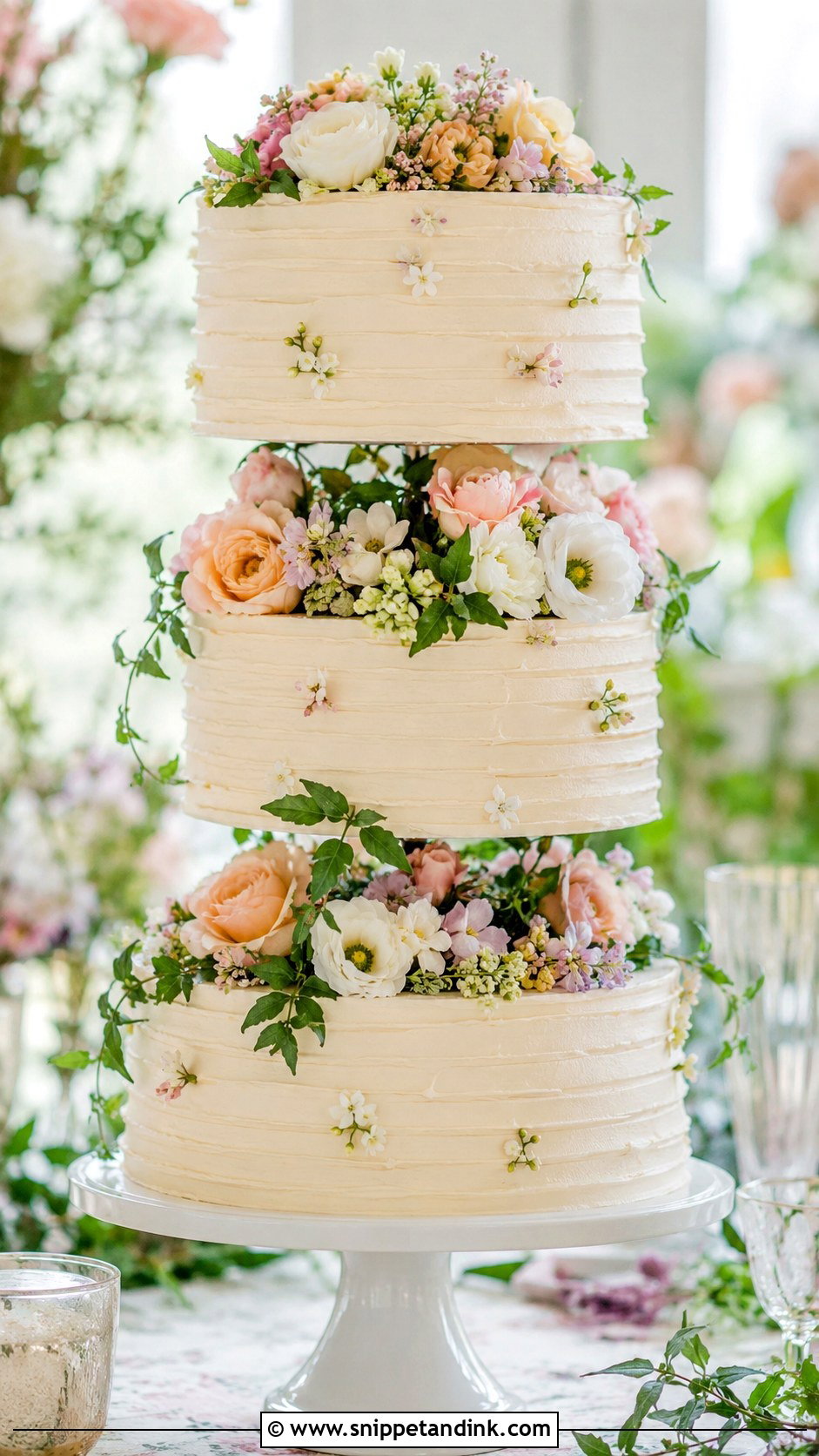
A garden version should look as though the bouquets wandered onto the cake. I ask the florist for small-headed stems such as lisianthus, spray roses and ranunculus, because large blooms overpower a small top tier. Buttercream suits it better than fondant here. The risk is outdoor heat, since delicate flowers wilt fast in sun, so the cake should stay indoors or in deep shade until just before guests reach the reception.
14. 3 Tier Floating Rustic Wedding Cake
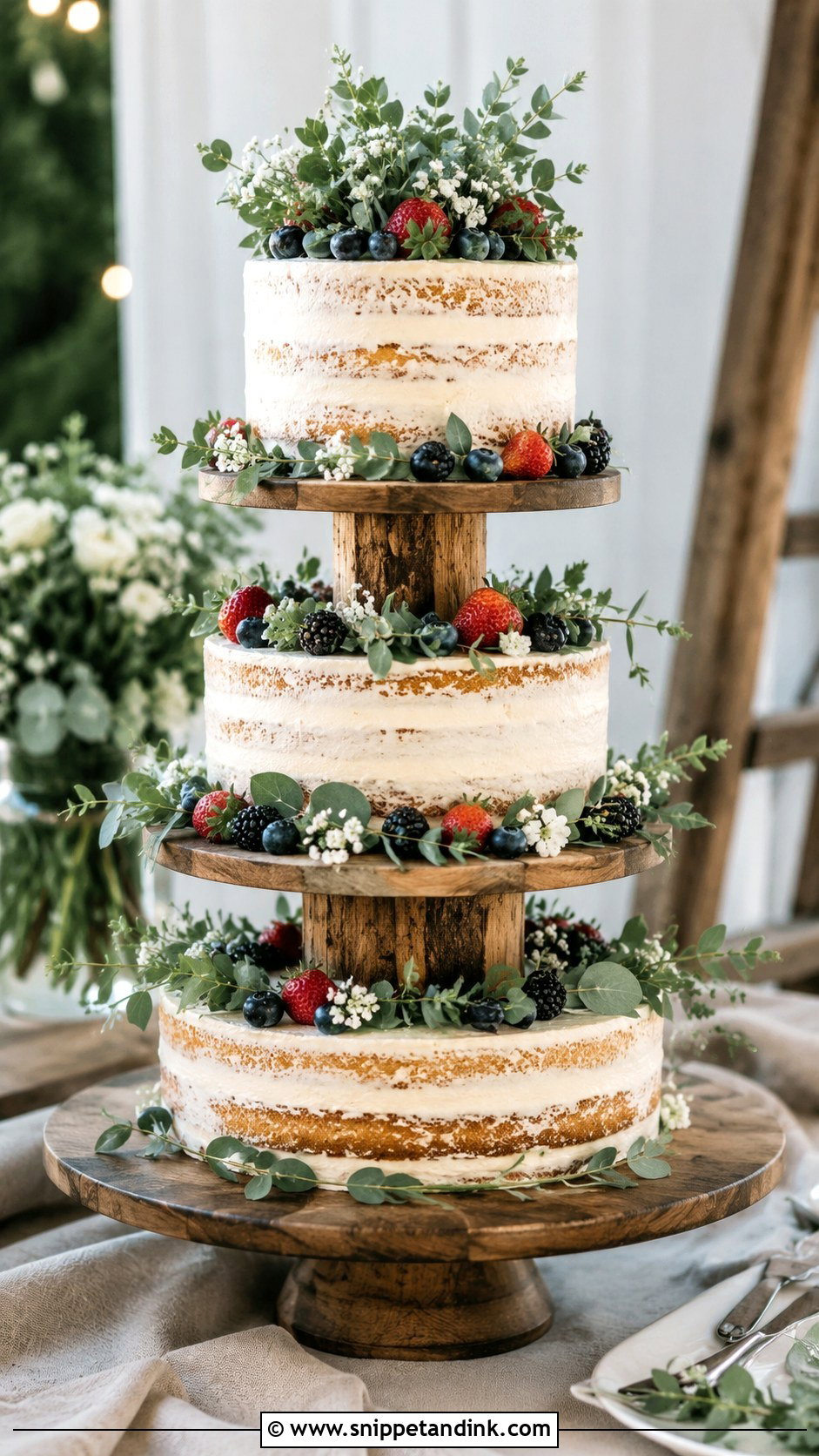
Semi-naked finishes are honest about what they are: a thin scrape of buttercream that lets the sponge show through. They dry out faster than fully iced tiers, so I finish them as close to the day as possible and keep them covered until setup. Wood-tone separators, berries and small white flowers fill the gaps nicely, with ivory, sage and warm neutrals for colour. Barns and farm receptions suit the look, but I’d still ask for the coolest corner of the room, because buttercream and a summer barn don’t get along.

15. 3 Tier Floating Beach Wedding Cake
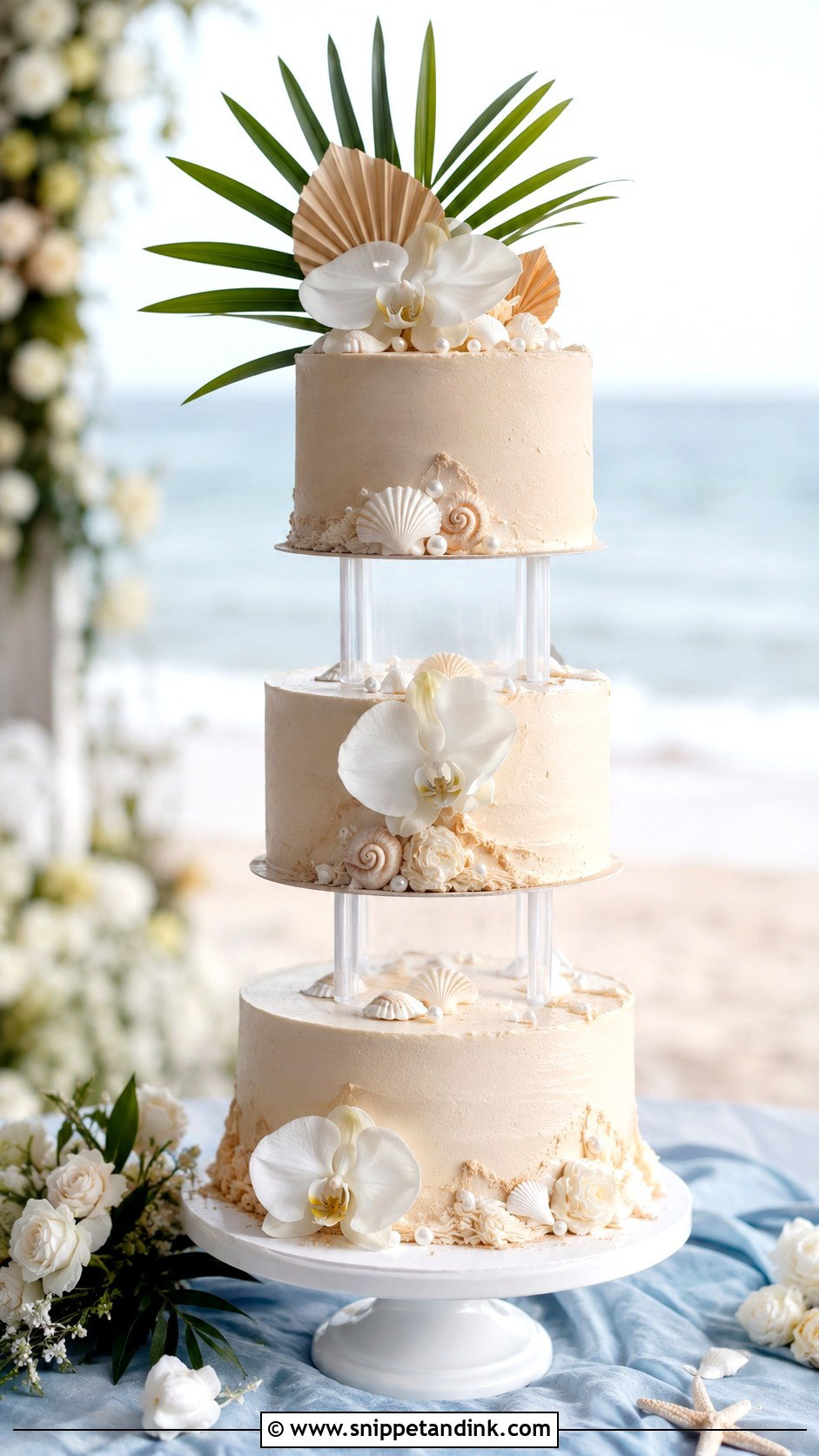
Sea air is the real challenge here, not the styling. Humidity makes fondant tacky and softens sugar decorations, so for a coastal reception I’d suggest a crusting buttercream in ivory or sandy beige, kept inside until the last moment. White orchids, tropical leaves or sugar shells in the gaps keep it coastal without props, and a few pearls finish it. Leave the starfish and sand off the table.
16. 3 Tier Floating Boho Wedding Cake
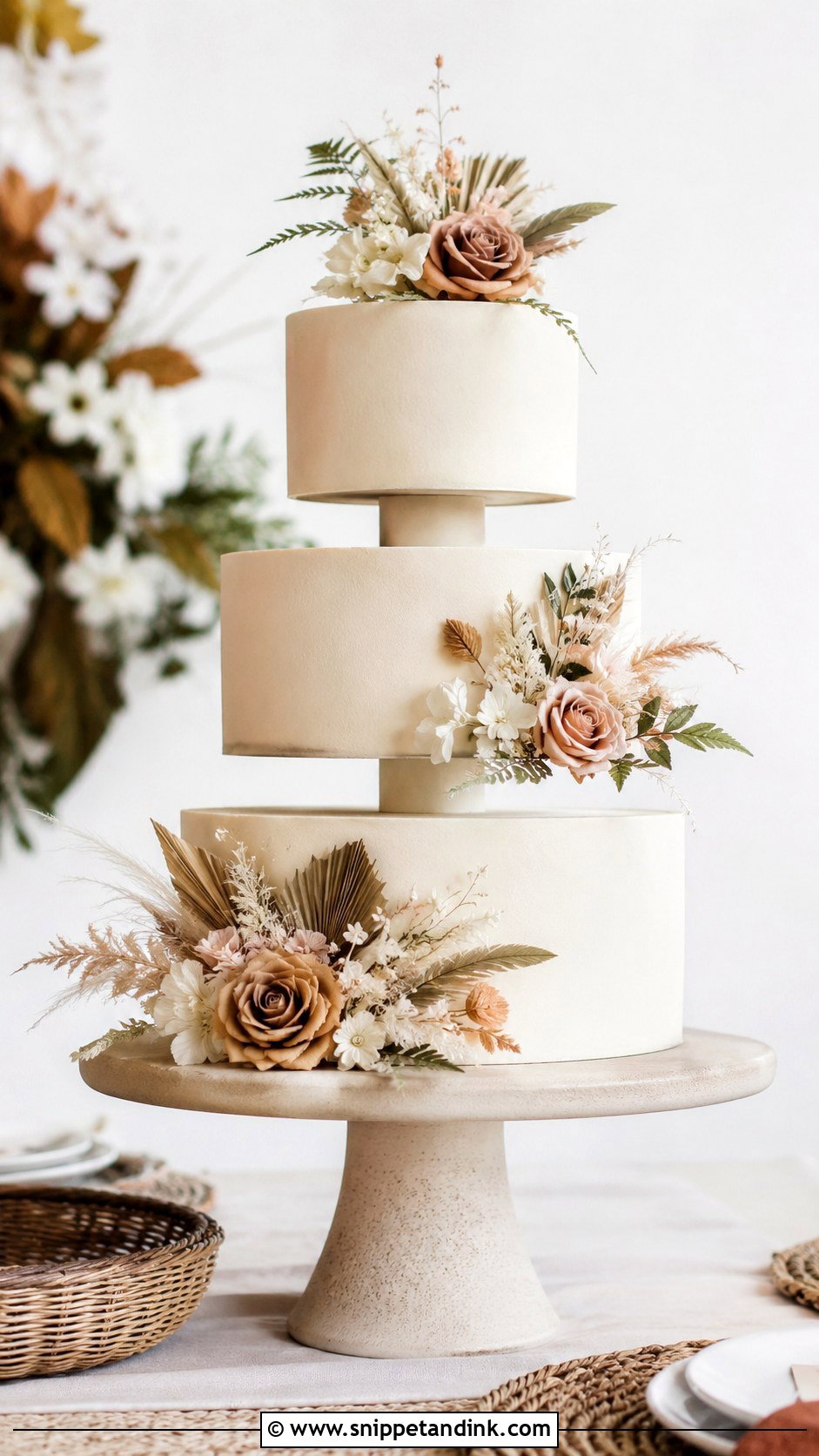
Boho cakes live on texture and a matte surface, so I keep shine off this one entirely. Warm ivory buttercream, sugar pampas, preserved-look greenery and muted terracotta or taupe blooms give it an earthy feel. Be careful with real dried pampas and preserved stems: many are dyed or sprayed, and they shed, so they belong on the boards rather than against the icing. Desert venues and backyard receptions suit the palette best.
17. 3 Tier Floating Black And White Wedding Cake
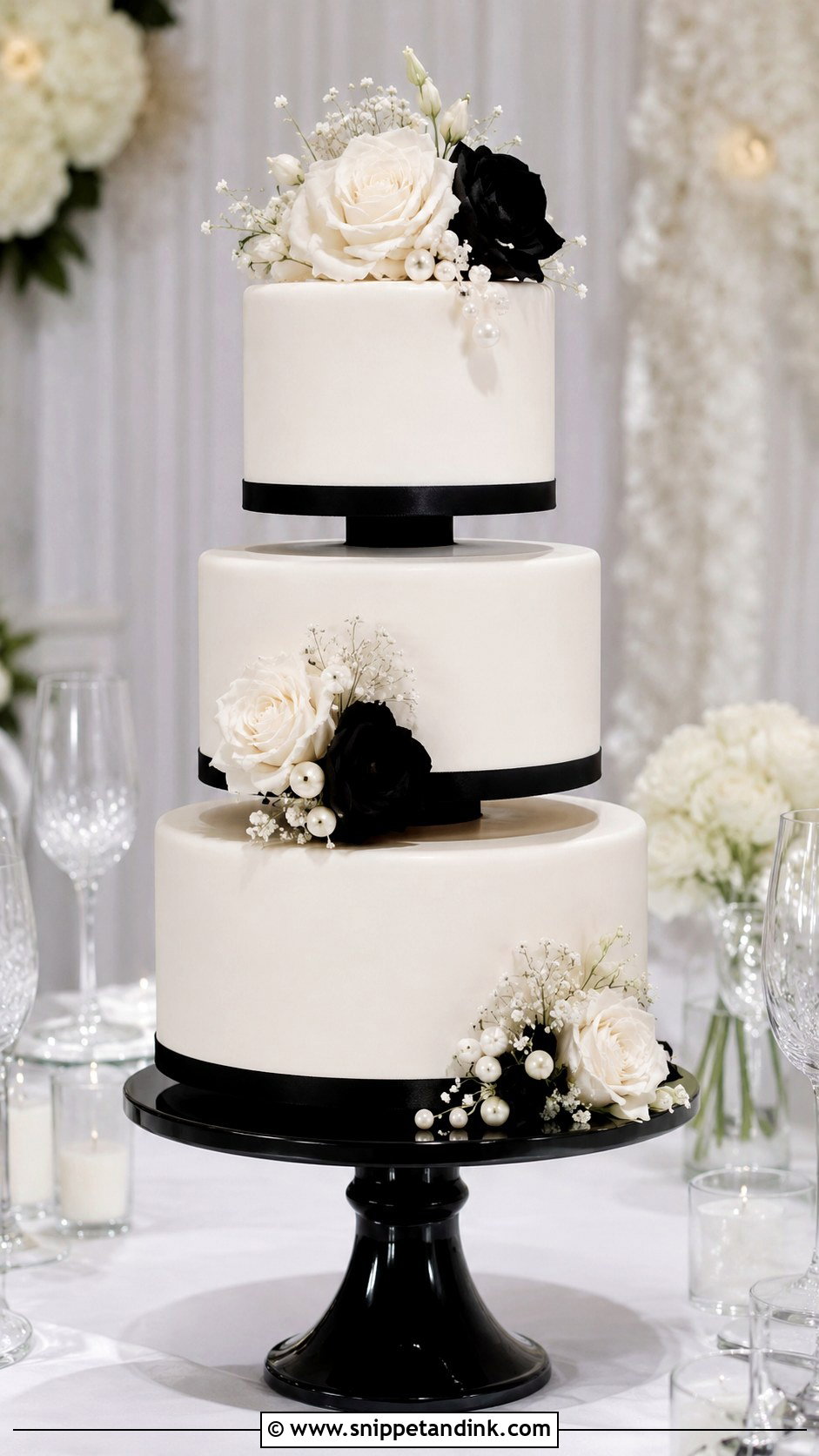
Black icing is harder than it looks. Getting buttercream that dark takes a lot of colouring, which can taste bitter and stain teeth, so I keep black to thin ribbon edges, piped lines or a single fondant-wrapped middle tier. The gaps stop all that contrast from feeling heavy. White roses or orchids soften it for a bridal table, and plain linen behind the cake keeps the edges crisp in photos.
18. 3 Tier Floating Blush Wedding Cake
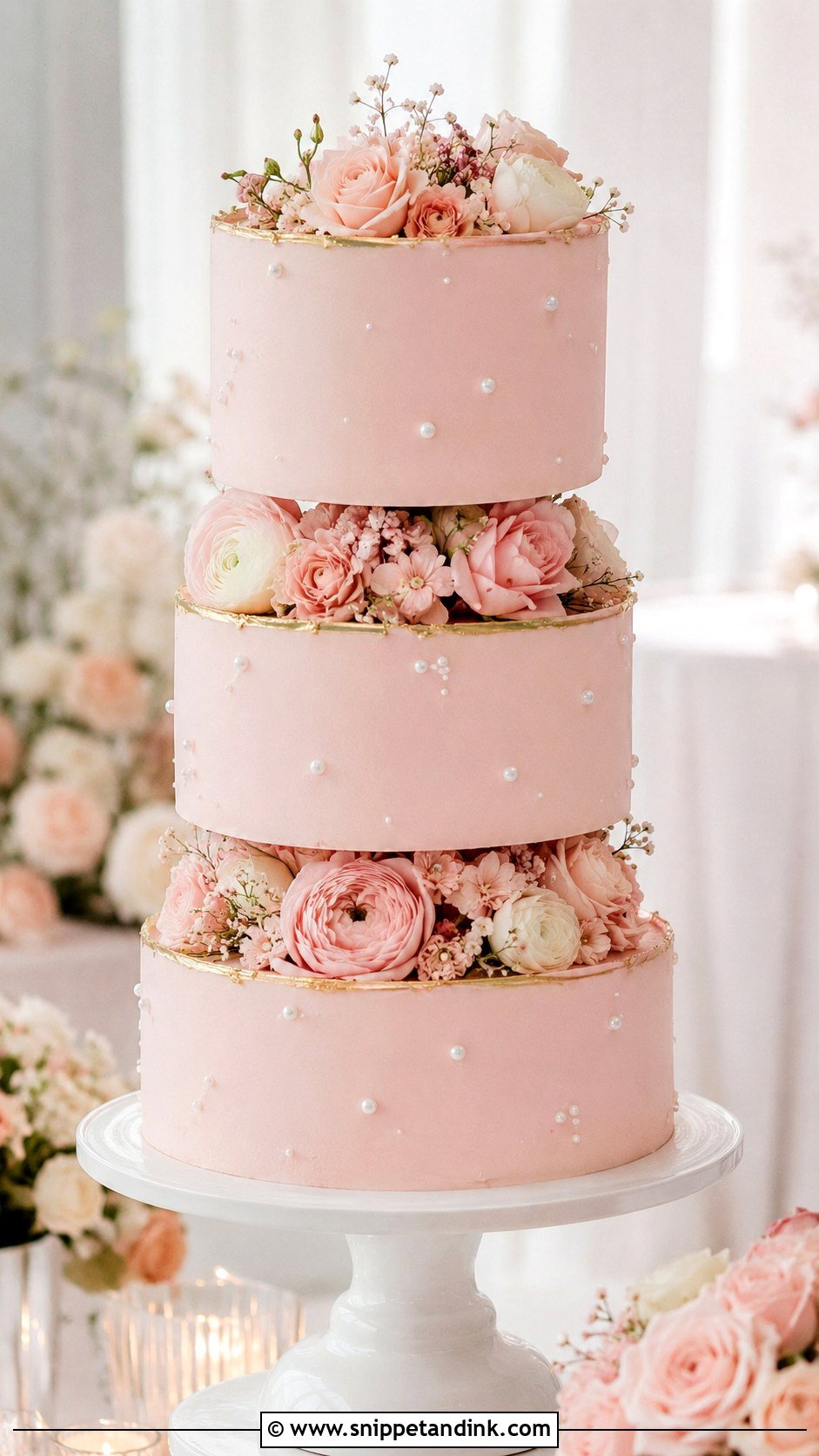
Blush is easy to overdo, and easy to lose. A pale tint that reads soft in daylight can look almost white, or oddly peachy, under warm reception lighting, so I mix the colour on a test board and check it under similar light before I commit. White icing with blush flowers in the gaps is the safer route. Peonies, ranunculus and sugar blossoms all suit it, and a few pearls or a fine gold edge add polish without making it sugary.
19. 3 Tier Floating Marble Wedding Cake
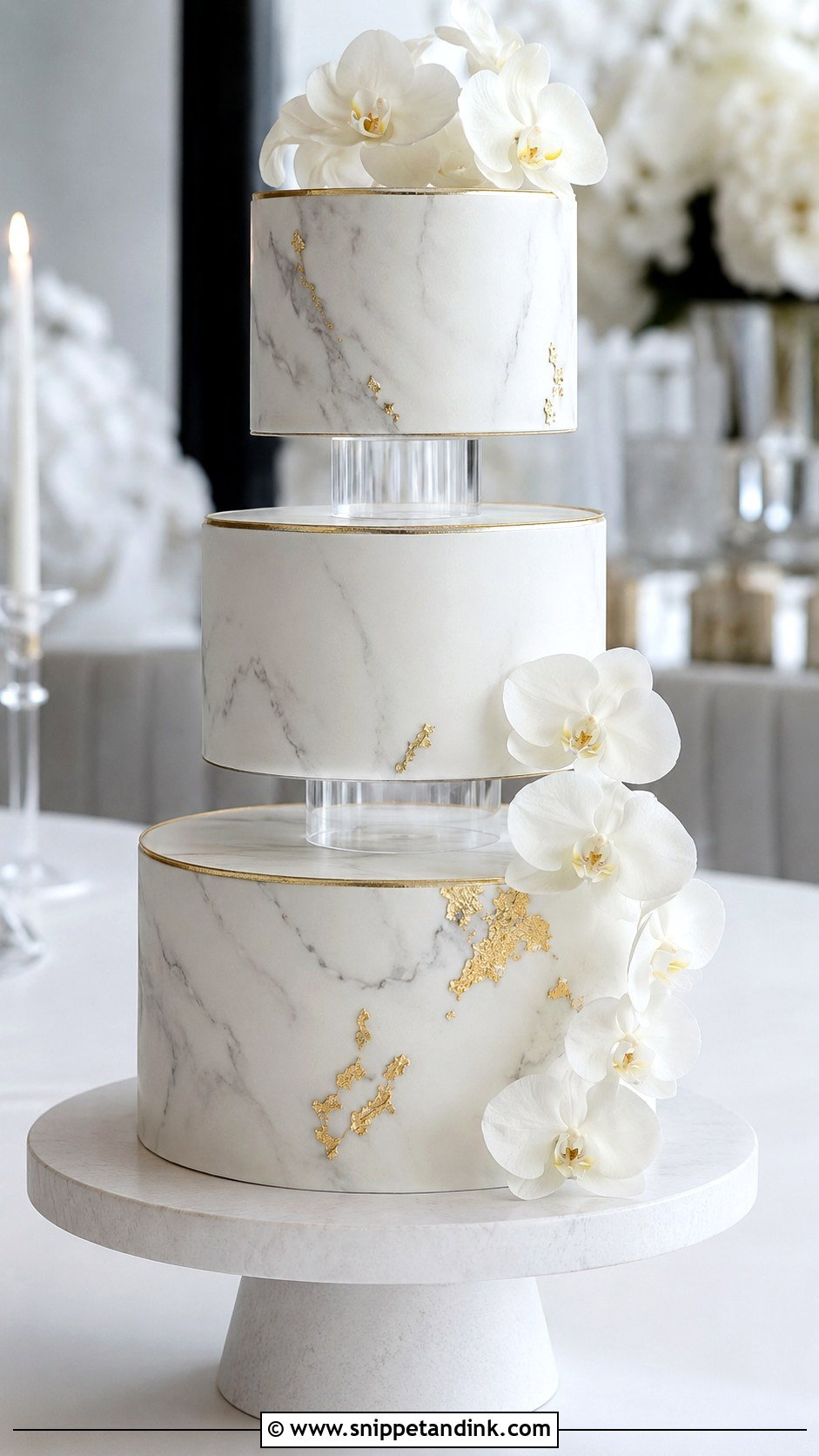
Fondant marbling is made by folding streaks of grey or beige through white paste before rolling, and every tier comes out a little different, which is part of the charm. Ask for soft veining; dark, harsh lines can end up looking like a kitchen worktop. Because marble already has movement, decoration should stay minimal: a few white flowers, a touch of gold leaf or a slim metallic edge. Clear separators suit it, and the look sits naturally in lofts, museums and neutral palettes.


20. 3 Tier Floating Waterfall Flower Wedding Cake
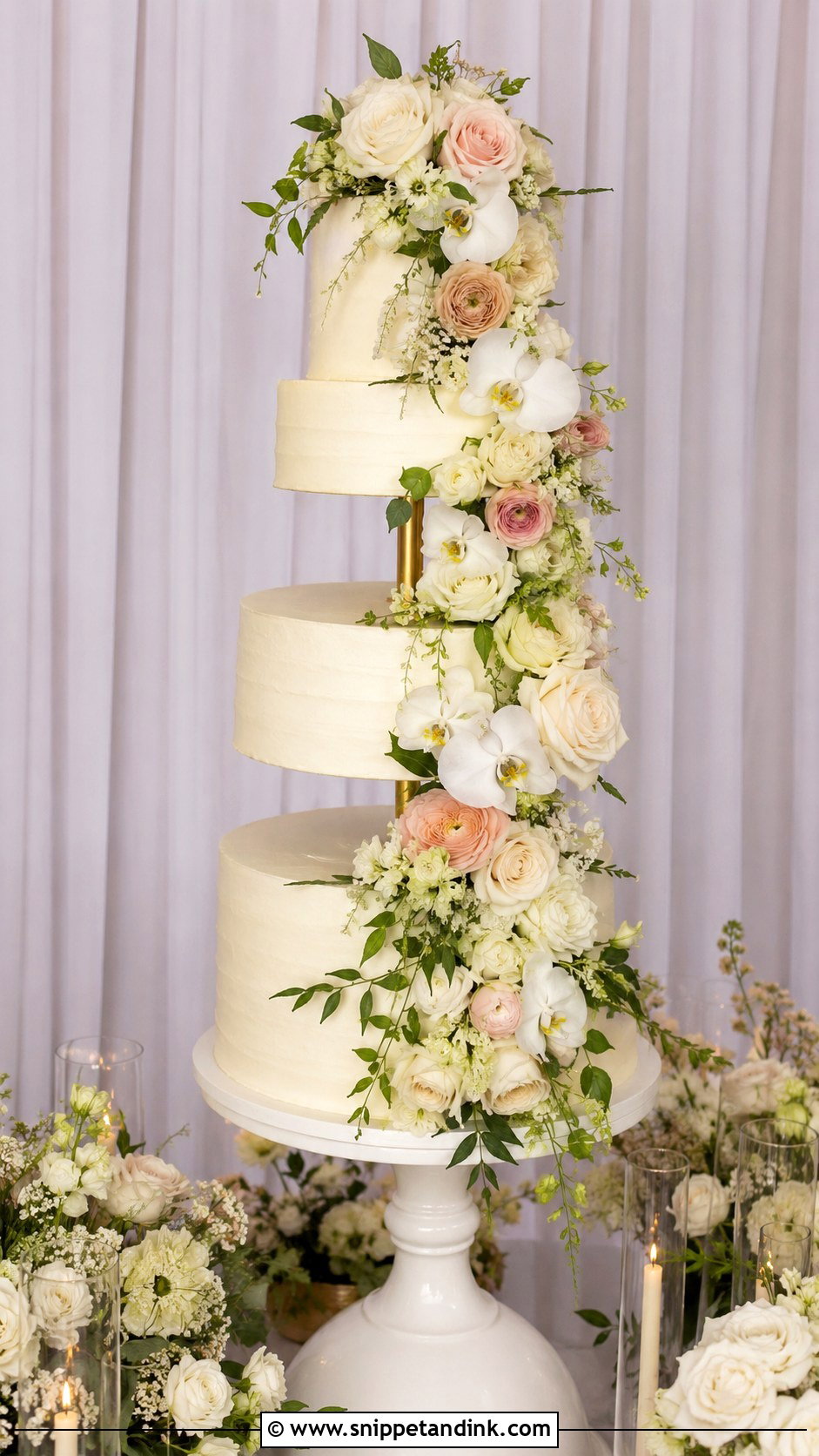
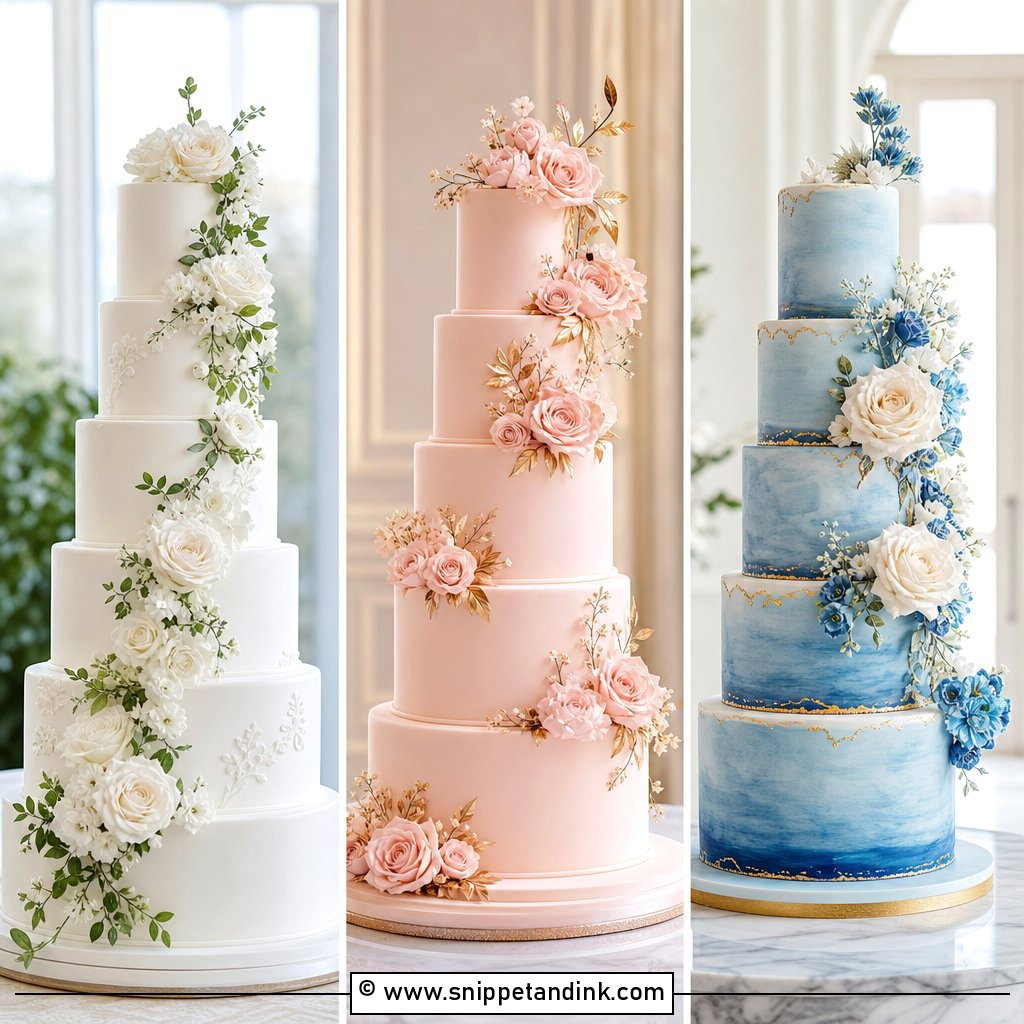
A cascade is the most labour-heavy idea on this list, because every flower is placed by hand at the venue after the tiers are assembled. Roses, orchids, lisianthus and ranunculus hold their shape well enough, and sugar flowers work if you want it built in advance. Keep the icing smooth and neutral so the line stays readable. Before the day, I sketch the cascade over a photo and plan where the knife will go, since anything trailing through the gaps has to be lifted out before cutting. Place the table where guests can see it from across the room.
Real Flowers Between Tiers Need a Florist and a Baker Talking
The gaps are where fresh flowers get closest to food, so this is a job for both vendors. Not every pretty bloom is safe near cake: lily of the valley, hydrangea, foxglove and oleander are all toxic, and plenty of florist stems are sprayed. I wrap every stem in florist tape, set it in a plastic flower pick or on a separate board, and never push a raw stem into the sponge.
Timing matters too. Flowers out of water start to droop within a few hours under warm lights, so I ask for hardy varieties for the cake and have them arrive chilled, not riding around in a hot van with the centerpieces. If your florist is dressing the cake instead of your baker, confirm who arrives first. The cake has to be fully assembled before a single stem goes in.
A Warm Room, a Long Evening and the Cake Knife
Floating cakes are tall and narrow at the joints, so heat is their enemy. Buttercream starts to slump once a room gets warm, and fondant can sweat if it goes straight from a cold fridge into a humid hall. Ask your venue to keep the cake table away from windows, heaters, the dance floor and the kitchen door, and to have the air conditioning running during setup.
The gaps add height, not slices
A typical 6, 8 and 10 inch round stack feeds roughly 70 to 80 guests at wedding-portion size, though that varies by baker and by how your caterer cuts. If you need more, a plain kitchen cake in the same flavour kept out of sight is usually cheaper than adding a fourth tier.
Cutting is actually easier than with a stacked cake. Each tier lifts off its separator on its own board, so the caterer can carry it to the kitchen whole. Just make sure someone removes every wrapped stem, crystal strand and non-edible pick first, and tell them exactly where the central rod runs.
Three Tiers, Plenty of Air and a Baker Who Builds It On Site
The appeal of a floating design is simple: three tiers can look as dramatic as five once you give them air. Whether it works on the day depends on things nobody sees in the photos. Talk to your baker about the support system, how the tiers travel and get assembled, the temperature of your room, and who is responsible for the flowers in the gaps. Bring your favourite pictures, but bring those questions too, and the cake will look as good at the cutting as it did at setup.
You'll Like These Ideas:




Leave a Reply