
Blue is one of the trickiest colours I mix in a cake kitchen, and one of the most rewarding when it comes out right. Two tiers give it enough height to carry flowers, texture or a colour fade, while still suiting a smaller reception or a couple who’d rather spend on the meal. Blue also sits comfortably beside ivory, silver, blush, greenery and gold, so it can follow a garden, a coastline or a ballroom. What follows are 20 designs, each with the technique behind it and the places where I’d push back. The right one is the one that belongs in your room, next to your flowers.
Two Tiers, Real Guest Counts and the Kitchen Cake Trick
Two tiers look modest in a photo, so couples often underestimate them, or the opposite. A 6-inch tier on an 8-inch tier, cut into standard wedding portions, feeds roughly 30 to 40 people. An 8-inch on a 10-inch takes you to around 60. Those numbers shift with how generously the venue cuts, so I always give a range and ask who is doing the slicing.
If your guest list outgrows two tiers but you love the proportions, I make a plain sheet cake in the same flavour that stays in the kitchen and gets cut alongside the display cake. Nobody can tell, and it costs far less than decorated tiers because it needs no stacking and no finish work.
- Stacked tiers need internal dowels and a cake board under the top tier, so the bottom tier isn’t carrying the weight of the one above.
- Taller tiers (four layers of sponge rather than three) add height without adding a third tier, which helps when the cake stands in a large room.
- A separator of fresh or sugar flowers between the tiers adds height too, and it hides the join.
1. Dusty Blue Two Tier Wedding Cake
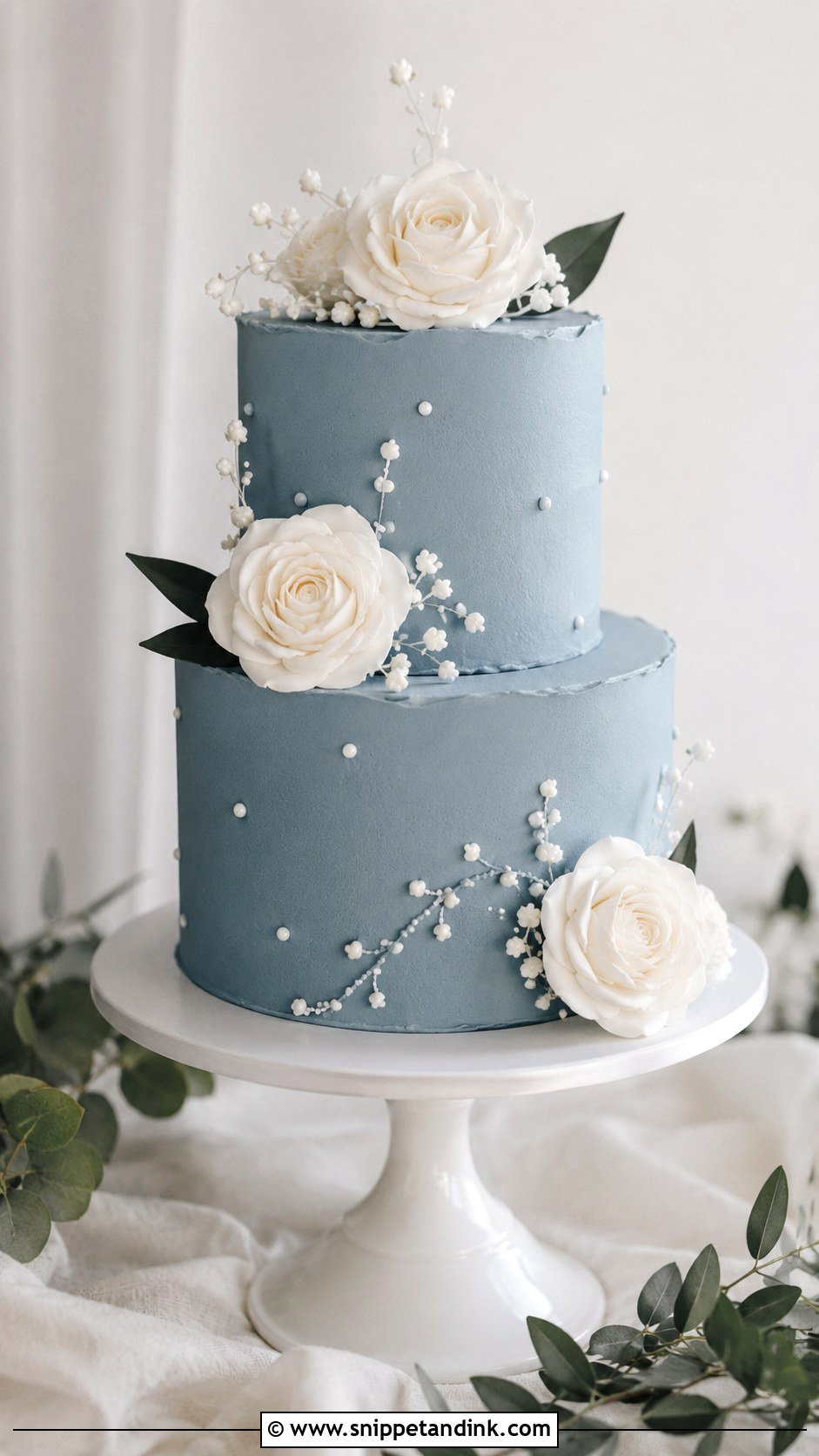
Dusty blue is the shade I’m asked for most, partly because the grey in it forgives warm reception lighting. It looks settled beside ivory flowers, champagne linens and soft greenery. Smooth buttercream gives a relaxed finish; fondant makes it crisp and formal. I usually suggest small white sugar flowers or a single cluster sitting where the tiers meet, which hides the join and saves you paying for a full cascade. Spring gardens and estate venues suit it best.
2. Navy Blue Two Tier Wedding Cake
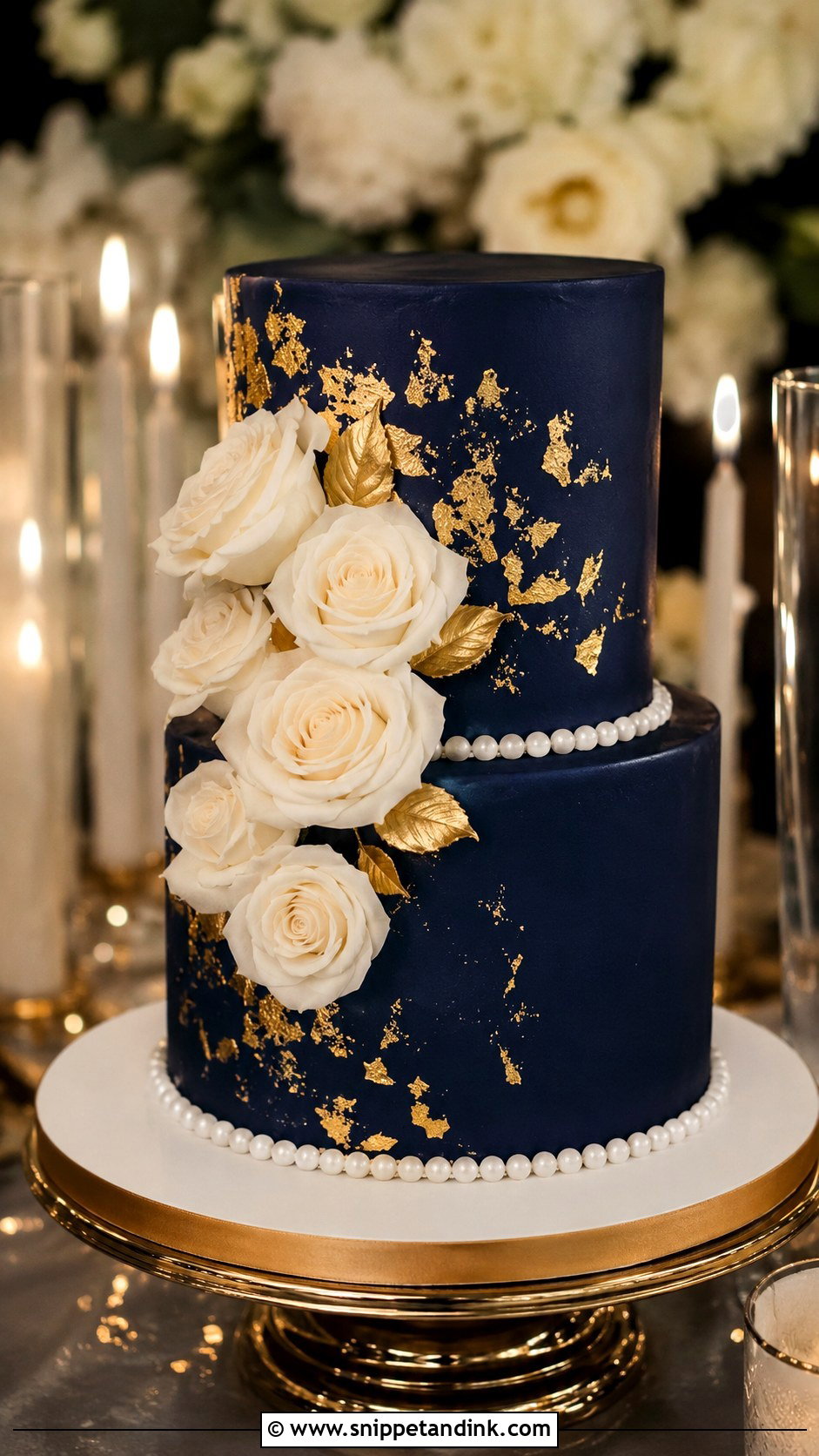
Dark colours are hard work in sugar. A navy blue two tier wedding cake needs a lot of colouring, and in buttercream that much gel can leave a slightly bitter taste and blue lips, so for navy I prefer fondant over a pale buttercream crumb coat. Fondant also holds a sharp edge, which suits evening receptions and formal rooms. White roses, gold leaf or ivory piping keep it bridal rather than heavy. Inside, vanilla, almond, lemon or chocolate all work, and it ties in neatly if the suits or bridesmaid dresses are navy too.
3. Baby Blue Two Tier Wedding Cake
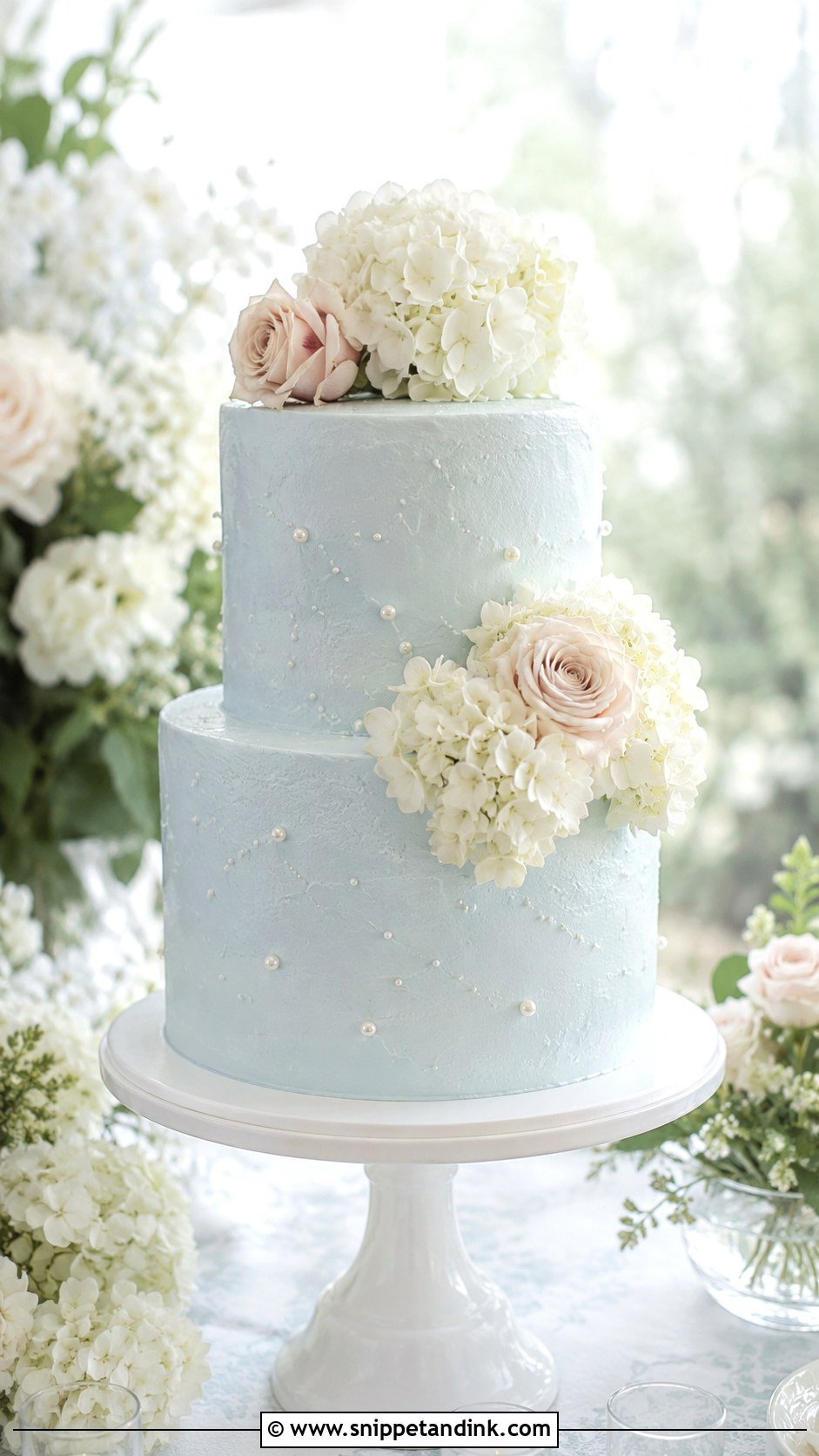
Baby blue needs daylight to look its best. Under a big window or an outdoor tent it reads fresh; under warm yellow bulbs it can drift toward a minty green, so I always ask what time the cake will be cut. A smooth buttercream finish with white piping or sugar pearls is enough detail. White roses, small hydrangea clusters or a few blush blooms give contrast, and classic flavours like vanilla bean, almond or lemon suit how light the colour feels.
4. Blue And White Two Tier Wedding Cake
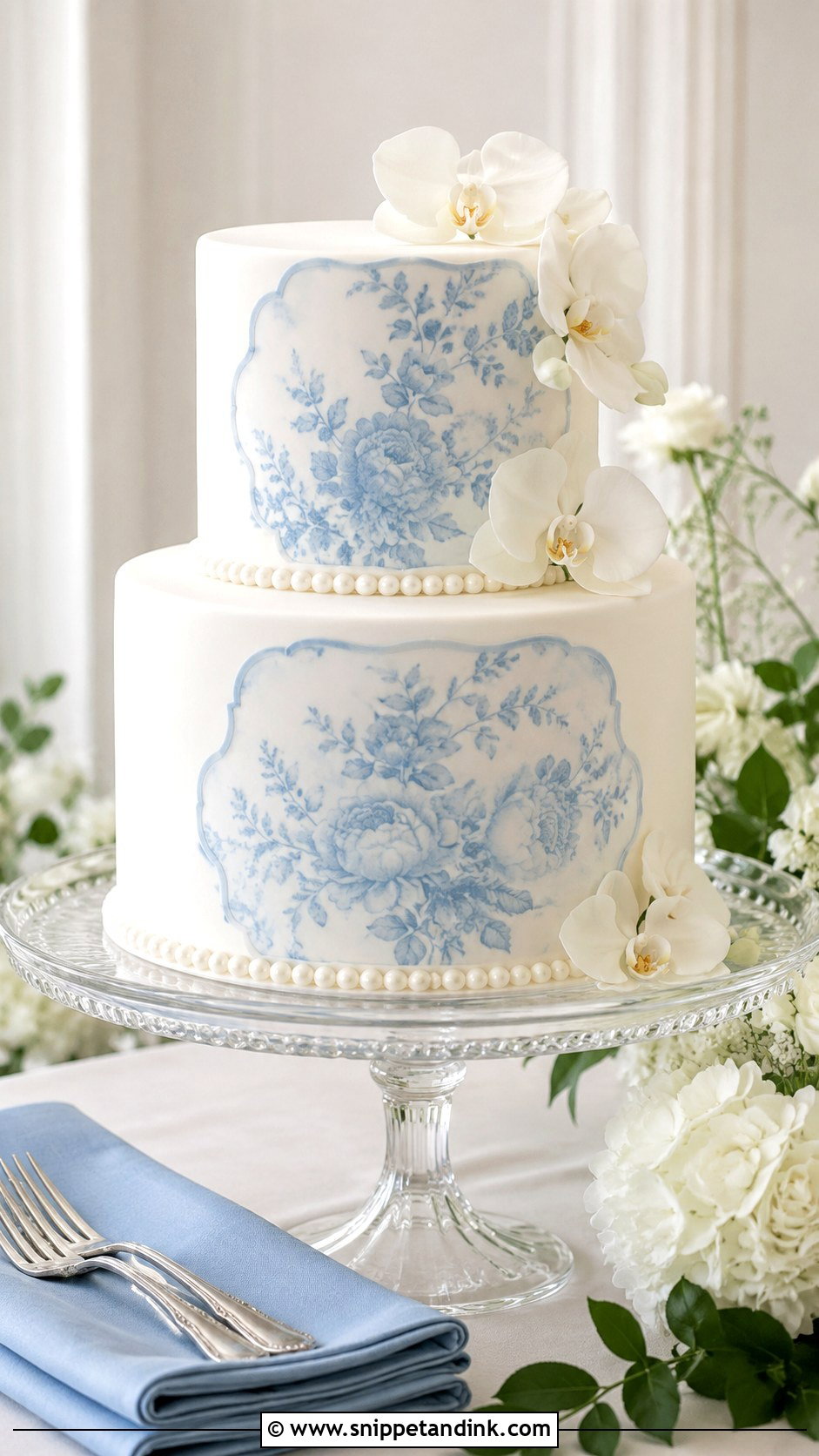
With two colours, my first question is which one leads. Pale blue frosting with white florals feels gentle, while navy details over a white base look graphic and bold. Two tiers give room for painted florals, lace-style piping, brushstrokes or clean colour blocks, but I’d pick one technique, not three. When the contrast is strong, keep the decoration minimal: a satin ribbon at each base or a few white roses finishes it. Coastal, garden and classic indoor receptions all suit this pairing.
5. Blue Ombre Two Tier Wedding Cake
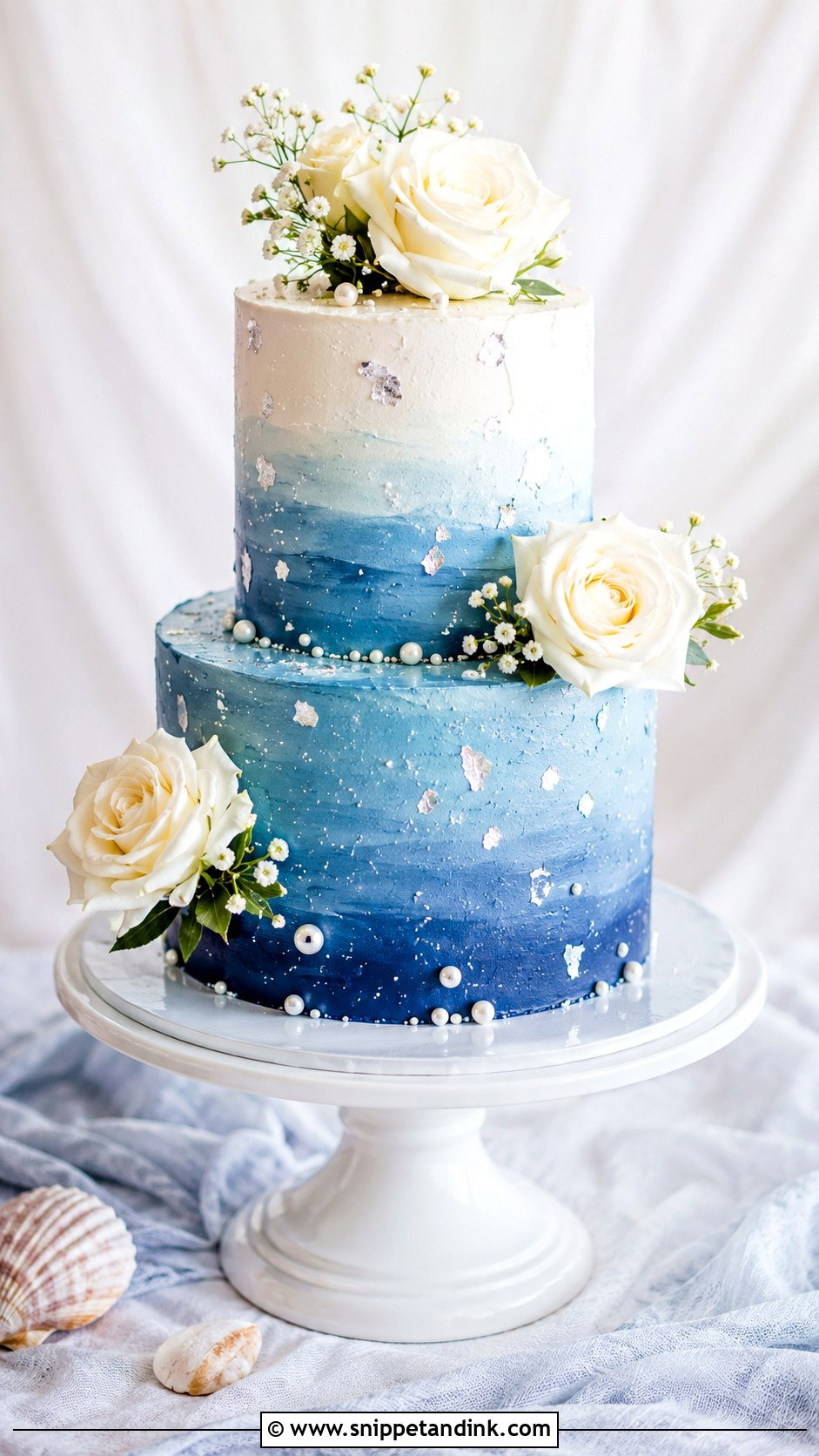
I build an ombre by mixing three or four shades of blue buttercream from one base batch, applying them in bands from the darkest at the bottom, then pulling a bench scraper round the cake so the bands blur into each other. Mixing from a single batch matters, because separate batches rarely sit in the same family. The fade can run from deep blue to pale, or from sky blue into ivory. A few white flowers or a touch of silver leaf keeps it bridal. Beach and summer receptions are where this one looks most at home.
6. Blue Marble Two Tier Wedding Cake
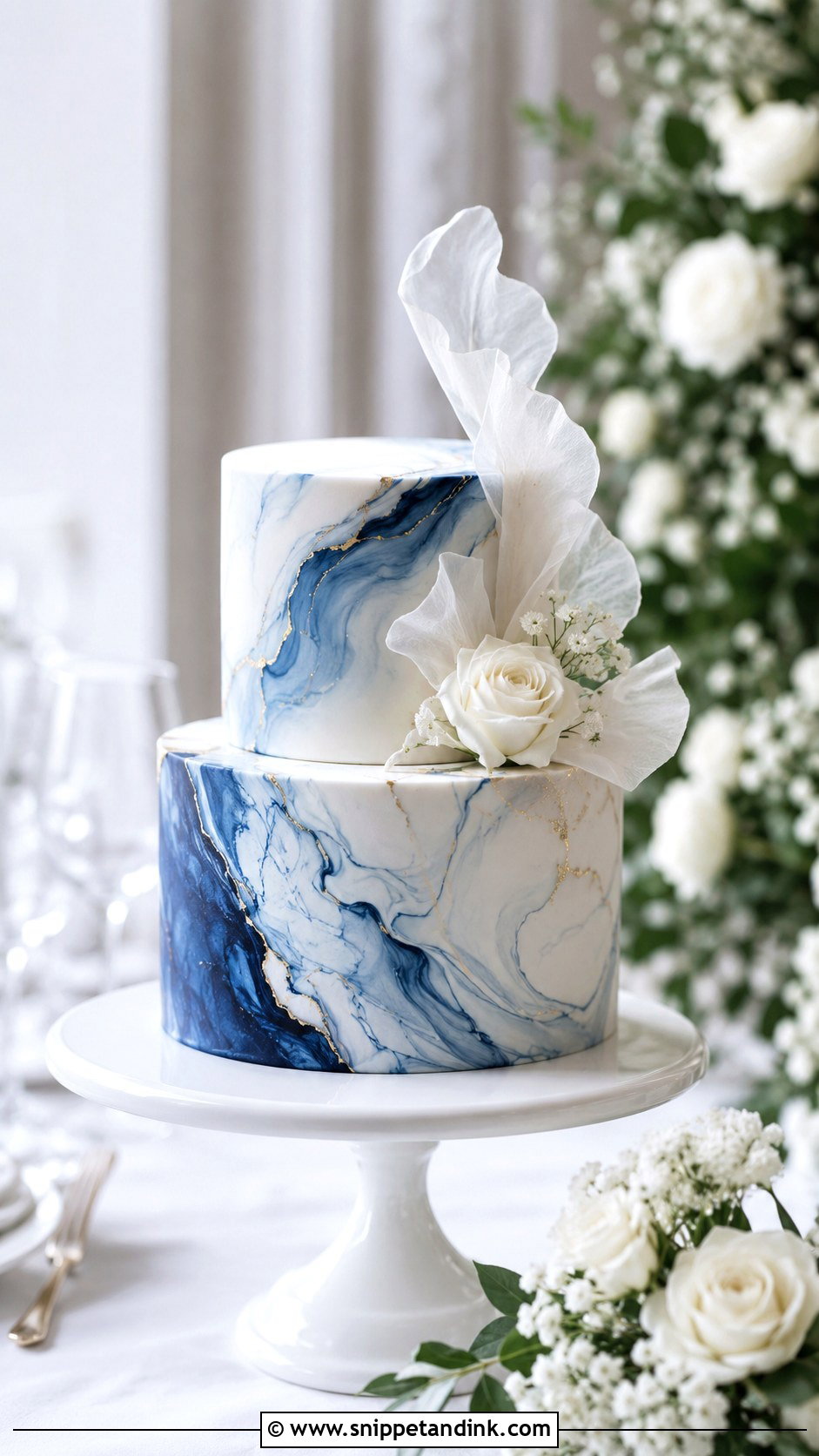
Marble is made by twisting coloured fondant into white and rolling it before the colours fully blend, so every cake is unique and you can’t order an exact pattern. White with soft blue and a streak of navy looks like stone; gold or silver veining painted on afterward reads as luxury. I keep the toppings minimal here, since the pattern is the decoration. A few wafer paper petals or metallic flakes are plenty. Gallery venues, rooftops and modern rooms suit it.
7. Royal Blue Two Tier Wedding Cake
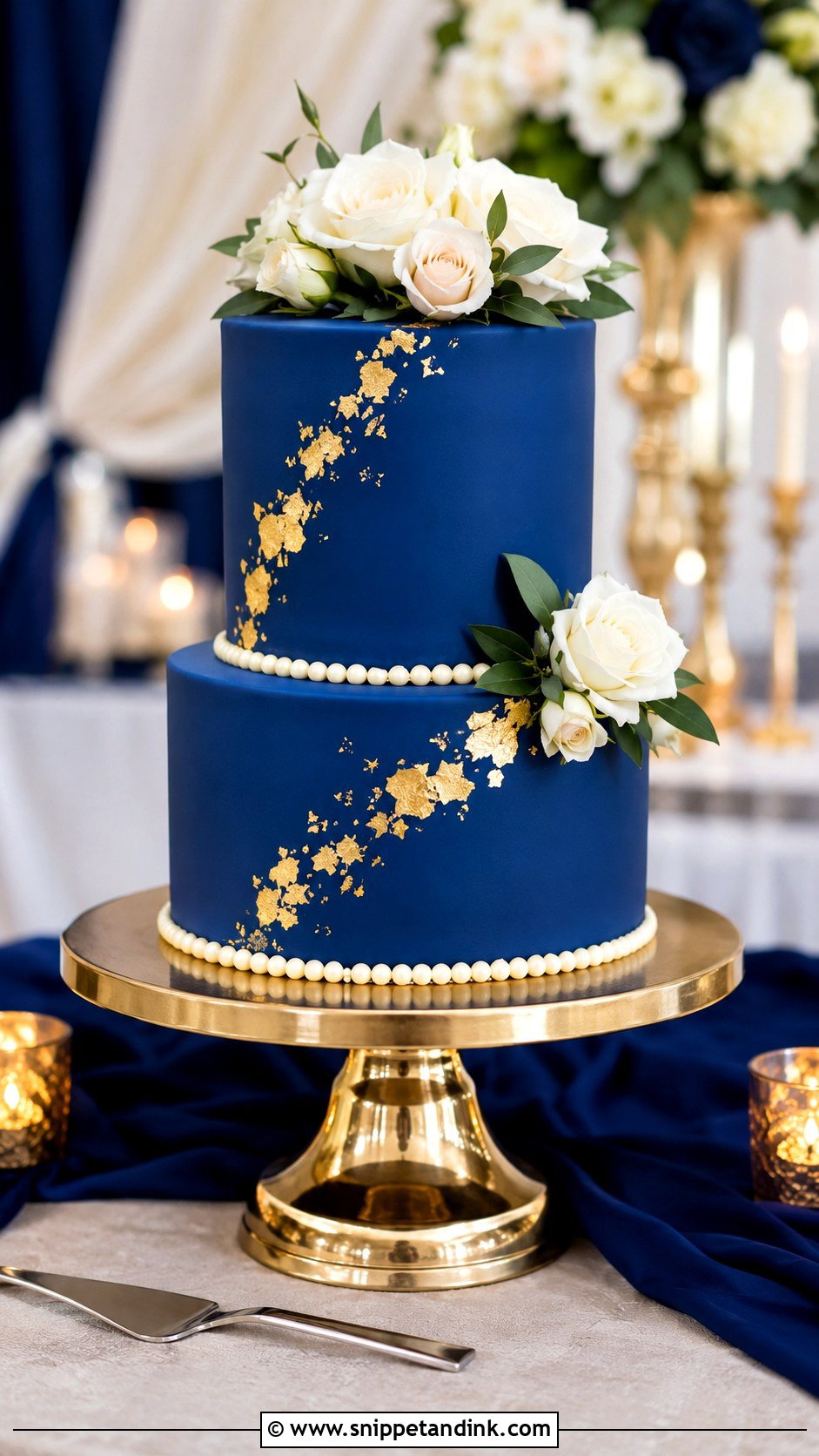
Royal blue is bright and confident, and two tiers keep it from overwhelming the room. I’d pair it with white flowers, gold leaf or a simple monogram topper. Fondant holds the strong colour evenly with sharp edges, while buttercream softens it a little. Be aware that royal blue is one of the shades most likely to fade under strong sunlight, so it needs a shaded spot. It suits banquet halls and cultural celebrations with blue and gold decor, where the cake is meant to stand out.
8. Pale Blue Two Tier Wedding Cake
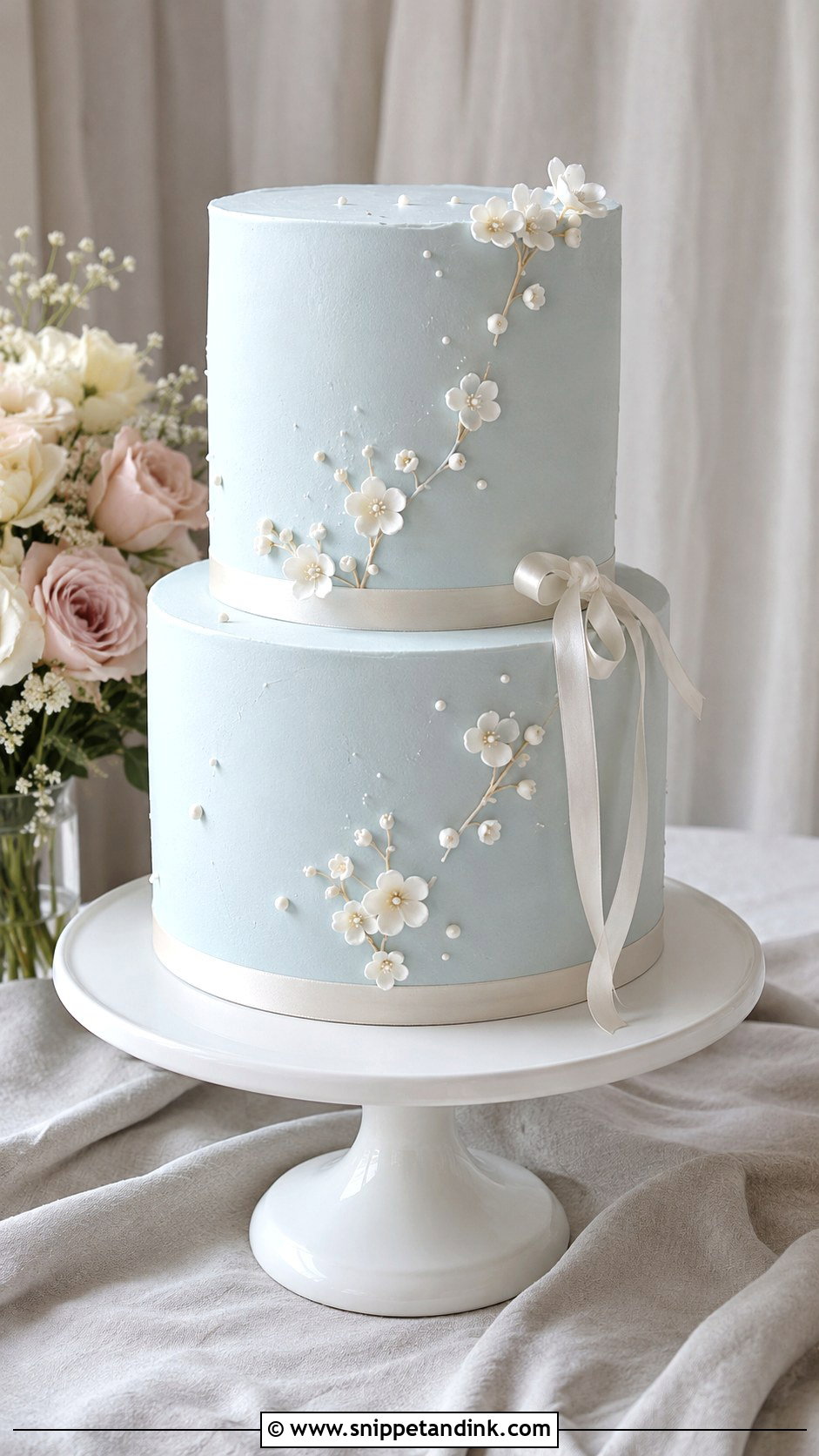
Pale blue is quieter and works best when the palette already includes ivory, blush, sage or soft grey. I tint it with the smallest dot of colour on a toothpick, because it is very easy to overshoot pale into baby blue. Smooth buttercream, satin fondant or a lightly textured finish all suit it. White sugar flowers, tiny pearls and a thin ribbon add charm without taking over, and it’s well matched to brunch receptions and small garden weddings.
9. Blue Floral Two Tier Wedding Cake
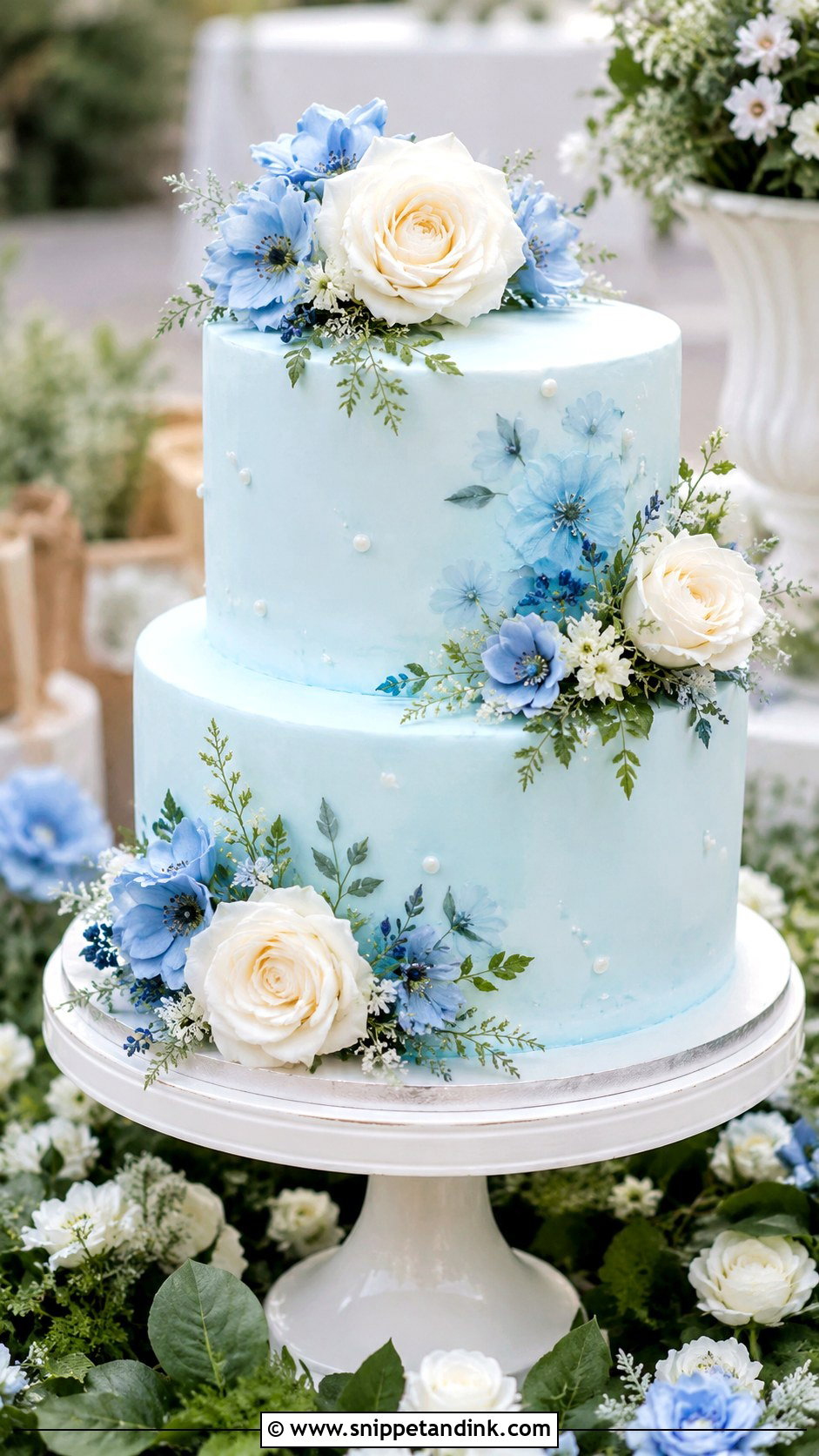
A floral cake should look like it came from the same hands as your bouquet. Over a white, ivory or dusty blue base, I add hydrangeas, sugar forget-me-nots, painted florals or soft appliques. Fresh flowers look lush, but I prefer sugar flowers for blue because natural blooms rarely match a palette exactly and many popular stems aren’t safe to sit against frosting. Smooth buttercream keeps it natural. Balance is the thing I watch most: a cascade that starts on the top tier should land somewhere deliberate on the bottom one.
10. Blue Hydrangea Two Tier Wedding Cake
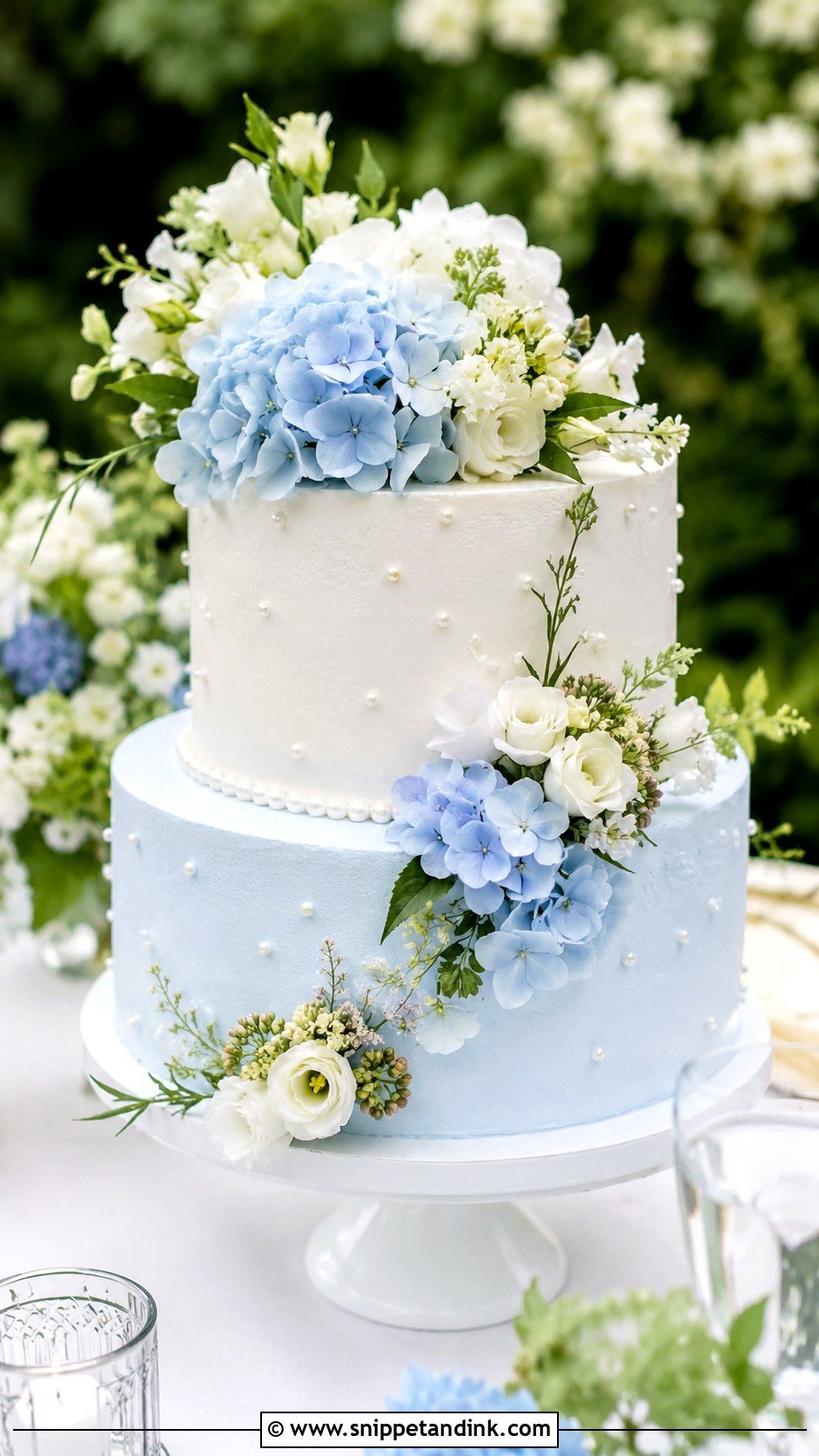
Hydrangeas give a lot of texture for very little piping, and a white or pale blue buttercream backdrop lets their clusters stand out. Here’s my caution, though. Fresh hydrangea is not a food flower, so if a couple wants the real thing, the stems are wrapped, the blooms sit on a barrier and they come off before cutting. Sugar or wafer paper hydrangeas avoid the worry entirely. A little greenery keeps the arrangement natural, and lemon, vanilla, almond or blueberry filling matches the garden feel.
11. Blue Rose Two Tier Wedding Cake
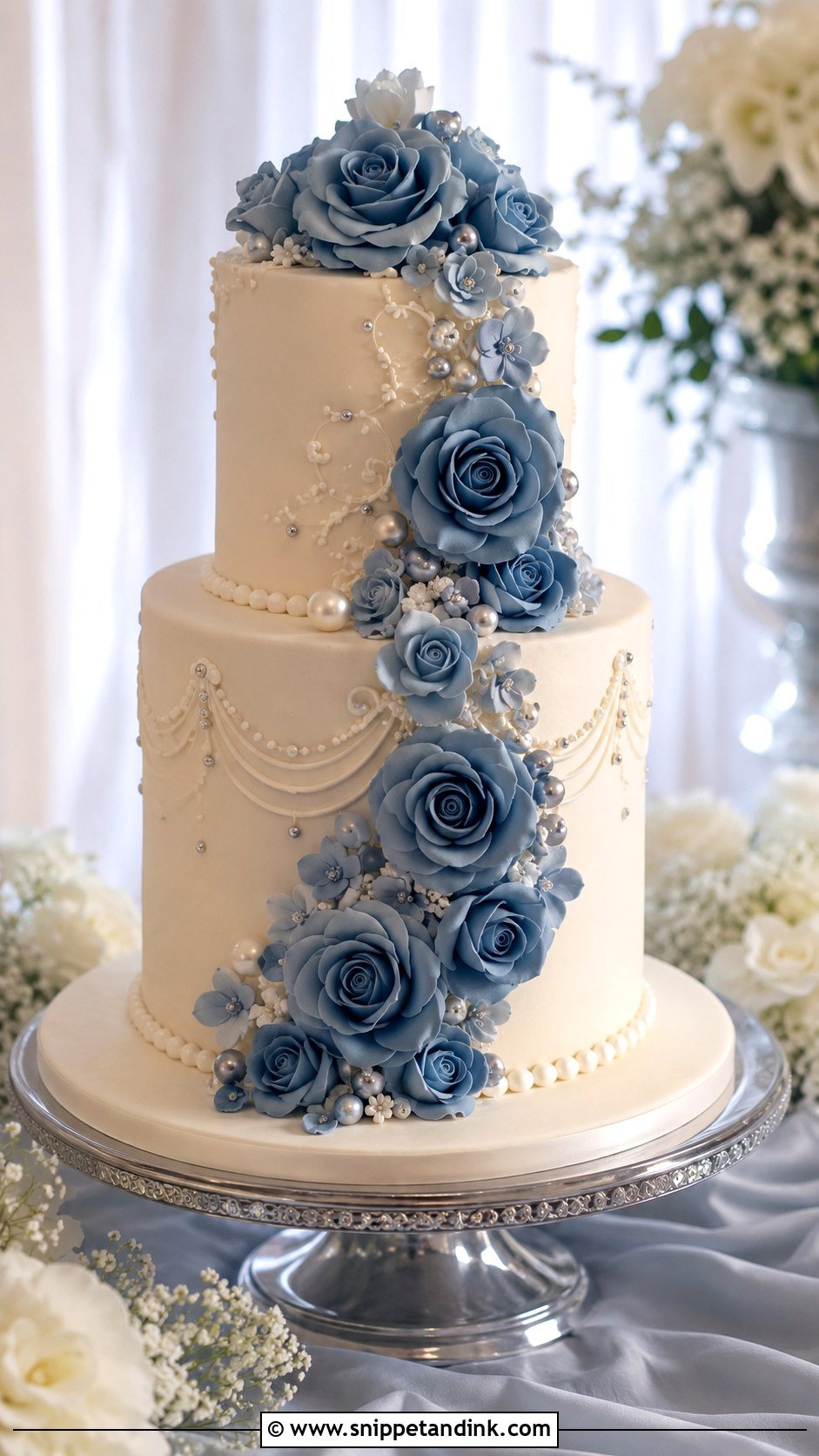
True blue roses barely exist in nature, so on a cake they’re almost always sugar, which lets me match dusty, navy, royal or pale blue exactly. White or ivory icing makes them stand out, and silver pearls or fine piping add the bridal finish. I usually run the roses from the top tier down one side in a loose crescent, because a ring of roses round each tier looks dated in photos. Ballrooms and evening receptions suit this one.
12. Blue And Gold Two Tier Wedding Cake
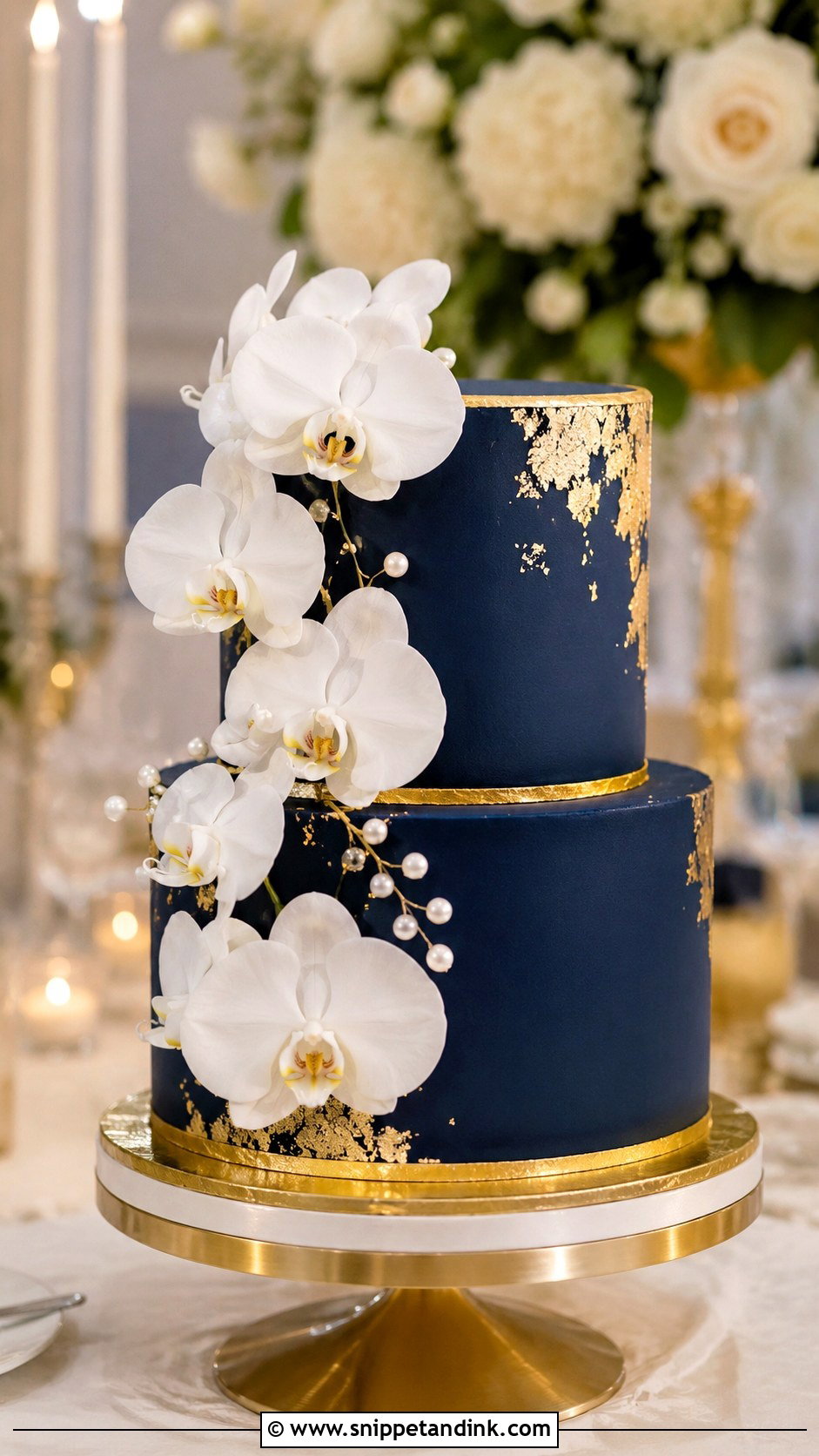
Gold works with navy, royal or dusty blue, but it should stay an accent. I apply gold leaf with a soft dry brush or paint a thin edge with edible lustre mixed into a little alcohol, and I stop well before the whole cake looks gilded. Smooth fondant gives a sleek surface for metallics; buttercream with gold flecks is softer. White roses, orchids or sugar flowers bring it back to bridal. For formal rooms where the dessert table needs one strong focal point, it delivers.
13. Blue And Silver Two Tier Wedding Cake
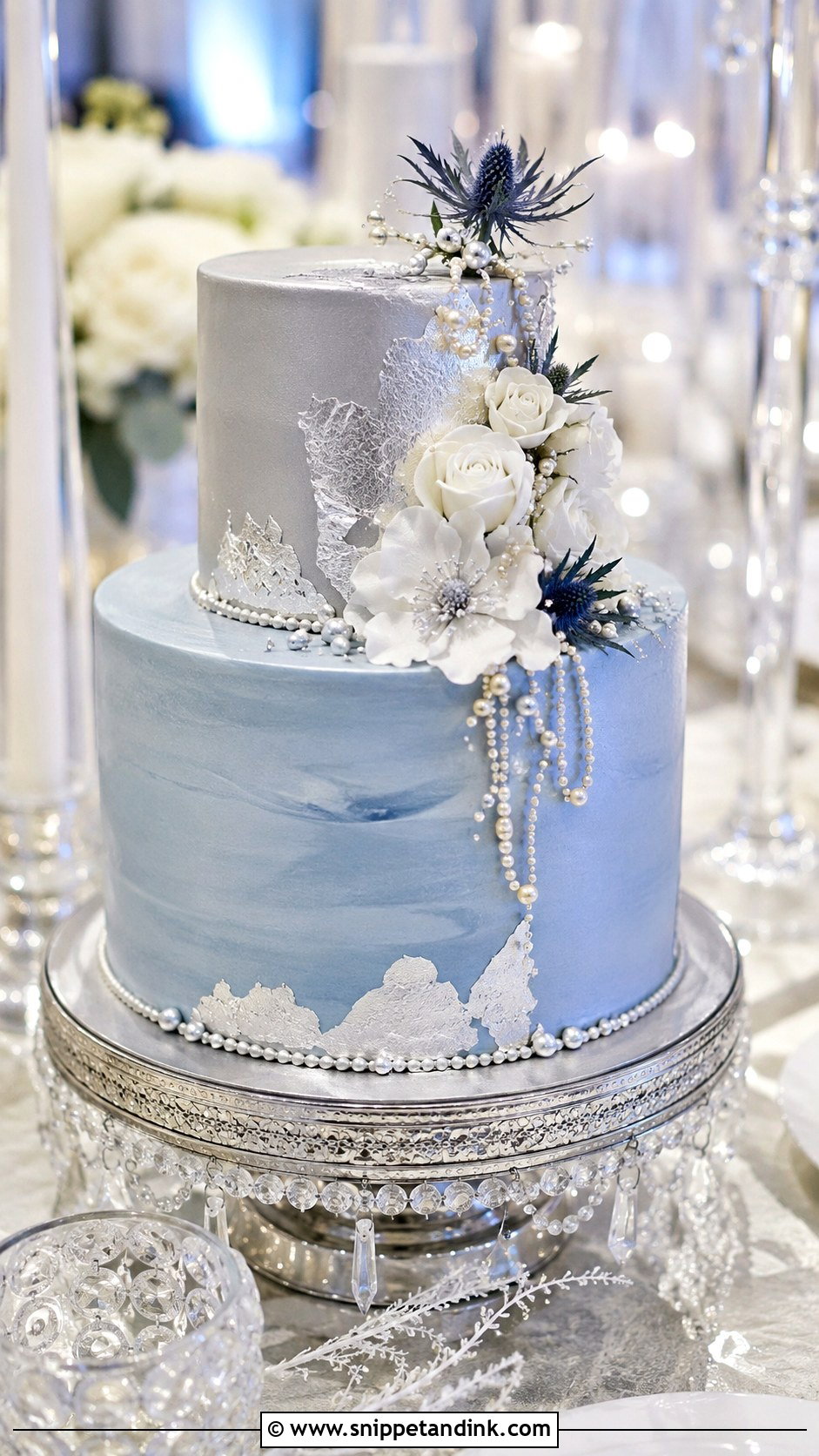
Silver keeps blue cool and modern, and it sits well with icy blue, slate blue, dusty blue or navy. Silver leaf, edible pearls, metallic brushstrokes or a thin ribbon add shine. Silver is a little less forgiving than gold on buttercream, as any smudge shows, so I usually put it on fondant or on decorations rather than directly on the icing. White sugar flowers or blue thistle-style accents soften the effect. It belongs with crystal and glass table decor, especially in winter palettes.
14. Blue Watercolor Two Tier Wedding Cake
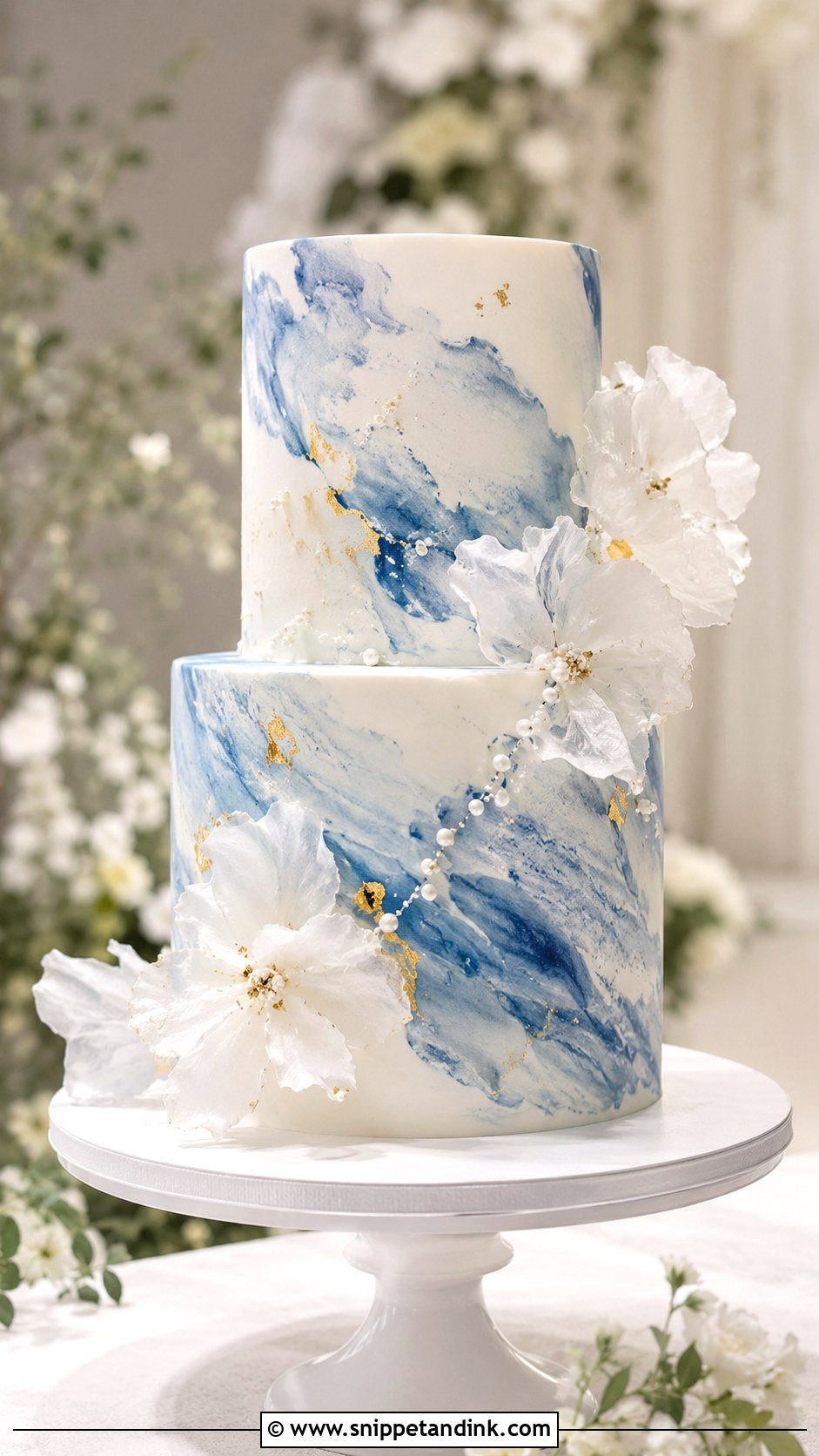
Watercolour effects are painted, not piped. I thin gel colour with a little clear alcohol and brush it over chilled buttercream or fondant in loose washes, layering sky blue, dusty blue and slate until the movement looks right. The alcohol evaporates and leaves only colour behind. Since the painting is already the decoration, toppers and borders should stay simple, maybe a few white flowers or wafer paper petals. Outdoor weddings in soft natural light show it off best.

15. Blue Lace Two Tier Wedding Cake
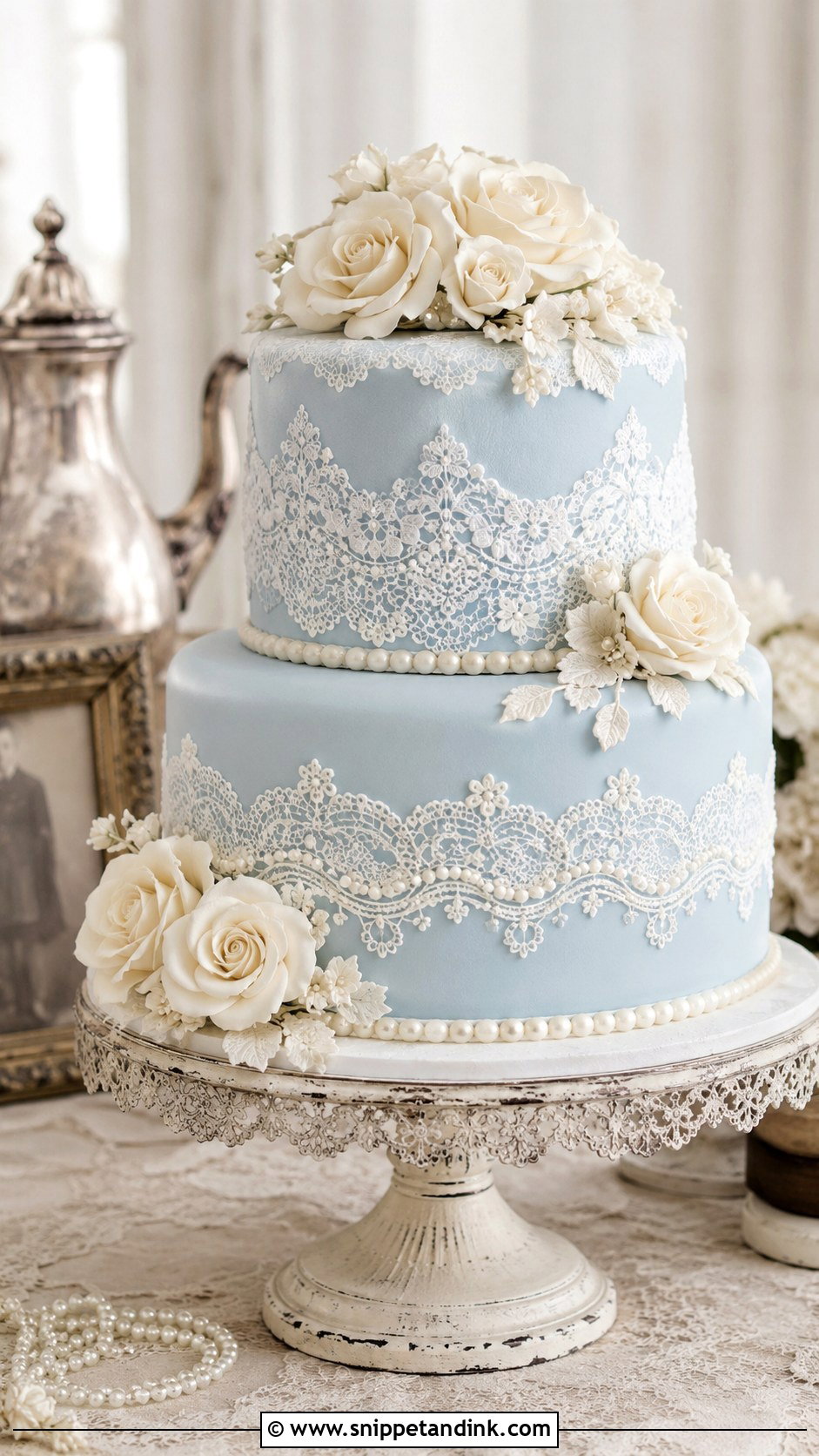
Sugar lace is set in a silicone mat and peeled away once it’s dry, then wrapped round the tier, so it can copy a pattern close to the lace on a gown. I do it either as white lace on a pale blue base or blue lace on white. Pearls, scalloped borders or a few small flowers keep it vintage. One honest warning: sugar lace dislikes humidity and can soften or sag on a sticky summer day, so for a damp outdoor venue I’d use piped lace instead. Vanilla, almond or lemon suits the delicate look.
16. Blue Buttercream Two Tier Wedding Cake
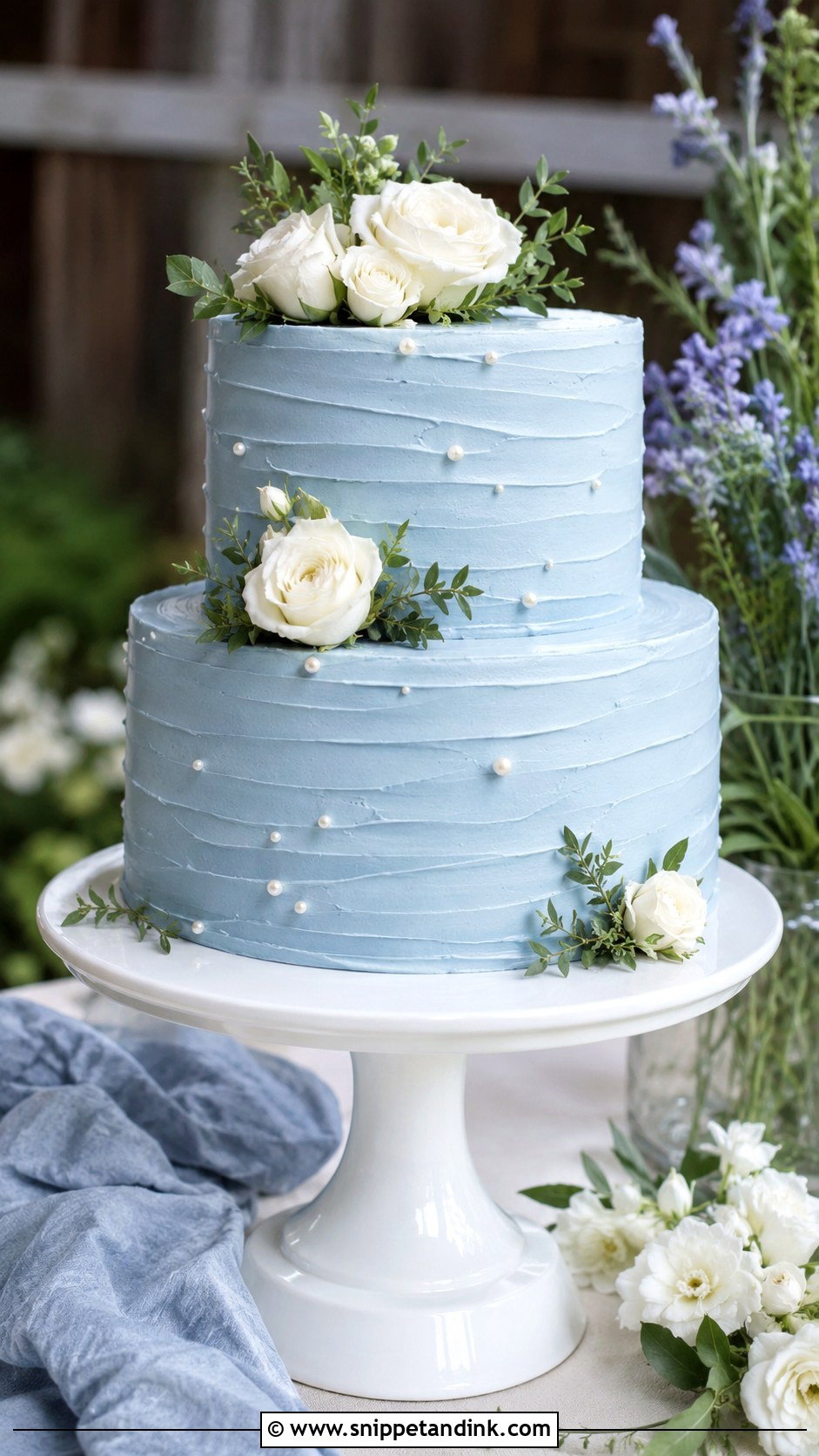
Buttercream is the finish most guests actually want to eat. Smooth gives polish, a combed scraper leaves fine lines and rustic swoops look relaxed. Pale blue, dusty blue and slate shades look most bridal. The thing to know is that classic butter-based buttercream is pale yellow, and yellow under blue edges toward green, so I whip the butter longer to lighten it or use a whiter Swiss meringue base. Fresh white flowers, greenery or a simple topper finish it for a barn or intimate garden reception.
17. Blue Fondant Two Tier Wedding Cake
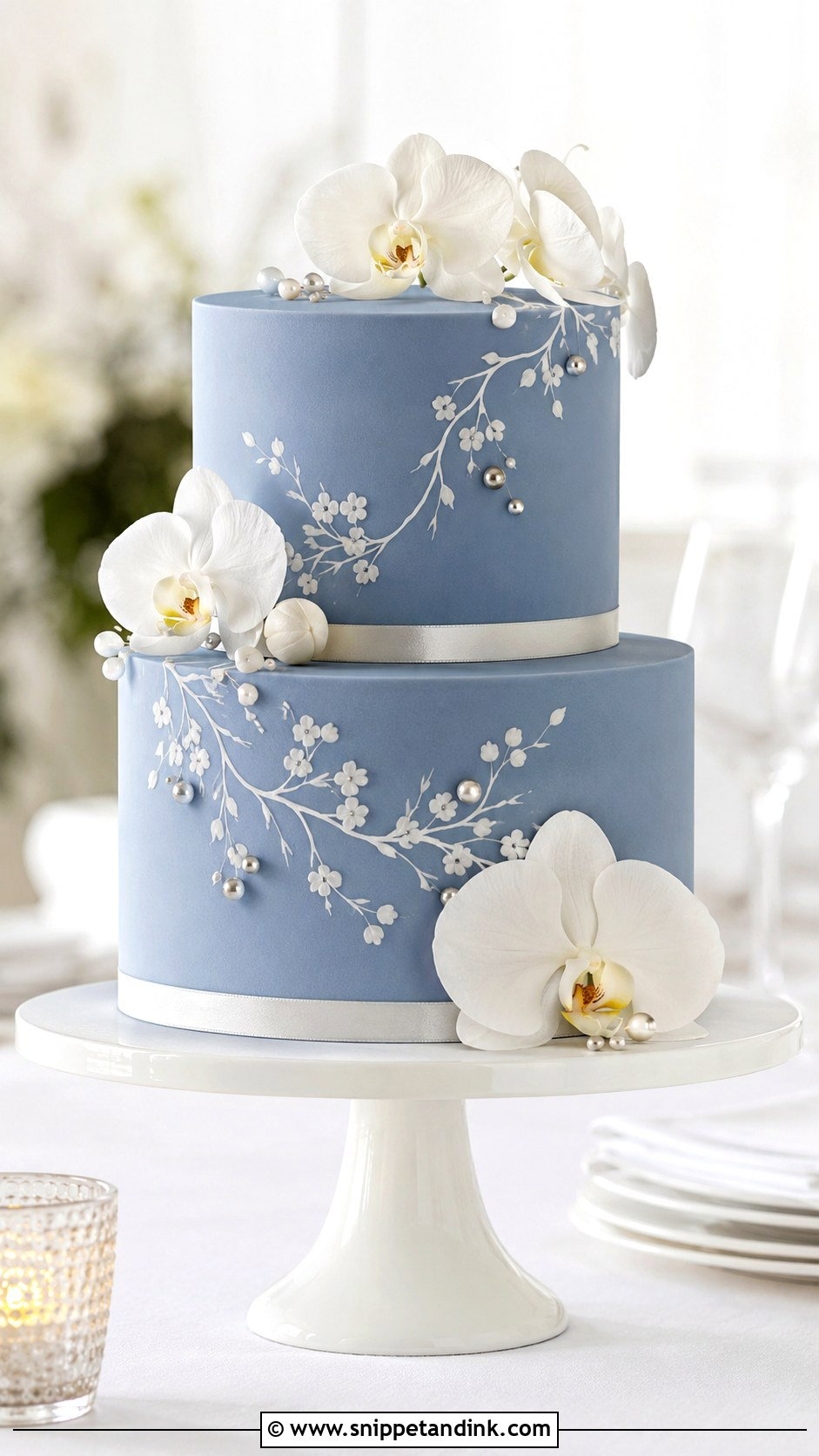
Fondant gives the sharpest edges and the smoothest surface, and it holds detail like sugar flowers, painted patterns, metallic accents and moulded borders. Navy, royal blue, dusty blue and pale blue all look strong in it. For deep shades I start from pre-coloured fondant instead of kneading in a pot of gel, which leaves it sticky and prone to tearing. White orchids, pearl trim or gold leaf suit a formal room. Fondant also makes marble, lace and monogram work easier, though plenty of guests peel it off, so the cake underneath must be worth eating.
18. Blue Drip Two Tier Wedding Cake
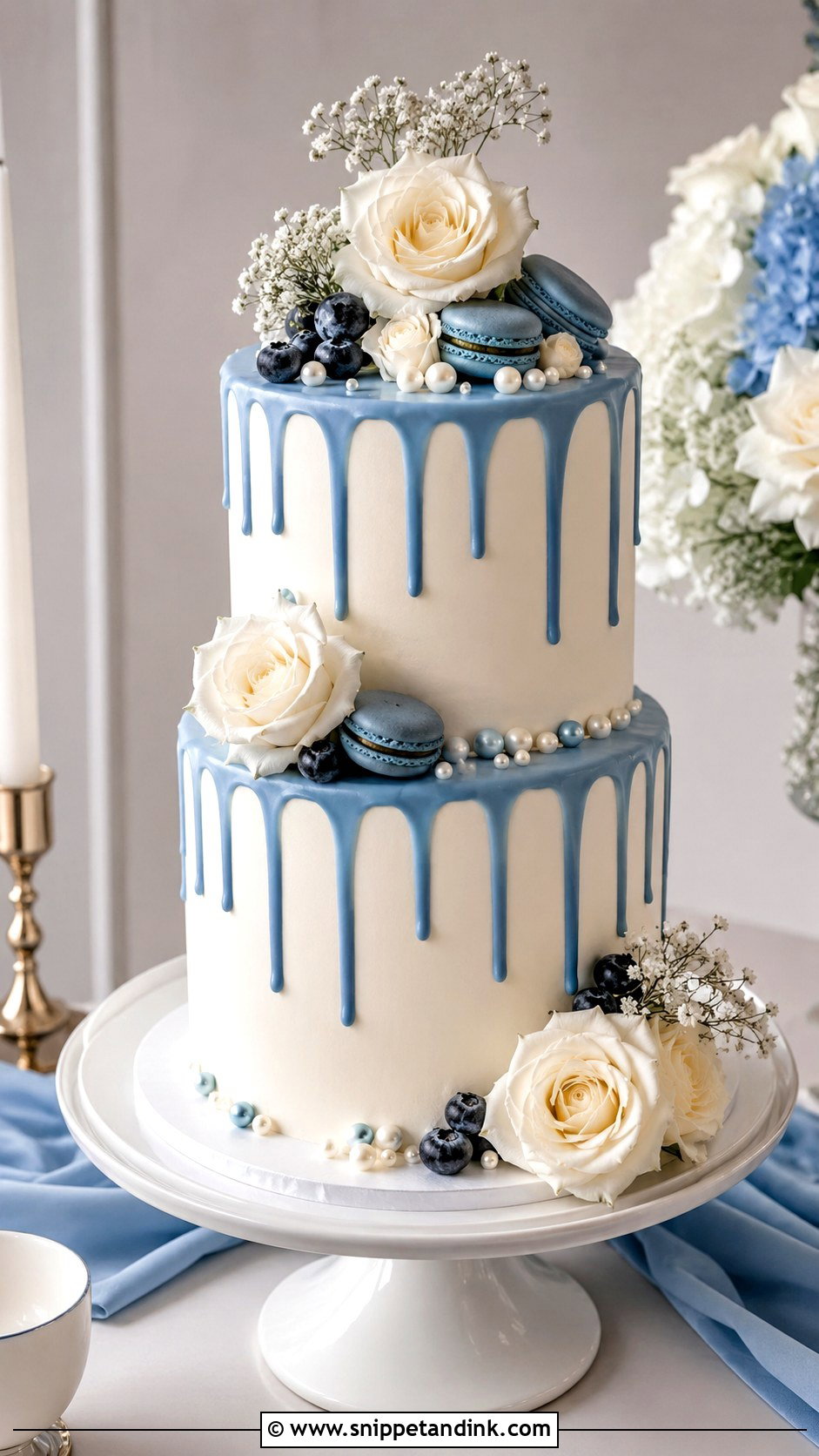
A drip looks casual if it’s sloppy, so I test the first drip on the back of the cake and adjust the temperature before going round the front. Tinted white chocolate needs oil-based colour, because water-based gel can make the chocolate seize. The drip can be pale blue over white, white over blue, or metallic blue for more punch. Macarons, white roses or sugar pearls on the top tier finish it, and vanilla, lemon, almond or blueberry cake suit the fresh palette. It’s the least traditional design here, and the one I’d keep for a relaxed reception.
19. Blue Beach Two Tier Wedding Cake
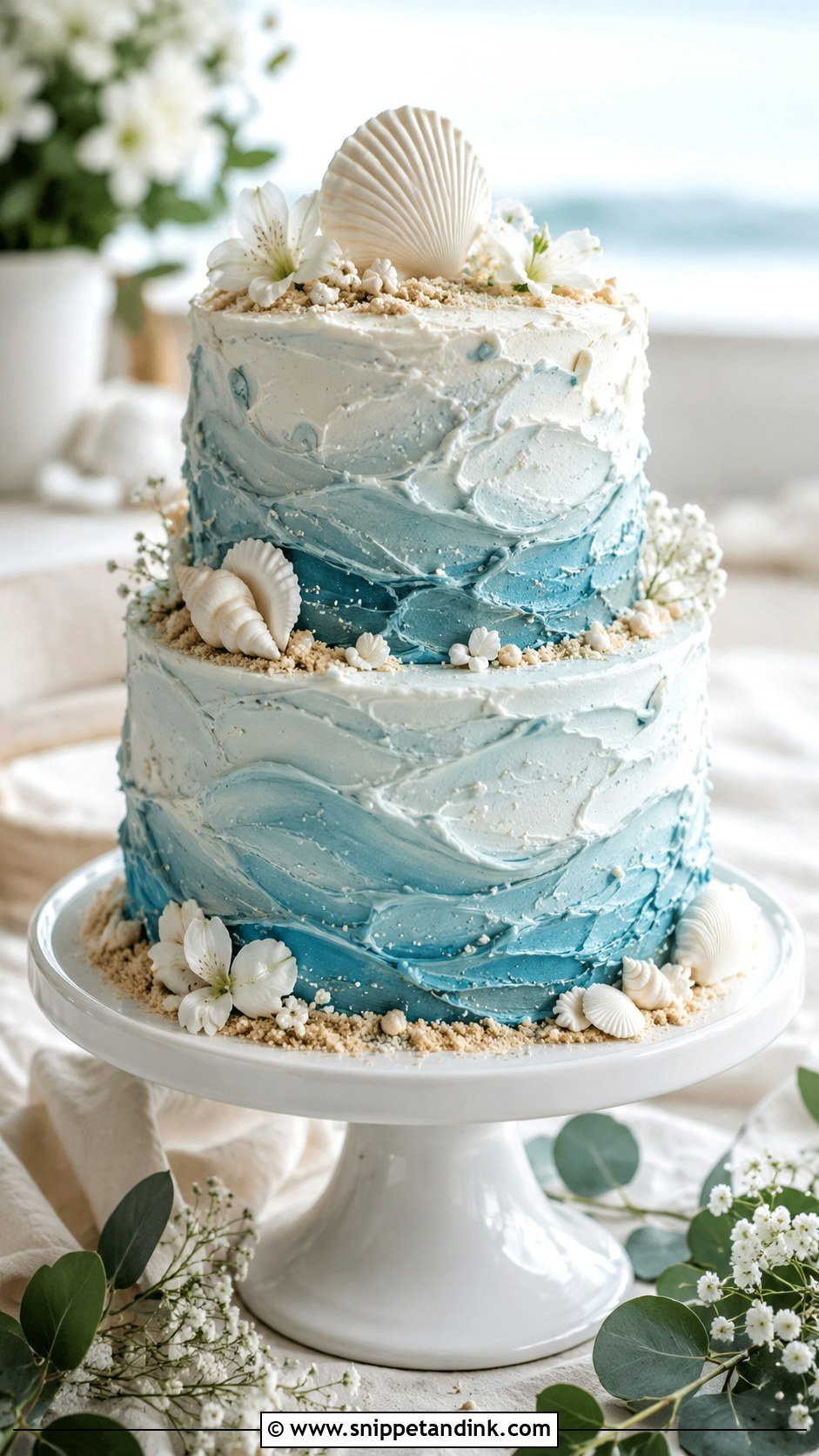
For coastal weddings and waterfront receptions, ocean blue buttercream with white wave texture carries the theme without props. I make the shells from white chocolate in moulds and use crushed biscuit for sand, which tastes better than coloured sugar. A pale blue and ivory palette looks more bridal than bright tropical colours. Coconut, vanilla, lemon or key lime pairs well. Sea air is humid and sun on the sand is fierce, so plan for shade near the cake table.


20. Blue Vintage Two Tier Wedding Cake
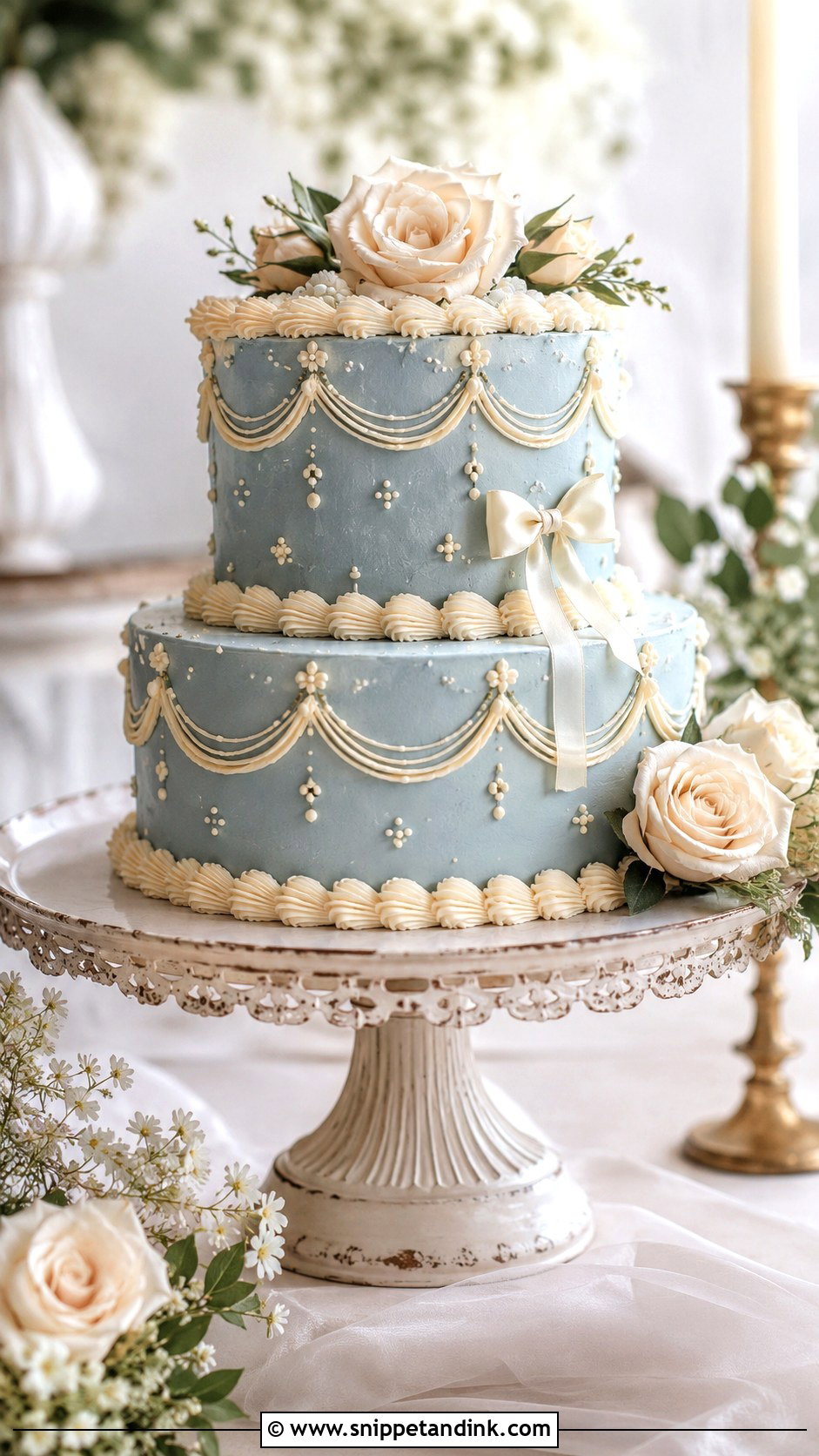
Piped vintage work is a skill I enjoy most, and it lives or dies on neatness. Soft blue buttercream with delicate shell borders, piped swags, pearl dots and small florals gives that nostalgic look. Uneven swags are the giveaway of a rushed job, so I mark the spacing on the tier with a template before piping. Powder blue and dusty blue suit it best. An ivory rose or a small bow finishes it for a courthouse wedding, a garden party or a reception with antique decor.
Why Blue Icing Turns Green, Grey or Patchy
Blue is the colour I see go wrong most often in home and bakery photos alike. Three things cause it. Butter-based icing is yellow, and blue over yellow drifts toward teal. Colour also deepens as icing rests, so a shade that looks right straight from the mixer is often a notch darker an hour later. And strong light, especially direct sun, can fade some blues within hours.
My fixes are simple: lighten the base first, tint a little lighter than the target and let it rest before matching, and add the tiniest touch of violet if a blue starts to look green. Bring a ribbon or swatch of your actual wedding blue to the tasting, because on a phone screen the same blue can shift noticeably.
Getting a Blue Cake Through a Warm Venue
A chilled fondant cake moved into a warm, humid room collects condensation on its surface, and on a dark blue that moisture can make the colour streak or look blotchy. I let it come up to room temperature in its box, which keeps the droplets off the fondant, and I never wipe it. Buttercream softens in heat instead, so for summer I want the cake table out of the sun, away from the dance floor lights, and set up as late as the venue allows.
The Room Decides the Blue
Once you’ve seen the range, the decision usually comes down to light and mood. Pale blue with white flowers feels delicate in daylight, while navy with gold holds up to candles and an evening crowd. Buttercream looks handmade and tastes better; fondant gives clean lines and travels more predictably. Pick one decorative idea, whether that’s flowers, lace, marble, watercolour or metal, and let it lead. Then take a photo of your linens and flowers to the tasting, and I can match the blue to the room rather than to a screen.
You'll Like These Ideas:










Leave a Reply