
Five tiers is the point where a wedding cake stops being dessert and starts being architecture. Guests see it from the door, and it gives you enough surface for texture, colour, flowers, piping and a different flavour on almost every level. Couples are leaning back into scale right now, along with vintage piping, sculpted tiers and bolder colour, and a tall cake carries all of that well. It also brings real questions about weight, servings and setup that a two-tier cake never raises. The designs below come with the notes I’d give you at a tasting, so you can see which ones suit your room and your guest list.
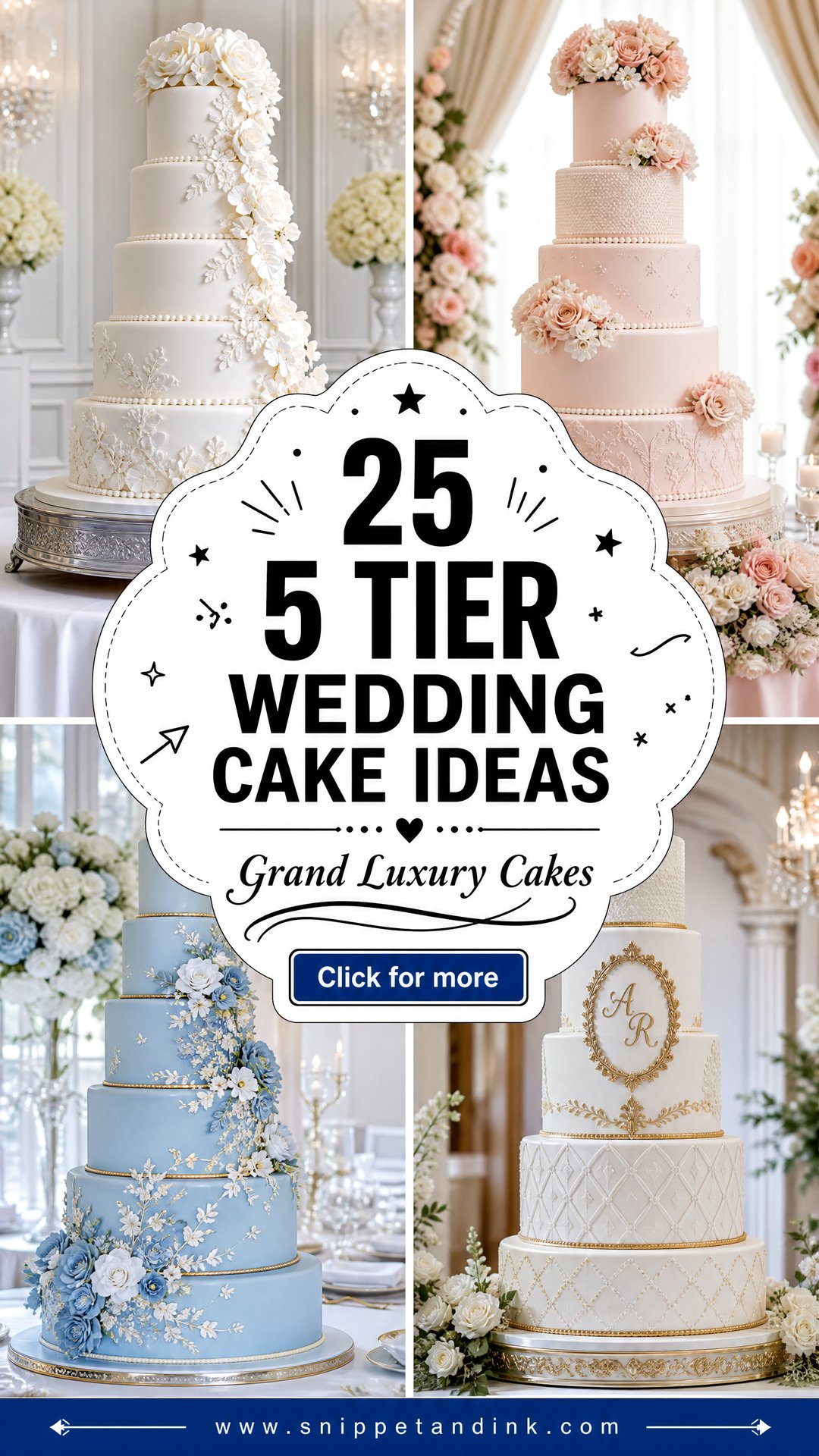
Five Tiers Can Feed Two Hundred, So Count First
The first thing I do when a couple asks for five tiers is check it against their guest list. A common stack of 6, 8, 10, 12 and 14 inch rounds gives roughly two hundred slim wedding slices by the usual cutting chart. Bakeries count portions differently, so treat that as a ballpark and ask yours how she slices.
If you have eighty guests, you don’t need that much cake, and you have options.
- Dummy tiers. Polystyrene tiers iced exactly like the real ones keep the height and cost less in sponge. The bottom tier is the usual one to fake, though a real top tier is needed for the cutting.
- Smaller steps. 4, 6, 8, 10 and 12 inch tiers still reads as five tiers from across the room and feeds far fewer.
- Taller, fewer real tiers. Extended tiers made from two stacked cakes add height without width.
It works the other way too. For a very large wedding, I’d keep the display cake at five tiers and add plain kitchen cakes in the same flavours, cut behind the scenes, rather than building six or seven tiers that are hard to move.
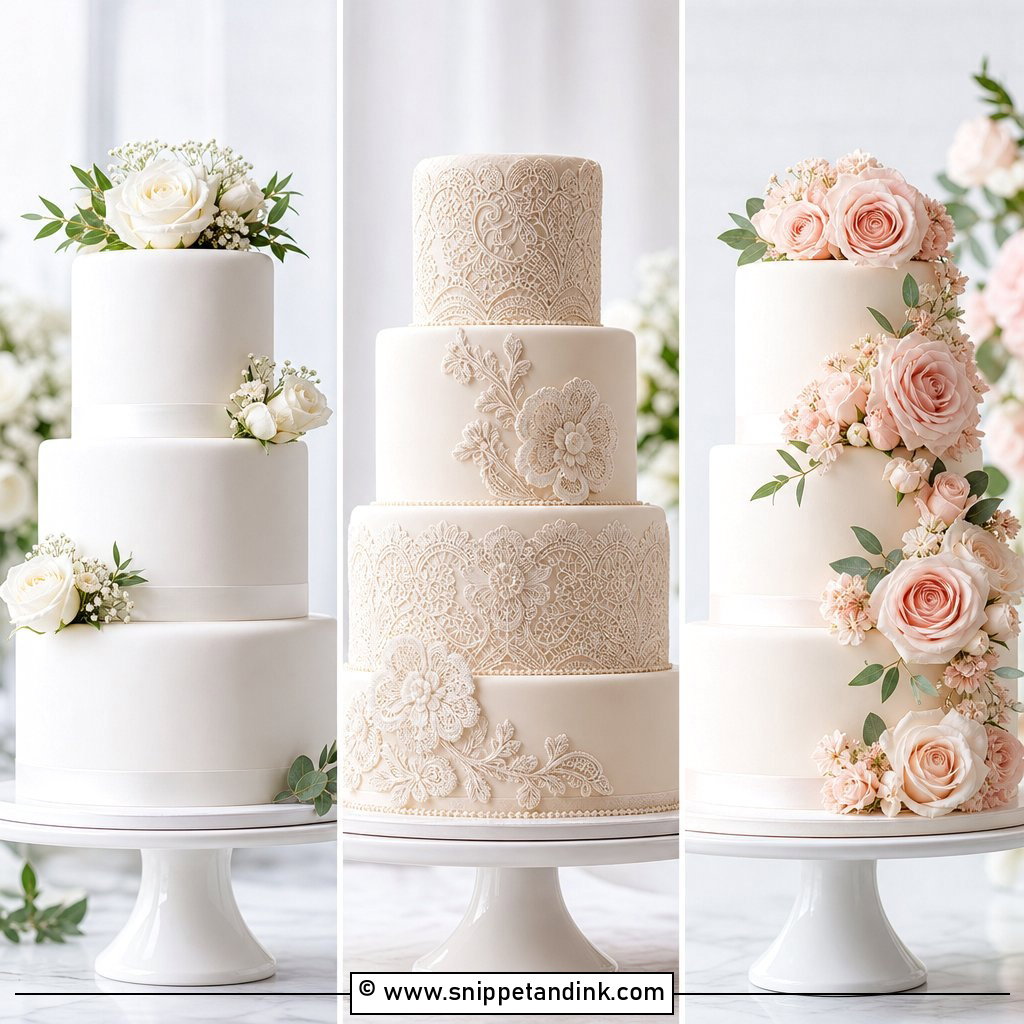
1. White 5 Tier Wedding Cake
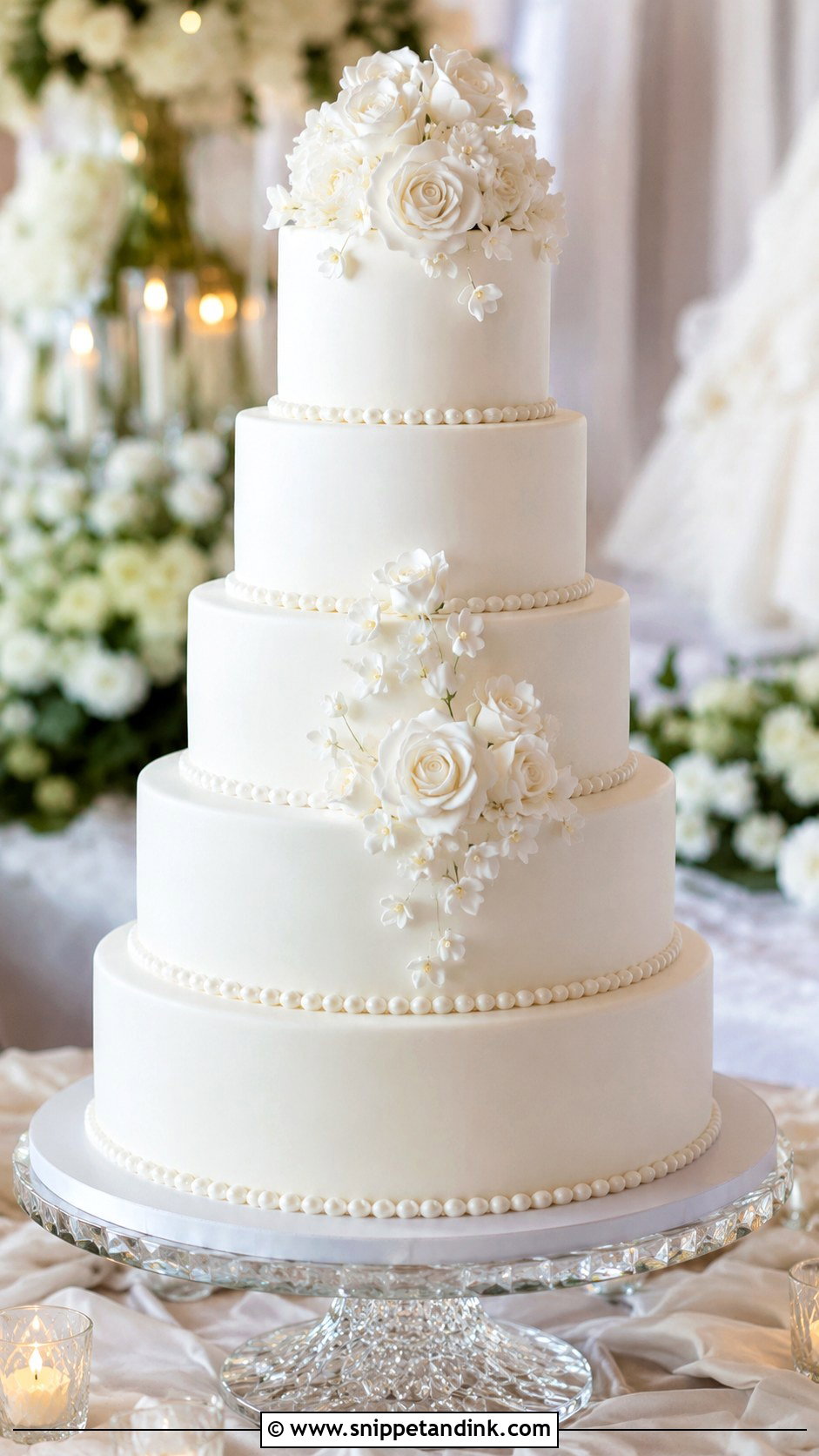
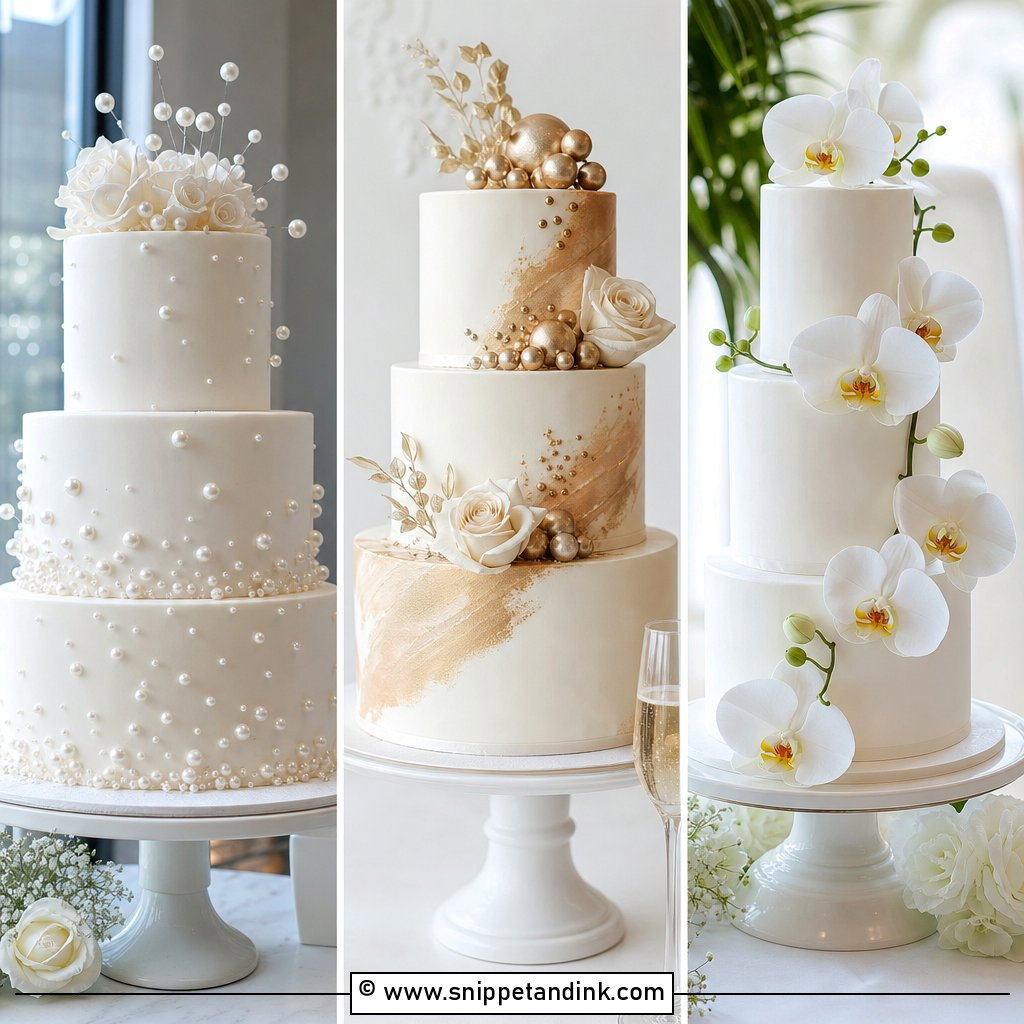
White is the cake I’d recommend to anyone who wants height without risk, because it sits happily in any venue and next to any palette. Plain white over five tiers can look like a stack of hatboxes, though, so I always add quiet texture: a pearl border at each base, light piping, a few white sugar flowers. One trick that keeps it interesting is alternating finishes, smooth on one tier and quilted or lace on the next. It holds its own in the room without competing with your flowers.
2. Floral 5 Tier Wedding Cake
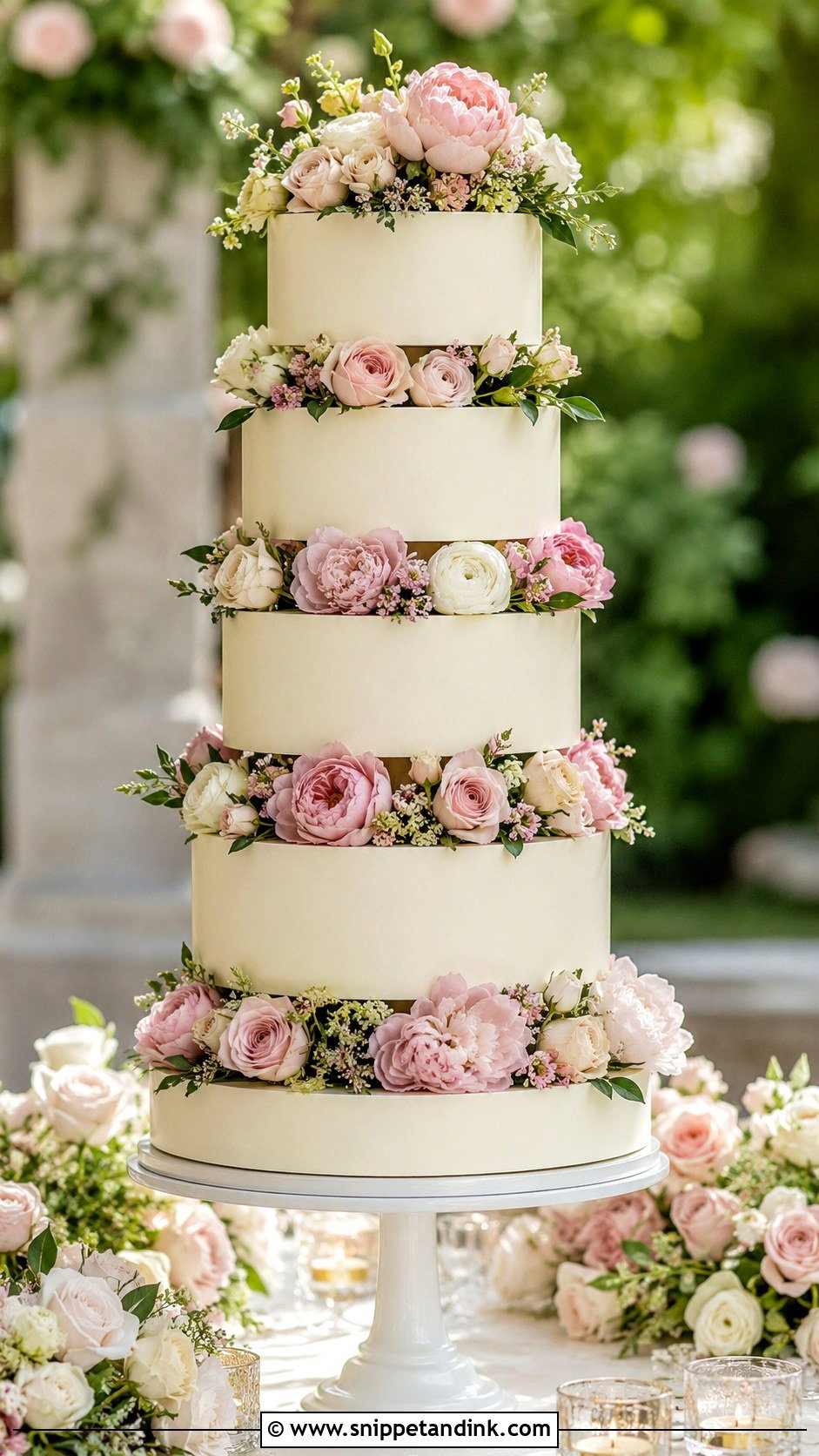
Flowers soften all that height. On tall cakes I like roses, peonies, ranunculus, orchids or sweet peas, either wrapped loosely like a garden or placed tightly as sugar work. Your baker and florist need to talk before the day, because fresh blooms must be food-safe or kept off the icing with picks and wraps, and someone has to own the job of dressing the cake. Repeat a flower from the bouquet or centrepieces and the cake looks like part of the wedding rather than an add-on.
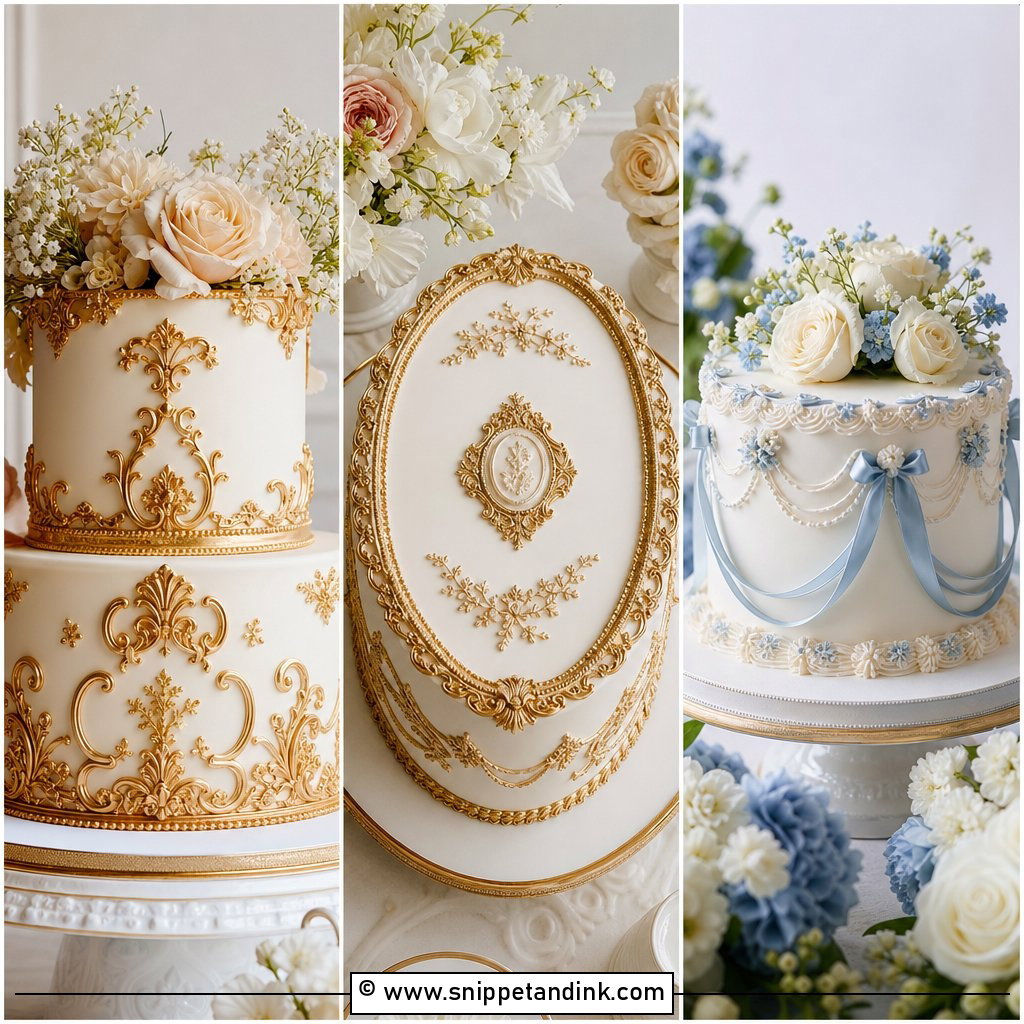
3. Vintage 5 Tier Wedding Cake
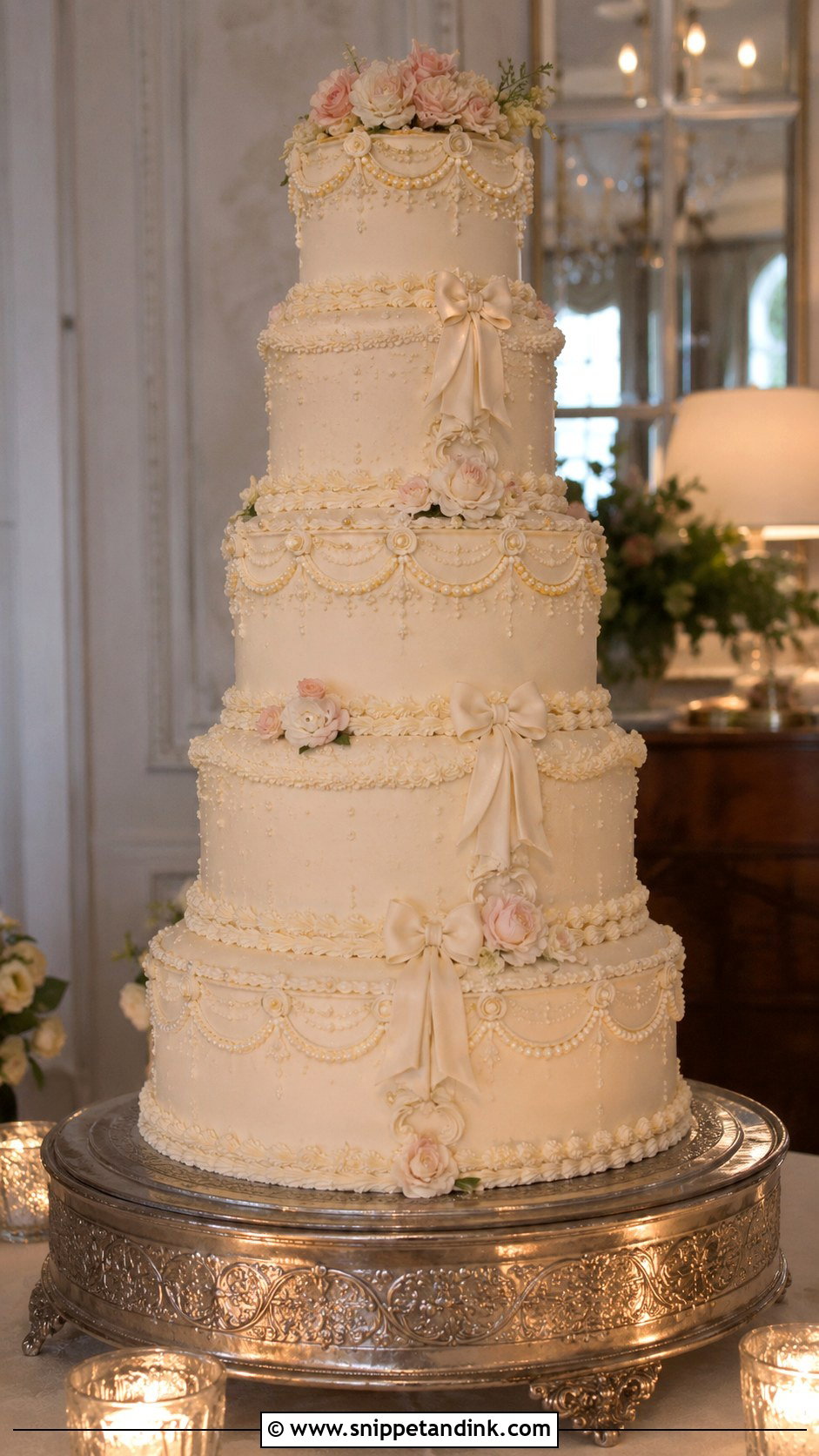
Vintage piping is having a real moment, and five tiers gives it room to breathe. Shell borders, tiny pearls, ruffles, scrolls and swags all depend on stiff buttercream or royal icing and a steady hand; this is slow work, so expect it to be priced accordingly. Ivory, blush, pale blue and butter yellow suit the look, and detailed piping photographs best in soft candlelight, where every ridge throws a small shadow. Historic venues and estate houses are its natural home. A vintage topper or sugar bows finishes it.
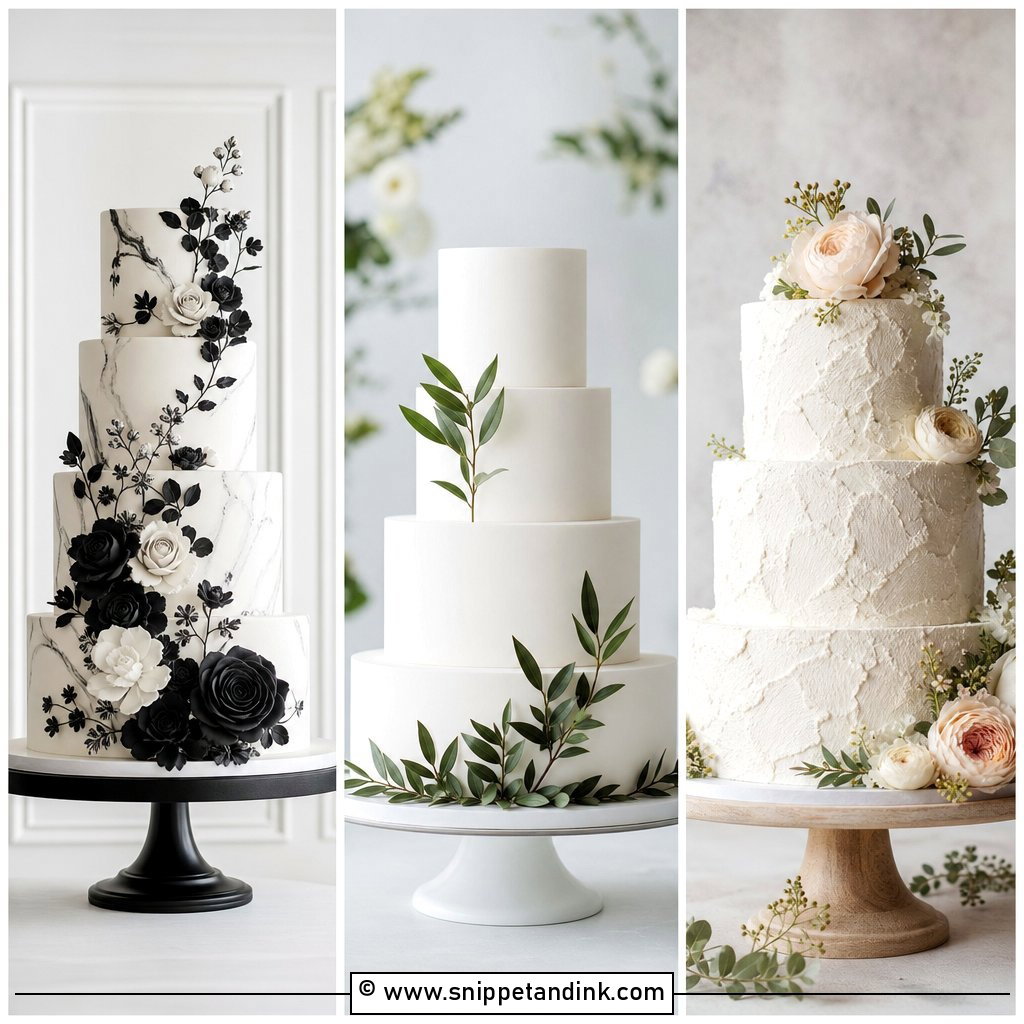
4. Modern 5 Tier Wedding Cake
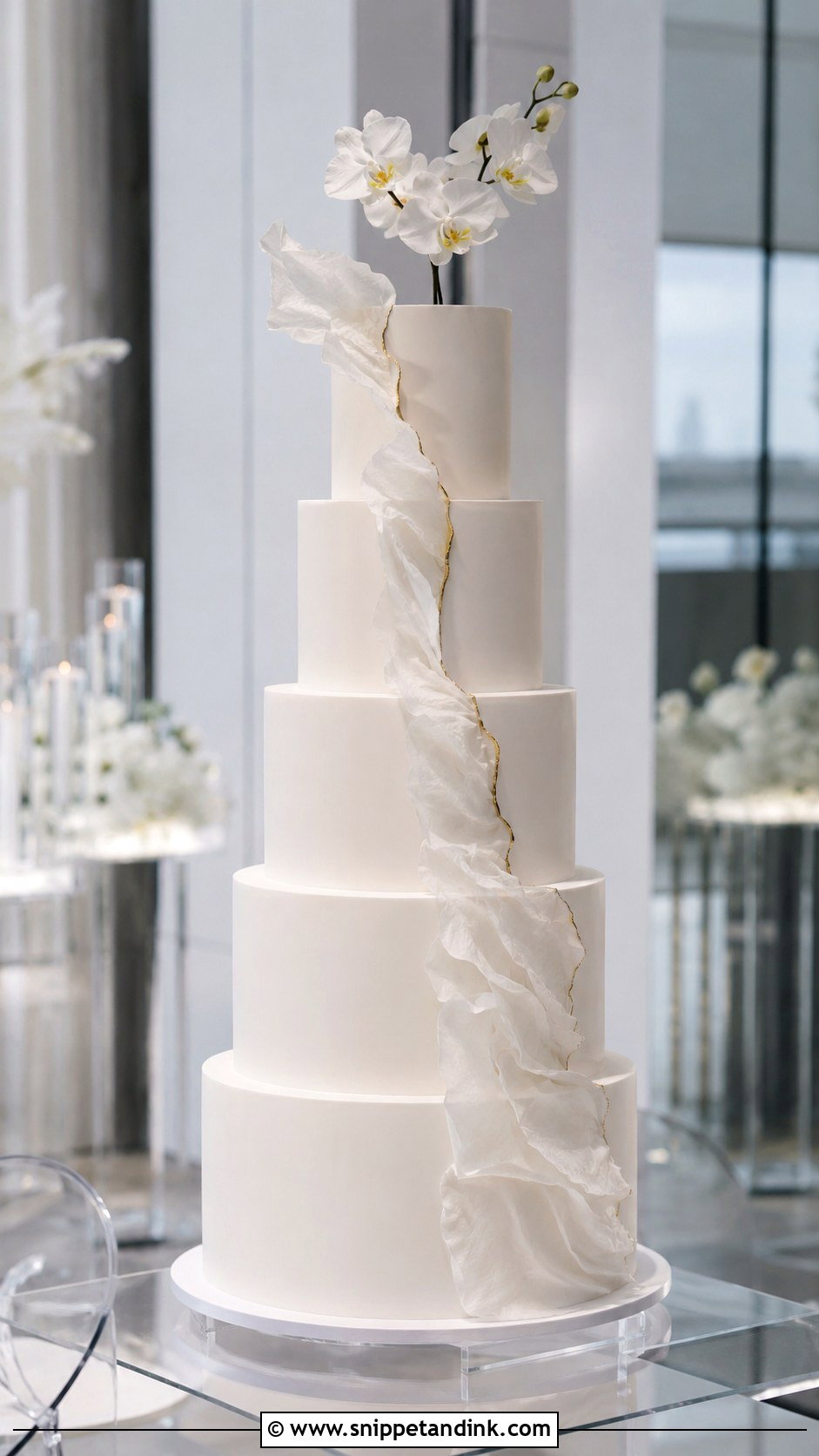
Modern five-tier cakes live or die on proportion. With no heavy decoration to hide behind, the tier heights, the steps between sizes and the sharpness of each edge are the whole design. I’ll often use one extended tier, a wafer paper sculpture or a single metallic accent, and leave the rest smooth. White reads crisp, black and white reads graphic, warm neutrals read soft. Done well it looks edited; done carelessly it just looks unfinished, so check a baker’s portfolio for sharp edges before booking.
5. Rustic 5 Tier Wedding Cake
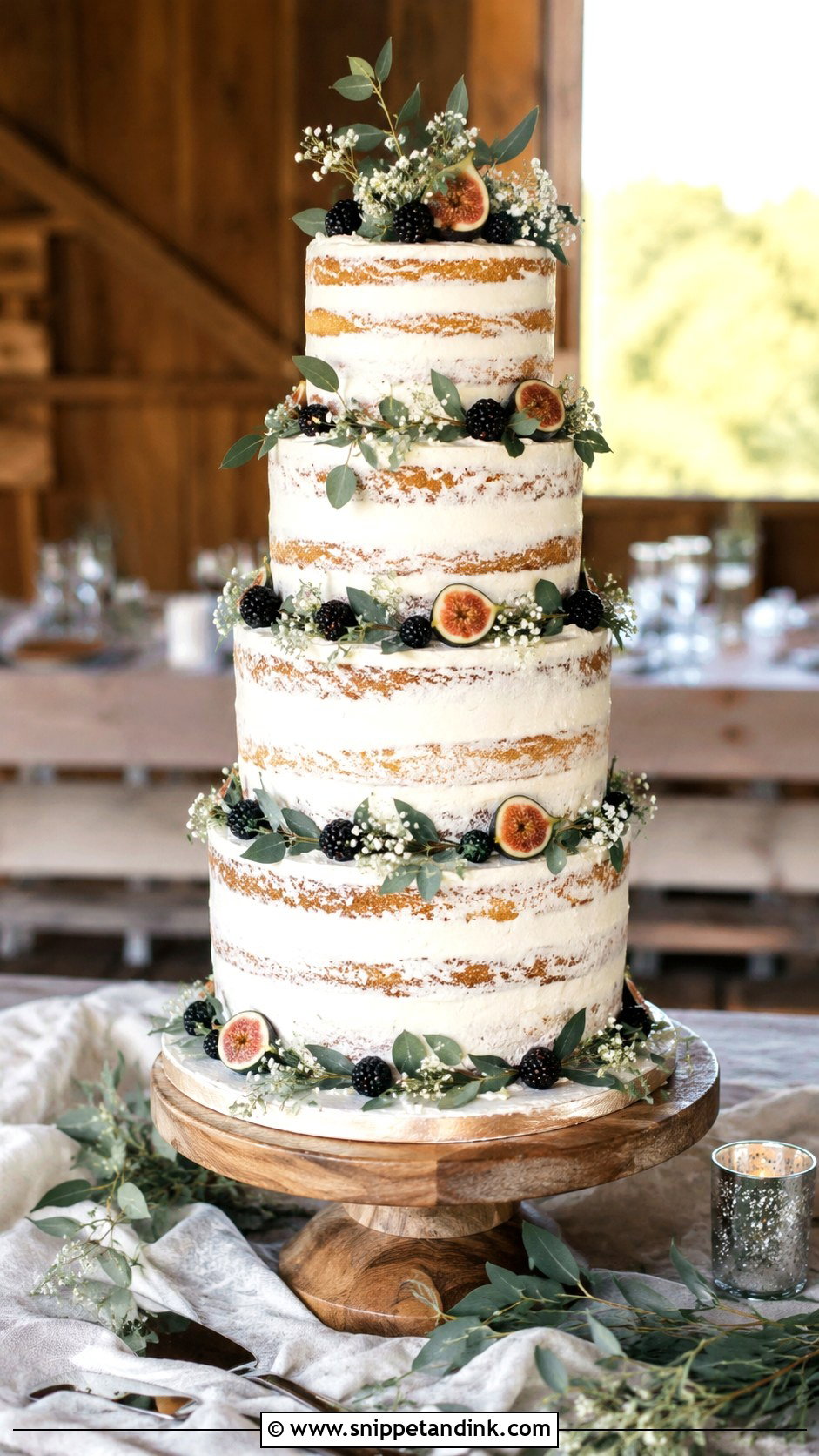
Rustic cakes trade polish for warmth: semi-naked buttercream, scraped sides, greenery and small seasonal flowers. The honest problem with rustic at five tiers is that exposed sponge dries out faster than a fully coated cake, so I keep the coating just thick enough to seal it and assemble as late as I can. Vanilla bean, almond, carrot, spice and lemon all suit it. A wooden stand and some candles complete it at barns, lodges, backyard weddings and other outdoor receptions.
6. Gold 5 Tier Wedding Cake
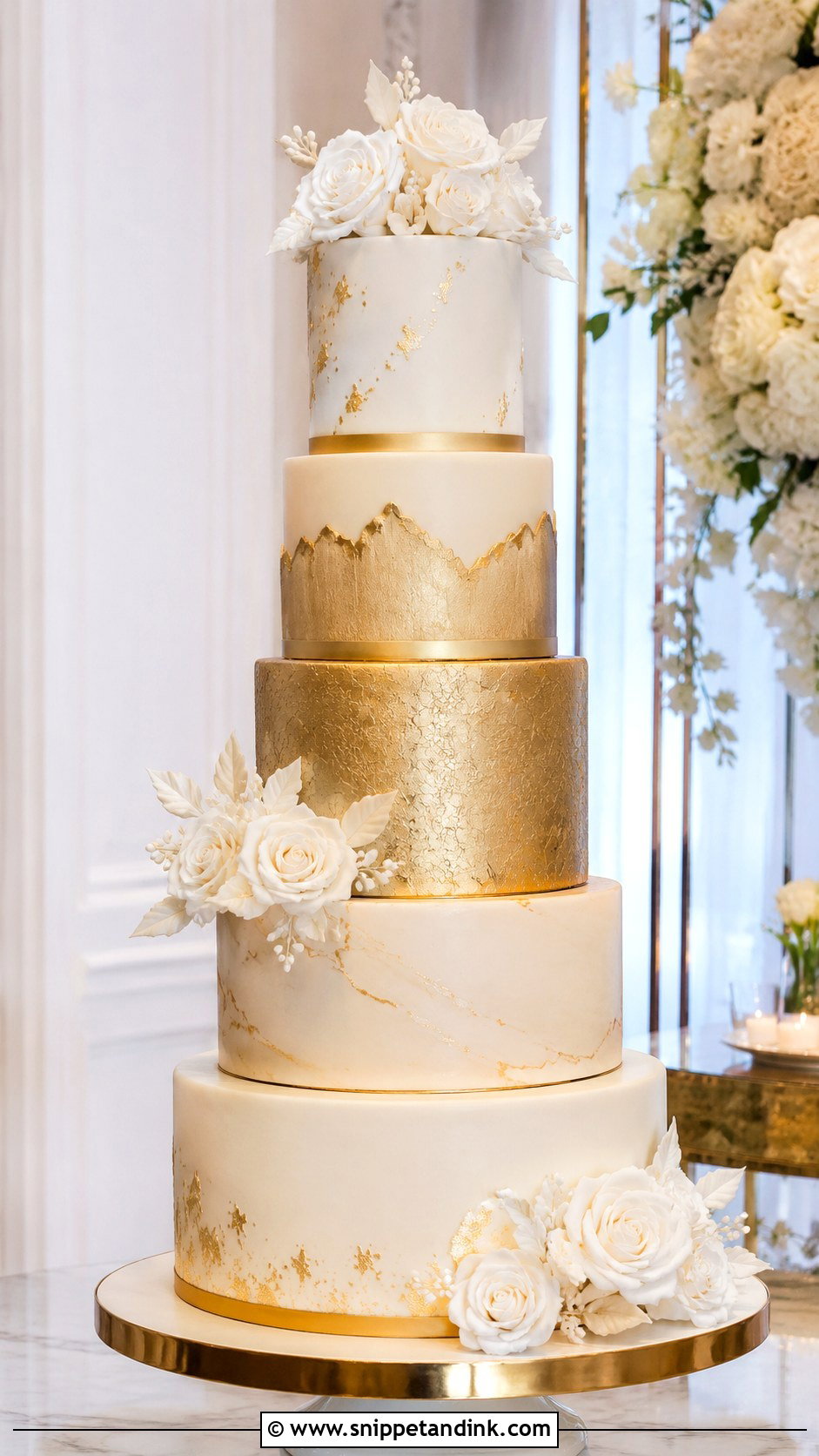
Gold works best in thin lines on a tall cake. A painted edge on each tier draws the eye upward and makes the height look deliberate. Larger gold sections are more dramatic but show every brush stroke, so they need a very smooth fondant surface underneath. Pair gold with ivory, champagne, blush or taupe, and add a few sugar flowers so the shine has something soft beside it. Use edible gold leaf or edible lustre only; plenty of metallic dust sold for cakes is labelled non-toxic rather than food.
7. Black And White 5 Tier Wedding Cake
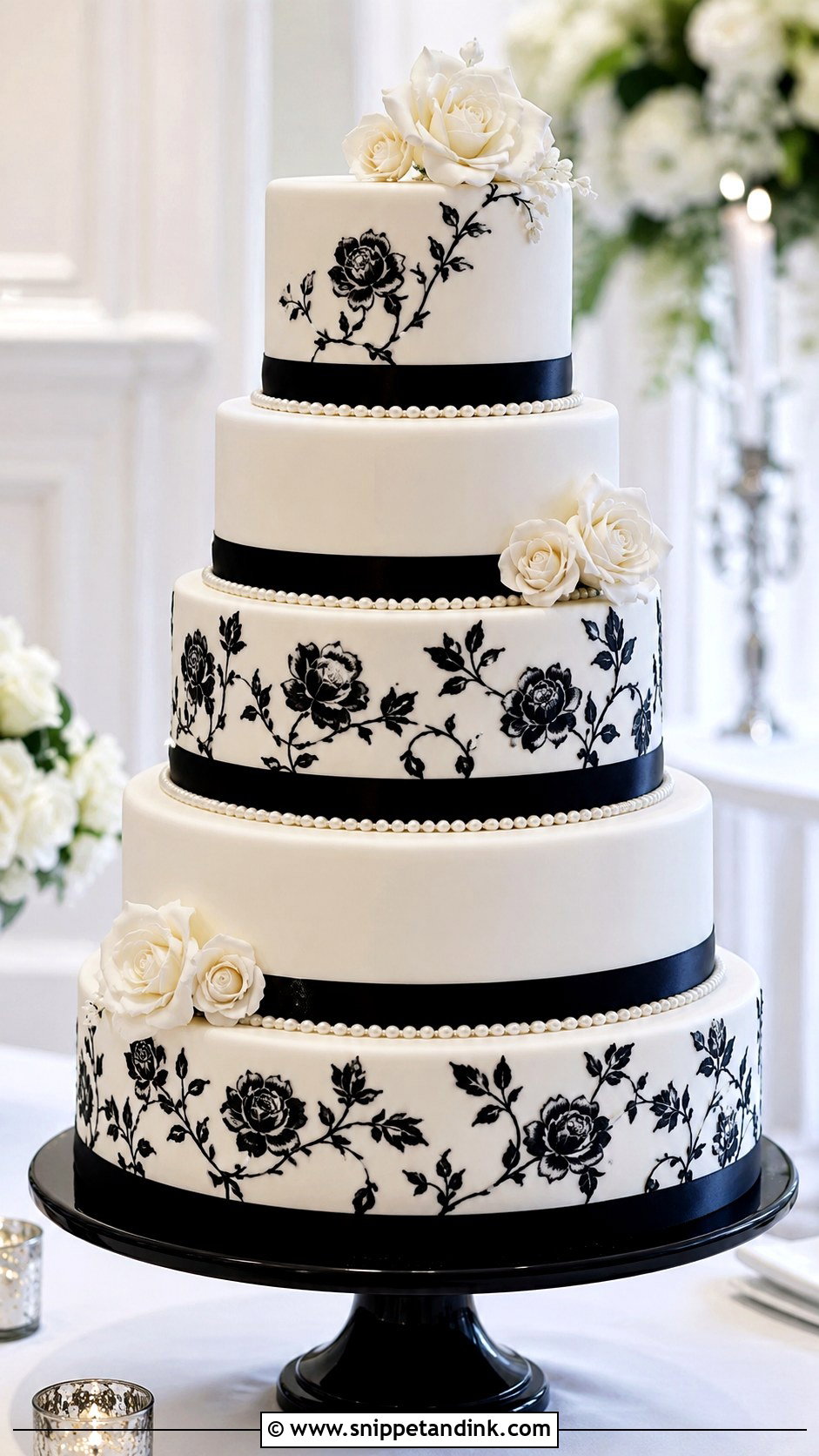
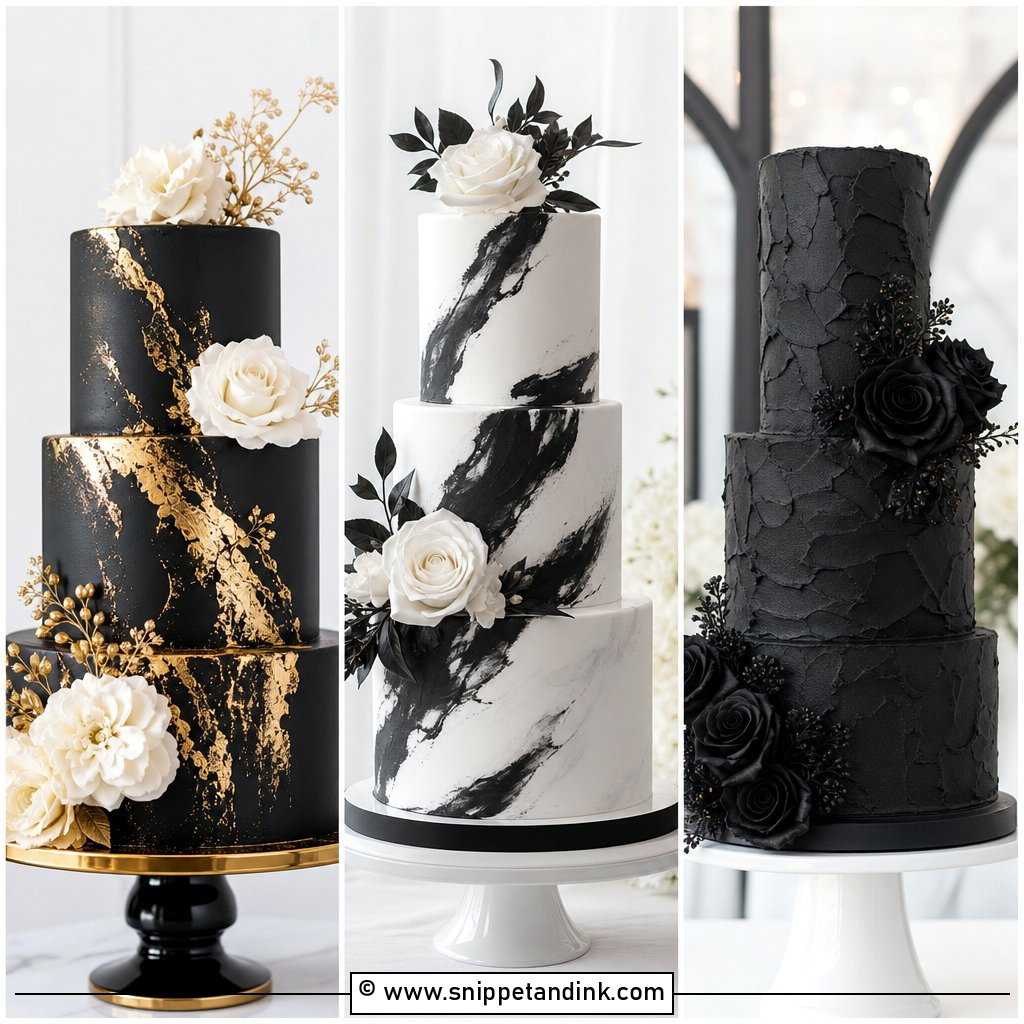
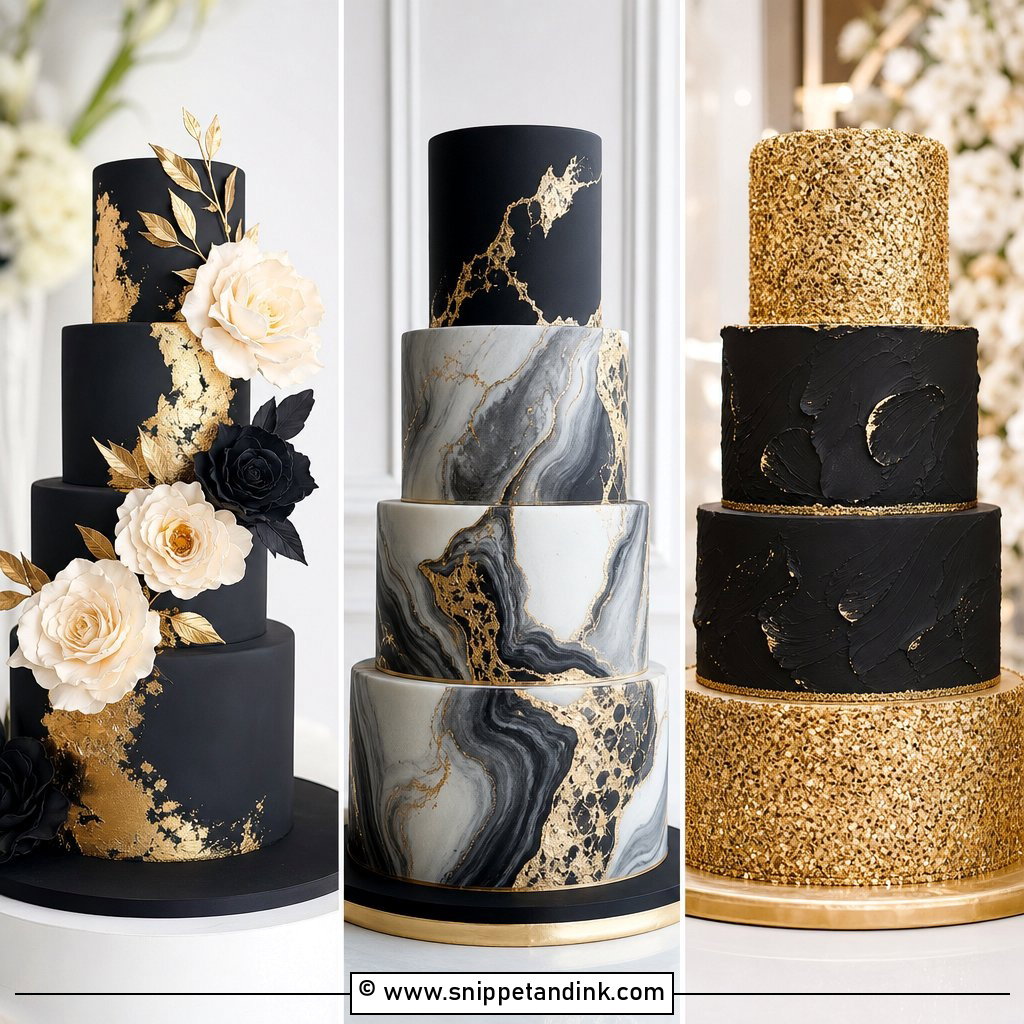
Black and white is the formal evening cake, and balance is everything. I usually keep black to bands, painted florals, marble veins or a single tier, because too much black at five tiers makes the cake feel heavy. Black icing is coloured hard, much like red, so on a buttercream cake I limit it to details people can leave on the plate. White florals and pearl work keep it bridal. It’s strongest at black-tie weddings and city venues with clean, candlelit tables.
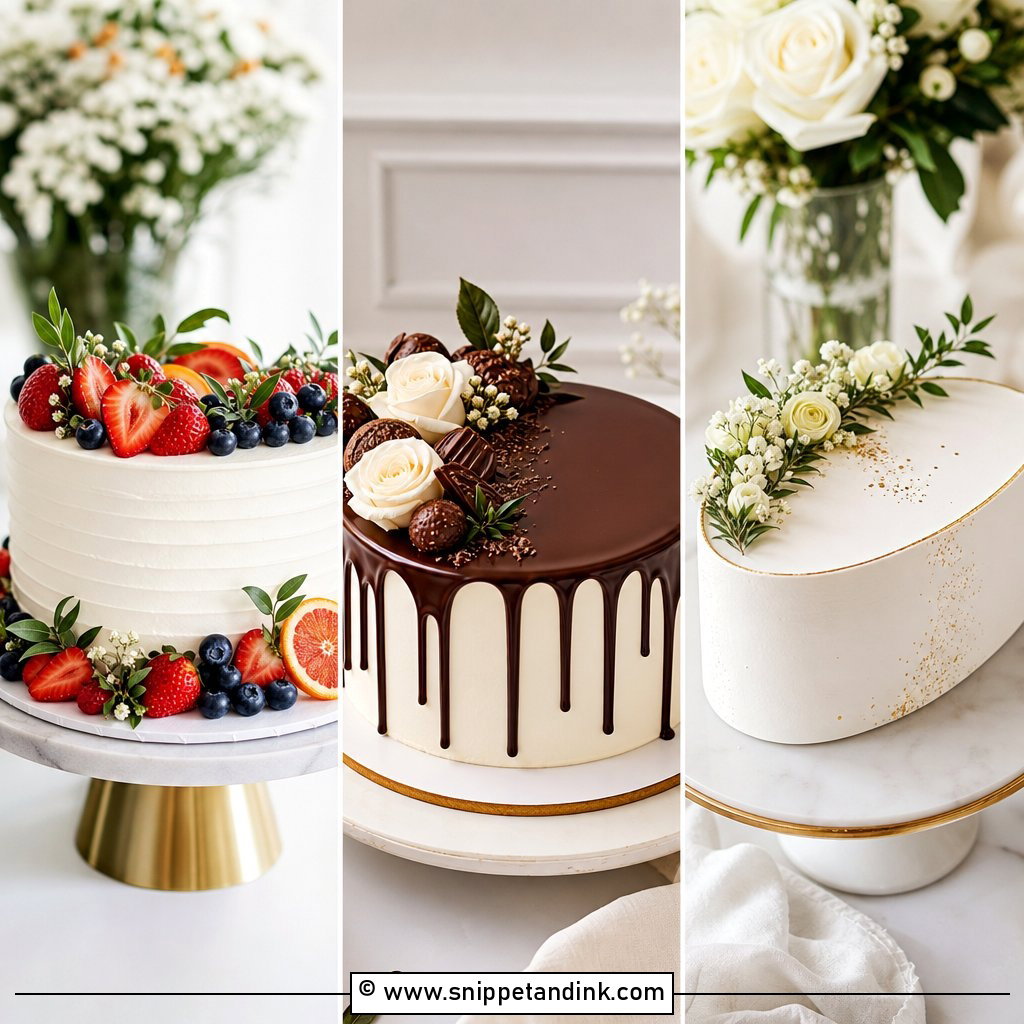
8. Buttercream 5 Tier Wedding Cake
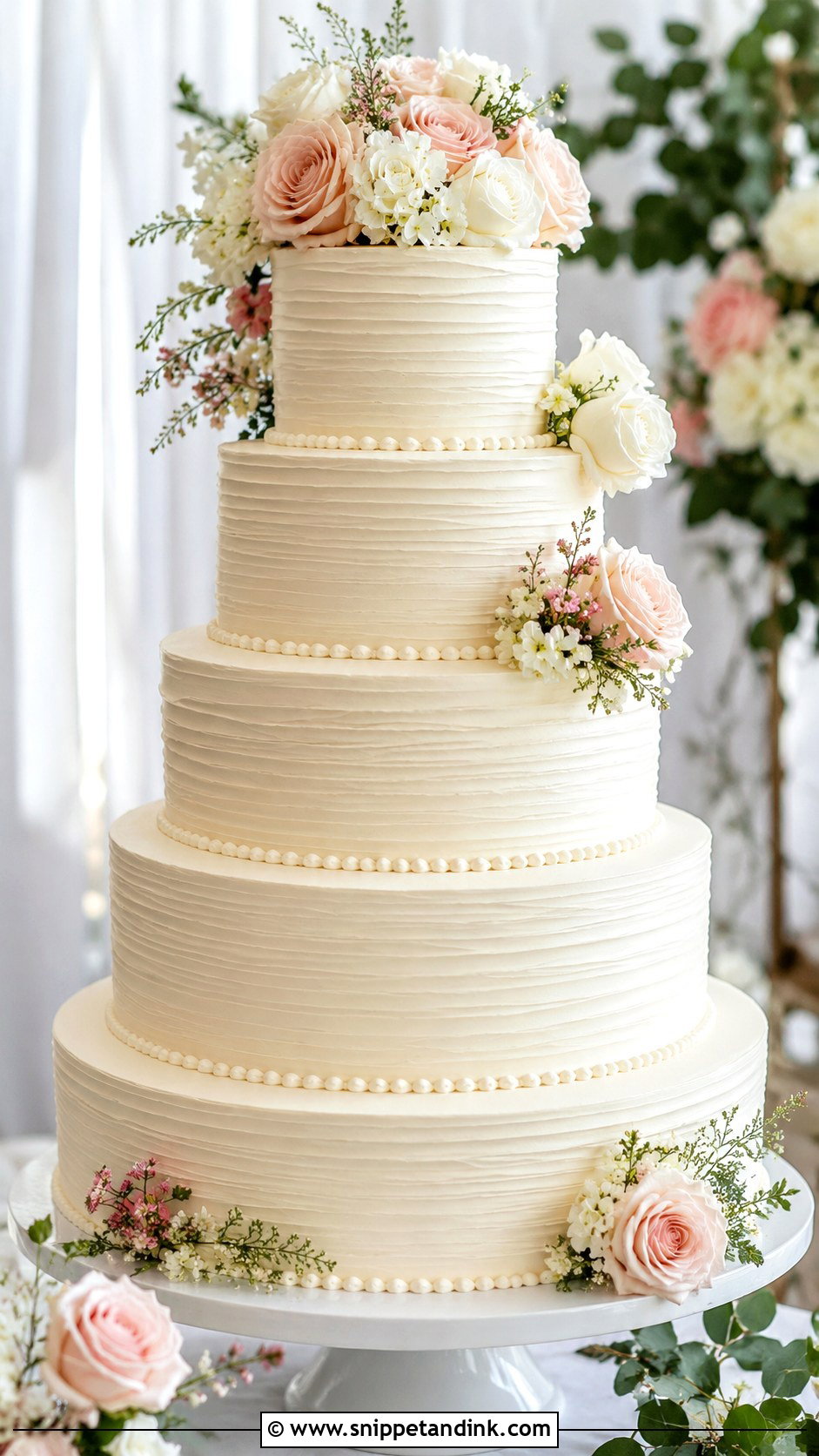
Buttercream tastes better than fondant to most guests, and it has a softer look. Smooth, ridged, palette-knife or piped, it takes texture beautifully. The trade-off at five tiers is weight and warmth. A buttercream cake that tall is heavy, it softens in a warm room, and the lower tiers carry everything above them, so internal supports and a cool setup spot matter more than the finish. Ask a baker how many cakes of this height she has built, and how she supports them.
9. Fondant 5 Tier Wedding Cake
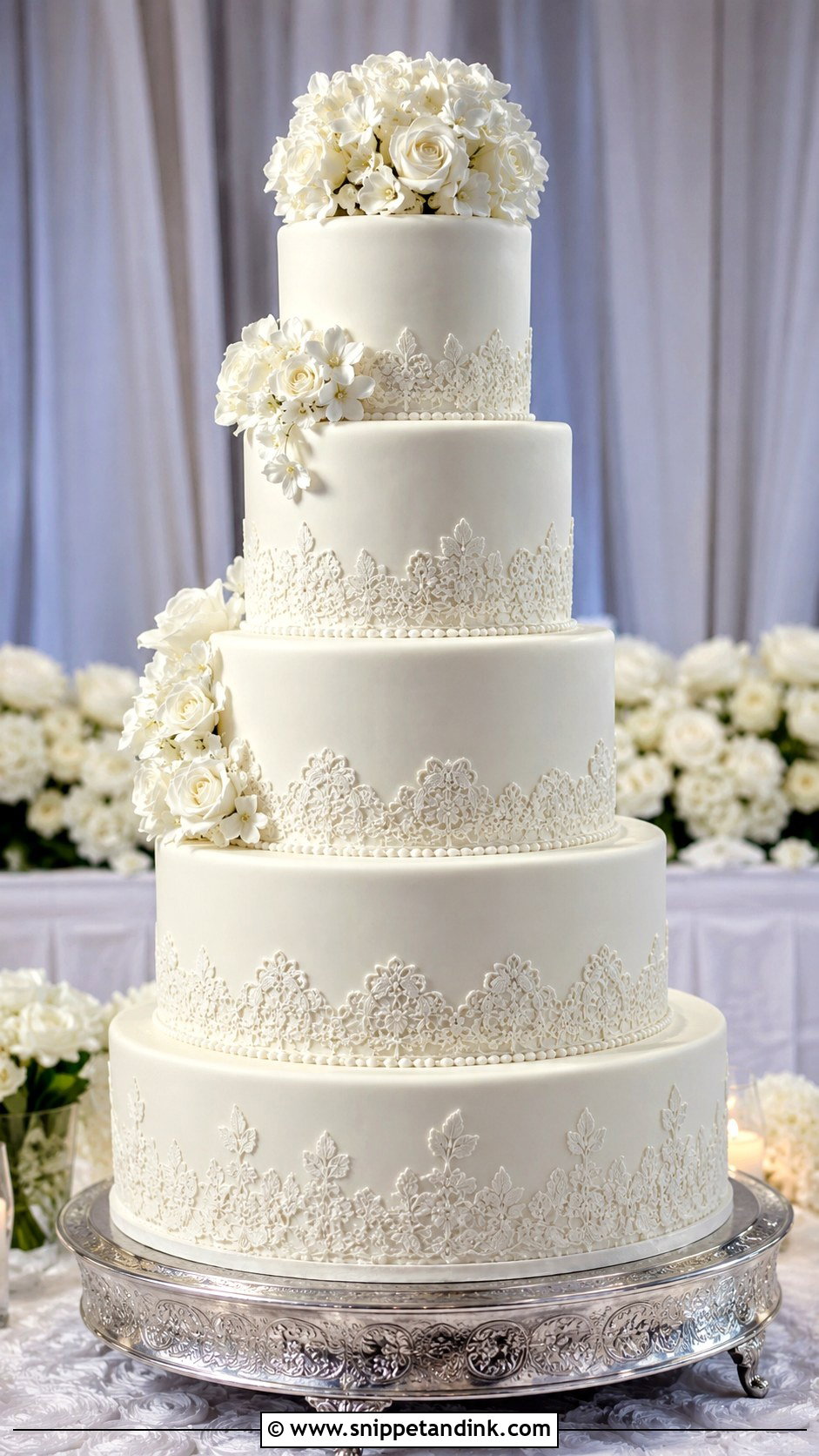
Fondant is my first choice when a design needs a hard, clean surface: painted details, embossed patterns, appliqué, metallics and sharp edges. It also protects the cake underneath from drying out, which helps with a long reception. This is where sculptural shapes and white-on-white lace really work. Fondant itself isn’t to everyone’s taste, so ask for a thin layer over ganache or buttercream and flavourful sponge. Most guests peel it off anyway and you lose nothing.
10. Pearl 5 Tier Wedding Cake
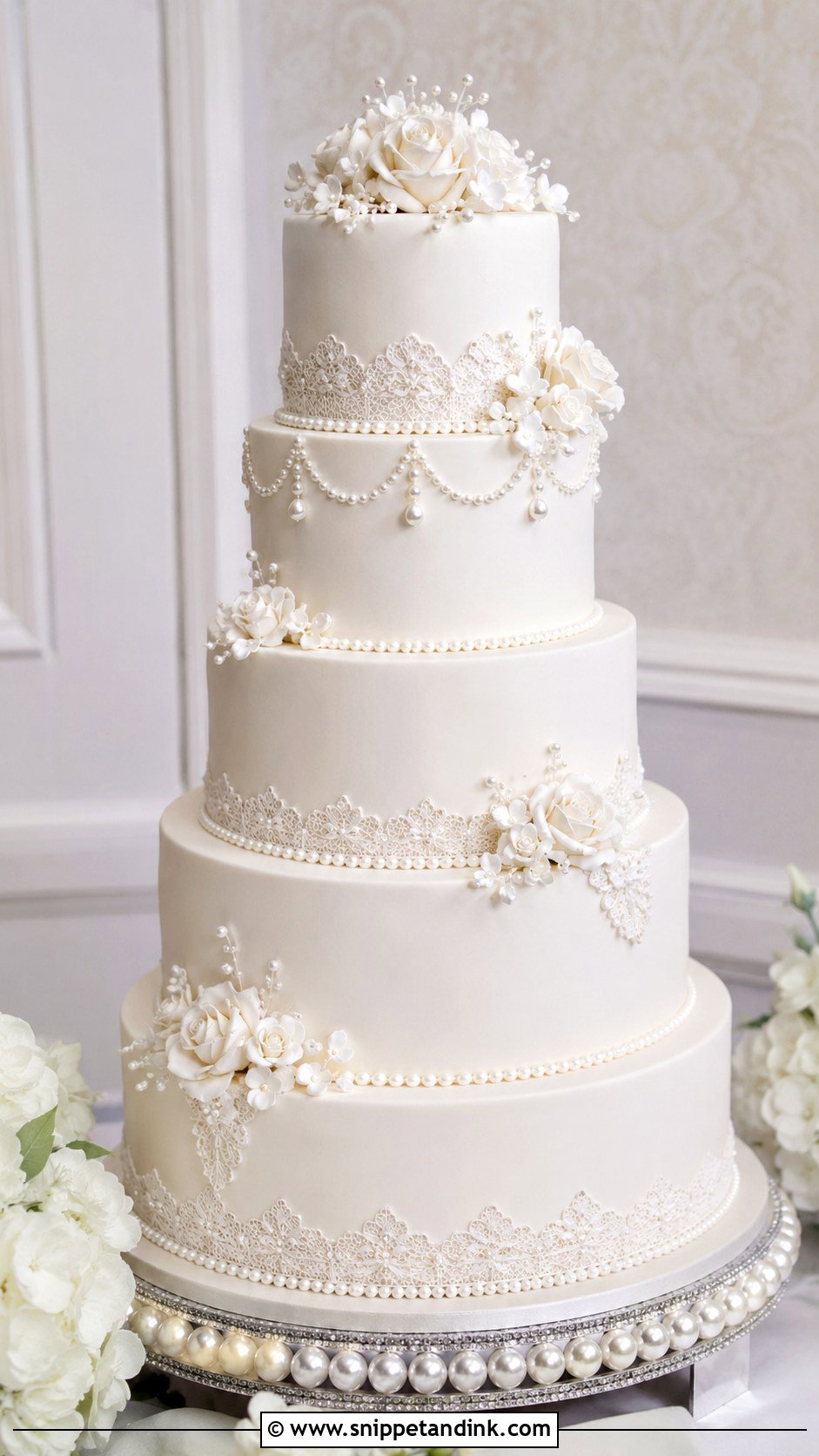
Pearls catch light without shouting, which suits a tall cake well. Borders, scattered dots, beaded panels and draped strands between tiers are the usual ways I use them. Sugar pearls are hard, so I warn couples to keep them small on the lower tiers that get served. A smooth ivory or white base is best, and a little lace or a satin-look ribbon is the most I’d add before they stop being the focus. Ballrooms, coastal venues and garden receptions all suit it.
11. Lace 5 Tier Wedding Cake
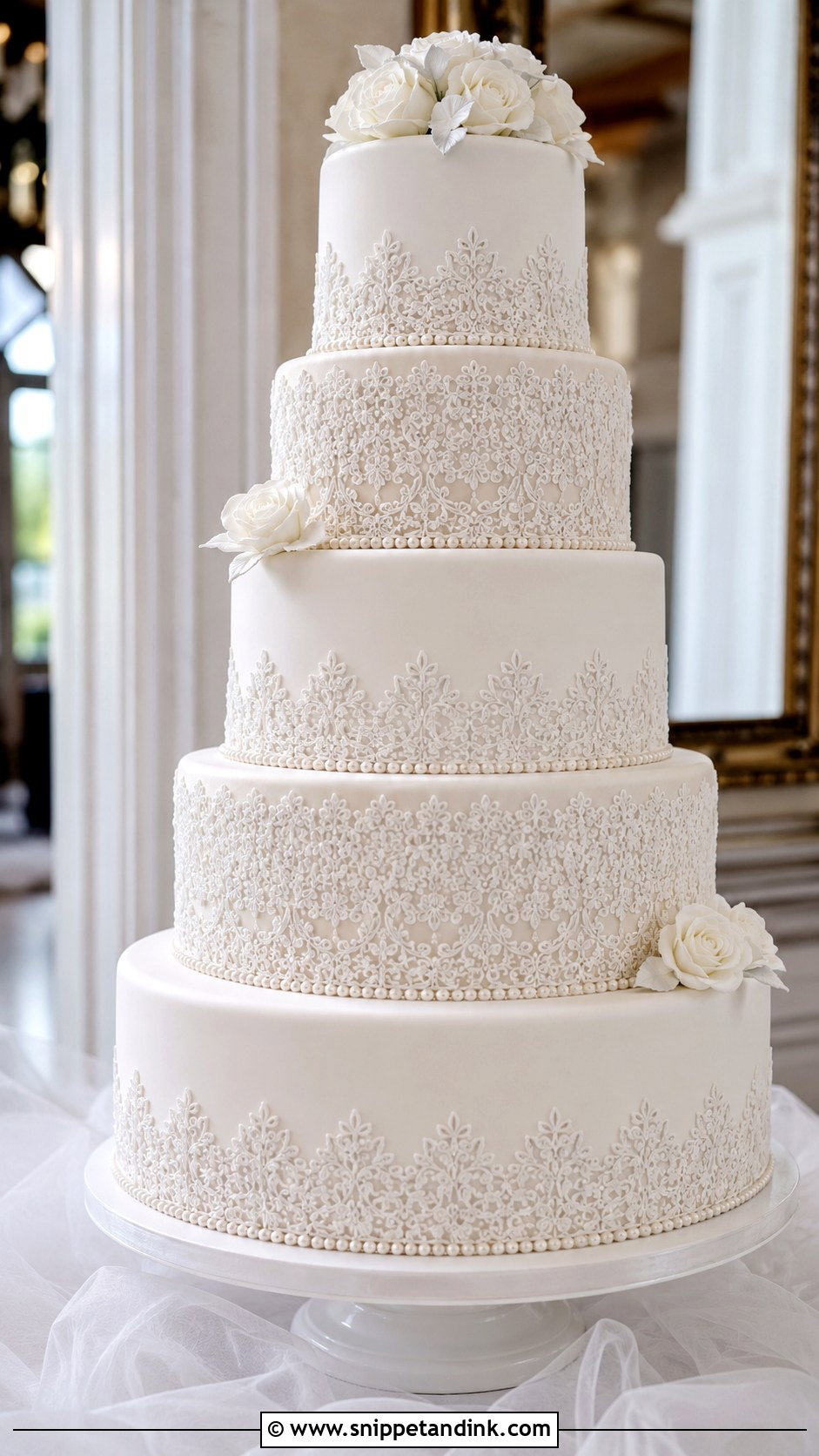
Lace is the easiest way to echo a gown on the cake. It can be hand-piped, pressed from edible lace mats, embossed into fondant or applied as sugar appliqué, and if you bring a fabric swatch to the tasting I can copy the motif. White-on-white is traditional, ivory over blush or taupe is warmer. I usually vary the pattern between tiers but keep the density similar, so the cake reads as one piece from across a church hall or estate venue.
12. Rose 5 Tier Wedding Cake
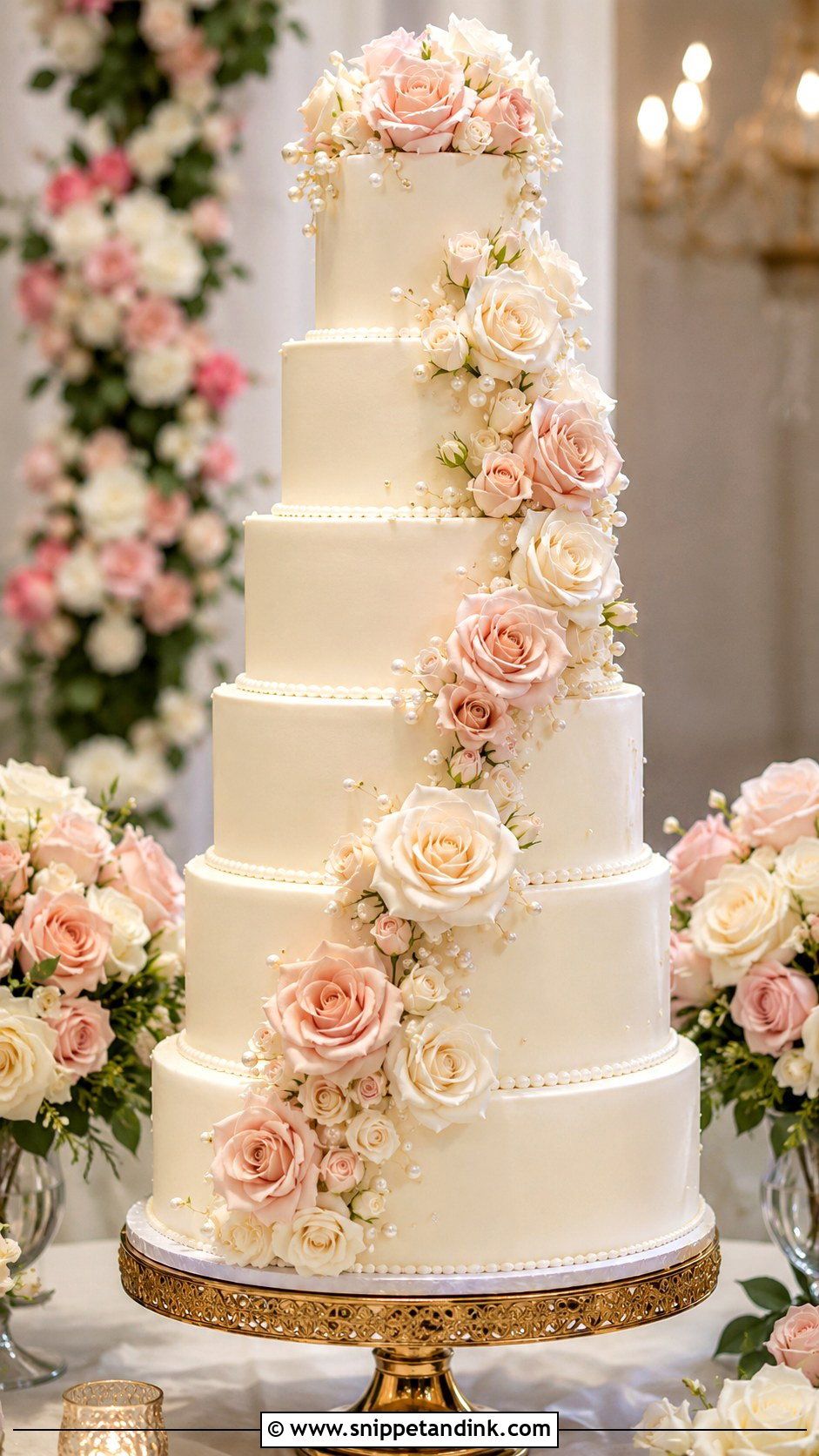
Roses suit nearly every palette, and their colour does the talking: white is classic, blush gentle, dusty pink vintage, red dramatic. On five tiers I place them as a cascade down one side or as rings tucked between tiers, which also hides the seams where the tiers meet. Sugar roses last; buttercream roses wilt in heat. Keep the frosting smooth so the flowers stand out.
13. Greenery 5 Tier Wedding Cake
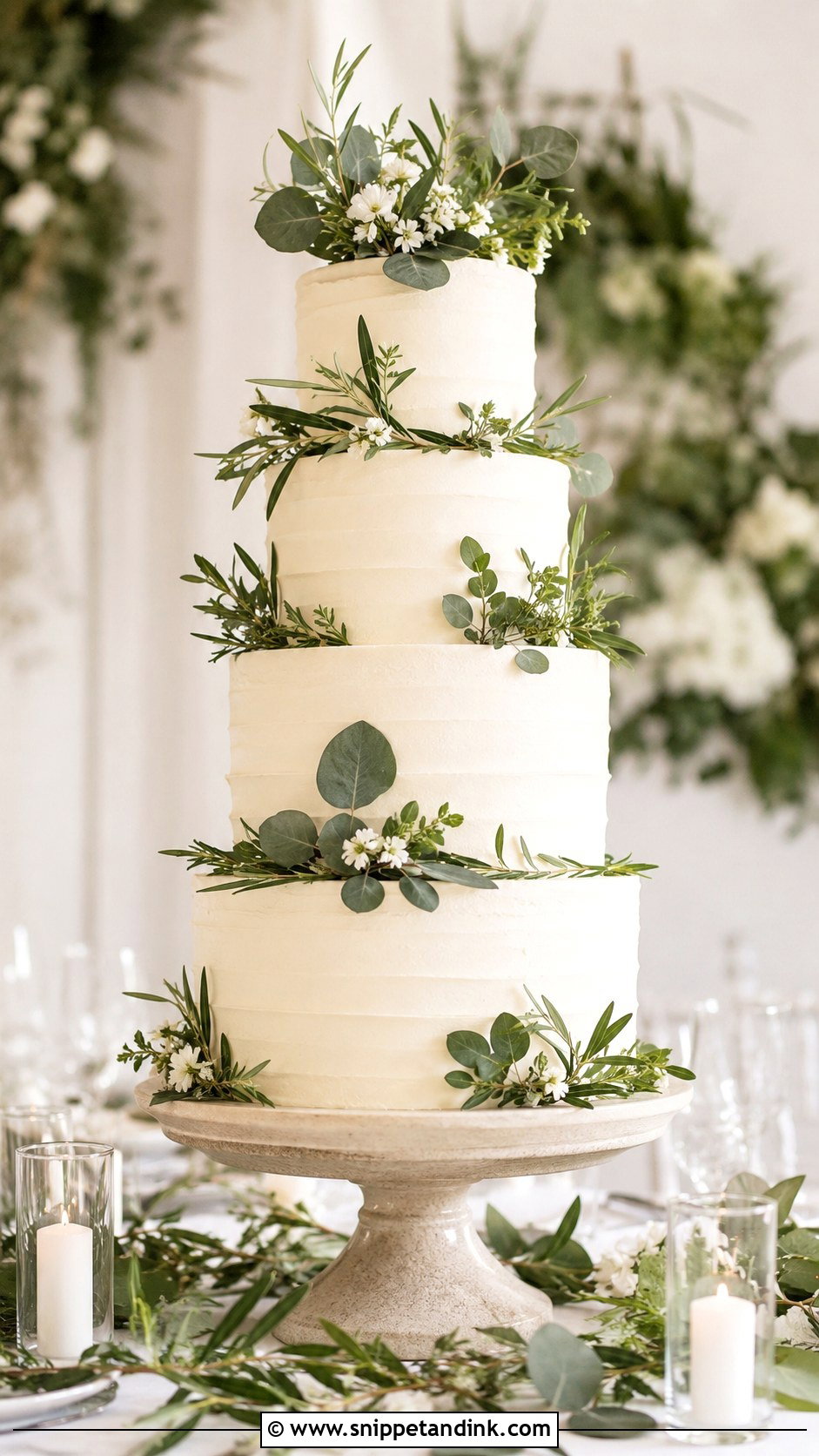
Greenery gives a decorated look with very little colour. Olive branches, eucalyptus, rosemary and ferns wrap around tiers or sit between them. Be careful here, because some popular greenery isn’t safe on food, eucalyptus included, so I keep it on wraps and barriers rather than pressed into the icing, or I pipe or model edible leaves instead. White frosting keeps it fresh and ivory warms it up. Botanical venues, barns and outdoor weddings are where I see it most.
14. Blush 5 Tier Wedding Cake
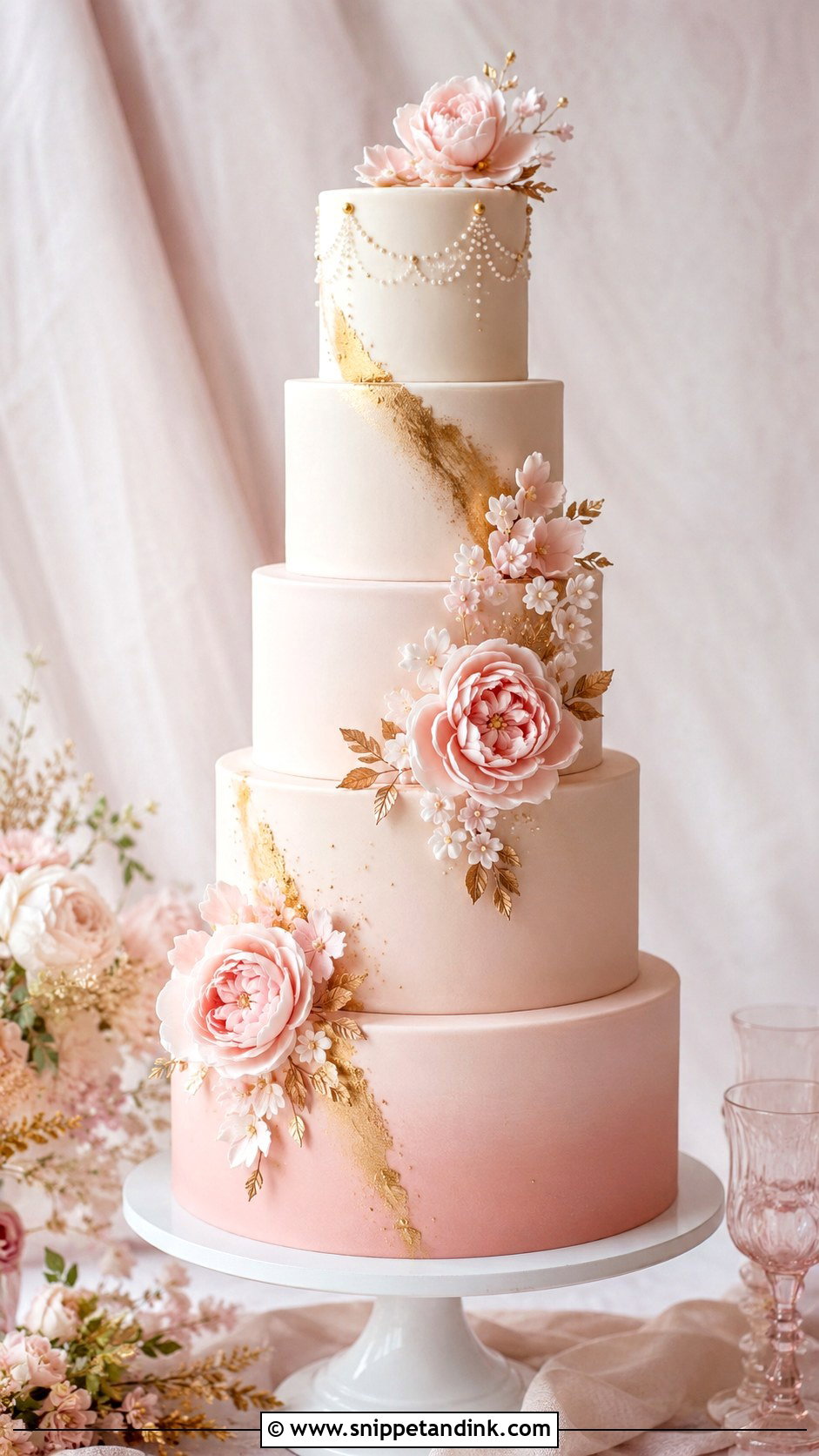
Blush needs restraint on a tall cake, or five pink tiers start to look like a nursery. I’d pick one approach: a single blush tier, a blush floral cascade or a slow fade from ivory to pale pink. Watercolour shading and painted details are the subtler versions. Blush pairs well with ivory, gold, mauve, peach and sage green, and it suits spring gardens and ballrooms equally.
15. Blue 5 Tier Wedding Cake
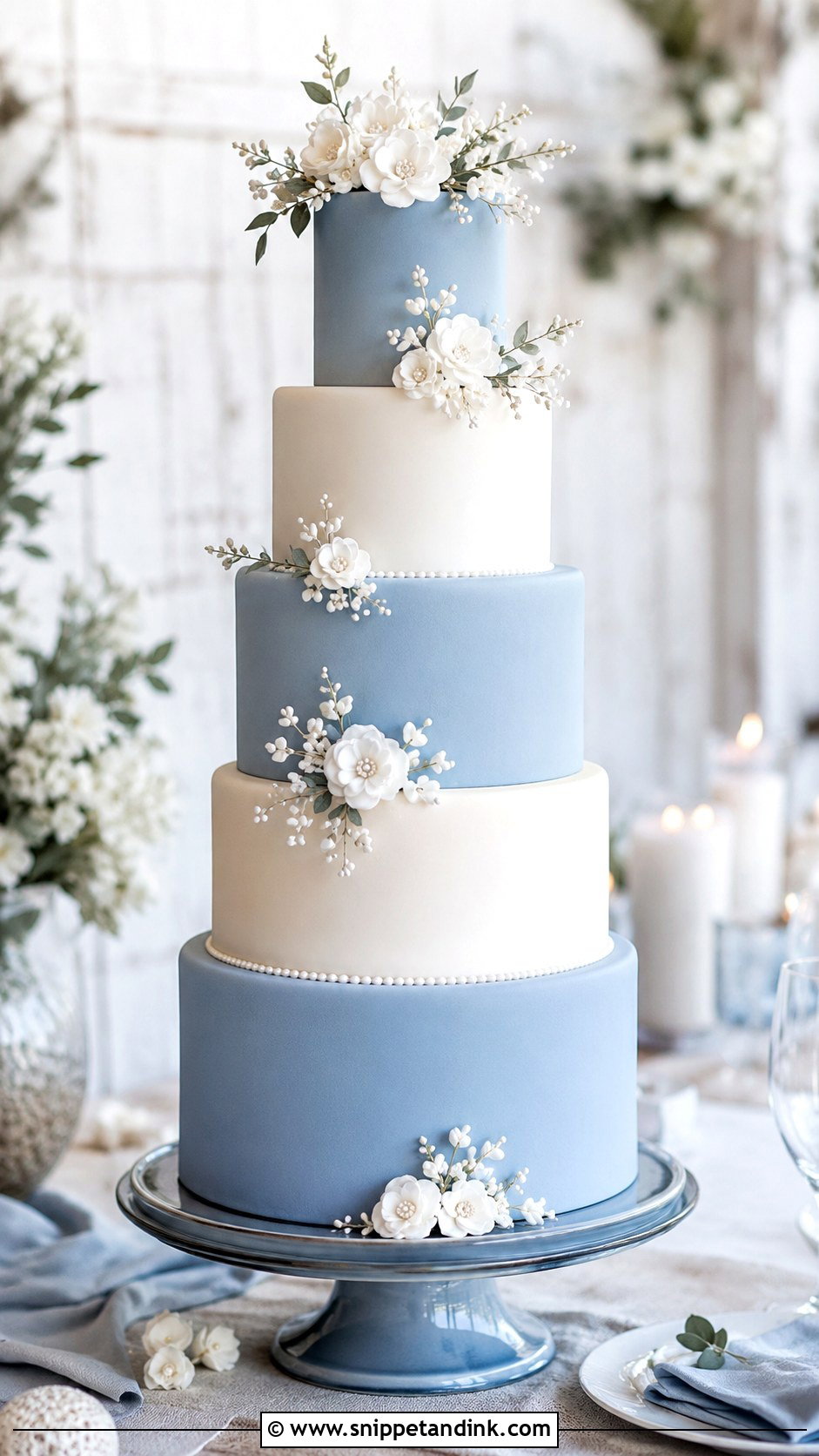
Blue changes personality with the shade: dusty blue is soft, navy is formal, powder blue is delicate, slate blue is stylish. With five tiers you can use it in layers, one or two blue tiers between white ones, or keep the cake white and bring blue in through piping, sugar flowers or painted detail. Darker blues take a lot of colouring, so I favour them on fondant. White piping, pearls, silver and soft greenery all work alongside it at coastal and formal receptions.
16. Square 5 Tier Wedding Cake
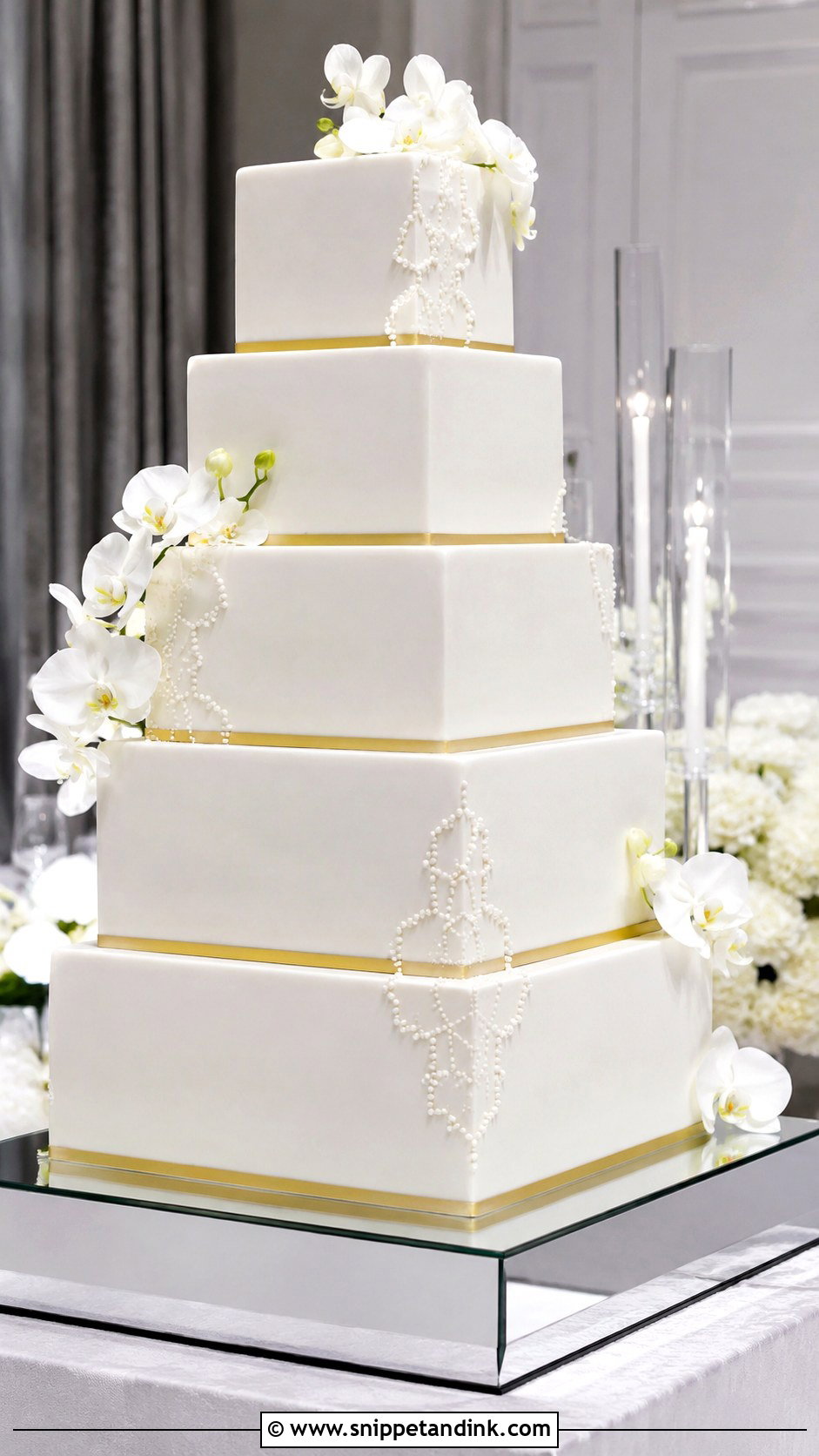
Square tiers look architectural straight away, and they’re less forgiving than round. Every corner has to be sharp, which really means fondant or a very cold, firm buttercream. They do give generous servings for a big guest list, since a square tier holds more cake than a round of the same width. Ribbon bands, painted edges and geometric patterns suit the shape; a floral cascade or soft piping will take the hardness off for a hotel or modern venue.
17. Round 5 Tier Wedding Cake
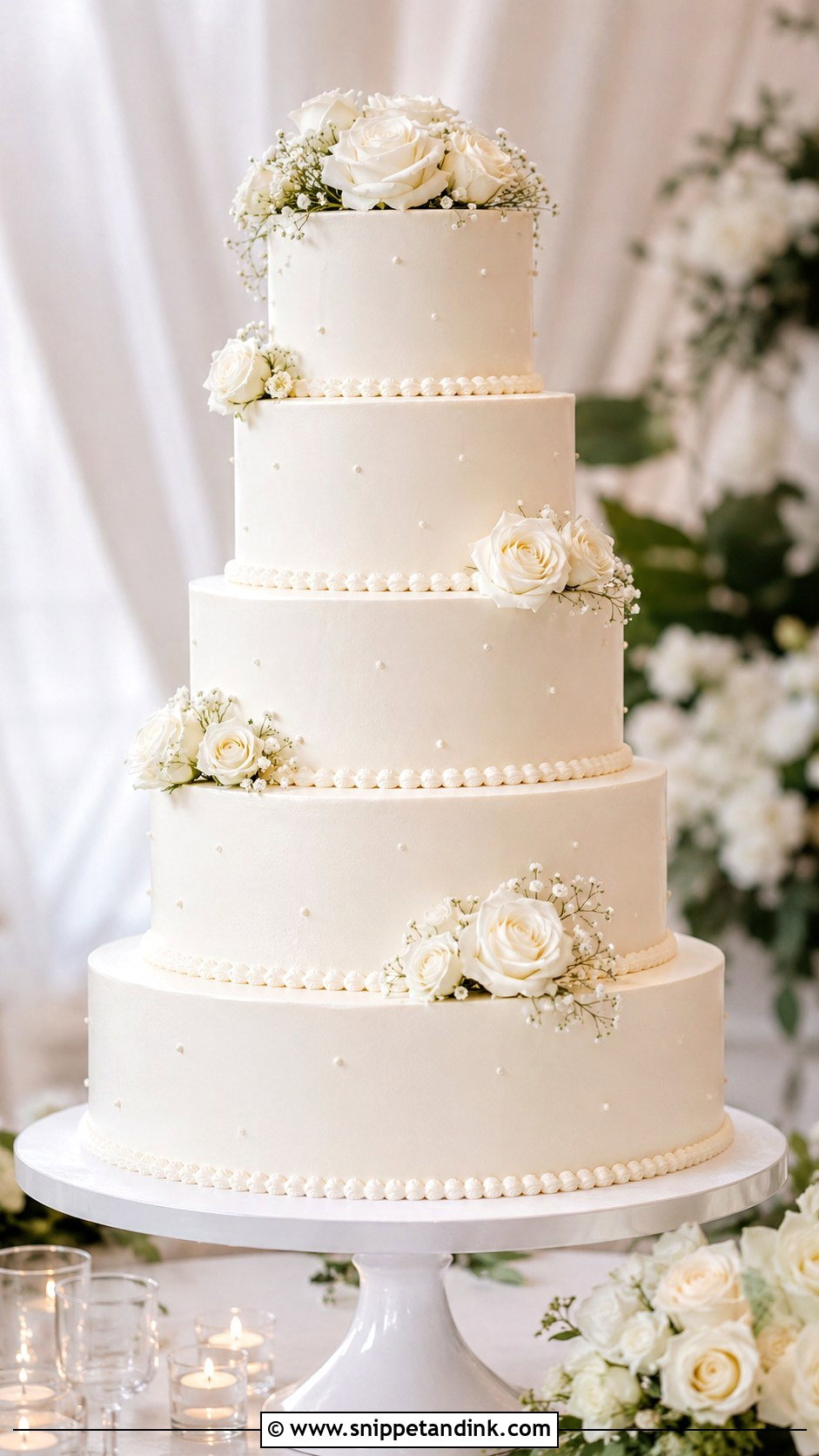
Round is the shape I build most, and it’s the one that never looks wrong. It works under fondant and sugar flowers, under buttercream and greenery, and under bold texture and metallics. Because the outline is familiar, it lets the decoration lead. Round tiers are also the easiest to scale for a large room, by varying tier heights rather than widths, so ballrooms, tents and gardens all suit it.
18. Marble 5 Tier Wedding Cake
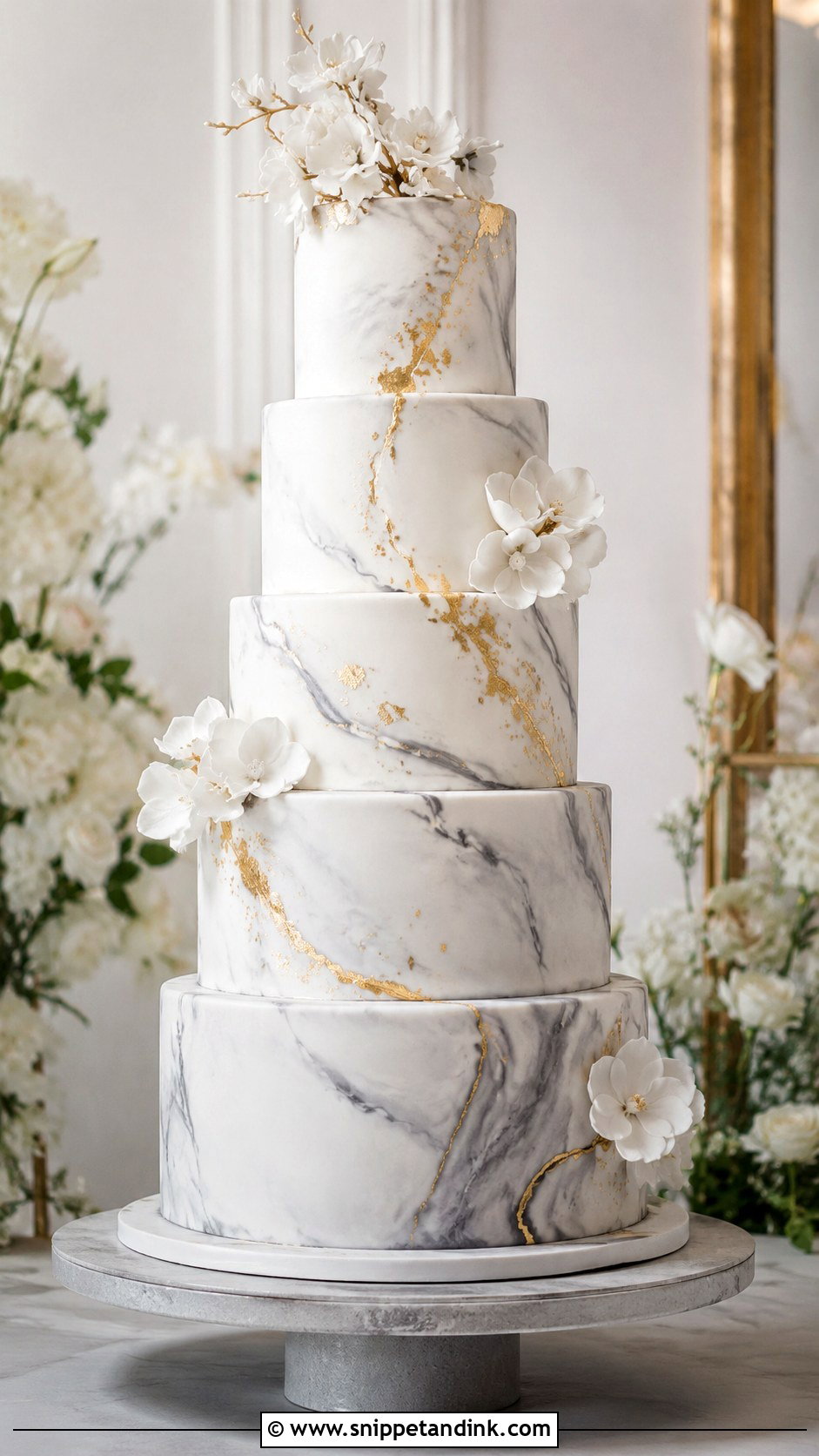
Marble is created by kneading coloured fondant through white or by painting veins onto a finished surface. The kneaded kind looks natural but every tier comes out different; painted veins are more controlled. Grey on white is classic, and blush, beige, blue and black work too. Thin gold lines along the veins add luxury. Because marble already moves, I keep any extra decoration to a few sugar flowers or one sprig of greenery.
19. Watercolor 5 Tier Wedding Cake
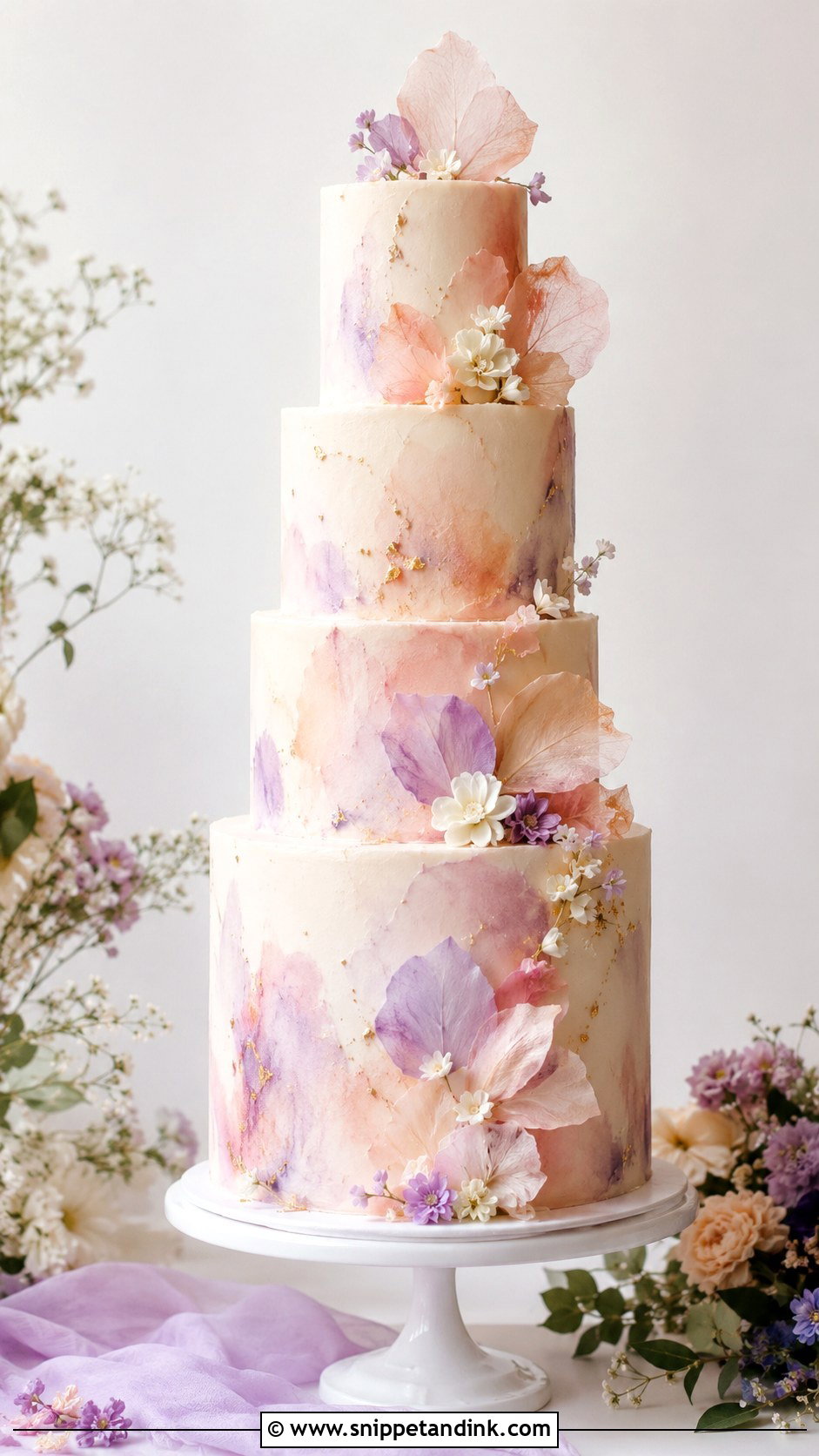
Watercolour cakes are painted by hand with thinned food colour or tinted buttercream smeared and blended with a scraper. Blush, peach, lavender, blue, sage and ivory all wash well together, as long as they match your palette rather than being chosen at random. On five tiers I usually fade the colour from bottom to top, or paint two or three selected tiers and leave the rest white. Loose flowers, wafer paper petals and a hint of gold suit it.


20. Naked 5 Tier Wedding Cake
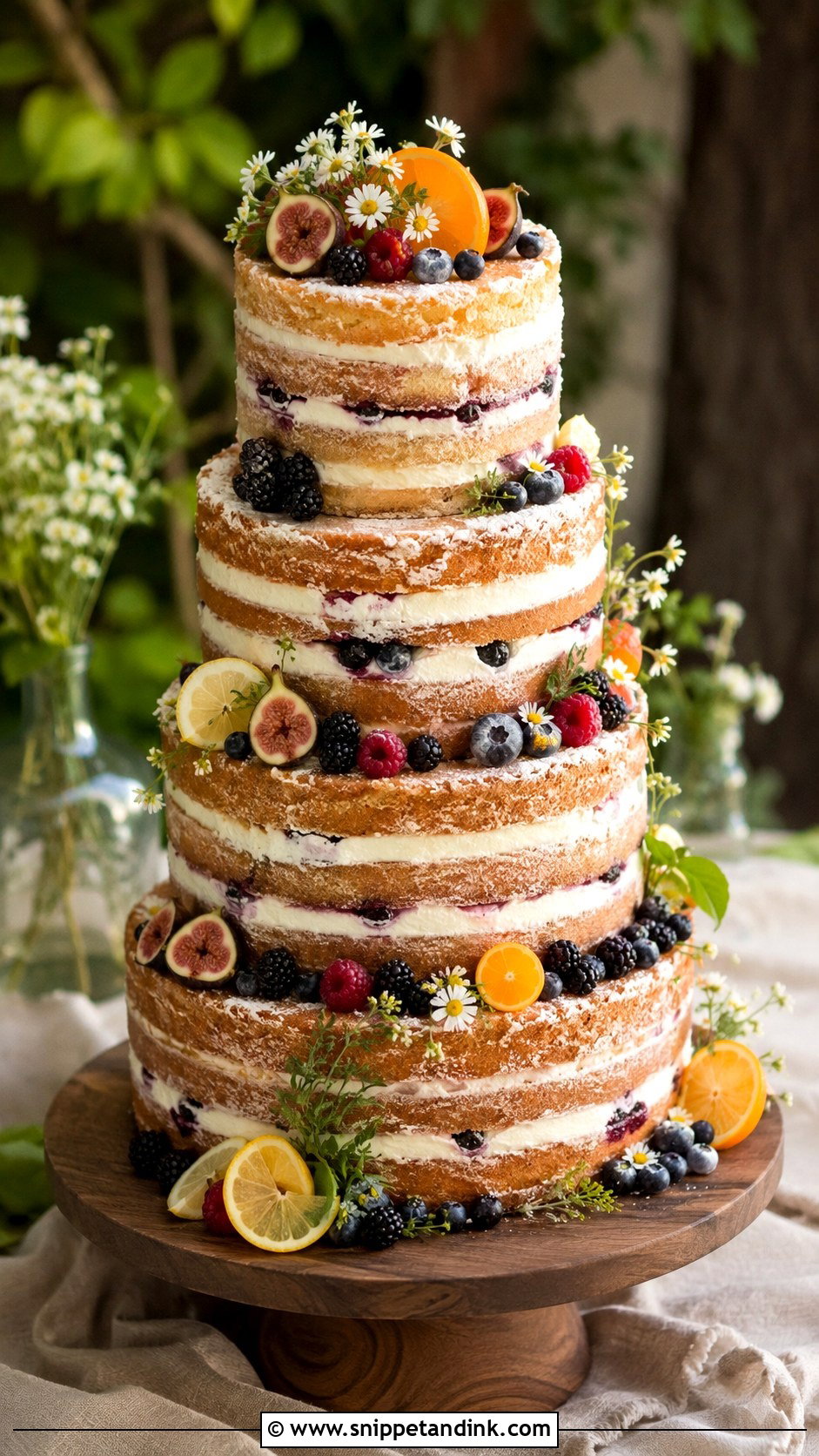
Naked cakes show the sponge through a scraped-back coat, and at five tiers the height still makes them impressive. They are the least forgiving cake for a long day, though. Exposed sponge dries at the edges, so I assemble on site, brush the layers with syrup and recommend them for cool venues rather than sunny afternoons. Vanilla, almond, lemon, spice, carrot and berry fillings show through nicely. Figs, berries, herbs, citrus and fresh flowers dress the tiers, and the effect is homemade, just more polished.
21. Semi Naked 5 Tier Wedding Cake
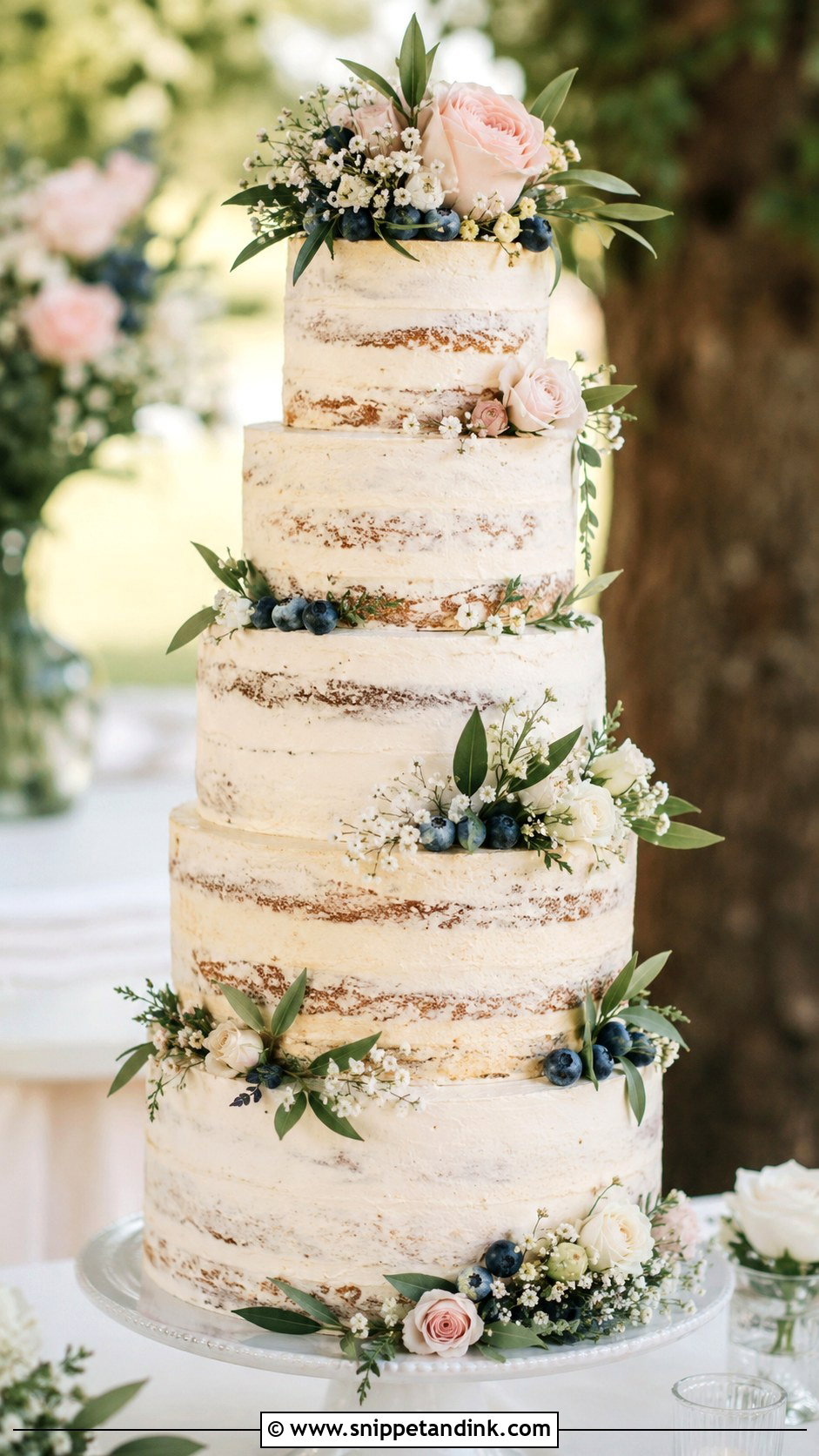
Semi-naked is my usual compromise for couples who love the naked look but have a long or warm reception. The thin buttercream seals the sponge better while still letting it show through in places. It decorates easily with flowers, greenery, fruit or simple piped edges, and the five-tier height keeps it looking like a wedding cake from across the room at rustic and outdoor venues.
22. Tropical 5 Tier Wedding Cake
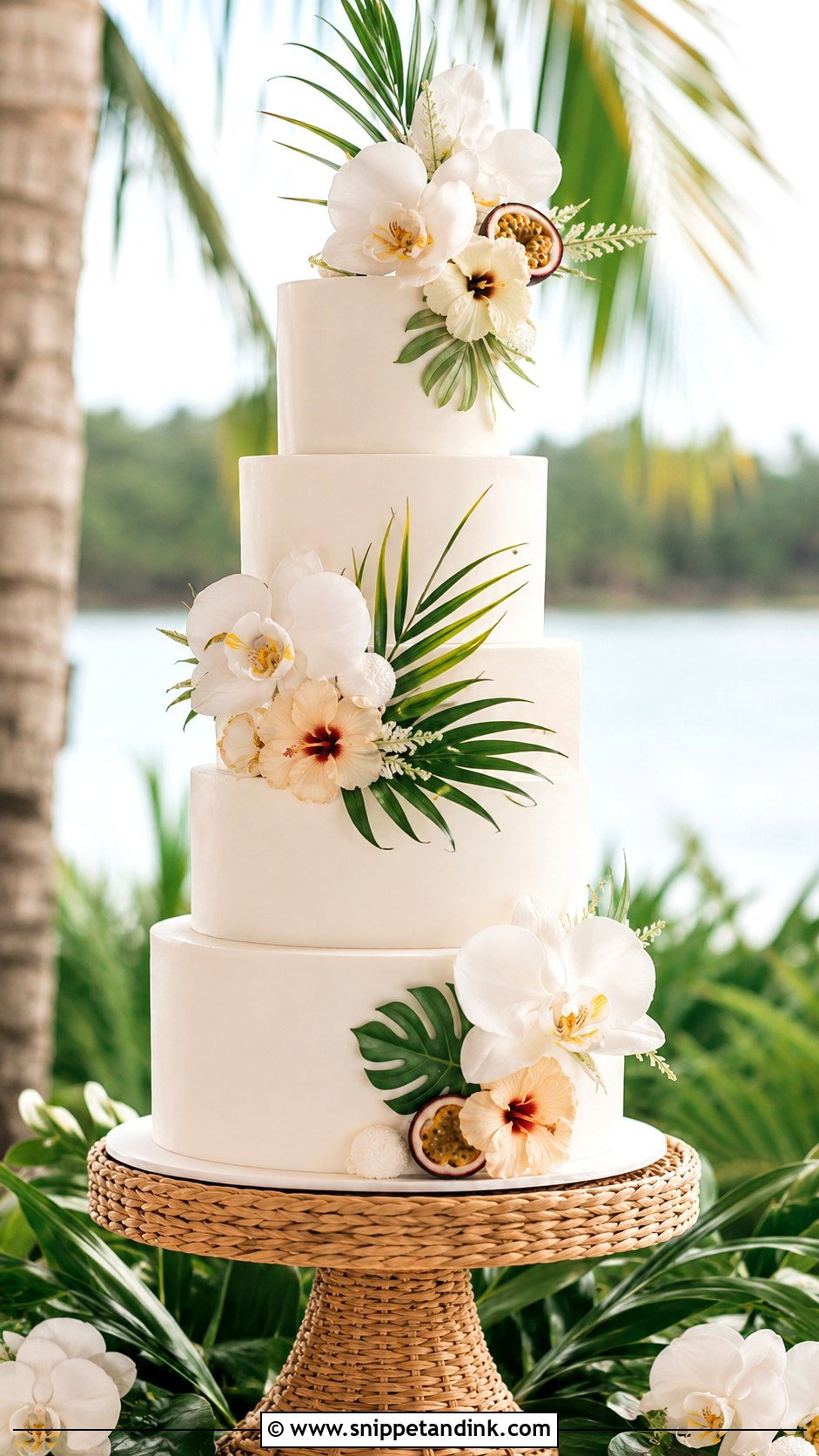
A tropical 5 tier wedding cake works best with a calm base and the colour in the botanicals: orchids, palm leaves, hibiscus-style sugar flowers, a little mango or passion fruit tone. Beach weddings bring heat and humidity, which are hard on tall cakes, so I’d lean towards ganache under fondant and sugar flowers that won’t wilt. Coconut, lime, pineapple, mango and passion fruit fillings suit the look, but fresh fruit fillings need refrigeration and limit how long the cake can stand outdoors.
23. Minimalist 5 Tier Wedding Cake
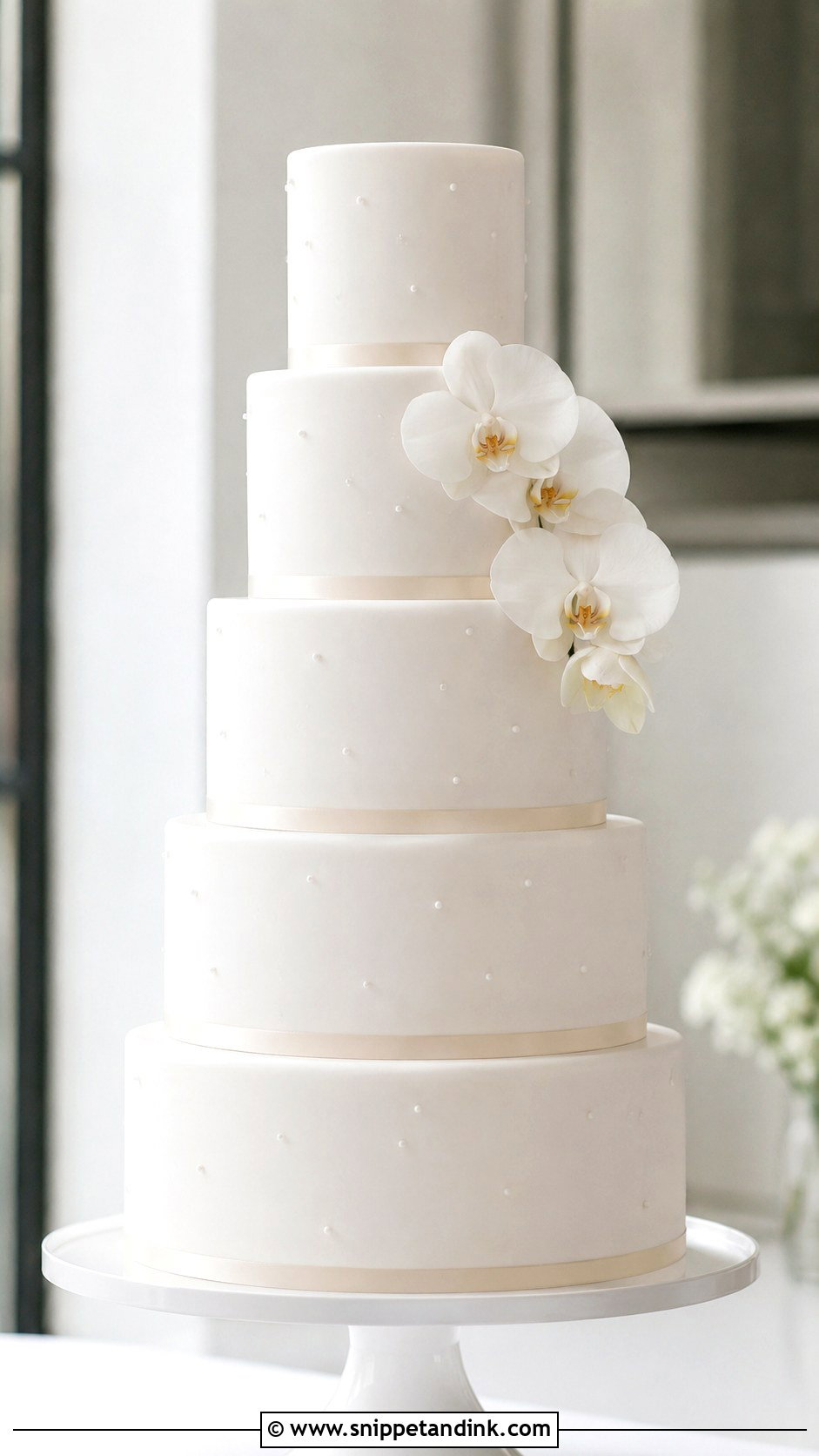
Minimal cakes show everything. With smooth white or ivory frosting, sharp edges and one detail, perhaps a floral cluster, a thin ribbon, tiny pearls or a monogram, any wobble in a line or lean in a tier is visible from across the room. That’s why I’d only book this design with a baker whose portfolio shows dead-straight edges on tall cakes. Gallery spaces, rooftops and clean modern decor are where it sits most comfortably.
24. Monogram 5 Tier Wedding Cake
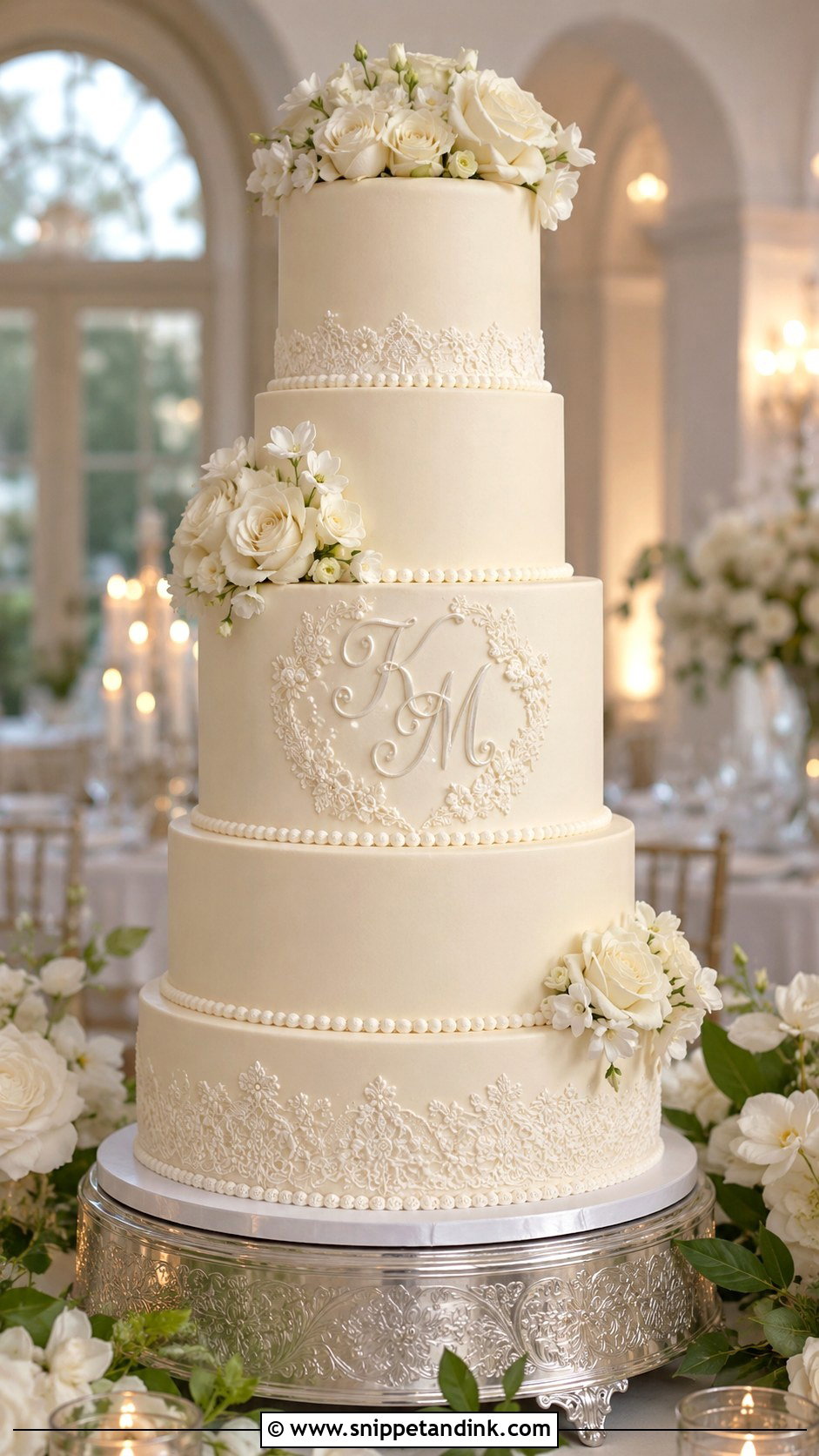
A monogram makes the cake yours without adding colour. Initials can be piped, embossed, painted, cut in sugar or set as a topper. On five tiers I place them on the centre tier or the second from the top, at eye level for guests standing near the table. Surround the letters with clean frosting, pearls, lace or a few small flowers so they look built in rather than stuck on. It’s a natural fit for a traditional or formal reception.

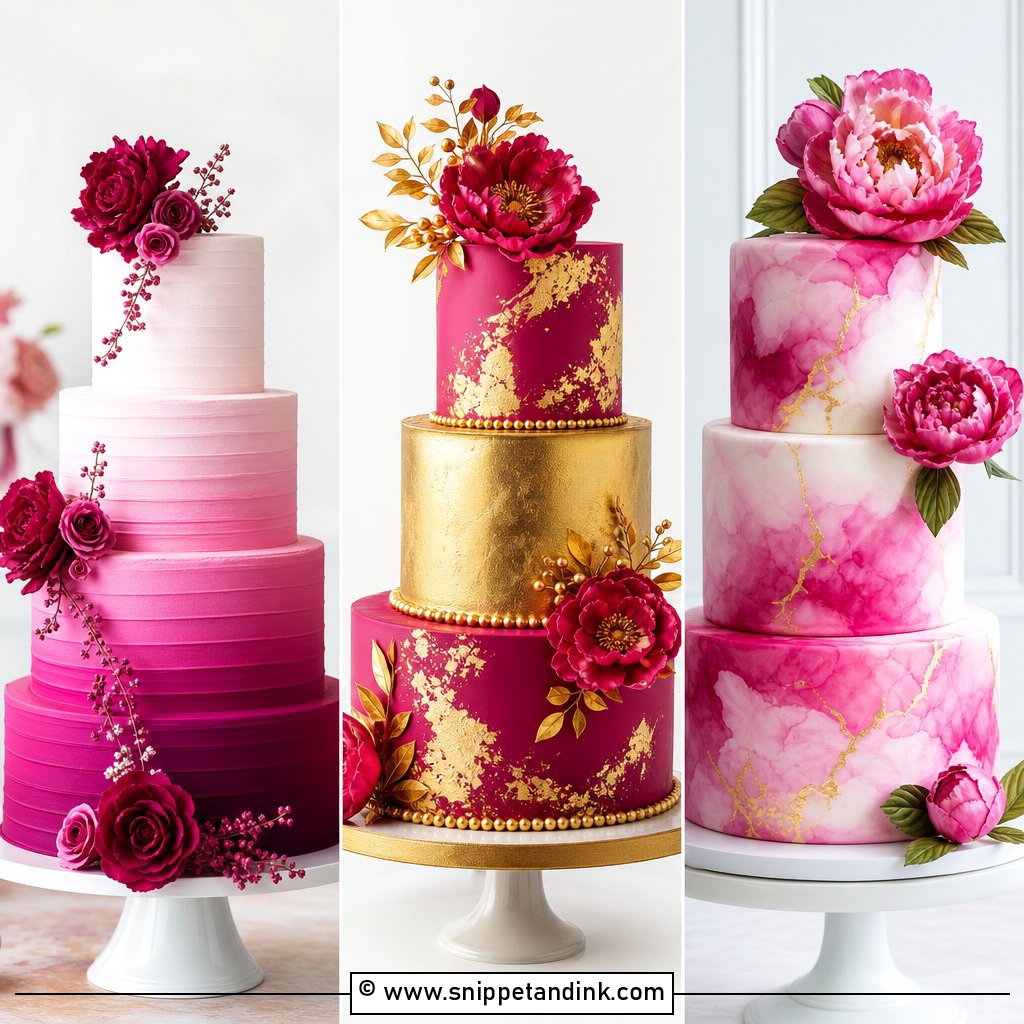

25. Cascading Flower 5 Tier Wedding Cake
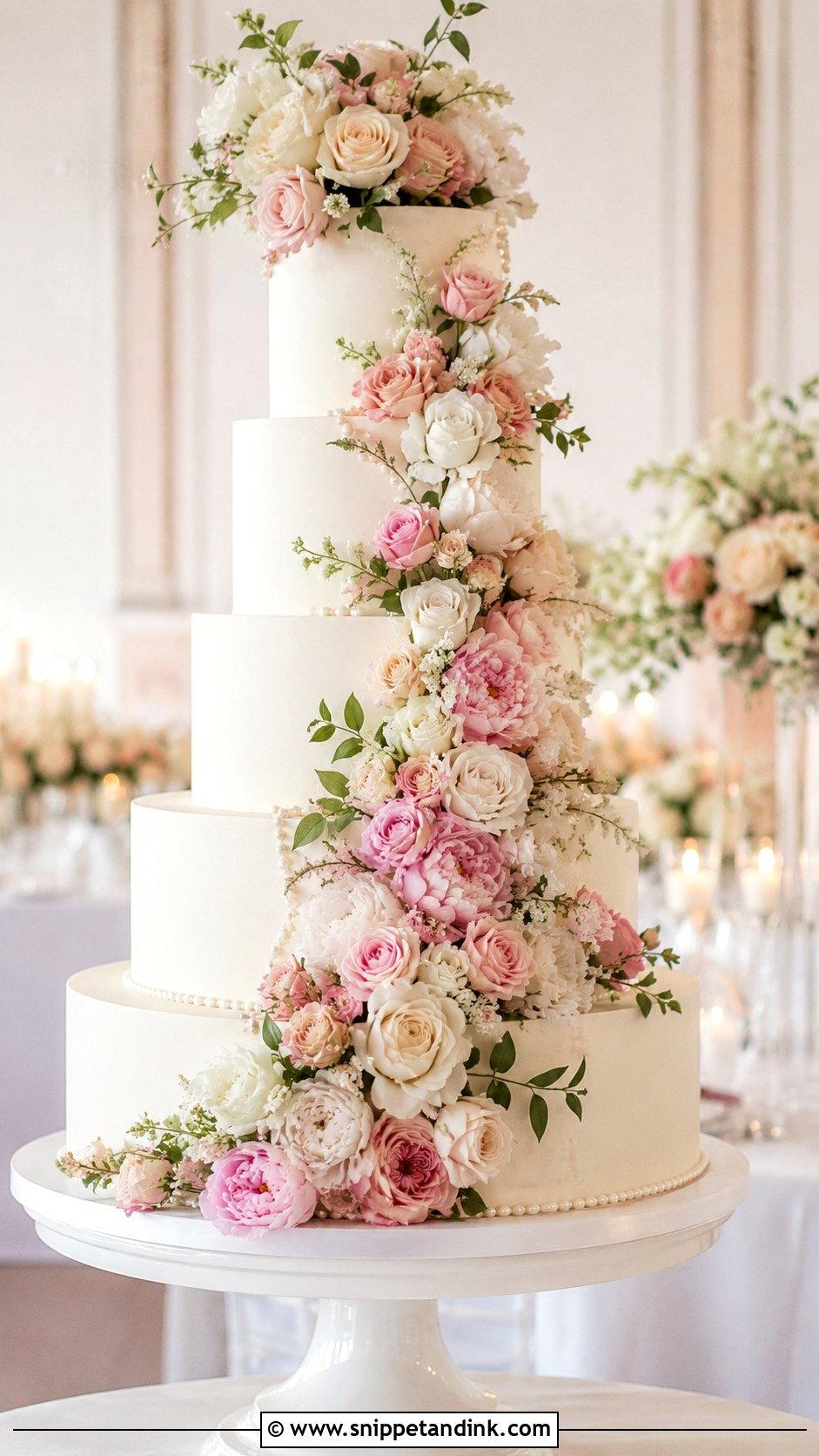
A cascade gives a tall cake movement from top to base, as a diagonal line, a gentle spiral or loose clusters between tiers. Fresh flowers are cheaper but seasonal and need careful prep; sugar flowers cost more because each petal is made by hand, but they can be made weeks early and kept. A smooth white or ivory base lets the cascade lead. Matching it to the bouquet ties everything together, and it gives the dessert table a focal point from every angle.
What Actually Holds a Five Tier Cake Up
Sponge can’t carry the weight of four tiers on top of it. Every tier sits on its own cake board, and the tier below has dowels or straws cut level with its top so the weight passes straight down to the base board. Tall cakes usually get a central rod running through every tier as well, so nothing can slide if the table gets bumped.
Most bakers deliver a cake this tall in sections and stack it at the venue, which means they need time, a level table and a clear path from the van. A few things I always ask a venue for:
- A sturdy, level table, not a folding trestle that sags in the middle.
- A spot away from windows, heaters, the dance floor and the main walkway.
- Air conditioning or a cool room on a summer day, especially for buttercream.
- Access an hour or two before guests arrive, so stacking and flowers aren’t rushed.
On the night, the person cutting should take the tiers apart from the top down and remove the supports before slicing. Let the catering team know where the dowels and rod are; a five-tier cake is not something to slice in place at the table.
Is Five Tiers Right for Your Room?
Five tiers gives you height and space to tell your story through colour, texture, flowers and flavour, but the most decorated cake is rarely the best one. The right design fits your venue, guest count, season and taste. White is classic, floral is romantic, modern is sleek and vintage brings the charm of hand piping. Save the looks you love, hold them up against your palette, and then talk to a baker who has built cakes this tall about supports, servings and setup before you fall for a design.
You'll Like These Ideas:









Leave a Reply