
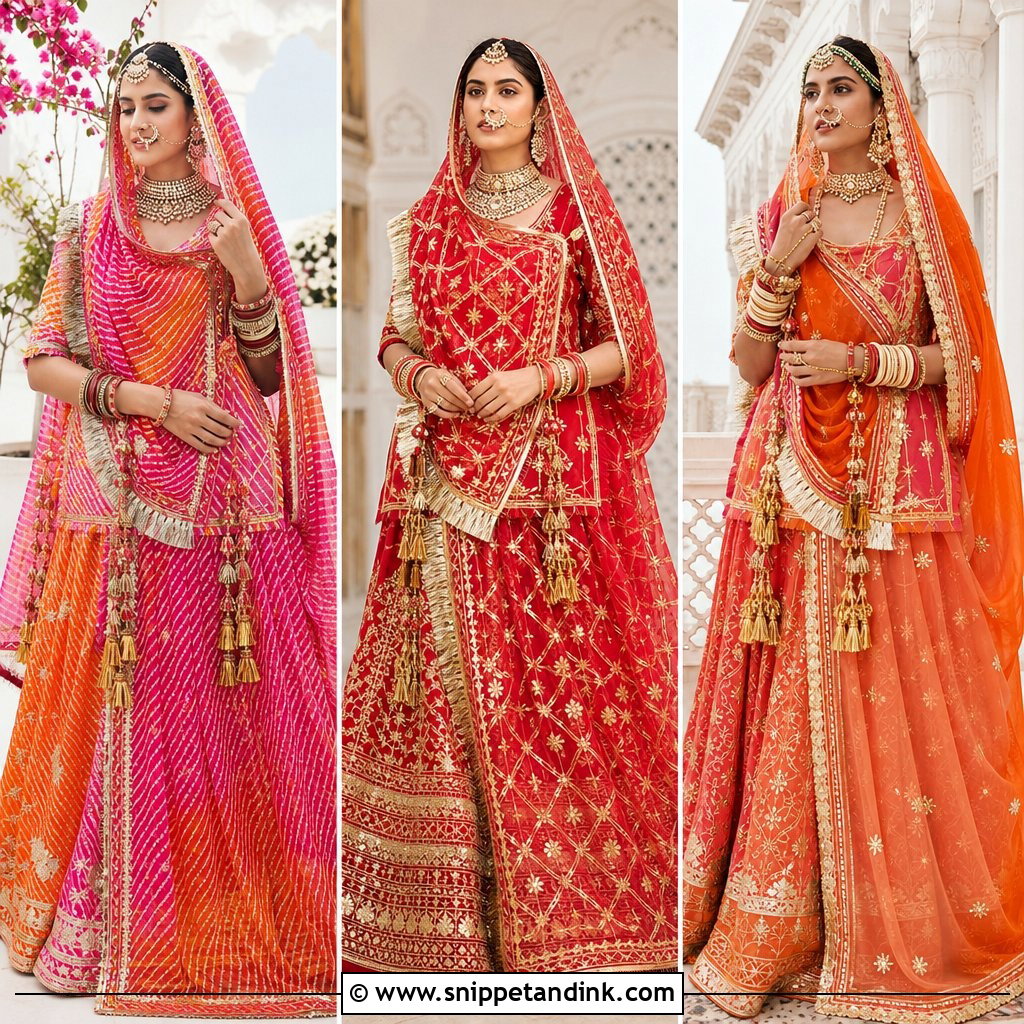
Picking the Barat outfit is the fun part of planning a South Asian wedding, and the part where comfort gets forgotten. Whatever you wear has to look ceremonial, hold up in photographs and carry you through the entrance, the portraits and the family rituals. Red lehengas still define Barat fashion, yet bridal collections now include maroon velvet, farshi cuts, ghararas, shararas, peshwas, sarees and structured gowns. I like double dupattas and placed embroidery because they add grandeur without making every layer heavy. Below are complete looks, from heritage reds to jewel tones, each with the fitting and wearing notes I’d give a bride in my own studio. Let your personality, venue, season and the amount of tradition your family expects guide the final call.
Ordering From a Designer Overseas Without Fitting Disasters
Plenty of brides order their Barat outfit from a designer in Lahore, Karachi or Delhi while living somewhere else entirely. It works well, but distance removes the safety net of a quick extra fitting, so the planning has to be tighter.
- Have measurements taken by a local tailor, not by a friend with a tape, and send them in the designer’s own form. Measure over the bra you’ll wear on the day.
- Ask for the blouse to be sent first, or for a muslin test blouse, so you can check fit and neckline before the heavy pieces are finished.
- Ask for generous seam allowances at the side seams and waist; a local tailor can take in, but cannot add fabric that isn’t there.
- Build in a few spare weeks for shipping and customs, plus time for local alterations after it lands.
- If someone is hand-carrying it on a flight, fold it in a muslin bag inside a garment carrier and keep it in the cabin, never in checked luggage.
When it arrives, open it the same day. Check hooks, borders, dupatta edges and color in daylight, and photograph anything wrong at once so the designer can fix it while there is still time.
1. Traditional Red Lehenga Choli Barat Dress
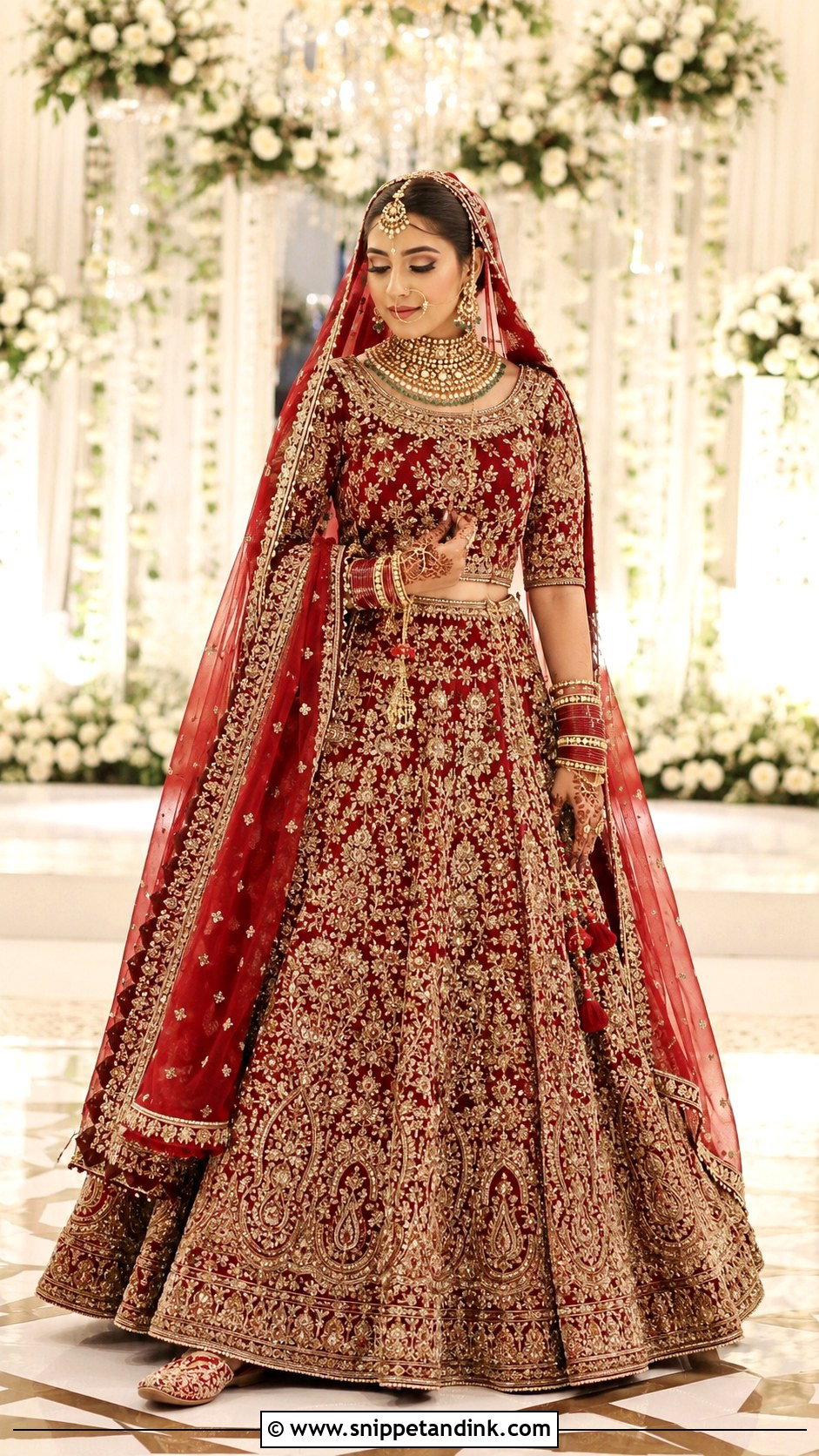
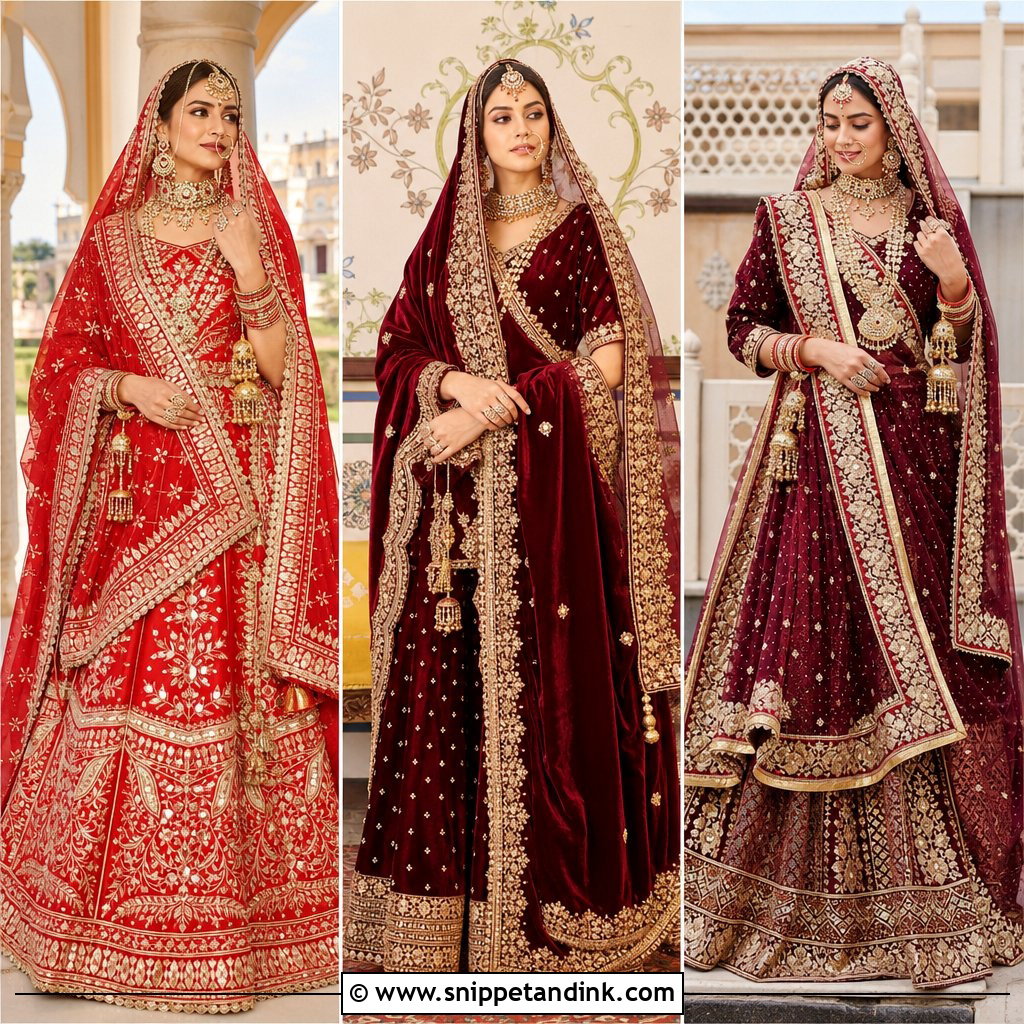
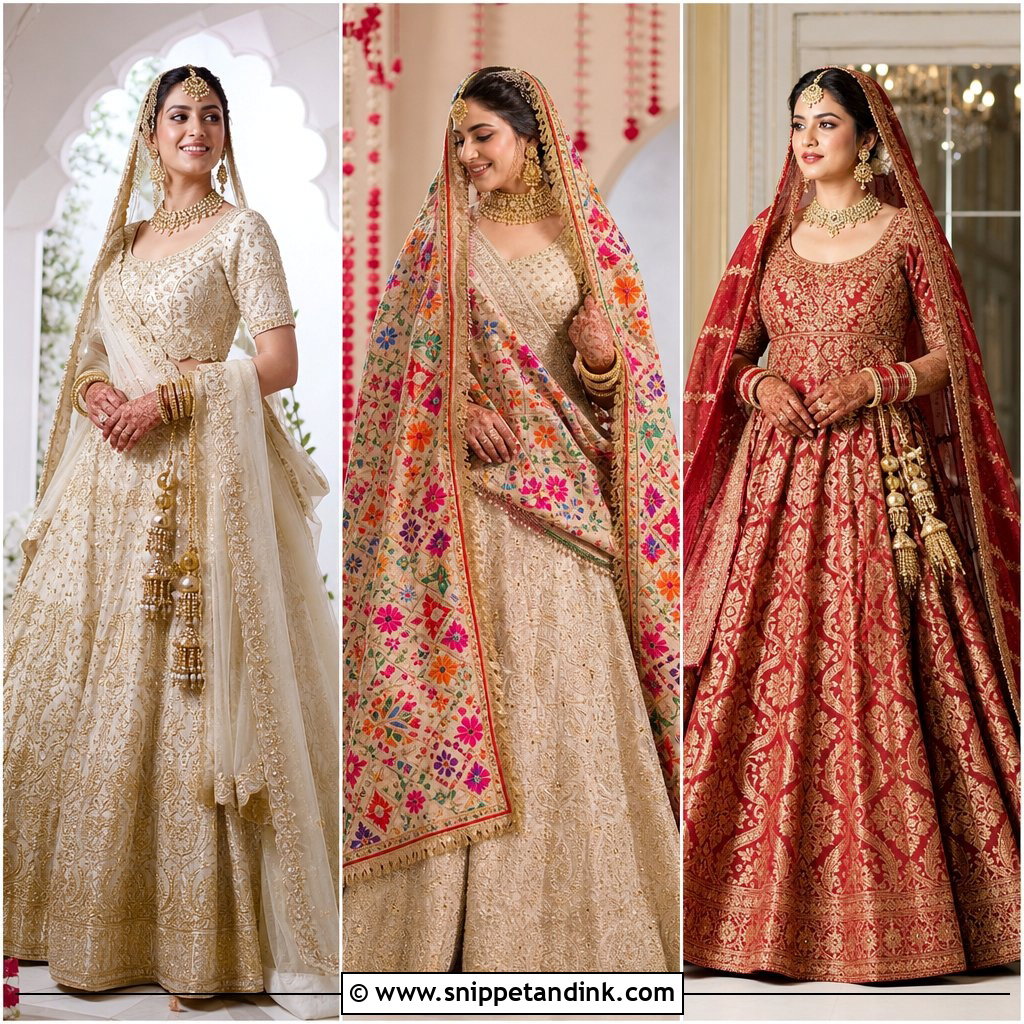
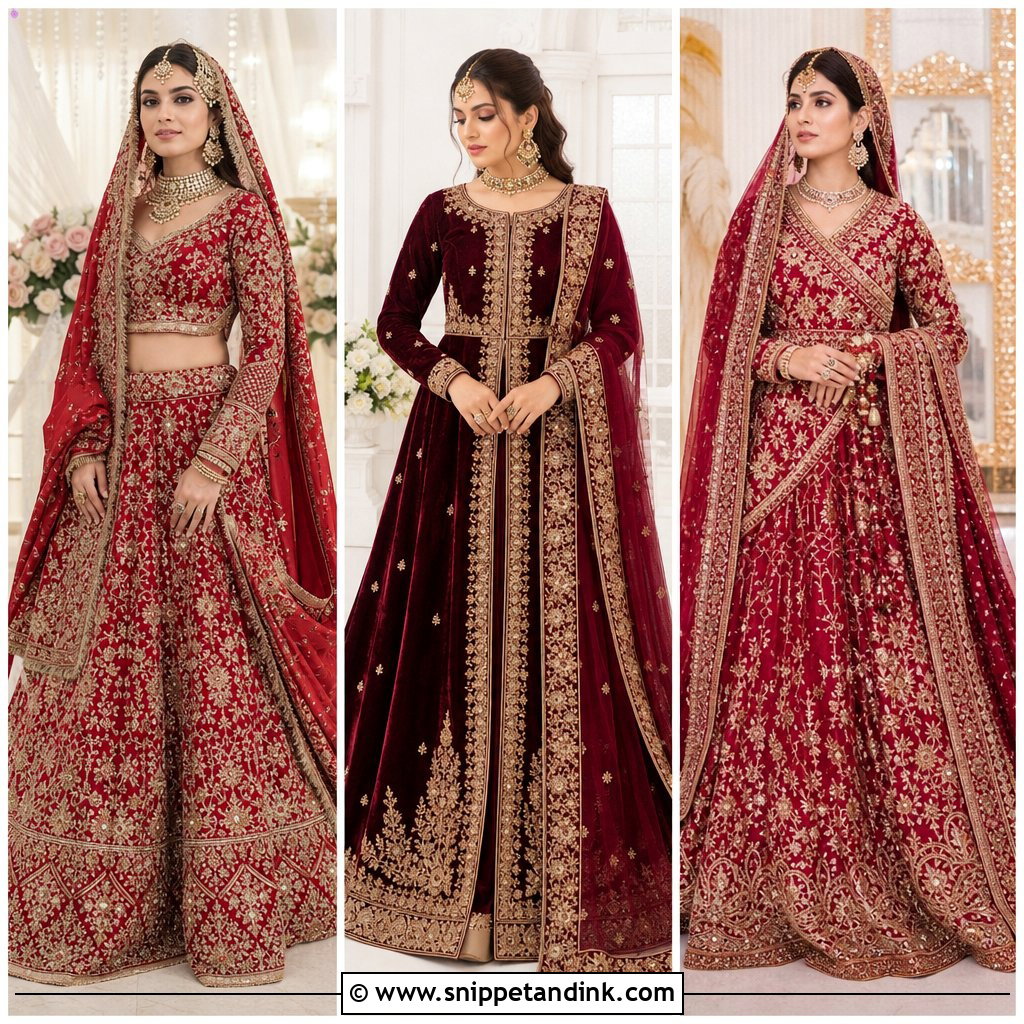
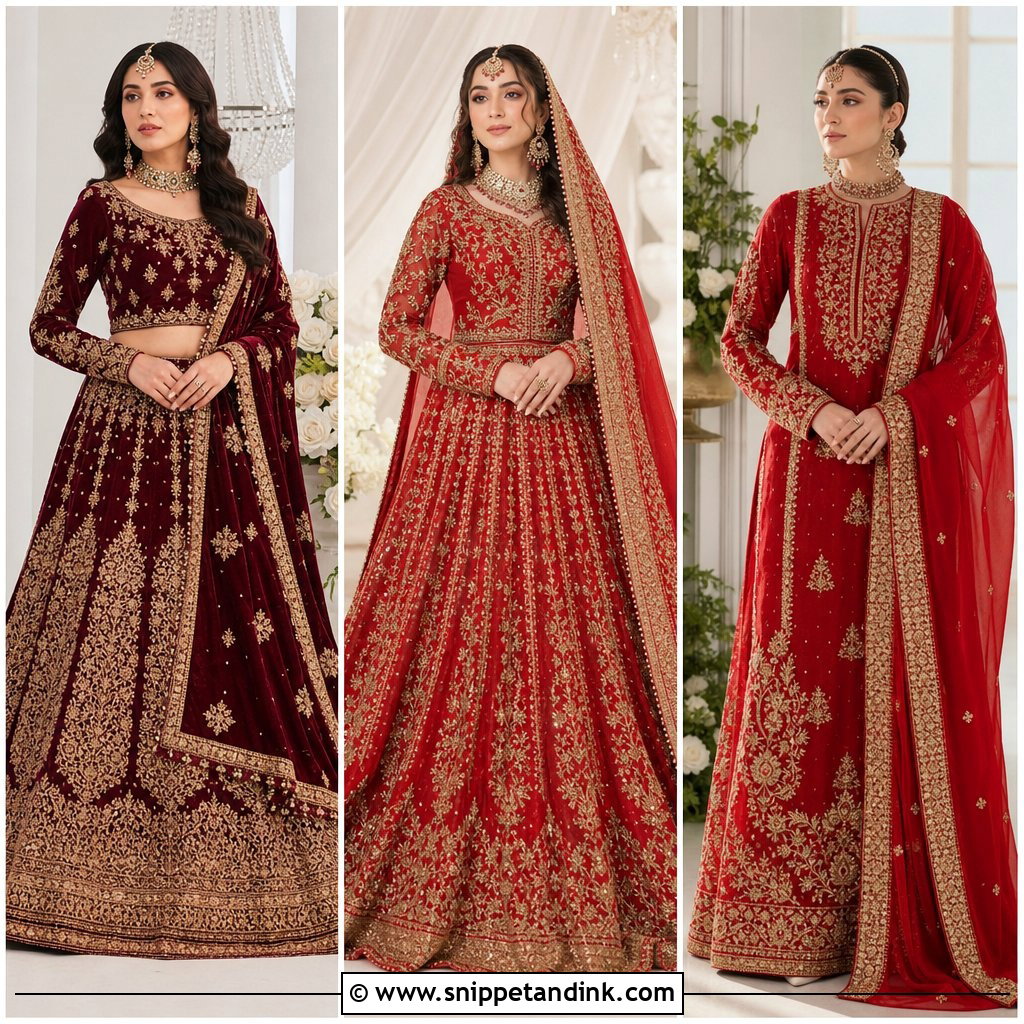
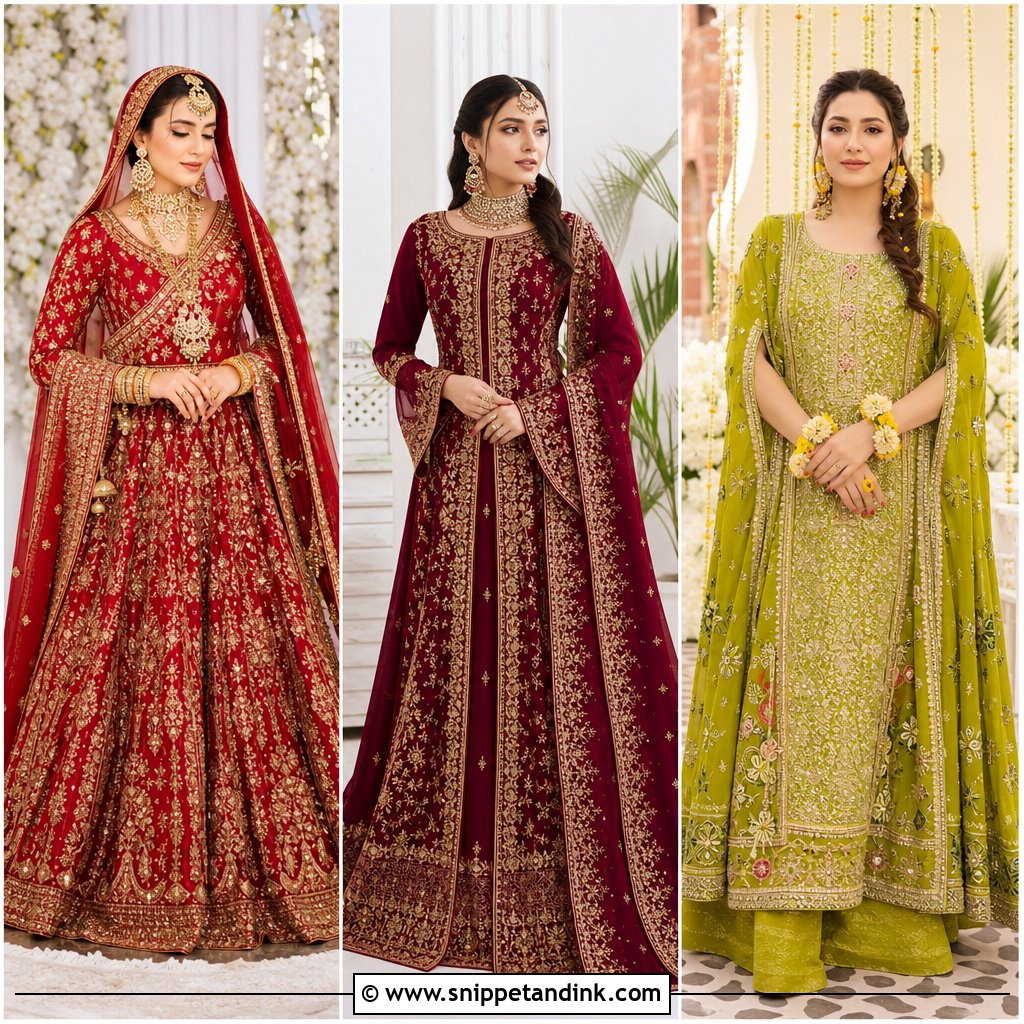
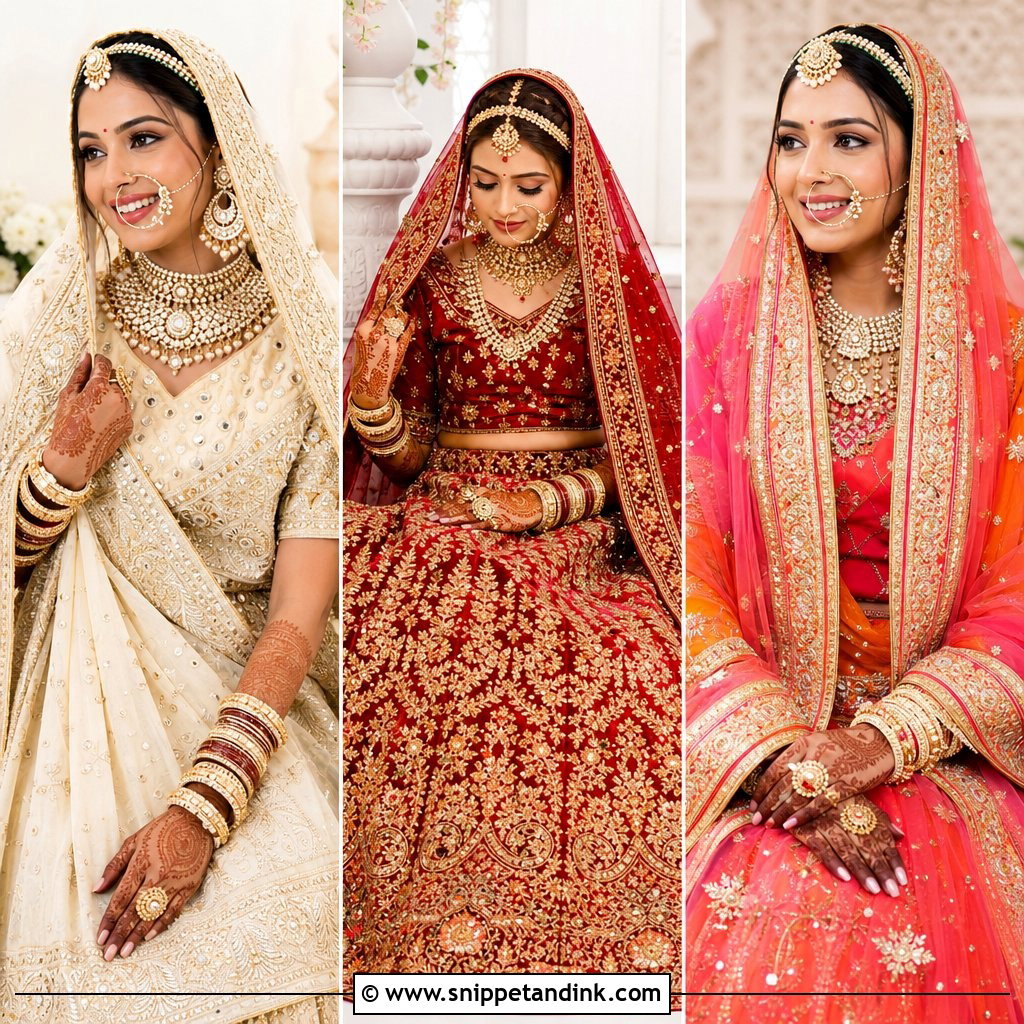
A traditional red lehenga choli is the look that makes everyone in the room know who the bride is. A paneled raw silk skirt with zardozi, dabka, naqshi or antique gold thread, a fitted choli with elbow sleeves, a light net dupatta over the head and a heavier bordered one across the shoulder. Gold jhumkas, a necklace, bangles and an optional matha patti suit it, with padded khussa or low block heels underneath. The waistband is what I test hardest. It should be a wide, firm band with hooks plus a drawstring backup, because a narrow band rolls under the weight of the skirt within the first hour.
2. Maroon Velvet Lehenga Barat Dress
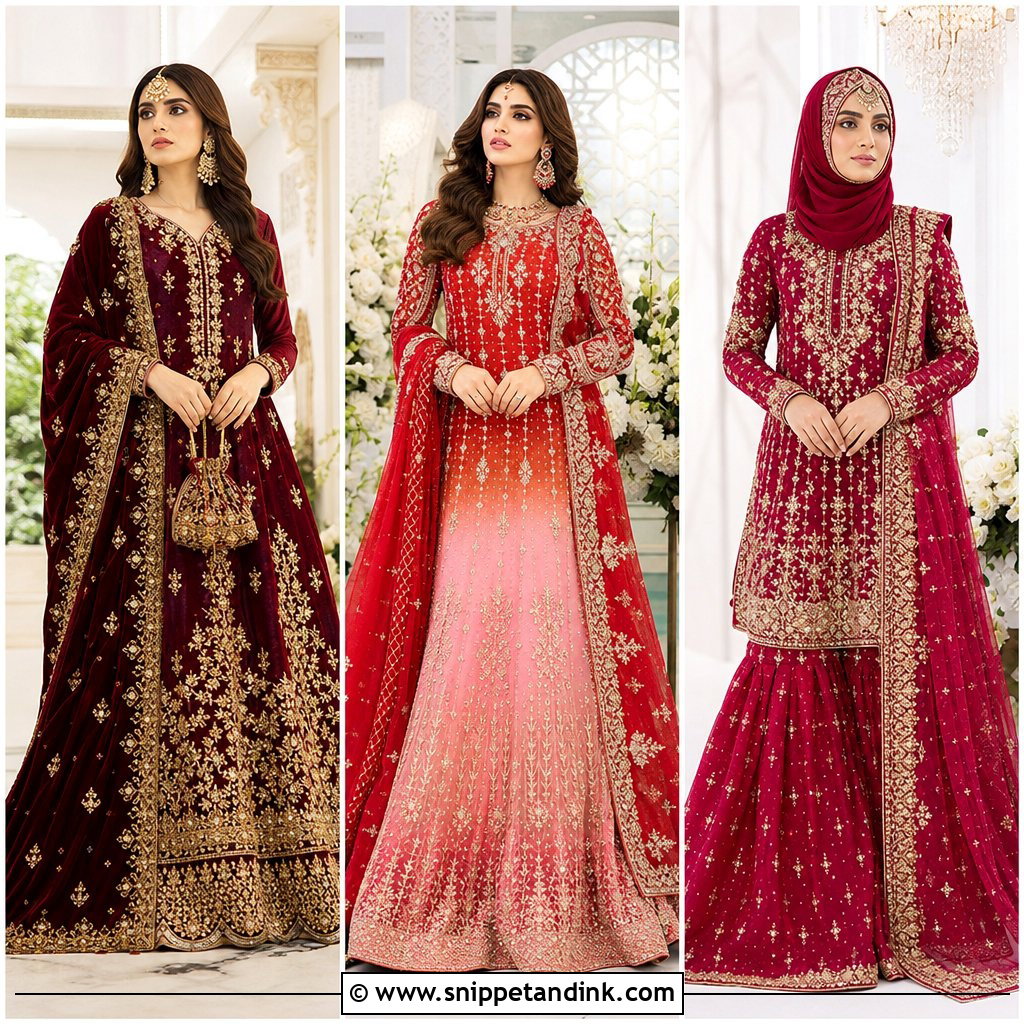
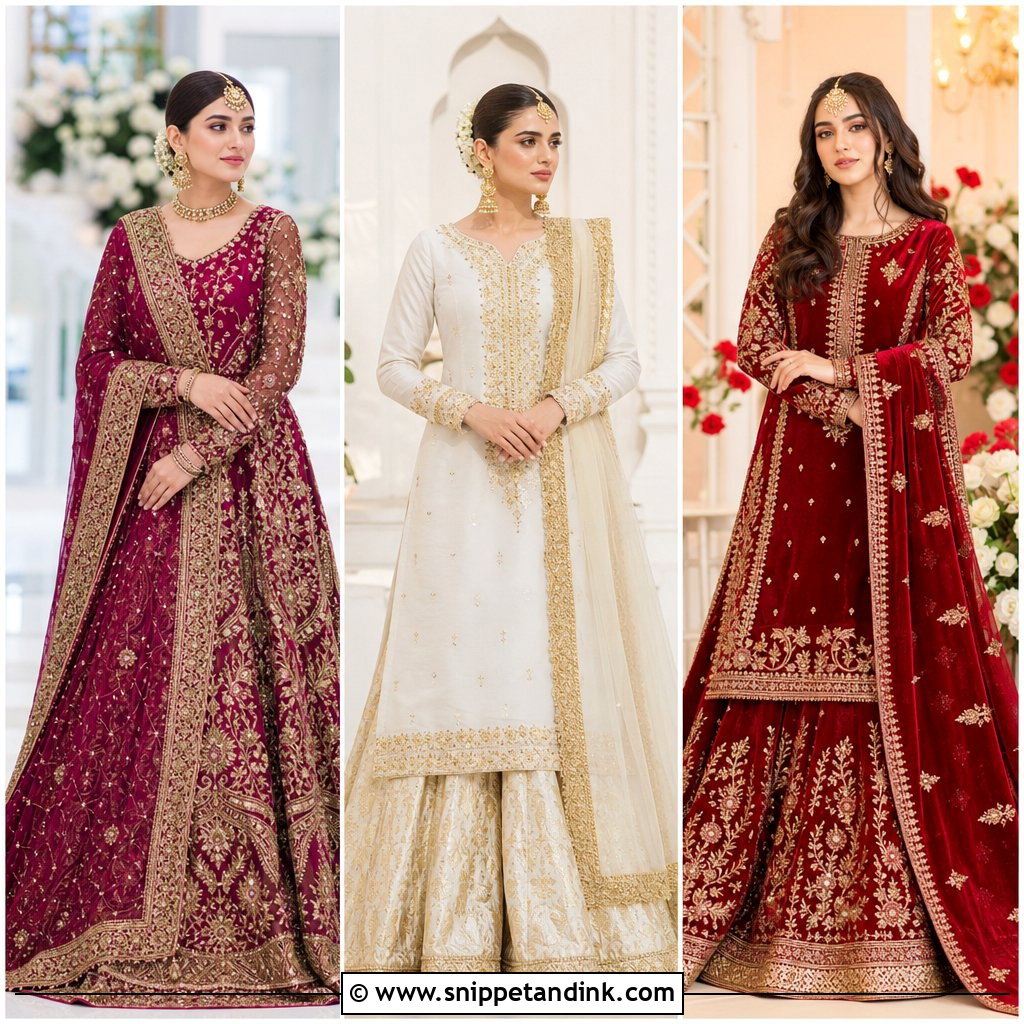
Maroon velvet belongs in a cool banquet hall, and there it looks wonderfully rich. Keep velvet to the choli and choose a moderately flared raw silk lehenga, so you aren’t carrying velvet weight from top to toe. Antique gold, small crystals and scalloped borders stand out against the dark color. A sheer organza dupatta keeps the neckline visible and a net one covers the head lightly. A gold choker, long necklace, passa, bangles and velvet khussa finish it; a longer blouse with a curved hem gives more coverage. Velvet drinks light, so I keep the makeup luminous rather than matte, otherwise the face goes flat against all that pile.
3. Deep Red Farshi Lehenga Barat Dress
A farshi lehenga in deep red trails behind you, and it only makes sense at a venue with room to walk and pose. Pair the extended skirt with a structured blouse or a short embroidered shirt to the upper hip, and keep the heaviest gold work along the hem, where it shows off the shape and helps the fabric lie flat. A sheer red head dupatta with a defined border, a second one across the arms, polki, a teardrop tikka, red bangles and cushioned heels complete it. Have a wrist loop or small bustle sewn in. I’d skip the farshi entirely for a narrow marquee aisle or a venue with stairs between rooms.
4. Red Peshwas With Lehenga Barat Dress
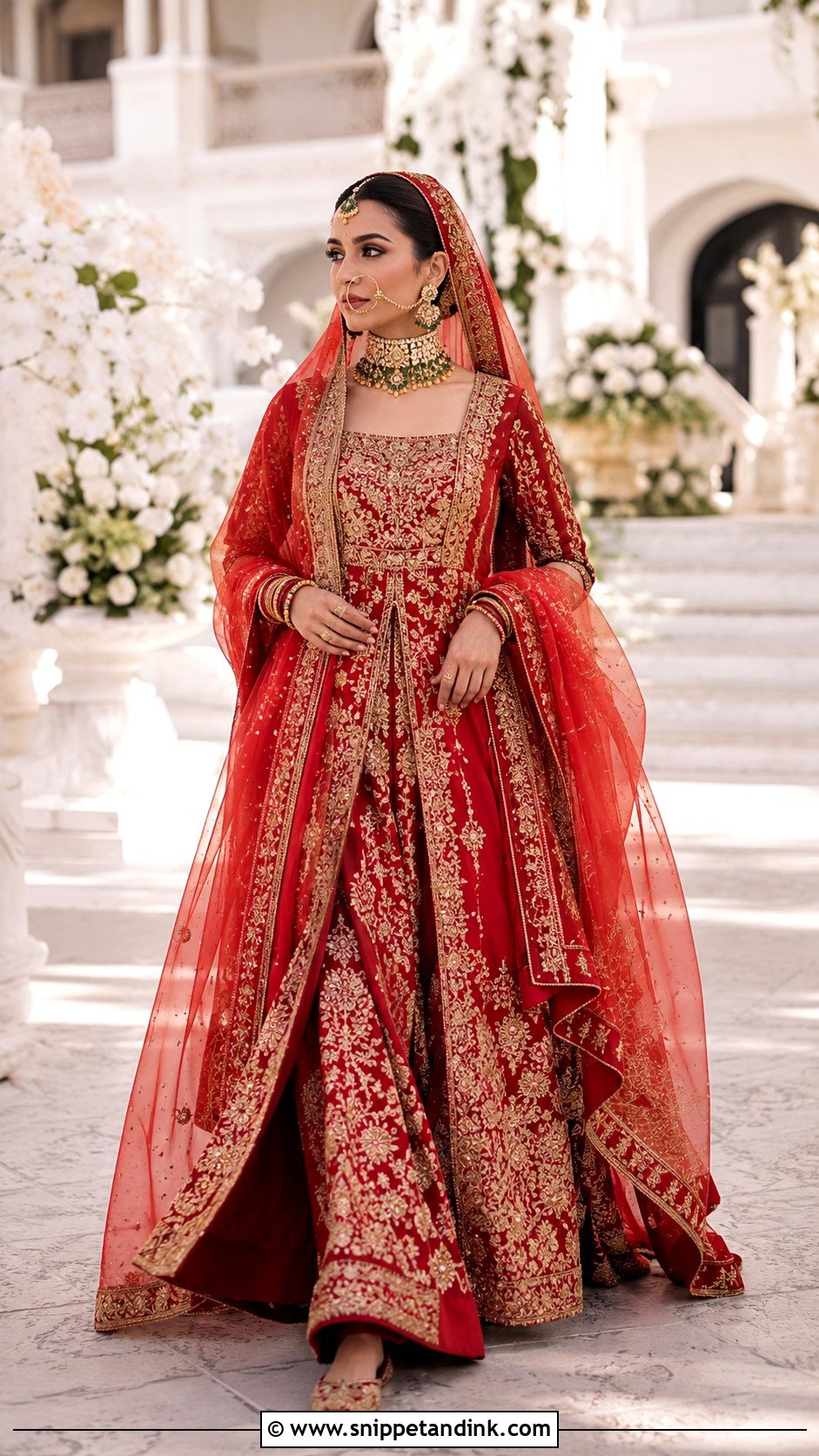
A red peshwas over a coordinating lehenga moves in soft layers while keeping its grandeur. Fit the peshwas firmly at the waist and let it fall to the floor; the lehenga beneath adds fullness. Vertical embroidery through the bodice and panels lengthens you, and a heavy hem gives ceremony. Pick the neckline to suit your jewelry: square for a wide choker, round for layered sets, a modest V for a long rani haar. A net dupatta on the head and organza on one shoulder, a kundan choker, earrings, a fine nath and low embroidered heels finish it. Two layers trap heat, so I ask for a cotton or soft silk lining, not polyester, and set the hem to the exact shoe height.
5. Red Gharara With Short Shirt Barat Dress
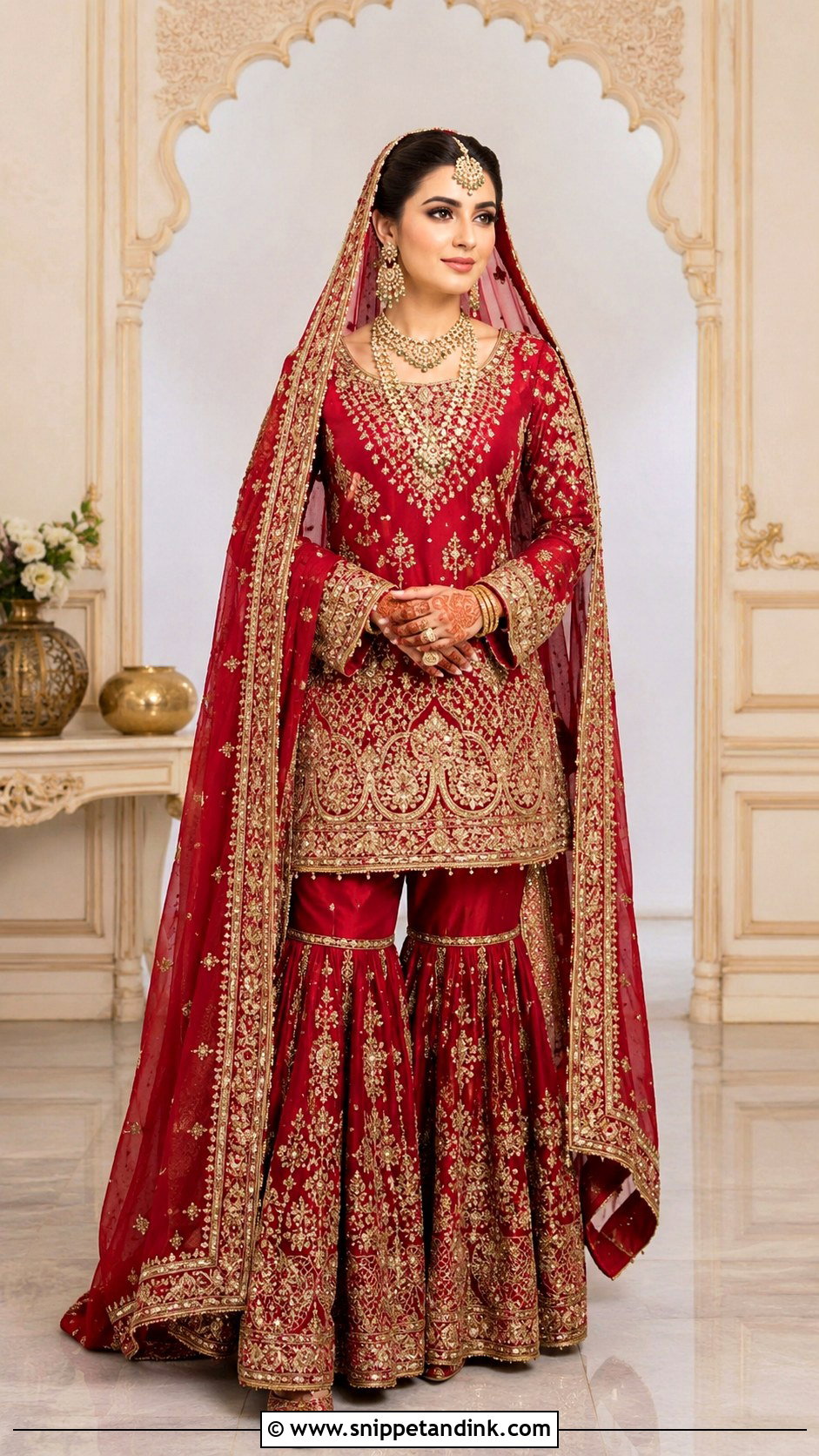
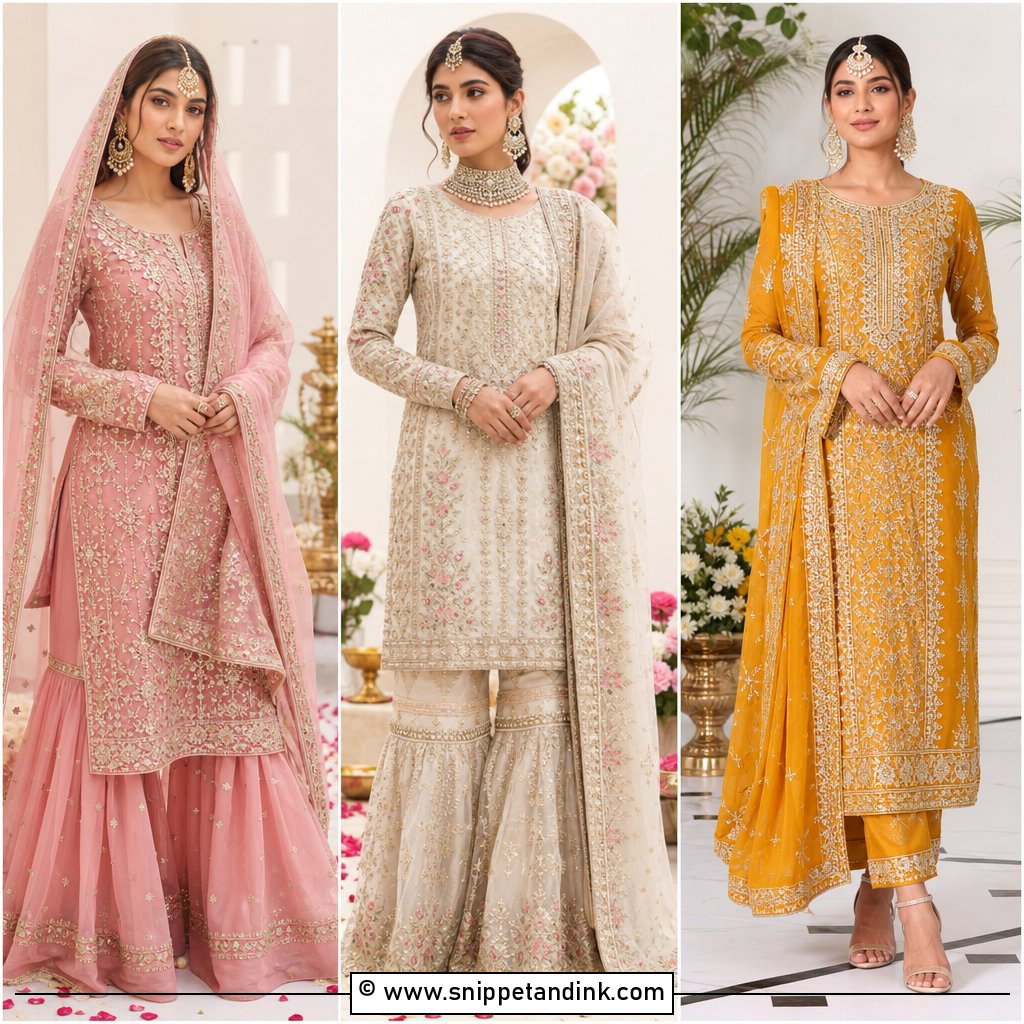
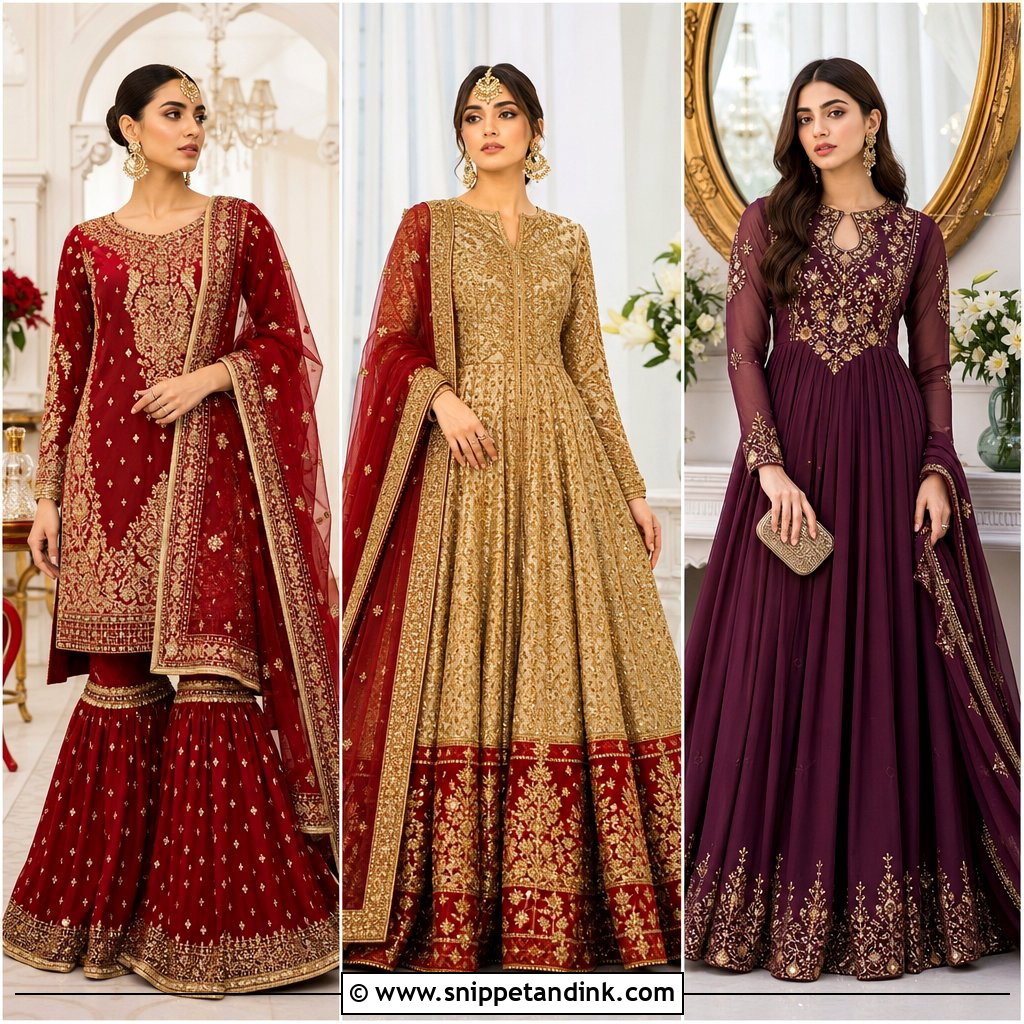
Pair a red bridal gharara with a heavily worked short shirt for a heritage look. The gharara fits through the upper leg and flares dramatically below the knee, so it reads nothing like a lehenga. Jamawar, tissue or raw silk all work, with gota, zari or scallops marking the knee joint. A hip-length shirt covers more while keeping the proportions. One dupatta over the head, one crossing the torso diagonally so the pants still show, plus a passa, layered necklace, jhumkas, bangles and pointed khussa. Here’s the fitting test: sit down and climb two steps. If the knee band sits too low, the flare catches your shins every time you lift a foot.
6. Crimson Sharara With Long Shirt Barat Dress
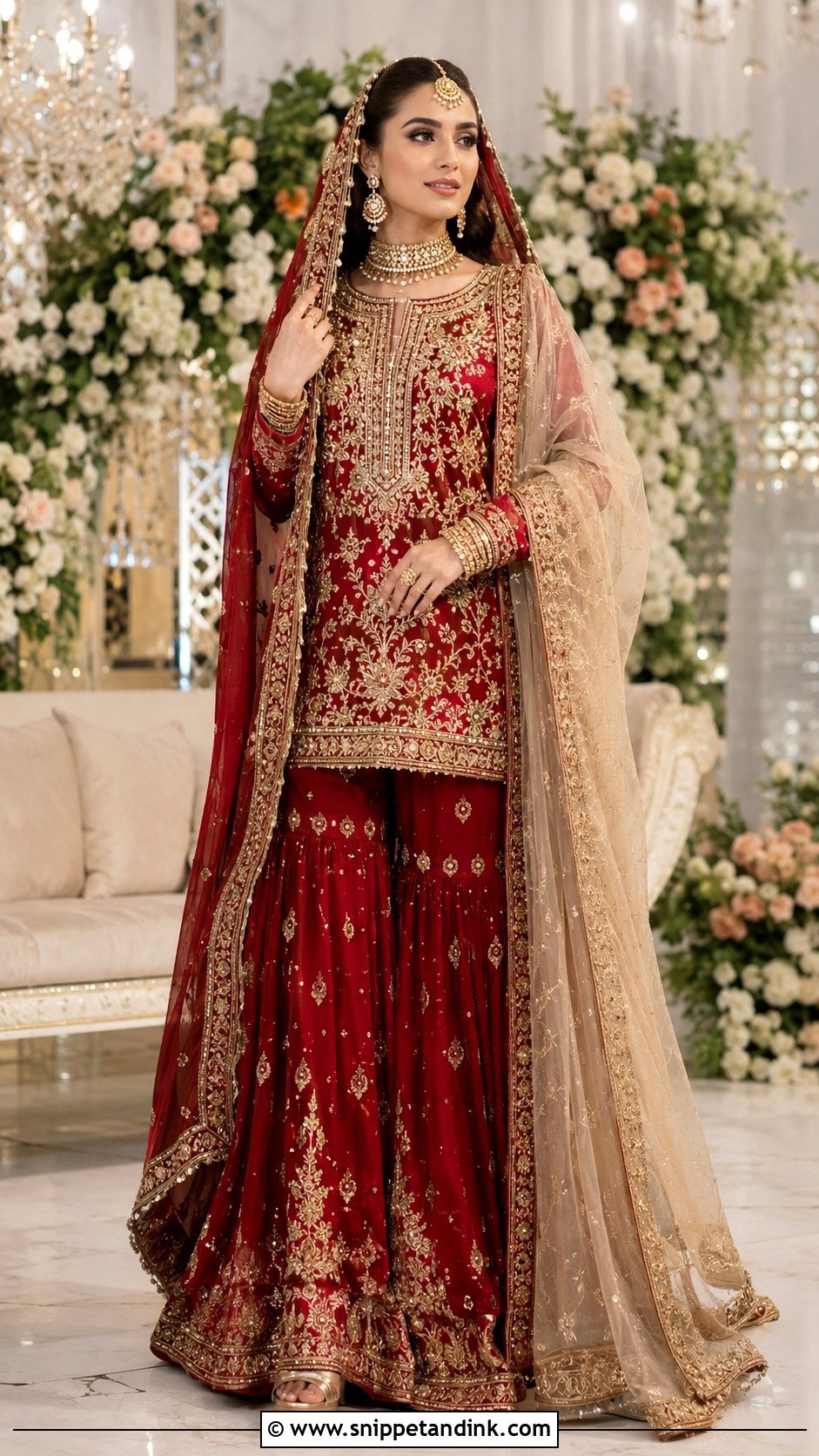
A crimson sharara with a long shirt is the streamlined route. Controlled-volume pants, a straight or slightly flared shirt to the knee, and embroidery at the neckline, cuffs, side panels and hem give detail without bulk. A heavily bordered head dupatta is what makes it bridal; a lighter second dupatta on the arm adds depth in photos. Antique gold, jhumkas, a centered tikka and platforms finish it. I start the side slits below the hip so they don’t open when you sit, and I check that the sharara waistband is broad and elasticated at the back, because embroidered sharara legs are heavier than they look.
7. Red Saree With Embroidered Blouse Barat Dress
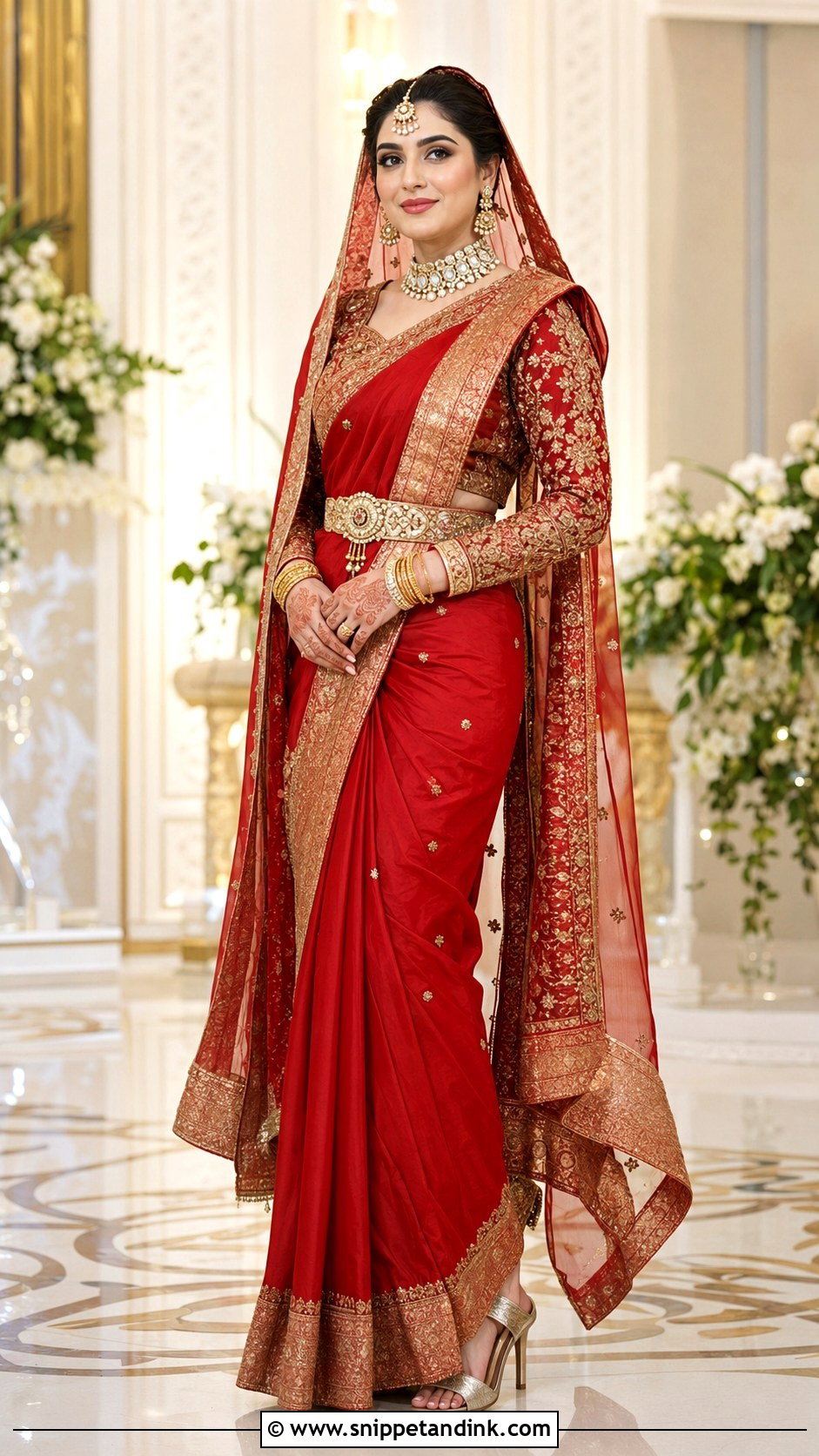
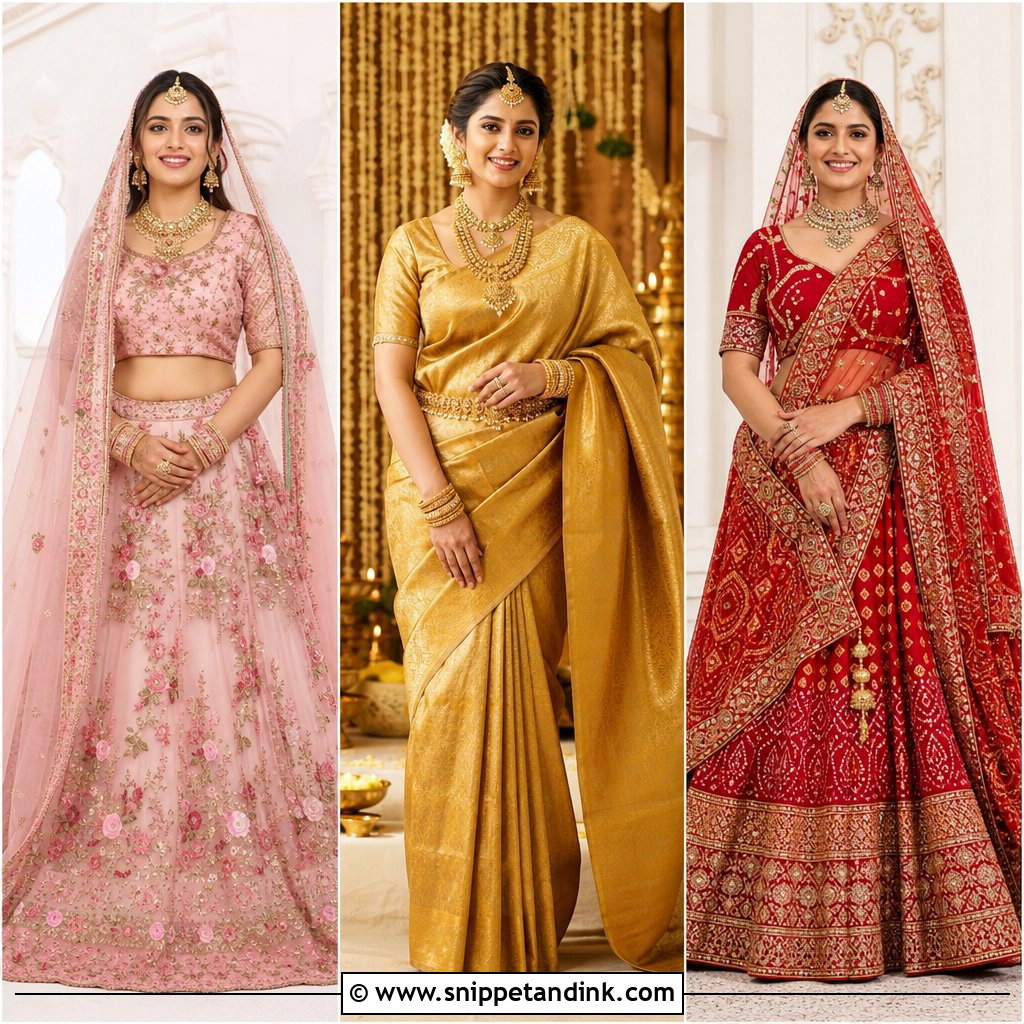
A red saree is the statuesque change from layered skirts. Silk, tissue or organza with a wide embroidered border, a blouse in fine gold handwork, and a longer blouse, higher neckline or full sleeves for coverage. Pin the pleats carefully and add an embellished belt to keep the drape in place, with a separate light dupatta over the head for the ceremony. A polki choker, long earrings, bangles and embellished heels suit it. If draping worries you, have the saree pre-pleated and box-folded a day ahead. It cuts dressing time to minutes, and the pleats stay crisp through greetings and portraits.
8. Rust Red Anarkali Gown Barat Dress
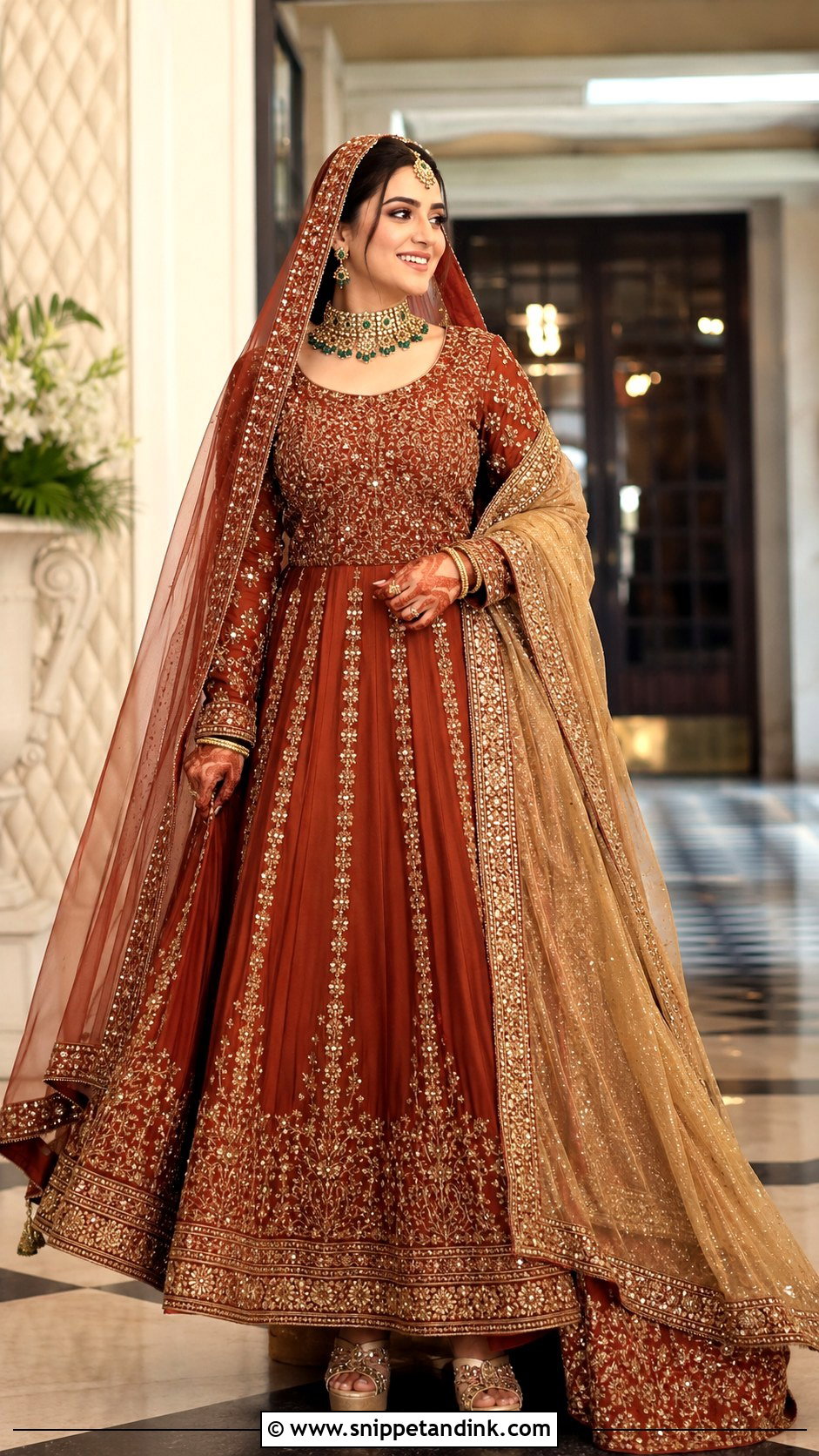
Rust red is earthy and rich against antique gold. As an Anarkali, it gives you a fitted bodice that opens into a full floor-length flare, with no separate heavy skirt. Paneled construction lets it move, and embroidered cuffs, neckline, waist and hem supply the bridal detail. A matching net dupatta on the head, an antique gold dupatta folded on one arm, a choker with emerald or pearl accents, chandelier earrings, bangles and padded block heels complete it. The point I watch on an Anarkali is the back: a structured lining and a discreet zip or hook placket keep the bodice smooth, otherwise the flare’s weight pulls it into ripples between the shoulder blades.
9. Burgundy Maxi With Double Dupatta Barat Dress
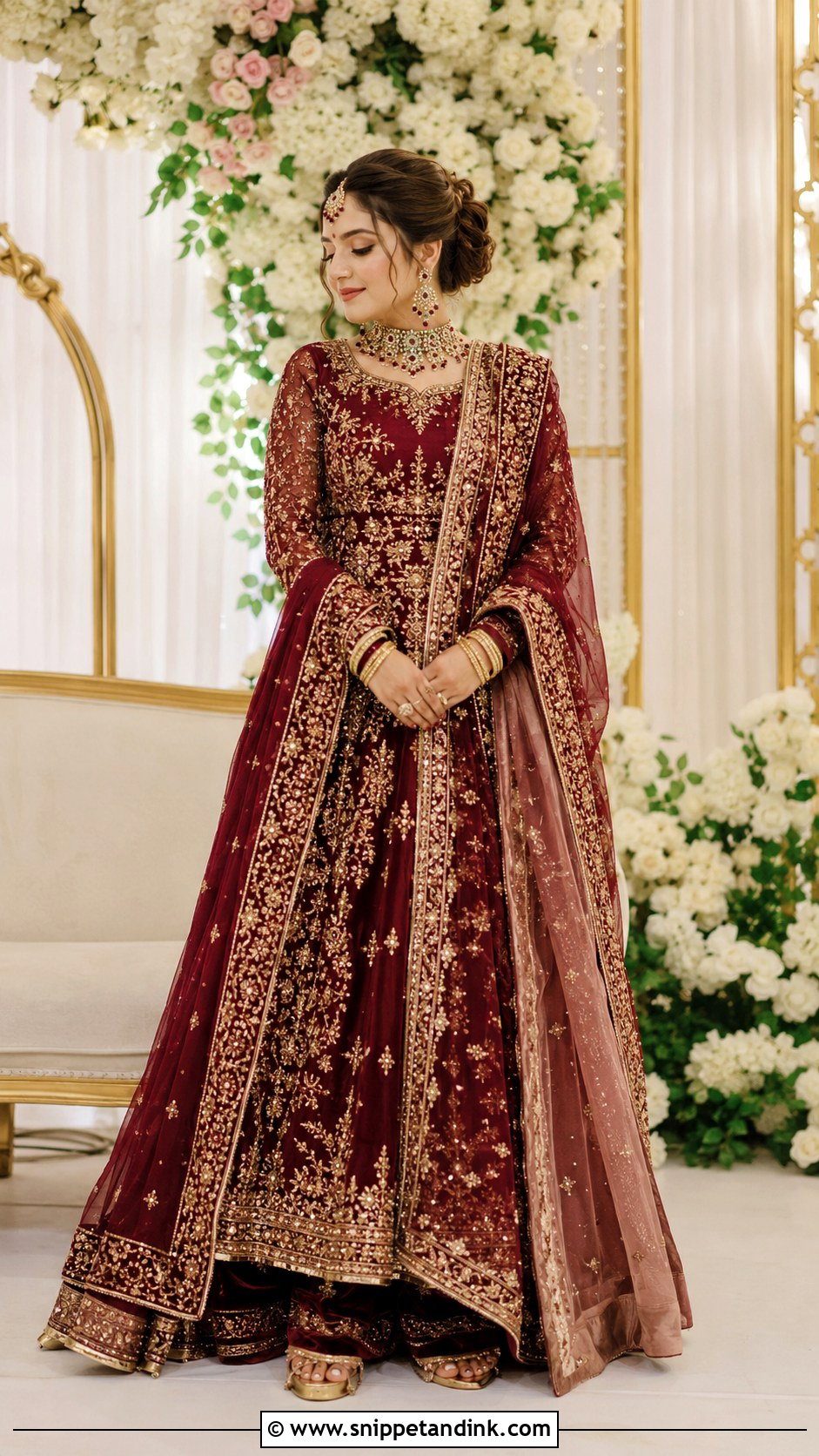
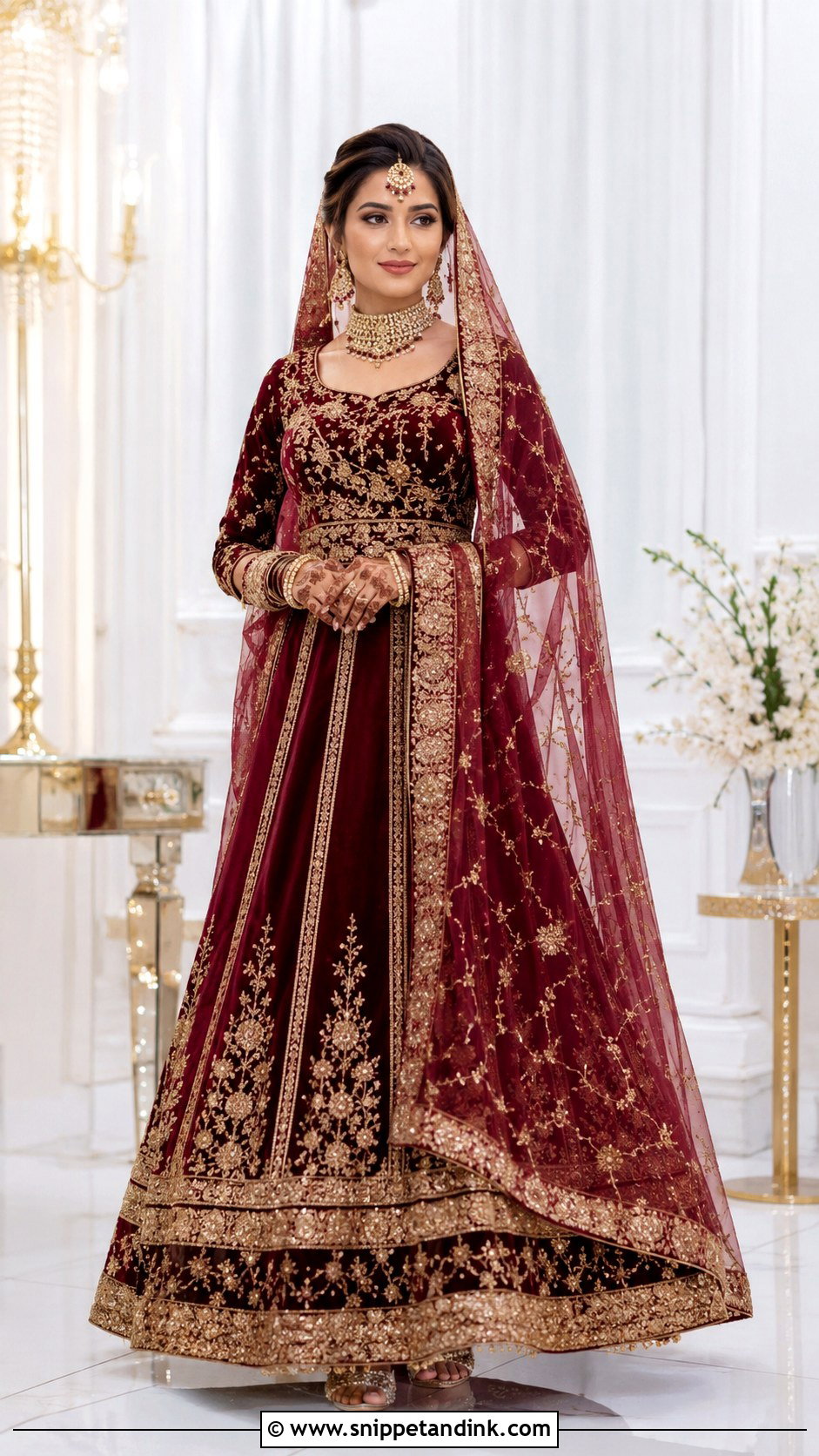
Burgundy as a maxi gives a long, clean line that is still richly traditional. Fitted upper body, defined waist, layered skirt, with tonal embroidery and touches of antique gold so the burgundy itself stays visible. A sheer embroidered dupatta over the head and a plain-edged one across the shoulder frame your face and make the gown read as Barat. Kundan, studs or drops, a small tikka and gold platforms suit it, and fitted full sleeves with sheer embroidered cuffs add coverage. I check walking room by asking the bride to take a long stride: if the skirt pulls at the knee, there isn’t enough sweep, no matter how full it looks standing still.
10. Antique Gold Lehenga With Red Dupatta Barat Dress
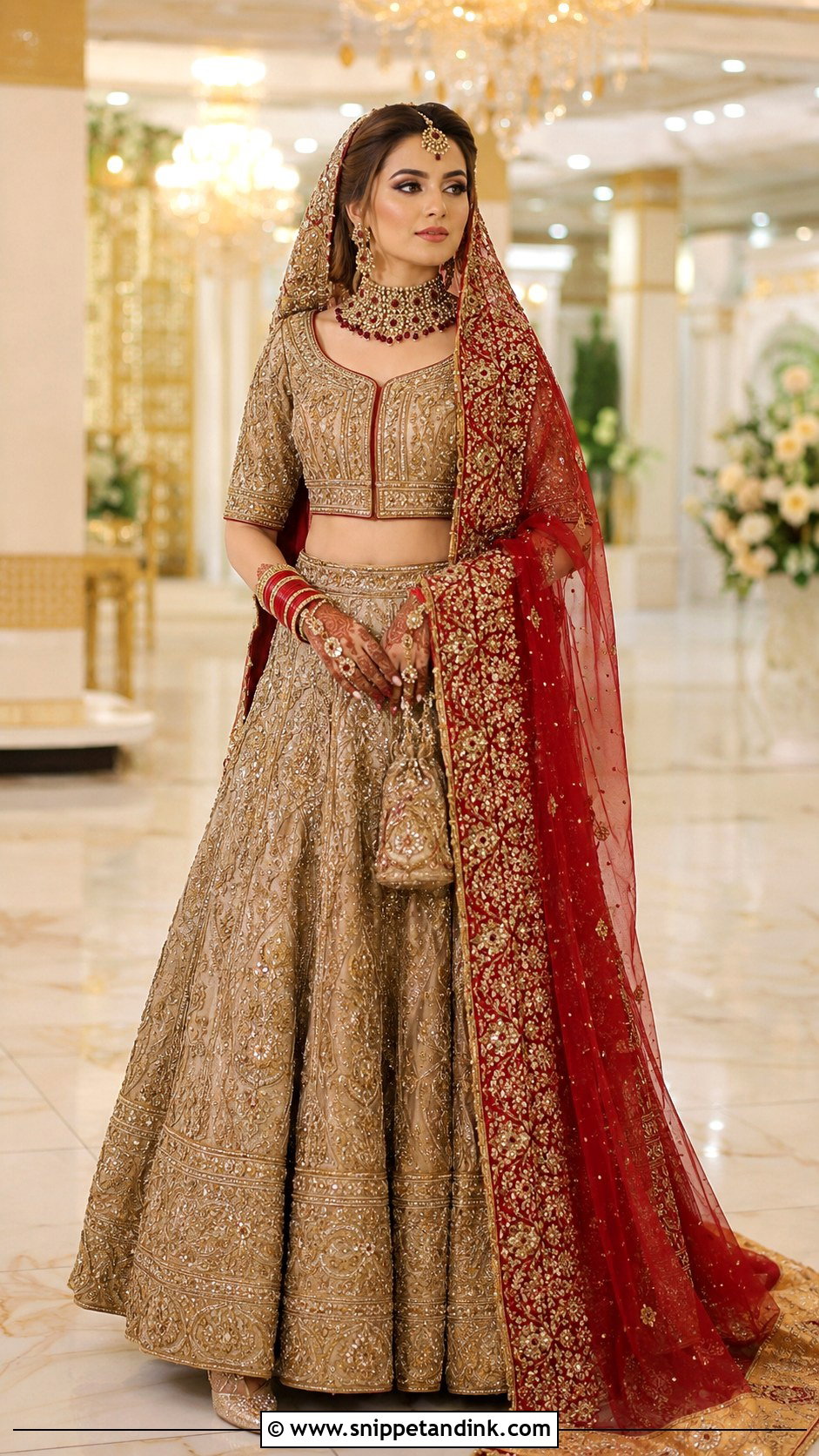
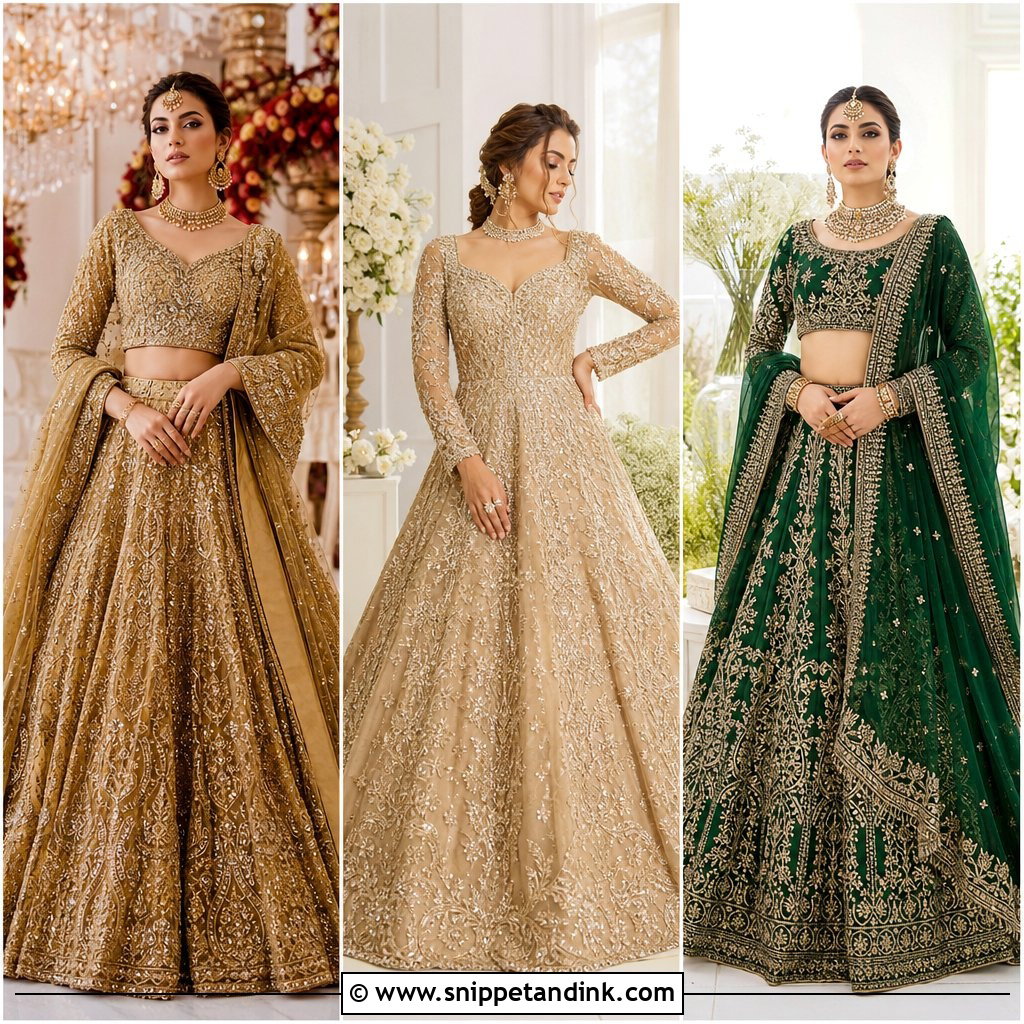
An antique gold lehenga under a red head dupatta mixes a modern palette with clear bridal tradition. Go for muted gold rather than yellow-bright, with tonal beadwork, zari, sequins and thread for depth. A fitted gold blouse or a longer peplum top suits different coverage needs. The red dupatta needs a strong embroidered border, since it is what frames your face and carries the classic Barat color. A sheer gold second dupatta can drape at the waist. Ruby-accented kundan, red bangles and metallic heels finish it. Gold fabrics from different bolts often differ in undertone, one pinkish, one greenish, so I compare blouse and skirt together under flash before the final stitch.
11. Ivory Lehenga With Red Dupatta Barat Dress
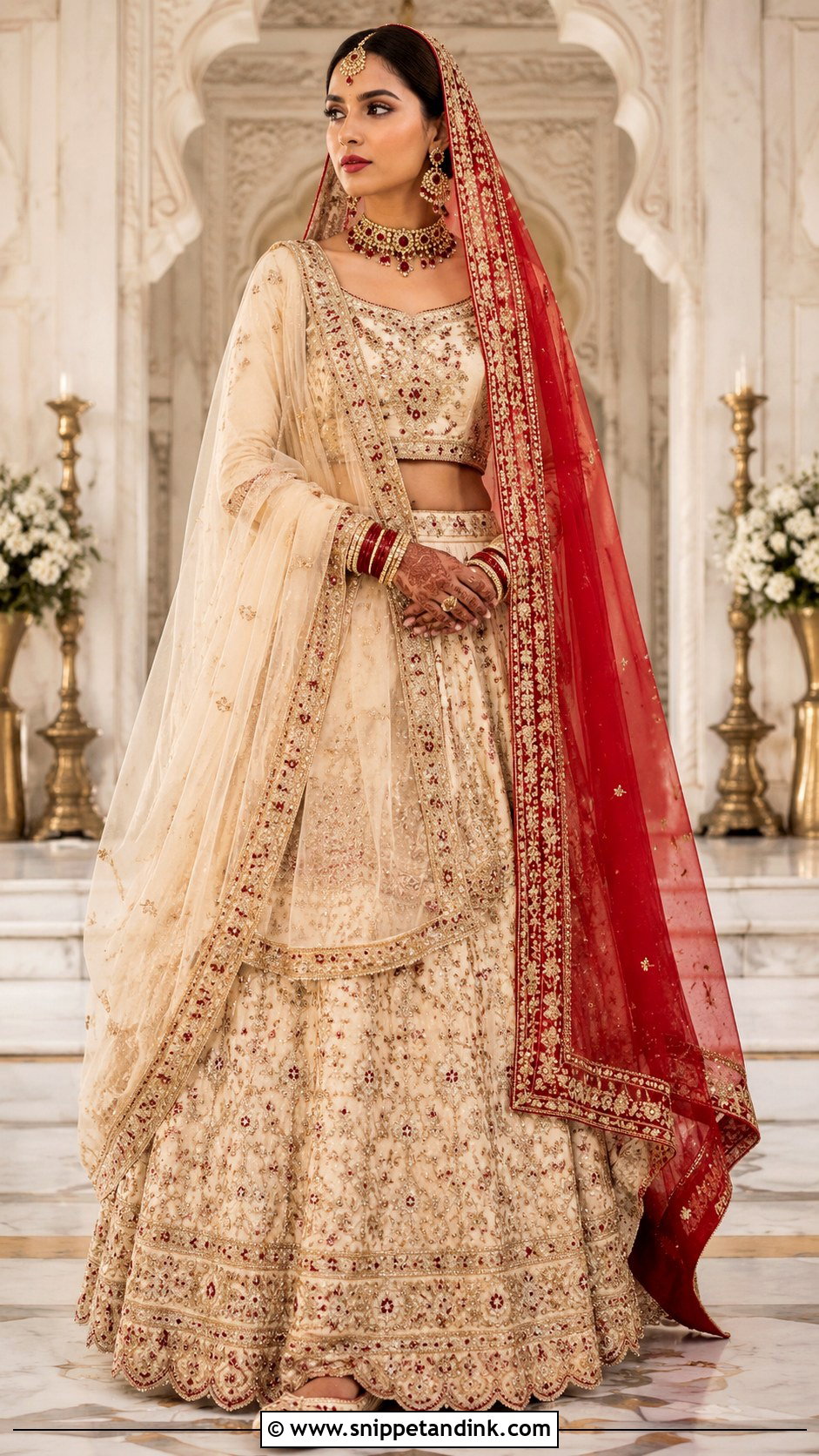
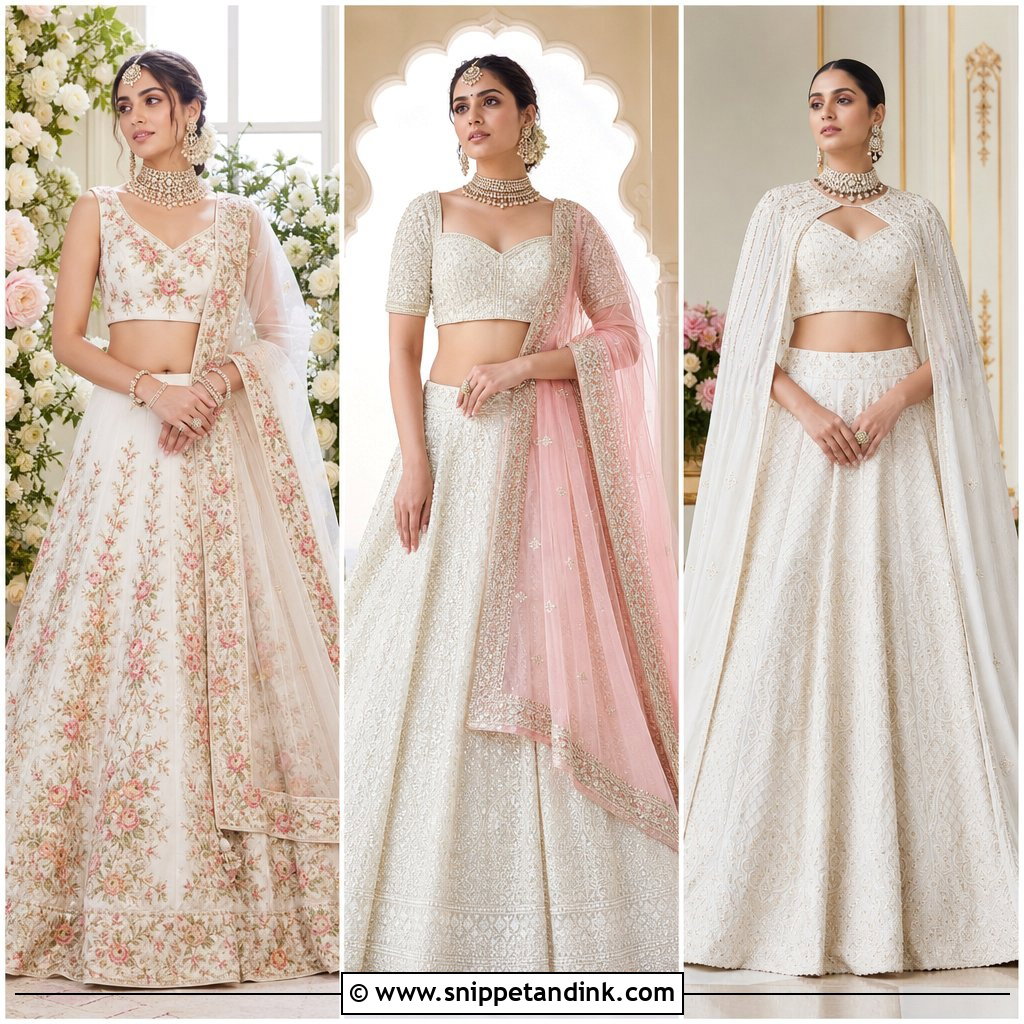
Ivory is a refined base when all-red feels like too much. An ivory raw silk lehenga and blouse with antique gold, pearls and a few placed red motifs; a richly worked red dupatta over the head; an ivory organza one across the shoulder. Ruby or garnet jewelry links the two colors without clutter, with a gold choker, earrings, a fine nath and ivory khussa. Ask for an opaque lining so the pale fabric looks even from every angle. Ivory picks up marks fast. I lay a clean sheet on the floor where the bride dresses and keep another in the car for outdoor portraits, because the hem will touch the ground before you even reach the stage.
12. Emerald Green Lehenga Barat Dress
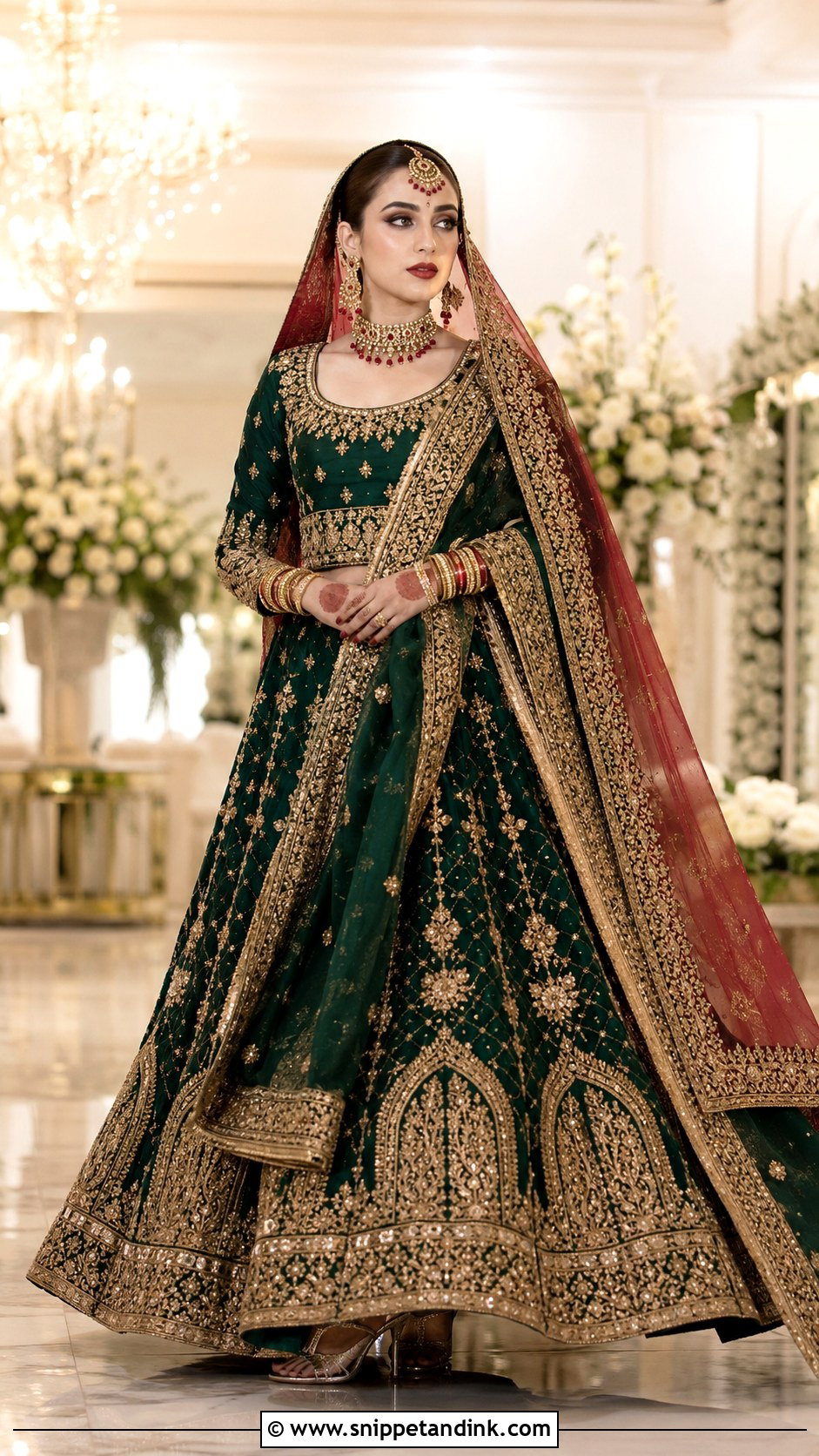
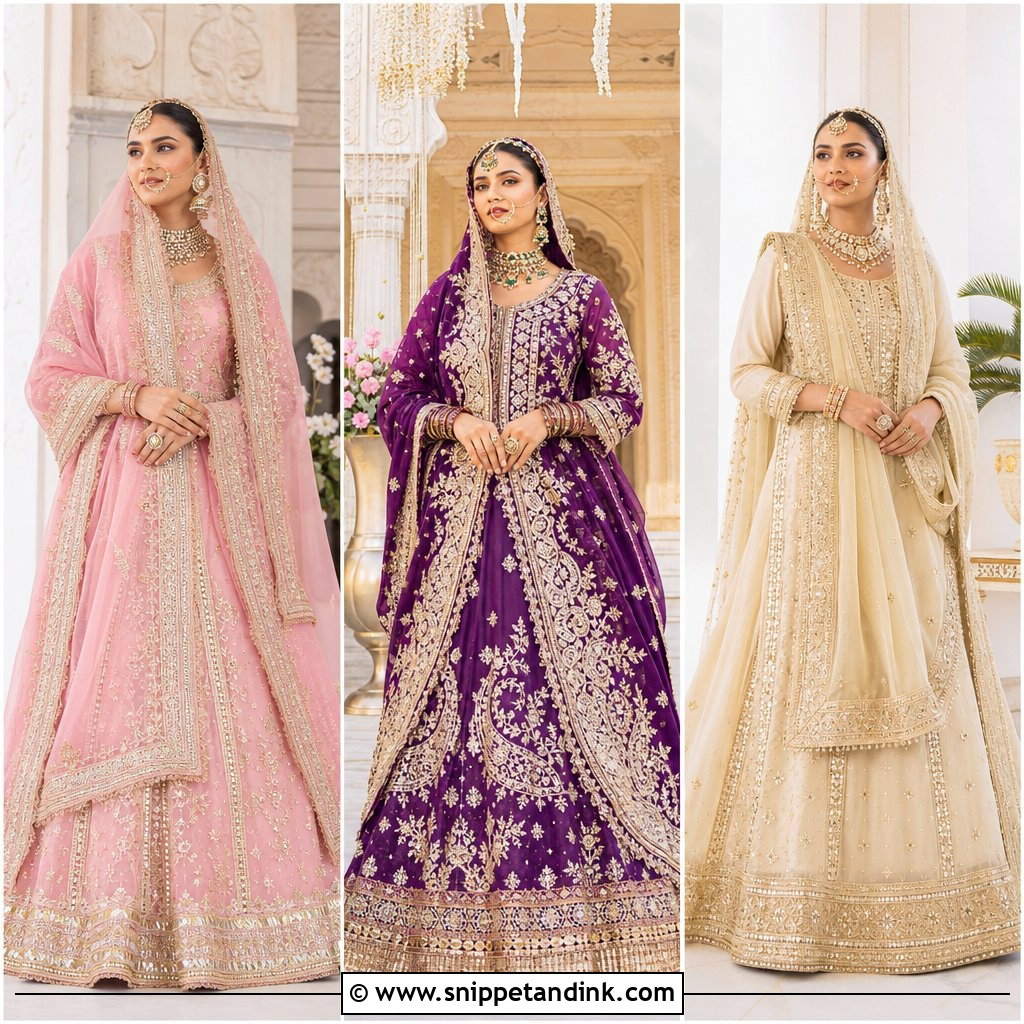
Emerald is powerful with antique gold, pearl or ruby. A raw silk lehenga with a structured blouse and balanced work across the panels; a red or maroon head dupatta keeps the Barat feel, while a second emerald dupatta builds a coordinated monochrome. Ruby-accented gold brings warmth so the green doesn’t feel cold. Stacked bangles, a tikka and metallic khussa or block heels finish it. When the skirt is heavily worked, I keep the blouse a step cleaner. Warm neutral makeup with softly defined eyes lets dress, dupatta and jewelry read as one look.
13. Plum Lehenga With Gold Embroidery Barat Dress
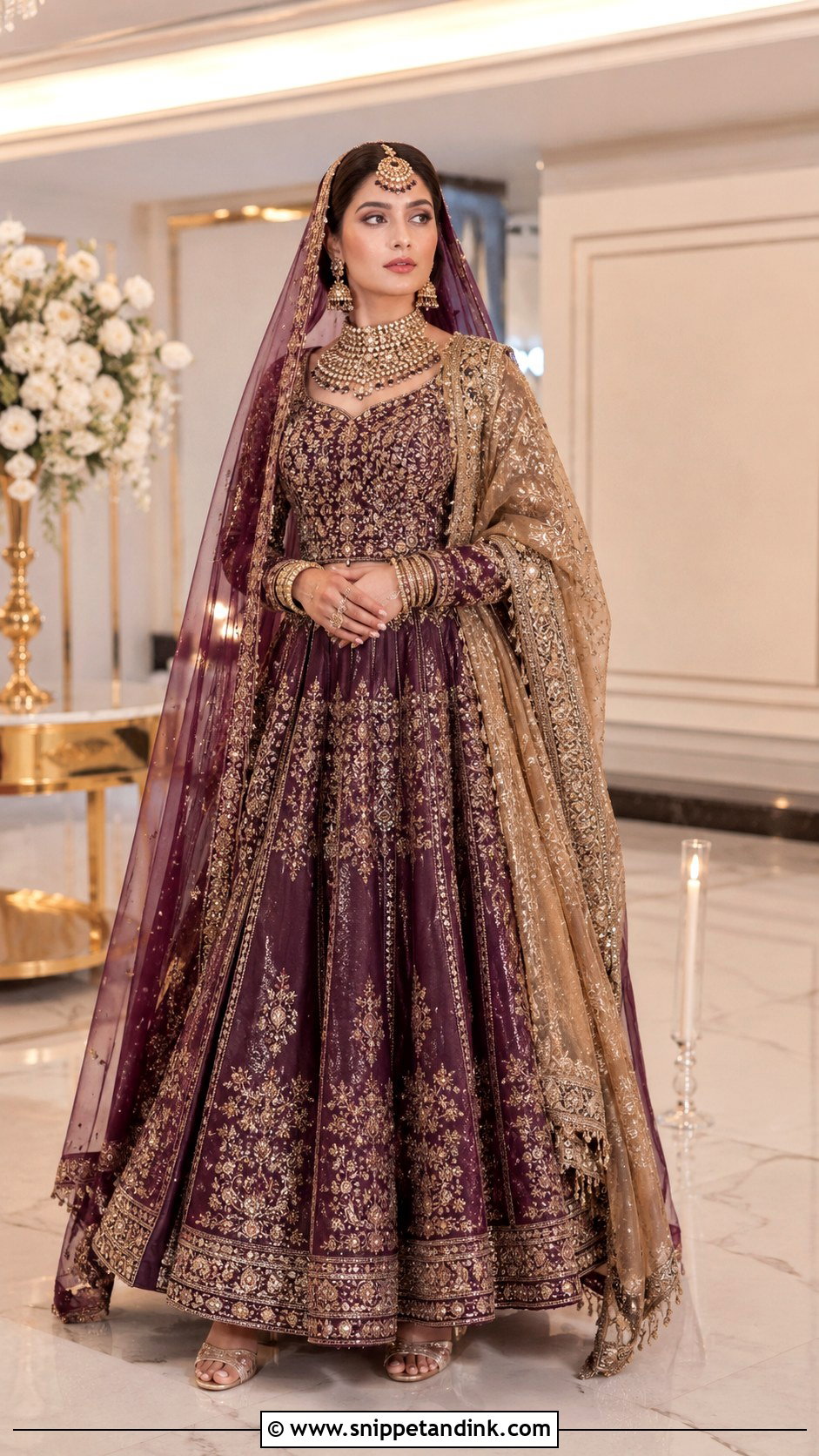
Plum is deep and romantic, and it suits a bride who finds red too expected. A paneled plum lehenga in raw silk or velvet with antique gold, tonal sequins and small florals; a structured blouse with full or elbow sleeves and a neckline wide enough for a statement choker. A plum net dupatta over the head and a muted gold one across the shoulder give contrast. Polki, pearl drops, bangles and gold low heels complete it. I ask for the embroidery to thicken toward the hem. Weight low on the skirt hangs better and keeps the waist from feeling dragged. Berry makeup links the color story without looking matched.
14. Navy Blue Velvet Lehenga Barat Dress
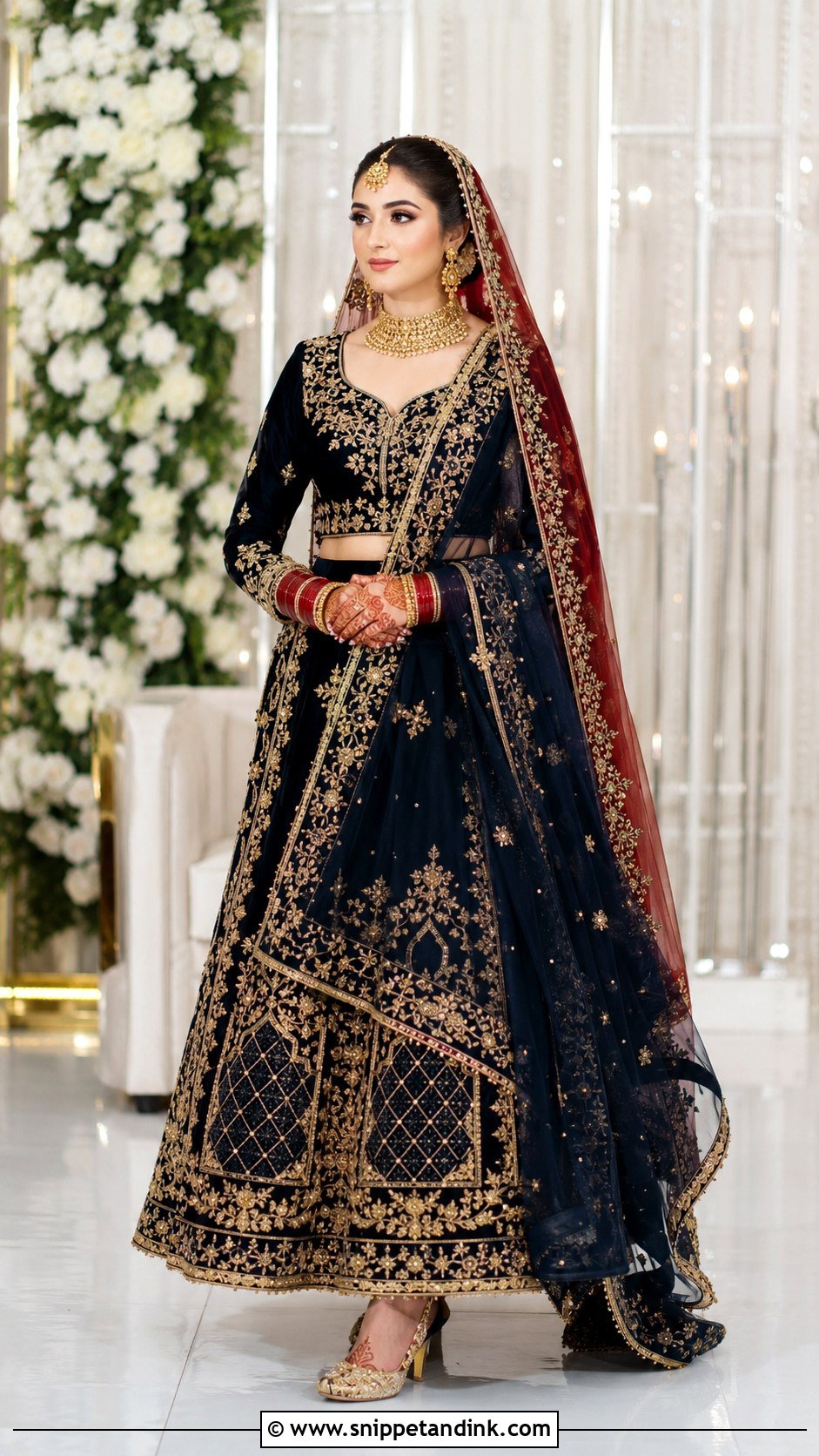
A navy blue velvet lehenga is a winter Barat outfit with real contrast against gold. Use velvet for the blouse or upper part and raw silk for the skirt if you want it lighter. Antique gold borders, small florals and a few crystals stop the dark fabric from looking flat. A red, maroon or deep pink head dupatta adds the bridal accent; a navy organza drape on the shoulder adds depth. A gold choker, earrings, red bangles and embroidered heels suit it. Navy can go nearly black in a dim hall, so I ask the photographer to see the outfit in advance and plan the lighting, and keep the bride’s makeup bright and balanced.
15. Rose Pink Lehenga Barat Dress
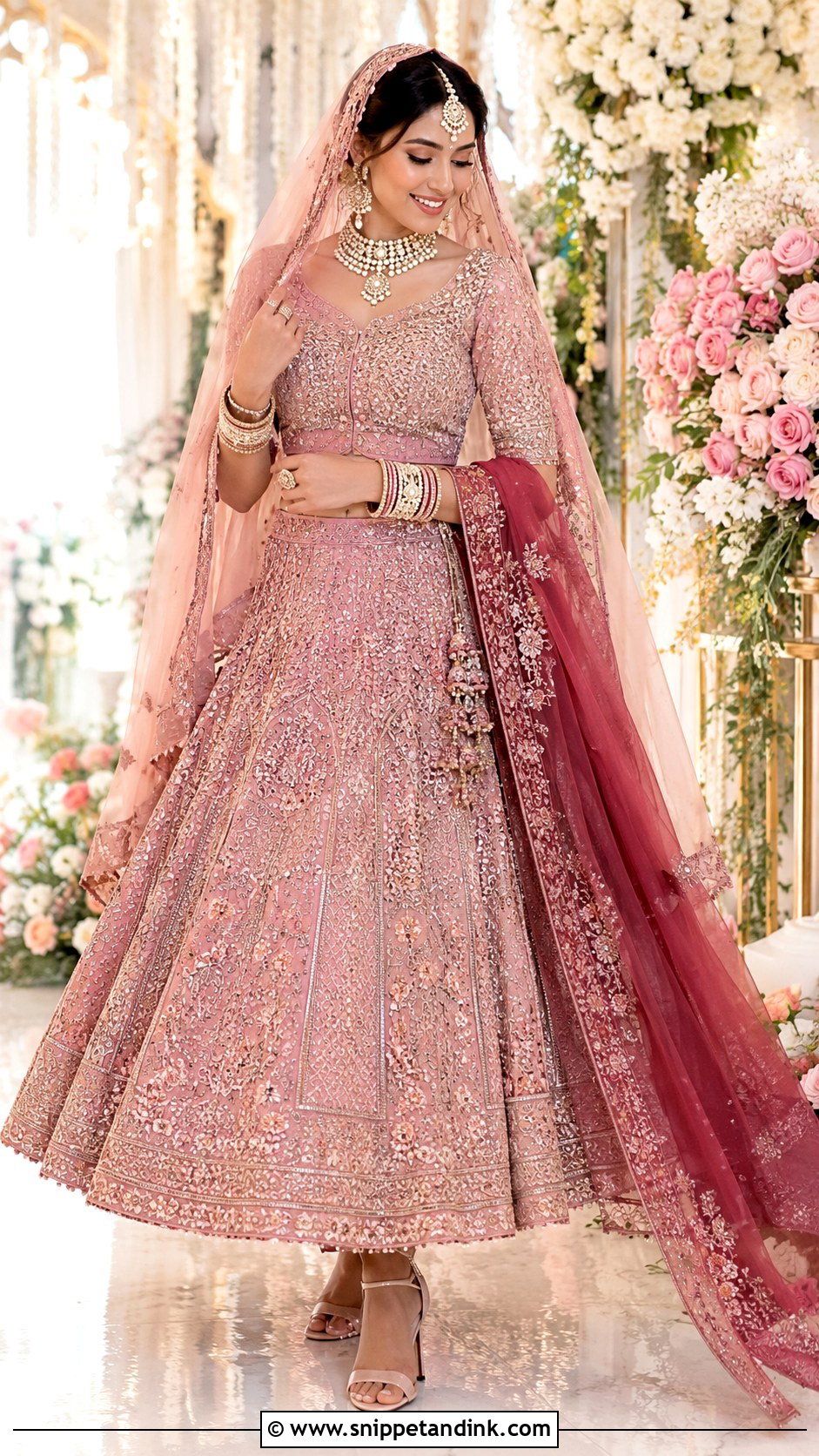
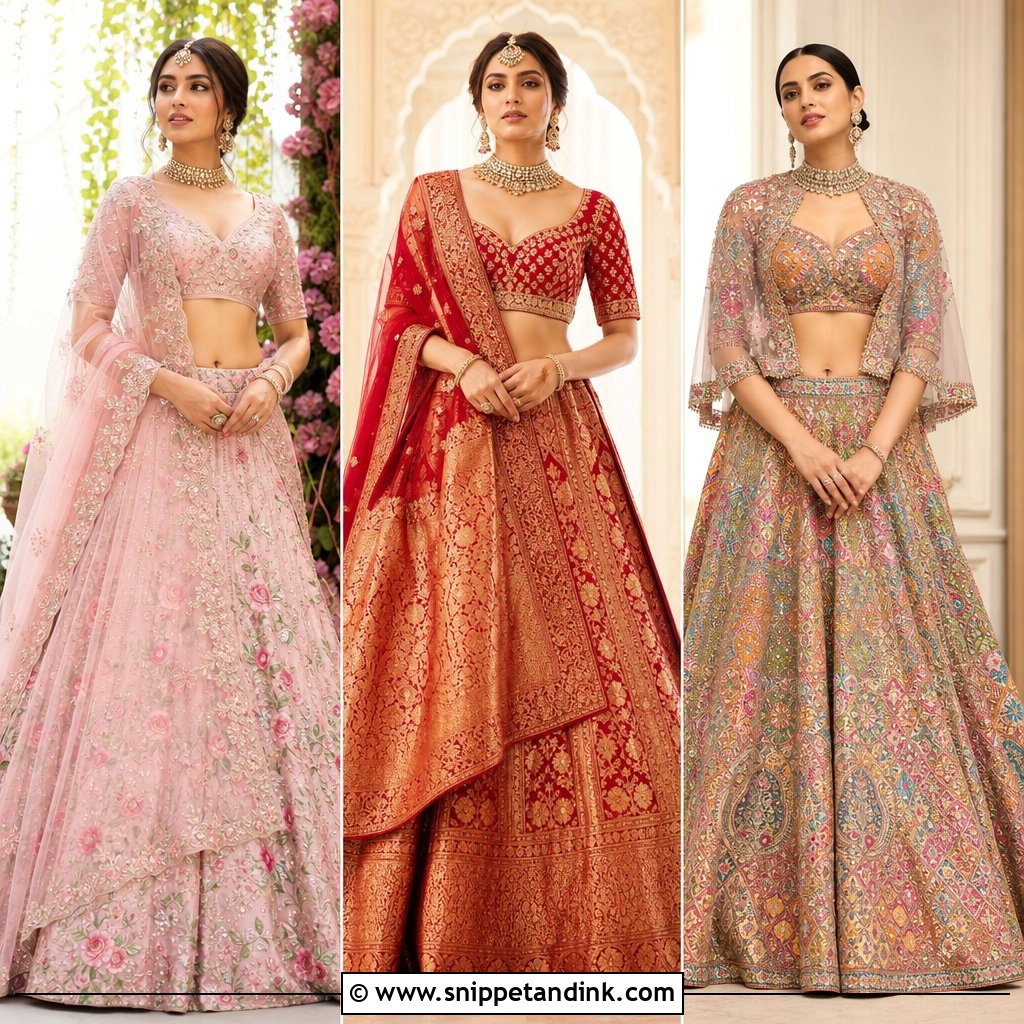
Rose pink is the softer look that still carries a formal Barat. A structured lehenga in gold, silver or champagne embroidery with a matching sleeved blouse; floral threadwork and pearls add dimension without relying on heavy metal. Put rose pink over the head and a deeper red or berry dupatta across the body for contrast. Pearl kundan, drop earrings, bangles and blush heels finish it. A firm waistband and evenly spaced panels keep the shape in photographs. You can add a modest trail for drama; if movement matters more, a circular skirt with a shorter back hem is easier on stairs and dance floors.
16. Champagne Gold Gown Barat Dress
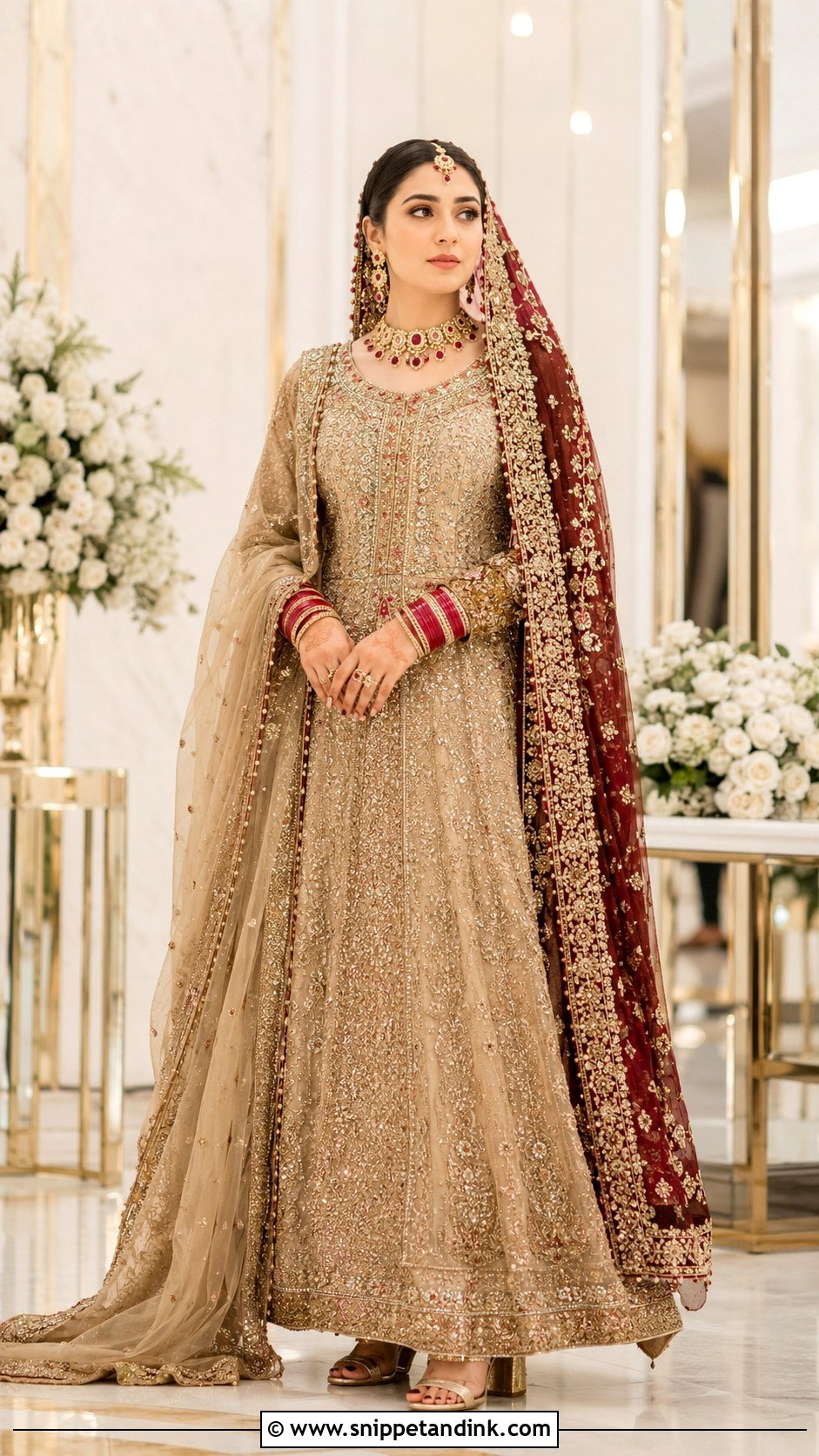
A champagne gold gown feels modern and luminous while staying friendly to traditional jewelry. A floor-length cut with a fitted bodice, defined waist and controlled flare, decorated in tonal sequins, pearls, crystals and antique metal thread. A red or maroon head dupatta turns it bridal; a light champagne dupatta on the arm layers the photos. Ruby-accented kundan, a tikka, red bangles and metallic block heels complete it. I steer away from very shiny champagne satin, which flares white under flash. Matte tissue, raw silk or layered net photographs evenly, and the bodice needs boning or firm interlining so it stays put.
17. Peach Peshwas With Maroon Dupatta Barat Dress
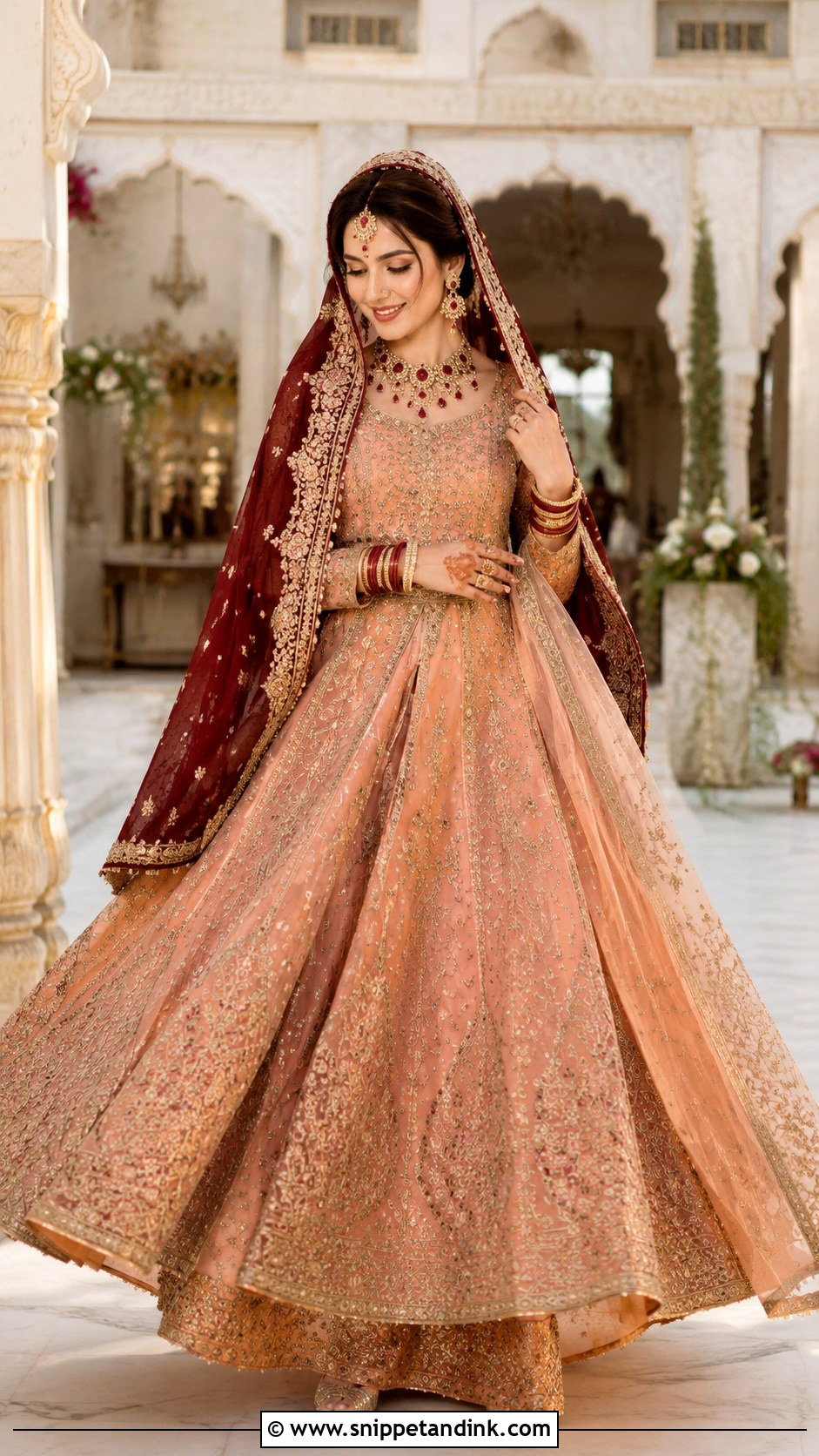
Peach with a maroon dupatta suits a bride drawn to soft color who still wants traditional depth. A full-length peshwas with a fitted bodice, flowing panels and gold work at the neckline and hem, over a lehenga for more flare or a churidar for less. Maroon goes over the head, a light peach dupatta over one arm, and ruby, pearl and gold jewelry connect the two shades, with a choker, earrings, bangles and cushioned gold shoes. Line the peach fully. Watch the maroon border too: if it is too heavy, it drags the head covering backward all evening and you’ll be re-pinning it between every photo.
18. Copper Tissue Lehenga Barat Dress
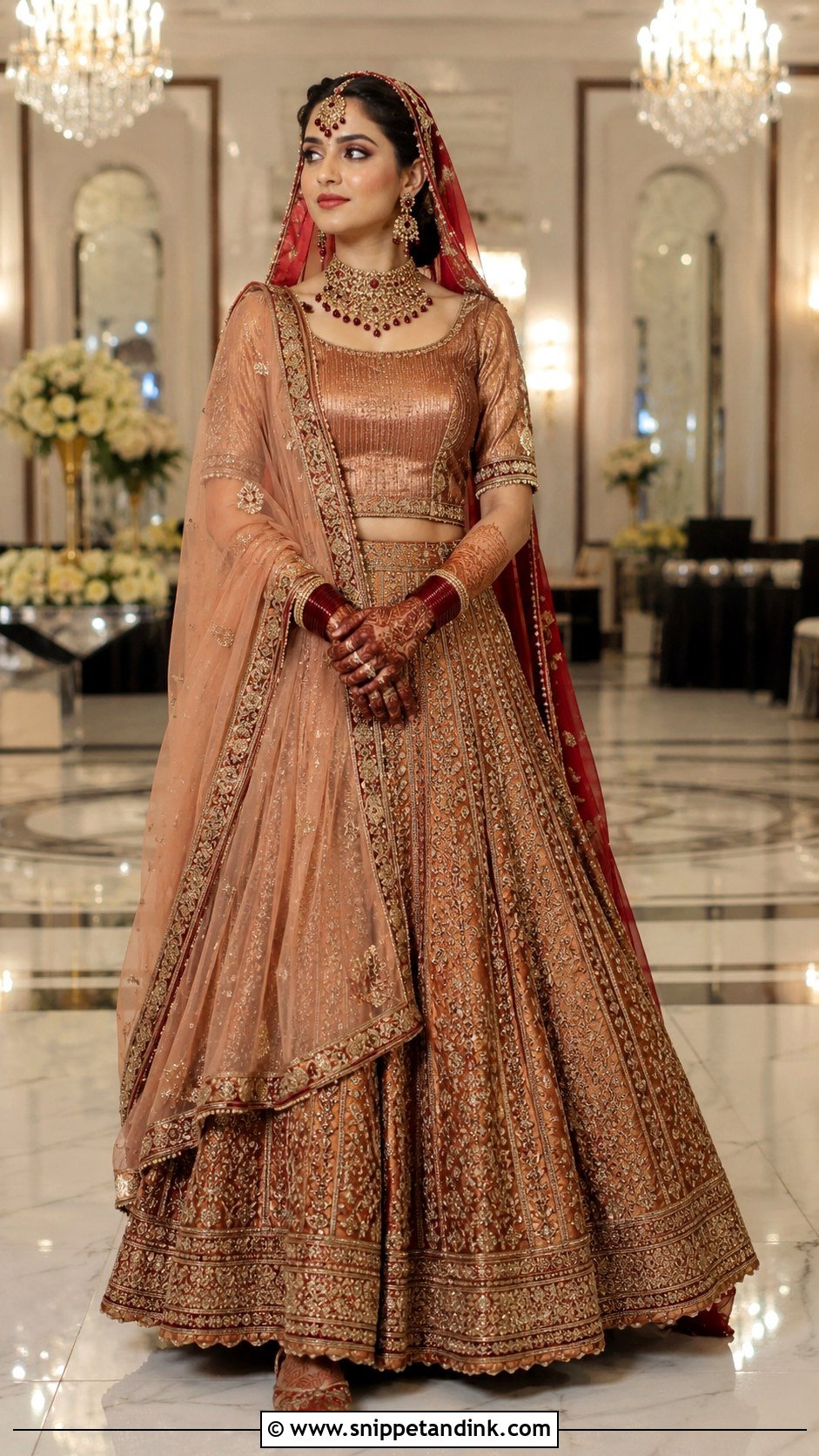
Copper tissue gives a metallic glow without full gold from head to toe. A copper paneled skirt with a raw silk blouse in antique zari, dabka and tonal beads, a deep red head dupatta for contrast and a sheer copper one across the shoulder. Antique gold with garnets, red bangles and copper khussa suit it. Tissue is naturally crisp, so I use a soft lining and fewer skirt layers. A slightly wider waistband stops the skirt from shifting round as you walk. Fresh neutral makeup lets the reflective fabric look rich in daylight and indoors.
19. Red Jacket Lehenga Barat Dress
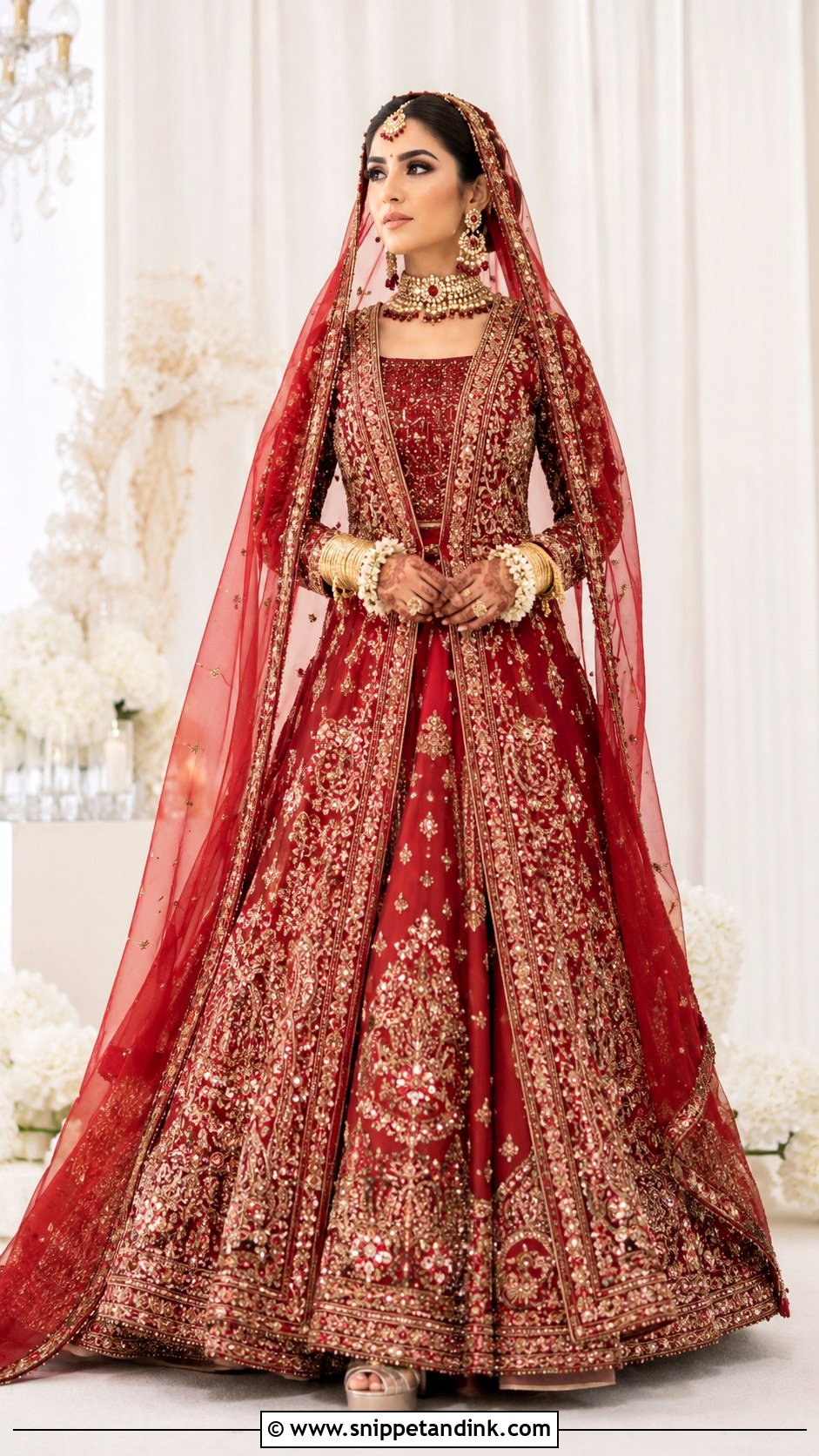
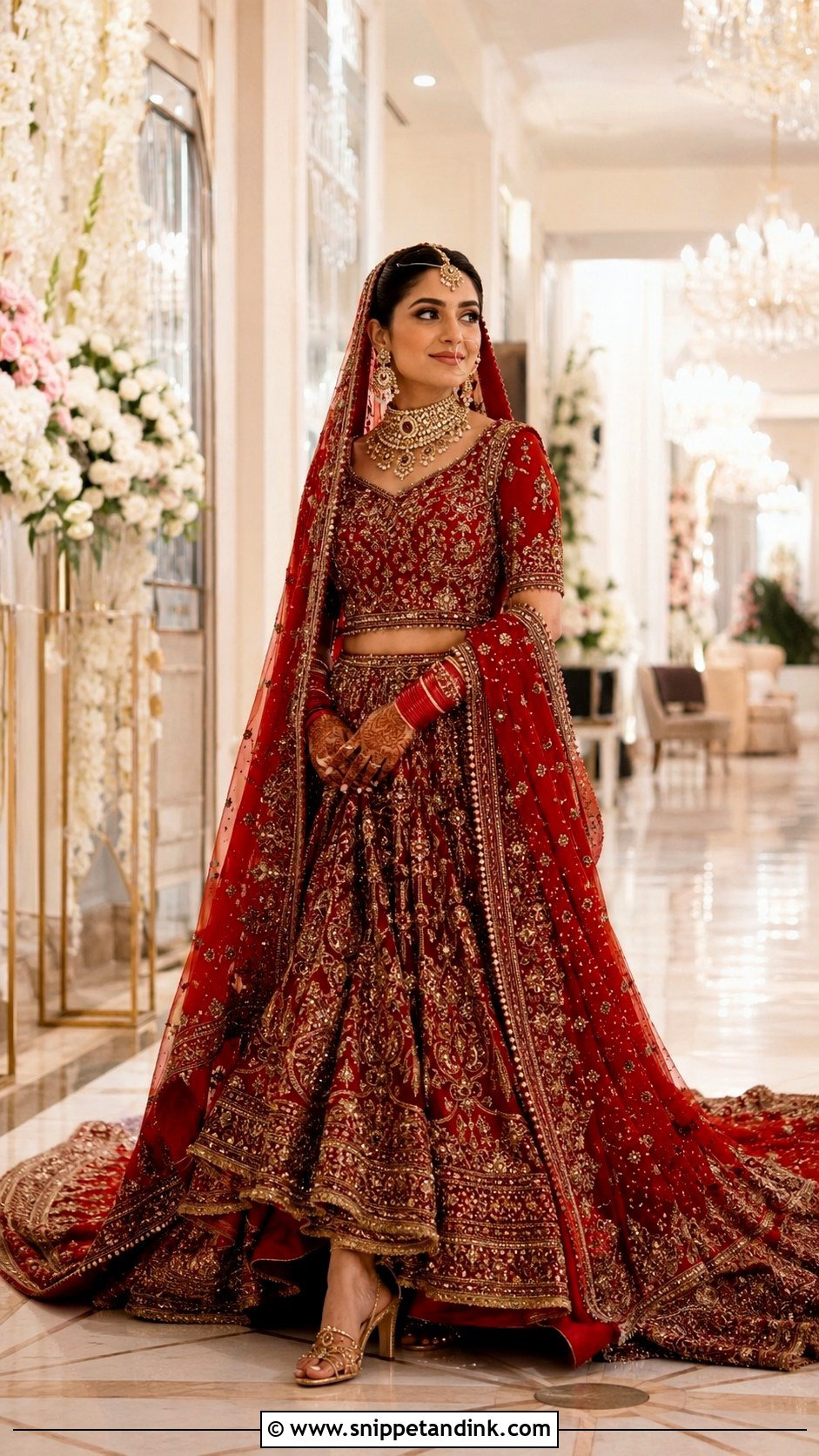
A red jacket lehenga gives traditional color a more structured, fashion-led line. A fitted blouse and flared lehenga under a long open jacket to the knee or ankle, with embroidery down the opening, sleeves and hem framing you vertically. Keep the blouse lighter so the layers don’t compete. A sheer red head dupatta is enough, since the jacket replaces the heavy second drape. A polki choker, statement earrings, bangles and embellished platforms finish it. I add a couple of hidden hooks at the jacket front: open for portraits, closed while you walk in, so it doesn’t swing wide and catch on chairs.
20. Red Trail Gown Barat Dress
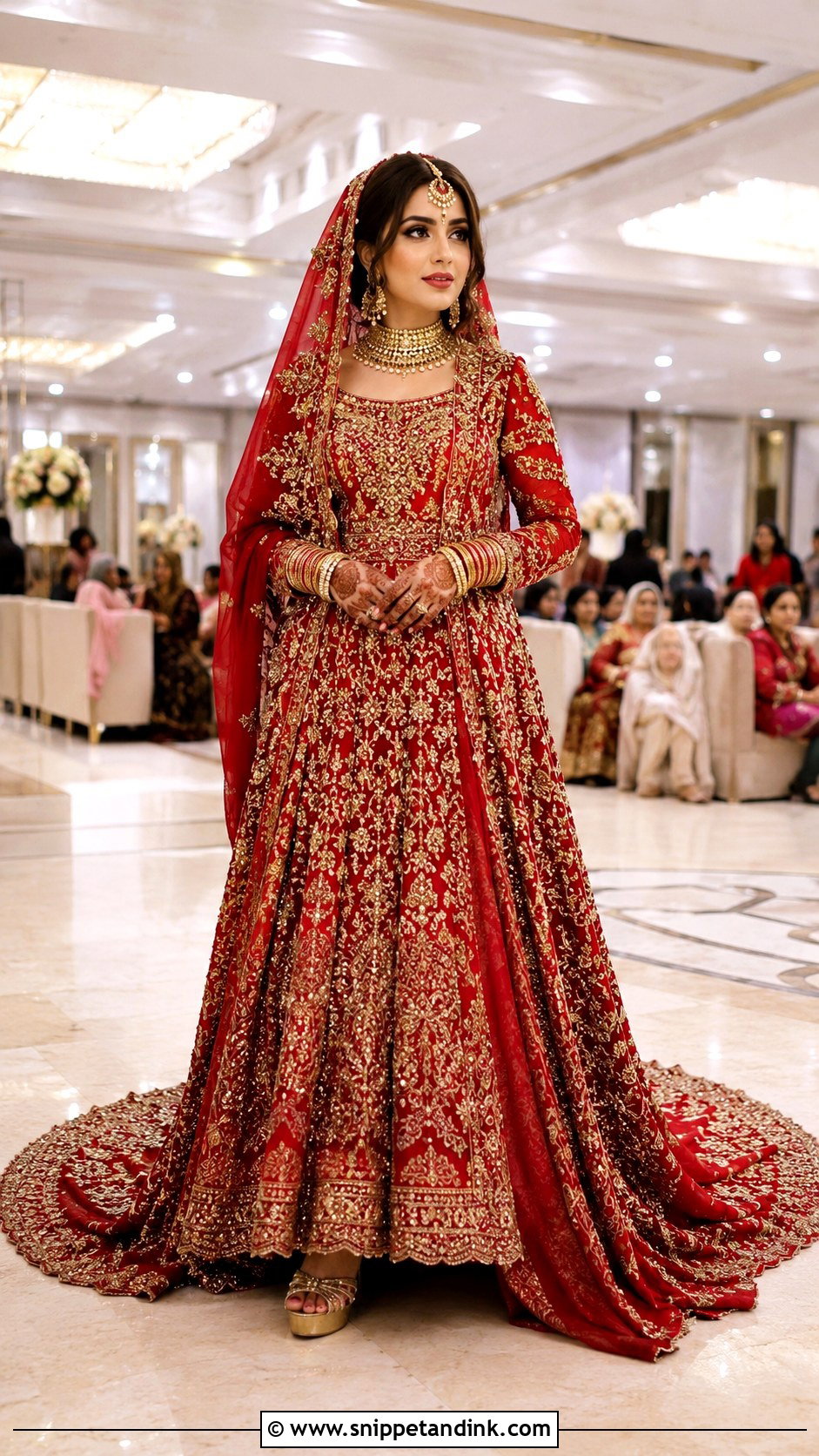
A red trail gown gives lehenga presence with gown structure. A supportive fitted bodice flowing into a full skirt with a controlled train, gold work at the neckline, waist, sleeves and trail, and plain fabric left between. A light red dupatta over the head should fall clear of the train rather than tangle with it. A kundan choker, earrings, tikka, bangles and secure platforms complete it. Ask for a bustle loop. At the last fitting I have the bride turn a full circle and sit twice; if the train bunches around her feet, the back panel needs re-cutting, not just steaming.
The Dressing Hour, in the Order That Saves Your Hair
Most dupatta disasters on the day come from dressing in the wrong order. This is the sequence I use with almost every Barat outfit, and it keeps finished hair and makeup safe:
- Hair and base makeup done, but lipstick saved for last.
- Lehenga, gharara or sharara on first, with the waistband hooked and the drawstring tied off to one side.
- Blouse or shirt on next, stepped into or buttoned at the back where possible so nothing is pulled over the hair.
- Necklaces and earrings on before any dupatta goes near the head.
- Head dupatta pinned to the hair base and shoulder straps, then the tikka or matha patti and passa set over it.
- Second dupatta draped and pinned at the shoulder; bangles and rings last, then the lip.
Keep a small pouch with safety pins, U-pins, a needle threaded in red and gold, double-sided tape, blotting papers and a spare hook. Hand it to one calm person who stays near you, because the bride should never be the one hunting for a pin.
One Last Walk Across the Room in Full Dress
Confidence and comfort decide whether a Barat outfit works on the day. A red lehenga brings classic grandeur, and ghararas, shararas, peshwas, sarees and gowns are just as strong. Color sets the mood too, from crimson and maroon to emerald, plum, ivory, rose pink and champagne gold. Weigh up the season, the venue, the embroidery weight, your shoe height, where the dupatta sits and how freely you can move before the design is final. Bring the full jewelry set and shoes to your fittings. Treat every idea here as a starting point; the small personal changes you make with your designer are what turn an outfit into yours.
You'll Like These Ideas:


Leave a Reply