
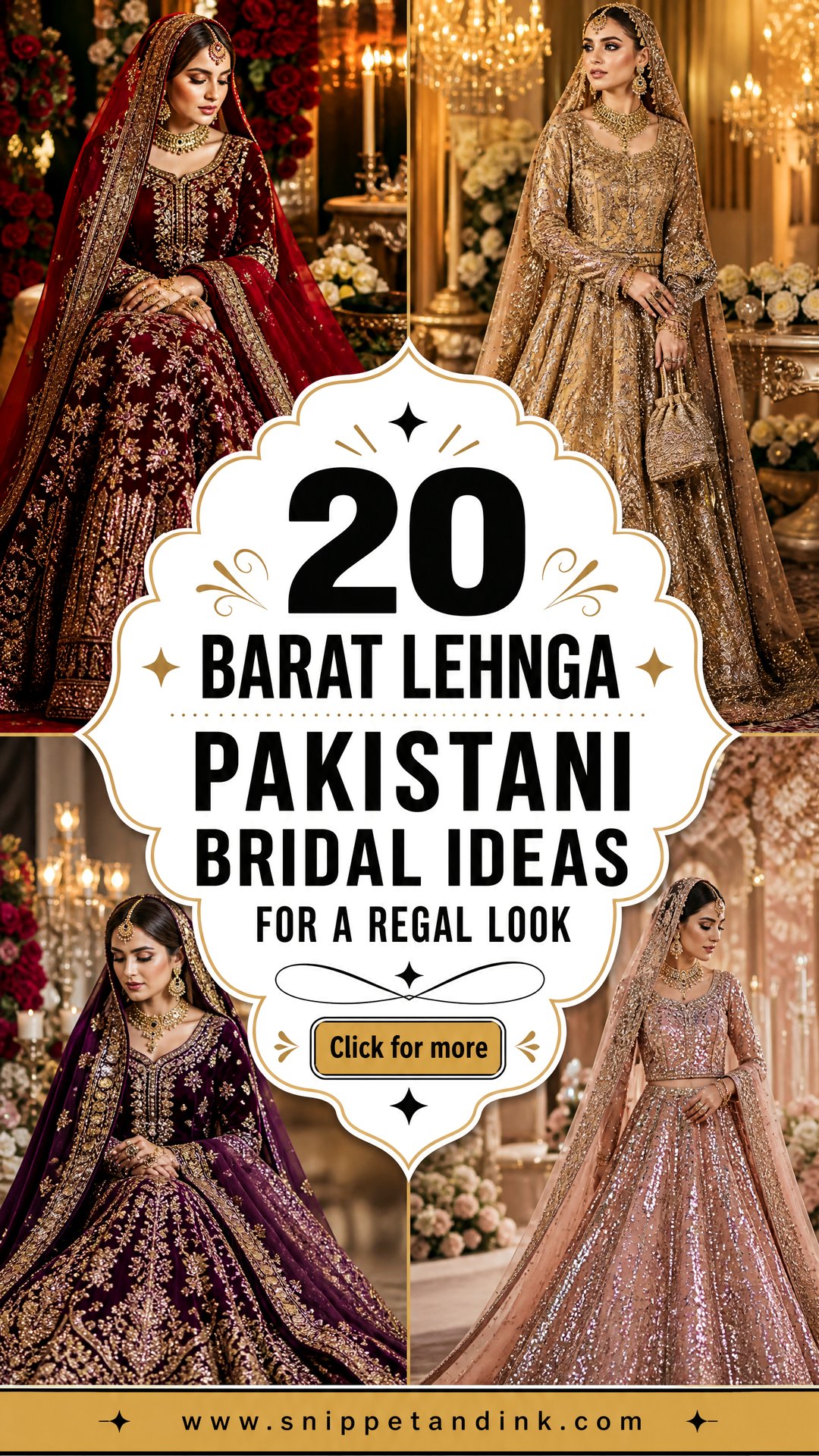
A Barat lehnga has to satisfy the family’s sense of tradition, your own taste, your comfort over a long evening and the camera, all at once. Below are complete Pakistani bridal looks, from red velvet to blush, gold and ivory, each pairing the lehnga with a blouse, dupatta drape, jewelry, shoes and a beauty direction. The handwork names you’ll keep seeing (zardozi, dabka, kora, naqshi, resham, gota) are what stop twenty red skirts from looking identical, and I explain how to tell them apart just below. Neckline, sleeve length, flare and where the embroidery sits can all be adjusted to your build and your venue, so read each look as a base you’ll tailor rather than a picture to copy.
Zardozi, Dabka, Kora and Gota Up Close
Two lehngas can look the same in a photo and feel completely different in your hands. Knowing the main techniques helps you judge quality and weight before you buy.
Zardozi and dabka
Zardozi is raised metallic embroidery worked over padding, with coiled wire, beads and sequins. Dabka is a springy coiled metal wire cut into short lengths and stitched down, which gives that dense, textured gleam. Both are heavy. Run your palm lightly over the work: well-done dabka feels tight and even, with no loops lifting.
Kora, naqshi and resham
Kora is a thick, slightly matte metallic coil, often used to outline motifs. Naqshi is very fine metal thread laid in tiny, dense stitches, giving a flat shimmer; it is slow work, and lots of it is a sign of a carefully made piece. Resham is silk or silk-like thread, used for color in flowers and vines, and it is the lightest of the lot.
Gota
Gota is woven metallic ribbon applied in strips or cut shapes. It is lighter than zardozi and catches light in broad flashes, which is why it suits borders and dupattas you’ll wear on your head.
When I compare two quotes, I ask what proportion of the work is dabka and zardozi against resham and gota. That one answer explains most of the difference in weight and in price.
1. Classic Red Velvet Barat Lehnga
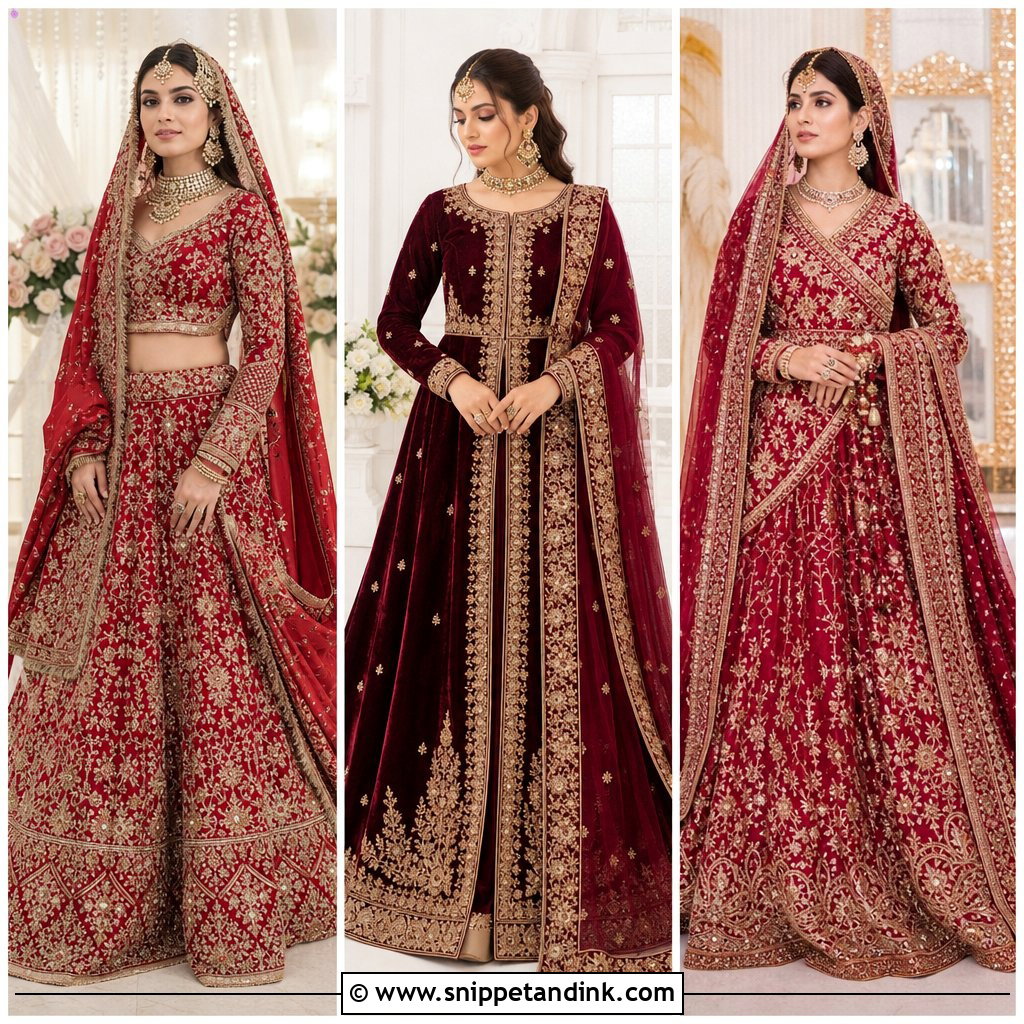
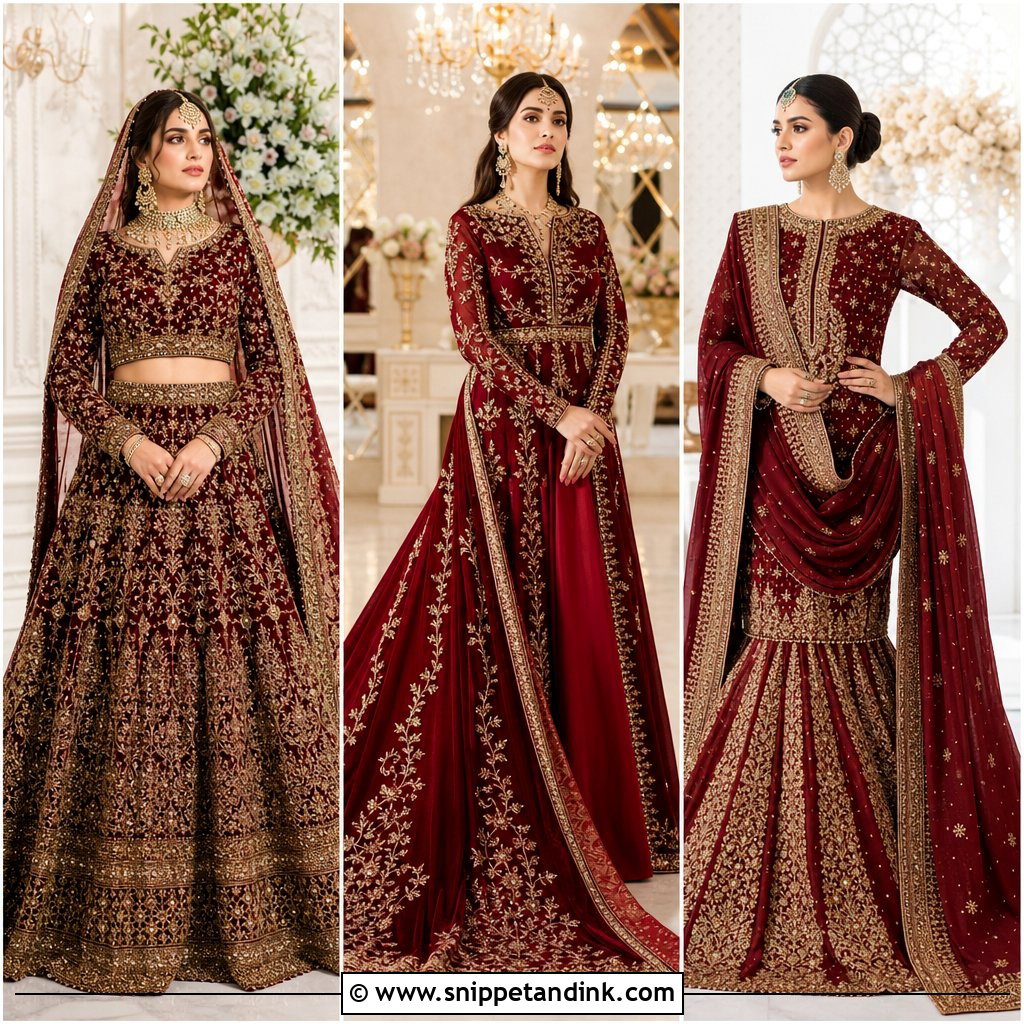
Velvet is the fabric most brides imagine for a winter Barat, and a classic red velvet lehnga carries that ceremony without effort. A generous flare covered in antique-gold dabka, kora and zardozi, a fitted velvet blouse with full sleeves and a modest neckline, a red net dupatta on the head and lighter organza across one shoulder. Kundan choker, long necklace, jhumkas, matha patti, red bangles and gold khussa complete it. I pair velvet with matte skin and defined eyes, because velvet already reflects a soft sheen and a dewy face on top of it starts to look oily under hall lights.
2. Maroon Farshi Barat Lehnga
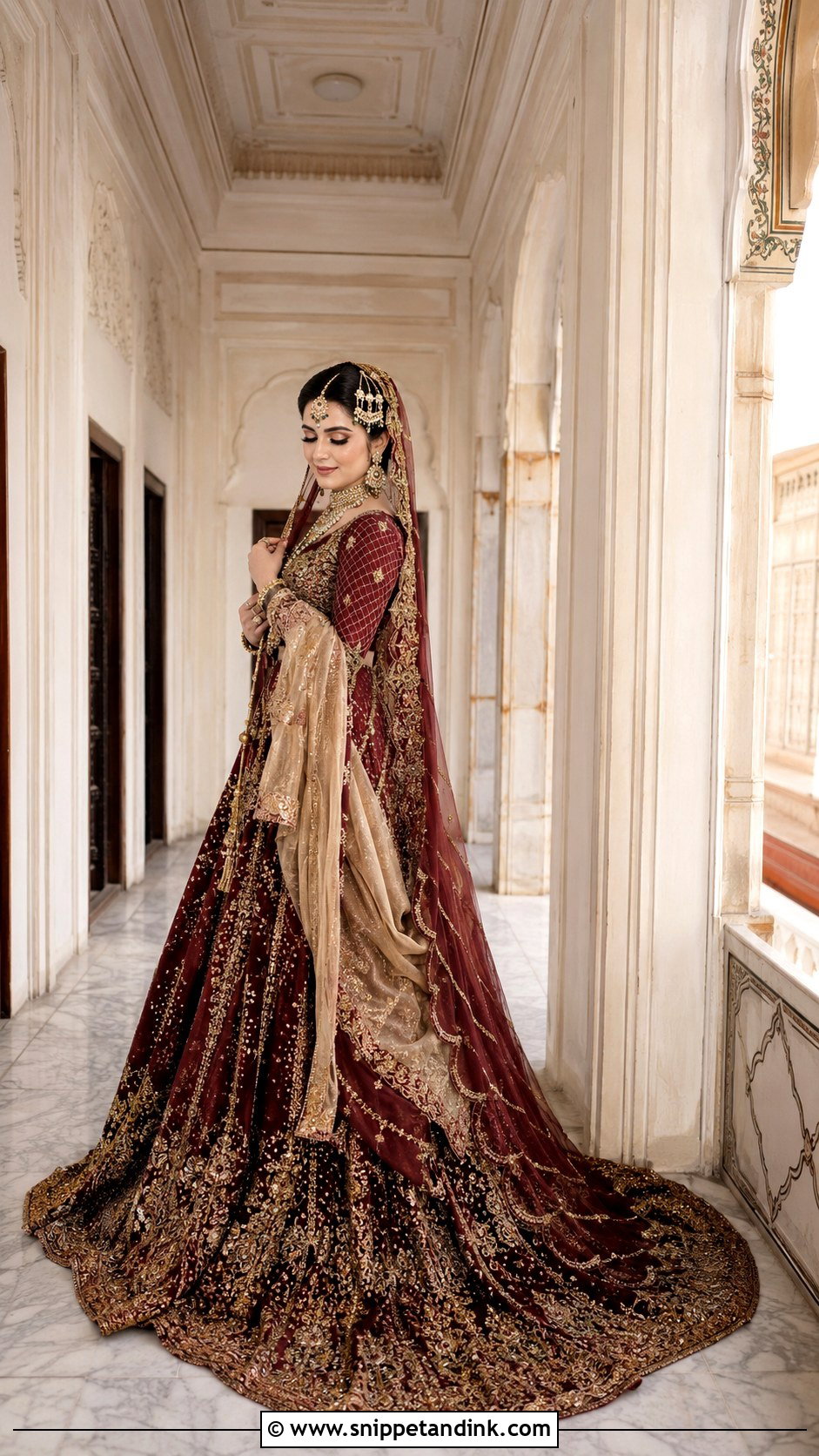
Picture a maroon farshi lehnga sweeping out behind you on the entrance. A structured raw-silk blouse to the natural waist with elbow sleeves keeps the top crisp. Put the antique-gold embroidery near the hem and let smaller motifs climb upward, so the eye travels the whole length of the skirt. A scalloped maroon dupatta frames the face and a muted gold tissue one brightens the arms. An uncut stone choker, earrings, passa and stacked bangles suit it. Wear pointed embroidered flats; heels and a farshi hem are a poor match, since you’ll be stepping onto fabric with every stride. A center-parted bun and warm rose lip finish it.
3. Crimson Red Double Dupatta Barat Lehnga
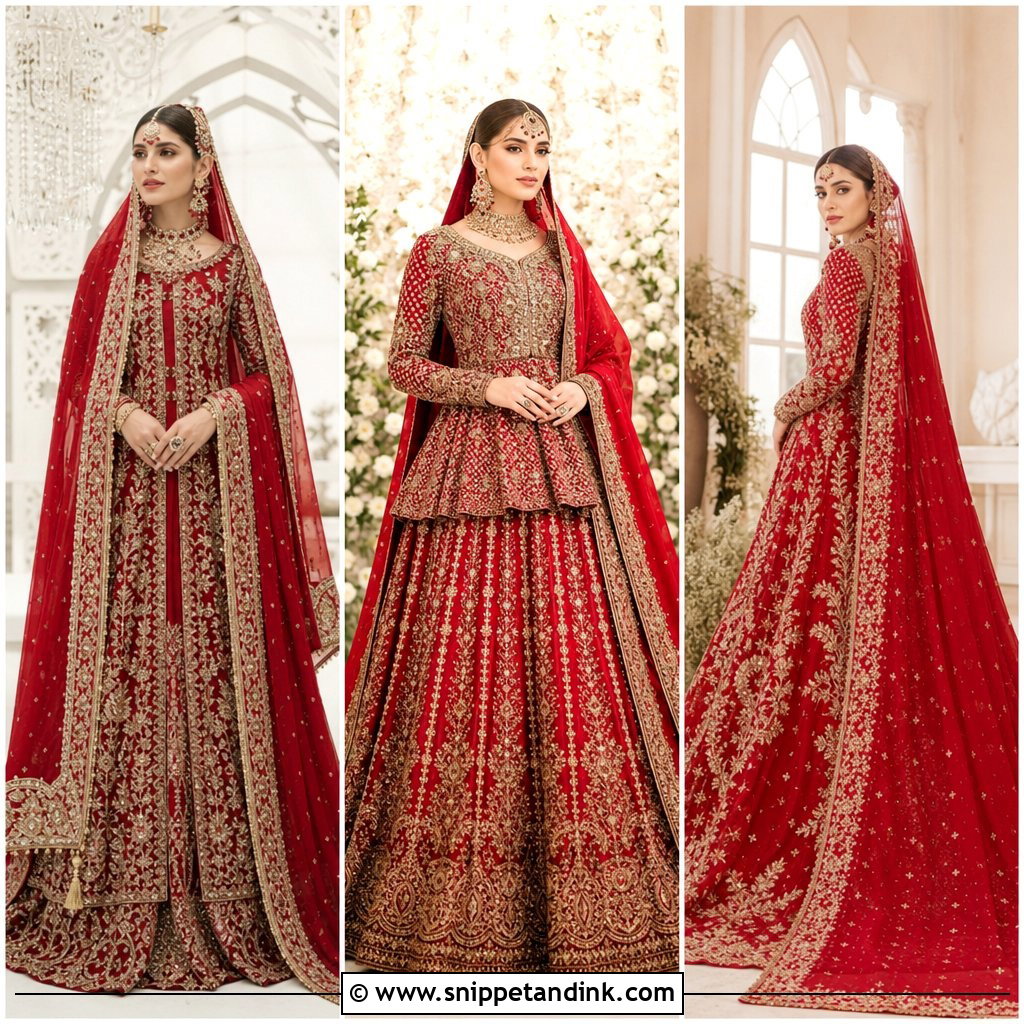
Layering is the point here. A crimson lehnga with dense border embroidery and lighter florals through the upper panels, a matching long-sleeved blouse with a rounded neckline and fine cuff edging, then two dupattas: a heavily bordered net one on the head and a lighter tissue or organza one across the body. Keep that second dupatta noticeably softer. If both are heavy, you’re carrying close to a third outfit on your shoulders. Kundan, a medium nath, a centered tikka and pearl-detail bangles suit it, with cushioned gold khussa. A smooth low bun gives the head dupatta a solid base to pin into.
4. Deep Burgundy Gold Barat Lehnga
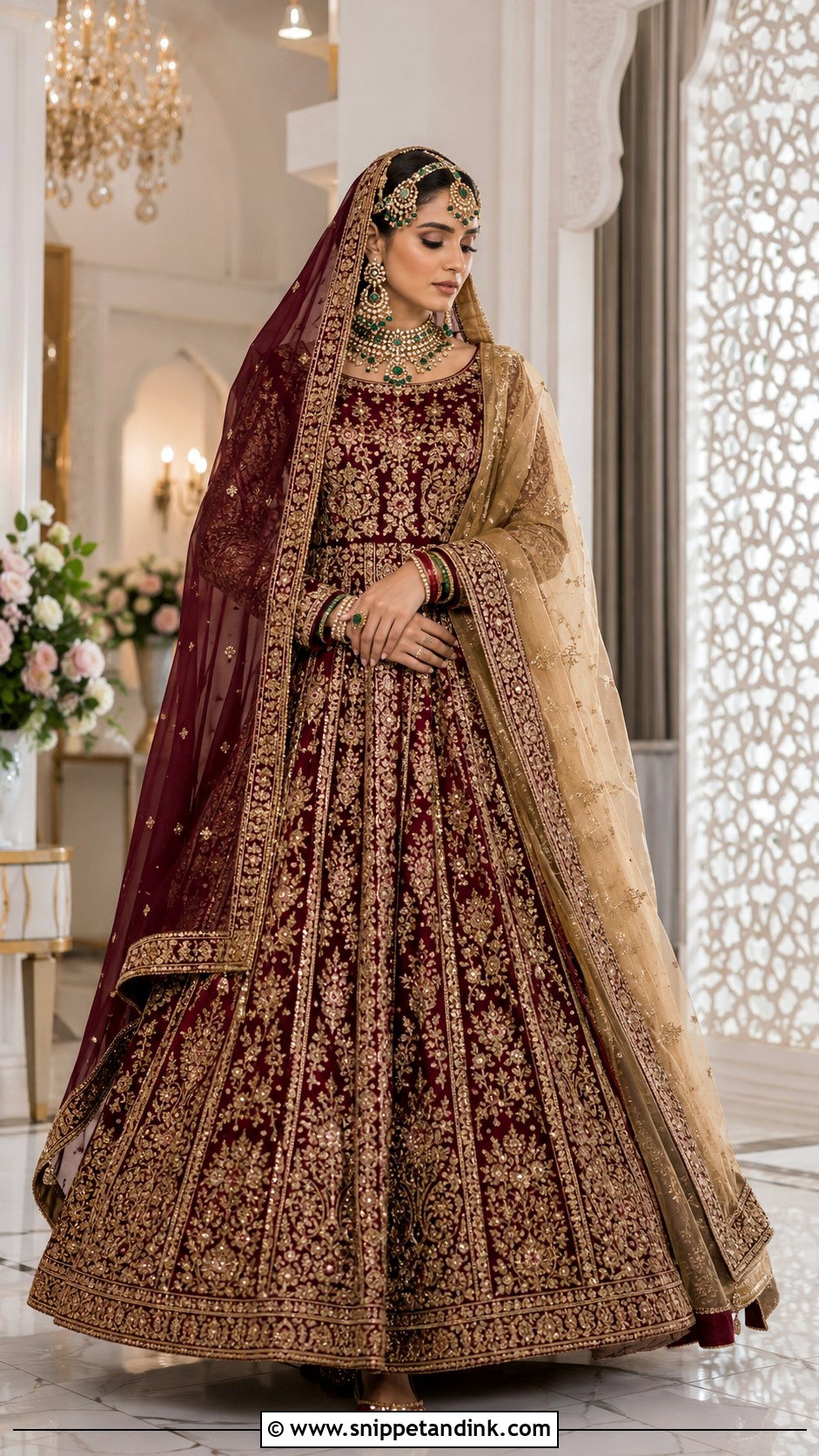
Burgundy gives you depth without bright red. A paneled lehnga with antique-gold naqshi, dabka, sequins and small florals, a full-sleeved blouse with a gently curved neckline for heavier jewelry, a matching net head dupatta with a wide border and a plain gold tissue dupatta for the shoulder. Emerald accents in the choker or earrings give a quiet contrast. A matha patti, bangles and metallic flats complete it, with brown eyes, a muted berry lip and a sleek bun. I keep accessories symmetrical on this one. The skirt’s naqshi is fine, detailed work, and lopsided jewelry pulls attention away from it.
5. Rust Red Raw Silk Barat Lehnga
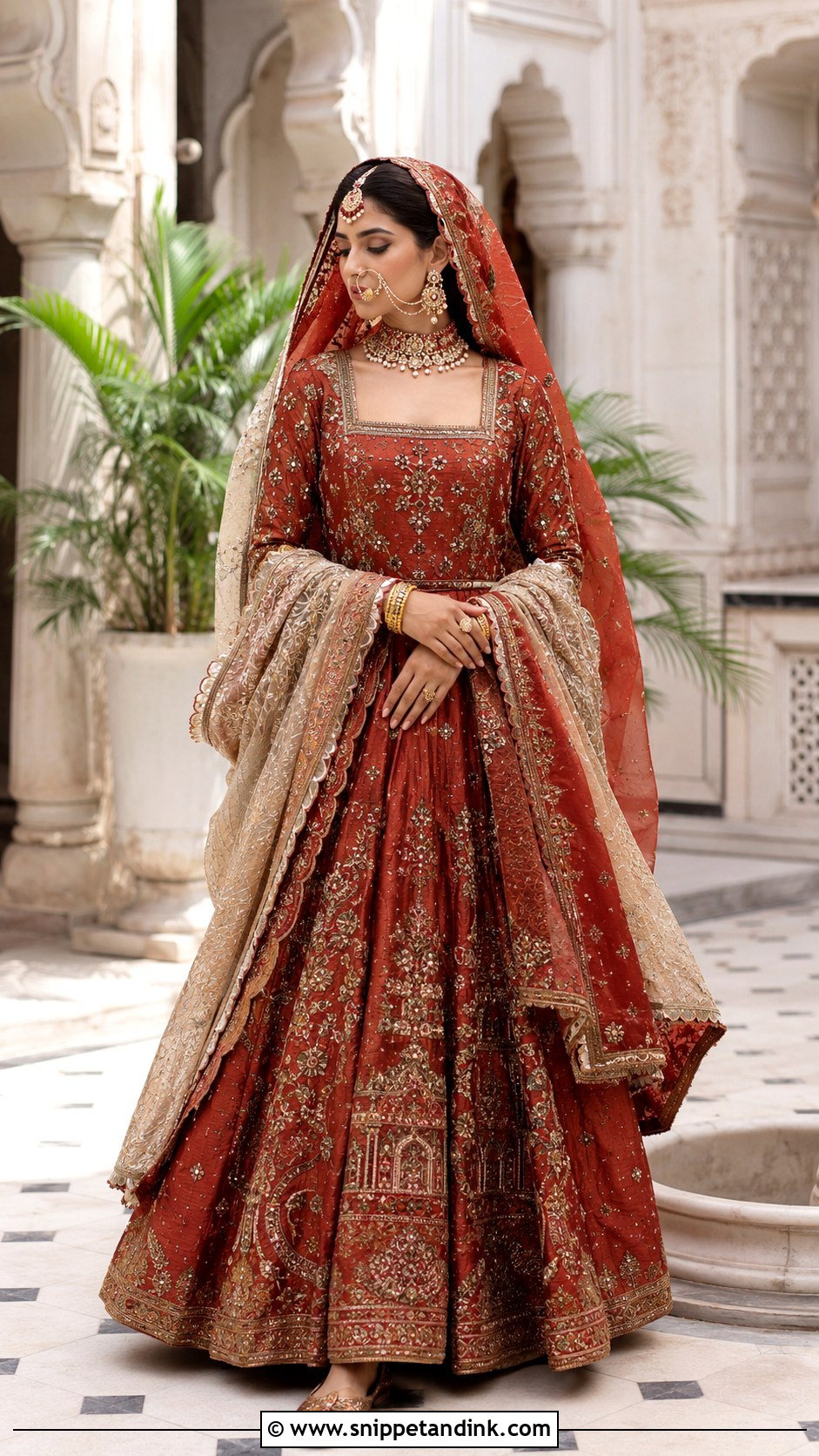
Raw silk is the best friend of rust red, because it holds structure and shows metal thread crisply. A full skirt with Mughal arches, floral vines and an antique-bronze border; a waist-length blouse with a square neckline and fitted sleeves. A rust organza dupatta over the head is much lighter than velvet, and a beige-gold second dupatta softens the palette. Antique kundan, a nath, gold bangles, a small passa and cushioned bronze khussa suit it. Bronze eyes, peach cheeks and a braided bun keep it warm. Raw silk does show water marks, so I keep drinks and rose water well away from the skirt during the rituals.
6. Red And Emerald Green Barat Lehnga
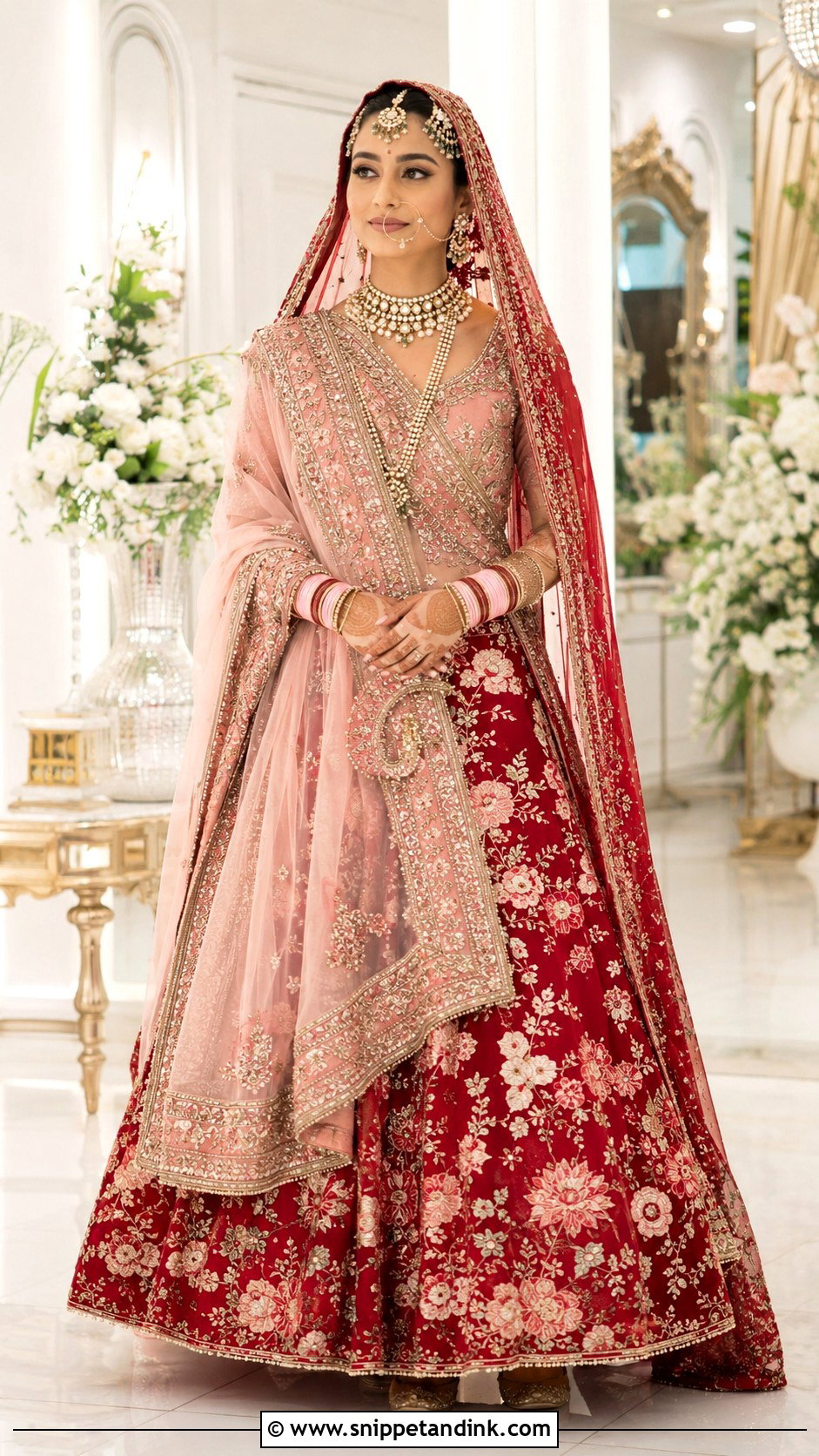
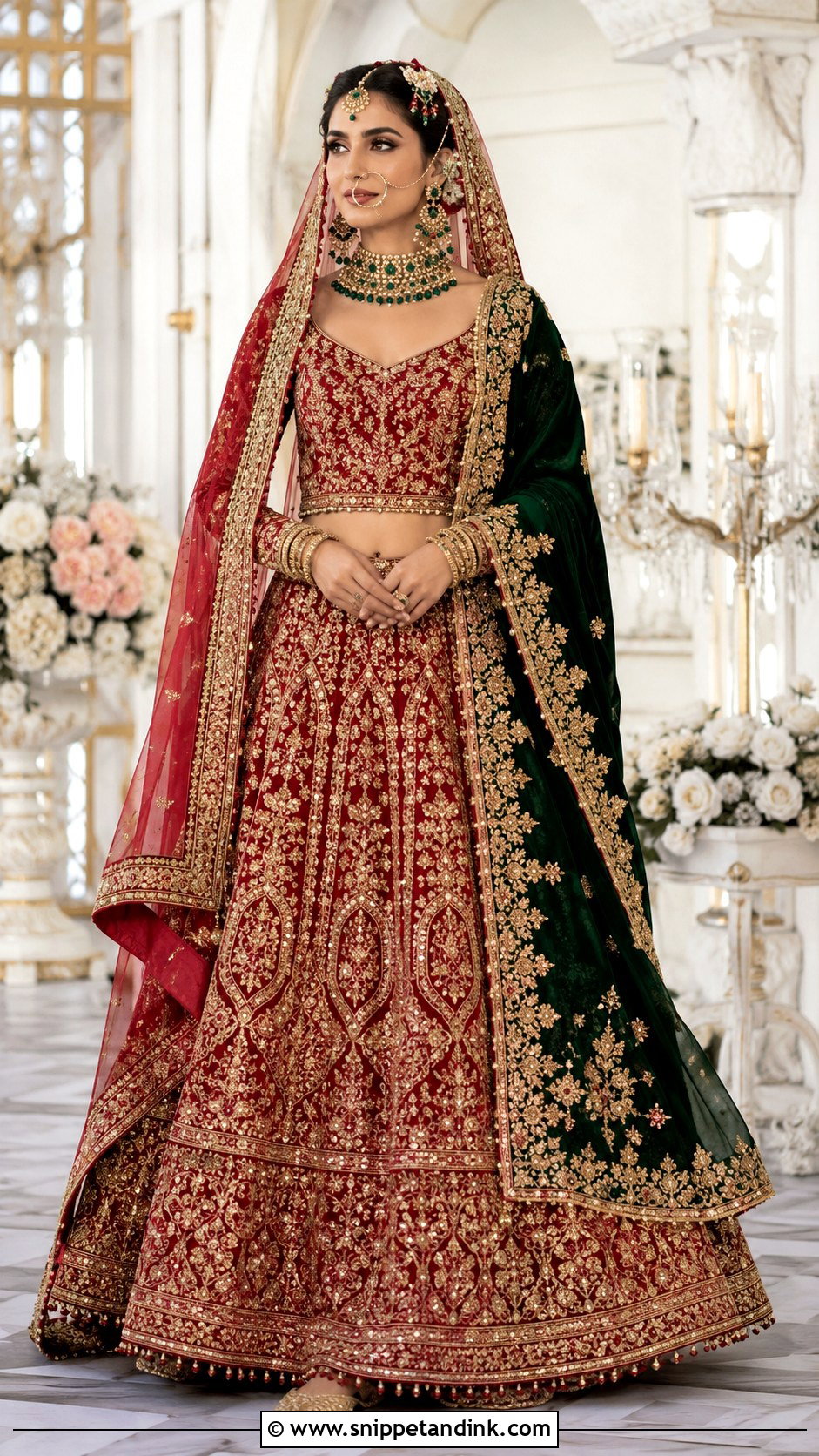
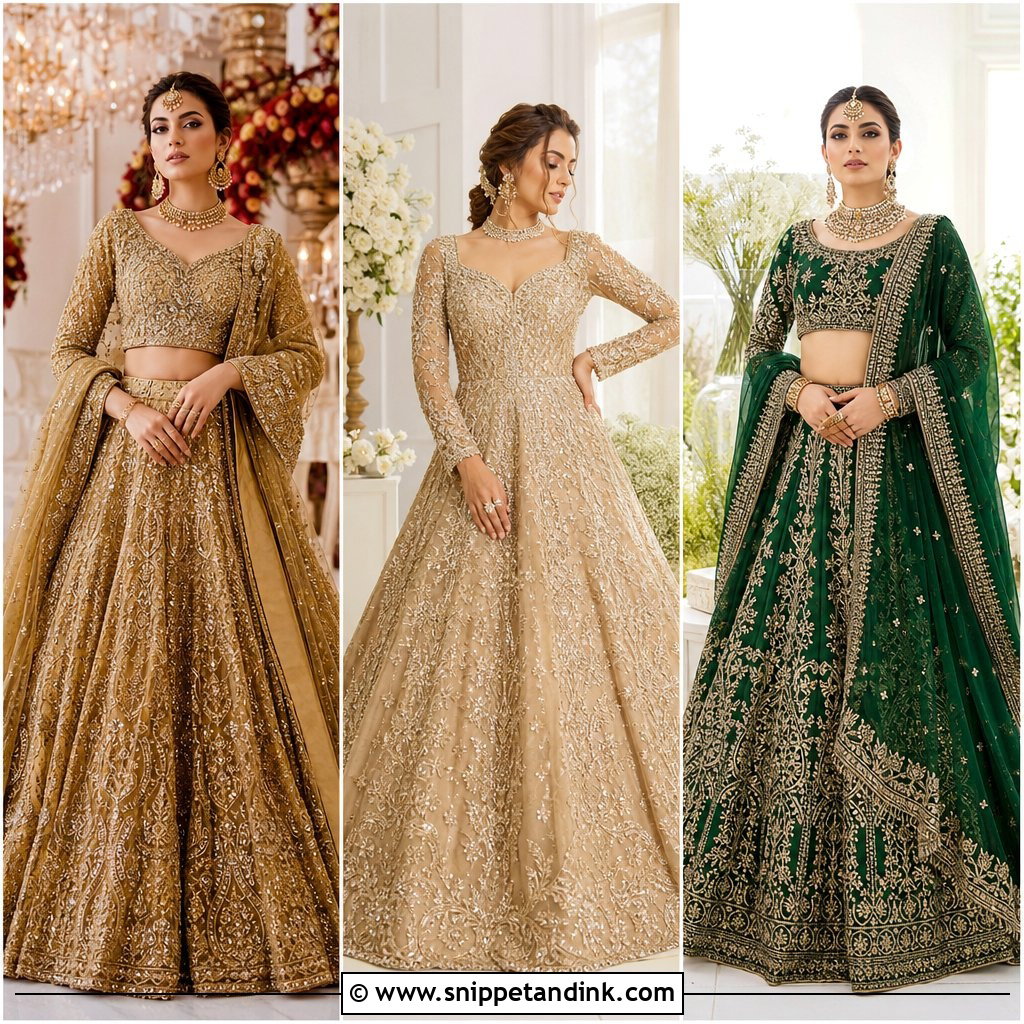
Red with emerald is about as regal as Pakistani bridal color gets. Start with a deep red lehnga in gold florals with narrow emerald accents at the hem, and a red blouse with green piping or worked sleeve borders to tie the two. A green velvet shawl-style dupatta rests on one shoulder and a light red net one covers the head. Kundan with emerald drops across choker, earrings, tikka and nath; red and gold bangles so no third color sneaks in. Gold flats and a small potli for essentials. I drape that velvet shawl so its weight falls to the back, not the front, otherwise it slides off the shoulder every time you lift a hand.
7. Red And Blush Pink Barat Lehnga
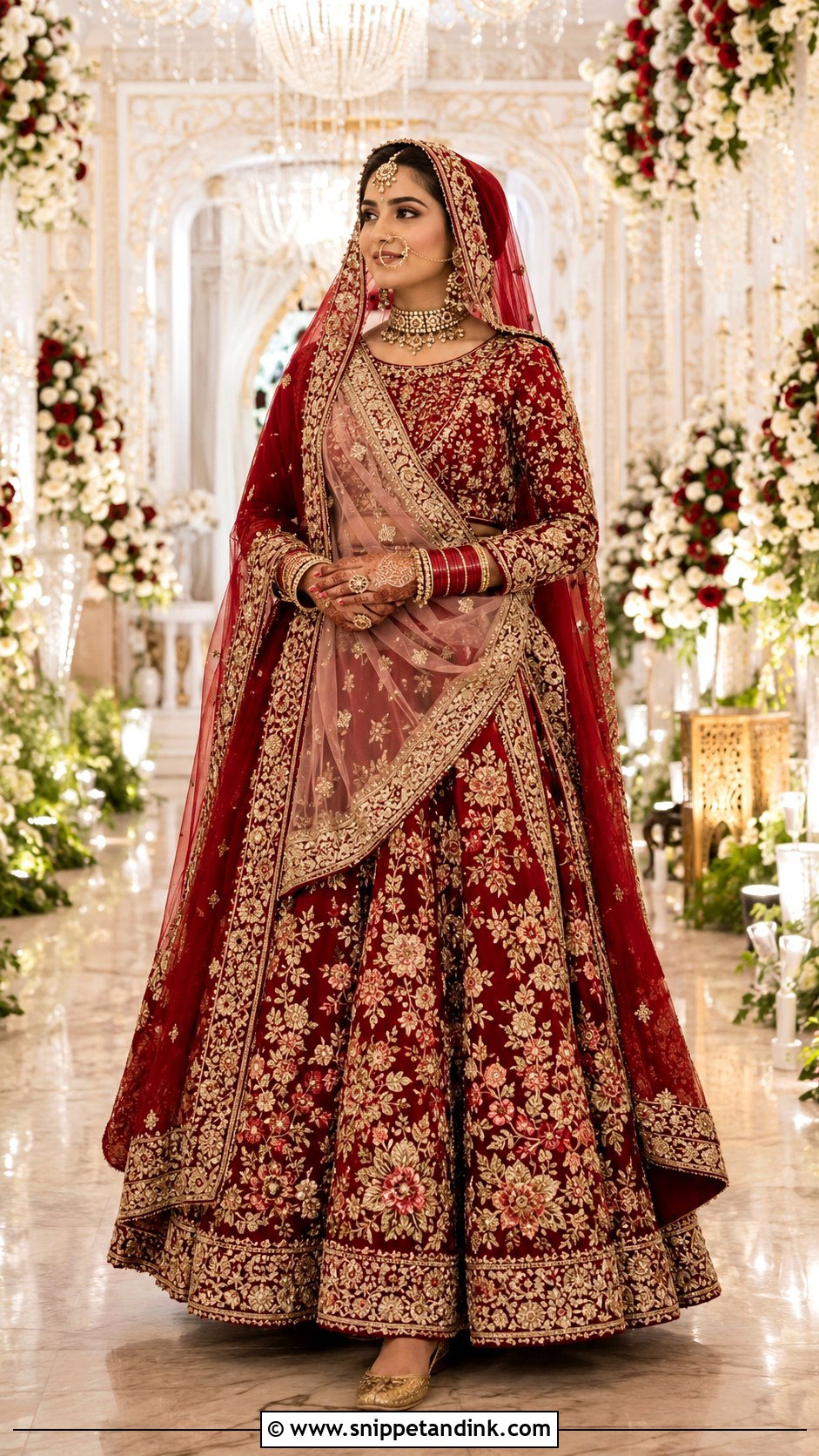
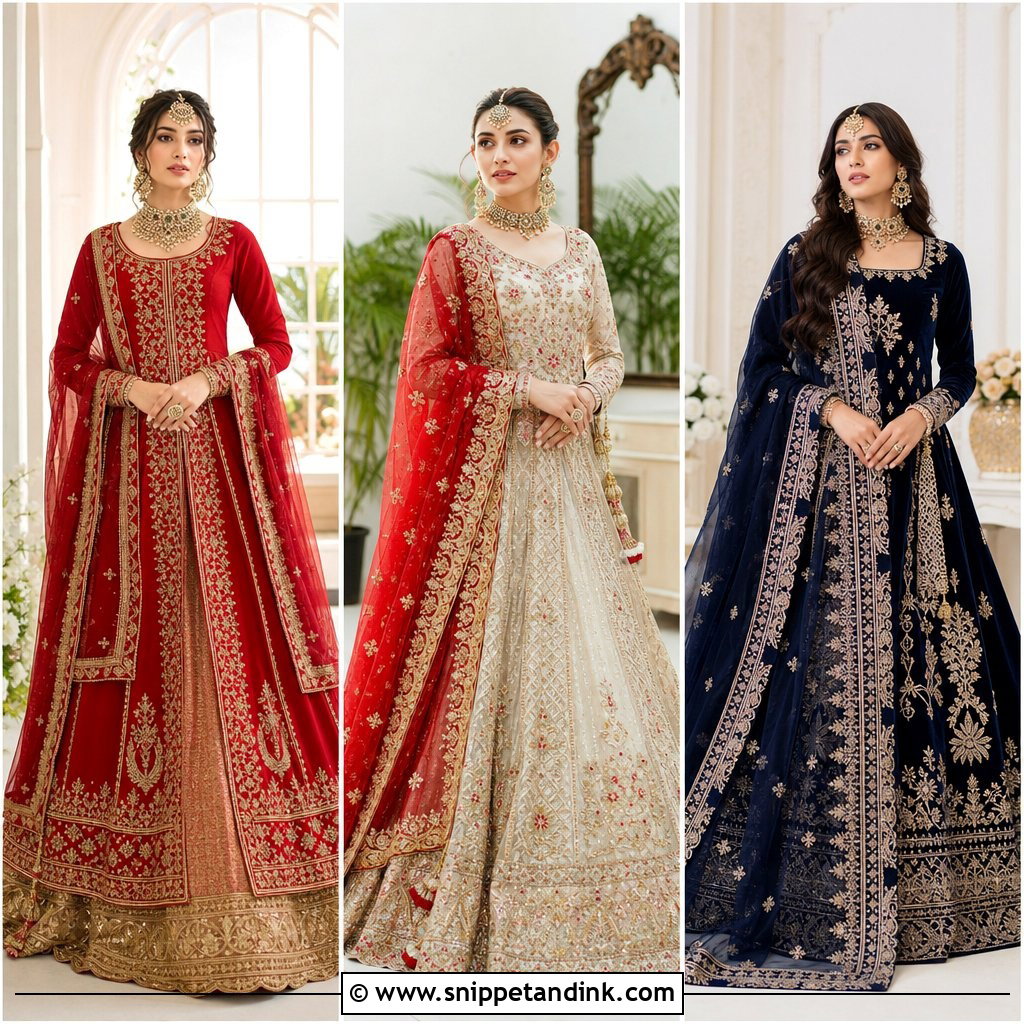
Blush with red softens the look but stays recognizably Barat. A red skirt with blush florals, pearls and antique-gold edging; a blush blouse with small red and gold motifs and a neckline plain enough for a statement choker. The red net dupatta goes on the head, a sheer blush one on the arm. Pearl kundan, a small nath, a tikka and pink-and-gold bangles echo the contrast, with nude-gold khussa below. I’d keep the makeup rosy and the eyes softly lined. Here’s the honest catch: blush blouses show foundation transfer at the neckline more than any other color, so I set the bride’s neck and chest with powder before she dresses.
8. Antique Gold Barat Lehnga
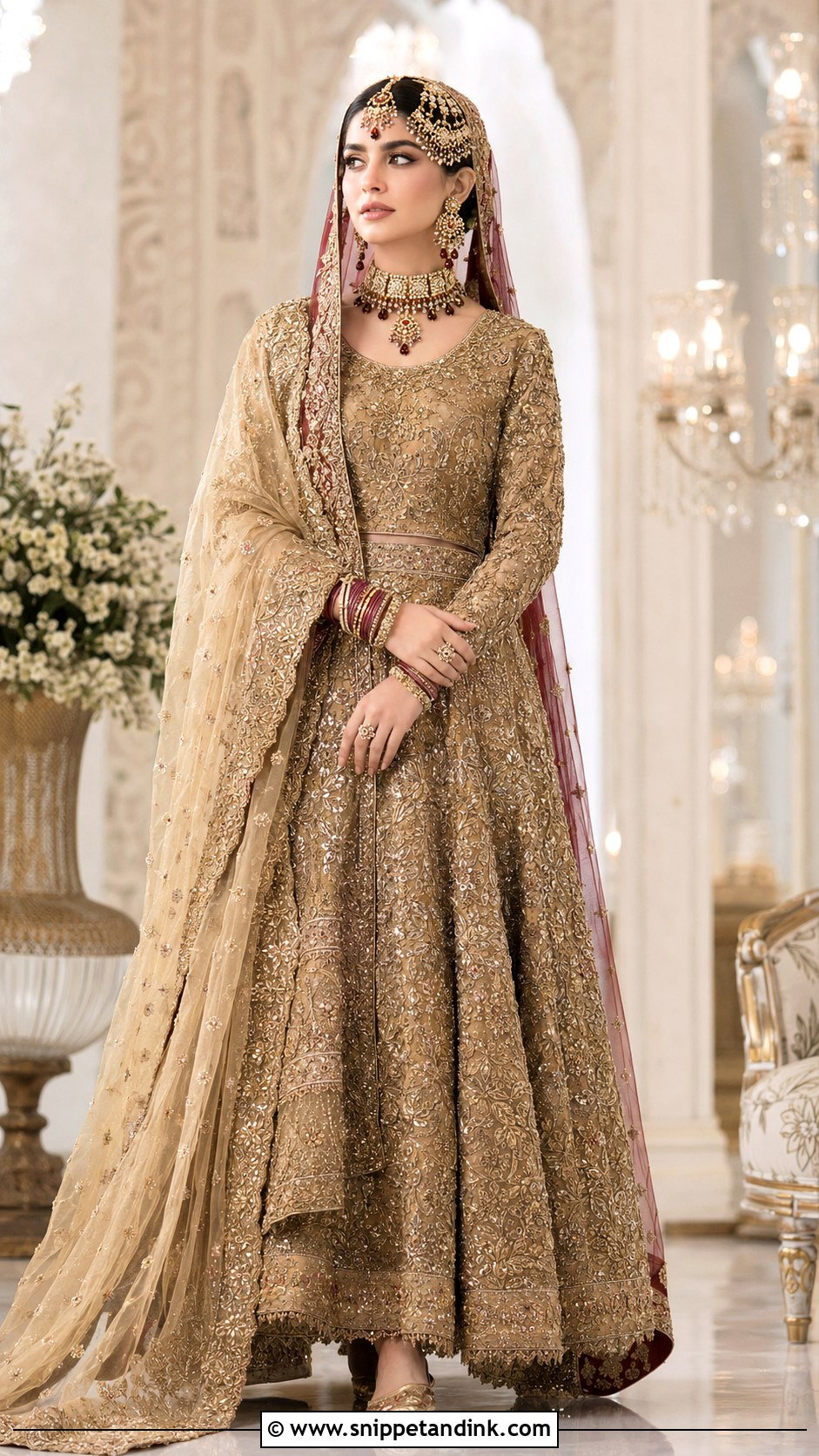
Antique gold can be fully bridal without a red base. A tissue or raw-silk lehnga with tonal zardozi, sequins, pearls and darker bronze borders, plus a fitted gold blouse with full sleeves, gives one column of color. A muted red head dupatta signals Barat and a sheer gold one falls from the shoulder. Polki with ruby-colored drops, stacked gold bangles, a matha patti and metallic khussa complete it. Bronze eyes, rose lips and luminous skin keep you from fading into the fabric. A sleek bun gives the dupatta somewhere firm to sit and keeps the jewelry visible.
9. Champagne Gold Barat Lehnga
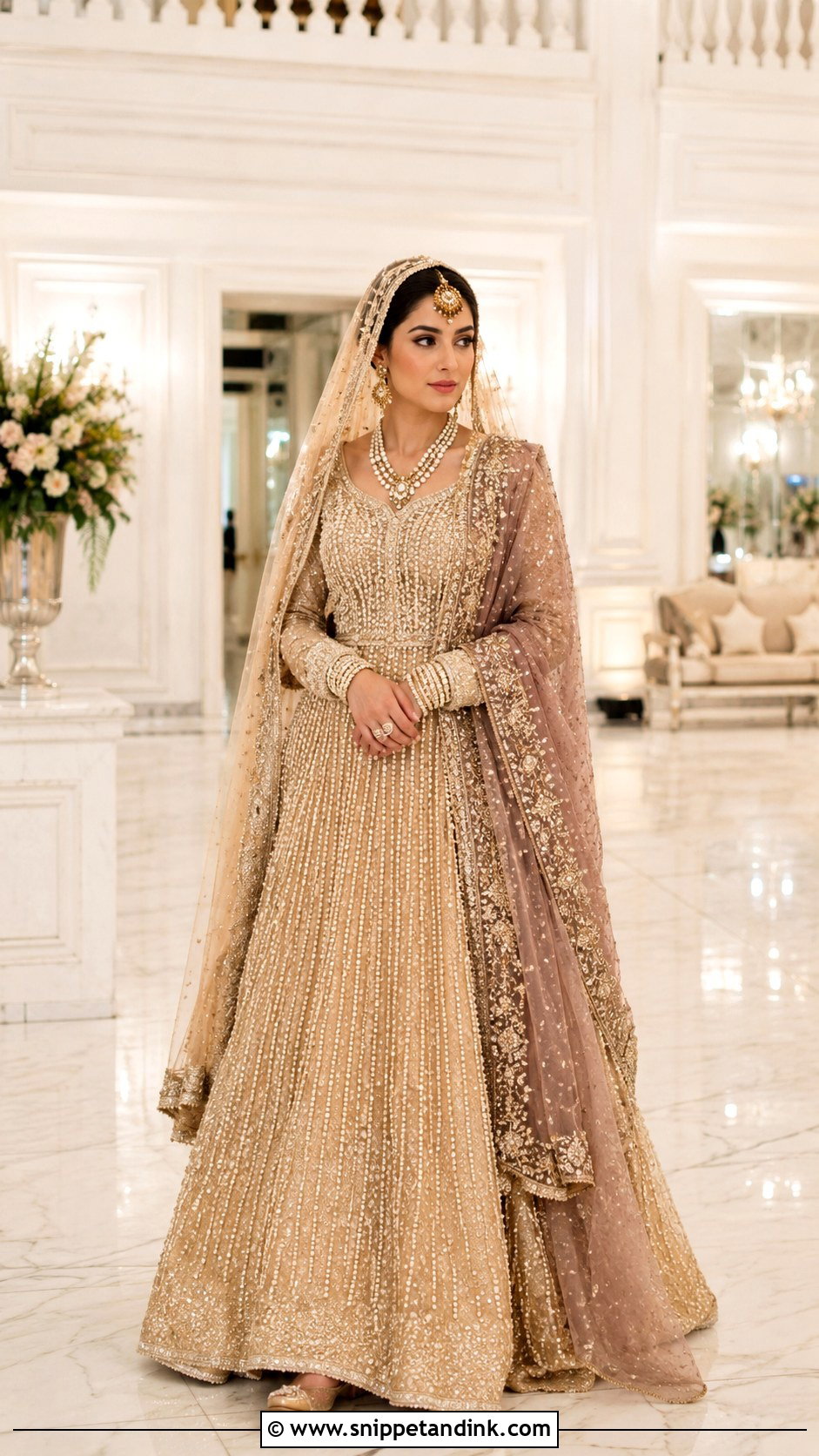
Champagne gold is the understated grand option. A flowing lehnga with tonal threadwork, silver-gold sequins, pearls and spaced florals; a structured full-sleeve blouse with a softly squared neckline. A champagne net dupatta on the head and dusty rose organza across the front for contrast. Pearl polki, statement earrings, a small tikka, slim bangles and champagne flats suit it, with soft brown eyes and a rose-nude lip. A low bun with a few small white flowers finishes it. Pale lehngas show seams and lining color through the fabric, so I always check a champagne piece against strong light from behind before approving it.
10. Ivory And Red Barat Lehnga
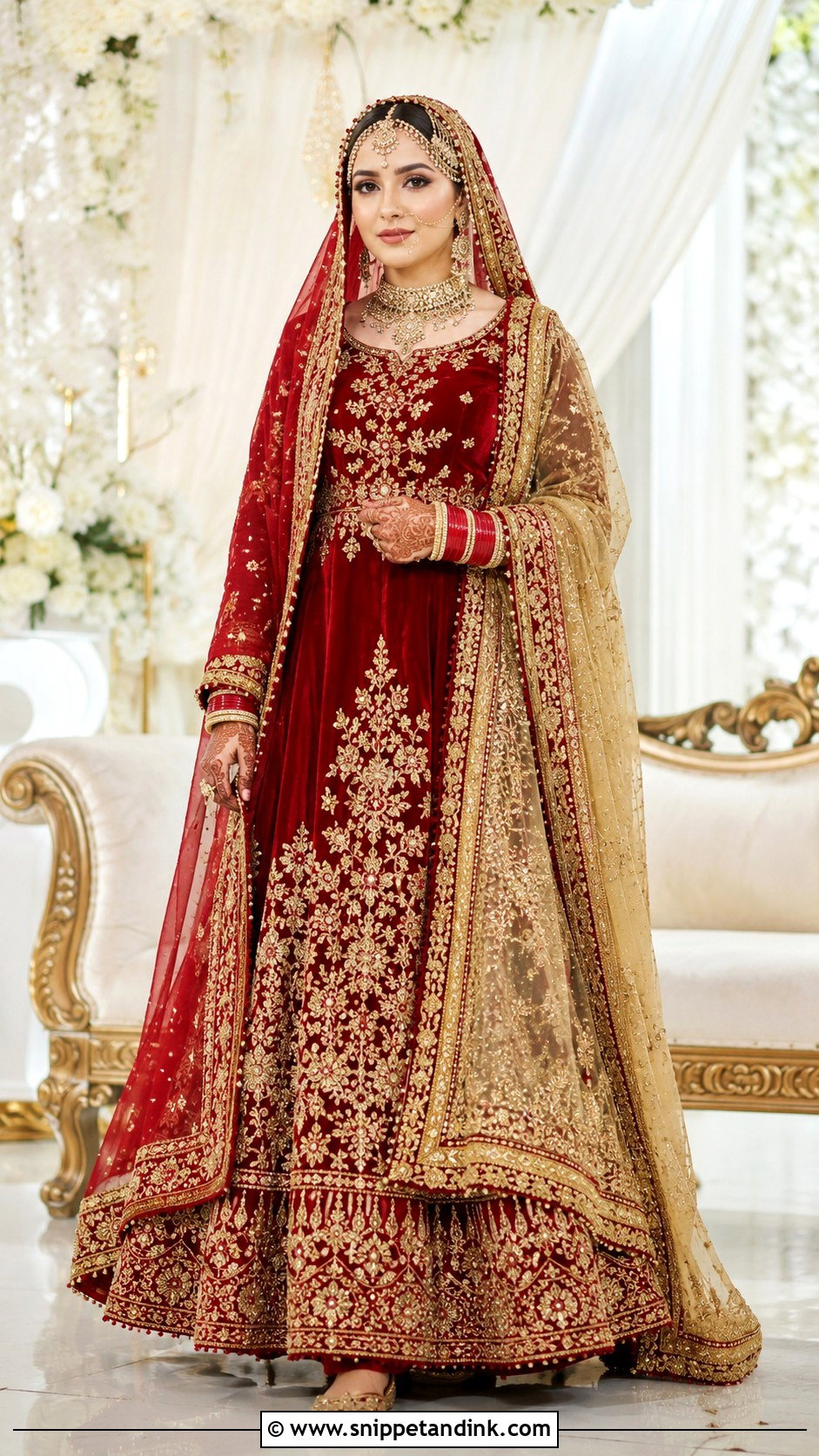
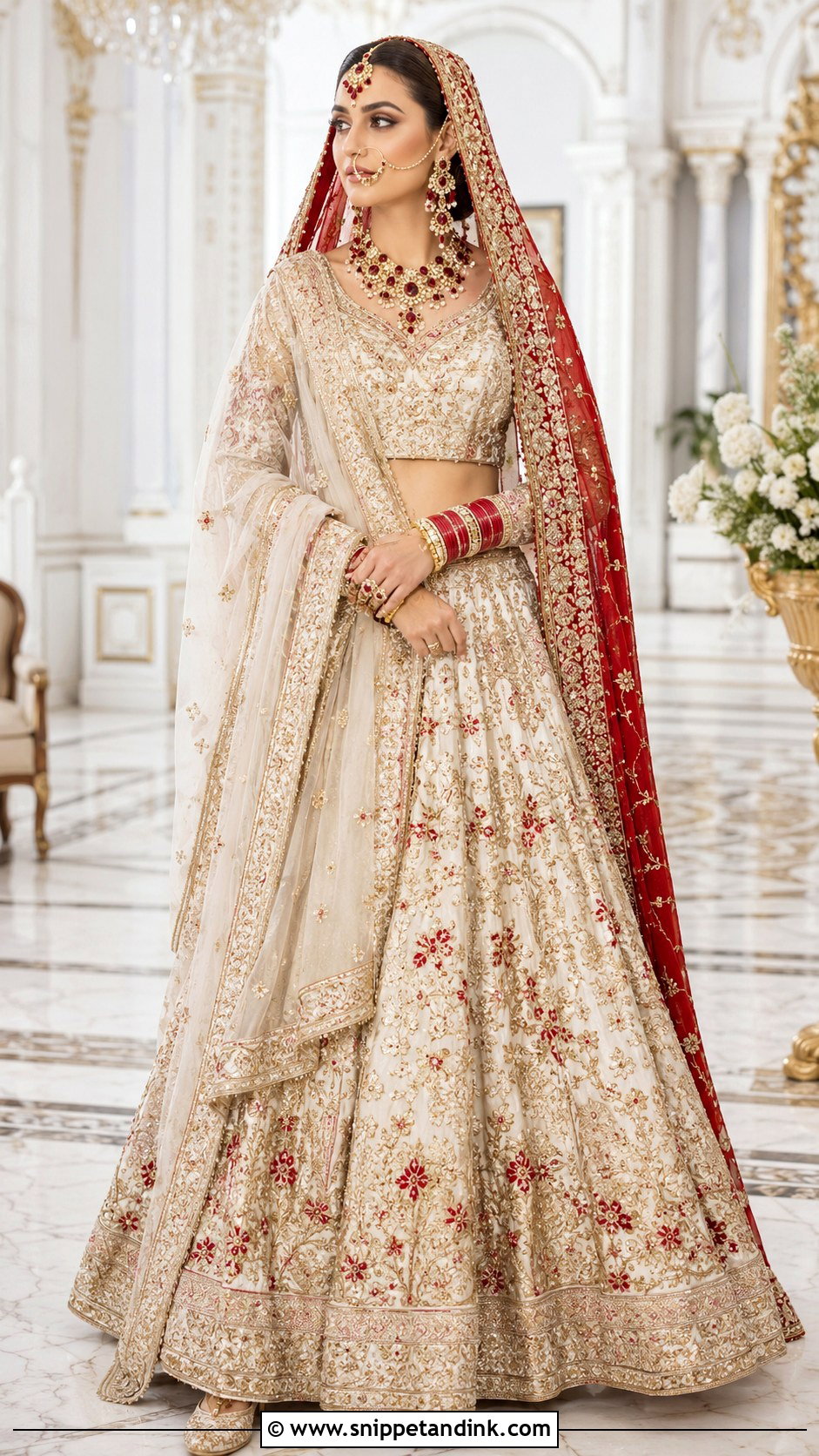
Ivory and deep red give the sharpest contrast in this collection. An ivory lehnga with gold zardozi, red resham florals and a broad red hem border; an ivory blouse with red sleeve detail and a neckline cut to sit cleanly under a kundan choker. A red embroidered dupatta goes over the head, a lighter ivory one around the arms. Ruby kundan, red bangles, a tikka, a fine nath and ivory-gold khussa tie it together. Red lips, defined lashes and a center-parted bun suit it. Add no third color. With ivory and red, every extra shade looks like a stain rather than a choice.
11. Ivory And Emerald Barat Lehnga
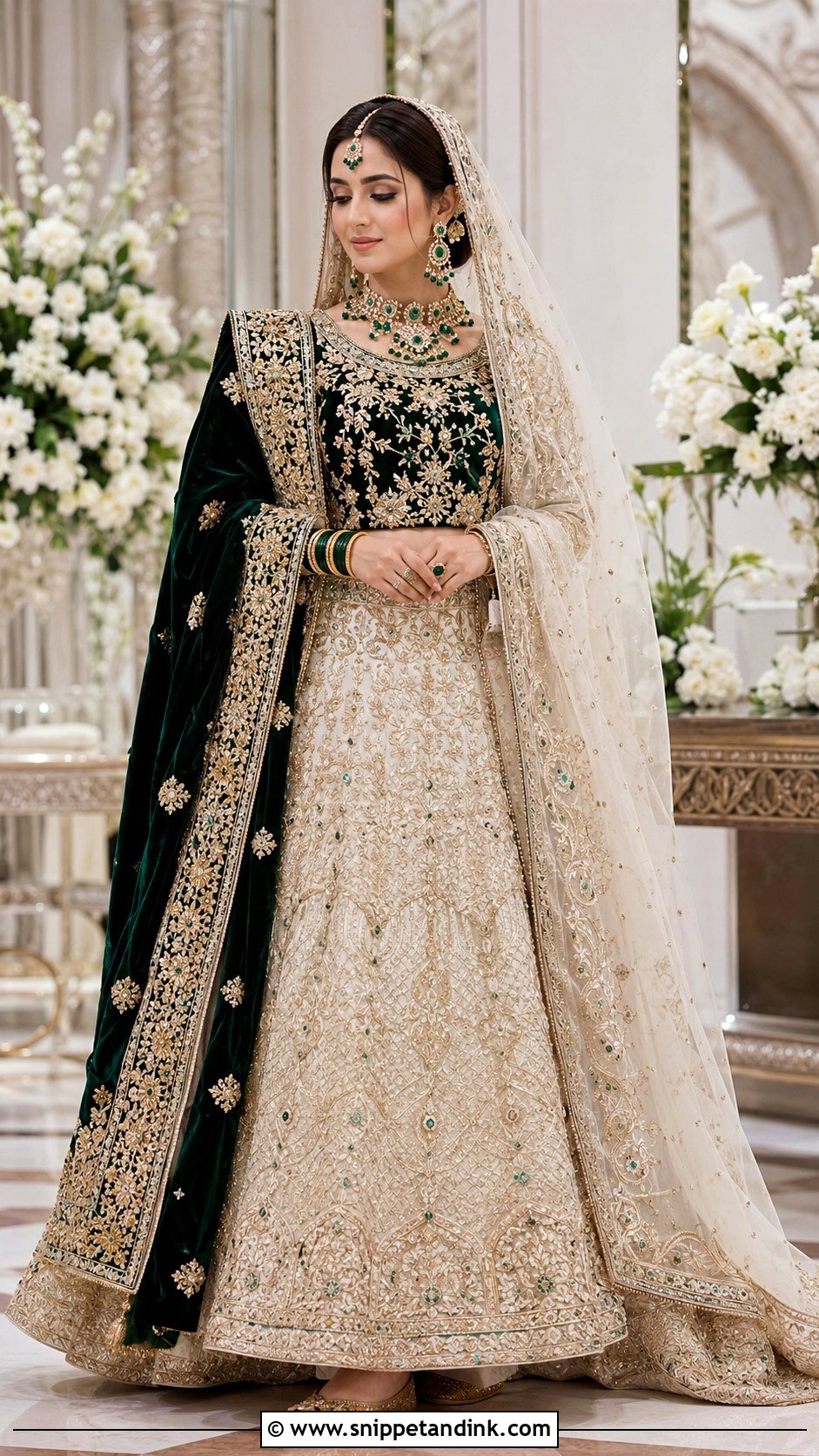
Ivory and emerald feel distinctive and still grounded in tradition. An ivory raw-silk lehnga with gold vines, emerald resham and a structured hem, under an emerald velvet blouse with full sleeves and a round or square neckline. Note that the dupatta logic flips here: an ivory net dupatta on the head brightens your face, and an emerald shawl carries the richness on one shoulder. Polki with green stones, a tikka, earrings and ivory-and-gold bangles, plus gold khussa. Softly smoked eyes and a neutral rose lip. Velvet blouse over silk skirt means two weights; I ask for the blouse hem to be faced so it doesn’t flip up over the waistband.
12. Blush Pink Floral Barat Lehnga
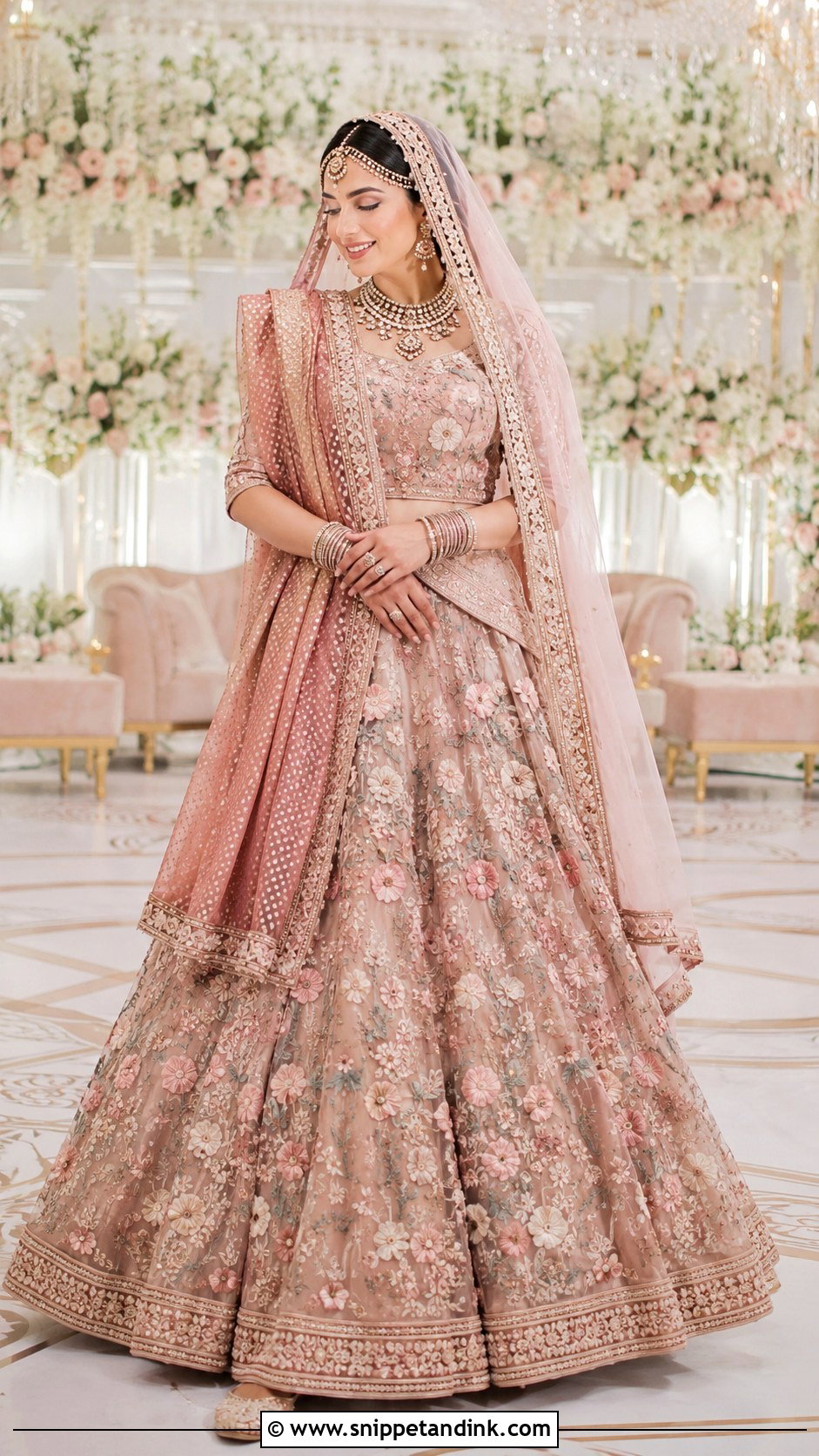
Blush turns Barat-ready only with real detail and substantial accessories. A wide-flared lehnga with raised florals, pearls, sequins and antique-gold vines; a fitted blush blouse with elbow sleeves and a modest curved neckline. A heavily edged blush net dupatta covers the head and a sheer rose-gold one drapes over a shoulder. Pearl kundan, a delicate matha patti, statement earrings and blush-and-gold bangles, with nude embroidered flats. Rosy cheeks, a pink lip and a low bun with pale flowers. Hold the whole outfit to one blush family. Mix a cooler pink in and the outfit reads as a mehndi or guest look rather than a bride.
13. Dusty Rose Velvet Barat Lehnga
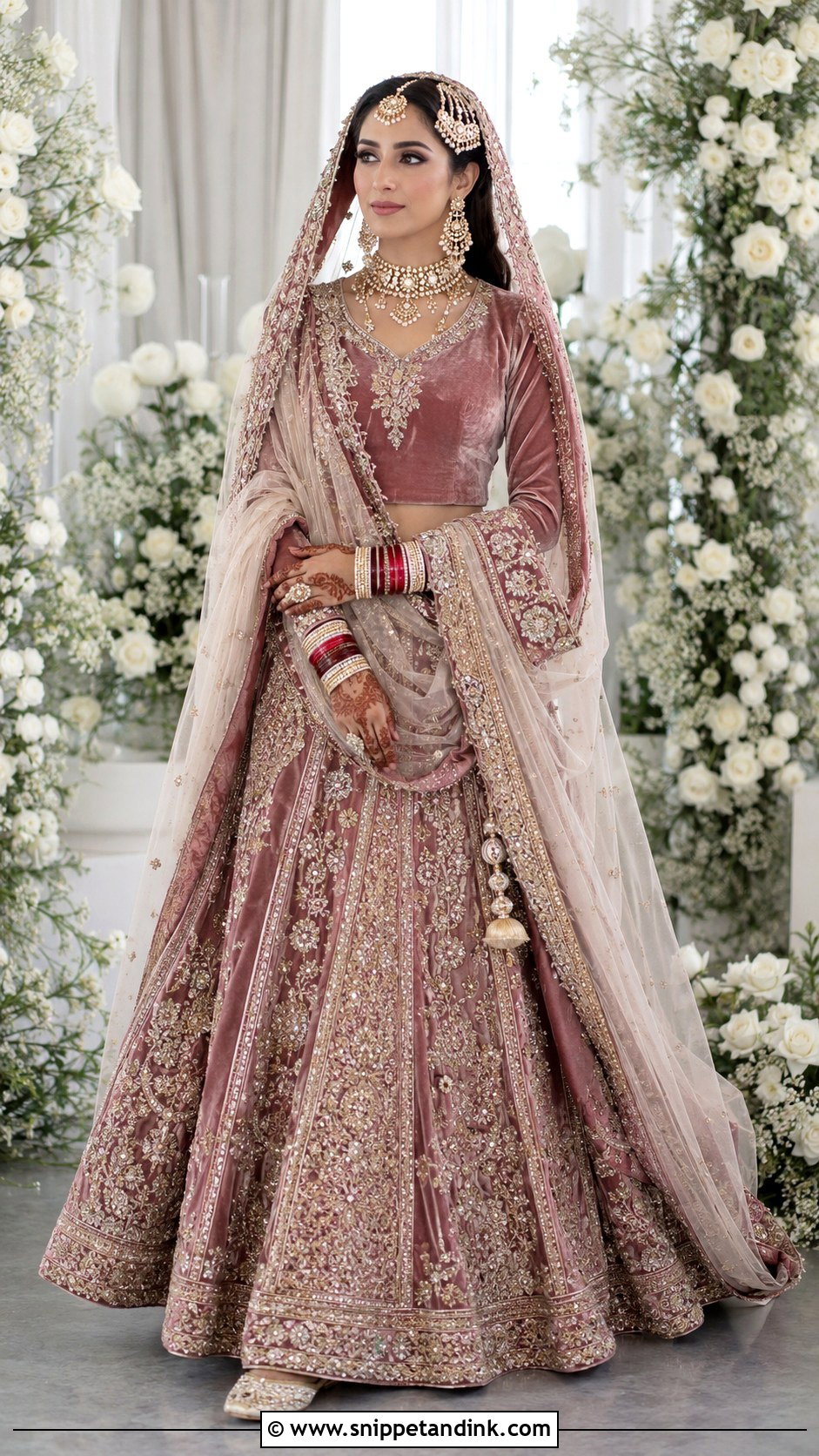
Dusty rose velvet brings softness and depth, and it belongs to cool weather. A paneled lehnga with tonal thread, muted gold dabka, pearls and a weighted hem; a matching long-sleeved velvet blouse with a clean neckline. A dusty rose net dupatta on the head and a light champagne organza one across the arms stop it from feeling dense. Pearl polki, a small passa, a tikka, bangles and cushioned champagne khussa suit it, with mauve-rose makeup and a smooth bun. Keep the embroidery refined; heavy bright gold overpowers a muted shade like this. Muted velvet also shows press marks clearly, so it needs steaming from the reverse.
14. Magenta And Gold Barat Lehnga
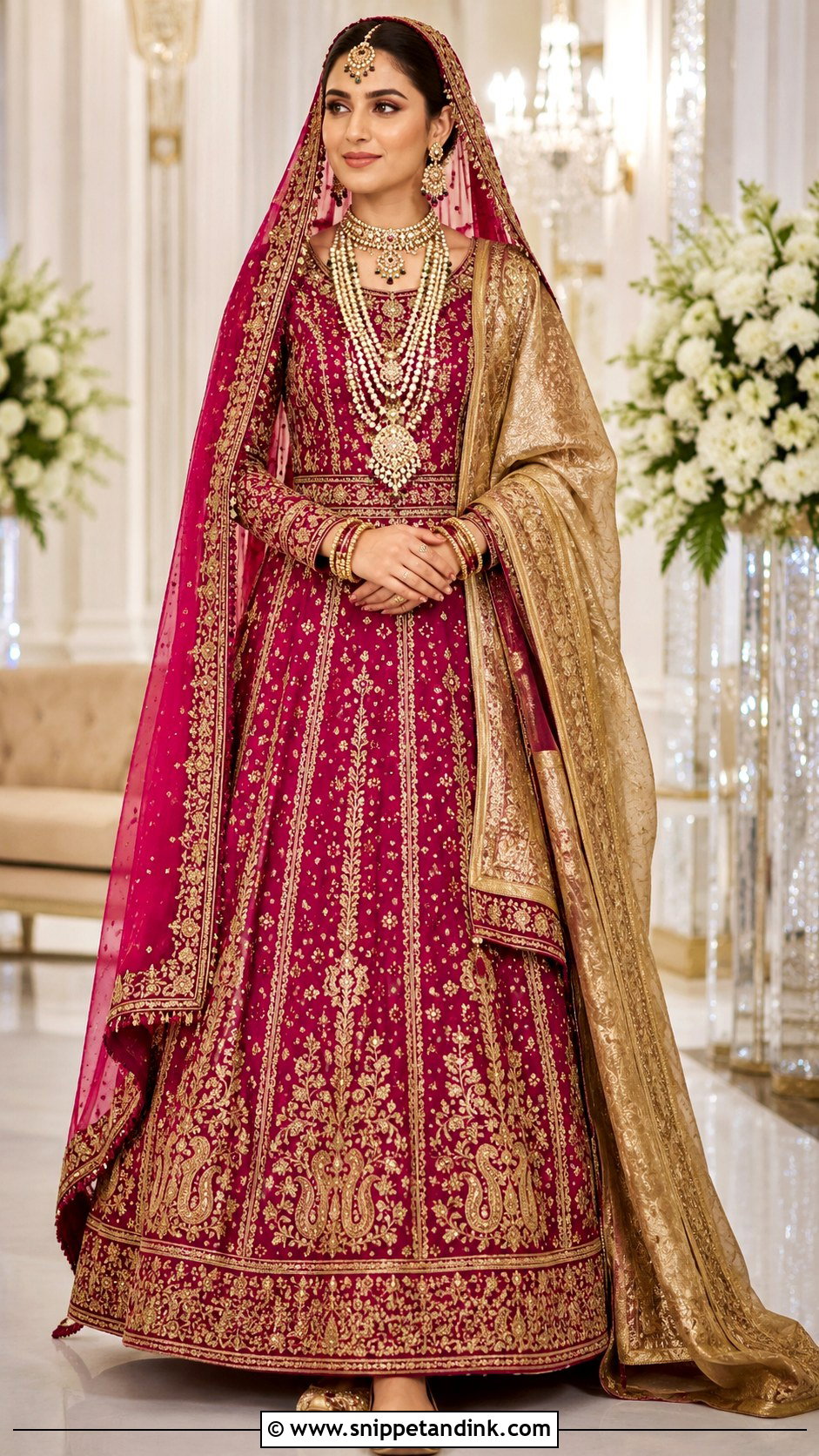
Magenta is energetic and still rich enough for the main event. A raw-silk magenta lehnga with antique-gold zardozi, floral jaal and a wide worked border, matched with a full-sleeve blouse, a gently scooped neckline and embroidery gathered at the cuffs. A magenta net dupatta on the head keeps the color running through, while plain gold tissue glows as the second layer. Kundan with pearl drops, gold-and-magenta bangles and gold flats complete it. Keep makeup balanced: defined eyes, berry-pink lips, luminous skin. Strong magenta can cast a pink tint onto the chin and neck in close-up photos, so I warm the foundation slightly to counter it.
15. Plum Velvet Barat Lehnga
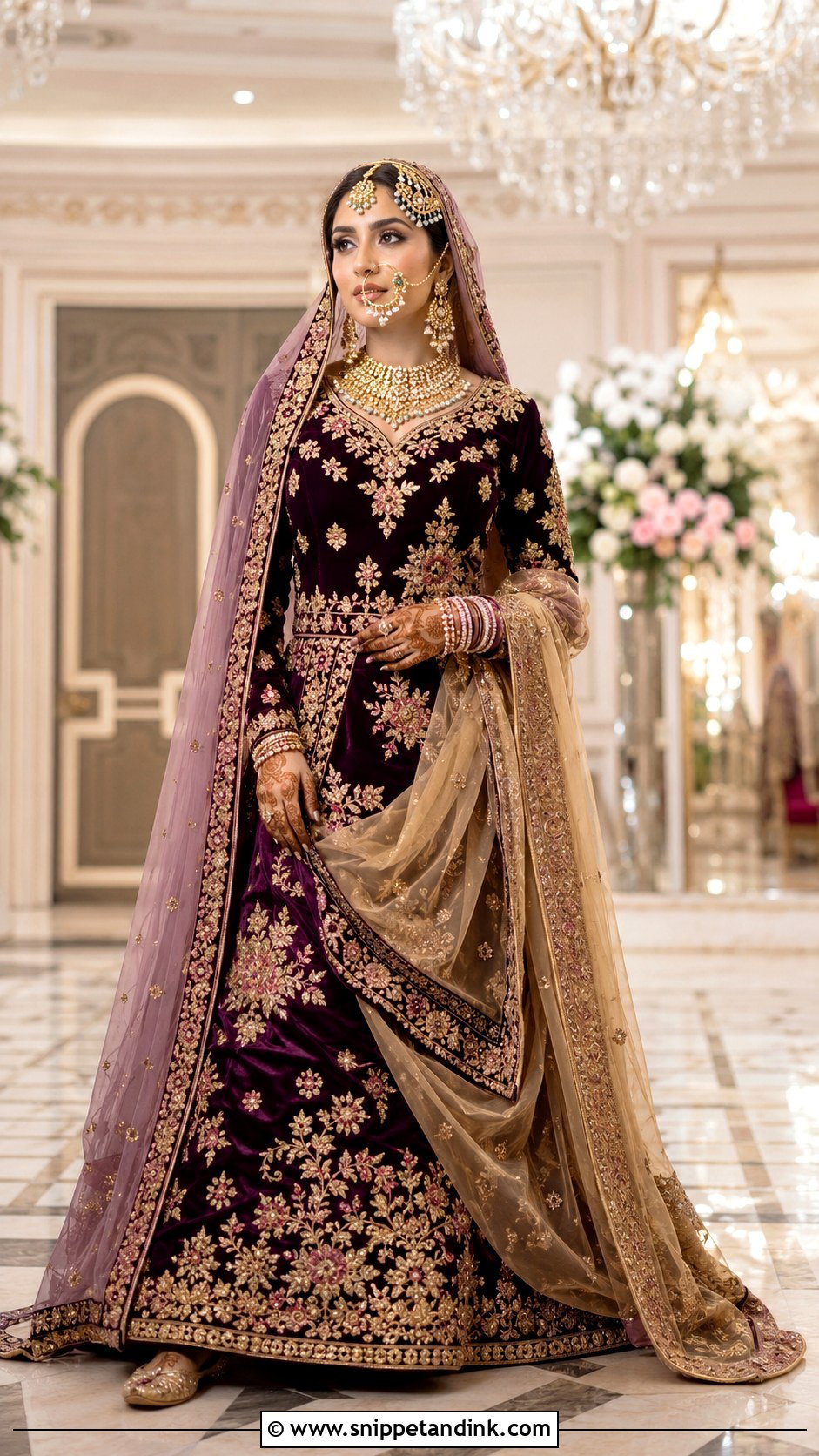
Plum velvet offers drama without repeating red. A full lehnga in antique gold with muted pink florals and fine pearl highlights; a structured plum blouse with long fitted sleeves and a neckline that carries a layered necklace. A lighter plum net dupatta frames the face and pale gold organza drapes across the arms. Polki with soft pink stones, a statement nath and bangles add brightness. I’d choose cushioned antique-gold khussa, as velvet lehngas are heavy and heels make the weight harder to manage. Plum lips, highlighted cheeks and defined eyes, with a sleek bun as the base for the head covering.
16. Midnight Blue Gold Barat Lehnga
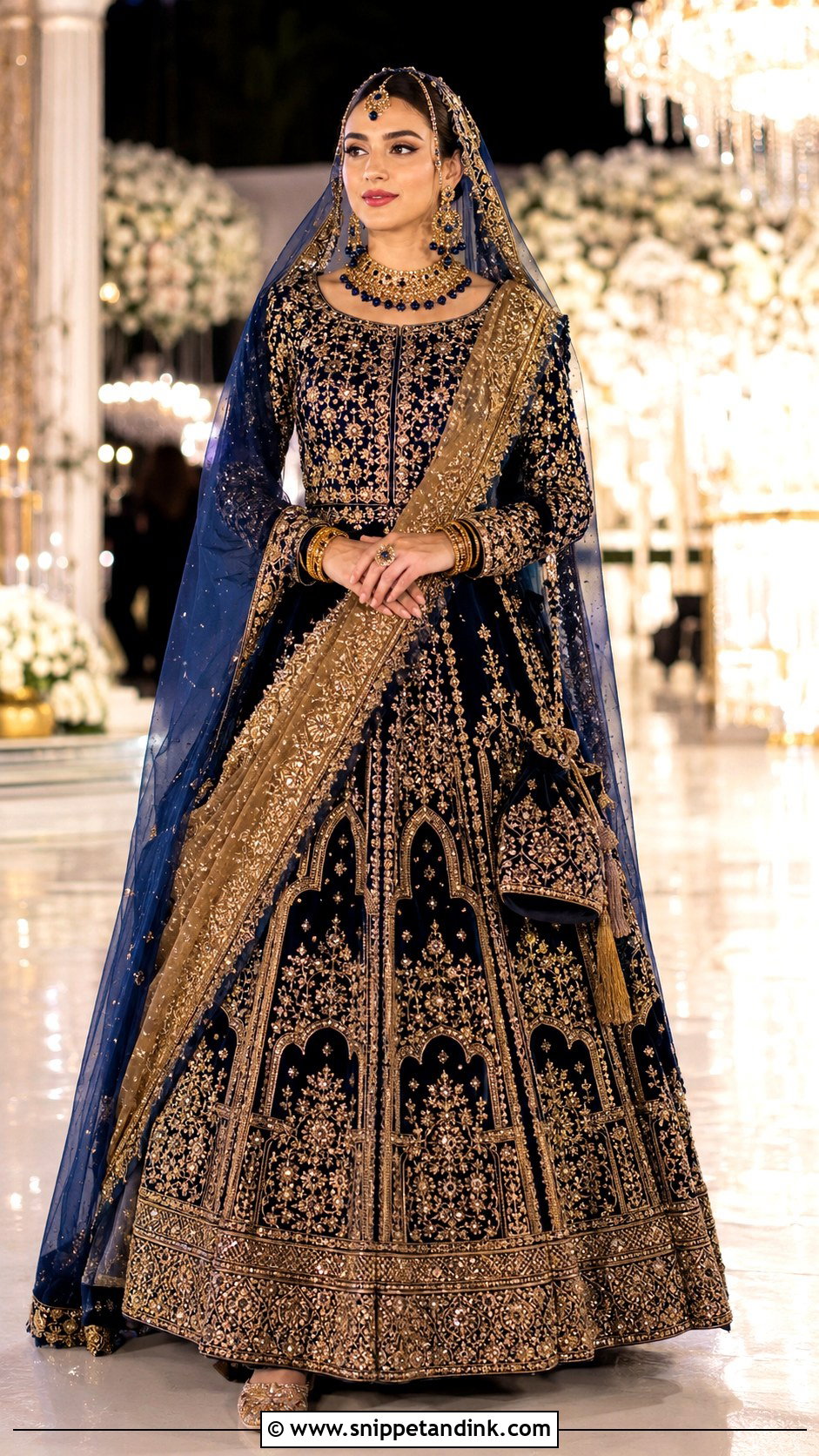
Midnight blue with intricate gold makes an evening look that stands apart. Velvet or raw silk with architectural motifs, floral borders and scattered sequins; a midnight blouse with full sleeves and a modest square neckline. A blue net dupatta on the head and antique-gold tissue crossing the body, with polki in sapphire tones, gold bangles, a tikka, metallic flats and a small potli. Smoked eyes, rose lips and luminous skin stop the dark fabric from overpowering your face. Dark blue looks almost black in a dim hall, and I always remind brides that the lehnga will look lighter in daylight portraits than in the evening ones.
17. Teal And Maroon Barat Lehnga
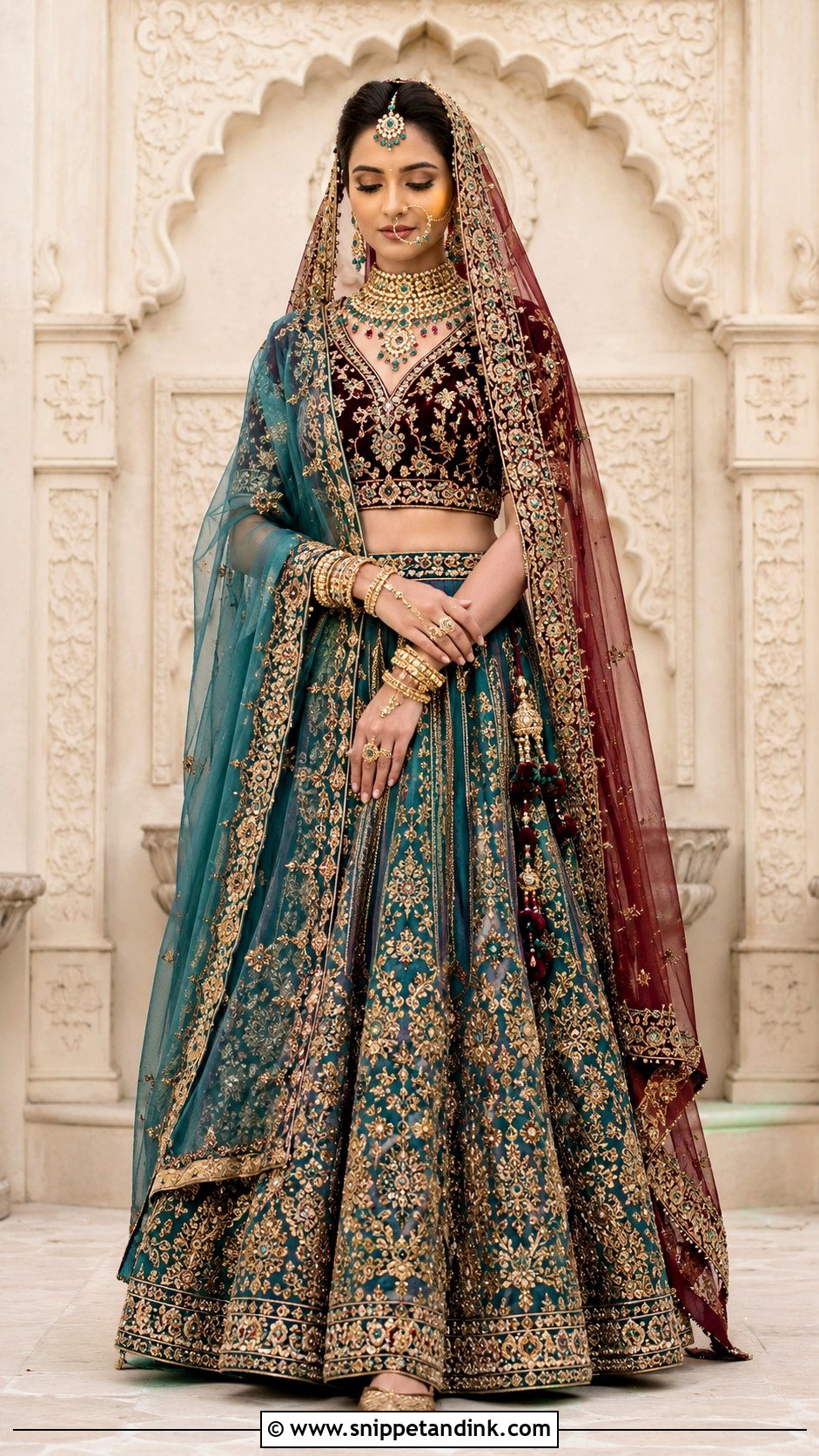
Teal and maroon suit a bride who wants a less expected palette. A teal lehnga with maroon florals, antique-gold dabka and a broad structured hem, paired with a maroon velvet blouse carrying teal details at the neckline and cuffs. A maroon net dupatta over the head gives depth; a teal organza one across the shoulder balances the blouse. Kundan with green and ruby stones, a tikka, nath, gold bangles and antique-gold khussa suit it. Spread both colors evenly. When maroon appears only on the blouse, the outfit looks like two separate garments rather than one design.
18. Burnt Orange Copper Barat Lehnga
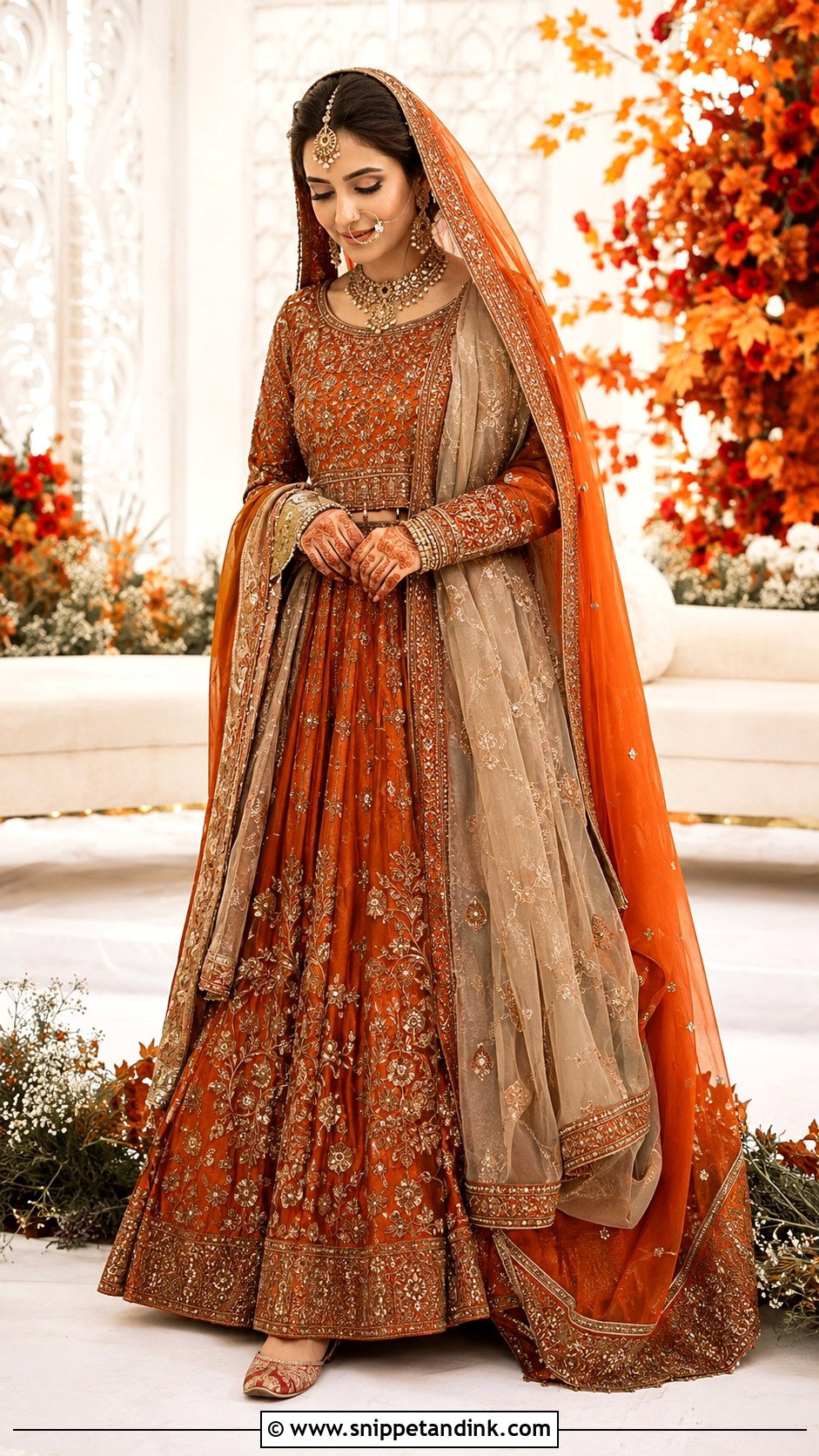
Burnt orange with copper is autumn and evening at its warmest. A raw-silk lehnga in copper zardozi, bronze sequins, resham flowers and a deep border, a burnt orange full-sleeve blouse with a round neckline, a sheer orange head dupatta and a muted beige-copper second dupatta. Antique kundan, bronze bangles, a tikka, a medium nath and copper flats suit the metalwork, with bronze eyes and a terracotta-rose lip. A braided bun anchors the head dupatta. Copper thread tarnishes faster than gold, so I’d ask the designer whether it is coated and plan to store the lehnga wrapped in cotton, away from humidity.
19. Rose Gold Sequin Barat Lehnga
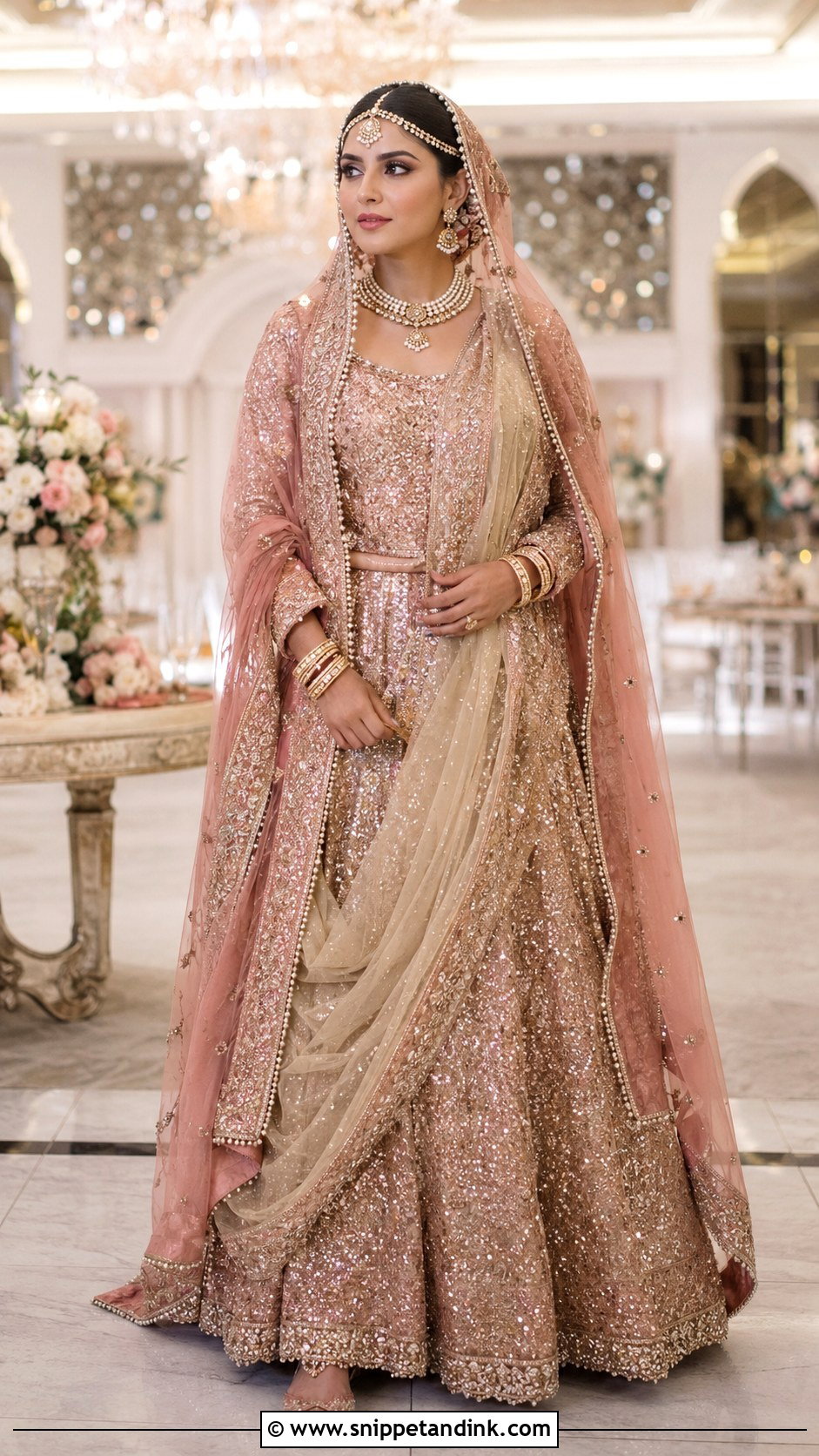
Rose gold needs a big silhouette and serious accessories before it reads as Barat. A full, structured lehnga with tonal sequins, pearls, metal thread and larger motifs near the hem; a long-sleeved rose-gold blouse with a clean neckline and placed work. A sheer rose net dupatta covers the head and a champagne one across the front adds definition. Pearl polki, a matha patti, earrings, slim metallic bangles and nude rose-gold khussa keep it continuous. Heavy sequin skirts are scratchy against bare arms and cling to net dupattas, so I ask for a soft lining inside the dupatta’s edge where it brushes the skirt.
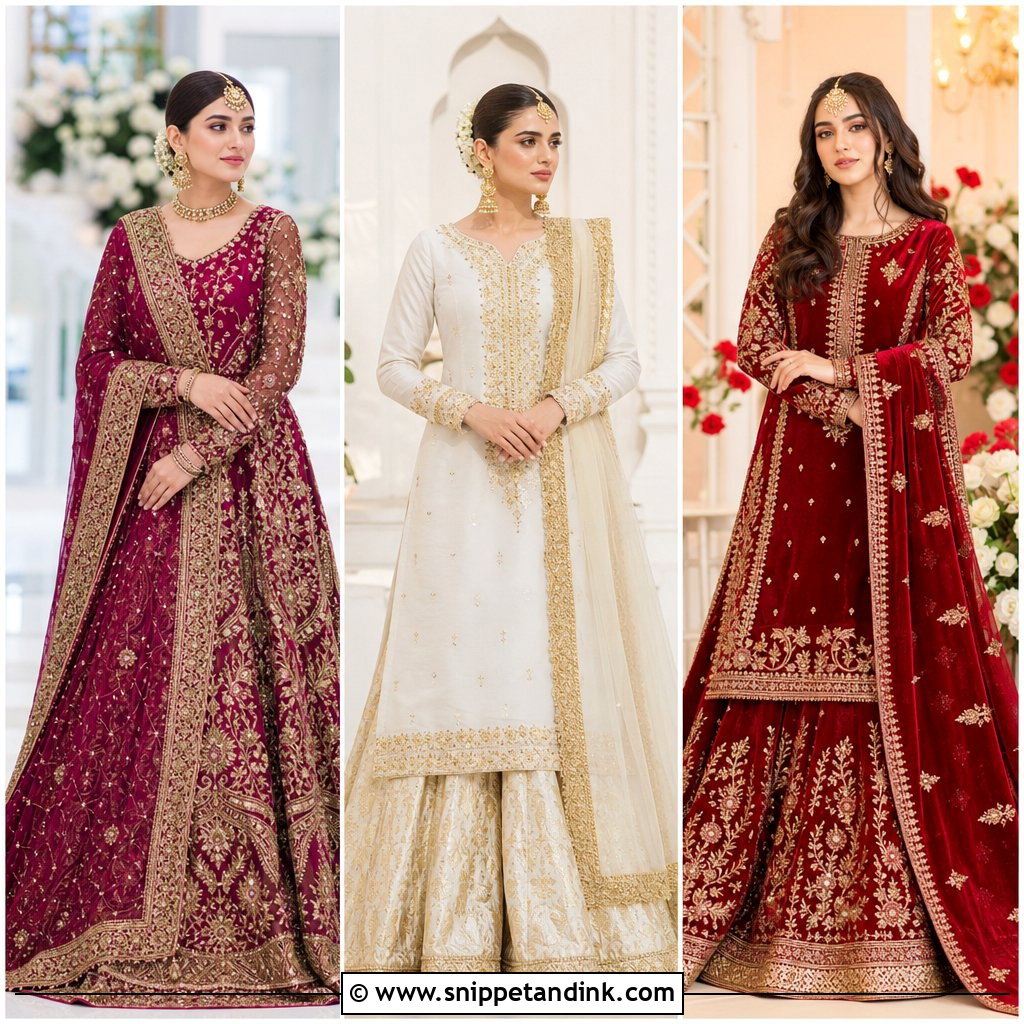


20. Multicolor Mughal Barat Lehnga
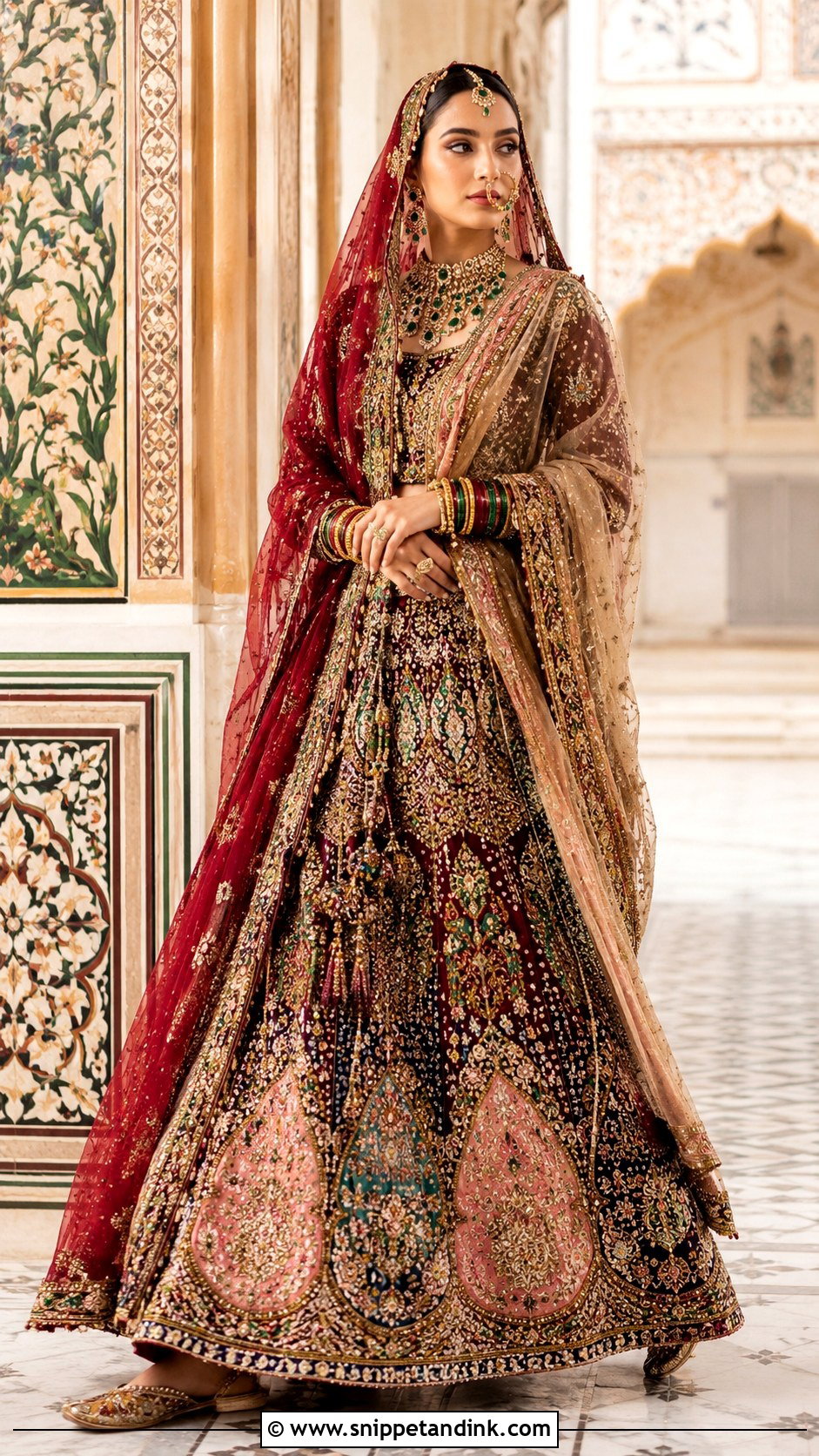
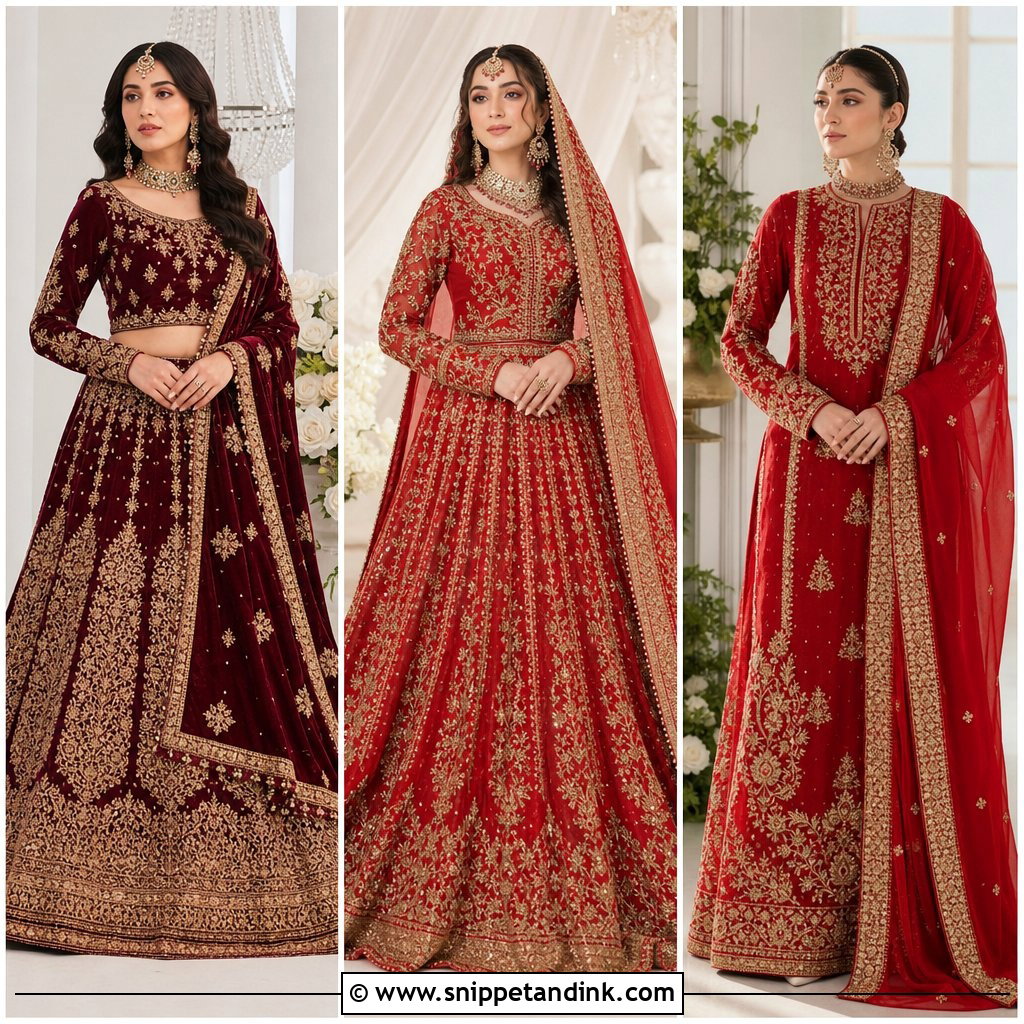
A multicolor Mughal-inspired lehnga celebrates traditional artistry in one coordinated piece. A deep red or maroon base with emerald, rust, blush, navy and antique-gold architectural motifs; a blouse in the base color with full sleeves and restrained work so the skirt leads. A red net head dupatta and a muted gold organza one on the shoulder. Kundan with mixed stones, a statement nath, a tikka and bangles; antique-gold khussa as a neutral base. I make sure each accent color shows up at least twice, once in the skirt and once in the jewelry or dupatta. A color that appears only once looks like an accident.
A Second Life for the Lehnga After the Walima
A Barat lehnga is too much work to wear once and lock away. Plan for its next life at the design stage and it becomes far easier to reuse.
- Ask for a second, plainer blouse in the same fabric. The skirt then works at a family wedding with lighter jewelry and no head dupatta.
- Wear the embroidered dupatta alone over a plain silk suit at Eid or a sibling’s mehndi; it carries the outfit by itself.
- A heavy blouse can be paired with a plain raw silk skirt or straight trousers for a formal dinner.
- If you’d like a daughter or sister to wear it later, store it folded in muslin, refold it every few months, and keep the tailor’s measurements with it so it can be altered.
Some brides prefer to sell or rent out the outfit after the wedding. If that is your plan, keep the receipt, the extra fabric scraps and the original packaging, and get any stains professionally cleaned straight away, because older marks set into silk.
Put Every Piece On Before You Say Yes
An outfit that feels meaningful and comfortable will always outlast one chosen to impress. These looks run from traditional reds through jewel tones, modern neutrals, soft pinks and dense statement embroidery. Before the design is final, think about the venue, the season, the skirt’s weight, the sleeve shape, where each dupatta sits and how long the event lasts. Let jewelry and makeup support the lehnga. Do one complete fitting with the exact shoes and underlayers so hem and flare can be corrected. Then trust the colors and details that make you feel sure of yourself.
You'll Like These Ideas:







Leave a Reply