
The Barat outfit is the one every relative remembers and every camera follows. Embroidery, family jewelry, makeup and the way the dupatta is draped all meet at the entrance, and the bride then wears it for many hours on stage, through the nikah or rukhsati and the photographs. Red still leads, but maroon, gold, blush, ivory, rust, emerald and heavily worked pastels are all worn now. When I style a Barat bride, I plan the full look from head to toe and pay as much attention to weight and comfort as to color, because a lehenga that’s too heavy to sit in will show on your face by the end. Here are thirty classic, regal and softer looks, with the details I’d check for each.
Handwork Takes Months, So Order the Barat Outfit Early
Zardozi, dabka and hand embroidery are slow work, and wedding season fills workshops quickly. Lead times vary a lot between designers and tailors, but heavily worked bridal outfits commonly need several months, so I suggest starting the search about six months out and placing the order soon after.
- Approve the color on real fabric, not on a phone screen. Screens shift reds and pinks badly.
- Ask how heavy the finished outfit will be and whether the weight can be reduced with lighter fabric or less dense work on the skirt.
- Book at least two fittings: one for the blouse and waist, one final fitting in your wedding shoes.
- Leave a few weeks between delivery and the wedding for corrections.
- If you’re ordering from abroad, add time for shipping and customs.
At the final fitting, wear the lehenga for at least half an hour with the jewelry on, and sit cross-legged on the floor if your nikah will be done that way. A waistband that feels fine standing can dig in badly when seated, and a blouse that’s snug at the underarm will rub raw by the end of the night. Both are easy fixes for a tailor if they’re caught early, and almost impossible to fix on the day.
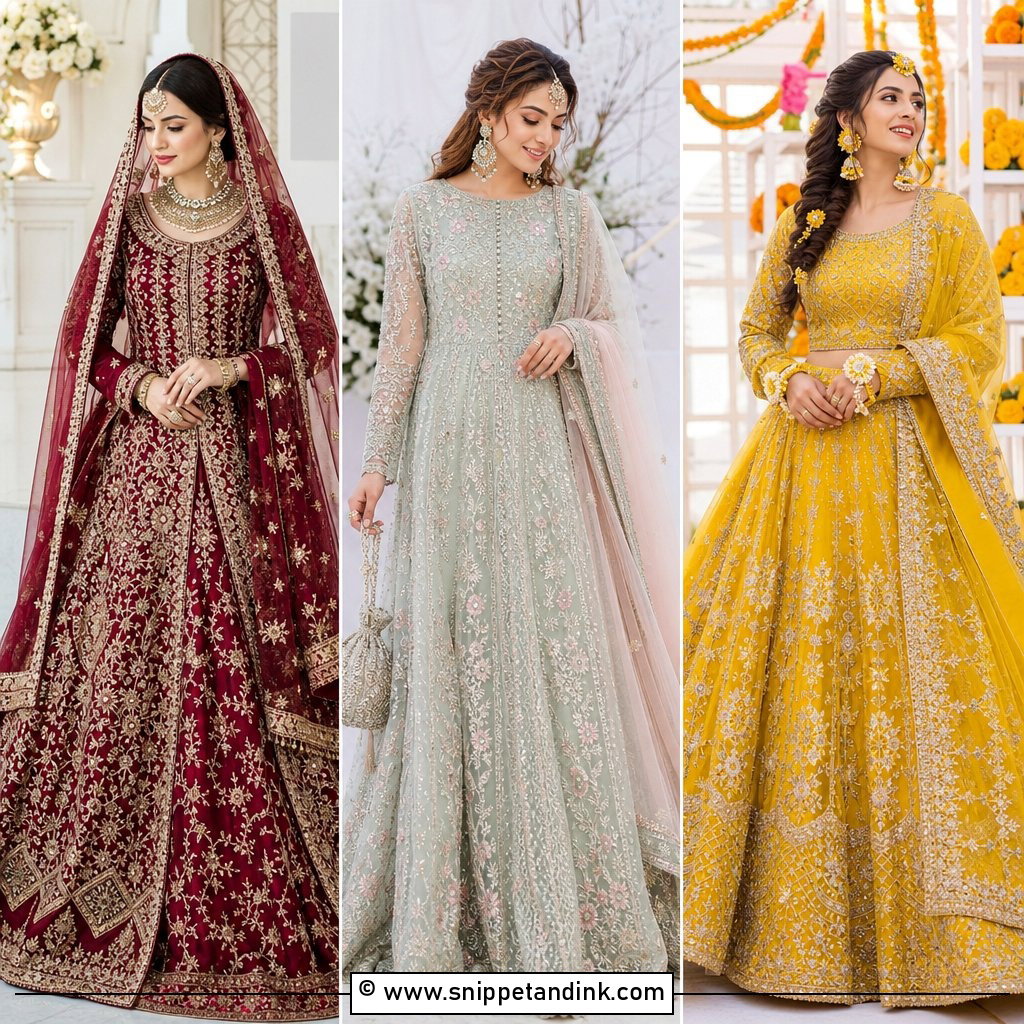
1. Red Barat Bride Lehenga
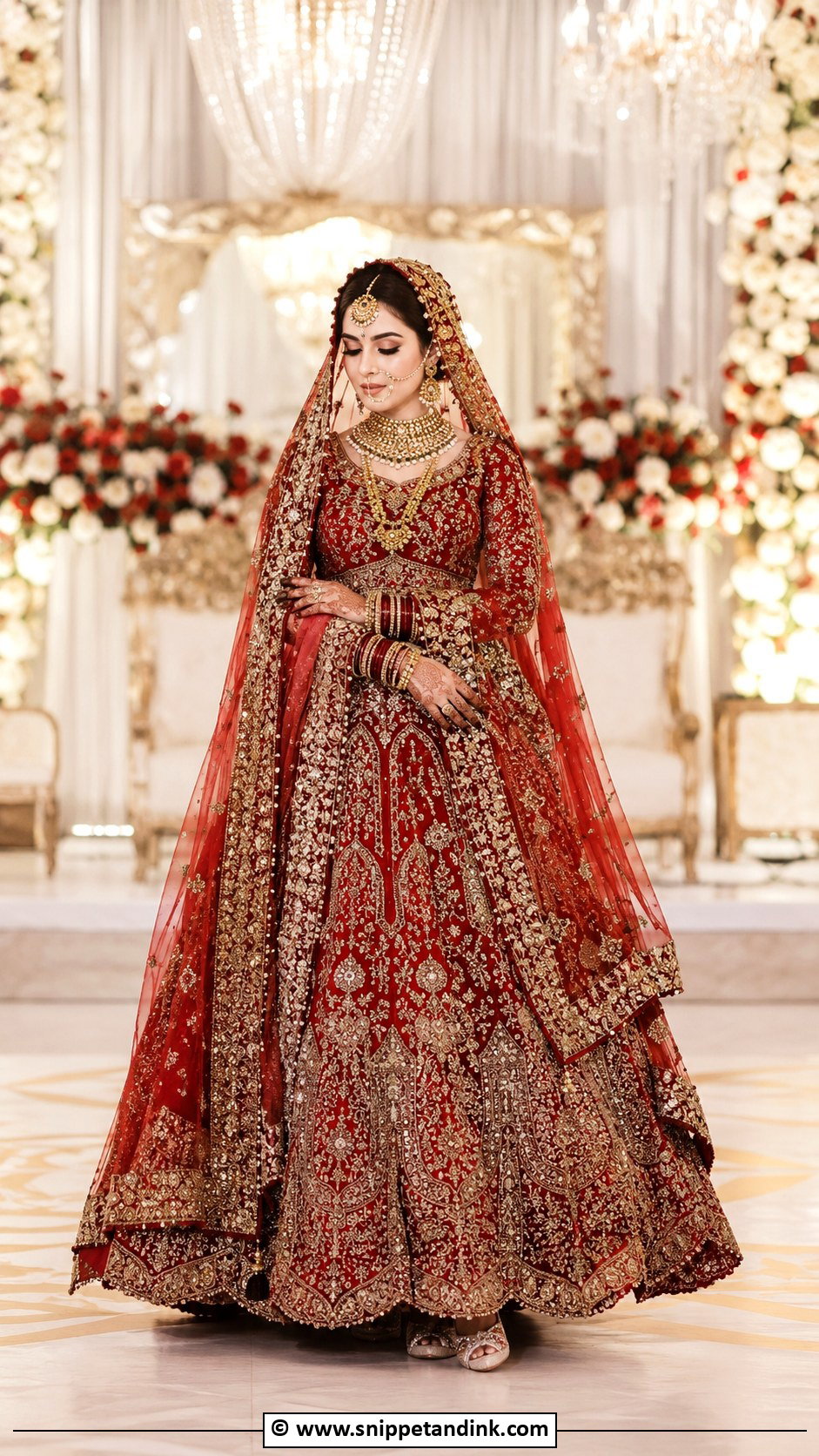
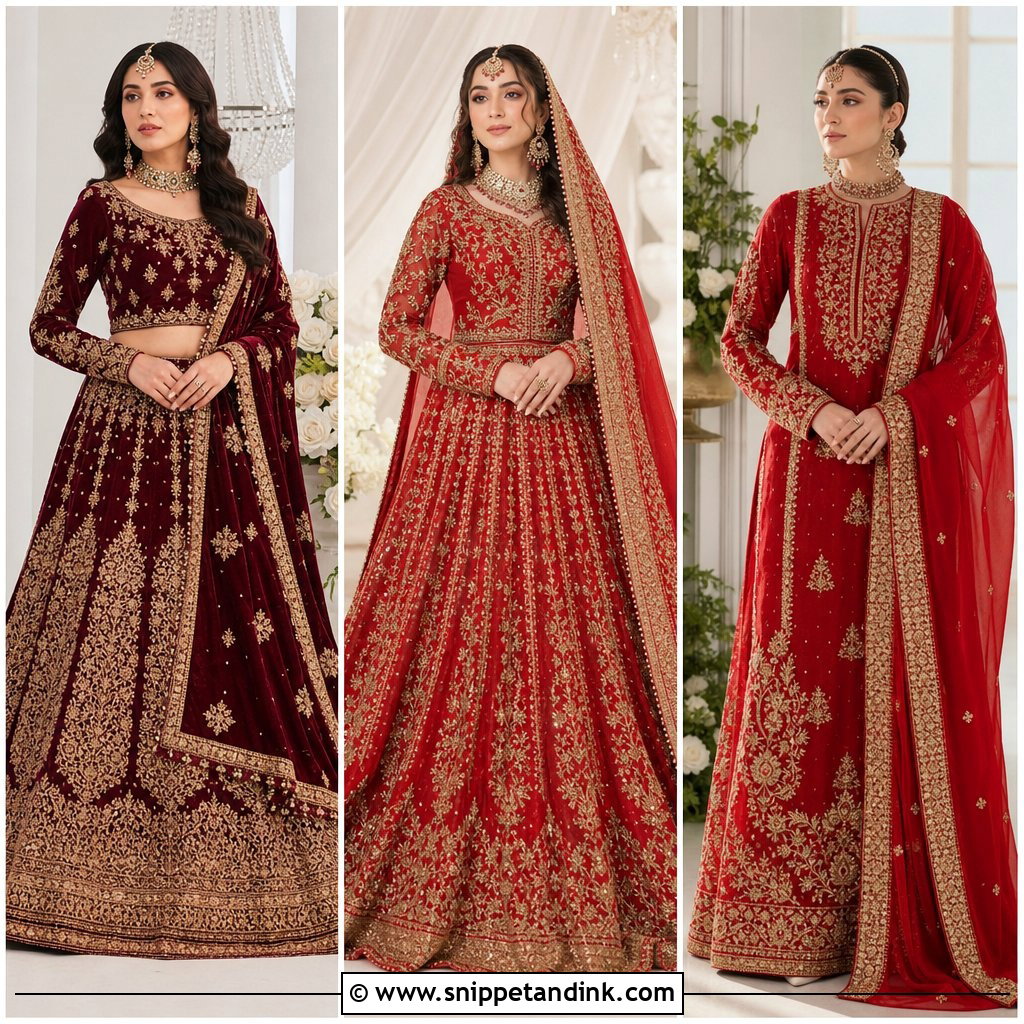
Red is the classic Barat color, the one that reads as bridal to every generation in the room. Deep red or true crimson with gold zardozi, dabka, sequins and threadwork gives the richest result. A matching choli keeps it balanced, and a heavy dupatta over the head is the Barat signature. Reds vary a lot under different lights, so I always look at the fabric under warm hall lighting and daylight before a bride commits; some crimsons go orange on camera. Matha patti, layered necklace, jhumkas, bangles and soft gold heels finish it, with warm eyes, defined liner and a red or rose lip.
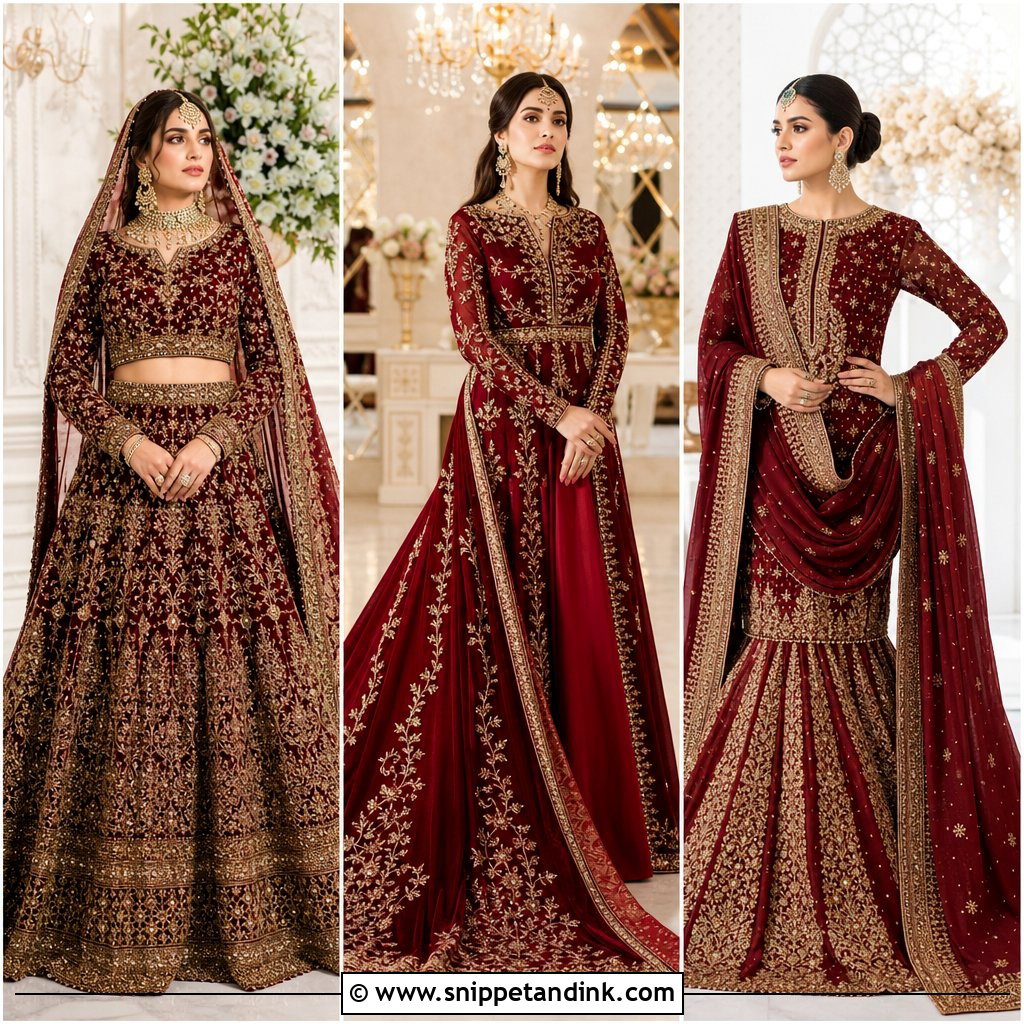
2. Maroon Barat Bride Lehenga
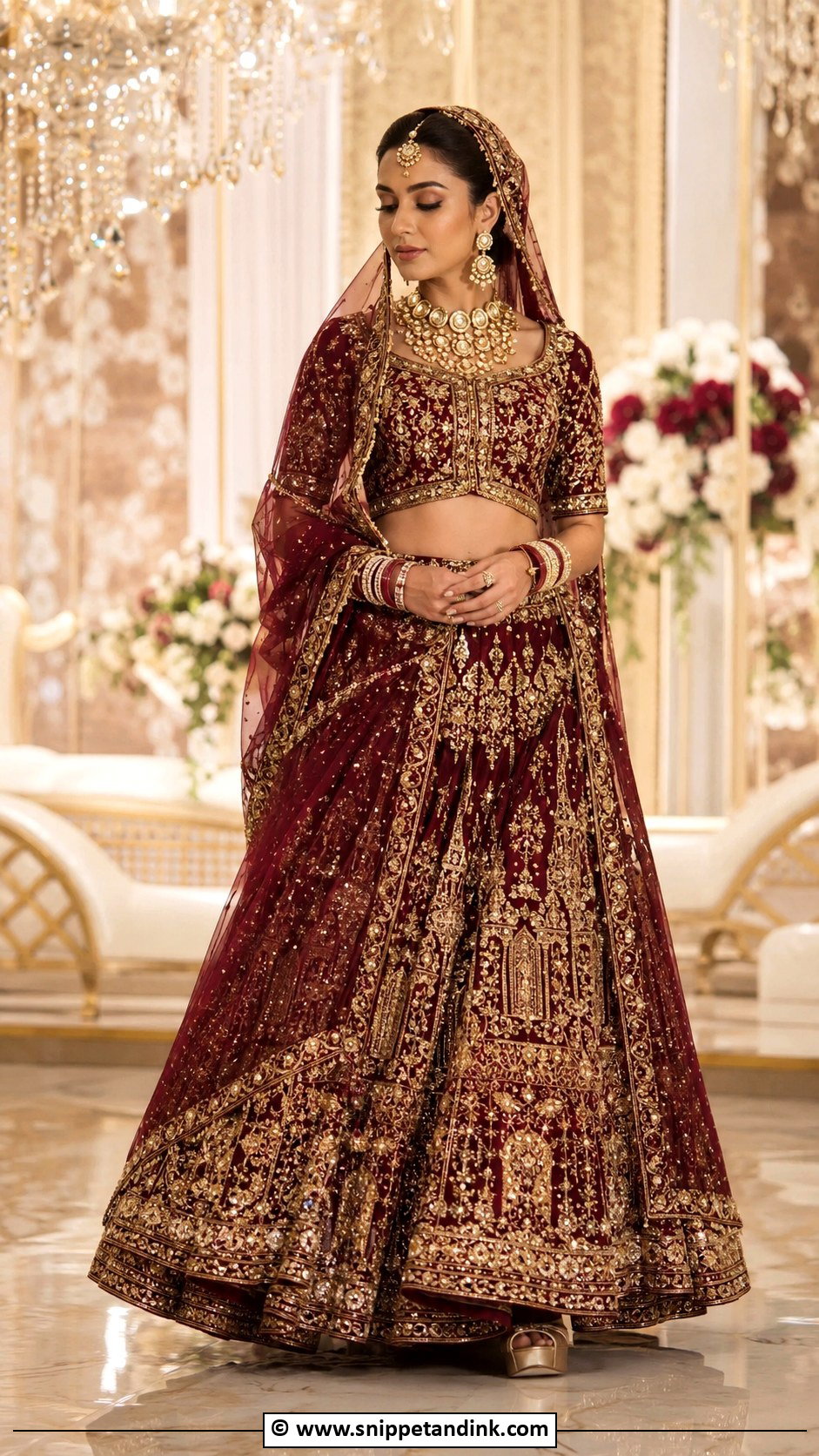
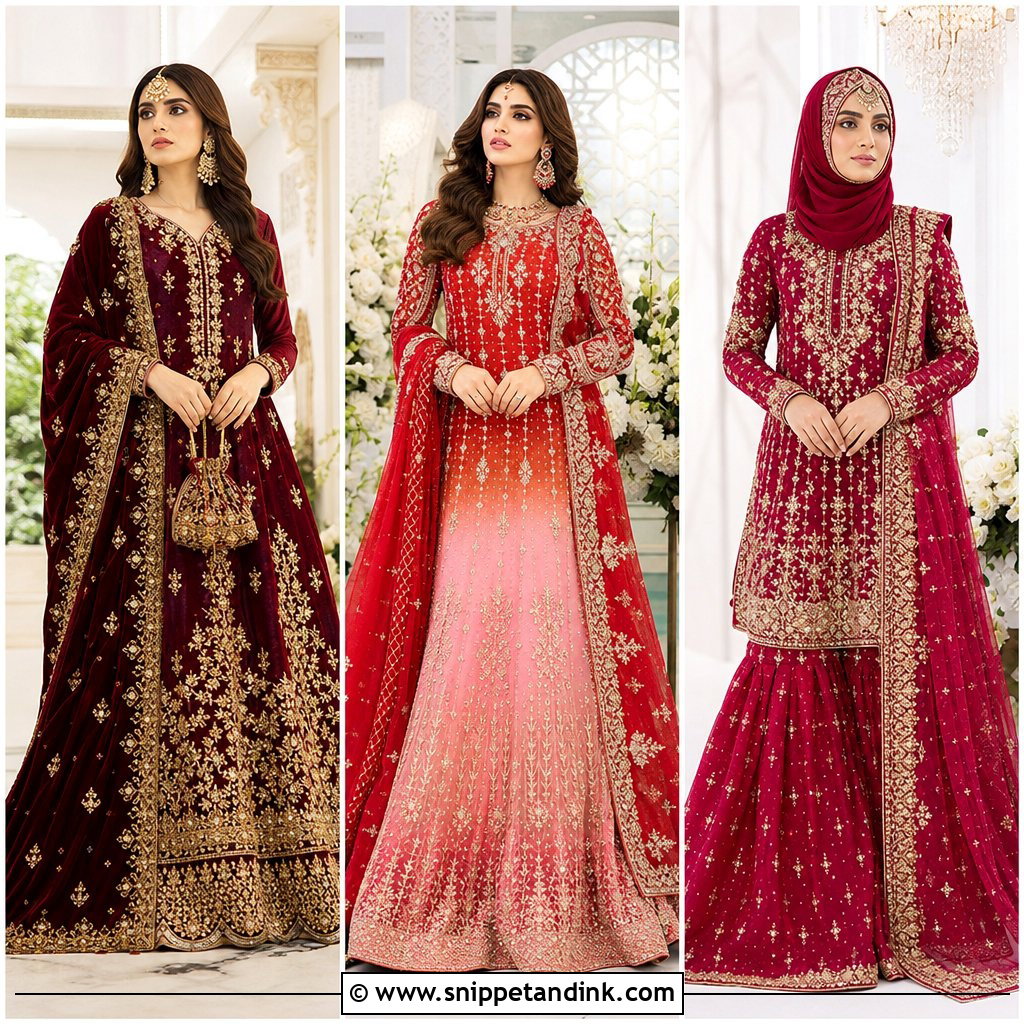
Maroon carries the same tradition as red with a deeper, more grown-up mood. It looks richest with antique gold embroidery, velvet borders and heavy handwork, and under evening lighting it glows rather than glares. A fitted blouse, a coordinated dupatta and a second sheer dupatta add volume in photos. Gold jewelry suits it, and kundan, polki or emerald accents push it toward regal. Very dark maroon can photograph almost brown in dim halls, so brief your photographer about lighting. Bronzed skin, smoky brown eyes and a muted berry lip balance it.
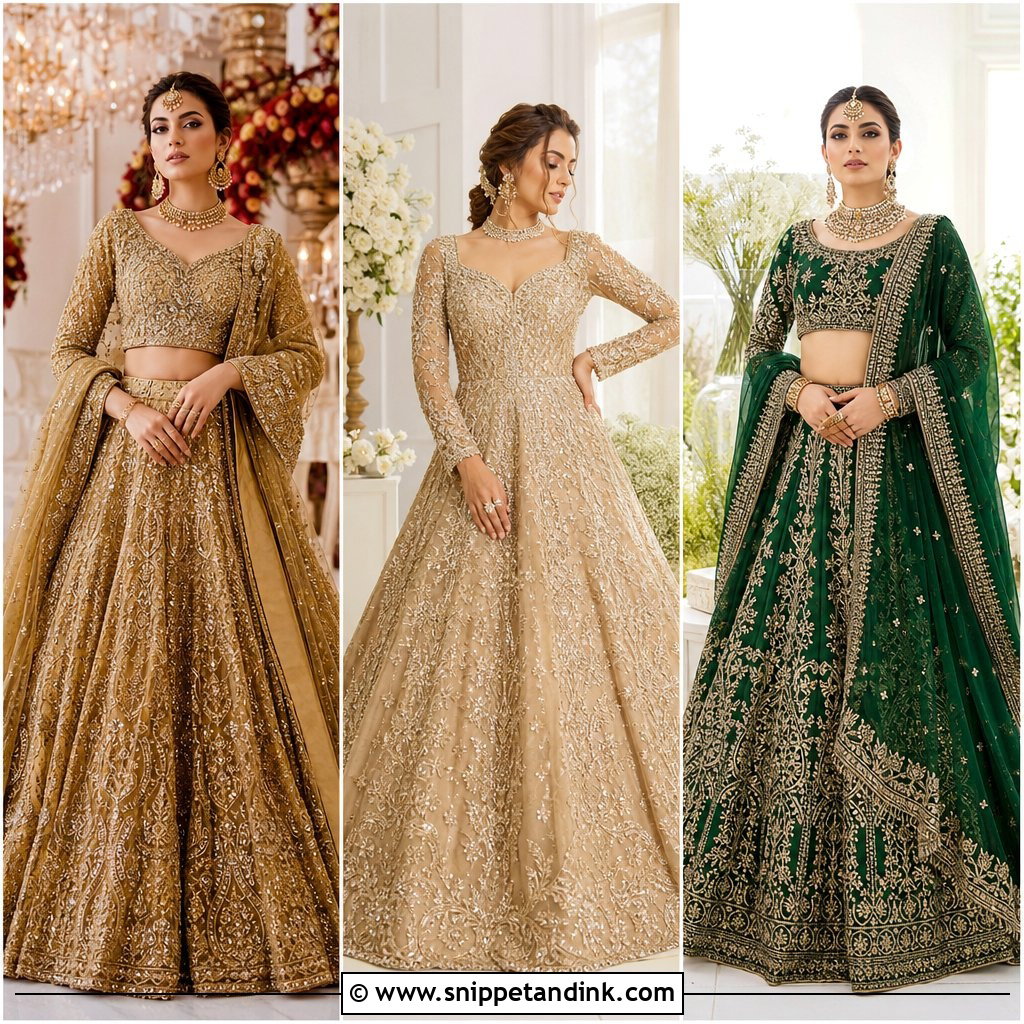
3. Gold Barat Bride Lehenga
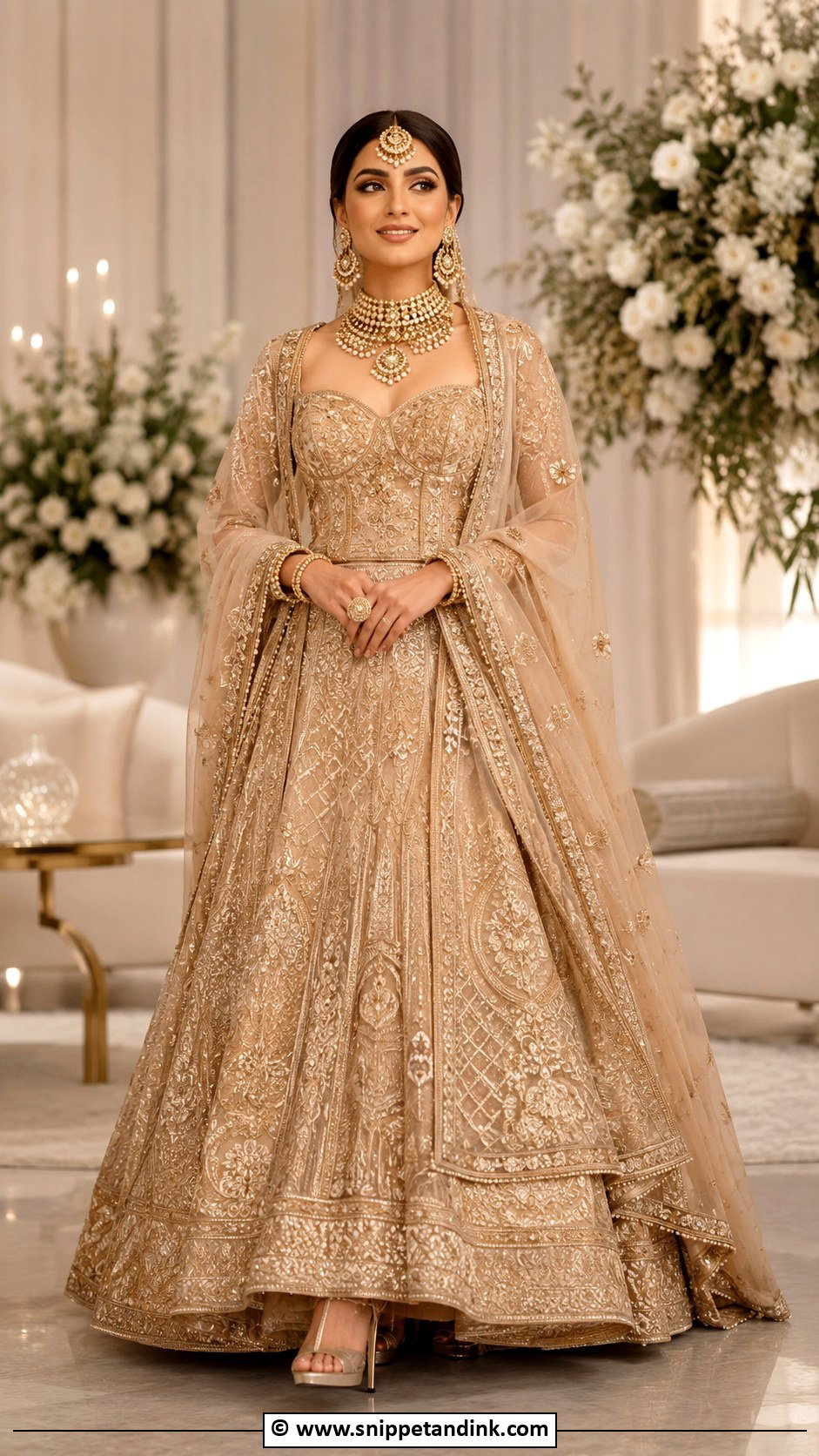
Gold gives a glowing, grand look without a loud color. Champagne gold, antique gold and dull gold each suit different skin tones, so hold swatches to your face in daylight; brassy yellow gold can make some complexions look sallow. A heavily embroidered lehenga, structured blouse and sheer dupatta look elegant from every angle. Polki, pearl details and soft gold heels keep it cohesive. Luminous skin, soft contour, brown liner and a nude pink lip suit the glow.
4. Ivory And Red Barat Bride Lehenga
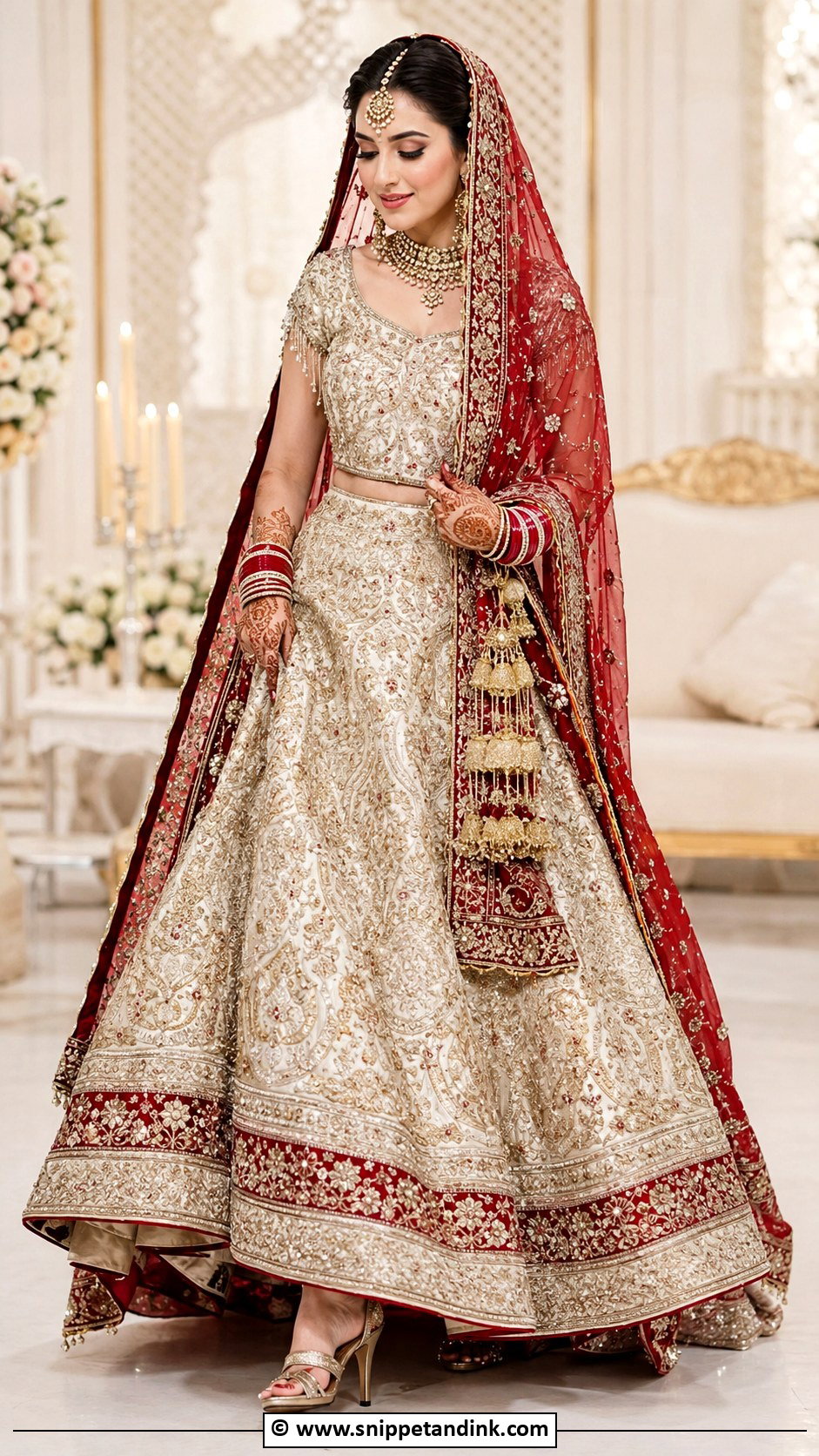
Ivory with red keeps tradition in the borders and dupatta while the ivory base softens everything. The contrast also makes embroidery and silhouette show up clearly in photos. A full lehenga with red resham and gold work, plus a red head dupatta, gives a strong bridal finish. Ivory marks easily, from mehndi stains to makeup on the neckline, so I keep a clean cloth and a dupatta guard near the bride until the photos are done. Kundan, gold or pearl jewelry, soft eyes and a red lip tie it together.
5. Pink Barat Bride Lehenga
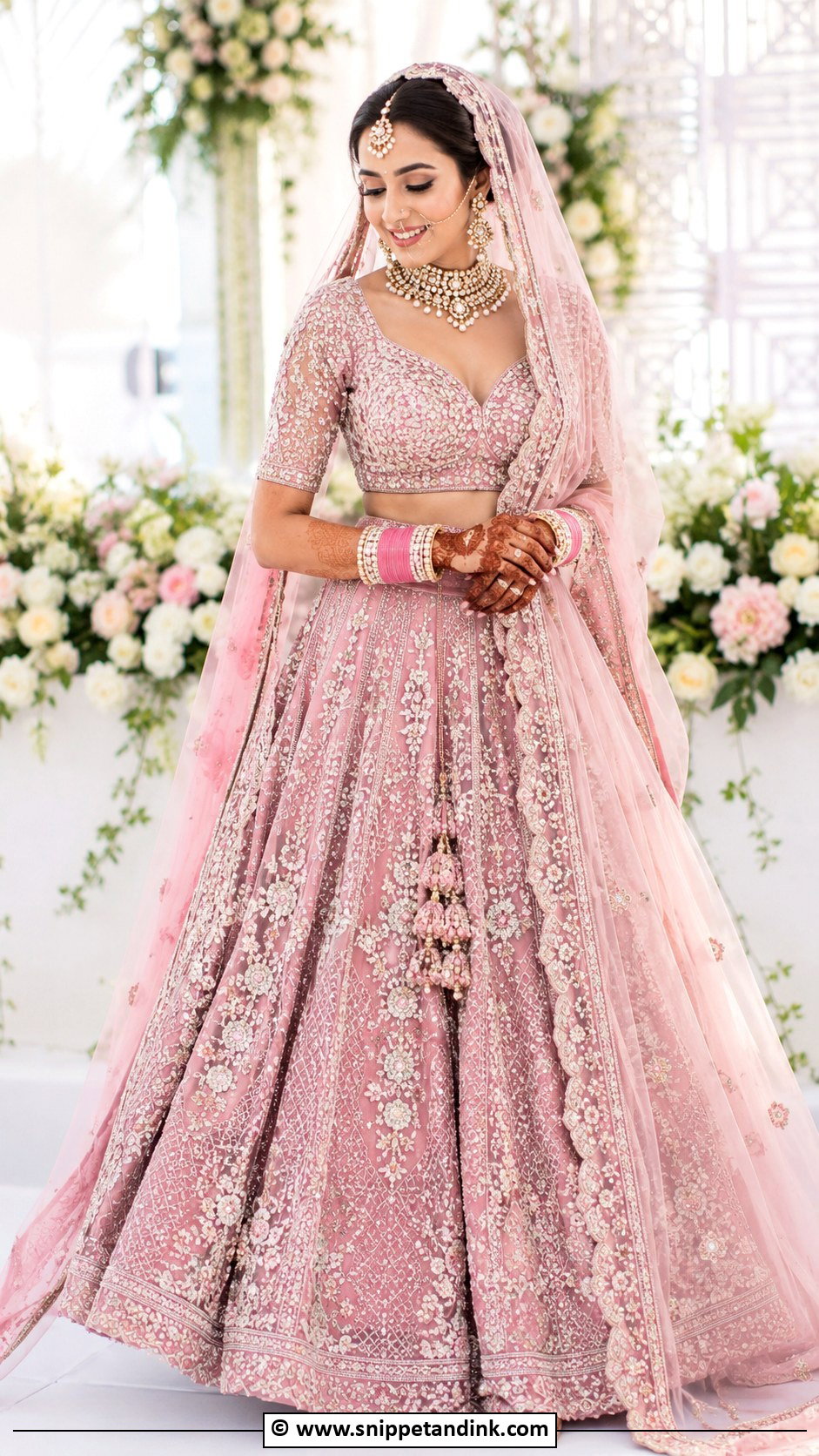
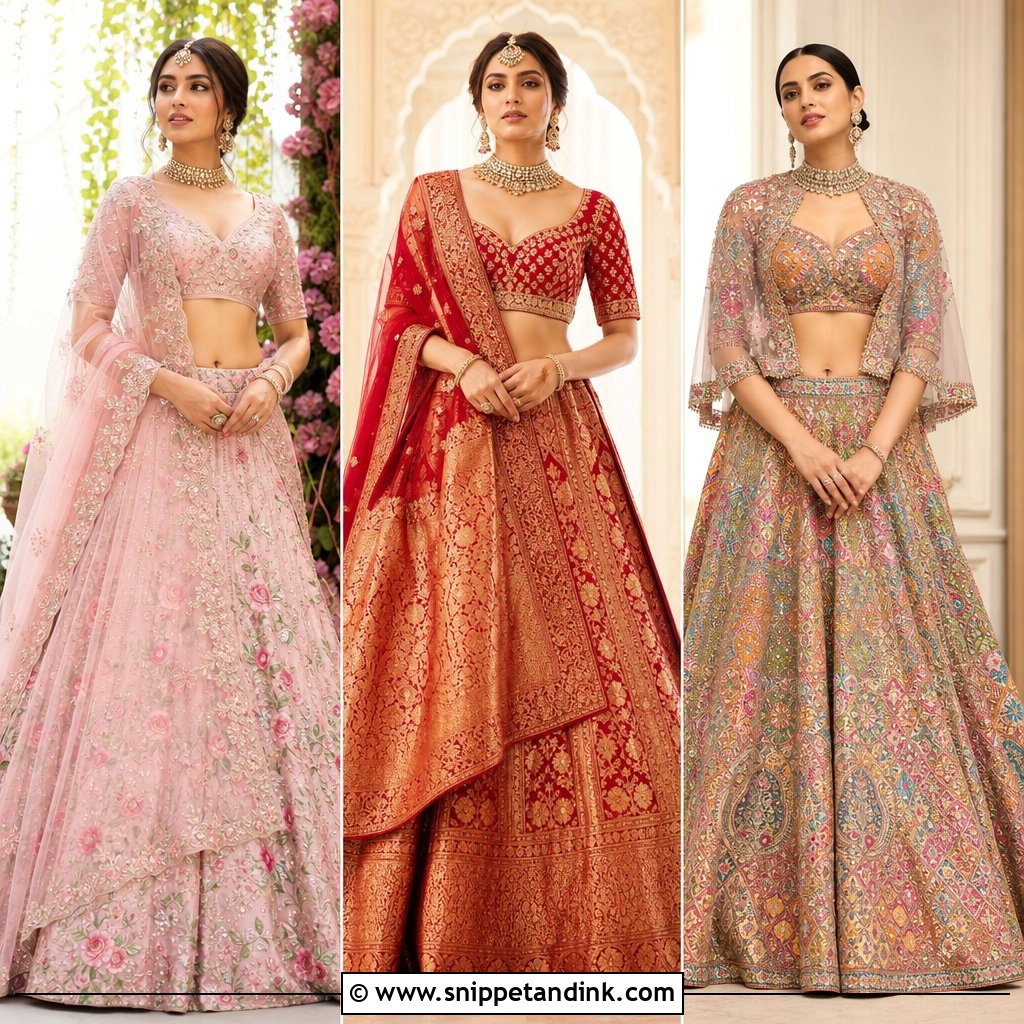
A pink Barat bride lehenga can be soft rose, dusty pink or bright rani. For it to read as Barat rather than mehndi, the work has to be bridal level: heavy embroidery, a full skirt and a dupatta with a deep border. Antique gold work grounds pink in tradition; silver makes it cooler. Polki, pink-toned bangles and embellished heels suit it, with flushed cheeks, lashes and a rose lip. Daytime and early evening ceremonies with light décor show it best.
6. Rani Pink Barat Bride Lehenga
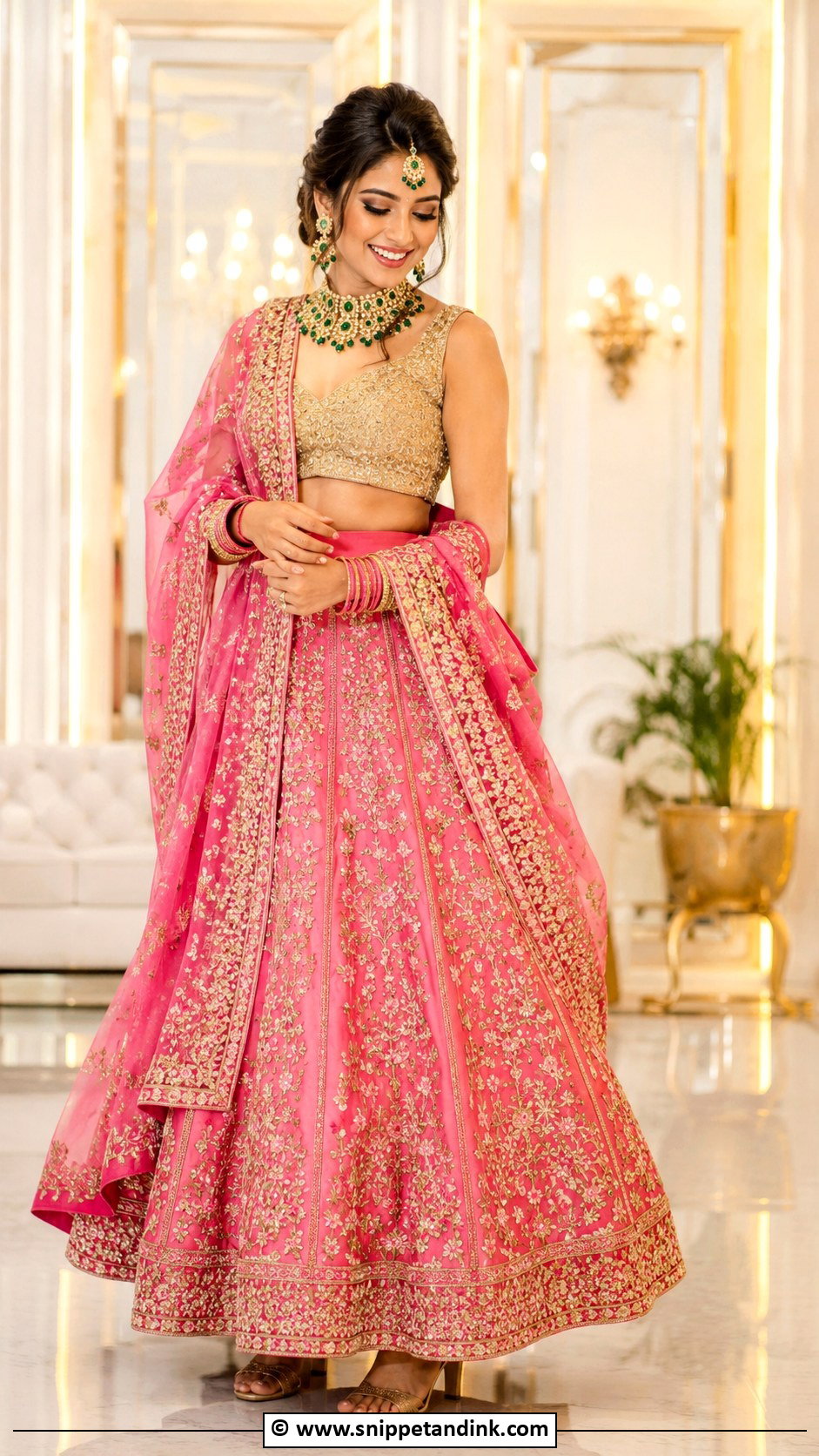
Rani pink is bright, joyful and younger in feeling than deep red, while still completely traditional. Gold embroidery, mirror work or classic motifs suit it. Emerald stones or beads make a vivid contrast. One thing I’d watch: such a bright pink can cast color onto the face in close-up photos, so the makeup artist should keep the lip soft and the skin well balanced rather than adding more pink. A fitted blouse, full lehenga and a matching or contrasting head dupatta complete it.
7. Velvet Barat Bride Lehenga
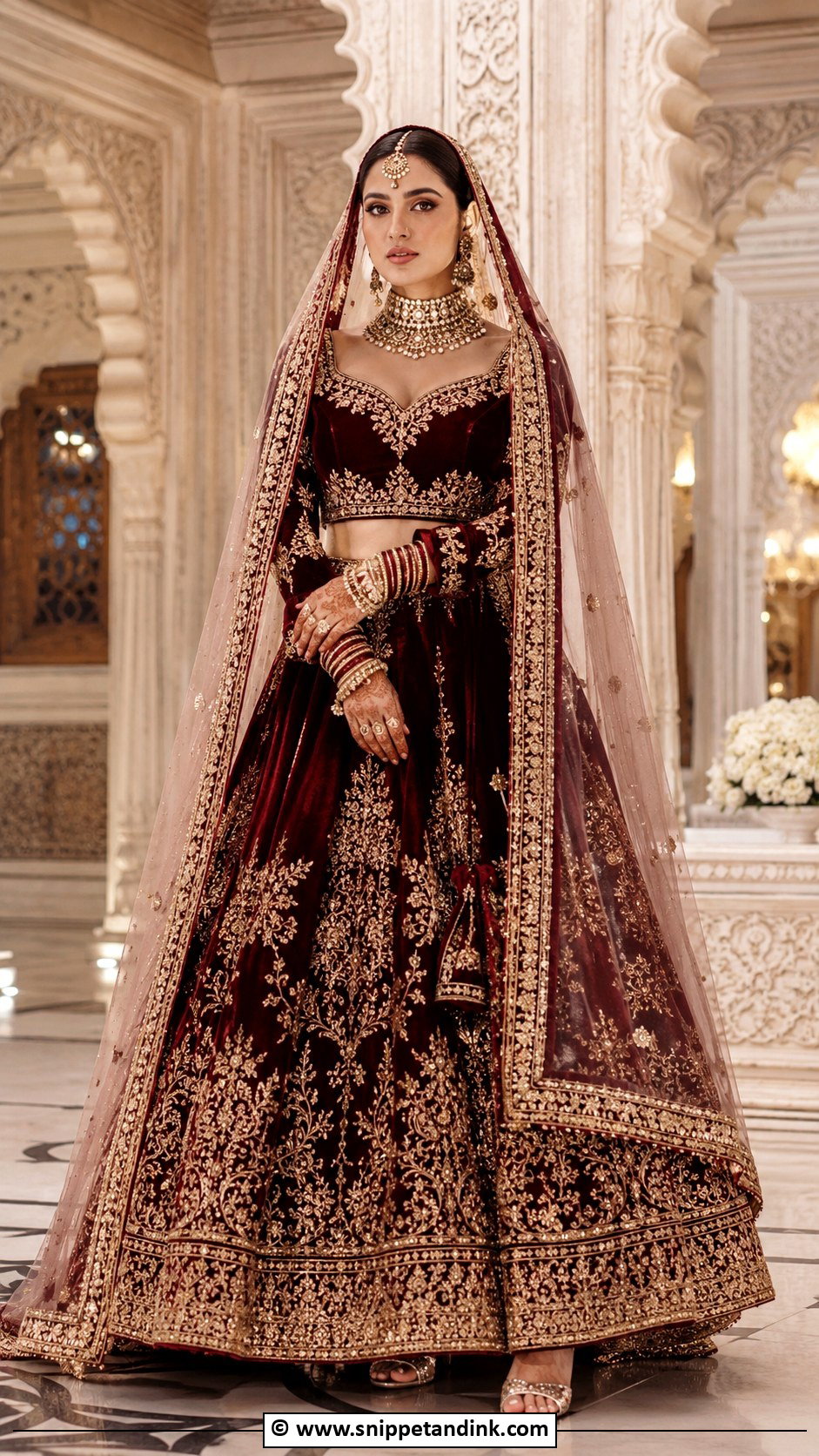
Velvet looks royal and suits winter and evening Barats. Deep red, maroon, emerald, navy and plum velvet all take gold embroidery richly. Velvet is heavy and warm, though, so keep the skirt’s volume controlled; a full velvet lehenga in a heated hall can become exhausting. A velvet blouse with a lighter net dupatta balances the weight. Velvet also crushes where you sit, so steam it the day of. Antique jewelry, statement earrings, stacked bangles and a warm nude or berry lip finish it.
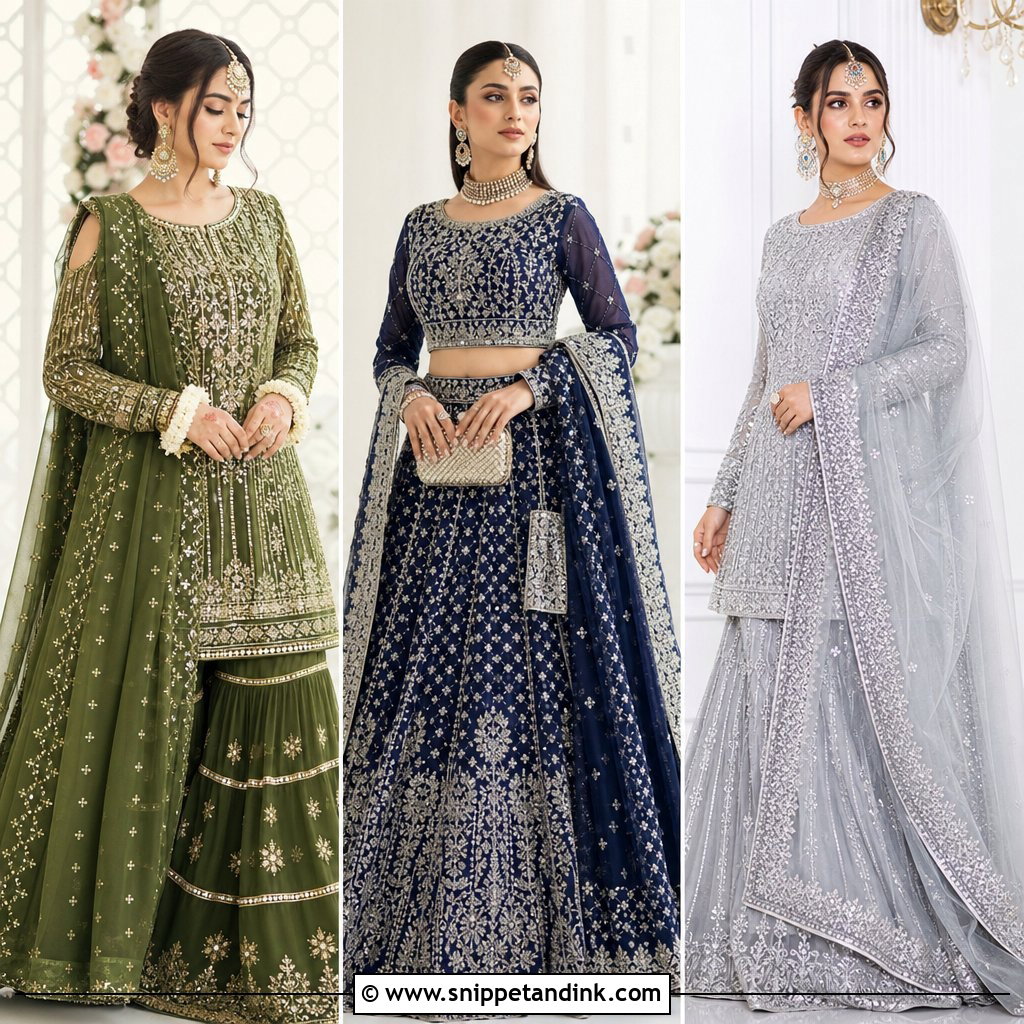
8. Red And Gold Barat Bride Sharara
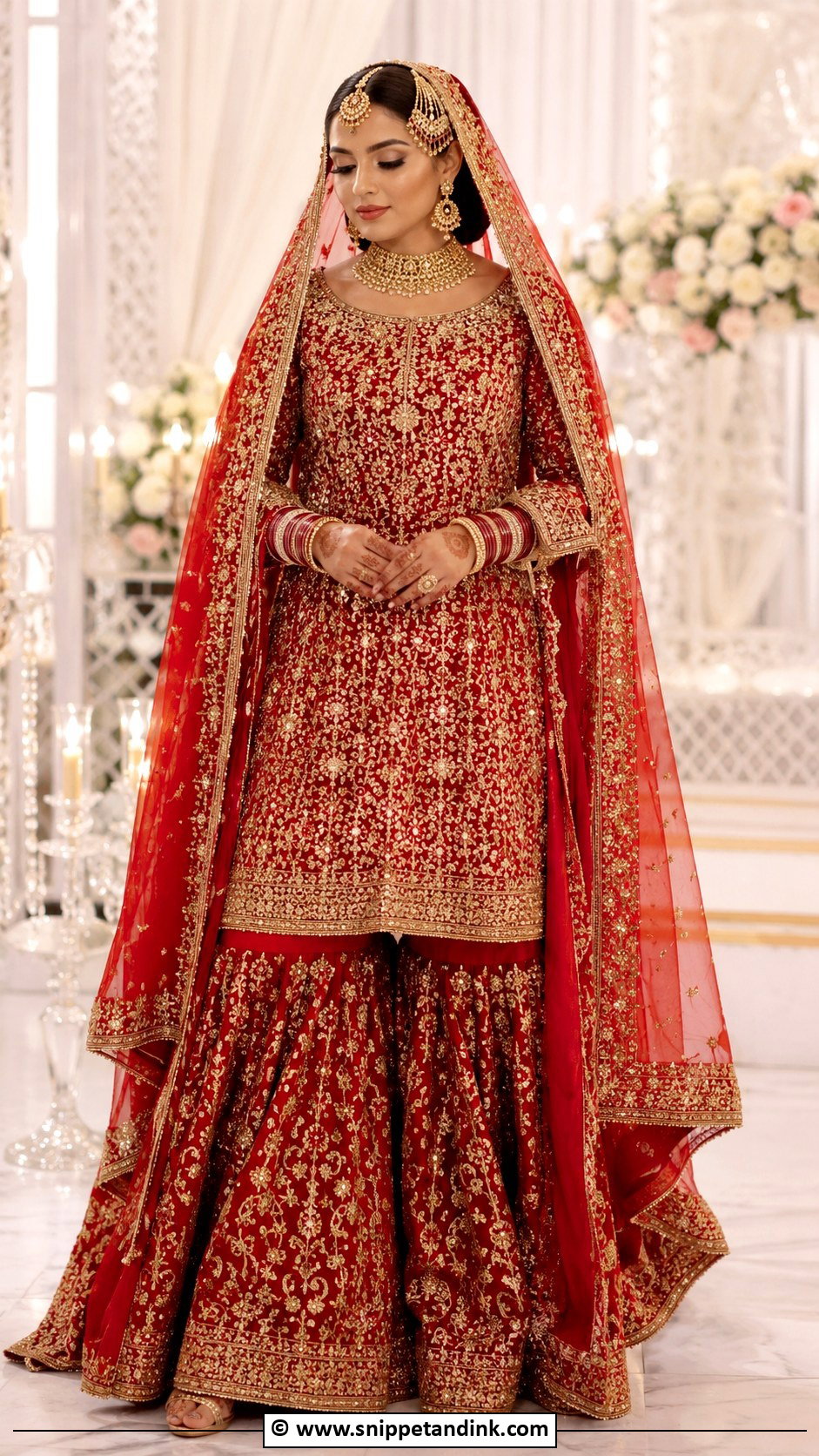
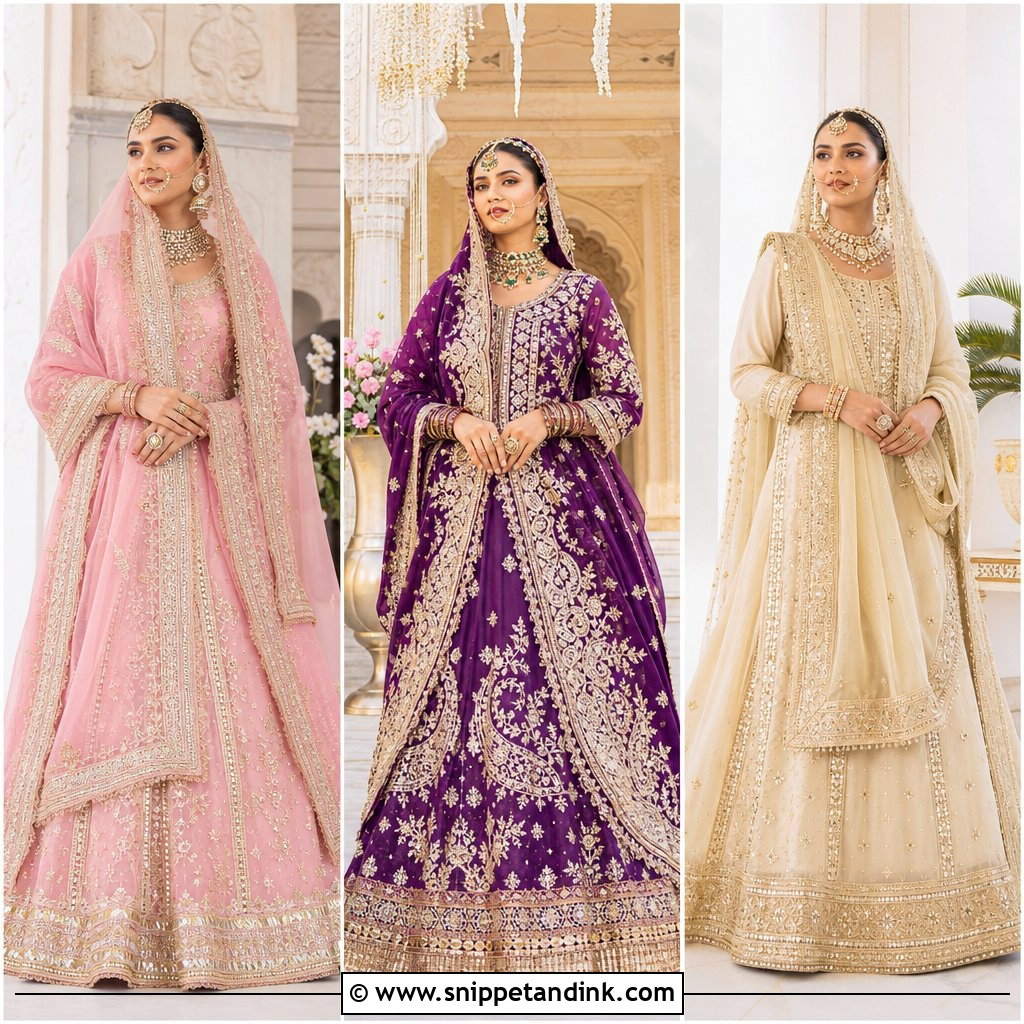
A red and gold sharara gives movement and charm with a different shape from a lehenga. Pair a short or mid-length embroidered kameez with wide flared sharara pants and a detailed dupatta; gota, zardozi, sequins or dabka on red give the classic finish. The volume sits at the bottom, so the top must be structured and well fitted. Shararas are easier to walk and climb stage steps in than a full lehenga, which many brides appreciate by evening. Matha patti, choker, long necklace and bangles, with soft curls or a low bun under the dupatta.
9. Gharara Barat Bride Outfit
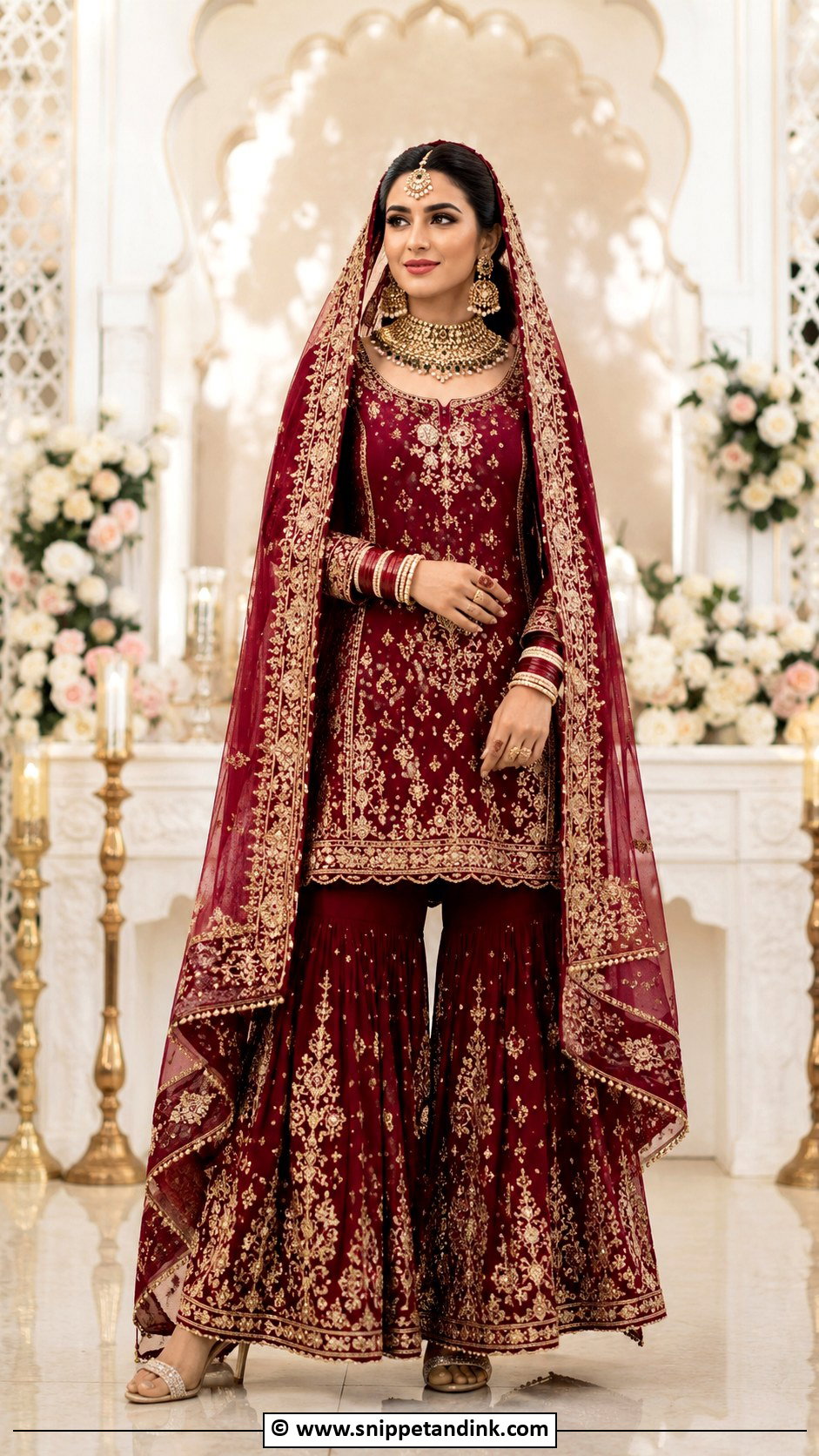
A gharara Barat bride outfit is heritage dressing at its most graceful. The fitted upper leg and flared knee joint, usually marked with a decorated band, give a shape that looks distinctive in photos and when walking. Red, maroon, gold, blush or rust all suit it, and a wide border at the hem adds richness. Have the knee joint fitted with you standing and sitting; if it sits too high, the flare looks short. Kundan, passa, jhumkas and bangles, with the dupatta over the head and one shoulder.
10. Long Shirt Barat Bride Lehenga
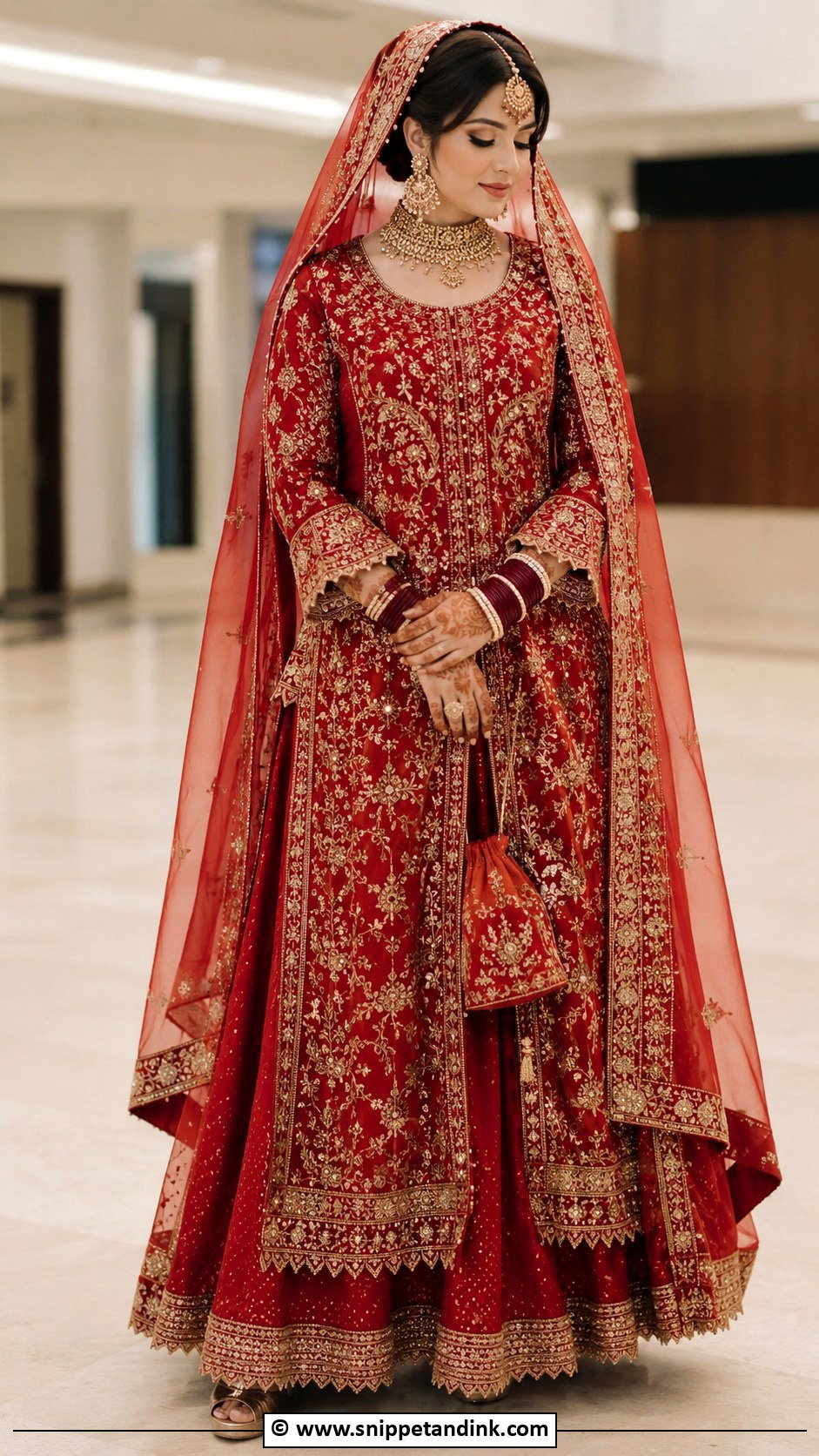
A long shirt over a lehenga gives a graceful, modest silhouette that still feels grand. The long kameez creates a vertical line that flatters many body types. Embroidery that runs from the neckline to the hem looks most finished. Red, maroon, gold and deep pink are classic, and ivory with red accents works too. Check the side slits at the fitting; slits cut too high open when you sit cross-legged for the nikah. A sheer dupatta over the head, traditional jewelry, a neat bun and embellished heels complete it.
11. Peplum Barat Bride Lehenga
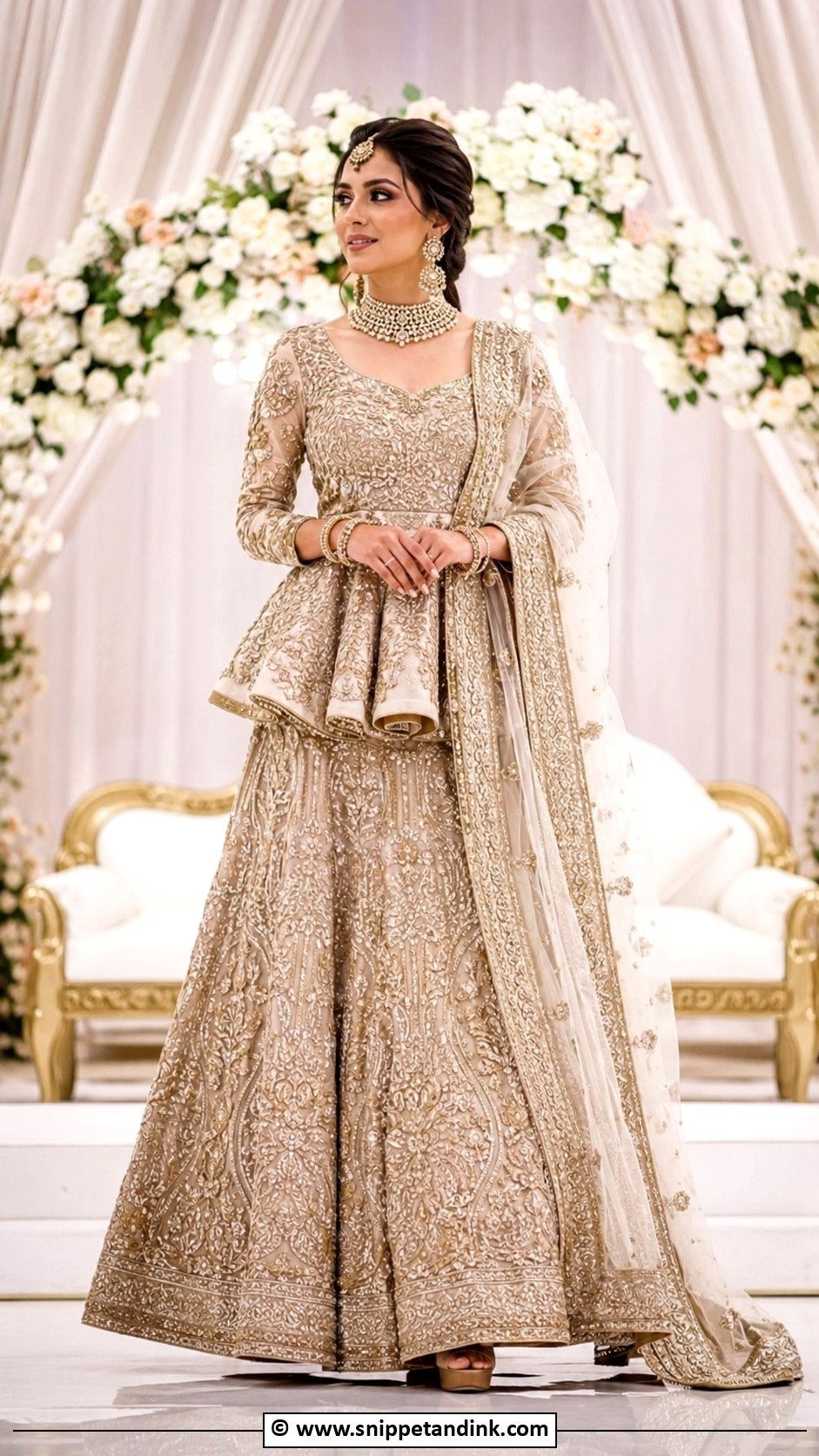
Peplum tops bring a modern line to the Barat when the work stays heavy. The peplum defines the waist and adds structure over a full lehenga. Red, maroon, champagne or blush with rich embroidery on bodice and hem keeps it bridal, and a wide-bordered dupatta makes it formal. Peplums can add bulk at the hip if the flare is too wide, so ask for a shorter, narrower peplum if you’re petite. Choker, earrings, bangles and a headpiece if the neckline allows.
12. Trail Lehenga Barat Bride Look
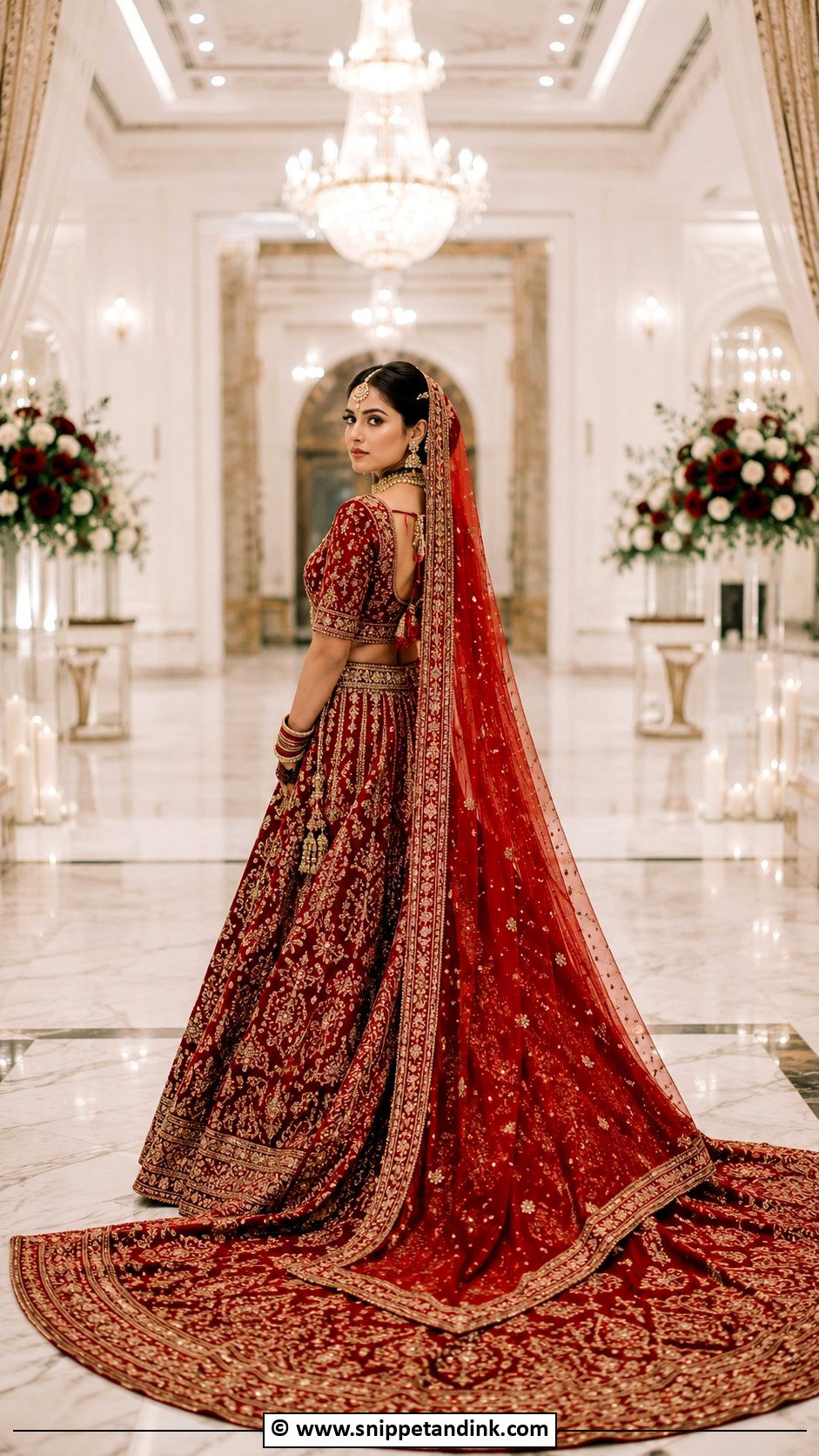
A trail lehenga is built for the entrance. The extended back adds movement and a couture feel, and it needs structured fabric, detailed embroidery and a perfectly fitted blouse to carry it. Red, gold, ivory and maroon trails make the strongest impact. Keep the dupatta secure but not bulky. Assign someone to manage the trail on stairs and stage, because trails catch on stage edges and get stepped on in crowds. A spacious venue and a formal stage make the most of it.
13. Double Dupatta Barat Bride Lehenga
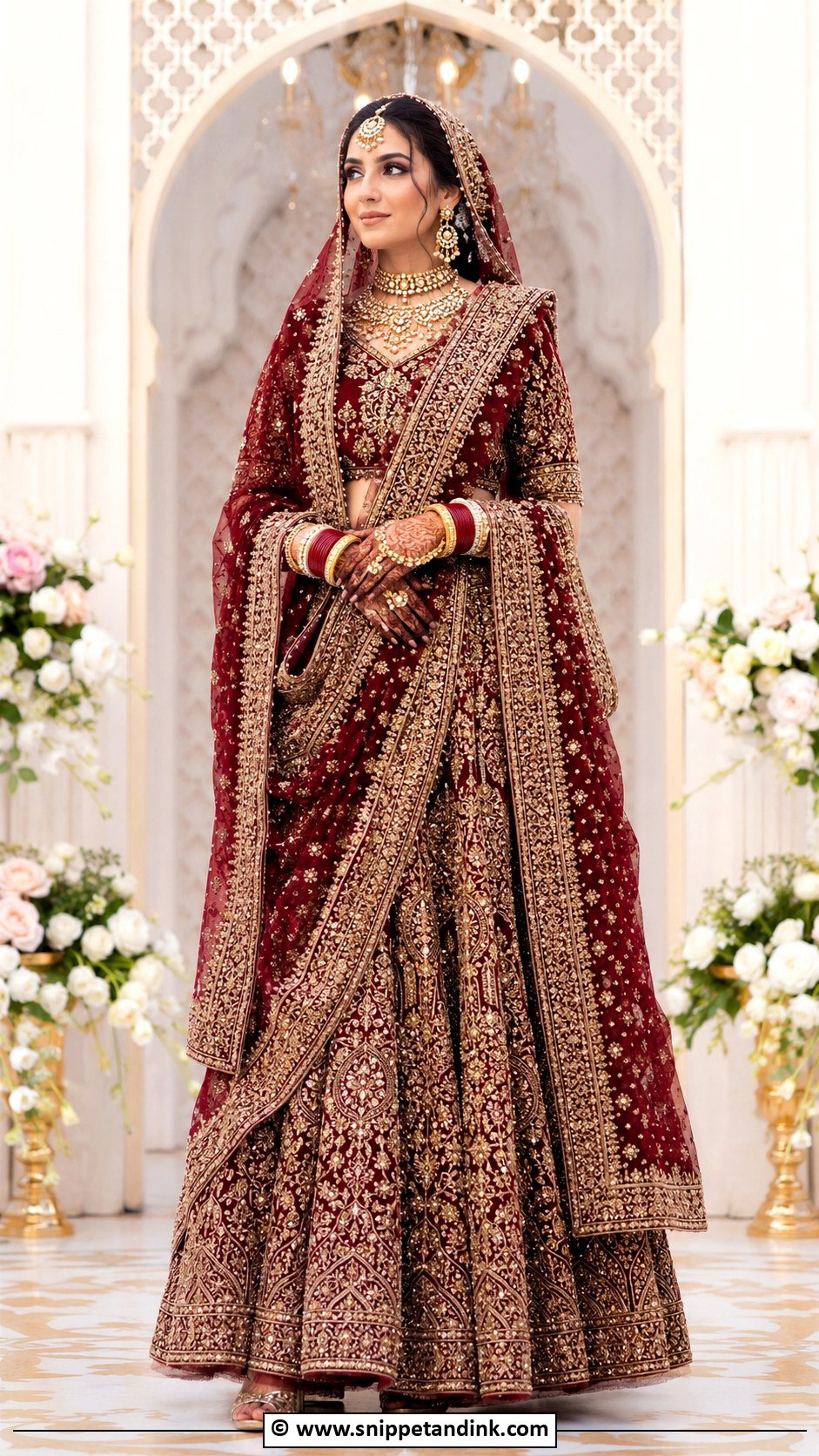
A double dupatta gives the layered, complete look many families expect at Barat. One goes over the head; the second drapes across the shoulder or the front. I always put the lighter net or organza dupatta on the head and the heavier one on the body; a heavy dupatta on the head drags the hairstyle back within an hour. Red with gold, maroon with antique work, or blush with champagne embroidery all suit it. Adjust the drape so the necklace stays visible.
14. Pastel Barat Bride Lehenga
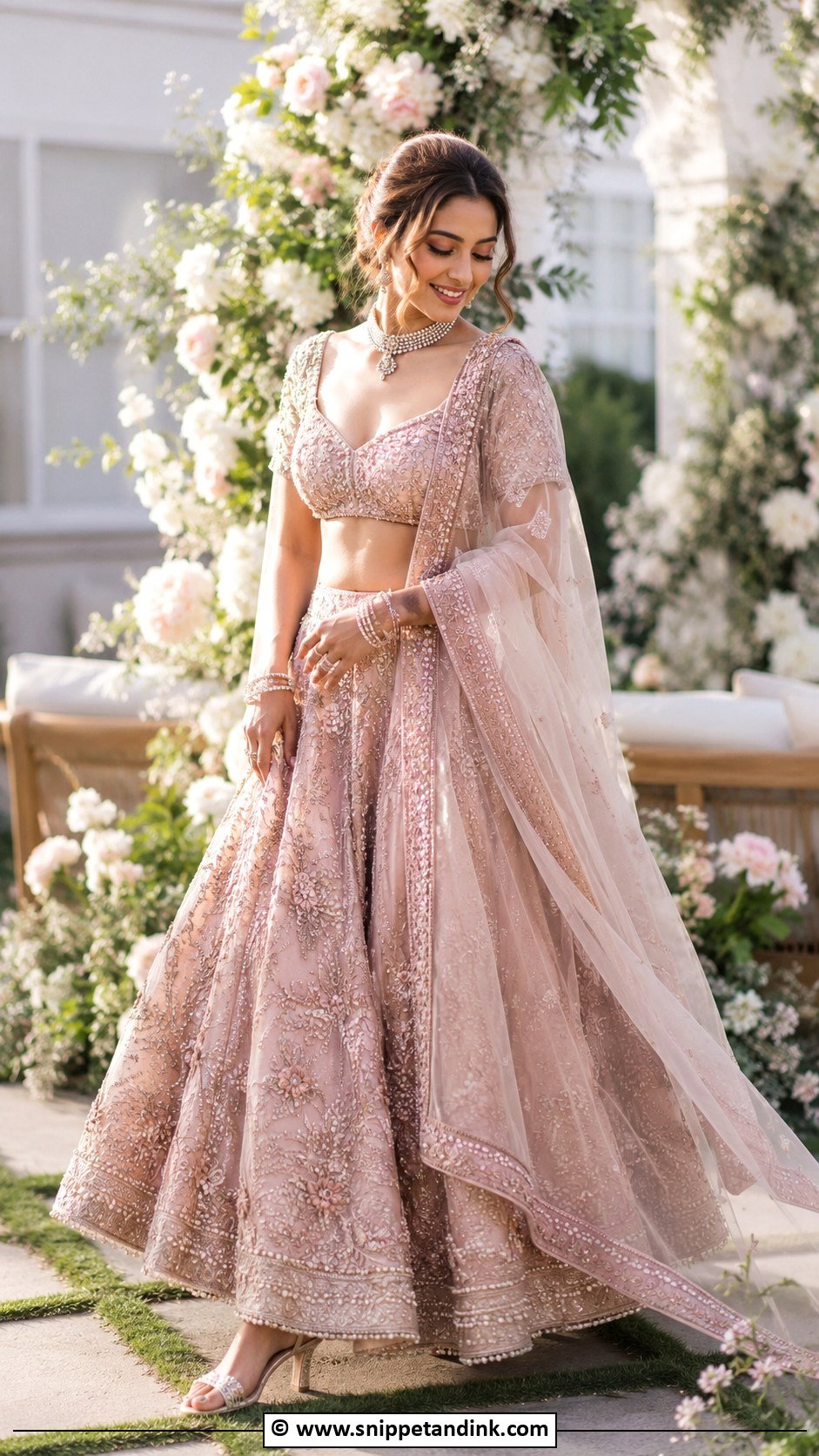
Pastels can be completely bridal if the embroidery is rich enough. Blush, peach, powder pink, mint, ivory and champagne all work with heavy handwork, layered borders and a full dupatta. Match jewelry to the undertone: gold for warm pastels, silver or pearl for cool ones. Pastels can wash out on camera under strong flash, so defined lashes and a little more contour than usual help the face hold its shape in photos. Daytime weddings and garden venues show pastels best.
15. Champagne Barat Bride Outfit
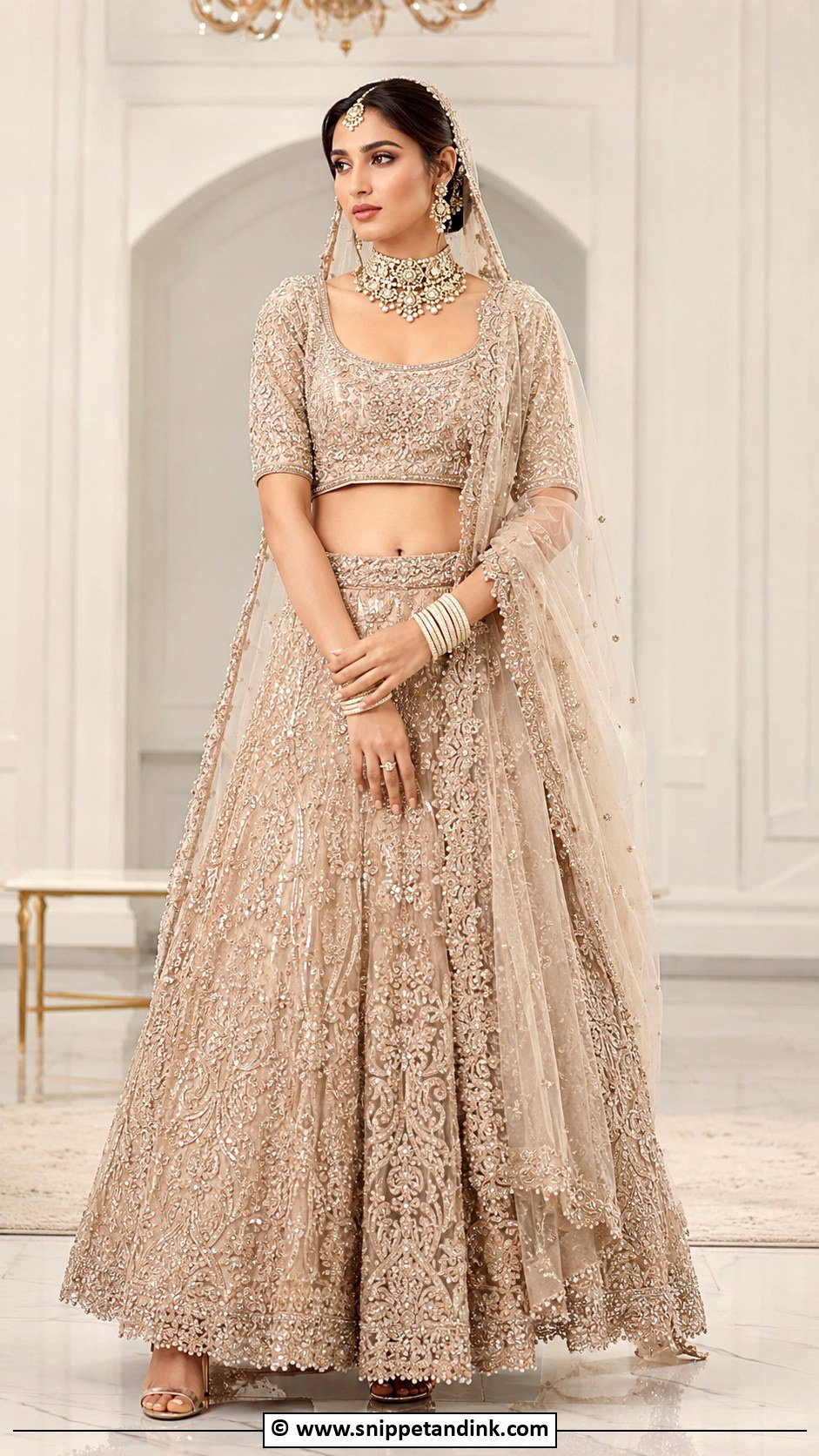
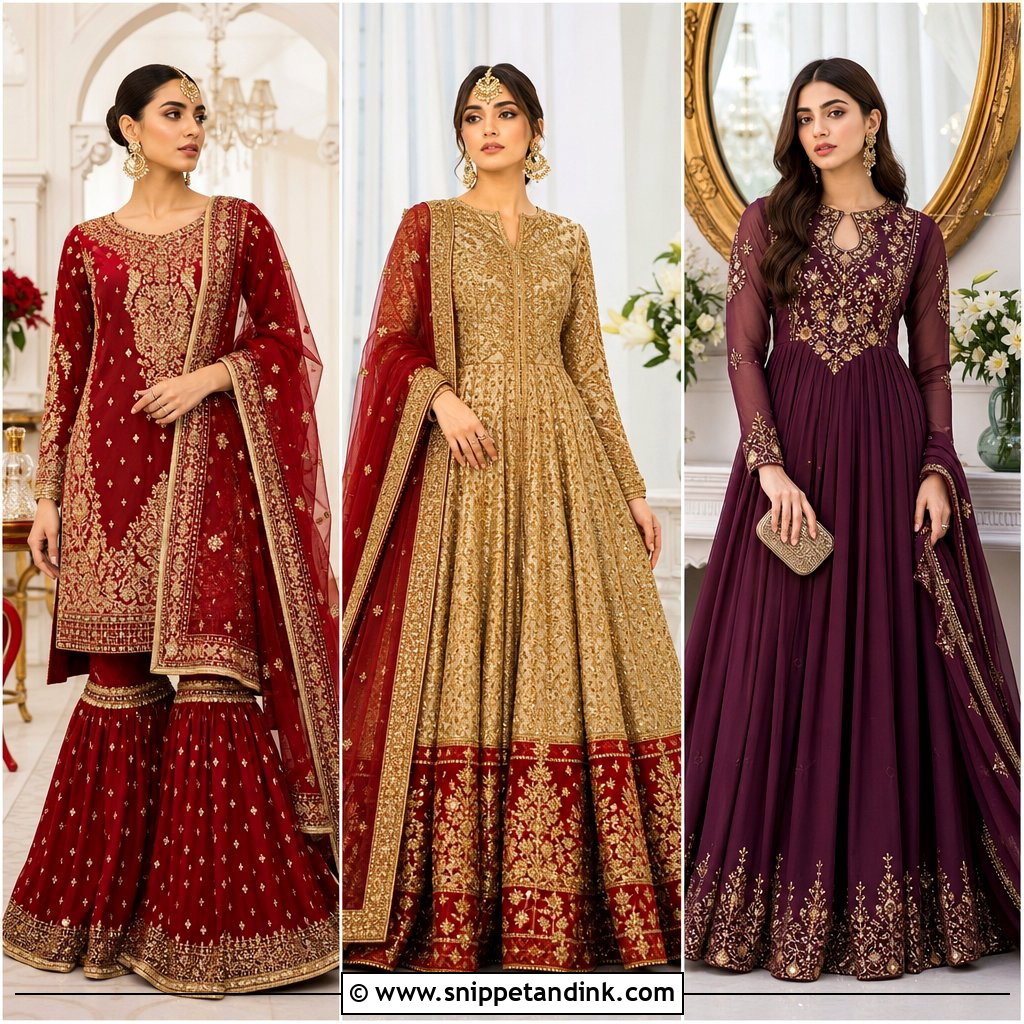
Champagne sits between gold, beige and ivory, which makes it neutral but rich. A champagne lehenga or long shirt with sequins, pearls, zari or crystal work catches wedding lights well. A sheer dupatta with a detailed border frames the face. Champagne and skin can blend together in photos if the tones are too close, so a slightly deeper or warmer lip helps the face stand out. Pearl, polki or diamond-style jewelry, champagne eyeshadow and soft contour suit understated grandeur.
16. Emerald Green Barat Bride Lehenga
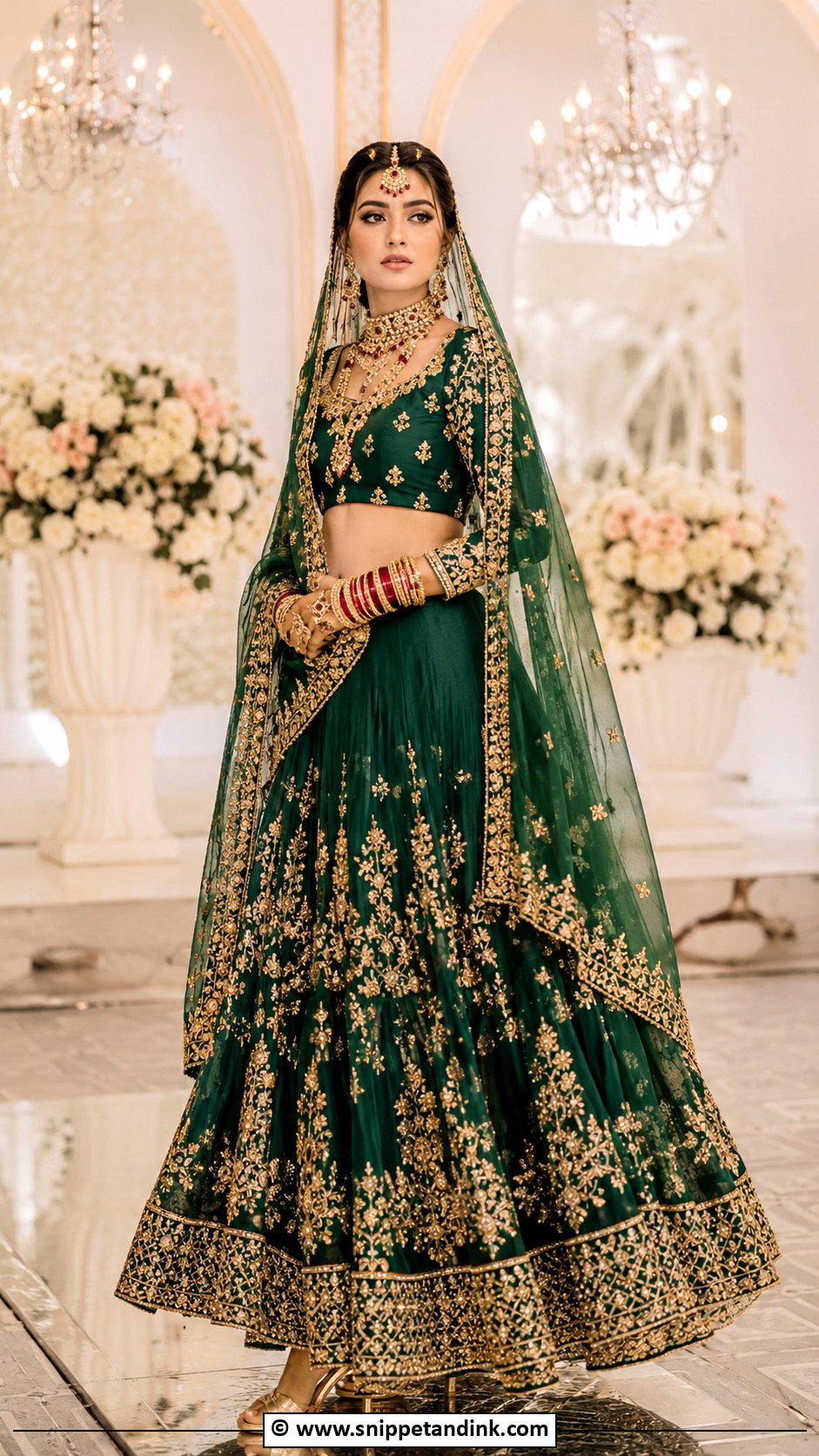
Emerald is regal and unexpected. Gold embroidery makes it warm and luxurious; silver or crystal work gives a cooler evening look. Pair with a matching blouse and a dupatta in green, gold or deep red. Ruby jewelry, polki sets or plain gold all suit it, though I’d avoid emerald jewelry on emerald fabric, since the stones disappear against the cloth. Defined eyes, glowing skin and a neutral lip keep it balanced for a bride who wants to stand out.
17. Rust Barat Bride Lehenga
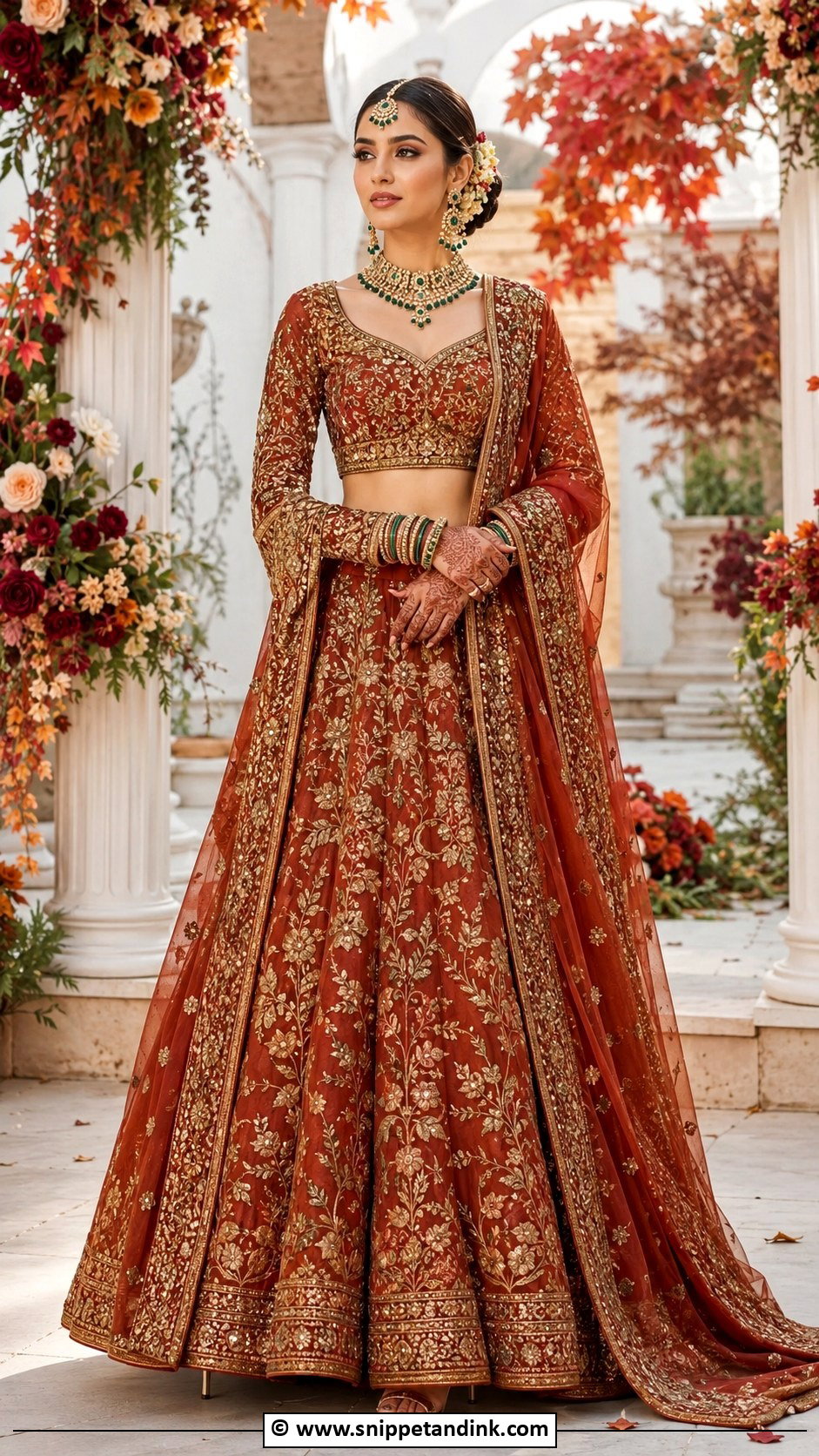
Rust stays in the red family while feeling fresh and earthy. Antique gold, copper, bronze and deep maroon embroidery all look rich against it. A full lehenga, structured blouse and heavy-bordered dupatta complete the Barat look. Gold, pearls or green stones add contrast. Rust flatters warm and olive skin especially well; on very cool undertones it can look muddy, so try it on near your face first. Bronzed makeup and a terracotta or nude lip suit fall weddings and outdoor venues.
18. Burgundy Barat Bride Outfit
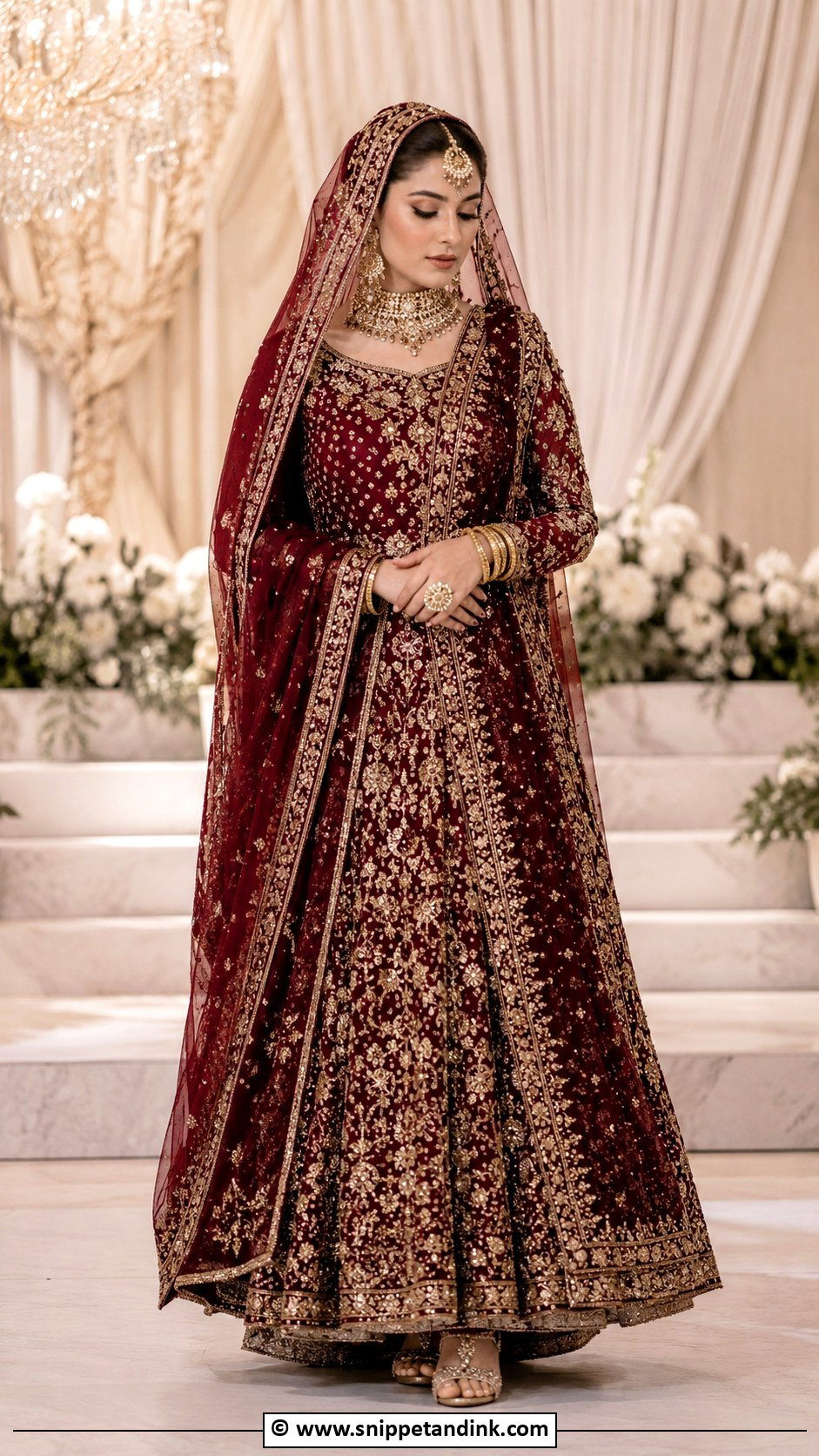
Burgundy is darker than red and softer than black, a romantic color for evening Barats. A burgundy lehenga, sharara or long shirt with antique gold or champagne embroidery suits it, and velvet, raw silk and organza details all add texture. A matching dupatta gives a rich monochrome effect; a gold dupatta adds contrast. Dark colors absorb light, so embroidery needs enough metallic work to show in photos. Polki jewelry, a bold ring, traditional bangles, soft smoky eyes and a muted berry lip finish it.
19. Ivory Barat Bride Lehenga
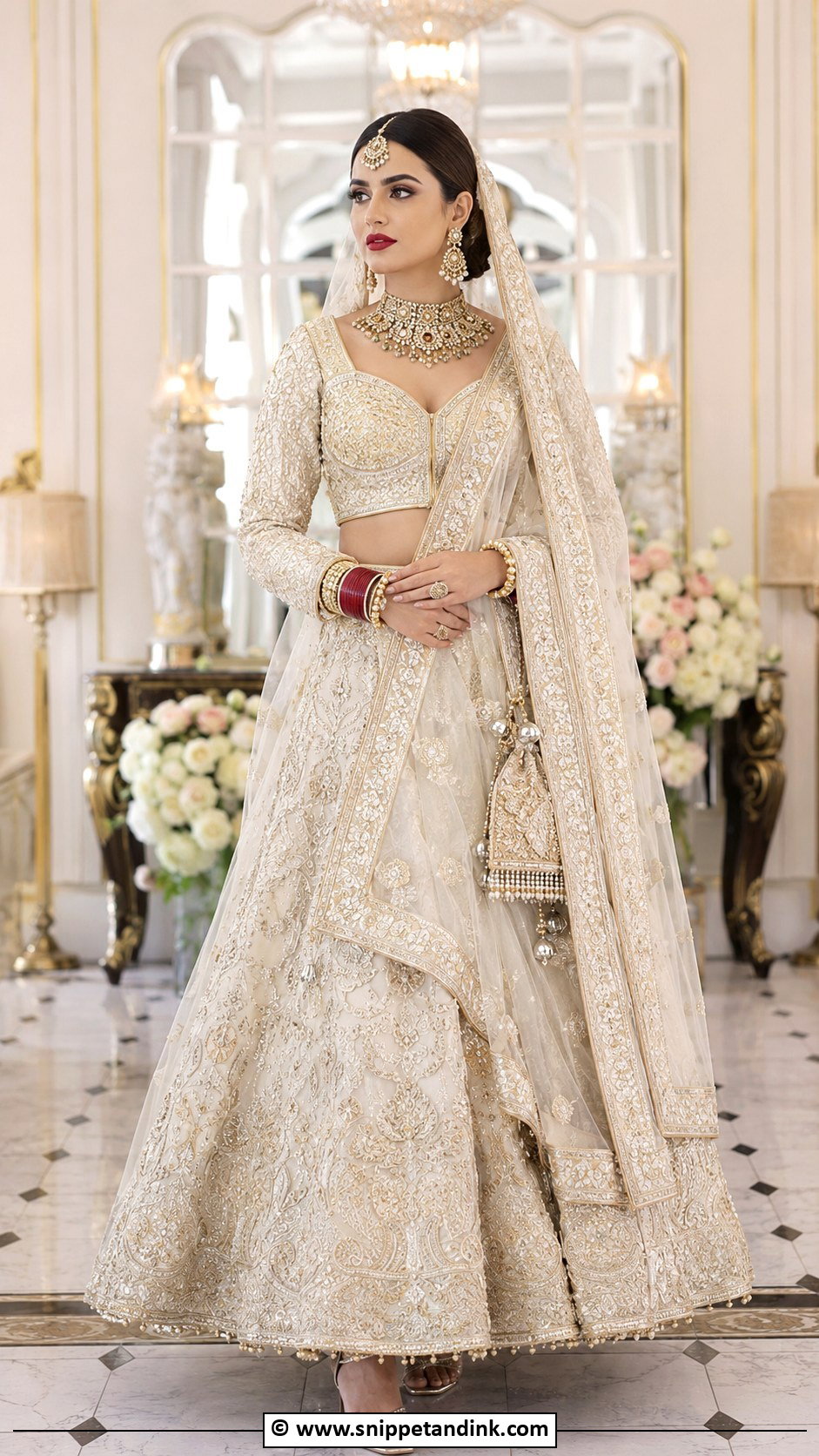
Ivory can look completely bridal with heavy work and traditional accessories. Depth comes from gold, silver, red or pearl embroidery so the outfit doesn’t feel plain. A full ivory lehenga, structured blouse and dramatic dupatta give a soft but grand look. Red jewelry accents, a red lip or a red-bordered dupatta link it to tradition. Ivory reflects a lot of light, so makeup needs definition at the brows and eyes or the face looks washed out in flash photos. Pearl and polki also suit it.
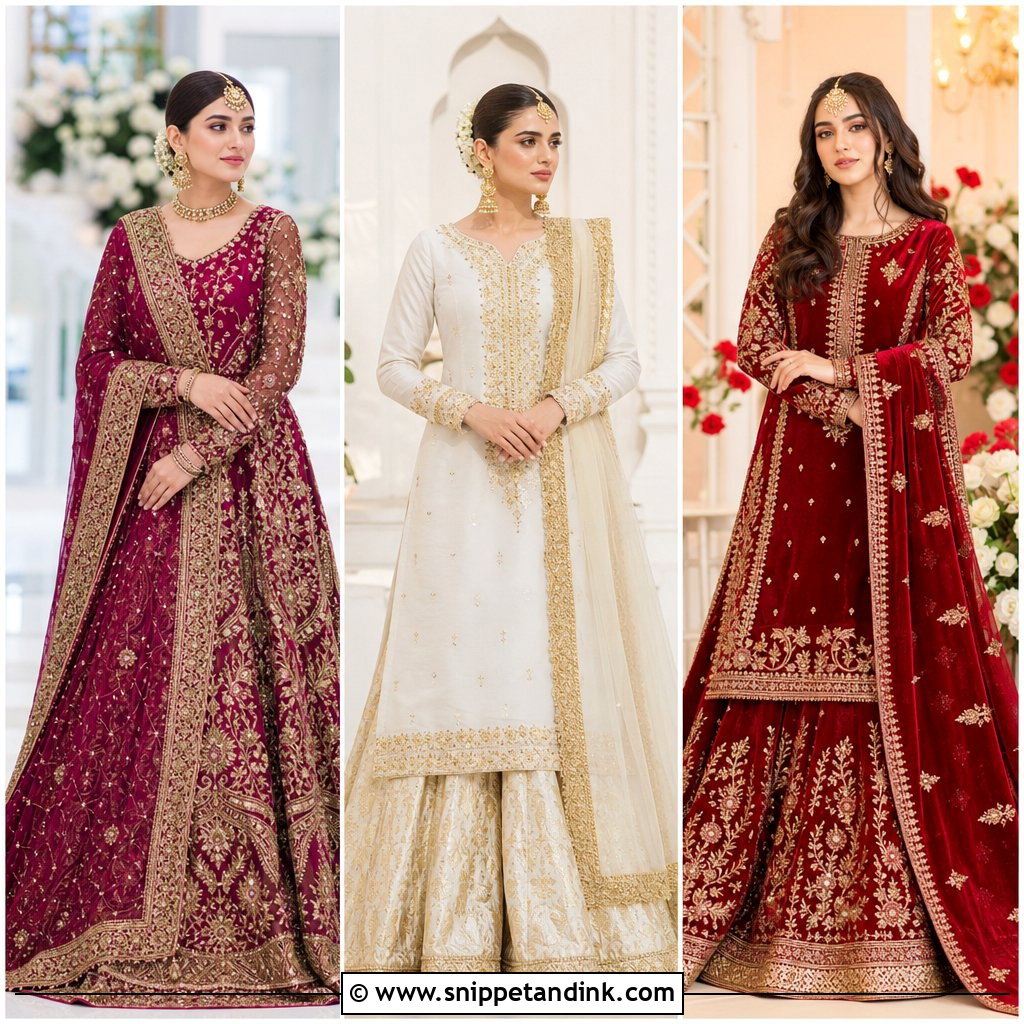


20. Red Saree Barat Bride Look
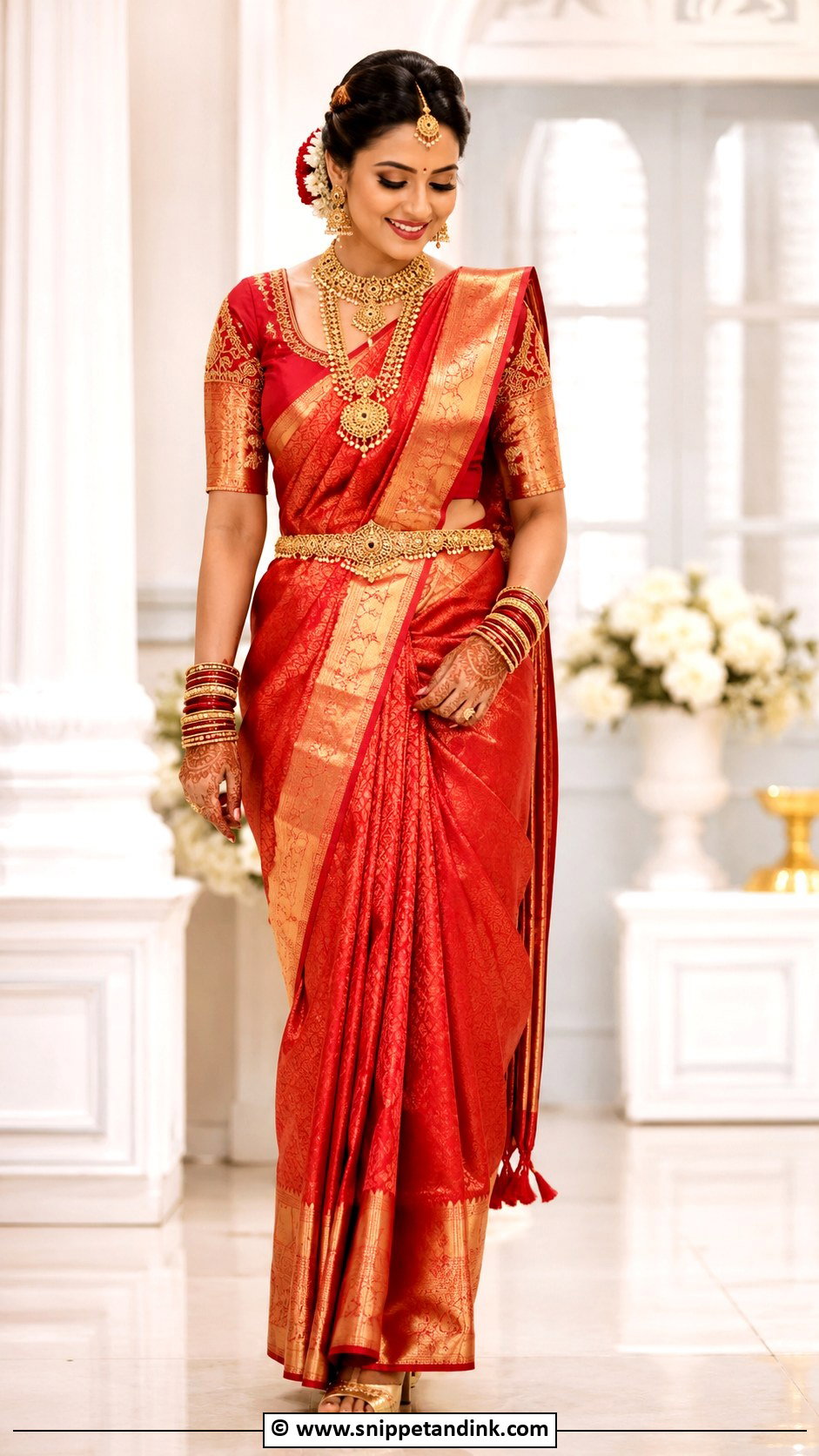
A red saree Barat bride look suits brides who prefer draping or a classic South Asian silhouette. Red silk, banarasi or a heavily embroidered saree with gold borders gives a strong bridal effect. A rich blouse and traditional jewelry complete it, with a veil or extra dupatta if you like. A saree has to be pinned at the pleats, the shoulder and the waist to survive a long event; a waist belt helps hold the drape. Bangles, matha patti, earrings, winged liner and a red or rose lip finish it.
21. Banarasi Barat Bride Outfit
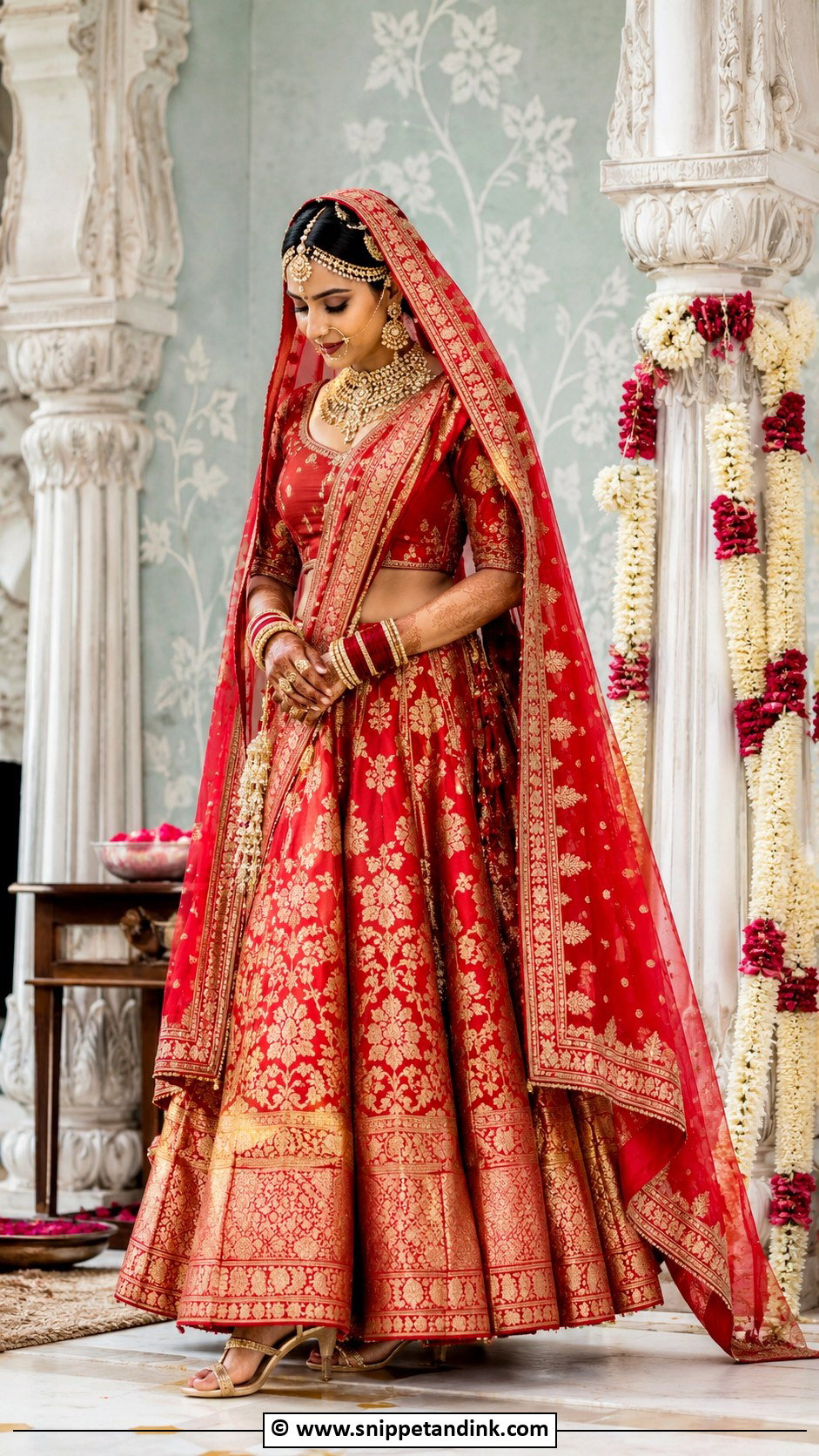
A Banarasi Barat bride outfit brings woven pattern and natural shine, worn as a lehenga, saree, gharara or long shirt set. Red, maroon, gold, pink and emerald Banarasi look most bridal. The weave already carries texture, so embroidery can be limited to borders, neckline and dupatta. Real silk Banarasi is lighter than a heavily embroidered lehenga, which makes it far easier to wear for many hours. A Banarasi dupatta over the head makes even a simpler outfit feel ceremonial.
22. Anarkali Barat Bride Dress
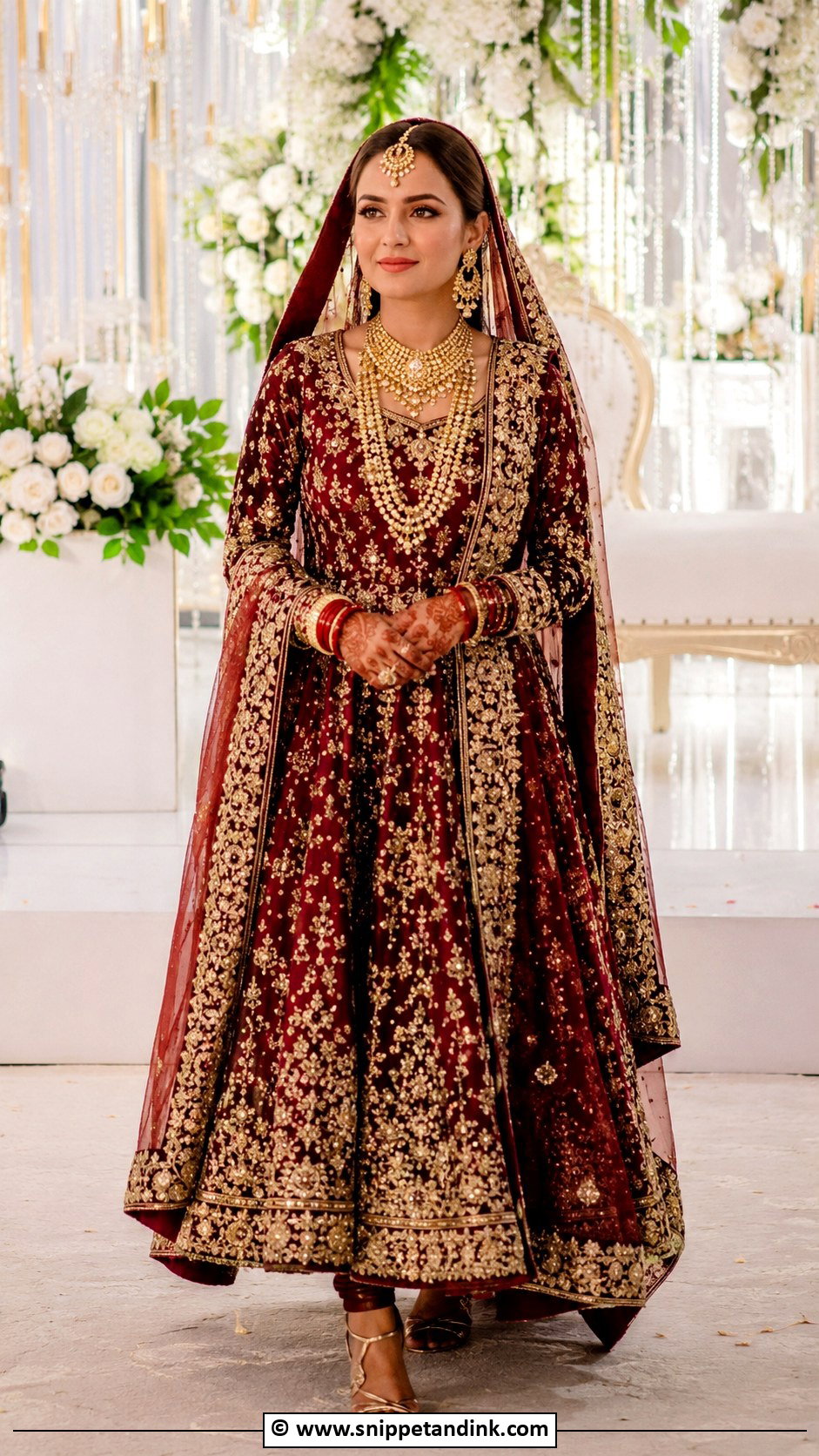
An Anarkali gives a flowing, princess-like line and more comfort than a lehenga. A heavily embroidered Anarkali in red, maroon, gold, blush or ivory over a churidar or slim pants, with a dupatta over the head, reads formal. The flare is cut from many panels, and the more panels, the more it swings when you walk; ask how many your design uses. Statement earrings, a choker or layered necklace, bangles and embellished heels finish it, with soft eyes and flushed cheeks.
23. Jacket Lehenga Barat Bride Look
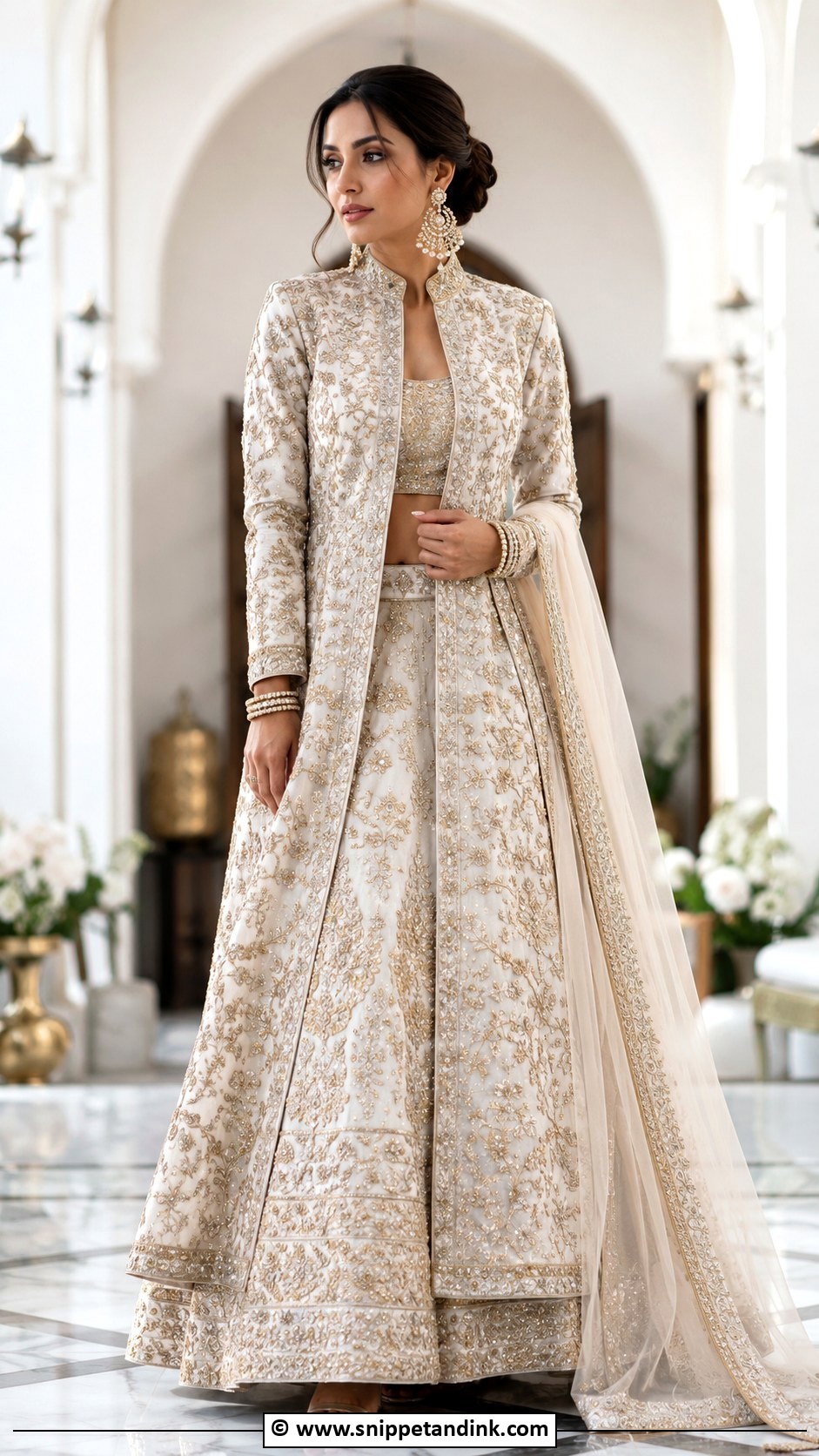
Jacket lehengas add structure and a modern edge. The jacket can be long, short, open-front or fully embroidered. Silk, velvet, tissue or organza with detailed work keep it formal. A long jacket gives a powerful line; a cropped one feels contemporary. Jackets add warmth, so they suit winter Barats better than summer ones. Keep jewelry focused so it doesn’t fight the jacket neckline. A sleek bun, soft glam makeup and heels complete it.
24. Cape Lehenga Barat Bride Outfit
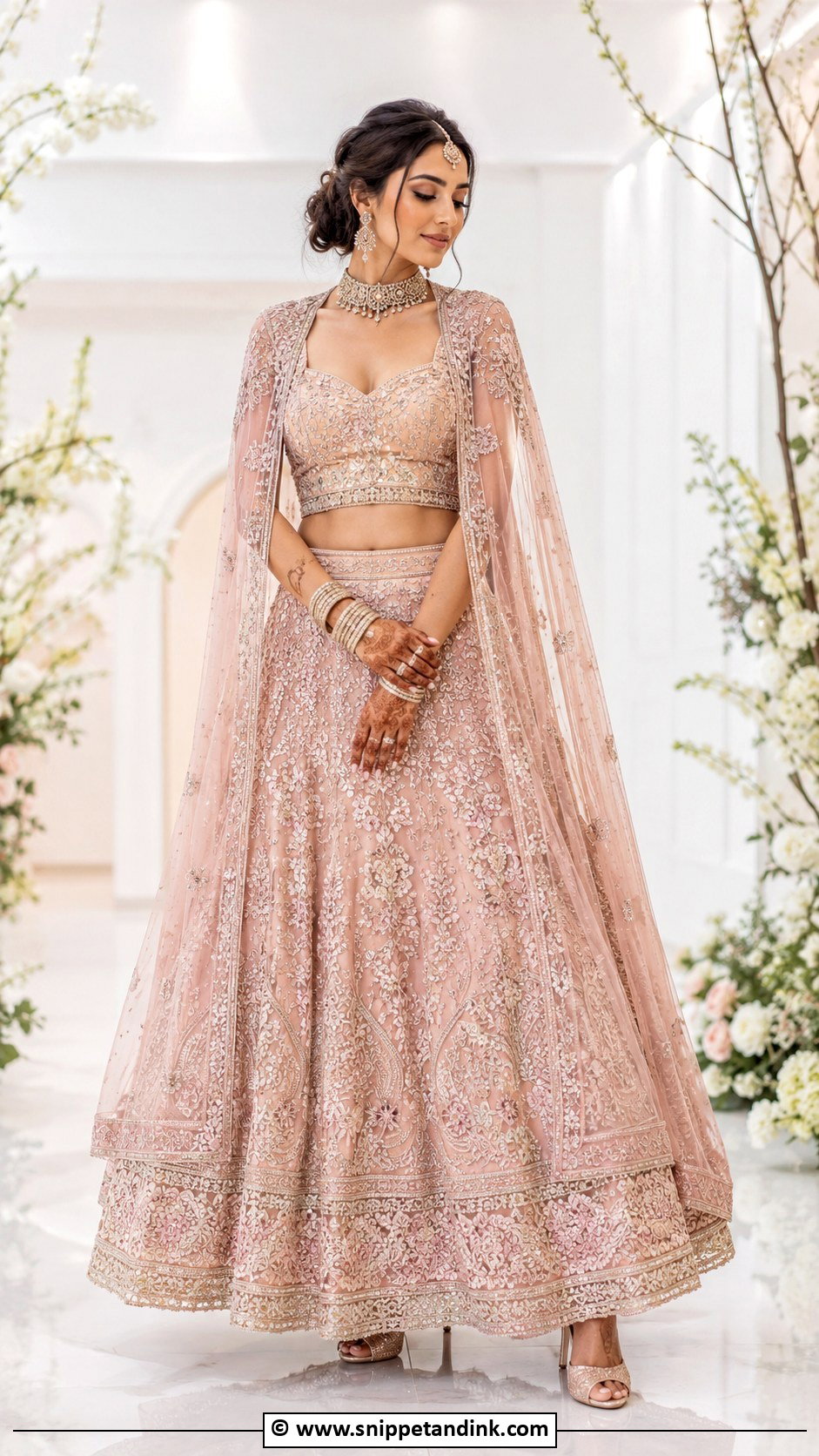
A cape lehenga swaps or layers the traditional dupatta with a sheer embroidered cape from the shoulders. It gives movement without hiding the lehenga. Soft gold, blush, ivory, red and champagne work best. Many families still expect the head to be covered at the Barat, so I usually add a light head dupatta to the cape look rather than skipping it altogether. Keep neck jewelry lighter if the cape is heavily worked; statement earrings, bangles and a ring are enough.




25. Red Bridal Lehenga With Green Jewelry
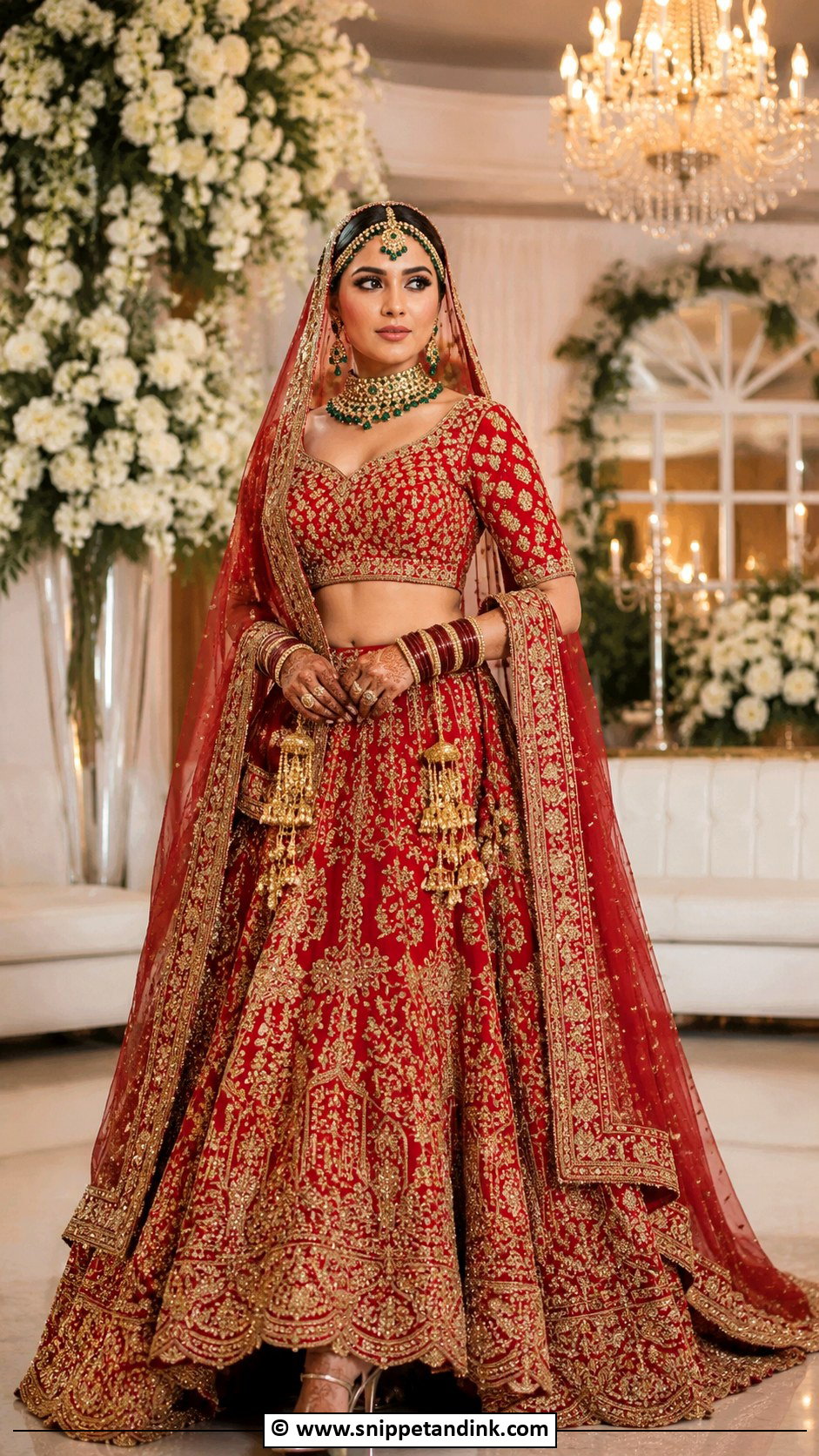
Red with green jewelry is one of the most striking Barat pairings. A red lehenga with gold embroidery, an emerald or green-stone choker, matching earrings and a matha patti or tikka. Green bangles or a beaded necklace can carry it further. Keep the dupatta red or gold so the jewelry stays the contrast. Real emeralds vary a lot in shade; match the earrings and choker to each other under the same light. Warm eyes, glowing skin and a red or soft rose lip balance it.
26. Heavy Zardozi Barat Bride Lehenga
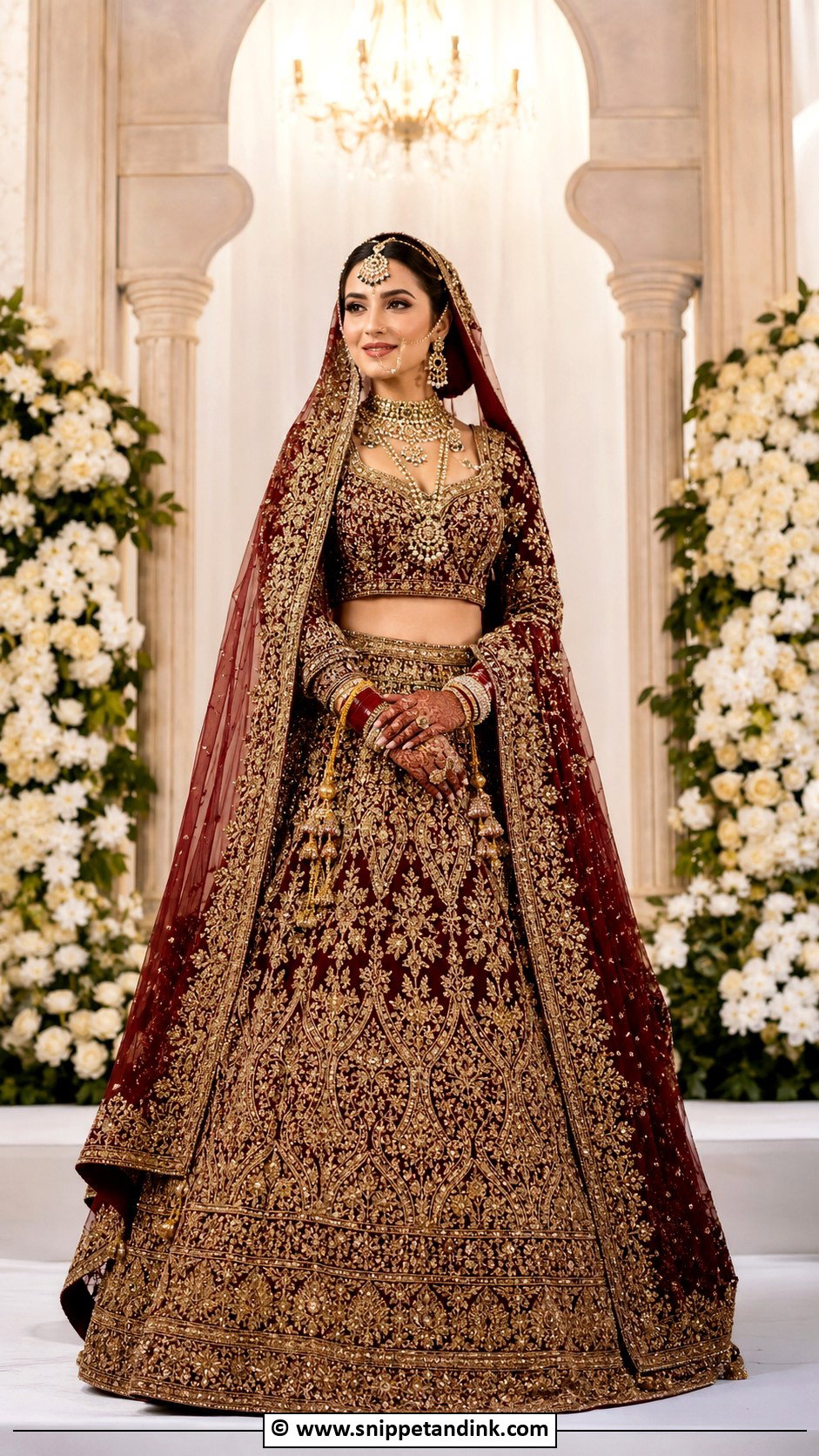
A heavy zardozi Barat bride lehenga is for the bride who loves craftsmanship. Zardozi is metallic thread embroidery, and dense work makes a lehenga noticeably heavy. Choose a well-structured skirt with a broad, comfortable waistband and cancan underneath to spread the weight. A fitted blouse and secure dupatta drape matter for ease during the ceremony. Keep makeup elegant rather than busy so the embroidery leads. It has an heirloom quality that families often keep for the next generation.
27. Mirror Work Barat Bride Lehenga
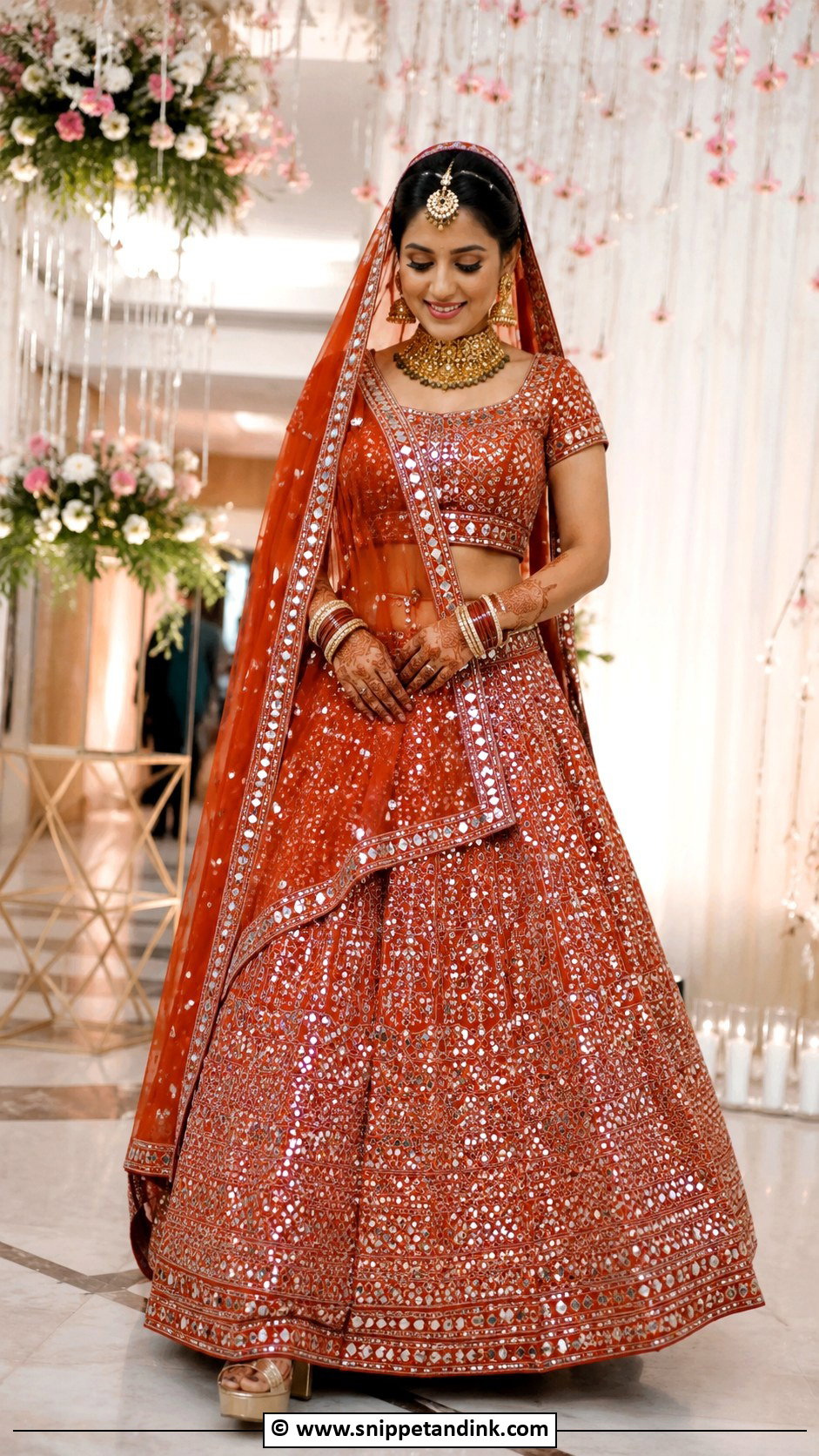
Mirror work is usually linked with mehndi and pre-wedding events, but it becomes bridal with rich color and a grand shape. Red, rust, pink, ivory or emerald with controlled mirror detailing and heavy borders keep it formal. A mirrored dupatta catches the light during the entrance. Real mirror pieces have edges, so check the lining behind them; they can scratch the arms and catch on fine net dupattas. Keep jewelry traditional but not oversized, with soft glam makeup and a neutral lip.
28. Monochrome Red Barat Bride Look
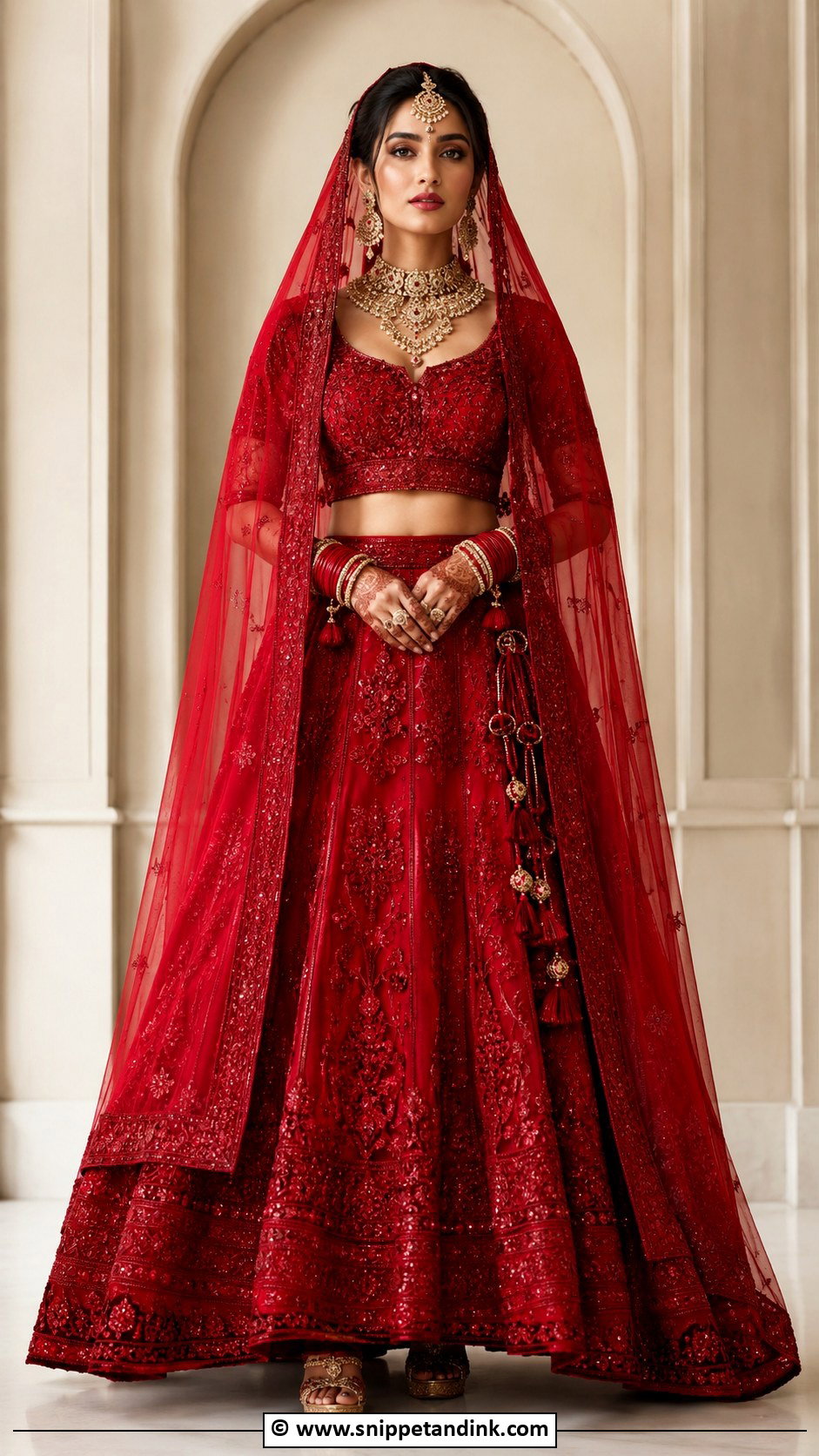
Monochrome red keeps the lehenga, blouse, dupatta and bangles all in one red family. The result feels deliberate and strong. To avoid it reading flat, mix textures: raw silk, net, velvet, organza and metallic embroidery. Reds from different fabrics rarely match exactly, so lay every piece together in daylight before the final fitting and swap anything that clashes. Gold or antique jewelry adds depth, and a red lip that matches the outfit completes the story.
29. Minimal Barat Bride Lehenga
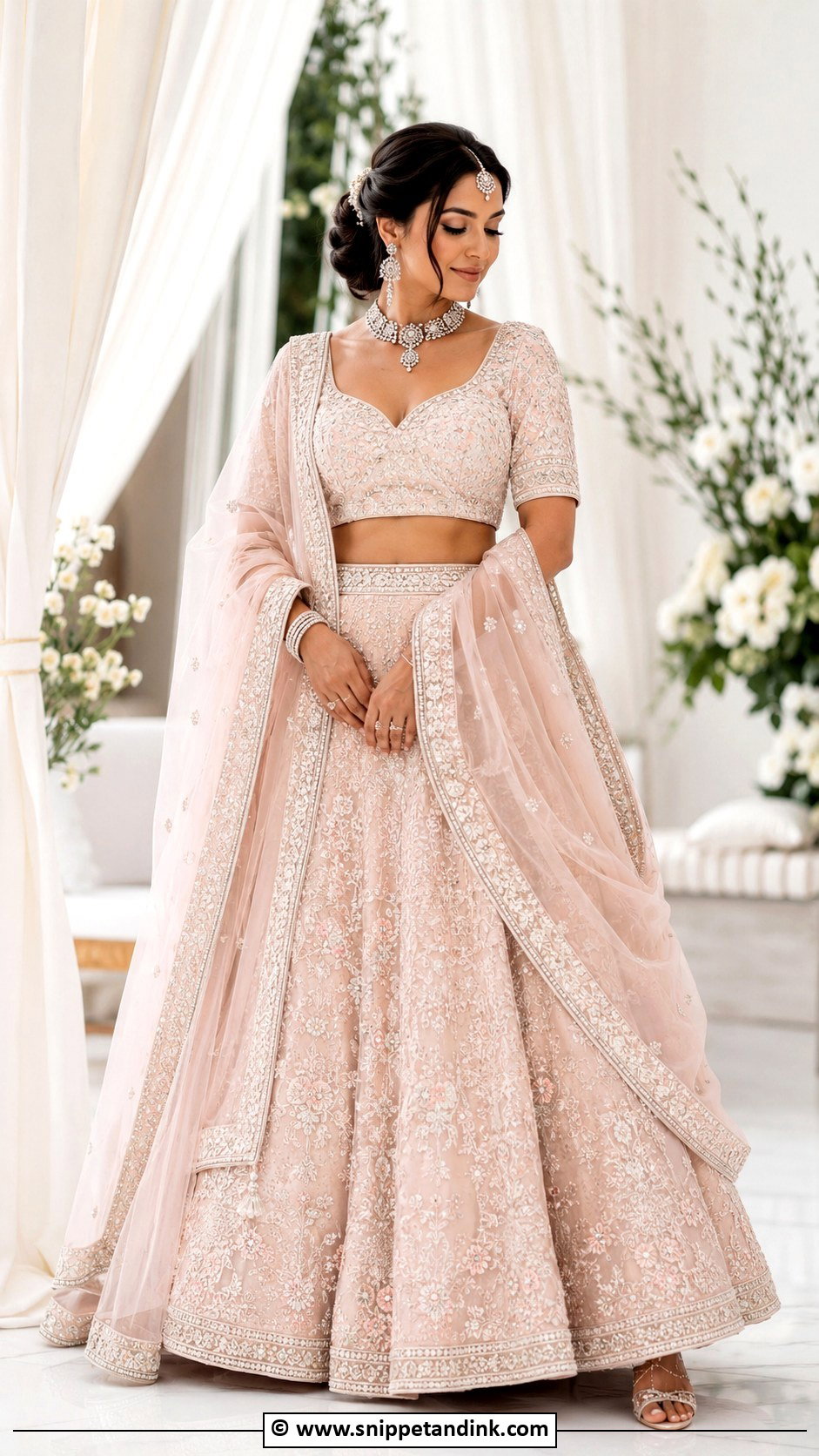
A minimal Barat lehenga suits a bride who wants elegance without heavy fabric. A clean silhouette, good fabric, refined borders and embroidery focused on blouse, hem and dupatta. Soft red, blush, champagne, ivory or muted gold work beautifully. With less embellishment, fit and finishing show more, so spend on tailoring rather than extra work. Polished jewelry, a neat hairstyle and a graceful drape bring the bridal effect. Intimate weddings and outdoor venues suit it.
30. Royal Barat Bride Lehenga
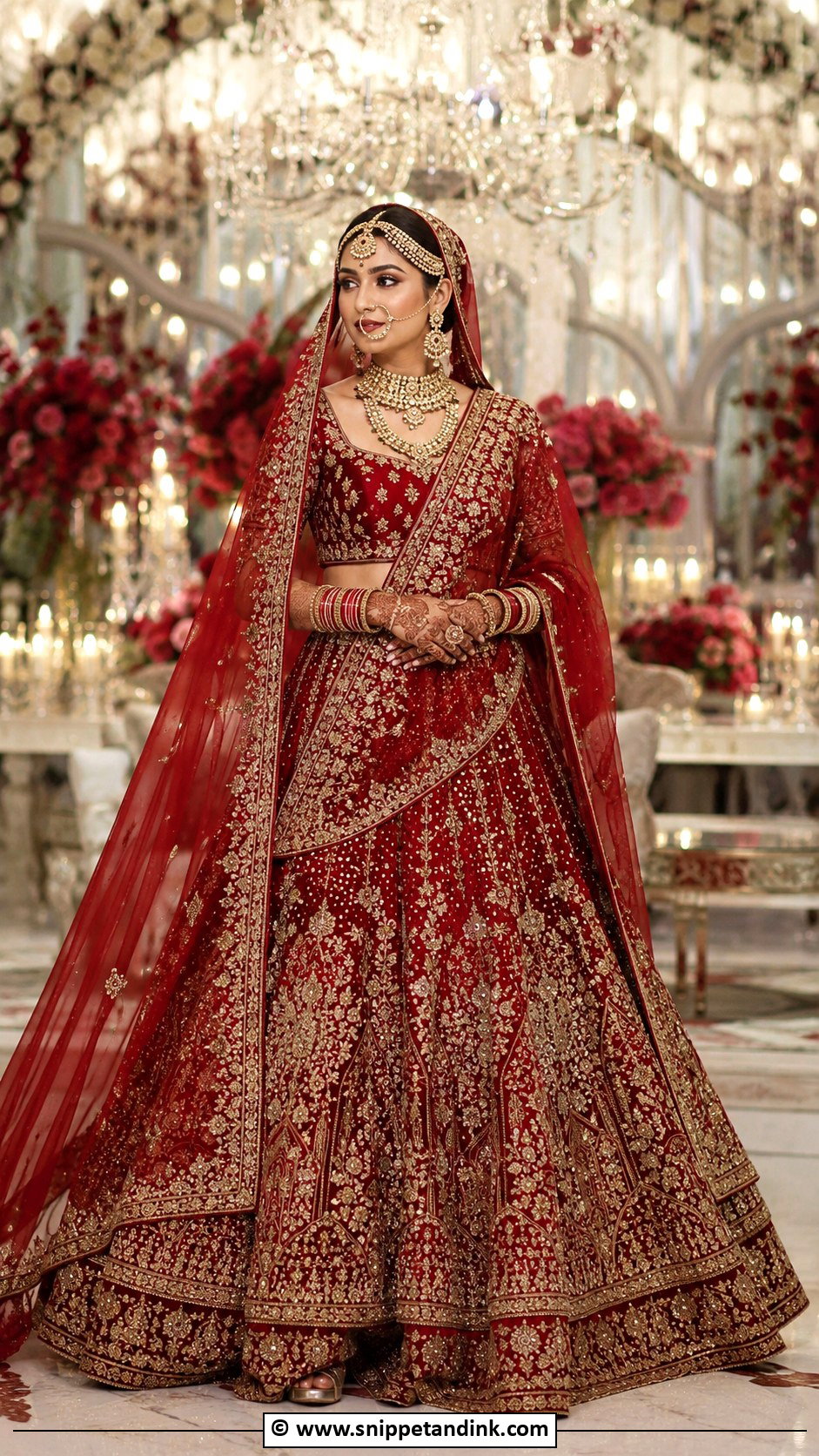
A royal Barat bride lehenga is about grandeur and presence: a full skirt, rich embroidery, a structured blouse and a dramatic dupatta. Red, maroon, gold, emerald, burgundy and ivory with heavy borders all suit it. The outfit is seen from every angle on stage, so look at the back of the blouse, the sleeves, the hem and the dupatta edges as carefully as the front. Statement jewelry, matha patti, bangles, rings and embellished heels, with a low bun or soft waves.
Pinning a Dupatta That Lasts Through Stage, Nikah and Rukhsati
A heavy dupatta slides by itself unless it’s anchored properly. I pin the head dupatta into the bun with U-pins or bobby pins hidden under the fold, then secure it again at each shoulder with small safety pins pushed through the blouse seam from inside so they don’t show. The body dupatta gets pinned at the waist on one side.
Test It Sitting Down
Once dressed, sit on a sofa, stand up, turn your head side to side and lean forward to sign a document. Anything that pulls at the hairstyle or slips off the shoulder needs re-pinning before you leave the room. Keep a few spare pins with a sister or friend for touch-ups on stage.
After the Wedding
Store an embroidered lehenga folded in soft muslin or cotton, not plastic, which traps moisture and tarnishes metallic thread. Refold it along different lines every few months so the embroidery doesn’t crack at the creases, and keep it away from perfume and damp walls.
From the Entrance to Rukhsati in One Outfit
A good Barat look balances tradition, comfort and your own taste. For some brides that’s classic red; for others maroon velvet, champagne embroidery, a soft pastel or a royal gharara. Plan it as one complete outfit, from jewelry and dupatta drape to makeup and shoes, and think about the venue, the season and how many hours you’ll wear it. The outfit should feel meaningful and bridal while still letting you move, smile and enjoy the day with your family.
You'll Like These Ideas:







Leave a Reply