
The barat is the outfit every Pakistani bride is remembered in, and also the one she has to survive the longest: the entrance, hours on stage, dinner, photos and the rukhsati. Red is still the meaningful favorite, but maroon, burgundy, rust, antique gold and jewel-tone contrasts all hold their own. Bridal work these days places embroidery more carefully, pays attention to comfort and makes the dupatta the statement instead of piling weight everywhere. A good barat dress suits the bride’s frame, the venue, the season, her jewelry and her family’s traditions. These 20 looks run from classic lehengas to ghararas, pishwas and layered modern pieces, with the styling I’d pair with each.
Red Is Several Colors, So Test It Against Your Skin
Brides tell me they want red as if it were one color. It isn’t. Orange-based reds, blue-based reds, wine reds and rust reds all behave differently against skin, and the wrong one can make a bride look tired in every photo.
- Warm or golden undertones usually glow in tomato red, rust and orange-leaning shades.
- Cool or pink undertones tend to look best in blue-based reds like cherry, crimson and wine.
- Deep skin carries saturated, rich reds and maroon with real depth; pale washed-out reds can look flat.
- Very fair skin can take almost any red, but very bright scarlet may overpower the face without strong makeup.
The test is simple. Drape a large piece of the actual fabric over your shoulders, stand by a window without makeup and look at your face, not the fabric. The right red makes your skin look clearer. Then repeat the test under warm indoor lights, since that’s where you’ll spend the evening.
1. Red Pakistani Bridal Barat Lehenga
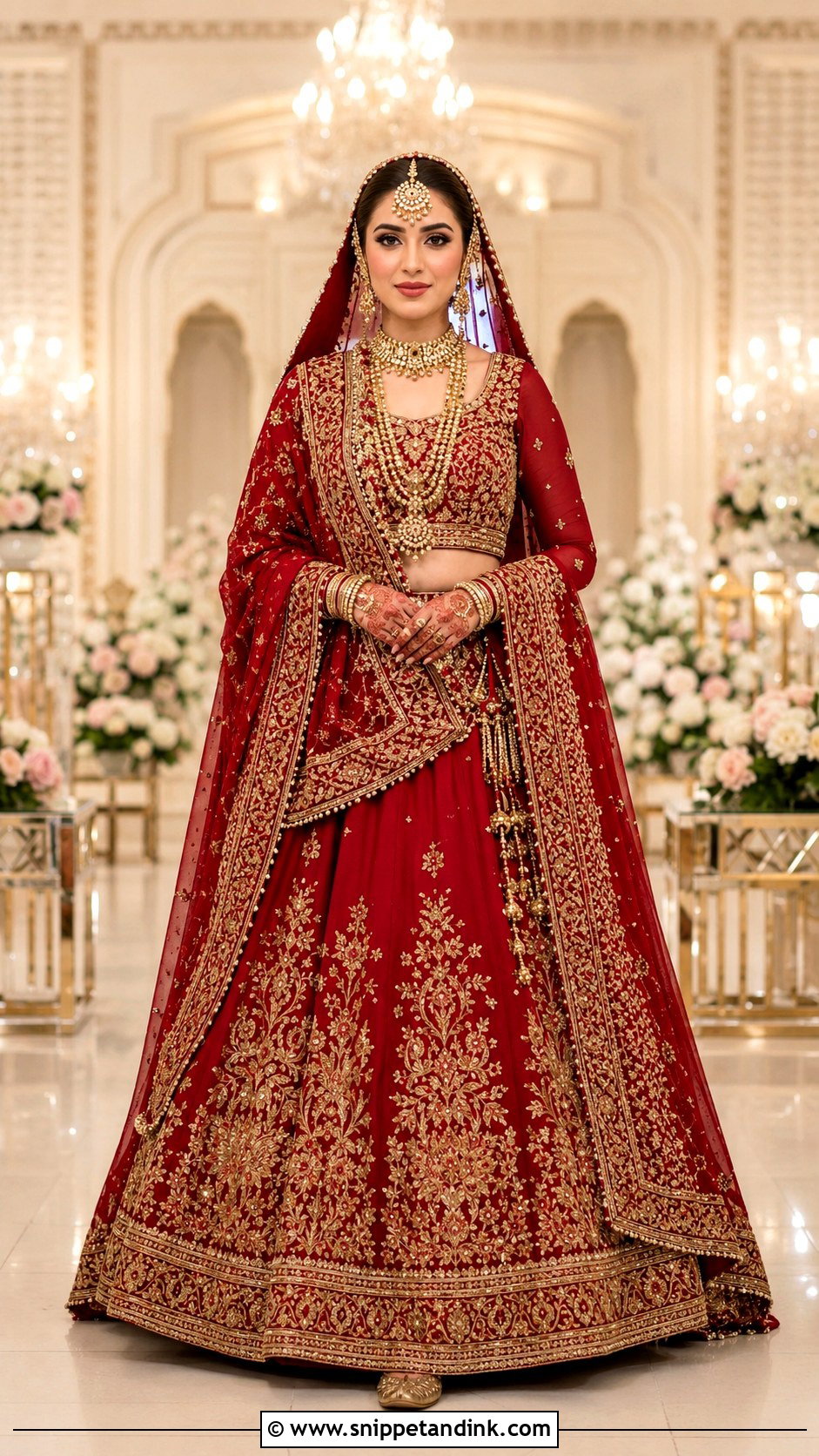
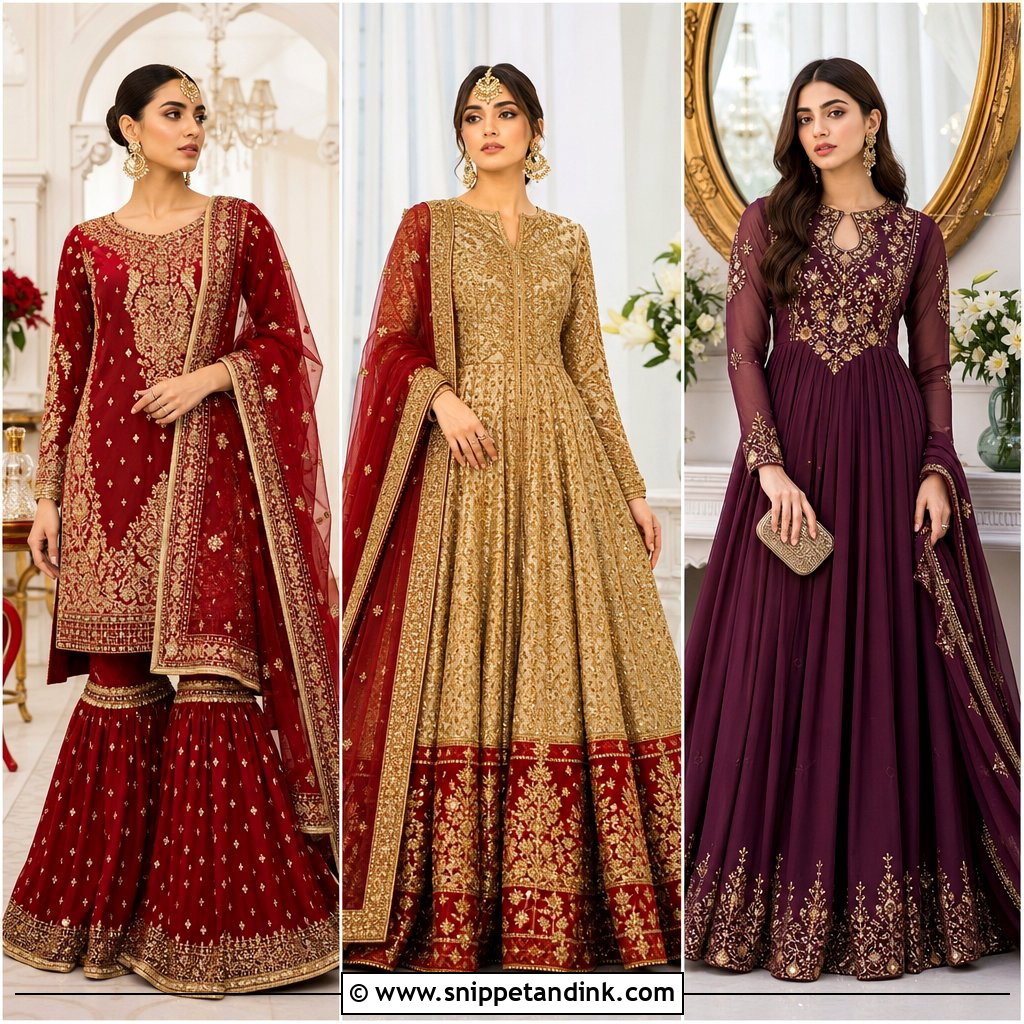
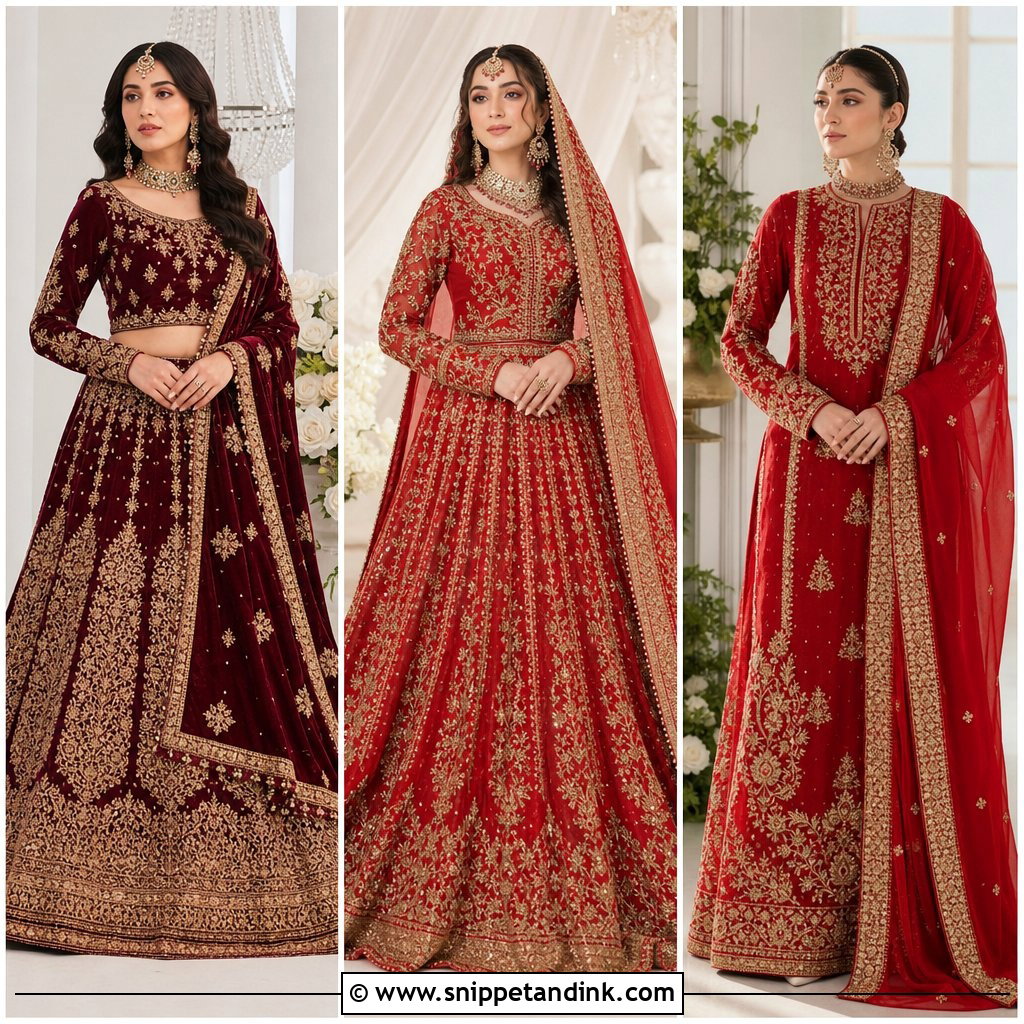
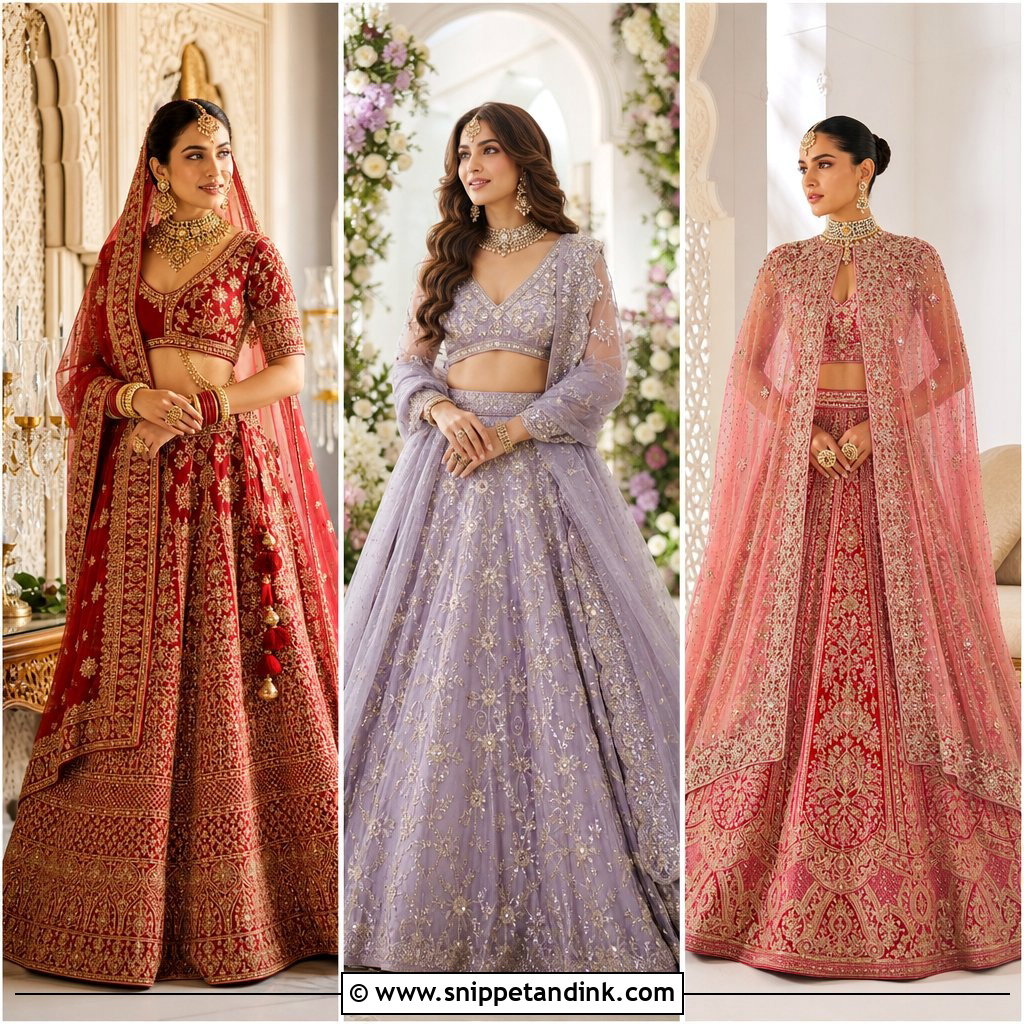
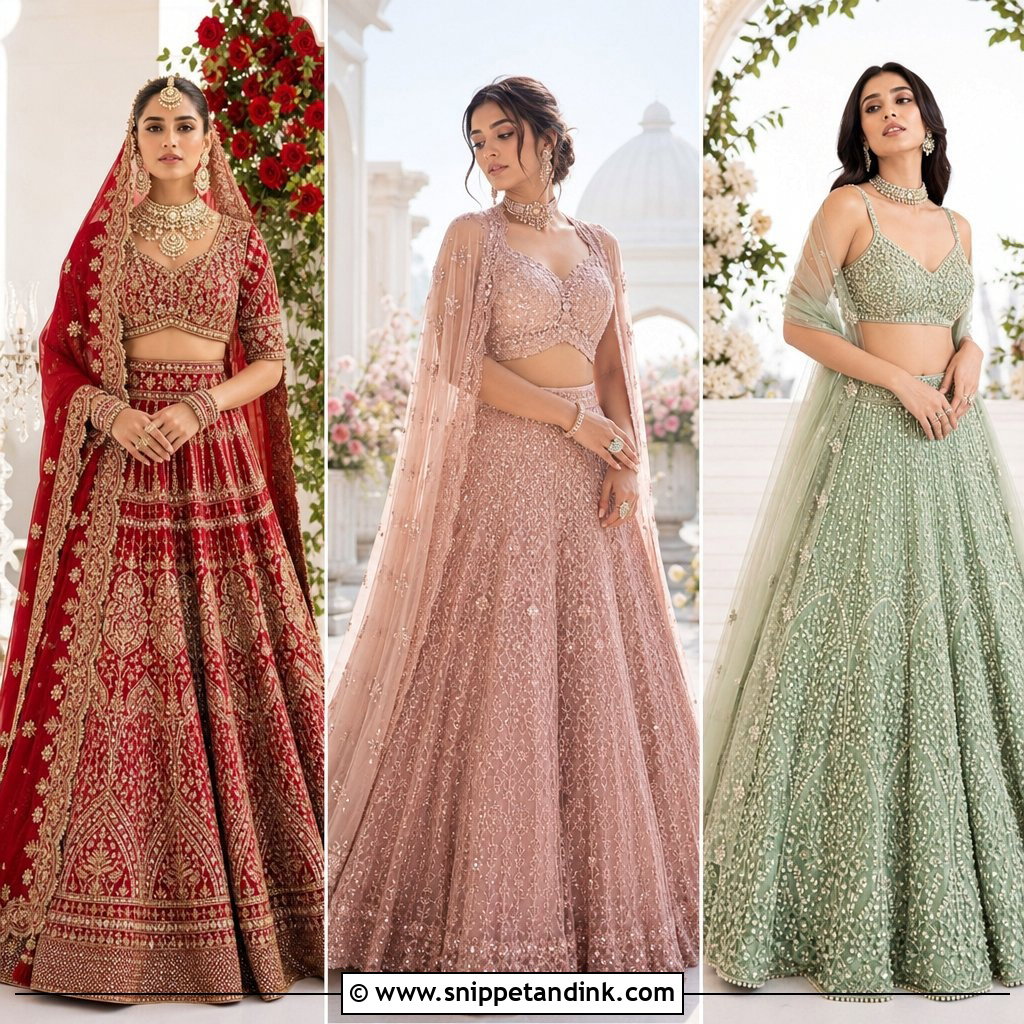
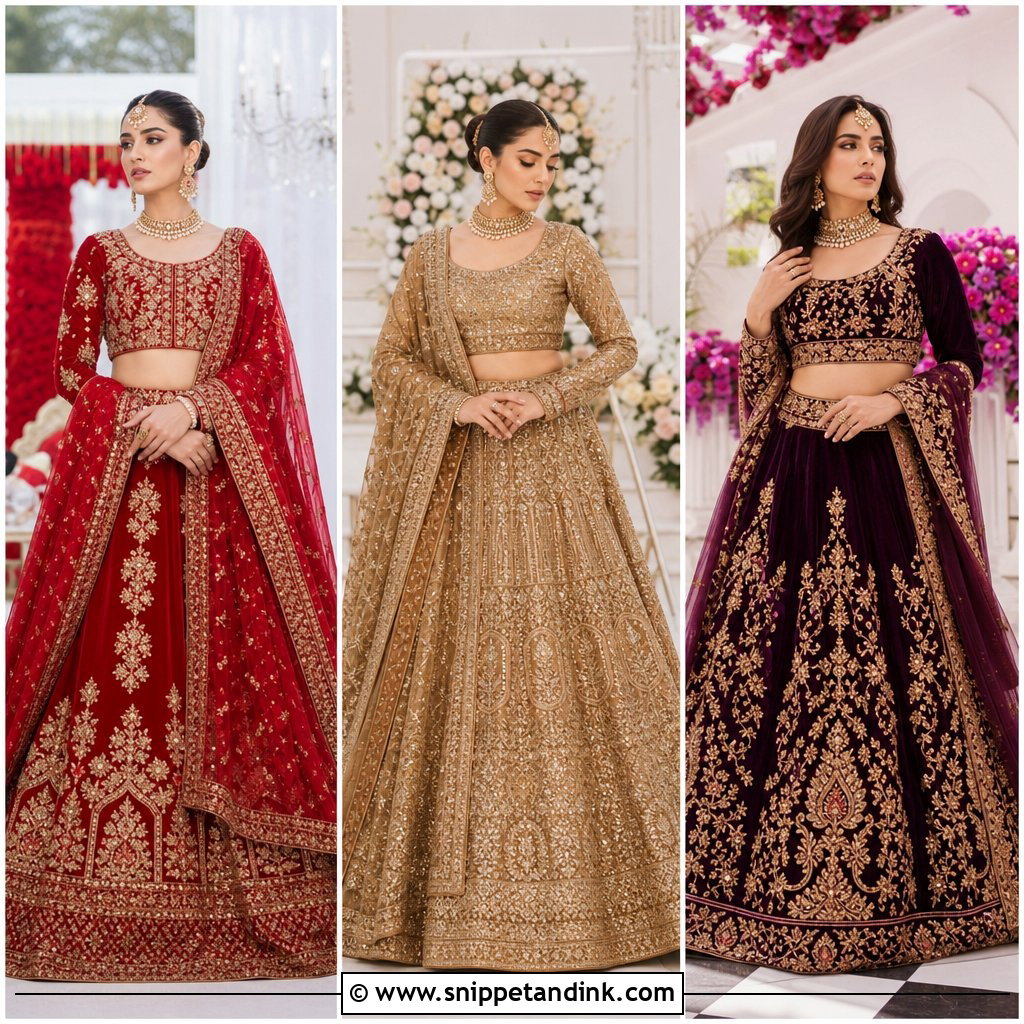
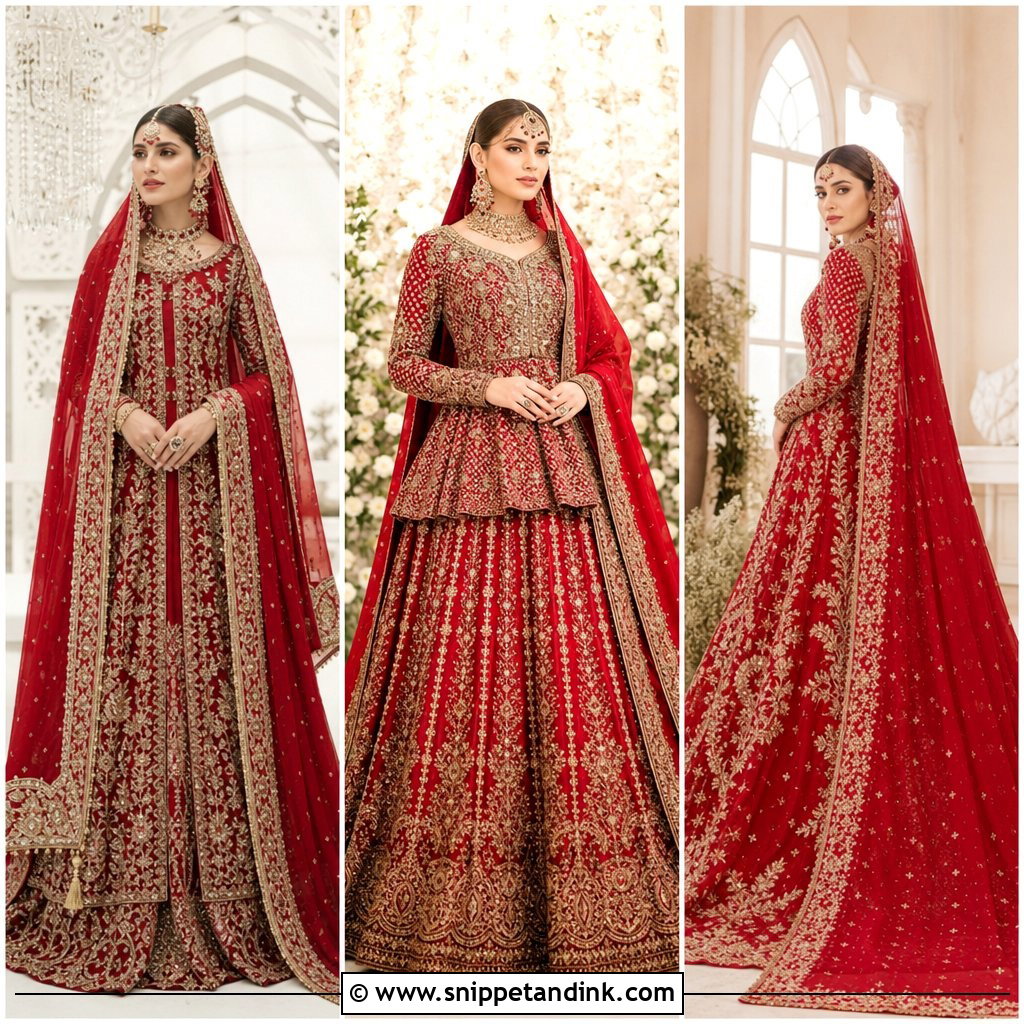
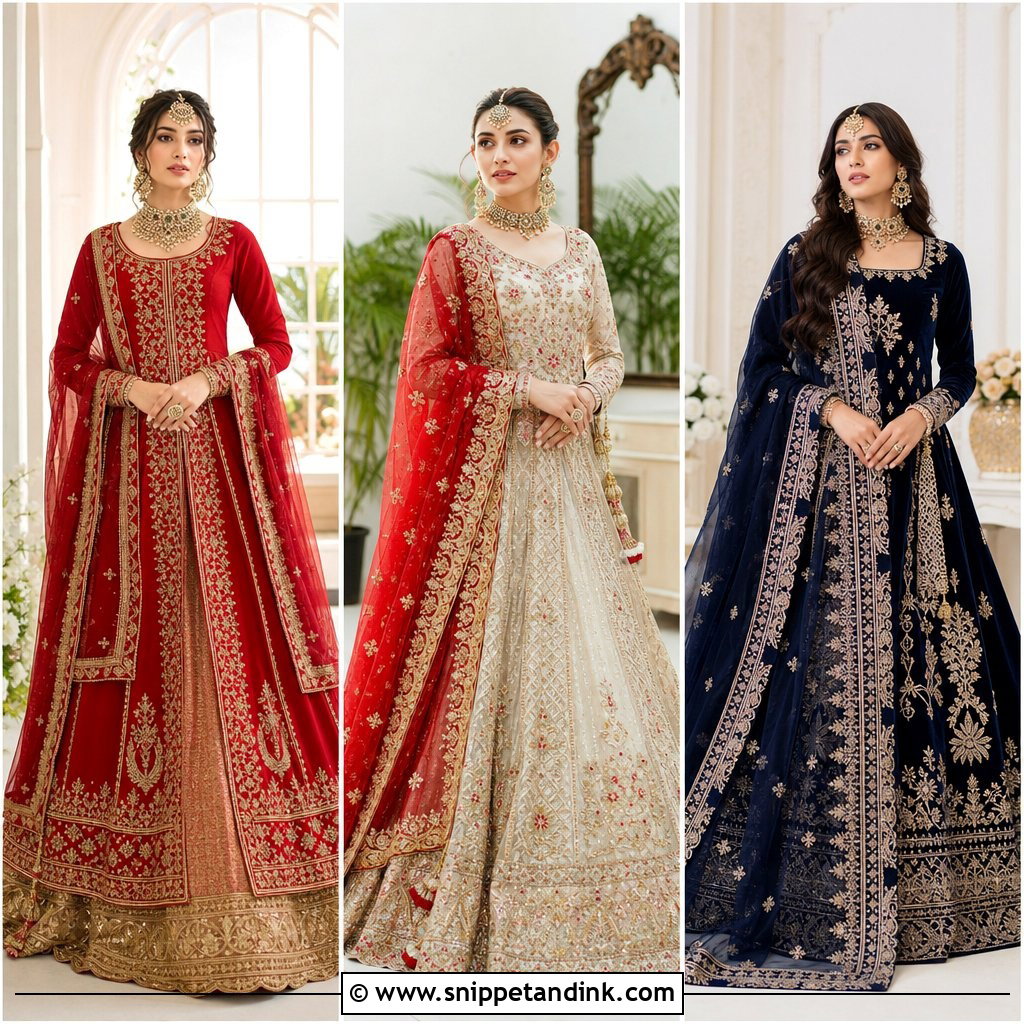
Classic red never needs defending. Choose a full skirt in raw silk, jamawar or velvet with a fitted blouse or a modest waist-length shirt. Gold zardozi, dabka, naqshi, pearls and resham add richness, but I always ask the workshop to leave some red visible between motifs; fully covered skirts photograph as brown-gold rather than red. A broad embroidered hem gives definition in full-length shots. Red head dupatta, lighter shoulder dupatta, gold jhumkas, a matha patti, layered necklaces and khussas complete it. Insist on a wide, padded waistband. A narrow one digs into the waist by the second hour.
2. Maroon Pakistani Bridal Barat Farshi Lehenga
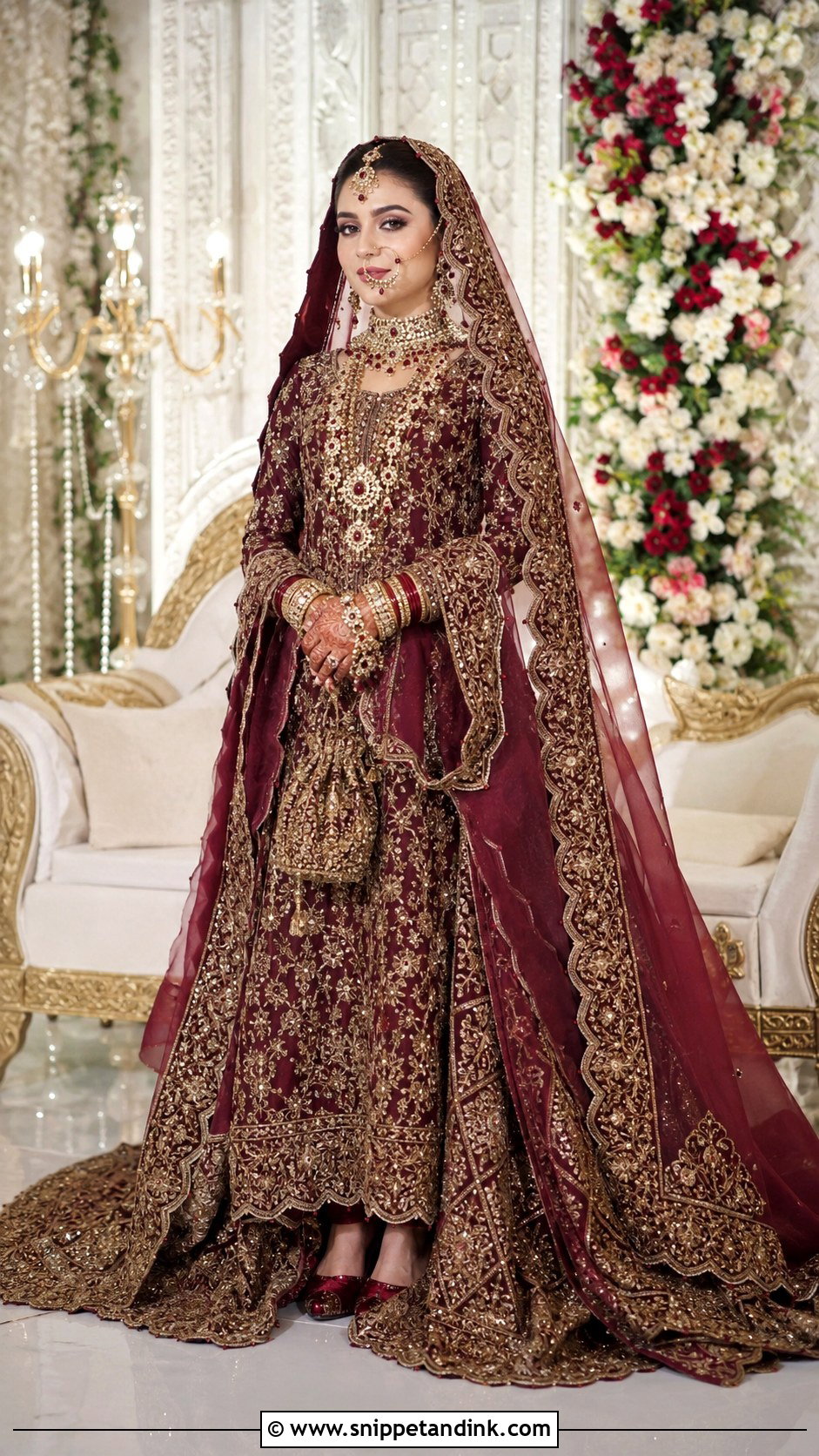
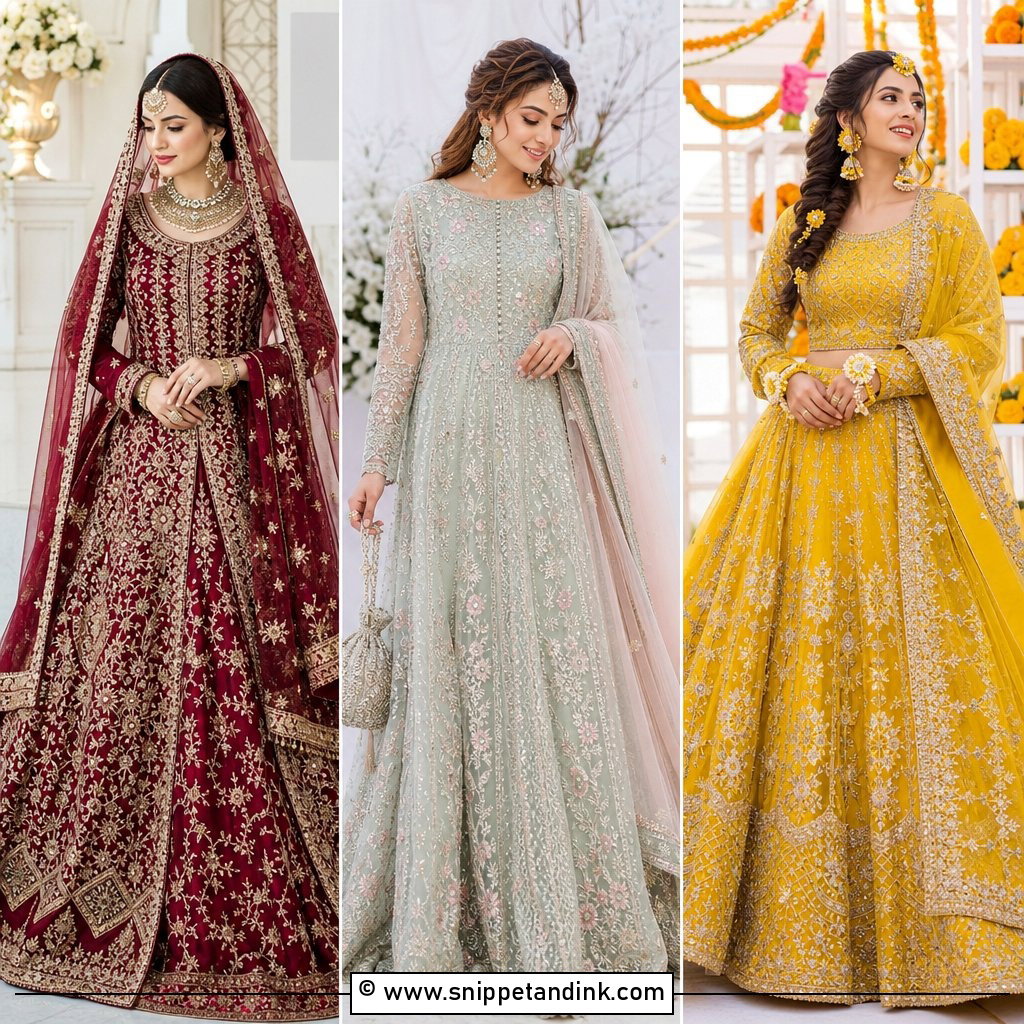
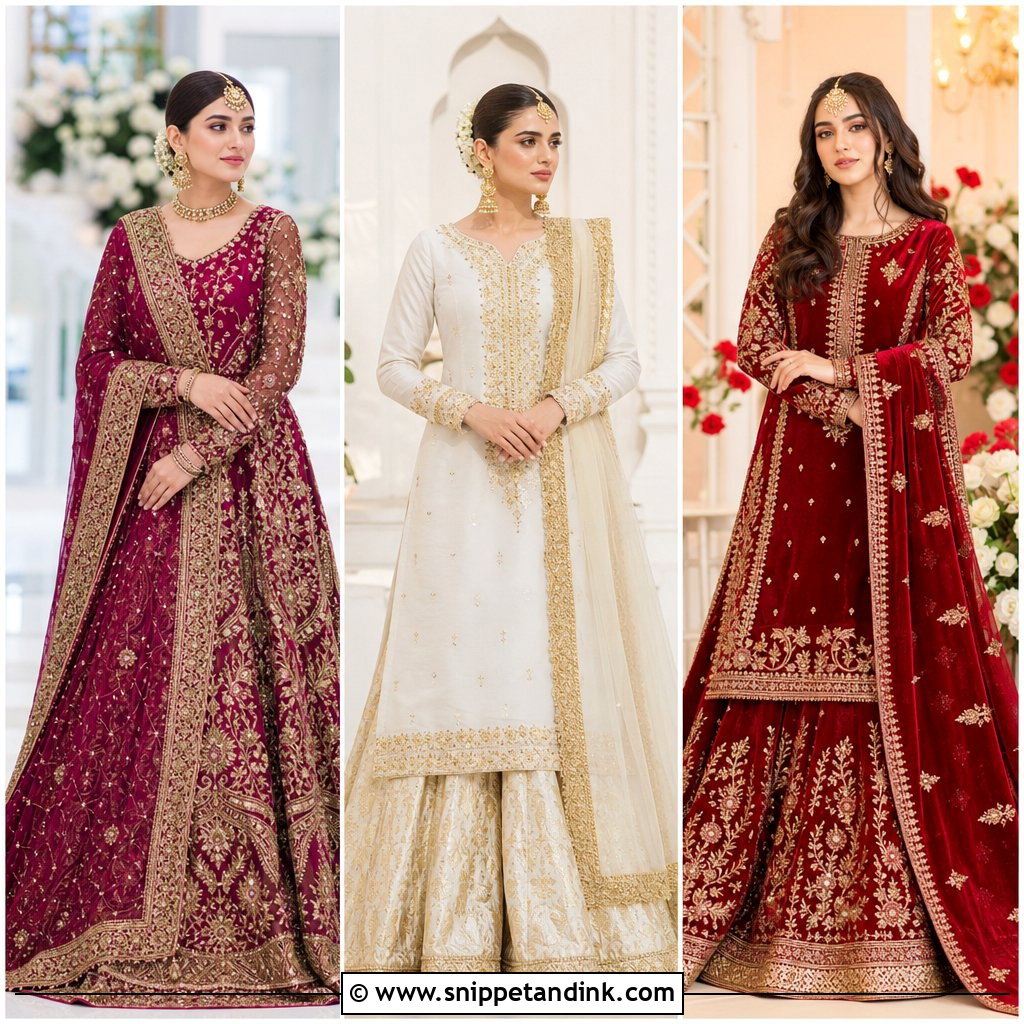
Deep maroon comes alive under evening lighting, so it belongs at an indoor night barat. The farshi lehenga adds generous volume and an extended back that trails like a train. Pair it with a long straight shirt worked in antique gold at the neck, sleeves, side slits and hem, leaving small patches of plain maroon so the color reads. A scalloped organza dupatta over the head and a net dupatta along the arms soften it. Antique gold jewelry, a nath, bangles and maroon velvet khussas finish it. Ask the tailor for a hidden wrist loop on the train; it lets you lift the farshi between stage and car without anyone’s help.
3. Red Velvet Pakistani Bridal Barat Dress
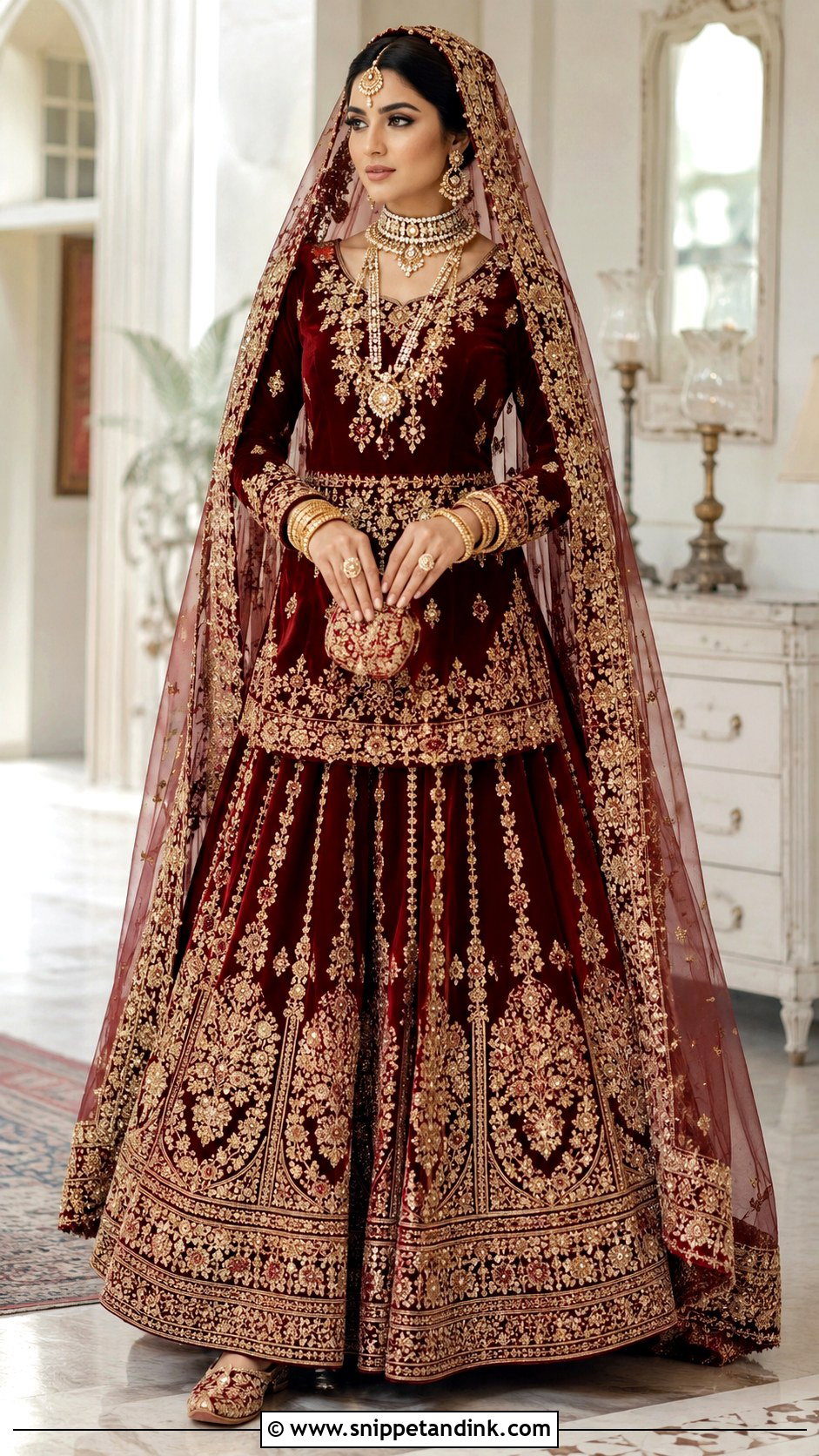
Velvet is my default for a December barat in an unheated or outdoor marquee. A red velvet lehenga or long velvet shirt gives warmth, structure and deep color. Put the handwork at the neckline, cuffs, borders and panels rather than everywhere, because velvet plus heavy embroidery adds up fast in weight. A velvet blouse over a raw silk skirt is a good compromise. Keep the dupatta sheer net so your face stays clear. Kundan jewelry, a choker and closed embroidered shoes suit it. Velvet doesn’t stretch, so the armholes have to be cut generously; otherwise you can’t lift your hands to adjust your jewelry.
4. Gold Pakistani Bridal Barat Lehenga
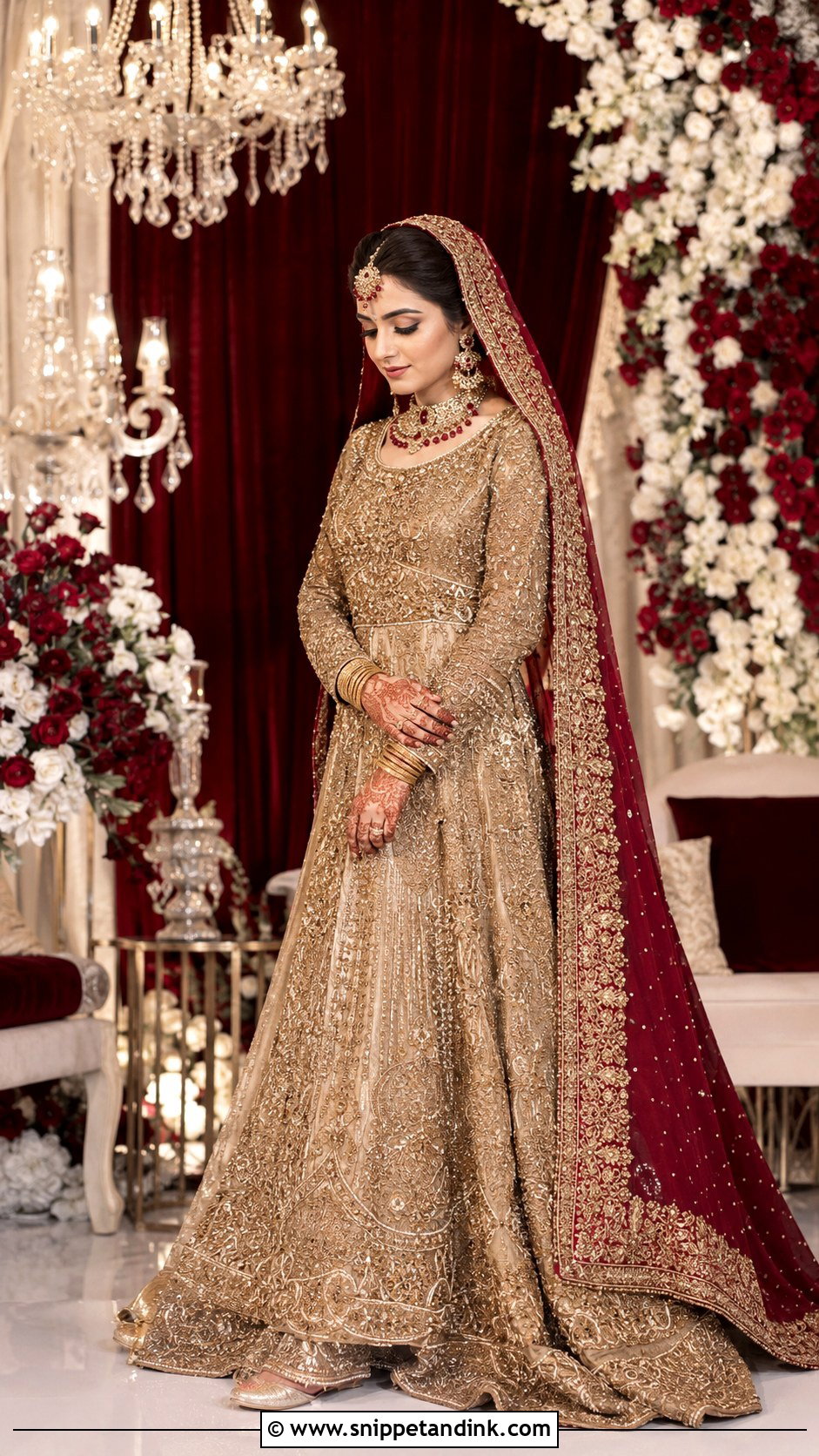
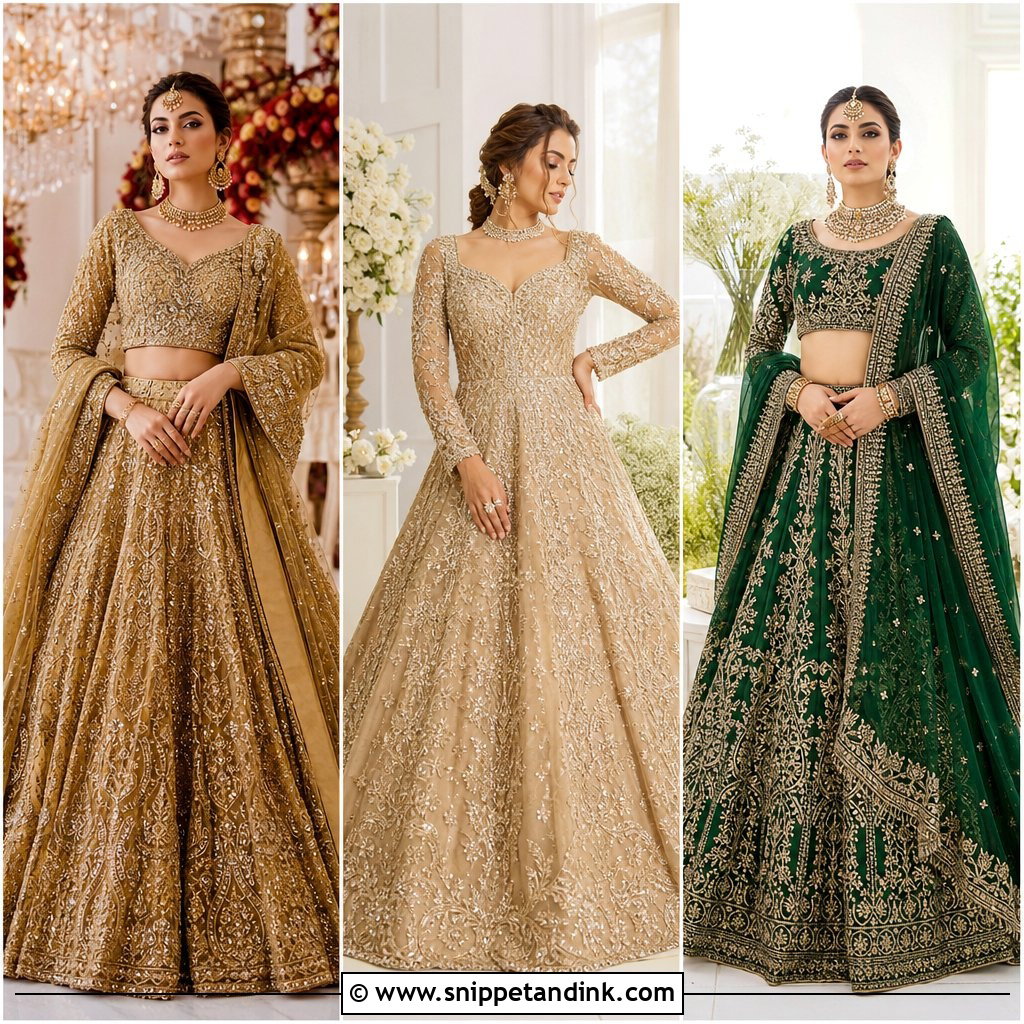
Gold with a red dupatta gives a lighter barat look that still feels traditional. Build around a champagne or antique gold lehenga with zari, sequins, pearls and dabka, plus a matching long blouse. A deep red dupatta with red velvet borders carries the bridal color. Ruby-accented kundan, gold bangles and metallic khussas finish it. Gold fabrics vary wildly between swatches. Some lean brassy yellow, others almost silver. Hold each swatch under your chin in daylight and under warm indoor bulbs, and pick the one that brightens your skin rather than the one that looks richest on the hanger.
5. Red Pakistani Bridal Barat Gharara
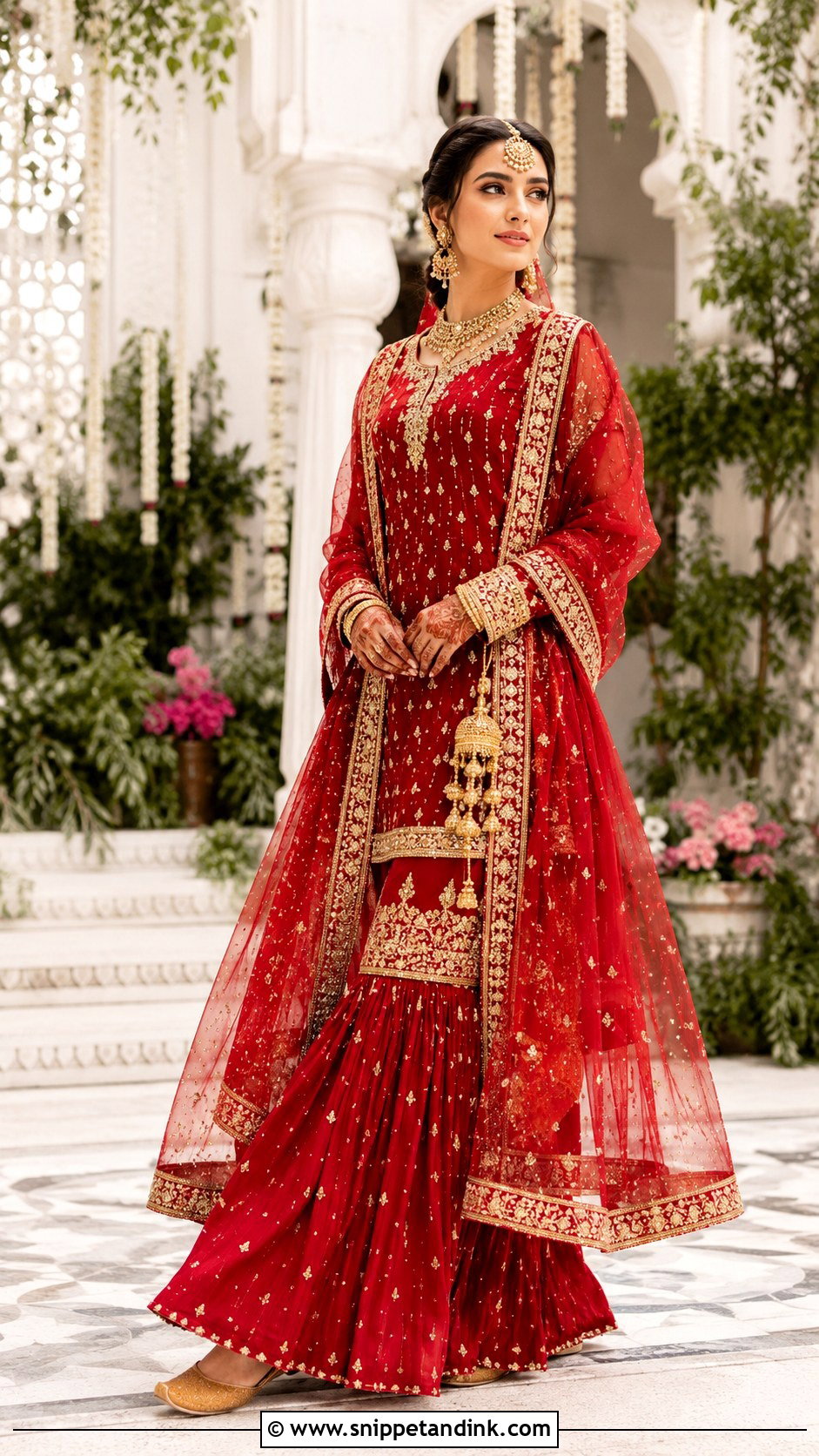
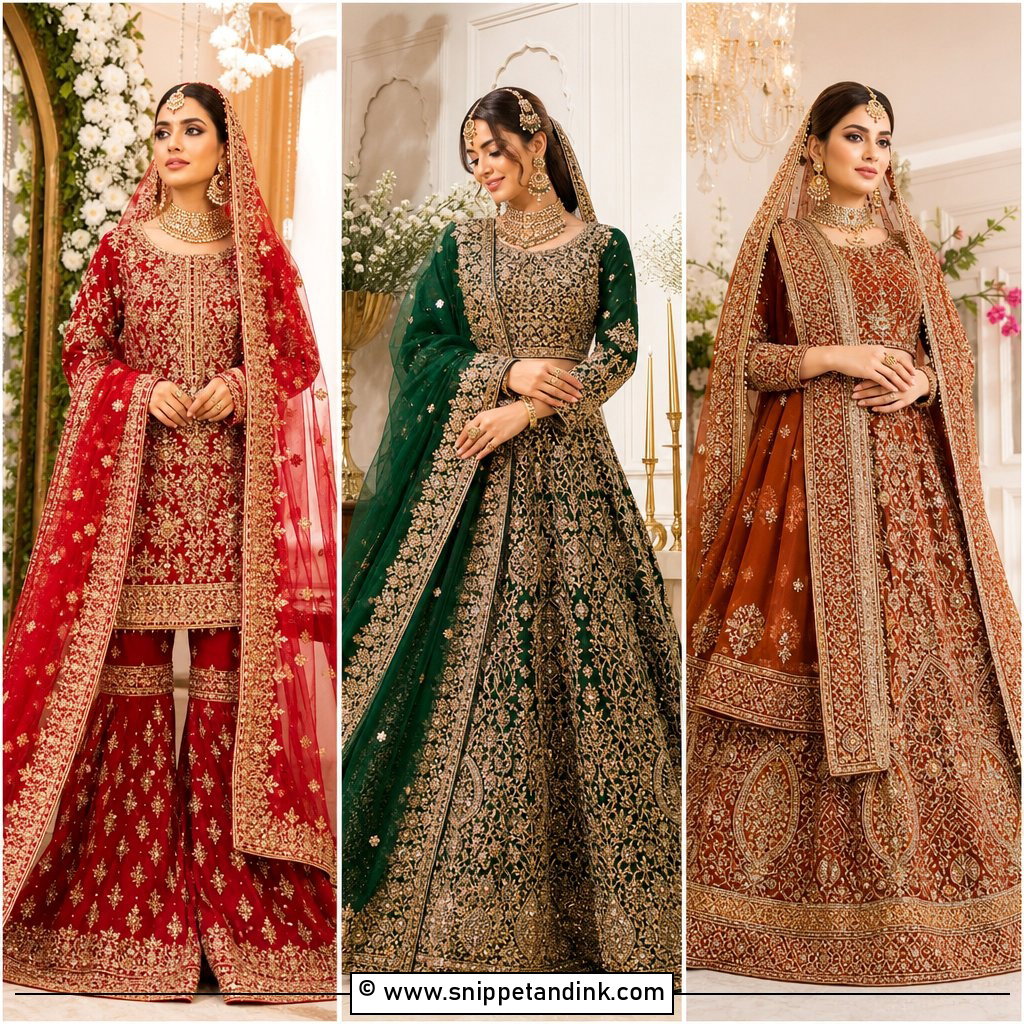
Ghararas live or die by their measurements. The fitted upper gharara has to sit exactly at the knee before it opens into volume, and if the joint lands too high or too low the whole garment looks off. Pair it with a structured short or knee-length kameez. Heavy gota, zardozi, kora and dabka can outline the joint, flare, shirt border and sleeves. A red organza dupatta with a wide edge adds ceremony without hiding the shape. A passa, layered necklace, jhumkas, bangles and gold khussas complete it. Before the last fitting, step up onto a chair as if mounting a stage; that’s when a tight joint shows itself.
6. Maroon Pakistani Bridal Barat Sharara
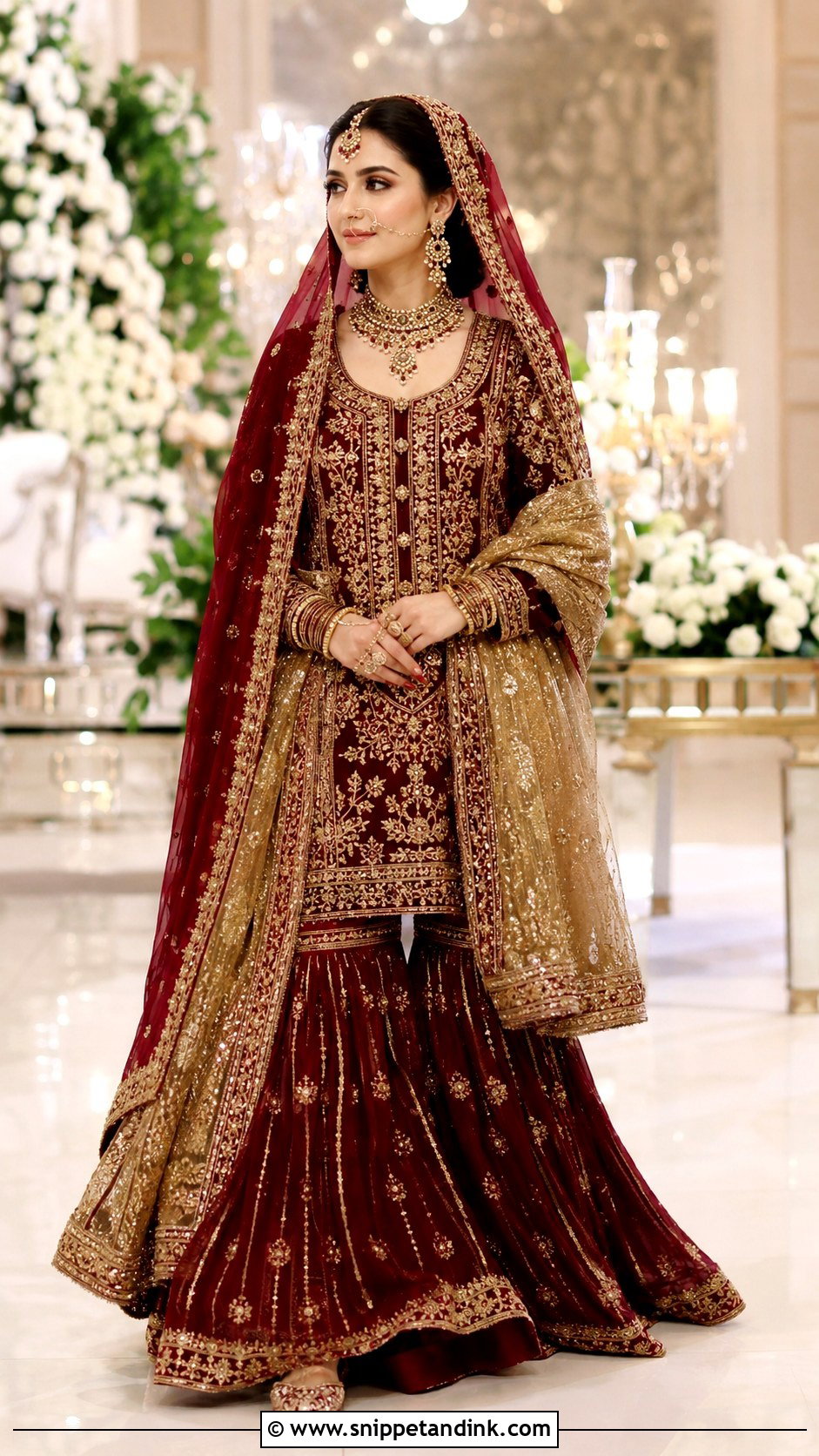
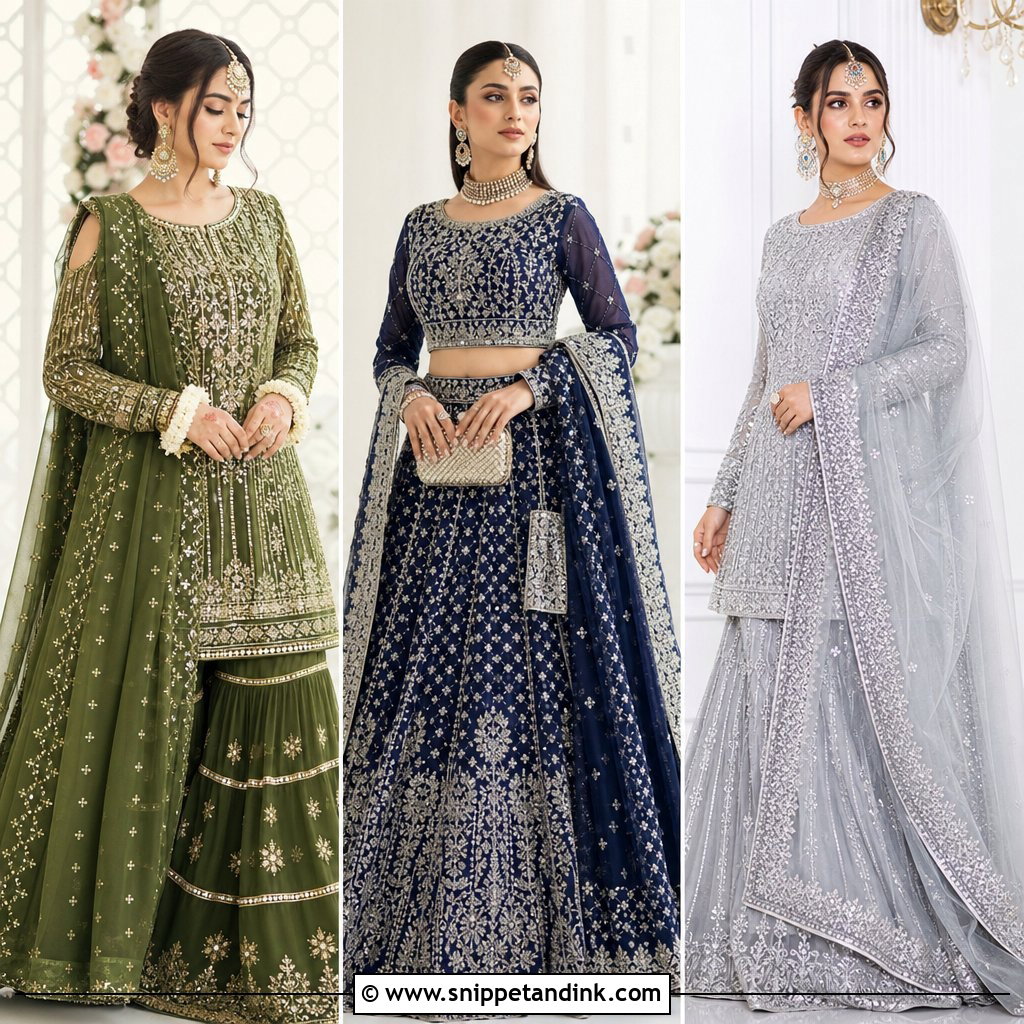
Shararas give the volume of a skirt with the freedom of separate legs. A maroon pair under a mid-length shirt with gold embroidery on the neck, front panels, cuffs and hem looks formal and moves well. I like smaller motifs at the top of the sharara and a denser border near the floor; it pulls the eye down and makes the outfit look balanced. Add a maroon net dupatta over the head, an antique gold one over an arm, polki jewelry, a fine nath, bangles and pointed khussas. The hem should just cover your shoes. Any longer and you’ll be stepping on it at every stair.
7. Red Pakistani Bridal Barat Pishwas
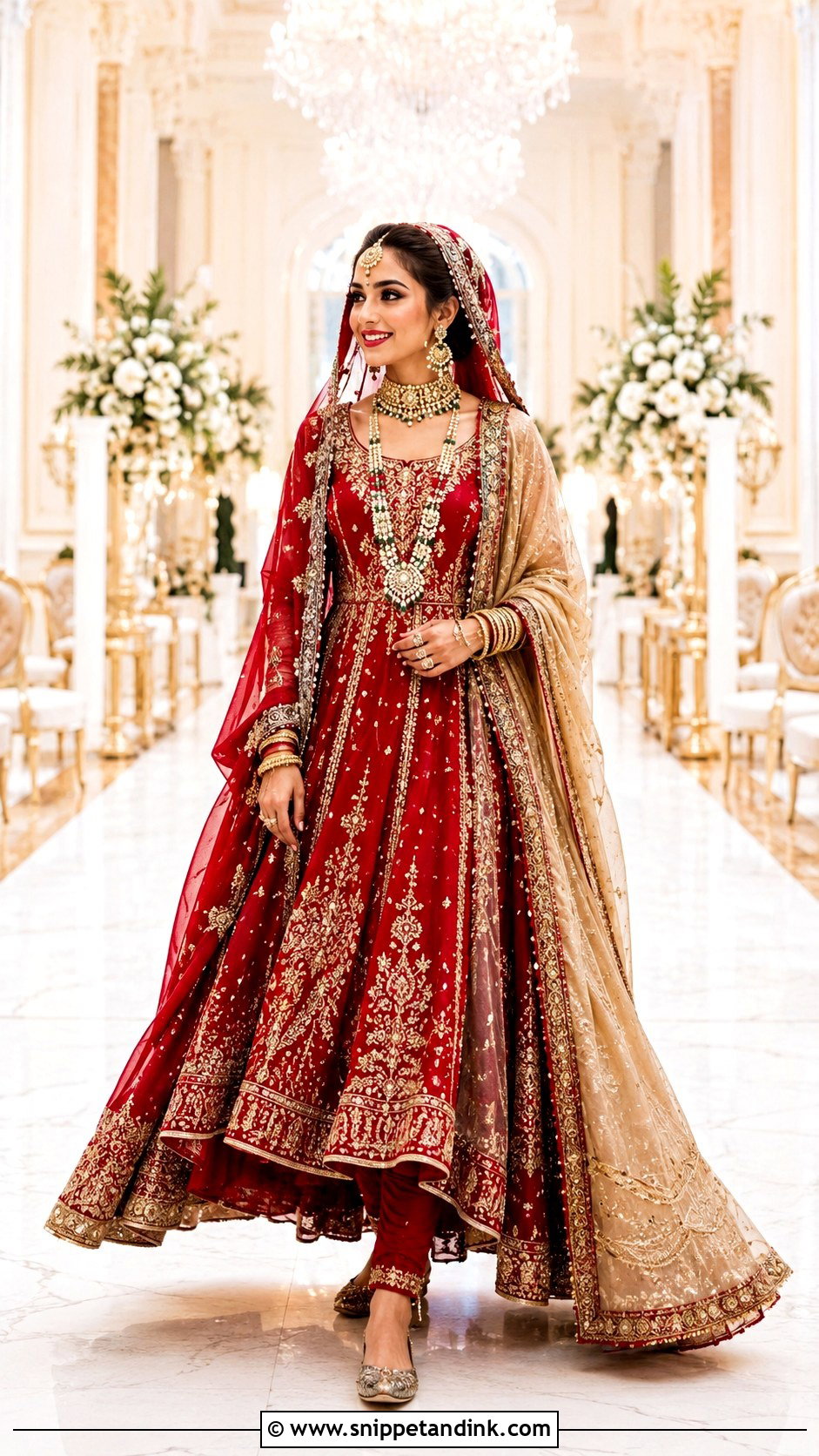
Entrances are where a red pishwas earns its keep: the paneled skirt swings out as you walk. The fitted bodice and panels can carry gold floral vines, architectural motifs or traditional jaal. A waist seam controls the volume. Heavy handwork scratches on the inside, so I ask for a soft cotton lining behind every embroidered panel, which is what saves your arms and back by the end of the night. Wear churidars, an embroidered red head dupatta and a tissue or organza dupatta across the shoulders. A kundan choker, a long necklace, earrings, a tikka and embellished flats complete it. Short or tall, the trick is customizing panel width and hem circumference to your height.
8. Long Shirt Pakistani Bridal Barat Lehenga
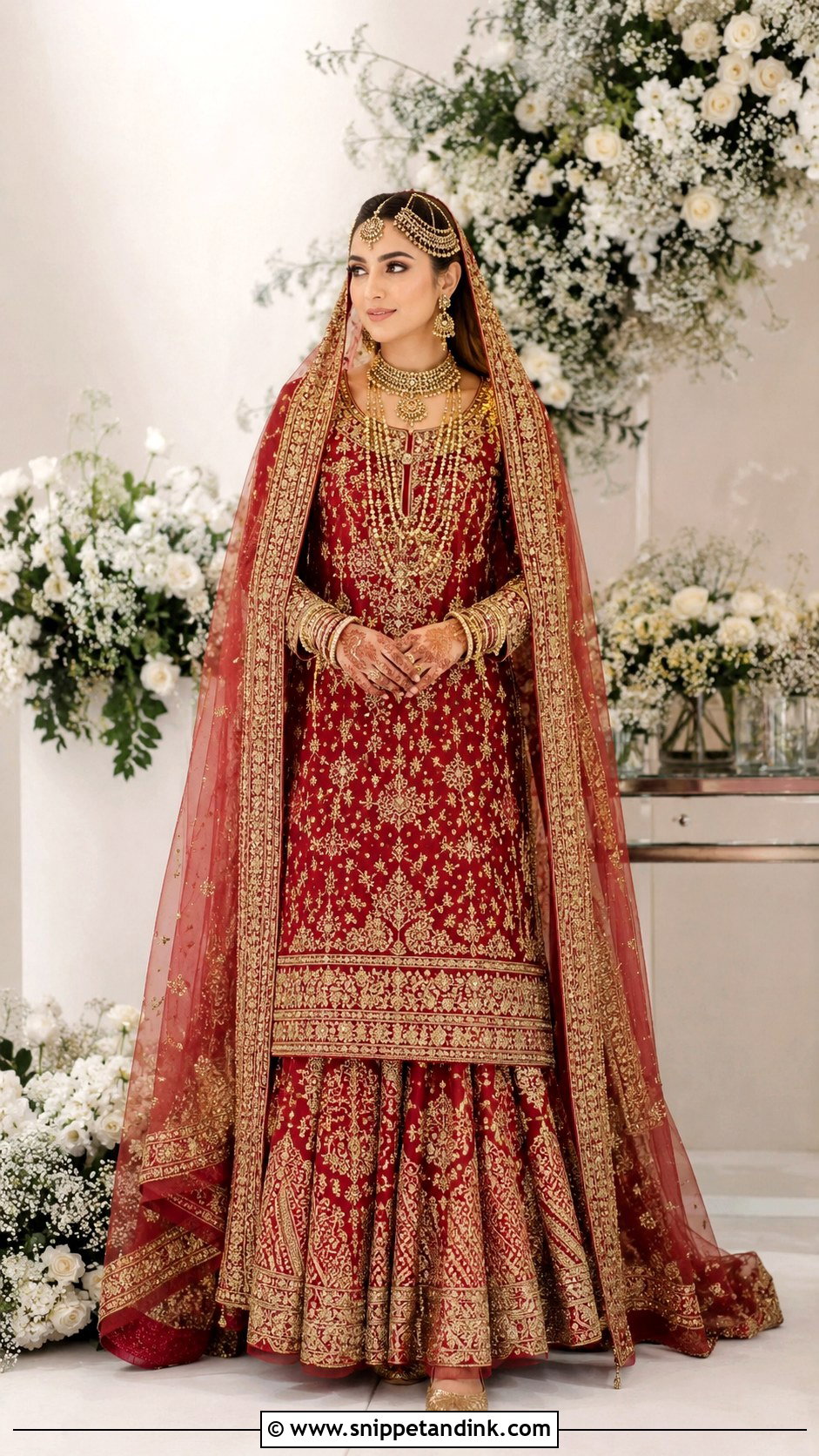
Modest brides often find their barat dress here. A red or maroon shirt that falls below the knee, with side slits that flash the skirt as you move, covers well and still looks grand. Concentrate zardozi and resham on the neckline, sleeves, hem and front panels, and keep the lehenga quieter with a complementary border and scattered motifs. A sheer dupatta over the head and another across the front give the traditional layered finish. A matha patti, chandelier earrings, layered necklaces, bangles and closed khussas complete it. Shape the shirt slightly at the waist; a dead-straight long shirt over a full skirt makes most brides look boxy.
9. Angrakha Pakistani Bridal Barat Lehenga
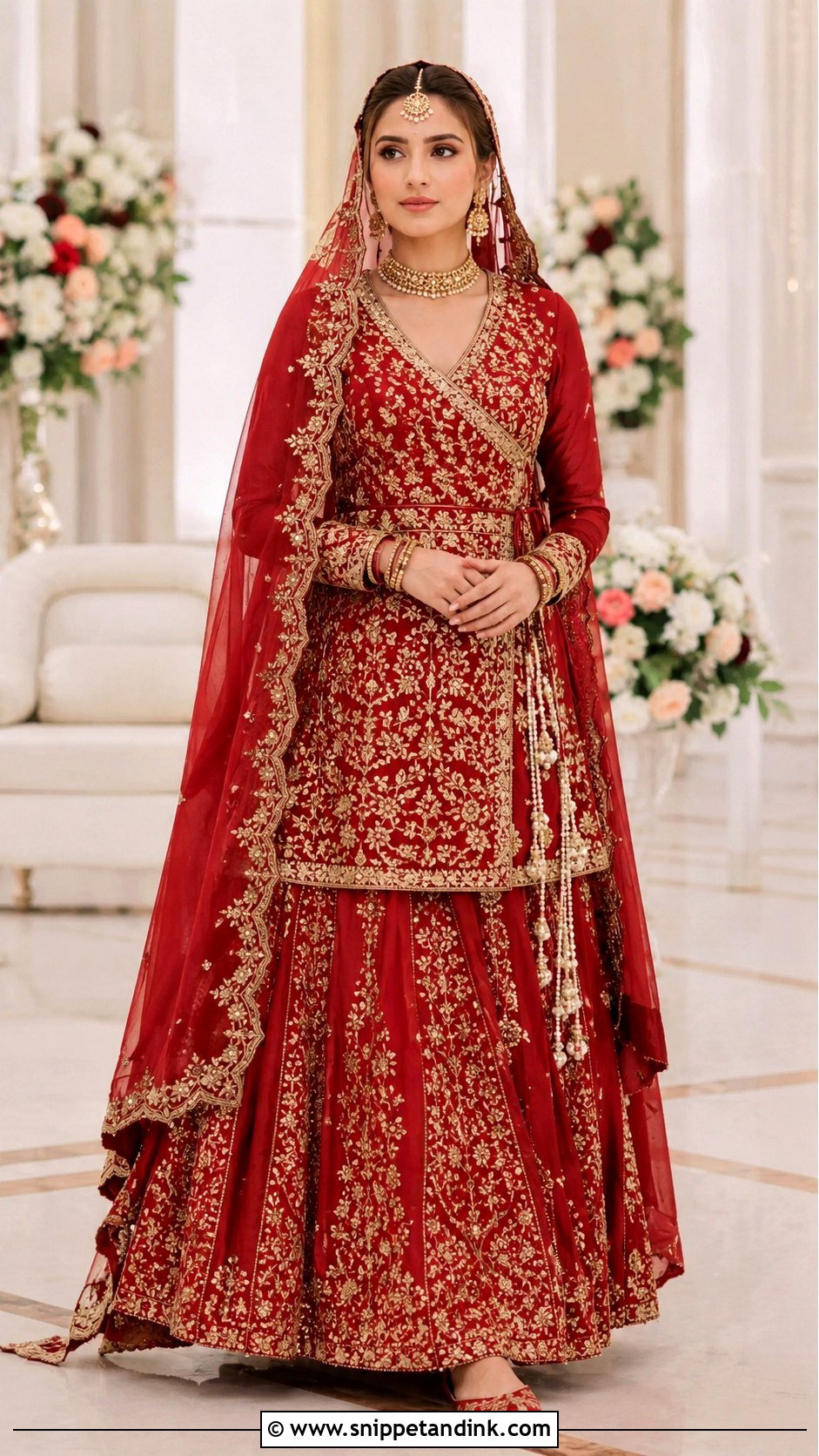
Angrakhas wrap diagonally across the chest, and that crossover line is what you’re paying for. Trim it with antique gold piping, pearls, tassels or hand-embroidered borders, and keep the matching paneled red lehenga simpler so the wrap stays the focus. Three-quarter or full sleeves give room for embroidery. Drape the scalloped net head dupatta so one corner falls along the opposite arm, echoing the diagonal. A centered tikka, gold earrings, a choker, bangles and red khussas finish it. Wraps loosen as you move, so I always have hidden hooks or a press stud stitched inside the overlap.
10. Ivory And Red Pakistani Bridal Barat Lehenga
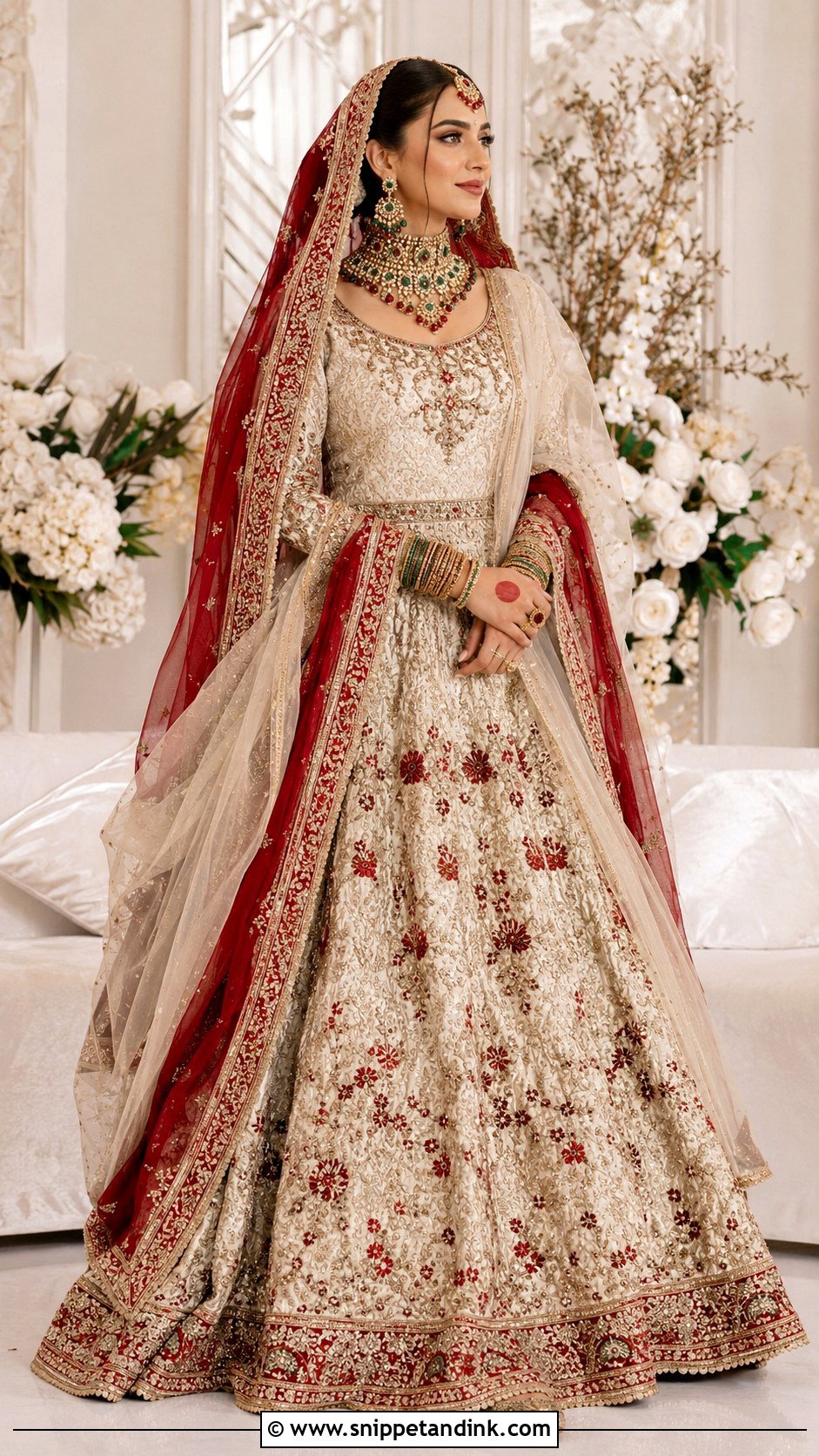
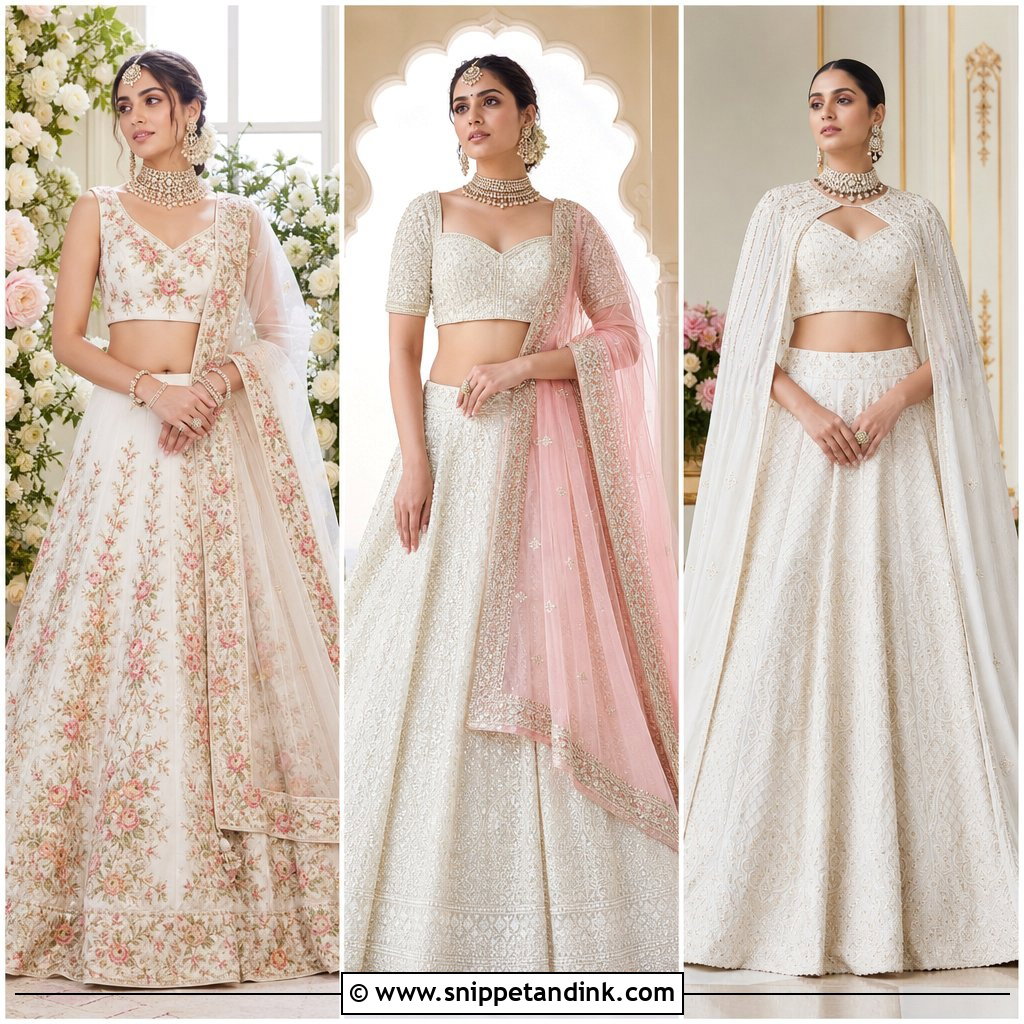
Ivory with red gives a lighter-colored bride the barat she wants without losing tradition. Start with an ivory raw silk lehenga with red floral threadwork, gold zardozi and spaced motifs, and an ivory long blouse or peplum. Bring the red in through a heavily bordered head dupatta, with a second ivory dupatta in front. Ruby and emerald kundan near the face adds definition, and gold khussas tie in the embroidery. Ivory raw silk needs a proper opaque lining, and I’d test it under a strong lamp before the final fitting. It suits a bride who loves pale colors but still wants unmistakable Barat drama.
11. Red And Emerald Pakistani Bridal Barat Dress
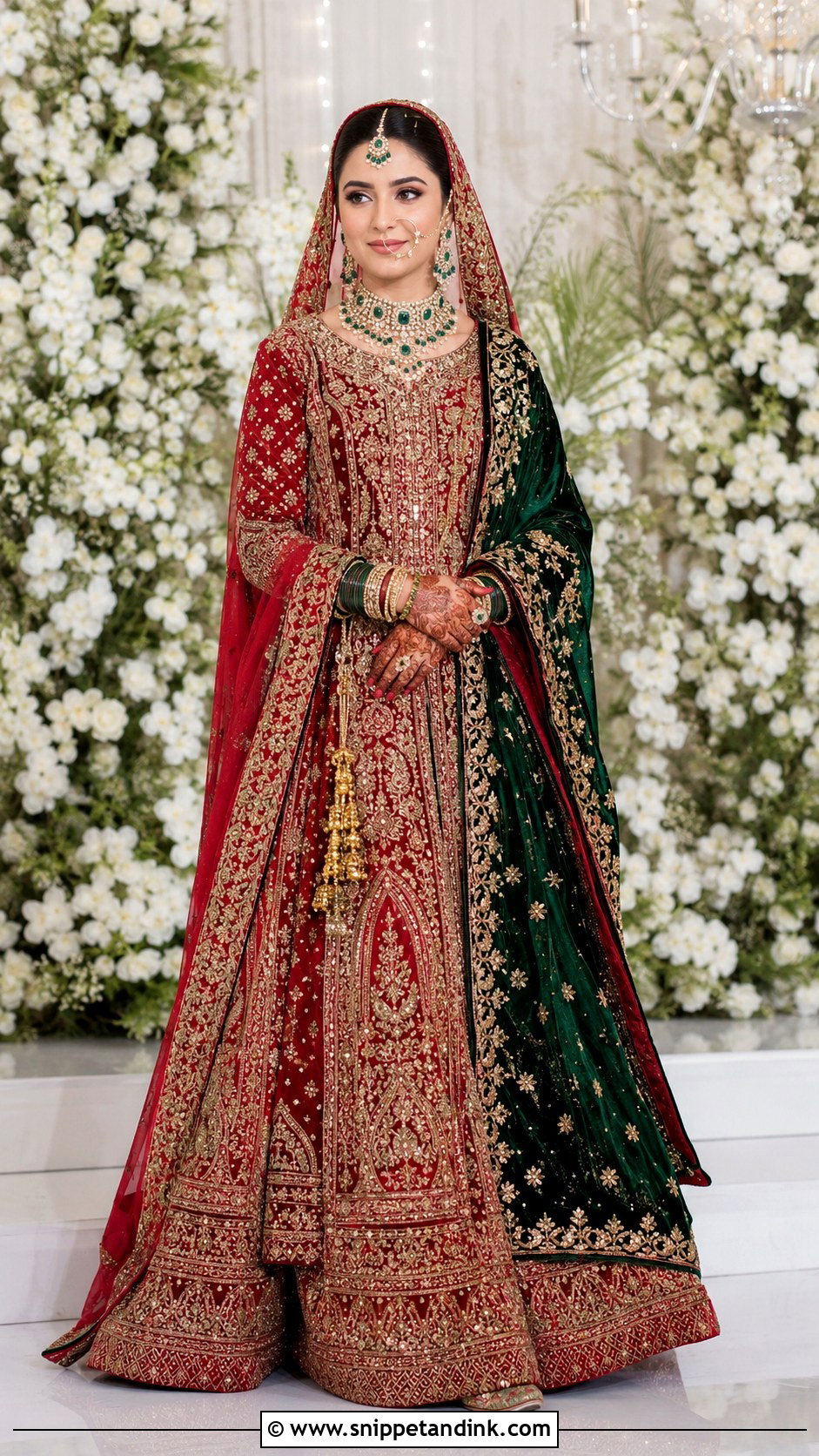
Emerald next to red is a centuries-old pairing in Mughal-inspired work, and it still looks rich. Choose a red lehenga and long blouse in antique gold motifs, then add emerald velvet borders, piping or small details. Keep the red dupatta over the head and drape an emerald one across a shoulder. Emerald-and-kundan jewelry, a gold nath and red bangles with a few green ones tie it together. Don’t split the colors evenly; half-and-half looks like two outfits. Red should dominate, with emerald repeated in a few places. It stands out against ivory flowers and gold stage structures.
12. Rust Red Pakistani Bridal Barat Lehenga
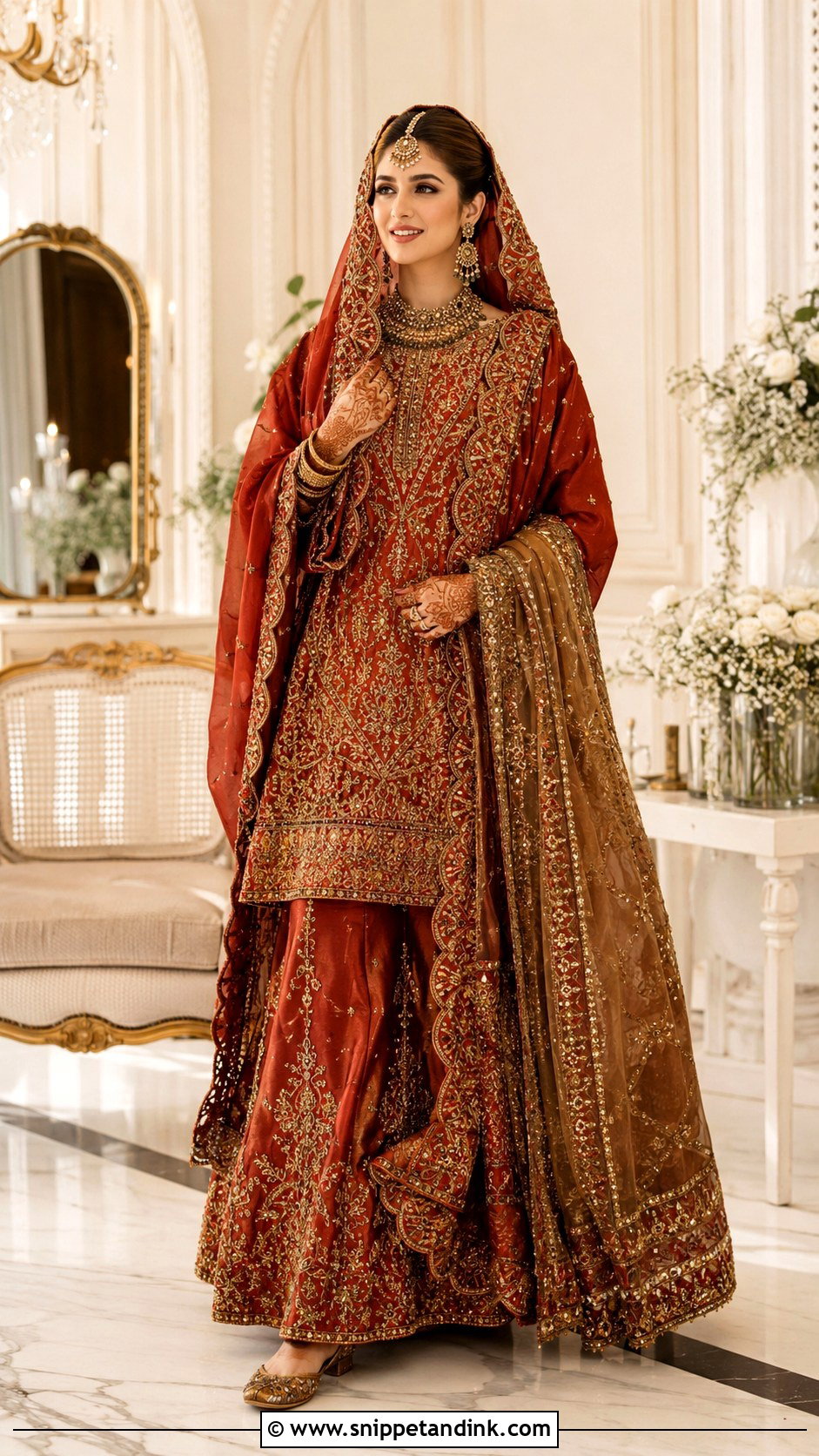
Rust red is the warm, earthy alternative to bright bridal red, and it’s especially kind to golden and olive skin. Choose raw silk or tissue in a copper-red shade with a structured blouse or calf-length shirt. Bronze, dull gold, marori, dabka and resham bring out the color without shine overload. Wear a rust net dupatta with a scalloped edge over the head and a muted gold organza one around the shoulders. Antique gold jewelry, warm makeup, bangles and brown-gold khussas suit it. Rust is the shade most likely to shift under artificial light, sliding toward orange or brown. Look at it under your venue’s lighting before committing.
13. Burgundy Pakistani Bridal Barat Lehenga
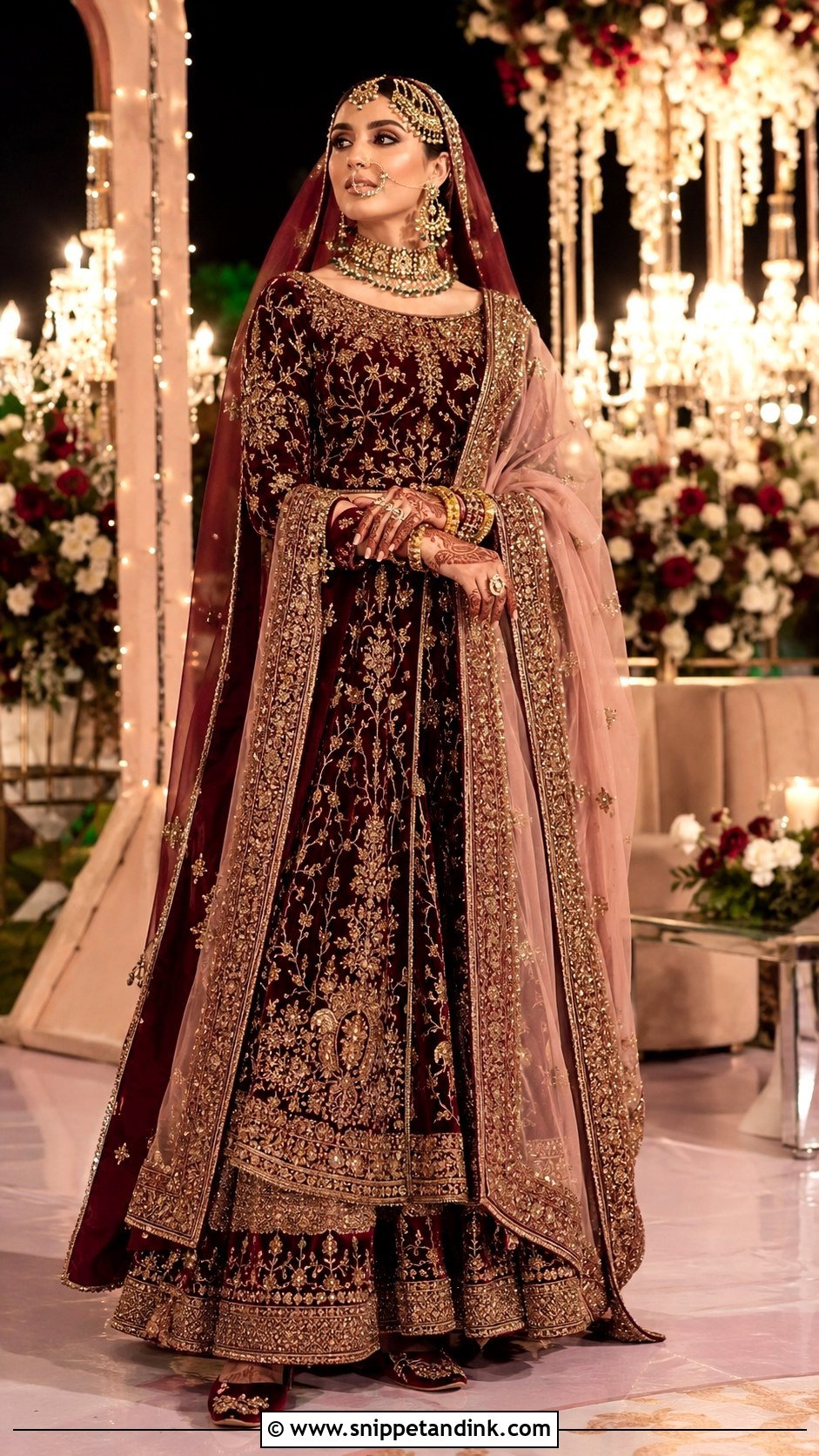
Burgundy suits a night barat in a formal hall. A full burgundy lehenga in velvet, raw silk or structured jamawar pairs with a fitted long-sleeve blouse and antique gold work. Keep the embroidery to the skirt border, neckline, cuffs and dupatta edges so the depth of the color shows. A sheer burgundy dupatta over the head and a rose-gold one across an arm, polki, a matha patti, a nath, bangles and velvet khussas complete it. Dusty rose threadwork softens it. Dark fabric shows everything, from creases to foundation smudges on the neckline, so keep a lint roller and a dry cloth with whoever holds your bag.
14. Pink And Red Pakistani Bridal Barat Lehenga
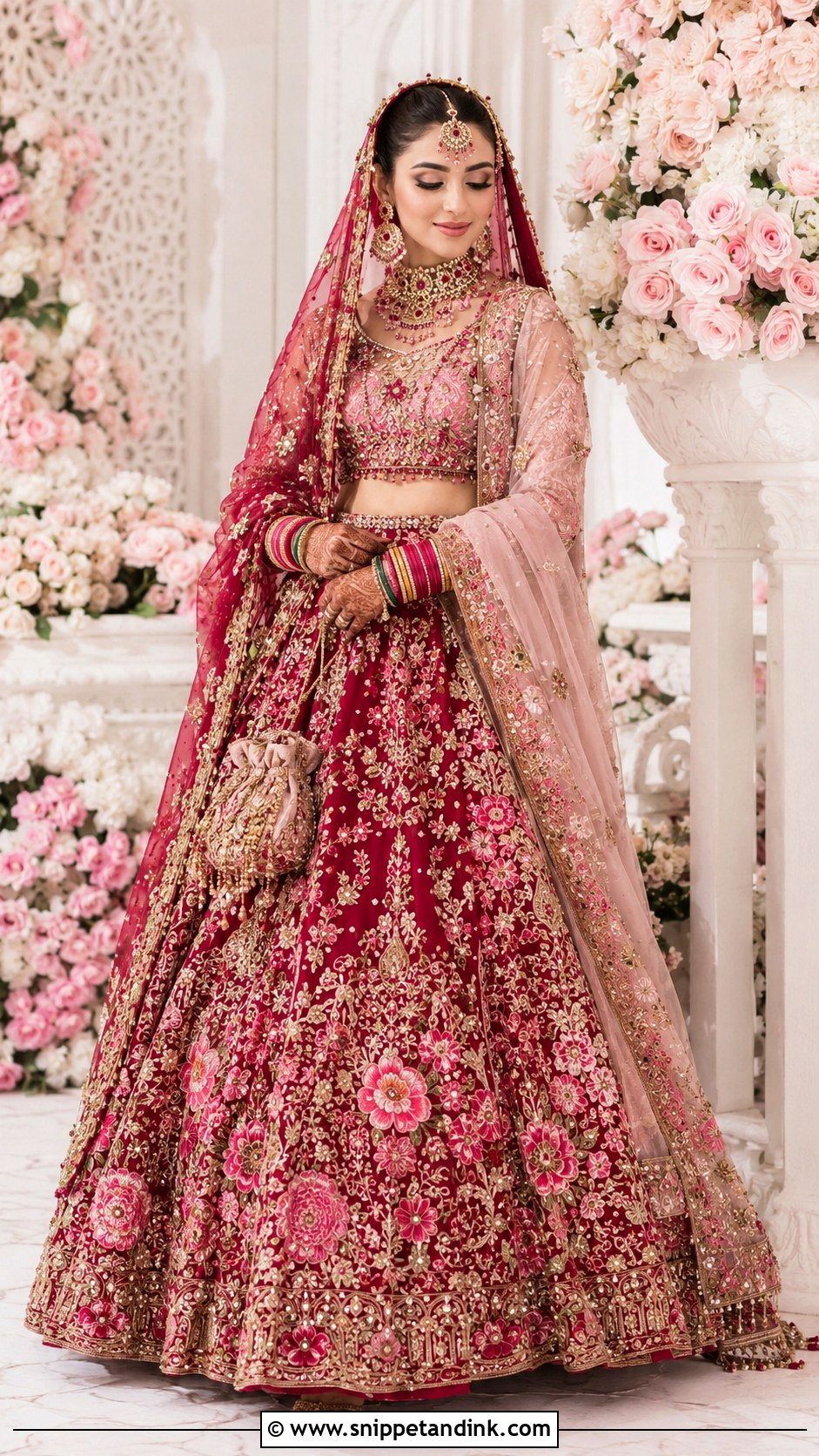
Pink and red is the romantic version of the barat palette. Choose a deep red skirt with blush, rose and magenta florals and a coordinated pink blouse or long shirt. The red dupatta goes over the head; a pale pink one across the shoulders puts softness near your face. Gold zardozi, pearls and small sequins unify both colors. Rose-toned kundan, pink and red bangles and gold shoes finish it. Repeat each shade in at least two places, or the pink looks like an afterthought. With pink makeup, I’d still put a defined red lip on the bride to tie her face to the dupatta.
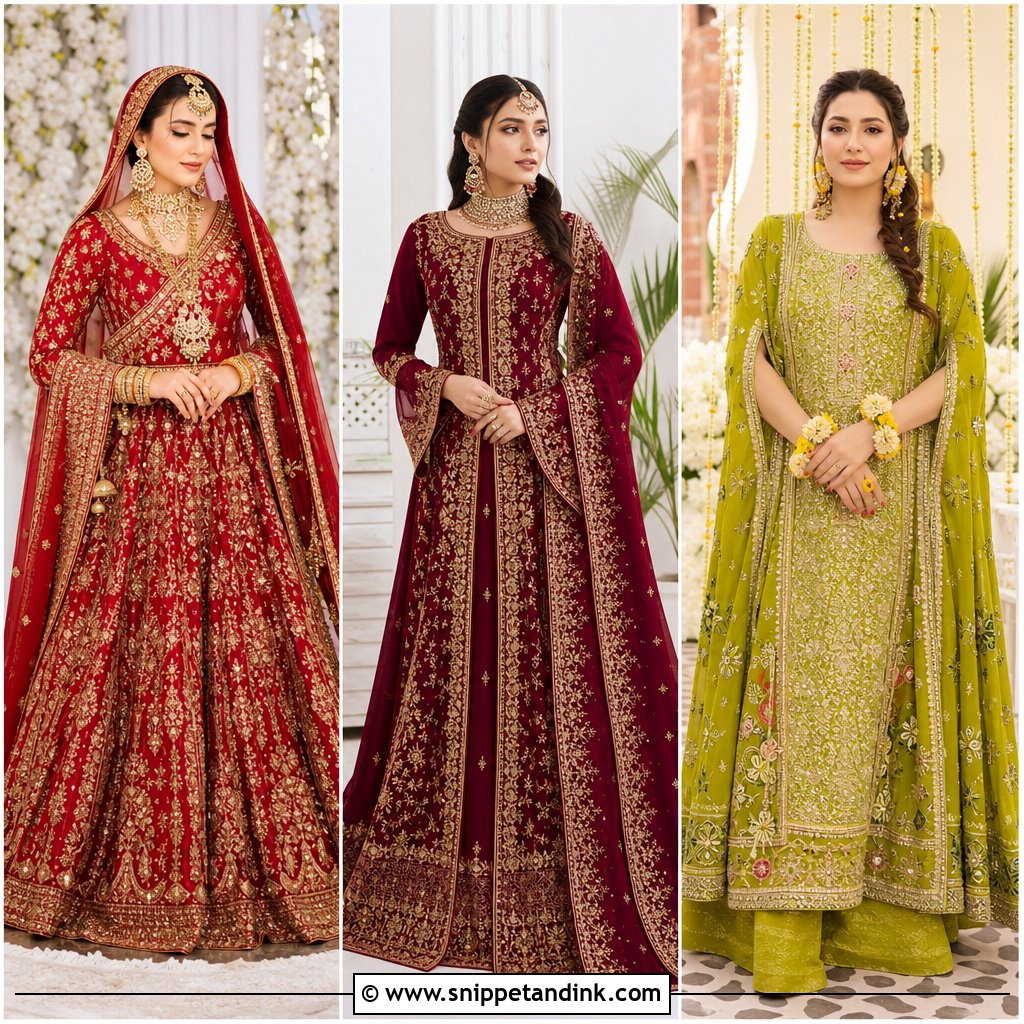
15. Gold Tissue Pakistani Bridal Barat Dress
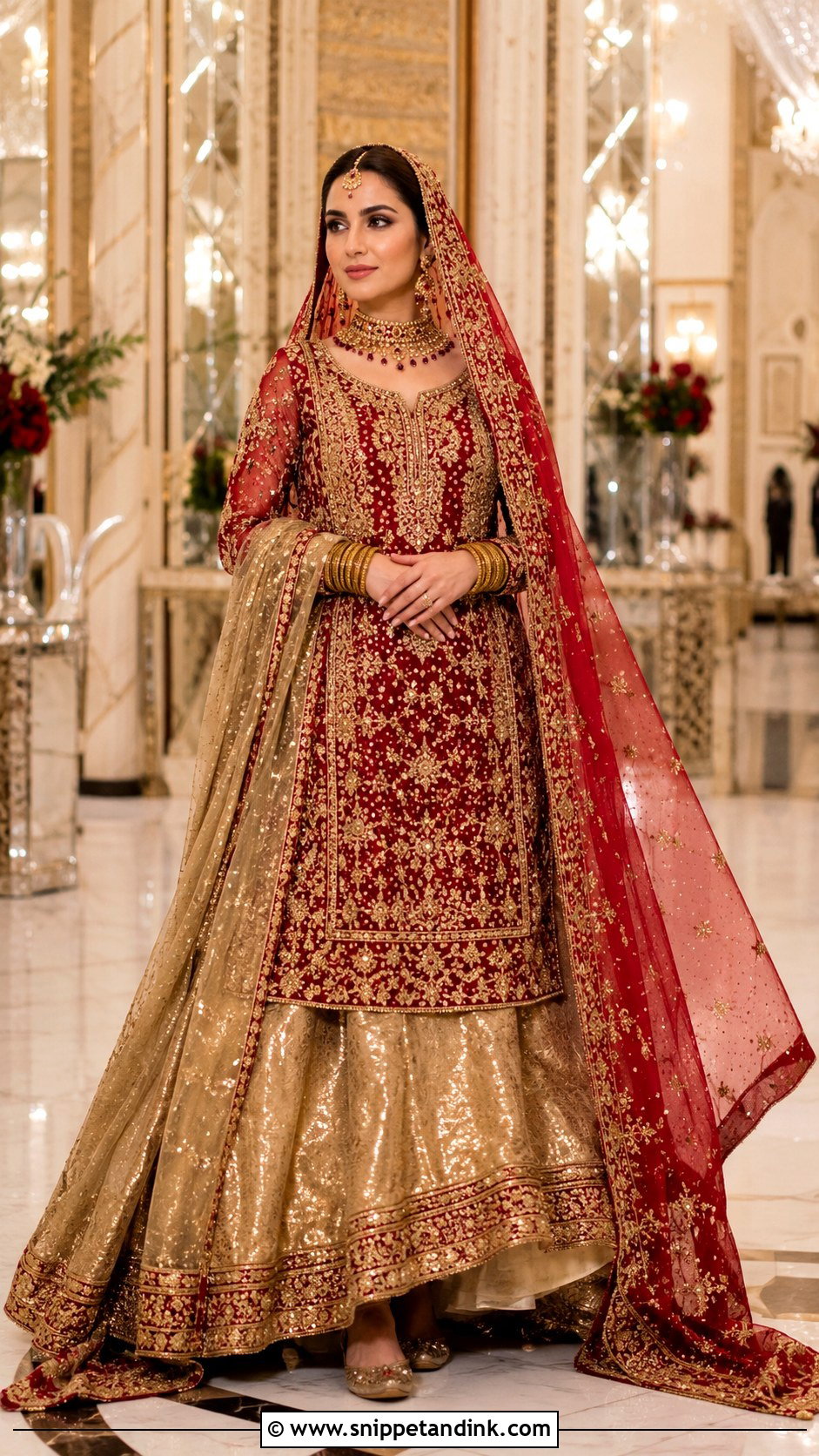
Tissue catches light like nothing else, but a whole outfit of it can look like foil. A gold tissue lehenga under a long red shirt uses the shine in a controlled way. Decorate the skirt with red resham flowers, antique gold borders and scattered handwork, and keep the shirt dense at the neck and hem with cleaner fabric in the middle. Add a red organza head dupatta and a light gold net dupatta over the arms. Ruby kundan, gold bangles and cushioned metallic khussas complete it. Tissue is crisp and scratchy against bare skin, so it needs a soft lining, and fewer skirt layers keep it comfortable.
16. Raw Silk Pakistani Bridal Barat Lehenga
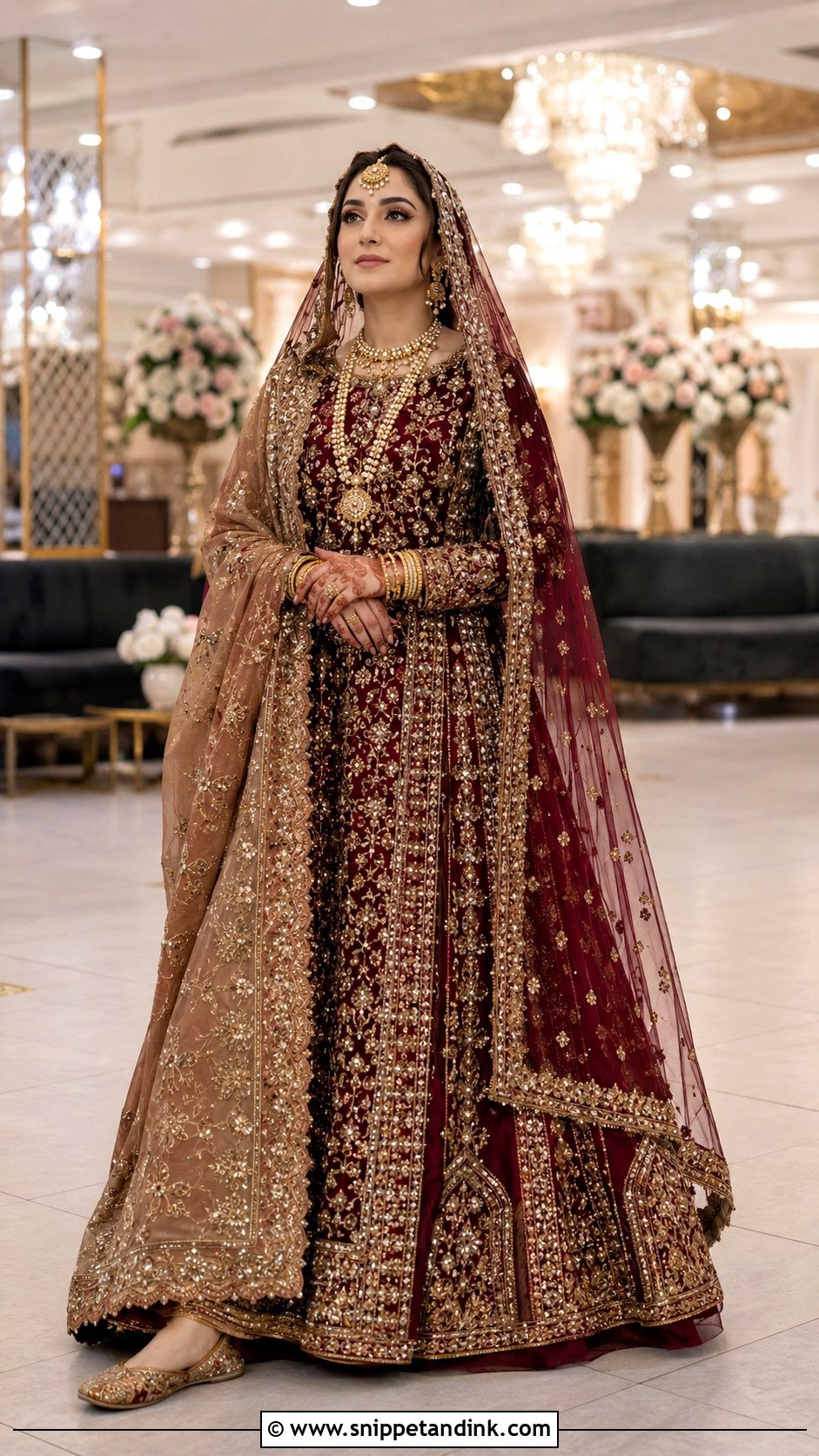
Raw silk is the fabric I trust most for a barat lehenga. It holds structure, takes dye truly and supports heavy embroidery without puckering. Choose deep red or maroon with vertical panels that lengthen the body, and a matching blouse or long shirt with naqshi, dabka, pearls, zari and contrasting thread. A light net dupatta keeps the outfit from feeling rigid, and an organza head covering frames the face neatly. Traditional gold jewelry, a tikka or matha patti, bangles and comfortable khussas finish it. The one weakness: raw silk creases where you sit, so someone should smooth the skirt before every portrait.
17. Double Dupatta Pakistani Bridal Barat Lehenga
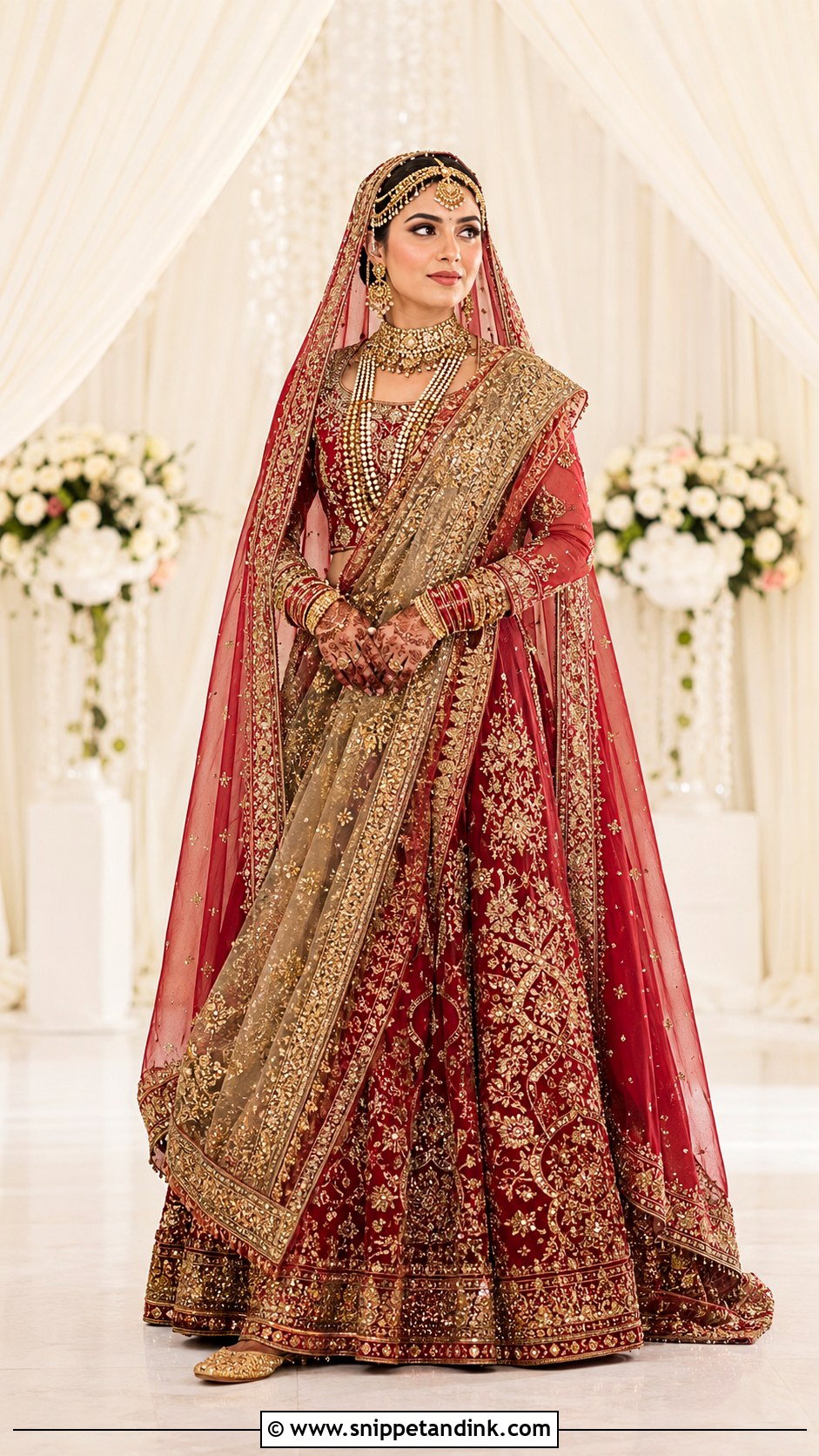
The double dupatta is less about the lehenga and more about engineering. A light red net dupatta goes over the head, secured around the crown and shoulders. A second one in antique gold, blush or emerald drapes across the torso and over one arm. Make one border heavy and the other finer so they frame rather than smother the outfit, and repeat both colors in the lehenga’s piping or motifs. A matha patti, earrings, a choker, a long necklace, bangles and embellished shoes complete it. Discuss pin placement with the hairstylist in advance. Two dupattas pinned into hair carry real weight, and they need anchoring into the bun, not just the top layer of hair.
18. Peplum Pakistani Bridal Barat Lehenga
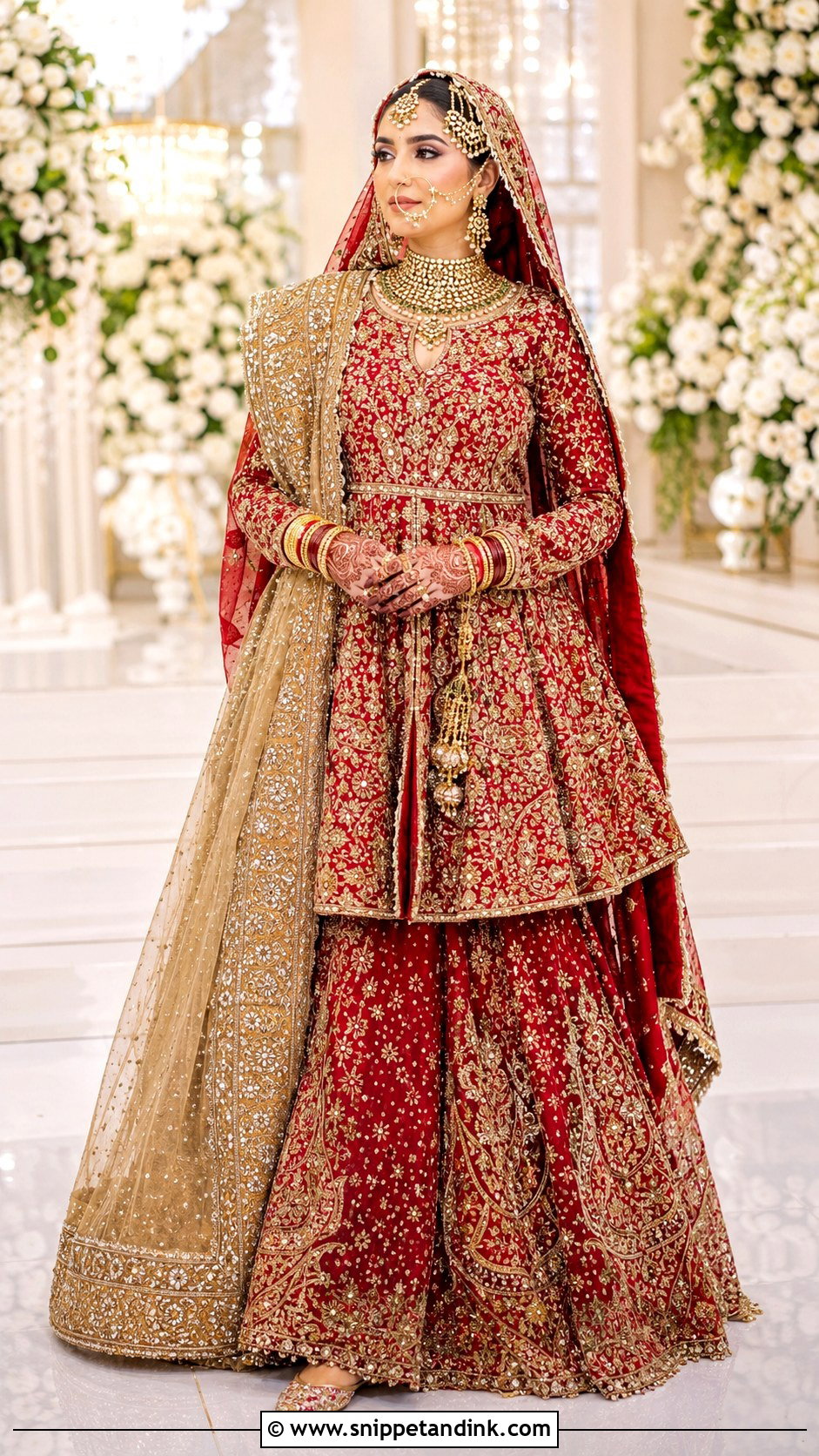
Peplums give more coverage than a short choli and still define the waist. A structured red peplum over a full maroon or red lehenga, with matching embroidery, reads as one continuous look. With a voluminous skirt, keep the peplum flare gentle; two big flares compete. Gold dabka, sequins, pearls and resham can trace the neckline, sleeves, waist seam and peplum edge. Red head dupatta, antique gold shoulder dupatta, kundan, a statement nath, bangles and pointed khussas complete it. Where it ends matters. Shorter brides look best when the peplum stops nearer the waist; taller brides can take it to the upper hip.
19. Red Pakistani Bridal Barat Saree
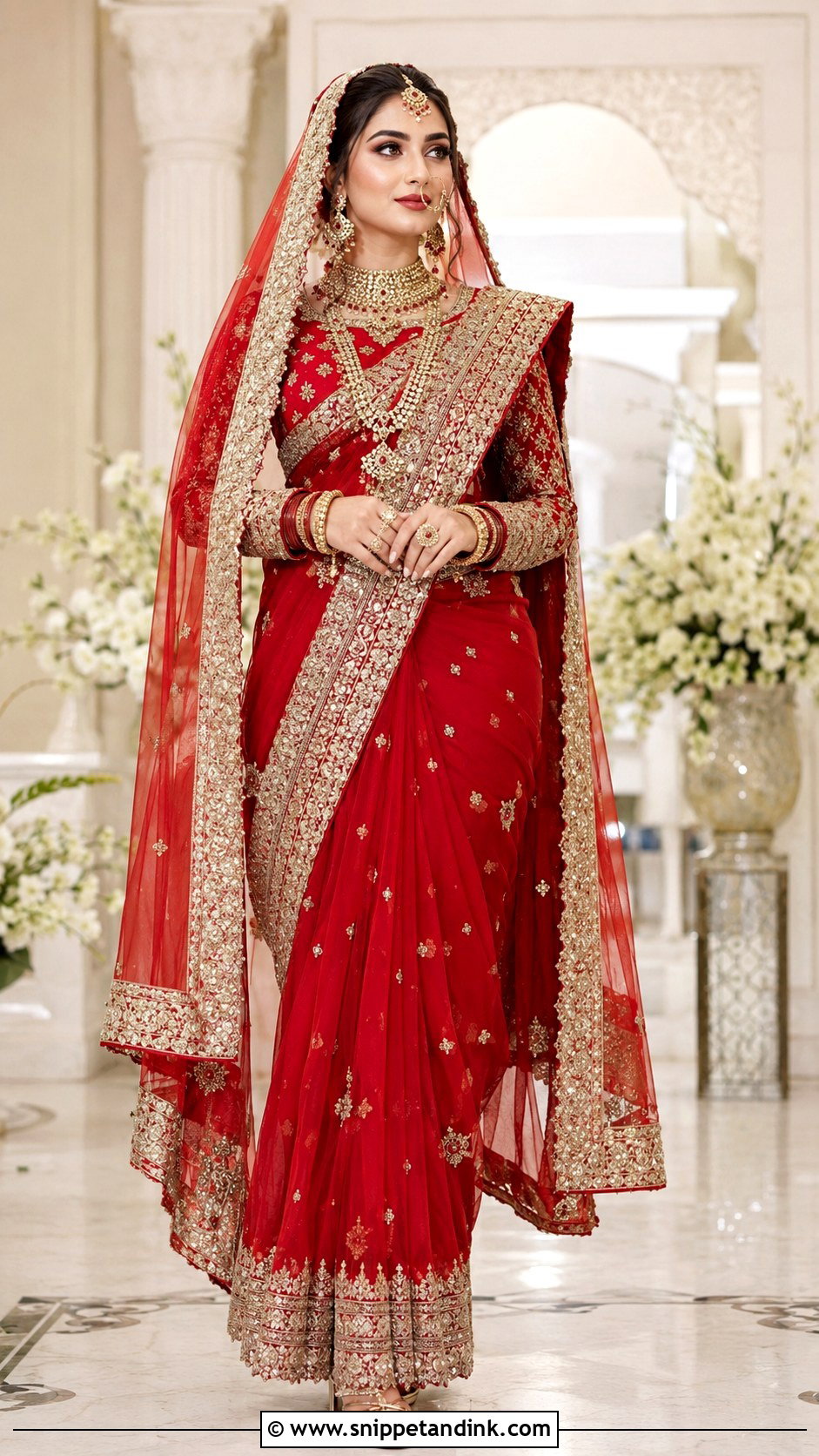
Sarees are less common at a barat, which is part of their charm. Choose red velvet, organza or tissue with a wide zardozi border and scattered gold motifs, and a structured blouse with full or elbow sleeves. The pallu can cover the head, though a separate light bridal dupatta stays put far better through the rituals. A choker, layered necklace, earrings, tikka, nath, bangles and comfortable heels complete it. Velvet sarees are heavy at the pleats, so I’d ask for pre-stitched pleats on a velvet drape. A well-fitted petticoat and hidden pins keep it steady on stage and in seated photos.
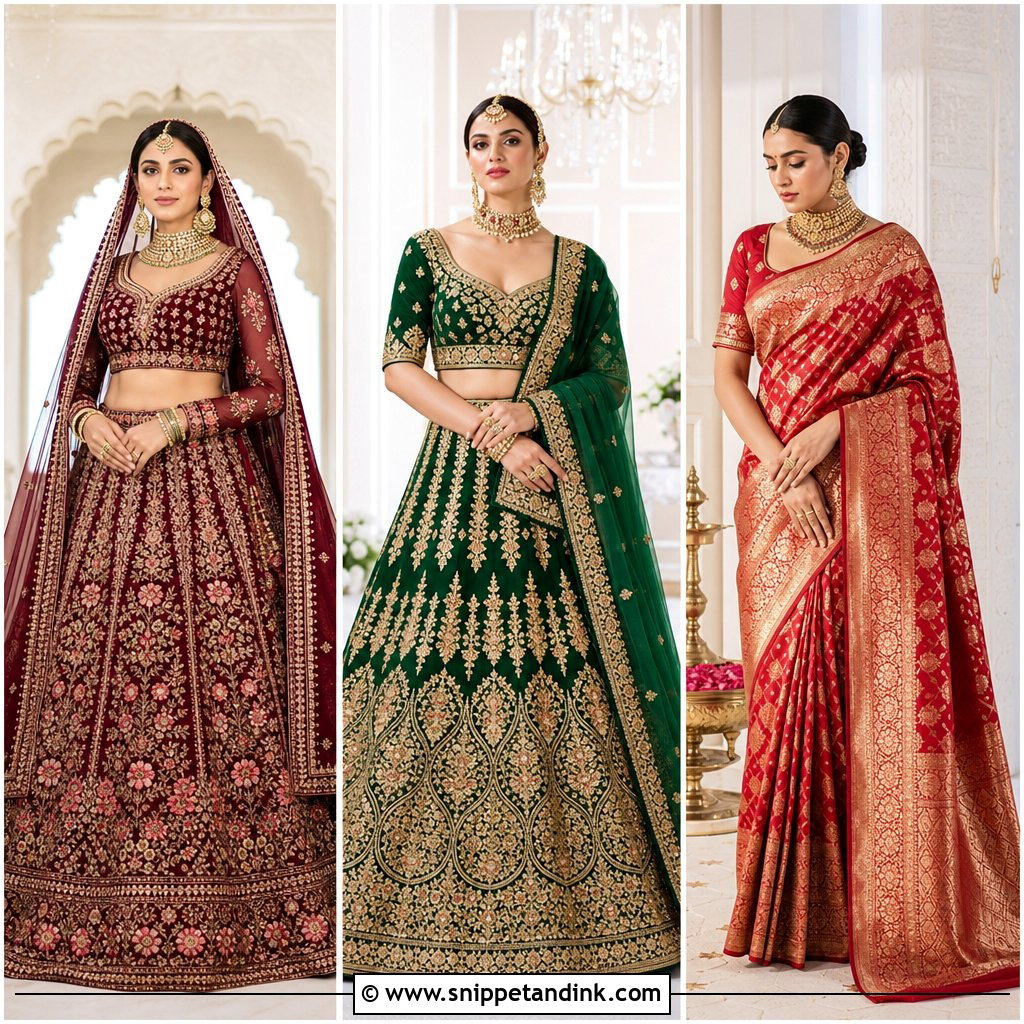
20. Red Pakistani Bridal Barat Gown
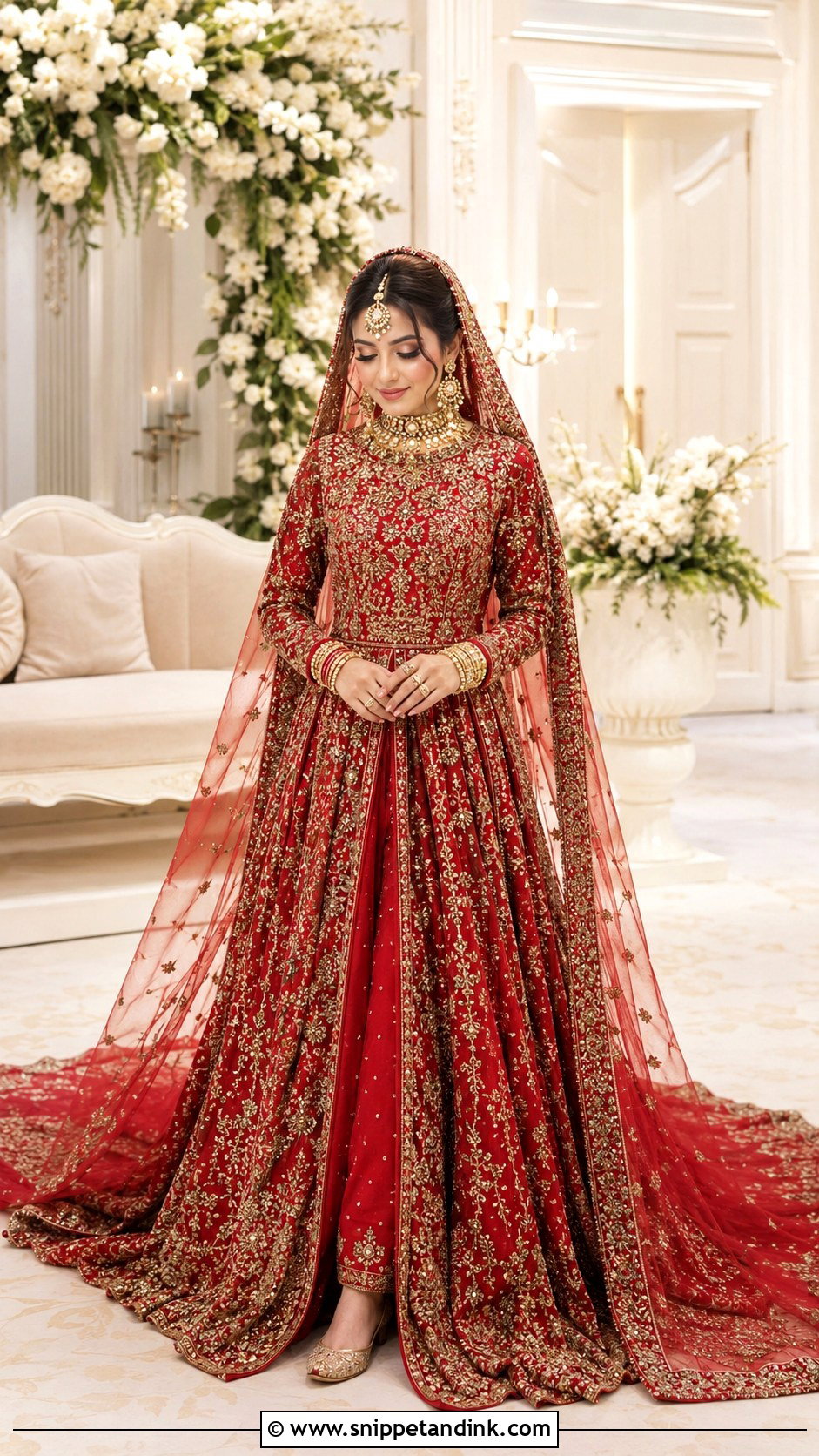
Gowns are for the bride who wants a modern line without losing the bridal look. A red gown with a fitted embroidered bodice and flowing skirt can carry gold zardozi, resham vines, pearls and sequins at the neck, sleeves, waist and lower panels. A high neck or illusion yoke gives coverage; a defined waist keeps it from going shapeless. The long red net dupatta over the head is what keeps it reading as Pakistani bridal. Kundan, a centered tikka, earrings, bangles and closed shoes finish it. Skip a long train if the hall is crowded. A detachable train or a bustle gives the same drama for portraits and comes off before dinner.
Living in a Heavy Lehenga From Entrance to Rukhsati
A barat lehenga is worn for many hours, and most of them aren’t spent walking down an aisle. Plan for the parts no one photographs.
- Ask whether the skirt can sit on the hips with a broad belt-style waistband. Weight resting on the hip bones is far easier to carry than weight dragging at a narrow waist.
- Choose shoes you’ve walked in for at least a week. Most brides change into flats after the photos.
- Name one person as your bathroom helper, and practice gathering the can-can and skirt together at home.
- Eat before you dress. A full meal on stage in a fitted blouse rarely happens.
- Keep a small pouch with safety pins, U-pins, blotting papers and a needle threaded in your outfit color.
The order the dupatta goes on
Hair is finished first, then the tikka, matha patti or jhoomar is placed. Only then does the head dupatta go on, pinned into the bun with U-pins rather than resting on loose hair, followed by the shoulder dupatta and the heavy necklaces. If the dupatta goes on before the jewelry, the hairstylist ends up unpinning it to reach the tikka. Agree on the order with your hairstylist so everyone isn’t rushing in the last fifteen minutes.
The Red, Maroon or Gold You’ll Walk In With
Start with shape and color depth, then let season, venue and comfort narrow things down. Red lehengas are the classic, but maroon farshis, ghararas, structured pishwas, sarees and gowns all carry real weight as alternatives. Fabric and embroidery should look luxurious without pinning the bride under unnecessary weight. Book fittings early, try the whole outfit with jewelry and shoes, and see every fabric under realistic light. Above all, pick the dress that reflects your taste and your family’s traditions, because you’ll want to enjoy the barat rather than endure it.
You'll Like These Ideas:


Leave a Reply