
Basket cakes with flowers are one of the oldest decorating styles I still get asked for, and I understand why. The woven sides make the cake look handmade, and flowers spilling over the top read like a garden basket set on the table. The weave can be piped in buttercream, pressed into fondant, or drawn with soft icing lines that look like ribbon. The flowers can be fresh, sugar, wafer paper or piped buttercream, depending on the style and how they’ll be kept off the cake. Garden weddings in spring, barn receptions, backyard parties and formal rooms all suit it. Below are twenty versions I’d make, with notes on what each one asks of the baker.
How a Basketweave Is Piped, and Why It Costs Time
Couples are often surprised that a basket cake is quoted higher than a smooth one with the same flowers. The reason is the piping. A buttercream weave is built row by row: one vertical line, then short horizontal strokes across it, then the next vertical line, with every other row offset so it interlocks. On a tiered cake that is hours of steady work.
What to look at when you compare bakers
- Ask to see close-up photos of their basketweave, not just the whole cake. The rows should stay level all the way around and the strokes should be the same length.
- Ask which tip they use. A ridged basketweave tip gives the classic ribbed strands; a plain round tip gives a softer, rope-like look.
- Ask how the frosting copes with your venue. Ridged buttercream starts to slump in heat, and fine ridges are the first detail to go.
- If the budget is tight, weave only the bottom tier and keep the others smooth. It still reads as a basket cake.
1. Buttercream Basket Wedding Cake With Roses
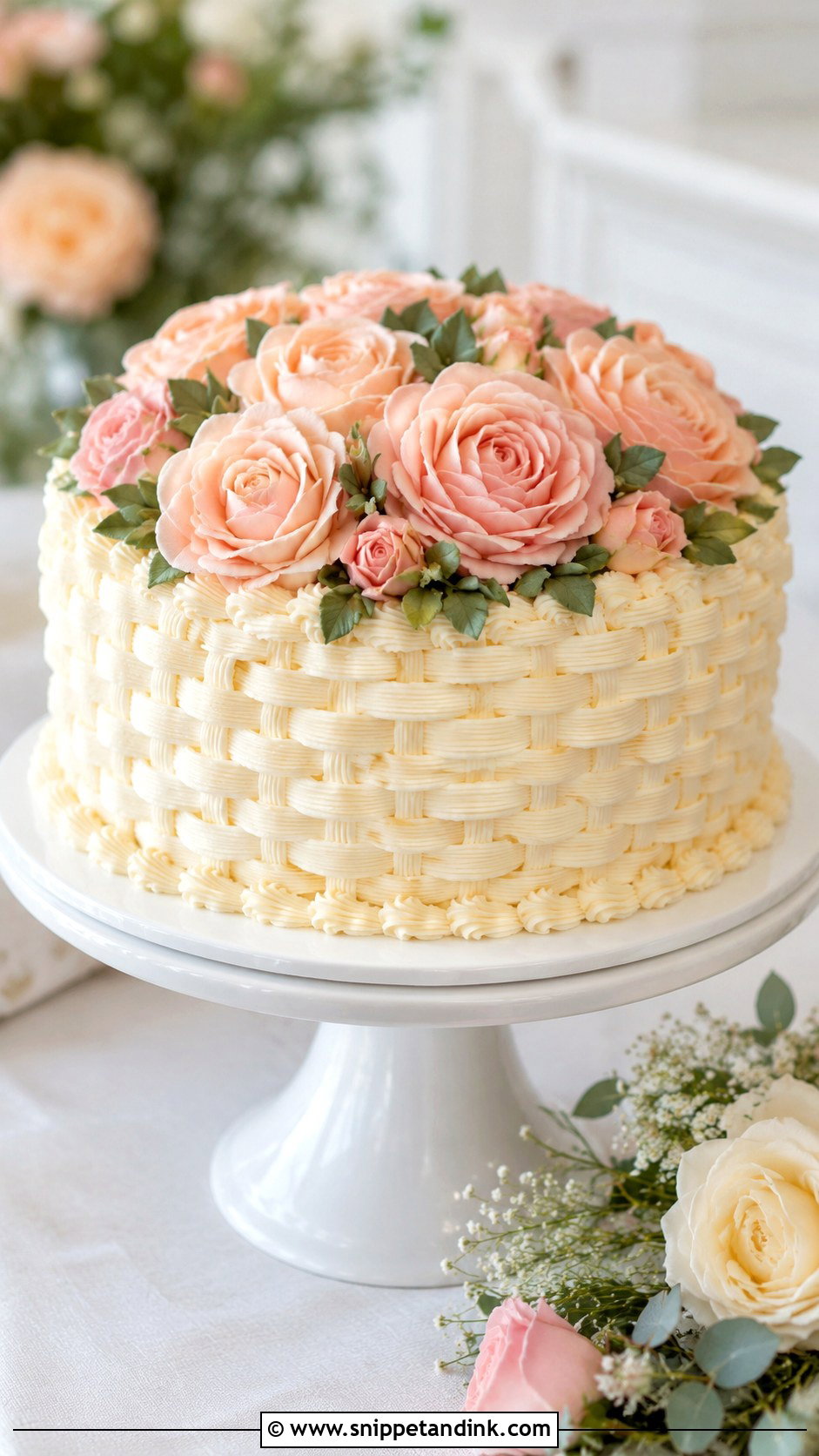
Roses on buttercream basketweave are the classic version for a reason. The woven sides give texture without any other decoration, and roses finish the top or the base. Ivory keeps it bridal; blush, dusty pink, peach or cream roses make it more personal. The weave has to be even, though. I pipe a vertical guide line first and check the spacing every few rows, since a weave that drifts uphill around the cake is obvious once the flowers sit above it. It belongs in a garden, a chapel reception or a spring table.
2. Two Tier Basket Wedding Cake With Flowers
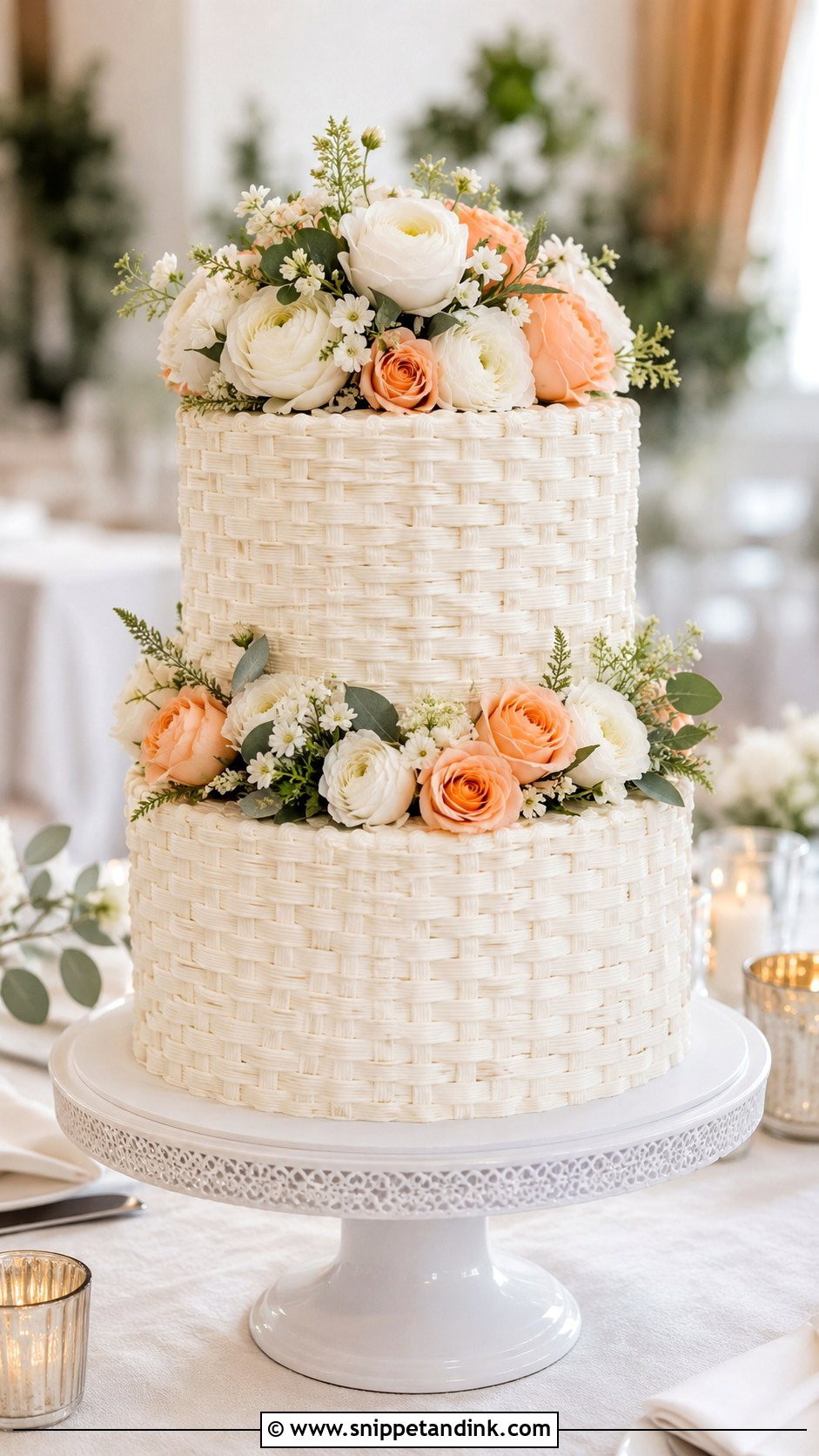
Two tiers give enough height for a centerpiece without needing a large structure. You can weave both tiers or weave the bottom and keep the top smooth, which I often prefer because the contrast shows off the texture. Flowers set between the tiers make a natural ring and hide the join neatly. For a medium-sized wedding it’s the right scale. Soft ivory frosting, pastel blooms and a little greenery keep it fresh.
3. Round Basket Wedding Cake With Fresh Flowers
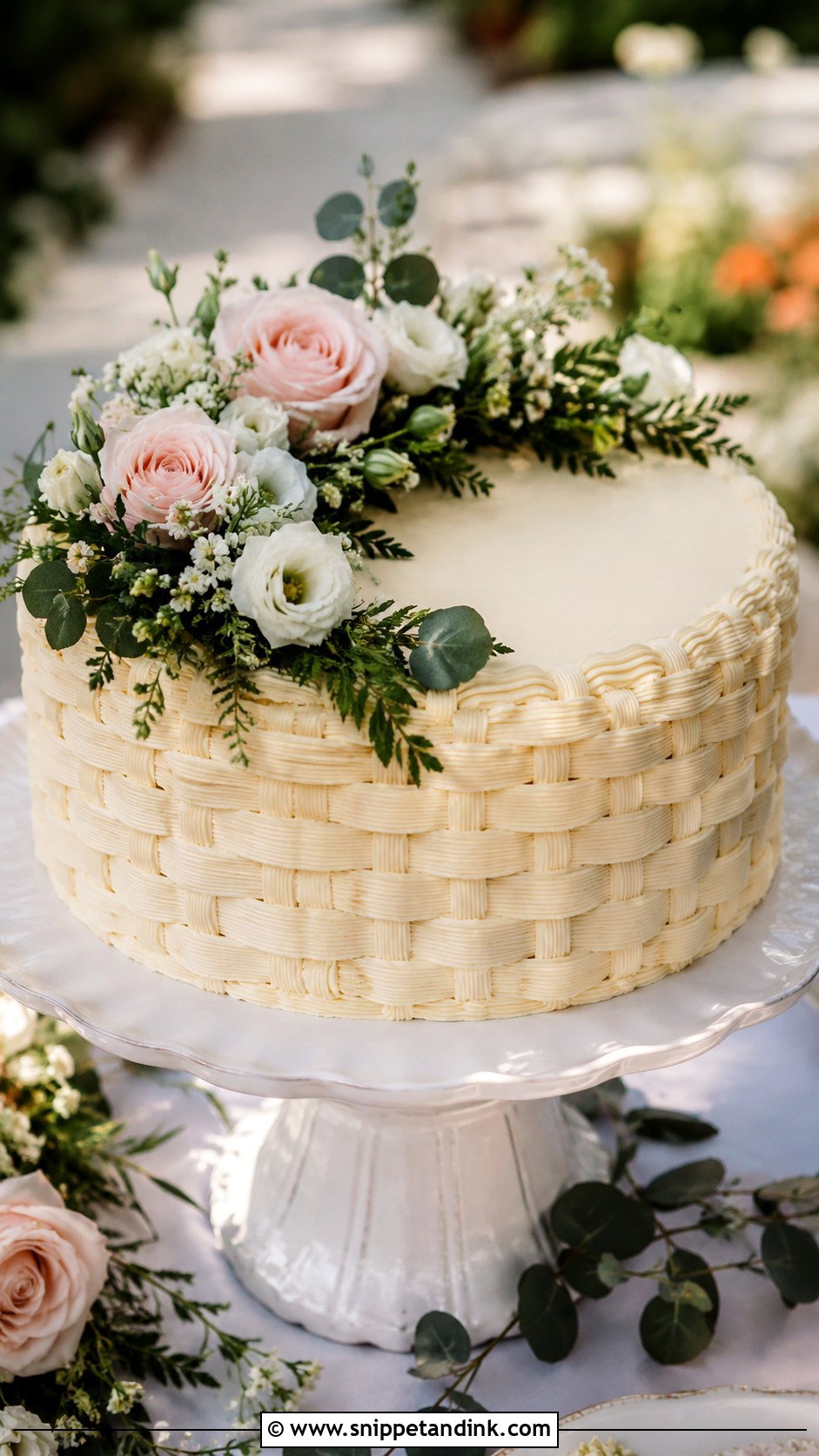
On a round cake the weave curves like a real basket, which is why this shape looks so natural. Fresh flowers can sit on top, tuck along one side or form a crescent for a more modern finish. Every stem needs a barrier, such as a flower pick or wrapped stem, so nothing touches the cake directly. White buttercream with garden roses, lisianthus, ranunculus and soft greenery gives a clean result. I’d place the crescent toward the side guests see first, since the back of a cake table is rarely photographed.
4. Square Basket Wedding Cake With Flowers
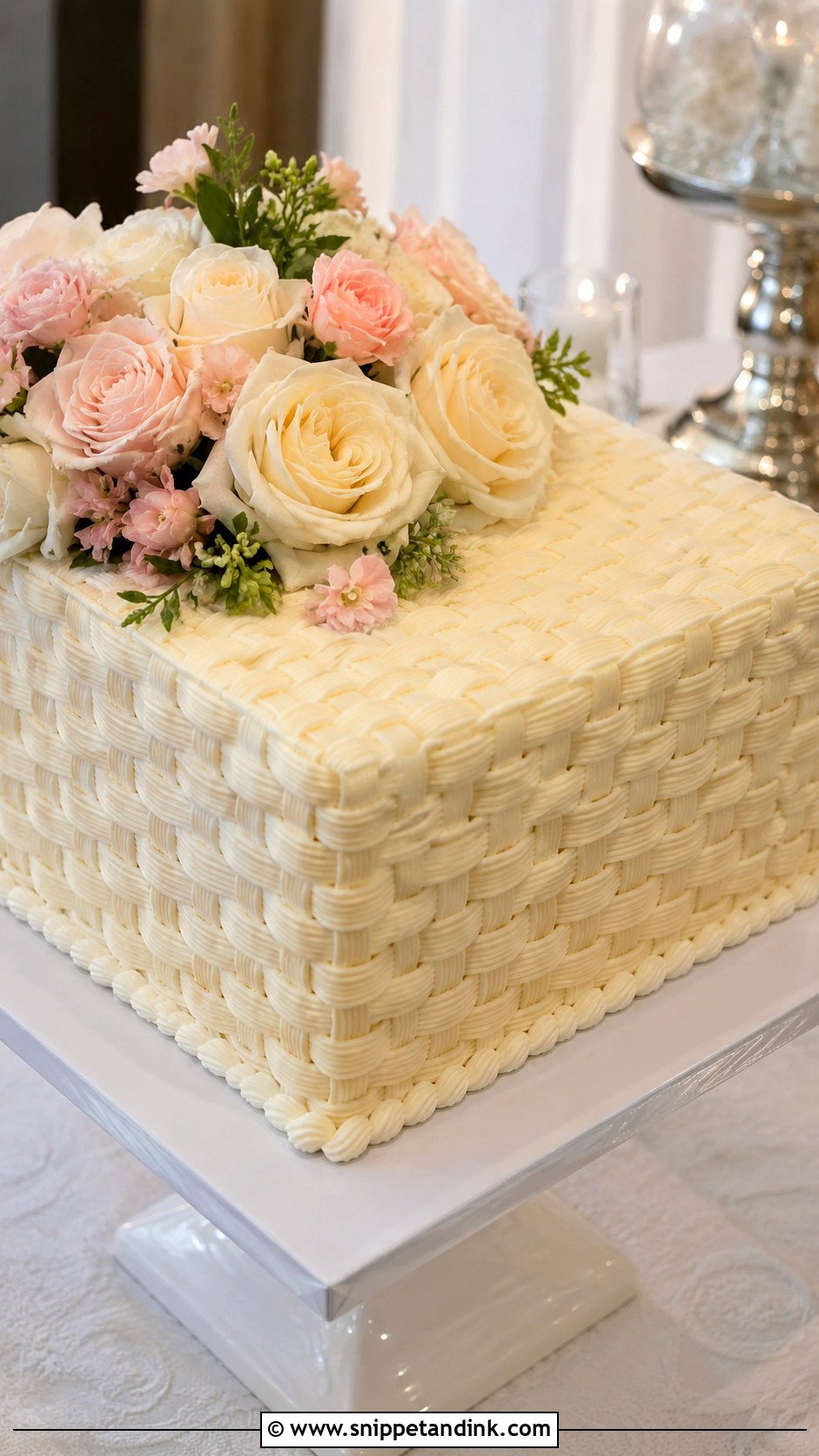
Square cakes show basketweave more clearly than round ones, because the straight sides let each row run flat. The corners are the hard part. Weaving around a sharp corner without the pattern breaking takes care, so I usually soften each corner with a small floral cluster instead. A square cake also leaves room for crisp piping detail. Flowers at the top center or across one corner add movement without hiding the shape. Country clubs, polished receptions and modern rustic venues all suit it.
5. Rustic Basket Wedding Cake With Wildflowers
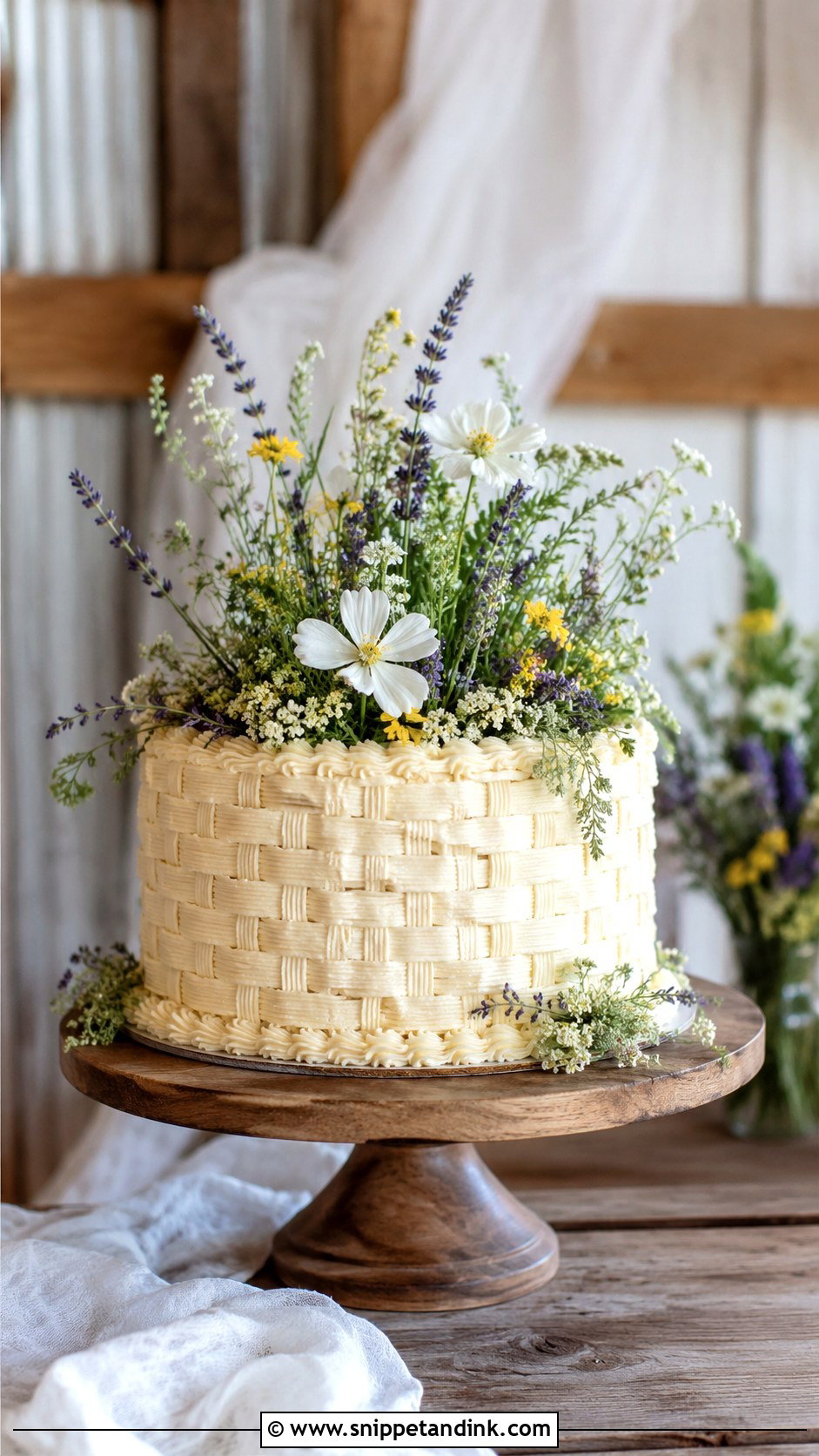
Rustic basketweave can be slightly loose and textured rather than perfect, which suits a barn, meadow or outdoor reception. Wildflowers in soft yellow, lavender, white and blue sit loosely on top or trail down one side. Keep them airy, with space between stems, so they look gathered rather than packed. Many meadow flowers aren’t safe near food, so I’d use edible blooms, sugar flowers or carefully wrapped stems chosen with the florist. A warm ivory or light beige frosting and a wooden stand finish the look.
6. Vintage Basket Wedding Cake With Sugar Flowers
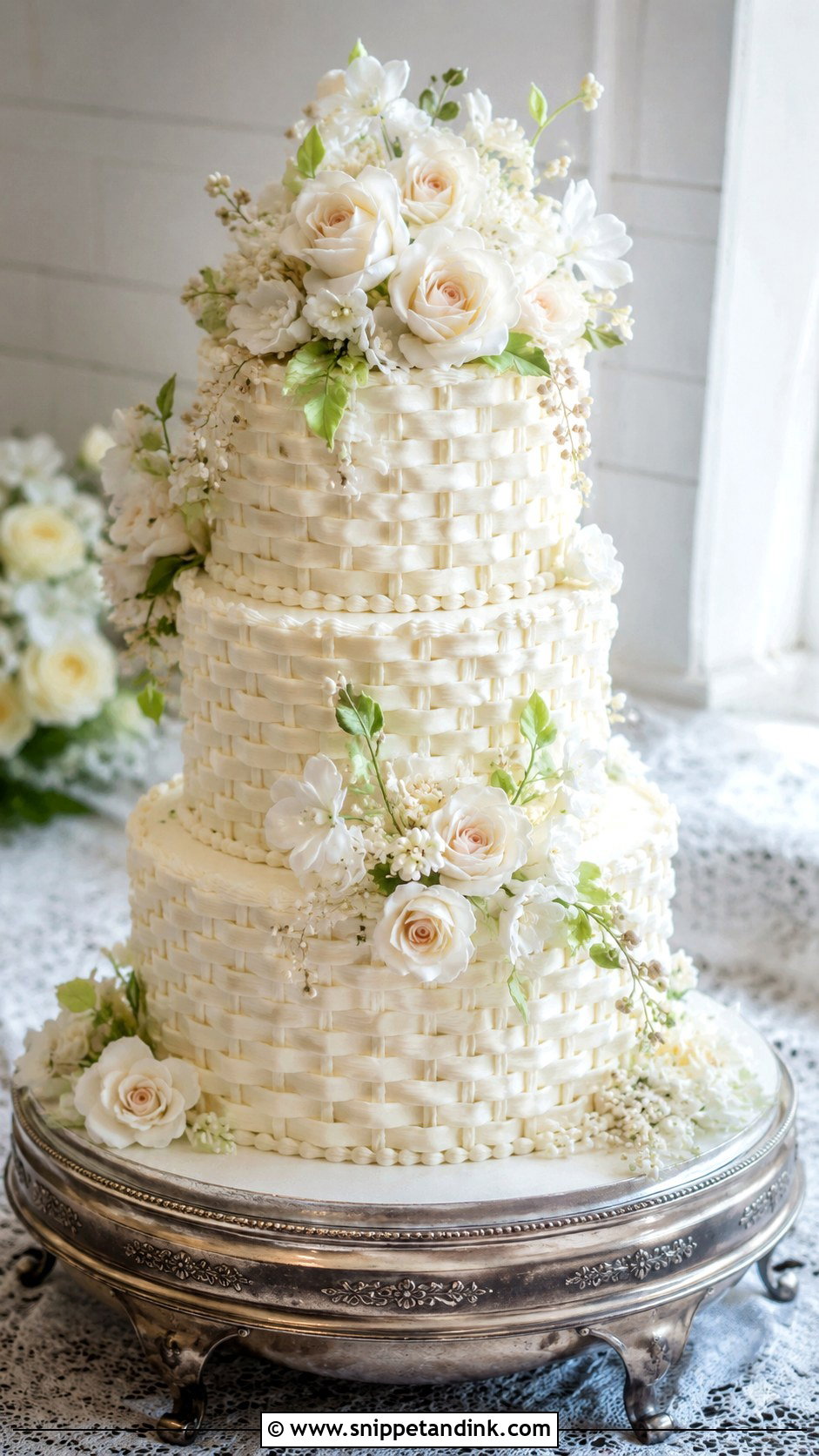
A vintage basket wedding cake with sugar flowers has an heirloom feel. Sugar flowers let me match your colors exactly, and they don’t wilt through a long reception. Roses, sweet peas, peonies and small blossoms in a slightly muted palette suit the style, with pearl accents and soft piping. The weave can be piped in ivory buttercream or pressed into fondant. Sugar flowers do take time to make, so this is a design to order well ahead. Tea-room weddings, ballrooms and classic bridal styling are where it shines.
7. Mini Basket Wedding Cakes With Flowers
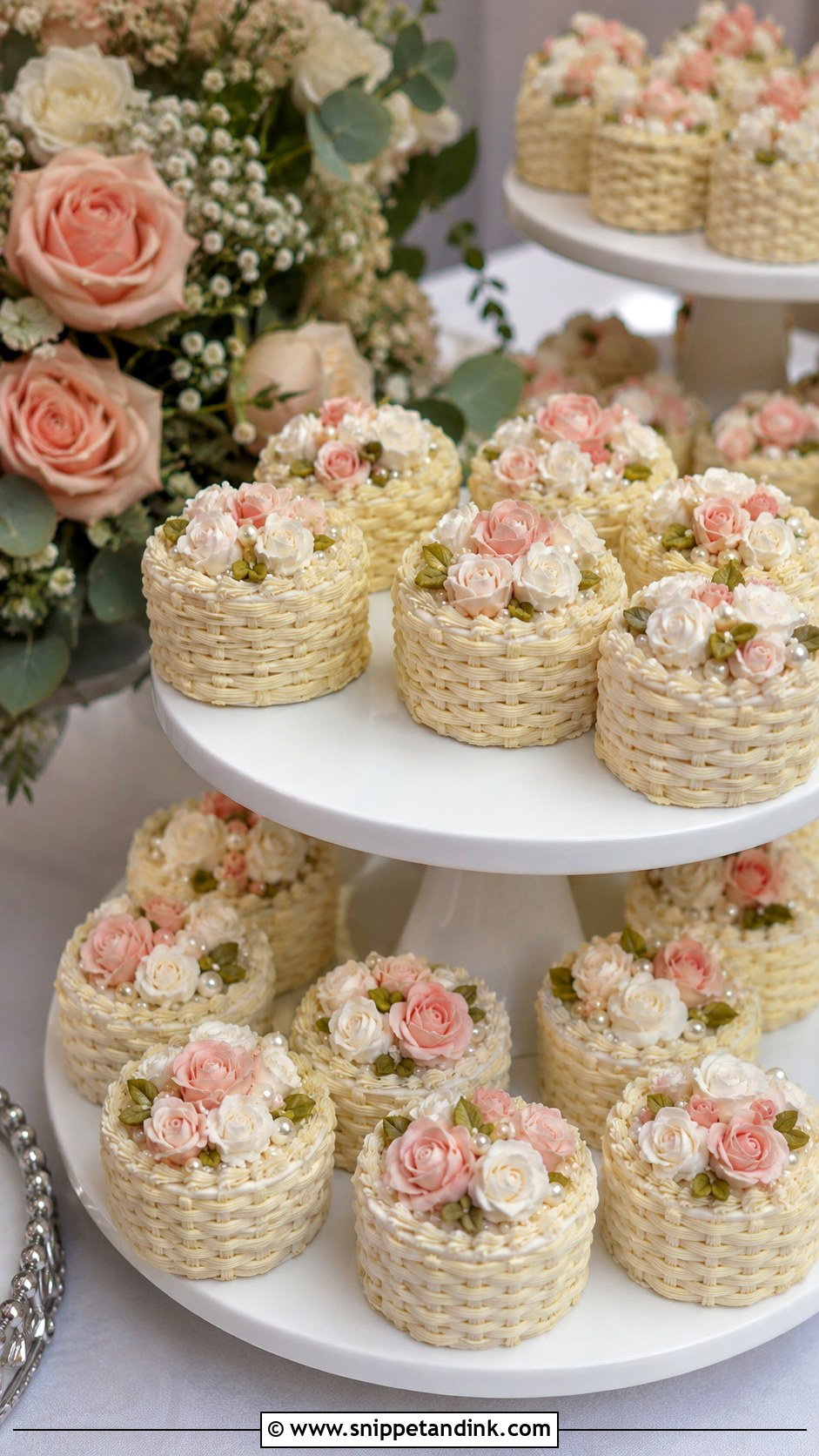
Mini basket wedding cakes give every guest their own small cake, each with woven sides and a tiny cluster of flowers. Arranged on tiered stands, they make a detailed display. Piping basketweave on dozens of small cakes takes far longer than on one large cake, so expect that labor to show in the quote. I keep each mini to one small rose and a few piped leaves on ivory frosting. They suit weddings that prefer plated or individual desserts to a cutting ceremony.
8. Tall Basket Wedding Cake With Cascading Flowers
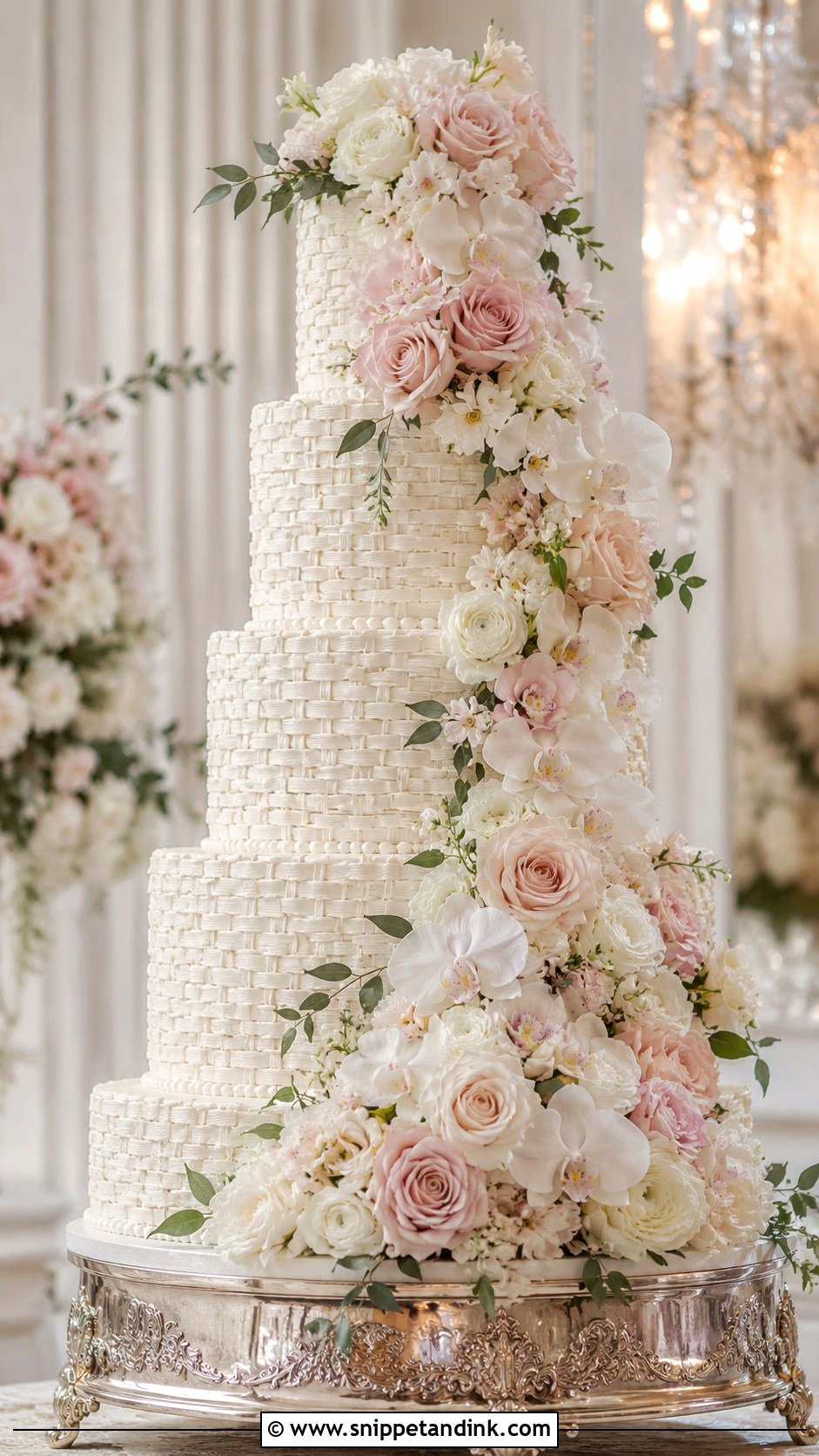
Height plus a cascade gives this one drama while the weave keeps it soft. The cascade should lead the eye from the top tier to the base in a controlled line, not as flowers scattered at random. Roses, orchids, ranunculus and small fillers create depth. I use greenery sparingly so it frames the blooms rather than covering the weave, which took hours to pipe. On a tall cake I anchor the heavier flowers into a hidden support rather than into the frosting. Formal receptions and large venues suit it.
9. White Basket Wedding Cake With Baby Breath
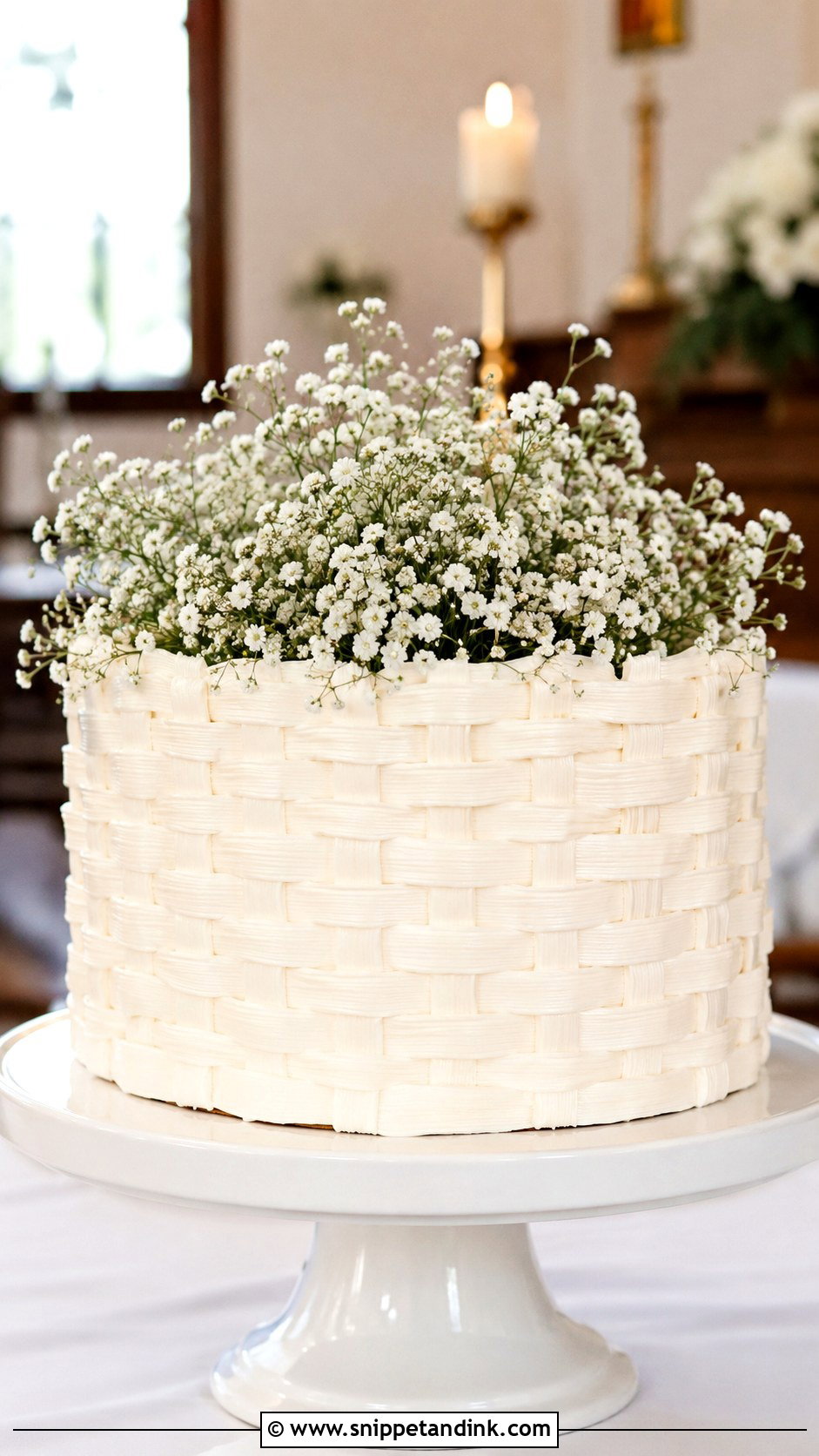
An all-white cake with baby’s breath is simple and airy. The single color lets the woven texture carry the design, and baby’s breath reads like a soft cloud. It can sit in a small top arrangement, circle the base or form a ring between tiers. Baby’s breath is delicate but sheds tiny florets, so I place it near the end of setup and keep it on picks. Clean frosting around the weave matters even more on a white cake, as any smudge shows. Minimalist weddings, chapel ceremonies and quiet garden receptions suit it.
10. Pink Basket Wedding Cake With Peonies
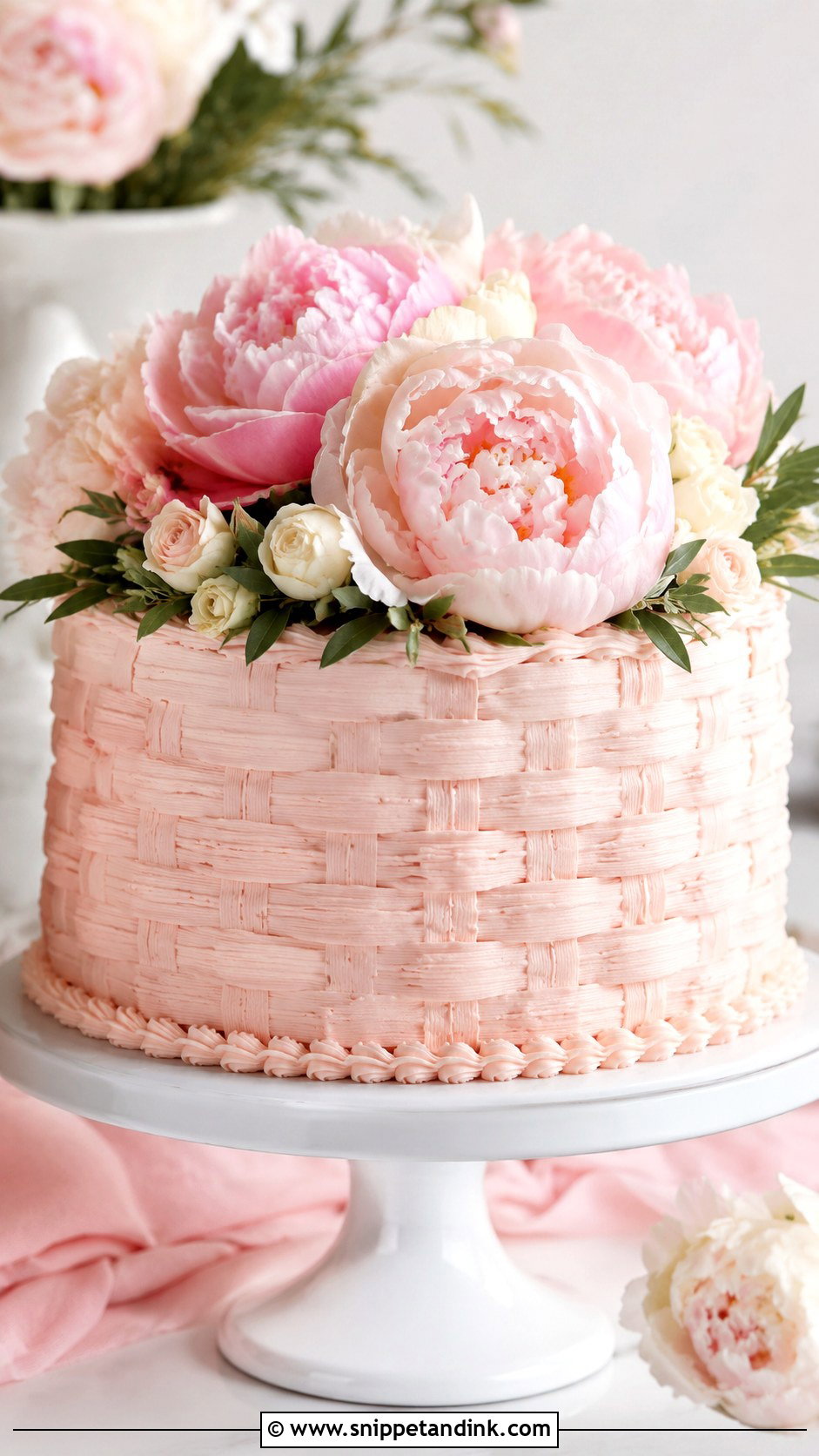
Peonies bring volume, which is exactly why I’d keep them to a top cluster or a side arrangement rather than covering the whole cake. The weave can be pale pink or ivory depending on how much color you want. Blush, dusty rose and cream keep it from turning sugary bright. Open peonies can drop petals as the room warms, so I prefer them slightly closed on delivery. A few small roses or buds around the peonies balance the cluster for a spring or early summer wedding.
11. Garden Basket Wedding Cake With Mixed Flowers
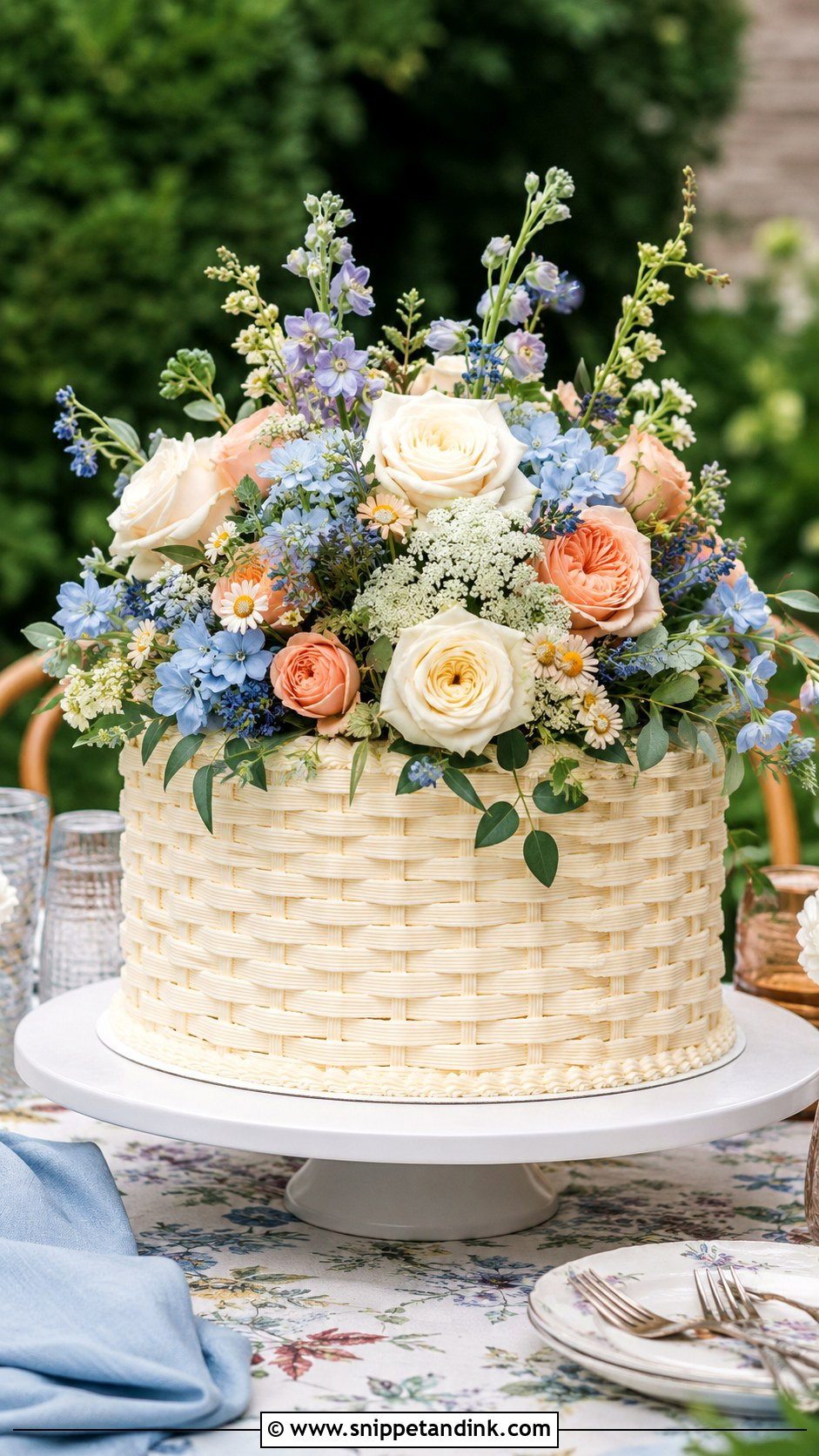
Mixed garden flowers make the cake look as if it’s holding a freshly picked arrangement. A clear palette keeps it from looking messy. One combination I like is blush roses, white ranunculus, pale blue flowers and soft green leaves. The flowers can cover the top like a full basket or trail down one side. When the arrangement is this full, I agree with the florist on exactly which flowers go on the cake so nothing unsafe ends up near the frosting. Outdoor weddings, greenhouse receptions and couples who put flowers at the center of their wedding suit it.
12. Simple Basket Wedding Cake With Daisies
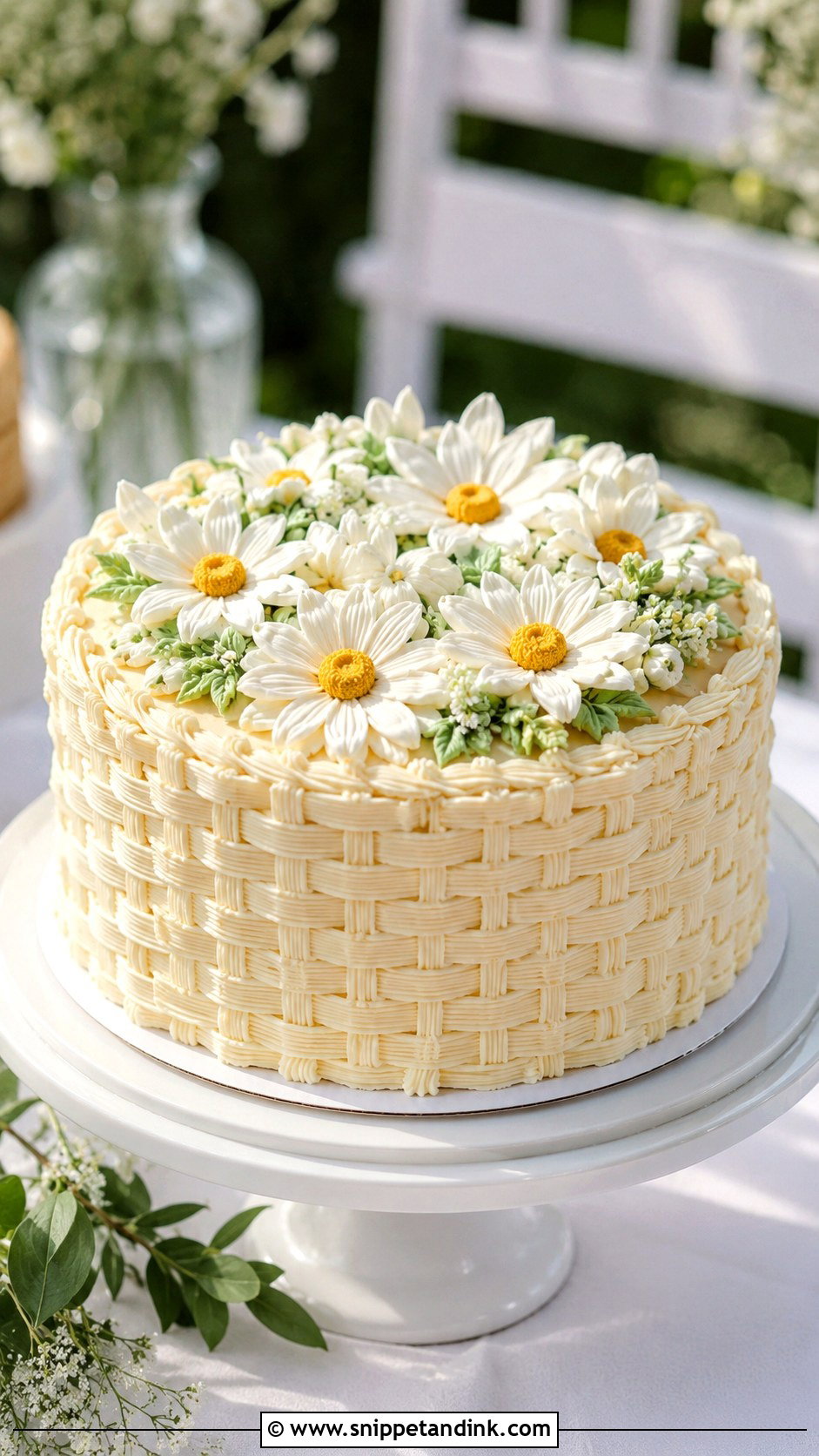
Daisies are less formal than roses or orchids and give a cake a cheerful, country feel. The weave provides enough detail that the flowers can stay minimal: a few daisies on top, some piped leaves and a clean ivory base. White petals and yellow centers stand out sharply against woven frosting. Fresh daisies wilt quicker than you’d expect in a warm room, so I’d suggest sugar or piped daisies for a long outdoor day. Daytime weddings, backyard receptions and spring celebrations with a relaxed dress code suit it.
13. Elegant Basket Wedding Cake With Orchids
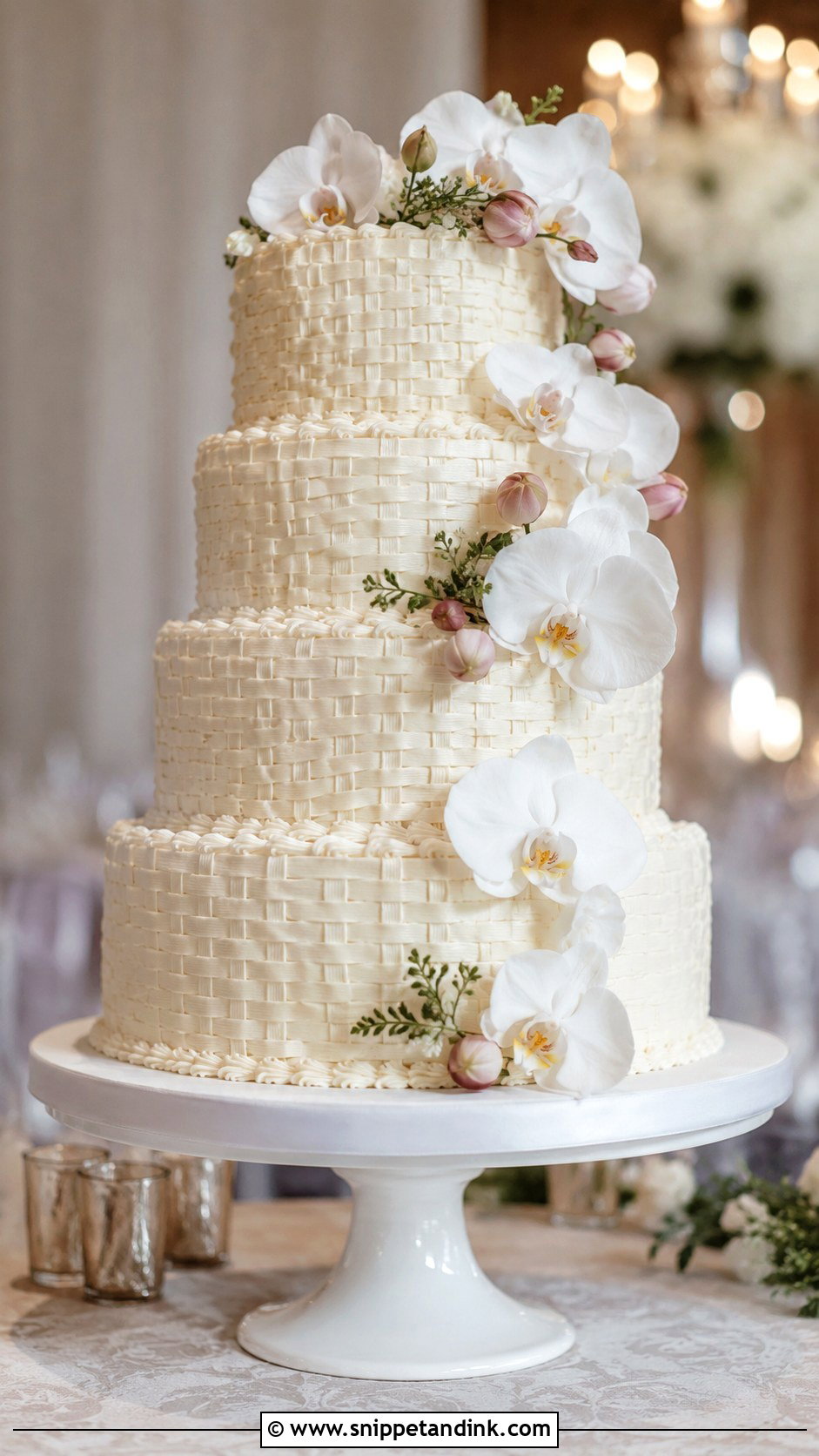
Orchids bring a cleaner, more polished line to a style that is usually soft and cottage-like. They can cascade down a tiered basket cake or rest in a neat cluster on top. White or pale blush orchids with ivory basketweave keep it refined, and because orchids have such a sleek shape, I keep everything else spare. Orchid sprays are long and can droop, so I wire or support them before they go near the cake. Hotel weddings and evening receptions suit this more formal take.
14. Basket Wedding Cake With Sunflowers
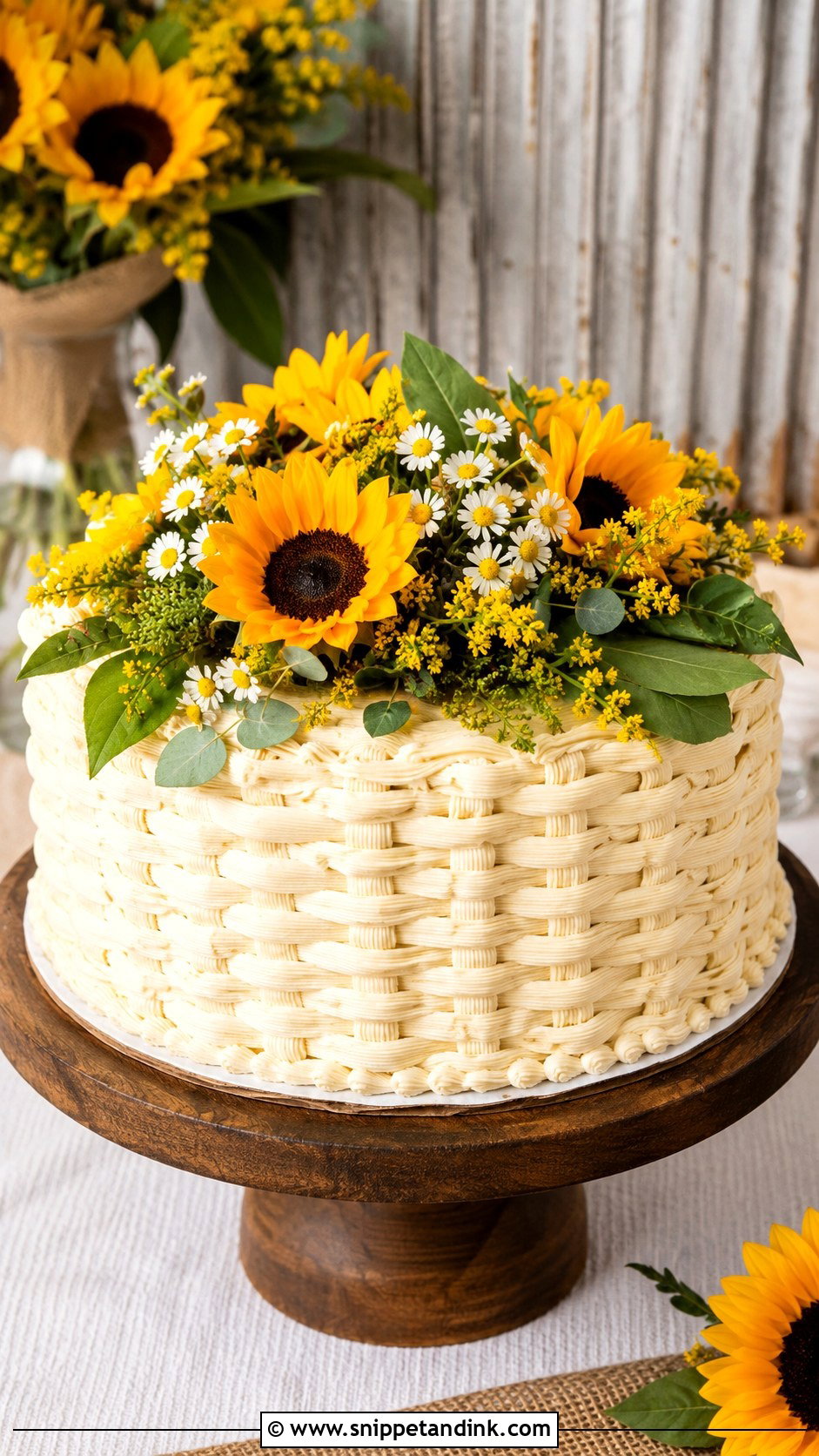
Sunflowers and basketweave are a natural pair on a wedding dessert table, both rustic and garden-like. A soft ivory or pale buttercream base lets the yellow petals stand out. I’d group sunflowers in two or three strong clusters rather than scattering them. Fresh sunflower heads are heavy, so they need firm picks and shouldn’t press into the weave. Small white blossoms, greenery or golden fillers soften the look. Late summer weddings, farm venues and outdoor receptions are its home.

15. Basket Wedding Cake With Lavender Flowers
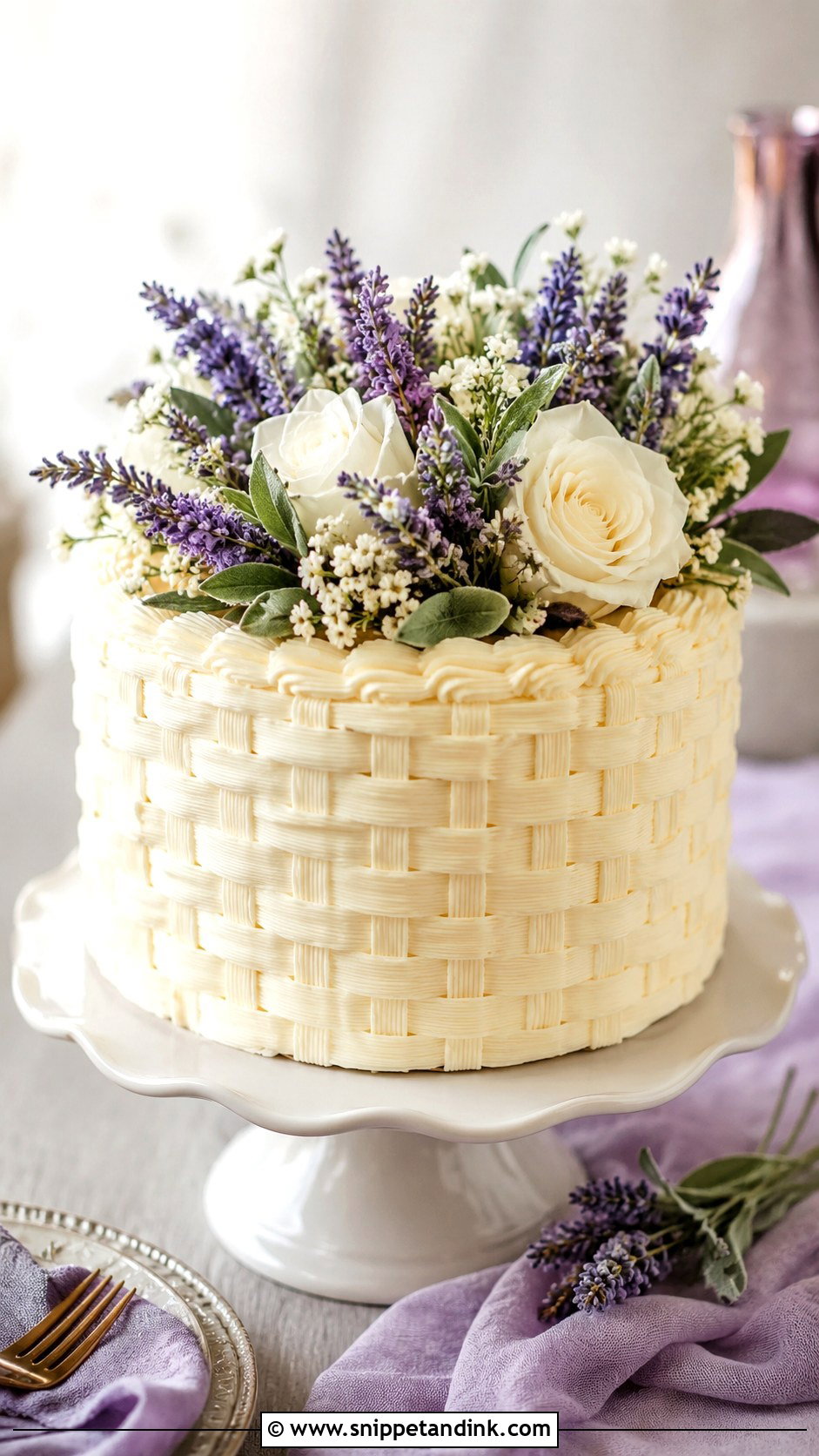
Lavender adds a herbal texture to basketweave without weight. The cake can carry pale ivory frosting with soft purple buttercream flowers or carefully placed lavender sprigs. A small ring around the top or base keeps it neat. If you’re using real culinary lavender, a little goes a long way; it perfumes the frosting it touches. White roses or tiny cream blossoms make it more wedding-ready. Garden and countryside weddings in soft purple palettes suit it.
16. Basket Wedding Cake With Blue Flowers
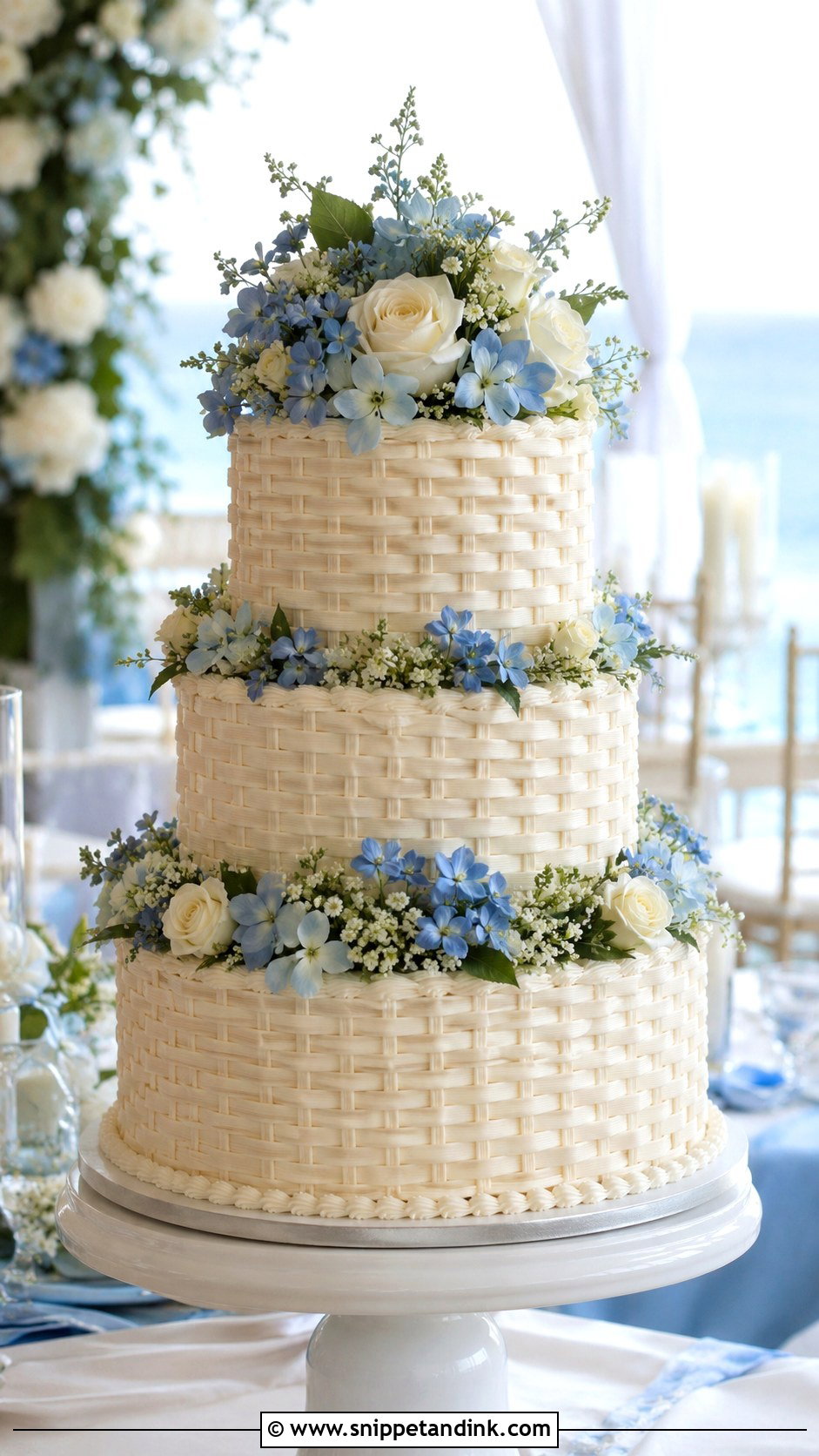
Blue flowers give you ‘something blue’ on the cake table. Pale blue blooms on ivory basketweave look fresh. They can sit in a top cluster, a side spray or a small cascade between tiers. Hydrangea-style and forget-me-not-style blossoms with white roses balance the palette. I make the hydrangea and forget-me-not shapes from sugar or buttercream rather than using real ones on the cake, as real hydrangea isn’t food safe. Keep the weave light and clean so the blue looks intentional. Coastal weddings, spring receptions and classic venues suit it.
17. Basket Wedding Cake With Greenery And White Flowers
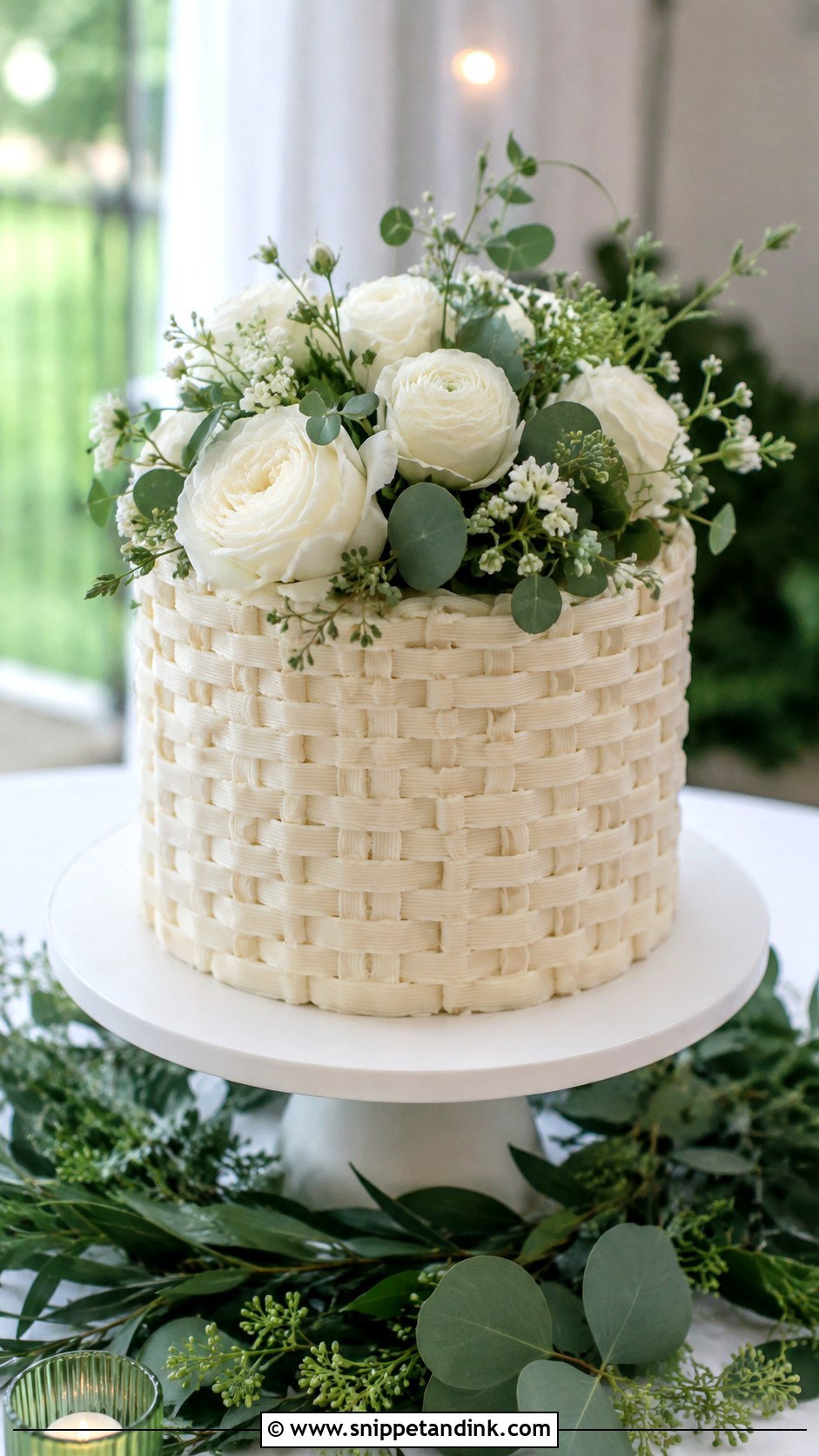
Greenery with white flowers keeps a basket cake natural and quiet. The weave provides texture, greenery adds movement around the tiers, and white flowers on ivory frosting keep it bridal. Use the greenery lightly, almost as a frame, or the cake turns into a foliage display that hides the piping. Small roses, ranunculus or blossoms sit on top and around the base. It suits modern garden weddings and outdoor receptions without strong color.
18. Basket Wedding Cake With Buttercream Flowers
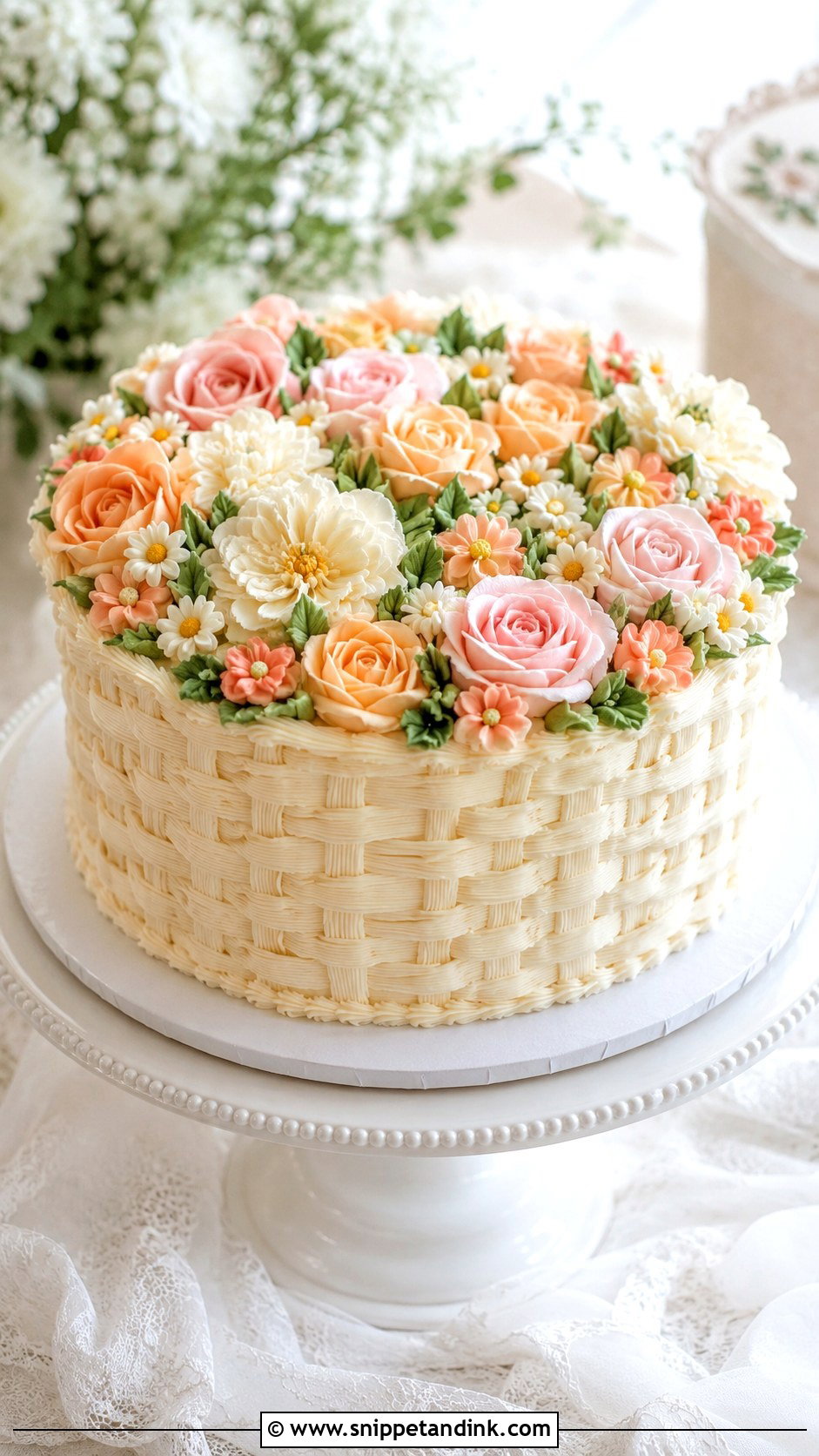
Buttercream flowers make the whole cake edible. The weave and the flowers come from the same frosting family, so the finish looks unified and handmade. Buttercream roses, peonies, daisies and leaves can sit on top like a full basket. The trade-off is heat. Piped flowers soften and lose their petal edges in a warm room faster than the weave does, so I’d only choose them for an indoor or cool venue. Ivory, blush, peach and sage keep the palette soft, and frosting lovers will be delighted.
19. Basket Wedding Cake With Fondant Flowers
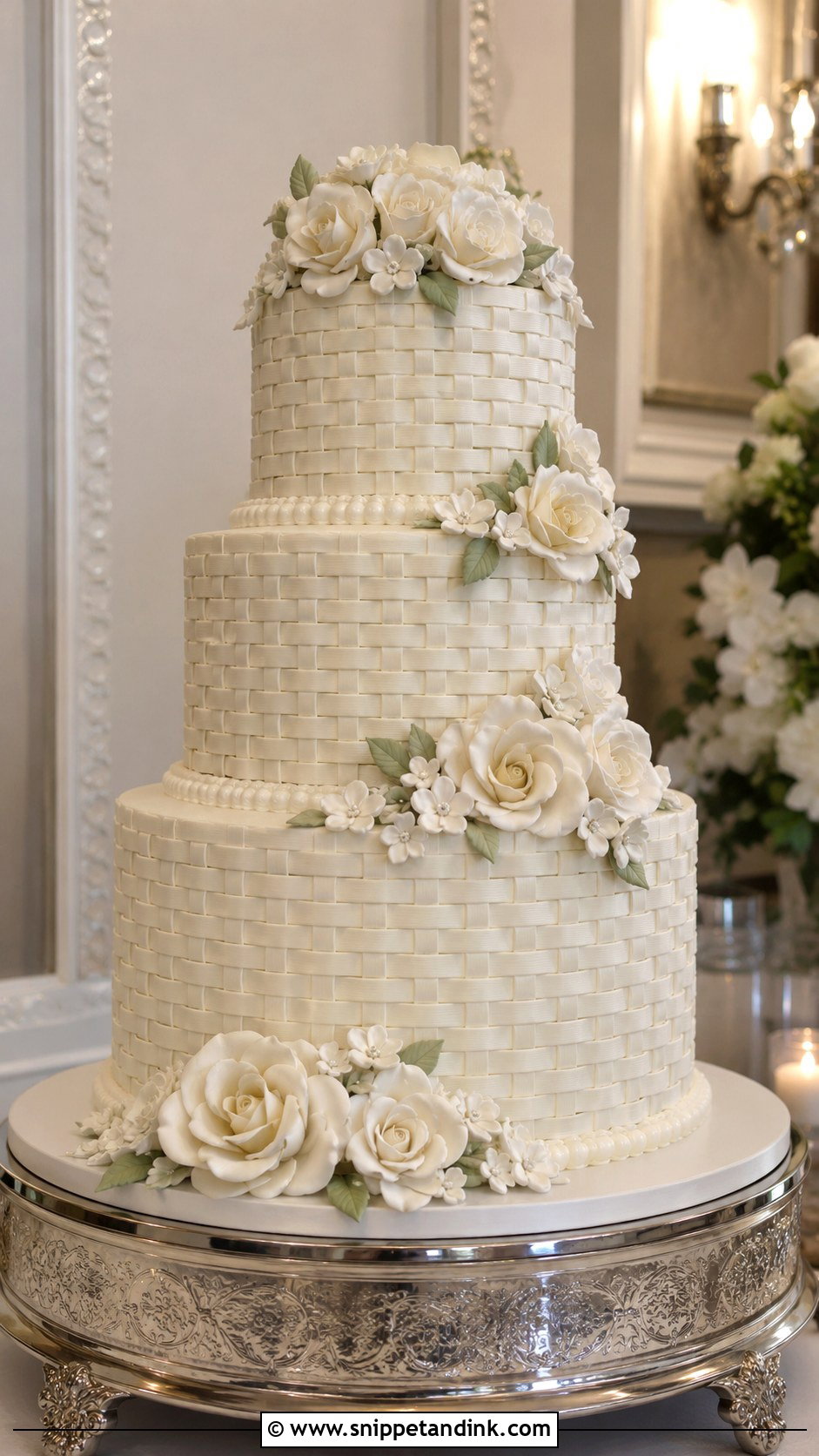
Fondant gives a smooth, sculpted basket with clean lines, and fondant flowers can be shaped to match your colors closely. They hold their shape all day, which makes this the version I’d suggest for a warm-weather reception. Fondant roses, blossoms and leaves can sit on top or around the tiers. Fondant can sweat if it comes from a cold fridge into a humid room, so I let it come up to temperature slowly. Soft colors keep it elegant for a formal wedding.

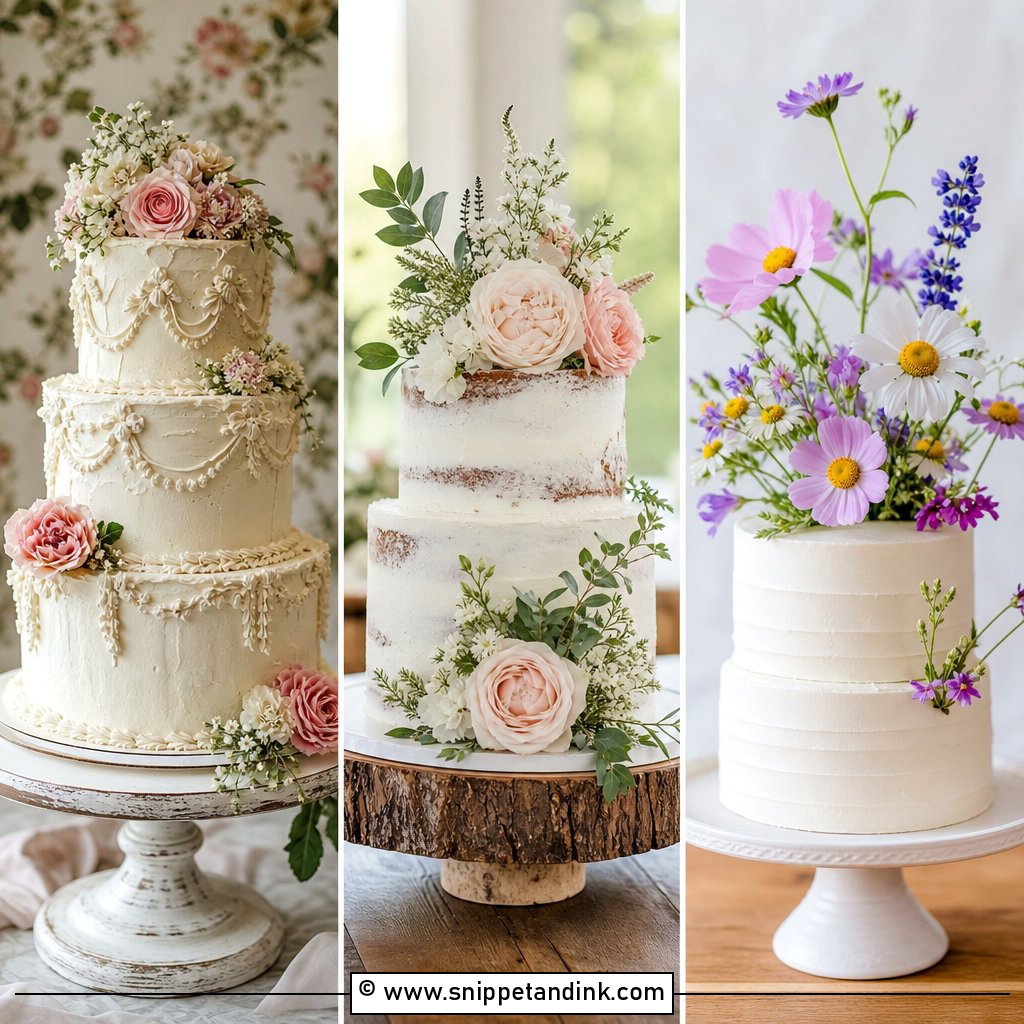

20. Basket Wedding Cake With Flower Handle
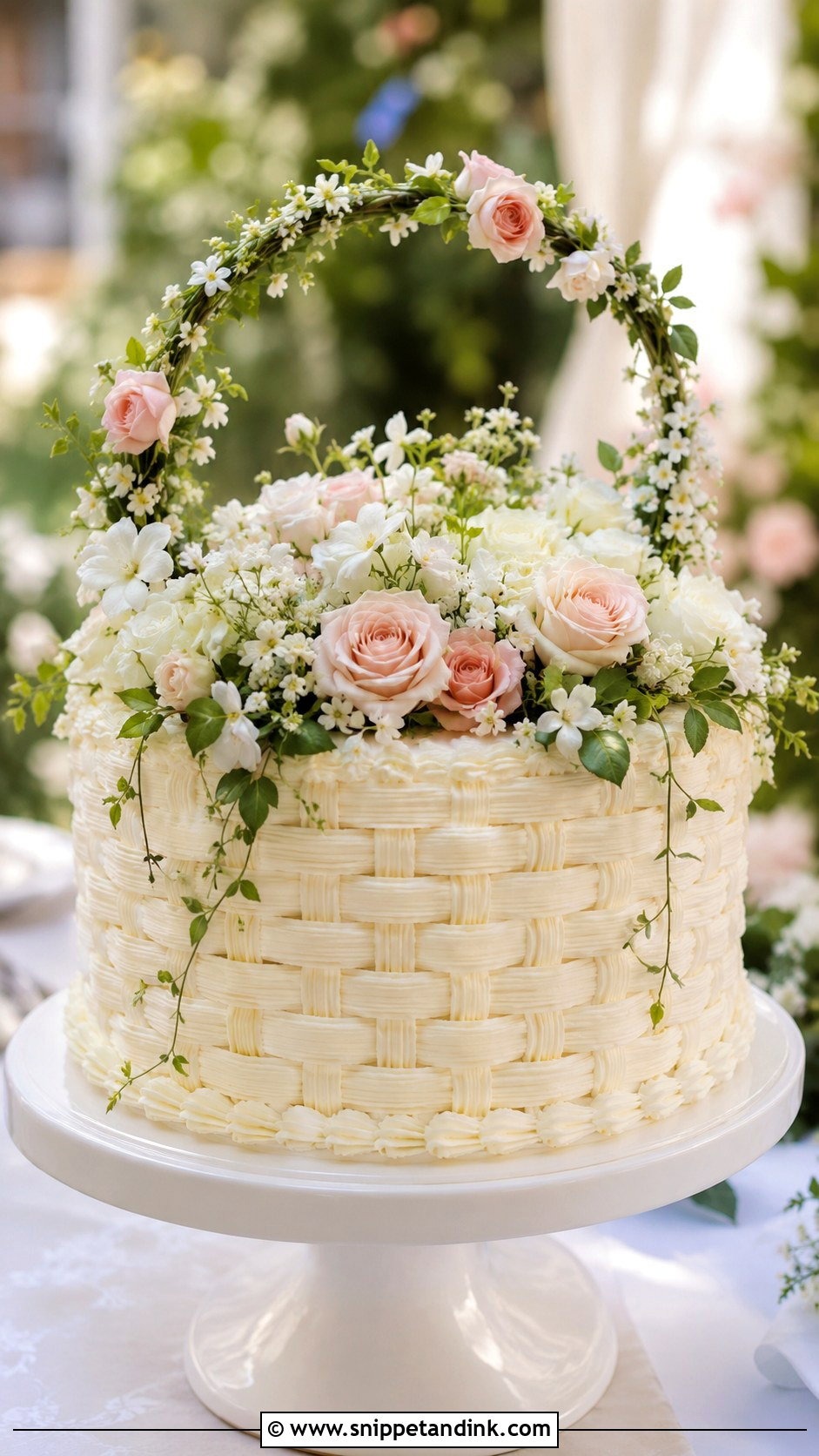
A flower handle turns the cake into an actual basket. The handle is made from covered wire, fondant or a decorative support, then wrapped with flowers and leaves. Anything structural that goes into the cake needs a food-safe sleeve and comes out before slicing. The handle suits smaller wedding cakes, bridal showers tied to the wedding or a garden-themed dessert table. Keep the cake low and wide so the handle doesn’t overpower it. Woven buttercream sides, top flowers and delicate greenery give it a storybook look.
Sugar, Wafer Paper, Buttercream or Real Blooms on a Woven Cake
The flowers on a basket cake are half the design, and each kind behaves differently once the cake is out on the table.
- Sugar flowers are made by hand ahead of time and last indefinitely, so many couples keep one afterward. They usually contain wires, so they’re decoration, not something to eat, and they don’t like humidity.
- Wafer paper flowers are very light and delicate looking, but damp air makes them curl and soften. I’d save them for dry, cool rooms.
- Buttercream flowers are fully edible and match the weave, but they soften first in warm weather.
- Fresh flowers look the most natural. They need safe varieties, wrapped stems or picks, and someone who knows which to remove before slicing.
My honest advice is to match the flower type to your venue before you match it to your mood board. A summer garden reception and a cool ballroom call for different flowers on the same cake. If you love the look of fresh flowers but the day will be hot, sugar flowers in the same varieties will last better.
A Good Weave Takes Hours, So Give Your Baker the Time
Basket cakes combine texture and a handmade feel in a way few other styles do. Depending on frosting, flowers, palette and shape, they can look rustic, vintage, polished, garden-like or playful. Buttercream weave gives a soft classic finish, while fondant gives a cleaner, more structured basket. Flowers can be fresh, sugar, fondant, wafer paper or piped buttercream, so there’s room to match your taste and venue. Mini or tall, square or round, the weave is what makes it, and it rewards a baker with time to pipe it properly.
You'll Like These Ideas:











Leave a Reply