
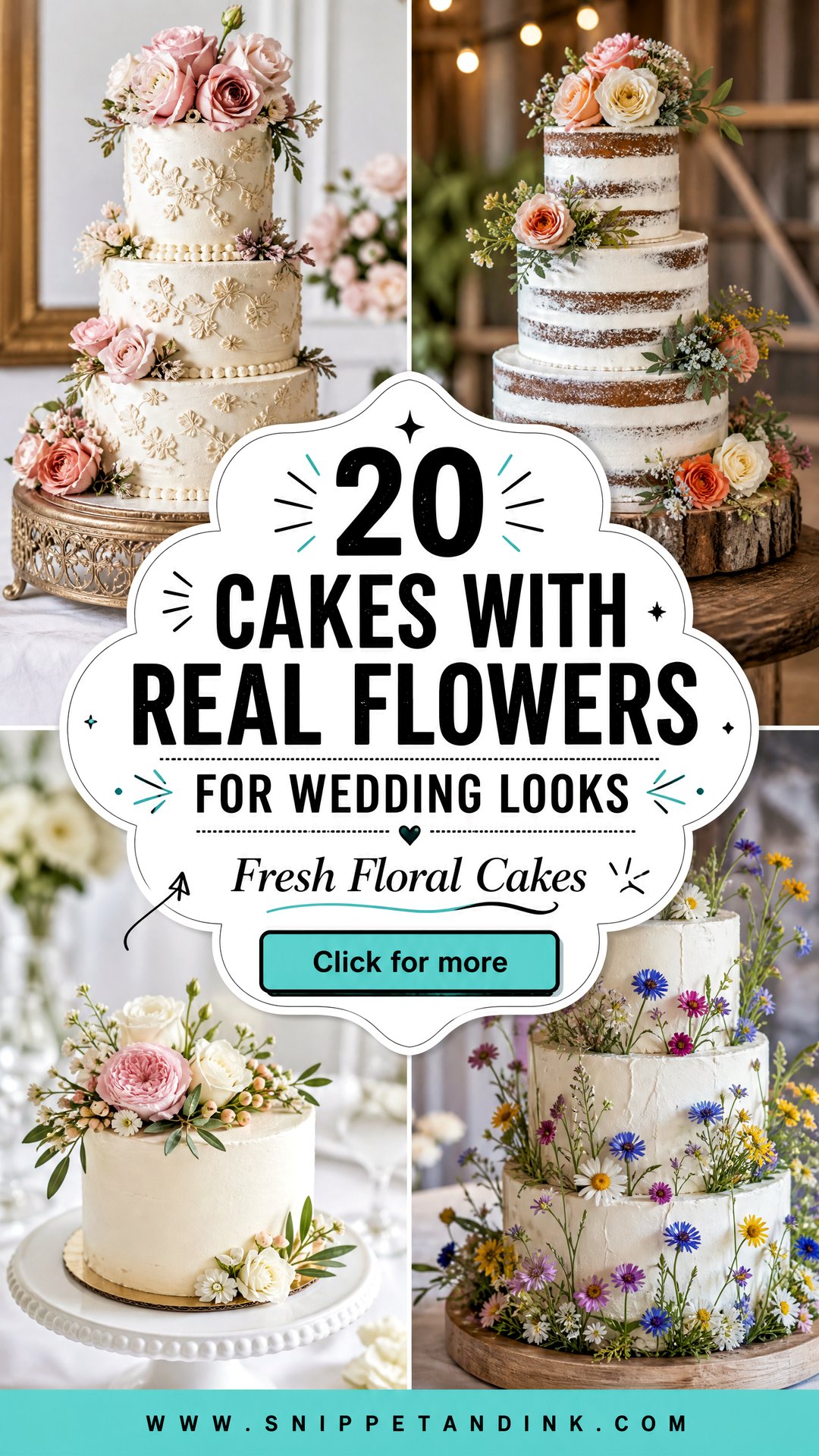
Real flowers soften a cake and tie it to everything else I make for the day, from the bouquet to the centrepieces. They add colour and movement with very little decoration underneath. Garden roses on smooth buttercream, pressed pansies on a small cutting cake, orchids trailing down a tall tiered cake: each one needs a different kind of preparation. Because cake flowers sit on food, I plan them with the baker from the first conversation, choosing edible blooms or flowers prepared so they never touch the cake directly. The twenty cakes below show how differently real flowers can be used.
Blooms I Keep Off Cakes, and the Ones I Reach For
Not every flower that looks good in a bouquet belongs on a cake. Some are toxic, some shed pollen or sap, and many florist flowers are grown with chemical sprays. These are the two lists I work from.
Safe against frosting when grown without sprays
- Roses and spray roses
- Pansies and violas
- Calendula and cornflowers
- Chamomile and lavender, used lightly because lavender’s flavour is strong
- Herbs such as rosemary, thyme and mint
- Dendrobium orchids from a food-safe source
Kept off the cake or raised on a barrier
- Hydrangea, which is toxic and also wilts fast out of water
- Lily of the valley and foxglove, both seriously poisonous
- Calla lilies and anthuriums
- Sweet peas, despite the name
- Daffodils, whose sap is an irritant
- Baby’s breath and most treated or dyed foliage, eucalyptus included
If a palette really needs something from the second list, it can still appear near the cake. I set it on a raised disc, seal it in a pick, or put it in the table arrangement beside the stand.
1. White Wedding Cake With Fresh Roses
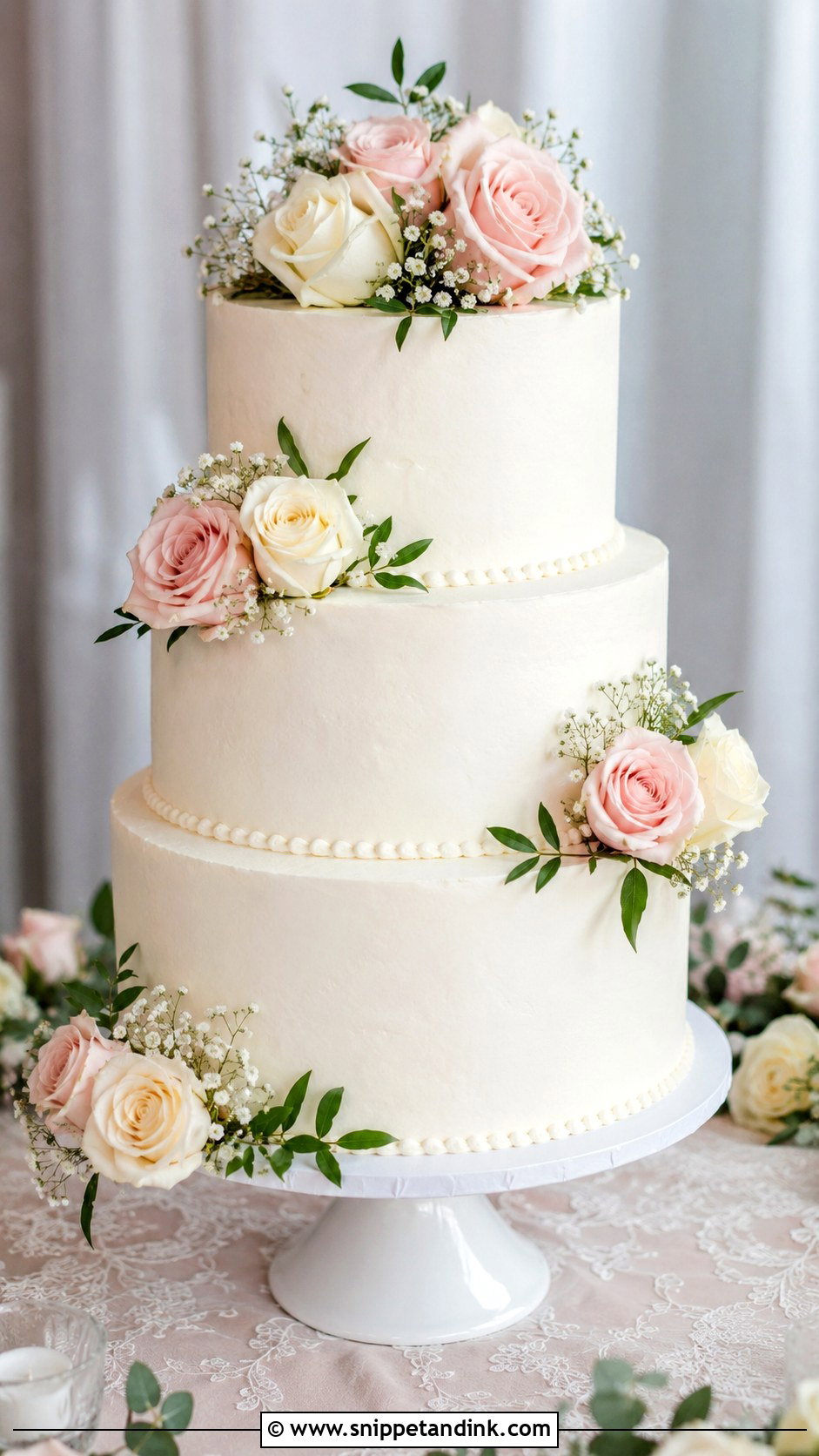
White frosting with roses works almost anywhere, because the roses carry all the colour. Blush, ivory, peach and soft pink keep it romantic, while deep red or mauve adds contrast. I match the cake roses to the bouquet but open them a day earlier, so they’re at their fullest when they go on the cake. Most cut roses are grown with sprays, which means cake roses should come from a pesticide-free grower or sit on a barrier. Keep the placement simple; a few perfect heads look better than a crowd.
2. Naked Wedding Cake With Real Flowers
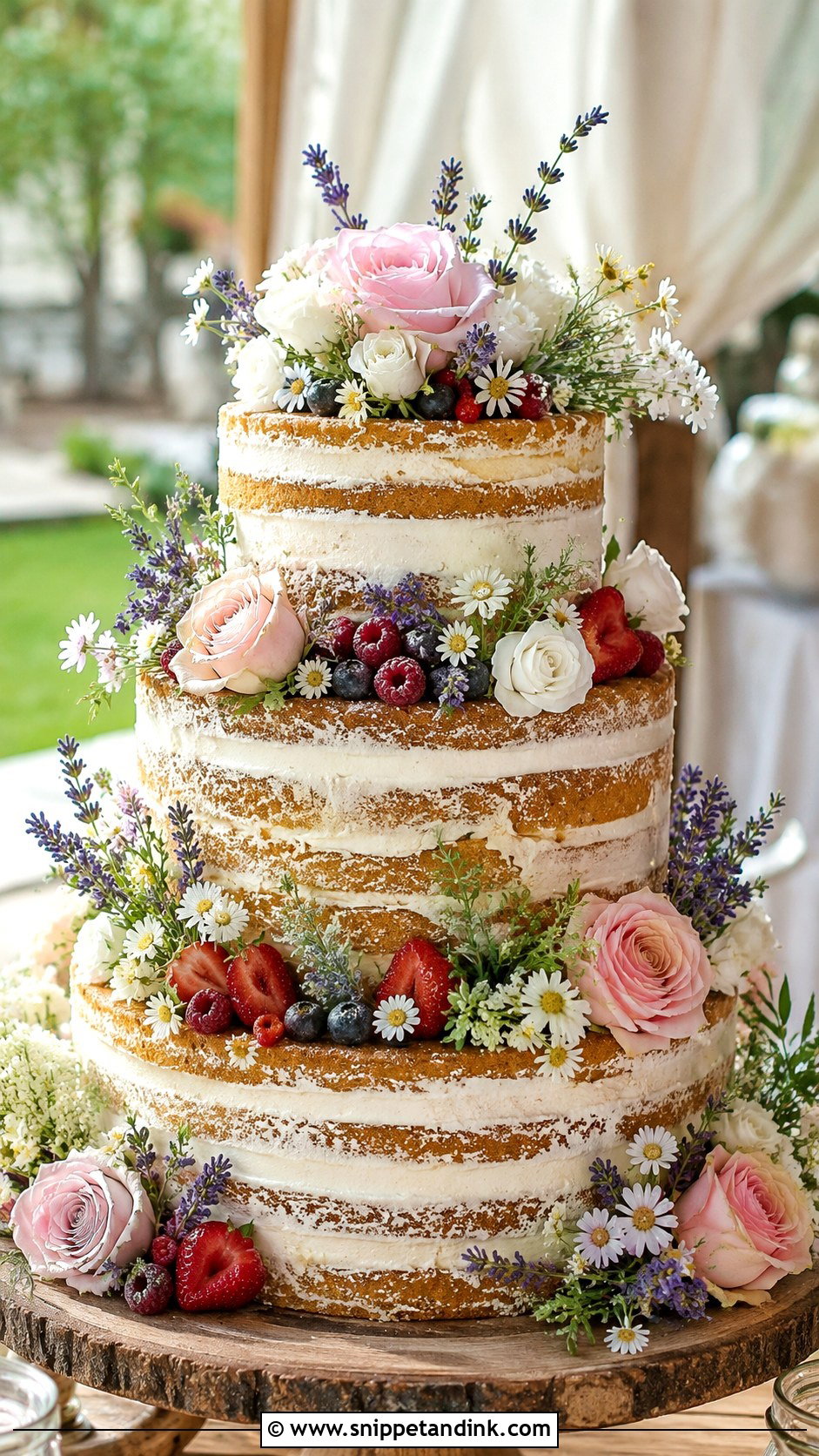
A naked wedding cake with real flowers suits barns, gardens and outdoor receptions. The thin frosting lets the layers show, which makes it feel handmade, and flowers can be tucked around each tier, clustered or set in a loose cascade. Roses, chamomile, lavender and small edible flowers suit it. Bare sponge dries quickly and flowers wilt quickly, so this is a cake I dress as late as possible on site. Berries and greenery add texture; the aim is flowers that look as if they landed there.
3. Buttercream Wedding Cake With Fresh Flowers
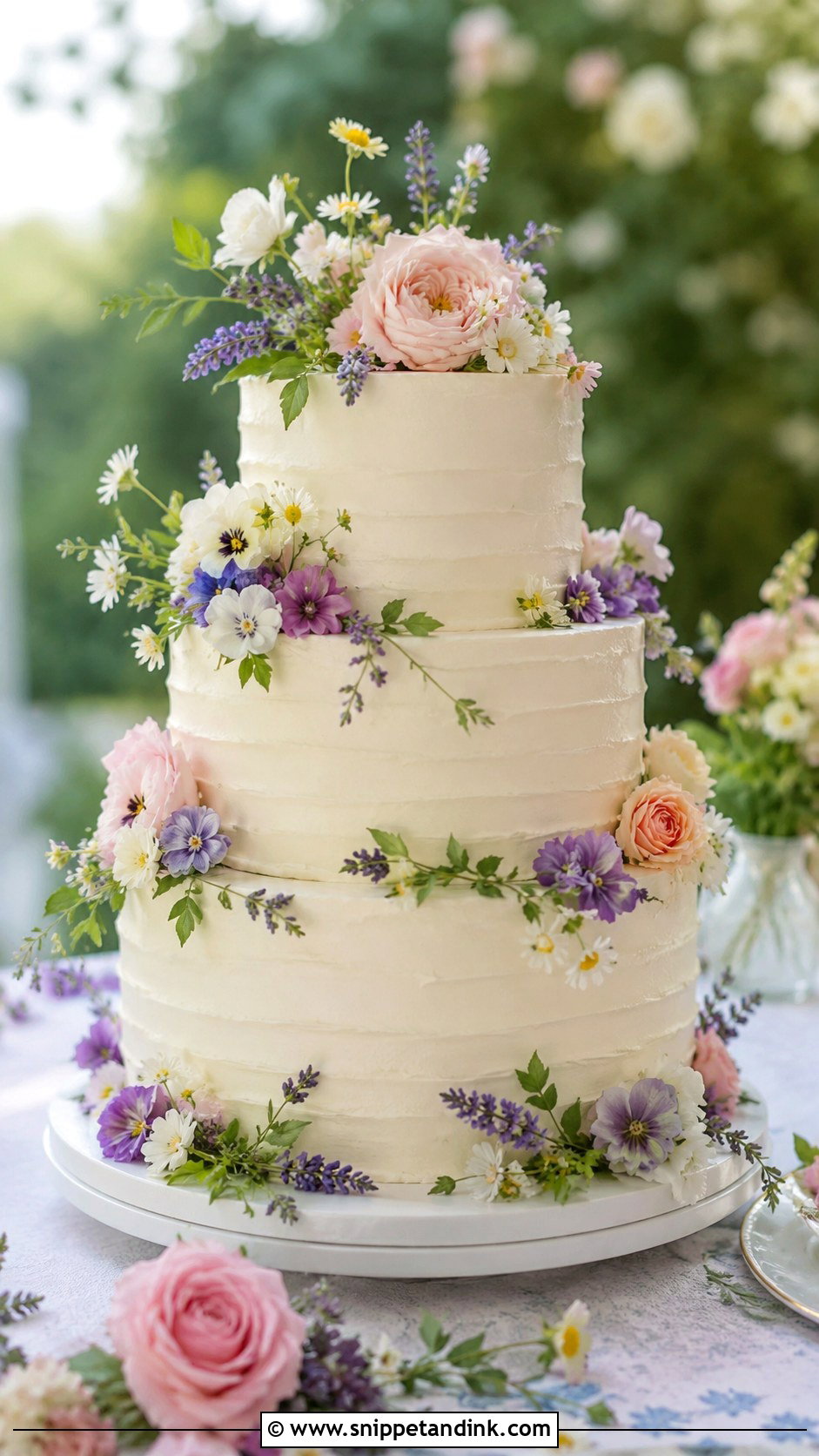
Buttercream and fresh flowers sit naturally together. Smooth, lightly textured or spatula-marked, the finish reads soft rather than formal, and a pale pastel base suits spring and summer as well as white or ivory does. I build depth with three sizes of bloom: a garden rose or two, a few spray roses and tiny fillers. Buttercream is soft, so heavy heads need a pick or a straw beneath them, or they slowly sink and leave a dent in the frosting.
4. Three Tier Wedding Cake With Real Flowers
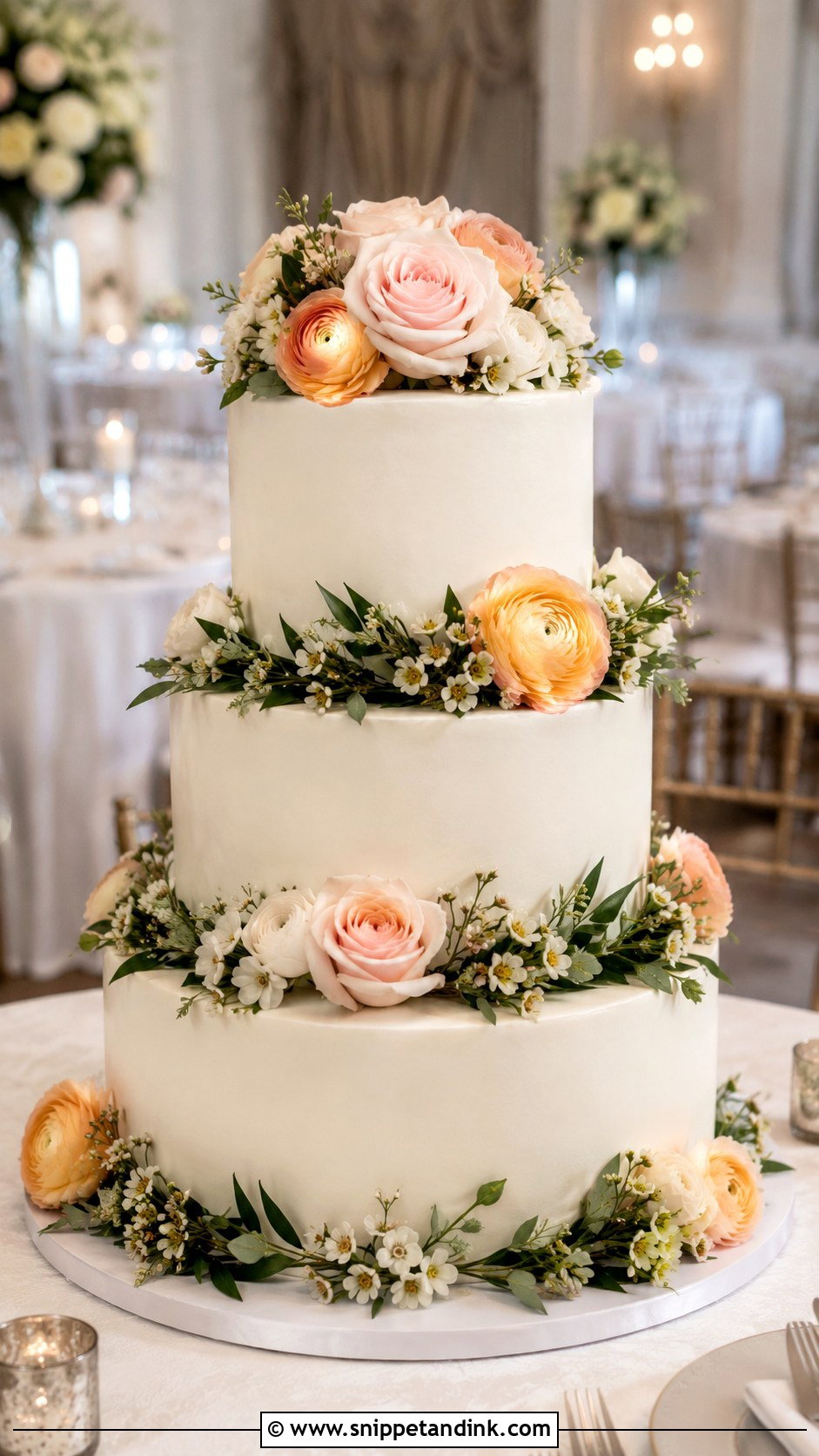
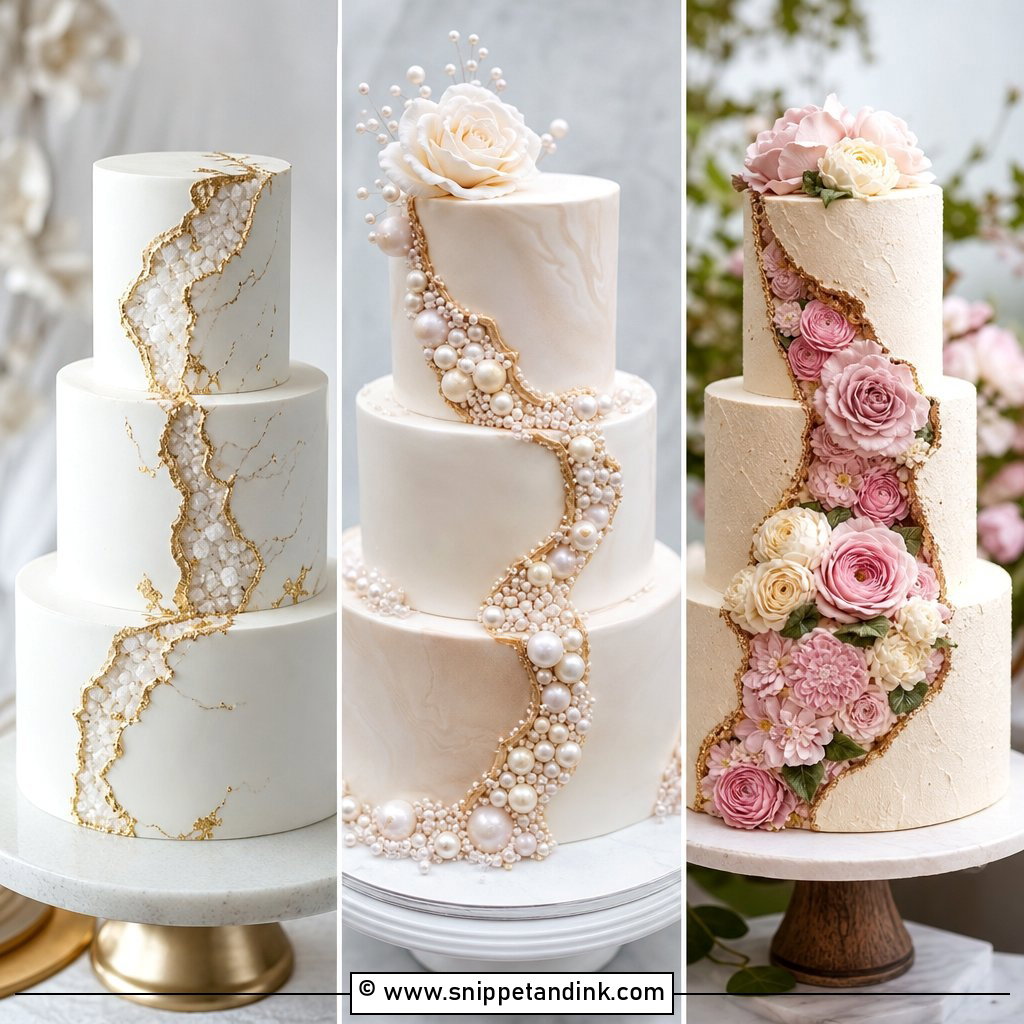
Three tiers give enough height for a statement and still suit most receptions. Stack them evenly for a modern look or separate them slightly for a traditional one. Flowers can go between tiers, at the base or in a diagonal from top to bottom, and the gaps between separated tiers are where I fit the fullest clusters, since they hide the supports. Ivory buttercream with blush roses feels soft, whereas white fondant with bold flowers feels dramatic. Repeat the same bloom on every tier so it reads as one cake.
5. Simple Wedding Cake With Fresh Flowers
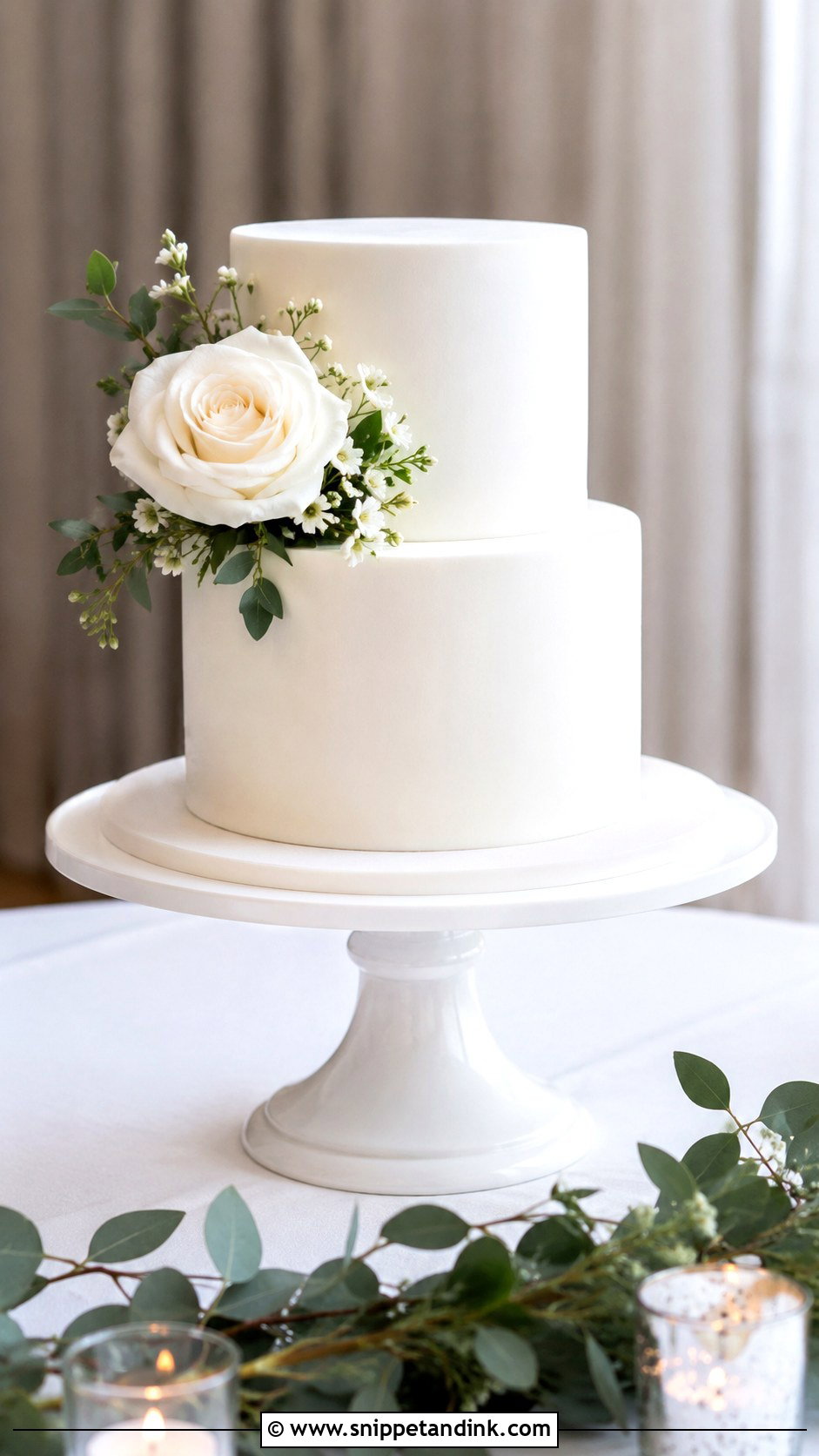
Flowers don’t need an elaborate cake to make their point. A clean single or two-tier cake with a few chosen blooms, perhaps one cluster on top and a smaller one near the base, is enough. Smooth buttercream, clean edges and neutral colours keep the attention on the flowers. For courthouse weddings, backyard receptions and minimal decor, this is the version I suggest most. With so few flowers, every one gets noticed, so I pick heads that are fully open and free of bruised petals.
6. Garden Wedding Cake With Fresh Flowers
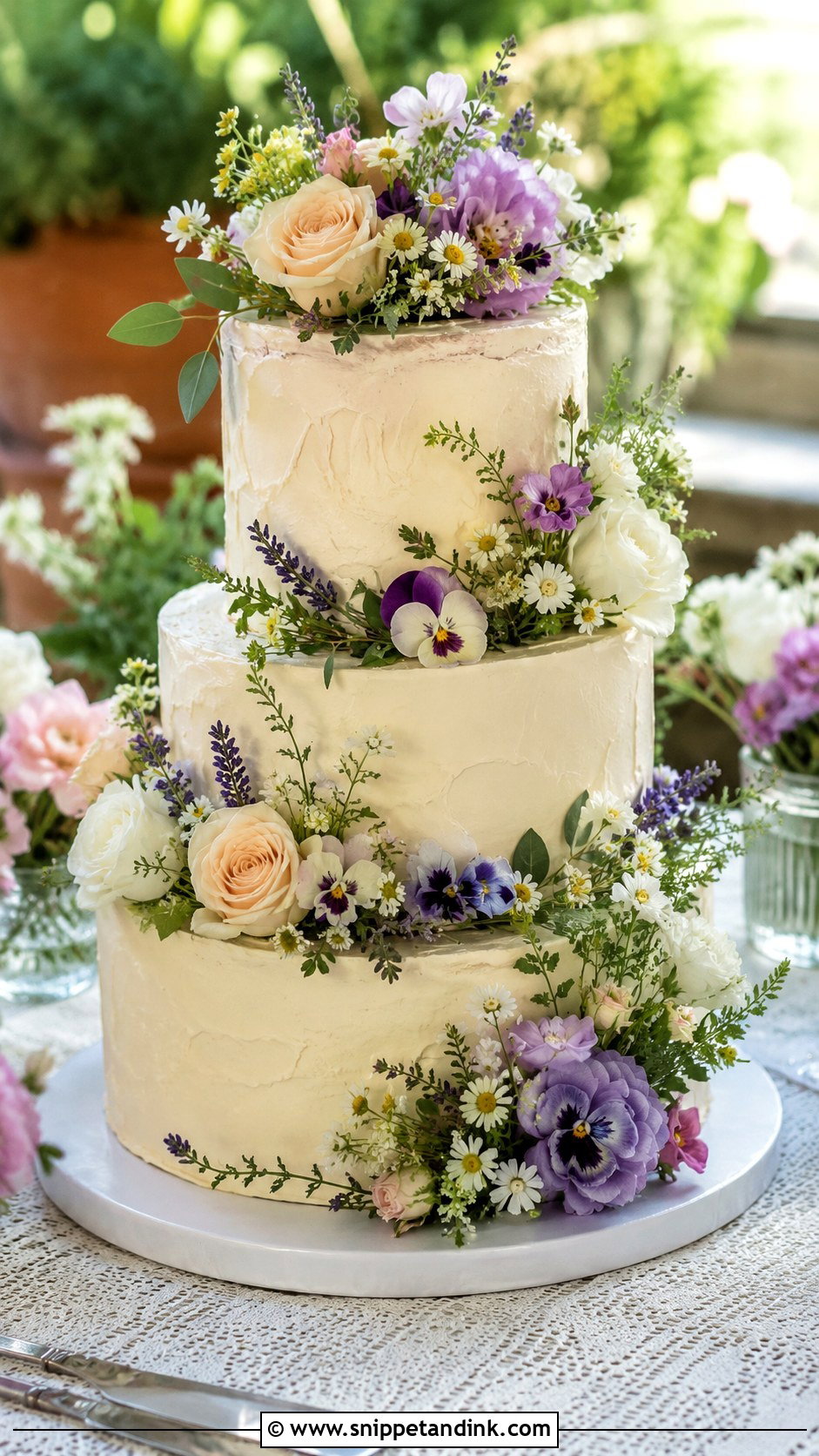
A garden cake should look as though the flowers grew around the tiers. Roses, ranunculus, pansies, lavender, herbs and delicate greenery suit it, arranged in drifts rather than a stiff pattern. Textured buttercream adds to the organic feel, and ivory, blush, lavender, pale yellow and sage fit the mood. Herbs such as rosemary and thyme are useful here because they’re food-safe and hold up longer than most petals. It belongs at outdoor ceremonies, greenhouse venues and spring weddings.
7. Vintage Wedding Cake With Real Flowers
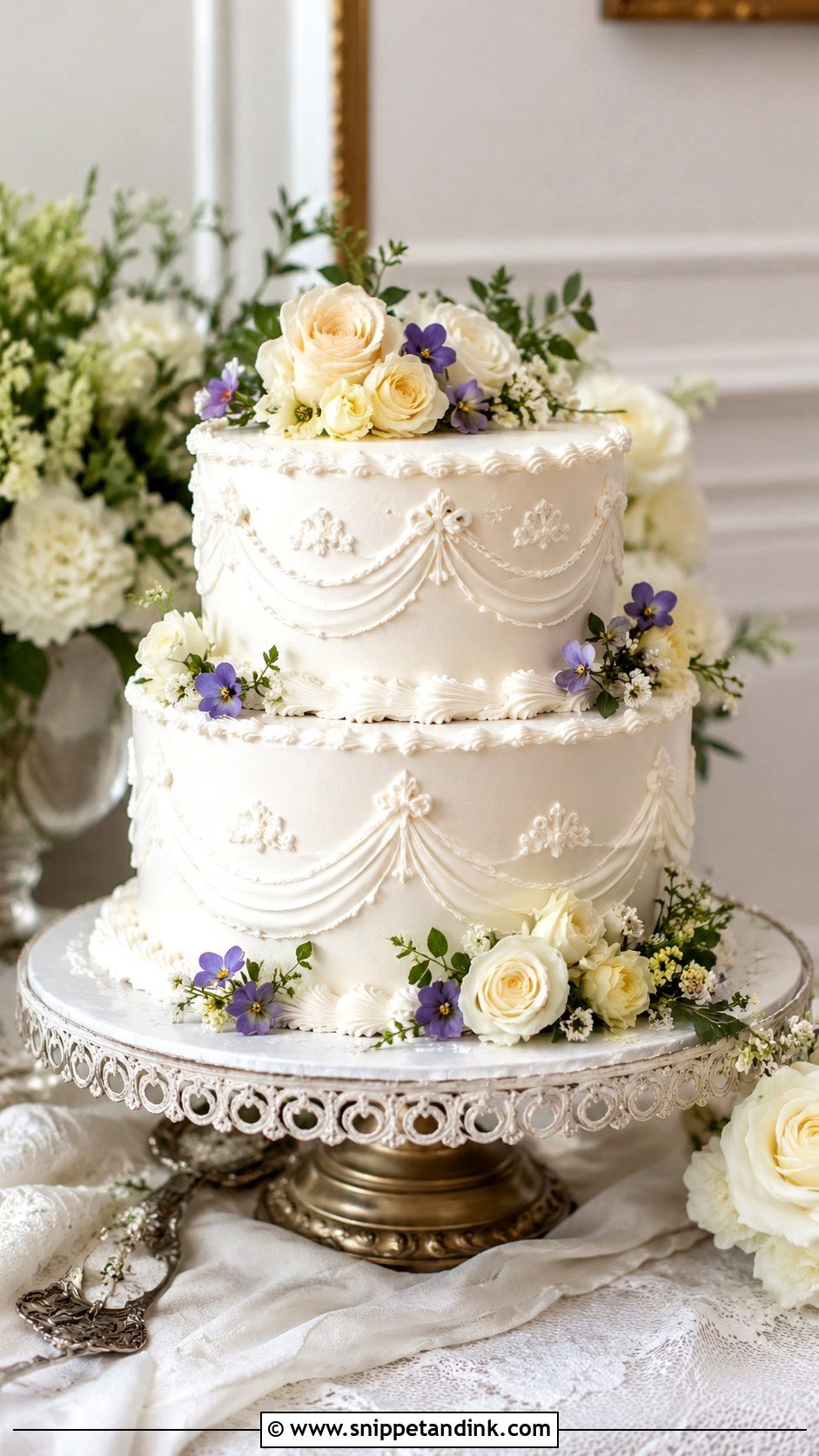
Vintage piping and real flowers balance each other. Lambeth-style borders, pearl-like piping, ruffles or shells give structure, and the flowers soften it. I choose roses, violets, pansies or small garden blooms in muted cream, dusty pink, butter yellow and lavender, which sit naturally with lace dresses, antique settings and candlelight. The piping is the expensive work on this cake, so I keep the flowers in small clusters that leave it visible. Violets and pansies are edible, which helps when they sit right against the frosting.
8. Modern Wedding Cake With Fresh Flowers
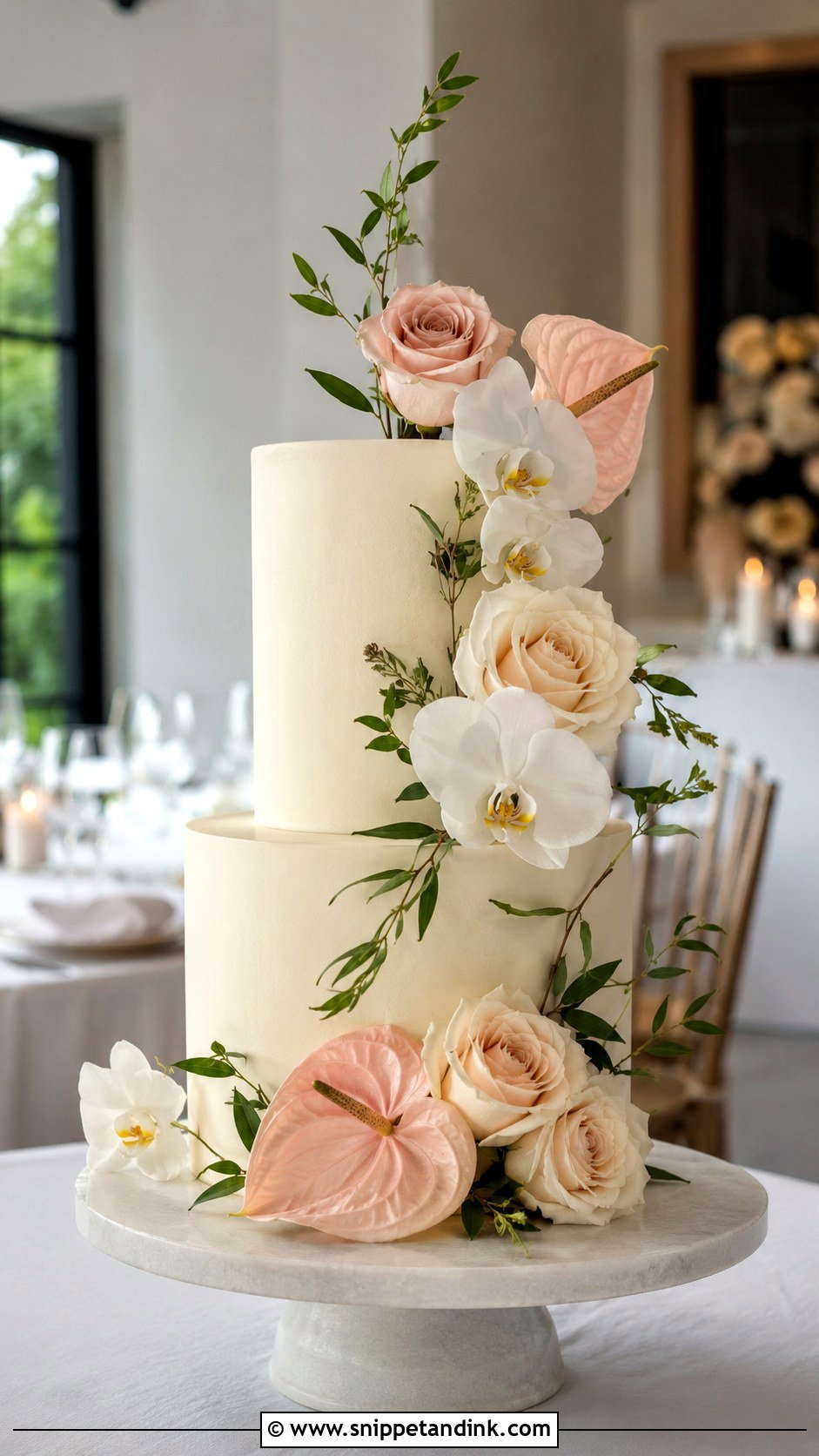
Modern floral cakes start with clean lines and simple tiers, then put the flowers in one deliberate place: an asymmetrical side arrangement or a sculptural cluster on top. White, ivory or soft beige frosting keeps it refined. Orchids, roses, anthuriums and minimal greenery all work. Anthuriums are toxic if eaten, though, so when a couple wants them I set them on a raised acrylic disc, never into the cake. It suits loft venues and modern hotels, where every bloom needs a reason to be there.
9. Rustic Wedding Cake With Real Flowers
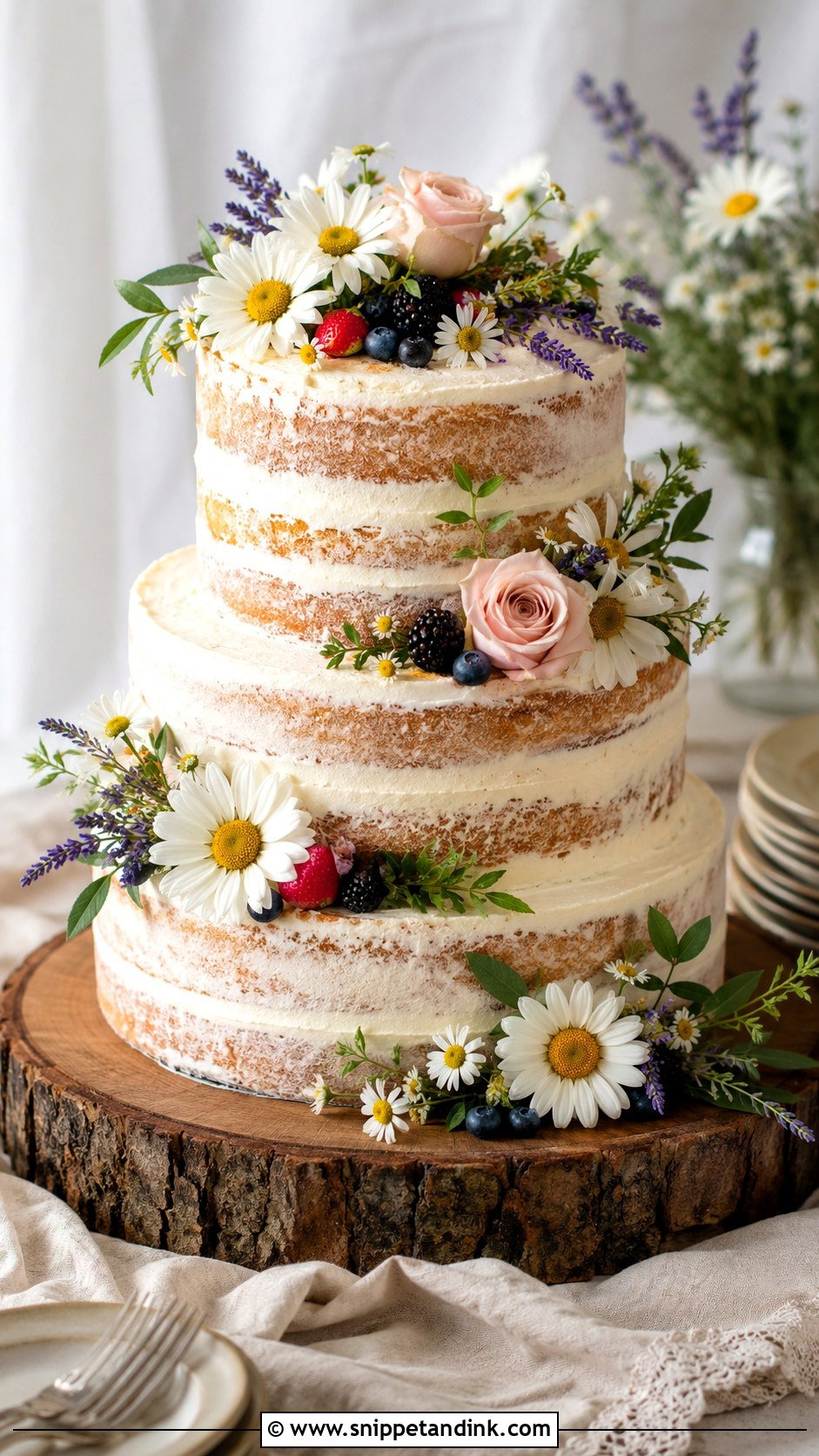
A rustic wedding cake with real flowers fits wood stands, outdoor tables, linen runners and soft natural light. Semi-naked frosting is common, though textured buttercream works too. Garden roses, daisies, lavender, chamomile and seasonal blooms suit it, with berries, herbs or greenery if they fit the food-safety plan. In a barn in midsummer, flowers on a cake tire within a few hours, so I pack a few spares for the baker to swap in before the cutting. It should look at home in the setting rather than overly polished.
10. Boho Wedding Cake With Fresh Flowers
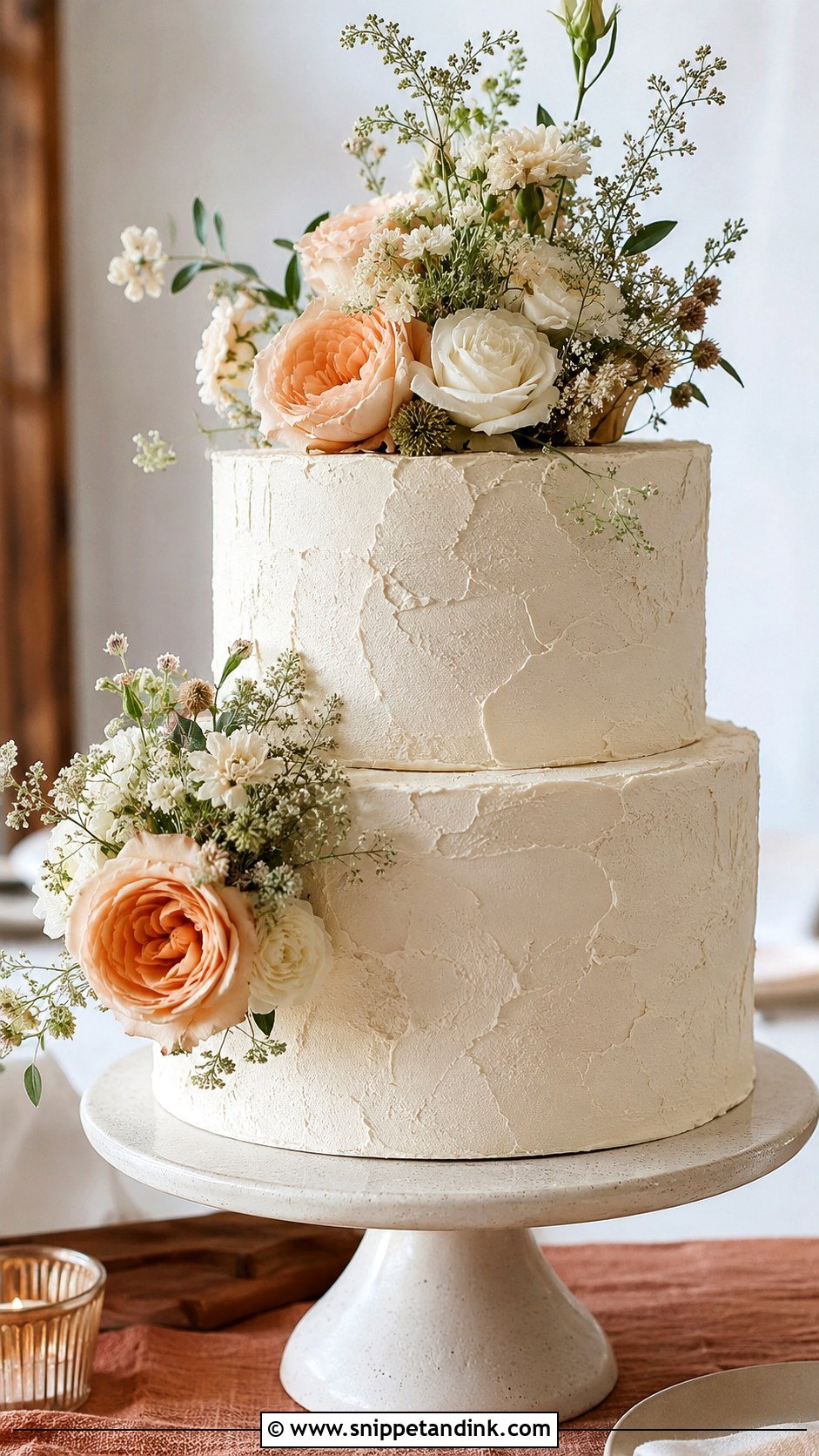
Boho cakes mix neutral colours, natural textures and loose floral styling. Ivory buttercream, fresh roses, soft peach blooms and airy greenery give the look, and fresh flowers keep it from feeling dusty the way an all-dried cake can. A rough buttercream or plaster-style texture suits it, and a low floral meadow around the base adds to the table without crowding the cake. If you love dried pampas or bunny tails, I’d use them in the table styling instead, since many are dyed or sprayed. Keep the placement loose and asymmetrical.
11. Small Wedding Cake With Real Flowers
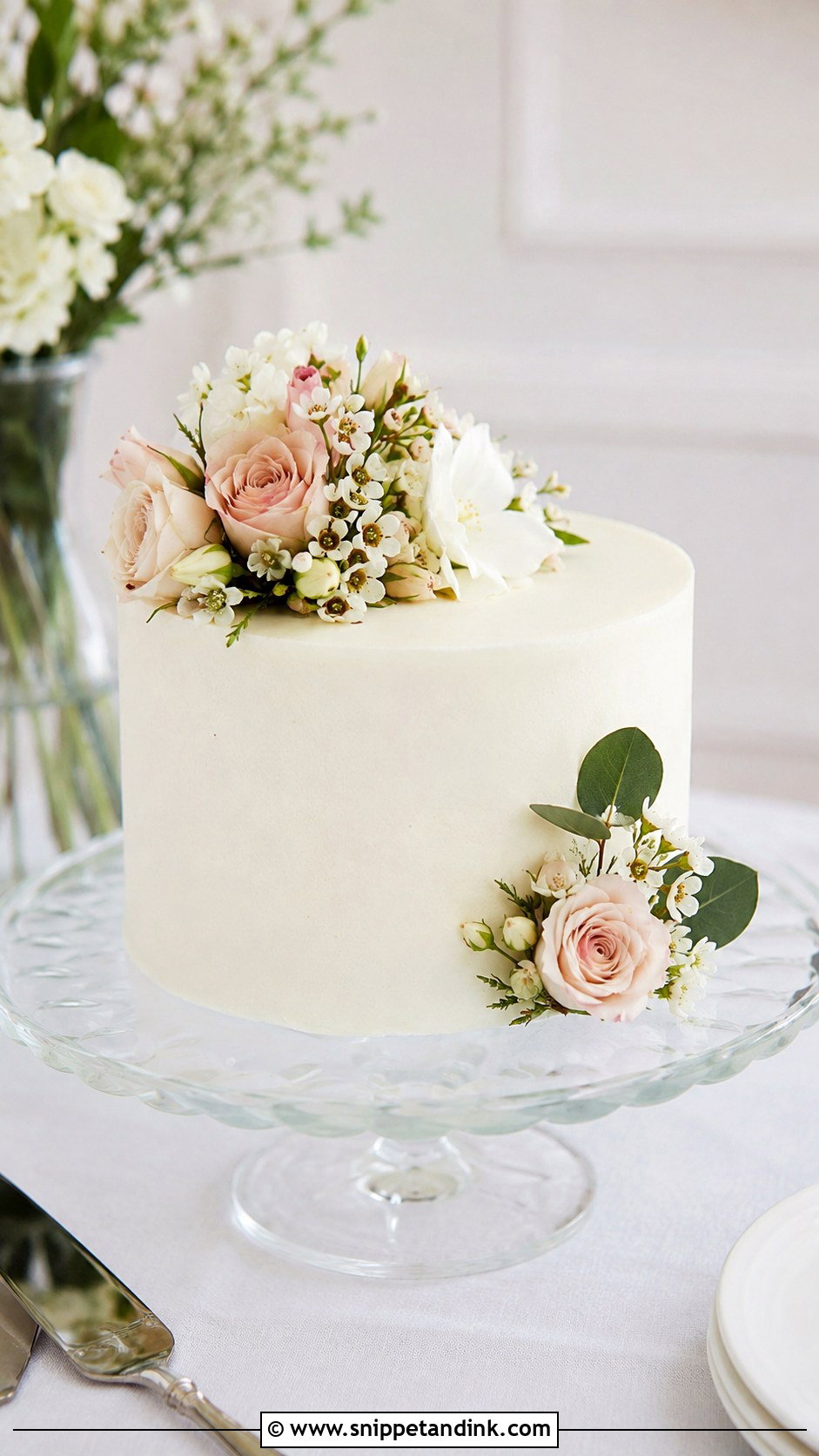
Small cakes suit elopements, micro weddings and couples who want a cutting cake beside a dessert table. One or two tiers feel special when the flowers are well chosen, such as a single cluster of roses with small fillers, or pressed edible flowers for a finer finish. On a small cake, scale is everything. I pick spray roses and smaller heads, because one full garden rose can look heavy on a 6 inch tier. A neat stand, clean light and matching flowers nearby finish it.
12. Tall Wedding Cake With Fresh Flowers
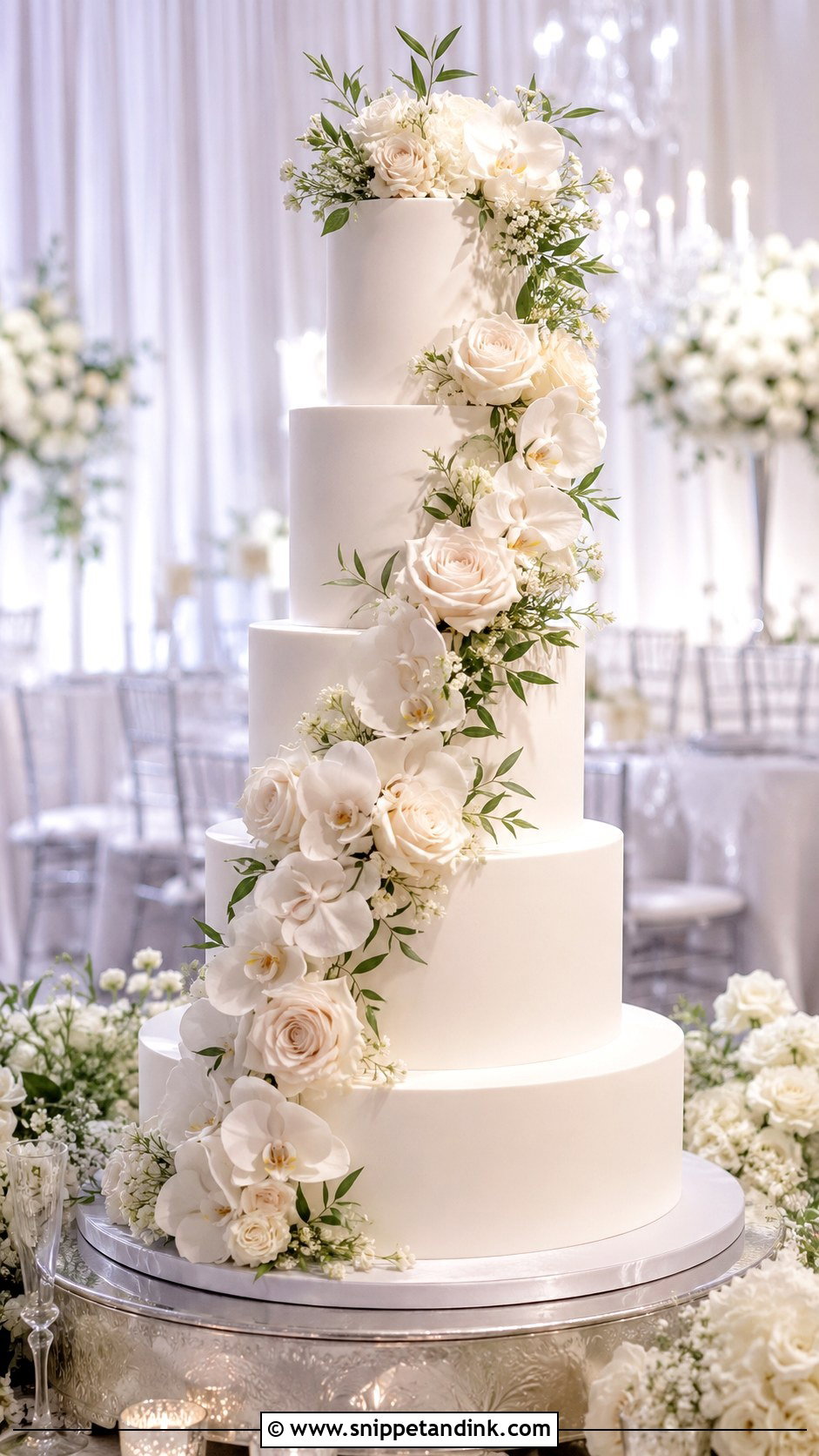
A tall wedding cake with fresh flowers suits a large reception space. The height gives the baker and me room for a cascade, tier accents or a full arrangement on top, and a diagonal run of flowers ties the tiers together. Repeat the colours from top to bottom. The higher the flowers go, the more securing they need, so on a tall cake I build the top cluster on a small hidden board and wire nothing into the cake itself. Professional delivery and setup matter more here than anywhere.
13. Round Wedding Cake With Real Flowers
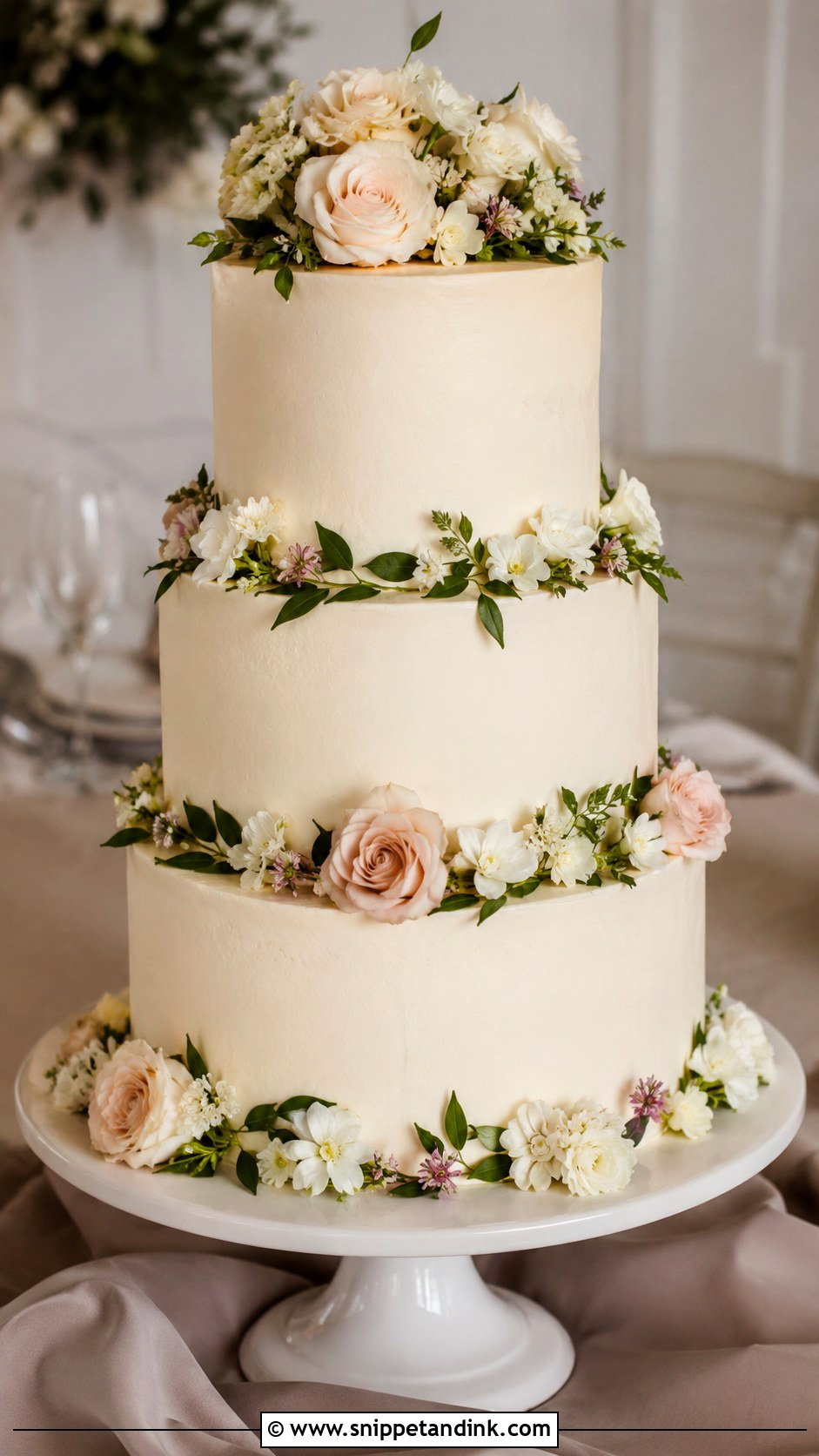
Round tiers are the easiest to dress, because clusters wrap naturally around the curve. A round cake can be smooth, softly textured or lightly piped, with flowers at the top edge, between tiers and around the base, and it’s the simplest shape for the caterer to cut. Soft roses lean romantic, while bright edible blooms like calendula and cornflowers suit a cheerful garden reception. Since the curve is visible from every side, I check the arrangement from all angles, not only the front.
14. Square Wedding Cake With Fresh Flowers
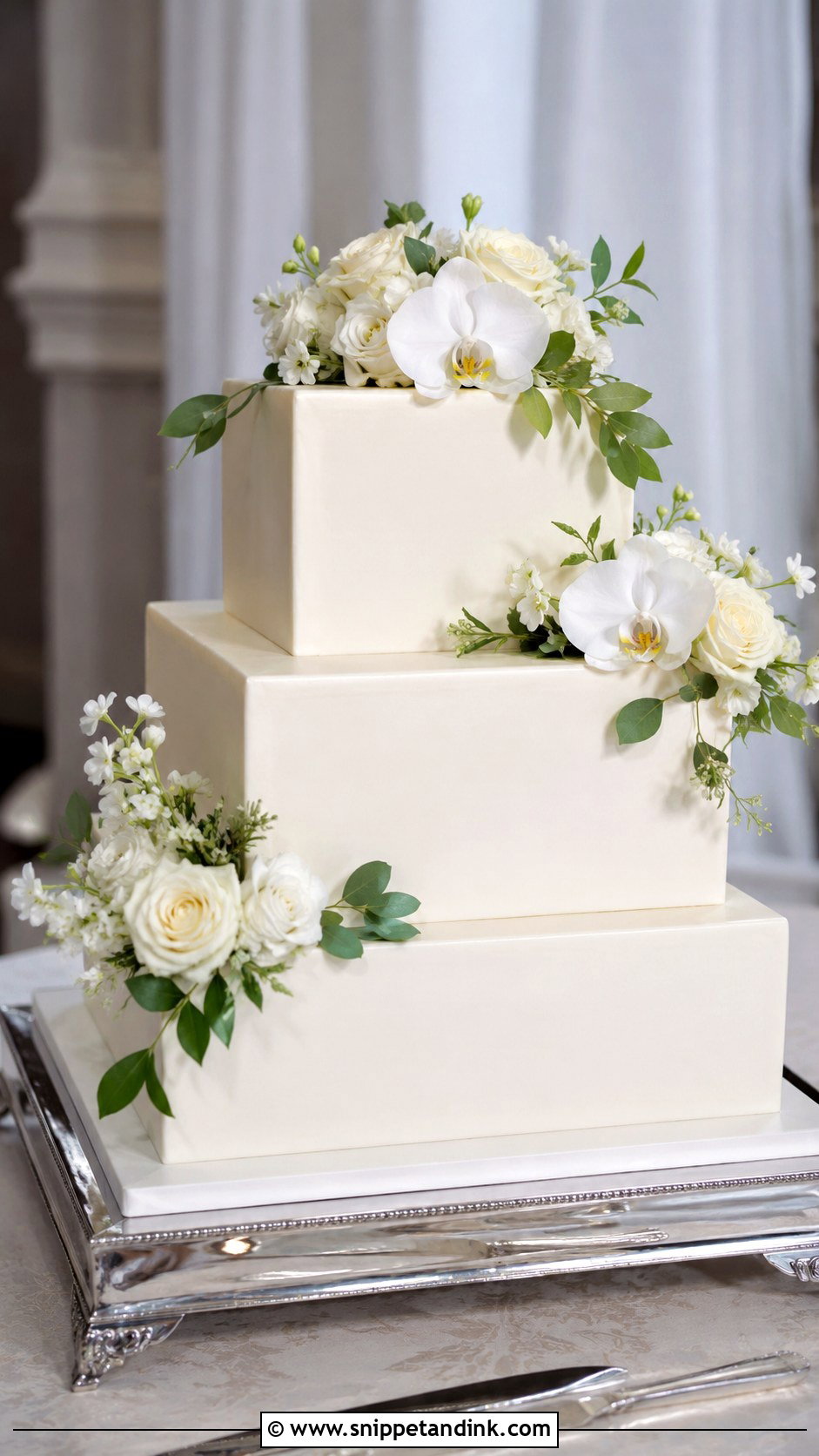
Square tiers feel structured, and flowers soften their edges. Blooms can sit at the corners, across the top or in a diagonal over the tiers. White fondant keeps a square crisp; smooth buttercream is warmer. Precision matters more on this shape, because a cluster sitting slightly off a corner looks like a mistake rather than a choice. I measure placements against the corners before anything goes on. Hotel weddings and couples who want classic with a modern edge suit it.



15. Pressed Flower Wedding Cake
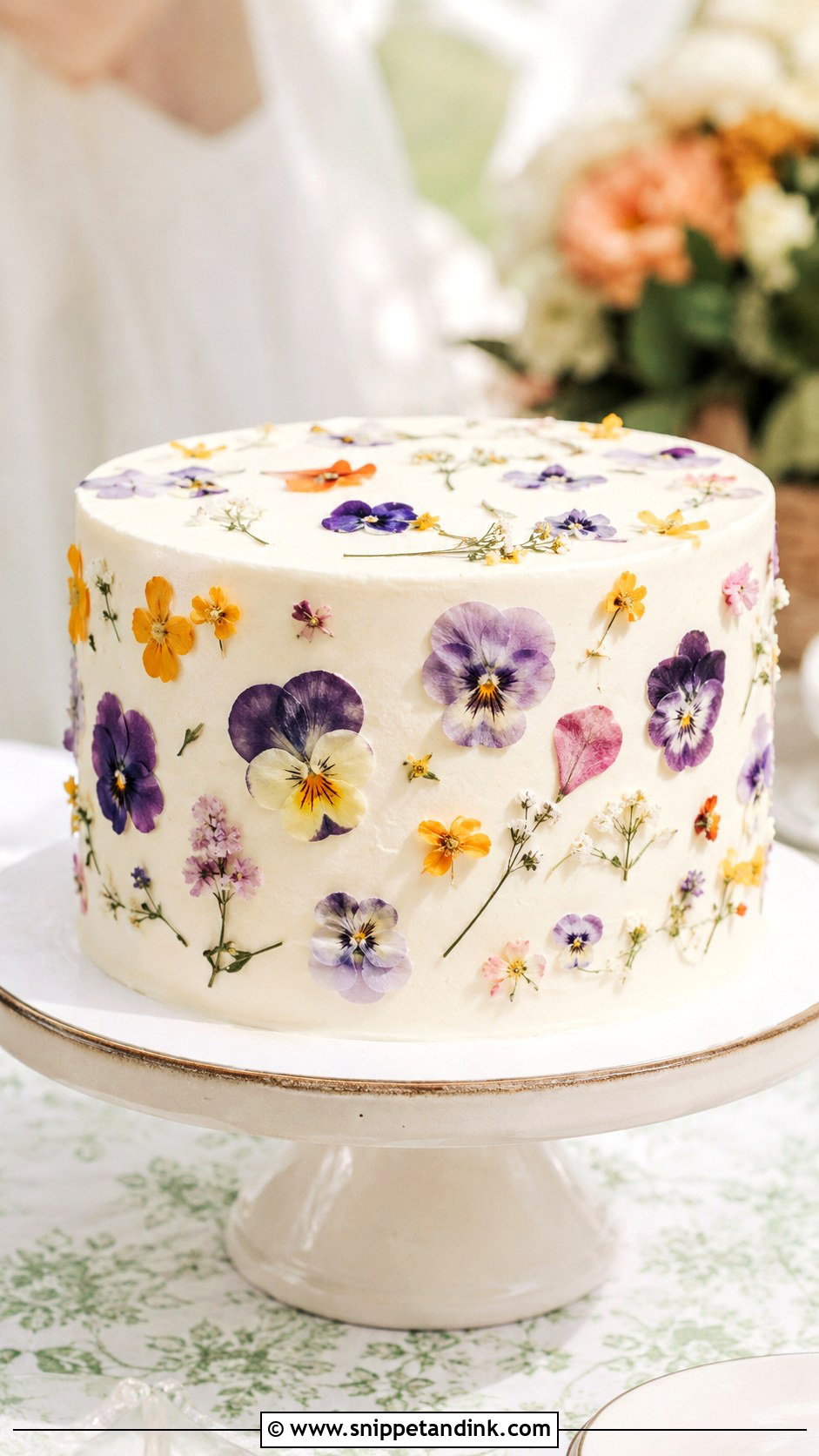
A pressed flower wedding cake lays edible flowers flat against the frosting for a painted, botanical effect. Pansies, violas, calendula and other edible blooms add colour without height, which suits small cakes, single tiers and clean white buttercream. These flowers touch the cake directly, so they must be grown for food, never pulled from a florist’s bucket. Pressing takes a week or more between sheets of paper, so plan ahead, and press extras because thin petals tear easily.
16. Wildflower Wedding Cake With Real Flowers
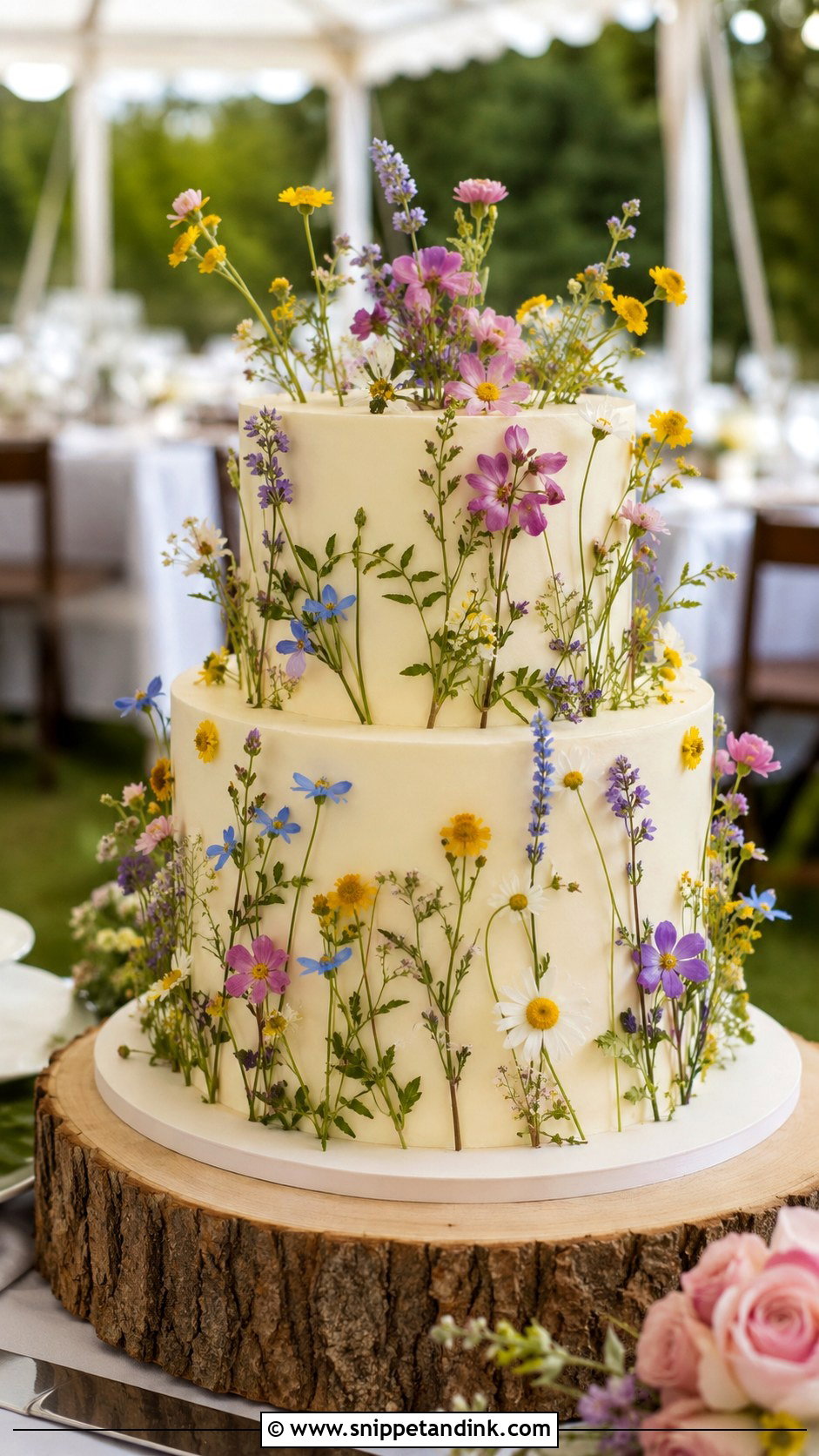
A wildflower wedding cake with real flowers feels cheerful and natural, and it suits meadow weddings, backyard receptions and colourful spring or summer celebrations. Small blooms scattered lightly work better than big heads. Use edible or properly prepared flowers in yellow, lavender, blue, pink and white to echo the bouquet, on a simple buttercream base. Truly wild-picked flowers are a gamble, because roadside plants can carry sprays and some meadow flowers are toxic, so I source cake blooms from a grower even when the bouquet is foraged.
17. Orchid Wedding Cake With Fresh Flowers
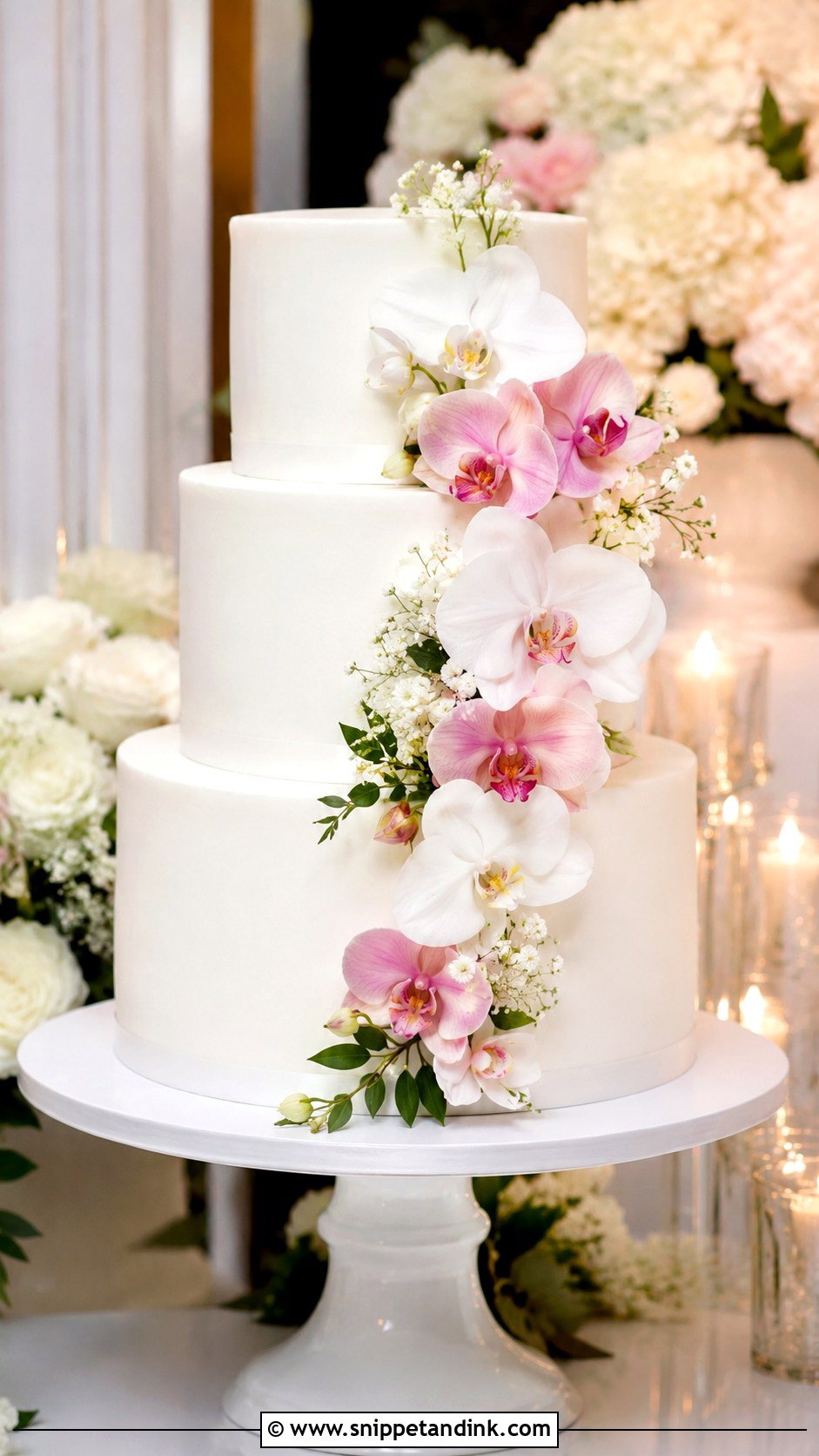
Orchids bring a sleek, slightly dramatic line, and their arching stems make them natural for cascades. A white or ivory cake gives them a clean background, and white, pale pink or purple orchids suit many palettes. They’re also among the hardiest cut flowers I use, holding up for hours on a cake where softer petals would wilt. Keep the frosting smooth so the flowers stay the focus. A few well-placed stems look richer than a crowd of them.
18. Rose Cascade Wedding Cake
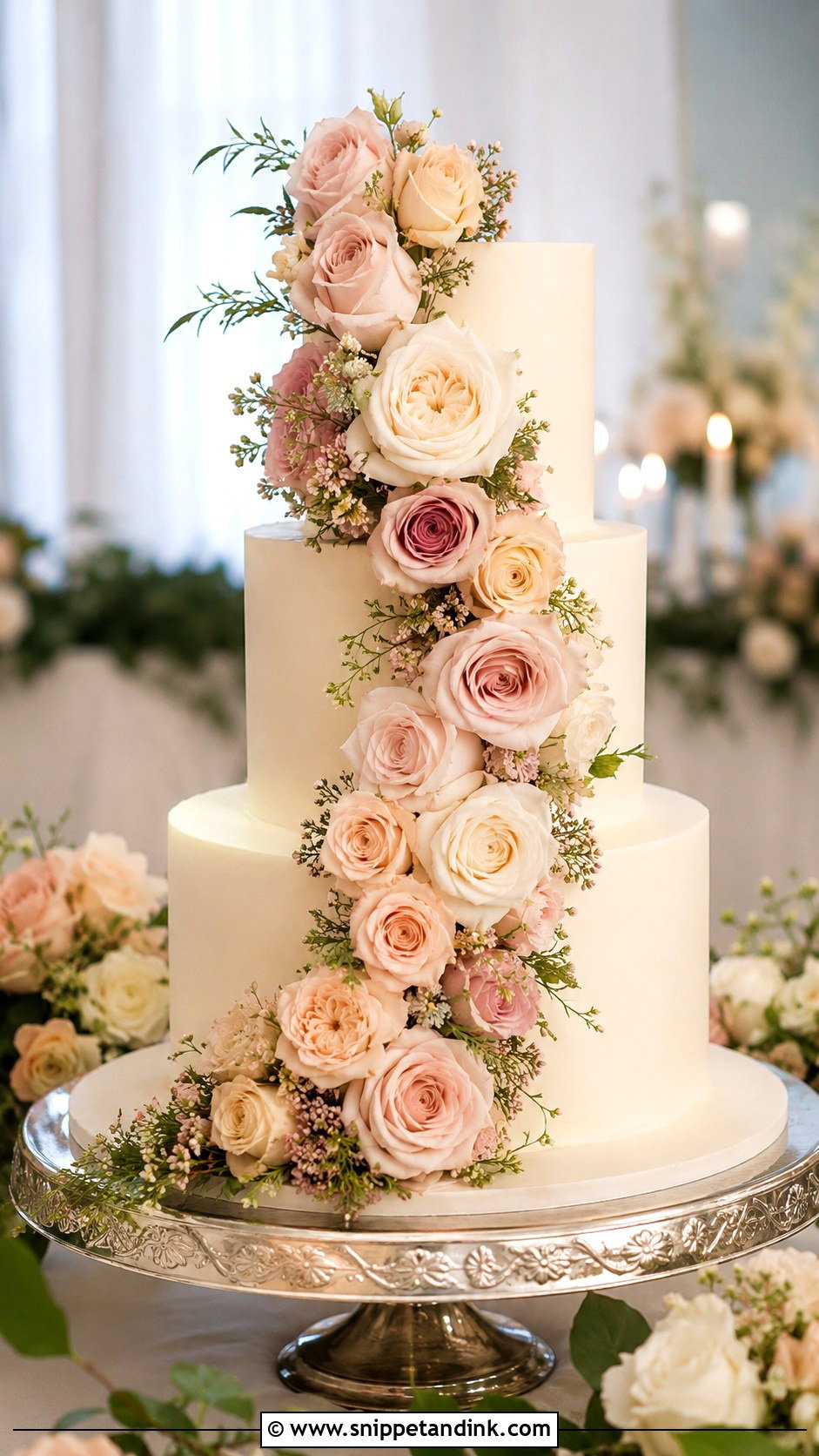
A rose cascade runs from the top tier to the base and is dramatic in a classic way. Roses can go alone or with small fillers and greenery, in blush, ivory, peach and dusty pink, or deeper shades for a bolder mood. I draw the cascade as a gentle S-curve rather than a straight diagonal, which reads more graceful in photos. Roses vary a lot in how long they last out of water, so I choose varieties with firm petals and condition them overnight before cake day. A smooth finish lets the trail stand out.
19. Greenery Wedding Cake With Real Flowers
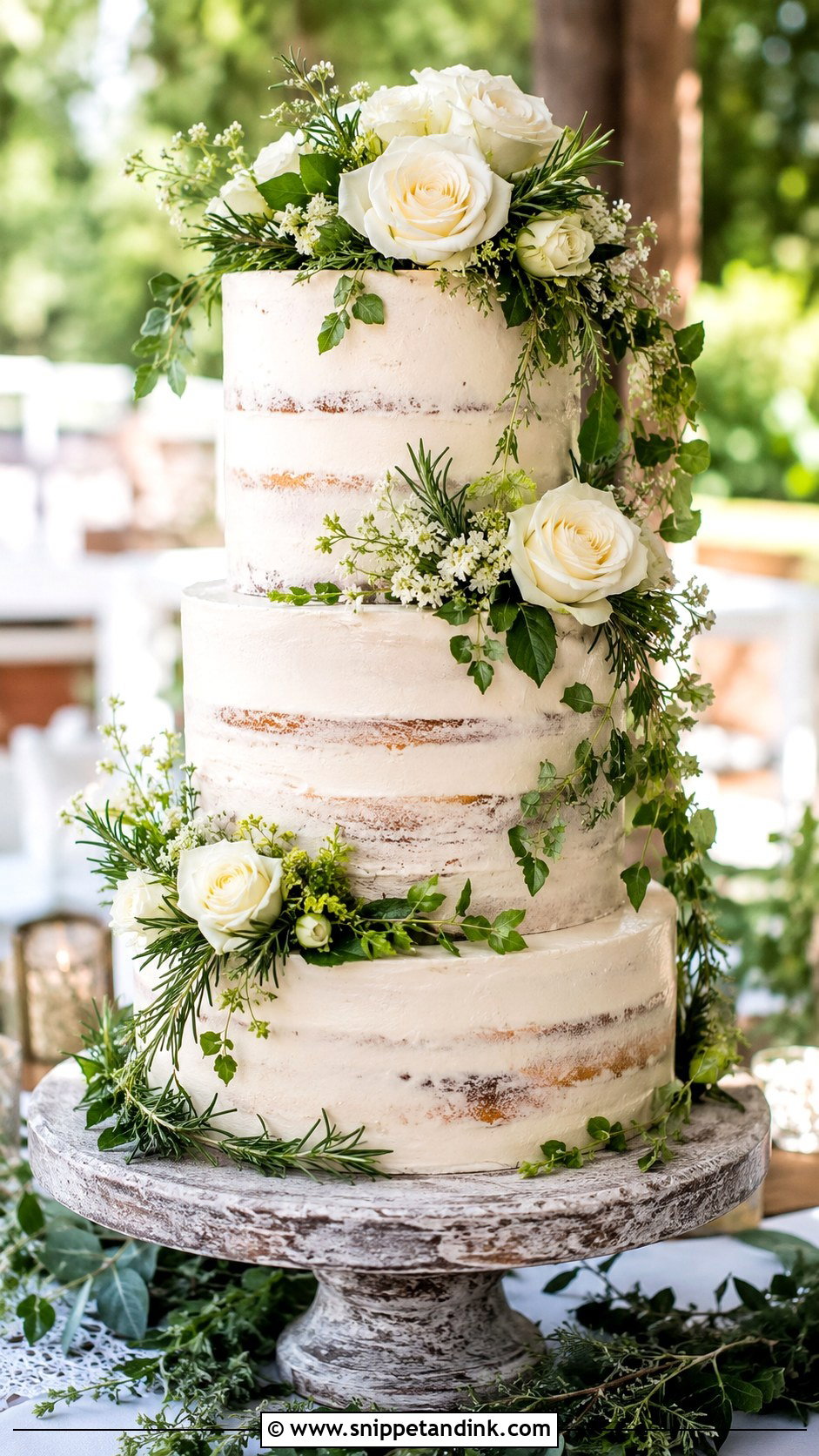
Greenery adds movement and the flowers bring colour. Keep it simple with eucalyptus-style leaves and white blooms, or add roses, herbs and seasonal flowers, over semi-naked or smooth buttercream. Leaves need the same care as flowers. Eucalyptus isn’t edible and is often treated, so it should never touch the frosting, while rosemary, mint and bay look similar on a cake and are far safer. It suits wooden stands, stone tables and garden dessert displays.




20. Floral Meadow Wedding Cake
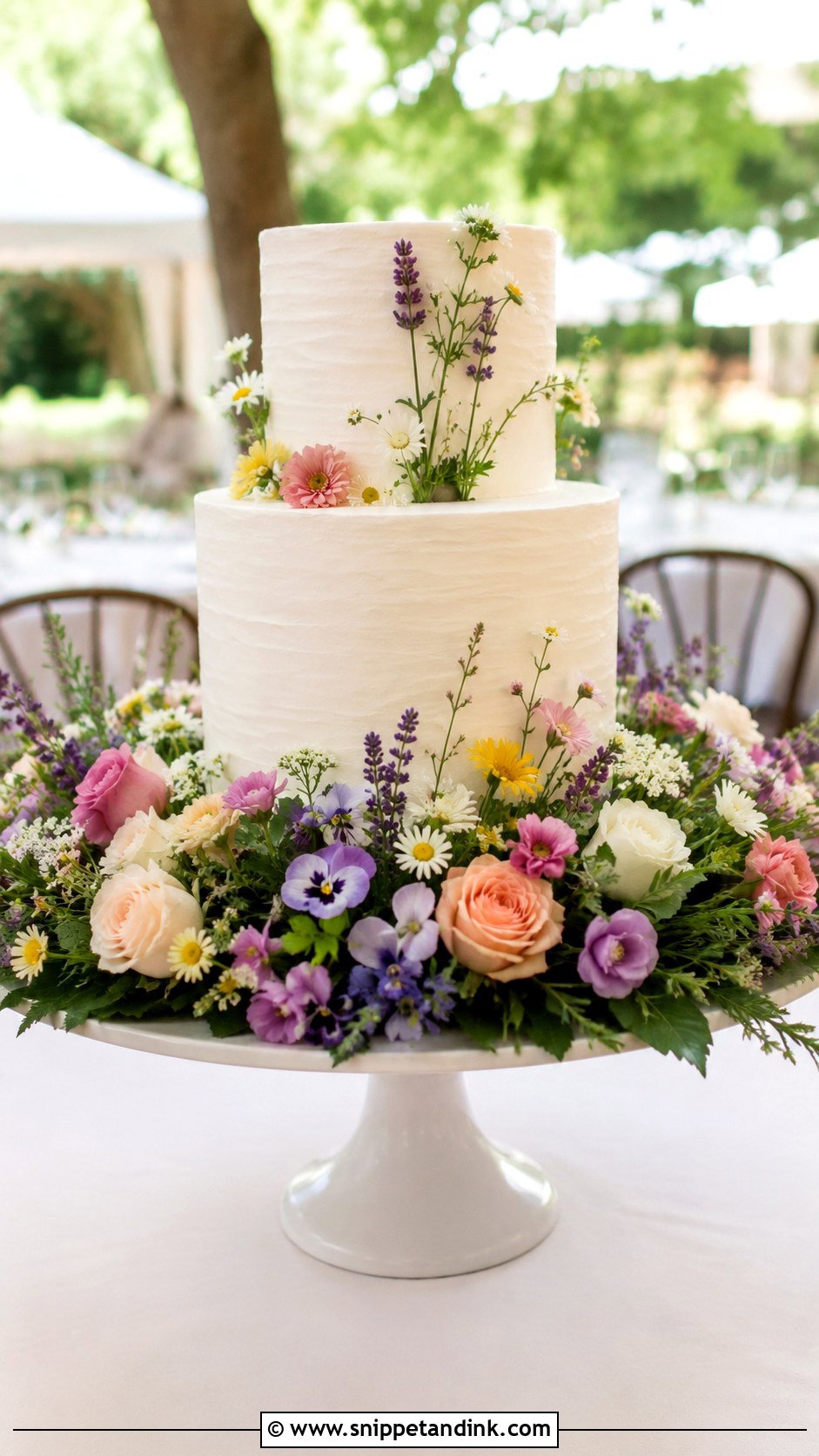
A meadow cake keeps the flowers off the cake altogether. The cake sits in the centre of a low bed of blooms, with only a few flowers on top, if any. It’s the setup I recommend most when couples want a big floral moment but worry about food safety, because almost any flower can go in the meadow. The blooms sit in water tubes or damp moss on the table, so they stay fresh for hours longer than flowers on the cake. Match them to the reception arrangements so the table feels part of the room.
Wrapped Stems, Late Placement and Who Does the Arranging
Preparing every stem
I cut cake stems short, wrap them in floral tape and then food-safe film, or slide them into a clean straw or flower pick, so the cut end never meets the frosting. Large clusters sit on a small disc of fondant or parchment. Every head gets checked, and any petal with marks or a hiding insect comes off.
When the flowers go on
Cut flowers out of water start to tire within hours, faster in heat. I prefer them placed at the venue once the cake is set up, ideally no more than a couple of hours before guests see it. Orchids, spray roses and waxflower last longest. Peonies, sweet peas and hydrangeas give up first, which is another reason they rarely go on my cakes.
Settling who places them
Some bakers like to arrange the flowers themselves; others want the florist to do it. Agree on this in writing, along with who supplies the flowers and how they arrive. I pack cake flowers in their own labelled box, already wrapped, with a few spares for touch-ups before the cutting.
Plan the Cake Flowers Alongside the Bouquet
Real flowers can make a cake classic, modern, rustic or entirely personal, depending on the blooms and the cake style. The designs that work best connect the cake to the bouquet, centrepieces and venue. One well-chosen cluster can transform a plain buttercream cake, and a flowing cascade can carry a tall one. Plan the flowers with both the baker and the florist so they’re safe, secure and fresh at the cutting. I add the cake flowers to the floral order at the same time as the bouquet, so they’re sourced, conditioned and prepared like everything else.
You'll Like These Ideas:










Leave a Reply