
Vintage cakes turn up on my order sheet more than any other style right now, and I think it’s because they look made by hand. Lambeth swags, pearl borders, lace piping, sugar roses and scalloped edges are all old techniques, yet none of them have to look dated. The difference is restraint: a clean color, one clear decorating idea, and flavors people actually want to eat at a modern reception. Below are 20 vintage designs I’d happily build, with notes on how each one is made, how much time it takes, and where it tends to go wrong.
Ordering Hand-Piped Vintage Work Early Enough
Lambeth swags, lace and sugar roses are labor, not decoration you buy by the meter. Bakers who do this well book up, and they plan a whole week around a heavily piped cake. Here’s how I’d like a couple to approach me.
- Get in touch six to nine months ahead for a busy season. Some of us take fewer intricate orders per weekend, so a date can fill before the calendar looks full.
- Bring two or three photos and say exactly what you like in each one, the scallop shape, the pearl size, the shade of ivory. Vintage means something different to every couple.
- Ask which buttercream will be used for piping. American buttercream crusts and holds sharp borders; Swiss or Italian meringue is smoother and less sweet but softens sooner in warmth.
- Ask how and when the sugar flowers are made. They can be finished weeks ahead, which takes pressure off the last days, but they’re brittle and must be kept dry.
- Book the tasting with enough time left to change your mind. Flavors and tier count usually need settling before the decoration details do.
Fondant or buttercream for a period look?
Buttercream is closer to how many of these cakes were traditionally finished, and it’s the one guests actually eat. Fondant gives the crisp surface needed for drapes, Art Deco lines and painted gold. If you love the look of fondant but not the taste, ask for a thin layer over ganache. It holds its shape better in warm rooms, and guests who don’t like it can simply peel it off.
1. Vintage Lambeth Wedding Cake
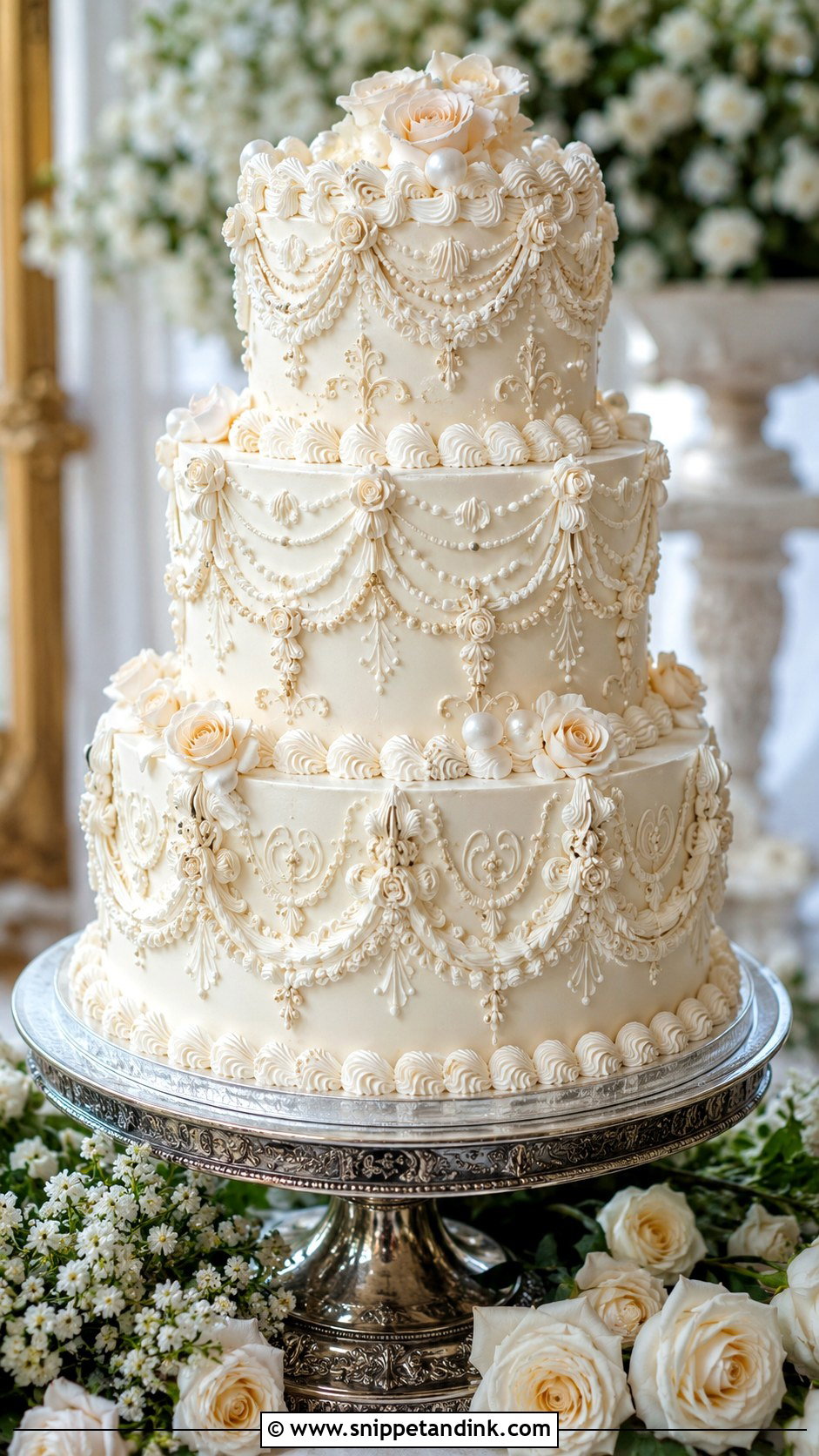
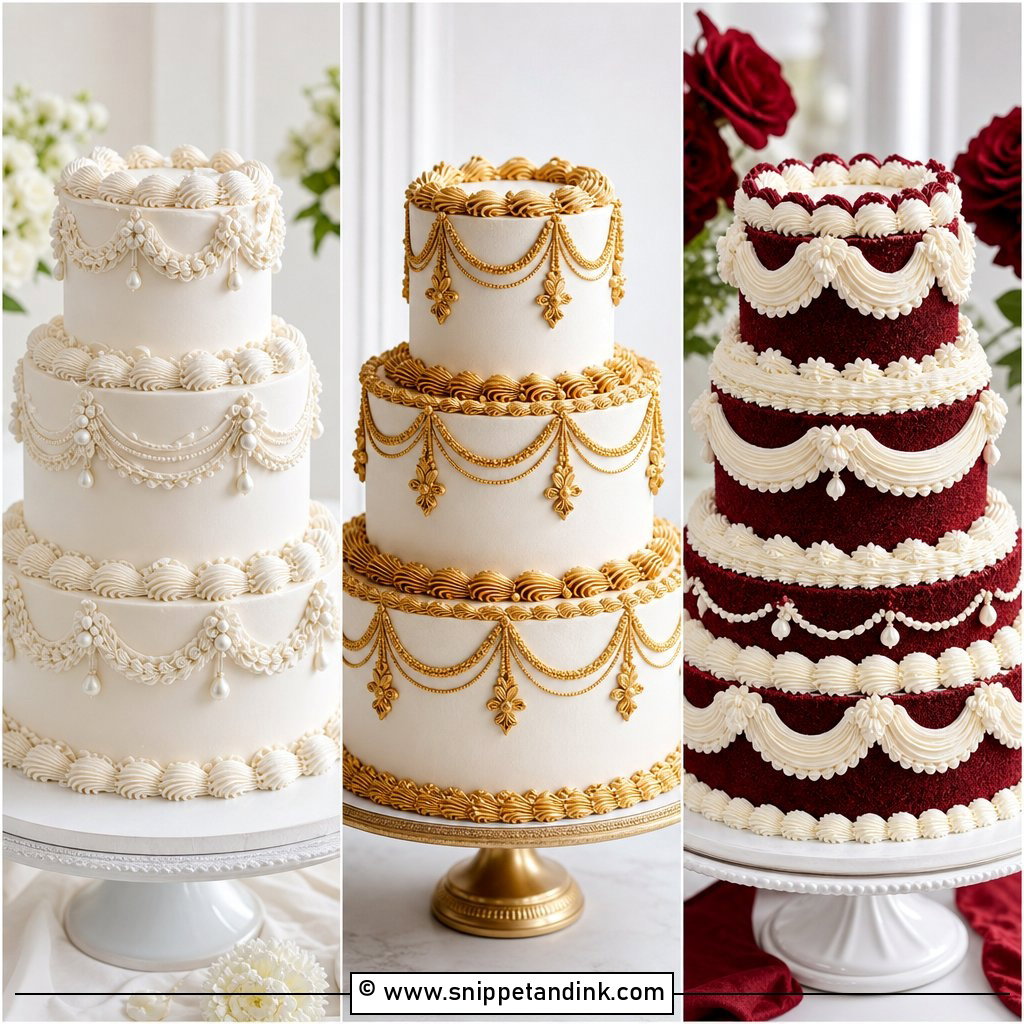
A vintage Lambeth wedding cake is built from layer upon layer of overpiped buttercream: a swag, then a shell over it, then a string of dots on top of that. It’s slow work, and on three tiers it can take most of a day, which is why I quote it differently from a smooth finish. Ivory is the safest base. Blush, butter yellow and pale blue work too, as long as the piping stays tone on tone. What I watch most is rhythm. Every tier needs the same spacing of swags or the cake looks crowded at the top and bare at the bottom. A few sugar roses can sit at the joins.
2. Vintage Pearl Wedding Cake
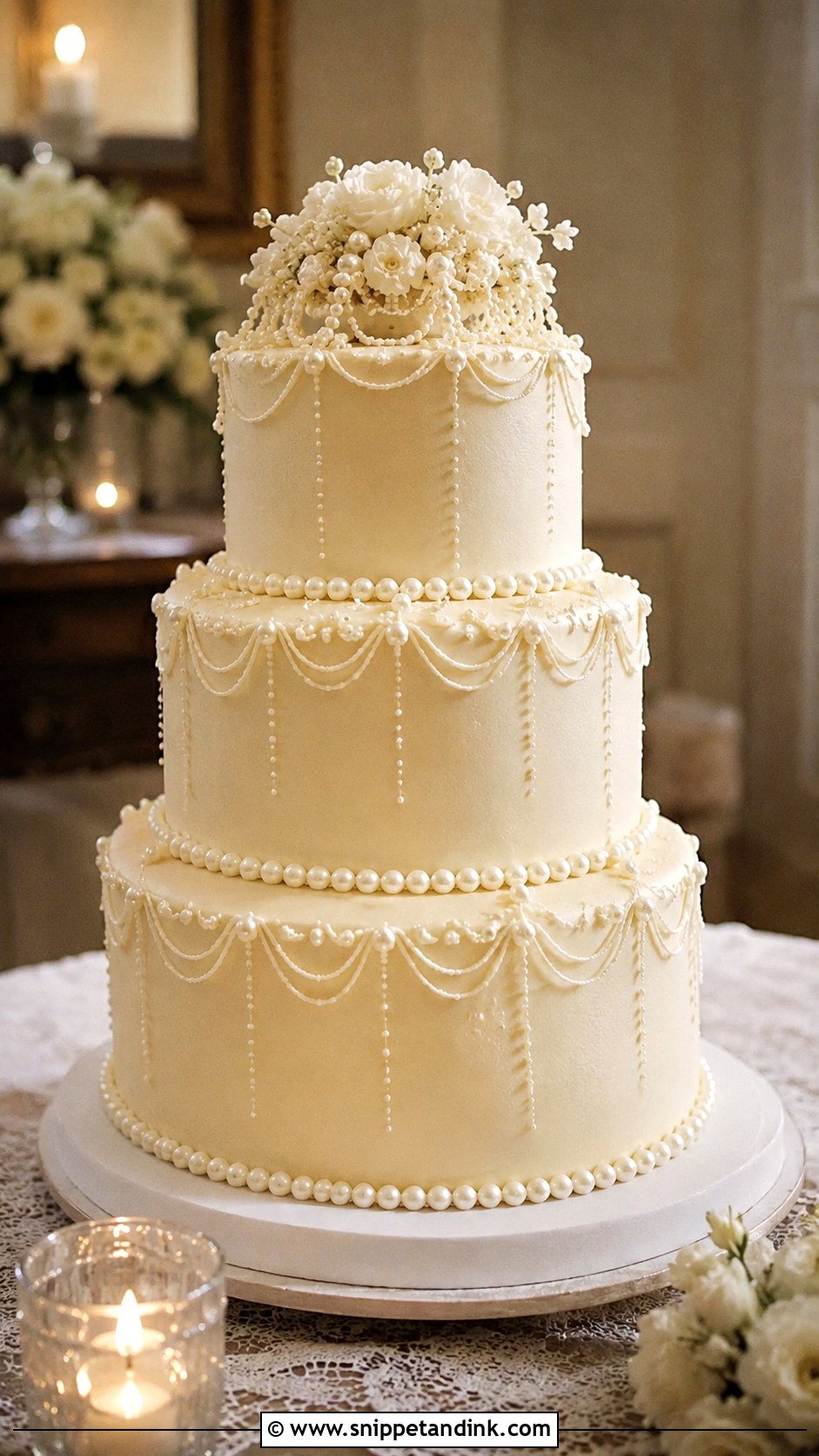
Edible pearls are usually sugar dragées, and they’re the simplest way to add shine without any metallic paint. I set them along tier borders, tuck them into piped garlands, or dot them lightly over smooth buttercream. On ivory or warm white they read soft; on bright white they can look chalky in photos. One honest warning: the hard ones are rough on teeth, so on anything guests will bite into I use softer sugar pearls. A pearl cake ties in naturally with a satin gown or pearl jewelry, and it catches candlelight well.
3. Vintage Lace Wedding Cake
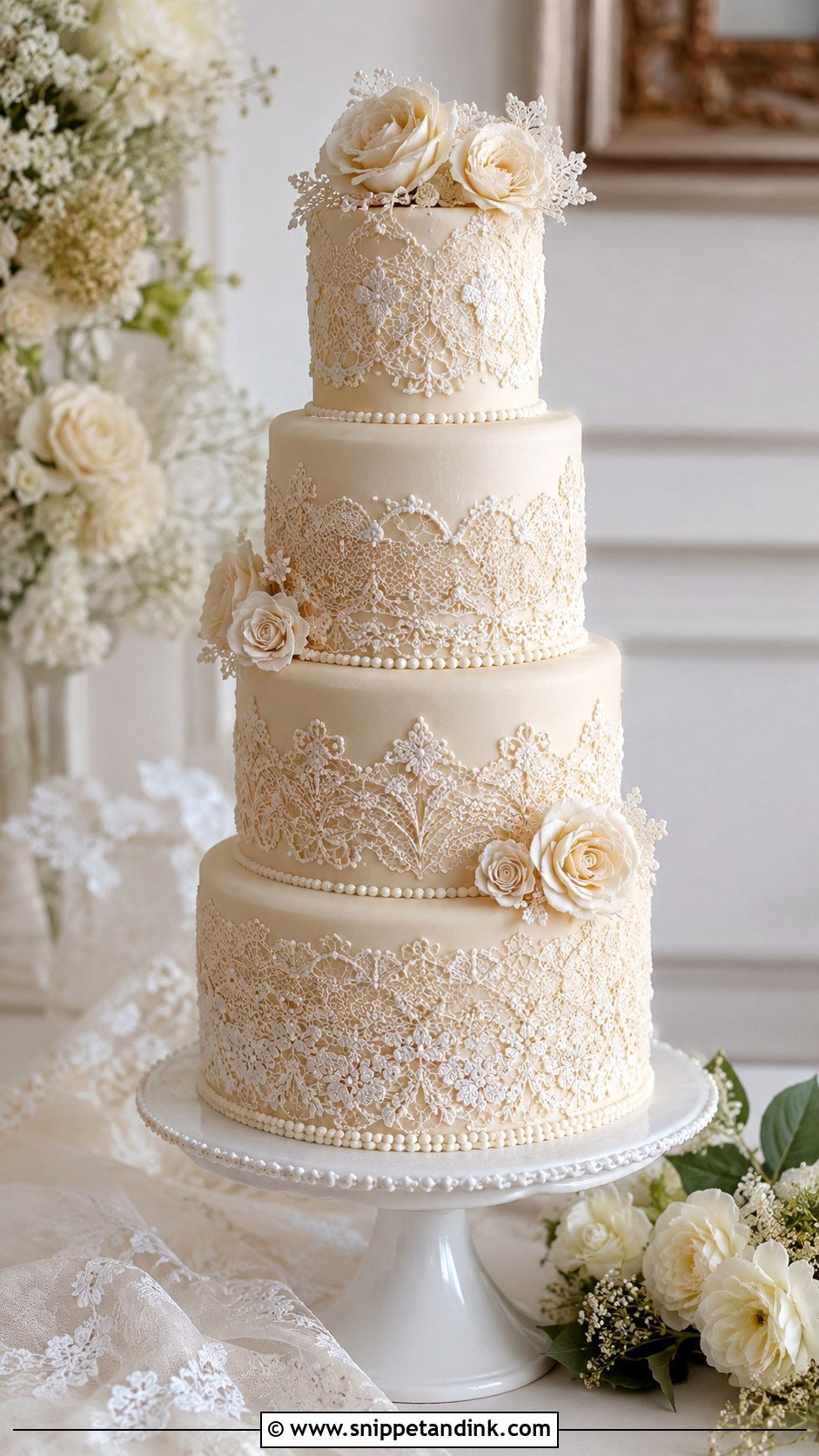
Lace on a cake can be piped royal icing, piped buttercream, cast edible lace sheets or a stencil, and each gives a different depth. Royal icing is the crispest and the most fragile. Lace sheets are quickest, but they can look flat and go limp in a humid room. White-on-white is classic, while ivory lace over champagne fondant looks warmer and older. If the bride is wearing lace, I ask for a close-up of her dress so I can echo its motif without copying it. Keep flowers off the lace panels, or nobody sees the work.
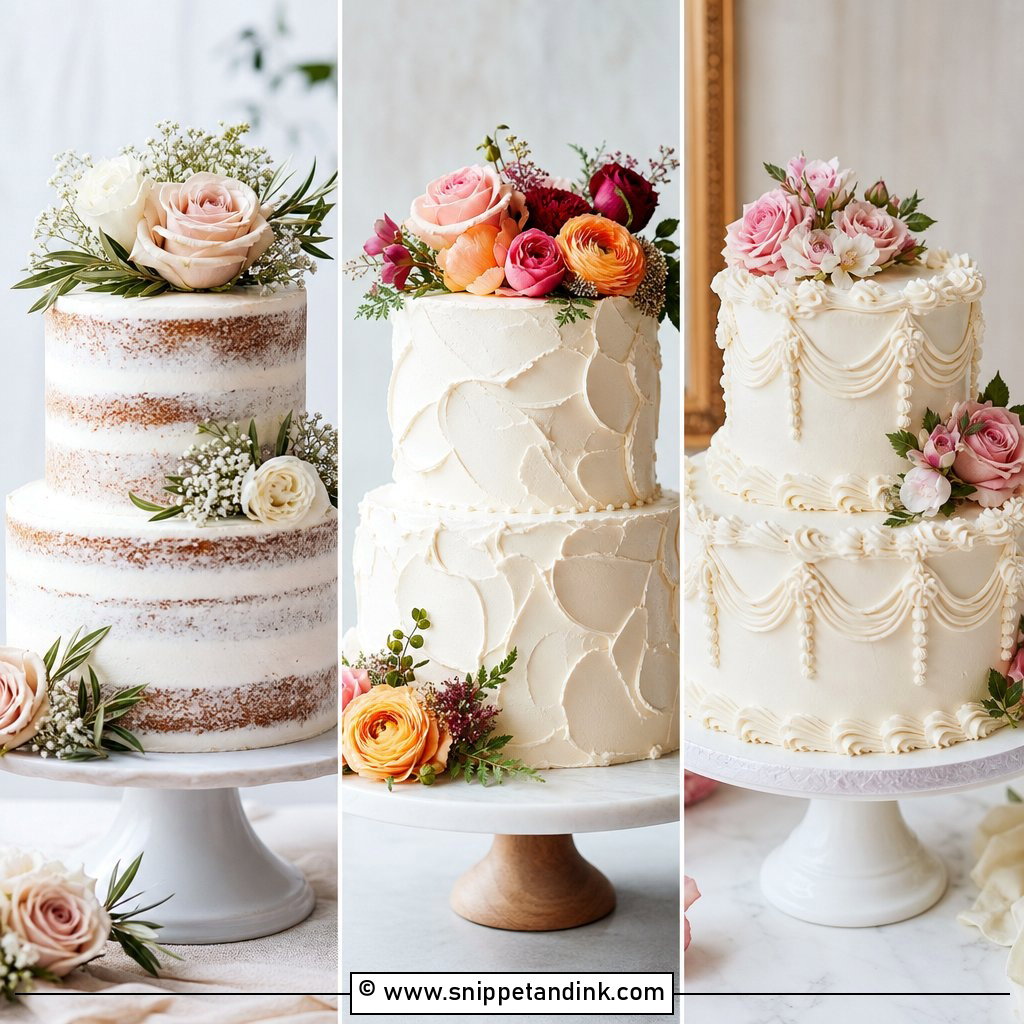
4. Vintage Buttercream Wedding Cake
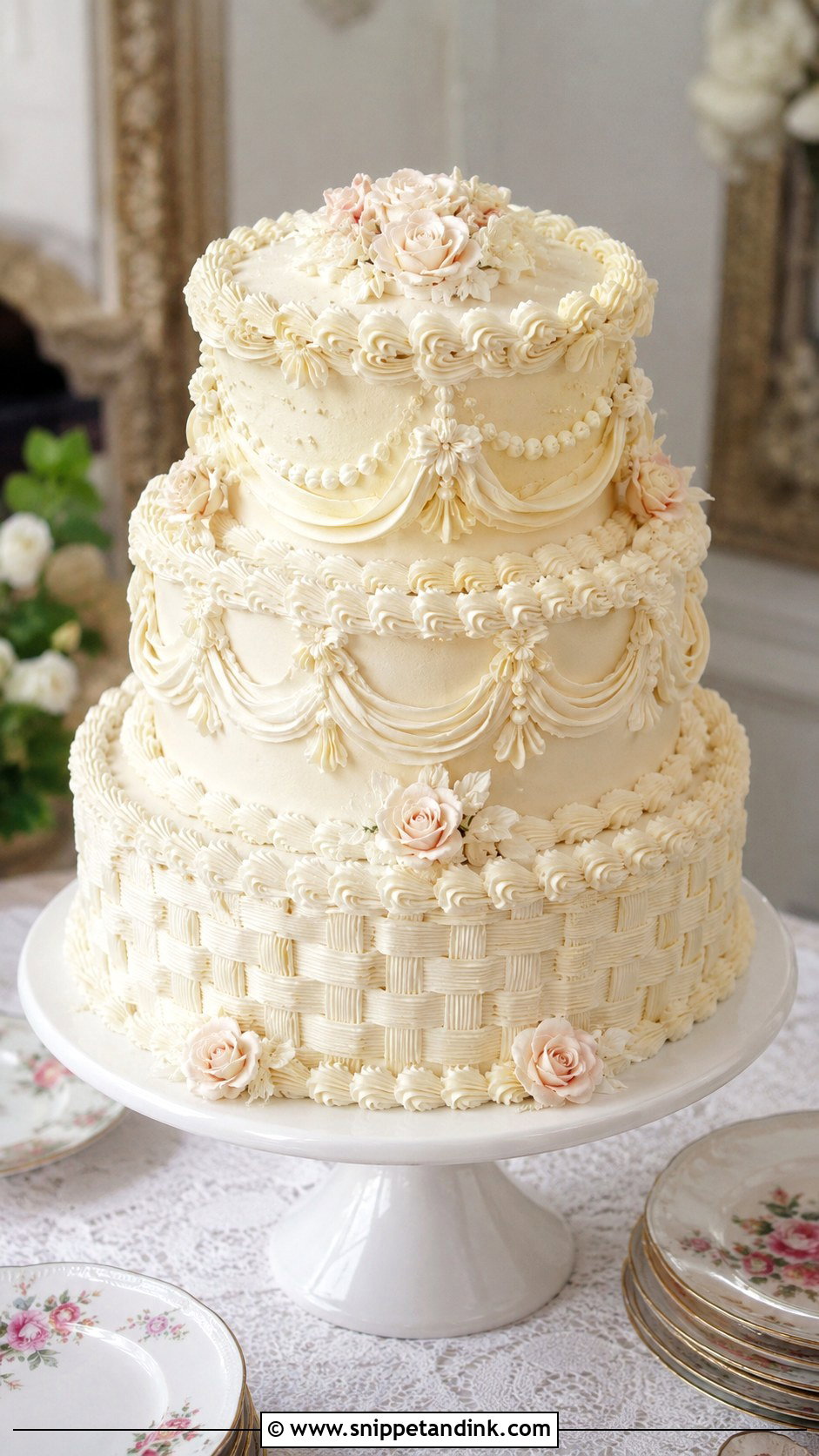
Shells, rosettes, basket weave and soft swags were all invented for buttercream, and most guests prefer its taste to fondant, which matters more than people think. The trade-off is temperature. American buttercream crusts and holds stiff piping well; Swiss meringue is silkier and less sweet but softens faster in a warm room. I often mask a cake in meringue buttercream and pipe the borders in the firmer recipe. Inside, classic flavors suit the look: vanilla, almond, lemon or raspberry.
5. Vintage Floral Wedding Cake
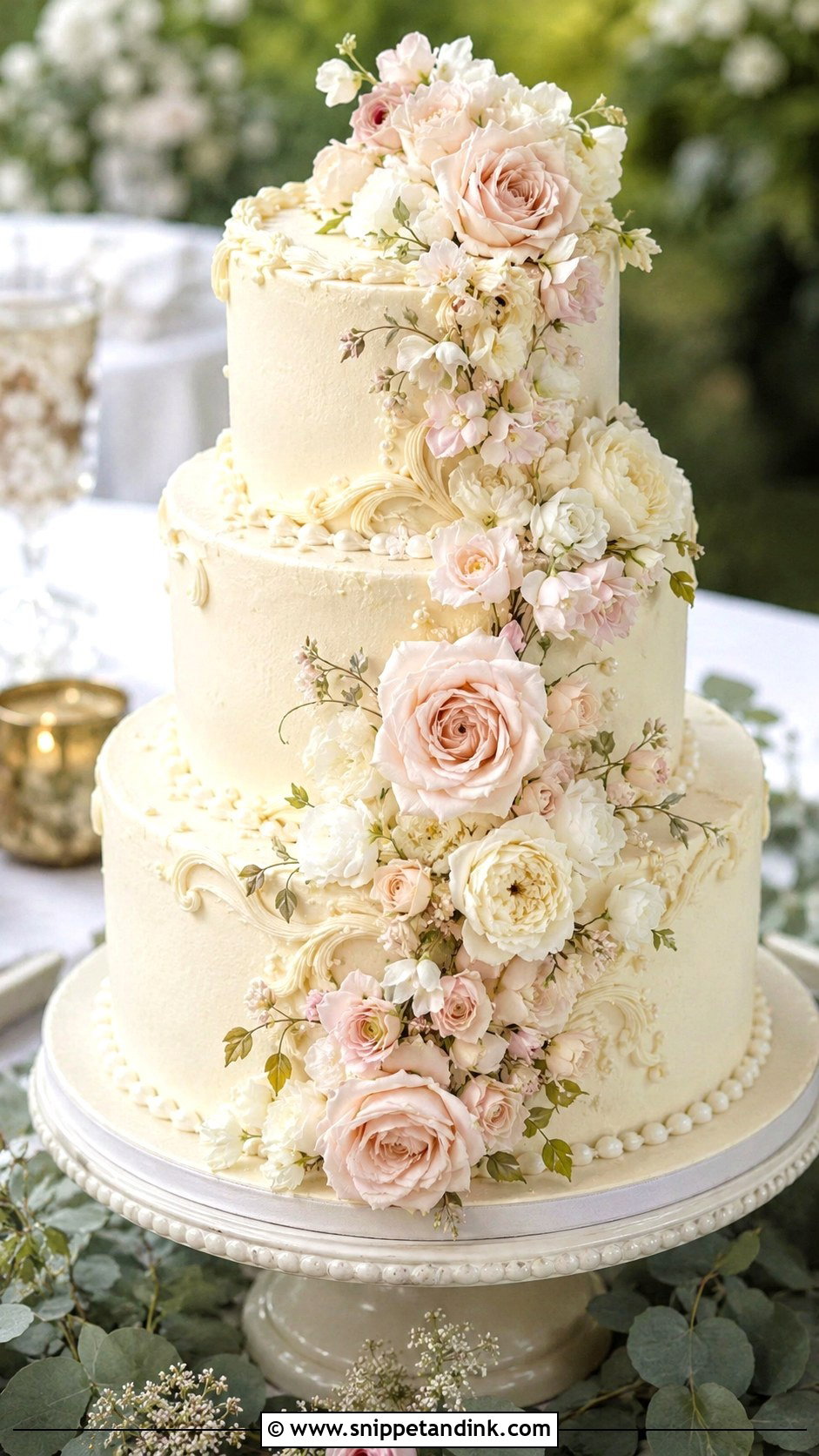
Flowers on a vintage cake can be fresh, pressed, piped or sugar, and they behave very differently. Roses, peonies, sweet peas and lily of the valley all fit the style, but lily of the valley is poisonous, so on my cakes it’s always sugar and never fresh. Placement should look deliberate: a cascade down one side or small clusters at the tier joins. Ivory with blush and cream flowers is the classic route. A touch of sage or dusty blue makes it more personal, especially at a spring garden reception.
6. Vintage Heart Wedding Cake
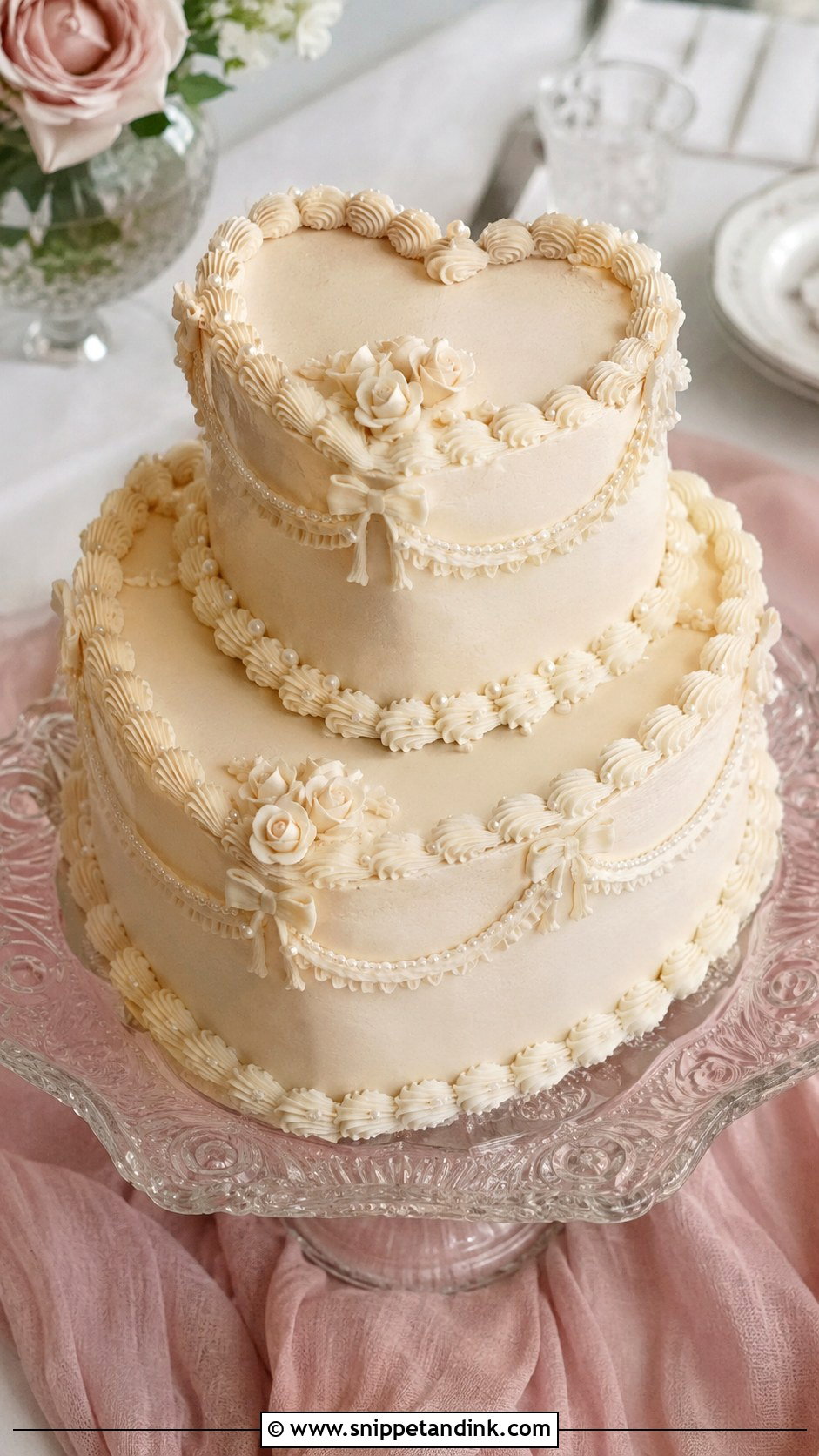
Heart-shaped tiers are pure nostalgia, and they’re harder to finish neatly than rounds because the point and the cleft both need sharp edges. Scalloped borders, shells, pearl trim and small piped bows follow the curves well. Keep the color soft, ivory or champagne rather than bright pink, which tips it toward a birthday. I’d suggest it for a smaller wedding, a sweetheart table or a dessert display rather than as the only cake for a big crowd, since hearts cut into awkward servings. Two tiers give enough height and keep the outline clear.
7. Vintage Rose Wedding Cake
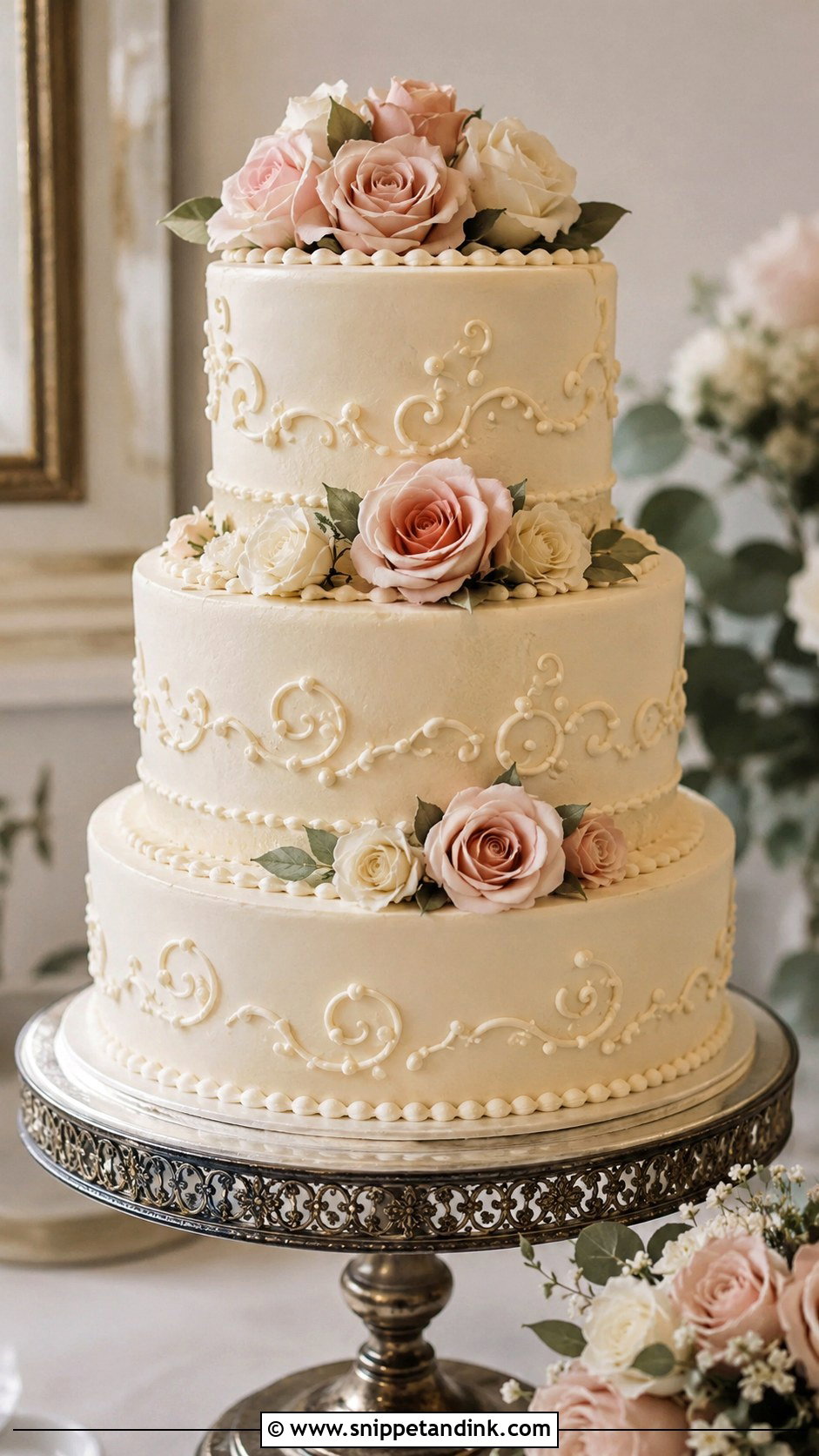
Roses can be piped in buttercream, modeled in sugar paste or arranged fresh, and that choice changes both the price and the timeline. Sugar roses are made weeks ahead and keep; piped ones are done close to the day and look softer. Blush, mauve and dusty pink read vintage, while a true red pulls the cake modern. I pair them with ivory frosting and a little scroll piping so it doesn’t get busy. For a stronger period mood, ask for rose clusters with a pearl border, and leave at least one tier plain so the eye has somewhere to rest.
8. Vintage Bow Wedding Cake
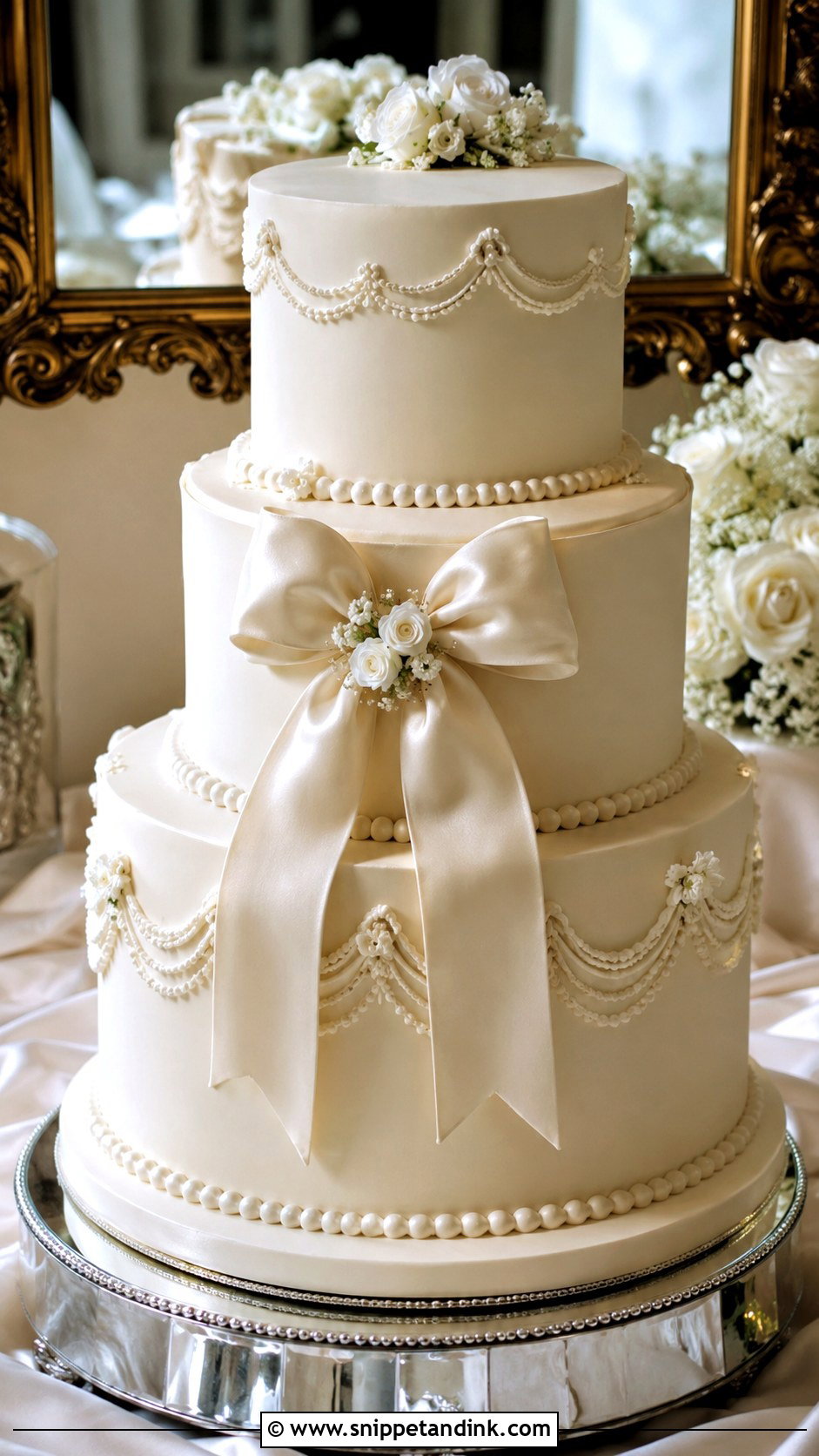
Bows come in fondant, piped buttercream, sugar paste or satin ribbon, and real ribbon needs care. Fabric soaks up butter from the frosting and shows a dark greasy line within hours, so I back it with a thin strip of wax paper or only use it against fondant. One large bow on a single tier looks classic; tiny bows around every tier feel sweeter. Ivory fondant with pearl trim is an easy match for a gown with ribbon or satin details, and a mirrored stand or old silver tray suits it.
9. Vintage Ruffle Wedding Cake
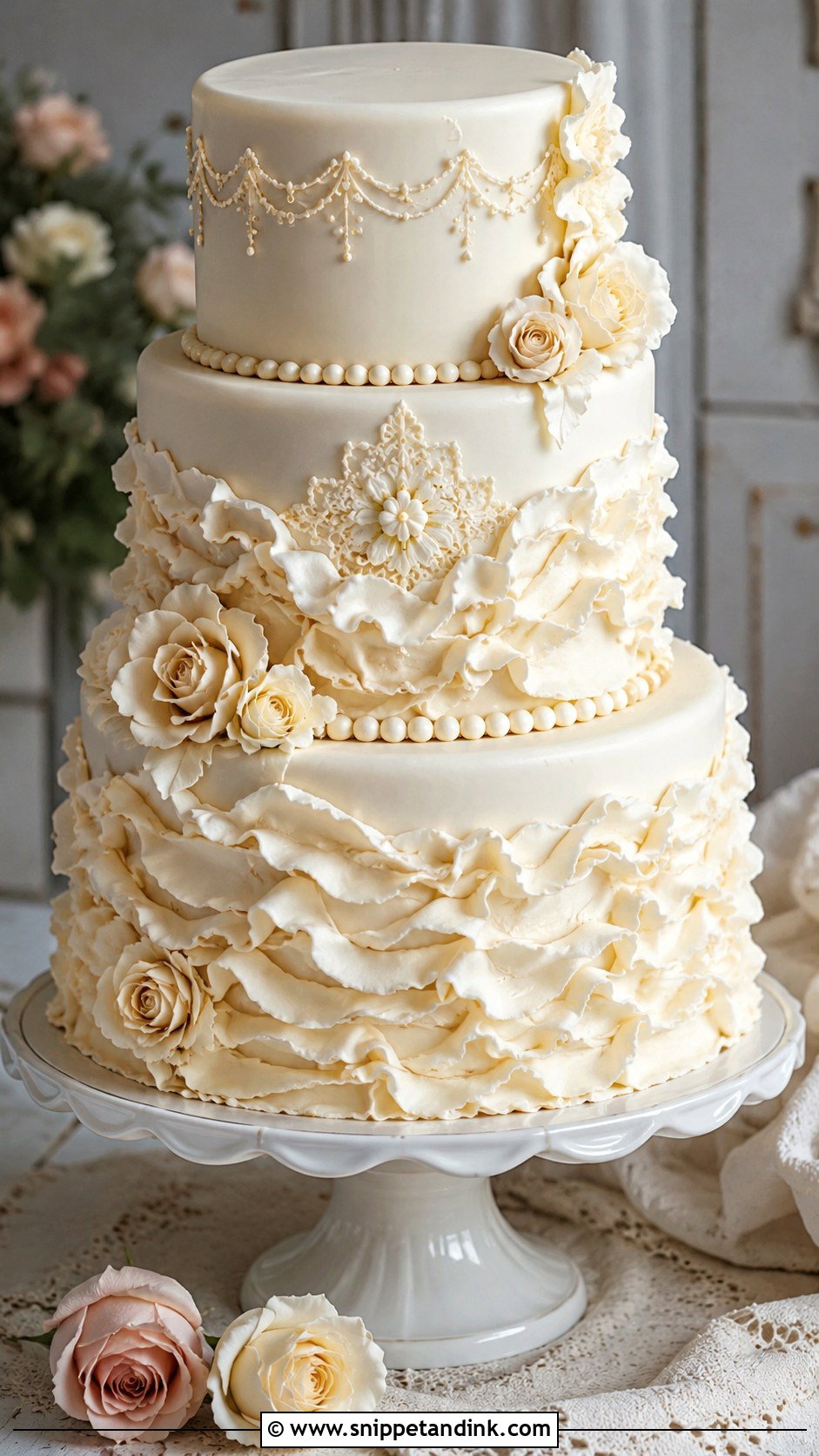
Ruffles are either piped with a petal tip or cut from thin fondant strips and gathered like fabric, and fondant ruffles add real weight to each tier. The best vintage versions stay thin. Bulky ruffles make a cake look like a lampshade. I usually ruffle one or two tiers and leave the top smooth so the shape still reads from across the room. Pearl borders or a small cluster of sugar flowers can finish it, and it sits naturally in a room with soft draping or old linens.
10. Vintage Art Deco Wedding Cake
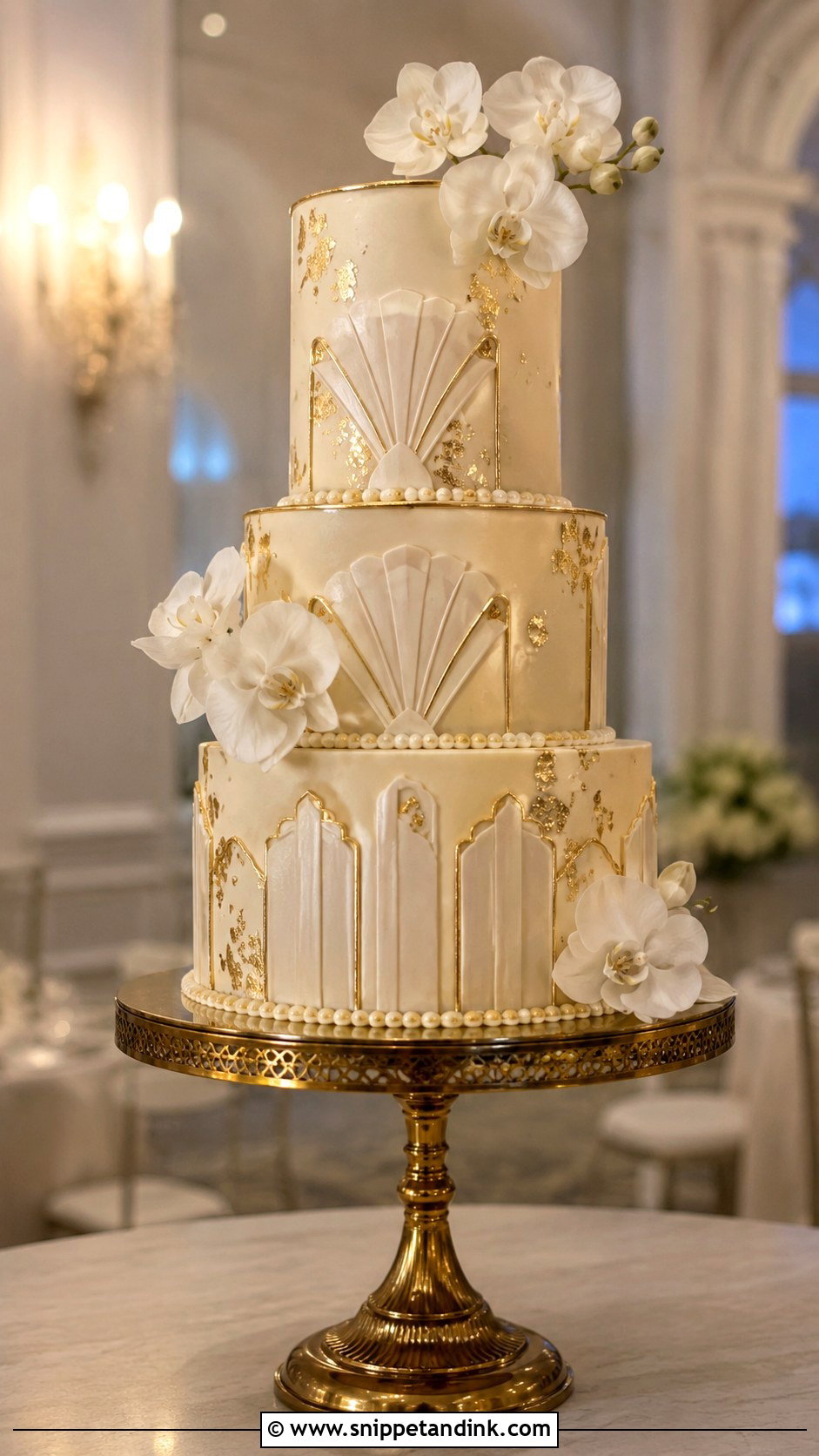
Art Deco is the structured end of vintage: sharp lines, fans, arches and geometric panels, usually with metallic detail. Ivory and gold is the classic pairing, though black, champagne and soft silver also work well. Gold leaf and lustre need perfectly smooth, sharp edges underneath, so I build these on fondant or a very crisp ganache. I’d keep metallic work to the borders and one feature panel instead of covering every tier. It suits hotel ballrooms, old theaters and formal evening receptions, and a tall stand helps it hold its own in a big room.
11. Vintage Victorian Wedding Cake
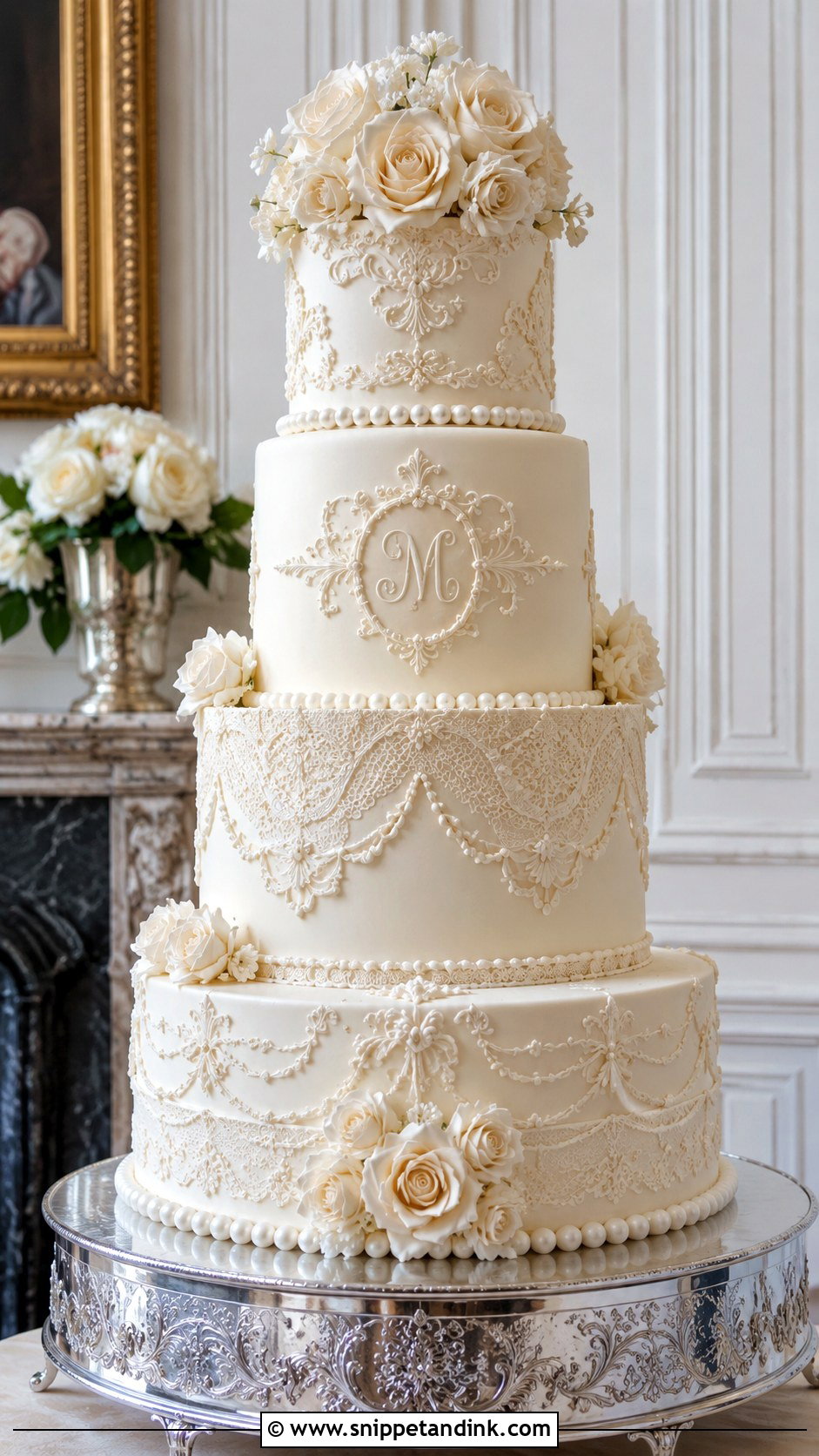
Victorian cakes are the most ornate here, with tall tiers, intricate piping, lace, pearls and floral clusters all on one cake. Ivory or cream keeps that much detail from looking heavy. My approach is to give each tier its own pattern that still connects: scrollwork on one, lace on another, pearl trim running through all of them. These cakes are heavy and need proper internal support, dowels in every tier and often a central rod, so they’re stacked at the venue rather than driven fully assembled. A sugar monogram or a few sugar roses make an heirloom-style finish.
12. Vintage Edwardian Wedding Cake
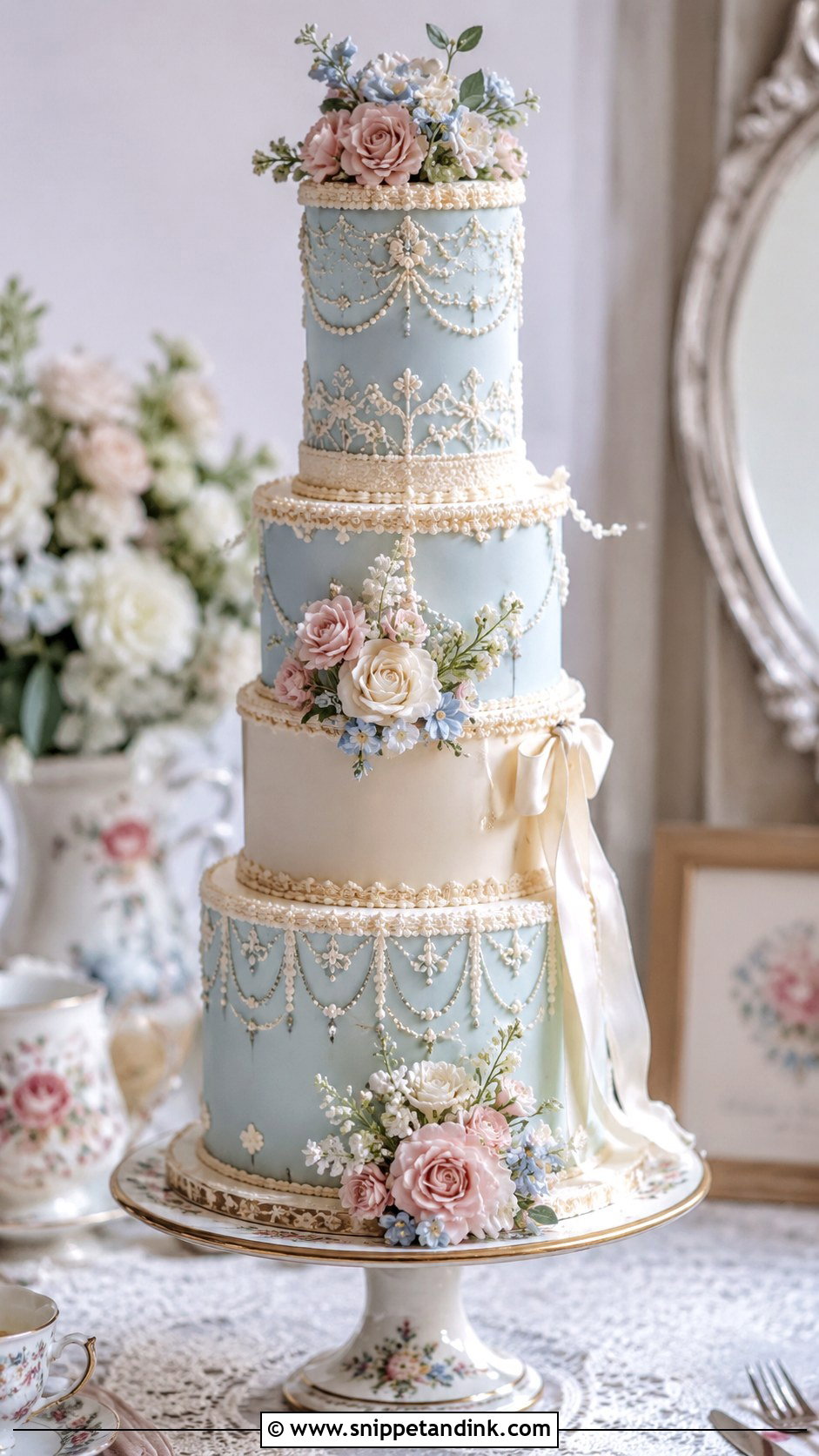
Edwardian design is the lighter cousin of Victorian. Think fine piping, pale colors, airy lace and more bare surface between details. Pale blue, ivory, blush and champagne all suit it. Narrow, slightly taller tiers make it feel formal without the weight. I keep the piping fine, using a small round tip, and finish each tier edge with tiny pearls. It fits tea-garden weddings and estate venues where a big ornate cake would feel like too much.
13. Vintage Garden Wedding Cake
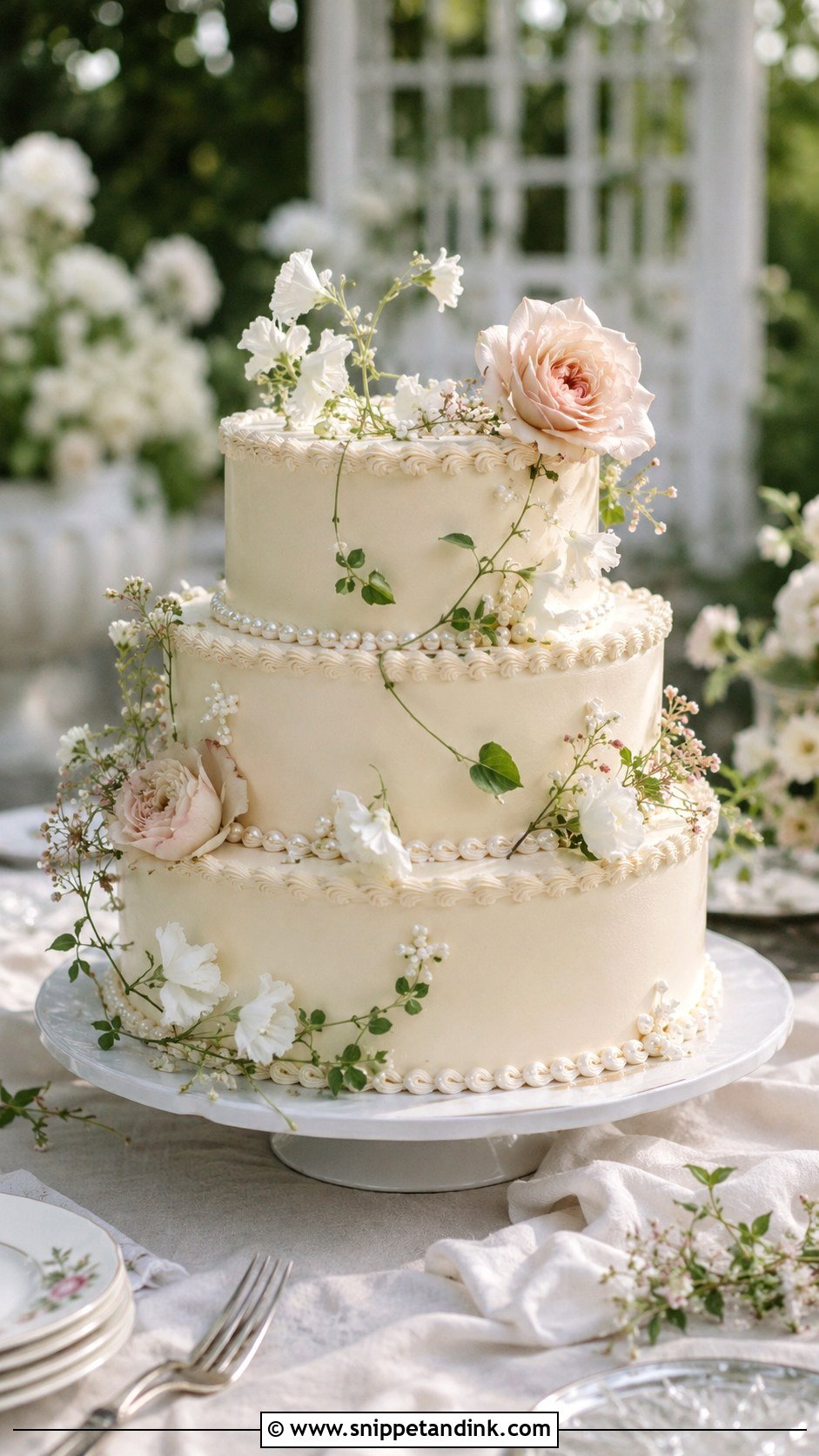
Garden cakes pair a classic tiered shape with soft botanical details: sugar flowers, fresh blooms, vines and fine piping. They have to look romantic but tidy, so I sketch the placement before anything touches the cake. Ivory buttercream with blush roses, greenery and pearl borders is a good starting point, and pressed edible flowers give a lighter, flatter look. Outdoors, this is the cake that suffers most from sun and insects, so I ask for a shaded table under cover. Lemon elderflower, vanilla raspberry or almond suit the season.
14. Vintage Sheet Wedding Cake
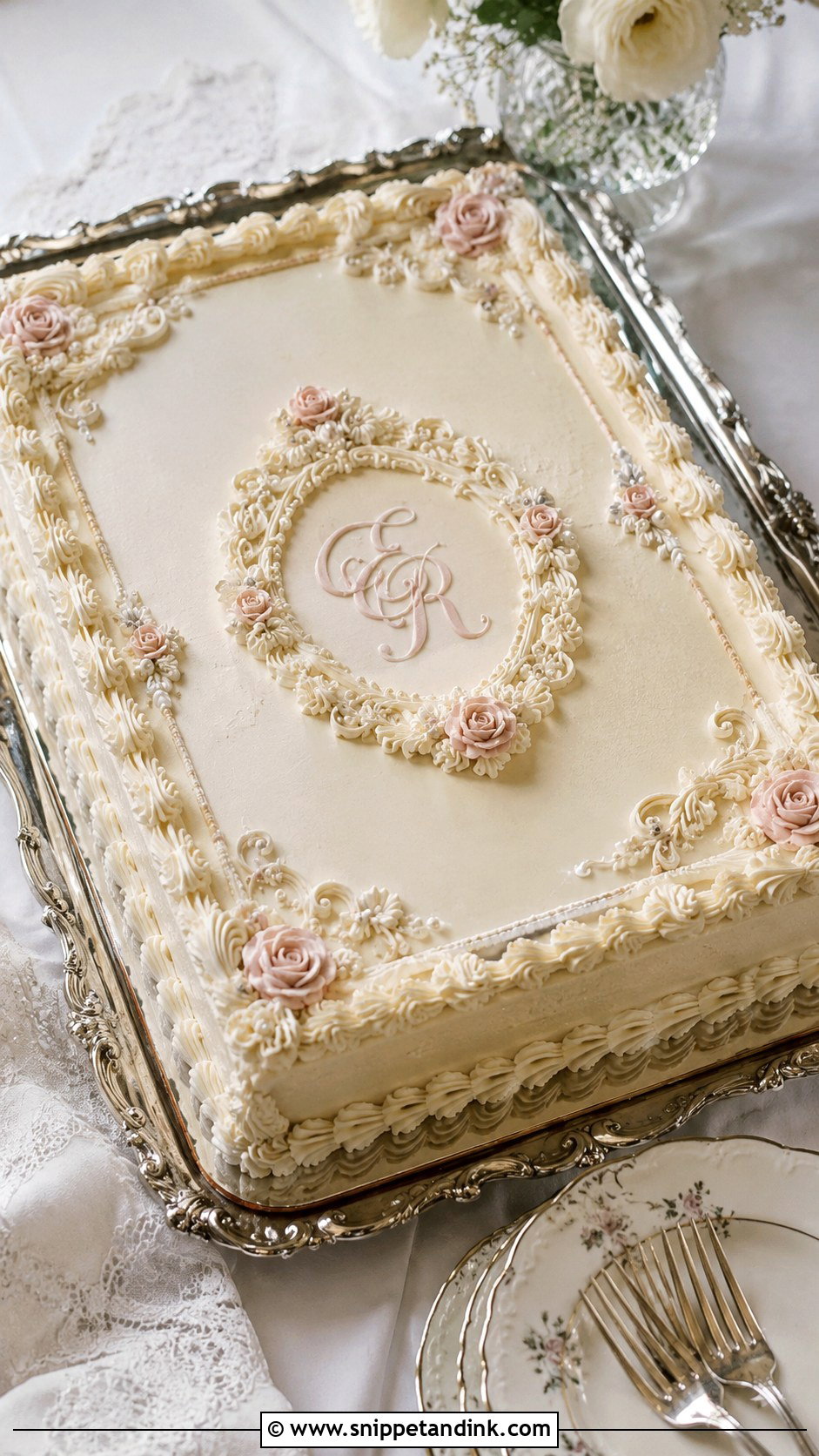
A sheet cake can look properly vintage with piped shell borders, floral corners and a centered monogram or message. It’s also the most practical cake on this list. Plenty of couples pair a small decorated display cake with sheet cakes cut in the kitchen, which keeps the cost down and the serving fast. Ivory buttercream keeps it bridal; blush or pale blue piping makes it more personal. It’s a natural fit for rehearsal dinners, courthouse weddings and small receptions, and a few edible pearls dress it up.

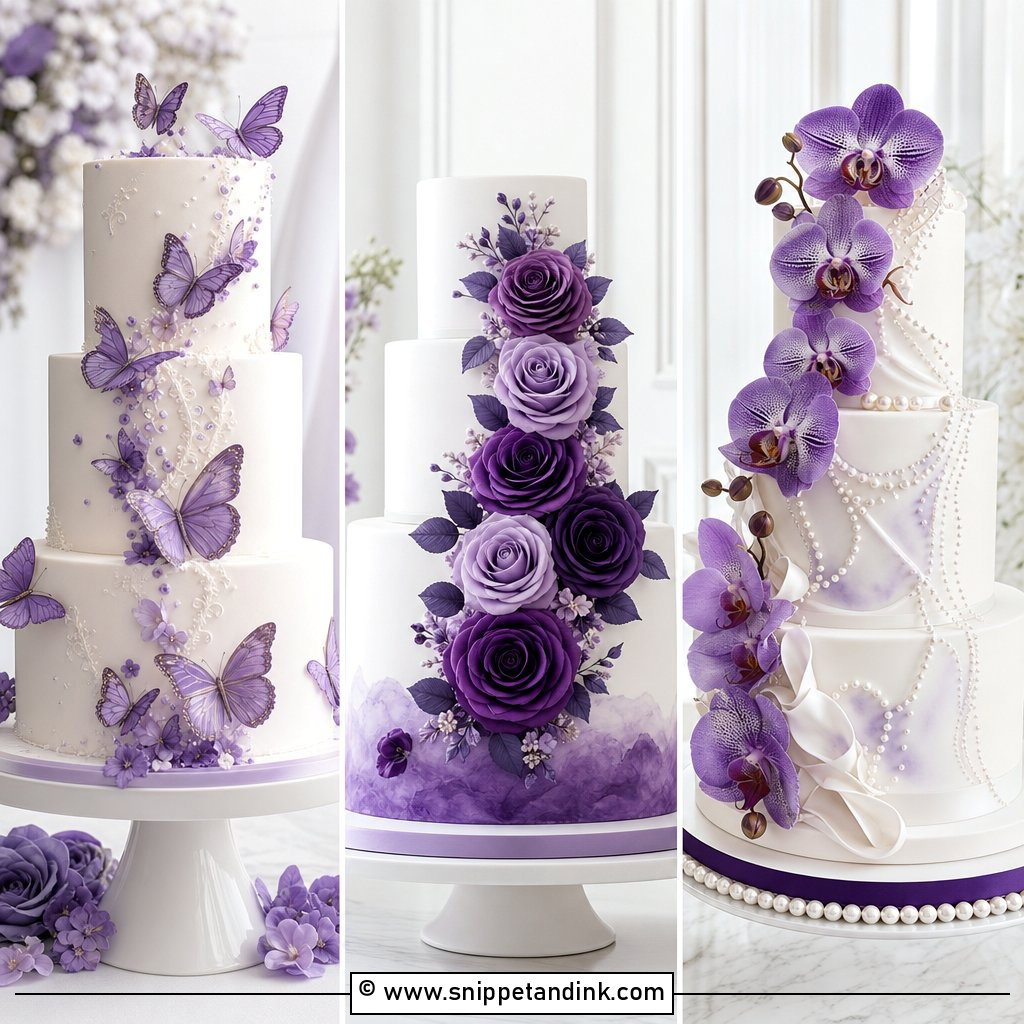

15. Vintage Monogram Wedding Cake
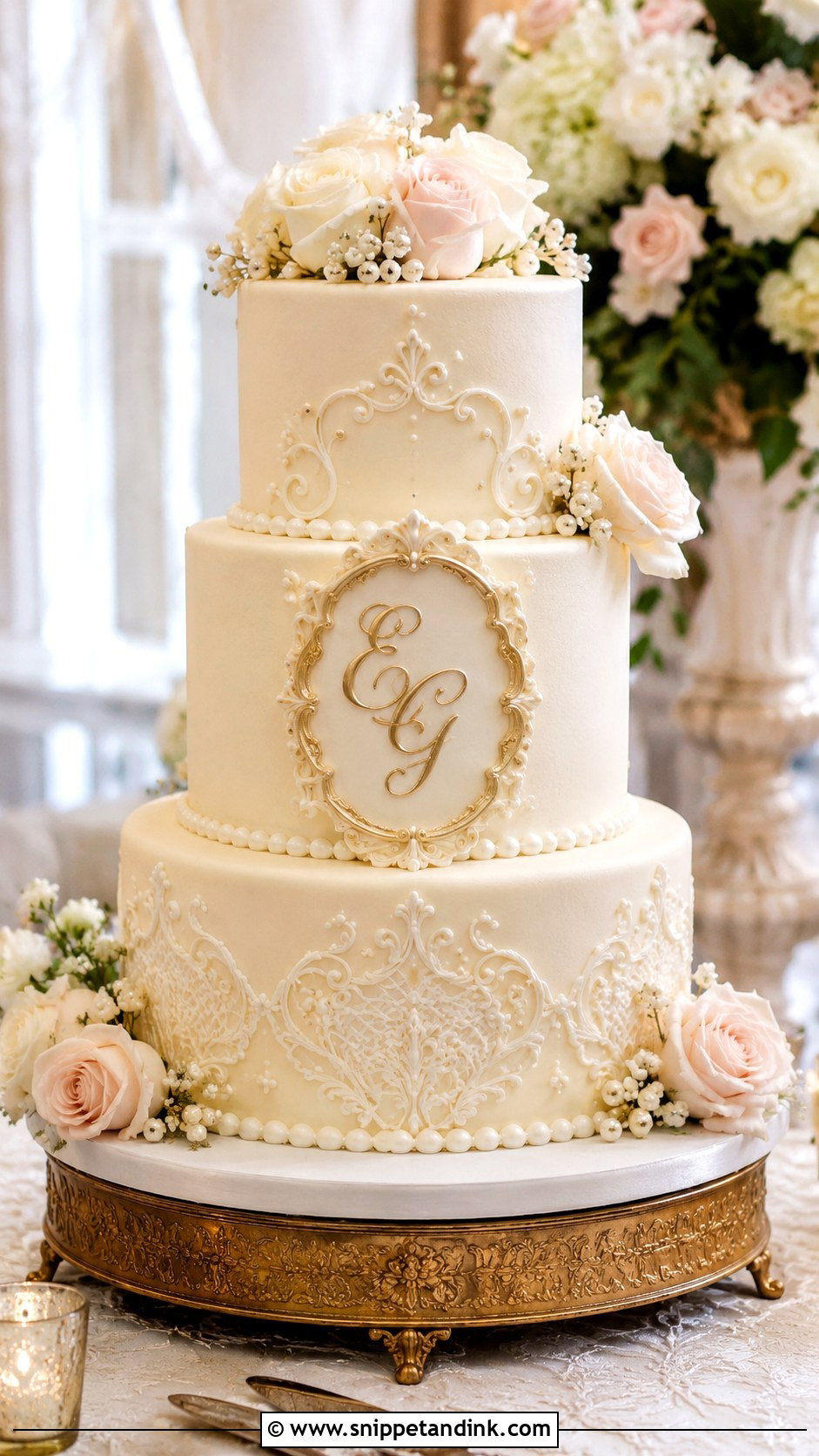
The couple’s initials can be piped, hand-painted, embossed or set on top as a topper. Piping letters onto a curved tier is fiddly, so I always send a proof of the lettering well before the wedding week and confirm the order of the initials, because families have strong feelings about that. Center the monogram on one tier and keep everything around it quiet, a pearl border or a little lace piping. Gold or champagne lettering on ivory looks formal without shouting, and a clear focal point helps the cake stand out in wide photos.
16. Vintage Draped Wedding Cake
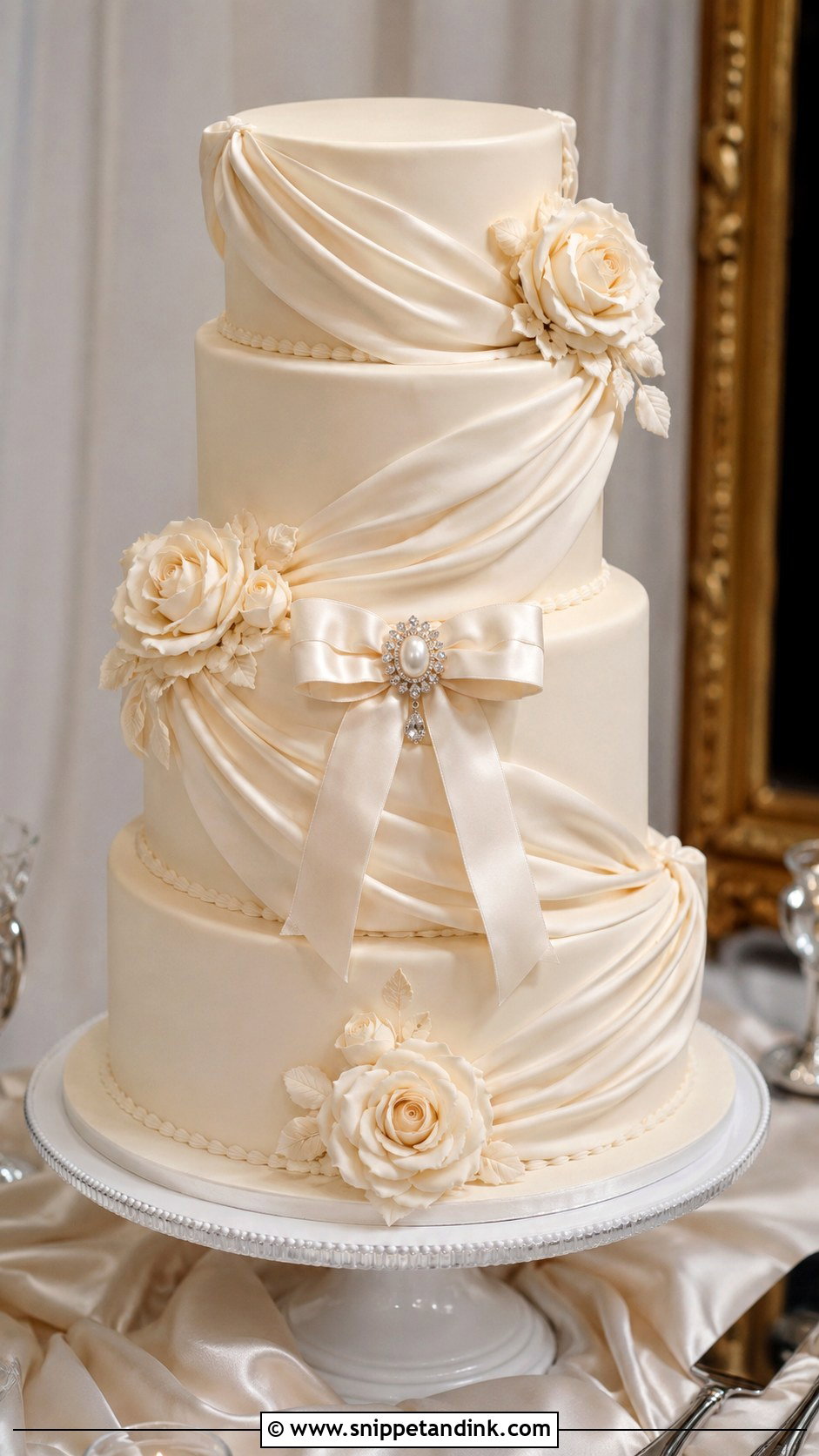
Draped tiers are rolled fondant or sugar paste folded to look like fabric, and they need a firm, cold base or the folds slump. Bows, pearls, brooch-style sugar accents and classic piping all sit well alongside them, and the whole effect echoes satin gowns and old Hollywood styling. Warm ivory or champagne gives the most antique feel. A small floral cluster on one side softens the structure. The tiers underneath must be very clean, because any bump shows straight through the folds.
17. Vintage Blue Wedding Cake
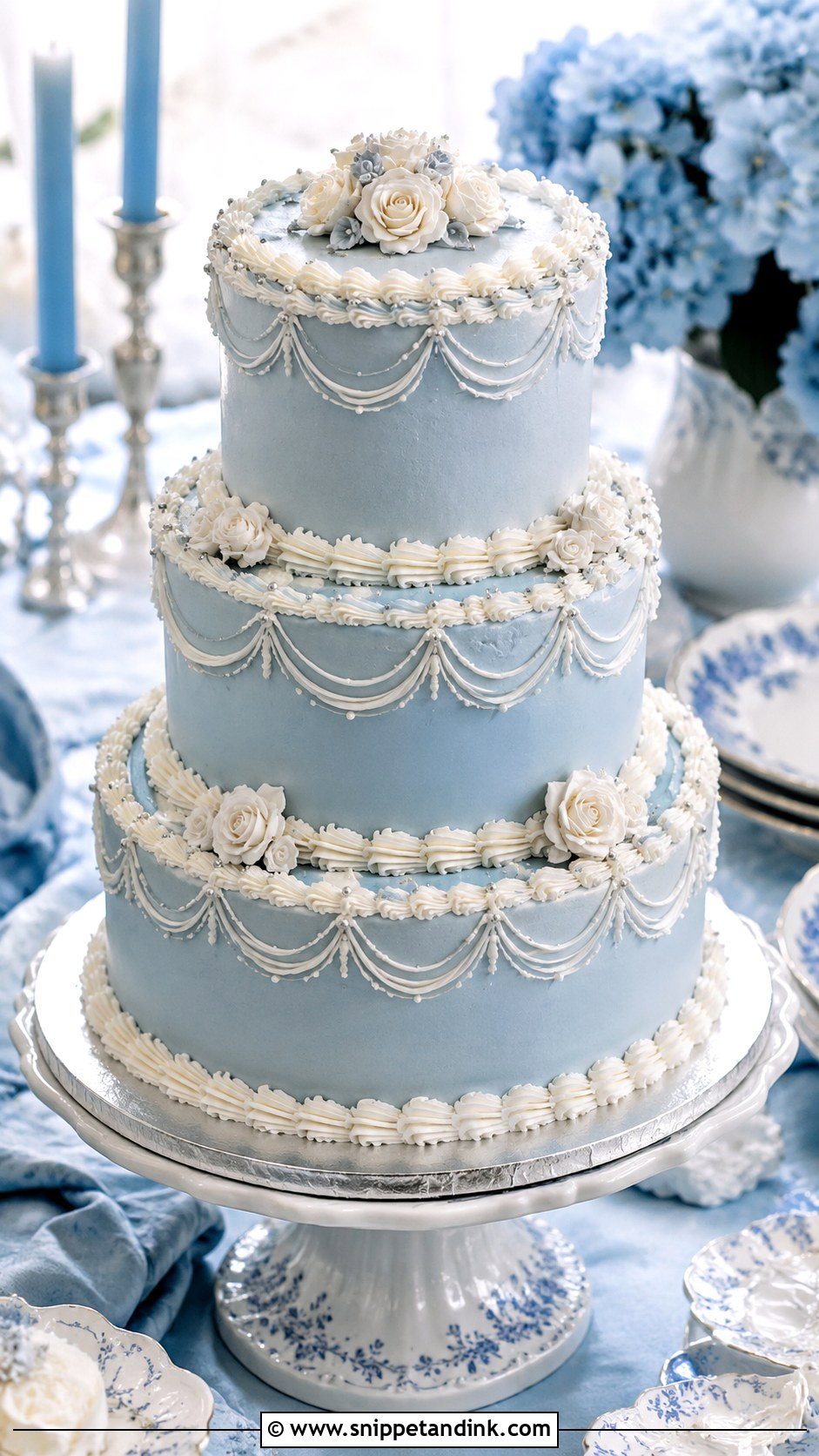
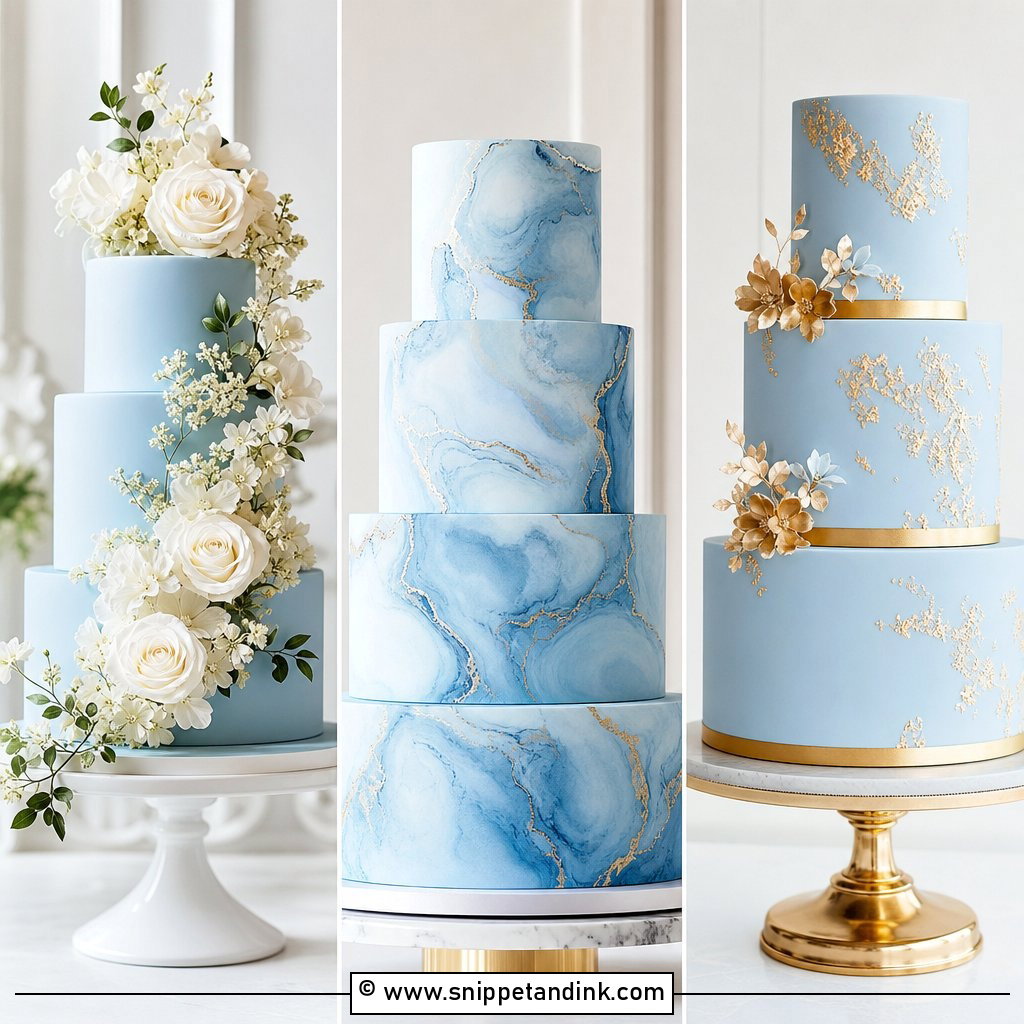
Color is where vintage cakes go wrong most often. Bright blue looks modern and a bit synthetic, while dusty blue, powder blue and blue-gray look aged and are easier to match with flowers and linens. I mix blue buttercream a day ahead because the shade deepens as it sits, and I check a swatch under warm light, since some blues drift slightly green under yellow bulbs. Lambeth piping, lace, small bows or sugar roses all suit a blue base, and silver or pearl details finish it.
18. Vintage Blush Wedding Cake
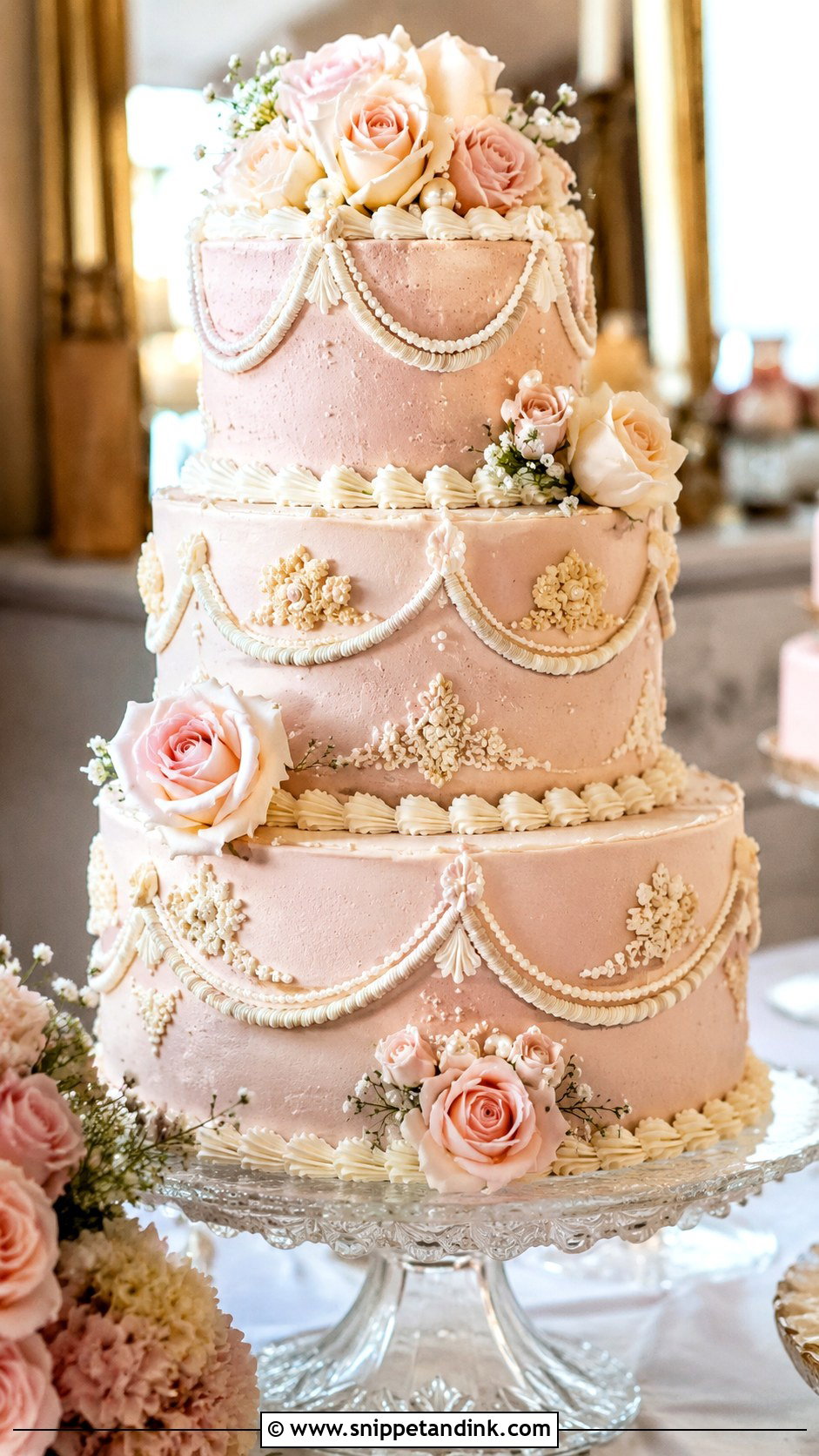
Blush is a fine line. A touch too much color and it looks like a child’s birthday cake, so I tint it barely and hold the frosting against an ivory swatch before committing. A blush base with ivory piping gives a soft contrast, and sugar roses, pearl borders and lace texture all sit well on it. It’s at home at spring weddings and classic ballrooms, and alongside rose gold or antique china. For something subtler, keep the cake ivory and bring the blush in through the flowers only.
19. Vintage Gold Wedding Cake
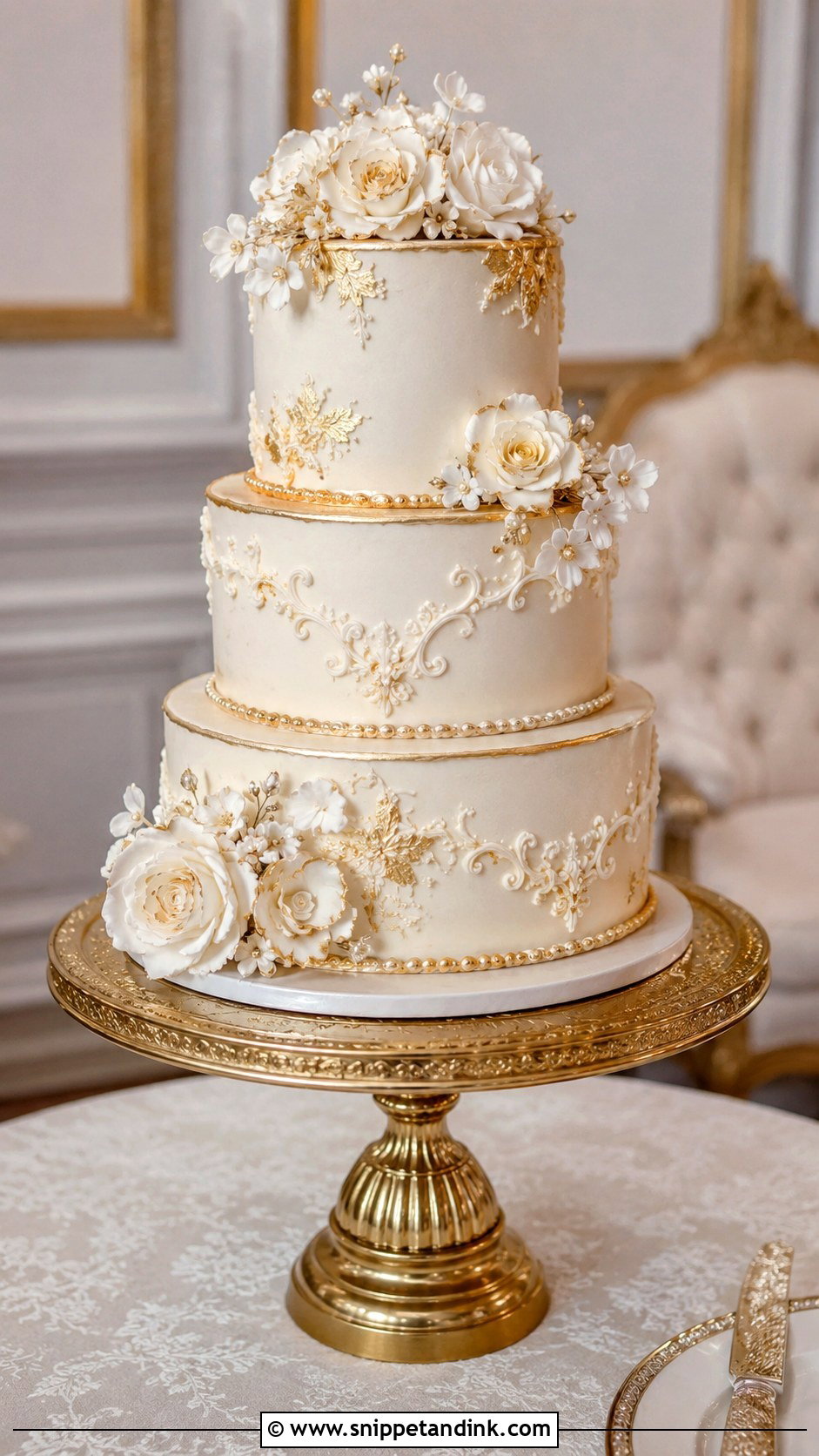
Gold works as an accent, not the main event. Thin painted borders, small gilded leaves, gold pearls or Art Deco lines do far more than a fully gilded tier, which reads contemporary. Be aware that some metallic dusts are sold as decorative only and aren’t meant to be eaten, so on anything served I use food-grade edible paint or leaf. Ivory, champagne and cream are the best bases. Mixing the gold with soft piping or sugar flowers keeps the cake firmly in vintage territory at an evening reception.
20. Vintage Small Wedding Cake
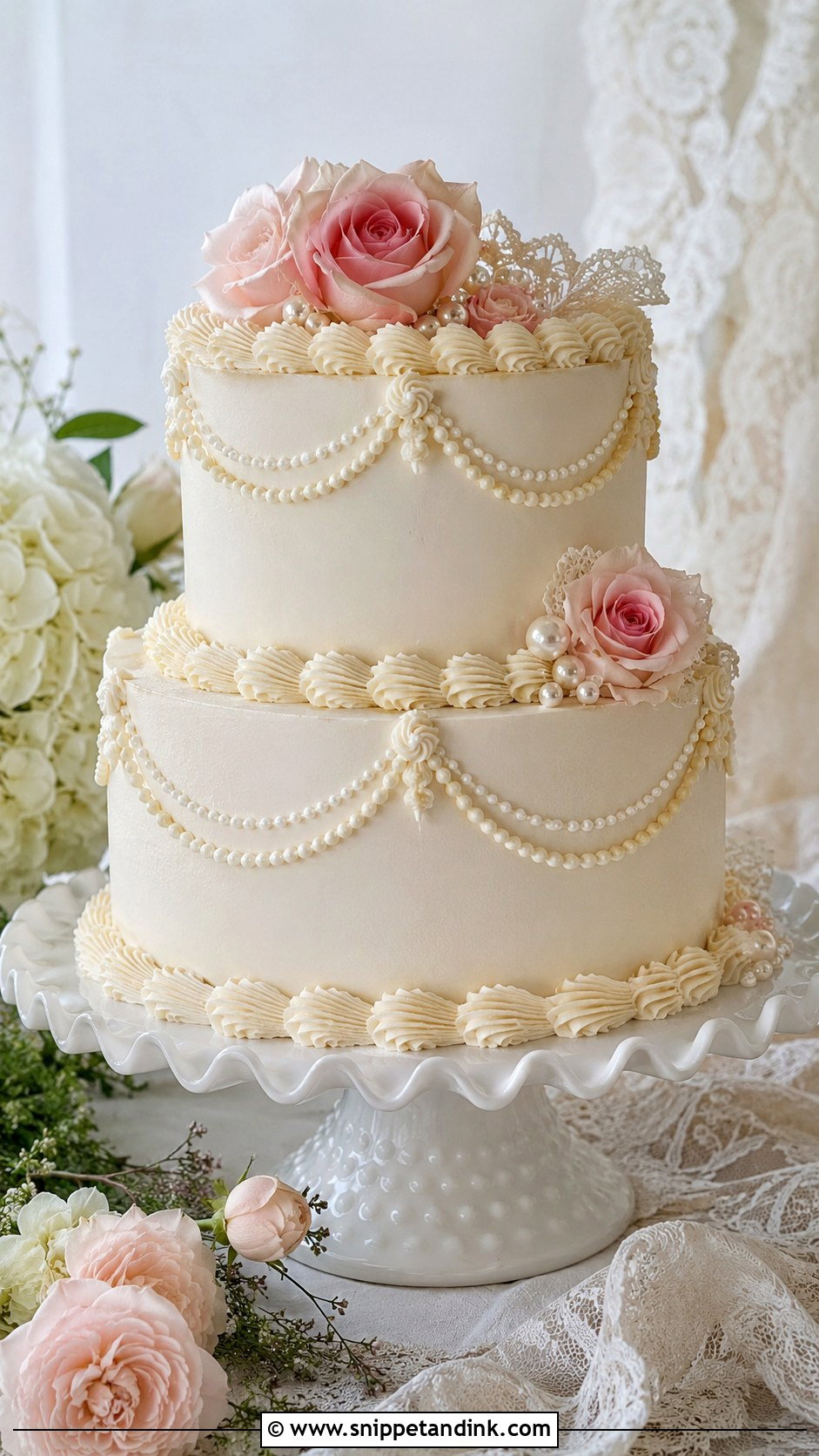
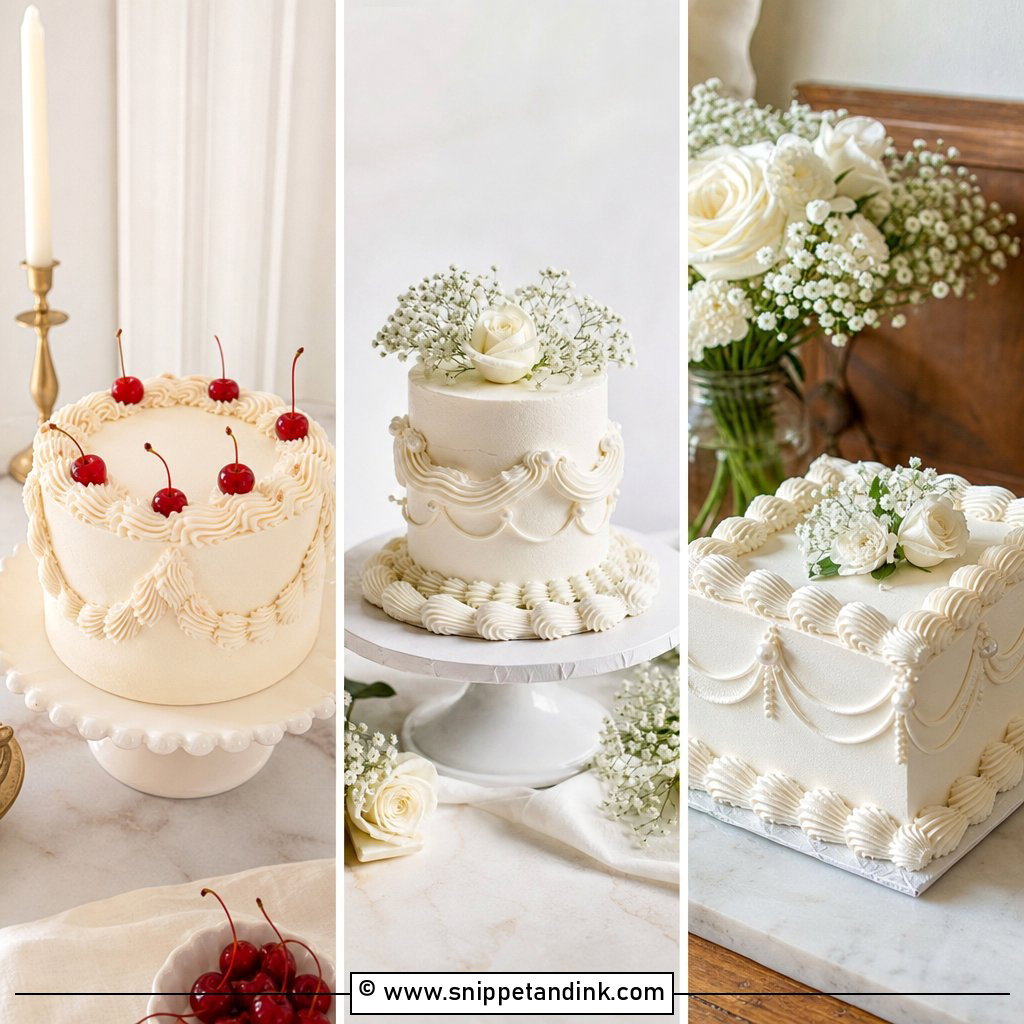
Small cakes suit elopements, intimate weddings, and couples who’d rather fill a table with other desserts. Small doesn’t mean plain. A one- or two-tier cake can still carry pearl borders, piped swags, lace or a heart shape. My advice is to pick one vintage feature and do it properly, since there isn’t room for several on a six-inch tier. Ivory buttercream with blush roses is safe; pale blue piping feels more unusual. A raised vintage stand gives a small cake real presence.
Will Buttercream Piping Survive a Summer Afternoon?
Piped detail is the first thing to suffer in heat. Buttercream softens once a room warms up, and fine shells and swags start to droop well before the cake itself looks unwell. Meringue buttercreams go first. A few habits make a real difference:
- Put the cake table indoors, in shade, away from windows, heaters and the dance floor lighting rig.
- Ask your venue whether the cake can sit in a cool room until shortly before guests come in.
- Tall, heavily piped cakes travel as separate tiers and are stacked and finished on site, so the table needs to be set up before your baker arrives.
- Don’t let anyone carry a chilled fondant cake straight into a hot, humid room. Condensation beads on the surface and dark colors can bleed.
Fresh flowers on a piped cake
Fresh flowers need to be grown without pesticides and be non-toxic, and the stems should never go straight into the cake. I wrap stems in floral tape and set them in small picks so sap and water stay out of the buttercream. Agree with your florist on who places them and when, so the blooms go on last and aren’t wilting on the table for hours.
Kitchen Cakes and Serving Counts Behind a Detailed Display
Wedding portions are cut smaller than party slices, usually a tall finger of cake about an inch wide. Even so, a three-tier display often won’t feed a big guest list, and heavy piping makes clean cutting slower. Heart shapes and draped tiers also cut less evenly than plain rounds.
The answer many couples choose is a smaller display cake plus plain kitchen cakes or a decorated sheet in the same flavor, sliced out of sight. Guests can’t tell, and you aren’t paying for hours of piping on cake nobody sees. Ask your baker for their serving chart by tier size, since every baker cuts a little differently, and remember that a top tier you plan to keep doesn’t count toward guest portions.
One Vintage Detail, Done Properly
Vintage cakes come down to detail and texture. They can be grand, floral, colorful or small, but the ones that work best stick to one clear idea, whether that’s Lambeth piping, lace, pearls, ruffles, bows or garden flowers, and let color and flavor support it. When you meet your baker, bring photos of the details you love and of your venue, and ask to see their own piping work up close, not only finished cakes on a screen. That tells you more than anything else about whether a vintage design will come out the way you picture it.
You'll Like These Ideas:








Leave a Reply