
A corset does two jobs on a wedding dress: it shapes the waist, and it carries the weight of the skirt so your shoulders don’t have to. In black, the structure shows even more, because the seams and boning channels throw small shadows that read as lines. I fit a lot of these gowns, and the details brides ask about most are these: Exposed boning, basque waists, sheer panels and lace-up backs. The twenty looks below run from tulle ball gowns to reception minis, each with the shoes, veil and bouquet I’d pair with it, plus what to check at the fitting.
Steel or Plastic Boning: What Holds Up by Hour Eight
Two corsets can look identical on a hanger and behave completely differently by the evening. The difference is usually inside the channels, so it’s worth asking what the boning is made of before you buy.
Plastic boning
Many ready-to-wear gowns use flexible plastic boning. It’s light and comfortable at first, but body heat softens it, and over a long day it can bend and take a permanent kink at the waist. That shows as a crease across the front of a black bodice. It’s fine for a lightly structured dress; for a strapless corset holding up a full skirt, I want something stronger.
Steel boning
Spiral steel flexes in more than one direction, so it follows the curves of the bust and hip. Flat steel stays straight and is used along the back lacing and the front. A corset boned with steel keeps its line from the ceremony to the last song, and a good seamstress can replace plastic with steel in many gowns during alterations.
Ask, too, about the modesty panel behind the lacing. Without one, the laces rub your back and any gap shows skin. With one, you can lace a little looser and nobody sees.
1. Black Lace Corset Ball Gown
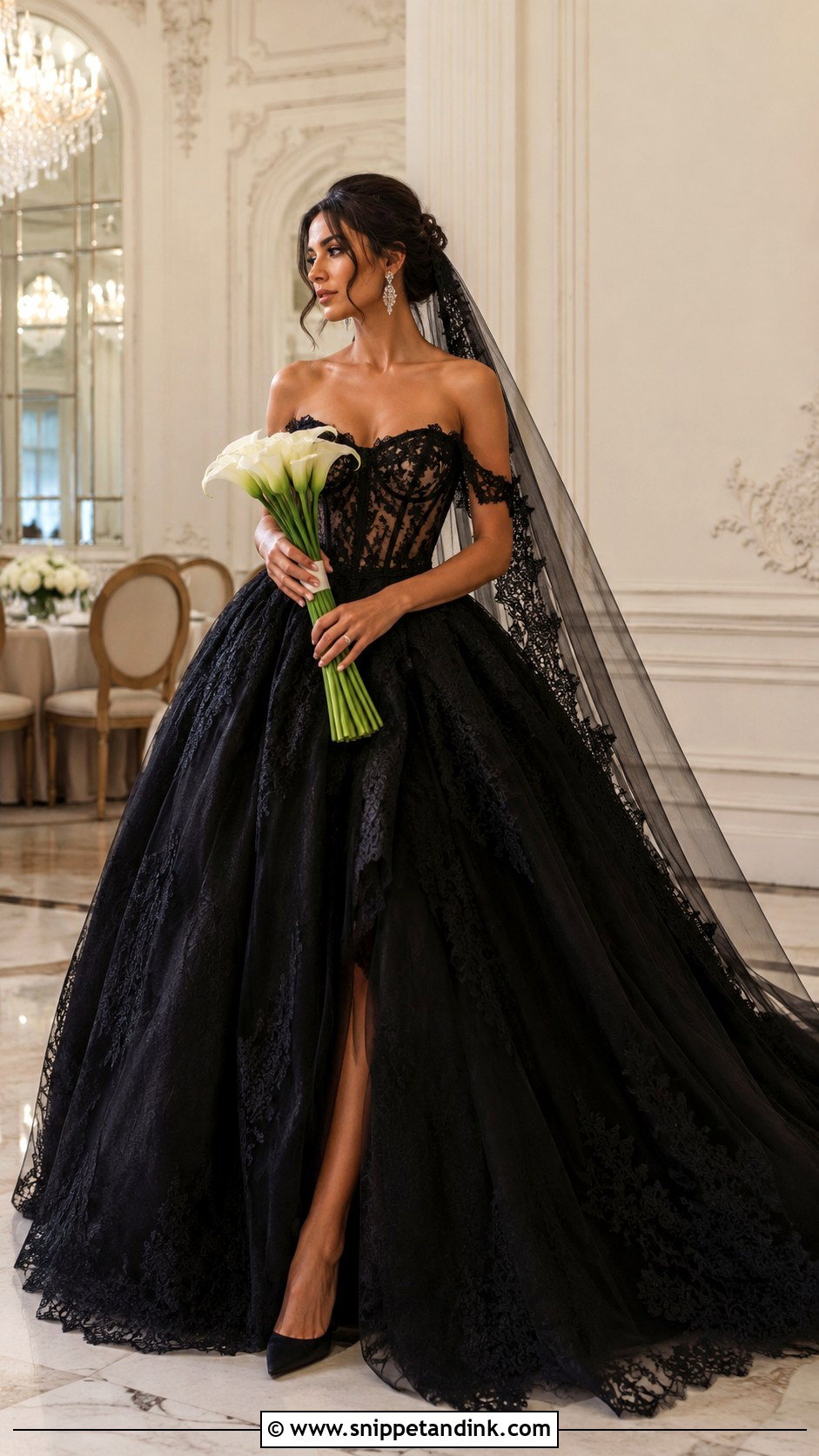
Volume and a cinched waist balance each other in a lace ball gown, so the skirt can be full without swamping you. I check the cups and the lace-up back first; a heavy layered skirt pulls down on the bodice, and only a well-boned corset holds it level all day. Floral appliqués carried from the bodice down the skirt soften the dark color. Black pointed heels, silver drops and a sheer black veil finish it, and a low bun keeps the back lacing on show. White calla lilies keep the bouquet from competing.
2. Black Satin Corset A-Line Dress
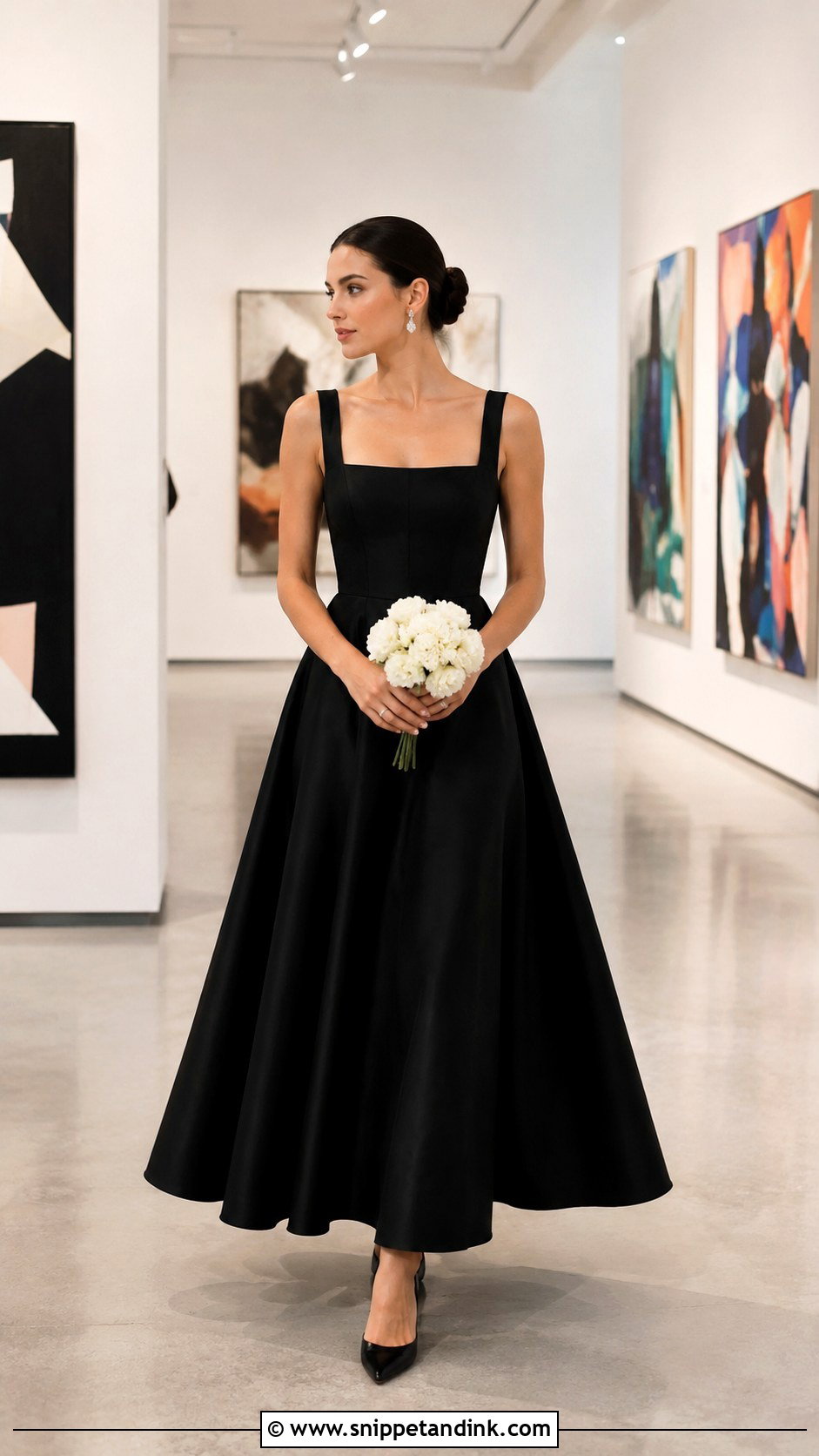
Satin on a corset A-line shows every seam, so the fit through the waist has to be exact. Any slack and the fabric wrinkles horizontally above the hip. The shape is lighter than a ball gown and still defined, with a square or gently curved neckline. Crystal studs, a slim bracelet and satin pumps suit it, and a chignon or soft Hollywood waves echo the sheen. Talk to your seamstress about bustle placement and how the dress travels to the venue, because satin creases in a car seat faster than any other bridal fabric.
3. Black Tulle Corset Princess Gown
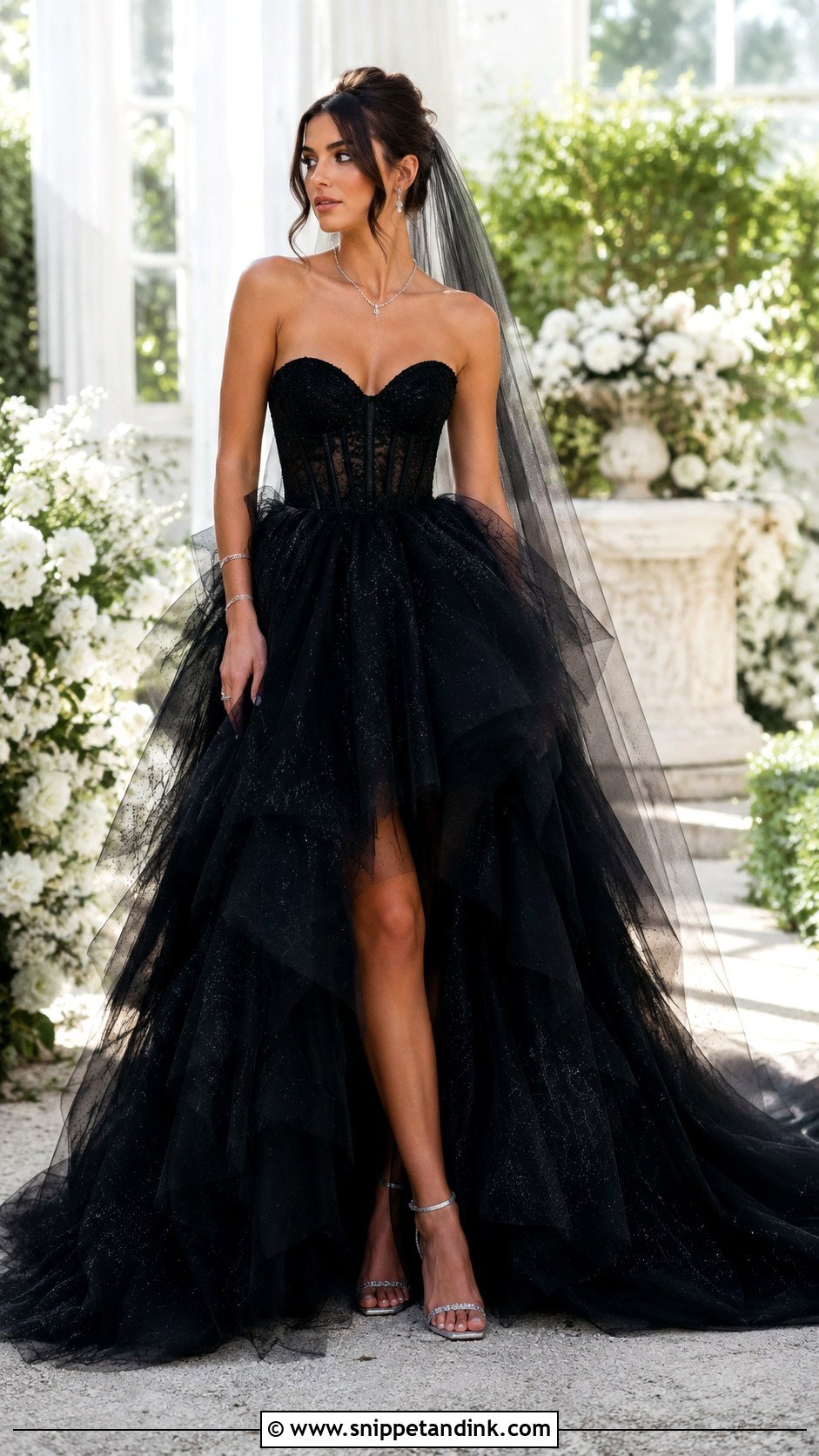
A princess gown in black tulle is heavier than it looks once you add enough layers to make it full. I look for a sweetheart bodice with a natural or slightly pointed waist and a skirt built on a light petticoat rather than stacked tulle alone. A little sparkle beneath the top layer catches light when you move. Crystal heels, a fine silver necklace and a long sheer veil complete it, with a curled updo for height. White roses with trailing greenery lighten the palette in a garden or grand room.
4. Black Mermaid Corset Wedding Dress
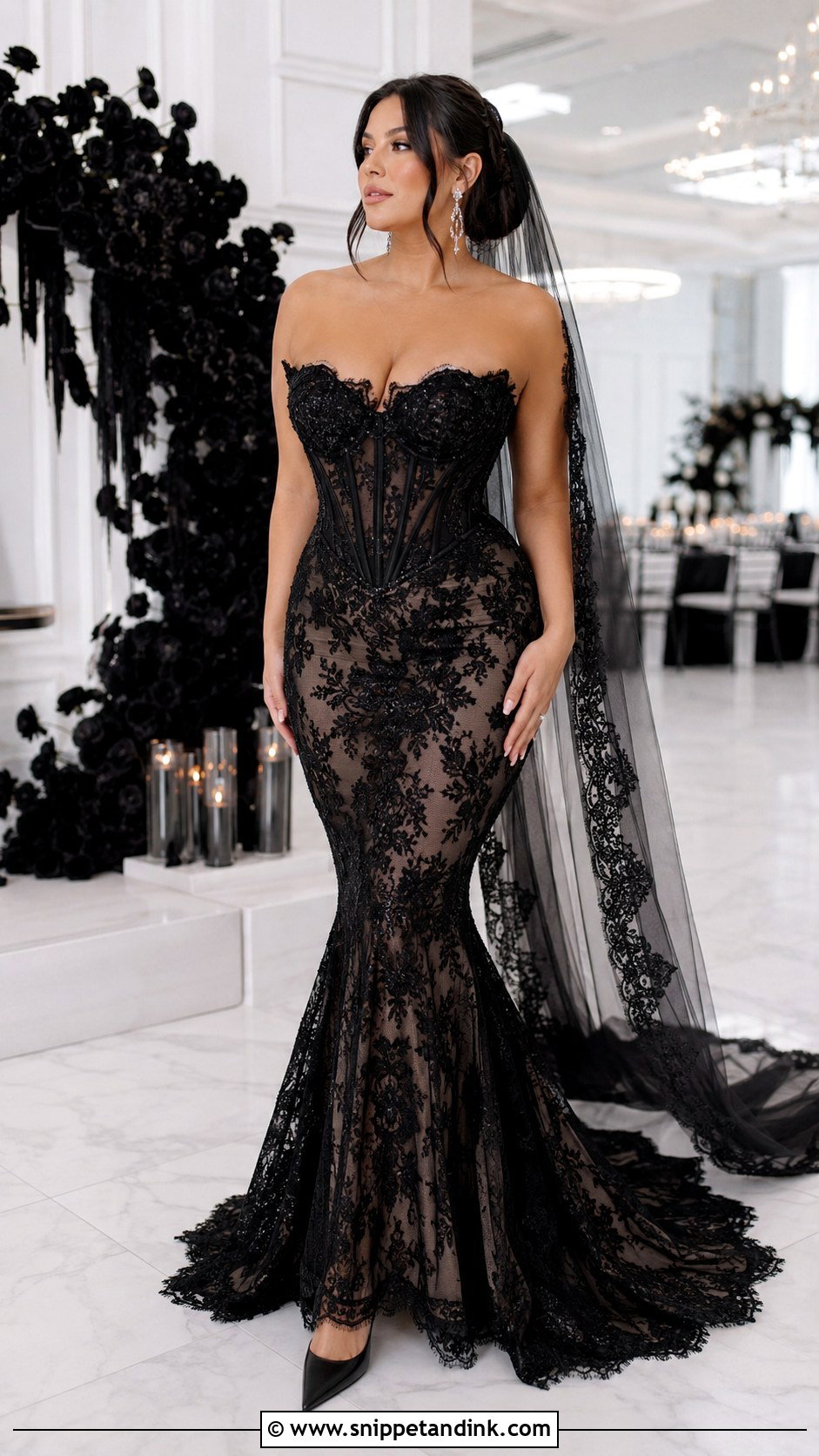
The flare on a mermaid corset should start where you can still take a full stride, and that’s the one fitting test I never skip. Walk, sit and dance in it before the hem is cut. Black lace over nude lining shows both the pattern and the corset seams. Pointed heels need to be supportive, since you’ll be standing in a fitted skirt for hours. Long crystal earrings, a fingertip veil and a sleek ponytail or side waves keep the shape clean, with a narrow bouquet.
5. Black Off-Shoulder Corset Gown
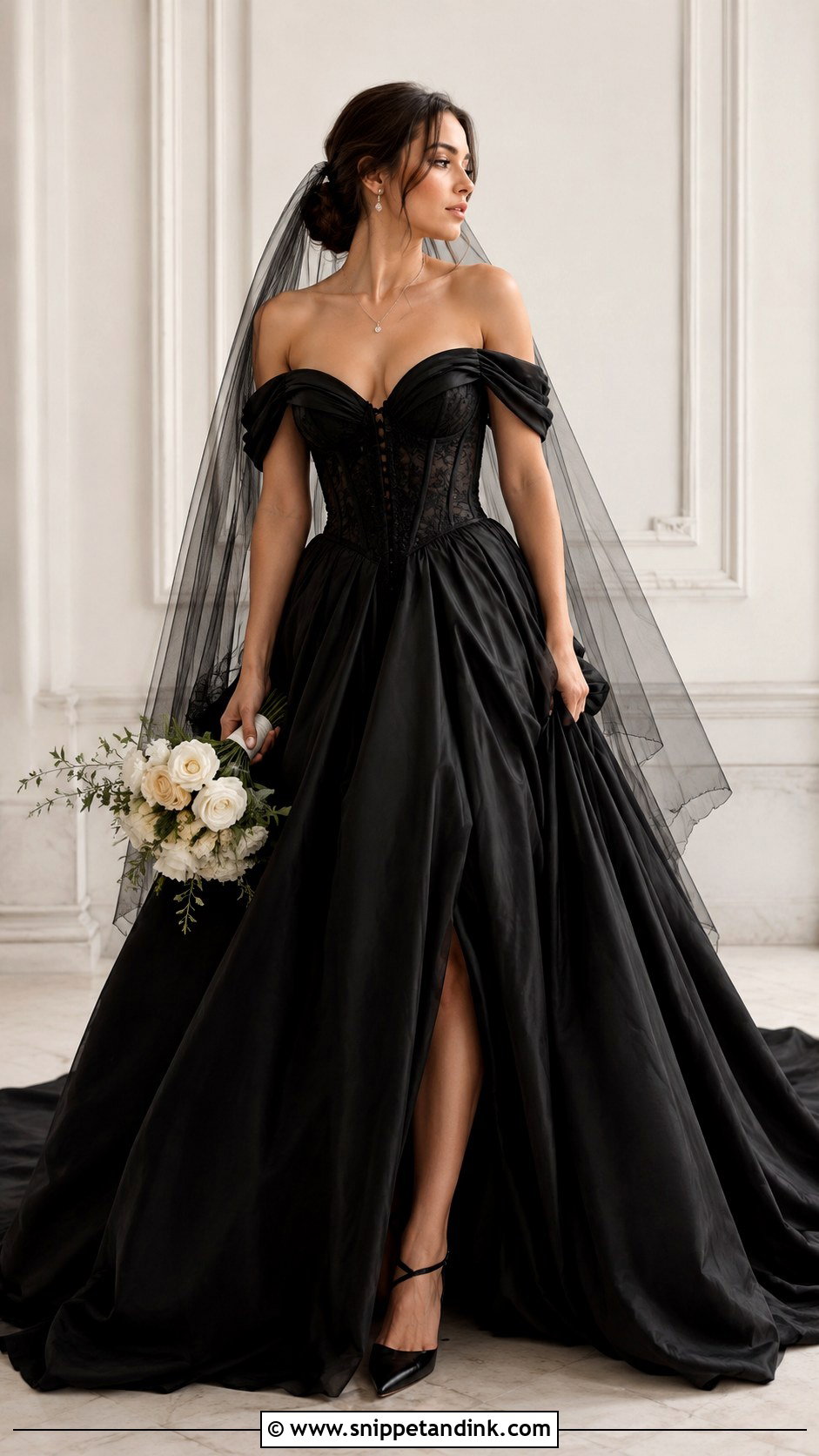
Off-shoulder sleeves sit on the upper arm, and that’s where they cause trouble: they stop you lifting your arms. At the fitting, I ask the bride to hug me and reach up as if fixing her veil. If the sleeves bind, they need repositioning or a little stretch in the fabric. A full or gently flared skirt gives good proportion under the bodice. A fine pendant, small drops and black slingbacks suit it, a textured low bun keeps the shoulder line clear, and ivory flowers with dark greenery finish the look.
6. Black Long Sleeve Lace Corset Dress
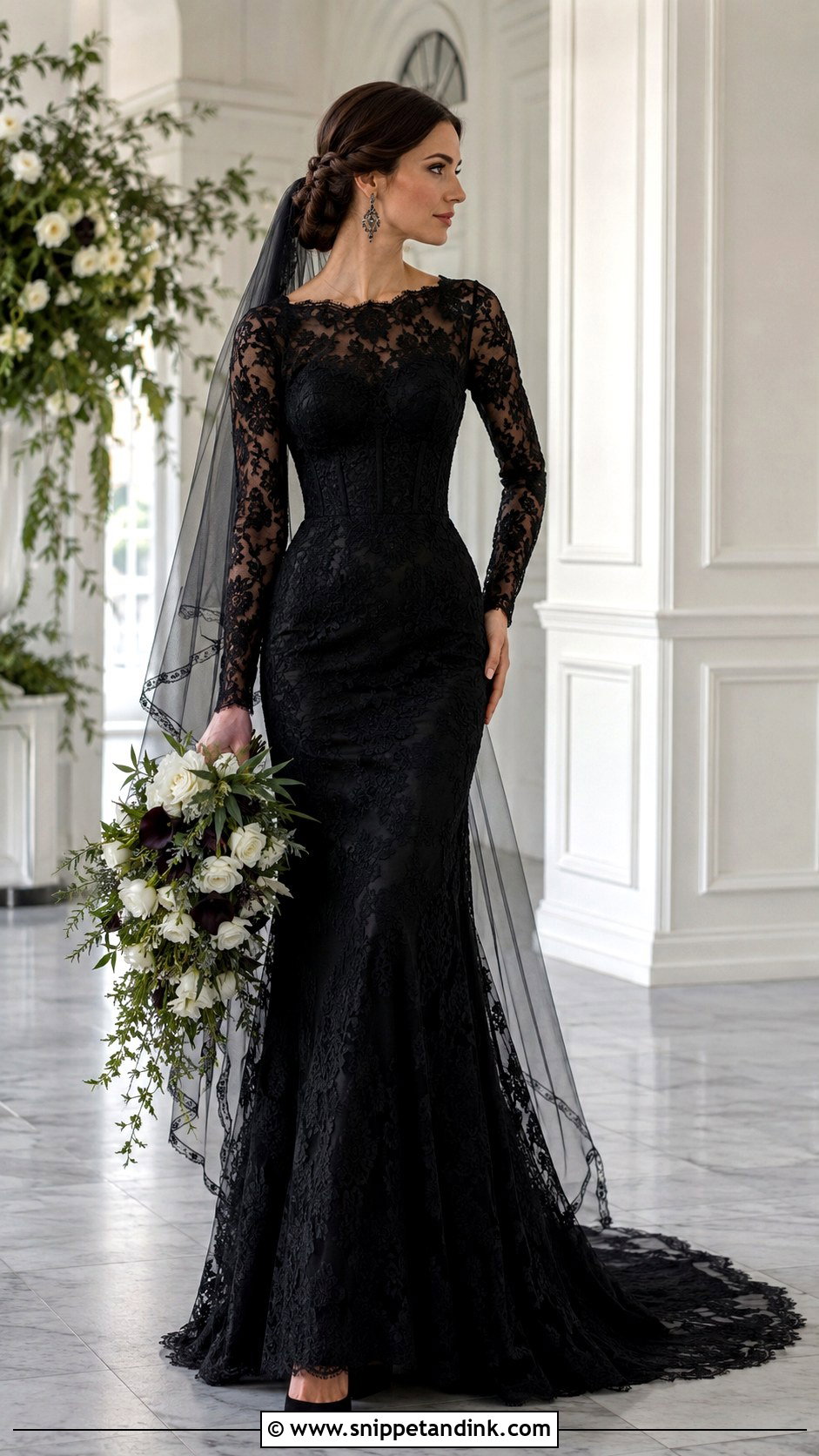
Long lace sleeves feel lighter on a corset than you’d expect, provided they’re fitted illusion sleeves with motifs that link back to the bodice. A lined corset gives support and coverage; an A-line or soft trumpet skirt stops it looking heavy. Choose plain black or charcoal tulle for the veil so it doesn’t sit over the lace in a muddle. Closed-toe pumps, vintage silver earrings and a low braided bun suit it. Even in winter, ask for a breathable lining; a boned bodice with sleeves gets warm by the first dance.
7. Black Strapless Sweetheart Corset Gown
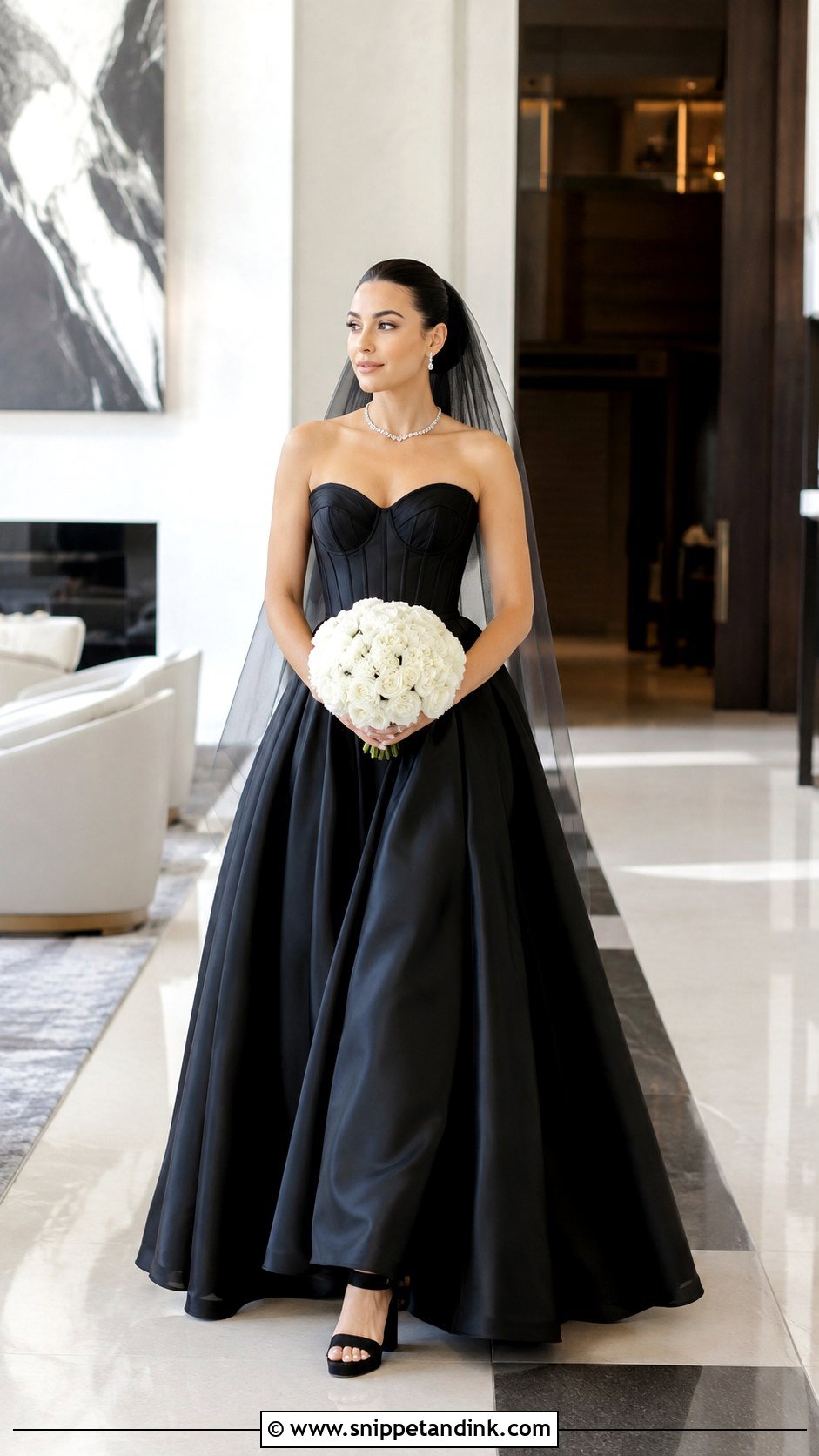
A strapless sweetheart corset holds itself up entirely through the waist and the boning, so the fit there matters more than anything. If it needs to be laced very tight to stay up, the bodice is too big at the top and should be taken in rather than cinched harder. A full satin, organza or tulle skirt sets the formality. A short crystal necklace, matching earrings and block-heel sandals suit it. Walk, sit, bend and raise your arms before you approve it; it should stay put without you hitching it up.
8. Black Basque Waist Corset Wedding Dress
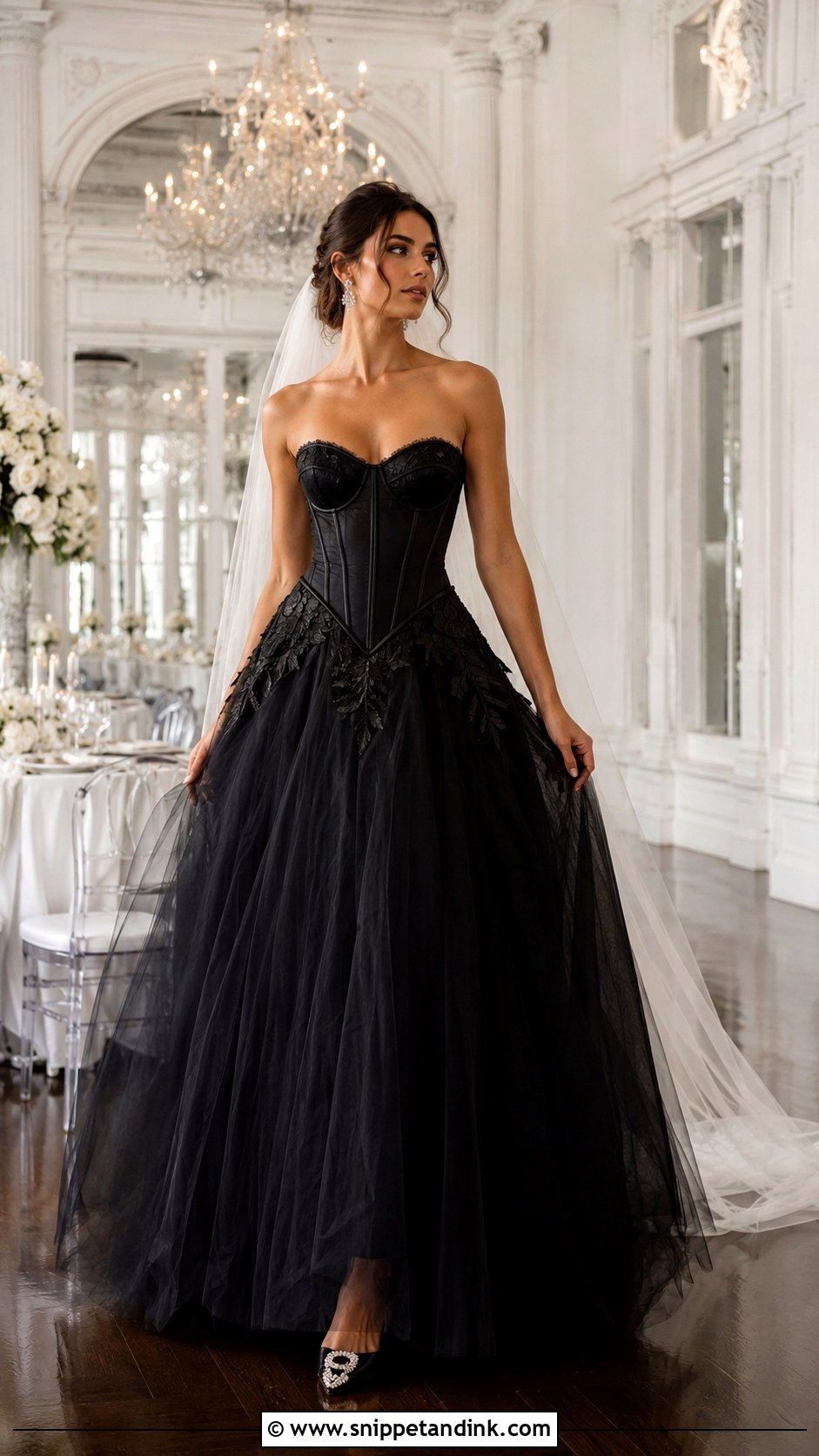
A basque waist dips into a V below the natural waist and lengthens the torso. Because the point extends lower, accurate torso measurements are essential. If it’s too long, the point folds or digs into the hip every time you sit, which I see often on gowns bought off the rack. Exposed seams or tonal lace make the shape stand out. Almond-toe heels, a small clutch, crystal drops and a long veil under a polished bun keep the point visible. Long-stemmed flowers echo the vertical line.
9. Black Drop Waist Corset Gown
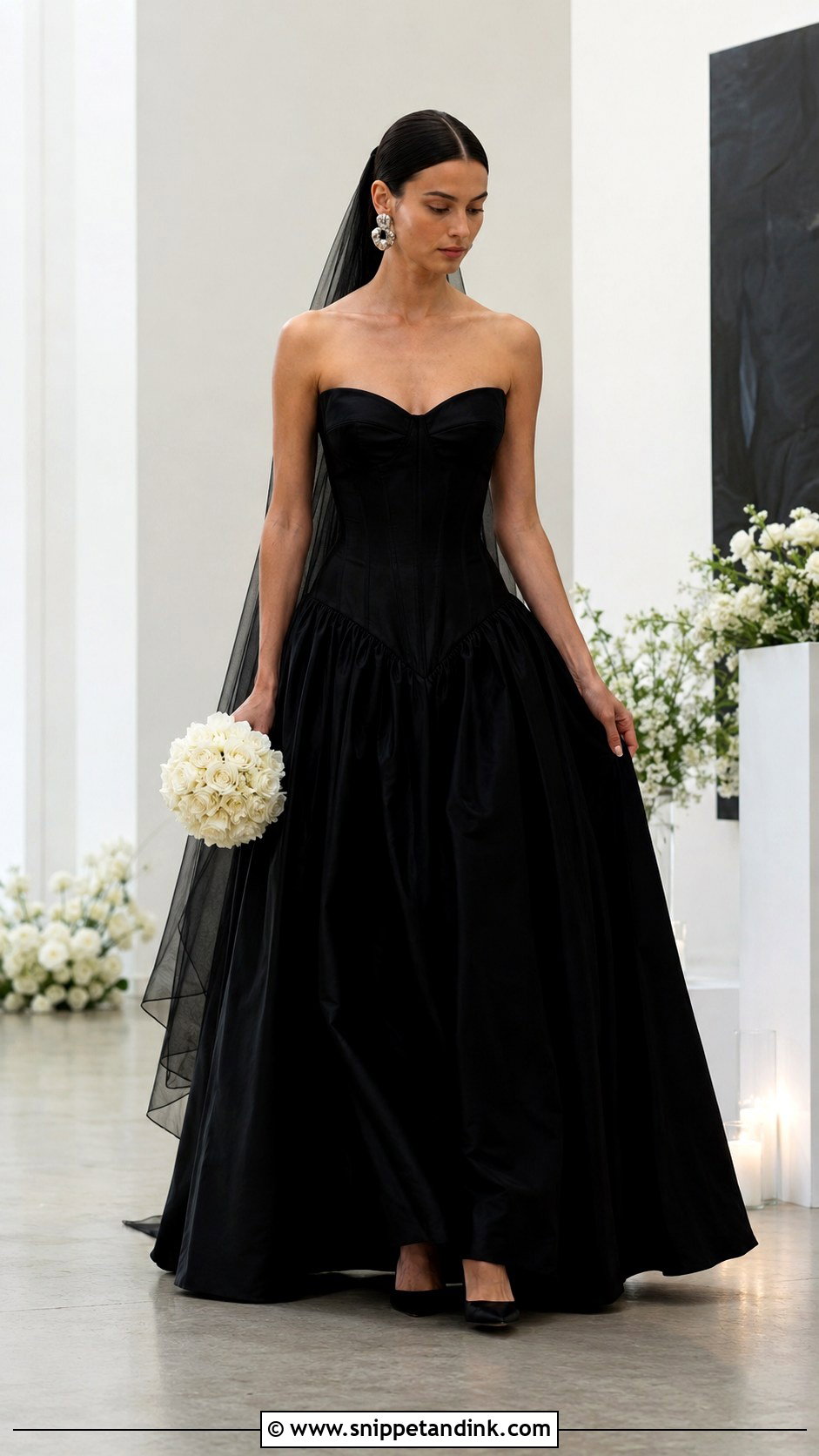
A drop waist carries the corset well below the natural waist, so torso length decides whether it flatters. On a short torso, the skirt can start too close to the hip and shorten the legs. Have your seamstress check you seated and walking, since a longer rigid bodice has less room to flex. Simple black pumps, sculptural silver earrings and a smooth veil without lace edging keep the lines clean. A sleek center-parted bun suits it, and a compact bouquet won’t cover the dropped seam in photos.
10. Black Sheer Boned Corset Dress
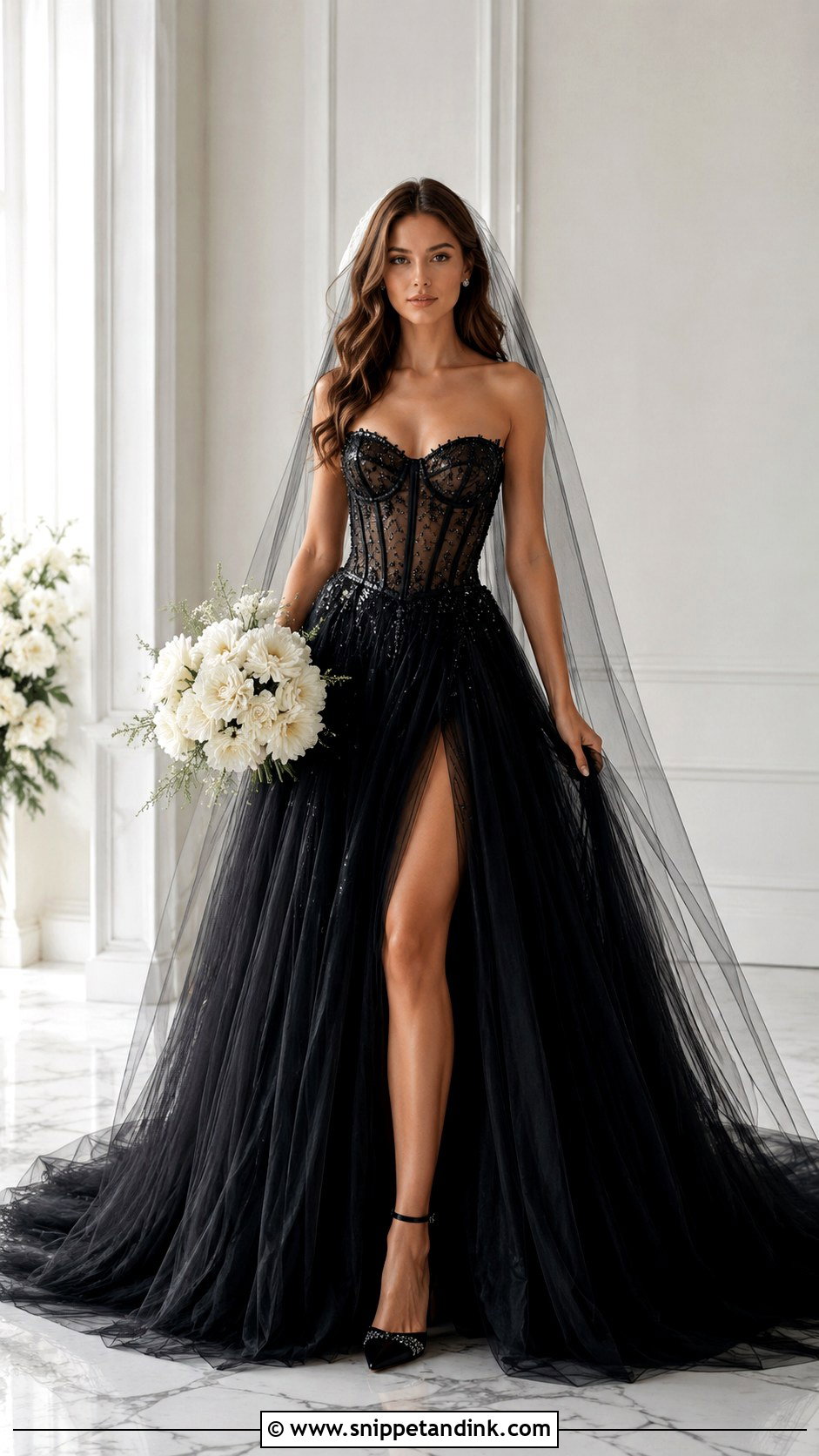
Sheer boning is a look I’d check in three kinds of light before committing. A sheer boned corset dress can look discreet in a mirror and far more revealing under a camera flash. Placed lining, supportive cups and an opaque satin or tulle skirt balance the see-through top. If you want more coverage, extra appliqués or a lining panel can be added without losing the structure. Pointed heels, small crystal earrings, a clean black veil and soft waves or a low knot finish it.
11. Black Sequin Corset Wedding Gown
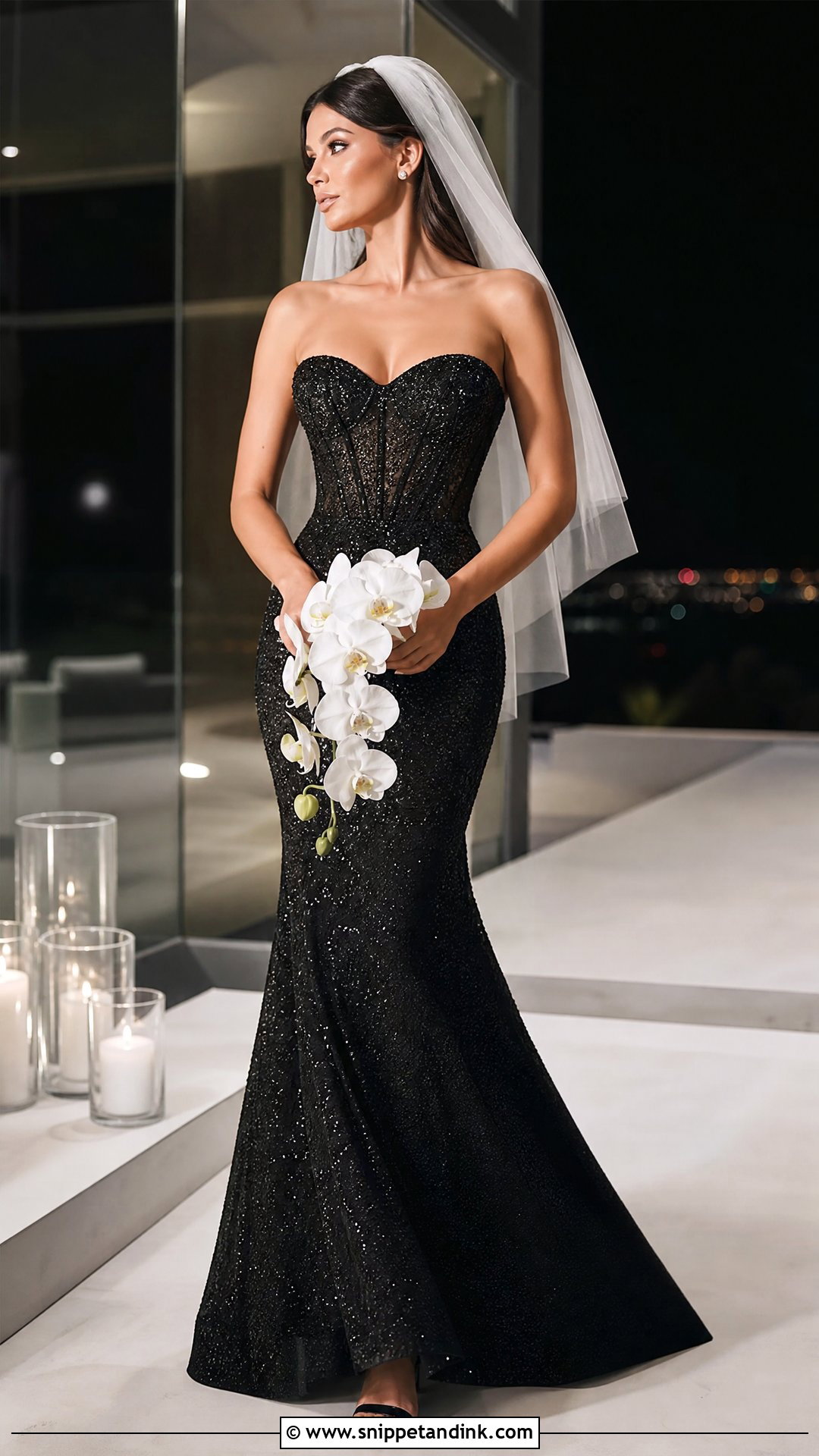
On a sequin corset, I like the sparkle to follow the bodice seams and fade lightly onto the skirt, which shows off the shape instead of covering it. A trumpet or softly flared skirt keeps it sleek. Check every edge near the arms; sequins scratch, and they snag a veil. Plain heels, studs and a smooth shoulder-length veil are enough, because the sequined bodice already provides the shine. A ponytail or bun and a few white orchids keep it modern.
12. Black Floral Appliqué Corset Dress
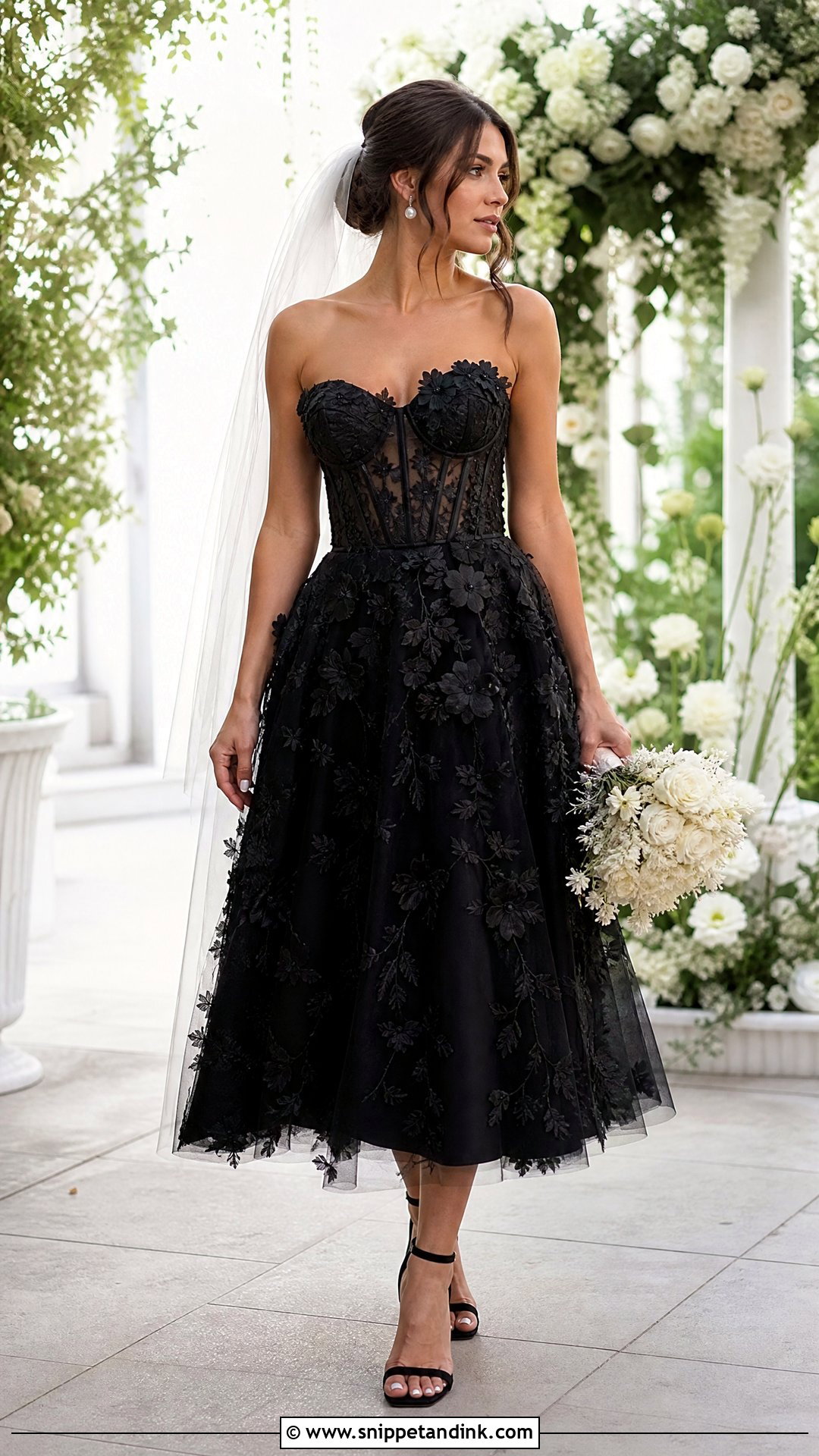
Three-dimensional flowers look best clustered at the neckline and waist with smaller ones scattered down the skirt. Black-on-black reads as texture; charcoal or ivory accents add contrast. The thing I check is stiffness: appliqués with a heavy backing can rub at the inner arm or poke at the waist when you sit. Black ankle-strap heels, pearl drops and a plain sheer veil suit it. A loose low bun with a few face-framing pieces, and a restrained bouquet of white flowers with dark greenery, let the gown’s flowers lead.
13. Black Velvet Corset Wedding Dress
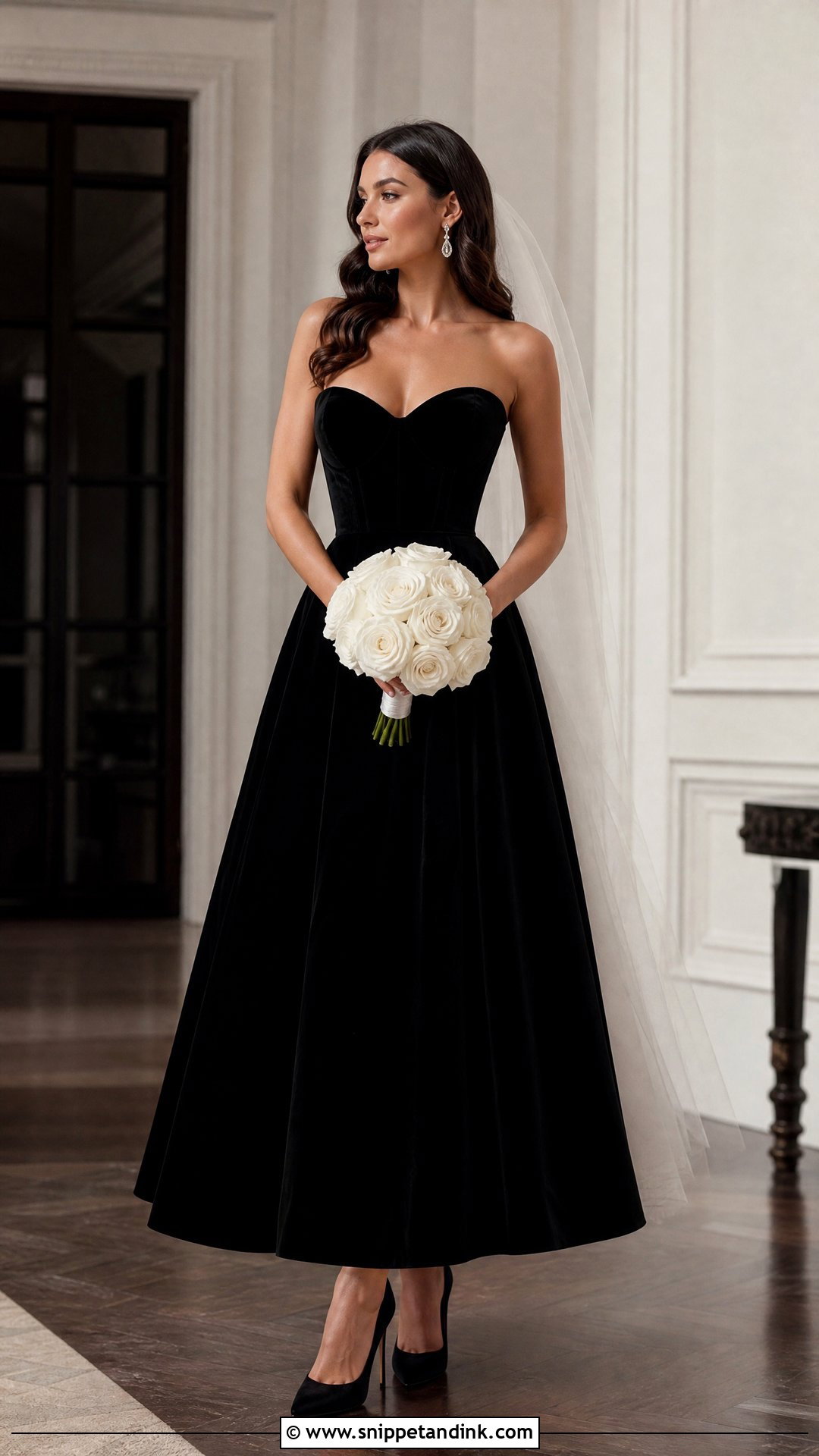
Velvet over a corset is warm, soft and very formal, and it hides small fit flaws better than satin does. It does have a pile, so panels cut in different directions can look like slightly different shades. Look at the gown from several angles in daylight before alterations. A straight or sweetheart neckline with a lace-up back gives adjustable support. Black suede pumps, silver earrings, a simple tulle veil and a sleek bun suit it, with white roses for contrast. It’s a cool-season dress; I wouldn’t put anyone in it outdoors in summer.
14. Black High-Low Corset Wedding Dress
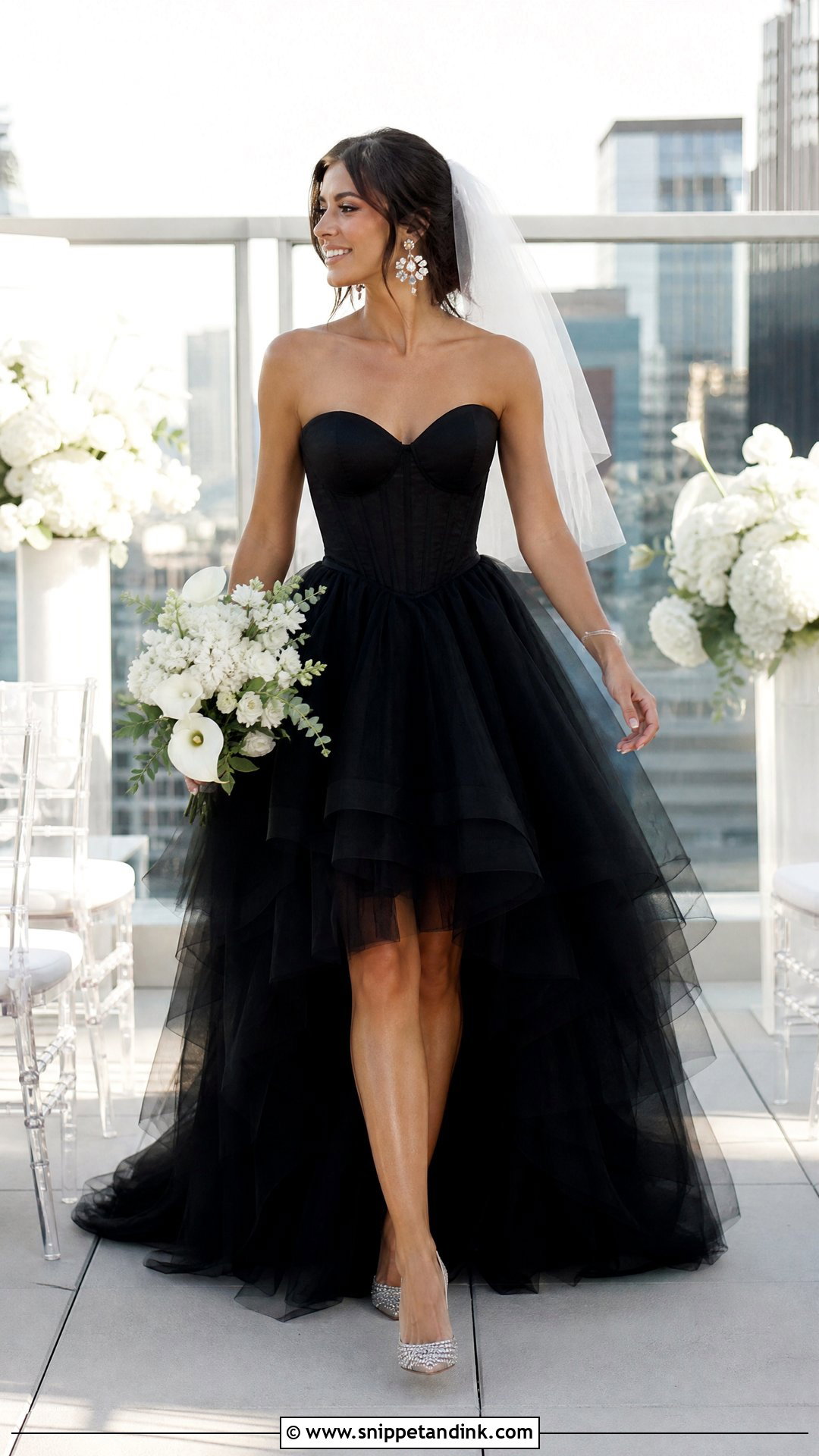
A high-low hem shows your shoes at the front and trails at the back, so the shoes become part of the dress. Crystal pumps, polished ankle boots or elegant black slingbacks all work if they’re chosen on purpose. Pair a fitted sweetheart or square bodice with a tulle or satin skirt. Keep the veil short and the bouquet small so the front stays visible. Test the hem on stairs. The long back is the part you can’t see, and it’s easy to step on when turning.


15. Black Corset Mini Wedding Dress
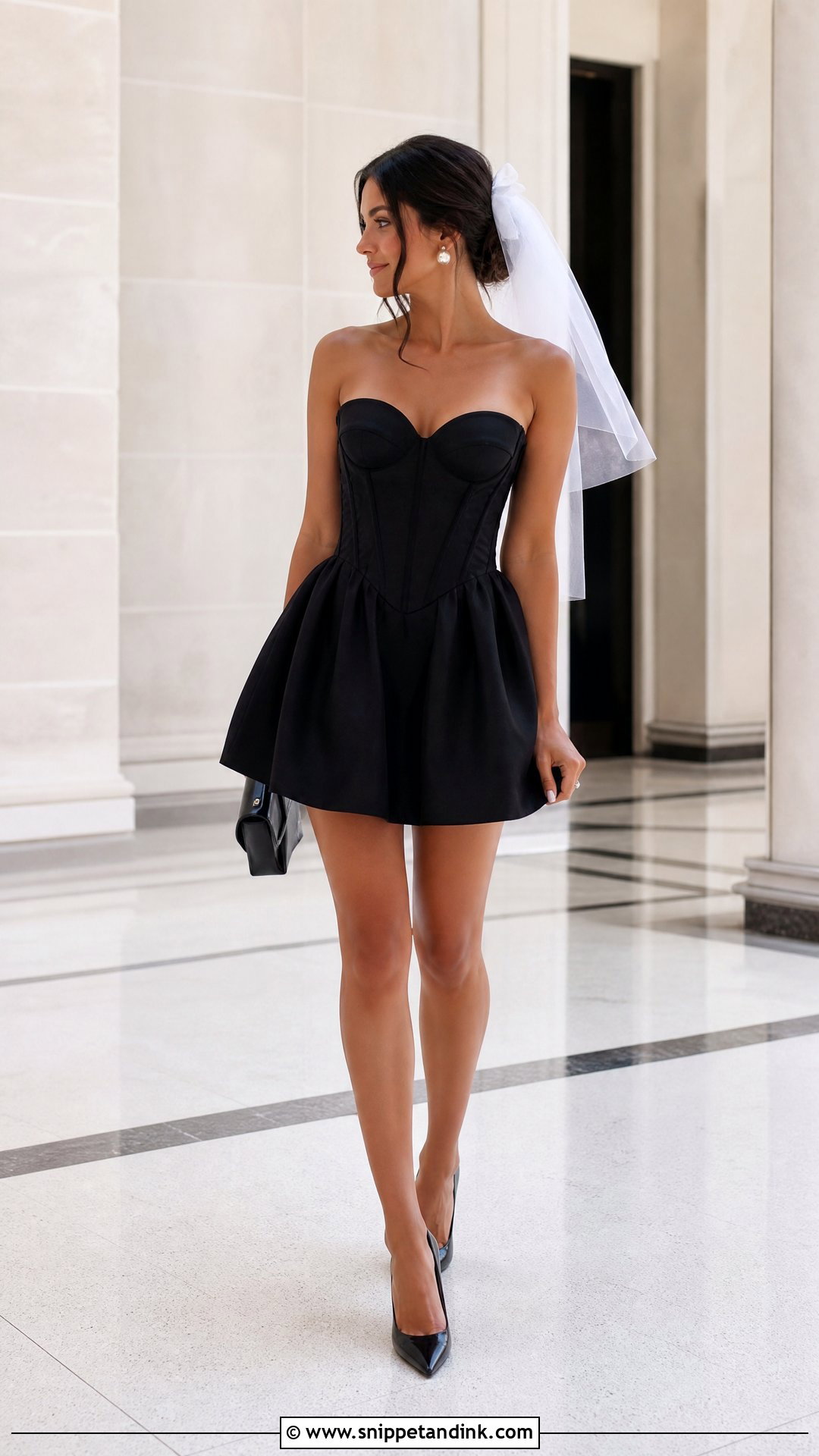
A corset mini suits a courthouse ceremony or a reception change, and it needs secure cups more than any long gown, since there’s no skirt weight to anchor it. Flared, pleated or draped minis all work. Sit and walk in it before the day; built-in shorts or an extra lining make it much easier. Black tights suit cooler weather. Pointed pumps or block heels, a compact bag and pearl earrings keep it bridal, with a short veil, bow veil or comb. A bob, ponytail or soft updo suits the length.
16. Black Corset Wedding Dress With Cape
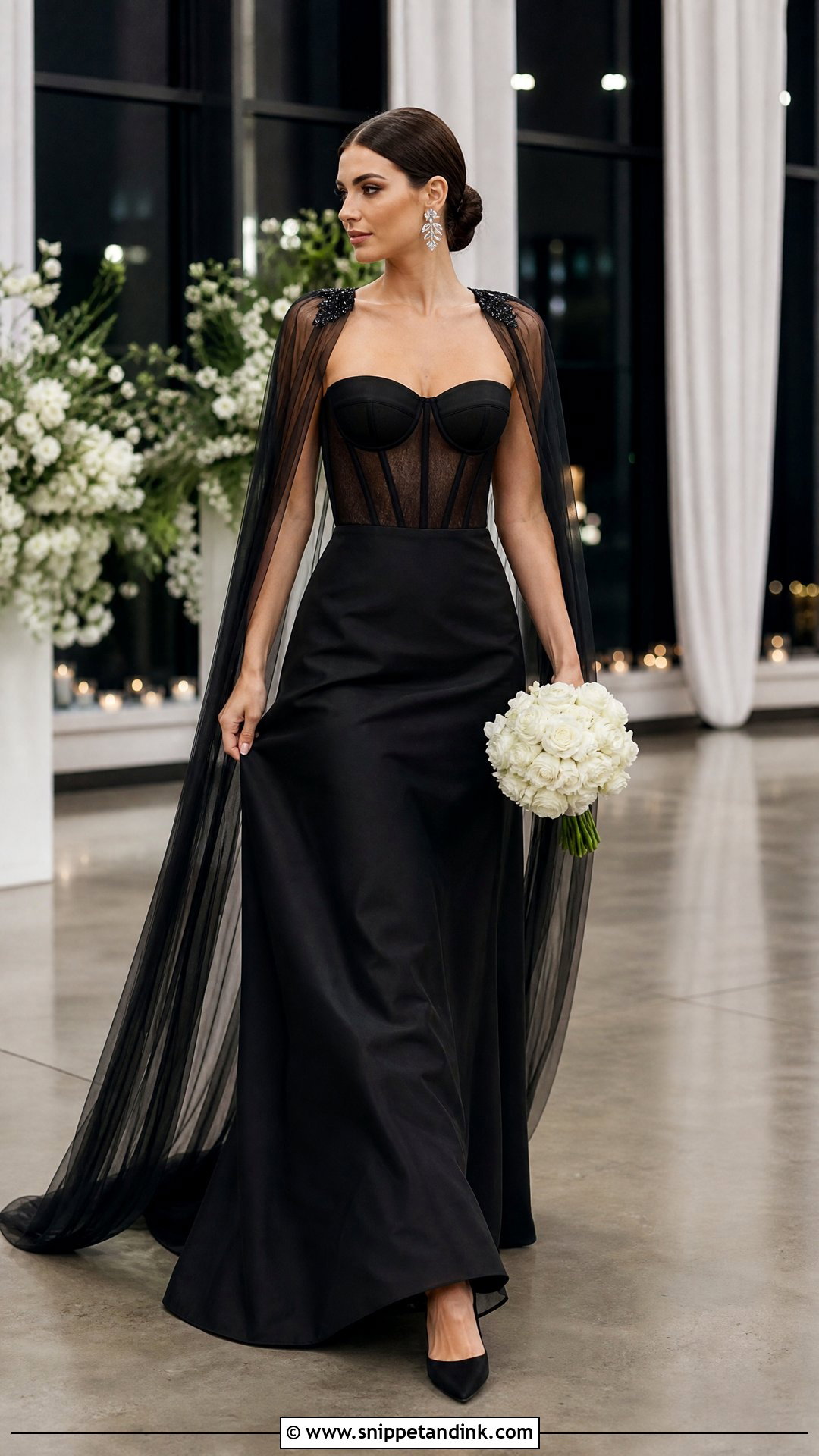
A cape attached at the shoulders adds movement without hiding the corset. A sheer black tulle cape over a streamlined A-line, column or mermaid gown gives a dramatic entrance and comes off for dinner. The attachment points are what I test hardest: a cape with any weight drags the neckline backward if it’s fixed to a thin strap. Sleek heels, silver earrings and a low bun suit it, and the cape replaces the veil. A compact bouquet in white or soft grey keeps it uncluttered.
17. Black Corset Gown With Detachable Sleeves
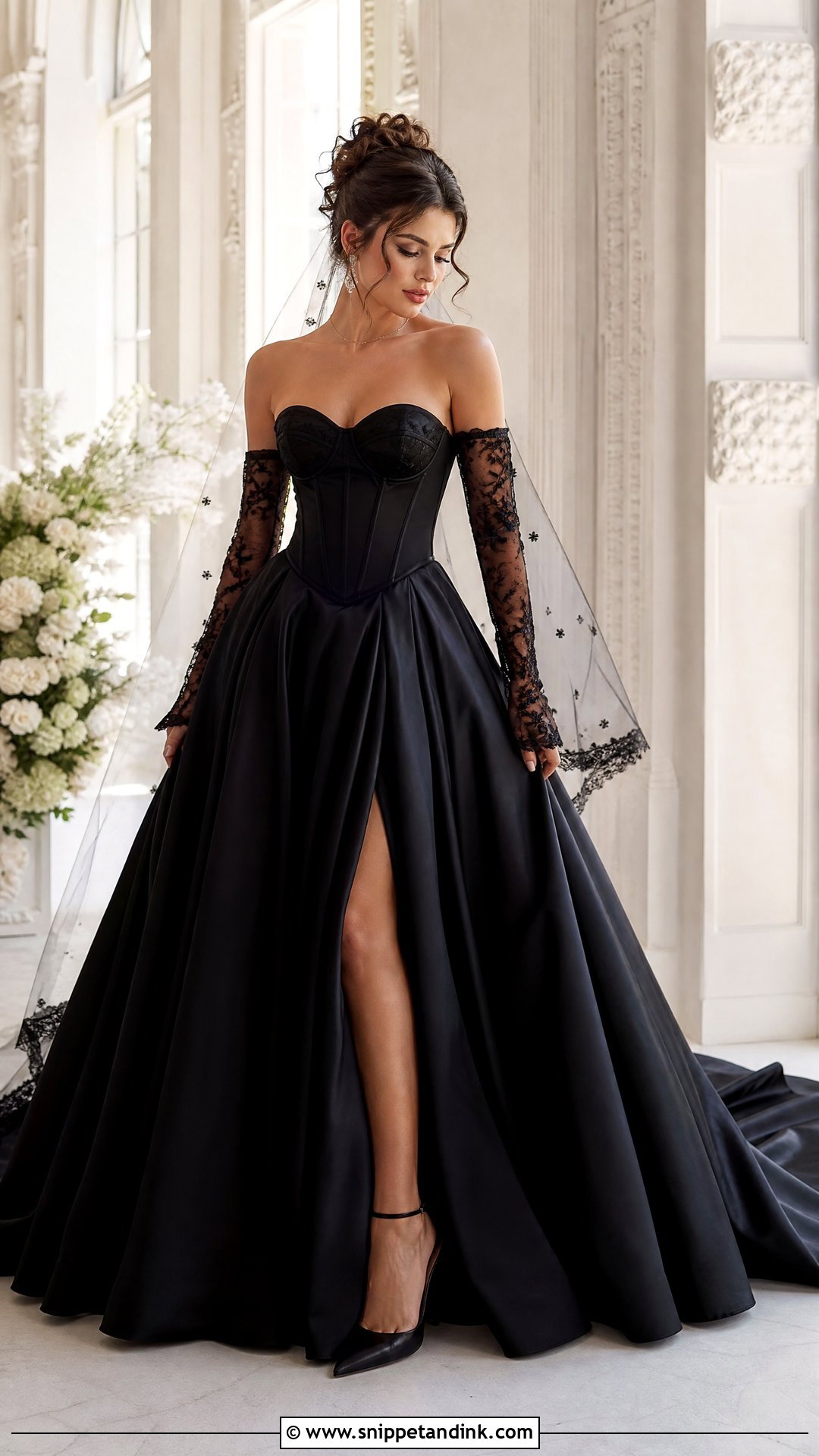
Detachable sleeves turn one corset gown into two looks: sleeves for the ceremony, bare for the reception. Start with a strapless or sleeveless bodice and a full skirt. Sheer sleeves with lace cuffs or soft gathers add the ceremony detail. Ask for fastenings that sit flat, since a snap pressing into the skin under a boned bodice gets sore. Practise taking them off with the helper who’ll do it on the day. Pointed heels, drop earrings, a fingertip veil and a romantic updo finish the look.
18. Black And Nude Corset Wedding Dress
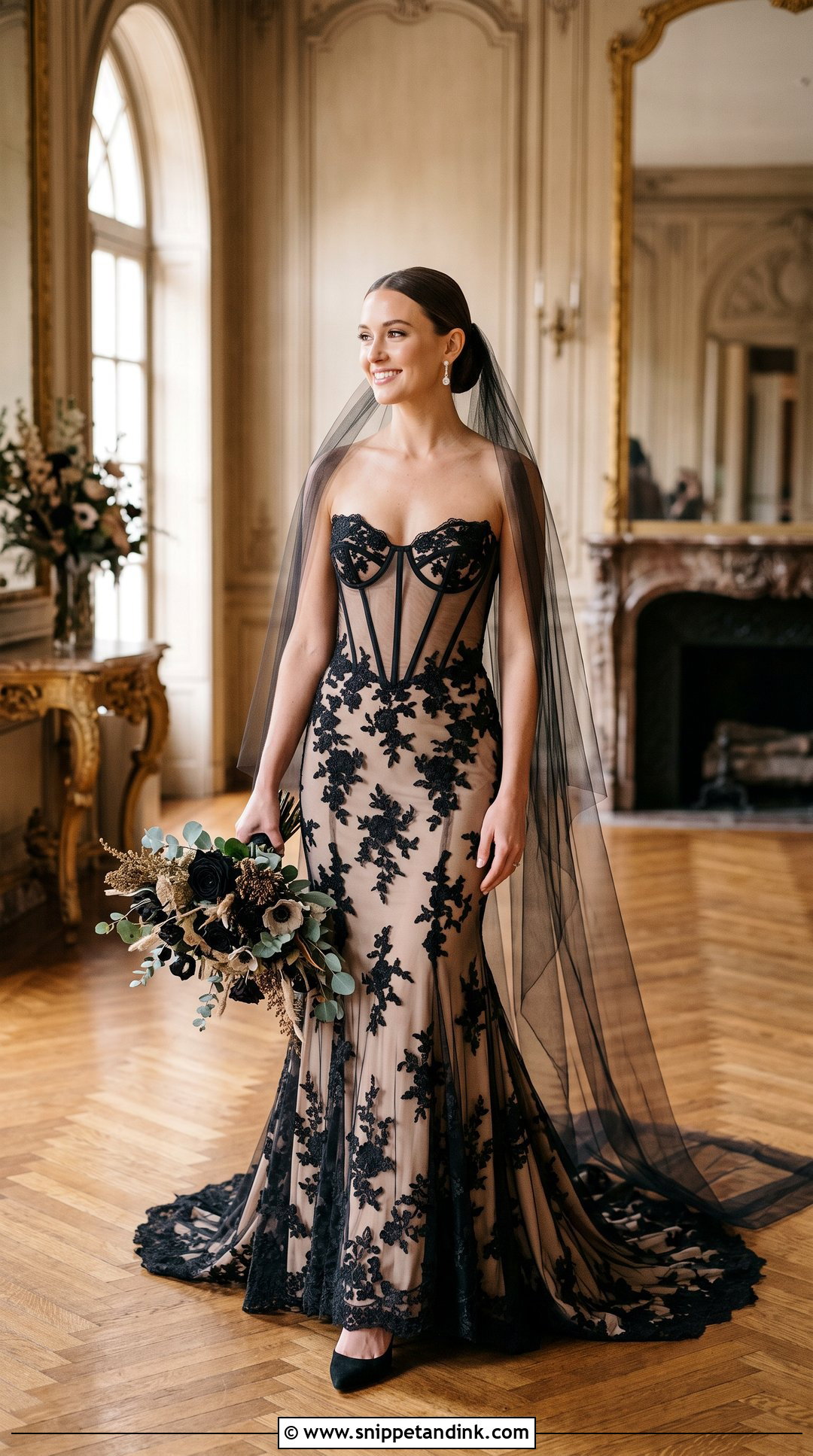
Black lace over a nude lining shows the pattern and the boning in sharp contrast. The lining shade matters more than people think. Match it to your skin in daylight, and then check it under flash, because some nudes photograph pinker or greyer than they look in person. A custom lining color is often worth paying for. A mermaid, trumpet or full tulle skirt carries the illusion down. Black heels, fine earrings, a sheer black veil and soft waves or a smooth bun complete it; skip the necklace if the bodice is busy.
19. Black And White Corset Wedding Dress
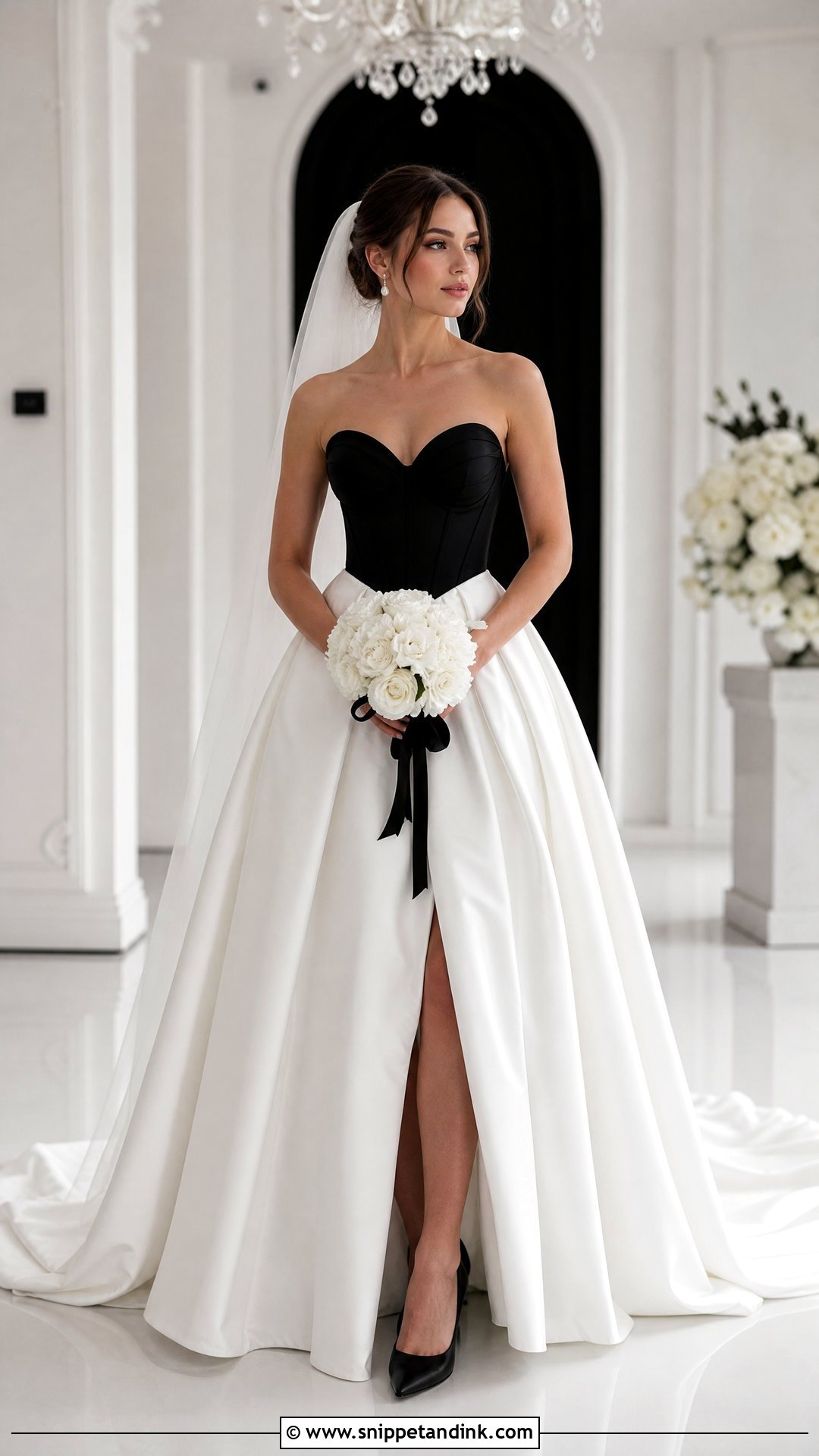
Can’t decide between black and white? A two-tone corset gives you both: a black bodice over a white skirt for strong contrast, or a white corset with black tulle. The waist seam where the colors meet has to sit dead level, since any wobble there is the first thing the eye catches. Trim, embroidery or a monochrome lace overlay can bridge the two. Black pointed heels, pearl earrings and a veil matching the skirt suit it, with a clean chignon and white flowers tied with dark ribbon.



20. Plus Size Black Corset Wedding Dress
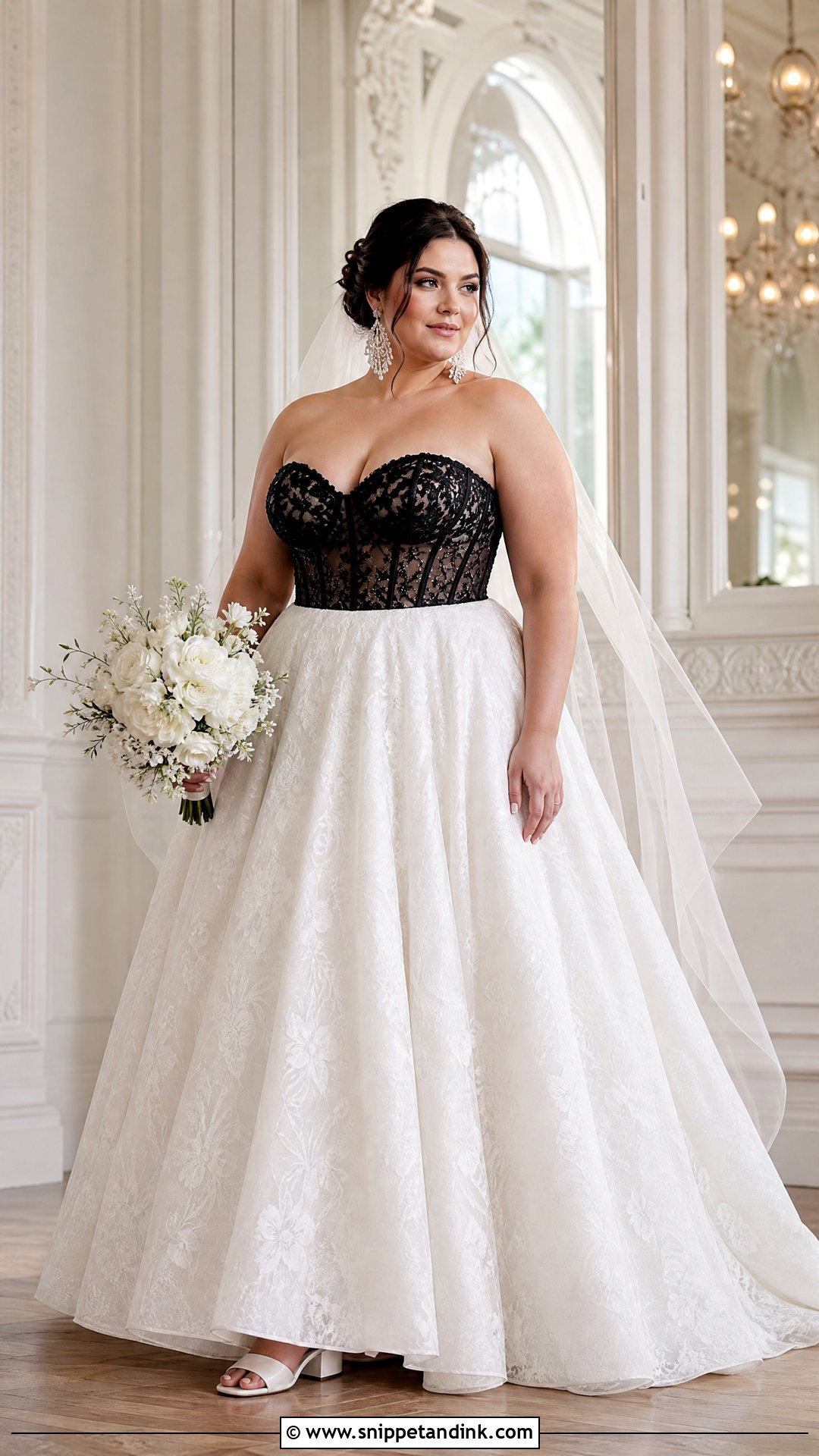
For a plus-size bride, a corset should support rather than squeeze. Sturdy boning, shaped cups, a generous modesty panel and adjustable lacing do far more than tight lacing ever will. A well-fitted corset can also replace separate shapewear, which is one less layer to wear all day. An A-line or ball gown skirt balances the waist; a trumpet shows the curves. Block heels, flats or low pumps keep you steady. Have it altered by someone who works on structured bridalwear, and sit, walk, breathe and dance in it before you approve the fit.
Getting Laced In on the Morning
Lacing a corset gown is a skill, and the person doing it on the day is often a bridesmaid who has never done it before. Bring her to your last fitting and have the seamstress show her. Then give her these steps.
- Step into the dress and pull the bodice up so the waist seam sits on your natural waist before any lacing starts.
- Lace loosely from top to bottom first, so the ribbon is evenly threaded and not twisted.
- Tighten from the middle outward, working toward the top and bottom in small pulls. The waist is where the most tension goes.
- Breathe normally and sit down once. Then adjust. A corset tightened while you hold your breath will be unbearable by lunch.
- Tuck the ends under the modesty panel, not into a big bow that pokes out under the veil.
Expect the lacing to relax a little as the fabric warms. Some brides like a quick retighten before the reception. Pack small safety pins and a length of matching ribbon in the emergency kit, in case a loop pulls loose during the day.
How Tight Is Too Tight? Test It After Dinner
Lace, satin, tulle, velvet or sequins, a corset brings shape to almost any silhouette in black. Keep the accessories quieter than the gown, and put your time into the fittings. The real test of a corset isn’t how it looks standing still in the shop. It’s whether you can sit through a meal, dance and hug your grandmother in it six hours later. Get that right, and the dress will look as good in the last photo as in the first.
You'll Like These Ideas:








Leave a Reply